Next Generation Thermal Energy Storage And Industrial Heat Systems
1. Introduction to Next Generation Thermal Energy Storage
1.1 Overview of Thermal Energy Storage Technologies
Thermal Energy Storage (TES) technologies play a pivotal role in balancing energy supply and demand, improving energy efficiency, and enabling the integration of renewable energy sources in industrial heat systems. TES allows excess thermal energy to be stored during periods of low demand or high renewable generation and released when needed, thus enhancing system flexibility and reliability.
Types of Thermal Energy Storage Technologies
TES technologies can be broadly classified into three main categories:
- Sensible Heat Storage
- Latent Heat Storage
- Thermochemical Storage
Below is a mind map illustrating these categories and their key characteristics:
Sensible Heat Storage (SHS)
Sensible heat storage is the most traditional and widely used TES method. It involves storing thermal energy by increasing the temperature of a solid or liquid storage medium without changing its phase.
Example:
-
Molten Salt Storage in Concentrated Solar Power Plants: Molten salts (a mixture of sodium nitrate and potassium nitrate) are heated to high temperatures (typically 290–565°C) and stored in insulated tanks. The stored heat is later used to generate steam for electricity production, enabling power generation even when sunlight is not available.
-
Water Tanks in Industrial Processes: Large insulated water tanks store hot water for process heating or space heating, providing a straightforward and cost-effective TES solution.
Latent Heat Storage (LHS)
Latent heat storage uses phase change materials (PCMs) that absorb or release heat during phase transitions, typically between solid and liquid states. This allows storage of large amounts of energy at nearly constant temperature.
Example:
-
Paraffin Wax in Building Heating Systems: Paraffin-based PCMs are integrated into building materials or heat storage units to absorb excess heat during the day and release it at night, reducing heating energy demand.
-
Salt Hydrates in Industrial Heat Recovery: Salt hydrate PCMs are used in industrial waste heat recovery systems to store heat at specific temperatures, improving process efficiency.
Thermochemical Storage (TCS)
Thermochemical storage relies on reversible chemical reactions to store and release heat. This method offers very high energy density and the ability to store heat for long periods without losses.
Example:
-
Metal Oxide-Based Storage in Industrial Applications: Metal oxides undergo endothermic and exothermic reactions to absorb and release heat. For instance, calcium oxide/calcium hydroxide systems can store heat from industrial waste streams.
-
Sorption-Based Systems for HVAC: Adsorption chillers use thermochemical TES to store cooling energy, which can be applied in industrial climate control.
Integrated Mind Map of TES Technologies with Examples
Best Practice Example: Selecting TES Technology for an Industrial Plant
Consider a steel manufacturing plant aiming to recover and store waste heat from its furnaces for later use in preheating raw materials.
-
Step 1: Assess Temperature Range and Heat Quality
- Waste heat temperature: 400–600°C
-
Step 2: Evaluate TES Options
- Sensible heat storage with molten salts suitable for high temperature but requires large volume.
- Latent heat storage with high-temperature PCMs could reduce volume but may have material stability issues.
- Thermochemical storage offers high energy density but involves complex system design.
-
Step 3: Pilot Testing and Cost Analysis
- Pilot molten salt TES system installed.
- Cost-benefit analysis favors molten salt due to maturity and reliability.
-
Step 4: Implementation and Monitoring
- System integrated with furnace exhaust.
- Continuous monitoring ensures performance optimization.
This example demonstrates the importance of matching TES technology characteristics with industrial process requirements and highlights the value of pilot testing and economic evaluation.
In summary, understanding the fundamental TES technologies and their practical applications is essential for energy systems researchers, thermal engineers, and industrial energy planners aiming to design efficient and sustainable industrial heat systems.
1.2 Importance of Thermal Energy Storage in Industrial Heat Systems
Thermal Energy Storage (TES) plays a pivotal role in optimizing industrial heat systems by enhancing energy efficiency, reducing operational costs, and enabling greater integration of renewable energy sources. Industrial processes often require heat at varying temperatures and times, making TES essential for balancing supply and demand effectively.
Key Benefits of Thermal Energy Storage in Industrial Heat Systems
- Energy Efficiency Improvement: TES allows excess heat generated during low-demand periods to be stored and utilized later, minimizing waste.
- Cost Reduction: By shifting heat usage to off-peak hours or reducing fuel consumption, TES lowers energy expenses.
- Renewable Integration: TES facilitates the use of intermittent renewable heat sources such as solar thermal or biomass by storing heat when available.
- Emission Reduction: Optimizing heat use and integrating renewables reduces greenhouse gas emissions.
- Process Flexibility: TES provides operational flexibility by decoupling heat generation from heat consumption.
Mind Map: Importance of TES in Industrial Heat Systems
Example 1: Cement Industry Waste Heat Recovery
In cement manufacturing, large amounts of waste heat are generated during clinker cooling. By integrating a TES system using Phase Change Materials (PCMs), the plant stores this waste heat during production peaks and reuses it during startup or low production periods. This practice reduces fuel consumption by up to 15%, demonstrating how TES enhances energy efficiency and cost savings.
Example 2: Steel Mill Molten Salt Storage
A steel mill implemented a molten salt TES system to store excess heat from electric arc furnaces. The stored thermal energy is later used to preheat combustion air and feedstock, improving process efficiency and reducing natural gas consumption. This integration also allows the plant to operate more flexibly, adjusting heat supply to fluctuating production demands.
Mind Map: TES Benefits Illustrated by Examples
Why Industrial Heat Systems Need TES
Industrial heat demand is often non-uniform and unpredictable. TES acts as a buffer, storing thermal energy when supply exceeds demand and releasing it when demand peaks. This buffering capability:
- Reduces the need for oversized boilers or heat generators.
- Enables smoother operation and reduces wear and tear on equipment.
- Supports demand response strategies, allowing industries to participate in grid balancing.
Mind Map: TES Role in Industrial Heat Demand Management
Summary
Thermal Energy Storage is indispensable for modern industrial heat systems. It not only improves energy efficiency and reduces costs but also enables the integration of sustainable energy sources and enhances operational flexibility. Through real-world examples such as cement plants and steel mills, the practical benefits of TES become clear, making it a critical component in the transition towards more sustainable and efficient industrial processes.
1.3 Emerging Trends and Innovations in Thermal Energy Storage (TES)
Thermal Energy Storage (TES) is undergoing a transformative phase driven by the need for higher efficiency, sustainability, and integration with renewable energy sources. This section explores the most promising emerging trends and innovations shaping the future of TES, supported by practical examples and mind maps to clarify complex concepts.
Key Emerging Trends in TES
- Advanced Phase Change Materials (PCMs)
- Thermochemical Energy Storage (TCES)
- High-Temperature Molten Salt Storage
- Hybrid TES Systems
- Integration with Digital Technologies
- Modular and Scalable TES Designs
Mind Map: Emerging TES Trends
Advanced Phase Change Materials (PCMs)
PCMs absorb or release latent heat during phase transitions, offering high energy density and stable temperature control. Innovations include bio-based PCMs and encapsulated micro-PCMs that improve thermal conductivity and durability.
Example: A food processing plant in Spain integrated bio-based PCM panels in their heat recovery system, reducing energy consumption by 18% during peak hours by stabilizing temperature fluctuations.
Thermochemical Energy Storage (TCES)
TCES stores energy through reversible chemical reactions, offering near-zero heat loss over long durations, ideal for industrial applications requiring long-term storage.
Example: A German chemical manufacturer implemented a TCES system using calcium hydroxide and calcium oxide reactions to store excess heat from exothermic processes, enabling heat reuse during startup phases.
Mind Map: Thermochemical Energy Storage Components
High-Temperature Molten Salt Storage
Molten salts enable storage of thermal energy at temperatures exceeding 500°C, suitable for industries like steel and cement manufacturing.
Example: A steel mill in India deployed a molten salt TES system to capture and reuse waste heat from blast furnaces, resulting in a 12% reduction in fossil fuel consumption.
Hybrid TES Systems
Combining different TES technologies (e.g., sensible and latent heat storage) optimizes performance, cost, and operational flexibility.
Example: A paper mill in Canada uses a hybrid system combining water-based sensible heat storage with PCM modules to balance daily load fluctuations efficiently.
Integration with Digital Technologies
The rise of IoT, AI, and advanced sensors enables real-time monitoring, predictive maintenance, and optimized control of TES systems.
Example: An AI-driven control system in a chemical plant in South Korea dynamically adjusts TES charging and discharging cycles, improving system efficiency by 15%.
Mind Map: Digital Integration in TES
Modular and Scalable TES Designs
Modular TES units allow easy scaling and maintenance, reducing downtime and capital expenditure.
Example: A petrochemical complex in the UAE adopted modular TES tanks that can be added or removed based on seasonal heat demand, improving operational flexibility.
Summary
Emerging trends in TES focus on improving energy density, reducing losses, enhancing system flexibility, and leveraging digital tools for smarter operation. Real-world examples demonstrate how these innovations translate into tangible energy savings, operational improvements, and sustainability gains across diverse industrial sectors.
1.4 Best Practices for Evaluating TES Solutions with Real-World Examples
Evaluating Thermal Energy Storage (TES) solutions effectively is critical to ensuring that industrial heat systems achieve optimal performance, cost-efficiency, and sustainability. This section outlines best practices for evaluating TES technologies, supported by practical examples and mind maps to facilitate understanding.
Best Practices Overview Mind Map
Technical Performance Evaluation
Key Metrics: Storage capacity, charge/discharge efficiency, thermal losses, and operating temperature range are fundamental to assessing TES suitability.
Example: A steel manufacturing plant evaluated two TES options: a molten salt system and a phase change material (PCM) system. The molten salt system offered higher operating temperatures (up to 565°C) suitable for their high-temperature processes, while the PCM system was limited to around 200°C. Despite the PCM system’s higher efficiency at lower temperatures, the molten salt TES was selected due to better alignment with process heat requirements.
Mind Map:
Economic Evaluation
Best Practice: Conduct a detailed cost-benefit analysis including capital costs, operational expenses, and projected payback periods.
Example: A chemical plant compared a packed-bed TES system with a water-based sensible heat storage system. Although the packed-bed system had a higher upfront cost, its lower operational costs and longer lifespan resulted in a payback period of 4 years versus 7 years for the water-based system.
Mind Map:
Integration and Compatibility Assessment
Best Practice: Ensure TES technology matches the industrial process requirements and can be integrated with existing infrastructure.
Example: A food processing facility integrated a solar thermal TES system with their existing steam network. The modular TES design allowed phased implementation without disrupting ongoing operations, demonstrating the importance of scalability and retrofit potential.
Mind Map:
Environmental Impact Considerations
Best Practice: Evaluate the environmental footprint including emissions, material sustainability, and end-of-life waste management.
Example: A glass manufacturing plant selected a thermochemical TES system using abundant, non-toxic materials, reducing their carbon footprint by 15% compared to conventional TES options.
Mind Map:
Risk and Reliability Analysis
Best Practice: Assess system durability, safety, and maintenance requirements to minimize downtime and hazards.
Example: A paper mill implemented an AI-monitored PCM TES system, which included predictive maintenance alerts. This reduced unexpected failures by 30%, highlighting the value of integrating digital tools for reliability.
Mind Map:
Summary Table of Best Practices with Examples
| Evaluation Aspect | Best Practice | Real-World Example |
|---|---|---|
| Technical Performance | Match TES operating temperature to process needs | Steel plant: Molten salt TES for high temp |
| Economic Factors | Conduct lifecycle cost and payback analysis | Chemical plant: Packed-bed TES cost-benefit |
| Integration & Compatibility | Ensure modularity and retrofit potential | Food processing: Solar TES integration |
| Environmental Impact | Select sustainable materials and reduce emissions | Glass plant: Thermochemical TES selection |
| Risk & Reliability | Use digital monitoring for predictive maintenance | Paper mill: AI-monitored PCM TES |
By following these best practices, energy systems researchers, thermal engineers, and industrial energy planners can systematically evaluate TES solutions to select the most appropriate technology tailored to their industrial heat system needs.
2. Advanced Materials for Thermal Energy Storage
2.1 Phase Change Materials (PCMs): Selection and Application
Phase Change Materials (PCMs) are substances that absorb or release a significant amount of latent heat when they change their physical state, typically between solid and liquid. This property makes them highly effective for thermal energy storage (TES) applications, especially in industrial heat systems where managing temperature fluctuations and storing excess heat is critical.
Understanding PCMs
PCMs store thermal energy during the phase transition process, usually melting or solidifying at specific temperatures. This allows them to maintain nearly constant temperatures while absorbing or releasing heat, which is ideal for stabilizing industrial processes and improving energy efficiency.
Mind Map: Key Factors in PCM Selection
Best Practices for Selecting PCMs
-
Match Melting Point to Application Temperature: Choose a PCM with a melting point close to the desired operating temperature of the industrial process to maximize energy storage efficiency.
-
Consider Thermal Conductivity: Many PCMs have low thermal conductivity, which can limit charging/discharging rates. Incorporate additives or use composite PCMs to enhance conductivity.
-
Evaluate Chemical Stability: Ensure the PCM is chemically stable over many thermal cycles to avoid degradation and maintain performance.
-
Assess Volume Change: Some PCMs expand or contract significantly during phase change, which can cause mechanical stress. Design containment systems accordingly.
-
Safety and Environmental Impact: Select non-toxic, non-flammable PCMs to ensure safe operation and compliance with environmental regulations.
Mind Map: Common Types of PCMs and Their Applications
Example 1: Using Paraffin-Based PCM in a Food Processing Plant
A food processing facility requires stable temperature control around 25-30°C for cooling and heating cycles. A paraffin-based PCM with a melting point of 28°C was selected. The PCM was integrated into heat exchanger panels to absorb excess heat during peak operation and release it during off-peak hours.
Outcome:
- Reduced energy consumption by 15%
- Improved temperature stability, enhancing product quality
- Simple retrofit with minimal disruption
Example 2: Salt Hydrate PCM for Waste Heat Recovery in Cement Industry
Cement plants generate high-temperature waste heat (~150-200°C). Sodium sulfate decahydrate, an inorganic salt hydrate PCM with a melting point around 32-35°C, was modified with thickening agents to stabilize it at higher temperatures and prevent supercooling.
Application: Integrated into a thermal storage tank capturing waste heat for reuse in preheating raw materials.
Outcome:
- Increased overall plant energy efficiency by 10%
- Reduced fossil fuel consumption
- Demonstrated long-term cycling stability over 500 cycles
Mind Map: Application Areas of PCMs in Industrial Heat Systems
Enhancing PCM Performance: Composite and Encapsulation Techniques
- Composite PCMs: Combining PCMs with high thermal conductivity materials such as graphite or metal foams to improve heat transfer rates.
- Micro- and Macro-Encapsulation: Encasing PCMs in polymer shells or metal containers to prevent leakage, improve mechanical stability, and facilitate integration.
Example: A steel plant used micro-encapsulated PCM slurry in its cooling system, resulting in faster heat absorption and easier pumping compared to bulk PCM.
Summary
Selecting the right PCM involves balancing thermal, chemical, physical, and economic factors tailored to the specific industrial heat application. Best practices include aligning melting points with process temperatures, enhancing thermal conductivity, ensuring chemical stability, and considering safety. Real-world examples demonstrate how PCMs can significantly improve energy efficiency, reduce costs, and support sustainable industrial heat management.
2.2 Thermochemical Storage Materials and Their Industrial Use Cases
Thermochemical energy storage (TCES) is an advanced method of storing thermal energy through reversible chemical reactions. Unlike sensible or latent heat storage, TCES stores energy in the form of chemical bonds, offering higher energy density and minimal heat loss over long durations. This makes TCES highly attractive for industrial applications requiring efficient, long-term thermal energy storage.
What Are Thermochemical Storage Materials?
Thermochemical storage materials are substances that undergo endothermic and exothermic chemical reactions to absorb and release heat, respectively. These reactions are reversible, allowing the material to be charged (energy stored) and discharged (energy released) multiple times.
Typical thermochemical reactions include:
- Dehydration/hydration of salts
- Reversible gas-solid reactions
- Adsorption/desorption processes
Key Advantages of Thermochemical Storage Materials
- High Energy Density: TCES can store more energy per unit volume compared to sensible and latent heat storage.
- Long-Term Storage: Minimal heat loss allows for seasonal or long-duration storage.
- Decoupling of Heat and Storage: Heat can be stored and transported independently of temperature.
- Scalability: Suitable for various industrial scales.
Common Thermochemical Storage Materials
| Material Type | Reaction Type | Temperature Range (°C) | Industrial Use Cases |
|---|---|---|---|
| Calcium Hydroxide (Ca(OH)₂) | Dehydration/Hydration | 200 - 400 | Cement, ceramics, and chemical industries |
| Magnesium Sulfate (MgSO₄·7H₂O) | Hydration/Dehydration | 50 - 150 | Food processing, HVAC |
| Zeolites | Adsorption/Desorption | 100 - 300 | Industrial drying, air conditioning |
| Metal Oxides (e.g., Fe₂O₃/Fe₃O₄) | Redox reactions | 500 - 1000 | Steel, power plants |
Mind Map: Thermochemical Storage Materials Overview
Industrial Use Cases with Examples
Cement Industry: Calcium Hydroxide-Based TCES
Context: Cement production requires high-temperature heat (up to 400°C) for kiln operations. Waste heat recovery and storage can improve energy efficiency.
Application: Calcium hydroxide undergoes dehydration at high temperatures, storing energy chemically. When hydrated, it releases heat that can be reused in the kiln or other processes.
Example: A cement plant in Europe integrated a calcium hydroxide-based TCES system to capture kiln exhaust heat, storing it during off-peak hours and releasing it during startup phases, reducing fossil fuel consumption by 15%.
Food Processing: Magnesium Sulfate Hydration Cycles
Context: Food processing often requires low to medium temperature heat (50-150°C) for pasteurization and drying.
Application: Magnesium sulfate heptahydrate (MgSO₄·7H₂O) can store heat through dehydration and release it upon hydration.
Example: A dairy processing facility in the US implemented a TCES system using magnesium sulfate salts to store solar thermal energy during the day and supply heat for pasteurization at night, reducing grid electricity use by 20%.
HVAC Systems: Zeolite Adsorption
Context: Industrial HVAC systems require efficient heat storage for heating and cooling cycles.
Application: Zeolites adsorb water vapor exothermically and desorb endothermically, enabling heat storage and release.
Example: An office complex in Japan uses zeolite-based TCES integrated with its HVAC system, storing heat during low-demand periods and releasing it during peak hours, achieving a 25% reduction in energy consumption.
Steel Manufacturing: Metal Oxide Redox Reactions
Context: Steel plants operate at very high temperatures and generate large amounts of waste heat.
Application: Metal oxides like Fe₂O₃/Fe₃O₄ undergo reversible redox reactions storing and releasing heat at temperatures above 500°C.
Example: A steel mill in Germany installed a metal oxide-based TCES system to capture blast furnace waste heat, storing it chemically and reusing it for preheating raw materials, improving overall plant efficiency by 10%.
Mind Map: Industrial Use Cases of Thermochemical Storage
Best Practices for Implementing Thermochemical Storage in Industry
- Material Selection: Choose materials based on operating temperature, reaction kinetics, and compatibility with industrial processes.
- System Integration: Design TCES systems to integrate seamlessly with existing heat sources and sinks.
- Thermal Management: Ensure effective heat exchange and insulation to maximize efficiency.
- Monitoring and Control: Use sensors and control systems to optimize charging/discharging cycles.
- Safety Considerations: Evaluate chemical stability and handle materials safely.
Summary
Thermochemical storage materials offer a promising path for efficient, high-density thermal energy storage in industrial heat systems. By leveraging reversible chemical reactions, industries can store and reuse heat with minimal losses, improving energy efficiency and reducing carbon footprints. Real-world examples from cement, food processing, HVAC, and steel manufacturing demonstrate the versatility and benefits of TCES, making it a key technology for next-generation industrial heat engineering.
2.3 Nanomaterials and Composite Media for Enhanced Heat Retention
Nanomaterials and composite media represent a cutting-edge approach to improving thermal energy storage (TES) systems by enhancing heat retention, thermal conductivity, and stability. This section explores the fundamentals, benefits, and practical applications of these materials in industrial heat systems.
Understanding Nanomaterials in TES
Nanomaterials are materials engineered at the nanoscale (1-100 nm) that exhibit unique thermal, mechanical, and chemical properties. When incorporated into TES media, they can significantly improve heat transfer rates and storage capacity.
Key Properties:
- High surface area to volume ratio
- Enhanced thermal conductivity
- Tunable phase change characteristics
Common Nanomaterials Used:
- Carbon nanotubes (CNTs)
- Graphene and graphene oxide
- Metal nanoparticles (e.g., copper, aluminum)
- Metal oxides (e.g., alumina, silica)
Composite Media: Combining Strengths for Superior TES
Composite media combine traditional TES materials (such as phase change materials or molten salts) with nanomaterials or other additives to enhance performance.
Benefits:
- Increased thermal conductivity
- Improved mechanical strength and stability
- Reduced supercooling and phase separation
Mind Map: Nanomaterials and Composite Media in TES
Practical Examples and Best Practices
Example 1: Carbon Nanotube-Enhanced PCM in a Food Processing Plant
A food processing facility integrated a composite TES system using paraffin wax PCM enhanced with 1% by weight carbon nanotubes. This modification increased the thermal conductivity by over 150%, enabling faster heat charging and discharging cycles.
Best Practice:
- Uniform dispersion of CNTs using ultrasonic mixing to avoid agglomeration.
- Encapsulation of PCM to prevent leakage during phase change.
- Monitoring thermal cycling stability over 1000+ cycles.
Example 2: Graphene-Infused Molten Salt TES in a Steel Mill
A steel manufacturing plant retrofitted its TES system by dispersing graphene nanoplatelets into molten nitrate salts. This composite media improved heat transfer rates by 30%, reducing charging time and increasing operational flexibility.
Best Practice:
- Ensuring chemical compatibility between graphene and molten salts.
- Using surfactants to maintain stable dispersion.
- Periodic sampling to check for sedimentation or degradation.
Example 3: Metal Oxide Nanoparticles in Cement Industry Heat Storage
In a cement plant, alumina nanoparticles were added to a hydrated salt PCM to enhance thermal conductivity and mechanical strength. This resulted in a more durable TES system capable of withstanding harsh industrial environments.
Best Practice:
- Optimizing nanoparticle concentration to balance conductivity and viscosity.
- Employing mechanical stirring during TES media preparation.
- Validating performance through pilot-scale testing.
Summary
Nanomaterials and composite media offer transformative potential for next-generation TES systems by addressing traditional limitations such as low thermal conductivity and material degradation. Through careful material selection, dispersion techniques, and system design, industrial heat systems can achieve enhanced heat retention, faster response times, and improved durability.
Incorporating these advanced materials requires a multidisciplinary approach combining materials science, thermal engineering, and process optimization to unlock their full benefits in real-world industrial applications.
2.4 Case Study: Implementing PCM in a Cement Plant for Waste Heat Recovery
Introduction
Waste heat recovery (WHR) is a critical opportunity in cement plants, where high-temperature exhaust gases and kiln processes generate substantial thermal energy that often goes unused. Implementing Phase Change Materials (PCMs) for thermal energy storage in such environments can significantly improve energy efficiency by capturing and reusing heat, reducing fuel consumption and emissions.
Overview of PCM Application in Cement Plants
- Objective: Capture waste heat from kiln exhaust gases and store it using PCMs.
- Benefit: Smooth out heat supply fluctuations and provide a steady thermal source for preheating raw materials or generating steam.
Step-by-Step Implementation Process
PCM Selection Criteria and Example
- Melting Point: Around 200°C to match typical kiln exhaust temperatures.
- Material: Salt hydrates or eutectic mixtures, e.g., Sodium Nitrate (NaNO3) based PCM.
- Thermal Conductivity: Enhanced with graphite additives to improve heat transfer.
Example: Sodium Nitrate PCM with melting point ~220°C encapsulated in stainless steel tubes.
Storage System Design
- Encapsulation: PCM is encapsulated in corrosion-resistant metal tubes arranged in a shell-and-tube heat exchanger.
- Heat Transfer Fluid (HTF): Hot exhaust gases pass over the PCM tubes, transferring heat and melting the PCM.
- Discharge: When heat is needed, the PCM solidifies, releasing stored heat to a secondary HTF circuit.
Integration with Cement Plant Processes
- Raw Material Preheating: Use recovered heat to preheat limestone and clay, reducing kiln fuel demand.
- Steam Generation: Supplement steam boilers with heat from PCM discharge, improving overall plant efficiency.
Example: A cement plant in Europe integrated PCM storage to preheat raw materials, achieving a 5% reduction in fuel consumption.
Monitoring and Control Best Practices
- Install temperature sensors at PCM inlet/outlet and within the storage to monitor phase change status.
- Use automated control systems to optimize charging/discharging cycles based on production schedules.
Results and Benefits
- Energy Savings: Up to 10% reduction in fuel usage due to effective waste heat reuse.
- Emission Reduction: Lower CO2 and NOx emissions by reducing fossil fuel combustion.
- Process Stability: More consistent kiln operation temperatures leading to improved clinker quality.
Lessons Learned and Recommendations
- Material Compatibility: Ensure PCM materials are compatible with plant environment to avoid corrosion.
- Thermal Cycling Durability: Select PCMs with proven long-term cycling stability.
- System Integration: Early involvement of process engineers to tailor TES integration points.
Summary
Implementing PCM-based thermal energy storage in cement plants for waste heat recovery offers a practical and effective method to enhance energy efficiency and sustainability. By carefully selecting PCMs, designing robust storage systems, and integrating with existing processes, plants can achieve significant operational and environmental benefits.
Additional Example
Case: A Chinese cement plant used a composite PCM with expanded graphite to improve thermal conductivity. The system stored 2 MWh of thermal energy daily, enabling raw material preheating and reducing coal consumption by 8%.
This case study highlights how best practices and thoughtful design lead to successful PCM integration in industrial heat systems.
3. Thermal Energy Storage System Design and Integration
3.1 Designing TES Systems for Industrial Heat Applications
Designing Thermal Energy Storage (TES) systems tailored for industrial heat applications requires a comprehensive understanding of the industrial process demands, thermal storage mediums, system integration, and operational constraints. This section explores the key design considerations, methodologies, and best practices, supported by illustrative mind maps and practical examples.
Key Design Considerations
- Thermal Requirements: Understanding temperature ranges, heat load profiles, and duration of storage.
- Storage Medium Selection: Choosing between sensible, latent, or thermochemical storage based on application needs.
- System Integration: Seamless interfacing with existing heat generation and distribution systems.
- Scalability & Modularity: Designing for future expansion or varying operational loads.
- Material Compatibility & Durability: Ensuring long-term reliability under industrial conditions.
- Cost & Economic Viability: Balancing upfront investment with operational savings.
Mind Map: TES System Design Framework
Step-by-Step Design Approach
-
Assess Industrial Heat Demand
- Example: A steel manufacturing plant requires heat at 600°C for 8 hours daily.
- Analyze hourly heat load to determine storage capacity.
-
Select Appropriate TES Technology
- For high-temperature applications, molten salt TES or ceramic-based sensible storage is suitable.
- Example: Molten salt TES chosen for its high thermal capacity and stability at 600°C.
-
Design Storage Medium and Container
- Calculate volume based on heat capacity and temperature difference.
- Example: For 10 MWh storage, molten salt volume calculated considering specific heat capacity.
-
Integrate with Heat Generation and Distribution
- Design heat exchangers and piping to connect TES with furnaces and heat networks.
- Example: Incorporate a heat exchanger loop between TES and steel reheating furnace.
-
Implement Control and Monitoring Systems
- Use sensors and automated controls to optimize charging/discharging cycles.
- Example: PLC-based control system to manage TES charge during off-peak hours.
-
Evaluate Economic Feasibility
- Perform cost-benefit analysis including energy savings and maintenance.
- Example: Projected payback period of 4 years based on fuel savings.
Mind Map: Industrial TES Design Example - Steel Plant
Practical Example: Cement Plant Waste Heat Recovery TES
A cement plant generates significant waste heat at temperatures around 300°C. By designing a sensible heat TES system using concrete as the storage medium, the plant can store excess heat during peak production and reuse it during startup or low production periods.
-
Design Highlights:
- Storage medium: High-density concrete blocks.
- Storage capacity: 5 MWh.
- Integration: Connected to kiln exhaust via heat exchangers.
- Control: Temperature sensors regulate charging/discharging.
-
Outcome:
- Reduced fuel consumption by 15%.
- Improved process stability.
Best Practices Summary
- Perform detailed thermal demand analysis before design.
- Match TES technology to temperature and duration requirements.
- Prioritize modular designs for flexibility.
- Incorporate robust control systems for efficient operation.
- Validate designs with pilot testing or simulation.
- Consider lifecycle costs and environmental impacts.
Designing TES systems for industrial heat applications is a multidisciplinary task that balances technical performance with economic and operational realities. By following structured design frameworks and learning from practical examples, engineers can develop efficient, reliable, and sustainable TES solutions tailored to industrial needs.
3.2 Integration of TES with Existing Industrial Heat Networks
Integrating Thermal Energy Storage (TES) systems with existing industrial heat networks is a critical step toward enhancing energy efficiency, reducing operational costs, and increasing system flexibility. This section explores the methodologies, challenges, and best practices for seamless TES integration, supported by practical examples and mind maps to clarify complex concepts.
Understanding the Industrial Heat Network
An industrial heat network typically consists of heat generation units (boilers, furnaces), heat distribution infrastructure (pipes, pumps), and end-use processes (drying, chemical reactions). TES integration requires a thorough understanding of these components to identify optimal points for storage insertion.
Key Integration Strategies
- Direct Integration: TES is connected directly to the heat distribution loop, storing excess heat during low demand and releasing it during peak demand.
- Indirect Integration: TES is connected via heat exchangers, allowing decoupling of TES medium from the process fluid, enhancing flexibility and safety.
- Hybrid Integration: Combines both direct and indirect methods to optimize performance based on operational needs.
Mind Map: TES Integration Approaches
Best Practices for TES Integration
- System Assessment and Mapping: Conduct detailed thermal mapping of the existing heat network to identify heat sources, sinks, and bottlenecks.
- Thermal Matching: Ensure TES charging and discharging temperatures align with industrial process requirements to maximize efficiency.
- Modular Design: Use modular TES units to allow phased integration and scalability.
- Control System Integration: Implement advanced control algorithms to synchronize TES operation with heat network dynamics.
- Safety and Compliance: Evaluate pressure, temperature, and chemical compatibility to meet safety standards.
Mind Map: Best Practices for TES Integration
Example 1: Molten Salt TES Integration in a Steel Plant
A steel manufacturing facility integrated a molten salt TES system into its existing hot water distribution network. By installing an indirect integration system with heat exchangers, the plant was able to store excess heat generated during off-peak hours and supply it during peak production times. This reduced natural gas consumption by 15% and improved overall process stability.
Key Takeaways:
- Indirect integration allowed use of molten salt without contaminating the water loop.
- Modular TES tanks enabled gradual capacity expansion.
- Advanced control systems synchronized TES charging with furnace operation.
Example 2: Phase Change Material (PCM) TES in a Chemical Plant
A chemical processing plant retrofitted its steam-based heat network with a PCM-based TES system. The TES was directly integrated into the steam distribution line, storing latent heat during low demand periods. This integration helped smooth steam demand fluctuations, reducing boiler cycling and maintenance costs.
Key Takeaways:
- Direct integration simplified the retrofit process.
- PCM selection matched steam temperature ranges for optimal latent heat storage.
- Energy savings of 10% were realized within the first year.
Challenges and Solutions
| Challenge | Description | Solution |
|---|---|---|
| Temperature Mismatch | TES charging/discharging temperatures not aligned | Careful thermal matching and material choice |
| Space Constraints | Limited space for TES installation | Modular and compact TES designs |
| Control Complexity | Synchronizing TES with dynamic heat loads | Advanced control algorithms and IoT sensors |
| Safety and Compatibility | Pressure and chemical compatibility issues | Indirect integration and rigorous testing |
Mind Map: Challenges and Solutions in TES Integration
Summary
Integrating TES with existing industrial heat networks demands a holistic approach combining system analysis, appropriate integration strategy, material selection, and control optimization. By following best practices and learning from real-world examples, industrial energy planners and thermal engineers can significantly enhance system flexibility, reduce energy consumption, and support sustainability goals.
3.3 Modular and Scalable TES Solutions for Flexible Operations
Thermal Energy Storage (TES) systems are increasingly being designed with modularity and scalability in mind to address the dynamic needs of modern industrial heat applications. Modular TES solutions allow for incremental capacity additions, easier maintenance, and enhanced operational flexibility, while scalability ensures that systems can grow or shrink in response to production demands or energy availability.
Why Modular and Scalable TES?
- Flexibility: Industrial processes often have fluctuating heat demands. Modular TES can adapt by activating or deactivating storage modules as needed.
- Cost Efficiency: Initial investments can be minimized by installing only the required capacity and expanding later.
- Maintenance: Modules can be serviced individually without shutting down the entire system.
- Customization: Different modules can use varied storage media or technologies tailored to specific temperature ranges or process needs.
Mind Map: Key Benefits of Modular and Scalable TES
Types of Modular TES Systems
-
Modular Sensible Heat Storage Units
- Example: Multiple insulated water tanks or packed bed units connected in parallel.
- Easy to add or remove tanks based on heat storage needs.
-
Modular Phase Change Material (PCM) Units
- Example: PCM panels or encapsulated PCM modules that can be stacked or arranged in arrays.
- Allows for precise thermal capacity tuning.
-
Modular Thermochemical Storage Units
- Example: Small-scale reactors or reactors arrays that can be operated independently.
- Enables flexible reaction-based heat storage.
Mind Map: Types of Modular TES Systems
Example 1: Modular Molten Salt TES in a Steel Mill
A steel mill implemented a modular molten salt TES system composed of six independent tanks, each with a capacity of 500 kWh thermal storage. This design allowed the plant to operate with only three tanks during low production periods, reducing thermal losses and operational costs. When production ramped up, additional tanks were brought online seamlessly without interrupting the heat supply.
Best Practice:
- Design the piping and control system to isolate individual modules.
- Use modular pumps and valves to enable independent operation.
- Implement a control algorithm that optimizes which modules to charge or discharge based on demand forecasts.
Example 2: Scalable PCM TES for Food Processing
A food processing plant used modular PCM storage units integrated into their steam heating system. Each PCM module was a self-contained unit with encapsulated salt hydrates designed to melt and solidify at 60°C. The plant started with 10 modules and expanded to 25 as production increased.
Best Practice:
- Use standardized module sizes for easy replication.
- Incorporate quick-connect thermal interfaces for fast installation.
- Monitor module health individually to detect degradation early.
Mind Map: Best Practices for Modular & Scalable TES
Operational Flexibility Enabled by Modular TES
- Load Shifting: Modules can be charged during off-peak hours and discharged during peak demand.
- Redundancy: If one module fails, others maintain system operation.
- Multi-Temperature Storage: Different modules can be maintained at different temperatures to serve various process needs.
Example 3: Modular TES in a Chemical Plant for Flexible Heat Supply
A chemical plant integrated a modular TES system consisting of three types of modules: low-temperature water tanks, medium-temperature PCM units, and high-temperature packed bed units. This multi-tiered approach allowed the plant to flexibly supply heat at different temperature levels depending on the process stage, optimizing energy use and reducing waste.
Best Practice:
- Segment TES modules by temperature range.
- Use automated valves and sensors to route heat from appropriate modules.
- Employ a centralized control system to coordinate module operation.
Summary
Modular and scalable TES solutions provide industrial heat systems with the flexibility, reliability, and cost-effectiveness required to meet evolving operational demands. By adopting modular designs, industries can phase investments, simplify maintenance, and optimize energy use. Incorporating best practices such as standardized modules, independent control, and multi-temperature storage ensures that TES systems remain adaptable and efficient in dynamic industrial environments.
3.4 Best Practice: Step-by-Step Design of a Molten Salt TES System in a Steel Mill
Designing a molten salt thermal energy storage (TES) system tailored for a steel mill involves a systematic approach that balances operational efficiency, cost-effectiveness, and integration with existing industrial processes. This section walks through the key steps, supported by mind maps and practical examples to ensure clarity and applicability.
Step 1: Assessing the Industrial Heat Demand and Process Integration
- Objective: Understand the steel mill’s heat profile, peak demand, and waste heat availability.
- Key Actions:
- Map heat sources (e.g., blast furnace, reheating furnace).
- Identify temperature ranges and durations for heat supply.
- Evaluate existing heat recovery systems.
Example: A steel mill operates a reheating furnace requiring 600°C heat intermittently during rolling operations. Waste heat from the blast furnace is available at 500°C but is currently vented.
Mind Map: Heat Demand Assessment
Step 2: Selecting the Molten Salt Composition and Operating Parameters
- Objective: Choose an appropriate molten salt mixture that meets temperature and stability requirements.
- Key Actions:
- Select salt mixtures (e.g., nitrate salts like NaNO3-KNO3 or chloride salts for higher temps).
- Define operating temperature range (charging and discharging temperatures).
- Consider freezing point, thermal stability, and corrosion potential.
Example: For 500–600°C operation, a binary nitrate salt mixture (60% NaNO3, 40% KNO3) is selected due to its melting point (~220°C) and thermal stability up to 600°C.
Mind Map: Molten Salt Selection
Step 3: Designing the TES Tank and Heat Exchanger System
- Objective: Engineer storage tanks and heat exchangers optimized for molten salt handling and heat transfer.
- Key Actions:
- Determine storage capacity based on heat demand and desired autonomy.
- Design tank insulation to minimize heat losses.
- Select materials resistant to molten salt corrosion (e.g., stainless steel with protective coatings).
- Design heat exchangers for efficient charging (heat input) and discharging (heat output).
Example: A 10 MWh thermal storage capacity is targeted to cover 2 hours of peak reheating furnace operation. Tanks are double-walled with mineral wool insulation.
Mind Map: TES Tank & Heat Exchanger Design
Step 4: Integration with Steel Mill Heat Network and Control Strategy
- Objective: Seamlessly integrate TES with existing heat distribution and implement control systems.
- Key Actions:
- Connect TES charging to waste heat source (blast furnace off-gas heat recovery).
- Connect TES discharging to reheating furnace heat supply.
- Develop control algorithms to optimize charging during waste heat availability and discharging during peak demand.
- Implement sensors and automation for temperature, flow, and salt level monitoring.
Example: Control system prioritizes TES charging when blast furnace off-gas temperature exceeds 480°C and discharges molten salt heat to the reheating furnace during rolling shifts.
Mind Map: TES Integration & Control
Step 5: Safety, Maintenance, and Operational Best Practices
- Objective: Ensure safe operation and longevity of the TES system.
- Key Actions:
- Implement freeze protection strategies (e.g., trace heating).
- Schedule regular inspections for corrosion and salt degradation.
- Train operators on molten salt handling and emergency procedures.
- Establish maintenance protocols for pumps, valves, and instrumentation.
Example: The steel mill installs electric trace heaters along salt piping and conducts quarterly inspections, reducing freeze incidents by 90%.
Mind Map: Safety & Maintenance
Summary Table: Step-by-Step Design Checklist
| Step | Key Focus | Example Application |
|---|---|---|
| 1 | Heat Demand Assessment | Mapping 600°C reheating furnace demand |
| 2 | Molten Salt Selection | NaNO3-KNO3 mixture for 220-600°C |
| 3 | TES Tank & Heat Exchanger Design | 10 MWh storage with insulated stainless steel tanks |
| 4 | Integration & Control | Charging from blast furnace waste heat |
| 5 | Safety & Maintenance | Trace heating and quarterly inspections |
This structured approach, supported by clear mind maps and real-world examples, provides a practical blueprint for thermal engineers and industrial energy planners aiming to implement molten salt TES systems in steel mills effectively.
4. Industrial Heat Systems: Fundamentals and Innovations
4.1 Overview of Industrial Heat Generation and Distribution
Industrial heat generation and distribution form the backbone of many manufacturing and processing industries. Understanding the fundamentals and complexities of these systems is essential for optimizing energy use, reducing costs, and improving sustainability.
Key Concepts in Industrial Heat Generation
- Heat Sources: Industrial heat can be generated from various sources such as combustion of fossil fuels (natural gas, coal, oil), electricity (resistance heating, induction), renewable sources (biomass, solar thermal), and waste heat recovery.
- Temperature Ranges: Different industrial processes require heat at varying temperature levels, from low-grade heat (<100°C) for drying and heating to high-grade heat (>700°C) for metal processing and chemical reactions.
- Heat Generation Equipment: Boilers, furnaces, kilns, heat exchangers, and electric heaters are common equipment used to generate and supply heat.
Industrial Heat Distribution Systems
- Mediums Used: Steam, hot water, thermal oils, molten salts, and gases are typical heat transfer mediums.
- Distribution Networks: Piping systems, insulated ducts, and heat exchangers distribute heat from the generation source to end-use points.
- Control Systems: Valves, pumps, and sensors regulate flow and temperature to maintain process requirements.
Mind Map: Industrial Heat Generation and Distribution Overview
Examples of Industrial Heat Generation and Distribution
Example 1: Steam Generation in a Chemical Plant
A chemical manufacturing facility uses natural gas-fired boilers to generate steam at 15 bar and 200°C. The steam is distributed through insulated piping to reactors and heat exchangers. Best practice involves maintaining steam traps and insulation to minimize heat losses and ensure efficient distribution.
Example 2: Thermal Oil Heating in Food Processing
In a food processing plant, thermal oil is heated via electric heaters to around 300°C and circulated through jacketed vessels for cooking and pasteurization. The closed-loop system reduces oxidation risks and provides uniform heat distribution. Regular monitoring of oil quality and system pressure is crucial for safe operation.
Example 3: Waste Heat Recovery in Steel Manufacturing
A steel mill captures waste heat from flue gases using a heat exchanger to preheat combustion air and generate hot water for plant heating. This integration reduces fuel consumption and emissions. Implementing a control system to optimize heat recovery based on production load exemplifies best practice.
Summary
Industrial heat generation and distribution encompass diverse technologies and systems tailored to specific process requirements. Effective design, operation, and maintenance of these systems are vital for energy efficiency and sustainability. Incorporating best practices such as insulation, control optimization, and waste heat recovery can significantly enhance system performance.
For further reading, explore sections on high-temperature heat storage and innovations in heat exchangers to deepen understanding of advanced industrial heat systems.
4.2 High-Temperature Heat Storage and Transfer Technologies
High-temperature heat storage and transfer technologies are critical components in industrial heat systems, enabling efficient capture, storage, and reuse of thermal energy at elevated temperatures typically above 400°C. These technologies support processes such as metal processing, chemical manufacturing, and power generation, where high-grade heat is essential.
Overview of High-Temperature Heat Storage
High-temperature thermal energy storage (TES) systems store heat at elevated temperatures to meet industrial demand fluctuations, improve energy efficiency, and reduce fossil fuel consumption. Common storage mediums include molten salts, ceramics, graphite, and phase change materials (PCMs) designed for high thermal stability.
Key Technologies for High-Temperature Heat Storage
-
Molten Salt Storage: Utilizes salts like nitrate or carbonate mixtures that remain liquid at high temperatures (typically 250°C to 600°C). They offer high heat capacity and good thermal conductivity.
-
Ceramic and Refractory Materials: Solid media TES systems using materials such as alumina or silicon carbide that can withstand temperatures up to 1400°C, often used in packed bed or packed pebble systems.
-
Graphite-Based Storage: Graphite’s high thermal conductivity and stability make it suitable for ultra-high temperature storage applications.
-
Phase Change Materials (PCMs): High-temperature PCMs store heat through latent heat during phase transitions, enabling compact storage with minimal temperature variation.
Heat Transfer Technologies in High-Temperature Systems
Efficient heat transfer is essential to charge and discharge TES systems. Common heat transfer fluids (HTFs) and methods include:
-
Thermal Oils: Organic fluids stable up to ~400°C, used in moderate high-temperature applications.
-
Molten Salts: Also serve as HTFs, enabling combined storage and transfer.
-
Gaseous Media: Air or inert gases at high temperatures for direct heat transfer in packed bed TES.
-
Heat Pipes and Thermosyphons: Passive heat transfer devices that can operate at high temperatures with minimal losses.
Mind Map: High-Temperature Heat Storage Technologies
Mind Map: Heat Transfer Methods for High-Temperature TES
Practical Examples
Example 1: Molten Salt TES in Concentrated Solar Power (CSP) Plants
CSP plants commonly use molten salt TES to store solar heat collected during the day and release it at night for continuous power generation. The salts, typically a mixture of sodium nitrate and potassium nitrate, are heated to around 565°C and stored in insulated tanks. This system demonstrates efficient high-temperature storage and transfer, enabling dispatchable renewable energy.
Example 2: Ceramic Packed Bed TES for Industrial Waste Heat Recovery
A steel manufacturing plant implemented a packed bed TES system using alumina ceramic spheres to capture waste heat from exhaust gases at temperatures exceeding 1000°C. The stored heat is later transferred back to the process via air as the heat transfer medium, significantly reducing fuel consumption.
Example 3: Graphite-Based Heat Storage in the Steel Industry
Graphite blocks are used to store heat generated during steel forging processes. Due to graphite’s high thermal conductivity and stability at temperatures above 1500°C, it provides rapid heat charging and discharging, improving process efficiency.
Example 4: High-Temperature PCM in Chemical Processing
A chemical plant uses a salt hydrate PCM that melts at 450°C to buffer temperature fluctuations during exothermic reactions. This PCM TES system helps maintain steady process temperatures, improving product quality and reducing energy waste.
Best Practices
-
Material Selection: Choose storage and HTF materials based on operating temperature, thermal stability, and compatibility with industrial processes.
-
System Integration: Design TES systems to integrate seamlessly with existing heat networks, considering flow rates, temperature profiles, and control strategies.
-
Thermal Insulation: Employ advanced insulation materials and techniques to minimize heat losses, especially critical at high temperatures.
-
Monitoring and Control: Implement real-time monitoring of temperature, flow, and pressure to optimize TES charging/discharging cycles and ensure safety.
-
Scalability: Design modular TES units to allow easy scaling according to industrial demand and future expansion.
High-temperature heat storage and transfer technologies are pivotal for advancing industrial heat systems toward greater efficiency and sustainability. By leveraging appropriate materials and transfer methods, industries can optimize energy use, reduce emissions, and improve operational flexibility.
4.3 Innovations in Heat Exchangers for Industrial Applications
Heat exchangers are critical components in industrial heat systems, facilitating efficient thermal energy transfer between fluids or between a fluid and a solid surface. Innovations in heat exchanger design and materials have significantly enhanced performance, durability, and adaptability to complex industrial environments. This section explores the latest advancements, practical examples, and best practices to optimize heat exchanger applications in industrial settings.
Key Innovations in Heat Exchanger Technology
Advanced Heat Exchanger Designs
Compact Heat Exchangers such as plate and printed circuit heat exchangers (PCHE) offer high surface area-to-volume ratios, enabling efficient heat transfer in limited spaces. PCHEs use chemically etched microchannels bonded together, allowing operation at high pressures and temperatures, ideal for industrial processes like chemical reactors and power plants.
Example: A petrochemical refinery replaced traditional shell-and-tube exchangers with PCHEs, resulting in a 30% reduction in footprint and a 15% improvement in thermal efficiency.
Spiral Heat Exchangers provide excellent fouling resistance and uniform flow distribution, making them suitable for wastewater treatment and pulp & paper industries.
Microchannel Heat Exchangers utilize very small channels to increase heat transfer coefficients. They are increasingly used in electronics cooling and compact industrial heat recovery units.
Enhanced Materials and Coatings
Industrial environments often involve corrosive fluids and high temperatures. Innovations in materials such as stainless steel alloys, titanium, and nickel-based superalloys improve durability.
Ceramic coatings offer thermal stability and corrosion resistance, extending exchanger lifespan.
Nanomaterial coatings, including graphene layers, enhance thermal conductivity and reduce fouling.
Example: A chemical plant applied ceramic coatings on heat exchanger tubes, extending maintenance intervals by 40% while maintaining heat transfer efficiency.
Additive Manufacturing (3D Printing)
Additive manufacturing enables production of heat exchangers with complex internal geometries that optimize fluid flow and heat transfer.
Benefits:
- Tailored flow channels reduce pressure drop
- Lightweight designs reduce material usage
- Rapid prototyping accelerates innovation
Example: An aerospace manufacturer developed a 3D-printed microchannel heat exchanger that reduced weight by 25% and improved heat transfer by 20% compared to conventional designs.
Fouling Mitigation Technologies
Fouling reduces heat exchanger efficiency and increases maintenance costs. Innovations include:
- Self-cleaning surfaces: Hydrophobic or superhydrophobic coatings that prevent deposit buildup.
- Ultrasonic cleaning: Embedded ultrasonic transducers dislodge fouling particles during operation.
- Anti-fouling coatings: Specialized chemical coatings that inhibit microbial or particulate adhesion.
Example: A food processing plant integrated ultrasonic cleaning in their heat exchangers, reducing downtime by 35% and improving heat transfer consistency.
Integration with Thermal Energy Storage
Innovative designs now combine heat exchangers directly with thermal energy storage units, enabling dynamic heat transfer control and improved system compactness.
Example: A steel manufacturing facility implemented a molten salt TES system with integrated heat exchangers, allowing rapid charging and discharging cycles, improving overall plant energy efficiency by 12%.
Digitalization and Smart Heat Exchangers
Embedding sensors and IoT technology enables real-time monitoring of temperature, pressure, flow rates, and fouling indicators.
Benefits:
- Early fault detection
- Optimized operation via control algorithms
- Predictive maintenance scheduling
Example: A paper mill deployed smart heat exchangers with embedded sensors connected to a central control system, reducing unplanned outages by 20% and extending equipment life.
Summary Mind Map
Best Practices for Implementing Innovative Heat Exchangers
- Assess process requirements carefully: Match heat exchanger type and materials to fluid properties, temperature, and pressure.
- Pilot testing: Use prototypes or small-scale units to validate performance before full-scale deployment.
- Incorporate monitoring: Embed sensors early to enable data-driven operation and maintenance.
- Plan for maintenance: Design for easy cleaning and access to reduce downtime.
- Collaborate with manufacturers: Leverage expertise in additive manufacturing and coatings for customized solutions.
By embracing these innovations, industrial energy planners and thermal engineers can significantly improve heat exchanger efficiency, reduce operational costs, and enhance system reliability, driving forward next generation thermal energy storage and industrial heat systems.
4.4 Example: Retrofitting a Chemical Plant with Advanced Heat Recovery Systems
Retrofitting existing chemical plants with advanced heat recovery systems is a critical step toward improving energy efficiency, reducing operational costs, and minimizing environmental impact. This section explores a comprehensive example of such a retrofit, illustrating best practices, challenges, and outcomes.
Background
A mid-sized chemical manufacturing plant producing specialty chemicals was facing high energy costs due to inefficient heat usage and significant heat losses in their processes. The plant operated multiple reactors and distillation columns generating substantial waste heat, which was mostly vented to the atmosphere.
The retrofit aimed to capture and reuse this waste heat through advanced heat recovery systems integrated with thermal energy storage (TES), thereby reducing fuel consumption and improving overall process efficiency.
Step 1: Initial Assessment and Energy Audit
- Conducted a detailed energy audit identifying key heat sources and sinks.
- Quantified waste heat streams, including flue gases, cooling water, and hot process effluents.
- Evaluated existing heat exchanger network for bottlenecks and inefficiencies.
Example:
- Flue gas temperature measured at 350°C with a flow rate of 5000 Nm³/h.
- Cooling water discharged at 60°C, representing a recoverable heat potential.
Step 2: Selection of Heat Recovery Technologies
- Installed high-efficiency plate heat exchangers to recover heat from flue gases.
- Integrated regenerative thermal oxidizers (RTOs) with heat recovery modules.
- Added shell-and-tube heat exchangers for process water heating.
- Incorporated a molten salt thermal energy storage system to store excess recovered heat for use during peak demand.
Step 3: System Integration and Control
- Designed a control strategy to optimize heat recovery based on process demand and TES charge/discharge cycles.
- Implemented IoT sensors for real-time monitoring of temperature, flow, and energy consumption.
Mind Map: Heat Recovery Retrofit Process
Step 4: Implementation Challenges and Solutions
-
Challenge: Space constraints for installing new equipment.
- Solution: Modular heat exchanger units and vertical TES tanks were used.
-
Challenge: Integration with existing control systems.
- Solution: Developed middleware for seamless communication between legacy and new systems.
-
Challenge: Managing variable process loads.
- Solution: Adaptive control algorithms adjusted TES charging/discharging dynamically.
Step 5: Results and Benefits
- Achieved a 25% reduction in natural gas consumption for process heating.
- Reduced CO2 emissions by approximately 15,000 tons annually.
- Improved process stability due to consistent heat supply from TES.
- Return on investment realized within 3 years.
Best Practices Highlighted
- Conduct thorough energy audits to identify all waste heat streams.
- Choose heat recovery technologies tailored to specific heat source characteristics.
- Integrate TES to balance heat supply and demand fluctuations.
- Employ advanced control and monitoring for system optimization.
- Address physical and operational constraints through modular and adaptive solutions.
Additional Mind Map: Benefits of Advanced Heat Recovery in Chemical Plants
Summary
Retrofitting a chemical plant with advanced heat recovery systems, combined with thermal energy storage and smart controls, can significantly enhance energy efficiency and sustainability. This example demonstrates how a systematic approach—from audit to implementation—can yield substantial operational and environmental benefits, serving as a model for similar industrial facilities.
5. Integration of Renewable Energy with Industrial Heat Systems
5.1 Solar Thermal Energy Storage for Industrial Heat
Solar thermal energy storage (STES) is a pivotal technology for harnessing the sun’s energy to meet industrial heat demands efficiently and sustainably. By capturing and storing solar heat, industries can reduce reliance on fossil fuels, lower emissions, and improve energy security.
Overview of Solar Thermal Energy Storage
STES systems collect solar radiation, convert it into thermal energy, and store it for later use in industrial processes. These systems are especially valuable for industries requiring medium to high-temperature heat, such as food processing, chemical manufacturing, and textiles.
Types of Solar Thermal Energy Storage
- Sensible Heat Storage: Stores heat by raising the temperature of a solid or liquid medium (e.g., water, molten salts, concrete).
- Latent Heat Storage: Utilizes phase change materials (PCMs) that absorb or release heat during phase transitions (e.g., melting/freezing).
- Thermochemical Storage: Stores energy through reversible chemical reactions, offering high energy density and long-term storage.
Mind Map: Solar Thermal Energy Storage Components
Best Practices for Implementing Solar Thermal Energy Storage in Industry
-
Assess Industrial Heat Demand Profiles: Understand the temperature levels and timing of heat demand to tailor the STES system accordingly.
-
Select Appropriate Collector Technology: For high-temperature industrial processes, concentrating solar collectors like parabolic troughs or solar towers are preferred.
-
Choose Suitable Storage Medium: Match the storage medium to the required temperature range and storage duration. For example, molten salts are ideal for high-temperature storage.
-
Integrate with Existing Heat Systems: Design the STES system to complement or retrofit existing industrial heat infrastructure for seamless operation.
-
Implement Control and Monitoring Systems: Use sensors and automation to optimize charging and discharging cycles, ensuring maximum efficiency.
Example 1: Solar Thermal Storage in a Food Processing Plant
A food processing facility in Southern Spain integrated a parabolic trough solar collector system combined with a molten salt storage tank. The system stores solar heat during the day and supplies consistent 250°C process heat for pasteurization during non-sunny hours.
- Outcome: Reduced natural gas consumption by 40%, with a payback period of 5 years.
- Best Practice Highlight: Careful matching of storage medium (molten salt) to process temperature ensured minimal thermal losses.
Mind Map: Integration Workflow for Solar Thermal Energy Storage in Industry
Example 2: Solar-Driven Steam Generation for Textile Industry
A textile manufacturing plant in India installed flat plate solar collectors with a water-based sensible heat storage system. The stored heat is used to generate steam required for dyeing processes.
- Outcome: Achieved 30% reduction in coal usage.
- Best Practice Highlight: Modular design allowed phased implementation and scalability.
Challenges and Solutions
| Challenge | Solution | Example |
|---|---|---|
| Intermittency of solar radiation | Incorporate thermal storage with sufficient capacity | Molten salt tanks storing heat for 12+ hours in a chemical plant |
| High initial investment | Leverage government incentives and phased deployment | Food processing plant utilized subsidies to reduce upfront costs |
| Integration complexity | Use advanced control systems for seamless operation | AI-based control in a paper mill TES system |
Summary
Solar thermal energy storage offers a robust pathway for industries to harness renewable heat, reduce carbon footprints, and improve operational resilience. By selecting appropriate technologies and following best practices illustrated through real-world examples, industrial planners and thermal engineers can optimize their heat systems for a sustainable future.
5.2 Utilizing Biomass and Waste Heat in TES Systems
Thermal Energy Storage (TES) systems integrated with biomass and waste heat sources present a promising pathway to enhance industrial energy efficiency and sustainability. This section explores the principles, best practices, and practical examples of leveraging biomass and waste heat within TES frameworks.
Understanding Biomass and Waste Heat as TES Inputs
- Biomass: Organic materials such as wood chips, agricultural residues, and dedicated energy crops that can be combusted or gasified to generate heat.
- Waste Heat: Excess thermal energy generated from industrial processes that would otherwise be lost to the environment.
Both sources can feed TES systems to store thermal energy for later use, smoothing demand fluctuations and reducing fossil fuel dependency.
Mind Map: Biomass and Waste Heat Integration in TES
Best Practices for Utilizing Biomass and Waste Heat in TES
-
Source Characterization and Quality Assessment
- Example: In a pulp and paper mill, detailed analysis of biomass feedstock moisture content and calorific value ensures optimal combustion and heat generation.
-
Optimized TES Technology Selection
- Example: Using molten salt sensible heat storage for high-temperature waste heat from steel manufacturing, enabling storage at 500-600°C.
-
Hybrid System Design
- Example: Combining biomass boilers with waste heat recovery units feeding a common TES tank to maximize heat availability and flexibility.
-
Dynamic Control and Monitoring
- Example: Implementing IoT sensors to monitor biomass combustion efficiency and TES charge/discharge cycles in real time.
-
Material Compatibility and Durability
- Example: Selecting corrosion-resistant materials for TES tanks exposed to acidic flue gases from biomass combustion.
Example 1: Biomass-Fueled TES in a Food Processing Plant
A food processing facility integrates a biomass boiler using agricultural residues to generate steam. The steam heats a molten salt TES system storing thermal energy during off-peak hours. This stored heat is then used during peak demand for process heating, reducing reliance on natural gas boilers.
- Outcome: 20% reduction in fossil fuel consumption and improved energy cost management.
Example 2: Waste Heat Recovery and TES in a Cement Factory
Cement production generates significant waste heat in kiln exhaust gases (~300°C). A heat exchanger captures this heat to charge a phase change material (PCM)-based TES system. The stored heat is later used to preheat raw materials, reducing fuel consumption.
- Outcome: Enhanced thermal efficiency by 15%, with reduced CO2 emissions.
Mind Map: Case Study Workflow for Waste Heat TES Integration
Challenges and Mitigation Strategies
- Variability in Biomass Quality: Implement feedstock preprocessing and quality monitoring.
- Waste Heat Temperature Fluctuations: Use TES materials with wide operating temperature ranges or hybrid TES systems.
- Corrosion and Fouling: Employ protective coatings and regular maintenance schedules.
Summary
Utilizing biomass and waste heat in TES systems offers industrial sectors a sustainable and cost-effective approach to energy management. By carefully selecting TES technologies, integrating hybrid systems, and applying advanced control strategies, industries can significantly reduce emissions and improve energy resilience.
For further reading, explore the latest research on thermochemical storage materials optimized for biomass-derived heat and case studies on large-scale TES deployments in agro-industrial complexes.
5.3 Hybrid Systems Combining Renewable and Conventional Heat Sources
Hybrid thermal energy systems integrate renewable energy sources with conventional heat generation technologies to optimize energy efficiency, reliability, and cost-effectiveness in industrial heat applications. These systems leverage the strengths of both renewable and traditional heat sources, ensuring continuous operation while reducing carbon emissions and operational costs.
Key Concepts of Hybrid Thermal Systems
- Renewable Heat Sources: Solar thermal, biomass, geothermal, waste heat recovery
- Conventional Heat Sources: Natural gas boilers, electric heaters, fossil fuel-based steam generators
- Thermal Energy Storage (TES): Acts as a buffer to store excess heat from renewables for use during peak demand or low renewable availability
- Control Systems: Smart controls to optimize switching and blending between heat sources
Mind Map: Components of Hybrid Thermal Energy Systems
Benefits of Hybrid Systems
- Reliability: Conventional sources provide backup during low renewable availability
- Flexibility: Ability to meet variable industrial heat demand
- Cost Savings: Reduced fuel consumption and peak demand charges
- Environmental Impact: Lower greenhouse gas emissions by maximizing renewable heat use
Best Practices for Designing Hybrid Systems
- Comprehensive Energy Audit: Understand heat demand profiles and renewable resource availability.
- Dynamic Simulation Modeling: Use software tools to simulate hybrid system performance under varying conditions.
- Integration of TES: Incorporate thermal storage to decouple heat generation and demand.
- Advanced Control Strategies: Implement predictive and adaptive controls for optimal source switching.
- Scalability and Modularity: Design systems that can be expanded or modified as needs evolve.
Example 1: Solar-Biomass Hybrid System in a Textile Factory
- Context: A textile factory requires consistent steam for dyeing processes.
- System Design:
- Solar thermal collectors provide heat during sunny hours.
- Biomass boilers act as backup and supplement during cloudy days or peak demand.
- A molten salt TES stores excess solar heat for evening use.
- Outcome:
- 40% reduction in fossil fuel consumption.
- Improved process reliability.
- Payback period of 5 years.
Mind Map: Solar-Biomass Hybrid System Workflow
Example 2: Natural Gas and Waste Heat Recovery Hybrid System in a Steel Plant
- Context: Steel manufacturing produces large amounts of waste heat alongside a need for high-temperature process heat.
- System Design:
- Waste heat recovery units capture heat from flue gases.
- Natural gas boilers provide supplemental heat when waste heat is insufficient.
- Sensible heat TES stores recovered heat for later use.
- Outcome:
- 25% reduction in natural gas consumption.
- Enhanced energy efficiency.
- Reduced CO2 emissions.
Mind Map: Waste Heat and Natural Gas Hybrid System
Challenges and Mitigation Strategies
| Challenge | Mitigation Strategy |
|---|---|
| Intermittency of Renewable Heat | Use TES and conventional backup to ensure reliability |
| System Complexity | Employ integrated control systems and operator training |
| Capital Costs | Leverage incentives, phased implementation |
| Space Constraints | Opt for compact TES and modular components |
Summary
Hybrid thermal energy systems combining renewable and conventional heat sources represent a pragmatic approach to decarbonizing industrial heat while maintaining operational reliability. By thoughtfully integrating TES and advanced controls, industries can optimize energy use, reduce emissions, and achieve cost savings. Real-world examples from textile and steel industries demonstrate the viability and benefits of these hybrid solutions.
5.4 Case Study: Solar-Driven TES in Food Processing Industry
Introduction
The food processing industry is energy-intensive, requiring consistent and reliable heat for processes such as pasteurization, drying, cooking, and sterilization. Integrating solar-driven Thermal Energy Storage (TES) systems offers a sustainable solution to reduce fossil fuel dependency, lower operational costs, and decrease carbon emissions.
Project Overview
A mid-sized food processing plant specializing in fruit drying implemented a solar-driven TES system to supply process heat at temperatures around 150°C. The goal was to capture solar thermal energy during the day, store it efficiently, and use it during non-sunny hours to maintain continuous production.
System Components and Configuration
- Solar Collectors: Parabolic trough collectors with selective coatings optimized for medium-temperature heat capture.
- Thermal Energy Storage: A packed-bed TES system using ceramic rocks as the storage medium, chosen for cost-effectiveness and thermal stability.
- Heat Transfer Fluid (HTF): Thermal oil circulating between collectors and TES.
- Heat Exchanger: Transfers stored heat to the process water/steam system.
- Control System: Automated valves and sensors to optimize charging and discharging cycles.
Mind Map: Solar-Driven TES System Architecture
Operational Workflow
- Daytime Charging: Solar collectors absorb sunlight, heating the thermal oil.
- Heat Transfer to TES: Heated oil circulates through the packed-bed TES, transferring heat to ceramic rocks.
- Heat Storage: Ceramic rocks store thermal energy with minimal losses.
- Nighttime Discharging: When solar input ceases, the system circulates cooler oil through TES to absorb stored heat.
- Process Heat Supply: Heated oil transfers energy via the heat exchanger to the food processing line.
Best Practices Illustrated
- Material Selection: Ceramic rocks were selected for their high thermal capacity, durability, and low cost, demonstrating how choosing appropriate storage media impacts system efficiency and economics.
- Modular Design: The TES system was designed in modular units allowing scalability and ease of maintenance.
- Control Optimization: Automated control ensured maximum solar energy capture and efficient heat delivery, reducing manual intervention.
Example: Daily Energy Flow
| Time | Solar Input (kW) | TES Charging (%) | Process Heat Demand (kW) | TES Discharging (%) |
|---|---|---|---|---|
| 8:00 - 12:00 | 150 | 80 | 100 | 0 |
| 12:00 - 16:00 | 200 | 100 | 120 | 0 |
| 16:00 - 20:00 | 50 | 20 | 130 | 60 |
| 20:00 - 24:00 | 0 | 0 | 110 | 100 |
This example shows how TES buffers the process heat demand when solar input declines.
Mind Map: Benefits and Challenges
Lessons Learned
- System Sizing: Accurate load profiling and solar resource assessment are critical to size TES and collectors properly.
- Thermal Loss Minimization: Insulation of TES and piping significantly improved overall system efficiency.
- Operator Training: Skilled operators ensured smooth system operation and quick troubleshooting.
Conclusion
The solar-driven TES system in this food processing plant successfully demonstrated how renewable thermal energy can be harnessed and stored to meet industrial heat demands reliably. By following best practices in design, material selection, and control, the plant achieved energy savings and sustainability goals without compromising production continuity.
Additional Resources
- IEA Solar Heating and Cooling Technology Collaboration Programme
- Thermal Energy Storage for Industrial Applications – A Review
- Case Studies on Solar Thermal Integration in Food Industry
6. Control Strategies and Digitalization in TES and Industrial Heat Systems
6.1 Advanced Control Algorithms for Optimizing TES Performance
Thermal Energy Storage (TES) systems are critical components in modern industrial heat engineering, enabling efficient energy management, load shifting, and integration of renewable sources. The performance of TES systems hinges not only on their physical design but also on the sophistication of the control algorithms that govern their operation. Advanced control algorithms optimize charging and discharging cycles, minimize thermal losses, and ensure system reliability.
Key Objectives of TES Control Algorithms
- Maximize energy efficiency
- Maintain temperature within operational limits
- Optimize charge/discharge scheduling
- Adapt to variable industrial load demands
- Integrate with renewable energy inputs
Types of Advanced Control Algorithms
-
Model Predictive Control (MPC)
- Uses dynamic models to predict future system behavior
- Optimizes control actions over a prediction horizon
- Adjusts TES operation based on forecasted heat demand and supply
-
Fuzzy Logic Control
- Handles uncertainty and imprecise inputs
- Uses rule-based decision-making mimicking human reasoning
- Effective in systems with nonlinearities and variable conditions
-
Adaptive Control
- Continuously updates control parameters based on system feedback
- Useful for systems with changing dynamics or aging components
-
Reinforcement Learning (RL)
- Machine learning approach where the controller learns optimal policies through trial and error
- Can handle complex, nonlinear TES systems with minimal prior modeling
-
PID Control with Optimization Layers
- Traditional Proportional-Integral-Derivative control enhanced with optimization algorithms
- Balances simplicity and performance
Mind Map: Overview of Advanced TES Control Algorithms
Example 1: Model Predictive Control in a Molten Salt TES System
Scenario: A steel manufacturing plant uses a molten salt TES system to store excess heat during low-demand periods and supply heat during peak demand.
Implementation:
- MPC algorithm models the thermal dynamics of the molten salt tank.
- Forecasts of steel production schedules and ambient temperature are inputs.
- MPC optimizes charging during off-peak hours and discharging during peak hours to reduce energy costs.
Outcome:
- Improved thermal efficiency by 12%
- Reduced peak energy consumption charges
- Enhanced system reliability by avoiding thermal stress
Mind Map: MPC Implementation Steps
Example 2: Fuzzy Logic Control for PCM-Based TES
Scenario: A chemical plant uses Phase Change Materials (PCMs) for TES to stabilize process heat supply.
Implementation:
- Fuzzy logic controller takes inputs such as current TES temperature, rate of temperature change, and process heat demand.
- Uses linguistic rules (e.g., “If temperature is high and demand is low, then reduce charging”) to decide control actions.
Outcome:
- Smooth temperature regulation avoiding PCM overheating or underutilization
- Reduced cycling frequency, extending TES lifespan
Mind Map: Fuzzy Logic Control Framework
Best Practices for Implementing Advanced TES Control Algorithms
- Accurate System Modeling: Invest in detailed thermal and dynamic modeling to improve prediction accuracy.
- Data Quality: Ensure high-quality sensor data for real-time monitoring and feedback.
- Integration with Plant Systems: Seamlessly integrate TES control with overall industrial process control systems.
- Scalability: Design control algorithms to be scalable for different TES sizes and configurations.
- Robustness: Incorporate fault tolerance and handle uncertainties gracefully.
- Continuous Learning: Use adaptive or machine learning techniques to improve control over time.
Summary
Advanced control algorithms are pivotal in unlocking the full potential of TES systems in industrial heat applications. By leveraging predictive models, fuzzy logic, adaptive tuning, and AI-driven methods, thermal engineers and energy planners can achieve superior energy efficiency, cost savings, and system longevity. Real-world examples demonstrate how these algorithms translate into tangible benefits, making them indispensable tools in next-generation thermal energy storage solutions.
6.2 IoT and Sensor Integration for Real-Time Monitoring
Introduction
The integration of Internet of Things (IoT) technologies and advanced sensors into Thermal Energy Storage (TES) and industrial heat systems is revolutionizing how these systems are monitored, controlled, and optimized. Real-time monitoring enabled by IoT facilitates enhanced operational efficiency, predictive maintenance, and improved safety.
Key Components of IoT and Sensor Integration
Types of Sensors and Their Roles
- Temperature Sensors: Measure the temperature of storage media (e.g., molten salt, PCMs) and heat transfer fluids to ensure optimal operation.
- Pressure Sensors: Monitor pressure in pipes and vessels to detect leaks or abnormal conditions.
- Flow Meters: Track the flow rate of heat transfer fluids to assess system performance.
- Humidity Sensors: Important in environments where moisture affects TES materials.
- Vibration Sensors: Detect mechanical issues in pumps and compressors.
Example: In a molten salt TES system, temperature sensors placed at multiple points inside the storage tank provide critical data to maintain the salt within its operational temperature range, preventing solidification or overheating.
IoT Devices and Communication
IoT devices act as intermediaries between sensors and control systems, often equipped with wireless communication capabilities.
- Edge Gateways: Collect and preprocess data locally to reduce latency and bandwidth.
- Wireless Modules: Enable sensor data transmission via Wi-Fi, Zigbee, or LoRaWAN.
Example: A steel plant retrofitted with wireless temperature and pressure sensors connected through an edge gateway allows plant operators to monitor TES tanks remotely, reducing the need for manual inspections.
Communication Protocols
- MQTT: Lightweight protocol ideal for transmitting sensor data in real-time.
- Modbus: Widely used in industrial environments for device communication.
- OPC-UA: Enables secure and standardized data exchange.
- LoRaWAN: Long-range, low-power communication suitable for large industrial sites.
Data Management and Visualization
Collected data is stored in cloud platforms or local servers, where advanced analytics and machine learning algorithms can be applied.
- Dashboards: Provide intuitive visualization of system status.
- Alerts: Automated notifications for anomalies or maintenance needs.
Example: A chemical plant uses a cloud-based dashboard to visualize TES tank temperatures and flow rates in real-time, enabling operators to quickly respond to deviations.
Practical Example: IoT-Enabled TES Monitoring in a Paper Mill
- Setup: Installation of temperature, pressure, and flow sensors connected via wireless modules to an edge gateway.
- Outcome: Real-time data transmission to a centralized control room.
- Benefits: Reduced downtime by 15%, early detection of leaks, and optimized heat usage leading to 8% energy savings.
Mind Map: Benefits of IoT and Sensor Integration
Best Practices for Implementation
- Sensor Placement: Strategically position sensors to capture critical parameters without redundancy.
- Data Security: Implement encryption and secure communication protocols.
- Scalability: Design systems that can easily integrate additional sensors and devices.
- Interoperability: Use standardized protocols to ensure compatibility with existing industrial control systems.
Summary
IoT and sensor integration provide a transformative approach to real-time monitoring of TES and industrial heat systems. By leveraging diverse sensors, robust communication protocols, and advanced data analytics, industries can achieve enhanced efficiency, predictive maintenance, and improved safety. Practical implementations, such as in paper mills and steel plants, demonstrate tangible benefits including energy savings and reduced downtime.
6.3 Predictive Maintenance and Fault Detection in Heat Systems
Predictive maintenance (PdM) and fault detection have become critical components in optimizing the performance and reliability of industrial heat systems integrated with thermal energy storage (TES). By leveraging advanced analytics, sensor data, and machine learning algorithms, predictive maintenance helps anticipate equipment failures before they occur, minimizing downtime and reducing maintenance costs.
What is Predictive Maintenance?
Predictive maintenance involves continuous monitoring of equipment condition and performance to predict when maintenance should be performed. This approach contrasts with reactive (fix after failure) and preventive (scheduled) maintenance, offering a more efficient and cost-effective strategy.
Key Components of Predictive Maintenance in Heat Systems
Fault Detection Techniques in Industrial Heat Systems
-
Threshold-Based Monitoring
- Simple limits on temperature, pressure, or flow rate
- Example: Alert if heat exchanger outlet temperature exceeds design limits
-
Statistical Process Control (SPC)
- Control charts to detect abnormal variations
- Example: Monitoring steam pressure fluctuations in a boiler
-
Model-Based Methods
- Creating mathematical models of normal system behavior
- Detect deviations indicating faults
-
Machine Learning Approaches
- Supervised learning for known fault classification
- Unsupervised learning for anomaly detection
Example: Predictive Maintenance in a Paper Mill TES Installation
Context: A paper mill uses a molten salt TES system to store and supply thermal energy for drying processes. Frequent unplanned shutdowns due to heat exchanger fouling and pump failures were causing production losses.
Implementation:
- Installed temperature, vibration, and flow sensors on pumps and heat exchangers.
- Collected real-time data streamed to a cloud-based analytics platform.
- Developed machine learning models to predict pump bearing wear and fouling buildup.
- Scheduled maintenance activities based on model predictions rather than fixed intervals.
Outcome:
- Reduced unplanned downtime by 35%.
- Maintenance costs decreased by 20% due to targeted interventions.
- Improved overall system efficiency and reliability.
Mind Map: Predictive Maintenance Workflow
Best Practices for Implementing Predictive Maintenance in Heat Systems
- Comprehensive Sensor Coverage: Ensure critical components like heat exchangers, pumps, valves, and TES tanks are instrumented.
- Data Quality Management: Regularly calibrate sensors and validate data to avoid false alarms.
- Incremental Model Training: Start with simple models and progressively incorporate complexity as more data becomes available.
- Cross-Functional Collaboration: Engage thermal engineers, data scientists, and maintenance teams for holistic solutions.
- Integration with Control Systems: Enable automatic adjustments or shutdowns based on detected faults to prevent damage.
Example: Fault Detection Using Vibration Analysis in Industrial Heat Pumps
Scenario: An industrial heat pump used in a chemical plant exhibited irregular vibrations, leading to premature bearing failures.
Approach:
- Vibration sensors were installed on pump bearings.
- Frequency domain analysis identified characteristic frequencies related to bearing defects.
- Anomaly detection algorithms flagged early signs of wear.
Result:
- Early detection allowed for planned bearing replacements.
- Avoided catastrophic pump failure and costly downtime.
Summary
Predictive maintenance and fault detection in industrial heat systems enable proactive management of equipment health, leading to improved reliability, reduced costs, and enhanced operational efficiency. By combining sensor technologies, data analytics, and domain expertise, thermal energy storage systems can achieve next-generation performance and sustainability.
6.4 Practical Example: AI-Based Control System in a Paper Mill TES Installation
Introduction
In modern industrial settings, especially in energy-intensive sectors like paper manufacturing, optimizing thermal energy storage (TES) systems is crucial for reducing operational costs and improving energy efficiency. This section explores a practical example of implementing an AI-based control system in a paper mill’s TES installation, highlighting the system architecture, benefits, challenges, and real-world outcomes.
Background of the Paper Mill TES System
- The paper mill utilizes a molten salt TES system to store excess thermal energy generated during off-peak hours.
- The stored heat is used during peak production times to maintain continuous steam supply for paper drying processes.
- Prior to AI integration, the TES system operated on fixed schedules and manual adjustments, leading to suboptimal energy use and occasional thermal losses.
Objectives of AI-Based Control Implementation
- Optimize charging and discharging cycles of TES to match production demand dynamically.
- Minimize thermal losses and improve overall system efficiency.
- Enable predictive maintenance through real-time monitoring.
- Reduce operational costs by lowering energy consumption during peak tariff periods.
System Architecture Mind Map
AI Techniques Applied
- Predictive Analytics: Forecasts steam demand based on historical production data and external factors such as weather.
- Reinforcement Learning: Continuously learns optimal TES charging/discharging strategies by interacting with the system environment.
- Anomaly Detection: Identifies sensor faults or unusual system behavior to trigger maintenance alerts.
Example Scenario: Dynamic TES Charging
- Without AI: TES charges during fixed nighttime hours regardless of actual production needs.
- With AI: TES charging is dynamically scheduled based on predicted steam demand and electricity tariff fluctuations.
Result:
- Energy cost savings of 15% during peak periods.
- Reduced thermal losses by 10% due to optimized charging times.
Control Loop Mind Map
Implementation Challenges
- Integration with legacy industrial control systems.
- Ensuring data quality and sensor reliability.
- Training AI models with limited historical data.
- Operator training and acceptance of AI-driven decisions.
Lessons Learned and Best Practices
- Start with a pilot project focusing on a single TES subsystem.
- Use hybrid AI models combining rule-based logic with machine learning for transparency.
- Maintain human-in-the-loop for critical decision-making during initial deployment.
- Continuously update AI models with new operational data.
Summary
The AI-based control system in the paper mill TES installation demonstrated significant improvements in energy efficiency, cost savings, and operational reliability. By leveraging predictive analytics and reinforcement learning, the system dynamically adapts to production demands and energy market conditions, setting a benchmark for next-generation industrial heat system controls.
Additional Example: AI-Controlled TES in a Food Processing Plant
- Similar AI techniques were applied to optimize thermal storage for pasteurization processes.
- Resulted in a 12% reduction in energy consumption and improved product quality consistency.
This practical example underscores the transformative potential of AI in managing complex thermal energy storage systems within industrial heat engineering.
7. Energy Efficiency and Sustainability Best Practices
7.1 Energy Auditing and Benchmarking for Industrial Heat Systems
Energy auditing and benchmarking are foundational practices for improving the efficiency and sustainability of industrial heat systems. By systematically assessing energy flows and comparing performance against standards or peers, organizations can identify inefficiencies, prioritize improvements, and track progress over time.
What is Energy Auditing?
Energy auditing is a structured process that evaluates how energy is used within an industrial heat system. It involves collecting data on energy consumption, analyzing system components, and identifying opportunities for energy savings.
Key Objectives:
- Quantify energy consumption and losses
- Identify inefficiencies and waste
- Recommend cost-effective improvements
Types of Energy Audits
- Preliminary Audit: Quick assessment to identify obvious inefficiencies.
- Detailed Audit: Comprehensive analysis including measurements and modeling.
- Investment-Grade Audit: In-depth study to support capital investment decisions.
Mind Map: Energy Auditing Process
Benchmarking in Industrial Heat Systems
Benchmarking involves comparing the energy performance of a heat system against industry standards, historical data, or similar facilities. It helps set realistic targets and motivates continuous improvement.
Types of Benchmarking:
- Internal Benchmarking: Comparing different units or time periods within the same facility.
- External Benchmarking: Comparing against industry peers or best-in-class performers.
Mind Map: Benchmarking Framework
Example 1: Energy Audit in a Steel Manufacturing Plant
Context: A steel plant with high-temperature furnaces wanted to reduce fuel consumption.
Process:
- Conducted a detailed energy audit focusing on furnace operation.
- Measured fuel input, exhaust gas temperatures, and heat losses.
- Identified poor insulation and inefficient burner settings as major losses.
Outcome:
- Implemented improved insulation and optimized burner controls.
- Achieved a 12% reduction in fuel consumption, saving significant costs.
Example 2: Benchmarking in a Food Processing Facility
Context: A food processing plant sought to benchmark its steam system efficiency.
Process:
- Collected data on steam generation, distribution losses, and condensate recovery.
- Compared metrics with industry benchmarks from similar-sized plants.
- Found condensate recovery rates below average.
Outcome:
- Upgraded condensate return system.
- Improved steam system efficiency by 8%, reducing energy costs.
Best Practices for Effective Energy Auditing and Benchmarking
- Engage Cross-Functional Teams: Include operators, engineers, and management for comprehensive insights.
- Use Accurate Measurement Tools: Employ calibrated sensors and data loggers for reliable data.
- Normalize Data: Adjust for production levels and environmental factors to ensure fair comparisons.
- Leverage Digital Tools: Use software platforms for data analysis, visualization, and reporting.
- Continuous Monitoring: Implement ongoing energy management systems to track improvements.
Summary
Energy auditing and benchmarking are critical steps toward optimizing industrial heat systems. By understanding current energy use and comparing it against standards, organizations can pinpoint inefficiencies and implement targeted improvements that yield cost savings and environmental benefits.
7.2 Strategies to Minimize Thermal Losses in TES
Minimizing thermal losses in Thermal Energy Storage (TES) systems is critical to maximizing efficiency, reducing operational costs, and improving the overall sustainability of industrial heat applications. Thermal losses occur primarily due to heat transfer from the storage medium to the environment, inefficiencies in insulation, and operational factors such as cycling and heat exchanger performance.
Key Strategies to Minimize Thermal Losses
Below is a detailed exploration of effective strategies, supported by practical examples and mind maps to visualize the concepts.
High-Performance Insulation
Description: Using advanced insulation materials and techniques reduces heat transfer from the TES system to the surroundings.
- Materials: Vacuum Insulated Panels (VIPs), Aerogels, Polyurethane Foam, Mineral Wool
- Techniques: Multi-layer insulation, minimizing thermal bridges, reflective coatings
Example: A concentrated solar power plant implemented vacuum insulated panels around its molten salt TES tanks, reducing heat loss by over 30% compared to traditional insulation.
Mind Map: High-Performance Insulation
Optimized TES System Design
Description: Designing TES systems with geometry and layout that minimize surface area exposed to ambient conditions reduces thermal losses.
- Compact tank designs
- Underground or partially buried storage tanks
- Use of buffer layers (e.g., thermal blankets)
Example: An industrial food processing facility redesigned their TES tanks to be partially buried underground, leveraging earth’s natural insulation and reducing heat loss by 20%.
Mind Map: Optimized TES System Design
Minimizing Thermal Cycling and Operational Losses
Description: Frequent charging and discharging cycles can increase thermal losses. Optimizing operational schedules and reducing unnecessary cycling helps retain heat.
- Load forecasting and demand management
- Thermal stratification preservation
- Use of advanced control systems
Example: A paper mill integrated AI-based predictive control to optimize TES charging/discharging cycles, reducing unnecessary heat loss by 15%.
Mind Map: Minimizing Thermal Cycling
Enhanced Heat Exchanger Efficiency
Description: Heat exchangers are critical interfaces where thermal losses can occur. Improving their design and maintenance reduces losses.
- Use of counter-flow heat exchangers
- Regular cleaning and maintenance to prevent fouling
- Minimizing temperature differences to reduce exergy losses
Example: A chemical plant upgraded to high-efficiency counter-flow heat exchangers in their TES system, improving heat transfer and reducing losses by 10%.
Mind Map: Enhanced Heat Exchanger Efficiency
Use of Thermal Barriers and Reflective Surfaces
Description: Applying thermal barriers and reflective coatings on TES surfaces can reflect radiant heat back into the system, reducing radiative losses.
- Reflective paints and foils
- Thermal barrier coatings
Example: A glass manufacturing facility applied reflective coatings on TES tanks, resulting in a 12% reduction in radiative heat loss.
Mind Map: Thermal Barriers and Reflective Surfaces
Summary Table of Strategies and Examples
| Strategy | Description | Example Industry/Application | Approximate Heat Loss Reduction |
|---|---|---|---|
| High-Performance Insulation | Advanced materials and multi-layer insulation | Concentrated Solar Power Plant | 30% |
| Optimized TES System Design | Compact, underground tanks | Food Processing Facility | 20% |
| Minimizing Thermal Cycling | AI-based control and load management | Paper Mill | 15% |
| Enhanced Heat Exchanger Efficiency | Counter-flow design, maintenance | Chemical Plant | 10% |
| Thermal Barriers & Reflective Surfaces | Reflective coatings on tanks | Glass Manufacturing Facility | 12% |
By combining these strategies, industrial TES systems can achieve significant reductions in thermal losses, leading to improved energy efficiency, cost savings, and enhanced sustainability.
Additional Practical Example: Cement Plant Waste Heat TES
A cement plant implemented a multi-layer insulation system combined with underground TES tanks and AI-driven operational control. This integrated approach resulted in an overall 40% reduction in thermal losses compared to their previous TES setup, demonstrating the power of combining best practices.
Mind Map: Integrated Thermal Loss Minimization
Conclusion
Minimizing thermal losses in TES systems requires a holistic approach that combines material science, system design, operational excellence, and maintenance. By applying these strategies thoughtfully and learning from real-world examples, industrial energy planners and thermal engineers can significantly enhance TES performance and contribute to more sustainable industrial heat systems.
7.3 Lifecycle Assessment and Environmental Impact Reduction
Lifecycle Assessment (LCA) is a systematic approach used to evaluate the environmental impacts associated with all stages of a product’s life—from raw material extraction through materials processing, manufacture, distribution, use, repair and maintenance, and disposal or recycling. In the context of Thermal Energy Storage (TES) and industrial heat systems, LCA helps identify hotspots of environmental impact and opportunities for improvement.
What is Lifecycle Assessment?
- Goal and Scope Definition: Establishing the purpose, system boundaries, and functional unit.
- Inventory Analysis: Collecting data on energy, materials, emissions, and waste flows.
- Impact Assessment: Evaluating potential environmental impacts (e.g., global warming potential, resource depletion).
- Interpretation: Drawing conclusions and recommendations.
Importance of LCA in TES and Industrial Heat Systems
- Identifies stages with highest carbon footprint.
- Helps optimize material selection and system design.
- Supports compliance with environmental regulations.
- Facilitates sustainability certifications and green financing.
Mind Map: Lifecycle Assessment Process for TES Systems
Environmental Impact Reduction Strategies
-
Material Optimization
- Use recycled or low-impact materials for TES tanks and insulation.
- Example: Replacing conventional steel with recycled stainless steel in molten salt TES tanks reduced embodied carbon by 25% in a pilot project at a solar thermal plant.
-
Energy Efficiency in Manufacturing
- Implement cleaner production techniques.
- Example: A PCM manufacturing facility reduced energy use by 15% through process heat recovery.
-
Design for Durability and Recyclability
- Extend system lifespan to reduce replacement frequency.
- Design components for easy disassembly and recycling.
- Example: Modular TES units designed for quick replacement and recycling lowered waste generation in a chemical plant.
-
Operational Optimization
- Use advanced control systems to minimize thermal losses.
- Example: AI-driven control in a paper mill TES system reduced heat loss by 10%, lowering operational emissions.
-
End-of-Life Management
- Develop recycling pathways for PCMs and insulation materials.
- Example: A pilot recycling program for salt-based TES materials recovered 80% of salts for reuse.
Mind Map: Environmental Impact Reduction Strategies
Example: Lifecycle Assessment and Impact Reduction in a Glass Manufacturing Facility
- Context: Glass manufacturing is energy-intensive, with high-temperature furnaces producing significant CO2 emissions.
- TES Implementation: Integration of a high-temperature TES system using molten salts to store waste heat from the furnace.
- LCA Findings:
- Manufacturing TES components contributed 30% of total lifecycle emissions.
- Operational phase showed 40% reduction in fossil fuel consumption.
- Impact Reduction Measures:
- Switched to recycled steel for TES tanks.
- Improved insulation materials reduced heat losses by 12%.
- Implemented predictive maintenance to avoid energy wastage.
- Outcome: Overall lifecycle GWP reduced by 28%, with payback period of 3 years.
Summary
Lifecycle Assessment is a critical tool for understanding and minimizing the environmental footprint of TES and industrial heat systems. By applying best practices in material selection, manufacturing, design, operation, and end-of-life management, industries can significantly reduce their environmental impacts while improving system performance and sustainability.
For researchers and practitioners, integrating LCA early in the design phase and continuously updating it with operational data ensures that environmental benefits are maximized throughout the system’s life.
7.4 Example: Energy Efficiency Improvements in a Glass Manufacturing Facility
Glass manufacturing is an energy-intensive process, primarily due to the high temperatures required for melting raw materials. Improving energy efficiency in such facilities not only reduces operational costs but also lowers environmental impact. This section explores practical energy efficiency improvements implemented in a glass manufacturing plant, highlighting best practices and lessons learned.
Overview of Energy Use in Glass Manufacturing
- Melting Furnace: The largest energy consumer, operating at temperatures around 1500°C.
- Batch Preparation: Crushing and mixing raw materials.
- Forming and Annealing: Shaping molten glass and controlled cooling.
- Auxiliary Systems: Compressed air, lighting, and HVAC.
Key Energy Efficiency Improvements Implemented
-
Waste Heat Recovery Systems (WHRS)
- Installation of regenerative burners and heat exchangers to capture exhaust heat.
- Use of recovered heat to preheat combustion air or generate steam.
-
Thermal Energy Storage Integration
- Incorporation of molten salt TES to store excess heat during off-peak hours.
- Use of TES to supply heat during peak demand, reducing fuel consumption.
-
Process Optimization and Control
- Advanced control systems for furnace temperature and air-fuel ratio optimization.
- Real-time monitoring to reduce overheating and minimize heat losses.
-
Insulation Upgrades
- Replacement of worn refractory linings with advanced insulating materials.
- Application of ceramic fiber blankets to reduce radiant heat loss.
-
Compressed Air System Improvements
- Leak detection and repair programs.
- Use of variable speed drives on compressors.
Mind Map: Energy Efficiency Strategies in Glass Manufacturing
Example: Waste Heat Recovery Implementation
Scenario: The facility installed regenerative burners on the melting furnace, capturing exhaust gases at approximately 800°C.
Outcome:
- Preheated combustion air from 25°C to 600°C.
- Fuel consumption reduced by 15%.
- Payback period of 2.5 years.
Best Practice: Regular maintenance of burners and heat exchangers to sustain efficiency.
Example: Thermal Energy Storage Application
Scenario: A molten salt TES system was integrated to store heat during low production periods.
Outcome:
- Peak fuel demand reduced by 20%.
- Furnace operation stabilized, reducing thermal cycling.
- Enabled participation in demand response programs.
Best Practice: Careful sizing of TES and integration with control systems to optimize charging/discharging cycles.
Mind Map: Benefits of TES in Glass Manufacturing
Lessons Learned
- Holistic Approach: Combining multiple strategies yields the best results.
- Data-Driven Decisions: Continuous monitoring enables fine-tuning and early fault detection.
- Employee Training: Operators trained on new systems ensure proper use and maintenance.
- Investment Justification: Demonstrating ROI through pilot projects facilitates stakeholder buy-in.
Summary
By integrating waste heat recovery, thermal energy storage, process optimization, and insulation improvements, the glass manufacturing facility achieved significant energy savings and operational benefits. This example underscores the importance of tailored solutions and best practices in advancing energy efficiency in industrial heat-intensive processes.
8. Economic Analysis and Financing of TES Projects
8.1 Cost-Benefit Analysis of TES Technologies
Cost-benefit analysis (CBA) is a critical step in evaluating the feasibility and value proposition of Thermal Energy Storage (TES) technologies in industrial heat systems. It involves quantifying and comparing the total expected costs against the anticipated benefits over the system’s lifecycle. This section breaks down the key components of CBA, supported by mind maps and practical examples to illustrate best practices.
Key Components of Cost-Benefit Analysis for TES
Example: Cost-Benefit Analysis for a Molten Salt TES in a Steel Mill
Scenario: A steel mill plans to install a molten salt TES system to capture excess heat from its furnaces and reuse it during peak demand periods.
Step 1: Identify Costs
- CapEx: $3 million (storage tanks, heat exchangers, installation)
- OpEx: $100,000/year (maintenance, monitoring)
- Indirect Costs: $50,000 (training and downtime)
Step 2: Identify Benefits
- Annual fuel savings: $500,000
- Reduced emissions penalties: $30,000/year
- Operational flexibility value (estimated): $20,000/year
Step 3: Calculate Payback Period
- Total initial investment: $3,050,000
- Annual benefits: $550,000
- Payback period = $3,050,000 / $550,000 ≈ 5.55 years
Step 4: NPV and IRR
- Assuming a discount rate of 7% and 15-year system life, NPV and IRR calculations confirm positive returns.
Mind Map: Step-by-Step Cost-Benefit Analysis Process
Best Practice: Incorporating Realistic Energy Price Scenarios
Energy prices can fluctuate significantly, impacting the economic viability of TES projects. Incorporating multiple price scenarios (e.g., base case, high price, low price) into the CBA helps industrial planners understand risks and potential returns.
Example:
- Base Case: Energy price stable at $0.06/kWh
- High Price Scenario: $0.09/kWh (due to supply constraints)
- Low Price Scenario: $0.04/kWh (due to market surplus)
Running the CBA under these scenarios can reveal how sensitive the payback period and NPV are to market conditions, guiding more resilient investment decisions.
Example: Comparative Cost-Benefit of PCM vs. Sensible Heat TES in a Chemical Plant
| Parameter | PCM TES | Sensible Heat TES |
|---|---|---|
| Capital Cost | $1.2 million | $900,000 |
| Operational Cost (Annual) | $80,000 | $60,000 |
| Energy Storage Capacity | 10 MWh | 8 MWh |
| Energy Savings (Annual) | $400,000 | $320,000 |
| Payback Period | 3.5 years | 4.5 years |
Insight: Although PCM TES has a higher upfront cost, its greater energy storage capacity and savings result in a shorter payback period, making it more attractive for the chemical plant’s heat recovery needs.
Summary
Performing a thorough cost-benefit analysis for TES technologies involves a detailed understanding of all cost elements and benefits, both tangible and intangible. Using structured approaches, supported by mind maps and real-world examples, enables energy systems researchers, thermal engineers, and industrial energy planners to make informed decisions that optimize economic and environmental outcomes.
8.2 Funding Models and Incentives for Industrial TES Systems
Industrial Thermal Energy Storage (TES) systems often require significant upfront investment, but the long-term operational savings and environmental benefits make them highly attractive. Understanding the available funding models and incentives is crucial for energy planners and engineers to successfully implement TES projects.
Funding Models for Industrial TES Systems
Self-Financing
- Description: Companies use internal capital or operational budgets to finance TES projects.
- Best Practice Example: A steel manufacturing plant allocated a portion of its capital expenditure budget to install a molten salt TES system, resulting in a 15% reduction in peak energy costs within the first year.
Debt Financing
- Description: Loans or bonds are used to cover project costs, repaid over time through energy savings.
- Example: A chemical processing facility secured a low-interest green loan from a bank to fund a phase change material (PCM) TES installation, leveraging the loan repayment against energy cost reductions.
Public-Private Partnerships (PPP)
- Description: Collaboration between government entities and private companies to share costs and risks.
- Example: A district heating TES project in a municipal-industrial complex was co-funded by the city government and private industry partners, enabling large-scale deployment with shared benefits.
Energy Service Companies (ESCOs)
- Description: ESCOs finance, install, and maintain TES systems, with payment based on achieved energy savings.
- Example: An ESCO implemented a TES retrofit in a paper mill, with the mill paying for the system over five years through guaranteed energy savings.
Leasing and Power Purchase Agreements (PPAs)
- Description: TES equipment is leased or financed via PPAs, reducing upfront costs.
- Example: A food processing plant entered a lease agreement for TES equipment, enabling immediate operational benefits without capital expenditure.
Incentives and Subsidies
Government Grants and Rebates
- Many governments offer grants or rebates to reduce the capital cost of TES projects.
- Example: The U.S. Department of Energy’s Industrial Technologies Program provided a grant covering 30% of the TES system cost for a glass manufacturing facility.
Tax Credits and Deductions
- Tax incentives can significantly improve project economics.
- Example: A petrochemical plant utilized a 10% investment tax credit for energy efficiency improvements, including TES installation.
Carbon Credits and Emission Trading
- TES projects that reduce greenhouse gas emissions may qualify for carbon credits.
- Example: A cement plant’s TES system enabled participation in a regional carbon trading scheme, generating additional revenue.
Utility Incentive Programs
- Utilities may offer rebates or reduced rates for TES integration that helps grid stability.
- Example: A steel mill received a demand response rebate from the local utility by shifting peak loads using TES.
Mind Maps
Mind Map 1: Funding Models Overview
Mind Map 2: Incentives for TES Projects
Mind Map 3: Example Application - Chemical Plant TES Funding
Practical Example: Funding a TES Installation in a Petrochemical Plant
Scenario: A petrochemical plant plans to install a high-temperature TES system to capture and reuse waste heat.
-
Step 1: Project Cost Estimation
- Total cost: $5 million
-
Step 2: Identify Funding Sources
- Self-financing: $1 million from capital budget
- Debt financing: $2 million green loan at 3% interest
- Government grant: $1 million (20% of project cost)
- ESCO partnership: $1 million with performance contract
-
Step 3: Apply Incentives
- Investment tax credit: 10% of project cost ($500,000)
- Carbon credits: Estimated $100,000 annually
-
Step 4: Financial Modeling
- Calculate payback period considering energy savings and incentives
- Result: Payback period reduced from 7 years to 4.5 years
-
Step 5: Implementation and Monitoring
- Use IoT sensors to verify energy savings for ESCO payments
Summary
Funding and incentives are pivotal to the successful deployment of industrial TES systems. By leveraging a combination of financing models and available incentives, industrial energy planners and thermal engineers can optimize project economics, reduce risks, and accelerate adoption. Real-world examples demonstrate that tailored funding strategies, combined with thorough financial analysis, unlock the full potential of TES technologies in industrial settings.
8.3 Risk Management and Project Feasibility Studies
Effective risk management and thorough project feasibility studies are critical components in the successful deployment of Thermal Energy Storage (TES) systems within industrial heat applications. This section explores key risk factors, methodologies for risk assessment, and practical approaches to conducting feasibility studies, supported by illustrative mind maps and real-world examples.
Understanding Risk Management in TES Projects
Risk management involves identifying, assessing, and mitigating potential issues that could adversely affect project objectives. In TES projects, risks can arise from technical, financial, operational, regulatory, and environmental domains.
Key Risk Categories:
- Technical Risks
- Material degradation
- System integration challenges
- Thermal losses
- Financial Risks
- Cost overruns
- Market fluctuations
- Operational Risks
- Maintenance complexity
- Staff training
- Regulatory Risks
- Compliance delays
- Environmental permits
- Environmental Risks
- Leakage or contamination
- Waste disposal
Mind Map: Risk Categories in TES Projects
Conducting Project Feasibility Studies
Feasibility studies evaluate the viability of TES projects by analyzing technical, economic, legal, operational, and scheduling aspects.
Steps in a TES Project Feasibility Study:
- Preliminary Assessment: Define project scope, objectives, and constraints.
- Technical Feasibility: Assess technology readiness, material suitability, and integration potential.
- Economic Feasibility: Perform cost-benefit analysis, estimate capital and operational costs, and forecast ROI.
- Legal and Regulatory Feasibility: Review compliance requirements and permits.
- Operational Feasibility: Evaluate workforce capabilities and maintenance needs.
- Scheduling Feasibility: Develop realistic timelines and milestones.
Mind Map: TES Project Feasibility Study Process
Best Practices in Risk Management and Feasibility
- Early Risk Identification: Engage multidisciplinary teams early to uncover hidden risks.
- Quantitative Risk Analysis: Use probabilistic models like Monte Carlo simulations to quantify risk impacts.
- Iterative Feasibility Reviews: Update feasibility studies as project parameters evolve.
- Stakeholder Engagement: Include regulatory bodies, operators, and financiers to align expectations.
- Contingency Planning: Allocate budget and time buffers for unforeseen challenges.
Example: Risk Management and Feasibility in a Petrochemical Plant TES Project
Context: A petrochemical plant planned to implement a large-scale molten salt TES system to capture and reuse waste heat.
Risk Identification:
- Technical risk of molten salt corrosion affecting heat exchangers.
- Financial risk due to volatile raw material prices.
- Regulatory risk related to environmental permits for salt disposal.
Feasibility Study Highlights:
- Technical analysis confirmed compatibility of corrosion-resistant alloys.
- Economic analysis projected a 7-year payback period with energy savings.
- Regulatory consultation streamlined permit acquisition.
Mind Map: Petrochemical Plant TES Risk and Feasibility Summary
Outcome: The project proceeded with targeted mitigation strategies, resulting in successful TES integration and significant energy cost reductions.
Summary
Risk management and project feasibility studies form the backbone of successful TES system deployment in industrial heat applications. By systematically identifying risks, evaluating feasibility across multiple dimensions, and applying best practices, energy planners and engineers can enhance project outcomes and ensure sustainable, cost-effective solutions.
8.4 Case Study: Financial Modeling for a Large-Scale TES Installation in a Petrochemical Plant
Introduction
In this case study, we explore the financial modeling process for implementing a large-scale Thermal Energy Storage (TES) system in a petrochemical plant. The goal is to evaluate the economic feasibility, identify cost drivers, and quantify the return on investment (ROI) and payback period. This example demonstrates best practices in financial analysis tailored for industrial TES projects.
Project Overview
- Plant Type: Petrochemical processing facility
- TES Technology: Molten salt storage system
- Storage Capacity: 1000 MWh thermal
- Purpose: Shift peak heat demand, improve energy efficiency, reduce fuel consumption
Step 1: Define Financial Modeling Objectives
- Assess capital expenditure (CAPEX) and operational expenditure (OPEX)
- Calculate net present value (NPV), internal rate of return (IRR), and payback period
- Identify sensitivity to energy prices and operational parameters
Step 2: Identify Key Cost Components
Mind Map: TES Financial Cost Components
Example: For the molten salt TES system, capital costs accounted for 75% of total project costs, with equipment procurement being the largest single item.
Step 3: Revenue and Savings Estimation
- Fuel cost savings from reduced peak demand
- Potential incentives or subsidies for energy efficiency
- Avoided costs from reduced emissions penalties
Mind Map: Revenue and Savings Streams
Example: The plant estimated annual fuel savings of $1.2 million due to TES-enabled load shifting.
Step 4: Develop Financial Model Structure
- Timeline: 20-year project life
- Discount rate: 8%
- Annual cash flows: CAPEX upfront, OPEX annually, savings annually
Mind Map: Financial Model Structure
Step 5: Sensitivity Analysis
- Vary fuel price ±20%
- Change OPEX by ±15%
- Assess impact on NPV and payback
Example: A 20% increase in fuel prices improved NPV by 18%, shortening payback from 6.5 to 5.3 years.
Step 6: Results Summary
| Metric | Value |
|---|---|
| CAPEX | $15 million |
| Annual OPEX | $0.8 million |
| Annual Savings | $1.2 million |
| NPV (20 years) | $8.5 million |
| IRR | 12.5% |
| Payback Period | 6.5 years |
Step 7: Best Practices and Lessons Learned
- Early Engagement: Collaborate with finance and technical teams early to align assumptions.
- Comprehensive Costing: Include indirect and contingency costs to avoid budget overruns.
- Dynamic Modeling: Use sensitivity analysis to prepare for market fluctuations.
- Realistic Savings Estimation: Base savings on measured plant data and conservative assumptions.
Conclusion
This financial modeling case study illustrates how a large-scale TES installation in a petrochemical plant can be economically viable with proper planning and analysis. The integrated approach combining detailed cost breakdown, revenue estimation, and sensitivity analysis provides a robust framework for decision-making.
Additional Resources
- Thermal Energy Storage Financial Modeling Guide
- Industrial TES Case Studies Repository
9. Regulatory Framework and Standards
9.1 Overview of Global Standards for Thermal Energy Storage
Thermal Energy Storage (TES) is a critical component in modern energy systems, enabling efficient energy management, peak load reduction, and integration of renewable sources. To ensure safety, reliability, interoperability, and performance, various global standards have been developed. This section provides a comprehensive overview of these standards, their scope, and practical examples illustrating their application.
Importance of Standards in TES
- Ensure safety and reliability of TES systems.
- Facilitate interoperability between components and systems.
- Provide guidelines for testing, performance evaluation, and quality assurance.
- Support regulatory compliance and market acceptance.
Major Global Standards for Thermal Energy Storage
International Electrotechnical Commission (IEC) Standards
- IEC 62933 Series: Focuses on TES systems for electrical energy storage, including thermal storage.
- Example: IEC 62933-1-1 defines general requirements and terminology for TES.
- IEC 62559: Addresses safety and performance of phase change materials (PCMs).
International Organization for Standardization (ISO) Standards
- ISO 19805: Specifies test methods for latent heat storage materials.
- ISO 23531: Focuses on thermal energy storage systems for solar heating and cooling.
American Society of Heating, Refrigerating and Air-Conditioning Engineers (ASHRAE)
- ASHRAE Standard 94.1: Method of testing thermal energy storage systems.
- ASHRAE Guideline 21: Design considerations for TES in HVAC applications.
European Committee for Standardization (CEN)
- EN 12977: Performance testing of thermal solar systems including storage components.
- EN 15316-4-5: Energy performance of buildings – Method for calculation of system energy requirements, including TES.
Other Relevant Standards
- UL 1973: Safety standards for energy storage systems, including thermal storage components.
- DIN SPEC 91400: German specification for TES in industrial applications.
Mind Map: Global TES Standards Landscape
Key Aspects Covered by TES Standards
| Aspect | Description | Example Application |
|---|---|---|
| Terminology | Defines consistent language for TES components and systems | Harmonizing terms across international projects |
| Safety Requirements | Addresses fire, chemical, mechanical hazards | UL 1973 certification for molten salt TES |
| Performance Testing | Standardized test methods for capacity, efficiency, and durability | ASHRAE 94.1 testing of ice storage systems |
| Material Specifications | Criteria for PCMs, thermochemical materials, and containment | ISO 19805 testing of PCM melting points |
| Integration Guidelines | Best practices for integrating TES with industrial heat and power systems | EN 15316-4-5 for building energy system design |
Example: Applying IEC 62933 Standards in a Molten Salt TES Project
Scenario: A concentrated solar power (CSP) plant integrates a molten salt TES system to store thermal energy for nighttime electricity generation.
Application of Standards:
- IEC 62933-1-1 guides the terminology and system classification.
- IEC 62933-2-1 provides testing protocols for thermal performance and safety.
- Compliance ensures interoperability with power block controls and meets safety regulations.
Outcome: The plant achieves reliable 8-hour storage with documented safety and performance, facilitating financing and regulatory approval.
Example: Using ASHRAE Guidelines in HVAC Ice Storage Systems
Scenario: A large commercial building installs an ice TES system to reduce peak electricity demand.
Application of Standards:
- ASHRAE Standard 94.1 is used to test the system’s thermal capacity and charge/discharge efficiency.
- Guideline 21 assists in system design and integration with existing HVAC.
Outcome: The building reduces peak load charges by 30%, with documented performance supporting operational decisions.
Summary
Global standards for TES provide a structured framework that supports the design, implementation, and operation of thermal storage systems across industries. Familiarity with these standards enables energy systems researchers, thermal engineers, and industrial energy planners to develop solutions that are safe, efficient, and compliant with international best practices.
Further Reading and Resources
- IEC Webstore: https://webstore.iec.ch/
- ISO Standards Catalogue: https://www.iso.org/standards.html
- ASHRAE Standards and Guidelines: https://www.ashrae.org/technical-resources/standards-and-guidelines
- CEN Standards Database: https://standards.cen.eu/
- UL Standards: https://standardscatalog.ul.com/
9.2 Compliance and Safety Considerations in Industrial Heat Systems
Ensuring compliance and safety in industrial heat systems is paramount to protect personnel, equipment, and the environment. Industrial heat systems often operate under high temperatures and pressures, involving hazardous materials, which necessitates rigorous adherence to safety standards and regulatory requirements.
Key Compliance and Safety Areas
- Regulatory Compliance: Meeting local, national, and international codes and standards.
- Risk Assessment and Hazard Analysis: Identifying and mitigating potential hazards.
- Equipment Safety and Maintenance: Ensuring integrity and reliability of heat system components.
- Operational Safety Procedures: Safe operation protocols and emergency response.
- Training and Competency: Ensuring personnel are trained and qualified.
- Environmental Compliance: Managing emissions, waste heat, and thermal pollution.
Mind Map: Compliance and Safety Framework for Industrial Heat Systems
Regulatory Compliance Examples
-
ASME Boiler and Pressure Vessel Code (BPVC): Many industrial heat systems use boilers and pressure vessels that must comply with ASME BPVC to ensure structural integrity and safe operation. For example, a chemical plant installing a new heat exchanger must ensure it is ASME-certified to avoid catastrophic failures.
-
ISO 45001 Occupational Health and Safety: This international standard guides organizations in managing occupational health and safety risks. An industrial facility implementing thermal energy storage systems can use ISO 45001 to develop safety management systems that reduce workplace accidents.
Risk Assessment and Hazard Analysis
Performing thorough risk assessments helps identify potential failure points and hazards such as leaks, overpressure, or thermal runaway. Tools like HAZOP (Hazard and Operability Study) and FMEA (Failure Mode and Effects Analysis) are widely used.
Example: A steel manufacturing plant integrating a molten salt TES system conducts a HAZOP study to identify risks related to salt leakage and overheating. Based on findings, they install redundant temperature sensors and automatic shutdown valves.
Equipment Safety and Maintenance
Regular inspection and maintenance of heat exchangers, pipes, insulation, and storage tanks prevent failures. Use of certified materials and adherence to maintenance schedules are best practices.
Example: In a glass manufacturing facility, periodic ultrasonic testing of heat exchanger tubes detects early signs of corrosion, preventing unexpected downtime and ensuring compliance with safety standards.
Operational Safety Procedures
Developing and enforcing SOPs for startup, shutdown, and emergency situations is critical. Lockout/Tagout (LOTO) procedures prevent accidental energization during maintenance.
Example: A food processing plant with solar thermal heat storage implements detailed SOPs for daily operation and emergency cooling, reducing incidents of overheating and ensuring worker safety.
Training and Competency
Personnel must be trained on system operation, hazard recognition, and emergency response. Certification programs and drills reinforce safety culture.
Example: An industrial energy planner coordinates quarterly safety drills for operators managing a biomass heat system, improving response times to alarms and reducing human error.
Environmental Compliance
Managing emissions and thermal discharges is essential to meet environmental regulations and minimize ecological impact.
Example: A petrochemical plant installs heat recovery systems with emission controls to comply with local air quality standards, simultaneously improving energy efficiency.
Mind Map: Safety Measures and Best Practices
Summary
Compliance and safety considerations in industrial heat systems require a holistic approach encompassing regulatory adherence, risk management, equipment integrity, operational discipline, personnel training, and environmental stewardship. By integrating these elements with best practices and real-world examples, industrial facilities can achieve safer, more reliable, and sustainable heat system operations.
9.3 Navigating Environmental Regulations Affecting TES Deployment
Thermal Energy Storage (TES) systems, while pivotal for enhancing industrial energy efficiency and integrating renewables, must comply with a complex landscape of environmental regulations. Navigating these regulations is essential to ensure legal compliance, minimize environmental impact, and secure project approvals.
Key Environmental Regulations Impacting TES Deployment
- Air Quality Standards
- Emissions from TES auxiliary systems (e.g., backup boilers, thermal fluid heaters)
- Fugitive emissions from storage tanks or heat transfer fluids
- Water Usage and Discharge Regulations
- Cooling water consumption limits
- Wastewater discharge standards
- Waste Management and Hazardous Materials
- Handling and disposal of phase change materials (PCMs) or thermochemical substances
- Spill prevention and containment
- Land Use and Environmental Impact Assessments (EIA)
- Site selection constraints
- Impact on local ecosystems
- Energy Efficiency and Emission Reduction Mandates
- Incentives for low-carbon TES technologies
- Reporting and monitoring requirements
Mind Map: Environmental Regulations Framework for TES Deployment
Best Practices for Regulatory Compliance
-
Early Engagement with Regulatory Bodies
- Initiate dialogue during project conceptualization to understand local and national requirements.
- Example: A TES project in Germany engaged the Federal Environment Agency early, facilitating smoother permitting.
-
Comprehensive Environmental Impact Assessments (EIA)
- Conduct detailed EIAs covering air, water, soil, and biodiversity impacts.
- Example: A molten salt TES facility in Spain performed an EIA that identified potential groundwater contamination risks, leading to design modifications.
-
Robust Monitoring and Reporting Systems
- Implement IoT-enabled sensors for real-time emissions and effluent monitoring.
- Example: A chemical plant in the US integrated continuous emission monitoring systems (CEMS) to comply with EPA standards.
-
Use of Environmentally Friendly Materials
- Select PCMs and heat transfer fluids with low toxicity and high recyclability.
- Example: A food processing TES system in Denmark switched to bio-based PCMs, reducing hazardous waste generation.
-
Spill Prevention and Emergency Response Planning
- Develop containment systems and response protocols for hazardous materials.
- Example: An oil refinery TES installation in the Middle East designed double-walled tanks and spill basins.
Mind Map: Best Practices for TES Environmental Compliance
Example: Navigating Regulations in a TES Deployment at a Petrochemical Facility
A petrochemical plant in South Korea planned to integrate a high-temperature TES system to capture waste heat. The project team faced multiple regulatory challenges:
- Air Emissions: The TES system included backup natural gas heaters requiring air permits.
- Water Use: Cooling water intake was limited by local watershed protection laws.
- Hazardous Materials: The selected PCM was a salt hydrate with potential environmental risks.
Approach:
- Conducted a thorough EIA highlighting mitigation measures.
- Engaged local environmental authorities early to align on permit requirements.
- Switched to a less hazardous PCM after consultation.
- Installed advanced emission control and water recycling systems.
Outcome:
- Received timely permits.
- Achieved compliance with air and water quality standards.
- Reduced environmental footprint and improved community acceptance.
Summary
Navigating environmental regulations for TES deployment requires a proactive, informed approach combining early stakeholder engagement, thorough environmental assessments, adoption of best practices, and continuous monitoring. By integrating these strategies, industrial energy planners and thermal engineers can ensure sustainable, compliant TES projects that contribute positively to industrial decarbonization and environmental stewardship.
9.4 Best Practice: Ensuring Regulatory Compliance in a District Heating TES Project
Ensuring regulatory compliance in a District Heating Thermal Energy Storage (TES) project is critical to its successful deployment and operation. Compliance not only guarantees safety and environmental protection but also facilitates smoother project approvals and long-term sustainability.
Key Regulatory Areas to Address
- Safety Standards: Adherence to national and international safety codes for thermal storage systems.
- Environmental Regulations: Emission limits, waste management, and impact assessments.
- Energy Efficiency Requirements: Meeting minimum efficiency standards and reporting.
- Building and Construction Codes: Structural integrity and installation standards.
- Operational Permits and Licensing: Obtaining necessary permits for construction and operation.
Mind Map: Regulatory Compliance Framework for District Heating TES
Step-by-Step Best Practices
-
Early Regulatory Engagement
- Engage with regulatory bodies during the project planning phase.
- Example: A district heating project in Copenhagen initiated early dialogue with the Danish Energy Agency, which helped clarify emission limits and reporting requirements.
-
Comprehensive Environmental Impact Assessment (EIA)
- Conduct thorough EIAs to identify potential environmental risks.
- Example: The Helsinki TES project performed an EIA that identified potential groundwater temperature impacts, leading to design modifications.
-
Design for Compliance
- Integrate regulatory requirements into TES system design.
- Example: A German district heating TES incorporated pressure relief valves and fire suppression systems to meet DIN safety standards.
-
Documentation and Record-Keeping
- Maintain detailed records of design, construction, and operational parameters.
- Example: The Amsterdam TES facility implemented a digital documentation system for audit readiness.
-
Regular Training and Safety Drills
- Train staff on compliance requirements and emergency procedures.
- Example: A Swedish district heating operator conducts quarterly safety drills aligned with national regulations.
-
Periodic Audits and Inspections
- Schedule and prepare for regulatory audits.
- Example: The Vienna TES project passed its first regulatory inspection by proactively addressing minor non-compliance issues beforehand.
-
Continuous Monitoring and Reporting
- Use IoT sensors and automated reporting tools to ensure ongoing compliance.
- Example: The Toronto TES system uses real-time monitoring to track emissions and thermal losses, automatically generating compliance reports.
Mind Map: Compliance Workflow for District Heating TES
Example: Ensuring Compliance in a District Heating TES Project in Berlin
- Challenge: The project needed to comply with strict EU environmental directives and German safety standards.
- Approach:
- Early engagement with the Umweltbundesamt (Federal Environment Agency).
- Conducted a detailed EIA focusing on air quality and noise pollution.
- Designed TES tanks with double containment and advanced fire suppression.
- Implemented a digital monitoring system for continuous emissions tracking.
- Trained operational staff on compliance and emergency response.
- Outcome: The project received timely permits, operated without violations, and served as a model for future TES projects in Germany.
Summary
Ensuring regulatory compliance in district heating TES projects requires a proactive, integrated approach involving early engagement, thorough assessments, design integration, operational diligence, and continuous monitoring. Leveraging best practices and learning from real-world examples can significantly reduce risks and enhance project success.
For further reading, consider exploring the following resources:
- International District Energy Association (IDEA) Guidelines
- European Committee for Standardization (CEN) TES Standards
- Local regulatory agency publications and compliance checklists
10. Future Directions and Research Opportunities
10.1 Emerging Technologies in Thermal Energy Storage
Thermal Energy Storage (TES) is rapidly evolving with innovative technologies that promise higher efficiency, scalability, and integration capabilities with industrial heat systems. This section explores cutting-edge TES technologies, highlighting their principles, advantages, and practical examples to help researchers and engineers grasp their potential applications.
Thermochemical Energy Storage (TCES)
Thermochemical storage uses reversible chemical reactions to store and release heat. Unlike sensible or latent heat storage, TCES offers very high energy density and near-zero heat loss during storage.
- Principle: Heat drives an endothermic reaction storing energy; reversing the reaction releases heat.
- Advantages: Long-term storage without thermal losses, compact storage units.
Example: A cement manufacturing plant implemented a TCES system using calcium hydroxide and calcium oxide reactions to capture excess heat during peak operation and release it during downtime, reducing fossil fuel consumption by 15%.
Advanced Phase Change Materials (PCMs)
Next-gen PCMs are engineered to have tailored melting points, enhanced thermal conductivity, and improved cycling stability.
- Innovations: Microencapsulation, composite PCMs with nanoparticles, bio-based PCMs.
- Advantages: Efficient latent heat storage, adaptable to various temperature ranges.
Example: A food processing facility integrated microencapsulated PCM panels in their heat recovery system, enabling stable temperature maintenance during intermittent operations and cutting energy costs by 12%.
Molten Salt and Liquid Metal Storage
Molten salts and liquid metals serve as high-temperature heat transfer and storage media, ideal for industries requiring heat above 500°C.
- Advantages: High thermal capacity, chemical stability, and compatibility with concentrated solar power and industrial furnaces.
Example: A steel mill installed a molten salt TES system to store excess heat from electric arc furnaces, enabling heat reuse during startup phases and reducing natural gas usage by 20%.
Thermo-Mechanical Energy Storage
This emerging approach converts thermal energy into mechanical energy stored in elastic materials or flywheels, later reconverted to heat.
- Advantages: Potential for long-duration storage with minimal losses.
Example: A pilot project in a glass manufacturing plant used thermo-mechanical storage by expanding and compressing a gas-filled elastic bladder heated by waste heat, providing stable heat output during production lulls.
Cryogenic Thermal Energy Storage
Cryogenic TES stores energy by liquefying gases (e.g., air or nitrogen) at very low temperatures and releasing heat during regasification.
- Advantages: High energy density, dual use for cooling and heating.
Example: An industrial refrigeration facility integrated cryogenic TES to balance peak electrical loads and provide supplemental heat during cold starts, improving overall energy efficiency by 18%.
Summary Mindmap of Emerging TES Technologies
Conclusion
Emerging TES technologies are reshaping industrial heat systems by offering tailored solutions for diverse temperature ranges, storage durations, and operational profiles. By integrating these technologies, industries can achieve higher energy efficiency, reduce emissions, and enhance operational flexibility. Researchers and engineers should evaluate these options based on specific industrial requirements, considering factors such as temperature range, storage duration, and integration complexity.
For further reading, explore pilot projects and detailed case studies in sections 11 and 6 of this blog series, which provide practical insights into implementing these technologies.
10.2 Integration of TES with Hydrogen and Other Alternative Fuels
The integration of Thermal Energy Storage (TES) systems with hydrogen and other alternative fuels represents a transformative approach to decarbonizing industrial heat processes and enhancing energy system flexibility. This section explores the synergistic potential of TES combined with hydrogen and alternative fuels, highlighting practical examples and conceptual mind maps to clarify complex interactions.
Understanding the Synergy Between TES and Alternative Fuels
TES systems store thermal energy for later use, enabling temporal decoupling of energy supply and demand. Hydrogen and other alternative fuels (such as biofuels, synthetic methane, ammonia, and e-fuels) offer clean combustion or conversion pathways, but often face challenges related to storage, distribution, and intermittent production.
Integrating TES with these fuels can:
- Buffer fluctuations in fuel availability
- Optimize thermal management during fuel conversion
- Enhance overall system efficiency
- Facilitate renewable energy integration
Mind Map: Integration Pathways of TES with Hydrogen and Alternative Fuels
Practical Examples
Example 1: TES Supporting Hydrogen Electrolysis in a Steel Plant
A steel manufacturing facility integrates a molten salt TES system with a proton exchange membrane (PEM) electrolyzer powered by onsite solar PV. Excess solar energy during the day is used to produce hydrogen and simultaneously charge the TES with surplus heat from the electrolyzer’s cooling system. At night, the TES supplies thermal energy to maintain optimal electrolyzer operating temperatures and supports hydrogen combustion in heat-intensive processes.
Best Practice: Use TES to stabilize electrolyzer temperature, improving efficiency and lifespan.
Example 2: Ammonia Cracking with TES in Chemical Industry
Ammonia, a promising hydrogen carrier, requires high-temperature cracking to release hydrogen. A packed-bed TES system stores heat from renewable sources, delivering consistent thermal energy to the cracking reactor. This integration reduces fossil fuel dependency and balances intermittent renewable heat supply.
Best Practice: Employ high-temperature TES to ensure continuous operation of ammonia cracking reactors despite renewable energy variability.
Example 3: Biofuel Combustion with TES in District Heating
A district heating plant co-fires biofuels and natural gas. A TES tank stores excess heat during low demand periods. When biofuel combustion fluctuates due to feedstock variability, TES compensates by releasing stored heat, ensuring steady supply to the network.
Best Practice: Combine TES with alternative fuel combustion to smooth out supply inconsistencies and improve system reliability.
Mind Map: Benefits and Challenges of TES-Alternative Fuel Integration
Emerging Research and Future Directions
- Development of thermochemical TES materials compatible with hydrogen environments.
- Hybrid systems combining TES with hydrogen storage technologies (e.g., metal hydrides).
- Advanced control algorithms for optimizing TES and fuel conversion processes.
- Pilot projects demonstrating large-scale TES-hydrogen integration in heavy industries.
Summary
Integrating TES with hydrogen and alternative fuels is a promising pathway to achieve sustainable, flexible, and efficient industrial heat systems. By leveraging TES to buffer thermal fluctuations and optimize fuel utilization, industries can accelerate their transition towards low-carbon operations.
This section provided conceptual mind maps and real-world examples to illustrate best practices and inspire further research and deployment.
10.3 Role of TES in Decarbonizing Industrial Heat
Thermal Energy Storage (TES) plays a pivotal role in the decarbonization of industrial heat by enabling the integration of renewable energy sources, improving energy efficiency, and reducing reliance on fossil fuels. Industrial heat processes often require high temperature and continuous heat supply, which traditionally depend on fossil fuel combustion. TES systems help bridge the gap between intermittent renewable energy availability and constant industrial heat demand, facilitating a cleaner, more sustainable industrial sector.
Key Contributions of TES to Decarbonization
- Enabling Renewable Heat Integration: TES stores excess renewable thermal energy (e.g., solar thermal, biomass) and dispatches it when needed, reducing fossil fuel use.
- Peak Load Shifting: TES shifts heat demand from peak fossil fuel consumption periods to off-peak times when renewable energy is abundant.
- Waste Heat Recovery and Reuse: TES captures and stores waste heat from industrial processes for later use, minimizing energy waste.
- Flexibility and Grid Support: TES provides operational flexibility, allowing industries to respond to grid signals and optimize energy consumption.
Mind Map: TES Contributions to Industrial Heat Decarbonization
Example 1: Solar Thermal TES in a Textile Factory
A textile manufacturing plant integrated a molten salt TES system with solar thermal collectors. During sunny hours, solar energy is stored as high-temperature molten salt. This stored heat is then used to supply process steam during nighttime or cloudy periods, reducing natural gas consumption by 40%. This integration demonstrates how TES enables continuous renewable heat supply, significantly cutting carbon emissions.
Mind Map: Solar Thermal TES Implementation Example
Example 2: Waste Heat TES in a Steel Plant
A steel manufacturing facility installed a packed-bed TES system to capture waste heat from its blast furnace exhaust gases. The stored heat is later used to preheat combustion air and generate steam for auxiliary processes. This system reduces the plant’s reliance on coal-fired boilers, cutting CO2 emissions by approximately 25%. The TES system also improves overall plant energy efficiency by recovering heat that would otherwise be lost.
Mind Map: Waste Heat TES in Steel Plant
Challenges and Considerations
- Temperature Requirements: Industrial processes often require very high temperatures; TES materials and designs must meet these demands.
- Integration Complexity: Retrofitting TES into existing plants requires careful engineering to avoid disruptions.
- Economic Viability: Initial investment costs can be high; however, long-term savings and incentives improve feasibility.
Summary
TES is a transformative technology for decarbonizing industrial heat by enabling renewable energy integration, maximizing waste heat reuse, and enhancing operational flexibility. Through practical implementations like solar thermal storage in textile manufacturing and waste heat recovery in steel plants, TES demonstrates significant potential to reduce fossil fuel dependency and lower carbon emissions in heavy industries.
Further Reading
- “Thermal Energy Storage for Industrial Decarbonization,” Journal of Cleaner Production, 2023.
- Case studies on TES integration in industrial sectors by the International Renewable Energy Agency (IRENA).
- Advances in high-temperature TES materials for industrial applications, Energy Storage Materials, 2024.
10.4 Collaborative Research Initiatives and Pilot Projects
Collaborative research initiatives and pilot projects play a pivotal role in advancing next-generation thermal energy storage (TES) and industrial heat systems. By pooling expertise, resources, and real-world industrial environments, these collaborations accelerate innovation, validate emerging technologies, and pave the way for scalable commercial deployment.
Importance of Collaborative Research in TES and Industrial Heat
- Cross-disciplinary Expertise: Combines thermal engineers, material scientists, energy system researchers, and industrial planners.
- Resource Sharing: Access to advanced labs, pilot plants, and funding.
- Risk Mitigation: Shared risk in testing novel concepts.
- Market Validation: Real-world testing ensures solutions meet industrial needs.
Key Collaborative Research Initiatives
European Thermal Energy Storage Network (ETESN)
- Focus: Development of advanced phase change materials and thermochemical storage.
- Example: Joint project on salt hydrate PCMs for high-temperature industrial heat storage.
U.S. Department of Energy (DOE) Advanced Manufacturing Office Projects
- Focus: Integration of TES in manufacturing processes.
- Example: Pilot project integrating molten salt TES in a steel production facility to reduce peak energy demand.
International Energy Agency (IEA) Energy Storage Technology Collaboration Programme
- Focus: Global knowledge exchange and pilot demonstrations.
- Example: Multi-country pilot on hybrid TES systems combining sensible and latent heat storage.
Pilot Projects Driving Innovation
| Project Name | Location | Technology Focus | Industrial Sector | Key Outcomes |
|---|---|---|---|---|
| SolarTherm TES Pilot | Spain | Molten salt TES integrated with solar thermal | Food Processing | 20% reduction in fossil fuel use, 24/7 heat supply |
| Cement Plant Waste Heat Recovery | Germany | PCM-based TES for waste heat | Cement Manufacturing | 15% energy savings, improved process stability |
| Hybrid TES in Chemical Plant | USA | Thermochemical + sensible heat | Chemical Industry | Enhanced storage density, flexible heat dispatch |
Mind Map: Collaborative Research Framework for TES
Mind Map: Pilot Project Lifecycle
Example: The SolarTherm TES Pilot Project in Spain
Background: A consortium of universities, solar technology firms, and a food processing company collaborated to develop a molten salt TES system integrated with solar thermal collectors.
Best Practices Applied:
- Early stakeholder alignment ensured system design met industrial heat demand profiles.
- Modular TES design allowed phased implementation and scalability.
- Real-time monitoring and AI-driven control optimized heat dispatch.
Outcomes:
- Achieved continuous heat supply even during non-sunny hours.
- Reduced fossil fuel consumption by 20%, lowering carbon footprint.
- Provided a replicable model for other food processing plants.
Example: Cement Plant Waste Heat Recovery Using PCM TES
Background: A German cement manufacturer partnered with material scientists and TES system integrators to capture and store waste heat using phase change materials.
Best Practices Applied:
- Selection of salt hydrate PCM tailored to the temperature range of waste heat.
- Integration with existing heat distribution network minimized downtime.
- Comprehensive energy auditing guided system sizing.
Outcomes:
- 15% overall energy savings achieved.
- Improved process temperature stability enhanced product quality.
- Demonstrated cost-effectiveness encouraging further TES adoption.
Conclusion
Collaborative research initiatives and pilot projects are indispensable for bridging the gap between laboratory innovation and industrial application in TES and industrial heat systems. By leveraging collective expertise and real-world testing, these efforts accelerate the development of efficient, sustainable, and economically viable thermal energy solutions.
Stakeholders are encouraged to actively participate in or initiate such collaborations to harness the full potential of next-generation thermal energy storage technologies.
11. Practical Implementation: Case Studies and Lessons Learned
11.1 Multi-Industry TES Deployment: Comparative Analysis
Thermal Energy Storage (TES) systems have found diverse applications across multiple industries, each with unique operational requirements, thermal profiles, and integration challenges. This section provides a comparative analysis of TES deployments in various industrial sectors, highlighting best practices, challenges, and lessons learned through real-world examples.
Overview of TES Applications Across Industries
| Industry | TES Technology Used | Typical Temperature Range | Primary Purpose | Example Application |
|---|---|---|---|---|
| Cement | Phase Change Materials (PCMs) & Sensible Heat Storage | 200-600°C | Waste heat recovery and process heat | Cement plant using PCM for kiln heat recycling |
| Steel | Molten Salt Thermal Storage | 500-900°C | Peak shaving, load leveling | Steel mill integrating molten salt TES for electric arc furnace |
| Chemical | Thermochemical Storage | 150-400°C | Heat supply continuity and energy efficiency | Chemical plant retrofitting heat recovery |
| Food Processing | Sensible Heat Storage (Water/Steam) | 100-200°C | Process heat buffering | Solar-driven TES in food drying processes |
| Glass Manufacturing | High-Temperature Sensible Storage | 600-1000°C | Heat recovery and furnace optimization | Glass factory using refractory brick TES |
Mind Map: Key Factors in TES Deployment Across Industries
Comparative Analysis
Thermal Requirements and Material Selection
- Cement Industry: Utilizes PCMs to capture and reuse waste heat from kilns operating around 500-600°C. PCMs with suitable melting points enable efficient latent heat storage, reducing fuel consumption.
- Steel Industry: Employs molten salt TES capable of withstanding high temperatures (up to 900°C) to store excess heat from electric arc furnaces, providing load leveling and peak shaving.
- Chemical Industry: Thermochemical storage materials are favored for their high energy density and ability to store heat chemically at moderate temperatures, ensuring steady heat supply.
Example: A cement plant in Germany implemented a PCM-based TES system that reduced natural gas consumption by 15%, demonstrating effective waste heat reuse.
Integration Complexity
- Food Processing: Sensible heat storage using water or steam is simpler to integrate due to lower temperature ranges and existing steam infrastructure.
- Glass Manufacturing: High-temperature TES requires refractory materials and careful integration with furnaces to avoid thermal stresses.
Example: A solar-thermal TES system in a food processing facility in Spain was integrated with minimal disruption, leveraging existing steam lines for heat distribution.
Economic Considerations
- Capital costs vary widely; molten salt systems in steel plants require significant upfront investment but yield substantial operational savings.
- Smaller industries may prefer PCM or sensible heat storage due to lower costs and simpler maintenance.
Example: A steel mill in the US reported a payback period of 4 years after installing a molten salt TES system, driven by reduced peak electricity demand charges.
Environmental Impact
- TES systems enable significant emission reductions by maximizing waste heat utilization and integrating renewable heat sources.
Example: A chemical plant retrofitted with thermochemical TES reduced CO2 emissions by 12%, aligning with corporate sustainability goals.
Mind Map: Best Practices for Multi-Industry TES Deployment
Summary Table: TES Deployment Examples
| Industry | Location | TES Type | Outcome / Benefit |
|---|---|---|---|
| Cement | Germany | PCM | 15% fuel savings, reduced emissions |
| Steel | USA | Molten Salt | 4-year payback, peak load reduction |
| Chemical | Netherlands | Thermochemical | 12% CO2 reduction, improved heat supply |
| Food Processing | Spain | Sensible Heat (Steam) | Seamless integration, enhanced process efficiency |
| Glass | Italy | Refractory TES | Furnace optimization, energy savings |
Conclusion
Deploying TES systems across different industries requires a tailored approach that considers thermal requirements, integration complexity, economic feasibility, and environmental impact. By learning from diverse case studies and applying best practices, industrial energy planners and thermal engineers can optimize TES solutions to maximize energy savings and sustainability.
For further reading, refer to sections 2, 3, and 7 for detailed material selection, system design, and energy efficiency strategies respectively.
11.2 Overcoming Challenges in TES Installation and Operation
Thermal Energy Storage (TES) systems are pivotal in enhancing industrial heat efficiency and sustainability. However, their installation and operation come with a unique set of challenges. This section explores these challenges in detail and provides practical strategies and examples to overcome them.
Common Challenges in TES Installation and Operation

Installation Challenges and Solutions
a) Site Constraints
- Challenge: Limited space, difficult terrain, or existing infrastructure can restrict TES system placement.
- Solution: Modular TES designs and compact storage units can adapt to constrained spaces.
Example: In a food processing plant with limited floor space, a modular packed-bed TES system was implemented vertically, optimizing the footprint without compromising capacity.
b) Equipment Compatibility
- Challenge: Integrating TES with existing heat generation and distribution equipment can be complex.
- Solution: Conduct thorough compatibility assessments and use adaptable interface technologies.
Example: A steel mill retrofitted its molten salt TES system by installing custom heat exchangers designed to match the existing furnace output temperatures, ensuring seamless integration.
c) Safety Regulations
- Challenge: TES materials like molten salts or phase change materials may pose safety risks.
- Solution: Follow industry standards, implement rigorous safety protocols, and use containment systems.
Example: A chemical plant deploying thermochemical TES incorporated double-walled containment and continuous leak detection systems to comply with safety regulations.
d) Cost Overruns
- Challenge: Unexpected expenses during installation can inflate project budgets.
- Solution: Detailed upfront planning, contingency budgeting, and phased implementation.
Example: A cement factory phased its TES installation, starting with a pilot system to validate design assumptions, which helped avoid costly redesigns later.
Operational Challenges and Solutions
a) Thermal Losses
- Challenge: Heat dissipation reduces TES efficiency.
- Solution: Use high-quality insulation materials and optimize storage tank design.
Example: A glass manufacturing facility upgraded its TES insulation to vacuum-insulated panels, reducing thermal losses by 30%.
b) System Integration
- Challenge: Coordinating TES with variable industrial heat demands and renewable inputs.
- Solution: Implement advanced control systems and predictive algorithms.
Example: A paper mill integrated AI-based control to dynamically adjust TES charging/discharging based on production schedules and weather forecasts.
c) Maintenance Complexity
- Challenge: TES systems require specialized maintenance to avoid downtime.
- Solution: Develop comprehensive maintenance schedules and train personnel.
Example: An oil refinery established a dedicated TES maintenance team trained in molten salt handling, reducing unexpected outages by 40%.
d) Control and Monitoring
- Challenge: Real-time monitoring is essential but can be technologically demanding.
- Solution: Deploy IoT sensors and centralized monitoring platforms.
Example: A district heating TES project used wireless temperature and pressure sensors linked to a cloud-based dashboard, enabling remote diagnostics and faster response times.
Mind Map: Overcoming TES Operational Challenges

Summary
Overcoming TES installation and operational challenges requires a holistic approach combining innovative design, rigorous planning, advanced control technologies, and skilled personnel. Real-world examples demonstrate that with best practices, TES systems can be successfully integrated and operated to maximize industrial heat efficiency and sustainability.
Further Reading
- Case Study: Modular TES Implementation in Food Processing
- Guide: Safety Protocols for Molten Salt TES
- Whitepaper: AI-Driven TES Control in Industrial Applications
By addressing these challenges proactively, energy systems researchers, thermal engineers, and industrial energy planners can ensure the successful deployment and operation of next-generation TES solutions.
11.3 Lessons from Failures and Successes in Industrial Heat Systems
Industrial heat systems are critical components in many manufacturing and processing industries. Their complexity and scale often lead to both remarkable successes and instructive failures. Understanding these outcomes provides invaluable insights for engineers, planners, and researchers aiming to optimize thermal energy storage (TES) and heat system integration.
Key Lessons from Failures
Failures in industrial heat systems often stem from design flaws, integration challenges, operational inefficiencies, or lack of maintenance. Below is a mind map summarizing common failure causes and their lessons:
Example: Molten Salt TES Failure in a Steel Plant
A steel plant implemented a molten salt TES system to capture waste heat from furnaces. However, the system failed prematurely due to inadequate insulation and improper material selection that led to corrosion and heat losses. The plant learned the importance of rigorous material compatibility testing and investing in high-quality insulation to maintain thermal efficiency.
Key Lessons from Successes
Successful industrial heat systems typically feature robust design, seamless integration, advanced control, and proactive maintenance. The following mind map highlights success factors:
Example: Heat Recovery and TES in a Chemical Plant
A chemical plant integrated a TES system with its existing heat recovery units, using phase change materials to store excess heat. The system employed IoT sensors and AI-based control algorithms to optimize charging and discharging cycles. This led to a 15% reduction in fuel consumption and improved process stability. The success was attributed to thorough upfront design, smart integration, and continuous monitoring.
Integrated Best Practices Derived from Lessons
- Comprehensive Feasibility Studies: Conduct detailed thermal load analysis and material compatibility assessments before design.
- Iterative Design and Testing: Prototype TES components and simulate integration scenarios to identify weak points.
- Advanced Monitoring Systems: Deploy IoT-enabled sensors for real-time performance tracking.
- Adaptive Control Strategies: Utilize AI and machine learning to optimize system operation dynamically.
- Regular Maintenance Protocols: Implement predictive maintenance schedules to prevent unexpected failures.
- Stakeholder Engagement: Collaborate with operators, engineers, and regulatory bodies to ensure compliance and operational alignment.
Summary Mind Map: Lessons from Failures and Successes
By learning from both failures and successes, energy systems researchers, thermal engineers, and industrial energy planners can develop more resilient, efficient, and sustainable thermal energy storage and industrial heat systems that meet the demands of modern industry.
11.4 Comprehensive Case Study: TES and Heat System Integration in a Multi-Plant Industrial Complex
Introduction
In this case study, we explore the successful integration of a Thermal Energy Storage (TES) system with industrial heat systems across a multi-plant industrial complex. The complex includes a steel manufacturing plant, a chemical processing facility, and a food processing unit. The objective was to optimize energy utilization, reduce operational costs, and lower carbon emissions by leveraging TES technology.
Background and Challenges
- Multiple plants with varying heat demand profiles and temperature requirements.
- Existing heat generation systems were largely independent, leading to inefficiencies.
- High peak energy demand periods causing increased operational costs.
- Waste heat was underutilized.
Project Goals
- Centralize thermal energy management across plants.
- Implement TES to store excess heat during low-demand periods.
- Enable heat sharing between plants to optimize overall energy use.
- Reduce fossil fuel consumption and emissions.
TES System Design and Integration Approach
Step 1: Assessment and Mapping of Heat Profiles
-
Detailed thermal load mapping for each plant:
- Steel plant: High-temperature heat demand (up to 600°C) for furnaces.
- Chemical plant: Medium temperature (150-300°C) for reactors and distillation.
- Food processing: Low temperature (80-120°C) for pasteurization and drying.
-
Identification of waste heat streams:
- Steel plant exhaust gases.
- Chemical plant cooling water.
-
Example: Waste heat from steel plant captured via heat exchangers and routed to TES.
Step 2: TES Technology Selection
-
Molten Salt TES for high-temperature storage (steel plant).
-
PCM-based TES units for medium and low-temperature applications (chemical and food plants).
-
Example: Use of a salt mixture with melting point ~220°C to store chemical plant heat.
Step 3: Heat Distribution Network Design
-
Centralized insulated piping network connecting TES units to all plants.
-
Heat exchangers customized per plant to match temperature requirements.
-
Example: Plate heat exchangers for chemical plant to avoid contamination.
Step 4: Control and Optimization
- Advanced control system utilizing IoT sensors and AI algorithms.
- Real-time monitoring of thermal loads and TES state-of-charge.
- Predictive load forecasting to optimize charging/discharging cycles.
- Example: AI-driven control reduced peak energy demand by 18%, saving $250,000 annually.
Step 5: Implementation and Commissioning
-
Phased installation to minimize disruption.
-
Initial pilot with steel plant TES integration.
-
Gradual extension to chemical and food plants.
-
Example: Pilot phase demonstrated 12% fuel savings and 10% emission reduction.
Step 6: Performance Monitoring and Continuous Improvement
-
Monthly energy audits to track savings and system performance.
-
Feedback loop to refine control algorithms.
-
Maintenance scheduling based on predictive analytics.
-
Example: After one year, overall energy consumption dropped by 15%, and CO2 emissions reduced by 20%.
Lessons Learned and Best Practices
- Early and detailed thermal profiling is critical.
- Modular TES design allows tailored solutions per plant.
- Integration of digital control systems maximizes operational benefits.
- Cross-plant heat sharing significantly improves overall efficiency.
- Continuous monitoring and adaptive control ensure sustained performance.
Summary Table: Key Metrics Before and After TES Integration
| Metric | Before TES | After TES | Improvement |
|---|---|---|---|
| Peak Thermal Demand (MW) | 45 | 37 | 18% reduction |
| Annual Fuel Consumption (GJ) | 1,200,000 | 1,020,000 | 15% reduction |
| CO2 Emissions (tons/year) | 90,000 | 72,000 | 20% reduction |
| Operational Cost ($/year) | 5,000,000 | 4,250,000 | 15% savings |
Conclusion
The integration of TES with industrial heat systems in a multi-plant complex demonstrated significant energy savings, cost reductions, and environmental benefits. The project highlights the importance of customized TES solutions, advanced control strategies, and collaborative heat management across diverse industrial processes. This case study serves as a replicable model for other industrial complexes aiming to modernize their thermal energy infrastructure.
12. Conclusion and Strategic Recommendations
12.1 Summary of Key Best Practices for TES and Industrial Heat Systems
Thermal Energy Storage (TES) and Industrial Heat Systems are critical components in advancing energy efficiency, sustainability, and operational flexibility in industrial sectors. This section summarizes the key best practices distilled from cutting-edge research, real-world implementations, and expert insights.
Mind Map: Key Best Practices Overview
Material Selection
Best Practice: Choose TES materials tailored to the specific temperature range and industrial process requirements.
- Example: In a cement plant, integrating PCMs such as salt hydrates enabled efficient waste heat recovery at moderate temperatures (~100-200°C), reducing fuel consumption by 10%.
- Example: Steel mills benefit from molten salt TES systems operating at high temperatures (>500°C) to store and dispatch heat flexibly during production cycles.
System Design & Integration
Best Practice: Design TES systems with modularity and scalability to adapt to varying industrial loads and future expansion.
- Example: A modular molten salt TES system was implemented in a steel mill, allowing incremental capacity additions aligned with production growth.
- Example: Retrofitting a chemical plant’s heat network with TES required careful integration to avoid disruptions; using advanced thermal insulation minimized heat losses by 15%.
Mind Map: System Design Focus
Control & Monitoring
Best Practice: Employ advanced control strategies and digital tools to optimize TES performance and ensure system reliability.
- Example: A paper mill deployed AI-based control algorithms combined with IoT sensors to dynamically adjust TES charging/discharging, improving energy efficiency by 12%.
- Example: Predictive maintenance using sensor data helped a glass manufacturing facility avoid unplanned downtime by detecting early signs of TES system degradation.
Renewable Integration
Best Practice: Integrate TES with renewable heat sources to maximize sustainability and reduce fossil fuel dependence.
- Example: Solar-driven TES in a food processing plant stored midday solar thermal energy to meet evening heat demand, cutting natural gas usage by 20%.
- Example: Biomass waste heat was captured and stored in a TES system for use during peak production hours in a pulp and paper mill.
Mind Map: Renewable Integration
Economic & Environmental Considerations
Best Practice: Conduct thorough economic feasibility and environmental impact assessments before TES deployment.
- Example: A petrochemical plant performed lifecycle cost analysis and secured incentives, enabling a financially viable large-scale TES installation.
- Example: Energy auditing in a glass manufacturing facility identified key loss points, guiding TES system design that reduced carbon footprint by 18%.
Regulatory Compliance
Best Practice: Ensure TES and industrial heat systems comply with all relevant safety, environmental, and industry standards.
- Example: A district heating TES project followed international safety standards and environmental regulations, facilitating smooth permitting and community acceptance.
Final Summary Mind Map
By adhering to these best practices, energy systems researchers, thermal engineers, and industrial energy planners can design and implement next-generation TES and industrial heat systems that are efficient, sustainable, and economically viable. These practices, supported by real-world examples, provide a roadmap for advancing industrial thermal energy management in the coming decades.
12.2 Strategic Roadmap for Researchers and Practitioners
Developing and deploying next generation thermal energy storage (TES) and industrial heat systems requires a clear, actionable strategic roadmap. This roadmap guides researchers and practitioners through critical phases—from ideation and material selection to integration, optimization, and scaling—ensuring impactful innovation and practical adoption.
Identify Industry Needs and Define Objectives
- Understand specific industrial heat demands and constraints.
- Define clear objectives: energy savings, emissions reduction, cost efficiency, operational flexibility.
Example: A steel manufacturing plant aiming to reduce peak energy consumption by 30% through TES integration.
Material and Technology Selection
- Evaluate advanced TES materials (PCMs, thermochemical, molten salts) based on temperature range, thermal capacity, cost, and environmental impact.
- Select heat transfer fluids and storage media compatible with industrial processes.
Example: Selecting a high-temperature molten salt TES for a cement plant to store waste heat efficiently.
System Design and Integration
- Design modular, scalable TES systems tailored to existing industrial heat networks.
- Plan integration points to maximize heat recovery and minimize disruptions.
Example: Designing a modular PCM-based TES system integrated with a chemical plant’s heat exchanger network.
Digitalization and Control Strategy Development
- Implement IoT sensors for real-time monitoring.
- Develop AI-driven control algorithms for dynamic load balancing and predictive maintenance.
Example: Deploying AI-based control in a paper mill TES system to optimize charging/discharging cycles.
Pilot Testing and Validation
- Conduct pilot projects to validate performance, reliability, and economic feasibility.
- Collect operational data to refine models and control strategies.
Example: Running a pilot TES installation in a food processing facility to test solar-thermal integration.
Scale-Up and Commercial Deployment
- Use pilot data to optimize design for full-scale deployment.
- Develop financing models and engage stakeholders.
Example: Scaling a TES system from pilot to full operation in a petrochemical plant, supported by government incentives.
Continuous Improvement and Knowledge Sharing
- Monitor system performance continuously.
- Share lessons learned through publications, workshops, and collaborations.
Example: Publishing a case study on TES retrofit in a glass manufacturing facility highlighting energy savings and challenges.
Mind Maps
Strategic Roadmap Overview
Material Selection Decision Tree
Integration and Control Strategy
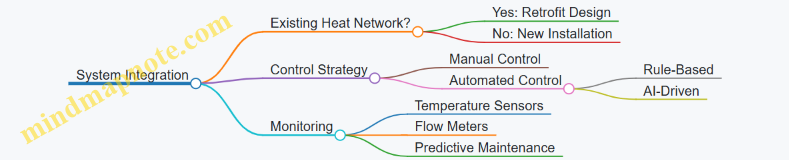
Practical Example: Roadmap in Action
Context: A chemical plant wants to integrate TES to reduce natural gas consumption.
- Identify Needs: Reduce peak heat demand by 25%, improve sustainability.
- Material Selection: Choose PCM with melting point ~150°C to match process heat.
- Design & Integration: Modular TES tanks connected to heat exchanger loops.
- Digitalization: Install IoT sensors; develop AI control for charge/discharge scheduling.
- Pilot Testing: Small-scale TES installed; data collected over 6 months.
- Scale-Up: Full system deployed; financing secured through energy efficiency grants.
- Continuous Improvement: Ongoing monitoring; lessons shared at industry conferences.
This strategic roadmap, supported by clear examples and mind maps, empowers researchers and practitioners to systematically approach next generation TES and industrial heat system projects—maximizing technical success and industrial impact.
12.3 Building Collaborative Networks for Innovation
In the rapidly evolving fields of Thermal Energy Storage (TES) and Industrial Heat Systems, collaboration is a key driver of innovation. Building robust networks among researchers, engineers, industry stakeholders, and policymakers accelerates knowledge sharing, resource pooling, and the development of cutting-edge solutions. This section explores strategies to foster collaboration, supported by practical examples and mind maps to visualize the process.
Why Build Collaborative Networks?
- Accelerate Innovation: Combining diverse expertise leads to breakthrough technologies.
- Resource Optimization: Sharing facilities, data, and funding reduces duplication.
- Market Access: Partnerships open new commercial opportunities.
- Policy Influence: Unified voices can shape supportive regulations.
Key Components of Collaborative Networks
Best Practices for Building Effective Networks
- Identify Common Goals: Align on shared challenges and objectives.
- Establish Clear Communication Channels: Use digital platforms and regular meetings.
- Encourage Multidisciplinary Participation: Include diverse expertise for holistic solutions.
- Develop Trust and Transparency: Foster open data sharing and intellectual property agreements.
- Leverage Existing Frameworks: Build upon established consortia and industry groups.
- Promote Capacity Building: Organize training and workshops to upskill members.
Example: The Thermal Energy Storage Innovation Consortium (TESIC)
Overview: TESIC is a global network uniting universities, industrial partners, and government agencies to accelerate TES technology development.
-
Activities:
- Annual international conferences.
- Shared open-access database of TES materials and performance data.
- Joint pilot projects demonstrating novel TES systems.
- Policy advocacy for TES-friendly regulations.
-
Impact:
- Reduced development time for new phase change materials by 30%.
- Enabled cross-sector knowledge transfer between chemical and steel industries.
Mind Map: Steps to Establish a Collaborative Network
Example: Cross-Industry Collaboration for Waste Heat Recovery
A consortium involving a steel manufacturer, a chemical plant, and a TES technology provider collaborated to develop a modular TES system capturing waste heat from multiple sources. Through shared pilot testing and data exchange, they optimized system design, achieving a 15% increase in overall energy efficiency. This collaboration was facilitated by a regional energy innovation hub that provided meeting spaces, funding coordination, and technical workshops.
Digital Tools to Support Collaboration
- Online Platforms: Slack, Microsoft Teams, or custom portals for real-time communication.
- Data Repositories: Cloud-based databases for sharing experimental results and system performance.
- Project Management: Tools like Trello or Asana to track tasks and milestones.
- Virtual Workshops: Webinars and video conferencing to engage geographically dispersed members.
Summary
Building collaborative networks is essential for advancing next-generation TES and industrial heat systems. By integrating diverse expertise, sharing resources, and fostering open communication, these networks catalyze innovation and accelerate deployment. Practitioners are encouraged to actively participate in or initiate such networks, leveraging best practices and digital tools to maximize impact.
12.4 Final Thoughts: The Path Forward for Next Generation Thermal Energy Storage
As we conclude this comprehensive exploration of next generation thermal energy storage (TES) and industrial heat systems, it is clear that the future holds immense potential for innovation, integration, and sustainability. The path forward involves a multi-faceted approach that combines advanced materials, smart system design, digitalization, and collaborative efforts across industries and research domains.
Key Pillars for Future TES Development
Embracing Advanced Materials and Technologies
The continuous development of novel materials such as enhanced PCMs and thermochemical compounds will drive TES efficiency and capacity. For example, a recent pilot project in a steel manufacturing plant utilized a nanocomposite PCM that improved heat retention by 20%, enabling longer storage durations and reducing fossil fuel dependency.
System Integration and Flexibility
Future TES systems must be modular and adaptable to diverse industrial environments. Consider the example of a modular molten salt TES system implemented in a chemical processing facility, which allowed incremental capacity expansion aligned with production growth, minimizing upfront capital expenditure and operational disruption.
Digitalization as a Game Changer
Integrating AI-driven control algorithms and IoT-enabled sensors facilitates real-time monitoring and optimization. A paper mill recently deployed an AI-based TES control system that dynamically adjusted heat storage and release, resulting in a 15% reduction in energy consumption and enhanced system reliability.
Sustainability and Circular Economy
TES technologies must align with sustainability goals by minimizing environmental impact and promoting resource efficiency. For instance, a glass manufacturing plant integrated waste heat recovery TES with lifecycle assessment tools to reduce carbon emissions by 25%, exemplifying a circular approach to industrial heat management.
Collaborative Innovation and Knowledge Sharing
The complexity and scale of next generation TES demand collaboration among academia, industry, and policymakers. Initiatives like the International Thermal Energy Storage Consortium (ITESC) foster cross-sector partnerships that accelerate technology transfer and standardization.

Final Example: Integrated TES Roadmap for a Multi-Industry Zone
Imagine a multi-industry zone combining steel, chemical, and food processing plants. By deploying a hybrid TES system integrating molten salt storage, PCMs, and solar thermal inputs, managed through AI-based control and supported by a collaborative research network, the zone achieves:
- 30% reduction in fossil fuel usage
- Enhanced operational flexibility
- Lower emissions and waste heat utilization
- Scalable and cost-effective energy management
Conclusion
The path forward for next generation thermal energy storage is a synergistic journey that blends cutting-edge science, smart engineering, digital intelligence, and sustainable practices. By embracing these elements and fostering collaboration, energy systems researchers, thermal engineers, and industrial energy planners can unlock unprecedented efficiencies and environmental benefits, shaping a resilient and low-carbon industrial future.