The Creator Economy Playbook: Monetize Your Content in 2025
1. Understanding the Creator Economy Landscape in 2025
1.1 What is the Creator Economy? Definitions and Scope
The Creator Economy refers to the ecosystem where independent content creators, such as video creators, podcasters, content influencers, and social media marketers, produce and monetize original content directly for their audiences. Unlike traditional media models that rely on intermediaries like studios or publishers, the creator economy empowers individuals to build personal brands, engage communities, and generate income through diverse revenue streams.
Definition and Core Components
- Creators: Individuals or small teams producing content across digital platforms.
- Platforms: Digital spaces like YouTube, TikTok, Patreon, Spotify, and Substack that enable content distribution and monetization.
- Audience: Followers, fans, or subscribers who consume and support creator content.
- Monetization: Methods creators use to earn revenue, including ads, sponsorships, subscriptions, merchandise, and more.
Mind Map: The Creator Economy Overview
Scope of the Creator Economy in 2025
The creator economy has expanded beyond simple content sharing to a multifaceted business model. In 2025, creators are not only entertainers or educators but entrepreneurs managing brands, products, and communities. The scope includes:
- Multi-platform presence: Creators often maintain profiles on several platforms to diversify reach and income.
- Diverse revenue streams: Combining ads, paid memberships, digital products, live events, and NFTs.
- Direct audience relationships: Using tools like newsletters and Discord communities to foster loyalty.
- Data-driven strategies: Leveraging analytics to optimize content and monetization.
Example: How a Podcaster Defines Their Role in the Creator Economy
Sarah, a health and wellness podcaster, started by sharing free weekly episodes on Spotify. Over time, she built a dedicated audience and expanded her presence to YouTube and Instagram. In 2025, Sarah offers exclusive bonus episodes via a subscription on Patreon, sells branded merchandise, and partners with wellness brands for sponsorships. She also hosts live virtual workshops, creating multiple income streams while maintaining direct engagement with her community.
Mind Map: Sarah’s Creator Economy Model
Why Understanding the Creator Economy Matters
For video creators, podcasters, content influencers, and social media marketers, grasping the full definition and scope of the creator economy is essential to:
- Identify opportunities to monetize content effectively.
- Choose the right platforms and tools for growth.
- Build sustainable careers by diversifying income.
- Stay adaptable in a rapidly evolving digital landscape.
In summary, the creator economy is a dynamic, creator-driven ecosystem that blends creativity, entrepreneurship, and technology to empower individuals to build thriving businesses around their content.
1.2 Key Trends Shaping Content Monetization in 2025
The creator economy is evolving rapidly, and 2025 brings new dynamics that content creators must understand to monetize effectively. Below are the key trends shaping content monetization this year, each accompanied by practical examples and mind maps to visualize the concepts.
Rise of Subscription-Based Models
Creators are increasingly moving from ad-dependent income to subscription models, offering exclusive content and perks to paying fans.
- Example: A podcaster launches a Patreon page offering early episode access, bonus content, and Q&A sessions, generating steady monthly revenue.
Integration of AI Tools in Content Creation and Monetization
AI-powered tools help creators optimize content, automate editing, and personalize audience engagement, boosting monetization potential.
- Example: A social media marketer uses AI-driven analytics to identify the best posting times and content formats, increasing engagement and sponsorship offers.
Expansion of NFTs and Digital Collectibles
Non-fungible tokens (NFTs) allow creators to sell unique digital assets, opening new revenue streams and deepening fan engagement.
- Example: A video creator sells limited-edition NFT art tied to their most popular videos, granting owners exclusive access to behind-the-scenes content.
Multi-Platform Monetization Strategies
Creators no longer rely on a single platform but diversify across YouTube, TikTok, podcasts, newsletters, and more to maximize income.
- Example: A content influencer cross-posts short clips on TikTok, full videos on YouTube, and detailed articles in newsletters, monetizing through ads, sponsorships, and subscriptions.
Community-Driven Monetization and Direct Fan Support
Building engaged communities enables creators to monetize through fan donations, merchandise, and exclusive experiences.
- Example: A podcaster hosts live virtual meetups and sells branded merchandise, fostering loyalty and generating additional income.
Emphasis on Data Privacy and Creator-Owned Platforms
With increasing concerns over data privacy, creators are gravitating towards platforms that offer more control and direct relationships with their audience.
- Example: A video creator launches a newsletter on a creator-owned platform to collect first-party data, avoiding algorithm dependency and enhancing monetization.
Summary
The monetization landscape in 2025 is defined by diversification, technology integration, and stronger creator-fan relationships. Embracing subscription models, AI tools, NFTs, multi-platform strategies, community monetization, and privacy-conscious platforms will empower creators to thrive.
By understanding and applying these trends, creators like podcasters, video creators, content influencers, and social media marketers can unlock new revenue streams and build sustainable careers in the evolving creator economy.
1.3 Platforms Dominating the Creator Economy: Opportunities and Challenges
The creator economy in 2025 is shaped by a handful of dominant platforms that offer unique opportunities and challenges for video creators, podcasters, content influencers, and social media marketers. Understanding these platforms’ ecosystems is essential to effectively monetize content and build sustainable careers.
Major Platforms Overview
| Platform | Primary Content Type | Monetization Options | Key Opportunities | Challenges |
|---|---|---|---|---|
| YouTube | Video | Ad revenue, channel memberships, Super Chat, merchandise shelf | Massive audience, diverse monetization, strong analytics | High competition, algorithm changes, demonetization risks |
| TikTok | Short-form video | Creator Fund, brand partnerships, live gifts, e-commerce integration | Viral potential, trend-driven growth, e-commerce integration | Content saturation, fast-changing trends, monetization limits |
| Spotify | Podcasts | Ads, subscriptions, exclusive content deals | Growing podcast audience, premium subscriptions, analytics | Platform exclusivity, revenue share models, discoverability |
| Photos, videos, Reels | Brand partnerships, shopping features, badges in live videos | Strong influencer marketing, integrated shopping, Stories engagement | Algorithm dependency, organic reach decline, content duplication | |
| Patreon | Membership subscriptions | Tiered subscriptions, exclusive content | Direct fan support, predictable income, community building | Requires strong fanbase, content gating challenges |
| Substack | Newsletters, podcasts | Paid subscriptions, sponsorships | Direct monetization, niche audience, content ownership | Limited multimedia support, audience growth challenges |
| Twitch | Live streaming | Subscriptions, bits, ads, sponsorships | Real-time engagement, loyal communities, diverse monetization | High time investment, platform fees, discoverability |
Mind Map: Platform Opportunities and Monetization Models
Opportunities Explained with Examples
-
YouTube: A video creator specializing in tech reviews leveraged YouTube’s channel memberships to offer exclusive tutorials and early access videos. This generated a steady monthly income beyond ad revenue.
-
TikTok: A social media marketer used TikTok’s viral trends and live gifting features to build a loyal audience, then integrated e-commerce by selling branded merchandise directly through TikTok Shopping.
-
Spotify: A podcaster partnered with Spotify for exclusive content deals, increasing their revenue through premium subscriptions while gaining access to Spotify’s advanced listener analytics.
-
Patreon: An influencer offering behind-the-scenes content and personalized shoutouts used Patreon’s tiered subscriptions to create a predictable income stream supported by a dedicated fanbase.
Challenges and How to Overcome Them
-
Algorithm Dependency: Platforms like Instagram and TikTok frequently update algorithms, impacting organic reach. Creators should diversify content distribution and build owned audiences via email lists or personal websites.
-
Monetization Limits: Some platforms have strict eligibility criteria for monetization (e.g., YouTube’s 1,000 subscribers and 4,000 watch hours). Creators can supplement income through multiple platforms or direct fan support.
-
Content Saturation: High competition makes discoverability difficult. Using niche targeting, SEO optimization, and collaborations can help stand out.
-
Platform Fees and Revenue Share: Platforms take a cut of earnings (e.g., Twitch’s subscription revenue split). Creators should factor fees into pricing and explore direct monetization options.
Mind Map: Challenges and Solutions
Integrated Example: Podcaster Navigating Platforms
Jessica, a podcaster focusing on wellness, started on Spotify but faced discoverability challenges. She expanded to YouTube by uploading video versions of her episodes, tapping into YouTube’s ad revenue and memberships. She also launched a Patreon offering exclusive Q&A sessions and early episode access. By cross-promoting on Instagram and using email newsletters, Jessica diversified her audience and income streams, reducing reliance on any single platform.
In conclusion, mastering the dominant platforms in the creator economy requires understanding their unique monetization models, leveraging their strengths, and strategically mitigating challenges. This multi-platform approach is key to thriving as a content creator in 2025.
1.4 Case Study: How a Podcaster Leveraged Emerging Platforms to Triple Income
In 2025, the podcasting landscape continues to evolve rapidly, with new platforms and monetization opportunities emerging. This case study explores how Sarah, an independent podcaster focusing on personal development, successfully tripled her income by strategically leveraging emerging platforms and adopting best practices.
Background
Sarah started her podcast “Growth Mindset Daily” in 2021, initially relying on traditional sponsorships and listener donations. While she built a loyal audience, her income plateaued. In 2024, she decided to explore emerging platforms and diversify her monetization strategies.
Step 1: Identifying Emerging Platforms
Sarah researched platforms that were gaining traction in the creator economy, focusing on those offering innovative monetization features:
- Spotify’s Anchor Sponsorships: Automated sponsorship matching
- Patreon’s New Membership Tiers: Exclusive content and community access
- Clubhouse & Twitter Spaces: Live audio engagement
- Substack for Podcasts: Newsletter + podcast integration
- Audius: Decentralized audio platform with crypto incentives
Step 2: Creating a Multi-Platform Presence
Sarah expanded her presence beyond traditional podcast apps:
- Repurposed podcast episodes into short clips for TikTok and Instagram Reels to attract younger audiences.
- Hosted live Q&A sessions on Clubhouse and Twitter Spaces, building real-time engagement.
- Launched a newsletter on Substack combining show notes, exclusive interviews, and behind-the-scenes content.
Step 3: Monetization Strategies on Emerging Platforms
Sarah implemented several monetization tactics:
- Anchor Sponsorships: Automated ad placements increased sponsorship revenue by 40% without extra effort.
- Patreon Tiers: Introduced exclusive monthly webinars and downloadable resources, increasing patron count by 60%.
- Live Audio Events: Sold tickets for special live episodes on Clubhouse, generating direct revenue and boosting listener loyalty.
- Audius Crypto Tips: Enabled fans to tip in cryptocurrency, adding a new income stream.
Mind Map: Sarah’s Multi-Platform Monetization Strategy
Step 4: Results and Impact
Within 12 months of adopting this multi-platform approach:
- Income tripled, moving from $2,000/month to $6,000/month.
- Audience grew by 150%, with significant engagement on live platforms.
- Diversified income reduced dependence on any single platform.
Example: TikTok Clip Repurposing
Sarah took a 5-minute podcast segment on “Overcoming Fear” and created a 60-second TikTok video highlighting the key takeaway. This clip went viral, gaining 500,000 views and driving new listeners to her full episodes.
Best Practices Illustrated
- Leverage platform-specific features: Using Anchor’s automated sponsorships saved time and increased revenue.
- Engage audiences live: Live audio sessions created intimacy and monetization via ticket sales.
- Repurpose content smartly: Short clips on TikTok and Instagram expanded reach without extra recording.
- Diversify income streams: Combining subscriptions, sponsorships, live events, and crypto tips mitigated risk.
Final Thoughts
Sarah’s case exemplifies how podcasters can thrive in 2025 by embracing emerging platforms and innovative monetization models. The key is to remain adaptable, experiment with new tools, and build authentic connections with audiences across multiple channels.
1.5 Identifying Your Niche and Audience in a Saturated Market
In today’s creator economy, the market is flooded with content across every imaginable topic. To stand out and monetize effectively, identifying a clear niche and understanding your target audience is crucial. This section will guide you through practical steps, mind maps, and real-world examples to help you carve your unique space.
Why Niche Identification Matters
- Focuses your content creation efforts
- Builds a loyal, engaged audience
- Attracts relevant sponsorships and partnerships
- Reduces competition by targeting specific needs
Step 1: Brainstorm Your Interests and Strengths
Start by listing topics you are passionate about and have expertise in. Passion sustains long-term content creation, while expertise builds credibility.
Mind Map: Brainstorming Your Niche
Step 2: Analyze Market Demand and Saturation
Use tools like Google Trends, YouTube search autocomplete, and social media hashtags to gauge interest levels and saturation.
Mind Map: Market Demand Analysis
Example: A podcaster interested in “personal finance” notices “financial independence for millennials” has growing search volume but fewer quality podcasts. This signals a potential niche.
Step 3: Define Your Target Audience
Create detailed audience personas including demographics, interests, pain points, and content consumption habits.
Mind Map: Audience Persona
Example: A video creator focusing on “quick vegan meals” targets busy urban millennials who want healthy, easy recipes under 15 minutes.
Step 4: Validate Your Niche
Test your niche by creating sample content and measuring engagement. Use surveys, polls, and feedback to refine.
Example: A social media marketer launches a mini-series on “AI tools for small businesses.” After posting three videos, they analyze comments and shares to confirm audience interest.
Step 5: Differentiate Your Content
Find your unique angle or voice to stand out. This could be your presentation style, depth of knowledge, or a sub-niche.
Mind Map: Differentiation Strategies
Example: A content influencer in fitness chooses to focus on “strength training for new moms,” combining expertise with a personal story to connect deeply.
Summary
Identifying your niche and audience involves introspection, market research, audience profiling, validation, and differentiation. By following these steps, you position yourself to create content that resonates, builds loyalty, and monetizes effectively even in saturated markets.
Quick Recap Mind Map
Mind Map: Identifying Your Niche & Audience
By applying these strategies, creators like podcasters, video creators, and social media marketers can confidently navigate the crowded digital space and build sustainable, monetizable content businesses in 2025.
2. Building a Strong Personal Brand as a Content Creator
2.1 Crafting Your Unique Value Proposition
A Unique Value Proposition (UVP) is the clear statement that describes the benefit of your content, how you solve your audience’s needs, and what distinguishes you from other creators. Crafting a compelling UVP is essential for standing out in the crowded creator economy of 2025.
Why Your UVP Matters
- Attracts the right audience: Helps potential followers quickly understand why they should engage with your content.
- Guides content creation: Keeps your messaging consistent and aligned with your audience’s expectations.
- Supports monetization: Brands and sponsors look for creators with a clear, differentiated value.
Step-by-Step Guide to Crafting Your UVP
Identify Your Audience’s Core Needs
- Who are they?
- What problems or desires do they have?
Define Your Content’s Primary Benefit
- What unique solution or experience do you provide?
Highlight What Makes You Different
- Your style, expertise, or approach
Keep It Clear and Concise
- Avoid jargon; be straightforward and memorable
Mind Map: Crafting Your UVP
Example 1: Video Creator UVP
Creator: Emma, a fitness video creator
- Audience: Busy professionals wanting quick, effective workouts
- Benefit: 15-minute workouts that fit into a hectic schedule
- Differentiator: Uses scientifically-backed routines with a friendly, motivational tone
UVP: “Empowering busy professionals to stay fit with quick, science-backed workouts you can do anywhere.”
Example 2: Podcaster UVP
Creator: James, a tech podcast host
- Audience: Tech enthusiasts and early adopters
- Benefit: Deep dives into emerging tech trends explained simply
- Differentiator: Combines expert interviews with real-world applications
UVP: “Making cutting-edge technology accessible and actionable for curious minds.”
Mind Map: UVP Examples Breakdown
Tips for Refining Your UVP
- Test your UVP with your audience through polls or feedback.
- Incorporate your UVP into your bio, introductions, and pitches.
- Update your UVP as your content and audience evolve.
By clearly articulating your Unique Value Proposition, you create a strong foundation that not only attracts and retains your ideal audience but also opens doors for monetization opportunities in the creator economy.
2.2 Visual Identity and Consistent Messaging Across Channels
Creating a strong visual identity and maintaining consistent messaging are crucial for content creators aiming to build trust, recognition, and loyalty across their audience. This section will guide you through the essential elements of visual identity, how to develop them, and best practices for consistent messaging across multiple platforms.
What is Visual Identity?
Visual identity is the visible elements of your brand — such as colors, typography, logos, imagery, and style — that distinguish you from others and evoke a specific feeling or association in your audience.
Why Consistency Matters
Consistency across channels reinforces your brand personality, builds credibility, and makes your content instantly recognizable. Without it, your audience may feel disconnected or confused about your brand’s message.
Core Components of Visual Identity
Example:
- A video creator uses a bold, vibrant color palette (e.g., electric blue and neon green) consistently in thumbnails, social media posts, and website design to evoke energy and creativity.
- Their typography is modern sans-serif, used uniformly across all platforms.
Crafting Your Visual Identity: Step-by-Step
- Define Your Brand Personality: Are you playful, professional, inspirational, or edgy? This guides your visual choices.
- Choose Your Color Palette: Select 2-3 primary colors and complementary secondary colors.
- Select Typography: Pick fonts that align with your personality and ensure readability.
- Design Your Logo: Create a simple, scalable logo that works in different sizes and backgrounds.
- Create Visual Templates: For social media posts, video thumbnails, podcast covers, etc.
- Document Guidelines: Write a brand style guide to maintain consistency.
Consistent Messaging Across Channels
Messaging consistency means your tone, voice, and core messages remain aligned whether you’re posting on Instagram, YouTube, Twitter, or your podcast.
Example:
- A podcaster maintains an inspirational and empathetic tone across episodes, social media captions, and newsletters.
- Their core message focuses on personal growth and overcoming challenges, which is reflected in all content formats.
Tips for Maintaining Consistency
- Use a Content Calendar: Plan posts and messaging themes in advance.
- Leverage Templates: Use graphic design tools like Canva or Adobe Spark to create reusable templates.
- Cross-Platform Branding: Ensure your profile pictures, banners, and bios reflect your brand identity.
- Regular Audits: Periodically review your channels to ensure alignment.
Real-World Example: Video Creator “LunaVids”
- Visual Identity: LunaVids uses a pastel color palette with lavender and peach tones, paired with a clean serif font that conveys elegance.
- Messaging: Their tone is warm and friendly, focusing on storytelling and creativity.
- Implementation: Across YouTube thumbnails, Instagram stories, and Twitter posts, LunaVids consistently uses the same logo placement, color overlays, and hashtag style.
- Result: This consistency helped LunaVids grow a recognizable brand, leading to sponsorship deals and a loyal fanbase.
Summary
Developing a strong visual identity and consistent messaging is foundational to standing out in the creator economy. By thoughtfully designing your brand elements and maintaining a unified voice, you create a memorable experience that resonates with your audience and supports your monetization goals.
2.3 Storytelling Techniques That Engage and Convert
Storytelling is the heart of content creation. It transforms simple messages into memorable experiences that resonate with your audience and inspire action. For video creators, podcasters, content influencers, and social media marketers, mastering storytelling techniques is essential to build trust, evoke emotions, and ultimately convert viewers or listeners into loyal fans or customers.
Why Storytelling Matters
- Builds emotional connection
- Enhances message retention
- Differentiates your brand
- Encourages sharing and engagement
Core Storytelling Techniques
-
The Hero’s Journey
- Structure your content around a protagonist (often your audience or yourself) who faces challenges and emerges transformed.
- Example: A podcaster shares their personal struggle with burnout and how they overcame it, inspiring listeners to take action on self-care.
-
Show, Don’t Tell
- Use vivid descriptions, visuals, or audio cues to immerse your audience rather than just stating facts.
- Example: A video creator uses cinematic shots and background music to convey the excitement of launching a new product instead of just announcing it.
-
Emotional Triggers
- Incorporate emotions such as joy, surprise, fear, or empathy to make your story relatable.
- Example: A social media marketer crafts a campaign highlighting customer testimonials that evoke trust and happiness.
-
Conflict and Resolution
- Introduce a problem or tension and then provide a satisfying solution.
- Example: A content influencer discusses common challenges in starting a side hustle and shares actionable tips to overcome them.
-
Authenticity and Vulnerability
- Being genuine and open builds credibility and deepens audience connection.
- Example: A podcaster admits to past failures and lessons learned, making their advice more trustworthy.
Mind Map: Storytelling Techniques Overview
How to Apply Storytelling in Different Creator Roles
| Role | Storytelling Application Example |
|---|---|
| Video Creators | Use narrative arcs in vlogs to show growth or challenges faced. |
| Podcasters | Structure episodes around a central story or guest journey. |
| Content Influencers | Share personal anecdotes that relate to the product or lifestyle. |
| Social Media Marketers | Craft brand stories that highlight customer transformations. |
Example: Video Creator Using Storytelling to Convert
Scenario: Launching a new fitness program.
- Hook: Start with a relatable struggle – “I used to feel exhausted after every workout.”
- Conflict: Share the frustration of not seeing results.
- Resolution: Introduce the new program that changed everything.
- Call to Action: Invite viewers to join the program with a limited-time offer.
This narrative keeps viewers emotionally engaged and motivates them to act.
Mind Map: Storytelling Flow for Conversion
Tips for Effective Storytelling
- Keep it concise and focused.
- Use relatable characters or yourself as the protagonist.
- Incorporate sensory details to create vivid imagery.
- End with a strong call to action that aligns with your monetization goals.
- Test different story angles and analyze audience response.
Mastering storytelling is a continuous process. By weaving these techniques into your content, you create compelling narratives that not only engage but also convert your audience, driving growth and monetization in the creator economy of 2025.
2.4 Example: A Video Creator’s Journey to Building a Loyal Community
Building a loyal community is one of the most valuable assets a video creator can achieve. Let’s explore the journey of “Alex,” a mid-tier video creator who transformed from posting sporadic content to cultivating a thriving, engaged audience that supports his work consistently.
Step 1: Identifying the Core Audience and Niche
Alex started by narrowing down his content focus to tech gadget reviews, targeting young professionals interested in affordable yet innovative tech.
Example: Alex analyzed his existing video analytics and social media comments to understand who was engaging most with his content, then tailored future videos to address their specific interests.
Step 2: Consistent Content Schedule with Authentic Engagement
Alex committed to a consistent posting schedule: two videos per week, supplemented by daily Instagram stories and community polls.
Example: By replying personally to comments and featuring fan-submitted questions in his videos, Alex made viewers feel seen and valued, increasing repeat engagement.
Step 3: Leveraging Multiple Platforms for Community Growth
Alex expanded beyond YouTube by creating a Discord server and a newsletter, providing exclusive content and direct communication channels.
Example: The Discord server allowed fans to interact with Alex and each other, fostering a sense of belonging and encouraging word-of-mouth growth.
Step 4: Offering Value Through Exclusive Content and Perks
To deepen loyalty, Alex introduced a Patreon with tiered rewards such as behind-the-scenes videos, early access, and monthly live hangouts.
Example: Fans who joined Patreon felt they were part of an exclusive club, which increased their emotional investment and willingness to support financially.
Step 5: Collaborations and Community Events
Alex collaborated with other tech creators for joint videos and hosted virtual meetups, which helped cross-pollinate audiences and strengthen community bonds.
Example: A collaboration video with a popular tech influencer doubled Alex’s subscriber count within a month, while giveaways incentivized active participation.
Summary of Best Practices from Alex’s Journey
- Know your audience deeply: Use analytics and direct feedback.
- Be consistent and authentic: Regular content and genuine interaction.
- Diversify platforms: Create spaces for community beyond just video.
- Offer exclusive value: Reward loyal fans with perks.
- Collaborate and engage: Grow through partnerships and events.
By following these integrated steps, Alex built a loyal community that not only consumes his content but actively supports and promotes it, creating a sustainable foundation for monetization and growth.
2.5 Leveraging Social Proof and Testimonials for Credibility
Social proof and testimonials are powerful tools that content creators can use to build trust, enhance credibility, and ultimately drive monetization. In the saturated creator economy of 2025, audiences seek validation before engaging or purchasing. Leveraging social proof effectively can differentiate you from competitors and foster deeper connections with your audience.
What is Social Proof?
Social proof is the psychological phenomenon where people rely on the actions and opinions of others to determine their own behavior. For creators, this means showcasing evidence that others value your content or products.
Types of Social Proof Relevant to Creators:
- Testimonials: Positive feedback from viewers, listeners, or customers.
- User-generated Content (UGC): Content created by your audience showcasing your work.
- Follower Counts & Engagement Metrics: Number of followers, likes, shares, comments.
- Expert Endorsements: Recommendations from industry leaders or influencers.
- Case Studies & Success Stories: Detailed examples of how your content or products helped others.
Mind Map: Leveraging Social Proof
Best Practices for Using Testimonials
- Authenticity is Key: Use real testimonials with names, photos, or social handles to increase trust.
- Diverse Formats: Incorporate video, audio, and written testimonials to appeal to different audience preferences.
- Highlight Specific Benefits: Testimonials that mention concrete results or emotional impact resonate more.
- Place Strategically: Feature testimonials on landing pages, social media bios, and within content.
- Update Regularly: Keep testimonials fresh to reflect current audience sentiment.
Example: Video Creator Using Testimonials
Sarah, a YouTube fitness creator, includes short video testimonials from her subscribers who achieved fitness goals using her workout plans. She pins these videos in her community tab and shares snippets on Instagram Stories with swipe-up links to her paid programs. This social proof helped increase her program sales by 30% in 3 months.
Mind Map: Integrating Testimonials into Your Content Strategy
User-Generated Content (UGC) as Social Proof
Encourage your audience to create content related to your brand or niche. For example, a podcaster might ask listeners to share their favorite episode moments on Twitter or Instagram with a branded hashtag.
Example:
Mark, a tech podcaster, launched a hashtag campaign #MarkTechTalks where listeners post clips or quotes from episodes. He regularly features these posts in his episodes and social media, creating a community vibe and authentic social proof that attracts sponsors.
Displaying Metrics for Credibility
While follower counts alone don’t guarantee engagement, displaying them alongside engagement rates (comments, shares) can boost credibility.
Example:
Lina, a social media marketer, showcases her “10K+ followers with 8% engagement rate” badge on her website and media kit, which has helped her secure higher-value brand deals.
Expert Endorsements and Collaborations
Partnering with respected figures in your niche can serve as powerful social proof.
Example:
Jason, a content influencer, collaborated with a well-known industry expert for a webinar. He used the expert’s endorsement in his promotional materials, which increased attendance and conversions.
Summary
Leveraging social proof and testimonials is essential for building credibility in the creator economy. By authentically showcasing positive feedback, encouraging user-generated content, highlighting engagement metrics, and securing expert endorsements, creators can build trust and accelerate monetization.
Quick Checklist:
- Collect and curate authentic testimonials in multiple formats.
- Encourage and share user-generated content with branded hashtags.
- Display follower and engagement metrics transparently.
- Seek collaborations and endorsements from industry experts.
- Regularly update social proof elements across all channels.
By integrating these strategies thoughtfully, you can create a compelling narrative of trust and authority that resonates with your audience and partners alike.
3. Content Strategy and Creation Best Practices
3.1 Planning Content with Monetization in Mind
Monetizing your content effectively starts long before you hit the record or publish button. It requires strategic planning that aligns your creative efforts with revenue opportunities without compromising authenticity or audience trust. In this section, we’ll explore how to plan content with monetization at the core, supported by practical mind maps and real-world examples.
Why Plan Content with Monetization in Mind?
- Ensures your content serves both audience value and business goals.
- Helps identify the best monetization models suited for your niche.
- Prevents last-minute scrambling for sponsorships or product placements.
- Creates a sustainable income stream rather than one-off earnings.
Step 1: Define Your Monetization Goals
Start by clarifying what you want to achieve financially. Are you aiming for passive income, brand partnerships, or direct sales? Your goals will shape your content strategy.
Step 2: Understand Your Audience’s Needs and Preferences
Monetization works best when it aligns with what your audience values. Conduct surveys, analyze engagement data, and listen to feedback.
Step 3: Map Content Types to Monetization Models
Not all content formats monetize equally. For example, long-form podcasts may be ideal for sponsorships, while short videos excel in affiliate marketing.
Mind Map: Content Planning with Monetization Focus
Step 4: Develop a Content Calendar Aligned with Monetization Opportunities
Plan your content around key dates, product launches, or seasonal trends to maximize revenue potential.
Step 5: Integrate Calls-to-Action (CTAs) Naturally
Monetization CTAs should feel like a natural part of your content, not intrusive sales pitches.
Example 1: Video Creator Planning for Affiliate Marketing
Sarah, a tech video creator, plans a series reviewing the latest gadgets. She researches affiliate programs for each product and schedules videos to coincide with product launches. Each video includes honest reviews and affiliate links in descriptions, resulting in a 30% increase in affiliate revenue within three months.
Example 2: Podcaster Leveraging Sponsorships
James hosts a weekly true-crime podcast. He plans episodes around themes that appeal to specific sponsors (e.g., safety apps, book publishers). By pitching sponsors aligned with episode topics ahead of time, he secures better deals and integrates sponsor messages seamlessly.
Mind Map: Monetization-Driven Content Calendar Example
Tips for Effective Monetization Planning
- Diversify revenue streams: Don’t rely on a single source.
- Maintain authenticity: Only promote products or services you believe in.
- Track performance: Use analytics to refine your approach.
- Engage your audience: Build trust to increase conversion rates.
By embedding monetization considerations into your content planning process, you create a roadmap that balances creativity with profitability, ensuring your efforts translate into sustainable income.
3.2 Balancing Quality and Quantity: Finding the Sweet Spot
In the fast-paced world of content creation, striking the right balance between quality and quantity is crucial. Too much focus on quantity can lead to burnout and diluted content, while prioritizing only quality might slow growth and reduce audience engagement. Finding the “sweet spot” means producing enough high-quality content to keep your audience engaged and your channels active without compromising creativity or authenticity.
Why Balance Matters
- Audience Expectations: Regular posting keeps your audience engaged and signals platform algorithms to boost your content.
- Sustainable Workflow: Avoid burnout by setting realistic content production goals.
- Brand Reputation: High-quality content builds trust and authority.
Mind Map: Factors Influencing Quality vs. Quantity Balance
Mind Map: Strategies to Find the Sweet Spot
Practical Examples
Example 1: Video Creator Balancing Quality and Quantity
Sarah, a YouTube content creator, initially aimed to upload daily videos. However, she noticed a drop in video quality and viewer retention. After analyzing her analytics, she shifted to a schedule of 3 videos per week, each with better scripting, editing, and thumbnails. This resulted in higher watch times and subscriber growth.
Example 2: Podcaster Managing Episode Frequency
John hosts a weekly podcast but wanted to increase output. Instead of releasing two full episodes per week, he introduced shorter “mini-episodes” or Q&A sessions alongside his main weekly show. This maintained quality for main episodes while increasing overall content quantity.
Example 3: Social Media Marketer Using Repurposing
Lina manages multiple social media channels. She creates one long-form video per week and repurposes it into multiple short clips, quotes, and carousel posts across Instagram, TikTok, and LinkedIn. This approach balances quality (one well-produced video) with quantity (many posts), maximizing reach without extra workload.
Tips for Content Creators
- Prioritize Your Best Content: Focus on producing fewer pieces with higher impact.
- Use Audience Feedback: Let your community guide how often and what type of content they want.
- Leverage Analytics: Identify which content types and frequencies yield the best engagement.
- Batch Work: Create multiple pieces in one session to improve efficiency.
- Repurpose Creatively: Turn one piece of content into many formats.
Balancing quality and quantity is an ongoing process that requires experimentation and adaptation. By understanding your audience, leveraging tools, and setting achievable goals, you can find the sweet spot that fuels growth, engagement, and sustainable content creation.
3.3 Utilizing Data Analytics to Refine Content Performance
In the fast-evolving creator economy of 2025, data analytics has become an indispensable tool for content creators looking to optimize their output and maximize engagement and revenue. By understanding and leveraging analytics, creators can make informed decisions that refine their content strategy, improve audience targeting, and ultimately boost monetization.
Why Data Analytics Matters for Creators
- Informed Decision-Making: Data removes guesswork by showing what content resonates.
- Audience Insights: Understand demographics, preferences, and behavior.
- Performance Tracking: Measure KPIs like views, watch time, engagement, and conversions.
- Optimization: Identify high-performing content and replicate success.
- Monetization: Pinpoint revenue-driving content and optimize sponsorships or ads.
Key Metrics to Track
- Engagement Rate: Likes, comments, shares relative to audience size.
- Watch Time / Average View Duration: How long viewers stay engaged.
- Click-Through Rate (CTR): Percentage clicking on links or CTAs.
- Conversion Rate: How many complete desired actions (e.g., subscribe, purchase).
- Audience Retention: Drop-off points in videos or podcasts.
- Traffic Sources: Where your audience is coming from (search, social, direct).
Mind Map: Data Analytics Workflow for Content Creators
Example: How a Social Media Marketer Uses A/B Testing to Optimize Posts
Sarah, a social media marketer and content creator, wanted to increase engagement on her Instagram Reels. She created two versions of a video with different hooks and posted them to similar audience segments. Using Instagram Insights, she tracked:
- Views
- Likes
- Shares
- Comments
The version with a more emotional hook outperformed the other by 40% in engagement. Sarah then focused on creating more content with emotional storytelling, increasing her overall reach and attracting brand sponsorships.
Mind Map: A/B Testing Process for Content Optimization
Practical Tips for Using Analytics to Refine Content
- Set Clear Goals: Define what success looks like (e.g., increase watch time by 20%).
- Use Platform Native Analytics: YouTube Studio, Spotify for Podcasters, Facebook Insights provide rich data.
- Leverage Third-Party Tools: Tools like TubeBuddy, Vidooly, or Chartable can offer deeper insights.
- Segment Your Audience: Analyze how different demographics respond to content.
- Monitor Trends Over Time: Look for patterns, not just one-off spikes.
- Test and Iterate: Use A/B testing to validate hypotheses before full rollout.
- Combine Quantitative & Qualitative Data: Use surveys or comments to understand the ‘why’ behind numbers.
Example: Repurposing High-Performing Content Based on Analytics
James, a podcaster, noticed through Spotify analytics that episodes featuring guest experts on marketing strategies had 50% higher listener retention and more shares. Using this insight, he:
- Created a mini-series focused on marketing experts.
- Developed short video clips from these episodes for social media.
- Launched a paid webinar expanding on popular topics.
This data-driven approach led to a 30% increase in his subscription revenue within three months.
Mind Map: Using Analytics to Drive Content Repurposing
Final Thoughts
Utilizing data analytics is no longer optional for creators aiming to thrive in 2025. By systematically collecting, analyzing, and acting on data, creators can refine their content strategies, engage their audience more deeply, and unlock new monetization opportunities. Whether you’re a video creator, podcaster, or social media marketer, embedding analytics into your workflow will empower you to make smarter, more impactful content decisions.
3.4 Example: How a Social Media Marketer Uses A/B Testing to Optimize Posts
A/B testing is a powerful technique that social media marketers use to optimize content performance by comparing two versions of a post to determine which one resonates better with their audience. This method helps in making data-driven decisions rather than relying on guesswork.
What is A/B Testing?
A/B testing (also known as split testing) involves creating two variants of a post (Version A and Version B) that differ in one key element, such as the headline, image, call-to-action (CTA), or posting time. These variants are then shown to different segments of the audience to see which performs better based on predefined metrics like engagement, click-through rate (CTR), or conversions.
Step-by-Step Example: Optimizing a Facebook Post
Scenario: A social media marketer wants to increase engagement on a Facebook post promoting a new online course.
- Version A: Post with a static image and a CTA “Sign up now!”
- Version B: Post with a short video teaser and a CTA “Join the course today!”
Metrics to track: Likes, shares, comments, and click-through rate.
After running the test for 48 hours, Version B (video teaser) shows a 35% higher engagement rate and 20% higher CTR. Based on this data, the marketer decides to use video teasers in future posts.
Mind Map: A/B Testing Process for Social Media Posts
Best Practices for A/B Testing Posts
- Test One Variable at a Time: To accurately identify what causes performance differences.
- Use a Large Enough Sample Size: To ensure statistical significance.
- Run Tests for an Appropriate Duration: Avoid too short or too long tests that can skew results.
- Define Clear Metrics: Know what success looks like before starting.
- Document Results: Keep track of what works for future reference.
Additional Examples of A/B Testing in Social Media Marketing
- Instagram Stories: Testing different sticker types (poll vs quiz) to increase interaction.
- Twitter Posts: Comparing hashtags usage vs no hashtags to measure reach.
- LinkedIn Articles: Testing headline length (short vs long) to boost click rates.
Mind Map: Common Variables to Test in Social Media Posts
Real-World Example: Sarah, a Social Media Marketer
Sarah manages the social media for a fitness brand. She wants to increase sign-ups for their virtual workout sessions. She runs an A/B test on Instagram Stories:
- Version A: Story with a swipe-up link and a motivational quote.
- Version B: Story with a short workout clip and a swipe-up link.
Results: Version B had a 50% higher swipe-up rate. Sarah then incorporated more workout clips in her Stories, leading to a 30% increase in overall session sign-ups over the next month.
By integrating A/B testing into your social media strategy, you can systematically improve your content’s effectiveness, engage your audience more deeply, and ultimately monetize your content more successfully.
3.5 Repurposing Content Across Formats to Maximize Reach
Repurposing content is a powerful strategy that allows creators to extend the lifespan of their work, reach new audiences, and maximize the return on their content creation efforts. Instead of creating new content from scratch every time, repurposing involves transforming existing content into different formats tailored to various platforms and audience preferences.
Why Repurpose Content?
- Broaden Audience Reach: Different people consume content in different ways—some prefer videos, others podcasts, blogs, or social media posts.
- Save Time and Resources: Efficiently use your existing content to create multiple touchpoints.
- Boost SEO and Discoverability: More content formats mean more opportunities to rank on search engines.
- Reinforce Your Message: Repetition across formats helps solidify your brand and message.
Mind Map: Repurposing Content Strategies
Practical Examples
Example 1: Video Creator Repurposing a Tutorial Video
- Original Content: A 10-minute YouTube tutorial on “How to Edit Videos Like a Pro”
- Repurposed Formats:
- Create 3 short clips (30-60 seconds) highlighting key tips for Instagram Reels and TikTok.
- Transcribe the video and turn it into a detailed blog post with screenshots.
- Design an infographic summarizing the “5 Quick Editing Tips” to share on Pinterest.
- Extract the audio and publish it as a podcast episode for listeners on the go.
Example 2: Podcaster Expanding Episode Reach
- Original Content: A 45-minute interview episode with a marketing expert.
- Repurposed Formats:
- Write a blog post summarizing the main insights and linking to the episode.
- Create quote cards with memorable statements from the guest for Twitter and LinkedIn.
- Edit a 2-minute video snippet of the interview for YouTube Shorts.
- Send an email newsletter featuring key takeaways and episode links.
Example 3: Social Media Marketer Leveraging Blog Content
- Original Content: An in-depth blog post on “Top 10 Social Media Trends in 2025”
- Repurposed Formats:
- Develop a slide deck for LinkedIn and SlideShare presentations.
- Create a series of tweets or Twitter threads, each focusing on one trend.
- Design an infographic summarizing all 10 trends for Instagram.
- Host a live webinar discussing the trends in detail, using the blog as a script.
Tips for Effective Repurposing
- Identify Evergreen Content: Focus on content that remains relevant over time for repurposing.
- Tailor to Platform Norms: Adapt format, length, and style to suit the platform’s audience.
- Maintain Consistent Branding: Use your brand’s visual identity and tone across all formats.
- Use Tools to Simplify: Leverage transcription services, video editing apps, and design tools like Canva.
- Track Performance: Monitor which repurposed formats perform best and refine your approach.
By strategically repurposing your content, you not only save time but also increase your visibility and engagement across multiple channels, ultimately driving more monetization opportunities in the creator economy of 2025.
4. Monetization Models and Revenue Streams for Creators
4.1 Advertising and Sponsorship Deals: Negotiation and Execution
Advertising and sponsorship deals remain one of the most lucrative and accessible revenue streams for creators in 2025. Successfully negotiating and executing these deals requires a strategic approach that balances your brand integrity with the sponsor’s goals.
Understanding Advertising vs Sponsorship
- Advertising typically involves direct promotion of a product or service, often through ads embedded in your content.
- Sponsorship is a broader partnership where a brand supports your content creation in exchange for brand exposure, often including mentions, logos, or dedicated content.
Mind Map: Key Components of Advertising and Sponsorship Deals
Best Practices for Negotiation
-
Know Your Worth: Use your audience size, engagement rates, and content niche to justify your rates. For example, a podcaster with 50,000 loyal listeners might charge more than a video creator with 100,000 passive views.
-
Be Clear on Deliverables: Define exactly what the sponsor expects — number of mentions, type of content, and deadlines.
-
Negotiate Beyond Price: Consider additional perks like long-term partnerships, cross-promotion, or exclusive offers.
-
Protect Your Brand: Avoid deals that conflict with your values or alienate your audience.
-
Get Everything in Writing: Always have a contract that outlines terms, payment schedules, and content rights.
Example: Negotiating a Sponsorship Deal as a Video Creator
Sarah, a tech-focused YouTuber with 200,000 subscribers, was approached by a software company for a sponsorship. Instead of accepting the initial flat fee, she proposed a hybrid model: a flat fee plus a revenue share on sales generated through her unique affiliate link. She also negotiated for two dedicated videos and three product mentions in her regular content over three months. This approach increased her earnings by 40% compared to a standard deal.
Execution Tips: Integrating Sponsored Content Naturally
- Storytelling: Incorporate the product or service into your content narrative rather than a hard sell.
- Authenticity: Share personal experiences or honest reviews to build trust.
- Transparency: Use clear disclosures like “Sponsored by” or “Ad” to comply with regulations and maintain audience trust.
Mind Map: Execution Workflow for Sponsored Content
Example: A Podcaster’s Sponsored Segment Execution
James hosts a weekly podcast on personal finance. For a sponsorship with a budgeting app, he created a 3-minute segment sharing how he personally uses the app to save money, followed by a special discount code for listeners. He disclosed the sponsorship upfront and included the sponsor’s mention in the episode description. After publishing, he shared detailed listener engagement metrics with the sponsor, leading to a renewed contract.
Final Tips
- Always tailor sponsorships to fit your audience’s interests.
- Maintain open communication with sponsors to manage expectations.
- Track and analyze the performance of sponsored content to improve future deals.
By mastering the art of negotiation and execution, creators can build sustainable partnerships that benefit both their brand and their sponsors, ensuring long-term success in the creator economy.
4.2 Subscription Models: Patreon, OnlyFans, and Beyond
Subscription models have become a cornerstone for content creators seeking steady, predictable income streams in the creator economy. By offering exclusive content or perks behind a paywall, creators can build deeper relationships with their audience while monetizing their work more sustainably.
What Are Subscription Models?
Subscription models allow creators to charge their audience a recurring fee—usually monthly—in exchange for exclusive access, early releases, or special experiences. This model fosters community and loyalty, as subscribers feel like insiders.
Popular Platforms and Their Unique Features
- Patreon: A pioneer in subscription-based monetization, Patreon enables creators to offer tiered memberships with varying benefits such as exclusive videos, behind-the-scenes content, or direct messaging.
- OnlyFans: Originally known for adult content, OnlyFans has expanded to include fitness coaches, musicians, and other creators offering exclusive content.
- Substack: Focused on newsletters, Substack allows writers and podcasters to monetize their content through subscriptions.
- Ko-fi Gold: Beyond donations, Ko-fi offers monthly memberships with perks.
- YouTube Memberships & Twitch Subscriptions: Integrated subscription options for video creators and streamers.
Mind Map: Subscription Models Overview
Best Practices for Implementing Subscription Models
-
Define Clear Tiers and Benefits
- Example: A podcaster offers $5/month for ad-free episodes, $15/month for bonus episodes and Q&A access, and $30/month for monthly live chats.
-
Deliver Consistent and Valuable Content
- Example: A video creator commits to weekly exclusive tutorials only available to subscribers.
-
Engage Subscribers Personally
- Example: A content influencer hosts monthly AMA (Ask Me Anything) sessions exclusively for subscribers.
-
Promote Your Subscription Offerings Transparently
- Example: A social media marketer uses Instagram Stories to showcase subscriber-only content previews.
-
Leverage Community Features
- Example: Patreon’s Discord integration allows a creator to build a private community for subscribers.
Mind Map: Best Practices for Subscription Success
Real-World Example: Multi-Tier Subscription Success
Creator: Emma, a fitness video creator
- Tier 1 ($5/month): Access to weekly workout videos
- Tier 2 ($15/month): Includes Tier 1 + personalized meal plans
- Tier 3 ($30/month): Includes Tier 2 + monthly live coaching calls
Emma promotes her Patreon through YouTube videos and Instagram posts, showing sneak peeks of workouts. She engages her subscribers via Discord, answering questions and sharing motivational tips. Over 18 months, Emma grew her subscriber base to 1,200 paying members, generating a reliable monthly income that surpassed her ad revenue.
Beyond Traditional Platforms: Building Your Own Subscription Model
Some creators choose to build subscription models on their own websites using tools like Memberful, Podia, or Gumroad. This approach offers:
- Greater control over branding and pricing
- Lower platform fees
- Direct access to subscriber data
Example: A podcaster uses Memberful integrated with their website to offer ad-free episodes and exclusive bonus content. They bundle subscriptions with merchandise discounts, creating a holistic fan experience.
Mind Map: Building Your Own Subscription Model
Challenges and How to Overcome Them
- Subscriber Churn: Keep content fresh and engage regularly to reduce cancellations.
- Content Burnout: Plan content calendars and batch-create exclusive content.
- Platform Dependence: Diversify income streams and consider owning your subscription platform.
Summary
Subscription models empower creators to monetize their audience through recurring revenue while fostering community and loyalty. By choosing the right platform, defining clear tiers, and consistently delivering value, creators can build sustainable income streams that grow with their brand.
4.3 Affiliate Marketing: Choosing the Right Partnerships
Affiliate marketing remains one of the most accessible and scalable monetization strategies for creators in 2025. However, the key to success lies not just in joining any affiliate program but in choosing the right partnerships that align with your brand, audience, and content style.
Why Choosing the Right Affiliate Partnerships Matters
- Audience Trust: Promoting products or services that resonate with your audience builds trust and long-term loyalty.
- Conversion Rates: Relevant partnerships typically yield higher conversion rates and better commissions.
- Brand Alignment: Ensures your personal brand stays authentic and consistent.
Mind Map: Factors to Consider When Choosing Affiliate Partnerships
Step-by-Step Best Practices
-
Know Your Audience Deeply
- Use surveys, polls, and analytics to understand their needs and preferences.
- Example: A podcaster focused on fitness might find affiliate programs for workout gear or nutrition supplements more relevant.
-
Research Affiliate Programs Thoroughly
- Check commission rates, cookie durations, and payout methods.
- Example: A video creator promoting tech gadgets might compare Amazon Associates with specialized tech affiliate programs to find better commissions.
-
Test Products Personally
- Authentic reviews and recommendations convert better.
- Example: A content influencer testing and reviewing a new camera before promoting it to their audience.
-
Evaluate the Brand’s Reputation
- Avoid brands with poor customer service or negative reviews.
- Example: A social media marketer might avoid promoting a software tool with frequent user complaints.
-
Leverage Affiliate Support and Resources
- Use provided creatives, discount codes, and affiliate dashboards to optimize campaigns.
- Example: A podcaster using exclusive discount codes to incentivize listeners.
-
Monitor Performance and Optimize
- Track clicks, conversions, and earnings to focus on high-performing partnerships.
- Example: A video creator using UTM parameters to analyze which affiliate links perform best.
Mind Map: Affiliate Marketing Workflow for Creators
Real-World Example: Multi-Platform Affiliate Success
Case: Sarah, a content influencer specializing in sustainable living, carefully chooses affiliate partnerships to monetize her blog, YouTube channel, and podcast.
- Audience Insight: Sarah knows her audience values eco-friendly and ethically sourced products.
- Partnerships: She partners with brands offering sustainable home goods, organic skincare, and zero-waste products.
- Authentic Content: Sarah creates detailed product reviews, “day in the life” videos using affiliate products, and podcast episodes discussing sustainability tips.
- Exclusive Offers: She negotiates exclusive discount codes for her followers, increasing conversion rates.
- Results: By aligning her affiliate partnerships with her brand and audience, Sarah generates a steady income stream while maintaining trust.
Tips for Podcasters, Video Creators, and Social Media Marketers
- Podcasters: Embed affiliate links in episode show notes and mention products naturally during episodes.
- Video Creators: Use pinned comments and video descriptions for affiliate links; create dedicated review or tutorial videos.
- Social Media Marketers: Use swipe-up links, stories with affiliate tags, and highlight affiliate products in posts.
Choosing the right affiliate partnerships is a strategic process that, when done thoughtfully, can significantly enhance your monetization efforts without compromising your brand integrity or audience trust.
4.4 Selling Digital Products and Courses
In the creator economy, selling digital products and courses has become one of the most lucrative and scalable monetization strategies. Unlike ad revenue or sponsorships, digital products and courses allow creators to build direct relationships with their audience while offering high-value, evergreen content.
Why Sell Digital Products and Courses?
- Ownership & Control: You set the pricing, content, and delivery method.
- Scalability: Once created, products can be sold unlimited times without additional production costs.
- Audience Trust: Offering educational or valuable content builds authority and loyalty.
Types of Digital Products Creators Can Sell
- Ebooks & Guides: Compact, focused content on niche topics.
- Video Courses: Step-by-step tutorials or deep dives.
- Templates & Toolkits: Ready-to-use resources like social media calendars or editing presets.
- Membership Sites: Exclusive content or community access.
- Workshops & Webinars: Live or recorded sessions with interactive elements.
Mind Map: Digital Product Creation Process
Best Practices for Creating and Selling Courses
- Validate Your Idea Before Creation: Use polls or pre-sale offers to confirm demand.
- Structure Content for Easy Consumption: Break lessons into bite-sized modules.
- Incorporate Interactive Elements: Quizzes, assignments, or community forums increase engagement.
- Offer Multiple Pricing Tiers: Basic access, premium content, or 1-on-1 coaching.
- Leverage Testimonials and Case Studies: Social proof drives conversions.
Example: How a Content Influencer Launched a Successful Course
Sarah, a social media marketer, noticed her followers struggled with Instagram growth. She created a 6-week video course titled “Instagram Growth Mastery” that included weekly videos, worksheets, and live Q&A sessions. Before launching, she ran a survey and offered an early bird discount. The course sold out within two weeks, generating $25,000 in revenue. Sarah then used student testimonials to promote a second cohort, doubling her income.
Mind Map: Marketing Your Digital Products
Tools & Platforms to Sell Digital Products and Courses
- Teachable: User-friendly course creation and sales platform.
- Gumroad: Great for selling ebooks, templates, and smaller digital products.
- Kajabi: All-in-one platform for courses, marketing, and memberships.
- Podia: Simplifies selling courses, memberships, and digital downloads.
- Thinkific: Robust course builder with customization options.
Additional Example: Video Creator Selling Preset Packs
Alex, a video creator specializing in travel content, designed custom color grading LUTs (Look-Up Tables) for video editing software. He packaged these as downloadable presets and marketed them through YouTube tutorials showcasing before-and-after effects. His presets became popular among aspiring creators, generating a steady passive income stream.
Summary
Selling digital products and courses empowers creators to monetize their expertise directly and sustainably. By understanding audience needs, structuring content effectively, and employing smart marketing strategies, creators can build scalable income streams that complement other revenue sources in the creator economy.
4.5 Example: A Content Influencer’s Multi-Stream Revenue Approach
In the rapidly evolving creator economy, relying on a single revenue stream can be risky. Successful content influencers diversify their income by leveraging multiple monetization methods simultaneously. Let’s explore a detailed example of how a content influencer, “Alex,” built a robust multi-stream revenue model that maximizes earnings while engaging their audience across platforms.
Mind Map: Alex’s Multi-Stream Revenue Model
Breakdown of Each Revenue Stream with Examples:
-
Advertising
- Sponsorships & Brand Deals: Alex partners with brands relevant to their niche (e.g., tech gadgets for a tech influencer). For instance, a sponsored video reviewing the latest smartphone includes a brand mention and a discount code.
- YouTube Ads: By optimizing video content for watch time and engagement, Alex earns ad revenue through YouTube’s Partner Program.
-
Subscriptions
- Patreon: Alex offers tiered membership levels providing exclusive content such as behind-the-scenes videos, early access, and monthly Q&A sessions.
- Exclusive Discord Community: Subscribers gain access to a private Discord server where Alex interacts directly with fans, fostering community and loyalty.
-
Affiliate Marketing
- Alex shares affiliate links to products they genuinely use and recommend, such as camera equipment or software tools. For example, an Instagram post featuring a favorite microphone includes an affiliate link that earns a commission on sales.
-
Digital Products
- E-books & Guides: Alex creates comprehensive guides on content creation strategies.
- Online Courses: Step-by-step video courses teaching skills like video editing or podcast production.
- Presets & Templates: Selling Lightroom presets or social media templates that save followers time.
-
Crowdfunding
- Alex launches Kickstarter campaigns to fund larger projects, such as a documentary series.
- Accepts one-time donations via platforms like Ko-fi during live streams.
-
Merchandising
- Branded apparel like t-shirts and hoodies featuring Alex’s logo or catchphrases.
- Accessories such as phone cases or stickers sold through an online store.
-
Consulting & Coaching
- Offering personalized 1-on-1 coaching sessions to aspiring creators.
- Hosting group workshops or webinars on monetization techniques.
Integrated Example Scenario:
Alex releases a new YouTube video reviewing a popular gadget. The video includes:
- A sponsored segment by the gadget manufacturer (Advertising).
- Affiliate links in the description for viewers to purchase the gadget (Affiliate Marketing).
- A call-to-action inviting viewers to join Alex’s Patreon for exclusive behind-the-scenes content (Subscriptions).
- Promotion of a related online course teaching how to create tech review videos (Digital Products).
Simultaneously, Alex runs a limited-time Kickstarter campaign to fund a mini-documentary series about emerging tech trends (Crowdfunding), and promotes branded merchandise related to the series.
Why Multi-Stream Revenue Works:
- Risk Mitigation: If one stream underperforms (e.g., ad revenue drops), others compensate.
- Audience Segmentation: Different fans prefer different ways to support.
- Increased Engagement: Offering diverse content types keeps the audience engaged and loyal.
Key Takeaways for Creators:
- Start by mastering one or two revenue streams before expanding.
- Maintain authenticity; only promote products and services you believe in.
- Use analytics to identify which streams perform best and double down.
- Engage your community to understand their preferences and tailor offerings.
By adopting a multi-stream revenue approach like Alex’s, content influencers can build sustainable, scalable income models that thrive in the dynamic creator economy of 2025.
4.6 Crowdfunding and Fan Support Strategies
Crowdfunding and fan support have become pivotal monetization avenues for creators in 2025. These strategies allow creators to build direct financial relationships with their audience, fostering loyalty and sustainable income streams beyond traditional advertising or sponsorships.
Why Crowdfunding and Fan Support?
- Direct Revenue: Receive funds straight from fans without intermediaries.
- Community Building: Strengthens creator-fan relationships.
- Creative Freedom: Less reliance on brand constraints.
Popular Crowdfunding Platforms & Fan Support Models
| Platform | Model Type | Key Features | Example Creator Use Case |
|---|---|---|---|
| Patreon | Subscription-based | Tiered memberships, exclusive content | Podcaster offering bonus episodes and Q&A |
| Kickstarter | Project-based | One-time funding for specific projects | Video creator funding a documentary |
| Ko-fi | One-time & recurring | Tips, commissions, shop integration | Social media marketer receiving small donations |
| Buy Me a Coffee | One-time & recurring | Simple donations, memberships | Content influencer funding new equipment |
| Indiegogo | Project-based | Flexible funding options | Podcast launching a new season |
Mind Map: Crowdfunding Models
Best Practices for Crowdfunding Success
-
Define Clear Goals and Rewards
- Example: A podcaster sets a $5/month tier with early access episodes and a $20 tier with monthly live chats.
-
Communicate Transparently
- Share progress updates and how funds are used.
- Example: A video creator posts monthly behind-the-scenes updates showing how crowdfunding supports production costs.
-
Engage Your Community
- Use polls to let fans choose content or rewards.
- Example: A content influencer lets patrons vote on the next video topic.
-
Offer Exclusive and Valuable Content
- Bonus episodes, tutorials, merchandise discounts.
- Example: A social media marketer offers downloadable templates exclusively to supporters.
-
Promote Consistently Across Channels
- Integrate calls-to-action in videos, podcasts, and social posts.
- Example: A podcaster includes a Patreon shoutout at the end of every episode.
Mind Map: Fan Support Best Practices
Example: Multi-Tier Crowdfunding Strategy
Creator: Emma, a Video Creator specializing in travel content.
- $3/month: “Explorer” tier – Access to monthly travel vlogs 3 days early.
- $10/month: “Adventurer” tier – Includes monthly live Q&A sessions and behind-the-scenes footage.
- $25/month: “Globetrotter” tier – Personalized travel itinerary advice and exclusive merchandise.
Emma uses Patreon to manage tiers and promotes her page during her YouTube videos and Instagram stories. She shares monthly updates on how supporter funds help cover travel costs and equipment upgrades.
Leveraging Fan Support Beyond Crowdfunding Platforms
- Exclusive Discord Communities: Create a private space for supporters to interact.
- Merchandise Drops: Limited edition items for fans who support regularly.
- Live Events & Webinars: Host special sessions only for patrons.
Mind Map: Extending Fan Support Engagement
Real-World Example: Podcaster Using Crowdfunding
Case: James runs a true crime podcast.
- Uses Patreon to offer ad-free episodes and bonus content.
- Runs quarterly crowdfunding campaigns on Kickstarter to fund special investigative series.
- Engages patrons with monthly newsletters and polls to choose topics.
This diversified approach has increased James’ monthly income by 40% and deepened fan loyalty.
Final Tips
- Start small and scale your crowdfunding efforts as your audience grows.
- Always thank and recognize your supporters publicly.
- Experiment with different reward tiers and content types to find what resonates best.
By integrating crowdfunding and fan support strategies thoughtfully, creators can unlock sustainable income streams while fostering a passionate and engaged community.
5. Leveraging Emerging Technologies for Monetization
5.1 NFTs and Digital Collectibles: What Creators Need to Know
Introduction
Non-Fungible Tokens (NFTs) and digital collectibles have emerged as revolutionary tools for creators to monetize their content in 2025. Unlike traditional digital assets, NFTs provide verifiable ownership and scarcity on the blockchain, opening new revenue streams and fan engagement opportunities.
What Are NFTs?
- Definition: NFTs are unique digital tokens representing ownership of a specific item or piece of content, stored on a blockchain.
- Key Characteristics:
- Indivisible and unique
- Verifiable ownership
- Transferable and tradable
Mind Map: Understanding NFTs
Why NFTs Matter for Creators
- Monetization: Sell digital art, music, videos, or exclusive content directly to fans.
- Royalties: Smart contracts enable automatic royalty payments on secondary sales.
- Community Building: Limited edition collectibles create exclusivity and deepen fan engagement.
Example: Video Creator Launching NFT Series
A video creator produces a limited series of behind-the-scenes clips as NFTs. Fans purchase these for exclusive access, and the creator earns royalties each time an NFT is resold.
Types of Digital Collectibles
- Artwork: Digital paintings, illustrations, animations.
- Music & Audio: Exclusive tracks, samples, or podcasts.
- Video Clips: Highlights, tutorials, or unique moments.
- Virtual Goods: Avatars, skins, or virtual event tickets.
Mind Map: Types of Digital Collectibles
How to Create and Sell NFTs
- Choose a Blockchain: Ethereum, Solana, Tezos, etc.
- Create Digital Asset: Prepare your content (image, audio, video).
- Mint NFT: Upload and tokenize your asset on an NFT marketplace.
- Set Pricing & Royalties: Fixed price, auction, or reserve price.
- Promote Your NFT: Use social media, email lists, and collaborations.
Example: Podcaster Minting Exclusive Episodes
A podcaster mints limited edition NFT episodes with bonus content. Fans buy NFTs to access these exclusive episodes and trade them on secondary markets.
Best Practices for Creators Using NFTs
- Authenticity: Ensure your NFTs are original and clearly linked to you.
- Community Engagement: Use NFTs to reward loyal fans and create interactive experiences.
- Transparency: Clearly communicate what buyers receive (e.g., rights, access).
- Sustainability: Consider eco-friendly blockchains or carbon offsetting.
Mind Map: NFT Best Practices for Creators
Potential Challenges
- Market Volatility: NFT prices can fluctuate widely.
- Technical Barriers: Learning blockchain and minting processes.
- Legal Considerations: Intellectual property rights and licensing.
Example: Content Influencer Navigating NFT Challenges
A content influencer launched an NFT collection but faced initial low sales due to lack of audience education. By hosting live Q&A sessions and tutorials, they increased understanding and boosted sales.
Conclusion
NFTs and digital collectibles represent a powerful frontier for creators to monetize content, build communities, and earn ongoing revenue. By understanding the technology, best practices, and potential pitfalls, creators can strategically integrate NFTs into their 2025 monetization playbook.
Summary Mind Map: NFTs and Digital Collectibles for Creators
5.2 Utilizing AI Tools to Enhance Content Creation and Engagement
Artificial Intelligence (AI) has become a game-changer for content creators in 2025, enabling them to produce high-quality content faster, engage audiences more effectively, and optimize workflows. Leveraging AI tools can transform the way video creators, podcasters, content influencers, and social media marketers operate, helping them stay competitive in the rapidly evolving creator economy.
Why Use AI in Content Creation?
- Efficiency: Automate repetitive tasks like editing, captioning, and scheduling.
- Creativity: Generate fresh ideas, scripts, and visuals using AI-powered assistants.
- Personalization: Tailor content and engagement strategies based on audience data.
- Optimization: Use AI analytics to refine content performance and maximize reach.
Mind Map: AI Applications in Content Creation and Engagement
AI-Powered Content Generation
Example: A podcaster uses AI-driven transcription and script generation tools like Descript or Podcastle. These platforms automatically transcribe audio, allow easy editing by editing text, and can even generate episode summaries or social media snippets.
Best Practice: Use AI to draft initial versions of scripts or video outlines, then personalize and refine them to maintain your authentic voice.
Automated Editing and Production
AI tools such as Adobe Premiere Pro’s Sensei or Lumen5 can automate video editing by identifying key moments, adding transitions, and optimizing pacing.
Example: A video creator uploads raw footage, and the AI tool automatically cuts out silences, adds captions, and suggests background music, reducing editing time by 50%.
For podcasters, AI audio enhancement tools like Auphonic can automatically balance sound levels, remove background noise, and improve clarity.
Enhancing Audience Engagement with AI
Chatbots powered by AI, such as ManyChat or MobileMonkey, can handle common audience questions on social media or websites, freeing creators to focus on content.
Example: A content influencer uses an AI chatbot to provide instant responses to FAQs about their products, increasing engagement and conversions.
AI-driven personalized recommendations can help creators deliver tailored content to different audience segments, improving retention and satisfaction.
Analytics and Optimization
AI analytics platforms like TubeBuddy for YouTube or Chartable for podcasts provide deep insights into audience behavior, engagement patterns, and content performance.
Example: A social media marketer uses AI to analyze which post types generate the most shares and adjusts their strategy accordingly, resulting in a 30% increase in engagement.
AI can also predict trending topics by analyzing vast datasets, helping creators stay ahead of the curve.
Mind Map: Workflow Integration of AI Tools
Real-World Example: Podcaster Using AI to Boost Output
Sarah, a podcaster focusing on marketing tips, integrated AI tools into her workflow:
- Used Descript to transcribe episodes and edit audio by editing text.
- Leveraged Auphonic for audio leveling and noise reduction.
- Employed ChatGPT to brainstorm episode ideas and draft social media posts.
- Analyzed listener data with Chartable to identify popular topics.
Result: Sarah increased her episode output from 2 to 4 per week without sacrificing quality, while engagement on social media grew by 40%.
Tips for Choosing AI Tools
- Ensure the tool supports your content format (video, audio, images).
- Prioritize ease of use and integration with your existing workflow.
- Look for AI that allows customization to preserve your unique style.
- Evaluate pricing models to ensure sustainability.
Summary
Utilizing AI tools in 2025 is no longer optional but essential for creators aiming to scale efficiently and engage deeply. By automating mundane tasks, enhancing creativity, and providing actionable insights, AI empowers creators to focus on what matters most: authentic connection with their audience and monetizing their unique content.
5.3 Virtual and Augmented Reality Experiences for Audience Interaction
Virtual Reality (VR) and Augmented Reality (AR) are transforming how creators engage with their audiences by offering immersive, interactive experiences that go beyond traditional content formats. In 2025, leveraging VR and AR can differentiate your brand, deepen audience connection, and open new monetization avenues.
What Are VR and AR?
- Virtual Reality (VR): A fully immersive digital environment that replaces the real world, typically experienced through VR headsets.
- Augmented Reality (AR): Overlays digital content onto the real world, accessible via smartphones, tablets, or AR glasses.
Why Use VR and AR for Audience Interaction?
- Creates memorable, engaging experiences that increase time spent with your content.
- Encourages active participation rather than passive consumption.
- Opens new storytelling possibilities and product demonstrations.
- Enables virtual events, meet-and-greets, and interactive tutorials.
Mind Map: VR and AR Interaction Opportunities
Best Practices for Creators Using VR and AR
- Start Small and Accessible: Use AR filters on Instagram or Snapchat as an entry point before investing in complex VR environments.
- Focus on User Experience: Ensure your VR/AR content is intuitive and enjoyable, avoiding technical frustrations.
- Integrate Monetization: Offer exclusive VR event tickets, branded AR filters, or premium interactive content.
- Promote Cross-Platform Compatibility: Make experiences available on multiple devices to maximize reach.
- Gather Feedback: Use audience insights to refine and improve immersive content.
Examples of VR and AR in Creator Monetization
-
Example 1: Video Creator Hosting a Virtual Concert in VR
- Scenario: A music video creator hosts a live VR concert where fans buy tickets to attend via VR headsets.
- Monetization: Ticket sales, virtual merchandise, and exclusive backstage access.
- Impact: Fans experience an immersive concert from home, increasing engagement and revenue.
-
Example 2: Podcaster Using AR for Interactive Show Notes
- Scenario: A tech podcaster creates AR-enabled show notes that listeners can scan with their phones to see 3D models or additional content.
- Monetization: Sponsored AR experiences and premium AR content subscriptions.
- Impact: Enhances listener engagement and opens new sponsorship opportunities.
-
Example 3: Social Media Marketer Creating Branded AR Filters
- Scenario: A marketer designs custom AR filters for Instagram that promote a brand campaign.
- Monetization: Brand partnerships and sponsored content fees.
- Impact: Increases brand visibility and user-generated content.
Mind Map: Monetization Strategies Using VR and AR
Tools and Platforms to Get Started
- Spark AR Studio: Create AR effects for Instagram and Facebook.
- Lens Studio: Snapchat’s AR creation platform.
- Unity & Unreal Engine: For building complex VR and AR experiences.
- Spatial: Virtual collaboration and event platform.
- Mozilla Hubs: Browser-based VR spaces for community interaction.
Final Thoughts
Incorporating VR and AR into your content strategy in 2025 is not just about technology but about creating deeper, more meaningful connections with your audience. By thoughtfully integrating immersive experiences, you can stand out in the crowded creator economy and unlock new revenue streams.
Start experimenting with simple AR filters or 360° videos today and scale up as your audience grows and technology evolves.
5.4 Example: A Podcaster’s Use of AI to Automate Editing and Boost Output
In the fast-paced world of podcasting, efficiency without sacrificing quality is key to scaling your content output and growing your audience. AI-powered tools have revolutionized the editing process, enabling podcasters to automate repetitive tasks, reduce turnaround time, and focus more on creative content.
How AI Transformed Sarah’s Podcast Workflow
Sarah, an independent podcaster focusing on digital marketing trends, struggled with the time-consuming editing process. Each episode took her nearly 8 hours to edit manually, limiting her to one episode per week. After integrating AI tools, her workflow transformed dramatically.
Mind Map: AI Automation in Podcast Editing
Step-by-Step Example of Sarah’s AI-Driven Editing Process
-
Recording: Sarah records her episode using a high-quality microphone.
-
Uploading: She uploads the raw audio file to an AI-powered platform like Descript or Adobe Podcast.
-
Automated Transcription: The platform generates an accurate transcript within minutes.
-
Editing via Text: Sarah edits the episode by simply deleting filler words and unwanted segments directly in the transcript, which automatically edits the audio.
-
Audio Enhancement: The AI tool applies noise reduction, volume leveling, and removes silences to improve audio quality.
-
Exporting: The final polished audio file is exported and ready for publishing.
-
Distribution: Sarah schedules the episode release across platforms using automation tools.
Benefits Sarah Experienced
- Time Reduction: Editing time dropped from 8 hours to 2 hours per episode.
- Increased Output: She increased her publishing frequency from 1 to 3 episodes per week.
- Improved Quality: Consistent audio quality with professional-level noise reduction.
- Creative Focus: More time to research and create engaging content.
Additional AI Tools and Features Sarah Uses
- Auphonic: For automatic leveling and audio restoration.
- Headliner: To create audiograms and video snippets for social media promotion.
- Otter.ai: For collaborative transcription and note-taking.
Mind Map: AI Tools for Podcasters
Key Takeaway
By embracing AI-powered editing tools, podcasters like Sarah can streamline their production process, significantly boost output, and maintain high-quality standards — all essential for thriving in the competitive creator economy of 2025.
5.5 Blockchain and Decentralized Platforms: New Frontiers for Monetization
The rise of blockchain technology and decentralized platforms is revolutionizing how creators monetize their content. Unlike traditional centralized platforms, blockchain offers transparency, ownership, and direct monetization opportunities without intermediaries.
What is Blockchain in the Creator Economy?
Blockchain is a distributed ledger technology that records transactions securely and transparently. For creators, it means true ownership of digital assets, direct payments, and new ways to engage with their audience.
Key Benefits of Blockchain and Decentralized Platforms for Creators
- Ownership & Control: Creators retain full rights to their content.
- Direct Monetization: Payments can be made peer-to-peer without platform fees.
- Transparency: Clear, immutable records of transactions and royalties.
- New Revenue Models: NFTs, tokenized memberships, and decentralized finance (DeFi) tools.
Mind Map: Blockchain Monetization Opportunities
NFTs: Unlocking New Revenue Streams
NFTs allow creators to sell unique digital assets directly to fans. For example, a video creator can mint limited edition clips or behind-the-scenes footage as NFTs, granting ownership and exclusivity.
Example: A podcaster creates NFT collectibles of exclusive interviews or bonus episodes. Fans purchase these NFTs, gaining access and potential resale value. The podcaster earns primary sales revenue plus royalties on secondary sales via smart contracts.
Tokenized Communities and Creator Tokens
Creators can launch their own tokens to build engaged communities. These tokens can represent voting rights, unlock special content, or provide discounts.
Example: A social media marketer launches a creator token that fans earn by engaging with content. Token holders get early access to marketing workshops or personalized consultations, incentivizing loyalty and participation.
Decentralized Marketplaces and Smart Contracts
Decentralized platforms like OpenSea, Rarible, or Audius enable creators to sell content directly without intermediaries. Smart contracts automate royalty payments, ensuring creators get paid fairly every time their content is resold.
Example: A content influencer sells digital art and video snippets on a decentralized marketplace. Each resale triggers an automatic royalty payment, creating a passive income stream.
Mind Map: Steps to Get Started with Blockchain Monetization
Challenges and Considerations
- Environmental Impact: Some blockchains consume high energy; opt for eco-friendly chains.
- Technical Learning Curve: Creators need to familiarize themselves with wallets and minting.
- Market Volatility: Crypto markets fluctuate, affecting token value.
- Legal and Tax Implications: Compliance varies by region.
Final Thoughts
Blockchain and decentralized platforms represent a transformative frontier for content monetization in 2025. By embracing these technologies, creators can unlock new revenue streams, deepen fan engagement, and gain unprecedented control over their digital assets.
Start small by experimenting with NFTs or creator tokens, and gradually integrate blockchain solutions that align with your brand and audience.
Example Summary:
- A podcaster minted exclusive interview NFTs, earning direct sales and royalties.
- A video creator launched a creator token to reward loyal fans with exclusive content.
- A content influencer leveraged decentralized marketplaces to sell digital products with automated royalties.
These examples illustrate how blockchain empowers creators to monetize innovatively and sustainably.
6. Growing and Engaging Your Audience Effectively
6.1 Community Building Strategies That Drive Loyalty
Building a loyal community is the cornerstone of long-term success in the creator economy. A strong community not only supports your content but also becomes your most valuable asset for monetization, feedback, and growth. Below, we explore effective strategies to cultivate and nurture a thriving community.
Why Community Matters
- Creates a sense of belonging and trust
- Encourages repeat engagement and content sharing
- Provides direct feedback and ideas
- Opens opportunities for monetization via memberships, merchandise, and events
Key Strategies for Building a Loyal Community
Authentic Engagement
- Respond to comments and messages personally
- Share behind-the-scenes content to humanize your brand
- Host Q&A sessions and AMAs (Ask Me Anything)
Consistent Value Delivery
- Regularly publish content that educates, entertains, or inspires
- Offer exclusive content or perks to community members
Facilitate Interaction Among Members
- Create spaces for members to interact (Discord servers, Facebook Groups)
- Encourage user-generated content and discussions
Recognize and Reward Loyalty
- Highlight top contributors and fans
- Offer giveaways, shoutouts, or early access
Collaborate and Co-create
- Invite community members to contribute ideas or content
- Run contests or challenges that involve community participation
Mind Map: Community Building Strategies
Example 1: Video Creator Using Discord to Build Loyalty
Sarah, a fitness video creator, launched a Discord server where her followers could share workout tips, progress photos, and motivate each other. She hosted weekly live chats and monthly challenges exclusive to the server members. This created a tight-knit community that increased her Patreon subscriptions by 40% within six months.
Example 2: Podcaster Leveraging Listener Feedback
James, a tech podcaster, regularly asks his listeners for topic suggestions and feedback via social media polls and email. He dedicates a segment in each episode to answer listener questions, making his audience feel heard and valued. This engagement boosted his listener retention and attracted sponsorships aligned with his community’s interests.
Example 3: Content Influencer Rewarding Top Fans
Maya, a beauty influencer, runs monthly giveaways where she features top commenters and shares their content on her Instagram Stories. She also provides early access to product launches for her most engaged followers. These tactics fostered a loyal fanbase that actively promotes her brand.
Pro Tips
- Use analytics tools to identify your most engaged followers and tailor rewards accordingly.
- Maintain transparency about how community input influences your content.
- Balance automation (e.g., scheduled posts) with genuine personal interactions.
By implementing these community-building strategies, creators can transform casual viewers or listeners into passionate advocates, fueling sustainable growth and monetization opportunities in 2025 and beyond.
6.2 Leveraging Social Media Algorithms to Your Advantage
Understanding and leveraging social media algorithms is crucial for creators aiming to maximize their content reach and engagement in 2025. Algorithms determine what content gets shown to users, how often, and in what order. By aligning your content strategy with these algorithms, you can significantly boost visibility and grow your audience.
What Are Social Media Algorithms?
Social media algorithms are sets of rules and calculations used by platforms like Instagram, TikTok, YouTube, and Twitter to decide which posts appear in users’ feeds. They prioritize content based on relevance, engagement, timeliness, and user behavior.
Key Factors Influencing Algorithms
- Engagement: Likes, comments, shares, saves, and watch time.
- Relevance: How closely content matches a user’s interests.
- Timeliness: Newer content is often favored.
- Relationships: Content from accounts users interact with frequently.
- Content-Type Preferences: Users’ historical preferences for videos, images, or text.
Mind Map: Core Algorithm Factors
Best Practices to Leverage Algorithms
-
Create High-Quality, Engaging Content
- Use compelling hooks in the first few seconds of videos.
- Encourage comments by asking questions.
- Example: A video creator on TikTok starts videos with a question like “Did you know this hack?” to boost engagement.
-
Post Consistently and at Optimal Times
- Analyze when your audience is most active.
- Example: A podcaster posts episode snippets on Instagram Stories during lunch hours when followers are most active.
-
Use Relevant Hashtags and Keywords
- Research trending and niche hashtags.
- Example: A content influencer uses a mix of broad (#Fitness) and niche (#HIITWorkouts) hashtags on Instagram.
-
Engage with Your Community
- Respond to comments and DMs promptly.
- Collaborate with followers through polls and Q&A.
- Example: A social media marketer hosts weekly live sessions to answer audience questions, increasing watch time.
-
Leverage Platform-Specific Features
- Use Reels on Instagram, Shorts on YouTube, or Stories on Facebook.
- Example: A video creator repurposes long-form YouTube content into 60-second TikTok clips.
-
Encourage Saves and Shares
- Create content that followers want to revisit or share.
- Example: A podcaster shares infographic summaries of episodes that followers save for reference.
Mind Map: Algorithm-Leveraging Strategies
Example: How a Video Creator Used TikTok Trends to Explode Growth
Background: Sarah, a video creator focusing on DIY crafts, noticed TikTok’s algorithm favored trending sounds and challenges.
Strategy:
- She researched trending sounds daily and incorporated them into her craft videos.
- Used relevant hashtags like #DIY, #CraftTok, and trending challenge tags.
- Posted consistently at 6 PM when her audience was most active.
- Engaged with comments within the first hour to boost interaction.
Outcome:
- Her follower count grew from 5,000 to 50,000 in three months.
- Average video views increased by 400%.
Tips for Staying Ahead
- Regularly review platform updates and algorithm changes.
- Use analytics tools to track what content performs best.
- Experiment with new content formats early to capitalize on algorithm boosts.
By understanding and strategically working with social media algorithms, creators can significantly enhance their content’s reach and engagement, ultimately driving better monetization opportunities in 2025.
6.3 Collaborations and Cross-Promotions with Other Creators
Collaborations and cross-promotions are powerful strategies for creators to expand their reach, tap into new audiences, and build authentic relationships within the creator community. When done thoughtfully, these partnerships can lead to exponential growth and monetization opportunities.
Why Collaborate?
- Audience Expansion: Access new followers who trust the collaborator.
- Content Diversity: Bring fresh perspectives and ideas.
- Shared Resources: Pool skills, tools, and networks.
- Credibility Boost: Association with respected creators enhances trust.
Types of Collaborations
Best Practices for Successful Collaborations
- Choose the Right Partner: Align values, audience demographics, and content style.
- Set Clear Goals: Define what both parties want to achieve.
- Plan Content Together: Co-create to ensure authenticity.
- Promote Equally: Share the content on all channels.
- Measure Impact: Track engagement, follower growth, and revenue.
Example: Video Creator Collaboration
Case: Two YouTube creators in the fitness niche, one specializing in strength training and the other in nutrition, collaborate on a 5-part video series titled “Fit & Fueled: The Ultimate Health Duo.” Each episode combines workout routines with meal prep tips.
Outcome: Both creators saw a 30% increase in subscribers over two months and secured a joint sponsorship with a health supplement brand.
Example: Podcaster Cross-Promotion
Case: A true crime podcaster and a psychology podcaster agree to guest on each other’s shows, discussing overlapping themes like criminal psychology.
Outcome: Both podcasts experienced a 20% spike in downloads during the promotion period, and the psychology podcaster gained new listeners interested in true crime.
Mind Map: Steps to Plan a Collaboration
Cross-Promotion Strategies
- Social Media Shoutouts: Tagging and recommending each other’s content.
- Email Newsletter Features: Introducing your audience to the collaborator.
- Joint Giveaways: Encourages audience engagement and sharing.
Example: Social Media Marketer Cross-Promotion
Case: Two Instagram influencers in the travel niche run a joint giveaway where followers must follow both accounts and tag friends to enter.
Outcome: Both accounts gained 15,000 new followers combined, with high engagement rates during the campaign.
Tips for Maintaining Long-Term Collaborations
- Keep communication open and honest.
- Celebrate joint successes.
- Explore new collaboration formats.
- Support each other’s solo projects.
Collaborations and cross-promotions, when executed with strategy and authenticity, can be a game-changer in the creator economy. They not only grow your audience but also enrich your content and open doors to new monetization avenues.
6.4 Example: How a Video Creator Used TikTok Trends to Explode Growth
In 2025, TikTok remains one of the most powerful platforms for video creators to rapidly grow their audience and monetize content. This example explores how a mid-tier video creator, “Alex,” leveraged TikTok trends strategically to explode their growth within just six months.
Background
Alex started as a niche tech reviewer on YouTube with a modest following of 15,000 subscribers. Despite quality content, growth plateaued due to saturated competition. To break through, Alex decided to tap into TikTok’s viral trends and algorithm to reach a broader, younger audience.
Step 1: Researching and Identifying Relevant TikTok Trends
Alex began by monitoring TikTok’s “Discover” page daily and using trend tracking tools like TrendTok and TikTok Creative Center. The goal was to identify trends that aligned with tech and gadget content but also had mass appeal.
- Trending audio clips related to tech hacks
- Popular challenges involving unboxing or product testing
- Viral hashtags like #TechTok, #GadgetGoals, #LifeHacks
Step 2: Creating Trend-Integrated Content
Instead of creating generic tech reviews, Alex adapted content to fit trending formats:
-
Trend: “Before and After” audio showing transformations
- Alex created videos showing “Before using this gadget” vs. “After,” highlighting product benefits in a fun, relatable way.
-
Trend: Quick reaction clips
- Reacting to viral tech fails or surprising gadget features using popular sounds.
-
Trend: Duets and stitches
- Engaging with other creators’ tech content to tap into their audiences.
Step 3: Consistent Posting and Engagement
Alex posted 3-5 TikTok videos daily, optimizing posting times based on TikTok analytics (peak user activity between 6-9 PM). Engagement was prioritized by:
- Prompting viewers to comment their favorite gadgets
- Responding to comments within the first hour
- Using TikTok’s Q&A feature to answer tech questions
Mind Map: TikTok Trend Strategy for Video Creators
Step 4: Leveraging Analytics to Refine Content
Alex used TikTok Pro Analytics to track:
- Video views and watch time
- Engagement rate (likes, comments, shares)
- Follower growth spikes
Videos using trending sounds and interactive formats consistently outperformed others. Alex doubled down on these formats, phasing out less engaging content.
Step 5: Monetization and Growth Outcomes
Within six months:
- TikTok followers grew from 0 to 500,000
- Cross-platform traffic to YouTube increased by 70%, boosting ad revenue
- Brand sponsorships from tech companies increased by 3x due to TikTok visibility
- Launched exclusive TikTok-only live streams with product giveaways, increasing direct fan support via TikTok’s Creator Fund and gifts
Additional Examples of Trend-Driven TikTok Content
| Trend Type | Example Idea | Why It Works |
|---|---|---|
| Viral Audio | Using a popular meme sound to review a gadget | Captures attention with familiar audio |
| Challenge | Participating in #UnboxingChallenge | Joins a viral movement, increasing discoverability |
| Duet | Duet with a popular tech influencer | Leverages influencer’s audience |
| Educational Snippet | Quick 15-second tech tips with trending hashtags | Provides value while riding trend waves |
Key Takeaways
- Trend Alignment: Always align trends with your niche for authenticity.
- Speed & Consistency: Rapidly produce and post content to capitalize on trends before they fade.
- Engagement: Actively engage with your audience to boost algorithm favorability.
- Analytics-Driven: Use data to refine and focus your content strategy.
By applying these best practices, Alex transformed from a plateaued creator into a viral sensation, illustrating the power of TikTok trends in 2025’s creator economy.
6.5 Hosting Live Events and Webinars to Deepen Connections
In the creator economy, building a loyal and engaged audience is crucial for long-term success. Hosting live events and webinars offers a powerful way to deepen connections with your community, foster real-time interaction, and create memorable experiences that drive loyalty and monetization.
Why Live Events and Webinars?
- Real-Time Engagement: Unlike pre-recorded content, live sessions allow immediate interaction, Q&A, and feedback.
- Community Building: Creates a sense of belonging and exclusivity.
- Showcases Expertise: Positions you as an authority in your niche.
- Monetization Opportunities: Ticket sales, sponsorships, upselling products or memberships.
Planning Your Live Event or Webinar
Choosing the Right Platform
- Zoom: Popular for interactive webinars with breakout rooms.
- YouTube Live: Great for large audiences and discoverability.
- Instagram Live: Perfect for informal, quick sessions.
- Twitch: Ideal for gaming and creative streams.
- Hopin or Crowdcast: For more professional, multi-session conferences.
Example: A podcaster used Zoom to host monthly Q&A webinars, charging a small fee and offering exclusive behind-the-scenes content, resulting in a 30% increase in subscriber retention.
Engaging Your Audience During the Event
- Use polls and quizzes to keep attention high.
- Enable live chat and respond actively.
- Invite guest speakers or collaborators.
- Incorporate live demonstrations or tutorials.
- Offer exclusive discounts or giveaways.
Example: A video creator hosted a live tutorial on video editing techniques, integrating live polls to choose which effects to demonstrate next, increasing viewer participation by 40%.
Monetization Tactics
- Ticket Sales: Charge for access to premium webinars.
- Sponsorships: Partner with brands relevant to your audience.
- Upselling: Promote courses, memberships, or merchandise during the event.
- Donations: Use platforms like Patreon or Ko-fi integrated with the event.
Example: A social media marketer collaborated with a software company to sponsor their webinar, offering attendees exclusive discounts on tools, generating revenue and valuable leads.
Post-Event Strategies
- Send recordings to attendees and those who missed the event.
- Collect feedback via surveys to improve future events.
- Repurpose content into blog posts, short clips, or podcasts.
- Continue engagement through follow-up emails or community chats.
Example: After a live webinar, a content influencer created a series of short Instagram Reels from key moments, driving a 25% increase in followers and engagement.
Summary
Hosting live events and webinars is a dynamic way to connect deeply with your audience, showcase your expertise, and unlock multiple monetization streams. By planning carefully, engaging authentically, and following up strategically, creators can transform one-time viewers into lifelong supporters.
Pro Tip: Start small with free or low-cost live sessions to test your format and audience interest before scaling up to paid events.
7. Optimizing Content Distribution Channels
7.1 Choosing the Right Platforms for Your Content Type
Selecting the right platform to distribute your content is a critical step in maximizing your reach, engagement, and ultimately, your monetization potential. Different content types thrive on different platforms, and understanding these nuances helps you tailor your strategy effectively.
Understanding Platform Strengths by Content Type
Here’s a mind map to visualize how various content types align with popular platforms:
Key Considerations When Choosing Platforms
-
Audience Demographics: Know where your target audience spends their time.
- Example: If your content targets Gen Z, TikTok and Instagram Reels are prime platforms.
-
Content Format Compatibility: Match your content type with the platform’s strengths.
- Example: Long-form educational videos perform better on YouTube than TikTok.
-
Monetization Opportunities: Some platforms offer built-in monetization tools.
- Example: YouTube’s Partner Program, Twitch subscriptions, or Patreon integration.
-
Algorithm and Discoverability: Platforms with strong discovery algorithms can help new creators grow faster.
- Example: TikTok’s For You Page can rapidly boost visibility.
-
Community and Engagement Features: Platforms that foster community can increase loyalty.
- Example: Discord communities linked with Twitch streams.
-
Ease of Use and Tools: Consider the platform’s content creation and management tools.
- Example: Anchor’s easy podcast publishing and distribution.
Mind Map: Factors Influencing Platform Choice
Examples of Platform Selection in Action
Example 1: Video Creator Focused on Educational Content
- Platform Choice: YouTube
- Reason: Supports long-form videos, strong search engine optimization (SEO), monetization via ads and memberships.
- Best Practice: Optimize video titles and descriptions for search; use playlists to organize content.
Example 2: Podcaster Targeting Business Professionals
- Platform Choice: Spotify and LinkedIn
- Reason: Spotify is a leading podcast platform with monetization options; LinkedIn allows sharing episodes with a professional audience.
- Best Practice: Share episode highlights as short clips on LinkedIn to drive traffic.
Example 3: Social Media Marketer Creating Short-Form Viral Content
- Platform Choice: TikTok and Instagram Reels
- Reason: Both platforms prioritize short, engaging videos with high discoverability.
- Best Practice: Use trending sounds and hashtags to increase reach.
Example 4: Content Influencer Selling Visual Art
- Platform Choice: Instagram and Pinterest
- Reason: Visual platforms with shopping features and strong community engagement.
- Best Practice: Use Instagram Shopping tags and Pinterest boards to showcase products.
Tips for Multi-Platform Strategy
- Repurpose Content: Adapt a podcast episode into a blog post, video snippet, or infographic.
- Cross-Promote: Link your platforms to funnel audiences (e.g., promote your YouTube channel on Instagram).
- Test and Analyze: Start with a few platforms, track performance, and focus on the best performers.
Summary
Choosing the right platform is about aligning your content type, audience, and monetization goals. Use data and experimentation to refine your choices, and remember that a well-executed multi-platform approach can maximize your creator economy success in 2025.
7.2 Scheduling and Automation Tools for Maximum Efficiency
In the fast-paced world of content creation, consistency and timing are critical to maintaining audience engagement and maximizing reach. Scheduling and automation tools empower creators to streamline their workflows, publish content at optimal times, and free up time for creativity and strategy. This section explores the best practices, popular tools, and real-world examples to help you harness scheduling and automation for your content channels.
Why Scheduling and Automation Matter
- Consistency: Regular posting builds audience trust and algorithmic favor.
- Optimal Timing: Publish when your audience is most active for higher engagement.
- Time Management: Automate repetitive tasks to focus on content quality and innovation.
- Cross-Platform Presence: Manage multiple channels without manual posting.
Popular Scheduling and Automation Tools
| Tool Name | Best For | Key Features | Example Use Case |
|---|---|---|---|
| Buffer | Social media scheduling | Multi-platform scheduling, analytics, team collaboration | Scheduling Instagram and Twitter posts for a content influencer |
| Hootsuite | Comprehensive social media mgmt | Bulk scheduling, monitoring, analytics | Managing multiple client accounts for a social media marketer |
| Later | Visual content planning | Drag-and-drop calendar, Instagram-focused | Planning and scheduling Instagram reels for a video creator |
| Podbean | Podcast publishing & scheduling | Episode scheduling, distribution, monetization | Automating weekly podcast episode releases |
| Zapier | Workflow automation | Connects apps, triggers automated actions | Automatically sharing new YouTube videos to Twitter and Facebook |
| CoSchedule | Marketing calendar & automation | Unified content calendar, social automation | Coordinating blog posts and social media for a content influencer |
Best Practices for Scheduling and Automation
- Analyze Your Audience Activity: Use platform analytics to identify peak engagement times.
- Batch Content Creation: Produce multiple pieces in one session to schedule ahead.
- Maintain Flexibility: Leave room for spontaneous posts or trending topics.
- Monitor and Adjust: Regularly review performance and tweak scheduling accordingly.
- Integrate Tools: Use automation platforms like Zapier to connect apps and reduce manual work.
Mind Map: Scheduling and Automation Workflow
Example: How a Social Media Marketer Uses Scheduling and Automation
Scenario: Sarah, a social media marketer managing multiple clients, uses Hootsuite to schedule posts across Facebook, Instagram, and LinkedIn. She batches content creation every Friday, uploading all posts into Hootsuite’s calendar. Using Hootsuite’s analytics, she identifies that her clients’ audiences are most active between 12 PM and 3 PM on weekdays, so she schedules posts accordingly.
Additionally, Sarah uses Zapier to automate sharing new blog posts from her clients’ websites directly to their social channels, saving hours each week. This approach ensures consistent posting, maximizes engagement, and frees Sarah to focus on strategy and creative campaigns.
Mind Map: Example Workflow for a Podcaster Using Automation
Tips for Video Creators
- Use Later or Buffer to schedule YouTube community posts and Instagram reels.
- Automate sharing new videos to Twitter and Facebook using Zapier.
- Plan content themes weekly and batch record to maintain a steady pipeline.
Summary
Scheduling and automation tools are indispensable for creators aiming to scale their content output without sacrificing quality. By selecting the right tools, analyzing audience behavior, and integrating automation workflows, creators can maximize efficiency and engagement in 2025’s competitive landscape.
7.3 SEO and Discoverability Best Practices
In the crowded creator economy of 2025, mastering SEO (Search Engine Optimization) and discoverability is essential for content creators, podcasters, video creators, social media marketers, and influencers to grow their audience and monetize effectively. This section breaks down actionable SEO strategies and discoverability techniques with clear examples and mind maps to help you implement them seamlessly.
What is SEO and Why Does it Matter?
SEO is the practice of optimizing your content so that it ranks higher in search engine results (Google, YouTube, podcast directories, etc.), making it easier for your target audience to find you organically. Discoverability extends beyond search engines to include platform-specific algorithms and social media trends.
Mind Map: Core Elements of SEO for Creators
Step 1: Keyword Research
Best Practice: Use keyword research tools to identify what your audience is searching for. Focus on long-tail keywords that are specific and less competitive.
Example: A podcaster focusing on “mindfulness meditation” might discover that “mindfulness meditation for beginners at work” is a popular long-tail keyword. Creating an episode around this topic improves chances of ranking.
Mind Map: Keyword Research Workflow
Step 2: On-Page SEO Optimization
- Titles & Headlines: Craft clear, keyword-rich titles that attract clicks.
- Meta Descriptions: Write compelling summaries to improve click-through rates.
- URL Structure: Keep URLs short and keyword-focused.
- Image Alt Text: Describe images with relevant keywords to improve accessibility and SEO.
Example: A video creator uploading a tutorial on “Instagram Growth Hacks” titles the video “Top 5 Instagram Growth Hacks for 2025 | Boost Your Followers Fast” and includes the keyword in the description and tags.
Mind Map: On-Page SEO Elements
Step 3: Content Quality and Engagement
Search engines prioritize content that is relevant, engaging, and fresh.
- Relevance: Ensure your content answers the audience’s questions.
- Engagement: Use multimedia, CTAs, and interactive elements.
- Freshness: Regularly update content to keep it current.
Example: A social media marketer writes a blog post on “2025 Instagram Algorithm Updates” and updates it quarterly as new changes roll out, keeping the content fresh and authoritative.
Step 4: Technical SEO
- Ensure your website or content hub loads quickly.
- Optimize for mobile devices.
- Submit sitemaps to search engines.
Example: A content influencer uses a fast, mobile-responsive website builder and submits their sitemap to Google Search Console to improve indexing.
Step 5: Off-Page SEO and Building Authority
- Gain backlinks by guest posting or collaborating with other creators.
- Encourage social sharing to generate social signals.
Example: A podcaster appears as a guest on another popular podcast, earning backlinks and exposure to a new audience.
Platform-Specific SEO Tips
- YouTube: Use keyword-rich tags, detailed descriptions, and timestamps.
- Podcasts: Optimize show notes with keywords, transcriptions, and links.
- Social Media: Use trending and niche hashtags strategically.
Example: A video creator uses YouTube chapters and keyword-optimized descriptions to improve watch time and search rankings.
Mind Map: Platform-Specific SEO
Bonus Tips for Discoverability
- Leverage trending topics and timely content.
- Use analytics to track which keywords and content perform best.
- Engage with your community to boost algorithmic favor.
Example: A social media marketer monitors trending hashtags daily and creates quick reels or posts aligned with those trends, increasing discoverability.
Summary
Mastering SEO and discoverability in 2025 requires a multi-faceted approach combining keyword research, on-page and technical SEO, content quality, off-page strategies, and platform-specific optimizations. By applying these best practices with real-world examples, creators can significantly increase their organic reach and monetize their content more effectively.
7.4 Example: A Social Media Marketer’s Multi-Platform Distribution Strategy
In today’s saturated digital landscape, a social media marketer must leverage multiple platforms to maximize content reach and engagement. Let’s explore a detailed example of how a marketer, Sarah, successfully implemented a multi-platform distribution strategy to grow her brand and monetize her content effectively.
Sarah’s Multi-Platform Distribution Mind Map
Step 1: Content Creation with Repurposing in Mind
Sarah starts by creating a core piece of content, such as a blog post or a podcast episode, focusing on a trending topic in digital marketing. For example, she writes a detailed blog post titled “Top 5 Social Media Trends in 2025.”
- From this blog post, she extracts key insights to create:
- A 3-minute Instagram Reel summarizing the trends.
- A TikTok video highlighting one trend with a catchy hook.
- A LinkedIn article expanding on professional implications.
- A Twitter thread breaking down each trend in bite-sized tweets.
- An infographic for Pinterest and Instagram Stories.
This repurposing ensures consistent messaging across platforms while tailoring the format to each audience.
Step 2: Platform-Specific Distribution
- Instagram: Sarah posts the Reel and infographic on her feed and shares the infographic in Stories with interactive polls to boost engagement.
- TikTok: She uploads the short video using trending sounds and hashtags relevant to marketing.
- YouTube: She creates a longer video discussing the trends in detail, embedding the blog post link in the description.
- LinkedIn: She publishes a professional article and shares a post linking back to the blog.
- Twitter: She schedules a thread over several days to maintain visibility.
- Email Newsletter: Sarah sends a weekly digest featuring the blog post and exclusive tips, encouraging subscribers to share.
Step 3: Scheduling and Automation
Sarah uses tools like Buffer and Later to schedule posts at optimal times for each platform, ensuring consistent presence without manual effort every day.
Step 4: Engagement and Community Building
She actively responds to comments, DMs, and engages with followers’ content, fostering a loyal community. For example, she hosts Instagram Live Q&A sessions about social media trends, driving real-time interaction.
Step 5: Monetization Integration
Sarah integrates monetization naturally:
- Sponsored posts on Instagram and TikTok featuring tools she trusts.
- Affiliate links embedded in her blog and newsletter.
- Launching a digital course on social media marketing promoted across all channels.
- Offering a membership program with exclusive content via Patreon.
Summary Mind Map: Sarah’s Multi-Platform Workflow
Key Takeaways
- Repurpose content to maximize reach without doubling workload.
- Tailor content format to each platform’s strengths and audience.
- Use scheduling tools to maintain consistency.
- Engage authentically to build community trust.
- Integrate monetization seamlessly to avoid alienating followers.
By following Sarah’s example, social media marketers can build a robust multi-platform distribution strategy that not only grows their audience but also creates sustainable revenue streams.
7.5 Email Marketing as a Direct Monetization and Engagement Tool
Email marketing remains one of the most powerful tools for creators to both engage their audience and generate revenue directly. Unlike social media platforms where algorithms control visibility, email allows you to communicate directly with your subscribers, building trust and driving conversions on your terms.
Why Email Marketing?
- Ownership: You own your email list, unlike followers on social platforms.
- Personalization: Tailor messages to subscriber interests and behaviors.
- Higher Engagement: Email open rates and click-through rates often outperform social media.
- Direct Monetization: Promote products, services, affiliate offers, or exclusive content.
Mind Map: Benefits of Email Marketing for Creators
Building Your Email List
- Use lead magnets such as free ebooks, checklists, or exclusive videos.
- Embed signup forms on your website, blog, and social media profiles.
- Offer incentives like early access or discounts.
Example: A podcaster offers a free downloadable episode transcript and bonus content in exchange for email signups, increasing their list by 30% in one month.
Segmenting Your Audience
Segment your list based on interests, engagement level, or purchase history to send highly relevant emails.
Example: A video creator segments their audience into beginners and advanced users, sending tailored tutorials and product recommendations to each group, resulting in a 25% increase in affiliate sales.
Types of Emails to Drive Monetization
- Newsletter: Share valuable content and subtle product mentions.
- Product Launch Emails: Announce new courses, merchandise, or services.
- Affiliate Promotions: Recommend products with clear disclosures.
- Exclusive Offers: Provide discounts or early-bird access.
- Event Invitations: Promote webinars, live streams, or workshops.
Mind Map: Email Content Types for Monetization
Crafting Effective Monetization Emails
- Use compelling subject lines that spark curiosity or urgency.
- Personalize greetings and content.
- Include clear calls-to-action (CTAs).
- Use storytelling to connect emotionally.
- Provide social proof like testimonials or user reviews.
Example: A content influencer sends a launch email for their new digital course with a subject line: “Unlock Your Creative Potential – Early Bird Discount Inside!” The email shares a personal story about their journey and ends with a CTA button “Enroll Now”. This campaign generated 40% more sales than previous launches.
Automation and Drip Campaigns
Set up automated email sequences to nurture subscribers and guide them toward monetization:
- Welcome series introducing your brand and offerings.
- Educational drip campaigns providing value and soft-selling.
- Cart abandonment reminders for ecommerce sales.
Example: A social media marketer uses a 5-email drip campaign educating subscribers on content strategy, ending with an invitation to purchase their premium course. The automation increased course sales by 35%.
Measuring Success
Track key metrics to optimize your email marketing:
- Open Rate: Are your subject lines effective?
- Click-Through Rate: Are subscribers engaging with links?
- Conversion Rate: Are emails driving sales or signups?
- Unsubscribe Rate: Is your content relevant and respectful?
Use these insights to refine your messaging and segmentation.
Summary
Email marketing is a versatile and direct channel for creators to monetize their content while building deeper relationships with their audience. By growing a targeted list, segmenting effectively, delivering valuable and personalized content, and leveraging automation, creators can unlock consistent revenue streams beyond traditional social platforms.
Final Mind Map: Email Marketing Strategy for Creators
8. Legal and Financial Considerations for Creators
8.1 Copyright, Licensing, and Intellectual Property Basics
Understanding copyright, licensing, and intellectual property (IP) is crucial for creators to protect their work and monetize effectively. This section breaks down these concepts with practical examples and mind maps to help you navigate the legal landscape.
What is Copyright?
Copyright is a legal right that grants the creator of original work exclusive rights to use, distribute, and monetize their content. It automatically applies once you create an original work fixed in a tangible medium (e.g., video, audio, written content).
Key Points:
- Protects original works such as videos, podcasts, music, images, and written content.
- Lasts for the creator’s lifetime plus 70 years (varies by jurisdiction).
- Prevents unauthorized copying, distribution, or adaptation.
Example: A podcaster records an original interview series. Copyright protects their recordings from being copied or redistributed without permission.
Licensing Explained
Licensing is the process by which a creator grants permission to others to use their copyrighted work under defined terms.
Common License Types:
- Exclusive License: Only the licensee can use the work.
- Non-Exclusive License: Multiple parties can use the work.
- Creative Commons Licenses: Allow creators to specify usage rights (e.g., attribution required, no commercial use).
Example: A video creator licenses a clip to a brand for exclusive use in their ad campaign for 6 months.
Intellectual Property (IP) Overview
IP includes copyrights, trademarks, patents, and trade secrets. For creators, copyrights and trademarks are most relevant.
- Copyright: Protects content itself.
- Trademark: Protects brand names, logos, slogans.
Example: A content influencer trademarks their brand name and logo to prevent others from using it.
Mind Map: Copyright Basics
Mind Map: Licensing Types

Mind Map: Intellectual Property Components
Practical Example: Protecting Your Podcast Content
Scenario: Jane is a podcaster who creates original interviews and commentary. To protect her work:
- She automatically owns copyright on her episodes.
- She registers her podcast name as a trademark to protect her brand.
- She licenses select episodes to a media platform under a non-exclusive license, allowing her to monetize without losing rights.
- She uses Creative Commons licenses for some bonus content to encourage sharing but restricts commercial use.
Best Practices for Creators
- Always document your creation date: Save drafts, recordings, and timestamps.
- Consider registering your copyright: While automatic, registration strengthens legal protection.
- Use clear licensing agreements: Specify terms when allowing others to use your content.
- Trademark your brand: Protect your name and logo to build brand equity.
- Understand fair use: Know when others can legally use your content without permission.
Summary
Mastering copyright, licensing, and IP basics empowers creators to protect their content, negotiate better deals, and build sustainable income streams. By combining legal knowledge with strategic licensing, you can confidently monetize your creations in 2025 and beyond.
8.2 Contracts and Agreements with Brands and Sponsors
When entering partnerships with brands and sponsors, having clear, well-structured contracts and agreements is essential to protect your interests, ensure smooth collaboration, and maximize monetization opportunities. This section covers key elements, best practices, and real-world examples to help creators confidently navigate these agreements.
Key Elements of Contracts with Brands and Sponsors
- Scope of Work (SOW): Defines exactly what content you will create, deliverables, deadlines, and platforms where the content will be published.
- Compensation: Details payment terms, amounts, schedules, and any performance bonuses or royalties.
- Usage Rights: Specifies how the brand can use your content (e.g., social media, ads, website) and for how long.
- Exclusivity: Whether you can work with competing brands during or after the contract period.
- Disclosure Requirements: Compliance with advertising guidelines and transparency about sponsored content.
- Termination Clauses: Conditions under which either party can end the agreement.
- Confidentiality: Protection of sensitive information shared during the partnership.
Mind Map: Contract Components
Best Practices for Negotiating and Managing Contracts
- Get Everything in Writing: Avoid verbal agreements; written contracts prevent misunderstandings.
- Clarify Deliverables and Timelines: Be specific about what you will deliver and when.
- Negotiate Fair Compensation: Understand your worth and market rates; consider value beyond direct payment (e.g., exposure, products).
- Understand Usage Rights: Ensure you retain rights to your content or negotiate terms that allow you to reuse it.
- Include Disclosure Clauses: Stay compliant with laws like the FTC’s endorsement guidelines to maintain trust.
- Seek Legal Advice: When possible, have a lawyer review contracts, especially for high-value deals.
- Keep Records: Save all communications and signed agreements for future reference.
Example: Influencer Contract Breakdown
Scenario: A content influencer partners with a fitness apparel brand for a 3-month campaign.
- Scope: Create 4 Instagram posts, 2 TikTok videos, and 1 YouTube mention.
- Compensation: $5,000 upfront plus 5% affiliate commission on sales.
- Usage Rights: Brand can use content on their website and social channels for 6 months.
- Exclusivity: No competing fitness apparel endorsements during campaign.
- Disclosure: Posts must include #ad and comply with FTC rules.
- Termination: Either party can terminate with 30 days’ notice.
This contract clearly outlines expectations, protects both parties, and sets the foundation for a successful partnership.
Mind Map: Example Contract Breakdown
Tips for Creators: Avoiding Common Pitfalls
- Vague Deliverables: Always specify content format, length, and style.
- Unclear Payment Terms: Define payment dates and methods to avoid delays.
- Overly Restrictive Usage Rights: Negotiate to keep rights for your portfolio or future use.
- Ignoring Disclosure: Non-compliance can lead to legal penalties and loss of audience trust.
- No Termination Clause: Without it, you may be stuck in unfavorable agreements.
Real-World Example: Podcaster Sponsorship Agreement
A podcaster signed a sponsorship deal with a tech company. The contract included:
- Delivering 3 pre-roll ads and 2 mid-roll ads per month.
- Payment of $2,000 monthly.
- The sponsor’s right to use the ad audio clips on their website.
- A clause allowing the podcaster to mention competing brands after 6 months.
- Requirement to disclose sponsorship at the start of each episode.
This clear contract allowed the podcaster to monetize reliably while maintaining creative freedom.
Summary
Contracts and agreements with brands and sponsors are the backbone of successful monetization in the creator economy. By understanding key components, negotiating wisely, and learning from examples, creators can build sustainable, profitable partnerships while protecting their brand and content.
8.3 Managing Taxes and Financial Planning for Irregular Income
Managing taxes and financial planning as a creator with irregular income can be challenging but is essential for long-term sustainability and growth. This section will guide you through best practices, practical tips, and examples to help you stay financially healthy.
Understanding Irregular Income
Irregular income means your earnings fluctuate month to month, common for creators relying on sponsorships, ad revenue, subscriptions, and product sales.
Mind Map: Understanding Irregular Income
Best Practices for Managing Taxes
-
Separate Business and Personal Finances
- Open a dedicated business bank account.
- Track all income and expenses separately.
-
Keep Detailed Records
- Use accounting software like QuickBooks, FreshBooks, or Wave.
- Save receipts for deductible expenses (equipment, software, travel).
-
Estimate and Pay Quarterly Taxes
- Since taxes are not withheld, estimate your tax liability quarterly to avoid penalties.
- Use IRS Form 1040-ES or your country’s equivalent.
-
Understand Tax Deductions and Credits
- Deduct home office expenses, internet, equipment, subscriptions.
- Track mileage if traveling for work.
-
Hire a Tax Professional
- Especially helpful for complex income streams or international creators.
Example:
Emma, a podcaster, earns income from sponsorships and Patreon. She uses QuickBooks to track all earnings and expenses, pays estimated quarterly taxes, and deducts her microphone and editing software costs, reducing her taxable income significantly.
Financial Planning Strategies
-
Create a Baseline Budget
- Calculate your minimum monthly expenses.
- Use this to determine the minimum income needed.
-
Build an Emergency Fund
- Aim for 3-6 months of living expenses saved.
- Helps during low-income months.
-
Smooth Income with a Buffer Account
- Deposit all income into a buffer account.
- Pay yourself a fixed monthly salary from this account.
-
Diversify Revenue Streams
- Reduces risk of income drops.
-
Plan for Retirement and Insurance
- Set up retirement accounts (e.g., SEP IRA, Solo 401(k) in the US).
- Consider health insurance options.
Mind Map: Financial Planning for Creators
Example:
Carlos, a video creator, experiences fluctuating ad revenue. He deposits all earnings into a buffer account and pays himself a fixed amount monthly. This approach helps him manage bills consistently and reduces stress during slow months.
Tools and Resources
- Accounting Software: QuickBooks, FreshBooks, Wave
- Tax Estimation Tools: IRS 1040-ES calculator, TaxAct
- Budgeting Apps: YNAB (You Need A Budget), Mint
- Financial Advisors: Specialized in freelancer/creator finances
Summary
Managing taxes and financial planning with irregular income requires discipline, organization, and proactive strategies. By separating finances, tracking expenses, paying estimated taxes, budgeting carefully, and building financial buffers, creators can stabilize their financial health and focus on growing their content business.
Quick Recap Checklist
- Open separate business bank account
- Track all income and expenses meticulously
- Pay estimated quarterly taxes
- Deduct all eligible business expenses
- Build and maintain an emergency fund
- Use a buffer account to smooth income
- Diversify revenue streams
- Plan for retirement and insurance
- Consult a tax professional when needed
This approach will empower creators like you to confidently manage your finances and taxes, turning irregular income into a sustainable career foundation.
8.4 Example: How a Content Influencer Structured Their Business for Growth
In this section, we explore a real-world example of a content influencer, Emma, who successfully structured her business to scale sustainably and maximize revenue streams. Emma is a lifestyle influencer with a strong presence on Instagram, YouTube, and a growing podcast.
Step 1: Formalizing the Business Entity
Emma transitioned from a hobbyist to a professional by registering her business as an LLC. This move provided legal protection, simplified tax filing, and helped her establish credibility with brands.
- Benefits:
- Limited personal liability
- Easier to open business bank accounts
- Professional image for sponsorships
Step 2: Diversifying Revenue Streams
Emma structured her income into multiple streams to reduce dependency on any single platform.
- Sponsored content (Instagram & YouTube)
- Affiliate marketing (Amazon Associates, niche brands)
- Digital products (ebooks, presets)
- Patreon subscription for exclusive content
- Podcast sponsorships
Step 3: Building a Team
To scale, Emma hired freelancers and contractors:
- Video editor to improve content quality and consistency
- Virtual assistant for scheduling and email management
- Graphic designer for branding and social media assets
This delegation allowed Emma to focus on content creation and strategic growth.
Step 4: Implementing Financial Systems
Emma adopted accounting software (e.g., QuickBooks) to track income and expenses, set aside taxes, and generate financial reports.
- Monthly budgeting and forecasting
- Quarterly tax payments
- Expense categorization for deductions
Step 5: Legal Contracts and Brand Deals
Emma worked with a legal advisor to draft standard contracts for brand partnerships, protecting her rights and clarifying deliverables, payment terms, and usage rights.
Mind Map: Business Structure for Growth
Example Scenario: Negotiating a Brand Deal
Emma received an offer from a skincare brand for a sponsored Instagram post and a YouTube video mention. Using her standard contract, she ensured:
- Clear deliverables with deadlines
- Usage rights limited to 1 year
- Payment terms: 50% upfront, 50% upon completion
- Disclosure requirements for FTC compliance
This professional approach increased brand trust and repeat collaborations.
Summary
By structuring her business with clear legal, financial, and operational frameworks, Emma transformed her influencer career into a scalable enterprise. This approach not only maximized her income but also provided stability and room for growth.
This example illustrates the importance of treating content creation as a business, especially for influencers aiming for long-term success in the creator economy.
8.5 Protecting Your Brand and Content from Online Threats
In the digital age, your brand and content are valuable assets that require proactive protection against a variety of online threats. From copyright infringement to impersonation and cyberattacks, creators must understand the risks and implement strategies to safeguard their work and reputation.
Understanding Common Online Threats
- Copyright Infringement: Unauthorized use or reproduction of your content.
- Brand Impersonation: Fake accounts or websites pretending to be you.
- Content Theft and Plagiarism: Others stealing your ideas or entire pieces.
- Cyberattacks: Hacking, phishing, or malware targeting your accounts.
- Negative Publicity and Trolls: Reputation damage through false claims or harassment.
Mind Map: Types of Online Threats to Creators
Best Practices to Protect Your Brand and Content
Register Your Intellectual Property
- Trademark your brand name and logo: This gives you legal grounds to act against impersonators.
- Copyright your original content: Registering copyright can strengthen your claims in disputes.
Example: A podcaster registered their show’s name and logo as trademarks, enabling them to take down fake accounts impersonating their brand on social media.
Use Digital Watermarks and Metadata
- Embed watermarks or metadata in your videos, images, and audio to assert ownership.
- This can deter theft and help prove your content’s origin.
Example: A video creator adds a subtle watermark with their logo on all videos, making unauthorized reposting less appealing.
Monitor Your Content Online
- Use tools like Google Alerts, Mention, or Brand24 to track where your content appears.
- Regularly search for your brand name and content snippets.
Example: A content influencer uses Google Alerts to get notified when their blog posts are copied or referenced elsewhere.
Secure Your Accounts and Platforms
- Enable two-factor authentication (2FA) on all social media and content platforms.
- Use strong, unique passwords and password managers.
- Regularly update software and plugins.
Example: A social media marketer suffered a hacking attempt but prevented it by having 2FA enabled on all accounts.
Establish Clear Terms of Use and Licensing
- Publish clear guidelines on how others can use your content.
- Use Creative Commons licenses if you want to allow some uses with attribution.
Example: A podcaster includes a licensing section on their website specifying that episodes cannot be redistributed without permission.
Respond Quickly to Violations
- Use platform reporting tools to flag impersonation or copyright infringement.
- Send DMCA takedown notices when appropriate.
Example: A video creator quickly reported a channel stealing their videos, resulting in swift removal by the platform.
Build a Supportive Community
- Encourage your audience to report fake accounts or stolen content.
- A loyal community can act as an early warning system.
Example: A content influencer’s followers alerted them to a fake Instagram account pretending to be them, allowing quick action.
Mind Map: Protecting Your Brand - Action Plan
Real-World Example: How a Content Influencer Protected Their Brand
Jessica, a lifestyle content influencer, noticed several fake Instagram accounts using her photos and name to scam followers. She took the following steps:
- Registered her brand name as a trademark.
- Added watermarks to her Instagram photos.
- Enabled 2FA on all her accounts.
- Set up Google Alerts for her name and key content phrases.
- Educated her followers to report suspicious accounts.
- Reported and successfully removed multiple impersonator accounts.
As a result, Jessica maintained her brand integrity and protected her audience from scams.
Summary
Protecting your brand and content from online threats is an ongoing process that combines legal, technical, and community-driven strategies. By registering your intellectual property, securing your accounts, monitoring your content, and engaging your audience, you can minimize risks and maintain control over your creator business.
Remember, prevention and swift action are your best defenses in the dynamic landscape of the creator economy.
9. Measuring Success and Scaling Your Creator Business
9.1 Key Performance Indicators (KPIs) for Monetization
In the creator economy, understanding and tracking the right Key Performance Indicators (KPIs) is essential to effectively monetize your content and grow your income streams. KPIs help you measure the success of your strategies, identify areas for improvement, and make data-driven decisions.
What Are KPIs?
KPIs are measurable values that demonstrate how effectively you are achieving key business objectives. For content creators, KPIs focus on audience engagement, growth, and revenue generation.
Core KPIs for Monetization
Below is a mind map illustrating the essential KPIs creators should track:
Detailed Explanation of KPIs with Examples
-
Audience Metrics
- Total Followers/Subscribers: The size of your audience is a foundational metric. For example, a podcaster with 50,000 subscribers has a larger potential reach than one with 5,000.
- Growth Rate: Measures how fast your audience is expanding. A video creator growing followers by 10% monthly indicates strong momentum.
- Engagement Rate: Calculated as (Likes + Comments + Shares) / Total Followers. High engagement often correlates with better monetization opportunities.
-
Content Performance
- Views/Plays: Number of times your content is consumed. For instance, a social media marketer notices that videos with 100,000 views generate more ad revenue.
- Watch Time/Average Session Duration: Longer watch times signal content quality and keep audiences on platforms longer, which can boost ad earnings.
- Click-Through Rate (CTR): Important for affiliate marketing or sponsored content. A content influencer with a 5% CTR on affiliate links earns more commissions.
-
Revenue Metrics
- Earnings Per View (EPV): Total revenue divided by total views. For example, if a video creator earns $500 from 50,000 views, EPV is $0.01.
- Average Revenue Per User (ARPU): Total revenue divided by active users/subscribers. A podcaster with $2,000 revenue and 1,000 subscribers has an ARPU of $2.
- Conversion Rate: Percentage of audience taking a desired action (buying a product, subscribing). For example, a 3% conversion rate on a digital course launch.
-
Retention Metrics
- Subscriber Churn Rate: Percentage of subscribers lost over a period. Lower churn means a more stable income.
- Repeat Purchase Rate: For creators selling products, this indicates customer loyalty.
-
Traffic Sources
- Understanding where your audience comes from helps optimize marketing spend and content distribution.
Mind Map: Revenue-Focused KPIs
Real-World Example: Podcaster Monetizing with Multiple KPIs
Sarah, a podcaster, tracks these KPIs:
- Subscribers: 20,000
- Monthly Growth Rate: 8%
- Average Listen Duration: 25 minutes (out of 30 minutes episode)
- Sponsorship Income: $3,000/month
- Conversion Rate on her digital course: 4%
- Churn Rate: 2% monthly
By analyzing these KPIs, Sarah identifies that increasing her average listen duration to 28 minutes could improve sponsorship rates, while optimizing her course landing page could boost conversions.
Tips for Tracking KPIs Effectively
- Use platform analytics (YouTube Studio, Spotify for Podcasters, Instagram Insights).
- Employ third-party tools like Google Analytics, Social Blade, or Patreon analytics.
- Set monthly targets and review KPIs regularly.
- Combine quantitative data with qualitative feedback from your audience.
Mastering KPIs empowers creators to optimize their monetization strategies, ensuring sustainable growth and income in the evolving creator economy of 2025.
9.2 Using Analytics to Make Data-Driven Decisions
In the creator economy, intuition alone is no longer enough to grow and monetize your content effectively. Leveraging analytics enables you to understand your audience better, optimize your content strategy, and maximize revenue. This section will guide you through key analytics concepts, tools, and actionable examples to help you make informed, data-driven decisions.
Why Analytics Matter for Creators
- Identify what content resonates most with your audience.
- Understand audience demographics and behavior.
- Track monetization performance across different revenue streams.
- Optimize posting schedules and formats.
- Detect trends early and adapt quickly.
Key Analytics Metrics to Track
Step 1: Choose the Right Analytics Tools
- YouTube Analytics for video creators: Provides detailed insights on watch time, traffic sources, and audience retention.
- Spotify for Podcasters: Tracks listener demographics, episode performance, and streaming trends.
- Instagram Insights & TikTok Analytics: Show engagement rates, follower growth, and content reach.
- Google Analytics: Essential for creators with websites or blogs to analyze visitor behavior and conversions.
- Social Media Management Tools (e.g., Hootsuite, Sprout Social): Aggregate data across platforms.
Step 2: Analyze Content Performance
Focus on metrics like watch time, completion rate, and engagement to identify your top-performing content.
Example:
A video creator notices through YouTube Analytics that videos between 8-10 minutes have a 70% completion rate, while longer videos drop to 40%. Using this data, they decide to focus on producing 8-10 minute videos, which keeps viewers engaged longer and improves ad revenue.
Step 3: Understand Your Audience
Knowing who your audience is helps tailor content and monetization strategies.
Example:
A podcaster uses Spotify for Podcasters to discover 60% of their listeners are aged 25-34 and primarily listen on mobile devices during commute hours. They schedule episode releases early morning and create shorter episodes optimized for mobile listening.
Step 4: Track Monetization Performance
Monitor which revenue streams perform best and optimize accordingly.
Example:
A content influencer tracks affiliate marketing clicks and notices a spike in conversions when linking to tech gadgets in tutorial videos versus lifestyle products. They shift focus to tech-related affiliate partnerships to increase earnings.
Step 5: Optimize Posting Schedule and Formats
Use analytics to determine the best times and formats for posting.
Example:
A social media marketer uses Instagram Insights to find that posts published on Wednesdays at 6 PM get 30% more engagement. They adjust their content calendar to post during these peak times.
Step 6: Continuous Monitoring and Iteration
Analytics is not a one-time task. Regularly review data to spot new trends and adjust your strategy.
Example:
A video creator sets monthly analytics reviews to track subscriber growth and revenue changes. After noticing a decline in engagement, they experiment with interactive content like Q&A sessions and polls, which boosts viewer interaction by 20%.
Summary
Using analytics effectively empowers creators to make smarter decisions, optimize content, and increase monetization. By tracking the right metrics, understanding your audience, and iterating your strategy based on data, you can build a sustainable and scalable creator business in 2025.
Quick Reference Mindmap: Analytics Workflow
9.3 Scaling Content Production Without Losing Quality
Scaling content production is a critical step for creators who want to grow their audience and increase revenue without sacrificing the quality that defines their brand. This section explores practical strategies, tools, and mindset shifts to help you produce more content efficiently while maintaining or even enhancing quality.
Key Strategies for Scaling Content Production
-
Batch Content Creation: Dedicate specific blocks of time to create multiple pieces of content in one go. This reduces the mental load of switching tasks and increases efficiency.
-
Standardize Processes: Develop templates, checklists, and workflows for recurring tasks such as editing, publishing, and promotion.
-
Leverage Automation Tools: Use scheduling software, AI-powered editing tools, and content management systems to streamline repetitive tasks.
-
Outsource and Delegate: Identify tasks that can be delegated to freelancers or team members, such as graphic design, transcription, or social media management.
-
Repurpose Content: Transform existing content into different formats (e.g., podcast episodes into blog posts, videos into social snippets) to maximize output without starting from scratch.
-
Maintain Quality Control: Implement review processes and quality standards to ensure every piece of content aligns with your brand values.
Mind Map: Scaling Content Production Workflow
Example 1: How a Podcaster Scaled Without Losing Quality
Background: Sarah, a solo podcaster, wanted to increase her episode output from one per week to three per week.
Approach:
- She started batching recordings by dedicating two days a month to record all upcoming episodes.
- Used AI transcription and editing tools to speed up post-production.
- Outsourced show notes writing and social media snippets to a freelancer.
- Maintained a checklist for audio quality and content relevance.
Result: Sarah tripled her episode output while maintaining listener ratings and engagement.
Mind Map: Tools and Resources for Scaling
Example 2: Video Creator Using Repurposing to Scale
Background: Mike, a video creator on YouTube, wanted to expand his reach without spending more time creating new videos.
Approach:
- Repurposed long-form videos into short clips for TikTok and Instagram Reels.
- Created blog posts summarizing video content.
- Used AI tools to generate subtitles and translations.
- Scheduled posts using automation tools to maintain consistent presence.
Result: Mike increased his audience across platforms by 40% and monetized new channels without extra filming time.
Best Practices Summary
- Plan ahead and batch tasks to reduce context switching.
- Use technology to automate and assist, not replace, your creative input.
- Delegate non-core tasks to trusted collaborators.
- Repurpose content strategically to reach new audiences.
- Keep quality checks integral to your workflow.
By integrating these approaches, creators can confidently scale their content production in 2025 and beyond without compromising the quality that earns audience trust and drives monetization.
9.4 Example: A Podcaster’s Growth from Solo Creator to Team Leader
In the rapidly evolving creator economy, many podcasters start as solo creators managing every aspect of their show—from content creation and editing to marketing and monetization. However, scaling beyond a certain point often requires transitioning from a one-person operation to leading a team. This example explores how a podcaster successfully made this transition, highlighting best practices, challenges, and actionable insights.
Starting Point: Solo Podcaster
- Roles Managed: Content planning, recording, editing, publishing, social media promotion, sponsorship outreach, audience engagement.
- Challenges: Time constraints, burnout risk, limited growth potential, difficulty maintaining consistent quality.
Goals for Growth
- Increase episode output without sacrificing quality.
- Expand marketing reach and audience engagement.
- Secure more sponsorships and diversify revenue streams.
- Build a sustainable workflow that allows focus on creative direction.
Step 1: Identifying Tasks to Delegate
Mind Map: Tasks to Delegate
- Content Creation
- Research
- Scriptwriting
- Production
- Audio Editing
- Sound Design
- Marketing
- Social Media Management
- Email Newsletter
- Monetization
- Sponsorship Outreach
- Affiliate Program Management
- Administrative
- Scheduling
- Analytics Reporting
Example: The podcaster realized that editing and social media promotion consumed over 50% of their time. Delegating these tasks was the first priority.
Step 2: Building the Team
- Hiring Freelancers: Started with freelance audio editors and social media managers on platforms like Upwork and Fiverr.
- Defining Roles: Clearly outlined responsibilities and expectations.
- Communication Tools: Adopted Slack for team communication and Trello for task management.
Mind Map: Team Structure
- Podcaster (Team Leader)
- Creative Direction
- Guest Coordination
- Sponsorship Negotiations
- Audio Editor
- Editing & Mixing
- Quality Control
- Social Media Manager
- Content Scheduling
- Community Engagement
- Marketing Assistant
- Analytics Tracking
- Campaign Execution
Example: After hiring an audio editor, the podcaster was able to increase episode frequency from biweekly to weekly.
Step 3: Establishing Workflow and Processes
- Created a content calendar to plan episodes and marketing activities.
- Developed standard operating procedures (SOPs) for editing, publishing, and promotion.
- Implemented regular team meetings to review progress and brainstorm ideas.
Mind Map: Workflow Overview
- Episode Planning
- Topic Selection
- Guest Invitations
- Recording
- Scheduling
- Recording Session
- Post-Production
- Editing
- Quality Check
- Distribution
- Uploading
- Publishing
- Promotion
- Social Media Posts
- Newsletter
- Monetization
- Sponsorship Integration
- Affiliate Links
Example: SOPs helped reduce errors and ensured consistent episode quality even as the team grew.
Step 4: Scaling Monetization Efforts
- Delegated sponsorship outreach to a dedicated team member.
- Developed media kits and standardized sponsorship packages.
- Explored additional revenue streams like merchandise and premium content.
Example: With a team member focusing on sponsorships, the podcaster secured three new sponsors within two months, increasing monthly revenue by 40%.
Step 5: Measuring Success and Iterating
- Tracked KPIs such as downloads, listener engagement, sponsorship revenue, and social media growth.
- Used analytics tools like Chartable and Podtrac.
- Regularly solicited audience feedback to refine content.
Mind Map: Key Performance Indicators (KPIs)
- Audience Growth
- Downloads
- Subscribers
- Engagement
- Listener Retention
- Social Shares
- Revenue
- Sponsorship Income
- Merchandise Sales
- Operational Efficiency
- Episode Turnaround Time
- Team Productivity
Example: Monthly review meetings helped the team identify that episodes featuring guest experts had 30% higher engagement, guiding future content planning.
Lessons Learned
- Delegation is Key: Freeing up time from routine tasks enables focus on creative and strategic growth.
- Clear Communication: Defined roles and regular check-ins prevent misunderstandings.
- Process Documentation: SOPs maintain quality and consistency.
- Data-Driven Decisions: Analytics inform content and monetization strategies.
- Flexibility: Being open to pivoting roles and strategies as the team and market evolve.
Final Thoughts
Transitioning from a solo podcaster to a team leader is a transformative step that can unlock significant growth and sustainability. By thoughtfully delegating, building a structured workflow, and focusing on data-driven monetization, podcasters can scale their impact and income while maintaining creative control.
This example underscores that growth is not just about producing more content but about building a system and team that supports long-term success in the creator economy.
9.5 Outsourcing and Hiring: When and How to Expand Your Team
As your creator business grows, managing every aspect alone can become overwhelming and limit your potential. Outsourcing and hiring are essential strategies to scale efficiently, maintain quality, and focus on your core creative strengths. This section explores when to expand your team, how to find the right talent, and best practices for successful collaboration.
When to Consider Outsourcing or Hiring
- Overwhelming Workload: When content production, marketing, or administrative tasks consume too much time.
- Skill Gaps: When you need expertise you don’t possess, such as video editing, graphic design, or SEO.
- Growth Opportunities: When new projects or revenue streams require additional hands.
- Quality Improvement: When you want to elevate your content or brand professionalism.
Example:
A podcaster producing weekly episodes found editing took 15 hours per episode, limiting new content creation. Hiring a freelance editor freed up time to focus on guest outreach and marketing, doubling episode output in six months.
Outsourcing vs. Hiring: Pros and Cons
| Aspect | Outsourcing | Hiring (Full-time/Part-time) |
|---|---|---|
| Cost | Usually project-based, flexible | Fixed salary, benefits, overhead |
| Commitment | Short-term or as-needed | Long-term commitment |
| Control | Less direct control | More control over work process |
| Expertise | Access to specialized skills | Can train and align with company culture |
| Scalability | Easy to scale up/down | Requires planning and onboarding |
How to Find the Right Talent
- Define Clear Roles and Responsibilities: Create detailed job descriptions or project scopes.
- Use Trusted Platforms: Upwork, Fiverr, LinkedIn, specialized creator communities.
- Check Portfolios and References: Review past work and client feedback.
- Start Small: Begin with a trial project or freelance contract.
- Communicate Expectations: Set deadlines, quality standards, and communication channels.
Best Practices for Managing Remote Teams
- Use Project Management Tools: Trello, Asana, Notion to track tasks and deadlines.
- Regular Check-ins: Weekly video calls or updates to maintain alignment.
- Clear Communication: Use Slack or email for quick queries and feedback.
- Provide Feedback: Constructive and timely to improve output.
- Document Processes: Create SOPs (Standard Operating Procedures) for recurring tasks.
Mind Map: Deciding to Outsource or Hire
Mind Map: Hiring Process for Creators
Example: Scaling a Video Creator’s Team
Background: A YouTube creator producing daily vlogs struggled with editing and social media management.
Action:
- Outsourced video editing to a freelancer on Upwork.
- Hired a part-time social media manager via LinkedIn.
- Created SOPs for editing style and posting schedules.
Result:
- Increased video output from 5 to 7 videos per week.
- Social media engagement grew by 40% due to consistent posting.
- Creator focused more on content ideation and collaborations.
Tips for Successful Outsourcing and Hiring
- Start with clear, measurable goals.
- Prioritize communication and transparency.
- Be patient during the onboarding phase.
- Invest in relationship-building with your team.
- Continuously evaluate performance and adjust roles as needed.
Expanding your team thoughtfully can transform your creator business, enabling sustained growth and higher-quality content. By understanding when to outsource or hire, and following best practices, you position yourself for long-term success in the evolving creator economy of 2025.
10. Future-Proofing Your Creator Career
10.1 Adapting to Platform Changes and Market Shifts
In the fast-evolving creator economy, platforms frequently update algorithms, policies, and features that can significantly impact your content reach and monetization potential. Market shifts, such as emerging technologies or changing audience preferences, also demand agility. To thrive in 2025 and beyond, creators must proactively adapt to these changes rather than react passively.
Understanding Platform Changes
Platforms like YouTube, TikTok, Instagram, and podcast networks regularly tweak their algorithms to prioritize different types of content or engagement metrics. For example, YouTube’s shift towards Shorts has pushed many video creators to rethink their content format.
Mind Map: Adapting to Platform Algorithm Changes
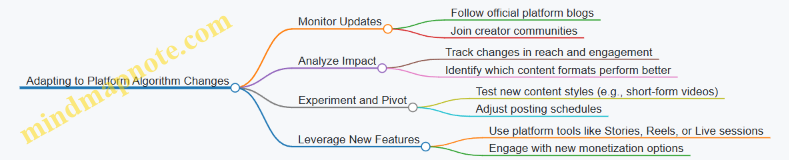
Example:
A video creator specializing in long-form tutorials noticed a drop in views after YouTube prioritized Shorts. Instead of resisting, they began creating 60-second highlight clips from their tutorials, which attracted new viewers and funneled traffic to their longer videos. This pivot increased their channel’s overall watch time and ad revenue.
Navigating Market Shifts
Market shifts can include changes in audience behavior, new content consumption trends, or technological advancements like AI-generated content.
Mind Map: Responding to Market Shifts
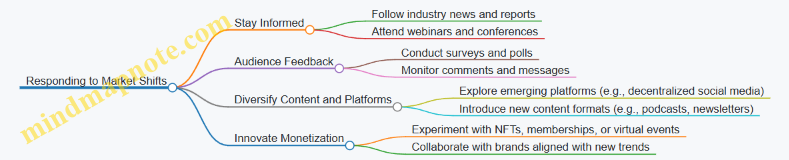
Example:
A podcaster observed a growing interest in interactive audio experiences. They integrated live Q&A sessions and audience polls during episodes, increasing engagement and attracting sponsorships from brands wanting to tap into this interactive format.
Best Practices for Continuous Adaptation
- Regularly Audit Your Analytics: Weekly or monthly reviews help spot trends early.
- Build a Flexible Content Calendar: Allow room for experimentation and quick pivots.
- Engage with Your Community: Loyal audiences often provide early signals about changing preferences.
- Invest in Learning: Take courses on emerging tools and platform updates.
- Maintain Multiple Revenue Streams: Reduces risk if one platform’s monetization changes.
Example:
A social media marketer diversified by creating content on Instagram, TikTok, and a newsletter. When Instagram’s algorithm changed unfavorably, their TikTok presence and newsletter subscriptions sustained their income, allowing time to adjust Instagram strategies without financial pressure.
Summary
Adapting to platform changes and market shifts is essential for sustainable success in the creator economy. By staying informed, experimenting with new formats, engaging audiences, and diversifying income, creators can turn challenges into opportunities.
Remember: The key is agility and a proactive mindset — the platforms and markets will continue to evolve, and so should your strategies.
10.2 Continuous Learning and Skill Development
In the fast-evolving creator economy, continuous learning and skill development are essential to stay relevant, competitive, and innovative. As platforms, technologies, and audience preferences shift rapidly, creators who invest in expanding their knowledge and refining their skills can unlock new monetization opportunities and deepen audience engagement.
Why Continuous Learning Matters for Creators
- Adaptability: Platforms and algorithms change frequently; learning helps you pivot quickly.
- Competitive Edge: Mastering new tools and trends keeps you ahead of other creators.
- Diversification: New skills enable you to explore additional revenue streams.
- Quality Improvement: Enhanced skills lead to better content, attracting and retaining audiences.
Key Areas for Skill Development
Practical Steps to Continuous Learning
- Set Learning Goals: Identify skills that align with your content and monetization goals.
- Leverage Online Courses: Platforms like Coursera, Udemy, and LinkedIn Learning offer creator-focused courses.
- Follow Industry Leaders: Subscribe to newsletters, podcasts, and YouTube channels from top creators and marketers.
- Join Creator Communities: Engage in forums, Discord groups, and mastermind sessions to exchange knowledge.
- Experiment and Iterate: Apply new skills in your content and analyze results.
Example: How a Video Creator Embraced Continuous Learning
Sarah, a lifestyle video creator, noticed her engagement plateauing. She enrolled in an advanced video editing course focusing on motion graphics and color grading. By applying these new techniques, her videos became more visually appealing, leading to a 30% increase in watch time and attracting brand sponsorships.
Mind Map: Learning Resources for Creators
Example: Podcaster Using AI to Upskill
James, a podcaster, used AI-powered transcription and editing tools to streamline his workflow. To maximize these tools, he took an AI fundamentals course, enabling him to customize workflows and improve episode turnaround time by 40%, allowing more frequent publishing and higher audience retention.
Tips to Make Learning Sustainable
- Dedicate fixed weekly time slots for learning.
- Mix theory with hands-on practice.
- Track progress and celebrate milestones.
- Stay curious and open-minded.
Final Thought
Continuous learning is not just about acquiring new skills but about cultivating a growth mindset. In 2025 and beyond, creators who embrace lifelong learning will be best positioned to innovate, monetize, and thrive in the dynamic creator economy.
10.3 Building Multiple Income Pillars for Stability
In the rapidly evolving creator economy, relying on a single revenue source can be risky. Diversifying your income streams not only provides financial stability but also opens up new growth opportunities. This section explores how to build multiple income pillars effectively, with practical examples and mind maps to guide your strategy.
Why Multiple Income Pillars Matter
- Risk Mitigation: If one revenue stream declines (e.g., ad revenue drops due to platform changes), others can compensate.
- Increased Earnings: Different streams can complement each other, boosting overall income.
- Audience Engagement: Offering varied products/services caters to different segments of your audience.
Common Income Pillars for Creators
Step-by-Step Approach to Building Multiple Income Pillars
-
Assess Your Strengths and Audience Needs
- Example: A podcaster with a loyal tech-savvy audience might create an online course on podcasting techniques.
-
Start with One Additional Stream
- Don’t overwhelm yourself. For example, a video creator might add affiliate marketing by recommending gear they use.
-
Test and Optimize
- Use analytics to track which streams perform best. A social media marketer might find that subscription content generates more steady income than ads.
-
Scale Gradually
- Once one stream is stable, add another. For instance, launching merchandise after building a strong brand.
-
Cross-Promote Across Channels
- Promote your courses, merch, or memberships within your videos, podcasts, and social posts.
Example: Multi-Pillar Monetization by a Content Influencer
- Primary Income: Sponsored YouTube videos reviewing tech gadgets.
- Secondary Income: Affiliate links in video descriptions.
- Tertiary Income: Patreon membership offering exclusive behind-the-scenes content.
- Additional Income: Selling a digital e-book on “How to Start a Tech Review Channel.”
This diversified approach helped the influencer maintain steady income despite fluctuations in sponsorship deals.
Mind Map: Example Creator’s Income Pillars
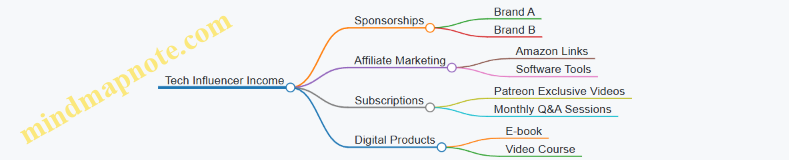
Tips for Success
- Align Income Streams with Your Brand: Don’t promote products or services that don’t resonate with your audience.
- Maintain Quality Across All Pillars: Avoid diluting your brand by spreading yourself too thin.
- Engage Your Community: Ask your audience what they want to see or buy.
- Keep Learning: Stay updated on new monetization trends like NFTs or virtual events.
By strategically building and managing multiple income pillars, creators can create a resilient and sustainable business model that thrives in the dynamic landscape of 2025 and beyond.
10.4 Example: A Video Creator’s Pivot from Ad Revenue to Product Sales
In 2025, many video creators are realizing that relying solely on ad revenue can be unstable due to fluctuating CPMs, platform algorithm changes, and advertiser preferences. Pivoting to product sales offers a more predictable and scalable income stream. Let’s explore a detailed example of how a video creator successfully made this transition, supported by mind maps and actionable insights.
Case Study: Emma, The DIY Craft Creator
Emma built a popular YouTube channel focused on DIY crafts and home decor. Initially, her income was primarily from YouTube ad revenue, supplemented by occasional sponsorships. However, as ad rates declined and algorithm changes reduced her video reach, Emma decided to pivot towards selling her own digital and physical products.
Step 1: Assessing Current Assets and Audience
Emma started by analyzing her existing content and audience preferences:
- Most popular videos were tutorials on handmade home decor.
- Audience frequently asked for patterns, templates, and supply lists.
- High engagement on videos featuring seasonal crafts.
Mind Map: Assessing Assets and Audience
Step 2: Identifying Product Opportunities
Based on insights, Emma identified several product ideas:
- Digital downloadable patterns and templates
- Branded craft supply kits
- Online workshops and courses
Mind Map: Product Opportunities
Step 3: Creating and Launching Products
Emma started with digital products due to low upfront costs:
- Created downloadable PDF patterns for popular projects.
- Launched an Etsy shop integrated with her YouTube channel.
- Promoted products via video descriptions, pinned comments, and dedicated videos.
She then expanded to supply kits:
- Curated kits containing all materials needed for specific projects.
- Partnered with suppliers for bulk discounts.
- Offered limited edition seasonal kits.
Finally, Emma developed an online workshop series:
- Live interactive sessions with Q&A.
- Exclusive access for subscribers.
- Bundled workshops with product discounts.
Mind Map: Product Creation & Launch
Step 4: Marketing and Monetization Strategies
Emma integrated product promotion organically:
- Embedded product mentions naturally within tutorials.
- Created “How to use” videos showcasing kits.
- Used email newsletters to announce new launches and offer discounts.
- Leveraged social proof by sharing customer photos and testimonials.
Example Snippet from Video Description:
“Love this DIY wreath? Grab the full pattern and all supplies in our exclusive kit here [link]. Plus, join our upcoming workshop to craft it live with me!”
Mind Map: Marketing & Monetization
Results and Lessons Learned
- Emma’s product sales quickly surpassed her ad revenue within 6 months.
- Diversified income reduced dependency on platform algorithms.
- Direct customer relationships improved through email and workshops.
- Challenges included initial time investment and managing inventory for physical kits.
Key Takeaways for Creators
- Analyze your audience’s needs beyond content consumption.
- Start with low-risk digital products before scaling to physical goods.
- Integrate product promotion naturally to maintain audience trust.
- Use multiple channels (videos, email, social media) for marketing.
- Continuously gather feedback and iterate on product offerings.
This example illustrates how a video creator can strategically pivot from volatile ad revenue to sustainable product sales, building a resilient creator business in 2025.
10.5 Cultivating Resilience and Mental Health in the Creator Economy
The creator economy offers exciting opportunities but also presents unique mental health challenges. Burnout, anxiety, and the pressure to constantly perform can take a toll on creators. Cultivating resilience and prioritizing mental health are essential for sustainable success.
Understanding the Mental Health Challenges for Creators
- Constant Public Exposure: Creators often face scrutiny and criticism from a wide audience.
- Irregular Income: Financial instability can lead to stress and anxiety.
- Content Pressure: The need to produce engaging content consistently can cause burnout.
- Isolation: Many creators work alone, lacking traditional workplace social support.
Mind Map: Key Areas for Mental Health Focus
Best Practices for Cultivating Resilience
-
Set Realistic Goals and Boundaries
- Example: A video creator schedules content creation only 4 days a week, reserving other days for rest and personal activities.
-
Develop a Support Network
- Example: A podcaster joins a creator mastermind group where members share challenges and solutions, reducing feelings of isolation.
-
Practice Mindfulness and Stress Reduction Techniques
- Example: Daily 10-minute meditation sessions help a social media marketer maintain focus and reduce anxiety.
-
Prioritize Physical Health
- Example: A content influencer integrates regular exercise and healthy eating into their routine, improving energy and mood.
-
Use Time Management Tools to Avoid Overwork
- Example: Using apps like Trello and Google Calendar, a creator blocks off time for work and personal life, preventing burnout.
-
Seek Professional Mental Health Support When Needed
- Example: After experiencing anxiety, a creator consults a therapist specializing in creative professionals.
-
Celebrate Small Wins and Progress
- Example: A podcaster tracks monthly growth milestones and rewards themselves to stay motivated.
Mind Map: Daily Routine for Mental Wellness
Real-Life Example: How a Video Creator Overcame Burnout
Background: Sarah, a popular YouTube creator, was producing daily videos but started feeling exhausted and uninspired.
Actions Taken:
- Reduced upload frequency from daily to three times a week.
- Joined a local creator support group.
- Started practicing yoga and mindfulness.
- Delegated video editing to a freelancer.
Outcome: Sarah regained creative energy, improved her mental health, and saw her audience engagement increase due to higher-quality content.
Tools and Resources for Mental Health
- Headspace / Calm: Apps for guided meditation.
- BetterHelp / Talkspace: Online therapy platforms.
- Notion / Trello: For organizing work-life balance.
- Creator Communities: e.g., The Content Creators Lounge on Facebook.
Final Thoughts
Mental health is not a luxury but a necessity for creators aiming for long-term success. By integrating resilience-building practices and seeking support, creators can thrive both personally and professionally in the evolving creator economy of 2025.