The AI Driven Leader Strategic Decisions in the Automated Era
1. Understanding the AI-Driven Leadership Landscape
1.1 Defining AI-Driven Leadership: Concepts and Scope
AI-Driven Leadership represents a transformative approach where leaders harness artificial intelligence technologies to enhance decision-making, drive innovation, and optimize organizational performance. This leadership style goes beyond simply using AI tools; it embodies a mindset that integrates AI capabilities into strategic thinking, operational processes, and people management.
Core Concepts of AI-Driven Leadership
- Augmented Decision-Making: Leveraging AI to analyze vast datasets and generate insights that inform strategic choices.
- Adaptive Strategy: Continuously evolving leadership approaches based on AI-generated trends and predictions.
- Human-AI Collaboration: Fostering synergy between human intuition and AI’s analytical power.
- Ethical AI Use: Ensuring transparency, fairness, and accountability in AI applications.
- Continuous Learning: Embracing AI-driven learning tools to upskill leaders and teams.
Scope of AI-Driven Leadership
AI-Driven Leadership spans multiple dimensions within an organization:
- Strategic Planning: Using AI to forecast market changes and identify growth opportunities.
- Innovation Management: Accelerating idea generation and validation through AI-powered analytics.
- Talent Development: Personalizing learning and performance feedback with AI insights.
- Operational Efficiency: Optimizing workflows and resource allocation via automation.
- Risk Management: Anticipating and mitigating risks using predictive AI models.
Mind Map: Core Components of AI-Driven Leadership
Mind Map: Organizational Scope of AI-Driven Leadership
Example 1: Senior Manager Using AI to Enhance Decision-Making
A senior manager at a retail company integrated AI-powered analytics to understand customer purchasing patterns. By combining AI insights with their market experience, they optimized inventory levels, reducing stockouts by 30% and increasing sales.
Example 2: Innovation Leader Driving AI-Enabled Product Development
An innovation leader at a tech startup used AI to analyze user feedback and identify unmet needs. This led to the rapid prototyping of a new feature that increased user engagement by 25% within three months.
Example 3: Executive Embracing Ethical AI Practices
A senior executive implemented an AI governance framework to ensure transparency in AI-driven hiring processes, reducing bias and improving diversity metrics across teams.
By understanding the concepts and scope of AI-Driven Leadership, senior managers and innovation leaders can better position themselves to lead effectively in an automated era, blending human judgment with AI’s transformative potential.
1.2 The Impact of Automation on Executive Decision-Making
Automation is fundamentally reshaping how executives make strategic decisions. By automating routine tasks and data processing, leaders can focus more on high-level strategy, innovation, and human-centric leadership. However, this shift also introduces new challenges and considerations.
Key Areas Where Automation Impacts Executive Decision-Making
Enhanced Data Processing and Real-Time Insights
Automation enables executives to access and analyze vast amounts of data quickly. For example, AI-powered dashboards can aggregate market trends, customer feedback, and operational metrics in real time, allowing senior managers to make informed decisions without delay.
Example: A Senior Manager at a retail company uses an AI-driven analytics platform that automatically highlights declining product categories and suggests promotional strategies. This automation reduces manual data crunching and accelerates decision-making.
Accelerated Decision Speed
By automating routine approvals and report generation, executives can reduce decision cycle times. Automation tools can flag urgent issues and prioritize decisions that require human intervention.
Example: An Innovation Leader in a tech firm implements an automated workflow that routes project proposals through AI-based feasibility assessments before reaching leadership, enabling faster go/no-go decisions.
Improved Risk Management
Automation supports predictive analytics that identify potential risks earlier than traditional methods. Executives can proactively adjust strategies based on AI-generated risk forecasts.
Example: A Senior Manager in manufacturing uses AI to predict supply chain disruptions by analyzing weather patterns and supplier data, allowing preemptive sourcing adjustments.
Augmented Human Judgment and Ethical Considerations
While automation provides data-driven recommendations, final decisions often require human judgment, especially when ethical implications arise. Leaders must balance AI insights with values and stakeholder impact.
Example: An Innovation Leader evaluates AI-recommended cost-cutting measures but decides to retain certain jobs to maintain team morale and company culture.
Optimized Resource Allocation
Automation helps executives allocate budgets and human resources more effectively by identifying areas with the highest ROI or strategic importance.
Example: A Senior Manager uses AI to analyze employee performance and project outcomes, reallocating talent to high-impact innovation initiatives.
Mind Map: Balancing Automation and Human Leadership
Summary
Automation transforms executive decision-making by providing faster, data-driven insights and enabling leaders to focus on strategic priorities. However, successful AI-driven leadership requires balancing automation with human judgment, ethical considerations, and cultural awareness. By understanding these impacts and integrating best practices, senior managers and innovation leaders can navigate the automated era effectively.
1.3 Key Competencies for Leaders in an AI-Enabled World
In the rapidly evolving AI-enabled world, leaders must develop a unique set of competencies that enable them to harness AI technologies effectively while guiding their teams through transformation. These competencies blend technical understanding, strategic thinking, emotional intelligence, and ethical awareness.
Core Competencies Overview
Technical Literacy
Leaders don’t need to be AI engineers but must understand AI’s capabilities and limitations. This enables informed decision-making and realistic expectations.
Example: A Senior Manager at a retail company learned the basics of machine learning and natural language processing. This knowledge helped her collaborate effectively with data scientists to deploy a chatbot that improved customer service response times by 30%.
Strategic Vision
AI is a disruptive force; leaders must anticipate how AI will reshape markets and customer behaviors.
Example: An Innovation Leader in the automotive sector used AI-driven market analysis to identify emerging trends in electric vehicle adoption, enabling the company to pivot R&D investments ahead of competitors.
Emotional Intelligence
AI changes workflows and roles, which can cause uncertainty. Leaders with high emotional intelligence manage these transitions empathetically.
Example: A Senior Manager introduced AI-powered automation in the finance department. By actively listening to employee concerns and communicating transparently, she maintained morale and achieved a smooth transition.
Ethical and Responsible Leadership
AI systems can perpetuate biases or create ethical dilemmas. Leaders must ensure responsible AI use.
Example: An Innovation Leader implemented a review process to detect bias in AI recruitment tools, ensuring fair hiring practices and compliance with regulations.
Agility and Continuous Learning
The AI landscape evolves quickly. Leaders must be adaptable and foster a culture of continuous learning.
Example: A Senior Manager launched monthly AI learning sessions and encouraged experimentation, which led to several process improvements identified by frontline employees.
Summary Table of Competencies with Examples
| Competency | Description | Example Scenario |
|---|---|---|
| Technical Literacy | Understanding AI basics and collaborating with tech teams | Retail manager deploying AI chatbot |
| Strategic Vision | Anticipating AI-driven changes and innovating | Automotive leader pivoting R&D to electric vehicles |
| Emotional Intelligence | Managing change empathetically and communicating well | Finance manager easing AI automation transition |
| Ethical Leadership | Ensuring AI fairness, transparency, and compliance | Innovation leader auditing AI recruitment tools |
| Agility & Continuous Learning | Adapting quickly and fostering learning culture | Senior manager initiating AI learning sessions |
By developing these competencies, leaders in AI-enabled environments can confidently steer their organizations through transformation, leveraging AI as a strategic advantage while maintaining human-centric leadership.
1.4 Case Study: How a Senior Manager Transformed Team Dynamics Using AI Insights
In today’s fast-paced automated era, leveraging AI insights to enhance team dynamics has become a critical capability for leaders. This case study explores how a Senior Manager, Emma, transformed her team’s collaboration, productivity, and morale by integrating AI-driven tools and data analytics into their daily workflows.
Background
Emma leads a cross-functional team of 15 professionals in a technology firm. Despite having talented individuals, the team faced challenges such as communication silos, uneven workload distribution, and delayed project deliveries. Emma decided to harness AI insights to diagnose and address these issues strategically.
Step 1: Diagnosing Team Dynamics with AI
Emma implemented an AI-powered collaboration analytics platform that aggregated data from emails, chat apps, project management tools, and calendars to provide insights on communication patterns, workload balance, and engagement levels.
Key AI Insights:
- Certain team members were overloaded while others had capacity.
- Communication was clustered within sub-groups, limiting cross-functional knowledge sharing.
- Response times to messages varied widely, causing bottlenecks.
Mind Map: Diagnosing Team Dynamics with AI
Step 2: Strategic Interventions Based on AI Insights
Using these insights, Emma introduced targeted initiatives:
- Balanced Workload Allocation: She reallocated tasks to ensure a more even distribution, using AI recommendations to identify who had capacity.
- Cross-Functional Collaboration: Emma organized bi-weekly knowledge-sharing sessions and created mixed project pods to break down communication silos.
- Improved Responsiveness: Set team norms for response times and used AI alerts to flag delayed communications.
Mind Map: Strategic Interventions
Step 3: Monitoring Progress and Adjusting
Emma continuously monitored the AI dashboard to track changes in team dynamics. Over three months, the team showed:
- 25% improvement in project delivery times.
- 40% increase in cross-team communications.
- Higher employee satisfaction scores related to workload fairness.
She also gathered qualitative feedback to complement AI data, ensuring a holistic understanding.
Example: AI-Driven Workload Reallocation in Action
One team member, Alex, was consistently flagged as overloaded. AI data showed he was handling 35% more tasks than the team average. Emma shifted some of Alex’s responsibilities to Priya, who had 20% less workload. This adjustment not only improved Alex’s productivity but also boosted Priya’s engagement.
Lessons Learned
- Data-Driven Empathy: AI insights helped Emma understand individual team members’ challenges objectively.
- Proactive Leadership: Using AI allowed early identification of issues before they escalated.
- Continuous Feedback Loop: Combining AI data with human feedback created a robust improvement cycle.
Summary Mind Map: AI-Driven Team Transformation
This case study exemplifies how Senior Managers can harness AI insights not just for operational efficiency but to foster healthier, more dynamic teams that thrive in the automated era.
2. Strategic Decision-Making Frameworks in the Automated Era
2.1 Integrating AI into Traditional Decision-Making Models
In the automated era, traditional decision-making models are evolving to incorporate AI capabilities, enabling leaders to make faster, more informed, and data-driven decisions. Integrating AI into these models does not mean replacing human judgment but rather augmenting it with advanced analytics, predictive insights, and automation.
Understanding Traditional Decision-Making Models
Traditional models often follow structured steps such as:
- Identify the problem
- Gather information
- Generate alternatives
- Evaluate alternatives
- Make the decision
- Implement and monitor
AI integration enhances each of these steps by providing data-driven insights and automating routine tasks.
Mind Map: AI Integration Points in Traditional Decision-Making
Best Practices for Integration
-
Start Small with Pilot Projects: Begin by integrating AI tools in specific decision areas such as demand forecasting or customer segmentation to demonstrate value.
-
Maintain Human Oversight: Use AI as a decision support system rather than a decision maker to preserve accountability and ethical considerations.
-
Ensure Data Quality: AI’s effectiveness depends on clean, relevant, and timely data; invest in data governance.
-
Foster Cross-Functional Collaboration: Engage data scientists, domain experts, and decision-makers to co-create AI-enhanced processes.
-
Iterate and Learn: Continuously refine AI models and decision workflows based on feedback and outcomes.
Example: AI Augmenting Product Launch Decisions
A Senior Manager at a consumer electronics company faced challenges predicting market reception for new products. Traditionally, decisions were based on historical sales data and expert intuition.
By integrating AI:
- Problem Identification: AI analyzed social media trends and competitor launches to detect emerging consumer needs.
- Information Gathering: Automated dashboards collected real-time sales and inventory data.
- Generating Alternatives: AI simulated multiple pricing and marketing scenarios.
- Evaluating Alternatives: Predictive models forecasted sales volume and profitability for each scenario.
- Decision Making: The manager used AI insights alongside team input to select the optimal launch strategy.
- Implementation & Monitoring: AI tools tracked launch performance and customer feedback, enabling rapid adjustments.
This integration led to a 15% increase in launch success rate and faster decision cycles.
Mind Map: Human-AI Collaboration in Decision-Making
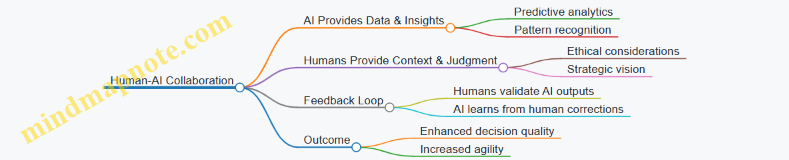
Key Takeaway
Integrating AI into traditional decision-making models transforms leadership from intuition-driven to insight-driven. By leveraging AI’s strengths in data processing and pattern recognition, leaders can make strategic decisions with greater confidence and agility while maintaining essential human judgment and ethical oversight.
2.2 Data-Driven vs. Intuition-Driven Decisions: Finding the Balance
In the AI-driven leadership landscape, senior managers and innovation leaders face the critical challenge of balancing data-driven insights with human intuition. Both approaches have unique strengths and limitations, and mastering their integration is essential for strategic decision-making in the automated era.
Understanding Data-Driven Decisions
Data-driven decisions rely on quantitative analysis, predictive models, and AI-generated insights. They minimize human bias and leverage vast datasets to identify patterns and forecast outcomes.
Example: A senior manager uses AI-powered customer analytics to identify declining engagement trends and reallocates marketing resources accordingly, resulting in a 15% increase in retention.
Understanding Intuition-Driven Decisions
Intuition-driven decisions stem from experience, tacit knowledge, and gut feelings. They are especially valuable when data is incomplete, ambiguous, or when rapid decisions are required.
Example: An innovation leader senses a market shift toward sustainability before data fully reflects it and initiates a green product line that captures early market share.
Mind Map: Key Attributes of Data-Driven vs. Intuition-Driven Decisions
Challenges of Relying Solely on One Approach
- Data-Driven Only: May overlook context, creativity, or emerging trends not yet reflected in data.
- Intuition-Driven Only: Prone to biases, overconfidence, and may ignore valuable data signals.
Best Practice: Integrating Data and Intuition
- Use Data to Inform Intuition: Let AI insights provide a factual basis that complements gut feelings.
- Validate Intuition with Data: Test hypotheses derived from intuition using data analytics.
- Create Feedback Loops: Continuously refine intuition based on outcomes and data trends.
Example: An innovation leader hypothesizes that a new technology will disrupt the market. They use AI simulations to validate the intuition before committing resources.
Mind Map: Framework for Balancing Data and Intuition
Example Scenario: Launching a New Product
- Data-Driven Approach: AI market analysis shows moderate demand.
- Intuition-Driven Approach: Leader senses a cultural trend that data hasn’t fully captured.
- Balanced Decision: Leader uses data to define target segments but invests in a pilot launch to test the intuitive insight, adjusting strategy based on pilot feedback.
Tips for Senior Managers and Innovation Leaders
- Encourage teams to present both data insights and experiential perspectives.
- Foster a culture where questioning data and intuition is welcomed.
- Use AI tools to simulate scenarios and stress-test intuitive assumptions.
- Document decisions and outcomes to build organizational intuition over time.
Summary
Balancing data-driven and intuition-driven decisions empowers AI leaders to navigate complexity with agility and confidence. By integrating AI insights with human judgment, leaders can make more nuanced, innovative, and effective strategic choices in the automated era.
2.3 Best Practice: Using Predictive Analytics to Anticipate Market Shifts
Predictive analytics has become an indispensable tool for AI-driven leaders aiming to stay ahead in rapidly evolving markets. By leveraging historical data, machine learning models, and statistical algorithms, leaders can forecast future trends, customer behaviors, and potential disruptions. This proactive approach enables strategic decisions that minimize risks and capitalize on emerging opportunities.
What is Predictive Analytics?
Predictive analytics involves analyzing current and historical data to make predictions about future events. It uses techniques such as regression analysis, time series forecasting, classification, and clustering.
Why Senior Managers and Innovation Leaders Should Use Predictive Analytics
- Anticipate market demand changes
- Identify emerging customer preferences
- Detect early signs of competitor moves
- Optimize resource allocation
- Reduce uncertainty in strategic planning
Mind Map: Core Components of Predictive Analytics for Market Shifts
Practical Example 1: Retail Innovation Leader Predicting Seasonal Demand
A retail innovation leader used predictive analytics to forecast seasonal product demand. By analyzing past sales data, weather patterns, and social media sentiment, the leader anticipated a surge in demand for eco-friendly products during summer months. This insight enabled the company to optimize inventory levels, launch targeted marketing campaigns, and increase sales by 15% compared to the previous year.
Step-by-Step Best Practice Implementation
- Define the Business Objective: Understand what market shift or trend you want to anticipate (e.g., demand spike, competitor entry).
- Gather Relevant Data: Collect comprehensive data sets from internal and external sources.
- Preprocess Data: Clean and prepare data for analysis, ensuring quality and consistency.
- Select Appropriate Models: Choose predictive models suited to the data and objective.
- Train and Validate Models: Use historical data to train models and validate accuracy.
- Deploy Insights: Integrate predictions into decision-making workflows via dashboards or alerts.
- Monitor and Update: Continuously monitor model performance and update with new data.
Mind Map: Predictive Analytics Workflow for Strategic Decisions

Practical Example 2: Senior Manager in Financial Services Anticipating Regulatory Changes
A senior manager in a financial services firm applied predictive analytics to anticipate regulatory changes impacting lending practices. By analyzing historical regulatory announcements, political climate data, and economic indicators, the manager forecasted stricter lending regulations within the next 12 months. This foresight allowed the firm to adjust credit policies proactively, avoiding compliance risks and maintaining market competitiveness.
Tips for Effective Use of Predictive Analytics
- Collaborate with Data Scientists: Ensure alignment between business goals and technical implementation.
- Focus on Actionable Insights: Predictions should directly inform strategic decisions.
- Invest in Data Quality: Garbage in, garbage out – high-quality data is critical.
- Communicate Findings Clearly: Use visualizations and storytelling to engage stakeholders.
- Balance AI with Human Judgment: Use analytics as a decision support tool, not a replacement.
Mind Map: Benefits of Predictive Analytics in Leadership
By embedding predictive analytics into their strategic toolkit, senior managers and innovation leaders can transform uncertainty into opportunity, making informed decisions that drive sustainable growth in the automated era.
2.4 Example: Innovation Leader Leveraging AI to Prioritize R&D Investments
In today’s rapidly evolving technological landscape, innovation leaders face the challenge of allocating limited R&D resources effectively to maximize impact and return on investment. AI-powered tools and analytics have become indispensable in guiding these strategic decisions by providing data-driven insights that help prioritize projects with the highest potential.
The Scenario
An innovation leader at a mid-sized technology firm was tasked with optimizing the R&D portfolio to accelerate product development and maintain competitive advantage. Traditionally, decisions were based on intuition, historical success, and limited market research, which often led to misaligned investments and missed opportunities.
To overcome these challenges, the leader integrated AI-driven analytics into the decision-making process, focusing on three key areas:
- Market trend analysis
- Technology feasibility and maturity
- Potential financial impact
AI-Driven Prioritization Process Mind Map
Step-by-Step Example
-
Data Aggregation: The AI system collected and processed vast amounts of data, including patent filings, market reports, social media sentiment, and internal R&D progress metrics.
-
Predictive Modeling: Using machine learning algorithms, the system predicted emerging technology trends and customer needs, highlighting areas with growing demand.
-
Feasibility Assessment: AI evaluated the technical complexity and readiness level of each R&D project, estimating the likelihood of successful completion within budget and time constraints.
-
Financial Impact Analysis: The system forecasted potential revenue and cost savings associated with each project, incorporating market size and competitive positioning.
-
Prioritization Output: Projects were scored and ranked based on combined metrics, enabling the innovation leader to visualize which initiatives offered the best strategic fit.
Visualization Mind Map: AI-Powered R&D Investment Prioritization
Real-World Example
A leading automotive company used AI to analyze sensor data, customer preferences, and competitor innovations to prioritize R&D in electric vehicle battery technology. The AI system identified that investing in solid-state batteries would yield higher long-term returns despite higher initial risks. This insight led the innovation leader to reallocate funds accordingly, resulting in accelerated development and market leadership.
Best Practices Highlighted
- Leverage Diverse Data Sources: Incorporate both internal and external data for a holistic view.
- Use Explainable AI: Ensure AI recommendations are transparent to build trust among stakeholders.
- Combine Quantitative and Qualitative Insights: Blend AI analytics with expert judgment.
- Iterate Continuously: Regularly update AI models with new data to refine prioritization.
Summary
By integrating AI into the R&D prioritization process, innovation leaders can make more informed, objective, and strategic decisions. This approach minimizes risk, optimizes resource allocation, and accelerates innovation cycles, ultimately driving sustainable competitive advantage in the automated era.
3. Building an AI-Ready Organizational Culture
3.1 Cultivating a Growth Mindset Towards Automation
In the automated era, cultivating a growth mindset towards automation is essential for leaders to thrive and drive organizational success. A growth mindset, a concept popularized by psychologist Carol Dweck, is the belief that abilities and intelligence can be developed through dedication and hard work. When applied to automation, it means embracing AI and automated technologies as tools for learning, improvement, and innovation rather than threats.
Why Cultivate a Growth Mindset Towards Automation?
- Embracing Change: Automation is rapidly transforming industries. Leaders with a growth mindset see these changes as opportunities rather than obstacles.
- Continuous Learning: Automation technologies evolve quickly. A growth mindset encourages ongoing learning and adaptation.
- Encouraging Experimentation: Leaders become more willing to pilot new AI tools and processes, fostering innovation.
- Resilience: Viewing setbacks or failures as learning experiences helps teams bounce back and improve.
Mind Map: Growth Mindset Towards Automation
Best Practices to Cultivate a Growth Mindset
-
Lead by Example: Senior managers and innovation leaders should demonstrate curiosity and openness toward automation tools. For example, a senior manager might publicly share their experience learning to use an AI-powered analytics platform, highlighting challenges and breakthroughs.
-
Promote Psychological Safety: Create an environment where team members feel safe to experiment with automation technologies without fear of punishment for mistakes. For instance, an innovation leader might establish “fail-fast” sessions where teams discuss lessons learned from AI pilot projects.
-
Encourage Continuous Learning: Implement regular training programs focused on AI and automation literacy. Example: A company might offer monthly workshops on emerging AI trends and hands-on sessions with automation software.
-
Celebrate Small Wins: Recognize and reward incremental progress in adopting automation. For example, acknowledging a team that successfully integrated a chatbot to improve customer service response times.
-
Foster Cross-Functional Collaboration: Encourage collaboration between technical experts and business leaders to demystify AI and co-create solutions. For example, forming innovation squads that include data scientists, product managers, and marketing leads.
Example: Senior Manager Embracing Automation with a Growth Mindset
Maria, a senior manager at a retail company, noticed that her team was hesitant to adopt a new AI-driven inventory management system. Instead of enforcing adoption, she organized a series of interactive workshops where team members could explore the system hands-on and share concerns openly. Maria also shared her own learning journey with the tool, including initial mistakes and how she overcame them.
As a result, the team gradually became more comfortable experimenting with automation, leading to improved inventory accuracy and reduced stockouts. Maria’s growth mindset approach transformed resistance into enthusiasm.
Mind Map: Example - Maria’s Growth Mindset Approach
Cultivating a growth mindset towards automation empowers leaders and their teams to navigate the complexities of AI integration with confidence and creativity. By embracing continuous learning, experimentation, and collaboration, leaders can unlock the full potential of automation to drive innovation and strategic advantage.
3.2 Encouraging Cross-Functional Collaboration Between Humans and AI
In the automated era, successful leadership hinges on fostering effective collaboration between human teams and AI systems. Cross-functional collaboration that integrates AI capabilities with human expertise unlocks innovation, accelerates problem-solving, and drives strategic outcomes.
Why Cross-Functional Collaboration Matters
- Diverse Perspectives: Combining AI’s data processing power with human creativity and emotional intelligence leads to richer insights.
- Enhanced Decision-Making: AI can analyze vast datasets rapidly, while humans provide context, ethics, and intuition.
- Agility and Innovation: Cross-functional teams can quickly prototype, test, and iterate solutions leveraging AI tools.
Mind Map: Components of Cross-Functional Collaboration Between Humans and AI
Best Practices for Encouraging Collaboration
-
Create Cross-Disciplinary Teams: Assemble teams with diverse skills—technical, business, and creative—to co-own AI initiatives.
- Example: An innovation leader forms a team including AI engineers, marketing specialists, and product managers to develop a customer insights platform.
-
Establish Clear Communication Channels: Use collaboration platforms that integrate AI insights and human feedback in real-time.
- Example: A senior manager implements an AI-powered dashboard that updates sales forecasts while allowing team members to comment and suggest adjustments.
-
Promote AI Literacy Across Functions: Train non-technical staff on AI capabilities and limitations to foster trust and effective use.
- Example: A company runs workshops where HR, finance, and operations teams learn how AI tools can augment their workflows.
-
Encourage Iterative Experimentation: Use agile methodologies where AI-generated hypotheses are tested and refined with human input.
- Example: An innovation leader pilots an AI-driven recommendation engine, gathering user feedback to improve algorithms continuously.
-
Define Shared Objectives and Metrics: Align human and AI efforts around common goals to ensure synergy.
- Example: A senior manager sets KPIs combining AI accuracy with customer satisfaction scores to evaluate project success.
Mind Map: Workflow of Human-AI Collaborative Decision-Making
Real-World Example: Cross-Functional Collaboration in Action
Company: TechNova (Fictional)
Scenario: TechNova’s senior manager spearheaded a project to improve customer support using AI chatbots integrated with human agents.
- Team Composition: Customer service reps, AI developers, UX designers, and data analysts.
- Collaboration Approach: Regular joint workshops where AI developers presented chatbot performance metrics, and customer reps shared qualitative feedback.
- Outcome: The chatbot was continuously refined to handle 70% of queries autonomously, while complex issues were seamlessly escalated to human agents, improving customer satisfaction by 25%.
This example illustrates how cross-functional collaboration leverages AI strengths and human empathy to enhance service delivery.
Summary
Encouraging cross-functional collaboration between humans and AI requires intentional team design, transparent communication, continuous learning, and shared goals. By weaving AI capabilities into human workflows and decision-making processes, leaders can unlock new levels of innovation and operational excellence in the automated era.
3.3 Best Practice: Implementing Continuous Learning Programs Focused on AI Literacy
In the rapidly evolving AI landscape, continuous learning programs centered on AI literacy are essential for senior managers and innovation leaders to stay ahead. These programs empower leaders to understand AI capabilities, limitations, and ethical considerations, enabling informed strategic decisions.
Why Continuous AI Learning Matters
- AI technologies evolve quickly; static knowledge becomes obsolete.
- Leaders must interpret AI insights accurately to guide teams.
- Promotes a culture of adaptability and innovation.
Core Components of an AI Literacy Program
AI Literacy Program Mind Map
Step-by-Step Implementation Guide
-
Assessment of Current AI Knowledge: Conduct surveys or interviews to understand the baseline AI literacy among leaders.
-
Customized Curriculum Development: Tailor content to address knowledge gaps and align with organizational goals.
-
Blended Learning Approach: Combine e-learning modules, live workshops, and hands-on projects.
-
Integration with Daily Workflows: Encourage application of AI concepts in real projects.
-
Regular Updates and Feedback Loops: Keep content current and gather participant feedback for improvements.
Example: Senior Manager Driving AI Literacy at TechCorp
At TechCorp, a senior manager launched a continuous AI learning initiative targeting mid-to-senior leadership. The program included monthly AI-focused lunch-and-learns, an internal AI resource portal, and quarterly hackathons to apply AI concepts. As a result, leaders reported a 40% increase in confidence when making AI-related decisions, and cross-departmental AI projects increased by 30% within a year.
Mind Map: Continuous Learning Program Workflow
Tips for Success
- Encourage leadership buy-in to model continuous learning.
- Use gamification to increase engagement.
- Foster peer-to-peer learning communities.
- Provide accessible resources for self-paced learning.
By embedding continuous AI literacy programs into the leadership development framework, organizations ensure their leaders remain equipped to harness AI’s strategic potential effectively and ethically.
3.4 Example: Senior Manager Driving Cultural Change Through AI Champions
In the rapidly evolving landscape of AI and automation, cultural change is one of the most critical factors for successful AI adoption. A Senior Manager at a mid-sized technology firm successfully spearheaded cultural transformation by establishing a network of AI Champions within the organization. This example illustrates how leveraging internal advocates can accelerate AI literacy, foster collaboration, and embed AI-driven thinking into the company’s DNA.
Background
The company was facing resistance from teams hesitant to adopt AI tools, fearing job displacement and complexity. The Senior Manager recognized that top-down mandates alone would not suffice. Instead, empowering passionate employees as AI Champions created peer-driven momentum.
Strategy and Implementation
-
Identifying AI Champions: The Senior Manager invited volunteers from various departments who showed enthusiasm and curiosity about AI. These individuals were not necessarily AI experts but had influence and credibility within their teams.
-
Training and Enablement: The AI Champions received specialized training on AI fundamentals, ethical considerations, and practical applications relevant to their roles.
-
Creating a Community of Practice: Regular meetups, workshops, and an internal online forum were established to share learnings, challenges, and success stories.
-
Pilot Projects: Champions led small-scale AI pilot projects within their teams, demonstrating tangible benefits and building trust.
-
Feedback Loop: Champions collected feedback from peers and relayed it to leadership, ensuring concerns were addressed and improvements made.
Mind Map: AI Champions Program Structure
Example: AI Champion in Customer Support Team
One AI Champion from the Customer Support team introduced an AI-powered chatbot to handle routine queries. By piloting this project, the team reduced response times by 40% and freed up agents for more complex issues. The success story was shared across the organization, encouraging other departments to explore AI solutions.
Best Practices Demonstrated
-
Peer Influence: Leveraging respected employees to drive adoption reduces resistance.
-
Continuous Learning: Ongoing training keeps champions updated and motivated.
-
Visible Wins: Pilot projects with measurable benefits build credibility.
-
Two-Way Communication: Feedback mechanisms ensure concerns are heard and addressed.
Impact
Within 12 months, the company saw a 60% increase in AI tool adoption across teams, improved collaboration between technical and non-technical staff, and a cultural shift towards embracing AI as an enabler rather than a threat.
This example underscores how Senior Managers can effectively drive cultural change by empowering AI Champions, fostering grassroots enthusiasm, and embedding AI fluency throughout the organization.
4. Leveraging AI for Enhanced Innovation Leadership
4.1 Identifying Innovation Opportunities Through AI-Generated Insights
In today’s automated era, AI-driven insights have become a cornerstone for innovation leaders seeking to uncover new opportunities that might otherwise remain hidden. By leveraging AI’s ability to analyze vast datasets, detect patterns, and generate predictive models, leaders can identify emerging trends, unmet customer needs, and potential areas for disruptive innovation.
The Role of AI in Spotting Innovation Opportunities
- Data Aggregation and Pattern Recognition: AI systems can process structured and unstructured data from multiple sources—social media, market reports, customer feedback, competitor analysis—to detect subtle signals indicating shifts in consumer behavior or technology.
- Predictive Analytics: Using historical and real-time data, AI models forecast future trends, enabling leaders to anticipate market demands before competitors.
- Natural Language Processing (NLP): NLP tools analyze customer reviews, forums, and social conversations to extract sentiments and pain points, revealing innovation gaps.
- Automated Idea Generation: Some AI platforms can even suggest new product concepts or service improvements based on data-driven insights.
Mind Map: AI-Generated Insights for Innovation Opportunities
Best Practice Example: Using AI to Identify Emerging Market Needs
A leading retail company integrated AI-powered analytics to comb through millions of customer reviews and social media posts. The AI detected a rising demand for sustainable packaging—a trend not yet mainstream in their sector. Acting on this insight, the innovation leader spearheaded the development of eco-friendly packaging solutions, which resulted in a 15% increase in customer satisfaction scores and opened new market segments.
Step-by-Step Approach for Leaders to Harness AI Insights
- Define Strategic Innovation Goals: Clarify what types of innovation the organization seeks (e.g., product, process, business model).
- Identify Relevant Data Sources: Collaborate with data teams to gather comprehensive datasets relevant to these goals.
- Deploy AI Tools: Use AI platforms capable of analyzing diverse data types and generating actionable insights.
- Interpret AI Outputs: Combine AI findings with human expertise to validate and contextualize opportunities.
- Prioritize and Act: Select the most promising opportunities for prototyping and investment.
Mind Map: Leader’s Workflow for AI-Driven Innovation Opportunity Identification

Additional Example: Innovation Leader Leveraging AI for Competitive Intelligence
An innovation leader at a technology firm used AI to monitor competitors’ patent filings and product launches globally. The AI system highlighted a competitor’s focus on edge computing technologies. This insight prompted the leader to accelerate their own R&D efforts in edge AI, resulting in a timely product launch that captured significant market share.
Summary
Identifying innovation opportunities through AI-generated insights empowers leaders to make informed, proactive decisions. By combining AI’s analytical power with strategic vision and human judgment, innovation leaders can uncover hidden market needs, anticipate trends, and drive transformative growth in the automated era.
4.2 Best Practice: Using AI to Accelerate Idea Validation and Prototyping
In the fast-paced automated era, innovation leaders must rapidly validate ideas and prototype solutions to maintain competitive advantage. AI technologies offer powerful tools to streamline these processes, reducing time-to-market and increasing the likelihood of success.
Why Accelerate Idea Validation and Prototyping?
- Reduce Risk: Quickly identify unfeasible ideas before heavy investment.
- Enhance Agility: Adapt and iterate based on real-time insights.
- Optimize Resources: Focus efforts on high-potential concepts.
How AI Supports Idea Validation and Prototyping
- Data-Driven Market Analysis: AI algorithms analyze vast datasets to evaluate market demand and customer sentiment.
- Simulations and Digital Twins: AI-powered simulations model product performance and user interactions.
- Automated Feedback Collection: Natural Language Processing (NLP) tools gather and analyze customer feedback.
- Rapid Prototyping with AI-Enhanced Design Tools: AI assists in generating design variations and optimizing prototypes.
Mind Map: AI-Driven Idea Validation and Prototyping Workflow
Example 1: Innovation Leader Using AI for Market Validation
An innovation leader at a consumer electronics company used AI-driven sentiment analysis to validate a new wearable device concept. By analyzing millions of social media posts and customer reviews, the AI identified key features customers desired and potential pain points. This data helped prioritize features for the prototype, reducing development cycles by 30%.
Mind Map: Sentiment Analysis for Idea Validation
Example 2: Using AI-Powered Simulations to Prototype Faster
A senior manager in automotive innovation leveraged AI-driven digital twin technology to prototype a new electric vehicle component. The digital twin simulated real-world conditions, enabling rapid testing of different materials and designs without physical prototypes. This approach cut prototype costs by 40% and accelerated validation timelines.
Mind Map: Digital Twin Simulation in Prototyping
Practical Steps for Leaders to Implement AI in Idea Validation and Prototyping
- Identify Suitable AI Tools: Evaluate AI platforms that specialize in market analysis, design, and simulation.
- Integrate Cross-Functional Teams: Combine AI experts, designers, and market analysts to collaborate.
- Establish Data Pipelines: Ensure access to quality data for AI models (customer feedback, market trends).
- Pilot AI-Driven Prototyping: Start with small projects to demonstrate value and refine processes.
- Iterate Based on Insights: Use AI-generated feedback to continuously improve prototypes.
Summary
Leveraging AI to accelerate idea validation and prototyping empowers innovation leaders to make informed, data-backed decisions quickly. By integrating AI tools such as sentiment analysis, digital twins, and automated feedback systems, leaders can reduce risk, optimize resources, and drive faster innovation cycles.
This best practice not only enhances efficiency but also fosters a culture of agility and continuous improvement essential for success in the automated era.
4.3 Example: Innovation Leader Harnessing AI to Disrupt Traditional Markets
In today’s rapidly evolving business landscape, innovation leaders are uniquely positioned to leverage AI technologies to disrupt traditional markets and create new value propositions. This section explores a detailed example of how an innovation leader can harness AI to challenge established norms, accelerate growth, and drive competitive advantage.
Case Overview: Disrupting the Retail Industry with AI-Driven Personalization
An innovation leader at a mid-sized retail company recognized the limitations of traditional marketing and customer engagement strategies. By integrating AI-powered personalization and predictive analytics, the leader transformed the customer experience, resulting in increased loyalty, higher conversion rates, and market disruption.
Key Steps Taken by the Innovation Leader:
- Identifying Market Gaps: Using AI to analyze customer behavior and preferences across multiple channels.
- Implementing AI Tools: Deploying machine learning models to personalize product recommendations in real-time.
- Accelerating Product Development: Leveraging AI-driven insights to rapidly prototype and test new product lines tailored to emerging customer needs.
- Optimizing Supply Chain: Utilizing AI for demand forecasting to reduce inventory costs and improve fulfillment speed.
Mind Map: AI-Driven Market Disruption Strategy
Example in Action: Personalized Shopping Experience
The innovation leader introduced an AI-powered recommendation engine that analyzed browsing history, purchase data, and even social media trends to tailor product suggestions for each customer. For instance, a customer browsing winter jackets would receive personalized offers on accessories like gloves and scarves, increasing average order value.
This approach disrupted traditional one-size-fits-all marketing strategies, enabling the company to compete with larger retailers by delivering a highly customized shopping experience.
Mind Map: AI-Powered Personalization Workflow
Lessons Learned and Best Practices:
- Start Small, Scale Fast: Begin with pilot projects like personalized recommendations before expanding AI applications.
- Cross-Functional Collaboration: Engage marketing, IT, and supply chain teams to ensure AI initiatives align with business goals.
- Continuous Learning: Use customer feedback and AI performance metrics to iterate and improve models.
- Ethical Considerations: Maintain transparency about data usage to build customer trust.
Additional Example: AI-Driven Market Entry Strategy
An innovation leader in the automotive industry used AI to analyze emerging mobility trends and customer preferences, identifying electric vehicle segments underserved by competitors. By leveraging AI simulations and scenario planning, the leader guided the company to develop a new line of affordable electric vehicles, disrupting the traditional combustion engine market.
This example highlights how innovation leaders can harness AI not just for incremental improvements but for bold market disruption, reshaping industries and creating sustainable competitive advantages.
4.4 Managing Risk and Ethical Considerations in AI-Driven Innovation
In the rapidly evolving landscape of AI-driven innovation, managing risk and addressing ethical considerations are paramount for leaders aiming to sustain trust, compliance, and long-term success. This section explores best practices and real-world examples to help senior managers and innovation leaders navigate these challenges effectively.
Understanding Risks in AI-Driven Innovation
AI innovation introduces unique risks including data privacy breaches, algorithmic bias, unintended consequences, and regulatory non-compliance. Leaders must proactively identify and mitigate these risks to protect their organizations and stakeholders.
Mind Map: Key Risks in AI-Driven Innovation
Best Practices for Managing AI Risks
-
Implement Robust Data Governance: Ensure data used for AI is accurate, representative, and secured. For example, a senior manager in healthcare implemented strict anonymization protocols to protect patient data while developing AI diagnostic tools.
-
Conduct Algorithmic Audits: Regularly review AI models for bias and fairness. An innovation leader at a financial firm established an AI ethics board that audits lending algorithms to prevent discriminatory outcomes.
-
Promote Transparency and Explainability: Use interpretable AI models or provide explanations for decisions. For instance, a retail company adopted explainable AI to clarify personalized pricing decisions to customers, enhancing trust.
-
Establish Cross-Functional AI Ethics Committees: Include diverse stakeholders to oversee AI initiatives and ethical considerations. A senior manager in tech formed a committee involving legal, HR, and technical teams to evaluate AI product impacts.
-
Develop Contingency Plans: Prepare for AI system failures or unintended consequences with clear protocols. An innovation leader in manufacturing created fallback manual processes to maintain operations during AI downtime.
-
Stay Updated on Regulations: Continuously monitor evolving AI laws and standards to ensure compliance. A global enterprise assigned a compliance officer to track AI-related regulatory changes across markets.
Mind Map: Ethical Considerations in AI Innovation
Example: Ethical AI Innovation in Practice
Case: A senior manager at a global e-commerce company spearheaded the launch of an AI-powered recommendation engine. To manage ethical risks, they:
- Conducted bias testing to ensure recommendations did not unfairly favor certain sellers.
- Implemented customer data privacy safeguards aligned with GDPR.
- Created transparent user notifications explaining how recommendations are generated.
- Established a feedback loop allowing customers to report inappropriate suggestions.
This approach not only minimized ethical risks but also enhanced customer trust and engagement.
Integrating Risk and Ethics into Innovation Processes
Embedding risk and ethical management into the innovation lifecycle ensures proactive rather than reactive handling.
- Idea Generation: Evaluate potential ethical implications early.
- Development: Apply fairness and transparency checks during model building.
- Deployment: Monitor AI systems continuously for unintended effects.
- Review: Regularly update policies and training based on new insights.
Mind Map: AI Innovation Lifecycle with Risk & Ethics Integration
Final Thoughts
For AI-driven leaders, managing risk and ethics is not just a compliance task but a strategic imperative that shapes reputation, innovation success, and societal impact. By embedding best practices and fostering a culture of responsibility, senior managers and innovation leaders can harness AI’s full potential while safeguarding their organizations and communities.
5. AI-Enabled Talent Management and Executive Development
5.1 Using AI to Identify and Develop Leadership Potential
In today’s fast-paced automated era, identifying and nurturing leadership potential has become more complex yet more critical than ever. AI technologies offer powerful tools to help senior managers and innovation leaders spot emerging leaders early and tailor development programs that maximize their growth.
How AI Identifies Leadership Potential
AI systems analyze vast amounts of data from multiple sources — performance metrics, communication patterns, project outcomes, and even behavioral assessments — to detect traits and behaviors indicative of leadership potential. These insights go beyond traditional evaluations by uncovering subtle signals and predicting future capabilities.
Mind Map: AI-Powered Leadership Identification
Best Practices for Using AI to Develop Leadership Potential
-
Combine AI Insights with Human Judgment: AI provides data-driven recommendations but should complement, not replace, human intuition and contextual understanding.
-
Ensure Data Quality and Diversity: Use diverse data sources to avoid narrow or biased assessments.
-
Focus on Continuous Monitoring: Leadership potential can evolve; AI systems should provide ongoing insights rather than one-time snapshots.
-
Personalize Development Plans: Leverage AI to tailor learning paths and coaching based on individual strengths and gaps.
-
Maintain Transparency: Communicate how AI is used in talent identification to build trust among employees.
Example: AI-Driven Leadership Identification at Tech Innovate Inc.
Tech Innovate Inc., a global software company, implemented an AI platform that analyzed project collaboration data, peer feedback, and communication styles to identify emerging leaders within their engineering teams. The system flagged individuals demonstrating strong problem-solving skills, cross-team influence, and adaptability.
Using these insights, senior managers created personalized leadership development tracks, pairing high-potential employees with mentors and targeted training programs. Within 12 months, 30% of those identified were promoted to leadership roles, significantly accelerating the company’s innovation pipeline.
Mind Map: Personalized Leadership Development Using AI
Additional Example: AI in Executive Coaching at FinServe Corp.
FinServe Corp., a financial services firm, integrated AI tools into their executive coaching programs. By analyzing communication patterns and decision-making behaviors during meetings, AI provided coaches with objective insights into executives’ leadership styles and blind spots.
This allowed coaches to customize sessions effectively, focusing on areas like emotional intelligence and strategic thinking. Executives reported higher self-awareness and improved leadership effectiveness, demonstrating how AI can enhance executive development.
Summary
Using AI to identify and develop leadership potential empowers senior managers and innovation leaders to make more informed, unbiased, and strategic talent decisions. By combining AI-driven insights with human expertise, organizations can cultivate the next generation of leaders who are ready to thrive in the automated era.
5.2 Best Practice: Personalized Learning Paths Powered by AI
In the rapidly evolving landscape of AI leadership and executive development, personalized learning paths powered by AI have become a critical best practice. These tailored learning journeys enable senior managers and innovation leaders to acquire the precise skills and knowledge they need, at the right pace and format, enhancing both engagement and effectiveness.
Why Personalized Learning Paths Matter
Traditional one-size-fits-all training programs often fail to address the unique needs, experiences, and learning styles of individual leaders. AI-powered personalized learning paths leverage data and machine learning algorithms to create adaptive, customized development plans that evolve with the learner.
Key Components of AI-Powered Personalized Learning Paths
How AI Creates Personalized Learning Paths
- Skill Gap Analysis: AI systems analyze current competencies against desired leadership skills, identifying gaps.
- Learning Style Identification: Through interaction data and assessments, AI determines whether a leader prefers videos, reading, simulations, or social learning.
- Content Recommendation: Based on the above, AI curates and sequences learning materials tailored to the individual’s needs.
- Adaptive Learning: As the learner progresses, AI adjusts the difficulty and focus areas to optimize growth.
Example: Senior Manager Sarah’s AI-Powered Learning Journey
Sarah, a senior manager at a tech firm, needed to enhance her strategic decision-making and AI literacy. Using an AI-driven learning platform, she underwent an initial assessment that revealed strengths in operational management but gaps in AI ethics and data-driven strategy.
- Personalized Modules: The platform recommended microlearning modules on AI ethics, interactive case studies on data-driven decisions, and leadership simulations.
- Adaptive Feedback: As Sarah completed modules, the AI adjusted her path, introducing advanced topics on AI governance when she demonstrated proficiency.
- Outcome: Within six months, Sarah reported increased confidence in leading AI initiatives and was promoted to lead a cross-functional AI innovation team.
Mind Map: Sarah’s Personalized Learning Path
Best Practices for Implementing AI-Powered Personalized Learning Paths
- Leverage Comprehensive Data: Use a mix of self-assessments, 360-degree feedback, and performance data to inform AI algorithms.
- Ensure Content Diversity: Incorporate various content types (videos, articles, simulations) to cater to different learning preferences.
- Maintain Human Oversight: Combine AI recommendations with mentor guidance to contextualize learning.
- Promote Continuous Learning: Encourage leaders to revisit and update their learning paths as their roles and the AI landscape evolve.
Example: Innovation Leader Carlos Enhances Team Capabilities
Carlos, an innovation leader, implemented an AI-driven learning platform for his team. The AI identified individual team members’ strengths and weaknesses, recommending personalized courses on emerging AI tools and innovation methodologies. This approach led to a 30% increase in project delivery speed and higher team engagement.
Mind Map: Implementing AI-Powered Personalized Learning in Teams
By embedding AI-powered personalized learning paths into executive development programs, senior managers and innovation leaders can ensure continuous, targeted growth that aligns with both individual aspirations and organizational goals. This best practice not only optimizes learning outcomes but also fosters a culture of agility and innovation in the automated era.
5.3 Example: Senior Manager Utilizing AI Tools for Performance Feedback and Coaching
In the modern workplace, senior managers are increasingly leveraging AI-powered tools to enhance performance feedback and coaching processes. These tools provide real-time, data-driven insights that enable more personalized, objective, and effective leadership development.
The Role of AI in Performance Feedback and Coaching
AI tools analyze vast amounts of employee data — including work patterns, communication styles, project outcomes, and peer feedback — to generate actionable insights. This empowers senior managers to tailor coaching strategies that align with individual strengths and areas for growth.
Mind Map: AI-Enabled Performance Feedback and Coaching
Example Scenario: Sarah, a Senior Manager at a Tech Company
Sarah oversees a team of software developers and wants to improve her team’s productivity and engagement. She adopts an AI-powered performance management platform that integrates with communication tools (like Slack and email), project management software, and peer review systems.
- Data Insights: The AI tool highlights that one team member, Alex, consistently submits high-quality code but rarely participates in team discussions.
- Coaching Approach: Sarah uses the AI-generated recommendation to encourage Alex to share his ideas during meetings, pairing this with a personalized communication skills workshop.
- Outcome: Over the next quarter, Alex becomes more engaged, contributing valuable insights that improve project outcomes.
Mind Map: Coaching Workflow Using AI Tools
Best Practices for Senior Managers Using AI in Coaching
- Combine AI Insights with Human Judgment: Use AI as a decision-support tool rather than a replacement for personal interaction.
- Maintain Transparency: Share AI findings openly with team members to build trust and encourage collaboration.
- Focus on Development, Not Just Evaluation: Use AI feedback to foster growth, not merely to assess performance.
- Customize Coaching Plans: Leverage AI’s ability to personalize learning and development paths based on individual needs.
Additional Example: Real-Time Feedback with AI Chatbots
Some organizations deploy AI chatbots that provide employees with instant feedback on tasks or behaviors. For instance, an AI chatbot might analyze an employee’s email tone and suggest more positive phrasing to improve communication effectiveness. Senior managers can use aggregated chatbot data to identify coaching opportunities and celebrate communication improvements.
Summary
By integrating AI tools into performance feedback and coaching, senior managers can drive more effective leadership development. These tools enable timely, personalized, and objective insights that help unlock employee potential and foster a culture of continuous improvement.
5.4 Addressing Bias and Ensuring Fairness in AI-Driven HR Decisions
In the era of AI-driven HR, one of the most critical challenges senior managers and innovation leaders face is mitigating bias and ensuring fairness in automated decision-making processes. AI systems, while powerful, can inadvertently perpetuate or even amplify existing biases present in historical data or design choices. This section explores best practices, frameworks, and real-world examples to help leaders foster equitable AI applications in talent management.
Understanding Bias in AI-Driven HR
Bias in AI can manifest in various forms such as gender bias, racial bias, age bias, or socio-economic bias. These biases often stem from:
- Training Data Bias: Historical HR data reflecting human prejudices.
- Algorithmic Bias: Design flaws or assumptions embedded in AI models.
- Feedback Loops: AI reinforcing biased decisions over time.
Example: An AI recruitment tool trained on past hiring data predominantly featuring male candidates may undervalue female applicants.
Mind Map: Sources of Bias in AI-Driven HR
Best Practices to Address Bias and Promote Fairness
-
Diverse and Representative Data Sets
- Ensure training data includes balanced representation across gender, ethnicity, age, and other relevant demographics.
- Regularly audit datasets for imbalance or gaps.
-
Bias Detection and Mitigation Tools
- Use AI fairness toolkits (e.g., IBM AI Fairness 360, Google What-If Tool) to detect bias metrics.
- Implement techniques such as re-weighting, adversarial debiasing, or fairness constraints.
-
Human-in-the-Loop (HITL) Decision Making
- Combine AI recommendations with human judgment to contextualize decisions.
- Train HR professionals to critically evaluate AI outputs.
-
Transparent and Explainable AI Models
- Use interpretable models or explainability frameworks (e.g., LIME, SHAP) to understand AI decision rationale.
- Communicate AI decision criteria clearly to candidates and employees.
-
Regular Monitoring and Feedback Loops
- Continuously track AI outcomes for disparate impact.
- Establish feedback mechanisms for employees to report unfair treatment.
-
Ethical AI Governance and Policies
- Develop organizational policies that mandate fairness and non-discrimination.
- Create cross-functional AI ethics committees including HR, legal, and technical experts.
Mind Map: Best Practices for Fair AI in HR
Real-World Example: Mitigating Bias in AI Recruitment at TechCorp
Context: TechCorp, a global technology firm, implemented an AI-driven recruitment platform to screen job applicants.
Challenge: Initial deployment revealed the AI favored candidates from certain universities and underrepresented female applicants.
Actions Taken:
- Conducted a thorough audit of training data and identified imbalances.
- Incorporated additional data sources to diversify candidate profiles.
- Applied bias mitigation algorithms to adjust scoring.
- Introduced a human review panel to validate AI shortlists.
- Provided transparency reports to candidates explaining AI evaluation criteria.
Outcome: Within six months, TechCorp saw a 30% increase in diversity among shortlisted candidates and improved candidate satisfaction scores.
Mind Map: TechCorp’s Bias Mitigation Approach
Tips for Senior Managers and Innovation Leaders
- Champion Fairness: Advocate for fairness as a core value in AI initiatives.
- Invest in Training: Equip HR teams with AI literacy and bias awareness.
- Collaborate Across Functions: Engage data scientists, ethicists, and legal experts early.
- Pilot and Iterate: Start small, evaluate impact, and refine AI tools continuously.
- Communicate Openly: Foster trust by being transparent about AI’s role in HR decisions.
By proactively addressing bias and embedding fairness into AI-driven HR processes, leaders can harness AI’s potential to create more inclusive, effective, and ethical talent management strategies.
6. Operationalizing AI Insights for Strategic Advantage
6.1 Translating AI Data into Actionable Business Strategies
In the automated era, AI generates vast amounts of data that can be overwhelming without a clear approach to interpretation and application. For AI-driven leaders, the key challenge lies in transforming raw AI insights into concrete, actionable business strategies that drive growth, efficiency, and innovation.
Understanding the Journey from AI Data to Strategy
AI data often includes predictive analytics, customer behavior patterns, operational efficiencies, and market trends. To convert this into strategy, leaders must follow a structured approach:
- Data Collection & Validation: Ensure data quality and relevance.
- Insight Extraction: Use AI tools to identify patterns and forecasts.
- Strategic Alignment: Map insights to business goals.
- Action Planning: Develop clear initiatives based on insights.
- Execution & Monitoring: Implement strategies and track outcomes.
Mind Map: Translating AI Data into Strategy
Best Practice: Using AI-Driven Customer Segmentation to Tailor Marketing Strategies
An innovation leader at a retail company leveraged AI to analyze customer purchase data and online behavior. The AI segmented customers into distinct groups based on buying frequency, preferences, and responsiveness to promotions.
Actionable Strategy:
- Developed personalized marketing campaigns for each segment.
- Allocated budget to high-value segments with tailored offers.
- Monitored campaign performance using AI dashboards.
Result: 25% increase in campaign ROI within six months.
Example: Operational Efficiency through AI-Powered Predictive Maintenance
A senior manager in manufacturing used AI data from IoT sensors to predict equipment failures before they occurred.
Process:
- AI analyzed vibration, temperature, and usage data.
- Predicted potential breakdowns with lead time.
- Scheduled maintenance proactively.
Strategic Outcome:
- Reduced downtime by 30%.
- Lowered maintenance costs.
- Improved production scheduling.
Mind Map: AI Data to Operational Strategy Example
Tips for Leaders to Effectively Translate AI Data
- Collaborate with Data Scientists: Bridge the gap between technical insights and business context.
- Focus on Business Impact: Always connect AI insights to measurable business outcomes.
- Iterate and Adapt: Use feedback loops to refine strategies based on real-world results.
- Communicate Clearly: Translate complex AI findings into simple, actionable language for stakeholders.
By mastering the art of translating AI data into actionable business strategies, AI-driven leaders empower their organizations to thrive in the automated era, turning data into a competitive advantage.
6.2 Best Practice: Real-Time Decision Dashboards for Senior Managers
In the automated era, senior managers face an overwhelming influx of data from multiple sources. Real-time decision dashboards serve as a critical tool to synthesize this data into actionable insights, enabling swift and informed strategic decisions. This section explores best practices for designing and leveraging these dashboards, supported by practical examples and mind maps to illustrate key concepts.
Why Real-Time Decision Dashboards Matter
- Immediate Insight: Access to up-to-the-minute data allows leaders to respond quickly to market changes or operational issues.
- Data Consolidation: Dashboards aggregate data from diverse systems (CRM, ERP, AI analytics platforms) into a unified view.
- Enhanced Collaboration: Shared dashboards foster alignment across departments by providing a single source of truth.
Key Features of Effective Real-Time Dashboards
- Customizable Views: Tailored to the specific needs and priorities of senior managers.
- Intuitive Visualization: Use of charts, heat maps, and gauges to make complex data easily digestible.
- Alert Systems: Automated notifications for anomalies or threshold breaches.
- Integration with AI Analytics: Embedding predictive insights and recommendations.
Mind Map: Components of a Real-Time Decision Dashboard
Best Practices for Implementation
- Identify Critical Metrics: Collaborate with stakeholders to determine KPIs that directly impact strategic goals.
- Ensure Data Quality: Implement data governance to maintain accuracy and consistency.
- Design for Simplicity: Avoid clutter; focus on clarity and ease of interpretation.
- Enable Interactivity: Allow users to filter, drill down, and customize views.
- Leverage AI Insights: Incorporate AI-driven forecasts and recommendations to anticipate challenges.
- Train Users: Provide training sessions to maximize dashboard utilization and interpretation.
Example: Innovation Leader Using Real-Time Dashboards to Prioritize R&D
An innovation leader at a technology firm implemented a real-time dashboard integrating data from customer feedback platforms, patent filings, and market trend analyses. The dashboard featured AI-powered predictive analytics that highlighted emerging technology areas with high growth potential. By monitoring these insights daily, the leader could dynamically allocate R&D resources to projects with the highest strategic value, reducing time-to-market by 20%.
Mind Map: Workflow for Using Real-Time Dashboards in Strategic Decisions
Example: Senior Manager Optimizing Supply Chain with Real-Time Dashboards
A senior manager in a manufacturing company used a real-time dashboard connected to IoT sensors and logistics data. The dashboard provided live updates on inventory levels, supplier performance, and shipment statuses. Alerts notified the manager of delays or quality issues, enabling immediate corrective actions. This proactive approach led to a 15% reduction in supply chain disruptions and improved customer satisfaction.
Conclusion
Real-time decision dashboards empower senior managers to harness the full potential of AI and automation by transforming raw data into strategic insights. By following best practices in design, integration, and user engagement, leaders can enhance agility, improve decision quality, and drive organizational success in the automated era.
6.3 Example: Innovation Leader Using AI to Optimize Supply Chain and Reduce Costs
In today’s fast-paced automated era, innovation leaders are increasingly turning to AI to streamline supply chain operations and achieve significant cost reductions. This example illustrates how an innovation leader in a global retail company leveraged AI technologies to transform their supply chain, resulting in improved efficiency, reduced waste, and enhanced decision-making.
Context and Challenge
The company faced challenges such as inventory overstock, delayed shipments, and rising logistics costs. Traditional supply chain management methods were reactive and lacked predictive capabilities, leading to inefficiencies and lost revenue.
The innovation leader’s goal was to harness AI to create a more agile, predictive, and cost-effective supply chain.
AI-Driven Approach
The leader implemented a multi-faceted AI strategy:
- Demand Forecasting: Using machine learning models to analyze historical sales data, seasonality, and external factors (e.g., weather, economic indicators) to predict product demand more accurately.
- Inventory Optimization: AI algorithms recommended optimal stock levels at each warehouse, reducing excess inventory and minimizing stockouts.
- Supplier Risk Assessment: Natural language processing (NLP) tools scanned news, social media, and financial reports to assess supplier stability and potential risks.
- Logistics Route Optimization: AI-powered route planning reduced transportation costs and delivery times by dynamically adjusting routes based on traffic, weather, and fuel prices.
Mind Map: AI Components in Supply Chain Optimization
Implementation Steps
- Data Integration: Consolidated data from sales, inventory, suppliers, and logistics into a centralized AI platform.
- Model Development: Collaborated with data scientists to build and train predictive models tailored to the company’s unique supply chain.
- Pilot Testing: Ran pilot programs in select regions to validate AI recommendations and adjust algorithms.
- Scaling: Rolled out AI tools company-wide with continuous monitoring and feedback loops.
Results and Benefits
- Cost Reduction: Achieved a 15% reduction in inventory holding costs by minimizing overstock.
- Improved Delivery Times: Reduced average delivery time by 20% through optimized routing.
- Risk Mitigation: Early identification of supplier risks prevented potential disruptions.
- Increased Agility: Real-time AI insights enabled faster response to market changes and demand fluctuations.
Best Practice Highlight
Cross-Functional Collaboration: The innovation leader ensured close collaboration between supply chain managers, data scientists, and IT teams. This integration was critical to successfully interpreting AI insights and implementing actionable strategies.
Additional Example: AI-Enabled Waste Reduction
A food distribution company used AI to analyze expiration dates and sales velocity, enabling dynamic pricing and redistribution of near-expiry products. This reduced waste by 25% and improved profitability.
Mind Map: Key Outcomes of AI in Supply Chain
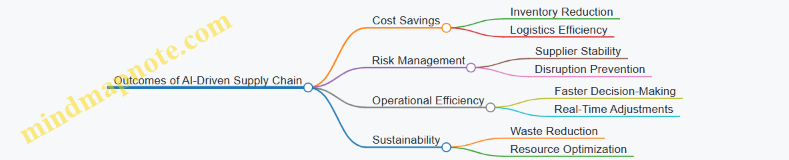
This example demonstrates how innovation leaders can strategically leverage AI to optimize supply chains, reduce costs, and build resilient, agile operations in the automated era.
6.4 Overcoming Challenges in AI Integration Across Business Units
Integrating AI across diverse business units is a complex endeavor that requires strategic planning, cross-functional collaboration, and continuous adaptation. Challenges often arise from differences in unit goals, data silos, varying levels of AI maturity, and resistance to change. This section explores practical approaches and examples to overcome these hurdles effectively.
Common Challenges in AI Integration
Best Practices to Overcome Challenges
-
Establish a Centralized AI Governance Team
- Create a cross-unit AI steering committee responsible for setting standards, policies, and priorities.
- Example: A senior manager at a global retail company formed an AI governance board including leaders from marketing, supply chain, and IT, which streamlined AI project approvals and ensured alignment.
-
Promote Data Integration and Standardization
- Implement unified data platforms and enforce data quality standards.
- Example: An innovation leader at a manufacturing firm introduced a centralized data lake that consolidated sensor data from multiple plants, enabling consistent AI analytics.
-
Foster a Culture of Collaboration and AI Literacy
- Conduct workshops and training sessions to demystify AI and reduce resistance.
- Example: A senior manager in a financial services company launched an AI ambassador program where trained employees championed AI adoption within their units.
-
Align AI Initiatives with Business Objectives
- Ensure AI projects directly support unit-specific goals and overall corporate strategy.
- Example: The innovation leader at a healthcare organization tailored AI solutions for patient engagement in marketing and operational efficiency in logistics, aligning with each unit’s KPIs.
-
Invest in Talent Development and Cross-Training
- Upskill existing employees and hire AI specialists to bridge skill gaps.
- Example: A senior manager at a tech firm implemented rotational programs allowing employees to gain AI experience in different departments.
Mind Map: Strategies for Successful AI Integration
Example Scenario: Overcoming Fragmentation in a Global Corporation
A multinational corporation faced fragmented AI efforts with each business unit deploying different AI tools, causing inefficiencies and duplicated efforts. The senior manager spearheading AI integration took the following steps:
- Assessment: Conducted an audit of existing AI tools and projects across units.
- Governance: Established an AI Center of Excellence (CoE) to standardize AI practices.
- Data Strategy: Rolled out a unified data infrastructure to break down silos.
- Training: Launched company-wide AI literacy workshops.
- Communication: Created regular forums for units to share AI learnings and successes.
Outcome: Within 12 months, AI project delivery time improved by 30%, and cross-unit collaboration increased significantly.
Additional Tips
- Pilot Programs: Start with small-scale AI pilots involving multiple units to identify integration challenges early.
- Feedback Loops: Establish continuous feedback mechanisms to adapt AI strategies.
- Executive Sponsorship: Secure commitment from top leadership to drive AI integration priorities.
By proactively addressing these challenges with structured governance, data strategy, cultural initiatives, and talent development, senior managers and innovation leaders can successfully integrate AI across business units, unlocking greater strategic value in the automated era.
7. Ethical Leadership and Governance in the Age of Automation
7.1 Establishing AI Governance Frameworks for Responsible Use
In the automated era, AI governance frameworks are essential for ensuring that AI technologies are deployed responsibly, ethically, and in alignment with organizational values and regulatory requirements. For senior managers and innovation leaders, establishing a robust AI governance framework is a strategic imperative that balances innovation with risk management.
What is AI Governance?
AI governance refers to the structures, policies, and processes that guide the ethical development, deployment, and management of AI systems within an organization. It ensures accountability, transparency, fairness, and compliance with legal and ethical standards.
Key Components of an AI Governance Framework
AI Governance Framework Mind Map
Best Practices for Establishing AI Governance Frameworks
Define Clear Policies and Ethical Guidelines
- Develop a code of ethics specific to AI use that aligns with organizational values.
- Example: A financial services firm created an AI ethics charter that prohibits the use of AI for discriminatory lending practices.
Assign Roles and Responsibilities
- Establish an AI governance committee including senior managers, data scientists, legal experts, and ethicists.
- Example: An innovation leader at a healthcare company formed a cross-functional AI oversight board to review AI projects before deployment.
Implement Risk Management Processes
- Conduct bias audits and impact assessments regularly.
- Example: A retail company uses AI fairness tools to detect and correct biases in their customer segmentation algorithms.
Ensure Transparency and Explainability
- Use explainable AI (XAI) techniques to make AI decisions understandable to stakeholders.
- Example: A senior manager in manufacturing introduced dashboards that explain AI-driven quality control decisions to production teams.
Engage Stakeholders Continuously
- Involve employees, customers, and partners in feedback loops to identify concerns and improve AI systems.
- Example: An innovation leader at a telecom company held workshops with customer service reps to gather insights on AI chatbot performance.
Monitor and Update AI Systems
- Establish continuous monitoring for AI performance, ethical compliance, and security vulnerabilities.
- Example: A senior manager in logistics set up automated alerts for anomalies in AI-powered route optimization models.
Example: AI Governance Framework in Action
Company: TechNova, a global technology firm
Scenario: TechNova was deploying an AI-driven recruitment tool. To ensure responsible use, the senior management team established an AI governance framework:
- Formed an AI ethics committee with HR, legal, and data science leaders.
- Developed policies to prevent bias against protected groups.
- Implemented transparency measures by providing candidates with explanations of AI screening outcomes.
- Conducted quarterly audits to assess model fairness and accuracy.
- Created a feedback channel for applicants and recruiters to report issues.
Outcome: The framework helped TechNova reduce bias complaints by 40% and improved trust in AI recruitment processes.
AI Governance Framework Mind Map: Detailed Example
Summary
Establishing AI governance frameworks is a critical step for leaders to ensure AI technologies are used responsibly. By integrating clear policies, assigning accountability, managing risks, ensuring transparency, engaging stakeholders, and continuously monitoring AI systems, senior managers and innovation leaders can foster trust, mitigate risks, and drive sustainable AI-powered innovation.
For further reading, consider exploring frameworks such as the IEEE’s Ethically Aligned Design and the EU’s AI Act guidelines, which provide comprehensive principles and regulatory insights for AI governance.
7.2 Best Practice: Transparent Communication About AI Decisions to Stakeholders
In the automated era, AI-driven decisions increasingly influence strategic directions, operational processes, and customer experiences. Transparent communication about these AI decisions is crucial to build trust, ensure accountability, and foster stakeholder engagement. This section explores best practices for transparent communication, supported by mind maps and real-world examples.
Why Transparent Communication Matters
- Builds trust among stakeholders (employees, customers, partners, regulators).
- Enhances understanding of AI’s role and limitations.
- Mitigates fears related to automation and job displacement.
- Supports ethical use and governance of AI.
Key Elements of Transparent AI Communication
Transparent AI Communication Mind Map
Best Practices for Transparent Communication
-
Simplify Complex AI Concepts
- Use analogies and visual aids to explain AI models.
- Avoid jargon; focus on what AI does, not how it works technically.
-
Disclose Data Usage and Privacy Measures
- Clearly state what data is collected and how it is protected.
- Example: A senior manager shares a data flow diagram with the team to illustrate data privacy controls.
-
Explain Decision Logic and Limitations
- Share how AI recommendations are generated.
- Highlight scenarios where human judgment overrides AI.
-
Engage Stakeholders Early and Often
- Host workshops and Q&A sessions.
- Example: An innovation leader organizes monthly town halls to discuss AI-driven project updates.
-
Provide Channels for Feedback and Concerns
- Set up dedicated communication lines (email, chatbots, forums).
- Act on feedback to improve AI systems and communication.
-
Document and Share Governance Policies
- Publish AI ethics guidelines and compliance measures.
Example: Transparent AI Communication in Practice
Scenario: A senior manager at a retail company implements an AI-powered pricing tool.
-
Communication Approach:
- Conducted an initial briefing explaining the AI tool’s purpose: optimizing prices to balance competitiveness and profitability.
- Shared a simple flowchart showing how sales data feeds into the AI model.
- Clarified that final pricing decisions remain under human review.
- Established a feedback loop where sales teams report anomalies or concerns.
-
Outcome:
- Increased trust in AI recommendations.
- Reduced resistance to adoption.
- Improved pricing accuracy and sales performance.
Mind Map: Communication Workflow for AI Decisions
Additional Example: Innovation Leader Using Transparent Communication
An innovation leader at a healthcare startup introduced an AI diagnostic assistant.
- Hosted interactive demos for clinicians explaining AI’s role and limitations.
- Published FAQs addressing common concerns about AI accuracy and patient privacy.
- Created an internal newsletter highlighting AI system updates and success cases.
This transparent approach led to higher clinician adoption rates and valuable user feedback for continuous improvement.
Summary
Transparent communication about AI decisions is not just a compliance checkbox but a strategic leadership capability. By clearly articulating AI’s purpose, processes, and impacts, leaders empower stakeholders, reduce uncertainty, and drive successful AI adoption.
7.3 Example: Executive Development Programs Focused on AI Ethics
In the rapidly evolving AI landscape, executive development programs that emphasize AI ethics are essential for cultivating responsible leadership. These programs equip senior managers and innovation leaders with the knowledge and tools to navigate ethical dilemmas, ensure transparency, and foster trust in AI-driven decisions.
Key Components of AI Ethics Executive Development Programs
- Foundations of AI Ethics: Understanding core ethical principles such as fairness, accountability, transparency, and privacy.
- Regulatory and Legal Frameworks: Overview of global AI regulations and compliance requirements.
- Bias Detection and Mitigation: Techniques to identify and reduce bias in AI models.
- Ethical Decision-Making Frameworks: Structured approaches to evaluate AI initiatives through an ethical lens.
- Stakeholder Communication: Strategies for transparent and effective communication about AI use.
- Case Studies and Simulations: Real-world scenarios to practice ethical decision-making.
Mind Map: Structure of an AI Ethics Executive Development Program
Example: “Ethics in AI Leadership” Program at TechForward Inc.
Program Overview: TechForward Inc., a global technology firm, launched a 6-week executive development program titled “Ethics in AI Leadership” aimed at senior managers and innovation leaders. The program combined live workshops, e-learning modules, and interactive simulations.
Highlights:
- Week 1-2: Introduction to AI ethics principles and global regulations.
- Week 3: Hands-on bias detection exercises using real datasets.
- Week 4: Ethical decision-making frameworks applied to product development scenarios.
- Week 5: Communication workshops focused on transparency with customers and stakeholders.
- Week 6: Capstone simulation where participants navigated a complex AI ethics crisis.
Outcome: Post-program surveys showed a 40% increase in participants’ confidence to lead AI projects ethically. Several senior managers initiated new governance policies inspired by the program.
Mind Map: Ethical Decision-Making Simulation Scenario
Additional Example: Partnership with Academic Institutions
Several organizations partner with universities to co-create executive programs focused on AI ethics. For instance, the collaboration between Global Innovate Corp and the Center for AI Ethics at State University includes:
- Guest lectures by AI ethics scholars
- Joint research projects on ethical AI governance
- Access to AI ethics toolkits and frameworks
This partnership model enriches executive learning with cutting-edge research and practical insights.
Best Practices for Designing AI Ethics Executive Programs
- Blend Theory and Practice: Combine foundational ethical concepts with real-world applications.
- Use Interactive Learning: Incorporate simulations, role-playing, and case studies.
- Customize Content: Tailor programs to industry-specific ethical challenges.
- Foster Peer Learning: Encourage discussion and exchange among participants.
- Measure Impact: Use pre- and post-program assessments to track learning outcomes.
By embedding AI ethics into executive development, organizations empower their leaders to make strategic decisions that not only drive innovation but also uphold societal values and trust in the automated era.
7.4 Navigating Legal and Regulatory Considerations in AI Deployment
In the rapidly evolving landscape of AI deployment, leaders must be acutely aware of the complex legal and regulatory frameworks that govern AI technologies. Navigating these considerations is critical not only to ensure compliance but also to build trust with stakeholders and avoid costly penalties.
Key Legal and Regulatory Areas in AI Deployment
- Data Privacy and Protection
- Compliance with GDPR, CCPA, and other data protection laws
- Handling personally identifiable information (PII) responsibly
- Intellectual Property (IP)
- Ownership of AI-generated content and inventions
- Licensing of AI models and datasets
- Liability and Accountability
- Determining responsibility for AI-driven decisions and errors
- Legal implications of autonomous systems
- Transparency and Explainability
- Requirements for explainable AI in regulated industries
- Disclosure obligations to customers and regulators
- Bias and Discrimination
- Avoiding discriminatory outcomes in AI algorithms
- Compliance with anti-discrimination laws
- Cross-border Data Transfer and Jurisdiction
- Navigating international regulations and data sovereignty
Mind Map: Legal and Regulatory Considerations in AI Deployment
Best Practice: Establishing a Cross-Functional AI Compliance Team
Example: A senior manager at a multinational financial services firm formed a cross-functional AI compliance team comprising legal experts, data scientists, and ethicists. This team regularly reviews AI models for compliance with evolving regulations such as the EU AI Act and ensures that data privacy standards are met globally. By proactively engaging with regulators and embedding compliance checks into the AI development lifecycle, the firm avoided regulatory fines and enhanced stakeholder confidence.
Example Scenario: Handling Data Privacy in AI-Powered Customer Insights
A retail innovation leader deployed an AI system to analyze customer purchasing patterns. To comply with GDPR, the team implemented data anonymization techniques and obtained explicit customer consent for data usage. They also maintained detailed records of data processing activities and conducted Data Protection Impact Assessments (DPIAs). This approach not only ensured legal compliance but also improved customer trust and brand reputation.
Navigating Liability: Autonomous Decision-Making in Healthcare AI
In healthcare, AI systems may recommend diagnoses or treatment plans. A hospital’s executive development program emphasized the importance of defining liability boundaries between AI developers, healthcare providers, and institutions. By establishing clear protocols for AI oversight and human-in-the-loop decision-making, the hospital mitigated legal risks and ensured patient safety.
Mind Map: Steps to Navigate Legal and Regulatory Challenges
Final Thoughts
For AI-driven leaders, proactively navigating legal and regulatory considerations is a strategic imperative. Integrating compliance into AI deployment not only safeguards the organization but also fosters innovation that is responsible and sustainable. By leveraging cross-functional expertise, maintaining transparency, and staying abreast of regulatory developments, senior managers and innovation leaders can confidently lead their organizations through the automated era.
8. Future-Proofing Leadership Skills for Continuous AI Evolution
8.1 Anticipating Emerging AI Trends and Their Impact on Leadership
In the rapidly evolving landscape of AI, leaders must not only keep pace with current technologies but also anticipate emerging trends that will shape the future of business and leadership. Anticipating these trends enables senior managers and innovation leaders to make proactive strategic decisions, foster innovation, and maintain a competitive edge.
Understanding Emerging AI Trends
Emerging AI trends encompass advancements in technology, shifts in application domains, and evolving ethical and regulatory considerations. Leaders who understand these trends can better prepare their organizations for transformation.
Key Emerging AI Trends Impacting Leadership
- Generative AI and Creative Automation
- Explainable AI (XAI) for Transparent Decision-Making
- AI-Driven Hyper-Personalization
- Edge AI and Real-Time Processing
- AI Ethics and Responsible AI Governance
- AI-Augmented Human Collaboration
- Quantum Computing and AI Synergies
Mind Map: Emerging AI Trends and Leadership Impact
Example: Innovation Leader Anticipating Generative AI
An innovation leader at a global consumer goods company noticed the rise of generative AI tools capable of designing marketing campaigns and product concepts. By proactively integrating these tools into the R&D process, the leader accelerated idea generation cycles, reducing time-to-market by 30%. This strategic anticipation allowed the company to stay ahead of competitors and respond swiftly to market trends.
Mind Map: Leadership Actions to Anticipate AI Trends
Example: Senior Manager Using Scenario Planning
A senior manager in a financial services firm led a scenario planning workshop focusing on AI’s impact over the next five years. By exploring scenarios such as widespread AI regulation and the rise of autonomous financial advisors, the manager helped the leadership team develop flexible strategies that included investing in explainable AI and enhancing human-AI collaboration. This foresight mitigated risks and positioned the firm as a trusted AI innovator.
Conclusion
Anticipating emerging AI trends is a critical leadership skill in the automated era. By understanding the technological advancements and their potential impacts, leaders can guide their organizations through change with agility and foresight. Utilizing tools like mind maps and scenario planning, combined with real-world examples, equips senior managers and innovation leaders to make strategic decisions that harness AI’s full potential while navigating its challenges.
8.2 Best Practice: Scenario Planning with AI-Driven Simulations
Scenario planning is a strategic tool that helps leaders anticipate and prepare for multiple possible futures. In the automated era, AI-driven simulations elevate this practice by enabling dynamic, data-rich, and complex scenario modeling that traditional methods cannot match. This empowers senior managers and innovation leaders to make more informed, agile decisions.
What is AI-Driven Scenario Planning?
AI-driven scenario planning uses machine learning algorithms, predictive analytics, and simulation models to create, test, and refine multiple future scenarios based on vast datasets and real-time inputs. These simulations can incorporate variables such as market trends, customer behavior, supply chain disruptions, regulatory changes, and technological advancements.
Mind Map: Components of AI-Driven Scenario Planning
How to Implement AI-Driven Scenario Planning: Step-by-Step
- Define Strategic Questions: Identify the key uncertainties and decisions that need scenario exploration.
- Gather and Integrate Data: Collect diverse datasets relevant to your business environment.
- Select Appropriate AI Models: Choose simulation techniques (e.g., agent-based models for customer behavior, system dynamics for supply chains).
- Develop Scenarios: Use AI to generate multiple plausible futures, including extreme and unexpected events.
- Analyze Outcomes: Evaluate risks, opportunities, and impacts on strategic objectives.
- Make Informed Decisions: Prioritize initiatives and allocate resources based on scenario insights.
- Monitor and Update: Continuously feed new data to refine simulations and adapt strategies.
Example 1: Innovation Leader Preparing for Market Disruption
An innovation leader at a consumer electronics company used AI-driven simulations to anticipate the impact of emerging 5G technology on product demand. By modeling different adoption rates and competitor responses, the leader identified a scenario where early investment in 5G-compatible devices would capture significant market share. This insight led to accelerated R&D funding and a successful product launch ahead of competitors.
Mind Map: AI-Driven Scenario Planning for Market Disruption
Example 2: Senior Manager Optimizing Supply Chain Resilience
A senior manager in a global manufacturing firm leveraged AI-driven scenario planning to simulate supply chain disruptions caused by geopolitical tensions and natural disasters. The simulations revealed vulnerabilities in specific supplier regions and transportation routes. Using these insights, the manager diversified suppliers and invested in AI-powered logistics optimization, reducing downtime and costs during actual disruptions.
Mind Map: Supply Chain Scenario Planning with AI
Benefits of AI-Driven Scenario Planning
- Enhanced Complexity Handling: AI can process and simulate complex interdependencies beyond human cognitive limits.
- Real-Time Adaptability: Continuous data input allows scenarios to evolve with changing conditions.
- Improved Risk Management: Identifies hidden risks and prepares leaders for black swan events.
- Data-Backed Confidence: Decisions are supported by robust, quantitative insights.
Tips for Leaders
- Engage cross-functional teams to provide diverse perspectives and validate AI-generated scenarios.
- Combine AI insights with human intuition to balance data-driven and experience-based decision-making.
- Invest in AI literacy programs to empower your leadership team in interpreting simulation outputs.
- Use scenario planning outputs to communicate strategic direction clearly to stakeholders.
By integrating AI-driven simulations into scenario planning, leaders in the automated era can navigate uncertainty with agility, foresight, and confidence, turning complexity into a strategic advantage.
8.3 Example: Senior Manager Preparing Teams for AI-Enabled Market Disruptions
In today’s rapidly evolving business landscape, AI-driven market disruptions are becoming the norm rather than the exception. A Senior Manager’s role in preparing teams for these disruptions is critical to maintaining competitive advantage and fostering resilience.
Understanding the Challenge
AI-enabled market disruptions can manifest as:
- Sudden shifts in customer expectations
- Emergence of new AI-powered competitors
- Automation of core business processes
- Changes in regulatory environments driven by AI ethics
The Senior Manager must anticipate these changes and equip their teams with the skills, mindset, and tools to adapt quickly.
Mind Map: Preparing Teams for AI-Enabled Market Disruptions
Practical Steps Taken by the Senior Manager
-
Conducted AI Literacy Workshops: The Senior Manager organized monthly workshops introducing AI concepts, focusing on how AI impacts their specific industry and roles. For example, in a retail context, teams learned about AI-driven customer personalization and inventory automation.
-
Implemented Scenario Planning Sessions: Using AI-powered simulation tools, the team explored various market disruption scenarios such as sudden competitor AI adoption or regulatory changes. This helped the team visualize potential futures and develop flexible strategies.
-
Promoted Agile and Cross-Functional Teams: The Senior Manager restructured teams to be more agile, encouraging collaboration between data scientists, marketers, and product developers. This cross-pollination accelerated innovation and responsiveness.
-
Established a Culture of Psychological Safety: Recognizing that disruption can cause uncertainty, the Senior Manager fostered an environment where team members felt safe to experiment, fail, and learn. This was exemplified by regular ‘fail-forward’ meetings where lessons from setbacks were openly discussed.
-
Leveraged AI Tools for Real-Time Insights: Teams were equipped with AI dashboards that provided real-time market and customer data, enabling faster decision-making and proactive adjustments.
Example Scenario
A Senior Manager at a mid-sized logistics company noticed emerging AI startups offering autonomous route optimization that threatened their market share. To prepare, the manager:
- Initiated training on AI and autonomous systems for logistics teams.
- Collaborated with IT to pilot AI-driven route planning software.
- Created cross-functional task forces to explore new AI-enabled service offerings.
- Used AI simulations to anticipate competitor moves and customer responses.
As a result, the company launched a competitive AI-powered delivery optimization service ahead of many competitors, retaining and growing its client base.
Summary
By proactively educating teams, fostering agile collaboration, leveraging AI tools, and cultivating a resilient culture, the Senior Manager effectively prepared their teams for AI-enabled market disruptions. This approach not only mitigates risk but also positions the organization to capitalize on AI-driven opportunities.
Additional Mind Map: Skills Focus for Teams
This comprehensive preparation empowers teams to navigate uncertainty confidently and thrive in the automated era.
8.4 Building Resilience and Agility in an Automated Business Environment
In today’s rapidly evolving automated business landscape, resilience and agility are no longer optional traits but essential leadership capabilities. AI-driven technologies continuously reshape markets, customer expectations, and operational processes. Leaders who cultivate resilience and agility can not only survive disruptions but also leverage them as opportunities for growth and innovation.
Understanding Resilience and Agility
- Resilience refers to the ability to recover quickly from setbacks, adapt to change, and keep moving forward despite challenges.
- Agility is the capacity to rapidly sense, respond, and adapt to evolving conditions with speed and flexibility.
Together, they empower leaders to navigate uncertainty and complexity in an automated environment.
Key Components of Resilience and Agility in AI-Driven Contexts
Best Practices to Build Resilience and Agility
-
Foster a Culture of Continuous Learning
- Encourage teams to stay updated on AI trends and automation tools.
- Example: A senior manager implements weekly “AI Insights” sessions where team members share new AI applications relevant to their work.
-
Implement Agile Methodologies
- Use iterative planning, rapid prototyping, and feedback loops to adapt quickly.
- Example: An innovation leader adopts Scrum practices to accelerate AI-driven product development cycles.
-
Leverage AI for Real-Time Insights
- Use AI-powered analytics to detect market changes or operational bottlenecks early.
- Example: A senior manager uses AI dashboards to monitor supply chain disruptions and adjust sourcing strategies immediately.
-
Develop Emotional Intelligence and Stress Resilience
- Train leaders and teams to manage stress and maintain focus during rapid change.
- Example: Executive development programs incorporate mindfulness and resilience coaching tailored for AI-driven work environments.
-
Promote Cross-Functional Collaboration
- Break down silos to enable faster problem-solving and innovation.
- Example: An innovation leader creates AI task forces combining data scientists, engineers, and business strategists to co-create solutions.
-
Encourage Experimentation and Risk-Taking
- Create safe environments where failure is seen as a learning opportunity.
- Example: A senior manager launches an “AI Innovation Sandbox” where teams can test new AI tools without impacting core operations.
Mind Map: Strategies for Building Resilience and Agility
Real-World Example: Senior Manager Leading Resilience in Retail Automation
A senior manager at a large retail chain faced sudden disruptions due to automated inventory systems malfunctioning during peak season. Instead of reacting with rigid protocols, the manager:
- Quickly assembled a cross-functional team including IT, operations, and AI specialists.
- Used AI diagnostic tools to identify root causes within hours.
- Implemented agile workflows to reroute inventory manually while the system was fixed.
- Communicated transparently with staff and customers to manage expectations.
- Post-crisis, initiated continuous learning programs focused on AI system troubleshooting.
This approach minimized downtime, maintained customer trust, and strengthened the team’s ability to handle future disruptions.
Summary
Building resilience and agility in an automated business environment requires a holistic approach combining culture, processes, technology, people, and leadership. By embedding continuous learning, agile practices, emotional intelligence, and AI-driven insights into their leadership style, senior managers and innovation leaders can ensure their organizations not only withstand disruption but thrive amid it.
9. Measuring Success: KPIs and Metrics for AI-Driven Leadership
9.1 Defining Relevant KPIs for AI Integration in Strategic Decisions
In the era of AI-driven leadership, defining the right Key Performance Indicators (KPIs) is critical to effectively measure the impact of AI integration on strategic decision-making. KPIs serve as quantifiable metrics that help senior managers and innovation leaders track progress, evaluate success, and identify areas for improvement when leveraging AI technologies.
Why Defining Relevant KPIs Matters
- Align AI initiatives with business goals: KPIs ensure AI efforts contribute directly to organizational objectives.
- Measure AI effectiveness: Track how AI improves decision quality, speed, and outcomes.
- Drive accountability: Clear KPIs assign responsibility and motivate teams.
- Enable continuous improvement: Data-driven insights from KPIs guide iterative AI strategy refinement.
Core KPI Categories for AI Integration in Strategic Decisions
Detailed Explanation of Key KPIs
-
Revenue Growth Attributable to AI: Measures incremental revenue generated by AI-enhanced strategic decisions.
- Example: An innovation leader uses AI-driven market analysis to identify a new customer segment, resulting in a 12% revenue increase over six months.
-
Cost Reduction from Automation: Tracks savings achieved by automating decision processes.
- Example: A senior manager implements AI-powered forecasting, reducing inventory holding costs by 15%.
-
Decision Accuracy: Evaluates how often AI-supported decisions lead to the desired outcomes.
- Example: Predictive maintenance decisions guided by AI reduce equipment downtime by 25%.
-
Time to Decision: Measures the reduction in time taken to reach strategic decisions due to AI insights.
- Example: AI dashboards enable executives to cut decision cycles from weeks to days.
-
AI Tool Usage Rate: Percentage of decision-makers actively using AI tools in their workflows.
- Example: After training, 80% of managers regularly consult AI analytics platforms.
-
Bias Detection Rate: Frequency of identified and mitigated biases in AI models to ensure fair decisions.
- Example: Regular audits reveal and correct gender bias in hiring recommendation algorithms.
Mind Map: KPI Examples with Practical Applications
Best Practice: Establishing SMART KPIs
- Specific: Clearly define what is being measured.
- Measurable: Ensure quantitative or qualitative measurement is possible.
- Achievable: Set realistic targets.
- Relevant: Align KPIs with strategic AI objectives.
- Time-bound: Specify time frames for evaluation.
Example: Instead of “Improve decision-making,” use “Increase AI-supported decision accuracy by 15% within 12 months.”
Example Scenario
An innovation leader at a retail company integrates AI-powered customer analytics to optimize product assortment. They define KPIs such as:
- Increase in average basket size by 10% within 9 months.
- Reduction in stockouts by 20% over 6 months.
- User adoption rate of AI tools among category managers reaching 75% within 3 months.
By tracking these KPIs, the leader can quantify AI’s strategic value and make data-driven adjustments to maximize impact.
Summary
Defining relevant KPIs for AI integration is essential for senior managers and innovation leaders to harness AI’s full potential in strategic decision-making. By focusing on measurable business impact, decision quality, operational efficiency, user adoption, and risk management, leaders can ensure their AI initiatives deliver tangible and sustainable value.
9.2 Best Practice: Leveraging AI to Continuously Monitor Leadership Effectiveness
In today’s fast-paced automated era, leadership effectiveness cannot be assessed through periodic reviews alone. Continuous monitoring powered by AI enables senior managers and innovation leaders to gain real-time, actionable insights into their leadership impact, decision quality, and team dynamics. This best practice section explores how AI-driven tools and techniques can be harnessed to maintain and improve leadership effectiveness on an ongoing basis.
Why Continuous Monitoring Matters
- Dynamic environments: Rapid market and technology changes require leaders to adapt quickly.
- Real-time feedback: Immediate insights help course-correct leadership approaches before issues escalate.
- Data-driven decisions: Objective metrics reduce biases inherent in traditional evaluations.
Key Components of AI-Driven Leadership Monitoring
How AI Tools Monitor Leadership Effectiveness
-
Sentiment Analysis on Communication: AI analyzes emails, chat messages, and meeting transcripts to gauge tone, empathy, and clarity of communication.
-
Behavioral Pattern Recognition: Machine learning models identify leadership behaviors correlated with high team performance or disengagement.
-
Performance Correlation: AI links leadership actions with team KPIs, spotting trends like productivity boosts or declines following specific decisions.
-
Continuous 360-Degree Feedback: Automated collection and analysis of peer, subordinate, and self-assessments provide a holistic view.
Example: Senior Manager Using AI to Track Leadership Effectiveness
Context: A senior manager at a tech company implemented an AI-powered platform to monitor leadership impact across multiple teams during a major product launch.
Implementation:
- The platform collected data from internal communication tools and employee pulse surveys.
- NLP algorithms identified communication bottlenecks and sentiment shifts.
- Predictive analytics forecasted potential team burnout risks.
Outcome:
- The manager received weekly dashboards highlighting areas needing attention.
- Early detection of declining morale led to timely interventions, such as workload redistribution and targeted coaching.
- Post-launch, the teams reported higher satisfaction and improved delivery timelines.
Mind Map: AI Monitoring Workflow
Best Practices for Implementation
- Ensure Data Privacy: Transparently communicate data usage and protect sensitive information.
- Combine AI Insights with Human Judgment: Use AI as a decision support tool, not a replacement for human intuition.
- Customize Metrics: Tailor KPIs and monitoring parameters to organizational culture and leadership goals.
- Promote a Feedback Culture: Encourage openness to continuous feedback and improvement.
Additional Example: Innovation Leader Enhancing Executive Development
An innovation leader at a financial services firm integrated AI monitoring into their executive development program. By continuously analyzing leadership behaviors and team outcomes, the AI system recommended personalized coaching topics and learning modules. This approach led to a 20% improvement in leadership competency scores within six months.
Summary
Leveraging AI to continuously monitor leadership effectiveness empowers senior managers and innovation leaders to stay agile, responsive, and aligned with organizational goals. By integrating multiple data sources and advanced analytics, AI provides a nuanced, real-time picture of leadership impact, enabling proactive development and sustained success in the automated era.
9.3 Example: Innovation Leader Tracking ROI on AI-Powered Initiatives
In the rapidly evolving AI landscape, innovation leaders must not only spearhead AI initiatives but also rigorously track their Return on Investment (ROI) to ensure strategic alignment and resource optimization. This example illustrates how an innovation leader effectively measures and communicates ROI on AI-powered projects, blending quantitative metrics with qualitative insights.
Context:
An innovation leader at a mid-sized retail company launched multiple AI initiatives, including demand forecasting, personalized marketing, and automated customer support. To justify continued investment and scale successful projects, the leader needed a robust framework to track ROI.
Step 1: Define Clear Objectives and KPIs
The leader began by aligning AI initiatives with business goals and defining specific KPIs:
- Demand Forecasting: Reduce inventory costs by 15%, improve stock availability by 10%
- Personalized Marketing: Increase customer engagement rates by 20%, boost conversion rates by 12%
- Automated Customer Support: Decrease average response time by 40%, reduce support costs by 25%
Step 2: Establish a Measurement Framework
The innovation leader developed a measurement framework combining financial, operational, and customer-centric metrics:
Mind Map: ROI Measurement Framework
Step 3: Data Collection and Analysis
The team integrated AI analytics dashboards with existing business intelligence tools to collect real-time data. For example:
- Demand forecasting accuracy improved from 70% to 88%, leading to a 12% reduction in excess inventory.
- Personalized marketing campaigns saw a 25% increase in click-through rates, translating to a 15% uplift in sales.
- Automated support reduced average handling time by 45%, saving approximately 200 support hours monthly.
Step 4: Calculate ROI
Using the collected data, the innovation leader calculated ROI for each initiative:
Mind Map: ROI Calculation Example
Step 5: Communicate Results and Iterate
The innovation leader presented these insights to the executive team using a clear, visual dashboard:
Mind Map: Communication Dashboard Elements
The transparency helped secure additional funding for scaling the automated support system and refining the personalized marketing AI.
Key Takeaways:
- Align AI initiatives with measurable business outcomes.
- Use a balanced set of financial, operational, and customer metrics.
- Leverage real-time data integration for accurate tracking.
- Present ROI clearly to stakeholders to drive informed decisions.
Additional Example:
A global logistics firm’s innovation leader tracked ROI on an AI-powered route optimization tool. By reducing fuel consumption by 18% and delivery times by 22%, the initiative yielded a 35% ROI within the first year, validated through a similar structured measurement approach.
This example underscores how innovation leaders can systematically track and demonstrate the value of AI-powered initiatives, ensuring sustained investment and strategic impact in the automated era.
9.4 Adjusting Leadership Strategies Based on AI-Driven Performance Data
In the era of AI-driven leadership, the ability to dynamically adjust leadership strategies based on real-time performance data is a critical competency. AI tools provide senior managers and innovation leaders with deep insights into organizational performance, employee engagement, market trends, and operational efficiencies. Leveraging these insights effectively enables leaders to pivot strategies, optimize resource allocation, and drive sustained competitive advantage.
Why Adjust Leadership Strategies Using AI-Driven Data?
- Real-time Feedback: AI systems continuously analyze vast datasets, offering up-to-date insights that traditional reporting cycles cannot match.
- Data-Backed Decisions: Reduces reliance on intuition alone, enabling evidence-based strategy refinement.
- Early Issue Detection: Identifies emerging risks or underperformance before they escalate.
- Enhanced Agility: Facilitates rapid response to changing market conditions or internal dynamics.
Mind Map: Key Areas Influenced by AI-Driven Performance Data
Best Practices for Strategy Adjustment
-
Establish Clear KPIs Aligned with Strategic Goals
- Define measurable indicators that AI tools can track continuously.
- Example: An innovation leader sets KPIs for R&D cycle time and patent filings.
-
Implement Real-Time Dashboards
- Use AI-powered dashboards to visualize performance data dynamically.
- Example: A senior manager uses a dashboard showing team productivity and engagement scores to adjust workload distribution.
-
Conduct Regular Data-Driven Strategy Reviews
- Schedule frequent reviews where AI insights inform leadership discussions.
- Example: Monthly innovation review meetings incorporate AI-generated risk assessments to reprioritize projects.
-
Foster a Culture Open to Change
- Encourage teams to embrace data-driven pivots without fear of failure.
- Example: Leaders share AI insights transparently, promoting trust and agility.
-
Combine AI Insights with Human Judgment
- Use AI as a decision support tool, not a replacement for leadership intuition.
- Example: A senior manager weighs AI-flagged performance dips alongside qualitative feedback before making personnel changes.
Example: Adjusting Leadership Strategy in a Product Development Team
Scenario: An innovation leader oversees a product development team using AI analytics to monitor project progress and team performance.
- AI Insight: The AI system detects a slowdown in prototype completion rates and a drop in team engagement scores.
- Leadership Action: The leader investigates and discovers resource overload and unclear task priorities.
- Strategy Adjustment: They reallocate resources, introduce clearer sprint goals, and implement weekly check-ins.
- Outcome: Prototype completion rates improve by 25% over the next quarter, and engagement scores rebound.
Mind Map: Steps to Adjust Leadership Strategy Using AI Data
Additional Example: Market Adaptation Through AI-Driven Insights
A senior manager in retail uses AI to analyze customer sentiment and competitor pricing in real-time. The AI flags a rising dissatisfaction trend with delivery times and a competitor launching a new loyalty program.
- Leadership Response: The manager accelerates the rollout of an AI-optimized logistics system and designs a competitive loyalty program.
- Result: Customer satisfaction scores increase by 15%, and market share grows by 5% within six months.
Conclusion
Adjusting leadership strategies based on AI-driven performance data empowers leaders to be proactive, agile, and precise in their decision-making. By integrating AI insights with human expertise, senior managers and innovation leaders can navigate the complexities of the automated era with confidence and drive their organizations toward sustained success.
10. Real-World Case Studies of AI-Driven Leadership Excellence
10.1 Case Study: Senior Manager Leading Digital Transformation in Manufacturing
In this case study, we explore how a Senior Manager in a mid-sized manufacturing company spearheaded a successful digital transformation initiative by leveraging AI-driven leadership and strategic decision-making.
Background
The company faced increasing competition, rising operational costs, and pressure to improve product quality. Traditional manufacturing processes were heavily manual, leading to inefficiencies and inconsistent output.
The Senior Manager, Emma, was tasked with leading the digital transformation to modernize operations and enhance competitiveness.
Strategic Approach
Emma adopted an AI-driven leadership style, focusing on data-driven decisions, fostering a culture of innovation, and integrating AI tools to automate and optimize manufacturing processes.
Mind Map: Emma’s Digital Transformation Strategy
Step 1: Assessment & Vision
Emma began by conducting a comprehensive assessment of existing manufacturing workflows, identifying bottlenecks and areas where AI could add value.
Example: She discovered that machine downtime was a major cause of delays and that predictive maintenance could reduce unexpected breakdowns.
Step 2: AI Integration
Emma prioritized three AI applications:
-
Predictive Maintenance: Using AI algorithms to analyze sensor data and predict equipment failures before they occur.
-
Quality Control Automation: Implementing computer vision systems to detect defects in real-time, reducing human error.
-
Supply Chain Optimization: Leveraging AI to forecast demand and optimize inventory levels.
Mind Map: AI Applications in Manufacturing
Step 3: Cultural Change
Emma recognized that technology alone wouldn’t guarantee success. She launched initiatives to build AI literacy among employees and encouraged collaboration between IT, operations, and production teams.
Best Practice Example: Emma created “AI Champions” within each department to facilitate knowledge sharing and address resistance.
Step 4: Continuous Improvement
Emma established real-time dashboards to monitor KPIs such as machine uptime, defect rates, and inventory turnover. Feedback loops allowed teams to adjust processes dynamically.
Example: When the AI system flagged an unusual spike in defects, the quality team quickly investigated and resolved a calibration issue.
Outcomes
- 30% reduction in machine downtime due to predictive maintenance.
- 25% decrease in product defects through automated quality control.
- 15% improvement in inventory turnover via supply chain AI optimization.
- Enhanced employee engagement and cross-functional collaboration.
Lessons Learned
- Combining AI technology with cultural transformation is critical.
- Continuous monitoring and feedback enable agile adjustments.
- Empowering employees as AI advocates accelerates adoption.
Summary Mind Map: Key Success Factors
This case study exemplifies how a Senior Manager can lead digital transformation in manufacturing by integrating AI thoughtfully, fostering a supportive culture, and making strategic decisions grounded in data and collaboration.
10.2 Case Study: Innovation Leader Driving AI Adoption in Financial Services
Introduction
In the rapidly evolving financial services sector, AI adoption has become a critical driver of innovation, operational efficiency, and customer experience enhancement. This case study explores how an Innovation Leader at a leading financial institution successfully spearheaded AI integration, transforming strategic decision-making and operational workflows.
Background
The financial institution faced challenges including increasing regulatory pressures, rising customer expectations for personalized services, and the need to optimize risk management. The Innovation Leader recognized AI’s potential to address these challenges and embarked on a structured AI adoption journey.
Strategic Approach to AI Adoption
Identifying High-Impact Use Cases
The Innovation Leader prioritized AI projects that could deliver measurable business value quickly. Key areas included:
- Fraud detection and prevention
- Customer service automation
- Credit risk assessment
- Regulatory compliance automation
Example: Using AI-powered anomaly detection algorithms, the team reduced fraud-related losses by 30% within the first year.
Building Cross-Functional Teams
To ensure AI initiatives aligned with business goals, the Innovation Leader formed interdisciplinary teams combining data scientists, compliance experts, and business strategists.
Best Practice: Regular workshops facilitated knowledge sharing and fostered a culture of collaboration between technical and business units.
Implementing Agile AI Development Cycles
Adopting agile methodologies enabled rapid prototyping, testing, and iteration of AI models.
Example: A chatbot for customer inquiries was developed in 3 months, with continuous improvements based on user feedback.
Mind Map: AI Adoption Strategy in Financial Services
Change Management and Culture Shift
The Innovation Leader understood that technology alone wouldn’t guarantee success. They championed a culture shift by:
- Launching AI literacy programs for employees to demystify AI concepts
- Encouraging experimentation and tolerating failure as part of innovation
- Securing executive sponsorship to reinforce AI’s strategic importance
Example: Monthly “AI Innovation Days” where teams showcased AI projects and shared learnings, boosting engagement and adoption.
Overcoming Challenges
-
Data Quality and Integration: The team invested in data cleansing and unified data platforms to ensure AI models had reliable inputs.
-
Regulatory Compliance: Collaborated closely with legal teams to embed compliance checks within AI workflows.
-
Bias and Fairness: Implemented bias detection tools and diverse data sampling to minimize discriminatory outcomes.
Results and Impact
- 25% reduction in operational costs through automation of routine tasks
- Enhanced customer satisfaction scores by 15% due to personalized AI-driven services
- Improved risk management accuracy, reducing non-performing loans by 10%
Mind Map: Outcomes of AI Adoption
Lessons Learned
- Align AI initiatives closely with strategic business objectives.
- Foster collaboration between technical experts and business leaders.
- Invest in change management to build AI readiness across the organization.
- Prioritize ethical considerations to maintain trust and compliance.
Conclusion
This case study exemplifies how an Innovation Leader can effectively drive AI adoption in financial services by combining strategic vision, cross-functional collaboration, agile execution, and a strong focus on culture and ethics. The integrated approach not only delivered tangible business benefits but also positioned the institution as a forward-thinking leader in the automated era.
10.3 Case Study: Executive Development Program Integrating AI for Leadership Growth
In today’s rapidly evolving business landscape, executive development programs must evolve to incorporate AI technologies that empower leaders to make smarter, faster, and more strategic decisions. This case study explores how a global technology firm designed and implemented an AI-integrated executive development program aimed at accelerating leadership growth and fostering AI fluency among senior managers and innovation leaders.
Program Overview
The program, named AI-Leadership Accelerator (AILA), was a 6-month blended learning experience combining AI-powered personalized learning, hands-on simulations, and real-world project applications. It targeted senior managers and innovation leaders to enhance their capabilities in leveraging AI for strategic decision-making.
Key Components of AILA
- AI-Powered Learning Pathways: Using AI algorithms, the program tailored content based on each participant’s existing skills, learning pace, and leadership goals.
- Simulated Decision-Making Environments: Participants engaged with AI-driven business simulations that mimicked real-world challenges requiring strategic thinking.
- Mentorship with AI Insights: Leaders received feedback augmented by AI analytics on their decision patterns and leadership styles.
- Collaborative Innovation Projects: Teams worked on AI-related innovation initiatives, applying learnings to solve organizational challenges.
Mind Map: Structure of the AI-Integrated Executive Development Program
Example: Personalized Learning Pathway
One senior manager, Sarah, had strong strategic skills but limited AI knowledge. The AI system identified this gap and recommended foundational AI literacy modules, followed by advanced courses on AI ethics and data-driven innovation. As Sarah progressed, the AI adapted the difficulty and introduced case studies relevant to her industry.
This personalization ensured efficient learning and higher engagement, leading Sarah to confidently lead an AI-powered market analysis project post-program.
Example: AI-Driven Simulation
Participants faced a simulated scenario where an AI algorithm predicted a sudden market shift. Leaders had to decide resource allocation under uncertainty, balancing AI recommendations with human intuition.
John, an innovation leader, used the simulation to practice integrating AI insights with team input, improving his ability to make balanced decisions. Post-simulation feedback highlighted his growth areas, such as risk tolerance and communication.
Mind Map: AI-Augmented Mentorship Process
Outcomes and Impact
- Enhanced AI Fluency: 95% of participants reported increased confidence in understanding and applying AI concepts.
- Improved Strategic Decisions: Post-program assessments showed a 30% improvement in decision quality metrics.
- Cultural Shift: The organization observed greater openness to AI-driven initiatives and collaboration across teams.
- Leadership Growth: Several participants were promoted to roles with broader AI leadership responsibilities.
Lessons Learned
- Personalization is Key: AI-powered adaptive learning significantly boosts engagement and effectiveness.
- Balance AI and Human Judgment: Simulations that challenge leaders to integrate AI insights with intuition prepare them for real-world complexity.
- Continuous Feedback Accelerates Growth: AI-augmented mentorship provides timely, data-driven insights that traditional coaching may miss.
- Cross-Functional Collaboration Drives Innovation: Bringing diverse teams together around AI projects fosters creativity and buy-in.
This case study demonstrates that integrating AI into executive development programs is not just about teaching technology but about transforming leadership mindsets and capabilities to thrive in the automated era.
10.4 Lessons Learned and Best Practices from Industry Leaders
In the rapidly evolving AI-driven landscape, industry leaders have gleaned invaluable lessons that can guide senior managers and innovation leaders in making strategic decisions. This section synthesizes these insights into actionable best practices, supported by illustrative examples and mind maps to visualize key concepts.
Lesson 1: Embrace a Human-Centric Approach to AI
Best Practice: Prioritize augmenting human capabilities rather than replacing them. Leaders who focus on collaboration between AI and humans unlock greater innovation and employee engagement.
Example: A senior manager at a global retail company integrated AI-powered recommendation systems to assist sales teams rather than automate their roles. This approach increased sales by 15% while improving employee satisfaction.
Lesson 2: Foster Continuous Learning and AI Literacy
Best Practice: Establish ongoing education programs to build AI literacy across all leadership levels, enabling informed decision-making and reducing resistance.
Example: An innovation leader at a tech startup launched monthly AI workshops and cross-team hackathons, resulting in a 30% increase in AI-driven project proposals within six months.
Lesson 3: Balance Data-Driven Insights with Strategic Intuition
Best Practice: Use AI-generated data to inform decisions but retain human judgment to interpret nuances and contextual factors.
Example: A senior manager in financial services combined AI risk models with expert intuition to navigate volatile markets, reducing losses by 20% during economic downturns.
Lesson 4: Implement Robust AI Governance and Ethical Standards
Best Practice: Develop clear policies around AI use, focusing on transparency, fairness, and accountability to build trust internally and externally.
Example: An executive development program at a multinational corporation incorporated AI ethics modules, leading to the creation of an AI ethics committee that oversees all AI initiatives.
Lesson 5: Leverage AI to Accelerate Innovation Cycles
Best Practice: Use AI tools to rapidly prototype, test, and iterate on new ideas, shortening time-to-market and increasing competitive advantage.
Example: An innovation leader in healthcare utilized AI-driven simulations to test new medical devices virtually, cutting development time by 40%.
Lesson 6: Cultivate Agility and Resilience in Leadership
Best Practice: Prepare leaders and teams to adapt quickly to AI-driven changes by fostering a culture of agility and resilience.
Example: A senior manager in manufacturing implemented AI-powered scenario planning workshops, enabling teams to anticipate disruptions and pivot strategies effectively.
Summary Mind Map: Key Lessons and Best Practices
By internalizing these lessons and integrating the best practices into their leadership approach, senior managers and innovation leaders can confidently navigate the automated era, driving sustainable growth and fostering a future-ready organization.