Synthetic Biology Engineering For Novel Biomaterials And Bioproduction
1. Introduction to Synthetic Biology and Biomaterials
1.1 Overview of Synthetic Biology: Concepts and Scope
Synthetic biology is an interdisciplinary field that combines principles from biology, engineering, computer science, and chemistry to design, construct, and optimize new biological parts, devices, and systems or redesign existing natural biological systems for useful purposes. It aims to make biology easier to engineer by applying standardized methods and modular design principles.
Core Concepts of Synthetic Biology
- Standardization: Developing standardized biological parts (BioBricks) that can be reliably assembled.
- Modularity: Designing biological systems as modular components that can be combined in various ways.
- Abstraction: Using hierarchical design layers (parts, devices, systems) to simplify complex biological engineering.
- Design-Build-Test-Learn (DBTL) Cycle: An iterative engineering workflow to optimize biological constructs.
Mind Map: Core Concepts of Synthetic Biology
Scope of Synthetic Biology
Synthetic biology spans a wide range of applications including but not limited to:
- Biomaterials: Engineering organisms to produce novel polymers, fibers, and composites.
- Bioproduction: Sustainable synthesis of pharmaceuticals, biofuels, and chemicals.
- Biosensing: Creating living sensors for environmental monitoring and diagnostics.
- Therapeutics: Developing gene circuits for targeted therapies and synthetic probiotics.
- Agriculture: Engineering plants and microbes for improved yield and resilience.
Mind Map: Applications of Synthetic Biology
Example 1: Engineering Bacteria to Produce Spider Silk Proteins
Spider silk is a high-strength, lightweight biomaterial with numerous industrial applications. Natural spider farming is not feasible at scale, so synthetic biology enables the production of spider silk proteins in engineered bacteria like E. coli. By inserting synthetic gene circuits encoding spider silk proteins and optimizing expression systems, researchers have successfully produced silk fibers with mechanical properties comparable to natural silk.
Example 2: Modular Genetic Parts for Bioproduction
The Registry of Standard Biological Parts provides a library of genetic elements such as promoters, ribosome binding sites, and terminators. For instance, a synthetic bioprocess engineer can assemble these parts to create a genetic circuit that controls the production of a bioplastic precursor in yeast. This modular approach accelerates design and troubleshooting.
Summary
Synthetic biology is a transformative engineering discipline that leverages modularity, standardization, and iterative design to create novel biological systems. Its broad scope encompasses biomaterials and bioproduction, making it a cornerstone for innovation in biotechnology. Understanding these foundational concepts is essential for synthetic biologists, bioprocess engineers, and innovation leaders aiming to harness biology for new materials and sustainable production.
1.2 Defining Novel Biomaterials: Types and Applications
What Are Novel Biomaterials?
Novel biomaterials are engineered substances designed to interact with biological systems for a variety of applications. Unlike traditional materials, these are often synthesized or modified using synthetic biology techniques to exhibit enhanced or entirely new functionalities such as biodegradability, biocompatibility, self-healing, or responsiveness to environmental stimuli.
Mind Map: Overview of Novel Biomaterials
Types of Novel Biomaterials
Natural-Derived Biomaterials
These are materials directly produced or inspired by biological organisms.
- Bacterial Cellulose: Produced by bacteria like Gluconacetobacter xylinus, it is highly pure, strong, and biocompatible. Used in wound dressings and tissue engineering.
- Silk Proteins: Engineered spider silk proteins offer exceptional tensile strength and elasticity, useful in textiles and medical sutures.
- Collagen: A major structural protein in animals, recombinant collagen is used in regenerative medicine and cosmetics.
Synthetic Polymers
Engineered through synthetic biology or chemical synthesis to mimic or enhance natural properties.
- Polyhydroxyalkanoates (PHA): Microbially produced biodegradable polyesters used as sustainable alternatives to plastics.
- Polylactic Acid (PLA): Derived from renewable resources, PLA is biodegradable and widely used in packaging and 3D printing.
Hybrid Materials
Combining biological components with synthetic elements to create materials with novel functionalities.
- Biohybrid Hydrogels: Hydrogels embedded with living cells or enzymes for responsive behavior.
- Living Materials: Engineered microbes integrated into materials that can self-repair or sense environmental changes.
Mind Map: Applications of Novel Biomaterials
Examples of Applications with Best Practices
Medical Applications
- Example: Bacterial cellulose used as a wound dressing material due to its high water retention and biocompatibility.
- Best Practice: Ensure sterilization methods preserve material integrity and functionality.
Environmental Applications
- Example: Microbial production of PHA as biodegradable packaging material replacing petrochemical plastics.
- Best Practice: Optimize microbial strains for high yield and tailor polymer properties to application needs.
Industrial Applications
- Example: Recombinant spider silk fibers for high-strength, lightweight textiles.
- Best Practice: Use modular genetic circuits to control protein expression levels for consistent fiber quality.
Summary
Novel biomaterials represent a convergence of biology and engineering, enabling the creation of materials with tailored properties for diverse applications. Understanding their types and applications lays the foundation for designing next-generation biomaterials with synthetic biology tools.
1.3 The Intersection of Synthetic Biology and Biomaterial Engineering
Synthetic biology and biomaterial engineering are two rapidly evolving fields that converge to create innovative solutions for producing novel materials with tailored properties. This intersection leverages the power of genetic design and engineering to program living cells or cell-free systems to synthesize materials that were previously difficult or impossible to produce sustainably and at scale.
Mind Map: Core Concepts at the Intersection
Why This Intersection Matters
Synthetic biology provides the toolkit to precisely control biological systems at the genetic and metabolic levels. Biomaterial engineering benefits from this by enabling the design of living factories that produce materials with specific mechanical, chemical, or functional properties. This approach offers advantages such as renewable feedstocks, reduced environmental impact, and the ability to create materials with novel functionalities.
Example 1: Engineering Bacterial Cellulose for Advanced Biomaterials
Bacterial cellulose (BC) is a natural polymer produced by bacteria like Gluconacetobacter xylinus. It has high purity, tensile strength, and biocompatibility, making it ideal for wound dressings and tissue engineering.
- Synthetic biology approach: By engineering the genetic pathways controlling cellulose synthesis and secretion, researchers have enhanced BC yield and modified its structure.
- Best practice: Use modular promoters and ribosome binding sites to fine-tune gene expression levels, balancing cellulose production with bacterial growth.
- Outcome: Modified BC with improved porosity and mechanical properties tailored for specific medical applications.
Example 2: Programmable Spider Silk Production
Spider silk is renowned for its strength and elasticity but harvesting it naturally is impractical.
- Synthetic biology approach: Genes encoding spider silk proteins are inserted into microbial hosts like E. coli or yeast.
- Best practice: Design synthetic operons with inducible promoters to control silk protein expression and avoid metabolic burden.
- Outcome: Production of recombinant spider silk proteins that can be spun into fibers for textiles and biomedical devices.
Mind Map: Workflow from Synthetic Biology to Biomaterial
Integration Challenges and Solutions
-
Challenge: Metabolic burden leading to reduced host viability.
- Solution: Use dynamic gene expression systems that activate production only under certain conditions.
-
Challenge: Genetic instability during scale-up.
- Solution: Incorporate genome integration rather than plasmid-based expression.
-
Challenge: Achieving desired material properties consistently.
- Solution: Combine synthetic biology with advanced bioprocess monitoring and feedback control.
Summary
The intersection of synthetic biology and biomaterial engineering enables the rational design and production of novel biomaterials with enhanced or entirely new functionalities. By integrating genetic engineering, host optimization, and bioprocess development, this multidisciplinary approach is transforming how materials are developed, offering sustainable and customizable solutions across industries.
1.4 Best Practices: Setting Clear Objectives in Biomaterial Design
Setting clear objectives at the outset of biomaterial design is critical to ensure focused research, efficient resource utilization, and successful outcomes. This section outlines best practices to define and refine objectives, supported by illustrative examples and mind maps to visualize the process.
Why Set Clear Objectives?
- Aligns interdisciplinary teams on common goals
- Guides experimental design and resource allocation
- Facilitates measurable progress and decision-making
- Helps anticipate challenges and regulatory considerations
Best Practices for Setting Clear Objectives
-
Define the Application and Functional Requirements
- Identify the end-use of the biomaterial (e.g., medical implant, packaging, textile)
- Specify key functional properties (e.g., strength, flexibility, biodegradability)
- Example: Designing a biodegradable wound dressing requires objectives around biocompatibility, moisture retention, and antimicrobial properties.
-
Establish Performance Metrics and Benchmarks
- Quantify desired properties (e.g., tensile strength > 10 MPa, degradation time within 30 days)
- Compare with existing materials or industry standards
- Example: For bioplastic packaging, target oxygen permeability and mechanical durability comparable to conventional plastics.
-
Consider Production Constraints and Scalability
- Define acceptable production costs and yield targets
- Include host organism limitations and bioprocess parameters
- Example: Engineering yeast to produce collagen must consider fermentation scalability and cost-effectiveness.
-
Incorporate Regulatory and Safety Requirements Early
- Identify relevant regulatory frameworks (FDA, EMA, REACH)
- Set objectives to meet safety and environmental standards
- Example: GMO-derived biomaterials for medical use require strict sterility and traceability objectives.
-
Iterative Refinement and Stakeholder Feedback
- Use iterative cycles to refine objectives based on experimental data
- Engage end-users, clinicians, or industry partners for feedback
- Example: Adjusting mechanical strength targets for synthetic spider silk after prototype testing.
Mind Map: Setting Clear Objectives in Biomaterial Design
Example: Designing a Biomaterial for Sustainable Packaging
- Objective Definition: Create a biodegradable bioplastic with mechanical properties comparable to polyethylene, capable of degrading within 6 months in compost conditions.
- Functional Requirements: Tensile strength ≥ 20 MPa, oxygen permeability ≤ 100 cc/m²/day, compostable under industrial conditions.
- Production Constraints: Use engineered E. coli with a target yield of 5 g/L in fed-batch fermentation, cost target <$5/kg.
- Regulatory Considerations: Compliance with FDA food contact material regulations.
- Iterative Feedback: Initial prototypes showed insufficient tensile strength; objectives refined to include polymer blending strategies.
Example: Engineering Bacterial Cellulose for Wound Dressings
- Objective Definition: Develop bacterial cellulose with enhanced water retention and antimicrobial properties for wound dressing applications.
- Functional Requirements: Water retention capacity > 90%, incorporation of antimicrobial peptides.
- Production Constraints: Use Komagataeibacter xylinus with optimized fermentation parameters for high yield.
- Regulatory Considerations: Biocompatibility testing and sterilization protocols.
- Iterative Feedback: Antimicrobial peptide expression optimized after initial low activity observed.
By systematically setting clear, measurable, and realistic objectives, synthetic biologists and bioprocess engineers can streamline biomaterial design, reduce costly iterations, and accelerate the path from concept to application.
1.5 Case Study: Engineering Bacterial Cellulose for Wound Dressings
Bacterial cellulose (BC) is a highly pure, biocompatible, and mechanically robust biomaterial produced by certain bacteria such as Gluconacetobacter xylinus. Its unique properties—high water retention, nanofibrillar network structure, and excellent tensile strength—make it an ideal candidate for advanced wound dressings.
Overview of Engineering Bacterial Cellulose for Biomedical Applications
- Goal: Enhance bacterial cellulose properties to optimize wound healing, antimicrobial activity, and patient comfort.
- Challenges: Improving production yield, tailoring mechanical properties, and integrating bioactive molecules.
Mind Map: Engineering Bacterial Cellulose for Wound Dressings
Best Practices in Engineering Bacterial Cellulose
-
Host Engineering:
- Use CRISPR-Cas9 to knock-in genes that increase UDP-glucose availability, the precursor for cellulose synthesis.
- Example: Overexpressing bcsA and bcsB genes to boost cellulose synthase complex activity.
-
Optimizing Culture Conditions:
- Employ static culture for uniform pellicle formation, essential for wound dressing shape.
- Example: Supplement culture medium with ethanol to increase cellulose yield by up to 40%.
-
Material Functionalization:
- Embed antimicrobial agents like silver nanoparticles or antimicrobial peptides into the cellulose matrix.
- Example: Incorporation of nisin peptide to prevent bacterial infections at wound sites.
-
Mechanical Property Tuning:
- Crosslink cellulose fibers chemically (e.g., with genipin) to enhance tensile strength without compromising flexibility.
-
Biocompatibility Testing:
- Conduct cytotoxicity assays using fibroblast cell lines to ensure safety.
Example Workflow: From Genetic Engineering to Functional Wound Dressing
-
Genetic Modification:
- Engineer G. xylinus to overexpress cellulose synthase genes and enzymes boosting UDP-glucose synthesis.
-
Cultivation:
- Grow engineered strain in static culture with optimized nutrient medium containing ethanol.
-
Harvesting:
- Collect cellulose pellicles formed at air-liquid interface.
-
Functionalization:
- Soak pellicles in antimicrobial peptide solution; crosslink with genipin.
-
Characterization:
- Test mechanical strength, water retention, antimicrobial activity, and biocompatibility.
-
Application:
- Apply as wound dressing in animal models to assess healing efficacy.
Mind Map: Functionalization Strategies for Bacterial Cellulose Wound Dressings
Real-World Example: Nisin-Functionalized Bacterial Cellulose Dressing
- Background: Nisin is a natural antimicrobial peptide effective against Gram-positive bacteria.
- Approach: Immobilize nisin onto BC pellicles via adsorption.
- Outcome: Enhanced antibacterial activity against Staphylococcus aureus and Streptococcus pyogenes.
- Benefit: Reduced infection risk and accelerated wound closure in preclinical studies.
Summary
Engineering bacterial cellulose for wound dressings exemplifies how synthetic biology and bioprocess engineering converge to create novel biomaterials with tailored functionalities. By integrating genetic modifications, optimized cultivation, and smart functionalization, researchers can produce advanced wound care products that improve healing outcomes and patient quality of life.
2. Genetic Circuit Design for Biomaterial Production
2.1 Fundamentals of Genetic Circuits in Synthetic Biology
Genetic circuits are engineered networks of genes and regulatory elements designed to perform logical operations within living cells, much like electronic circuits do in computers. They are foundational tools in synthetic biology, enabling precise control over cellular behavior and the production of novel biomaterials.
What Are Genetic Circuits?
Genetic circuits consist of DNA sequences encoding genes, promoters, repressors, activators, ribosome binding sites, terminators, and other regulatory elements arranged to control gene expression dynamically. By designing these elements thoughtfully, synthetic biologists can program cells to respond to environmental signals, produce desired compounds, or exhibit complex behaviors.
Key Components of Genetic Circuits
- Promoters: DNA sequences where RNA polymerase binds to initiate transcription.
- Operators: DNA sites where repressors or activators bind to regulate transcription.
- Repressors/Activators: Proteins that inhibit or enhance gene expression.
- Reporter Genes: Genes encoding easily measurable proteins (e.g., GFP) used to monitor circuit activity.
- Ribosome Binding Sites (RBS): Sequences that control translation initiation.
Mind Map: Core Elements of Genetic Circuits
Types of Genetic Circuits
- Switches: Binary ON/OFF states controlling gene expression.
- Oscillators: Circuits producing rhythmic gene expression patterns.
- Logic Gates: Circuits performing Boolean logic operations (AND, OR, NOT).
- Feedback Loops: Circuits that self-regulate to maintain stability or amplify signals.
Mind Map: Types of Genetic Circuits
Example 1: The Toggle Switch
One of the earliest synthetic genetic circuits is the toggle switch, which uses two repressors that mutually inhibit each other to create a bistable system. This allows the cell to maintain one of two stable states (ON or OFF) until an external signal flips the switch.
- Best Practice: Use well-characterized promoters and repressors to ensure predictable switching behavior.
- Example Application: Controlling the production of a biomaterial precursor only when desired to optimize resource use.
Example 2: The Repressilator (Oscillator)
The repressilator is a synthetic genetic oscillator composed of three genes that inhibit each other in a cyclic manner, generating oscillations in protein levels.
- Best Practice: Incorporate degradation tags to control protein half-life and fine-tune oscillation frequency.
- Example Application: Pulsatile expression of enzymes to synchronize metabolic pathways for biomaterial synthesis.
Designing Genetic Circuits: Best Practices
- Modularity: Design circuits with interchangeable parts to facilitate troubleshooting and optimization.
- Standardization: Use standardized genetic parts (e.g., BioBricks) to improve reproducibility.
- Characterization: Quantitatively measure promoter strengths, repressor affinities, and expression levels.
- Context Consideration: Account for host cell physiology and potential crosstalk with native pathways.
Mind Map: Best Practices in Genetic Circuit Design
Summary
Understanding the fundamentals of genetic circuits empowers synthetic biologists to engineer cells capable of producing novel biomaterials with high precision and control. By combining well-characterized components into logical designs, it is possible to create sophisticated cellular machines that respond predictably to internal and external cues.
This section lays the groundwork for deeper exploration into genetic circuit design tools, host engineering, and metabolic pathway optimization covered in subsequent chapters.
2.2 Tools and Platforms for Circuit Design and Simulation
Synthetic biology relies heavily on the design and simulation of genetic circuits to predict behavior before experimental implementation. This section explores the most widely used tools and platforms that enable synthetic biologists and bioprocess engineers to design, simulate, and optimize genetic circuits efficiently.
Overview of Genetic Circuit Design Tools
Genetic circuit design tools provide user-friendly interfaces and computational frameworks to assemble biological parts, model their interactions, and simulate dynamic behaviors. These tools help reduce trial-and-error in the lab by predicting circuit performance in silico.
Mind Map: Key Features of Genetic Circuit Design Tools
Popular Tools and Platforms
Cello
- Description: A platform that automates genetic circuit design by translating logic functions into DNA sequences.
- Key Features: Logic gate design, automated part selection, simulation of circuit behavior.
- Example: Designing a NOT gate controlling GFP expression in E. coli.
TinkerCell
- Description: A modular CAD tool for synthetic biology that supports visual circuit design and simulation.
- Key Features: Drag-and-drop interface, customizable parts, supports both deterministic and stochastic simulations.
- Example: Constructing a toggle switch circuit and simulating bistability.
COPASI
- Description: Software for simulation and analysis of biochemical networks.
- Key Features: ODE-based deterministic simulations, parameter estimation, sensitivity analysis.
- Example: Modeling metabolic pathways linked to biomaterial precursor synthesis.
SBOLDesigner
- Description: A tool focused on standardized biological part design using the Synthetic Biology Open Language (SBOL).
- Key Features: Visual design, standard-compliant export, part annotation.
- Example: Designing a multi-gene operon for polymer synthesis.
GEC (Genetic Engineering of Cells)
- Description: A programming language and compiler for genetic circuits.
- Key Features: Text-based design, logic abstraction, simulation integration.
- Example: Writing a script to implement an AND gate controlling enzyme expression.
Mind Map: Workflow Using Genetic Circuit Design Tools
Example: Designing and Simulating a Toggle Switch Using TinkerCell
- Objective: Create a bistable toggle switch that can flip between two gene expression states.
- Design Steps:
- Select two mutually repressing promoters.
- Assign coding sequences for repressors.
- Connect parts using TinkerCell’s drag-and-drop interface.
- Simulation:
- Run deterministic simulation to observe steady states.
- Run stochastic simulation to assess noise effects.
- Outcome:
- Visualize switching behavior.
- Identify parameter ranges for stable switching.
This example demonstrates how TinkerCell integrates design and simulation, providing immediate feedback to refine circuit parameters.
Best Practices for Using Design and Simulation Tools
- Start Simple: Begin with basic circuits to understand tool capabilities.
- Use Standardized Parts: Leverage databases like the Registry of Standard Biological Parts for reliable components.
- Validate Models: Compare simulation results with experimental data to improve model accuracy.
- Iterate Design: Use simulation feedback to optimize circuit parameters before synthesis.
- Document Designs: Maintain clear records and export designs in standard formats (e.g., SBOL) for reproducibility.
By integrating these tools and best practices, synthetic biologists and bioprocess engineers can accelerate the development of novel biomaterials through rational genetic circuit design and reliable simulation.
2.3 Best Practices: Modular Design and Standardization
Modular design and standardization are foundational principles in synthetic biology, enabling reproducibility, scalability, and efficient troubleshooting in genetic circuit engineering. By breaking down complex systems into discrete, interchangeable parts, synthetic biologists can mix and match components to rapidly prototype and optimize biomaterial production pathways.
Why Modular Design?
- Reusability: Modules can be reused across different projects, saving time and resources.
- Flexibility: Easily swap or modify parts without redesigning the entire system.
- Simplified Debugging: Isolate and troubleshoot individual modules instead of the whole circuit.
Why Standardization?
- Interoperability: Standardized parts conform to common interfaces, allowing seamless integration.
- Data Sharing: Facilitates sharing and comparison of parts and designs across labs.
- Scalability: Supports automation and high-throughput assembly techniques.
Mind Map: Core Concepts of Modular Design and Standardization
Key Best Practices
-
Adopt Standardized Part Libraries
- Use well-characterized parts such as BioBricks or MoClo-compatible modules.
- Example: The Registry of Standard Biological Parts provides a repository of promoters, ribosome binding sites (RBS), coding sequences, and terminators with standardized flanking sequences.
-
Design with Orthogonality in Mind
- Ensure modules do not interfere with each other’s function.
- Example: Use orthogonal promoters and transcription factors to avoid crosstalk.
-
Use Modular Cloning Techniques
- Employ assembly methods like Golden Gate or Gibson Assembly that support modular construction.
- Example: Golden Gate Assembly allows simultaneous and directional assembly of multiple DNA fragments using type IIS restriction enzymes.
-
Implement Standardized Documentation
- Describe parts and modules using SBOL to enhance clarity and reproducibility.
- Example: Annotate genetic parts with metadata including sequence, function, and performance metrics.
-
Iterative Testing and Validation of Modules
- Test individual modules independently before integrating into larger circuits.
- Example: Characterize promoter strength using reporter assays prior to pathway assembly.
Example 1: Modular Toggle Switch Circuit
A classic example of modular design is the genetic toggle switch, composed of two mutually repressing promoters and their associated repressors.
- Modules:
- Promoter A + Repressor B
- Promoter B + Repressor A
- Reporter gene module
Each module can be independently characterized and optimized before assembling into the full toggle switch. This modular approach allows rapid iteration and troubleshooting.
Mind Map: Modular Toggle Switch Components
Example 2: Modular Promoter Libraries for Fine-Tuning Expression
Creating a library of promoters with varying strengths enables fine control over gene expression levels in biomaterial production.
- Approach:
- Design promoters with standardized flanking sequences.
- Characterize each promoter’s strength using a fluorescent reporter.
- Select promoters as interchangeable modules to optimize metabolic flux.
This modular promoter library can be combined with other genetic parts to customize production pathways efficiently.
Summary
Modular design and standardization empower synthetic biologists to build complex genetic circuits for novel biomaterials with greater efficiency and reliability. By leveraging standardized parts, modular cloning methods, and thorough documentation, teams can accelerate innovation while minimizing errors and redundancies.
Embracing these best practices lays a strong foundation for scalable and reproducible bioproduction systems.
2.4 Example: Designing a Toggle Switch for Controlled Polymer Synthesis
Synthetic biology enables precise control over cellular functions through engineered genetic circuits. One powerful genetic circuit is the toggle switch, a bistable system that can flip between two stable states in response to specific inputs. This section explores how to design a toggle switch to control polymer synthesis, allowing on-demand production of biomaterials.
What is a Toggle Switch?
A toggle switch is a synthetic genetic circuit composed of two mutually repressing genes. When one gene is ON, it represses the other gene, keeping it OFF, and vice versa. This bistability allows the system to maintain its state even after the input signal is removed.
Why Use a Toggle Switch for Polymer Synthesis?
- Controlled Production: Switch polymer synthesis ON or OFF, reducing metabolic burden.
- Temporal Regulation: Produce polymers only when needed.
- Resource Efficiency: Minimize waste and improve yield.
Components of the Toggle Switch Circuit
Step-by-Step Design Process
-
Select Repressors and Promoters:
- Use well-characterized repressors such as LacI and TetR.
- Place each repressor gene under the control of the promoter repressed by the other repressor.
-
Link Polymer Synthase Expression:
- Place the polymer synthase gene downstream of one promoter (e.g., Promoter A).
- When Promoter A is ON, polymer synthesis occurs.
-
Incorporate Inducers for Switching:
- IPTG inhibits LacI, turning ON Promoter A.
- aTc inhibits TetR, turning ON Promoter B.
-
Model and Simulate Circuit Behavior:
- Use tools like CellDesigner or COPASI to simulate bistability.
-
Construct and Test in Host Organism:
- Clone the circuit into plasmids.
- Transform into a suitable host (e.g., E. coli).
- Validate switching behavior experimentally.
Example: Toggle Switch Controlling Polyhydroxybutyrate (PHB) Synthase
- Objective: Control PHB synthase expression to toggle PHB polymer production.
- Design:
- LacI and TetR repress each other.
- PHB synthase gene placed under Plac (LacI-repressed promoter).
- Operation:
- Add IPTG → LacI inhibited → Plac ON → PHB synthase expressed → PHB produced.
- Add aTc → TetR inhibited → Ptetr ON → LacI expressed → Plac OFF → PHB synthesis OFF.
Best Practices for Designing Toggle Switches
- Use Orthogonal Parts: Choose repressors and promoters that do not cross-react with host machinery.
- Optimize Promoter Strengths: Balance expression levels to ensure stable bistability.
- Minimize Leaky Expression: Use tight promoters to avoid unintended polymer synthesis.
- Validate in Silico: Simulate circuit dynamics before experimental implementation.
- Iterative Testing: Use fluorescence reporters to monitor switch states during development.
Troubleshooting Common Issues
| Issue | Cause | Solution |
|---|---|---|
| No bistability | Imbalanced repressor expression | Adjust promoter strengths or RBS sequences |
| Leaky polymer synthesis | Weak repression | Use stronger repressors or tighter promoters |
| Slow switching kinetics | Slow inducer uptake or degradation | Optimize inducer concentration and timing |
Summary
Designing a toggle switch for controlled polymer synthesis offers a robust method to regulate biomaterial production dynamically. By integrating well-characterized genetic parts, modeling circuit behavior, and applying best practices, synthetic biologists can create efficient, controllable bioproduction systems that optimize yield and reduce cellular stress.
2.5 Troubleshooting Common Genetic Circuit Failures
Genetic circuits are the backbone of synthetic biology applications, enabling precise control over cellular functions. However, failures in genetic circuits are common and can stem from a variety of sources including design flaws, host interactions, and environmental conditions. This section provides a comprehensive guide to diagnosing and troubleshooting these failures with practical examples and mind maps to visualize the problem-solving process.
Common Causes of Genetic Circuit Failures
- Unintended Crosstalk: Overlapping regulatory elements causing interference.
- Promoter Leakage: Basal expression when the circuit should be off.
- Metabolic Burden: Host cell stress reducing circuit performance.
- Genetic Instability: Mutations or plasmid loss over time.
- Improper Inducer Concentrations: Suboptimal levels leading to weak or no response.
- Poor RBS or Terminator Design: Inefficient translation or transcription termination.
Mind Map: Troubleshooting Genetic Circuit Failures
Step-by-Step Troubleshooting Workflow
-
Verify Circuit Construction
- Confirm sequence integrity via sequencing.
- Example: A toggle switch circuit failed to switch states; sequencing revealed a point mutation in the repressor gene.
-
Assess Promoter Activity and Leakage
- Use reporter genes (e.g., GFP) to measure basal and induced expression.
- Example: A promoter showed high basal GFP expression, indicating leakage; switching to a tighter promoter variant resolved the issue.
-
Evaluate Host Strain Compatibility
- Test circuit in different strains to identify host-specific effects.
- Example: Circuit worked in E. coli DH5α but failed in BL21 due to differences in protease activity.
-
Optimize Inducer Concentrations and Timing
- Perform dose-response curves.
- Example: Low IPTG concentration led to weak induction; increasing IPTG improved circuit output.
-
Check for Metabolic Burden
- Monitor growth rates and cell health.
- Example: High-copy plasmid caused growth retardation; switching to a medium-copy plasmid balanced expression and cell viability.
-
Investigate Genetic Stability
- Monitor plasmid retention over multiple generations.
- Example: Loss of plasmid after 10 generations; adding antibiotic selection or integrating circuit into the genome improved stability.
-
Refine Regulatory Elements
- Adjust RBS strength or terminator efficiency.
- Example: Weak RBS led to low protein levels; redesigning RBS increased translation efficiency.
Mind Map: Example Troubleshooting Case - Toggle Switch Failure
Practical Example: Troubleshooting a Quorum Sensing Circuit
Problem: A synthetic quorum sensing circuit designed to activate GFP expression at high cell density showed no fluorescence.
Troubleshooting Steps:
-
Step 1: Confirm plasmid presence and sequence integrity.
- Result: Plasmid intact.
-
Step 2: Measure basal GFP expression at low cell density.
- Result: No GFP detected, indicating no leakage.
-
Step 3: Test response to synthetic AHL inducer.
- Result: Weak GFP signal.
-
Step 4: Check expression of AHL synthase gene.
- Result: Low mRNA levels detected by qPCR.
-
Step 5: Optimize promoter driving AHL synthase.
- Result: Switching to a stronger promoter increased AHL production and GFP expression.
-
Step 6: Verify growth conditions.
- Result: Adjusting media composition improved cell health and circuit function.
Summary of Best Practices
- Always confirm DNA sequence before and after experiments.
- Use modular and standardized parts to reduce unexpected interactions.
- Perform controls for basal expression and inducer response.
- Monitor host cell health to avoid metabolic burden.
- Consider integrating circuits into the genome for stability.
- Use computational tools to predict and minimize crosstalk.
By systematically applying these troubleshooting strategies, synthetic biologists and bioprocess engineers can effectively diagnose and resolve genetic circuit failures, ensuring robust and reliable biomaterial production.
3. Host Selection and Engineering Strategies
3.1 Criteria for Choosing Microbial Hosts for Biomaterial Production
Selecting the optimal microbial host is a foundational step in synthetic biology engineering aimed at producing novel biomaterials. The choice influences yield, scalability, cost, and the feasibility of downstream processing. This section explores the key criteria to consider when choosing microbial hosts, supported by mind maps and practical examples.
Key Criteria for Microbial Host Selection
Mind Map: Microbial Host Selection Criteria
Example 1: Choosing Escherichia coli for Biopolymer Production
- Genetic Accessibility: E. coli is one of the most genetically tractable organisms with a vast array of molecular tools, plasmids, and well-characterized promoters.
- Growth Characteristics: It grows rapidly with a doubling time as short as 20 minutes under optimal conditions.
- Metabolic Compatibility: Native pathways can be engineered to produce precursors like acetyl-CoA for polyhydroxyalkanoates (PHAs).
- Product Secretion: Typically intracellular accumulation; requires cell disruption for product recovery.
- Safety: Many strains are classified as non-pathogenic and have GRAS status.
- Scalability: Widely used in industrial fermentation with established scale-up protocols.
Use Case: Engineering E. coli to produce polyhydroxybutyrate (PHB), a biodegradable polymer, by introducing the phaCAB operon from Ralstonia eutropha.
Example 2: Using Komagataella phaffii (formerly Pichia pastoris) for Protein-Based Biomaterials
- Genetic Accessibility: Advanced genetic tools including CRISPR and strong inducible promoters.
- Growth Characteristics: Can grow to very high cell densities in bioreactors.
- Metabolic Compatibility: Efficient secretion system for recombinant proteins.
- Product Secretion: Secretes proteins directly into the medium, simplifying purification.
- Safety: Generally regarded as safe for industrial use.
- Scalability: Proven scalability in industrial bioprocesses.
Use Case: Production of recombinant spider silk proteins with high yield and purity, leveraging K. phaffii’s secretion capabilities.
Example 3: Selecting Bacillus subtilis for Extracellular Biomaterial Production
- Genetic Accessibility: Well-developed genetic tools, though less extensive than E. coli.
- Growth Characteristics: Robust growth and sporulation ability.
- Metabolic Compatibility: Naturally secretes enzymes and proteins extracellularly.
- Product Secretion: Excellent secretion system, reducing downstream processing costs.
- Safety: GRAS status and non-pathogenic.
- Scalability: Used in large-scale fermentations for enzyme production.
Use Case: Engineering B. subtilis to secrete extracellular polysaccharides for use as bio-thickeners.
Summary
Choosing the right microbial host is a multi-dimensional decision balancing genetic tractability, growth and metabolic traits, product characteristics, safety, and industrial feasibility. Integrating these criteria early in the design phase accelerates development and improves the likelihood of successful biomaterial production.
Additional Resources
- Synthetic Biology Open Language (SBOL) for genetic part standardization
- Addgene’s plasmid repository for microbial engineering
- [Bioprocess Engineering textbooks and online courses]
3.2 Engineering E. coli for Enhanced Biopolymer Yield
Escherichia coli is one of the most widely used microbial hosts in synthetic biology due to its well-characterized genetics, rapid growth, and ease of genetic manipulation. Engineering E. coli for enhanced biopolymer production involves optimizing metabolic pathways, improving precursor availability, and balancing cellular resources to maximize yield and productivity.
Key Strategies for Engineering E. coli to Boost Biopolymer Production
Mind Map: Strategies to Enhance Biopolymer Yield in E. coli
Metabolic Pathway Optimization
To increase biopolymer yield, the native metabolic pathways can be reprogrammed to channel more carbon flux toward the desired polymer precursors.
- Example: For polyhydroxyalkanoates (PHA) production, overexpressing phaC (PHA synthase) alongside phaA and phaB genes enhances polymer synthesis.
- Best Practice: Knock out competing pathways such as acetate formation (e.g., pta, ackA genes) to reduce carbon loss.
Mind Map: Metabolic Pathway Engineering
Precursor Supply Enhancement
Biopolymer synthesis depends heavily on the availability of precursors like acetyl-CoA or malonyl-CoA.
- Example: Increasing malonyl-CoA levels by overexpressing acetyl-CoA carboxylase (ACC) enhances production of polyketide-based polymers.
- Best Practice: Engineer cofactor regeneration pathways to maintain NADPH pools, critical for reductive biosynthesis.
Mind Map: Precursor Supply Enhancement
Regulatory Circuit Engineering
Dynamic control of gene expression can reduce metabolic burden and improve yield.
- Example: Use of inducible promoters (e.g., arabinose-inducible pBAD) to temporally control biopolymer gene expression.
- Best Practice: Implement feedback-regulated circuits that sense precursor levels and adjust gene expression accordingly.
Mind Map: Regulatory Circuit Engineering
Stress Tolerance Improvement
High-level biopolymer production can stress E. coli, leading to reduced viability.
- Example: Overexpression of membrane transporters to export toxic intermediates or polymers.
- Best Practice: Express chaperones like GroES/GroEL to assist protein folding and reduce aggregation.
Mind Map: Stress Tolerance Strategies
Process Optimization
Beyond genetic engineering, optimizing fermentation conditions is crucial.
- Example: Fed-batch fermentation with controlled glucose feeding to avoid overflow metabolism.
- Best Practice: Use defined media optimized for precursor availability and minimal byproduct formation.
Mind Map: Bioprocess Optimization
Integrated Example: Engineering E. coli for Polyhydroxybutyrate (PHB) Production
- Step 1: Clone and overexpress phaCAB operon from Ralstonia eutropha under a strong promoter.
- Step 2: Knock out pta and ackA genes to reduce acetate formation and increase acetyl-CoA availability.
- Step 3: Overexpress acetyl-CoA carboxylase to boost malonyl-CoA pool.
- Step 4: Introduce an arabinose-inducible promoter to control phaCAB expression, minimizing metabolic burden during growth phase.
- Step 5: Overexpress GroES/GroEL chaperones to improve enzyme folding.
- Step 6: Implement fed-batch fermentation with glucose feeding to maintain optimal growth and production.
This integrated approach led to a reported 2-3 fold increase in PHB yield compared to wild-type strains.
Summary
Engineering E. coli for enhanced biopolymer yield requires a multifaceted approach combining metabolic pathway optimization, precursor supply enhancement, regulatory circuit design, stress tolerance improvement, and bioprocess optimization. Applying these strategies with iterative design-build-test cycles and leveraging examples such as PHB production can significantly improve biopolymer yields in synthetic biology applications.
3.3 Yeast and Filamentous Fungi as Biomaterial Factories
Yeast and filamentous fungi have emerged as powerful and versatile hosts for the production of novel biomaterials due to their unique biological properties, ease of genetic manipulation, and ability to perform complex post-translational modifications. This section explores their roles as biomaterial factories, highlights best practices for engineering them, and provides practical examples to illustrate their potential.
Why Yeast and Filamentous Fungi?
- Eukaryotic cellular machinery: Enables production of complex proteins and polymers with proper folding and modifications.
- Robust growth: Can thrive on inexpensive substrates and tolerate industrial conditions.
- Genetic tractability: Availability of advanced genetic tools including CRISPR and synthetic biology platforms.
- Secretion capabilities: Efficient secretion pathways facilitate downstream processing.
Mind Map: Advantages of Yeast and Filamentous Fungi as Biomaterial Factories
Yeast as Biomaterial Producers
Yeasts such as Saccharomyces cerevisiae and Pichia pastoris are widely used for producing biopolymers, enzymes, and recombinant proteins.
-
Example 1: Production of Hyaluronic Acid (HA)
- S. cerevisiae engineered to express HA synthase genes from Streptococcus species.
- Best Practice: Optimize precursor supply pathways (UDP-glucuronic acid and UDP-N-acetylglucosamine) to enhance HA yield.
- Outcome: High molecular weight HA suitable for medical and cosmetic applications.
-
Example 2: Biosynthesis of Cellulose Nanofibers
- Pichia pastoris engineered to express bacterial cellulose synthase complexes.
- Best Practice: Use strong inducible promoters and co-express chaperones to improve enzyme assembly.
- Outcome: Production of cellulose nanofibers with tunable properties for packaging and composites.
Filamentous Fungi as Biomaterial Factories
Filamentous fungi like Aspergillus niger, Trichoderma reesei, and Neurospora crassa are renowned for their natural ability to secrete large amounts of enzymes and produce polysaccharides.
-
Example 3: Production of Fungal Chitosan
- Engineering Rhizopus oryzae to overproduce chitosan, a biopolymer with antimicrobial and biodegradable properties.
- Best Practice: Enhance chitin deacetylase activity and optimize fermentation parameters.
- Outcome: Sustainable source of chitosan for biomedical and agricultural use.
-
Example 4: Synthesis of Polyhydroxyalkanoates (PHAs)
- Introducing bacterial PHA biosynthetic genes into Aspergillus species.
- Best Practice: Balance carbon flux between fungal metabolism and PHA synthesis to avoid growth inhibition.
- Outcome: Fungal-derived PHAs with potential as biodegradable plastics.
Mind Map: Engineering Strategies for Yeast and Fungi
Best Practices Summary
- Host Selection: Choose yeast or fungal species based on the target biomaterial and industrial scalability.
- Pathway Optimization: Enhance precursor availability and minimize byproduct formation.
- Genetic Stability: Use stable integration methods and minimize metabolic burden.
- Secretion Engineering: Optimize signal peptides and secretion pathways to simplify purification.
- Process Integration: Align genetic engineering with fermentation and downstream processing for maximum yield and quality.
Practical Example: Engineering Pichia pastoris for Spider Silk Protein Production
- Spider silk proteins require complex folding and post-translational modifications.
- Pichia pastoris was engineered with synthetic gene constructs encoding spider silk repeats.
- Co-expression of molecular chaperones improved protein solubility.
- Fed-batch fermentation optimized for methanol induction increased yield.
- Resulting silk proteins exhibited mechanical properties comparable to natural spider silk, demonstrating yeast’s potential as a biomaterial factory.
In conclusion, yeast and filamentous fungi represent versatile and powerful platforms for the sustainable production of novel biomaterials. By leveraging advanced synthetic biology tools and best practices in host engineering and bioprocessing, these organisms can be tailored to produce a wide range of high-value biomaterials with applications spanning medicine, agriculture, and industry.
3.4 Best Practices: Balancing Growth and Production in Host Engineering
Balancing cellular growth and product formation is a critical challenge in host engineering for synthetic biology applications, especially when producing novel biomaterials. Overemphasis on production pathways can impose metabolic burden, reducing cell viability and overall yield, while prioritizing growth may limit product titers. The key is to design strategies that optimize both aspects harmoniously.
Key Concepts and Strategies
- Metabolic Burden Minimization: Excessive expression of heterologous pathways drains cellular resources.
- Dynamic Regulation: Switching between growth and production phases or modulating gene expression dynamically.
- Resource Allocation: Redirecting cellular energy and precursors efficiently.
- Stress Response Management: Engineering tolerance to toxic intermediates or products.
Mind Map: Balancing Growth and Production
Examples of Best Practices
Example 1: Dynamic Control Using Inducible Promoters
In engineering E. coli for polyhydroxybutyrate (PHB) production, researchers used an arabinose-inducible promoter to control the expression of PHB biosynthesis genes. During the initial growth phase, low arabinose levels kept production genes off, allowing rapid biomass accumulation. Once sufficient biomass was reached, arabinose was added to induce PHB synthesis, balancing growth and production effectively.
Example 2: Growth-Coupled Production via Metabolic Engineering
A study engineered Saccharomyces cerevisiae to produce a novel biopolymer by coupling product formation to an essential growth pathway. By knocking out competing pathways and linking polymer precursor synthesis to growth-essential metabolites, cells were forced to produce the biomaterial to survive, ensuring balanced growth and production.
Example 3: Use of Low-Copy Genome Integration
Instead of high-copy plasmids, integrating synthetic pathways into the host genome at low copy number reduces metabolic burden. For instance, integrating spider silk protein genes into E. coli chromosome under a medium-strength promoter minimized growth inhibition while maintaining adequate production levels.
Additional Mind Map: Dynamic Regulation Techniques
Summary
Balancing growth and production in host engineering requires a multifaceted approach combining genetic, metabolic, and process-level strategies. Employing dynamic regulation, minimizing metabolic burden, optimizing resource allocation, and enhancing stress tolerance are best practices that enable robust and efficient biomaterial production. Real-world examples demonstrate how these principles translate into successful engineering designs, paving the way for scalable and sustainable bioproduction.
3.5 Example: CRISPR-based Genome Editing to Optimize Metabolic Pathways
CRISPR-Cas systems have revolutionized genome editing by providing a precise, efficient, and versatile tool to modify microbial genomes. In synthetic biology, CRISPR-based genome editing is extensively used to optimize metabolic pathways for enhanced production of novel biomaterials.
Overview of CRISPR-Based Genome Editing in Metabolic Engineering
- CRISPR-Cas9: A programmable nuclease guided by a single-guide RNA (sgRNA) to induce double-stranded breaks at specific genomic loci.
- CRISPRi/CRISPRa: Catalytically dead Cas9 (dCas9) fused with repressors or activators to downregulate or upregulate gene expression without altering DNA sequence.
- Multiplex Editing: Simultaneous editing of multiple genes to rewire complex metabolic networks.
Mind Map: CRISPR Genome Editing Workflow for Metabolic Optimization
Practical Example: Enhancing Polyhydroxybutyrate (PHB) Production in E. coli Using CRISPR
Background: PHB is a biodegradable biopolymer with applications in sustainable plastics. To increase PHB yield, metabolic pathways competing for precursors must be downregulated, and PHB biosynthesis genes upregulated.
Step 1: Target Identification
- Knockout genes responsible for byproduct formation (e.g., ldhA for lactate, pta for acetate).
- Upregulate phaCAB operon encoding PHB synthase enzymes.
Step 2: CRISPR Editing Strategy
- Use CRISPR-Cas9 to create knockouts of ldhA and pta.
- Employ CRISPRa (dCas9 fused with activator domain) to enhance phaCAB expression.
Step 3: Implementation
- Design sgRNAs targeting ldhA and pta coding regions.
- Construct plasmids expressing Cas9 and sgRNAs.
- Deliver plasmids into E. coli via electroporation.
- Validate knockouts by PCR and sequencing.
- Introduce dCas9-activator system with sgRNAs targeting phaCAB promoter.
Step 4: Results
- Knockouts reduce carbon flux to lactate and acetate.
- Activation of phaCAB increases PHB biosynthesis.
- Combined edits lead to a 2.5-fold increase in PHB yield compared to wild-type.
Mind Map: CRISPR Strategy for PHB Pathway Optimization
Additional Example: Redirecting Flux for Enhanced Lycopene Production
- Objective: Increase lycopene, a valuable carotenoid, in E. coli.
- CRISPR Edits:
- Knockout crtR (repressor of lycopene biosynthesis).
- Knock-in strong promoters upstream of crtEBI genes.
- Outcome: 3-fold increase in lycopene titer.
Best Practices for CRISPR-Based Metabolic Engineering
- Comprehensive Target Selection: Use omics data and metabolic models to identify impactful genes.
- Multiplex Editing: Edit multiple genes simultaneously to avoid iterative cycles.
- Minimize Off-Target Effects: Design highly specific sgRNAs and validate edits carefully.
- Combine Knockouts and Gene Regulation: Use CRISPRi/a alongside knockouts for fine-tuned control.
- Iterative Optimization: Employ Design-Build-Test-Learn (DBTL) cycles for continuous improvement.
Summary
CRISPR-based genome editing enables precise and efficient optimization of metabolic pathways in microbial hosts, facilitating the production of novel biomaterials. By integrating gene knockouts, activations, and multiplex editing strategies, synthetic biologists can significantly enhance yields and tailor biomaterial properties. The examples of PHB and lycopene production illustrate practical applications and underscore the importance of combining computational design with experimental validation.
4. Metabolic Pathway Engineering for Novel Bioproduction
4.1 Mapping and Designing Synthetic Metabolic Pathways
Synthetic metabolic pathway design is a cornerstone of engineering microorganisms to produce novel biomaterials and valuable bioproducts. This process involves identifying, assembling, and optimizing enzymatic reactions to create or enhance metabolic routes that do not naturally exist or are inefficient in the host organism.
Key Steps in Mapping and Designing Synthetic Metabolic Pathways
Synthetic Metabolic Pathway Design Mind Map
Defining the Target Product
Before designing a pathway, clearly define the chemical structure and desired properties of the biomaterial or bioproduct. For example, if the goal is to produce polyhydroxybutyrate (PHB), a biodegradable polymer, understanding its monomer composition and polymerization process is essential.
Pathway Identification
- Natural Pathways: Leverage existing metabolic routes in native producers. For PHB, the natural pathway in Ralstonia eutropha can be studied.
- Heterologous Pathways: Introduce pathways from other organisms into a more tractable host like E. coli.
- De Novo Design: Use computational tools to design novel pathways that combine enzymes from multiple sources or engineered enzymes.
Example: The production of spider silk proteins in E. coli required identifying and assembling genes encoding repetitive silk protein domains from spiders, which do not naturally produce silk in bacteria.
Enzyme Selection and Characterization
Selecting enzymes with appropriate kinetics, substrate specificity, and cofactor usage is critical.
- Use databases like BRENDA or KEGG to find candidate enzymes.
- Consider enzyme stability and expression efficiency in the host.
Example: For the biosynthesis of curcumin, enzymes from plants such as Curcuma longa were selected and optimized for expression in E. coli.
Pathway Assembly
- Use modular cloning techniques (e.g., Golden Gate, Gibson Assembly) to assemble genes.
- Design promoters and ribosome binding sites (RBS) to tune expression levels.
Best Practice: Employ standardized genetic parts to facilitate reproducibility and modularity.
Host Compatibility and Metabolic Context
- Analyze the host’s native metabolism to avoid bottlenecks or toxic intermediates.
- Ensure availability of cofactors (e.g., NADH, ATP) required by the pathway.
Example: Engineering Saccharomyces cerevisiae for lactic acid production involved knocking out competing pathways to increase precursor availability.
Pathway Optimization
- Use computational modeling such as Flux Balance Analysis (FBA) to predict metabolic fluxes and identify bottlenecks.
- Implement dynamic regulation systems (e.g., inducible promoters, riboswitches) to balance growth and production.
- Engineer enzymes to improve activity or reduce feedback inhibition.
Example: Optimization of the mevalonate pathway for isoprenoid production involved overexpressing rate-limiting enzymes and deleting competing pathways.
Validation and Iteration
- Use metabolomics and proteomics to validate pathway function and identify unexpected effects.
- Iterate design based on experimental data.
Example: Iterative cycles of design-build-test-learn (DBTL) were used in engineering E. coli for 1,4-butanediol production, improving yields stepwise.
Summary Mind Map
Practical Example: Designing a Synthetic Pathway for PHB Production in E. coli
- Target Product: Polyhydroxybutyrate (PHB), a biodegradable polymer.
- Pathway Identification: PHB biosynthesis pathway from Ralstonia eutropha.
- Enzyme Selection:
- β-ketothiolase (phaA)
- Acetoacetyl-CoA reductase (phaB)
- PHB synthase (phaC)
- Pathway Assembly: Clone phaA, phaB, and phaC genes under strong promoters.
- Host Compatibility: Ensure E. coli can supply acetyl-CoA and NADPH.
- Optimization: Overexpress acetyl-CoA generating enzymes, delete competing pathways.
- Validation: Measure PHB accumulation via gas chromatography.
This example demonstrates how mapping and designing synthetic metabolic pathways can be systematically approached to enable production of valuable biomaterials.
By following these structured steps and leveraging computational and experimental tools, synthetic biologists and bioprocess engineers can design efficient metabolic pathways tailored for novel biomaterials and bioproduction.
4.2 Flux Balance Analysis and Optimization Techniques
Flux Balance Analysis (FBA) is a powerful computational approach used to analyze the flow of metabolites through a metabolic network. It enables synthetic biologists and bioprocess engineers to predict cellular phenotypes, optimize metabolic pathways, and enhance production of novel biomaterials by leveraging stoichiometric models and linear programming.
What is Flux Balance Analysis?
FBA models the steady-state fluxes of metabolites in a metabolic network by solving a system of linear equations derived from stoichiometric constraints. It assumes that cells optimize a particular objective function (e.g., biomass production or product yield).
Key Concepts:
- Stoichiometric Matrix (S): Represents all metabolic reactions and their stoichiometry.
- Flux Vector (v): Represents the rate of each reaction.
- Constraints: Bounds on reaction fluxes (e.g., enzyme capacities, nutrient uptake).
- Objective Function: The biological goal to optimize (e.g., maximize product formation).
Mind Map: Overview of Flux Balance Analysis
Step-by-Step FBA Workflow
- Reconstruct the Metabolic Network: Collect genome-scale metabolic reactions relevant to the host organism.
- Formulate the Stoichiometric Matrix (S): Rows represent metabolites, columns represent reactions.
- Define Constraints: Set upper and lower bounds for reaction fluxes based on experimental data or literature.
- Select Objective Function: Typically biomass or target product synthesis.
- Solve Linear Programming Problem: Use solvers (e.g., CPLEX, Gurobi, GLPK) to find flux distribution maximizing the objective.
- Analyze Results: Identify bottlenecks, alternative pathways, and potential gene targets.
Best Practices in FBA
- Use Curated Genome-Scale Models: Start with well-annotated models to improve prediction accuracy.
- Incorporate Experimental Data: Integrate transcriptomics, proteomics, or metabolomics data to refine constraints.
- Validate Predictions: Compare in silico flux predictions with experimental fluxomics data.
- Iterative Model Refinement: Continuously update the model based on new data and experimental feedback.
Example: Optimizing Spider Silk Protein Production in E. coli
Context: Producing recombinant spider silk proteins requires high flux through amino acid biosynthesis pathways and energy metabolism.
- Objective Function: Maximize flux towards silk protein precursor synthesis.
- Constraints: Limit glucose uptake rate, oxygen availability, and cofactor regeneration.
FBA Application:
- Model predicts that increasing flux through the serine and glycine biosynthesis pathways enhances silk protein yield.
- Suggests gene knockouts in competing pathways to redirect flux.
- Guides metabolic engineering strategies such as overexpressing key enzymes and transporter proteins.
Mind Map: Optimization Techniques in FBA
Advanced Optimization Techniques
-
Flux Variability Analysis (FVA): Determines the range of possible fluxes for each reaction under optimal conditions, revealing metabolic flexibility.
-
OptKnock: A bilevel optimization framework to identify gene deletions that couple growth with product formation, enabling strain design for improved bioproduction.
-
Robustness Analysis: Tests how sensitive the system is to changes in fluxes or constraints, helping to identify critical reactions.
Example: Using OptKnock to Enhance Polyhydroxyalkanoates (PHA) Production
- Goal: Increase PHA yield in a bacterial host.
- Approach: Use OptKnock to simulate gene knockouts that force the cell to produce PHA as a growth-coupled product.
- Outcome: Identification of gene deletions that redirect carbon flux from competing pathways to PHA biosynthesis.
Summary
Flux Balance Analysis and its optimization techniques provide a systematic framework to understand and engineer metabolic networks for novel biomaterial production. By combining computational predictions with experimental validation, synthetic biologists can rationally design strains and processes that maximize yield, reduce byproducts, and improve overall bioproduction efficiency.
4.3 Best Practices: Minimizing Metabolic Burden and Toxicity
In synthetic biology, engineering microbial hosts to produce novel biomaterials often imposes a significant metabolic burden and can lead to toxicity issues. These challenges can reduce cell growth, lower product yields, and cause instability in engineered strains. Minimizing metabolic burden and toxicity is therefore critical for efficient and sustainable bioproduction.
Understanding Metabolic Burden and Toxicity
- Metabolic Burden: The extra energy and resources a cell must expend to maintain and express synthetic constructs, often diverting from growth and native functions.
- Toxicity: Accumulation of intermediates, by-products, or the product itself that can harm the host cell.
Mind Map: Key Factors Contributing to Metabolic Burden and Toxicity
Best Practices to Minimize Metabolic Burden and Toxicity
Optimize Gene Expression Levels
- Use tunable promoters or inducible systems to control expression intensity.
- Employ low to medium copy number plasmids or integrate genes into the chromosome to reduce plasmid-related burden.
Example: In engineering E. coli to produce polyhydroxybutyrate (PHB), researchers replaced a strong constitutive promoter with a tightly regulated inducible promoter (e.g., arabinose-inducible) to balance PHB synthase expression, improving cell growth and PHB yield.
Modular Pathway Balancing
- Break down metabolic pathways into modules and optimize each independently.
- Use synthetic regulatory elements (ribosome binding site libraries, terminators) to fine-tune enzyme levels.
Example: A study on microbial production of spider silk proteins used modular pathway balancing to reduce accumulation of toxic intermediates by adjusting expression of upstream enzymes, resulting in higher protein yields and healthier cells.
Use Dynamic Regulation Systems
- Implement feedback control circuits that sense metabolic state and adjust gene expression accordingly.
- Examples include metabolite-responsive promoters or RNA-based sensors.
Example: Dynamic regulation of fatty acid synthesis in E. coli was achieved using a malonyl-CoA sensor that downregulated upstream enzymes when malonyl-CoA accumulated, reducing toxicity and improving lipid production.
Metabolic Load Reduction via Genome Integration
- Integrate synthetic pathways into the chromosome to avoid plasmid replication burden.
- Use site-specific recombination to insert genes into neutral loci.
Example: Chromosomal integration of cellulose biosynthesis genes in Gluconacetobacter xylinus reduced metabolic load compared to plasmid-based expression, resulting in stable cellulose production over extended cultures.
Cofactor and Precursor Supply Optimization
- Engineer host metabolism to increase availability of essential cofactors (NADPH, ATP) and precursors.
- Avoid bottlenecks that cause intermediate accumulation.
Example: In the production of polylactic acid (PLA) precursors, overexpression of NADPH regenerating enzymes improved cofactor balance, reducing toxic intermediate buildup and enhancing polymer yield.
Process Optimization
- Optimize culture conditions such as pH, temperature, and oxygen levels to reduce stress.
- Use fed-batch or continuous culture to maintain substrate concentrations below toxic levels.
Example: Fed-batch cultivation of Corynebacterium glutamicum producing bioplastics controlled glucose feed to prevent overflow metabolism and acetate accumulation, reducing toxicity and improving productivity.
Mind Map: Strategies to Minimize Metabolic Burden and Toxicity
Summary
Minimizing metabolic burden and toxicity is a multifaceted challenge requiring a combination of genetic, metabolic, and process engineering strategies. Employing tunable gene expression, modular pathway balancing, dynamic regulation, and optimizing culture conditions can significantly enhance host viability and product yield. Integrating these best practices early in the design-build-test-learn cycle accelerates development of robust synthetic biology platforms for novel biomaterial production.
4.4 Example: Engineering Pathways for Spider Silk Protein Production
Spider silk is renowned for its exceptional mechanical properties, including high tensile strength, elasticity, and biocompatibility, making it an attractive biomaterial for diverse applications such as medical sutures, textiles, and biodegradable composites. However, harvesting natural spider silk is impractical due to spiders’ territorial and cannibalistic behavior. Synthetic biology offers a promising route to produce spider silk proteins via engineered microbial hosts.
Overview of the Engineering Challenge
- Goal: Produce recombinant spider silk proteins in microbial systems with high yield and correct protein folding.
- Key hurdles: Large repetitive gene sequences, codon optimization, post-translational modifications, and protein solubility.
Mind Map: Engineering Spider Silk Production Pathway
Step 1: Host Selection
Example: E. coli is widely used due to fast growth and well-characterized genetics but struggles with large repetitive genes and protein solubility. Yeast like Pichia pastoris can perform some eukaryotic post-translational modifications and secrete proteins, aiding purification.
Best Practice: Choose host based on protein complexity and downstream processing needs.
Step 2: Gene Design and Optimization
- Synthetic Gene Construction: Spider silk genes contain highly repetitive motifs (e.g., poly-alanine, glycine-rich regions). Synthetic genes are designed to reduce repetitive DNA instability.
- Codon Optimization: Adapt codon usage to host preferences to enhance translation efficiency.
Example: A synthetic gene encoding the major ampullate spidroin 1 (MaSp1) was codon-optimized for E. coli, reducing GC-rich repeats to improve stability.
Step 3: Expression System Engineering
- Use strong promoters like T7 in E. coli for high expression.
- Employ inducible systems (e.g., IPTG induction) to reduce metabolic burden during growth phase.
- Fusion tags such as maltose-binding protein (MBP) or small ubiquitin-like modifier (SUMO) improve solubility.
Example: Co-expression of MBP-tagged MaSp1 increased soluble protein yield by 40% compared to untagged expression.
Step 4: Protein Folding and Assembly
- Co-express molecular chaperones (e.g., GroEL/GroES) to assist proper folding.
- Optimize culture conditions (temperature, pH) to reduce inclusion body formation.
Example: Lowering induction temperature to 16°C improved soluble spider silk protein production in E. coli.
Step 5: Purification and Fiber Formation
- Affinity chromatography based on fusion tags facilitates purification.
- Dialysis and controlled shear forces are applied to assemble purified proteins into fibers mimicking natural silk.
Example: Purified recombinant MaSp1 was spun into fibers exhibiting tensile strength of 200 MPa, comparable to natural silk.
Step 6: Scale-Up Considerations
- Fed-batch fermentation with controlled nutrient feeding enhances biomass and protein yield.
- Monitor oxygen levels and pH to maintain optimal expression.
Example: Scale-up from shake flask to 10 L bioreactor increased spider silk protein yield 5-fold.
Summary Table: Key Engineering Parameters and Outcomes
| Parameter | Strategy | Outcome / Example |
|---|---|---|
| Host | E. coli, Pichia pastoris | E. coli for speed; yeast for secretion |
| Gene Design | Codon optimization, synthetic gene | Stable expression of repetitive MaSp1 gene |
| Expression System | T7 promoter, IPTG induction, fusion tags | 40% increase in soluble protein with MBP tag |
| Folding Assistance | Chaperone co-expression, low temp induction | Reduced inclusion bodies at 16°C |
| Purification | Affinity chromatography | High purity protein for fiber spinning |
| Scale-Up | Fed-batch fermentation | 5x yield increase in 10 L bioreactor |
Additional Example: Modular Pathway Engineering Mind Map
Conclusion
Engineering spider silk protein production exemplifies the integration of synthetic biology best practices: rational gene design, host optimization, modular genetic circuits, and bioprocess engineering. Through iterative design-build-test cycles and leveraging tools like codon optimization, fusion tags, and chaperone co-expression, researchers have successfully produced recombinant spider silk proteins with properties approaching natural silk. This example highlights the power of synthetic biology to unlock novel biomaterials with transformative applications.
4.5 Integrating Omics Data for Pathway Refinement
In synthetic biology, refining metabolic pathways to optimize the production of novel biomaterials requires a deep understanding of the cellular state and dynamics. Integrating omics data—genomics, transcriptomics, proteomics, metabolomics, and fluxomics—provides a comprehensive view that enables precise pathway engineering.
What is Omics Data Integration?
Omics data integration refers to the combined analysis of multiple layers of biological information to gain holistic insights into cellular functions. This approach helps identify bottlenecks, regulatory nodes, and off-target effects in engineered pathways.
Why Integrate Omics Data?
- Comprehensive pathway understanding: Single-omics data can miss critical interactions; integration reveals multi-level regulation.
- Identification of metabolic bottlenecks: Metabolomics and fluxomics highlight accumulation or depletion of intermediates.
- Improved predictive modeling: Multi-omics data enhances the accuracy of metabolic models.
- Guided genetic modifications: Pinpoints genes or enzymes for up/down regulation.
Mind Map: Omics Data Integration Workflow
Example: Refining Spider Silk Protein Production Pathway Using Omics
Context: A synthetic biology team engineered E. coli to produce spider silk proteins. Initial yields were low and inconsistent.
Step 1: Transcriptomics Analysis
- RNA-seq revealed low expression of key silk protein genes and upregulation of stress response genes.
Step 2: Proteomics Analysis
- Detected low abundance of chaperone proteins necessary for proper folding.
Step 3: Metabolomics & Fluxomics
- Identified accumulation of precursor amino acids and depletion of ATP, indicating energy limitation.
Step 4: Integration and Interpretation
- Correlated low gene expression and protein folding issues with metabolic stress.
- Network analysis pinpointed regulatory elements repressing silk gene expression under stress.
Step 5: Engineering Actions
- Overexpressed chaperone genes.
- Modified promoter sequences to reduce stress-induced repression.
- Enhanced ATP regeneration pathways.
Outcome: 3-fold increase in spider silk protein yield with improved consistency.
Mind Map: Example Case Study - Spider Silk Pathway Refinement
Best Practices for Integrating Omics Data
- Ensure high-quality data: Use replicates and rigorous QC to minimize noise.
- Use standardized data formats: Facilitates interoperability between datasets and tools.
- Employ robust statistical and computational methods: To accurately correlate datasets.
- Leverage network biology: Construct gene-metabolite-protein interaction networks for contextual insights.
- Iterative cycles: Combine computational predictions with experimental validation for continuous refinement.
Tools and Resources
- Data Processing: FastQC (transcriptomics), MaxQuant (proteomics), XCMS (metabolomics)
- Integration Platforms: Cytoscape, OmicsNet, MetaboAnalyst
- Modeling: COBRA Toolbox for flux balance analysis
- Machine Learning: Scikit-learn, TensorFlow for pattern recognition
Summary
Integrating multi-omics data empowers synthetic biologists to refine metabolic pathways with precision. By combining insights from gene expression, protein abundance, metabolite levels, and flux distributions, engineers can identify hidden bottlenecks and regulatory mechanisms, enabling rational design of improved bioproduction strains for novel biomaterials.
5. Bioprocess Development and Scale-Up
5.1 Principles of Bioprocess Engineering for Synthetic Biology
Bioprocess engineering is a critical discipline that bridges synthetic biology innovations with scalable, efficient production systems. It involves designing, optimizing, and controlling biological processes to manufacture biomaterials and bioproducts at industrial scales. Understanding the principles of bioprocess engineering enables synthetic biologists and bioprocess engineers to translate genetic and metabolic designs into tangible products.
Key Principles of Bioprocess Engineering
- Integration of Biological and Engineering Systems: Combining living systems (cells, enzymes) with engineering tools (bioreactors, sensors) to optimize production.
- Mass and Energy Balances: Accounting for inputs (substrates, oxygen) and outputs (products, biomass, waste) to maintain process efficiency.
- Kinetics and Dynamics: Understanding growth rates, substrate consumption, and product formation to control process timing.
- Scale-Up Considerations: Transitioning from lab-scale to pilot and industrial scale while maintaining performance.
- Process Monitoring and Control: Using sensors and feedback loops to maintain optimal conditions.
Mind Map: Core Concepts in Bioprocess Engineering
Example: Designing a Bioprocess for Bacterial Cellulose Production
Context: Bacterial cellulose (BC) is a novel biomaterial with applications in wound dressings and flexible electronics. Synthetic biology can engineer strains for enhanced BC yield.
Bioprocess Engineering Steps:
- Host Selection & Genetic Optimization: Use Komagataeibacter xylinus engineered for higher cellulose synthase activity.
- Bioreactor Design: Employ a stirred-tank bioreactor with controlled oxygen supply, as oxygen is critical for BC synthesis.
- Process Parameters: Maintain temperature at 30°C, pH around 5.0, and dissolved oxygen above 20% saturation.
- Mass Transfer: Optimize agitation speed to enhance oxygen transfer without damaging cells.
- Monitoring: Use online sensors for pH, dissolved oxygen, and biomass concentration.
- Scale-Up: Gradually increase volume from 1L flask to 100L bioreactor, adjusting agitation and aeration accordingly.
Outcome: This approach ensures consistent BC quality and yield, demonstrating the importance of integrating biological understanding with engineering design.
Mind Map: Bioprocess Parameters Affecting Biomaterial Production
Best Practices in Bioprocess Engineering for Synthetic Biology
- Early Integration: Involve bioprocess engineers early in the synthetic biology design cycle to ensure compatibility.
- Robust Monitoring: Implement real-time monitoring tools to quickly detect deviations.
- Modular Design: Use modular bioprocess units to facilitate flexibility and scalability.
- Iterative Optimization: Employ Design of Experiments (DoE) to systematically optimize parameters.
- Maintain Genetic Stability: Use strategies such as plasmid stabilization or genome integration to prevent loss of engineered traits during scale-up.
Example: Fed-Batch Cultivation to Enhance Polyhydroxyalkanoates (PHA) Production
PHA is a biodegradable polymer produced by engineered microbes. Fed-batch processes allow controlled substrate feeding to avoid substrate inhibition and maximize polymer accumulation.
- Start with a batch phase to build biomass.
- Initiate fed-batch feeding of carbon source (e.g., glucose) at a rate matching consumption.
- Monitor dissolved oxygen and pH to adjust feeding rates.
- Result: Increased PHA yield and productivity compared to batch culture.
In summary, the principles of bioprocess engineering provide a framework to translate synthetic biology designs into efficient, scalable biomaterial production. By carefully balancing biological needs with engineering controls, innovation leaders can drive successful bioproduction processes.
5.2 Designing Bioreactors for Biomaterial Production
Designing bioreactors tailored for biomaterial production is a critical step in translating synthetic biology innovations from the lab bench to industrial scale. The design must consider the biological requirements of the engineered host, the properties of the target biomaterial, and process parameters that maximize yield and quality.
Key Considerations in Bioreactor Design
- Host Organism Requirements
- Oxygen demand (aerobic vs anaerobic)
- Shear sensitivity
- Nutrient needs
- Biomaterial Characteristics
- Secretion vs intracellular accumulation
- Viscosity changes during production
- Sensitivity to pH, temperature
- Process Parameters
- Mixing and mass transfer
- Temperature control
- pH and dissolved oxygen monitoring
- Sterility and contamination control
Mind Map: Bioreactor Design Components
Example 1: Stirred Tank Bioreactor for Polyhydroxyalkanoates (PHA) Production
Context: PHA is a biodegradable polymer produced intracellularly by bacteria such as Cupriavidus necator. Efficient oxygen transfer and mixing are crucial due to the aerobic nature of the host.
Design Highlights:
- Configuration: Stirred tank bioreactor with Rushton impellers to enhance oxygen transfer.
- Operational Mode: Fed-batch to maintain substrate concentration and avoid inhibition.
- Control: Automated pH and dissolved oxygen sensors with feedback loops.
- Best Practice: Use of antifoam agents and foam sensors to prevent overflow.
Outcome: Achieved high cell density and PHA content up to 80% of dry cell weight.
Mind Map: Stirred Tank Bioreactor Features for Biomaterial Production
Example 2: Airlift Bioreactor for Cultivation of Shear-Sensitive Cells Producing Collagen
Context: Mammalian or fungal cells engineered to produce collagen require gentle mixing to prevent cell damage.
Design Highlights:
- Configuration: Airlift bioreactor providing low shear environment.
- Operational Mode: Continuous culture to maintain steady-state production.
- Control: Precise temperature and pH control with minimal mechanical agitation.
Best Practice: Implementing bubble size control to optimize oxygen transfer without increasing shear stress.
Outcome: Enhanced collagen yield with improved molecular integrity.
Mind Map: Airlift Bioreactor Advantages
Best Practices for Bioreactor Design in Biomaterial Production
- Match Bioreactor Type to Host and Product: Aerobic bacteria may require stirred tanks, while shear-sensitive cells benefit from airlift or wave bioreactors.
- Optimize Mass Transfer: Use impeller design, sparger type, and aeration rates to maximize oxygen and nutrient availability.
- Implement Robust Monitoring and Control: Real-time sensors for pH, temperature, dissolved oxygen, and foam are essential for consistent production.
- Consider Scale-Up Early: Parameters like mixing time, oxygen transfer coefficient (kLa), and heat removal must be scalable.
- Account for Biomaterial Properties: Viscosity changes or product secretion can affect mixing and oxygen transfer; design accordingly.
Example 3: Scale-Up Challenges and Solutions in Bioreactor Design
Challenge: Increasing viscosity during production of extracellular polysaccharides can reduce oxygen transfer efficiency.
Solution:
- Use of multiple impellers spaced along the shaft to improve mixing.
- Increased aeration rates combined with microbubble spargers.
- Implementation of fed-batch mode to control substrate concentration and viscosity.
Result: Maintained oxygen transfer and high product yield at pilot scale.
Summary
Designing bioreactors for biomaterial production requires a holistic approach that integrates biological, chemical, and engineering principles. By carefully selecting bioreactor configurations, optimizing operational modes, and implementing advanced control strategies, synthetic biologists and bioprocess engineers can maximize productivity and quality of novel biomaterials.
5.3 Best Practices: Maintaining Genetic Stability During Scale-Up
Maintaining genetic stability during the scale-up of bioproduction processes is critical to ensure consistent yield, product quality, and process reproducibility. Genetic instability can lead to loss of engineered traits, reduced productivity, and increased costs. This section outlines best practices to preserve genetic integrity throughout scale-up, supported by practical examples and mind maps to guide synthetic biologists and bioprocess engineers.
Why Genetic Stability Matters
- Ensures consistent expression of target genes
- Prevents loss of plasmids or engineered pathways
- Maintains strain performance over multiple generations
- Reduces variability in product quality
Common Causes of Genetic Instability
- Plasmid loss due to metabolic burden
- Mutations in engineered pathways
- Recombination events
- Selective pressure changes during scale-up
Best Practices Mind Map
Detailed Explanation and Examples
Strain and Vector Design
- Chromosomal Integration: Integrating synthetic pathways into the host genome reduces plasmid loss. For example, integrating a polyhydroxyalkanoate (PHA) biosynthesis operon into Cupriavidus necator chromosome improved stability over 50 generations in bioreactors.
- Low-Copy Plasmids: When plasmids are necessary, low-copy number plasmids reduce metabolic burden and instability. An example is the use of pSC101-derived vectors for spider silk protein expression in E. coli, which maintained stability better than high-copy plasmids.
- Selection Markers: Use antibiotic-free selection systems such as auxotrophic complementation or toxin-antitoxin modules to maintain plasmids without antibiotics, reducing environmental concerns and metabolic load.
Cultivation Strategies
- Selective Media: Maintaining selective pressure during scale-up is essential. For instance, in yeast engineered for collagen production, uracil-deficient media ensured retention of plasmids carrying the collagen genes.
- Growth Rate Control: Slower growth rates can reduce mutation rates. Fed-batch cultures with controlled nutrient feed can help maintain optimal growth conditions.
Monitoring and Quality Control
- Genetic Assays: Periodic PCR or qPCR assays to confirm the presence of synthetic constructs help detect early loss or mutation.
- Phenotypic Monitoring: Tracking product yield and quality can indicate genetic drift. For example, a drop in spider silk fiber tensile strength signaled genetic instability in the producing strain.
Process Engineering
- Gradual Scale-Up: Moving from shake flasks to bench-scale bioreactors before industrial scale allows identification and mitigation of instability issues.
- Culture Mode: Continuous cultures can maintain selective pressure and reduce population heterogeneity compared to batch cultures.
Documentation and Traceability
- Maintaining detailed records of strain passages and culture conditions helps correlate process changes with genetic stability outcomes.
- Digital barcoding of strains and samples facilitates traceability during multi-stage scale-up.
Example Mind Map: Case Study on Scale-Up of PHA Production
Summary
Maintaining genetic stability during scale-up requires a holistic approach combining thoughtful strain design, optimized cultivation conditions, rigorous monitoring, and careful process engineering. By integrating these best practices, synthetic biologists and bioprocess engineers can ensure robust and reliable production of novel biomaterials at industrial scales.
5.4 Example: Scale-Up of Polyhydroxyalkanoates (PHA) Production in Fed-Batch Reactors
Polyhydroxyalkanoates (PHAs) are biodegradable polyesters produced by various microorganisms as intracellular carbon and energy storage compounds. Due to their biocompatibility and biodegradability, PHAs are promising alternatives to petrochemical plastics. Scaling up PHA production from lab-scale to industrial-scale bioreactors involves careful optimization of microbial strains, feed strategies, and process parameters.
Overview of Fed-Batch Reactor Strategy for PHA Production
Fed-batch cultivation is widely used for PHA production because it allows controlled substrate feeding, which helps maintain optimal growth conditions and enhances PHA accumulation.
Mind Map: Fed-Batch Reactor Strategy for PHA Production
Stepwise Scale-Up Process
-
Lab-Scale Optimization (1-5 L)
- Select high PHA-producing strain (e.g., Cupriavidus necator)
- Optimize carbon source concentration (e.g., glucose, fructose, or waste oils)
- Establish feeding profile to avoid substrate inhibition
-
Pilot-Scale Validation (50-500 L)
- Implement fed-batch feeding strategies (exponential or constant feed)
- Monitor dissolved oxygen (DO), pH, and substrate concentration
- Adjust aeration and agitation to maintain oxygen transfer rates
-
Industrial-Scale Production (>1000 L)
- Scale feeding rates based on biomass concentration and oxygen uptake rate (OUR)
- Use advanced control systems for real-time monitoring
- Ensure genetic stability of production strain
Mind Map: Scale-Up Process for PHA Production
Best Practices in Fed-Batch Scale-Up for PHA
- Substrate Feeding Strategy: Use exponential feeding to match microbial growth rate and avoid substrate accumulation that can inhibit cells.
- Oxygen Transfer: Optimize agitation speed and aeration rate to maintain DO above critical levels (typically >20%).
- pH Control: Maintain pH around neutral (6.8-7.2) using automatic base/acid addition.
- Nutrient Limitation: Limit nitrogen or phosphorus during accumulation phase to trigger PHA synthesis.
- Process Monitoring: Employ online sensors for biomass, substrate, DO, and pH.
Example: Fed-Batch PHA Production Using Cupriavidus necator
- Strain: Cupriavidus necator H16
- Carbon Source: Fructose
- Reactor Volume: 5 L lab-scale, scaled to 500 L pilot
- Feeding Strategy: Exponential fructose feed starting after initial batch phase
- Results:
- Biomass concentration reached 80 g/L
- PHA content up to 70% of cell dry weight
- Productivity: 1.2 g/L/h
Mind Map: Example Fed-Batch PHA Production
Troubleshooting Common Scale-Up Challenges
| Challenge | Cause | Solution |
|---|---|---|
| Oxygen limitation | Insufficient aeration/agitation | Increase agitation speed, use pure oxygen |
| Substrate inhibition | Overfeeding carbon source | Optimize feed rate, switch to exponential feeding |
| Foam formation | High biomass and aeration | Use antifoam agents, mechanical foam breakers |
| Genetic instability | Prolonged cultivation, plasmid loss | Use stable strains, integrate genes into chromosome |
Summary
Scaling up PHA production in fed-batch reactors requires a holistic approach combining microbial strain engineering, precise feeding strategies, and robust bioprocess control. By following best practices and learning from examples like Cupriavidus necator fed-batch cultivation, synthetic biologists and bioprocess engineers can efficiently produce high-quality PHAs at industrial scales.
References and Further Reading
- Chen, G.-Q. (2010). Plastics from bacteria: natural functions and applications. Microbiology Monographs, 14, 17–37.
- Koller, M., et al. (2017). Production of polyhydroxyalkanoates from waste raw materials: feeding strategies and process optimization. Biotechnology Advances, 35(4), 410–420.
- Lee, S. Y. (1996). Bacterial polyhydroxyalkanoates. Biotechnology and Bioengineering, 49(1), 1–14.
5.5 Monitoring and Control Strategies for Consistent Product Quality
Maintaining consistent product quality in bioproduction of novel biomaterials is critical to ensure reproducibility, scalability, and regulatory compliance. Effective monitoring and control strategies enable early detection of deviations, optimization of process parameters, and assurance of product specifications.
Key Aspects of Monitoring and Control
- Real-time Monitoring: Continuous data acquisition from bioreactors and process streams.
- Critical Quality Attributes (CQAs): Defining measurable properties that impact biomaterial quality.
- Critical Process Parameters (CPPs): Process variables that influence CQAs.
- Feedback and Feedforward Control: Automated adjustments based on monitoring data.
- Data Integration and Analysis: Using software tools and statistical methods to interpret data.
Mind Map: Monitoring and Control Strategies
Example 1: Real-time Monitoring of Polyhydroxyalkanoates (PHA) Production
In a fed-batch bioreactor producing PHA, maintaining optimal dissolved oxygen (DO) and pH is essential for polymer yield and quality. Using inline sensors:
- pH and DO sensors continuously monitor the environment.
- Near-Infrared (NIR) spectroscopy tracks substrate consumption and polymer accumulation.
A feedback control system adjusts feed rates and aeration based on sensor data, preventing oxygen limitation or acidification that could degrade polymer quality.
Mind Map: Feedback Control Loop Example
Example 2: Statistical Process Control (SPC) for Biomaterial Consistency
During scale-up of bacterial cellulose production, batch-to-batch variability was observed in fiber thickness. Implementing SPC:
- Key parameters such as temperature, agitation speed, and nutrient concentration were tracked.
- Control charts identified trends and outliers.
- Process adjustments were made proactively to keep parameters within control limits.
This approach reduced variability and improved reproducibility across production runs.
Mind Map: Statistical Process Control Workflow
Best Practices for Monitoring and Control
- Implement robust sensor calibration and validation to ensure data accuracy.
- Define clear CQAs and CPPs early in process development.
- Use multivariate data analysis to understand complex interactions.
- Incorporate automation to reduce human error and improve response times.
- Maintain thorough documentation for regulatory compliance and knowledge transfer.
Summary
Consistent product quality in synthetic biology-driven biomaterial production relies on integrated monitoring and control strategies. Combining real-time sensing, automated control loops, and data-driven analysis enables process stability and scalability. Applying these strategies early in development and throughout scale-up ensures that the novel biomaterials meet desired specifications and regulatory standards.
6. Characterization and Functional Testing of Biomaterials
6.1 Analytical Techniques for Biomaterial Characterization
Characterizing novel biomaterials is a critical step in synthetic biology engineering, as it validates the material’s properties, functionality, and suitability for intended applications. This section explores key analytical techniques used to assess biomaterials, providing easy-to-understand examples and mind maps to clarify their applications.
Overview of Biomaterial Characterization
Biomaterial characterization involves analyzing physical, chemical, mechanical, and biological properties. These analyses ensure the material meets design specifications and performance criteria.
Mind Map: Categories of Analytical Techniques
Physical Characterization Techniques
Microscopy provides detailed visualization of biomaterial morphology and surface structure.
-
Scanning Electron Microscopy (SEM): Offers high-resolution surface images. For example, SEM can reveal the fibrous network structure of bacterial cellulose used in wound dressings.
-
Transmission Electron Microscopy (TEM): Enables visualization of internal ultrastructure, useful in analyzing nanofiber alignment in synthetic spider silk.
-
Atomic Force Microscopy (AFM): Measures surface roughness and topography at the nanoscale, important for understanding cell-material interactions.
Spectroscopy methods like Dynamic Light Scattering (DLS) assess particle size distribution in biomaterial suspensions, critical for uniformity in nanoparticle-based materials.
Chemical Characterization Techniques
Fourier Transform Infrared Spectroscopy (FTIR): Identifies functional groups and chemical bonds. For instance, FTIR can confirm the presence of ester bonds in polyhydroxyalkanoates (PHA).
Nuclear Magnetic Resonance (NMR): Provides detailed molecular structure information, used to verify polymer backbone configurations.
Mass Spectrometry (MS): Determines molecular weight and composition, essential for characterizing protein-based biomaterials like engineered collagen.
Chromatography (HPLC, GC): Separates components to analyze purity and composition. HPLC is often used to quantify monomer units in biopolymer samples.
Mechanical Characterization Techniques
Understanding mechanical properties ensures biomaterials can withstand application-specific stresses.
-
Tensile Testing: Measures strength and elasticity. Example: Testing the tensile strength of synthetic spider silk fibers to compare with natural silk.
-
Rheology: Assesses viscoelastic properties of hydrogels used in tissue engineering.
-
Nanoindentation: Measures hardness and modulus at micro to nanoscale, useful for thin films or coatings.
Biological Characterization Techniques
Evaluating biological interactions is essential for biomaterials intended for medical or environmental use.
-
Biocompatibility Assays: Such as MTT or Live/Dead assays, test cytotoxicity of materials.
-
Degradation Studies: Monitor breakdown rates under physiological conditions, e.g., enzymatic degradation of biodegradable polymers.
-
Cell Adhesion and Proliferation Assays: Assess how well cells attach and grow on biomaterial surfaces, critical for scaffolds in regenerative medicine.
Integrated Example: Characterizing Engineered Bacterial Cellulose
- SEM to visualize the nanofibrillar network.
- FTIR to confirm cellulose chemical structure.
- Tensile Testing to measure mechanical strength.
- Biocompatibility Assay to ensure safety for wound dressing applications.
This integrated approach ensures the biomaterial meets both structural and functional requirements.
Best Practices Summary
- Combine multiple analytical techniques for comprehensive characterization.
- Use standardized protocols to ensure reproducibility.
- Correlate characterization data with genetic and process parameters to guide iterative design.
By mastering these analytical techniques, synthetic biologists and bioprocess engineers can confidently develop and optimize novel biomaterials tailored for diverse applications.
6.2 Mechanical and Chemical Property Testing
Understanding the mechanical and chemical properties of novel biomaterials is crucial for assessing their suitability for intended applications, ensuring performance, durability, and safety. This section delves into the key testing methodologies, best practices, and illustrative examples to guide synthetic biologists and bioprocess engineers in comprehensive biomaterial characterization.
Mechanical Property Testing
Mechanical testing evaluates how biomaterials respond to physical forces, which is essential for applications ranging from tissue engineering scaffolds to load-bearing bioplastics.
Key Mechanical Properties:
- Tensile Strength: Resistance to being pulled apart.
- Elasticity (Young’s Modulus): Material’s ability to return to original shape after deformation.
- Compression Strength: Resistance to being compressed.
- Flexibility and Toughness: Ability to bend without breaking and absorb energy.
- Fatigue Resistance: Durability under repeated stress.
Common Mechanical Testing Methods:
- Tensile Testing: Measures force required to elongate and break the material.
- Compression Testing: Assesses behavior under compressive loads.
- Dynamic Mechanical Analysis (DMA): Evaluates viscoelastic properties over temperature/frequency.
- Nanoindentation: Measures hardness and elastic modulus at micro/nano scale.
Mind Map: Mechanical Property Testing
Example: Testing Engineered Bacterial Cellulose for Wound Dressings
Bacterial cellulose produced via synthetic biology approaches is tested for tensile strength and flexibility to ensure it can withstand handling and conform to wound surfaces without tearing. Tensile tests reveal a Young’s modulus comparable to native skin, indicating suitability for flexible wound dressings.
Chemical Property Testing
Chemical characterization reveals the composition, stability, and functional groups of biomaterials, impacting biocompatibility, degradation, and interaction with biological systems.
Key Chemical Properties:
- Molecular Composition: Identification of monomers, polymers, and additives.
- Functional Groups: Presence of reactive groups influencing crosslinking or bioactivity.
- Thermal Stability: Resistance to degradation at elevated temperatures.
- Degradation Profile: Rate and products of material breakdown.
- Surface Chemistry: Hydrophobicity/hydrophilicity and charge.
Common Chemical Testing Methods:
- Fourier Transform Infrared Spectroscopy (FTIR): Identifies functional groups.
- Nuclear Magnetic Resonance (NMR) Spectroscopy: Structural elucidation.
- Differential Scanning Calorimetry (DSC): Measures thermal transitions.
- Gel Permeation Chromatography (GPC): Molecular weight distribution.
- X-ray Photoelectron Spectroscopy (XPS): Surface elemental composition.
Mind Map: Chemical Property Testing
Example: Characterizing Synthetic Spider Silk Proteins
Synthetic spider silk fibers produced by engineered yeast are analyzed using FTIR to confirm beta-sheet structures responsible for mechanical strength. DSC is used to determine thermal stability, ensuring fibers maintain integrity under physiological conditions.
Best Practices for Mechanical and Chemical Testing
- Sample Preparation: Ensure uniformity and representative sampling to reduce variability.
- Standardization: Use standardized protocols (e.g., ASTM, ISO) for reproducibility.
- Multimodal Analysis: Combine mechanical and chemical tests to correlate structure-property relationships.
- Data Integration: Link testing results with genetic and process parameters to guide iterative design.
- Documentation: Maintain detailed records for regulatory compliance and knowledge sharing.
Summary Mind Map: Integrated Property Testing Workflow
By systematically applying these mechanical and chemical testing approaches, synthetic biology practitioners can ensure that novel biomaterials meet functional requirements and regulatory standards, accelerating their translation from lab to real-world applications.
6.3 Best Practices: Standardized Assays for Reproducibility
Reproducibility is a cornerstone of scientific research and industrial bioproduction, especially in the field of synthetic biology where engineered biomaterials must meet stringent quality and performance criteria. Standardized assays ensure that biomaterial characterization is consistent, comparable, and reliable across different labs and production batches.
Why Standardized Assays Matter
- Consistency: Enables comparison of results across experiments and labs.
- Quality Control: Ensures biomaterials meet defined specifications.
- Regulatory Compliance: Facilitates meeting industry and governmental standards.
- Data Integrity: Supports robust data analysis and decision-making.
Key Elements of Standardized Assays
Mind Map: Elements of Standardized Assays
Best Practices for Implementing Standardized Assays
-
Develop and Follow SOPs:
- Document every step from sample collection to data analysis.
- Example: A lab producing engineered collagen uses a detailed SOP for tensile strength testing, specifying sample dimensions, testing speed, and environmental conditions.
-
Use Reference Materials:
- Employ known standards or previously characterized biomaterials as benchmarks.
- Example: Using commercially available bacterial cellulose samples as a reference when testing newly engineered variants.
-
Calibrate Instruments Regularly:
- Ensure measurement devices like spectrometers, rheometers, or mechanical testers are calibrated with traceable standards.
- Example: Calibrating a rheometer with a standard viscosity fluid before measuring polymer gel properties.
-
Include Controls in Every Assay:
- Run positive and negative controls to validate assay performance.
- Example: In biodegradability assays, include a known biodegradable polymer as positive control and a non-biodegradable plastic as negative control.
-
Perform Replicates and Statistical Analysis:
- Conduct multiple replicates to assess variability.
- Apply appropriate statistical tests to interpret data.
- Example: Measuring mechanical strength of synthetic spider silk fibers in triplicate and reporting mean ± standard deviation.
-
Record Comprehensive Metadata:
- Document environmental conditions, reagent lot numbers, operator details, and instrument settings.
- Example: Logging temperature and humidity during polymer curing processes as these can affect material properties.
-
Cross-Laboratory Validation:
- Collaborate with external labs to validate assay reproducibility.
- Example: Sharing engineered biomaterial samples with partner labs to confirm mechanical and chemical characterization results.
Example: Standardized Assay for Biodegradability Testing
Mind Map: Biodegradability Assay Best Practices
Implementation Example: A synthetic biology lab engineering polyhydroxyalkanoates (PHA) uses a standardized biodegradability assay where polymer films of uniform thickness are incubated in a defined compost environment at 58°C. CO2 evolution is measured daily using respirometry. The lab includes a commercially available PHA as a positive control and polyethylene as a negative control. Data from three replicates are analyzed using ANOVA to confirm significant biodegradation.
Summary
Standardized assays are essential to ensure that novel biomaterials produced via synthetic biology are characterized reliably and reproducibly. By adopting best practices such as detailed SOPs, use of controls, instrument calibration, replicates, and thorough documentation, researchers and engineers can build confidence in their biomaterial data, facilitate regulatory approval, and accelerate innovation.
For further reading, consider exploring ISO standards relevant to biomaterial testing (e.g., ISO 10993 for biocompatibility) and ASTM standards for polymer characterization.
6.4 Example: Testing Biodegradability of Engineered Polymers
Biodegradability is a critical property for engineered polymers, especially those intended for sustainable applications such as packaging, medical implants, or agricultural films. Testing biodegradability ensures that the polymer will break down under environmental or physiological conditions without leaving harmful residues.
Overview of Biodegradability Testing
Biodegradability testing involves assessing how a polymer decomposes through biological activity, primarily by microorganisms such as bacteria and fungi. The process typically measures the extent and rate of degradation under controlled conditions.
Mind Map: Key Aspects of Biodegradability Testing
Step-by-Step Example: Testing Biodegradability of a Synthetic Bacterial Polyester (Polyhydroxyalkanoate - PHA)
-
Polymer Preparation:
- Produce PHA via engineered Cupriavidus necator strains.
- Purify and mold into thin films (~100 µm thickness).
-
Selection of Test Method:
- Choose ASTM D5338 for aerobic composting biodegradability.
-
Experimental Setup:
- Place polymer films in a controlled composting reactor at 58°C.
- Include cellulose as a positive control and polyethylene as a negative control.
- Maintain moisture at ~50% and aeration for oxygen supply.
-
Monitoring:
- Measure CO2 evolution periodically using infrared gas analyzers.
- Collect samples at 0, 7, 14, 21, and 28 days for weight loss and molecular weight analysis.
-
Analytical Techniques:
- Weight Loss: Dry and weigh samples to assess mass reduction.
- GPC: Determine molecular weight changes indicating polymer chain scission.
- SEM: Visualize surface erosion and microbial colonization.
-
Data Interpretation:
- Calculate percentage biodegradation based on CO2 evolved relative to theoretical carbon content.
- Compare against controls to validate results.
-
Reporting:
- Present biodegradation curves.
- Discuss degradation mechanisms and rate-limiting steps.
Mind Map: Analytical Techniques for Biodegradability Assessment
Best Practices for Biodegradability Testing
- Use Multiple Complementary Methods: Combining CO2 evolution with weight loss and molecular analysis provides a comprehensive understanding.
- Include Appropriate Controls: Positive controls (e.g., cellulose) confirm microbial activity; negative controls (e.g., polyethylene) ensure no abiotic degradation.
- Simulate Realistic Environmental Conditions: Tailor temperature, moisture, and microbial inoculum to intended application environments.
- Replicate Experiments: Ensure statistical robustness.
- Long-Term Monitoring: Some polymers degrade slowly; extended testing captures full degradation profiles.
Additional Example: Soil Burial Test of Engineered Polylactic Acid (PLA) Blends
- PLA films blended with plasticizers were buried in agricultural soil.
- Periodic sampling over 6 months showed gradual weight loss.
- SEM images revealed microbial colonization and surface cracking.
- FTIR analysis detected ester bond hydrolysis.
- Results informed formulation adjustments to enhance biodegradability without compromising mechanical strength.
Summary
Testing biodegradability of engineered polymers is a multi-faceted process that integrates microbiology, analytical chemistry, and materials science. By following standardized protocols and best practices, synthetic biologists and bioprocess engineers can reliably assess and optimize the environmental impact of novel biomaterials, ensuring their suitability for sustainable applications.
6.5 Linking Biomaterial Properties to Genetic and Process Parameters
Understanding how genetic modifications and bioprocess parameters influence the final properties of biomaterials is crucial for rational design and optimization. This section explores the interconnected relationships between genetic elements, metabolic pathways, bioprocess conditions, and the resulting biomaterial characteristics.
Mind Map: Factors Influencing Biomaterial Properties
Linking Genetic Parameters to Biomaterial Properties
-
Promoter Strength and Polymer Yield:
- Strong promoters can increase the expression of biosynthetic enzymes, leading to higher polymer production.
- Example: Using a constitutive strong promoter in E. coli to overexpress polyhydroxyalkanoate (PHA) synthase resulted in a 30% increase in PHA yield.
-
Enzyme Engineering and Material Quality:
- Mutations in key enzymes can alter substrate specificity or catalytic rates, impacting polymer chain length and branching.
- Example: Engineering spider silk protein variants with altered repetitive motifs improved fiber elasticity and toughness.
-
Regulatory Circuit Design and Controlled Material Properties:
- Incorporating inducible promoters allows temporal control over biomaterial synthesis, affecting polymer molecular weight distribution.
- Example: A toggle switch controlling cellulose synthase expression enabled production of cellulose fibers with tunable thickness.
Linking Process Parameters to Biomaterial Properties
-
Temperature Effects:
- Temperature influences enzyme activity and folding, impacting polymerization efficiency.
- Example: Culturing Komagataeibacter xylinus at 30°C produced bacterial cellulose with higher crystallinity compared to 25°C.
-
pH and Polymer Composition:
- pH affects enzyme stability and substrate availability.
- Example: Adjusting pH from 6.5 to 7.5 during PHA production altered monomer composition, changing material flexibility.
-
Oxygen Levels and Polymer Structure:
- Oxygen availability can regulate aerobic pathways critical for polymer biosynthesis.
- Example: Microaerobic conditions in yeast fermentation enhanced production of hyaluronic acid with higher molecular weight.
-
Feeding Strategy and Molecular Weight Control:
- Fed-batch feeding can maintain substrate levels, influencing polymer chain length.
- Example: Controlled glucose feeding in fed-batch reactors increased polyglutamic acid molecular weight and viscosity.
Integrated Mind Map: Genetic and Process Parameters Impacting Biomaterial Properties
Example: Engineering Bacterial Cellulose with Tunable Properties
- Genetic Engineering: Overexpression of cellulose synthase operon under a strong promoter increased cellulose production rate.
- Process Optimization: Cultivation at 30°C and pH 6.8 optimized crystallinity and fiber strength.
- Outcome: Resulting bacterial cellulose exhibited enhanced tensile strength suitable for wound dressing applications.
Best Practices for Linking Properties to Parameters
- Use multi-omics data (transcriptomics, proteomics, metabolomics) to correlate genetic changes with metabolic fluxes and material outcomes.
- Implement design of experiments (DoE) to systematically vary process parameters and analyze effects on biomaterial properties.
- Employ computational modeling to predict how genetic and process modifications influence polymer structure and function.
- Validate findings with standardized characterization assays to ensure reproducibility.
By systematically linking biomaterial properties to underlying genetic and process parameters, synthetic biologists and bioprocess engineers can rationally design and optimize novel biomaterials with desired functionalities.
7. Integration of Automation and Machine Learning
7.1 Automation in Synthetic Biology Workflows
Automation has become a cornerstone in advancing synthetic biology by increasing throughput, improving reproducibility, and accelerating the design-build-test-learn (DBTL) cycle. Integrating automation into synthetic biology workflows enables researchers and engineers to handle complex experiments with precision and efficiency, ultimately driving innovation in biomaterial production and bioproduction.
Key Components of Automation in Synthetic Biology
- Design Automation: Software tools for DNA design, genetic circuit modeling, and pathway optimization.
- Build Automation: Robotic systems for DNA assembly, transformation, and strain construction.
- Test Automation: High-throughput screening platforms, automated sample preparation, and analytical instrumentation.
- Learn Automation: Data analysis pipelines, machine learning integration, and feedback loops for iterative improvement.
Mind Map: Automation Workflow in Synthetic Biology
Best Practices for Implementing Automation
- Modular Workflow Design: Break down complex workflows into modular, automatable steps to allow flexibility and troubleshooting.
- Standardization: Use standardized parts, protocols, and data formats to ensure compatibility across automation platforms.
- Integration: Seamlessly connect design, build, test, and learn stages through software and hardware interfaces.
- Validation: Regularly validate automated processes with control experiments to maintain accuracy.
- Scalability: Design automation systems that can scale from small pilot experiments to industrial bioproduction.
Example 1: Automated DNA Assembly Using Liquid Handling Robots
A bioprocess engineering team used an Opentrons liquid handling robot to automate Golden Gate DNA assembly for constructing a library of synthetic promoters. This automation reduced manual pipetting errors, increased throughput from 10 to 96 constructs per day, and enabled rapid screening of promoter strength for biomaterial production.
Example 2: High-Throughput Screening with Automated Flow Cytometry
Synthetic biologists engineered yeast strains producing a novel biopolymer tagged with a fluorescent reporter. Using an automated flow cytometer integrated with a robotic plate handler, they screened thousands of variants for optimal production levels. The automation enabled rapid data acquisition and sorting, significantly accelerating strain optimization.
Mind Map: Benefits of Automation in Synthetic Biology
Challenges and Considerations
- Initial capital investment and training requirements.
- Integration complexity between diverse hardware and software.
- Managing large datasets generated by automated platforms.
- Ensuring flexibility to accommodate experimental variations.
Future Outlook
Automation in synthetic biology is evolving towards fully integrated biofoundries, where end-to-end workflows from DNA design to product testing are executed with minimal human intervention. Coupled with AI-driven decision-making, these systems promise to revolutionize biomaterial engineering and bioproduction by enabling rapid prototyping and scale-up.
In summary, automation in synthetic biology workflows is a transformative approach that enhances efficiency, accuracy, and scalability. By adopting best practices and leveraging cutting-edge robotic and computational tools, synthetic biologists and bioprocess engineers can unlock new possibilities in the creation of novel biomaterials and sustainable bioproduction.
7.2 Machine Learning for Predictive Biomaterial Design
Machine learning (ML) has become a transformative tool in synthetic biology, especially for the predictive design of novel biomaterials. By leveraging large datasets and advanced algorithms, ML enables researchers to identify patterns, optimize biomaterial properties, and accelerate the design-build-test-learn (DBTL) cycle.
What is Machine Learning in Biomaterial Design?
Machine learning involves training computational models on experimental or simulated data to predict outcomes or classify inputs without explicit programming for each task. In biomaterial design, ML models can predict material properties based on genetic, metabolic, or process parameters, thereby guiding experimental efforts more efficiently.
Key Applications of ML in Predictive Biomaterial Design
- Property Prediction: Predict mechanical strength, biodegradability, or biocompatibility from sequence or structural data.
- Sequence Optimization: Design genetic sequences that maximize production yield or material quality.
- Process Parameter Tuning: Optimize fermentation or bioprocess conditions for improved biomaterial synthesis.
- De Novo Design: Generate novel biomaterial candidates using generative models.
Mind Map: Machine Learning Workflow in Biomaterial Design
Example 1: Predicting Mechanical Strength of Engineered Polymers
A synthetic biology team collected a dataset of polymer sequences along with their measured tensile strength. Using a random forest regression model, they trained the algorithm to predict tensile strength based on sequence-derived features such as amino acid composition and molecular weight.
- Best Practice: Feature engineering was critical; they included physicochemical properties and sequence motifs.
- Outcome: The model achieved an R² of 0.85 on the test set, enabling the team to prioritize sequences predicted to have high strength for synthesis.
Example 2: Optimizing Enzyme Expression Levels Using Neural Networks
In the production of a novel biopolymer, enzyme expression levels significantly influenced yield. Researchers used a feedforward neural network trained on data from various promoter and ribosome binding site (RBS) combinations to predict polymer yield.
- Best Practice: They used one-hot encoding for genetic parts and included process parameters as inputs.
- Outcome: The model suggested an optimal combination that increased yield by 30% compared to the baseline.
Mind Map: Types of Machine Learning Models Used
Best Practices for Applying ML in Biomaterial Design
- High-Quality Data Collection: Ensure datasets are accurate, comprehensive, and representative.
- Feature Engineering: Incorporate domain knowledge to extract meaningful features.
- Model Interpretability: Use explainable models or tools (e.g., SHAP values) to understand predictions.
- Iterative Validation: Continuously validate predictions experimentally and update models.
- Integration with Automation: Combine ML with automated workflows to accelerate DBTL cycles.
Future Directions
- Active Learning: Models that query the most informative experiments to perform next.
- Multi-Omics Integration: Combining genomics, transcriptomics, proteomics, and metabolomics data for richer models.
- Transfer Learning: Applying knowledge from one biomaterial system to another.
Machine learning is rapidly becoming indispensable in synthetic biology-driven biomaterial design, enabling predictive insights that reduce trial-and-error and accelerate innovation.
7.3 Best Practices: Data Management and Model Validation
Effective data management and rigorous model validation are critical components in leveraging automation and machine learning (ML) for synthetic biology, especially in biomaterial design and bioproduction. Poor data handling or unvalidated models can lead to inaccurate predictions, wasted resources, and delayed innovation.
Key Principles of Data Management
- Data Integrity: Ensure accuracy, consistency, and reliability of data throughout its lifecycle.
- Standardization: Use common formats, ontologies, and metadata standards to facilitate data sharing and interoperability.
- Traceability: Maintain detailed records of data origin, transformations, and usage.
- Accessibility: Implement controlled access to data for authorized users while ensuring security.
- Scalability: Design data infrastructure that can handle increasing volumes and complexity.
Mind Map: Data Management Best Practices
Example: Implementing FAIR Data Principles in Biomaterial Research
A synthetic biology lab working on engineered bacterial cellulose production adopted the FAIR (Findable, Accessible, Interoperable, Reusable) data principles. They standardized their experimental data using SBOL (Synthetic Biology Open Language) for genetic circuit descriptions and stored raw and processed data in a cloud-based repository with version control. This enabled seamless collaboration between bioprocess engineers and computational modelers, accelerating iterative design cycles.
Model Validation: Ensuring Reliable Predictions
- Training and Test Data Splitting: Always separate datasets to evaluate model generalizability.
- Cross-Validation: Use k-fold or leave-one-out methods to assess model robustness.
- Performance Metrics: Choose appropriate metrics (e.g., accuracy, precision, recall, RMSE) depending on the problem.
- Overfitting Avoidance: Monitor for overfitting by comparing training and validation performance.
- Biological Plausibility: Validate model predictions against known biological constraints and experimental results.
Mind Map: Model Validation Workflow
Example: Validating a Machine Learning Model for Enzyme Expression Optimization
In a project optimizing enzyme expression levels for improved polymer synthesis, a random forest regression model was trained on fluorescence reporter data linked to promoter variants. The team split the dataset 80/20 for training and testing, applied 5-fold cross-validation, and evaluated RMSE to quantify prediction error. To avoid overfitting, they used feature importance analysis and regularization. Finally, top predicted promoter variants were experimentally tested, confirming the model’s predictive power and guiding subsequent design iterations.
Integrating Data Management and Model Validation
Robust data management supports model validation by providing clean, well-annotated datasets, while validated models generate reliable predictions that feed back into data collection strategies.
Summary Checklist
- Establish standardized data formats and metadata schemas.
- Use version control and maintain audit trails for data and models.
- Separate datasets for unbiased model evaluation.
- Employ cross-validation and appropriate performance metrics.
- Confirm model predictions experimentally and against biological knowledge.
- Document all processes to ensure reproducibility and transparency.
By adhering to these best practices, synthetic biologists and bioprocess engineers can maximize the impact of automation and machine learning in developing novel biomaterials and optimizing bioproduction.
7.4 Example: Using AI to Optimize Enzyme Expression for Biomaterial Synthesis
In synthetic biology, enzyme expression levels critically influence the yield and quality of biomaterials. Traditional trial-and-error methods to optimize enzyme expression are time-consuming and resource-intensive. Artificial Intelligence (AI), particularly machine learning (ML), offers powerful tools to predict and optimize enzyme expression, accelerating biomaterial synthesis development.
Overview: AI in Enzyme Expression Optimization
AI models can analyze large datasets of genetic sequences, expression conditions, and production yields to identify patterns and predict optimal configurations. This enables rational design of genetic constructs and process parameters to maximize enzyme activity and stability.
Mind Map: AI-Driven Enzyme Expression Optimization Workflow
Case Study: Optimizing Cellulase Expression for Bacterial Cellulose Production
Background: Bacterial cellulose is a high-value biomaterial with applications in wound dressings and flexible electronics. Cellulase enzymes degrade cellulose, so controlling their expression is crucial to balance cellulose synthesis and degradation for optimal material properties.
Approach:
- Collected data on various promoter and RBS sequences controlling cellulase genes in Komagataeibacter xylinus.
- Measured enzyme activity and cellulose yield under different expression constructs.
- Trained a Gradient Boosting Regression model to predict cellulase activity based on genetic features.
- Used the model to suggest promoter-RBS combinations predicted to yield moderate cellulase levels that avoid excessive cellulose degradation.
Outcome:
- Experimental validation showed a 30% increase in cellulose yield with optimized enzyme expression.
- Reduced trial-and-error cycles by 50%, saving time and resources.
Mind Map: Features Influencing Enzyme Expression Predictions
Best Practices for Applying AI in Enzyme Expression Optimization
- Comprehensive Data Collection: Gather diverse datasets covering genetic variants and environmental conditions.
- Feature Engineering: Incorporate biologically relevant features such as codon usage bias and mRNA folding.
- Model Interpretability: Use explainable AI methods to understand feature importance and guide biological insights.
- Iterative Validation: Combine computational predictions with rapid experimental testing to refine models.
- Integration with Automation: Use robotic platforms to generate high-throughput data for model training.
Additional Example: AI-Guided Optimization of Laccase Expression for Biopolymer Cross-Linking
Laccases catalyze oxidative cross-linking in biopolymer synthesis, affecting material strength and elasticity.
- AI models predicted optimal signal peptides and codon usage for enhanced secretion and expression in Pichia pastoris.
- Resulted in a 2-fold increase in enzyme secretion and improved biopolymer mechanical properties.
Summary
Using AI to optimize enzyme expression enables synthetic biologists and bioprocess engineers to rationally design genetic constructs and process parameters, significantly improving biomaterial synthesis efficiency and quality. This approach reduces experimental burden, accelerates development timelines, and opens new avenues for complex biomaterial engineering.
7.5 Future Perspectives: Autonomous Bioproduction Systems
As synthetic biology and bioprocess engineering advance, the vision of fully autonomous bioproduction systems is becoming increasingly tangible. These systems integrate automation, real-time analytics, machine learning, and synthetic biology to create self-optimizing, self-regulating biomanufacturing platforms. The goal is to minimize human intervention, reduce errors, accelerate development timelines, and improve product consistency and yield.
Key Components of Autonomous Bioproduction Systems
Example 1: Autonomous Fermentation for Biopolymer Production
A recent study demonstrated an autonomous fermentation system for polyhydroxyalkanoates (PHA) production. The system used:
- Automated bioreactor control to adjust feeding rates based on real-time biomass and nutrient levels.
- Biosensors to monitor intracellular PHA accumulation.
- Machine learning algorithms to predict optimal feeding strategies and prevent substrate inhibition.
This closed-loop system improved PHA yield by 25% while reducing manual oversight.
Example 2: Self-Optimizing Genetic Circuits
Synthetic biologists have engineered genetic circuits capable of sensing metabolic states and dynamically adjusting gene expression to optimize product formation. When integrated with automated culture platforms and real-time data acquisition, these circuits enable:
- Autonomous tuning of enzyme levels.
- Adaptive responses to environmental changes.
- Reduction of metabolic burden and toxic intermediate accumulation.
For instance, a toggle switch circuit controlling spider silk protein expression was coupled with automated fluorescence monitoring to maintain optimal production levels without human input.
Mind Map: Workflow of an Autonomous Bioproduction System
Best Practices for Developing Autonomous Systems
- Modular system design: Build components that can be independently upgraded or replaced.
- Robust data integration: Ensure seamless communication between hardware, software, and biological components.
- Iterative learning cycles: Implement Design-Build-Test-Learn (DBTL) loops accelerated by automation and AI.
- Safety and fail-safes: Incorporate real-time anomaly detection and emergency shutdown protocols.
- User-friendly interfaces: Develop dashboards for monitoring and manual override when necessary.
Future Outlook
The convergence of synthetic biology, automation, and artificial intelligence promises a future where bioproduction systems can autonomously design, build, and optimize novel biomaterials with minimal human intervention. Emerging technologies such as microfluidic bioreactors, cell-free systems, and advanced biosensors will further enhance system capabilities. Ultimately, autonomous bioproduction could revolutionize sustainable manufacturing, enabling rapid response to market demands and environmental challenges.
Summary
Autonomous bioproduction systems represent the next frontier in synthetic biology-driven manufacturing. By combining programmable biology with cutting-edge automation and AI, these systems offer unprecedented efficiency, scalability, and adaptability for producing novel biomaterials and bioproducts.
8. Regulatory, Ethical, and Safety Considerations
8.1 Navigating Regulatory Frameworks for Synthetic Biomaterials
Synthetic biomaterials, engineered through synthetic biology, present unique regulatory challenges due to their novel nature, complexity, and potential environmental and health impacts. Understanding and navigating the regulatory landscape is essential for synthetic biologists, bioprocess engineers, and innovation leaders to ensure compliance, facilitate market entry, and promote responsible innovation.
Key Regulatory Domains for Synthetic Biomaterials
Understanding Product Classification
Synthetic biomaterials can fall under multiple regulatory categories depending on their intended use:
-
Medical Devices: Biomaterials used in implants, wound dressings, or prosthetics are regulated as medical devices. For example, bacterial cellulose engineered for wound dressings must comply with FDA’s medical device regulations.
-
Pharmaceuticals: Biomaterials that deliver drugs or act as active substances require pharmaceutical regulatory approval.
-
Food Contact Materials: Biomaterials intended for packaging or contact with food must meet food safety standards.
-
Industrial Chemicals: Biomaterials used in manufacturing or consumer products may be regulated under chemical safety laws.
Best Practice: Early engagement with regulatory consultants or agencies to clarify product classification can streamline development.
Regulatory Agencies and Their Roles
- FDA (Food and Drug Administration): Oversees medical devices, biologics, and food-related products in the U.S.
- EMA (European Medicines Agency): Regulates medicinal products and advanced therapies in the EU.
- EPA (Environmental Protection Agency): Regulates environmental release and chemical safety in the U.S.
- REACH (Registration, Evaluation, Authorisation and Restriction of Chemicals): European chemical regulation.
- National Biosafety Authorities: Oversee genetically modified organisms (GMOs) and synthetic biology products.
Example: The FDA’s Center for Biologics Evaluation and Research (CBER) has guidance documents specifically addressing engineered biological materials.
Compliance Requirements
- Safety Assessment: Toxicity, allergenicity, and biocompatibility testing.
- Environmental Impact: Assessing potential for gene transfer, persistence, and ecological effects.
- Quality Control: Ensuring batch-to-batch consistency and purity.
- Labeling and Traceability: Proper documentation and product identification.
Example: In the production of polyhydroxyalkanoates (PHA) using genetically engineered microbes, environmental release assessments are mandatory to prevent unintended spread.
Approval Pathways
- Pre-market Notification (510(k)) or Premarket Approval (PMA): For medical devices in the U.S.
- Clinical Trials: Required if the biomaterial has therapeutic functions.
- Post-market Surveillance: Monitoring safety and performance after commercialization.
Best Practice: Incorporate regulatory milestones into project timelines early to avoid costly delays.
Case Example: Regulatory Journey of Engineered Spider Silk Biomaterial
- Product: Recombinant spider silk fibers for medical sutures.
- Classification: Medical device (Class II).
- Regulatory Steps:
- Preclinical biocompatibility testing.
- Submission of 510(k) premarket notification to FDA.
- Environmental assessment to address GMO concerns.
- Labeling and traceability systems implemented.
- Post-market surveillance plan established.
This example highlights the integration of synthetic biology innovation with regulatory compliance to achieve market approval.
Summary and Recommendations
- Engage early with regulatory bodies to clarify classification and requirements.
- Integrate safety and environmental assessments into R&D workflows.
- Maintain thorough documentation for traceability and quality control.
- Stay updated on evolving regulations specific to synthetic biology and biomaterials.
- Consider international regulations if planning global commercialization.
Navigating regulatory frameworks is a complex but manageable process that ensures synthetic biomaterials are safe, effective, and responsibly brought to market.
8.2 Biosafety and Containment Strategies
Ensuring biosafety and effective containment is a cornerstone of responsible synthetic biology, especially when engineering organisms for novel biomaterials and bioproduction. This section explores the principles, strategies, and practical examples to mitigate risks associated with genetically modified organisms (GMOs) and synthetic biology applications.
Understanding Biosafety in Synthetic Biology
Biosafety refers to the measures, protocols, and practices designed to prevent unintentional exposure to biological agents and to avoid environmental release of potentially hazardous organisms.
Key Objectives:
- Protect laboratory personnel and the public
- Prevent environmental contamination
- Ensure compliance with regulatory standards
Mind Map: Core Components of Biosafety
Containment Strategies
Containment strategies can be broadly categorized into physical and biological containment.
Physical Containment
Physical containment involves infrastructure and equipment designed to isolate GMOs from the environment.
- Laboratory Design: Controlled access, air filtration, waste decontamination.
- Biosafety Cabinets: Class II cabinets to prevent aerosol exposure.
- Sealed Bioreactors: For industrial-scale bioproduction to prevent leaks.
Example: In a bioprocess producing polyhydroxyalkanoates (PHA), sealed fed-batch bioreactors with HEPA-filtered exhaust systems are used to prevent microbial escape.
Biological Containment
Biological containment uses genetic modifications to restrict survival or replication outside controlled environments.
- Kill Switches: Engineered genetic circuits that trigger cell death under specific conditions.
- Auxotrophy: Engineering strains to require synthetic nutrients absent in nature.
- Dependency on Synthetic Amino Acids: Organisms engineered to incorporate non-natural amino acids essential for survival.
Example: A synthetic E. coli strain producing spider silk proteins is engineered with a kill switch activated by environmental signals (e.g., absence of a synthetic inducer), ensuring cells cannot survive if released.
Mind Map: Biological Containment Strategies
Best Practices in Biosafety and Containment
- Comprehensive Risk Assessment: Evaluate organism pathogenicity, gene transfer risk, and environmental impact before project initiation.
- Layered Containment: Combine physical and biological containment for robust safety.
- Regular Monitoring: Use molecular markers and environmental sampling to detect accidental release.
- Personnel Training: Ensure all staff understand biosafety protocols and emergency procedures.
- Documentation and Compliance: Maintain detailed records and adhere to local and international regulations.
Example: Implementing Biosafety in a Synthetic Biology Lab
A synthetic biology lab engineering yeast for bioplastic precursor production implements the following:
- BSL-2 containment with restricted access.
- Use of Class II biosafety cabinets for all manipulations.
- Engineering yeast auxotrophic for an essential amino acid not found outside the lab.
- Incorporation of a kill switch triggered by temperature shifts.
- Routine environmental swabbing and PCR-based detection of engineered strains.
- Comprehensive training program for all personnel.
Mind Map: Biosafety Implementation Workflow
Conclusion
Biosafety and containment strategies are integral to the responsible advancement of synthetic biology in biomaterials and bioproduction. By combining physical infrastructure, genetic safeguards, and rigorous protocols, innovation leaders and bioprocess engineers can minimize risks while maximizing the potential of engineered biological systems.
8.3 Best Practices: Ethical Design and Responsible Innovation
Ethical design and responsible innovation are foundational pillars in synthetic biology, especially when engineering novel biomaterials and bioproduction systems. These principles ensure that technological advancements align with societal values, minimize harm, and foster trust among stakeholders.
Key Principles of Ethical Design and Responsible Innovation
- Transparency: Open communication about methods, goals, and potential risks.
- Inclusivity: Engaging diverse stakeholders including scientists, ethicists, regulators, and the public.
- Precaution: Anticipating and mitigating potential negative impacts.
- Accountability: Clear assignment of responsibility throughout the innovation lifecycle.
- Sustainability: Designing solutions that are environmentally and socially sustainable.
Mind Map: Ethical Design and Responsible Innovation in Synthetic Biology
Best Practices with Examples
Early and Continuous Stakeholder Engagement
Practice: Involve ethicists, regulatory bodies, community representatives, and end-users early in the design process to identify concerns and expectations.
Example: In the development of engineered probiotic biomaterials for gut health, researchers organized public forums and workshops to discuss potential risks and benefits, which informed safer strain selection and transparent labeling.
Implementing Robust Risk Assessment Frameworks
Practice: Conduct thorough risk assessments including environmental release, horizontal gene transfer, and unintended ecological effects.
Example: Before scaling up production of genetically modified bacteria producing bioplastics, companies performed environmental impact studies and designed genetic safeguards such as kill-switches to prevent survival outside controlled environments.
Designing for Containment and Biocontainment
Practice: Use genetic safeguards and physical containment strategies to prevent unintended spread of engineered organisms.
Example: A team engineered auxotrophic strains that require synthetic amino acids absent in nature, ensuring that if released, the organisms cannot survive.
Transparency in Data and Process Sharing
Practice: Share design blueprints, safety data, and production protocols openly to foster reproducibility and public trust.
Example: The OpenPlant initiative publishes genetic parts and design data for plant synthetic biology, enabling community validation and ethical scrutiny.
Prioritizing Sustainability and Circular Economy Principles
Practice: Design biomaterials and bioproduction processes that minimize waste, use renewable feedstocks, and enable recycling or biodegradation.
Example: Development of biodegradable polyhydroxyalkanoates (PHA) using waste feedstocks like agricultural residues reduces environmental footprint and aligns with responsible innovation.
Mind Map: Implementation Workflow for Ethical Design
Additional Example: Responsible Innovation in Synthetic Spider Silk Production
- Context: Synthetic spider silk is a high-performance biomaterial with applications in textiles and medicine.
- Ethical Considerations: Potential environmental impact of large-scale microbial production, intellectual property rights, and equitable access.
- Actions Taken:
- Engaged environmental scientists to assess biodegradability.
- Adopted open licensing models to encourage broad use.
- Developed containment protocols to prevent microbial escape.
This holistic approach ensured that innovation proceeded responsibly, balancing technological potential with societal and environmental stewardship.
Summary
Ethical design and responsible innovation in synthetic biology require proactive, transparent, and inclusive approaches. By embedding these best practices into every stage of biomaterial engineering and bioproduction, synthetic biologists and bioprocess engineers can drive impactful innovations that are safe, sustainable, and socially accepted.
8.4 Example: Compliance in the Production of Genetically Modified Organism (GMO)-Derived Materials
Compliance in the production of GMO-derived materials is a critical aspect of synthetic biology engineering, ensuring that innovations meet regulatory, safety, and ethical standards. This section explores the key compliance requirements, best practices, and real-world examples to guide synthetic biologists and bioprocess engineers through the complex landscape of GMO regulations.
Understanding Regulatory Frameworks
Regulatory bodies worldwide have established frameworks to oversee the development, production, and commercialization of GMO-derived products. These frameworks typically address:
- Risk Assessment: Evaluating environmental and health risks associated with GMO release or use.
- Containment Measures: Ensuring physical and biological containment during production.
- Traceability and Labeling: Maintaining records and informing stakeholders about GMO content.
- Approval Processes: Submitting data packages for regulatory review and authorization.
Mind Map: Key Compliance Areas in GMO-Derived Material Production
Best Practices for Compliance
-
Early Engagement with Regulatory Authorities: Initiate dialogue during early R&D phases to clarify requirements and expectations.
-
Comprehensive Risk Assessment: Use standardized methodologies to assess potential risks to human health and the environment.
-
Robust Containment Measures: Combine physical barriers (e.g., closed bioreactors) with biological safeguards (e.g., auxotrophic strains) to minimize escape risks.
-
Detailed Documentation: Maintain thorough records of genetic constructs, production processes, and quality control tests.
-
Transparent Labeling and Communication: Clearly label GMO-derived materials and communicate their nature to downstream users and consumers.
Example Case Study: Compliance in Production of GMO-Derived Bioplastic (PHA)
Background: A biotech company engineered Cupriavidus necator to produce polyhydroxyalkanoates (PHA), a biodegradable bioplastic.
Compliance Steps:
-
Regulatory Submission: The company submitted a comprehensive dossier including genetic modifications, production process details, and environmental risk assessments to the EPA and FDA.
-
Containment: Production was conducted in closed bioreactors with multiple physical barriers and the strain was engineered with a kill switch activated outside controlled conditions.
-
Documentation: Batch records included genetic stability tests, endotoxin levels, and product purity analyses.
-
Labeling: Final bioplastic products were labeled according to regulatory guidelines indicating GMO origin.
-
Outcome: The company received approval for commercial production and distribution, setting a benchmark for compliance.
Mind Map: Compliance Workflow for GMO-Derived Material Production
Additional Examples
-
Synthetic Spider Silk Production: Companies producing spider silk proteins via genetically modified yeast adhere to strict biosafety protocols, including strain containment and environmental monitoring, to comply with European GMO regulations.
-
Engineered Algae for Bioplastics: Algal strains are engineered with metabolic safeguards and grown in closed photobioreactors; regulatory filings include detailed environmental impact studies to meet USDA and EPA standards.
Summary
Compliance in GMO-derived biomaterial production is multifaceted, involving regulatory approval, containment, documentation, and ethical considerations. By integrating best practices and learning from industry examples, synthetic biology practitioners can navigate this complex landscape effectively, ensuring safe, responsible, and successful bioproduction.
For further reading, consider reviewing guidance documents from the OECD, FDA, EPA, and EFSA, which provide detailed frameworks and case studies relevant to GMO compliance in biotechnology.
8.5 Public Perception and Communication Strategies
Synthetic biology and its applications in biomaterials and bioproduction often evoke mixed reactions from the public. Effective communication strategies are essential to foster understanding, trust, and acceptance. This section explores key aspects of public perception, communication best practices, and illustrative examples.
Understanding Public Perception
Public perception is shaped by knowledge, cultural values, ethical concerns, and media portrayal. Key factors influencing perception include:
- Awareness and Education: Limited understanding can lead to fear or skepticism.
- Ethical and Safety Concerns: Worries about unintended consequences or environmental impact.
- Trust in Institutions: Confidence in scientists, companies, and regulators.
- Media Influence: Sensationalism or misinformation can skew opinions.
Mind Map: Factors Influencing Public Perception
Best Practices for Communication
- Transparency and Openness: Share information about goals, methods, and risks openly.
- Engage Early and Often: Involve stakeholders and the public from project inception.
- Use Clear, Non-Technical Language: Avoid jargon to make concepts accessible.
- Address Ethical and Safety Concerns Directly: Acknowledge uncertainties and mitigation strategies.
- Leverage Multiple Channels: Combine traditional media, social media, workshops, and public forums.
- Highlight Benefits and Real-World Impact: Connect innovations to societal needs.
- Incorporate Feedback Mechanisms: Listen and adapt based on public input.
Mind Map: Communication Strategies
Examples of Effective Communication
Example 1: The BioBricks Foundation’s Open Registry
- The BioBricks Foundation promotes open sharing of standardized genetic parts.
- They maintain an accessible online registry with detailed documentation.
- This transparency builds trust and encourages community participation.
Example 2: Amyris’ Public Engagement on Sustainable Bioproduction
- Amyris communicates the environmental benefits of its synthetic biology-derived products.
- Uses clear infographics and videos to explain complex processes.
- Engages with consumers via social media campaigns highlighting sustainability.
Example 3: iGEM Competition Outreach
- iGEM teams present projects to local communities and schools.
- Use storytelling and demonstrations to explain synthetic biology.
- Encourages dialogue about ethical and societal implications.
Mind Map: Example Communication Approaches
Tips for Synthetic Biologists and Innovation Leaders
- Develop communication skills or collaborate with science communicators.
- Tailor messages to different audience segments (scientists, policymakers, general public).
- Use analogies relatable to everyday life (e.g., “programming cells like computers”).
- Monitor public sentiment and media trends to proactively address concerns.
- Foster partnerships with educators, journalists, and community leaders.
Summary
Public perception is a critical factor in the success of synthetic biology applications in biomaterials and bioproduction. By adopting transparent, inclusive, and clear communication strategies, scientists and innovation leaders can build trust, address concerns, and inspire public support, ultimately accelerating responsible innovation and societal benefit.
9. Case Studies of Successful Synthetic Biology-Driven Biomaterial Innovations
9.1 Case Study: Synthetic Spider Silk for High-Performance Textiles
Introduction
Spider silk is renowned for its extraordinary mechanical properties—combining high tensile strength, elasticity, and toughness. These attributes make it an ideal candidate for next-generation high-performance textiles, with applications spanning from medical sutures to bulletproof clothing. However, natural spider silk production is limited by spiders’ territorial and cannibalistic behavior, making synthetic biology a promising avenue for scalable production.
Engineering Synthetic Spider Silk: Overview
Synthetic biology enables the design and production of spider silk proteins in microbial hosts, overcoming natural production bottlenecks. The process involves:
- Identification and sequencing of silk protein genes (spidroins)
- Designing synthetic genes optimized for expression
- Engineering microbial hosts for efficient protein production
- Purification and fiber spinning to mimic natural silk properties
Mind Map: Synthetic Spider Silk Production Workflow
Best Practices Highlighted
-
Codon Optimization for Host Expression: Tailoring the synthetic spidroin gene sequence to the codon usage of the microbial host enhances translation efficiency. For example, optimizing MaSp1 genes for E. coli led to a 3-fold increase in protein yield.
-
Modular Genetic Circuits: Using inducible promoters (e.g., IPTG-inducible lac promoter) allows controlled expression, reducing metabolic burden and improving cell viability during production.
-
Fusion Tags for Solubility: Employing solubility-enhancing tags like maltose-binding protein (MBP) helps prevent aggregation of repetitive spidroin sequences, facilitating purification.
-
Bioprocess Optimization: Fed-batch fermentation with controlled pH and oxygenation maximizes biomass and protein yield.
-
Fiber Spinning Techniques: Wet spinning mimics the spider’s natural silk extrusion, allowing alignment of protein chains and enhancing mechanical properties.
Example: Engineering E. coli for MaSp1 Production
- Gene Design: Synthetic MaSp1 gene with codon optimization and MBP fusion tag.
- Expression System: pET vector with T7 promoter, IPTG-inducible.
- Host Strain: E. coli BL21(DE3).
- Process:
- Induction at mid-log phase
- Harvest after 6 hours
- Purification via amylose affinity chromatography
Outcome: Achieved 150 mg/L of soluble spider silk protein, with fibers spun exhibiting tensile strength of 1.2 GPa, comparable to natural silk.
Mind Map: Challenges and Solutions in Synthetic Spider Silk Production
Integration of Omics and Machine Learning
Recent advances include using transcriptomics and proteomics to identify bottlenecks in host metabolism during silk protein production. Machine learning models predict optimal expression conditions and protein sequence variants to improve fiber properties.
Example: A study applied ML algorithms to design MaSp2 variants with enhanced elasticity, validated by mechanical testing.
Summary
Synthetic spider silk production exemplifies the power of synthetic biology to create novel biomaterials with superior properties. By integrating best practices in gene design, host engineering, bioprocess optimization, and material characterization, researchers have made significant strides toward scalable, high-performance textile production.
This case study serves as a blueprint for engineering other complex biomaterials using synthetic biology.
9.2 Case Study: Engineered Algae for Sustainable Bioplastics
Introduction
Algae have emerged as a promising platform for sustainable bioplastic production due to their fast growth rates, ability to fix CO2, and minimal land use requirements. Engineering algae to produce bioplastics offers an eco-friendly alternative to petroleum-based plastics, addressing environmental concerns such as plastic pollution and carbon emissions.
Why Algae for Bioplastics?
- Rapid biomass accumulation: Algae can double their biomass in hours under optimal conditions.
- CO2 sequestration: They utilize atmospheric CO2, reducing greenhouse gases.
- Non-competition with food crops: Algae cultivation does not compete for arable land.
- Versatile metabolic pathways: Algae can be engineered to produce various biopolymers.
Engineering Strategies for Algal Bioplastic Production
Mind Map: Engineering Algae for Bioplastics
Example: Engineering Synechocystis sp. for PHA Production
- Background: Synechocystis sp. is a model cyanobacterium capable of photosynthesis and genetic manipulation.
- Engineering Approach: Introduction of the phaCAB operon from Ralstonia eutropha, encoding enzymes for PHA biosynthesis.
- Best Practice: Use of strong, inducible promoters to balance growth and polymer production, minimizing metabolic burden.
- Outcome: Engineered strains accumulated up to 20% of their dry cell weight as PHA under nitrogen-limited conditions.
Mind Map: PHA Production in Synechocystis
Best Practices Highlighted
- Modular Genetic Design: Using standardized genetic parts allows rapid assembly and testing of biosynthetic pathways.
- Balancing Growth and Production: Employ inducible systems or dynamic regulation to reduce metabolic stress.
- Cultivation Optimization: Nutrient limitation (e.g., nitrogen or phosphorus) can trigger polymer accumulation.
- Multi-Omics Integration: Use transcriptomics and metabolomics to identify bottlenecks and optimize pathways.
- Sustainability Assessment: Perform life cycle analysis early to guide engineering decisions.
Additional Examples
-
Chlamydomonas reinhardtii engineered for starch-based bioplastics: Overexpression of starch synthase genes combined with knockdown of starch degradation enzymes increased starch content by 40%, enabling extraction for bioplastic precursors.
-
Marine algae producing cellulose nanofibers: Genetic modification to enhance cellulose synthase activity resulted in biomass with higher cellulose content, suitable for bioplastic reinforcement.
Challenges and Future Directions
- Genetic Tool Limitations: Many algal species lack robust genetic manipulation systems.
- Metabolic Burden: High polymer production can reduce growth rates; dynamic regulation is key.
- Scale-Up Complexity: Photobioreactor design and light penetration remain bottlenecks.
- Product Purity: Efficient downstream processing methods are needed to isolate bioplastics economically.
Emerging technologies such as CRISPR-based genome editing, synthetic promoters, and machine learning-guided pathway optimization promise to accelerate the development of algae-based bioplastics.
Summary
Engineering algae for sustainable bioplastic production exemplifies the power of synthetic biology to create environmentally friendly materials. By integrating genetic engineering, bioprocess optimization, and sustainability considerations, this approach holds great promise for replacing conventional plastics with renewable, biodegradable alternatives.
9.3 Case Study: Microbial Production of Collagen for Medical Applications
Introduction
Collagen is the most abundant structural protein in the human body, playing a critical role in skin, bone, cartilage, and connective tissue integrity. Traditionally sourced from animal tissues, collagen for medical applications faces challenges such as immunogenicity, pathogen transmission, and ethical concerns. Synthetic biology offers a promising alternative by engineering microbes to produce recombinant collagen with tailored properties, enhanced safety, and scalable production.
Overview of Microbial Collagen Production
- Host organisms: Common microbial hosts include Escherichia coli, Saccharomyces cerevisiae, and Pichia pastoris.
- Genetic engineering goals: Introduce human collagen genes, optimize post-translational modifications, and enhance secretion.
- Applications: Wound dressings, tissue engineering scaffolds, cosmetic formulations, and drug delivery systems.
Mind Map: Microbial Collagen Production Workflow
Best Practices in Microbial Collagen Production
-
Gene Design and Optimization:
- Use codon optimization tailored to the microbial host to enhance translation efficiency.
- Incorporate synthetic collagen-like sequences to improve solubility and reduce aggregation.
-
Co-expression of Post-Translational Modifying Enzymes:
- Prolyl 4-hydroxylase (P4H) is essential for hydroxylation of proline residues, stabilizing the collagen triple helix.
- Co-express P4H subunits in E. coli or yeast to enable proper folding.
-
Secretion Engineering:
- Employ signal peptides compatible with the host to facilitate secretion, simplifying downstream purification.
-
Fermentation Optimization:
- Optimize temperature, pH, and nutrient feed to balance growth and collagen expression.
- Use fed-batch or continuous culture to improve yield.
-
Purification and Quality Control:
- Use affinity tags (e.g., His-tag) for efficient purification.
- Confirm triple helix formation using circular dichroism (CD) spectroscopy.
Example: Engineering E. coli for Recombinant Human Collagen Production
- Step 1: Gene synthesis of human type I collagen alpha chains with codon optimization for E. coli.
- Step 2: Co-expression of P4H alpha and beta subunits to enable proline hydroxylation.
- Step 3: Fusion of collagen genes with secretion signal peptides to direct extracellular export.
- Step 4: Use of strong inducible promoters (e.g., T7 promoter) for controlled expression.
- Step 5: Fermentation in bioreactors with optimized temperature (25-30°C) to promote proper folding.
- Step 6: Purification via nickel affinity chromatography exploiting His-tags.
- Step 7: Characterization through SDS-PAGE, Western blot, and CD spectroscopy confirming triple helix formation.
This approach yielded recombinant collagen with mechanical properties comparable to native collagen, suitable for wound dressing applications.
Mind Map: Challenges and Solutions in Microbial Collagen Production
Functional Testing and Medical Application Examples
- Wound Healing: Recombinant collagen scaffolds promote cell adhesion and accelerate tissue regeneration in animal models.
- Tissue Engineering: Engineered collagen matrices support stem cell growth and differentiation.
- Cosmetics: Collagen peptides produced microbially are used in anti-aging formulations with reduced allergenic risk.
Summary
Microbial production of collagen via synthetic biology is a transformative approach that addresses limitations of traditional sourcing. By integrating gene design, host engineering, and bioprocess optimization, it is possible to produce high-quality collagen tailored for diverse medical applications. This case study exemplifies how best practices and iterative engineering can unlock new frontiers in biomaterial bioproduction.
9.4 Best Practices Extracted from Industry Leaders
Industry leaders in synthetic biology-driven biomaterial innovation have set benchmarks by combining scientific rigor, strategic planning, and agile execution. Below, we explore key best practices distilled from their successes, supported by mind maps and real-world examples.
Holistic Design Thinking
Leaders emphasize a systems-level approach that integrates biology, engineering, and market needs from the outset.
Example: Bolt Threads designed their synthetic spider silk by iterating between molecular design and textile industry requirements, ensuring the final product met both performance and manufacturability standards.
Modular and Standardized Engineering
Modularity allows rapid prototyping and easier troubleshooting, while standardization ensures reproducibility and scalability.
Example: Ginkgo Bioworks uses standardized genetic parts libraries and automated assembly pipelines to accelerate the development of novel biomaterial-producing strains.
Iterative Design-Build-Test-Learn (DBTL) Cycles
Continuous improvement through rapid cycles is essential for optimizing biomaterial properties and production efficiency.
Example: Zymergen employs high-throughput screening combined with machine learning to iteratively improve microbial strains producing bioplastics.
Integration of Automation and Data Analytics
Automation accelerates workflows, while data analytics and AI enable predictive design and decision-making.
Example: Amyris integrates robotic automation with AI-driven analytics to optimize yeast strains for sustainable production of specialty chemicals and biomaterials.
Early and Continuous Regulatory Engagement
Proactively addressing regulatory requirements reduces downstream risks and accelerates market entry.
Example: Genomatica worked closely with regulatory bodies during the development of bio-based chemicals, ensuring compliance and facilitating smoother commercialization.
Collaborative and Open Innovation Ecosystems
Partnerships across academia, industry, and government foster resource sharing and accelerate innovation.
Example: The Joint BioEnergy Institute (JBEI) exemplifies collaboration by combining multidisciplinary expertise to develop advanced biofuels and biomaterials.
Summary Table of Best Practices and Examples
| Best Practice | Description | Industry Example |
|---|---|---|
| Holistic Design Thinking | Integrate biology, engineering, and market needs | Bolt Threads |
| Modular & Standardized Engineering | Use modular parts and standard protocols | Ginkgo Bioworks |
| Iterative DBTL Cycles | Rapid cycles of design and testing | Zymergen |
| Automation & Data Analytics | Leverage robotics and AI for optimization | Amyris |
| Early Regulatory Engagement | Engage regulators early to ensure compliance | Genomatica |
| Collaborative Innovation | Foster partnerships across sectors | Joint BioEnergy Institute |
By adopting these best practices, synthetic biology innovators can enhance efficiency, reduce risks, and accelerate the delivery of novel biomaterials to market.
9.5 Lessons Learned and Future Opportunities
Synthetic biology-driven biomaterial innovation has made remarkable strides, yet the journey offers valuable lessons and exciting future opportunities. This section synthesizes key takeaways from successful case studies and highlights emerging directions that synthetic biologists, bioprocess engineers, and innovation leaders can leverage.
Lessons Learned
-
Interdisciplinary Collaboration is Essential
Successful biomaterial projects often integrate expertise from molecular biology, materials science, computational modeling, and process engineering. Early collaboration accelerates design-build-test cycles and troubleshooting. -
Modularity and Standardization Accelerate Development
Using standardized genetic parts and modular pathways simplifies engineering and facilitates reproducibility across labs and scales. -
Host Selection Impacts Yield and Functionality
Choosing the right microbial chassis (e.g., E. coli, yeast, algae) tailored to the biomaterial’s chemical nature and production requirements is critical. -
Metabolic Burden and Toxicity Must Be Managed
Overexpression of biomaterial pathways can stress cells; balancing expression levels and using dynamic regulation improves viability and productivity. -
Scale-Up Challenges Require Early Consideration
Genetic stability, oxygen transfer, and nutrient supply issues often arise during scale-up; integrating bioprocess design early mitigates risks. -
Comprehensive Characterization Ensures Quality
Linking genetic and process parameters to material properties through rigorous testing enables iterative optimization. -
Automation and Data-Driven Approaches Enhance Efficiency
Leveraging machine learning and automated workflows reduces experimental cycles and uncovers non-obvious design rules. -
Regulatory and Ethical Compliance is Non-Negotiable
Proactively addressing biosafety, regulatory frameworks, and public engagement fosters responsible innovation and market acceptance.
Mind Map: Lessons Learned
Future Opportunities
-
Synthetic Genomes for Tailored Biomaterial Production
Designing minimal or synthetic genomes optimized specifically for biomaterial synthesis can enhance efficiency and reduce unwanted byproducts. -
Cell-Free Synthetic Biology Platforms
Cell-free systems enable rapid prototyping and production of biomaterials without the constraints of living cells, allowing for faster iteration and novel chemistries. -
Programmable Living Materials
Embedding sensing and responsive functionalities into biomaterials to create smart materials that adapt to environmental cues or user needs. -
Integration with Artificial Intelligence
AI-driven design can predict optimal genetic circuits and metabolic pathways, accelerating discovery and reducing trial-and-error. -
Circular Bioeconomy and Sustainability Focus
Engineering biomaterials for biodegradability and recyclability aligns with global sustainability goals and opens new markets. -
Nanotechnology Convergence
Combining synthetic biology with nanomaterials to create hybrid biomaterials with enhanced mechanical, electrical, or optical properties. -
Expansion into New Host Systems
Exploring non-traditional hosts such as extremophiles or plant cells to access unique biomaterial chemistries and production environments. -
Advanced Bioprocessing Technologies
Continuous bioprocessing, microfluidic bioreactors, and real-time monitoring will improve scalability and product consistency.
Mind Map: Future Opportunities
Examples Highlighting Future Opportunities
-
Synthetic Genome Example: The creation of a synthetic minimal bacterial genome tailored to produce polyhydroxyalkanoates (PHAs) with reduced metabolic overhead, resulting in a 30% increase in yield compared to wild-type strains.
-
Cell-Free Example: Using cell-free extracts to synthesize spider silk proteins rapidly, enabling high-throughput screening of variants for improved mechanical properties.
-
Programmable Living Material Example: Engineering bacteria embedded in hydrogels that fluoresce in response to environmental toxins, enabling real-time biosensing applications.
-
AI-Driven Design Example: Applying machine learning algorithms to predict optimal promoter and ribosome binding site combinations for enhanced expression of collagen in yeast.
-
Circular Bioeconomy Example: Developing biodegradable bioplastics from engineered algae that can be composted within 6 months, reducing plastic waste.
-
Nanotechnology Example: Integrating conductive nanomaterials with bacterial cellulose to create flexible, electrically conductive biomaterials for wearable electronics.
-
New Host System Example: Utilizing thermophilic bacteria to produce heat-stable enzymes embedded within biomaterials for industrial applications.
-
Advanced Bioprocessing Example: Implementing microfluidic bioreactors for continuous production of biopolymers with real-time quality control, reducing batch variability.
In conclusion, the lessons learned from past successes and challenges provide a robust foundation for future synthetic biology innovations in biomaterials. By embracing interdisciplinary approaches, leveraging emerging technologies, and prioritizing sustainability and ethics, the field is poised to revolutionize materials science and bioproduction in the coming decades.
10. Future Trends and Emerging Technologies
10.1 Advances in Synthetic Genomes for Biomaterial Innovation
Synthetic genomes represent a frontier in synthetic biology, enabling the design and construction of entire genomes from scratch or through extensive rewriting of existing genomes. This capability opens unprecedented opportunities for biomaterial innovation by allowing precise control over cellular functions and metabolic pathways at the genomic level.
What Are Synthetic Genomes?
Synthetic genomes are fully or partially chemically synthesized DNA sequences that replace or augment the natural genome of an organism. These can range from minimal genomes containing only essential genes to highly engineered genomes optimized for specific biomaterial production.
Key Advances Driving Synthetic Genome Engineering
- Whole-Genome Synthesis and Assembly: Techniques such as Gibson assembly and yeast-based assembly have enabled the construction of genomes exceeding millions of base pairs.
- Genome Minimization: Creating minimal cells with reduced genomes to streamline metabolism and reduce resource competition.
- Genome Recoding: Systematic replacement of codons to reassign genetic code, enabling incorporation of non-standard amino acids or enhanced biosafety.
- Chromosome Transplantation: Transferring synthetic chromosomes into recipient cells to create new synthetic organisms.
Mind Map: Synthetic Genome Engineering Components
Applications in Biomaterial Innovation
-
Enhanced Production of Biopolymers: Synthetic genomes can be engineered to optimize pathways for producing biopolymers like polyhydroxyalkanoates (PHA), bacterial cellulose, or spider silk proteins by removing competing pathways and increasing precursor availability.
-
Incorporation of Non-Standard Amino Acids: Genome recoding allows the introduction of novel amino acids into proteins, enabling biomaterials with new chemical functionalities such as improved strength, elasticity, or responsiveness.
-
Biosafety and Containment: Synthetic genomes can be designed with genetic firewalls, such as recoded genomes that prevent horizontal gene transfer or dependence on synthetic nutrients, enhancing safety in industrial bioproduction.
Best Practices in Synthetic Genome Design for Biomaterials
- Iterative Design-Build-Test Cycles: Employ computational genome design tools followed by stepwise synthesis and functional testing.
- Modular Genome Architecture: Design genomes with modular segments to facilitate easier editing and troubleshooting.
- Comprehensive Omics Integration: Use transcriptomics, proteomics, and metabolomics data to guide genome minimization and pathway optimization.
- Robust Validation: Perform phenotypic assays and biomaterial characterization to confirm desired traits.
Example: Synthetic Minimal Genome for Spider Silk Production
Researchers designed a synthetic minimal genome based on Mycoplasma mycoides with non-essential genes removed to reduce metabolic burden. Into this chassis, genes encoding spider silk proteins were integrated under strong promoters. The minimal genome host showed increased silk protein yield and improved polymer properties due to reduced competition for resources.
Mind Map: Case Study - Synthetic Genome for Spider Silk
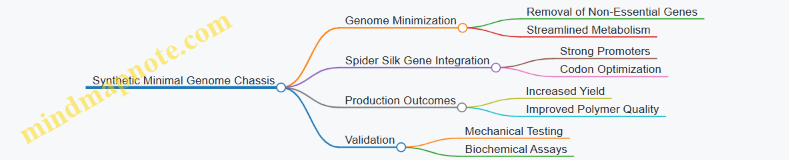
Future Directions
- Automated Genome Design: AI-driven platforms to predict optimal genome configurations for biomaterial traits.
- Expanded Genetic Codes: Leveraging synthetic genomes to incorporate multiple non-natural amino acids for multifunctional biomaterials.
- Synthetic Eukaryotic Genomes: Extending synthetic genome engineering beyond prokaryotes to complex hosts for advanced biomaterials.
Synthetic genome engineering is revolutionizing biomaterial innovation by providing unparalleled control over cellular machinery, enabling the creation of novel materials with tailored properties and improved production efficiencies.
10.2 Cell-Free Systems for Rapid Biomaterial Prototyping
Cell-free systems (CFS) have emerged as powerful platforms in synthetic biology, enabling rapid prototyping of biomaterials without the constraints of living cells. By harnessing the transcriptional and translational machinery extracted from cells, these systems facilitate the direct synthesis of proteins, enzymes, and complex biomolecules in vitro. This section explores the fundamentals, advantages, and practical applications of cell-free systems in biomaterial engineering, complemented by mind maps and real-world examples.
What Are Cell-Free Systems?
Cell-free systems are biochemical reaction mixtures containing the essential components for gene expression, including ribosomes, RNA polymerases, nucleotides, amino acids, and energy sources, but devoid of intact living cells. They allow for the expression of genetic circuits and metabolic pathways in a controlled environment.
Advantages of Cell-Free Systems in Biomaterial Prototyping
- Speed: Rapid expression and testing of genetic constructs without the need for cell transformation or culturing.
- Control: Precise manipulation of reaction conditions, concentrations, and components.
- Safety: Reduced biosafety concerns as no living organisms are involved.
- Flexibility: Ability to incorporate non-natural amino acids or synthetic cofactors.
- Scalability: Suitable for high-throughput screening and automation.
Mind Map: Key Components and Workflow of Cell-Free Systems
Mind Map: Applications of Cell-Free Systems in Biomaterial Engineering
Example 1: Rapid Prototyping of Spider Silk Proteins
Spider silk is renowned for its exceptional mechanical properties. Traditional production in living cells is often hampered by toxicity and low yields. Using a cell-free system derived from E. coli extracts, researchers have rapidly synthesized spider silk proteins by expressing repetitive silk gene constructs. This approach enabled quick optimization of gene sequences and reaction conditions, accelerating the development of silk-based biomaterials for textiles and medical sutures.
Best Practice: Use linear DNA templates for rapid iteration and incorporate chaperones in the extract to improve folding of repetitive silk proteins.
Example 2: Enzyme Engineering for Biopolymer Crosslinking
Crosslinking enzymes such as tyrosinases and peroxidases are critical for forming stable biomaterial networks. Cell-free systems allow for the expression and functional screening of enzyme variants to identify those with enhanced activity or altered substrate specificity.
In one study, a library of tyrosinase mutants was expressed in a wheat germ cell-free system. Functional assays directly in the reaction mixture identified variants with improved crosslinking efficiency, which were then applied to produce hydrogels with tunable mechanical properties.
Best Practice: Couple cell-free expression with high-throughput activity assays to accelerate enzyme optimization.
Example 3: Metabolic Pathway Prototyping for Bioplastic Precursors
Cell-free metabolic engineering enables the assembly and testing of synthetic pathways for producing monomers like lactic acid or 3-hydroxybutyrate, precursors for bioplastics. By mixing purified enzymes or expressing them in situ, researchers can rapidly evaluate pathway flux and bottlenecks.
A notable example involved the cell-free synthesis of polyhydroxyalkanoate (PHA) precursors by expressing key enzymes from different organisms in a single reaction. This allowed rapid tuning of enzyme ratios and cofactors to maximize yield before transferring the pathway into a microbial host.
Best Practice: Use modular enzyme expression and combinatorial mixing to identify optimal pathway configurations.
Integration with Automation and High-Throughput Screening
Cell-free systems are highly compatible with automated liquid handling and microfluidic platforms, enabling parallel testing of hundreds to thousands of genetic variants or reaction conditions. This integration accelerates the design-build-test cycle in biomaterial engineering.
Summary
Cell-free systems represent a transformative technology for synthetic biology-driven biomaterial development. Their ability to rapidly prototype proteins, enzymes, and metabolic pathways outside living cells reduces development timelines and enhances experimental control. By adopting best practices such as using linear DNA templates, coupling expression with functional assays, and integrating automation, synthetic biologists and bioprocess engineers can unlock new frontiers in novel biomaterials and bioproduction.
10.3 Best Practices: Incorporating Synthetic Biology into Circular Bioeconomy
Synthetic biology holds transformative potential to drive the circular bioeconomy by enabling sustainable production, waste valorization, and resource recycling through engineered biological systems. To effectively incorporate synthetic biology into circular bioeconomy frameworks, several best practices should be followed, ensuring environmental, economic, and social sustainability.
Key Principles for Integration
- Design for Sustainability: Engineer organisms and pathways that minimize resource inputs and waste outputs.
- Resource Efficiency: Maximize substrate utilization and product yield while enabling reuse of by-products.
- Modularity and Flexibility: Develop modular genetic parts and chassis adaptable to different feedstocks and processes.
- Lifecycle Thinking: Consider entire product lifecycle including production, use, recycling, and biodegradation.
- Collaboration Across Disciplines: Integrate synthetic biology with process engineering, ecology, and economics.
Mind Map: Best Practices for Synthetic Biology in Circular Bioeconomy
Best Practice 1: Engineering Microbes for Waste Feedstock Utilization
Example:
- Pseudomonas putida engineered to metabolize lignin-derived aromatic compounds from agricultural waste, converting them into bioplastics precursors.
- This approach reduces reliance on fossil feedstocks and valorizes otherwise discarded biomass.
Key points:
- Select or engineer robust chassis capable of tolerating complex waste streams.
- Optimize metabolic pathways for efficient substrate uptake and conversion.
- Implement biosensors to monitor substrate utilization and stress responses.
Mind Map: Waste Feedstock Utilization Strategy
Best Practice 2: Designing Biodegradable and Recyclable Biomaterials
Example:
- Engineering bacteria to produce polyhydroxyalkanoates (PHAs) with tailored monomer composition for enhanced biodegradability and recyclability.
- Incorporating enzymatic degradation tags into biomaterials to enable controlled breakdown post-use.
Key points:
- Use synthetic biology to customize polymer properties at the genetic level.
- Design materials that fit into existing recycling or composting infrastructures.
- Evaluate environmental fate through standardized biodegradation assays.
Mind Map: Biodegradable Biomaterial Design
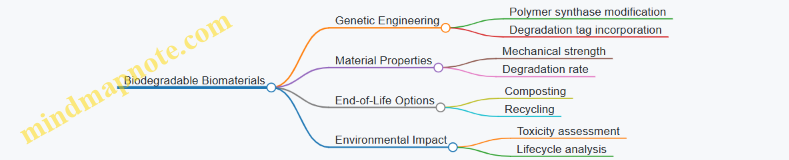
Best Practice 3: Closed-Loop Bioproduction Systems
Example:
- Development of microbial consortia where one species produces a biomaterial precursor while another recycles the by-products or waste metabolites, creating a self-sustaining system.
- Example: A two-strain system where Clostridium ferments sugars to organic acids, and Cupriavidus necator converts these acids into bioplastics.
Key points:
- Engineer interspecies metabolic exchanges for efficient resource cycling.
- Use synthetic biology tools to control population dynamics and pathway fluxes.
- Monitor system stability and productivity over extended periods.
Mind Map: Closed-Loop Bioproduction

Summary
Incorporating synthetic biology into the circular bioeconomy requires a holistic approach that combines sustainable design, waste valorization, modular engineering, and lifecycle thinking. By following these best practices and leveraging examples such as engineered microbes for waste feedstock utilization, biodegradable biomaterial design, and closed-loop bioproduction systems, synthetic biologists and bioprocess engineers can contribute to a more sustainable and regenerative bioeconomy.
10.4 Example: Programmable Living Materials with Embedded Sensing
Programmable living materials (PLMs) represent a cutting-edge frontier in synthetic biology, where engineered living cells are integrated into materials to provide dynamic, responsive, and adaptive functions. Embedded sensing capabilities allow these materials to detect environmental cues and respond accordingly, opening new avenues in smart biomaterials, environmental monitoring, and biomedical applications.
What Are Programmable Living Materials?
PLMs are composites where living cells (often genetically engineered microbes) are incorporated into a matrix (such as hydrogels, polymers, or biofilms) to create materials that can sense, process, and respond to stimuli. These materials can self-heal, change properties, or produce outputs like fluorescence or chemical signals upon sensing specific inputs.
Core Components of PLMs with Embedded Sensing
Mind Map: Core Components of Programmable Living Materials
Best Practices in Engineering PLMs with Embedded Sensing
- Modular Genetic Circuit Design: Use standardized, modular parts for sensing and response to enable easy tuning and swapping of sensors.
- Robust Host Selection: Choose microbial hosts that thrive within the material matrix and maintain genetic stability.
- Material Compatibility: Ensure the matrix supports cell viability and allows diffusion of analytes and signals.
- Signal Amplification: Incorporate genetic amplifiers or quorum sensing to enhance weak signals.
- Safety and Containment: Design kill-switches or auxotrophies to prevent unintended environmental release.
Example 1: Hydrogel Embedded with Engineered E. coli for Heavy Metal Detection
- Objective: Create a living hydrogel that fluoresces in the presence of arsenic in water.
- Approach: Engineer E. coli with an arsenic-responsive promoter controlling GFP expression.
- Material: Polyacrylamide hydrogel embedding the engineered cells.
- Outcome: When exposed to arsenic, the hydrogel emits green fluorescence, enabling easy visual detection.
Mind Map: Hydrogel-Based Arsenic Sensor
Example 2: Living Biofilm with Embedded pH Sensing and Colorimetric Output
- Objective: Develop a biofilm that changes color in response to pH changes for wound monitoring.
- Approach: Engineer bacteria to express pigment-producing enzymes under a pH-sensitive promoter.
- Material: Self-produced biofilm matrix by the bacteria themselves.
- Outcome: The biofilm shifts color from yellow to red as pH changes from neutral to acidic, indicating infection.
Mind Map: pH-Sensitive Biofilm
Example 3: Programmable Living Material for Mechanical Stress Sensing
- Objective: Create a material that detects mechanical strain and produces a measurable output.
- Approach: Engineer bacteria with mechanosensitive promoters controlling expression of a luminescent protein.
- Material: Elastomeric polymer embedded with engineered bacteria.
- Outcome: Upon mechanical deformation, the bacteria produce light, indicating stress levels.
Mind Map: Mechanical Stress Sensing PLM
Integration and Future Directions
- Combining multiple sensing modalities (chemical, physical) in a single PLM for multiplexed detection.
- Using synthetic biology to program complex logic circuits for conditional responses.
- Developing cell-free systems embedded in materials for enhanced safety.
- Scaling up production of PLMs for real-world applications in environmental monitoring, healthcare, and smart textiles.
Summary
Programmable living materials with embedded sensing exemplify the power of synthetic biology to create dynamic, responsive biomaterials. By integrating engineered cells with tailored genetic circuits into supportive matrices, these materials can sense their environment and produce useful outputs, enabling innovative applications across biotechnology and materials science.
10.5 Outlook: Convergence of Synthetic Biology, AI, and Nanotechnology
The future of biomaterials and bioproduction is poised for a revolutionary leap through the convergence of synthetic biology, artificial intelligence (AI), and nanotechnology. This interdisciplinary fusion promises to unlock unprecedented capabilities in designing, producing, and applying novel biomaterials with enhanced functionality, precision, and sustainability.
Mind Map: Convergence Overview
Synthetic Biology Meets AI: Accelerating Biomaterial Innovation
AI-driven algorithms are transforming synthetic biology by enabling rapid design and optimization of genetic circuits and metabolic pathways. Machine learning models analyze vast datasets from omics studies, experimental results, and literature to predict gene expression outcomes and metabolic fluxes, reducing trial-and-error cycles.
Example:
- AI-guided enzyme engineering: Using deep learning to predict mutations that enhance enzyme stability and activity for producing silk-like proteins, leading to stronger and more elastic biomaterials.
Nanotechnology Enhances Synthetic Biology Outputs
Nanotechnology introduces nanoscale precision to biomaterial engineering. Nanostructured scaffolds can mimic extracellular matrices, improving cell growth and material properties. Nanosensors embedded within biomaterials enable real-time monitoring of environmental conditions or material integrity.
Example:
- Nanoparticle-mediated delivery: Employing lipid nanoparticles to deliver synthetic genetic circuits into microbial hosts, improving transformation efficiency and enabling complex multi-gene pathway assembly.
AI-Driven Nanotechnology for Smart Biomaterials
AI facilitates the design of nanomaterials with tailored properties by predicting how nanoscale modifications affect macroscopic behavior. Coupled with synthetic biology, this enables creation of smart biomaterials that respond dynamically to stimuli such as pH, temperature, or mechanical stress.
Example:
- Self-healing biomaterials: AI-designed nanostructures embedded in synthetic polymers that trigger repair mechanisms upon damage, inspired by biological healing processes.
Integrated Applications: Programmable Living Materials
By combining synthetic biology’s ability to engineer living cells, AI’s predictive power, and nanotechnology’s precision, researchers are developing programmable living materials. These materials can sense their environment, process information, and respond accordingly, opening new frontiers in biomedicine, environmental remediation, and wearable technology.
Example:
- Living biosensors: Engineered bacteria embedded in nanofiber matrices that detect toxins and emit fluorescent signals, with AI algorithms interpreting sensor data for real-time monitoring.
Mind Map: Future Opportunities and Challenges
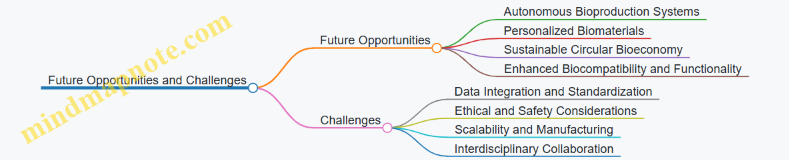
Final Thoughts
The convergence of synthetic biology, AI, and nanotechnology is not merely additive but multiplicative in impact. By harnessing the strengths of each field, innovation leaders and bioprocess engineers can pioneer novel biomaterials and bioproduction methods that were previously unimaginable. Embracing this convergence with best practices in data management, ethical design, and cross-disciplinary collaboration will be key to realizing its full potential.