The Gig Economy Wallet: Financial Planning for Freelancers
1. Understanding the Gig Economy Landscape
1.1 Defining the Gig Economy: Who Are Freelancers, Gig Workers, and Contract Professionals?
The gig economy is a dynamic and rapidly growing sector of the workforce characterized by short-term, flexible, and project-based work arrangements. Unlike traditional full-time employment, gig economy roles often lack long-term contracts and benefits, offering workers the freedom to choose when, where, and how they work.
Key Players in the Gig Economy
- Freelancers: Independent professionals who offer specialized services to multiple clients. They typically set their own rates and schedules. Examples include graphic designers, writers, and web developers.
- Gig Workers: Individuals who perform tasks or services on a per-job basis, often facilitated by digital platforms. Examples include rideshare drivers, food delivery couriers, and taskers on platforms like TaskRabbit.
- Contract Professionals: Skilled workers engaged under fixed-term contracts, often for specific projects or periods. They may work through agencies or directly with companies. Examples include IT consultants, marketing contractors, and interim managers.
Mind Map: Overview of Gig Economy Roles
Examples to Illustrate Each Role
-
Freelancer Example:
- Emma is a freelance copywriter. She works with several clients, writing blog posts, newsletters, and marketing copy. Emma sets her own rates and manages her schedule, balancing multiple projects simultaneously.
-
Gig Worker Example:
- Carlos drives for a rideshare company. He logs in to the app whenever he wants to work and accepts ride requests. His income depends on the number of rides he completes and tips received.
-
Contract Professional Example:
- Nina is an IT consultant hired on a 6-month contract to help a company implement a new software system. She works full-time during the contract but does not have a permanent position with the company.
Why Understanding These Roles Matters
Knowing the distinctions between freelancers, gig workers, and contract professionals helps in tailoring financial planning strategies. Each group faces unique challenges related to income stability, taxes, benefits, and retirement planning.
Mind Map: Financial Considerations by Role
Understanding these nuances sets the foundation for effective financial planning in the gig economy.
1.2 Trends and Growth: Why Financial Planning is Crucial in the Gig Economy
The gig economy has experienced explosive growth over the past decade, reshaping how people work and earn income. This shift brings unique financial challenges and opportunities, making financial planning not just beneficial but essential for freelancers, gig workers, and contract professionals.
The Rise of the Gig Economy
-
Statistics Highlighting Growth:
- According to recent studies, over 36% of the U.S. workforce participates in the gig economy, with projections estimating this number to grow to nearly 50% by 2030.
- Platforms like Uber, Upwork, Fiverr, and DoorDash have enabled millions to monetize their skills and time flexibly.
-
Changing Work Preferences:
- Many workers prefer flexibility over traditional 9-to-5 jobs.
- The pandemic accelerated remote work and gig opportunities.
Why Financial Planning is Crucial
Freelancers face irregular income streams, lack of employer benefits, and complex tax obligations. Without a solid financial plan, these factors can lead to stress, missed opportunities, and financial instability.
Mind Map: Key Trends Driving the Need for Financial Planning
Example: Emma’s Experience
Emma is a graphic designer who transitioned from a full-time job to freelancing. Initially, she struggled with fluctuating monthly income and unexpected tax bills. After adopting a financial plan that included setting aside 30% of her income for taxes and creating an emergency fund covering six months of expenses, Emma gained confidence and financial stability.
Key Growth Drivers and Their Financial Implications
| Growth Driver | Financial Implication | Best Practice Example |
|---|---|---|
| Flexibility | Inconsistent income flow | Use a zero-based budget to allocate every dollar during high and low months. |
| Technology Platforms | Access to multiple gigs but variable pay | Track income per platform to identify most profitable sources. |
| Remote Work | Reduced commuting costs but increased home expenses | Dedicate a portion of savings to home office setup and utilities. |
| Diverse Income Streams | Complexity in managing multiple payments | Use financial apps to consolidate and monitor cash flow. |
Mind Map: Financial Planning Components for Gig Workers
Example: Raj’s Income Diversification
Raj works as a freelance writer, tutor, and rideshare driver. His income varies widely each month. By categorizing his earnings and expenses per gig, Raj identified that tutoring provided the most stable income. He prioritized building a larger emergency fund and adjusted his spending during months when rideshare earnings dipped.
Summary
The gig economy’s rapid growth offers unprecedented opportunities but also financial unpredictability. Understanding these trends and integrating tailored financial planning practices—such as budgeting for irregular income, tax planning, and building savings—empowers gig workers to thrive financially.
Next up: 1.3 Common Financial Challenges Faced by Gig Workers
1.3 Common Financial Challenges Faced by Gig Workers
Freelancers, gig workers, and contract professionals enjoy flexibility and independence, but these benefits come with unique financial challenges. Understanding these hurdles is the first step toward effective financial planning.
Key Financial Challenges
Income Variability
One of the most significant challenges is the unpredictability of income. Unlike salaried employees, freelancers may experience feast-or-famine cycles.
Example:
Emma is a freelance graphic designer. In January, she lands three big projects totaling $7,000, but in February, she only earns $1,200. This variability makes budgeting difficult and stresses the importance of an emergency fund.
Lack of Traditional Benefits
Gig workers often miss out on employer-provided benefits such as health insurance, retirement plans, and paid time off.
Example:
David, a contract writer, must purchase his own health insurance through the marketplace and set up a SEP IRA for retirement savings, which requires discipline and extra effort.
Tax Complexity
Freelancers are responsible for calculating and paying their own taxes, including self-employment tax, and must keep meticulous records of deductible expenses.
Example:
Sophia tracks all her business expenses using an app to ensure she can deduct costs like home office supplies, software subscriptions, and travel expenses when filing quarterly estimated taxes.
Expense Management
Separating personal and business expenses can be tricky but is essential for accurate accounting and tax purposes.
Example:
Mark uses a dedicated business bank account and credit card to pay for client-related expenses, avoiding confusion during tax season.
Retirement Planning
Without employer contributions, freelancers must proactively save for retirement, often with fluctuating income complicating consistent contributions.
Example:
Lena decides to contribute 15% of every paycheck to her Solo 401(k), adjusting the dollar amount based on her monthly earnings.
Cash Flow Management
Managing cash flow to cover taxes, business expenses, and personal needs during low-income periods requires careful planning.
Example:
Carlos sets aside 30% of each payment into a separate savings account dedicated to taxes and quarterly payments, ensuring he isn’t caught off guard.
Debt and Credit Challenges
Irregular income can make it difficult to qualify for loans or maintain good credit, and managing debt requires strategic planning.
Example:
Maria uses a debt snowball method to pay off her credit card balances, ensuring she prioritizes high-interest debt even when income fluctuates.
Insurance and Risk Management
Freelancers must independently secure health, disability, and liability insurance to protect their income and assets.
Example:
Tom purchases a disability insurance policy tailored for freelancers, providing income replacement if he becomes unable to work.
Summary
While the gig economy offers freedom and flexibility, it also demands proactive financial management to navigate income variability, tax complexities, and lack of traditional benefits. Recognizing these challenges early empowers freelancers to implement strategies that secure their financial well-being.
1.4 Case Study: Sarah’s Journey from Full-Time Employee to Freelancer
Sarah had been working as a marketing coordinator at a mid-sized company for five years. While she enjoyed her job, she craved more flexibility and control over her schedule. After careful consideration, Sarah decided to transition into freelancing as a digital marketing consultant. This case study explores her financial planning journey, highlighting best practices and real-world examples.
Step 1: Assessing Financial Stability Before Transition
Before quitting her job, Sarah evaluated her financial situation:
- Savings: She had an emergency fund covering 6 months of living expenses.
- Debt: She paid off her credit card and had a small student loan.
- Monthly Expenses: $3,000 including rent, utilities, groceries, and transportation.
Example: Sarah used a simple spreadsheet to track her expenses and savings, ensuring she had a clear picture of her financial health.
Step 2: Planning for Variable Income
Sarah knew that freelancing income would be irregular. To prepare, she:
- Created a buffer account to cover 3 months of expenses.
- Planned a conservative budget assuming 60% of her previous income.
- Identified multiple potential clients to diversify income sources.
Example: Sarah projected her income using a tiered approach:
| Month | Optimistic ($) | Conservative ($) | Pessimistic ($) |
|---|---|---|---|
| 1 | 4,000 | 2,400 | 1,500 |
| 2 | 4,500 | 2,700 | 1,800 |
| 3 | 5,000 | 3,000 | 2,000 |
Step 3: Setting Up Financial Systems
Sarah took these steps to organize her finances:
- Opened a separate business bank account.
- Subscribed to an invoicing and expense tracking app.
- Set reminders for quarterly tax payments.
Example: Using an app like QuickBooks Self-Employed, Sarah automated invoicing and tracked deductible expenses such as software subscriptions and home office costs.
Step 4: Managing Health Insurance and Benefits
Sarah researched health insurance options available through the marketplace and chose a plan with reasonable premiums and coverage. She also:
- Opened a Health Savings Account (HSA) to save pre-tax money for medical expenses.
- Considered disability insurance to protect income.
Example: Sarah’s monthly health insurance premium was $350, which she factored into her budget.
Step 5: Building a Retirement Plan
Without an employer-sponsored plan, Sarah explored retirement options:
- Opened a SEP IRA to contribute a percentage of her freelance income.
- Set a goal to save 15% of her income for retirement.
- Automated monthly contributions to stay consistent.
Example: In months where Sarah earned $3,000, she contributed $450 to her SEP IRA.
Step 6: Tracking Progress and Adjusting
After six months freelancing, Sarah reviewed her finances:
- Income was steadily increasing but still variable.
- She adjusted her budget to reflect actual expenses.
- Increased her emergency fund to 9 months of expenses.
Example: Sarah used a monthly review checklist to track income, expenses, savings, and client payments.
Summary
Sarah’s journey highlights key financial planning practices for freelancers:
- Establish a solid emergency fund before transitioning.
- Plan for variable income with conservative budgeting and buffers.
- Use dedicated financial tools to track income, expenses, and taxes.
- Secure health insurance and build retirement savings independently.
- Regularly review and adjust financial plans based on actual performance.
By following these steps, Sarah was able to confidently navigate the uncertainties of freelancing while maintaining financial stability.
2. Building a Strong Financial Foundation
2.1 Setting Up a Separate Business Bank Account: Why and How
Managing your finances as a freelancer or gig worker can quickly become overwhelming if your personal and business transactions are mixed together. Setting up a separate business bank account is a foundational step that helps you maintain clarity, simplify tax filing, and project professionalism to clients.
Why Set Up a Separate Business Bank Account?
- Clear Financial Tracking: Separating your business income and expenses from personal finances makes it easier to track profitability and manage cash flow.
- Simplified Tax Preparation: When your business transactions are isolated, identifying deductible expenses and reporting income becomes straightforward.
- Professionalism: Clients often prefer payments to a business account, which enhances your credibility.
- Legal Protection: For freelancers operating as LLCs or corporations, a separate account helps maintain the legal distinction between personal and business assets.
Mind Map: Benefits of a Separate Business Bank Account
How to Set Up a Separate Business Bank Account
-
Choose the Right Type of Account:
- Sole proprietors can often use a personal checking account labeled for business, but a dedicated business checking account is better.
- If you have formed an LLC, corporation, or partnership, a business bank account is essential.
-
Gather Required Documentation:
- Personal identification (driver’s license, passport).
- Business registration documents (DBA, LLC paperwork).
- Employer Identification Number (EIN) from the IRS (even sole proprietors can get one).
-
Research Banks and Credit Unions:
- Look for accounts with low fees, good online banking features, and integration with accounting software.
- Consider banks offering perks for small businesses, such as free transactions or cash back.
-
Open the Account:
- Visit the bank in person or apply online.
- Deposit initial funds as required.
-
Set Up Online Banking and Payment Methods:
- Link your account to invoicing platforms like PayPal, Stripe, or QuickBooks.
- Enable mobile deposits and alerts.
Example: How Emma Set Up Her Business Account
Emma is a freelance graphic designer who started mixing her personal and business finances. When tax season arrived, she struggled to separate deductible expenses from personal spending. After researching, she decided to open a business checking account at a local credit union.
- She gathered her state-issued DBA certificate and her EIN.
- Chose a no-fee business checking account with mobile deposit.
- Linked the account to her invoicing software.
Now, Emma deposits all client payments into this account and pays for business expenses like software subscriptions and marketing from it. At tax time, her accountant easily identifies business expenses, saving her hours of work.
Mind Map: Steps to Open a Business Bank Account
Tips for Managing Your Business Bank Account
- Use the Account Exclusively for Business: Avoid mixing personal expenses to keep records clean.
- Regularly Reconcile Your Account: Match your bank statements with your bookkeeping records monthly.
- Set Up Alerts: Get notified of large transactions or low balances.
- Consider a Business Credit Card: For additional tracking and building business credit.
Example: Common Mistake and Fix
Mistake: John, a freelance writer, used his personal account for client payments and business expenses. When he tried to claim deductions, he struggled to prove which expenses were business-related.
Fix: John opened a business bank account and started routing all business transactions through it. He also retroactively organized his expenses by reviewing past statements, which made tax filing easier the following year.
Setting up a separate business bank account is a simple yet powerful step that sets the stage for effective financial management in the gig economy. By keeping your finances organized, you reduce stress, save time, and position yourself for growth.
2.2 Tracking Income and Expenses: Tools and Techniques
Tracking your income and expenses is the cornerstone of effective financial management as a freelancer. Without a clear picture of your cash flow, budgeting, tax preparation, and financial planning become guesswork. This section will explore practical tools and techniques to help you track your finances with ease, alongside examples and mind maps to visualize the process.
Why Track Income and Expenses?
- Understand cash flow: Know when money is coming in and going out.
- Budget effectively: Plan spending based on real data.
- Prepare for taxes: Identify deductible expenses and calculate taxable income.
- Spot trends: Recognize busy and slow periods.
Tools for Tracking Income and Expenses
| Tool Type | Examples | Features & Benefits |
|---|---|---|
| Spreadsheets | Microsoft Excel, Google Sheets | Highly customizable, free or low-cost, manual entry |
| Expense Trackers | Expensify, Wave, Zoho Expense | Automated receipt capture, categorization, reports |
| Accounting Software | QuickBooks Self-Employed, FreshBooks | Invoicing, tax tracking, income categorization |
| Mobile Apps | Mint, YNAB (You Need A Budget) | Sync bank accounts, real-time tracking, alerts |
Techniques for Effective Tracking
Categorize Your Income and Expenses
Mind Map:
Example:
Priya, a freelance graphic designer, categorizes her income by client and her expenses into categories like software, hardware, and marketing. This helps her see which clients bring the most revenue and where she spends the most.
Record Transactions Promptly
- Use mobile apps to snap photos of receipts immediately.
- Enter income as soon as payments arrive.
Example:
Mike uses Expensify to photograph his receipts right after purchases. This prevents lost receipts and forgotten expenses.
Reconcile Regularly
- Weekly or bi-weekly review of bank statements against your records.
- Identify any missing transactions or errors.
Example:
Sarah schedules Sunday afternoons to reconcile her accounts, ensuring her records match her bank statements.
Use Automation Where Possible
- Link bank accounts and credit cards to apps for automatic transaction import.
- Set rules to categorize recurring expenses.
Example:
Jake’s QuickBooks automatically imports his bank transactions and categorizes his monthly software subscriptions.
Mind Map: Tracking Workflow
Example Walkthrough: Using Google Sheets for Tracking
- Set up columns: Date, Description, Category, Income, Expense, Payment Method.
- Create dropdown lists for categories to maintain consistency.
- Enter transactions as they occur.
- Use formulas to sum income and expenses by category and month.
Sample entry:
| Date | Description | Category | Income | Expense | Payment Method |
|---|---|---|---|---|---|
| 2024-06-01 | Client A Payment | Client Payments | 1200 | Bank Transfer | |
| 2024-06-02 | Adobe Subscription | Software | 50 | Credit Card |
This simple sheet can be expanded with charts to visualize monthly income vs. expenses.
Best Practices Summary
- Choose a tool that fits your comfort level and budget.
- Be consistent and timely in recording transactions.
- Regularly review and reconcile your records.
- Use categories to gain insights into your financial habits.
- Automate repetitive tasks to save time.
By mastering income and expense tracking, freelancers gain control over their finances, reduce stress during tax season, and build a solid foundation for financial planning.
2.3 Creating a Budget with Variable Income: Practical Examples
Freelancers and gig workers often face the challenge of unpredictable income. Unlike salaried employees, your earnings can fluctuate month to month, making traditional budgeting methods less effective. However, with the right approach, you can create a flexible budget that adapts to your income variability while ensuring your essential expenses are covered and savings goals are met.
Understanding the Basics of Budgeting with Variable Income
The key to budgeting with variable income is to prioritize your expenses, categorize them, and build a buffer to manage lean months. Here’s a simple framework:
- Calculate your average monthly income based on the last 6-12 months.
- Categorize expenses into fixed, variable, and discretionary.
- Prioritize essential expenses (housing, utilities, food, insurance).
- Set aside savings and emergency funds before discretionary spending.
- Adjust discretionary spending based on income fluctuations.
Mind Map: Budgeting with Variable Income
Step 1: Calculate Your Average Monthly Income
Look back over the past 6-12 months and add up all your income. Divide this total by the number of months to find your average monthly income.
Example:
| Month | Income ($) |
|---|---|
| January | 3,200 |
| February | 2,800 |
| March | 4,000 |
| April | 3,500 |
| May | 2,900 |
| June | 3,300 |
| Total | 19,700 |
Average monthly income = 19,700 / 6 = $3,283
Step 2: Categorize Your Expenses
Create a list of your monthly expenses and classify them:
- Fixed Expenses: Rent, utilities, insurance, loan payments
- Variable Expenses: Groceries, gas, medical bills
- Discretionary Expenses: Dining out, entertainment, hobbies
Example:
| Expense Category | Monthly Amount ($) |
|---|---|
| Rent | 1,200 |
| Utilities | 150 |
| Insurance | 200 |
| Groceries | 400 |
| Transportation | 150 |
| Medical | 100 |
| Dining Out | 150 |
| Entertainment | 100 |
| Subscriptions | 50 |
| Total | 2,500 |
Step 3: Prioritize Essential Expenses and Build a Buffer
Your fixed and variable expenses (excluding discretionary) total $2,200. This is your essential monthly cost.
To manage income fluctuations, create a buffer fund equal to 3-6 months of essential expenses.
Example:
- Essential expenses: $2,200
- Buffer fund goal: 3 months x $2,200 = $6,600
This buffer acts as a financial cushion during low-income months.
Step 4: Allocate Income Based on Priority
Use a percentage-based allocation of your average income to cover expenses and savings.
Example:
| Category | % of Income | Amount ($) (Based on $3,283) |
|---|---|---|
| Essential Expenses | 67% | 2,200 |
| Savings | 15% | 492 |
| Discretionary | 18% | 591 |
If income exceeds average, increase savings or discretionary spending. If income falls short, reduce discretionary expenses first.
Step 5: Practical Example of Monthly Budgeting
Scenario:
- January income: $4,000 (above average)
- February income: $2,500 (below average)
| Month | Income ($) | Essential ($) | Savings ($) | Discretionary ($) | Notes |
|---|---|---|---|---|---|
| January | 4,000 | 2,200 | 600 | 1,200 | Extra savings and discretionary spending |
| February | 2,500 | 2,200 | 150 | 150 | Cut discretionary spending to minimum |
Mind Map: Monthly Budget Adjustment
Step 6: Track and Review Regularly
Use budgeting apps or spreadsheets to track your income and expenses weekly or monthly. Adjust your budget based on actual income and spending.
Example Tools: Mint, YNAB (You Need A Budget), Excel/Google Sheets
Summary
Creating a budget with variable income requires flexibility, prioritization, and planning. By calculating your average income, categorizing expenses, building a buffer fund, and adjusting spending based on income, you can maintain financial stability even when your earnings fluctuate.
Remember, the goal is to cover essentials first, save consistently, and enjoy discretionary spending responsibly.
2.4 Emergency Fund Essentials: How Much to Save and Where
An emergency fund is a financial safety net designed to cover unexpected expenses or income disruptions. For freelancers and gig workers, who often face irregular income and less job security, having a robust emergency fund is crucial to maintaining financial stability.
Why an Emergency Fund is Vital for Freelancers
- Income Volatility: Unlike salaried employees, freelancers may experience fluctuating income, making it harder to predict cash flow.
- No Paid Leave or Benefits: Freelancers typically don’t have access to sick leave or unemployment benefits.
- Unexpected Expenses: Medical emergencies, equipment failure, or sudden personal expenses can arise anytime.
How Much Should You Save?
The traditional advice for salaried employees is to save 3 to 6 months’ worth of living expenses. For freelancers, the recommendation is often higher due to income unpredictability.
Recommended Emergency Fund Size:
- Minimum: 6 months of essential living expenses
- Ideal: 9 to 12 months of essential living expenses
Essential Living Expenses Include:
- Rent or mortgage
- Utilities
- Groceries
- Insurance premiums
- Debt payments
- Transportation
- Healthcare costs
Example: Calculating Your Emergency Fund
Meet Alex, a freelance graphic designer:
| Expense Category | Monthly Cost ($) |
|---|---|
| Rent | 1,200 |
| Utilities | 150 |
| Groceries | 400 |
| Health Insurance | 300 |
| Transportation | 200 |
| Debt Payments | 250 |
| Miscellaneous | 200 |
| Total Essential Expenses | 2,700 |
- Minimum Emergency Fund (6 months): 2,700 x 6 = $16,200
- Ideal Emergency Fund (9 months): 2,700 x 9 = $24,300
Alex should aim to save between $16,200 and $24,300 to feel financially secure during lean periods.
Where to Keep Your Emergency Fund?
The goal is to keep your emergency fund:
- Highly Liquid: Easily accessible without penalties.
- Safe: Low risk of losing principal.
- Separate from Spending Money: To avoid temptation.
Common Options:
| Account Type | Liquidity | Interest Rate | Accessibility | Notes |
|---|---|---|---|---|
| High-Yield Savings Account | High (instant) | Moderate | Easy | Best for easy access and growth |
| Money Market Account | High (1-2 days) | Moderate | Easy | Slightly higher rates, check fees |
| Short-Term CDs | Low (penalties if early withdrawal) | Higher | Limited | Good for portion of fund if planned |
| Traditional Savings Account | High | Low | Easy | Low returns, but very safe |
Mind Map: Emergency Fund Essentials
Best Practices for Building Your Emergency Fund
- Start Small and Be Consistent: Even saving $50 or $100 a month adds up over time.
- Automate Savings: Set up automatic transfers to your emergency fund account right after you receive payments.
- Replenish After Use: If you tap into your emergency fund, prioritize rebuilding it as soon as possible.
- Adjust Fund Size Over Time: As your expenses or lifestyle change, revisit your emergency fund target.
Example: Building an Emergency Fund with Variable Income
Meet Jamie, a freelance writer with fluctuating monthly income:
- January income: $3,000
- February income: $1,800
- March income: $4,200
Jamie decides to save 10% of every month’s income toward her emergency fund.
| Month | Income ($) | 10% Savings ($) | Cumulative Savings ($) |
|---|---|---|---|
| January | 3,000 | 300 | 300 |
| February | 1,800 | 180 | 480 |
| March | 4,200 | 420 | 900 |
By consistently saving a percentage of income, Jamie steadily builds her emergency fund despite income variability.
Summary
- Freelancers should aim for a larger emergency fund (6-12 months) due to income unpredictability.
- Calculate your essential monthly expenses to determine your target fund size.
- Keep the fund in highly liquid, safe accounts separate from daily spending.
- Build your fund gradually with consistent, automated savings.
- Regularly review and adjust your emergency fund as your financial situation evolves.
Having a well-funded emergency fund is a cornerstone of financial resilience in the gig economy, empowering freelancers to navigate uncertainties with confidence.
2.5 Example: Mike’s Monthly Budget with Fluctuating Income
Mike is a freelance graphic designer whose income varies month to month depending on the number of projects he completes. To maintain financial stability, Mike has developed a flexible budgeting system that accounts for his fluctuating income while ensuring his essential expenses are covered and savings goals are met.
Understanding Mike’s Income and Expenses
- Average Monthly Income: $3,500 (varies between $2,000 and $5,000)
- Fixed Monthly Expenses: $1,800 (rent, utilities, insurance, subscriptions)
- Variable Monthly Expenses: $700 (food, transportation, entertainment)
- Savings Goals: $500 (emergency fund, retirement)
Step 1: Calculate a Baseline Budget Based on the Lowest Expected Income
Mike assumes a conservative income of $2,000 to ensure he can cover essentials even in lean months.
Example: In a month where Mike earns $2,000, he prioritizes paying his fixed expenses and reduces variable spending drastically, pausing savings temporarily.
Step 2: Create a Tiered Budget for Different Income Levels
Mike sets up three tiers to guide his spending and saving:
| Income Tier | Income Range | Fixed Expenses | Variable Expenses | Savings |
|---|---|---|---|---|
| Lean Month | $2,000 - $2,500 | $1,800 | $200 | $0 |
| Average Month | $2,501 - $4,000 | $1,800 | $500 | $300 |
| Prosperous Month | $4,001 - $5,000+ | $1,800 | $700 | $500 |
Example: When Mike earns $3,200, he follows the Average Month budget, allowing moderate discretionary spending and consistent savings.
Step 3: Use a Buffer Account to Smooth Income
Mike maintains a separate buffer account where he deposits surplus income from prosperous months to cover shortfalls in lean months.
Example: In a month Mike earns $4,500, he saves $1,000 in the buffer account. In a lean month earning $2,200, he withdraws $300 from the buffer to cover fixed and variable expenses.
Step 4: Track and Adjust Monthly
Mike uses a budgeting app to track actual income and expenses daily, adjusting his spending in real-time.
Example: Mid-month Mike notices a project payment delayed, so he reduces discretionary spending to stay within budget.
Summary Table: Mike’s Monthly Budget Example
| Category | Lean Month ($2,000) | Average Month ($3,200) | Prosperous Month ($4,500) |
|---|---|---|---|
| Income | $2,000 | $3,200 | $4,500 |
| Fixed Expenses | $1,800 | $1,800 | $1,800 |
| Variable Expenses | $200 | $500 | $700 |
| Savings | $0 | $300 | $500 |
| Buffer Account | - | +$400 deposit | +$1,000 deposit |
Key Takeaways from Mike’s Budgeting Approach
- Plan for the lowest income: Ensures essentials are always covered.
- Create tiers: Helps adapt spending and saving based on actual income.
- Use a buffer account: Smooths out cash flow fluctuations.
- Track regularly: Enables quick adjustments to avoid overspending.
By following this flexible budgeting system, Mike maintains financial stability despite the unpredictable nature of freelance income.
3. Managing Irregular Income Streams
3.1 Understanding Cash Flow Cycles in Freelance Work
Freelancers and gig workers often face unique cash flow challenges compared to traditional salaried employees. Understanding the cash flow cycle — the timing of money coming in and going out — is crucial for maintaining financial stability.
What is a Cash Flow Cycle?
A cash flow cycle refers to the period between when you receive income and when you have to pay expenses. For freelancers, this cycle can be irregular and unpredictable due to variable client payments, project timelines, and invoicing delays.
Key Components of a Freelancer’s Cash Flow Cycle
- Income Generation: When you complete work or milestones.
- Invoicing: Sending bills to clients.
- Payment Receipt: When clients pay you (which can be immediate or delayed).
- Expense Payments: Paying bills, taxes, rent, utilities, software subscriptions, etc.
Mind Map: Freelancer Cash Flow Cycle
Common Cash Flow Patterns in Freelance Work
- Upfront Payment Projects: You receive a portion of payment before starting work.
- Milestone-Based Payments: Payments come after completing specific parts of a project.
- Net Terms Payments: Clients pay within a set number of days after invoicing (e.g., Net 30).
- Retainer Agreements: Regular fixed payments for ongoing services.
Example: Cash Flow Cycle for a Graphic Designer
- Week 1: Completes a logo design project.
- Week 2: Sends invoice with Net 30 terms.
- Week 6: Receives payment.
- Week 7: Pays rent, software subscriptions, and buys new design tools.
This cycle means the designer must cover expenses for about 5 weeks without incoming cash from that project.
Mind Map: Example Cash Flow Timeline
Impact of Irregular Cash Flow
- Difficulty in budgeting monthly expenses.
- Challenges in saving consistently.
- Stress due to unpredictability.
Best Practices to Manage Cash Flow Cycles
- Invoice Promptly: Send invoices immediately after work completion.
- Set Clear Payment Terms: Use contracts specifying payment deadlines.
- Follow Up on Late Payments: Politely remind clients to avoid delays.
- Maintain a Cash Buffer: Save enough to cover expenses during lean periods.
- Use Cash Flow Forecasting: Project expected income and expenses.
Example: Priya’s Cash Flow Management
Priya is a freelance writer who works with multiple clients. She sends invoices as soon as articles are delivered, with Net 15 payment terms. To manage gaps, she keeps a buffer covering 2 months of expenses. She also uses a spreadsheet to forecast payments and plan her spending accordingly.
Mind Map: Cash Flow Management Best Practices
Understanding your cash flow cycle is the foundation for effective financial planning as a freelancer. By mapping out your income and expenses timeline, you can anticipate challenges and implement strategies to keep your finances healthy and stress-free.
3.2 Income Smoothing Strategies: Using Buffer Accounts
Freelancers and gig workers often face the challenge of irregular income streams. One month might bring a flood of payments, while the next could be lean. This unpredictability can make budgeting and financial planning stressful. Income smoothing is a powerful strategy to manage these fluctuations, and one of the most effective tools for this is the buffer account.
What is a Buffer Account?
A buffer account is a dedicated savings or checking account where you set aside surplus income during high-earning months to cover expenses during low-earning or no-income periods. Think of it as a financial cushion that smooths out the bumps in your cash flow.
Why Use a Buffer Account?
- Stabilizes cash flow: Ensures you have funds available even when income is low.
- Reduces stress: You won’t have to scramble to pay bills or cover essentials.
- Improves budgeting accuracy: Helps you plan monthly expenses based on a more consistent available balance.
How to Set Up and Use a Buffer Account
- Open a Separate Account: Choose a savings or checking account separate from your primary spending account.
- Calculate Your Average Monthly Expenses: Know how much you need to cover your essentials.
- Determine Your Target Buffer Size: Aim for 3-6 months of expenses saved.
- Allocate Surplus Income: Each month, after covering expenses, transfer extra funds into the buffer account.
- Use Buffer Funds When Income is Low: Withdraw from this account only when your regular income doesn’t cover expenses.
Mind Map: Buffer Account Setup and Usage
Example 1: Emma’s Buffer Account in Action
Emma is a freelance graphic designer. Her monthly expenses average $3,000, but her income varies between $2,000 and $5,000.
- Step 1: Emma opens a separate savings account as her buffer.
- Step 2: She sets a target buffer of $9,000 (3 months of expenses).
- Step 3: In a month where she earns $5,000, Emma covers her $3,000 expenses and transfers the $2,000 surplus to her buffer account.
- Step 4: The next month, Emma earns only $2,500. She uses $500 from her buffer account to cover the full $3,000 expenses.
This approach helps Emma avoid dipping into credit cards or loans during lean months.
Mind Map: Emma’s Monthly Cash Flow with Buffer
Example 2: Raj’s Automated Buffer Transfers
Raj works as a contract software developer with fluctuating income. He uses automation to manage his buffer account:
- Raj sets up his primary checking account for daily expenses.
- He calculates his average monthly expenses at $4,000.
- Raj programs an automatic transfer of 20% of every payment he receives into his buffer savings account.
- During months with fewer gigs, Raj draws from the buffer to cover the shortfall.
Automation reduces the mental load and ensures consistent buffer growth.
Mind Map: Raj’s Automated Buffer Process
Additional Tips for Effective Buffer Account Use
- Keep the buffer account separate: Avoid using it for daily expenses to maintain discipline.
- Replenish promptly: After using the buffer, prioritize rebuilding it.
- Adjust buffer size as needed: If your expenses or income patterns change, recalculate your target buffer.
- Combine with budgeting: Use the buffer account alongside a flexible budget to optimize cash flow management.
By incorporating a buffer account into your financial planning, you can transform the unpredictability of gig income into a manageable and less stressful experience. This simple yet effective strategy empowers freelancers to maintain financial stability and focus on growing their careers.
3.3 Prioritizing Expenses During Lean Months
Freelancers and gig workers often face fluctuating income, making it essential to prioritize expenses carefully during lean months. Prioritizing helps ensure that critical needs are met while avoiding unnecessary financial stress.
Why Prioritize Expenses?
- Income variability means you can’t always cover all expenses.
- Prioritization helps maintain financial stability.
- It protects your credit and essential services.
Step 1: Categorize Your Expenses
Break down your expenses into three categories:
Mind Map: Expense Categorization
Step 2: Prioritize Essentials First
During lean months, focus on paying for essentials first to maintain your basic living standards and avoid penalties or service interruptions.
Example:
- Emma, a freelance graphic designer, earns $3,000 in a good month but only $1,200 in a lean month.
- She lists her essentials: $800 rent, $150 utilities, $300 food, $100 transportation, $100 insurance, $200 minimum debt payments = $1,650.
- Since her income is $1,200, she prioritizes rent, utilities, and food first, negotiating with creditors for minimum debt payments to be deferred.
Step 3: Reduce or Temporarily Cut Flexible and Non-Essential Expenses
Look for subscriptions or services you can pause or cancel temporarily.
Example:
- Emma pauses her streaming subscriptions ($15/month) and delays buying new software licenses.
- She opts for cheaper phone plans or negotiates discounts.
Step 4: Communicate with Creditors and Service Providers
Many providers offer hardship programs or payment plans.
Example:
- Emma contacts her internet provider to request a temporary discount.
- She negotiates with her credit card company to reduce minimum payments during the lean month.
Step 5: Use a Lean Month Expense Mind Map to Visualize Priorities
Mind Map: Prioritizing Expenses During Lean Months
Step 6: Leverage Emergency Funds and Alternate Income Sources
If you have an emergency fund, use it strategically to cover essentials during lean months.
Example:
- Emma taps into her emergency fund to cover the $450 shortfall.
- She also picks up a quick gig delivering food to supplement income.
Summary Checklist for Prioritizing Expenses During Lean Months
- List all monthly expenses.
- Categorize into essentials, flexible, and non-essential.
- Pay essentials first.
- Reduce or pause flexible and non-essential expenses.
- Communicate with creditors and service providers.
- Use emergency funds wisely.
- Seek additional income opportunities.
By following these steps, freelancers can navigate lean months with less stress and maintain financial health until income stabilizes.
3.4 Example: How Priya Manages Multiple Gig Payments Across Months
Priya is a freelance graphic designer who juggles multiple gigs simultaneously. Her income varies widely each month because different clients pay at different times, and some projects span several months. Managing this irregular income requires careful planning and strategic cash flow management.
Priya’s Income Streams and Payment Schedule
| Client/Project | Payment Frequency | Payment Timing Example |
|---|---|---|
| Client A (Branding) | Monthly | Paid on the 5th of each month |
| Client B (Website) | Milestone-based | Paid 50% upfront, 50% on delivery |
| Client C (Social Media) | Bi-weekly | Paid every 2 weeks on Fridays |
| Client D (Consulting) | Quarterly | Paid at the end of each quarter |
Mind Map: Priya’s Income Management Strategy
Step 1: Tracking and Forecasting Income
Priya maintains a detailed spreadsheet listing all active projects, expected payment dates, and amounts. This helps her forecast cash inflows for upcoming months.
Example Spreadsheet Snapshot:
| Month | Expected Income | Received Income | Notes |
|---|---|---|---|
| January | $4,500 | $4,200 | Client B partial delayed |
| February | $5,000 | $0 | Payments expected early month |
| March | $3,800 | $0 | Client D quarterly payment due |
Step 2: Creating a Buffer Account
To smooth out income fluctuations, Priya maintains a separate buffer savings account. She transfers a portion of each payment into this account to cover expenses during lean months.
Example:
- For every $1,000 received, Priya transfers $200 to the buffer account.
- This buffer helps cover rent and utilities if a payment is delayed.
Step 3: Prioritizing Expenses
Priya categorizes her expenses into:
- Fixed Essentials: Rent, utilities, insurance
- Variable Essentials: Groceries, transportation
- Discretionary: Dining out, entertainment
During months with lower income, she focuses on covering fixed and variable essentials first.
Mind Map: Expense Prioritization
Step 4: Scheduling Invoices and Follow-ups
Priya aligns her invoicing schedule to optimize cash flow:
- Sends invoices immediately after milestones.
- Sets payment terms clearly (e.g., Net 15 days).
- Sends polite reminders 5 days before due dates.
Example:
- For Client B, Priya invoices 50% upfront and immediately upon milestone completion to ensure steady cash inflow.
Step 5: Using Tools to Automate and Monitor
Priya uses a budgeting app linked to her bank accounts to monitor income and expenses in real-time. She also sets calendar reminders for invoice follow-ups.
Example Tools:
- Wave Accounting: For invoicing and expense tracking.
- YNAB (You Need A Budget): To allocate funds according to priorities.
Summary Table: Priya’s Monthly Cash Flow Management
| Action | Description | Example Outcome |
|---|---|---|
| Track Income | Detailed spreadsheet with payment dates | Forecasts $5,000 income in Feb |
| Buffer Account | Save 20% of each payment | $1,000 buffer after 5 payments |
| Prioritize Expenses | Cover fixed and variable essentials first | Avoids late rent payments |
| Invoice Scheduling | Timely invoicing and reminders | Payments received within 15 days |
| Use Tools | Automate tracking and reminders | Saves time and reduces errors |
By implementing these strategies, Priya successfully manages multiple gig payments across months, ensuring steady cash flow and financial stability despite the irregular nature of her freelance income.
3.5 Tools for Income Forecasting and Planning
Freelancers and gig workers often face the challenge of unpredictable income streams. Effective income forecasting and planning tools can help you manage cash flow, prepare for lean periods, and make informed financial decisions. Below, we explore some of the best tools and techniques, complemented by mind maps and practical examples.
Why Income Forecasting Matters
- Helps anticipate cash flow gaps
- Enables better budgeting and expense management
- Supports tax planning and savings goals
Popular Tools for Income Forecasting and Planning
| Tool Name | Description | Key Features | Example Use Case |
|---|---|---|---|
| Excel/Google Sheets | Customizable spreadsheets for tracking and forecasting income | Formulas, charts, templates, scenario analysis | Mike uses a Google Sheet to track monthly gigs and predict income fluctuations. |
| QuickBooks Self-Employed | Accounting software tailored for freelancers | Income tracking, expense categorization, tax estimation | Priya uses QuickBooks to forecast quarterly income and set aside taxes. |
| Wave Accounting | Free accounting software with invoicing and financial reporting | Cash flow reports, invoicing, expense tracking | Tom uses Wave to monitor incoming payments and forecast upcoming income. |
| Planguru | Advanced budgeting and forecasting software | Cash flow forecasting, scenario planning | Ana uses Planguru to create multiple income scenarios for her freelance business. |
| YNAB (You Need A Budget) | Budgeting tool focused on proactive money management | Goal tracking, real-time budgeting, reports | Leo uses YNAB to allocate income as it arrives and plan for future expenses. |
Mind Map: Income Forecasting Essentials
Mind Map: Using Google Sheets for Income Forecasting
Practical Example: Mike’s Income Forecasting with Google Sheets
Mike is a freelance graphic designer who receives payments from multiple clients on varying schedules. To manage his finances effectively, he created a Google Sheet with the following columns:
- Date of Invoice
- Client Name
- Invoice Amount
- Payment Due Date
- Payment Received Date
- Status (Paid/Pending)
Each month, Mike inputs his invoices and updates payment statuses. Using built-in formulas, he calculates total income received and forecasts expected payments for the next month. He also uses conditional formatting to highlight overdue invoices.
This approach allows Mike to anticipate months where income might be lower and adjust his budget accordingly.
Mind Map: QuickBooks Self-Employed Workflow
Practical Example: Priya’s Quarterly Income Forecasting with QuickBooks
Priya juggles several freelance writing gigs with different payment schedules. She links her bank accounts to QuickBooks Self-Employed, which automatically imports transactions. Priya categorizes income and expenses, and the software estimates her quarterly tax obligations.
Using the reporting features, Priya reviews her income trends over the past six months and forecasts expected income for the next quarter. This helps her set aside appropriate tax payments and plan for months with fewer gigs.
Tips for Effective Income Forecasting
- Keep Detailed Records: Track every invoice, payment, and expense.
- Use Historical Data: Analyze past income to identify trends and seasonality.
- Create Multiple Scenarios: Plan for best-case, worst-case, and most likely income levels.
- Set Aside Taxes Regularly: Avoid surprises during tax season.
- Review and Update Frequently: Income forecasting is an ongoing process.
By leveraging these tools and strategies, freelancers can gain greater control over their finances, reduce stress, and build a more stable financial future despite the inherent unpredictability of gig work.
4. Tax Planning and Compliance for Freelancers
4.1 Understanding Your Tax Obligations as a Gig Worker
Freelancers, gig workers, and contract professionals operate differently from traditional employees when it comes to taxes. Unlike salaried employees whose taxes are withheld by their employers, gig workers are responsible for managing and paying their own taxes. Understanding your tax obligations is crucial to avoid penalties, optimize deductions, and maintain financial health.
Key Tax Obligations for Gig Workers
- Self-Employment Tax: Covers Social Security and Medicare taxes that employers usually pay half of for employees.
- Income Tax: Federal and possibly state/local income taxes based on your net earnings.
- Estimated Quarterly Taxes: Payments made four times a year to cover your tax liabilities.
- Record-Keeping: Maintaining accurate records of income and expenses.
Mind Map: Overview of Gig Worker Tax Obligations
Self-Employment Tax Explained
As a gig worker, you pay both the employee and employer portions of Social Security and Medicare taxes, totaling 15.3% on your net earnings.
Example:
- Alex earned $50,000 in net income from freelancing.
- Self-employment tax = 15.3% × $50,000 = $7,650.
You can deduct half of this amount ($3,825) when calculating your adjusted gross income.
Income Tax Responsibilities
Your net income after expenses is subject to federal income tax and possibly state and local taxes.
Example:
- Jamie made $70,000 gross but had $20,000 in deductible expenses.
- Taxable income = $70,000 - $20,000 = $50,000.
- Jamie pays income tax on $50,000, plus self-employment tax.
Mind Map: Income Tax Breakdown
Estimated Quarterly Taxes
Since taxes are not withheld, you must estimate and pay taxes quarterly to avoid penalties.
Due Dates:
- April 15
- June 15
- September 15
- January 15 (of the following year)
Example:
- Taylor estimates $12,000 total tax liability for the year.
- Quarterly payments = $12,000 ÷ 4 = $3,000 each.
Failing to pay estimated taxes can result in penalties and interest.
Mind Map: Estimated Tax Payments
Record-Keeping Best Practices
Accurate records help you track income, claim deductions, and simplify tax filing.
Examples of Records to Keep:
- Invoices and payment receipts
- Bank statements
- Expense receipts (software, supplies, travel)
- Mileage logs for business travel
Example:
- Maria uses an app to scan and categorize receipts immediately.
- She reconciles her bank statements monthly to ensure all income is recorded.
Common Tax Deductions for Gig Workers
- Home office expenses
- Equipment and supplies
- Internet and phone bills
- Professional services (accountants, legal fees)
- Marketing and advertising
- Travel expenses related to work
Example:
- John spends $200/month on internet and $50/month on phone.
- He deducts 70% of these bills as business expenses, saving on taxable income.
Summary
Understanding your tax obligations as a gig worker means recognizing that you are essentially running your own small business. You must pay self-employment tax, manage income tax, make quarterly payments, and keep detailed records. By proactively managing these responsibilities, you can avoid surprises and optimize your financial outcomes.
Quick Reference Mind Map: Gig Worker Tax Obligations
For more detailed guidance, consider consulting a tax professional familiar with freelance and gig economy tax rules.
4.2 Best Practices for Tracking Tax-Deductible Expenses
Tracking tax-deductible expenses is a cornerstone of effective tax planning for freelancers and gig workers. Proper documentation and categorization of these expenses not only reduce your taxable income but also help you avoid audits and penalties. Below, we explore best practices for tracking these expenses, supported by clear examples and mind maps to simplify the process.
Why Track Tax-Deductible Expenses?
- Reduce Taxable Income: Deducting legitimate expenses lowers your overall tax bill.
- Stay Organized: Simplifies tax filing and reduces stress during tax season.
- Audit Protection: Detailed records provide proof in case of an IRS audit.
Common Tax-Deductible Expense Categories for Freelancers
Best Practices for Tracking Tax-Deductible Expenses
Separate Business and Personal Finances
Example:
Maria, a freelance graphic designer, opened a dedicated business checking account. She pays all business-related expenses from this account, making it easier to track deductible costs without mixing personal spending.
Use Expense Tracking Tools and Apps
- Tools like QuickBooks Self-Employed, Expensify, or Wave can automatically categorize expenses.
- Many apps allow you to snap photos of receipts and attach them to transactions.
Example:
Jake uses QuickBooks Self-Employed to track his rideshare driving expenses. He photographs gas receipts and parking fees immediately, ensuring nothing is missed.
Keep Detailed Receipts and Documentation
- Save digital or physical copies of all receipts.
- Note the purpose of each expense, especially for mixed-use items.
Example:
Priya, a freelance writer, keeps a digital folder organized by month with scanned receipts and notes explaining each expense, such as “Client meeting lunch” or “Software subscription for editing.”
Categorize Expenses Consistently
- Use consistent categories aligned with IRS guidelines.
- This helps during tax filing and when reviewing financials.
Example:
Tom categorizes all his expenses into “Travel,” “Office Supplies,” “Marketing,” and “Professional Services” in his spreadsheet, making it easy to summarize deductible expenses.
Track Mileage Separately
- Use mileage tracking apps like MileIQ or Stride to log business miles.
- Keep a mileage log with date, purpose, and miles driven.
Example:
Emily drives to client sites and logs every trip with MileIQ. At year-end, she calculates her total deductible mileage using the IRS standard mileage rate.
Review and Reconcile Regularly
- Set a monthly or quarterly schedule to review expenses.
- Reconcile bank statements with your records to catch missing items.
Example:
Carlos sets a calendar reminder every month to review his expenses, ensuring all receipts are accounted for and categorized correctly.
Example Mind Map: Tracking Workflow
Real-Life Example: Tracking Tax-Deductible Expenses
Scenario:
Lisa is a freelance photographer. She incurs various expenses such as camera equipment, travel to shoots, software subscriptions, and home office costs.
How Lisa Tracks Expenses:
- Opens a separate business bank account and credit card.
- Uses Expensify to scan and categorize receipts immediately.
- Maintains a mileage log app for travel to client locations.
- At the end of each month, she reviews her expenses and reconciles them with bank statements.
- Keeps digital backups of all receipts organized by category.
Outcome:
Lisa confidently files her taxes with a clear record of deductible expenses, maximizing her deductions and minimizing audit risk.
Summary Checklist for Tracking Tax-Deductible Expenses
- Open a dedicated business bank account.
- Use an expense tracking app.
- Save and organize all receipts.
- Categorize expenses consistently.
- Track mileage with a dedicated app.
- Review and reconcile expenses regularly.
By following these best practices, freelancers can streamline their tax preparation process, save money, and maintain financial clarity throughout the year.
4.3 Quarterly Estimated Taxes: How to Calculate and Pay
Freelancers and gig workers often don’t have taxes withheld from their income like traditional employees do. Instead, they are responsible for estimating and paying their taxes quarterly to avoid penalties and manage cash flow effectively.
What Are Quarterly Estimated Taxes?
Quarterly estimated taxes are advance payments of your expected annual tax liability, including income tax and self-employment tax, paid in four installments throughout the year.
Why Are Quarterly Taxes Important?
- Avoid large tax bills at year-end
- Prevent penalties and interest for underpayment
- Manage cash flow by spreading tax payments
When Are Quarterly Taxes Due?
| Quarter | Due Date |
|---|---|
| 1st | April 15 |
| 2nd | June 15 |
| 3rd | September 15 |
| 4th | January 15 (following year) |
Note: If the due date falls on a weekend or holiday, the deadline moves to the next business day.
How to Calculate Quarterly Estimated Taxes
- Estimate your total expected income for the year.
- Subtract allowable business expenses to find your net income.
- Calculate your taxable income by subtracting deductions and exemptions.
- Estimate your total tax liability (income tax + self-employment tax).
- Divide the total tax liability by four to find each quarterly payment.
Mind Map: Steps to Calculate Quarterly Estimated Taxes
Example: Calculating Quarterly Taxes for Freelancer Emma
Emma expects to earn $80,000 this year from her freelance graphic design work. She estimates $15,000 in business expenses.
-
Step 1: Calculate net income:
- $80,000 - $15,000 = $65,000
-
Step 2: Apply standard deduction (2024 single filer standard deduction is $14,600):
- $65,000 - $14,600 = $50,400 taxable income
-
Step 3: Estimate income tax (simplified for example):
- Assume 12% tax bracket for first $44,725 = $5,367
- Remaining $5,675 taxed at 22% = $1,248.50
- Total income tax = $5,367 + $1,248.50 = $6,615.50
-
Step 4: Calculate self-employment tax:
- 15.3% of $65,000 = $9,945
- Deduct half of self-employment tax from taxable income for income tax calculation (already simplified here)
-
Step 5: Total tax liability:
- Income tax ($6,615.50) + Self-employment tax ($9,945) = $16,560.50
-
Step 6: Quarterly payment:
- $16,560.50 / 4 = $4,140.13 per quarter
Emma should pay approximately $4,140 each quarter to avoid penalties.
Mind Map: Example Calculation Breakdown
How to Pay Quarterly Estimated Taxes
- Online via IRS Direct Pay: Pay directly from your bank account.
- Electronic Federal Tax Payment System (EFTPS): Requires enrollment but offers scheduling.
- By Mail: Send Form 1040-ES with payment voucher.
- Through Tax Software: Many tax preparation tools allow scheduling payments.
Best Practices for Paying Quarterly Taxes
- Keep detailed records of income and expenses.
- Use accounting software to track estimated tax obligations.
- Adjust payments if your income changes significantly during the year.
- Set aside a percentage of each payment received to cover taxes.
Example: Using a Buffer Account
Priya, a freelance writer, sets aside 25% of every payment she receives into a separate savings account dedicated to taxes. When quarterly tax payments are due, she pays from this buffer account, ensuring she never scrambles for funds.
Mind Map: Paying Quarterly Taxes
By understanding and proactively managing quarterly estimated taxes, freelancers can maintain financial stability, avoid surprises at tax time, and focus on growing their gig economy careers with confidence.
4.4 Using Accounting Software to Simplify Tax Time
Freelancers and gig workers often face the challenge of managing their finances independently, especially when tax season arrives. Using accounting software can significantly simplify this process by organizing income, expenses, and tax deductions in one place. This section explores how to leverage accounting software effectively, with practical examples and mind maps to visualize the workflow.
Why Use Accounting Software?
- Automates Record-Keeping: Automatically tracks invoices, payments, and expenses.
- Reduces Errors: Minimizes manual data entry mistakes.
- Simplifies Tax Filing: Generates reports and tax forms needed for filing.
- Saves Time: Streamlines bookkeeping tasks, freeing up time for work.
Key Features to Look For
Popular Accounting Software Options for Freelancers
| Software | Key Strengths | Pricing Model |
|---|---|---|
| QuickBooks Self-Employed | Tax tracking, mileage tracking | Subscription-based |
| FreshBooks | Invoicing, time tracking | Subscription-based |
| Wave | Free, basic accounting features | Free with paid add-ons |
| Xero | Robust accounting, multi-currency | Subscription-based |
How to Use Accounting Software to Simplify Tax Time
-
Connect Your Bank and Payment Accounts:
- Automatically import transactions to reduce manual entry.
- Example: Mike links his PayPal and checking account to QuickBooks Self-Employed.
-
Categorize Income and Expenses:
- Assign categories such as “Office Supplies,” “Travel,” or “Client Payments.”
- Example: Priya categorizes her coffee shop expenses as “Meals and Entertainment” for tax deduction.
-
Track Tax-Deductible Expenses:
- Use software features to flag deductible expenses.
- Example: Ana uses FreshBooks to tag all business-related mileage.
-
Generate Tax Reports:
- At year-end or quarterly, generate profit & loss and tax summary reports.
- Example: Jake exports his tax summary report to share with his accountant.
-
Estimate Quarterly Taxes:
- Use built-in calculators to estimate and set reminders for quarterly tax payments.
- Example: Lisa uses QuickBooks’ estimated tax feature to avoid surprises.
Mind Map: Workflow for Using Accounting Software at Tax Time
Example Scenario: Jake’s Step-by-Step Use of Accounting Software
Jake is a freelance graphic designer who uses QuickBooks Self-Employed to manage his finances.
- Step 1: He connects his business checking account and PayPal to automatically import transactions.
- Step 2: Every week, Jake reviews imported transactions and categorizes them (e.g., software subscriptions, client payments).
- Step 3: He tags mileage driven for client meetings using the mobile app.
- Step 4: Before each quarterly tax payment, Jake generates a tax summary report to estimate his taxes owed.
- Step 5: At year-end, Jake exports detailed reports and shares them with his accountant, simplifying tax filing.
This process saves Jake hours of manual bookkeeping and reduces the risk of missing deductions.
Tips for Maximizing Software Benefits
- Regularly Update Transactions: Don’t wait until tax time to input data.
- Use Mobile Apps: Capture expenses and mileage on the go.
- Leverage Automation: Set up recurring invoices and expense rules.
- Back Up Data: Export reports periodically to avoid data loss.
By integrating accounting software into your financial routine, tax time becomes less stressful and more efficient. The automation and organization these tools provide empower freelancers to focus on their work while keeping their finances in order.
4.5 Example: Jake’s Step-by-Step Quarterly Tax Preparation
Jake is a freelance graphic designer who earns income from multiple clients throughout the year. To avoid a large tax bill at the end of the year, he prepares and pays quarterly estimated taxes. Here’s a detailed look at how Jake manages this process step-by-step, with examples and mind maps to illustrate.
Step 1: Estimate Annual Income
Jake reviews his contracts, past invoices, and expected projects to estimate his total income for the year.
- Example: Jake expects to earn $60,000 this year.
Step 2: Calculate Taxable Income
Jake subtracts his estimated deductible business expenses from his total income.
- Example:
- Total Income: $60,000
- Business Expenses (software subscriptions, office supplies, travel): $10,000
- Taxable Income = $60,000 - $10,000 = $50,000
Step 3: Estimate Annual Tax Liability
Jake uses the IRS tax brackets and self-employment tax rates to estimate his total tax liability.
- Example:
- Income Tax (approx. 12% on $50,000): $6,000
- Self-Employment Tax (15.3% on $50,000): $7,650
- Total Estimated Tax: $13,650
Step 4: Divide into Quarterly Payments
Jake divides the total estimated tax by 4 to determine each quarterly payment.
- Example: $13,650 / 4 = $3,412.50 per quarter
Step 5: Track Income and Expenses Quarterly
Jake keeps detailed records of income and expenses each quarter to adjust his estimates if needed.
- Example: In Q1, Jake earned $12,000 and had $2,000 in expenses.
Step 6: Adjust Quarterly Payments if Necessary
If Jake’s income fluctuates significantly, he recalculates his tax liability and adjusts the remaining quarterly payments.
- Example: If in Q2 Jake earns more, he recalculates to avoid underpayment penalties.
Step 7: Make Payments on Time
Jake submits his payments using the IRS Direct Pay system or through his accounting software before the quarterly deadlines:
- April 15
- June 15
- September 15
- January 15 (following year)
Step 8: Keep Documentation
Jake saves all payment confirmations, invoices, and expense receipts for tax filing and potential audits.
Summary Table: Jake’s Quarterly Tax Preparation Example
| Step | Action | Example Value |
|---|---|---|
| 1 | Estimate Annual Income | $60,000 |
| 2 | Calculate Taxable Income | $50,000 |
| 3 | Estimate Annual Tax Liability | $13,650 |
| 4 | Quarterly Payment Amount | $3,412.50 |
| 5 | Track Q1 Income & Expenses | $12,000 / $2,000 |
| 6 | Adjust Payments if Needed | Increase if income rises |
| 7 | Make Payments on Time | IRS Direct Pay |
| 8 | Keep Documentation | Save all records |
By following this structured approach, Jake stays on top of his tax obligations, avoids surprises, and maintains financial stability throughout the year.
4.6 Hiring a Tax Professional vs. DIY: Pros and Cons
Navigating taxes as a freelancer can be complex due to variable income, deductible expenses, and quarterly tax payments. Deciding whether to hire a tax professional or handle taxes yourself (DIY) is a critical choice that impacts your financial health and peace of mind. This section explores the advantages and disadvantages of both approaches, supported by practical examples and mind maps to help you make an informed decision.
Hiring a Tax Professional
Pros:
- Expertise and Accuracy: Tax professionals stay updated on tax laws and can identify deductions and credits you might miss.
- Time-Saving: Frees up your time to focus on your gigs and business growth.
- Audit Support: Professionals can represent you if audited, reducing stress.
- Complex Situations: Ideal for freelancers with multiple income streams, investments, or complicated tax situations.
Cons:
- Cost: Fees can range from a few hundred to over a thousand dollars depending on complexity.
- Less Control: You rely on someone else to handle sensitive financial information.
- Finding the Right Fit: Not all tax pros specialize in freelancer finances.
Example:
Jake, a freelance graphic designer, has multiple clients and occasional royalties from a side project. Last year, he hired a tax professional who found additional deductions related to his home office and equipment purchases, saving him $1,200 in taxes. Although he paid $500 for the service, Jake felt the time saved and peace of mind were worth the cost.
DIY Tax Filing
Pros:
- Cost-Effective: Saves money on professional fees.
- Control and Understanding: You gain a deeper understanding of your finances and tax obligations.
- Flexibility: File on your own schedule and explore various software options.
Cons:
- Time-Consuming: Requires learning tax rules and careful record-keeping.
- Risk of Errors: Mistakes can lead to penalties or missed deductions.
- Stressful: Tax season can be overwhelming without professional guidance.
Example:
Priya, a freelance writer with a single income source and straightforward expenses, uses tax software to file her taxes. She tracks her receipts throughout the year and uses the software’s guided prompts. While it takes her about 8 hours annually, she saves the $400 she would have paid a professional.
Mind Map: Hiring a Tax Professional vs. DIY
Factors to Consider When Choosing
- Complexity of Your Finances: Multiple income streams, investments, or business expenses lean towards hiring a pro.
- Budget: Can you afford professional fees?
- Time Availability: Do you have time to learn and file accurately?
- Comfort Level: Are you confident handling tax software and forms?
Hybrid Approach: Best of Both Worlds
Some freelancers use a hybrid approach:
- Use DIY software for simple filings.
- Consult a tax professional for complex questions or annual reviews.
Example:
Lisa files her taxes herself using software but schedules an annual consultation with a CPA to review her deductions and plan for the next year. This saves her money while ensuring accuracy and expert advice.
Summary Table
| Aspect | Hiring a Tax Professional | DIY Filing |
|---|---|---|
| Cost | Higher fees ($300-$1000+) | Low to none (software fees only) |
| Time Investment | Low (mostly document gathering) | High (learning + filing) |
| Accuracy | High (expert knowledge) | Varies (depends on user skill) |
| Complexity Handling | Excellent (handles complex cases) | Limited (best for simple cases) |
| Audit Support | Yes | No |
| Control & Learning | Less control, less learning | More control, more learning |
Final Thoughts
Choosing between hiring a tax professional and DIY tax filing depends on your unique situation. If your finances are straightforward and you enjoy managing your own affairs, DIY might be sufficient. However, if your income streams are complex or you want to maximize deductions and reduce stress, investing in a tax professional can pay off.
Remember, the goal is to ensure compliance, minimize your tax liability, and maintain peace of mind throughout tax season.
5. Retirement Planning Without an Employer
5.1 Why Retirement Planning Matters for Freelancers
Retirement planning is often overlooked by freelancers and gig workers because the focus tends to be on immediate income and managing day-to-day expenses. However, planning for retirement is crucial regardless of employment type, and even more so for freelancers who do not have the safety net of employer-sponsored retirement plans.
Why Retirement Planning is Critical for Freelancers
- No Employer-Sponsored Plans: Unlike traditional employees, freelancers usually don’t have access to 401(k)s or pensions.
- Irregular Income: Variable income can make consistent saving challenging but also underscores the need for disciplined planning.
- Longevity and Inflation: Planning ensures your savings grow enough to support you through potentially decades of retirement.
- Healthcare Costs: Without employer coverage, healthcare expenses in retirement can be significant.
- Tax Advantages: Many retirement accounts offer tax benefits that can reduce your taxable income now or in the future.
Mind Map: Why Retirement Planning Matters for Freelancers
Example: Ana’s Realization
Ana, a freelance graphic designer, spent her first few years focusing on building her client base and managing monthly expenses. She didn’t think much about retirement because she didn’t have a steady paycheck or employer benefits. After a conversation with a financial advisor, Ana realized that without a retirement plan, she might face financial insecurity later in life.
Ana decided to start small by contributing 10% of her monthly income to a SEP IRA. Even though her income fluctuated, she prioritized retirement savings by automating contributions during higher-earning months. Over time, this habit helped her build a growing nest egg.
Mind Map: Ana’s Approach to Retirement Planning
Key Takeaways
- Start Early: The power of compound interest means even small amounts saved early can grow significantly.
- Be Consistent: Even with irregular income, aim to save a percentage of your earnings regularly.
- Choose the Right Account: Options like SEP IRAs, Solo 401(k)s, and SIMPLE IRAs cater to freelancers.
- Plan for Healthcare: Include healthcare costs in your retirement planning.
- Seek Professional Advice: A financial advisor familiar with gig economy challenges can help tailor a plan.
By understanding why retirement planning matters and taking actionable steps, freelancers can secure their financial future despite the unpredictability of gig work.
5.2 Overview of Retirement Account Options: SEP IRA, Solo 401(k), and More
Freelancers and gig workers don’t have the luxury of employer-sponsored retirement plans, but there are several retirement account options designed specifically for self-employed individuals. Understanding these options can help you maximize your retirement savings while benefiting from tax advantages.
Key Retirement Account Options for Freelancers
Example 1: Choosing Between SEP IRA and Solo 401(k)
Scenario:
Alex is a freelance graphic designer earning $100,000 net income annually. He wants to maximize retirement savings and reduce taxable income.
- SEP IRA: Alex can contribute up to 25% of his net earnings, which is $25,000.
- Solo 401(k): Alex can contribute $22,500 as employee deferral plus 25% employer contribution ($25,000), totaling $47,500.
Decision: The Solo 401(k) allows Alex to save almost double compared to the SEP IRA, making it a better choice if he wants to maximize contributions.
Example 2: Using Roth IRA for Tax Diversification
Scenario:
Maya, a freelance writer, has a variable income but expects to be in a higher tax bracket in retirement. She contributes $6,500 annually to a Roth IRA.
Benefit: Although contributions are made with after-tax dollars, her withdrawals in retirement are tax-free, providing tax diversification alongside her traditional retirement accounts.
Tips for Selecting the Right Retirement Account
- Assess your income level: Higher earners may benefit more from Solo 401(k) due to higher limits.
- Consider administrative complexity: SEP IRAs are simpler to set up and maintain.
- Think about tax strategy: Roth accounts offer tax-free withdrawals but no immediate deduction.
- Plan for catch-up contributions: If you’re 50 or older, Solo 401(k) and IRAs offer catch-up options.
Summary Table
| Account Type | Max Contribution (2024) | Tax Treatment | Pros | Cons |
|---|---|---|---|---|
| SEP IRA | Up to 25% of net earnings (max $66,000) | Tax-deductible, tax-deferred growth | Easy setup, high limits | Employer must contribute for all employees, no catch-up |
| Solo 401(k) | $22,500 employee + 25% employer (max $66,000 + $7,500 catch-up) | Tax-deductible or Roth option | High limits, Roth option, loan availability | More paperwork, Form 5500 filing if >$250k assets |
| SIMPLE IRA | $15,500 employee + employer match | Tax-deferred growth | Easy setup, employer contributions | Lower limits, mandatory employer contributions |
| Traditional IRA | $6,500 ($7,500 if 50+) | Tax-deductible (income limits apply) | Easy to open, flexible | Lower limits, income limits for deduction |
| Roth IRA | $6,500 ($7,500 if 50+) | After-tax contributions, tax-free growth | Tax-free withdrawals, no RMDs | Income limits, no immediate deduction |
By understanding these retirement account options, freelancers can strategically select the best plan to fit their income patterns, tax situation, and retirement goals, ensuring a more secure financial future.
5.3 Setting Realistic Retirement Goals with Variable Income
Setting retirement goals as a freelancer or gig worker can feel daunting due to the unpredictability of your income. Unlike traditional salaried employees, your earnings may fluctuate month to month, making it challenging to plan consistently. However, with thoughtful strategies and realistic expectations, you can create achievable retirement goals tailored to your unique financial situation.
Understanding the Challenge
Variable income means your ability to save changes over time. Some months you might earn a lot, while others might be lean. This variability requires flexibility in goal setting and saving strategies.
Step 1: Assess Your Current Financial Situation
- Calculate your average monthly income over the past 6-12 months.
- Identify essential expenses and discretionary spending.
- Determine how much you can realistically set aside for retirement during good months.
Example:
Priya, a freelance graphic designer, tracked her income for 12 months and found her average monthly income to be $3,500. She noticed some months she earned $5,000, while others dropped to $2,000.
Step 2: Define Your Retirement Vision
- Decide at what age you want to retire.
- Estimate your desired monthly income during retirement (considering inflation).
- Factor in other income sources like Social Security or pensions.
Example:
Priya wants to retire at 65 and estimates needing $3,000 per month in today’s dollars to cover living expenses.
Step 3: Calculate Your Retirement Savings Goal
Use a simple formula or online calculators to estimate the total amount you need to save.
Mind Map: Retirement Savings Goal Calculation
Example Calculation:
- Desired annual income: $3,000 x 12 = $36,000
- Assume Social Security covers $12,000/year
- Needed from savings: $24,000/year
- Using 4% withdrawal rate: $24,000 / 0.04 = $600,000 total savings goal
Step 4: Set Flexible Contribution Targets
Since income varies, set contribution targets as a percentage of income rather than a fixed dollar amount.
Mind Map: Flexible Contribution Strategy
Example:
Priya decides to save 15% of her income for retirement. In a $5,000 month, she saves $750; in a $2,000 month, she saves $300.
Step 5: Automate and Track Progress
- Automate contributions to retirement accounts when possible.
- Regularly review your savings and adjust goals as needed.
Example:
Priya sets up automatic transfers of 15% of her income to a SEP IRA each time she receives payment.
Step 6: Plan for Catch-Up Contributions
If you have lean months or periods where you save less, plan to increase contributions during better months to catch up.
Example:
After a slow quarter, Priya increases her savings rate to 25% for the next three months to make up the shortfall.
Summary Mind Map: Setting Realistic Retirement Goals with Variable Income
Final Tips
- Be Conservative: Use conservative estimates for income and expenses to avoid shortfalls.
- Build an Emergency Fund: This helps maintain retirement contributions during lean periods.
- Consult a Financial Advisor: Especially if your income is highly variable or complex.
By embracing flexibility and using percentage-based savings, freelancers like Priya can steadily build toward their retirement goals despite income fluctuations.
5.4 Automating Contributions: Practical Tips
Automating your retirement contributions is one of the smartest moves you can make as a freelancer. It helps ensure consistency, reduces the temptation to skip saving during lean months, and leverages the power of compounding over time. Below, we explore practical tips and examples to help you set up automated retirement savings effectively.
Why Automate Contributions?
- Consistency: Regular contributions regardless of income fluctuations.
- Discipline: Reduces reliance on willpower to save.
- Convenience: Saves time and mental energy.
- Compounding: Early and steady investments grow faster.
Step 1: Choose the Right Retirement Account
- SEP IRA, Solo 401(k), or Traditional/Roth IRA.
- Example: Ana chooses a Solo 401(k) for higher contribution limits.
Step 2: Determine Your Contribution Amount
- Aim for a percentage of your income (e.g., 10-15%).
- Use conservative estimates during lean months.
- Example: Ana sets 15% of her average monthly income as her contribution.
Step 3: Set Up Automatic Transfers
- Link your business or personal checking account to your retirement account.
- Schedule monthly or bi-weekly transfers.
- Adjust amounts quarterly based on income.
Step 4: Use Technology Tools
- Many financial institutions offer automatic contribution setups.
- Use budgeting apps to track and adjust contributions.
Mind Map: Automating Retirement Contributions
Practical Example: Ana’s Automation Journey
Ana is a freelance graphic designer with fluctuating monthly income. Here’s how she automates her retirement savings:
- Account Selection: She opens a Solo 401(k) for higher contribution limits.
- Contribution Calculation: Ana reviews her past 6 months’ income and decides to contribute 15% of her average monthly earnings.
- Automatic Transfer Setup: She links her checking account to her Solo 401(k) provider and schedules a monthly transfer on the 5th.
- Quarterly Review: Every three months, Ana reviews her income and adjusts the transfer amount if necessary.
This approach helps Ana stay on track even during months when work slows down.
Mind Map: Ana’s Automation Process
Additional Tips for Freelancers
- Start Small: If cash flow is tight, start with a small automated amount and increase over time.
- Use Separate Accounts: Consider a dedicated savings account for retirement contributions before transferring to the retirement plan.
- Leverage Paycheck Apps: Some apps allow you to round up payments and invest the difference automatically.
- Set Reminders: Even with automation, schedule quarterly reminders to review and adjust contributions.
Mind Map: Tips for Successful Automation
By automating your retirement contributions, you build a reliable savings habit that adapts to your freelance lifestyle, helping secure your financial future with less stress and more consistency.
5.5 Example: How Ana Allocates 15% of Her Income to Retirement Savings
Ana is a freelance graphic designer who earns a variable monthly income ranging from $3,000 to $6,000. Understanding the importance of retirement savings despite fluctuating earnings, she commits to allocating 15% of her income toward retirement every month. Here’s how she effectively manages this commitment.
Ana’s Approach to Retirement Savings
-
Step 1: Calculate 15% of Monthly Income
- If Ana earns $4,000 in a month, she sets aside $600 (15% of $4,000).
- If income dips to $3,000, she saves $450.
- If income rises to $6,000, she saves $900.
-
Step 2: Automate Contributions
- Ana uses her bank’s automatic transfer feature to move the calculated amount to her Solo 401(k) account on the 5th of each month.
- This automation helps maintain discipline and consistency.
-
Step 3: Adjust Budget to Accommodate Savings
- Ana prioritizes her retirement savings by adjusting discretionary spending first during lean months.
- She keeps a buffer emergency fund to avoid dipping into retirement savings.
-
Step 4: Monitor and Reassess Quarterly
- Every quarter, Ana reviews her income trends and retirement contributions.
- If she notices consistent income growth, she considers increasing her savings percentage.
Mind Map: Ana’s Retirement Savings Strategy
Example Scenarios
-
High Income Month
- Income: $6,000
- Retirement Savings (15%): $900
- Ana pays herself first by transferring $900 immediately.
- Remaining $5,100 covers expenses and discretionary spending.
-
Low Income Month
- Income: $3,200
- Retirement Savings (15%): $480
- Ana transfers $480 to retirement.
- She reduces discretionary spending and uses her emergency fund if necessary.
-
Average Income Month
- Income: $4,500
- Retirement Savings (15%): $675
- Ana automates transfer and tracks remaining budget carefully.
Tips Inspired by Ana’s Method
- Automate Savings: Automation removes the temptation to skip contributions.
- Flexible Percentage: 15% is a target, but adjust based on monthly income.
- Prioritize Retirement: Treat retirement savings like a fixed expense.
- Emergency Fund: Maintain a buffer to avoid withdrawing retirement funds prematurely.
- Regular Reviews: Adapt savings strategy as income fluctuates.
By following Ana’s example, freelancers can build a sustainable retirement savings habit that adapts to the unpredictable nature of gig income, ensuring long-term financial security.
5.6 Catching Up on Retirement Savings After Lean Periods
Freelancers often face fluctuating income, which can lead to periods where retirement contributions are paused or reduced. However, it’s crucial to have strategies to catch up on retirement savings once your financial situation stabilizes. This section explores practical approaches, examples, and mind maps to help you bridge the gap and stay on track for a comfortable retirement.
Why Catching Up Matters
- Compounding Interest: The earlier and more consistently you save, the more your money grows.
- Avoiding Retirement Shortfalls: Skipping contributions can create a significant gap in your retirement fund.
- Peace of Mind: Knowing you have a plan to recover helps reduce financial stress.
Strategies to Catch Up on Retirement Savings
Catching Up on Retirement Savings Mind Map
Example 1: Ana’s Catch-Up Plan
Ana, a 35-year-old freelance graphic designer, had a lean year where she contributed only $1,000 to her Solo 401(k), well below the $22,500 limit. The next year, her income rebounded, and she planned to catch up.
- Step 1: Ana reviewed her finances and decided to increase her contribution rate from 10% to 20% of her income.
- Step 2: She allocated her $3,000 tax refund directly to her retirement account.
- Step 3: Ana automated monthly transfers to her Solo 401(k) to ensure consistency.
- Step 4: She took on a few extra gigs during the summer to generate additional income earmarked for retirement.
By the end of the year, Ana contributed $15,000, significantly closing the gap from the previous year.
Example 2: Mark’s Use of Catch-Up Contributions
Mark, age 52, missed several years of retirement contributions due to inconsistent freelance work. Now, he wants to accelerate his savings.
- Catch-Up Contributions: Since Mark is over 50, he can contribute an additional $7,500 to his Solo 401(k) beyond the standard $22,500 limit.
- Lump Sum: He plans to deposit a $10,000 bonus from a recent project directly into his retirement account.
- Budget Adjustment: Mark cut back on dining out and subscriptions, freeing up $300 monthly for retirement savings.
This combined approach helps Mark maximize his retirement savings despite previous lean periods.
Practical Tips
- Track Your Contributions: Use apps or spreadsheets to monitor how much you’ve saved each year.
- Prioritize Retirement After Emergency Fund: Ensure your emergency fund is intact before aggressively catching up.
- Leverage Tax Advantages: Contributions to SEP IRAs or Solo 401(k)s reduce taxable income.
- Stay Flexible: Adjust your catch-up plan as your income fluctuates.
Summary
Catching up on retirement savings after lean periods requires a clear plan, discipline, and sometimes creative budgeting or additional income. By assessing your situation, maximizing contribution limits, and automating savings, you can steadily rebuild your retirement fund and secure your financial future.
For more detailed guidance, consider consulting a financial advisor who understands the unique challenges freelancers face.
6. Health Insurance and Benefits Planning
6.1 Navigating Health Insurance Options as a Freelancer
Freelancers often face unique challenges when it comes to securing health insurance. Unlike traditional employees who receive employer-sponsored plans, freelancers must navigate the complex landscape of individual health insurance options on their own. This section will guide you through the key options available, how to evaluate them, and practical examples to help you make informed decisions.
Understanding Your Health Insurance Options
Here’s a mind map to visualize the main health insurance pathways for freelancers:
Employer-Sponsored Plans (Through a Spouse or Partner)
If your spouse or partner has a job with health benefits, you might be able to join their plan. This is often the most cost-effective and comprehensive option.
Example:
- Lisa is a freelancer and her husband works full-time with health benefits. She joins his employer-sponsored plan, saving her hundreds monthly compared to buying insurance individually.
Individual Marketplace Plans (ACA)
The Affordable Care Act (ACA) created a marketplace where individuals can purchase health insurance plans. These plans are categorized by metal tiers: Bronze, Silver, Gold, and Platinum, indicating the level of coverage and cost-sharing.
- Bronze: Lowest premiums, highest out-of-pocket costs.
- Silver: Moderate premiums and out-of-pocket costs; eligible for cost-sharing reductions.
- Gold/Platinum: Higher premiums, lower out-of-pocket costs.
Example:
- Mark, a freelancer with moderate income, chooses a Silver plan because he qualifies for subsidies that reduce his monthly premium.
Medicaid
Medicaid is a state and federally funded program providing free or low-cost health coverage to eligible low-income individuals. Eligibility varies by state.
Example:
- Ana’s freelance income is low, so she qualifies for Medicaid in her state, giving her access to comprehensive healthcare at little to no cost.
Short-Term Health Insurance
Short-term plans provide temporary coverage, often less expensive but with limited benefits and exclusions for pre-existing conditions.
Example:
- Tom is between gigs and opts for a short-term plan to cover emergencies until he secures a long-term client.
Health Sharing Ministries
These are faith-based organizations where members share medical costs. They are not insurance but can be a lower-cost alternative.
Example:
- Rachel, a freelancer, joins a health sharing ministry aligned with her beliefs, reducing her monthly costs but accepting some risk.
COBRA Coverage
If you recently left a job with health benefits, COBRA allows you to continue your employer plan temporarily, though often at full cost.
Example:
- After leaving her full-time job, Jenna uses COBRA for 18 months while building her freelance business.
How to Choose the Right Plan
Consider the following factors:
- Monthly Premiums: What you pay monthly.
- Deductibles: Amount paid out-of-pocket before insurance kicks in.
- Out-of-Pocket Maximums: The most you pay in a year.
- Coverage Needs: Regular prescriptions, specialist visits, or emergencies.
- Network Providers: Are your preferred doctors covered?
Mind Map: Choosing a Health Insurance Plan
Practical Tips for Freelancers
- Use the ACA Marketplace: Open enrollment typically runs from November to December. Outside this, special enrollment periods apply if you have qualifying life events.
- Check for Subsidies: Depending on your income, you may qualify for premium tax credits.
- Consider Your Health History: If you expect high medical costs, a plan with higher premiums but lower out-of-pocket costs may save money overall.
- Leverage Professional Associations: Some freelancer unions or groups offer access to group health plans.
Example Scenario: Navigating Health Insurance Choices
Meet David:
- David is a 30-year-old graphic designer working full-time as a freelancer.
- His income fluctuates between $30,000 and $45,000 annually.
- He has no chronic health conditions but wants coverage for emergencies and occasional specialist visits.
David’s Process:
- Checks if he can join a spouse’s plan — not applicable.
- Visits the ACA marketplace and compares Bronze, Silver, and Gold plans.
- Finds he qualifies for subsidies on a Silver plan, making premiums affordable.
- Chooses a PPO plan to have flexibility with providers.
- Sets aside money monthly to cover deductibles and out-of-pocket costs.
This approach balances cost with coverage, ensuring David is protected without overspending.
Summary
Navigating health insurance as a freelancer requires understanding your options and aligning them with your financial and health needs. From marketplace plans to Medicaid and short-term coverage, each option has pros and cons. Using tools like mind maps and real-life examples can simplify decision-making and help you secure the coverage that best fits your lifestyle.
Remember: Health insurance is a critical component of your financial planning toolkit as a freelancer. Investing time to understand your options protects your health and your wallet.
6.2 Understanding Health Savings Accounts (HSAs) and Their Benefits
Health Savings Accounts (HSAs) are powerful financial tools that freelancers and gig workers can leverage to manage healthcare costs while enjoying significant tax advantages. Given that freelancers often have to secure their own health insurance, understanding HSAs can help you save money, reduce taxable income, and prepare for future medical expenses.
What is an HSA?
An HSA is a tax-advantaged savings account designed to help individuals with high-deductible health plans (HDHPs) save for qualified medical expenses. Contributions to an HSA are tax-deductible, the account grows tax-free, and withdrawals for qualified medical expenses are also tax-free.
Eligibility Requirements
- Must be enrolled in a High-Deductible Health Plan (HDHP)
- Cannot be enrolled in other health coverage (with some exceptions)
- Cannot be claimed as a dependent on someone else’s tax return
Key Benefits of HSAs
- Triple Tax Advantage: Contributions are tax-deductible, earnings grow tax-free, and withdrawals for qualified medical expenses are tax-free.
- Portability: The account belongs to you, not your employer, so it stays with you even if you change jobs or insurance plans.
- Rollover Feature: Unused funds roll over year to year—no “use it or lose it” rule.
- Investment Opportunities: Many HSAs allow you to invest funds in mutual funds or stocks once your balance reaches a certain threshold.
- Long-Term Savings: Funds can be used for medical expenses in retirement, or after age 65, withdrawals can be made for non-medical expenses without penalty (though taxed as income).
Mind Map: HSA Overview
Example: How an HSA Works for a Freelancer
Meet Alex, a freelance graphic designer:
- Alex enrolls in a high-deductible health plan with a $3,000 deductible.
- He opens an HSA and contributes $300 per month ($3,600 annually).
- Contributions reduce his taxable income by $3,600.
- During the year, Alex has $1,200 in medical expenses, which he pays using his HSA funds tax-free.
- The remaining $2,400 stays in the HSA and rolls over to the next year.
- Alex invests the rollover funds in low-cost index funds, growing his savings tax-free.
This approach helps Alex manage healthcare costs, reduce taxes, and build a medical emergency fund.
Mind Map: Alex’s HSA Journey
Qualified Medical Expenses
HSAs can be used to pay for a wide range of medical expenses, including:
- Doctor visits and co-pays
- Prescription medications
- Dental and vision care
- Mental health services
- Medical equipment (e.g., crutches, blood pressure monitors)
- Certain over-the-counter medications (with a prescription)
Mind Map: Qualified Medical Expenses
Tips for Freelancers Using HSAs
- Maximize Contributions: Try to contribute the maximum allowed each year to fully benefit from tax advantages.
- Keep Receipts: Maintain records of all medical expenses paid from your HSA for tax purposes.
- Invest Wisely: Once your balance grows, invest funds to increase your savings over time.
- Use for Current or Future Expenses: Decide whether to use HSA funds now or let them grow for future medical costs or retirement.
- Pair with HDHP: Ensure your health insurance qualifies as an HDHP to be eligible.
Example: Freelancers Combining HSA and Budgeting
Maria, a freelance writer, budgets $250 monthly for her HSA. She tracks her medical expenses and uses the HSA debit card for qualified costs. In years with fewer expenses, she lets the money accumulate and invests it. During a year with unexpected surgery, she uses her HSA funds to cover deductibles and prescriptions, avoiding out-of-pocket strain.
Mind Map: Freelancer HSA Best Practices
Summary
HSAs offer freelancers a flexible, tax-efficient way to manage healthcare expenses and save for the future. By understanding eligibility, benefits, and best practices, gig workers can turn HSAs into a cornerstone of their financial planning strategy.
For more detailed contribution limits and rules, always check the latest IRS guidelines or consult a financial advisor.
6.3 Planning for Disability and Life Insurance Independently
As a freelancer or gig worker, you don’t have the luxury of employer-provided disability or life insurance benefits. Planning for these protections independently is crucial to safeguard your income and your loved ones in case of unexpected events.
Why Disability and Life Insurance Matter for Freelancers
- Disability Insurance replaces a portion of your income if you become unable to work due to illness or injury.
- Life Insurance provides financial support to your dependents or beneficiaries in the event of your death.
Without these protections, a sudden health issue or accident can jeopardize your financial stability.
Step 1: Assess Your Needs
Start by evaluating your personal and financial situation:
- Monthly expenses (housing, food, utilities, debts)
- Number of dependents
- Existing savings/emergency fund
- Other sources of income or support
Example:
Maria is a freelance graphic designer with monthly expenses of $3,000. She has a partner who also works but no children. She wants to ensure her partner can cover bills if she becomes disabled or passes away.
Step 2: Understand Types of Disability Insurance
- Short-Term Disability (STD): Covers income for a few months (typically 3-6 months) after a disability.
- Long-Term Disability (LTD): Covers income for extended periods (years or until retirement age).
Freelancers often focus on LTD because they need protection beyond just a few months.
Step 3: Explore Life Insurance Options
- Term Life Insurance: Provides coverage for a specific period (e.g., 10, 20 years). Generally more affordable.
- Whole Life Insurance: Permanent coverage with a cash value component but higher premiums.
Most freelancers start with term life insurance due to cost-effectiveness.
Step 4: Calculate Coverage Amounts
Disability Insurance:
- Aim to cover 60-70% of your average monthly income.
Life Insurance:
- Common rule: 10-12 times your annual income or enough to cover outstanding debts, future expenses (education, mortgage), and income replacement.
Example:
Maria earns about $4,000/month on average. She opts for disability insurance that pays $2,800/month (70%). For life insurance, she chooses a $400,000 term policy to cover debts and future expenses.
Step 5: Shop and Compare Policies
- Use online marketplaces like Policygenius, NerdWallet, or directly consult insurance brokers.
- Compare premiums, waiting periods, benefit periods, exclusions, and riders.
- Consider policies tailored for self-employed or gig workers.
Step 6: Consider Riders and Additional Coverage
- Own Occupation Rider: Pays benefits if you can’t perform your specific job.
- Cost of Living Adjustment (COLA): Increases benefits with inflation.
- Waiver of Premium: Waives premiums if you become disabled.
Step 7: Maintain and Review Your Policies
- Reassess your coverage annually or after major life changes (marriage, children, income changes).
- Keep beneficiaries updated.
Mind Map: Planning for Disability and Life Insurance Independently
Example Scenario: Tom’s Independent Insurance Planning
Tom is a freelance web developer earning roughly $5,000/month. He has a mortgage and two young children. Concerned about what would happen if he couldn’t work or passed away, he:
- Calculates his monthly expenses (~$4,000 including mortgage and living costs).
- Chooses a long-term disability policy covering $3,000/month (60% of income) with a 90-day waiting period.
- Selects a 20-year term life insurance policy for $600,000 to cover mortgage, education, and income replacement.
- Adds an own occupation rider to ensure he’s covered if he can’t code but can do other work.
- Reviews his policies annually and updates beneficiaries after his second child is born.
Key Takeaways
- Freelancers must proactively secure disability and life insurance independently.
- Assess your unique financial needs before choosing coverage.
- Long-term disability and term life insurance are often the most practical options.
- Use riders to customize your protection.
- Regularly review and update your insurance plans to keep them aligned with your life.
By thoughtfully planning for disability and life insurance, freelancers can protect their income and provide peace of mind for themselves and their families.
6.4 Example: How Tom Balances Premium Costs with Coverage Needs
Tom is a freelance graphic designer who recently left his full-time job to pursue his passion independently. One of his biggest concerns was managing health insurance costs while ensuring he had adequate coverage for unexpected medical expenses. Here’s how Tom approached balancing premium costs with coverage needs.
Step 1: Assessing His Health Needs
Tom started by listing his typical healthcare usage and potential risks:
- Regular annual check-ups and dental visits
- Occasional prescription medications
- No chronic illnesses but a family history of diabetes
- Desire for some coverage for unexpected emergencies
Step 2: Understanding Health Insurance Options
Tom explored three main options:
- Marketplace Plans: Various tiers (Bronze, Silver, Gold, Platinum) with different premiums and out-of-pocket costs
- Health Savings Account (HSA) Compatible High Deductible Health Plan (HDHP): Lower premiums, higher deductibles, with tax-advantaged savings
- Freelancer Associations: Group plans offering discounted premiums
Step 3: Comparing Premiums vs. Coverage
Tom created a mind map to visualize trade-offs:
Tom’s Health Insurance Decision Mind Map
Step 4: Calculating Estimated Annual Costs
Tom estimated his annual costs for two plans:
| Plan Type | Monthly Premium | Annual Premium | Estimated Out-of-Pocket | Total Estimated Annual Cost |
|---|---|---|---|---|
| HDHP + HSA | $250 | $3,000 | $2,000 | $5,000 |
| Silver Plan | $400 | $4,800 | $1,000 | $5,800 |
Tom realized that although the HDHP had a higher out-of-pocket risk, the lower premiums and HSA tax advantages made it more cost-effective for his generally healthy lifestyle.
Step 5: Leveraging the Health Savings Account (HSA)
Tom opened an HSA linked to his HDHP. Benefits included:
- Tax-deductible contributions
- Tax-free growth
- Tax-free withdrawals for qualified medical expenses
He planned to contribute $200 monthly to build a cushion for medical costs.
Step 6: Monitoring and Adjusting
Tom set reminders to review his healthcare usage and insurance plan annually. If his health needs changed, he would reassess his coverage balance.
Summary Mind Map: Tom’s Approach to Balancing Premium and Coverage
Key Takeaways from Tom’s Example
- Evaluate your health needs realistically: Avoid overpaying for coverage you don’t need.
- Consider total annual costs, not just premiums: Factor in deductibles and out-of-pocket maximums.
- Use tax-advantaged accounts like HSAs: They can reduce your overall healthcare expenses.
- Review your plan yearly: Your health and financial situation may change.
By following Tom’s approach, freelancers can find a balance between affordable premiums and sufficient coverage, ensuring peace of mind without breaking the bank.
6.5 Leveraging Professional Associations for Group Benefits
Freelancers and gig workers often miss out on the benefits that traditional employees receive, such as group health insurance, retirement plans, and other perks. However, professional associations can bridge this gap by offering group benefits tailored for independent professionals. Leveraging these associations can provide cost savings, better coverage options, and access to resources that would otherwise be unavailable or expensive.
What Are Professional Associations?
Professional associations are organizations that represent the interests of professionals within a specific industry or occupation. They often provide networking opportunities, educational resources, advocacy, and importantly, access to group benefits.
Why Join a Professional Association?
- Access to Group Health Insurance: Group plans often have lower premiums and better coverage than individual plans.
- Retirement Plans: Some associations offer group retirement plans like 401(k)s or IRAs with lower fees.
- Discounted Services: Legal advice, accounting, software subscriptions, and more.
- Networking & Education: Workshops, webinars, and conferences to improve skills and business growth.
Mind Map: Benefits of Professional Associations for Freelancers
How to Find the Right Association
- Identify Your Industry: Look for associations specific to your profession (e.g., graphic design, writing, consulting).
- Research Benefits Offered: Compare health plans, retirement options, and additional perks.
- Check Membership Costs: Weigh the fees against the potential savings.
- Read Reviews and Testimonials: Learn from other freelancers’ experiences.
Example: How Emma Leveraged a Graphic Designers Association
Emma, a freelance graphic designer, joined the National Association of Graphic Artists (NAGA). Through NAGA, she accessed a group health insurance plan that saved her $150 monthly compared to an individual plan. Additionally, she enrolled in their group retirement plan, which had lower fees than her previous solo IRA. Emma also benefited from discounted design software and attended webinars that helped her improve client acquisition.
Mind Map: Steps to Leverage Professional Associations
Tips for Maximizing Association Benefits
- Stay Active: Regularly participate in events and forums to maximize networking.
- Review Benefits Annually: Association offerings can change; reassess to ensure you’re getting the best value.
- Combine Benefits: Use group health insurance alongside an HSA for tax advantages.
- Leverage Discounts: Even small savings on software or services add up.
Additional Example: Raj’s Experience with a Freelancers Union
Raj, a contract professional, joined the Freelancers Union, which offers access to group health insurance, disability insurance, and retirement plans. By bundling these benefits through the union, Raj reduced his overall expenses and gained peace of mind knowing he had coverage tailored for freelancers. He also used their legal resources to draft contracts, protecting his income.
Summary
Professional associations are powerful allies for freelancers seeking affordable and comprehensive benefits. By joining the right association, freelancers can access group health insurance, retirement plans, discounts, and educational resources that help stabilize their financial and professional lives.
For freelancers, the gig economy wallet isn’t just about managing income—it’s about smartly leveraging available resources, and professional associations play a key role in that strategy.
7. Debt Management and Credit Building
7.1 Strategies for Managing Debt with Irregular Income
Managing debt can be challenging for freelancers and gig workers due to the unpredictable nature of their income. However, with the right strategies, it’s possible to stay on top of your debt and even accelerate repayment. This section explores practical approaches to managing debt effectively when your income fluctuates.
Understanding the Challenge
Freelancers often face months with high earnings followed by lean periods. This irregularity can make fixed monthly debt payments stressful or difficult to meet. Without a plan, missed payments can lead to penalties, higher interest rates, and damage to your credit score.
Strategy 1: Build a Debt Payment Buffer
Concept: Before making debt payments, build a buffer fund to cover at least 2-3 months of minimum payments.
Example:
- Emma, a freelance graphic designer, calculates her total monthly debt payments to be $600.
- She saves $1,800 in a separate “debt buffer” account.
- During a low-income month, she uses this buffer to make payments on time without stress.
Mind Map:
Strategy 2: Prioritize Debt Payments by Interest Rate
Concept: Focus on paying off high-interest debts first to reduce overall interest costs.
Example:
- Raj has two debts: a credit card at 18% APR and a student loan at 5% APR.
- He makes minimum payments on the student loan but allocates extra funds to the credit card.
- This reduces his credit card balance faster, saving money on interest.
Mind Map:
Strategy 3: Use the Debt Snowball or Avalanche Method Adapted for Variable Income
Concept: Choose a debt repayment method that suits your personality and income variability.
- Debt Snowball: Pay off smallest debts first for quick wins.
- Debt Avalanche: Pay off highest interest debts first for cost efficiency.
Adaptation for Irregular Income:
- During high-income months, increase payments aggressively.
- During low-income months, make minimum payments to avoid penalties.
Example:
- Maria uses the avalanche method.
- In a month she earns $5,000, she pays $1,200 towards her highest interest credit card.
- In a month she earns $2,000, she pays only minimums.
Mind Map:
Strategy 4: Automate Minimum Payments
Concept: Automate at least the minimum payments to avoid late fees and credit damage.
Example:
- Tom sets up automatic payments of minimum amounts for his loans and credit cards.
- He monitors his bank account weekly to ensure funds are available.
Mind Map:
Strategy 5: Negotiate with Creditors
Concept: If income drops significantly, communicate proactively with creditors to negotiate payment plans or deferments.
Example:
- Lisa experienced a slow quarter and contacted her credit card company.
- They agreed to reduce her minimum payment for two months.
Mind Map:
Strategy 6: Use Windfalls Wisely
Concept: Allocate bonuses, tax refunds, or unexpected income towards debt repayment.
Example:
- After receiving a $2,000 tax refund, Jake pays $1,500 towards his credit card balance.
Mind Map:
Summary Table of Strategies
| Strategy | Key Action | Example Person | Benefit |
|---|---|---|---|
| Debt Payment Buffer | Save 2-3 months of payments | Emma | Avoid missed payments |
| Prioritize by Interest Rate | Pay high-interest debts first | Raj | Reduce interest costs |
| Adapted Snowball/Avalanche | Extra payments in good months | Maria | Faster debt payoff |
| Automate Minimum Payments | Set auto-pay for minimums | Tom | Avoid late fees |
| Negotiate with Creditors | Request payment adjustments | Lisa | Temporary relief during hardship |
| Use Windfalls Wisely | Apply bonuses/refunds to debt | Jake | Accelerate debt reduction |
By integrating these strategies, freelancers can create a flexible yet disciplined approach to managing debt despite income irregularities. The key is planning ahead, maintaining communication, and leveraging good financial habits.
7.2 Building and Maintaining Good Credit as a Freelancer
Maintaining good credit is essential for freelancers and gig workers because it affects your ability to secure loans, rent apartments, get favorable insurance rates, and even land some clients or contracts. Unlike traditional employees with steady paychecks, freelancers face unique challenges in building and maintaining credit due to irregular income and sometimes limited access to traditional credit products.
Why Good Credit Matters for Freelancers
- Access to business credit cards and loans with better terms
- Lower interest rates on personal and business loans
- Improved chances of qualifying for rental agreements or mortgages
- Better insurance premiums
- Increased trustworthiness with clients and vendors
Key Strategies to Build and Maintain Good Credit
Check Your Credit Reports Regularly
Freelancers should check their credit reports from the three major bureaus (Equifax, Experian, TransUnion) at least once a year. This helps spot errors or fraudulent activity early.
Example:
- Maria, a freelance graphic designer, discovered a mistaken late payment on her report. She disputed it and got it removed, which improved her score by 20 points.
Pay All Bills on Time
Payment history is the largest factor in credit scores. Even if your income is irregular, prioritize paying credit cards, loans, and utilities on time.
Example:
- Tom, a freelance writer, sets up automatic payments for his credit card minimums to avoid late fees and negative marks, then pays extra when cash flow allows.
Keep Credit Utilization Low
Credit utilization ratio is the amount of credit you use compared to your total available credit. Aim to keep it below 30%.
Example:
- Priya, a freelance consultant, has a $10,000 credit limit but keeps her balance under $3,000 even during busy months to maintain a healthy utilization rate.
Establish and Build Credit History
If you’re new to credit or rebuilding, consider secured credit cards or becoming an authorized user on a trusted family member’s card.
Example:
- Jake, a new freelancer, got a secured credit card with a $500 deposit and used it for small recurring expenses, paying it off monthly to build credit.
Separate Business and Personal Finances
Using a dedicated business credit card helps track expenses and builds business credit, which can be helpful if you want to apply for business loans.
Example:
- Ana uses a business credit card exclusively for her freelance photography equipment and software subscriptions, which simplifies bookkeeping and builds her business credit profile.
Manage Debt Responsibly
Avoid maxing out credit cards or taking on unnecessary debt. If you carry balances, pay down the highest-interest cards first.
Example:
- Carlos, a freelance developer, uses the debt avalanche method to pay off his credit cards, focusing on the card with the highest interest rate first.
Monitor and Protect Your Credit
Use credit monitoring services or alerts to stay informed about changes to your credit report and protect against identity theft.
Example:
- Emily subscribes to a free credit monitoring app that alerts her to any new accounts opened in her name, allowing her to act quickly if fraud occurs.
Summary Mind Map
By following these best practices and learning from real-life examples, freelancers can build and maintain strong credit profiles that support their financial goals and provide stability in the variable world of gig work.
7.3 Using Credit Responsibly to Manage Cash Flow Gaps
Freelancers and gig workers often face irregular income, which can lead to cash flow gaps—periods when expenses exceed available funds. Using credit responsibly can be a valuable tool to bridge these gaps without falling into debt traps. This section explores best practices, practical examples, and mind maps to help you manage credit wisely.
Why Use Credit to Manage Cash Flow?
- Smooth out irregular income: Credit can cover essential expenses during lean periods.
- Build credit history: Responsible use improves your credit score, unlocking better financial opportunities.
- Emergency buffer: Acts as a backup when unexpected costs arise.
Best Practices for Using Credit Responsibly
- Understand your credit limits: Know your card limits and avoid maxing out.
- Pay off balances promptly: Aim to pay full balances monthly to avoid interest.
- Use credit for planned expenses: Avoid impulsive spending; use credit for necessary costs.
- Track your spending: Use budgeting apps to monitor credit usage.
- Avoid cash advances: These often have high fees and interest rates.
Mind Map: Responsible Credit Use for Freelancers
Example 1: Emma’s Cash Flow Management with Credit Cards
Emma is a freelance graphic designer whose income varies monthly. In months when client payments are delayed, she uses her credit card to cover rent and utilities. She keeps her credit utilization below 30% and always pays the full balance by the due date to avoid interest. Emma also sets up alerts to remind her of payment deadlines.
Key Takeaways:
- Use credit only for essential expenses.
- Keep utilization low to maintain a good credit score.
- Pay balances in full to avoid interest.
Mind Map: Emma’s Credit Card Strategy
Example 2: Raj’s Use of a Business Credit Card for Cash Flow
Raj, a freelance web developer, uses a dedicated business credit card to separate personal and business expenses. During slow months, he uses the card to pay for software subscriptions and marketing costs. He leverages a 0% introductory APR offer to manage payments without accruing interest, paying off the balance before the promotional period ends.
Key Takeaways:
- Separate business and personal credit.
- Use promotional offers strategically.
- Plan payments to avoid interest after promotional periods.
Mind Map: Raj’s Business Credit Card Usage
Tips to Avoid Credit Pitfalls
- Don’t rely solely on credit: Build an emergency fund to reduce dependency.
- Avoid minimum payments: Paying only minimums increases debt and interest.
- Monitor credit reports: Check for errors or fraudulent activity regularly.
- Use credit-building tools: Consider secured cards or credit-builder loans if starting out.
Summary
Using credit responsibly can be a powerful strategy for freelancers to manage cash flow gaps. By understanding limits, paying on time, using credit for planned expenses, and tracking usage, you can maintain financial health and build a strong credit profile.
Remember, credit is a tool—not free money. Use it wisely to support your freelance journey without falling into debt traps.
7.4 Example: Maria’s Plan to Pay Down Student Loans While Freelancing
Maria is a graphic designer who transitioned to freelancing two years ago. She carries $30,000 in student loan debt with a 5% interest rate and wants to pay it down efficiently while managing the unpredictability of her freelance income.
Step 1: Understanding Her Financial Picture
- Monthly average income: $3,500 (varies between $2,500 and $4,500)
- Monthly essential expenses: $2,000
- Minimum student loan payment: $350
- Goal: Pay an extra $200 monthly towards her loan principal when possible
Step 2: Building a Flexible Budget
Maria uses a zero-based budgeting approach, allocating every dollar a purpose. Because her income fluctuates, she creates tiers for budgeting:
Mind Map: Maria’s Flexible Budget
This tiered approach helps Maria adjust her payments without risking her essential expenses.
Step 3: Creating an Emergency and Loan Buffer Fund
To avoid missing payments during lean months, Maria sets aside a loan buffer fund equivalent to 2 months of loan payments ($700). She also maintains a separate emergency fund covering 3 months of essentials ($6,000).
Mind Map: Maria’s Savings Strategy
Step 4: Automating Payments and Tracking
Maria sets up automatic payments for the minimum $350 to avoid late fees and uses a budgeting app to track income and expenses daily. When she has extra funds, she manually transfers additional payments to her loan account.
Step 5: Increasing Income and Reducing Loan Term
Maria occasionally takes on extra projects during high-demand seasons to increase her income. She uses these surges to make lump-sum payments, reducing principal and interest over time.
Example:
- In December, she earns $5,000.
- After essentials and minimum payments, she applies $1,000 extra to her loan.
Step 6: Monitoring Progress
Maria reviews her loan balance quarterly to see the impact of extra payments. She adjusts her budget tiers if her income stabilizes or changes.
Summary Mind Map: Maria’s Student Loan Paydown Plan
Key Takeaways from Maria’s Plan:
- Prepare for income variability by creating tiered budgets.
- Automate minimum payments to maintain good credit and avoid penalties.
- Build buffers to cover loan payments during lean months.
- Use surplus income strategically to pay down principal faster.
- Regularly track progress and adjust plans as needed.
By following this structured yet flexible plan, Maria effectively manages her student loans without compromising her freelance lifestyle or financial stability.
7.5 When and How to Use Business Credit Cards
Freelancers and gig workers often face fluctuating cash flow, making managing expenses and building credit a challenge. Business credit cards can be a powerful tool to help manage cash flow, separate personal and business expenses, and build a strong credit profile for your freelance business. However, using them wisely is key to avoiding debt and maximizing benefits.
When to Use Business Credit Cards
- To Manage Cash Flow Gaps: When your income is irregular, business credit cards allow you to cover expenses immediately and pay them off when funds arrive.
- To Separate Business and Personal Expenses: Keeping finances distinct simplifies bookkeeping and tax preparation.
- To Build Business Credit: Responsible use helps establish a credit history for your freelance business, which can be useful for future loans or financing.
- To Earn Rewards and Perks: Many cards offer cashback, travel rewards, or discounts on business services.
- For Large or Unexpected Expenses: When you need to invest in equipment, software, or pay for urgent services.
How to Use Business Credit Cards Effectively
- Choose the Right Card: Look for cards with low fees, rewards aligned with your spending, and favorable interest rates.
- Set a Budget: Determine a monthly spending limit based on your income projections.
- Pay Balances in Full: Avoid interest charges by paying off the card each billing cycle.
- Track Expenses Diligently: Use accounting software or apps to categorize and monitor spending.
- Leverage Rewards: Use cashback or points to reinvest in your business.
- Avoid Mixing Personal Expenses: Keep personal spending on separate cards to maintain clear financial records.
Mind Map: When to Use Business Credit Cards
Mind Map: How to Use Business Credit Cards Effectively
Example 1: How Jessica Uses a Business Credit Card to Manage Cash Flow
Jessica is a freelance graphic designer who experiences irregular income. She uses a business credit card to pay for software subscriptions, office supplies, and client-related travel. When a big project requires buying a new drawing tablet, she uses her card to make the purchase immediately, then pays off the balance once her client invoice is paid. This helps her avoid cash flow crunches and keeps her business expenses separate from personal spending.
Example 2: Mark’s Strategy to Build Business Credit
Mark, a freelance writer, started using a business credit card with a low credit limit. He makes small monthly purchases like coffee and internet bills on the card and pays the balance in full every month. Over time, this responsible usage helped him build a strong business credit score, which he later used to secure a small business loan to expand his freelance operations.
Tips for Choosing Your First Business Credit Card
- Look for cards with no annual fee if you’re just starting out.
- Prioritize cards offering cashback on categories you spend most on (e.g., office supplies, travel).
- Check if the card offers introductory 0% APR periods.
- Ensure the card reports to business credit bureaus to build credit history.
Summary
Using business credit cards wisely can be a game-changer for freelancers and gig workers. They help smooth out cash flow, simplify accounting, build credit, and provide valuable rewards. The key is to choose the right card, stick to a budget, pay balances on time, and keep business and personal expenses separate.
8. Investing for Freelancers: Growing Your Wealth
8.1 Basics of Investing: What Freelancers Need to Know
Investing is a powerful tool to grow your wealth over time, but as a freelancer, the irregularity of your income can make it feel daunting. Understanding the basics of investing will help you make informed decisions that align with your financial goals and risk tolerance.
Why Should Freelancers Invest?
- Beat Inflation: Simply saving money in a bank account might not keep up with inflation. Investing helps your money grow faster.
- Build Wealth: Over time, investments can compound and significantly increase your net worth.
- Financial Security: Creates additional income streams and prepares you for retirement or unexpected expenses.
Key Investing Concepts
Types of Investments Explained
- Stocks: Buying shares means owning a part of a company. Stocks can offer high returns but come with higher risk.
- Bonds: Loans to governments or companies that pay interest. Generally lower risk and lower returns than stocks.
- Mutual Funds: Pooled money from many investors to buy a diversified portfolio of stocks and/or bonds.
- ETFs (Exchange-Traded Funds): Similar to mutual funds but traded like stocks on exchanges.
- Real Estate: Investing in property either directly or through Real Estate Investment Trusts (REITs).
Risk and Return
Understanding your risk tolerance is crucial. As a freelancer, your income may fluctuate, so you might prefer a balanced approach.
Example:
- Emma, a freelancer with unstable income, chooses a moderate risk portfolio with 60% stocks and 40% bonds to balance growth and stability.
Investment Strategies for Freelancers
-
Dollar-Cost Averaging (DCA): Investing a fixed amount regularly regardless of market conditions. Helps reduce the impact of market volatility.
Example:
- Leo earns irregularly but commits to investing $200 every month into an ETF. Some months he invests more when income is high, but he maintains a minimum $200 to stay consistent.
-
Lump-Sum Investing: Investing a large amount at once. Riskier if the market dips immediately after.
-
Passive Investing: Investing in index funds or ETFs that track the market, requiring minimal management.
-
Active Investing: Picking individual stocks or timing the market, which requires more knowledge and time.
Investment Accounts
Freelancers can invest through different types of accounts:
- Taxable Brokerage Accounts: Flexible, no contribution limits, but investment gains are taxed.
- Retirement Accounts: Such as SEP IRA or Solo 401(k), offering tax advantages.
Example:
- Ana contributes to her Solo 401(k) for tax benefits but also keeps a taxable account for investments she might need before retirement.
Getting Started: Simple Steps
- Set Clear Goals: Define what you want to achieve (retirement, buying a home, emergency fund growth).
- Assess Risk Tolerance: Be honest about how much risk you can handle.
- Choose Investment Vehicles: Start with low-cost ETFs or mutual funds.
- Automate Investments: Use automatic transfers to stay consistent.
- Review Periodically: Adjust based on income changes or goals.
Summary
Investing as a freelancer is about balancing growth with the flexibility your income demands. By understanding basic concepts, diversifying your investments, and using strategies like dollar-cost averaging, you can steadily build wealth despite income fluctuations.
Quick Reference Mind Map
8.2 Diversifying Income Through Passive Investments
As a freelancer, your income can be unpredictable and heavily dependent on the gigs you secure. Diversifying your income streams through passive investments is a powerful way to create financial stability and grow your wealth over time without actively working for every dollar.
What Are Passive Investments?
Passive investments generate income or appreciate in value with minimal ongoing effort. Unlike active freelancing work, these investments can provide steady cash flow or capital gains, helping to smooth out income fluctuations.
Why Diversify Income Through Passive Investments?
- Reduce dependency on gig income: Provides financial cushion during slow periods.
- Build long-term wealth: Compounding returns help grow your net worth.
- Create multiple income streams: Enhances financial security.
Types of Passive Investments for Freelancers
Example 1: Leo’s Approach to Passive Income
Leo is a graphic designer who experiences fluctuating freelance income. To stabilize his finances, he allocates a portion of his earnings each month into passive investments:
- Dividend Stocks: Leo invests $200 monthly into dividend-paying ETFs, which provide quarterly dividend payments.
- Robo-Advisors: He uses a robo-advisor to automatically invest $150 monthly into a diversified portfolio.
- Digital Products: Leo creates and sells design templates online, generating small but consistent monthly royalties.
This diversified approach means Leo receives income even when freelance gigs slow down.
How to Start Diversifying Your Income
- Assess your budget: Determine how much you can consistently invest without impacting your living expenses.
- Choose investment types: Select passive investments that align with your risk tolerance and interests.
- Automate contributions: Set up automatic transfers to investment accounts to maintain discipline.
- Monitor and adjust: Review your portfolio periodically and rebalance as needed.
Mind Map: Steps to Diversify Income Through Passive Investments
Example 2: Priya’s Rental Property Strategy
Priya is a freelance writer who purchased a small rental property. She rents it out, generating monthly rental income that helps cover her living expenses. Although managing tenants requires some effort, she hires a property manager to keep it mostly passive. This steady income stream reduces her reliance on freelance gigs.
Tips for Successful Passive Investing as a Freelancer
- Start small: Begin with manageable investments and scale up.
- Diversify within passive investments: Don’t put all your money into one type.
- Keep an emergency fund: Maintain liquidity to avoid selling investments during downturns.
- Educate yourself: Understand the risks and benefits of each investment.
By integrating passive investments into your financial plan, you can create a more resilient gig economy wallet that supports you through income ups and downs while building wealth for the future.
8.3 Dollar-Cost Averaging with Variable Income
Dollar-Cost Averaging (DCA) is an investment strategy where you invest a fixed amount of money at regular intervals, regardless of the asset’s price. This approach helps reduce the impact of market volatility and avoids the pitfalls of trying to time the market.
For freelancers and gig workers, whose income can fluctuate month to month, applying DCA might seem challenging. However, with thoughtful planning and flexibility, DCA can be adapted to variable income streams to steadily build wealth over time.
Why Dollar-Cost Averaging Works Well for Freelancers
- Reduces Emotional Investing: By committing to invest regularly, you avoid making impulsive decisions based on market highs or lows.
- Smooths Out Market Volatility: Buying more shares when prices are low and fewer when prices are high lowers the average cost per share.
- Encourages Consistent Saving Habits: Even small, regular investments add up over time.
Challenges for Freelancers
- Irregular Income: Fixed monthly investments may be difficult when income varies.
- Cash Flow Management: Prioritizing essential expenses can limit available funds for investing.
Adapting Dollar-Cost Averaging for Variable Income
Instead of investing a fixed dollar amount every month, freelancers can use a percentage-based DCA or a tiered contribution system.
Mind Map: Adapting DCA for Variable Income
Example 1: Percentage-Based DCA
Scenario: Leo earns between $2,000 and $5,000 monthly from various gigs.
- Leo decides to invest 10% of his monthly income into a low-cost index fund.
- In a month he earns $3,000, he invests $300.
- The following month, he earns $4,500, so he invests $450.
This method ensures Leo invests more when he earns more and less when income is lower, maintaining a consistent saving habit without straining his finances.
Mind Map: Percentage-Based DCA Example
Example 2: Tiered Contribution System
Scenario: Priya’s monthly income varies widely.
| Income Bracket | Investment Amount |
|---|---|
| Below $2,500 | $100 |
| $2,500 - $4,000 | $250 |
| Above $4,000 | $400 |
- Priya reviews her income at the end of each month and invests according to the bracket.
- This system provides clear guidelines and helps her plan ahead.
Mind Map: Tiered Contribution System Example
Tips for Successful DCA with Variable Income
- Automate When Possible: Use apps or brokerage features to automate investments when funds are available.
- Prioritize Emergency Fund: Ensure essential savings are intact before investing.
- Review and Adjust: Periodically reassess your investment percentages or tiers based on changing income patterns.
- Start Small: Even $50 or $100 per month can grow significantly over time.
Summary
Dollar-Cost Averaging is a powerful strategy for freelancers to build wealth despite income variability. By adapting DCA through percentage-based contributions or tiered systems, freelancers can maintain consistent investing habits that align with their cash flow realities.
Remember, the key is consistency and flexibility — investing regularly when possible, and adjusting contributions as needed to fit your financial situation.
8.4 Example: How Leo Invests Small Amounts Monthly Despite Income Fluctuations
Leo is a freelance graphic designer whose monthly income varies significantly—from $1,500 in slow months to $4,000 or more in busy months. Despite this unpredictability, Leo has successfully built an investment habit that helps him grow wealth steadily over time. Here’s how he does it.
Step 1: Establish a Baseline Investment Amount
Leo decided on a conservative baseline investment amount of $100 per month. This amount is manageable even in his leanest months, ensuring he never misses an investment contribution.
Step 2: Create a Buffer Savings Account
To handle income fluctuations, Leo maintains a “Buffer Savings” account where he deposits any extra income from high-earning months. This buffer helps him smooth out investments during lean months.
Step 3: Automate Investments
Leo uses an investment platform that allows automatic monthly contributions. He schedules a $100 automatic transfer every month from his checking account to his investment account.
Step 4: Use Dollar-Cost Averaging (DCA)
By investing a fixed amount each month regardless of market conditions, Leo benefits from dollar-cost averaging, reducing the risk of investing a lump sum at an inopportune time.
Step 5: Adjust Contributions When Possible
When Leo’s buffer account grows, he occasionally makes additional lump-sum investments, accelerating his portfolio growth.
Mind Map: Leo’s Investment Strategy
Practical Example: Leo’s Monthly Cash Flow and Investments
| Month | Income | Buffer Savings Deposit | Investment Contribution | Notes |
|---|---|---|---|---|
| January | $1,800 | $0 | $100 | Lean month, baseline investment |
| February | $3,500 | $1,000 | $100 | Extra income saved to buffer |
| March | $2,200 | $200 | $100 | Partial buffer deposit |
| April | $1,600 | $0 | $100 | Lean month, baseline investment |
| May | $4,200 | $1,200 | $100 + $500 lump sum | Used buffer for extra investment |
| June | $2,000 | $0 | $100 | Baseline investment |
Note: In May, Leo used $500 from his buffer savings to make an additional lump-sum investment, boosting his portfolio.
Key Takeaways from Leo’s Approach
- Consistency Over Amount: Investing a small, consistent amount builds discipline and leverages compounding.
- Buffer Savings: Acts as a financial cushion to maintain investment habits during low-income months.
- Automation: Minimizes the risk of forgetting or skipping investments.
- Flexibility: Allows for extra contributions when cash flow permits, accelerating growth.
By following Leo’s example, freelancers with fluctuating incomes can build a sustainable investment habit without feeling overwhelmed or financially strained.
8.5 Using Robo-Advisors and Low-Cost Funds
Freelancers often face fluctuating incomes and limited time to manage complex investments. Robo-advisors and low-cost funds offer an accessible, efficient, and affordable way to grow wealth without requiring deep investment knowledge or constant attention.
What Are Robo-Advisors?
Robo-advisors are automated platforms that use algorithms to create and manage a diversified investment portfolio based on your financial goals, risk tolerance, and timeline. They typically require low minimum investments and charge lower fees than traditional financial advisors.
Key Benefits:
- Automated portfolio management
- Low fees (usually 0.25% to 0.50% annually)
- Easy account setup and management
- Automatic rebalancing
- Tax-loss harvesting (in some platforms)
What Are Low-Cost Funds?
Low-cost funds refer primarily to index funds and exchange-traded funds (ETFs) that track a market index and have minimal management fees. These funds provide broad market exposure and are ideal for long-term growth.
Advantages:
- Low expense ratios (often below 0.10%)
- Diversification across many stocks or bonds
- Passive management reduces costs
Mind Map: Robo-Advisors and Low-Cost Funds Overview
How Freelancers Can Use Robo-Advisors and Low-Cost Funds
-
Set Clear Financial Goals: Define your investment horizon and risk tolerance. For example, if you want to save for retirement 20 years from now, you might choose a more aggressive portfolio.
-
Choose a Robo-Advisor: Select a platform that fits your needs. Many robo-advisors have no minimum balance or low minimums, perfect for freelancers starting small.
-
Link Your Bank Account: Automate monthly or quarterly contributions based on your income flow.
-
Let the Robo-Advisor Manage Your Portfolio: The platform will allocate your money across diversified low-cost funds and rebalance as needed.
-
Monitor and Adjust: Review your portfolio annually or after major life changes.
Example: Leo’s Investment Journey Using a Robo-Advisor
Leo is a freelance graphic designer with irregular monthly income ranging from $1,500 to $4,000. He wants to start investing but feels overwhelmed by the complexity.
- Leo signs up for Betterment, a popular robo-advisor.
- He completes a questionnaire that assesses his risk tolerance and goals.
- Betterment suggests a diversified portfolio of ETFs with a 70% allocation to stocks and 30% to bonds.
- Leo sets up an automatic monthly transfer of $200 from his checking account to his Betterment account.
- Over time, Betterment automatically rebalances his portfolio and reinvests dividends.
- After 3 years, Leo’s portfolio grows steadily, and he feels confident about his financial future.
Mind Map: Steps to Start Investing with Robo-Advisors
Tips for Maximizing Benefits
- Start Small and Be Consistent: Even $50 a month can grow over time thanks to compounding.
- Choose Platforms with Low Fees: Fees can eat into returns, especially for smaller portfolios.
- Use Tax-Advantaged Accounts: If possible, invest through IRAs or HSAs to reduce tax burden.
- Avoid Frequent Withdrawals: Investing is most effective when money remains invested long term.
Popular Robo-Advisors and Low-Cost Fund Providers
| Provider | Minimum Investment | Fees (Annual) | Notable Features |
|---|---|---|---|
| Betterment | $0 | 0.25% | Tax-loss harvesting, goal-based investing |
| Wealthfront | $500 | 0.25% | 529 college savings, financial planning |
| SoFi Invest | $0 | 0% for automated investing | No management fees, fractional shares |
| Vanguard | Varies | 0.04% - 0.10% | Industry leader in index funds |
| Fidelity | $0 | 0% for many funds | ZERO expense ratio funds available |
By leveraging robo-advisors and low-cost funds, freelancers like Leo can overcome the challenges of irregular income and limited time, making investing approachable and effective for long-term financial growth.
8.6 Avoiding Common Investment Pitfalls for Gig Workers
Investing as a freelancer or gig worker can be a powerful way to grow your wealth, but it also comes with unique challenges. Without a steady paycheck, it’s easy to fall into traps that can derail your financial progress. In this section, we’ll explore common investment pitfalls and how to avoid them, with practical examples and mind maps to help you visualize the concepts.
Common Investment Pitfalls for Gig Workers
Lack of Emergency Fund
Pitfall: Jumping into investments without a sufficient emergency fund can force you to liquidate investments at a loss during financial emergencies.
Best Practice: Maintain 3-6 months of living expenses in a liquid, low-risk account before investing aggressively.
Example:
Emma, a freelance graphic designer, started investing immediately after her first gig payment. When a medical emergency arose, she had to sell her stocks at a loss to cover expenses. After this, she prioritized building a $10,000 emergency fund before continuing her investment journey.
Inconsistent Contributions
Pitfall: Irregular income can lead to erratic investment contributions, reducing the benefits of compounding.
Best Practice: Use income smoothing techniques (like a buffer account) to set a consistent monthly investment amount.
Example:
Raj, a contract writer, deposits all income into a buffer account. He then automates a fixed $300 monthly transfer to his investment account, ensuring steady growth despite income fluctuations.
Overconcentration in One Asset
Pitfall: Putting too much money into a single stock, sector, or asset class increases risk.
Best Practice: Diversify across asset classes, sectors, and geographies.
Example:
Lena initially invested all her savings in a tech startup she believed in. When the company’s stock dropped 40%, her portfolio took a big hit. She then diversified into index funds and bonds to balance risk.
Ignoring Fees and Expenses
Pitfall: High fees from funds, advisors, or platforms can eat into returns over time.
Best Practice: Choose low-cost index funds or ETFs and be mindful of transaction fees.
Example:
Tom was using a mutual fund with a 1.5% annual expense ratio. After switching to a low-cost ETF with 0.07% fees, he saved hundreds yearly, boosting his net returns.
Emotional Investing
Pitfall: Reacting to market volatility by panic selling or chasing hot stocks.
Best Practice: Stick to a long-term plan and avoid making impulsive decisions based on short-term market movements.
Example:
During a market dip, freelance photographer Mia almost sold her investments in fear. Instead, she consulted her financial plan and held steady, benefiting when the market recovered.
Lack of Diversification
Pitfall: Investing only in familiar or local assets limits growth potential and increases risk.
Best Practice: Include a mix of stocks, bonds, international funds, and alternative assets.
Example:
Carlos only invested in his country’s stock market. After learning about global diversification, he added international ETFs, reducing risk and improving returns.
Trying to Time the Market
Pitfall: Attempting to buy low and sell high often leads to missed opportunities.
Best Practice: Use dollar-cost averaging and maintain consistent investments regardless of market conditions.
Example:
Freelancer Priya tried to wait for market dips to invest but missed several growth periods. Now, she invests a fixed amount monthly, smoothing out market volatility.
Neglecting Tax Implications
Pitfall: Overlooking taxes on investment gains can reduce net returns.
Best Practice: Use tax-advantaged accounts when possible and understand capital gains tax rules.
Example:
Jake didn’t consider taxes when selling investments frequently, resulting in a hefty tax bill. After consulting a tax advisor, he started holding investments longer and using retirement accounts.
Summary Mind Map: Avoiding Investment Pitfalls
Final Tips for Gig Workers:
- Start Small, Stay Consistent: Even small, regular investments add up over time.
- Educate Yourself: Understanding basics reduces mistakes.
- Use Technology: Apps can automate contributions and track portfolios.
- Seek Professional Advice: When in doubt, consult a financial advisor familiar with gig economy challenges.
By recognizing and avoiding these common pitfalls, gig workers can build a resilient investment strategy that grows their wealth steadily and securely, no matter how unpredictable their income might be.
9. Protecting Your Finances: Risk Management
9.1 Understanding Business Liability and Personal Asset Protection
Freelancers and gig workers often operate as independent professionals, which means their personal and business finances can easily intertwine. Understanding business liability and how to protect your personal assets is crucial to safeguarding your financial future.
What is Business Liability?
Business liability refers to the legal responsibility a business owner has for debts, damages, or legal actions related to their business activities. If a client sues or if your business incurs debts, liability determines what assets can be used to settle those obligations.
Why Does It Matter for Freelancers?
Unlike traditional employees, freelancers often work as sole proprietors or independent contractors. This means:
- Your personal assets (home, savings, car) may be at risk if your business faces legal claims.
- Without proper protection, business debts can become personal debts.
Key Concepts to Understand
Mind Map: Business Liability and Personal Asset Protection
Business Structures and Their Impact on Liability
| Structure | Liability Protection | Example Scenario |
|---|---|---|
| Sole Proprietorship | No separation; personal assets at risk | If you miss a deadline causing client loss, you could be sued personally. |
| LLC | Limited liability; personal assets protected | Your LLC is sued for a contract dispute; only business assets are at risk. |
| Corporation | Strong liability protection | Similar to LLC but with more formalities and tax implications. |
Example:
Emma is a freelance graphic designer working as a sole proprietor.
- She signs a contract with a client but misses a critical deadline, causing the client to lose business.
- The client sues Emma for damages.
- Since Emma operates as a sole proprietor, her personal savings and assets could be used to pay damages.
If Emma had formed an LLC, only the business assets would be at risk, protecting her personal finances.
Insurance: An Essential Layer of Protection
- General Liability Insurance: Covers accidents, property damage, or bodily injury related to your business.
- Professional Liability Insurance (Errors & Omissions): Protects against claims of negligence or mistakes in your professional services.
Example:
David is a freelance consultant who advises startups.
- A client claims David’s advice caused financial loss.
- David’s professional liability insurance covers legal fees and settlements, protecting his personal assets.
Contracts and Agreements
Using clear, detailed contracts can limit liability by setting expectations and responsibilities.
- Include scope of work, payment terms, deadlines.
- Add indemnity clauses to protect yourself from certain claims.
Example:
Sophia includes a clause in her freelance writing contract stating she is not liable for indirect damages resulting from the use of her content.
Best Practices Summary
Mind Map: Best Practices for Liability Protection
Final Example: Combining Protections
Liam is a freelance web developer:
- He forms an LLC to protect personal assets.
- Opens a separate business bank account.
- Buys professional liability insurance.
- Uses detailed contracts for every client.
When a client claims a website bug caused revenue loss, Liam’s LLC structure and insurance protect his personal assets, and the contract limits his liability.
Understanding business liability and personal asset protection empowers freelancers to work confidently, knowing their personal finances are shielded from business risks.
9.2 Importance of Contracts and Invoices in Protecting Income
Freelancers and gig workers often face unique challenges when it comes to securing their income. Unlike traditional employees, their earnings depend heavily on clear agreements and timely payments. Two fundamental tools that protect your income are contracts and invoices. This section explores why they are essential, how to use them effectively, and real-world examples to illustrate best practices.
Why Contracts Matter
A contract is a legally binding agreement between you and your client that outlines the scope of work, payment terms, deadlines, and other critical details. Without a contract, you risk misunderstandings, delayed payments, or even non-payment.
Key Benefits of Contracts:
- Clarity: Defines expectations for both parties.
- Legal Protection: Provides grounds for legal recourse if terms are violated.
- Professionalism: Demonstrates seriousness and builds client trust.
- Scope Control: Prevents scope creep by clearly defining deliverables.
Mind Map: Components of a Freelancer Contract
Crafting Effective Contracts: Best Practices
- Use clear, simple language to avoid ambiguity.
- Include deadlines and milestones.
- Specify payment methods and due dates.
- Address revisions and additional work.
- Consult a legal professional for complex projects.
Example:
Jessica, a freelance graphic designer, always sends a contract before starting work. Her contract includes a 50% upfront payment clause and a 30-day payment window after project completion. When a client tried to delay payment, Jessica referred to the contract and successfully secured timely payment.
The Role of Invoices in Income Protection
Invoices are formal requests for payment sent after delivering work or as per agreed milestones. They serve as official documentation of the amount owed and payment terms.
Why Invoices Are Crucial:
- Provide a clear record of transactions.
- Facilitate timely payments.
- Help track outstanding payments.
- Essential for tax and accounting purposes.
Mind Map: Elements of a Professional Invoice
Best Practices for Invoicing
- Send invoices promptly after work completion or per milestone.
- Use consistent invoice numbering for easy tracking.
- Clearly state payment terms and due dates.
- Follow up politely on overdue invoices.
- Use invoicing software to automate and professionalize the process.
Example:
David, a freelance web developer, uses invoicing software that automatically sends reminders to clients 5 days before and after the due date. This system reduced his average payment delay from 30 days to 10 days.
Combined Power: Contracts + Invoices
Using contracts and invoices together creates a strong framework that protects your income and professional reputation.
Mind Map: Income Protection Workflow
Real-World Scenario
Emma, a freelance writer, signed a contract with a new client specifying a $1,000 payment upon delivery of a 5,000-word article. After submitting the article, she sent an invoice with a 15-day payment term. When the client delayed payment beyond 30 days, Emma referred to the contract’s late payment clause and sent a formal reminder. The client promptly paid with an additional late fee as stipulated. Emma’s use of contracts and invoices ensured she was paid fairly and on time.
Summary
Contracts and invoices are not just paperwork; they are your frontline defense against payment issues. By establishing clear agreements and maintaining professional invoicing practices, freelancers can safeguard their income, reduce disputes, and build lasting client relationships.
Action Steps:
- Always draft and sign a contract before starting work.
- Use detailed, clear contracts covering all essential terms.
- Send professional invoices promptly and track payments.
- Follow up on late payments referencing contract terms.
- Consider using templates or software to streamline these processes.
By integrating these practices into your freelance workflow, you create a stable financial foundation that supports your success in the gig economy.
9.3 Setting Up an Emergency Backup Plan for Income Loss
Freelancers and gig workers often face unpredictable income streams, making it essential to have a robust emergency backup plan to protect against sudden income loss. This section will guide you through creating a practical and actionable backup plan, illustrated with mind maps and real-world examples.
Why You Need an Emergency Backup Plan
- Freelance work can be seasonal or project-based.
- Unexpected events like illness, client loss, or economic downturns can disrupt income.
- A backup plan ensures financial stability and peace of mind.
Key Components of an Emergency Backup Plan
Step 1: Build a Dedicated Emergency Fund
- Aim to save 3-6 months’ worth of essential living expenses.
- Keep this fund in a high-yield savings account for easy access.
Example:
Maria, a freelance graphic designer, calculated her monthly essential expenses (rent, utilities, groceries, insurance) at $2,500. She set a goal to save $7,500 (3 months) as her emergency fund. She automated monthly transfers of $500 into a separate savings account, reaching her goal in 15 months.
Step 2: Develop Alternative Income Streams
- Identify part-time or temporary gigs that can supplement income during lean periods.
- Explore passive income options like royalties, affiliate marketing, or digital products.
Example:
Priya, a freelance writer, created an online course on content marketing. During months with fewer writing assignments, the course sales provided a steady supplemental income.
Step 3: Secure Appropriate Insurance
- Disability insurance can replace a portion of your income if you’re unable to work.
- Health insurance protects against medical expenses that could drain savings.
Example:
Tom, a contract photographer, purchased a short-term disability insurance plan. When he had a minor surgery and couldn’t work for six weeks, the insurance payments covered 60% of his average income, preventing financial strain.
Step 4: Manage and Prioritize Expenses
- Categorize expenses into essential and non-essential.
- Create a lean budget plan that can be activated during income loss.
Example:
Jake, a freelance developer, maintains a “lean budget” spreadsheet. If his income drops, he immediately pauses subscriptions and limits dining out, reducing monthly expenses by 30%.
Step 5: Build a Support Network
- Maintain relationships with clients, colleagues, and friends who can provide leads or temporary work.
- Consider family or friends as a last-resort financial or emotional support system.
Example:
Emily, a freelance marketer, regularly attends industry meetups and stays connected with former clients. When one client’s project was delayed, she quickly found a short-term gig through a contact in her network.
Summary Mind Map
Final Tips:
- Regularly review and update your emergency plan as your financial situation changes.
- Automate savings and income tracking to stay on top of your plan.
- Stay proactive: the best backup plan is one you never have to fully use but are prepared for.
By integrating these steps into your financial routine, you create a safety net that cushions the impact of income disruptions and keeps your gig economy wallet healthy and resilient.
9.4 Example: How Freelancers Can Use Insurance to Mitigate Risks
Freelancers face unique risks that traditional employees might not encounter, such as income loss due to illness, liability from client work, or unexpected business interruptions. Insurance is a critical tool to help mitigate these risks and protect your financial stability.
Types of Insurance Relevant to Freelancers
Example Scenario: Meet Alex, a Freelance Graphic Designer
Alex works as a freelance graphic designer with multiple clients. He recently experienced a situation where a client accused him of missing a deadline that caused them financial loss. Additionally, Alex is concerned about what would happen if he became ill and couldn’t work for several months.
To mitigate these risks, Alex explored insurance options:
- Professional Liability Insurance: Covers legal fees and damages if a client sues for errors or omissions in his work.
- Disability Insurance: Provides income replacement if Alex is unable to work due to illness or injury.
- Health Insurance: Ensures Alex has access to medical care without devastating out-of-pocket costs.
How Alex Implemented Insurance to Protect His Finances
Practical Tips for Freelancers Considering Insurance
- Assess Your Risks: Identify the biggest financial risks related to your work and personal health.
- Shop Around: Compare policies from different providers to find coverage that fits your budget and needs.
- Consider Group Plans: Some professional associations offer group insurance plans with better rates.
- Understand Policy Details: Know what is covered, exclusions, waiting periods, and claim processes.
- Combine with Savings: Insurance complements an emergency fund but doesn’t replace it.
Additional Example: Maria, a Freelance Consultant
Maria was uninsured and suffered a minor injury that prevented her from working for two months. Without disability insurance, she had to dip into savings and delay paying some bills.
After this experience, Maria purchased short-term disability insurance that covers 60% of her income after a 14-day waiting period. She also added professional liability insurance to protect against client disputes.
This combination gave Maria peace of mind and financial security.
Summary
Insurance is a vital part of a freelancer’s financial toolkit. By proactively securing appropriate insurance policies, freelancers like Alex and Maria can mitigate risks that might otherwise derail their income and savings. Combining insurance with good financial planning ensures resilience in the unpredictable gig economy.
For more detailed guidance, consider consulting with an insurance advisor who understands the needs of freelancers and contract professionals.
9.5 Cybersecurity Best Practices for Financial Safety
In today’s digital-first world, freelancers and gig workers handle a significant portion of their financial transactions and sensitive data online. Protecting this information is crucial to avoid financial loss, identity theft, and reputational damage. This section covers essential cybersecurity best practices tailored for freelancers, with practical examples and mind maps to help you visualize and implement these strategies effectively.
Why Cybersecurity Matters for Freelancers
Unlike large corporations, freelancers often lack dedicated IT security teams, making them more vulnerable to cyberattacks. Financial data such as bank details, tax information, and client contracts are prime targets for hackers. A single breach can lead to unauthorized transactions, loss of income, or even legal complications.
Mind Map: Core Areas of Cybersecurity for Freelancers
Password Management
Best Practices:
- Use complex passwords that combine letters, numbers, and symbols.
- Never reuse passwords across multiple accounts.
- Employ password managers like LastPass or 1Password to generate and store passwords securely.
- Enable two-factor authentication (2FA) wherever possible to add an extra layer of security.
Example: Emma, a freelance graphic designer, uses a password manager to create unique passwords for her bank, invoicing software, and email accounts. When logging into her invoicing platform, she also uses 2FA via an authenticator app, preventing unauthorized access even if her password is compromised.
Device Security
Best Practices:
- Install reputable antivirus and anti-malware software.
- Keep your operating system and applications updated to patch security vulnerabilities.
- Use a firewall and avoid public or unsecured Wi-Fi networks when accessing sensitive financial information.
Example: Carlos, a freelance writer, always updates his laptop’s operating system and antivirus software monthly. When working from a café, he connects through a trusted VPN service to encrypt his internet traffic, protecting his financial data from potential eavesdropping.
Data Protection
Best Practices:
- Regularly back up financial documents and client contracts to an external hard drive or secure cloud storage.
- Encrypt sensitive files before storing or sharing them.
- Use cloud services with strong security certifications (e.g., AWS, Google Drive with 2FA).
Example: Priya, a freelance consultant, backs up her tax documents weekly to an encrypted folder on Google Drive and keeps a local copy on an external hard drive stored securely at home.
Email and Phishing Awareness
Best Practices:
- Be cautious of unsolicited emails requesting financial information or login credentials.
- Verify sender email addresses carefully.
- Avoid clicking on suspicious links or downloading unexpected attachments.
Example: Tom receives an email that appears to be from his bank asking him to verify his account details. He notices the sender’s email address is slightly off and the message contains spelling errors. Tom deletes the email without clicking any links and contacts his bank directly to confirm.
Financial Transaction Safety
Best Practices:
- Use trusted and secure payment platforms like PayPal, Stripe, or direct bank transfers with encryption.
- Verify client identities before sharing sensitive financial information.
- Avoid sharing bank details over unsecured channels like regular email or messaging apps.
Example: Lisa, a freelance developer, requests clients to pay via Stripe, which offers encrypted transactions and buyer/seller protections. She never sends her bank account details over email but uses secure invoicing software that integrates payment options.
Incident Response
Best Practices:
- Monitor bank and payment accounts regularly for unauthorized transactions.
- Immediately change passwords and notify financial institutions if suspicious activity is detected.
- Report cyber incidents to relevant authorities or platforms.
Example: After noticing an unfamiliar transaction on his PayPal account, Raj immediately changes his password, enables 2FA, and contacts PayPal support to report and resolve the issue.
Mind Map: Step-by-Step Cybersecurity Routine for Freelancers
Summary
By integrating these cybersecurity best practices into your daily workflow, you can significantly reduce the risk of financial fraud and data breaches. Remember, cybersecurity is an ongoing process, not a one-time setup. Stay vigilant, keep your tools updated, and educate yourself continuously to protect your gig economy wallet.
Additional Resources
- StaySafeOnline: Cybersecurity for Small Businesses and Freelancers
- FTC Guide on Avoiding Phishing Scams
- National Cyber Security Alliance
10. Scaling Your Gig Economy Income
10.1 Diversifying Your Client Base and Income Sources
In the gig economy, relying on a single client or income source can be risky. Diversifying your client base and income streams not only stabilizes your earnings but also opens doors to new opportunities and growth. This section explores practical strategies to diversify effectively, supported by clear examples and mind maps to visualize the process.
Why Diversify?
- Reduce Risk: Losing one client won’t devastate your income.
- Increase Earnings: Multiple streams can add up to more than one large client.
- Expand Skills: Working with different clients exposes you to varied projects.
- Build Resilience: Economic shifts affect industries differently; diversification cushions impact.
Strategies to Diversify Your Client Base
- Target Different Client Types: Don’t limit yourself to one sector. For example, a freelance graphic designer might work with startups, nonprofits, and local businesses.
- Use Multiple Outreach Channels: Attend industry meetups, leverage LinkedIn, and ask existing clients for referrals.
- Expand Service Offerings: Offer complementary services. A writer could add editing or content strategy consulting.
Example:
Jessica, a freelance web developer, initially worked only with tech startups. She expanded her client base by reaching out to local small businesses needing website updates and offering website maintenance packages. This approach helped her reduce dependency on a few startup clients and increased her monthly income by 30%.
Diversifying Income Sources
- Active Income: Continue client projects but add consulting or workshops to your offerings.
- Passive Income: Create digital products like eBooks, templates, or courses that generate income without continuous active work.
- Investments: Use some earnings to invest in dividend stocks or real estate for additional income streams.
Example:
David, a freelance photographer, diversified by selling stock photos online (passive income) and hosting monthly photography workshops (active income). While client shoots remained his primary income, these additional streams provided steady cash flow during slow months.
Practical Tips for Diversification
- Set Clear Goals: Decide how much of your income you want from each source.
- Start Small: Add one new client type or income stream at a time.
- Leverage Your Network: Use existing relationships to explore new opportunities.
- Track Performance: Monitor which clients and income streams are most profitable.
Example:
Maria, a freelance copywriter, set a goal to have 50% of her income from recurring clients and 20% from passive income within a year. She started by creating a monthly newsletter service for clients and launched an online writing course. Tracking her income helped her focus on the most lucrative activities.
Summary Mind Map
By diversifying your client base and income sources, you build a more resilient and profitable freelance business. Use the strategies and examples above as a roadmap to start expanding your gig economy wallet today.
10.2 Pricing Strategies to Increase Earnings Without Losing Clients
Freelancers often face the challenge of increasing their earnings while maintaining a loyal client base. Pricing too high can scare clients away, while pricing too low undervalues your work and limits income growth. This section explores effective pricing strategies that help you boost your earnings sustainably.
Understanding Your Value Proposition
Before adjusting prices, clearly identify what makes your service valuable:
- Unique skills or expertise
- Quality and reliability
- Timely delivery
- Strong client relationships
Example:
Jessica, a freelance graphic designer, realized her branding expertise and fast turnaround time were highly valued. She used this insight to justify a price increase.
Mind Map: Pricing Strategy Components
Cost-Based Pricing
Calculate all your costs (software, equipment, taxes, time) and add a profit margin.
Example:
Mark spends $500 monthly on tools and wants a 30% profit margin. If he works 100 hours, his hourly rate = ($500 / 100) + 30% = $6.50 + 30% ≈ $8.45/hr minimum.
This ensures you don’t undercharge but may not reflect market demand.
Value-Based Pricing
Price your services based on the value you deliver to the client rather than just costs.
Example:
Priya writes copy that increases a client’s sales by 20%. She charges $1,000 for a project that costs her $300 in time and resources because the client gains significant revenue.
Competitive Pricing
Research what others in your niche charge and position yourself accordingly.
- Price slightly below to attract new clients
- Price at market average if you have comparable skills
- Price above if you offer premium services
Example:
David found most freelance developers charge $50-$70/hr. He positioned himself at $65/hr, emphasizing his specialized skills.
Tiered Pricing / Packages
Offer multiple service packages to cater to different client budgets and needs.
Example:
- Basic Package: $300 – Logo design only
- Standard Package: $600 – Logo + business card
- Premium Package: $1,000 – Logo, business card, and brand guide
This allows clients to choose and can increase average transaction size.
Discounts and Incentives
Use discounts strategically to encourage early payments or repeat business without devaluing your service.
Example:
Offer a 5% discount for clients who pay within 7 days or a 10% discount for signing a 6-month contract.
Negotiation Techniques
- Anchoring: Start with a higher price to set expectations.
- Flexible Scope: Adjust project scope instead of price to meet client budgets.
Example:
When a client balked at $1,200, Anna offered to remove a non-essential feature to keep the price but reduce workload.
Mind Map: Client Retention While Increasing Prices
Best Practices to Increase Prices Without Losing Clients
- Communicate Clearly: Inform clients in advance about price changes and the added value.
- Showcase Your Results: Share success stories or metrics demonstrating your impact.
- Offer Options: Provide different pricing tiers or custom packages.
- Maintain Quality: Never compromise on service quality when increasing prices.
- Be Open to Feedback: Adjust your approach based on client responses.
Real-Life Example: How Nina Increased Her Earnings by 40%
Nina, a freelance content writer, gradually raised her rates by 10% every six months while introducing tiered packages:
- Basic blog post at $100
- SEO-optimized post at $150
- Full content strategy package at $400
She communicated changes clearly and added value by including keyword research and analytics reports. Her clients appreciated the transparency and quality, leading to a 40% increase in monthly income without losing any clients.
Summary
Increasing your prices as a freelancer is a balancing act. By understanding your value, researching the market, offering flexible packages, and communicating transparently, you can grow your earnings sustainably while keeping your clients happy and loyal.
10.3 Outsourcing and Delegation to Free Up Time
In the gig economy, time is one of your most valuable assets. As a freelancer or contract professional, wearing multiple hats can quickly lead to burnout and inefficiency. Outsourcing and delegation are powerful strategies to help you focus on your core skills, increase productivity, and ultimately grow your income.
Why Outsource and Delegate?
- Focus on High-Value Tasks: Spend more time on work that directly generates income or builds your brand.
- Increase Efficiency: Delegate routine or specialized tasks to experts.
- Scale Your Business: Freeing up time allows you to take on more clients or projects.
- Reduce Stress: Less overwhelm means better decision-making and creativity.
What Can You Outsource or Delegate?
How to Decide What to Outsource
- Identify Time-Consuming Tasks: Track your weekly activities and highlight tasks that consume significant time but don’t require your expertise.
- Assess Your Strengths: Focus on tasks that align with your unique skills and delegate the rest.
- Consider Cost vs. Benefit: Outsource tasks where the cost is less than the value of your time saved.
Practical Example: Outsourcing for a Freelance Graphic Designer
Scenario: Emma is a freelance graphic designer who spends 10 hours a week managing emails, scheduling client calls, and handling invoicing. She wants to focus more on design work and client acquisition.
Solution:
- Outsource email management and scheduling to a virtual assistant (VA) for $15/hour.
- Use an automated invoicing software to reduce manual billing.
Outcome:
- Emma frees up 8 hours weekly.
- She uses saved time to complete more design projects and network.
- Increased income by 20% within 3 months.
Steps to Start Outsourcing and Delegating
Example: Delegation in Action for a Freelance Writer
Scenario: Raj, a freelance writer, spends hours every week researching and formatting articles, which leaves less time for writing.
Solution:
- Delegate research to a research assistant found on a freelance platform.
- Hire a formatting specialist to prepare articles for publishing.
Result:
- Raj saves 6 hours per week.
- He completes more articles, increasing monthly revenue by 25%.
Tips for Successful Outsourcing and Delegation
- Start Small: Test with small tasks before delegating bigger projects.
- Communicate Clearly: Provide detailed instructions and deadlines.
- Use Collaboration Tools: Platforms like Trello, Asana, or Slack help keep track of delegated work.
- Build Relationships: Reliable freelancers or assistants become valuable long-term partners.
- Review and Provide Feedback: Ensure quality and continuous improvement.
Summary
Outsourcing and delegation are essential strategies for freelancers and gig workers to optimize their time, reduce stress, and increase earning potential. By identifying tasks that can be delegated, finding the right help, and managing the process effectively, you can focus on what you do best and scale your freelance business sustainably.
10.4 Example: How Nina Increased Her Monthly Income by 40% in One Year
Nina is a freelance graphic designer who struggled with inconsistent income and limited clients. Over the course of one year, she managed to increase her monthly income by 40% through strategic planning, diversification, and skill development. Let’s break down her journey with actionable steps and mind maps to illustrate her approach.
Step 1: Assessing Current Situation
Nina started by analyzing her existing income sources and client base.
- Monthly income: $2,500
- Clients: 5 regular clients
- Services offered: Logo design, basic branding
She realized she was relying heavily on a few clients and offering a narrow range of services.
Step 2: Diversifying Income Streams
Nina expanded her services and client outreach:
- Added social media graphics and website design
- Reached out to new industries (e.g., local restaurants, startups)
- Created digital products (e.g., templates) to sell passively
Mind Map: Diversifying Income Streams
Example: Nina designed Instagram post templates and sold them on an online marketplace, earning an extra $300/month.
Step 3: Pricing Strategy Optimization
Nina reviewed her pricing and realized she was undervaluing her work.
- Researched competitor rates
- Implemented tiered pricing packages (basic, standard, premium)
- Offered bundled services at a discount to increase average sale value
Mind Map: Pricing Strategy
Example: By introducing a premium package with additional revisions and faster turnaround, Nina increased her average project fee by 25%.
Step 4: Leveraging Networking and Marketing
Nina actively expanded her network and improved her marketing:
- Joined local freelancer groups and online communities
- Asked satisfied clients for referrals
- Created a professional website showcasing her portfolio
- Used social media to share work and client testimonials
Mind Map: Networking & Marketing
Example: A referral from a local startup led to a $1,000 project, which became a recurring client.
Step 5: Skill Development and Upskilling
To stay competitive, Nina invested time in learning new skills:
- Completed online courses on UI/UX design
- Learned basic web development to offer more comprehensive packages
Mind Map: Skill Development
Example: After completing a UI/UX course, Nina landed a $1,200 website redesign project.
Step 6: Time Management and Productivity
Nina improved her workflow to handle more clients efficiently:
- Used project management tools (Trello, Asana)
- Set clear deadlines and communicated proactively
- Outsourced repetitive tasks like bookkeeping
Mind Map: Time Management
Example: By outsourcing bookkeeping, Nina saved 5 hours per week, dedicating that time to client work and marketing.
Summary of Nina’s Income Growth
| Month | Income ($) | Key Action |
|---|---|---|
| Month 1 | 2,500 | Baseline |
| Month 4 | 3,000 | Added social media graphics and digital products |
| Month 7 | 3,250 | Implemented tiered pricing and bundled services |
| Month 10 | 3,500 | Gained new clients through referrals and marketing |
| Month 12 | 3,500+ | Upskilled and took on higher-paying projects |
Nina’s monthly income increased from $2,500 to $3,500+, a 40% increase, by applying these integrated strategies.
Key Takeaways for Freelancers
- Diversify your services and income streams to reduce risk.
- Regularly review and adjust your pricing to reflect your value.
- Network actively and leverage client referrals.
- Invest in skill development to access higher-paying gigs.
- Manage your time efficiently to maximize productivity.
By following Nina’s example, freelancers can build a more stable and growing income in the gig economy.
10.5 Investing in Skill Development for Higher-Paying Gigs
In the gig economy, your skills are your most valuable asset. Investing time and resources into skill development can significantly increase your earning potential by enabling you to access higher-paying gigs, command premium rates, and differentiate yourself from the competition. This section explores practical strategies for skill development, how to identify which skills to invest in, and real-world examples to inspire your journey.
Why Skill Development Matters
- Higher Demand: Specialized skills often have less competition and higher demand.
- Better Rates: Clients pay more for expertise and proven results.
- Career Longevity: Keeping skills updated helps you stay relevant as markets evolve.
Mind Map: Benefits of Skill Development
Identifying Which Skills to Develop
- Market Research: Analyze job boards and gig platforms to see which skills are trending.
- Client Feedback: Ask current clients what additional skills they value.
- Personal Interest & Strengths: Choose skills that align with your passion and strengths to maintain motivation.
- Future-Proofing: Focus on skills that are likely to be in demand long-term (e.g., AI, digital marketing, UX design).
Mind Map: How to Choose Skills to Develop
Practical Ways to Invest in Skill Development
- Online Courses: Platforms like Coursera, Udemy, LinkedIn Learning offer affordable, flexible learning.
- Certifications: Earning recognized certifications can boost credibility.
- Workshops & Bootcamps: Intensive, focused training sessions for rapid skill acquisition.
- Mentorship & Networking: Learning from experienced professionals accelerates growth.
- Practice Projects: Apply new skills in real-world or simulated projects to build a portfolio.
Example: How Nina Increased Her Monthly Income by 40% in One Year
Nina, a freelance graphic designer, noticed many clients requested UX/UI design services, which she had limited experience in. She enrolled in a 3-month UX design bootcamp and earned a certification. She then updated her portfolio with UX projects and started pitching for UX gigs. Within six months, she secured higher-paying clients and increased her monthly income by 40%. Nina’s investment in skill development directly translated to better-paying opportunities.
Mind Map: Skill Development Methods
Budgeting for Skill Development
- Allocate a portion of your income monthly or quarterly for courses and certifications.
- Look for free or low-cost resources to supplement paid learning.
- Consider the return on investment (ROI) by estimating how much more you can earn after acquiring the skill.
Example Budget Plan for Skill Development
| Month | Income | % Allocated to Skill Development | Amount Saved | Course/Resource Planned |
|---|---|---|---|---|
| Jan | $3,000 | 5% | $150 | UX Design Bootcamp |
| Feb | $3,500 | 5% | $175 | Online Marketing Course |
| Mar | $2,800 | 5% | $140 | Certification Exam Fee |
Tracking Progress and Measuring Impact
- Set clear learning goals and timelines.
- Track completed courses, certifications, and projects.
- Monitor income changes and client feedback post skill acquisition.
Final Thoughts
Investing in skill development is a continuous journey that pays dividends in the gig economy. By strategically choosing skills, dedicating resources, and applying new knowledge, freelancers can unlock higher-paying gigs and build a sustainable, rewarding career.
For more resources, consider exploring platforms like Skillshare, edX, and industry-specific certification bodies relevant to your field.
11. Financial Tools and Resources Tailored for Freelancers
11.1 Best Apps for Expense Tracking and Invoicing
Managing finances efficiently is crucial for freelancers and gig workers, and leveraging the right apps can simplify expense tracking and invoicing. Below, we explore some of the best apps tailored for freelancers, complete with examples and mind maps to help you visualize their features and benefits.
Top Expense Tracking and Invoicing Apps for Freelancers
| App Name | Key Features | Pricing Model | Best For |
|---|---|---|---|
| QuickBooks Self-Employed | Automatic mileage tracking, tax estimation, invoicing, expense categorization | Subscription-based (monthly) | Freelancers needing tax help and bookkeeping |
| FreshBooks | Time tracking, invoicing, expense tracking, project management | Subscription-based (monthly) | Service providers and consultants |
| Wave | Free invoicing, receipt scanning, accounting, payment processing | Free with paid add-ons | Freelancers on a budget |
| Expensify | Receipt scanning, expense reports, mileage tracking | Subscription-based | Freelancers with frequent travel |
| Zoho Invoice | Customizable invoices, multi-currency support, expense tracking | Free up to 5 customers, then subscription | Freelancers with international clients |
Mind Map: Features to Look for in Expense Tracking and Invoicing Apps
Example 1: Using QuickBooks Self-Employed to Track Expenses and Invoice Clients
Scenario: Jessica is a freelance graphic designer who often travels to client sites. She needs an app that helps her track mileage, categorize expenses, and send professional invoices.
How QuickBooks Helps:
- Automatically tracks mileage using GPS.
- Allows Jessica to snap photos of receipts and categorize them instantly.
- Generates quarterly tax estimates based on her income and expenses.
- Sends customized invoices and tracks payments.
Result: Jessica saves time on bookkeeping and avoids surprises during tax season.
Mind Map: Jessica’s Workflow with QuickBooks Self-Employed
Example 2: Wave for Freelancers on a Budget
Scenario: Mark is a freelance writer who wants a free, easy-to-use app to manage his invoices and expenses without monthly fees.
How Wave Helps:
- Free invoicing with customizable templates.
- Expense tracking by linking bank accounts and credit cards.
- Receipt scanning via mobile app.
- Payment processing for clients who want to pay online (with transaction fees).
Result: Mark manages his finances professionally without any upfront costs.
Mind Map: Mark’s Use of Wave
Tips for Choosing the Right App
- Assess Your Needs: Do you need mileage tracking? Multi-currency support? Tax help?
- Budget: Consider free vs. paid options based on your income.
- Ease of Use: Choose an intuitive app to avoid spending too much time learning.
- Integration: Ensure the app integrates with your bank, payment platforms, or accounting software.
- Mobile Access: Apps with strong mobile support help you track expenses on the go.
By integrating these apps into your financial workflow, you can streamline expense tracking and invoicing, reduce errors, and focus more on your core freelance work.
11.2 Platforms for Tax Filing and Financial Planning
Navigating taxes and financial planning as a freelancer can be daunting due to irregular income, multiple clients, and unique deductions. Fortunately, several platforms are tailored to simplify these tasks, helping you stay organized, compliant, and financially savvy.
Key Features to Look for in Tax Filing and Financial Planning Platforms
Popular Platforms for Freelancers
-
TurboTax Self-Employed
- Best for: Comprehensive tax filing with freelancer-specific deductions.
- Features: Automatically imports income from platforms like Uber, Etsy; tracks expenses; estimates quarterly taxes.
- Example: Jane, a freelance graphic designer, uses TurboTax Self-Employed to identify home office deductions and mileage, saving her hundreds during tax season.
-
QuickBooks Self-Employed
- Best for: Combining bookkeeping with tax estimation.
- Features: Tracks income and expenses, separates business and personal transactions, calculates quarterly taxes, and generates Schedule C reports.
- Example: Mike, a freelance writer, links his bank accounts to QuickBooks Self-Employed, which automatically categorizes transactions and reminds him of upcoming tax payments.
-
FreshBooks
- Best for: Invoicing and basic financial planning.
- Features: Professional invoice creation, expense tracking, time tracking, and simple tax reports.
- Example: Priya, a contract consultant, uses FreshBooks to send invoices and track billable hours, ensuring she never misses payments and stays organized for tax time.
-
H&R Block Self-Employed
- Best for: Affordable tax filing with expert support.
- Features: Step-by-step guidance, import of previous tax returns, freelancer-specific deductions, and access to tax professionals.
- Example: Carlos, a freelance photographer, uses H&R Block’s platform to file his taxes confidently with expert help available if needed.
-
YNAB (You Need A Budget)
- Best for: Detailed budgeting and cash flow management.
- Features: Zero-based budgeting, goal tracking, and real-time expense syncing.
- Example: Lisa, a gig worker juggling multiple income streams, uses YNAB to allocate every dollar and prepare for tax payments.
-
Personal Capital
- Best for: Holistic financial planning and investment tracking.
- Features: Net worth tracking, retirement planner, budgeting, and investment analysis.
- Example: Leo, a freelancer with growing investments, uses Personal Capital to monitor his portfolio and plan long-term financial goals.
Mind Map: Choosing the Right Platform Based on Needs
Integrating Multiple Platforms
Many freelancers benefit from combining platforms to cover all bases. For example:
- Use QuickBooks Self-Employed for expense tracking and invoicing.
- Export data to TurboTax Self-Employed for tax filing.
- Use YNAB or Personal Capital for budgeting and long-term financial planning.
Example:
Emma, a freelance web developer, tracks her expenses and invoices in QuickBooks, then imports the data into TurboTax for accurate tax filing. She also uses YNAB to manage monthly budgets and Personal Capital to monitor her retirement savings.
Tips for Maximizing Platform Benefits
- Automate bank and payment platform connections to reduce manual entry.
- Regularly categorize expenses to identify tax deductions early.
- Set reminders for quarterly tax payments to avoid penalties.
- Leverage educational resources many platforms offer to improve financial literacy.
- Consult with a tax professional if your situation is complex, even if you use software.
By choosing the right combination of platforms and using them consistently, freelancers can demystify tax filing and financial planning, turning what once felt overwhelming into manageable, even empowering, tasks.
11.3 Online Communities and Forums for Peer Support
In the gig economy, working independently can sometimes feel isolating. One of the best ways to stay motivated, informed, and connected is by joining online communities and forums tailored for freelancers, gig workers, and contract professionals. These platforms offer peer support, advice, networking opportunities, and shared resources that can significantly enhance your financial planning and career growth.
Why Join Online Communities?
- Peer Advice: Learn from others’ experiences with taxes, budgeting, client management, and more.
- Networking: Connect with potential collaborators, mentors, or clients.
- Resource Sharing: Access templates, tools, and educational content shared by members.
- Emotional Support: Share challenges and celebrate wins with people who understand your unique work style.
Popular Online Communities and Forums
| Platform | Description | Example Use Case |
|---|---|---|
| Reddit (r/freelance, r/gigwork) | Large, active communities with Q&A, tips, and discussions. | Asking for tax advice or sharing budgeting hacks. |
| Freelancers Union | A nonprofit offering forums, resources, and advocacy for freelancers. | Accessing health insurance info and legal advice. |
| Facebook Groups | Numerous niche groups for specific industries or gig types. | Networking with local freelancers or sharing job leads. |
| Indie Hackers | Community for independent entrepreneurs and freelancers focused on growth. | Discussing scaling income and financial tools. |
| LinkedIn Groups | Professional groups for contract professionals and freelancers. | Finding mentorship and professional development tips. |
Mind Map: Benefits of Online Communities for Freelancers
How to Get the Most Out of These Communities
- Introduce Yourself: Share your background and goals to find relevant connections.
- Engage Regularly: Comment, ask questions, and provide answers to build rapport.
- Respect Community Guidelines: Maintain professionalism and positivity.
- Leverage Resources: Download shared templates or participate in webinars.
- Apply What You Learn: Use advice and examples in your financial planning.
Example: Using Reddit to Improve Financial Planning
Maria is a freelance graphic designer struggling with quarterly tax payments. She joins r/freelance and posts a question about estimated tax calculations. Community members respond with step-by-step guides, recommend tax software, and share their own budgeting spreadsheets. Maria downloads a shared budget template, adjusts it for her income variability, and sets reminders for tax deadlines. This peer support helps her avoid penalties and better manage cash flow.
Mind Map: Steps to Engage Effectively in Online Communities
Additional Examples of Community Benefits
- Freelancers Union: Offers a forum where members share experiences about health insurance plans, helping Tom find an affordable HSA-compatible policy.
- Facebook Group “Freelance Writers Unite”: Emily finds a mentor who guides her on setting aside 15% of income for retirement, improving her long-term financial security.
- Indie Hackers: Leo learns about dollar-cost averaging investment strategies from peers, helping him invest consistently despite income fluctuations.
By actively participating in these online communities, freelancers and gig workers can gain invaluable insights and support that directly improve their financial planning and overall career satisfaction.
11.4 Example: Using Technology to Automate Financial Tasks
In the fast-paced world of freelancing and gig work, automating financial tasks can save you precious time and reduce errors. Leveraging technology helps you stay organized, meet deadlines, and focus more on your work rather than paperwork. Below, we explore practical examples and mind maps illustrating how freelancers can automate key financial tasks.
Mind Map: Automating Financial Tasks for Freelancers
Example 1: Automating Invoicing and Payment Tracking with FreshBooks
Scenario: Jessica is a freelance graphic designer juggling multiple clients. She used to manually create invoices and track payments, which was time-consuming and prone to errors.
Solution: Jessica switched to FreshBooks, an invoicing and accounting software tailored for freelancers.
- Automated Invoicing: FreshBooks allows Jessica to create professional invoices quickly using templates. She can set recurring invoices for clients with ongoing projects.
- Payment Reminders: The software automatically sends payment reminders to clients who miss deadlines.
- Payment Integration: Clients can pay directly through the invoice via credit card or PayPal, and Jessica receives instant notifications.
- Dashboard: Jessica can view all outstanding and paid invoices in one place, helping her manage cash flow.
Result: Jessica saves hours each week, reduces late payments, and improves her cash flow management.
Example 2: Expense Tracking and Receipt Management with Expensify
Scenario: Mark is a freelance consultant who often incurs business expenses on the go. He used to lose receipts or forget to log expenses, complicating tax time.
Solution: Mark uses Expensify, a mobile app that automates expense tracking.
- Receipt Scanning: Mark snaps photos of receipts using the app, which automatically extracts relevant data (amount, vendor, date).
- Automatic Categorization: Expenses are categorized based on rules Mark sets (e.g., travel, meals).
- Bank Account Sync: Expensify syncs with Mark’s bank and credit card accounts to import transactions automatically.
- Expense Reports: At the end of each month, Mark generates detailed expense reports for tax deductions.
Result: Mark never loses a receipt, saves time on manual entry, and maximizes his tax deductions.
Example 3: Tax Reminders and Estimated Tax Calculations with TurboTax Self-Employed
Scenario: Lena, a freelance writer, often forgets quarterly tax deadlines and struggles to calculate estimated taxes.
Solution: Lena uses TurboTax Self-Employed, which offers automated tax reminders and estimated tax calculators.
- Quarterly Alerts: The software sends email and app notifications before quarterly tax due dates.
- Income & Expense Sync: Lena links her bank accounts and invoicing software to TurboTax for real-time income and expense data.
- Estimated Tax Calculator: TurboTax calculates how much Lena should pay each quarter based on her earnings.
- Filing Assistance: When tax season arrives, TurboTax pre-fills forms, reducing errors and stress.
Result: Lena stays compliant with tax laws, avoids penalties, and feels confident managing her taxes.
Example 4: Budgeting and Income Forecasting with YNAB
Scenario: Carlos is a freelance photographer with fluctuating monthly income. He wants to create a budget that adapts to his variable earnings.
Solution: Carlos uses YNAB (You Need A Budget), a budgeting app designed to help users assign every dollar a job.
- Real-Time Budget Updates: Carlos inputs income as it arrives, and YNAB helps allocate funds to categories like rent, equipment, and savings.
- Goal Setting: He sets savings goals for taxes and retirement.
- Income Forecasting: Carlos uses YNAB’s reporting features to analyze income trends and plan for slower months.
Result: Carlos gains control over his finances, avoids overspending, and builds a buffer for lean periods.
Summary
By integrating technology into your financial workflow, you can automate repetitive tasks, reduce errors, and gain better control over your money. Whether it’s invoicing, expense tracking, tax preparation, budgeting, or investing, there are tools designed specifically for freelancers and gig workers.
Start small by automating one task and gradually build a system that fits your unique financial needs. This approach not only saves time but also empowers you to make smarter financial decisions with confidence.
11.5 Recommended Books and Courses for Financial Literacy
Financial literacy is a cornerstone for freelancers and gig workers who manage irregular income streams and bear full responsibility for their financial wellbeing. Below is a curated list of highly recommended books and courses designed to boost your understanding of personal finance, budgeting, investing, and tax planning.
Recommended Books
-
“The Simple Path to Wealth” by JL Collins
- Why read? This book breaks down investing and wealth-building into simple, actionable steps. Perfect for freelancers looking to grow their savings steadily.
- Example: JL Collins emphasizes the power of low-cost index funds, which freelancers like Leo use to invest small amounts regularly despite income fluctuations.
-
“Your Money or Your Life” by Vicki Robin and Joe Dominguez
- Why read? It helps readers transform their relationship with money, focusing on mindful spending and saving.
- Example: Sarah, a freelancer transitioning from full-time employment, used the book’s techniques to align her spending with her values and build an emergency fund.
-
“I Will Teach You To Be Rich” by Ramit Sethi
- Why read? Offers practical advice on budgeting, saving, and investing, tailored for young professionals and freelancers.
- Example: Mike applied Sethi’s automation strategies to set up automatic transfers to his retirement and savings accounts.
-
“Tax Savvy for Small Business” by Frederick W. Daily
- Why read? A comprehensive guide on tax deductions, record-keeping, and compliance specifically for freelancers and small business owners.
- Example: Jake used this book to better understand quarterly estimated taxes and maximize deductible expenses.
-
“The Freelance Financial Guide” by Emma Johnson
- Why read? Tailored specifically for freelancers, this book covers budgeting, taxes, insurance, and retirement planning.
- Example: Ana found the section on retirement accounts invaluable for choosing between SEP IRA and Solo 401(k).
Recommended Online Courses
-
“Financial Planning for Freelancers and Gig Workers” – Coursera
- Overview: Covers budgeting, tax planning, and retirement strategies for irregular income.
- Example: Priya used this course to create a personalized budget that accommodates her multiple gig payments.
-
“Personal Finance 101: Everything You Need to Know” – Udemy
- Overview: A beginner-friendly course covering basics of saving, investing, and debt management.
- Example: Maria applied lessons from this course to build a debt repayment plan while managing student loans.
-
“Taxes for Freelancers and Independent Contractors” – LinkedIn Learning
- Overview: Focuses on tax obligations, deductions, and quarterly payments.
- Example: Lisa followed this course to streamline her tax filing process and avoid penalties.
-
“Investing Basics for Beginners” – Khan Academy
- Overview: Free course explaining investment concepts, risk management, and portfolio diversification.
- Example: Leo used this to understand dollar-cost averaging and diversify his investments.
-
“Building Wealth: Managing Your Money in the Gig Economy” – Skillshare
- Overview: Tailored for gig workers, this course covers cash flow management, savings, and insurance.
- Example: Tom learned how to balance health insurance premiums with coverage needs effectively.
Mind Maps
Mind Map 1: Core Areas of Financial Literacy for Freelancers
Mind Map 2: Steps to Improve Financial Literacy
Mind Map 3: Choosing the Right Course or Book
Practical Example: How to Use These Resources Effectively
Step 1: Identify your biggest financial challenge (e.g., tax planning).
Step 2: Select a resource focused on that area, such as “Tax Savvy for Small Business” or the LinkedIn Learning tax course.
Step 3: Dedicate 30 minutes daily to reading or watching course videos.
Step 4: Apply one actionable tip each week, like setting up a dedicated tax savings account.
Step 5: Use mind maps to organize what you learn and track progress.
Step 6: Join online forums or social media groups to discuss and clarify doubts.
By integrating these books and courses into your financial education, you build a solid foundation to confidently manage your gig economy wallet.
12. Case Studies and Real-Life Success Stories
12.1 From Debt to Stability: Carlos’s Financial Turnaround
Carlos, a freelance graphic designer, found himself overwhelmed by debt after transitioning from a steady corporate job to the gig economy. His irregular income and lack of financial planning led to mounting credit card balances and missed payments. This section explores how Carlos transformed his financial situation through disciplined planning and practical strategies.
Understanding Carlos’s Initial Situation
- Debt Load: $15,000 in credit card debt and $5,000 in personal loans
- Monthly Income: Fluctuating between $2,000 and $4,000
- Expenses: $2,500 monthly on average, including rent, utilities, and essentials
- Credit Score: 620 (fair)
Step 1: Comprehensive Financial Assessment
Carlos began by listing all debts, interest rates, minimum payments, and monthly expenses. This gave him a clear picture of his financial obligations.
Mind Map: Carlos’s Financial Assessment
Step 2: Creating a Realistic Budget
Carlos adopted a zero-based budgeting approach, allocating every dollar of expected income to expenses, debt repayment, or savings.
Example Budget for a $3,000 Month:
| Category | Amount ($) | Notes |
|---|---|---|
| Rent | 1,200 | Fixed |
| Utilities | 300 | Fixed |
| Food & Essentials | 450 | Reduced from previous $500 |
| Transportation | 150 | Carpooling to save costs |
| Debt Repayment | 700 | Extra payments on credit cards |
| Emergency Fund | 100 | Small but consistent savings |
| Miscellaneous | 100 | Entertainment & unexpected |
Step 3: Debt Repayment Strategy - The Snowball Method
Carlos chose the debt snowball method, paying off the smallest debt first to build momentum.
Mind Map: Debt Snowball Approach
Example:
- Month 1-6: Pay $700 monthly towards personal loan (minimum payments on credit cards)
- Month 7 onwards: Apply $700 + minimum credit card payments to credit cards
Step 4: Increasing Income and Reducing Expenses
Carlos sought additional gigs and negotiated higher rates with clients. He also cut discretionary spending, such as dining out and subscriptions.
Example:
- Added weekend freelance projects earning an extra $500/month
- Cancelled two streaming services, saving $30/month
Step 5: Building an Emergency Fund
Carlos prioritized saving $100 monthly into a separate high-yield savings account to cover unexpected expenses, preventing new debt.
Step 6: Monitoring Progress and Adjusting
Carlos tracked his progress monthly using a spreadsheet and adjusted his budget when income fluctuated.
Mind Map: Monthly Financial Review
Outcome After 12 Months
- Personal loan fully paid off
- Credit card debt reduced by 40% ($6,000 paid)
- Emergency fund reached $1,200
- Improved credit score to 700
Key Takeaways from Carlos’s Turnaround
- Assessment is critical: Knowing exactly where you stand financially is the first step.
- Budgeting with variable income: Plan for average income but prepare for fluctuations.
- Debt snowball builds motivation: Paying off smaller debts first encourages persistence.
- Increase income and cut costs: Dual approach accelerates debt repayment.
- Emergency fund prevents future debt: Even small savings make a difference.
- Regular reviews keep you on track: Flexibility is key in the gig economy.
Carlos’s story illustrates that with structured planning, discipline, and adaptability, freelancers can overcome debt and achieve financial stability despite income variability.
12.2 Building Wealth Over Time: Emily’s Investment Journey
Emily is a freelance graphic designer who started her career five years ago. Like many gig workers, her income was irregular and unpredictable at first. However, through disciplined financial planning and smart investing, she has steadily built wealth over time. This section explores Emily’s journey, highlighting best practices and examples that freelancers can apply to their own financial lives.
Emily’s Starting Point
- Income Variability: Emily’s monthly income ranged from $2,000 to $5,000.
- Initial Savings: She had $3,000 saved as an emergency fund.
- Financial Goal: Build a retirement nest egg and create passive income streams.
Step 1: Establishing a Strong Foundation
Emily first focused on stabilizing her finances:
- Created a separate business bank account to track income and expenses.
- Built an emergency fund covering 6 months of living expenses.
- Set up a monthly budget that accounted for income fluctuations.
Example: When Emily earned $5,000 in a month, she allocated 50% to fixed expenses, 20% to savings/investments, and 30% to variable expenses and leisure.
Step 2: Understanding Investment Basics
Emily educated herself on investment options suitable for freelancers:
- Opened a Solo 401(k) to maximize retirement contributions.
- Started investing in low-cost index funds to diversify risk.
- Learned about dollar-cost averaging to mitigate market volatility.
Mind Map: Investment Basics for Freelancers
Step 3: Automating Contributions Despite Variable Income
To maintain consistency, Emily automated her investments:
- Set up automatic transfers of a fixed amount each month to her investment account.
- When income was higher, she made additional lump-sum contributions.
Example: Even during lean months, Emily contributed $200 monthly to her index fund. In months with extra income, she increased contributions by $500 or more.
Step 4: Diversifying Income Through Passive Investments
Emily expanded beyond retirement accounts:
- Invested in dividend-paying stocks to generate passive income.
- Purchased a small rental property with a partner to add real estate exposure.
Mind Map: Diversification Strategies
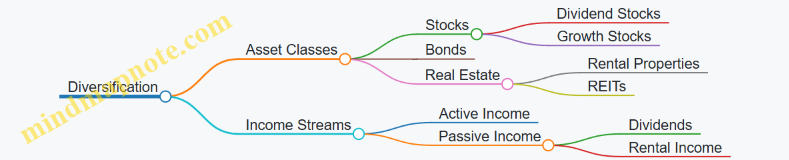
Step 5: Monitoring and Adjusting the Portfolio
Emily reviews her portfolio quarterly:
- Rebalances to maintain target asset allocation.
- Adjusts contributions based on income changes.
- Keeps an eye on fees and tax implications.
Example: When the stock market dipped, Emily continued investing steadily, benefiting from lower prices and eventual recovery.
Key Takeaways from Emily’s Journey
- Consistency is Key: Regular investing, even small amounts, builds wealth over time.
- Education Empowers: Understanding investment options helps make informed decisions.
- Flexibility Matters: Adjusting contributions based on income variability keeps the plan sustainable.
- Diversification Reduces Risk: Spreading investments across asset classes protects against market swings.
Summary Mind Map: Emily’s Investment Journey
By following Emily’s example, freelancers can overcome the challenges of irregular income and steadily build wealth through disciplined financial planning and smart investing.
12.3 Managing Multiple Gigs: Raj’s Income Smoothing Techniques
Raj is a freelance graphic designer who juggles multiple gigs simultaneously — from designing logos for startups to creating marketing materials for local businesses and occasionally doing quick website tweaks. His income varies widely month to month, sometimes earning $2,000 in one month and $5,000 the next. To maintain financial stability, Raj employs several income smoothing techniques that any freelancer with multiple gigs can adopt.
Understanding Raj’s Income Streams
Raj’s income comes from three primary categories, each with different payment schedules and project lengths. This diversity can cause irregular cash flow.
Technique 1: Creating a Buffer Account
Raj maintains a separate “buffer account” — a dedicated savings account that holds 2-3 months’ worth of average expenses. This account acts as a cushion during lean months.
Example:
- Average monthly expenses: $3,000
- Buffer target: $9,000
- When Raj earns more than $3,000 in a month, he deposits the surplus into this buffer.
- During months when income dips below $3,000, he withdraws from the buffer to cover expenses.
Technique 2: Prioritizing and Scheduling Gigs
Raj prioritizes gigs based on payment timing and reliability. He schedules projects so that payments are staggered throughout the month.
Example:
- Client A pays within 15 days of invoice.
- Client B pays after project completion, usually 30 days.
- Raj schedules Client A’s work early in the month and Client B’s work mid-month to ensure steady cash inflow.
Technique 3: Using Invoicing and Payment Terms Effectively
Raj sets clear payment terms, including partial upfront payments for larger projects to improve cash flow.
Example:
- For a $2,000 project, Raj requests 50% upfront ($1,000) and 50% upon completion.
- This upfront payment helps cover immediate expenses and reduces financial strain.
Technique 4: Tracking and Forecasting Income
Raj uses a simple spreadsheet and a budgeting app to track expected payments and forecast income for the next 3 months.
Example:
| Month | Expected Income | Actual Income | Difference |
|---|---|---|---|
| January | $4,000 | $3,800 | -$200 |
| February | $3,500 | $4,200 | +$700 |
| March | $4,500 | - | - |
This helps Raj anticipate low-income months and plan accordingly.
Technique 5: Diversifying Client Base and Gig Types
Raj continuously seeks to diversify his gigs to avoid over-reliance on a few clients or project types.
Example:
- Adds small, quick-turnaround gigs like social media graphics to supplement larger projects.
- This diversification smooths income by filling gaps between bigger projects.
Summary
By combining these techniques, Raj effectively smooths his income despite the inherent unpredictability of freelancing multiple gigs. His approach offers a practical roadmap:
- Maintain a buffer account to cover lean months
- Schedule gigs to stagger payments
- Use clear payment terms with upfront deposits
- Track and forecast income regularly
- Diversify gigs and clients
These strategies empower freelancers like Raj to manage cash flow confidently and focus on growing their careers without financial stress.
12.4 Overcoming Tax Challenges: Lisa’s Story
Lisa is a graphic designer who transitioned from a salaried job to freelancing full-time. While excited about the flexibility, she quickly realized that managing taxes on her own was a major challenge. This section explores Lisa’s journey, the tax hurdles she faced, and the best practices she adopted to overcome them.
Lisa’s Initial Tax Challenges
- Unpredictable Income: Lisa’s monthly earnings varied widely, making it hard to estimate taxes.
- Lack of Expense Tracking: She initially mixed personal and business expenses, complicating deductions.
- Quarterly Tax Payments: Lisa was unaware of estimated tax deadlines and faced penalties.
- Confusing Tax Deductions: She struggled to identify which expenses were deductible.
Mind Map: Lisa’s Tax Challenges and Solutions
Step 1: Separating Business and Personal Finances
Lisa opened a dedicated business checking account. This simple step helped her clearly distinguish income and expenses related to freelancing.
Example:
- Before: Lisa’s personal and freelance payments were all in one account.
- After: All client payments and business expenses flow through the business account.
This separation made it easier to track deductible expenses and prepare for taxes.
Step 2: Implementing Expense Tracking Tools
Lisa started using a user-friendly accounting app designed for freelancers. She categorized expenses such as software subscriptions, office supplies, and travel.
Example:
- Monthly software subscription ($30) was logged as a business expense.
- Coffee meetings with clients were recorded under “Meals & Entertainment” with notes.
This disciplined tracking maximized her deductible expenses and reduced taxable income.
Step 3: Understanding and Paying Quarterly Estimated Taxes
Lisa learned that as a freelancer, she needed to pay estimated taxes quarterly to avoid penalties.
Example:
- Lisa estimated her annual income at $60,000.
- She calculated 25% tax liability = $15,000.
- Divided by 4, she set aside $3,750 every quarter.
She set calendar reminders and automated transfers to a separate tax savings account.
Mind Map: Quarterly Tax Payment Workflow
Step 4: Leveraging Tax Deductions and Credits
Lisa educated herself on common freelancer deductions:
- Home office deduction (dedicating a room exclusively for work)
- Business mileage and travel expenses
- Equipment and software
- Health insurance premiums
Example: Lisa calculated her home office space as 10% of her apartment. She deducted 10% of rent, utilities, and internet costs.
Step 5: Seeking Professional Help
After a year, Lisa hired a tax professional specializing in freelancers. This helped her:
- Optimize deductions
- Navigate complex tax forms (Schedule C, SE)
- Plan better for retirement contributions
Example: The tax professional helped Lisa discover she qualified for the Qualified Business Income deduction, reducing her taxable income further.
Summary: Lisa’s Tax Success Formula

Key Takeaways for Freelancers from Lisa’s Story
- Separate your finances early: It simplifies tracking and tax prep.
- Track every expense: Even small deductions add up.
- Plan for quarterly taxes: Avoid surprises and penalties.
- Educate yourself: Know what deductions and credits you qualify for.
- Consider professional help: Especially as your income grows or tax situations get complex.
By following Lisa’s example, freelancers can transform tax challenges into manageable tasks, ensuring financial stability and peace of mind.
12.5 Lessons Learned: Common Mistakes and How to Avoid Them
Freelancers and gig workers often face unique financial challenges that can lead to costly mistakes if not addressed early. Learning from these common pitfalls can save you time, money, and stress. Below, we explore some of the most frequent errors and provide actionable advice on how to avoid them.
Common Mistakes Mind Map
Overestimating Income and Poor Budgeting
Mistake: Many freelancers budget based on their best-earning months, leading to overspending during lean periods.
Example: Emma, a freelance graphic designer, planned her monthly expenses assuming she would earn $4,000 every month. However, some months she only made $2,500, which caused her to dip into savings and incur credit card debt.
How to Avoid:
- Use your lowest 3-6 months of income as a baseline for budgeting.
- Build a buffer or emergency fund to cover 3-6 months of expenses.
- Track both fixed and variable expenses carefully.
Underestimating Tax Obligations
Mistake: Ignoring taxes or failing to set aside enough money for quarterly payments can lead to large tax bills and penalties.
Example: Raj didn’t track his income tax liability throughout the year and was surprised by a $5,000 tax bill at year-end.
How to Avoid:
- Set aside 25-30% of your income for taxes.
- Use accounting software or spreadsheets to track income and expenses.
- Pay quarterly estimated taxes on time.
Neglecting an Emergency Fund
Mistake: Without a financial cushion, freelancers can quickly find themselves in trouble during unexpected income gaps or emergencies.
Example: Lisa had no emergency fund when a client delayed payment for two months, forcing her to borrow money at high interest.
How to Avoid:
- Aim to save 3-6 months’ worth of essential expenses.
- Automate transfers to a separate savings account.
Inconsistent Retirement Savings
Mistake: Many freelancers delay or skip retirement contributions due to irregular income or prioritizing short-term needs.
Example: Tom only contributed to his Solo 401(k) sporadically, missing out on compound growth.
How to Avoid:
- Set a target percentage of income (e.g., 10-15%) for retirement savings.
- Automate contributions during high-income months.
- Use retirement accounts designed for self-employed individuals.
Poor Invoicing and Payment Follow-Up
Mistake: Delayed invoicing or lack of follow-up can cause cash flow problems.
Example: Maria sent invoices late and didn’t follow up on overdue payments, resulting in a 30-day delay in receiving funds.
How to Avoid:
- Invoice immediately upon project completion.
- Use invoicing software with reminders.
- Set clear payment terms upfront.
Skipping Insurance or Underinsuring
Mistake: Freelancers often skip health, disability, or business insurance to save money, risking financial devastation.
Example: John had no disability insurance and lost income for six months after an injury.
How to Avoid:
- Research affordable health insurance options.
- Consider disability and liability insurance.
- Leverage professional associations for group plans.
Lack of Long-Term Financial Planning
Mistake: Focusing only on immediate income needs without setting long-term goals can stall financial growth.
Example: Nina never set financial goals beyond monthly bills, missing opportunities to invest or save for retirement.
How to Avoid:
- Define short-, medium-, and long-term financial goals.
- Review and adjust your plan quarterly.
- Use financial planning tools or consult a professional.
Summary Mind Map: How to Avoid Common Mistakes
By being aware of these common pitfalls and implementing the suggested best practices, freelancers can build a more stable and prosperous financial future. Remember, consistency and proactive planning are key to thriving in the gig economy.
13. Creating Your Personalized Gig Economy Financial Plan
13.1 Assessing Your Current Financial Situation
Before you can create a solid financial plan tailored to your gig economy lifestyle, it’s essential to have a clear and comprehensive understanding of your current financial situation. This foundational step helps you identify strengths, weaknesses, and areas that require immediate attention.
Why Assess Your Financial Situation?
- Gain clarity on your income, expenses, debts, and savings.
- Understand your cash flow patterns and financial habits.
- Identify gaps or risks that could impact your financial stability.
- Set realistic and achievable financial goals.
Key Components to Assess
-
Income Sources and Stability
- List all active income streams (freelance gigs, contracts, passive income).
- Note the frequency and average amount of each.
- Identify any seasonal or irregular patterns.
-
Monthly Expenses
- Fixed expenses: rent, utilities, subscriptions.
- Variable expenses: groceries, transportation, entertainment.
- Business-related expenses: software, equipment, marketing.
-
Debts and Liabilities
- Outstanding loans (student, personal, business).
- Credit card balances.
- Payment schedules and interest rates.
-
Savings and Emergency Funds
- Current savings balance.
- Accessibility and liquidity.
-
Assets
- Cash, investments, property, equipment.
-
Credit Score and Financial Health Indicators
- Current credit score.
- Any recent financial issues or red flags.
Mind Map: Assessing Your Financial Situation
Example: Assessing Alex’s Financial Situation
Income:
- Freelance graphic design projects: $2,500/month (variable)
- Part-time consulting: $1,000/month (stable)
- Passive income from stock dividends: $200/month
Expenses:
- Rent: $1,200 (fixed)
- Utilities & Internet: $150 (fixed)
- Groceries: $300 (variable)
- Transportation: $100 (variable)
- Software subscriptions: $50 (fixed)
- Marketing & Advertising: $100 (variable)
Debts:
- Student loan: $10,000 balance, $200/month payment
- Credit card: $1,500 balance, $50 minimum payment
Savings:
- Emergency fund: $3,000
- Retirement savings: $5,000
Assets:
- Laptop and design equipment valued at $2,000
- Investment account: $8,000
Credit Score: 720
Step-by-Step Guide to Assess Your Financial Situation
-
Gather Financial Documents:
- Bank statements
- Invoices and payment records
- Bills and receipts
- Loan statements
-
Create an Income Log:
- Track all income sources for at least 3 months to understand variability.
-
List and Categorize Expenses:
- Use budgeting apps or spreadsheets.
- Separate personal and business expenses.
-
Calculate Net Cash Flow:
- Income minus expenses.
- Identify months with surplus or deficit.
-
Evaluate Debts:
- List all debts with balances, interest rates, and payment terms.
-
Review Savings and Assets:
- Check liquidity and accessibility.
-
Check Credit Score:
- Use free online tools.
Tips for Freelancers
- Use Apps: Tools like Mint, YNAB, or QuickBooks Self-Employed can simplify tracking.
- Separate Accounts: Keep business and personal finances distinct for clarity.
- Regular Reviews: Assess your financial situation quarterly to adjust plans.
By thoroughly assessing your current financial situation, you lay the groundwork for a personalized and effective financial plan that accommodates the unique challenges and opportunities of the gig economy.
13.2 Setting Short-Term and Long-Term Financial Goals
Setting clear financial goals is essential for freelancers and gig workers to maintain financial stability and build wealth over time. Because income can be irregular, having well-defined short-term and long-term goals helps you prioritize spending, saving, and investing effectively.
Understanding Financial Goals
- Short-Term Goals: These are objectives you aim to achieve within the next 6 months to 2 years. Examples include building an emergency fund, paying off a credit card, or saving for a new laptop.
- Long-Term Goals: These are goals that take 3 years or more to accomplish, such as saving for retirement, buying a home, or funding your child’s education.
Why Set Both Types of Goals?
- Short-term goals provide quick wins and financial security.
- Long-term goals ensure you are prepared for future needs and financial independence.
Mind Map: Financial Goals Overview

Step 1: Assess Your Current Financial Situation
Before setting goals, know where you stand:
- Calculate your monthly average income.
- List monthly expenses.
- Identify debts and assets.
Step 2: Define SMART Goals
Make your goals Specific, Measurable, Achievable, Relevant, and Time-bound.
Example: Instead of “Save money,” say “Save $3,000 for an emergency fund within 12 months by setting aside $250 monthly.”
Step 3: Examples of Short-Term Financial Goals for Freelancers
- Save $1,000 in 6 months as a buffer for slow months.
- Pay off $500 credit card balance in 4 months.
- Invest in an online course costing $300 within 3 months to boost skills.
Example:
Priya, a freelance graphic designer, sets a goal to save $1,200 over the next year to cover 2 months of expenses during lean periods. She breaks it down to $100 monthly and automates transfers to a savings account.
Step 4: Examples of Long-Term Financial Goals for Freelancers
- Build a $50,000 retirement fund in 10 years.
- Save $20,000 for a down payment on a home in 7 years.
- Pay off student loans of $15,000 in 5 years.
Example:
Mike, a freelance writer, plans to contribute 15% of his income monthly to a Solo 401(k) aiming to accumulate $100,000 in 15 years for retirement.
Mind Map: SMART Goal Setting Process
Step 5: Prioritize Your Goals
Because resources are limited, prioritize goals based on urgency and importance.
Example Priority List:
- Build emergency fund (short-term)
- Pay off high-interest debt (short-term)
- Start retirement savings (long-term)
- Invest in skill development (short-term)
- Save for home purchase (long-term)
Step 6: Break Down Goals into Actionable Steps
For each goal, create smaller milestones.
Example:
Goal: Save $3,000 emergency fund in 12 months
- Save $250 monthly
- Reduce discretionary spending by $50/month
- Sell unused equipment to add $200 lump sum
Step 7: Monitor and Adjust Goals Regularly
Income variability means your goals might need tweaking.
- Review goals quarterly.
- Adjust savings amounts if income changes.
- Celebrate milestones to stay motivated.
Mind Map: Goal Monitoring Cycle
Final Example: Setting Goals for a Freelancer
Case: Lisa is a freelance photographer with fluctuating income.
- Short-Term Goal: Save $2,400 emergency fund in 12 months ($200/month).
- Long-Term Goal: Save $30,000 for retirement in 10 years.
Action Plan:
- Automate $200/month to savings account.
- Allocate 10% of income to a SEP IRA monthly.
- Track income monthly and adjust contributions if income dips.
- Use budgeting app to monitor expenses.
By setting clear, actionable goals, Lisa gains control over her finances despite income unpredictability.
Setting short-term and long-term financial goals tailored to your freelance lifestyle empowers you to navigate the gig economy with confidence and build a secure financial future.
13.3 Building a Step-by-Step Action Plan
Creating a clear, actionable financial plan is essential for freelancers and gig workers to navigate the unpredictability of their income and achieve financial stability. This section will guide you through building a step-by-step action plan tailored to your unique gig economy lifestyle, complete with mind maps and practical examples.
Step 1: Assess Your Current Financial Situation
Start by gathering all your financial information. This includes income sources, monthly expenses, debts, savings, and investments.
Example:
Priya, a freelance graphic designer, lists her average monthly income from three different clients, her rent and utilities, credit card debt, and her current emergency fund balance.
Step 2: Define Clear Financial Goals
Set both short-term and long-term goals. Short-term goals might include paying off debt or building an emergency fund, while long-term goals could be saving for retirement or buying a home.
Example:
Mike wants to save $5,000 in an emergency fund within 12 months and contribute 10% of his income to a Solo 401(k) for retirement.
Step 3: Create a Realistic Budget Based on Variable Income
Develop a budget that accounts for fluctuating income by prioritizing essential expenses and allocating surplus funds towards goals.
Example:
Sarah calculates her three-month average income and sets a conservative monthly budget that covers rent, utilities, groceries, and debt payments, leaving discretionary spending flexible.
Step 4: Implement Income Smoothing Techniques
Plan for months with lower income by setting aside surplus earnings during high-income months.
Example:
Raj transfers 20% of his earnings from busy months into a separate savings account to cover expenses during slower periods.
Step 5: Automate Savings and Bill Payments
Automation reduces the risk of missed payments and helps maintain consistent savings habits.
Example:
Ana sets up automatic transfers of 10% of each payment she receives into her retirement account and schedules automatic bill payments for her rent and utilities.
Step 6: Track Progress and Adjust Regularly
Review your financial plan monthly or quarterly to make adjustments based on income changes or goal progress.
Example:
Lisa reviews her budget every month and adjusts her savings rate upward when she lands a new client, accelerating her debt repayment plan.
Summary Mind Map: Step-by-Step Action Plan
By following these steps, freelancers can build a resilient financial plan that adapts to the unique challenges of the gig economy. Remember, consistency and flexibility are key to long-term financial success.
13.4 Monitoring Progress and Adjusting Your Plan
Monitoring your financial progress and making timely adjustments is crucial for freelancers and gig workers due to the inherent variability in income and expenses. This section will guide you through effective methods to track your financial goals, interpret your results, and pivot your plan as needed to stay on course.
Why Monitoring Matters
- Stay on Track: Regular check-ins help ensure you’re moving toward your goals.
- Identify Issues Early: Spot cash flow problems, overspending, or missed savings opportunities.
- Adapt to Changes: Life events, market shifts, or changes in gig availability require plan tweaks.
How to Monitor Your Financial Plan
-
Set a Regular Review Schedule
- Weekly for cash flow and expenses
- Monthly for budget and savings
- Quarterly for tax and retirement contributions
-
Use Financial Dashboards and Tools
- Apps like Mint, YNAB, or QuickBooks Self-Employed
- Spreadsheets customized to your income and expense categories
-
Track Key Metrics
- Income vs. budgeted income
- Expense categories vs. budget
- Savings rate (percentage of income saved)
- Emergency fund balance
- Debt repayment progress
-
Reflect on Your Goals
- Are you meeting your short-term milestones?
- Is your emergency fund growing as planned?
- Are retirement contributions consistent?
Mind Map: Monitoring Financial Progress
Adjusting Your Financial Plan
When your monitoring reveals that you’re off track, it’s time to adjust. Here’s how:
- Reassess Your Budget: If expenses are consistently higher, identify non-essential costs to trim.
- Modify Savings Goals: During lean months, reduce savings temporarily but plan to catch up later.
- Increase Income Streams: Explore additional gigs or raise rates if possible.
- Update Emergency Fund Targets: If your expenses change, recalculate the fund size.
- Revise Retirement Contributions: Adjust contributions based on current cash flow.
Mind Map: Adjusting Your Financial Plan

Example 1: Emma’s Monthly Review
Emma is a freelance graphic designer. Every month, she reviews her income and expenses using a spreadsheet:
- Findings: Last month, her income was 20% below average, and she overspent on dining out.
- Action: She cuts dining expenses by 50% for the next two months and plans to pitch for two new clients.
- Result: By the next review, her income increased by 15%, and expenses normalized.
Example 2: Raj’s Quarterly Tax and Retirement Check
Raj, a contract software developer, reviews his tax payments and retirement contributions quarterly:
- Findings: He missed one quarterly tax payment and contributed less to his Solo 401(k) due to a slow quarter.
- Action: Raj sets up automated reminders for tax payments and adjusts his retirement contributions to catch up over the next two quarters.
Tips for Effective Monitoring and Adjustment
- Automate Where Possible: Use alerts and automatic transfers to reduce manual effort.
- Keep It Simple: Focus on a few key metrics to avoid overwhelm.
- Be Honest: Acknowledge when things aren’t going as planned.
- Seek Support: Consider financial advisors or peer groups for accountability.
By consistently monitoring your financial progress and making thoughtful adjustments, you empower yourself to navigate the ups and downs of the gig economy with confidence and resilience.
13.5 Example: A Sample Financial Plan Template for Freelancers
Creating a personalized financial plan is essential for freelancers to manage irregular income, save for the future, and maintain financial stability. Below is a detailed sample financial plan template tailored specifically for freelancers, complete with mind maps and practical examples.
Sample Financial Plan Template for Freelancers
Assess Your Current Financial Situation
- Income Sources: List all current gigs, clients, and expected income streams.
- Monthly Income Average: Calculate an average monthly income based on the past 6-12 months.
- Expenses: Categorize fixed and variable expenses.
- Debts and Liabilities: Note outstanding debts, interest rates, and minimum payments.
- Savings and Investments: Current balances and types.
Example:
| Category | Amount (Monthly) |
|---|---|
| Average Income | $3,200 |
| Fixed Expenses | $1,200 |
| Variable Expenses | $800 |
| Debt Payments | $300 |
| Savings | $500 |
Set Short-Term and Long-Term Financial Goals
- Short-Term Goals (0-1 year): Build emergency fund, pay off credit card debt.
- Medium-Term Goals (1-3 years): Save for a home down payment, upgrade equipment.
- Long-Term Goals (3+ years): Retirement savings, investment portfolio growth.
Example:
- Emergency fund: $6,000 (6 months of expenses)
- Pay off $3,000 credit card debt in 12 months
- Save $10,000 for home down payment in 3 years
- Contribute 15% of income to retirement annually
Budgeting and Cash Flow Management
- Use a zero-based budget to allocate every dollar.
- Prioritize essential expenses and debt payments.
- Allocate a percentage of income to savings and investments.
Example Mind Map:
Example: If monthly income is $3,200:
- Fixed Expenses: $1,280
- Variable Expenses: $800
- Debt Repayment: $320
- Savings: $480
- Taxes: $320
Tax Planning
- Set aside a fixed percentage of income for taxes (typically 25-30%).
- Track deductible expenses monthly.
- Plan quarterly estimated tax payments.
Example Mind Map:
Example: For $3,200 monthly income, set aside $800 for taxes.
Emergency Fund Strategy
- Goal: Save 3-6 months of essential expenses.
- Keep funds in a high-yield savings account.
- Automate monthly contributions.
Example: If essential expenses are $2,000/month, emergency fund target is $12,000.
Retirement Planning
- Choose appropriate retirement accounts (SEP IRA, Solo 401(k)).
- Automate contributions based on income percentage.
- Adjust contributions during high-earning months.
Example Mind Map:
Example: Contribute 15% of income monthly; if income is $3,200, contribute $480.
Debt Management
- List all debts with interest rates.
- Prioritize high-interest debts.
- Use snowball or avalanche method.
Example: Pay off $3,000 credit card debt at 18% interest first, then student loans.
Investment Plan
- Start with low-cost index funds or ETFs.
- Use dollar-cost averaging.
- Diversify investments.
Example: Invest $200 monthly into a diversified ETF portfolio.
Insurance and Risk Management
- Obtain health, disability, and liability insurance.
- Review coverage annually.
Review and Adjust Plan Quarterly
- Track income and expenses.
- Adjust budget and savings based on income fluctuations.
- Reassess goals annually.
Visual Summary Mind Map of the Financial Plan
Final Example: Sample Monthly Financial Plan for Freelancer “Alex”
| Category | Amount ($) | Notes |
|---|---|---|
| Income (Average) | 3,500 | From multiple gigs |
| Taxes (25%) | 875 | Set aside monthly |
| Fixed Expenses | 1,200 | Rent, utilities, subscriptions |
| Variable Expenses | 700 | Food, transport, entertainment |
| Debt Payments | 300 | Credit card and student loans |
| Emergency Fund Savings | 200 | Automated transfer to savings account |
| Retirement Contributions | 400 | SEP IRA contributions |
| Investment Contributions | 200 | ETF portfolio |
Note: Alex reviews this plan every quarter and adjusts contributions during high or low earning months to maintain financial stability.
This sample financial plan template, combined with the mind maps and examples, provides a practical, actionable framework for freelancers to take control of their finances and build a secure financial future.