Advanced Desalination Systems and Next Generation Water Infrastructure
1. Introduction to Desalination Technologies and Water Infrastructure
1.1 Overview of Global Water Scarcity and the Role of Desalination
Water scarcity affects billions worldwide, driven by uneven distribution of freshwater resources, population growth, urbanization, and climate variability. Freshwater makes up only about 2.5% of the Earth’s total water, and much of that is locked in glaciers, ice caps, or deep underground. The accessible freshwater in rivers, lakes, and shallow aquifers is limited and often stressed by human use.
Water scarcity can be categorized into two types: physical scarcity, where demand exceeds available supply, and economic scarcity, where water is available but access is limited due to infrastructure or financial constraints.
Mind Map: Causes of Water Scarcity
Many regions face seasonal or chronic shortages. For example, parts of the Middle East and North Africa regularly experience physical scarcity due to arid climates and limited rainfall. Meanwhile, some developing regions suffer economic scarcity despite having adequate water resources.
Desalination plays a role in addressing water scarcity by converting seawater or brackish water into freshwater. It is especially relevant where freshwater sources are insufficient or contaminated.
Mind Map: Role of Desalination in Water Supply
Example 1: Saudi Arabia Saudi Arabia relies heavily on desalination, producing over half of its drinking water through large-scale plants. The country’s lack of freshwater rivers and limited rainfall make desalination a practical solution despite its energy demands.
Example 2: California, USA California has implemented desalination plants to supplement water supplies during drought periods. The Carlsbad Desalination Plant, one of the largest in the Western Hemisphere, provides about 50 million gallons per day, helping reduce dependence on imported water.
Desalination is not a universal fix. It requires significant energy input, infrastructure investment, and careful environmental management, particularly regarding brine discharge. However, when integrated thoughtfully with existing water systems, it can provide a steady, controllable source of freshwater.
Mind Map: Water Scarcity Solutions Including Desalination
In summary, desalination addresses a specific niche within the broader challenge of water scarcity. It is most effective when combined with demand management, infrastructure improvements, and sustainable policies. Understanding its role helps engineers and planners design systems that balance resource availability, cost, and environmental impact.
1.2 Classification of Desalination Technologies: Thermal vs Membrane Processes
Desalination technologies can be broadly classified into two main categories: thermal processes and membrane processes. Each category uses fundamentally different approaches to separate salt and other impurities from seawater or brackish water, and each has its own strengths, limitations, and typical applications.
Thermal Desalination Processes
Thermal desalination relies on phase change—specifically, evaporation and condensation—to separate fresh water from saline feedwater. The basic principle is simple: heat the saline water until it vaporizes, then collect and condense the vapor as freshwater, leaving salts behind.
Common Thermal Methods:
- Multi-Stage Flash Distillation (MSF)
- Multi-Effect Distillation (MED)
- Vapor Compression Distillation (VC)
Key Characteristics:
- Energy-intensive, primarily using heat energy.
- Can handle very high salinity feedwater.
- Often coupled with power plants or use waste heat.
- Robust and proven technology, especially in regions with cheap thermal energy.
Example: The Jebel Ali MSF plant in Dubai uses waste heat from a power station to produce over 100 million gallons of freshwater per day. It demonstrates how thermal processes can integrate with existing infrastructure to improve energy efficiency.
Membrane Desalination Processes
Membrane processes use semi-permeable membranes to physically separate salts from water under pressure or an electric field. Instead of changing the phase of water, these methods rely on selective permeability and pressure gradients.
Common Membrane Methods:
- Reverse Osmosis (RO)
- Nanofiltration (NF)
- Electrodialysis (ED) and Electrodialysis Reversal (EDR)
Key Characteristics:
- Generally more energy-efficient than thermal methods for seawater desalination.
- Sensitive to feedwater quality; requires effective pretreatment to avoid membrane fouling.
- Modular and scalable, suitable for a wide range of plant sizes.
- Widely adopted globally, especially where electricity costs are moderate.
Example: The Carlsbad Desalination Plant in California uses RO technology to produce 50 million gallons per day. It incorporates advanced pretreatment and energy recovery devices to reduce energy consumption.
Mind Map: Classification of Desalination Technologies
Comparing Thermal and Membrane Processes
| Aspect | Thermal Processes | Membrane Processes |
|---|---|---|
| Energy Type | Heat (often steam or waste heat) | Mechanical (electricity for pumps) |
| Feedwater Salinity | Handles very high salinity | Typically seawater or brackish |
| Energy Efficiency | Lower, but can use waste heat | Higher, especially with energy recovery |
| Plant Size | Large-scale, centralized | Flexible, from small to large |
| Maintenance | Scale and corrosion management | Membrane fouling control |
| Typical Applications | Middle East, power plant coupling | Worldwide, urban and remote areas |
Practical Example: Choosing Between Thermal and Membrane
Consider a coastal city with access to cheap natural gas and existing power plants. A thermal desalination plant (e.g., MSF) might be preferable due to the availability of waste heat and the ability to handle variable feedwater quality. Conversely, a city with limited thermal energy but reliable electricity may favor RO plants for their energy efficiency and modularity.
Summary
Thermal and membrane desalination technologies serve different niches but often complement each other. Thermal methods excel in environments where heat is readily available and feedwater salinity is very high. Membrane methods dominate where electricity is affordable and pretreatment can be effectively managed. Understanding these distinctions helps engineers design systems tailored to local resources and water quality needs.
1.3 Fundamentals of Water Infrastructure for Large-Scale Freshwater Production
Water infrastructure for large-scale freshwater production is the backbone that supports the entire desalination process, from intake to distribution. It encompasses multiple interconnected components designed to ensure reliable, efficient, and safe delivery of potable water. Understanding these fundamentals helps engineers design systems that meet demand while managing costs and environmental impact.
Core Components of Water Infrastructure
-
Water Intake Systems: These capture seawater or brackish water from natural sources. The design must minimize environmental disruption and prevent debris or marine life from entering the system.
-
Pretreatment Facilities: Before desalination, raw water undergoes pretreatment to remove suspended solids, organic matter, and microorganisms that could damage membranes or reduce thermal efficiency.
-
Desalination Units: The heart of the system, where salt and impurities are removed. This includes thermal processes like MSF or MED, and membrane-based processes like reverse osmosis.
-
Post-Treatment Systems: After desalination, water is often adjusted for pH, remineralized, and disinfected to meet drinking water standards.
-
Storage and Distribution Networks: Treated water is stored in tanks or reservoirs and then distributed through pipelines to consumers or industries.
-
Brine Disposal Systems: Concentrated saltwater byproduct must be managed to minimize environmental impact.
Mind Map: Water Infrastructure Components
Water Intake Systems
The intake system is the first point of contact with the source water. Its design impacts the entire plant’s efficiency and environmental footprint. For example, the Ashkelon desalination plant in Israel uses subsurface intake wells that draw seawater through sand layers, naturally filtering out particles and marine life. This reduces pretreatment needs and environmental impact.
Key considerations include:
- Avoiding damage to marine ecosystems
- Preventing clogging and biofouling
- Ensuring consistent flow rates
Pretreatment Facilities
Pretreatment protects desalination equipment and improves water quality. Common methods include coagulation to aggregate particles, multimedia filtration to remove suspended solids, and UV or chlorination for microbial control.
Example: The Carlsbad Desalination Plant in California employs a multi-barrier pretreatment system combining chemical dosing and filtration to reduce membrane fouling and extend membrane life.
Desalination Units
The choice between thermal and membrane processes depends on factors like feedwater quality, energy availability, and scale. Membrane systems like reverse osmosis are energy-efficient but sensitive to feedwater quality, making pretreatment critical.
Post-Treatment Systems
Desalinated water is often too pure and corrosive for distribution. Post-treatment adds minerals such as calcium and magnesium to stabilize water and improve taste. Disinfection ensures microbiological safety.
Example: The Sorek RO plant in Israel uses post-treatment to adjust pH and add minerals, ensuring compliance with drinking water standards.
Storage and Distribution Networks
Storage buffers supply and demand fluctuations. Distribution networks must maintain pressure and water quality. Pumps and valves are designed to minimize energy use and leakage.
Example: Singapore’s NEWater system integrates storage reservoirs with a sophisticated distribution network to supply reclaimed water reliably across the city.
Brine Disposal Systems
Brine disposal is a significant environmental challenge. Options include deep-well injection, evaporation ponds, or dilution with seawater before discharge. Proper design prevents harm to marine life and coastal ecosystems.
Example: The Perth desalination plant in Australia dilutes brine with cooling water from a nearby power station before releasing it into the ocean, reducing salinity impact.
Mind Map: Process Flow in Large-Scale Desalination Infrastructure
Integration and System Considerations
Large-scale freshwater production requires seamless integration of all components. For instance, fluctuations in intake water quality demand flexible pretreatment processes. Energy consumption at each stage influences overall plant efficiency. Monitoring and control systems coordinate operations to optimize performance.
Example: The Jebel Ali desalination complex in the UAE integrates multiple plants with shared intake and distribution infrastructure, optimizing resource use and maintenance.
Understanding these fundamentals provides a solid foundation for designing and operating efficient, reliable desalination infrastructure capable of meeting large-scale freshwater needs.
1.4 Best Practices in Site Selection and Environmental Impact Assessment with Case Examples
Site selection and environmental impact assessment (EIA) are foundational steps when planning a desalination plant. Getting these right can save time, money, and community goodwill. This section breaks down best practices with clear examples and mind maps to organize the key factors.
Best Practices in Site Selection
Site selection involves balancing technical, environmental, economic, and social factors. The goal is to find a location that supports efficient operation while minimizing negative impacts.
Key Factors to Consider
- Water Source Quality and Availability: Proximity to seawater or brackish water with consistent salinity and temperature.
- Energy Supply: Access to reliable and preferably low-cost energy sources.
- Environmental Sensitivity: Avoiding ecologically sensitive areas such as coral reefs, wetlands, or marine protected zones.
- Infrastructure Access: Availability of roads, ports, and grid connections.
- Community Impact: Minimizing displacement, noise, and visual impact.
- Regulatory Compliance: Ensuring the site meets local zoning and environmental regulations.
Mind Map: Site Selection Factors
Example: Ashkelon Desalination Plant, Israel
The Ashkelon plant was sited near the Mediterranean coast, where seawater quality is stable. The location had good access to the national grid and existing infrastructure. Environmental studies ensured minimal impact on local marine life. The plant’s proximity to urban areas reduced distribution costs but required noise mitigation measures.
Environmental Impact Assessment (EIA) Best Practices
An EIA systematically evaluates potential environmental effects before construction and operation. It should be thorough, transparent, and integrated into project planning.
Steps in EIA
- Screening: Determine if a full EIA is necessary.
- Scoping: Identify key environmental issues and stakeholders.
- Baseline Data Collection: Gather data on existing environmental conditions.
- Impact Prediction: Assess potential effects on water quality, marine life, air quality, and socio-economic factors.
- Mitigation Measures: Develop strategies to reduce negative impacts.
- Reporting: Prepare an Environmental Impact Statement.
- Public Consultation: Engage affected communities and stakeholders.
- Monitoring and Management: Plan ongoing environmental monitoring.
Mind Map: EIA Process
Example: Perth Seawater Desalination Plant, Australia
The Perth plant’s EIA focused heavily on marine ecology due to its location near sensitive reefs. Baseline studies included detailed surveys of fish populations and benthic habitats. Impact predictions led to the design of intake structures minimizing entrainment of marine organisms. The project included a public consultation phase that influenced the final plant layout to reduce noise and visual impact.
Integrated Approach: Combining Site Selection and EIA
Effective planning treats site selection and EIA as iterative processes. Early environmental data can influence site choice, and site constraints can shape the scope of the EIA.
Mind Map: Integrated Planning
Example: Carlsbad Desalination Plant, California, USA
Initial site options were evaluated alongside environmental baseline data. The final site was chosen to minimize impacts on endangered species and comply with strict state regulations. The EIA process informed the design of intake and discharge systems to reduce ecological disturbance. Community feedback led to additional noise abatement measures.
Summary
Choosing a desalination plant site and conducting an environmental impact assessment are interlinked tasks requiring detailed data, stakeholder input, and careful balancing of priorities. Using structured approaches and learning from existing projects helps avoid costly mistakes and supports sustainable freshwater production.
1.5 Integration of Desalination Plants into Urban and Industrial Water Systems
Integration of desalination plants into urban and industrial water systems requires careful coordination of supply, demand, infrastructure compatibility, and regulatory compliance. The goal is to ensure that desalinated water fits seamlessly into existing water networks while meeting quality and quantity requirements.
Key Considerations for Integration
- Water Quality Matching: Desalinated water often has low mineral content and different chemical characteristics compared to traditional sources. Adjustments such as remineralization or blending may be necessary to meet urban or industrial water standards.
- Infrastructure Compatibility: The physical connection points, pressure regimes, and flow rates must align with existing pipelines and storage facilities.
- Demand Management: Understanding the patterns of water use in urban and industrial sectors helps optimize desalination output and storage.
- Energy and Cost Efficiency: Integration should minimize additional pumping or treatment energy to avoid negating energy savings from efficient desalination.
- Regulatory Compliance: Water quality, discharge, and usage regulations must be observed.
Mind Map: Integration Components
Urban Water Systems Integration
Urban water systems typically rely on multiple sources: surface water, groundwater, and sometimes recycled water. Desalinated water is integrated as a supplementary or primary source depending on availability.
- Blending Strategies: Desalinated water is often blended with other sources to balance mineral content and taste. For example, in a coastal city, desalinated water might be mixed with reservoir water before distribution.
- Pressure and Flow Control: Urban distribution networks have complex pressure zones. Installing booster pumps or pressure reducing valves ensures desalinated water enters the system without causing surges or leaks.
- Storage Solutions: Large storage tanks or reservoirs near the desalination plant help buffer supply fluctuations and manage peak demand.
Example: A Mediterranean city integrated a 100,000 m³/day RO desalination plant by blending its output with reservoir water at a 30:70 ratio. This approach maintained water quality within regulatory limits and avoided corrosion issues in the distribution network.
Mind Map: Urban Integration Example
Industrial Water Systems Integration
Industries often require water with specific qualities for processes such as cooling, cleaning, or product formulation. Desalinated water can be tailored to meet these needs.
- Customized Treatment: Post-treatment of desalinated water may include pH adjustment, hardness control, or removal of specific ions.
- Direct Use vs. Blending: Some industries use desalinated water directly, while others blend it with other water sources.
- Onsite Storage and Distribution: Industrial sites may have dedicated pipelines and storage tanks designed for the characteristics of desalinated water.
Example: A semiconductor manufacturing plant uses desalinated water treated with additional ion exchange to achieve ultra-pure water standards. The plant operates its own distribution network within the facility, ensuring consistent supply and quality.
Mind Map: Industrial Integration Example
Coordination and Control
Integration requires real-time monitoring and control systems to manage water quality, flow rates, and energy use. Supervisory control and data acquisition (SCADA) systems are commonly used.
- Flow Balancing: Automated valves and pumps adjust flows to match demand and maintain pressure.
- Quality Monitoring: Sensors track parameters such as conductivity, pH, and turbidity.
- Energy Management: Systems optimize pump operation to reduce energy consumption.
Summary
Integrating desalination plants into urban and industrial water systems involves aligning water quality, infrastructure, demand, energy use, and regulatory requirements. Practical examples show that blending, customized treatment, and robust control systems are key to successful integration. The process is a balancing act that ensures desalinated water enhances the overall water supply without disrupting existing systems.
2. Thermally-Driven Desalination Processes
2.1 Multi-Stage Flash Distillation (MSF): Principles and Design Considerations
Multi-Stage Flash Distillation (MSF) is a thermal desalination process that separates freshwater from seawater by repeatedly flashing heated seawater into steam in a series of stages under progressively lower pressures. The core principle relies on the fact that water boils at lower temperatures when pressure decreases. This allows seawater to be heated once and then flashed multiple times, maximizing freshwater production while managing energy use.
How MSF Works
Seawater is first heated in a brine heater to a temperature typically between 90°C and 120°C. This hot seawater then enters the first stage, where the pressure is low enough to cause a portion of the water to instantly vaporize or “flash” into steam. The steam is collected on heat exchanger tubes where it condenses, releasing latent heat that preheats incoming seawater. The remaining brine moves to the next stage with even lower pressure, causing more flashing. This process repeats across multiple stages, often 15 to 25, each operating at a lower pressure than the previous one.
The key to MSF efficiency is recovering as much heat as possible from the condensing steam to preheat incoming seawater, reducing the energy needed in the brine heater.
Mind Map: MSF Process Overview
Design Considerations
-
Number of Stages: More stages increase freshwater output and improve energy recovery but add complexity and cost. Typical plants have between 15 and 25 stages.
-
Top Brine Temperature (TBT): This is the maximum temperature of the brine before flashing. Higher TBT increases freshwater yield but risks scaling and corrosion. Common TBT values range from 90°C to 120°C.
-
Stage Pressure Profile: Each stage operates at a carefully controlled pressure, decreasing stepwise to enable flashing. Pressure control requires robust vacuum systems and pressure relief mechanisms.
-
Heat Transfer Surface Area: Sufficient condenser surface area is needed to condense steam efficiently and transfer heat to incoming seawater.
-
Material Selection: Corrosion resistance is critical due to high temperatures and saline environment. Titanium and specialized stainless steels are common.
-
Brine Concentration Limits: To avoid scaling and fouling, brine concentration is limited, typically to about 120,000 ppm total dissolved solids (TDS).
-
Energy Source and Integration: MSF plants often use waste heat from power plants or dedicated steam boilers.
Mind Map: MSF Design Factors
Practical Example: MSF Plant in the Middle East
A 100,000 m³/day MSF plant uses 20 stages with a TBT of 110°C. The brine heater is powered by steam from a nearby power station. Incoming seawater is preheated through heat exchangers recovering heat from the condensing steam. The plant achieves a gain output ratio (GOR) of about 10, meaning it produces 10 kg of freshwater per kg of steam used.
The plant design includes titanium condenser tubes to resist corrosion. Vacuum pumps maintain low pressures in each stage, enabling efficient flashing. Regular cleaning schedules prevent scale buildup, and brine is discharged at a concentration below 120,000 ppm to comply with environmental standards.
Best Practice: Managing Scaling and Corrosion
Scaling occurs when salts precipitate on heat transfer surfaces, reducing efficiency. To manage this:
- Maintain TBT within recommended limits.
- Use anti-scalants and chemical dosing.
- Schedule regular cleaning cycles.
- Select corrosion-resistant materials.
Example: In a plant operating at 115°C TBT, operators noticed a gradual decline in heat transfer efficiency. By introducing a controlled anti-scalant dosing and increasing cleaning frequency, the plant restored performance within two weeks.
Mind Map: Scaling and Corrosion Management
Summary
MSF remains a reliable and widely used thermal desalination method, especially where low-cost waste heat is available. Its design balances freshwater yield, energy consumption, and operational challenges like scaling and corrosion. Understanding the interplay between temperature, pressure, and materials is essential for efficient and durable MSF plant operation.
2.2 Multi-Effect Distillation (MED): Energy Efficiency and Operational Best Practices
Multi-Effect Distillation (MED) is a thermal desalination process that uses multiple stages or “effects” to evaporate and condense seawater, producing freshwater. Each effect operates at a lower pressure and temperature than the previous one, allowing the reuse of latent heat and improving energy efficiency.
How MED Works
In a typical MED plant, seawater is heated in the first effect, causing it to evaporate. The vapor then condenses on tubes carrying seawater in the next effect, transferring heat and causing further evaporation. This cascading process continues through several effects, maximizing heat recovery.
Energy Efficiency in MED
Energy efficiency in MED is primarily achieved by reusing the heat of condensation multiple times across effects. The number of effects directly influences efficiency: more effects mean better heat reuse but also increased complexity and cost.
Key factors affecting energy efficiency include:
- Temperature difference between effects: Smaller temperature differences reduce heat loss but may lower evaporation rates.
- Feedwater temperature: Higher feedwater temperature reduces the energy needed to reach evaporation.
- Material and design of heat transfer surfaces: Efficient heat exchangers improve thermal transfer and reduce energy consumption.
Mind Map: Energy Efficiency Factors in MED
Operational Best Practices
-
Optimizing Number of Effects: Selecting the right number balances energy savings and capital costs. For example, a 7-effect MED plant may offer a good compromise between efficiency and complexity.
-
Maintaining Heat Transfer Surfaces: Fouling and scaling reduce heat transfer efficiency. Regular cleaning schedules and use of anti-scaling chemicals help maintain performance.
-
Controlling Operating Temperatures and Pressures: Precise control avoids excessive temperature differences that waste energy or cause corrosion.
-
Feedwater Pretreatment: Removing suspended solids and hardness prevents fouling and scaling, protecting heat exchangers.
-
Energy Recovery Integration: Using low-grade waste heat from power plants or industrial processes to preheat feedwater reduces external energy demand.
Mind Map: MED Operational Best Practices
Examples
Example 1: A 7-Effect MED Plant in the Mediterranean
This plant uses seawater preheated by waste heat from a nearby power station. Regular chemical cleaning every 3 months keeps scaling under control. Operators maintain a temperature difference of 7°C between effects, balancing evaporation rate and energy efficiency. The plant achieves a gain output ratio (GOR) of about 10, meaning it produces 10 kg of freshwater per kg of steam used.
Example 2: MED Plant with Integrated Pretreatment in the Gulf Region
Here, feedwater passes through ultrafiltration to remove particulates before entering the MED system. This reduces fouling and extends cleaning intervals. The plant uses titanium heat exchangers to resist corrosion, improving longevity. Temperature and pressure are monitored continuously, with automatic adjustments to maintain optimal conditions.
Summary
MED systems improve energy efficiency by cascading heat through multiple effects. Operational success depends on balancing the number of effects, maintaining heat transfer surfaces, controlling process parameters, and integrating pretreatment and energy recovery. Real-world examples show that careful design and maintenance lead to reliable, energy-conscious freshwater production.
2.3 Vapor Compression Distillation: Types and Energy Optimization Techniques
Vapor Compression Distillation (VCD) is a thermal desalination process that uses mechanical or thermal energy to compress vapor, increasing its temperature and pressure to drive evaporation and condensation cycles. It is particularly suitable for small to medium-scale desalination plants and industrial applications where energy efficiency and compactness are priorities.
Types of Vapor Compression Distillation
There are two main types of vapor compression distillation systems: Mechanical Vapor Compression (MVC) and Thermal Vapor Compression (TVC). Each has distinct operational principles and energy profiles.
-
Mechanical Vapor Compression (MVC): Uses a mechanical compressor to increase the pressure and temperature of vapor generated from the brine. The compressed vapor condenses on heat exchange surfaces, releasing latent heat that evaporates more feedwater.
-
Thermal Vapor Compression (TVC): Employs a steam ejector or jet compressor powered by high-pressure steam to compress vapor. This method is often integrated with existing steam systems in industrial plants.
Mind Map: Types of Vapor Compression Distillation
Energy Optimization Techniques
Energy consumption is a critical factor in VCD systems. Optimizing energy use involves reducing electrical or thermal input while maintaining or increasing freshwater output.
-
Efficient Compressor Selection and Operation: Choosing compressors with high isentropic efficiency reduces mechanical energy losses. Regular maintenance ensures compressors operate near design specifications.
-
Heat Recovery and Integration: Utilizing the latent heat from vapor condensation to preheat incoming feedwater reduces external energy demand. Multi-effect arrangements can be combined with VCD to maximize heat reuse.
-
Variable Speed Drives (VSDs): Applying VSDs to compressors allows adjustment of vapor compression rates based on feedwater salinity and flow, preventing unnecessary energy use during low demand.
-
Optimized Operating Pressure: Operating at the lowest feasible pressure that still achieves required evaporation reduces compressor load and energy consumption.
-
Feedwater Preheating: Using waste heat or solar thermal energy to preheat feedwater decreases the energy needed for vaporization.
Mind Map: Energy Optimization in VCD
Practical Examples
-
Example 1: Small-Scale MVC Plant in a Coastal Industrial Facility A facility uses an MVC system powered by a high-efficiency centrifugal compressor. The plant integrates heat exchangers that recover condensation heat to preheat feedwater. This setup reduces electrical consumption by approximately 20% compared to older MVC plants without heat recovery.
-
Example 2: TVC System in a Chemical Plant The plant uses steam ejectors powered by process steam to compress vapor. By optimizing steam pressure and ejector nozzle design, the plant achieves stable operation with minimized steam consumption. The system also preheats feedwater using low-pressure steam condensate, improving overall thermal efficiency.
-
Example 3: MVC with Variable Speed Drive in a Remote Community An MVC desalination unit equipped with a VSD adjusts compressor speed based on daily water demand fluctuations. This flexibility reduces energy use during off-peak times and extends compressor lifespan by avoiding constant full-speed operation.
Summary
Vapor Compression Distillation offers a flexible and energy-conscious approach to desalination. Understanding the differences between MVC and TVC systems helps engineers select appropriate technology for specific applications. Energy optimization techniques such as efficient compressors, heat recovery, variable speed drives, and feedwater preheating are essential to improving system performance and reducing operational costs.
2.4 Practical Examples of Thermal Desalination Plants and Their Performance Metrics
Thermal desalination remains a cornerstone technology for producing freshwater, especially in regions with abundant thermal energy sources. This section presents practical examples of thermal desalination plants, focusing on their design, operation, and key performance metrics. Understanding these examples helps clarify how thermal processes perform in real-world settings and what factors influence their efficiency.
Example 1: Multi-Stage Flash (MSF) Plant – Jubail, Saudi Arabia
The Jubail MSF plant is one of the largest thermal desalination facilities globally, with a capacity of approximately 800,000 cubic meters per day. It operates by flashing seawater into steam across multiple stages under progressively lower pressures.
Key Performance Metrics:
- Gain Output Ratio (GOR): Around 10, indicating the plant produces 10 kg of distilled water per kg of steam input.
- Specific Energy Consumption: Approximately 90 kWh per cubic meter, combining thermal and electrical energy.
- Recovery Rate: Typically 35-40%, limited by scaling and corrosion risks.
Operational Insights:
- The plant uses low-grade steam from a nearby power station, improving overall energy efficiency.
- Regular cleaning cycles mitigate scaling caused by high salinity and temperature.
Mind Map: Jubail MSF Plant Performance
Example 2: Multi-Effect Distillation (MED) Plant – Ashkelon, Israel
The Ashkelon MED plant produces about 100,000 cubic meters of freshwater daily. It uses multiple evaporator effects where vapor from one effect heats the next, reducing energy consumption.
Key Performance Metrics:
- Gain Output Ratio (GOR): Typically 8-12, depending on the number of effects (6-8 effects common).
- Specific Energy Consumption: Around 70-80 kWh per cubic meter.
- Recovery Rate: Approximately 40-45%, higher than MSF due to lower operating temperatures.
Operational Insights:
- The plant integrates energy recovery through vapor recompression.
- Lower temperatures reduce scaling and corrosion, extending membrane and equipment life.
Mind Map: Ashkelon MED Plant Performance
Example 3: Mechanical Vapor Compression (MVC) Plant – Perth, Australia
The Perth MVC plant is a smaller-scale facility producing about 30,000 cubic meters per day. It compresses vapor mechanically to provide heat for evaporation, avoiding the need for external steam.
Key Performance Metrics:
- Specific Energy Consumption: Approximately 50-60 kWh per cubic meter, mostly electrical.
- Recovery Rate: Around 50%, benefiting from closed-loop operation.
- Capacity: Modular design allows easy scaling.
Operational Insights:
- MVC plants are well-suited for locations without access to waste heat.
- Electrical energy use is higher, but overall efficiency is competitive due to heat recycling.
Mind Map: Perth MVC Plant Performance
Comparative Analysis of Thermal Desalination Plants
| Plant Type | Capacity (m3/day) | GOR | Energy Consumption (kWh/m3) | Recovery Rate (%) | Key Strengths |
|---|---|---|---|---|---|
| MSF | 800,000 | ~10 | 90 | 35-40 | High capacity, uses waste steam |
| MED | 100,000 | 8-12 | 70-80 | 40-45 | Lower temperature, less scaling |
| MVC | 30,000 | N/A | 50-60 (electrical) | 50 | Modular, no steam needed |
Best Practices Highlighted by These Examples
- Energy Integration: Utilizing waste heat from power plants (Jubail MSF) reduces fuel consumption.
- Temperature Management: Operating at lower temperatures (MED) minimizes scaling and corrosion.
- Modularity: MVC plants offer flexibility for varying capacity needs.
- Maintenance Scheduling: Regular cleaning and monitoring prevent efficiency loss.
These examples demonstrate that thermal desalination performance depends heavily on energy source, plant design, and operational strategies. Understanding these metrics helps engineers optimize existing plants and design new ones tailored to local conditions.
2.5 Maintenance and Troubleshooting in Thermal Desalination Systems
Maintenance and troubleshooting in thermal desalination systems are critical to ensure continuous, efficient freshwater production. These systems, including Multi-Stage Flash (MSF), Multi-Effect Distillation (MED), and Vapor Compression (VC), rely on precise thermal and mechanical operations. Neglecting maintenance can lead to reduced output, higher energy consumption, and costly downtime.
Key Maintenance Areas
- Heat Exchangers and Evaporators: Scale buildup is the most common issue. Regular cleaning using chemical or mechanical methods prevents efficiency loss.
- Condensers: Fouling and corrosion reduce heat transfer. Monitoring water quality and periodic inspections help maintain performance.
- Pumps and Compressors: Lubrication, seal integrity, and vibration checks are essential to avoid mechanical failure.
- Instrumentation and Controls: Sensors and control valves must be calibrated and tested regularly to maintain process stability.
Common Troubleshooting Scenarios
- Reduced Distillate Output: Often caused by scaling or fouling in heat transfer surfaces. Solution: Inspect and clean heat exchangers, check feedwater quality.
- Increased Energy Consumption: May indicate malfunctioning energy recovery devices or inefficient heat transfer. Solution: Verify operational parameters, repair or replace faulty components.
- Corrosion Issues: Detected through visual inspection or unexpected leaks. Solution: Apply corrosion inhibitors, replace damaged parts, and monitor water chemistry.
- Mechanical Failures: Pump cavitation or compressor breakdowns can halt production. Solution: Conduct vibration analysis, maintain lubrication schedules, and replace worn parts.
Mind Map: Maintenance Workflow for Thermal Desalination Systems
Example: Scaling Prevention in MSF Plant
In an MSF plant located in a high-salinity environment, operators noticed a 10% drop in distillate output over two weeks. Inspection revealed scale buildup on evaporator tubes. The maintenance team scheduled chemical cleaning using a mild acid solution compatible with the metal alloys. Post-cleaning, output returned to expected levels, and energy consumption dropped by 7%. This example highlights the importance of routine monitoring and timely cleaning.
Mind Map: Troubleshooting Reduced Output
Example: Compressor Vibration Issue in Vapor Compression System
A vapor compression desalination unit experienced unusual vibrations and noise. Vibration analysis pinpointed imbalance in the compressor impeller. Maintenance involved balancing the impeller and replacing worn bearings. After repairs, vibration levels normalized, preventing potential catastrophic failure.
Best Practices Summary
- Schedule preventive maintenance based on operational hours and water quality.
- Use condition monitoring tools like vibration sensors and thermal cameras.
- Maintain detailed records to identify recurring issues.
- Train staff for early detection and response.
Regular maintenance and prompt troubleshooting reduce unexpected failures and extend equipment life. A systematic approach, supported by clear documentation and practical examples, keeps thermal desalination plants running smoothly and efficiently.
3. Membrane-Based Desalination Technologies
3.1 Reverse Osmosis (RO): Membrane Materials and System Design
Reverse osmosis (RO) is the most widely used membrane technology for desalination. It works by applying pressure to force water through a semipermeable membrane, leaving salts and impurities behind. The effectiveness of an RO system depends heavily on the membrane materials and the overall system design.
Membrane Materials
RO membranes are typically thin-film composite (TFC) membranes made from polyamide. These membranes offer a good balance of salt rejection, permeability, and chemical resistance. The structure usually consists of three layers:
- Top polyamide layer: Responsible for salt rejection.
- Porous polysulfone support layer: Provides mechanical strength.
- Non-woven fabric backing: Adds durability and ease of handling.
The choice of membrane material affects:
- Salt rejection rate
- Permeate flow rate
- Resistance to fouling and chemical degradation
Other membrane materials include cellulose acetate, which is less common today due to lower chlorine resistance and permeability.
Mind Map: RO Membrane Materials
System Design
An RO system design includes several components working together to optimize freshwater production and energy use.
-
Feedwater Pretreatment: Protects membranes from fouling by removing suspended solids, organics, and scaling ions.
-
High-Pressure Pump: Provides the pressure necessary to overcome osmotic pressure and push water through membranes.
-
Membrane Modules: Arranged in series or parallel configurations depending on capacity and recovery goals.
-
Energy Recovery Devices (ERDs): Capture energy from the high-pressure brine stream to improve overall efficiency.
-
Post-Treatment: Adjusts permeate water chemistry to meet quality standards.
Mind Map: RO System Design Components
Membrane Module Configurations
Most RO plants use spiral wound modules due to their compactness and ease of replacement. These modules consist of membrane sheets wrapped around a central permeate tube. Water flows tangentially, reducing fouling.
Hollow fiber membranes are less common in large-scale desalination but find use in niche applications.
Example: Spiral Wound Module in a Large-Scale Plant
A coastal desalination plant uses spiral wound modules arranged in pressure vessels, each containing 6-8 membranes. Modules are connected in series to achieve high salt rejection, with multiple vessels in parallel to meet flow requirements.
Design Considerations
-
Recovery Rate: Percentage of feedwater converted to permeate. Higher recovery reduces feedwater volume but increases fouling risk.
-
Salt Rejection: Typically above 99%, but depends on membrane quality and feedwater composition.
-
Operating Pressure: Usually between 8 to 16 MPa, depending on feedwater salinity.
-
Flux: Rate of water flow per membrane area, balanced to minimize fouling.
Example: Balancing Recovery and Fouling
A plant operating at 45% recovery experiences frequent scaling. By reducing recovery to 40% and improving pretreatment, membrane life extended by 30%.
Membrane Fouling and Cleaning
Fouling reduces membrane performance. Types include particulate, biological, scaling, and organic fouling. System design incorporates cleaning protocols:
- Chemical Cleaning: Using acids, alkalis, or detergents.
- Physical Cleaning: Backflushing or air scouring (less common in RO).
Mind Map: Fouling Types and Cleaning
Example: Cleaning-In-Place (CIP) Procedure
A seawater RO plant schedules CIP every 3 months. Acid cleaning removes calcium carbonate scaling, while alkaline cleaning targets biofilm and organic deposits. Monitoring permeate flow and salt rejection guides cleaning frequency.
Summary
RO membrane materials and system design form the backbone of efficient desalination. Selecting appropriate membranes, configuring modules thoughtfully, and balancing operating parameters with pretreatment and cleaning practices ensure reliable freshwater production. Real-world examples illustrate how small adjustments in design and operation can significantly impact performance and costs.
3.2 Nanofiltration and Ultrafiltration: Pre-Treatment and Post-Treatment Integration
Nanofiltration (NF) and Ultrafiltration (UF) are membrane filtration processes frequently used in desalination plants as critical steps for pre-treatment and post-treatment. Both serve to protect downstream membranes or improve water quality, but they operate at different scales and target different contaminants.
Understanding Nanofiltration and Ultrafiltration
- Ultrafiltration (UF) uses membranes with pore sizes typically between 0.01 and 0.1 microns. It removes suspended solids, bacteria, viruses, and large organic molecules.
- Nanofiltration (NF) membranes have smaller pores, roughly 0.001 microns, allowing them to reject divalent and larger monovalent ions, organic molecules, and some pathogens.
These differences make UF ideal as a pre-treatment step to remove particulates and microorganisms before reverse osmosis (RO), while NF can serve as both pre-treatment and post-treatment depending on water quality goals.
Pre-Treatment Role
UF is commonly employed before RO to reduce fouling potential by removing turbidity and microorganisms. NF can be used to soften water by removing hardness ions (calcium, magnesium), reducing scaling on RO membranes.
Mind Map: Pre-Treatment Integration
Post-Treatment Role
NF can be used after RO to polish water, removing residual organics or adjusting mineral content for taste and corrosion control. UF is less common post-RO but can be used in wastewater reuse applications.
Mind Map: Post-Treatment Integration
Integration Considerations
- Membrane Compatibility: NF and UF membranes must be compatible with feed water chemistry to avoid premature fouling.
- Flux and Recovery: Operating flux must be optimized to balance throughput and membrane life.
- Cleaning Protocols: Regular cleaning with appropriate chemicals is necessary to maintain performance.
- System Design: Skid-mounted modular units facilitate integration and maintenance.
Practical Example: Coastal Desalination Plant
A coastal desalination facility uses UF as a pre-treatment step to remove suspended solids and microorganisms from seawater. The UF system reduces turbidity from 15 NTU to below 0.1 NTU, protecting the downstream RO membranes. NF is employed post-RO to soften the product water, reducing residual hardness and improving taste. This two-step membrane integration reduces chemical cleaning frequency and extends membrane life.
Practical Example: Industrial Wastewater Reuse
An industrial plant treats wastewater using UF to remove suspended solids and bacteria, followed by RO for desalination. NF is then used as a polishing step to remove trace organics that cause odor and color issues. This sequence ensures compliance with discharge standards and improves water reuse quality.
Summary
Nanofiltration and ultrafiltration membranes play complementary roles in desalination systems. UF primarily serves as a robust pre-treatment barrier against particulates and microbes, while NF offers selective ion removal and polishing capabilities. Proper integration of these membranes with upstream and downstream processes enhances overall plant efficiency and water quality.
3.3 Electrodialysis and Electrodialysis Reversal: Applications and Energy Considerations
Electrodialysis (ED) and Electrodialysis Reversal (EDR) are membrane-based desalination technologies that separate ions from water using an electric potential difference. Unlike reverse osmosis, which relies on pressure to force water through membranes, ED and EDR move ions through selective ion-exchange membranes, leaving desalinated water behind.
How Electrodialysis Works
At its core, electrodialysis consists of alternating cation and anion exchange membranes arranged between two electrodes. When a direct current is applied, cations migrate toward the cathode, passing through cation exchange membranes but blocked by anion exchange membranes. Anions do the opposite, moving toward the anode through anion exchange membranes but blocked by cation exchange membranes. This creates alternating compartments of concentrated brine and desalinated water.
Mind Map: Electrodialysis Process
Electrodialysis Reversal (EDR)
EDR builds on ED by periodically reversing the polarity of the electrodes. This reversal switches the direction of ion migration, which helps reduce membrane fouling and scaling. By flipping the flow of ions, deposits that accumulate on membranes are dislodged, extending membrane life and reducing cleaning frequency.
Mind Map: Electrodialysis Reversal
Applications
ED and EDR are well-suited for brackish water desalination, where salt concentrations are moderate (typically less than 10,000 mg/L total dissolved solids). They are often used in:
- Industrial wastewater treatment where selective ion removal is needed.
- Food and beverage industries for water softening and salt removal.
- Municipal water treatment for brackish groundwater.
- Zero liquid discharge systems where brine concentration is required.
For example, a textile plant treating moderately saline wastewater may use EDR to reduce scaling on membranes and maintain stable operation over long periods. Similarly, a coastal community with brackish groundwater can employ ED to produce potable water efficiently.
Energy Considerations
Energy consumption in ED and EDR depends primarily on feedwater salinity, recovery rate, and system design. Generally, ED is more energy-efficient than reverse osmosis for low to moderate salinity waters because it moves ions rather than forcing water through membranes.
Energy use scales roughly linearly with salt concentration. For brackish water around 3,000 mg/L TDS, ED systems may consume between 1 and 3 kWh per cubic meter of water produced. In contrast, seawater reverse osmosis typically requires 3 to 6 kWh/m³.
The periodic reversal in EDR adds some complexity but can reduce overall energy costs by minimizing fouling and cleaning downtime. Fouling increases electrical resistance, which raises energy consumption; thus, EDR’s fouling control indirectly improves energy efficiency.
Energy recovery devices used in reverse osmosis are generally not applicable to ED/EDR because the process is driven by electrical potential rather than hydraulic pressure.
Example: Brackish Water Treatment Using EDR
A municipal plant treating groundwater with 4,000 mg/L TDS installed an EDR system. The plant operates with a recovery rate of 85%, producing water suitable for drinking. The reversal cycle occurs every 30 minutes, which keeps scaling minimal without frequent chemical cleaning.
The plant reports energy consumption around 2 kWh/m³, lower than a comparable RO plant in the same location. Maintenance intervals extended due to reduced fouling, and membrane lifespan improved by 20% compared to previous ED-only systems.
Operational Best Practices
- Feedwater Quality Control: Pretreatment to remove suspended solids and organics reduces membrane fouling.
- Reversal Frequency Optimization: Adjust reversal intervals based on feedwater composition and fouling rates.
- Monitoring Electrical Parameters: Voltage and current monitoring helps detect scaling or membrane damage early.
- Regular Cleaning: Even with reversal, periodic chemical cleaning is necessary to maintain performance.
Mind Map: Operational Best Practices for ED/EDR
In summary, electrodialysis and electrodialysis reversal offer effective solutions for desalinating brackish water with moderate energy use. Their ability to selectively remove ions and control fouling through polarity reversal makes them valuable in specific industrial and municipal contexts. Understanding the balance between operational parameters and energy consumption is key to designing and running efficient ED/EDR systems.
3.4 Case Studies of Large-Scale RO Plants with Energy Recovery Devices
Case Studies of Large-Scale RO Plants with Energy Recovery Devices
Reverse Osmosis (RO) desalination plants are energy-intensive, with pumping pressure being the main contributor to energy consumption. Energy Recovery Devices (ERDs) reduce this load by capturing pressure energy from the high-pressure brine stream and transferring it to the incoming seawater feed. This section examines several large-scale RO plants that have successfully integrated ERDs, illustrating practical design choices, operational outcomes, and lessons learned.
Mind Map: Key Components of Energy Recovery in RO Plants
Case Study 1: Carlsbad Desalination Plant, California, USA
The Carlsbad plant, one of the largest in the Western Hemisphere, uses pressure exchanger ERDs to achieve a specific energy consumption (SEC) of approximately 3 kWh/m³. The plant’s design includes multiple parallel trains, each equipped with PX devices that recover up to 98% of the brine pressure energy.
Key Points:
- PX ERDs reduce the load on high-pressure pumps, enabling smaller motor sizes and energy savings.
- The plant operates at a recovery rate of about 45%, balancing water production and membrane longevity.
- Maintenance routines focus on monitoring ERD seals and bearings to prevent efficiency loss.
Example: When a PX seal shows wear, the plant schedules a controlled shutdown to replace it, avoiding unplanned downtime and preserving energy efficiency.
Case Study 2: Sorek Desalination Plant, Israel
Sorek is notable for its scale and energy efficiency, using isobaric pressure exchangers. The plant achieves an SEC near 3 kWh/m³, partly due to the integration of ERDs with advanced feed pump controls.
Key Points:
- The ERDs operate continuously with minimal maintenance, thanks to robust design and high-quality materials.
- The plant’s control system adjusts feed pressure dynamically, optimizing ERD performance during varying seawater conditions.
- The modular design allows for staged maintenance without halting the entire plant.
Example: During periods of higher seawater temperature, the control system reduces feed pressure slightly, maintaining ERD efficiency and protecting membranes.
Case Study 3: Ashkelon Desalination Plant, Israel
Ashkelon was among the first large-scale plants to adopt energy recovery technology at scale. It uses Pelton wheel turbines coupled with generators to convert brine pressure into electrical energy.
Key Points:
- This approach recovers about 40% of the energy used by high-pressure pumps.
- The electrical energy generated offsets part of the plant’s power consumption.
- The system requires careful synchronization between mechanical and electrical components.
Example: Operators monitor turbine speed and generator output continuously; any deviation triggers alarms to prevent damage and maintain energy recovery.
Mind Map: Operational Best Practices for ERDs
Summary of Lessons Learned
-
ERD Selection Matters: Pressure exchangers are generally more efficient and require less maintenance than turbine-based devices, but site-specific factors can influence the choice.
-
Integration with Control Systems: Dynamic adjustment of feed pressure and flow improves ERD efficiency and protects membranes.
-
Maintenance is Key: Regular inspection and timely replacement of ERD components prevent efficiency degradation and unplanned downtime.
-
Modular Design Benefits: Designing plants with modular trains allows for maintenance without full shutdown, maintaining continuous operation.
-
Monitoring Enables Optimization: Real-time data on pressures, flows, and vibration helps detect issues early and optimize energy recovery.
Incorporating energy recovery devices into large-scale RO plants has proven effective in reducing energy consumption and operational costs. The examples above demonstrate how careful design, integration, and maintenance practices contribute to sustained performance and reliability.
3.5 Membrane Fouling: Identification, Prevention, and Cleaning Procedures
Membrane fouling is one of the most common and challenging issues in membrane-based desalination systems. It reduces permeate flow, increases energy consumption, and shortens membrane lifespan. Understanding fouling types, recognizing early signs, and applying effective prevention and cleaning methods are essential for maintaining system performance.
Types of Membrane Fouling
Membrane fouling can be broadly classified into four categories:
- Particulate Fouling: Caused by suspended solids such as silt, clay, and colloidal particles.
- Organic Fouling: Due to natural organic matter like humic substances and biofilms.
- Scaling (Inorganic Fouling): Deposition of sparingly soluble salts such as calcium carbonate, calcium sulfate, and silica.
- Biofouling: Growth of microorganisms forming biofilms on membrane surfaces.
Mind Map: Types of Membrane Fouling
Identification of Fouling
Early identification helps avoid severe performance drops. Operators monitor:
- Permeate Flux Decline: A steady decrease signals fouling buildup.
- Increased Differential Pressure: Higher pressure across membranes indicates blockage.
- Salt Rejection Changes: Sudden drops may suggest membrane damage or severe fouling.
- Visual Inspection: Some fouling, especially biofilms, can be seen during maintenance.
Example: In a coastal RO plant, a gradual flux decline over a week accompanied by rising pressure suggested particulate fouling from inadequate pretreatment. Adjusting pretreatment filters restored normal operation.
Prevention Strategies
Preventing fouling is more cost-effective than cleaning or replacing membranes. Key practices include:
- Effective Pretreatment: Removing suspended solids, organics, and microorganisms before membranes. For example, multimedia filtration followed by ultrafiltration can reduce particulate and biological fouling.
- Optimized Operating Conditions: Maintaining appropriate recovery rates and crossflow velocities to reduce concentration polarization.
- Chemical Dosing: Using antiscalants to prevent scaling and biocides to control biofouling.
- Regular Monitoring: Tracking operational parameters to detect early fouling signs.
Mind Map: Fouling Prevention
Example: A large RO facility in the Middle East implemented a two-stage pretreatment system with coagulation and ultrafiltration, reducing particulate fouling incidents by 70%.
Cleaning Procedures
When fouling occurs despite prevention, cleaning restores membrane performance. Cleaning methods include:
- Physical Cleaning: Flushing with water or air scouring to remove loose particles.
- Chemical Cleaning: Using cleaning agents tailored to fouling type:
- Acid cleaning for scaling (e.g., citric acid to dissolve calcium carbonate).
- Alkaline cleaning for organic fouling (e.g., sodium hydroxide solutions).
- Enzymatic or biocide cleaning for biofouling.
Cleaning protocols involve:
- Isolating the membrane module.
- Circulating cleaning solutions at controlled temperatures and flow rates.
- Rinsing thoroughly to remove chemicals.
Example: An RO plant experiencing biofouling used a cleaning regimen combining sodium hypochlorite and citric acid, restoring 95% of original flux after a 4-hour cleaning cycle.
Mind Map: Cleaning Procedures
Summary
Membrane fouling is inevitable but manageable. Identifying fouling type through operational data and inspections guides targeted prevention and cleaning. Effective pretreatment, controlled operation, and timely cleaning maintain membrane health and system efficiency. Real-world examples show that combining these approaches leads to longer membrane life and lower operational costs.
4. Energy Efficiency in Desalination Systems
4.1 Energy Consumption Metrics and Benchmarking for Desalination Plants
Energy consumption is a key factor in the design, operation, and evaluation of desalination plants. Understanding how to measure and benchmark energy use helps engineers optimize performance and reduce operational costs. This section explains the main energy consumption metrics, how to interpret them, and provides examples to clarify their application.
Key Energy Consumption Metrics
-
Specific Energy Consumption (SEC)
- Definition: The amount of energy required to produce one cubic meter (m³) of freshwater.
- Units: kWh/m³
- Importance: SEC is the most common metric for comparing energy efficiency across different desalination technologies and plants.
-
Energy Intensity
- Definition: Total energy input per unit volume of feedwater processed.
- Units: kWh/m³ feedwater
- Difference from SEC: Includes energy used for pretreatment, pumping, and post-treatment, not just desalination.
-
Recovery Ratio
- Definition: The percentage of feedwater converted into freshwater.
- Units: Percentage (%)
- Impact: Higher recovery ratios can reduce water intake but may increase energy consumption due to higher osmotic pressure or scaling risks.
-
Energy Recovery Efficiency
- Definition: The percentage of energy recovered from the brine or concentrate stream and reused in the process.
- Units: Percentage (%)
- Role: Improves overall plant energy efficiency by reducing net energy input.
Mind Map: Energy Metrics Overview
Benchmarking Energy Consumption
Benchmarking involves comparing a plant’s energy metrics against industry standards or similar facilities. This helps identify inefficiencies and opportunities for improvement.
-
Reference Values:
- Reverse Osmosis (RO) plants typically have SEC values between 3 and 5 kWh/m³.
- Thermal processes like Multi-Stage Flash (MSF) may consume 10 to 15 kWh/m³ or more, depending on fuel and technology.
-
Factors Affecting Energy Consumption:
- Feedwater salinity: Higher salinity requires more energy.
- Plant design and technology: Use of energy recovery devices and advanced membranes lowers SEC.
- Operational practices: Optimized pressure, flow rates, and maintenance reduce energy waste.
Mind Map: Factors Influencing Energy Consumption
Example 1: Reverse Osmosis Plant Energy Calculation
A coastal RO plant produces 100,000 m³/day of freshwater. The plant consumes 400,000 kWh of electrical energy daily.
- SEC = Total Energy / Volume Produced = 400,000 kWh / 100,000 m³ = 4 kWh/m³
This SEC value is within the typical range for RO plants, indicating reasonable energy efficiency.
Example 2: Impact of Energy Recovery Devices
Consider two RO plants processing the same feedwater volume:
- Plant A: No energy recovery, SEC = 5 kWh/m³
- Plant B: Equipped with pressure exchangers, SEC = 3.5 kWh/m³
Energy recovery devices reduce net energy consumption by recovering pressure energy from brine, lowering operational costs and environmental impact.
Mind Map: Energy Recovery Device Benefits
Interpreting Energy Metrics
When evaluating energy consumption, consider:
- The balance between recovery ratio and SEC: Increasing recovery may raise SEC due to higher pressures.
- The full system energy use: Including pretreatment, pumping, and post-treatment energy gives a complete picture.
- Local energy costs and sources: Affect economic and environmental assessments.
Summary
Energy consumption metrics provide a quantitative basis for assessing desalination plant performance. Specific Energy Consumption (SEC) remains the primary benchmark, but understanding related metrics like recovery ratio and energy recovery efficiency adds depth to analysis. Using these metrics alongside practical examples helps engineers optimize plant design and operation for energy efficiency.
4.2 Energy Recovery Devices: Types, Operation, and Best Practices
Energy recovery devices (ERDs) are critical components in reducing the energy consumption of desalination plants, especially in reverse osmosis (RO) systems. They capture and reuse the hydraulic energy from the high-pressure brine stream, which otherwise would be wasted. This section covers the main types of ERDs, how they operate, and practical advice on their use.
Types of Energy Recovery Devices
There are several types of ERDs commonly used in desalination:
- Pressure Exchangers (PX)
- Pelton Turbines
- Turbochargers
- Isobaric Chambers
Each type has distinct characteristics and suitability depending on plant size, feedwater salinity, and operational conditions.
Mind Map: Types of Energy Recovery Devices
Pressure Exchangers (PX)
PX devices transfer pressure directly from the brine to the incoming seawater through a rotary mechanism. This direct transfer means minimal energy loss. PX units are compact and have few moving parts, which reduces maintenance needs. They are widely used in large-scale RO plants due to their high efficiency, often exceeding 95%.
Example: A 100,000 m³/day RO plant using PX devices can reduce energy consumption by up to 60% compared to systems without ERDs. The PX unit operates by spinning a rotor with channels that alternately fill with high-pressure brine and low-pressure feedwater, equalizing pressure efficiently.
Pelton Turbines
Pelton turbines convert the pressure energy of the brine into mechanical energy by directing high-pressure brine jets onto turbine buckets. The turbine shaft is connected to a high-pressure pump, effectively recycling energy. These are more mechanically complex and less efficient than PX devices but remain reliable.
Example: In a medium-sized plant, a Pelton turbine might recover 80% of the brine pressure energy. Operators must monitor turbine bearings and seals to prevent wear.
Turbochargers
Turbochargers are smaller, compact versions of Pelton turbines, suitable for plants with moderate capacity. They also convert brine pressure into mechanical energy to assist feedwater pumping. Their efficiency is slightly lower than PX but they offer a balance between cost and performance.
Example: A coastal desalination plant with variable flow rates uses turbochargers to maintain energy recovery without the complexity of larger PX units.
Isobaric Chambers
These devices use pistons or diaphragms to transfer pressure between brine and feedwater streams. They are simpler and easier to maintain but generally have lower efficiency compared to PX and turbines.
Example: Small-scale or remote desalination plants may use isobaric chambers due to their straightforward design and lower maintenance demands.
Mind Map: Operation Principles of ERDs
Best Practices for Energy Recovery Device Use
-
Matching ERD Type to Plant Size and Feedwater: PX devices are preferred for large plants due to efficiency and compactness. Pelton turbines and turbochargers suit medium to small plants. Isobaric chambers fit small or remote operations.
-
Regular Maintenance: Despite robust designs, ERDs require scheduled inspections. For PX units, check rotor seals and bearings. Turbines need monitoring of bucket wear and shaft alignment.
-
System Integration: Proper integration with high-pressure pumps and control systems ensures smooth operation and prevents pressure surges.
-
Monitoring Performance: Track pressure differentials and flow rates to detect efficiency drops early.
-
Material Selection: Use corrosion-resistant materials, especially for components in contact with saline brine.
Example: Energy Recovery in a Large RO Plant
A seawater RO plant producing 150,000 m³/day uses PX devices to recover energy from the brine stream at 60 bar pressure. The PX units reduce the feedwater pumping energy from 6 kWh/m³ to approximately 2.5 kWh/m³. Operators perform monthly inspections focusing on rotor seals and replace them every 3 years. The plant’s control system adjusts pump speed based on feedwater salinity, optimizing ERD performance.
In summary, energy recovery devices are essential for making desalination economically and environmentally viable. Selecting the right type, maintaining it properly, and integrating it well with the plant’s systems are key to maximizing energy savings.
4.3 Integration of Renewable Energy Sources with Desalination Systems
Integrating renewable energy sources with desalination systems is a practical approach to reduce the carbon footprint and operational costs of freshwater production. This section covers the main renewable energy options, their compatibility with desalination technologies, and real-world examples illustrating their application.
Renewable Energy Options for Desalination
Renewable energy sources commonly paired with desalination include solar, wind, geothermal, and biomass. Each has unique characteristics that influence system design and performance.
Solar Energy
Solar energy is the most widely used renewable source for desalination due to its availability in arid regions where water scarcity is often critical.
Photovoltaic (PV) Systems: PV panels convert sunlight directly into electricity, which can power reverse osmosis (RO) desalination plants. The intermittent nature of solar radiation requires energy storage or hybrid systems to ensure continuous operation.
Concentrated Solar Power (CSP): CSP uses mirrors to focus sunlight to generate heat, which can drive thermal desalination processes like multi-effect distillation (MED) or multi-stage flash (MSF). CSP plants often include thermal energy storage, allowing operation beyond daylight hours.
Example: The Al Khafji solar-powered RO plant in Saudi Arabia uses PV panels coupled with battery storage to provide steady electricity for desalination. This setup demonstrates how solar power can be matched with energy storage to maintain plant reliability.
Wind Energy
Wind turbines generate electricity that can directly power membrane-based desalination systems.
Onshore Wind: Suitable for coastal or inland sites with consistent wind patterns. The electricity generated can be fed directly into the desalination plant or the grid.
Offshore Wind: Offers higher and more consistent wind speeds but involves higher installation and maintenance costs.
Example: The Perth Seawater Desalination Plant in Australia integrates wind energy to offset grid electricity use. Wind turbines nearby supply a portion of the plant’s power demand, reducing fossil fuel consumption.
Geothermal Energy
Geothermal energy provides a steady heat source or electricity, depending on the resource and technology.
Direct Heat Use: Geothermal heat can drive thermal desalination processes, especially MED, reducing the need for fossil fuels.
Electricity Generation: Geothermal power plants produce electricity that can be used for membrane desalination.
Example: The Hellisheidi geothermal plant in Iceland supplies heat and electricity to a nearby desalination facility, showcasing how geothermal resources can support freshwater production in volcanic regions.
Biomass Energy
Biomass can be converted into heat or electricity for desalination.
Biogas: Produced from organic waste, biogas can fuel engines or turbines generating electricity.
Direct Combustion: Burning biomass directly produces heat for thermal desalination.
Example: In some rural areas, agricultural waste is used to generate biogas that powers small-scale desalination units, providing water in off-grid locations.
Mind Map: Matching Renewable Energy to Desalination Technologies
System Integration Considerations
- Energy Storage: Solar and wind are intermittent; energy storage (batteries, thermal storage) or hybrid systems with grid backup improve reliability.
- Load Matching: Desalination plants can be designed for variable operation to align with renewable energy availability, reducing storage needs.
- Control Systems: Advanced control strategies optimize energy use and maintain water production quality.
Example: Hybrid Renewable Desalination System
A hybrid system in the Canary Islands combines wind turbines and PV panels with battery storage to power an RO plant. This setup balances energy supply fluctuations and ensures continuous freshwater production.
Summary
Integrating renewable energy with desalination requires matching the energy source to the desalination technology, considering intermittency, storage, and control. Practical examples worldwide demonstrate that such integration is feasible and can reduce environmental impact while maintaining reliable water supply.
4.4 Case Examples of Energy-Optimized Desalination Facilities
Energy optimization in desalination facilities is a critical factor for sustainable freshwater production. This section presents clear examples of facilities that have implemented energy-efficient designs and operational strategies, demonstrating practical applications of energy-saving technologies.
Case Example 1: The Carlsbad Desalination Plant, California, USA
- Technology: Reverse Osmosis (RO)
- Energy Recovery: Utilizes pressure exchanger energy recovery devices that capture and reuse up to 60% of the energy from the high-pressure brine stream.
- Energy Consumption: Approximately 3 kWh/m³, which is near the lower bound for seawater RO plants.
- Best Practice: Integration of variable frequency drives (VFDs) on pumps to optimize energy use based on real-time demand.
This plant’s approach shows how combining energy recovery with smart pump control reduces overall power consumption without compromising output.
Case Example 2: Sorek Desalination Plant, Israel
- Technology: Large-scale RO with advanced energy recovery
- Energy Recovery Device: Isobaric energy recovery devices that maintain pressure balance and minimize energy loss.
- Energy Consumption: Around 2.5 kWh/m³, one of the most energy-efficient for seawater desalination.
- Best Practice: Use of high-efficiency membranes with low fouling rates, reducing the need for frequent cleaning and associated energy costs.
The Sorek plant demonstrates the impact of membrane technology combined with energy recovery on reducing operational energy demands.
Case Example 3: Perth Seawater Desalination Plant, Australia
- Technology: RO with renewable energy integration
- Energy Source: Wind power supplies a significant portion of the plant’s electricity needs.
- Energy Consumption: Approximately 3.1 kWh/m³, with offset from renewable sources reducing net carbon footprint.
- Best Practice: Demand-side management aligns desalination operation with periods of high renewable energy availability.
This example highlights how coupling desalination with renewable energy sources can optimize overall energy use and environmental impact.
Case Example 4: Jebel Ali Desalination Plant, UAE
- Technology: Multi-Stage Flash (MSF) thermal desalination
- Energy Recovery: Utilizes waste heat from nearby power generation facilities.
- Energy Consumption: Thermal energy is supplied at minimal additional cost due to cogeneration.
- Best Practice: Co-location with power plants to exploit low-cost waste heat, reducing the need for dedicated fuel consumption.
This plant illustrates how thermal desalination can be energy-efficient when integrated with existing industrial processes.
Mind Map: Energy Optimization Strategies in Desalination Facilities
Mind Map: Examples of Energy-Efficient Desalination Plants
Each of these examples underscores a different approach to energy efficiency, from mechanical recovery devices to renewable energy use and process integration. The common thread is the careful matching of technology, energy sources, and operational tactics to reduce energy consumption per unit of freshwater produced.
In practice, the choice of energy optimization methods depends on local conditions, such as energy prices, availability of waste heat, renewable resources, and plant scale. These case studies provide concrete examples of how to tailor energy efficiency measures to specific contexts while maintaining reliable freshwater output.
4.5 Strategies for Reducing Carbon Footprint in Desalination Operations
Reducing the carbon footprint in desalination operations is a practical challenge that requires a combination of technology, process optimization, and thoughtful integration with energy sources. The goal is to minimize greenhouse gas emissions while maintaining or improving freshwater output. Here, we break down effective strategies, supported by clear examples and structured mind maps to clarify the relationships and priorities.
Energy Source Optimization
The largest contributor to carbon emissions in desalination is the energy consumed. Switching to low-carbon or renewable energy sources directly reduces emissions.
- Renewable Energy Integration: Solar photovoltaic (PV) panels or wind turbines can power desalination plants partially or fully. For example, the Al Khafji solar-powered RO plant in Saudi Arabia uses solar energy to offset grid electricity.
- Cogeneration Systems: Using waste heat from power plants or industrial processes to drive thermal desalination reduces the need for additional fuel.
Energy Source Optimization Mind Map
Energy Efficiency Improvements
Lowering the energy required per cubic meter of water produced directly cuts emissions.
- Energy Recovery Devices (ERDs): Devices like pressure exchangers in RO systems recover energy from brine streams, reducing net energy use by up to 60%. The Carlsbad Desalination Plant in California employs ERDs extensively.
- Process Optimization: Adjusting operating pressures, flow rates, and membrane cleaning schedules can improve energy efficiency.
Energy Efficiency Mind Map
Brine and Waste Heat Management
Managing byproducts efficiently can reduce indirect emissions.
- Brine Concentration Reduction: Techniques like forward osmosis or zero liquid discharge reduce the volume of brine, lowering energy needed for disposal.
- Waste Heat Utilization: Capturing and reusing waste heat from desalination or nearby facilities can power thermal processes.
Brine and Waste Heat Management Mind Map
Material and Design Choices
Selecting materials and designs that reduce energy losses and improve longevity also impacts carbon footprint.
- Membrane Selection: High-permeability membranes reduce pressure requirements.
- Plant Layout: Compact designs reduce pumping distances and associated energy use.
Operational Practices
Operational decisions can influence emissions without major capital investment.
- Demand Management: Scheduling desalination during off-peak hours when renewable energy is abundant.
- Preventive Maintenance: Keeping equipment clean and well-maintained avoids energy waste.
Example: The Sorek Desalination Plant, Israel
Sorek uses advanced ERDs and high-efficiency membranes to achieve one of the lowest energy consumptions globally for RO desalination. It also participates in demand response programs to align operation with renewable energy availability.
Summary Mind Map
Each strategy contributes to reducing emissions by targeting different parts of the desalination system. Combining them thoughtfully leads to meaningful carbon footprint reductions without compromising water production goals.
5. Advanced Pretreatment and Post-Treatment Processes
5.1 Pretreatment Technologies to Protect Membranes and Thermal Systems
Pretreatment is a critical step in desalination processes, designed to protect membranes in reverse osmosis (RO) systems and thermal components in distillation plants from fouling, scaling, and damage. Effective pretreatment extends equipment life, maintains efficiency, and reduces operational costs. This section covers common pretreatment technologies, their mechanisms, and practical examples.
Pretreatment Technologies Overview
Pretreatment can be broadly categorized into physical, chemical, and biological methods. Each targets specific contaminants or operational challenges.
Pretreatment Technologies Mind Map
Physical Pretreatment
Screening and Sedimentation remove large debris and suspended solids. Screens with varying mesh sizes prevent damage to downstream equipment. Sedimentation tanks allow heavier particles to settle, reducing turbidity.
Filtration follows sedimentation to remove finer particles. Multimedia filters use layers of sand, anthracite, and garnet to trap suspended solids. Cartridge filters provide finer filtration before membranes. Ultrafiltration (UF) membranes can serve as a pretreatment barrier, removing colloids and microorganisms.
Example: At a coastal RO plant, a combination of coarse screens and multimedia filters reduced suspended solids from 50 mg/L to below 5 mg/L, significantly lowering membrane fouling rates.
Chemical Pretreatment
Coagulation and Flocculation involve adding chemicals like alum or ferric chloride to aggregate fine particles into larger flocs that settle more easily. This step is essential when raw water contains high turbidity or organic matter.
pH Adjustment is used to optimize conditions for coagulation or to prevent scaling. For example, lowering pH can reduce calcium carbonate precipitation.
Antiscalants are chemicals that inhibit scale formation by interfering with crystal growth. They are dosed before membranes to prevent deposits of calcium carbonate, sulfate, or silica.
Disinfection controls biological growth. Chlorination is common but must be followed by dechlorination (e.g., with sodium bisulfite) before RO membranes, as chlorine damages polyamide membranes.
Example: In a brackish water RO plant, dosing antiscalants and adjusting pH from 8.5 to 7.0 prevented calcium carbonate scaling, extending membrane life by 30%.
Biological Pretreatment
Biofiltration uses biological activity in filters to degrade organic matter and reduce biofouling potential. It is often combined with physical filtration.
Biocide Application targets microbial growth in feedwater. Careful selection and dosing are necessary to avoid membrane damage.
Example: A seawater desalination facility implemented biofiltration followed by chlorination and dechlorination, reducing biofouling incidents by 40%.
Pretreatment for Thermal Systems
Thermal desalination plants require pretreatment to prevent scaling and corrosion.
Softening removes hardness ions (calcium, magnesium) that cause scale. Lime softening or ion exchange methods are common.
Deaeration removes dissolved oxygen to reduce corrosion.
Antiscalants and pH control are also used to manage scaling.
Example: A multi-effect distillation plant used lime softening and deaeration, which reduced scale formation and extended heat exchanger cleaning intervals.
Summary Mind Map
Pretreatment design depends on feedwater quality, plant size, and technology. Combining methods tailored to specific water characteristics ensures reliable operation and cost-effective desalination.
5.2 Chemical and Physical Treatment Methods: Coagulation, Filtration, and Disinfection
Chemical and physical treatment methods form the backbone of pretreatment in desalination processes. These steps ensure feedwater quality is suitable for membranes or thermal units, reducing fouling, scaling, and microbial growth. This section covers three core methods: coagulation, filtration, and disinfection, each with practical examples and mind maps to clarify their roles and interactions.
Coagulation
Coagulation is a chemical process that destabilizes suspended particles and colloids in water by neutralizing their charges. This allows particles to aggregate into larger flocs, which can then be removed more easily by subsequent filtration.
Key Chemicals: Alum (aluminum sulfate), ferric chloride, and polyaluminum chloride are common coagulants. The choice depends on water chemistry and cost.
Process Steps:
- Rapid mixing to disperse coagulant evenly
- Flocculation with gentle stirring to grow flocs
- Sedimentation or flotation to separate flocs from water
Example: In a seawater reverse osmosis plant, coagulation with ferric chloride reduces turbidity and organic matter, preventing membrane fouling. Operators monitor pH closely because coagulants can acidify water, affecting downstream processes.
Mind Map: Coagulation Process
Filtration
Filtration physically removes suspended solids, flocs, and some microorganisms after coagulation or directly from feedwater. It is essential for protecting membranes and thermal units from particulate damage.
Types of Filtration:
- Sand filtration: Common for large volumes; water passes through layers of sand and gravel.
- Cartridge filtration: Uses replaceable cartridges for finer filtration, often as a final polishing step.
- Membrane filtration: Ultrafiltration or microfiltration membranes can serve as pretreatment to remove particles down to submicron sizes.
Example: A large-scale RO plant uses multimedia sand filters after coagulation to remove flocs. Operators backwash filters regularly to prevent clogging and maintain flow rates.
Mind Map: Filtration Types and Functions
Disinfection
Disinfection eliminates or inactivates pathogenic microorganisms to ensure water safety and prevent biofouling in desalination systems.
Common Methods:
- Chlorination: Widely used for its residual effect but can form disinfection byproducts.
- Ultraviolet (UV) irradiation: Effective without chemical residues; requires clear water for penetration.
- Ozonation: Strong oxidant, also aids in organic matter breakdown but more complex to manage.
Example: In a coastal desalination plant, UV disinfection is applied after filtration to avoid chlorine-related membrane damage. Operators monitor UV dose and water clarity to maintain effectiveness.
Mind Map: Disinfection Methods
Integrated Example: Pretreatment Train for a Seawater RO Plant
- Coagulation: Ferric chloride added to raw seawater to aggregate suspended solids.
- Flocculation: Gentle mixing allows flocs to grow.
- Sedimentation: Flocs settle out in clarifiers.
- Multimedia Filtration: Removes remaining particles and flocs.
- UV Disinfection: Inactivates microorganisms before RO membranes.
This sequence protects membranes from fouling and biofouling, extending their life and maintaining efficiency.
In summary, coagulation, filtration, and disinfection form a layered defense against contaminants in desalination feedwater. Each step complements the others, and their combined effect is greater than the sum of parts. Understanding their mechanisms and practical applications helps engineers design robust pretreatment systems tailored to specific water qualities and operational goals.
5.3 Post-Treatment for Water Quality Compliance and Distribution
Post-treatment is the final step in desalination processes before water is delivered for consumption or industrial use. Its main goal is to adjust the water quality to meet regulatory standards and ensure safe, stable distribution. This stage often involves chemical adjustments, disinfection, and sometimes blending with other water sources.
Key Objectives of Post-Treatment
- Stabilize pH and alkalinity to prevent corrosion or scaling in distribution systems.
- Re-mineralize water to improve taste and health benefits.
- Disinfect water to eliminate pathogens.
- Ensure compliance with drinking water standards.
Common Post-Treatment Processes
pH Adjustment and Stabilization
Desalinated water, especially from reverse osmosis, tends to be slightly acidic and low in minerals. This can cause corrosion in pipes and leach metals into the water. To prevent this, chemicals like lime (Ca(OH)₂) or sodium hydroxide (NaOH) are added to raise the pH and increase alkalinity.
Example: A large RO plant in California uses lime dosing to maintain pH around 7.5–8.0, which protects the distribution network and improves water taste.
Re-Mineralization
Removing salts leaves water with very low hardness and mineral content, which can taste flat and be aggressive to infrastructure. Post-treatment often includes adding calcium carbonate or blending with groundwater to restore minerals.
Example: The Ashkelon desalination plant in Israel adds calcite filters after RO to increase calcium levels, improving both taste and stability.
Disinfection
Chlorination is the most common method to maintain microbial safety during distribution. Alternatives like chloramines or UV treatment may be used depending on local regulations and water chemistry.
Example: Singapore’s NEWater system applies UV disinfection followed by chloramination to ensure residual disinfectant remains effective throughout the network.
Blending
Sometimes desalinated water is mixed with other water sources to balance mineral content, reduce costs, or meet specific quality targets.
Example: In Perth, Australia, desalinated water is blended with groundwater before distribution to optimize mineral content and reduce treatment costs.
Mind Map: Post-Treatment Components
Monitoring and Control
Post-treatment systems require continuous monitoring of pH, residual disinfectant levels, and mineral content. Automated dosing systems adjust chemical additions based on real-time data.
Example: A desalination plant in Spain uses online sensors to monitor pH and chlorine residuals, automatically adjusting lime and chlorine dosing to maintain target levels.
Distribution Considerations
Water quality after post-treatment must be stable enough to withstand changes during storage and distribution. This includes preventing microbial regrowth and maintaining chemical balance to avoid pipe damage.
Example: In Dubai, post-treatment includes maintaining a chlorine residual of at least 0.2 mg/L throughout the distribution network to prevent bacterial growth.
Summary
Post-treatment is essential for delivering safe, palatable, and stable desalinated water. It balances chemical properties, adds necessary minerals, and ensures disinfection. Each plant tailors post-treatment to its feedwater characteristics, local regulations, and distribution system needs. Practical examples show how these principles are applied worldwide, ensuring desalinated water integrates smoothly into existing water supplies.
5.4 Practical Examples of Pretreatment Optimization in Large-Scale Plants
Pretreatment optimization is a critical step in large-scale desalination plants, ensuring the longevity and efficiency of downstream processes, particularly membranes and thermal units. This section presents practical examples of how pretreatment systems have been optimized in operational plants, highlighting specific strategies, challenges, and outcomes.
Example 1: Coagulation-Flocculation Optimization in a Mediterranean RO Plant
In a coastal Mediterranean desalination plant processing seawater with high turbidity and seasonal algal blooms, the pretreatment system initially faced frequent membrane fouling. The plant operators optimized coagulation by adjusting the type and dosage of coagulants based on real-time turbidity and organic matter measurements. They switched from alum to a polyaluminum chloride coagulant, which improved floc formation and reduced chemical consumption by 15%. Additionally, flocculation basin retention times were fine-tuned to balance floc growth and sedimentation efficiency.
Outcome: Membrane fouling rates decreased by 20%, and cleaning frequency was reduced, saving operational costs.
Example 2: Multimedia Filtration Enhancement in a Gulf Region Plant
A large-scale plant in the Gulf region faced challenges with suspended solids and silt intrusion during storm events. The pretreatment included multimedia filters with layers of anthracite, sand, and garnet. Operators optimized backwash cycles by implementing turbidity-triggered backwash rather than fixed schedules. This approach preserved filter media life and maintained consistent filtrate quality.
Outcome: Filter run times increased by 30%, and energy consumption for backwashing dropped by 10%.
Example 3: Ultrafiltration (UF) Pretreatment Upgrade in a South American Facility
A South American plant upgraded from conventional filtration to ultrafiltration membranes as pretreatment to improve feedwater quality for RO units. The UF system was optimized by selecting membranes with appropriate pore size and surface properties to handle high organic loads. Cleaning protocols were adjusted based on membrane autopsy data, introducing enzymatic cleaning agents to target biofouling.
Outcome: RO membrane lifespan extended by 25%, and overall plant recovery improved.
Example 4: Inline pH Adjustment and Antiscalant Dosing in a Middle Eastern Desalination Plant
In a plant treating brackish water with high scaling potential, inline pH adjustment before the RO feed was optimized using automated dosing pumps controlled by real-time water chemistry sensors. Antiscalant dosing was similarly automated, adjusting rates based on feedwater hardness and silica levels.
Outcome: Scaling incidents decreased significantly, reducing downtime and chemical waste.
Mind Map: Pretreatment Optimization Components
Mind Map: Benefits of Pretreatment Optimization
Practical Considerations
-
Data-Driven Adjustments: All examples emphasize the importance of monitoring key water quality parameters (turbidity, organics, scaling ions) and adjusting pretreatment accordingly.
-
Chemical Selection: Choosing the right chemicals based on feedwater characteristics can significantly improve process efficiency and reduce costs.
-
Automation: Automated control systems for dosing and backwashing improve responsiveness and reduce human error.
-
Cleaning Protocols: Tailoring cleaning agents and schedules to specific fouling types extends equipment life.
-
Environmental Impact: Optimizing chemical use and backwash frequency reduces waste and environmental footprint.
In summary, pretreatment optimization in large-scale desalination plants involves a combination of chemical, physical, and operational strategies tailored to site-specific water quality and operational conditions. The examples above illustrate how targeted adjustments can yield measurable improvements in performance and cost-effectiveness.
5.5 Monitoring and Control Systems for Treatment Process Stability
Monitoring and control systems are the backbone of maintaining stability in water treatment processes within desalination plants. These systems ensure that the treatment steps operate within optimal parameters, preventing deviations that could compromise water quality or damage equipment.
Key Components of Monitoring and Control Systems
- Sensors and Instrumentation: Measure parameters such as pH, turbidity, temperature, flow rate, pressure, and chemical concentrations.
- Data Acquisition Systems: Collect real-time data from sensors.
- Control Units: Use algorithms or logic controllers (PLCs, DCS) to adjust process variables.
- Human-Machine Interface (HMI): Provides operators with visualizations and controls.
- Alarms and Notifications: Alert operators to abnormal conditions.
Mind Map: Monitoring and Control System Elements
Monitoring Parameters for Treatment Stability
-
pH Control: Critical for coagulation, membrane protection, and disinfection. Automated pH sensors feed data to controllers that adjust chemical dosing pumps.
-
Turbidity Monitoring: Indicates suspended solids; sudden spikes can signal pretreatment failure or membrane fouling.
-
Flow and Pressure: Maintaining steady flow and pressure prevents stress on membranes and thermal units.
-
Chemical Concentrations: Monitoring chlorine, antiscalants, and coagulants ensures effective treatment without overdosing.
Example: Automated pH Control in Pretreatment
In a large RO plant, pH sensors continuously measure feedwater acidity. When pH drifts below 6.8, the control system activates sodium hydroxide dosing pumps to raise pH to the target range of 7.0–7.5. This prevents membrane degradation and optimizes coagulation efficiency. Operators can view trends on the HMI and receive alerts if dosing rates exceed preset limits.
Control Strategies
-
Feedback Control: Uses sensor data to adjust inputs continuously. For example, turbidity sensors trigger flocculant dosing adjustments.
-
Feedforward Control: Anticipates changes based on upstream data. If raw water salinity rises, the system preemptively adjusts antiscalant dosing.
-
Cascade Control: Combines multiple control loops, such as controlling flow rate and pressure simultaneously to maintain stable membrane operation.
Mind Map: Control Strategies
Example: Turbidity-Based Flocculant Dosing
A pretreatment unit uses turbidity meters upstream of sedimentation tanks. When turbidity rises above 5 NTU, the control system increases flocculant dosing by 10%. If turbidity remains high after 10 minutes, an alarm notifies operators to inspect for upstream contamination or equipment issues.
Data Visualization and Operator Interaction
The HMI displays real-time graphs of key parameters, historical trends, and alarm statuses. Operators can manually override automatic controls if needed, but the system logs all changes for accountability.
Example: Integrated Control Panel
At a Mediterranean desalination plant, the control room features a large screen showing feedwater quality, membrane pressure differentials, and chemical dosing rates. Operators monitor these continuously and receive automated alerts for deviations. This setup reduced downtime by 15% over two years.
Alarm Management
Effective alarm systems differentiate between warnings and critical alerts to avoid operator fatigue. For example, a slight pH drift triggers a warning, while a rapid drop below 6.5 triggers an immediate shutdown to protect membranes.
Mind Map: Alarm System Structure
Summary
Monitoring and control systems in desalination treatment processes combine precise instrumentation with intelligent control logic. They maintain process stability by continuously measuring critical parameters and adjusting operations accordingly. Clear visualization and alarm management support operators in maintaining water quality and protecting equipment. Examples from real plants show how these systems reduce downtime, optimize chemical use, and enhance overall plant reliability.
6. Design and Engineering of Large-Scale Desalination Facilities
6.1 Hydraulic Design and Flow Management in Desalination Plants
Hydraulic design and flow management form the backbone of efficient desalination plant operation. At its core, this involves controlling water movement through various stages—intake, pretreatment, desalination, post-treatment, and distribution—while minimizing energy use and avoiding damage to equipment.
Key Principles of Hydraulic Design
- Flow Rate Control: Ensuring the flow matches design specifications to optimize membrane or thermal process performance.
- Pressure Management: Maintaining appropriate pressures to prevent membrane damage or inefficient evaporation.
- Minimizing Head Losses: Designing piping and components to reduce friction and turbulence.
- Avoiding Dead Zones: Preventing stagnant areas that can cause fouling or sediment buildup.
Mind Map: Hydraulic Design Components
Intake and Pretreatment Flow Management
The intake system must deliver seawater or brackish water at a steady flow and velocity that prevents damage to marine life and avoids excessive sediment intake. For example, a velocity of 0.15 m/s is common to minimize entrainment. Screens and coarse filters remove debris, but their design must avoid excessive pressure drop.
In pretreatment, flow rates are balanced to ensure adequate residence time in flocculation tanks and proper filtration rates. Uneven flow can cause filter breakthrough or incomplete coagulation. Pumps must be selected and controlled to maintain steady flow without surges.
Mind Map: Flow Control in Pretreatment
Desalination Unit Flow Design
For membrane systems like reverse osmosis, flow must be evenly distributed across membrane modules to avoid channeling or dead zones. Pressure vessels are designed to handle feed pressure, typically 55–80 bar for seawater RO. Flow balancing manifolds and pressure gauges help monitor and adjust flow.
In thermal systems, flow rates through evaporators and condensers must match heat transfer requirements. Uneven flow can cause scaling or inefficient heat exchange.
Example: Flow Balancing in a Reverse Osmosis Train
A large RO plant may have multiple pressure vessels in series and parallel. If one vessel receives less flow, its membranes may foul faster due to concentration polarization. Installing flow restrictors and using pressure sensors allows operators to balance flow, extending membrane life.
Mind Map: Flow Management in Desalination Units
Post-Treatment and Distribution Flow Considerations
After desalination, flow must be controlled to ensure proper chemical dosing and mixing. Pumps and valves regulate flow to distribution networks, maintaining pressure and flow rates suitable for end users.
Piping design minimizes head loss and avoids sharp bends that cause turbulence. Surge tanks or pressure relief valves protect against pressure spikes.
Example: Surge Control in Distribution
A desalination plant supplying a city uses surge tanks to absorb sudden changes in demand or pump operation. This prevents pipe bursts and maintains steady water supply.
Mind Map: Post-Treatment and Distribution Flow
Practical Tips for Hydraulic Design
- Use Computational Fluid Dynamics (CFD) simulations to identify dead zones and optimize flow paths.
- Select pumps with variable frequency drives to adjust flow dynamically.
- Regularly inspect and clean screens and filters to prevent clogging and pressure drops.
- Design piping with gradual bends and appropriate diameters to reduce head loss.
- Monitor pressure and flow continuously with sensors to detect anomalies early.
In summary, hydraulic design in desalination plants is about managing water flow and pressure precisely through each process stage. Good design reduces energy use, protects equipment, and ensures stable freshwater production.
6.2 Structural and Mechanical Engineering Considerations
Structural and mechanical engineering form the backbone of any large-scale desalination facility. These disciplines ensure that the plant is physically sound, operationally reliable, and capable of withstanding the environmental and operational stresses it will encounter. This section covers key considerations, supported by mind maps and practical examples, to clarify the engineering challenges and solutions involved.
Structural Engineering Considerations
Structural engineering in desalination plants focuses on designing and constructing frameworks that support heavy equipment, resist corrosion, and endure environmental forces such as wind, seismic activity, and saltwater exposure.
-
Load Bearing and Support Structures: The plant must support heavy vessels like pressure vessels, pumps, and heat exchangers. Steel frameworks, reinforced concrete, or composite materials are commonly used. The design must account for static loads (weight of equipment) and dynamic loads (vibrations, fluid surges).
-
Corrosion Resistance: Saltwater and brine are highly corrosive. Structural materials require protective coatings, cathodic protection, or use of corrosion-resistant alloys. Concrete structures often incorporate additives to reduce permeability and enhance durability.
-
Seismic and Wind Load Design: Facilities in seismic zones require flexible yet strong structures. Wind loads, especially in coastal locations, influence the design of tall structures like intake towers or exhaust stacks.
-
Foundation Design: Soil analysis guides foundation type selection. Pile foundations are common where soil bearing capacity is low or where the plant is near water bodies.
Mind Map: Structural Engineering Considerations
Mechanical Engineering Considerations
Mechanical engineering covers the design, selection, and maintenance of moving parts and systems that drive the desalination process.
-
Pumps and Motors: Pumps move seawater, brine, and permeate through the system. Selecting energy-efficient pumps with appropriate materials (e.g., duplex stainless steel) reduces maintenance and energy costs. Variable frequency drives (VFDs) allow speed control to match process demands.
-
Pressure Vessels and Piping: Pressure vessels must comply with codes (e.g., ASME) and be designed for operating pressures and temperatures. Piping systems require careful layout to minimize pressure drops and allow for thermal expansion.
-
Heat Exchangers: In thermal desalination, heat exchangers transfer energy efficiently. Mechanical design must consider fouling, ease of cleaning, and thermal stresses.
-
Valves and Instrumentation: Valves control flow and pressure. Their mechanical reliability is critical for safety and process control. Instrumentation mounts and housings must protect sensitive equipment from harsh conditions.
-
Maintenance Access and Safety: Mechanical components should be arranged to allow easy access for inspection and repair. Safety guards and lockout/tagout provisions are standard.
Mind Map: Mechanical Engineering Considerations
Practical Examples
Example 1: Corrosion-Resistant Structural Design in a Coastal RO Plant A desalination plant on the Arabian Gulf used duplex stainless steel for structural supports near the intake area. This choice reduced corrosion-related maintenance by 40% compared to carbon steel with coatings. The initial cost was higher but justified by lower downtime and repair costs.
Example 2: Pump Selection and Energy Savings In a Mediterranean RO facility, engineers replaced fixed-speed pumps with VFD-driven units. This allowed pump speed to adjust to feedwater salinity and demand variations, cutting energy consumption by 15%. The mechanical design included vibration dampers to extend pump life.
Example 3: Foundation Design for Seismic Resilience A desalination plant in California employed deep pile foundations anchored into bedrock. The structural design incorporated base isolators to absorb seismic shocks, ensuring continued operation after moderate earthquakes.
Summary
Structural and mechanical engineering in desalination plants require balancing durability, efficiency, and maintainability. Material selection, load considerations, and environmental factors shape structural design. Mechanical systems must be robust, energy-conscious, and accessible for maintenance. The mind maps above provide a clear overview of the key elements to consider in each discipline.
6.3 Automation and Control Systems for Process Optimization
Automation and control systems are the backbone of modern desalination plants, enabling consistent water quality, energy efficiency, and operational safety. These systems gather data from sensors, execute control algorithms, and adjust equipment in real time to maintain optimal process conditions.
Core Components of Automation and Control Systems
- Sensors and Instrumentation: Measure flow rates, pressures, temperatures, salinity, turbidity, and chemical concentrations.
- Programmable Logic Controllers (PLCs): Execute control logic, manage alarms, and interface with field devices.
- Human-Machine Interface (HMI): Provide operators with real-time data visualization and control capabilities.
- Supervisory Control and Data Acquisition (SCADA): Centralized monitoring and control platform for the entire plant.
- Actuators and Control Valves: Adjust flows, pressures, and chemical dosing based on control signals.
Mind Map: Automation System Structure
Process Optimization Through Automation
Automation enables precise control of critical parameters such as feedwater flow, pressure, and recovery rate. For example, in reverse osmosis (RO) systems, maintaining optimal feed pressure maximizes permeate output while minimizing membrane stress.
Chemical dosing for anti-scalants and cleaning agents is controlled based on real-time water quality data, reducing chemical waste and preventing membrane fouling. Automated backwash cycles for pretreatment filters are scheduled based on turbidity and differential pressure readings, improving filter lifespan and reducing downtime.
Example: Automated Control of RO Feed Pressure
In a large RO plant, feed pumps are controlled by variable frequency drives (VFDs) linked to pressure sensors. When feed pressure drops below the setpoint, the VFD increases pump speed to maintain pressure. Conversely, if pressure rises too high, the system throttles the pump to avoid membrane damage. This dynamic control reduces energy consumption compared to fixed-speed pumps.
Mind Map: Control Loop for Feed Pressure
Alarm and Safety Integration
Automation systems continuously monitor for abnormal conditions such as high salinity, low pressure, or equipment faults. When thresholds are crossed, alarms alert operators and can trigger automatic shutdowns or switchovers to backup systems.
For instance, if the permeate conductivity exceeds safe limits, the system can automatically divert water away from distribution until quality is restored. This reduces risk to consumers and protects infrastructure.
Data Logging and Performance Analysis
Continuous data collection enables trend analysis, predictive maintenance, and process improvements. Operators can identify inefficiencies, such as gradual membrane fouling indicated by rising differential pressure, and schedule cleaning before performance drops significantly.
Example: Automated Chemical Dosing Based on Real-Time Monitoring
A plant uses sensors to measure feedwater turbidity and scaling potential. The control system adjusts anti-scalant dosing rates accordingly, reducing chemical use during periods of low scaling risk. This approach saves costs and limits environmental impact.
Mind Map: Chemical Dosing Control
Integration with Plant-Wide Systems
Automation systems interface with energy management and maintenance platforms. For example, energy consumption data from pumps and heat exchangers feed into optimization algorithms that adjust operational parameters to minimize power use.
Maintenance alerts generated by the control system can trigger inspections or part replacements, reducing unplanned downtime.
Summary
Automation and control systems in desalination plants coordinate complex processes with precision and reliability. By integrating sensors, controllers, and actuators, they optimize energy use, maintain water quality, and support safe operation. Real-world examples show how control loops for feed pressure and chemical dosing improve efficiency and reduce costs. Properly designed automation is essential for large-scale, energy-efficient freshwater production.
6.4 Case Studies on Modular and Scalable Plant Designs
Modular and scalable desalination plants offer flexibility in capacity, easier maintenance, and the potential for phased investment. This section presents detailed case studies illustrating how modular design principles have been applied in real-world desalination projects, highlighting practical engineering decisions, challenges, and solutions.
Case Study 1: Modular Reverse Osmosis Plant for a Coastal City
A mid-sized coastal city required a desalination plant that could expand as demand grew. The solution was a modular reverse osmosis (RO) system composed of standardized skids, each with a capacity of 5,000 m³/day. Modules were designed to operate independently or in parallel, allowing the plant to start small and scale up by adding more skids.
Key Features:
- Pre-fabricated RO units with integrated pumps, membranes, and controls.
- Plug-and-play electrical and piping connections.
- Centralized monitoring system coordinating multiple modules.
Best Practices Illustrated:
- Standardization of components reduced commissioning time.
- Independent operation of modules allowed maintenance without full shutdown.
- Incremental capacity expansion matched funding availability.
Example Mind Map:
Case Study 2: Scalable Thermal Desalination with Multi-Effect Distillation (MED)
A desert region with abundant solar thermal energy implemented a scalable MED plant. The design used multiple effect units arranged in parallel, each capable of independent operation. This allowed the plant to adjust output based on solar availability and water demand.
Key Features:
- Modular evaporator units with shared steam generation.
- Flexible operation to turn units on/off without affecting others.
- Integration with solar thermal collectors supplying steam.
Best Practices Illustrated:
- Modular evaporators simplified maintenance scheduling.
- Scalable steam supply matched energy input fluctuations.
- Parallel operation improved overall plant reliability.
Example Mind Map:
Case Study 3: Containerized Desalination Modules for Remote Industrial Sites
An industrial mining operation required portable desalination units to supply freshwater on-site. The solution was containerized RO modules that could be transported, installed, and connected quickly. Each container included pre-treatment, RO membranes, and post-treatment, designed for plug-and-play deployment.
Key Features:
- Fully self-contained units in standard shipping containers.
- Quick-connect utilities: power, feedwater, and product water.
- Designed for rugged environments with minimal on-site assembly.
Best Practices Illustrated:
- Containerization reduced installation time and costs.
- Modular units allowed capacity adjustment by adding or removing containers.
- Standardized units simplified spare parts management.
Example Mind Map:
Summary of Modular and Scalable Design Principles
Across these case studies, several common principles emerge:
- Standardization: Using repeatable, uniform units simplifies design, construction, and operation.
- Independent Operation: Modules can run separately, allowing maintenance without full shutdown.
- Plug-and-Play Connectivity: Quick and reliable connections for utilities reduce installation time.
- Phased Capacity Expansion: Plants can grow with demand and budget.
- Flexibility: Modular plants adapt to variable feedwater quality, energy availability, and operational needs.
These principles contribute to more resilient, cost-effective desalination infrastructure that can respond to changing conditions and requirements.
6.5 Best Practices in Project Management and Commissioning
Effective project management and commissioning are critical to delivering desalination plants on time, within budget, and meeting performance targets. This section outlines practical steps and examples to guide engineers and managers through the process.
Project Management Essentials
A desalination project involves multiple stakeholders, complex engineering tasks, and tight schedules. Clear communication, defined roles, and structured workflows reduce confusion and delays.
Key Elements:
- Scope Definition: Clearly specify what the project will deliver, including capacity, technology type, and integration points.
- Scheduling: Use tools like Gantt charts to map out milestones, dependencies, and critical paths.
- Resource Allocation: Assign personnel, equipment, and budget with contingency plans.
- Risk Management: Identify potential risks early and prepare mitigation strategies.
- Quality Control: Set standards for materials, workmanship, and testing.
Example: In a recent RO plant project, the team used a detailed Work Breakdown Structure (WBS) to assign tasks and monitor progress weekly. This approach helped identify delays in membrane delivery early, allowing the team to adjust schedules without impacting commissioning.
Commissioning Process Overview
Commissioning verifies that all systems and components function according to design. It bridges construction and operation.
Stages:
- Pre-Commissioning: Includes inspections, flushing pipelines, and verifying equipment installation.
- Functional Testing: Tests individual components like pumps, valves, and control systems.
- Performance Testing: Runs the system under operational conditions to confirm capacity and quality.
- Handover: Transfers responsibility to the operations team with documentation and training.
Example: A thermal desalination plant conducted stepwise testing of heat exchangers before full system startup. This prevented thermal shocks and ensured stable operation.
Mind Map: Project Management Workflow
Mind Map: Commissioning Steps
Best Practices
-
Early Stakeholder Engagement: Involve operators, suppliers, and regulators early to align expectations and requirements.
-
Detailed Documentation: Maintain clear records of design changes, test results, and approvals. This supports troubleshooting and future upgrades.
-
Integrated Testing: Combine subsystem tests where possible to save time and identify interface issues.
-
Training During Commissioning: Provide hands-on training to operators during system startup to build familiarity.
-
Use of Checklists: Standardized checklists ensure no critical step is overlooked.
-
Clear Communication Channels: Regular meetings and reporting keep all parties informed and responsive.
Example: During commissioning of a large-scale RO plant, the project team implemented daily briefing sessions with construction, commissioning, and operations staff. This practice helped quickly resolve unexpected issues like sensor calibration errors.
Common Pitfalls to Avoid
- Rushing commissioning to meet deadlines, which can lead to missed defects.
- Poor coordination between contractors and operators causing duplicated efforts.
- Inadequate testing of control systems resulting in unstable operation.
By following structured project management and commissioning practices, desalination projects can achieve reliable startup and long-term operational success.
7. Brine Management and Environmental Compliance
7.1 Characteristics and Challenges of Brine Disposal
Brine is the concentrated saltwater byproduct generated during desalination. It contains higher salinity than the original feedwater, along with residual chemicals used during treatment. Understanding its characteristics is essential for effective and environmentally responsible disposal.
Characteristics of Brine
- High Salinity: Typically, brine salinity ranges from 1.5 to 2 times that of seawater, depending on the desalination process and feedwater quality. For example, seawater has about 35,000 mg/L total dissolved solids (TDS), while brine can reach 50,000 to 70,000 mg/L.
- Temperature: Thermal desalination processes often produce warmer brine, sometimes 5–10°C above ambient seawater temperature, which can affect marine ecosystems if discharged directly.
- Chemical Composition: Brine contains concentrated salts like sodium chloride, but also other ions such as magnesium, calcium, and sulfate. Additionally, residual treatment chemicals (antiscalants, coagulants, biocides) may be present.
- Volume: Brine volume is typically 40–60% of the feedwater volume in reverse osmosis plants, but can be higher in thermal processes.
Challenges in Brine Disposal
-
Environmental Impact: Elevated salinity and temperature can harm marine life near discharge points. For instance, increased salinity can reduce oxygen levels and affect sensitive species.
-
Chemical Toxicity: Residual chemicals can introduce toxicity risks. For example, some antiscalants may be harmful to aquatic organisms if not properly managed.
-
Regulatory Compliance: Many regions have strict limits on salinity and chemical concentrations in discharge water, requiring careful monitoring and treatment.
-
Disposal Site Selection: Choosing a site that ensures adequate dilution and dispersion is critical. Coastal areas with limited water movement pose greater risks.
-
Infrastructure Costs: Building pipelines and outfall systems to safely transport and disperse brine can be expensive.
-
Public Perception: Communities near disposal sites may raise concerns about environmental and health impacts.
Mind Map: Brine Characteristics and Challenges
Examples
-
Case Example 1: Coastal Outfall in a Temperate Region A desalination plant discharges brine through a submerged diffuser 1 km offshore. The site was chosen for strong currents that promote rapid dilution. Monitoring showed salinity near the outfall was 60% higher than ambient seawater but returned to normal within 500 meters. Temperature increase was minimal due to the use of reverse osmosis rather than thermal processes.
-
Case Example 2: Thermal Brine Disposal in a Warm Climate A multi-effect distillation plant produces warm brine discharged into a shallow bay. Elevated temperatures caused localized coral bleaching. In response, the plant installed cooling ponds to reduce brine temperature before discharge, mitigating thermal stress.
-
Case Example 3: Chemical Residuals Impact A reverse osmosis facility using antiscalants observed elevated toxicity levels in nearby marine sediments. The plant switched to less toxic chemicals and improved pre-treatment to reduce chemical load, resulting in improved environmental compliance.
Understanding these characteristics and challenges helps engineers design disposal systems that minimize environmental impact while meeting regulatory and operational requirements.
7.2 Brine Minimization Techniques and Zero Liquid Discharge Systems
Brine minimization and zero liquid discharge (ZLD) systems are critical components in managing the concentrated waste streams produced by desalination plants. These approaches aim to reduce the volume of brine discharged into the environment, mitigating ecological impacts and often recovering valuable materials.
Brine Minimization Techniques
Brine minimization focuses on reducing the volume and concentration of brine before disposal. The main strategies include:
-
Recovery Optimization: Increasing the freshwater recovery rate in desalination reduces brine volume. For example, reverse osmosis (RO) plants can push recovery from 40-50% up to 60-70% by optimizing membrane selection and operating conditions. However, higher recovery risks scaling and fouling, so pretreatment and cleaning protocols must be adapted accordingly.
-
Brine Concentration: Using additional membrane stages or thermal processes to concentrate brine further, thus reducing its volume. For instance, a two-pass RO system can concentrate brine to nearly twice the salinity of the feedwater.
-
Brine Blending: Mixing brine with other wastewater streams or treated effluents to dilute salinity before discharge. This is common in coastal plants where mixing with treated municipal wastewater reduces environmental impact.
-
Chemical Additives: Adding anti-scalants or dispersants can allow higher recovery rates by preventing salt precipitation, indirectly minimizing brine volume.
Mind Map: Brine Minimization Techniques
Zero Liquid Discharge (ZLD) Systems
ZLD systems aim to eliminate liquid brine discharge entirely by recovering all water and converting the remaining solids into manageable waste. ZLD typically involves multiple treatment steps:
-
Pre-Concentration: Initial RO or thermal processes concentrate the brine to reduce volume.
-
Evaporation and Crystallization: Thermal evaporators or crystallizers remove the remaining water, producing solid salts.
-
Solid Waste Handling: The crystallized salts are collected, sometimes processed for reuse or safe disposal.
ZLD is energy-intensive and costly but is often required where environmental regulations prohibit brine discharge or where water reuse is critical.
Example: A Coal-Fired Power Plant ZLD System
A power plant using seawater for cooling integrates a ZLD system to treat its blowdown water. It uses RO to concentrate the brine, followed by a mechanical vapor recompression (MVR) evaporator that further removes water. The remaining solids are saltcake, which is transported to a landfill. This system reduces water discharge to near zero and complies with strict discharge limits.
Mind Map: Zero Liquid Discharge Components
Practical Considerations and Examples
-
Energy Use: ZLD systems consume significantly more energy than conventional brine disposal. For instance, MVR evaporators require electrical energy to compress vapor, often making ZLD economically viable only when water scarcity or regulations justify the cost.
-
Material Recovery: Some ZLD plants recover salts or minerals from brine, turning waste into a resource. For example, magnesium and potassium salts can be extracted for industrial use.
-
Hybrid Approaches: Combining brine minimization with partial ZLD can balance cost and environmental goals. A plant might use high-recovery RO followed by a smaller evaporator to reduce brine volume substantially without full ZLD.
-
Case Example: The Tampa Bay Seawater Desalination Plant in Florida uses a brine blending approach, mixing brine with treated wastewater before discharge, reducing environmental impact without full ZLD.
-
Scaling and Fouling Management: Higher brine concentrations increase the risk of scaling. Effective pretreatment and cleaning protocols are essential to maintain system performance.
Mind Map: Practical Considerations
In summary, brine minimization and ZLD systems represent a spectrum of solutions tailored to site-specific constraints, regulatory requirements, and economic factors. Understanding their components and trade-offs helps engineers design desalination plants that responsibly manage brine while optimizing freshwater production.
7.3 Environmental Regulations and Compliance Strategies
Environmental regulations for desalination plants focus primarily on minimizing the impact of brine discharge, chemical usage, energy consumption, and marine ecosystem disturbance. Compliance strategies revolve around understanding these regulations, designing systems accordingly, and maintaining rigorous monitoring and reporting.
Key Regulatory Areas
- Brine Discharge Limits: Most jurisdictions set maximum allowable concentrations for salinity, temperature, and chemical constituents in brine released back into the environment.
- Chemical Usage Controls: Regulations often specify permissible chemicals and their concentrations used in pretreatment and cleaning processes.
- Energy Efficiency Requirements: Some regions impose energy consumption caps or encourage renewable integration to reduce carbon footprints.
- Marine and Coastal Protection: Rules may restrict intake and outfall locations to protect marine life and habitats.
Compliance Strategies Mind Map
Brine Discharge Regulations
Brine, the concentrated saltwater byproduct, is the main environmental concern. Regulations often require that the salinity of discharged brine not exceed a certain multiple of ambient seawater salinity, typically between 1.5 to 2 times. Temperature limits prevent thermal shock to marine organisms. Chemical residues, such as anti-scalants or biocides, must be below toxic thresholds.
Example: A desalination plant in the Mediterranean Sea was mandated to dilute brine with seawater to reduce salinity before discharge. They installed a mixing zone with diffusers to ensure rapid dispersion, meeting local regulations and avoiding damage to nearby seagrass beds.
Chemical Usage Controls
Chemicals used in pretreatment and membrane cleaning can pose environmental risks if discharged improperly. Regulations specify which chemicals are allowed and set maximum discharge concentrations. Plants must track chemical inventories, usage rates, and disposal methods.
Example: A Gulf Coast facility switched from chlorine-based biocides to less toxic alternatives after regulatory review. This change reduced harmful residuals in the brine and simplified compliance reporting.
Energy Efficiency and Emissions
Energy consumption is indirectly regulated through emissions standards or energy efficiency mandates. Some jurisdictions require plants to submit energy audits or demonstrate use of energy recovery devices.
Example: A large-scale RO plant in California incorporated pressure exchangers and solar photovoltaic panels. Compliance was demonstrated through detailed energy consumption reports submitted annually.
Marine and Coastal Protection
Intake structures must minimize entrainment and impingement of marine life. Regulations may require screens or subsurface intakes. Outfall locations are chosen to avoid sensitive habitats.
Example: An Australian plant installed fine mesh screens and used subsurface intakes to reduce fish mortality. Environmental impact assessments documented these measures, satisfying regulatory agencies.
Documentation and Auditing
Compliance involves thorough documentation: environmental impact statements, monitoring data, and incident reports. Third-party audits verify adherence to regulations.
Example: A Middle Eastern desalination facility maintains a compliance dashboard tracking brine parameters in real time. Quarterly reports are submitted to regulators, and annual audits confirm data accuracy.
Summary Mind Map of Compliance Strategies
In practice, successful compliance requires early coordination with regulatory bodies, incorporating their requirements into design and operation from the start. Regular monitoring and transparent reporting build trust and reduce risk of violations. Adjustments to chemical use, brine management, and energy systems are common responses to evolving regulations.
Overall, environmental regulations shape desalination plant design and operation significantly. Understanding the specific requirements and integrating compliance strategies into every stage—from planning through operation—ensures sustainable and legally sound freshwater production.
7.4 Case Examples of Sustainable Brine Management Solutions
Brine management remains one of the toughest challenges in desalination. The high salinity and volume of brine can harm marine ecosystems if discharged improperly. Sustainable solutions aim to reduce environmental impact while recovering value or minimizing waste. Below are several real-world examples illustrating different approaches.
Case Example 1: Brine Dilution and Controlled Discharge
Location: Carlsbad Desalination Plant, California, USA
The Carlsbad plant uses a diffuser system to mix brine with seawater before discharge. This reduces salinity spikes near the outfall, protecting marine life. The diffuser design is based on hydrodynamic modeling to ensure rapid dilution.
Key points:
- Use of multiport diffusers to increase mixing
- Monitoring salinity gradients around discharge
- Compliance with strict environmental regulations
Mind map:
Case Example 2: Zero Liquid Discharge (ZLD) at Fujairah Plant, UAE
This facility employs advanced evaporation and crystallization to eliminate liquid brine discharge. The process recovers salts and produces dry solids that can be handled or sold. Although energy-intensive, ZLD prevents marine pollution entirely.
Key points:
- Use of thermal evaporation and crystallizers
- Salt recovery for industrial use
- High energy demand balanced by environmental benefits
Mind map:
Case Example 3: Brine Mining for Valuable Minerals
The Sorek plant in Israel explores extracting minerals like magnesium and bromine from brine. This approach turns waste into a resource, offsetting disposal costs and reducing environmental impact.
Key points:
- Identification of valuable minerals in brine
- Integration of extraction units with desalination
- Economic feasibility and market demand
Mind map:
Case Example 4: Evaporation Ponds in Arid Regions
In parts of Australia, evaporation ponds are used to manage brine by natural evaporation. This method requires large land areas and careful management to prevent soil contamination.
Key points:
- Use of natural evaporation to reduce brine volume
- Land use and environmental monitoring
- Risks of soil salinization
Mind map:
Case Example 5: Brine Dilution with Treated Wastewater
Some plants mix brine with treated municipal wastewater before discharge. This lowers salinity and nutrient loads, improving the quality of the effluent and reducing environmental impact.
Key points:
- Combining brine with treated effluent
- Balancing chemical and biological loads
- Regulatory and operational challenges
Mind map:
These examples show that sustainable brine management is context-dependent. Factors like local environment, energy availability, regulatory framework, and economics shape the chosen solution. The common thread is a focus on minimizing harm while maximizing resource efficiency.
Each approach involves trade-offs. Diffuser systems are relatively low cost but require ongoing monitoring. ZLD eliminates discharge but demands energy and capital. Brine mining adds complexity but can generate revenue. Evaporation ponds are simple but land-intensive. Mixing with treated wastewater requires careful balancing of water quality.
Understanding these trade-offs and tailoring solutions to site-specific conditions is essential for sustainable desalination operations.
7.5 Monitoring and Mitigation of Environmental Impacts
Monitoring and mitigating environmental impacts from desalination plants is essential to ensure sustainable operation and regulatory compliance. The main environmental concerns include brine discharge effects, chemical usage, energy consumption, and impacts on marine and terrestrial ecosystems. Effective monitoring provides data to detect issues early, while mitigation strategies reduce or eliminate negative effects.
Key Areas of Environmental Monitoring
- Brine Discharge Quality and Dispersion: Tracking salinity, temperature, and chemical concentrations in discharge zones.
- Marine Life and Habitat Health: Observing biodiversity, species behavior, and habitat conditions near intake and outfall points.
- Chemical Residues: Measuring residual treatment chemicals such as anti-scalants, coagulants, and biocides.
- Air Emissions and Energy Use: Monitoring greenhouse gas emissions and energy efficiency to assess carbon footprint.
Monitoring Techniques and Tools
- In-situ Sensors and Probes: Deployed at intake and outfall sites to continuously measure salinity, temperature, dissolved oxygen, and turbidity.
- Remote Sensing and Aerial Surveys: Used to assess larger-scale impacts on coastal ecosystems and detect thermal plumes.
- Biological Surveys and Bioindicators: Regular sampling of flora and fauna to detect changes in population and health.
- Chemical Analysis: Laboratory testing of water samples for residual chemicals and heavy metals.
Mind Map: Environmental Monitoring Components
Mitigation Strategies
- Brine Dilution and Dispersion: Designing outfall diffusers to promote rapid mixing and minimize salinity spikes.
- Intake Screening and Velocity Control: Using fine mesh screens and low intake velocities to reduce marine organism entrainment.
- Chemical Management: Optimizing chemical dosing and switching to less harmful alternatives.
- Energy Efficiency Improvements: Employing energy recovery devices and integrating renewable energy to lower emissions.
- Habitat Restoration: Replanting vegetation or creating artificial reefs to compensate for habitat loss.
Mind Map: Environmental Mitigation Approaches
Example 1: Brine Dispersion Optimization
A desalination plant on a coastal site installed a multiport diffuser system to spread brine discharge over a wider area. Continuous monitoring showed that salinity levels near the outfall dropped from 60 PSU (practical salinity units) to 40 PSU within 100 meters, reducing stress on local marine life. The diffuser design was adjusted based on real-time data to optimize flow patterns.
Example 2: Intake Screening to Protect Marine Life
At a Mediterranean facility, low-velocity intake channels combined with fine mesh screens reduced fish entrainment by 85%. Regular biological surveys confirmed stable populations of key species near the intake. The plant adjusted intake flow rates seasonally to coincide with migration patterns, further minimizing impact.
Example 3: Chemical Use Reduction
A plant implemented an automated dosing system that adjusted anti-scalant levels based on feedwater quality sensors. This reduced chemical consumption by 30% and lowered residual chemical concentrations in brine. Laboratory tests confirmed compliance with environmental discharge limits.
Example 4: Energy Efficiency and Emission Monitoring
An RO plant integrated energy recovery devices and solar panels, cutting energy use by 25%. Continuous monitoring of CO2 emissions helped verify reductions. The plant used this data to report environmental performance to regulators and stakeholders.
Data Management and Reporting
Collecting and analyzing environmental data requires robust systems. Automated data logging, cloud storage, and visualization dashboards help operators track trends and respond quickly. Reporting to regulatory agencies often includes summaries of monitoring results, incidents, and mitigation effectiveness.
Summary
Monitoring and mitigating environmental impacts in desalination involves a combination of targeted measurements, engineering controls, and adaptive management. Practical examples show that data-driven adjustments can significantly reduce ecological footprints. Integrating monitoring with operational decisions ensures that desalination remains a viable freshwater source without compromising environmental health.
8. Water Quality Monitoring and Assurance in Desalination
8.1 Key Water Quality Parameters and Standards for Desalinated Water
Water quality parameters for desalinated water are critical to ensure safety, usability, and regulatory compliance. These parameters cover physical, chemical, and microbiological aspects. Understanding them helps operators maintain consistent water quality and address issues promptly.
Key Water Quality Parameters
-
Total Dissolved Solids (TDS): Measures the combined content of all inorganic and organic substances dissolved in water. Desalinated water typically targets TDS levels below 500 mg/L to meet drinking water standards.
-
Salinity: Related to TDS but specifically refers to the concentration of salts. It affects taste and corrosiveness.
-
pH: Indicates acidity or alkalinity. Desalinated water usually has a pH between 6.5 and 8.5. Deviations can cause pipe corrosion or scaling.
-
Hardness: Caused mainly by calcium and magnesium ions. Low hardness in desalinated water can lead to aggressive water that corrodes pipes.
-
Chloride and Sulfate Ions: High concentrations can cause taste issues and corrosion.
-
Boron: A trace element often present in seawater. It requires careful control because it can be toxic at certain levels.
-
Microbiological Parameters: Includes total coliforms, E. coli, and heterotrophic plate counts. Desalinated water must be free from pathogens.
-
Turbidity: Measures water clarity. High turbidity can indicate suspended particles that may harbor microorganisms.
-
Residual Disinfectants: Levels of chlorine or other disinfectants must be monitored to ensure microbial safety without causing taste or health issues.
Standards and Guidelines
Desalinated water quality is governed by national and international standards such as WHO guidelines, EPA standards, and local regulations. These specify maximum allowable concentrations for each parameter.
Mind Map: Key Water Quality Parameters
Example: Managing Boron in Desalinated Water
Boron is challenging because it exists in seawater at levels around 4-5 mg/L, but drinking water standards often require less than 1 mg/L. Reverse osmosis membranes remove boron less efficiently than other salts. Operators may need to adjust pH during treatment or use specialized membranes. For instance, a plant in the Middle East implemented a two-pass RO system with pH adjustment between passes to reduce boron to acceptable levels.
Mind Map: Boron Removal Strategies
Example: pH Control and Corrosion
Desalinated water often has low mineral content and can be slightly acidic, which risks corroding pipes. To prevent this, plants add alkaline substances like lime or sodium hydroxide to adjust pH to neutral or slightly alkaline levels. One coastal plant noticed increased pipe corrosion after start-up; after implementing pH adjustment, corrosion rates dropped significantly.
Mind Map: pH Management
Microbiological Monitoring Example
Even though desalination removes most pathogens, post-treatment contamination can occur. Regular testing for total coliforms and E. coli is standard. A plant in California detected occasional coliform presence due to biofilm formation in storage tanks. They improved cleaning protocols and installed UV disinfection, which resolved the issue.
Summary
Maintaining water quality in desalinated water requires monitoring a suite of parameters, understanding their interactions, and applying appropriate treatment and control measures. Practical examples show how adjustments in process design and operation help meet standards reliably.
8.2 Instrumentation and Sensor Technologies for Real-Time Monitoring
Instrumentation and sensor technologies are the backbone of real-time monitoring in desalination plants. They provide continuous data on water quality, system performance, and operational safety, enabling operators to make timely decisions and maintain optimal conditions. This section covers key sensor types, their applications, and practical examples to illustrate their roles.
Key Sensor Types and Their Functions
Water Quality Sensors
-
pH Sensors measure the acidity or alkalinity of water. Maintaining proper pH is critical to prevent membrane damage and scaling. For example, in reverse osmosis (RO) plants, pH sensors trigger chemical dosing systems to adjust pH before the feedwater reaches membranes.
-
Conductivity Sensors assess the total dissolved solids (TDS) in water. They help monitor salt rejection efficiency. A sudden rise in conductivity in permeate water signals membrane breach or failure.
-
Turbidity Sensors detect suspended particles. High turbidity can clog membranes or interfere with thermal processes. Operators use turbidity data to adjust pretreatment steps like filtration.
-
Chlorine Sensors monitor residual chlorine levels. Chlorine is used for disinfection but must be controlled to avoid membrane degradation. Continuous monitoring ensures safe and effective dosing.
-
Oxidation-Reduction Potential (ORP) Sensors provide insight into the water’s oxidative state, useful for controlling disinfection processes.
Flow and Pressure Sensors
-
Flow Meters measure the volume of water moving through different parts of the plant. Accurate flow data is essential for mass balance calculations and detecting leaks or blockages.
-
Pressure Transmitters track pressures across membranes or thermal stages. Pressure drops can indicate fouling or equipment malfunction.
Temperature Sensors
- Thermocouples and Resistance Temperature Detectors (RTDs) monitor feedwater and process temperatures. Temperature affects membrane permeability and thermal desalination efficiency.
Level Measurement Sensors
- Ultrasonic Sensors and Float Switches monitor water levels in tanks and reservoirs to prevent overflow or dry running of pumps.
Specialized Sensors
-
Membrane Fouling Sensors use techniques like ultrasonic or impedance measurements to detect early fouling, allowing proactive cleaning.
-
Brine Concentration Sensors measure salt concentration in reject streams, helping optimize brine management.
-
Dissolved Oxygen Sensors are used in pretreatment and post-treatment stages to monitor aeration and oxidation processes.
Practical Examples
-
In a large RO plant, conductivity sensors placed before and after membranes provide real-time salt rejection data. When permeate conductivity rises above a threshold, operators receive alerts to inspect membranes.
-
A thermal desalination facility uses pressure transmitters across multiple flash chambers. A sudden pressure drop in one stage triggered an investigation that found scaling buildup, prompting targeted cleaning.
-
Turbidity sensors upstream of the membrane system detected a spike in suspended solids after a storm event. This triggered an automatic increase in coagulation dosing and filtration rates.
-
Chlorine sensors in the feedwater line ensure that residual chlorine is kept below damaging levels. When sensors detect excess chlorine, the system automatically adjusts dechlorination dosing.
Integration and Data Handling
Sensors feed data into a centralized control system, often a SCADA (Supervisory Control and Data Acquisition) platform. This integration allows for:
- Continuous visualization of key parameters
- Automated alarms and interlocks
- Historical data logging for trend analysis
- Remote monitoring capabilities
Summary Mind Map
In summary, instrumentation and sensor technologies form the nervous system of desalination plants. Selecting appropriate sensors and integrating them effectively ensures reliable operation, energy efficiency, and water quality compliance. Real-world examples show how sensor data translates into actionable insights, preventing downtime and optimizing performance.
8.3 Data Management and Quality Assurance Protocols
Data management and quality assurance protocols are essential for ensuring that desalinated water meets safety and regulatory standards consistently. Managing data effectively means organizing, validating, and analyzing water quality information so that plant operators can make informed decisions and maintain system integrity.
Data Management in Desalination Plants
Data in desalination plants comes from multiple sources: sensors measuring parameters like salinity, turbidity, pH, and chlorine residual; laboratory tests for microbial content; and operational logs. Proper data management involves collecting this data accurately, storing it securely, and making it accessible for analysis.
Key components of data management include:
- Data Collection: Automated sensors and manual sampling both play roles. Automated systems provide continuous streams of data, while manual sampling offers detailed analysis at specific intervals.
- Data Storage: Centralized databases or cloud systems are common, with backups to prevent data loss.
- Data Validation: Checking for sensor errors, outliers, or missing data to ensure reliability.
- Data Analysis: Statistical tools and software identify trends, anomalies, or deviations from standards.
- Reporting: Generating reports for regulatory compliance and internal review.
Mind Map: Data Management Workflow
Quality Assurance Protocols
Quality assurance (QA) ensures that the water produced consistently meets predefined standards. QA protocols define how data is used to verify system performance and water quality.
Core elements of QA include:
- Standard Operating Procedures (SOPs): Detailed instructions for sampling, testing, and data handling.
- Calibration and Maintenance: Regular calibration of sensors and equipment to maintain accuracy.
- Control Charts: Visual tools to monitor parameters over time and detect deviations.
- Audit Trails: Records of data changes and actions taken to maintain accountability.
- Corrective Actions: Defined steps to address any quality issues detected.
Mind Map: Quality Assurance Components
Example: Managing Turbidity Data
In a large-scale reverse osmosis plant, turbidity sensors provide continuous data on water clarity. The data management system collects this information every minute. Operators use control charts to monitor turbidity levels, with upper control limits set according to regulatory standards.
If turbidity spikes above the limit, the system generates an alert. Operators then check sensor calibration records and perform manual sampling to confirm the reading. If confirmed, they investigate upstream pretreatment processes for potential failures.
This process ensures that any water quality issues are caught early and addressed before they affect the distribution system.
Example: Data Validation and Error Handling
A desalination facility noticed occasional spikes in pH readings that did not match manual lab tests. The data management protocol included automated validation rules that flagged these spikes as potential sensor errors. Upon inspection, technicians found a faulty pH probe and replaced it.
This example highlights the importance of cross-checking automated data with manual methods and having clear validation protocols to prevent false alarms or missed issues.
Summary
Effective data management and quality assurance protocols form the backbone of reliable desalination operations. They ensure that data is accurate, accessible, and actionable, enabling operators to maintain water quality and comply with regulations. Clear procedures for data handling, validation, and response to anomalies help keep the system running smoothly and the water safe.
8.4 Practical Examples of Water Quality Control in Operational Plants
Water quality control in operational desalination plants is a continuous process that ensures the output water meets regulatory and health standards. This section presents practical examples illustrating how plants maintain water quality through monitoring, treatment adjustments, and troubleshooting.
Mind Map: Key Components of Water Quality Control
Example 1: Real-Time Monitoring and Response at a Coastal RO Plant
At a coastal reverse osmosis (RO) facility, operators use a network of sensors to track conductivity, pH, and turbidity at multiple points: feedwater, permeate, and concentrate streams. One day, the turbidity sensor on the feedwater line registered a sudden spike. The system triggered an alarm, prompting operators to inspect the pretreatment filters. They found filter media clogging due to a recent algae bloom in the intake source. Operators increased backwash frequency and adjusted coagulant dosing to reduce particulate load. Within hours, turbidity levels returned to normal, preventing membrane fouling.
This example shows how continuous monitoring combined with prompt operational changes can protect membrane integrity and maintain water quality.
Mind Map: Response Workflow for Water Quality Alarms
Example 2: Chemical Dosing Optimization in a Thermal Desalination Plant
A multi-effect distillation (MED) plant experienced scaling on heat exchanger surfaces, reducing efficiency and affecting water quality. Analysis showed elevated calcium and sulfate ions in the feedwater. Operators increased antiscalant dosing and adjusted pH control to keep scaling ions in solution. They also enhanced pretreatment filtration to remove suspended solids that could act as nucleation sites. Over several weeks, scaling deposits decreased, and permeate quality stabilized within target parameters.
This case highlights the importance of chemical dosing and pretreatment in preventing scaling, which directly impacts water quality and plant performance.
Example 3: Membrane Cleaning Protocols in a Large RO Facility
In a large inland RO plant, gradual decline in permeate flow and increase in salt passage indicated membrane fouling. Operators scheduled a clean-in-place (CIP) procedure using alkaline and acidic cleaning solutions tailored to the fouling type identified via membrane autopsy. Post-cleaning, permeate flow recovered to 95% of original capacity, and salt rejection improved. Regular monitoring of differential pressure and permeate quality helped optimize cleaning intervals, balancing operational costs and membrane lifespan.
This example demonstrates how data-driven cleaning protocols maintain water quality and system efficiency.
Mind Map: Membrane Cleaning Process
Example 4: Addressing Microbial Contamination in Pretreatment
An RO plant noted a rise in microbial counts in the feedwater, risking biofouling downstream. Operators increased chlorine dosing in the intake channel and installed ultraviolet (UV) disinfection units before the cartridge filters. They also improved monitoring frequency of microbial parameters. These steps reduced microbial load, preventing biofilm formation on membranes and preserving permeate quality.
This case underscores the role of pretreatment disinfection and monitoring in controlling biological contaminants.
Example 5: pH Control in Post-Treatment for Distribution Compliance
A desalination plant supplying municipal water found permeate pH slightly below regulatory limits, risking corrosion in distribution pipes. Operators implemented a post-treatment pH adjustment using lime dosing. Continuous pH monitoring ensured stable levels within the required range. This adjustment protected infrastructure and ensured water safety for consumers.
Summary
Effective water quality control in operational desalination plants relies on real-time monitoring, targeted treatment adjustments, and systematic troubleshooting. The examples above show how integrating sensor data with operational decisions maintains water quality, protects equipment, and meets regulatory standards.
8.5 Troubleshooting Water Quality Issues with Case Studies
Troubleshooting water quality issues in desalination plants requires a systematic approach that identifies the root cause and applies targeted solutions. This section presents common water quality problems, diagnostic steps, and practical case studies to illustrate effective troubleshooting.
Common Water Quality Issues
- Elevated salinity beyond design targets
- Membrane fouling and scaling
- Biological contamination
- Chemical residuals and byproducts
- Turbidity and suspended solids
Diagnostic Mind Map
Case Study 1: Unexpected Salinity Increase
Problem: A coastal RO plant experienced a sudden rise in permeate salinity from 300 ppm to 600 ppm.
Investigation: Operators checked feed water quality and found no significant changes. Pressure and flow rates were stable. Membrane integrity tests revealed no leaks.
Root Cause: Pretreatment filtration was compromised due to a malfunctioning multimedia filter, allowing particulate matter to reach membranes and cause localized fouling.
Solution: The filter was repaired and backwashed more frequently. Membranes were cleaned with an acid wash targeting scaling deposits. Salinity returned to normal within 48 hours.
Case Study 2: Membrane Fouling Due to Biological Growth
Problem: A desert-area MED plant showed increased differential pressure across heat exchangers and reduced freshwater output.
Investigation: Water sampling detected elevated microbial counts. Chlorination dosing was found inconsistent due to pump failure.
Root Cause: Insufficient disinfection allowed biofilm formation on heat transfer surfaces, reducing efficiency.
Solution: Chlorination pumps were repaired and dosing automated. A cleaning-in-place (CIP) cycle with biocidal agents was implemented. Monitoring frequency of microbial counts was increased.
Case Study 3: Chemical Residuals Affecting Water Taste
Problem: Consumers reported a chlorine taste in the product water from an RO plant.
Investigation: Post-treatment residual chlorine was measured at 0.5 mg/L, above the target of 0.1 mg/L.
Root Cause: Overdosing of chlorine in the disinfection stage due to faulty flow meter calibration.
Solution: Flow meters were recalibrated, and chlorine dosing adjusted. Activated carbon filters were added post-disinfection to remove residual chlorine.
Troubleshooting Process Summary Mind Map
Practical Tips
- Keep detailed operational logs to correlate events and water quality changes.
- Regularly calibrate sensors and dosing equipment to avoid unnoticed deviations.
- Use a multidisciplinary team including process engineers, chemists, and operators for comprehensive troubleshooting.
- Maintain a library of case studies and standard operating procedures for quick reference.
This structured approach to troubleshooting helps maintain consistent water quality and operational reliability in desalination plants.
9. Integration of Desalination with Urban Water Infrastructure
9.1 Planning and Designing Distribution Networks for Desalinated Water
Planning and designing distribution networks for desalinated water is a critical step in ensuring that the produced freshwater reaches end-users efficiently, reliably, and safely. Unlike conventional water sources, desalinated water often requires careful handling due to its unique chemical characteristics and the scale of infrastructure needed to serve large populations or industrial users.
Key Considerations in Planning Distribution Networks
- Demand Analysis: Understanding where and how much water is needed is the foundation. This includes residential, commercial, industrial, and agricultural demands. Demand patterns vary by time of day, season, and special events.
- Water Quality Maintenance: Desalinated water can be aggressive to pipes due to low mineral content. Network design must consider materials and post-treatment to prevent corrosion and maintain water quality.
- Pressure Management: Proper pressure ensures water reaches all users without excessive energy use or pipe damage. Pressure zones and booster stations are common tools.
- Energy Efficiency: Pumping water over long distances or elevations consumes energy. Network layout and pump selection should minimize energy use.
- Redundancy and Reliability: Backup pipelines or loops help maintain supply during maintenance or failures.
- Integration with Existing Infrastructure: Often, desalinated water is blended with other sources. Compatibility and operational flexibility are important.
Mind Map: Components of Desalinated Water Distribution Network
Network Layout and Hydraulic Design
The layout typically involves a combination of mains, secondary pipes, and service connections. Hydraulic modeling software is used to simulate flow and pressure under various scenarios. The goal is to ensure adequate pressure and flow at all points while avoiding excessive velocities that can cause pipe wear or noise.
Example: A coastal city with a desalination plant located on the outskirts designed a looped main pipeline system. This loop allowed water to flow in multiple directions, providing redundancy and balancing pressure. The design included pressure reducing valves at low elevation points to prevent overpressure.
Materials Selection
Desalinated water’s low salinity and mineral content can increase its corrosiveness. Materials like ductile iron with protective linings, PVC, HDPE, or stainless steel are common choices. The selection depends on cost, durability, and compatibility with water chemistry.
Example: A plant supplying water to an industrial zone opted for HDPE pipes in the distribution network to resist corrosion and allow flexible installation around existing infrastructure.
Pressure Management Strategies
Pressure zones divide the network into manageable areas, each with controlled pressure levels. Booster pump stations raise pressure where needed, while pressure reducing valves protect downstream pipes.
Example: In a hilly urban area, the network was divided into three pressure zones corresponding to elevation bands. Booster stations were installed at zone boundaries to maintain consistent supply pressure.
Energy Considerations
Pumping accounts for a significant portion of operational costs. Designing the network to minimize pumping head and using variable frequency drives on pumps can reduce energy consumption.
Example: A distribution network was routed along a natural downhill slope for most of its length, reducing the need for pumping and saving energy.
Redundancy and Reliability
Looped networks and multiple feed points improve reliability. In case of pipe failure or maintenance, water can be rerouted without service interruption.
Example: A city’s desalinated water network included two parallel mains feeding critical zones, allowing one to be shut down for repairs without affecting supply.
Integration with Existing Systems
Blending desalinated water with conventional sources requires compatible pressure and flow conditions. Control valves and monitoring systems manage the blend ratio to maintain water quality.
Example: A municipal system integrated desalinated water by connecting the new network to existing reservoirs with automated valves controlling flow based on demand and quality parameters.
Mind Map: Design Process Workflow
Summary
Designing distribution networks for desalinated water requires balancing hydraulic performance, water quality preservation, energy use, and reliability. Using detailed demand analysis, appropriate materials, pressure management, and integration strategies ensures the network delivers safe, consistent water efficiently. Real-world examples demonstrate how these principles translate into practical solutions tailored to local conditions.
9.2 Pumping and Energy Management in Water Distribution Systems
Pumping and energy management are central to the efficient operation of water distribution systems, especially when integrating desalinated water into urban networks. Pumps consume a significant portion of the energy in these systems, so optimizing their use directly impacts operational costs and sustainability.
Pumping Fundamentals
Pumps move water from the desalination plant to storage and distribution points. The key parameters are flow rate (volume per time) and head (pressure needed to overcome elevation and friction losses). Selecting the right pump type—centrifugal, vertical turbine, or positive displacement—depends on system requirements.
Energy Consumption Drivers
Energy use in pumping depends on:
- Pump efficiency: How well the pump converts electrical energy to hydraulic energy.
- System head: Higher elevation or longer pipelines increase pressure requirements.
- Flow rate: Higher flow means more energy.
- Operating schedule: Continuous vs. intermittent pumping affects energy patterns.
Energy Management Strategies
Managing energy involves both hardware and operational tactics:
- Variable Frequency Drives (VFDs): Adjust motor speed to match demand, avoiding energy waste from running at full speed unnecessarily.
- Pump Scheduling: Running pumps during off-peak electricity hours can reduce costs.
- Energy Recovery: Using pressure exchangers or turbines in the system to reclaim energy from high-pressure flows.
- System Design: Minimizing pipe friction by choosing appropriate pipe diameters and materials.
Mind Map: Pumping and Energy Management
Example 1: Variable Frequency Drives in Action
A coastal city installed VFDs on its main distribution pumps. Previously, pumps ran at constant speed, often producing more flow than needed. With VFDs, pump speed adjusts to real-time demand, reducing energy consumption by 20%. The system also reduced mechanical stress, extending pump life.
Example 2: Pump Scheduling to Lower Costs
In a desert region, electricity costs peak during daytime. The desalination plant schedules pumping to storage tanks mostly at night. During the day, water is distributed using gravity where possible. This scheduling reduced energy bills by 15% without affecting supply reliability.
Example 3: Energy Recovery Using Pressure Exchangers
A large-scale reverse osmosis plant uses pressure exchangers to capture energy from the high-pressure brine stream. This energy is transferred to incoming seawater, reducing the load on the main pumps. The system cuts energy use by approximately 40% compared to plants without recovery devices.
Monitoring and Control
Effective energy management requires continuous monitoring. Pressure and flow sensors feed data to SCADA systems, enabling operators to adjust pump operation dynamically. Predictive maintenance, informed by sensor data, prevents energy losses caused by pump wear or fouling.
Mind Map: Monitoring and Control
In summary, pumping and energy management in water distribution systems require a balance of proper equipment selection, operational strategies, and real-time monitoring. Concrete improvements come from matching pump operation to demand, recovering energy where possible, and maintaining equipment to avoid inefficiencies.
9.3 Case Studies on Urban Integration of Desalination Plants
Urban integration of desalination plants involves more than just building a facility; it requires careful alignment with existing water infrastructure, energy grids, and urban planning. This section presents detailed case studies illustrating how desalination plants have been successfully incorporated into urban water systems, highlighting practical challenges and solutions.
Case Study 1: Perth Seawater Desalination Plant, Australia
Perth’s plant is a prime example of integrating desalination into a city heavily dependent on groundwater. The plant supplies up to 17% of Perth’s drinking water.
- Integration Approach: The plant connects directly to the Integrated Water Supply Scheme, blending desalinated water with groundwater and surface water.
- Energy Coordination: It operates with a power purchase agreement tied to renewable energy, ensuring consistent supply without overloading the grid.
- Distribution: Water is pumped from the plant to existing reservoirs, requiring upgrades to pumping stations and pipelines to handle increased volume.
Mind Map: Perth Plant Integration
Case Study 2: Carlsbad Desalination Plant, California, USA
Carlsbad is the largest seawater desalination plant in the Western Hemisphere, supplying about 10% of San Diego County’s water.
- Urban Integration: The plant connects to the regional water system, feeding treated water into existing pipelines that distribute to urban and suburban areas.
- Energy Efficiency: It uses energy recovery devices and participates in demand response programs to reduce peak grid loads.
- Community Engagement: Extensive outreach helped address public concerns, leading to design modifications minimizing visual and noise impacts.
Mind Map: Carlsbad Plant Urban Integration
Case Study 3: Ashkelon Desalination Plant, Israel
Ashkelon provides about 15% of Israel’s potable water, integrated into a national water grid.
- System Integration: The plant feeds into the national water carrier system, balancing supply across regions.
- Operational Flexibility: It adjusts output based on seasonal demand and rainfall, coordinating with reservoirs and groundwater sources.
- Infrastructure Upgrades: Required reinforcement of pipelines and pumping stations to handle the additional flow.
Mind Map: Ashkelon Plant Integration
Key Lessons from Case Studies
- Infrastructure Compatibility: Upgrading existing pipelines and pumping stations is often necessary to accommodate desalinated water volumes.
- Energy Coordination: Aligning plant operation with energy availability and grid demands reduces operational costs and environmental impact.
- Water Quality Blending: Desalinated water is commonly blended with other sources to meet quality standards and maintain system stability.
- Environmental Safeguards: Intake and discharge systems must minimize ecological disruption, often requiring monitoring and adaptive management.
- Community Involvement: Early and transparent communication with stakeholders helps address concerns and smooth integration.
These examples demonstrate that urban integration of desalination plants is a multi-faceted engineering challenge. Success depends on technical compatibility, energy management, environmental care, and social acceptance—all woven into the urban water system fabric.
9.4 Emergency Preparedness and Redundancy in Water Supply Systems
Emergency preparedness and redundancy are critical to maintaining reliable water supply, especially when integrating desalination plants into urban infrastructure. Interruptions can arise from equipment failure, natural disasters, power outages, or contamination events. Designing systems with built-in redundancy and clear emergency protocols minimizes downtime and protects public health.
Key Concepts in Emergency Preparedness and Redundancy
- Redundancy: Duplication of critical components or systems to ensure continuous operation if one part fails.
- Emergency Preparedness: Planning and procedures to respond effectively to unexpected disruptions.
- Resilience: The system’s ability to recover quickly from disturbances.
Mind Map: Components of Redundancy in Water Supply Systems
Source Redundancy
Using multiple water sources reduces reliance on a single input. For example, a city might combine desalinated seawater with groundwater or surface water. If the desalination plant goes offline, groundwater wells can temporarily supply water. The Perth Seawater Desalination Plant in Australia operates alongside groundwater sources, allowing flexibility during maintenance or emergencies.
Equipment Redundancy
Critical equipment like pumps and valves should have backups. In pump stations, installing parallel pumps means one can take over if the other fails. Power supply redundancy often involves having both grid power and onsite generators. For instance, the Carlsbad Desalination Plant in California includes backup generators to maintain operations during grid outages.
Pipeline Redundancy
Looped distribution networks allow water to be rerouted if a pipeline segment is damaged. This design avoids service interruptions during repairs or breaks. Cities with looped systems can isolate problem areas without cutting off entire neighborhoods.
Storage Redundancy
Storage tanks and reservoirs act as buffers during supply interruptions. Elevated tanks provide gravity-fed pressure, ensuring water delivery even if pumps fail temporarily. The Dubai Water Canal project incorporates large storage reservoirs to maintain supply during peak demand or emergencies.
Mind Map: Emergency Preparedness Steps
Risk Assessment
Begin by identifying system vulnerabilities, such as single points of failure or exposure to natural hazards. For example, a coastal desalination plant may be vulnerable to hurricanes or tsunamis. Assessing how these risks impact supply helps prioritize mitigation.
Emergency Response Plan
A clear plan defines who does what during an emergency. Communication protocols ensure timely information flow between operators, emergency services, and the public. Resource allocation includes spare parts, repair crews, and alternative water supplies.
Training and Drills
Regular training keeps staff prepared. Simulation exercises test the plan’s effectiveness and reveal gaps. For example, a plant might simulate a power failure to practice switching to backup generators.
Monitoring and Early Warning
Sensors detect anomalies like pressure drops, leaks, or contamination. Remote monitoring allows quick response even outside normal hours. Early warnings reduce damage and downtime.
Recovery and Restoration
After an incident, assess damage promptly and prioritize repairs to restore supply. Transparent communication with the public maintains trust and manages expectations.
Example: Emergency Preparedness in the Ashkelon Desalination Plant, Israel
The Ashkelon plant incorporates multiple redundancy layers: dual power feeds, backup pumps, and large storage tanks. Their emergency plan includes rapid communication channels and regular drills with local authorities. During a regional power outage, backup systems kept the plant operational, demonstrating the value of thorough preparedness.
Mind Map: Redundancy and Emergency Preparedness Integration
Practical Tips
- Design redundancy into the system from the start rather than adding it later.
- Test backup systems regularly to ensure functionality.
- Maintain clear documentation of emergency procedures accessible to all staff.
- Coordinate with local emergency services and utilities.
- Use modular designs to isolate and repair components without shutting down the entire system.
In summary, emergency preparedness and redundancy are not just safety nets but essential design principles for resilient water supply systems. They require thoughtful planning, regular testing, and clear communication to keep water flowing when it matters most.
9.5 Public Health and Safety Considerations in Water Infrastructure
Public health and safety are foundational concerns in the design and operation of water infrastructure, especially when integrating desalinated water into urban supply systems. Ensuring that the water delivered is safe to drink and that the infrastructure itself does not pose hazards requires a multi-layered approach combining engineering controls, monitoring, and regulatory compliance.
Key Public Health Considerations
-
Microbial Safety: Desalination processes, particularly reverse osmosis and thermal methods, remove most pathogens. However, post-treatment contamination risks remain, especially in storage and distribution. Maintaining residual disinfectant levels and preventing biofilm formation in pipes are critical.
-
Chemical Safety: Chemicals used in pretreatment (e.g., antiscalants, coagulants) and post-treatment (e.g., disinfectants) must be carefully managed to avoid harmful residues. Monitoring for by-products like chloramines or bromates is necessary.
-
Water Quality Consistency: Variations in feedwater salinity or pretreatment effectiveness can affect product water quality. Continuous monitoring and rapid response protocols help maintain compliance with drinking water standards.
-
Infrastructure Integrity: Corrosion, leaks, or cross-connections can introduce contaminants. Materials selection and regular inspection reduce these risks.
Safety in Infrastructure Design and Operation
-
Redundancy and Fail-Safe Systems: Backup power supplies and parallel treatment trains ensure uninterrupted safe water supply.
-
Access Control and Security: Preventing unauthorized access to treatment plants and distribution networks reduces risks of intentional contamination.
-
Emergency Response Planning: Clear protocols for contamination events or system failures protect public health.
Mind Map: Public Health and Safety in Water Infrastructure
Examples
-
Residual Disinfection Management: A coastal city using RO desalination noticed occasional bacterial spikes in distribution. By implementing chloramine dosing post-treatment and regularly flushing storage tanks, microbial counts stabilized within safe limits.
-
Chemical By-product Control: A plant using chlorine for disinfection found elevated bromate levels due to high bromide in feedwater. Switching to UV disinfection combined with lower chlorine doses reduced bromate while maintaining microbial safety.
-
Infrastructure Integrity Monitoring: An urban water utility installed corrosion-resistant piping and implemented a leak detection system using pressure sensors and acoustic monitoring. This reduced contamination incidents linked to pipe breaches.
-
Emergency Response Drill: A desalination facility conducted a simulated contamination event. The drill tested communication lines, isolation valves, and public notification systems, ensuring readiness to protect consumers.
Mind Map: Example Practices for Safety Assurance
In summary, public health and safety in water infrastructure demand careful attention to water quality, chemical management, infrastructure integrity, and operational readiness. Practical examples show that targeted interventions and monitoring can effectively manage risks, ensuring safe and reliable water supply from desalination systems.
10. Operation, Maintenance, and Lifecycle Management
10.1 Standard Operating Procedures for Desalination Plants
Standard Operating Procedures (SOPs) form the backbone of reliable and efficient desalination plant operations. They provide clear, step-by-step instructions to ensure consistent performance, safety, and compliance with regulatory standards. SOPs cover routine tasks, emergency responses, and maintenance activities, helping operators avoid errors and reduce downtime.
Key Components of SOPs in Desalination Plants
- Start-Up Procedures: Steps to safely bring the plant online, including system checks, calibration of instruments, and gradual ramp-up of flows.
- Normal Operation: Guidelines for monitoring key parameters such as pressure, flow rate, salinity, and energy consumption.
- Shutdown Procedures: Controlled steps to safely stop the plant, preventing damage to membranes or thermal units.
- Emergency Procedures: Actions to take in case of equipment failure, power loss, or water quality issues.
- Maintenance and Cleaning: Regular schedules and methods for membrane cleaning, filter replacement, and equipment inspection.
Mind Map: Overview of SOP Categories
Start-Up Procedures
Start-up is a critical phase. Operators begin by verifying that all equipment is in good condition and that safety systems are active. For example, in a reverse osmosis (RO) plant, pre-treatment units such as filters and chemical dosing systems must be operational before the RO membranes are exposed to feedwater. Gradual ramp-up of pressure and flow prevents membrane damage.
Example: At a coastal RO plant, operators first check the integrity of intake screens and ensure chemical dosing pumps are calibrated. They then slowly increase feedwater pressure from 0 to the target operating pressure over 30 minutes, monitoring for any pressure spikes or leaks.
Normal Operation
During normal operation, continuous monitoring is essential. Key parameters include:
- Feedwater pressure and flow
- Permeate flow and quality
- Concentrate flow
- Energy consumption
- Chemical dosing rates
Operators use control systems to maintain these within set limits. Deviations trigger alarms and corrective actions.
Example: In a multi-effect distillation (MED) plant, operators monitor steam pressure and temperature closely. If steam pressure drops below a threshold, they adjust the boiler output or reduce plant load to maintain stable evaporation rates.
Shutdown Procedures
Shutdown must be orderly to avoid damage. For membrane plants, this means flushing membranes with clean water to remove salts and prevent fouling. Thermal plants require gradual cooling to avoid thermal stress.
Example: An RO plant scheduled for maintenance will first stop feedwater flow, then flush membranes with permeate water containing anti-scalants. Only after flushing will pumps and high-pressure vessels be powered down.
Emergency Procedures
Emergencies require quick, clear actions. SOPs specify steps for common scenarios such as power failure, membrane rupture, or sudden water quality deterioration.
Example: In case of a power outage, an RO plant SOP might instruct operators to immediately close feedwater valves to prevent backflow and damage, switch to backup generators if available, and notify maintenance teams.
Maintenance and Cleaning
Regular maintenance keeps the plant running efficiently. SOPs detail cleaning-in-place (CIP) procedures for membranes, filter changes, and inspection schedules.
Example: Membrane cleaning involves circulating cleaning solutions at controlled temperatures and flow rates. SOPs specify chemical concentrations and durations to remove fouling without damaging membranes.
Mind Map: SOP Workflow Example for an RO Plant
SOPs are living documents. They should be regularly reviewed and updated based on operational experience and technological advances. Clear documentation and training ensure that all personnel understand and follow these procedures, maintaining plant reliability and water quality.
In summary, well-crafted SOPs guide operators through the complex processes of desalination plants, balancing safety, efficiency, and water quality. They reduce guesswork and provide a consistent framework for daily operations and unexpected events.
10.2 Predictive and Preventive Maintenance Techniques
Predictive and preventive maintenance are two essential strategies to keep desalination plants running smoothly and efficiently. Both approaches aim to reduce downtime and extend equipment life but differ in timing and methodology.
Preventive Maintenance
Preventive maintenance (PM) involves scheduled inspections, servicing, and part replacements based on time or usage intervals. The goal is to catch wear and tear before it causes failure. In desalination plants, PM typically includes:
- Regular membrane cleaning and replacement in RO systems
- Lubrication and inspection of pumps and motors
- Calibration of sensors and control instruments
- Checking and replacing filters in pretreatment stages
Example: A large RO plant schedules membrane cleaning every 6 months regardless of performance. This prevents fouling buildup that would otherwise reduce water output and increase energy consumption.
Predictive Maintenance
Predictive maintenance (PdM) uses real-time data and condition monitoring to anticipate failures before they occur. It relies on sensors, analytics, and trend analysis to identify early warning signs. Common PdM techniques in desalination include:
- Vibration analysis on pumps and motors to detect imbalance or bearing wear
- Monitoring differential pressure across membranes to spot fouling
- Tracking energy consumption patterns for anomalies
- Thermal imaging to find overheating components
Example: A plant uses vibration sensors on its high-pressure pumps. When vibration levels exceed a threshold, maintenance is scheduled to replace bearings, avoiding unexpected breakdowns.
Mind Map: Maintenance Strategies in Desalination Plants
Combining Preventive and Predictive Maintenance
Many plants adopt a hybrid approach. Preventive maintenance covers routine tasks that are easy to schedule, while predictive maintenance focuses on critical equipment where failure consequences are high or where condition monitoring is viable.
Example: In a multi-effect distillation plant, routine valve inspections are preventive, but steam trap performance is monitored continuously to predict failures.
Tools and Techniques
- Vibration Analysis: Detects mechanical faults early. For example, increasing vibration amplitude in a feed pump can indicate misalignment.
- Ultrasound Testing: Finds leaks or electrical discharge in motors.
- Thermography: Identifies hotspots that may signal electrical or mechanical issues.
- Oil Analysis: Checks lubricant condition to predict bearing wear.
Mind Map: Predictive Maintenance Techniques
Implementation Challenges
- Data collection requires investment in sensors and monitoring systems.
- Skilled personnel are needed to interpret data correctly.
- False positives can lead to unnecessary maintenance.
- Integration with existing maintenance schedules must be managed carefully.
Best Practice Example
A desalination facility implemented a PdM program focusing on its high-pressure pumps and energy recovery devices. By installing vibration sensors and monitoring energy use, the plant reduced unplanned downtime by 30% over two years. They combined this with preventive membrane cleaning schedules to maintain water quality.
Summary
Preventive maintenance is about sticking to a schedule to avoid surprises, while predictive maintenance uses data to catch problems early. Both have a place in desalination plants. The right balance depends on equipment criticality, available resources, and operational priorities.
10.3 Asset Management and Lifecycle Cost Analysis
Asset management in desalination plants involves systematically tracking, maintaining, and optimizing physical assets to extend their useful life and reduce operational costs. Lifecycle cost analysis (LCCA) complements this by evaluating the total cost of ownership from acquisition through disposal, helping engineers and managers make informed decisions about investments and maintenance strategies.
Understanding Asset Management in Desalination
Asset management is more than just keeping an inventory. It requires a structured approach to monitor asset condition, schedule maintenance, and plan replacements. For example, membranes in reverse osmosis (RO) systems have a finite lifespan influenced by feedwater quality and operational parameters. Tracking membrane performance metrics such as salt rejection and pressure drop informs timely replacements, preventing costly downtime.
A practical case: a large RO plant implemented a computerized maintenance management system (CMMS) that flagged membranes nearing end-of-life based on performance data. This proactive approach reduced unexpected failures by 30% and optimized spare parts inventory.
Lifecycle Cost Analysis (LCCA) Fundamentals
LCCA accounts for all costs associated with an asset, including:
- Initial capital expenditure (CAPEX)
- Installation and commissioning
- Operation and maintenance (O&M)
- Energy consumption
- Downtime costs
- Decommissioning and disposal
For instance, choosing between two pump models might seem straightforward by comparing purchase prices. However, one pump may have higher energy efficiency and lower maintenance needs, resulting in lower total lifecycle costs despite a higher upfront price.
Mind Map: Key Components of Asset Management and LCCA
Applying Asset Management to Desalination Equipment
Consider the high-pressure pumps in an RO plant. These pumps consume significant energy and are subject to wear. Asset management involves:
- Regular vibration and temperature monitoring to detect bearing wear
- Scheduled lubrication and seal replacements
- Tracking energy consumption trends to spot inefficiencies
By integrating sensor data into a maintenance schedule, the plant can avoid catastrophic pump failures and optimize energy use.
Lifecycle Cost Analysis Example: Membrane Replacement
A desalination facility compared two membrane types:
- Membrane A: Lower initial cost, lifespan of 3 years, higher energy consumption
- Membrane B: Higher initial cost, lifespan of 5 years, lower energy consumption
Calculations included:
- Purchase and installation costs
- Energy costs over lifespan
- Replacement frequency
Result: Membrane B had a 15% lower total lifecycle cost due to energy savings and fewer replacements, justifying the higher upfront investment.
Mind Map: Steps in Lifecycle Cost Analysis
Integrating Asset Management and LCCA for Decision Making
Combining these approaches allows plant managers to:
- Prioritize maintenance activities based on cost-benefit analyses
- Decide when to refurbish or replace equipment
- Optimize spare parts inventory to reduce holding costs
For example, a plant used LCCA to justify upgrading its energy recovery devices. The analysis showed that despite the capital cost, the energy savings over five years outweighed the expense, reducing the plant’s overall operating cost.
Practical Tips
- Use real-time monitoring data to feed into asset management systems.
- Regularly update cost data to reflect market changes in energy and materials.
- Involve multidisciplinary teams (engineering, finance, operations) for comprehensive LCCA.
- Document assumptions and revisit analyses periodically.
In summary, asset management and lifecycle cost analysis are essential tools for managing the complex and costly equipment in desalination plants. They provide a structured framework to ensure assets deliver value throughout their lifespan while controlling costs and minimizing downtime.
10.4 Training and Capacity Building for Plant Personnel
Training and capacity building for desalination plant personnel is a critical component of operational success. Skilled staff ensure that complex systems run smoothly, maintenance is timely, and safety protocols are followed. This section outlines the key elements of effective training programs, supported by practical examples and mind maps to clarify concepts.
Core Areas of Training
Training should cover technical knowledge, operational procedures, safety, and soft skills such as communication and problem-solving. Each area supports the others, creating a well-rounded team.
Training and Capacity Building Mind Map
Technical Knowledge
Personnel must understand the principles behind desalination technologies used at their plant, whether reverse osmosis, thermal distillation, or hybrid systems. For example, operators should know how membrane fouling occurs and how to detect early signs. This knowledge helps prevent downtime and extends equipment life.
Operational Procedures
Clear, documented SOPs are essential. Training should include hands-on sessions where staff practice routine tasks like system start-up, shutdown, and sample collection for quality testing. For instance, a best practice is to simulate a plant start-up sequence in a controlled environment before actual operation.
Safety Training
Safety is non-negotiable. Training must cover hazard recognition specific to desalination plants, such as chemical handling (e.g., anti-scalants, cleaning agents) and high-pressure systems. Regular drills on emergency shutdown and spill containment reinforce readiness.
Soft Skills
Effective communication and teamwork reduce errors and improve response times during incidents. Training exercises might include role-playing scenarios where operators must coordinate to resolve a sudden pressure drop or membrane breach.
Example: Training Program Structure
A large-scale RO plant implemented a tiered training program:
- Level 1: Basic introduction to desalination principles and safety.
- Level 2: Detailed equipment operation and routine maintenance.
- Level 3: Advanced troubleshooting and process optimization.
Each level combined classroom instruction, e-learning modules, and supervised practical sessions. Trainees only advanced after demonstrating competence.
Mind Map: Example Training Program
Continuous Learning and Assessment
Training is not a one-time event. Regular refresher courses and assessments help maintain skills and adapt to any process changes. For example, after installing a new energy recovery device, operators received targeted training on its operation and maintenance.
Knowledge Transfer
Experienced staff should mentor newer employees. This hands-on guidance complements formal training and helps preserve institutional knowledge. A rotating shift system can facilitate knowledge sharing by pairing novices with veterans.
Example: On-the-Job Training
At a thermal desalination plant, new hires shadowed senior operators during multiple shifts, gradually taking on responsibilities under supervision. This approach reduced errors and built confidence.
Training Evaluation
Effectiveness is measured through performance metrics such as reduced downtime, fewer safety incidents, and improved water quality consistency. Feedback from trainees also guides program adjustments.
Summary
Training and capacity building require a structured, multi-faceted approach. Combining theoretical knowledge, practical skills, safety awareness, and interpersonal abilities prepares personnel to operate and maintain desalination plants efficiently and safely.
10.5 Case Examples of Operational Excellence and Continuous Improvement
Operational excellence in desalination plants means running systems efficiently, minimizing downtime, and continuously improving processes to reduce costs and environmental impact. This section presents concrete examples of how plants have achieved these goals through structured approaches and practical adjustments.
Mind Map: Key Elements of Operational Excellence
Example 1: Process Optimization through Real-Time Monitoring
A large reverse osmosis plant implemented a real-time monitoring system that tracked membrane pressure, flow rates, and water quality. By analyzing this data daily, operators identified early signs of membrane fouling and adjusted cleaning schedules accordingly. This proactive approach reduced unplanned shutdowns by 15% and extended membrane life by 20%. The key was integrating sensor data into a dashboard accessible to both operators and engineers, enabling quick decisions.
Example 2: Preventive and Predictive Maintenance
A thermal desalination facility adopted a combined preventive and predictive maintenance program. Instead of fixed schedules, the plant used vibration sensors and thermal imaging on pumps and heat exchangers to detect wear and inefficiencies. When anomalies appeared, maintenance was scheduled before failures occurred. This reduced emergency repairs by 30% and improved overall plant availability. The maintenance team also documented all interventions, creating a knowledge base that improved future diagnostics.
Mind Map: Maintenance Approaches
Example 3: Energy Management and Recovery
In a multi-effect distillation plant, engineers optimized energy use by upgrading energy recovery devices and implementing variable speed drives on pumps. They also adjusted operation schedules to align with lower electricity tariffs during off-peak hours. These changes cut energy consumption by 12% annually. The plant tracked energy metrics monthly, using them as a baseline for further improvements.
Example 4: Staff Training and Safety Protocols
A desalination facility emphasized continuous staff training, focusing on both technical skills and safety procedures. Regular workshops and simulation drills helped operators respond effectively to equipment alarms and emergencies. This reduced human error-related incidents by 25%. The plant also encouraged feedback from operators on process improvements, fostering a culture where frontline experience informed management decisions.
Mind Map: Continuous Improvement Cycle
Example 5: Feedback-Driven Process Refinement
At a coastal RO plant, operators noticed fluctuations in permeate quality during seasonal temperature changes. By combining operator observations with data analysis, the engineering team adjusted pretreatment chemical dosing and membrane cleaning frequency. This reduced water quality variability and chemical use by 10%, demonstrating how operator input and data can guide effective refinements.
Summary
Operational excellence in desalination relies on structured monitoring, maintenance, energy management, and staff engagement. The examples show that small, data-driven adjustments and a culture of continuous feedback can yield measurable improvements in plant performance and cost efficiency.
11. Case Studies of Large-Scale Desalination Projects Worldwide
11.1 Middle East Mega Desalination Plants: Design and Operation
The Middle East hosts some of the largest desalination plants in the world, driven by the region’s arid climate and limited freshwater resources. These mega plants are engineered to produce millions of cubic meters of potable water daily, serving urban centers, industries, and agriculture. Their design and operation reflect a balance between scale, energy efficiency, and environmental considerations.
Design Considerations
At the core of these facilities is the choice of desalination technology, with reverse osmosis (RO) and multi-stage flash (MSF) distillation dominating. RO plants are favored for energy efficiency, while MSF plants are valued for reliability and integration with power generation.
Key design factors include:
- Capacity Planning: Plants are sized to meet current demand with room for expansion. For example, the Ras Al Khair plant in Saudi Arabia produces over 1 million m³/day.
- Energy Integration: Many plants are co-located with power stations to utilize waste heat or share infrastructure.
- Pretreatment Systems: Robust pretreatment is critical to protect membranes or thermal units from fouling and scaling.
- Brine Disposal: Environmental regulations require careful design of brine discharge systems to minimize marine impact.
Operation Practices
Operating mega plants requires continuous monitoring and adaptive control to maintain water quality and system integrity. Operators focus on:
- Energy Recovery: Devices like pressure exchangers in RO plants reclaim energy from brine streams, reducing operational costs.
- Membrane Management: Scheduled cleaning and replacement prevent performance degradation.
- Automation: Advanced control systems optimize flow rates, pressures, and chemical dosing.
- Maintenance: Preventive maintenance schedules reduce downtime and extend equipment life.
Mind Map: Design Elements of Middle East Mega Desalination Plants
Mind Map: Operational Focus Areas
Example: Ras Al Khair Desalination Plant, Saudi Arabia
This plant combines MSF and RO technologies, producing approximately 1.025 million m³/day of water. It is integrated with a power plant, using waste heat for MSF and electricity for RO. The facility employs advanced energy recovery and pretreatment systems. Operators maintain strict water quality standards through continuous monitoring and automated control. Brine is discharged through a diffuser system designed to minimize environmental impact.
Example: Jebel Ali Desalination Plant, UAE
One of the largest RO plants globally, Jebel Ali produces around 600,000 m³/day. It uses high-efficiency pressure exchangers to recover energy and a multi-stage pretreatment process to protect membranes. The plant’s operation emphasizes minimizing downtime through scheduled maintenance and real-time performance tracking.
In summary, Middle East mega desalination plants combine large-scale engineering with detailed operational strategies. Their design integrates energy considerations, environmental compliance, and system reliability. Operation focuses on maintaining efficiency and water quality through technology and process management.
11.2 Coastal Desalination Facilities in Asia-Pacific: Challenges and Solutions
Coastal desalination plants in the Asia-Pacific region face a unique set of challenges shaped by geography, climate, and socio-economic factors. This section examines these challenges and the practical solutions applied, supported by examples and mind maps to clarify complex relationships.
Key Challenges
-
Salinity and Water Quality Variability: Coastal waters in the Asia-Pacific vary widely in salinity due to monsoons, river discharges, and tidal influences. This variability affects pretreatment requirements and membrane lifespan.
-
Energy Supply Constraints: Many coastal areas have limited access to stable and affordable energy, which impacts the operational costs and feasibility of energy-intensive desalination technologies.
-
Environmental Sensitivities: Coastal ecosystems, including coral reefs and mangroves, are sensitive to brine discharge and chemical use, requiring careful environmental management.
-
Infrastructure and Logistics: Remote or rapidly urbanizing coastal zones often lack robust infrastructure for water distribution and plant maintenance.
-
Regulatory and Community Engagement: Diverse regulatory frameworks and community concerns about water quality and environmental impact can delay project implementation.
Solutions and Best Practices
Adaptive Pretreatment Systems
To handle fluctuating feedwater quality, plants employ flexible pretreatment setups combining coagulation, multimedia filtration, and ultrafiltration membranes. For example, the Perth Seawater Desalination Plant in Australia uses ultrafiltration to stabilize feedwater quality despite seasonal changes.
Energy Efficiency and Renewable Integration
Energy recovery devices (ERDs) such as pressure exchangers are standard to reduce energy use in reverse osmosis (RO) plants. The Tuas Desalination Plant in Singapore integrates solar photovoltaic systems to supplement energy needs, reducing reliance on grid power.
Environmentally Sensitive Brine Management
Diffuser systems are designed to disperse brine over larger areas, minimizing local salinity spikes. The Kwinana plant in Western Australia uses multiport diffusers to protect nearby marine habitats.
Modular and Scalable Plant Design
Modular designs allow phased capacity increases and easier maintenance. The Chennai desalination facility in India uses modular RO units to adapt to demand and simplify repairs.
Stakeholder Engagement and Transparent Communication
Early and ongoing communication with local communities and regulators helps address concerns. The Adelaide Desalination Plant in Australia established community liaison groups to maintain transparency.
Mind Map: Challenges and Solutions for Coastal Desalination in Asia-Pacific
Example: Perth Seawater Desalination Plant
Located on the western coast of Australia, this plant contends with seasonal algal blooms and turbidity spikes. Its pretreatment includes ultrafiltration membranes that provide consistent feedwater quality for the RO process. The plant also uses energy recovery devices to reduce power consumption to about 3.5 kWh/m³, which is competitive for seawater desalination.
Example: Tuas Desalination Plant, Singapore
Singapore’s Tuas plant integrates solar panels to offset part of its energy use, demonstrating how renewable energy can be paired with desalination to reduce carbon footprint. The plant uses advanced pressure exchangers for energy recovery, achieving energy consumption near 3 kWh/m³.
Example: Chennai Desalination Plant, India
Facing rapid urban growth and variable feedwater quality, the Chennai plant uses modular RO units. This modularity allows the plant to scale capacity in response to demand and facilitates maintenance without shutting down the entire facility.
Example: Kwinana Desalination Plant, Australia
This plant’s brine discharge system uses multiport diffusers to spread brine over a wide area, reducing environmental impact on sensitive marine ecosystems. Continuous monitoring ensures compliance with environmental standards.
Summary
Coastal desalination in the Asia-Pacific region requires tailored approaches that address water quality variability, energy constraints, environmental protection, infrastructure challenges, and regulatory complexity. Practical solutions include adaptive pretreatment, energy-efficient technologies, environmentally conscious brine management, modular plant design, and proactive stakeholder engagement. These elements come together to support reliable, sustainable freshwater production in diverse coastal settings.
11.3 North American Desalination Projects: Innovations and Best Practices
North American desalination projects reflect a range of innovations and practical approaches tailored to regional water needs, regulatory environments, and energy considerations. This section reviews key projects, highlighting engineering solutions, operational strategies, and lessons learned.
Overview of North American Desalination
Desalination in North America primarily addresses coastal water scarcity, drought conditions, and industrial water demands. The projects vary from large municipal plants to smaller industrial or pilot-scale facilities. Energy efficiency, environmental compliance, and integration with existing water infrastructure are common themes.
Key Innovations in North American Desalination Projects
- Energy Recovery and Efficiency: Many plants use energy recovery devices (ERDs) such as pressure exchangers to reduce power consumption in reverse osmosis (RO) systems.
- Hybrid Systems: Combining membrane and thermal processes to optimize water recovery and energy use.
- Advanced Pretreatment: Use of ultrafiltration and advanced oxidation processes to protect membranes and reduce fouling.
- Brine Management: Techniques including brine dilution, deep well injection, and zero liquid discharge (ZLD) systems to meet environmental standards.
Example: Carlsbad Desalination Plant, California
- Capacity: Approximately 189 million gallons per day (MGD).
- Technology: Reverse osmosis with energy recovery devices.
- Energy Efficiency: Incorporates isobaric pressure exchangers, reducing energy use to about 3 kWh per cubic meter.
- Environmental Measures: Brine is diluted before discharge to minimize marine impact.
- Integration: Supplies about 10% of San Diego County’s water demand, integrated into the regional water system.
Example: Tampa Bay Seawater Desalination Plant, Florida
- Capacity: 25 MGD.
- Technology: Reverse osmosis with advanced pretreatment including coagulation and multimedia filtration.
- Energy Use: Uses energy recovery devices and variable frequency drives to optimize pump energy.
- Operational Focus: Designed to operate flexibly, supplementing water supply during droughts.
- Environmental Compliance: Brine discharge is monitored closely to comply with state regulations.
Mind Map: Components of a Typical North American RO Desalination Plant
Best Practices Demonstrated
- Energy Optimization: Using ERDs and pump controls to minimize electricity consumption.
- Membrane Protection: Implementing robust pretreatment to reduce fouling and extend membrane life.
- Environmental Stewardship: Careful brine management and environmental monitoring to meet regulatory requirements.
- System Integration: Designing plants to fit within existing water distribution and emergency supply frameworks.
Example: El Paso Water Desalination Plant, Texas
- Capacity: 27.5 MGD.
- Technology: Reverse osmosis with advanced pretreatment including ultrafiltration.
- Energy Efficiency: Incorporates energy recovery and variable speed drives.
- Water Source: Treats brackish groundwater, which requires less energy than seawater desalination.
- Operational Insight: The plant serves as a drought-resilient water source, integrated with other regional supplies.
Mind Map: Energy Efficiency Strategies in North American Desalination
Operational Challenges and Solutions
- Membrane Fouling: Addressed through pretreatment and regular cleaning protocols.
- Brine Disposal: Managed via dilution, deep well injection, or evaporation ponds depending on site.
- Energy Costs: Mitigated by energy recovery and demand management.
- Regulatory Compliance: Achieved through continuous monitoring and adaptive management.
North American desalination projects illustrate a pragmatic approach to freshwater production, balancing technical feasibility, environmental responsibility, and economic considerations. The examples and mind maps here provide a clear picture of how these systems operate and evolve within their specific contexts.
11.4 European Desalination Plants: Environmental and Regulatory Approaches
Europe’s approach to desalination is shaped by stringent environmental standards and a complex regulatory framework. Unlike regions where water scarcity drives rapid expansion, European projects often balance water supply needs with environmental protection and public acceptance.
Environmental Considerations
European desalination plants prioritize minimizing ecological impact, especially regarding brine discharge and energy consumption. Coastal ecosystems are sensitive, so plants must carefully manage effluent quality and temperature.
-
Brine Management: The high salinity and chemical content of brine pose risks to marine life. European plants often use diffusers to dilute brine effectively or blend brine with other wastewater streams before discharge.
-
Energy Use: Given Europe’s commitment to reducing carbon emissions, many plants incorporate energy recovery devices and, where possible, renewable energy sources to lower their carbon footprint.
-
Chemical Use: Pretreatment chemicals are selected to minimize toxicity and environmental persistence.
Regulatory Framework
The European Union’s Water Framework Directive (WFD) and Marine Strategy Framework Directive (MSFD) set the baseline for water quality and marine environmental protection. These directives require member states to ensure that desalination operations do not degrade water bodies or marine habitats.
-
Environmental Impact Assessment (EIA): Before construction, plants undergo rigorous EIAs to evaluate potential effects on local ecosystems.
-
Discharge Permits: Permits specify limits on salinity, temperature, and chemical concentrations in discharged brine.
-
Monitoring and Reporting: Continuous environmental monitoring is mandatory, with data reported to regulatory bodies.
Mind Map: Environmental and Regulatory Components of European Desalination Plants
Example: The Torrevieja Plant, Spain
Located on the Mediterranean coast, the Torrevieja plant is one of Europe’s largest desalination facilities. It operates under strict environmental controls:
- Uses advanced diffuser systems to disperse brine over a wide area, reducing local salinity spikes.
- Employs energy recovery devices that cut energy consumption by nearly 40% compared to older plants.
- Conducts continuous marine monitoring, with data publicly available to ensure transparency.
This plant exemplifies how operational efficiency and environmental stewardship coexist.
Example: The Ashkelon Plant, Israel (European Regulatory Influence)
Though not in Europe, Ashkelon’s plant has influenced European standards due to its scale and environmental management:
- Implements zero liquid discharge pilot projects to minimize brine volume.
- Uses real-time monitoring systems for effluent quality.
- Its practices have informed EU guidelines on brine management.
Mind Map: Case Study Highlights
Public and Stakeholder Engagement
European projects often include public consultations as part of the permitting process. This ensures that local communities understand the environmental safeguards and can voice concerns. Transparency in monitoring results helps build trust.
Summary
European desalination plants operate within a framework that demands environmental protection alongside water production. The focus on brine management, energy efficiency, and chemical minimization is reinforced by strict regulations and public oversight. Examples like Torrevieja demonstrate practical applications of these principles, showing that desalination can be environmentally responsible when carefully managed.
11.5 Lessons Learned from Diverse Operational Environments
Operational environments for large-scale desalination plants vary widely, influencing design choices, operational strategies, and maintenance practices. Lessons learned from these diverse settings provide practical insights into managing challenges and optimizing performance.
Key Lessons from Diverse Operational Environments
Climate and Ambient Conditions
- Impact on Energy Consumption: Plants in hot, arid regions often face higher cooling demands, affecting energy efficiency. For example, a Middle Eastern MSF plant incorporated advanced heat recovery to offset ambient heat effects.
- Saltwater Composition Variations: Coastal plants in different regions encounter varying salinity and contaminant profiles. A Pacific desalination facility adjusted pretreatment protocols to handle higher organic matter, reducing membrane fouling.
Water Source and Quality
- Variable Feedwater Quality: Plants drawing from brackish groundwater versus seawater require different pretreatment and membrane selection. A North American plant optimized ultrafiltration pretreatment for brackish water, improving RO lifespan.
- Seasonal Fluctuations: Some sites experience seasonal changes in feedwater quality, necessitating adaptive operational controls. An Asian facility implemented real-time monitoring to adjust chemical dosing dynamically.
Energy Supply and Infrastructure
- Grid Reliability: In regions with unstable power grids, integrating energy storage or backup generators proved essential. A European coastal plant used hybrid renewable systems with battery storage to maintain continuous operation.
- Energy Costs: High local energy prices drove innovation in energy recovery and process optimization. An example is a Middle Eastern RO plant that installed pressure exchanger devices, cutting energy use by nearly 40%.
Environmental Regulations and Social Context
- Brine Disposal Constraints: Strict discharge regulations led some plants to adopt zero liquid discharge (ZLD) systems. A facility in California combined evaporation ponds with crystallizers to meet regulatory limits.
- Community Engagement: Plants near populated areas benefited from transparent communication and local involvement, reducing opposition and fostering support.
Maintenance and Workforce Skills
- Availability of Skilled Personnel: Remote plants faced challenges in maintaining technical expertise, prompting investment in remote monitoring and training programs.
- Spare Parts Logistics: Supply chain delays influenced inventory strategies; a Middle Eastern plant maintained critical spares onsite to minimize downtime.
Mind Map: Operational Environment Factors and Lessons
Example: Adaptive Pretreatment in Variable Feedwater Quality
A desalination plant in Southeast Asia faced fluctuating organic loads in its feedwater due to monsoon runoff. Initially, membrane fouling caused frequent shutdowns. By installing online turbidity and organic matter sensors, operators adjusted coagulation and filtration rates in real time. This reduced fouling rates by 30%, extended membrane life, and improved overall plant uptime.
Example: Energy Recovery in High-Cost Energy Regions
A large-scale RO plant in the Middle East tackled high electricity costs by retrofitting its system with isobaric energy recovery devices. This upgrade lowered specific energy consumption from 4.5 kWh/m³ to 2.8 kWh/m³. The project demonstrated that targeted investments in energy recovery can yield significant operational savings, even in existing plants.
Mind Map: Energy Efficiency Strategies
Example: Brine Management under Strict Regulations
In California, a desalination plant faced stringent limits on brine discharge to protect marine life. The plant implemented a multi-stage brine concentration system culminating in crystallization ponds. This approach minimized liquid discharge volume and allowed recovery of salts for industrial use, turning a waste stream into a resource.
Mind Map: Brine Management Approaches
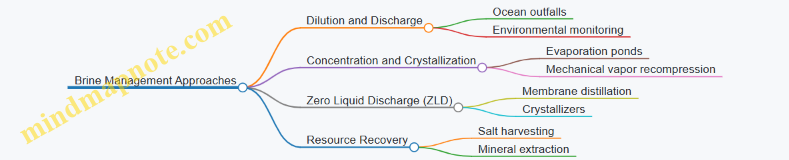
Summary
Operational lessons from diverse environments emphasize the need for site-specific solutions. Understanding local climate, feedwater characteristics, energy context, regulatory framework, and workforce capabilities shapes design and operation. Practical examples show that flexibility, monitoring, and targeted technology choices improve reliability and efficiency. These lessons guide engineers and operators toward sustainable desalination practices tailored to their unique challenges.
12. Safety, Risk Management, and Regulatory Compliance
12.1 Safety Protocols in Desalination Plant Operations
Safety in desalination plants is a structured set of practices designed to protect personnel, equipment, and the environment from hazards inherent to water treatment processes. These protocols are essential because desalination involves high pressures, chemicals, electrical systems, and complex machinery. A clear understanding and consistent application of safety measures reduce accidents and operational interruptions.
Key Areas of Safety Protocols
- Chemical Handling and Storage
- High-Pressure Systems
- Electrical Safety
- Confined Spaces and Working at Heights
- Emergency Response and Evacuation
- Personal Protective Equipment (PPE)
- Training and Communication
Mind Map: Overview of Safety Protocols in Desalination Plants
Chemical Handling and Storage
Desalination plants use chemicals like chlorine, antiscalants, acids, and caustics. These substances can be corrosive, toxic, or reactive. Safety protocols require:
- Clear labeling of all chemical containers.
- Segregated storage areas with ventilation.
- Secondary containment to prevent leaks.
- Regular inspection of storage tanks and piping.
- Spill kits and neutralizing agents readily available.
Example: At a large RO plant, a chemical storage area is equipped with acid-resistant flooring and automatic ventilation triggered by gas sensors. Staff are trained to respond immediately to spills using neutralizing powders and absorbents, minimizing exposure and environmental impact.
High-Pressure Systems
Many desalination processes, especially reverse osmosis, operate at high pressures (up to 80 bar or more). Safety protocols include:
- Routine pressure vessel and pipe inspections.
- Use of pressure relief valves and burst discs.
- Strict adherence to operating pressure limits.
- Clear signage warning of high-pressure zones.
Example: A plant schedules monthly ultrasonic testing on pressure vessels to detect early signs of fatigue or corrosion, preventing catastrophic failures.
Electrical Safety
Electrical hazards come from pumps, motors, control panels, and instrumentation. Key safety measures are:
- Lockout-tagout (LOTO) procedures to ensure equipment is de-energized before maintenance.
- Proper grounding and insulation of electrical components.
- Regular testing of circuit breakers and emergency shutoffs.
- Use of explosion-proof equipment in hazardous zones.
Example: Before servicing a high-voltage pump, technicians follow a LOTO checklist that includes verifying zero voltage with a tester and posting warning tags to prevent accidental energization.
Confined Spaces and Working at Heights
Desalination plants have tanks, pits, and elevated platforms. Safety protocols require:
- Permit-required confined space entry procedures.
- Atmospheric testing for oxygen levels and toxic gases.
- Use of harnesses and fall arrest systems when working at heights.
- Continuous communication with a safety attendant.
Example: When cleaning a brine tank, workers use gas detectors and wear harnesses connected to a tripod hoist system, ensuring safe entry and exit.
Emergency Response and Evacuation
Preparedness is critical. Protocols include:
- Clearly marked evacuation routes and assembly points.
- Regular fire and spill drills.
- Accessible first aid kits and trained responders.
- Communication plans including alarms and public address systems.
Example: A plant conducts quarterly fire drills simulating chemical spills, ensuring staff know how to don PPE quickly and evacuate safely.
Personal Protective Equipment (PPE)
PPE requirements vary by task but commonly include:
- Chemical-resistant gloves and aprons.
- Safety goggles or face shields.
- Hearing protection near noisy equipment.
- Hard hats and steel-toed boots.
Example: Operators handling chlorine gas cylinders wear full-face respirators and chemical-resistant suits to prevent inhalation and skin contact.
Training and Communication
Safety protocols are only effective if understood and practiced. Training programs cover:
- Hazard recognition.
- Proper use of PPE.
- Emergency procedures.
- Equipment operation and maintenance safety.
Regular safety meetings and clear signage reinforce the culture.
Example: New employees undergo a week-long safety orientation including hands-on demonstrations and quizzes before entering operational areas.
Mind Map: Chemical Safety Protocols

Mind Map: Emergency Response Steps
In summary, safety protocols in desalination plant operations are comprehensive and cover chemical, mechanical, electrical, and human factors. Their success depends on clear procedures, regular training, and a culture that prioritizes safety without compromising operational efficiency.
12.2 Risk Assessment and Hazard Analysis Techniques
Risk assessment and hazard analysis are foundational steps in ensuring the safe and reliable operation of desalination plants. These processes identify potential problems before they occur, allowing engineers and operators to mitigate risks effectively.
Understanding Risk Assessment
Risk assessment involves systematically identifying hazards, evaluating the likelihood of their occurrence, and estimating the potential impact on people, equipment, and the environment. In desalination systems, risks can arise from mechanical failures, chemical handling, energy supply interruptions, or environmental factors.
A typical risk assessment process includes:
- Hazard Identification
- Risk Analysis
- Risk Evaluation
- Risk Control
Hazard Identification Techniques
Hazard identification is the first step. It involves cataloging anything that could cause harm. Common methods include brainstorming sessions, checklists, and structured techniques like HAZOP (Hazard and Operability Study).
Example: In a reverse osmosis plant, a hazard might be membrane fouling leading to system overpressure. Identifying this early helps in designing pressure relief systems.
Risk Analysis
Once hazards are identified, the next step is to analyze their likelihood and consequences. This can be qualitative (e.g., high, medium, low) or quantitative (using numerical probabilities and impact costs).
Example: The risk of pump failure might be rated as medium likelihood but high consequence due to potential downtime and water supply interruption.
Risk Evaluation
Risk evaluation compares the analyzed risks against acceptable risk criteria. This helps prioritize which risks need immediate attention and which can be monitored.
Risk Control
Risk control involves implementing measures to eliminate or reduce risks. Controls can be engineering solutions, administrative procedures, or protective equipment.
Example: Installing automatic shutdown valves to prevent overpressure damage.
Common Hazard Analysis Techniques in Desalination
HAZOP (Hazard and Operability Study)
A systematic approach that examines each part of the process to identify deviations from design intent and their causes.
FMEA (Failure Modes and Effects Analysis)
Focuses on potential failure modes of components and their effects on the system.
What-If Analysis
A brainstorming technique where hypothetical scenarios are posed to identify possible hazards.
Fault Tree Analysis (FTA)
A top-down approach that starts with an undesirable event and works backward to find root causes.
Mind Map: Risk Assessment Process
Mind Map: Common Hazards in Desalination Plants
Example: Applying FMEA to a Reverse Osmosis System
| Component | Failure Mode | Effect on System | Likelihood | Severity | Risk Priority | Control Measure |
|---|---|---|---|---|---|---|
| High-Pressure Pump | Seal leakage | Reduced pressure, water loss | Medium | High | High | Regular seal inspection |
| Membrane Module | Membrane fouling | Reduced permeate flow | High | Medium | High | Improved pretreatment |
| Energy Recovery Device | Mechanical failure | Increased energy consumption | Low | Medium | Medium | Preventive maintenance schedule |
Practical Tips
- Involve multidisciplinary teams during hazard identification to cover all perspectives.
- Use historical data from similar plants to inform likelihood estimates.
- Regularly update risk assessments to reflect operational changes.
- Document all findings clearly to support decision-making and compliance.
Risk assessment and hazard analysis are not one-time tasks but ongoing processes. Their value lies in anticipating issues and embedding safety into the design and operation of desalination systems.
12.3 Regulatory Frameworks Governing Desalination and Water Infrastructure
Regulatory frameworks for desalination and water infrastructure are essential to ensure safe, sustainable, and environmentally responsible operations. These frameworks typically cover water quality standards, environmental impact assessments, discharge regulations, and operational safety requirements. Understanding these regulations helps engineers and operators design systems that comply with legal requirements while maintaining efficiency.
Key Regulatory Areas
- Water Quality Standards: Regulations specify acceptable levels of contaminants in desalinated water to protect public health. These include limits on salinity, microbial content, heavy metals, and chemical residues.
- Environmental Impact and Discharge: Rules govern the disposal of brine and other waste products to minimize harm to marine and terrestrial ecosystems.
- Permitting and Licensing: Operators must obtain permits before construction and operation, often requiring detailed environmental and technical assessments.
- Operational Safety and Worker Protection: Regulations ensure safe working conditions and emergency preparedness.
Mind Map: Regulatory Framework Components
Water Quality Standards
Water quality standards vary by country but often align with guidelines from organizations such as the World Health Organization (WHO). For example, the maximum allowable total dissolved solids (TDS) in drinking water is generally around 500 mg/L, but desalinated water may have higher TDS levels if blended with other sources. Operators must monitor parameters like turbidity, chlorine residuals, and microbial counts regularly.
Example: A desalination plant in California must comply with the state’s Title 22 regulations, which set strict limits on microbial contaminants and chemical residuals. The plant incorporates continuous online monitoring systems to ensure compliance.
Environmental Impact and Discharge Regulations
Brine discharge is a major environmental concern. Regulations often require dilution, controlled discharge locations, or brine treatment to reduce salinity and chemical concentrations before release. Environmental impact assessments (EIA) are mandatory in many jurisdictions to evaluate potential effects on marine life.
Example: In the Middle East, a large-scale desalination facility uses diffuser systems to disperse brine over a wide area, complying with local environmental standards that limit salinity increases in coastal waters.
Permitting and Licensing
Before construction, projects must submit detailed plans demonstrating compliance with environmental and technical standards. Licensing includes periodic reviews and audits to ensure ongoing adherence.
Example: A desalination plant in Australia obtained its operational license after demonstrating that its intake system minimizes harm to marine organisms and that its brine discharge meets salinity thresholds.
Operational Safety and Worker Protection
Regulations require safety protocols for handling chemicals, high-pressure systems, and electrical equipment. Emergency response plans must be in place for incidents such as chemical spills or power failures.
Example: A plant in Spain conducts regular safety drills and maintains detailed records of safety inspections to comply with European Union occupational safety directives.
Mind Map: Example Regulatory Compliance Workflow
In summary, regulatory frameworks form the backbone of responsible desalination and water infrastructure development. They balance the need for freshwater production with environmental protection and public health. Familiarity with these regulations and integrating compliance into design and operation is critical for successful projects.
12.4 Emergency Response Planning and Incident Management
Emergency response planning and incident management are essential components of operating a desalination plant safely and reliably. These plans ensure that when unexpected events occur—whether equipment failure, natural disasters, or chemical spills—the plant can respond quickly to protect personnel, the environment, and water supply continuity.
Key Elements of Emergency Response Planning
An effective emergency response plan (ERP) for a desalination facility includes several core elements:
- Hazard Identification: Recognize potential risks such as power outages, chemical leaks, fires, or flooding.
- Roles and Responsibilities: Define who does what during an emergency, including plant operators, safety officers, and external responders.
- Communication Protocols: Establish clear lines for internal and external communication, including alert systems and contact lists.
- Response Procedures: Step-by-step actions tailored to specific types of incidents.
- Training and Drills: Regular exercises to keep staff prepared and identify plan weaknesses.
- Resource Management: Inventory of emergency equipment and supplies.
- Post-Incident Review: Analyze response effectiveness and update plans accordingly.
Incident Management Framework
Incident management is the practical application of the ERP during an event. It involves:
- Detection and Notification: Early identification of the incident and alerting relevant personnel.
- Assessment: Quickly evaluating the severity and potential impact.
- Containment: Actions to limit damage, such as shutting down affected systems or isolating leaks.
- Mitigation: Steps to reduce harm, like activating backup power or deploying spill containment.
- Recovery: Restoring normal operations safely and efficiently.
Mind Map: Emergency Response Planning Components
Mind Map: Incident Management Process
Practical Examples
Example 1: Chemical Spill Response
A desalination plant uses chlorine for disinfection. During routine maintenance, a valve leaks, releasing chlorine gas. The ERP calls for immediate evacuation of the affected area, activation of ventilation systems, and notification of emergency services. Operators use portable gas detectors to confirm containment before allowing re-entry. The plant’s emergency kits include neutralizing agents and personal protective equipment (PPE), which staff are trained to deploy.
Example 2: Power Outage Scenario
A sudden grid failure causes the plant to lose power. The ERP requires automatic switch-over to backup generators within seconds to maintain critical systems like pumps and control units. Operators monitor generator performance and prepare for potential extended outages by rationing power to essential processes. Communication protocols ensure local authorities and customers are informed about possible water supply interruptions.
Example 3: Flooding Event
Heavy rains cause nearby river levels to rise, threatening the plant’s intake structures. The ERP includes preemptive measures such as deploying temporary barriers and shutting down vulnerable intake pumps. Staff monitor water quality changes and prepare contingency plans for sourcing water from alternative supplies if needed. Post-event, the plant inspects all equipment for water damage before resuming full operation.
Training and Drills
Regular drills simulate various emergencies to test staff readiness and the effectiveness of response procedures. For example, a simulated power outage drill might involve switching to backup power and practicing communication protocols. After-action reviews identify gaps and lead to plan improvements.
Communication During Emergencies
Clear communication is crucial. The ERP specifies who communicates with whom, how alerts are issued, and how information is recorded. For instance, operators use radios for immediate coordination, while plant managers handle external notifications. Communication templates help ensure consistent messaging.
Post-Incident Review
After an incident, a structured review assesses what went well and what didn’t. This includes timelines, decision points, and resource adequacy. Lessons learned feed into updated ERPs and training programs, closing the loop on continuous improvement.
In summary, emergency response planning and incident management in desalination plants require detailed preparation, clear roles, and practiced procedures. These ensure that when incidents occur, the plant can protect people, maintain water quality, and minimize downtime.
12.5 Case Studies on Risk Mitigation and Compliance Success
Case Studies on Risk Mitigation and Compliance Success
In this section, we examine real-world examples where desalination plants successfully managed risks and met regulatory requirements. These cases highlight practical approaches to safety, environmental compliance, and operational reliability.
Case Study 1: Risk Assessment and Emergency Preparedness at a Middle Eastern MSF Plant
A large multi-stage flash (MSF) desalination plant in the Middle East implemented a comprehensive risk assessment program to address hazards related to high-pressure steam systems and chemical handling. The plant used a layered approach:
- Hazard Identification: Systematic review of steam boilers, chemical storage, and electrical systems.
- Risk Analysis: Quantitative evaluation of failure probabilities and potential impacts.
- Mitigation Measures: Installation of pressure relief valves, secondary containment for chemicals, and enhanced operator training.
The plant also developed an emergency response plan, including drills simulating steam leaks and chemical spills. This preparation reduced incident response times by 40% and ensured compliance with local occupational safety regulations.
Mind Map: Risk Management Layers
Case Study 2: Brine Disposal Compliance in a Coastal RO Facility
A coastal reverse osmosis (RO) plant in Southern Europe faced strict environmental regulations on brine discharge. The plant adopted a multi-pronged strategy:
- Brine Dilution: Mixing brine with treated wastewater before discharge to reduce salinity.
- Monitoring: Continuous salinity and temperature sensors at discharge points.
- Reporting: Automated data logging aligned with regulatory reporting schedules.
The plant’s transparent monitoring and proactive adjustments to discharge rates ensured it consistently met environmental standards. This approach minimized regulatory fines and maintained good community relations.
Mind Map: Brine Management Compliance
Case Study 3: Automation and Control for Safety at a Large-Scale RO Plant in North America
A large reverse osmosis plant integrated advanced automation to reduce human error and enhance safety compliance. Key features included:
- Real-Time Monitoring: Sensors for pressure, flow, and water quality feeding into a central control system.
- Automated Alarms: Immediate alerts for parameter deviations.
- Interlocks: Automatic shutdown protocols for critical failures.
This system reduced operator workload and improved response times to potential hazards. Regular audits confirmed compliance with federal safety standards.
Mind Map: Automation in Risk Mitigation

Case Study 4: Training and Culture Change in a Mediterranean MED Plant
A multi-effect distillation (MED) plant in the Mediterranean region focused on cultivating a safety culture through training and engagement:
- Regular Training Sessions: Covering operational safety, chemical handling, and emergency procedures.
- Safety Committees: Involving operators and management to discuss risks and improvements.
- Incident Reporting System: Encouraging transparent reporting without blame.
This approach led to a 30% reduction in near-miss incidents over two years and improved compliance with occupational health regulations.
Mind Map: Building Safety Culture

Case Study 5: Regulatory Compliance through Documentation and Audits at an Electrodialysis Plant
An electrodialysis facility in Asia implemented a rigorous documentation system to ensure compliance with local water quality and safety regulations. Components included:
- Standard Operating Procedures (SOPs): Detailed instructions for all operational tasks.
- Audit Trails: Electronic records of maintenance, inspections, and water quality tests.
- Corrective Action Logs: Tracking issues and resolutions.
Regular internal and external audits verified adherence to regulations. The plant’s documentation practices facilitated quick responses to regulatory inquiries and inspections.
Mind Map: Documentation for Compliance
These case studies demonstrate that risk mitigation and compliance in desalination plants rely on a combination of technical controls, monitoring, training, and documentation. The examples show how clear procedures, real-time data, and engaged personnel contribute to safer, more reliable operations that meet regulatory demands.