Battery Second-Life & Recycling Operations
1. Introduction to Battery Second-Life and Recycling
1.1 Understanding Battery Lifecycle: From Production to End-of-Life
The battery lifecycle encompasses all stages from raw material extraction through manufacturing, usage, and finally end-of-life management. Understanding this lifecycle is crucial for supply chain managers, recycling technicians, and sustainability officers to optimize resource use, reduce environmental impact, and support circular economy initiatives.
Battery Lifecycle Stages Mind Map
Detailed Breakdown
1. Raw Material Extraction
Batteries rely on critical raw materials such as lithium, cobalt, nickel, and manganese. Mining these materials involves environmental challenges like habitat disruption, water usage, and carbon emissions. For example, lithium extraction in South America’s salt flats requires careful water management to avoid local ecosystem damage.
Example: A mining company implements water recycling technologies to reduce freshwater consumption during lithium extraction, demonstrating responsible resource management early in the battery lifecycle.
2. Battery Manufacturing
Manufacturing includes producing battery cells, assembling modules, and integrating packs. This stage consumes energy and materials and requires stringent quality controls to ensure battery safety and longevity.
Example: Panasonic’s Gigafactory uses renewable energy sources and advanced automation to reduce carbon footprint and improve production efficiency.
3. Distribution & Use
Batteries are distributed and integrated into applications like electric vehicles (EVs), grid storage, and consumer electronics. During use, battery management systems (BMS) monitor performance and health.
Example: Tesla vehicles utilize sophisticated BMS to optimize battery performance and extend lifecycle, enabling better second-life potential.
4. End-of-Life Management
At end-of-life, batteries can follow multiple paths:
- Collection & Sorting: Batteries are collected from consumers and sorted by chemistry and condition.
- Second-Life Applications: Batteries with sufficient capacity are repurposed for less demanding applications like stationary energy storage.
- Recycling: Batteries that are no longer viable for reuse undergo recycling to recover valuable materials.
- Disposal: Only as a last resort, batteries are disposed of following hazardous waste regulations.
Example: Nissan’s Leaf batteries are repurposed for home energy storage systems before eventual recycling, exemplifying circular economy principles.
End-of-Life Management Mind Map
Summary
Understanding the battery lifecycle from production to end-of-life enables stakeholders to identify intervention points for sustainability improvements. By integrating best practices at each stage—such as responsible mining, energy-efficient manufacturing, smart usage monitoring, and effective second-life and recycling strategies—organizations can significantly reduce environmental impact and promote circular economy goals.
1.2 Importance of Second-Life Applications in Circular Economy
Second-life applications of batteries play a pivotal role in advancing the circular economy by extending the useful life of battery cells beyond their initial use in electric vehicles (EVs) or other primary applications. This approach not only reduces waste but also maximizes resource efficiency, lowers environmental impact, and creates new economic opportunities.
What Are Second-Life Battery Applications?
Second-life batteries are used batteries that no longer meet the strict performance requirements for their original purpose (e.g., powering an EV) but still retain sufficient capacity and functionality for less demanding applications. Instead of recycling or disposal, these batteries are repurposed for secondary uses.
Why Are Second-Life Applications Important?
- Resource Conservation: Batteries contain valuable materials like lithium, cobalt, nickel, and manganese. Extending battery life delays the need for mining new raw materials.
- Waste Reduction: By diverting batteries from recycling or landfill, second-life applications reduce hazardous waste generation.
- Energy Storage Solutions: Second-life batteries provide cost-effective energy storage options for renewable energy integration, grid stabilization, and backup power.
- Economic Benefits: New business models emerge around battery refurbishment, repurposing, and resale, creating jobs and stimulating innovation.
- Carbon Footprint Reduction: Extending battery life reduces the overall carbon footprint associated with battery production and disposal.
Mind Map: Benefits of Second-Life Battery Applications
Mind Map: Common Second-Life Applications
Real-World Examples
Example 1: Nissan’s Second-Life Battery Energy Storage
Nissan repurposes used EV batteries from its Leaf model to create stationary energy storage systems. These systems are deployed to support renewable energy projects and provide backup power. For instance, Nissan partnered with Eaton to install second-life battery packs in commercial buildings, demonstrating cost-effective energy management.
Example 2: BMW and Bosch’s Second-Life Battery Pilot
BMW and Bosch collaborated on a pilot project in Germany where used EV batteries were repurposed for residential energy storage. This project showcased how second-life batteries can store solar energy during the day and supply power at night, reducing reliance on the grid.
Example 3: Tesla Powerpack with Second-Life Batteries
Tesla has explored integrating second-life batteries into their Powerpack energy storage solutions to lower costs and improve sustainability. This approach supports grid stabilization and renewable energy storage.
How Second-Life Applications Fit Into the Circular Economy
Second-life battery applications embody circular economy principles by:
- Closing the Loop: Batteries are kept in use longer, reducing the need for virgin material extraction.
- Designing Out Waste: Repurposing delays disposal and recycling, minimizing waste streams.
- Regenerating Natural Systems: By supporting renewable energy through storage, second-life batteries help reduce fossil fuel dependence.
Mind Map: Circular Economy Principles Applied to Second-Life Batteries
Summary
Second-life battery applications are a cornerstone of sustainable battery lifecycle management. They offer tangible environmental and economic benefits while supporting the transition to renewable energy systems. For supply chain managers, recycling technicians, and sustainability officers, understanding and leveraging second-life opportunities is essential to driving circular economy success in battery manufacturing and beyond.
1.3 Overview of Battery Recycling: Environmental and Economic Benefits
Battery recycling plays a pivotal role in advancing sustainability within the circular economy, particularly in the battery manufacturing and energy storage sectors. This section explores the environmental and economic benefits of recycling batteries, supported by clear examples and mind maps to visualize key concepts.
Environmental Benefits of Battery Recycling
Recycling batteries significantly reduces environmental impact by conserving natural resources, minimizing pollution, and lowering greenhouse gas emissions.
-
Resource Conservation:
- Batteries contain valuable metals such as lithium, cobalt, nickel, and manganese.
- Recycling recovers these materials, reducing the need for virgin mining.
- Example: Recycling one ton of lithium-ion batteries can recover approximately 500 kg of lithium, cobalt, and nickel combined.
-
Pollution Reduction:
- Proper recycling prevents hazardous materials from entering landfills or water systems.
- Reduces soil and water contamination risks.
- Example: Lead-acid battery recycling programs prevent lead contamination, a toxic heavy metal.
-
Lower Carbon Footprint:
- Recycling consumes less energy compared to raw material extraction and processing.
- Leads to a reduction in CO2 emissions.
- Example: Hydrometallurgical recycling of lithium-ion batteries can reduce carbon emissions by up to 50% compared to mining.
Mind Map: Environmental Benefits of Battery Recycling
Economic Benefits of Battery Recycling
Battery recycling also offers substantial economic advantages by creating value from end-of-life batteries and supporting sustainable business models.
-
Material Recovery and Cost Savings:
- Recovered metals can be reintroduced into battery manufacturing, reducing raw material costs.
- Example: Redwood Materials, a battery recycling company, supplies recycled cobalt and nickel back to manufacturers, lowering dependency on expensive imports.
-
Job Creation and Industry Growth:
- Recycling operations generate employment opportunities in collection, processing, and logistics.
- Example: The European battery recycling sector employed over 10,000 people in 2023, with projections for growth.
-
Compliance and Avoidance of Fines:
- Proper recycling ensures adherence to environmental regulations, avoiding costly penalties.
- Example: Companies compliant with the EU Battery Directive avoid fines and gain market access advantages.
-
New Business Models:
- Second-life battery applications and recycling services open new revenue streams.
- Example: Nissan’s second-life battery program reduces costs for energy storage projects while creating circular revenue.
Mind Map: Economic Benefits of Battery Recycling
Integrated Example: Tesla’s Battery Recycling Initiative
Tesla has implemented an in-house battery recycling program that recovers over 92% of the materials in used batteries. This initiative reduces the need for new mining, lowers production costs, and supports Tesla’s sustainability goals. By integrating recycling with second-life battery applications (e.g., stationary storage), Tesla maximizes both environmental and economic benefits.
Mind Map: Tesla’s Battery Recycling Initiative
Summary
Battery recycling is a cornerstone of sustainable battery lifecycle management. It delivers significant environmental benefits by conserving resources, reducing pollution, and lowering carbon emissions. Economically, it enables cost savings, job creation, regulatory compliance, and innovative business models. Supply chain managers, recycling technicians, and sustainability officers can leverage these benefits to drive circular economy initiatives effectively.
1.4 Key Stakeholders: Roles of Supply Chain Managers, Recycling Technicians, and Sustainability Officers
In the complex ecosystem of battery second-life and recycling operations, three key stakeholder roles are critical to success: Supply Chain Managers, Recycling Technicians, and Sustainability Officers. Each plays a distinct yet interconnected role that ensures the efficient, safe, and sustainable management of batteries throughout their lifecycle.
Supply Chain Managers
Supply Chain Managers oversee the entire flow of batteries from collection, transportation, storage, to delivery for second-life applications or recycling. Their responsibilities include logistics optimization, supplier coordination, inventory management, and compliance with regulations.
Key Responsibilities:
- Designing and managing reverse logistics for used battery collection
- Coordinating with manufacturers, recyclers, and second-life operators
- Ensuring timely and safe transportation and storage
- Managing inventory and tracking battery conditions
- Risk management and regulatory compliance
Example: A Supply Chain Manager at a large EV manufacturer implements a barcode and RFID tracking system to monitor battery packs returned from customers. This system improves traceability and reduces losses, enabling better decision-making for second-life suitability.
Mind Map: Supply Chain Manager Role
Recycling Technicians
Recycling Technicians are the hands-on experts who handle the physical processing of used batteries. They perform sorting, disassembly, testing, and operate recycling technologies to recover valuable materials safely and efficiently.
Key Responsibilities:
- Sorting batteries by chemistry and condition
- Safely disassembling battery packs
- Operating mechanical, pyrometallurgical, or hydrometallurgical recycling equipment
- Conducting quality control and safety checks
- Documenting processes and material recovery rates
Example: At a recycling facility, technicians use automated sorting machines combined with manual inspection to separate lithium-ion batteries from other chemistries. This hybrid approach enhances accuracy and safety.
Mind Map: Recycling Technician Role
Sustainability Officers
Sustainability Officers focus on integrating environmental and social responsibility into battery lifecycle management. They develop strategies to minimize environmental impact, ensure regulatory compliance, and promote circular economy principles.
Key Responsibilities:
- Developing sustainability policies and goals
- Monitoring environmental impact and carbon footprint
- Ensuring compliance with environmental regulations
- Reporting sustainability metrics to stakeholders
- Driving initiatives for battery reuse and recycling
Example: A Sustainability Officer at a battery manufacturer launches a program to partner with local communities for second-life battery deployment in off-grid solar projects, reducing waste and promoting renewable energy access.
Mind Map: Sustainability Officer Role
Integrated Collaboration Example
In a leading battery recycling company, the Supply Chain Manager coordinates the collection and delivery of used batteries to the recycling facility. Recycling Technicians then sort and process the batteries, while the Sustainability Officer tracks the environmental impact and reports progress to corporate leadership. This collaboration ensures a seamless, efficient, and sustainable battery lifecycle.
Summary
| Stakeholder | Primary Focus | Key Activities | Example Use Case |
|---|---|---|---|
| Supply Chain Manager | Logistics & Inventory Management | Reverse logistics, tracking, compliance | RFID tracking for returned EV batteries |
| Recycling Technician | Battery Processing & Material Recovery | Sorting, disassembly, recycling operations | Hybrid sorting system combining automation & manual |
| Sustainability Officer | Environmental & Social Responsibility | Policy development, impact monitoring, reporting | Community second-life battery solar projects |
Understanding these roles and fostering collaboration among them is essential for advancing battery second-life and recycling operations within a circular economy framework.
1.5 Case Study: Tesla’s Approach to Battery Second-Life and Recycling
Tesla, a global leader in electric vehicles (EVs) and energy solutions, has pioneered innovative strategies for battery second-life applications and recycling, aligning with circular economy principles. This case study explores Tesla’s integrated approach, highlighting best practices and real-world examples.
Tesla’s Battery Lifecycle Management
Tesla designs its batteries not only for vehicle performance but also with end-of-life reuse and recycling in mind. Their approach encompasses:
- Battery Design for Durability and Reusability
- Second-Life Energy Storage Applications
- Advanced Recycling Technologies
Mind Map: Tesla’s Battery Second-Life & Recycling Strategy
Second-Life Applications: Tesla Powerwall and Megapack
Tesla repurposes used EV batteries into stationary energy storage products:
- Tesla Powerwall: Residential energy storage units that store solar energy or grid power for backup and load shifting.
- Tesla Megapack: Large-scale battery systems for utilities and grid operators to stabilize energy supply.
Example:
A fleet of Tesla Model S batteries, after reaching approximately 70-80% capacity in vehicles, are harvested and reassembled into Powerwall units. This extends the battery’s useful life by several years, reducing waste and providing affordable energy storage.
Recycling Innovations
Tesla employs advanced recycling processes to recover valuable materials such as lithium, cobalt, nickel, and aluminum:
- Closed-Loop Recycling: Tesla aims to recycle battery materials back into new battery cells, minimizing raw material extraction.
- Partnerships: Collaborates with specialized recyclers to optimize material recovery and environmental compliance.
Example:
Tesla’s Gigafactory in Nevada integrates recycling lines that process scrap and end-of-life batteries onsite, recovering over 90% of critical materials.
Mind Map: Tesla’s Recycling Process
Best Practices Demonstrated by Tesla
- Integrated Lifecycle Planning: Designing batteries with second-life and recycling in mind from the outset.
- Data-Driven Battery Health Monitoring: Using software to determine optimal timing for second-life transition.
- Modular Design: Facilitates easier disassembly and repurposing.
- Onsite Recycling Facilities: Reduces transportation emissions and improves material recovery efficiency.
- Collaborative Partnerships: Engages with recyclers, utilities, and research institutions to innovate continuously.
Summary
Tesla’s approach exemplifies how battery second-life and recycling can be seamlessly integrated into a company’s supply chain and sustainability strategy. By extending battery utility through second-life applications and maximizing material recovery via advanced recycling, Tesla reduces environmental impact and supports a circular economy.
This case study offers valuable lessons for supply chain managers, recycling technicians, and sustainability officers aiming to implement effective battery lifecycle management programs.
2. Battery Collection and Sorting Best Practices
2.1 Efficient Collection Systems: Designing Reverse Logistics for Battery Returns
Efficient collection systems are the backbone of successful battery second-life and recycling operations. Designing an effective reverse logistics network ensures that used batteries are collected safely, timely, and cost-effectively, minimizing environmental impact and maximizing resource recovery.
Understanding Reverse Logistics in Battery Collection
Reverse logistics refers to the process of moving goods from their typical final destination back to the manufacturer or recycling facility for reuse, refurbishment, or disposal. For batteries, this involves collecting end-of-life or used batteries from consumers, businesses, or collection points and transporting them to appropriate processing centers.
Key Components of Efficient Battery Collection Systems
Designing Collection Points
- Retailers and Service Centers: Establish partnerships with EV dealerships, electronics stores, and repair shops to serve as convenient drop-off points.
- Dedicated Drop-off Locations: Set up battery collection kiosks or bins in public spaces, community centers, or workplaces.
- Mobile Collection Units: Deploy vehicles that visit neighborhoods or businesses on scheduled days to collect batteries, especially in areas with low accessibility.
Example: The city of Amsterdam implemented a network of battery collection points at supermarkets and electronics stores, complemented by mobile collection vans visiting residential areas monthly. This hybrid approach increased battery return rates by 40% within the first year.
Transportation and Route Optimization
Efficient transportation reduces costs and environmental impact. Use route optimization software to plan collection routes that minimize travel distance and time.
Example: A battery recycling company in Germany integrated GPS tracking and route optimization tools to coordinate pickups from multiple collection points. This reduced fuel consumption by 25% and improved on-time collection performance.
Tracking and Documentation
Implementing digital tracking systems such as barcode or RFID tagging allows real-time monitoring of battery movement and condition.
Example: An EV manufacturer uses RFID tags embedded in battery packs to track their lifecycle from production through second-life deployment and eventual recycling. This transparency aids compliance and quality assurance.
Stakeholder Engagement and Incentives
Educating consumers and businesses about the importance of battery recycling and offering incentives (e.g., discounts, rebates) encourages participation.
Example: In California, a rebate program offers consumers $50 for returning used EV batteries to authorized collection points, significantly boosting collection volumes.
Safety and Compliance
Strict adherence to hazardous material handling regulations is critical. Train personnel in safe battery handling, storage, and emergency procedures.
Example: A recycling facility in Japan conducts quarterly safety drills and certification programs for all logistics staff, ensuring compliance with local and international regulations.
Summary Mind Map
By integrating these elements into a cohesive reverse logistics system, supply chain managers and recycling technicians can significantly enhance battery collection efficiency, reduce operational costs, and support sustainability goals.
2.2 Sorting Techniques: Identifying Battery Chemistry and Condition
Efficient sorting of used batteries is a critical step in second-life and recycling operations. Proper identification of battery chemistry and condition ensures that batteries are directed to the most suitable next stage, whether that be repurposing, recycling, or safe disposal. This section explores the main sorting techniques, supported by practical examples and mind maps to clarify the processes.
Why Sorting Matters
- Safety: Different battery chemistries have distinct handling and storage requirements.
- Value Recovery: Correct sorting maximizes material recovery and reuse potential.
- Process Efficiency: Streamlines downstream operations by directing batteries appropriately.
Key Sorting Criteria
- Battery Chemistry: Lithium-ion (Li-ion), Nickel-Metal Hydride (NiMH), Lead-Acid, etc.
- Physical Condition: Intact, damaged, swollen, or leaking.
- State of Health (SoH): Capacity retention and internal resistance.
Sorting Techniques Overview
Visual Inspection
- Purpose: Initial screening to identify obvious damage or leakage.
- Example: Recycling technicians visually separate swollen or punctured batteries to prevent hazards.
Label and Marking Identification
- Purpose: Reading manufacturer labels, model numbers, and chemistry codes.
- Example: Using barcode scanners or manual reading to classify batteries by chemistry.
Electrical Testing
- Purpose: Measuring voltage, internal resistance, and capacity to assess condition.
- Example: Using handheld testers to quickly assess battery charge and health.
Spectroscopic and Chemical Analysis
- Purpose: Advanced identification of battery chemistry through elemental analysis.
- Example: X-ray fluorescence (XRF) analyzers used in recycling centers to verify material composition.
Automated Sorting Systems
- Purpose: Combining sensors, AI, and robotics for high-throughput sorting.
- Example: Conveyor belts equipped with optical sensors and AI algorithms sorting batteries by type and condition.
Mind Map: Sorting Techniques for Battery Chemistry and Condition
Detailed Examples
Example 1: Manual Sorting at a Collection Center
At a battery collection facility, technicians first perform a visual inspection to remove any swollen or leaking batteries, which are set aside for special handling. Next, they scan barcodes to identify the battery chemistry. Batteries without clear labels undergo electrical testing to measure voltage and internal resistance, helping to classify them as Li-ion or NiMH. This multi-step process ensures safe handling and accurate sorting.
Example 2: Automated Sorting in a Recycling Plant
A large recycling plant employs an automated sorting line where batteries move along a conveyor. Optical sensors detect label colors and shapes, while XRF analyzers perform rapid elemental analysis to confirm chemistry. AI algorithms analyze sensor data to classify batteries and activate robotic arms to sort them into designated bins. This system increases throughput and reduces human error.
Best Practices for Sorting
- Combine multiple techniques for accuracy (e.g., visual + electrical + spectroscopic).
- Train staff thoroughly on battery identification and safety protocols.
- Use technology to augment manual processes, especially for large volumes.
- Maintain clear documentation and traceability during sorting.
Summary
Proper sorting of batteries by chemistry and condition is foundational to efficient second-life and recycling operations. Employing a combination of visual, electrical, chemical, and automated techniques ensures safety, maximizes value recovery, and streamlines the supply chain.
For more insights, see the next section on Assessment and Testing for Second-Life Suitability.
2.3 Example: Implementing RFID and Barcode Tracking in Battery Collection
Efficient battery collection is a critical step in the circular economy for battery manufacturing and recycling. Implementing RFID (Radio Frequency Identification) and barcode tracking systems can significantly enhance the traceability, safety, and efficiency of battery collection operations. This section explores how these technologies are applied, their benefits, and practical examples.
What is RFID and Barcode Tracking?
- RFID: Uses electromagnetic fields to automatically identify and track tags attached to objects. Tags can be read without direct line of sight.
- Barcode: Uses optical machine-readable representation of data. Requires line of sight for scanning.
Benefits of RFID and Barcode Tracking in Battery Collection
- Improved Traceability: Track battery origin, chemistry, and lifecycle stage.
- Enhanced Safety: Quickly identify hazardous batteries and handle accordingly.
- Inventory Management: Real-time updates on battery stock and location.
- Data Accuracy: Minimizes human error in manual logging.
- Regulatory Compliance: Facilitates reporting and auditing.
Mind Map: Key Components of RFID and Barcode Tracking Implementation
Practical Example: Implementing RFID and Barcode Tracking at a Battery Collection Center
Scenario: A battery collection center receives used EV batteries from various sources. To streamline operations, they implement a hybrid system using RFID tags for pallet-level tracking and barcodes for individual battery packs.
-
Step 1: Tagging
- Each battery pack is labeled with a unique barcode containing its serial number, chemistry type, and manufacturing date.
- Pallets containing multiple batteries are equipped with RFID tags encoding batch information.
-
Step 2: Scanning and Data Entry
- Upon arrival, pallet RFID tags are scanned to log batch receipt.
- Individual battery barcodes are scanned during unloading for detailed inventory.
-
Step 3: Data Integration
- Scanned data is uploaded to a centralized inventory management system.
- The system tracks battery condition, location, and readiness for second-life assessment or recycling.
-
Step 4: Safety and Compliance
- Batteries flagged as hazardous by barcode data trigger alerts for special handling.
- Automated reports are generated for regulatory compliance.
Mind Map: Workflow of RFID and Barcode Tracking in Battery Collection
Additional Example: Retailer Collaboration for Battery Collection
A large electronics retailer partners with a recycling company to implement barcode scanning at collection points in stores:
- Customers drop off used batteries in collection bins.
- Store staff scan barcodes on batteries or collection bags.
- Data is transmitted to the recycling company for pickup scheduling.
- This system improves collection rates and ensures traceability from consumer to recycler.
Best Practices for Implementation
- Choose Appropriate Technology: Use RFID for bulk tracking and barcodes for detailed item-level data.
- Standardize Labeling: Adopt industry-standard barcode formats and RFID tag protocols.
- Train Staff: Ensure personnel are trained in scanning procedures and safety.
- Integrate Systems: Connect tracking data with supply chain and recycling management platforms.
- Maintain Data Quality: Regularly audit data to prevent errors.
Summary
Implementing RFID and barcode tracking in battery collection enhances operational efficiency, safety, and regulatory compliance. Through real-world examples and structured workflows, supply chain managers and recycling technicians can adopt these technologies to support circular economy goals effectively.
2.4 Safety Protocols in Handling Used Batteries
Handling used batteries safely is critical to protect personnel, facilities, and the environment. Due to the chemical, electrical, and fire hazards associated with used lithium-ion and other battery chemistries, strict safety protocols must be followed throughout collection, sorting, testing, and recycling operations.
Key Safety Hazards When Handling Used Batteries
Mind Map: Safety Protocols Overview
Personal Protective Equipment (PPE)
-
Example: At a battery recycling facility, technicians wear insulated gloves and flame-resistant coveralls to prevent burns from chemical spills or thermal events. Respirators are used when dismantling batteries to avoid inhaling toxic fumes.
-
Best Practice: Always inspect PPE before use and replace any damaged equipment immediately.
Handling Procedures
-
Example: When sorting used batteries, technicians perform a visual inspection to identify swelling, leakage, or corrosion. Damaged batteries are isolated and handled with extra caution using insulated tools to prevent short circuits.
-
Best Practice: Avoid stacking batteries haphazardly to reduce mechanical damage and risk of shorting.
Storage Guidelines
-
Example: A supply chain manager implements storage protocols where batteries are stored in fire-resistant bins separated by chemistry type (e.g., lithium-ion, nickel-metal hydride) and state of health.
-
Best Practice: Maintain ambient temperature between 15-25°C and avoid high humidity to reduce degradation and fire risk.
Emergency Preparedness
-
Example: A recycling plant installs Class D fire extinguishers specifically designed for metal fires near battery handling areas and trains staff on their use.
-
Best Practice: Conduct regular emergency drills simulating battery fire or chemical spill scenarios.
Training and Documentation
-
Example: Sustainability officers coordinate quarterly safety workshops covering updated protocols, incident case studies, and regulatory changes.
-
Best Practice: Maintain detailed logs of battery handling incidents and near misses to identify improvement areas.
Integrated Example: Safety Protocol in Action
At a European battery recycling facility, the supply chain manager implemented a comprehensive safety protocol that includes:
- Mandatory PPE for all employees handling batteries
- Use of insulated tools and non-metallic carts for transport
- Segregated storage with clear labeling and temperature monitoring
- Installation of automatic fire suppression systems
- Regular safety drills and continuous training programs
This approach led to a 40% reduction in handling incidents over one year and improved compliance with EU battery safety regulations.
Summary
Safety protocols in handling used batteries are a multi-faceted approach involving proper PPE, careful handling, safe storage, emergency preparedness, and ongoing training. By integrating these best practices with real-world examples, supply chain managers, recycling technicians, and sustainability officers can significantly reduce risks and promote a safer working environment.
2.5 Collaboration with Retailers and End-Users for Streamlined Collection
Effective collaboration with retailers and end-users is a cornerstone for establishing a streamlined battery collection system. This partnership ensures that used batteries are returned efficiently, safely, and in a manner that supports circular economy goals.
Why Collaboration Matters
- Increased Collection Rates: Retailers serve as accessible drop-off points, making it easier for consumers to return used batteries.
- Enhanced Consumer Awareness: Retailers can educate customers about battery recycling benefits and procedures.
- Improved Logistics: Coordinated efforts reduce transportation costs and environmental impact.
Key Strategies for Collaboration
- Incentive Programs: Retailers can offer discounts, loyalty points, or small rewards to encourage battery returns.
- Convenient Collection Points: Setting up clearly marked, safe collection bins at retail locations.
- Training Retail Staff: Equipping employees with knowledge to guide consumers on proper battery disposal.
- Communication Campaigns: Joint marketing efforts to raise awareness among end-users.
Mind Map: Collaboration Framework
Example 1: Best Buy’s Battery Recycling Program
Best Buy, a leading electronics retailer, has implemented a comprehensive battery collection program:
- Collection Bins: Strategically placed in-store collection bins for used batteries.
- Staff Training: Employees trained to inform customers about recycling options.
- Incentives: Customers receive recycling rewards through the store’s loyalty program.
- Partnerships: Collaborates with certified recyclers to ensure proper processing.
This approach has significantly increased battery return rates and improved consumer participation.
Example 2: Local Government & Retailer Partnership in Germany
In Germany, municipalities partner with retailers to facilitate battery collection:
- Retailer Network: Supermarkets and electronics stores act as collection hubs.
- Public Awareness Campaigns: Joint efforts to educate citizens on battery recycling.
- Data Integration: Retailers share collection data with local authorities to optimize routes and schedules.
This collaboration has led to one of the highest battery recycling rates in Europe.
Mind Map: End-User Engagement Tactics
Practical Tips for Supply Chain Managers and Sustainability Officers
- Build Strong Retailer Relationships: Regular meetings and shared goals foster trust and cooperation.
- Leverage Technology: Use apps or QR codes to educate consumers and track battery returns.
- Monitor & Report: Collect data on collection volumes and user participation to identify improvement areas.
- Promote Safety: Ensure retailers follow safety protocols for battery storage and handling.
By integrating retailers and end-users into the battery collection ecosystem, organizations can create a more efficient, sustainable, and consumer-friendly process that supports the circular economy and advances battery second-life and recycling objectives.
3. Assessment and Testing for Second-Life Suitability
3.1 Diagnostic Tools for Evaluating Battery Health
Evaluating battery health is a critical step in determining whether a battery is suitable for second-life applications or recycling. Accurate diagnostics help maximize the value extracted from used batteries, ensure safety, and optimize performance in repurposed systems. This section explores the most effective diagnostic tools and techniques used by supply chain managers, recycling technicians, and sustainability officers.
Key Diagnostic Tools Overview
- State of Health (SoH) Measurement: Quantifies the current capacity relative to the battery’s original capacity.
- State of Charge (SoC) Assessment: Indicates the current charge level.
- Internal Resistance Testing: Measures the battery’s internal resistance to detect degradation.
- Electrochemical Impedance Spectroscopy (EIS): Analyzes battery impedance over a range of frequencies to detect aging and faults.
- Voltage and Temperature Monitoring: Tracks real-time voltage and temperature to identify anomalies.
- Capacity Testing: Full charge-discharge cycles to measure actual capacity.
Mind Map: Diagnostic Tools for Battery Health
Detailed Descriptions and Examples
1. State of Health (SoH) Measurement
SoH is the most widely used metric to assess battery health. It compares the current maximum capacity to the original rated capacity.
- Example: A lithium-ion battery originally rated at 100 Ah now delivers 75 Ah after testing, indicating an SoH of 75%. This battery may still be suitable for less demanding second-life applications like stationary energy storage.
2. State of Charge (SoC) Assessment
SoC indicates how much charge remains in the battery at a given time.
- Example: Using voltage-based estimation, technicians can quickly determine if a battery is fully charged, partially charged, or depleted before further testing.
3. Internal Resistance Testing
Increased internal resistance often signals aging or damage.
- Example: A battery with double the internal resistance compared to a new cell may have reduced efficiency and higher heat generation, making it less ideal for reuse.
4. Electrochemical Impedance Spectroscopy (EIS)
EIS provides a detailed fingerprint of battery health by measuring impedance across frequencies.
- Example: A recycling technician uses EIS to detect early-stage degradation that is not visible through simple voltage or capacity tests, enabling better sorting decisions.
5. Voltage and Temperature Monitoring
Continuous monitoring helps identify unsafe conditions.
- Example: During testing, a sudden temperature spike detected by sensors can indicate internal short circuits, prompting immediate removal from second-life consideration.
6. Capacity Testing
This involves full charge-discharge cycles to measure actual usable capacity.
- Example: A battery undergoes a controlled discharge test to confirm it retains at least 70% of its original capacity, qualifying it for repurposing in residential solar storage.
Mind Map: Example Diagnostic Workflow for Second-Life Battery Evaluation
Practical Example: Using Diagnostic Tools in a Recycling Facility
At a battery recycling facility, technicians first perform a visual inspection to identify any physical damage. Next, they measure the SoC to ensure batteries are safe to handle. Using handheld internal resistance testers, they quickly screen batteries to filter out severely degraded units. Batteries passing this initial screening undergo EIS for detailed analysis. Finally, capacity testing confirms the battery’s remaining energy storage capability. Batteries with SoH above 70% are diverted to second-life applications, while others proceed to recycling.
Summary
Employing a combination of diagnostic tools enables a comprehensive understanding of battery health. Integrating these tools into standard operating procedures ensures optimal utilization of batteries, enhances safety, and supports circular economy goals by extending battery life or maximizing material recovery through recycling.
3.2 Criteria for Selecting Batteries for Second-Life Use
Selecting batteries for second-life applications is a critical step that ensures safety, performance, and economic viability. Not all batteries retired from their primary use are suitable for repurposing. This section outlines the key criteria used to evaluate batteries for second-life use, supported by practical examples and mind maps to visualize the decision-making process.
Key Criteria for Selecting Batteries for Second-Life Use
-
State of Health (SoH)
- Measures the remaining capacity relative to the original capacity.
- Batteries with SoH typically above 70-80% are considered good candidates.
- Example: A used electric vehicle (EV) battery with 75% SoH can be repurposed for residential energy storage.
-
Cycle Life Remaining
- Estimated number of charge-discharge cycles left before the battery reaches end-of-life.
- Batteries with sufficient cycle life to justify second-life investment are prioritized.
- Example: A battery with 500 cycles remaining can be used in grid storage applications.
-
Battery Chemistry and Design
- Compatibility with second-life application requirements.
- Some chemistries (e.g., Lithium Iron Phosphate - LFP) have longer lifespans and better thermal stability.
- Example: LFP batteries from electric buses are often repurposed for community solar projects.
-
Physical Condition and Safety
- Visual inspection for swelling, leakage, or damage.
- Safety tests to detect internal short circuits or thermal instability.
- Example: Batteries with physical deformities are excluded to avoid safety risks.
-
History and Usage Data
- Usage patterns, charging habits, and environmental exposure.
- Batteries with well-documented histories are easier to assess.
- Example: Fleet EV batteries with telematics data provide insights into degradation.
-
Economic Feasibility
- Cost of refurbishment versus expected value in second-life use.
- Transportation and testing costs factored in.
- Example: Batteries from high-mileage EVs may be less economically viable for repurposing.
-
Regulatory and Warranty Considerations
- Compliance with safety and environmental regulations.
- Warranty status and manufacturer guidelines.
- Example: Some manufacturers provide certification programs for second-life batteries.
Mind Map: Criteria for Selecting Batteries for Second-Life Use
Example Scenario: Selecting Batteries from Retired EV Fleet
- Context: A fleet operator retires EV batteries after 8 years.
- Step 1: Measure SoH of each battery pack.
- Step 2: Exclude batteries with SoH below 70%.
- Step 3: Inspect physical condition; remove any with swelling or damage.
- Step 4: Review usage data to identify batteries with moderate charging cycles.
- Step 5: Calculate refurbishment cost vs. expected revenue from second-life application.
- Step 6: Select batteries meeting all criteria for repurposing in stationary energy storage.
Best Practices
- Use automated diagnostic tools to standardize SoH and cycle life assessments.
- Maintain detailed records of battery history to improve selection accuracy.
- Collaborate with manufacturers for access to battery management system (BMS) data.
- Prioritize safety by implementing rigorous physical and electrical inspections.
By applying these criteria systematically, supply chain managers and recycling technicians can optimize the selection process, ensuring that only batteries with sufficient performance and safety profiles are repurposed, thereby maximizing the value and sustainability of second-life battery applications.
3.3 Practical Example: Using State of Health (SoH) Metrics in Decision Making
The State of Health (SoH) metric is a critical parameter used to evaluate the remaining useful life and performance capability of a battery. It quantifies the battery’s current condition compared to its ideal or new state, typically expressed as a percentage. For supply chain managers, recycling technicians, and sustainability officers, understanding and utilizing SoH metrics effectively can optimize decisions around second-life applications and recycling.
What is State of Health (SoH)?
- Definition: SoH indicates the overall condition of a battery relative to its original capacity and performance.
- Typical Measurement Parameters: Capacity retention, internal resistance, self-discharge rate, and cycle count.
Why SoH Matters in Decision Making
- Second-Life Suitability: Batteries with SoH above a certain threshold (e.g., 70-80%) are often candidates for repurposing.
- Recycling Priority: Batteries with low SoH are prioritized for recycling to recover valuable materials.
- Safety Considerations: Batteries with degraded SoH may pose safety risks if reused improperly.
Mind Map: Factors Influencing SoH Assessment
Practical Example: Decision Workflow Using SoH
Example Scenario: Using SoH in a Battery Repurposing Facility
A battery repurposing facility receives 1,000 used EV batteries. Each battery undergoes SoH testing:
- Battery A: SoH = 85%
- Decision: Deploy in community solar energy storage system.
- Battery B: SoH = 75%
- Decision: Use in backup power supply for commercial buildings.
- Battery C: SoH = 55%
- Decision: Route to recycling for material recovery.
This systematic approach ensures optimal utilization of batteries, extending their lifecycle while minimizing waste.
Mind Map: Benefits of Using SoH Metrics
Tips for Implementing SoH-Based Decision Making
- Use standardized testing equipment and protocols to ensure consistency.
- Integrate SoH data into digital management systems for real-time tracking.
- Train technicians on interpreting SoH results accurately.
- Combine SoH with other metrics like State of Charge (SoC) and temperature history for comprehensive assessment.
By embedding SoH metrics into operational workflows, organizations can make informed, sustainable decisions that maximize battery value and support circular economy goals.
3.4 Automated vs Manual Testing: Pros and Cons
Battery testing is a critical step in assessing the suitability of used batteries for second-life applications. Both automated and manual testing methods have distinct advantages and challenges. Understanding these can help supply chain managers, recycling technicians, and sustainability officers optimize their battery assessment processes.
Automated Testing
Automated testing involves the use of machines, software, and sensors to evaluate battery health, capacity, and safety parameters with minimal human intervention.
Pros:
- Speed and Efficiency: Automated systems can test large volumes of batteries quickly, reducing turnaround time.
- Consistency and Accuracy: Machines reduce human error, providing standardized and repeatable results.
- Data Integration: Automated testing equipment often integrates with digital systems for real-time data logging and analysis.
- Safety: Minimizes human exposure to potentially hazardous batteries.
Cons:
- High Initial Investment: Automated systems require significant upfront capital for equipment and software.
- Complexity: Requires technical expertise for setup, maintenance, and troubleshooting.
- Limited Flexibility: May struggle with non-standard or damaged batteries that require nuanced assessment.
Example:
Example: Battery Testing Conveyor Systems
A recycling facility implements an automated conveyor-based testing line where batteries pass through diagnostic stations measuring voltage, internal resistance, and capacity. This system processes hundreds of batteries per hour, feeding data into a centralized database for sorting decisions.
Manual Testing
Manual testing relies on technicians using handheld devices and visual inspections to evaluate battery condition.
Pros:
- Flexibility: Technicians can adapt testing procedures based on battery type, condition, and anomalies.
- Lower Initial Costs: Requires less capital investment compared to automated systems.
- Human Judgment: Experienced technicians can detect subtle signs of battery degradation or damage.
Cons:
- Slower Throughput: Manual testing is time-consuming and less scalable.
- Inconsistency: Results may vary depending on technician skill and fatigue.
- Safety Risks: Increased human exposure to hazardous materials and electrical risks.
Example:
Example: Handheld Battery Analyzers in EV Workshops
Technicians use handheld analyzers to test electric vehicle batteries returned for second-life use. They perform spot checks on voltage and temperature, combined with visual inspection for swelling or leakage, to decide if batteries qualify for repurposing.
Mind Map: Comparing Automated and Manual Testing
Hybrid Approach: Combining Automated and Manual Testing
Many organizations adopt a hybrid approach to leverage the strengths of both methods.
- Initial Automated Screening: Quickly filters batteries based on standard parameters.
- Manual Follow-Up: Technicians conduct detailed inspections on flagged or borderline batteries.
Example:
Example: Nissan’s Battery Reuse Program
Nissan uses automated testing lines to process bulk battery returns, followed by manual inspection of batteries that show irregularities. This ensures efficiency without compromising on quality control.
Summary Table
| Aspect | Automated Testing | Manual Testing |
|---|---|---|
| Speed | High throughput | Slower, labor-intensive |
| Accuracy | High consistency, low human error | Variable, dependent on technician skill |
| Cost | High upfront investment | Lower initial cost |
| Flexibility | Limited adaptability | Highly adaptable |
| Safety | Reduced human exposure | Increased risk |
| Data Management | Integrated with digital systems | Requires manual data entry |
By carefully evaluating these pros and cons, organizations can tailor their battery testing strategies to their operational scale, budget, and quality requirements, ultimately enhancing the efficiency and sustainability of second-life battery deployment.
3.5 Case Study: Nissan’s Battery Reuse Program in Energy Storage
Nissan has been a pioneer in extending the lifecycle of electric vehicle (EV) batteries through its innovative battery reuse program. The program focuses on repurposing used EV batteries into stationary energy storage systems, contributing to sustainability and circular economy goals.
Background
Nissan’s EV batteries, after serving their primary purpose in vehicles, often retain around 70-80% of their original capacity. Instead of discarding these batteries, Nissan developed a second-life application to maximize their utility.
Program Overview
- Objective: To repurpose used EV batteries for energy storage, reducing waste and supporting renewable energy integration.
- Implementation: Used batteries are collected, tested, and assembled into energy storage units.
- Applications: Residential energy storage, commercial facilities, and grid stabilization.
Key Steps in Nissan’s Battery Reuse Program
Example: Nissan x Sumitomo Collaboration
Nissan partnered with Sumitomo Corporation to deploy second-life batteries in commercial energy storage systems in Japan. This collaboration demonstrated:
- Energy Cost Savings: Businesses reduced peak electricity costs by using stored energy during high-demand periods.
- Grid Stability: Batteries helped balance supply and demand, supporting renewable energy sources like solar and wind.
Benefits Realized
- Environmental Impact: Reduced battery waste and lowered carbon footprint by extending battery life.
- Economic Value: Created new revenue streams from used batteries, reducing total cost of ownership for EVs.
- Technological Advancement: Improved battery management and safety protocols for second-life applications.
Practical Example: Residential Energy Storage
A homeowner installs a Nissan second-life battery system combined with rooftop solar panels. During the day, excess solar energy charges the battery. At night or during peak hours, the stored energy powers the home, reducing reliance on the grid and lowering electricity bills.
Lessons Learned and Best Practices
- Comprehensive Testing: Rigorous SoH assessments ensure only suitable batteries are repurposed.
- Safety First: Upgraded BMS and safety protocols are critical to prevent hazards.
- Stakeholder Collaboration: Partnerships with energy companies and local governments facilitate deployment.
- Customer Education: Informing end-users about benefits and operation increases adoption.
Conclusion
Nissan’s battery reuse program exemplifies how second-life applications can create value, reduce environmental impact, and support the circular economy. Supply chain managers and sustainability officers can draw inspiration from Nissan’s integrated approach to extend battery lifecycles effectively.
4. Repurposing Batteries for Second-Life Applications
4.1 Common Second-Life Applications: Grid Storage, EV Charging Stations, and Residential Use
Battery second-life applications extend the useful life of electric vehicle (EV) batteries by repurposing them for less demanding energy storage needs after their automotive performance declines. This approach not only reduces waste but also supports the circular economy by maximizing resource utilization. Below, we explore three prevalent second-life applications: grid storage, EV charging stations, and residential energy systems.
Grid Storage
Grid storage systems use second-life batteries to store energy at a large scale, helping to balance supply and demand, integrate renewable energy sources, and improve grid stability.
- Use Case: Renewable energy integration — storing solar or wind energy during peak production and releasing it during high demand or low generation periods.
- Example:
- Nissan and Eaton’s partnership repurposes used EV batteries to create grid-scale storage systems that support renewable energy projects.
- BMW’s second-life battery project in Germany uses EV batteries to stabilize the local grid.
Mind Map: Grid Storage Second-Life Batteries
EV Charging Stations
Second-life batteries can be integrated into EV charging infrastructure to reduce grid impact and provide fast charging capabilities.
- Use Case: Using second-life batteries as buffer storage to manage peak loads and enable fast charging without overloading the grid.
- Example:
- Audi’s pilot project in Germany uses second-life batteries at charging stations to store energy and provide rapid charging.
- Green Charge Networks deploys second-life battery systems to optimize energy use at commercial EV charging sites.
Mind Map: EV Charging Stations with Second-Life Batteries
Residential Use
Second-life batteries are increasingly used in residential energy storage systems, enabling homeowners to store solar energy, reduce electricity bills, and enhance energy independence.
- Use Case: Home energy storage paired with rooftop solar panels to store excess energy and use it during peak hours or outages.
- Example:
- Tesla’s Powerwall second-life program explores repurposing EV batteries for home storage.
- Relectrify offers battery management systems that enable second-life batteries to be safely used in residential settings.
Mind Map: Residential Energy Storage with Second-Life Batteries
Summary
Second-life battery applications provide versatile solutions across multiple sectors, contributing to sustainability and cost savings. By leveraging grid storage, EV charging stations, and residential use cases, stakeholders can extend battery lifespans, reduce environmental impact, and support the circular economy.
Additional Example: Community Solar Projects
Some communities use second-life batteries to create shared energy storage systems that support local solar installations, enhancing energy access and resilience.
- Example: The Sunshine Coast Community Solar Project in Australia uses repurposed EV batteries to store solar energy for community use, reducing reliance on the main grid.
Mind Map: Community Solar with Second-Life Batteries
This holistic approach to second-life battery applications demonstrates how best practices can be integrated into real-world solutions, benefiting supply chain managers, recycling technicians, and sustainability officers alike.
4.2 Design Considerations for Repurposed Battery Systems
Repurposing batteries for second-life applications requires careful design considerations to ensure safety, reliability, and performance. These considerations span from technical specifications to environmental and economic factors. Below is a detailed exploration of key design aspects, supported by mind maps and real-world examples.
Key Design Considerations Mind Map
Battery Selection & Assessment
Selecting appropriate batteries for repurposing is foundational. Batteries must be evaluated for their State of Health (SoH), remaining capacity, and voltage compatibility. For example, a battery pack with an SoH above 70% is often considered suitable for second-life applications such as stationary energy storage.
Example: Nissan’s second-life battery program uses retired EV batteries that still retain about 70-80% capacity, repurposing them for home energy storage systems. This selection ensures the batteries can reliably support daily energy demands.
System Architecture
Designing a modular and scalable system allows flexibility in deployment and maintenance. Modular designs enable easy replacement of faulty cells or modules without dismantling the entire system.
Example: A community solar project in California uses modular second-life battery packs to scale energy storage capacity based on demand. This approach simplifies upgrades and maintenance.
System Architecture Mind Map
Safety & Compliance
Safety is paramount when repurposing batteries. Effective thermal management systems prevent overheating, while electrical protections guard against short circuits and overcharging.
Example: Tesla incorporates advanced BMS and cooling systems in their second-life battery packs to maintain safe operating temperatures and prevent thermal runaway.
Performance Optimization
A sophisticated Battery Management System (BMS) is critical to monitor cell voltages, temperatures, and state of charge, ensuring balanced performance and prolonging battery life.
Example: The BMS used in second-life stationary storage systems dynamically adjusts charge/discharge rates to optimize battery longevity and efficiency.
Performance Optimization Mind Map
Environmental Impact
Designs should maximize energy efficiency and plan for end-of-life recycling to minimize environmental footprint.
Example: The European Union’s Battery Directive encourages designs that facilitate easy disassembly and recycling, which many second-life battery systems now incorporate.
Economic Feasibility
A thorough cost-benefit analysis must consider upfront costs, maintenance, and expected returns. Systems designed for easy maintenance reduce downtime and operational expenses.
Example: A commercial building integrating second-life batteries for peak shaving saw a 20% reduction in energy costs within the first year, justifying the initial investment.
Summary
Designing repurposed battery systems involves balancing technical, safety, environmental, and economic factors. Employing modular architectures, robust safety mechanisms, and intelligent management systems ensures that second-life batteries deliver reliable and sustainable performance.
For supply chain managers, recycling technicians, and sustainability officers, understanding these design considerations is crucial to successfully implementing second-life battery projects that align with circular economy principles.
4.3 Example: Community Solar Projects Powered by Second-Life Batteries
Community solar projects represent a powerful application of second-life batteries, enabling local renewable energy storage and distribution while extending the useful life of EV batteries. These projects not only support sustainability goals but also provide economic and social benefits to communities.
What Are Community Solar Projects?
Community solar projects allow multiple participants—residents, businesses, or organizations—to share the benefits of a single solar power installation. By integrating second-life batteries, these projects can store excess solar energy for use during peak demand or nighttime, enhancing grid stability and energy independence.
Why Use Second-Life Batteries in Community Solar?
- Cost-Effectiveness: Second-life batteries are significantly cheaper than new batteries, reducing upfront investment.
- Environmental Impact: Repurposing batteries delays recycling and reduces waste.
- Grid Support: Batteries provide load balancing and backup power.
Mind Map: Components of a Community Solar Project with Second-Life Batteries
Example 1: Brooklyn Microgrid, New York, USA
- Overview: The Brooklyn Microgrid project integrates second-life EV batteries to store solar energy generated by community solar panels.
- Implementation: Used Nissan Leaf batteries are repurposed to provide energy storage, enabling participants to trade energy peer-to-peer.
- Benefits: Reduced energy costs, increased renewable energy usage, and enhanced grid resilience.
Example 2: SonnenCommunity, Germany
- Overview: Sonnen, a battery manufacturer, operates a community solar project using second-life batteries sourced from EVs.
- Implementation: Batteries from electric vehicles are refurbished and integrated into residential solar storage systems.
- Benefits: Participants share stored solar energy, reduce reliance on the grid, and lower carbon footprints.
Mind Map: Steps to Implement a Community Solar Project with Second-Life Batteries
Best Practices for Community Solar Projects Using Second-Life Batteries
- Thorough Battery Testing: Ensure batteries meet safety and performance standards before deployment.
- Robust Energy Management: Use smart systems to optimize charging/discharging cycles.
- Community Engagement: Educate participants on benefits and usage.
- Safety Protocols: Implement fire prevention and emergency response plans.
- Partnerships: Collaborate with EV manufacturers, recyclers, and local authorities.
Additional Example: RePurpose Energy, California, USA
- Project: Uses second-life Tesla Model S batteries in community solar installations.
- Outcome: Provides affordable energy storage solutions for underserved communities.
- Impact: Demonstrates scalability and replicability of second-life battery integration.
By leveraging second-life batteries in community solar projects, supply chain managers and sustainability officers can drive circular economy initiatives that maximize resource utilization, reduce environmental impact, and empower local communities with clean energy solutions.
4.4 Integration Challenges and Solutions in Second-Life Deployment
Battery second-life deployment offers tremendous potential for sustainability and cost savings, but integrating used batteries into new applications comes with several challenges. This section explores these challenges and practical solutions, supported by mind maps and real-world examples.
Key Integration Challenges
-
Battery Variability and Performance Degradation
- Different batteries age differently depending on usage and chemistry.
- Performance inconsistencies affect system reliability.
-
Compatibility with Existing Systems
- Second-life batteries must fit electrical and mechanical requirements of new applications.
- Communication protocols and control systems may differ.
-
Safety and Regulatory Compliance
- Used batteries may have hidden defects increasing safety risks.
- Compliance with local regulations for repurposed batteries.
-
Economic Viability and Cost Management
- Costs of testing, refurbishment, and integration can be high.
- Balancing upfront costs with long-term savings.
-
Supply Chain and Logistics Complexity
- Sourcing consistent quality used batteries.
- Managing inventory and transportation safely.
Mind Map: Integration Challenges in Second-Life Battery Deployment
Solutions and Best Practices
-
Comprehensive Battery Assessment and Grading
- Use advanced diagnostic tools (e.g., impedance spectroscopy, SoH algorithms) to evaluate battery condition.
- Example: Nissan’s second-life program grades batteries into categories to match them with suitable applications, ensuring performance consistency.
-
Modular and Flexible System Design
- Design second-life energy storage systems with modularity to accommodate varying battery capacities and chemistries.
- Example: Tesla’s Powerpack systems allow flexible battery module integration, easing compatibility issues.
-
Standardization and Interoperability Protocols
- Develop and adopt industry standards for communication and control interfaces.
- Example: The Battery Passport initiative promotes standardized data formats to improve interoperability.
-
Enhanced Safety Measures
- Implement rigorous testing for defects and thermal management systems.
- Example: BMW’s second-life battery projects include multi-layer safety checks and real-time monitoring to mitigate risks.
-
Economic Modeling and Lifecycle Cost Analysis
- Conduct detailed cost-benefit analyses to optimize refurbishment and integration expenses.
- Example: A community solar project in California used lifecycle modeling to justify second-life battery investment, balancing upfront costs with energy savings.
-
Robust Supply Chain Coordination
- Establish partnerships with EV manufacturers, recyclers, and logistics providers to ensure steady, quality battery supply.
- Example: Renault collaborates with recycling firms and energy companies to streamline battery collection and redeployment.
Mind Map: Solutions for Integration Challenges
Example: Community Solar Project Using Second-Life Batteries
A community solar initiative in Germany integrated second-life EV batteries to store excess solar energy for evening use. Challenges included varying battery capacities and ensuring safety compliance. Solutions involved:
- Grading batteries to create balanced storage units.
- Designing modular racks to accommodate different battery sizes.
- Implementing real-time monitoring systems for safety.
- Partnering with local EV dealerships for steady battery supply.
This approach reduced costs by 30% compared to new battery systems and extended battery useful life by 5+ years.
Summary
Integrating second-life batteries requires addressing variability, compatibility, safety, economic, and supply chain challenges. By leveraging comprehensive assessment, modular design, standardization, safety protocols, economic analysis, and strong partnerships, organizations can successfully deploy second-life batteries in sustainable and cost-effective ways.
4.5 Best Practices for Ensuring Safety and Reliability
Ensuring safety and reliability in second-life battery applications is paramount to protect users, infrastructure, and the environment. As batteries age and are repurposed, their performance characteristics and potential risks can change significantly. Below are best practices, supported by practical examples and mind maps, to guide supply chain managers, recycling technicians, and sustainability officers in deploying safe and reliable second-life battery systems.
Comprehensive Battery Health Assessment
- Perform thorough diagnostics before repurposing to identify potential safety risks such as internal short circuits or swelling.
- Use State of Health (SoH) and State of Charge (SoC) metrics to evaluate battery suitability.
Example: Nissan’s second-life battery program includes a multi-step testing protocol where batteries below 70% SoH are diverted for recycling rather than reuse.
Standardized Testing and Certification
- Adopt industry standards such as UL 1974 (Standard for Evaluation of Repurposed Batteries) to ensure consistent safety benchmarks.
- Engage third-party certification to validate battery safety and reliability.
Example: Tesla partners with certified labs to test second-life batteries for grid storage applications, ensuring compliance with safety standards.
Robust Battery Management Systems (BMS)
- Implement advanced BMS tailored for second-life batteries to monitor voltage, temperature, and current in real-time.
- Enable fault detection and automatic shutdown features to prevent thermal runaway.
Example: A community solar project in California integrated a custom BMS that dynamically adjusts charge/discharge rates based on battery health, enhancing longevity and safety.
Thermal Management
- Design effective cooling and heating systems to maintain optimal battery temperature ranges.
- Use sensors and active cooling to prevent overheating during high load or charging cycles.
Example: A European EV charging station retrofit used liquid cooling in second-life battery packs to maintain safe operating temperatures under heavy use.
Mechanical Protection and Housing
- Use durable, fire-resistant enclosures to protect batteries from physical damage and contain potential fires.
- Ensure proper insulation and spacing between cells to reduce risk of short circuits.
Example: Redwood Materials designs modular battery packs with reinforced casings and integrated fire barriers for second-life applications.
Clear Labeling and Documentation
- Maintain detailed records of battery origin, health status, and repurposing history.
- Label batteries clearly with safety instructions and hazard warnings.
Example: Supply chain managers use RFID tags linked to digital databases to track battery lifecycle and safety certifications.
Training and Safety Protocols for Handling
- Train technicians on safe handling, storage, and transportation of second-life batteries.
- Establish emergency response procedures for incidents such as leaks or fires.
Example: A recycling facility in Germany conducts quarterly safety drills and provides PPE training to all staff handling repurposed batteries.
Mind Maps
By integrating these best practices, organizations can significantly reduce safety risks and enhance the reliability of second-life battery systems, thereby supporting sustainable circular economy goals while protecting stakeholders and infrastructure.
5. Recycling Technologies and Processes
5.1 Overview of Mechanical, Pyrometallurgical, and Hydrometallurgical Recycling
Battery recycling is a cornerstone of sustainable battery lifecycle management, enabling recovery of valuable materials and reducing environmental impact. The three primary recycling methods—mechanical, pyrometallurgical, and hydrometallurgical—each have unique processes, advantages, and challenges. Understanding these methods helps supply chain managers, recycling technicians, and sustainability officers optimize recycling operations.
Mechanical Recycling
Mechanical recycling involves physical processes to dismantle and separate battery components without chemical alteration. It typically includes shredding, crushing, sieving, and magnetic separation.
-
Process Steps:
- Battery disassembly (manual or automated)
- Crushing/shredding to reduce size
- Sieving to separate particle sizes
- Magnetic separation to extract ferrous metals
- Air classification to separate light materials
-
Advantages:
- Lower energy consumption compared to chemical methods
- Minimal chemical waste generation
- Preserves material integrity for further processing
-
Challenges:
- Limited recovery of some metals (e.g., lithium)
- Potential safety risks due to residual charge or toxic materials
-
Example:
- Umicore’s mechanical pre-treatment uses shredding and sieving to prepare battery waste for further chemical processing, improving overall material recovery efficiency.
Mechanical Recycling Mind Map
Pyrometallurgical Recycling
Pyrometallurgical recycling uses high-temperature smelting to recover metals from battery materials. Batteries are melted in furnaces, allowing metals like cobalt, nickel, and copper to separate from slag.
-
Process Steps:
- Battery feedstock preparation (often after mechanical pre-treatment)
- Smelting at temperatures above 1,200°C
- Separation of metal-rich alloy and slag
- Refining of metal alloys for reuse
-
Advantages:
- Robust and well-established industrial process
- Effective recovery of cobalt, nickel, and copper
- Handles mixed battery chemistries
-
Challenges:
- High energy consumption
- Lithium and aluminum often lost in slag
- Emission of pollutants requiring control systems
-
Example:
- Glencore’s smelting operations recover valuable metals from spent lithium-ion batteries, feeding refined metals back into battery manufacturing.
Pyrometallurgical Recycling Mind Map
Hydrometallurgical Recycling
Hydrometallurgical recycling uses aqueous chemistry to leach metals from battery materials, followed by precipitation or solvent extraction to recover metals.
-
Process Steps:
- Mechanical pre-treatment to prepare feedstock
- Leaching with acids or other solvents
- Separation and purification of metals (e.g., cobalt, lithium, nickel)
- Recovery of metals as salts or oxides for reuse
-
Advantages:
- High recovery rates for lithium and other metals
- Lower energy consumption than pyrometallurgy
- Ability to selectively recover metals
-
Challenges:
- Use of chemicals requires careful waste management
- Longer processing times
- Requires precise process control
-
Example:
- Redwood Materials employs hydrometallurgical processes to recover lithium, cobalt, and nickel with high purity, supporting circular battery supply chains.
Hydrometallurgical Recycling Mind Map
Summary Comparison Table
| Aspect | Mechanical Recycling | Pyrometallurgical Recycling | Hydrometallurgical Recycling |
|---|---|---|---|
| Energy Consumption | Low | High | Moderate |
| Metals Recovered | Mainly ferrous, some others | Co, Ni, Cu | Li, Co, Ni, others |
| Environmental Impact | Low chemical waste | Emissions, slag waste | Chemical waste, effluents |
| Process Complexity | Moderate | Established, industrial scale | Requires chemical expertise |
| Example Companies | Umicore | Glencore | Redwood Materials |
Practical Example: Integrated Recycling Approach
A leading battery recycler combines mechanical pre-treatment to safely dismantle and size-reduce batteries, followed by hydrometallurgical leaching to maximize lithium recovery, and pyrometallurgical smelting to recover cobalt and nickel. This integrated approach balances energy use, recovery rates, and environmental impact.
Understanding these recycling methods enables stakeholders to select and optimize processes tailored to specific battery chemistries, volumes, and sustainability goals, advancing circular economy objectives in battery manufacturing and end-of-life management.
5.2 Innovations in Battery Recycling: Direct Recycling and Closed-Loop Systems
Battery recycling has traditionally relied on pyrometallurgical and hydrometallurgical processes, which, while effective, can be energy-intensive and sometimes lead to material losses. Innovations such as direct recycling and closed-loop systems are transforming the landscape by improving efficiency, reducing environmental impact, and maximizing material recovery.
Direct Recycling: Preserving Battery Materials
Direct recycling focuses on recovering battery components in a way that preserves their original structure and chemistry, enabling materials to be reused with minimal processing. This approach contrasts with traditional methods that break down batteries into raw elements.
Key Features:
- Recovery of cathode materials without complete chemical breakdown
- Preservation of crystal structures and active materials
- Reduced energy consumption and lower emissions
Mind Map: Direct Recycling Process
Example:
Li-Cycle, a North American company, employs a direct recycling approach where spent lithium-ion batteries are mechanically processed to recover cathode materials that can be directly reintroduced into battery manufacturing. This reduces the need for mining new raw materials and lowers carbon footprint.
Closed-Loop Recycling Systems: Circularity in Action
Closed-loop recycling refers to systems where battery materials are recovered and fed back into the same manufacturing process, creating a circular supply chain. This minimizes waste and reliance on virgin materials.
Key Features:
- Integration between battery manufacturers and recyclers
- Continuous material flow from end-of-life batteries back to production
- Enhanced traceability and quality control
Mind Map: Closed-Loop Recycling System
Example:
Redwood Materials, founded by former Tesla CTO JB Straubel, exemplifies closed-loop recycling by partnering closely with battery manufacturers and EV companies. They recover lithium, cobalt, nickel, and other materials from used batteries and supply them back to manufacturers, closing the material loop and reducing dependency on mining.
Benefits of These Innovations
- Environmental Impact: Lower greenhouse gas emissions and reduced mining activities.
- Economic Efficiency: Cost savings from material recovery and reduced raw material procurement.
- Resource Security: Stabilizes supply chains by reducing exposure to raw material volatility.
Challenges and Considerations
- Technical Complexity: Maintaining material quality during recovery.
- Infrastructure Needs: Investment in specialized recycling facilities.
- Regulatory Support: Policies to encourage circular practices.
Summary Mind Map: Innovations in Battery Recycling
These innovations represent a promising future for battery recycling, enabling supply chain managers, recycling technicians, and sustainability officers to implement more sustainable and efficient operations that align with circular economy principles.
5.3 Example: Redwood Materials’ Approach to Sustainable Battery Recycling
Redwood Materials, founded by former Tesla CTO JB Straubel, is a pioneering company in the field of sustainable battery recycling. Their mission is to create a circular supply chain for lithium-ion batteries by recovering valuable materials and reducing the environmental impact of battery production and disposal.
Redwood Materials’ Core Principles
- Closed-Loop Recycling: Recovering raw materials from used batteries to feed back into new battery production.
- Environmental Stewardship: Minimizing waste, emissions, and energy consumption throughout the recycling process.
- Scalability: Developing processes that can handle increasing volumes of end-of-life batteries.
- Collaboration: Partnering with manufacturers, automakers, and recyclers to optimize material flows.
Redwood Materials Recycling Process Mind Map
Practical Example: Recovering Lithium and Cobalt
Redwood Materials employs hydrometallurgical techniques to recover lithium and cobalt from spent batteries. For example, lithium is extracted using a chemical leaching process that dissolves lithium compounds, allowing them to be separated and purified. This lithium is then refined to battery-grade lithium carbonate or lithium hydroxide, which can be directly used by battery manufacturers.
This approach reduces the need for virgin lithium mining, which is resource-intensive and environmentally damaging.
Mind Map: Benefits of Redwood Materials’ Approach
Collaboration Example: Partnership with Panasonic
Redwood Materials has partnered with Panasonic, a major battery manufacturer, to create a closed-loop supply chain. Panasonic supplies batteries for electric vehicles, and Redwood recycles end-of-life batteries to recover materials that Panasonic can reuse in new battery production. This collaboration exemplifies how supply chain managers and sustainability officers can work together to close the loop and improve sustainability.
Best Practices Demonstrated by Redwood Materials
- Integrated Supply Chain Coordination: Aligning recycling outputs with battery manufacturing inputs.
- Advanced Sorting and Processing: Using technology to efficiently separate and recover materials.
- Transparency and Traceability: Implementing tracking systems to ensure material provenance.
- Sustainability Reporting: Measuring and communicating environmental benefits.
Summary
Redwood Materials’ approach showcases how innovative recycling technologies combined with strategic partnerships can transform battery end-of-life management. Their model provides a replicable example for supply chain managers, recycling technicians, and sustainability officers aiming to implement circular economy principles in battery manufacturing and recycling operations.
5.4 Environmental Impact Assessment of Different Recycling Methods
Assessing the environmental impact of battery recycling methods is crucial for sustainability officers, supply chain managers, and recycling technicians aiming to optimize circular economy benefits while minimizing ecological footprints. This section explores the main recycling technologies—mechanical, pyrometallurgical, hydrometallurgical, and emerging direct recycling—through the lens of environmental impact, supported by practical examples and mind maps to clarify complex relationships.
Overview of Recycling Methods and Their Environmental Impacts
Mechanical Recycling: Environmentally Friendly but Limited Recovery
Mechanical recycling involves physical processes such as shredding, crushing, and sorting to separate battery components.
- Environmental Benefits: Low energy use and minimal emissions.
- Challenges: Limited ability to recover valuable metals; often used as a pre-treatment.
Example:
- Umicore’s Shredding Facility uses mechanical processes to safely dismantle batteries before further refining, reducing hazardous waste and enabling safer downstream recycling.
Pyrometallurgical Recycling: High Energy and Emissions
This method uses high-temperature smelting to extract metals.
- Environmental Concerns: Significant CO2 emissions and potential release of toxic gases.
- Waste: Slag and dust require careful disposal.
Example:
- Glencore’s Battery Recycling Plant employs pyrometallurgy but integrates advanced gas scrubbing systems to reduce emissions.
Hydrometallurgical Recycling: Chemical Efficiency with Wastewater Management
Uses aqueous chemistry to leach metals from battery materials.
- Environmental Benefits: Lower energy than pyrometallurgy, high metal recovery including lithium.
- Risks: Use of acids and solvents requires wastewater treatment.
Example:
- Redwood Materials applies hydrometallurgical techniques with closed-loop water treatment to minimize environmental discharge.
Direct Recycling: Emerging Low-Impact Technology
Focuses on recovering cathode materials with minimal processing.
- Environmental Advantages: Preserves material structure, reducing energy and chemical use.
- Status: Pilot and early commercial stages.
Example:
- Li-Cycle’s Direct Recycling Pilot demonstrates reduced environmental footprint by avoiding high-temperature or chemical-intensive steps.
Comparative Mind Map: Environmental Impacts of Recycling Methods
Comparative Environmental Impact Mind Map
Key Environmental Metrics to Monitor
- Energy Consumption (kWh/kg battery)
- Greenhouse Gas Emissions (CO2-equivalent)
- Waste Generation (solid/liquid hazardous waste)
- Water Usage and Effluent Quality
- Material Recovery Efficiency (%)
Example:
- Comparing pyrometallurgical and hydrometallurgical processes, hydrometallurgical typically uses 30-50% less energy and produces significantly lower CO2 emissions, but requires robust chemical management.
Best Practices for Minimizing Environmental Impact
- Integrate multi-stage recycling combining mechanical pre-treatment with hydrometallurgical recovery.
- Employ advanced emission control technologies in pyrometallurgical plants.
- Implement closed-loop water and chemical recycling systems.
- Invest in emerging direct recycling technologies to reduce energy and chemical use.
- Regularly conduct Life Cycle Assessments (LCA) to identify hotspots and improve processes.
By understanding and assessing the environmental impacts of various battery recycling methods, stakeholders can make informed decisions that balance resource recovery with ecological responsibility, driving the battery manufacturing industry toward a more sustainable circular economy.
5.5 Best Practices for Maximizing Material Recovery and Minimizing Waste
Maximizing material recovery while minimizing waste is critical to the sustainability and economic viability of battery recycling operations. Implementing best practices ensures that valuable materials such as lithium, cobalt, nickel, and manganese are efficiently reclaimed, reducing the need for virgin raw materials and lowering environmental impact.
Key Best Practices:
-
Pre-Treatment and Battery Disassembly Optimization
- Manual and automated disassembly techniques to separate battery components.
- Removing hazardous materials safely to prevent contamination.
- Example: Umicore employs semi-automated disassembly lines that improve throughput while ensuring safety.
-
Advanced Sorting and Classification
- Using sensor-based sorting (X-ray fluorescence, near-infrared spectroscopy) to classify battery chemistries.
- Enables tailored recycling processes for different battery types, improving recovery rates.
- Example: Li-Cycle uses advanced sorting to separate lithium-ion batteries from other chemistries, optimizing downstream processing.
-
Process Integration and Closed-Loop Systems
- Integrating mechanical, hydrometallurgical, and pyrometallurgical processes to maximize extraction.
- Closed-loop recycling where recovered materials are fed directly back into battery manufacturing.
- Example: Redwood Materials partners with battery manufacturers to supply recycled cathode materials directly.
-
Minimizing Residual Waste Through Secondary Processing
- Treating residual sludges and by-products to recover trace metals.
- Utilizing waste heat and gases from pyrometallurgical processes for energy efficiency.
-
Continuous Monitoring and Quality Control
- Implementing real-time analytics to monitor material recovery rates.
- Adjusting process parameters dynamically to optimize yield.
-
Collaboration with Material Scientists and Manufacturers
- Designing batteries for easier recycling (Design for Recycling).
- Example: BMW’s collaboration with suppliers to develop battery packs that facilitate disassembly and material recovery.
Mind Map: Best Practices for Maximizing Material Recovery and Minimizing Waste
Example: Redwood Materials’ Closed-Loop Recycling Approach
Redwood Materials has developed an integrated recycling process combining mechanical shredding, hydrometallurgical extraction, and purification steps. They recover over 95% of critical metals and supply these materials directly back to battery manufacturers, reducing waste and lowering the carbon footprint of battery production.
Example: BMW’s Design for Recycling Initiative
BMW collaborates with suppliers to design battery modules that can be easily disassembled, with standardized components and clear labeling. This design approach reduces disassembly time and improves material segregation, leading to higher recovery rates and less contamination.
Summary
By adopting these best practices, battery recycling operations can significantly enhance material recovery rates and minimize waste generation. This not only supports environmental sustainability but also improves economic returns and strengthens the circular economy within the battery manufacturing sector.
6. Supply Chain Integration for Second-Life and Recycling Operations
6.1 Mapping the Battery Supply Chain: From Raw Materials to End-of-Life
Understanding the full battery supply chain is essential for supply chain managers, recycling technicians, and sustainability officers aiming to optimize second-life and recycling operations. Mapping this chain helps identify critical points for intervention, risk management, and opportunities to enhance circularity.
Overview of the Battery Supply Chain
The battery supply chain encompasses multiple stages, starting from raw material extraction, through manufacturing, usage, second-life applications, and finally end-of-life recycling or disposal. Each stage involves distinct actors, processes, and challenges.
Mind Map: Battery Supply Chain Stages
Raw Materials: The Foundation
Raw materials such as lithium, cobalt, nickel, and graphite are mined globally, often in regions with complex socio-environmental challenges. Responsible sourcing and transparency at this stage are critical.
Example:
-
Supply Chain Manager Perspective: Implementing blockchain technology to trace cobalt from mines in the Democratic Republic of Congo to ensure conflict-free sourcing.
-
Recycling Technician Perspective: Understanding material composition helps anticipate recycling process requirements.
Manufacturing: Transforming Materials into Batteries
Raw materials are refined and processed into battery-grade chemicals, then manufactured into cells, modules, and battery packs.
Example:
-
Supply Chain Manager: Coordinating just-in-time delivery of refined materials to cell manufacturers to reduce inventory costs.
-
Sustainability Officer: Working with manufacturers to reduce waste and energy consumption during production.
Distribution & Usage: Deployment of Batteries
Batteries are integrated into products such as electric vehicles (EVs), consumer electronics, and stationary energy storage systems.
Example:
-
Supply Chain Manager: Managing logistics for delivering battery packs to EV assembly plants.
-
Sustainability Officer: Promoting extended warranties and maintenance programs to extend battery life.
Second-Life Applications: Extending Battery Utility
After initial use, batteries that no longer meet performance thresholds for primary applications can be repurposed for less demanding uses.
Example:
-
Recycling Technician: Testing and grading used EV batteries for suitability in residential solar storage.
-
Supply Chain Manager: Establishing reverse logistics to collect used batteries efficiently.
End-of-Life Management: Responsible Recycling and Disposal
Batteries that cannot be reused enter recycling streams to recover valuable materials and reduce environmental impact.
Example:
-
Recycling Technician: Employing hydrometallurgical processes to recover lithium and cobalt with high purity.
-
Sustainability Officer: Ensuring compliance with hazardous waste regulations during battery disposal.
Mind Map: Stakeholders and Their Roles in the Battery Supply Chain
Integrated Example: Mapping a Lithium-Ion Battery Supply Chain
- Raw Material Extraction: Lithium mined in Australia, cobalt sourced from the DRC.
- Refining: Materials sent to processing plants in China.
- Manufacturing: Cells produced by a battery manufacturer in South Korea.
- Assembly: Modules and packs assembled for EVs by an OEM in Germany.
- Usage: Batteries installed in EVs sold globally.
- Second-Life: Batteries collected after EV use and repurposed for grid storage in the US.
- Recycling: End-of-life batteries sent to a recycling facility in Europe for material recovery.
This mapping highlights the global and interconnected nature of the battery supply chain, emphasizing the need for coordination and transparency.
Best Practices for Mapping the Battery Supply Chain
- Use Digital Tools: Leverage software platforms and blockchain for real-time tracking and transparency.
- Engage Stakeholders: Collaborate across suppliers, manufacturers, recyclers, and regulators.
- Identify Risks: Map geopolitical, environmental, and regulatory risks at each stage.
- Promote Circularity: Integrate second-life and recycling operations into supply chain planning.
- Continuous Monitoring: Regularly update supply chain maps to reflect changes and innovations.
By thoroughly mapping the battery supply chain, organizations can better manage resources, reduce environmental impact, and enhance the effectiveness of second-life and recycling operations.
6.2 Coordinating Between Manufacturers, Recyclers, and Second-Life Operators
Effective coordination between manufacturers, recyclers, and second-life operators is essential to create a seamless, efficient, and sustainable battery lifecycle. This collaboration ensures that batteries are optimally utilized, whether by being repurposed for second-life applications or recycled to recover valuable materials. Below, we explore best practices, challenges, and examples, supported by mind maps to visualize the coordination framework.
Key Coordination Objectives:
- Information Sharing: Transparent communication on battery specifications, health status, and availability.
- Logistics Synchronization: Streamlined transportation and handling to reduce costs and environmental impact.
- Quality Assurance: Maintaining standards for batteries entering second-life or recycling streams.
- Regulatory Compliance: Ensuring all parties adhere to legal requirements.
- Economic Alignment: Sharing costs and revenues fairly to incentivize participation.
Mind Map: Coordination Framework
Best Practices for Coordination
-
Establishing Digital Platforms for Data Exchange
- Use centralized databases or blockchain to track battery lifecycle data.
- Example: The ‘Circularise’ platform enables manufacturers, recyclers, and second-life operators to share verified battery information securely, improving transparency and trust.
-
Joint Logistics and Reverse Supply Chain Management
- Coordinate collection schedules and transport routes to optimize efficiency.
- Example: A European EV manufacturer partners with logistics providers and recyclers to create a shared reverse logistics network, reducing transportation emissions by 20%.
-
Standardizing Battery Health Assessment Protocols
- Agree on common testing methods and criteria for second-life suitability.
- Example: Nissan and its second-life partners use a standardized State of Health (SoH) metric to decide which batteries qualify for grid storage projects.
-
Collaborative Regulatory Compliance
- Share responsibilities for reporting and adhering to hazardous waste regulations.
- Example: A consortium of battery manufacturers and recyclers in South Korea jointly manages compliance documentation to meet government mandates efficiently.
-
Economic Incentive Models
- Develop revenue-sharing or cost-sharing agreements to align stakeholder interests.
- Example: Tesla’s battery recycling program includes financial incentives for suppliers who return used batteries in good condition, encouraging participation.
Mind Map: Example Coordination Workflow
Real-World Example: Renault’s Battery Lifecycle Ecosystem
Renault has developed a comprehensive ecosystem involving manufacturers, recyclers, and second-life operators:
- Manufacturers: Renault designs batteries with modularity to facilitate second-life reuse.
- Second-Life Operators: Partner companies repurpose used EV batteries for stationary energy storage in commercial buildings.
- Recyclers: Specialized recyclers recover valuable metals from batteries that are no longer suitable for reuse.
This collaboration is supported by a digital tracking system that monitors battery health and location, enabling efficient decision-making and logistics.
Challenges and Solutions
| Challenge | Solution | Example |
|---|---|---|
| Data Silos | Implement interoperable digital platforms for data sharing | Circularise blockchain platform enabling cross-company transparency |
| Misaligned Incentives | Develop shared economic models and contracts | Tesla’s incentive program for battery returns |
| Logistics Complexity | Use integrated logistics management systems | European EV manufacturer’s shared reverse logistics network |
| Regulatory Variability | Establish joint compliance teams and standardized reporting | South Korean consortium managing hazardous waste regulations |
| Quality Variability in Batteries | Standardize testing protocols and share assessment results | Nissan’s SoH-based battery selection for second-life applications |
Summary
Coordinating between manufacturers, recyclers, and second-life operators requires a multi-faceted approach involving transparent data sharing, synchronized logistics, aligned economic incentives, and shared regulatory compliance. Leveraging digital tools and standardized protocols can significantly enhance collaboration efficiency. Real-world examples like Renault and Tesla demonstrate the tangible benefits of such coordination, including cost savings, environmental impact reduction, and improved battery lifecycle management.
6.3 Example: Collaborative Platforms for Battery Lifecycle Transparency
In the evolving landscape of battery second-life and recycling operations, transparency across the battery lifecycle is crucial. Collaborative platforms enable stakeholders—including manufacturers, recyclers, supply chain managers, and sustainability officers—to share data, track battery status, and optimize reuse and recycling processes. These platforms foster trust, improve operational efficiency, and support regulatory compliance.
What Are Collaborative Platforms for Battery Lifecycle Transparency?
These are digital ecosystems that integrate data from multiple participants in the battery value chain. They provide real-time visibility into battery origin, usage history, state of health, and end-of-life status.
Key features include:
- Data sharing and interoperability
- Traceability and provenance tracking
- Analytics for decision-making
- Compliance and reporting tools
Mind Map: Core Components of Collaborative Platforms
Real-World Examples
1. Circulor
- A blockchain-based platform that tracks battery raw materials from mine to recycling.
- Enables supply chain managers to verify ethical sourcing and recycling compliance.
- Example: Circulor partnered with a European automaker to track cobalt in EV batteries, ensuring transparency and reducing risk.
2. Li-Cycle’s Digital Traceability System
- Integrates battery collection, transport, and recycling data.
- Recycling technicians use the platform to log battery conditions and processing stages.
- Sustainability officers access reports on recovered materials and environmental impact.
3. EVRAZ Blockchain Initiative
- Uses blockchain to track lithium-ion battery lifecycle data.
- Supports second-life application decisions by providing accurate battery health data.
Mind Map: Benefits of Collaborative Platforms
Example Scenario: Supply Chain Manager Using a Collaborative Platform
Context: A supply chain manager at a battery manufacturing company needs to ensure that used batteries returned from EVs are suitable for second-life applications or recycling.
Process:
- The manager accesses the collaborative platform to view battery health data collected by recycling technicians.
- Using integrated analytics, the platform flags batteries with State of Health (SoH) above 70% as candidates for second-life use.
- Batteries below threshold are routed to recycling partners, with all data logged for compliance.
- The platform generates sustainability reports showing material recovery rates and carbon footprint reductions.
Outcome: This transparency reduces uncertainty, accelerates decision-making, and supports sustainability goals.
Best Practices for Implementing Collaborative Platforms
- Engage All Stakeholders Early: Include manufacturers, recyclers, logistics providers, and regulators to ensure data completeness.
- Standardize Data Formats: Use common protocols (e.g., ISO standards) to facilitate interoperability.
- Leverage Blockchain for Trust: Immutable records help prevent data tampering.
- Prioritize User Experience: Ensure platforms are intuitive for recycling technicians and supply chain managers.
- Ensure Data Security: Protect sensitive information with encryption and access controls.
Collaborative platforms are transforming battery second-life and recycling operations by enabling transparent, data-driven decision-making. By adopting these platforms, organizations can enhance circular economy outcomes, reduce environmental impact, and foster stronger partnerships across the battery lifecycle.
6.4 Managing Inventory and Logistics for Used Batteries
Effective management of inventory and logistics for used batteries is critical to ensure smooth second-life applications and recycling operations. Given the hazardous nature and varying conditions of used batteries, supply chain managers must adopt robust strategies that optimize storage, transportation, and tracking while maintaining safety and regulatory compliance.
Key Components of Inventory and Logistics Management
Storage Best Practices
- Safe Handling: Store used batteries in fire-resistant containers and designated areas to minimize risks.
- Segregation: Separate batteries by chemistry (e.g., lithium-ion, nickel-metal hydride) and state of health to avoid cross-contamination and facilitate processing.
- Environmental Controls: Maintain temperature and humidity levels to prevent battery degradation or hazards.
Example: A European battery recycling company implemented segregated storage zones with temperature monitoring and fire suppression systems, reducing incidents by 30% and improving inventory accuracy.
Transportation and Logistics
- Regulatory Compliance: Follow international regulations such as IATA, ADR, and DOT for transporting hazardous materials.
- Packaging Standards: Use UN-certified packaging designed for battery transport to prevent leaks, short circuits, or damage.
- Route Optimization: Plan routes to minimize transit time and exposure to extreme conditions.
Example: A supply chain manager partnered with a logistics provider specializing in hazardous materials, utilizing GPS tracking and temperature-controlled vehicles to safely transport used EV batteries to recycling centers.
Tracking and Documentation
- Barcode/RFID Systems: Implement tagging systems to track each battery’s origin, chemistry, state of health, and location.
- Real-time Monitoring: Use IoT sensors to monitor battery conditions during storage and transit.
- Chain of Custody: Maintain detailed records to ensure transparency and regulatory compliance.
Example: An automotive manufacturer integrated RFID tags on battery packs, enabling real-time inventory updates and facilitating efficient sorting for second-life or recycling.
Risk Management
- Hazard Identification: Regularly assess risks related to battery leakage, fire, or explosion.
- Emergency Procedures: Develop and train staff on response plans for incidents.
- Insurance & Liability: Secure appropriate coverage for storage and transport risks.
Example: A recycling technician team conducted quarterly risk assessments and drills, resulting in faster emergency response times and improved safety culture.
Collaboration and Communication
- Foster strong relationships between battery suppliers, logistics providers, recycling facilities, and second-life operators to synchronize inventory flows.
- Use collaborative platforms to share inventory data and forecast demand.
Example: A circular economy consortium created a shared digital platform where all stakeholders update battery inventory status, enabling just-in-time logistics and reducing storage costs.
Mind Map: Integrated Inventory & Logistics Workflow
Summary
Managing inventory and logistics for used batteries requires a comprehensive approach that balances safety, regulatory compliance, operational efficiency, and collaboration. By implementing best practices such as segregated storage, compliant transportation, advanced tracking systems, risk management protocols, and stakeholder collaboration, supply chain managers can optimize the flow of used batteries through second-life and recycling channels.
These strategies not only reduce costs and risks but also contribute significantly to the circular economy by ensuring batteries are effectively reused or recycled, minimizing environmental impact.
Additional Real-World Example
BMW Group’s Battery Logistics: BMW employs a centralized logistics system for used EV batteries, combining RFID tracking with temperature-controlled storage and transport. This system allows them to efficiently route batteries either to second-life energy storage projects or to recycling partners, ensuring compliance and safety throughout the process.
6.5 Risk Management and Compliance in Battery Supply Chains
Effective risk management and compliance are critical to ensuring the sustainability, safety, and legality of battery supply chains. Given the complexity of battery materials, the involvement of multiple stakeholders, and stringent regulatory environments, supply chain managers and sustainability officers must proactively identify, assess, and mitigate risks while ensuring full compliance.
Key Risk Areas in Battery Supply Chains
Best Practices for Risk Management
-
Comprehensive Risk Assessment:
- Conduct regular risk mapping exercises covering all supply chain stages.
- Example: A European EV manufacturer implemented quarterly risk audits focusing on cobalt sourcing to avoid conflict minerals.
-
Supplier Due Diligence:
- Vet suppliers for ethical sourcing, environmental standards, and compliance certifications.
- Example: Panasonic requires all cobalt suppliers to provide third-party audit reports confirming conflict-free status.
-
Robust Transportation Protocols:
- Use certified carriers trained in hazardous material handling.
- Implement GPS tracking and tamper-evident packaging.
- Example: DHL’s specialized battery logistics service includes real-time shipment monitoring to mitigate theft and accidents.
-
Safe Storage and Handling Procedures:
- Establish temperature-controlled, fire-resistant storage facilities.
- Train staff on emergency response and battery-specific hazards.
- Example: A recycling plant in California uses automated fire suppression systems and conducts monthly safety drills.
-
Regulatory Monitoring and Adaptation:
- Maintain a compliance team dedicated to tracking evolving regulations such as the EU Battery Directive and US EPA rules.
- Use compliance management software to automate reporting.
- Example: Umicore uses a digital compliance platform to ensure all recycling operations meet local and international laws.
-
Traceability and Transparency:
- Implement blockchain or digital ledger technologies to track battery materials from source to end-of-life.
- Example: The Responsible Minerals Initiative (RMI) platform helps companies verify mineral origins and compliance.
Mind Map: Compliance Framework for Battery Supply Chains
Example Scenario: Managing Compliance Risk in Cross-Border Battery Shipments
A battery manufacturer in South Korea exports used EV batteries to a recycling facility in Germany. The shipment must comply with the Basel Convention on hazardous waste, EU Battery Directive, and local German regulations.
Risk Management Steps:
- Documentation: Prepare detailed manifests and obtain export/import permits.
- Carrier Selection: Choose logistics providers experienced in hazardous material transport.
- Tracking: Use GPS and digital seals to monitor shipment integrity.
- Customs Coordination: Work closely with customs brokers to ensure smooth clearance.
- Contingency Planning: Develop response plans for delays, spills, or regulatory inspections.
This approach minimizes legal risks, avoids costly fines, and ensures environmental safety.
Summary
Risk management and compliance in battery supply chains require a multi-faceted approach combining thorough assessment, supplier collaboration, advanced technology, and continuous monitoring. By embedding these best practices, supply chain managers and sustainability officers can safeguard their operations, uphold regulatory standards, and contribute to a resilient circular economy.
References & Further Reading:
- EU Battery Directive (2006/66/EC)
- Responsible Minerals Initiative (RMI)
- Basel Convention on the Control of Transboundary Movements of Hazardous Wastes
- International Air Transport Association (IATA) Dangerous Goods Regulations
7. Regulatory Frameworks and Compliance
7.1 Key International and Regional Regulations Impacting Battery Recycling
Battery recycling is governed by a complex web of international and regional regulations designed to ensure environmental protection, worker safety, and responsible resource management. Understanding these regulations is crucial for supply chain managers, recycling technicians, and sustainability officers to maintain compliance and optimize recycling operations.
International Regulations
-
Basel Convention
- Controls transboundary movements of hazardous wastes, including used batteries.
- Requires prior informed consent before shipment of hazardous waste across borders.
- Example: A battery recycling company in Europe must obtain consent before exporting lithium-ion batteries to Asia for recycling.
-
Minamata Convention on Mercury
- Addresses mercury-containing batteries, restricting their manufacture and trade.
- Encourages environmentally sound management of mercury waste.
-
UN Recommendations on the Transport of Dangerous Goods (UN Model Regulations)
- Sets global standards for safe transport of hazardous materials, including batteries.
- Example: Lithium-ion batteries must be packaged and labeled according to UN standards during shipment.
Regional Regulations
European Union (EU)
-
EU Battery Directive (2006/66/EC, amended 2013/56/EU)
- Sets collection, recycling, and recovery targets for batteries.
- Requires labeling of batteries with chemical symbols and recycling marks.
- Extended Producer Responsibility (EPR) mandates producers to finance collection and recycling.
- Example: EU manufacturers must ensure at least 45% collection rate and 65% recycling efficiency for portable batteries.
-
Waste Framework Directive (2008/98/EC)
- Establishes waste hierarchy prioritizing prevention, reuse, recycling.
- Batteries classified as hazardous waste requiring special treatment.
United States
-
Resource Conservation and Recovery Act (RCRA)
- Regulates hazardous waste management, including spent batteries.
- States may have additional regulations; e.g., California’s Universal Waste Rule simplifies battery recycling processes.
- Example: Recycling technicians must follow RCRA guidelines for storage and disposal of lead-acid batteries.
-
Battery Act (Mercury-Containing and Rechargeable Battery Management Act)
- Promotes recycling of rechargeable batteries and restricts mercury content.
China
- Measures for the Administration of the Recycling of Power Storage Batteries for Electric Vehicles (2021)
- Requires manufacturers and importers to establish recycling systems.
- Sets technical standards for battery recycling and reuse.
- Example: EV manufacturers must collaborate with certified recyclers to manage end-of-life batteries.
Japan
- Home Appliance Recycling Law
- Includes provisions for recycling batteries in appliances.
- Promotes collection and recycling through retailer take-back programs.
Mind Maps
Battery Recycling Regulations Mind Map
Compliance Best Practices Mind Map
Practical Example
A European battery manufacturer exports used lithium-ion batteries to a certified recycling facility in South Korea. To comply with the Basel Convention, the company obtains prior informed consent from South Korean authorities and documents the shipment details meticulously. Simultaneously, it adheres to the EU Battery Directive by ensuring the batteries are properly labeled and that collection targets are met domestically. This integrated approach ensures legal compliance, environmental protection, and operational efficiency.
Understanding and navigating these regulations enables organizations to build resilient, compliant, and sustainable battery recycling operations that contribute meaningfully to the circular economy.
7.2 Extended Producer Responsibility (EPR) and Its Role in Circular Economy
Extended Producer Responsibility (EPR) is a policy approach that holds producers accountable for the entire lifecycle of their products, especially for take-back, recycling, and final disposal. In the context of battery manufacturing and circular economy, EPR plays a pivotal role in driving sustainable practices, reducing environmental impact, and encouraging innovation in product design and recycling technologies.
What is Extended Producer Responsibility (EPR)?
- Definition: A regulatory framework that assigns producers the responsibility for managing the post-consumer phase of their products.
- Objective: To incentivize producers to design products that are easier to reuse, refurbish, or recycle.
Mind Map: Core Components of EPR
Role of EPR in Circular Economy for Battery Manufacturing
- Closing the Loop: EPR ensures that batteries are collected and recycled, feeding valuable materials back into the supply chain.
- Design for Environment: Producers are motivated to design batteries that are easier to disassemble and recycle.
- Financial Responsibility: Costs of recycling and waste management are borne by producers, not taxpayers.
- Improved Collection Rates: EPR schemes often establish convenient collection points and systems.
Example: The European Union’s Battery Directive and EPR
- The EU Battery Directive mandates producers to finance the collection, treatment, and recycling of waste batteries.
- Producers must meet minimum recycling efficiencies (e.g., 65% for lead-acid batteries).
- Compliance requires detailed reporting on collection and recycling rates.
Impact:
- Increased recycling rates across member states.
- Encouraged innovation in battery design for recyclability.
Mind Map: EPR Implementation Steps for Battery Producers
Practical Example: Tesla’s Battery Recycling and EPR Alignment
Tesla integrates EPR principles by:
- Designing battery packs for easier disassembly.
- Operating take-back programs for used batteries.
- Partnering with certified recyclers to ensure responsible material recovery.
- Reporting recycling data to comply with regional regulations.
This approach not only meets regulatory requirements but also enhances Tesla’s sustainability credentials.
Benefits of EPR for Supply Chain Managers and Sustainability Officers
- Supply Chain Transparency: Clear responsibility encourages better tracking of battery flows.
- Cost Management: Predictable recycling costs can be integrated into financial planning.
- Sustainability Reporting: Facilitates compliance with environmental standards and stakeholder expectations.
- Risk Reduction: Minimizes liabilities related to improper disposal.
Mind Map: Challenges and Solutions in EPR Adoption
Summary
EPR is a cornerstone policy in advancing circular economy principles within battery manufacturing. By shifting responsibility to producers, it fosters sustainable product design, efficient collection and recycling systems, and ultimately reduces environmental impact. Supply chain managers, recycling technicians, and sustainability officers must understand and integrate EPR frameworks to drive compliance, innovation, and sustainability in their operations.
7.3 Example: EU Battery Directive and Its Implications for Supply Chain Managers
The EU Battery Directive, formally known as the EU Battery Regulation (replacing the previous Battery Directive 2006/66/EC), is a comprehensive legislative framework aimed at improving the sustainability, safety, and circularity of batteries placed on the European market. It has significant implications for supply chain managers involved in battery manufacturing, second-life applications, and recycling operations.
Overview of the EU Battery Directive
- Objective: To ensure batteries are sustainable throughout their lifecycle, from design and production to collection, recycling, and disposal.
- Scope: Covers all types of batteries (portable, automotive, industrial) placed on the EU market.
- Key Focus Areas:
- Sustainable design and performance requirements
- Collection and recycling targets
- Supply chain transparency and due diligence
- Carbon footprint and sustainability declarations
- Extended Producer Responsibility (EPR)
Mind Map: Key Provisions of the EU Battery Directive
Implications for Supply Chain Managers
-
Enhanced Traceability and Transparency Requirements
- Supply chain managers must implement systems to track batteries and their components from raw material sourcing to end-of-life.
- Example: Using blockchain technology to ensure provenance of critical raw materials like cobalt and lithium.
-
Compliance with Collection and Recycling Targets
- Managers need to coordinate with collection schemes and recycling partners to meet legally mandated targets.
- Example: Partnering with certified recyclers to ensure minimum 65% recycling efficiency for portable batteries.
-
Sustainability and Carbon Footprint Reporting
- Supply chains must collect data on emissions and resource use related to battery production and logistics.
- Example: Integrating carbon accounting software to report lifecycle emissions as required by the directive.
-
Design for Circularity Collaboration
- Working closely with R&D and manufacturing to ensure batteries meet durability and recyclability standards.
- Example: Selecting battery chemistries and designs that facilitate easier disassembly and material recovery.
-
Extended Producer Responsibility (EPR) Management
- Organizing take-back schemes and financing recycling operations as part of producer obligations.
- Example: Establishing reverse logistics networks to collect spent batteries from consumers and businesses.
Mind Map: Supply Chain Manager Responsibilities Under EU Battery Directive
Practical Example: Implementing EU Battery Directive Compliance in a Supply Chain
Company: GreenVolt Battery Manufacturing
Challenge: GreenVolt needed to comply with the new EU Battery Directive while maintaining operational efficiency.
Actions Taken:
- Deployed an IoT-enabled tracking system to monitor battery components from suppliers.
- Partnered with certified recyclers to ensure compliance with recycling efficiency targets.
- Integrated lifecycle carbon footprint assessment tools into their ERP system.
- Collaborated with design teams to improve battery modularity for easier second-life repurposing and recycling.
- Established a reverse logistics network for battery collection from retail partners.
Outcome:
- Achieved 70% recycling efficiency, surpassing the EU target.
- Reduced carbon footprint reporting errors by 40%.
- Improved supply chain transparency, facilitating audits and regulatory reporting.
Summary
The EU Battery Directive imposes comprehensive requirements that affect every stage of the battery supply chain. Supply chain managers play a critical role in ensuring compliance through enhanced traceability, collaboration with recycling partners, sustainability reporting, and managing extended producer responsibilities. By adopting best practices and leveraging digital tools, supply chain managers can turn regulatory compliance into a competitive advantage while supporting the circular economy.
For further reading, see:
- European Commission: Batteries Regulation
- EIT RawMaterials: Battery Value Chain
7.4 Navigating Hazardous Waste Regulations in Battery Handling
Handling batteries at end-of-life stages involves strict adherence to hazardous waste regulations to ensure environmental safety, worker protection, and legal compliance. This section provides an in-depth guide for supply chain managers, recycling technicians, and sustainability officers on navigating these regulations effectively.
Understanding Hazardous Waste Classification for Batteries
Batteries, especially lithium-ion and lead-acid types, are classified as hazardous waste due to their chemical composition and potential environmental risks. Proper classification is the first step to compliance.
- Hazardous Characteristics: Toxicity, corrosivity, reactivity, ignitability.
- Regulatory Bodies: EPA (US), European Chemicals Agency (ECHA), Basel Convention (international).
Example:
- Lead-acid batteries are classified as hazardous waste under the Resource Conservation and Recovery Act (RCRA) in the US due to lead and sulfuric acid content.
Key Regulations to Know
- Resource Conservation and Recovery Act (RCRA) – US: Governs the generation, transportation, treatment, storage, and disposal of hazardous waste.
- EU Battery Directive (2006/66/EC): Controls collection, treatment, recycling, and disposal of batteries.
- Basel Convention: International treaty regulating transboundary movements of hazardous wastes.
Mind Map: Hazardous Waste Regulations Overview
Storage and Handling Best Practices
- Store batteries in designated, secure areas with secondary containment to prevent leaks.
- Separate different battery chemistries to avoid chemical reactions.
- Use non-conductive shelving and proper ventilation.
- Implement spill response plans.
Example:
- A recycling facility uses color-coded bins and signage to separate lithium-ion and nickel-metal hydride batteries, reducing cross-contamination risks.
Transportation Compliance
- Follow Department of Transportation (DOT) or ADR (Europe) regulations for packaging, labeling, and documentation.
- Use UN-approved containers for hazardous battery transport.
- Train drivers and handlers on emergency procedures.
Example:
- A logistics company employs GPS tracking and electronic manifests to ensure real-time compliance monitoring during battery shipments.
Documentation and Reporting
- Maintain detailed records of battery types, quantities, and disposal methods.
- Submit required reports to regulatory agencies periodically.
- Implement digital tracking systems to streamline compliance.
Example:
- A manufacturer uses blockchain technology to create immutable records of battery recycling, enhancing transparency and audit readiness.
Mind Map: Compliance Workflow for Battery Handling
Case Example: Navigating Hazardous Waste Regulations in Practice
Company: GreenCycle Battery Recycling
Challenge: Ensuring compliance with multi-jurisdictional hazardous waste regulations while scaling operations.
Approach:
- Developed a centralized compliance team to monitor regulations.
- Implemented an integrated digital management system for tracking battery batches.
- Conducted regular training sessions for staff on hazardous waste handling.
- Partnered with certified transporters and disposal facilities.
Outcome:
- Zero regulatory violations in 3 years.
- Improved operational efficiency and safety.
Summary of Best Practices
- Stay updated on evolving hazardous waste regulations.
- Classify batteries accurately before handling.
- Implement robust storage, handling, and transportation protocols.
- Maintain meticulous documentation.
- Invest in staff training and digital compliance tools.
By following these guidelines, organizations can minimize environmental risks, protect workers, and maintain regulatory compliance in battery second-life and recycling operations.
7.5 Best Practices for Ensuring Regulatory Compliance and Reporting
Ensuring regulatory compliance and accurate reporting in battery second-life and recycling operations is critical for sustainability officers, supply chain managers, and recycling technicians. Compliance not only avoids legal penalties but also enhances corporate reputation and supports the circular economy.
Key Best Practices:
-
Stay Updated with Regulatory Changes
- Regularly monitor international, regional, and local regulations related to battery handling, transport, recycling, and second-life applications.
- Subscribe to regulatory newsletters and participate in industry forums.
-
Implement Robust Documentation Systems
- Maintain detailed records of battery sourcing, testing, repurposing, and recycling activities.
- Use digital tools to automate data capture and reporting.
-
Train Staff on Compliance Requirements
- Conduct regular training sessions for recycling technicians and supply chain personnel on hazardous material handling, waste management, and reporting protocols.
-
Engage in Transparent Reporting
- Adopt recognized reporting frameworks (e.g., GRI, CDP) to disclose environmental and compliance data.
- Share progress and challenges openly with stakeholders.
-
Conduct Internal Audits and Compliance Checks
- Schedule periodic audits to verify adherence to regulations and identify gaps.
- Use audit findings to improve processes.
-
Collaborate with Certified Partners
- Work with certified recyclers and logistics providers who comply with relevant standards.
-
Leverage Technology for Traceability
- Use blockchain or IoT solutions to track battery lifecycle and ensure compliance transparency.
Mind Map: Regulatory Compliance Workflow
Example 1: Implementing a Digital Compliance Dashboard
A European battery manufacturer integrated a digital compliance dashboard that aggregates data from collection centers, testing labs, and recycling facilities. This dashboard automatically flags non-compliance events such as improper battery storage or missing documentation and generates monthly compliance reports aligned with the EU Battery Directive.
Mind Map: Compliance Reporting Components
Example 2: Training Program for Recycling Technicians
A North American recycling facility developed a quarterly training program focused on hazardous waste regulations and proper documentation. The program includes hands-on workshops and quizzes to ensure technicians understand compliance requirements. Post-training assessments showed a 30% reduction in documentation errors.
Mind Map: Staff Training for Regulatory Compliance
Additional Tips:
- Establish a dedicated compliance team or officer responsible for regulatory adherence.
- Use checklists and standard operating procedures (SOPs) to standardize compliance tasks.
- Engage with regulators proactively to clarify ambiguous requirements.
- Benchmark compliance performance against industry peers.
By integrating these best practices, organizations can effectively manage regulatory risks, streamline reporting, and contribute positively to the circular economy in battery second-life and recycling operations.
8. Data Management and Digital Tools in Battery Lifecycle Management
8.1 Importance of Data Tracking for Second-Life and Recycling Operations
Data tracking is a cornerstone for effective management of battery second-life and recycling operations. It enables stakeholders—such as supply chain managers, recycling technicians, and sustainability officers—to make informed decisions, optimize processes, ensure safety, and comply with regulations. Without robust data tracking, the circular economy potential of batteries cannot be fully realized.
Why Data Tracking Matters
- Traceability: Knowing the origin, chemistry, usage history, and condition of each battery enables better sorting, testing, and repurposing decisions.
- Safety: Tracking data such as temperature history and damage reports helps prevent accidents during handling and recycling.
- Optimization: Data-driven insights improve logistics, inventory management, and process efficiency.
- Compliance: Accurate records support regulatory reporting and adherence to environmental standards.
- Sustainability: Measuring lifecycle impacts and material recovery rates depends on reliable data.
Mind Map: Core Benefits of Data Tracking
Key Data Points to Track
- Battery Identification: Serial numbers, manufacturer, model, chemistry
- Usage History: Charge/discharge cycles, depth of discharge, operating temperatures
- Health Metrics: State of Health (SoH), State of Charge (SoC), internal resistance
- Physical Condition: Damage, swelling, corrosion
- Location and Movement: Collection points, transport routes, storage facilities
- Processing Data: Testing results, repurposing decisions, recycling methods used
Example: RFID and Barcode Tracking in Practice
A recycling company implements RFID tags on battery packs to capture real-time data throughout the battery lifecycle. When a battery is collected from an EV, the RFID tag logs the collection date, location, and initial SoH reading. At the recycling facility, technicians scan the tag to access the battery’s history, enabling them to decide if the battery is suitable for second-life applications or recycling.
This system reduces manual errors, accelerates sorting, and improves safety by flagging batteries with known defects.
Mind Map: Data Points and Their Uses
Integrating Data Tracking into Operations
- Digital Platforms: Use centralized databases or cloud-based platforms to consolidate battery data accessible to all stakeholders.
- IoT Sensors: Embed sensors in batteries or storage units to continuously monitor conditions such as temperature and voltage.
- Automated Reporting: Generate compliance and sustainability reports automatically from tracked data.
- Predictive Analytics: Use historical data to forecast battery end-of-life and optimize second-life deployment.
Example: Blockchain for Transparent Battery Traceability
A consortium of battery manufacturers and recyclers adopts blockchain technology to create an immutable ledger of battery data. Each battery’s lifecycle events—manufacturing, usage, collection, testing, repurposing, and recycling—are recorded on the blockchain.
This transparency builds trust among consumers and regulators, facilitates compliance audits, and supports circular economy initiatives by verifying material provenance and recovery rates.
Summary
Robust data tracking is indispensable for unlocking the full potential of battery second-life and recycling operations. By capturing and leveraging comprehensive battery data, organizations can enhance safety, efficiency, compliance, and sustainability, ultimately driving the circular economy forward.
8.2 Digital Twins and IoT for Battery Health Monitoring
In the evolving landscape of battery second-life and recycling operations, Digital Twins and the Internet of Things (IoT) have emerged as transformative technologies that enable real-time, precise, and predictive monitoring of battery health. These technologies empower supply chain managers, recycling technicians, and sustainability officers to optimize battery usage, enhance safety, and maximize lifecycle value.
What is a Digital Twin?
A Digital Twin is a virtual replica of a physical asset—in this case, a battery or battery system—that simulates its behavior, performance, and condition in real time by integrating data from sensors and other sources.
- Purpose: To provide continuous insights into battery status, predict failures, and optimize operation.
- Components: Physical battery, sensors, data analytics platform, simulation models.
Role of IoT in Battery Health Monitoring
IoT refers to the network of interconnected devices equipped with sensors that collect and exchange data.
- Battery Sensors: Measure voltage, current, temperature, state of charge (SoC), state of health (SoH), and other parameters.
- Connectivity: Wireless protocols like Bluetooth, Zigbee, or cellular networks transmit data to cloud platforms.
- Data Analytics: AI and machine learning algorithms analyze data to detect anomalies and forecast battery degradation.
Mind Map: Digital Twins and IoT in Battery Health Monitoring
Practical Examples
-
Real-Time Battery Health Dashboard
- A second-life battery storage facility integrates IoT sensors on each battery module.
- Data streams into a Digital Twin platform that visualizes SoH, temperature, and charge cycles.
- Supply chain managers use the dashboard to decide when to redeploy or recycle batteries.
-
Predictive Maintenance in EV Battery Packs
- An EV manufacturer equips batteries with IoT sensors.
- Digital Twin simulations predict capacity fade and potential failures.
- Recycling technicians receive alerts to prioritize battery collection before end-of-life.
-
Smart Recycling Sorting
- Batteries arrive at recycling centers with embedded IoT tags.
- Digital Twins simulate remaining material value based on usage data.
- Operators sort batteries more efficiently, maximizing material recovery.
Benefits of Using Digital Twins and IoT
- Enhanced Visibility: Continuous monitoring provides granular insights into battery condition.
- Improved Decision-Making: Data-driven strategies for second-life deployment or recycling.
- Safety Assurance: Early detection of thermal runaway risks or other hazards.
- Cost Reduction: Optimized maintenance schedules and reduced unexpected failures.
- Sustainability: Extends battery life and improves recycling efficiency, supporting circular economy goals.
Best Practices
- Sensor Calibration and Maintenance: Regularly verify sensor accuracy to ensure reliable data.
- Data Integration: Combine IoT data with historical and environmental data for comprehensive analysis.
- Cybersecurity Measures: Protect data transmission and storage to prevent tampering.
- Stakeholder Training: Equip teams with skills to interpret Digital Twin outputs effectively.
- Scalable Architecture: Design IoT systems that can grow with expanding battery fleets.
By leveraging Digital Twins and IoT technologies, organizations involved in battery second-life and recycling operations can unlock unprecedented levels of insight and control, driving efficiency, safety, and sustainability throughout the battery lifecycle.
8.3 Example: Blockchain for Transparent Battery Traceability
In the rapidly evolving battery manufacturing and recycling sectors, transparency and traceability are critical to ensuring sustainable practices and regulatory compliance. Blockchain technology offers a decentralized, immutable ledger system that can revolutionize how battery lifecycle data is recorded, shared, and verified across the supply chain.
What is Blockchain Traceability in Battery Lifecycle?
Blockchain traceability refers to the use of blockchain technology to record every transaction and event related to a battery’s lifecycle — from raw material sourcing, manufacturing, second-life applications, to recycling and disposal. This creates a tamper-proof, auditable record accessible to all authorized stakeholders.
Key Benefits of Blockchain in Battery Traceability
- Transparency: All stakeholders can view the battery’s history, ensuring authenticity and ethical sourcing.
- Data Integrity: Immutable records prevent data tampering or loss.
- Regulatory Compliance: Simplifies reporting and auditing processes.
- Enhanced Collaboration: Facilitates trust and data sharing among manufacturers, recyclers, and regulators.
- Improved Efficiency: Reduces paperwork and manual tracking errors.
Mind Map: Blockchain Traceability Components
Practical Example: Circularise Blockchain Platform
Circularise is a pioneering platform that uses blockchain to enable transparent material traceability in complex supply chains, including batteries. It allows manufacturers and recyclers to share verified data about battery materials without revealing sensitive business information.
-
How it works:
- Each battery is assigned a unique digital identity recorded on the blockchain.
- Material provenance, manufacturing details, and recycling data are uploaded as encrypted transactions.
- Authorized parties access verified data to confirm ethical sourcing and recycling compliance.
-
Impact:
- Enables supply chain managers to verify raw material origins, such as conflict-free cobalt.
- Assists sustainability officers in reporting accurate lifecycle emissions.
- Helps recycling technicians track battery batches for optimized processing.
Mind Map: Circularise Blockchain Workflow
Additional Example: EV Manufacturer Using VeChain
VeChain, a blockchain platform, has been adopted by some electric vehicle manufacturers to track battery components and lifecycle data.
-
Implementation:
- Batteries are tagged with IoT-enabled sensors that record usage and health data.
- Data is uploaded in real-time to VeChain’s blockchain.
- Supply chain managers monitor battery conditions remotely, enabling predictive maintenance and second-life suitability assessments.
-
Benefits:
- Increased trust in battery quality and provenance.
- Streamlined warranty claims and recalls.
- Enhanced circular economy by facilitating second-life deployment.
Mind Map: VeChain Battery Traceability Use Case
Best Practices for Implementing Blockchain in Battery Traceability
- Define Clear Data Standards: Establish what data points are critical (e.g., serial numbers, SoH, ownership changes).
- Ensure Stakeholder Collaboration: Engage all parties early to agree on permissions and data sharing protocols.
- Integrate IoT and Digital Twins: Combine blockchain with real-time sensors for dynamic data capture.
- Focus on Privacy and Security: Use permissioned blockchains and encryption to protect sensitive information.
- Pilot and Scale Gradually: Start with small-scale pilots to validate processes before full deployment.
Summary
Blockchain technology offers a robust solution to the challenges of battery traceability in second-life and recycling operations. Through real-world examples like Circularise and VeChain, supply chain managers, recycling technicians, and sustainability officers can leverage blockchain to enhance transparency, compliance, and operational efficiency — driving the battery circular economy forward.
8.4 Software Solutions for Inventory and Process Optimization
In battery second-life and recycling operations, managing inventory and optimizing processes are critical to ensuring efficiency, cost-effectiveness, and sustainability. Software solutions tailored for these needs help supply chain managers and recycling technicians track battery flows, monitor stock levels, schedule maintenance, and streamline workflows.
Key Features of Software Solutions in Battery Inventory and Process Optimization
- Real-time Inventory Tracking: Monitor battery stock levels, locations, and conditions across multiple sites.
- Automated Workflow Management: Schedule and track tasks such as battery testing, repurposing, and recycling.
- Data Integration: Consolidate data from IoT sensors, diagnostic tools, and logistics systems.
- Predictive Analytics: Forecast demand, maintenance needs, and end-of-life timelines.
- Compliance Management: Ensure adherence to regulations with automated reporting and documentation.
Mind Map: Core Components of Battery Inventory & Process Optimization Software
Example 1: Using an ERP System Customized for Battery Lifecycle Management
Many companies adapt Enterprise Resource Planning (ERP) systems like SAP or Oracle with modules specifically designed for battery lifecycle management. These systems enable supply chain managers to:
- Track incoming used batteries from collection points.
- Monitor inventory levels of batteries ready for second-life deployment or recycling.
- Automate scheduling of testing and repurposing workflows.
- Generate compliance reports aligned with local and international regulations.
For example, a battery recycling facility integrated an SAP module that connected IoT-enabled battery packs with their inventory system. This integration allowed real-time visibility of battery health and location, reducing manual errors and improving turnaround times by 25%.
Mind Map: ERP Integration Benefits
Example 2: Specialized Software Platforms – RecyTrack
RecyTrack is a specialized software platform designed for battery recycling and second-life operations. It provides:
- Barcode and RFID scanning for quick inventory updates.
- Workflow dashboards for recycling technicians to track battery processing stages.
- Analytics tools to identify bottlenecks and optimize throughput.
- Integration with logistics providers for shipment tracking.
A mid-sized battery second-life operator implemented RecyTrack and reported a 30% increase in operational efficiency by reducing delays in battery sorting and processing.
Mind Map: Features of Specialized Battery Management Software
Best Practices for Implementing Software Solutions
- Assess Operational Needs: Understand specific pain points in inventory and process management before selecting software.
- Ensure Scalability: Choose solutions that can grow with your operations and adapt to new battery chemistries or regulations.
- Integrate IoT and Diagnostic Tools: Leverage data from battery health monitoring devices for more accurate inventory status.
- Train Staff Thoroughly: Provide comprehensive training to recycling technicians and supply chain managers on software use.
- Regularly Review and Update: Continuously monitor software performance and update workflows to reflect operational changes.
Summary
Software solutions for inventory and process optimization are indispensable in modern battery second-life and recycling operations. By integrating real-time tracking, workflow automation, and advanced analytics, these tools empower stakeholders to maximize efficiency, ensure compliance, and support the circular economy.
Embracing these technologies with best practices and tailored examples can significantly enhance operational outcomes and sustainability goals.
8.5 Best Practices for Data Security and Privacy
In battery second-life and recycling operations, managing data securely and respecting privacy is critical due to the sensitive nature of information involved — including proprietary battery performance data, supply chain details, and personal data from end-users. Implementing robust data security and privacy practices protects organizations from cyber threats, ensures regulatory compliance, and builds trust with partners and customers.
Key Areas of Focus for Data Security and Privacy
Mind Map: Data Security Best Practices
Mind Map: Data Privacy Best Practices
Detailed Best Practices with Examples
Encryption of Battery Data
- Practice: Encrypt data both at rest (stored in databases or devices) and in transit (moving across networks).
- Example: A recycling company uses AES-256 encryption to protect battery diagnostic data sent from testing facilities to cloud storage, ensuring that sensitive performance metrics cannot be intercepted or tampered with.
Role-Based Access Control (RBAC)
- Practice: Limit data access strictly based on job roles to reduce insider threats.
- Example: Supply chain managers have access to inventory and logistics data, while recycling technicians access only battery health and processing information.
Multi-Factor Authentication (MFA)
- Practice: Require MFA for all users accessing critical systems.
- Example: A battery second-life platform requires users to authenticate via password plus a one-time code sent to their mobile device before accessing battery lifecycle data.
Network Security Measures
- Practice: Use firewalls, VPNs, and intrusion detection systems to protect internal networks.
- Example: A battery recycling plant implements a segmented network architecture so that operational technology (OT) systems are isolated from corporate IT networks, reducing risk of cyberattacks.
Incident Response Planning
- Practice: Develop and regularly update a breach response plan including detection, containment, and notification procedures.
- Example: Upon detecting unauthorized access to battery data, a company’s incident response team immediately isolates affected systems and notifies regulatory bodies within mandated timeframes.
Regular Security Audits
- Practice: Conduct vulnerability assessments and penetration tests periodically.
- Example: An energy storage company contracts third-party cybersecurity experts annually to test their battery data management systems and patch vulnerabilities.
Data Minimization and Purpose Limitation
- Practice: Collect only the data necessary for battery second-life or recycling operations.
- Example: Instead of collecting full user profiles, a second-life battery provider collects only anonymized battery serial numbers and performance metrics.
Consent and Transparency
- Practice: Obtain explicit consent from end-users when collecting personal data and clearly communicate data usage.
- Example: An EV manufacturer includes clear privacy notices during battery warranty registration, explaining how battery health data will be used for second-life applications.
Anonymization and Pseudonymization
- Practice: Remove or mask personal identifiers before sharing data with third parties.
- Example: A recycling partner receives anonymized battery lifecycle data to optimize recycling processes without accessing owner identities.
Compliance with Regulations
- Practice: Align data practices with GDPR, CCPA, and emerging battery-specific data privacy laws.
- Example: A European battery manufacturer implements data subject rights management tools to allow users to access, correct, or delete their data.
Summary
Implementing these data security and privacy best practices ensures that battery second-life and recycling operations protect sensitive information, comply with regulations, and maintain stakeholder trust. Combining technical controls like encryption and access management with organizational policies such as incident response and transparency creates a comprehensive defense against data risks.
For supply chain managers, recycling technicians, and sustainability officers, prioritizing data security and privacy is not just a regulatory necessity but a strategic advantage in building a resilient and responsible circular battery economy.
9. Sustainability Metrics and Reporting
9.1 Defining KPIs for Battery Second-Life and Recycling Performance
Key Performance Indicators (KPIs) are essential metrics that help organizations measure the effectiveness, efficiency, and sustainability of their battery second-life and recycling operations. Well-defined KPIs enable supply chain managers, recycling technicians, and sustainability officers to track progress, identify bottlenecks, and optimize processes to align with circular economy goals.
Why KPIs Matter in Battery Second-Life & Recycling
- Provide measurable goals for continuous improvement
- Facilitate transparent reporting to stakeholders
- Support regulatory compliance and sustainability certifications
- Enable benchmarking against industry standards and competitors
Core KPI Categories for Battery Second-Life and Recycling
Detailed Explanation of Key KPIs with Examples
Battery Utilization Rate
- Definition: Percentage of batteries collected that are successfully repurposed for second-life applications.
- Example: If 1,000 used EV batteries are collected and 700 are deemed suitable and deployed for energy storage, the utilization rate is 70%.
- Why it matters: High utilization indicates effective assessment and sorting processes, reducing waste.
Cycle Life Extension
- Definition: Additional number of charge-discharge cycles gained by batteries in their second-life use compared to their first life.
- Example: A battery originally rated for 1,000 cycles is used for 500 cycles in EVs and then another 300 cycles in grid storage, extending its life by 60%.
- Why it matters: Demonstrates value addition and resource efficiency.
Material Recovery Rate
- Definition: Percentage of valuable materials (e.g., lithium, cobalt, nickel) recovered during recycling relative to the total materials available.
- Example: Redwood Materials reports a 95% recovery rate of critical metals from recycled batteries.
- Why it matters: Maximizes resource circularity and reduces dependency on virgin raw materials.
Carbon Footprint Reduction
- Definition: Amount of CO2 emissions avoided through second-life use and recycling compared to producing new batteries.
- Example: Using second-life batteries for residential solar storage reduces emissions by 30% compared to new battery installations.
- Why it matters: Aligns with corporate sustainability goals and regulatory requirements.
Processing Time per Battery
- Definition: Average time taken from battery collection to completion of second-life repurposing or recycling.
- Example: A recycling plant reduces processing time from 10 days to 6 days through automation.
- Why it matters: Enhances throughput and reduces operational costs.
Incident Rate
- Definition: Number of safety incidents per 1,000 batteries handled.
- Example: Implementing stricter handling protocols reduces incidents from 5 to 1 per 1,000 batteries.
- Why it matters: Ensures worker safety and regulatory compliance.
Example Mind Map: KPI Relationships and Impact
Best Practices for KPI Implementation
- Align KPIs with Corporate Sustainability Strategy: Ensure KPIs reflect broader environmental and economic goals.
- Use Real-Time Data: Leverage IoT and digital tools for accurate and timely KPI tracking.
- Benchmark Regularly: Compare KPIs with industry standards and competitors to identify improvement areas.
- Engage Cross-Functional Teams: Include input from supply chain, recycling, and sustainability teams for holistic KPI design.
- Communicate Transparently: Share KPI results with stakeholders to build trust and drive collaboration.
Real-World Example: KPI Dashboard in Action
A European battery recycling company implemented a KPI dashboard tracking:
- Material Recovery Rate (target: 90%)
- Processing Time per Battery (target: <7 days)
- Incident Rate (target: 0 incidents per quarter)
- Carbon Footprint Reduction (target: 25% reduction year-over-year)
Within one year, the company improved material recovery to 93%, reduced processing time to 5 days, and maintained zero safety incidents, demonstrating the power of focused KPI management.
Summary
Defining and monitoring KPIs for battery second-life and recycling operations is critical for driving performance, sustainability, and compliance. By selecting relevant KPIs such as battery utilization rate, material recovery rate, and carbon footprint reduction, organizations can effectively measure their contribution to the circular economy and continuously improve their processes.
9.2 Measuring Environmental Impact: Carbon Footprint and Resource Savings
Measuring the environmental impact of battery second-life and recycling operations is critical for understanding their true benefits and identifying areas for improvement. Two key metrics often used are the carbon footprint and resource savings. These metrics help supply chain managers, recycling technicians, and sustainability officers quantify the positive effects of circular economy practices in battery manufacturing and end-of-life management.
Carbon Footprint in Battery Second-Life and Recycling
The carbon footprint measures the total greenhouse gas (GHG) emissions associated with the lifecycle of batteries, including production, use, second-life applications, and recycling. By extending battery life or recycling materials, companies can significantly reduce emissions compared to producing new batteries from virgin materials.
Key contributors to carbon footprint:
- Raw material extraction and processing
- Battery manufacturing
- Transportation and logistics
- Battery usage phase
- End-of-life treatment (second-life or recycling)
Mind Map: Carbon Footprint Components
Example:
A study comparing electric vehicle (EV) batteries reused in stationary energy storage versus direct recycling found that second-life use reduced carbon emissions by up to 30% compared to immediate recycling, due to avoided production of new batteries and optimized use of existing materials.
Resource Savings through Second-Life and Recycling
Resource savings refer to the reduction in demand for virgin raw materials such as lithium, cobalt, nickel, and manganese by reusing battery components or recovering materials through recycling.
Benefits of resource savings:
- Conservation of finite natural resources
- Reduced environmental degradation from mining
- Lower energy consumption in material processing
- Cost savings in raw material procurement
Mind Map: Resource Savings Pathways
Example:
Redwood Materials, a leading battery recycler, reports recovering over 95% of critical metals from spent lithium-ion batteries, which translates into significant reductions in the need for virgin mining. This not only saves resources but also reduces the environmental footprint of battery production.
Integrating Carbon Footprint and Resource Savings in Reporting
To effectively measure and communicate environmental impact, organizations often use Life Cycle Assessment (LCA) tools and sustainability reporting frameworks.
Steps to measure and report:
- Data Collection: Gather data on energy use, emissions, material flows, and transportation.
- LCA Modeling: Use software like SimaPro or GaBi to model the battery lifecycle.
- Calculate Carbon Footprint: Quantify GHG emissions in CO2-equivalents.
- Quantify Resource Savings: Estimate materials recovered and virgin material displacement.
- Benchmarking: Compare results against industry standards or previous periods.
- Reporting: Use frameworks such as GRI, CDP, or company-specific sustainability reports.
Mind Map: Environmental Impact Measurement Workflow
Practical Example: Measuring Impact in a Battery Recycling Facility
A battery recycling facility implemented a detailed environmental impact measurement program:
- Carbon Footprint: They tracked energy consumption in recycling processes and transportation emissions, finding a 40% reduction in emissions compared to producing new battery materials.
- Resource Savings: By recovering lithium, cobalt, and nickel at high purity, they saved an estimated 500 tons of virgin ore annually.
- Reporting: The facility published an annual sustainability report highlighting these metrics, helping attract sustainability-conscious clients and investors.
Summary
Measuring the carbon footprint and resource savings of battery second-life and recycling operations provides tangible evidence of environmental benefits. Using clear metrics, supported by tools like LCA and integrated reporting frameworks, organizations can optimize their processes, demonstrate sustainability leadership, and contribute meaningfully to the circular economy.
Call to Action:
Supply chain managers and sustainability officers should prioritize establishing robust measurement systems to track these metrics, enabling data-driven decisions that enhance environmental performance and support regulatory compliance.
9.3 Example: Reporting Frameworks Used by Leading Battery Manufacturers
In the battery manufacturing industry, transparent and comprehensive sustainability reporting is essential for demonstrating commitment to circular economy principles and regulatory compliance. Leading manufacturers adopt robust reporting frameworks that integrate environmental, social, and governance (ESG) metrics, focusing on battery second-life and recycling operations.
Key Reporting Frameworks in Use
- Global Reporting Initiative (GRI): Widely adopted for sustainability reporting, GRI provides standardized indicators covering environmental impact, resource use, and social responsibility.
- Sustainability Accounting Standards Board (SASB): Industry-specific standards that focus on financially material sustainability information relevant to investors.
- Task Force on Climate-related Financial Disclosures (TCFD): Framework emphasizing climate-related risks and opportunities.
- Battery Passport Initiatives: Emerging frameworks that track battery lifecycle data to enhance transparency and circularity.
Mind Map: Reporting Frameworks Overview
Example 1: CATL’s Sustainability Reporting
CATL, one of the world’s largest battery manufacturers, publishes an annual sustainability report aligned with GRI standards. Their report includes:
- Detailed disclosures on battery recycling rates and second-life applications.
- Quantitative data on material recovery efficiency.
- Case studies on partnerships with recycling firms.
- Progress on reducing carbon footprint through circular supply chains.
Mind Map: CATL Reporting Highlights
Example 2: LG Energy Solution’s ESG Reporting
LG Energy Solution integrates SASB and TCFD frameworks to address investor concerns and regulatory requirements. Their reporting focuses on:
- Financial implications of battery recycling and second-life operations.
- Risk assessments related to raw material sourcing and end-of-life management.
- Metrics on battery reuse volumes and recycling yields.
Mind Map: LG Energy Solution ESG Focus Areas
Example 3: Tesla’s Battery Passport and Lifecycle Transparency
Tesla is pioneering the use of digital Battery Passports, which document each battery’s chemistry, usage history, and recycling status. This initiative supports:
- Enhanced traceability across the supply chain.
- Data-driven decisions for second-life applications.
- Transparent reporting to stakeholders on circular economy progress.
Mind Map: Tesla Battery Passport Components
Best Practices for Reporting Framework Implementation
- Integrate Multiple Frameworks: Combining GRI, SASB, and TCFD provides a holistic view addressing diverse stakeholder needs.
- Use Digital Tools: Implement blockchain or IoT-enabled tracking for real-time data accuracy.
- Engage Stakeholders: Collaborate with recyclers, suppliers, and customers to gather comprehensive data.
- Focus on Materiality: Prioritize metrics that reflect the most significant environmental and financial impacts.
- Continuous Improvement: Use reporting insights to refine second-life and recycling operations.
By adopting these reporting frameworks and practices, battery manufacturers not only comply with regulations but also build trust and drive innovation in circular economy initiatives.
9.4 Integrating Sustainability Reporting into Corporate Strategy
Sustainability reporting is no longer a standalone activity; it has become a vital component of corporate strategy, especially within battery second-life and recycling operations. Integrating sustainability reporting into the core business strategy enables organizations to align their environmental, social, and governance (ESG) goals with operational and financial objectives, driving long-term value creation.
Why Integrate Sustainability Reporting into Corporate Strategy?
- Enhanced Decision-Making: Provides data-driven insights to guide sustainable investments and operational improvements.
- Stakeholder Trust: Builds credibility with customers, investors, regulators, and communities.
- Risk Management: Identifies environmental and regulatory risks early.
- Competitive Advantage: Differentiates companies in the circular economy and battery manufacturing sectors.
Key Steps to Integration
Example: Integrating Sustainability Reporting at a Battery Manufacturer
Company: GreenVolt Batteries
Context: GreenVolt sought to embed sustainability into its corporate DNA by linking sustainability reporting with its strategic planning.
Approach:
- Conducted a materiality assessment involving supply chain managers, sustainability officers, and recycling technicians to identify key ESG issues such as battery recycling rates, carbon footprint, and supply chain transparency.
- Established KPIs like percentage of recycled battery materials, energy consumption per unit produced, and second-life battery deployment rates.
- Adopted the Global Reporting Initiative (GRI) framework to standardize reporting.
- Integrated sustainability targets into executive performance reviews and investment decisions.
Outcome:
- Improved transparency and stakeholder engagement.
- Achieved a 25% increase in recycled material recovery within two years.
- Enhanced investor confidence leading to increased funding for circular economy initiatives.
Practical Mind Map: Aligning Sustainability Reporting with Corporate Strategy
Best Practices for Successful Integration
- Cross-Functional Collaboration: Engage supply chain managers, recycling technicians, and sustainability officers early to ensure comprehensive data and buy-in.
- Leverage Technology: Use digital tools like IoT for real-time battery health data and blockchain for traceability to enhance reporting accuracy.
- Transparent Communication: Share sustainability performance openly with all stakeholders to build trust and accountability.
- Link to Financial Performance: Demonstrate how sustainability initiatives contribute to cost savings, revenue growth, or risk reduction.
- Regular Review and Adaptation: Continuously update sustainability goals and reporting processes to reflect evolving industry standards and company priorities.
Example: Blockchain-Enabled Sustainability Reporting
A European battery recycling consortium implemented blockchain technology to track batteries from collection through recycling. This innovation allowed real-time, immutable data capture of recycling rates and material recovery, which was integrated into the corporate sustainability reports. The transparent reporting helped secure regulatory approvals and attracted sustainability-focused investors.
Summary
Integrating sustainability reporting into corporate strategy transforms sustainability from a compliance task into a strategic asset. By aligning ESG goals with business objectives, leveraging technology, and fostering stakeholder engagement, battery manufacturers and recyclers can drive meaningful progress in circular economy initiatives while enhancing their competitive position and resilience.
9.5 Continuous Improvement Through Feedback Loops and Benchmarking
Continuous improvement is essential in battery second-life and recycling operations to enhance efficiency, sustainability, and economic viability. Feedback loops and benchmarking are two powerful tools that enable organizations to identify gaps, optimize processes, and drive innovation.
What is a Feedback Loop?
A feedback loop is a system where outputs of a process are used as inputs for future operations, enabling ongoing refinement and adaptation.
Mind Map: Feedback Loop in Battery Operations
Example: A recycling plant collects data on the recovery rate of lithium from spent batteries. After noticing a decline, they analyze the process and identify a bottleneck in the mechanical separation stage. Adjustments are made to the machinery settings, and subsequent monitoring shows a 5% increase in lithium recovery, demonstrating the effectiveness of the feedback loop.
What is Benchmarking?
Benchmarking involves comparing your organization’s processes and performance metrics against industry best practices or competitors to identify areas for improvement.
Mind Map: Benchmarking Process in Battery Recycling
Example: A battery second-life operator benchmarks their energy storage system assembly time against a leading competitor. They find their process takes 20% longer due to manual testing steps. By adopting automated testing technologies used by the competitor, they reduce assembly time by 15%, improving throughput and cost efficiency.
Integrating Feedback Loops and Benchmarking for Continuous Improvement
Combining feedback loops with benchmarking creates a robust framework for sustained operational excellence.
Mind Map: Integrated Continuous Improvement Framework
Example: A sustainability officer at a battery recycling company uses feedback from technicians about equipment downtime and benchmarks maintenance schedules against industry leaders. They implement predictive maintenance informed by both internal feedback and external best practices, reducing downtime by 30% and increasing recycling throughput.
Best Practices for Continuous Improvement in Battery Second-Life & Recycling
- Establish Clear KPIs: Define measurable indicators such as recovery rates, energy consumption, and safety incidents.
- Encourage Open Communication: Create channels for frontline workers to provide feedback on operational challenges.
- Leverage Technology: Use IoT sensors and data analytics for real-time monitoring.
- Engage in Industry Collaboration: Participate in forums and consortiums to share and learn best practices.
- Regular Training: Update staff skills based on feedback and benchmarking insights.
- Document and Share Learnings: Maintain knowledge bases to institutionalize improvements.
Summary
Continuous improvement through feedback loops and benchmarking empowers battery second-life and recycling operations to adapt dynamically, optimize resource use, and enhance sustainability outcomes. By systematically collecting data, comparing performance, and implementing targeted changes, organizations can maintain competitive advantage and contribute meaningfully to the circular economy.
10. Training and Workforce Development
10.1 Skill Requirements for Recycling Technicians and Supply Chain Managers
Battery second-life and recycling operations demand a specialized skill set tailored to the unique challenges of handling, processing, and managing batteries throughout their lifecycle. Both Recycling Technicians and Supply Chain Managers play critical roles, and their skills often overlap but also diverge based on their responsibilities.
Recycling Technicians: Core Skills and Competencies
-
Technical Knowledge of Battery Chemistry and Types
- Understanding lithium-ion, nickel-metal hydride, lead-acid, and emerging chemistries
- Awareness of battery construction and failure modes
-
Safety and Hazard Management
- Handling hazardous materials safely
- Knowledge of fire prevention and emergency response specific to batteries
-
Disassembly and Material Recovery Techniques
- Mechanical skills for dismantling battery packs
- Familiarity with sorting and separation methods
-
Diagnostic and Testing Skills
- Using diagnostic tools to assess battery health and state of charge
- Identifying batteries suitable for second-life applications
-
Regulatory Compliance and Documentation
- Understanding local and international regulations for battery recycling
- Accurate record-keeping and reporting
-
Use of Digital Tools and Automation
- Operating software for inventory and process tracking
- Working alongside automated recycling machinery
-
Environmental Awareness
- Minimizing environmental impact during recycling
- Waste management best practices
Mind Map: Recycling Technician Skills
Example: A recycling technician at a facility uses handheld diagnostic tools to test returned EV batteries. They identify cells with over 80% capacity suitable for repurposing, while segregating damaged cells for safe recycling, ensuring compliance with hazardous waste regulations.
Supply Chain Managers: Essential Skills and Competencies
-
Supply Chain Mapping and Planning
- Understanding end-to-end battery lifecycle logistics
- Designing reverse logistics for battery returns
-
Vendor and Stakeholder Management
- Coordinating with manufacturers, recyclers, and second-life operators
- Negotiating contracts and service level agreements
-
Inventory and Warehouse Management
- Managing storage of used batteries safely
- Tracking inventory using digital tools
-
Regulatory Knowledge and Compliance
- Navigating international and regional regulations
- Ensuring compliance in transportation and storage
-
Data Analysis and Reporting
- Using data to optimize operations
- Sustainability reporting and KPIs
-
Risk Management
- Identifying and mitigating supply chain risks
- Contingency planning for recalls or safety incidents
-
Sustainability and Circular Economy Expertise
- Integrating circular economy principles into supply chain strategy
- Driving initiatives for battery reuse and recycling
Mind Map: Supply Chain Manager Skills
Example: A supply chain manager implements a digital tracking system that monitors battery returns from EV dealerships. This system improves transparency, reduces delays, and ensures batteries are routed efficiently to either second-life applications or recycling facilities, aligning with sustainability goals.
Overlapping Skills and Collaboration
Both roles benefit from:
- Strong communication and teamwork skills to coordinate complex operations.
- Continuous learning mindset to keep up with evolving battery technologies and regulations.
- Problem-solving abilities to address operational challenges.
Example: In a pilot project, recycling technicians and supply chain managers collaborate closely to optimize the flow of used batteries. Technicians provide feedback on battery conditions that inform supply chain routing decisions, improving overall efficiency and safety.
Summary Table of Skills
| Skill Area | Recycling Technicians | Supply Chain Managers |
|---|---|---|
| Battery Chemistry | In-depth technical knowledge | Basic understanding for logistics planning |
| Safety | Hands-on hazardous material handling | Oversight of safe storage and transport |
| Technical Operations | Disassembly, testing, diagnostics | Process coordination and optimization |
| Regulatory Compliance | Compliance in handling and recycling | Compliance in transport and contracts |
| Digital Tools | Diagnostic and inventory software | Supply chain management and data analytics |
| Stakeholder Management | Coordination with onsite teams | Managing external partners and vendors |
| Sustainability Focus | Environmental best practices in recycling | Circular economy integration in strategy |
By cultivating these skills, Recycling Technicians and Supply Chain Managers can effectively contribute to sustainable battery second-life and recycling operations, driving the circular economy forward.
10.2 Designing Effective Training Programs for Battery Handling and Safety
Designing effective training programs for battery handling and safety is critical to ensure the well-being of recycling technicians, supply chain managers, and all personnel involved in battery second-life and recycling operations. Proper training minimizes risks, enhances operational efficiency, and supports compliance with regulatory standards.
Key Components of an Effective Training Program
- Comprehensive Curriculum: Covering battery chemistry, hazards, handling procedures, emergency response, and environmental considerations.
- Hands-On Training: Practical exercises with real or simulated batteries to build confidence and skills.
- Safety Protocols: Emphasizing PPE use, safe storage, transportation, and disposal.
- Regulatory Compliance: Understanding local and international regulations.
- Continuous Learning: Refresher courses and updates on new technologies and standards.
Mind Map: Designing Effective Training Programs
Example 1: Hands-On Workshop for Recycling Technicians
A battery recycling company implemented a hands-on workshop where technicians practiced disassembling lithium-ion batteries under supervision. The workshop included:
- Identification of battery components and potential hazards.
- Proper use of insulated tools and PPE.
- Simulated emergency scenarios such as thermal runaway.
- Safe packaging and labeling for transport.
This approach improved technician confidence and reduced workplace incidents by 30% within six months.
Mind Map: Safety Protocols Training
Example 2: E-Learning Module for Supply Chain Managers
To accommodate remote teams, a battery manufacturer developed an interactive e-learning module focusing on supply chain risks related to battery handling. Features included:
- Animated videos explaining battery hazards.
- Quizzes to reinforce regulatory knowledge.
- Case studies on past incidents and lessons learned.
- Downloadable safety checklists.
This flexible training method increased compliance awareness by 45% and facilitated consistent knowledge across global teams.
Best Practices for Training Program Implementation
- Tailor Content to Roles: Customize training for recycling technicians, supply chain managers, and sustainability officers.
- Use Real-World Examples: Incorporate case studies and incident analyses to contextualize learning.
- Engage Experts: Involve battery chemists, safety officers, and experienced technicians as trainers.
- Measure Effectiveness: Use assessments and feedback to continuously improve the program.
- Promote a Safety Culture: Encourage open communication and reporting of near-misses.
By integrating these elements, organizations can build robust training programs that not only protect their workforce but also enhance the overall sustainability and efficiency of battery second-life and recycling operations.
10.3 Example: Industry Partnerships for Workforce Upskilling
In the rapidly evolving battery second-life and recycling sector, workforce upskilling is critical to keep pace with technological advancements, safety protocols, and sustainability goals. Industry partnerships play a pivotal role in creating structured, effective training programs that equip recycling technicians, supply chain managers, and sustainability officers with the necessary skills.
Why Industry Partnerships Matter
- Access to Expertise: Collaboration with battery manufacturers, recycling technology firms, and academic institutions brings specialized knowledge.
- Standardized Training: Partnerships help develop industry-wide standards and certifications.
- Resource Sharing: Pooling resources reduces costs and improves training quality.
- Real-World Exposure: Hands-on training with actual battery systems and recycling equipment.
Mind Map: Key Components of Industry Partnerships for Upskilling
Real-World Examples
1. The European Battery Alliance (EBA) Training Initiatives
- Partnership: EBA collaborates with universities, industry leaders, and vocational training centers.
- Program Highlights: Offers specialized courses on battery recycling technologies and second-life applications.
- Outcome: Creation of a skilled workforce aligned with EU battery regulations and circular economy goals.
2. Redwood Materials & Community Colleges Collaboration (USA)
- Partnership: Redwood Materials partners with local community colleges to develop curriculum focused on battery recycling.
- Program Highlights: Hands-on training with advanced recycling equipment, safety protocols, and supply chain logistics.
- Outcome: Graduates equipped to work directly in battery recycling facilities, reducing onboarding time.
3. Nissan Energy’s Second-Life Battery Training Program (Japan)
- Partnership: Nissan teams up with vocational schools and technical institutes.
- Program Highlights: Training on battery diagnostics, repurposing techniques, and installation of second-life energy storage systems.
- Outcome: Technicians capable of supporting Nissan’s second-life battery projects with high safety and efficiency standards.
Mind Map: Example Partnership Model - Redwood Materials & Community Colleges
Best Practices for Establishing Effective Partnerships
- Align Objectives: Ensure training goals meet industry needs and sustainability targets.
- Engage Multiple Stakeholders: Include manufacturers, recyclers, regulators, and educators.
- Incorporate Hands-On Learning: Practical experience is vital for technical roles.
- Develop Certification Programs: Recognized credentials motivate learners and assure quality.
- Leverage Digital Tools: Use e-learning platforms and virtual simulations to complement in-person training.
- Continuous Feedback: Regularly update programs based on industry trends and participant feedback.
Summary
Industry partnerships for workforce upskilling in battery second-life and recycling operations create a robust pipeline of skilled professionals. By combining expertise, resources, and real-world experience, these collaborations ensure that the workforce is prepared to meet the challenges of a circular economy and evolving battery technologies.
10.4 Promoting a Culture of Sustainability and Innovation
Fostering a culture of sustainability and innovation within battery second-life and recycling operations is essential for long-term success and resilience. This culture encourages employees at all levels to embrace environmentally responsible practices while continuously seeking innovative solutions to improve processes, reduce waste, and enhance product lifecycle management.
Key Elements to Promote a Culture of Sustainability and Innovation
Practical Examples
Example 1: Umicore’s Employee Innovation Program Umicore, a global materials technology company, encourages its employees to submit ideas for improving sustainability in battery recycling. Through an internal platform, employees propose innovations such as new sorting techniques or energy-saving processes. Successful ideas receive funding and recognition, fostering ownership and continuous improvement.
Example 2: Panasonic’s Sustainability Training Modules Panasonic integrates sustainability-focused training into its employee onboarding and ongoing education programs. This includes modules on battery lifecycle impacts, circular economy principles, and safety in recycling operations. Employees are empowered with knowledge to identify opportunities for reducing environmental footprints.
Example 3: Collaborative Hackathons in Battery Manufacturing Some companies organize hackathons that bring together supply chain managers, recycling technicians, and sustainability officers to brainstorm innovative solutions for second-life battery applications. These events promote cross-disciplinary collaboration and often result in prototype ideas for new business models or process improvements.
Mind Map: Steps to Foster a Culture of Sustainability & Innovation
Tips for Supply Chain Managers, Recycling Technicians, and Sustainability Officers
-
Supply Chain Managers: Embed sustainability criteria in supplier selection and logistics planning. Promote transparency and collaboration across the supply chain to identify innovation opportunities.
-
Recycling Technicians: Participate in continuous training and share hands-on insights to improve recycling efficiency and safety. Propose practical innovations based on operational experience.
-
Sustainability Officers: Lead communication efforts to highlight sustainability achievements and challenges. Facilitate cross-departmental initiatives and track progress against sustainability goals.
By embedding these practices and fostering an open, innovative environment, organizations can accelerate their transition towards a truly circular economy in battery manufacturing and recycling operations.
10.5 Best Practices for Knowledge Sharing and Continuous Learning
Effective knowledge sharing and continuous learning are critical for advancing battery second-life and recycling operations. These practices ensure that recycling technicians, supply chain managers, and sustainability officers stay updated on the latest technologies, safety protocols, and sustainability strategies, fostering innovation and operational excellence.
Key Best Practices
-
Establish Collaborative Learning Platforms
- Create centralized digital hubs where teams can share documents, case studies, and lessons learned.
- Use forums or chat groups (e.g., Slack, Microsoft Teams) to facilitate real-time knowledge exchange.
-
Regular Training and Workshops
- Schedule periodic hands-on workshops focusing on new recycling technologies, safety procedures, and regulatory updates.
- Invite industry experts for webinars and Q&A sessions.
-
Mentorship and Peer Learning Programs
- Pair experienced recycling technicians with new hires to accelerate skill development.
- Encourage cross-functional mentorship between supply chain managers and sustainability officers to broaden perspectives.
-
Documentation and Standard Operating Procedures (SOPs)
- Maintain up-to-date SOPs that reflect best practices and lessons learned.
- Use visual aids like flowcharts and infographics to simplify complex processes.
-
Incentivize Knowledge Sharing
- Recognize and reward employees who contribute valuable insights or innovations.
- Implement gamification elements such as badges or leaderboards for active participation.
-
Leverage External Networks and Industry Groups
- Participate in industry consortia, conferences, and online forums to gain broader insights.
- Share organizational experiences and benchmark against peers.
Mind Maps
Examples
-
Example 1: Panasonic’s Internal Knowledge Hub Panasonic developed an internal digital platform where battery recycling technicians upload case studies and troubleshooting guides. This hub includes video tutorials on disassembly techniques and safety protocols, accessible anytime to all employees.
-
Example 2: Umicore’s Cross-Department Workshops Umicore organizes quarterly workshops that bring together supply chain managers and recycling technicians to discuss challenges and innovations. These sessions have led to process improvements and better alignment on sustainability goals.
-
Example 3: Tesla’s Mentorship Initiative Tesla pairs new recycling technicians with senior experts for a six-month mentorship program. This hands-on approach accelerates learning and fosters a culture of continuous improvement.
-
Example 4: Gamified Learning at Redwood Materials Redwood Materials introduced a gamification system where employees earn points for contributing to knowledge bases or attending training sessions. Top contributors receive recognition and rewards, boosting engagement.
-
Example 5: Participation in Battery Recycling Consortiums Many companies encourage their sustainability officers to join consortiums like the Global Battery Alliance, facilitating knowledge exchange and staying ahead of regulatory changes.
By embedding these best practices into daily operations, organizations can create a resilient, knowledgeable workforce that drives innovation and sustainability in battery second-life and recycling operations.
11. Future Trends and Innovations in Battery Second-Life and Recycling
11.1 Emerging Battery Chemistries and Their Impact on Recycling
As the battery manufacturing industry evolves, new battery chemistries are emerging to meet demands for higher energy density, longer life, improved safety, and sustainability. These innovations bring both opportunities and challenges for recycling operations and circular economy strategies. Understanding these chemistries and their recycling implications is critical for supply chain managers, recycling technicians, and sustainability officers.
Overview of Emerging Battery Chemistries
- Solid-State Batteries (SSBs)
- Lithium-Sulfur (Li-S) Batteries
- Sodium-Ion Batteries
- Lithium-Iron-Phosphate (LFP) Variants
- Silicon-Anode Batteries
Mind Map: Emerging Battery Chemistries
Impact on Recycling Operations
Each emerging chemistry introduces unique recycling challenges and opportunities:
| Chemistry | Recycling Challenges | Recycling Opportunities |
|---|---|---|
| Solid-State Batteries | Difficult separation of solid electrolytes | Potential for safer recycling processes |
| Lithium-Sulfur | Sulfur compounds can be corrosive and toxic | Recovery of sulfur and lithium |
| Sodium-Ion | Different metal recovery processes needed | Use of abundant sodium reduces critical material dependency |
| LFP | Lower value metals, less cobalt and nickel | Easier, less toxic recycling |
| Silicon-Anode | Complex anode materials, volume changes | Potential for advanced material recovery |
Example: Solid-State Battery Recycling
Solid-state batteries replace liquid electrolytes with solid ceramics or polymers. This change improves safety but complicates recycling because traditional solvent-based separation methods are ineffective. Recycling technicians must adapt by developing mechanical separation techniques or thermal processes that can recover lithium and other metals without damaging the solid electrolyte materials.
Mind Map: Recycling Challenges & Solutions for Solid-State Batteries
Example: Lithium-Sulfur Battery Recycling
Lithium-sulfur batteries contain sulfur cathodes that can produce harmful hydrogen sulfide gas during improper processing. Recycling technicians must implement gas capture and neutralization systems. However, sulfur is abundant and low-cost, so recycling focuses more on lithium recovery. Sustainability officers can promote second-life applications to extend battery use before recycling.
Mind Map: Lithium-Sulfur Battery Recycling Considerations
Practical Example: Sodium-Ion Battery Recycling
Sodium-ion batteries are gaining traction for grid storage due to low cost and abundant materials. However, recycling processes designed for lithium-ion batteries cannot be directly applied. Recycling technicians need to develop hydrometallurgical processes tailored to sodium salts and cathode materials. Supply chain managers should track material flows to optimize collection and processing.
Summary
Emerging battery chemistries are reshaping the recycling landscape. Supply chain managers must anticipate changes in material composition and collaborate with recycling technicians to adapt processes. Sustainability officers play a key role in evaluating environmental impacts and promoting circular economy principles through second-life applications and improved recycling methods.
By staying informed and proactive, stakeholders can ensure that the benefits of new battery technologies are fully realized while minimizing environmental footprint.
Further Reading & Resources
- “Recycling Challenges of Solid-State Batteries,” Journal of Sustainable Materials, 2023
- “Lithium-Sulfur Battery Lifecycle Analysis,” Energy Storage Reviews, 2024
- “Sodium-Ion Battery Recycling: Current Status and Future Directions,” Advanced Recycling Tech, 2023
11.2 Advances in AI and Robotics for Automated Recycling Processes
The integration of Artificial Intelligence (AI) and robotics into battery recycling processes is revolutionizing how materials are recovered, improving efficiency, safety, and environmental outcomes. Automated systems powered by AI enable precise sorting, dismantling, and material extraction, reducing human error and exposure to hazardous substances.
Key Areas Where AI and Robotics Enhance Battery Recycling:
Mind Map: AI and Robotics in Battery Recycling
AI-Powered Sorting: Enhancing Accuracy and Speed
AI algorithms combined with computer vision enable automated sorting of batteries by type, chemistry, and condition. For example, hyperspectral imaging systems analyze the surface and internal composition of battery cells, allowing AI to classify lithium-ion, nickel-metal hydride, or lead-acid batteries rapidly.
Example:
-
AMP Robotics uses AI-driven computer vision to identify and sort battery components from mixed waste streams, achieving sorting accuracy above 95%.
-
Li-Cycle employs sensor fusion and AI to optimize sorting and pre-processing, reducing contamination and improving material recovery.
Robotic Dismantling: Precision and Safety
Robotic arms equipped with AI-guided tools can disassemble battery packs with high precision, minimizing damage to valuable materials and reducing human exposure to toxic substances.
Example:
-
Redwood Materials has developed robotic systems capable of safely dismantling EV battery packs, automating the removal of modules and cells.
-
BMW partnered with Fraunhofer Institute to create a robotic dismantling line that uses AI to adapt to different battery designs, improving throughput and safety.
Process Optimization Through AI
Machine learning models analyze operational data to optimize recycling processes, predict equipment failures, and adjust parameters in real-time to maximize material recovery.
Example:
-
Predictive maintenance algorithms reduce downtime by forecasting wear and tear on shredders and separators.
-
Adaptive control systems modify chemical leaching parameters based on input battery chemistry, improving yield.
Safety Enhancements Enabled by AI and Robotics
AI-powered sensors detect hazardous gases, temperature anomalies, and mechanical faults, triggering automated safety protocols. Remote operation capabilities allow technicians to control recycling equipment from safe distances.
Example:
-
Automated gas detection systems integrated with AI alert operators to potential thermal runaway events.
-
Remote-controlled robotic systems enable recycling in hazardous environments without direct human presence.
Mind Map: Benefits of AI and Robotics in Battery Recycling
Future Outlook
The convergence of AI, robotics, and advanced sensor technologies promises fully autonomous battery recycling facilities. These will be capable of handling diverse battery chemistries and formats with minimal human intervention, driving the circular economy forward.
Supply chain managers and recycling technicians should invest in training and partnerships with technology providers to stay ahead in this rapidly evolving landscape.
Summary
Advances in AI and robotics are transforming battery recycling by automating complex tasks such as sorting and dismantling, optimizing processes, and enhancing safety. Real-world examples from industry leaders demonstrate the tangible benefits of these technologies, making them essential components of modern, sustainable battery lifecycle management.
11.3 Example: Pilot Projects Using Solid-State Batteries in Second-Life Applications
Solid-state batteries (SSBs) represent a cutting-edge advancement in battery technology, offering higher energy density, improved safety, and longer lifespans compared to conventional lithium-ion batteries. As these batteries begin to enter the market, pilot projects exploring their second-life applications are gaining traction. These projects aim to maximize the value extracted from SSBs by repurposing them after their primary use in electric vehicles (EVs) or other devices.
Mind Map: Key Aspects of Solid-State Battery Second-Life Pilot Projects
Example 1: Toyota’s Solid-State Battery Second-Life Pilot for Residential Energy Storage
Toyota, a pioneer in solid-state battery development, initiated a pilot project to repurpose used SSBs from prototype EVs into residential energy storage systems. The project involves:
- Battery Assessment: Using advanced diagnostic tools to evaluate the state of health (SoH) and remaining capacity of SSBs after EV use.
- System Integration: Designing modular energy storage units that can be easily installed in homes to store solar energy or provide backup power.
- Safety Measures: Implementing robust thermal management and monitoring systems tailored to SSB chemistry.
Results: Early data shows that repurposed SSBs maintain over 80% of their original capacity and operate safely under residential conditions, highlighting their potential for second-life applications.
Mind Map: Toyota’s Pilot Project Workflow
Example 2: SolidEnergy Systems and Utility-Scale Grid Storage Pilot
SolidEnergy Systems partnered with a regional utility to pilot the use of solid-state batteries in grid-scale second-life storage. Key elements include:
- Battery Collection: Gathering SSBs retired from commercial EV fleets.
- Performance Testing: Employing AI-driven diagnostics to predict battery lifespan and optimize usage.
- Grid Integration: Developing control algorithms to balance load and supply using repurposed SSBs.
Outcome: The pilot demonstrated enhanced safety due to the solid electrolyte and showed promising cycle life, enabling more reliable grid support services.
Mind Map: Utility-Scale SSB Second-Life Pilot
Best Practices Derived from Pilot Projects
- Comprehensive Diagnostics: Employ multi-parameter testing (capacity, internal resistance, thermal behavior) to accurately assess SSB health.
- Modular Design: Create flexible second-life battery modules that can be adapted for various applications.
- Safety First: Prioritize advanced thermal management and real-time monitoring to mitigate risks unique to solid-state chemistry.
- Stakeholder Collaboration: Engage manufacturers, utilities, and research bodies early to align goals and share data.
- Data-Driven Optimization: Use AI and machine learning to predict battery performance and optimize second-life usage.
Summary
Pilot projects using solid-state batteries in second-life applications are crucial for validating the technology’s potential to contribute to a sustainable circular economy. These initiatives demonstrate how SSBs can be safely and effectively repurposed for residential and grid-scale energy storage, extending battery lifecycles and reducing environmental impact. As the technology matures, lessons learned from these pilots will inform best practices, enabling broader adoption and integration into battery manufacturing and recycling supply chains.
11.4 Circular Economy Models Driving Industry Collaboration
The circular economy is reshaping the battery manufacturing and recycling landscape by fostering collaboration across industries, stakeholders, and supply chains. This section explores key circular economy models that drive industry collaboration, illustrated with practical examples and mind maps to clarify complex relationships.
Key Circular Economy Models in Battery Industry Collaboration
-
Product-as-a-Service (PaaS)
- Companies retain ownership of batteries and provide them as a service to customers.
- Enables easier collection, refurbishment, and reuse.
- Example: Renault’s EV battery leasing program where batteries are leased separately from vehicles, allowing the company to manage second-life applications and recycling efficiently.
-
Industrial Symbiosis
- Different industries collaborate to utilize each other’s waste or by-products.
- Battery recycling plants share materials with manufacturers, reducing raw material extraction.
- Example: Redwood Materials partners with EV manufacturers to recycle scrap and end-of-life batteries, feeding recovered materials back into battery production.
-
Collaborative Reverse Logistics Networks
- Multiple stakeholders coordinate to optimize battery collection and transportation.
- Shared infrastructure reduces costs and environmental impact.
- Example: The European Battery Alliance promotes joint reverse logistics initiatives among OEMs, recyclers, and logistics providers.
-
Closed-Loop Supply Chains
- Batteries are designed, used, collected, recycled, and remanufactured in a continuous loop.
- Enhances resource efficiency and reduces dependency on virgin materials.
- Example: Tesla’s closed-loop system where battery materials are recovered and reused in new battery cells.
-
Multi-Stakeholder Platforms and Consortia
- Industry players, governments, and NGOs collaborate on standards, data sharing, and innovation.
- Example: The Global Battery Alliance brings together diverse stakeholders to promote sustainable battery value chains.
Mind Map: Circular Economy Models Driving Industry Collaboration
Detailed Example: European Battery Alliance (EBA)
- Objective: Establish a competitive and sustainable battery manufacturing value chain in Europe.
- Collaboration Model: Multi-stakeholder platform involving manufacturers, recyclers, research institutions, and policymakers.
- Initiatives:
- Joint R&D projects on battery recycling technologies.
- Development of harmonized standards for battery second-life applications.
- Creation of shared reverse logistics networks.
- Outcome: Enhanced resource efficiency, reduced environmental impact, and strengthened European battery industry competitiveness.
Mind Map: European Battery Alliance Collaboration Framework
Practical Tips for Supply Chain Managers and Sustainability Officers
- Engage in Industry Consortia: Join platforms like the Global Battery Alliance to stay informed and influence standards.
- Promote Shared Infrastructure: Collaborate with partners to develop joint collection and recycling facilities.
- Design for Circularity: Work with product designers to ensure batteries are easier to disassemble and recycle.
- Leverage Data Sharing: Use digital platforms to track battery lifecycle and improve reverse logistics.
By adopting and fostering these circular economy models, battery industry stakeholders can drive collaboration that not only improves sustainability but also creates economic value and resilience in supply chains.
11.5 Preparing Supply Chains for Next-Generation Battery Technologies
As battery technologies evolve rapidly, supply chains must adapt proactively to accommodate next-generation batteries such as solid-state, lithium-sulfur, and sodium-ion batteries. Preparing supply chains involves strategic planning, technology adoption, and collaboration across stakeholders to ensure resilience, efficiency, and sustainability.
Key Considerations for Supply Chain Preparation
- Material Sourcing: Next-gen batteries often require novel or scarce materials (e.g., lithium metal, solid electrolytes).
- Manufacturing Adaptability: Production lines must be flexible to handle new chemistries and form factors.
- Recycling & Second-Life Integration: Recycling processes must evolve to recover new materials efficiently.
- Regulatory Compliance: Emerging technologies may face new regulations and standards.
- Data & Traceability: Enhanced tracking to manage complex material flows and lifecycle data.
Mind Map: Preparing Supply Chains for Next-Gen Batteries
Example 1: Panasonic’s Adaptation for Solid-State Batteries
Panasonic, a leading battery manufacturer, has begun retooling its supply chain to accommodate solid-state battery production. This includes sourcing ultra-pure lithium metal and developing new manufacturing lines capable of handling solid electrolytes. Panasonic also collaborates with recycling firms to create closed-loop systems that recover solid-state battery materials efficiently.
Example 2: Volkswagen’s Modular Battery Platform
Volkswagen is investing in modular battery designs that allow flexible assembly lines to switch between lithium-ion and next-gen chemistries like lithium-sulfur. This modularity reduces the need for extensive retooling and enables faster scaling of new battery types. Their supply chain integrates real-time data analytics to track material flows and ensure compliance.
Mind Map: Supply Chain Adaptation Strategies
Best Practices for Supply Chain Managers
- Early Engagement: Collaborate with R&D teams to understand new battery requirements early.
- Supplier Development: Invest in supplier capabilities for sourcing novel materials sustainably.
- Flexible Infrastructure: Design manufacturing and logistics systems that can pivot quickly.
- Digital Integration: Implement advanced data management tools for transparency and traceability.
- Continuous Training: Upskill teams on emerging technologies and safety protocols.
Summary
Preparing supply chains for next-generation battery technologies is a multifaceted challenge that requires foresight, innovation, and collaboration. By focusing on adaptable manufacturing, sustainable sourcing, advanced data systems, and proactive regulatory compliance, supply chain managers can ensure their organizations remain competitive and contribute to a sustainable circular economy.
12. Conclusion and Strategic Recommendations
12.1 Summary of Best Practices Across Battery Second-Life and Recycling Operations
Battery second-life and recycling operations are critical pillars in advancing a sustainable circular economy within the battery manufacturing sector. Below is a comprehensive summary of best practices, reinforced with practical examples and mind maps to facilitate understanding and implementation.
Mind Map: Overview of Best Practices
Collection & Sorting
Best Practices:
- Implement reverse logistics systems that enable easy return of used batteries from consumers and businesses.
- Use RFID/barcode technologies to track battery types and history.
- Train staff on safety protocols to handle potentially hazardous materials.
Example: A European EV manufacturer partnered with local retailers to establish battery drop-off points equipped with barcode scanners, enabling real-time tracking and sorting by chemistry and condition.
Assessment & Testing
Best Practices:
- Utilize advanced diagnostic tools to measure State of Health (SoH), capacity, and internal resistance.
- Employ automated testing lines to increase throughput and reduce human error.
- Define clear criteria for selecting batteries suitable for second-life applications.
Example: Nissan’s second-life battery program uses automated SoH testing to identify batteries viable for stationary energy storage, extending their useful life by up to 10 years.
Repurposing
Best Practices:
- Design modular second-life battery systems for ease of integration into grid storage, residential solar, or EV charging stations.
- Address integration challenges such as voltage matching and thermal management.
- Prioritize safety certifications and reliability testing.
Example: A community solar project in California utilizes repurposed EV batteries to store excess solar energy, reducing grid dependency and lowering costs.
Recycling Technologies
Best Practices:
- Choose recycling methods based on battery chemistry and contamination levels.
- Invest in innovative direct recycling techniques to preserve cathode materials.
- Monitor environmental impacts and optimize processes to minimize waste.
Example: Redwood Materials employs a closed-loop recycling system that recovers over 95% of valuable metals, significantly reducing the need for virgin mining.
Supply Chain Integration
Best Practices:
- Map the entire battery lifecycle to identify bottlenecks and opportunities.
- Foster collaboration between manufacturers, recyclers, and second-life operators through shared platforms.
- Implement inventory management systems tailored for used battery logistics.
Example: A consortium of battery manufacturers and recyclers launched a digital platform enabling transparent tracking of batteries from production to recycling.
Regulatory Compliance
Best Practices:
- Stay updated on international and regional battery regulations, including the EU Battery Directive.
- Implement Extended Producer Responsibility (EPR) schemes to share end-of-life management costs.
- Ensure proper hazardous waste handling and documentation.
Example: A global battery supplier adapted its supply chain to comply with the EU’s stringent recycling targets, avoiding penalties and enhancing brand reputation.
Data Management
Best Practices:
- Use IoT sensors and digital twins to monitor battery health in real-time.
- Leverage blockchain technology for immutable traceability of battery provenance and lifecycle events.
- Deploy software tools to optimize inventory, testing, and recycling workflows.
Example: A recycling firm integrated blockchain to certify the origin and recycling status of battery materials, improving customer trust and regulatory compliance.
Sustainability Metrics
Best Practices:
- Define clear KPIs such as material recovery rates, carbon footprint reduction, and energy savings.
- Adopt recognized sustainability reporting frameworks (e.g., GRI, CDP).
- Use continuous benchmarking to drive improvements.
Example: A leading battery manufacturer publishes annual sustainability reports highlighting a 30% reduction in carbon emissions due to second-life battery deployment.
Workforce Development
Best Practices:
- Develop comprehensive training programs focusing on battery safety, handling, and recycling technologies.
- Promote a culture of sustainability and innovation across teams.
- Partner with educational institutions for upskilling initiatives.
Example: An industry association launched a certification program for recycling technicians, improving workforce competency and safety standards.
Future Trends
Best Practices:
- Monitor emerging battery chemistries and adapt recycling processes accordingly.
- Invest in AI and robotics to automate sorting and dismantling.
- Engage in cross-industry collaborations to develop circular economy models.
Example: Pilot projects using solid-state batteries in second-life applications are underway, promising higher safety and recyclability.
This summary encapsulates the integrated best practices essential for effective battery second-life and recycling operations. By adopting these strategies, supply chain managers, recycling technicians, and sustainability officers can collaboratively drive the transition towards a more circular, sustainable battery ecosystem.
12.2 Strategic Roadmap for Supply Chain Managers and Sustainability Officers
Developing a strategic roadmap is essential for supply chain managers and sustainability officers aiming to optimize battery second-life and recycling operations. This roadmap provides a structured approach to integrate circular economy principles, improve operational efficiency, and enhance sustainability outcomes.
Step 1: Assess Current Battery Lifecycle and Supply Chain
- Map the existing battery lifecycle: Identify all stages from raw material sourcing, manufacturing, usage, second-life application, to recycling.
- Evaluate current supply chain capabilities: Analyze logistics, inventory management, and stakeholder collaboration.
- Identify gaps and risks: Focus on bottlenecks, regulatory compliance issues, and environmental impacts.
Example: A European EV manufacturer conducted a lifecycle assessment revealing that 30% of used batteries were not efficiently collected due to lack of retailer partnerships.
Step 2: Establish Clear Objectives and KPIs
- Define measurable goals such as increasing second-life battery deployment by 25% within 2 years or achieving 90% material recovery in recycling processes.
- Align objectives with corporate sustainability targets and regulatory requirements.
Example: A utility company set a KPI to reduce carbon footprint of its energy storage solutions by 40% through integrating second-life batteries.
Step 3: Develop Collaborative Partnerships
- Engage battery manufacturers, recyclers, logistics providers, and end-users.
- Create shared platforms for data exchange and transparency.
Example: A consortium of automotive OEMs and recyclers launched a blockchain-based platform to track battery provenance and condition.
Step 4: Implement Advanced Technologies
- Deploy IoT sensors and digital twins for real-time battery health monitoring.
- Use AI-driven analytics for predictive maintenance and sorting.
Example: A recycling facility integrated AI-powered sorting robots, increasing material recovery rates by 15%.
Step 5: Optimize Logistics and Inventory Management
- Design reverse logistics systems tailored for battery collection and transport.
- Implement inventory tracking using RFID/barcodes.
Example: A supply chain manager introduced a centralized warehouse system with RFID tracking, reducing battery processing time by 20%.
Step 6: Ensure Regulatory Compliance and Safety
- Stay updated on evolving battery regulations (e.g., EU Battery Directive).
- Train staff on hazardous material handling and emergency protocols.
Example: A recycling technician team underwent specialized training, resulting in zero safety incidents over 12 months.
Step 7: Monitor, Report, and Continuously Improve
- Use sustainability metrics to evaluate performance.
- Publish transparent reports to stakeholders.
- Incorporate feedback loops for ongoing process refinement.
Example: A sustainability officer implemented quarterly reporting dashboards, enabling rapid response to operational inefficiencies.
Mind Maps
Strategic Roadmap Overview
Technology Integration Focus
Collaboration and Partnerships
By following this strategic roadmap, supply chain managers and sustainability officers can systematically enhance battery second-life utilization and recycling operations, driving both environmental and economic benefits while supporting a robust circular economy.
12.3 Leveraging Partnerships to Enhance Circular Economy Outcomes
In the realm of battery second-life and recycling operations, partnerships are pivotal to unlocking the full potential of circular economy models. Collaborations across the supply chain—from manufacturers and recyclers to policymakers and end-users—enable resource optimization, innovation acceleration, and shared sustainability goals.
Why Partnerships Matter
- Resource Sharing: Pooling materials, expertise, and infrastructure reduces costs and environmental impact.
- Innovation Synergy: Cross-sector collaboration fosters new technologies and business models.
- Regulatory Alignment: Joint efforts help navigate complex compliance landscapes.
- Market Expansion: Partnerships open new avenues for second-life battery applications and recycled materials.
Key Partnership Types in Battery Circular Economy
Mind Map: Collaborative Framework for Battery Circular Economy
Practical Examples of Successful Partnerships
-
The Closed Loop Partnership between Renault and Veolia
- Renault collaborates with Veolia to collect, dismantle, and recycle EV batteries.
- Veolia’s advanced hydrometallurgical process recovers critical metals.
- The partnership reduces raw material dependency and promotes circular supply chains.
-
BMW and Northvolt’s Recycling Alliance
- BMW partners with Northvolt to develop a closed-loop system for lithium-ion batteries.
- Focus on direct recycling techniques to preserve battery material quality.
- Joint investment in recycling infrastructure accelerates circular economy adoption.
-
The European Battery Alliance (EBA)
- A public-private partnership involving EU institutions, manufacturers, and recyclers.
- Coordinates R&D, regulatory frameworks, and supply chain integration.
- Drives innovation and harmonizes standards across member states.
-
Tesla and Redwood Materials Collaboration
- Tesla works with Redwood Materials to recycle EV batteries and recover valuable materials.
- Redwood’s proprietary recycling technology complements Tesla’s sustainability goals.
- Partnership exemplifies industry-driven circular economy leadership.
Mind Map: Partnership Benefits and Activities
Best Practices for Building Effective Partnerships
- Align Objectives: Ensure all parties share clear sustainability and business goals.
- Establish Transparent Communication: Use digital platforms for real-time data and progress sharing.
- Define Roles and Responsibilities: Clarify each partner’s contributions and expectations.
- Leverage Technology: Employ IoT, blockchain, and AI to enhance traceability and efficiency.
- Focus on Long-Term Value: Prioritize resilience and adaptability over short-term gains.
Example: Blockchain-Enabled Partnership for Battery Traceability
- Multiple stakeholders (manufacturers, recyclers, regulators) join a blockchain network.
- Immutable records track battery origin, usage, and recycling status.
- Enhances trust, compliance, and facilitates second-life market transactions.
In conclusion, leveraging partnerships is not just beneficial but essential for advancing battery second-life and recycling operations within a circular economy framework. By fostering collaboration, sharing resources, and aligning strategies, stakeholders can collectively drive sustainability, innovation, and economic growth.
12.4 Case Study Recap: Lessons Learned from Industry Leaders
In this section, we revisit key lessons from pioneering companies in battery second-life and recycling operations. These industry leaders demonstrate how integrating best practices can optimize sustainability, operational efficiency, and circular economy outcomes.
Tesla: Integrating Second-Life Batteries into Energy Storage
Key Takeaways:
- Holistic Lifecycle Management: Tesla designs batteries with second-life applications in mind, enabling smoother transition from EV use to stationary storage.
- Robust Testing Protocols: Implementing rigorous diagnostics to assess battery health ensures only suitable units are repurposed.
- Scalable Repurposing: Tesla’s Powerwall and Powerpack systems incorporate second-life batteries, proving scalability.
Example: Tesla’s deployment of used EV batteries in their Megapack energy storage solutions demonstrates cost savings and environmental benefits.
Mind Map: Tesla’s Second-Life Battery Strategy
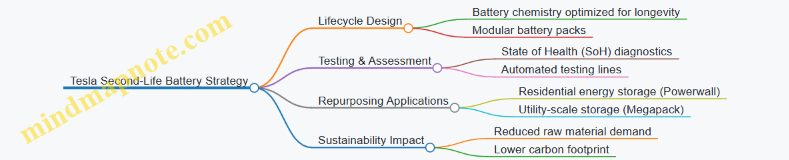
Nissan: Battery Reuse in Community Energy Storage
Key Takeaways:
- Community-Centric Approach: Nissan partners with local communities to deploy second-life batteries in microgrid and solar storage projects.
- Collaborative Supply Chain: Coordination between manufacturers, recyclers, and local utilities enhances efficiency.
- Safety and Reliability: Strict safety protocols and continuous monitoring ensure dependable operation.
Example: Nissan’s “xStorage” project in the UK repurposes EV batteries for home and commercial energy storage, extending battery life and reducing waste.
Mind Map: Nissan’s Battery Second-Life Ecosystem
Redwood Materials: Innovation in Battery Recycling
Key Takeaways:
- Closed-Loop Recycling: Redwood Materials focuses on recovering high-value materials (nickel, cobalt, lithium) to feed back into battery manufacturing.
- Advanced Technologies: Utilizes a combination of mechanical, hydrometallurgical, and direct recycling techniques.
- Supply Chain Transparency: Implements digital tracking to ensure traceability and compliance.
Example: Redwood’s partnership with major EV manufacturers enables a circular supply chain, reducing dependency on virgin raw materials.
Mind Map: Redwood Materials’ Recycling Model
Lessons Learned Summary
- Design for Circularity: Battery design should anticipate second-life and recycling to maximize value retention.
- Data-Driven Decisions: Robust testing and digital tools enable precise assessment and traceability.
- Collaborative Ecosystems: Partnerships across the supply chain enhance operational efficiency and sustainability.
- Safety as a Priority: Comprehensive safety protocols protect workers, users, and the environment.
- Innovation Adoption: Embracing new recycling technologies and business models drives continuous improvement.
By studying these leaders, supply chain managers, recycling technicians, and sustainability officers can glean actionable insights to elevate their own battery second-life and recycling operations, fostering a more sustainable and circular battery ecosystem.
12.5 Call to Action: Driving Sustainable Battery Lifecycle Management
As the battery industry continues to expand rapidly, the imperative to manage battery lifecycles sustainably has never been greater. Supply Chain Managers, Recycling Technicians, and Sustainability Officers play pivotal roles in shaping a circular economy that minimizes waste, maximizes resource efficiency, and fosters environmental stewardship.
Why Act Now?
- Growing Battery Demand: The surge in electric vehicles (EVs), renewable energy storage, and portable electronics drives exponential battery production.
- Resource Scarcity: Critical raw materials like lithium, cobalt, and nickel are finite and often sourced under challenging social and environmental conditions.
- Environmental Impact: Improper disposal leads to toxic pollution and greenhouse gas emissions.
Key Actions to Drive Sustainable Battery Lifecycle Management
Practical Examples to Inspire Action
Collaborative Platforms for Transparency
- Example: The Battery Passport initiative by the Global Battery Alliance enables stakeholders to access verified data on battery origin, composition, and lifecycle status, fostering trust and accountability.
Implementing Second-Life Battery Projects
- Example: Nissan’s partnership with energy providers to repurpose EV batteries for residential solar energy storage reduces waste and extends battery utility.
Advanced Recycling Facilities
- Example: Redwood Materials utilizes innovative hydrometallurgical processes to recover up to 95% of critical metals, significantly reducing environmental footprint.
Mind Map: Steps for Supply Chain Managers
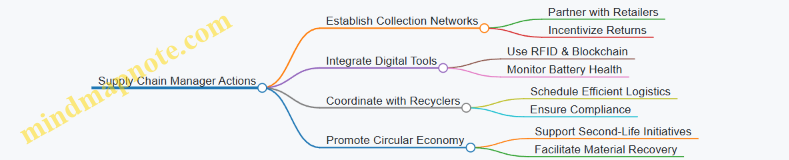
Mind Map: Role of Recycling Technicians
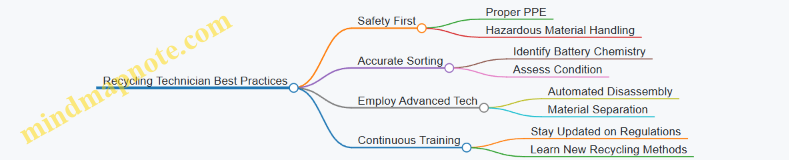
Mind Map: Sustainability Officers’ Strategic Focus
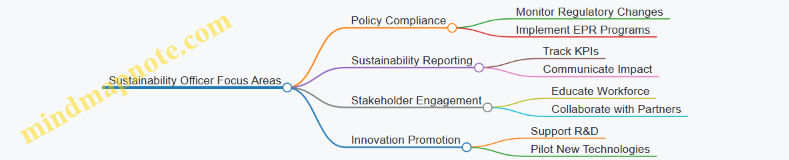
Final Thoughts
Driving sustainable battery lifecycle management requires a concerted effort across the entire value chain. By embracing collaboration, leveraging technology, and committing to continuous improvement, professionals in the battery sector can significantly reduce environmental impact while unlocking economic value.
Your Call to Action:
- Initiate or strengthen partnerships across stakeholders.
- Invest in technologies that enhance battery tracking and recycling efficiency.
- Champion second-life battery applications within your organization.
- Prioritize workforce training to ensure safety and expertise.
- Embed sustainability metrics into all operational decisions.
Together, these steps will accelerate the transition to a truly circular battery economy, securing a cleaner and more sustainable future.