Supply Chain Resilience: Lessons from Recent Disruptions
1. Introduction to Supply Chain Resilience
1.1 Defining Supply Chain Resilience in the Modern Era
Supply Chain Resilience refers to the capability of a supply chain to anticipate, prepare for, respond to, and recover from disruptive events while maintaining continuous operations and safeguarding the interests of all stakeholders. In today’s interconnected and fast-paced global economy, resilience is no longer a luxury but a necessity for supply chain managers and operations professionals.
Key Dimensions of Supply Chain Resilience
Why Resilience Matters in the Modern Era
- Globalization: Supply chains span multiple countries, increasing exposure to geopolitical, environmental, and economic risks.
- Complexity: More tiers and partners create interdependencies that can amplify disruptions.
- Customer Expectations: Demand for faster delivery and customization requires agility.
- Technological Advancements: While enabling efficiency, they also introduce cyber risks.
Example: Resilience in Action – A Consumer Electronics Company
A global consumer electronics company faced a sudden shortage of a critical microchip due to a factory fire at their sole supplier. Because they had diversified suppliers and maintained a risk monitoring system, they quickly shifted orders to alternate suppliers and communicated transparently with customers about delays. This minimized revenue loss and preserved brand reputation.
Components of Modern Supply Chain Resilience
Example: Flexibility Through Agile Manufacturing
During the COVID-19 pandemic, a clothing manufacturer quickly retooled its production lines to produce personal protective equipment (PPE). This agility not only helped meet urgent demand but also kept the workforce employed and the supply chain operational.
Summary
Supply Chain Resilience in the modern era is a multifaceted capability that combines anticipation, preparation, response, and recovery. It leverages flexibility, visibility, collaboration, and innovation to withstand and adapt to disruptions. Real-world examples demonstrate that embedding resilience into supply chain strategy is critical for sustaining competitive advantage and operational continuity.
1.2 Overview of Recent Global Disruptions Impacting Supply Chains
Supply chains worldwide have faced unprecedented challenges in recent years, exposing vulnerabilities and emphasizing the need for resilience. Understanding these disruptions helps supply chain managers and operations professionals anticipate risks and adapt strategies effectively.
Major Recent Global Disruptions
-
COVID-19 Pandemic
- Sudden demand spikes and drops
- Factory shutdowns and labor shortages
- Transportation bottlenecks
-
Geopolitical Tensions and Trade Wars
- Tariffs and sanctions impacting sourcing
- Shifts in trade routes and supplier bases
-
Natural Disasters and Climate Change
- Floods, wildfires, hurricanes affecting production and logistics
- Increasing frequency and severity of events
-
Cybersecurity Threats
- Ransomware attacks on logistics and manufacturing systems
- Data breaches disrupting operations
-
Raw Material Shortages
- Semiconductor chip shortage impacting multiple industries
- Scarcity of critical minerals and components
Mind Map: Recent Global Disruptions Impacting Supply Chains
Example 1: COVID-19 Pandemic Impact
During the early months of the COVID-19 pandemic, a major electronics manufacturer experienced a sudden shutdown of its primary factory in Southeast Asia due to lockdowns. Simultaneously, demand for home office equipment surged unexpectedly. This combination created a severe supply-demand mismatch, leading to backorders and delayed shipments worldwide.
Best Practice Highlight: Companies that had diversified their supplier base and maintained strategic inventory buffers were able to mitigate the impact better than those relying on single-source suppliers.
Example 2: Semiconductor Shortage
The global semiconductor shortage, triggered by a combination of pandemic-related factory closures, increased demand for consumer electronics, and geopolitical tensions, severely disrupted automotive and electronics industries. Many car manufacturers had to halt production lines due to lack of chips.
Best Practice Highlight: Firms that invested in supplier relationship management and real-time supply chain visibility could anticipate shortages earlier and adjust production schedules accordingly.
Mind Map: Impact Areas of Disruptions
Example 3: Geopolitical Tensions
Trade tensions between major economies led to increased tariffs on imported goods, forcing a global apparel brand to rethink its sourcing strategy. The company shifted some production from high-tariff countries to more stable regions, balancing cost and risk.
Best Practice Highlight: Proactive scenario planning and supplier diversification enabled the brand to maintain supply continuity despite changing trade policies.
Summary
Recent global disruptions have highlighted that supply chains are complex, interconnected systems vulnerable to a variety of risks. By understanding the nature and impact of these disruptions, supply chain professionals can better prepare and implement resilience strategies tailored to their unique operational contexts.
1.3 Importance of Building Resilience for Supply Chain Managers and Operations Professionals
In today’s volatile and interconnected global marketplace, building supply chain resilience has become a critical priority for supply chain managers and operations professionals. Resilience is not just about bouncing back from disruptions but also about anticipating, preparing for, and adapting to unexpected challenges to maintain continuity and competitive advantage.
Why Resilience Matters
- Mitigating Risks: Disruptions such as pandemics, geopolitical tensions, natural disasters, and cyberattacks can halt operations. Resilience helps mitigate these risks by enabling quick recovery.
- Maintaining Customer Satisfaction: Reliable supply chains ensure timely delivery, preserving customer trust and brand reputation.
- Cost Management: While resilience may require upfront investment, it reduces costly downtime, expedited shipping fees, and lost sales.
- Agility and Flexibility: Resilient supply chains can adapt to changing market demands and conditions, providing a strategic edge.
Mind Map: Core Reasons to Build Supply Chain Resilience
Real-World Example: How a Global Electronics Manufacturer Benefited from Resilience
During the 2020 COVID-19 pandemic, a leading electronics manufacturer faced severe supply shortages due to factory shutdowns in Asia. However, because they had diversified their supplier base and maintained strategic inventory buffers, they were able to continue production with minimal delays. Their proactive risk assessment and investment in digital supply chain visibility tools allowed rapid identification of bottlenecks and swift reallocation of resources.
Mind Map: Benefits Experienced by the Electronics Manufacturer
The Role of Supply Chain Managers and Operations Professionals
Supply chain managers and operations professionals are at the forefront of resilience-building efforts. Their responsibilities include:
- Risk Identification: Continuously scanning for vulnerabilities across the supply chain.
- Collaboration: Working closely with suppliers, logistics providers, and internal teams to foster transparency and joint problem-solving.
- Implementation of Best Practices: Applying strategies such as multi-sourcing, inventory optimization, and technology adoption.
- Continuous Improvement: Learning from disruptions and refining processes to enhance future resilience.
Example: Operations Team Implementing Cross-Training to Enhance Flexibility
An automotive parts manufacturer faced labor shortages during a regional lockdown. Their operations team had previously cross-trained employees across multiple production lines, enabling quick redeployment to critical areas. This flexibility minimized production stoppages and maintained order fulfillment.
Mind Map: Key Responsibilities of Supply Chain Professionals in Building Resilience
Summary
Building resilience is essential for supply chain managers and operations professionals to navigate the complexities of today’s global environment. By embracing risk management, fostering collaboration, and leveraging technology, they can ensure their supply chains remain robust, agile, and capable of sustaining business continuity in the face of disruptions.
1.4 Key Metrics to Assess Supply Chain Vulnerability and Strength
Assessing the resilience of a supply chain requires a clear understanding of specific metrics that highlight both vulnerabilities and strengths. These metrics allow supply chain managers and operations professionals to identify weak points, monitor performance, and implement targeted improvements.
Key Metrics Overview Mind Map
Vulnerability Metrics
Supplier Risk Exposure
Measures the concentration and risk level of suppliers in the supply chain.
- Example: A consumer electronics company relies on a single supplier for a critical microchip. If that supplier faces disruption, the entire production halts.
- How to measure: Percentage of spend or volume sourced from high-risk suppliers or regions.
Lead Time Variability
Tracks fluctuations in the time it takes for suppliers to deliver goods.
- Example: A fashion retailer notices that lead times from overseas suppliers vary between 4 to 8 weeks, causing inventory planning challenges.
- How to measure: Standard deviation or coefficient of variation of lead times over a period.
Single Sourcing Dependency
Quantifies the extent to which the supply chain depends on a single supplier or geographic location.
- Example: An automotive manufacturer sources 70% of a key component from one country, increasing exposure to geopolitical risks.
- How to measure: Ratio of volume or spend from the largest supplier to total volume or spend.
Inventory Turnover Rate
Indicates how quickly inventory is sold and replenished, with low turnover potentially signaling overstock or obsolescence risks.
- Example: A pharmaceutical company with slow inventory turnover may face expiration risks during disruptions.
- How to measure: Cost of goods sold divided by average inventory value.
Demand Variability
Measures fluctuations in customer demand that can stress supply chain responsiveness.
- Example: A toy manufacturer experiences seasonal spikes that can cause stockouts if not managed.
- How to measure: Coefficient of variation of demand over time.
Strength Metrics
Order Fulfillment Rate
Percentage of customer orders delivered on time and in full.
- Example: An e-commerce platform maintains a 98% order fulfillment rate even during peak seasons, demonstrating resilience.
- How to measure: (Orders delivered on time and complete / Total orders) × 100
Supply Chain Cycle Time
Total time from order placement to delivery.
- Example: A food distributor reduces cycle time by optimizing warehouse processes, improving responsiveness.
- How to measure: Average elapsed time from order receipt to delivery.
Flexibility Index
Measures the supply chain’s ability to adapt to changes in volume or product mix.
- Example: An electronics manufacturer can switch production lines within 24 hours to meet shifting demand.
- How to measure: Time or cost required to switch production or sourcing configurations.
Recovery Time Objective (RTO)
Time needed for the supply chain to recover after a disruption.
- Example: A logistics provider aims to restore full operations within 48 hours after a cyberattack.
- How to measure: Targeted or actual time to resume normal operations post-disruption.
Supply Chain Visibility
Degree to which real-time data is available across the supply chain.
- Example: A global retailer uses IoT sensors and cloud dashboards to monitor shipments worldwide.
- How to measure: Percentage of suppliers and shipments tracked in real time.
Integrated Example: Applying Metrics in Practice
Company: Global Apparel Brand
- Challenge: Frequent delays from overseas suppliers and demand unpredictability.
- Actions:
- Measured lead time variability and found a 30% fluctuation.
- Identified single sourcing dependency at 60% for key fabrics.
- Improved order fulfillment rate from 85% to 95% by diversifying suppliers and increasing inventory buffers.
- Reduced supply chain cycle time by 15% through process improvements.
This integrated approach using key metrics enabled the company to pinpoint vulnerabilities and strengthen its supply chain resilience effectively.
Summary
Monitoring these key metrics provides a comprehensive view of supply chain health. By regularly assessing vulnerability and strength indicators, supply chain managers can proactively address risks and build more resilient operations.
2. Understanding the Nature and Impact of Recent Disruptions
2.1 COVID-19 Pandemic: Lessons on Demand Shocks and Supply Constraints
The COVID-19 pandemic was an unprecedented global disruption that exposed vulnerabilities in supply chains worldwide. It triggered both demand shocks and supply constraints simultaneously, forcing supply chain managers and operations professionals to rethink traditional strategies and adopt resilience-focused approaches.
Understanding Demand Shocks During COVID-19
Demand shocks refer to sudden and significant changes in customer demand, either surges or drops, that disrupt the equilibrium of supply chains.
- Panic Buying and Stockpiling: Early in the pandemic, consumers rushed to purchase essential goods such as toilet paper, sanitizers, and canned foods, causing sudden spikes in demand.
- Shift in Consumer Behavior: Demand for certain products like personal protective equipment (PPE), home office equipment, and groceries surged, while demand for luxury goods, travel-related products, and non-essential items plummeted.
- E-commerce Boom: Lockdowns accelerated online shopping, creating new demand patterns and logistics challenges.
Supply Constraints During COVID-19
Simultaneously, supply chains faced constraints due to factory shutdowns, labor shortages, transportation bottlenecks, and raw material scarcity.
- Factory Closures: Lockdowns in manufacturing hubs, especially in China and India, halted production of key components.
- Labor Shortages: Health concerns and restrictions limited workforce availability in warehouses, ports, and transport.
- Transportation Disruptions: Reduced air freight capacity and port congestions delayed shipments.
- Raw Material Shortages: Interruptions in upstream suppliers cascaded down the supply chain.
Mind Map: COVID-19 Impact on Supply Chains
Best Practices and Examples
Enhancing Demand Visibility and Forecasting
Practice: Use real-time data analytics and AI-driven forecasting tools to detect demand shifts early.
Example: A global consumer goods company integrated point-of-sale data from retailers with social media sentiment analysis to predict surges in demand for hygiene products, enabling proactive inventory adjustments.
Building Flexible Supply Networks
Practice: Develop multi-tier supplier relationships and diversify sourcing to mitigate risks from localized shutdowns.
Example: An electronics manufacturer expanded its supplier base beyond China to Southeast Asia and Mexico, allowing it to reroute orders when Chinese factories closed.
Increasing Safety Stock for Critical Items
Practice: Maintain higher inventory buffers for essential products vulnerable to demand spikes.
Example: A supermarket chain increased safety stock of canned goods and cleaning supplies after observing panic buying trends, preventing stockouts during subsequent waves.
Leveraging Digital Platforms for Collaboration
Practice: Use cloud-based supply chain management platforms to improve communication and coordination with suppliers and logistics partners.
Example: A pharmaceutical company used a digital supplier portal to monitor raw material availability and production status in real-time, enabling faster response to disruptions.
Agile Logistics and Distribution
Practice: Adapt distribution networks quickly by shifting between transportation modes and rerouting shipments.
Example: A fashion retailer switched from air to sea freight for non-urgent shipments to manage cost and capacity constraints, while prioritizing air freight for fast-moving items.
Mind Map: Best Practices to Address COVID-19 Disruptions
Key Lessons Learned
- Visibility is Vital: Early detection of demand changes and supply constraints allows faster, more informed decisions.
- Diversification Reduces Risk: Relying on a single geography or supplier increases vulnerability.
- Flexibility Enables Adaptation: Agile operations and logistics help navigate unpredictable disruptions.
- Collaboration Strengthens Resilience: Transparent communication with partners fosters coordinated responses.
- Inventory Buffers Provide a Safety Net: Strategic stockpiling balances cost with risk mitigation.
By internalizing these lessons, supply chain managers and operations professionals can better prepare their organizations to withstand future shocks and maintain continuity in turbulent times.
2.2 Geopolitical Tensions and Trade Wars: Navigating Tariffs and Sanctions
Geopolitical tensions and trade wars have become prominent disruptors in global supply chains over the past decade. These disruptions often manifest through the imposition of tariffs, sanctions, export controls, and other trade barriers that affect the flow of goods, increase costs, and introduce uncertainty.
Understanding the Impact
When countries impose tariffs or sanctions, supply chains that rely on affected regions face increased costs and delays. For example, the U.S.-China trade war introduced tariffs on hundreds of billions of dollars of goods, forcing companies to rethink sourcing and pricing strategies.
Best Practices for Navigating Tariffs and Sanctions
- Diversify Sourcing and Markets: Avoid over-reliance on any single country or supplier that may be subject to geopolitical risk.
- Stay Informed on Regulatory Changes: Continuously monitor trade policies, sanctions lists, and customs regulations.
- Engage Legal and Compliance Teams Early: Ensure all transactions comply with current laws to avoid penalties.
- Leverage Free Trade Agreements (FTAs): Utilize FTAs to reduce tariff exposure where possible.
- Scenario Planning: Model the impact of potential tariff changes on costs and supply chain flows.
Example: Electronics Manufacturer Adjusting to U.S.-China Tariffs
An electronics company faced a 25% tariff on components imported from China. To mitigate this, they:
- Shifted part of their sourcing to Southeast Asian suppliers.
- Increased inventory of tariff-affected components to buffer against delays.
- Worked with customs brokers to classify goods optimally under tariff codes.
This multi-pronged approach helped maintain production schedules and control costs.
Mind Map: Navigating Geopolitical Tensions and Trade Wars
Example: Automotive Industry’s Response to Sanctions
When sanctions were imposed on certain suppliers in Eastern Europe, an automotive manufacturer:
- Quickly identified alternative suppliers in unaffected regions.
- Collaborated with suppliers to share risk and maintain quality standards.
- Adjusted production schedules to accommodate new lead times.
This proactive approach minimized production downtime and maintained customer commitments.
Mind Map: Compliance and Risk Management in Trade Wars
Summary
Geopolitical tensions and trade wars require supply chain managers and operations professionals to be agile, informed, and proactive. By diversifying suppliers, closely monitoring regulatory environments, engaging compliance teams, and planning for multiple scenarios, organizations can reduce risk exposure and maintain operational continuity even amid complex trade disruptions.
2.3 Natural Disasters and Climate Change: Preparing for Environmental Risks
Natural disasters and climate change have become increasingly significant disruptors in global supply chains. From hurricanes and floods to wildfires and droughts, environmental risks can cause sudden interruptions, damage infrastructure, and create long-term challenges for sourcing and logistics.
Understanding Environmental Risks in Supply Chains
Environmental risks can be categorized into acute events and chronic conditions:
- Acute Events: Sudden disasters like earthquakes, hurricanes, floods, and wildfires.
- Chronic Conditions: Gradual changes such as rising temperatures, sea-level rise, and changing precipitation patterns.
These risks impact supply chains by damaging production facilities, disrupting transportation routes, and affecting supplier availability.
Mind Map: Types of Environmental Risks Affecting Supply Chains
Best Practices to Prepare for Environmental Risks
-
Risk Mapping and Vulnerability Assessment
- Identify geographic locations of suppliers, manufacturing plants, and logistics hubs.
- Assess exposure to environmental hazards using tools like GIS mapping.
-
Supplier Diversification and Localization
- Avoid concentration of suppliers in high-risk zones.
- Develop local or regional suppliers to reduce dependency on vulnerable areas.
-
Infrastructure Hardening and Contingency Planning
- Invest in resilient infrastructure designed to withstand natural disasters.
- Develop contingency plans including alternate routes and backup facilities.
-
Inventory Buffering for Critical Components
- Maintain safety stock for items sourced from high-risk regions.
- Use dynamic inventory models that adjust buffers based on risk levels.
-
Collaboration and Information Sharing
- Work with suppliers and logistics partners to share real-time environmental risk data.
- Participate in industry-wide initiatives focused on climate resilience.
-
Leveraging Technology for Early Warning and Response
- Implement IoT sensors and satellite monitoring to detect environmental changes.
- Use predictive analytics to anticipate disruptions and adjust operations proactively.
Mind Map: Environmental Risk Mitigation Strategies
Real-World Examples
Example 1: Toyota’s Response to the 2011 Japan Earthquake and Tsunami
- Toyota faced massive supply chain disruptions when the earthquake and tsunami damaged suppliers and infrastructure.
- The company responded by mapping supplier risks and diversifying its supplier base geographically.
- Toyota also increased inventory buffers for critical parts and invested in supplier development programs to enhance resilience.
Example 2: Walmart’s Climate Resilience Initiatives
- Walmart uses advanced GIS tools to assess climate risks across its supply chain.
- It collaborates with suppliers to reduce carbon footprints and improve sustainability.
- Walmart has invested in renewable energy and resilient infrastructure to mitigate climate-related disruptions.
Example 3: Maersk’s Adaptation to Rising Sea Levels and Storms
- As a global logistics leader, Maersk has adjusted port operations and shipping routes to account for increased storm frequency.
- The company employs real-time weather tracking and predictive analytics to reroute shipments proactively.
- Maersk also engages in partnerships to support climate adaptation in vulnerable regions.
Actionable Steps for Supply Chain Managers
- Conduct a thorough environmental risk assessment of your supply chain footprint.
- Identify critical suppliers and evaluate their exposure to natural disasters and climate risks.
- Develop and test contingency plans for high-risk scenarios.
- Invest in technology solutions that provide early warnings and enhance visibility.
- Foster strong communication channels with suppliers and logistics partners to share risk information.
- Monitor evolving climate regulations and incorporate sustainability into procurement policies.
By proactively preparing for environmental risks, supply chain managers and operations professionals can reduce vulnerability, maintain continuity, and contribute to a more sustainable and resilient supply chain ecosystem.
2.4 Cybersecurity Threats: Protecting Digital Supply Chain Infrastructure
In today’s interconnected supply chain ecosystems, cybersecurity has become a critical pillar of supply chain resilience. Digital supply chains rely heavily on IT systems, cloud platforms, IoT devices, and data exchanges between multiple partners, making them vulnerable to cyberattacks that can disrupt operations, compromise sensitive data, and erode trust.
Understanding Cybersecurity Threats in Supply Chains
Cyber threats targeting supply chains come in various forms, including ransomware attacks, phishing, data breaches, malware infiltration, and insider threats. Attackers often exploit weaker security postures of smaller suppliers to gain access to larger organizations, making the entire chain vulnerable.
Mind Map: Types of Cybersecurity Threats in Supply Chains
Best Practices to Protect Digital Supply Chain Infrastructure
Conduct Comprehensive Cyber Risk Assessments
Identify critical digital assets, evaluate vulnerabilities in your IT environment and supplier networks, and prioritize risks based on potential impact.
Implement Multi-Layered Security Controls
Use firewalls, intrusion detection systems, endpoint protection, encryption, and network segmentation to create defense-in-depth.
Enforce Strong Access Controls and Authentication
Adopt role-based access, multi-factor authentication (MFA), and least privilege principles to limit unauthorized access.
Regularly Train Employees and Partners
Educate all stakeholders on recognizing phishing attempts, safe data handling, and incident reporting protocols.
Monitor and Respond to Threats in Real-Time
Deploy Security Information and Event Management (SIEM) tools and establish incident response teams to quickly detect and mitigate attacks.
Collaborate with Suppliers on Cybersecurity Standards
Require suppliers to adhere to cybersecurity frameworks (e.g., NIST, ISO 27001) and perform regular audits.
Mind Map: Cybersecurity Best Practices for Supply Chains
Real-World Example: Maersk’s Recovery from NotPetya Ransomware Attack
In 2017, global shipping giant Maersk was severely impacted by the NotPetya ransomware, which disrupted its IT systems worldwide, halting container shipments and costing the company an estimated $200-$300 million. Maersk’s rapid response included:
- Activating a comprehensive incident response plan
- Reinstalling thousands of servers and devices within days
- Collaborating closely with cybersecurity experts and partners
This incident highlighted the importance of preparedness, cross-functional coordination, and investment in cyber resilience to minimize operational downtime.
Example: Securing IoT Devices in Warehouses
Many warehouses use IoT sensors and automated guided vehicles (AGVs) to optimize operations. However, these devices can be entry points for cyberattacks if unsecured.
Best Practice: Implement network segmentation to isolate IoT devices from critical enterprise systems and regularly update device firmware to patch vulnerabilities.
Summary
Protecting digital supply chain infrastructure from cybersecurity threats requires a proactive, multi-layered approach that combines technology, processes, and people. Supply chain managers and operations professionals must foster a culture of security awareness, collaborate closely with suppliers, and continuously adapt to evolving cyber risks to ensure supply chain continuity and trust.
2.5 Case Study: Semiconductor Shortage and Its Ripple Effects Across Industries
Overview
The global semiconductor shortage that began in 2020 is one of the most significant supply chain disruptions in recent history. Triggered by a combination of pandemic-related demand surges, supply constraints, and geopolitical tensions, this shortage exposed vulnerabilities across multiple industries — from automotive to consumer electronics, healthcare, and beyond.
Causes of the Semiconductor Shortage
- Pandemic Demand Surge: Increased demand for electronics as remote work and learning surged.
- Supply Chain Disruptions: Factory shutdowns and logistical bottlenecks.
- Geopolitical Tensions: Trade restrictions impacting chip manufacturing and supply.
- Just-in-Time Inventory Practices: Limited buffer stocks exacerbated shortages.
Mind Map: Causes of Semiconductor Shortage
Ripple Effects Across Industries
Automotive Industry
- Modern vehicles require hundreds of chips for functions like engine control, infotainment, and safety systems.
- Production halts and delays became widespread as manufacturers struggled to secure chips.
Example:
- Ford temporarily closed several plants in 2021 due to chip shortages, delaying vehicle deliveries.
Consumer Electronics
- Smartphones, gaming consoles, and laptops faced production delays.
Example:
- Sony delayed the production of PlayStation 5 consoles, leading to scarcity and inflated prices.
Healthcare
- Medical devices like ventilators and diagnostic equipment depend on semiconductors.
Example:
- Hospitals faced challenges in acquiring certain diagnostic machines due to chip delays.
Industrial Equipment
- Manufacturing automation and robotics slowed down due to chip unavailability.
Example:
- Equipment manufacturers reported extended lead times impacting factory upgrades.
Mind Map: Ripple Effects Across Industries
Best Practices and Lessons Learned
Diversifying Supplier Base
- Companies realized the risk of relying heavily on a few semiconductor suppliers.
Example:
- Toyota expanded its supplier network to include more chip manufacturers across different regions.
Increasing Inventory Buffers for Critical Components
- Moving away from strict just-in-time models to maintain safety stock.
Example:
- A major electronics firm increased its chip inventory by 20% to buffer against future disruptions.
Enhancing Supply Chain Visibility
- Investing in real-time tracking and analytics to anticipate shortages.
Example:
- An automotive OEM implemented AI-driven demand forecasting tools to better predict chip needs.
Collaboration and Communication
- Strengthening partnerships with suppliers to improve transparency and joint problem-solving.
Example:
- Semiconductor manufacturers worked closely with key clients to prioritize orders and allocate capacity.
Strategic Long-Term Planning
- Investing in local or regional chip manufacturing to reduce dependency on distant suppliers.
Example:
- Governments and companies partnered to build new semiconductor fabs domestically.
Mind Map: Best Practices to Mitigate Semiconductor Shortage Impact
Summary
The semiconductor shortage highlighted the fragility of global supply chains, especially those heavily reliant on specialized components with limited manufacturing sources. By adopting diversified sourcing, increasing inventory buffers, leveraging technology for visibility, fostering collaboration, and investing in local manufacturing capabilities, supply chain managers and operations professionals can build resilience against similar disruptions in the future.
Call to Action
Supply chain leaders should conduct thorough risk assessments of their component dependencies, engage suppliers proactively, and explore innovative technologies to enhance forecasting and responsiveness. The semiconductor shortage serves as a critical reminder that resilience is not just about reacting to disruptions but anticipating and preparing for them.
3. Risk Identification and Assessment Practices
3.1 Mapping the Supply Chain: Visualizing End-to-End Dependencies
Supply chain mapping is a foundational practice for building resilience. It involves creating a comprehensive visualization of all entities, processes, and flows involved from raw material sourcing to the delivery of finished products to customers. By understanding these end-to-end dependencies, supply chain managers and operations professionals can identify vulnerabilities, bottlenecks, and critical nodes that may be impacted during disruptions.
Why Map the Supply Chain?
- Visibility: Gain clarity on every tier of suppliers, logistics providers, and distribution centers.
- Risk Identification: Spot single points of failure or over-reliance on specific suppliers or regions.
- Improved Collaboration: Facilitate communication and coordination across the supply chain ecosystem.
- Scenario Planning: Understand how disruptions in one area ripple through the entire chain.
Key Components to Include in Supply Chain Mapping
- Suppliers: Tier 1, Tier 2, and beyond
- Manufacturing Sites: Plants, contract manufacturers
- Warehouses and Distribution Centers
- Transportation Routes: Sea, air, road, rail
- Customers: Retailers, end consumers
- Information Flows: Data exchange points and IT systems
Mind Map: Basic Supply Chain Mapping Structure
Example: Mapping a Consumer Electronics Supply Chain
Consider a company producing smartphones. Its supply chain mapping might look like this:
This map helps the company see that a disruption in Taiwan (e.g., political tensions or natural disaster) could affect chip supply and component fabrication, impacting the entire production.
Advanced Mind Map: Including Risk Factors and Dependencies
Practical Steps to Create Your Supply Chain Map
- Gather Data: Collect information from procurement, logistics, production, and sales teams.
- Engage Suppliers: Request visibility into their suppliers to map multiple tiers.
- Use Visualization Tools: Software like Microsoft Visio, Lucidchart, or specialized supply chain mapping tools can help.
- Incorporate Risk Data: Overlay risk assessments such as geopolitical, environmental, or financial risks.
- Validate and Update Regularly: Supply chains are dynamic; keep maps current.
Real-World Example: How a Global Apparel Brand Used Supply Chain Mapping
A leading apparel company faced repeated disruptions due to natural disasters affecting their fabric suppliers. By mapping their supply chain, including Tier 2 and Tier 3 suppliers, they identified an over-reliance on a single region. They diversified sourcing to include suppliers in different geographies and established secondary manufacturing sites. This proactive mapping and diversification reduced lead times and improved responsiveness during subsequent disruptions.
Summary
Mapping the supply chain is a critical first step toward resilience. It provides the visibility needed to understand complex interdependencies and prepare for potential disruptions. By combining detailed visualization with risk data and real-world examples, supply chain managers can make informed decisions that strengthen their operations.
3.2 Utilizing Technology for Real-Time Risk Monitoring
In today’s fast-paced and interconnected supply chains, the ability to detect and respond to risks in real time is crucial for maintaining resilience. Leveraging technology for real-time risk monitoring enables supply chain managers and operations professionals to gain instant visibility into potential disruptions, allowing for proactive decision-making and mitigation.
Key Technologies Enabling Real-Time Risk Monitoring
- Internet of Things (IoT) Sensors: Devices embedded in shipments, warehouses, and transportation vehicles that provide live data on location, temperature, humidity, and other critical parameters.
- Advanced Analytics and AI: Algorithms that analyze data streams to detect anomalies, predict risks, and trigger alerts.
- Cloud Computing Platforms: Centralized hubs that aggregate data from multiple sources, enabling seamless access and collaboration.
- Blockchain Technology: Provides immutable and transparent records, enhancing trust and traceability.
- Geospatial and Weather Data Integration: Real-time environmental data to anticipate natural disaster impacts.
Mind Map: Components of Real-Time Risk Monitoring Technology
Practical Examples
Example 1: Real-Time Cold Chain Monitoring in Pharmaceuticals A global pharmaceutical company implemented IoT sensors within vaccine shipments to continuously monitor temperature and humidity. When a sensor detected a temperature deviation beyond the safe threshold, an automated alert was sent to the logistics team, who immediately coordinated a reroute to prevent spoilage. This real-time monitoring prevented costly losses and ensured product efficacy.
Example 2: AI-Driven Disruption Prediction in Electronics Supply Chain An electronics manufacturer integrated AI-powered analytics with supplier shipment data and external news feeds. The system identified early signals of port congestion and labor strikes in a key supplier region. The company proactively adjusted orders and sourced from alternative suppliers, minimizing production delays.
Example 3: Blockchain for Transparency in Food Supply Chains A food retailer adopted blockchain technology to track produce from farm to shelf. Real-time updates on shipment status and quality checks were accessible to all stakeholders. When a contamination risk was detected at a farm, the retailer quickly isolated affected batches, reducing recall scope and protecting consumers.
Benefits of Real-Time Risk Monitoring
- Early Detection: Spot potential issues before they escalate.
- Faster Response: Enable rapid mitigation actions.
- Improved Collaboration: Share timely information with partners.
- Data-Driven Decisions: Leverage analytics for smarter planning.
- Enhanced Customer Satisfaction: Maintain service levels despite disruptions.
Implementation Best Practices
- Start with mapping critical risk points and relevant data sources.
- Invest in scalable cloud infrastructure to handle data volume.
- Train teams to interpret alerts and act promptly.
- Establish clear protocols for escalation and communication.
- Continuously refine analytics models with new data and feedback.
Harnessing technology for real-time risk monitoring transforms supply chains from reactive to proactive systems, empowering supply chain managers and operations professionals to navigate uncertainty with confidence.
3.3 Scenario Planning and Stress Testing Supply Chain Models
Scenario planning and stress testing are critical practices for supply chain managers aiming to build resilience against unpredictable disruptions. These techniques allow organizations to anticipate potential risks, evaluate their impacts, and develop robust contingency plans.
What is Scenario Planning?
Scenario planning is a strategic method that involves creating detailed and plausible future scenarios to understand how different variables and events could impact the supply chain. It helps decision-makers prepare for a range of possible futures rather than relying on a single forecast.
What is Stress Testing?
Stress testing involves simulating extreme but plausible disruption events on supply chain models to evaluate their robustness and identify vulnerabilities. It helps organizations understand how their supply chains perform under pressure and where improvements are needed.
Why Are These Practices Important?
- Proactive Risk Management: Instead of reacting to disruptions, companies anticipate and prepare.
- Resource Optimization: Helps prioritize investments in risk mitigation.
- Improved Agility: Enables faster and more effective responses when disruptions occur.
Mind Map: Scenario Planning Process
Mind Map: Stress Testing Supply Chain Models
Example 1: Using Scenario Planning to Prepare for a Port Closure
A multinational electronics company faced potential disruption due to a major port strike in a key region. Their supply chain team developed three scenarios:
- Scenario A (Best Case): Strike lasts 2 days with minimal backlog.
- Scenario B (Moderate): Strike lasts 2 weeks causing moderate delays.
- Scenario C (Worst Case): Strike lasts 1 month with severe backlog.
For each scenario, they assessed impacts on inventory levels, supplier lead times, and customer delivery schedules. They then created response strategies such as increasing inventory buffers, rerouting shipments through alternative ports, and communicating proactively with customers.
This scenario planning enabled the company to minimize service disruptions and maintain customer trust.
Example 2: Stress Testing with Digital Twins in Automotive Supply Chain
An automotive manufacturer used a digital twin—a virtual replica of their supply chain network—to simulate the impact of a sudden semiconductor shortage. They modeled:
- Supplier shutdowns
- Increased lead times
- Production line stoppages
The stress test revealed critical vulnerabilities in single-source suppliers and limited inventory buffers. As a result, the company diversified its supplier base and increased safety stock for key components.
Best Practices for Effective Scenario Planning and Stress Testing
- Engage Cross-Functional Teams: Include procurement, logistics, finance, and IT for comprehensive insights.
- Leverage Technology: Use simulation tools, digital twins, and data analytics for accurate modeling.
- Regularly Update Scenarios: Reflect changing market conditions and emerging risks.
- Integrate with Business Continuity Plans: Ensure scenario outcomes feed into actionable response plans.
- Communicate Findings: Share insights with stakeholders to align preparedness efforts.
By embedding scenario planning and stress testing into supply chain management, organizations can transform uncertainty into strategic advantage, ensuring continuity and competitiveness even in turbulent times.
3.4 Example: Using Digital Twins to Predict Disruption Impact
Digital twins are virtual replicas of physical supply chain systems that enable supply chain managers and operations professionals to simulate, analyze, and predict the impact of disruptions before they occur. By creating a digital twin of the entire supply chain or specific segments, organizations can test different scenarios, identify vulnerabilities, and optimize responses to minimize risk.
What is a Digital Twin in Supply Chain?
A digital twin integrates real-time data from IoT devices, ERP systems, and other sources to create a dynamic, interactive model of the supply chain. This model reflects the current state and can be used to simulate changes such as supplier delays, transportation disruptions, or demand spikes.
Mind Map: Components of a Supply Chain Digital Twin
Practical Example: Predicting Disruption Impact Using Digital Twins
Scenario: A multinational electronics manufacturer relies heavily on a few semiconductor suppliers located in a region prone to natural disasters. To mitigate risk, they implemented a digital twin of their supply chain.
How the Digital Twin Helped:
- Real-time Monitoring: The digital twin integrated live data from suppliers, shipping routes, and inventory warehouses.
- Scenario Simulation: When a typhoon was forecasted near a supplier’s location, the digital twin simulated the impact on component availability and production schedules.
- Impact Prediction: The simulation showed a potential 30% delay in semiconductor deliveries, which would cause a 15% drop in finished product output.
- Proactive Response: The company used the insights to accelerate orders from alternative suppliers, reroute shipments, and adjust production plans.
Outcome: The manufacturer minimized downtime and avoided costly stockouts, demonstrating how digital twins enable proactive disruption management.
Mind Map: Digital Twin Use Case - Disruption Prediction and Response
Additional Example: Retail Supply Chain Resilience
A global retail chain uses a digital twin to model its distribution network. When a major port strike was announced, the digital twin simulated the effects on inbound shipments and store inventory levels.
- The model identified which stores would face stockouts first.
- It recommended rerouting shipments through alternative ports and increasing inventory at regional warehouses.
- The retailer implemented these changes ahead of the strike, maintaining sales and customer satisfaction.
Benefits of Using Digital Twins for Disruption Prediction
- Enhanced Visibility: Real-time insights into supply chain status.
- Proactive Risk Management: Ability to test multiple disruption scenarios.
- Improved Collaboration: Shared digital models facilitate communication with suppliers and partners.
- Cost Savings: Reducing emergency responses and excess inventory.
- Continuous Improvement: Learning from simulations to strengthen future resilience.
Key Takeaways
- Digital twins transform static supply chain data into actionable, dynamic models.
- They empower supply chain managers to anticipate and mitigate disruptions effectively.
- Investing in digital twin technology is becoming a best practice for resilient supply chains.
For supply chain managers and operations professionals, adopting digital twins represents a strategic step toward building a more agile and disruption-proof supply chain.
3.5 Collaborative Risk Assessment with Suppliers and Partners
Collaborative risk assessment is a critical practice in building supply chain resilience. It involves working closely with suppliers and partners to identify, evaluate, and mitigate risks collectively rather than in isolation. This approach fosters transparency, trust, and shared responsibility, enabling the entire supply chain ecosystem to respond more effectively to disruptions.
Why Collaborative Risk Assessment Matters
- Holistic Visibility: Suppliers and partners often have insights into risks that may not be visible internally.
- Shared Mitigation Strategies: Joint efforts can lead to more effective and cost-efficient risk mitigation.
- Improved Communication: Regular collaboration builds stronger relationships and quicker response times.
- Enhanced Innovation: Partners can co-develop solutions to emerging risks.
Steps to Implement Collaborative Risk Assessment
Example: Collaborative Risk Assessment in Action
Company: Global Electronics Manufacturer
Scenario: The company faced a potential disruption due to a critical raw material shortage. Instead of assessing risk alone, they engaged their top-tier suppliers and logistics partners in a collaborative risk assessment process.
Process:
- Conducted joint workshops to map supply chain vulnerabilities.
- Shared real-time inventory and production data.
- Developed a shared risk scoring system to prioritize vulnerabilities.
- Created a joint mitigation plan including alternative sourcing and inventory buffers.
Outcome:
- Early identification of a supplier at risk of shutdown.
- Swift activation of alternative suppliers, minimizing production delays.
- Strengthened partnerships and improved trust.
Tools and Techniques to Facilitate Collaboration
Best Practices for Collaborative Risk Assessment
- Establish Clear Roles: Define who is responsible for what in the risk assessment process.
- Maintain Transparency: Share relevant data openly to build trust.
- Regular Engagement: Schedule periodic meetings and updates.
- Leverage Technology: Use collaborative platforms to streamline communication and data sharing.
- Encourage Feedback: Create an environment where partners feel comfortable raising concerns.
Additional Example: Food & Beverage Industry
A multinational food company collaborated with its agricultural suppliers to assess risks related to climate change impacts such as droughts and floods.
- They used joint scenario planning to understand potential yield reductions.
- Developed shared mitigation strategies including crop diversification and investment in irrigation technologies.
- Resulted in a more resilient supply base and sustained product availability.
In summary, collaborative risk assessment with suppliers and partners transforms risk management from a siloed activity into a collective strength. By integrating diverse perspectives and resources, supply chains become more agile and better prepared to face uncertainties.
4. Strategic Sourcing and Supplier Diversification
4.1 Balancing Cost Efficiency with Risk Mitigation in Supplier Selection
In today’s volatile global market, supply chain managers face the critical challenge of selecting suppliers who not only offer competitive pricing but also contribute to the overall resilience of the supply chain. Balancing cost efficiency with risk mitigation is essential to avoid disruptions that can lead to costly delays, reputational damage, or lost revenue.
Understanding the Trade-Off
Cost efficiency often drives procurement decisions, focusing on minimizing expenses through low supplier prices or consolidated sourcing. However, this approach can increase vulnerability if suppliers are concentrated in high-risk regions or lack contingency capabilities.
Risk mitigation emphasizes diversifying suppliers, assessing financial and operational stability, and ensuring flexibility, which may increase upfront costs but reduce long-term disruption risks.
Mind Map: Balancing Cost Efficiency and Risk Mitigation
Best Practices
-
Total Cost of Ownership (TCO) Analysis:
- Look beyond unit price to include logistics, tariffs, quality issues, and potential disruption costs.
- Example: A consumer electronics company discovered that a low-cost supplier in a politically unstable country incurred high expedited shipping fees during disruptions, increasing TCO.
-
Supplier Risk Scoring:
- Develop a risk scorecard evaluating financial health, geopolitical risks, compliance, and operational capacity.
- Example: An automotive manufacturer uses a risk matrix to rate suppliers, balancing cost with risk to avoid over-reliance on any single high-risk supplier.
-
Geographic Diversification:
- Avoid clustering suppliers in one region vulnerable to natural disasters or political instability.
- Example: A global apparel brand diversified fabric suppliers across Asia and Latin America to mitigate risks from regional disruptions.
-
Strategic vs. Tactical Sourcing:
- For critical components, prioritize reliability and risk mitigation even at higher costs.
- For non-critical items, focus more on cost efficiency.
-
Supplier Collaboration:
- Engage suppliers in joint risk management and contingency planning.
- Example: A food manufacturer worked closely with key ingredient suppliers to develop alternate sourcing plans during the pandemic.
Example Scenario: Balancing Cost and Risk in Practice
Company: Global Consumer Electronics Manufacturer
Challenge: The company sourced a key semiconductor component from a single low-cost supplier in Southeast Asia. During a regional flood, production halted, causing a supply shortage and delayed product launches.
Solution:
- Conducted a TCO analysis factoring in disruption costs.
- Identified and onboarded a secondary supplier in Europe with slightly higher prices but stronger risk profile.
- Developed a dual-sourcing strategy maintaining cost competitiveness while enhancing resilience.
Outcome:
- Reduced supply disruption risk.
- Improved supplier relationship management.
- Achieved a balanced cost-risk profile that supported business continuity.
Mind Map: Supplier Selection Decision Process
Summary
Balancing cost efficiency with risk mitigation in supplier selection requires a holistic approach that considers both immediate financial benefits and long-term supply chain stability. By leveraging tools such as TCO analysis, risk scoring, and strategic diversification, supply chain managers can make informed decisions that safeguard operations without sacrificing competitiveness.
4.2 Developing Multi-Sourcing Strategies to Avoid Single Points of Failure
In today’s volatile global environment, relying on a single supplier for critical components or raw materials can expose supply chains to significant risks. Multi-sourcing strategies involve engaging multiple suppliers for the same product or service, thereby distributing risk and enhancing supply chain resilience.
Why Multi-Sourcing Matters
- Risk Diversification: Avoids dependency on one supplier that may face disruptions.
- Improved Negotiation Power: Multiple suppliers foster competitive pricing and better terms.
- Supply Continuity: If one supplier fails, others can fill the gap, reducing downtime.
- Innovation and Quality: Different suppliers may offer varied capabilities and innovations.
Key Components of Multi-Sourcing Strategy
Steps to Develop an Effective Multi-Sourcing Strategy
- Identify Critical Components: Determine which parts or materials are vital and currently single-sourced.
- Supplier Market Research: Explore alternative suppliers globally and locally.
- Risk and Capability Assessment: Evaluate suppliers on quality, reliability, financial health, and geopolitical risks.
- Pilot Testing: Engage new suppliers with small orders to validate capabilities.
- Contractual Agreements: Establish clear contracts outlining expectations, lead times, and contingency plans.
- Performance Monitoring: Continuously track supplier performance and risks.
- Collaboration and Communication: Maintain strong relationships and transparent communication channels.
Example 1: Global Electronics Manufacturer
A leading electronics company faced severe delays due to a single-source supplier of microchips during the 2020 semiconductor shortage. To mitigate this, they:
- Identified alternative chip manufacturers across Asia and Europe.
- Conducted risk assessments considering geopolitical tensions and capacity.
- Established contracts with two additional suppliers.
- Implemented a supplier scorecard system to monitor quality and delivery.
This multi-sourcing approach reduced production halts by 40% during subsequent supply shocks.
Example 2: Automotive Industry’s Multi-Sourcing Approach
The automotive sector traditionally relied on a few key suppliers for specialized parts. After disruptions caused by natural disasters, several manufacturers:
- Diversified their supplier base to include regional suppliers closer to assembly plants.
- Invested in supplier development programs to bring smaller suppliers up to standards.
- Used digital platforms to monitor supplier capacity and risks in real-time.
This strategy enabled faster recovery and minimized production downtime during crises.
Mind Map: Multi-Sourcing Benefits and Challenges
Best Practices for Multi-Sourcing
- Balance Between Local and Global Suppliers: Local suppliers can reduce lead times; global suppliers may offer cost advantages.
- Maintain Strategic Supplier Relationships: Even with multiple suppliers, nurturing partnerships is key.
- Leverage Technology: Use supplier management software and analytics to handle complexity.
- Regularly Review Supplier Portfolio: Adjust sourcing strategies based on market changes and performance data.
Summary
Developing a multi-sourcing strategy is a proactive way to build resilience by avoiding single points of failure. While it introduces complexity, the benefits in risk mitigation, supply continuity, and competitive advantage far outweigh the challenges. Supply chain managers should approach multi-sourcing with thorough planning, continuous monitoring, and strong supplier collaboration to maximize its effectiveness.
4.3 Building Strong Supplier Relationships for Enhanced Transparency
In today’s complex and interconnected supply chains, building strong relationships with suppliers is essential to achieving enhanced transparency. Transparency enables supply chain managers to anticipate risks, respond swiftly to disruptions, and foster collaboration that benefits all parties involved. This section explores best practices for cultivating these relationships, supported by practical examples and mind maps to visualize key concepts.
Why Strong Supplier Relationships Matter for Transparency
- Improved Communication: Open channels facilitate timely sharing of information about production status, potential delays, and quality issues.
- Trust Building: Trust encourages suppliers to disclose challenges proactively rather than hiding problems.
- Collaborative Problem Solving: Strong partnerships enable joint efforts to mitigate risks and optimize processes.
- Visibility into Sub-tier Suppliers: Close relationships help gain insights beyond direct suppliers, revealing hidden vulnerabilities.
Best Practices for Building Strong Supplier Relationships
-
Regular and Structured Communication
- Schedule periodic check-ins, performance reviews, and joint planning sessions.
- Use digital collaboration platforms for real-time updates.
-
Transparency Agreements
- Establish clear expectations about data sharing and confidentiality.
- Implement mutual KPIs focusing on transparency and responsiveness.
-
Supplier Development Programs
- Invest in training and capacity building to align supplier capabilities with your standards.
- Share best practices and innovations.
-
Joint Risk Management
- Collaborate on risk identification and mitigation strategies.
- Share contingency plans and conduct joint simulations.
-
Incentivizing Transparency
- Recognize and reward suppliers who demonstrate openness and proactive communication.
- Link transparency metrics to contract renewals or bonuses.
Mind Map: Building Strong Supplier Relationships for Enhanced Transparency
Example 1: Global Electronics Manufacturer Enhances Transparency Through Supplier Portals
A leading electronics company implemented a supplier portal where all partners could update production schedules, shipment statuses, and quality reports in real time. This transparency allowed the company to detect early signs of delays and coordinate alternative sourcing quickly. Suppliers appreciated the platform’s ease of use and the trust it fostered, leading to stronger collaboration and reduced lead times.
Mind Map: Supplier Portal Benefits
Example 2: Apparel Brand’s Supplier Development Program
An apparel brand partnered with its fabric suppliers to improve transparency by conducting joint workshops focused on sustainability and compliance reporting. By investing in supplier training and sharing data on environmental impact, the brand built trust and gained deeper visibility into the supply chain. This transparency helped identify potential compliance risks early and fostered a culture of continuous improvement.
Mind Map: Supplier Development Program
Practical Tips for Supply Chain Managers
- Leverage Technology: Use cloud-based platforms, supplier portals, and communication tools to facilitate transparency.
- Be Proactive: Don’t wait for problems to surface; encourage suppliers to share challenges early.
- Build Personal Relationships: Face-to-face meetings, even virtual, can strengthen trust beyond transactional interactions.
- Align Goals: Ensure supplier objectives align with your company’s resilience and transparency priorities.
By embedding these practices into your supplier management strategy, you can create a resilient supply chain ecosystem where transparency is the foundation for agility and risk mitigation.
4.4 Example: How a Global Retailer Reduced Risk by Localizing Critical Suppliers
In recent years, global retailers have faced unprecedented supply chain disruptions due to geopolitical tensions, pandemics, and transportation bottlenecks. One leading global retailer, which we’ll call “RetailCo,” successfully reduced its supply chain risk by localizing critical suppliers closer to key markets. This strategic shift not only enhanced their supply chain resilience but also improved responsiveness and customer satisfaction.
Background
RetailCo traditionally relied heavily on suppliers from Asia for a significant portion of its inventory. While this strategy optimized costs, it exposed the company to risks such as shipping delays, tariffs, and factory shutdowns during the COVID-19 pandemic.
Localization Strategy
RetailCo implemented a multi-phase localization strategy:
-
Phase 1: Supplier Mapping and Risk Assessment
- Identified critical components and products highly dependent on overseas suppliers.
- Assessed risks related to lead times, geopolitical exposure, and transportation vulnerabilities.
-
Phase 2: Supplier Diversification and Local Partner Identification
- Searched for qualified suppliers within regional markets (e.g., North America, Europe).
- Engaged in partnerships and capacity-building initiatives with local manufacturers.
-
Phase 3: Gradual Shift and Inventory Buffering
- Transitioned a portion of orders to local suppliers while maintaining some offshore sourcing.
- Increased safety stock levels during the transition to avoid stockouts.
-
Phase 4: Continuous Monitoring and Collaboration
- Established real-time communication channels with local suppliers.
- Implemented joint contingency plans to handle potential disruptions.
Mind Map: Localization Strategy Overview
Benefits Realized
-
Reduced Lead Times: By sourcing locally, RetailCo cut lead times from 8-12 weeks to 2-4 weeks, enabling faster replenishment.
-
Lower Transportation Risks: Reduced dependency on long-haul ocean freight minimized exposure to port congestions and shipping delays.
-
Improved Flexibility: Local suppliers could respond quickly to demand fluctuations, supporting agile inventory management.
-
Enhanced Supplier Relationships: Closer proximity facilitated stronger collaboration, transparency, and joint problem-solving.
-
Cost-Benefit Balance: While unit costs were slightly higher with local suppliers, the reduction in disruption costs and improved service levels justified the investment.
Example: Product Line Localization
RetailCo localized its popular home goods product line by partnering with a regional manufacturer in the Midwest U.S. This manufacturer:
- Had existing production capabilities aligned with RetailCo’s quality standards.
- Was able to scale production within 3 months.
- Collaborated on packaging customization to meet local market preferences.
This move resulted in a 30% reduction in stockouts during peak seasons and a 15% improvement in customer satisfaction scores.
Mind Map: Benefits of Localization
Key Takeaways for Supply Chain Managers
-
Assess Criticality: Identify which products/components are most vulnerable to disruption.
-
Evaluate Local Supplier Ecosystems: Research and qualify regional suppliers that meet quality and capacity requirements.
-
Balance Cost and Risk: Consider total cost of ownership, including disruption risks, not just unit price.
-
Develop Collaborative Relationships: Invest in supplier development and open communication.
-
Implement Gradual Transition: Avoid abrupt changes; maintain dual sourcing during the shift.
-
Monitor Continuously: Use technology to track supplier performance and risk indicators.
By localizing critical suppliers, RetailCo transformed its supply chain from a cost-focused, offshore model to a resilient, agile network capable of withstanding future disruptions. This example underscores the importance of strategic supplier localization as a best practice for supply chain resilience.
4.5 Leveraging Supplier Scorecards to Monitor Performance and Risk
Supplier scorecards are essential tools that enable supply chain managers and operations professionals to systematically evaluate and monitor supplier performance and associated risks. By consolidating key performance indicators (KPIs) and risk metrics into an easy-to-understand format, scorecards facilitate proactive decision-making and foster stronger supplier relationships.
What is a Supplier Scorecard?
A supplier scorecard is a structured framework that tracks and rates suppliers across multiple dimensions such as quality, delivery, cost, compliance, and risk factors. It provides a snapshot of supplier health and performance trends over time.
Why Use Supplier Scorecards?
- Visibility: Gain clear insights into supplier strengths and weaknesses.
- Risk Mitigation: Identify early warning signs of potential disruptions.
- Continuous Improvement: Encourage suppliers to enhance performance.
- Strategic Sourcing: Support decisions on supplier diversification or consolidation.
Key Components of a Supplier Scorecard
- Quality Metrics: Defect rates, returns, compliance with specifications.
- Delivery Metrics: On-time delivery percentage, lead time variability.
- Cost Metrics: Price competitiveness, cost reduction initiatives.
- Risk Metrics: Financial health, geopolitical exposure, sustainability compliance.
- Collaboration Metrics: Responsiveness, communication effectiveness.
Mind Map: Core Elements of Supplier Scorecards
Example: Implementing a Supplier Scorecard at a Consumer Electronics Company
Context: The company faced frequent delays and quality issues from a key component supplier, impacting production schedules.
Approach: They developed a supplier scorecard focusing on:
- Quality (defect rate target < 1%)
- Delivery (on-time delivery > 95%)
- Risk (financial health score from credit agencies)
Outcome: The scorecard revealed a downward trend in the supplier’s financial health and increasing defect rates. This insight prompted the company to diversify suppliers and work collaboratively with the existing supplier to improve quality, reducing production downtime by 20% within six months.
How to Build and Use Supplier Scorecards Effectively
- Define Relevant KPIs: Tailor metrics to your industry and supply chain priorities.
- Collect Accurate Data: Use ERP systems, supplier reports, and third-party data.
- Set Clear Benchmarks: Establish thresholds for acceptable performance.
- Review Regularly: Conduct monthly or quarterly evaluations.
- Engage Suppliers: Share scorecards transparently and collaborate on improvements.
Mind Map: Steps to Develop and Deploy Supplier Scorecards
Example: Using Scorecards to Monitor Risk in a Global Apparel Supply Chain
A global apparel brand integrated sustainability and compliance metrics into their supplier scorecards, including:
- Labor standards adherence
- Environmental impact scores
- Political risk indices based on supplier location
This holistic approach helped the brand identify suppliers at risk of regulatory violations or social unrest, enabling timely interventions such as supplier audits and contingency sourcing plans.
Best Practices for Maximizing the Impact of Supplier Scorecards
- Integrate Technology: Use dashboards and analytics platforms for real-time monitoring.
- Customize by Supplier Tier: Focus more detailed metrics on critical suppliers.
- Incorporate Qualitative Feedback: Include supplier self-assessments and customer feedback.
- Align with Business Goals: Ensure scorecards reflect strategic priorities like sustainability or innovation.
Mind Map: Best Practices for Supplier Scorecards
Summary
Leveraging supplier scorecards is a powerful best practice for supply chain resilience. They provide actionable insights into supplier performance and risk, enabling supply chain managers and operations professionals to make informed decisions, foster collaboration, and proactively mitigate disruptions. By combining quantitative data with qualitative insights and regularly engaging suppliers, organizations can build a more transparent, agile, and robust supply chain ecosystem.
5. Inventory Management and Buffer Strategies
5.1 Just-in-Time vs. Just-in-Case: Finding the Right Balance
In supply chain management, inventory strategies play a pivotal role in maintaining operational efficiency and resilience. Two contrasting approaches—Just-in-Time (JIT) and Just-in-Case (JIC)—have distinct advantages and risks. Finding the right balance between these strategies is essential for supply chain managers and operations professionals aiming to optimize costs while safeguarding against disruptions.
Understanding Just-in-Time (JIT)
JIT is an inventory strategy that minimizes stock levels by receiving goods only as they are needed in the production process. This approach reduces holding costs and waste but requires highly reliable suppliers and logistics.
-
Advantages:
- Lower inventory carrying costs
- Reduced waste and obsolescence
- Increased cash flow efficiency
-
Risks:
- Vulnerability to supply disruptions
- Limited buffer against demand spikes
- Requires precise coordination and communication
Example: Toyota famously pioneered JIT, enabling lean manufacturing by synchronizing parts delivery with production schedules. However, during the 2011 earthquake and tsunami in Japan, Toyota’s JIT system was severely tested, revealing the risks of minimal inventory buffers.
Understanding Just-in-Case (JIC)
JIC is a more conservative inventory approach that involves holding extra stock as a buffer against uncertainties such as supplier delays, demand surges, or disruptions.
-
Advantages:
- Greater protection against supply chain shocks
- Flexibility to meet unexpected demand
- Reduced risk of production stoppages
-
Risks:
- Higher inventory carrying costs
- Increased risk of obsolescence
- Potentially inefficient capital allocation
Example: During the COVID-19 pandemic, many pharmaceutical companies adopted JIC strategies by stockpiling essential raw materials and finished products to mitigate supply interruptions and sudden demand increases.
Mind Map: Just-in-Time (JIT) Strategy
Mind Map: Just-in-Case (JIC) Strategy
Finding the Right Balance
The optimal inventory strategy often lies between pure JIT and pure JIC, tailored to the organization’s risk tolerance, industry characteristics, and supply chain complexity.
Key considerations:
- Criticality of components: For high-impact or long-lead-time parts, a JIC approach may be warranted.
- Supplier reliability: Highly dependable suppliers enable more aggressive JIT.
- Demand variability: Volatile demand favors holding safety stock (JIC).
- Cost implications: Balancing carrying costs against potential disruption costs.
Example: A global electronics manufacturer uses JIT for standard components with stable supply but maintains JIC buffers for semiconductors due to recent shortages and long lead times. This hybrid approach helped them continue production during the 2020–2022 chip crisis.
Mind Map: Balancing JIT and JIC
Practical Tips for Supply Chain Managers
- Use data analytics to continuously monitor supplier performance and demand trends.
- Collaborate closely with suppliers to improve visibility and responsiveness.
- Invest in inventory management systems that support dynamic safety stock calculations.
- Regularly review and adjust inventory policies based on market conditions and risk assessments.
By thoughtfully integrating JIT and JIC principles, supply chain professionals can build resilient operations that optimize costs without sacrificing the ability to respond effectively to disruptions.
5.2 Strategic Stockpiling of Critical Components and Raw Materials
Strategic stockpiling is a vital practice for enhancing supply chain resilience, especially when it comes to critical components and raw materials that are susceptible to disruption. This approach involves intentionally maintaining higher inventory levels of essential items to buffer against supply interruptions, demand spikes, or unforeseen events.
Why Strategic Stockpiling Matters
- Mitigates supply delays: By holding extra inventory, companies can continue production even if suppliers face delays.
- Reduces risk of stockouts: Prevents lost sales and operational downtime.
- Provides negotiation leverage: Having stockpiles can reduce urgency and improve supplier negotiation positions.
Key Considerations for Effective Stockpiling
- Identification of critical items: Focus on components/raw materials with long lead times, limited suppliers, or high impact on production.
- Optimal stock levels: Balance between carrying costs and risk mitigation.
- Storage conditions: Ensure proper warehousing to maintain quality.
- Rotation policies: Avoid obsolescence through FIFO (First In, First Out) or other inventory management techniques.
Mind Map: Strategic Stockpiling Framework
Example 1: Pharmaceutical Company Managing Vaccine Supply Buffers
During the COVID-19 pandemic, a leading pharmaceutical company strategically stockpiled raw materials such as lipids and vials critical for vaccine production. Recognizing the global surge in demand and potential supply chain bottlenecks, the company:
- Increased inventory levels of key raw materials by 30%.
- Established multiple storage facilities with temperature-controlled environments.
- Implemented a rotation system to ensure materials remained within expiration dates.
This approach allowed uninterrupted vaccine production despite global shortages and shipping delays.
Mind Map: Pharmaceutical Stockpiling Example
Example 2: Electronics Manufacturer Stockpiling Semiconductors
The global semiconductor shortage highlighted the risks of lean inventory strategies. An electronics manufacturer responded by:
- Identifying semiconductors as a critical bottleneck.
- Building a strategic stockpile covering 6 months of production needs.
- Collaborating closely with suppliers to forecast demand and replenish stockpiles proactively.
This stockpiling helped the company maintain production schedules while competitors faced shutdowns.
Mind Map: Electronics Manufacturer Stockpiling
Best Practices for Implementing Strategic Stockpiling
- Data-Driven Identification: Use analytics to pinpoint which components are most vulnerable.
- Cross-Functional Collaboration: Involve procurement, operations, and finance teams.
- Flexible Stock Levels: Adjust stockpiles dynamically based on market conditions.
- Supplier Partnerships: Work with suppliers to understand lead times and capacity.
- Technology Utilization: Employ inventory management systems for real-time visibility.
Summary
Strategic stockpiling is a proactive buffer against supply chain disruptions. By carefully selecting critical components, determining optimal stock levels, and managing inventory effectively, organizations can safeguard operations and maintain customer satisfaction even in turbulent times.
5.3 Dynamic Safety Stock Calculation Based on Risk Profiles
In the realm of supply chain resilience, safety stock acts as a crucial buffer to absorb variability in demand and supply. However, a static safety stock level often falls short in addressing the dynamic nature of today’s risks. Dynamic safety stock calculation based on risk profiles enables supply chain managers to adjust inventory buffers proactively, reflecting real-time risk assessments and operational changes.
Understanding Dynamic Safety Stock
Dynamic safety stock is the practice of continuously adjusting safety stock levels by integrating multiple risk factors such as supplier reliability, lead time variability, demand fluctuations, geopolitical risks, and environmental factors. This approach contrasts with traditional fixed safety stock methods that rely on historical averages.
Why Use Risk Profiles?
Risk profiles categorize suppliers, products, or regions based on their risk exposure. By linking safety stock levels to these profiles, companies can allocate inventory buffers more efficiently, focusing resources where the risk is highest.
Key Components in Dynamic Safety Stock Calculation
- Demand Variability: Fluctuations in customer demand patterns.
- Lead Time Variability: Changes in supplier delivery times.
- Supplier Risk: Reliability, financial stability, geopolitical exposure.
- Transportation Risk: Potential delays due to logistics disruptions.
- Environmental Risk: Natural disasters or climate-related factors.
Mind Map: Factors Influencing Dynamic Safety Stock
Step-by-Step Approach to Calculate Dynamic Safety Stock
- Data Collection: Gather real-time data on demand, lead times, and supplier performance.
- Risk Profiling: Assign risk scores to suppliers and products based on historical data and external intelligence.
- Calculate Variability Metrics: Compute standard deviation or coefficient of variation for demand and lead time.
- Adjust Safety Stock Formula: Modify the classical safety stock formula to incorporate risk multipliers.
Classical Safety Stock Formula:
\[ Safety\ Stock = Z \times \sigma_{LT} \times D_{avg} \]
Where:
- \(Z\) = Service level factor (based on desired service level)
- \(\sigma_{LT}\) = Standard deviation of lead time
- \(D_{avg}\) = Average demand
Dynamic Safety Stock Formula:
\[ Safety\ Stock = Z \times \sigma_{LT} \times D_{avg} \times Risk\ Multiplier \]
The Risk Multiplier is derived from the risk profile, for example:
- Low Risk: 1.0
- Medium Risk: 1.2
- High Risk: 1.5
Example: Electronics Manufacturer Adjusting Safety Stock
An electronics manufacturer sources microchips from multiple suppliers. Supplier A is located in a politically stable country with consistent lead times, while Supplier B is in a region experiencing geopolitical tensions and variable shipping times.
| Supplier | Avg Lead Time (days) | Std Dev Lead Time | Risk Profile | Risk Multiplier | Base Safety Stock | Adjusted Safety Stock |
|---|---|---|---|---|---|---|
| Supplier A | 10 | 2 | Low | 1.0 | 200 units | 200 units |
| Supplier B | 12 | 5 | High | 1.5 | 300 units | 450 units |
By applying the risk multiplier, the manufacturer increases safety stock for Supplier B to mitigate potential disruptions.
Mind Map: Dynamic Safety Stock Calculation Workflow
Best Practices for Implementing Dynamic Safety Stock
- Integrate Real-Time Data: Use IoT and ERP systems to capture live demand and supply data.
- Collaborate with Suppliers: Share risk information and jointly develop mitigation strategies.
- Leverage Advanced Analytics: Employ machine learning models to predict risk changes and adjust safety stock dynamically.
- Regularly Review Risk Profiles: Update risk assessments based on geopolitical developments, supplier audits, and market trends.
Additional Example: Pharmaceutical Company Managing Vaccine Supply
During the COVID-19 pandemic, a pharmaceutical company faced unpredictable demand surges and supply chain interruptions. By dynamically adjusting safety stock based on supplier risk profiles and lead time variability, the company ensured vaccine availability despite global disruptions.
- High-risk suppliers had safety stock increased by 40%.
- Demand spikes were incorporated into safety stock calculations using rolling forecasts.
- Real-time transportation data helped adjust buffers for shipments delayed by customs or weather.
This dynamic approach minimized stockouts and maintained service levels during critical periods.
Summary
Dynamic safety stock calculation based on risk profiles empowers supply chain managers to create more resilient inventory strategies. By continuously assessing risk and variability, organizations can allocate buffers where they are most needed, reducing costs and improving service levels in an uncertain environment.
5.4 Example: Pharmaceutical Company’s Approach to Managing Vaccine Supply Buffers
In the wake of the COVID-19 pandemic, pharmaceutical companies faced unprecedented challenges in managing vaccine supply chains. One leading pharmaceutical company, which we’ll call PharmaCo, implemented a strategic approach to managing vaccine supply buffers that ensured steady availability despite fluctuating demand and supply uncertainties.
Key Challenges Faced by PharmaCo:
- Demand volatility: Sudden spikes in vaccine demand due to outbreaks and government campaigns.
- Supply constraints: Limited raw materials and specialized manufacturing capacity.
- Cold chain requirements: Vaccines required strict temperature control, increasing complexity.
PharmaCo’s Buffer Management Strategy Mind Map
Detailed Practices and Examples:
-
Strategic Stockpiling of Raw Materials and Finished Goods
- PharmaCo maintained buffer stocks of critical raw materials such as lipid nanoparticles and vials, which were prone to global shortages.
- Example: When a key supplier of lipid nanoparticles faced a shutdown, PharmaCo’s stockpile allowed uninterrupted production for 6 weeks.
-
Dynamic Safety Stock Calculation
- Instead of fixed safety stock levels, PharmaCo used real-time epidemiological data and regional vaccination rates to dynamically adjust buffer quantities.
- Example: During a surge in infections in South America, safety stock levels were increased by 30% to meet anticipated demand.
-
Supply Chain Visibility and Real-Time Monitoring
- Implemented IoT-enabled cold chain sensors that provided continuous temperature monitoring and location tracking.
- Example: Alerts triggered when a shipment’s temperature deviated, allowing immediate corrective action and preventing spoilage.
-
Scenario Planning and Risk Assessment
- PharmaCo ran simulations of various disruption scenarios, such as supplier delays or transportation strikes, to understand buffer adequacy.
- Example: A scenario predicted a 2-week delay in vial supply; buffer stocks were increased preemptively to mitigate impact.
-
Collaborative Communication with Stakeholders
- Maintained open communication with governments, distributors, and suppliers to align buffer strategies and share demand forecasts.
- Example: Coordinated with national health agencies to prioritize vaccine shipments to high-risk areas, optimizing buffer deployment.
Mind Map: Dynamic Safety Stock Calculation Process
Practical Takeaway for Supply Chain Managers:
- Integrate real-time data sources such as public health information to make buffer levels responsive rather than static.
- Invest in technology like IoT sensors for critical product monitoring to reduce risk of spoilage and loss.
- Collaborate closely with all supply chain partners to ensure alignment and transparency.
- Run regular scenario planning exercises to validate buffer adequacy and adjust strategies proactively.
By adopting these practices, PharmaCo successfully maintained vaccine availability during volatile periods, demonstrating how strategic buffer management is essential for supply chain resilience in critical healthcare sectors.
5.5 Using Inventory Visibility Tools to Optimize Buffer Levels
Inventory visibility tools have become indispensable for supply chain managers aiming to optimize buffer levels effectively. These tools provide real-time insights into stock levels, movement, and demand fluctuations, enabling proactive decision-making to maintain resilience without excessive holding costs.
Why Inventory Visibility Matters for Buffer Optimization
- Real-time Data Access: Instant updates on inventory status across multiple locations.
- Demand-Supply Alignment: Better forecasting by integrating sales and inventory data.
- Reduced Stockouts and Overstocks: Precise buffer sizing based on actual consumption patterns.
- Improved Collaboration: Shared visibility with suppliers and partners enhances responsiveness.
Mind Map: Key Features of Inventory Visibility Tools
How Inventory Visibility Tools Optimize Buffer Levels
-
Dynamic Safety Stock Calculation:
- Tools analyze historical demand variability and lead times to adjust safety stock dynamically.
- Example: A consumer electronics company uses an AI-powered inventory platform that recalculates safety stock daily based on sales velocity and supplier lead times, preventing both stockouts during product launches and excess inventory during slow periods.
-
Multi-location Inventory Synchronization:
- Visibility tools consolidate inventory data from warehouses, distribution centers, and retail outlets.
- Example: A global apparel brand leverages a cloud-based inventory system to monitor stock levels across 50+ stores, enabling them to redistribute inventory quickly and reduce the need for high buffers at each location.
-
Demand Forecast Integration:
- By integrating sales forecasts, tools help align buffer levels with anticipated demand spikes or drops.
- Example: A food and beverage company integrates POS data with inventory visibility software to increase buffer stock ahead of seasonal demand surges, minimizing lost sales.
-
Supplier Lead Time Monitoring:
- Real-time tracking of supplier performance and shipment status allows adjustment of buffers when delays occur.
- Example: An automotive parts manufacturer uses supplier portals linked to their inventory system to detect shipment delays early and automatically increase buffer stock for critical components.
Mind Map: Benefits of Using Inventory Visibility Tools for Buffer Optimization
Practical Example: Pharmaceutical Company Managing Vaccine Supply Buffers
During the COVID-19 vaccine rollout, a pharmaceutical company implemented an advanced inventory visibility platform that tracked vaccine vials from manufacturing to distribution centers in real-time. The system integrated cold chain sensor data, shipment tracking, and demand forecasts from healthcare providers. This enabled the company to:
- Adjust buffer stock dynamically based on regional demand and shipment delays.
- Prevent spoilage by monitoring temperature excursions.
- Coordinate with suppliers and logistics partners via shared dashboards.
As a result, vaccine availability improved significantly, and wastage was minimized despite unprecedented demand volatility.
Best Practices for Implementing Inventory Visibility Tools
- Start with Data Integration: Connect all relevant systems (ERP, WMS, demand planning) for a unified view.
- Leverage Automation: Use AI and machine learning to automate buffer recalculations.
- Train Teams: Ensure supply chain and operations staff understand how to interpret and act on visibility data.
- Collaborate Externally: Share inventory insights with key suppliers and customers to enhance end-to-end resilience.
- Continuously Monitor and Improve: Regularly review buffer performance metrics and adjust tool configurations accordingly.
In conclusion, inventory visibility tools empower supply chain managers to optimize buffer levels intelligently, balancing resilience with cost-efficiency. By harnessing real-time data, predictive analytics, and collaborative platforms, organizations can better anticipate disruptions, respond faster, and maintain service levels even in volatile environments.
6. Technology Enablement for Enhanced Resilience
6.1 Implementing Advanced Analytics for Predictive Insights
Advanced analytics has become a cornerstone for building resilient supply chains by enabling organizations to anticipate disruptions, optimize operations, and make data-driven decisions. Predictive insights derived from advanced analytics empower supply chain managers and operations professionals to proactively address risks before they escalate into costly problems.
What is Advanced Analytics in Supply Chain?
Advanced analytics refers to the use of sophisticated techniques such as statistical modeling, machine learning, and data mining to analyze historical and real-time data. This analysis uncovers patterns, trends, and relationships that help predict future events and outcomes.
Key Benefits of Advanced Analytics for Predictive Insights
- Early Risk Detection: Identify potential supply chain disruptions such as supplier delays or demand spikes.
- Improved Demand Forecasting: Anticipate customer demand fluctuations with higher accuracy.
- Inventory Optimization: Balance stock levels to reduce both shortages and excess inventory.
- Enhanced Supplier Performance Monitoring: Detect supplier risks through performance trends.
Mind Map: Components of Advanced Analytics for Supply Chain Predictive Insights
Practical Example: Retailer Using Predictive Analytics to Manage Seasonal Demand
A large apparel retailer implemented advanced analytics to predict seasonal demand spikes for winter clothing. By integrating historical sales data with external factors such as weather forecasts and social media trends, their predictive models accurately forecasted demand surges two months in advance. This enabled the retailer to adjust procurement and production schedules proactively, reducing stockouts by 30% and minimizing excess inventory by 20%.
Steps to Implement Advanced Analytics for Predictive Insights
- Data Consolidation: Gather data from multiple sources including ERP systems, supplier databases, market intelligence, and IoT devices.
- Data Quality Management: Cleanse and validate data to ensure accuracy and completeness.
- Select Analytical Tools: Choose platforms and software capable of handling large datasets and complex algorithms (e.g., Python, R, SAS, cloud analytics platforms).
- Develop Predictive Models: Use machine learning algorithms such as regression analysis, time series forecasting, and classification models tailored to specific supply chain challenges.
- Validate and Test Models: Continuously test model accuracy against real-world outcomes and refine accordingly.
- Integrate with Decision-Making Processes: Embed insights into dashboards and workflows to enable timely actions.
Mind Map: Predictive Analytics Workflow
Example: Logistics Provider Using Predictive Analytics for Fleet Maintenance
A global logistics company leveraged predictive analytics to forecast vehicle maintenance needs by analyzing sensor data from their fleet trucks. The predictive models identified patterns indicating impending mechanical failures, allowing the company to schedule maintenance proactively. This approach reduced unexpected breakdowns by 40%, improved delivery reliability, and lowered maintenance costs.
Best Practices for Successful Implementation
- Cross-Functional Collaboration: Involve IT, data scientists, supply chain planners, and procurement teams to ensure comprehensive data understanding and alignment.
- Start Small and Scale: Pilot predictive analytics on specific supply chain segments before enterprise-wide rollout.
- Ensure Data Security and Privacy: Protect sensitive supply chain data through robust cybersecurity measures.
- Continuous Monitoring: Regularly track model performance and update with new data to maintain accuracy.
By embracing advanced analytics for predictive insights, supply chain managers and operations professionals can transform reactive processes into proactive strategies, ultimately enhancing resilience and competitive advantage.
6.2 Role of Artificial Intelligence and Machine Learning in Demand Forecasting
Artificial Intelligence (AI) and Machine Learning (ML) have revolutionized demand forecasting by enabling supply chain managers and operations professionals to predict customer demand with greater accuracy and agility. These technologies analyze vast amounts of historical data, market trends, and external factors to generate precise forecasts, helping businesses optimize inventory, reduce costs, and improve customer satisfaction.
How AI and ML Enhance Demand Forecasting
- Data Integration: AI systems can integrate diverse data sources such as sales history, promotions, weather patterns, social media sentiment, and economic indicators.
- Pattern Recognition: ML algorithms identify complex patterns and correlations that traditional statistical methods might miss.
- Real-Time Adaptation: AI models continuously learn from new data, adjusting forecasts dynamically to reflect changing market conditions.
- Scenario Analysis: AI enables simulation of various demand scenarios, helping businesses prepare for uncertainties.
Mind Map: AI and ML in Demand Forecasting
Example 1: Retailer Using AI for Demand Forecasting
A global apparel retailer implemented an AI-powered demand forecasting system that combined historical sales data with social media trends and weather forecasts. The ML model detected an upcoming spike in demand for rainwear in a specific region due to an unexpected weather pattern. This early insight allowed the retailer to adjust inventory levels proactively, avoiding stockouts and lost sales during the rainy season.
Example 2: FMCG Company Leveraging ML for Promotion Impact Analysis
A fast-moving consumer goods (FMCG) company used ML algorithms to analyze the impact of promotional campaigns on product demand. By integrating sales data with promotional calendars and competitor activity, the model accurately predicted demand surges and declines. This enabled the company to optimize production schedules and distribution, reducing excess inventory and improving shelf availability.
Mind Map: ML Techniques in Demand Forecasting
Best Practices for Implementing AI/ML in Demand Forecasting
- Ensure High-Quality Data: Clean, consistent, and comprehensive data is critical for model accuracy.
- Combine Domain Expertise with AI: Collaborate with supply chain experts to interpret AI-generated insights effectively.
- Start Small and Scale: Pilot AI models on select product lines or regions before enterprise-wide deployment.
- Continuously Monitor and Update Models: Regularly retrain models with new data to maintain relevance.
- Integrate with Existing Systems: Seamless integration with ERP and inventory management systems maximizes impact.
Example 3: Electronics Manufacturer Using AI to Forecast Component Demand
An electronics manufacturer faced frequent shortages of critical components due to volatile demand. By deploying an AI-driven forecasting tool that incorporated supplier lead times, market trends, and historical consumption patterns, the company improved forecast accuracy by 25%. This led to better procurement planning, reduced expedited shipping costs, and minimized production delays.
Summary
AI and ML are transforming demand forecasting by providing supply chain professionals with powerful tools to anticipate market changes and respond proactively. Through advanced analytics, continuous learning, and integration of diverse data sources, these technologies enable more resilient and agile supply chains.
For supply chain managers and operations professionals, embracing AI and ML in demand forecasting is no longer optional but essential to thrive in an increasingly complex and uncertain business environment.
6.3 Blockchain for Transparent and Secure Supply Chain Transactions
Blockchain technology has emerged as a transformative tool in enhancing supply chain transparency, security, and trustworthiness. By creating an immutable, decentralized ledger of all transactions, blockchain enables supply chain managers and operations professionals to track products and data in real time, reducing fraud, errors, and inefficiencies.
What is Blockchain in Supply Chains?
Blockchain is a distributed ledger technology where every transaction or data entry is recorded in a block, linked cryptographically to previous blocks, and distributed across multiple nodes. This ensures that once data is entered, it cannot be altered without consensus, providing transparency and security.
Key Benefits of Blockchain in Supply Chains
- Transparency: All participants have access to the same verified data.
- Traceability: End-to-end tracking of goods from origin to consumer.
- Security: Cryptographic validation prevents tampering.
- Efficiency: Reduces paperwork and manual reconciliation.
- Trust: Enhances collaboration among parties without requiring intermediaries.
Mind Map: Blockchain Benefits in Supply Chain
How Blockchain Works in Supply Chain Transactions
- Data Entry: When a product moves through the supply chain (e.g., from manufacturer to distributor), a transaction is recorded on the blockchain.
- Verification: Network participants validate the transaction through consensus mechanisms.
- Block Creation: Verified transactions are bundled into blocks and added to the chain.
- Access: Authorized parties can view the transaction history, ensuring transparency.
- Smart Contracts: Automated contracts execute predefined actions (e.g., payments) when conditions are met.
Mind Map: Blockchain Workflow in Supply Chain
Real-World Examples
Example 1: Walmart and Food Safety Walmart uses blockchain to track leafy greens from farm to store. By scanning a QR code, Walmart can trace the product’s origin within seconds instead of days, enabling rapid response to contamination outbreaks. This transparency improves food safety and reduces waste.
Example 2: De Beers and Diamond Provenance De Beers implemented blockchain to track diamonds from mines to retailers, ensuring authenticity and ethical sourcing. Each diamond’s journey is recorded immutably, preventing conflict diamonds from entering the supply chain.
Example 3: Maersk and TradeLens Maersk partnered with IBM to create TradeLens, a blockchain-based platform that digitizes and secures shipping documentation. This reduces paperwork, accelerates customs clearance, and improves visibility for all stakeholders.
Best Practices for Implementing Blockchain in Supply Chains
- Start with a Pilot: Test blockchain on a specific product line or process to evaluate benefits.
- Engage All Stakeholders: Ensure suppliers, logistics providers, and customers participate for full transparency.
- Integrate with Existing Systems: Combine blockchain with ERP and IoT for seamless data flow.
- Focus on Data Quality: Accurate and timely data input is critical for blockchain effectiveness.
- Leverage Smart Contracts: Automate routine transactions to reduce manual errors and speed processes.
Mind Map: Best Practices for Blockchain Implementation
Summary
Blockchain technology offers supply chain managers a powerful tool to enhance transparency, security, and operational efficiency. By enabling immutable record-keeping and real-time visibility, it helps organizations build trust with partners and customers while mitigating risks associated with fraud, errors, and disruptions. Adopting blockchain thoughtfully, with pilot projects and stakeholder collaboration, can unlock significant resilience benefits in today’s complex supply chains.
6.4 Example: How a Logistics Provider Uses IoT Sensors for Real-Time Asset Tracking
In the rapidly evolving logistics landscape, real-time visibility into assets is critical for maintaining supply chain resilience. One leading logistics provider, GlobalTrack Logistics, implemented an Internet of Things (IoT) sensor-based system to track shipments and assets in real time, significantly improving operational efficiency and responsiveness during disruptions.
Overview of the IoT Asset Tracking System
GlobalTrack Logistics deployed IoT sensors on shipping containers, pallets, and vehicles. These sensors collect data such as location, temperature, humidity, shock, and door status, transmitting this information to a centralized cloud platform accessible by supply chain managers and operations teams.
Key Benefits Observed:
- Enhanced Visibility: Real-time tracking of assets reduces uncertainty and improves decision-making.
- Proactive Issue Detection: Alerts for temperature deviations or unauthorized container openings help prevent spoilage and theft.
- Improved Customer Communication: Clients receive timely updates on shipment status, boosting trust.
- Optimized Routing: Data analytics enable dynamic route adjustments based on traffic or weather conditions.
Mind Map: IoT Sensor Data Flow and Benefits
Practical Example: Temperature-Sensitive Pharmaceutical Shipment
GlobalTrack was contracted to transport temperature-sensitive vaccines across multiple countries. By equipping containers with IoT temperature sensors, the logistics team received instant alerts when temperatures deviated from the safe range during transit. This allowed them to:
- Quickly reroute shipments to the nearest cold storage facility.
- Notify healthcare providers about potential delays.
- Avoid spoilage and costly product loss.
This proactive approach exemplifies how IoT sensors contribute to resilience by enabling rapid response to unforeseen events.
Mind Map: Response Workflow to IoT Alerts
Additional Example: Theft Prevention and Security
In a separate case, GlobalTrack used door sensors on high-value electronics shipments. When an unauthorized door opening was detected, an immediate alert was sent to security personnel and the client. This enabled rapid intervention, preventing theft and minimizing disruption.
Integration with Other Technologies
GlobalTrack integrated IoT sensor data with AI-powered analytics to predict potential delays and optimize inventory allocation. For instance, if sensors indicated a delay in inbound shipments, the system automatically adjusted warehouse staffing and inventory replenishment schedules.
Summary
By leveraging IoT sensors for real-time asset tracking, GlobalTrack Logistics demonstrated how technology can transform supply chain resilience. The ability to monitor assets continuously, detect anomalies early, and respond swiftly reduces risks and enhances operational agility.
This example underscores a best practice for supply chain managers and operations professionals: integrating IoT solutions to gain granular visibility and control over complex logistics networks.
6.5 Cloud-Based Platforms for Agile Supply Chain Collaboration
In today’s fast-paced and interconnected global economy, supply chain agility and collaboration are paramount. Cloud-based platforms have emerged as a critical enabler for supply chain managers and operations professionals to enhance visibility, responsiveness, and coordination across the entire supply chain ecosystem.
What Are Cloud-Based Supply Chain Platforms?
Cloud-based platforms are software solutions hosted on remote servers and accessed via the internet. They offer scalable, flexible, and real-time tools that facilitate collaboration among suppliers, manufacturers, logistics providers, and customers.
Key Benefits of Cloud-Based Platforms for Supply Chain Collaboration:
- Real-Time Data Sharing: Instant access to updated information across all stakeholders.
- Scalability: Easily adjust resources and functionalities based on demand fluctuations.
- Cost Efficiency: Reduced need for on-premises infrastructure and maintenance.
- Enhanced Visibility: End-to-end transparency of inventory, shipments, and orders.
- Improved Decision-Making: Data-driven insights through integrated analytics.
- Faster Response Times: Agile adaptation to disruptions or market changes.
Mind Map: Core Features of Cloud-Based Supply Chain Platforms
How Cloud Platforms Enable Agile Collaboration
-
Centralized Communication Hub: Cloud platforms act as a single source of truth where all parties can communicate, share documents, and track progress.
-
Dynamic Workflow Management: Automated workflows adapt to changing conditions, such as rerouting shipments or adjusting production schedules.
-
Supplier Collaboration Portals: Suppliers can update inventory levels, confirm orders, and share forecasts directly, reducing delays.
-
Integrated Transportation Management: Real-time tracking and route optimization improve delivery reliability.
-
Collaborative Demand Planning: Shared forecasting tools align production with market demand, minimizing stockouts or excess inventory.
Example 1: How a Global Apparel Brand Uses Cloud Platforms for Collaboration
A leading apparel company implemented a cloud-based supply chain platform to connect its design teams, manufacturers, and logistics providers across multiple continents. By sharing real-time inventory data and production schedules, the company reduced lead times by 20% and improved responsiveness to fashion trends. When a supplier faced a raw material shortage, the platform’s alert system enabled rapid sourcing from alternative suppliers, preventing costly delays.
Mind Map: Benefits Realized by the Apparel Brand
Example 2: Logistics Provider Leveraging Cloud for Asset Tracking and Collaboration
A global logistics provider adopted a cloud-based platform integrated with IoT sensors on shipping containers and trucks. This setup allowed clients and internal teams to monitor shipment status in real-time, receive automatic delay notifications, and collaboratively adjust delivery plans. The platform’s collaborative features reduced miscommunication and improved on-time delivery rates by 15%.
Mind Map: Cloud Platform Features in Logistics
Best Practices for Implementing Cloud-Based Supply Chain Platforms
- Start with Clear Objectives: Define collaboration goals and pain points to select the right platform features.
- Ensure Data Quality: Accurate and timely data input is critical for reliable insights.
- Train Stakeholders: Provide comprehensive training to suppliers, partners, and internal teams.
- Leverage APIs: Integrate cloud platforms with existing ERP, CRM, and warehouse management systems.
- Focus on Security: Implement robust access controls and encryption to protect sensitive information.
- Promote a Collaborative Culture: Encourage transparency and open communication across all supply chain tiers.
Summary
Cloud-based platforms are transforming supply chain collaboration by providing agile, scalable, and transparent environments that connect all stakeholders. By leveraging these technologies, supply chain managers and operations professionals can respond faster to disruptions, optimize operations, and build resilient supply chains that thrive in uncertainty.
7. Agile and Flexible Supply Chain Design
7.1 Modular Supply Chain Architectures to Enable Rapid Reconfiguration
In an increasingly volatile global environment, supply chains must be designed to adapt quickly to changing conditions. Modular supply chain architecture is a strategic approach that breaks down the supply chain into distinct, manageable modules or components. This design enables rapid reconfiguration, allowing organizations to respond swiftly to disruptions, shifts in demand, or new market opportunities.
What is Modular Supply Chain Architecture?
Modular supply chain architecture involves structuring the supply chain into interconnected but semi-independent modules such as sourcing, manufacturing, logistics, and distribution. Each module can be adjusted, replaced, or scaled without disrupting the entire chain.
Benefits:
- Enhanced flexibility and agility
- Easier identification and isolation of issues
- Faster recovery from disruptions
- Simplified integration of new technologies or partners
Mind Map: Key Components of Modular Supply Chain Architecture
How Modular Architecture Enables Rapid Reconfiguration
-
Isolation of Disruptions: When one module faces a disruption (e.g., a supplier shutdown), other modules continue functioning, minimizing overall impact.
-
Plug-and-Play Capability: New suppliers, logistics providers, or manufacturing partners can be integrated quickly without redesigning the entire supply chain.
-
Scalability: Modules can be scaled independently based on demand fluctuations, reducing waste and improving responsiveness.
-
Technology Integration: Modular design supports easier adoption of emerging technologies within specific modules.
Example: Electronics Manufacturer’s Agile Production Lines
A leading electronics manufacturer faced frequent disruptions in component supply due to geopolitical tensions. By adopting a modular supply chain architecture, they:
- Segmented their sourcing into regional modules, enabling quick switching between suppliers in Asia, Europe, and North America.
- Designed manufacturing lines that could be reconfigured rapidly to accommodate different product variants.
- Integrated real-time data analytics to monitor each module’s performance.
Result: When a key supplier in Asia was impacted by lockdowns, the company quickly shifted orders to European suppliers and adjusted manufacturing schedules without halting production.
Mind Map: Steps to Implement Modular Supply Chain Architecture
Best Practices for Modular Supply Chain Architecture
-
Standardize Interfaces: Ensure modules communicate through standardized processes and data formats to enable seamless integration.
-
Build Redundancy: Maintain multiple options within modules (e.g., several suppliers) to avoid single points of failure.
-
Leverage Digital Twins: Use virtual models of supply chain modules to simulate changes and predict outcomes before implementation.
-
Collaborate Closely: Foster strong relationships with partners in each module to enhance transparency and coordination.
-
Continuously Monitor: Employ real-time analytics to detect early signs of disruption and trigger reconfiguration protocols.
Example: Modular Logistics Network in Retail
A global retail chain implemented a modular logistics network with multiple regional distribution centers (DCs) acting as independent modules. When a natural disaster disrupted one DC, the system automatically rerouted shipments to other DCs and adjusted last-mile delivery partners accordingly.
This modular approach minimized delivery delays and maintained customer satisfaction during the crisis.
Summary
Modular supply chain architectures empower organizations to build resilience by enabling rapid reconfiguration in response to disruptions. By breaking down the supply chain into manageable, flexible modules, companies can isolate issues, integrate new partners or technologies swiftly, and maintain operational continuity. Through strategic design, technology adoption, and collaborative partnerships, supply chain managers and operations professionals can leverage modularity as a cornerstone of their resilience strategy.
7.2 Cross-Training Workforce to Support Operational Flexibility
Cross-training the workforce is a critical strategy for enhancing supply chain resilience by building operational flexibility. When employees are skilled in multiple roles, organizations can quickly adapt to disruptions such as sudden absenteeism, demand spikes, or shifts in production priorities.
Why Cross-Training Matters
- Reduces Dependency on Key Individuals: Avoids bottlenecks caused by absence or turnover.
- Increases Agility: Enables rapid redeployment of staff to critical areas.
- Enhances Employee Engagement: Provides growth opportunities and variety in work.
- Supports Continuous Operations: Maintains productivity during disruptions.
Mind Map: Benefits of Cross-Training Workforce
Implementing Cross-Training: Best Practices
- Identify Critical Roles and Skills: Map out essential functions and skills that impact supply chain continuity.
- Assess Current Workforce Skills: Use skills matrices to understand existing capabilities and gaps.
- Develop Training Programs: Create structured, hands-on training modules tailored to different roles.
- Rotate Job Assignments: Encourage employees to work in different departments or roles periodically.
- Leverage Technology: Use e-learning platforms and virtual simulations to facilitate training.
- Monitor and Evaluate: Track progress and adjust training based on feedback and operational needs.
Mind Map: Steps to Implement Cross-Training
Example 1: Electronics Manufacturer Enhances Flexibility
An electronics manufacturer faced frequent supply chain disruptions due to fluctuating demand and labor shortages. They implemented a cross-training program where assembly line workers were trained in quality control and packaging roles. When demand surged unexpectedly, the company quickly redeployed workers to bottleneck areas, reducing downtime by 30% and improving order fulfillment rates.
Example 2: Logistics Provider’s Multi-Skilled Workforce
A logistics company cross-trained warehouse staff in inventory management, equipment operation, and customer service. During a peak season disruption caused by a sudden driver shortage, the company reassigned warehouse employees to assist in dispatch coordination and customer communications, ensuring smooth operations and maintaining customer satisfaction.
Mind Map: Cross-Training Example - Electronics Manufacturer
Tips for Success
- Communicate Benefits Clearly: Help employees understand how cross-training benefits their career and the company.
- Involve Employees in Planning: Engage staff in identifying skills they want to develop.
- Provide Incentives: Recognize and reward employees who acquire new skills.
- Ensure Management Support: Leadership commitment is key to sustaining cross-training initiatives.
Cross-training is not just a contingency plan but a strategic investment in workforce capability that directly supports supply chain resilience by enabling organizations to pivot quickly and maintain operations during disruptions.
7.3 Leveraging Contract Manufacturing and Third-Party Logistics (3PL)
In the quest for supply chain resilience, leveraging contract manufacturing and third-party logistics (3PL) providers has become a cornerstone strategy for many organizations. These partnerships allow companies to enhance flexibility, reduce capital expenditure, and quickly adapt to market disruptions without compromising service levels.
What is Contract Manufacturing and 3PL?
- Contract Manufacturing: Outsourcing production to specialized manufacturers who produce goods on behalf of a company.
- Third-Party Logistics (3PL): Outsourcing logistics services such as warehousing, transportation, and distribution to external providers.
Benefits of Leveraging Contract Manufacturing and 3PL
- Scalability: Easily scale production or logistics capacity up or down based on demand fluctuations.
- Cost Efficiency: Reduce fixed costs and capital investment in manufacturing plants or logistics infrastructure.
- Access to Expertise: Benefit from specialized knowledge, technology, and best practices of partners.
- Risk Mitigation: Diversify supply chain risk by spreading operations across multiple partners and geographies.
- Focus on Core Competencies: Allow internal teams to concentrate on strategic activities like product development and market expansion.
Mind Map: Key Advantages of Contract Manufacturing and 3PL
Best Practices for Engaging Contract Manufacturers and 3PLs
- Thorough Partner Selection: Evaluate potential partners based on capabilities, financial stability, compliance standards, and cultural fit.
- Clear Contractual Agreements: Define service levels, responsibilities, confidentiality, and contingency plans explicitly.
- Integrated Communication Systems: Use shared IT platforms for real-time data exchange and visibility.
- Collaborative Planning: Engage partners early in demand forecasting and inventory planning to align operations.
- Continuous Performance Monitoring: Track KPIs such as on-time delivery, quality metrics, and responsiveness.
- Flexibility Clauses: Include provisions to quickly adjust volumes or switch suppliers in case of disruptions.
Example 1: Electronics Manufacturer’s Use of Contract Manufacturing
A leading electronics company faced sudden demand spikes during a product launch but lacked sufficient in-house manufacturing capacity. By partnering with multiple contract manufacturers across different regions, they rapidly scaled production without investing in new facilities. When one contract manufacturer experienced a COVID-19 related shutdown, others compensated seamlessly, preventing stockouts.
Example 2: Retailer’s 3PL Partnership for Distribution Resilience
A global apparel retailer outsourced its warehousing and last-mile delivery to a 3PL provider with a broad logistics network. During a major port closure, the 3PL quickly rerouted shipments through alternative hubs and utilized local carriers to maintain delivery schedules. This agility preserved customer satisfaction and minimized revenue loss.
Mind Map: Steps to Successfully Leverage Contract Manufacturing and 3PL
Challenges and Mitigation Strategies
- Loss of Control: Mitigate by establishing strong governance and frequent audits.
- Data Security Risks: Use secure IT systems and clear data-sharing protocols.
- Cultural and Time Zone Differences: Foster relationship-building and schedule overlapping working hours.
Summary
Leveraging contract manufacturing and 3PL providers is a powerful approach to building supply chain resilience. By carefully selecting partners, establishing clear agreements, and fostering collaboration, companies can enhance their ability to respond swiftly to disruptions, optimize costs, and maintain service excellence.
For Supply Chain Managers and Operations Professionals, integrating these strategies into your resilience planning can transform vulnerabilities into competitive advantages.
7.4 Example: Electronics Manufacturer’s Shift to Agile Production Lines During Disruptions
In recent years, the electronics industry has faced significant disruptions, from semiconductor shortages to fluctuating consumer demand and supply chain interruptions caused by global events. One leading electronics manufacturer successfully navigated these challenges by shifting to agile production lines, enabling rapid adaptation and continuity.
Background
The company traditionally operated with highly specialized, linear production lines optimized for mass production of specific products. While efficient in stable conditions, this setup lacked flexibility during disruptions, causing delays and inventory imbalances.
The Shift to Agile Production Lines
To enhance resilience, the manufacturer implemented the following practices:
- Modular Production Cells: Instead of a single linear line, production was divided into modular cells capable of producing multiple product variants.
- Cross-Training Workforce: Employees were trained across multiple functions to quickly shift roles as needed.
- Flexible Equipment: Investment in programmable machinery allowed rapid reconfiguration for different product types.
- Real-Time Data Integration: IoT sensors and manufacturing execution systems (MES) provided live data to monitor performance and identify bottlenecks.
Mind Map: Agile Production Line Components
Example Scenario: Responding to a Semiconductor Shortage
When a sudden semiconductor shortage hit, the manufacturer:
- Reprioritized Production: Modular cells shifted focus to products with available components.
- Adjusted Workforce Assignments: Cross-trained workers moved to cells with higher demand.
- Reconfigured Equipment: Programmable machines were quickly adjusted to produce alternative product variants.
- Monitored Output: Real-time dashboards tracked production rates and quality, enabling swift corrective actions.
This approach minimized downtime and maintained customer order fulfillment despite component scarcity.
Mind Map: Response to Disruption
Additional Benefits Observed
- Reduced Lead Times: Agile lines cut changeover times by 40%, enabling faster response to market shifts.
- Lower Inventory Costs: By producing on-demand across multiple variants, excess inventory was minimized.
- Improved Employee Engagement: Cross-training increased workforce versatility and job satisfaction.
Lessons Learned
- Investing in flexibility upfront pays dividends during disruptions.
- Real-time data is critical for informed decision-making.
- Workforce development is as important as technology upgrades.
Summary
This electronics manufacturer’s shift to agile production lines demonstrates how integrating modular design, workforce flexibility, and technology can build resilience. Operations professionals can adopt similar strategies to enhance their supply chain responsiveness and mitigate risks associated with volatile environments.
7.5 Continuous Improvement and Feedback Loops for Supply Chain Adaptation
Continuous improvement and feedback loops are essential mechanisms that enable supply chains to adapt dynamically to disruptions and evolving market conditions. By embedding these practices into daily operations, supply chain managers and operations professionals can foster resilience, agility, and sustained performance.
What is Continuous Improvement in Supply Chains?
Continuous improvement refers to the ongoing effort to enhance products, services, or processes by making incremental improvements over time or breakthrough changes when necessary. In supply chains, this means regularly analyzing workflows, identifying bottlenecks or inefficiencies, and implementing corrective actions.
Why Feedback Loops Matter
Feedback loops provide real-time or near-real-time information about supply chain performance, enabling rapid detection of issues and informed decision-making. They create a cycle where data is collected, analyzed, and acted upon, then the results of those actions are monitored to further refine processes.
Mind Map: Continuous Improvement and Feedback Loops in Supply Chain Adaptation
Best Practices with Examples
Implementing Real-Time Data Collection
Practice: Use IoT sensors and integrated ERP systems to collect real-time data on inventory levels, shipment status, and production throughput.
Example: A global electronics manufacturer installed IoT sensors on their warehouse racks and delivery trucks. This allowed them to monitor stock levels and transit conditions continuously, triggering automatic alerts when anomalies occurred, such as temperature deviations or delayed shipments.
Conducting Root Cause Analysis (RCA) for Disruptions
Practice: When disruptions occur, perform RCA to identify underlying causes rather than just symptoms.
Example: After repeated delays in supplier deliveries, a consumer goods company used RCA and discovered that communication gaps between their procurement and supplier teams caused order misalignments. They then implemented a shared digital platform to improve transparency.
Establishing Cross-Functional Continuous Improvement Teams
Practice: Form teams with members from procurement, logistics, production, and quality assurance to regularly review supply chain performance and propose improvements.
Example: A pharmaceutical company created a monthly review team that analyzed supply chain KPIs and customer feedback. This team identified a recurring bottleneck in packaging and collaborated to redesign workflows, reducing lead times by 15%.
Leveraging Predictive Analytics for Proactive Adaptation
Practice: Use machine learning models to predict potential disruptions and adjust plans accordingly.
Example: A fashion retailer used predictive analytics to anticipate demand spikes during holiday seasons and adjusted inventory buffers proactively, avoiding stockouts and lost sales.
Closing the Loop with Continuous Monitoring and Feedback
Practice: After implementing improvements, continuously monitor outcomes and solicit feedback to ensure changes are effective.
Example: A logistics provider introduced a new routing algorithm to optimize deliveries. They tracked delivery times and customer satisfaction scores post-implementation and held weekly feedback sessions with drivers to refine the system further.
Mind Map: Feedback Loop Cycle
Summary
Continuous improvement and feedback loops transform supply chains from static systems into adaptive networks capable of responding swiftly to disruptions. By integrating technology, fostering collaboration, and maintaining a culture of learning, supply chain professionals can ensure their operations remain resilient and competitive.
Actionable Tips
- Establish clear KPIs aligned with resilience goals.
- Invest in technologies that enable real-time data collection and analysis.
- Promote open communication channels across departments and with suppliers.
- Schedule regular review meetings focused on continuous improvement.
- Encourage a mindset that views disruptions as opportunities to learn and evolve.
8. Collaboration and Communication Across the Supply Chain Ecosystem
8.1 Establishing Transparent Communication Channels with Suppliers and Customers
Effective communication is the backbone of a resilient supply chain. Transparent communication channels foster trust, enable timely information sharing, and facilitate rapid response during disruptions. For supply chain managers and operations professionals, establishing these channels with both suppliers and customers is critical to maintaining continuity and minimizing risks.
Why Transparency Matters
- Builds trust and strengthens partnerships.
- Enables early detection of potential issues.
- Facilitates collaborative problem-solving.
- Enhances visibility across the supply chain.
Key Elements of Transparent Communication Channels
- Accessibility: Ensure all stakeholders can easily access communication platforms.
- Real-Time Updates: Share timely information about inventory, shipments, and potential delays.
- Clarity: Use clear, jargon-free language to avoid misunderstandings.
- Feedback Loops: Encourage two-way communication for continuous improvement.
- Security: Protect sensitive data while maintaining openness.
Mind Map: Components of Transparent Communication Channels
Best Practices with Examples
-
Implementing Supplier Portals
- Example: A global electronics manufacturer developed a supplier portal where vendors can update production status, shipment schedules, and quality reports in real-time. This transparency allowed the company to anticipate delays and adjust production plans proactively.
-
Regular Virtual Meetings and Check-Ins
- Example: A food distributor schedules weekly video calls with key suppliers and customers to discuss inventory levels, forecast changes, and potential risks. This routine communication helped identify a supplier’s raw material shortage early, enabling the distributor to source alternatives quickly.
-
Automated Notification Systems
- Example: A logistics provider uses automated SMS and email alerts to notify customers and suppliers about shipment statuses, delays, or customs clearance issues. This real-time communication reduced customer inquiries and improved satisfaction.
-
Collaborative Platforms for Shared Visibility
- Example: A fashion retailer uses cloud-based collaboration tools where suppliers and customers can view order statuses, delivery timelines, and quality inspections. This shared visibility improved alignment and reduced errors.
Mind Map: Communication Tools and Technologies
Overcoming Common Challenges
- Language and Cultural Barriers: Use multilingual platforms and culturally aware communication practices.
- Information Overload: Prioritize critical updates and use dashboards to summarize data.
- Resistance to Sharing Information: Build trust through small wins and demonstrate mutual benefits.
Summary
Establishing transparent communication channels is a strategic investment that pays dividends in supply chain resilience. By leveraging technology, fostering open dialogue, and embedding feedback mechanisms, organizations can create a responsive and collaborative supply chain ecosystem that withstands disruptions effectively.
8.2 Joint Risk Management Initiatives and Shared Contingency Planning
In today’s interconnected supply chains, risks rarely affect a single organization in isolation. Joint risk management initiatives and shared contingency planning enable supply chain partners to collaboratively identify, assess, and mitigate risks, ensuring a more resilient ecosystem. This collaborative approach fosters transparency, trust, and coordinated responses to disruptions.
Why Joint Risk Management?
- Holistic Risk Visibility: Partners share insights about vulnerabilities and threats that may not be visible individually.
- Resource Optimization: Pooling resources and expertise reduces duplication and enhances mitigation effectiveness.
- Faster Response: Coordinated contingency plans enable quicker, unified action during disruptions.
Key Components of Joint Risk Management Initiatives
Shared Contingency Planning Explained
Shared contingency planning involves creating coordinated response strategies among supply chain partners to handle potential disruptions. This includes defining roles, communication protocols, resource allocation, and recovery steps.
Benefits:
- Minimizes confusion and delays during crises
- Ensures alignment of priorities and actions
- Leverages combined strengths and assets
Example 1: Automotive Industry Consortium Response to Chip Shortages
During the global semiconductor shortage, several automotive manufacturers and their key suppliers formed a consortium to jointly manage risks and plan contingencies.
- Joint Risk Identification: Shared real-time data on chip inventory and demand forecasts.
- Collaborative Sourcing: Coordinated orders to semiconductor manufacturers to optimize allocation.
- Contingency Plans: Developed shared fallback production schedules prioritizing high-demand models.
- Outcome: Reduced production downtime and improved communication across the supply chain.
Example 2: Retailer and Logistics Provider Shared Emergency Protocols
A major retailer and its logistics partner established a joint contingency plan to handle disruptions caused by extreme weather events.
- Risk Assessment Workshops: Jointly identified vulnerable transportation routes and warehouses.
- Communication Plan: Created a shared alert system for real-time updates.
- Resource Sharing: Agreed on mutual aid agreements for equipment and personnel during emergencies.
- Result: Faster recovery times and minimized stockouts during hurricanes.
Steps to Implement Joint Risk Management and Shared Contingency Planning
Best Practices for Success
- Transparency: Openly share risk-related data and challenges.
- Regular Communication: Schedule periodic meetings and updates.
- Technology Enablement: Use collaborative platforms for real-time information sharing.
- Mutual Benefits: Ensure all parties see value in collaboration.
- Legal Frameworks: Establish agreements covering confidentiality and liability.
By embedding joint risk management and shared contingency planning into supply chain operations, organizations can transform isolated vulnerabilities into collective strengths, ultimately enhancing the resilience and agility of the entire supply chain network.
8.3 Role of Industry Consortiums and Public-Private Partnerships
In the face of complex and widespread supply chain disruptions, collaboration beyond individual organizations has become critical. Industry consortiums and public-private partnerships (PPPs) serve as powerful mechanisms to pool resources, share knowledge, and coordinate responses to challenges that no single entity can tackle alone.
What Are Industry Consortiums and Public-Private Partnerships?
- Industry Consortiums: Collaborative groups formed by companies within the same industry or supply chain segment to address common challenges, share best practices, and innovate collectively.
- Public-Private Partnerships (PPPs): Cooperative arrangements between government entities and private sector companies aimed at leveraging combined expertise, funding, and infrastructure to strengthen supply chain resilience.
Why Are They Important for Supply Chain Resilience?
- Resource Sharing: Pooling financial, technological, and human resources to tackle large-scale disruptions.
- Information Exchange: Real-time sharing of risk intelligence, demand signals, and capacity constraints.
- Standardization: Developing common protocols and standards to improve interoperability and transparency.
- Collective Problem Solving: Jointly designing contingency plans, alternative sourcing strategies, and emergency response mechanisms.
Mind Map: Key Benefits of Industry Consortiums and PPPs
Examples of Industry Consortiums and PPPs in Action
-
The Automotive Industry’s Response to Semiconductor Shortages
- Multiple automakers and semiconductor manufacturers formed consortiums to share supply chain visibility and coordinate chip allocations.
- Governments partnered with industry players to incentivize domestic semiconductor production, reducing reliance on fragile global supply chains.
-
The Global Supply Chain Resilience Council (GSCRC)
- A multi-industry consortium that brings together private companies, governments, and NGOs to develop best practices and policy recommendations.
- Facilitates workshops and simulation exercises to prepare for future disruptions.
-
Port of Rotterdam’s Public-Private Partnership for Digitalization
- Collaboration between port authorities, logistics companies, and technology providers to implement blockchain-based cargo tracking.
- Enhances transparency and speeds up customs clearance, reducing bottlenecks during crises.
Mind Map: Successful PPP Components
Best Practices for Supply Chain Managers and Operations Professionals
- Engage Early: Join relevant industry consortiums to stay ahead of emerging risks and collaborate on solutions.
- Leverage Government Programs: Participate in PPP initiatives that offer funding, technology, or regulatory support.
- Promote Transparency: Share relevant data with consortium partners to enhance collective situational awareness.
- Contribute to Standardization Efforts: Help develop and adopt common protocols that facilitate interoperability.
- Use Consortium Resources: Utilize shared tools, training, and scenario planning exercises to strengthen internal capabilities.
Example: Collaborative Response to COVID-19 Vaccine Distribution
During the COVID-19 pandemic, multiple pharmaceutical companies, logistics providers, and government agencies formed consortiums to coordinate vaccine production and distribution. This collaboration enabled:
- Rapid sharing of cold chain logistics data.
- Joint problem-solving for last-mile delivery challenges.
- Coordinated communication strategies to manage public expectations.
This public-private collaboration was instrumental in accelerating vaccine availability globally.
In summary, industry consortiums and public-private partnerships are indispensable in building resilient supply chains. By fostering collaboration, standardization, and innovation, they enable supply chain managers and operations professionals to better anticipate, withstand, and recover from disruptions.
8.4 Example: Automotive Industry’s Collaborative Response to Chip Shortages
The global semiconductor chip shortage that began in 2020 severely impacted the automotive industry, exposing vulnerabilities in supply chain dependencies and underscoring the critical need for collaboration among manufacturers, suppliers, and other stakeholders. This example highlights how the automotive sector responded through joint efforts, transparency, and innovative problem-solving to mitigate disruption effects.
Background
- Automotive production relies heavily on semiconductors for engine control units, infotainment systems, safety features, and more.
- The COVID-19 pandemic caused demand fluctuations and supply interruptions.
- Semiconductor manufacturers prioritized consumer electronics, leading to shortages for automakers.
Collaborative Response Strategies
Mind Map: Automotive Industry Collaborative Response to Chip Shortages
Detailed Examples of Collaborative Practices
-
Joint Demand Forecasting and Flexible Contracts
- Automakers like Ford and General Motors increased the frequency of demand forecasting meetings with semiconductor suppliers.
- They adopted flexible contract terms allowing suppliers to allocate chips dynamically based on real-time demand.
- Example: Ford shared rolling 12-week forecasts with key chip suppliers, enabling better production planning.
-
Cross-Industry Partnerships
- Automotive companies partnered with consumer electronics firms to negotiate chip allocations collectively.
- This alliance helped balance demand and avoid overcommitment to any single industry.
- Example: Toyota collaborated with Sony and other electronics companies to coordinate chip orders, smoothing demand spikes.
-
Information Sharing Platforms
- Use of digital platforms enabled real-time sharing of inventory levels and production schedules.
- This transparency helped identify bottlenecks early and allowed for proactive adjustments.
- Example: Volkswagen implemented a cloud-based supply chain visibility tool that integrated data from suppliers and logistics providers.
-
Government and Industry Consortium Engagement
- Automotive industry groups lobbied governments to invest in domestic semiconductor manufacturing.
- Consortiums like the Semiconductor Industry Association (SIA) worked with automakers to align priorities.
- Example: The U.S. CHIPS Act was supported by automotive stakeholders to boost local chip production capacity.
Mind Map: Key Benefits of Collaboration in Chip Shortage Response
Lessons Learned
- Proactive communication is essential to manage scarce resources effectively.
- Collaboration across industries can balance competing demands and reduce supply chain fragility.
- Transparency through technology platforms enables faster decision-making.
- Engaging with government and industry bodies can create longer-term resilience through policy support.
Summary
The automotive industry’s collaborative response to the chip shortage demonstrates how joint efforts, transparency, and innovation can mitigate the impact of severe supply chain disruptions. By fostering partnerships with suppliers, other industries, and governments, automakers improved their resilience and laid the foundation for more robust supply chains in the future.
8.5 Using Digital Platforms to Enhance Real-Time Information Sharing
In today’s fast-paced and interconnected supply chain environment, real-time information sharing is critical to maintaining resilience and agility. Digital platforms enable seamless communication, data exchange, and collaboration among all stakeholders—from suppliers and manufacturers to logistics providers and customers. This section explores how digital platforms can be leveraged to enhance real-time information sharing, supported by practical examples and mind maps to visualize key concepts.
The Importance of Real-Time Information Sharing
- Enables proactive decision-making by providing up-to-date visibility into inventory, shipments, and demand fluctuations.
- Facilitates rapid response to disruptions such as delays, quality issues, or sudden changes in demand.
- Enhances transparency and trust among supply chain partners.
Key Features of Effective Digital Platforms for Supply Chain Communication
Mind Map: Features of Digital Platforms for Real-Time Information Sharing
Examples of Digital Platforms Enhancing Real-Time Information Sharing
-
SAP Integrated Business Planning (IBP)
- Provides end-to-end visibility with real-time demand, supply, and inventory data.
- Enables scenario simulations and collaborative planning with suppliers.
- Example: A global electronics manufacturer used SAP IBP to detect supply shortages early and reroute orders, reducing downtime.
-
Project44
- A logistics visibility platform offering real-time tracking of shipments across multiple carriers.
- Sends automated alerts for delays or exceptions.
- Example: A retail chain improved delivery accuracy by integrating Project44, enabling store managers to prepare for incoming shipments more effectively.
-
Microsoft Teams with Power BI Integration
- Combines communication tools with real-time data visualization.
- Facilitates cross-functional collaboration and quick decision-making.
- Example: An automotive supplier used Teams and Power BI dashboards to coordinate production schedules with suppliers during a parts shortage.
Mind Map: Benefits of Real-Time Information Sharing via Digital Platforms
Best Practices for Implementing Digital Platforms
- Integrate with Existing Systems: Ensure the platform can connect with ERP, WMS, and TMS systems to aggregate data seamlessly.
- Standardize Data Formats: Use common data standards (e.g., EDI, XML) to facilitate smooth information exchange.
- Train Users Thoroughly: Provide comprehensive training to all stakeholders to maximize platform adoption and effectiveness.
- Establish Clear Communication Protocols: Define who shares what information, when, and how to avoid data overload.
- Leverage Mobile Access: Enable field teams and suppliers to update and access information on the go.
Real-World Example: Collaborative Response to Port Congestion
During the recent port congestion crisis, a multinational consumer goods company implemented a cloud-based digital platform connecting their suppliers, freight forwarders, and warehouse teams. Real-time shipment tracking and automated alerts allowed the company to:
- Identify delayed containers early.
- Reroute shipments through alternative ports.
- Adjust production schedules based on inbound material status.
This proactive communication reduced lead times by 15% and minimized stockouts despite the disruption.
Summary
Digital platforms are indispensable tools for enhancing real-time information sharing in resilient supply chains. By integrating data streams, enabling collaboration, and providing actionable insights, these platforms empower supply chain managers and operations professionals to anticipate disruptions, coordinate responses, and maintain continuity.
9. Financial Strategies to Support Supply Chain Resilience
9.1 Budgeting for Resilience: Allocating Resources for Risk Mitigation
Building supply chain resilience requires deliberate financial planning and resource allocation. Budgeting for resilience means setting aside funds not just for day-to-day operations but specifically to anticipate, mitigate, and recover from disruptions. This section explores how supply chain managers and operations professionals can strategically allocate budgets to strengthen their supply chains against risks.
Why Budgeting for Resilience Matters
- Proactive vs. Reactive Spending: Investing in resilience upfront reduces costly emergency responses later.
- Balancing Cost and Risk: While resilience initiatives may increase short-term costs, they protect long-term profitability and brand reputation.
- Enabling Agility: Financial resources empower rapid adaptation during disruptions.
Key Areas to Allocate Budget for Resilience
Practical Steps for Budgeting Resilience
-
Conduct a Risk-Based Cost Analysis: Identify potential disruption scenarios and estimate their financial impact.
-
Prioritize Investments: Focus on areas with the highest risk exposure and greatest potential return on resilience investment.
-
Integrate Resilience into Annual Budget Cycles: Treat resilience as a core operational expense, not an afterthought.
-
Monitor and Adjust: Regularly review resilience spending effectiveness and reallocate funds as risks evolve.
Example: Consumer Electronics Company’s Resilience Budgeting Approach
A global consumer electronics firm faced repeated delays due to supplier disruptions and transportation bottlenecks. To address this, they:
- Allocated 15% of their annual supply chain budget specifically for resilience initiatives.
- Invested in advanced analytics tools to predict supplier risks and demand fluctuations.
- Increased safety stock levels for critical components, funded through this dedicated budget.
- Conducted quarterly supplier audits and relationship-building workshops.
This proactive budgeting reduced lead time variability by 25% and minimized costly emergency air shipments.
Example: Small-to-Medium Logistics Provider’s Resource Allocation
A regional logistics provider with limited financial resources prioritized resilience by:
- Allocating budget first to staff training on risk identification and crisis response.
- Investing in affordable IoT sensors for real-time tracking of high-value shipments.
- Establishing a small contingency fund to cover unexpected costs during disruptions.
Though modest, these targeted investments enhanced their ability to maintain service levels during regional weather events.
Tips for Presenting Resilience Budgets to Leadership
- Use data-driven risk impact scenarios to justify investments.
- Highlight cost savings from avoided disruptions.
- Showcase competitive advantages gained through resilience.
- Propose phased investments aligned with business growth and risk exposure.
Summary
Budgeting for supply chain resilience is a strategic imperative that requires clear prioritization, data-backed decision-making, and ongoing evaluation. By allocating resources thoughtfully across risk assessment, inventory management, supplier diversification, technology, training, and contingency planning, organizations can build robust supply chains capable of weathering future disruptions.
9.2 Insurance Solutions for Supply Chain Disruptions
Supply chain disruptions can cause significant financial losses, operational delays, and reputational damage. To mitigate these risks, many organizations turn to insurance solutions tailored specifically for supply chain vulnerabilities. This section explores the types of insurance available, how they function, and practical examples to help supply chain managers and operations professionals understand how to leverage these tools effectively.
Types of Insurance Solutions for Supply Chain Disruptions
-
Contingent Business Interruption (CBI) Insurance
- Covers lost income due to disruptions at suppliers’ or customers’ facilities.
- Example: If a key supplier’s factory is damaged by a flood, CBI insurance helps cover the insured company’s lost profits.
-
Supply Chain Insurance
- Broader coverage that can include physical damage, transportation delays, and supplier insolvency.
- Often customized to the specific risks of the supply chain.
-
Cargo and Transit Insurance
- Protects goods in transit against damage, theft, or delay.
- Example: A logistics provider insures shipments of electronics to protect against theft during transit.
-
Political Risk Insurance
- Covers losses from political events such as trade embargoes, expropriation, or civil unrest.
- Example: A manufacturer with suppliers in politically unstable regions uses this to mitigate risks.
-
Cyber Insurance
- Covers losses from cyberattacks that disrupt supply chain IT systems.
- Example: A ransomware attack halts order processing; cyber insurance helps cover recovery costs.
Mind Map: Overview of Insurance Solutions for Supply Chain Disruptions
How Insurance Supports Supply Chain Resilience
- Financial Protection: Insurance provides a financial safety net, enabling companies to recover faster from disruptions without catastrophic losses.
- Risk Transfer: Transfers some of the risk burden to insurers, allowing companies to focus on operational recovery.
- Encourages Risk Assessment: The underwriting process often requires detailed risk evaluations, helping companies identify vulnerabilities.
- Supports Business Continuity Planning: Insurance payouts can fund alternative sourcing, expedited shipping, or temporary facilities.
Practical Example: Electronics Manufacturer and CBI Insurance
An electronics manufacturer relies heavily on a single supplier for a critical microchip. When the supplier’s plant suffers a fire, production halts. Thanks to Contingent Business Interruption insurance, the manufacturer receives compensation for lost profits during the downtime, allowing them to maintain payroll and invest in alternative sourcing while the supplier rebuilds.
Mind Map: Benefits of Insurance in Supply Chain Resilience
Considerations When Selecting Insurance Solutions
- Coverage Scope: Ensure policies cover the specific risks relevant to your supply chain.
- Exclusions and Limitations: Understand what is not covered to avoid surprises.
- Claim Process: Evaluate the insurer’s reputation for timely and fair claims handling.
- Cost vs. Benefit: Balance premium costs against potential disruption losses.
- Integration with Risk Management: Use insurance as part of a broader resilience strategy, not a standalone solution.
Example: Retailer Using Political Risk Insurance
A global retailer sources apparel from multiple countries, including regions with political instability. By purchasing political risk insurance, the retailer protects against losses from sudden trade embargoes or government actions that could block shipments. This insurance enabled the retailer to maintain supply chain continuity by quickly shifting orders to other regions when disruptions occurred.
Mind Map: Key Considerations for Insurance Selection
Final Thoughts
Insurance solutions are vital tools in the arsenal of supply chain resilience. While they cannot prevent disruptions, they provide critical financial support that enables organizations to recover and adapt quickly. By understanding the types of insurance available, integrating them with risk management practices, and learning from real-world examples, supply chain managers and operations professionals can build more robust and responsive supply chains.
9.3 Cost-Benefit Analysis of Resilience Investments
Supply chain resilience investments often require significant upfront costs, but their benefits can be substantial in mitigating risks and ensuring business continuity. Conducting a thorough cost-benefit analysis (CBA) helps supply chain managers and operations professionals make informed decisions about where to allocate resources for maximum impact.
Understanding Cost-Benefit Analysis in Supply Chain Resilience
CBA is a systematic approach to estimating the strengths and weaknesses of alternatives used to determine options that provide the best approach to achieve benefits while preserving savings. In the context of supply chain resilience, it involves comparing the costs of implementing resilience measures against the expected benefits such as reduced downtime, avoided losses, and improved customer satisfaction.
Key Components of Cost-Benefit Analysis
Cost-Benefit Analysis Mind Map
Step-by-Step Approach to Conducting CBA for Resilience Investments
- Identify Resilience Initiatives: Examples include multi-sourcing, inventory buffers, advanced analytics, and workforce cross-training.
- Estimate Costs: Calculate both direct and indirect costs associated with each initiative.
- Quantify Benefits: Use historical data and predictive models to estimate potential savings and revenue protection.
- Assign Monetary Values: Wherever possible, assign dollar values to benefits and costs.
- Calculate Net Present Value (NPV): Discount future benefits and costs to present value.
- Perform Sensitivity Analysis: Test how changes in assumptions affect outcomes.
- Make Informed Decisions: Prioritize initiatives with the best cost-benefit ratios.
Example: Evaluating Investment in Inventory Buffers
-
Scenario: A consumer electronics company considers increasing safety stock for critical components to avoid production stoppages.
-
Costs: Additional inventory holding costs estimated at $500,000 annually.
-
Benefits: Avoided downtime and expedited shipping costs estimated at $1.5 million annually during disruptions.
-
Outcome: Net benefit of $1 million per year, justifying the investment.
Example: Investing in Supplier Diversification
-
Scenario: A global retailer diversifies suppliers from one country to three to reduce geopolitical risk.
-
Costs: Increased procurement management costs and slightly higher unit prices, totaling $750,000 annually.
-
Benefits: Avoided supply chain shutdown losses estimated at $3 million during a trade embargo.
-
Outcome: Positive ROI with a 4:1 benefit-to-cost ratio.
Mind Map: Example CBA for Supplier Diversification
Best Practices for Effective CBA in Supply Chain Resilience
- Use Realistic Data: Base estimates on historical disruptions and validated forecasts.
- Include Intangible Benefits: Incorporate qualitative benefits such as brand value and customer trust.
- Engage Cross-Functional Teams: Collaborate with finance, procurement, operations, and risk management.
- Update Regularly: Reassess CBA as market conditions and risks evolve.
Summary
A well-executed cost-benefit analysis empowers supply chain leaders to justify resilience investments with clear financial rationale. By balancing costs against tangible and intangible benefits, organizations can strategically enhance their supply chain robustness and thrive amid uncertainties.
9.4 Example: How a Consumer Goods Company Balanced Cost and Resilience in Procurement
In the wake of recent supply chain disruptions, a leading consumer goods company—let’s call it FreshWave—faced the challenge of balancing cost efficiency with the need for greater supply chain resilience in its procurement strategy. FreshWave produces a wide range of household and personal care products, relying on a global network of suppliers.
Background
FreshWave’s procurement team traditionally focused on minimizing costs through single-sourcing strategies and just-in-time inventory. However, the COVID-19 pandemic and subsequent logistics bottlenecks exposed vulnerabilities, leading to stockouts and delayed product launches.
To address this, FreshWave embarked on a strategic initiative to redesign its procurement approach, aiming to build resilience without significantly increasing costs.
Key Strategies Implemented
-
Supplier Diversification with Tiered Prioritization
- Instead of relying on a single supplier for critical raw materials, FreshWave identified multiple suppliers across different geographies.
- Tier 1 suppliers were those offering the best cost and quality balance.
- Tier 2 suppliers served as backup sources, slightly higher in cost but geographically diversified.
-
Collaborative Supplier Relationships
- FreshWave invested in strengthening partnerships, sharing forecasts and risk data to improve supplier responsiveness.
- Joint contingency plans were developed to handle potential disruptions.
-
Dynamic Inventory Buffering
- The company adopted a risk-based inventory model, increasing safety stock levels for high-risk components while maintaining lean inventory for stable items.
-
Technology-Driven Procurement Decisions
- Implemented advanced analytics to simulate disruption scenarios and assess cost vs. resilience trade-offs.
Mind Map: Balancing Cost and Resilience in Procurement
Example in Practice
-
Supplier Diversification: FreshWave sourced a key biodegradable surfactant from a primary supplier in Southeast Asia (Tier 1) and identified two additional suppliers—one in South America and another in Europe (Tier 2). While the Tier 2 suppliers charged approximately 5-7% more, their presence ensured supply continuity during regional disruptions.
-
Inventory Buffering: For the surfactant, FreshWave increased safety stock from 2 weeks to 5 weeks, based on risk assessment models that considered supplier lead times and geopolitical risks.
-
Collaborative Planning: FreshWave held quarterly risk workshops with suppliers, sharing demand forecasts and jointly developing mitigation strategies such as alternative shipping routes.
-
Technology Use: Using procurement analytics software, FreshWave simulated scenarios such as port closures and supplier shutdowns to quantify potential impacts and adjust procurement plans accordingly.
Results and Learnings
-
Cost Impact: The overall procurement cost increased by approximately 3%, a controlled rise given the enhanced resilience.
-
Resilience Gains: During a regional lockdown in Southeast Asia, FreshWave seamlessly shifted orders to Tier 2 suppliers, avoiding stockouts and production delays.
-
Supplier Relations: The collaborative approach fostered trust and transparency, enabling faster issue resolution.
-
Continuous Improvement: FreshWave continues to refine its risk models and supplier network, balancing cost and resilience dynamically.
Summary
FreshWave’s example illustrates that balancing cost and resilience in procurement is achievable through a combination of strategic supplier diversification, dynamic inventory management, collaborative partnerships, and technology enablement. The key lies in understanding risk profiles, quantifying trade-offs, and maintaining flexible, data-driven procurement processes.
9.5 Leveraging Financial Data to Predict and Manage Disruption Impacts
Financial data is a critical asset for supply chain managers aiming to predict and manage the impacts of disruptions. By analyzing financial metrics and trends, organizations can gain early warnings of potential risks, quantify the cost implications of disruptions, and prioritize mitigation strategies effectively.
Why Financial Data Matters in Supply Chain Resilience
- Early Risk Detection: Fluctuations in supplier financial health can signal potential supply interruptions.
- Cost Impact Analysis: Understanding how disruptions affect cash flow, inventory costs, and operational expenses.
- Investment Prioritization: Allocating resources to resilience initiatives with the highest ROI.
Key Financial Data Sources to Monitor
- Supplier payment histories and credit ratings
- Inventory carrying costs and turnover rates
- Freight and logistics expenses
- Currency exchange rates and commodity prices
- Accounts receivable and payable aging
Mind Map: Leveraging Financial Data for Disruption Management
Practical Examples
Example 1: Predicting Supplier Risk through Financial Health Monitoring
A multinational electronics company integrated supplier financial data into their risk management platform. By tracking suppliers’ credit ratings and payment behaviors, they identified a key component supplier showing signs of financial distress. This early warning allowed the company to diversify sourcing before disruption occurred, avoiding costly production halts.
Example 2: Quantifying Disruption Costs Using Financial Data
A consumer packaged goods firm used historical financial data to model the cost impact of a port closure. They analyzed increased inventory holding costs, expedited shipping fees, and lost sales to estimate a potential $5 million loss. This insight justified investment in alternative routing and buffer inventory strategies.
Example 3: Using Currency Exchange Data to Manage Risk
A global apparel brand monitored currency fluctuations to predict cost increases from overseas suppliers. When the local currency weakened significantly, the company proactively negotiated fixed-price contracts and adjusted inventory purchasing schedules to mitigate financial exposure.
Mind Map: Financial Data-Driven Decision Making
Best Practices for Leveraging Financial Data
- Integrate Financial and Operational Data: Combine financial metrics with supply chain KPIs for holistic insights.
- Automate Data Collection and Analysis: Use AI-powered tools to continuously monitor and analyze financial signals.
- Collaborate with Finance Teams: Ensure alignment between supply chain and finance departments for data accuracy and strategic planning.
- Develop Predictive Models: Build models that simulate disruption scenarios and their financial impacts.
- Regularly Update Risk Thresholds: Adjust alert triggers based on evolving market and supplier conditions.
Summary
Leveraging financial data empowers supply chain managers and operations professionals to anticipate disruptions, understand their financial consequences, and make informed decisions to enhance resilience. By embedding financial analytics into supply chain risk management, organizations can transform reactive responses into proactive strategies, ultimately safeguarding profitability and operational continuity.
10. Regulatory Compliance and Ethical Considerations
10.1 Navigating Changing Trade Policies and Customs Regulations
In today’s globalized economy, supply chain managers and operations professionals must adeptly navigate the complex and ever-evolving landscape of trade policies and customs regulations. Changes in tariffs, import/export restrictions, and compliance requirements can significantly impact costs, lead times, and overall supply chain resilience.
Understanding the Dynamics of Trade Policies
Trade policies are influenced by geopolitical shifts, economic strategies, and international relations. Recent years have seen rapid changes such as trade wars, Brexit, and new trade agreements, all of which require agile responses from supply chain teams.
Key aspects to monitor:
- Tariff changes and their effective dates
- Quotas and import/export restrictions
- Sanctions and embargoes
- Free trade agreements (FTAs) and regional trade agreements (RTAs)
- Customs valuation and classification rules
Mind Map: Navigating Trade Policies and Customs Regulations
Best Practices for Supply Chain Managers
-
Establish a Regulatory Intelligence System
- Subscribe to trade and customs updates from official government portals and trusted third-party sources.
- Example: A multinational electronics company uses a dedicated compliance team that monitors tariff announcements daily, enabling proactive sourcing adjustments.
-
Leverage Technology for Compliance Automation
- Use software tools that automatically classify products, calculate duties, and generate required documentation.
- Example: A consumer goods firm implemented a customs compliance platform that reduced manual errors by 40% and sped up customs clearance.
-
Develop Flexible Sourcing and Routing Strategies
- Prepare alternative sourcing options and shipping routes to mitigate risks from sudden policy changes.
- Example: During the US-China tariff escalation, a fashion retailer diversified suppliers to Vietnam and Bangladesh, reducing tariff exposure.
-
Engage with Customs Brokers and Trade Experts
- Collaborate closely with customs brokers who have local expertise to navigate complex regulations.
- Example: An automotive parts manufacturer partnered with regional customs experts to ensure smooth cross-border shipments post-Brexit.
-
Train Teams Regularly on Compliance Requirements
- Conduct workshops and e-learning modules to keep staff updated on latest regulations.
- Example: A pharmaceutical company runs quarterly training sessions for its logistics and procurement teams to ensure adherence to export controls.
Mind Map: Best Practices for Managing Trade Policy Changes
Real-World Example: Navigating Brexit Customs Changes
Challenge: A UK-based food importer faced new customs declarations, VAT rules, and border checks after Brexit, causing delays and increased costs.
Response:
- Implemented a customs management system to automate declarations.
- Trained staff on new import VAT procedures.
- Established relationships with multiple customs brokers to handle increased workload.
- Adjusted inventory buffers to accommodate potential border delays.
Outcome: The company maintained supply continuity with minimal disruption and avoided costly penalties.
Summary
Navigating changing trade policies and customs regulations requires a proactive, informed, and flexible approach. By combining regulatory intelligence, technology, expert collaboration, and continuous training, supply chain managers can mitigate risks and maintain resilience despite the shifting global trade environment.
10.2 Ensuring Compliance with Environmental and Labor Standards
Supply chain resilience is not only about managing disruptions but also about ensuring that operations adhere to environmental and labor standards. Compliance with these standards mitigates risks related to legal penalties, reputational damage, and operational interruptions, while promoting sustainable and ethical business practices.
Understanding Environmental and Labor Compliance
- Environmental Standards: Regulations and voluntary frameworks aimed at minimizing environmental impact, such as emissions control, waste management, resource conservation, and pollution prevention.
- Labor Standards: Guidelines ensuring fair labor practices, including worker safety, fair wages, non-discrimination, freedom of association, and prohibition of child and forced labor.
Why Compliance Matters for Supply Chain Resilience
- Avoids costly fines and sanctions that can disrupt operations.
- Enhances brand reputation and customer trust.
- Reduces risk of supply interruptions due to labor strikes or environmental incidents.
- Aligns with growing consumer and investor demand for ethical sourcing.
Best Practices for Ensuring Compliance
-
Supplier Code of Conduct
- Develop and enforce a clear code outlining environmental and labor expectations.
- Example: A global apparel brand requires all suppliers to sign a code prohibiting child labor and mandating safe working conditions.
-
Regular Audits and Assessments
- Conduct scheduled and surprise audits to verify compliance.
- Use third-party auditors for unbiased evaluations.
- Example: An electronics manufacturer employs independent auditors to assess factory emissions and worker safety quarterly.
-
Training and Capacity Building
- Provide training programs for suppliers on environmental management and labor rights.
- Example: A food distributor offers workshops to small-scale farmers on sustainable farming and fair labor practices.
-
Technology-Enabled Monitoring
- Use digital tools such as blockchain for traceability and IoT sensors for environmental monitoring.
- Example: A cosmetics company uses blockchain to track ingredient sourcing, ensuring suppliers meet environmental certifications.
-
Collaborative Improvement Plans
- Work with suppliers to address non-compliance through corrective action plans.
- Example: After an audit reveals excessive water usage, a beverage company partners with its supplier to implement water-saving technologies.
-
Stakeholder Engagement and Transparency
- Publish sustainability reports and engage with NGOs, regulators, and communities.
- Example: An automotive firm publicly shares its supplier labor audit results and improvement initiatives.
Mind Map: Ensuring Compliance with Environmental and Labor Standards
Example: Apparel Brand’s Journey to Ethical Compliance
A leading apparel company faced challenges with labor violations in its overseas factories, including unsafe working conditions and excessive overtime. To address this, the company:
- Developed a comprehensive supplier code of conduct emphasizing labor rights.
- Instituted quarterly third-party audits.
- Launched supplier training programs focused on workplace safety and workers’ rights.
- Implemented a digital platform for workers to anonymously report grievances.
- Collaborated with NGOs to improve factory conditions.
As a result, the company reduced labor violations by 70% within two years, improved supplier relationships, and strengthened its brand image among ethically conscious consumers.
Example: Electronics Manufacturer’s Environmental Compliance
An electronics manufacturer needed to reduce its carbon footprint and ensure suppliers adhered to environmental regulations. The company:
- Required suppliers to provide environmental impact reports.
- Integrated IoT sensors in supplier factories to monitor emissions and energy consumption in real-time.
- Used blockchain to verify the origin of conflict-free minerals.
- Partnered with suppliers to implement energy-efficient machinery.
This approach helped the company achieve a 30% reduction in supply chain emissions and ensured compliance with international environmental standards, reducing regulatory risks.
Summary
Ensuring compliance with environmental and labor standards is a critical pillar of supply chain resilience. By embedding these practices into supplier management, leveraging technology, and fostering collaboration, supply chain managers and operations professionals can build robust, ethical, and sustainable supply chains that withstand disruptions and meet stakeholder expectations.
10.3 Ethical Sourcing as a Component of Supply Chain Resilience
Ethical sourcing is increasingly recognized as a vital pillar of supply chain resilience. It involves procuring materials and products in a manner that respects human rights, labor standards, environmental sustainability, and transparency. Integrating ethical sourcing practices not only mitigates risks related to reputational damage, regulatory penalties, and supply interruptions but also strengthens long-term supplier relationships and operational stability.
Why Ethical Sourcing Enhances Supply Chain Resilience
- Risk Mitigation: Avoids disruptions caused by labor strikes, regulatory fines, or consumer boycotts linked to unethical practices.
- Supplier Stability: Ethical suppliers tend to have better workplace conditions and governance, reducing turnover and production delays.
- Regulatory Compliance: Proactively meets evolving legal requirements, reducing compliance risks.
- Consumer Trust: Builds brand loyalty and market differentiation, which can buffer against market shocks.
Mind Map: Components of Ethical Sourcing in Resilient Supply Chains
Best Practices with Examples
-
Supplier Audits and Certifications
- Conduct regular third-party audits to verify ethical compliance.
- Example: A global apparel brand requires all cotton suppliers to be certified by the Better Cotton Initiative (BCI), ensuring sustainable farming and fair labor.
-
Traceability Technologies
- Use blockchain or digital platforms to track product origins and supplier practices.
- Example: A food distributor employs blockchain to trace coffee beans from farm to shelf, ensuring fair trade and environmental standards.
-
Supplier Development Programs
- Invest in training and resources to help suppliers meet ethical standards.
- Example: An electronics manufacturer partners with component suppliers in Southeast Asia to improve workplace safety through joint workshops.
-
Long-Term Contracts and Partnerships
- Foster stability by committing to longer contracts with ethical suppliers.
- Example: A cosmetics company signs multi-year agreements with fair-trade ingredient producers, ensuring steady supply and fair compensation.
-
Stakeholder Engagement and Transparency
- Publish sustainability reports and engage consumers on sourcing practices.
- Example: A furniture retailer shares annual reports detailing supplier audits and improvements, building consumer trust.
Mind Map: Ethical Sourcing Risk Mitigation
Integrated Example: Ethical Sourcing Driving Resilience
A multinational electronics company faced supply disruptions due to labor unrest at a key supplier. By proactively implementing ethical sourcing practices—such as conducting supplier audits, investing in worker safety training, and establishing transparent communication channels—the company not only resolved the immediate disruption but also strengthened supplier loyalty and reduced future risks. This approach allowed the company to maintain production continuity during subsequent global challenges, exemplifying how ethical sourcing is integral to resilient supply chains.
Summary
Ethical sourcing is more than a compliance checkbox; it is a strategic approach that underpins supply chain resilience. By embedding ethical principles into sourcing decisions, supply chain managers and operations professionals can build more robust, transparent, and adaptable supply chains capable of withstanding disruptions while fostering sustainable growth.
10.4 Example: Apparel Brand’s Journey to Transparent and Responsible Supply Chains
In recent years, the apparel industry has faced increasing scrutiny over labor practices, environmental impact, and supply chain transparency. One notable example is the journey of the apparel brand “EcoWear,” which transformed its supply chain to become a model of transparency and responsibility.
Background
EcoWear, a mid-sized apparel company, was confronted with rising consumer demand for ethically produced clothing and regulatory pressure to ensure responsible sourcing. Initially, their supply chain was opaque, with limited visibility beyond tier 1 suppliers.
Key Steps in EcoWear’s Journey
-
Step 1: Supply Chain Mapping and Transparency Initiatives
- EcoWear conducted a full supply chain mapping exercise, identifying all tiers from raw material sourcing to finished goods.
- They implemented blockchain technology to track product provenance, enabling customers to scan QR codes and see detailed sourcing information.
-
Step 2: Supplier Audits and Capacity Building
- The company partnered with third-party auditors to assess labor conditions and environmental compliance.
- Rather than terminating non-compliant suppliers immediately, EcoWear invested in training programs to help suppliers improve.
-
Step 3: Ethical Sourcing Policies
- EcoWear developed a Supplier Code of Conduct emphasizing fair wages, safe working conditions, and environmental stewardship.
- They prioritized sourcing organic cotton and recycled materials to reduce environmental footprint.
-
Step 4: Collaboration and Industry Engagement
- EcoWear joined industry consortiums focused on sustainable apparel to share best practices and resources.
- They engaged customers through transparent marketing campaigns highlighting their supply chain efforts.
Mind Map: EcoWear’s Supply Chain Transparency Journey
Examples of Practices and Outcomes
-
Blockchain for Provenance: By integrating blockchain, EcoWear ensured immutable records of each product’s journey. For example, a cotton T-shirt’s QR code revealed the farm it was grown on, the spinning mill, and the factory where it was assembled.
-
Supplier Training: One supplier in Bangladesh initially failed safety audits. EcoWear collaborated with them to upgrade facilities and train workers on safety protocols, resulting in a 90% reduction in workplace incidents within a year.
-
Material Shift: Switching to organic cotton reduced pesticide use by 70%, aligning with EcoWear’s environmental goals and appealing to eco-conscious consumers.
-
Customer Engagement: Transparency campaigns increased customer trust, leading to a 15% sales increase in their sustainable product lines.
Mind Map: Benefits of Transparent and Responsible Supply Chains
Lessons Learned
- Transparency requires investment in technology and human capital but pays off through risk reduction and brand loyalty.
- Engaging suppliers as partners rather than adversaries fosters continuous improvement.
- Communicating openly with customers about challenges and progress builds authentic relationships.
EcoWear’s journey exemplifies how apparel companies can successfully navigate the complexities of building transparent and responsible supply chains, turning challenges into competitive advantages.
10.5 Preparing for Future Regulatory Changes Through Proactive Monitoring
In an increasingly complex global business environment, regulatory frameworks are continuously evolving. For supply chain managers and operations professionals, staying ahead of these changes is critical to maintaining compliance, avoiding costly disruptions, and preserving brand reputation. Proactive monitoring of regulatory developments enables organizations to anticipate changes, adapt processes in advance, and embed compliance into their supply chain strategies.
Why Proactive Regulatory Monitoring Matters
- Avoiding Non-Compliance Penalties: Early awareness helps prevent fines, sanctions, or shipment delays.
- Maintaining Market Access: Compliance with new trade policies or environmental laws ensures uninterrupted operations.
- Enhancing Supplier Collaboration: Sharing regulatory insights with suppliers fosters joint compliance efforts.
- Supporting Strategic Decision-Making: Regulatory foresight informs sourcing, inventory, and logistics strategies.
Mind Map: Components of Proactive Regulatory Monitoring
Best Practices for Proactive Regulatory Monitoring
-
Establish a Dedicated Compliance Team: Assign cross-functional experts (legal, procurement, logistics) to monitor and interpret regulatory changes.
-
Leverage Technology: Use regulatory intelligence platforms that aggregate global updates and provide real-time alerts tailored to your industry and regions.
-
Subscribe to Trusted Sources: Regularly review updates from customs authorities, trade bodies, and international organizations.
-
Engage Suppliers Early: Share regulatory insights and collaborate on compliance strategies to ensure end-to-end adherence.
-
Integrate Monitoring into Risk Management: Incorporate regulatory changes into your risk assessment and scenario planning exercises.
-
Conduct Regular Training: Keep your teams informed about new regulations and their operational impact.
-
Maintain Documentation: Keep detailed records of regulatory changes and your company’s responses for audits and continuous improvement.
Example 1: Electronics Manufacturer Navigates New Environmental Regulations
An electronics manufacturer faced upcoming regulations restricting hazardous substances in components across multiple markets. By subscribing to regulatory intelligence services and forming a cross-functional compliance team, they identified the changes 12 months in advance. Early supplier engagement led to reformulating components and adjusting procurement contracts. This proactive approach prevented production delays and ensured uninterrupted product launches.
Mind Map: Regulatory Monitoring Workflow Example
Example 2: Global Retailer Adapts to Changing Import Tariffs
A global retailer monitored geopolitical developments and anticipated new tariffs on imported goods. Using AI-powered analytics, they modeled cost impacts and identified alternative sourcing countries. Early adjustments to their supply chain network and renegotiated supplier agreements allowed them to mitigate cost increases and maintain competitive pricing.
Tools and Technologies to Support Proactive Monitoring
- Regulatory Intelligence Platforms: Thomson Reuters Regulatory Intelligence, Compliance.ai
- Automated Alert Systems: Google Alerts configured for regulatory keywords, specialized newsletters
- AI & Machine Learning: Tools that analyze large volumes of regulatory documents to highlight relevant changes
- Collaboration Platforms: Slack or Microsoft Teams channels dedicated to compliance updates
Summary
Proactive monitoring of regulatory changes is a cornerstone of resilient supply chains. By combining dedicated teams, advanced technology, supplier collaboration, and continuous training, organizations can anticipate and adapt to evolving compliance landscapes. This forward-looking approach not only reduces risk but also creates competitive advantages by enabling agile and compliant operations.
Action Steps:
- Set up a regulatory monitoring team with clear roles.
- Identify and subscribe to key regulatory information sources.
- Implement technology solutions for real-time alerts.
- Develop communication protocols for sharing updates internally and with suppliers.
- Integrate regulatory monitoring into your overall risk management framework.
- Schedule regular training sessions to keep teams updated.
By embedding these practices, supply chain managers and operations professionals can confidently navigate future regulatory changes and safeguard their supply chains against disruption.
11. Building a Culture of Resilience Within Organizations
11.1 Leadership’s Role in Championing Supply Chain Resilience
Supply chain resilience does not happen by accident; it requires strong, committed leadership to drive the vision, strategy, and culture necessary to withstand and adapt to disruptions. Leaders in supply chain management and operations play a pivotal role in setting priorities, allocating resources, and inspiring teams to embrace resilience as a core organizational value.
Why Leadership Matters in Supply Chain Resilience
- Vision Setting: Leaders articulate the importance of resilience as a strategic imperative, aligning it with broader business goals.
- Resource Allocation: They ensure investments in technology, training, and process improvements are prioritized.
- Culture Building: Leaders foster a culture that values agility, risk awareness, and continuous improvement.
- Decision Making: In times of disruption, decisive leadership guides rapid response and recovery.
Mind Map: Leadership Roles in Supply Chain Resilience
Best Practices for Leaders Championing Resilience
-
Lead by Example: Demonstrate commitment by actively participating in resilience initiatives and communicating openly about risks and mitigation strategies.
-
Empower Teams: Delegate authority and encourage cross-functional collaboration to identify vulnerabilities and innovate solutions.
-
Invest in Continuous Learning: Promote training programs focused on risk management, crisis response, and emerging supply chain technologies.
-
Foster Transparency: Encourage open communication channels internally and with suppliers to detect early warning signs of disruption.
-
Set Clear Metrics: Define KPIs related to resilience such as recovery time objectives (RTO), supplier risk scores, and inventory buffer levels.
Example 1: How a Global Consumer Electronics Company’s CEO Drove Resilience
During the 2020 supply chain disruptions, the CEO of a leading consumer electronics firm held weekly cross-departmental resilience meetings. She personally engaged with procurement, logistics, and manufacturing teams to understand challenges and championed rapid diversification of suppliers across multiple regions. Her visible commitment accelerated decision-making and secured executive buy-in for investments in digital supply chain visibility tools.
Example 2: Leadership in a Pharmaceutical Company During Crisis
A pharmaceutical company’s COO established a resilience task force during the pandemic, empowering mid-level managers to make real-time decisions on inventory allocation and supplier engagement. The leadership team prioritized transparent communication with employees and external partners, which helped maintain trust and operational continuity despite global disruptions.
Mind Map: Leadership Actions During a Supply Chain Disruption
Key Takeaways
- Leadership commitment is the foundation for embedding resilience into supply chain operations.
- Effective leaders balance strategic foresight with operational agility.
- Transparent communication and empowerment of teams accelerate resilience-building.
- Real-world examples demonstrate how leadership actions directly influence supply chain robustness.
By embracing these leadership roles and practices, supply chain managers and operations professionals can build organizations that not only survive disruptions but emerge stronger and more competitive.
11.2 Training and Development Programs Focused on Risk Awareness
Building a resilient supply chain requires more than just technological investments and strategic planning; it demands a workforce that is well-versed in identifying, understanding, and responding to risks. Training and development programs focused on risk awareness empower supply chain managers and operations professionals to anticipate disruptions and act decisively.
Key Components of Risk Awareness Training Programs
- Understanding Supply Chain Risks: Educate teams on various types of risks including operational, financial, geopolitical, environmental, and cyber risks.
- Risk Identification Techniques: Teach practical methods such as risk mapping, root cause analysis, and scenario planning.
- Communication and Reporting: Train employees on how to effectively communicate risks internally and externally.
- Response and Mitigation Strategies: Provide frameworks for rapid response and contingency planning.
- Continuous Learning: Encourage ongoing education through workshops, simulations, and e-learning modules.
Mind Map: Core Elements of Risk Awareness Training
Example: Global Logistics Firm’s Risk Awareness Program
A leading global logistics company implemented a comprehensive risk awareness training program for its operations teams worldwide. The program included:
- Interactive Workshops: Hands-on sessions where employees mapped out their supply chains and identified potential risk points.
- Scenario Simulations: Realistic disruption scenarios such as port closures and cyber-attacks were simulated to practice rapid response.
- E-Learning Modules: Online courses covering emerging risks like geopolitical tensions and climate change.
- Cross-Functional Collaboration: Encouraged communication between procurement, logistics, and IT teams to foster a holistic risk perspective.
This program led to a 30% improvement in early risk detection and a 25% faster response time during actual disruptions.
Mind Map: Example Program Structure
Best Practices for Designing Effective Training Programs
- Tailor Content to Roles: Customize training materials to the specific responsibilities of supply chain managers, procurement officers, and operations staff.
- Use Real-World Examples: Incorporate recent disruption case studies to make lessons tangible.
- Encourage Interactive Learning: Use role-playing, simulations, and group discussions to enhance engagement.
- Measure Effectiveness: Use assessments and feedback to continuously improve the program.
- Integrate Technology: Utilize virtual reality (VR) or augmented reality (AR) for immersive risk scenario training.
Example: Pharmaceutical Company’s Risk Awareness Initiative
Facing complex regulatory environments and critical product timelines, a pharmaceutical company developed a risk awareness program emphasizing compliance and supply continuity. Key features included:
- Regulatory Risk Modules: Training on evolving regulations and their supply chain implications.
- Supplier Risk Workshops: Sessions focused on evaluating and communicating with suppliers about risk factors.
- Crisis Communication Drills: Practice sessions for internal and external communication during disruptions.
As a result, the company enhanced supplier collaboration and reduced compliance-related supply interruptions by 40%.
Mind Map: Pharmaceutical Risk Awareness Focus Areas
Conclusion
Training and development programs centered on risk awareness are vital for cultivating a proactive supply chain culture. By equipping teams with knowledge, practical tools, and collaborative skills, organizations can significantly enhance their ability to anticipate and mitigate disruptions. Embedding these programs into regular professional development ensures that resilience becomes an integral part of daily operations.
11.3 Encouraging Innovation and Experimentation in Operations
Innovation and experimentation are critical drivers of supply chain resilience. By fostering a culture where new ideas are welcomed and tested, organizations can uncover novel solutions to complex operational challenges and adapt more swiftly to disruptions.
Why Encourage Innovation and Experimentation?
- Adaptability: Enables rapid response to unforeseen events.
- Continuous Improvement: Drives efficiency and effectiveness in processes.
- Competitive Advantage: Differentiates the organization through unique capabilities.
Mind Map: Fostering Innovation and Experimentation in Supply Chain Operations
Practical Examples
-
Pilot Testing Autonomous Warehouse Robots
- Context: A global logistics company faced labor shortages and sought to maintain throughput.
- Innovation: They launched a pilot program deploying autonomous mobile robots to assist with order picking.
- Experimentation: The pilot ran in a controlled section of the warehouse, with performance and safety closely monitored.
- Outcome: The experiment revealed a 20% increase in picking efficiency and informed a phased rollout plan.
-
Crowdsourcing Ideas Through an Internal Innovation Portal
- Context: An electronics manufacturer wanted to tap into frontline employee insights.
- Innovation: They created a digital platform where employees could submit and vote on process improvement ideas.
- Experimentation: Selected ideas were rapidly prototyped in small teams.
- Outcome: Several ideas led to reduced setup times and improved quality control.
-
Using Digital Twins to Simulate Supply Chain Scenarios
- Context: A pharmaceutical company needed to anticipate impacts of potential disruptions.
- Innovation: They developed a digital twin of their supply chain to simulate various disruption scenarios.
- Experimentation: Different mitigation strategies were tested virtually before real-world application.
- Outcome: The company optimized inventory buffers and rerouting strategies, reducing downtime during actual disruptions.
Steps to Encourage Innovation and Experimentation
- Leadership Commitment: Leaders must visibly support innovation initiatives and tolerate calculated risks.
- Create Safe Spaces: Establish environments where employees can experiment without fear of failure.
- Provide Resources: Allocate time, budget, and tools for innovation projects.
- Encourage Cross-Functional Collaboration: Diverse perspectives fuel creative problem-solving.
- Implement Agile Experimentation: Use short cycles of testing, feedback, and iteration.
- Celebrate Successes and Failures: Recognize learning from both outcomes to build momentum.
By embedding innovation and experimentation into daily operations, supply chain managers and operations professionals can build more resilient, adaptable, and forward-looking supply chains.
11.4 Example: How a Logistics Firm Embedded Resilience in Employee Performance Metrics
In the face of increasing supply chain disruptions, one leading logistics firm, TransGlobal Logistics, recognized that building resilience was not only about technology or processes but also about empowering its workforce. To institutionalize resilience, the company integrated resilience-focused criteria directly into employee performance metrics. This strategic move aligned individual goals with organizational resilience objectives, fostering a culture where every employee contributed proactively to supply chain robustness.
Key Steps Taken by TransGlobal Logistics:
-
Identifying Resilience Behaviors: The firm first defined what resilience meant at the employee level, including adaptability, proactive problem-solving, communication effectiveness, and collaboration during disruptions.
-
Integrating into Performance Reviews: These behaviors were translated into measurable KPIs and embedded into quarterly and annual performance evaluations.
-
Training and Awareness: Employees received training on resilience concepts and how their roles impacted overall supply chain stability.
-
Recognition and Rewards: Employees demonstrating exceptional resilience behaviors were recognized through incentive programs.
Mind Map: Embedding Resilience in Employee Performance Metrics
Practical Examples of Resilience Metrics Used:
-
Adaptability Score: Measured by how quickly an employee adjusts to sudden changes, such as rerouting shipments during a port closure. For example, a dispatcher who swiftly coordinates alternative routes to avoid delays scores highly.
-
Proactive Problem-Solving: Tracked by the number and impact of suggestions an employee submits to mitigate risks. For instance, a warehouse manager proposing a new inventory check protocol to prevent stockouts.
-
Communication Effectiveness: Evaluated through peer and supervisor feedback on clarity and timeliness of updates during disruptions. An example is a team lead who ensures all stakeholders receive real-time status reports during a cyberattack.
-
Collaboration Index: Measured by participation in cross-departmental resilience drills and joint initiatives. For example, employees who actively engage in emergency response simulations with suppliers and carriers.
Mind Map: Example KPI Breakdown for a Logistics Employee

Impact and Outcomes:
-
Improved Response Times: After embedding these metrics, TransGlobal Logistics saw a 30% reduction in average response time to supply chain disruptions.
-
Higher Employee Engagement: Employees reported feeling more empowered and accountable, increasing engagement scores by 25%.
-
Enhanced Cross-Functional Cooperation: The collaboration-focused KPIs encouraged departments to break silos, leading to smoother coordination during crises.
-
Continuous Improvement Culture: The problem-solving metric fostered a steady flow of innovative ideas, many of which were implemented to strengthen supply chain processes.
Lessons Learned:
-
Embedding resilience in performance metrics requires clear definitions and measurable indicators.
-
Training is essential to help employees understand their role in resilience.
-
Recognition programs motivate sustained resilience behaviors.
-
Regular review and adaptation of metrics ensure they remain relevant as risks evolve.
By integrating resilience into employee performance metrics, TransGlobal Logistics transformed resilience from a theoretical concept into everyday practice, making their supply chain more robust and adaptive in an uncertain world.
11.5 Measuring and Rewarding Resilience-Driven Behaviors
Building a culture of resilience within an organization requires not only promoting the right mindset but also systematically measuring and rewarding behaviors that contribute to supply chain resilience. This section explores effective approaches to quantify resilience-driven actions and incentivize employees, teams, and partners to embed resilience into their daily operations.
Why Measure Resilience-Driven Behaviors?
- Provides clear expectations and accountability.
- Helps identify strengths and areas for improvement.
- Encourages continuous improvement and innovation.
- Aligns individual and team goals with organizational resilience objectives.
Key Dimensions to Measure
Metrics and Examples
-
Proactive Risk Identification
- Metric: Number of potential risks identified and reported before they materialize.
- Example: A supply planner who consistently flags supplier vulnerabilities early, enabling preemptive mitigation.
-
Responsiveness to Disruptions
- Metric: Average response time to supply chain incidents.
- Example: A warehouse manager who quickly reallocates inventory during a transportation delay, minimizing customer impact.
-
Collaboration & Communication
- Metric: Frequency and quality of cross-functional and supplier communications.
- Example: A procurement specialist who facilitates regular supplier check-ins, fostering transparency.
-
Innovation & Problem Solving
- Metric: Number of implemented process improvements or creative solutions during disruptions.
- Example: An operations analyst who develops a new forecasting model that better anticipates demand spikes.
-
Continuous Learning
- Metric: Participation in resilience-related training and knowledge-sharing sessions.
- Example: A logistics coordinator who completes advanced risk management certification and shares insights with the team.
Methods to Measure Behaviors
- Surveys & Self-Assessments: Employees reflect on their resilience-related actions and challenges.
- Performance Reviews: Incorporate resilience criteria into regular evaluations.
- 360-Degree Feedback: Gather input from peers, supervisors, and suppliers to get a holistic view.
- Data Analytics & KPIs: Use system data (e.g., incident logs, communication records) to objectively measure behaviors.
Rewarding Resilience-Driven Behaviors

Examples of Reward Programs
- Spot Awards: A company rewards a team member immediately after they successfully manage a supply chain disruption, reinforcing timely action.
- Resilience Champion Titles: Quarterly recognition for employees who demonstrate outstanding resilience behaviors, shared company-wide.
- Career Advancement: Employees who lead resilience initiatives are considered first for promotions or leadership roles.
- Training Opportunities: Offering scholarships or paid time off for resilience-related courses encourages ongoing development.
Case Example: Logistics Firm Embedding Resilience in Performance Metrics
A global logistics company integrated resilience criteria into their employee performance management system. They tracked KPIs such as incident response time, proactive risk reporting, and cross-team collaboration. Employees exceeding targets received quarterly bonuses and were spotlighted in company newsletters. This approach led to a measurable improvement in disruption handling and fostered a proactive culture.
Actionable Tips for Supply Chain Managers
- Define clear, measurable resilience behaviors relevant to your operations.
- Communicate these expectations transparently to all team members.
- Use a mix of qualitative and quantitative measurement tools.
- Design reward systems that balance financial and non-financial incentives.
- Regularly review and update metrics to reflect evolving risks and organizational goals.
Embedding measurement and reward mechanisms for resilience-driven behaviors transforms resilience from a concept into a tangible, practiced capability — essential for thriving amid ongoing supply chain uncertainties.
12. Future Trends and Preparing for Emerging Risks
12.1 Impact of Digital Transformation on Supply Chain Resilience
Digital transformation is revolutionizing supply chains by embedding agility, visibility, and responsiveness into their core operations. For supply chain managers and operations professionals, embracing digital tools is no longer optional but essential to build resilience against disruptions.
Key Areas Where Digital Transformation Enhances Supply Chain Resilience
Mind Map: Digital Transformation Components Driving Resilience
Example in Practice: How a Global Electronics Manufacturer Leveraged Digital Transformation
Facing frequent disruptions due to geopolitical tensions and component shortages, a global electronics manufacturer implemented a digital twin of its supply chain. This virtual model allowed the company to simulate the impact of supplier delays and reroute orders proactively. Coupled with AI-powered demand forecasting and IoT-enabled inventory tracking, the company reduced lead times by 20% and improved on-time delivery rates during crisis periods.
Practical Best Practices for Supply Chain Managers
- Invest in Real-Time Data Collection: Deploy IoT devices across warehouses and transportation to gain instant insights.
- Adopt AI-Driven Forecasting Tools: Use machine learning to anticipate demand spikes or supply shortages.
- Build Cloud-Based Collaboration Networks: Facilitate seamless communication with suppliers and logistics partners.
- Implement Digital Twins: Regularly simulate disruption scenarios to identify vulnerabilities.
- Ensure Cybersecurity: Protect digital assets to maintain trust and operational continuity.
Digital transformation not only equips supply chains to withstand shocks but also empowers them to adapt and evolve continuously. By integrating these technologies thoughtfully, supply chain leaders can transform disruption risks into competitive advantages.
12.2 Preparing for Climate-Related Supply Chain Disruptions
Climate change is increasingly recognized as a critical risk factor for supply chains worldwide. Extreme weather events such as hurricanes, floods, wildfires, and droughts can disrupt production, transportation, and distribution channels, leading to delays, increased costs, and loss of revenue. Supply chain managers and operations professionals must proactively prepare to mitigate these risks and build resilience.
Understanding Climate-Related Risks
- Physical Risks: Direct damage to facilities, infrastructure, and inventory caused by extreme weather.
- Transition Risks: Regulatory changes, shifts in market demand, and increased costs related to climate policies.
- Reputational Risks: Stakeholder expectations for sustainable and responsible supply chain practices.
Mind Map: Climate-Related Supply Chain Disruption Risks
Best Practices to Prepare for Climate-Related Disruptions
-
Conduct Climate Risk Assessments:
- Map supply chain nodes vulnerable to climate hazards.
- Use geospatial data and climate models to forecast risk exposure.
-
Diversify Suppliers and Locations:
- Avoid concentration in high-risk geographic areas.
- Example: A global apparel brand diversified manufacturing sites across multiple continents to reduce flood risk exposure.
-
Invest in Infrastructure Resilience:
- Retrofit warehouses and plants to withstand extreme weather.
- Example: A food manufacturer installed flood barriers and improved drainage systems at key distribution centers.
-
Develop Contingency and Continuity Plans:
- Establish alternative transport routes and backup suppliers.
- Example: An electronics company pre-arranged agreements with secondary logistics providers to reroute shipments during wildfires.
-
Leverage Technology for Early Warning and Monitoring:
- Implement IoT sensors and satellite monitoring for real-time environmental data.
- Example: A logistics firm uses AI-powered weather forecasting tools to anticipate and adjust delivery schedules.
-
Engage in Collaborative Climate Initiatives:
- Partner with suppliers and industry groups to share best practices and resources.
- Example: Automotive manufacturers joined a consortium to develop climate-resilient supply chain standards.
Mind Map: Best Practices for Climate Resilience
Example: Preparing for Flood Risks in the Agricultural Supply Chain
A major food retailer faced repeated supply disruptions due to flooding in a key agricultural region. To address this, they:
- Conducted detailed flood risk mapping of their supplier farms.
- Shifted sourcing to farms in less flood-prone areas while maintaining relationships with original suppliers.
- Invested in cold storage facilities in multiple locations to buffer inventory.
- Implemented a digital platform that provided real-time flood alerts to suppliers and logistics teams.
This multi-pronged approach reduced downtime during flood seasons by 40% and improved overall supply chain reliability.
Integrating Sustainability and Resilience
Building climate resilience also aligns with sustainability goals. By reducing carbon footprints, optimizing resource use, and supporting local communities, companies can create more robust and responsible supply chains.
- Example: A consumer electronics company invested in renewable energy-powered manufacturing plants and prioritized suppliers with strong environmental practices, reducing both climate risk and reputational exposure.
Summary
Preparing for climate-related supply chain disruptions requires a comprehensive approach combining risk assessment, strategic diversification, infrastructure investment, technology adoption, and collaboration. By embedding these practices into supply chain management, organizations can better withstand climate shocks and maintain operational continuity.
12.3 The Growing Importance of Cyber Resilience
In today’s hyper-connected supply chains, cyber resilience has become a critical pillar of overall supply chain resilience. Cyber attacks can disrupt operations, compromise sensitive data, and erode trust between partners. For supply chain managers and operations professionals, understanding and implementing cyber resilience strategies is no longer optional but essential.
What is Cyber Resilience?
Cyber resilience refers to an organization’s ability to prepare for, respond to, and recover from cyber incidents while maintaining continuous supply chain operations.
Why Cyber Resilience Matters in Supply Chains
- Increasing Cyber Threats: Ransomware, phishing, and supply chain attacks are on the rise.
- Complex Ecosystems: Multiple suppliers, logistics providers, and IT systems increase vulnerability.
- Data Sensitivity: Proprietary designs, customer data, and operational details are valuable targets.
- Regulatory Pressure: Compliance with data protection laws demands robust cybersecurity.
Mind Map: Key Components of Cyber Resilience in Supply Chains
Best Practices for Enhancing Cyber Resilience
-
Employee Awareness and Training
- Example: A global logistics company conducts quarterly phishing simulations and cybersecurity workshops, reducing successful phishing attempts by 70%.
-
Implementing Multi-Factor Authentication (MFA)
- Example: A manufacturing firm introduced MFA across all supplier portals, preventing unauthorized access during a recent attempted breach.
-
Regular Vulnerability Assessments and Penetration Testing
- Example: An electronics supplier schedules bi-annual penetration tests, identifying and patching critical vulnerabilities before exploitation.
-
Establishing a Robust Incident Response Plan
- Example: A food distribution company’s rapid response to a ransomware attack limited downtime to under 12 hours, preserving cold chain integrity.
-
Leveraging Cybersecurity Technologies
- Use of AI-driven threat detection tools to identify anomalies in network traffic.
- Example: A 3PL provider uses AI monitoring to detect unusual data flows, preventing data exfiltration.
-
Supplier Cyber Risk Management
- Conducting cybersecurity audits of key suppliers.
- Example: An automotive manufacturer requires suppliers to meet cybersecurity standards as part of contract agreements.
Mind Map: Cyber Resilience Technologies for Supply Chains
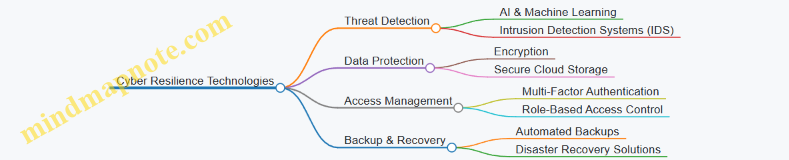
Real-World Example: The 2021 Colonial Pipeline Cyberattack
- Incident: Ransomware attack forced shutdown of a major fuel pipeline in the U.S.
- Impact: Supply chain disruption caused fuel shortages and price spikes.
- Lesson: Highlighted the vulnerability of critical infrastructure and the need for cyber resilience.
- Response: Post-attack, Colonial Pipeline invested heavily in cybersecurity upgrades, employee training, and incident response capabilities.
Integrating Cyber Resilience into Supply Chain Strategy
- Embed cybersecurity requirements into supplier selection and evaluation.
- Collaborate with IT and cybersecurity teams to align operational and technical defenses.
- Continuously monitor emerging cyber threats relevant to supply chain operations.
Summary
Cyber resilience is a vital component of modern supply chain management. By proactively addressing cyber risks through training, technology, and collaboration, supply chain professionals can safeguard operations against disruptions and maintain trust across their networks.
For supply chain managers and operations professionals, prioritizing cyber resilience means not only protecting data and systems but also ensuring that the entire supply chain remains agile and responsive in the face of evolving cyber threats.
12.4 Example: Adoption of Autonomous Vehicles and Robotics for Supply Chain Continuity
The integration of autonomous vehicles (AVs) and robotics into supply chains has emerged as a transformative approach to enhancing continuity, especially during disruptions. These technologies help mitigate risks associated with labor shortages, transportation delays, and operational inefficiencies.
Key Benefits of Autonomous Vehicles and Robotics in Supply Chains
- Operational Continuity: Autonomous systems can operate 24/7 without fatigue, reducing downtime.
- Labor Shortage Mitigation: Robotics and AVs reduce dependency on human labor, critical during pandemics or labor strikes.
- Enhanced Safety: Automation reduces accidents caused by human error.
- Improved Efficiency: Robots and AVs optimize routes and warehouse operations, speeding up processes.
- Scalability: Easily scaled up or down depending on demand fluctuations.
Mind Map: Autonomous Vehicles and Robotics in Supply Chain Continuity
Real-World Examples
-
Amazon Robotics and Autonomous Delivery
- Amazon employs thousands of Kiva robots in its fulfillment centers to automate picking and packing, drastically reducing order processing times.
- For last-mile delivery, Amazon Scout, an autonomous delivery robot, is being tested to navigate sidewalks and deliver packages safely.
-
Einride’s Autonomous Electric Trucks
- Einride operates electric, self-driving trucks in Sweden, transporting goods with zero emissions and minimal human intervention.
- These trucks are remotely monitored and controlled, ensuring continuity even when driver availability is limited.
-
Walmart’s Use of Autonomous Forklifts and Drones
- Walmart has deployed autonomous forklifts in warehouses to move pallets efficiently.
- Drones are used for inventory scanning, reducing manual labor and improving accuracy.
-
JD.com’s Fully Automated Warehouses
- JD.com, a major Chinese e-commerce company, uses robotics extensively for sorting, packaging, and transporting goods within warehouses.
- Autonomous vehicles handle deliveries in some urban areas, ensuring timely shipments despite traffic or labor disruptions.
Mind Map: Autonomous Vehicles in Last-Mile Delivery
Best Practices for Implementing Autonomous Vehicles and Robotics
- Pilot Programs: Start with small-scale pilots to evaluate operational impact and gather data.
- Cross-Functional Collaboration: Involve IT, operations, and safety teams early to ensure smooth integration.
- Data Security: Implement robust cybersecurity measures to protect autonomous systems from hacking.
- Regulatory Compliance: Stay updated on local and international regulations governing autonomous operations.
- Employee Training: Reskill workforce to manage and maintain autonomous systems.
- Continuous Monitoring: Use IoT and AI to monitor performance and predict maintenance needs.
Summary
Adopting autonomous vehicles and robotics is a powerful strategy for supply chain resilience. By reducing reliance on human labor and enhancing operational efficiency, these technologies enable supply chains to maintain continuity during disruptions such as pandemics, labor shortages, or transportation bottlenecks. Real-world implementations by industry leaders demonstrate tangible benefits and provide valuable lessons for supply chain managers and operations professionals aiming to future-proof their operations.
12.5 Scenario Planning for Black Swan Events and Unknown Unknowns
In the realm of supply chain management, Black Swan events—rare, unpredictable occurrences with severe consequences—pose significant challenges. Unknown unknowns refer to risks that are not yet identified or anticipated, making traditional risk management insufficient. Scenario planning is a strategic tool that prepares supply chains to absorb shocks from such events by imagining multiple plausible futures and developing flexible response strategies.
Understanding Black Swan Events and Unknown Unknowns
- Black Swan Events: Highly impactful, unexpected disruptions such as the COVID-19 pandemic, the 2011 Tōhoku earthquake and tsunami, or the sudden blockage of the Suez Canal in 2021.
- Unknown Unknowns: Risks that have not been identified or considered, often emerging from complex interdependencies or novel circumstances.
Why Scenario Planning Matters
- Enables organizations to think beyond historical data and conventional risks.
- Encourages flexibility and adaptability in supply chain design.
- Helps identify vulnerabilities and develop contingency plans.
Mind Map: Core Components of Scenario Planning for Black Swan Events
Step-by-Step Scenario Planning Process
- Assemble a Cross-Functional Team: Include supply chain managers, risk analysts, operations professionals, and external experts.
- Identify Known Risks and Brainstorm Unknowns: Use workshops and expert interviews to surface potential unknown unknowns.
- Develop Diverse Scenarios: Create narratives describing different futures, including extreme and unlikely events.
- Analyze Impact: Evaluate how each scenario affects suppliers, production, logistics, and customers.
- Design Flexible Response Plans: Develop strategies that can be adapted depending on how events unfold.
- Implement Monitoring Systems: Set up indicators and data feeds to detect early signs of emerging risks.
- Regularly Review and Update Scenarios: Keep scenarios relevant as market conditions and technologies evolve.
Mind Map: Example Scenario Planning Workflow
Practical Example: Scenario Planning in Action
Company: Global Electronics Manufacturer
Context: The company faced severe disruptions during the COVID-19 pandemic due to reliance on a single region for critical components.
Scenario Planning Application:
- Developed scenarios including a global pandemic, regional lockdowns, and supply chain cyberattacks.
- Assessed impacts on supplier capacity, shipping delays, and demand fluctuations.
- Created response strategies such as diversifying suppliers across continents, increasing safety stock for key parts, and investing in digital supply chain visibility tools.
- Established early warning indicators like supplier health scores and geopolitical risk indexes.
Outcome: When a subsequent regional lockdown occurred, the company quickly shifted orders to alternate suppliers, minimizing production downtime.
Mind Map: Early Warning Indicators for Black Swan Events
Tips for Effective Scenario Planning
- Embrace Uncertainty: Accept that not all variables can be predicted; focus on flexibility.
- Engage Diverse Perspectives: Include stakeholders from different functions and geographies.
- Use Both Qualitative and Quantitative Methods: Combine storytelling with data-driven models.
- Communicate Scenarios Clearly: Use visual tools like mind maps and dashboards.
- Integrate Scenario Planning into Regular Business Processes: Make it a living exercise rather than a one-off event.
Summary
Scenario planning for Black Swan events and unknown unknowns equips supply chain managers and operations professionals with a proactive mindset and practical tools to navigate uncertainty. By imagining multiple futures, analyzing impacts, and preparing adaptable responses, organizations can build resilience that not only mitigates risks but also uncovers new opportunities in turbulent environments.
13. Conclusion and Actionable Roadmap
13.1 Synthesizing Lessons Learned from Recent Disruptions
Recent global disruptions have provided invaluable insights into the vulnerabilities and strengths of modern supply chains. Synthesizing these lessons is critical for supply chain managers and operations professionals aiming to build more resilient, adaptive, and agile systems. Below is a comprehensive synthesis, illustrated with mind maps and real-world examples.
Key Lessons Learned
Detailed Insights with Examples
-
Visibility & Transparency
- Insight: Lack of real-time visibility was a major factor in delayed responses during the COVID-19 pandemic.
- Example: A global electronics company implemented IoT sensors across its logistics network, enabling real-time shipment tracking and early identification of bottlenecks.
-
Diversification & Flexibility
- Insight: Overreliance on single suppliers or regions creates critical failure points.
- Example: A multinational retailer diversified its supplier base by adding local manufacturers, reducing lead times and mitigating risks from international shipping delays.
-
Inventory & Buffer Management
- Insight: Just-in-Time (JIT) systems struggled under sudden demand spikes; strategic buffers proved essential.
- Example: A pharmaceutical company maintained strategic vaccine stockpiles, enabling rapid distribution during pandemic surges.
-
Technology Enablement
- Insight: Advanced analytics and AI improved demand forecasting accuracy, helping companies anticipate disruptions.
- Example: A logistics provider used AI-driven predictive models to reroute shipments proactively during port closures.
-
Collaboration & Communication
- Insight: Transparent communication with suppliers and customers enabled coordinated responses.
- Example: The automotive industry formed consortiums to share chip availability data, allowing better production planning.
-
Risk Management & Scenario Planning
- Insight: Scenario planning and digital twins helped companies visualize impacts and prepare contingencies.
- Example: A consumer electronics firm used digital twins to simulate supply chain disruptions and identify alternative sourcing options.
-
Financial Preparedness
- Insight: Allocating budgets specifically for resilience initiatives ensured quicker recovery.
- Example: A consumer goods company balanced procurement costs with resilience investments, maintaining profitability during disruptions.
-
Culture & Leadership
- Insight: Leadership commitment and a culture of resilience foster proactive risk management.
- Example: A logistics firm embedded resilience metrics into employee performance reviews, encouraging ownership.
-
Regulatory & Ethical Compliance
- Insight: Staying ahead of regulatory changes and ethical sourcing requirements prevented compliance risks.
- Example: An apparel brand increased supply chain transparency to meet evolving labor standards, enhancing brand reputation.
-
Future-Proofing
- Insight: Preparing for emerging risks like climate change and cyber threats is essential.
- Example: A manufacturer invested in cybersecurity protocols and autonomous delivery vehicles to maintain operations during crises.
Mind Map: Integrated Resilience Strategy
Summary
The synthesis of lessons learned underscores that supply chain resilience is multifaceted, requiring a balanced approach across visibility, diversification, technology, collaboration, and culture. Organizations that integrate these elements holistically are better positioned to anticipate, absorb, and recover from disruptions.
By embedding these lessons into daily operations and strategic planning, supply chain managers and operations professionals can transform challenges into opportunities for competitive advantage.
13.2 Step-by-Step Guide to Implementing Resilience Best Practices
Building supply chain resilience is a strategic journey that requires careful planning, execution, and continuous improvement. This step-by-step guide breaks down the process into actionable phases, each supported by practical examples and mind maps to visualize key concepts.
Step 1: Assess and Map Your Supply Chain
- Objective: Understand your supply chain’s structure, dependencies, and vulnerabilities.
- Actions:
- Create a detailed map of suppliers, manufacturing sites, logistics partners, and distribution channels.
- Identify critical nodes and single points of failure.
- Collect data on lead times, capacities, and risk exposure.
Example: A global electronics company mapped its multi-tier supply chain and discovered that a single supplier provided 80% of a critical component, prompting diversification.
Mind Map:
Step 2: Conduct Risk Identification and Prioritization
- Objective: Identify potential risks and prioritize them based on impact and likelihood.
- Actions:
- Use tools like Failure Mode and Effects Analysis (FMEA).
- Engage cross-functional teams and suppliers for comprehensive risk insights.
- Prioritize risks that could cause significant disruption.
Example: A pharmaceutical firm used scenario planning to assess risks from geopolitical tensions affecting raw material imports, prioritizing alternative sourcing.
Mind Map:
- Risk Identification
- Natural Disasters
- Geopolitical Risks
- Supplier Financial Health
- Cybersecurity Threats
- Transportation Delays
- Risk Prioritization
- Impact
- Likelihood
- Mitigation Cost
Step 3: Develop Strategic Sourcing and Supplier Diversification
- Objective: Reduce dependency on single suppliers and regions.
- Actions:
- Identify alternative suppliers in different geographies.
- Establish multi-sourcing agreements.
- Build strong relationships and communication channels with suppliers.
Example: A global retailer diversified its textile suppliers across Asia and Latin America to mitigate risks from regional lockdowns.
Mind Map:
Step 4: Optimize Inventory and Buffer Strategies
- Objective: Balance inventory levels to protect against disruptions without excessive carrying costs.
- Actions:
- Analyze demand variability and lead times.
- Implement dynamic safety stock calculations.
- Use inventory visibility tools for real-time monitoring.
Example: A pharmaceutical company maintained strategic stockpiles of vaccines and raw materials, enabling rapid response during demand surges.
Mind Map:
Step 5: Leverage Technology for Predictive Analytics and Visibility
- Objective: Use technology to gain real-time insights and predictive capabilities.
- Actions:
- Implement IoT sensors for asset tracking.
- Use AI/ML for demand forecasting.
- Deploy blockchain for transparency.
Example: A logistics provider used IoT-enabled trucks to monitor shipment conditions and proactively reroute deliveries during disruptions.
Mind Map:
Step 6: Design Agile and Flexible Supply Chain Processes
- Objective: Enable rapid adaptation to changing conditions.
- Actions:
- Develop modular production lines.
- Cross-train employees.
- Utilize contract manufacturing and 3PL partnerships.
Example: An electronics manufacturer reconfigured production lines within days to switch to higher-demand products during a disruption.
Mind Map:
Step 7: Foster Collaboration and Transparent Communication
- Objective: Build trust and coordination across the supply chain ecosystem.
- Actions:
- Establish regular communication protocols.
- Share risk assessments and contingency plans.
- Participate in industry consortiums.
Example: Automotive manufacturers collaborated with chip suppliers to share forecasts and jointly manage shortages.
Mind Map:
Step 8: Implement Financial and Compliance Safeguards
- Objective: Ensure financial readiness and regulatory adherence.
- Actions:
- Allocate budgets for resilience initiatives.
- Secure insurance for supply chain risks.
- Monitor regulatory changes and ethical sourcing.
Example: A consumer goods company balanced cost and resilience by investing in dual sourcing and maintaining compliance with evolving trade regulations.
Mind Map:
Step 9: Build a Culture of Resilience
- Objective: Embed resilience into organizational mindset and behaviors.
- Actions:
- Leadership commitment and communication.
- Training programs on risk awareness.
- Reward innovation and proactive problem-solving.
Example: A logistics firm integrated resilience metrics into employee performance reviews, encouraging proactive risk management.
Mind Map:
Step 10: Monitor, Review, and Continuously Improve
- Objective: Ensure resilience measures remain effective and evolve with changing risks.
- Actions:
- Track KPIs related to supply chain performance and risk mitigation.
- Conduct regular audits and scenario drills.
- Update strategies based on lessons learned.
Example: A food distributor held quarterly resilience reviews, adjusting inventory buffers and supplier strategies based on recent disruptions.
Mind Map:
By following this structured approach, supply chain managers and operations professionals can systematically build resilience into their supply chains, turning disruptions into opportunities for growth and competitive advantage.
13.3 Key Performance Indicators to Track Progress
Tracking the right Key Performance Indicators (KPIs) is essential for supply chain managers and operations professionals to measure the effectiveness of resilience strategies and identify areas for continuous improvement. KPIs provide quantifiable data that helps organizations monitor risk mitigation efforts, operational agility, and recovery capabilities.
Core Categories of Supply Chain Resilience KPIs
Below is a mind map illustrating the main KPI categories to focus on:
Detailed Explanation and Examples of Key KPIs
-
Supplier Risk Score
- Definition: A composite score assessing supplier reliability, financial stability, geopolitical exposure, and compliance.
- Example: A multinational electronics company assigns risk scores to suppliers based on country risk and delivery history. Suppliers with scores below a threshold trigger contingency sourcing.
-
Risk Event Frequency
- Definition: Number of disruption events recorded over a specific period.
- Example: A food distributor tracks frequency of supplier delays or quality issues monthly to identify trends and proactively engage suppliers.
-
Order Fulfillment Lead Time
- Definition: Average time taken from order placement to delivery.
- Example: A fashion retailer monitors lead times to detect delays caused by port congestion and adjusts inventory buffers accordingly.
-
On-Time Delivery Rate
- Definition: Percentage of orders delivered on or before the promised date.
- Example: A pharmaceutical company aims for a 98% on-time delivery rate to ensure critical medicines reach hospitals without delay.
-
Safety Stock Levels
- Definition: Quantity of buffer inventory held to mitigate supply variability.
- Example: An automotive manufacturer dynamically adjusts safety stock based on supplier lead time variability and demand fluctuations.
-
Inventory Turnover Rate
- Definition: Number of times inventory is sold and replaced over a period.
- Example: A consumer electronics firm tracks turnover to balance between excess inventory (risk of obsolescence) and stockouts.
-
Time to Recover (TTR)
- Definition: Duration required to restore normal operations after a disruption.
- Example: A logistics provider measures TTR after a cyberattack to evaluate the effectiveness of its incident response plan.
-
Downtime Duration
- Definition: Total time operations are halted due to disruptions.
- Example: A chemical plant tracks downtime caused by supplier delays or equipment failures to prioritize resilience investments.
-
Cost of Disruptions
- Definition: Financial impact directly attributable to supply chain interruptions.
- Example: A retail chain calculates lost sales and expedited shipping costs after a warehouse fire to justify resilience spending.
-
Resilience Investment ROI
- Definition: Return on investment from resilience initiatives, comparing cost savings or avoided losses to expenditures.
- Example: A manufacturer evaluates ROI on supplier diversification by comparing disruption costs before and after implementation.
-
Supplier Communication Frequency
- Definition: Rate of proactive communication exchanges with suppliers regarding risks and operational status.
- Example: A global apparel brand tracks weekly check-ins with key suppliers to enhance transparency and early warning.
-
Issue Resolution Time
- Definition: Average time taken to resolve supply chain issues once identified.
- Example: An electronics company measures resolution time for quality defects to improve supplier collaboration and reduce delays.
Mind Map: KPI Monitoring Process

Practical Tips for Implementing KPI Tracking
- Leverage Technology: Use supply chain management software and IoT devices to automate data capture and real-time monitoring.
- Set Benchmarks: Establish baseline performance levels and target thresholds for each KPI.
- Engage Stakeholders: Share KPI reports with suppliers and internal teams to foster accountability.
- Review Regularly: Conduct periodic reviews to adapt KPIs as supply chain complexity and risks evolve.
By systematically tracking these KPIs, supply chain managers and operations professionals can gain actionable insights to strengthen resilience, reduce vulnerability, and ensure business continuity in the face of future disruptions.
13.4 Case Study Recap: Integrated Resilience Strategies in Practice
In this section, we revisit a comprehensive case study that illustrates how an international electronics manufacturer successfully integrated multiple resilience strategies to navigate recent global disruptions. This example highlights the practical application of best practices discussed throughout the blog, demonstrating how a cohesive approach can mitigate risks and maintain operational continuity.
Background
The company faced significant challenges during the COVID-19 pandemic and the semiconductor shortage crisis. Their supply chain, spanning multiple continents and involving hundreds of suppliers, was vulnerable to delays, demand fluctuations, and geopolitical tensions.
Integrated Resilience Strategies Implemented
Mind Map: Integrated Resilience Strategies
Detailed Examples from the Case Study
-
Risk Identification & Assessment:
- The company implemented digital twins to simulate supply chain disruptions virtually. For example, when a key semiconductor plant reported shutdowns, the digital twin model predicted potential delays, enabling proactive rerouting of orders.
-
Strategic Sourcing:
- Instead of relying on a single supplier in East Asia, the company diversified by onboarding secondary suppliers in Mexico and Eastern Europe. This multi-sourcing strategy reduced dependency and shortened lead times.
-
Inventory Management:
- They shifted from pure Just-in-Time to a hybrid model, maintaining strategic buffer stocks of critical chips. When the semiconductor shortage peaked, these buffers allowed production to continue without costly shutdowns.
-
Technology Enablement:
- AI-powered demand forecasting helped adjust production schedules dynamically as consumer demand fluctuated during the pandemic. IoT sensors tracked shipments in real-time, alerting teams to potential delays.
-
Agile Supply Chain Design:
- Production lines were reconfigured rapidly to switch between product models based on component availability. Cross-training employees ensured that workforce shortages did not halt operations.
-
Collaboration & Communication:
- The company established a supplier portal that provided real-time visibility into inventory and shipment status. Joint risk workshops with suppliers fostered trust and aligned contingency plans.
-
Financial Strategies:
- A dedicated resilience fund was created to cover unexpected costs from disruptions. Additionally, supply chain insurance policies helped mitigate financial losses from delayed shipments.
-
Regulatory & Ethical Compliance:
- Continuous monitoring tools alerted the company to new tariffs and customs regulations, allowing swift compliance adjustments. Ethical sourcing audits ensured suppliers met labor and environmental standards.
-
Organizational Culture:
- Leadership regularly communicated the importance of resilience, embedding it into corporate values. Employees participated in resilience training programs, encouraging innovation and proactive problem-solving.
Summary
This integrated approach allowed the company to not only survive but thrive amid unprecedented disruptions. By combining technology, strategic planning, collaboration, and culture, they built a supply chain capable of rapid adaptation and sustained performance.
Additional Mind Map: Benefits Realized
Mind Map: Benefits of Integrated Resilience
This case study exemplifies how supply chain managers and operations professionals can apply a holistic resilience framework, combining best practices and innovative tools to safeguard their supply chains against future uncertainties.
13.5 Final Thoughts: Building Supply Chains That Thrive Amid Uncertainty
In an increasingly volatile and complex global environment, supply chain resilience is no longer a luxury but a necessity. Organizations that proactively embrace resilience principles position themselves not only to survive disruptions but to thrive and gain competitive advantage. This final section synthesizes key insights and offers a holistic perspective on building supply chains capable of adapting, responding, and evolving amid uncertainty.
Key Pillars of Resilient Supply Chains
Embracing a Proactive Mindset
Resilience requires shifting from reactive firefighting to proactive anticipation. For example, a multinational electronics manufacturer implemented AI-driven demand forecasting combined with scenario planning workshops. This allowed them to anticipate component shortages months in advance and adjust sourcing strategies accordingly, minimizing downtime during the semiconductor crisis.
Example: A Global Retailer’s Journey to Resilience
- Challenge: Frequent disruptions due to geopolitical tensions and pandemic-related supply shocks.
- Actions Taken:
- Diversified suppliers across multiple regions.
- Increased strategic inventory for high-risk products.
- Invested in cloud-based supply chain visibility tools.
- Fostered close collaboration with key suppliers through shared risk assessments.
- Outcome: Reduced lead times by 20%, improved on-time delivery rates, and maintained steady product availability during subsequent disruptions.
Mind Map: Resilience in Action - Example Breakdown
Continuous Learning and Adaptation
Resilience is dynamic. Organizations must embed continuous improvement cycles, learning from each disruption to strengthen their systems. For instance, a pharmaceutical company post-COVID-19 enhanced its buffer stock policies and supplier audit processes after analyzing bottlenecks experienced during vaccine rollouts.
Final Recommendations for Supply Chain Managers and Operations Professionals
- Invest in Visibility: Use technology to gain real-time insights and predictive analytics.
- Foster Collaboration: Build trust and open communication channels across your supply ecosystem.
- Diversify Thoughtfully: Balance cost with risk by avoiding over-reliance on single suppliers or geographies.
- Build Agility: Design processes and teams that can pivot quickly when conditions change.
- Embed Resilience Culture: Encourage leadership to champion resilience and empower employees with training.
- Plan Financially: Allocate budgets for resilience initiatives and understand the ROI.
By weaving these elements into the fabric of your supply chain strategy, your organization can transform uncertainty from a threat into an opportunity for innovation and growth. Remember, resilience is not a destination but an ongoing journey—one that requires vigilance, creativity, and commitment.
“The best way to predict the future is to create it.” – Peter Drucker