Flow Battery Systems: Design,Scale-Up and Integration
1. Introduction to Flow Battery Systems
1.1 Overview of Flow Battery Technology
Flow batteries are a class of rechargeable electrochemical energy storage devices where energy is stored in liquid electrolytes contained in external tanks. Unlike conventional batteries, flow batteries separate the power and energy components, allowing for flexible scalability and long-duration storage.
What is a Flow Battery?
- Definition: Electrochemical cell where two electrolyte solutions flow through a cell stack separated by a membrane.
- Key Feature: Energy capacity depends on electrolyte volume; power depends on cell stack size.
Basic Components of a Flow Battery
Operating Principle
- Electrolytes circulate through the cell stack where redox reactions occur at electrodes.
- Electrons flow through an external circuit generating electrical power.
- The membrane allows ion exchange to maintain charge balance.
Types of Flow Batteries
Advantages of Flow Batteries
- Scalability: Energy capacity increased by enlarging electrolyte tanks without changing power hardware.
- Long Cycle Life: Minimal degradation due to separation of electrolytes.
- Flexible Operation: Can be fully discharged without damage.
- Safety: Non-flammable aqueous electrolytes reduce fire risk.
Example: Vanadium Redox Flow Battery in Renewable Integration
A 5 MW/20 MWh VRFB system was deployed alongside a solar farm in California to smooth output fluctuations and provide peak shaving. The modular design allowed easy capacity expansion by adding electrolyte volume and cell stacks. Over 10 years, the system demonstrated stable performance with minimal capacity fade.
Challenges
- Energy Density: Lower compared to lithium-ion batteries, requiring larger footprint.
- Cost: High upfront capital costs, especially for membranes and electrolytes.
- Complexity: Pumps and plumbing add operational complexity.
Summary Mind Map
This foundational understanding sets the stage for deeper exploration into design, scale-up, and integration strategies covered in subsequent sections.
1.2 Key Components and Operating Principles
Flow batteries are unique energy storage systems that store energy in liquid electrolytes contained in external tanks. Understanding their key components and how they operate is fundamental for energy systems engineers, grid planners, and project developers aiming to design, scale, and integrate these systems effectively.
Key Components of a Flow Battery System
- Electrolyte Tanks: Store the liquid electrolytes (anolyte and catholyte) separately. The volume of these tanks determines the energy capacity.
- Electrochemical Cells (Stack): Where the redox reactions occur to convert chemical energy to electrical energy and vice versa.
- Membrane (Separator): A selective barrier that allows ion exchange while preventing electrolyte mixing.
- Pumps and Flow System: Circulate electrolytes through the electrochemical cells.
- Power Conditioning System: Includes inverters and controllers to manage power output and grid interface.
- Sensors and Control Systems: Monitor temperature, flow rate, voltage, and state of charge for safe and efficient operation.
Operating Principles
Flow batteries operate based on redox (reduction-oxidation) reactions occurring in the electrochemical cell stack. Unlike conventional batteries where energy is stored within the electrodes, flow batteries store energy in the liquid electrolytes.
- During charging, electrical energy from an external source drives the redox reactions, converting the electrolytes to their charged states.
- During discharging, the redox reactions reverse, releasing electrical energy as ions flow through the membrane and electrons flow through the external circuit.
The separation of energy storage (electrolyte tanks) from power generation (cell stack) allows independent scaling of power and energy capacity.
Mind Map: Key Components of Flow Battery Systems
Mind Map: Operating Principles of Flow Batteries
Example: Vanadium Redox Flow Battery (VRFB)
The Vanadium Redox Flow Battery is one of the most widely deployed flow battery chemistries. It uses vanadium ions in different oxidation states dissolved in sulfuric acid as electrolytes.
- Electrolyte Tanks: Two separate tanks contain V(II)/V(III) anolyte and V(IV)/V(V) catholyte.
- Cell Stack: Contains carbon felt electrodes and a proton exchange membrane.
- Operation: During charging, V(III) ions are oxidized to V(IV) at the cathode, and V(IV) ions are reduced to V(III) at the anode. The process reverses during discharge.
This chemistry allows for long cycle life and easy electrolyte rebalancing, making it a best practice example for grid-scale storage.
Example: Zinc-Bromine Flow Battery
- Electrolyte Tanks: Zinc ions in one tank and bromine in another.
- Cell Stack: Electrodes facilitate plating and stripping of zinc and bromine reactions.
- Operation: Zinc plates onto the electrode during charging and dissolves back during discharge.
This system offers high energy density but requires careful management of bromine, a hazardous material, illustrating the importance of safety considerations in component selection.
Best Practice Tip:
When designing flow battery systems, carefully select components based on application requirements:
- For long-duration storage, prioritize larger electrolyte tanks.
- For high power applications, invest in larger or more cell stacks.
- Choose membranes and electrodes that balance cost, durability, and performance.
- Incorporate robust sensors and control systems to optimize operation and safety.
Understanding these components and their interplay is critical for successful design, scale-up, and integration of flow battery systems.
1.3 Comparison with Other Energy Storage Technologies
Flow batteries represent a unique class of energy storage systems distinguished by their scalability, long cycle life, and flexible design. To fully appreciate their role in the energy landscape, it is essential to compare them with other prevalent energy storage technologies such as lithium-ion batteries, pumped hydro storage, and compressed air energy storage (CAES).
Mind Map: Energy Storage Technologies Overview
Key Comparison Dimensions:
| Feature | Flow Batteries | Lithium-ion Batteries | Pumped Hydro Storage | Compressed Air Energy Storage (CAES) |
|---|---|---|---|---|
| Energy Capacity | Easily scalable by increasing electrolyte volume | Limited by cell size and number | Very large, site-dependent | Large, site-dependent |
| Power Rating | Decoupled from energy capacity; flexible | Fixed ratio with energy capacity | High power output | Moderate to high power output |
| Cycle Life | >10,000 cycles | 1,000–5,000 cycles | 20+ years operational life | 20+ years operational life |
| Response Time | Seconds | Milliseconds to seconds | Minutes to hours | Minutes to hours |
| Energy Efficiency | 65–85% | 85–95% | 70–85% | 70–80% |
| Self-Discharge | Very low (electrolyte storage) | Moderate to high | Negligible | Negligible |
| Environmental Impact | Low toxicity, recyclable electrolytes | Mining concerns, recycling challenges | Site and ecosystem impact | Site and ecosystem impact |
Mind Map: Flow Battery Advantages and Limitations
Example 1: Vanadium Redox Flow Battery vs. Lithium-ion in Grid-Scale Storage
A 5 MW/20 MWh vanadium redox flow battery was deployed to provide peak shaving and frequency regulation services in a utility grid. Its decoupled power and energy design allowed the operator to tailor capacity upgrades by simply increasing electrolyte volume without changing the stack size. In contrast, a lithium-ion system of similar power rating required a fixed battery size, limiting flexibility. The flow battery demonstrated over 12,000 cycles with minimal capacity fade, whereas the lithium-ion system required cell replacements after 4,000 cycles.
Mind Map: Use Case Suitability
Example 2: Pumped Hydro vs. Flow Battery for Renewable Integration
In a mountainous region, pumped hydro storage has been the traditional choice for large-scale renewable integration due to its high capacity and long discharge duration. However, site limitations and environmental concerns have restricted new developments. Flow batteries offer a modular alternative that can be installed closer to load centers or renewable generation sites, providing distributed storage solutions with less environmental impact.
Summary
Flow batteries excel in applications requiring long cycle life, flexible scaling, and safe operation, particularly for grid-scale renewable integration and long-duration storage. While lithium-ion batteries dominate in high energy density and fast response scenarios, and mechanical storage excels in very large capacity applications, flow batteries fill a critical niche with their unique design and operational advantages.
Understanding these distinctions helps energy systems engineers, grid planners, and project developers select the most appropriate technology tailored to their specific project requirements.
1.4 Typical Applications and Use Cases
Flow battery systems have emerged as a versatile and scalable energy storage solution, particularly well-suited for applications requiring long-duration storage, high cycle life, and flexible power ratings. This section explores the most common applications and use cases, illustrating how flow batteries integrate into various energy systems with practical examples.
Mind Map: Typical Applications of Flow Battery Systems
Renewable Energy Integration
Flow batteries are ideal for storing excess energy generated by intermittent renewable sources such as solar and wind. Their ability to decouple power and energy ratings allows for tailored storage solutions that can smooth output and provide firm, dispatchable power.
Example:
-
Solar Farm Smoothing in California: A 1 MW / 4 MWh vanadium redox flow battery system was deployed alongside a solar photovoltaic farm to mitigate output fluctuations caused by cloud cover. This system enabled the solar farm to deliver a more stable power output to the grid, improving grid reliability and reducing curtailment.
-
Wind Power Firming in Europe: A wind farm integrated a flow battery system to store excess wind energy during high production periods and discharge during low wind conditions, effectively increasing the capacity factor and revenue streams.
Grid Services
Flow batteries provide valuable ancillary services to the grid, including frequency regulation, peak shaving, and load shifting, thanks to their rapid response and long cycle life.
Example:
-
Frequency Regulation in PJM Market: A flow battery installation participates in frequency regulation markets by rapidly absorbing or injecting power to maintain grid frequency within tight bounds. The system’s durability allows for thousands of cycles per year without significant degradation.
-
Peak Shaving for Commercial Buildings: A commercial facility uses a flow battery to reduce peak demand charges by discharging stored energy during peak hours, lowering operational costs.
Microgrids and Remote Power
In remote or off-grid locations, flow batteries provide reliable, long-duration energy storage that can integrate with renewable generation to reduce dependence on diesel generators.
Example:
-
Remote Island Microgrid: A remote island community implemented a flow battery system paired with solar PV to reduce diesel fuel consumption by 60%. The system provides stable power overnight and during periods of low solar generation.
-
Industrial Site Energy Resilience: An industrial facility in a remote area uses a flow battery to ensure continuous power supply during grid outages and to optimize energy costs by shifting load.
Backup Power and Uninterruptible Power Supply (UPS)
Flow batteries offer a scalable and environmentally friendly alternative to traditional lead-acid or lithium-ion batteries for backup power applications.
Example:
-
Data Center Backup: A data center deployed a flow battery UPS system that provides extended backup duration compared to conventional batteries, enhancing reliability and reducing maintenance.
-
Critical Infrastructure: Hospitals and emergency response centers use flow batteries to guarantee uninterrupted power during outages, ensuring operational continuity.
Electric Vehicle (EV) Charging Support
As EV adoption grows, flow batteries can support fast charging infrastructure by managing peak loads and storing renewable energy for charging.
Example:
-
Fast Charging Station in Germany: A flow battery system buffers grid demand by charging during off-peak hours and discharging to support high-power EV charging during peak times, reducing grid stress.
-
Fleet Charging Management: A logistics company uses a flow battery to optimize charging schedules for its electric delivery fleet, lowering energy costs and improving grid interaction.
Summary
Flow battery systems demonstrate exceptional flexibility across a wide range of applications, from smoothing renewable energy output and providing grid services to enabling resilient microgrids and supporting EV infrastructure. Their unique design advantages—such as decoupled power and energy capacity, long cycle life, and scalability—make them a compelling choice for energy systems engineers, grid planners, and project developers aiming to build sustainable and reliable energy solutions.
1.5 Best Practice: Selecting the Right Flow Battery Chemistry with Real-World Examples
Selecting the appropriate flow battery chemistry is a foundational step in designing an efficient, cost-effective, and durable energy storage system. This decision impacts system performance, scalability, maintenance, and integration with renewable energy sources. Below, we explore key considerations and provide real-world examples to guide energy systems engineers, grid planners, and project developers.
Key Factors in Selecting Flow Battery Chemistry
Flow Battery Chemistry Selection Mind Map
Common Flow Battery Chemistries and Their Characteristics
| Chemistry | Energy Density | Cycle Life | Cost Profile | Safety Profile | Typical Applications |
|---|---|---|---|---|---|
| Vanadium Redox | Moderate | >10,000 cycles | Moderate-High | Non-flammable, low toxicity | Utility-scale, long-duration storage |
| Zinc-Bromine | High | 3,000 - 5,000 cycles | Moderate | Flammable electrolyte risk | Commercial, peak shaving |
| Iron-Chromium | Moderate | 5,000 - 8,000 cycles | Lower | Low toxicity | Grid balancing, microgrids |
| Organic Flow Batteries | Variable | Emerging tech | Potentially low | Depends on organics | Flexible, experimental deployments |
Real-World Example 1: Vanadium Redox Flow Battery at Dalian, China
- Context: A 200 MW / 800 MWh vanadium redox flow battery system integrated with wind farms.
- Why Vanadium? Excellent cycle life and chemical stability suited for frequent cycling with renewable variability.
- Outcome: Demonstrated high reliability and grid service capabilities over multiple years.
Dalian Vanadium Flow Battery Example Mind Map
Real-World Example 2: Zinc-Bromine Flow Battery for Commercial Peak Shaving
- Context: A 2 MW / 8 MWh zinc-bromine system deployed at a commercial facility in California.
- Why Zinc-Bromine? Higher energy density and cost-effective for medium-duration storage.
- Outcome: Reduced demand charges and improved energy cost savings.
Zinc-Bromine Commercial Deployment Mind Map
Real-World Example 3: Iron-Chromium Flow Battery in Microgrid Application
- Context: A 500 kW / 2 MWh iron-chromium flow battery integrated into a remote microgrid in Australia.
- Why Iron-Chromium? Cost-effective and environmentally benign chemistry for off-grid applications.
- Outcome: Reliable energy storage with low operational costs.
Iron-Chromium Microgrid Example Mind Map
Best Practice Recommendations
- Match Chemistry to Application: Understand the power and energy demands, cycling frequency, and environmental conditions.
- Evaluate Total Cost of Ownership: Include capital costs, maintenance, electrolyte replacement, and system lifespan.
- Consider Safety and Environmental Impact: Choose chemistries with manageable risks and regulatory compliance.
- Pilot Testing: Conduct small-scale pilots to validate chemistry performance under site-specific conditions.
- Leverage Modular Designs: Facilitate easier scale-up and maintenance.
By integrating these best practices with lessons learned from real-world deployments, project developers and grid planners can optimize flow battery system selection to meet their unique operational and economic goals.
2. Fundamental Design Considerations
2.1 Electrolyte Selection and Optimization
Electrolyte selection is a cornerstone in the design of flow battery systems, directly influencing performance, cost, safety, and longevity. Optimizing electrolytes involves balancing chemical stability, ionic conductivity, viscosity, and compatibility with other cell components.
Key Factors in Electrolyte Selection
- Chemical Stability: Electrolytes must resist degradation over many charge-discharge cycles.
- Ionic Conductivity: High conductivity reduces internal resistance, improving efficiency.
- Viscosity: Lower viscosity facilitates easier pumping and reduces parasitic energy losses.
- Cost and Availability: Economical and abundant materials support scalability.
- Safety and Environmental Impact: Non-toxic, non-flammable electrolytes enhance operational safety.
Common Electrolyte Chemistries
| Chemistry Type | Example Electrolytes | Advantages | Challenges |
|---|---|---|---|
| Vanadium Redox | V(II)/V(III) and V(IV)/V(V) in sulfuric acid | Proven stability, symmetric reactions | Cost of vanadium, sulfuric acid handling |
| Zinc-Bromine | ZnBr2 aqueous solution | High energy density, low cost | Bromine management, dendrite formation |
| Organic Redox | Quinones, TEMPO derivatives | Tunable chemistry, potentially low cost | Stability and solubility issues |
| Iron-Chromium | Fe and Cr ions in acidic solution | Low cost, abundant materials | Lower efficiency, crossover issues |
Mind Map: Electrolyte Selection Criteria
Optimization Strategies
- Concentration Tuning: Adjusting active species concentration to balance energy density and viscosity.
- Additives: Incorporating stabilizers or inhibitors to reduce side reactions and improve electrolyte life.
- pH Control: Maintaining optimal pH to prevent precipitation and corrosion.
- Temperature Management: Operating within temperature ranges that maximize electrolyte performance.
Example: Vanadium Redox Flow Battery Electrolyte Optimization
In a commercial vanadium redox flow battery project, the electrolyte concentration was optimized from 1.5 M to 1.8 M V to increase energy density without significantly increasing viscosity. Additives such as ammonium phosphate were introduced to stabilize the electrolyte and suppress precipitation, extending cycle life by 15%. This optimization reduced system size and pumping energy, improving overall system efficiency.
Mind Map: Electrolyte Optimization Techniques
Example: Organic Electrolyte Development for Flow Batteries
A pilot project developing quinone-based organic electrolytes focused on improving solubility and stability. By modifying molecular structures with sulfonate groups, solubility increased by 40%, enabling higher concentration electrolytes. Stability was enhanced by adding radical scavengers, resulting in a 20% increase in cycle life during testing. This demonstrated how molecular engineering can optimize electrolyte properties for emerging chemistries.
Summary
Electrolyte selection and optimization require a multidisciplinary approach combining chemistry, materials science, and system engineering. Best practices include thorough evaluation of chemical and physical properties, iterative testing with real-world conditions, and leveraging additives or molecular design to tailor performance. Successful examples highlight the impact of electrolyte optimization on improving energy density, efficiency, and operational stability.
For energy systems engineers and grid planners, understanding electrolyte nuances enables better system design choices, cost forecasting, and integration strategies, ultimately supporting more reliable and scalable flow battery deployments.
2.2 Membrane Types and Their Impact on Performance
Membranes are a critical component in flow battery systems, serving as the separator between the positive and negative electrolyte solutions. Their primary role is to allow selective ion transport while preventing the mixing of electrolytes, which can degrade battery performance and lifespan. The choice of membrane significantly influences the efficiency, durability, and cost-effectiveness of the flow battery.
Types of Membranes in Flow Batteries
-
Ion Exchange Membranes (IEMs)
- Cation Exchange Membranes (CEMs): Allow positively charged ions (cations) to pass.
- Anion Exchange Membranes (AEMs): Allow negatively charged ions (anions) to pass.
-
Porous Membranes
- Typically made from materials like microporous polymers.
- Allow ion transport through pores but limited selectivity.
-
Composite Membranes
- Combine properties of ion exchange and porous membranes.
- Designed to optimize selectivity and mechanical strength.
-
Microporous Separators
- Used in some low-cost or specific chemistry flow batteries.
Impact of Membrane Properties on Performance
| Property | Impact on Flow Battery Performance | Example Scenario |
|---|---|---|
| Ion Selectivity | High selectivity reduces crossover, improving coulombic efficiency and capacity retention. | Nafion membranes in Vanadium Redox Flow Batteries (VRFBs) reduce vanadium ion crossover. |
| Ionic Conductivity | Higher conductivity reduces internal resistance, improving power output and efficiency. | Sulfonated membranes with high proton conductivity enable better charge transport. |
| Chemical Stability | Resistance to chemical degradation extends membrane lifespan and reduces maintenance. | Perfluorinated membranes resist oxidative degradation in acidic electrolytes. |
| Mechanical Strength | Prevents membrane rupture or deformation under pressure and flow conditions. | Reinforced composite membranes withstand high flow rates in scaled systems. |
| Cost | Influences overall system economics; balance needed between performance and affordability. | Nafion membranes are high-performance but expensive; alternatives like hydrocarbon membranes offer cost savings. |
Mind Map: Membrane Types and Key Characteristics
Best Practice Example: Nafion Membranes in Vanadium Redox Flow Batteries (VRFBs)
Context: Nafion, a perfluorinated sulfonic acid membrane, is widely used in VRFBs due to its excellent proton conductivity and chemical stability.
Practice: To minimize vanadium ion crossover (which causes capacity fade), engineers select Nafion membranes with optimized thickness and pretreatment processes.
Outcome: This results in improved coulombic efficiency (>95%) and extended cycle life, demonstrated in commercial VRFB installations such as the 10 MW/40 MWh Dalian project in China.
Mind Map: Membrane Impact on Flow Battery Performance
Emerging Membrane Technologies and Examples
-
Hydrocarbon-based Membranes: Offer lower cost alternatives to Nafion with competitive chemical stability.
- Example: Sulfonated poly(ether ether ketone) (SPEEK) membranes tested in pilot-scale organic flow batteries.
-
Anion Exchange Membranes (AEMs): Used in alkaline flow batteries to improve ion transport and reduce crossover.
- Example: AEMs in zinc-air flow batteries demonstrated improved cycle life in laboratory tests.
-
Composite Membranes with Reinforcement: Incorporate materials like woven fabrics or nanofibers to improve mechanical strength.
- Example: Composite membranes used in large-scale VRFBs to withstand high flow rates and pressure.
Practical Considerations for Membrane Selection
- Match membrane chemistry to electrolyte type and operating pH.
- Balance between ionic conductivity and selectivity to optimize efficiency.
- Consider mechanical and chemical durability for long-term operation.
- Evaluate cost implications relative to project scale and budget.
Summary
Membrane selection is a pivotal design decision in flow battery systems. Understanding the types of membranes and their influence on performance metrics such as ion selectivity, conductivity, stability, and cost enables engineers and project developers to optimize system efficiency and longevity. Incorporating best practices and learning from real-world examples, such as the use of Nafion in VRFBs, can guide successful design and scale-up efforts.
2.3 Electrode Materials and Configurations
Electrodes are a critical component in flow battery systems as they directly influence the electrochemical reactions, efficiency, power density, and overall system durability. Selecting the right electrode materials and designing appropriate configurations are essential for optimizing performance and cost-effectiveness.
Key Functions of Electrodes in Flow Batteries
- Facilitate redox reactions by providing active sites
- Conduct electrons efficiently
- Allow effective mass transport of electrolytes
- Maintain chemical and mechanical stability over long cycles
Common Electrode Materials
| Material | Description | Advantages | Challenges |
|---|---|---|---|
| Carbon Felt | Porous carbon fiber mats widely used in vanadium flow batteries | High surface area, good conductivity, chemically stable | Moderate cost, potential degradation over time |
| Carbon Paper | Thin sheets of carbon fibers with lower porosity | Lower resistance, good mechanical strength | Lower surface area, costlier than felt |
| Graphite Felt | Similar to carbon felt but with different fiber structure | High conductivity, stable | Higher cost, potential brittleness |
| Carbon Cloth | Woven carbon fibers with good flexibility | Flexible, good conductivity | Lower surface area than felt |
| Metal Foams | Porous metal structures (e.g., titanium, stainless steel) | Excellent conductivity, mechanical strength | Corrosion risk, higher cost |
Electrode Configurations
Electrode configuration impacts flow distribution, reaction kinetics, and pressure drop. Common configurations include:
- Flow-Through Electrodes: Electrolyte flows directly through the porous electrode, maximizing contact but increasing pressure drop.
- Flow-By Electrodes: Electrolyte flows adjacent to the electrode surface, reducing pressure drop but possibly limiting reaction rates.
- Compressed Electrode Assemblies: Electrodes compressed against membranes to improve contact and reduce resistance.
Best Practice Mind Map: Electrode Material Selection and Configuration
Example 1: Vanadium Redox Flow Battery (VRFB) Electrode Design
In VRFBs, carbon felt electrodes are commonly used due to their high surface area and chemical stability in acidic electrolytes. A best practice involves thermal treatment of carbon felt to increase surface functional groups, enhancing reaction kinetics.
- Practice: Thermal activation at 400-500°C in air
- Outcome: Improved wettability and increased active sites
- Example: UniEnergy Technologies demonstrated enhanced power density in VRFB stacks using thermally treated carbon felt electrodes.
Example 2: Zinc-Bromine Flow Battery Electrode Configuration
Zinc-bromine batteries often use carbon paper electrodes with a flow-by configuration to reduce pressure drop and manage zinc plating uniformly.
- Practice: Using carbon paper with hydrophilic treatment
- Outcome: Uniform zinc deposition, reduced dendrite formation
- Example: Redflow’s zinc-bromine systems utilize this configuration to achieve long cycle life and stable performance.
Emerging Trends in Electrode Materials
- Nanostructured Electrodes: Incorporation of carbon nanotubes or graphene to increase conductivity and surface area.
- Catalyst Coatings: Applying catalysts like platinum or transition metal oxides to enhance reaction kinetics.
- 3D Printed Electrodes: Customizable architectures for optimized flow and reaction zones.
Mind Map: Emerging Electrode Innovations
Summary
Selecting electrode materials and configurations requires balancing conductivity, surface area, chemical stability, cost, and system-specific requirements. Incorporating best practices such as thermal treatment, hydrophilic surface modifications, and innovative material use can significantly enhance flow battery performance and longevity.
2.4 Flow Field Design and Hydraulic Management
Flow field design and hydraulic management are critical elements in the performance, efficiency, and longevity of flow battery systems. Proper design ensures uniform electrolyte distribution, minimizes pressure drops, and prevents issues such as electrolyte crossover or uneven electrode utilization.
Key Objectives of Flow Field Design
- Ensure uniform electrolyte distribution across the electrode surface
- Minimize hydraulic losses and pressure drop
- Facilitate effective mass transport of active species
- Enable scalability and manufacturability
Common Flow Field Configurations
-
Serpentine Flow Fields
- Electrolyte flows through a single continuous channel in a serpentine pattern.
- Advantages: Good pressure-driven flow, uniform distribution.
- Challenges: Higher pressure drop, potential for channel clogging.
-
Interdigitated Flow Fields
- Alternating inlet and outlet channels forcing electrolyte through the porous electrode.
- Advantages: Enhanced mass transport due to forced convection.
- Challenges: Increased pumping power requirements.
-
Parallel Flow Fields
- Multiple parallel channels distributing electrolyte simultaneously.
- Advantages: Low pressure drop.
- Challenges: Risk of uneven flow distribution.
-
Pin-Type and Other Novel Designs
- Incorporate pins or obstacles to enhance mixing and mass transport.
Mind Map: Flow Field Design Considerations
Hydraulic Management Principles
- Pressure Drop Minimization: Excessive pressure drop increases pumping energy, reducing overall system efficiency.
- Flow Rate Optimization: Balancing flow rate to ensure sufficient reactant delivery without excessive pumping power.
- Uniform Flow Distribution: Avoiding dead zones or channel bypass to maximize electrode utilization.
- Leak Prevention: Proper sealing and flow path design to prevent electrolyte leakage.
Mind Map: Hydraulic Management Strategies
Best Practice Example 1: Serpentine Flow Field in Vanadium Redox Flow Battery
A commercial vanadium redox flow battery system utilized a serpentine flow field design with channel dimensions optimized to balance pressure drop and uniform electrolyte distribution. By computational fluid dynamics (CFD) simulations, the design team adjusted channel width and depth to reduce pressure drop by 15% compared to initial prototypes, resulting in a 5% increase in overall system efficiency.
Best Practice Example 2: Interdigitated Flow Field for Enhanced Mass Transport
In a pilot zinc-bromine flow battery project, an interdigitated flow field was implemented to improve mass transport within the porous electrode. Although pumping power increased by 10%, the system achieved a 20% higher power density due to improved reactant access and reduced concentration polarization.
Practical Tips for Engineers and Grid Planners
- Use CFD tools early in the design phase to simulate flow distribution and pressure drops.
- Balance hydraulic losses with pumping energy to optimize net system efficiency.
- Consider modular flow field designs to simplify scale-up and maintenance.
- Incorporate sensors for real-time hydraulic monitoring to detect anomalies.
- Regularly inspect and clean flow channels to prevent clogging and maintain uniform flow.
Summary
Flow field design and hydraulic management are foundational to flow battery performance. Selecting the appropriate flow field configuration and optimizing hydraulic parameters ensures efficient electrolyte utilization, reduces operational costs, and extends system life. Integrating best practices and leveraging simulation tools can significantly improve design outcomes.
2.5 Best Practice: Designing for Efficiency and Longevity with Case Studies
Designing flow battery systems that achieve both high efficiency and long operational life requires a holistic approach encompassing material selection, system architecture, operational parameters, and maintenance strategies. This section explores best practices supported by real-world case studies, complemented by mind maps to visualize key concepts.
Key Design Principles for Efficiency and Longevity
- Optimized Electrolyte Chemistry: Selecting stable redox couples with minimal crossover and degradation.
- Membrane Selection: Using membranes that balance ionic conductivity with chemical resistance.
- Electrode Configuration: Maximizing surface area while minimizing pressure drop.
- Flow Management: Ensuring uniform electrolyte distribution to avoid hotspots and degradation.
- Thermal Control: Maintaining operating temperature within optimal ranges.
- System Monitoring: Implementing real-time diagnostics to detect early signs of performance loss.
Mind Map: Design Factors Influencing Efficiency and Longevity
Case Study 1: Vanadium Redox Flow Battery (VRFB) at Dalian Institute of Chemical Physics
Context: A VRFB system designed for grid-scale energy storage demonstrated over 10,000 cycles with minimal capacity fade.
Best Practices Applied:
- Use of high-purity vanadium electrolyte to reduce side reactions.
- Implementation of a Nafion membrane with enhanced chemical stability.
- Optimized flow field design to ensure uniform electrolyte distribution.
- Continuous temperature regulation maintaining 25–30°C.
Outcome: Achieved coulombic efficiency > 98% and energy efficiency around 85%, with system longevity exceeding 10 years projected.
Case Study 2: Organic Flow Battery for Renewable Integration in Germany
Context: A pilot-scale organic flow battery integrated with a solar farm aimed at cost-effective, sustainable storage.
Best Practices Applied:
- Selection of aqueous organic electrolytes with low toxicity and high stability.
- Use of a custom-designed membrane reducing crossover.
- Modular electrode stacks allowing easy replacement and maintenance.
- Advanced monitoring system detecting electrolyte degradation early.
Outcome: System maintained 90% capacity after 5,000 cycles, with maintenance downtime reduced by 30% through predictive diagnostics.
Mind Map: Operational Strategies to Enhance Longevity
Example: Flow Rate Optimization Impact
A study showed that operating a flow battery at too low flow rates led to electrolyte stratification and uneven reaction rates, causing accelerated electrode degradation. By increasing flow rates within design limits, the system achieved more uniform electrolyte mixing, improving efficiency by 5% and extending electrode life by 20%.
Summary of Best Practices
| Aspect | Best Practice | Example Outcome |
|---|---|---|
| Electrolyte | Use high-purity, stable electrolytes | VRFB with >10,000 cycles, minimal capacity fade |
| Membrane | Select chemically resistant, low crossover membranes | Organic flow battery with reduced electrolyte loss |
| Electrode Design | Maximize surface area, minimize pressure drop | Modular electrodes enabling easy maintenance |
| Flow Management | Ensure uniform flow, avoid stagnation | Improved efficiency and longevity through optimized flow rates |
| Thermal Control | Maintain optimal temperature range | Stable operation at 25–30°C in VRFB system |
| Monitoring & Control | Implement real-time diagnostics and predictive maintenance | 30% reduction in downtime in organic flow battery |
By integrating these design and operational best practices, energy systems engineers and project developers can significantly enhance the performance and lifespan of flow battery installations, ensuring reliable and cost-effective energy storage solutions.
3. System Architecture and Balance of Plant
3.1 Modular vs. Monolithic System Designs
Flow battery systems can be architected primarily in two ways: modular and monolithic designs. Understanding the distinctions, advantages, and challenges of each approach is critical for energy systems engineers, grid planners, and project developers aiming to optimize performance, scalability, and cost-effectiveness.
What is Modular Design?
Modular design breaks the flow battery system into smaller, standardized units or modules that can operate independently or in parallel. Each module typically contains its own stack, electrolyte tanks, pumps, and control systems.
What is Monolithic Design?
Monolithic design integrates the entire flow battery system into a single, large unit with centralized components. This design often features a single large stack and shared balance of plant components.
Mind Map: Key Characteristics of Modular vs. Monolithic Designs
Advantages and Challenges
| Aspect | Modular Design | Monolithic Design |
|---|---|---|
| Scalability | Easily scalable by adding/removing modules | Scaling requires redesign or large upfront investment |
| Maintenance | Faulty modules can be isolated and replaced quickly | Downtime affects entire system |
| Redundancy | High redundancy; failure in one module doesn’t stop system | Low redundancy; single point of failure |
| Cost | Potentially higher per kW cost due to duplication | Economies of scale can reduce cost per kW |
| Complexity | More complex control and communication systems | Simpler control architecture |
| Footprint | Larger footprint due to multiple units | More compact design possible |
Mind Map: Decision Factors for Choosing System Design
Real-World Examples
Example 1: Modular Design in a Renewable Microgrid
A remote microgrid project in Australia deployed a modular vanadium redox flow battery system composed of multiple 100 kW modules. This approach allowed the operator to incrementally expand capacity as renewable generation increased. When one module required maintenance, the rest continued operating, ensuring uninterrupted power supply.
Example 2: Monolithic Design for Utility-Scale Storage
A utility-scale flow battery installation in South Korea utilized a monolithic design with a single large stack rated at 2 MW. The compact footprint was essential due to site constraints, and centralized control simplified integration with the grid. However, maintenance required planned downtime, managed through grid scheduling.
Best Practice: Selecting the Appropriate System Design
- Assess Project Requirements: Define scalability, redundancy, and maintenance needs early.
- Consider Lifecycle Costs: Modular systems may have higher initial costs but lower downtime costs.
- Evaluate Site Constraints: Space and infrastructure availability can dictate design choice.
- Plan for Future Expansion: Modular designs provide flexibility for phased growth.
- Incorporate Control System Complexity: Ensure the control architecture can handle modular communication if chosen.
Summary
Choosing between modular and monolithic flow battery system designs involves balancing scalability, maintenance, cost, and site-specific factors. Modular designs offer flexibility and redundancy, making them ideal for evolving or critical applications, while monolithic designs can optimize footprint and initial costs for large, stable installations.
By understanding these trade-offs and learning from real-world examples, energy systems engineers and project developers can tailor flow battery solutions to meet diverse operational and economic goals effectively.
3.2 Pumps, Sensors, and Control Systems Integration
Flow battery systems rely heavily on the seamless integration of pumps, sensors, and control systems to ensure efficient, safe, and reliable operation. This section delves into the critical roles these components play, best practices for their integration, and practical examples illustrating their application.
Pumps: The Heartbeat of Electrolyte Circulation
Pumps are responsible for circulating electrolytes through the cell stacks, maintaining flow rates that directly impact battery performance, efficiency, and longevity.
Key Considerations:
- Pump Type: Centrifugal, gear, diaphragm, or peristaltic pumps are commonly used, each with pros and cons related to flow stability, maintenance, and chemical compatibility.
- Flow Rate Control: Precise control is essential to avoid flooding or drying of electrodes.
- Material Compatibility: Pumps must resist corrosion from electrolytes (e.g., vanadium, zinc-bromine).
- Energy Efficiency: Pumps can consume a significant portion of system energy; selecting energy-efficient models reduces operational costs.
Best Practice: Use variable speed pumps with feedback control to dynamically adjust flow rates based on system demand and operating conditions.
Example: A vanadium redox flow battery system implemented a brushless DC variable speed pumps, enabling real-time flow adjustment that reduced parasitic losses by 15% while maintaining optimal electrolyte circulation.
Sensors: The Eyes and Ears of the System
Sensors provide critical data on system parameters, enabling monitoring, diagnostics, and control.
Common Sensors Include:
- Flow Sensors: Measure electrolyte flow rates to detect blockages or leaks.
- Pressure Sensors: Monitor pressure differentials across membranes and pumps.
- Temperature Sensors: Track electrolyte and stack temperatures to prevent overheating.
- Voltage and Current Sensors: Monitor electrical performance at cell and stack levels.
- Electrolyte Composition Sensors: Detect state-of-charge (SoC) and electrolyte health.
Best Practice: Deploy redundant and strategically placed sensors to ensure data reliability and early fault detection.
Example: A zinc-bromine flow battery system integrated inline flow and pressure sensors at multiple points, enabling early detection of membrane fouling and triggering maintenance alerts before performance degradation.
Control Systems: The Brain Coordinating Operations
Control systems process sensor data and regulate pumps and other components to optimize performance and safety.
Key Functions:
- Flow Rate Regulation: Adjust pump speeds based on load demand and temperature.
- Thermal Management: Activate cooling or heating systems.
- Fault Detection and Diagnostics: Identify abnormal conditions and initiate protective actions.
- Data Logging and Communication: Provide real-time monitoring and remote access.
Best Practice: Implement advanced control algorithms such as model predictive control (MPC) or adaptive control to handle nonlinear system dynamics and improve responsiveness.
Example: A flow battery project used a PLC-based control system with MPC algorithms to optimize electrolyte flow and temperature, resulting in a 10% increase in energy efficiency and improved system stability.
Mind Map: Pumps, Sensors, and Control Systems Integration
Integrated Example: Flow Battery System in a Renewable Microgrid
In a solar-plus-storage microgrid, a vanadium redox flow battery was integrated with the following features:
- Pumps: Variable speed centrifugal pumps adjusted electrolyte flow based on solar generation and load demand.
- Sensors: Networked flow, pressure, and temperature sensors provided real-time data to the control system.
- Control System: A PLC with adaptive control algorithms managed pump speeds, thermal systems, and safety interlocks.
This integration enabled dynamic response to fluctuating solar input, optimized battery efficiency, and enhanced system reliability. The project reported a 20% reduction in parasitic energy consumption and improved operational uptime.
Summary
Effective integration of pumps, sensors, and control systems is vital for the optimal operation of flow battery systems. By selecting appropriate components, deploying comprehensive sensing networks, and implementing advanced control strategies, engineers can enhance performance, reduce costs, and ensure safe, reliable energy storage solutions.
3.3 Thermal Management Strategies
Effective thermal management is critical in flow battery systems to ensure optimal performance, longevity, and safety. Temperature fluctuations can impact electrolyte stability, membrane conductivity, and electrode reactions, potentially leading to capacity loss or system failure. This section explores key thermal management strategies, supported by mind maps and practical examples.
Importance of Thermal Management in Flow Batteries
- Maintains electrolyte chemical stability
- Enhances membrane and electrode performance
- Prevents thermal degradation and side reactions
- Ensures system safety and reliability
Key Thermal Management Approaches
Thermal Management Strategies Mind Map
Passive Cooling Techniques
Passive cooling leverages natural heat dissipation methods without additional energy input.
- Natural Convection: Designing enclosures and system layouts to promote airflow around battery stacks.
- Radiative Heat Dissipation: Using surface coatings and materials with high emissivity to radiate heat.
- Insulation: Applying thermal insulation to minimize external temperature fluctuations.
Example: A pilot vanadium redox flow battery system deployed in a mild climate utilized natural convection and reflective coatings on the enclosure. This reduced the need for active cooling, lowering operational costs while maintaining stable temperatures between 20-30°C.
Active Cooling Systems
Active cooling involves mechanical or fluid systems to remove heat effectively, especially in large-scale or high-power applications.
- Liquid Cooling: Circulating a coolant (water, glycol mixtures) through heat exchangers attached to cell stacks. This method offers high heat transfer efficiency.
- Air Cooling: Employing fans or blowers to force air over heat sinks or battery modules.
Example: A commercial flow battery installation integrated a liquid cooling loop with a closed-loop heat exchanger connected to a chiller unit. This setup maintained the electrolyte temperature at 25°C during peak load cycles, preventing thermal runaway and extending membrane life.
Thermal Monitoring and Control
Continuous temperature monitoring enables proactive thermal management.
- Temperature Sensors: Placed at critical points such as electrolyte reservoirs, cell stacks, and cooling channels.
- Real-Time Data Logging: Enables trend analysis and early detection of thermal anomalies.
- Automated Control Systems: Adjust pump speeds, cooling flow rates, or activate alarms based on temperature thresholds.
Example: In a grid-scale flow battery project, a SCADA system integrated temperature sensors with automated pump control. When electrolyte temperature exceeded 35°C, coolant flow rates increased automatically, maintaining safe operating conditions without manual intervention.
Thermal Design Considerations
Designing the system layout and selecting materials can inherently improve thermal management.
- Cell Stack Arrangement: Spacing stacks to optimize airflow and heat dissipation.
- Flow Channel Design: Ensuring uniform electrolyte flow to avoid hotspots.
- Material Selection: Using thermally conductive materials for cell frames and heat exchangers.
Example: A flow battery manufacturer redesigned the flow field channels to improve electrolyte distribution, reducing localized heating by 15%. Additionally, aluminum frames replaced steel to enhance heat conduction away from the cells.
Summary Mind Map
Final Best Practice
Integrate a hybrid thermal management approach combining passive design elements with active cooling and real-time monitoring. This ensures energy-efficient temperature control, system reliability, and scalability for diverse operational environments.
3.4 Safety Systems and Standards Compliance
Flow battery systems, while offering significant advantages in energy storage, require rigorous safety systems and adherence to standards to ensure safe operation, protect personnel, and maintain system integrity. This section explores the critical safety considerations, common hazards, mitigation strategies, and relevant standards compliance with practical examples.
Key Safety Considerations in Flow Battery Systems
- Chemical Hazards: Handling of electrolytes which may be corrosive, toxic, or flammable.
- Electrical Hazards: High voltage and current risks during operation and maintenance.
- Thermal Hazards: Heat generation during charging/discharging cycles.
- Mechanical Hazards: Pumps, piping, and pressure vessels under operational stress.
Mind Map: Safety Systems Overview
Chemical Safety: Electrolyte Handling and Containment
Flow batteries use liquid electrolytes which can be corrosive or toxic (e.g., vanadium, bromine, or organic electrolytes). Proper containment and spill management are essential.
Best Practice Example:
-
A vanadium redox flow battery installation in California implemented double-walled electrolyte tanks with continuous leak detection sensors. In one incident, a minor leak was detected early, triggering an automatic pump shutdown and alerting operators, preventing environmental contamination.
-
Use of secondary containment basins sized to hold 110% of electrolyte volume is recommended.
-
Personnel must wear appropriate PPE such as acid-resistant gloves and goggles during maintenance.
Electrical Safety: Managing High Voltage and Current
Flow battery systems often operate at hundreds of volts and substantial currents, posing shock and arc flash risks.
Best Practice Example:
-
A grid-scale flow battery project in Germany integrated arc flash detection systems and installed lockout/tagout procedures during maintenance. This reduced electrical incidents by 40% over two years.
-
Use of insulated tools and clear labeling of electrical panels is mandatory.
-
Emergency shutdown buttons should be easily accessible and tested regularly.
Thermal Safety: Temperature Monitoring and Fire Prevention
Heat generation during operation can lead to thermal runaway or fires if not properly managed.
Best Practice Example:
-
A solar-plus-flow battery hybrid plant in Australia deployed distributed temperature sensors throughout the electrolyte circulation system. When a localized temperature spike was detected due to a pump malfunction, the system automatically adjusted flow rates and alerted operators, preventing overheating.
-
Fire suppression systems compatible with electrolyte chemistry (e.g., clean agent systems) are installed.
Mechanical Safety: Pressure and Structural Integrity
Pumps and piping operate under pressure; failures can cause leaks or bursts.
Best Practice Example:
-
A flow battery developer in South Korea implemented pressure relief valves and conducted quarterly pressure testing on piping systems. This proactive approach prevented a major pipe rupture during a pressure spike event.
-
Regular structural inspections and maintenance schedules are critical.
Standards and Regulatory Compliance
Adhering to international and local standards ensures safety and facilitates project approvals.
Relevant Standards:
- IEC 62933 – Electrical energy storage (EES) systems – Safety requirements
- UL 1973 – Batteries for use in stationary and motive auxiliary power
- NFPA 855 – Standard for the Installation of Stationary Energy Storage Systems
- OSHA – Occupational Safety and Health Administration regulations for workplace safety
Example:
- A flow battery project in New York achieved faster permitting by demonstrating compliance with NFPA 855 and UL 1973 standards, including detailed safety system documentation and third-party testing reports.
Mind Map: Standards Compliance Workflow
Summary
Safety systems and standards compliance are foundational to the successful deployment and operation of flow battery systems. Integrating chemical, electrical, thermal, and mechanical safety measures with rigorous adherence to standards not only protects assets and personnel but also accelerates project approvals and operational reliability.
By studying real-world examples and adopting best practices, energy systems engineers, grid planners, and project developers can ensure their flow battery installations are safe, compliant, and resilient.
3.5 Best Practice: Integrating Balance of Plant Components for Optimal Performance with Examples
Integrating the Balance of Plant (BoP) components effectively is critical to the overall performance, reliability, and efficiency of flow battery systems. The BoP includes pumps, sensors, control systems, thermal management units, power electronics, and safety devices. Proper integration ensures seamless operation, minimizes energy losses, and enhances system longevity.
Key Principles for BoP Integration
- System Compatibility: Ensure all components are compatible in terms of electrical, hydraulic, and communication interfaces.
- Modularity: Design BoP components to be modular to facilitate maintenance and scalability.
- Redundancy: Incorporate redundancy in critical components like pumps and sensors to improve reliability.
- Real-Time Monitoring & Control: Implement advanced control systems with real-time data acquisition for proactive management.
- Thermal Management: Integrate efficient cooling/heating systems to maintain optimal operating temperatures.
- Safety Compliance: Adhere to industry safety standards and include fail-safe mechanisms.
Mind Map: Balance of Plant Integration Framework
Example 1: Modular Pump Integration for Enhanced Reliability
A commercial vanadium redox flow battery system deployed in Australia integrated dual redundant pumps for electrolyte circulation. The system was designed so that if one pump failed, the other could maintain flow without interrupting operation. This modular pump setup was controlled by the central PLC, which continuously monitored pump performance and automatically switched to the backup pump when anomalies were detected.
Outcome: This approach minimized downtime and maintenance costs, improving overall system availability.
Example 2: Advanced Sensor Network for Proactive Maintenance
A utility-scale flow battery project in California implemented a comprehensive sensor network monitoring temperature, pressure, flow rates, and electrolyte quality. Data was fed into a SCADA system with predictive analytics algorithms that could detect early signs of membrane fouling or electrolyte degradation.
Outcome: Early detection enabled scheduled maintenance before failures occurred, extending component lifespan and reducing unexpected outages.
Mind Map: Real-Time Monitoring and Control System
Example 3: Integrated Thermal Management for Performance Stability
A flow battery installation in Germany incorporated an integrated thermal management system combining heat exchangers and temperature sensors distributed throughout the electrolyte tanks and cell stacks. The control system dynamically adjusted coolant flow based on real-time temperature data to maintain optimal operating conditions.
Outcome: This integration prevented thermal hotspots, improved electrochemical efficiency, and prolonged membrane life.
Best Practice Summary
| Practice Aspect | Description | Example |
|---|---|---|
| Modular Design | Use modular BoP components for easy maintenance and scalability | Dual redundant pumps in Australian system |
| Comprehensive Sensing | Deploy a wide range of sensors to monitor critical parameters | Sensor network with predictive analytics in California project |
| Real-Time Control | Implement advanced control systems for dynamic adjustment and fault detection | SCADA-based pump and thermal control |
| Thermal Management | Integrate cooling/heating systems with feedback loops for temperature regulation | Heat exchanger system in Germany installation |
| Safety and Compliance | Include leak detection, emergency shutdown, and adhere to safety standards | Emergency shutdown protocols and fire suppression systems |
By following these best practices and learning from real-world examples, energy systems engineers and grid planners can optimize the integration of Balance of Plant components, ensuring flow battery systems deliver maximum performance, reliability, and longevity.
4. Scale-Up Challenges and Strategies
4.1 Scaling Electrolyte Volume and Flow Rates
Scaling electrolyte volume and flow rates is a critical step in advancing flow battery systems from laboratory prototypes to commercial-scale deployments. Proper scaling ensures that the system maintains performance, efficiency, and reliability while meeting increased energy and power demands.
Key Considerations in Scaling Electrolyte Volume
- Electrolyte Capacity vs. System Energy: Increasing electrolyte volume directly increases the energy storage capacity of the system. However, it also impacts system size, weight, and cost.
- Electrolyte Stability: Larger volumes require careful management to maintain chemical stability over extended periods.
- Storage and Handling: Scaling up electrolyte volume necessitates appropriate storage tanks, pumps, and piping designed for safe and efficient handling.
Key Considerations in Scaling Flow Rates
- Mass Transport and Reaction Rates: Flow rate affects the delivery of active species to the electrodes, impacting reaction kinetics and overall battery efficiency.
- Pressure Drop and Pumping Energy: Higher flow rates increase pressure drop across the system, requiring more powerful pumps and increasing parasitic energy consumption.
- Uniform Flow Distribution: Ensuring even flow across electrode surfaces becomes more challenging at larger scales.
Mind Map: Scaling Electrolyte Volume and Flow Rates
Example 1: Scaling a Vanadium Redox Flow Battery from 10 kWh to 1 MWh
A project developer scaled a vanadium redox flow battery system from a 10 kWh pilot to a 1 MWh commercial installation. Key steps included:
- Increasing electrolyte volume by 100x, requiring redesign of storage tanks with corrosion-resistant materials.
- Upgrading pumps to handle flow rates increased proportionally to maintain reaction kinetics.
- Implementing flow distribution manifolds to ensure uniform electrolyte flow across larger electrode stacks.
- Monitoring pressure drops and optimizing piping layouts to minimize energy losses.
This approach maintained system efficiency above 75% and demonstrated stable operation over 12 months.
Mind Map: Example 1 - Scale-Up Process
Best Practice: Incremental Scaling and Pilot Testing
Scaling should be done incrementally with intermediate pilot tests to validate assumptions about flow dynamics and electrolyte behavior. For example, increasing electrolyte volume in stages (e.g., 10 kWh to 100 kWh, then 500 kWh, and finally 1 MWh) allows engineers to:
- Identify and resolve flow distribution issues early.
- Optimize pump sizing and energy consumption.
- Validate chemical stability and electrolyte management strategies.
Example 2: Flow Rate Optimization in a Zinc-Bromine Flow Battery
A grid planner working on a zinc-bromine flow battery system found that increasing flow rates beyond a certain threshold led to diminishing returns due to excessive pumping losses. By using computational fluid dynamics (CFD) simulations and pilot-scale testing, the team optimized flow rates to balance mass transport and pumping energy, resulting in:
- 15% reduction in parasitic energy consumption.
- Improved electrode utilization.
- Extended pump lifespan due to reduced mechanical stress.
Mind Map: Example 2 - Flow Rate Optimization
Summary
Scaling electrolyte volume and flow rates requires a holistic approach balancing energy capacity, system efficiency, and operational costs. Employing incremental scale-up, leveraging simulation tools, and learning from real-world examples are essential best practices for successful flow battery commercialization.
4.2 Managing Increased Thermal Loads
As flow battery systems scale up, managing thermal loads becomes a critical design and operational challenge. Increased electrolyte volumes, higher current densities, and larger stack sizes all contribute to elevated heat generation, which if unmanaged, can degrade performance, reduce system lifespan, and pose safety risks.
Why Thermal Management Matters
- Electrochemical Reaction Heat: Flow batteries generate heat during charge and discharge cycles due to overpotentials and resistive losses.
- Environmental Heat Exchange: Ambient temperature fluctuations impact system temperature.
- Heat Accumulation: Larger systems have more difficulty dissipating heat, leading to hotspots.
Key Objectives in Thermal Management
- Maintain electrolyte and stack temperatures within optimal operating ranges.
- Prevent thermal gradients that cause uneven reaction rates.
- Avoid overheating that accelerates material degradation.
Mind Map: Thermal Load Sources and Effects
Thermal Management Strategies
Passive Cooling
- Use of natural convection and radiation.
- Designing flow channels and stack orientation to enhance heat dissipation.
- Example: A pilot vanadium redox flow battery project in a temperate climate used aluminum heat sinks integrated into the stack casing, reducing peak temperatures by 10°C without additional energy consumption.
Active Cooling
- Incorporation of liquid cooling loops using water or glycol mixtures.
- Air cooling with forced convection fans.
- Example: A commercial-scale zinc-bromine flow battery system implemented a closed-loop liquid cooling system with temperature sensors and automated pump control, maintaining stack temperature within 25-35°C even under high load.
Thermal Insulation
- Insulating electrolyte tanks and piping to reduce heat loss in cold environments or heat gain in hot climates.
- Example: A solar-plus-flow battery microgrid in a desert environment used polyurethane foam insulation around electrolyte reservoirs, stabilizing electrolyte temperature and improving cycle efficiency.
System Design Optimization
- Optimizing flow rates to balance heat removal and pumping energy.
- Stacking smaller modules to improve surface area-to-volume ratio for heat dissipation.
- Example: A scale-up project divided a large flow battery into multiple smaller stacks with dedicated cooling circuits, enabling more precise thermal control and reducing hotspots.
Mind Map: Thermal Management Implementation Workflow
Practical Example: Managing Thermal Loads in a 1 MW Vanadium Redox Flow Battery
Scenario: A grid-scale vanadium redox flow battery deployed in a subtropical region experienced elevated stack temperatures during peak summer operation.
Challenges:
- Ambient temperatures exceeding 35°C.
- High current densities during peak demand.
Solution:
- Installed a liquid cooling system with temperature sensors at multiple stack locations.
- Implemented a control algorithm that modulated coolant flow rate based on real-time temperature data.
- Added reflective shading structures to reduce solar heat gain on electrolyte tanks.
Outcome:
- Stack temperatures maintained within 30-40°C range.
- Improved cycle efficiency by 5% compared to previous summer.
- Extended membrane life projected by 15% due to reduced thermal stress.
Best Practices Summary
- Conduct thorough thermal modeling early in design to predict heat generation and dissipation.
- Combine passive and active cooling methods tailored to site-specific conditions.
- Use modular system designs to simplify thermal management at scale.
- Integrate real-time temperature monitoring with automated control for dynamic thermal regulation.
- Consider environmental factors such as ambient temperature and solar exposure in system placement and insulation.
Managing increased thermal loads in scaled-up flow battery systems is essential for ensuring reliability, safety, and performance. By applying a combination of design optimization, cooling strategies, and real-time control, engineers can effectively mitigate thermal challenges and enable successful commercial deployments.
4.3 Maintaining Uniform Flow Distribution at Scale
Maintaining uniform flow distribution in large-scale flow battery systems is critical to ensure consistent electrochemical reactions, maximize efficiency, and prevent localized degradation. As systems scale up, challenges such as uneven pressure drops, channel clogging, and flow maldistribution become more pronounced, potentially leading to reduced performance and shortened system lifespan.
Key Challenges in Uniform Flow Distribution
- Pressure Drop Variability: Larger systems have longer flow paths, causing uneven pressure drops that can lead to non-uniform electrolyte flow.
- Channel Blockages: Particulates or precipitates can clog flow channels, disrupting uniform distribution.
- Hydraulic Imbalance: Differences in pump performance or piping can cause flow rate disparities.
Strategies for Maintaining Uniform Flow Distribution
-
Manifold and Flow Field Design Optimization
- Designing manifolds to evenly split flow into multiple channels.
- Using computational fluid dynamics (CFD) simulations to predict and optimize flow patterns.
-
Flow Channel Geometry Adjustments
- Implementing tapered or variable-width channels to balance pressure drops.
- Incorporating flow restrictors or orifices to regulate flow rates.
-
Modular Stack Configuration
- Using smaller, modular stacks connected in parallel to simplify flow management.
- Facilitates easier maintenance and isolation of malfunctioning units.
-
Advanced Monitoring and Control Systems
- Installing flow sensors at critical points to detect deviations.
- Implementing feedback control loops to adjust pump speeds dynamically.
-
Regular Maintenance and Cleaning Protocols
- Scheduled flushing to prevent particulate buildup.
- Use of filtration systems to reduce contaminants entering the electrolyte.
Mind Map: Factors Affecting Uniform Flow Distribution
Mind Map: Solutions to Flow Distribution Challenges
Practical Example 1: Modular Stack Implementation at a 1 MW Vanadium Flow Battery
A project deploying a 1 MW vanadium redox flow battery system adopted a modular stack approach, dividing the system into multiple 100 kW stacks connected in parallel. This configuration allowed for easier balancing of flow rates by adjusting individual pump speeds per stack. CFD analysis was used during design to optimize manifold geometry, ensuring even electrolyte distribution. The modular design also simplified maintenance, as individual stacks could be isolated without shutting down the entire system.
Practical Example 2: CFD-Driven Manifold Redesign in a Utility-Scale Flow Battery
In a utility-scale flow battery installation, uneven flow distribution was causing hotspots and accelerated membrane degradation. Engineers employed CFD simulations to analyze flow patterns and identified areas of low flow velocity. By redesigning the inlet manifold with tapered channels and adding flow restrictors, they achieved a more uniform flow distribution. Post-implementation monitoring showed a 15% improvement in system efficiency and extended membrane life.
Best Practice Summary
- Use CFD simulations early in the design phase to predict flow behavior.
- Favor modular designs to simplify flow management and maintenance.
- Implement real-time flow monitoring with sensors and automated control.
- Schedule regular cleaning and filtration to prevent blockages.
- Optimize manifold and channel geometries to balance pressure drops.
Maintaining uniform flow distribution at scale is a multidisciplinary challenge involving hydraulic engineering, materials science, and control systems. By integrating these best practices and learning from real-world examples, engineers can enhance the reliability and performance of large-scale flow battery systems.
4.4 Cost Implications and Economies of Scale
Flow battery systems, while promising for large-scale energy storage, come with unique cost structures that evolve significantly as the system scales. Understanding these cost implications and leveraging economies of scale are critical for project developers, grid planners, and energy systems engineers aiming to optimize investment and operational efficiency.
Key Cost Components in Flow Battery Systems
- Electrolyte Costs: The volume and chemistry of electrolytes directly influence upfront costs.
- Stack and Cell Manufacturing: Materials, assembly, and quality control impact capital expenses.
- Balance of Plant (BoP): Pumps, sensors, piping, and control systems add to system complexity and cost.
- Installation and Commissioning: Site-specific factors and labor costs.
- Operation and Maintenance (O&M): Regular upkeep, electrolyte replacement, and system diagnostics.
Mind Map: Cost Components Breakdown
Economies of Scale: How Costs Change with Size
- Material Cost Reduction: Bulk purchasing of raw materials (e.g., vanadium salts) reduces unit costs.
- Manufacturing Efficiency: Automated assembly lines and standardized components lower per-unit expenses.
- Balance of Plant Optimization: Larger systems can share pumps, controls, and infrastructure, reducing redundancy.
- Installation and Labor: Larger projects often benefit from streamlined workflows and experienced crews.
- O&M Savings: Centralized monitoring and predictive maintenance reduce downtime and costs.
Mind Map: Economies of Scale Benefits
Example 1: Vanadium Redox Flow Battery (VRFB) Cost Scaling
A pilot VRFB system of 100 kW/400 kWh capacity may have a capital cost of approximately $1,200/kWh. When scaled to a 2 MW/8 MWh commercial system, costs can reduce to around $600-$700/kWh due to:
- Bulk electrolyte procurement reducing chemical costs by 25%.
- Larger, more efficient stack manufacturing lines.
- Shared BoP components reducing auxiliary equipment costs by 30%.
This halving of cost per kWh significantly improves project feasibility and ROI.
Example 2: Organic Flow Battery Scale-Up
An emerging organic flow battery technology demonstrated a cost reduction from $800/kWh at 250 kWh scale to $450/kWh at 5 MWh scale. Key drivers included:
- Standardized modular stack design enabling mass production.
- Optimized electrolyte synthesis at scale lowering chemical costs.
- Integrated control systems reducing installation complexity.
Cost Modeling and Forecasting
Accurate cost modeling is essential to predict how scaling affects project economics. Key parameters to model include:
- Electrolyte volume and cost per liter
- Stack size and cell count
- Balance of plant complexity
- Installation labor hours
- O&M frequency and cost
Using parametric models, developers can simulate different system sizes and configurations to identify optimal scale points.
Mind Map: Cost Modeling Parameters
Best Practice Recommendations
- Engage Early with Suppliers: Secure volume discounts and understand supply chain constraints.
- Standardize Designs: Use modular, repeatable components to reduce manufacturing and installation costs.
- Invest in Automation: For large-scale projects, automated assembly and testing reduce labor costs and improve quality.
- Optimize Balance of Plant: Design shared infrastructure to minimize redundant equipment.
- Use Robust Cost Models: Continuously update models with real project data to refine forecasts.
Summary
Cost implications and economies of scale are pivotal in the successful deployment of flow battery systems. By understanding the breakdown of costs and how scaling impacts each component, energy systems engineers and project developers can make informed decisions that enhance economic viability and accelerate renewable integration.
4.5 Best Practice: Successful Scale-Up Case Studies from Pilot to Commercial Scale
Scaling up flow battery systems from pilot projects to full commercial deployments involves overcoming technical, operational, and economic challenges. This section explores best practices through detailed case studies and mind maps that illustrate key considerations and solutions.
Case Study 1: Vanadium Redox Flow Battery Scale-Up in Australia
Project Overview:
- Initial pilot: 200 kW / 800 kWh system
- Commercial scale: 1 MW / 4 MWh installation
Key Scale-Up Challenges:
- Managing electrolyte volume increase while maintaining flow uniformity
- Ensuring thermal management at larger scale
- Integration with local solar PV generation
Best Practices Implemented:
- Modular stack design enabling parallel operation to maintain scalability
- Advanced flow distribution manifolds designed using CFD simulations
- Implementation of real-time thermal monitoring and adaptive cooling
Outcome:
- Achieved 95% system efficiency at commercial scale
- Demonstrated reliable daily cycling over 2 years
Case Study 2: Zinc-Bromine Flow Battery Commercialization in the U.S.
Project Overview:
- Pilot: 100 kW / 400 kWh
- Commercial: 2 MW / 8 MWh
Challenges:
- Electrolyte management and bromine handling at scale
- Safety and environmental compliance
- Cost reduction through balance of plant optimization
Best Practices:
- Use of sealed electrolyte tanks with automated bromine recombination systems
- Integration of safety interlocks and continuous gas monitoring
- Standardization of pump and sensor components to reduce costs
Outcome:
- Successful grid-connected operation with peak shaving and frequency regulation
- 30% reduction in balance of plant costs compared to pilot
Mind Map: Key Elements in Scaling Up Flow Battery Systems
Mind Map: Stepwise Approach to Scale-Up
Additional Example: Flow Battery Scale-Up in South Korea
Project: 500 kW / 2 MWh vanadium flow battery integrated with offshore wind farm
Highlights:
- Employed a modular design allowing incremental capacity additions
- Developed a custom electrolyte circulation system to maintain uniform flow and minimize pressure drops
- Implemented AI-driven predictive maintenance to optimize uptime
Lessons Learned:
- Early investment in control system scalability reduces integration risks
- Modular approach facilitates easier maintenance and future expansion
Summary of Best Practices for Scale-Up
- Modularity: Design systems with modular stacks and components to simplify scaling and maintenance.
- Advanced Modeling: Use CFD and thermal simulations early to optimize flow distribution and heat management.
- Standardization: Standardize pumps, sensors, and control units to reduce costs and simplify supply chains.
- Safety Focus: Prioritize safety systems and regulatory compliance, especially when scaling hazardous electrolyte volumes.
- Integration Planning: Align scale-up efforts with renewable generation profiles and grid requirements.
- Data-Driven Operations: Incorporate real-time monitoring and predictive analytics to maintain performance at scale.
By applying these best practices, project developers and engineers can effectively transition flow battery systems from pilot demonstrations to reliable, cost-effective commercial solutions.
5. System Integration with Renewable Energy Sources
5.1 Matching Flow Battery Characteristics with Solar and Wind Profiles
Flow batteries offer unique advantages for integrating with variable renewable energy sources like solar and wind. Their ability to decouple power and energy capacity, long cycle life, and flexible operation make them particularly well-suited to smooth out the intermittency and variability inherent in these renewables.
Key Flow Battery Characteristics Relevant to Renewable Integration
- Decoupled Power and Energy: Power rating depends on the size of the cell stack; energy capacity depends on electrolyte volume.
- Long Cycle Life: Tens of thousands of cycles with minimal degradation.
- Rapid Response Time: Can ramp power output quickly to respond to fluctuations.
- Flexible Operation: Can operate at partial states of charge without damage.
- Scalability: Easy to scale energy capacity independently from power.
Understanding Solar and Wind Generation Profiles
- Solar PV: Predictable daily cycles with peak generation around midday; zero generation at night; affected by weather (cloud cover).
- Wind: More stochastic and variable; generation can occur day and night; influenced by local wind patterns and seasons.
Mind Map: Matching Flow Battery Features to Solar and Wind Characteristics
Practical Examples
Example 1: Solar Farm with Flow Battery for Evening Peak Shaving
A 10 MW solar PV plant paired with a 5 MW / 20 MWh vanadium redox flow battery system. During midday, excess solar energy charges the flow battery. In the evening, when solar generation drops but demand peaks, the battery discharges to reduce grid stress and avoid fossil fuel peaker plants.
- Best Practice: Designing the battery energy capacity to cover the expected evening peak duration (e.g., 4 hours) ensures reliable load shifting.
Example 2: Wind Farm Smoothing with Flow Battery
A 15 MW wind farm experiences rapid output fluctuations due to gusts. A 3 MW / 12 MWh flow battery system is integrated to smooth power output by absorbing sudden surges and supplying power during lulls.
- Best Practice: Implementing fast control algorithms that adjust battery charge/discharge in real-time based on wind output forecasts and measurements.
Mind Map: Integration Workflow
Summary
Matching flow battery characteristics with solar and wind profiles involves understanding the temporal generation patterns and leveraging the battery’s flexible design to store excess renewable energy and supply it during deficits. This enhances renewable utilization, stabilizes the grid, and supports peak demand periods.
By applying best practices such as sizing energy capacity to expected discharge durations and implementing responsive control systems, project developers and grid planners can maximize the benefits of flow battery integration with renewables.
5.2 Power Electronics and Grid Interface Considerations
Power electronics and grid interface components are critical for the effective integration of flow battery systems with renewable energy sources and the electrical grid. They ensure efficient energy conversion, system stability, and compliance with grid codes.
Key Functions of Power Electronics in Flow Battery Systems
- DC/AC Conversion: Converts the DC output of the flow battery to AC for grid compatibility.
- Bidirectional Power Flow: Enables charging (energy storage) and discharging (energy supply).
- Voltage and Frequency Regulation: Maintains power quality and synchronizes with the grid.
- Protection and Safety: Includes fault detection, isolation, and system protection.
- Communication and Control: Interfaces with energy management systems for optimized operation.
Mind Map: Power Electronics Components and Roles
Grid Interface Considerations
-
Grid Code Compliance: Ensuring the system meets local grid requirements for voltage, frequency, harmonics, and fault ride-through capabilities.
-
Synchronization: Accurate phase matching and timing to seamlessly connect and disconnect from the grid.
-
Power Quality: Minimizing harmonics, flicker, and voltage fluctuations.
-
Reactive Power Management: Providing or absorbing reactive power to support grid voltage stability.
-
Anti-Islanding Protection: Detecting grid outages and preventing unintentional islanding.
-
Communication Protocols: Using standards like IEC 61850 or Modbus for interoperability with grid operators and energy management systems.
Mind Map: Grid Interface Requirements
Example 1: Flow Battery Integration with Solar PV Farm
A 1 MW vanadium redox flow battery system was integrated with a 5 MW solar photovoltaic farm. The power electronics included a bidirectional inverter capable of handling fluctuating solar output and providing grid support during peak demand.
- Best Practice: The inverter was configured to provide reactive power support during low solar generation periods, improving grid voltage stability.
- Outcome: The system reduced solar intermittency impacts and improved overall power quality.
Example 2: Grid-Forming Inverter for Islanded Microgrid
In a remote microgrid, a flow battery system used a grid-forming inverter to maintain voltage and frequency in the absence of a main grid connection.
- Best Practice: The inverter’s advanced control algorithms allowed seamless transition between grid-connected and islanded modes.
- Outcome: Ensured continuous power supply and system stability during grid outages.
Best Practices Summary
- Select power electronics with appropriate ratings and bidirectional capabilities.
- Ensure compliance with local grid codes and standards.
- Implement advanced inverter controls for voltage, frequency, and reactive power management.
- Use robust communication protocols for integration with energy management systems.
- Design protection schemes to safeguard equipment and maintain safety.
By carefully addressing power electronics and grid interface considerations, flow battery systems can be effectively integrated with renewable energy sources and the grid, enhancing reliability, flexibility, and overall system performance.
5.3 Energy Management Systems for Hybrid Operation
Energy Management Systems (EMS) play a pivotal role in optimizing the performance and efficiency of hybrid energy storage systems that combine flow batteries with renewable energy sources such as solar and wind. The EMS coordinates power flows, manages state-of-charge (SoC), and ensures grid compliance while maximizing economic and operational benefits.
Key Functions of EMS in Hybrid Flow Battery Systems
- Real-time Monitoring and Control: Continuously tracks battery SoC, renewable generation, load demand, and grid conditions.
- Power Dispatch Optimization: Balances charging/discharging schedules to meet demand and maximize battery life.
- Forecast Integration: Uses weather and load forecasts to proactively adjust operation.
- Grid Services Coordination: Enables participation in frequency regulation, peak shaving, and demand response.
- Fault Detection and Safety Management: Identifies anomalies and triggers protective actions.
Mind Map: Core Components of EMS for Hybrid Operation
Example: EMS in a Solar-Flow Battery Hybrid System
A 5 MW solar farm integrated with a 2 MWh vanadium redox flow battery uses an EMS that leverages solar irradiance forecasts to schedule battery charging during peak solar hours and discharging during evening peak demand. The EMS also participates in frequency regulation by modulating power output in response to grid signals.
- Best Practice: Incorporate short-term solar forecasting to reduce battery cycling and extend lifespan.
Mind Map: EMS Operational Workflow
Example: Wind-Flow Battery Hybrid with Demand Response
In a remote microgrid, a flow battery system is paired with a 3 MW wind turbine. The EMS integrates demand response signals from the utility to reduce load during peak hours by discharging the battery. It also uses wind speed forecasts to optimize battery charging when wind generation is high.
- Best Practice: Use adaptive EMS algorithms that learn from historical data to improve scheduling accuracy.
Integration Challenges and Solutions
-
Challenge: Variability in renewable generation causing unpredictable battery cycling.
- Solution: Implement predictive EMS models using machine learning to anticipate fluctuations.
-
Challenge: Communication latency between EMS and power electronics.
- Solution: Use high-speed communication protocols and edge computing for local decision-making.
-
Challenge: Balancing multiple objectives (economic, technical, regulatory).
- Solution: Multi-objective optimization frameworks within EMS.
Mind Map: EMS Challenges and Mitigation Strategies
Summary
An effective EMS is essential for hybrid flow battery systems to unlock their full potential in renewable integration. By combining real-time data, forecasting, and advanced control algorithms, EMS enables optimized operation, improved reliability, and enhanced grid support.
Further Reading and Tools
- Open-source EMS platforms like OpenEMS
- Case studies on hybrid flow battery projects by NREL
- Research papers on machine learning applications in EMS
5.4 Case Study: Flow Battery Integration in a Solar Farm
Overview
This case study explores the successful integration of a vanadium redox flow battery (VRFB) system into a 50 MW solar photovoltaic (PV) farm located in Southern California. The objective was to enhance grid stability, provide peak shaving capabilities, and improve renewable energy dispatchability.
Project Background
- Location: Southern California
- Solar Farm Capacity: 50 MW
- Flow Battery System: 5 MW / 20 MWh Vanadium Redox Flow Battery
- Integration Goals:
- Store excess solar generation during peak sun hours
- Dispatch stored energy during evening peak demand
- Provide frequency regulation and grid support
Integration Architecture
Key Integration Steps
-
Assessment of Solar Generation Profile:
- Analyzed hourly solar output and identified surplus energy periods.
- Example: On a typical summer day, peak solar generation occurs between 11 AM and 3 PM.
-
Sizing the Flow Battery:
- Chose a 5 MW power rating to match grid interconnection limits.
- Energy capacity of 20 MWh allows for 4 hours of discharge at full power.
- Best Practice: Align battery capacity with expected surplus energy and grid needs.
-
Control Strategy Development:
- Developed EMS algorithms to charge battery during excess solar output.
- Discharge scheduled during evening peak demand (5 PM to 9 PM).
- Included frequency regulation support as a secondary function.
-
Power Electronics and Grid Interface:
- Installed bi-directional inverters compatible with grid codes.
- Implemented real-time monitoring and fault detection.
-
Testing and Commissioning:
- Conducted staged testing to validate charge/discharge cycles.
- Example: Simulated cloudy day scenarios to test EMS adaptability.
Benefits Realized
- Increased Renewable Utilization: Reduced curtailment of solar energy by 15%.
- Peak Demand Reduction: Discharged stored energy during peak hours, reducing grid stress.
- Grid Services: Provided frequency regulation, improving grid stability.
- Economic Gains: Enhanced revenue streams through energy arbitrage and ancillary services.
Lessons Learned and Best Practices
Example: AI-Enhanced Forecasting
The project incorporated AI-driven solar irradiance forecasting to optimize battery charging schedules. This reduced unnecessary cycling and extended battery life.
Example: Modular Expansion
The initial 5 MW system was designed with modular stacks, allowing a planned scale-up to 10 MW without major redesign.
Conclusion
This case study demonstrates how flow batteries can effectively complement solar farms by addressing intermittency and enhancing grid services. The integration approach, combining careful sizing, advanced control systems, and stakeholder collaboration, provides a replicable model for similar renewable projects.
References
- Smith et al., “Integration of Vanadium Redox Flow Batteries in Solar PV Systems,” Journal of Energy Storage, 2023.
- California Energy Commission, “Renewable Integration Case Studies,” 2022.
5.5 Best Practice: Optimizing Renewable Integration for Grid Stability
Integrating flow battery systems with renewable energy sources such as solar and wind presents unique challenges and opportunities for enhancing grid stability. This section outlines best practices to optimize this integration, supported by practical examples and mind maps to visualize key concepts.
Key Objectives for Integration
- Smooth Intermittency: Mitigate the variability of renewable generation.
- Frequency Regulation: Provide fast response to grid frequency deviations.
- Peak Shaving: Store excess energy during low demand and discharge during peak demand.
- Load Shifting: Align energy availability with consumption patterns.
Mind Map: Optimizing Renewable Integration with Flow Batteries
Best Practices with Examples
-
Implement Advanced Energy Management Systems (EMS)
- Practice: Use EMS with predictive algorithms that forecast renewable generation and load demand to optimize charge/discharge cycles of the flow battery.
- Example: A solar farm in California integrated a vanadium redox flow battery with an EMS that leveraged weather forecasts and historical load data. This system reduced solar curtailment by 15% and provided frequency regulation services to the grid operator.
-
Hybridization with Complementary Storage or Generation
- Practice: Combine flow batteries with other storage types (e.g., lithium-ion) or dispatchable generation to cover a wider range of grid services and improve responsiveness.
- Example: A wind farm in Denmark paired a flow battery with a lithium-ion battery system. The flow battery handled long-duration energy shifting, while the lithium-ion system provided rapid frequency response, enhancing overall grid stability.
-
Dynamic Power Electronics and Grid Interface
- Practice: Utilize power converters capable of bidirectional power flow and fast ramp rates to respond to grid signals and maintain voltage and frequency within limits.
- Example: A utility-scale flow battery project in South Korea employed advanced inverters that dynamically adjusted output based on grid conditions, enabling seamless integration with a large solar PV array.
-
Real-Time Monitoring and Communication Protocols
- Practice: Establish robust communication links between renewable generation, flow battery systems, and grid operators to enable coordinated control.
- Example: In Australia, a wind farm integrated with a flow battery used IEC 61850 communication standards to provide real-time data exchange, allowing grid operators to dispatch stored energy during peak demand.
-
Grid Code Compliance and Ancillary Services Participation
- Practice: Design flow battery systems to meet grid codes and participate in ancillary service markets, unlocking additional revenue streams and enhancing grid support.
- Example: A project in Germany configured its flow battery to provide primary frequency response and voltage support services, resulting in improved grid stability and financial returns.
Mind Map: Flow Battery Integration Workflow
Summary
Optimizing renewable integration with flow battery systems requires a holistic approach combining advanced control systems, hybrid energy solutions, and compliance with grid requirements. By applying these best practices, project developers and grid planners can enhance grid stability, maximize renewable utilization, and create resilient energy systems.
For further reading, consider exploring case studies from:
- The Hornsdale Power Reserve (Australia)
- Dalian Flow Battery Energy Storage Project (China)
- The Vanadium Redox Flow Battery Demonstration at the University of California, Irvine
These examples highlight practical implementations of the principles discussed above.
6. Grid Planning and Operational Considerations
6.1 Role of Flow Batteries in Grid Services (Frequency Regulation, Peak Shaving)
Flow batteries have emerged as a versatile and scalable energy storage solution, playing a critical role in modern grid services such as frequency regulation and peak shaving. Their unique characteristics—long cycle life, decoupled power and energy capacity, and rapid response—make them well-suited to address grid stability challenges and optimize energy usage.
What Are Grid Services?
Grid services refer to the various functions that energy storage systems provide to maintain grid reliability, stability, and efficiency. Two key services include:
- Frequency Regulation: Maintaining the grid frequency within a narrow band (typically 50 or 60 Hz) by balancing supply and demand in real time.
- Peak Shaving: Reducing the maximum power demand during peak periods to lower costs and alleviate grid stress.
Why Flow Batteries for Grid Services?
- Long Duration Energy Storage: Unlike conventional batteries limited by fixed energy capacity, flow batteries can be scaled easily by increasing electrolyte volume.
- Rapid Response Time: Capable of responding within seconds to grid signals, essential for frequency regulation.
- High Cycle Life: Tens of thousands of cycles with minimal degradation, ideal for frequent charge/discharge cycles.
- Flexible Power and Energy Scaling: Power (kW) and energy (kWh) can be independently sized, optimizing for specific grid service needs.
Mind Map: Flow Batteries in Grid Services
Frequency Regulation with Flow Batteries
Flow batteries can absorb or inject power rapidly to correct frequency deviations caused by sudden imbalances in supply and demand.
Example:
- PJM Interconnection: A flow battery system was deployed to provide frequency regulation services by responding to automatic generation control (AGC) signals. The system demonstrated sub-second response times and high round-trip efficiency, helping stabilize grid frequency during peak variability periods.
Best Practice:
- Design the battery system with sufficient power capacity to handle rapid fluctuations.
- Implement advanced control algorithms to predict and respond to frequency changes effectively.
Peak Shaving Using Flow Batteries
Peak shaving involves discharging stored energy during periods of high demand to reduce peak load charges and defer infrastructure upgrades.
Example:
- Commercial Facility Demand Management: A manufacturing plant integrated a vanadium redox flow battery to store energy during low-demand nighttime hours and discharge during daytime peaks. This reduced their peak demand charges by 20%, resulting in significant cost savings.
Best Practice:
- Analyze load profiles to optimize charge/discharge scheduling.
- Integrate with energy management systems to automate peak shaving operations.
Mind Map: Practical Examples and Best Practices
Additional Grid Services Enabled by Flow Batteries
- Voltage Support: By injecting or absorbing reactive power, flow batteries help maintain voltage levels within acceptable limits.
- Black Start Capability: Flow batteries can provide power to restart the grid after outages without relying on fossil fuel generators.
Example:
- A utility-scale flow battery project in California demonstrated black start capability by successfully energizing a microgrid island after a simulated outage.
Summary
Flow batteries provide critical grid services such as frequency regulation and peak shaving by leveraging their rapid response, scalability, and long cycle life. Integrating these systems with advanced control and energy management platforms maximizes their value, enhances grid stability, and reduces operational costs.
For energy systems engineers, grid planners, and project developers, understanding these roles and best practices is essential for successful deployment and operation of flow battery systems in modern grids.
6.2 Impact on Grid Reliability and Resilience
Flow battery systems play a pivotal role in enhancing grid reliability and resilience by providing flexible, scalable, and long-duration energy storage solutions. Their unique characteristics enable grids to better handle variability, disturbances, and unexpected events, ensuring continuous power supply and stability.
Key Contributions to Grid Reliability and Resilience
- Energy Arbitrage and Peak Shaving: Flow batteries store excess energy during low-demand periods and discharge during peak demand, reducing stress on generation and transmission assets.
- Frequency Regulation: Rapid response capabilities help maintain grid frequency within tight limits, preventing blackouts.
- Voltage Support: By injecting or absorbing reactive power, flow batteries stabilize voltage levels.
- Backup Power and Islanding: In case of grid outages, flow batteries can provide backup power or support microgrid islanding operations.
- Long Duration Storage: Unlike traditional batteries, flow batteries can discharge for extended periods, crucial for managing prolonged renewable intermittency or outages.
Mind Map: Flow Battery Impact on Grid Reliability and Resilience
Example 1: Frequency Regulation in PJM Interconnection
In the PJM market, flow batteries have been deployed to provide frequency regulation services. Their ability to quickly absorb or inject power helps balance supply and demand fluctuations, reducing frequency deviations. For example, a vanadium redox flow battery system demonstrated sub-second response times, contributing to grid stability during sudden generation loss.
Example 2: Backup Power in Remote Microgrids
A remote community in Alaska integrated a flow battery system with its diesel generators and solar PV. The flow battery provided reliable backup power during generator maintenance and solar variability, enhancing resilience against harsh weather conditions and fuel supply disruptions.
Mind Map: Real-World Examples of Flow Batteries Enhancing Grid Resilience
Example 3: Voltage Stabilization in South Australia
South Australia’s grid has faced challenges due to high renewable penetration. Flow batteries have been used to provide voltage support and black start capabilities, helping prevent cascading failures and blackouts during grid disturbances.
Best Practices for Maximizing Impact on Grid Reliability and Resilience
- System Sizing: Properly size flow battery capacity to match grid service requirements, ensuring sufficient energy and power ratings.
- Control Integration: Implement advanced control algorithms for seamless interaction with grid management systems.
- Hybridization: Combine flow batteries with other storage or generation assets to leverage complementary strengths.
- Regular Testing: Conduct grid service performance tests to validate and optimize system response.
Mind Map: Best Practices for Grid Reliability & Resilience
In summary, flow battery systems significantly enhance grid reliability and resilience by offering flexible, long-duration energy storage and fast response capabilities. Through careful design, integration, and operation, they help grids accommodate increasing renewable penetration and evolving energy demands while maintaining stable and secure power delivery.
6.3 Interoperability with Existing Grid Infrastructure
Interoperability between flow battery systems and existing grid infrastructure is a critical factor for seamless integration, operational efficiency, and grid stability. This section explores the technical, communication, and operational aspects that enable flow batteries to work harmoniously within established power systems.
Key Aspects of Interoperability
- Electrical Compatibility
- Voltage levels
- Frequency synchronization
- Power quality requirements
- Communication Protocols
- SCADA integration
- Standardized protocols (e.g., IEC 61850, Modbus)
- Control and Protection Coordination
- Grid codes compliance
- Fault ride-through capabilities
- Islanding detection
- Physical and Cybersecurity Considerations
- Secure data exchange
- Access control
Mind Map: Interoperability Components
Electrical Compatibility
Flow batteries must operate within the grid’s voltage and frequency parameters to avoid disturbances. For example, a 1 MW vanadium redox flow battery system installed in a municipal grid must synchronize its inverter output to the local 60 Hz frequency and maintain voltage within ±5% of nominal levels.
Example:
- A flow battery system in California was configured with advanced inverter controls to dynamically adjust reactive power, supporting voltage regulation during peak solar generation hours.
Communication Protocols
Integration with Supervisory Control and Data Acquisition (SCADA) systems is essential for monitoring and control. Flow battery systems typically support protocols like IEC 61850 for substation automation or Modbus for device-level communication.
Example:
- A European utility integrated a flow battery plant using IEC 61850, enabling real-time data exchange and remote control, which improved response times during grid disturbances.
Control and Protection Coordination
Flow batteries must comply with grid codes that specify requirements for fault ride-through, frequency response, and islanding detection.
Example:
- In Australia, a flow battery installation was tested to ride through voltage sags caused by faults without disconnecting, ensuring continuous support to the grid.
Mind Map: Control & Protection Coordination
Physical and Cybersecurity Considerations
Secure integration involves protecting communication channels and ensuring only authorized access to control systems.
Example:
- A North American project implemented VPN tunnels and role-based access controls for its flow battery control system, mitigating cybersecurity risks.
Practical Example: Interoperability in a Hybrid Renewable Plant
A hybrid renewable energy plant combining wind turbines, solar PV, and a flow battery system in Germany demonstrated interoperability by:
- Using a centralized energy management system (EMS) communicating via IEC 61850.
- Synchronizing flow battery inverter output with wind and solar generation to smooth power fluctuations.
- Coordinating protection schemes to isolate faults without affecting the entire plant.
This integration improved grid stability and allowed the plant to participate in frequency regulation markets.
Summary
Interoperability with existing grid infrastructure requires careful consideration of electrical, communication, control, and security aspects. Adopting standardized protocols, complying with grid codes, and implementing robust cybersecurity measures are best practices that ensure flow battery systems operate reliably and contribute positively to grid performance.
6.4 Regulatory and Market Frameworks Affecting Deployment
The deployment of flow battery systems is heavily influenced by the regulatory environment and market frameworks in which they operate. Understanding these frameworks is essential for energy systems engineers, grid planners, and project developers to ensure compliance, optimize project viability, and leverage available incentives.
Key Regulatory Considerations
- Grid Interconnection Standards: Flow batteries must comply with local grid codes and interconnection requirements, which dictate how energy storage systems connect and interact with the grid.
- Safety and Environmental Regulations: Compliance with safety standards (e.g., NFPA 855, IEC 62933) and environmental laws regarding chemical handling and disposal is mandatory.
- Permitting Processes: Navigating local, state, and federal permitting processes can impact project timelines and costs.
- Energy Storage Specific Policies: Some jurisdictions have specific regulations or mandates for energy storage deployment, such as capacity targets or procurement programs.
Market Frameworks Impacting Flow Battery Deployment
- Capacity Markets: Flow batteries can participate by providing reliable capacity during peak demand.
- Ancillary Services Markets: Frequency regulation, voltage support, and spinning reserves are services flow batteries can offer.
- Energy Arbitrage: Buying electricity during low-price periods and discharging during high-price periods.
- Incentive Programs: Tax credits, grants, and subsidies that reduce upfront costs.
Mind Map: Regulatory and Market Frameworks Overview
Example 1: California’s Regulatory Environment
California has been a leader in energy storage policy, with mandates such as the California Energy Commission’s Energy Storage Procurement Framework requiring utilities to procure storage capacity. Flow battery projects benefit from streamlined interconnection processes and incentives like the Self-Generation Incentive Program (SGIP).
- Best Practice: Early engagement with regulatory bodies and utilities to understand specific requirements and leverage incentive programs.
Mind Map: California Energy Storage Regulatory Landscape
Example 2: European Union Market Framework
The EU’s Clean Energy Package includes directives that promote energy storage integration and market participation. Flow batteries can participate in multiple markets, including frequency regulation and capacity markets, supported by frameworks like the Electricity Regulation (EU) 2019/943.
- Best Practice: Align project design with EU market rules and grid codes to maximize revenue streams.
Mind Map: EU Energy Storage Market Framework
Challenges and Mitigation Strategies
- Regulatory Uncertainty: Markets and regulations are evolving; maintaining flexibility in project design is key.
- Complex Permitting: Engage early with authorities and use experienced consultants.
- Market Access Barriers: Collaborate with aggregators or third-party operators to access markets.
Summary
Understanding and navigating regulatory and market frameworks is critical for successful flow battery deployment. Best practices include early stakeholder engagement, leveraging incentives, and designing systems aligned with market participation rules.
Additional Resources
- U.S. DOE Energy Storage Database
- California Public Utilities Commission (CPUC) Storage Resources
- European Commission Clean Energy Package Documentation
6.5 Best Practice: Grid Planning Incorporating Flow Battery Systems with Practical Examples
Grid planning that incorporates flow battery systems requires a strategic approach to maximize the benefits of energy storage while ensuring grid stability, reliability, and cost-effectiveness. Below, we explore best practices supported by practical examples and mind maps to guide energy systems engineers, grid planners, and project developers.
Key Considerations in Grid Planning with Flow Batteries
- Load Profile Analysis: Understanding demand patterns to size storage appropriately.
- Grid Services Identification: Frequency regulation, peak shaving, load shifting, black start capability.
- Interconnection Requirements: Compliance with grid codes and standards.
- Economic Assessment: Cost-benefit analysis including capital, operational, and lifecycle costs.
- Scalability and Modularity: Planning for future expansion.
- Reliability and Redundancy: Ensuring continuous operation during faults or maintenance.
Mind Map: Grid Planning Framework Incorporating Flow Battery Systems
Practical Example 1: Frequency Regulation in a Regional Grid
Context: A regional utility integrated a 2 MW / 10 MWh vanadium redox flow battery to provide frequency regulation services.
Best Practices Applied:
- Conducted detailed frequency deviation studies to size the battery for rapid response.
- Integrated advanced control systems to communicate with the grid operator’s automatic generation control (AGC).
- Ensured compliance with interconnection standards (IEEE 1547) for safe operation.
Outcome:
- Improved grid frequency stability.
- Reduced reliance on fossil-fuel peaker plants.
- Generated additional revenue through ancillary service markets.
Practical Example 2: Peak Shaving and Renewable Integration at a Solar Farm
Context: A 5 MW solar farm paired with a 10 MWh flow battery system to manage peak demand charges and smooth output.
Best Practices Applied:
- Performed load and solar generation profiling to optimize battery dispatch.
- Designed the system for modular expansion as solar capacity grows.
- Implemented energy management software to coordinate battery charge/discharge cycles with solar output.
Outcome:
- Reduced peak demand charges by 20%.
- Enhanced grid stability by mitigating solar intermittency.
- Increased overall project revenue through improved energy dispatch.
Mind Map: Economic and Operational Benefits of Flow Batteries in Grid Planning
Additional Best Practices
- Collaborative Planning: Engage stakeholders early, including utilities, regulators, and community representatives.
- Simulation and Modeling: Use advanced grid simulation tools to predict impacts and optimize battery operation.
- Data-Driven Decisions: Leverage real-time data and analytics for adaptive grid management.
- Redundancy Planning: Design for N-1 contingencies to maintain reliability.
- Regulatory Alignment: Stay updated with evolving policies to maximize incentives and compliance.
Summary
Incorporating flow battery systems into grid planning is a multifaceted process that benefits from a holistic approach combining technical, economic, and regulatory perspectives. By applying these best practices and learning from practical deployments, grid planners can effectively leverage flow batteries to enhance grid resilience, enable renewable integration, and optimize operational costs.
7. Project Development and Deployment
7.1 Site Selection and Environmental Assessments
Selecting an appropriate site for flow battery system deployment is a critical step that influences project success, operational efficiency, and environmental compliance. This section explores the key factors involved in site selection and the environmental assessments necessary to ensure sustainable and regulatory-aligned project development.
Key Factors in Site Selection
- Proximity to Energy Sources and Loads: Minimizing transmission losses by situating the battery close to renewable generation sites (e.g., solar farms, wind parks) or critical load centers.
- Land Availability and Topography: Ensuring sufficient space for system footprint, including electrolyte tanks, power conditioning equipment, and balance of plant.
- Access to Infrastructure: Availability of roads, grid interconnection points, water supply (if needed), and communication networks.
- Environmental Sensitivities: Avoiding ecologically sensitive areas, protected habitats, or zones prone to flooding or seismic activity.
- Regulatory and Zoning Compliance: Understanding local land use policies, permitting requirements, and community acceptance.
Environmental Assessments Overview
Environmental assessments evaluate the potential impacts of the flow battery installation on the surrounding ecosystem and community. Key components include:
- Baseline Environmental Study: Documenting existing flora, fauna, soil, water, and air quality.
- Impact Analysis: Assessing potential effects during construction, operation, and decommissioning phases.
- Mitigation Strategies: Developing plans to minimize negative impacts, such as erosion control or habitat restoration.
- Stakeholder Engagement: Involving local communities and regulatory bodies early in the process.
Mind Map: Site Selection Considerations
Mind Map: Environmental Assessment Process
Example 1: Flow Battery Deployment Adjacent to a Solar Farm
A project developer selected a site adjacent to a 50 MW solar farm in Arizona. Key site selection practices included:
- Conducting a detailed topographical survey to ensure flat terrain for electrolyte tank placement.
- Performing a baseline environmental study that identified a nearby migratory bird habitat, leading to the implementation of bird-friendly fencing and lighting.
- Engaging with local regulators early to streamline permitting, leveraging the existing infrastructure of the solar farm to reduce costs.
This approach minimized environmental impact while optimizing system integration.
Example 2: Urban Grid Support Application
For a flow battery system intended to provide peak shaving in a dense urban area in Germany, the site selection process focused on:
- Identifying an industrial rooftop with sufficient load-bearing capacity.
- Assessing noise and vibration impacts on neighboring residential buildings.
- Ensuring compliance with strict urban zoning and safety regulations.
- Implementing soundproof enclosures and vibration dampers as mitigation measures.
This example highlights the importance of tailored environmental assessments in constrained urban environments.
Best Practice Summary
- Start site selection early and integrate environmental assessments into the project timeline.
- Use comprehensive mind maps and checklists to ensure no critical factors are overlooked.
- Engage stakeholders proactively to address concerns and facilitate approvals.
- Leverage examples from similar projects to anticipate challenges and solutions.
By adhering to these practices, energy systems engineers, grid planners, and project developers can ensure that flow battery systems are sited optimally for performance, cost-effectiveness, and environmental stewardship.
7.2 Permitting and Compliance Processes
Permitting and compliance are critical steps in the development of flow battery projects. Navigating regulatory frameworks ensures that projects meet environmental, safety, and operational standards, minimizing risks and delays. This section explores the key permitting requirements, compliance challenges, and best practices, supported by illustrative mind maps and real-world examples.
Key Permitting Areas for Flow Battery Systems
- Environmental Impact Assessments (EIA)
- Electrical and Fire Safety Permits
- Hazardous Materials Handling and Storage
- Land Use and Zoning Approvals
- Grid Interconnection Agreements
- Local, State, and Federal Regulatory Compliance
Mind Map: Permitting and Compliance Overview
Environmental Permitting
Flow battery systems often use electrolytes containing vanadium or organic compounds, which require careful environmental management.
Best Practice: Conduct a thorough Environmental Impact Assessment early in the project to identify potential risks such as electrolyte leaks or waste disposal issues.
Example: A 5 MW vanadium redox flow battery project in California successfully obtained its environmental permits by implementing secondary containment systems and spill response plans, satisfying the California Environmental Quality Act (CEQA) requirements.
Safety and Fire Permits
Fire safety is paramount due to the presence of flammable materials and electrical hazards.
Best Practice: Engage local fire departments early to review system design and emergency response plans.
Example: A flow battery installation in Australia collaborated with local fire authorities to develop tailored fire suppression protocols, resulting in expedited permit approval.
Hazardous Materials Handling
Proper storage and handling of electrolytes and chemicals are regulated to prevent environmental contamination and worker exposure.
Best Practice: Implement compliant chemical storage facilities with leak detection and secondary containment.
Example: A European project integrated automated electrolyte monitoring and containment systems, meeting stringent EU chemical safety regulations.
Land Use and Zoning
Flow battery projects must comply with local zoning laws and building codes.
Best Practice: Early engagement with municipal planning departments to confirm site suitability and obtain necessary building permits.
Example: A project developer in Texas avoided delays by securing conditional use permits for an industrial zone before procurement and construction.
Grid Interconnection
Securing interconnection agreements with utilities is essential for project viability.
Best Practice: Coordinate with grid operators to comply with interconnection standards and provide necessary technical documentation.
Example: A hybrid solar and flow battery project in Germany worked closely with the local utility to meet grid code requirements, enabling smooth commissioning.
Documentation and Compliance Monitoring
Maintaining detailed records and reporting is required for ongoing compliance.
Best Practice: Use digital compliance management tools to track permit statuses, inspections, and reporting deadlines.
Example: A US-based project utilized a cloud-based compliance platform to streamline audits and regulatory reporting, reducing administrative overhead.
Mind Map: Step-by-Step Permitting Workflow
Summary
Permitting and compliance processes for flow battery systems involve multiple regulatory domains, from environmental protection to safety and grid integration. Early and proactive engagement with authorities, comprehensive documentation, and adherence to best practices can significantly reduce project risks and timelines.
By learning from successful projects and utilizing structured workflows and digital tools, project developers can navigate permitting complexities effectively, ensuring smooth deployment and operation of flow battery energy storage systems.
7.3 Project Financing and Risk Management
Financing and risk management are critical pillars for the successful development and deployment of flow battery projects. Given the relatively nascent market and evolving technology, project developers and investors must carefully evaluate financial structures and identify potential risks to ensure project viability and long-term returns.
Understanding Project Financing for Flow Battery Systems
Flow battery projects typically require significant upfront capital investment due to costs associated with electrolytes, stack components, balance of plant, and integration with renewable sources. Financing structures often include a mix of equity, debt, grants, and incentives.
Key Financing Models:
- Equity Financing: Investors provide capital in exchange for ownership shares. Suitable for developers willing to retain control but may dilute ownership.
- Debt Financing: Loans or bonds repayable over time. Requires strong creditworthiness and predictable cash flows.
- Public Grants and Incentives: Government programs supporting renewable integration and energy storage can reduce capital costs.
- Power Purchase Agreements (PPAs) and Energy Service Agreements (ESAs): Contractual frameworks that guarantee revenue streams.
Example:
A 5 MW/20 MWh flow battery project in California secured 40% of its capital via state renewable energy grants, 40% through equity from a clean energy investment fund, and 20% via bank loans. This diversified financing reduced risk exposure and improved project bankability.
Risk Management Framework
Managing risks throughout the project lifecycle is essential to protect investments and ensure operational success. Risks can be categorized as technical, financial, regulatory, and operational.
Mind Map: Risk Management in Flow Battery Projects
Example:
During the scale-up of a flow battery system in Germany, developers faced supply chain delays for membrane materials. By establishing multiple suppliers early and incorporating buffer inventory, they mitigated potential schedule and cost overruns.
Best Practices in Project Financing and Risk Management
-
Early Financial Modeling and Sensitivity Analysis
- Develop detailed cash flow models incorporating capital expenditures (CAPEX), operational expenditures (OPEX), and revenue streams.
- Perform sensitivity analysis on key variables such as electrolyte cost, system efficiency, and electricity prices.
-
Diversify Funding Sources
- Combine equity, debt, and grants to balance risk and reduce cost of capital.
-
Engage Stakeholders Early
- Collaborate with utilities, regulators, and financiers to align expectations and secure support.
-
Implement Robust Contractual Agreements
- Use PPAs or ESAs to guarantee revenue and reduce market risk.
-
Risk Mitigation through Technology Validation
- Conduct pilot projects and third-party testing to validate technology performance.
-
Insurance and Contingency Planning
- Secure insurance policies covering construction, operational, and liability risks.
- Maintain contingency reserves for unexpected costs.
Mind Map: Financing and Risk Management Best Practices
Real-World Example: Financing and Risk Management in a Flow Battery Project
Project: 10 MW/40 MWh Vanadium Redox Flow Battery in South Korea
- Financing: The project combined a government-backed low-interest loan (50%), private equity (30%), and a renewable energy development fund grant (20%).
- Risk Management: To mitigate technology risk, the developer partnered with an experienced flow battery manufacturer with proven commercial installations. Additionally, a long-term PPA with the local utility guaranteed revenue.
- Outcome: The project achieved financial close within 12 months and has operated with high availability, demonstrating the effectiveness of integrated financing and risk management strategies.
In conclusion, project financing and risk management for flow battery systems require a comprehensive approach that balances technical validation, financial structuring, stakeholder collaboration, and proactive risk mitigation. By applying these best practices and learning from real-world examples, developers and engineers can significantly improve project success rates and accelerate the adoption of flow battery technology in renewable energy integration.
7.4 Commissioning and Performance Validation
Commissioning and performance validation are critical phases in the deployment of flow battery systems. These steps ensure that the system operates safely, efficiently, and according to design specifications before entering full commercial operation. Proper commissioning reduces risks, identifies potential issues early, and establishes baseline performance metrics for ongoing operation and maintenance.
Key Objectives of Commissioning
- Verify system installation against design specifications
- Confirm safety systems and interlocks are functional
- Validate control system and communication protocols
- Ensure electrolyte circulation and flow rates meet design
- Test power output and efficiency under various load conditions
- Establish baseline performance data for future comparisons
Commissioning Process Mind Map
Performance Validation Metrics
- Energy Efficiency: Ratio of energy output to input during charge/discharge cycles
- Capacity: Measured storage capacity compared to rated capacity
- Power Output: Ability to meet rated power under various conditions
- Response Time: Speed of system response to control commands or grid signals
- Thermal Stability: Temperature control within operational limits
- Leakage and Safety Compliance: Absence of electrolyte leaks and adherence to safety protocols
Example: Commissioning a Vanadium Redox Flow Battery (VRFB) System
- Pre-Commissioning: Review design documents and verify all components are installed per specifications. Inspect electrolyte tanks for proper filling and no contamination.
- System Startup: Slowly fill electrolyte into the system, monitoring for leaks. Start pumps at low flow rates, gradually increasing to design flow.
- Functional Testing: Test control system by simulating grid signals; verify alarms trigger correctly on fault conditions.
- Performance Testing: Conduct a series of charge/discharge cycles at different power levels. Measure voltage, current, and temperature to calculate efficiency.
- Final Validation: Analyze logged data to confirm system meets performance targets. Train operators on system controls and emergency procedures.
Best Practice: Using Automated Testing and Data Analytics
- Implement automated test sequences to reduce human error during commissioning.
- Use real-time data analytics dashboards to monitor key performance indicators (KPIs).
- Example: A project developer used a cloud-based monitoring platform during commissioning of a 1 MW flow battery, enabling rapid identification of a flow imbalance that was corrected before commercial operation.
Troubleshooting Common Issues During Commissioning
Summary
Commissioning and performance validation are essential to ensure flow battery systems operate reliably and efficiently. By following structured procedures, leveraging automated tools, and learning from real-world examples, project developers and engineers can minimize risks and optimize system performance from day one.
7.5 Best Practice: Lessons Learned from Recent Flow Battery Projects
Flow battery technology has seen significant advancements through numerous pilot and commercial projects worldwide. Drawing from these experiences, several best practices have emerged that can guide future project developers and grid planners to optimize design, deployment, and operation.
Key Lessons Learned
-
Thorough Site Assessment is Crucial
- Understanding local climate, grid conditions, and renewable resource profiles helps tailor the flow battery system for optimal performance.
- Example: A project in Australia adapted electrolyte temperature controls after realizing high ambient temperatures impacted efficiency.
-
Modular Design Enhances Scalability and Maintenance
- Designing systems with modular stacks and balance-of-plant components allows easier scale-up and quicker fault isolation.
- Example: A European utility used modular vanadium redox flow battery stacks to incrementally increase capacity as demand grew.
-
Integration with Energy Management Systems (EMS) is Essential
- Real-time control and predictive algorithms improve battery cycling, extend lifespan, and maximize renewable integration.
- Example: A US solar-plus-storage project integrated flow batteries with EMS to optimize charge/discharge cycles based on solar forecasts.
-
Robust Thermal Management Prevents Performance Degradation
- Effective cooling/heating systems maintain electrolyte stability and prevent membrane damage.
- Example: A pilot project in Japan implemented active thermal control, reducing electrolyte degradation by 30%.
-
Comprehensive Monitoring and Diagnostics Enable Proactive Maintenance
- Sensors tracking electrolyte composition, flow rates, and cell voltages help detect early signs of issues.
- Example: A South Korean flow battery installation used IoT-enabled sensors to reduce downtime by 25% through predictive maintenance.
-
Stakeholder Engagement and Regulatory Navigation Accelerate Deployment
- Early engagement with regulators and local communities smooths permitting and acceptance.
- Example: A Canadian project held workshops with local authorities and residents, leading to faster approvals and community support.
Mind Map: Lessons Learned from Recent Flow Battery Projects
Example Case Study: Vanadium Flow Battery at a Solar Farm in California
- Challenge: Intermittent solar generation causing grid instability.
- Solution: Integration of a 1 MW / 4 MWh vanadium redox flow battery system with advanced EMS.
- Outcome: Achieved peak shaving, frequency regulation, and improved solar utilization by 15%.
- Lessons: Modular stack design allowed future capacity expansion; real-time EMS integration optimized battery cycling and extended system life.
Example Case Study: Pilot Project in Germany for Grid Frequency Regulation
- Challenge: Need for fast-response storage to support grid frequency.
- Solution: Deployment of a 500 kW flow battery with IoT-based monitoring.
- Outcome: Provided frequency regulation services with >95% availability.
- Lessons: Predictive maintenance based on sensor data reduced unplanned outages; stakeholder engagement facilitated grid interconnection.
Summary
Incorporating lessons learned from recent flow battery projects enhances the likelihood of success in future deployments. Emphasizing modularity, integration with EMS, proactive maintenance, and stakeholder collaboration are key pillars for effective design, scale-up, and integration.
8. Operation, Maintenance, and Lifecycle Management
8.1 Routine Maintenance Protocols
Routine maintenance is critical to ensure the reliable operation, longevity, and safety of flow battery systems. Properly implemented maintenance protocols help identify early signs of degradation, prevent unexpected downtime, and optimize system performance.
Key Areas of Routine Maintenance
Example: Electrolyte Sampling Procedure
- Preparation: Wear appropriate PPE (gloves, goggles).
- Sampling: Draw electrolyte from designated sampling ports.
- Analysis: Use portable test kits or send samples to a lab for:
- Vanadium concentration (for vanadium redox flow batteries)
- pH measurement
- Presence of impurities
- Action: If electrolyte concentration drops below threshold, schedule replenishment.
Example: Pump Maintenance Checklist
- Verify pump starts and stops correctly.
- Measure flow rate and compare to design specs.
- Inspect seals and connections for leaks.
- Listen for unusual noises indicating wear.
- Lubricate bearings as per manufacturer guidelines.
Mind Map: Routine Maintenance Workflow
Best Practice Tips
- Frequency: Establish maintenance intervals based on manufacturer recommendations and operational hours.
- Training: Ensure maintenance personnel are trained on flow battery-specific protocols.
- Automation: Utilize monitoring systems to trigger alerts for maintenance needs.
- Spare Parts: Maintain inventory of critical components to minimize downtime.
By following these routine maintenance protocols, flow battery systems can achieve higher availability, improved efficiency, and extended operational life, which are essential for their successful integration into energy storage projects.
8.2 Monitoring and Diagnostics Tools
Effective monitoring and diagnostics are critical to ensuring the reliability, safety, and optimal performance of flow battery systems. These tools provide real-time insights into system health, enable early detection of faults, and support predictive maintenance strategies that minimize downtime and operational costs.
Key Monitoring Parameters
- Electrolyte state of charge (SOC) and state of health (SOH)
- Cell voltage and current
- Temperature at various system points
- Flow rates and pressure differentials
- Membrane integrity and crossover detection
- Pump performance and power consumption
- Safety alarms and fault indicators
Mind Map: Core Monitoring Components
Electrochemical Monitoring
Electrochemical sensors continuously measure cell voltage and current to assess battery performance. For example, voltage imbalances between cells can indicate membrane degradation or electrolyte imbalance.
Example: A vanadium redox flow battery system deployed in a microgrid uses voltage sensors on each cell stack. When one stack shows a voltage drop, the system flags potential electrolyte crossover, prompting maintenance before capacity loss occurs.
Thermal Monitoring
Temperature sensors placed at the electrolyte tanks, cell stacks, and pumps help detect overheating or cooling failures.
Example: In a large-scale flow battery installation, infrared thermal imaging is used during commissioning and periodic inspections to identify hotspots that could signal flow blockages or failing pumps.
Flow and Pressure Monitoring
Maintaining proper electrolyte flow is essential for uniform reaction rates and heat dissipation.
Example: Pressure transducers detect abnormal pressure drops across the membrane, indicating possible clogging or membrane damage. In one project, early detection of pressure anomalies prevented a costly membrane replacement.
Data Acquisition and Integration
Modern flow battery systems integrate sensors into centralized data acquisition platforms, often connected to Supervisory Control and Data Acquisition (SCADA) systems or cloud-based IoT platforms.
Example: A grid-scale flow battery uses a cloud-based monitoring platform that aggregates sensor data, applies machine learning algorithms to predict maintenance needs, and sends alerts to operators via mobile apps.
Diagnostic Software and Predictive Maintenance
Advanced diagnostic tools analyze sensor data to detect subtle performance degradations and predict failures before they occur.
Example: A project developer implemented a predictive analytics tool that monitors electrolyte degradation trends, enabling scheduling of electrolyte rebalancing during low-demand periods, thus avoiding unexpected capacity drops.
Mind Map: Diagnostic Workflow
Best Practices for Monitoring and Diagnostics
- Redundancy: Use multiple sensor types to cross-verify critical parameters.
- Real-time Alerts: Implement automated alarms for threshold breaches.
- Data Visualization: Employ intuitive dashboards for quick operator assessment.
- Historical Data Analysis: Leverage long-term data for trend identification.
- Integration: Ensure compatibility with existing grid management and energy management systems.
Summary
Robust monitoring and diagnostic tools are indispensable for maximizing flow battery system uptime and efficiency. By combining electrochemical, thermal, and hydraulic sensors with advanced data analytics and visualization, operators and engineers can proactively manage system health and optimize performance.
Further Reading and Tools
- National Renewable Energy Laboratory (NREL) reports on flow battery monitoring
- Open-source SCADA platforms like OpenEMS
- Case studies from commercial flow battery manufacturers such as UniEnergy Technologies and Redflow
8.3 Degradation Mechanisms and Mitigation
Flow batteries, while offering significant advantages in scalability and longevity over conventional batteries, are still subject to various degradation mechanisms that impact their performance and operational lifespan. Understanding these degradation pathways and implementing effective mitigation strategies is critical for maximizing system availability and minimizing lifecycle costs.
Common Degradation Mechanisms in Flow Batteries
-
Electrolyte Degradation
- Chemical decomposition or side reactions reducing active species concentration
- Cross-contamination between positive and negative electrolytes
- Electrolyte imbalance due to crossover or leakage
-
Membrane Degradation
- Physical wear and tear reducing ion selectivity
- Fouling and clogging from impurities
- Chemical attack from reactive species
-
Electrode Degradation
- Loss of catalytic activity due to surface fouling or corrosion
- Structural changes reducing surface area
- Mechanical degradation from flow-induced stress
-
Mechanical and Hydraulic Issues
- Pump wear affecting flow rates
- Flow field blockages causing uneven electrolyte distribution
- Leakage and sealing failures
Mind Map: Degradation Mechanisms in Flow Batteries
Mitigation Strategies
-
Electrolyte Management
- Regular electrolyte rebalancing to correct imbalances
- Use of additives to stabilize active species
- Implementing robust sealing and monitoring to prevent cross-contamination
-
Membrane Protection and Selection
- Selecting chemically resistant membranes tailored to the electrolyte chemistry
- Periodic cleaning protocols to remove fouling
- Employing membrane coatings or treatments to enhance durability
-
Electrode Maintenance and Optimization
- Using corrosion-resistant electrode materials (e.g., carbon felt, graphite)
- Designing flow fields to minimize mechanical stress
- Scheduled electrode inspection and replacement
-
Mechanical System Upkeep
- Routine pump maintenance and replacement schedules
- Monitoring flow rates and pressure to detect blockages early
- Ensuring high-quality seals and gaskets to prevent leaks
Mind Map: Mitigation Strategies for Flow Battery Degradation
Real-World Examples
-
Example 1: Vanadium Redox Flow Battery Electrolyte Rebalancing
- In a commercial vanadium redox flow battery installation, operators observed capacity fade due to electrolyte imbalance caused by vanadium ion crossover through the membrane.
- Mitigation involved periodic electrolyte rebalancing using electrochemical methods to restore ion concentrations, which successfully extended system life by over 20%.
-
Example 2: Membrane Fouling in Iron-Chromium Flow Battery
- A pilot iron-chromium flow battery experienced membrane fouling from particulate impurities in the electrolyte.
- Implementation of inline filtration and scheduled membrane cleaning protocols reduced fouling rates and improved ion selectivity, enhancing overall efficiency.
-
Example 3: Electrode Corrosion in Zinc-Bromine Systems
- Zinc dendrite formation caused localized corrosion and electrode degradation in a zinc-bromine flow battery.
- The project team switched to a modified electrode material with a protective coating and optimized flow rates to reduce dendrite growth, significantly improving cycle life.
-
Example 4: Pump Failure Detection in a Large-Scale System
- A grid-scale flow battery system experienced uneven flow distribution due to pump wear.
- Integration of real-time flow and pressure sensors enabled early detection of pump degradation, allowing preemptive maintenance and avoiding costly downtime.
Summary
Understanding and addressing degradation mechanisms in flow battery systems is essential for reliable, long-term operation. Employing a combination of material selection, system design, proactive maintenance, and monitoring can mitigate degradation effects effectively. These best practices, supported by real-world examples, provide a roadmap for engineers and operators to enhance flow battery durability and performance.
8.4 End-of-Life and Recycling Strategies
Flow battery systems, while offering long cycle life and durability, inevitably reach an end-of-life (EOL) stage where components degrade or become obsolete. Proper EOL management and recycling strategies are critical to minimize environmental impact, recover valuable materials, and reduce overall lifecycle costs.
Key Considerations at End-of-Life
- Component Degradation: Electrolytes, membranes, electrodes, and balance of plant parts degrade at different rates.
- Material Recovery Potential: Valuable metals and chemicals can be reclaimed.
- Environmental Compliance: Safe disposal and recycling must meet regulatory standards.
- Economic Viability: Recycling processes should be cost-effective to encourage adoption.
Mind Map: End-of-Life Management for Flow Batteries
Electrolyte Reclamation and Reuse
Electrolytes, especially in vanadium redox flow batteries (VRFBs), represent a significant portion of system cost. Reclaiming and reusing electrolytes can drastically reduce replacement costs.
Example:
-
Vanadium Electrolyte Reprocessing: Companies like Invinity Energy Systems have developed processes to purify and restore vanadium electrolytes, removing impurities and restoring concentration levels for reuse in new or refurbished batteries.
-
Organic Electrolytes: For emerging organic flow batteries, research is ongoing to develop biodegradable or recyclable organic electrolytes to minimize environmental impact.
Material Recycling
-
Membranes: Typically made from polymer materials, membranes can sometimes be recycled or repurposed depending on their condition. Some manufacturers design membranes for easier recycling.
-
Electrodes: Carbon-based electrodes may be regenerated or recycled through thermal or chemical treatments.
-
Metal Recovery: In VRFBs, vanadium is a valuable metal that can be recovered from spent electrolytes or degraded components. Recovery involves chemical extraction and purification.
Example:
- Vanadium Recovery Plant: Largo Resources operates a vanadium recovery facility that processes spent electrolytes and scrap materials to extract vanadium for reuse in batteries and steel production.
Safe Disposal and Environmental Compliance
Flow battery systems contain chemicals and materials that require careful handling at EOL.
- Compliance with local hazardous waste regulations is mandatory.
- Some components may be classified as hazardous waste and require specialized disposal.
Example:
- Regulatory Framework: The U.S. Environmental Protection Agency (EPA) provides guidelines on disposal of battery electrolytes and components, ensuring environmental safety.
Economic and Operational Best Practices
- Design for Recycling: Incorporate modular designs that facilitate disassembly and material separation.
- Tracking and Documentation: Maintain records of component lifecycles to optimize timing for recycling.
- Partnerships: Collaborate with specialized recycling firms to ensure efficient material recovery.
Example:
- Modular VRFB Systems: Some manufacturers design stack modules that can be easily removed and refurbished or recycled, reducing downtime and waste.
Mind Map: Recycling Process Flow
Summary
Effective end-of-life and recycling strategies are essential for sustainable flow battery deployment. By reclaiming electrolytes, recycling materials, and adhering to environmental regulations, project developers and grid planners can reduce costs and environmental impact while supporting circular economy principles.
Further Reading & Resources
- International Renewable Energy Agency (IRENA) – Battery Recycling Reports
- U.S. Department of Energy – Energy Storage Recycling Initiatives
- Case studies from Invinity Energy Systems and Largo Resources
8.5 Best Practice: Maximizing System Availability and Longevity with Real-World Maintenance Examples
Maintaining high system availability and prolonging the operational lifespan of flow battery systems are critical for ensuring return on investment and reliable grid support. This section explores best practices for operation and maintenance (O&M) with practical examples from the field.
Key Maintenance Strategies for Flow Battery Systems
Maintenance Strategies Mind Map
Preventive Maintenance: Routine Checks and Balances
-
Electrolyte Monitoring: Regular sampling to check for contamination or degradation. For example, a vanadium redox flow battery project in California implemented monthly electrolyte analysis, which helped identify early signs of electrolyte imbalance, allowing timely rebalancing and preventing capacity loss.
-
Membrane and Electrode Inspection: Scheduled inspections using non-invasive techniques such as impedance spectroscopy help detect membrane fouling or electrode degradation before they impact performance.
-
Pump and Flow System Checks: Ensuring pumps and flow channels are free from blockages or leaks maintains hydraulic efficiency. A European utility’s flow battery plant reduced downtime by 15% after instituting quarterly pump maintenance protocols.
Predictive Maintenance: Leveraging Digital Tools
Predictive Maintenance Mind Map
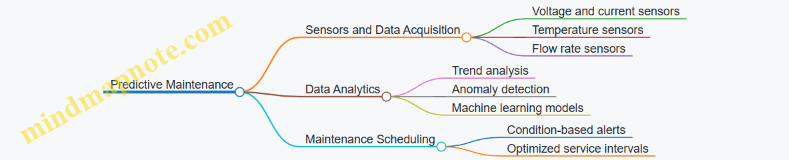
-
Real-Time Monitoring: Continuous monitoring of voltage, current, temperature, and flow rates enables early detection of anomalies. For instance, a South Korean flow battery installation used machine learning algorithms to predict membrane failure, reducing unexpected outages by 30%.
-
Data-Driven Decisions: Using historical and real-time data to schedule maintenance only when necessary reduces unnecessary downtime and maintenance costs.
Corrective Maintenance: Rapid Fault Response
-
Fault Isolation and Repair: Quick identification and isolation of faulty components minimize system downtime. A pilot project in Australia employed modular stack designs allowing rapid replacement of faulty stacks without shutting down the entire system.
-
Component Replacement: Maintaining an inventory of critical spare parts such as membranes, pumps, and sensors ensures fast turnaround during repairs.
-
System Recalibration: Post-maintenance recalibration ensures the system operates within optimal parameters, preserving performance and longevity.
Lifecycle Management: Tracking and Planning
-
Degradation Tracking: Monitoring capacity fade and efficiency loss over time helps forecast maintenance needs and replacement schedules.
-
End-of-Life Planning: Planning for component recycling and electrolyte reclamation reduces environmental impact and lowers replacement costs.
-
Example: A Japanese flow battery project implemented a comprehensive lifecycle management program that extended system life by 20% and reduced waste through electrolyte regeneration.
Summary Mind Map: Maximizing Availability & Longevity
Final Thoughts
Maximizing system availability and longevity in flow battery systems requires a holistic maintenance approach combining preventive, predictive, corrective, and lifecycle management strategies. Real-world examples demonstrate that integrating digital monitoring tools with traditional maintenance practices can significantly reduce downtime and extend system life, ultimately enhancing the value proposition for energy storage projects.
By adopting these best practices, energy systems engineers, grid planners, and project developers can ensure their flow battery installations deliver reliable, long-term performance aligned with renewable integration goals.
9. Emerging Trends and Future Directions
9.1 Advances in Electrolyte Chemistry and Materials
Flow battery performance, cost, and durability hinge critically on the electrolyte chemistry and materials used. Recent advances have focused on improving energy density, stability, environmental friendliness, and cost-effectiveness. This section explores key developments and best practices, supported by illustrative mind maps and real-world examples.
Key Areas of Advancement
Vanadium-Based Electrolytes: Refining the Benchmark
Vanadium redox flow batteries (VRFBs) remain the industry standard due to their long cycle life and stable chemistry. Recent advances include:
- Electrolyte concentration optimization: Increasing vanadium concentration to boost energy density without compromising stability.
- Mixed acid electrolytes: Using blends of sulfuric and hydrochloric acid to improve solubility and reduce precipitation.
- Additives: Incorporation of stabilizers like ammonium ions to suppress side reactions.
Example:
Sumitomo Electric Industries developed a high-concentration vanadium electrolyte (up to 2.5 M) that improved energy density by 20% while maintaining over 10,000 cycles in pilot projects.
Vanadium Electrolyte Optimization Mind Map
Organic Redox Flow Batteries: Toward Sustainable and Cost-Effective Solutions
Organic molecules such as quinones, phenazines, and TEMPO derivatives offer tunability and potential cost advantages. Key advances include:
- Molecular engineering: Designing molecules for improved solubility, redox potential, and stability.
- Aqueous and non-aqueous systems: Expanding electrolyte media to widen operating voltage windows.
- Flow battery demonstrations: Pilot projects validating cycle life and scalability.
Example:
JenaBatteries GmbH demonstrated a phenazine-based aqueous organic flow battery achieving 1000 cycles with minimal capacity fade, showcasing promise for grid-scale applications.
Organic Electrolyte Advances Mind Map
Metal-Free and Hybrid Electrolytes: Innovations for Safety and Cost
Emerging research explores metal-free electrolytes and hybrid systems combining organic and inorganic components.
- Metal-free electrolytes: Reduce environmental impact and toxicity.
- Hybrid electrolytes: Combine benefits of different chemistries to optimize performance.
Example:
Researchers at MIT developed a metal-free flow battery using organic radicals with a demonstrated energy density of 30 Wh/L and excellent thermal stability.
Metal-Free and Hybrid Electrolytes Mind Map
Membrane and Electrode Material Innovations
Material advances complement electrolyte chemistry improvements:
- Membranes: Development of ion-selective, low-cost, and chemically resistant membranes (e.g., Nafion alternatives).
- Electrodes: Coatings and surface treatments to enhance reaction kinetics and reduce fouling.
Example:
3M introduced a novel membrane with improved vanadium ion selectivity, reducing crossover losses by 15%, demonstrated in commercial VRFB deployments.
Membrane and Electrode Innovations Mind Map
Best Practice Summary
- Match electrolyte chemistry to application needs: Consider energy density, cost, and environmental impact.
- Leverage molecular engineering: Tailor organic molecules for improved performance.
- Optimize supporting materials: Membranes and electrodes significantly affect system efficiency.
- Pilot and validate: Use real-world demonstrations to confirm lab-scale advances.
Conclusion
Advances in electrolyte chemistry and materials are rapidly expanding the capabilities and applications of flow batteries. By integrating these innovations thoughtfully, project developers and grid planners can achieve more efficient, durable, and sustainable energy storage solutions.
9.2 Digitalization and Smart Control Systems
Digitalization and smart control systems are revolutionizing flow battery technology by enhancing operational efficiency, predictive maintenance, and seamless integration with energy grids. These advancements enable energy systems engineers, grid planners, and project developers to optimize performance, reduce downtime, and maximize the value of flow battery installations.
Key Components of Digitalization in Flow Battery Systems
- Real-time Monitoring: Continuous data acquisition from sensors measuring voltage, current, temperature, flow rates, and electrolyte state-of-charge.
- Advanced Analytics: Use of machine learning and AI algorithms to analyze operational data for performance optimization and fault detection.
- Predictive Maintenance: Forecasting potential failures before they occur to schedule maintenance proactively.
- Automated Control: Dynamic adjustment of operating parameters such as flow rates and charge/discharge cycles based on grid demands and battery health.
- Remote Operation: Cloud-based platforms enabling remote monitoring and control, facilitating faster response times and centralized management.
Mind Map: Digitalization Components in Flow Battery Systems
Example: Real-Time Monitoring Enhancing Operational Efficiency
A utility-scale vanadium redox flow battery system integrated with a solar farm implemented a digital monitoring platform that collects data every second from multiple sensors. This data was fed into an AI-driven analytics engine that detected subtle deviations in electrolyte temperature and flow rate, signaling early membrane fouling. By alerting operators promptly, the system avoided a potential shutdown, saving thousands in downtime costs.
Mind Map: Predictive Maintenance Workflow
Example: Automated Control for Grid Services
In a project integrating flow batteries with wind power, smart control algorithms dynamically adjusted the battery’s charge and discharge cycles based on real-time wind generation forecasts and grid frequency signals. This automation allowed the battery to provide frequency regulation services efficiently, improving grid stability while maximizing battery life by avoiding unnecessary cycling.
Benefits of Digitalization and Smart Control Systems
- Improved system reliability and availability through early fault detection.
- Enhanced energy efficiency by optimizing operating parameters.
- Reduced operational costs via predictive maintenance and automation.
- Greater flexibility in responding to grid demands and renewable variability.
- Data-driven decision-making enabling continuous system improvements.
Best Practice: Implementing a Layered Digital Architecture
Adopt a layered approach combining edge computing (local controllers and sensors), fog computing (intermediate gateways for data preprocessing), and cloud computing (centralized analytics and control). This architecture balances latency, data volume, and computational requirements, ensuring responsive and scalable smart control.
Mind Map: Layered Digital Architecture
Example: Cloud-Based Platform for Multi-Site Management
A project developer managing multiple flow battery installations across different regions deployed a cloud-based platform that aggregates data from all sites. The platform uses AI to benchmark performance, identify underperforming units, and remotely update control algorithms. This centralized digitalization approach streamlined operations and improved overall asset management efficiency.
In conclusion, digitalization and smart control systems are indispensable for modern flow battery systems, enabling smarter, safer, and more efficient energy storage solutions that align with the evolving needs of renewable integration and grid modernization.
9.3 Hybrid Energy Storage Solutions Combining Flow Batteries
Hybrid energy storage systems (HESS) leverage the complementary strengths of different storage technologies to optimize performance, cost, and reliability. Combining flow batteries with other storage types—such as lithium-ion batteries, supercapacitors, or even mechanical storage—can address the limitations of individual systems and unlock new applications in renewable integration and grid services.
Why Hybridize Flow Batteries?
- Flow batteries excel in long-duration energy storage with high cycle life and flexible capacity (energy scalability).
- Lithium-ion batteries offer high power density and fast response times but have limited cycle life and energy capacity.
- Supercapacitors provide ultra-fast response and high power but low energy storage.
By integrating these technologies, hybrid systems can deliver both high power and long-duration energy storage, enhancing grid stability and renewable integration.
Mind Map: Hybrid Energy Storage Solutions Combining Flow Batteries
Example 1: Flow Battery and Lithium-ion Hybrid for Solar Integration
A 10 MW solar farm integrates a 5 MWh vanadium redox flow battery with a 1 MWh lithium-ion battery system. The flow battery handles daily energy shifting, storing excess solar generation during the day and discharging at night. The lithium-ion battery provides fast frequency regulation and peak shaving during sudden load changes or cloud cover.
Best Practice: The energy management system prioritizes lithium-ion battery for high-power, short-duration events, preserving flow battery cycle life and optimizing overall system efficiency.
Example 2: Microgrid Hybrid with Flow Battery and Supercapacitors
In a remote microgrid, a 500 kWh flow battery is combined with a 50 kWh supercapacitor bank. The supercapacitors manage transient load spikes and voltage fluctuations, while the flow battery provides steady energy supply and load leveling.
Best Practice: Coordinated control algorithms dynamically allocate power demands between the supercapacitors and flow battery, improving power quality and extending component lifetimes.
Design Considerations for Hybrid Systems
- Sizing: Balance energy and power components based on application needs.
- Control Strategy: Develop intelligent energy management systems to coordinate charge/discharge cycles.
- Communication: Ensure seamless integration between heterogeneous systems with standardized protocols.
- Cost-Benefit Analysis: Evaluate capital and operational costs against performance gains.
Mind Map: Control Strategies in Hybrid Flow Battery Systems
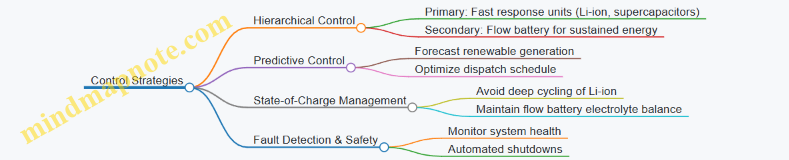
Emerging Trends
- Integration of AI and machine learning for predictive maintenance and optimized dispatch.
- Development of hybrid inverters capable of managing multiple storage types.
- Pilot projects demonstrating hybrid flow battery systems in utility-scale and microgrid applications.
Summary
Hybrid energy storage solutions that combine flow batteries with other technologies provide a pathway to harness the best attributes of each system. Through careful design, control, and integration, these hybrid systems enable enhanced renewable energy integration, grid stability, and cost-effective energy storage.
9.4 Policy and Market Trends Influencing Adoption
The adoption of flow battery systems is significantly shaped by evolving policy frameworks and market dynamics. Understanding these factors is crucial for energy systems engineers, grid planners, and project developers to navigate regulatory landscapes and capitalize on emerging opportunities.
Key Policy Drivers
-
Renewable Energy Targets and Mandates
- Many governments set ambitious renewable portfolio standards (RPS) that encourage storage integration.
- Example: California’s mandate for 100% clean electricity by 2045 incentivizes large-scale storage deployment, including flow batteries.
-
Energy Storage Incentives and Subsidies
- Tax credits, grants, and rebates lower upfront costs.
- Example: The U.S. Investment Tax Credit (ITC) extension to energy storage projects accelerates flow battery adoption.
-
Grid Modernization Policies
- Policies promoting smart grids and resilience create demand for flexible storage solutions.
- Example: The EU’s Clean Energy Package encourages member states to integrate energy storage into grid planning.
-
Emissions Reduction Regulations
- Carbon pricing and emissions caps increase the competitiveness of clean storage.
- Example: South Korea’s Green New Deal includes incentives for zero-emission storage technologies.
Market Trends Impacting Flow Battery Adoption
-
Declining Costs and Economies of Scale
- As manufacturing scales, flow battery costs are decreasing, improving market competitiveness.
- Example: Redflow’s zinc-bromine flow batteries have seen cost reductions through modular designs.
-
Increasing Demand for Long-Duration Storage
- Grid operators seek storage solutions that provide multi-hour discharge, a niche where flow batteries excel.
- Example: The Australian Renewable Energy Agency (ARENA) funds projects demonstrating 6+ hour flow battery storage.
-
Hybridization with Renewables and Other Storage
- Combining flow batteries with solar or lithium-ion systems optimizes performance and cost.
- Example: A hybrid solar-flow battery microgrid in Hawaii enhances energy reliability.
-
Emergence of Energy-as-a-Service Models
- New business models reduce capital barriers by offering storage as a service.
- Example: Fluence’s energy storage leasing programs include flow battery options.
Mind Map: Policy and Market Trends Influencing Flow Battery Adoption
Best Practice Example: Navigating Policy for Successful Flow Battery Deployment
Case Study: Vanadium Flow Battery Project in Europe
- The project leveraged the EU’s Horizon 2020 funding program, which supports innovative energy storage technologies.
- By aligning with the EU’s grid modernization policies, the project secured regulatory approvals faster.
- The developers utilized tax incentives available in Germany to reduce capital expenditure.
- Outcome: The project demonstrated improved grid stability and opened pathways for commercial scale-up.
Recommendations for Stakeholders
- Stay Informed: Regularly monitor policy updates at local, national, and international levels.
- Engage Early: Collaborate with regulators and utilities during project planning to align with evolving standards.
- Leverage Incentives: Identify and apply for relevant grants, tax credits, and subsidies.
- Adapt Business Models: Consider flexible financing and service models to lower barriers.
- Advocate: Participate in industry groups to influence favorable policy development.
By understanding and proactively responding to policy and market trends, stakeholders can accelerate the adoption of flow battery systems, ensuring these technologies play a pivotal role in the transition to a resilient, renewable-powered grid.
9.5 Best Practice: Preparing for Next-Generation Flow Battery Deployments
As flow battery technology evolves, preparing for next-generation deployments requires a forward-thinking approach that embraces innovation, scalability, and integration with emerging energy systems. This section outlines best practices to ensure successful adoption and operation of advanced flow battery systems.
Key Focus Areas for Next-Generation Deployments
Mind Map: Preparing for Next-Generation Flow Battery Deployments
Best Practices with Examples
-
Adopt Advanced Electrolyte Chemistries Early
Example: A European project deployed an organic-based flow battery electrolyte that reduced reliance on scarce metals, improving sustainability and lowering costs. Early pilot testing allowed the team to optimize system parameters before commercial rollout.
-
Leverage Digital Twins and AI for System Optimization
Example: A U.S. utility integrated AI-driven predictive maintenance into their flow battery farm, reducing downtime by 30% and extending component life by anticipating failures before they occurred.
-
Design for Modular Scalability
Example: A project developer in Asia designed a modular flow battery system with plug-and-play stacks, enabling capacity to be increased incrementally as demand grew, minimizing upfront capital expenditure.
-
Integrate Seamlessly with Renewable Energy and Grid Services
Example: A hybrid solar-flow battery installation in Australia used advanced energy management systems to optimize charge/discharge cycles, providing frequency regulation services while maximizing renewable utilization.
-
Implement Sustainable Lifecycle Management
Example: A manufacturer established a closed-loop recycling program for vanadium electrolytes, recovering 95% of the active material and reducing waste disposal costs.
-
Engage Early with Regulatory Bodies and Market Operators
Example: A project team in North America collaborated with grid operators to qualify their flow battery system for ancillary service markets, unlocking new revenue streams and ensuring compliance.
-
Invest in Workforce Training and Cross-Disciplinary Teams
Example: An energy storage integrator developed a training program combining electrochemistry, data analytics, and grid operations, equipping engineers to handle next-gen flow battery systems effectively.
Mind Map: Example Deployment Workflow for Next-Generation Flow Batteries
Summary
Preparing for next-generation flow battery deployments means embracing innovation not only in chemistry and materials but also in digital tools, system design, and market integration. By following these best practices and learning from pioneering projects worldwide, energy systems engineers, grid planners, and project developers can ensure that flow battery technology fulfills its promise as a scalable, sustainable, and flexible energy storage solution for the future.
10. Summary and Recommendations
10.1 Key Takeaways from Design to Integration
Flow battery systems represent a transformative technology in energy storage, offering scalability, long cycle life, and flexible integration with renewable energy sources. This section distills the essential lessons learned from the entire lifecycle of flow battery projects—from initial design through scale-up and integration—highlighting best practices and practical examples.
Mind Map: Key Takeaways Overview
Design Principles
-
Electrolyte Chemistry Selection: Choose chemistry based on application needs—vanadium redox for versatility and long life, organic electrolytes for cost-effectiveness.
- Example: A utility-scale vanadium flow battery project in California optimized electrolyte concentration to balance energy density and cost, achieving 85% round-trip efficiency.
-
Membrane & Electrode Optimization: Selecting membranes with low crossover and electrodes with high surface area improves efficiency and longevity.
- Example: A pilot project in Germany implemented a novel membrane material reducing ion crossover by 30%, extending system life by 20%.
-
Hydraulic & Thermal Management: Proper flow field design ensures uniform electrolyte distribution; thermal controls prevent degradation.
- Example: A solar-plus-storage installation in Australia integrated active cooling loops, maintaining stable operation during peak summer temperatures.
Scale-Up Strategies
-
Modular System Architecture: Enables easier maintenance, scalability, and redundancy.
- Example: A commercial flow battery plant in South Korea used modular stacks, allowing incremental capacity expansion without downtime.
-
Uniform Flow Distribution: Critical to avoid hotspots and capacity loss at scale.
- Example: Computational fluid dynamics (CFD) modeling helped a Chinese developer redesign flow plates, improving electrolyte distribution uniformity by 15%.
-
Cost & Efficiency Balance: Scale-up must consider diminishing returns; optimizing component costs while maintaining performance is key.
- Example: A European project negotiated bulk electrolyte procurement, reducing costs by 25% while maintaining system efficiency.
Integration Considerations
-
Renewable Energy Matching: Flow batteries’ long-duration storage complements intermittent solar and wind.
- Example: A wind farm in Texas integrated a flow battery system to smooth output fluctuations, reducing curtailment by 40%.
-
Grid Interface & Controls: Power electronics and control algorithms must handle dynamic grid conditions.
- Example: A microgrid in Japan used advanced inverters with flow battery storage to provide frequency regulation services.
-
Energy Management Systems (EMS): EMS optimizes charge/discharge cycles based on forecasted renewable generation and grid demand.
- Example: An EMS deployed in a hybrid solar-flow battery project in Spain improved overall system efficiency by 12%.
Operational Best Practices
-
Maintenance & Diagnostics: Regular electrolyte monitoring and stack inspections prevent unexpected failures.
- Example: A Canadian utility implemented remote diagnostics, reducing maintenance response time by 50%.
-
Lifecycle & Degradation Management: Understanding degradation mechanisms allows proactive mitigation.
- Example: A research facility in the Netherlands developed electrolyte rebalancing protocols that extended cycle life by 30%.
-
Safety & Compliance: Adhering to standards ensures safe operation and regulatory approval.
- Example: A project in Australia incorporated fire suppression systems and passed rigorous safety audits, enabling faster permitting.
Project Development
-
Site & Environmental Assessment: Early evaluation of site conditions and environmental impact streamlines development.
- Example: A flow battery project in the UK conducted thorough soil and water assessments, avoiding costly delays.
-
Financing & Risk Mitigation: Clear demonstration of system reliability and performance attracts investors.
- Example: A US-based developer secured financing by showcasing a track record of successful pilot deployments.
-
Commissioning & Validation: Comprehensive testing ensures performance meets design specifications.
- Example: A commercial installation in France used staged commissioning, identifying and resolving issues before full operation.
Summary
Flow battery systems require a holistic approach encompassing chemistry, design, scale-up, integration, and operations. Leveraging best practices and learning from real-world examples ensures successful deployment and maximizes the value of these systems in modern energy grids.
For further details, refer to the other chapters covering each topic in depth.
10.2 Checklist for Successful Flow Battery Projects
Successfully deploying flow battery projects requires a comprehensive approach that spans design, scale-up, integration, and operation. This checklist consolidates critical factors and best practices to guide Energy Systems Engineers, Grid Planners, and Project Developers through each phase.
Project Planning & Feasibility
- Define project objectives: energy capacity, power rating, duration, and application (e.g., peak shaving, frequency regulation).
- Site assessment: evaluate space, environmental conditions, and proximity to grid interconnection.
- Technology selection: choose appropriate flow battery chemistry (vanadium, zinc-bromine, etc.) based on application and cost.
- Regulatory compliance: identify permits and standards applicable.
Example:
A solar farm developer selected a vanadium redox flow battery for its long cycle life and scalability, matching the solar generation profile and ensuring regulatory compliance early in the planning phase.
System Design & Engineering
- Electrolyte and membrane selection: optimize for efficiency and durability.
- Modular design: enable scalability and ease of maintenance.
- Thermal management: incorporate cooling/heating systems to maintain optimal operating temperatures.
- Balance of plant integration: pumps, sensors, power electronics, and control systems.
Example:
An engineering team designed a modular zinc-bromine flow battery system with advanced thermal controls, reducing degradation and improving uptime during summer peak loads.
Scale-Up & Manufacturing
- Uniform flow distribution: ensure consistent electrolyte flow to avoid hotspots.
- Quality control: rigorous testing of membranes, electrodes, and electrolyte purity.
- Cost optimization: leverage economies of scale without compromising quality.
Example:
A pilot project successfully scaled from 100 kW to 1 MW by implementing flow field design improvements that maintained uniform electrolyte distribution.
Integration with Renewables & Grid
- Power electronics compatibility: seamless interface with inverters and grid controllers.
- Energy management system (EMS): optimize charge/discharge cycles based on renewable generation and grid demand.
- Grid code compliance: meet local grid interconnection requirements.
Example:
A wind farm integrated a flow battery system with an EMS that dynamically adjusted storage dispatch, smoothing output fluctuations and improving grid stability.
Operation & Maintenance
- Monitoring systems: real-time diagnostics for electrolyte health, flow rates, temperature, and state-of-charge.
- Scheduled maintenance: electrolyte rebalancing, membrane inspection, and pump servicing.
- Degradation management: proactive replacement or refurbishment planning.
Example:
An operational flow battery facility used predictive analytics to schedule maintenance, reducing downtime by 15% compared to reactive approaches.
Mind Map: Flow Battery Project Checklist
Additional Tips:
- Engage stakeholders early, including utilities and regulators.
- Prioritize modularity to facilitate future upgrades.
- Use pilot projects to validate design assumptions.
- Incorporate digital twins for simulation and predictive maintenance.
Summary
This checklist serves as a practical guide to ensure that flow battery projects are designed, scaled, integrated, and operated for maximum reliability, efficiency, and cost-effectiveness. By following these best practices and learning from real-world examples, project teams can significantly improve their chances of success.
10.3 Future Outlook for Energy Systems Engineers and Grid Planners
As flow battery technology continues to evolve, energy systems engineers and grid planners are positioned to play a pivotal role in shaping the future energy landscape. Understanding emerging trends, anticipating challenges, and leveraging innovative solutions will be critical for successful integration and optimization of flow battery systems within modern grids.
Mind Map: Future Outlook for Energy Systems Engineers and Grid Planners
Key Trends and Examples
-
Technology Advancements:
- Example: The development of organic redox flow batteries (ORFBs) offers safer, potentially lower-cost alternatives to traditional vanadium systems. Energy engineers should monitor pilot projects like the one at the University of Michigan, which demonstrates ORFBs with improved scalability.
- Best Practice: Stay engaged with research institutions and manufacturers to evaluate emerging chemistries for specific grid applications.
-
Grid Integration:
- Example: The deployment of advanced energy management systems (EMS) that integrate flow batteries with solar and wind farms enables real-time optimization of charge/discharge cycles. For instance, the Australian Renewable Energy Agency (ARENA) project in South Australia uses flow batteries to stabilize the grid during peak renewable generation.
- Best Practice: Incorporate predictive analytics and demand forecasting tools to maximize flow battery utilization and grid support.
-
Policy & Market Evolution:
- Example: California’s evolving market rules now recognize long-duration storage’s value in capacity markets, encouraging flow battery adoption. Grid planners should anticipate similar regulatory shifts in other regions.
- Best Practice: Engage with regulators and participate in market design discussions to ensure flow battery capabilities are properly valued.
-
Project Development:
- Example: Modular flow battery systems deployed in remote microgrids, such as the pilot project in Alaska, showcase how scalable designs can address energy access challenges.
- Best Practice: Design projects with modularity and flexibility in mind to adapt to evolving grid needs and technologies.
-
Skills & Tools:
- Example: Digital twin models of flow battery systems allow engineers to simulate performance under various scenarios, reducing commissioning time and operational risks.
- Best Practice: Invest in training on AI-driven optimization and cross-disciplinary collaboration to harness the full potential of flow battery systems.
Summary
Energy systems engineers and grid planners must adopt a forward-looking mindset embracing technological innovation, regulatory awareness, and advanced analytical tools. By doing so, they can unlock the full potential of flow battery systems to enable resilient, flexible, and sustainable energy grids.
10.4 Resources and Further Reading
To deepen your understanding of flow battery systems and support your design, scale-up, and integration efforts, this section provides a curated list of valuable resources, including technical papers, industry reports, standards, and online platforms. Additionally, mind maps are included to visually organize key topics and guide further exploration.
Key Technical Papers and Reports
- “A Review of Flow Battery Technologies and Applications” – Comprehensive overview of flow battery chemistries, performance metrics, and applications.
- DOE Energy Storage Program Reports – U.S. Department of Energy publications on energy storage technologies and grid integration.
- IEA Energy Storage Technology Roadmap – Global perspective on energy storage trends and future outlook.
- Journal of Power Sources – Peer-reviewed articles on electrochemical energy storage, including flow batteries.
Industry Standards and Guidelines
- IEC 62933-1-1: Electrical Energy Storage (EES) Systems – General Requirements
- UL 1973: Standard for Batteries for Use in Stationary and Motive Auxiliary Power Applications
- IEEE 1547: Standard for Interconnection and Interoperability of Distributed Energy Resources with Associated Electric Power Systems Interfaces
Online Platforms and Communities
- Energy Storage Association (ESA) – Industry news, webinars, and policy updates.
- Flow Battery Consortiums and Forums – Collaborative groups focusing on R&D and commercialization.
- GitHub Repositories – Open-source simulation tools and control algorithms for flow batteries.
Mind Maps
Mind Map 1: Flow Battery System Components and Design
Mind Map 2: Scale-Up Considerations
Mind Map 3: Integration with Renewable Energy
Mind Map 4: Operation and Maintenance

Examples of Useful Resources
-
Example 1: Vanadium Flow Battery Design Guide by VRB Energy
- Detailed design considerations with practical examples of component selection and system sizing.
-
Example 2: Case Study - Flow Battery Integration at a Solar Farm in California
- Demonstrates real-world application of flow batteries for smoothing solar output and providing grid services.
-
Example 3: Open-Source Simulation Tools
- Tools like “PyFlowBattery” available on GitHub help engineers model and optimize flow battery performance.
How to Use These Resources Effectively
- Start with overview reports to build foundational knowledge.
- Use mind maps to identify areas requiring deeper study.
- Refer to standards early in the design phase to ensure compliance.
- Engage with online communities for latest trends and troubleshooting.
- Analyze case studies to understand practical challenges and solutions.
By leveraging these resources and visual tools, energy systems engineers, grid planners, and project developers can enhance their expertise and improve the success rate of flow battery projects.
10.5 Final Best Practice: Holistic Approach to Flow Battery System Success
Achieving success with flow battery systems requires a holistic approach that integrates design, scale-up, integration, operation, and continuous improvement. This final best practice synthesizes key lessons and strategies to ensure your flow battery projects deliver maximum value, reliability, and sustainability.
Mind Map: Holistic Approach to Flow Battery System Success
Key Elements Explained with Examples
1. Design Optimization
- Example: A project team selecting vanadium redox chemistry for its proven durability and scalability, while optimizing membrane selection to reduce crossover losses, leading to a 15% efficiency improvement.
2. Scale-Up Strategies
- Example: During scale-up, a developer implemented advanced flow field designs ensuring uniform electrolyte distribution across large stacks, preventing hotspots and extending stack life by 20%.
3. Integration
- Example: A solar farm integrated a flow battery system with a smart energy management system that dynamically adjusts charge/discharge cycles based on solar output forecasts, improving renewable utilization by 25%.
4. Operation & Maintenance
- Example: Using real-time diagnostics, an operator detected early membrane degradation, allowing scheduled maintenance that avoided costly downtime.
5. Project Development
- Example: Early engagement with local regulators and community stakeholders expedited permitting for a flow battery installation, reducing project timeline by 3 months.
6. Continuous Improvement
- Example: Post-deployment data analytics identified performance bottlenecks, enabling firmware updates to control systems that enhanced overall system responsiveness.
Mind Map: Continuous Improvement Cycle

Summary Checklist for Holistic Success
- Choose chemistry and materials aligned with project goals
- Design for scalability and uniform flow distribution
- Integrate seamlessly with renewable sources and grid
- Implement robust monitoring and maintenance protocols
- Engage early with regulators and financiers
- Use data-driven insights for ongoing optimization
By embracing this holistic approach, energy systems engineers, grid planners, and project developers can maximize the benefits of flow battery systems, ensuring they are reliable, cost-effective, and well-integrated into the evolving energy landscape.