Mental Health at Work: Remote,Hybrid and High-Pressure Teams
1. Understanding Mental Health in Modern Work Environments
1.1 Defining Mental Health and Its Importance at Work
Mental health refers to our emotional, psychological, and social well-being. It affects how we think, feel, and behave, influencing how we handle stress, relate to others, and make choices. In the workplace, mental health is crucial because it directly impacts employee productivity, engagement, creativity, and overall organizational success.
What is Mental Health?
- Emotional well-being: Ability to manage emotions and cope with challenges.
- Psychological well-being: Maintaining a balanced mental state, resilience, and cognitive functioning.
- Social well-being: Healthy relationships and social interactions.
Why Mental Health Matters at Work
- Enhances focus and decision-making.
- Reduces absenteeism and presenteeism.
- Promotes positive workplace culture.
- Supports employee retention and satisfaction.
Mind Map: Components of Mental Health
Mind Map: Impact of Mental Health on Workplace
Examples Illustrating Mental Health Importance at Work
-
Example: Sarah, a Remote Software Developer
- Sarah experiences anxiety due to isolation working remotely.
- Without mental health support, her productivity drops, and she feels disconnected.
- When her manager introduces regular check-ins and virtual social hours, Sarah feels supported, improving her mental health and work output.
-
Example: Raj, a Team Leader in a High-Pressure Sales Environment
- Raj notices his team showing signs of burnout during a peak sales quarter.
- By encouraging short breaks, mindfulness sessions, and open conversations about stress, Raj helps reduce tension and sustain team performance.
-
Example: Hybrid Marketing Team at a Mid-Sized Company
- The team struggles with communication gaps between in-office and remote workers.
- Implementing inclusive meeting practices and mental health resources ensures all team members feel valued and supported.
Summary
Understanding mental health and its importance at work is the first step toward creating supportive environments. Recognizing its components and impacts helps HR professionals, team leaders, and remote workers foster healthier, more productive teams.
1.2 Common Mental Health Challenges in Remote, Hybrid, and High-Pressure Teams
Mental health challenges vary depending on the work environment, but certain issues are particularly prevalent in remote, hybrid, and high-pressure teams. Understanding these challenges is the first step toward creating effective support systems.
Mental Health Challenges in Remote Teams
Remote work offers flexibility but also introduces unique mental health stressors:
- Isolation and Loneliness: Lack of in-person interaction can lead to feelings of disconnection.
- Blurred Work-Life Boundaries: Difficulty separating work from personal life can cause burnout.
- Communication Barriers: Misunderstandings and lack of immediate feedback can increase stress.
- Overworking and Burnout: Without physical cues to stop working, employees may extend their hours unintentionally.
Example: Sarah, a remote software developer, found herself working late into the night because she struggled to ‘switch off’ from work. Over time, she felt isolated and disconnected from her team, which affected her motivation.
Mental Health Challenges in Hybrid Teams
Hybrid teams combine remote and in-office work, which can create complex dynamics:
- Unequal Access to Information: Remote employees may miss out on informal office conversations.
- Inconsistent Communication: Switching between remote and in-person can cause confusion.
- Social Fragmentation: Teams may split into ‘in-office’ and ‘remote’ groups, affecting cohesion.
- Zoom Fatigue and Meeting Overload: Frequent virtual meetings can be draining.
Example: James works in a hybrid marketing team. On days he’s remote, he often feels out of the loop because key decisions happen spontaneously in the office. This led to frustration and anxiety about his performance.
Mental Health Challenges in High-Pressure Teams
Teams working under constant stress or tight deadlines face distinct mental health risks:
- Chronic Stress and Anxiety: Persistent pressure can lead to heightened anxiety.
- Burnout and Exhaustion: Long hours and high demands increase risk of burnout.
- Fear of Failure and Perfectionism: Intense environments may foster unhealthy perfectionism.
- Reduced Psychological Safety: Employees may hesitate to speak up about struggles.
Example: Maria leads a crisis response team where stakes are high. Team members often skip breaks and work overtime, leading to exhaustion and reluctance to admit when they need help.
Integrated Examples Across Environments
- Communication Breakdown: Remote and hybrid teams both suffer from communication gaps, but while remote workers struggle with isolation, hybrid workers face social fragmentation.
- Burnout: Present in all three environments but triggered differently — overworking at home, constant switching in hybrid, and relentless pressure in high-stress teams.
Summary Mindmap
Understanding these nuanced challenges helps HR professionals, team leaders, and remote workers identify early signs and implement tailored strategies to promote mental wellbeing.
1.3 The Impact of Mental Health on Productivity and Team Dynamics
Mental health plays a crucial role in shaping both individual productivity and the overall dynamics within a team. When mental health is well-supported, employees tend to be more engaged, creative, and collaborative. Conversely, poor mental health can lead to decreased efficiency, increased errors, and strained interpersonal relationships.
How Mental Health Influences Productivity
- Concentration and Focus: Mental health challenges such as anxiety or depression can impair an employee’s ability to concentrate, leading to slower task completion and mistakes.
- Energy Levels: Stress and burnout reduce energy, causing fatigue and decreased motivation.
- Decision-Making: Poor mental health can cloud judgment, resulting in less effective decisions.
- Absenteeism and Presenteeism: Employees struggling with mental health may take more sick days or be physically present but mentally disengaged.
How Mental Health Affects Team Dynamics
- Communication Breakdown: Mental health struggles can lead to withdrawal or irritability, reducing open communication.
- Trust and Collaboration: Teams with members experiencing mental health issues may face trust deficits or reduced willingness to collaborate.
- Conflict Escalation: Stress can heighten sensitivity, increasing the likelihood of conflicts.
- Support and Empathy: A mentally healthy environment fosters empathy, enhancing team cohesion.
Mind Map: Mental Health Impact on Productivity
Mind Map: Mental Health Impact on Team Dynamics
Real-World Examples
Example 1: Remote Worker Experiencing Anxiety
Sarah, a remote software developer, began feeling anxious due to isolation and blurred work-life boundaries. Her productivity dropped as she struggled to focus during meetings and missed deadlines. Her team noticed less participation in discussions, which slowed project progress.
Best Practice: Sarah’s manager introduced weekly one-on-one check-ins and encouraged use of mental health resources. The team also started virtual social hours to reduce isolation, which helped Sarah regain confidence and productivity.
Example 2: Hybrid Team Facing Burnout
A marketing team working in a hybrid model faced increased pressure to deliver campaigns quickly. Some members reported burnout symptoms, leading to irritability and communication breakdowns during in-office days.
Best Practice: The team leader implemented flexible deadlines where possible and encouraged regular breaks. They also held open forums to discuss workload and mental health openly, improving trust and collaboration.
Example 3: High-Pressure Sales Team with Conflict
In a high-pressure sales environment, stress levels were high, causing frequent conflicts and reduced teamwork. Sales targets were missed due to poor coordination.
Best Practice: Management introduced mindfulness sessions and peer support groups. Conflict resolution training was provided, which helped reduce tension and improved team dynamics.
Summary
Supporting mental health is essential not only for individual well-being but also for maintaining high productivity and healthy team relationships. By recognizing the signs and implementing supportive practices, HR professionals, team leaders, and remote workers can foster environments where everyone thrives.
1.4 Recognizing Signs of Mental Health Struggles: Practical Examples from Different Work Settings
Mental health struggles can manifest differently depending on the work environment—whether remote, hybrid, or high-pressure teams. Recognizing these signs early is crucial for timely support and intervention. Below, we explore common indicators and provide practical examples from various work settings.
Key Signs of Mental Health Struggles
Recognizing Signs in Remote Workers
Remote workers often face isolation and blurred work-life boundaries, which can lead to subtle signs of mental health struggles.
-
Example: Sarah, a remote graphic designer, used to actively participate in team chats but has recently become silent and misses virtual meetings. Her work quality has declined, and she often submits projects late.
-
Interpretation: Withdrawal from communication and decreased productivity may indicate feelings of isolation or burnout.
-
Actionable Practice: Schedule regular one-on-one check-ins focusing on well-being, not just work tasks. Encourage informal virtual meetups to foster connection.
Recognizing Signs in Hybrid Teams
Hybrid teams juggle in-person and remote work, which can create inconsistencies in engagement and support.
-
Example: John, who works three days in the office and two remotely, appears energetic during office days but seems distracted and disengaged on remote days. He often misses follow-ups from remote meetings.
-
Interpretation: The shift between environments may cause stress or difficulty adapting, leading to cognitive overload or anxiety.
-
Actionable Practice: Ensure meeting notes and decisions are clearly documented and accessible. Promote consistent communication channels and encourage feedback about the hybrid experience.
Recognizing Signs in High-Pressure Teams
High-pressure environments can exacerbate stress, leading to burnout and emotional exhaustion.
-
Example: Maria, a project manager in a fast-paced sales team, has started showing irritability during meetings, frequently complains about workload, and has taken multiple sick days recently.
-
Interpretation: These signs suggest burnout and chronic stress.
-
Actionable Practice: Introduce mandatory breaks, promote realistic workload distribution, and create safe spaces for employees to voice concerns without stigma.
Cross-Setting Practical Tips for Recognition
- Encourage Peer Observation: Train team members to notice and gently address changes in colleagues’ behavior.
- Use Anonymous Surveys: Regular pulse surveys can reveal mental health trends without putting individuals on the spot.
- Promote Self-Reporting: Create a culture where employees feel safe to share struggles early.
Summary Mindmap
By understanding and recognizing these signs in context, HR professionals, team leaders, and remote workers themselves can foster a more supportive and mentally healthy workplace.
2. Building a Foundation: Creating a Mentally Healthy Workplace Culture
2.1 Promoting Open Communication: Encouraging Vulnerability and Trust
Open communication is the cornerstone of a mentally healthy workplace. It fosters an environment where employees feel safe to express their thoughts, concerns, and emotions without fear of judgment or repercussions. Encouraging vulnerability and trust within teams—whether remote, hybrid, or high-pressure—can significantly improve mental wellbeing, collaboration, and productivity.
Why Open Communication Matters
- Builds psychological safety, allowing team members to share ideas and challenges freely.
- Reduces misunderstandings and conflicts by promoting transparency.
- Helps identify mental health struggles early through honest conversations.
- Strengthens relationships and trust among colleagues and leadership.
Mind Map: Components of Open Communication
Practical Steps to Encourage Vulnerability and Trust
-
Lead by Example:
- Leaders openly share their own challenges and mental health experiences to normalize vulnerability.
- Example: A remote team leader starts weekly meetings by briefly sharing a personal challenge or coping strategy.
-
Create Safe Spaces:
- Establish regular check-ins or dedicated mental health moments where employees can speak candidly.
- Example: A hybrid team uses a “Wellbeing Wednesday” virtual room where members can drop in to chat informally about non-work topics.
-
Train for Empathy and Active Listening:
- Provide training sessions for managers and team members on how to listen without judgment and respond supportively.
- Example: An HR department organizes a workshop on empathetic communication, including role-playing scenarios.
-
Encourage Asking for Help:
- Normalize requesting support by celebrating stories of employees who sought help and benefited.
- Example: A high-pressure sales team shares anonymous testimonials in newsletters about overcoming burnout by reaching out.
-
Maintain Confidentiality:
- Assure employees that their disclosures will be handled sensitively and confidentially.
- Example: Clear mental health policies communicated during onboarding and reminders in team meetings.
Mind Map: Benefits of Encouraging Vulnerability and Trust
Example Scenario: Encouraging Vulnerability in a Remote Team
Context: A remote software development team noticed decreased morale and communication gaps.
Action: The team leader initiated “Open Mic Fridays,” a 30-minute session where team members could share personal stories, challenges, or mental health tips.
Outcome: Over time, team members reported feeling more connected and supported. One developer shared how discussing anxiety openly helped them seek professional help, improving their performance.
Tips for HR Professionals and Team Leaders
- Regularly check in with individuals, not just groups.
- Use anonymous surveys to gauge comfort levels around communication.
- Celebrate small wins in open communication to reinforce positive behavior.
- Be patient—building trust takes consistent effort over time.
By embedding open communication practices into daily workflows and leadership styles, organizations can cultivate a culture where vulnerability is seen as strength and trust becomes the foundation for mental wellbeing and team success.
2.2 Leadership’s Role in Modeling Mental Health Awareness
Leadership plays a pivotal role in shaping workplace culture, especially when it comes to mental health awareness. When leaders openly prioritize and model mental health care, they set a powerful example that encourages employees to feel safe, supported, and valued.
Why Leadership Modeling Matters
- Leaders influence organizational norms and behaviors.
- Open discussions from the top reduce stigma around mental health.
- Demonstrates commitment beyond policies—actions speak louder than words.
Key Responsibilities for Leaders
- Normalize Conversations: Share personal experiences or challenges where appropriate.
- Demonstrate Vulnerability: Show that it’s okay to ask for help or take mental health days.
- Prioritize Wellbeing: Encourage breaks, reasonable workloads, and work-life balance.
- Provide Resources: Actively promote access to mental health support.
- Train and Educate: Participate in and support mental health training initiatives.
Mind Map: Leadership’s Role in Mental Health Awareness
Practical Examples
Example 1: CEO Sharing Personal Mental Health Journey A CEO of a mid-sized marketing firm began monthly all-hands meetings by briefly sharing their own experiences managing anxiety during high-pressure projects. This openness encouraged employees to discuss their own challenges and seek support without fear of judgment.
Example 2: Manager Scheduling “Mental Health Check-In” Meetings A team leader in a hybrid software company instituted weekly 15-minute one-on-one check-ins focused specifically on wellbeing, not just project updates. This practice helped identify early signs of burnout and fostered trust.
Example 3: Leadership Taking Mental Health Days Publicly At a financial services company, senior leaders openly communicated when they took mental health days, reinforcing that it is acceptable and encouraged to prioritize mental wellbeing.
Mind Map: Example - Manager’s Mental Health Check-In
Tips for Leaders to Model Mental Health Awareness
- Lead by Example: Take breaks, use mental health days, and share your experiences.
- Communicate Transparently: Regularly talk about mental health topics in meetings.
- Encourage Flexibility: Adapt work schedules to support mental wellbeing.
- Recognize Signs: Be attentive to changes in behavior or performance.
- Celebrate Progress: Acknowledge team members who prioritize their mental health.
By embedding these practices into daily leadership behaviors, organizations create an environment where mental health is openly valued and supported, ultimately leading to healthier, more engaged teams.
2.3 Establishing Clear Policies on Mental Health Support and Confidentiality
Creating clear, comprehensive policies around mental health support and confidentiality is essential for fostering a safe and supportive workplace environment. These policies serve as a foundation that guides HR professionals, team leaders, and employees on how mental health issues are addressed, ensuring trust and protection for everyone involved.
Why Clear Policies Matter
- Builds trust: Employees are more likely to seek help if they know their privacy is respected.
- Ensures consistency: Standardizes how mental health concerns are handled across teams.
- Legal compliance: Helps organizations meet legal obligations related to mental health and privacy.
- Reduces stigma: Normalizes conversations about mental health by embedding support into company culture.
Key Components of Mental Health Support Policies
Best Practices for Policy Development
- Involve Stakeholders: Collaborate with HR, legal experts, mental health professionals, and employee representatives.
- Be Clear and Accessible: Use straightforward language and make policies easily available.
- Define Confidentiality Boundaries: Clearly state what information is confidential and under what circumstances it may be shared.
- Outline Support Procedures: Detail how employees can access support and what steps managers should take.
- Regularly Review and Update: Policies should evolve with changing workplace dynamics and legal requirements.
Example Policy Excerpt: Confidentiality Clause
“All mental health information disclosed by employees will be treated with the highest level of confidentiality. Information will only be shared with explicit consent or when legally required. Managers and HR personnel are trained to handle such information sensitively and discreetly.”
Example Scenario: Applying the Policy
An employee in a hybrid team confides in their manager about experiencing anxiety. The manager refers them to the Employee Assistance Program (EAP) and reassures them that their disclosure will remain confidential. The employee opts for virtual counseling sessions provided by the company. The manager adjusts deadlines temporarily to reduce pressure, following the accommodation guidelines in the policy.
Confidentiality Mind Map Focus
Tips for Communicating Policies to Teams
- Host informational sessions explaining mental health policies.
- Include policy summaries in onboarding materials.
- Use real-life examples to illustrate how policies work.
- Encourage questions and provide clear answers.
By establishing clear policies on mental health support and confidentiality, organizations empower employees to seek help without fear, promote a culture of openness, and equip leaders with the tools to respond appropriately and compassionately.
2.4 Case Study: How a Tech Startup Fostered Psychological Safety in a Hybrid Team
Psychological safety—the shared belief that a team is safe for interpersonal risk-taking—is critical for innovation, engagement, and mental wellbeing. This case study explores how a fast-growing tech startup successfully cultivated psychological safety within its hybrid team, blending remote and in-office work.
Background
The startup, InnovateX, employs 60 people with a hybrid work model: employees work three days remotely and two days in-office weekly. Rapid growth and product deadlines created pressure, and leadership noticed signs of disengagement and communication breakdowns.
Challenges Identified
- Communication gaps between remote and in-office employees leading to misunderstandings.
- Fear of speaking up during meetings, especially for junior staff.
- Lack of trust and openness about mental health struggles.
- Unequal participation in decision-making.
Strategies Implemented
-
Leadership Modeling Vulnerability
- Leaders openly shared their own mental health experiences and challenges.
- Regular check-ins where leaders encouraged honest feedback.
-
Structured Inclusive Meetings
- Use of “round-robin” speaking turns to ensure everyone’s voice was heard.
- Anonymous question submissions before meetings to surface concerns.
-
Psychological Safety Workshops
- Interactive sessions on what psychological safety means and why it matters.
- Role-playing exercises to practice giving and receiving feedback.
-
Peer Buddy System
- Pairing remote and in-office employees to foster connection and support.
- Encouraged informal chats and mental health check-ins.
-
Clear Norms and Expectations
- Defined team values emphasizing respect, empathy, and openness.
- Established guidelines for communication responsiveness and availability.
Mind Map: Building Psychological Safety at InnovateX
Examples of Practices in Action
- Leadership Vulnerability: The CTO shared a personal story about burnout during a product launch, normalizing conversations about stress.
- Round-Robin Meetings: In a sprint planning session, every team member was invited to share their input, ensuring junior developers contributed ideas.
- Anonymous Questions: Prior to all-hands meetings, employees submitted questions anonymously, allowing sensitive topics to surface without fear.
- Buddy System: A remote UX designer was paired with an in-office engineer; they scheduled weekly casual video calls to discuss work and wellbeing.
Outcomes
- Increased employee engagement scores by 20% within 6 months.
- Higher participation rates in meetings, especially from remote workers.
- Improved trust and openness reported in anonymous surveys.
- Reduced turnover and fewer reported burnout cases.
Key Takeaways
- Psychological safety requires intentional actions from leadership and team members.
- Hybrid teams benefit from structured communication practices to bridge physical distance.
- Peer support systems can mitigate isolation and foster connection.
- Training and clear norms empower employees to engage safely.
This case study illustrates that fostering psychological safety in hybrid teams is achievable with deliberate strategies that prioritize openness, inclusivity, and empathy.
3. Best Practices for Supporting Remote Workers’ Mental Health
3.1 Setting Boundaries: Encouraging Work-Life Balance in Remote Settings
Remote work offers flexibility but also blurs the lines between professional and personal life, making it crucial to set clear boundaries to protect mental health. Encouraging work-life balance helps prevent burnout, reduces stress, and improves overall job satisfaction.
Why Setting Boundaries Matters in Remote Work
- Prevents Overwork: Without physical separation, employees may find themselves working longer hours unintentionally.
- Reduces Stress: Clear boundaries help employees mentally ‘switch off’ from work.
- Improves Productivity: Focused work periods and rest time enhance efficiency.
- Supports Mental Health: Balanced routines reduce anxiety and fatigue.
Best Practices for Setting Boundaries
- Define Work Hours: Encourage employees to establish consistent start and end times.
- Create a Dedicated Workspace: A physical area separate from personal spaces signals work mode.
- Use Technology Wisely: Turn off work notifications after hours.
- Communicate Availability: Share calendars and set expectations with team members.
- Schedule Breaks: Regular short breaks prevent fatigue and maintain focus.
Mind Map: Setting Boundaries for Work-Life Balance
Example 1: Sarah’s Structured Remote Routine
Sarah, a marketing manager working remotely, sets her work hours from 9 AM to 5 PM. She has a dedicated home office room, which she leaves at 5 PM to signal the end of her workday. She disables email notifications after hours and communicates her availability to her team via a shared calendar. During work hours, she takes a 5-minute break every hour and a full lunch break away from her desk. This routine helps Sarah maintain focus during work and fully relax afterward.
Example 2: Team-Wide Boundary Setting at a Remote Software Company
A remote software development team implemented a ‘No Meeting Fridays’ policy to reduce screen fatigue and encourage deep work. They also agreed on a ‘quiet hours’ window from 6 PM to 8 AM where no emails or messages are expected to be answered. Team members use status indicators on their communication platforms to signal when they are offline or focusing. These practices collectively foster respect for personal time and reduce burnout.
Tips for HR Professionals and Team Leaders
- Lead by Example: Model boundary-setting behaviors yourself.
- Encourage Open Dialogue: Regularly check in on employees’ workload and stress levels.
- Provide Resources: Share guides on time management and mental health.
- Flexible Policies: Allow employees to tailor boundaries that fit their personal lives.
Mind Map: Role of Leadership in Encouraging Boundaries
By embedding these boundary-setting practices into remote work culture, organizations can create healthier, more sustainable work environments that respect employees’ mental health and personal lives.
3.2 Leveraging Technology to Maintain Connection and Reduce Isolation
In remote work environments, the physical separation of team members can lead to feelings of isolation and disconnection, which negatively impact mental health and productivity. Leveraging technology effectively is key to fostering connection, collaboration, and a sense of belonging among remote workers.
Why Technology Matters for Connection in Remote Teams
- Bridges the physical distance gap
- Enables real-time communication and collaboration
- Supports social interactions beyond work tasks
- Provides platforms for mental health resources and peer support
Key Technology Tools and Their Roles
Best Practices with Examples
-
Regular Video Check-Ins
- Example: A marketing team schedules daily 15-minute video stand-ups to share progress and personal updates, helping members feel seen and heard.
-
Use of Instant Messaging for Casual Conversations
- Example: A software development team creates a dedicated “#random” Slack channel for sharing memes, pet photos, and casual chat, replicating watercooler moments.
-
Virtual Social Events
- Example: A remote HR team hosts monthly virtual game nights using platforms like Jackbox Games or online trivia to encourage bonding beyond work.
-
Interest-Based Groups
- Example: An international company encourages employees to join Slack channels based on hobbies such as book clubs, fitness challenges, or cooking, fostering community.
-
Collaborative Project Tools to Enhance Teamwork
- Example: A hybrid design team uses Trello boards with clear task assignments and comment threads, ensuring transparency and reducing misunderstandings.
-
Mental Health Apps Integration
- Example: A company offers free subscriptions to meditation apps like Calm and organizes weekly guided sessions via video calls.
-
Anonymous Feedback and Support Channels
- Example: An organization implements an anonymous feedback tool where employees can share mental health concerns or suggestions, enabling HR to respond proactively.
Mind Map: Strategies to Reduce Isolation Using Technology
Tips for Maximizing Technology Benefits
- Balance synchronous and asynchronous communication: Avoid overwhelming employees with constant meetings; use messaging and project tools to allow flexible responses.
- Encourage camera use during video calls: Seeing faces helps build empathy and connection.
- Promote informal interactions: Schedule non-work-related virtual gatherings to nurture relationships.
- Train employees on tool usage: Ensure everyone is comfortable with the technology to prevent frustration and disengagement.
- Monitor engagement and adapt: Use surveys or feedback tools to assess if the technology is meeting social and mental health needs.
By thoughtfully integrating these technologies and practices, HR professionals and team leaders can significantly reduce feelings of isolation, boost morale, and support the mental wellbeing of remote employees.
3.3 Providing Access to Virtual Mental Health Resources and Counseling
In today’s remote work environment, providing accessible mental health resources and counseling virtually is essential to support employees’ wellbeing. This section explores best practices, practical examples, and mind maps to help HR professionals, team leaders, and remote workers implement effective virtual mental health support.
Why Virtual Mental Health Resources Matter
Remote workers often face isolation, blurred work-life boundaries, and reduced informal support. Virtual mental health resources bridge these gaps by offering confidential, flexible, and immediate access to support.
Key Components of Virtual Mental Health Support
Best Practices for Providing Virtual Mental Health Resources
-
Curate a Diverse Range of Resources
- Offer apps like Headspace or Calm for mindfulness.
- Provide access to platforms such as BetterHelp or Talkspace for licensed counseling.
- Share webinars on stress management and resilience.
-
Ensure Easy and Confidential Access
- Use single sign-on (SSO) for seamless login.
- Guarantee encrypted communication channels.
- Allow anonymous usage where possible to reduce stigma.
-
Promote Awareness and Usage
- Regularly communicate available resources via newsletters or team meetings.
- Share testimonials or success stories from employees.
- Integrate resource links into internal portals or chat tools.
-
Provide Flexible Scheduling
- Offer counseling sessions outside traditional work hours.
- Use asynchronous support options like messaging or email counseling.
-
Train Managers to Guide Employees
- Equip leaders with knowledge to recommend resources appropriately.
- Encourage empathetic conversations about mental health.
Example: Implementing a Virtual Mental Health Resource Program
Company: TechSolutions Inc.
Challenge: Remote employees reported feelings of isolation and stress during product launch periods.
Solution:
- Partnered with an online counseling platform offering 24/7 access.
- Launched monthly virtual mindfulness workshops.
- Created an internal resource hub with links to apps, articles, and crisis contacts.
- Managers received training to recognize signs of distress and refer employees.
Outcome:
- 65% of employees engaged with at least one resource within the first quarter.
- Reported reduction in stress levels by 30% in anonymous surveys.
- Improved team morale and communication.
Mind Map: Steps to Implement Virtual Mental Health Resources
Additional Example: Virtual Counseling in Action
Scenario: A remote worker struggling with anxiety hesitates to seek help due to stigma.
Approach:
- The company offers anonymous chat-based counseling through a trusted platform.
- The employee accesses support confidentially at a convenient time.
- Follow-up group sessions on coping strategies are offered.
Result: The employee feels supported without fear of judgment, leading to improved wellbeing and productivity.
Summary
Providing access to virtual mental health resources and counseling is a vital strategy to support remote workers. By curating diverse, accessible, and confidential options, promoting awareness, and training leaders, organizations can foster a mentally healthy remote workforce.
References & Resources
- Headspace
- Calm
- BetterHelp
- Talkspace
- Mental Health America – Virtual Resources
3.4 Example: Implementing Weekly Virtual Coffee Chats to Boost Morale
In remote work environments, one of the biggest challenges employees face is a sense of isolation and disconnection from their colleagues. Weekly virtual coffee chats are a simple yet powerful practice to foster social interaction, build relationships, and boost morale among remote team members.
What Are Virtual Coffee Chats?
Virtual coffee chats are informal, scheduled video calls where team members can gather to talk about non-work topics, share experiences, or simply catch up. These sessions are designed to replicate the spontaneous conversations that happen naturally in office break rooms.
Benefits of Weekly Virtual Coffee Chats
- Enhances Social Connection: Helps remote workers feel more connected and less isolated.
- Builds Trust and Psychological Safety: Informal chats encourage openness and vulnerability.
- Boosts Morale and Engagement: Provides a mental break and a chance to recharge.
- Encourages Cross-Team Interaction: Breaks down silos by mixing team members from different functions.
How to Implement Weekly Virtual Coffee Chats: Step-by-Step
- Schedule a Recurring Time: Choose a consistent day and time each week, ideally 15-30 minutes.
- Keep It Voluntary and Casual: Emphasize that participation is optional and the focus is on informal conversation.
- Use Reliable Video Conferencing Tools: Platforms like Zoom, Microsoft Teams, or Google Meet work well.
- Rotate Hosts or Facilitators: Encourage different team members to lead or suggest topics.
- Create a Comfortable Environment: Encourage turning on cameras and using virtual backgrounds if desired.
- Avoid Work Talk: Set a guideline to focus on personal interests, hobbies, or lighthearted topics.
Mind Map: Structure of a Weekly Virtual Coffee Chat
Example Scenario: How a Marketing Team Boosted Morale with Virtual Coffee Chats
Background: A remote marketing team noticed declining engagement and increasing feelings of isolation during a product launch period.
Action: The team leader introduced a weekly 20-minute virtual coffee chat every Friday at 4 PM. Participation was voluntary, and each week a different team member suggested a fun theme, such as “Share your favorite weekend activity” or “Show us your pet.”
Outcome: Over two months, team members reported feeling more connected and energized. The chats became a highlight of the week, improving overall team morale and collaboration.
Additional Tips and Variations
- Themed Chats: Occasionally introduce themes like “Travel Tales,” “Book Recommendations,” or “Cooking Tips.”
- Small Group Breakouts: For larger teams, split into smaller breakout rooms to encourage deeper conversations.
- Buddy System: Pair team members randomly each week for one-on-one coffee chats.
- Incorporate Games: Use icebreaker games or quizzes to make sessions more engaging.
Mind Map: Variations and Enhancements
By integrating weekly virtual coffee chats into your remote work routine, HR professionals and team leaders can create a supportive environment that nurtures mental health, fosters team cohesion, and ultimately drives productivity and satisfaction.
3.5 Monitoring Workload and Preventing Burnout Remotely
Burnout is a significant risk for remote workers, who often struggle to separate work from personal life and may feel pressure to be constantly available. Monitoring workload and implementing proactive strategies to prevent burnout are essential for maintaining mental health in remote teams.
Understanding Burnout in Remote Work
Burnout manifests as chronic physical and emotional exhaustion, cynicism, and reduced professional efficacy. Remote workers can experience it due to blurred boundaries, isolation, and lack of visible support.
Best Practices for Monitoring Workload Remotely
- Regular Check-ins: Schedule consistent one-on-one meetings to discuss workload, challenges, and wellbeing.
- Transparent Task Management: Use project management tools (e.g., Trello, Asana) to visualize workload distribution.
- Encourage Time Tracking: Promote self-monitoring of hours worked to identify overwork patterns.
- Set Clear Expectations: Define working hours and availability to prevent overextension.
- Promote Breaks and Downtime: Encourage short breaks and discourage back-to-back meetings.
Preventing Burnout: Practical Strategies and Examples
-
Example 1: Weekly Workload Review Meetings
- A remote marketing team holds a 30-minute meeting every Friday where each member shares their completed tasks and upcoming priorities. This helps the manager identify if anyone is overwhelmed and redistribute tasks accordingly.
-
Example 2: “No Meeting” Afternoons
- A software development company implements “No Meeting” afternoons twice a week, allowing remote employees uninterrupted time to focus and recharge.
-
Example 3: Use of Wellness Check-Ins
- HR sends out a simple anonymous survey every two weeks asking employees to rate their stress levels and workload. Results guide leadership in adjusting workloads or providing additional support.
-
Example 4: Encouraging Boundary Setting
- Team leaders model logging off at a consistent time and encourage employees to do the same, emphasizing that after-hours emails are not expected to be answered immediately.
Mind Maps
Mind Map 1: Monitoring Workload Remotely
Mind Map 2: Preventing Burnout in Remote Teams
Mind Map 3: Signs of Burnout to Watch For
Additional Tips
- Encourage peer support groups or buddy systems to share workload concerns.
- Use video calls to maintain personal connection, which can help managers better gauge emotional states.
- Promote flexible scheduling to accommodate personal needs and reduce stress.
By actively monitoring workload and fostering a culture that prioritizes mental health, remote teams can significantly reduce the risk of burnout and maintain sustainable productivity and wellbeing.
4. Navigating Mental Health in Hybrid Work Models
4.1 Balancing In-Office and Remote Work to Support Wellbeing
In hybrid work models, employees split their time between working remotely and being physically present in the office. While this flexibility offers many benefits, it also presents unique challenges for maintaining mental health and wellbeing. Striking the right balance between in-office and remote work is essential to foster engagement, reduce stress, and support overall mental wellness.
Key Considerations for Balancing In-Office and Remote Work
Flexibility Tailored to Employee Needs
Not every role or individual benefits equally from the same in-office/remote split. For example, a software developer may thrive working remotely 4 days a week, while a sales team member might need more in-office presence for collaboration.
Example: A marketing firm implemented a policy allowing employees to choose their in-office days based on project needs and personal wellbeing. This autonomy reduced anxiety around rigid schedules and empowered employees to manage their mental health proactively.
Clear Communication and Expectations
Ambiguity around when and how often employees should be in the office can cause stress. Establishing transparent guidelines helps reduce uncertainty.
Example: A hybrid team leader sends out a monthly calendar outlining mandatory in-office days and encourages remote work on other days. They also hold weekly video check-ins to maintain connection and address any concerns.
Fostering Social Connection and Team Cohesion
Physical presence facilitates spontaneous conversations and bonding, which are vital for emotional support and reducing feelings of isolation.
Example: A company schedules “In-Office Collaboration Days” once a week where team members come together for brainstorming sessions followed by informal social time, such as coffee breaks or group lunches.
Encouraging Work-Life Boundaries
Hybrid work can blur lines between personal and professional life, leading to burnout.
Example: A company encourages employees to set clear start and end times for their workday and discourages after-hours emails. They also promote the use of “Do Not Disturb” statuses during focused work or personal time.
Optimizing Physical Workspaces
Ensuring that both the office and home work environments support comfort and reduce stress is critical.
Example: An organization provides ergonomic equipment stipends for remote workers and designs quiet zones in the office for focused work or decompression.
Providing Access to Mental Health Resources
Equal access to counseling, stress management workshops, and wellness programs should be ensured regardless of work location.
Example: A hybrid company offers virtual mindfulness sessions accessible to all employees and partners with an Employee Assistance Program (EAP) that supports both remote and in-office staff.
Summary
Balancing in-office and remote work to support wellbeing requires intentional policies that respect individual needs, promote clear communication, nurture social connections, and maintain healthy boundaries. Organizations that thoughtfully design hybrid models can create environments where mental health thrives.
Additional Mind Map: Hybrid Work Wellbeing Strategy
4.2 Ensuring Equal Access to Mental Health Resources for All Employees
In hybrid work models, employees split their time between remote and in-office environments. This dynamic can unintentionally create disparities in access to mental health resources. Ensuring equal access is critical to fostering an inclusive, supportive workplace where every employee feels valued and cared for, regardless of their physical location.
Why Equal Access Matters
- Equity and Inclusion: All employees deserve the same level of support to maintain mental wellbeing.
- Preventing Isolation: Remote workers may feel disconnected from resources more readily available onsite.
- Consistency in Care: Uniform access ensures that mental health initiatives have a cohesive impact across the organization.
Key Strategies to Ensure Equal Access
Communication: Bridging the Gap
- Use multi-channel communication (email, intranet, chat apps) to announce and remind employees about available mental health resources.
- Provide information in multiple languages and formats (video, text, audio) to accommodate diverse needs.
Example: A global company sends monthly newsletters highlighting mental health webinars and counseling services, ensuring remote and onsite employees receive the same updates.
Resource Availability: Equalizing Support Options
- Offer virtual counseling sessions accessible via secure video calls, so remote employees can easily connect with mental health professionals.
- Maintain onsite mental health champions or counselors for employees working in the office.
- Provide self-help digital tools such as meditation apps or stress management courses accessible to all.
Example: An organization partners with a mental health app provider offering free premium subscriptions to all employees, whether remote or onsite.
Technology: Ensuring Accessibility and Privacy
- Choose user-friendly platforms that require minimal technical skills.
- Ensure all tools are mobile-compatible to support employees who may not have dedicated workstations.
- Guarantee confidentiality to encourage utilization without fear of stigma.
Example: A company implements an anonymous chat-based mental health support platform accessible via smartphones, enabling discreet help-seeking.
Training: Empowering Managers and Employees
- Train managers to recognize mental health signs and to guide employees toward resources.
- Educate employees on how to access and utilize mental health benefits.
- Develop peer support programs to foster a culture of openness.
Example: A hybrid team leader completes a mental health first aid course and shares key takeaways during team meetings, normalizing conversations around mental wellbeing.
Feedback Mechanisms: Listening and Adapting
- Conduct anonymous surveys to assess resource awareness and accessibility.
- Host focus groups with remote and onsite employees to identify barriers.
- Use feedback to continuously improve mental health offerings.
Example: After survey results show remote workers feel less connected to wellness programs, HR introduces virtual group meditation sessions scheduled during flexible hours.
Summary Mind Map
By intentionally designing mental health initiatives with these strategies, hybrid organizations can create an environment where every employee—whether remote or onsite—has equitable access to the support they need to thrive mentally and emotionally.
4.3 Encouraging Team Cohesion Despite Physical Distance
Maintaining team cohesion in a hybrid work environment is a critical challenge for HR professionals, team leaders, and remote workers alike. Physical distance can create feelings of isolation, reduce spontaneous collaboration, and weaken interpersonal bonds that naturally form in office settings. However, with intentional strategies and thoughtful practices, teams can foster strong connections and a sense of belonging regardless of location.
Key Strategies to Encourage Team Cohesion
Foster Consistent and Meaningful Communication
Regular communication is the backbone of team cohesion. Leaders should schedule consistent team meetings that include both remote and in-office members to ensure everyone is aligned and heard.
Example: A hybrid marketing team holds a weekly “All Hands” video call where each member shares updates and personal highlights. To avoid Zoom fatigue, the meeting is capped at 45 minutes, and a rotating facilitator encourages participation from all members.
Additionally, creating open channels on platforms like Slack or Microsoft Teams for casual conversations (e.g., #watercooler or #pets) helps replicate informal office interactions.
Promote Collaborative Work Practices
Encouraging collaboration on projects helps build interdependence and trust among team members.
Example: A product development team uses shared digital whiteboards (like Miro) during brainstorming sessions, allowing remote and in-office members to contribute ideas simultaneously. This inclusive approach ensures equal participation and sparks creativity.
Assigning cross-functional tasks that require input from both remote and on-site employees also strengthens bonds and breaks down silos.
Celebrate Achievements and Recognize Contributions
Recognition is a powerful tool to reinforce team cohesion. Celebrating milestones and individual efforts fosters a positive atmosphere and motivates employees.
Example: A hybrid sales team implements a “Shout-Out Friday” where team members publicly acknowledge colleagues’ efforts in a dedicated chat channel. This practice boosts morale and helps remote workers feel valued.
Leaders should also ensure recognition is inclusive, acknowledging contributions from all locations.
Build Trust Through Transparency and Psychological Safety
Trust is essential for cohesion. Leaders can build trust by being transparent about decisions and encouraging open dialogue.
Example: During a company-wide restructuring, leadership holds Q&A sessions where employees can anonymously submit questions. This openness helps alleviate anxiety and reinforces a culture of psychological safety.
Encouraging team members to share challenges without fear of judgment fosters deeper connections.
Ensure Inclusivity in Scheduling and Access
Hybrid teams must be mindful of time zones, work hours, and resource availability to avoid excluding remote members.
Example: A global consulting firm uses a rotating meeting schedule so that no single region is consistently inconvenienced. They also provide recordings and detailed meeting notes for those who cannot attend live.
Providing equal access to tools, training, and social events ensures all team members feel included.
Additional Mind Map: Practical Activities to Enhance Cohesion
Example: A hybrid software team organizes monthly “Virtual Escape Room” challenges where small groups solve puzzles together online. This fun activity encourages teamwork and problem-solving in a relaxed environment.
Summary
Encouraging team cohesion despite physical distance requires deliberate effort to maintain communication, collaboration, recognition, trust, and inclusivity. By integrating these best practices with engaging activities and mindful scheduling, hybrid teams can build strong, resilient connections that drive both wellbeing and productivity.
4.4 Practical Example: Rotational In-Office Days to Foster Connection
In hybrid work models, one of the biggest challenges is maintaining team cohesion and interpersonal connection when employees split their time between remote and in-office work. A practical and effective approach to address this is implementing rotational in-office days. This strategy schedules employees to come into the office on different days in a planned rotation, ensuring that team members have regular opportunities to interact face-to-face without overwhelming office capacity.
Why Rotational In-Office Days?
- Builds stronger interpersonal relationships: Regular in-person interactions help build trust and camaraderie.
- Encourages spontaneous collaboration: Casual hallway conversations and impromptu brainstorming sessions are more likely.
- Balances flexibility and connection: Employees still enjoy remote work benefits while maintaining team bonds.
How to Implement Rotational In-Office Days
- Assess Team Size and Office Capacity: Determine how many employees can safely be in the office on any given day.
- Create Rotation Groups: Divide the team into smaller groups (e.g., Group A, B, C) based on roles, projects, or preferences.
- Set a Schedule: Assign specific days for each group to be in-office (e.g., Group A on Mondays, Group B on Wednesdays, Group C on Fridays).
- Communicate Clearly: Share the schedule well in advance and provide flexibility for occasional changes.
- Plan In-Office Activities: Use these days for collaborative meetings, team lunches, or workshops to maximize connection.
Example Scenario
Company: BrightWave Marketing
Team: Creative Team of 12 members
Rotation Plan:
- Group A (4 members): Monday and Thursday
- Group B (4 members): Tuesday and Friday
- Group C (4 members): Wednesday
Outcome:
- Each employee comes into the office 2 days per week.
- On any given day, 4-8 team members overlap, allowing for meaningful collaboration.
- Team lunches and brainstorming sessions are scheduled on in-office days.
Mind Map: Rotational In-Office Days Implementation
Mind Map: Benefits of Rotational In-Office Days for Hybrid Teams
Tips for Maximizing Effectiveness
- Leverage Technology: Use shared calendars and communication tools to keep everyone informed.
- Encourage Team Rituals: Start in-office days with quick check-ins or coffee breaks.
- Solicit Feedback: Regularly ask team members how the rotation is working and adjust accordingly.
- Be Inclusive: Ensure remote-only days still include virtual social activities to maintain connection.
Real-World Example
At a mid-sized software company, the product development team implemented rotational in-office days to combat feelings of disconnection. They paired this with “Focus Fridays” where the entire team worked remotely to concentrate on deep work. On in-office days, they held short stand-up meetings and informal lunch gatherings. Over six months, employee surveys showed a 30% increase in reported team cohesion and a 25% decrease in feelings of isolation.
By thoughtfully applying rotational in-office days, hybrid teams can enjoy the best of both worlds: the flexibility of remote work and the rich interpersonal connections fostered by face-to-face collaboration.
4.5 Addressing Challenges of Communication Overload and Zoom Fatigue
In hybrid work models, communication overload and Zoom fatigue have become significant challenges impacting employees’ mental health and productivity. These issues arise from excessive virtual meetings, constant messaging, and blurred boundaries between work and personal life.
Understanding Communication Overload
Communication overload occurs when employees receive more information and communication requests than they can effectively process. This leads to stress, decreased focus, and burnout.
Understanding Zoom Fatigue
Zoom fatigue refers to the exhaustion resulting from prolonged video conferencing. It stems from intense cognitive load, lack of non-verbal cues, and the unnatural nature of constant eye contact.
Mind Map: Causes of Communication Overload and Zoom Fatigue
Best Practices to Address Communication Overload and Zoom Fatigue
-
Implement Meeting Guidelines
- Limit the number of meetings per day.
- Encourage agenda setting and time-boxing meetings.
- Example: A hybrid marketing team reduced daily meetings from 6 to 3 by consolidating updates into a single weekly session, freeing up focused work time.
-
Encourage Asynchronous Communication
- Use tools like Slack or Microsoft Teams for non-urgent updates.
- Promote recorded video messages or emails instead of live calls.
- Example: A software development team shifted status updates to a shared document and asynchronous video briefs, reducing live meeting time by 40%.
-
Schedule Breaks Between Meetings
- Enforce 10-15 minute breaks to allow mental rest.
- Use calendar tools to block focus time.
- Example: An HR department introduced “No Meeting Wednesdays,” allowing employees to focus on deep work and recharge.
-
Set Clear Communication Expectations
- Define response time norms to reduce pressure.
- Encourage turning off notifications outside work hours.
- Example: A consulting firm adopted a policy where emails sent after 6 PM are not expected to be answered until the next workday.
-
Promote Video Call Best Practices
- Turn off self-view to reduce self-consciousness.
- Encourage use of audio-only when video is not necessary.
- Limit meeting duration to 30-45 minutes.
- Example: A hybrid sales team found that switching to audio-only check-ins twice a week decreased fatigue and improved engagement.
-
Provide Mental Health Resources and Training
- Offer workshops on managing digital fatigue.
- Encourage mindfulness and eye exercises.
- Example: A remote customer service team held monthly sessions on stress management and digital wellbeing, resulting in reported lower fatigue levels.
Mind Map: Strategies to Combat Communication Overload and Zoom Fatigue
Real-World Example: Hybrid Team Overcoming Zoom Fatigue
A global consulting firm noticed rising burnout rates linked to excessive video calls. They implemented a “Meeting-Free Friday” policy, encouraged asynchronous updates via their collaboration platform, and trained managers to recognize signs of fatigue. Within three months, employee surveys showed a 25% decrease in reported exhaustion and a 15% increase in job satisfaction.
Summary
Addressing communication overload and Zoom fatigue requires intentional strategies that balance connectivity with mental wellbeing. By setting clear guidelines, promoting asynchronous communication, and fostering a culture that respects boundaries, hybrid teams can maintain productivity without sacrificing mental health.
5. Managing Mental Health in High-Pressure Teams
5.1 Identifying Stress Triggers Unique to High-Pressure Environments
High-pressure work environments are characterized by tight deadlines, high stakes, and often unpredictable demands. Identifying stress triggers in these settings is crucial for HR professionals, team leaders, and employees to implement effective mental health support strategies.
Common Stress Triggers in High-Pressure Teams
- Intense Deadlines: Constantly looming deadlines can create a persistent sense of urgency and anxiety.
- High Accountability: Responsibility for critical outcomes increases pressure and fear of failure.
- Work Overload: Excessive workloads without adequate resources lead to burnout.
- Unclear Expectations: Ambiguity around roles and deliverables causes confusion and stress.
- Lack of Control: Feeling powerless over work processes or decisions heightens frustration.
- Interpersonal Conflicts: Tensions among team members can escalate under pressure.
- Inadequate Recovery Time: Limited breaks or time off prevent mental and physical recuperation.
- Constant Availability: Expectations to be reachable beyond work hours disrupt work-life balance.
Mind Map: Stress Triggers in High-Pressure Teams
Example: Stress Trigger Identification in a Crisis Response Team
A crisis response team in a financial services company faced frequent high-stakes situations requiring immediate action. Team members reported feeling overwhelmed due to:
- Unpredictable workload spikes: Sudden crises demanded long hours without warning.
- High accountability: Mistakes could lead to significant financial loss.
- Communication breakdowns: Rapid information flow sometimes caused confusion.
By mapping these triggers, the team leader introduced scheduled debriefs and rotating shifts to manage workload and improve communication clarity.
Practical Steps to Identify Stress Triggers
- Conduct Anonymous Surveys: Use targeted questions to uncover specific stressors employees face.
- Hold Focus Groups: Facilitate open discussions where team members share experiences.
- Observe Behavioral Changes: Monitor signs such as decreased productivity, irritability, or absenteeism.
- Review Work Patterns: Analyze workload distribution and deadline frequency.
- Encourage Self-Reporting: Create safe channels for employees to express concerns.
Mind Map: Methods to Identify Stress Triggers
Example: Using Surveys to Detect Stress in a High-Pressure Sales Team
An HR team implemented a quarterly anonymous survey for their sales department, asking about workload, clarity of goals, and support availability. Results showed that 70% felt overwhelmed by monthly targets and 55% experienced difficulty disconnecting after hours. This insight led to introducing more flexible target-setting and mandatory ‘offline’ hours.
Identifying stress triggers unique to high-pressure environments is the first step toward creating targeted interventions that protect mental health and sustain team performance. By combining structured methods and open communication, leaders can proactively address these challenges.
5.2 Implementing Stress Reduction Techniques: Mindfulness, Breaks, and Time Management
High-pressure teams often face intense workloads, tight deadlines, and constant demands, which can significantly impact mental health. Implementing effective stress reduction techniques is essential to maintain wellbeing and sustain productivity. This section explores three key strategies: mindfulness, breaks, and time management, with practical examples and mind maps to guide HR professionals, team leaders, and remote workers.
Mindfulness: Cultivating Present-Moment Awareness
Mindfulness involves paying deliberate attention to the present moment without judgment. It helps individuals manage stress by fostering calmness, improving focus, and reducing anxiety.
Practical Examples:
- Guided Mindfulness Sessions: A high-pressure sales team schedules 10-minute daily guided mindfulness exercises via video call before starting work.
- Mindful Breathing Breaks: Employees are encouraged to practice deep breathing exercises during short breaks, especially after stressful meetings.
- Mindfulness Apps: Teams use apps like Headspace or Calm to access meditation resources tailored for workplace stress.
Mind Map: Mindfulness Techniques
Breaks: The Power of Pausing
Regular breaks help reset the mind, reduce fatigue, and prevent burnout. In high-pressure environments, breaks should be intentional and restorative.
Practical Examples:
- Pomodoro Technique: Teams adopt 25-minute focused work intervals followed by 5-minute breaks, with a longer break every four cycles.
- Active Breaks: Encouraging employees to take short walks or do light stretching during breaks to relieve physical and mental tension.
- Digital Detox Periods: Instituting ‘no-email’ windows during the day to reduce cognitive overload.
Mind Map: Effective Break Strategies
Time Management: Structuring Work to Reduce Stress
Good time management helps high-pressure teams prioritize tasks, avoid overload, and create realistic schedules.
Practical Examples:
- Prioritization Frameworks: Using methods like Eisenhower Matrix to distinguish urgent vs. important tasks.
- Task Batching: Grouping similar tasks together to improve focus and efficiency.
- Setting Boundaries: Encouraging team members to set clear work hours and communicate availability.
Mind Map: Time Management Techniques
Integrated Example: Stress Reduction in a High-Pressure Marketing Team
Scenario: A marketing team faces a major product launch with tight deadlines.
- Mindfulness: The team leader initiates a 5-minute mindfulness breathing exercise at the start of each day to center focus.
- Breaks: They implement the Pomodoro technique, encouraging members to take active breaks involving stretching or short walks.
- Time Management: Tasks are prioritized using the Eisenhower Matrix during weekly planning meetings, and team members block focused work time on their calendars.
Outcome: Team members report feeling less overwhelmed, more focused, and better able to manage stress during the launch period.
Summary
Implementing mindfulness, strategic breaks, and effective time management creates a supportive environment that mitigates stress in high-pressure teams. HR professionals and team leaders can foster these practices through training, policy, and leading by example, ensuring mental health remains a priority even in demanding work contexts.
5.3 Role of Managers in Recognizing and Addressing Burnout Early
Burnout is a state of emotional, physical, and mental exhaustion caused by prolonged stress, often prevalent in high-pressure teams. Managers play a critical role in identifying early signs of burnout and intervening before it escalates into more serious mental health issues. This section explores practical strategies, mind maps, and real-world examples to empower managers in this vital responsibility.
Recognizing Early Signs of Burnout
Managers need to be vigilant about behavioral and performance changes that may indicate burnout. These signs include:
- Decreased productivity and quality of work
- Increased absenteeism or tardiness
- Withdrawal from team interactions
- Heightened irritability or emotional outbursts
- Physical symptoms such as fatigue or headaches
Mind Map: Early Signs of Burnout
Example:
A manager notices that a usually punctual team member has started missing deadlines and seems disengaged during meetings. Instead of ignoring these changes, the manager schedules a one-on-one check-in to discuss workload and wellbeing.
Proactive Communication and Check-Ins
Regular, empathetic communication is key to early burnout detection. Managers should:
- Schedule consistent one-on-one meetings focused on wellbeing, not just task updates
- Use open-ended questions to encourage honest dialogue
- Normalize conversations about mental health to reduce stigma
Mind Map: Proactive Communication Strategies
Example:
During a weekly check-in, a manager asks, “How have you been managing your workload lately? Any areas where you feel overwhelmed?” This opens the door for the employee to share stressors and collaboratively find solutions.
Adjusting Workloads and Expectations
Once burnout risk is identified, managers should adjust workloads and set realistic expectations:
- Prioritize tasks and delegate when possible
- Encourage breaks and time off
- Avoid assigning excessive overtime
Mind Map: Workload Management to Prevent Burnout
Example:
A manager notices a team member working late hours consistently. They discuss redistributing some tasks among the team and encourage the employee to take a mental health day to recharge.
Providing Access to Resources and Support
Managers should connect employees with mental health resources:
- Employee Assistance Programs (EAPs)
- Mental health workshops or webinars
- Peer support groups
Mind Map: Supporting Employees with Resources
Example:
After recognizing signs of burnout, a manager shares information about the company’s confidential counseling services and encourages the employee to utilize them.
Encouraging a Culture of Psychological Safety
Managers foster an environment where employees feel safe to express concerns:
- Lead by example in discussing mental health openly
- Celebrate small wins to boost morale
- Create forums for team members to share experiences
Mind Map: Building Psychological Safety
Example:
A manager starts team meetings with a quick round where everyone shares one positive thing from their week, helping to build trust and openness.
Summary
Managers are frontline defenders against burnout in high-pressure teams. By recognizing early signs, maintaining proactive communication, managing workloads thoughtfully, connecting employees to resources, and fostering psychological safety, they can significantly mitigate burnout risks.
These strategies not only support individual wellbeing but also enhance overall team resilience and productivity.
5.4 Example: Crisis Response Team’s Approach to Mental Health During Peak Periods
In high-pressure environments such as crisis response teams, mental health can be significantly impacted during peak periods due to intense workloads, emotional strain, and unpredictable schedules. This section explores a real-world example of how a crisis response team implemented a comprehensive mental health strategy to support their members effectively.
Overview of the Crisis Response Team’s Mental Health Strategy
The team faced recurring peak periods during natural disasters and emergency situations. Recognizing the toll on mental wellbeing, leadership introduced a multi-layered approach focusing on prevention, immediate support, and recovery.
Mind Map: Crisis Response Team Mental Health Approach
Detailed Practices and Examples
1. Workload Management with Rotating Shifts
To prevent burnout, the team implemented rotating shifts ensuring no individual worked more than 8 hours consecutively during peak periods. For example, during a week-long emergency, team members rotated between active duty, administrative support, and rest days.
2. Resilience Workshops and Stress Awareness Sessions
Before peak periods, the team conducted resilience-building workshops focusing on coping mechanisms and mindfulness. For instance, a 2-hour session included guided breathing exercises and role-playing scenarios to prepare members for high-stress situations.
3. Daily Check-ins and Open Feedback Channels
Each morning, team leaders held brief virtual check-ins to assess mental wellbeing and workload concerns. An anonymous digital suggestion box allowed members to voice issues without fear of stigma.
4. On-site Mental Health Professionals
During peak operations, a licensed counselor was available on-site for immediate support. For example, after a particularly traumatic event, team members could access one-on-one sessions to process their experiences.
5. Peer Support Network
The team established a peer support system where trained volunteers provided informal emotional support. A peer might check in with colleagues after challenging shifts, offering empathy and practical advice.
6. Quiet Recovery Spaces
Designated quiet rooms were created for short breaks, equipped with calming elements like soft lighting, comfortable seating, and noise-cancelling headphones.
7. Crisis Debrief Sessions
After intense incidents, the team conducted structured debriefs to discuss emotional responses and lessons learned. For example, following a major rescue operation, a 30-minute group session allowed members to share feelings and normalize stress reactions.
8. Post-Shift Counseling and Flexible Scheduling
Employees were encouraged to attend counseling sessions after demanding shifts. Scheduling was adjusted to allow recovery time, such as offering half-days or remote work options following peak activity.
9. Wellness Activities and Follow-up Monitoring
The team organized group yoga and meditation sessions during downtime. Additionally, mental health check-ins were scheduled weeks after peak periods to monitor ongoing wellbeing.
Mind Map: Example Timeline During Peak Period
Key Takeaways
- Proactive workload management reduces burnout risk.
- Combining professional and peer support creates a robust support network.
- Structured communication and debriefing normalize mental health discussions.
- Recovery-focused scheduling and wellness activities aid long-term wellbeing.
This example demonstrates that even in the most demanding work environments, intentional mental health strategies can foster resilience, reduce stress, and maintain team effectiveness during peak periods.
5.5 Encouraging Peer Support and Debrief Sessions After High-Stress Events
High-pressure teams often face intense workloads, tight deadlines, and critical decision-making moments that can lead to elevated stress levels. Encouraging peer support and conducting debrief sessions after these high-stress events are essential strategies to help team members process their experiences, reduce burnout, and foster resilience.
Why Peer Support and Debrief Sessions Matter
- Emotional Venting: Provides a safe space for employees to express feelings and frustrations.
- Shared Understanding: Builds empathy by allowing team members to recognize they are not alone in their struggles.
- Problem Solving: Helps identify what went well and what could be improved for future events.
- Mental Health Maintenance: Reduces the risk of long-term stress-related issues such as anxiety and burnout.
Best Practices for Encouraging Peer Support
- Normalize Conversations About Stress: Leaders should openly acknowledge the difficulty of high-pressure periods.
- Create Informal Support Networks: Encourage buddy systems or small peer groups that check in regularly.
- Train Peer Support Champions: Select and train team members to facilitate peer support and recognize signs of distress.
- Use Technology to Connect: For remote or hybrid teams, use chat channels or video calls dedicated to peer support.
Example: Buddy System in a Crisis Response Team
A crisis response team implemented a buddy system where each member was paired with a peer to check in daily during peak periods. This simple practice allowed team members to share challenges and provide encouragement, significantly improving morale and reducing feelings of isolation.
Conducting Effective Debrief Sessions
Debrief sessions are structured meetings held after a high-stress event to reflect on the experience collectively.
Key Elements:
- Safe Environment: Ensure confidentiality and a non-judgmental atmosphere.
- Guided Discussion: Use a facilitator to guide the conversation and keep it constructive.
- Focus Areas: What went well? What were the challenges? How can the team improve?
- Emotional Check-In: Allow space for team members to express emotions and concerns.
- Actionable Outcomes: Develop clear steps to address issues and support wellbeing.
Example: Post-Project Debrief in a Marketing Team
After a high-pressure product launch, the marketing team held a debrief session where members shared their experiences. The facilitator encouraged everyone to discuss both successes and stress points. As a result, the team identified communication gaps and introduced weekly check-ins for future projects, improving workflow and reducing stress.
Mind Map: Peer Support and Debrief Sessions
Additional Example: Virtual Debrief for Remote High-Pressure Teams
A remote software development team faced a critical system outage that required intense, around-the-clock work. After resolving the issue, the team leader scheduled a virtual debrief session via video call. The session started with an emotional check-in, followed by a discussion of what went well and what could be improved. Team members appreciated the opportunity to decompress together, which strengthened their camaraderie and reduced lingering stress.
Tips for HR Professionals and Team Leaders
- Schedule debrief sessions promptly after high-stress events to capture fresh insights.
- Encourage voluntary participation but respect those who may need more time.
- Incorporate mental health professionals when necessary for additional support.
- Promote a culture where seeking and offering peer support is seen as a strength.
By embedding peer support and debrief sessions into the routine of high-pressure teams, organizations can create resilient, connected, and mentally healthy work environments that sustain performance without sacrificing wellbeing.
6. Training and Development for Mental Health Awareness
6.1 Designing Mental Health Training Programs for HR and Team Leaders
Creating effective mental health training programs tailored for HR professionals and team leaders is essential to foster a supportive workplace culture. These programs equip key personnel with the knowledge, skills, and confidence to recognize, address, and support mental health challenges within their teams.
Key Components of a Mental Health Training Program
Step 1: Define Clear Objectives
- Awareness: Ensure participants understand mental health fundamentals and workplace impact.
- Skills Development: Teach practical skills such as active listening, empathetic communication, and intervention techniques.
- Policy Understanding: Familiarize with company mental health policies, confidentiality, and legal considerations.
Example: A financial services firm set an objective to reduce stigma by 30% within six months through targeted training for managers.
Step 2: Identify the Audience and Tailor Content
- HR professionals often need deeper knowledge of policies, legal frameworks, and resource coordination.
- Team leaders benefit from practical tools for daily interactions and early identification of issues.
Example: A hybrid tech company created two tracks: one for HR focusing on policy implementation, another for team leaders emphasizing communication and support techniques.
Step 3: Develop Engaging and Practical Content
- Mental Health Basics: Definitions, common disorders, myths vs facts.
- Identifying Signs: Behavioral changes, productivity shifts, emotional cues.
- Communication Skills: How to have supportive conversations, active listening, avoiding judgment.
- Crisis Management: Recognizing emergencies, referral procedures.
- Resource Navigation: Internal and external support options.
Example: Role-playing exercises where team leaders practice approaching an employee showing signs of burnout.
Step 4: Choose Effective Delivery Methods
- Workshops: Interactive sessions with discussions and activities.
- E-Learning Modules: Flexible, self-paced learning with quizzes.
- Role-Playing: Simulated scenarios to practice responses.
- Webinars: Expert talks with Q&A.
Example: A global company combined live webinars with local in-person workshops to accommodate remote and hybrid teams.
Step 5: Evaluate and Iterate
- Collect feedback through surveys and interviews.
- Assess knowledge retention via quizzes or practical assessments.
- Monitor behavioral changes and workplace climate over time.
Example: Post-training surveys showed increased confidence among managers in discussing mental health; follow-up sessions addressed identified gaps.
Mind Map: Designing a Mental Health Training Program
Practical Example: “Empower Leaders” Training Program
Context: A multinational corporation launched “Empower Leaders,” a mental health training program for its HR and team leads.
- Needs Assessment: Surveys revealed lack of confidence in addressing mental health.
- Content: Modules on mental health literacy, communication skills, and crisis response.
- Delivery: Combination of e-learning and monthly live workshops.
- Interactive Elements: Role-playing difficult conversations, group discussions.
- Evaluation: Pre- and post-training quizzes; anonymous feedback forms.
Outcome: Within 3 months, 85% of participants reported increased ability to support team members, and HR noted a 20% increase in early referrals to support services.
Tips for Success
- Involve mental health professionals in program design.
- Use real-life scenarios relevant to your workplace.
- Foster a safe environment for open discussion.
- Provide ongoing resources and refresher sessions.
- Encourage leadership buy-in to model supportive behaviors.
By thoughtfully designing mental health training programs that combine knowledge, practical skills, and ongoing support, HR professionals and team leaders can become powerful advocates for mental wellbeing in any work environment.
6.2 Incorporating Mental Health Education into Onboarding Processes
Integrating mental health education into onboarding is a proactive approach that sets the tone for a supportive workplace culture from day one. It helps new employees understand the organization’s commitment to wellbeing, equips them with knowledge about available resources, and normalizes conversations around mental health.
Why Include Mental Health Education in Onboarding?
- Early Awareness: New hires learn about mental health support before challenges arise.
- Normalization: Reduces stigma by making mental health a standard part of workplace culture.
- Resource Familiarity: Employees know where and how to seek help.
- Empowerment: Encourages self-care and peer support from the start.
Key Components to Include
- Introduction to Company Mental Health Philosophy: Share the organization’s values and policies related to mental health.
- Overview of Available Resources: Explain Employee Assistance Programs (EAP), counseling services, mental health days, and wellness apps.
- Training on Recognizing Signs: Basic guidance on spotting mental health struggles in oneself and others.
- Communication Channels: How and where to discuss mental health concerns confidentially.
- Interactive Activities: Workshops, quizzes, or role-playing scenarios to engage new hires.
Mind Map: Mental Health Education in Onboarding
Practical Examples
-
Example: Tech Company Onboarding Module
- New hires complete an online mental health orientation module within their first week.
- The module includes videos from leadership discussing mental health importance, interactive quizzes, and a virtual tour of available resources.
- Outcome: Increased awareness and 30% higher utilization of mental health resources in the first 3 months.
-
Example: Hybrid Team Workshop
- During the first in-office day, new employees participate in a live workshop covering stress management techniques and company support systems.
- Role-playing exercises help practice conversations about mental health with managers.
- Outcome: New hires report feeling more comfortable discussing mental health issues early on.
-
Example: Buddy System Integration
- Assign each new hire a ‘wellbeing buddy’—a peer trained to provide informal mental health support and guidance.
- Buddies check in regularly during the first 90 days.
- Outcome: Enhanced social connection and reduced feelings of isolation, especially in remote workers.
Tips for Effective Implementation
- Tailor Content: Adapt mental health education to reflect the specific challenges of remote, hybrid, or high-pressure teams.
- Make it Interactive: Use multimedia and engaging formats rather than just documents.
- Ensure Accessibility: Provide materials in multiple formats and languages if needed.
- Follow Up: Schedule check-ins post-onboarding to reinforce learning and address questions.
Incorporating mental health education into onboarding not only supports individual wellbeing but also fosters a resilient, empathetic workplace culture that benefits the entire organization.
6.3 Example: Interactive Workshops on Resilience and Emotional Intelligence
Interactive workshops focusing on resilience and emotional intelligence (EI) are powerful tools to equip HR professionals, team leaders, and remote workers with the skills necessary to manage stress, build stronger relationships, and foster a mentally healthy workplace. These workshops combine theory, practical exercises, and group discussions to create an engaging learning environment.
Workshop Structure Overview
- Introduction to Resilience and Emotional Intelligence
- Self-awareness and Self-regulation Exercises
- Building Empathy and Social Skills
- Stress Management and Coping Strategies
- Action Planning and Continuous Growth
Mind Map 1: Core Components of Emotional Intelligence
Mind Map 2: Building Resilience in the Workplace
Practical Examples and Exercises
Emotional Self-Awareness Exercise
Description: Participants keep an “Emotion Journal” for one week, noting situations that triggered strong emotions and reflecting on their responses.
Example: A remote worker notices increased frustration during back-to-back video calls. Recognizing this, they schedule short breaks to reset.
Role-Playing Empathy Scenarios
Description: In small groups, participants role-play workplace scenarios requiring empathy, such as a colleague sharing personal struggles or handling conflict.
Example: A team leader practices active listening when an employee expresses burnout, validating feelings and collaboratively exploring support options.
Stress Management Techniques
Description: Guided mindfulness and breathing exercises are introduced to help participants manage acute stress.
Example: Before a high-pressure deadline, a hybrid team uses a 5-minute breathing exercise to reduce anxiety and improve focus.
Building a Personal Resilience Plan
Description: Participants create individualized plans incorporating strategies learned, such as scheduling regular breaks, seeking peer support, and practicing positive self-talk.
Example: An HR professional commits to weekly check-ins with remote employees to foster connection and identify early signs of stress.
Integrating Workshop Learnings into Daily Work
- Encourage team leaders to start meetings with brief emotional check-ins.
- Implement “resilience moments” during high-pressure projects, such as group mindfulness breaks.
- Promote peer mentorship programs to build support networks.
- Use digital platforms to share EI and resilience tips regularly.
Summary
Interactive workshops on resilience and emotional intelligence provide practical, relatable tools that empower employees across remote, hybrid, and high-pressure teams. By combining mind maps, real-world examples, and hands-on exercises, these workshops help create a culture of mental wellbeing and emotional agility essential for today’s evolving workplace.
6.4 Measuring Training Effectiveness and Continuous Improvement
Measuring the effectiveness of mental health training programs is crucial to ensure that the initiatives are truly benefiting employees and fostering a healthier workplace environment. Continuous improvement based on data and feedback helps HR professionals and team leaders refine their approach, making mental health support more impactful over time.
Why Measure Training Effectiveness?
- Validate investment: Ensure resources spent on training yield positive outcomes.
- Identify gaps: Detect areas where training may be insufficient or misunderstood.
- Enhance engagement: Understand what resonates with employees to boost participation.
- Support continuous improvement: Use insights to evolve training content and delivery.
Key Metrics to Measure
- Knowledge Retention: Assess how well participants remember and understand the material.
- Behavioral Change: Observe changes in workplace behavior related to mental health awareness.
- Employee Feedback: Collect subjective insights on training relevance and delivery.
- Impact on Workplace Culture: Measure shifts in openness, stigma reduction, and supportiveness.
- Utilization of Resources: Track usage of mental health resources introduced during training.
Methods to Measure Effectiveness
-
Pre- and Post-Training Assessments
- Short quizzes or surveys before and after training sessions.
- Example: A resilience workshop includes a 5-question quiz on stress management techniques.
-
Follow-Up Surveys
- Conducted weeks or months after training to evaluate long-term impact.
- Example: A survey asking employees if they have applied mindfulness exercises learned in training.
-
Behavioral Observations and Manager Feedback
- Managers note changes in team communication, stress handling, and supportiveness.
- Example: A team leader observes increased peer support and reduced conflict after emotional intelligence training.
-
Training Attendance and Participation Rates
- Higher engagement often correlates with better outcomes.
- Example: Tracking attendance in mental health webinars and correlating with employee satisfaction scores.
-
Utilization of Support Services
- Monitor if employees are accessing counseling or mental health apps introduced during training.
- Example: Post-training, a 20% increase in EAP (Employee Assistance Program) usage is noted.
Continuous Improvement Cycle
Practical Example: Improving a Mental Health Workshop
- Initial Training: A workshop on “Managing Stress in High-Pressure Teams” is delivered.
- Measurement: Pre- and post-training quizzes show a 40% improvement in knowledge.
- Feedback: Some participants report the session was too theoretical.
- Follow-Up: Surveys reveal only 50% applied techniques regularly.
- Action: Training is revised to include more interactive role-playing and real-life scenarios.
- Result: Subsequent sessions see 75% of participants applying stress management techniques, with positive manager feedback on team mood.
Additional Tips
- Use anonymous feedback tools to encourage honest responses.
- Combine quantitative data (scores, attendance) with qualitative insights (open-ended feedback).
- Schedule regular refresher trainings based on identified needs.
- Share success stories within the organization to motivate participation.
By systematically measuring training effectiveness and embracing a culture of continuous improvement, organizations can ensure their mental health initiatives remain relevant, engaging, and truly supportive of employee wellbeing.
7. Leveraging Technology and Tools to Support Mental Health
7.1 Mental Health Apps and Platforms for Employee Support
In today’s digital age, mental health apps and platforms have become essential tools for supporting employee wellbeing, especially within remote, hybrid, and high-pressure teams. These technologies provide accessible, confidential, and flexible support options that can be integrated into workplace mental health strategies.
Why Use Mental Health Apps and Platforms?
- Accessibility: Employees can access support anytime, anywhere.
- Anonymity: Reduces stigma by allowing confidential use.
- Personalization: Tailors support to individual needs.
- Scalability: Supports large teams without extensive resource allocation.
Types of Mental Health Apps and Platforms
Popular Mental Health Apps and Platforms with Workplace Examples
-
Headspace (Meditation & Mindfulness)
- Example: A remote marketing team integrates Headspace subscriptions to encourage daily mindfulness breaks, reducing stress and improving focus.
-
Moodpath (Mood Tracking & CBT)
- Example: A hybrid sales team uses Moodpath to monitor emotional wellbeing, enabling early identification of burnout risks.
-
BetterHelp (Teletherapy Service)
- Example: An HR department partners with BetterHelp to offer confidential online counseling sessions as part of their Employee Assistance Program.
-
Talkspace (Teletherapy & Messaging Therapy)
- Example: High-pressure finance teams use Talkspace to access flexible therapy options during peak workload periods.
-
7 Cups (Peer Support & Counseling)
- Example: A tech startup encourages employees to join 7 Cups for anonymous peer support, fostering a culture of openness.
-
Calm (Sleep & Relaxation)
- Example: Remote customer service teams use Calm to improve sleep hygiene and reduce fatigue.
Integrating Apps into Your Workplace Strategy
- Training Sessions: Conduct workshops to familiarize employees with app features.
- Company Licenses: Provide premium access to remove cost barriers.
- Scheduled Breaks: Encourage regular use during work hours to normalize mental health practices.
- Leadership Participation: Leaders modeling app usage can boost adoption.
- Feedback Loops: Collect employee feedback to assess effectiveness and adjust offerings.
Example Scenario: Implementing a Mental Health App in a Hybrid Team
Context: A hybrid software development team experiences communication overload and stress.
Action: HR introduces the Calm app with a company-wide subscription. They host a kickoff webinar demonstrating app features and encourage daily mindfulness breaks.
Outcome: Within three months, team members report improved focus and reduced anxiety. Usage analytics show consistent engagement, and managers note a decrease in stress-related absences.
Key Considerations
- Privacy & Confidentiality: Ensure apps comply with data protection standards.
- Voluntary Participation: Avoid mandating app use to respect personal preferences.
- Complementary Support: Apps should supplement, not replace, human support systems.
By thoughtfully selecting and integrating mental health apps and platforms, HR professionals and team leaders can empower employees with tools that promote resilience, reduce stigma, and foster a supportive workplace culture.
7.2 Using Analytics to Identify Mental Health Trends and Risks
In today’s data-driven workplace, leveraging analytics to monitor and understand mental health trends is a powerful strategy for HR professionals, team leaders, and organizations. By systematically collecting and analyzing data related to employee wellbeing, organizations can proactively identify risks, tailor interventions, and foster a healthier work environment.
Why Use Analytics for Mental Health?
- Early Detection: Spot emerging mental health issues before they escalate.
- Informed Decision-Making: Use evidence-based insights to design support programs.
- Resource Allocation: Direct resources where they are most needed.
- Measure Impact: Track effectiveness of mental health initiatives over time.
Key Data Sources for Mental Health Analytics
- Employee surveys and pulse checks
- Absenteeism and presenteeism records
- Employee Assistance Program (EAP) usage statistics
- Performance and productivity metrics
- Communication patterns (e.g., email volume, meeting frequency)
- Sentiment analysis from internal communications
- Anonymous feedback platforms
Mind Map: Data Sources and Metrics for Mental Health Analytics
Analytical Techniques to Identify Trends and Risks
- Trend Analysis: Track changes in stress or engagement scores over time.
- Correlation Studies: Link absenteeism spikes with workload or project deadlines.
- Sentiment Analysis: Use natural language processing (NLP) to gauge mood from emails or chat messages.
- Cluster Analysis: Identify groups of employees exhibiting similar risk factors.
- Predictive Modeling: Forecast potential burnout or turnover risks based on historical data.
Example: Using Pulse Survey Data to Detect Rising Stress Levels
A hybrid team conducts monthly pulse surveys asking employees to rate their stress on a scale of 1-10. Analytics reveal a steady increase from an average of 4.2 to 6.8 over three months, coinciding with a major product launch. This insight prompts leadership to introduce additional mental health days and mindfulness sessions, resulting in a subsequent drop in stress scores.
Mind Map: Analytical Process for Mental Health Insights
Practical Example: Sentiment Analysis in Remote Teams
A remote company uses sentiment analysis tools on internal chat platforms to monitor employee mood. The tool flags a decline in positive sentiment and an increase in frustration-related keywords during a period of organizational change. HR intervenes by organizing virtual town halls and offering additional support resources, which helps improve overall sentiment scores.
Best Practices for Using Analytics in Mental Health
- Ensure Privacy: Anonymize data and communicate transparently about data use.
- Combine Quantitative and Qualitative Data: Use surveys alongside open-ended feedback.
- Engage Employees: Involve teams in interpreting data and co-creating solutions.
- Act on Insights Promptly: Analytics are only valuable if they lead to meaningful action.
- Regularly Update Models: Mental health trends can shift quickly; keep analytics current.
Summary
Using analytics to identify mental health trends and risks empowers organizations to be proactive rather than reactive. By integrating diverse data sources, applying robust analytical techniques, and maintaining a strong ethical framework, HR professionals and team leaders can create supportive environments that promote wellbeing across remote, hybrid, and high-pressure teams.
7.3 Example: Implementing Anonymous Employee Feedback Tools
In modern workplaces, especially within remote, hybrid, and high-pressure teams, anonymous employee feedback tools serve as a vital channel for employees to express concerns, share ideas, and report mental health challenges without fear of stigma or retaliation. Implementing these tools effectively can foster trust, improve communication, and enhance overall mental wellbeing.
Why Use Anonymous Feedback Tools?
- Encourages honest and open communication
- Identifies hidden issues affecting mental health
- Provides leadership with actionable insights
- Protects employee privacy and reduces fear of judgment
Step-by-Step Implementation Guide
-
Select the Right Tool
- Examples: SurveyMonkey, Officevibe, TINYpulse, Culture Amp
- Consider ease of use, anonymity guarantees, and integration capabilities
-
Communicate Purpose and Confidentiality
- Clearly explain why feedback is collected and how anonymity is ensured
- Example message: “Your honest feedback helps us improve your work environment. All responses are anonymous and confidential.”
-
Design Thoughtful Questions
- Mix quantitative (rating scales) and qualitative (open-ended) questions
- Include mental health-specific queries, e.g., “Do you feel supported by your manager during stressful periods?”
-
Schedule Regular Feedback Cycles
- Monthly or quarterly surveys to track trends and changes
- Example: A hybrid team sends out anonymous pulse surveys every 6 weeks to monitor wellbeing
-
Analyze and Act on Feedback
- Share aggregated results transparently with the team
- Develop action plans addressing key concerns
-
Close the Loop
- Communicate back to employees about changes made based on their feedback
- Example: “Based on your feedback, we are introducing flexible check-in meetings to reduce Zoom fatigue.”
Mind Map: Implementing Anonymous Employee Feedback Tools
Real-World Example: TechCo’s Remote Team
Context: TechCo, a fully remote software company, noticed a rise in employee burnout but lacked direct channels for employees to voice concerns.
Action: They implemented Officevibe, an anonymous feedback platform, with monthly pulse surveys focusing on workload, support, and mental health.
Survey Sample Questions:
- On a scale of 1-10, how supported do you feel by your manager?
- What is one thing that would improve your mental wellbeing at work?
- Do you feel comfortable discussing mental health challenges with your team?
Outcome:
- Employees reported feeling safer sharing struggles anonymously.
- Leadership identified excessive meeting times as a stress factor.
- TechCo reduced mandatory meetings by 30% and introduced “no meeting Fridays.”
- Follow-up surveys showed a 20% improvement in reported wellbeing.
Tips for Maximizing Effectiveness
- Ensure anonymity technically and culturally; avoid collecting identifiable metadata.
- Encourage participation by emphasizing the impact of feedback.
- Combine anonymous feedback with other mental health initiatives for holistic support.
- Train managers to interpret feedback constructively and respond empathetically.
By thoughtfully implementing anonymous employee feedback tools, HR professionals and team leaders can create a safer, more responsive workplace environment that prioritizes mental health and fosters continuous improvement.
7.4 Balancing Monitoring with Privacy and Trust
In today’s workplace, especially within remote and hybrid teams, leveraging technology to monitor employee wellbeing can provide valuable insights to support mental health initiatives. However, it is crucial to strike a balance between effective monitoring and respecting employee privacy to maintain trust and foster a psychologically safe environment.
Why Balance is Essential
- Trust is foundational: Employees who feel surveilled or mistrusted may experience increased stress and disengagement.
- Privacy concerns: Over-monitoring can lead to feelings of invasion, potentially harming mental health instead of helping.
- Legal and ethical considerations: Compliance with data protection laws (e.g., GDPR) and ethical standards must be maintained.
Key Principles for Balancing Monitoring and Privacy
- Transparency: Clearly communicate what data is collected, why, and how it will be used.
- Consent: Obtain informed consent from employees before implementing monitoring tools.
- Anonymity: Use aggregated or anonymized data wherever possible to protect individual identities.
- Voluntary participation: Allow employees to opt-in or opt-out of certain monitoring programs.
- Limit data scope: Collect only data that is necessary and relevant to mental health support.
Mind Map: Balancing Monitoring with Privacy and Trust
Practical Examples
-
Anonymous Pulse Surveys:
- A company uses weekly anonymous surveys to gauge stress levels and workload perceptions.
- Results are shared in aggregate with leadership and teams to identify trends without exposing individual responses.
- This approach respects privacy while providing actionable insights.
-
Opt-in Wellness Apps:
- An organization offers a mental health app that tracks mood and stress but requires employees to voluntarily enroll.
- Data collected is encrypted and accessible only to the employee and designated mental health professionals.
- Employees appreciate the control over their data, enhancing trust.
-
Activity Monitoring with Boundaries:
- A remote team uses software to monitor work hours but explicitly excludes tracking keystrokes or screen content.
- The team is informed about what is monitored and why, emphasizing support rather than surveillance.
- Regular check-ins ensure employees feel comfortable and can voice concerns.
Implementing a Trust-Centered Monitoring Strategy
- Engage Employees Early: Involve team members in selecting and designing monitoring tools.
- Define Clear Objectives: Focus monitoring on wellbeing and support, not performance policing.
- Communicate Regularly: Provide updates on findings and how data informs mental health initiatives.
- Review and Adapt: Continuously assess the impact of monitoring on employee trust and mental health.
Mind Map: Steps to Implement Trust-Centered Monitoring
Balancing monitoring with privacy and trust is not a one-time task but an ongoing commitment. By prioritizing transparency, consent, and ethical use of data, HR professionals and team leaders can harness technology to support mental health effectively while maintaining a respectful and trusting workplace culture.
8. Customizing Mental Health Strategies for Diverse Teams
8.1 Addressing Cultural Differences in Mental Health Perceptions
Understanding and addressing cultural differences in mental health perceptions is essential for creating an inclusive and supportive workplace. Different cultures have unique beliefs, stigmas, and communication styles around mental health, which can influence how employees express distress, seek help, or engage with support systems.
Why Cultural Awareness Matters
- Varied Stigma Levels: In some cultures, mental health issues may be highly stigmatized, leading employees to hide struggles.
- Different Expressions of Distress: Some cultures express emotional pain through physical symptoms rather than verbalizing feelings.
- Help-Seeking Behavior: Cultural norms influence whether individuals seek professional help, rely on family, or use spiritual practices.
Mind Map: Cultural Factors Influencing Mental Health Perceptions
Practical Examples
-
Example: Asian Cultural Contexts
- Many Asian cultures emphasize saving face and may avoid openly discussing mental health challenges.
- Employees might report headaches or fatigue rather than anxiety or depression.
- Best Practice: HR can provide anonymous support options and culturally sensitive counseling that respects privacy.
-
Example: Latin American Cultures
- Strong family orientation means employees might prefer involving family in support processes.
- Spirituality and faith often play a role in coping.
- Best Practice: Incorporate family-inclusive wellness programs and respect spiritual practices in mental health initiatives.
-
Example: Western Cultures
- More open discussion about mental health but still may face stigma in high-pressure environments.
- Preference for direct communication and evidence-based therapy.
- Best Practice: Promote transparent conversations and provide access to professional mental health resources.
Mind Map: Strategies to Address Cultural Differences
Example in Practice: Multinational Company Initiative
A multinational company noticed lower utilization of mental health benefits among its employees from Middle Eastern backgrounds. After conducting focus groups, HR learned that employees preferred informal peer support and valued confidentiality highly.
Action Taken:
- Created culturally tailored peer support networks.
- Offered mental health resources in multiple languages.
- Trained managers on cultural sensitivity and stigma reduction.
Outcome:
- Increased engagement with mental health programs.
- Improved employee satisfaction and trust.
Tips for HR Professionals and Team Leaders
- Avoid assumptions: Engage in conversations to understand individual cultural perspectives.
- Promote psychological safety: Encourage sharing without fear of judgment.
- Collaborate with cultural liaisons or employee resource groups.
- Provide training on unconscious bias and cultural humility.
By integrating cultural awareness into mental health strategies, organizations can foster a more inclusive environment where all employees feel supported and valued.
8.2 Supporting Neurodiverse and Disabled Employees
Supporting neurodiverse and disabled employees is essential to fostering an inclusive, productive, and mentally healthy workplace. Neurodiversity refers to the natural variations in the human brain regarding sociability, learning, attention, mood, and other mental functions. Disabilities can be physical, sensory, cognitive, or psychological. Both groups often face unique challenges that require thoughtful accommodations and understanding.
Understanding Neurodiversity and Disability in the Workplace
- Neurodiversity Examples: Autism Spectrum Disorder (ASD), Attention Deficit Hyperactivity Disorder (ADHD), Dyslexia, Dyspraxia, and more.
- Disabilities Examples: Mobility impairments, visual or hearing impairments, chronic illnesses, mental health conditions like anxiety or depression.
Why Support Matters
- Enhances employee engagement and retention.
- Promotes innovation through diverse thinking.
- Reduces stigma and mental health strain.
Mind Map: Key Areas to Support Neurodiverse and Disabled Employees
Best Practices with Examples
Awareness & Education
Practice: Conduct regular training sessions for HR, managers, and teams on neurodiversity and disability awareness.
Example: A multinational company implemented quarterly workshops featuring guest speakers with lived experience of neurodiversity. This helped reduce misconceptions and fostered a culture of empathy.
Workplace Accommodations
Practice: Offer tailored accommodations based on individual needs.
Example: An employee with ADHD was provided with noise-cancelling headphones and the option to work in a low-stimulation room, which improved focus and productivity.
Example: A software developer with dyslexia used text-to-speech software and customized fonts to ease reading tasks.
Communication
Practice: Use clear, concise, and direct communication. Avoid ambiguous language.
Example: A team leader sends written summaries after meetings and uses visual aids to support verbal instructions, aiding employees who process information differently.
Mental Health Support
Practice: Provide access to specialized counseling and peer support groups.
Example: A company partnered with mental health professionals trained in neurodiversity to offer confidential counseling sessions tailored to neurodiverse employees.
Policy & Culture
Practice: Develop and enforce inclusive policies that protect neurodiverse and disabled employees from discrimination.
Example: An organization revised its recruitment policies to include neurodiverse hiring initiatives and ensured interview accommodations were standard practice.
Feedback & Continuous Improvement
Practice: Regularly solicit anonymous feedback to understand evolving needs.
Example: A hybrid team uses anonymous pulse surveys to gather input on workplace accessibility and adjusts accommodations accordingly.
Mind Map: Example Accommodation Process
Real-World Scenario
Scenario: Sarah, a remote worker with autism, found video meetings overwhelming due to sensory overload and rapid conversations.
Support Provided:
- Meetings were structured with clear agendas sent in advance.
- Sarah was allowed to turn off her video and use chat to contribute.
- Recorded meetings were made available for review.
- A quiet virtual breakout room was created for decompressing during long sessions.
Outcome: Sarah reported reduced anxiety, improved participation, and higher job satisfaction.
Summary
Supporting neurodiverse and disabled employees requires a holistic approach combining education, personalized accommodations, empathetic communication, and ongoing feedback. By embedding these practices, organizations not only comply with legal standards but also cultivate a thriving, diverse workforce where mental health is prioritized and everyone can perform at their best.
8.3 Example: Tailored Mental Health Initiatives for Multigenerational Teams
In today’s workforce, teams often comprise multiple generations—Baby Boomers, Generation X, Millennials, and Generation Z—each bringing unique perspectives, communication styles, and mental health needs. Tailoring mental health initiatives to accommodate these differences fosters inclusivity, improves engagement, and supports overall wellbeing.
Understanding Generational Mental Health Needs
| Generation | Typical Age Range | Mental Health Focus Areas | Communication Preferences |
|---|---|---|---|
| Baby Boomers | 58-76 | Managing stress related to retirement, physical health, and work-life balance | Face-to-face, phone calls |
| Generation X | 42-57 | Balancing caregiving responsibilities, burnout prevention | Email, direct communication |
| Millennials | 26-41 | Anxiety, work-life integration, career development | Instant messaging, video calls |
| Generation Z | 18-25 | Social anxiety, digital wellbeing, inclusivity | Texting, social media, informal chats |
Mind Map: Tailoring Mental Health Initiatives for Multigenerational Teams
Practical Examples of Tailored Initiatives
-
Baby Boomers: Wellness Workshops & Peer Support
- A manufacturing company organized monthly wellness workshops focusing on managing chronic conditions and stress reduction techniques. They also created peer support groups where Baby Boomers could share experiences and coping strategies.
-
Generation X: Stress Management & Caregiving Support
- A financial services firm offered webinars on stress management and time management specifically designed for employees juggling work and eldercare or childcare responsibilities. They provided access to caregiving resources and flexible leave policies.
-
Millennials: Virtual Counseling & Flexible Work
- A marketing agency partnered with a mental health app to offer free virtual counseling sessions. They also implemented flexible work hours and remote work options to help Millennials balance personal and professional demands.
-
Generation Z: Digital Wellbeing & Safe Spaces
- An educational institution launched digital detox challenges encouraging employees to reduce screen time. They established safe spaces—both virtual and physical—where younger employees could openly discuss mental health without stigma.
-
Cross-Generational Mentorship & Empathy Building
- A tech company initiated an intergenerational mentorship program pairing younger employees with seasoned professionals. This fostered mutual understanding and broke down stereotypes, enhancing psychological safety across the team.
Mind Map: Cross-Generational Mental Health Support
Key Takeaways
- Recognize and respect the distinct mental health needs of each generation.
- Use diverse communication channels to reach all team members effectively.
- Implement flexible and inclusive policies that accommodate varying life stages.
- Foster cross-generational understanding through mentorship and shared activities.
- Continuously gather feedback to adapt initiatives for maximum impact.
By thoughtfully tailoring mental health initiatives, HR professionals and team leaders can create a supportive environment where every generation feels valued and empowered to thrive mentally and emotionally.
8.4 Inclusive Communication Practices to Foster Psychological Safety
Creating an environment where every team member feels safe, valued, and heard is essential for fostering psychological safety, especially within diverse teams. Inclusive communication practices are the cornerstone of this environment. They help bridge cultural, generational, and neurodiversity gaps, ensuring that all voices contribute to the team’s success.
What is Inclusive Communication?
Inclusive communication means using language, behaviors, and communication channels that respect and value diverse perspectives and identities. It actively removes barriers that might prevent individuals from participating fully.
Why Inclusive Communication Matters for Psychological Safety
- Builds trust and openness.
- Encourages sharing of ideas and concerns without fear of judgment.
- Reduces misunderstandings and conflicts.
- Supports mental wellbeing by validating individual experiences.
Key Principles of Inclusive Communication
Best Practices with Examples
-
Active Listening and Validation
- Practice: Listen attentively without interrupting and acknowledge feelings.
- Example: During a virtual meeting, a team member shares feeling overwhelmed. The leader responds, “Thank you for sharing that. It’s important we recognize how workload affects us all. Let’s explore how we can support you.”
-
Use of Clear, Simple Language
- Practice: Avoid jargon, idioms, or culturally specific references that may confuse non-native speakers.
- Example: Instead of saying “Let’s circle back,” say “Let’s discuss this again later.”
-
Encourage Multiple Communication Channels
- Practice: Provide options like chat, email, video calls, or anonymous feedback to accommodate different comfort levels.
- Example: A neurodiverse employee prefers written communication over speaking in meetings. The team leader encourages submitting ideas via email beforehand.
-
Be Mindful of Non-Verbal Cues
- Practice: In video calls, pay attention to facial expressions and body language to gauge comfort.
- Example: Noticing a team member looking disengaged, the leader privately checks in to offer support.
-
Use Inclusive Language
- Practice: Avoid assumptions about gender, culture, or background.
- Example: Use “they/them” pronouns until individuals specify their preferences.
-
Create Safe Spaces for Feedback
- Practice: Regularly invite feedback on communication and team dynamics.
- Example: Monthly anonymous surveys ask, “Do you feel comfortable sharing your ideas in meetings? What can we improve?”
Mind Map: Inclusive Communication Practices
Example Scenario: Fostering Psychological Safety in a Multigenerational Hybrid Team
Context: A hybrid team includes Baby Boomers, Gen X, Millennials, and Gen Z employees. The team leader notices younger members hesitate to speak up during meetings.
Action:
- The leader introduces a “round-robin” speaking format, ensuring everyone has a chance to contribute.
- Implements a shared digital whiteboard where team members can anonymously post ideas before meetings.
- Uses clear, jargon-free language and checks understanding regularly.
- Offers one-on-one check-ins to build trust.
Outcome: Younger employees feel more comfortable sharing ideas, leading to increased innovation and team cohesion.
Tips for HR Professionals and Team Leaders
- Train teams on cultural competence and unconscious bias.
- Model inclusive communication consistently.
- Celebrate diverse communication styles as strengths.
- Regularly revisit and adapt communication norms as the team evolves.
By embedding inclusive communication practices into daily interactions, teams can nurture psychological safety, which in turn promotes mental wellbeing, engagement, and productivity across remote, hybrid, and high-pressure environments.
9. Crisis Management and Mental Health Support
9.1 Preparing for Mental Health Crises in the Workplace
Mental health crises can arise unexpectedly and have significant impacts on employees, teams, and overall workplace dynamics. Preparing proactively is essential for HR professionals, team leaders, and remote workers to ensure timely, compassionate, and effective responses that prioritize employee wellbeing and safety.
Understanding Mental Health Crises
A mental health crisis is a situation where an individual’s behavior, emotions, or thoughts pose an immediate risk to themselves or others, or where they are unable to function safely or effectively. Examples include severe anxiety attacks, suicidal ideation, psychotic episodes, or extreme emotional distress.
Why Preparation Matters
- Minimizes harm to the individual and team
- Enables swift, appropriate intervention
- Reduces stigma and promotes a culture of support
- Ensures compliance with legal and ethical responsibilities
Key Components of Crisis Preparation
Step 1: Develop Clear Crisis Response Protocols
- Define what constitutes a mental health crisis in your workplace context.
- Establish step-by-step procedures for responding, including who to contact internally and externally.
- Example: A hybrid team sets a protocol where any team member noticing signs of crisis alerts the HR lead immediately, who then coordinates with a licensed counselor and emergency services if needed.
Step 2: Train Key Personnel
- Provide mental health first aid training to HR staff, managers, and team leaders.
- Use role-playing scenarios to practice recognizing signs such as withdrawal, agitation, or verbal cues indicating distress.
- Example: A remote company conducts quarterly virtual workshops where leaders learn to identify crisis signals during video calls and how to approach conversations sensitively.
Step 3: Establish Accessible Support Resources
- Ensure employees know how to access EAPs, counseling, and crisis hotlines.
- Share resource lists regularly and integrate them into onboarding materials.
- Example: An organization creates a dedicated intranet page with mental health resources, including 24/7 chat support and links to national crisis lines.
Step 4: Foster Open Communication and Reporting
- Encourage a culture where employees feel safe to disclose struggles without fear of judgment or reprisal.
- Implement anonymous reporting tools for employees to flag concerns about themselves or colleagues.
- Example: A high-pressure team uses an anonymous digital suggestion box monitored by HR to identify emerging mental health concerns early.
Step 5: Create Supportive Environments
- Designate quiet rooms or virtual “safe spaces” where employees can decompress.
- Allow flexible scheduling or temporary workload adjustments during recovery.
- Example: A hybrid team offers optional “mental health days” and encourages managers to check in regularly with employees after a crisis event.
Example Scenario: Remote Team Member Experiencing Crisis
Situation: An employee working remotely begins missing deadlines and shows signs of withdrawal in team chats.
Response:
- A team leader trained in mental health first aid reaches out privately via video call to express concern.
- The employee discloses feelings of severe anxiety and overwhelm.
- The leader connects the employee with the company’s EAP and suggests a temporary workload adjustment.
- Follow-up meetings are scheduled to monitor progress and provide ongoing support.
Summary
Preparing for mental health crises requires a multi-faceted approach combining clear policies, training, resources, communication, and supportive environments. By embedding these elements into workplace culture, organizations can respond effectively and compassionately, safeguarding the wellbeing of all employees.
Additional Mind Map: Crisis Response Workflow
9.2 Developing Clear Protocols for Immediate Support
In any workplace, having clear, actionable protocols for immediate mental health support is essential to effectively respond to crises and ensure employee safety and wellbeing. This section outlines how HR professionals, team leaders, and remote managers can develop and implement these protocols tailored to remote, hybrid, and high-pressure teams.
Why Clear Protocols Matter
- Provide a structured response to mental health emergencies
- Reduce confusion and delays during critical moments
- Ensure confidentiality and respect for the affected employee
- Foster a culture of care and psychological safety
Key Components of Immediate Support Protocols
Step-by-Step Guide to Developing Protocols
-
Training and Awareness
- Equip managers and HR with mental health first aid training.
- Example: A hybrid company schedules quarterly mental health workshops where leaders learn to recognize signs of distress and how to respond empathetically.
-
Resource Mapping
- Identify internal and external mental health resources (EAPs, counselors, crisis hotlines).
- Example: A remote team compiles a digital resource folder accessible via the company intranet, including 24/7 helpline numbers.
-
Clear Reporting Channels
- Define how employees or peers can confidentially report concerns.
- Example: An anonymous online form allows team members to flag urgent mental health concerns without fear of stigma.
-
Initial Response Protocol
- Create a checklist for managers to follow upon receiving a report or noticing signs.
- Example: A manager in a high-pressure team uses a scripted approach to check in privately with the employee, ensuring a non-judgmental tone.
-
Emergency Escalation Procedures
- Establish criteria for when to involve emergency services or professional intervention.
- Example: If an employee expresses suicidal ideation, the protocol mandates immediate contact with crisis intervention teams and informing HR.
-
Follow-Up and Support
- Schedule regular check-ins post-crisis to monitor recovery and reintegration.
- Example: After a mental health emergency, a hybrid team leader arranges weekly one-on-one meetings to provide ongoing support.
-
Documentation and Privacy
- Maintain confidential records of incidents and actions taken, complying with data protection laws.
- Example: HR uses encrypted files to document mental health incidents, accessible only to authorized personnel.
Mind Map: Immediate Support Workflow
Practical Example: Remote Team Mental Health Crisis Protocol
- Scenario: An employee working remotely sends a message expressing feelings of overwhelm and hopelessness.
- Protocol in Action:
- The team leader responds promptly, offering a private video call to listen without judgment.
- The leader refers the employee to the company’s virtual counseling service.
- If the employee indicates any risk of self-harm, the leader follows the escalation protocol by contacting emergency services and informing HR.
- The leader schedules follow-up meetings and adjusts deadlines to reduce pressure.
Tips for Effective Protocol Implementation
- Regularly review and update protocols based on feedback and evolving best practices.
- Communicate protocols clearly to all employees, ensuring everyone knows how to seek or offer help.
- Integrate protocols into onboarding and ongoing training.
- Foster a non-punitive environment where mental health concerns are treated with empathy.
By developing clear, compassionate, and actionable protocols for immediate mental health support, organizations empower their leaders and teams to respond effectively during crises, ultimately fostering safer and more resilient workplaces.
9.3 Example: How a Remote Team Handled a Sudden Mental Health Emergency
In remote work environments, mental health emergencies can be particularly challenging due to physical distance and limited face-to-face interaction. This example illustrates how a remote software development team effectively managed a sudden mental health crisis involving one of their team members, Alex.
Scenario Overview:
Alex, a senior developer, began showing signs of distress during virtual meetings — becoming withdrawn, missing deadlines, and sending concerning messages in the team chat. The team suspected Alex was struggling but was unsure how to intervene remotely.
Step 1: Early Recognition and Team Response
-
Signs Noticed:
- Decreased participation in video calls
- Missed project milestones
- Messages expressing hopelessness and fatigue
-
Team Action:
- Team lead privately reached out via video call to check in empathetically
- HR was informed confidentially to prepare support resources
Step 2: Immediate Support and Communication
- The team lead scheduled a one-on-one video meeting with Alex to express concern and listen without judgment.
- Alex disclosed feelings of overwhelming stress and anxiety.
- The team lead assured confidentiality and offered options for support, including:
- Access to the company’s Employee Assistance Program (EAP)
- Flexible work hours
- Temporary workload adjustment
Step 3: Coordinated Care and Follow-Up
- HR connected Alex with a licensed mental health counselor via virtual sessions.
- The team collaboratively redistributed Alex’s tasks to reduce pressure.
- Regular check-ins were scheduled by the team lead to monitor Alex’s wellbeing.
Step 4: Team-Wide Mental Health Awareness
-
Following the incident, the team organized a mental health workshop focusing on:
- Recognizing signs of distress remotely
- How to offer support empathetically
- Resources available for mental health assistance
-
Anonymous feedback channels were introduced to encourage open communication.
Mind Map: Remote Team Mental Health Emergency Response
Additional Examples of Best Practices:
-
Example 1: Virtual “Safe Space” Meetings
- Weekly optional video calls where team members can share feelings or challenges without work talk.
- Helps reduce isolation and builds trust.
-
Example 2: Mental Health Buddy System
- Pairing team members to check in on each other regularly.
- Encourages peer support and early detection of issues.
-
Example 3: Emergency Protocol Document
- A clear, accessible guide outlining steps to take if a mental health crisis arises.
- Includes contact info for HR, counselors, and emergency services.
Key Takeaways:
- Prompt, compassionate communication is critical.
- Confidentiality and trust encourage openness.
- Leveraging virtual resources and flexible policies supports recovery.
- Proactive team education prevents future crises.
By integrating these practices, remote teams can effectively handle sudden mental health emergencies, ensuring the wellbeing of their members even across distances.
9.4 Post-Crisis Follow-Up and Long-Term Support Strategies
After a mental health crisis occurs within a team, especially in remote, hybrid, or high-pressure environments, the immediate response is only the first step. Effective post-crisis follow-up and long-term support are essential to ensure recovery, prevent recurrence, and foster a resilient workplace culture.
Key Components of Post-Crisis Follow-Up
- Immediate Debriefing: Conduct a safe and confidential session to discuss the incident, allowing affected employees to express feelings and concerns.
- Individual Check-Ins: Schedule one-on-one conversations with impacted team members to assess ongoing needs and provide personalized support.
- Resource Reinforcement: Remind employees of available mental health resources such as Employee Assistance Programs (EAP), counseling services, and wellness apps.
- Adjust Workloads: Temporarily modify responsibilities or deadlines to reduce stress and facilitate recovery.
- Training and Awareness: Use the crisis as a learning opportunity to increase mental health literacy and resilience within the team.
Long-Term Support Strategies
- Regular Mental Health Monitoring: Implement periodic surveys or pulse checks to gauge employee wellbeing over time.
- Peer Support Networks: Encourage formation of peer groups or buddy systems to provide ongoing emotional support.
- Flexible Work Arrangements: Maintain or introduce flexible schedules and remote options to accommodate individual needs.
- Leadership Engagement: Train managers to recognize early signs of distress and respond empathetically.
- Continuous Education: Offer workshops and resources on stress management, mindfulness, and coping skills.
Mind Map: Post-Crisis Follow-Up Framework
Mind Map: Long-Term Support Strategies
Practical Example: How a Remote Team Managed Post-Crisis Follow-Up
Scenario: A remote software development team experienced a sudden mental health crisis when a key team member disclosed severe burnout and anxiety.
Actions Taken:
- Immediate Response: The HR lead organized a confidential virtual debriefing session, allowing the team to share feelings and ask questions.
- Individual Support: Managers held private video calls with each team member to assess wellbeing and offer tailored support.
- Resource Promotion: The company sent out an email highlighting counseling services, mental health apps, and relaxation techniques.
- Workload Adjustment: Deadlines were extended and non-essential meetings reduced for two weeks to ease pressure.
- Follow-Up: Weekly anonymous pulse surveys were introduced to monitor team morale and stress levels.
- Long-Term Initiatives: A peer support group was formed, meeting biweekly to discuss coping strategies and share experiences.
- Training: The organization arranged a mindfulness workshop and resilience training for all employees.
Outcome: Over three months, the team reported improved mental wellbeing, higher engagement, and a stronger sense of community despite remote work challenges.
Additional Tips for HR Professionals and Team Leaders
- Maintain confidentiality and respect privacy throughout the follow-up process.
- Encourage open dialogue but never force participation.
- Tailor support strategies to individual and team needs.
- Regularly review and update mental health policies based on feedback and outcomes.
By integrating structured post-crisis follow-up with sustained long-term support, organizations can transform challenging moments into opportunities for growth, resilience, and a healthier workplace culture.
10. Measuring Success: Evaluating Mental Health Initiatives
10.1 Key Performance Indicators for Mental Health Programs
Measuring the effectiveness of mental health programs in the workplace is essential to ensure they meet employee needs and contribute positively to overall wellbeing and productivity. Key Performance Indicators (KPIs) provide quantifiable metrics that HR professionals, team leaders, and organizational stakeholders can track to evaluate success and identify areas for improvement.
What Are KPIs for Mental Health Programs?
KPIs are specific, measurable values that demonstrate how effectively a company is achieving key objectives related to mental health support. These indicators help translate qualitative goals into actionable data.
Core KPIs to Track
Detailed Explanation and Examples
-
Employee Engagement
- What to measure: Participation rates in mental health surveys, attendance at workshops or webinars.
- Example: A hybrid team notices only 40% attendance in mental health webinars. After introducing shorter, interactive sessions, attendance rises to 75%, indicating increased engagement.
-
Absenteeism
- What to measure: Number of sick days taken due to mental health reasons, frequency of mental health leave.
- Example: A remote team tracks a 15% reduction in mental health-related sick days after launching a virtual mindfulness program.
-
Presenteeism
- What to measure: Instances where employees are physically present but underperforming due to mental health struggles.
- Example: Managers use anonymous pulse surveys to identify dips in self-reported productivity, leading to targeted support interventions.
-
Employee Satisfaction
- What to measure: Feedback scores from mental health initiatives, qualitative comments on wellbeing.
- Example: Post-training surveys reveal 85% of participants feel better equipped to manage stress, guiding future program development.
-
Utilization of Resources
- What to measure: Number of counseling sessions booked, frequency of mental health app usage.
- Example: A high-pressure team sees a 30% increase in EAP (Employee Assistance Program) counseling appointments after awareness campaigns.
-
Turnover Rates
- What to measure: Voluntary attrition rates, reasons cited in exit interviews related to mental health.
- Example: Exit interviews highlight burnout as a key factor, prompting the introduction of workload management policies.
-
Stress and Burnout Levels
- What to measure: Survey scores measuring stress, frequency of reported burnout symptoms.
- Example: Quarterly stress assessments show a downward trend after implementing regular debrief sessions post-project completion.
-
Training Effectiveness
- What to measure: Knowledge and skills gained from mental health training, observable behavioral changes.
- Example: Pre- and post-training quizzes indicate a 40% improvement in managers’ ability to recognize mental health warning signs.
Integrating KPIs into Regular Reporting
- Establish baseline metrics before launching programs.
- Use dashboards to visualize trends over time.
- Share results transparently with teams to foster trust and collective responsibility.
Example Mind Map: Tracking Absenteeism and Presenteeism
Final Thoughts
KPIs are not just numbers—they tell the story of how mental health initiatives impact real people in your organization. By consistently measuring and acting on these indicators, HR professionals and team leaders can create a more supportive, resilient workplace for remote, hybrid, and high-pressure teams alike.
10.2 Gathering Employee Feedback and Engagement Metrics
Gathering employee feedback and engagement metrics is a critical step in evaluating the effectiveness of mental health initiatives in the workplace. It provides HR professionals, team leaders, and remote work managers with actionable insights to tailor support programs, identify areas needing improvement, and foster a culture of openness and trust.
Why Gather Employee Feedback?
- Understand employees’ mental health needs and challenges.
- Measure the impact of existing mental health programs.
- Identify gaps in communication, resources, or support.
- Empower employees by giving them a voice.
Key Engagement Metrics to Track
- Participation rates in mental health programs and trainings.
- Employee satisfaction scores related to workplace wellbeing.
- Absenteeism and presenteeism rates.
- Turnover and retention rates.
- Frequency of mental health-related support requests.
Mind Map: Components of Employee Feedback and Engagement Metrics
Methods for Gathering Feedback
Anonymous Surveys
- Example: A quarterly anonymous mental health survey asking employees about stress levels, workload, and satisfaction with available resources.
- Best Practice: Use Likert scales for quantitative data and open-ended questions for qualitative insights.
Pulse Surveys
- Short, frequent surveys (weekly or monthly) to quickly gauge mood and engagement.
- Example: A 3-question pulse survey sent every Monday morning asking “How supported do you feel this week?” with options from 1 (Not at all) to 5 (Very supported).
Focus Groups and Interviews
- Small group discussions or one-on-one interviews to dive deeper into specific issues.
- Example: A focus group with remote workers discussing challenges with isolation and suggestions for virtual social activities.
Usage Analytics
- Track utilization rates of mental health resources like counseling, apps, or wellness programs.
- Example: Monitoring how many employees accessed the company’s mental health app and which features were most used.
Regular Check-ins
- Managers conduct scheduled mental health check-ins during team meetings or individual sessions.
- Example: A team leader dedicates 5 minutes in weekly meetings to ask about workload and stress levels.
Mind Map: Feedback Collection Techniques
Examples of Effective Feedback Implementation
-
Case Study: Remote Tech Team
- Implemented anonymous monthly pulse surveys.
- Result: Identified peak stress periods and introduced flexible deadlines.
- Outcome: 20% reduction in reported burnout symptoms.
-
Hybrid Marketing Department
- Used focus groups to understand communication challenges.
- Result: Launched a buddy system pairing remote and in-office employees.
- Outcome: Improved feelings of inclusion and mental wellbeing.
-
High-Pressure Sales Team
- Tracked EAP usage and absenteeism.
- Result: Noticed low utilization despite high stress; introduced awareness campaigns.
- Outcome: Increased EAP engagement by 35% over six months.
Tips for Maximizing Feedback Effectiveness
- Ensure anonymity to encourage honest responses.
- Communicate the purpose and how feedback will be used.
- Act on feedback promptly and visibly.
- Combine quantitative and qualitative data for a full picture.
- Regularly review and update feedback methods.
Summary
Gathering employee feedback and engagement metrics is not a one-time task but an ongoing process that helps organizations adapt and improve mental health support. By using a variety of tools and methods, leaders can create a responsive environment that prioritizes mental wellbeing and fosters resilience across remote, hybrid, and high-pressure teams.
10.3 Example: Quarterly Mental Health Surveys and Action Plans
Conducting quarterly mental health surveys is a powerful way for organizations to gauge the wellbeing of their workforce, identify emerging issues, and tailor support initiatives effectively. Below, we explore a detailed example of how an HR team can implement these surveys and translate results into actionable plans.
Step 1: Designing the Survey
A well-structured survey should cover multiple dimensions of mental health and workplace experience. Here’s a mind map illustrating key focus areas:
Example Questions:
- On a scale of 1-10, how would you rate your current stress level at work?
- Do you feel comfortable discussing mental health concerns with your manager? (Yes/No)
- How often do you feel overwhelmed by your workload? (Never, Rarely, Sometimes, Often, Always)
- Are you aware of the mental health resources available to you? (Yes/No)
- What improvements would you suggest to support your mental wellbeing?
Step 2: Administering the Survey
- Use anonymous online survey tools (e.g., SurveyMonkey, Google Forms) to encourage honest feedback.
- Ensure the survey is mobile-friendly to accommodate remote and hybrid workers.
- Communicate the purpose clearly, emphasizing confidentiality and the organization’s commitment to action.
- Set a reasonable completion window (e.g., 1-2 weeks).
Step 3: Analyzing Results
After collecting responses, analyze both quantitative scores and qualitative feedback. Here’s a mind map for analysis focus:
Example Insight:
- 65% of remote workers report feeling isolated at least sometimes.
- Only 40% feel comfortable discussing mental health with their manager.
- Workload overwhelm is highest in the sales department during quarter-end.
Step 4: Developing the Action Plan
Based on insights, create targeted initiatives. Here’s a mind map outlining a sample action plan:
Example Initiatives:
- Launch a “Mental Health Champions” program where trained employees provide peer support.
- Schedule bi-weekly virtual social events to reduce isolation.
- Provide managers with a checklist to help identify signs of burnout.
Step 5: Communicating Outcomes and Next Steps
Transparency builds trust. Share a summary of survey findings and planned actions with the entire team. Example communication snippet:
“Thank you for participating in our quarterly mental health survey. We heard you: many of you are experiencing stress and some feel isolated, especially in remote settings. To address this, we are rolling out new manager training, increasing virtual social opportunities, and reviewing workloads in high-pressure teams. Your wellbeing is our priority, and we will continue to listen and adapt.”
Summary Mind Map: Quarterly Mental Health Survey Cycle
By integrating quarterly mental health surveys with clear action plans, organizations empower HR professionals and team leaders to proactively support their teams’ wellbeing, adapt to evolving needs, and foster a culture of openness and care.
10.4 Continuous Improvement Through Data-Driven Insights
In today’s workplace, mental health initiatives must evolve continuously to meet the changing needs of employees. Leveraging data-driven insights allows HR professionals and team leaders to refine programs, identify emerging issues early, and allocate resources effectively. This section explores how to use data for continuous improvement, supported by practical examples and mind maps to visualize the process.
Why Data-Driven Insights Matter
- Objective Measurement: Data provides an unbiased view of how mental health initiatives are performing.
- Early Detection: Trends and patterns can reveal emerging mental health risks before they escalate.
- Resource Optimization: Helps prioritize interventions that yield the highest impact.
- Employee Engagement: Demonstrates commitment to employee wellbeing by responding to real needs.
Key Data Sources for Mental Health Initiatives
- Employee surveys (anonymous and regular)
- Usage statistics of mental health apps and platforms
- Absenteeism and presenteeism rates
- Employee assistance program (EAP) utilization
- Feedback from managers and peer support groups
Mind Map: Data-Driven Continuous Improvement Cycle
Step-by-Step Process
-
Collect Data Regularly: Establish a cadence for collecting mental health-related data. For example, quarterly anonymous surveys that ask about stress levels, workload, and satisfaction with support resources.
-
Analyze for Patterns: Use tools like Excel, Power BI, or specialized HR analytics platforms to identify patterns. For instance, if survey data shows increased stress in remote workers during certain months, investigate potential causes such as project deadlines or communication overload.
-
Develop Actionable Insights: Translate data findings into specific actions. If absenteeism spikes correlate with high workload periods, consider introducing mandatory rest days or workload redistribution.
-
Implement Changes: Communicate the planned changes transparently to the team. For example, announce the launch of a new mindfulness program after data indicated a need for stress reduction techniques.
-
Monitor Impact: Track the effectiveness of changes through follow-up surveys and usage metrics. Adjust as needed to optimize outcomes.
Example: Quarterly Mental Health Survey Driving Improvement
Scenario: A hybrid team noticed a gradual decline in engagement scores and an increase in reported stress.
- Data Collection: Quarterly anonymous surveys included questions on workload, communication satisfaction, and mental health.
- Analysis: Results showed remote employees felt isolated and overwhelmed by back-to-back virtual meetings.
- Action: The team introduced “No-Meeting Wednesdays” and weekly virtual social hours.
- Implementation: HR communicated the changes and encouraged participation.
- Monitoring: Subsequent surveys showed improved engagement and reduced stress reports.
Mind Map: Example of Data-Driven Improvement in a Hybrid Team
Tips for Effective Data-Driven Mental Health Improvement
- Ensure Anonymity: To get honest feedback, guarantee anonymity in surveys.
- Use Mixed Methods: Combine quantitative data (surveys, usage stats) with qualitative data (focus groups, interviews).
- Engage Stakeholders: Involve managers and employees in interpreting data and planning actions.
- Be Transparent: Share insights and planned changes with the team to build trust.
- Iterate Frequently: Mental health needs evolve; continuous cycles of feedback and adjustment are key.
By embedding data-driven insights into your mental health strategy, you create a dynamic and responsive environment that prioritizes employee wellbeing and drives sustained positive outcomes across remote, hybrid, and high-pressure teams.
11. Future Trends in Workplace Mental Health
11.1 Emerging Technologies and Their Role in Mental Health Support
The landscape of mental health support in the workplace is rapidly evolving, driven by advancements in technology. Emerging technologies offer innovative ways to monitor, support, and enhance employee mental wellbeing, especially in remote, hybrid, and high-pressure work environments. This section explores key technologies, their applications, and practical examples to help HR professionals, team leaders, and remote workers leverage these tools effectively.
Key Emerging Technologies in Mental Health Support
Artificial Intelligence (AI) and Machine Learning
AI-powered tools are transforming mental health support by providing personalized, scalable, and accessible resources.
-
Predictive Analytics: AI algorithms analyze patterns in employee behavior, communication, and productivity to identify early signs of stress or burnout. For example, an AI system might flag a remote worker who suddenly reduces communication frequency and misses deadlines, prompting proactive outreach.
-
Chatbots and Virtual Therapists: Tools like Woebot and Wysa offer 24/7 conversational support, guiding users through cognitive behavioral therapy (CBT) techniques and coping strategies. These chatbots provide anonymity and immediate assistance, reducing stigma around seeking help.
Example: A multinational company integrated an AI chatbot into their employee wellness portal, resulting in a 30% increase in mental health resource engagement among remote staff.
Wearable Technology
Wearables such as smartwatches and fitness bands can monitor physiological indicators related to mental health.
-
Stress and Sleep Monitoring: Devices track heart rate variability, sleep patterns, and activity levels to provide insights into stress and fatigue.
-
Biofeedback Devices: Tools like Muse headbands help users practice mindfulness by providing real-time feedback on brain activity.
Example: A high-pressure sales team used wearables to monitor stress during peak periods, enabling managers to recommend breaks and mindfulness exercises, which reduced burnout rates by 15%.
Virtual Reality (VR) and Augmented Reality (AR)
Immersive technologies offer innovative ways to deliver mental health interventions.
-
Immersive Therapy: VR environments simulate calming scenarios or exposure therapy for anxiety and PTSD.
-
Relaxation and Mindfulness Training: AR apps guide users through breathing exercises and meditation in engaging, interactive ways.
Example: A hybrid team participated in VR mindfulness sessions during quarterly retreats, reporting improved focus and reduced stress.
Mobile Apps
Mobile applications provide accessible tools for daily mental health maintenance.
-
Meditation and Mindfulness: Apps like Headspace and Calm offer guided meditations tailored to workplace stress.
-
Mood Tracking and Journaling: Apps enable employees to log emotions, triggers, and coping strategies, facilitating self-awareness and communication with counselors.
Example: An organization encouraged employees to use mood tracking apps, leading to better self-reporting and more targeted support from HR.
Telehealth Platforms
Telehealth expands access to professional mental health services, especially critical for remote and hybrid teams.
-
Remote Counseling: Video sessions with licensed therapists provide confidential support without geographic constraints.
-
Group Therapy Sessions: Virtual group meetings foster peer support and shared coping strategies.
Example: A remote-first company partnered with a telehealth provider to offer unlimited counseling sessions, resulting in a 40% increase in utilization.
Data Analytics
Analyzing aggregated data helps organizations understand mental health trends and intervene early.
-
Employee Sentiment Analysis: Natural language processing (NLP) tools analyze communication channels (e.g., emails, chat) for mood indicators.
-
Early Warning Systems: Dashboards alert HR to potential mental health risks based on absenteeism, performance, and sentiment data.
Example: A hybrid firm used sentiment analysis to identify departments with rising stress levels, enabling targeted wellness initiatives.
Integrated Example: How Emerging Technologies Support a Remote Team
In practice, a remote software development team implemented a combined approach: employees used wearables to track stress, engaged with an AI chatbot for daily check-ins, accessed telehealth counseling as needed, and logged moods via a mobile app. HR monitored anonymized data analytics to identify trends and adjust workloads. This holistic use of technology fostered a supportive environment, reduced isolation, and improved overall wellbeing.
Considerations and Best Practices
-
Privacy and Consent: Ensure transparent communication about data collection and usage, maintaining employee trust.
-
Accessibility: Choose technologies that accommodate diverse needs and abilities.
-
Integration: Combine multiple tools thoughtfully to create a seamless support ecosystem.
-
Human Touch: Technology should augment, not replace, human empathy and professional care.
Emerging technologies hold great promise for enhancing mental health support in the workplace. By understanding and thoughtfully integrating these tools, organizations can create resilient, healthy teams equipped to thrive in remote, hybrid, and high-pressure environments.
11.2 Shifts in Work Culture and Expectations Post-Pandemic
The COVID-19 pandemic has fundamentally reshaped workplace culture and employee expectations. As organizations transition into a post-pandemic world, HR professionals, team leaders, and remote workers must understand these shifts to foster mental health and productivity effectively.
Key Shifts in Work Culture
- Remote and Hybrid Work Normalization: Remote and hybrid work models have moved from temporary solutions to permanent fixtures in many organizations.
- Increased Focus on Work-Life Balance: Employees now prioritize flexibility and boundaries more than ever.
- Heightened Awareness of Mental Health: Conversations around mental health have become more open and destigmatized.
- Demand for Transparent Communication: Teams expect clear, frequent, and empathetic communication from leadership.
- Technology Reliance and Digital Fatigue: Heavy dependence on digital tools has introduced new challenges like Zoom fatigue.
- Emphasis on Outcome over Hours: Productivity is increasingly measured by results rather than time spent online or in-office.
Mind Map: Post-Pandemic Work Culture Shifts
Changing Employee Expectations
-
Flexibility in Work Location and Hours
- Example: A marketing team allows employees to choose their in-office days or work fully remote, leading to increased job satisfaction and reduced stress.
-
Mental Health Support as a Priority
- Example: A software company introduces mandatory mental health days and access to virtual counseling, which reduces burnout rates.
-
Inclusive and Empathetic Leadership
- Example: Team leaders hold weekly check-ins focused on wellbeing, not just project updates, fostering trust and openness.
-
Clear Boundaries to Prevent Overwork
- Example: An organization implements “no email after 7 PM” policies to help employees disconnect.
Mind Map: Employee Expectations Post-Pandemic
Practical Examples of Cultural Shifts
-
Example 1: Hybrid Team at a Financial Firm The firm adopted a 3-day in-office, 2-day remote schedule but allowed employees to swap days based on personal needs. This flexibility improved morale and reduced anxiety related to commuting and childcare.
-
Example 2: Remote-First Tech Startup The startup invested in mental health training for managers and created virtual social spaces like online game nights and meditation sessions to combat isolation.
-
Example 3: High-Pressure Healthcare Team Post-pandemic, the team integrated mandatory debrief sessions after shifts and provided access to on-site counselors, acknowledging the emotional toll of their work.
Addressing Challenges
- Digital Fatigue: Encourage asynchronous communication and limit unnecessary meetings.
- Blurred Boundaries: Promote clear work hours and encourage use of ‘Do Not Disturb’ modes.
- Unequal Access: Ensure all employees, whether remote or in-office, have equal access to resources and support.
Mind Map: Addressing Post-Pandemic Challenges
Summary
The post-pandemic era demands a shift from traditional work cultures to more flexible, empathetic, and health-conscious environments. By embracing these changes, organizations can support mental health proactively, improve employee satisfaction, and maintain productivity across remote, hybrid, and high-pressure teams.
11.3 Preparing Teams for Increasingly Flexible and Dynamic Work Models
As workplaces evolve, flexibility and dynamism become central to how teams operate. Preparing teams to thrive in such environments is essential for maintaining mental health and productivity. This section explores strategies, practical examples, and mind maps to help HR professionals, team leaders, and remote workers adapt effectively.
Understanding Flexible and Dynamic Work Models
Flexible work models include remote work, hybrid schedules, flexible hours, and project-based assignments. Dynamic work models emphasize adaptability, rapid change, and cross-functional collaboration.
Key challenges include:
- Uncertainty and change fatigue
- Communication gaps
- Work-life boundary blurring
- Increased cognitive load
Mind Map: Core Components of Preparing Teams for Flexibility and Dynamism
Best Practices with Examples
-
Foster Transparent and Frequent Communication
- Example: A marketing agency introduced daily 15-minute “stand-up” video calls for hybrid teams to share priorities and challenges, reducing uncertainty and fostering connection.
-
Provide Training on Change Management and Digital Tools
- Example: A software company rolled out monthly workshops teaching employees how to use new collaboration platforms and techniques for managing shifting project scopes.
-
Encourage Psychological Safety and Peer Support
- Example: An international NGO created virtual “buddy” systems pairing employees across locations to share experiences and provide informal mental health check-ins.
-
Promote Work-Life Boundaries and Flexibility
- Example: A financial services firm implemented “no meeting Fridays” and encouraged employees to define their own working hours within core time blocks.
-
Leadership Modeling and Clear Expectations
- Example: A high-pressure sales team leader openly discussed challenges adapting to flexible schedules, encouraging team members to voice concerns and share coping strategies.
Mind Map: Mental Health Strategies in Flexible & Dynamic Teams
Practical Example: Preparing a Hybrid Team for Dynamic Projects
Scenario: A product development team shifts to a hybrid model with frequent project pivots.
Actions Taken:
- Introduced bi-weekly retrospectives to discuss what’s working and what’s not, focusing on emotional and workload impacts.
- Provided training on agile methodologies and resilience.
- Established a mental health resource hub accessible remotely.
- Leaders scheduled one-on-one check-ins emphasizing personal wellbeing.
Outcome: Team members reported feeling more supported, less overwhelmed, and more confident navigating changes.
Tips for HR Professionals and Team Leaders
- Regularly assess team sentiment through pulse surveys.
- Customize flexibility options to individual needs.
- Encourage use of mental health days without stigma.
- Invest in technology that simplifies collaboration rather than complicates it.
- Celebrate adaptability and learning from mistakes.
By proactively preparing teams for flexible and dynamic work models, organizations can safeguard mental health, enhance engagement, and build resilience in an ever-changing workplace.
11.4 Example: AI-Powered Mental Health Coaching for Remote Employees
As remote work becomes a permanent fixture in many organizations, supporting mental health through innovative solutions is crucial. AI-powered mental health coaching offers personalized, accessible, and scalable support for remote employees, helping them manage stress, build resilience, and maintain wellbeing.
What is AI-Powered Mental Health Coaching?
AI-powered mental health coaching uses artificial intelligence technologies—such as natural language processing, machine learning, and chatbots—to provide real-time mental health support, guidance, and resources tailored to individual needs.
How It Works for Remote Employees
- Personalized Interaction: AI coaches engage employees through chat or voice interfaces, understanding their emotional state and challenges.
- 24/7 Availability: Unlike traditional counseling, AI coaches are available anytime, fitting into diverse remote schedules.
- Data-Driven Insights: AI analyzes patterns in mood, stress levels, and behavior to offer proactive recommendations.
- Confidentiality: Employees can interact anonymously, reducing stigma and encouraging openness.
Mind Map: AI-Powered Mental Health Coaching Components
Practical Example: “MindEase” AI Coach Implementation in a Remote Team
Context: A software development company with 150 fully remote employees implemented “MindEase,” an AI-powered mental health coach app, to support their distributed workforce.
Implementation Steps:
- Introduction & Training: HR introduced MindEase via webinars, emphasizing confidentiality and ease of use.
- Integration: MindEase was integrated with the company’s Slack workspace, allowing employees to access coaching directly within their communication platform.
- Personalized Check-Ins: The AI prompted weekly mood check-ins and suggested tailored exercises based on responses.
- Resource Library: Employees accessed guided meditations, stress relief techniques, and CBT-based tools.
- Manager Dashboards: Aggregated, anonymized data helped managers identify team-wide stress trends without compromising privacy.
Outcomes:
- 70% employee adoption within the first 3 months.
- Reported 40% reduction in self-reported stress levels.
- Increased engagement in wellness activities.
- Managers could proactively offer support during high-pressure project phases.
Mind Map: Benefits Observed from MindEase Implementation
Additional Examples of AI Coaching Features
- Emotion Recognition: AI detects frustration or anxiety in text inputs and offers calming exercises.
- Goal Setting: Employees set mental health goals, and the AI provides reminders and progress tracking.
- Crisis Support: AI identifies crisis language and immediately connects employees to human counselors.
Best Practices for HR and Team Leaders
- Promote Awareness: Educate employees on AI coaching benefits and privacy safeguards.
- Encourage Regular Use: Integrate AI coaching prompts into daily workflows without being intrusive.
- Combine with Human Support: Use AI as a complement, not a replacement, for professional mental health services.
- Monitor Usage and Feedback: Regularly review anonymized data and employee feedback to improve offerings.
Summary
AI-powered mental health coaching represents a promising tool for supporting remote employees by providing personalized, accessible, and stigma-free mental health resources. When thoughtfully implemented, it can enhance wellbeing, foster resilience, and empower remote teams to thrive in dynamic work environments.
12. Conclusion and Action Plan
12.1 Recap of Best Practices Across Remote, Hybrid, and High-Pressure Teams
Maintaining mental health in diverse work environments requires tailored approaches that address the unique challenges of remote, hybrid, and high-pressure teams. Below is a comprehensive recap of best practices, supported by clear examples and mind maps to visualize key concepts.
Mind Map: Overview of Mental Health Best Practices
Remote Teams
Best Practices:
-
Setting Boundaries: Encourage employees to define clear work hours to prevent overwork. For example, a marketing agency implemented “No Email After 7 PM” policy, helping remote workers disconnect.
-
Virtual Connection: Use informal virtual gatherings like weekly coffee chats to reduce isolation. A software company saw improved morale after instituting 15-minute casual video calls.
-
Access to Resources: Provide virtual counseling and mental health apps. For instance, a remote consultancy partnered with a teletherapy platform offering confidential sessions.
-
Burnout Prevention: Monitor workload through regular check-ins and flexible deadlines. An example is a design firm that uses pulse surveys to gauge stress and adjust assignments accordingly.
Mind Map: Remote Team Mental Health
Hybrid Teams
Best Practices:
-
Balanced Work Modes: Rotate in-office and remote days to maintain connection and flexibility. For example, a consulting firm schedules 3 in-office days per week per team, fostering collaboration.
-
Equal Resource Access: Ensure all employees, regardless of location, have access to mental health benefits and tools.
-
Team Cohesion: Organize hybrid-friendly team-building activities, such as simultaneous virtual and in-person workshops.
-
Communication Management: Address Zoom fatigue by limiting meeting lengths and encouraging asynchronous communication.
Mind Map: Hybrid Team Mental Health
High-Pressure Teams
Best Practices:
-
Stress Identification: Train managers to recognize early signs of burnout and stress. For example, a crisis response team holds weekly mental health check-ins during peak periods.
-
Stress Reduction Techniques: Incorporate mindfulness breaks, encourage short walks, and promote time management skills.
-
Managerial Support: Managers openly discuss mental health and model healthy behaviors, such as taking breaks and setting realistic goals.
-
Peer Support: Facilitate debrief sessions after high-stress events to share experiences and coping strategies.
Mind Map: High-Pressure Team Mental Health
Integrated Example: A Multinational Company’s Approach
A multinational company with remote, hybrid, and high-pressure teams implemented a comprehensive mental health program:
- Remote employees received subscriptions to meditation apps and participated in weekly virtual social hours.
- Hybrid teams followed a rotational office schedule and attended quarterly hybrid team-building retreats.
- High-pressure units had dedicated mental health officers who conducted stress management workshops and facilitated peer support groups.
This integrated approach led to a 25% reduction in reported burnout cases and improved employee satisfaction scores.
Summary Table of Best Practices and Examples
| Team Type | Best Practice | Example Implementation |
|---|---|---|
| Remote | Set clear work-life boundaries | “No Email After 7 PM” policy |
| Remote | Foster virtual connection | Weekly virtual coffee chats |
| Hybrid | Rotate in-office days | 3 days/week rotation per team |
| Hybrid | Manage communication overload | Limit meetings to 45 minutes |
| High-Pressure | Manager mental health training | Weekly mental health check-ins during peaks |
| High-Pressure | Peer debrief sessions | Post-crisis team debriefs |
By weaving these best practices into your workplace culture, HR professionals, team leaders, and remote workers can collaboratively foster environments where mental health is prioritized, and employees thrive regardless of their work setting.
12.2 Creating a Personalized Mental Health Action Plan for Your Team
Creating a personalized mental health action plan tailored to your team’s unique needs is essential for fostering a supportive and resilient work environment. This section will guide HR professionals, team leaders, and remote workers through a step-by-step process, enriched with mind maps and practical examples, to develop an effective mental health strategy.
Step 1: Assess Your Team’s Mental Health Needs
Understanding the current mental health landscape within your team is the foundation of any action plan.
Mind Map: Assessing Team Needs
Example: A hybrid marketing team conducted anonymous monthly pulse surveys asking about stress levels, workload, and feelings of isolation. The results showed remote workers felt disconnected, while in-office staff reported occasional burnout during peak campaigns.
Step 2: Define Clear Mental Health Goals
Set specific, measurable, achievable, relevant, and time-bound (SMART) goals based on your assessment.
Mind Map: Defining Mental Health Goals
Example: Goal: “Increase participation in mental health workshops by 30% within 6 months to boost awareness and reduce stigma.”
Step 3: Identify and Implement Best Practices
Select strategies that align with your goals and team context.
Mind Map: Implementing Best Practices
Example: A remote software development team introduced weekly “Wellness Wednesdays” where employees could attend optional mindfulness sessions and share coping strategies during team meetings.
Step 4: Assign Roles and Responsibilities
Clarify who will lead, support, and participate in mental health initiatives.
Mind Map: Roles and Responsibilities
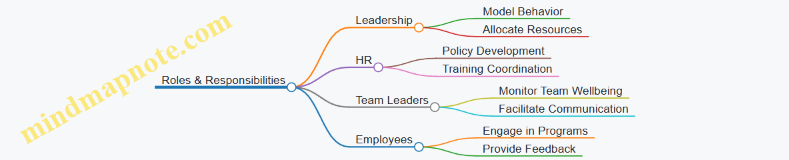
Example: In a high-pressure sales team, managers committed to weekly one-on-one mental health check-ins, while HR coordinated access to counseling services and anonymous feedback channels.
Step 5: Develop a Communication Plan
Ensure mental health initiatives are communicated clearly and regularly.
Mind Map: Communication Plan
Example: A hybrid finance team used their Slack channel to share daily mental health tips and monthly newsletters highlighting employee stories and upcoming workshops.
Step 6: Monitor, Evaluate, and Adjust
Regularly review the effectiveness of your action plan and make necessary adjustments.
Mind Map: Monitoring and Evaluation
Example: After six months, a remote customer support team noticed low engagement in virtual workshops. They adjusted by introducing shorter, more interactive sessions and solicited direct feedback to tailor content.
Summary Example: Personalized Mental Health Action Plan for a Hybrid Team
| Step | Action Item | Example Implementation |
|---|---|---|
| Assess Needs | Conduct anonymous surveys and one-on-ones | Pulse surveys revealed remote workers feel isolated |
| Define Goals | Increase mental health awareness by 30% | Targeted workshop participation increase |
| Implement Practices | Introduce weekly mindfulness sessions | “Wellness Wednesdays” mindfulness and sharing time |
| Assign Roles | Managers lead check-ins; HR coordinates resources | Managers hold weekly mental health check-ins |
| Communication Plan | Use Slack and newsletters to share resources | Daily tips and monthly success stories on Slack |
| Monitor & Adjust | Track attendance and feedback; adjust sessions | Shifted to shorter, interactive workshops after feedback |
By following these steps and tailoring them to your team’s specific context, you can create a dynamic and effective mental health action plan that promotes wellbeing, resilience, and productivity across remote, hybrid, and high-pressure teams.
12.3 Encouraging Ongoing Dialogue and Commitment to Mental Wellbeing
Maintaining mental wellbeing in the workplace is not a one-time effort but an ongoing commitment that requires continuous dialogue and proactive engagement. Encouraging open conversations about mental health helps normalize the topic, reduces stigma, and fosters a supportive environment where employees feel safe to express their needs.
Why Ongoing Dialogue Matters
- Builds Trust: Regular conversations create a culture of trust where employees feel valued beyond their work output.
- Early Identification: Open dialogue helps identify mental health challenges early, allowing timely support.
- Sustains Awareness: Continuous discussion keeps mental health top of mind, reinforcing its importance.
Mind Map: Components of Ongoing Mental Health Dialogue
Practical Examples to Encourage Ongoing Dialogue
-
Weekly Mental Health Check-ins:
- Team leaders dedicate 10 minutes during weekly meetings for employees to share how they’re feeling or any challenges they face.
- Example: A remote marketing team starts each Monday meeting with a “Wellbeing Round,” where everyone shares one positive and one challenge from the past week.
-
Anonymous Suggestion Boxes or Digital Forms:
- Allow employees to submit concerns or ideas about mental health anonymously.
- Example: An HR department uses a Google Form where employees can suggest mental health initiatives or report stressors without fear of identification.
-
Mental Health Ambassadors or Champions:
- Designate team members trained to facilitate conversations and provide peer support.
- Example: A hybrid software development team appoints mental health champions who organize monthly informal virtual coffee chats focused on wellbeing topics.
-
Open Forums and Workshops:
- Host quarterly open forums where employees can discuss mental health topics, share experiences, and learn coping strategies.
- Example: A high-pressure finance team holds “Mental Health Mondays” workshops featuring guest speakers and interactive sessions.
-
Leadership Transparency:
- Leaders share their own mental health journeys or coping mechanisms to model vulnerability.
- Example: A CEO of a remote-first company shares a personal story about managing anxiety during a company-wide virtual town hall, encouraging others to seek help.
Mind Map: Building Commitment to Mental Wellbeing
Examples of Sustaining Commitment
-
Flexible Work Policies: Allow employees to adjust schedules or work locations to manage stress better.
- Example: A hybrid consulting firm offers “mental health days” separate from vacation, encouraging employees to take time off as needed.
-
Regular Mental Health Training: Provide ongoing education to keep skills and awareness sharp.
- Example: Quarterly webinars on stress management techniques are mandatory for all team leaders.
-
Recognition Programs: Celebrate individuals or teams who actively promote mental wellbeing.
- Example: An annual “Wellbeing Champion” award recognizes employees who foster positive mental health practices.
-
Feedback and Adaptation: Use survey data and feedback to refine mental health initiatives.
- Example: After a pulse survey reveals high stress during project deadlines, a software company implements mandatory decompression breaks.
Summary
Encouraging ongoing dialogue and commitment to mental wellbeing requires integrating communication, leadership, support, culture, policy, education, and recognition into everyday workplace practices. By embedding these elements into the organizational fabric, HR professionals and team leaders can create resilient teams that thrive in remote, hybrid, and high-pressure environments.
Additional Resources
- Mental Health America: Workplace Mental Health Toolkit
- Mind Share Partners: Mental Health at Work Report
- National Alliance on Mental Illness (NAMI): Workplace Resources
12.4 Resources and Further Reading for HR Professionals and Team Leaders
Supporting mental health in the workplace is an ongoing journey that requires continuous learning and adaptation. Below is a curated list of valuable resources, tools, and further reading materials designed to empower HR professionals and team leaders in fostering mentally healthy environments across remote, hybrid, and high-pressure teams.
Books
-
“The Happiness Track” by Emma Seppälä
- Explores the science of happiness and how it relates to productivity and leadership.
-
“Dare to Lead” by Brené Brown
- Focuses on courage, vulnerability, and building trust within teams.
-
“Burnout: The Secret to Unlocking the Stress Cycle” by Emily Nagoski and Amelia Nagoski
- Offers actionable strategies to recognize and manage burnout.
Online Courses & Training
-
Mental Health First Aid (MHFA)
- A globally recognized training program teaching how to identify, understand, and respond to signs of mental illnesses.
- https://www.mentalhealthfirstaid.org/
-
Coursera: Workplace Mental Health and Wellness
- Covers strategies for creating supportive work environments.
- https://www.coursera.org/learn/workplace-mental-health
-
LinkedIn Learning: Managing Stress for Positive Change
- Practical techniques for stress management tailored for leaders.
Tools & Platforms
-
Headspace for Work
- Mindfulness and meditation app tailored for organizations to support employee wellbeing.
-
Calm Business
- Provides guided meditation, sleep, and relaxation resources for teams.
-
15Five
- Employee engagement platform with built-in mental health check-ins and feedback loops.
-
Officevibe
- Employee engagement and pulse survey tool to monitor team wellbeing.
Mind Maps
Below are mind maps to help visualize key concepts and action plans related to workplace mental health.
Mind Map 1: Creating a Mentally Healthy Workplace Culture
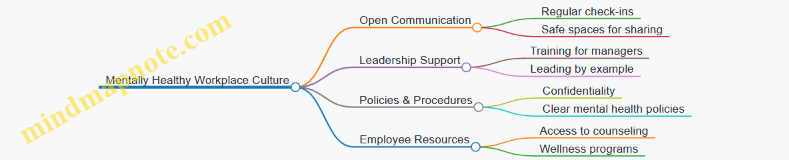
Mind Map 2: Supporting Remote Workers’ Mental Health
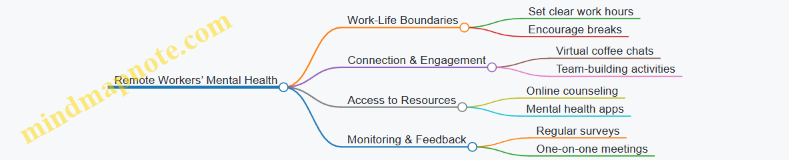
Mind Map 3: Managing High-Pressure Teams
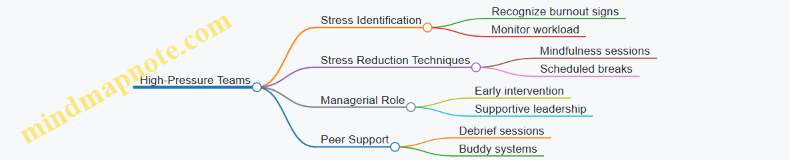
Example: Implementing a Mental Health Resource Hub
Scenario: An HR team at a mid-sized company created a centralized digital hub containing mental health resources, including articles, videos, and links to counseling services.
Outcome: Employees reported easier access to support, increased awareness, and a 20% rise in utilization of mental health benefits within six months.
Articles & Research Papers
-
World Health Organization: Mental Health in the Workplace
- https://www.who.int/mental_health/in_the_workplace/en/
-
Harvard Business Review: How to Support Employee Mental Health
- https://hbr.org/2021/02/how-to-support-employee-mental-health
-
American Psychological Association: Managing Stress in the Workplace
- https://www.apa.org/topics/stress/management
Community & Support Networks
-
Mental Health America Workplace Wellness
- Offers toolkits and community forums for HR professionals.
- https://www.mhanational.org/workplace-wellness
-
National Alliance on Mental Illness (NAMI) Workplace Resources
- Provides guides and support for employers.
- https://www.nami.org/Your-Journey/Individuals-with-Mental-Illness/Workplace
By integrating these resources and examples into your ongoing mental health strategy, HR professionals and team leaders can create more resilient, supportive, and productive teams regardless of their work model or pressure level.