Supply-Chain Resilience & Tech-enabled Traceability (blockchain & standards)
1. Introduction to Supply-Chain Resilience and Traceability
1.1 Understanding Supply-Chain Resilience: Definitions and Importance
What is Supply-Chain Resilience?
Supply-chain resilience refers to the ability of a supply chain to anticipate, prepare for, respond to, and recover from disruptive events while maintaining continuous operations and safeguarding the flow of goods and services. It is a critical capability that enables organizations to withstand shocks such as natural disasters, geopolitical tensions, pandemics, supplier failures, or sudden demand spikes.
Key Aspects of Supply-Chain Resilience
- Robustness: The strength to resist disruptions without significant performance degradation.
- Agility: The ability to quickly adapt and respond to changes or disruptions.
- Visibility: Real-time insight into supply chain processes and inventory.
- Collaboration: Strong partnerships and communication across the supply chain network.
- Recovery: The capability to restore operations rapidly after a disruption.
Why is Supply-Chain Resilience Important?
- Minimizes Financial Losses: Reduces costs associated with downtime, expedited shipping, or lost sales.
- Protects Brand Reputation: Ensures customer satisfaction by maintaining product availability and quality.
- Enhances Competitive Advantage: Enables faster recovery and adaptability compared to competitors.
- Supports Regulatory Compliance: Helps meet legal and industry requirements related to risk management.
Mind Map: Core Components of Supply-Chain Resilience
Example: Automotive Manufacturer Facing Supplier Disruption
An automotive manufacturer relies on a single supplier for a critical electronic component. When the supplier’s factory was temporarily shut down due to flooding, the manufacturer’s resilient supply chain kicked in by:
- Quickly switching to a secondary supplier identified during risk assessments.
- Utilizing real-time inventory visibility to prioritize production lines.
- Collaborating closely with logistics partners to expedite shipments.
This approach minimized production downtime and prevented delays in vehicle deliveries.
Mind Map: Benefits of Supply-Chain Resilience
Best Practice: Diversification and Risk Assessment
One best practice to build resilience is supplier diversification combined with continuous risk assessment. For example, a global electronics company maintains multiple qualified suppliers across different regions and regularly evaluates geopolitical and environmental risks. This strategy ensures that if one region faces disruption, alternate sources can maintain supply continuity.
Summary
Supply-chain resilience is a multifaceted capability essential for navigating today’s complex and uncertain global environment. By understanding its components and importance, supply chain managers, procurement leads, and operations directors can design strategies that not only mitigate risks but also create sustainable competitive advantages.
1.2 The Role of Traceability in Modern Supply Chains
Traceability is the capability to track and trace the history, application, or location of an item or product throughout the supply chain lifecycle. In modern supply chains, traceability plays a pivotal role in enhancing transparency, accountability, and efficiency.
Why Traceability Matters
- Transparency: Enables stakeholders to see the origin and journey of products.
- Quality Control: Helps identify and isolate defects or contamination sources quickly.
- Regulatory Compliance: Meets legal requirements for product safety and reporting.
- Risk Management: Facilitates faster response to disruptions or recalls.
- Consumer Trust: Builds confidence by providing verifiable product information.
Mind Map: Core Functions of Traceability in Supply Chains
Traceability Across Supply Chain Stages
Traceability is not limited to a single stage but spans the entire supply chain:
- Raw Material Sourcing: Tracking origin, certifications, and quality.
- Manufacturing: Monitoring production batches, processes, and quality checks.
- Distribution: Recording shipment details, storage conditions, and handling.
- Retail: Verifying product authenticity and expiration.
- End Consumer: Providing product history and usage information.
Mind Map: Traceability Touchpoints in Supply Chain
Real-World Examples
-
Food Industry – Salmonella Outbreak Response
- A major food distributor used traceability systems to quickly identify contaminated batches of lettuce linked to a salmonella outbreak.
- By tracing back to the farm and forward to retailers, the company executed a targeted recall, minimizing health risks and financial losses.
-
Pharmaceuticals – Serialization for Anti-Counterfeiting
- Pharmaceutical companies implement serialization, assigning unique codes to each medicine package.
- This traceability measure helps regulators and consumers verify authenticity, reducing counterfeit drugs in the market.
-
Apparel – Ethical Sourcing Transparency
- A global apparel brand uses blockchain-enabled traceability to provide customers with information about the origin of cotton and labor conditions.
- This transparency supports ethical sourcing and enhances brand reputation.
Mind Map: Benefits of Traceability Illustrated by Examples
Summary
Traceability is a cornerstone of resilient and responsible supply chains. It enables organizations to respond swiftly to issues, comply with regulations, and build trust with consumers. Leveraging technology and standards to implement traceability effectively is essential for modern supply chain success.
1.3 Overview of Technology-Enabled Traceability: Blockchain and Standards
In today’s complex and globalized supply chains, technology-enabled traceability has become a cornerstone for enhancing transparency, accountability, and resilience. This section explores how blockchain technology and established traceability standards work together to create robust, reliable supply chain ecosystems.
What is Technology-Enabled Traceability?
Technology-enabled traceability refers to the use of digital tools and frameworks to track and verify the movement, origin, and status of products and materials throughout the supply chain. It ensures that every step — from raw material sourcing to final delivery — is recorded and accessible.
Key Components of Technology-Enabled Traceability
Blockchain: The Backbone of Trust
Blockchain is a distributed ledger technology that records transactions in a secure, transparent, and immutable way. In supply chains, it enables multiple parties to share a single source of truth without relying on a central authority.
Core Features:
- Immutability: Once data is recorded, it cannot be altered, ensuring data integrity.
- Transparency: All authorized participants can view the transaction history.
- Decentralization: Removes single points of failure and reduces fraud risk.
- Smart Contracts: Automated agreements that execute when predefined conditions are met.
Example: Walmart implemented blockchain to track leafy greens from farm to shelf. This reduced the time to trace contamination sources from days to seconds, significantly improving food safety.
Traceability Standards: The Language of Supply Chains
Standards provide a common framework and protocols for capturing, sharing, and interpreting traceability data across diverse systems and organizations.
Key Standards:
- GS1: Provides global standards for barcodes, RFID tags, and data sharing.
- ISO 9001: Focuses on quality management systems, ensuring consistent processes.
- ISO 22005: Specifically addresses traceability in the feed and food chain.
Example: The pharmaceutical industry uses serialization standards (based on GS1) to uniquely identify medicine packages, helping to combat counterfeit drugs and comply with regulations like the EU Falsified Medicines Directive.
How Blockchain and Standards Complement Each Other
Standards ensure that data captured is consistent and interpretable, while blockchain guarantees that this data is securely recorded and shared. Together, they enable seamless collaboration across multiple stakeholders.
Example: Maersk and IBM’s TradeLens platform integrates GS1 standards with blockchain technology to provide end-to-end visibility of shipping containers, reducing paperwork and fraud.
Practical Example: Combining IoT, Blockchain, and Standards for Cold Chain Traceability
A pharmaceutical company integrates IoT temperature sensors on vaccine shipments to continuously monitor conditions. Data is captured in real-time, formatted according to GS1 standards, and recorded on a blockchain ledger.
- Benefit: Immediate alerts if temperature thresholds are breached.
- Traceability: Complete, tamper-proof history of the shipment’s condition.
- Compliance: Automated reporting for regulatory audits.
Summary
Technology-enabled traceability leverages blockchain’s secure, transparent ledger and the rigor of established standards to create supply chains that are more resilient, trustworthy, and efficient. By adopting these technologies and frameworks, organizations can better manage risks, improve compliance, and build consumer trust.
1.4 Challenges in Achieving Resilience and Traceability
Achieving supply-chain resilience and effective traceability is a complex endeavor, often hindered by a variety of challenges spanning technology, processes, people, and external factors. Understanding these challenges is critical for supply chain managers, procurement leads, and operations directors aiming to build robust and transparent supply chains.
Key Challenges Overview
Technology Challenges
-
Legacy Systems: Many organizations rely on outdated IT infrastructure that is not designed for real-time data sharing or integration with modern traceability technologies like blockchain.
-
Data Silos: Disparate systems across departments or partners create isolated data pools, preventing end-to-end visibility.
-
Integration Complexity: Connecting blockchain platforms with existing ERP, WMS, and TMS systems requires significant technical expertise.
-
Scalability Issues: Blockchain networks and IoT devices can generate massive data volumes, challenging system performance and storage.
Example: A mid-sized electronics manufacturer struggled to integrate blockchain traceability with their legacy ERP, resulting in delayed data updates and limited real-time visibility.
Data Quality & Availability
-
Incomplete Data: Suppliers may not provide all required information, or data capture points may be missed.
-
Inaccurate/Outdated Information: Manual data entry errors or delayed updates reduce traceability reliability.
-
Lack of Standardization: Without common data formats or standards, sharing and interpreting data across partners is difficult.
Example: A food distributor faced challenges tracing product origins due to inconsistent barcode standards among suppliers, delaying recall responses.
Organizational & Cultural Challenges
-
Resistance to Change: Employees and partners may be reluctant to adopt new technologies or processes.
-
Lack of Cross-Functional Collaboration: Traceability initiatives often require coordination between procurement, operations, IT, and compliance teams.
-
Skills Gap: Limited expertise in blockchain, data analytics, and supply chain digitization can slow implementation.
Example: A global apparel brand’s blockchain pilot failed initially because procurement and IT teams worked in silos, causing misaligned objectives.
Supply Chain Complexity
-
Multi-tier Suppliers: Visibility beyond direct suppliers is limited, making it hard to trace materials or components upstream.
-
Globalization & Regulatory Variance: Different countries have varying compliance requirements, complicating standardized traceability.
-
Visibility Gaps: Lack of real-time tracking in transportation and warehousing creates blind spots.
Example: An automotive OEM found it difficult to trace conflict minerals through multiple supplier tiers, risking regulatory non-compliance.
Cost & Investment
-
High Initial Costs: Implementing blockchain infrastructure, IoT devices, and training staff requires significant capital.
-
ROI Uncertainty: Benefits such as risk mitigation and brand trust are often intangible and long-term.
-
Maintenance Expenses: Ongoing system updates, data management, and partner onboarding add to costs.
Example: A pharmaceutical company hesitated to adopt blockchain traceability due to unclear cost-benefit analysis and budget constraints.
Security & Privacy
-
Data Security Concerns: Blockchain is secure but endpoints and IoT devices can be vulnerable to cyberattacks.
-
Compliance with Data Privacy Laws: Sharing data across borders must comply with GDPR, CCPA, and other regulations.
-
Trust Among Partners: Reluctance to share sensitive information can limit transparency.
Example: A logistics provider faced partner pushback when proposing blockchain data sharing due to fears of exposing competitive information.
Summary
Overcoming these challenges requires a strategic approach combining technology upgrades, process redesign, stakeholder engagement, and investment in skills and infrastructure. Best practices such as phased implementation, cross-functional teams, and adherence to global standards can help mitigate risks and accelerate progress toward resilient, traceable supply chains.
Additional Mind Map: Overcoming Challenges
This comprehensive understanding of challenges and practical examples equips supply chain leaders to anticipate obstacles and design effective resilience and traceability strategies.
1.5 Case Study: How a Global Retailer Improved Resilience Through Traceability
In today’s complex and interconnected supply chains, resilience is a critical capability for global retailers. This case study explores how a leading global retailer leveraged tech-enabled traceability to significantly enhance its supply-chain resilience, reduce disruptions, and improve customer satisfaction.
Background
The retailer operates thousands of stores worldwide, sourcing products from hundreds of suppliers across multiple continents. The complexity of managing such a vast supply network made it vulnerable to disruptions such as supplier delays, counterfeit products, and quality inconsistencies.
The retailer’s objective was to build a more resilient supply chain by increasing end-to-end visibility and traceability, enabling faster response to disruptions and ensuring product authenticity.
Approach: Implementing Traceability for Resilience
The retailer adopted a multi-pronged strategy centered on technology-enabled traceability:
- Standardization: Implemented GS1 standards for product identification and data sharing.
- Blockchain Integration: Deployed a private blockchain network to record product provenance and transaction history.
- IoT Sensors: Used IoT-enabled temperature and location sensors for real-time monitoring of sensitive products.
- Supplier Collaboration: Engaged suppliers in adopting traceability standards and sharing data on the blockchain.
Mind Map: Traceability Components Driving Resilience
Practical Examples
-
Faster Response to Supplier Delays:
- Using blockchain, the retailer could instantly verify shipment status and provenance.
- When a supplier experienced delays due to port congestion, the retailer identified alternative suppliers with verified quality records on the blockchain, minimizing stockouts.
-
Counterfeit Product Detection:
- By scanning GS1 barcodes linked to blockchain records, store managers could verify product authenticity in real time.
- This reduced counterfeit incidents by 30% within the first year.
-
Cold Chain Integrity for Perishables:
- IoT sensors tracked temperature data recorded on the blockchain.
- Alerts were triggered if temperature thresholds were breached, enabling proactive action to prevent spoilage.
Mind Map: Benefits Realized
Lessons Learned and Best Practices
- Start with Standards: Adopting GS1 and other global standards ensured interoperability and easier supplier onboarding.
- Engage Suppliers Early: Collaborative data sharing built trust and improved data accuracy.
- Leverage IoT for Real-Time Data: Combining IoT sensors with blockchain enhanced monitoring capabilities.
- Pilot Before Scale: The retailer ran pilots in select product categories before full-scale rollout.
- Focus on User Experience: Simplified scanning and verification processes encouraged adoption by store staff.
Conclusion
This case study demonstrates that integrating traceability technologies such as blockchain and IoT, underpinned by global standards, can significantly improve supply-chain resilience for global retailers. By enabling real-time visibility, faster disruption response, and enhanced product authenticity verification, the retailer strengthened its operational agility and customer trust.
This approach serves as a practical blueprint for supply chain managers and procurement leads aiming to build resilient, transparent, and tech-enabled supply networks.
2. Foundations of Supply-Chain Resilience
2.1 Key Components of Resilient Supply Chains
Supply-chain resilience refers to the ability of a supply chain to anticipate, prepare for, respond to, and recover from disruptive events while maintaining continuous operations and safeguarding the interests of stakeholders. Building resilience is critical for supply chain managers, procurement leads, and operations directors to ensure business continuity and competitive advantage.
Core Components of Resilient Supply Chains
Below is a detailed breakdown of the key components that collectively build a resilient supply chain, along with practical examples and mind maps to visualize their interconnections.
Visibility & Transparency
- Real-time data access across the supply chain.
- End-to-end tracking of goods, inventory, and shipments.
- Use of technologies like IoT sensors, blockchain, and cloud platforms.
Example: A global electronics manufacturer uses IoT-enabled sensors combined with blockchain to monitor the location and condition of components in transit, enabling early detection of delays or damages.
Flexibility & Agility
- Ability to quickly adapt to changes in demand or supply disruptions.
- Agile manufacturing processes and dynamic supplier networks.
- Scenario planning and rapid decision-making.
Example: A food distributor quickly shifts sourcing from one regional supplier to another during a natural disaster, minimizing stockouts.
Redundancy & Diversification
- Multiple suppliers, logistics routes, and production sites.
- Avoiding single points of failure.
- Strategic inventory buffers.
Example: An automotive company employs dual sourcing for critical components, ensuring production continuity if one supplier faces issues.
Collaboration & Communication
- Strong partnerships with suppliers, logistics providers, and customers.
- Transparent information sharing and joint problem-solving.
- Use of collaborative platforms and standardized communication protocols.
Example: A pharmaceutical company collaborates closely with suppliers and regulators using a shared blockchain ledger to ensure compliance and rapid response to quality issues.
Risk Management & Preparedness
- Proactive identification and assessment of risks.
- Development of contingency plans and business continuity strategies.
- Regular drills and scenario testing.
Example: A consumer goods company conducts quarterly risk assessments and maintains an updated risk register that informs procurement and inventory decisions.
Technology Enablement
- Adoption of advanced technologies like blockchain, AI, IoT, and analytics.
- Automation of monitoring, reporting, and decision-making.
- Integration of systems for seamless data flow.
Example: A logistics company uses AI-driven predictive analytics combined with blockchain traceability to foresee shipment delays and automatically reroute cargo.
Continuous Improvement & Learning
- Using data and feedback loops to refine processes.
- Learning from past disruptions and near-misses.
- Investing in workforce training and knowledge sharing.
Example: After a supply disruption, a manufacturing firm conducts a root cause analysis and updates supplier evaluation criteria to prevent recurrence.
Integrated Mind Map of Key Components
Summary
Building a resilient supply chain is a multifaceted effort that requires visibility, flexibility, redundancy, collaboration, risk management, technology adoption, and continuous improvement. By understanding and implementing these components, supply chain leaders can better prepare their organizations to withstand disruptions and maintain operational excellence.
Additional Real-World Example
Case: During the COVID-19 pandemic, a multinational apparel company leveraged its diversified supplier base and real-time visibility tools to quickly shift production from affected regions to others, maintaining product availability and minimizing revenue loss.
This example highlights how combining multiple resilience components creates a robust defense against unexpected disruptions.
2.2 Risk Identification and Assessment Techniques
Effective risk identification and assessment are foundational to building a resilient supply chain. Understanding potential disruptions and vulnerabilities allows supply chain managers to proactively mitigate risks and maintain operational continuity.
Key Risk Identification Techniques
-
Brainstorming Sessions
- Gather cross-functional teams to identify potential risks.
- Encourage open discussion to uncover hidden or emerging threats.
-
Process Mapping
- Visualize the entire supply chain process from procurement to delivery.
- Identify points of failure or bottlenecks.
-
Historical Data Analysis
- Review past disruptions and their causes.
- Use data to predict likelihood and impact of similar risks.
-
Supplier Risk Assessments
- Evaluate suppliers’ financial health, geopolitical exposure, and operational stability.
-
Scenario Analysis and What-If Modeling
- Simulate different disruption scenarios to assess potential impacts.
-
Risk Checklists and Frameworks
- Use industry-standard checklists (e.g., ISO 31000) to ensure comprehensive coverage.
-
External Risk Intelligence
- Monitor news, geopolitical developments, and market trends.
Mind Map: Risk Identification Techniques
Risk Assessment Techniques
Once risks are identified, assessing their likelihood and potential impact is critical for prioritization.
-
Risk Matrix (Likelihood vs Impact)
- Plot risks on a matrix to categorize as low, medium, or high priority.
-
Failure Mode and Effects Analysis (FMEA)
- Analyze potential failure modes, causes, and effects.
- Assign Risk Priority Numbers (RPN) based on severity, occurrence, and detection.
-
Quantitative Risk Assessment
- Use statistical models and simulations (e.g., Monte Carlo) to estimate risk probabilities.
-
Heat Maps
- Visual tools to represent risk severity across different supply chain segments.
-
Key Risk Indicators (KRIs)
- Define measurable indicators that signal increasing risk exposure.
Mind Map: Risk Assessment Techniques
Practical Example: Electronics Manufacturer
Context: An electronics manufacturer sources critical components from multiple countries. Recent geopolitical tensions and natural disasters have increased supply risks.
Risk Identification:
- Conducted brainstorming with procurement, logistics, and operations teams.
- Mapped supply chain processes highlighting single-source suppliers.
- Analyzed past shipment delays and supplier financial reports.
Risk Assessment:
- Used a risk matrix to classify supplier risks.
- Applied FMEA to identify failure modes in component delivery.
- Monitored KRIs such as supplier lead times and political stability indices.
Outcome:
- Identified high-risk suppliers in regions prone to disruption.
- Developed dual sourcing strategies and increased inventory buffers.
Practical Example: Food Distributor During COVID-19
Context: A food distributor experienced supply interruptions due to lockdowns and transportation delays.
Risk Identification:
- Utilized external risk intelligence to track pandemic hotspots.
- Mapped cold chain logistics to identify vulnerable nodes.
Risk Assessment:
- Created heat maps showing risk severity by region.
- Quantitatively assessed impact on delivery times using historical data.
Outcome:
- Prioritized alternative suppliers closer to demand centers.
- Implemented real-time tracking to monitor shipments.
By systematically applying these risk identification and assessment techniques, supply chain leaders can gain a comprehensive understanding of vulnerabilities and implement targeted resilience strategies.
2.3 Building Redundancy and Flexibility into Supply Networks
Building redundancy and flexibility into supply networks is a critical strategy for enhancing supply-chain resilience. It involves designing supply chains that can absorb shocks, adapt to disruptions, and continue operations with minimal impact. This section explores the concepts, best practices, and real-world examples to help supply chain managers, procurement leads, and operations directors implement these strategies effectively.
Understanding Redundancy and Flexibility
- Redundancy refers to having backup resources, suppliers, or logistics options that can be activated when primary ones fail.
- Flexibility is the ability of the supply chain to adapt quickly to changes, such as shifting demand, supplier issues, or transportation disruptions.
Both concepts work hand-in-hand to create a robust supply network.
Mind Map: Core Components of Redundancy and Flexibility
Best Practices and Examples
Multiple Suppliers with Geographic Diversity
Practice: Avoid reliance on a single supplier or region by qualifying multiple suppliers across different geographies.
Example: An electronics manufacturer sources critical components from suppliers in Southeast Asia and Eastern Europe. When flooding impacted one region, the company quickly shifted orders to the other, avoiding production delays.
Inventory Buffers and Strategic Stockpiles
Practice: Maintain safety stock levels and strategic reserves of critical materials to cushion against supply interruptions.
Example: A pharmaceutical company keeps a 3-month safety stock of active ingredients. During a supplier shutdown caused by regulatory issues, production continued uninterrupted.
Alternative Transportation Routes and Multi-modal Logistics
Practice: Develop multiple transportation options and carriers to avoid bottlenecks.
Example: A fashion retailer uses both sea freight and air cargo options. When a port strike delayed shipments, they switched to air freight to meet seasonal demand.
Agile Manufacturing and Modular Production
Practice: Design manufacturing processes that can quickly switch between products or components.
Example: An automotive supplier implemented modular assembly lines allowing rapid changeover between different car models, enabling them to respond to sudden demand shifts.
Dynamic Demand Planning with Real-Time Data
Practice: Use advanced analytics and real-time sales data to adjust forecasts and production plans dynamically.
Example: A consumer electronics company uses AI-driven demand sensing to adjust orders weekly, reducing excess inventory and improving responsiveness.
Flexible Supplier Contracts and Collaboration
Practice: Negotiate contracts that allow volume adjustments and shared risk management.
Example: A food distributor works with suppliers on flexible volume agreements and shares market insights to collaboratively manage supply risks.
Mind Map: Example - Electronics Manufacturer’s Resilient Supply Network
Implementing Redundancy and Flexibility: Step-by-Step
- Map Your Supply Network: Identify all suppliers, logistics partners, and manufacturing sites.
- Assess Risks: Evaluate geographic, political, and operational risks for each node.
- Identify Single Points of Failure: Look for sole suppliers, single transport routes, or limited inventory.
- Develop Redundancy: Qualify alternative suppliers, increase inventory buffers, and diversify logistics.
- Enhance Flexibility: Invest in agile manufacturing, flexible contracts, and dynamic planning tools.
- Leverage Technology: Use supply chain visibility platforms, predictive analytics, and blockchain to monitor and respond to disruptions.
- Test and Refine: Conduct scenario planning and stress tests to validate resilience.
Summary
Building redundancy and flexibility into supply networks is essential for mitigating risks and maintaining continuity. By diversifying suppliers, maintaining strategic inventories, enabling agile manufacturing, and leveraging technology, organizations can create supply chains that withstand disruptions and adapt swiftly. Real-world examples demonstrate that these practices are not theoretical but practical strategies that deliver measurable resilience benefits.
2.4 Best Practice: Dual Sourcing Strategy in Electronics Manufacturing
Overview
Dual sourcing is a procurement strategy where a company sources a particular component or material from two different suppliers instead of relying on a single source. This approach enhances supply-chain resilience by mitigating risks such as supplier disruptions, quality issues, or geopolitical challenges.
In the electronics manufacturing industry, where components like semiconductors, PCBs, and connectors are critical and often subject to supply volatility, dual sourcing is a proven best practice to maintain production continuity and reduce lead times.
Why Dual Sourcing Matters in Electronics Manufacturing
- Risk Mitigation: Avoids complete shutdown if one supplier faces issues.
- Cost Optimization: Encourages competitive pricing between suppliers.
- Quality Assurance: Enables benchmarking and quality improvements.
- Flexibility: Allows quick shifts in demand or supply fluctuations.
Mind Map: Benefits of Dual Sourcing
Implementation Steps
- Supplier Identification: Select two qualified suppliers with complementary strengths.
- Qualification & Auditing: Perform rigorous quality and capability assessments.
- Contract Negotiation: Define volume splits, pricing, and service levels.
- Inventory Planning: Adjust safety stock levels to accommodate dual sourcing.
- Performance Monitoring: Track supplier KPIs and responsiveness.
- Continuous Communication: Maintain transparent collaboration with both suppliers.
Example: Dual Sourcing of Semiconductor Chips
A leading electronics manufacturer producing consumer devices faced frequent delays due to a single semiconductor supplier’s capacity constraints. By introducing a second supplier located in a different region, the company:
- Reduced lead times by 30%
- Avoided production halts during regional lockdowns
- Negotiated better pricing due to supplier competition
This dual sourcing approach also enabled the company to switch between suppliers seamlessly based on demand spikes or supply disruptions.
Mind Map: Dual Sourcing Implementation Workflow
Practical Tips
- Balance Volume: Avoid splitting volumes too evenly if one supplier is clearly stronger; leverage strengths.
- Geographic Diversity: Choose suppliers in different regions to reduce risk from local disruptions.
- Technology Compatibility: Ensure both suppliers meet technical specifications and standards.
- Data Transparency: Use shared dashboards or blockchain-enabled traceability to monitor supplier performance in real-time.
Example: PCB Dual Sourcing in a Global Electronics Firm
A multinational electronics company sources printed circuit boards (PCBs) from two suppliers: one in Southeast Asia and another in Eastern Europe. This geographic diversification helped the company maintain supply during the 2021 Suez Canal blockage, which delayed shipments from Asia. The European supplier ramped up production temporarily, preventing costly production stoppages.
Summary
Dual sourcing in electronics manufacturing is a strategic best practice that enhances supply-chain resilience by spreading risk, improving cost competitiveness, and ensuring quality. When implemented thoughtfully with clear processes and continuous monitoring, it enables companies to navigate supply disruptions effectively and maintain operational continuity.
2.5 Practical Example: How a Food Distributor Mitigated Disruptions During COVID-19
The COVID-19 pandemic exposed vulnerabilities in global supply chains, especially in the food distribution sector. One mid-sized food distributor, FreshPath Logistics, successfully mitigated disruptions by implementing strategic resilience practices combined with enhanced traceability.
Background
FreshPath Logistics supplies fresh produce and packaged foods to supermarkets and restaurants across several states. When the pandemic hit, demand patterns shifted dramatically, labor shortages arose, and transportation routes were disrupted.
Key Challenges Faced
- Sudden surge in demand for certain products (e.g., canned goods, frozen foods)
- Labor shortages due to health restrictions
- Delays and cancellations in transportation
- Difficulty tracking product origins and shelf life amid rapid turnover
Strategies Implemented
1. Diversification of Suppliers and Sourcing Locations
- Added local farmers and smaller regional suppliers to reduce dependency on a few large suppliers.
- Established dual sourcing agreements to ensure alternative supply routes.
2. Enhanced Real-Time Inventory Visibility
- Deployed IoT sensors in warehouses to monitor stock levels and environmental conditions.
- Integrated inventory data with demand forecasting tools.
3. Adoption of Digital Traceability Tools
- Implemented barcode scanning and RFID tagging for all incoming shipments.
- Used a cloud-based traceability platform to track product movement from farm to store.
4. Agile Transportation Management
- Collaborated with multiple carriers and used blockchain-enabled shipment tracking to ensure transparency.
- Prioritized shipments based on real-time demand data.
5. Workforce Flexibility and Safety Protocols
- Cross-trained employees to cover multiple roles.
- Implemented strict health and safety measures to reduce absenteeism.
Mind Map: FreshPath’s Resilience Approach
Example: Traceability in Action
When a batch of leafy greens showed signs of spoilage, FreshPath quickly traced the affected products back to a specific farm and shipment date using their RFID and cloud traceability system. This allowed them to:
- Isolate and remove only the affected inventory.
- Notify downstream customers promptly.
- Work with the supplier to address the root cause.
This rapid response minimized waste and maintained customer trust.
Results and Benefits
- Reduced Stockouts: Diversified suppliers and real-time inventory data helped maintain steady stock levels despite demand spikes.
- Faster Response Times: Traceability tools enabled quick identification and resolution of quality issues.
- Improved Customer Satisfaction: Transparency and reliability strengthened relationships with retailers and restaurants.
- Operational Agility: Flexible workforce and transportation strategies allowed adaptation to evolving challenges.
Lessons Learned
- Investing in technology-enabled traceability is critical for visibility and rapid decision-making.
- Building supplier relationships and diversifying sourcing reduces risk exposure.
- Workforce flexibility and safety are essential to maintain operations during crises.
This example illustrates how combining best practices in resilience with technology-enabled traceability can empower food distributors to navigate unprecedented disruptions effectively.
3. Traceability Standards and Frameworks in Supply Chains
3.1 Introduction to Global Traceability Standards (GS1, ISO 9001, ISO 22005)
Traceability standards form the backbone of effective supply-chain management by ensuring consistent, reliable, and interoperable tracking of products and materials across complex networks. Understanding the key global standards helps supply chain managers, procurement leads, and operations directors implement robust traceability systems that enhance transparency, compliance, and resilience.
What is Traceability?
Traceability is the ability to track and trace the history, application, or location of an item or activity by means of recorded identification data. It enables organizations to monitor products from origin to end consumer, ensuring quality, safety, and regulatory compliance.
Key Global Traceability Standards
Below is a mind map summarizing the main global traceability standards relevant to supply chains:
GS1: The Global Language of Business
GS1 is a not-for-profit organization that develops and maintains global standards for business communication. Its most recognized standard is the barcode, but GS1 also provides comprehensive frameworks for data sharing and traceability.
- Key Components:
- Barcodes: Universal Product Codes (UPC), Global Trade Item Numbers (GTINs) enable unique identification of products.
- EPCIS: A standard for capturing and sharing event data about the movement and status of products in the supply chain.
- GDSN: Enables synchronized sharing of product data among trading partners.
Example: A multinational retailer uses GS1 barcodes on all products, allowing suppliers and logistics partners worldwide to scan and track items seamlessly. When a shipment arrives at a distribution center, scanning the barcode updates the EPCIS event, providing real-time visibility.
ISO 9001: Quality Management Systems
ISO 9001 is an internationally recognized standard for quality management. While not exclusively a traceability standard, it mandates traceability as part of process control and product conformity.
- Key Elements Related to Traceability:
- Documented procedures to identify product status throughout production.
- Control of records to ensure traceability of materials and components.
- Continuous improvement based on data analysis.
Best Practice: A manufacturing company implements ISO 9001 to ensure every batch of components is traceable to its source materials. This enables quick isolation and correction of defects, minimizing downtime.
Example: An electronics manufacturer uses ISO 9001 processes to maintain detailed records of component suppliers, production dates, and testing results, enabling fast recall if a fault is detected.
ISO 22005: Traceability in Feed and Food Chain
ISO 22005 specifically addresses traceability within the feed and food sectors, focusing on the entire chain from farm to fork.
- Core Principles:
- Establishing a chain of custody for feed and food products.
- Defining roles and responsibilities for traceability.
- Managing risks related to food safety and quality.
Example: A dairy cooperative applies ISO 22005 to trace milk from individual farms through processing and packaging to retail outlets. This traceability enables rapid response to contamination incidents, protecting consumer health.
Integrated Example: Traceability in the Seafood Supply Chain
A seafood exporter uses GS1 barcodes to uniquely identify each batch of fish. ISO 9001 ensures quality control at processing stages, while ISO 22005 governs the traceability of the product from catch to consumer, ensuring compliance with food safety regulations.
Summary
Understanding and implementing global traceability standards like GS1, ISO 9001, and ISO 22005 empowers supply chain leaders to build transparent, compliant, and resilient supply networks. These standards provide a common language and framework that facilitate collaboration, risk management, and continuous improvement.
References & Further Reading:
- GS1 Official Website: https://www.gs1.org/
- ISO 9001 Standard Overview: https://www.iso.org/iso-9001-quality-management.html
- ISO 22005 Standard Summary: https://www.iso.org/standard/35466.html
3.2 Understanding Data Capture and Sharing Protocols
In modern supply chains, effective data capture and sharing protocols are essential to ensure transparency, accuracy, and real-time visibility across all stakeholders. These protocols define how data is collected, formatted, transmitted, and shared among partners, enabling seamless traceability and collaboration.
What Are Data Capture and Sharing Protocols?
- Data Capture Protocols refer to the methods and technologies used to collect data at various points in the supply chain.
- Data Sharing Protocols define the standards and communication methods that allow this data to be securely and efficiently exchanged between systems and organizations.
Mind Map: Overview of Data Capture and Sharing Protocols
Data Capture Methods Explained
-
Barcodes:
- The most common method for capturing product and shipment data.
- GS1 standards define barcode formats for global interoperability.
- Example: A warehouse scans a GS1-128 barcode on a pallet to log its arrival.
-
RFID:
- Uses radio waves to identify and track tags attached to objects.
- Enables non-line-of-sight scanning and bulk reading.
- Example: An automotive manufacturer uses RFID tags to track parts moving through assembly lines.
-
IoT Sensors:
- Collect environmental and location data in real-time.
- Critical for perishable goods and sensitive materials.
- Example: A cold chain logistics provider uses IoT sensors to monitor temperature fluctuations of vaccines during transit.
-
Manual Data Entry:
- Used when automated methods are unavailable.
- Prone to errors, so often supplemented with verification processes.
- Example: A small supplier manually inputs batch numbers into a shared system.
Mind Map: Data Sharing Protocols in Supply Chains
Data Sharing Protocols Detailed
-
EDI (Electronic Data Interchange):
- A long-established protocol for exchanging business documents in a standardized electronic format.
- Reduces paperwork and manual errors.
- Example: A retailer sends an EDI 850 purchase order to a supplier, who responds with an EDI 856 advanced shipping notice.
-
APIs (Application Programming Interfaces):
- Allow different software systems to communicate in real-time.
- Enable dynamic data sharing and process automation.
- Example: A procurement system uses APIs to pull real-time inventory data from multiple suppliers.
-
Blockchain Networks:
- Provide a decentralized, tamper-proof ledger shared among supply chain participants.
- Enhance trust and traceability.
- Example: A food producer records harvest and processing data on a blockchain, accessible to retailers and consumers.
-
Cloud-based Platforms:
- Centralize data storage and sharing with role-based access.
- Facilitate collaboration across geographies.
- Example: A logistics provider uses a cloud platform to share shipment status updates with customers and customs authorities.
Best Practice Example: Combining RFID and APIs for Real-Time Inventory Tracking
Scenario: A consumer electronics company implements RFID tags on all products and integrates RFID readers with their warehouse management system (WMS) via APIs.
- Data Capture: RFID readers automatically scan products as they move through the warehouse.
- Data Sharing: The WMS updates inventory counts in real-time and shares data with procurement and sales systems through APIs.
- Outcome: The company reduces stockouts and improves order fulfillment accuracy.
Summary
Understanding and implementing robust data capture and sharing protocols is foundational for achieving end-to-end traceability in supply chains. Leveraging standardized methods like GS1 barcodes, RFID, and IoT sensors for data capture, combined with interoperable sharing protocols such as EDI, APIs, and blockchain, empowers supply chain managers to enhance visibility, responsiveness, and resilience.
Further Reading & Resources
- GS1 Standards Overview: https://www.gs1.org/standards
- Introduction to EDI: https://www.edibasics.com/what-is-edi/
- Blockchain in Supply Chain: https://www.ibm.com/blockchain/solutions/supply-chain
- IoT in Logistics: https://www.supplychaindigital.com/technology/iot-logistics-driving-supply-chain-innovation
3.3 Implementing Standardized Barcodes and RFID Tags
In modern supply chains, standardized barcodes and RFID (Radio Frequency Identification) tags are foundational technologies that enable efficient, accurate, and scalable traceability. Implementing these technologies correctly ensures seamless data capture, interoperability across systems, and compliance with global standards.
What Are Standardized Barcodes and RFID Tags?
- Standardized Barcodes: These are machine-readable representations of data, typically numeric or alphanumeric, encoded in a visual pattern. Common standards include UPC, EAN, and GS1 DataMatrix.
- RFID Tags: These are small electronic devices that use radio waves to transmit data to an RFID reader without requiring line-of-sight scanning.
Why Use Standardized Barcodes and RFID Tags?
- Interoperability: Standardization ensures that data captured by one party can be understood and processed by others along the supply chain.
- Accuracy: Reduces human errors associated with manual data entry.
- Speed: Enables faster scanning and processing at checkpoints.
- Traceability: Provides granular visibility into product movement and status.
Mind Map: Key Considerations for Implementing Standardized Barcodes and RFID Tags
Step-by-Step Implementation Process
-
Assess Supply Chain Needs and Objectives
- Identify products and assets requiring tagging.
- Determine data elements to encode (e.g., GTIN, batch number, expiry date).
-
Choose Appropriate Standards
- For barcodes, GS1 standards like EAN-13 for retail or GS1 DataMatrix for small items.
- For RFID, select frequency bands and protocols compliant with ISO/IEC standards.
-
Procure Hardware and Software
- Barcode scanners compatible with selected symbologies.
- RFID readers suitable for the environment (e.g., handheld, fixed).
- Label printers capable of producing durable barcode labels.
-
Design and Print Labels
- Ensure labels meet size and readability requirements.
- Use materials resistant to environmental factors (moisture, heat).
-
Integrate with IT Systems
- Connect scanning devices to ERP, WMS, or traceability platforms.
- Validate data capture and real-time updates.
-
Train Staff and Pilot Test
- Conduct training sessions on scanning and handling.
- Run pilot tests in controlled environments.
-
Full Deployment and Continuous Improvement
- Roll out across the supply chain.
- Monitor performance and address issues promptly.
Best Practice Example: Retail Apparel Chain
A global apparel retailer implemented GS1 standard barcodes on all product tags combined with RFID tags embedded in hangers. This dual approach enabled:
- Fast checkout: RFID readers at checkout counters scanned multiple items simultaneously.
- Inventory accuracy: Real-time inventory updates reduced stockouts by 20%.
- Loss prevention: RFID-enabled exit gates detected unpaid items.
The retailer followed strict label placement guidelines to ensure barcode readability and RFID tag performance, including avoiding metal interference.
Practical Example: Pharmaceutical Cold Chain
A pharmaceutical distributor uses GS1 DataMatrix barcodes on medicine packaging and RFID tags on refrigerated containers. This implementation:
- Ensures compliance with serialization and traceability regulations.
- Enables temperature monitoring linked to RFID tags with embedded sensors.
- Provides end-to-end visibility from manufacturing to pharmacy shelves.
Staff are trained to scan barcodes at each checkpoint and use RFID readers for container-level tracking, ensuring product integrity and patient safety.
Mind Map: Benefits and Challenges
Tips for Success
- Start with a pilot project to identify potential issues.
- Collaborate with suppliers and partners to standardize labeling.
- Regularly audit barcode and RFID readability.
- Leverage software analytics to gain insights from traceability data.
- Stay updated with evolving standards and technologies.
By implementing standardized barcodes and RFID tags thoughtfully, supply chain managers can significantly enhance traceability, operational efficiency, and resilience across their networks.
3.4 Best Practice: Pharmaceutical Industry Compliance with Serialization Standards
Serialization in the pharmaceutical industry is a critical practice designed to enhance traceability, combat counterfeit drugs, and ensure patient safety. Compliance with serialization standards involves assigning unique identifiers to each saleable unit of a drug product, enabling end-to-end visibility throughout the supply chain.
Why Serialization Matters
- Counterfeit Prevention: Serialization helps verify the authenticity of medicines.
- Regulatory Compliance: Many countries mandate serialization to meet legal requirements.
- Recall Efficiency: Enables precise identification and removal of affected batches.
- Patient Safety: Ensures that patients receive genuine, safe medications.
Key Serialization Standards in Pharma
- GS1 Standards: Global standards for unique identification (GTIN, Serial Numbers).
- FDA DSCSA (Drug Supply Chain Security Act): US regulation requiring serialization and traceability.
- EU FMD (Falsified Medicines Directive): European Union directive mandating serialization and verification.
- ISO 9001: Quality management standards supporting traceability.
Serialization Implementation Mind Map
Example: Pfizer’s Serialization Compliance Journey
Pfizer, a global pharmaceutical giant, implemented serialization across its manufacturing lines to comply with the EU FMD and FDA DSCSA regulations. Key steps included:
- Assessment: Evaluated existing packaging lines and IT systems.
- Technology Upgrade: Installed high-resolution printers capable of printing unique 2D barcodes.
- Data Integration: Developed a centralized database to manage serialization data.
- Aggregation: Linked individual unit serial numbers to cartons and pallets.
- Verification: Implemented scanning and verification at distribution points.
This approach enabled Pfizer to:
- Quickly identify and isolate suspect products.
- Provide regulators with accurate traceability data.
- Reduce counterfeit risks in multiple markets.
Serialization Verification Mind Map
Best Practice Tips for Serialization Compliance
- Early Planning: Engage regulatory, IT, and operations teams early to align on requirements.
- Pilot Testing: Run pilot programs on select lines before full-scale rollout.
- Data Accuracy: Maintain rigorous data quality controls to avoid errors.
- Supplier Collaboration: Work closely with packaging and labeling suppliers.
- Training: Educate staff on new processes and technologies.
- Continuous Monitoring: Use analytics to monitor serialization data and detect anomalies.
Additional Example: Sandoz’s Use of Aggregation for Efficient Recalls
Sandoz, a Novartis division, implemented serialization with aggregation, linking individual units to cartons and pallets. This enabled rapid identification of affected products during a recall, minimizing impact and ensuring patient safety.
Summary
Pharmaceutical serialization compliance is a cornerstone of modern supply-chain traceability. By adopting global standards, leveraging technology, and following best practices, pharmaceutical companies can enhance supply-chain resilience, meet regulatory demands, and protect end consumers from counterfeit and unsafe products.
3.5 Example: Traceability in the Automotive Supply Chain Using ISO/TS 16949
ISO/TS 16949 is a globally recognized quality management standard specifically designed for the automotive industry. It integrates the requirements of various quality standards to ensure consistent quality and traceability throughout the automotive supply chain. This section explores how ISO/TS 16949 enhances traceability, supported by practical examples and mind maps to clarify its application.
What is ISO/TS 16949?
- It is a technical specification developed by the International Automotive Task Force (IATF).
- Focuses on continuous improvement, defect prevention, and reduction of variation and waste in the automotive supply chain.
- Emphasizes traceability of parts and components from raw materials to finished vehicles.
Importance of Traceability in Automotive Supply Chains
- Ensures product safety and compliance with regulations.
- Facilitates quick identification and recall of defective parts.
- Enhances supplier accountability and quality control.
Mind Map: Key Traceability Elements in ISO/TS 16949
Practical Example: Traceability in an Automotive Brake System Supplier
Scenario: A brake system supplier manufactures brake pads for multiple car manufacturers. To comply with ISO/TS 16949, the supplier implements a traceability system that tracks each brake pad from raw material receipt to shipment.
-
Raw Material Identification:
- Each batch of raw material steel is assigned a unique batch number.
- Supplier certification and test reports for steel quality are recorded.
-
Production Tracking:
- During manufacturing, each brake pad is stamped with a unique serial number.
- Production data, including machine settings and operator ID, are logged.
-
Quality Inspection:
- Inspection results are linked to the serial number.
- Nonconforming parts are flagged and quarantined.
-
Shipment and Delivery:
- Finished brake pads are packed with barcode labels.
- Shipping records include batch and serial numbers for customer reference.
-
Recall Management:
- If a defect is detected, the supplier can trace affected brake pads by serial number and batch.
- Enables targeted recall, minimizing disruption and cost.
Mind Map: Traceability Workflow in the Brake System Supplier
Integration with Technology
- ERP Systems: Centralize traceability data, linking production, quality, and shipment records.
- Barcode and RFID: Automate identification and tracking of parts.
- Data Analytics: Analyze traceability data to identify trends and improve processes.
Benefits Realized
- Enhanced ability to pinpoint root causes of defects.
- Improved supplier collaboration through shared traceability data.
- Compliance with customer and regulatory requirements.
- Reduced risk and cost associated with product recalls.
Summary
Implementing ISO/TS 16949 traceability requirements in the automotive supply chain provides a robust framework for quality management and transparency. By combining standardized documentation, unique part identification, and technology-enabled tracking, automotive suppliers can ensure product integrity and responsiveness to quality issues.
This example demonstrates how traceability is not just a compliance exercise but a strategic enabler of supply-chain resilience and operational excellence.
4. Blockchain Technology Fundamentals for Supply Chains
4.1 What is Blockchain? Core Concepts and Terminology
Blockchain is a distributed ledger technology that enables secure, transparent, and tamper-proof recording of transactions across a network of computers. Originally developed as the underlying technology for cryptocurrencies like Bitcoin, blockchain has evolved into a powerful tool for enhancing traceability and resilience in supply chains.
Core Concepts of Blockchain
- Distributed Ledger: A database that is shared and synchronized across multiple nodes (computers) in a network, eliminating the need for a central authority.
- Block: A container that holds a batch of transactions. Each block is linked to the previous one, forming a chain.
- Chain: The sequence of blocks linked together using cryptographic hashes.
- Hash: A unique digital fingerprint of data. Any change in the data changes the hash, ensuring data integrity.
- Consensus Mechanism: A method used by the network to agree on the validity of transactions (e.g., Proof of Work, Proof of Stake).
- Smart Contracts: Self-executing contracts with the terms directly written into code, enabling automation.
Mind Map: Blockchain Core Concepts
Terminology Explained with Examples
-
Distributed Ledger
- Example: Imagine a spreadsheet duplicated thousands of times across a network of computers. Each participant has the same copy, and updates are reflected simultaneously.
-
Block
- Example: Think of a block as a page in a ledger book that records multiple transactions (e.g., shipment records, purchase orders).
-
Hash
- Example: If a block contains shipment data, its hash is like a unique barcode representing that data. Changing even a single detail changes the barcode.
-
Consensus Mechanism
- Example: In Proof of Work (used by Bitcoin), miners solve complex puzzles to validate transactions, ensuring trust without a central authority.
-
Smart Contracts
- Example: An automated payment release when a shipment reaches a warehouse, triggered by IoT sensor data recorded on the blockchain.
Practical Example in Supply Chain
Tracking a Coffee Bean Shipment:
- Each batch of coffee beans is recorded on the blockchain at the farm (origin), including harvest date and quality metrics.
- When beans are shipped, the transport details are added to a new block.
- At the roasting facility, the batch is verified against the blockchain records.
- Smart contracts automatically trigger payments upon delivery confirmation.
This process ensures transparency, reduces fraud, and enhances trust among stakeholders.
Summary
Blockchain is a decentralized, secure, and transparent way to record transactions. Understanding its core concepts—distributed ledger, blocks, hashes, consensus, and smart contracts—is essential for supply chain professionals aiming to leverage technology-enabled traceability and build resilient supply chains.
4.2 Public vs Private Blockchains: Which Fits Supply Chains?
In the evolving landscape of supply-chain technology, blockchain has emerged as a powerful tool for enhancing traceability, transparency, and security. However, understanding the differences between public and private blockchains is crucial for supply chain managers, procurement leads, and operations directors aiming to select the right blockchain type for their specific needs.
What is a Public Blockchain?
A public blockchain is a decentralized network open to anyone who wants to participate. It operates on a permissionless basis, meaning any user can read, write, and validate transactions without needing approval.
Key Characteristics:
- Open access to all participants
- Decentralized validation (consensus by many nodes)
- High transparency
- Typically slower transaction speeds due to extensive consensus mechanisms
- Examples: Bitcoin, Ethereum
Example in Supply Chain: A company using a public blockchain to track the provenance of coffee beans, where every participant from farmer to retailer can verify the product’s journey.
What is a Private Blockchain?
A private blockchain is a permissioned network where access is restricted to a set of known participants. It is controlled by one or more organizations that decide who can read, write, or validate transactions.
Key Characteristics:
- Restricted access and permissions
- Faster transaction speeds due to fewer validators
- Greater privacy and control over data
- Suitable for enterprise use cases
Example in Supply Chain: An automotive manufacturer using a private blockchain to share sensitive supplier data securely among approved partners.
Mind Map: Public vs Private Blockchains
Advantages and Disadvantages in Supply Chain Context
| Aspect | Public Blockchain | Private Blockchain |
|---|---|---|
| Access | Open to all participants | Restricted to authorized participants |
| Transparency | Fully transparent | Controlled transparency |
| Security | Highly secure via decentralization | Secure but depends on trusted validators |
| Transaction Speed | Slower due to consensus mechanisms | Faster due to fewer nodes |
| Cost | Potentially higher due to resource-intensive mining | Lower operational costs |
| Data Privacy | Publicly visible data | Data access controlled and private |
Mind Map: Choosing Blockchain Type for Supply Chain
Use Case Examples
Public Blockchain Example: Provenance Tracking in Seafood Industry
A consortium of seafood suppliers, distributors, and retailers uses a public blockchain to record every step of the fish supply chain. This transparency helps combat illegal fishing and fraud, as consumers and regulators can verify the origin and handling of seafood products.
Private Blockchain Example: Pharmaceutical Supply Chain Compliance
A pharmaceutical company implements a private blockchain network among its suppliers, manufacturers, and distributors to ensure compliance with serialization and track-and-trace regulations. The permissioned nature protects sensitive data while enabling authorized participants to validate product authenticity.
Hybrid Approaches
Some supply chains adopt hybrid blockchain models, combining public and private features to balance transparency and privacy.
Example:
- Sensitive transactional data is maintained on a private blockchain.
- Hashes or proofs of these transactions are anchored on a public blockchain for immutable verification.
Summary
| Factor | Public Blockchain | Private Blockchain |
|---|---|---|
| Best for | Open, transparent supply chains | Controlled, confidential supply chains |
| Ideal participants | Large, diverse, and untrusted groups | Known, trusted partners |
| Data privacy | Low | High |
| Transaction speed | Lower | Higher |
| Cost | Potentially higher | Lower |
Selecting the right blockchain type depends on your supply chain’s unique requirements for transparency, privacy, speed, and cost. Understanding these trade-offs helps supply chain leaders implement effective, tech-enabled traceability solutions that enhance resilience and trust.
4.3 Smart Contracts and Their Role in Automating Supply-Chain Processes
Smart contracts are self-executing contracts with the terms of the agreement directly written into code. They run on blockchain platforms and automatically enforce and execute contractual clauses when predefined conditions are met, without the need for intermediaries.
In supply chains, smart contracts can revolutionize process automation by increasing transparency, reducing delays, minimizing errors, and lowering operational costs.
Key Features of Smart Contracts in Supply Chains
- Automation: Automatically trigger actions like payments, shipment releases, or quality checks.
- Transparency: All parties have access to the same immutable contract terms and execution status.
- Security: Tamper-proof execution on blockchain ensures trust.
- Efficiency: Reduces paperwork and manual intervention.
Mind Map: Smart Contracts in Supply Chain Automation
How Smart Contracts Automate Supply-Chain Processes
-
Order Placement and Confirmation: When a purchase order is created and confirmed on the blockchain, a smart contract can automatically notify suppliers and initiate production or shipment.
-
Shipment Tracking and Delivery Confirmation: IoT devices or RFID scanners update the blockchain with shipment status. Once delivery is confirmed, the smart contract triggers payment release.
-
Quality Control: Smart contracts can require proof of quality checks before allowing the next step, such as shipment or payment.
-
Customs and Compliance: Automated verification of customs documents and certifications can be programmed into smart contracts to speed up border clearance.
Mind Map: Supply-Chain Process Automation with Smart Contracts
Real-World Examples
Example 1: Automating Supplier Payments in Electronics Manufacturing
A large electronics manufacturer uses smart contracts to automate payments to component suppliers. When a shipment is scanned and verified as received in good condition, the smart contract automatically triggers payment within 24 hours, reducing payment delays and improving supplier relationships.
Example 2: Food Supply Chain Quality Control
A fresh produce distributor integrates IoT temperature sensors with blockchain. Smart contracts monitor temperature data during transport; if the temperature stays within acceptable limits, the contract releases payment to the transporter. If not, penalties are automatically applied, ensuring accountability and product quality.
Example 3: Customs Clearance Automation
A logistics company uses smart contracts to automate customs documentation verification. When all required documents are uploaded and validated on the blockchain, the smart contract notifies customs authorities and expedites clearance, reducing delays at borders.
Best Practices for Implementing Smart Contracts in Supply Chains
- Define Clear and Measurable Conditions: Contract terms must be unambiguous and based on verifiable data inputs.
- Integrate IoT and Data Sources: Reliable real-time data feeds (e.g., sensors, scanners) are critical for triggering contract conditions.
- Collaborate Across Stakeholders: Ensure all parties agree on contract logic and data sharing protocols.
- Pilot Before Scaling: Start with small, well-defined processes to validate smart contract performance.
- Ensure Legal Compliance: Align smart contract terms with existing legal frameworks and regulations.
Smart contracts are powerful tools that bring automation, trust, and efficiency to supply chains. By embedding business logic into transparent and tamper-proof code, they reduce friction and enable faster, more reliable operations.
4.4 Best Practice: Using Blockchain to Track Perishable Goods
Tracking perishable goods presents unique challenges due to their sensitivity to environmental conditions and limited shelf life. Blockchain technology offers a transformative approach to enhance traceability, transparency, and trust across the entire supply chain for perishables.
Why Blockchain for Perishable Goods?
- Immutable Records: Ensures tamper-proof data on product origin, handling, and conditions.
- Real-Time Visibility: Enables stakeholders to monitor conditions such as temperature and humidity in real-time.
- Enhanced Trust: Builds consumer confidence by providing transparent provenance.
- Automated Compliance: Smart contracts can enforce handling protocols and trigger alerts.
Key Components of Blockchain-enabled Perishable Goods Tracking
Step-by-Step Best Practice Implementation
- Deploy IoT Sensors: Attach temperature and humidity sensors to packaging or containers.
- Integrate Sensors with Blockchain: Sensor data is automatically recorded on the blockchain in real-time.
- Use Smart Contracts: Define thresholds for acceptable conditions; trigger alerts or actions if breached.
- Enable Stakeholder Access: Provide permissioned access to farmers, logistics providers, retailers, and regulators.
- Consumer Transparency: Use QR codes linked to blockchain data so consumers can verify product freshness and origin.
Example: Tracking Fresh Seafood from Catch to Consumer
-
Background: Seafood is highly perishable and sensitive to temperature fluctuations.
-
Implementation:
- Fishermen attach IoT-enabled tags to catch containers.
- Temperature and location data are continuously logged on a private blockchain.
- Smart contracts automatically notify logistics partners if temperature exceeds safe limits.
- Retailers access verified freshness data before accepting shipments.
- Consumers scan QR codes to view the catch date, handling history, and freshness status.
-
Outcome: Significant reduction in spoilage, improved regulatory compliance, and increased consumer trust.
Additional Mind Map: Benefits and Challenges
Practical Tips
- Start Small: Pilot with a single product line or region to validate technology and processes.
- Collaborate: Engage all supply chain partners early to ensure data sharing and trust.
- Focus on Data Quality: Ensure sensors are calibrated and data input is accurate.
- Leverage Standards: Use GS1 standards for product identification to ensure interoperability.
- Plan for Scalability: Design blockchain infrastructure to handle increasing transaction volumes.
Summary
Blockchain technology, combined with IoT and smart contracts, provides a robust framework to track perishable goods effectively. By ensuring real-time, immutable data on environmental conditions and handling, supply chains can reduce waste, improve compliance, and build consumer trust through transparency.
This best practice not only mitigates risks associated with perishables but also creates a competitive advantage for supply chain managers and procurement leads aiming for operational excellence.
4.5 Example: Walmart’s Blockchain Pilot for Food Safety
Walmart’s blockchain pilot project represents a groundbreaking initiative in leveraging blockchain technology to enhance food safety and traceability across its supply chain. This case study demonstrates how blockchain can significantly reduce the time required to trace the origin of food products, thereby improving response times to contamination events and ensuring consumer safety.
Background
Walmart, one of the world’s largest retailers, faced challenges related to foodborne illness outbreaks and the complexity of tracing contaminated products through a vast, global supply chain. Traditional traceability methods were slow and labor-intensive, often taking days or weeks to identify the source of contamination.
To address this, Walmart partnered with IBM to pilot a blockchain-based traceability system focused initially on leafy greens, a product category frequently linked to food safety recalls.
Key Features of Walmart’s Blockchain Pilot
- Immutable Ledger: Each transaction or movement of the product is recorded in a tamper-proof blockchain ledger.
- Real-Time Data Sharing: All authorized participants, including farmers, processors, distributors, and retailers, have access to the same data.
- Rapid Traceability: The time to trace the origin of a product was reduced from days/weeks to seconds.
- Enhanced Transparency: Consumers can access detailed product origin information, increasing trust.
Mind Map: Walmart’s Blockchain Food Safety Pilot
How the Pilot Works: Step-by-Step Example
-
Farm Level: A farmer harvests a batch of leafy greens and records harvest details (date, location, batch number) onto the blockchain.
-
Processing: The processor receives the batch and logs processing details (washing, packaging) linked to the original batch on the blockchain.
-
Distribution: The distributor scans the packaged product and records shipment details, creating a continuous chain of custody.
-
Retail: Walmart receives the shipment and updates inventory records on the blockchain.
-
Consumer Access: Using a QR code on the product packaging, consumers can scan and view the entire journey of the product from farm to shelf.
Example Scenario: Contamination Event
-
Traditional Method: If a contamination is detected, Walmart would need to manually trace back through paperwork and multiple databases, taking days to identify the source.
-
Blockchain Method: Using the blockchain, Walmart can instantly trace the contaminated batch back to the specific farm and processing facility within seconds, enabling rapid removal of affected products and preventing further spread.
Best Practices Demonstrated
-
Cross-Industry Collaboration: Walmart’s pilot involved multiple stakeholders sharing data on a common platform.
-
Standardized Data Formats: Use of GS1 standards for product identification ensured interoperability.
-
Incremental Rollout: Starting with leafy greens allowed Walmart to pilot, learn, and scale gradually.
-
Consumer Engagement: Providing transparency to end consumers builds trust and brand loyalty.
Additional Mind Map: Benefits of Blockchain in Food Safety
Conclusion
Walmart’s blockchain pilot for food safety exemplifies how technology-enabled traceability can transform supply-chain resilience. By drastically reducing traceability times and improving transparency, Walmart not only enhances consumer safety but also sets a benchmark for the retail and food industries globally. This example underscores the importance of adopting blockchain alongside established standards and collaborative practices to build resilient, transparent supply chains.
5. Integrating Blockchain with Existing Traceability Standards
5.1 Mapping Blockchain Data Structures to GS1 Standards
Supply chains rely heavily on standardized data formats to ensure interoperability, accuracy, and traceability. GS1 standards, such as Global Trade Item Number (GTIN), Serial Shipping Container Code (SSCC), and Electronic Product Code Information Services (EPCIS), provide a globally recognized framework for identifying, capturing, and sharing supply chain data.
Integrating blockchain technology with GS1 standards enables immutable, transparent, and decentralized traceability while maintaining consistency with existing industry protocols. This section explores how blockchain data structures can be mapped to GS1 standards to maximize traceability and operational efficiency.
Understanding GS1 Standards Relevant to Blockchain
- GTIN (Global Trade Item Number): Unique identifier for trade items (products and services).
- SSCC (Serial Shipping Container Code): Identifies logistic units like pallets or containers.
- GLN (Global Location Number): Identifies physical locations or legal entities.
- EPCIS (Electronic Product Code Information Services): Standard for capturing and sharing event data about the movement and status of products in the supply chain.
Blockchain Data Structures Overview
- Blocks: Containers of transactions with cryptographic hashes linking them.
- Transactions: Individual records of events or data updates.
- Smart Contracts: Self-executing code that automates business logic.
- Events: Data emitted by smart contracts to signal state changes.
Mapping Principles
| GS1 Element | Blockchain Equivalent | Description |
|---|---|---|
| GTIN | Transaction Data Field | Encodes product identifiers within transactions. |
| SSCC | Transaction Data Field | Represents shipment or logistic unit identifiers. |
| GLN | Metadata or Transaction Field | Identifies parties or locations involved. |
| EPCIS Events | Blockchain Events | Supply chain events (e.g., shipping, receiving) emitted as blockchain events. |
Mind Map: Mapping GS1 Standards to Blockchain Data Structures
Example: Encoding a Product Shipment Event on Blockchain Using GS1 Standards
Scenario: A manufacturer ships a batch of products to a distributor. The shipment is tracked on a blockchain network.
- GTIN: 01234567890128 (Product ID)
- SSCC: 000123456789012345 (Shipment ID)
- GLN (Manufacturer): 4012345000013
- GLN (Distributor): 4012345000020
Blockchain Transaction Structure:
{
  "transactionId": "tx123456",
  "product": {
    "gtin": "01234567890128",
    "quantity": 100
  },
  "shipment": {
    "sscc": "000123456789012345",
    "originGLN": "4012345000013",
    "destinationGLN": "4012345000020"
  },
  "timestamp": "2024-06-01T10:00:00Z",
  "eventType": "ShipmentDispatched"
}
This transaction is recorded in a block and linked immutably. Smart contracts can trigger notifications or compliance checks based on this data.
Best Practice: Using EPCIS Event Models as Blockchain Events
EPCIS defines event types such as ObjectEvent, AggregationEvent, and TransformationEvent that describe supply chain activities. These can be directly emitted as blockchain events to maintain semantic consistency.
Mind Map: EPCIS Event Types on Blockchain
Example: When a pallet is sealed (AggregationEvent), a smart contract emits an event:
{
  "eventType": "AggregationEvent",
  "parentID": "sscc:000123456789012345",
  "childEPCs": ["gtin:01234567890128:serial123", "gtin:01234567890128:serial124"],
  "eventTime": "2024-06-01T11:00:00Z"
}
This data is accessible to all authorized participants, enabling transparent and verifiable traceability.
Summary
Mapping blockchain data structures to GS1 standards ensures that blockchain-enabled traceability solutions are interoperable with existing supply chain systems and processes. By embedding GS1 identifiers within blockchain transactions and emitting EPCIS-compliant events, organizations can achieve enhanced transparency, trust, and operational efficiency.
This approach also facilitates easier adoption by supply chain partners who are already familiar with GS1 standards, reducing friction and accelerating digital transformation.
5.2 Ensuring Interoperability Between Blockchain Platforms and ERP Systems
Interoperability between blockchain platforms and Enterprise Resource Planning (ERP) systems is critical to unlocking the full potential of tech-enabled traceability in supply chains. Seamless integration ensures that data flows smoothly across systems, enabling real-time visibility, enhanced decision-making, and improved operational efficiency.
Why Interoperability Matters
- Unified Data View: ERP systems manage core business processes, while blockchain provides immutable, transparent transaction records. Interoperability bridges these to create a single source of truth.
- Operational Efficiency: Automating data exchange reduces manual entry, errors, and delays.
- Compliance and Auditability: Integrated systems simplify regulatory reporting and audit trails.
Key Challenges in Achieving Interoperability
- Diverse data formats and standards
- Varied blockchain protocols (e.g., Ethereum, Hyperledger Fabric)
- Legacy ERP system limitations
- Data privacy and security concerns
Mind Map: Components of Blockchain-ERP Interoperability
Approaches to Integration
-
API-Based Integration
- ERP systems expose APIs to interact with blockchain nodes.
- Example: SAP’s Cloud Platform Blockchain service provides APIs to connect SAP ERP with various blockchain networks.
-
Middleware Solutions
- Middleware acts as a translator and orchestrator between ERP and blockchain.
- Example: IBM’s Blockchain Platform includes middleware components that facilitate integration with ERP systems like Oracle and SAP.
-
Standardized Data Models and Formats
- Using industry standards such as GS1 for product identification ensures consistent data exchange.
- Example: Mapping GS1 EPCIS events from blockchain to ERP inventory modules.
-
Smart Contract Triggers from ERP Events
- ERP system events (e.g., purchase order creation) can trigger smart contract executions.
- Example: A procurement ERP module triggers a smart contract to release payment upon goods receipt confirmation on blockchain.
Mind Map: Integration Workflow Example
Real-World Example: Maersk and IBM TradeLens
- Context: Maersk’s TradeLens platform integrates blockchain with existing ERP and logistics systems.
- Integration: TradeLens uses APIs and standardized data formats (EPCIS) to connect with shipping companies’ ERP systems.
- Outcome: Real-time shipment visibility, reduced paperwork, and faster customs clearance.
Best Practices for Ensuring Interoperability
- Adopt Industry Standards: Use GS1, ISO, and other relevant standards to harmonize data.
- Modular Architecture: Design integration layers to be modular and scalable.
- Robust API Management: Secure, version-controlled APIs facilitate smooth communication.
- Data Governance: Define clear policies for data ownership, privacy, and access.
- Pilot and Iterate: Start with small-scale pilots to validate integration before full rollout.
Example: Integrating Blockchain with SAP ERP in a Food Supply Chain
- Scenario: Tracking provenance and quality data of fresh produce.
- Implementation:
- Blockchain records farm-to-store traceability events.
- SAP ERP manages inventory, procurement, and sales.
- Middleware transforms blockchain events into SAP-compatible formats.
- Automated alerts in SAP trigger quality checks when blockchain flags anomalies.
- Result: Enhanced transparency, faster recalls, and improved consumer trust.
Summary
Ensuring interoperability between blockchain platforms and ERP systems is a foundational step toward resilient, transparent supply chains. By leveraging APIs, middleware, and standardized data models, organizations can create integrated ecosystems that harness the strengths of both technologies. Real-world implementations like TradeLens and SAP blockchain integrations demonstrate the tangible benefits of this approach.
5.3 Best Practice: Collaborative Blockchain Networks Among Suppliers
Collaborative blockchain networks among suppliers represent a transformative best practice in enhancing supply-chain transparency, trust, and efficiency. By leveraging a shared, immutable ledger, suppliers can collectively track, verify, and authenticate product provenance, transactions, and compliance data in real time. This collaboration reduces disputes, accelerates information flow, and strengthens resilience across the entire supply chain.
Why Collaborative Blockchain Networks?
- Shared Trust: Eliminates the need for intermediaries by providing a single source of truth.
- Transparency: All participants have access to the same verified data.
- Efficiency: Streamlines processes such as payments, audits, and compliance checks.
- Resilience: Enables faster response to disruptions by improving visibility.
Key Components of Collaborative Blockchain Networks
Practical Example: Apparel Industry Consortium
A consortium of apparel suppliers and manufacturers implemented a permissioned blockchain network to track raw material sourcing and production stages. Each supplier records batch-level data such as cotton origin, dyeing processes, and labor certifications. Retailers access this data to verify ethical sourcing claims, enhancing brand trust and compliance with regulations.
Benefits observed:
- Reduced manual audits by 40%
- Faster dispute resolution
- Increased consumer confidence through transparent product journeys
Steps to Build a Collaborative Blockchain Network
Example: Food Supply Chain Collaborative Network
A group of farmers, processors, and retailers created a blockchain network to trace organic produce from farm to shelf. IoT sensors record temperature and humidity during transport, while blockchain stores immutable records of certifications and shipment data.
Results:
- Improved recall efficiency by 60%
- Enhanced compliance with organic certification bodies
- Strengthened supplier relationships through shared accountability
Best Practices for Successful Collaboration
- Governance Model: Establish clear rules for data access, privacy, and dispute resolution.
- Interoperability: Ensure blockchain integrates with existing ERP and supply-chain systems.
- Data Accuracy: Use IoT and automated data capture to minimize human error.
- Stakeholder Engagement: Involve all relevant parties early to align incentives.
- Scalability Planning: Design the network to handle increasing participants and data volume.
Summary Mindmap
Collaborative blockchain networks among suppliers are a powerful enabler of resilient, transparent, and efficient supply chains. By adopting this best practice, supply chain managers and procurement leads can foster stronger partnerships, reduce risks, and deliver greater value to end customers.
5.4 Example: Maersk and IBM TradeLens Platform for Shipping Transparency
The Maersk and IBM TradeLens platform is a pioneering example of how blockchain technology can revolutionize supply-chain traceability and transparency, particularly in the complex world of global shipping logistics. This platform leverages blockchain to create a secure, transparent, and real-time digital ledger of shipping events and documents, enabling all stakeholders to access trusted data and collaborate more effectively.
Overview of TradeLens
TradeLens is a blockchain-based shipping solution jointly developed by Maersk, the world’s largest container shipping company, and IBM, a leader in blockchain technology. It aims to digitize and streamline the global supply chain by enabling end-to-end visibility and secure information sharing across the shipping ecosystem.
- Participants: Shippers, freight forwarders, ports, customs authorities, and logistics providers.
- Data Shared: Bill of lading, customs documents, container status, shipment events.
- Benefits: Reduced paperwork, faster clearance, improved security, and enhanced collaboration.
Mind Map: Key Components of TradeLens
How TradeLens Enhances Shipping Transparency
-
Immutable and Shared Data: Every transaction or event related to a shipment is recorded on the blockchain, creating an immutable audit trail accessible to authorized participants.
-
Real-Time Visibility: Stakeholders can track shipments in real-time, reducing delays caused by information asymmetry.
-
Automated Workflows: Smart contracts automate processes such as customs clearance and payments, reducing manual errors and speeding up operations.
-
Improved Collaboration: By providing a single source of truth, TradeLens fosters trust and collaboration among competing parties.
Practical Example: Container Shipment Using TradeLens
-
Scenario: A shipment of electronics from Shenzhen, China, to Rotterdam, Netherlands.
-
Traditional Process Challenges: Paper-based bills of lading, delayed document exchange, customs clearance bottlenecks.
-
TradeLens Process:
- The shipper uploads the bill of lading and shipping instructions to the blockchain.
- Ports and customs authorities access verified documents instantly.
- Container status updates (loading, departure, arrival) are recorded in real-time.
- Smart contracts trigger customs clearance automatically upon document verification.
-
Outcome: Reduced shipment time by several days, minimized risk of document fraud, and enhanced supply-chain visibility.
Mind Map: Benefits Realized by Stakeholders
Lessons Learned and Best Practices from TradeLens Implementation
-
Start with Pilot Projects: Maersk and IBM began with pilot shipments to validate blockchain’s benefits before scaling.
-
Engage Ecosystem Partners Early: Success depends on broad participation from ports, customs, and logistics providers.
-
Focus on Interoperability: TradeLens integrates with existing ERP and terminal operating systems to ensure seamless data exchange.
-
Address Data Privacy: Permissioned blockchain ensures data is shared only with authorized parties, balancing transparency and confidentiality.
-
Continuous Improvement: The platform evolves by incorporating user feedback and expanding functionalities.
Summary
The Maersk and IBM TradeLens platform exemplifies how blockchain combined with standardized data sharing can transform supply-chain traceability and resilience. By providing a trusted, transparent, and collaborative environment, TradeLens reduces friction, accelerates shipping processes, and mitigates risks associated with opaque supply chains. This case underscores the importance of technology-enabled traceability in building resilient, efficient global logistics networks.
5.5 Overcoming Data Privacy and Security Concerns
Incorporating blockchain technology into supply-chain traceability offers unparalleled transparency and immutability, but it also raises critical data privacy and security concerns. Addressing these concerns is essential to ensure stakeholder trust, regulatory compliance, and the overall success of blockchain-enabled supply chains.
Key Privacy and Security Challenges in Blockchain-Enabled Supply Chains
- Data Sensitivity: Supply chains often involve confidential information such as pricing, sourcing locations, and proprietary processes.
- Access Control: Public blockchains are transparent by design, which can expose sensitive data to unauthorized parties.
- Data Immutability: While immutability is a strength, it also means errors or sensitive data cannot be easily removed.
- Regulatory Compliance: Compliance with GDPR, CCPA, and other data protection laws requires careful handling of personal and sensitive data.
- Cybersecurity Threats: Blockchain networks can be targets for hacking, phishing, and other cyber attacks.
Mind Map: Data Privacy and Security Concerns in Blockchain Traceability
Best Practices to Overcome Privacy and Security Concerns
Use Permissioned (Private) Blockchains
Unlike public blockchains, permissioned blockchains restrict network access to verified participants. This limits data visibility to trusted parties only.
Example:
- TradeLens by Maersk and IBM uses a permissioned blockchain to ensure that only authorized logistics partners can access shipment data, protecting sensitive commercial information.
Implement Role-Based Access Control (RBAC)
Define user roles and permissions to control who can view, add, or modify data on the blockchain.
Example:
- A pharmaceutical supply chain restricts access so that only quality assurance teams can update batch test results, while procurement teams can view supplier certifications.
Data Encryption and Off-Chain Storage
Store sensitive data off-chain in secure databases and only record cryptographic hashes or pointers on the blockchain. Encrypt data both at rest and in transit.
Example:
- A food distributor encrypts supplier contracts stored off-chain, while the blockchain stores encrypted hashes to verify contract authenticity without exposing details.
Data Minimization and Anonymization
Only essential data should be recorded on the blockchain. Use anonymization or pseudonymization techniques to protect personal or sensitive information.
Example:
- In an apparel supply chain, supplier identities are anonymized on the blockchain to protect competitive information, while still enabling traceability.
Smart Contract Security Audits
Regularly audit smart contracts to identify vulnerabilities and ensure they enforce privacy and security policies correctly.
Example:
- A logistics company conducts third-party audits of their smart contracts that automate customs clearance to prevent unauthorized data access.
Compliance with Data Protection Regulations
Design blockchain solutions with privacy-by-design principles and ensure compliance with GDPR’s right to erasure by storing personal data off-chain.
Example:
- A European food supplier uses off-chain storage for customer data and only stores transaction proofs on-chain, enabling compliance with GDPR.
Continuous Monitoring and Incident Response
Deploy monitoring tools to detect suspicious activities and establish incident response plans to address breaches swiftly.
Example:
- A global electronics manufacturer integrates blockchain monitoring with their cybersecurity operations center to detect anomalies in supplier data updates.
Mind Map: Best Practices to Address Privacy & Security
Real-World Example: Walmart’s Blockchain Food Traceability
Walmart implemented blockchain to trace leafy greens from farm to store. To address privacy concerns:
- They used a permissioned blockchain network with only approved participants.
- Sensitive supplier data was kept off-chain.
- Access controls ensured only relevant parties could view certain data.
- The system complied with food safety regulations while protecting supplier confidentiality.
This approach improved traceability and recall efficiency without compromising data privacy.
Summary
Overcoming data privacy and security concerns in blockchain-enabled supply chains requires a multi-layered approach combining technology choices, governance policies, and regulatory compliance. Employing permissioned blockchains, encryption, access controls, and off-chain data storage ensures sensitive information remains protected while leveraging blockchain’s transparency and immutability for enhanced traceability and resilience.
6. Enhancing Supply-Chain Resilience through Tech-Enabled Traceability
6.1 Real-Time Visibility and Predictive Analytics
Real-time visibility and predictive analytics are transformative capabilities that empower supply chain managers to monitor, anticipate, and respond proactively to disruptions and inefficiencies. By leveraging continuous data streams from various sources, supply chains gain unprecedented transparency, enabling faster decision-making and enhanced resilience.
What is Real-Time Visibility?
Real-time visibility refers to the continuous tracking and monitoring of goods, assets, and processes across the supply chain as they happen. It provides stakeholders with up-to-the-minute information on inventory levels, shipment status, production progress, and potential bottlenecks.
Key Benefits:
- Immediate identification of delays or disruptions
- Enhanced coordination among partners
- Improved customer service through accurate delivery estimates
What is Predictive Analytics?
Predictive analytics uses historical and real-time data combined with statistical algorithms and machine learning models to forecast future events or trends. In supply chains, it helps anticipate demand fluctuations, supplier risks, transit delays, and equipment failures.
Key Benefits:
- Proactive risk mitigation
- Optimized inventory and resource allocation
- Reduced downtime and costs
Mind Map: Real-Time Visibility Components
Mind Map: Predictive Analytics Workflow
Integrated Best Practice: Using Real-Time Visibility and Predictive Analytics in Cold Chain Management
Example: A pharmaceutical company implemented IoT sensors on vaccine shipments to monitor temperature and location in real time. Data was fed into a cloud-based platform integrated with predictive analytics models that forecasted potential cold chain breaches due to delays or equipment failure.
Outcome:
- Immediate alerts triggered if temperature deviated from safe ranges
- Predictive models anticipated high-risk transit routes during adverse weather
- Proactive rerouting and contingency planning reduced spoilage by 30%
Practical Example: Retail Supply Chain Demand Forecasting
A large retail chain combined POS (point-of-sale) data with supplier shipment data and external factors such as weather and local events. Real-time visibility dashboards showed inventory levels across stores, while predictive analytics forecasted demand spikes.
Result:
- Optimized replenishment schedules
- Reduced stockouts by 25%
- Improved customer satisfaction through better product availability
Implementing Real-Time Visibility and Predictive Analytics: Key Considerations
- Data Integration: Ensure seamless data flow from IoT devices, ERP, TMS, and supplier systems.
- Data Quality: Maintain accurate, clean, and timely data for reliable analytics.
- User-Friendly Dashboards: Provide intuitive visualization tools for quick insights.
- Collaboration: Share visibility insights across partners to enable coordinated responses.
- Scalability: Design systems that can grow with expanding supply chain complexity.
Summary
Real-time visibility combined with predictive analytics equips supply chain leaders with the tools to not only see what is happening now but also anticipate what could happen next. This dual capability fosters agility, reduces risks, and drives continuous improvement in supply chain operations.
6.2 Early Warning Systems Using Traceability Data
Early warning systems (EWS) are critical tools in enhancing supply-chain resilience by providing timely alerts about potential disruptions, quality issues, or compliance failures. Leveraging traceability data enables organizations to detect anomalies early, allowing proactive responses that minimize impact.
What is an Early Warning System in Supply Chains?
An early warning system uses real-time and historical traceability data to identify risks or deviations from expected performance. This can include delays, quality defects, temperature excursions, or compliance breaches.
How Traceability Data Powers Early Warning Systems
- Real-Time Monitoring: Continuous data capture from IoT sensors, RFID tags, and blockchain records.
- Data Integration: Consolidating data from multiple sources (suppliers, logistics, production).
- Analytics & Alerts: Using algorithms and AI to detect patterns and trigger alerts.
Mind Map: Components of Early Warning Systems Using Traceability Data
Example 1: Cold Chain Monitoring for Perishable Goods
A fresh seafood distributor uses IoT temperature sensors combined with blockchain traceability to monitor shipments. If the temperature rises above a threshold during transit, the early warning system immediately alerts the operations team via SMS and dashboard notifications. This enables quick action such as rerouting the shipment to a closer distribution center or halting delivery to prevent spoilage.
Best Practice: Integrate sensor data with blockchain records to ensure tamper-proof traceability and trustworthy alerts.
Mind Map: Early Warning Workflow in Cold Chain
Example 2: Supplier Quality Issue Detection
A multinational electronics manufacturer uses traceability data from suppliers’ production lines recorded on a blockchain platform. When a batch of components shows a higher-than-normal defect rate, the early warning system flags the supplier and alerts procurement and quality teams. This early detection allows the company to halt production lines before defective parts are assembled, reducing waste and recall risks.
Best Practice: Combine blockchain traceability with statistical quality control dashboards for continuous supplier performance monitoring.
Mind Map: Early Warning for Supplier Quality
Benefits of Early Warning Systems Using Traceability Data
- Proactive Risk Management: Identify and mitigate issues before they escalate.
- Improved Visibility: End-to-end transparency across the supply chain.
- Faster Decision-Making: Automated alerts enable quick responses.
- Enhanced Collaboration: Shared data fosters supplier and partner cooperation.
Implementation Tips
- Ensure data quality and completeness for reliable alerts.
- Define clear thresholds and escalation protocols.
- Integrate with existing supply-chain management systems.
- Train teams to interpret alerts and act promptly.
Summary
Early warning systems powered by traceability data are indispensable for modern supply chains aiming to enhance resilience. By combining real-time data capture, blockchain’s immutable records, and advanced analytics, organizations can detect risks early and respond effectively, reducing disruption costs and improving customer satisfaction.
6.3 Best Practice: Using IoT Sensors and Blockchain for Cold Chain Monitoring
Maintaining the integrity of temperature-sensitive products such as pharmaceuticals, fresh food, and chemicals is critical in cold chain logistics. Combining IoT sensors with blockchain technology offers a powerful solution to enhance traceability, transparency, and resilience in cold chain monitoring.
Why Use IoT Sensors in Cold Chain?
- Real-time Data Capture: IoT sensors continuously monitor temperature, humidity, location, and shock.
- Automated Alerts: Immediate notifications if conditions deviate from predefined thresholds.
- Data Granularity: High-frequency data points enable precise condition tracking.
Why Integrate Blockchain?
- Immutable Records: Sensor data stored on blockchain is tamper-proof, ensuring trust.
- Decentralized Access: Multiple stakeholders (manufacturers, logistics providers, retailers) can securely access shared data.
- Smart Contracts: Automate compliance checks and trigger actions based on sensor data.
Mind Map: IoT Sensors + Blockchain in Cold Chain Monitoring
Practical Example 1: Pharmaceutical Cold Chain Integrity
A global pharmaceutical company implemented IoT temperature sensors inside vaccine shipments. These sensors transmitted data every 5 minutes to a blockchain network shared among the manufacturer, logistics provider, and health authorities.
- Outcome:
- Immediate alerts triggered by smart contracts if temperature rose above 8°C.
- Automatic quarantine protocols activated for compromised batches.
- Transparent audit trail simplified regulatory reporting.
Practical Example 2: Fresh Seafood Supply Chain
A seafood exporter used GPS-enabled IoT sensors combined with blockchain to monitor the temperature and location of shipments from fishing boats to retailers.
- Outcome:
- Verified cold chain compliance at every stage.
- Reduced disputes over product quality.
- Increased consumer confidence through traceable provenance.
Implementation Best Practices
- Sensor Selection: Choose sensors with high accuracy, battery life, and connectivity suited for your environment.
- Data Frequency: Balance between data granularity and network/battery constraints.
- Blockchain Choice: Use permissioned blockchains for privacy and scalability.
- Integration: Ensure seamless integration between IoT platforms, blockchain, and existing ERP/WMS.
- Stakeholder Collaboration: Establish clear data access rights and responsibilities.
Mind Map: Implementation Steps
By leveraging IoT sensors and blockchain technology together, supply chain managers can significantly enhance cold chain monitoring, reduce product loss, ensure regulatory compliance, and build trust across the supply chain ecosystem.
6.4 Example: Pharmaceutical Cold Chain Integrity with Blockchain and IoT
Maintaining the integrity of pharmaceutical products throughout the cold chain is critical to ensuring drug efficacy and patient safety. Temperature-sensitive medicines, such as vaccines, insulin, and biologics, require strict environmental controls during storage and transportation. Any deviation from prescribed temperature ranges can compromise product quality, leading to costly recalls and potential health risks.
Integrating Blockchain and IoT technologies provides a powerful solution to enhance transparency, traceability, and real-time monitoring in the pharmaceutical cold chain.
How Blockchain and IoT Work Together in Cold Chain Integrity
- IoT Sensors: Devices such as temperature and humidity sensors are attached to shipments or storage units. They continuously monitor environmental conditions and transmit data in real time.
- Blockchain Ledger: The sensor data is recorded immutably on a blockchain, creating a tamper-proof, transparent record accessible to all authorized stakeholders.
- Smart Contracts: Automated alerts and actions can be triggered if conditions deviate from acceptable thresholds, enabling rapid response.
Mind Map: Pharmaceutical Cold Chain Integrity with Blockchain & IoT
Real-World Example: MediTrack Pharma
Background: MediTrack Pharma, a mid-sized pharmaceutical distributor, faced frequent temperature excursions during vaccine shipments, leading to product losses and compliance issues.
Solution Implemented:
- Deployed IoT-enabled temperature and humidity sensors inside shipping containers.
- Integrated sensor data with a private blockchain platform shared among suppliers, logistics providers, and regulatory bodies.
- Established smart contracts to automatically notify stakeholders and halt shipments if temperature thresholds were breached.
Results:
- Achieved 99.8% compliance with temperature requirements.
- Reduced product spoilage by 30% within the first year.
- Streamlined audit processes with transparent, immutable records.
Example Workflow: Cold Chain Shipment Monitoring
Best Practices Illustrated in This Example
- End-to-End Visibility: Combining IoT and blockchain ensures every stakeholder sees the same trusted data.
- Proactive Risk Management: Automated alerts enable quick responses to prevent product damage.
- Regulatory Alignment: Immutable records simplify compliance with FDA, EMA, and WHO guidelines.
- Collaborative Ecosystem: Shared blockchain network fosters trust among manufacturers, shippers, and regulators.
Additional Mind Map: Benefits vs Challenges
In conclusion, the integration of blockchain and IoT technologies in the pharmaceutical cold chain exemplifies how tech-enabled traceability can significantly enhance supply-chain resilience. By providing real-time, tamper-proof data on environmental conditions, companies can safeguard product quality, reduce losses, and meet stringent regulatory requirements with greater confidence.
6.5 Continuous Improvement via Traceability Feedback Loops
Continuous improvement is a cornerstone of resilient supply chains, and traceability systems provide the critical data and insights needed to fuel this ongoing process. By establishing feedback loops that leverage traceability data, supply chain managers can identify inefficiencies, detect risks early, and implement corrective actions promptly. This section explores how feedback loops work in tech-enabled traceability and offers practical examples and mind maps to illustrate their application.
What is a Traceability Feedback Loop?
A traceability feedback loop is a cyclical process where data collected throughout the supply chain is analyzed and used to inform decisions that improve processes, quality, and risk management. The loop typically involves:
- Data Collection: Capturing detailed information at each stage (e.g., origin, handling, transport conditions).
- Data Analysis: Using analytics tools to identify patterns, anomalies, or bottlenecks.
- Action: Implementing changes based on insights.
- Monitoring: Observing the impact of changes and continuing the cycle.
Mind Map: Traceability Feedback Loop Components
Best Practice: Using Feedback Loops to Enhance Cold Chain Management
Example: A pharmaceutical company implemented IoT sensors combined with blockchain to monitor temperature conditions during vaccine transport. The traceability system collected real-time temperature data, which was analyzed to detect any deviations outside the safe range.
- When a temperature breach was detected, alerts were automatically sent to logistics managers.
- Root cause analysis revealed that certain transport routes exposed shipments to higher temperature risks.
- The company adjusted routing and improved packaging insulation.
- Continuous monitoring showed a significant reduction in temperature excursions over subsequent shipments.
This feedback loop enabled the company to reduce spoilage, ensure regulatory compliance, and maintain product efficacy.
Mind Map: Cold Chain Feedback Loop Example
Example: Continuous Improvement in Supplier Quality Using Blockchain Traceability
A global electronics manufacturer used blockchain-enabled traceability to track component quality from multiple suppliers. The immutable ledger recorded inspection results and delivery times.
- Analysis of traceability data identified a supplier with frequent delays and quality issues.
- The procurement team engaged the supplier to address root causes.
- Supplier implemented process improvements and shared updated quality certifications on the blockchain.
- Subsequent data showed improved delivery punctuality and defect rates.
- The feedback loop fostered transparency and collaboration, driving continuous supplier performance improvement.
Mind Map: Supplier Quality Feedback Loop
Implementing Effective Feedback Loops: Key Considerations
- Data Accuracy and Completeness: Ensure traceability data is reliable and comprehensive to make informed decisions.
- Real-Time Visibility: Use dashboards and alerts to enable prompt responses.
- Cross-Functional Collaboration: Engage procurement, operations, quality, and logistics teams.
- Technology Integration: Combine IoT, blockchain, and analytics platforms for seamless data flow.
- Continuous Training: Equip teams to interpret data and act effectively.
Summary
Traceability feedback loops transform raw supply chain data into actionable insights that drive continuous improvement. By systematically collecting, analyzing, and acting on traceability information, organizations can enhance resilience, reduce risks, and optimize operations. Real-world examples from cold chain management and supplier quality demonstrate the practical benefits of embedding these loops into supply chain processes.
7. Procurement and Supplier Management with Blockchain Traceability
7.1 Supplier Verification and Certification Using Blockchain
Supplier verification and certification are critical processes in supply chain management, ensuring that suppliers meet required standards for quality, ethics, compliance, and reliability. Traditional methods often involve manual paperwork, siloed databases, and lengthy verification cycles, which can lead to delays, errors, and fraud risks.
Blockchain technology offers a transformative approach by providing a decentralized, immutable, and transparent ledger that all authorized parties can access. This enables real-time verification of supplier credentials and certifications, reducing fraud, improving trust, and accelerating onboarding.
How Blockchain Enhances Supplier Verification and Certification
- Immutable Records: Once supplier certifications and verification data are recorded on the blockchain, they cannot be altered or deleted, preventing falsification.
- Decentralized Access: Multiple stakeholders (buyers, auditors, regulators) can access the same verified data without relying on a central authority.
- Real-Time Updates: Certifications can be updated instantly and reflected across the network, ensuring all parties have the latest information.
- Automated Validation: Smart contracts can automatically verify if a supplier meets certain criteria before approval.
Mind Map: Supplier Verification and Certification Using Blockchain
Step-by-Step Example: Blockchain-Enabled Supplier Verification
Scenario: A multinational apparel brand wants to verify that its cotton suppliers are certified for sustainable and ethical farming practices.
- Supplier Registration: Suppliers register on a blockchain platform dedicated to the apparel brand’s supply chain.
- Certification Upload: Suppliers upload their sustainability certifications issued by recognized bodies (e.g., Fair Trade, Organic Cotton).
- Verification by Certifiers: Certification bodies validate the documents and digitally sign them on the blockchain, making them tamper-proof.
- Smart Contract Validation: A smart contract automatically checks if the certifications meet the brand’s criteria.
- Approval & Access: Once verified, the supplier’s status is updated on the blockchain, accessible to procurement teams and auditors in real-time.
- Continuous Monitoring: Periodic audits and updates are recorded on the blockchain to maintain certification validity.
Outcome: The apparel brand reduces supplier onboarding time from weeks to days, minimizes risk of counterfeit certifications, and enhances transparency for consumers.
Additional Example: Pharmaceutical Supplier Certification
Pharmaceutical companies must ensure suppliers comply with Good Manufacturing Practices (GMP). Using blockchain:
- Suppliers upload GMP certificates.
- Regulatory bodies validate and timestamp certificates on the blockchain.
- Procurement teams access real-time certification status.
- Automated alerts notify stakeholders of certificate expirations.
This process reduces compliance risks and streamlines audits.
Mind Map: Benefits and Challenges
Best Practices for Implementing Blockchain in Supplier Verification
- Start with Pilot Projects: Begin with a limited supplier group to test blockchain capabilities.
- Engage Certification Bodies: Collaborate with trusted certifiers to digitize and validate credentials.
- Ensure Data Privacy: Use permissioned blockchains and encryption to protect sensitive information.
- Integrate with Existing Systems: Connect blockchain platforms with ERP and supplier management systems.
- Promote Stakeholder Adoption: Provide training and incentives for suppliers and internal teams.
Summary
Blockchain technology revolutionizes supplier verification and certification by creating a secure, transparent, and efficient ecosystem. By leveraging immutable records and smart contracts, supply chain leaders can reduce fraud, accelerate onboarding, and maintain continuous compliance — all critical for resilient and trustworthy supply chains.
7.2 Enhancing Contract Compliance and Audits
In today’s complex supply chains, ensuring contract compliance and facilitating efficient audits are critical for minimizing risks, maintaining trust, and achieving operational excellence. Blockchain technology, combined with standardized traceability frameworks, offers transformative capabilities to enhance contract compliance and streamline audit processes.
The Challenge of Contract Compliance and Audits
Traditional contract compliance relies heavily on manual documentation, paper trails, and siloed data systems. This often leads to:
- Delays in verifying compliance
- Increased risk of fraud or errors
- Difficulty in tracking contract milestones and obligations
- Inefficient and costly audit processes
How Blockchain and Traceability Standards Enhance Compliance
Blockchain’s immutable ledger and decentralized nature provide a single source of truth accessible to all authorized parties. When integrated with traceability standards, this enables:
- Transparent and tamper-proof recording of contract terms and fulfillment
- Real-time monitoring of supplier performance against contractual obligations
- Automated verification through smart contracts
- Simplified and auditable transaction histories
Mind Map: Enhancing Contract Compliance and Audits with Blockchain
Best Practice Example: Transparent Sourcing in the Apparel Industry
A leading apparel brand implemented a blockchain-based system to ensure suppliers complied with labor and environmental standards stipulated in contracts. Each supplier’s compliance data — including certifications, audits, and shipment records — was recorded on the blockchain. Smart contracts automatically flagged non-compliance and withheld payments until issues were resolved.
Benefits realized:
- Reduced time spent on manual compliance checks by 40%
- Increased supplier accountability and transparency
- Faster resolution of disputes due to clear, immutable records
Practical Example: Automating Audits in Electronics Manufacturing
An electronics manufacturer used blockchain to record component provenance and delivery milestones linked directly to contractual terms. Auditors could access the blockchain ledger to verify contract adherence without requesting physical paperwork or waiting for supplier responses.
Outcome:
- Audit cycle time reduced from weeks to days
- Enhanced confidence in supplier data integrity
- Lowered audit costs and administrative overhead
Mind Map: Smart Contracts Role in Compliance
Implementation Tips for Supply Chain Leaders
- Define Clear Contractual KPIs: Ensure all contract terms are measurable and can be encoded into smart contracts.
- Select Compatible Standards: Align blockchain data formats with industry traceability standards (e.g., GS1) for interoperability.
- Pilot with Key Suppliers: Start with a small group to test blockchain-enabled compliance before scaling.
- Train Audit Teams: Equip auditors with tools and knowledge to leverage blockchain data effectively.
- Ensure Data Privacy: Use permissioned blockchains to control access and comply with data protection regulations.
Summary
Enhancing contract compliance and audits through blockchain and traceability standards empowers supply chain managers and procurement leads to achieve greater transparency, efficiency, and trust. By automating verification, providing immutable records, and enabling real-time monitoring, organizations can significantly reduce risks and costs associated with contract management and audits.
7.3 Best Practice: Transparent Sourcing in the Apparel Industry
Transparent sourcing in the apparel industry has become a critical best practice to meet growing consumer demand for ethical, sustainable, and traceable products. Supply chain managers, procurement leads, and operations directors are increasingly leveraging technology-enabled traceability—especially blockchain combined with established standards—to ensure transparency from raw material sourcing to finished goods.
Why Transparent Sourcing Matters in Apparel
- Consumer Trust: Shoppers want to know where and how their clothes are made.
- Regulatory Compliance: Increasing laws require disclosure of sourcing and labor practices.
- Risk Mitigation: Identifying and managing risks related to unethical labor, environmental damage, or counterfeit goods.
- Brand Reputation: Transparency strengthens brand loyalty and differentiates products.
Key Components of Transparent Sourcing
Implementing Transparent Sourcing: Step-by-Step
- Map the Supply Chain: Identify all tiers from fiber farms to factories.
- Adopt Traceability Standards: Use GS1 standards for product identification and data sharing.
- Integrate Blockchain: Record immutable, time-stamped data at each supply chain step.
- Engage Suppliers: Train and onboard suppliers to input accurate data.
- Enable Consumer Access: Provide QR codes or digital tags for end-users to verify product journey.
- Monitor & Audit: Use third-party audits and IoT sensors to validate data.
Example: Patagonia’s Transparent Sourcing Journey
Patagonia, a leading outdoor apparel brand, is renowned for its commitment to transparency and sustainability.
- Fiber to Finished Product Traceability: Patagonia tracks organic cotton from farms using blockchain pilots combined with GS1 standards.
- Supplier Audits: Regular social and environmental audits are recorded and linked to product data.
- Consumer Engagement: Customers scan QR codes to see detailed sourcing information, including farm locations and labor conditions.
This approach has helped Patagonia reduce risks related to unethical labor and environmental impact while building strong consumer trust.
Example: H&M Group’s Blockchain Pilot for Cotton Traceability
H&M Group launched a blockchain pilot to trace cotton from farm to store.
- Technology Used: Private blockchain network combined with RFID tagging.
- Outcome: Enhanced visibility into cotton origin and processing stages.
- Best Practice: Collaboration with suppliers to ensure data accuracy and transparency.
Mind Map: Technology Stack for Transparent Sourcing
Challenges and Mitigation
| Challenge | Mitigation Strategy |
|---|---|
| Supplier Resistance to Transparency | Engage suppliers early, provide training and incentives |
| Data Accuracy and Completeness | Use IoT sensors and third-party audits |
| High Implementation Costs | Start with pilot projects, scale incrementally |
| Consumer Awareness | Educate consumers through marketing and product labeling |
Summary
Transparent sourcing in the apparel industry is a powerful best practice that enhances supply chain resilience, mitigates risks, and builds brand equity. By combining blockchain technology with global standards like GS1, companies can create an immutable, interoperable, and accessible traceability system. Real-world examples from Patagonia and H&M demonstrate how these practices translate into tangible benefits.
Further Reading
- GS1 Apparel and Textile Standards: https://www.gs1.org/industries/apparel-textile
- Patagonia’s Environmental & Social Responsibility: https://www.patagonia.com/our-footprint/
- H&M Group Sustainability Report: https://hmgroup.com/sustainability/
7.4 Example: Ethical Mineral Sourcing with Blockchain Traceability
Ethical mineral sourcing has become a critical focus area in supply chains, especially for industries like electronics, automotive, and jewelry, where minerals such as tin, tantalum, tungsten, and gold (often referred to as 3TG) are essential components. These minerals are sometimes sourced from conflict zones or mined under conditions that violate human rights and environmental standards. Blockchain-enabled traceability offers a transformative solution to ensure transparency, accountability, and ethical compliance throughout the mineral supply chain.
Why Ethical Mineral Sourcing Matters
- Conflict Minerals: Minerals mined in conflict zones can finance armed groups, perpetuating violence.
- Human Rights: Child labor, unsafe working conditions, and exploitation are prevalent in some mining operations.
- Environmental Impact: Unsustainable mining practices cause deforestation, water pollution, and habitat destruction.
- Regulatory Compliance: Laws like the Dodd-Frank Act (Section 1502) require companies to disclose the use of conflict minerals.
How Blockchain Traceability Supports Ethical Mineral Sourcing
- Immutable Record Keeping: Every transaction or movement of minerals is recorded on a tamper-proof ledger.
- End-to-End Visibility: From mine to smelter to manufacturer, stakeholders can verify the origin and handling of minerals.
- Stakeholder Collaboration: Miners, refiners, manufacturers, auditors, and regulators can participate in a shared, transparent network.
- Real-Time Verification: Smart contracts automate compliance checks and flag suspicious activities.
Mind Map: Blockchain-Enabled Ethical Mineral Sourcing
Real-World Example: RCS Global and Everledger Partnership
RCS Global, a supply chain consultancy, partnered with Everledger, a blockchain technology company, to create a blockchain-based platform for tracing the provenance of 3TG minerals.
-
Process:
- Miners are registered and their mining sites geotagged.
- Each batch of minerals is assigned a unique digital identity recorded on the blockchain.
- Transport and refining steps are logged with timestamps and certifications.
- Manufacturers access verified data to ensure minerals are conflict-free.
-
Impact:
- Enhanced transparency reduces the risk of conflict minerals entering the supply chain.
- Auditors can efficiently verify compliance, reducing manual paperwork.
- Brands can confidently communicate ethical sourcing to consumers.
Practical Example: Implementing Blockchain Traceability in a Mid-Sized Electronics Manufacturer
-
Step 1: Supplier Onboarding
- Require mineral suppliers to register on a blockchain platform.
- Collect certifications and GPS data from mining sites.
-
Step 2: Digital Tagging
- Assign unique digital tokens to mineral batches.
- Record transfer of custody at each supply chain stage.
-
Step 3: Integration with ERP
- Sync blockchain data with internal procurement and quality systems.
-
Step 4: Compliance Monitoring
- Use smart contracts to flag non-compliant batches automatically.
-
Step 5: Reporting and Transparency
- Generate audit-ready reports for regulators and customers.
- Publish verified sourcing information on product labels or websites.
Mind Map: Benefits and Challenges of Blockchain for Ethical Mineral Sourcing
Summary
Blockchain-enabled traceability is revolutionizing ethical mineral sourcing by providing an unalterable, transparent ledger that tracks minerals from their origin to the final product. This technology empowers supply chain managers and procurement leads to enforce ethical standards, comply with regulations, and build consumer trust through verified transparency. By adopting blockchain solutions alongside established traceability standards, companies can effectively mitigate risks associated with conflict minerals and promote responsible sourcing practices.
7.5 Managing Supplier Risks Through Traceable Data
Managing supplier risks is a critical aspect of maintaining a resilient supply chain. Traceable data, especially when enabled by technologies like blockchain and standardized frameworks, provides unprecedented visibility and control over supplier activities, enabling proactive risk management.
Understanding Supplier Risks
Supplier risks can manifest in various forms, including:
- Quality Risks: Defective or substandard materials impacting product integrity.
- Compliance Risks: Suppliers failing to meet regulatory or ethical standards.
- Operational Risks: Delays, capacity issues, or disruptions in supplier operations.
- Financial Risks: Supplier insolvency or financial instability.
- Reputational Risks: Association with unethical practices or environmental harm.
Traceable data helps identify, monitor, and mitigate these risks by providing transparent, verifiable information along the supply chain.
How Traceable Data Supports Supplier Risk Management
- Real-Time Visibility: Enables monitoring of supplier shipments, certifications, and compliance status.
- Verification of Credentials: Blockchain-based immutable records confirm supplier certifications and audits.
- Early Warning Signals: Traceability data can highlight anomalies such as shipment delays or quality deviations.
- Audit Trail: Comprehensive logs facilitate supplier audits and regulatory compliance.
Mind Map: Managing Supplier Risks Through Traceable Data
Best Practices for Managing Supplier Risks Using Traceable Data
-
Supplier Onboarding with Traceability Verification
- Collect and verify supplier certifications and compliance documents stored on blockchain.
- Example: A global apparel brand requires suppliers to upload labor compliance certificates onto a shared blockchain ledger before onboarding.
-
Continuous Monitoring and Data Sharing
- Use IoT devices and blockchain to monitor shipment conditions and supplier performance metrics in real time.
- Example: A food distributor tracks temperature and location data of perishable goods from suppliers, with data recorded immutably on blockchain.
-
Collaborative Risk Sharing and Transparency
- Engage suppliers in a shared blockchain network to foster transparency and joint risk mitigation.
- Example: An electronics manufacturer collaborates with key component suppliers on a blockchain platform to share production and quality data, enabling early detection of potential delays.
-
Automated Alerts and Smart Contracts
- Implement smart contracts that trigger alerts or penalties when supplier performance deviates from agreed standards.
- Example: A pharmaceutical company uses smart contracts to automatically flag shipments that fail temperature compliance, enabling rapid response.
Example: Ethical Mineral Sourcing with Blockchain Traceability
Conflict minerals sourcing poses significant reputational and compliance risks. By leveraging blockchain-enabled traceability, companies can:
- Track minerals from mine to finished product.
- Verify supplier certifications and origin data.
- Provide transparent audit trails for regulators and consumers.
Case in point: A leading electronics company partnered with mining cooperatives and logistics providers to record mineral provenance on a blockchain network. This traceable data helped the company ensure compliance with conflict mineral regulations and demonstrate ethical sourcing to stakeholders.
Example: Apparel Industry Transparency
The apparel industry faces risks related to labor practices and environmental impact. Traceable data solutions enable brands to:
- Monitor supplier factory conditions.
- Verify compliance with labor standards.
- Share transparent reports with consumers.
Example: A fashion retailer implemented a blockchain-based traceability system that records supplier audits, worker certifications, and material origins. This data is accessible to procurement teams and consumers, reducing reputational risks and enhancing trust.
Summary
Managing supplier risks through traceable data transforms reactive risk management into a proactive, transparent, and collaborative process. By integrating blockchain technology and industry standards, supply chain leaders can gain real-time insights, verify supplier credentials, and respond swiftly to emerging risks, ultimately strengthening supply-chain resilience.
Further Reading & Resources
- GS1 Standards for Supplier Traceability
- IBM Blockchain for Supply Chain
- Case Studies on Ethical Sourcing with Blockchain
- ISO 28000: Supply Chain Security Management
8. Operationalizing Blockchain and Standards in Logistics
8.1 Integrating Blockchain with Transportation Management Systems (TMS)
Transportation Management Systems (TMS) are critical software platforms that help organizations plan, execute, and optimize the physical movement of goods. Integrating blockchain technology with TMS can significantly enhance transparency, security, and efficiency across logistics operations.
Why Integrate Blockchain with TMS?
- Enhanced Data Integrity: Blockchain’s immutable ledger ensures transportation data cannot be altered or tampered with, increasing trust among stakeholders.
- Improved Transparency: All parties involved in the transportation process can access a single source of truth.
- Streamlined Documentation: Smart contracts automate and validate shipment milestones, reducing paperwork and errors.
- Faster Dispute Resolution: Transparent and verifiable data accelerates resolving discrepancies.
Key Integration Points
How Integration Works: Step-by-Step Example
- Shipment Initiation: The shipper creates a shipment order in the TMS.
- Blockchain Record Creation: The shipment details are recorded on the blockchain, creating an immutable record.
- Real-Time Tracking: IoT devices and GPS update shipment status on the blockchain, accessible via TMS dashboards.
- Smart Contract Activation: Upon reaching predefined milestones (e.g., loading, customs clearance), smart contracts automatically trigger actions such as payment release.
- Delivery Confirmation: Final delivery is recorded on blockchain, completing the shipment lifecycle.
Real-World Example: DHL and Accenture’s Blockchain-Enabled TMS Pilot
DHL partnered with Accenture to develop a blockchain-based TMS prototype aimed at enhancing shipment tracking and documentation. By integrating blockchain, they:
- Reduced paperwork and manual data entry errors.
- Increased shipment visibility for all stakeholders.
- Automated customs documentation using smart contracts.
This pilot demonstrated improved operational efficiency and trust among partners.
Best Practices for Integration
- Start with Pilot Projects: Test blockchain integration on select routes or shipment types before scaling.
- Ensure Interoperability: Use open standards (e.g., GS1) to enable seamless data exchange between blockchain and TMS.
- Focus on User Experience: Provide intuitive dashboards that combine blockchain data with TMS functionalities.
- Address Data Privacy: Implement permissioned blockchains to control access to sensitive transportation data.
- Collaborate Across Ecosystems: Engage carriers, customs, and suppliers early to align on data sharing protocols.
Mind Map: Best Practices for Blockchain-TMS Integration
Example Scenario: Cold Chain Logistics
In cold chain logistics, maintaining temperature is critical. By integrating blockchain with TMS:
- IoT sensors continuously record temperature data on the blockchain.
- TMS dashboards alert operators if temperature thresholds are breached.
- Smart contracts automatically notify stakeholders and trigger corrective actions.
This integration ensures product quality and regulatory compliance, reducing spoilage and liability.
Summary
Integrating blockchain technology with Transportation Management Systems empowers supply chain managers and logistics operators with enhanced transparency, security, and automation. By leveraging immutable records and smart contracts, organizations can streamline transportation workflows, improve stakeholder trust, and build more resilient supply chains.
8.2 Automating Documentation and Customs Clearance
In global logistics, documentation and customs clearance are critical yet often time-consuming and error-prone processes. Automating these workflows using blockchain technology combined with standardized data formats can significantly enhance efficiency, reduce delays, and improve compliance.
Why Automate Documentation and Customs Clearance?
- Reduce Manual Errors: Manual paperwork is prone to mistakes that can cause shipment delays or fines.
- Speed Up Clearance: Automated verification accelerates customs inspections and approvals.
- Enhance Transparency: Immutable records on blockchain provide trusted proof of compliance.
- Lower Costs: Less paperwork and fewer delays reduce operational expenses.
Key Documents in Customs Clearance
- Bill of Lading (BOL)
- Commercial Invoice
- Packing List
- Certificate of Origin
- Import/Export Licenses
- Customs Declaration
How Blockchain Enables Automation
- Smart Contracts: Automatically verify document authenticity and trigger customs clearance steps.
- Immutable Ledger: Ensures documents cannot be tampered with, building trust among stakeholders.
- Real-Time Sharing: Authorized parties access up-to-date documents instantly.
Mind Map: Automating Documentation & Customs Clearance
Example 1: Maersk and IBM TradeLens Platform
Maersk, one of the world’s largest shipping companies, partnered with IBM to develop TradeLens, a blockchain-based platform that automates and digitizes shipping documentation and customs processes. Key features include:
- Digitally signed Bills of Lading that are tamper-proof.
- Real-time document sharing with customs authorities.
- Automated customs declarations triggered by smart contracts.
Impact:
- Reduced document processing time from days to hours.
- Enhanced transparency and trust among shippers, carriers, and customs.
Mind Map: TradeLens Workflow
Example 2: DHL’s Blockchain-Based Customs Automation
DHL implemented blockchain technology integrated with Electronic Data Interchange (EDI) standards to automate customs paperwork for international shipments. Highlights:
- Automatic validation of shipment documents against customs requirements.
- Seamless integration with customs IT systems.
- Alerts and notifications for missing or incorrect documents.
Result:
- Minimized customs delays.
- Reduced manual workload for logistics teams.
Best Practices for Implementation
- Digitize All Relevant Documents: Convert paper documents into standardized digital formats (e.g., GS1 EDI).
- Adopt Blockchain Platforms Supporting Smart Contracts: Ensure the platform supports automation of compliance checks.
- Collaborate with Customs Authorities: Work closely to ensure acceptance and integration of digital documents.
- Train Teams on New Processes: Equip staff with knowledge on blockchain workflows and compliance requirements.
- Ensure Data Security and Privacy: Implement strict access controls and encryption.
Mind Map: Best Practices for Automating Customs Clearance
Summary
Automating documentation and customs clearance through blockchain and standards integration transforms supply-chain logistics by reducing errors, accelerating clearance, and enhancing transparency. Real-world examples like Maersk’s TradeLens and DHL’s blockchain initiatives demonstrate tangible benefits, making this a critical focus area for supply chain managers and logistics directors aiming to build resilient, tech-enabled operations.
8.3 Best Practice: Blockchain for Container Tracking and Theft Prevention
In the logistics industry, container theft and loss represent significant challenges, leading to financial losses, shipment delays, and compromised supply-chain integrity. Blockchain technology offers a transformative approach to container tracking and theft prevention by providing an immutable, transparent, and decentralized ledger that enhances visibility and trust among all stakeholders.
Why Blockchain for Container Tracking?
- Immutable Records: Every container movement and status update is recorded permanently, preventing tampering.
- Decentralized Access: Multiple parties (shippers, carriers, customs, insurers) can access real-time data without relying on a single centralized system.
- Smart Contracts: Automate alerts and actions when anomalies or unauthorized access are detected.
- Enhanced Security: Cryptographic security reduces fraud and unauthorized data changes.
Key Components of Blockchain-Enabled Container Tracking
Example: Blockchain-Enabled Container Tracking Workflow
- Container Tagging: Each container is equipped with IoT sensors and RFID tags that continuously monitor location, temperature, humidity, and tampering attempts.
- Data Capture: Sensor data is transmitted to the blockchain network in real-time, creating an immutable record of container status and movements.
- Smart Contract Activation: If unauthorized container opening or route deviation is detected, smart contracts automatically trigger alerts to relevant parties.
- Stakeholder Access: All authorized stakeholders can view the container’s history and current status via a shared blockchain dashboard.
- Incident Resolution: In case of theft or damage, the transparent record facilitates faster insurance claims and dispute resolution.
Real-World Example: IBM and Maersk TradeLens Platform
- Overview: TradeLens is a blockchain-based shipping solution developed by IBM and Maersk that digitizes and secures container tracking data.
- Features: It integrates IoT and sensor data with blockchain to provide end-to-end visibility of shipments.
- Theft Prevention: By recording every container event on the blockchain, unauthorized access attempts are quickly identified and reported.
- Impact: TradeLens has reduced paperwork, improved shipment transparency, and enhanced security across global shipping lanes.
Best Practices for Implementing Blockchain in Container Tracking
Additional Example: Port of Rotterdam’s Blockchain Initiative
- Context: The Port of Rotterdam implemented blockchain to enhance container security and tracking.
- Approach: Combined blockchain with IoT sensors to monitor container conditions and movements.
- Outcome: Improved theft detection rates and faster incident response times.
Summary
Blockchain technology, when combined with IoT and smart contracts, provides a robust framework for container tracking and theft prevention. By ensuring data transparency, security, and automation, supply-chain managers can significantly reduce risks associated with container theft and improve operational efficiency.
References & Further Reading
- IBM TradeLens: https://www.tradelens.com/
- Port of Rotterdam Blockchain Project: https://www.portofrotterdam.com/en/news-and-press-releases/port-of-rotterdam-blockchain-pilot
- GSMA IoT Security Guidelines: https://www.gsma.com/iot/security/
8.4 Example: DHL’s Use of Blockchain for Secure Logistics Operations
DHL, one of the world’s leading logistics companies, has been at the forefront of integrating blockchain technology to enhance security, transparency, and efficiency in its logistics operations. This example highlights how DHL leverages blockchain to address common challenges in logistics such as cargo theft, documentation fraud, and shipment traceability.
Overview of DHL’s Blockchain Initiative
DHL partnered with Accenture to develop a blockchain-based solution aimed at securing and streamlining the shipment process. The initiative focuses on creating an immutable ledger of shipment data, accessible to all authorized stakeholders, ensuring trust and reducing disputes.
Key Features of DHL’s Blockchain Solution
- Immutable Shipment Records: Every shipment event is recorded on the blockchain, preventing tampering.
- Enhanced Security: Cryptographic signatures ensure data authenticity.
- Real-Time Visibility: Stakeholders can track shipments in real-time.
- Automated Documentation: Smart contracts automate customs clearance and compliance checks.
Mind Map: DHL’s Blockchain Use Case in Secure Logistics
Practical Example: Securing High-Value Electronics Shipment
- Shipment Initiation: DHL records the shipment details of high-value electronics on the blockchain, including origin, destination, and contents.
- IoT Sensor Integration: Temperature, humidity, and location sensors send real-time data to the blockchain, ensuring environmental conditions are maintained.
- Smart Contract Activation: Upon arrival at customs, a smart contract automatically verifies documentation and releases clearance if all conditions are met.
- Delivery Confirmation: The recipient signs digitally, and the delivery event is recorded immutably.
- Audit Trail: In case of disputes or claims, the complete shipment history is available for verification.
Mind Map: Step-by-Step Shipment Process with Blockchain
Benefits Realized by DHL
- Reduced Cargo Theft: Immutable tracking and sensor data deter tampering.
- Improved Documentation Accuracy: Automated smart contracts reduce human error.
- Faster Customs Processing: Automated verification accelerates clearance.
- Greater Customer Trust: Transparent tracking builds confidence.
Additional Example: DHL’s Cold Chain Monitoring
DHL also applies blockchain combined with IoT sensors to monitor temperature-sensitive shipments such as pharmaceuticals and food. This ensures compliance with regulatory standards and maintains product integrity.
- Sensors record temperature data continuously.
- Data is stored on blockchain, preventing manipulation.
- Alerts trigger if conditions deviate from acceptable ranges.
Mind Map: Cold Chain Monitoring with Blockchain
Conclusion
DHL’s use of blockchain technology exemplifies how logistics companies can enhance security and operational efficiency. By creating a transparent, tamper-proof record of shipments, DHL not only mitigates risks such as theft and fraud but also streamlines processes like customs clearance and compliance. These innovations provide a blueprint for supply chain managers and logistics operators aiming to build resilient, tech-enabled supply chains.
References & Further Reading
- DHL and Accenture Blockchain Pilot: https://www.dhl.com/global-en/home/press/press-archive/2017/dhl-and-accenture-pilot-blockchain-in-logistics.html
- Blockchain in Logistics Report by DHL: https://www.dhl.com/content/dam/downloads/g0/about_us/logistics_insights/dhl_trendreport_blockchain.pdf
- Case Study: IoT and Blockchain for Cold Chain Management: https://www.supplychaindigital.com/technology/how-blockchain-and-iot-are-transforming-cold-chain-logistics
8.5 Addressing Scalability and Cost Challenges
As supply chains grow in complexity and volume, implementing blockchain and tech-enabled traceability solutions at scale presents significant challenges. Scalability and cost are two of the most critical hurdles that supply chain managers and logistics leaders must address to ensure sustainable adoption and operational efficiency.
Understanding Scalability Challenges
- Transaction Throughput: Public blockchains often have limited transactions per second (TPS), which can bottleneck high-volume supply chains.
- Data Storage: Storing large volumes of traceability data on-chain can be expensive and inefficient.
- Network Latency: Delays in data propagation can impact real-time visibility.
- Integration Complexity: Scaling blockchain solutions across multiple partners, geographies, and legacy systems requires robust interoperability.
Cost Challenges
- Infrastructure Costs: Running nodes, maintaining blockchain infrastructure, and integrating IoT devices can be capital intensive.
- Transaction Fees: Public blockchains charge fees (gas fees) per transaction, which can escalate with volume.
- Training and Change Management: Costs associated with upskilling staff and managing organizational change.
- Compliance and Security: Ensuring regulatory compliance and securing data adds to operational expenses.
Mind Map: Scalability and Cost Challenges in Blockchain-Enabled Supply Chains
Best Practices to Address Scalability and Cost Challenges
-
Adopt Hybrid Blockchain Architectures
- Use a combination of private (permissioned) and public blockchains.
- Private blockchains handle high-volume transactions internally with low fees.
- Public blockchains provide transparency and immutability for critical checkpoints.
-
Off-Chain Data Storage and On-Chain Hashing
- Store large datasets off-chain in scalable databases or cloud storage.
- Record cryptographic hashes of data on-chain to ensure integrity without bloating the blockchain.
-
Layer 2 Scaling Solutions
- Implement sidechains or state channels to process transactions off the main chain.
- Example: Lightning Network for Bitcoin or Plasma for Ethereum.
-
Optimize Data Granularity
- Record only essential traceability data on-chain.
- Aggregate or summarize data where possible to reduce transaction volume.
-
Leverage IoT and Edge Computing
- Use IoT devices to preprocess and filter data before blockchain submission.
- Edge computing reduces latency and bandwidth costs.
-
Collaborative Consortia and Shared Infrastructure
- Form industry consortia to share blockchain infrastructure costs.
- Pool resources for node operation and maintenance.
-
Incremental Implementation and Pilots
- Start with pilot projects focusing on high-impact supply chain segments.
- Scale gradually based on learnings and ROI.
-
Cost-Benefit Analysis and ROI Tracking
- Continuously monitor costs versus benefits.
- Use KPIs like reduction in counterfeit incidents, improved recall times, and audit cost savings.
Mind Map: Best Practices for Scalability and Cost Management
Real-World Examples
Example 1: Walmart’s Blockchain Food Traceability
- Walmart uses a permissioned Hyperledger Fabric blockchain to track produce.
- To address scalability, Walmart stores detailed data off-chain and only critical traceability hashes on-chain.
- This approach reduces transaction costs and enables rapid recall processes.
Example 2: Maersk and IBM TradeLens Platform
- TradeLens uses a hybrid blockchain model combining private and public elements.
- The platform processes millions of shipping events daily by leveraging off-chain data storage.
- Shared infrastructure among shipping partners reduces individual costs.
Example 3: Pharmaceutical Cold Chain Monitoring
- A pharma company integrates IoT sensors with blockchain to monitor temperature.
- Edge computing preprocesses sensor data, sending only alerts and summary hashes to blockchain.
- This reduces data volume on-chain and lowers transaction fees.
Summary
Addressing scalability and cost challenges requires a strategic blend of technology choices, data management practices, and collaborative approaches. By leveraging hybrid architectures, off-chain storage, Layer 2 solutions, and IoT integration, supply chain leaders can build scalable, cost-effective blockchain-enabled traceability systems that enhance resilience and transparency without prohibitive expenses.
9. Regulatory and Compliance Considerations
9.1 Understanding Global Regulatory Requirements for Traceability
Traceability in supply chains is not just a best practice; it is often a regulatory requirement enforced by governments and international bodies to ensure product safety, authenticity, and accountability. Understanding these global regulatory requirements is critical for supply chain managers, procurement leads, and operations directors to maintain compliance, avoid penalties, and build trust with consumers and partners.
Key Regulatory Frameworks and Their Traceability Requirements
-
Food Industry:
- FDA (U.S. Food and Drug Administration) – Requires traceability under the Food Safety Modernization Act (FSMA), focusing on the ability to track food products from farm to table.
- EU Food Traceability Regulation – Mandates traceability of food and feed at all stages of production, processing, and distribution.
- Codex Alimentarius – International food standards emphasizing traceability for food safety.
-
Pharmaceuticals:
- Drug Supply Chain Security Act (DSCSA, USA) – Requires product tracing, verification, and serialization to prevent counterfeit drugs.
- EU Falsified Medicines Directive (FMD) – Requires unique identifiers and anti-tampering devices on medicine packaging.
-
Automotive and Aerospace:
- IATF 16949 – Quality management standard requiring traceability of parts and components.
- FAA Regulations – Traceability of aerospace parts for safety and certification.
-
Consumer Goods and Electronics:
- REACH (EU) – Chemical traceability requirements for materials used.
- Conflict Minerals Regulation – Requires disclosure and traceability of minerals sourced from conflict regions.
Mind Map: Global Regulatory Requirements for Traceability
Why These Regulations Matter
- Consumer Safety: Ensures that unsafe or contaminated products can be quickly identified and removed.
- Counterfeit Prevention: Helps detect and prevent fake products entering the supply chain.
- Legal Compliance: Avoids fines, sanctions, and reputational damage.
- Market Access: Compliance is often mandatory for selling in certain regions.
Example 1: Pharmaceutical Industry Compliance with DSCSA
A pharmaceutical company must serialize every prescription drug package with a unique product identifier and maintain electronic records of each transaction in the supply chain. This enables rapid tracing of any recalled or counterfeit drugs. Failure to comply can result in shipment refusals and legal penalties.
Example 2: Food Traceability Under EU Regulation
A European fresh produce supplier implements a traceability system that records the origin, processing, and distribution details of every batch. When a contamination incident occurs, the supplier can quickly isolate affected batches, minimizing consumer risk and product waste.
Best Practices for Navigating Regulatory Requirements
- Stay Updated: Regulations evolve; maintain subscriptions to regulatory bodies’ updates.
- Leverage Technology: Use blockchain and standardized data formats to automate compliance.
- Cross-Functional Teams: Involve legal, quality, IT, and operations teams for holistic compliance.
- Documentation: Maintain thorough records to demonstrate traceability during audits.
Mind Map: Best Practices for Regulatory Compliance in Traceability
In summary, understanding and adhering to global regulatory requirements for traceability is foundational to building resilient, transparent, and compliant supply chains. Integrating these requirements with technology-enabled traceability solutions empowers supply chain leaders to meet regulatory demands efficiently while enhancing operational performance.
9.2 Blockchain’s Role in Meeting Compliance and Audit Trails
Blockchain technology has emerged as a powerful tool to enhance compliance and auditability within supply chains. Its inherent characteristics—immutability, transparency, and decentralization—make it uniquely suited to address many challenges faced by supply chain managers, procurement leads, and operations directors in maintaining regulatory compliance and generating trustworthy audit trails.
Key Benefits of Blockchain for Compliance and Audit Trails
- Immutability: Once data is recorded on the blockchain, it cannot be altered or deleted, ensuring a tamper-proof record.
- Transparency: All authorized participants have access to the same data, enabling real-time visibility.
- Decentralization: No single party controls the data, reducing risks of fraud or manipulation.
- Traceability: Every transaction or movement of goods is time-stamped and linked, creating a comprehensive history.
Mind Map: Blockchain Features Supporting Compliance
How Blockchain Meets Compliance Requirements
-
Regulatory Record-Keeping: Blockchain creates an immutable ledger of all supply chain transactions, which regulators can audit without concerns over data manipulation.
-
Proof of Origin and Authenticity: For industries like pharmaceuticals or food, blockchain verifies product provenance, ensuring compliance with safety and quality standards.
-
Automated Compliance via Smart Contracts: Rules embedded in smart contracts automatically enforce compliance conditions, such as certifications or delivery terms, reducing manual errors.
-
Audit Trail Simplification: Blockchain consolidates data from multiple parties into a single source of truth, streamlining audit processes and reducing costs.
Example: Pharmaceutical Industry Compliance
The pharmaceutical sector is heavily regulated to prevent counterfeit drugs and ensure patient safety. Blockchain enables:
- Serialization and Track & Trace: Each drug package is assigned a unique identifier recorded on the blockchain.
- Regulatory Reporting: Authorities can access real-time data on drug movement and handling.
- Recall Management: In case of defects, blockchain allows rapid identification and isolation of affected batches.
Case in point: A leading pharmaceutical company implemented a blockchain-based system to comply with the U.S. Drug Supply Chain Security Act (DSCSA). This system provided an immutable audit trail from manufacturing to dispensing, significantly reducing counterfeit risks and simplifying compliance reporting.
Mind Map: Blockchain Compliance Workflow Example
Example: Food Safety and Traceability
Walmart partnered with IBM to use blockchain for food traceability. This initiative:
- Reduced the time to trace produce origin from days to seconds.
- Ensured compliance with food safety regulations by providing transparent audit trails.
- Enabled quick identification of contamination sources, minimizing public health risks.
This example demonstrates how blockchain enhances compliance by providing regulators and companies with reliable, real-time data.
Overcoming Challenges in Blockchain Compliance
- Data Privacy: While transparency is key, sensitive data must be protected. Permissioned blockchains and encryption techniques help balance transparency with confidentiality.
- Standardization: Aligning blockchain data formats with industry standards (e.g., GS1) ensures interoperability and regulatory acceptance.
- Stakeholder Adoption: Success depends on buy-in from all supply chain participants to maintain data integrity.
Summary
Blockchain technology fundamentally transforms compliance and audit trail management by providing a secure, transparent, and automated framework. Supply chain leaders who leverage blockchain can not only meet regulatory requirements more effectively but also build trust with partners and customers through verifiable data integrity.
Further Reading & Resources
- IBM Blockchain for Supply Chain Compliance: https://www.ibm.com/blockchain/supply-chain
- GS1 Standards and Blockchain Integration: https://www.gs1.org/standards/blockchain
- U.S. Drug Supply Chain Security Act (DSCSA): https://www.fda.gov/drugs/drug-supply-chain-integrity/drug-supply-chain-security-act-dscsa
9.3 Best Practice: Compliance Automation in Food Safety Regulations
Compliance automation in food safety regulations is a critical best practice for supply chain managers, procurement leads, and operations directors aiming to ensure product integrity, reduce risk, and streamline audits. Leveraging technology—especially blockchain combined with traceability standards—enables real-time monitoring, automated reporting, and faster response to compliance issues.
Why Automate Compliance in Food Safety?
- Food safety regulations are complex and vary by region (e.g., FDA FSMA in the US, EU Food Safety Regulations).
- Manual compliance processes are error-prone, slow, and costly.
- Automation improves accuracy, transparency, and responsiveness.
Key Components of Compliance Automation
How Blockchain Enables Compliance Automation
- Immutable Records: Every transaction or event (e.g., temperature logs, batch movements) is recorded permanently.
- Smart Contracts: Automatically enforce compliance rules (e.g., halt shipment if temperature exceeds threshold).
- Shared Ledger: All stakeholders (producers, transporters, regulators) access the same data, reducing disputes.
Example: Automating Compliance in a Dairy Supply Chain
Scenario: A dairy company must comply with strict temperature controls and traceability from farm to retail.
- IoT sensors continuously monitor milk temperature during transport.
- Sensor data is recorded on a blockchain ledger in real-time.
- Smart contracts trigger alerts if temperature deviates beyond acceptable limits.
- Automated reports are generated for regulatory bodies, reducing manual paperwork.
- In case of contamination, blockchain traceability enables rapid identification of affected batches for recall.
Practical Steps to Implement Compliance Automation
- Map Regulatory Requirements: Identify relevant food safety standards and compliance checkpoints.
- Select Appropriate Technologies: Choose IoT devices for data capture, blockchain platforms for recordkeeping, and analytics tools.
- Integrate with Existing Systems: Ensure ERP and quality management systems connect with traceability platforms.
- Develop Smart Contracts: Encode compliance rules to automate monitoring and enforcement.
- Train Teams: Educate supply chain personnel on technology use and compliance protocols.
- Pilot and Scale: Start with a pilot project on a product line, then expand based on results.
Additional Example: Blockchain-Enabled Compliance in Seafood Industry
- The seafood industry faces challenges with fraud and contamination.
- A blockchain platform records catch location, handling, and processing data.
- Automated compliance checks ensure adherence to sustainability and safety standards.
- Regulators access real-time data, streamlining inspections.
Benefits Observed from Compliance Automation
- Reduced Compliance Costs: Less manual auditing and paperwork.
- Improved Consumer Trust: Transparent product histories.
- Faster Response to Incidents: Automated alerts enable quick recalls.
- Enhanced Regulatory Relationships: Easier demonstration of compliance.
Summary
Automating compliance in food safety regulations using blockchain and traceability standards transforms supply chains into proactive, transparent, and resilient systems. By integrating IoT data capture, smart contracts, and standardized reporting, organizations can meet regulatory demands efficiently while safeguarding public health.
Further Reading & Resources
- GS1 Food Traceability Standard: https://www.gs1.org/standards/traceability
- FDA Food Safety Modernization Act (FSMA): https://www.fda.gov/food/food-safety-modernization-act-fsma
- IBM Food Trust Blockchain: https://www.ibm.com/blockchain/solutions/food-trust
- ISO 22000 Food Safety Management: https://www.iso.org/iso-22000-food-safety-management.html
9.4 Example: EU’s Falsified Medicines Directive and Blockchain
The European Union’s Falsified Medicines Directive (FMD) is a regulatory framework designed to prevent counterfeit medicines from entering the legitimate supply chain, thereby protecting patient safety. It mandates strict traceability and verification requirements for prescription medicines across the EU.
Overview of the EU Falsified Medicines Directive (FMD)
- Objective: To ensure that medicines supplied to patients are authentic and safe.
- Key Requirements:
- Unique identifier (UI) on medicine packaging.
- Tamper-evident seals.
- Verification of medicines at the point of dispensing.
- Reporting of suspicious or falsified medicines.
Challenges in Compliance
- Complex supply chains with multiple stakeholders.
- Manual and fragmented verification processes.
- Risk of data tampering or loss.
How Blockchain Enhances Compliance with FMD
Blockchain technology offers a decentralized, immutable ledger that can securely record every transaction and movement of medicines through the supply chain, ensuring transparency and trust.
Mind Map: Blockchain Integration with EU FMD
Practical Example: Blockchain-enabled FMD Compliance
Scenario: A pharmaceutical company implements a blockchain-based system to comply with the FMD.
- Unique Identifier Generation: Each medicine pack is assigned a unique QR code linked to a blockchain record.
- Packaging and Serialization: The QR code and tamper-evident seal are applied.
- Supply Chain Recording: Each transfer of the medicine pack (manufacturer → distributor → pharmacy) is recorded as a blockchain transaction.
- Verification at Dispensing: Pharmacists scan the QR code, triggering a blockchain query to verify authenticity and status.
- Alerting and Reporting: If a medicine is flagged as suspicious or already dispensed, the system automatically alerts authorities.
Benefits observed:
- Reduced manual paperwork and errors.
- Increased trust among supply chain partners.
- Faster detection and removal of counterfeit medicines.
Mind Map: Blockchain Workflow for FMD Compliance
Additional Example: MediLedger Project
The MediLedger Project is an industry consortium leveraging blockchain to meet FMD and US Drug Supply Chain Security Act (DSCSA) requirements.
-
Features:
- Decentralized network for verifying drug provenance.
- Automated compliance workflows.
- Privacy-preserving data sharing among authorized participants.
-
Outcome:
- Enhanced supply chain transparency.
- Streamlined regulatory reporting.
- Reduced risk of counterfeit medicines.
Summary
Blockchain technology aligns closely with the objectives of the EU’s Falsified Medicines Directive by providing a secure, transparent, and tamper-proof platform for medicine traceability. By integrating blockchain, pharmaceutical supply chains can achieve higher compliance, reduce risks, and ultimately safeguard patient health.
References & Further Reading
- European Medicines Agency – Falsified Medicines Directive: https://www.ema.europa.eu/en/human-regulatory/post-authorisation/falsified-medicines-directive
- MediLedger Project: https://www.mediledger.com/
- GS1 Standards for Serialization: https://www.gs1.org/standards/serialization
9.5 Preparing for Future Regulatory Trends
As supply chains become increasingly complex and globalized, regulatory landscapes are evolving rapidly to ensure safety, transparency, and sustainability. Preparing for future regulatory trends is essential for supply chain managers, procurement leads, and operations directors to maintain compliance, avoid penalties, and build resilient, transparent supply networks.
Key Areas to Monitor for Future Regulations
- Sustainability and Environmental Compliance
- Data Privacy and Cybersecurity
- Product Authenticity and Anti-Counterfeiting
- Digital Reporting and Real-Time Traceability
- Cross-Border Trade and Customs Regulations
Mind Map: Preparing for Future Regulatory Trends
Example 1: Anticipating Sustainability Regulations in Apparel Industry
The apparel sector is facing increasing pressure to reduce environmental impact. Upcoming regulations in the EU and US are expected to require detailed carbon footprint disclosures and circular economy compliance. Forward-thinking companies are integrating blockchain to track raw material origins, production emissions, and recycling processes, enabling them to generate accurate sustainability reports and meet future regulatory demands.
Mind Map: Blockchain as a Compliance Enabler for Sustainability
Example 2: Preparing for Enhanced Data Privacy Regulations
With data privacy laws like GDPR setting a global precedent, future regulations will likely impose stricter controls on how supply chain data is collected, stored, and shared. Companies are adopting permissioned blockchain networks that enforce access controls and encryption, ensuring sensitive supplier and customer data is protected while maintaining traceability.
Mind Map: Data Privacy in Blockchain-Enabled Supply Chains
Best Practices for Preparing for Future Regulatory Trends
-
Establish a Regulatory Intelligence Function: Continuously monitor global regulatory developments relevant to your supply chain sectors.
-
Adopt Flexible and Scalable Technologies: Invest in modular blockchain platforms and standards-compliant traceability systems that can adapt to new regulatory requirements.
-
Engage Cross-Functional Teams: Include legal, IT, procurement, and operations in compliance planning to ensure holistic readiness.
-
Pilot Emerging Standards Early: Participate in industry consortia and pilot projects to influence and prepare for upcoming regulations.
-
Train and Educate Stakeholders: Regularly update teams on regulatory changes and technology use to maintain compliance culture.
Summary
Preparing for future regulatory trends requires proactive monitoring, technology adoption, and organizational alignment. Leveraging blockchain and standardized traceability frameworks not only facilitates compliance but also enhances supply-chain resilience and transparency, positioning organizations to thrive amid evolving regulatory landscapes.
10. Measuring the Impact of Resilience and Traceability Initiatives
10.1 Key Performance Indicators (KPIs) for Supply-Chain Resilience
Supply-chain resilience is the ability of a supply chain to anticipate, prepare for, respond to, and recover from disruptions while maintaining continuous operations. Measuring resilience effectively requires selecting the right Key Performance Indicators (KPIs) that provide actionable insights into the supply chain’s robustness, agility, and recovery capabilities.
Core Dimensions of Supply-Chain Resilience KPIs
Detailed KPIs Explained with Examples
-
Inventory Levels (Robustness)
- Measures the buffer stock available to absorb shocks.
- Example: A consumer electronics company maintains a safety stock of critical components to avoid production halts during supplier delays.
-
Supplier Reliability (Robustness)
- Percentage of on-time deliveries from suppliers.
- Example: An automotive manufacturer tracks supplier delivery punctuality; a drop below 95% triggers contingency sourcing.
-
Capacity Utilization (Robustness)
- Degree to which production capacity is used, balancing efficiency and flexibility.
- Example: A food processing plant keeps utilization at 80% to allow quick ramp-up during demand spikes.
-
Order Fulfillment Lead Time (Agility)
- Time taken from order placement to delivery.
- Example: An e-commerce logistics provider measures lead time to identify bottlenecks and improve responsiveness.
-
Flexibility of Sourcing (Agility)
- Number of alternative suppliers and ease of switching.
- Example: A fashion retailer diversifies suppliers across regions to quickly shift sourcing amid geopolitical disruptions.
-
Speed of Decision Making (Agility)
- Time taken to make critical supply-chain decisions during disruptions.
- Example: A pharmaceutical company uses cross-functional war rooms to reduce decision time from days to hours during recalls.
-
Time to Recover (TTR) (Recovery)
- Duration needed to restore normal operations after disruption.
- Example: A semiconductor fab tracks TTR after equipment failure to improve maintenance protocols.
-
Downtime Duration (Recovery)
- Total time production or logistics is halted.
- Example: A logistics firm measures downtime caused by port strikes to evaluate alternative routing.
-
Cost of Disruption (Recovery)
- Financial impact incurred due to supply-chain interruptions.
- Example: A consumer goods company calculates lost sales and expedited shipping costs during supplier shutdowns.
-
Real-Time Tracking Accuracy (Visibility)
- Percentage of shipments accurately tracked in real time.
- Example: A cold chain operator uses IoT sensors and blockchain to ensure 98% tracking accuracy for vaccines.
-
Data Transparency (Visibility)
- Degree to which supply-chain data is accessible and reliable across stakeholders.
- Example: A global retailer implements blockchain to provide transparent provenance data to customers.
-
Traceability Coverage (Visibility)
- Percentage of products or components traceable through the supply chain.
- Example: A food distributor tracks 100% of organic produce from farm to shelf to meet certification standards.
Mind Map: KPI Categories with Practical Examples
Integrating KPIs into Practice: A Real-World Example
Scenario: A global pharmaceutical company aims to enhance its supply-chain resilience amid increasing regulatory scrutiny and pandemic-related disruptions.
- They track Supplier Reliability by monitoring on-time deliveries of raw materials, setting a threshold of 98%.
- Implement Real-Time Tracking Accuracy using IoT sensors combined with blockchain to monitor temperature-sensitive shipments.
- Measure Time to Recover (TTR) after any disruption in manufacturing lines, aiming to reduce it from 48 hours to 24 hours.
- Use Order Fulfillment Lead Time to identify bottlenecks and improve agility.
By continuously monitoring these KPIs, the company can proactively identify risks, respond swiftly to disruptions, and maintain compliance with regulatory standards.
Summary
Selecting and monitoring the right KPIs is critical for building and sustaining supply-chain resilience. These indicators provide supply chain managers, procurement leads, and operations directors with the data needed to make informed decisions, optimize processes, and ensure continuity in the face of uncertainty.
10.2 Metrics for Traceability Effectiveness
Measuring the effectiveness of traceability systems is crucial for supply chain managers, procurement leads, and operations directors to ensure transparency, compliance, and resilience. Effective traceability not only helps in tracking products but also in identifying bottlenecks, reducing risks, and improving overall supply chain performance.
Key Metrics to Evaluate Traceability Effectiveness
Traceability Coverage
- Definition: Percentage of products or batches that are fully traceable from origin to destination.
- Example: A food distributor tracks 95% of its produce from farm to store shelf using RFID tags and blockchain records.
Data Accuracy Rate
- Definition: The proportion of traceability data entries that are error-free and validated.
- Example: A pharmaceutical company achieves 99.8% data accuracy by automating data capture through barcode scanning and blockchain verification.
Traceability Latency
- Definition: Time taken to retrieve complete traceability information for a product or batch.
- Example: Walmart reduced traceability latency from 7 days to 2.2 seconds by implementing blockchain-enabled traceability.
Recall Efficiency
- Definition: Percentage of affected products successfully identified and recalled during a quality or safety incident.
- Example: An automotive parts supplier uses blockchain traceability to recall 100% of defective parts within 24 hours.
Compliance Rate
- Definition: Degree to which traceability processes meet regulatory and industry standards.
- Example: A cosmetics manufacturer maintains 100% compliance with ISO 9001 traceability requirements.
Supplier Traceability Integration
- Definition: Percentage of suppliers integrated into the traceability system.
- Example: An apparel brand integrates 85% of its suppliers into a blockchain traceability network to ensure ethical sourcing.
Incident Response Time
- Definition: Time taken to detect and respond to supply chain disruptions using traceability data.
- Example: A cold chain logistics provider uses IoT sensors and blockchain to detect temperature deviations and respond within 30 minutes.
Mind Map: Metrics for Traceability Effectiveness
Example Scenario: Measuring Traceability Effectiveness in a Pharmaceutical Supply Chain
| Metric | Measurement | Outcome/Impact |
|---|---|---|
| Traceability Coverage | 98% of drug batches traceable | Enables quick identification of affected batches |
| Data Accuracy Rate | 99.9% validated data entries | Reduces errors and improves regulatory compliance |
| Traceability Latency | 1 minute to access batch history | Speeds up investigations and audits |
| Recall Efficiency | 100% recall success rate | Minimizes patient risk and liability |
| Compliance Rate | 100% compliance with FDA standards | Avoids penalties and market access issues |
| Supplier Integration | 90% suppliers integrated | Enhances transparency and risk management |
| Incident Response Time | 15 minutes to detect contamination | Limits spread and impact of quality issues |
Best Practice: Leveraging Dashboards and Analytics
Implementing real-time dashboards that visualize these metrics helps supply chain leaders monitor traceability effectiveness continuously. For example, a consumer goods company uses a dashboard that highlights traceability coverage and latency, enabling rapid decision-making during disruptions.
Summary
Tracking these metrics enables organizations to quantify the value of their traceability initiatives, identify improvement areas, and demonstrate compliance and resilience to stakeholders. Combining technology like blockchain with standardized data capture ensures these metrics are accurate, timely, and actionable.
10.3 Best Practice: Using Data Analytics to Quantify ROI on Blockchain Projects
Incorporating blockchain technology into supply chains is a significant investment, and quantifying its return on investment (ROI) is crucial for justifying the expenditure and guiding future initiatives. Data analytics plays a pivotal role in measuring the tangible and intangible benefits of blockchain projects, enabling supply chain managers and procurement leads to make informed decisions.
Why Quantify ROI on Blockchain Projects?
- Investment Justification: Demonstrates value to stakeholders.
- Performance Measurement: Tracks improvement in efficiency, transparency, and risk mitigation.
- Continuous Improvement: Identifies areas for optimization.
Key Metrics to Analyze for Blockchain ROI
Step-by-Step Approach to Using Data Analytics for ROI
-
Define Clear Objectives:
- What business problems is blockchain solving?
- Example: Reducing counterfeit products in the pharmaceutical supply chain.
-
Identify Relevant Data Sources:
- Blockchain transaction logs
- ERP and supply chain management systems
- Customer feedback and compliance reports
-
Establish Baseline Metrics:
- Measure current performance before blockchain implementation.
-
Collect Post-Implementation Data:
- Track changes over time to assess impact.
-
Analyze and Visualize Data:
- Use dashboards and analytics tools to interpret results.
-
Calculate ROI:
- ROI = (Net Benefits - Costs) / Costs
Example: Quantifying ROI in a Food Supply Chain Blockchain Project
- Objective: Improve traceability to reduce food recalls and enhance consumer trust.
- Baseline: Average recall cost was $5 million annually; recall incidents occurred twice per year.
- Post-Implementation Data: Recall incidents reduced to once per year; recall cost dropped to $1.5 million.
- Additional Benefits: Faster recall response time by 50%, increased customer satisfaction by 20%.
ROI Calculation:
- Costs: $2 million for blockchain implementation and maintenance.
- Benefits: $7 million saved from reduced recalls + intangible benefits.
ROI = ($7M - $2M) / $2M = 2.5 or 250% return
Mind Map: Analytics Workflow for Blockchain ROI
Tools and Techniques
- Data Visualization: Tableau, Power BI
- Statistical Analysis: R, Python (Pandas, NumPy)
- Blockchain Analytics Platforms: Chainalysis, Blockseer
- Dashboards: Custom-built or integrated with existing SCM tools
Additional Example: Apparel Industry Blockchain Traceability
- Challenge: Verifying ethical sourcing and reducing counterfeit goods.
- Data Analytics Use: Tracking supplier certifications, transaction transparency, and customer feedback.
- Outcome: 30% reduction in counterfeit claims, 15% increase in brand trust scores.
- ROI: Increased sales attributed to enhanced brand reputation outweighed blockchain costs within 18 months.
Summary
Using data analytics to quantify ROI on blockchain projects empowers supply chain leaders to:
- Make data-driven investment decisions.
- Demonstrate clear value to stakeholders.
- Continuously optimize blockchain-enabled processes.
By combining well-defined metrics, robust data collection, and insightful analysis, organizations can unlock the full potential of blockchain technology in building resilient, transparent, and efficient supply chains.
10.4 Example: A Consumer Goods Company’s Dashboard for Traceability Metrics
In this section, we explore how a leading consumer goods company designed and implemented a comprehensive dashboard to monitor and analyze traceability metrics across its supply chain. This dashboard serves as a powerful tool for supply chain managers, procurement leads, and operations directors to gain real-time visibility, identify bottlenecks, and drive continuous improvement.
Overview of the Dashboard
The dashboard integrates data from multiple sources including blockchain records, IoT sensors, ERP systems, and supplier inputs. It visualizes key traceability metrics that help the company ensure product authenticity, quality, and compliance with regulatory standards.
Core Traceability Metrics Displayed
- Product Journey Tracking: Visualization of each product’s movement from raw material sourcing to end consumer.
- Supplier Compliance Rate: Percentage of suppliers meeting traceability and quality standards.
- Batch Recall Readiness: Time taken to identify and isolate affected batches in case of quality issues.
- Cold Chain Integrity: Monitoring temperature data for perishable goods.
- Serialization Coverage: Percentage of products serialized and recorded on blockchain.
- Discrepancy Alerts: Number and type of mismatches detected in shipment data.
Mind Map: Key Components of the Traceability Dashboard
Example Scenario: Tracking a Batch of Organic Juice
- Raw Material Sourcing: The dashboard shows that the organic fruit supplier has 98% compliance with traceability standards, verified via blockchain entries.
- Manufacturing: Serialization data confirms that all bottles in the batch are uniquely identified and logged.
- Cold Chain Monitoring: IoT sensors report temperature data in real-time; the dashboard flags a temperature deviation during transit.
- Distribution: The interactive map tracks shipment progress and alerts the operations director of a delay.
- Retail: The product scan at retail confirms authenticity and provides consumers with origin data.
Mind Map: Traceability Metrics Workflow for Organic Juice Batch
Benefits Realized by the Consumer Goods Company
- Faster Recall Response: The dashboard enabled the company to reduce batch recall time from days to hours by quickly pinpointing affected products.
- Improved Supplier Accountability: Real-time compliance metrics encouraged suppliers to maintain high traceability standards.
- Enhanced Consumer Trust: Transparency features allowed consumers to verify product origins, boosting brand loyalty.
- Operational Efficiency: Early alerts on cold chain breaches helped prevent spoilage and reduce waste.
Best Practices Illustrated
- Integrate Multiple Data Sources: Combining blockchain with IoT and ERP data provides a holistic view.
- User-Centric Design: Tailoring dashboard views for different roles ensures relevant insights.
- Real-Time Alerts: Automated notifications enable proactive issue resolution.
- Visual Storytelling: Interactive maps and graphs make complex data accessible.
Additional Example: Dashboard Snapshot (Table)
| Metric | Current Value | Target Value | Status |
|---|---|---|---|
| Supplier Compliance | 95% | 98% | ⚠️ Needs Attention |
| Serialization Coverage | 100% | 100% | ✅ On Track |
| Batch Recall Readiness | 2 hours | <4 hours | ✅ On Track |
| Cold Chain Integrity | 99.5% | 100% | ⚠️ Minor Issues |
| Discrepancy Alerts | 3 | 0 | ⚠️ Investigate |
This example demonstrates how a well-designed traceability dashboard empowers supply chain leaders to make data-driven decisions, enhance resilience, and maintain compliance in a complex, technology-enabled supply chain environment.
10.5 Continuous Monitoring and Adaptive Strategies
Continuous monitoring and adaptive strategies are critical components for maintaining and enhancing supply-chain resilience and traceability over time. In a dynamic global environment, supply chains face evolving risks, disruptions, and regulatory changes. To stay ahead, organizations must implement systems that provide real-time insights and enable rapid response.
Why Continuous Monitoring Matters
- Early Detection of Disruptions: Real-time data allows supply chain managers to identify issues such as delays, quality deviations, or supplier failures before they escalate.
- Improved Decision-Making: Continuous data feeds enable predictive analytics and scenario planning.
- Compliance Assurance: Ongoing monitoring ensures adherence to traceability standards and regulatory requirements.
Key Elements of Continuous Monitoring
Adaptive Strategies for Resilience
Adaptive strategies involve modifying supply chain processes and configurations based on insights gathered through continuous monitoring. This ensures the supply chain remains robust against disruptions and evolving market demands.
- Dynamic Risk Assessment: Continuously update risk profiles based on new data.
- Flexible Sourcing: Shift orders between suppliers based on performance and risk indicators.
- Inventory Optimization: Adjust safety stock levels dynamically to balance cost and service levels.
- Process Automation: Use smart contracts on blockchain to automate responses to predefined triggers.
Practical Example: Pharmaceutical Cold Chain Monitoring
A leading pharmaceutical company implemented IoT sensors combined with blockchain to continuously monitor temperature conditions during transport. The system automatically logged data onto a blockchain ledger, ensuring immutable traceability.
- Continuous Monitoring: Sensors transmitted temperature data every minute.
- Alerts: If temperature thresholds were breached, automated alerts were sent to logistics managers.
- Adaptive Response: Smart contracts triggered immediate rerouting or expedited delivery to prevent spoilage.
This approach reduced product loss by 30% and improved compliance with regulatory standards.
Practical Example: Consumer Electronics Supplier Risk Management
An electronics manufacturer used continuous monitoring dashboards fed by blockchain-verified supplier data and IoT-enabled shipment tracking.
- Real-Time Visibility: Allowed early detection of supplier delays caused by geopolitical events.
- Adaptive Strategy: Quickly switched orders to alternate certified suppliers within the blockchain network.
- Outcome: Maintained production schedules with minimal disruption.
Best Practices for Implementing Continuous Monitoring and Adaptive Strategies
- Integrate Data Sources: Combine IoT, blockchain, ERP, and external data for comprehensive visibility.
- Leverage Predictive Analytics: Use AI and machine learning to anticipate disruptions.
- Establish Clear KPIs: Monitor metrics such as lead time variability, compliance rates, and supplier performance.
- Automate Responses: Implement smart contracts and automated workflows for rapid action.
- Foster Collaboration: Share insights with suppliers and partners to enable coordinated responses.
Summary
Continuous monitoring paired with adaptive strategies transforms supply chains from reactive to proactive systems. By harnessing technology-enabled traceability and real-time data, supply chain leaders can improve resilience, reduce risks, and maintain competitive advantage in an uncertain world.
11. Future Trends and Innovations in Supply-Chain Resilience and Traceability
11.1 Emerging Technologies: AI, Machine Learning, and Blockchain Integration
In the evolving landscape of supply chain management, the integration of Artificial Intelligence (AI), Machine Learning (ML), and Blockchain technology is revolutionizing how organizations build resilience and enable traceability. These technologies, when combined, create powerful synergies that enhance decision-making, transparency, and operational efficiency.
Understanding the Technologies
-
Artificial Intelligence (AI): AI refers to computer systems capable of performing tasks that typically require human intelligence, such as reasoning, learning, and problem-solving.
-
Machine Learning (ML): A subset of AI, ML involves algorithms that improve automatically through experience and data analysis, enabling predictive analytics and pattern recognition.
-
Blockchain: A decentralized, immutable ledger technology that ensures secure, transparent, and tamper-proof recording of transactions.
How These Technologies Integrate in Supply Chains
Key Benefits of Integration
-
Enhanced Predictive Capabilities: ML algorithms analyze historical and real-time data to predict disruptions, demand fluctuations, and supplier risks.
-
Immutable Traceability: Blockchain ensures that every transaction or movement in the supply chain is recorded securely and transparently, preventing fraud and errors.
-
Automated Smart Contracts: AI-driven smart contracts on blockchain can automatically enforce agreements based on predefined conditions, reducing delays and disputes.
-
Improved Decision-Making: AI synthesizes complex data sets, providing actionable insights for supply chain managers.
Practical Examples
Example 1: Predictive Maintenance and Traceability in Manufacturing
A leading automotive manufacturer integrates IoT sensors on equipment to collect operational data. ML models analyze this data to predict equipment failures before they occur. Simultaneously, blockchain records maintenance activities and part replacements, ensuring traceability and compliance.
- Benefit: Reduced downtime, transparent maintenance records, and improved supplier accountability.
Example 2: Food Supply Chain Transparency
A global food distributor uses AI to analyze weather patterns and demand trends, optimizing inventory and routing. Blockchain records every step from farm to shelf, ensuring food safety and origin verification.
- Benefit: Enhanced food safety, reduced waste, and increased consumer trust.
Example 3: Smart Contracts for Supplier Payments
A consumer electronics company employs blockchain-based smart contracts that automatically release payments to suppliers once shipment milestones verified by AI-powered image recognition are met.
- Benefit: Faster payments, reduced disputes, and improved supplier relationships.
Mind Map: Use Cases of AI, ML & Blockchain in Supply Chain
Best Practices for Integration
-
Start with Clear Objectives: Identify specific supply chain challenges that AI, ML, and blockchain can address.
-
Ensure Data Quality: Reliable data is critical for effective AI/ML models and trustworthy blockchain records.
-
Pilot Small, Scale Gradually: Begin with pilot projects to validate technology benefits before full-scale deployment.
-
Foster Cross-Functional Collaboration: Engage IT, operations, procurement, and legal teams to ensure smooth integration.
-
Prioritize Security and Privacy: Implement robust cybersecurity measures and comply with data privacy regulations.
Summary
The integration of AI, Machine Learning, and Blockchain is a transformative trend in supply chain resilience and traceability. By leveraging predictive analytics, immutable ledgers, and automated smart contracts, organizations can anticipate risks, enhance transparency, and streamline operations. Real-world examples demonstrate tangible benefits across industries, making this integration a strategic imperative for supply chain leaders.
11.2 The Rise of Digital Twins in Supply Chains
What is a Digital Twin?
A digital twin is a dynamic, virtual representation of a physical asset, process, or system that continuously updates and reflects real-time data from its physical counterpart. In supply chains, digital twins simulate and mirror the entire supply network, enabling stakeholders to visualize, analyze, and optimize operations.
Why Digital Twins Matter in Supply Chains
- Enhanced Visibility: Real-time tracking of inventory, shipments, and production status.
- Predictive Analytics: Anticipate disruptions and bottlenecks before they occur.
- Scenario Planning: Test ‘what-if’ scenarios without impacting actual operations.
- Improved Collaboration: Share a unified data model across suppliers, manufacturers, and logistics providers.
Mind Map: Core Components of a Supply Chain Digital Twin
How Digital Twins Enhance Resilience
Example 1: Proactive Disruption Management
A multinational electronics manufacturer uses a digital twin to simulate supplier delays caused by geopolitical tensions. By visualizing the impact on production schedules, the company quickly activates alternate suppliers, minimizing downtime.
Example 2: Optimizing Inventory Levels
A global apparel brand integrates digital twins with its warehouse IoT sensors and sales data. The system predicts demand spikes and adjusts inventory replenishment dynamically, reducing stockouts and excess stock.
Mind Map: Benefits of Digital Twins for Supply Chain Resilience
Integration with Blockchain and Standards
Digital twins can be integrated with blockchain to ensure data integrity and traceability. For example, a digital twin of a pharmaceutical cold chain can pull verified blockchain data on temperature logs, ensuring compliance with regulatory standards.
Practical Example: Siemens’ Digital Twin in Manufacturing Supply Chains
Siemens employs digital twins to simulate their manufacturing supply chain, enabling them to monitor equipment health, predict failures, and optimize production schedules. This approach has led to a reported 20% reduction in downtime and improved delivery reliability.
Implementation Best Practices
- Start with a pilot focusing on a critical segment of the supply chain.
- Ensure integration with existing ERP, IoT, and blockchain systems.
- Use standardized data formats to facilitate interoperability.
- Train cross-functional teams to interpret and act on digital twin insights.
Summary
Digital twins represent a transformative technology for supply-chain resilience, offering unprecedented visibility, predictive power, and collaboration capabilities. When combined with blockchain and traceability standards, they empower supply chain leaders to build agile, transparent, and robust networks.
11.3 Best Practice: Leveraging Predictive Analytics for Proactive Risk Management
Predictive analytics has emerged as a transformative tool in supply-chain resilience, enabling organizations to anticipate disruptions, optimize decision-making, and mitigate risks before they escalate. By analyzing historical data, real-time inputs, and external factors, supply-chain managers can proactively manage risks and maintain continuity.
What is Predictive Analytics in Supply Chain?
Predictive analytics uses statistical algorithms, machine learning models, and data mining techniques to forecast future events based on historical and current data. In supply chains, it helps identify potential bottlenecks, demand fluctuations, supplier risks, and logistical issues.
Key Components of Predictive Analytics for Risk Management
- Data Collection: Gathering data from ERP systems, IoT sensors, market trends, weather reports, and supplier performance.
- Data Integration: Combining diverse datasets for a holistic view.
- Modeling & Algorithms: Using regression, classification, time series forecasting, and anomaly detection.
- Visualization: Dashboards and alerts for actionable insights.
Mind Map: Predictive Analytics Workflow in Supply Chain Risk Management
Practical Examples
Example 1: Electronics Manufacturer Mitigating Supplier Risk
An electronics manufacturer integrated supplier delivery data, geopolitical news feeds, and weather forecasts into a predictive analytics platform. The system flagged a high risk of delay from a key supplier due to an impending typhoon. The procurement team proactively sourced alternative suppliers and adjusted production schedules, avoiding costly downtime.
Example 2: Retailer Optimizing Inventory for Demand Surges
A global retailer used predictive analytics to analyze historical sales, social media sentiment, and upcoming events. The model predicted a surge in demand for certain products during a regional festival. The operations team preemptively increased inventory and logistics capacity, ensuring product availability and customer satisfaction.
Mind Map: Benefits of Predictive Analytics in Risk Management
Best Practices for Leveraging Predictive Analytics
- Start with Clear Objectives: Define specific risk areas to monitor (e.g., supplier delays, demand volatility).
- Ensure Data Quality: Clean, accurate, and timely data is critical.
- Integrate Cross-Functional Data: Combine procurement, logistics, sales, and external data.
- Use Explainable Models: Ensure stakeholders understand predictions to build trust.
- Implement Real-Time Monitoring: Enable immediate response to emerging risks.
- Continuously Update Models: Incorporate new data and feedback to improve accuracy.
- Train Teams: Equip staff with skills to interpret analytics and act decisively.
Example: Predictive Analytics Dashboard for Proactive Risk Management
| Metric | Description | Action Triggered |
|---|---|---|
| Supplier On-Time Rate | Percentage of deliveries on schedule | Alert if below 90% for two consecutive weeks |
| Weather Impact Score | Risk score based on weather forecasts | Activate contingency plans if score > 7/10 |
| Demand Forecast Variance | Difference between forecast and actual demand | Adjust inventory orders accordingly |
By embedding predictive analytics into supply-chain operations, organizations can shift from reactive firefighting to proactive risk management, significantly enhancing resilience and operational efficiency.
11.4 Example: Smart Contracts Enabling Autonomous Supply-Chain Decisions
Smart contracts are self-executing contracts with the terms of the agreement directly written into code. In supply chains, they enable autonomous decision-making by automating processes based on predefined rules, reducing delays, errors, and the need for manual intervention.
What Are Smart Contracts?
- Digital agreements stored on blockchain
- Automatically execute actions when conditions are met
- Immutable and transparent, enhancing trust
How Smart Contracts Empower Autonomous Supply-Chain Decisions
- Automate payments upon delivery confirmation
- Trigger reorder processes when inventory falls below threshold
- Enforce compliance with supplier agreements
- Enable real-time dispute resolution
Mind Map: Smart Contracts in Supply Chain
Real-World Example: Autonomous Reordering in Electronics Manufacturing
Scenario: An electronics manufacturer uses smart contracts to monitor component inventory levels in real-time. When the quantity of a critical microchip falls below a preset threshold, the smart contract automatically triggers a purchase order to the approved supplier.
Process:
- IoT sensors track inventory levels and update blockchain ledger.
- Smart contract monitors inventory data continuously.
- When threshold breached, smart contract generates and sends purchase order.
- Supplier confirms order; smart contract schedules delivery.
- Upon delivery confirmation via blockchain, payment is automatically released.
Benefits:
- Eliminates manual reorder delays
- Reduces stockouts and production halts
- Ensures compliance with supplier terms
- Enhances transparency and auditability
Mind Map: Autonomous Reordering Workflow
Additional Example: Logistics and Shipment Tracking
A logistics company integrates smart contracts with GPS and IoT data to autonomously manage shipment milestones. When a shipment reaches a checkpoint, the smart contract updates status and triggers subsequent actions such as customs clearance or invoicing.
Example Workflow:
- Shipment departs warehouse → smart contract logs departure time.
- Shipment arrives at customs → smart contract triggers document submission.
- Customs clearance granted → smart contract releases payment hold.
- Shipment delivered → smart contract closes contract and triggers final payment.
This autonomous flow reduces paperwork, accelerates processes, and minimizes human error.
Mind Map: Smart Contracts in Logistics
Best Practices for Implementing Smart Contracts in Supply Chains
- Clearly define contract conditions and exceptions
- Integrate with reliable data sources (IoT, ERP systems)
- Ensure interoperability with existing supply-chain platforms
- Pilot small-scale projects before full deployment
- Maintain legal compliance and auditability
Smart contracts represent a transformative technology enabling supply chains to become more autonomous, transparent, and resilient. By automating decisions based on trusted data, organizations can reduce operational risks and respond faster to dynamic market conditions.
11.5 Preparing Organizations for a Tech-Enabled Resilient Future
As supply chains become increasingly complex and globalized, preparing organizations for a tech-enabled resilient future is paramount. This involves adopting emerging technologies, fostering a culture of agility, and building capabilities that can anticipate, absorb, and rapidly recover from disruptions.
Key Strategies for Preparation
- Technology Adoption and Integration
- Embrace blockchain, AI, IoT, and digital twins
- Ensure interoperability with existing systems
- Workforce Enablement
- Train teams on new tools and data literacy
- Promote cross-functional collaboration
- Process Optimization
- Implement agile methodologies
- Develop continuous improvement cycles
- Risk Management Enhancement
- Use predictive analytics for early warning
- Establish robust contingency plans
Mind Map: Preparing for a Tech-Enabled Resilient Future
Example 1: A Global Electronics Manufacturer’s Journey
Context: Facing frequent supply disruptions due to geopolitical tensions and component shortages, a global electronics manufacturer embarked on a digital transformation to build resilience.
Actions Taken:
- Integrated blockchain to track component provenance and authenticity.
- Deployed AI-powered demand forecasting to optimize inventory.
- Established a digital twin of their supply network to simulate disruption scenarios.
- Conducted comprehensive training programs to upskill procurement and operations teams.
Outcome:
- Reduced lead times by 20%.
- Improved supplier collaboration and transparency.
- Enhanced ability to quickly pivot sourcing strategies during crises.
Example 2: Food Distributor Leveraging IoT and Blockchain
Context: A regional food distributor needed to ensure cold chain integrity and compliance with food safety regulations.
Actions Taken:
- Installed IoT sensors on refrigerated trucks to monitor temperature in real-time.
- Used blockchain to create immutable records of shipment conditions.
- Developed dashboards for operations directors to receive alerts and analyze trends.
Outcome:
- Minimized spoilage and waste by 15%.
- Strengthened customer trust through transparent traceability.
- Streamlined compliance reporting and audits.
Practical Tips for Supply Chain Leaders
- Start Small with Pilot Projects: Test new technologies in controlled environments to understand benefits and challenges.
- Foster a Culture of Continuous Learning: Encourage teams to embrace change and develop new skills.
- Collaborate Across the Ecosystem: Engage suppliers, logistics partners, and customers in resilience initiatives.
- Invest in Data Quality and Governance: Reliable data is the foundation for effective tech-enabled traceability.
- Monitor and Adapt: Use KPIs and feedback to refine strategies and technologies continuously.
Summary
Preparing for a tech-enabled resilient future is not just about technology adoption but also about transforming organizational culture, processes, and capabilities. By strategically integrating emerging technologies like blockchain, AI, IoT, and digital twins, and by empowering their workforce, supply chain leaders can build agile, transparent, and robust supply networks ready to face future challenges.
12. Practical Implementation Roadmap for Supply-Chain Leaders
12.1 Assessing Current Supply-Chain Maturity and Traceability Gaps
Assessing the current maturity of your supply chain and identifying traceability gaps is a critical first step before implementing advanced technologies like blockchain and standardized traceability frameworks. This assessment helps organizations understand their strengths, weaknesses, and areas requiring improvement to build a resilient and transparent supply chain.
Key Dimensions of Supply-Chain Maturity Assessment
A comprehensive maturity assessment typically covers multiple dimensions, including process maturity, technology adoption, data quality, supplier collaboration, and risk management.
Supply-Chain Maturity Assessment Mind Map
Traceability Gap Analysis
Traceability gaps occur when there are missing or inconsistent data points, lack of end-to-end visibility, or non-standardized data capture methods.
Traceability Gap Analysis Mind Map
Practical Example: Assessing a Mid-Sized Food Manufacturer
A mid-sized food manufacturer conducted a supply-chain maturity assessment and discovered:
- Process Maturity: Procedures for batch tracking existed but were inconsistently followed.
- Technology Adoption: Used ERP but lacked integration with suppliers’ systems.
- Data Quality: Manual entry led to frequent errors in lot numbers.
- Supplier Collaboration: Communication was mostly email-based with limited data sharing.
- Risk Management: No formal risk assessment or contingency plans.
Traceability Gaps Identified:
- Lack of automated data capture (no barcode/RFID scanning).
- No real-time visibility into supplier shipments.
- Non-compliance with GS1 standards for product identification.
This assessment informed their decision to pilot a blockchain-enabled traceability system combined with standardized barcoding, improving accuracy and transparency.
Steps to Conduct Your Own Assessment
- Map Your Supply Chain: Document all suppliers, manufacturing sites, warehouses, and logistics partners.
- Evaluate Current Processes: Review documentation and workflows related to traceability and risk management.
- Inventory Technology Tools: List all software and hardware used for supply-chain management.
- Gather Data Quality Metrics: Analyze error rates, data completeness, and timeliness.
- Engage Stakeholders: Interview procurement, operations, IT, and suppliers to understand collaboration levels.
- Identify Compliance Status: Check adherence to relevant traceability standards.
- Document Findings: Create a maturity and gap report highlighting critical areas for improvement.
Example Mind Map: Assessment Workflow
By thoroughly assessing your supply chain’s maturity and traceability gaps, you lay the groundwork for a successful technology adoption journey that enhances resilience, transparency, and compliance.
12.2 Building a Cross-Functional Team for Blockchain and Standards Adoption
Building a successful cross-functional team is a critical step in adopting blockchain technology and traceability standards within your supply chain. This team acts as the bridge between technology, operations, procurement, and compliance, ensuring that the implementation is practical, compliant, and aligned with business goals.
Why a Cross-Functional Team?
- Holistic Perspective: Combines expertise from different departments to address all aspects of blockchain adoption.
- Improved Communication: Breaks down silos, fostering collaboration and shared understanding.
- Faster Problem Solving: Diverse skills enable quicker identification and resolution of challenges.
- Change Management: Facilitates smoother adoption by involving stakeholders early.
Key Roles and Responsibilities
- Technology Team: Responsible for selecting blockchain platforms, integrating with existing systems, and ensuring data security.
- Operations Team: Provides insights on supply chain workflows, identifies pain points, and tests traceability solutions.
- Procurement Team: Ensures supplier readiness, manages onboarding, and aligns sourcing strategies.
- Compliance & Legal: Guarantees adherence to industry standards and regulatory requirements.
- Executive Sponsors: Provide strategic direction, allocate resources, and champion the initiative.
Example: Cross-Functional Team in Action
A mid-sized pharmaceutical company aiming to implement blockchain for drug traceability formed a cross-functional team:
- Technology: IT specialists partnered with a blockchain vendor to customize the platform.
- Operations: Warehouse managers and logistics coordinators mapped current processes and identified integration points.
- Procurement: Supplier managers engaged key suppliers to ensure data sharing compliance.
- Compliance: Legal experts reviewed regulatory implications and helped draft data governance policies.
- Executive: The Operations Director led weekly meetings, ensuring alignment with business objectives.
This collaboration led to a successful pilot that reduced counterfeit risks and improved recall efficiency.
Steps to Build Your Cross-Functional Team
Best Practice: Collaborative Workshops
Organize workshops where team members jointly map current supply chain processes and identify where blockchain and traceability standards can add value. For example, a logistics company held a 3-day workshop involving IT, operations, and procurement teams to co-create a blockchain-enabled shipment tracking prototype. This hands-on collaboration accelerated understanding and buy-in.
Tips for Success
- Promote a Culture of Openness: Encourage team members to share concerns and ideas freely.
- Leverage External Expertise: Bring in consultants or technology partners to fill knowledge gaps.
- Document Everything: Maintain clear records of decisions, workflows, and lessons learned.
- Celebrate Milestones: Recognize team achievements to maintain motivation.
By thoughtfully assembling and empowering a cross-functional team, supply chain leaders can effectively navigate the complexities of blockchain and standards adoption, ensuring a resilient and transparent supply chain ecosystem.
12.3 Best Practice: Pilot Projects and Incremental Scaling
Implementing blockchain and traceability standards in supply chains can be complex and resource-intensive. To mitigate risks and ensure successful adoption, many organizations adopt a best practice approach centered on pilot projects and incremental scaling. This approach allows supply chain leaders to validate technology, processes, and stakeholder engagement on a smaller scale before committing to full-scale deployment.
Why Pilot Projects?
- Risk Reduction: Testing in a controlled environment minimizes disruption.
- Proof of Concept: Demonstrates tangible benefits to stakeholders.
- Stakeholder Buy-in: Engages suppliers, logistics partners, and internal teams early.
- Process Refinement: Identifies gaps and optimizes workflows.
Key Steps in Pilot Projects
- Define Clear Objectives: What problems are you solving? E.g., improving cold chain visibility.
- Select a Focus Area: Choose a segment of the supply chain or product line.
- Identify Partners: Engage suppliers, carriers, or warehouses willing to participate.
- Set Success Metrics: Define KPIs such as data accuracy, time-to-trace, or cost savings.
- Deploy Technology: Implement blockchain nodes, IoT sensors, or standards compliance.
- Monitor and Analyze: Collect data and feedback continuously.
- Iterate and Improve: Adjust processes and technology based on learnings.
Mind Map: Pilot Project Framework
Incremental Scaling: From Pilot to Full Deployment
After a successful pilot, incremental scaling involves expanding the solution step-by-step:
- Phase 1: Expand to additional products or suppliers within the same region.
- Phase 2: Integrate with other internal systems (ERP, TMS).
- Phase 3: Extend geographically to other regions or countries.
- Phase 4: Incorporate advanced features like smart contracts or AI analytics.
This phased approach ensures manageable change, continuous learning, and gradual investment.
Mind Map: Incremental Scaling Roadmap
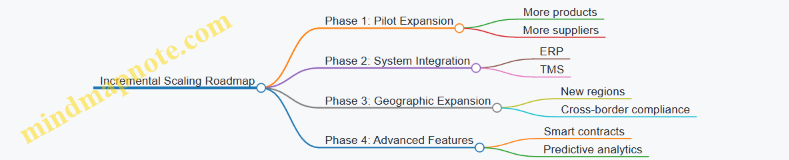
Example 1: Mid-Sized Food Manufacturer Pilot
A mid-sized food manufacturer piloted blockchain-enabled traceability on its organic juice line:
- Objective: Improve recall speed and transparency.
- Scope: One product line, three suppliers.
- Technology: Private blockchain integrated with GS1 standards.
- Results: Reduced recall time from days to hours; improved supplier data accuracy.
After success, the company incrementally scaled to other beverage lines and integrated IoT temperature sensors for cold chain monitoring.
Example 2: Apparel Company’s Ethical Sourcing Pilot
An apparel brand launched a pilot to verify ethical sourcing using blockchain:
- Objective: Authenticate origin of cotton and ensure fair labor.
- Scope: One supplier in India.
- Technology: Blockchain ledger combined with supplier certifications.
- Results: Enhanced transparency; increased consumer trust.
The pilot expanded to multiple suppliers and incorporated smart contracts to automate compliance checks.
Tips for Successful Pilots and Scaling
- Start small but think big: Choose pilots that can scale.
- Engage all stakeholders early and maintain open communication.
- Use standardized data formats and protocols for interoperability.
- Document lessons learned and share across teams.
- Be prepared to adapt technology and processes based on feedback.
By embracing pilot projects and incremental scaling, supply chain leaders can confidently adopt blockchain and traceability standards, driving resilience and transparency while managing costs and risks effectively.
12.4 Example: Step-by-Step Blockchain Implementation in a Mid-Sized Manufacturer
Implementing blockchain technology in a mid-sized manufacturing company can seem daunting, but by following a structured approach, organizations can unlock significant benefits in traceability, transparency, and resilience. This example outlines a practical, step-by-step blockchain implementation roadmap, supported by mind maps and real-world examples.
Step 1: Define Objectives and Scope
- Goal: Identify specific supply chain challenges and define what blockchain should achieve.
- Example: A mid-sized electronics manufacturer wants to improve component traceability to reduce counterfeit parts and speed up recalls.
Step 2: Stakeholder Engagement and Team Formation
- Goal: Assemble a cross-functional team including IT, procurement, operations, and legal.
- Example: The company forms a blockchain task force involving supply chain managers, IT specialists, and compliance officers.
Step 3: Select Blockchain Platform and Standards
- Goal: Choose a blockchain platform that aligns with company needs and integrates with existing systems.
- Example: The manufacturer selects a permissioned blockchain platform (e.g., Hyperledger Fabric) and decides to use GS1 standards for product identification.
Step 4: Design Data Architecture and Integration Points
- Goal: Define what data will be recorded on-chain, off-chain storage, and integration with ERP/MRP systems.
- Example: The company decides to record component serial numbers, manufacturing dates, and quality inspection results on the blockchain, while storing detailed documents off-chain.

Step 5: Develop and Pilot the Blockchain Solution
- Goal: Build a prototype focusing on a limited product line or supplier network.
- Example: The pilot tracks a high-value circuit board from supplier to assembly, recording each step on the blockchain.

Step 6: Train Users and Establish Governance
- Goal: Educate staff and partners on blockchain usage and define governance policies.
- Example: Training sessions are held for procurement and quality teams; governance includes data access rules and dispute resolution processes.
Step 7: Evaluate Pilot and Scale Up
- Goal: Assess pilot outcomes, identify improvements, and plan phased rollout.
- Example: Pilot results show 30% faster recall response; company plans to extend blockchain to all product lines and suppliers within 12 months.
Real-World Example: Mid-Sized Manufacturer Implementation
Company: ElectroParts Inc. (fictional)
- Challenge: Frequent delays and quality issues due to lack of component traceability.
- Solution: Implemented Hyperledger Fabric blockchain integrated with GS1 standards.
- Outcome: Achieved end-to-end visibility of components, reduced counterfeit risk by 40%, and improved supplier accountability.
Summary Table
| Step | Action | Key Focus | Example Outcome |
|---|---|---|---|
| 1 | Define Objectives and Scope | Traceability, counterfeit risk | Focus on component tracking |
| 2 | Stakeholder Engagement | Cross-functional team | Formed blockchain task force |
| 3 | Platform & Standards Selection | Permissioned blockchain, GS1 | Selected Hyperledger Fabric |
| 4 | Data Architecture & Integration | On-chain/off-chain data strategy | Serial numbers on-chain, docs off-chain |
| 5 | Develop & Pilot Solution | Prototype for limited scope | Pilot on circuit boards |
| 6 | Training & Governance | User education, policies | Staff trained, governance defined |
| 7 | Evaluate & Scale | Measure success, plan rollout | 30% faster recall, phased expansion |
By following this structured approach, mid-sized manufacturers can successfully implement blockchain-enabled traceability, enhancing supply-chain resilience and operational efficiency.
12.5 Change Management and Training for Successful Adoption
Implementing blockchain and traceability standards in supply chains is not just a technological shift—it requires a fundamental change in organizational culture, processes, and skills. Effective change management and comprehensive training are critical to ensure smooth adoption and to maximize the benefits of these innovations.
Understanding Change Management in Supply-Chain Technology Adoption
Change management involves preparing, supporting, and helping individuals and teams to adopt new processes and technologies. In the context of blockchain and traceability, this means addressing resistance, aligning stakeholders, and fostering a culture open to transparency and collaboration.
Key Steps in Change Management:
- Stakeholder Engagement: Identify and involve key stakeholders early to build buy-in.
- Communication Plan: Develop clear messaging about the benefits, challenges, and expectations.
- Training Programs: Equip teams with necessary skills and knowledge.
- Feedback Loops: Create channels for continuous feedback and improvement.
- Leadership Support: Secure visible commitment from leadership to champion the change.
Mind Map: Change Management Framework for Blockchain Adoption
Designing Effective Training Programs
Training should be tailored to different roles within the supply chain, from procurement leads to operations directors and frontline staff. It should cover both technical skills and the rationale behind the technology.
Training Components:
- Technical Training: How to use blockchain platforms, scan RFID/barcodes, interpret traceability data.
- Process Training: New workflows, documentation requirements, compliance standards.
- Soft Skills: Change readiness, collaboration, problem-solving.
Example:
A mid-sized manufacturer implemented a tiered training approach:
- Tier 1: Executive briefings on strategic benefits and KPIs.
- Tier 2: Departmental workshops focusing on process changes.
- Tier 3: Hands-on sessions for warehouse and logistics personnel on scanning and data entry.
This approach ensured everyone understood their role in the new system and felt confident using it.
Mind Map: Training Program Structure
Overcoming Common Challenges
- Resistance to Change: Use storytelling and real-life examples to demonstrate benefits.
- Skill Gaps: Provide additional coaching and mentorship.
- Technology Anxiety: Create sandbox environments for safe experimentation.
Example:
A logistics company faced resistance from warehouse staff reluctant to adopt RFID scanning. They introduced a pilot program with incentives and peer champions who shared success stories, resulting in a 40% faster adoption rate.
Measuring Training Effectiveness
- Pre- and post-training assessments
- Monitoring system usage and error rates
- Collecting participant feedback
Example:
After blockchain implementation, a consumer goods firm tracked the reduction in data entry errors and improved traceability compliance as direct indicators of training success.
Summary
Successful adoption of blockchain and traceability standards hinges on well-planned change management and training initiatives. By engaging stakeholders, communicating clearly, tailoring training, and addressing challenges proactively, supply-chain organizations can unlock the full potential of technology-enabled resilience and transparency.
13. Conclusion and Key Takeaways
13.1 Recap of Supply-Chain Resilience and Traceability Benefits
Supply-chain resilience and traceability are foundational pillars for modern supply chains aiming to thrive in an increasingly complex and uncertain global environment. This section revisits the key benefits these capabilities bring to supply chain managers, procurement leads, and operations directors, supported by illustrative examples and mind maps to visualize their interconnected advantages.
Mind Map: Core Benefits of Supply-Chain Resilience & Traceability
Risk Mitigation
Resilience enables supply chains to anticipate, absorb, and recover from disruptions. Traceability supports this by providing granular data that helps identify weak points early.
Example: An electronics manufacturer implements a dual sourcing strategy, supported by blockchain traceability, to quickly switch suppliers when geopolitical tensions disrupt one region. This reduces downtime and maintains production schedules.
Enhanced Visibility
Tech-enabled traceability, especially blockchain, offers immutable, real-time visibility across all supply chain nodes.
Example: Walmart’s blockchain pilot enables rapid identification of contaminated food batches, reducing recall times from days to seconds, thereby protecting consumers and reducing financial losses.
Compliance & Regulatory Adherence
Traceability frameworks aligned with global standards ease compliance burdens by automating record-keeping and audit trails.
Example: Pharmaceutical companies use blockchain to comply with serialization requirements, ensuring every medicine package is uniquely identifiable and traceable, preventing counterfeit drugs.
Improved Operational Efficiency
Automation through smart contracts and standardized data capture reduces manual errors and accelerates processes.
Example: Maersk’s TradeLens platform integrates blockchain with existing logistics systems, automating customs clearance and reducing paperwork, leading to faster shipments and lower administrative costs.
Customer Trust & Brand Protection
Transparent traceability builds consumer confidence by verifying product origins and ethical sourcing.
Example: An apparel brand uses blockchain to prove its cotton is sustainably sourced, appealing to eco-conscious consumers and differentiating itself in a crowded market.
Cost Savings
By reducing waste, spoilage, and excess inventory, resilient and traceable supply chains optimize costs.
Example: Cold chain logistics providers employ IoT sensors combined with blockchain to monitor temperature-sensitive goods, preventing spoilage and costly product losses.
Data-Driven Decision Making
Traceability data feeds predictive analytics tools, enabling proactive risk management and continuous improvement.
Example: A consumer goods company analyzes traceability data to forecast demand more accurately, optimizing inventory and reducing stockouts.
Summary
Supply-chain resilience and tech-enabled traceability are not just complementary—they are synergistic. Together, they empower organizations to manage risks proactively, enhance transparency, ensure compliance, improve efficiency, and build stronger customer relationships. Adopting these capabilities with best practices and technology integration is essential for supply chains aiming to be agile, competitive, and future-ready.
13.2 Strategic Recommendations for Supply Chain Managers and Procurement Leads
To build resilient, transparent, and tech-enabled supply chains, supply chain managers and procurement leads must adopt a strategic approach that integrates best practices, technology, and collaboration. Below is a comprehensive set of strategic recommendations, supported by illustrative mind maps and real-world examples.
Prioritize End-to-End Visibility and Traceability
Achieving full visibility across the supply chain is foundational for resilience and responsiveness.
- Implement standardized traceability frameworks such as GS1 standards to ensure consistent data capture.
- Leverage blockchain technology to create immutable, transparent records accessible to all stakeholders.
- Integrate IoT sensors for real-time data on product conditions and location.
Example: Walmart’s blockchain pilot for leafy greens enabled rapid traceability during contamination events, reducing recall times from days to seconds.
Develop Collaborative Supplier Networks
Strong supplier relationships and data-sharing agreements improve risk mitigation.
- Use blockchain-enabled platforms to facilitate transparent supplier verification and certification.
- Establish joint risk assessment protocols to identify vulnerabilities early.
- Encourage data sharing for demand forecasting and inventory optimization.
Example: The apparel industry’s use of blockchain to verify ethical sourcing of raw materials ensures compliance and builds consumer confidence.
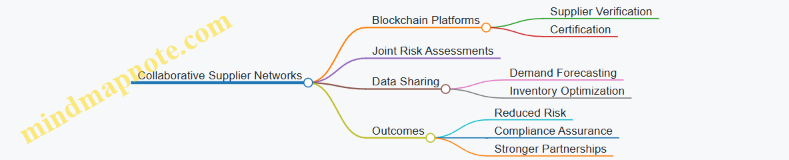
Integrate Predictive Analytics and Early Warning Systems
Proactive risk management requires anticipating disruptions before they occur.
- Combine blockchain traceability data with AI-driven analytics to identify patterns and potential failures.
- Deploy early warning dashboards that alert teams to anomalies in supply or transportation.
- Use digital twins to simulate supply-chain scenarios and test resilience strategies.
Example: A pharmaceutical company uses IoT data and blockchain to monitor cold chain conditions, triggering alerts when temperature thresholds are breached.
Embrace Incremental Technology Adoption and Pilot Projects
Avoid large-scale disruptions by starting small and scaling gradually.
- Identify high-impact pilot areas such as a single product line or supplier segment.
- Measure KPIs rigorously to evaluate ROI and operational improvements.
- Iterate and refine based on pilot feedback before full deployment.
Example: A mid-sized manufacturer piloted blockchain for supplier contract management, reducing disputes and improving audit readiness.
Invest in Change Management and Training
Technology alone is insufficient without organizational readiness.
- Develop comprehensive training programs for procurement and operations teams on blockchain and traceability standards.
- Foster a culture of transparency and agility to encourage adoption.
- Engage stakeholders early to address concerns and build champions.
Example: DHL’s blockchain logistics initiative included extensive staff training, resulting in smoother implementation and operational acceptance.
Align Traceability Initiatives with Regulatory Compliance
Ensure that traceability efforts support current and future regulatory requirements.
- Map blockchain and data standards to compliance frameworks such as FDA, EU FMD, or ISO.
- Automate audit trails to simplify inspections and reporting.
- Stay informed on evolving regulations to adapt traceability systems proactively.
Example: Pharmaceutical companies use blockchain to comply with the EU’s Falsified Medicines Directive by securely tracking drug provenance.
Summary Mind Map
By following these strategic recommendations, supply chain managers and procurement leads can build resilient, transparent, and efficient supply chains that leverage cutting-edge technology and industry standards to meet today’s complex challenges.
13.3 Final Thoughts on the Role of Technology and Standards
In today’s rapidly evolving supply-chain landscape, technology and standards serve as the twin pillars supporting resilience and traceability. Their integration not only enhances operational efficiency but also builds trust, transparency, and agility across the entire supply network.
The Transformative Power of Technology
Technologies such as blockchain, IoT, AI, and advanced analytics are reshaping how supply chains operate by enabling real-time visibility, automating processes, and providing immutable data records. Blockchain, in particular, offers a decentralized and tamper-proof ledger that enhances traceability and accountability.
Example: Walmart’s blockchain pilot for food safety dramatically reduced the time needed to trace produce origins from days to seconds, enabling faster recalls and minimizing health risks.
The Critical Role of Standards
Standards like GS1, ISO 9001, and ISO 22005 provide a common language and framework for data capture, sharing, and interoperability. They ensure that technology implementations are scalable, compatible, and compliant with regulatory requirements.
Example: The pharmaceutical industry’s adoption of serialization standards combined with blockchain has strengthened the fight against counterfeit drugs by enabling precise tracking from manufacturing to patient delivery.
Mind Map: Interplay Between Technology and Standards in Supply Chains
Example: Maersk and IBM TradeLens Platform
TradeLens is a blockchain-enabled shipping solution that integrates global standards with technology to provide end-to-end visibility and secure data sharing among stakeholders. By adhering to industry standards and leveraging blockchain, TradeLens reduces paperwork, prevents fraud, and accelerates customs clearance.
Mind Map: Benefits of Tech-Enabled Standards Adoption
Final Reflection
Technology and standards are not isolated solutions but complementary forces. Standards provide the blueprint and consistency needed for technology to deliver meaningful, scalable benefits. Conversely, technology brings standards to life, enabling dynamic, transparent, and resilient supply chains.
Supply chain leaders should embrace this synergy by investing in both robust standards adoption and cutting-edge technology deployments. Doing so will empower organizations to navigate uncertainties, meet regulatory demands, and exceed customer expectations in an increasingly complex global market.
13.4 Encouraging a Culture of Transparency and Agility
In today’s complex and fast-evolving supply chain landscape, fostering a culture of transparency and agility is paramount to achieving resilience and sustained success. Transparency builds trust among stakeholders, improves decision-making, and enhances compliance, while agility enables rapid response to disruptions and market changes.
Why Transparency and Agility Matter
- Transparency ensures that all parties—from suppliers to end customers—have access to accurate, real-time information. This reduces risks related to fraud, errors, and delays.
- Agility empowers organizations to quickly adapt processes, re-route shipments, or adjust procurement strategies in response to unforeseen events.
Mind Map: Core Elements of a Transparent and Agile Supply Chain
Best Practices to Encourage Transparency and Agility
-
Implement Open Data Sharing Platforms:
- Use blockchain-based traceability solutions to create a single source of truth accessible by all stakeholders.
- Example: A multinational apparel company uses a blockchain platform to share supplier certifications and audit results transparently, reducing compliance delays.
-
Foster Cross-Functional Collaboration:
- Break down silos between procurement, logistics, and operations teams to share insights and coordinate responses.
- Example: A consumer electronics firm holds weekly cross-departmental meetings to review supply chain KPIs and discuss potential risks.
-
Empower Employees with Real-Time Information:
- Equip frontline workers and managers with mobile dashboards showing shipment status, quality alerts, and inventory levels.
- Example: A food distributor uses IoT sensors combined with blockchain to alert warehouse staff immediately if cold chain conditions are breached.
-
Develop Rapid Response Protocols:
- Create predefined playbooks for common disruption scenarios to enable swift, coordinated action.
- Example: An automotive manufacturer has a blockchain-enabled supplier risk dashboard that triggers alternate sourcing workflows automatically when delays occur.
-
Leadership Commitment and Training:
- Leaders must champion transparency and agility as core values and invest in training programs.
- Example: A logistics provider runs quarterly workshops on digital tools and agile methodologies to build a proactive workforce.
Mind Map: Steps to Build a Culture of Transparency and Agility
Real-World Example: Transparency and Agility in Action
Company: Global Food Supply Chain Operator
Challenge: Frequent cold chain breaches causing spoilage and customer complaints.
Solution:
- Deployed IoT temperature sensors across shipments.
- Integrated sensor data with a blockchain platform to create immutable, real-time visibility.
- Developed an alert system that notified all stakeholders instantly upon temperature deviations.
- Empowered warehouse and logistics teams with mobile apps to take corrective action immediately.
- Established weekly cross-functional reviews to analyze incidents and update protocols.
Result:
- 40% reduction in spoilage incidents within six months.
- Improved supplier and customer trust due to transparent data sharing.
- Faster response times to disruptions, minimizing financial losses.
Summary
Encouraging a culture of transparency and agility is not just about technology—it requires leadership, communication, and continuous learning. By combining tech-enabled traceability with empowered teams and open collaboration, supply chain organizations can build resilience that withstands disruptions and drives competitive advantage.
13.5 Resources and Further Reading
To deepen your understanding of supply-chain resilience and tech-enabled traceability, especially with blockchain and standards, the following curated resources, mind maps, and examples will provide valuable insights and practical guidance.
Key Books and Reports
-
“Supply Chain Risk Management: Vulnerability and Resilience in Logistics” by Donald Waters
- Explores foundational concepts of supply-chain resilience with practical case studies.
-
“Blockchain and the Supply Chain: Concepts, Strategies and Practical Applications” by Nick Vyas, Aljosja Beije, and Bhaskar Krishnamachari
- Comprehensive guide on blockchain technology applied to supply chains.
-
World Economic Forum Reports on Supply Chain and Blockchain
- Reports such as “Building Block(chain)s for a Better Planet” provide insights on sustainability and blockchain.
-
GS1 Standards Documentation
- Official GS1 website offers detailed guides on global traceability standards.
Online Courses and Tutorials
-
Coursera: Supply Chain Management Specialization (Rutgers University)
- Covers fundamentals of supply chains with modules on risk and resilience.
-
edX: Blockchain for Business - An Introduction to Hyperledger Technologies (The Linux Foundation)
- Focuses on blockchain frameworks relevant to supply chains.
-
IBM Blockchain Foundation Developer
- Practical course on building blockchain applications.
Mind Maps
Mind Map 1: Components of Supply-Chain Resilience
Mind Map 2: Blockchain-Enabled Traceability Framework
Mind Map 3: Implementation Roadmap for Tech-Enabled Traceability
Practical Examples and Case Studies
-
Walmart’s Blockchain for Food Safety
- Walmart implemented blockchain to trace leafy greens from farm to shelf, reducing trace time from days to seconds.
-
Maersk and IBM TradeLens
- A blockchain-based shipping platform improving transparency and reducing paperwork in global logistics.
-
Pharmaceutical Serialization Compliance
- Companies use GS1 standards combined with blockchain to ensure authenticity and prevent counterfeit drugs.
-
Ethical Mineral Sourcing
- Blockchain traceability helps verify conflict-free sourcing of minerals in electronics manufacturing.
-
DHL’s Blockchain in Logistics
- DHL uses blockchain to secure shipment data and improve container tracking.
Additional Resources
- GS1 Traceability Whitepapers: https://www.gs1.org/standards/traceability
- IBM Blockchain Supply Chain Solutions: https://www.ibm.com/blockchain/supply-chain
- World Economic Forum Blockchain Toolkit: https://www.weforum.org/projects/blockchain
- Supply Chain Resilience Toolkit (MIT CTL): https://ctl.mit.edu/research/supply-chain-resilience
Leveraging these resources will empower supply chain managers, procurement leads, and operations directors to build more resilient, transparent, and efficient supply chains using cutting-edge technology and global standards.