Distributed Energy Resources (DER) Orchestration
1. Introduction to Distributed Energy Resources (DER)
1.1 Understanding DER: Definitions and Scope
Distributed Energy Resources (DER) refer to a diverse set of small-scale, modular power-generating or storage technologies that are located close to the load they serve, often at the distribution level of the electric grid. Unlike traditional centralized power plants, DERs are decentralized and can include renewable energy sources, energy storage systems, and controllable loads.
Key Definitions
- Distributed Energy Resources (DER): Small to medium-sized units of power generation or storage connected to the distribution grid or behind the meter.
- Behind-the-Meter (BTM): DERs installed on the customer side of the utility meter, directly impacting the customer’s energy consumption and generation.
- Grid-Connected DER: Resources that interact with and can feed power back into the utility grid.
Scope of DER
DER technologies span a wide range of applications and sizes, including:
- Renewable Generation: Solar photovoltaic (PV) panels, small wind turbines, and biomass generators.
- Energy Storage: Battery energy storage systems (BESS), flywheels, and thermal storage.
- Demand Response: Load control devices that adjust consumption patterns in response to grid needs.
- Electric Vehicles (EVs): Both as loads and potential storage through vehicle-to-grid (V2G) technologies.
Mind Map: Core Components of DER
Mind Map: DER Deployment Contexts
Example 1: Residential Solar PV with Battery Storage
A homeowner installs a 6 kW rooftop solar PV system paired with a 10 kWh battery storage unit. This DER setup allows the homeowner to generate electricity during the day, store excess energy, and use stored energy during peak evening hours or outages. This reduces reliance on the grid and lowers electricity bills.
Example 2: Commercial Demand Response Program
A commercial building participates in a utility demand response program where its HVAC system is temporarily adjusted during peak demand periods. By reducing load on request, the building helps stabilize the grid and earns incentives, demonstrating DER as a flexible resource.
Example 3: Microgrid with Mixed DER Assets
A university campus operates a microgrid that integrates solar PV, natural gas generators, battery storage, and controllable loads. The microgrid can operate connected to the main grid or islanded during outages, showcasing DER orchestration to enhance resilience and optimize energy use.
Summary
Understanding DER involves recognizing the variety of technologies, their deployment scales, and their roles in modern energy systems. DERs provide opportunities for increased grid flexibility, resilience, and sustainability but require coordinated orchestration to realize their full potential.
1.2 The Role of DER in Modern Energy Systems
Distributed Energy Resources (DER) have become a cornerstone in the transformation of modern energy systems. Their integration fundamentally changes how electricity is generated, managed, and consumed, enabling a more resilient, efficient, and sustainable grid.
What is the Role of DER?
DERs are small-scale units of local generation connected to the grid at distribution level. They include solar panels, wind turbines, battery storage, electric vehicles, and demand response assets. Their role extends beyond mere generation to active participation in grid operations and energy markets.
Mind Map: Core Roles of DER in Modern Energy Systems
Enhancing Grid Resilience and Reliability
DERs provide localized power generation and storage, which can reduce dependency on centralized power plants and long transmission lines. This decentralization helps the grid withstand outages and disturbances.
Example: During a storm-induced outage, a community microgrid with solar panels and battery storage can island itself and continue providing power to critical facilities like hospitals and emergency centers.
Supporting Renewable Energy Integration
DERs facilitate the integration of variable renewable energy sources by smoothing output fluctuations and providing balancing services.
Example: Battery energy storage systems paired with rooftop solar installations can store excess solar energy during the day and discharge it during peak evening hours, reducing stress on the grid.
Mind Map: DER Benefits for Renewable Integration
Enabling Demand-Side Flexibility
DERs empower consumers to become active participants by adjusting their consumption patterns in response to grid needs or price signals.
Example: Smart thermostats and EV chargers can reduce or shift load during peak demand periods, helping to flatten demand curves and avoid costly grid upgrades.
Providing Ancillary Services and Grid Support
DERs can provide essential services such as voltage regulation, frequency response, and spinning reserves traditionally supplied by large generators.
Example: Aggregated DERs can respond within seconds to frequency deviations by modulating battery charge/discharge or adjusting controllable loads, stabilizing the grid.
Facilitating Market Participation and New Business Models
DERs open avenues for participation in energy markets, enabling prosumers to monetize their assets and encouraging innovation.
Example: A fleet of residential batteries aggregated by an energy service provider participates in demand response auctions, earning revenue while supporting grid stability.
Mind Map: DER Roles Summary
Conclusion
The role of DER in modern energy systems is multifaceted and transformative. By decentralizing generation, enhancing flexibility, and enabling active consumer participation, DERs help create a smarter, cleaner, and more resilient grid. For DER program managers, control engineers, and system integrators, understanding these roles is critical to designing effective orchestration strategies that maximize DER benefits.
1.3 Key Stakeholders: DER Program Managers, Control Engineers, and System Integrators
Distributed Energy Resources (DER) orchestration is a complex endeavor that requires the collaboration of multiple stakeholders, each bringing unique expertise and responsibilities. Understanding the roles and interactions of these key players is essential for successful DER integration and operation.
DER Program Managers
DER Program Managers oversee the planning, implementation, and evaluation of DER projects and programs. They act as the bridge between strategic goals and operational execution, ensuring that DER initiatives align with organizational objectives and regulatory requirements.
-
Responsibilities:
- Defining program goals and KPIs
- Budgeting and resource allocation
- Stakeholder coordination and communication
- Regulatory compliance and reporting
- Risk management
-
Example: Consider a utility launching a community solar program. The DER Program Manager coordinates with local governments, customers, and technical teams to design the program structure, set enrollment targets, and ensure compliance with interconnection standards.
Control Engineers
Control Engineers design and implement the control algorithms and systems that manage DER assets in real time. They ensure that DERs respond appropriately to grid signals, maintain stability, and optimize performance.
-
Responsibilities:
- Developing control strategies for voltage, frequency, and load management
- Implementing communication protocols and automation
- Testing and validating control systems
- Troubleshooting and optimizing DER performance
-
Example: In a microgrid with solar PV and battery storage, a Control Engineer programs the battery inverter to provide frequency regulation by charging or discharging based on grid frequency deviations.
System Integrators
System Integrators are responsible for assembling the hardware and software components into a cohesive DER orchestration system. They ensure interoperability among diverse DER technologies and platforms.
-
Responsibilities:
- Selecting compatible DER devices and communication equipment
- Integrating control software with hardware
- Ensuring compliance with industry standards
- Providing installation, commissioning, and maintenance support
-
Example: For a commercial building deploying solar, EV chargers, and energy storage, the System Integrator configures the DER management system to coordinate these assets for demand response events.
Mind Maps
Stakeholders and Their Core Responsibilities
Example: DER Program Lifecycle and Stakeholder Involvement
Example: Coordination in a Demand Response Event
Integrated Example: Coordinated DER Deployment in a Smart City
In a smart city pilot project, the DER Program Manager sets the vision to reduce peak demand by 15% through DER orchestration. They coordinate with city officials and utilities to secure funding and regulatory approvals.
The Control Engineers develop adaptive control algorithms that enable solar PV, battery storage, and electric vehicle chargers to respond dynamically to grid conditions and price signals.
System Integrators select compatible DER devices, implement communication networks using OpenADR protocols, and install the DER management platform.
During a heatwave, the DER Program Manager activates a demand response event. Control Engineers fine-tune control parameters in real time to balance load and generation, while System Integrators monitor system health and resolve any communication issues.
This collaborative effort results in a successful peak demand reduction, improved grid reliability, and valuable lessons for scaling DER orchestration.
By clearly defining roles and fostering collaboration among DER Program Managers, Control Engineers, and System Integrators, organizations can effectively orchestrate distributed energy resources to achieve operational excellence and grid modernization goals.
1.4 Overview of DER Orchestration: Concepts and Importance
Distributed Energy Resources (DER) orchestration refers to the coordinated management and control of diverse, geographically dispersed energy assets such as solar panels, wind turbines, energy storage systems, electric vehicles, and demand response resources. The goal is to optimize their collective operation to enhance grid reliability, efficiency, and sustainability.
Key Concepts of DER Orchestration
- Coordination: Synchronizing multiple DER units to operate harmoniously rather than independently.
- Optimization: Balancing energy production, consumption, and storage to maximize economic and operational benefits.
- Flexibility: Enabling dynamic responses to grid conditions, market signals, and customer needs.
- Scalability: Managing increasing numbers and types of DER assets without loss of performance.
Why DER Orchestration is Important
- Grid Stability and Reliability: DERs can cause variability and uncertainty. Orchestration ensures these resources support voltage and frequency regulation rather than destabilize the grid.
- Maximizing DER Value: Coordinated control unlocks additional revenue streams such as demand response, ancillary services, and peak shaving.
- Integration of Renewable Energy: Facilitates higher penetration of intermittent renewables by managing variability and smoothing output.
- Customer Empowerment: Enables prosumers to participate actively in energy markets and grid services.
- Deferral of Infrastructure Investments: Optimized DER use can reduce the need for costly grid upgrades.
Mind Map: Core Components of DER Orchestration
Mind Map: Benefits of DER Orchestration
Example 1: Community Solar Project Orchestration
A community solar program with dozens of rooftop solar installations and home battery systems uses DER orchestration software to aggregate and control these assets. During peak demand periods, the system dispatches stored energy from batteries to reduce grid load, while coordinating solar output to avoid overvoltage issues. This orchestration improves local grid reliability and allows participants to earn incentives through demand response programs.
Example 2: Electric Vehicle (EV) Fleet Coordination
A fleet of electric vehicles is managed through a DER orchestration platform that schedules charging times based on grid conditions and electricity prices. When renewable generation is high, the system initiates charging to absorb excess energy. Conversely, during peak grid demand, charging is deferred or vehicles provide vehicle-to-grid (V2G) services, helping balance the grid and reduce energy costs.
Summary
DER orchestration is a foundational element in the transition to a decentralized, resilient, and sustainable energy system. By integrating diverse energy resources through intelligent coordination and control, stakeholders can unlock operational efficiencies, economic benefits, and environmental gains. Understanding these concepts is critical for DER program managers, control engineers, and system integrators aiming to design and implement effective DER solutions.
1.5 Best Practice: Establishing Clear Objectives for DER Integration with a Community Solar Example
Establishing clear objectives is a foundational step in the successful integration and orchestration of Distributed Energy Resources (DER). Without well-defined goals, DER programs risk inefficiency, misalignment with stakeholder needs, and underperformance. This section explores how DER program managers, control engineers, and system integrators can set actionable, measurable objectives, using a community solar project as a practical example.
Why Establish Clear Objectives?
- Alignment: Ensures all stakeholders share a common vision.
- Measurability: Provides benchmarks to evaluate success.
- Resource Optimization: Guides prioritization of investments and efforts.
- Risk Mitigation: Anticipates challenges and sets realistic expectations.
Mind Map: Key Elements in Setting DER Integration Objectives
DER Integration Objectives Mind Map
Step-by-Step Approach to Defining Objectives
- Stakeholder Engagement: Gather input from utilities, customers, regulators, and technology providers.
- Assess Local Grid Needs: Identify grid constraints, peak demand periods, and renewable integration targets.
- Define Measurable KPIs: For example, % peak load reduction, kWh generated, or customer participation rate.
- Prioritize Objectives: Balance technical feasibility, economic viability, and environmental impact.
- Document and Communicate: Ensure transparency and alignment across teams.
Community Solar Example: Establishing Objectives
Context: A suburban community aims to deploy a 2 MW community solar project with integrated battery storage to support local grid reliability and promote renewable energy adoption.
| Objective Category | Specific Objective | Example KPI | Rationale |
|---|---|---|---|
| Technical | Reduce peak load by 15% during summer afternoons | % reduction in peak demand | Mitigate grid stress during high usage |
| Economic | Achieve payback period within 7 years | ROI, payback years | Ensure financial sustainability |
| Environmental | Offset 1,500 tons of CO2 annually | Tons CO2 reduced | Support local emission targets |
| Operational | Maintain 98% system uptime | % uptime | Ensure reliable energy supply |
| Stakeholder | Enroll 100 local households in the program | Number of participants | Foster community engagement |
Example Mind Map: Community Solar Objectives
Practical Tips for DER Program Managers
- Use SMART criteria (Specific, Measurable, Achievable, Relevant, Time-bound) when defining objectives.
- Incorporate flexibility to adapt objectives as technology or market conditions evolve.
- Align objectives with regulatory frameworks and incentive programs.
Control Engineers and System Integrators Considerations
- Translate high-level objectives into technical requirements (e.g., control response times, communication protocols).
- Design system architectures that support scalability and interoperability to meet evolving objectives.
- Implement monitoring tools to track KPIs in real time.
Summary
Establishing clear, actionable objectives is critical for DER orchestration success. The community solar example demonstrates how diverse goals—technical, economic, environmental, operational, and stakeholder-focused—can be integrated into a cohesive plan. Using mind maps and structured approaches helps teams visualize and communicate these objectives effectively, setting the stage for successful DER integration and management.
2. DER Technologies and Components
2.1 Types of DER: Solar PV, Wind, Energy Storage, Demand Response, and Electric Vehicles
Distributed Energy Resources (DER) encompass a wide range of technologies that generate, store, or manage energy at or near the point of consumption. Understanding the types of DER is fundamental for program managers, control engineers, and system integrators to design effective orchestration strategies. Below, we explore the primary DER types with detailed explanations, mind maps, and practical examples.
Solar Photovoltaics (Solar PV)
Solar PV systems convert sunlight directly into electricity using semiconductor materials. They are among the most widely deployed DER technologies due to decreasing costs and ease of installation.
- Characteristics: Intermittent generation, scalable from rooftop to utility scale, requires inverters for grid connection.
- Applications: Residential rooftop systems, commercial solar arrays, community solar projects.
Mind Map: Solar PV
Example:
A residential customer installs a 5 kW rooftop solar PV system. During sunny days, the system generates excess electricity, which is fed back into the grid, reducing the customer’s net energy consumption and providing grid support during peak solar hours.
Wind Energy
Wind turbines convert kinetic energy from wind into electrical power. DER-scale wind installations are typically smaller than utility-scale farms but can be integrated into microgrids or community projects.
- Characteristics: Variable output depending on wind speed, requires site assessment.
- Applications: Small wind turbines for farms, remote communities, hybrid renewable systems.
Mind Map: Wind Energy
Example:
A rural microgrid integrates a 10 kW wind turbine alongside solar PV and battery storage. The wind turbine generates power primarily at night and during windy periods, complementing solar generation and improving overall system reliability.
Energy Storage
Energy storage systems (ESS) store electrical energy for later use, enabling load shifting, peak shaving, and grid stabilization.
- Types: Lithium-ion batteries, flow batteries, flywheels, thermal storage.
- Functions: Time-shift renewable energy, provide backup power, support frequency regulation.
Mind Map: Energy Storage
Example:
A commercial building installs a 100 kWh lithium-ion battery system to store excess solar energy generated during the day. The stored energy is used during peak demand hours to reduce demand charges and provide emergency backup.
Demand Response (DR)
Demand Response involves adjusting or reducing electricity consumption in response to grid signals, price incentives, or emergencies.
- Types: Automated DR, manual DR, direct load control.
- Applications: HVAC cycling, industrial process adjustments, EV charging management.
Mind Map: Demand Response
Example:
A utility sends a signal to commercial buildings to reduce HVAC load during a peak demand event. Automated controls reduce air conditioning setpoints by 2°F, lowering load without significantly impacting occupant comfort.
Electric Vehicles (EVs)
EVs act as mobile DER assets with significant battery capacity that can be managed for charging and potentially vehicle-to-grid (V2G) services.
- Characteristics: Flexible load, potential energy storage resource.
- Applications: Managed charging, V2G for grid support.
Mind Map: Electric Vehicles
Example:
An office campus implements a managed EV charging program where charging is scheduled during off-peak hours. During grid stress events, the system can reduce charging rates or discharge stored energy back to the grid, providing ancillary services.
Summary Mind Map: Types of DER
Integrated Example: Community Microgrid
Consider a community microgrid that integrates rooftop solar PV, a small wind turbine, a battery storage system, demand response-enabled smart thermostats, and EV charging stations. The orchestration system balances generation and load by:
- Using solar and wind to supply daytime and nighttime energy needs.
- Storing excess renewable energy in batteries.
- Reducing HVAC loads during peak hours via demand response.
- Scheduling EV charging to off-peak times or discharging EV batteries to support the grid.
This integrated approach maximizes renewable utilization, enhances grid reliability, and reduces energy costs.
By understanding the characteristics, benefits, and challenges of each DER type, energy professionals can design orchestration strategies that leverage their complementary strengths for optimized grid operations.
2.2 Communication and Control Hardware: Gateways, Controllers, and Sensors
Distributed Energy Resources (DER) orchestration relies heavily on robust communication and control hardware to ensure seamless integration, real-time monitoring, and effective management of diverse energy assets. This section delves into the key hardware components—gateways, controllers, and sensors—that form the backbone of DER orchestration systems.
Overview of Communication and Control Hardware
- Gateways: Act as intermediaries between DER devices and central management systems, enabling protocol translation, data aggregation, and secure communication.
- Controllers: Execute control commands locally or remotely to manage DER operations such as power output, charge/discharge cycles, and load adjustments.
- Sensors: Provide real-time data on environmental conditions, electrical parameters, and equipment status, essential for informed decision-making.
Mind Map: Communication and Control Hardware Components
Gateways
Gateways serve as the communication bridge between DER devices and the central DER management system or utility control center. They translate various communication protocols (e.g., Modbus, DNP3, IEC 61850) into a unified language, enabling interoperability among heterogeneous devices.
Best Practice: Choose gateways with built-in cybersecurity features such as encryption and authentication to protect DER data and control commands.
Example: In a community solar project, gateways installed at each solar inverter collect performance data and relay it securely to the utility’s DER management platform, enabling real-time monitoring and fault detection.
Controllers
Controllers are responsible for executing control strategies on DER assets. They may operate autonomously based on local measurements or receive commands from a central system.
Controllers can be:
- Programmable Logic Controllers (PLCs): Used for industrial-grade control with high reliability.
- Embedded Controllers: Integrated within DER devices for specific functions.
Best Practice: Implement adaptive control algorithms within controllers to respond dynamically to grid conditions.
Example: A battery energy storage system uses a controller to adjust charging rates based on frequency regulation signals received from the grid operator.
Sensors
Sensors provide the critical data inputs needed for effective DER orchestration. They measure electrical parameters, environmental factors, and equipment health.
Types of Sensors:
- Electrical Sensors: Measure voltage, current, power factor, and energy consumption.
- Environmental Sensors: Monitor solar irradiance, temperature, wind speed, and humidity.
- Status Sensors: Detect equipment faults, temperature anomalies, or operational status.
Best Practice: Deploy redundant sensors in critical locations to ensure data reliability.
Example: In a wind farm, anemometers (wind speed sensors) and temperature sensors feed data to the controller to optimize turbine pitch and power output.
Mind Map: Example DER System Hardware Setup
Integration Tips for DER Program Managers, Control Engineers, and System Integrators
- Interoperability: Ensure hardware supports open standards and multiple protocols to facilitate integration.
- Scalability: Select modular gateways and controllers that can scale with DER fleet expansion.
- Latency: Use edge computing capabilities in gateways/controllers to reduce communication delays.
- Security: Prioritize hardware with embedded security features to safeguard against cyber threats.
Summary
Communication and control hardware—gateways, controllers, and sensors—are foundational to effective DER orchestration. Selecting the right hardware with appropriate features and integrating them thoughtfully ensures reliable, secure, and efficient DER operations.
By following best practices and learning from practical examples, DER program managers, control engineers, and system integrators can build resilient and scalable DER orchestration systems.
2.3 Software Platforms for DER Management
Distributed Energy Resources (DER) management relies heavily on sophisticated software platforms that enable monitoring, control, optimization, and integration of diverse DER assets. These platforms serve as the backbone for DER orchestration, providing real-time visibility and actionable insights to DER program managers, control engineers, and system integrators.
Key Functions of DER Management Software Platforms
- Asset Monitoring: Real-time status, performance, and health of DER units.
- Control & Orchestration: Automated and manual control of DER assets to meet grid and market objectives.
- Data Analytics: Historical and predictive analytics for performance optimization.
- Communication Management: Integration with field devices using standard protocols.
- Market Participation: Enabling DER assets to participate in energy, capacity, and ancillary service markets.
- Reporting & Compliance: Generating reports for regulatory and operational purposes.
Mind Map: Core Components of DER Management Software
Types of DER Management Software Platforms
-
DERMS (Distributed Energy Resource Management Systems):
- Purpose-built platforms designed specifically for DER orchestration.
- Examples: Siemens Spectrum Power DERMS, Schneider Electric EcoStruxure DERMS.
-
SCADA Systems with DER Modules:
- Traditional grid control systems enhanced with DER management capabilities.
- Examples: ABB Ability SCADA, GE Grid Solutions SCADA.
-
Energy Management Systems (EMS) with DER Integration:
- Broader energy control platforms that include DER as part of the overall energy portfolio.
- Examples: AutoGrid Flex, Opus One Solutions.
-
Cloud-Based Aggregator Platforms:
- Platforms that aggregate multiple DERs across locations for market participation and grid services.
- Examples: Enbala, Next Kraftwerke.
Example: Using Siemens Spectrum Power DERMS for Utility-Scale DER Coordination
Siemens Spectrum Power DERMS enables utilities to monitor and control thousands of DER assets through a centralized platform. It supports real-time dispatch, voltage regulation, and demand response programs. For instance, a utility managing a fleet of solar PV and battery storage can use this platform to automatically adjust battery charge/discharge cycles based on grid conditions and market prices, improving grid stability and maximizing revenue.
Mind Map: Example Workflow in a DERMS Platform
Best Practice: Selecting a DER Management Platform
- Interoperability: Choose platforms supporting open standards (e.g., IEEE 2030.5, OpenADR) to ensure integration with diverse DER devices.
- Scalability: Ensure the platform can handle increasing numbers of DER assets as the program grows.
- User Interface: Opt for intuitive dashboards that provide actionable insights for different user roles.
- Security: Prioritize platforms with robust cybersecurity features to protect grid operations.
- Cloud vs On-Premises: Evaluate based on latency requirements, data privacy, and IT infrastructure.
Example: Edge Computing Integration with DER Management Software
In a microgrid scenario, an edge computing device runs local DER management software to handle fast control loops and reduce communication latency. This device interfaces with a cloud-based DERMS for higher-level orchestration and market participation. For example, a commercial building with solar PV, battery storage, and EV chargers uses edge software to optimize onsite energy usage in real-time, while the cloud platform aggregates data and coordinates with the utility grid.
Summary
Software platforms for DER management are critical enablers of effective DER orchestration. By combining real-time monitoring, advanced analytics, and automated control, these platforms empower stakeholders to maximize DER value, enhance grid reliability, and facilitate market participation. Selecting the right platform involves balancing technical capabilities, interoperability, scalability, and security to meet specific program goals.
2.4 Best Practice: Selecting DER Components Based on Use Case – Case Study of a Microgrid
Selecting the right Distributed Energy Resources (DER) components for a specific use case is critical to achieving optimal performance, reliability, and cost-effectiveness. In this section, we explore best practices for DER component selection through the lens of a microgrid use case, illustrating how different technologies and configurations can be tailored to meet unique operational goals.
Understanding the Microgrid Use Case
A microgrid is a localized group of electricity sources and loads that can operate connected to the main grid or independently (island mode). The primary goals often include enhancing reliability, integrating renewable energy, reducing costs, and improving resilience.
Key considerations for DER selection in a microgrid include:
- Load Profile: Peak demand, daily consumption patterns, critical loads
- Energy Sources Availability: Solar insolation, wind patterns, fuel availability
- Operational Mode: Grid-connected vs islanded
- Budget and Scalability: Initial investment and future expansion
- Control and Communication Requirements: Real-time monitoring and control capabilities
Mind Map: DER Component Selection Factors for Microgrids
Step-by-Step Best Practice Approach
-
Assess Load and Energy Needs:
- Analyze historical load data to identify peak and critical loads.
- Example: A community microgrid with a peak load of 500 kW and critical loads of 200 kW.
-
Evaluate Renewable Resource Potential:
- Conduct site assessments for solar and wind availability.
- Example: Solar PV potential of 800 kW peak capacity, wind resource limited.
-
Determine Storage Requirements:
- Calculate storage capacity needed for load shifting and backup.
- Example: Battery system sized to provide 2 hours of backup at 300 kW.
-
Select Generation Mix:
- Combine renewables with dispatchable generation (e.g., diesel gensets) for reliability.
- Example: 800 kW solar PV + 300 kW diesel generator + 600 kWh battery.
-
Design Control and Communication Architecture:
- Choose EMS and controllers compatible with DER components.
- Example: Use an EMS with OpenADR support and IEC 61850 communication.
-
Plan for Scalability and Maintenance:
- Select modular components for future expansion.
- Example: Battery system designed with modular racks for easy capacity increase.
Mind Map: Microgrid DER Configuration Example
Practical Examples
Example 1: Peak Shaving Using Battery Storage
In the microgrid, the battery system is programmed to discharge during peak demand periods to reduce reliance on the diesel generator, lowering fuel costs and emissions.
Example 2: Island Mode Operation
During grid outages, the EMS seamlessly transitions the microgrid to island mode, with the diesel generator and battery providing stable power to critical loads.
Example 3: Renewable Curtailment Management
When solar generation exceeds load and storage capacity, the EMS curtails solar output to maintain system stability, demonstrating the importance of flexible control systems.
Summary
Selecting DER components based on the specific use case of a microgrid involves a holistic evaluation of load profiles, resource availability, storage needs, and control requirements. Employing modular, scalable, and interoperable components ensures the microgrid can meet current demands while adapting to future changes.
By following these best practices and leveraging real-world examples, DER program managers, control engineers, and system integrators can design robust microgrid solutions that optimize performance, reliability, and cost-efficiency.
2.5 Example: Integrating Battery Storage with Solar PV for Peak Shaving
Integrating battery storage with solar photovoltaic (PV) systems is a powerful strategy to optimize energy usage, reduce peak demand charges, and enhance grid stability. Peak shaving refers to the process of reducing the amount of energy drawn from the grid during peak demand periods by utilizing stored energy from batteries. This section explores how battery storage paired with solar PV can be orchestrated effectively for peak shaving, supported by mind maps and practical examples.
Understanding Peak Shaving with Solar PV and Battery Storage
- Solar PV Generation: Produces electricity during daylight hours, often peaking midday.
- Battery Storage: Stores excess solar energy generated during the day.
- Peak Demand Periods: Typically occur in late afternoon or early evening when solar generation declines but demand remains high.
- Peak Shaving: Batteries discharge stored energy during these peak periods to reduce grid consumption.
Mind Map: Components and Flow of Solar PV + Battery Peak Shaving
Example Scenario: Commercial Building Peak Shaving
- Context: A commercial building with a 100 kW solar PV system and a 200 kWh battery storage.
- Objective: Reduce peak demand charges by shaving peaks between 4 PM and 8 PM.
- Operation:
- During the day, solar PV powers the building and charges the battery.
- At 4 PM, as solar generation drops and demand peaks, the battery discharges to supply the building.
- Grid consumption is minimized during peak hours, reducing demand charges.
Mind Map: Daily Energy Flow in Commercial Building
Best Practices for Integration
- Accurate Load and Solar Forecasting: Use predictive analytics to optimize battery dispatch.
- Battery Sizing: Ensure battery capacity matches peak shaving requirements.
- Control Algorithm: Implement real-time control to decide when to charge/discharge.
- Monitoring and Feedback: Continuously monitor system performance to adjust strategies.
Additional Example: Residential Peak Shaving
- A homeowner with a 6 kW solar PV system and 10 kWh battery.
- Peak demand occurs in the evening when solar is unavailable.
- Battery charges during the day from solar and discharges during evening peak.
- Result: Lower monthly electricity bills by reducing peak demand charges.
Mind Map: Residential Peak Shaving Workflow
Summary
Integrating battery storage with solar PV for peak shaving provides tangible financial and operational benefits. By storing excess solar energy and deploying it during peak demand periods, facilities can reduce grid dependency, lower demand charges, and contribute to grid reliability. Implementing this requires careful system design, forecasting, and control strategies tailored to the specific use case.
References and Further Reading
- NREL: “Energy Storage for Grid Support and Peak Shaving”
- IEEE Standards on DER Integration
- Case Studies on Commercial and Residential DER Systems
3. DER Orchestration Architecture and Frameworks
3.1 Centralized vs Decentralized Orchestration Models
Distributed Energy Resources (DER) orchestration is fundamentally about coordinating multiple energy assets to optimize grid performance, reliability, and economic value. Two primary orchestration models dominate the landscape: centralized and decentralized. Understanding their differences, advantages, and challenges is critical for DER Program Managers, Control Engineers, and System Integrators.
Centralized Orchestration Model
In a centralized orchestration model, a single control entity (often a central controller or energy management system) manages and coordinates all DER assets. This centralized controller collects data, makes decisions, and sends commands to DER units.
Key Characteristics:
- Single point of control and decision-making
- Requires robust communication infrastructure
- Easier to enforce global optimization objectives
- Potentially vulnerable to single points of failure
Example: A utility operating a fleet of solar PV systems and battery storage units across a city uses a centralized Energy Management System (EMS) to optimize charging/discharging schedules, ensuring peak load reduction and voltage regulation.
Best Practice: Implement redundancy and failover mechanisms in centralized controllers to mitigate risks of downtime.
Mind Map: Centralized Orchestration Model
Decentralized Orchestration Model
Decentralized orchestration distributes control responsibilities across multiple DER units or local controllers. Each DER or group of DERs makes autonomous or semi-autonomous decisions based on local measurements and limited communication with neighbors or a supervisory system.
Key Characteristics:
- Distributed decision-making
- Enhanced resilience and scalability
- Reduced communication requirements
- Challenges in achieving global optimality
Example: In a microgrid, individual battery storage units and solar inverters adjust their output based on local voltage and frequency measurements, coordinating loosely via peer-to-peer communication to maintain grid stability.
Best Practice: Design local control algorithms that incorporate grid constraints and enable adaptive responses to changing conditions.
Mind Map: Decentralized Orchestration Model
Hybrid Orchestration Model
Many modern DER orchestration systems adopt a hybrid approach, combining centralized oversight with decentralized local control. This balances the benefits of both models.
Example: A utility uses a centralized platform to set high-level objectives and constraints, while local DER controllers autonomously adjust operations within those boundaries.
Mind Map: Hybrid Orchestration Model
Comparative Table: Centralized vs Decentralized Orchestration
| Feature | Centralized Orchestration | Decentralized Orchestration |
|---|---|---|
| Control | Single central controller | Multiple local controllers |
| Communication | High bandwidth, low latency required | Lower bandwidth, peer-to-peer possible |
| Scalability | Limited by central controller capacity | Highly scalable |
| Resilience | Vulnerable to single point of failure | More resilient due to distributed control |
| Optimization | Global optimal solutions possible | Local optimization, possible suboptimality |
| Complexity | Simpler decision logic centralized | Complex coordination algorithms needed |
Real-World Example: Centralized vs Decentralized
Centralized: The California Independent System Operator (CAISO) operates a centralized DER management platform that aggregates thousands of DERs to provide grid services such as frequency regulation and demand response.
Decentralized: Brooklyn Microgrid in New York uses a decentralized peer-to-peer energy trading platform where participants autonomously manage energy transactions using blockchain technology.
Summary
Choosing between centralized and decentralized orchestration depends on factors such as system size, communication infrastructure, desired control granularity, and resilience requirements. Hybrid models often provide the best balance, leveraging centralized oversight with decentralized agility.
Additional Best Practice
- Pilot both models: Run pilot projects to evaluate performance, communication needs, and operational challenges before full-scale deployment.
- Use simulation tools: Employ grid simulation platforms to model orchestration impacts under different scenarios.
This foundational understanding equips DER Program Managers, Control Engineers, and System Integrators to design orchestration architectures tailored to their specific operational contexts.
3.2 Hierarchical Control Structures for DER Coordination
Distributed Energy Resources (DER) orchestration requires robust control strategies to ensure seamless integration, reliability, and optimal performance. Hierarchical control structures are widely adopted to manage the complexity of DER coordination by dividing control tasks across multiple levels, each with distinct responsibilities and time scales.
What is Hierarchical Control?
Hierarchical control is an architectural approach that organizes control functions into layers, typically including primary, secondary, and tertiary levels. Each layer focuses on specific objectives, from fast local control to slower system-wide optimization.
Why Use Hierarchical Control for DER?
- Scalability: Manages large numbers of DER devices efficiently.
- Modularity: Allows independent development and upgrades of control layers.
- Robustness: Local control can handle immediate disturbances, while higher layers optimize overall system performance.
- Flexibility: Supports integration of diverse DER technologies and grid conditions.
Typical Hierarchical Control Layers
Detailed Layer Descriptions and Examples
Primary Control
- Role: Immediate, autonomous control at the device level to maintain stability.
- Functions: Voltage and frequency regulation, power factor correction.
- Example: A solar inverter uses droop control to adjust its output in response to frequency deviations locally, helping stabilize the grid without communication delays.
Secondary Control
- Role: Coordinates groups of DERs to restore system parameters to nominal values and manage power sharing.
- Functions: Frequency restoration, voltage regulation at the feeder or microgrid level.
- Example: In a community microgrid, a centralized controller adjusts DER setpoints every few seconds to balance load and generation, ensuring stable voltage levels.
Tertiary Control
- Role: Optimizes DER dispatch based on economic and operational objectives, often interfacing with market signals.
- Functions: Scheduling DER participation in energy markets, demand response, and congestion management.
- Example: A DER aggregator optimizes battery charging schedules across multiple sites to maximize revenue from energy arbitrage and ancillary services over the next 24 hours.
Mind Map: Control Objectives Across Layers
Best Practice: Implementing Hierarchical Control in a Utility-Scale DER Fleet
Scenario: A utility manages a fleet of 500 residential solar-plus-storage systems.
- Primary Control: Each inverter autonomously regulates voltage and frequency locally.
- Secondary Control: A regional controller aggregates DER data and sends setpoint adjustments every 10 seconds to smooth power fluctuations.
- Tertiary Control: The utility’s energy management system schedules battery charging/discharging daily based on market prices and grid conditions.
Outcome: This layered approach ensures fast local response to disturbances, coordinated regional control for reliability, and economic optimization at the system level.
Example: Multi-Agent System (MAS) for Hierarchical DER Control
- Primary Agents: Embedded in DER devices, handle real-time control.
- Secondary Agents: Manage clusters of DERs, communicate with primary agents to coordinate.
- Tertiary Agent: Oversees the entire system, optimizes schedules and market participation.
This MAS approach enables distributed decision-making, reduces communication bottlenecks, and enhances system resilience.
Summary
Hierarchical control structures are essential for effective DER orchestration, balancing fast local responses with coordinated system-wide optimization. By clearly defining roles across primary, secondary, and tertiary layers, DER program managers, control engineers, and system integrators can design scalable, robust, and economically efficient DER systems.
3.3 Standards and Protocols: IEEE 2030.5, OpenADR, and IEC 61850
Distributed Energy Resources (DER) orchestration relies heavily on well-defined standards and communication protocols to ensure interoperability, reliability, and security across diverse devices and systems. In this section, we explore three key standards widely adopted in the DER ecosystem: IEEE 2030.5, OpenADR, and IEC 61850. We will also provide mind maps to visualize their structure and examples to illustrate their practical applications.
IEEE 2030.5 (Smart Energy Profile 2.0)
Overview: IEEE 2030.5, also known as Smart Energy Profile (SEP) 2.0, is a communication standard designed to enable secure and interoperable information exchange between utilities and DER devices such as smart meters, solar inverters, and energy storage systems. It supports demand response, pricing signals, and device control.
Key Features:
- RESTful web services over HTTP/HTTPS
- Support for device discovery, management, and event notifications
- Secure communication using TLS
- Designed for residential and commercial DER integration
Mind Map:
Example: A utility company sends a demand response event to residential solar inverters using IEEE 2030.5. The inverters receive the signal securely and adjust their output or storage charging accordingly to reduce grid stress during peak hours.
OpenADR (Open Automated Demand Response)
Overview: OpenADR is an open standard for automated demand response that facilitates communication between utilities or grid operators and end-use customers or DER aggregators. It enables automated load shedding or shifting based on grid conditions.
Key Features:
- XML-based messaging over HTTP/HTTPS or other transport protocols
- Event-driven communication model
- Supports price signals and reliability events
- Widely adopted in demand response programs
Mind Map:
Example: During a heatwave, a grid operator issues an OpenADR demand response event to commercial buildings. The buildings’ energy management systems automatically reduce HVAC loads, helping to balance the grid without manual intervention.
IEC 61850
Overview: IEC 61850 is an international standard for communication networks and systems in substations, now extended to DER and microgrid applications. It defines data models, services, and protocols for real-time automation and control.
Key Features:
- Object-oriented data modeling
- MMS (Manufacturing Message Specification) for communication
- High-speed peer-to-peer messaging
- Supports protection, control, monitoring, and automation
Mind Map:
Example: A microgrid controller uses IEC 61850 GOOSE messaging to rapidly coordinate protection and control actions between DER inverters and the main grid interface, ensuring fast fault isolation and system stability.
Summary Mind Map: Standards and Protocols in DER Orchestration
Integrated Example: Coordinated DER Orchestration Using Multiple Protocols
Consider a utility managing a fleet of residential solar plus storage systems and commercial buildings participating in demand response:
- IEEE 2030.5 is used for secure communication with residential DER devices, enabling the utility to send pricing signals and control commands.
- OpenADR manages demand response events targeting commercial buildings’ HVAC and lighting systems, automating load reduction during peak periods.
- IEC 61850 is employed within the utility’s substation and microgrid controllers to ensure real-time protection and control coordination among DER assets.
This multi-protocol orchestration ensures seamless, secure, and efficient DER integration across different customer segments and grid layers.
By understanding and applying these standards and protocols, DER program managers, control engineers, and system integrators can design interoperable, scalable, and secure orchestration solutions that maximize DER value and grid reliability.
3.4 Best Practice: Designing Scalable Orchestration Architectures – Example of a Utility-Scale DER Fleet
Designing a scalable orchestration architecture for a utility-scale Distributed Energy Resources (DER) fleet is critical to ensure efficient, reliable, and flexible grid operations. As DER fleets grow in size and complexity, the orchestration system must handle increasing volumes of data, diverse device types, and varying operational requirements without compromising performance.
Key Principles for Scalable DER Orchestration Architecture
- Modularity: Break down the orchestration system into modular components that can be independently developed, deployed, and scaled.
- Hierarchical Control: Use layered control strategies to distribute decision-making, reducing central controller load.
- Interoperability: Support multiple communication protocols and standards to integrate heterogeneous DER assets.
- Resilience: Design for fault tolerance and redundancy to maintain operations during failures.
- Real-time Responsiveness: Ensure low-latency communication and control for time-sensitive grid services.
- Data Management: Efficiently collect, process, and analyze large volumes of telemetry and operational data.
Mind Map: Scalable DER Orchestration Architecture Components
Example: Utility-Scale DER Fleet Orchestration Architecture
Consider a utility managing a fleet of 10,000 DER assets, including solar PV systems, battery storage units, and demand response-enabled loads spread across a large service territory.
Architecture Highlights:
- Central Orchestration Platform: Cloud-based platform responsible for overall fleet optimization, market participation, and compliance.
- Regional Edge Controllers: Distributed edge devices located at substations or regional control centers handle local real-time control and data aggregation.
- Communication Network: Hybrid communication using cellular, fiber, and radio networks with built-in redundancy.
- Data Management: Time-series databases and big data analytics platforms process telemetry for forecasting and anomaly detection.
- Integration Layer: Supports multiple vendor devices through standardized protocols and custom adapters.
Mind Map: Example DER Fleet Orchestration Workflow
Best Practice Steps for Designing Scalable Architectures
-
Assess DER Fleet Characteristics: Understand asset types, geographic distribution, communication capabilities, and operational requirements.
-
Define Control Hierarchy: Establish clear roles for central, regional, and local controllers to balance scalability and responsiveness.
-
Select Communication Protocols: Choose open standards (e.g., IEEE 2030.5 for solar inverters, OpenADR for demand response) to ensure interoperability.
-
Implement Modular Software Components: Use microservices architecture to enable independent scaling and updates.
-
Incorporate Edge Computing: Deploy edge controllers to reduce latency and bandwidth usage by processing data locally.
-
Plan for Redundancy and Failover: Design network and system redundancies to maintain orchestration during component failures.
-
Enable Data Analytics and Machine Learning: Integrate predictive analytics for forecasting DER output and optimizing dispatch.
-
Develop User Interfaces: Provide intuitive dashboards for operators and program managers to monitor fleet status and performance.
Real-World Example: Utility-Scale Battery Storage Orchestration
A utility integrates 5,000 distributed battery storage systems to provide frequency regulation and peak shaving. The orchestration architecture includes:
- Centralized market bidding and scheduling engine.
- Regional edge controllers that execute real-time charge/discharge commands based on local grid conditions.
- Secure communication channels using IEC 61850 protocol.
- Real-time monitoring dashboards with alerts for performance deviations.
This design allows the utility to scale the fleet efficiently while maintaining grid stability and maximizing revenue.
Summary
Designing scalable orchestration architectures for utility-scale DER fleets requires a thoughtful combination of modular design, hierarchical control, robust communication, and advanced data management. By following these best practices and leveraging real-world examples, DER program managers, control engineers, and system integrators can build systems that grow with evolving grid needs while ensuring reliability and operational excellence.
3.5 Example: Implementing a Multi-Agent System for DER Coordination
Distributed Energy Resources (DER) orchestration requires sophisticated coordination mechanisms to manage diverse assets efficiently and reliably. A Multi-Agent System (MAS) is an effective approach that leverages autonomous agents to coordinate DERs in a decentralized, scalable, and flexible manner.
What is a Multi-Agent System (MAS)?
A Multi-Agent System consists of multiple interacting intelligent agents, each capable of autonomous decision-making, communication, and cooperation to achieve common or individual goals. In DER orchestration, agents represent DER units, controllers, or aggregators.
Why Use MAS for DER Coordination?
- Scalability: MAS can handle large numbers of DERs without centralized bottlenecks.
- Flexibility: Agents can adapt to changing grid conditions and DER availability.
- Robustness: Decentralized control reduces single points of failure.
- Autonomy: Agents make local decisions while cooperating for system-wide objectives.
Mind Map: Key Components of a Multi-Agent System for DER Coordination
Example Scenario: Coordinated Frequency Regulation Using MAS
Context: A utility operates a fleet of DERs including battery storage, solar PV, and controllable loads. The goal is to provide frequency regulation services to the grid by dynamically adjusting DER outputs.
Implementation Steps:
-
Agent Definition:
- Each DER is represented by an agent capable of measuring local frequency and adjusting output.
- A coordinator agent aggregates frequency data and sends regulation signals.
-
Communication:
- Agents communicate via a secure peer-to-peer network using MQTT protocol.
-
Decision Logic:
- DER agents locally optimize their response based on state-of-charge, forecasted generation, and regulation signal.
- Coordinator agent balances overall fleet response to avoid over- or under-compensation.
-
Negotiation:
- Agents negotiate power adjustments to share regulation burden fairly.
-
Execution:
- Agents execute control commands in real-time.
Mind Map: Frequency Regulation MAS Workflow
Best Practice: Designing Agent Behaviors with Realistic Constraints
- Incorporate DER physical limits (e.g., battery state-of-charge, inverter capacity).
- Include forecast data (weather, load) to improve decision accuracy.
- Implement fallback modes for communication failures.
- Use standardized communication protocols for interoperability.
Additional Example: Load Shaping with MAS in a Residential Microgrid
Scenario: A residential microgrid with rooftop solar, home batteries, and smart appliances aims to reduce peak demand.
MAS Approach:
- Each appliance and DER has an agent that schedules operation based on price signals and local preferences.
- Agents negotiate to shift loads away from peak hours while maintaining user comfort.
- The microgrid controller agent monitors overall demand and sends incentives.
Outcome:
- Peak demand is reduced by 15%.
- Customer satisfaction remains high due to autonomous scheduling.
Mind Map: Load Shaping MAS in Residential Microgrid
Summary
Implementing a Multi-Agent System for DER coordination enables decentralized, adaptive, and scalable control of diverse energy resources. By designing intelligent agents that communicate and cooperate, grid operators and DER program managers can achieve enhanced grid stability, economic benefits, and customer engagement. Real-world examples such as frequency regulation and load shaping demonstrate the practical advantages of MAS in modern energy systems.
4. Communication and Data Management in DER Orchestration
4.1 Importance of Reliable Communication Networks
Reliable communication networks form the backbone of effective Distributed Energy Resources (DER) orchestration. Without robust, secure, and low-latency communication channels, the coordination, control, and optimization of DER assets become challenging, leading to inefficiencies, potential grid instability, and missed opportunities for value creation.
Why Reliable Communication Networks Matter in DER Orchestration
- Real-Time Data Exchange: DER orchestration requires continuous, real-time data exchange between DER devices, control centers, and grid operators to respond dynamically to grid conditions.
- Coordination of Diverse Assets: DERs include solar panels, batteries, electric vehicles, and demand response systems, often spread geographically and owned by different entities. Reliable communication ensures seamless coordination.
- Grid Stability and Safety: Timely communication enables voltage regulation, frequency control, and fault detection, which are critical for maintaining grid stability and preventing outages.
- Cybersecurity: Secure communication networks protect DER assets and grid infrastructure from cyber threats that could disrupt operations or compromise sensitive data.
- Scalability: As DER penetration grows, communication networks must scale without degradation in performance.
Mind Map: Key Aspects of Reliable Communication Networks in DER Orchestration
Example 1: Real-Time Voltage Regulation Using Cellular Networks
A utility managing a fleet of rooftop solar inverters uses a cellular LTE network to communicate voltage setpoints and receive real-time voltage measurements. The low latency and wide coverage of the cellular network enable the utility to adjust inverter reactive power output dynamically, maintaining voltage within acceptable limits. This prevents overvoltage issues during peak solar generation hours.
Mind Map: Communication Network Requirements for Real-Time Control
Example 2: Edge Computing to Mitigate Communication Latency
In a microgrid with limited internet connectivity, edge computing devices are deployed locally to process DER data and execute control commands without relying on constant cloud connectivity. This setup reduces dependency on external networks, improves response times, and enhances reliability.
Best Practice: Designing Redundant Communication Paths
To ensure uninterrupted DER orchestration, program managers and system integrators should design communication networks with redundancy. For example, combining fiber optic connections with wireless LTE backup ensures that if one network fails, the other maintains communication.
Mind Map: Redundancy and Resilience Strategies
Example 3: Secure DER Communication Setup
A DER aggregator implements end-to-end encryption and multi-factor authentication for all communication between DER devices and the control center. Additionally, intrusion detection systems monitor network traffic to detect anomalies. This approach protects against cyberattacks that could disrupt DER orchestration or cause grid instability.
Summary
Reliable communication networks are essential for the successful orchestration of DER assets. They enable real-time control, ensure grid stability, support scalability, and protect against cyber threats. By carefully designing communication architectures with redundancy, security, and interoperability in mind, DER program managers, control engineers, and system integrators can unlock the full potential of DERs in modern grid operations.
4.2 Data Acquisition, Aggregation, and Analytics
Effective data acquisition, aggregation, and analytics form the backbone of successful Distributed Energy Resources (DER) orchestration. These processes enable real-time visibility, informed decision-making, and optimized control of DER assets across the grid.
Data Acquisition
Data acquisition involves collecting raw data from diverse DER assets such as solar panels, wind turbines, battery storage, electric vehicles, and smart meters. The quality and granularity of this data directly impact orchestration effectiveness.
Key aspects of data acquisition:
- Sensor Deployment: Installing sensors on DER devices to measure parameters like voltage, current, power output, temperature, and state of charge.
- Communication Protocols: Utilizing protocols such as Modbus, DNP3, IEEE 2030.5, and OpenADR to transmit data securely and reliably.
- Sampling Rates: Balancing the frequency of data collection to ensure timely updates without overwhelming communication networks.
Example:
A solar farm integrates irradiance sensors and inverters equipped with Modbus communication. Data on panel output and environmental conditions is collected every 5 seconds to enable precise performance monitoring and fault detection.
Mind Map: Data Acquisition Components
Data Aggregation
Data aggregation consolidates raw data from multiple DER sources into a unified dataset, enabling holistic analysis and control.
Key considerations:
- Edge Aggregation: Local controllers or gateways aggregate data from nearby DER assets to reduce communication load and latency.
- Cloud Aggregation: Centralized platforms collect aggregated data from multiple edge devices for system-wide visibility.
- Data Normalization: Standardizing data formats and units to ensure consistency across heterogeneous DER assets.
Example:
In a microgrid, an edge gateway collects data from rooftop solar panels, battery storage, and EV chargers. It preprocesses and normalizes the data before sending summarized metrics to the cloud platform every minute, reducing bandwidth usage.
Mind Map: Data Aggregation Workflow
Data Analytics
Analytics transforms aggregated data into actionable insights that drive DER orchestration strategies.
Analytics types include:
- Descriptive Analytics: Summarizes historical and current DER performance (e.g., energy production, consumption patterns).
- Predictive Analytics: Forecasts future DER behavior using machine learning models (e.g., solar irradiance prediction, load forecasting).
- Prescriptive Analytics: Recommends optimal control actions to maximize DER value and grid stability.
Example:
A utility uses predictive analytics to forecast solar generation for the next 24 hours based on weather data and historical trends. This forecast informs battery dispatch schedules to balance supply and demand.
Mind Map: Data Analytics in DER Orchestration
Integrated Example: Smart Community DER Orchestration
Scenario: A smart community integrates rooftop solar, home battery systems, and EV chargers.
- Data Acquisition: Sensors on each DER asset collect voltage, current, and state of charge data every 10 seconds.
- Data Aggregation: Local home energy management systems aggregate data and send summaries to a cloud platform every 5 minutes.
- Data Analytics: The cloud platform analyzes consumption patterns and solar generation forecasts to recommend EV charging schedules and battery dispatch times.
Outcome: This integrated approach reduces peak demand charges for residents and enhances grid reliability.
Best Practice Summary
- Deploy appropriate sensors and select communication protocols suited to DER types and grid requirements.
- Use edge aggregation to minimize latency and bandwidth usage.
- Normalize data formats to ensure interoperability.
- Leverage advanced analytics to convert raw data into actionable insights.
- Continuously validate data quality to maintain orchestration accuracy.
By mastering data acquisition, aggregation, and analytics, DER program managers, control engineers, and system integrators can unlock the full potential of DER orchestration, driving smarter, more resilient energy systems.
4.3 Cybersecurity Considerations for DER Systems
Distributed Energy Resources (DER) systems are increasingly interconnected and reliant on digital communication, making cybersecurity a critical concern. Protecting DER assets from cyber threats ensures grid reliability, data integrity, and customer trust. This section explores key cybersecurity considerations, best practices, and real-world examples to help DER program managers, control engineers, and system integrators safeguard their systems.
Key Cybersecurity Threats to DER Systems
- Unauthorized Access
- Data Tampering
- Denial of Service (DoS) Attacks
- Malware and Ransomware
- Supply Chain Vulnerabilities
Mind Map: Cybersecurity Threats in DER Systems
Best Practices for Securing DER Systems
-
Implement Strong Authentication and Access Controls
- Use multi-factor authentication (MFA) for all system access.
- Example: A utility deploying MFA on DER management portals reduced unauthorized login attempts by 80%.
-
Encrypt Communication Channels
- Use TLS/SSL protocols for data in transit.
- Example: An aggregator encrypts DER telemetry data between field devices and the control center to prevent interception.
-
Regular Software and Firmware Updates
- Patch vulnerabilities promptly.
- Example: A microgrid operator schedules quarterly firmware updates on inverters to mitigate known exploits.
-
Network Segmentation
- Separate DER control networks from corporate IT networks.
- Example: A system integrator designed a segmented network architecture for a campus DER system, isolating critical control devices.
-
Continuous Monitoring and Incident Response
- Deploy intrusion detection systems (IDS) and maintain logs.
- Example: A DER aggregator uses real-time monitoring dashboards to detect anomalous device behavior and triggers automated alerts.
-
Supply Chain Security
- Vet vendors and use trusted hardware/software.
- Example: A DER program manager requires suppliers to provide cybersecurity certifications before procurement.
-
Employee Training and Awareness
- Conduct regular cybersecurity training for staff.
- Example: Control engineers participate in phishing simulation exercises to improve threat recognition.
Mind Map: Best Practices for DER Cybersecurity
Example Scenario: Securing a DER Aggregation Platform
Context: A DER aggregator manages hundreds of residential solar and battery systems remotely. The platform collects real-time data and issues control commands.
Cybersecurity Measures Implemented:
- Enforced MFA for all user and operator access.
- Established encrypted VPN tunnels between field devices and the control center.
- Segmented the DER network from corporate IT to limit lateral movement.
- Deployed an IDS to monitor unusual traffic patterns.
- Scheduled automated firmware updates during low-demand periods.
- Conducted quarterly cybersecurity training for operations staff.
Outcome: The aggregator successfully thwarted a phishing attack targeting operator credentials and detected an attempted malware injection early, minimizing operational disruption.
Summary
Cybersecurity for DER systems requires a comprehensive approach encompassing technology, processes, and people. By understanding common threats and implementing layered defenses, DER stakeholders can protect critical infrastructure and maintain grid stability.
4.4 Best Practice: Ensuring Data Integrity and Security – Example of a Secure DER Communication Setup
In the orchestration of Distributed Energy Resources (DER), ensuring data integrity and security is paramount. The communication infrastructure connecting DER assets, control centers, and grid operators must be robust against cyber threats and data corruption to maintain reliable grid operations.
Key Principles for Data Integrity and Security in DER Communication
- Confidentiality: Prevent unauthorized access to sensitive data.
- Integrity: Ensure data is not altered or tampered with during transmission.
- Availability: Guarantee that communication channels are available when needed.
- Authentication: Verify the identity of devices and users accessing the network.
- Authorization: Control access rights to data and control commands.
- Non-repudiation: Ensure actions and transactions can be traced and verified.
Mind Map: Core Elements of Secure DER Communication Setup
Example: Secure DER Communication Setup for a Utility-Scale Solar Farm with Battery Storage
Scenario: A utility operates a solar farm integrated with battery storage. The DER assets communicate with the utility’s Distributed Energy Resource Management System (DERMS) to provide real-time data and receive control commands.
Implementation Steps:
-
Network Architecture:
- Use a hybrid communication network combining fiber optic cables for backbone connectivity and LTE cellular for remote site access.
- Implement network segmentation to isolate DER communication from corporate IT networks.
-
Encryption and Authentication:
- Deploy TLS 1.3 encryption for all data in transit.
- Use X.509 digital certificates for mutual authentication between DER devices and DERMS.
-
Data Integrity:
- Apply SHA-256 hashing on data packets to detect tampering.
- Use digital signatures to verify command authenticity.
-
Access Control:
- Implement Role-Based Access Control (RBAC) to restrict command issuance to authorized personnel.
-
Device Security:
- Enable secure boot on DER controllers to prevent unauthorized firmware.
- Schedule regular firmware updates signed by the manufacturer.
-
Monitoring and Incident Response:
- Deploy IDS to detect anomalous traffic patterns.
- Integrate with SIEM for centralized logging and alerting.
-
Compliance:
- Align security practices with NERC CIP and IEC 62351 standards.
Mind Map: Step-by-Step Secure DER Communication Implementation
Additional Examples of Best Practices
-
Example 1: Edge Computing Security
- Deploy edge gateways that locally validate and encrypt DER data before sending it to the cloud, reducing exposure to attacks.
-
Example 2: Multi-Factor Authentication (MFA)
- Require MFA for remote access to DER control systems to prevent unauthorized command execution.
-
Example 3: Regular Security Audits
- Conduct periodic penetration testing and vulnerability assessments on DER communication networks.
Summary
Ensuring data integrity and security in DER orchestration requires a multi-layered approach combining secure network design, robust encryption, strict access controls, continuous monitoring, and adherence to industry standards. Implementing these best practices, as illustrated in the secure communication setup example, helps protect DER assets from cyber threats and supports reliable grid operations.
4.5 Example: Using Edge Computing to Optimize Real-Time DER Control
Distributed Energy Resources (DER) orchestration requires rapid decision-making and control to maintain grid stability, optimize energy flows, and respond to dynamic conditions. Edge computing, which places computation and data storage closer to the DER assets themselves, plays a pivotal role in enabling real-time control and reducing latency compared to cloud-only solutions.
What is Edge Computing in DER Orchestration?
Edge computing refers to processing data near the source of data generation (i.e., DER devices such as solar inverters, battery management systems, or EV chargers) rather than relying solely on centralized cloud servers. This approach enables faster response times, reduces communication bandwidth, and enhances reliability.
Why Use Edge Computing for Real-Time DER Control?
- Low Latency: Immediate local processing allows for sub-second control actions.
- Resilience: Local control can continue even if communication to the cloud is lost.
- Bandwidth Optimization: Only essential data or aggregated summaries are sent to the cloud.
- Enhanced Security: Sensitive data can be processed locally, reducing exposure.
Mind Map: Edge Computing Benefits in DER Control
Example Scenario: Real-Time Voltage Regulation Using Edge Computing
Context: A distribution feeder has multiple rooftop solar PV systems and battery storage units. Voltage fluctuations occur during peak solar generation hours, risking equipment damage and customer discomfort.
Traditional Approach: All data is sent to a centralized cloud platform, processed, and control commands are sent back. This introduces latency and potential communication failures.
Edge Computing Approach: Each DER site is equipped with an edge controller that continuously monitors local voltage and power flow.
- The edge controller runs a voltage regulation algorithm locally.
- When voltage exceeds thresholds, the controller commands the battery to discharge or curtail solar output.
- Aggregated data and event logs are sent periodically to the cloud for analytics and reporting.
Outcome: Voltage is regulated within acceptable limits with minimal delay, improving grid reliability and customer satisfaction.
Mind Map: Real-Time Voltage Regulation Workflow
Best Practice: Implementing Edge Computing for DER Control
- Deploy Edge Controllers at DER Sites: Use hardware capable of running control algorithms locally with sufficient processing power.
- Develop Lightweight Control Algorithms: Optimize algorithms for real-time execution with minimal computational overhead.
- Establish Robust Communication Protocols: Ensure reliable and secure communication between edge devices and cloud platforms.
- Enable Local Autonomy with Cloud Oversight: Allow edge devices to act autonomously during communication outages, with cloud systems providing strategic coordination.
- Monitor and Update Remotely: Use over-the-air updates to improve edge algorithms and security patches.
Additional Example: Coordinated EV Charging Using Edge Computing
Scenario: A neighborhood with high EV adoption risks transformer overload during evening charging peaks.
Edge Solution:
- Each EV charger has an edge controller that monitors local load and transformer capacity.
- Chargers communicate peer-to-peer or via a local aggregator to stagger charging times.
- Edge controllers adjust charging rates dynamically based on real-time grid conditions.
Benefits:
- Prevents transformer overloads without requiring constant cloud intervention.
- Improves customer experience by optimizing charging schedules locally.
Mind Map: Edge Computing for Coordinated EV Charging
Summary
Using edge computing to optimize real-time DER control empowers DER assets to respond swiftly and autonomously to grid conditions, enhancing reliability, efficiency, and security. By combining local intelligence with cloud-based oversight, DER orchestration achieves a balanced, scalable, and resilient energy system.
References and Further Reading:
- IEEE Standards on Edge Computing for DER
- Case studies from utilities implementing edge-enabled DER control
- Open-source edge computing platforms for energy systems
5. Control Strategies for DER Orchestration
5.1 Real-Time vs Day-Ahead Control Approaches
Distributed Energy Resources (DER) orchestration relies heavily on effective control strategies to balance supply and demand, maintain grid stability, and optimize asset utilization. Two fundamental control approaches are Real-Time Control and Day-Ahead Control. Understanding their differences, applications, and integration is crucial for DER Program Managers, Control Engineers, and System Integrators.
Real-Time Control
Real-Time Control involves managing DER assets on a moment-to-moment basis, responding dynamically to grid conditions, load changes, and unforeseen events. It enables fast adjustments to maintain grid reliability and optimize performance.
Key Characteristics:
- Operates on seconds to minutes timescale
- Uses live data from sensors and communication networks
- Enables rapid response to frequency, voltage, and load fluctuations
- Critical for ancillary services like frequency regulation and voltage support
Example: A battery energy storage system (BESS) providing frequency regulation by charging or discharging in response to grid frequency deviations detected in real-time.
Day-Ahead Control
Day-Ahead Control is a predictive approach where DER dispatch schedules are planned 24 hours in advance based on forecasts of load, generation, and market prices. It focuses on optimizing DER operation to minimize costs and maximize economic benefits.
Key Characteristics:
- Operates on an hourly or sub-hourly timescale
- Relies on forecasted data (weather, load, market prices)
- Enables scheduling of generation, storage charging/discharging, and demand response
- Supports participation in day-ahead energy markets
Example: A solar PV plant with battery storage schedules its charging and discharging cycles based on predicted solar irradiance and electricity prices to maximize revenue.
Mind Map: Real-Time vs Day-Ahead Control
Integrating Real-Time and Day-Ahead Control
Effective DER orchestration often requires combining both approaches to leverage their strengths:
- Day-Ahead Scheduling: Provides an optimized baseline plan for DER operation.
- Real-Time Adjustments: Fine-tunes the plan to address deviations and maintain grid stability.
Example: A microgrid operator uses day-ahead forecasts to schedule battery charging overnight when electricity prices are low. During the day, real-time control adjusts battery dispatch to respond to unexpected cloud cover reducing solar output or sudden load changes.
Best Practice: Implementing Hybrid Control Strategy
- Develop robust forecasting models for day-ahead planning.
- Establish reliable, low-latency communication for real-time data acquisition.
- Design control algorithms that can override or adjust day-ahead schedules based on real-time conditions.
- Use simulation tools to test hybrid control strategies before deployment.
Example: A utility-scale DER aggregator uses day-ahead market bids based on forecasted generation and load. During operation, real-time telemetry from DER assets allows the aggregator to adjust dispatch commands to maintain compliance with grid operator signals and optimize revenue.
Summary Table
| Aspect | Real-Time Control | Day-Ahead Control |
|---|---|---|
| Timescale | Seconds to minutes | Hours (24 hours ahead) |
| Data Used | Real-time sensor and grid data | Forecasts (load, weather, prices) |
| Primary Objectives | Grid stability, ancillary services | Economic optimization, market participation |
| Control Examples | Frequency regulation, voltage support | Scheduling battery charge/discharge based on price forecasts |
| Challenges | Communication latency, rapid decision-making | Forecast accuracy, market uncertainties |
By understanding and effectively applying both real-time and day-ahead control approaches, DER Program Managers and Control Engineers can significantly enhance DER orchestration, ensuring grid reliability while maximizing economic benefits.
5.2 Demand Response and Load Shaping Techniques
Demand Response (DR) and Load Shaping are critical control strategies in Distributed Energy Resources (DER) orchestration that help balance supply and demand, improve grid reliability, and optimize energy costs. These techniques enable utilities and grid operators to adjust or shift electricity consumption patterns in response to grid conditions, price signals, or incentives.
What is Demand Response?
Demand Response refers to the deliberate modification of electricity usage by end-users or automated systems in response to signals such as price changes, grid emergencies, or incentive programs. It can be categorized into:
- Price-based DR: Customers adjust consumption based on time-of-use rates or real-time pricing.
- Incentive-based DR: Customers receive payments or credits for reducing load during peak periods or emergencies.
What is Load Shaping?
Load Shaping involves strategically managing and redistributing energy consumption over time to flatten peak demand, reduce variability, and improve grid stability. It often works hand-in-hand with DR but focuses more on smoothing load curves rather than just reducing peak demand.
Mind Map: Demand Response and Load Shaping Techniques
Common Demand Response and Load Shaping Techniques
Load Shifting
Moving energy consumption from peak periods to off-peak times. For example, scheduling electric vehicle (EV) charging overnight instead of during the day.
Example: A commercial building uses an automated control system to run HVAC chillers during night hours when electricity prices are lower, reducing daytime peak load.
Load Curtailment
Temporarily reducing or turning off non-essential loads during peak demand or grid stress events.
Example: A residential DR program remotely cycles off air conditioners for short intervals during a heatwave, reducing peak demand without significant discomfort.
Load Modulation
Adjusting load levels dynamically in response to grid signals, often through automated controls.
Example: A data center modulates its cooling load in real-time based on grid frequency signals to help maintain grid stability.
Mind Map: Enabling Technologies for DR and Load Shaping
Best Practice: Implementing Automated Demand Response with DER Integration
Scenario: A utility partners with a commercial building to implement an automated DR program that integrates rooftop solar, battery storage, and smart HVAC controls.
- During peak hours, the system automatically reduces HVAC load by adjusting temperature setpoints.
- Battery storage discharges to supplement building load, reducing grid draw.
- Excess solar generation is stored or exported during off-peak hours.
Outcome: Peak demand is reduced by 25%, energy costs are lowered, and grid stress is alleviated.
Example: Coordinated EV Charging for Load Shaping
Electric vehicles represent a flexible load that can be orchestrated to support grid operations.
- Load Shifting: EV charging is scheduled during off-peak hours or when renewable generation is abundant.
- Load Curtailment: Charging is temporarily paused during grid emergencies.
- Load Modulation: Charging rates are dynamically adjusted based on grid frequency or price signals.
Case Study: A city deploys a smart charging program where EV chargers communicate with the utility’s DER orchestration platform. During a summer peak event, charging rates are reduced by 50%, shifting load away from the peak and preventing grid overload.
Summary
Demand Response and Load Shaping techniques are essential tools for DER orchestration, enabling flexible, cost-effective, and reliable grid management. By leveraging automated controls, smart devices, and DER assets, grid operators can optimize energy consumption patterns to support grid stability and maximize the value of distributed resources.
5.3 Voltage and Frequency Regulation with DER
Distributed Energy Resources (DER) have become pivotal in maintaining grid stability, particularly in voltage and frequency regulation. As the penetration of DERs increases, their ability to support grid operations beyond mere energy injection becomes crucial. This section explores how DERs contribute to voltage and frequency regulation, control strategies, and practical examples.
Understanding Voltage and Frequency Regulation
- Voltage Regulation: Maintaining the voltage within acceptable limits (typically ±5% of nominal voltage) to ensure reliable power quality.
- Frequency Regulation: Keeping the grid frequency stable (e.g., 50 Hz or 60 Hz) by balancing supply and demand in real-time.
Both are essential for grid reliability and power quality.
Role of DER in Voltage Regulation
DERs, especially inverter-based resources like solar PV and battery storage, can provide reactive power support and voltage control through advanced inverter functionalities.
Key capabilities:
- Volt-VAR control: DERs adjust reactive power output based on local voltage measurements.
- Volt-Watt control: DERs reduce active power output when voltage exceeds thresholds to prevent overvoltage.
Role of DER in Frequency Regulation
DERs can respond rapidly to frequency deviations by adjusting active power output:
- Frequency-Watt control: DERs reduce or increase power output in response to frequency changes.
- Fast frequency response: Battery energy storage systems (BESS) can inject or absorb power within seconds to stabilize frequency.
Mind Map: DER Voltage and Frequency Regulation Overview
Control Strategies for Voltage and Frequency Regulation
-
Autonomous Local Control: DERs use embedded control algorithms to respond to local voltage and frequency measurements without central commands.
-
Centralized Orchestration: A central controller or aggregator sends setpoints to DERs based on grid-wide measurements and forecasts.
-
Hybrid Approaches: Combine local autonomous responses with centralized coordination for optimal performance.
Example 1: Volt-VAR Control in a Residential Solar PV System
A residential solar inverter is programmed with Volt-VAR control:
- When local voltage rises above 1.05 p.u., the inverter absorbs reactive power to reduce voltage.
- When voltage drops below 0.95 p.u., it injects reactive power to support voltage.
This autonomous control helps mitigate voltage rise caused by high solar generation during midday.
Example 2: Frequency Regulation with Battery Energy Storage
A utility deploys a 2 MW battery storage system to provide frequency regulation:
- The battery continuously monitors grid frequency.
- If frequency drops below 59.95 Hz (in a 60 Hz system), the battery injects power to support the grid.
- If frequency rises above 60.05 Hz, the battery absorbs power.
This fast response helps maintain frequency within tight limits, reducing reliance on slower traditional generators.
Mind Map: Control Strategies for DER Voltage and Frequency Regulation
Best Practice: Implementing Adaptive Control Algorithms
To maximize DER effectiveness in voltage and frequency regulation:
- Use adaptive algorithms that adjust control parameters based on real-time grid conditions.
- Combine local measurements with centralized data for better situational awareness.
- Test control strategies in simulation environments before deployment.
Summary
Voltage and frequency regulation with DERs is a transformative capability that enhances grid resilience. By leveraging advanced inverter controls, battery storage, and coordinated orchestration, DERs can actively support grid stability, reduce operational costs, and enable higher renewable penetration.
5.4 Best Practice: Implementing Adaptive Control Algorithms – Example of Frequency Regulation with Battery Storage
Adaptive control algorithms are essential for managing the dynamic and variable nature of Distributed Energy Resources (DER), particularly when used for critical grid services like frequency regulation. Battery storage systems, with their rapid response capabilities, are ideal candidates for frequency regulation when orchestrated using adaptive control strategies.
What is Adaptive Control in DER Orchestration?
Adaptive control refers to control algorithms that can modify their parameters in real-time based on changing system conditions, disturbances, and uncertainties. This flexibility allows DER assets, such as battery storage, to respond optimally to grid frequency deviations, maintaining system stability.
Why Use Adaptive Control for Frequency Regulation?
- Dynamic Grid Conditions: Frequency fluctuations can be sudden and unpredictable.
- Battery State of Charge (SoC): Battery performance and availability vary over time.
- Load and Generation Variability: Renewable generation and load demand change continuously.
Adaptive control algorithms adjust control signals considering these factors to provide precise and reliable frequency support.
Mind Map: Adaptive Control Algorithm Components for Frequency Regulation
Step-by-Step Implementation Example
Scenario: A utility integrates a 1 MW / 2 MWh battery storage system to provide frequency regulation services on a distribution feeder.
-
Data Acquisition:
- Real-time frequency measurements are collected from the grid at 1-second intervals.
- Battery SoC and temperature sensors provide continuous status updates.
-
Algorithm Initialization:
- The adaptive controller initializes with baseline parameters derived from historical grid frequency data and battery performance specs.
-
Frequency Deviation Detection:
- The algorithm detects frequency deviations beyond a threshold (e.g., ±0.02 Hz from nominal 60 Hz).
-
Adaptive Response Calculation:
- If frequency drops below nominal, the battery discharges to inject power.
- If frequency rises above nominal, the battery charges to absorb excess power.
- The power output command is adjusted based on current SoC to avoid over-discharge or over-charge.
-
Real-Time Parameter Adjustment:
- The controller updates its response aggressiveness based on recent frequency volatility and battery efficiency trends.
-
Command Execution:
- Control commands are sent to the battery inverter to modulate power output.
-
Feedback and Learning:
- Performance metrics such as response time, accuracy, and SoC trajectory are logged.
- The adaptive algorithm refines its parameters for improved future responses.
Example: Adaptive Control Algorithm Pseudocode
class AdaptiveFrequencyRegulator:
    def __init__(self, soc_limits, freq_threshold, initial_params):
        self.soc_limits = soc_limits  # (min_soc, max_soc)
        self.freq_threshold = freq_threshold  # e.g., 0.02 Hz
        self.params = initial_params  # control gains, ramp rates

    def update_parameters(self, frequency_history, soc):
        # Adjust control gains based on frequency volatility and SoC
        volatility = self.calculate_volatility(frequency_history)
        if soc < self.soc_limits[0] + 0.1:
            self.params['discharge_gain'] *= 0.8  # reduce discharge power
        if volatility > 0.05:
            self.params['response_speed'] *= 1.2  # increase responsiveness

    def regulate(self, current_frequency, soc):
        freq_deviation = 60.0 - current_frequency
        power_command = 0
        if abs(freq_deviation) > self.freq_threshold:
            if freq_deviation > 0 and soc > self.soc_limits[0]:  # frequency low, discharge
                power_command = min(freq_deviation * self.params['discharge_gain'], self.max_discharge_power(soc))
            elif freq_deviation < 0 and soc < self.soc_limits[1]:  # frequency high, charge
                power_command = max(freq_deviation * self.params['charge_gain'], -self.max_charge_power(soc))
        return power_command

    def max_discharge_power(self, soc):
        # Define max discharge power based on SoC
        return 1.0 * (soc - self.soc_limits[0])

    def max_charge_power(self, soc):
        # Define max charge power based on SoC
        return 1.0 * (self.soc_limits[1] - soc)

    def calculate_volatility(self, frequency_history):
        # Calculate standard deviation or other metric
        import numpy as np
        return np.std(frequency_history)
Real-World Example: Frequency Regulation in California ISO
California ISO (CAISO) uses battery storage systems with adaptive control algorithms to provide fast frequency response. These batteries adjust their output based on real-time grid frequency and battery SoC, enabling rapid injection or absorption of power to stabilize the grid. The adaptive approach allows batteries to maximize their lifespan while delivering reliable frequency regulation.
Summary of Best Practices
- Continuous Monitoring: Always monitor grid frequency and battery status in real-time.
- Dynamic Parameter Tuning: Adapt control parameters based on system conditions and historical data.
- SoC Awareness: Prevent battery degradation by respecting SoC limits in control decisions.
- Predictive Elements: Incorporate forecasting or predictive models to anticipate frequency events.
- Robust Feedback Loops: Use performance data to iteratively improve control algorithms.
By implementing adaptive control algorithms in battery storage systems for frequency regulation, DER program managers and control engineers can enhance grid stability, optimize asset utilization, and extend battery life, all while supporting the evolving needs of modern energy systems.
5.5 Example: Coordinated EV Charging to Support Grid Stability
Electric Vehicles (EVs) are rapidly becoming a significant component of Distributed Energy Resources (DER). While uncoordinated EV charging can strain the grid, coordinated EV charging offers a powerful tool to enhance grid stability by managing load, supporting voltage regulation, and providing ancillary services.
Understanding Coordinated EV Charging
Coordinated EV charging involves managing the timing, rate, and sometimes location of EV charging activities to align with grid needs. This coordination can be achieved through centralized control systems, decentralized algorithms, or hybrid approaches.
Key Objectives:
- Avoid peak load spikes
- Provide demand response capabilities
- Support frequency and voltage regulation
- Optimize energy costs for consumers
Mind Map: Coordinated EV Charging Benefits and Strategies
Practical Example: Utility-Driven Coordinated EV Charging Program
Scenario: A utility company manages a fleet of 5,000 residential EV chargers in a suburban area. The goal is to reduce peak demand during summer afternoons while ensuring EV owners have sufficient charge by morning.
Implementation Steps:
- Data Collection: Real-time grid load data and EV charging status collected via smart meters and communication gateways.
- Control Algorithm: A rule-based scheduler delays charging start times for non-urgent vehicles and modulates charging rates dynamically.
- Customer Preferences: EV owners input desired departure times and minimum state-of-charge (SoC) requirements.
- Incentives: Time-of-use pricing encourages participation.
- Results: Peak load reduction of 15%, improved voltage profiles, and high customer satisfaction.
Mind Map: Control Algorithm Flow for Coordinated EV Charging
Advanced Example: Vehicle-to-Grid (V2G) Integration
In a more advanced setup, EVs not only consume energy but also supply it back to the grid when needed, acting as distributed energy storage.
Use Case: During a frequency dip event, the aggregator sends a signal to EVs to discharge energy back to the grid, helping stabilize frequency.
Example:
- EVs connected during peak hours participate in V2G.
- Control system ensures minimum SoC is maintained for user needs.
- Aggregator coordinates discharge to avoid local overloads.
Outcome: Enhanced grid frequency regulation, increased renewable integration, and additional revenue streams for EV owners.
Mind Map: V2G Coordination Components
Summary
Coordinated EV charging is a transformative approach that turns a potential grid challenge into an opportunity for enhanced stability and efficiency. By leveraging communication technologies, control algorithms, and customer engagement, DER program managers, control engineers, and system integrators can design effective EV orchestration strategies that benefit both the grid and EV owners.
Best Practice Tip: Start with simple time-of-use based coordination and gradually integrate advanced features like V2G and AI-driven optimization as infrastructure and customer acceptance evolve.
6. Integration of DER with Grid Operations
6.1 DER Impact on Distribution and Transmission Systems
Distributed Energy Resources (DER) are transforming the traditional power grid by injecting generation and flexibility closer to the load centers. This shift has profound impacts on both distribution and transmission systems, influencing operational practices, planning, and grid reliability.
Overview of DER Impact
- Decentralization of Generation: DERs like rooftop solar, battery storage, and electric vehicles distribute generation across the grid rather than centralized power plants.
- Bidirectional Power Flows: Unlike traditional unidirectional flow from transmission to distribution to load, DERs cause power to flow both ways, complicating protection and control.
- Voltage Regulation Challenges: High penetration of DERs can cause voltage rise or fluctuations on distribution feeders.
- Reduced Transmission Loading: Local generation can reduce demand on transmission lines but may also cause congestion if not managed properly.
- Reliability and Resilience: DERs can enhance grid resilience by providing backup power and islanding capabilities.
Mind Map: DER Impact on Distribution Systems
Mind Map: DER Impact on Transmission Systems
Detailed Impacts and Examples
Voltage Regulation on Distribution Feeders
High penetration of solar PV can cause voltage to rise above acceptable limits, especially during low load and high generation periods.
Example: A residential feeder with 40% rooftop solar penetration experienced voltage rise beyond ANSI limits, triggering frequent tap changer operations and customer complaints. The utility implemented Volt/VAR control schemes using smart inverters to dynamically regulate voltage, reducing tap changer wear and improving power quality.
Protection Coordination Challenges
DERs contribute fault current, which can confuse traditional protection schemes designed for unidirectional flow.
Example: In a rural feeder with multiple wind turbines, protection relays were mis-coordinated, causing nuisance trips. The utility upgraded relays to directional overcurrent relays and implemented adaptive protection schemes to accommodate DER fault contributions.
Bidirectional Power Flow and Reverse Power Flow
Power can flow back from distribution to transmission, affecting transformer loading and protection.
Example: A commercial park with large battery storage and solar generation exported excess power to the upstream substation, causing reverse power flow. The substation transformer was monitored and upgraded to handle bidirectional flows safely.
Transmission Congestion and Redispatch
While DERs reduce net load on transmission, localized congestion can still occur due to uneven DER distribution.
Example: A utility observed congestion on a transmission corridor despite high DER penetration. They used DER orchestration to curtail generation during peak congestion periods and dispatched flexible loads to alleviate constraints.
Frequency Regulation and Ancillary Services
DERs with fast response capabilities can provide frequency regulation services traditionally supplied by large generators.
Example: A fleet of aggregated battery storage systems participated in frequency regulation markets, responding within seconds to grid frequency deviations and earning revenue while supporting grid stability.
Summary
The integration of DERs significantly impacts both distribution and transmission systems. Understanding these impacts enables DER program managers, control engineers, and system integrators to design effective orchestration strategies that maintain grid reliability, power quality, and operational efficiency.
Effective DER orchestration involves:
- Monitoring and managing voltage and power flows on distribution feeders.
- Updating protection schemes to handle bidirectional flows and DER fault currents.
- Coordinating DER dispatch to mitigate transmission congestion.
- Leveraging DER flexibility for ancillary services like frequency regulation.
By addressing these challenges with best practices and real-world examples, grid operators can harness the full potential of DERs while maintaining a secure and resilient power system.
6.2 Grid Codes and Interconnection Requirements
Distributed Energy Resources (DER) integration into the grid is governed by a set of technical standards and regulatory requirements known as grid codes and interconnection requirements. These ensure that DERs operate safely, reliably, and compatibly with the existing grid infrastructure.
Understanding Grid Codes
Grid codes are comprehensive technical specifications that define the operational, performance, and safety requirements for all generation and load equipment connected to the power system. For DERs, grid codes address:
- Voltage and frequency limits
- Protection and fault ride-through capabilities
- Power quality standards
- Communication and control interfaces
Interconnection Requirements
Interconnection requirements specify the procedures, technical criteria, and documentation needed to connect DERs to the grid. They include:
- Application and approval processes
- Technical studies (e.g., impact on voltage, protection coordination)
- Equipment certification
- Testing and commissioning protocols
Mind Map: Overview of Grid Codes and Interconnection Requirements
Example 1: Fault Ride-Through Requirement
A solar PV installation must remain connected and operational during short voltage dips caused by faults on the grid. This prevents unnecessary disconnections that could destabilize the grid.
Best Practice: Implement inverters compliant with the latest IEEE 1547 standard that support Low Voltage Ride-Through (LVRT) capabilities.
Mind Map: Fault Ride-Through (FRT) Requirements
Example 2: Anti-Islanding Protection
DERs must detect when the grid is down and cease energizing the local network to protect utility workers and equipment.
Best Practice: Use anti-islanding detection methods such as passive, active, or communication-based schemes integrated into DER controllers.
Mind Map: Anti-Islanding Protection
Example 3: Interconnection Application Process
A commercial facility planning to install a 500 kW battery energy storage system (BESS) must submit an interconnection application including:
- Site and equipment details
- Impact studies on voltage and protection
- Compliance with local grid codes
The utility reviews the application, requests additional data if needed, and grants approval with conditions.
Best Practice: Early engagement with the utility and thorough preparation of documentation to streamline approval.
Mind Map: Interconnection Application Process
Summary
Adhering to grid codes and interconnection requirements is critical for successful DER integration. Program managers and engineers should:
- Stay updated on evolving standards (e.g., IEEE 1547, IEC 61850)
- Design DER systems with compliant equipment
- Engage early with utilities for interconnection
- Implement robust protection and control schemes
By following these practices, DERs can contribute to grid reliability, safety, and efficiency while unlocking their full potential.
6.3 Managing Grid Constraints through DER Orchestration
Managing grid constraints is a critical aspect of integrating Distributed Energy Resources (DER) effectively into the power system. Grid constraints such as voltage limits, thermal limits on lines and transformers, and system stability must be carefully managed to maintain reliability and power quality. DER orchestration provides a dynamic and flexible approach to address these constraints by coordinating DER assets in real-time or near real-time.
Understanding Grid Constraints
- Voltage Constraints: Maintaining voltage within acceptable limits at all points in the distribution network.
- Thermal Constraints: Preventing overheating of lines, transformers, and other equipment due to excessive current.
- Stability Constraints: Ensuring system frequency and transient stability are maintained.
Mind Map: Types of Grid Constraints and DER Solutions
Best Practices for Managing Grid Constraints
-
Real-Time Monitoring and Forecasting:
- Use advanced sensors and smart meters to monitor voltage, current, and power flow.
- Forecast load and generation to anticipate constraint violations.
-
Dynamic DER Dispatch:
- Adjust DER output (both active and reactive power) based on grid conditions.
- Prioritize DER assets with fast response capabilities (e.g., batteries, smart inverters).
-
Hierarchical Control Architecture:
- Local controllers manage immediate voltage and thermal limits.
- Centralized orchestration optimizes DER dispatch across the network.
-
Coordination with Grid Equipment:
- Synchronize DER actions with capacitor banks, voltage regulators, and tap changers.
-
Customer Engagement and Incentives:
- Encourage flexible load participation via demand response programs.
Example 1: Voltage Regulation Using DER Reactive Power Support
In a residential feeder with high solar PV penetration, voltage rise during midday can exceed limits. By orchestrating DER inverters to provide reactive power absorption (Volt/VAR control), voltage levels are maintained within acceptable ranges without curtailing active power generation.
Mind Map: Voltage Regulation Strategy
Example 2: Thermal Constraint Management through Demand Response and Storage
A distribution transformer approaches its thermal limit during peak hours. The DER orchestration platform signals demand response-enabled loads to reduce consumption and dispatches battery storage to supply local load, thus reducing transformer loading.
Mind Map: Thermal Constraint Mitigation
Example 3: Stability Support via Fast Ramp DER Assets
During a sudden drop in generation from a wind farm, frequency dips below threshold. DER orchestration rapidly dispatches battery storage and smart EV chargers to inject power and reduce load, stabilizing frequency.
Mind Map: Stability Support through DER
Summary
Managing grid constraints through DER orchestration involves a combination of real-time monitoring, predictive analytics, and coordinated control of diverse DER assets. By leveraging the flexibility of DER, grid operators can alleviate voltage, thermal, and stability constraints, enhancing grid reliability and enabling higher DER penetration.
This integrated approach requires collaboration among DER program managers, control engineers, and system integrators to design and implement effective orchestration strategies tailored to specific grid conditions and constraints.
6.4 Best Practice: Coordinating DER to Mitigate Congestion – Case Study of a Congested Feeder
Introduction
Distribution feeders often face congestion due to increased load demand or high penetration of Distributed Energy Resources (DERs) like solar PV, electric vehicles (EVs), and battery storage. Congestion can lead to voltage violations, thermal overloads, and reduced reliability. Effective coordination of DERs can alleviate these issues by managing power flows dynamically.
This section explores best practices for DER coordination to mitigate congestion, illustrated through a detailed case study of a congested feeder.
Understanding Feeder Congestion
Feeder congestion occurs when the electrical demand or generation exceeds the physical or operational limits of the distribution feeder components, such as transformers, lines, or voltage regulators.
Key causes:
- High local load demand peaks
- Reverse power flow from DERs (e.g., rooftop solar)
- Limited feeder capacity
Impacts:
- Overheating of equipment
- Voltage fluctuations beyond acceptable limits
- Increased losses and reduced equipment lifespan
Best Practice Overview: Coordinated DER Management
Coordinating DERs to mitigate congestion involves:
- Real-time monitoring of feeder conditions
- Dynamic control of DER output and consumption
- Load shifting and demand response
- Energy storage dispatch to absorb or supply power
- Communication and control infrastructure for fast response
Mind Map: DER Coordination to Mitigate Congestion
Case Study: Congested Feeder in Suburban Distribution Network
Background: A suburban feeder serving 500 residential customers experienced frequent congestion during late afternoons, coinciding with high solar PV generation and EV charging demand. The feeder’s transformer and lines were operating near thermal limits, and voltage levels were fluctuating beyond ANSI standards.
Challenges:
- Reverse power flow causing voltage rise
- Peak load coinciding with EV charging
- Limited visibility into DER operations
Solution Implementation:
-
Installation of Advanced Sensors: Voltage and current sensors were installed at key feeder points to provide real-time data.
-
DERMS Deployment: A Distributed Energy Resource Management System was implemented to aggregate and control DER assets.
-
Dynamic DER Curtailment: Solar PV inverters were configured to reduce output during congestion events.
-
EV Charging Coordination: Smart charging schedules were deployed to shift EV load to off-peak hours.
-
Battery Storage Dispatch: Community battery storage was used to absorb excess solar generation and supply power during peak load.
-
Customer Engagement: Customers were informed and incentivized to participate in demand response programs.
Mind Map: Case Study Solution Components
Example: Dynamic DER Curtailment
During peak solar generation, the DERMS detected feeder voltage rising above 1.05 p.u. It sent signals to solar inverters to reduce output by 15%, preventing voltage violations without impacting customer supply significantly.
Example: Smart EV Charging
EV chargers were programmed to delay charging start times to after 9 PM, flattening the load curve and reducing peak demand by 20%. This was achieved through a time-of-use pricing incentive.
Example: Battery Storage Dispatch
The community battery absorbed 200 kW of excess solar generation during midday and discharged 150 kW during evening peak load, reducing feeder loading and smoothing power flows.
Key Takeaways
- Coordinated DER control can effectively mitigate feeder congestion.
- Real-time monitoring and DERMS are critical enablers.
- Combining multiple DER types (solar, storage, EVs) provides flexibility.
- Customer engagement enhances program success.
Summary
Mitigating distribution feeder congestion through DER coordination requires a holistic approach combining technology, control strategies, and stakeholder collaboration. The presented case study demonstrates how integrating advanced monitoring, DERMS, and flexible DER controls can maintain feeder reliability and optimize asset utilization.
This best practice serves as a blueprint for DER Program Managers, Control Engineers, and System Integrators aiming to address congestion challenges in their networks.
6.5 Example: Using DER to Provide Ancillary Services
Distributed Energy Resources (DER) are increasingly playing a vital role in providing ancillary services to the grid. Ancillary services are essential support functions that help maintain grid reliability, stability, and power quality. Traditionally, these services were provided by large centralized power plants, but DERs—such as solar PV, battery storage, demand response, and electric vehicles—now offer flexible, fast-responding alternatives.
What are Ancillary Services?
Ancillary services include:
- Frequency Regulation: Maintaining grid frequency within acceptable limits.
- Voltage Support: Managing voltage levels to ensure power quality.
- Spinning and Non-Spinning Reserves: Backup capacity to respond to sudden supply-demand imbalances.
- Black Start Capability: Restarting the grid after a blackout.
- Reactive Power Support: Managing reactive power to maintain voltage stability.
How DERs Provide Ancillary Services
DERs can be orchestrated to provide these services by leveraging their fast response times, distributed nature, and controllability. For example:
- Battery Energy Storage Systems (BESS): Can quickly inject or absorb power to regulate frequency.
- Demand Response (DR): Flexible loads can be curtailed or shifted to balance supply and demand.
- Electric Vehicles (EVs): Can act as mobile storage units for frequency regulation or demand response.
- Solar PV Inverters: Advanced inverters can provide reactive power support.
Mind Map: DER Ancillary Services Overview
Example Scenario: Battery Storage Providing Frequency Regulation
Context: A utility operates a fleet of distributed battery storage systems connected at the distribution level. These batteries are orchestrated to provide frequency regulation services to the transmission system operator (TSO).
Implementation Steps:
- Monitoring Grid Frequency: The DER orchestration platform continuously monitors grid frequency deviations.
- Automated Response: When frequency drops below nominal (e.g., 59.95 Hz), batteries discharge power to support the grid.
- Charging on Excess: When frequency is above nominal (e.g., 60.05 Hz), batteries absorb excess energy by charging.
- Aggregation: Multiple batteries are aggregated to meet minimum capacity requirements for frequency regulation markets.
- Communication: Real-time telemetry and control signals are exchanged using standardized protocols (e.g., IEEE 2030.5).
Outcome: The batteries provide fast, accurate frequency regulation, reducing the need for fossil-fuel spinning reserves and improving grid stability.
Mind Map: Frequency Regulation with Battery Storage
Example Scenario: Demand Response for Spinning Reserve
Context: A commercial building participates in a demand response program to provide spinning reserves during peak hours.
Implementation Steps:
- Baseline Load Establishment: The building’s typical load profile is established.
- Notification: The grid operator sends a spinning reserve request during a contingency event.
- Load Curtailment: The building’s HVAC and lighting systems are temporarily reduced or shifted.
- Verification: Energy management system verifies load reduction and reports back.
- Compensation: The building receives incentives based on performance.
Outcome: The building’s load reduction acts as a reserve resource, helping the grid balance supply and demand without additional generation.
Mind Map: Demand Response as Spinning Reserve
Best Practices for Using DER to Provide Ancillary Services
- Aggregation: Combine multiple DER assets to meet minimum capacity and reliability requirements.
- Standardized Communication: Use open protocols to ensure interoperability.
- Real-Time Monitoring and Control: Implement fast telemetry and control loops.
- Customer Engagement: Ensure DER owners understand participation benefits and requirements.
- Regulatory Compliance: Align DER operations with grid codes and market rules.
Summary
Using DER to provide ancillary services transforms the grid into a more flexible, resilient, and sustainable system. Through careful orchestration, DERs can deliver critical grid support functions traditionally reserved for large generators, enabling higher renewable penetration and improved grid reliability.
7. Market Participation and Economic Optimization
7.1 DER in Wholesale and Retail Energy Markets
Distributed Energy Resources (DERs) are transforming the traditional energy markets by enabling more decentralized, flexible, and responsive participation in both wholesale and retail markets. Understanding how DERs interact with these markets is essential for DER Program Managers, Control Engineers, and System Integrators to optimize asset value and support grid reliability.
Overview of DER Participation in Energy Markets
DERs include solar PV, battery storage, demand response, electric vehicles, and other flexible loads that can either generate, store, or reduce consumption of electricity. Their participation in energy markets can be broadly categorized into wholesale and retail market activities.
- Wholesale Markets: These are typically operated by Independent System Operators (ISOs) or Regional Transmission Organizations (RTOs) where bulk electricity is bought and sold. DERs can participate directly or through aggregators.
- Retail Markets: These involve end-use customers purchasing electricity from utilities or competitive suppliers. DERs can provide value here through demand response programs, net metering, or time-of-use pricing.
Mind Map: DER Market Participation Overview
Wholesale Market Participation
DERs can participate in wholesale markets in several ways:
- Energy Bidding: DERs or aggregators submit bids to supply energy during specific intervals.
- Ancillary Services: DERs provide services such as frequency regulation, voltage support, and spinning reserves.
- Capacity Markets: DERs commit to be available to supply power during peak demand periods.
Example: Battery Storage Providing Frequency Regulation
A fleet of distributed battery storage systems aggregated by a DER program manager participates in the frequency regulation market. The batteries respond to grid operator signals by charging or discharging to balance supply and demand in real time, earning revenue while supporting grid stability.
Best Practice: Aggregation for Market Access
Because individual DERs are often too small to participate directly, aggregation is a best practice. Aggregators bundle multiple DERs to meet minimum size requirements and coordinate their operation to optimize market participation.
Mind Map: Wholesale Market Participation Details
Retail Market Participation
At the retail level, DERs enable customers to actively manage their energy consumption and generation:
- Demand Response Programs: Customers reduce or shift load during peak periods in response to price signals or incentives.
- Net Metering: Customers with DERs like rooftop solar can export excess energy back to the grid and receive credits.
- Time-of-Use (TOU) Pricing: Customers adjust consumption based on varying electricity prices throughout the day.
- Community Solar: Participants share the benefits of a centrally located solar installation.
Example: Commercial Facility Participating in Demand Response
A commercial building equipped with smart controls reduces HVAC load during peak hours when called upon by the utility’s demand response program. This reduces the facility’s energy costs and provides grid relief.
Best Practice: Customer Engagement and Automation
Effective DER participation in retail markets requires automated control systems that respond to price signals or utility requests with minimal manual intervention, enhancing reliability and customer satisfaction.
Mind Map: Retail Market Participation Details
Integrated Example: DER Participation Across Markets
Consider a DER aggregator managing a portfolio of residential solar PV, battery storage, and smart thermostats:
- During the day, solar generation offsets customer load and exports excess energy to the grid under net metering.
- In the evening peak, batteries discharge to reduce grid demand and participate in the wholesale capacity market.
- Smart thermostats reduce HVAC load during utility demand response events.
- The aggregator bids the combined flexibility into the frequency regulation market.
This integrated approach maximizes revenue streams and grid support.
Summary
Understanding the nuances of DER participation in wholesale and retail energy markets enables program managers and engineers to design orchestration strategies that unlock multiple value streams. Aggregation, automation, and customer engagement are key enablers for successful market integration.
Additional Resources
- FERC Order 2222 on DER participation in wholesale markets
- OpenADR standard for automated demand response
- Case studies from CAISO and PJM on DER market integration
7.2 Pricing Mechanisms and Incentives for DER
Distributed Energy Resources (DER) play a pivotal role in modern energy systems, but their successful deployment heavily depends on effective pricing mechanisms and incentives. These financial signals encourage adoption, optimize operation, and align DER behavior with grid needs. This section explores various pricing models and incentive structures, illustrated with practical examples and mind maps to clarify concepts.
Key Pricing Mechanisms for DER
- Net Metering
- Feed-in Tariffs (FiTs)
- Time-of-Use (TOU) Pricing
- Demand Charges and Demand Response Incentives
- Capacity Markets and Ancillary Service Payments
- Value of Solar Tariffs (VOST)
Mind Map: Overview of DER Pricing Mechanisms
Net Metering
Description: Net metering allows DER owners, typically residential solar PV customers, to export excess electricity to the grid and receive credits that offset their consumption.
Example: A homeowner with rooftop solar generates 1,000 kWh in a month but consumes 800 kWh. The 200 kWh surplus is credited and offsets future bills.
Best Practice: Implement net metering with clear rules on credit expiration and fair compensation to avoid cost-shifting to non-DER customers.
Feed-in Tariffs (FiTs)
Description: FiTs guarantee a fixed payment rate for each kWh of electricity fed into the grid from DER, often above retail rates to stimulate investment.
Example: A commercial solar farm receives $0.15/kWh for all exported energy, providing predictable revenue.
Best Practice: Design FiTs with degression schedules to gradually reduce rates as technology costs decline.
Time-of-Use (TOU) Pricing
Description: TOU pricing charges different rates depending on the time of day, encouraging consumers and DER operators to shift usage or generation to off-peak periods.
Example: An EV owner charges their vehicle overnight when electricity costs $0.10/kWh instead of peak afternoon rates of $0.25/kWh.
Best Practice: Combine TOU pricing with smart controls to automate load shifting and maximize savings.
Mind Map: TOU Pricing Benefits and Implementation
Demand Charges and Demand Response Incentives
Description: Demand charges are fees based on peak power usage, incentivizing customers to reduce peak demand. Demand response programs pay DER owners to curtail or shift load during grid stress.
Example: A factory reduces its peak load during a demand response event and receives a $500 incentive payment.
Best Practice: Use automated DER orchestration to respond quickly to demand response signals and maximize incentives.
Capacity Markets and Ancillary Service Payments
Description: DER can participate in capacity markets by committing to be available during peak periods or provide ancillary services like frequency regulation, earning payments for these services.
Example: A battery storage system provides frequency regulation and earns $50/MW per hour.
Best Practice: Integrate DER control systems with market platforms to enable seamless bidding and dispatch.
Value of Solar Tariffs (VOST)
Description: VOSTs aim to calculate the true value of solar generation to the grid, including avoided energy costs, transmission savings, and environmental benefits.
Example: A utility sets a VOST of $0.12/kWh reflecting the comprehensive benefits of solar beyond simple energy offsets.
Best Practice: Regularly update VOST calculations to reflect changing grid conditions and technology costs.
Mind Map: Incentives Driving DER Adoption
Integrated Example: Commercial Building with Solar, Battery, and EV Charging
A commercial building installs solar PV, a battery system, and EV chargers. They participate in TOU pricing, demand response, and capacity markets:
- During peak hours, the battery discharges to reduce grid consumption, lowering demand charges.
- Solar generation offsets daytime load, credited via net metering.
- EV charging is scheduled overnight at low TOU rates.
- The battery bids into the frequency regulation market, earning ancillary service payments.
- During a demand response event, the building reduces load and receives incentives.
This integrated approach maximizes revenue streams and grid benefits.
Summary
Effective pricing mechanisms and incentives are essential to unlock the full potential of DER. By understanding and leveraging these financial tools, DER program managers, control engineers, and system integrators can design programs that benefit both customers and the grid.
For further reading, explore case studies on DER pricing models and innovative incentive programs tailored to your region.
7.3 Optimization Techniques for Maximizing DER Value
Distributed Energy Resources (DER) represent a transformative shift in how energy is generated, stored, and consumed. To fully unlock their potential and maximize their value, optimization techniques are essential. These techniques help DER owners, program managers, and system integrators to efficiently operate assets, reduce costs, and participate effectively in energy markets.
Key Optimization Objectives
- Maximize revenue: Through market participation, demand response, and ancillary services.
- Minimize operational costs: By optimizing energy consumption and storage.
- Enhance grid reliability: By coordinating DER to support voltage, frequency, and congestion management.
- Increase asset lifespan: Through intelligent dispatch and cycling strategies.
Mind Map: Optimization Objectives and Techniques
Common Optimization Techniques
Energy Arbitrage
Buy electricity when prices are low (e.g., off-peak hours) and sell or use stored energy when prices are high (peak hours). This technique leverages time-of-use pricing and market signals.
Example: A commercial building with battery storage charges the battery overnight when electricity prices are low, then discharges during peak afternoon hours to reduce demand charges and sell excess energy back to the grid.
Demand Response Optimization
Automatically adjusting DER output or load consumption in response to grid signals or price incentives.
Example: A DER aggregator coordinates hundreds of residential solar-plus-storage systems to reduce load during a grid emergency, earning incentives while maintaining customer comfort.
Predictive Load and Generation Forecasting
Using machine learning and historical data to predict energy consumption and DER generation, enabling better scheduling and dispatch.
Example: A microgrid controller forecasts solar PV output and local load to optimize battery dispatch, ensuring energy availability during cloudy periods.
Multi-Objective Optimization
Balancing competing goals such as cost, revenue, and asset health using advanced algorithms like genetic algorithms or mixed-integer linear programming.
Example: An industrial facility optimizes its DER portfolio to minimize energy costs while extending battery life by limiting deep discharge cycles.
Real-Time Optimization and Control
Utilizing real-time data and adaptive algorithms to respond dynamically to grid conditions and market prices.
Example: An electric vehicle (EV) charging station dynamically adjusts charging rates based on grid frequency signals to provide frequency regulation services.
Mind Map: Optimization Techniques and Tools
Integrated Example: Optimizing a Solar-Plus-Storage DER Portfolio
Scenario: A DER program manager oversees a portfolio of residential solar PV systems paired with battery storage. The goal is to maximize economic returns while supporting grid stability.
Optimization Approach:
- Use day-ahead solar and load forecasts to schedule battery charging and discharging.
- Participate in demand response events by temporarily reducing load or exporting energy.
- Perform energy arbitrage by charging batteries during low-price periods.
- Apply real-time adjustments based on grid frequency and voltage measurements.
Outcome:
- Increased revenue through market participation.
- Reduced peak demand charges for customers.
- Enhanced grid reliability by providing ancillary services.
- Prolonged battery life through optimized cycling.
Best Practice: Combining Forecasting with Multi-Objective Optimization
Integrate accurate forecasting models with multi-objective optimization algorithms to balance financial returns, grid support, and asset health. This holistic approach ensures DER assets deliver maximum value over their lifecycle.
Summary
Optimization techniques for DER value maximization encompass a variety of strategies from energy arbitrage and demand response to advanced forecasting and real-time control. Leveraging these techniques with appropriate tools and data analytics enables DER program managers, control engineers, and system integrators to unlock the full potential of distributed energy resources.
7.4 Best Practice: Designing Market-Responsive DER Programs – Example of a Demand Response Auction
Distributed Energy Resources (DER) can significantly enhance grid flexibility and economic efficiency when integrated effectively into energy markets. Designing market-responsive DER programs is essential to unlock the full potential of DER assets, enabling them to participate actively in demand response (DR) auctions and other market mechanisms.
Understanding Market-Responsive DER Programs
Market-responsive DER programs are designed to align DER operation with real-time or day-ahead market signals, incentivizing DER owners to adjust their consumption or generation based on price signals or grid needs. This approach ensures that DERs not only provide technical benefits but also economic value.
Key Elements of a Market-Responsive DER Program
- Clear Market Signals: Transparent pricing or incentive mechanisms that reflect grid conditions.
- Flexible Participation: Allowing various DER types (solar, storage, EVs, controllable loads) to participate.
- Aggregation: Bundling multiple small DERs to meet minimum bid sizes.
- Communication Infrastructure: Reliable, low-latency communication for dispatch and telemetry.
- Verification and Settlement: Accurate measurement and verification of DER performance for fair compensation.
Demand Response Auction: A Practical Example
A demand response auction is a market mechanism where DER aggregators bid their aggregated load reductions or flexible capacity into a market or utility program. The auction clears based on price and quantity, selecting the most cost-effective bids to meet grid needs.
Step-by-Step Auction Process:
- Program Design: Define auction rules, bid formats, timelines, and eligibility.
- Aggregator Enrollment: DER aggregators register and prepare portfolios.
- Bid Submission: Aggregators submit bids indicating capacity and price.
- Auction Clearing: Market operator selects bids based on cost-effectiveness.
- Dispatch and Verification: Selected DERs are dispatched during events; performance is monitored.
- Settlement: Aggregators are compensated based on verified performance.
Mind Map: Designing a Market-Responsive DER Program
Example: Community DER Aggregator Participating in a Demand Response Auction
Scenario: A community-based DER aggregator manages a portfolio of residential solar PV systems with battery storage and smart thermostats. The aggregator aims to participate in a utility’s demand response auction to provide load reduction during peak hours.
Implementation Steps:
- Aggregation: Combine 500 homes’ flexible loads and storage capacity.
- Bid Preparation: Analyze historical consumption and DER availability to determine reliable load reduction capacity.
- Bid Submission: Submit a bid offering 2 MW of load reduction at $50/MW-hour.
- Auction Outcome: The bid clears, and the aggregator is selected to provide demand response during summer peak hours.
- Dispatch: During a peak event, the aggregator sends control signals to reduce HVAC loads and discharge batteries.
- Verification: Smart meters and DER controllers report actual load reductions.
- Settlement: Aggregator receives payment based on verified performance.
Mind Map: Demand Response Auction Workflow
Best Practices Summary
- Engage Aggregators Early: Collaborate with aggregators during program design to ensure practical bid structures.
- Ensure Transparency: Clear communication of auction rules and market signals builds trust.
- Invest in Communication Infrastructure: Reliable, secure communication channels are critical for real-time dispatch and verification.
- Use Accurate Metering: High-quality data is essential for fair settlement and performance evaluation.
- Incorporate Flexibility: Allow diverse DER types and flexible bid formats to maximize participation.
By following these best practices and leveraging demand response auctions, DER program managers, control engineers, and system integrators can design market-responsive DER programs that optimize grid operations, enhance economic returns, and empower DER owners.
7.5 Example: Economic Dispatch of DER Assets Using Predictive Analytics
Economic dispatch refers to the process of determining the optimal output of multiple energy resources to meet demand at the lowest cost while respecting operational constraints. When applied to Distributed Energy Resources (DER), economic dispatch becomes more complex due to the diversity, scale, and variability of assets such as solar PV, battery storage, demand response, and electric vehicles.
Predictive analytics leverages historical data, weather forecasts, load patterns, and market signals to forecast generation and consumption, enabling more informed and cost-effective dispatch decisions.
Key Concepts in Economic Dispatch of DER Using Predictive Analytics
- Forecasting: Predicting DER generation (e.g., solar irradiance), load demand, and market prices.
- Optimization: Using mathematical models to minimize cost or maximize value.
- Constraints: Physical limits of DER assets, grid requirements, and regulatory rules.
- Real-time Adjustments: Updating dispatch decisions based on new data.
Mind Map: Economic Dispatch Workflow with Predictive Analytics
Practical Example: Microgrid Economic Dispatch
Scenario: A microgrid with the following DER assets:
- 500 kW solar PV array
- 300 kWh battery energy storage system (BESS)
- 200 kW controllable load (demand response)
- Connection to the main grid with dynamic pricing
Objective: Minimize energy cost over a 24-hour horizon while ensuring reliability.
Step 1: Data Collection & Forecasting
- Solar generation forecast based on weather data predicts peak generation between 11 AM and 3 PM.
- Load forecast predicts peak demand at 7 PM.
- Market price forecast shows high prices during evening peak hours.
Step 2: Predictive Analytics
- Use LSTM (Long Short-Term Memory) neural networks to forecast solar output and load demand hourly.
- Predict market prices using historical price trends and demand patterns.
Step 3: Optimization Model Setup
- Objective function: Minimize total cost = cost of grid energy purchased - revenue from energy sold.
- Constraints:
- Battery state of charge (SOC) limits (20% to 100%)
- Battery charge/discharge power limits
- Demand response load reduction limits
- Power balance at each time step
Step 4: Dispatch Scheduling
- Charge battery during midday when solar generation is high and prices are low.
- Discharge battery during evening peak when prices are high.
- Activate demand response to reduce load during peak price hours.
- Sell excess solar generation to the grid when profitable.
Step 5: Execution and Monitoring
- Dispatch commands sent to DER controllers.
- Real-time monitoring to adjust dispatch if forecasts deviate.
Mind Map: Optimization Model Components
Benefits of Using Predictive Analytics in DER Economic Dispatch
- Cost Savings: Anticipate price fluctuations and optimize asset usage accordingly.
- Improved Reliability: Forecasting helps avoid under- or over-utilization of DER.
- Enhanced Grid Support: Better coordination reduces stress on the grid.
- Scalability: Models can adapt as more DER assets are added.
Additional Example: Aggregator Managing a Fleet of EV Chargers
An aggregator controls 1,000 EV chargers with variable arrival and departure times. Using predictive analytics:
- Forecast EV charging demand based on historical user behavior.
- Optimize charging schedules to minimize electricity costs and avoid grid congestion.
- Use demand response signals to delay or accelerate charging.
This approach reduces peak demand charges and improves grid stability.
Summary
Economic dispatch of DER assets using predictive analytics is a powerful approach to optimize energy costs and grid operations. By combining accurate forecasting with advanced optimization techniques, DER program managers, control engineers, and system integrators can unlock the full potential of distributed resources while maintaining reliability and compliance.
References & Tools:
- Python libraries: Pyomo, Pandas, Scikit-learn, TensorFlow
- DERMS platforms with built-in predictive analytics
- Case studies from utilities implementing predictive dispatch
8. Monitoring, Performance Evaluation, and Reporting
8.1 Key Performance Indicators (KPIs) for DER Orchestration
Effective orchestration of Distributed Energy Resources (DER) hinges on the ability to measure performance accurately and consistently. Key Performance Indicators (KPIs) provide quantitative and qualitative metrics that help DER Program Managers, Control Engineers, and System Integrators evaluate the efficiency, reliability, and economic value of DER orchestration efforts. This section explores critical KPIs, their significance, and practical examples to illustrate their application.
Mind Map: Overview of DER Orchestration KPIs
Technical Performance KPIs
Availability: Measures the percentage of time DER assets are operational and ready to respond. High availability ensures that resources can be dispatched when needed.
Example: A fleet of solar inverters reports 98% availability over a month, indicating minimal downtime and high reliability.
Response Time: The latency between a control signal and the DER’s actual response. Fast response times are critical for grid stability services like frequency regulation.
Example: Battery energy storage systems responding to frequency deviation signals within 2 seconds meet stringent grid codes.
Accuracy of Control: The degree to which DER output matches the commanded setpoints.
Example: A demand response program achieves 95% accuracy in load reduction requests, ensuring predictable grid support.
Power Quality: Metrics such as voltage regulation, harmonic distortion, and frequency stability influenced by DER operation.
Example: A microgrid maintains voltage within ±5% of nominal despite high DER penetration, demonstrating effective orchestration.
Mind Map: Technical Performance KPIs
Economic Performance KPIs
Cost Savings: Reduction in operational or energy costs due to DER orchestration.
Example: A commercial building reduces peak demand charges by $10,000 annually through coordinated DER dispatch.
Revenue from Market Participation: Income generated by DER assets participating in ancillary service or energy markets.
Example: An aggregated DER portfolio earns $50,000 in frequency regulation payments over a quarter.
Return on Investment (ROI): Financial return relative to the capital and operational expenditures of DER orchestration systems.
Example: A utility’s DER orchestration platform achieves a 15% ROI within two years by optimizing asset dispatch and reducing grid upgrade costs.
Mind Map: Economic Performance KPIs
Operational Efficiency KPIs
Resource Utilization: Percentage of DER capacity actively used during orchestration.
Example: A battery storage system operates at 80% utilization during peak hours, maximizing asset value.
Communication Latency: Time delay in data exchange between DER assets and control centers.
Example: A DER network maintains communication latency below 100 milliseconds to support real-time control.
Scalability: Ability of the orchestration system to integrate additional DER assets without performance degradation.
Example: A platform successfully adds 500 new DER units without increasing response times.
Mind Map: Operational Efficiency KPIs
Reliability & Resilience KPIs
System Uptime: Percentage of time the orchestration system is fully operational.
Example: The DER orchestration platform achieves 99.9% uptime, minimizing service interruptions.
Fault Detection and Recovery: Speed and effectiveness in identifying and resolving DER faults.
Example: Automated fault detection reduces downtime by 30% compared to manual processes.
Event Response Effectiveness: Ability to maintain grid stability during disturbances using DER orchestration.
Example: During a grid frequency event, DER assets respond within seconds to stabilize the system, avoiding outages.
Mind Map: Reliability & Resilience KPIs
Environmental Impact KPIs
Emissions Reduction: Quantifiable decrease in greenhouse gas emissions due to DER usage.
Example: A DER program reduces CO2 emissions by 500 tons annually by displacing fossil fuel generation.
Renewable Energy Penetration: Percentage of total energy supplied by renewable DER assets.
Example: A community microgrid achieves 75% renewable penetration through solar and wind DER orchestration.
Mind Map: Environmental Impact KPIs
Integrated Example: KPI Dashboard for a DER Aggregator
| KPI Category | KPI | Target Value | Actual Value | Notes |
|---|---|---|---|---|
| Technical Performance | Availability | > 97% | 98.5% | High uptime ensures reliability |
| Response Time | < 3 seconds | 2.5 seconds | Meets grid code requirements | |
| Economic Performance | Revenue from Market | $40,000/quarter | $45,000 | Exceeded expectations |
| Operational Efficiency | Resource Utilization | > 75% | 78% | Efficient asset dispatch |
| Reliability & Resilience | System Uptime | > 99% | 99.7% | Minimal downtime |
| Environmental Impact | Emissions Reduction | 400 tons/year | 420 tons | Positive environmental contribution |
Summary
Tracking KPIs is essential for continuous improvement in DER orchestration. By monitoring technical, economic, operational, reliability, and environmental metrics, stakeholders can optimize performance, justify investments, and ensure sustainable integration of DERs into the grid.
For DER Program Managers, establishing clear KPI targets aligned with program goals is critical. Control Engineers should focus on KPIs related to response time and accuracy to maintain grid stability. System Integrators must ensure that communication latency and scalability KPIs are met to support seamless integration.
This holistic KPI approach empowers all stakeholders to collaborate effectively and drive successful DER orchestration initiatives.
8.2 Tools and Techniques for Performance Monitoring
Effective performance monitoring is critical to ensure that Distributed Energy Resources (DER) orchestration systems operate optimally, deliver expected benefits, and respond appropriately to grid conditions. This section explores the essential tools and techniques used in monitoring DER performance, supported by practical examples and mind maps to visualize key concepts.
Key Tools for DER Performance Monitoring
-
Supervisory Control and Data Acquisition (SCADA) Systems
- Centralized monitoring and control platform
- Real-time data acquisition from DER assets
- Example: A utility uses SCADA to monitor solar PV arrays and battery storage across multiple substations, enabling quick detection of faults or performance degradation.
-
Energy Management Systems (EMS)
- Advanced analytics and optimization
- Integration of DER data with grid operation parameters
- Example: An EMS platform aggregates data from rooftop solar and electric vehicle chargers to optimize charging schedules and reduce peak demand.
-
Distributed Energy Resource Management Systems (DERMS)
- Specialized for DER orchestration
- Real-time control, forecasting, and dispatch
- Example: A DERMS solution coordinates hundreds of residential batteries to provide frequency regulation services.
-
IoT Sensors and Gateways
- Edge devices for granular data collection
- Enable condition monitoring and fault detection
- Example: Smart meters and voltage sensors installed on feeders provide high-resolution data for voltage regulation analysis.
-
Cloud-Based Analytics Platforms
- Scalability and remote access
- Machine learning and predictive analytics
- Example: Cloud platforms analyze historical DER output and weather data to forecast solar generation and optimize dispatch.
Techniques for Performance Monitoring
-
Real-Time Data Visualization and Dashboards
- Interactive displays of KPIs such as power output, state of charge, and response times
- Example: A DER aggregator uses dashboards to monitor fleet performance during demand response events.
-
Event Detection and Alarming
- Automated identification of anomalies or failures
- Example: Instant alerts triggered when a battery’s charge rate deviates from expected parameters.
-
Historical Data Analysis and Reporting
- Trend analysis to identify performance degradation or improvement
- Example: Monthly reports showing solar array efficiency changes over seasons.
-
Benchmarking and KPI Tracking
- Comparing DER performance against targets or similar assets
- Example: Tracking inverter efficiency across different sites to identify underperforming units.
-
Predictive Maintenance
- Using data analytics to forecast equipment failures
- Example: Vibration and temperature sensor data predict battery inverter faults before failure.
-
Automated Performance Testing
- Scheduled tests of DER response capabilities
- Example: Periodic dispatch tests to verify battery response times for frequency regulation.
Mind Map: Tools and Techniques for DER Performance Monitoring
Example: Monitoring a Community Solar + Battery Storage Project
A DER program manager oversees a community solar installation paired with a shared battery storage system. The following tools and techniques are employed:
- SCADA collects real-time data from solar inverters and battery management systems.
- DERMS orchestrates charging and discharging schedules based on grid signals.
- IoT sensors monitor voltage and temperature at critical points.
- Cloud analytics forecast solar generation using weather data.
- Dashboards provide live KPIs such as energy exported to the grid and battery state of charge.
- Event alarms notify operators of any underperformance or faults.
- Monthly reports analyze system efficiency and customer savings.
This integrated monitoring approach enables proactive management, ensuring the DER assets contribute effectively to grid stability and customer value.
Mind Map: Example Workflow for DER Performance Monitoring
By leveraging a combination of these tools and techniques, DER program managers, control engineers, and system integrators can maintain high performance, quickly identify issues, and continuously improve DER orchestration outcomes.
8.3 Continuous Improvement through Data-Driven Insights
Continuous improvement in DER orchestration hinges on the effective use of data collected from distributed energy resources, grid operations, and customer interactions. Leveraging data-driven insights allows program managers, control engineers, and system integrators to optimize performance, enhance reliability, and adapt to evolving grid conditions.
Why Continuous Improvement Matters
- DER systems are dynamic and influenced by variable factors such as weather, load patterns, and market conditions.
- Continuous improvement ensures that orchestration strategies remain effective and efficient over time.
- Data-driven approaches help identify bottlenecks, predict failures, and uncover optimization opportunities.
Key Components of Data-Driven Continuous Improvement
Step 1: Comprehensive Data Collection
- Collect granular data from DER assets including generation output, state of charge (for storage), and operational status.
- Integrate grid data such as voltage, frequency, and load measurements.
- Example: A utility aggregates data from hundreds of rooftop solar inverters and battery systems to monitor real-time performance.
Step 2: Advanced Data Analytics
- Use analytics to transform raw data into actionable insights.
- Techniques include:
- Performance Metrics: Calculate capacity factors, response times, and availability.
- Anomaly Detection: Identify unusual behavior indicating faults or cyber threats.
- Predictive Modeling: Forecast DER output and grid conditions to preemptively adjust controls.
- Example: A control engineer uses machine learning models to predict battery degradation trends, enabling proactive maintenance scheduling.
Step 3: Implementing Feedback Loops
- Insights from analytics feed back into operational strategies.
- Adjust control algorithms to improve DER responsiveness and grid support.
- Update DER dispatch schedules based on forecast accuracy.
- Example: After analyzing demand response event data, program managers refine incentive structures to boost customer participation.
Step 4: Visualization and Reporting
- Real-time dashboards provide operators with intuitive views of DER fleet health and performance.
- Periodic reports summarize trends, successes, and areas for improvement.
- Example: A DER aggregator platform displays live performance KPIs, enabling rapid response to deviations.
Best Practice Example: Continuous Improvement in Action
A regional utility operates a DER orchestration platform managing solar PV, battery storage, and EV chargers. By continuously collecting data and applying analytics, they identified that battery response times were slower during peak hours due to communication latency. Using this insight, they upgraded their edge computing infrastructure to process commands locally, reducing latency and improving frequency regulation performance. Additionally, predictive analytics forecasted periods of high EV charging demand, allowing pre-charging strategies that flattened load peaks.
Summary
- Continuous improvement through data-driven insights is essential for optimizing DER orchestration.
- It requires a structured approach: data collection, analytics, feedback, and visualization.
- Real-world examples demonstrate tangible benefits such as enhanced reliability, cost savings, and improved grid stability.
By embedding these practices into DER programs, stakeholders can ensure resilient, efficient, and adaptive energy systems.
8.4 Best Practice: Implementing Real-Time Dashboards – Example from a DER Aggregator Platform
Real-time dashboards are critical tools for DER program managers, control engineers, and system integrators to monitor, analyze, and optimize the performance of distributed energy resources. They provide instant visibility into system status, performance metrics, and alerts, enabling proactive decision-making and rapid response to grid conditions.
Why Real-Time Dashboards Matter in DER Orchestration
- Immediate Situational Awareness: Quickly identify DER asset status, grid conditions, and anomalies.
- Performance Tracking: Monitor KPIs such as energy production, consumption, state of charge, and response to control signals.
- Operational Efficiency: Enable control engineers to fine-tune DER behavior and system integrators to troubleshoot issues.
- Stakeholder Communication: Provide transparent data to DER program managers and external stakeholders.
Key Features of an Effective Real-Time DER Dashboard
Example: DER Aggregator Platform Dashboard
Consider a DER aggregator managing a fleet of solar PV systems, battery storage units, and electric vehicle chargers across multiple sites. The dashboard is designed to provide a consolidated view for operators and managers.
Dashboard Components:
-
Overview Panel:
- Total aggregated energy generation and consumption.
- Real-time grid import/export status.
- Summary of DER assets online/offline.
-
Asset-Level Monitoring:
- Individual DER unit status (e.g., battery SoC, solar output).
- Alerts for faults or performance deviations.
-
Grid Interaction Metrics:
- Voltage and frequency at key nodes.
- Demand response event participation.
-
Market & Economic Indicators:
- Current energy prices.
- Revenue from ancillary services.
-
Control Interface:
- Ability to send control commands (e.g., dispatch batteries, curtail solar).
Implementation Best Practices
-
Data Integration and Aggregation:
- Use standardized protocols (e.g., IEEE 2030.5, OpenADR) to collect data from heterogeneous DER assets.
- Aggregate data in a central platform with low latency.
-
User-Centric Design:
- Tailor dashboard views based on user roles and responsibilities.
- Provide drill-down capabilities from aggregated views to individual assets.
-
Real-Time Data Visualization:
- Employ intuitive charts, gauges, and heat maps.
- Use color coding and alerts to highlight anomalies.
-
Scalability and Performance:
- Design dashboards to handle increasing numbers of DER assets without performance degradation.
-
Security and Access Control:
- Implement role-based access control to protect sensitive data.
- Ensure secure communication channels.
Real-World Example: “GreenGrid Aggregator”
GreenGrid Aggregator manages 500+ DER units including solar, batteries, and EV chargers. Their real-time dashboard helped reduce response times to grid events by 40% and improved DER dispatch efficiency by 25%.
Key Outcomes:
- Early detection of underperforming assets via alert system.
- Optimized battery dispatch during peak pricing hours.
- Enhanced coordination during demand response events.
Summary
Implementing a real-time dashboard in DER orchestration platforms empowers stakeholders to make informed decisions, optimize asset performance, and enhance grid reliability. By integrating comprehensive data visualization, user-focused design, and robust security, DER aggregators can unlock the full potential of their distributed energy assets.
8.5 Example: Post-Event Analysis of DER Response During Grid Disturbances
Post-event analysis is a critical step in understanding how Distributed Energy Resources (DER) perform during grid disturbances such as voltage sags, frequency deviations, or unexpected outages. This analysis helps DER program managers, control engineers, and system integrators identify strengths, weaknesses, and opportunities for improvement in DER orchestration.
What is Post-Event Analysis?
Post-event analysis involves collecting and examining data from DER assets and grid monitoring systems after a disturbance event to evaluate the response effectiveness, compliance with grid codes, and overall impact on grid stability.
Key Objectives of Post-Event Analysis:
- Assess DER response times and accuracy
- Verify adherence to control strategies and grid codes
- Identify communication or control failures
- Quantify DER contribution to grid support
- Inform future improvements in DER orchestration
Mind Map: Components of Post-Event Analysis
Example Scenario: Frequency Disturbance Event
A utility experiences a sudden frequency drop due to a generator trip. The DER fleet, including solar PV, battery storage, and demand response assets, is orchestrated to provide frequency regulation support.
Steps in Post-Event Analysis:
-
Data Collection:
- Retrieve frequency measurements from grid sensors.
- Extract DER output power and state of charge (SoC) data.
- Collect control signal logs sent to DER assets.
-
Data Processing:
- Align all data streams to a common timeline.
- Remove noise and erroneous data points.
-
Performance Metrics Evaluation:
- Calculate the time delay between frequency drop and DER response.
- Measure the magnitude of power injection or reduction by DER.
- Assess if DER response met predefined thresholds.
-
Root Cause Analysis:
- Identify any DER assets that failed to respond or responded late.
- Investigate communication logs for latency or packet loss.
- Review control algorithm logs for errors.
-
Reporting:
- Generate visualizations showing frequency vs DER power output over time.
- Summarize findings and recommend control strategy adjustments.
Mind Map: Frequency Disturbance Post-Event Analysis Workflow
Visualization Example
Frequency vs DER Power Output Timeline:
| Time (s) | Grid Frequency (Hz) | Battery Output (kW) | Solar PV Output (kW) | Demand Response (kW reduction) |
|---|---|---|---|---|
| 0 | 60.00 | 0 | 100 | 0 |
| 2 | 59.80 | +50 | 100 | 0 |
| 4 | 59.50 | +100 | 100 | 20 |
| 6 | 59.70 | +80 | 100 | 30 |
| 8 | 59.90 | +30 | 100 | 10 |
| 10 | 60.00 | 0 | 100 | 0 |
This table shows how DER assets ramped up power injection or load reduction to support frequency recovery.
Lessons Learned and Best Practices
- Timely Data Synchronization: Ensure all DER and grid data are timestamped accurately to enable precise analysis.
- Comprehensive Data Logging: Capture control commands, DER responses, and grid conditions to enable root cause analysis.
- Automated Analysis Tools: Use software platforms that can automatically detect anomalies and generate reports.
- Feedback Loop: Integrate findings into control algorithm updates and DER program adjustments.
- Stakeholder Collaboration: Share post-event reports with utilities, DER owners, and regulators to improve system-wide resilience.
Additional Example: Voltage Sag Event
During a voltage sag caused by a fault on the distribution feeder, DER inverters are expected to ride through the event and provide reactive power support.
- Post-event analysis revealed that some inverters disconnected prematurely due to outdated firmware.
- Control engineers coordinated a firmware update rollout, improving future ride-through performance.
Mind Map: Voltage Sag Post-Event Analysis
Summary
Post-event analysis of DER response during grid disturbances is essential for continuous improvement of DER orchestration. By systematically collecting and analyzing data, stakeholders can enhance DER performance, ensure grid reliability, and optimize control strategies for future events.
9. Challenges and Solutions in DER Orchestration
9.1 Technical Challenges: Interoperability, Scalability, and Latency
Distributed Energy Resources (DER) orchestration faces several technical challenges that can impact the effectiveness and reliability of grid operations. Among the most critical are interoperability, scalability, and latency. Understanding these challenges and addressing them with best practices is essential for DER program managers, control engineers, and system integrators.
Interoperability
Interoperability refers to the ability of diverse DER devices, communication protocols, and control systems to work together seamlessly. Given the heterogeneous nature of DER assets — solar panels, batteries, electric vehicles, demand response devices — and the variety of vendors and standards, ensuring interoperability is a complex task.
Key Issues:
- Multiple communication protocols (e.g., IEEE 2030.5, OpenADR, Modbus, IEC 61850)
- Vendor-specific implementations and proprietary systems
- Data format inconsistencies
- Integration of legacy equipment with modern systems
Example: A utility company attempts to integrate solar inverters from three different manufacturers into a single DER management system. Each inverter uses a different communication protocol and data format, causing delays and errors in data aggregation.
Best Practice: Adopt open standards and middleware platforms that translate between protocols. For instance, using a protocol gateway that converts Modbus data from legacy devices into IEC 61850 messages enables unified control and monitoring.
Mind Map: Interoperability Challenges and Solutions
Scalability
Scalability is the capability of the DER orchestration system to handle increasing numbers of DER assets without degradation in performance or reliability. As DER adoption grows, systems must scale from managing a handful of devices to thousands or millions.
Key Issues:
- Network congestion and bandwidth limitations
- Computational load on control platforms
- Data storage and processing challenges
- Maintaining real-time responsiveness at scale
Example: A city deploys thousands of smart thermostats and rooftop solar units. The DER orchestration platform initially designed for hundreds of devices struggles to process the volume of data and control signals, resulting in delayed responses and reduced grid support.
Best Practice: Implement hierarchical control architectures and edge computing. By distributing control tasks closer to the DER assets (edge nodes), the system reduces central processing load and network traffic.
Mind Map: Scalability Challenges and Strategies
Latency
Latency refers to the delay between sending a control command or receiving data and the actual execution or response of the DER asset. Low latency is critical for real-time grid support functions such as frequency regulation and voltage control.
Key Issues:
- Communication delays over wide-area networks
- Processing delays in control systems
- Variability in latency causing unpredictable responses
Example: During a frequency drop event, a battery storage system receives the dispatch signal late due to network latency, resulting in delayed injection of power and potential grid instability.
Best Practice: Use dedicated communication channels for critical control signals and implement edge computing to minimize data travel distance. Additionally, prioritize traffic and use protocols optimized for low latency.
Mind Map: Latency Challenges and Mitigation Techniques
Integrated Example: Addressing Interoperability, Scalability, and Latency in a Utility-Scale DER Fleet
A utility managing a fleet of 10,000 DER assets including solar PV, batteries, and EV chargers faced challenges integrating devices from multiple vendors (interoperability), handling the large volume of data and control commands (scalability), and ensuring timely response for grid support (latency).
Approach:
- Deployed a middleware platform supporting IEC 61850 and IEEE 2030.5 to unify communication.
- Implemented a hierarchical control system with edge nodes managing local DER clusters.
- Established a dedicated low-latency communication network segment for critical control signals.
Outcome: The system achieved seamless integration, managed the large fleet efficiently, and maintained response times within grid operator requirements.
Summary
| Challenge | Description | Best Practice Example |
|---|---|---|
| Interoperability | Diverse devices and protocols cause integration issues | Use middleware and open standards for protocol translation (e.g., protocol gateways) |
| Scalability | Managing thousands of DERs strains networks and control systems | Employ hierarchical control and edge computing to distribute processing |
| Latency | Delays in communication and processing affect real-time control | Use dedicated communication channels and edge computing to reduce delays |
By proactively addressing these technical challenges, DER program managers, control engineers, and system integrators can build robust, efficient, and responsive DER orchestration systems that support the evolving needs of modern grids.
9.2 Regulatory and Policy Barriers
Distributed Energy Resources (DER) orchestration faces a complex landscape of regulatory and policy challenges that can significantly impact deployment, integration, and operation. Understanding these barriers is crucial for DER Program Managers, Control Engineers, and System Integrators to navigate and design effective solutions.
Key Regulatory and Policy Barriers
Interconnection Challenges
Barrier: DERs often face lengthy and complex interconnection approval processes that vary by utility and region. This inconsistency can delay project timelines and increase costs.
Example: A solar-plus-storage project in California experienced a 12-month delay due to differing interconnection requirements between the utility and local authorities.
Best Practice: Engage early with utilities and regulators to understand specific interconnection requirements and leverage standardized application processes where available.
Market Participation Restrictions
Barrier: Many DERs are restricted from participating fully in wholesale energy markets or providing aggregated services due to regulatory limits.
Example: In some states, aggregated DERs cannot bid into capacity markets, limiting revenue streams for DER aggregators.
Best Practice: Design DER programs that align with existing market rules and advocate for regulatory reforms that enable DER aggregation and participation.
Data Privacy & Security Regulations
Barrier: Regulations such as GDPR or CCPA impose strict requirements on customer data handling, impacting DER data management.
Example: A utility integrating smart meters with DER orchestration had to redesign its data architecture to comply with privacy laws, delaying deployment.
Best Practice: Implement robust data governance frameworks and cybersecurity measures early in DER orchestration projects.
Incentive & Subsidy Uncertainty
Barrier: Changing government incentives and subsidies create uncertainty for DER investments.
Example: The sudden reduction of tax credits for residential solar installations in a region led to a sharp decline in new DER projects.
Best Practice: Develop flexible business models that can adapt to policy changes and diversify revenue streams.
Grid Code Compliance
Barrier: DERs must comply with grid codes related to voltage, frequency, and anti-islanding, which can be technically challenging.
Example: A battery storage system was initially non-compliant with local voltage ride-through requirements, necessitating costly retrofits.
Best Practice: Incorporate grid code requirements into DER control algorithms and hardware selection from the outset.
Jurisdictional Fragmentation
Barrier: Different states, municipalities, and federal agencies may have conflicting regulations affecting DER deployment.
Example: A DER aggregator operating across multiple states had to customize its operations to comply with varying interconnection and market rules.
Best Practice: Map regulatory requirements across jurisdictions early and design modular orchestration systems that can adapt accordingly.
Integrated Example: Navigating Regulatory Barriers in a Multi-State DER Aggregation Project
A DER aggregator sought to deploy a fleet of residential batteries and solar PV systems across three states with differing interconnection standards, market participation rules, and data privacy laws. By conducting a comprehensive regulatory assessment and engaging with local regulators, the aggregator:
- Customized interconnection applications per state.
- Developed a flexible control platform to meet diverse grid codes.
- Implemented strict data privacy protocols aligned with the most stringent regulations.
- Advocated for policy reforms enabling DER aggregation in wholesale markets.
This proactive approach minimized delays and maximized revenue opportunities.
Summary
Regulatory and policy barriers are among the most significant challenges in DER orchestration. Successful navigation requires:
- Early and continuous engagement with regulators and utilities.
- Flexible, modular orchestration architectures.
- Robust compliance and data governance frameworks.
- Advocacy for progressive regulatory reforms.
By understanding and addressing these barriers, DER Program Managers, Control Engineers, and System Integrators can unlock the full potential of DERs to support a resilient and sustainable grid.
9.3 Managing Customer Engagement and Behavioral Factors
Effective DER orchestration hinges not only on technical excellence but also on successfully engaging customers and understanding behavioral dynamics. Customers are the end-users whose participation can make or break DER program outcomes. This section explores strategies to manage customer engagement and behavioral factors, supported by practical examples and mind maps.
Understanding Customer Engagement in DER
Customer engagement refers to the process of involving end-users in DER programs, encouraging active participation, and fostering long-term commitment. Behavioral factors include customers’ motivations, preferences, habits, and responsiveness to incentives.
Key elements of customer engagement:
- Awareness and education
- Incentives and rewards
- User-friendly interfaces
- Feedback and communication
- Trust and transparency
Mind Map: Key Components of Customer Engagement in DER
Behavioral Factors Influencing DER Participation
Behavioral economics teaches us that customers respond to DER programs based on perceived benefits, ease of use, social norms, and trust. Understanding these factors helps design programs that maximize participation.
- Motivation: Financial savings, environmental impact, convenience
- Barriers: Complexity, lack of trust, perceived risks
- Social Influence: Peer comparisons, community goals
- Habit Formation: Consistent usage patterns encouraged by reminders and rewards
Mind Map: Behavioral Factors Affecting DER Engagement
Best Practices for Managing Customer Engagement
-
Educate and Inform: Use multiple channels (workshops, webinars, digital content) to increase awareness about DER benefits and usage.
-
Simplify User Experience: Provide intuitive interfaces for monitoring and controlling DER assets, minimizing technical barriers.
-
Incentivize Participation: Implement dynamic pricing, rebates, or gamification to motivate customers.
-
Leverage Social Proof: Showcase success stories and community participation to encourage wider adoption.
-
Maintain Transparent Communication: Regularly update customers on program performance, data privacy, and benefits.
-
Provide Responsive Support: Establish easy-to-access support channels to address customer concerns promptly.
Example 1: Community Solar Program with Gamification
A utility launched a community solar DER program that incorporated a mobile app with gamification elements. Customers earned points for energy-saving actions like shifting load to off-peak hours or participating in demand response events. Leaderboards and rewards fostered friendly competition.
Outcome: Participation rates increased by 35%, and peak demand was reduced by 10% during critical periods.
Example 2: Demand Response Program Using Behavioral Nudges
A demand response program sent personalized notifications reminding customers to reduce consumption during peak hours. Messages included social norm cues, e.g., “80% of your neighbors reduced usage last week.” The program also offered bill credits as incentives.
Outcome: Customer responsiveness improved by 25%, and overall load reduction exceeded targets.
Example 3: Transparent Reporting to Build Trust
A DER aggregator provided customers with a real-time dashboard showing energy production, consumption, and cost savings. The platform included clear data privacy policies and performance summaries.
Outcome: Customer satisfaction scores rose significantly, and retention rates improved.
Mind Map: Strategies for Effective Customer Engagement
Summary
Managing customer engagement and behavioral factors is critical for DER orchestration success. By combining education, incentives, user-friendly technology, social influence, and transparent communication, DER program managers and system integrators can foster active customer participation, leading to enhanced grid reliability and optimized energy use.
9.4 Best Practice: Overcoming Interoperability Issues – Example of Multi-Vendor DER Integration
Interoperability is one of the most significant challenges faced in Distributed Energy Resources (DER) orchestration, especially when integrating assets from multiple vendors. Each vendor may use different communication protocols, data formats, control interfaces, and security standards, which can lead to fragmented systems, increased complexity, and reduced operational efficiency.
Understanding Interoperability Challenges
- Diverse Communication Protocols: Vendors may use proprietary or different open protocols such as Modbus, DNP3, IEC 61850, OpenADR, or IEEE 2030.5.
- Heterogeneous Data Models: Variations in data schemas and semantics can cause misinterpretation or loss of critical information.
- Control Command Incompatibility: Different control logics and command sets may lead to conflicts or ineffective orchestration.
- Security and Authentication Differences: Varied security implementations can create vulnerabilities or block integration.
Mind Map: Key Areas of Interoperability in Multi-Vendor DER Integration
Best Practices to Overcome Interoperability Issues
-
Adopt Open Standards and Protocols
- Prioritize DER devices and platforms that support widely accepted open standards such as IEC 61850 for substation automation, IEEE 2030.5 for DER communication, and OpenADR for demand response.
- Example: A utility integrating solar inverters from Vendor A (supports IEEE 2030.5) and battery systems from Vendor B (supports OpenADR) uses a middleware platform that translates between these protocols, enabling seamless orchestration.
-
Use Middleware and Integration Platforms
- Deploy middleware solutions that act as protocol translators and data aggregators, normalizing data and commands across devices.
- Example: An aggregator uses a DERMS (Distributed Energy Resource Management System) that supports multi-protocol communication, enabling control engineers to manage DER assets from different vendors through a unified interface.
-
Implement Standardized Data Models
- Utilize common information models such as the Common Information Model (CIM) to harmonize data semantics.
- Example: A microgrid project employs CIM-based data mapping to ensure consistent interpretation of voltage, current, and state-of-charge data from diverse DER units.
-
Develop Modular and Extensible Control Architectures
- Design control systems with modular interfaces that can be extended or adapted to new vendor devices without redesigning the entire system.
- Example: Control engineers create a plugin-based architecture where new device drivers can be added as modules, facilitating integration of future DER technologies.
-
Ensure Robust Security and Authentication Mechanisms
- Standardize on security protocols such as TLS, OAuth, or certificate-based authentication across all DER devices.
- Example: A DER program manager mandates that all DER assets comply with a unified security framework, preventing unauthorized access and ensuring data integrity.
-
Engage in Vendor Collaboration and Testing
- Work closely with vendors to verify interoperability through joint testing and certification programs.
- Example: A system integrator coordinates multi-vendor interoperability testing events to identify and resolve integration issues before deployment.
Mind Map: Steps for Multi-Vendor DER Integration
Real-World Example: Integrating Solar, Battery, and EV Chargers from Different Vendors
A regional utility aimed to orchestrate a DER portfolio consisting of:
- Solar PV systems from Vendor X supporting Modbus TCP
- Battery energy storage systems from Vendor Y supporting IEC 61850
- Electric vehicle chargers from Vendor Z supporting OpenADR
Challenges:
- Different communication protocols and data formats
- Varying control command sets
- Ensuring secure communication across all devices
Solution:
- Deployed a middleware platform capable of protocol translation and data normalization.
- Adopted a CIM-based data model to unify data semantics.
- Implemented a modular control architecture allowing flexible command mapping.
- Standardized security protocols (TLS and certificate-based authentication) across all DER assets.
- Conducted multi-vendor interoperability testing prior to full deployment.
Outcome:
- Seamless orchestration of DER assets enabling optimized grid support.
- Improved system reliability and reduced integration time.
- Enhanced ability to add new DER devices in the future with minimal reconfiguration.
Summary
Overcoming interoperability issues in multi-vendor DER integration requires a strategic approach centered on open standards, middleware solutions, standardized data models, modular control architectures, robust security, and collaborative testing. By following these best practices, DER program managers, control engineers, and system integrators can achieve cohesive and scalable DER orchestration that maximizes asset value and grid stability.
9.5 Example: Addressing Regulatory Compliance in a Multi-Jurisdictional DER Program
Managing regulatory compliance in a multi-jurisdictional Distributed Energy Resources (DER) program is a complex but critical task. Different regions often have varying rules, standards, and policies that DER program managers, control engineers, and system integrators must navigate to ensure smooth operation, legal conformity, and optimized performance.
Key Challenges in Multi-Jurisdictional Regulatory Compliance
- Diverse interconnection standards and grid codes
- Varied incentive and tariff structures
- Different data privacy and cybersecurity regulations
- Multiple reporting and certification requirements
- Conflicting operational constraints and market participation rules
Mind Map: Regulatory Compliance Challenges in Multi-Jurisdictional DER Programs
Example Scenario: Multi-State DER Aggregation
Imagine a DER aggregator managing a fleet of solar PV, battery storage, and EV chargers across three U.S. states: California, Texas, and New York. Each state has unique regulatory frameworks:
- California: Strong emphasis on greenhouse gas reduction, strict interconnection rules, and advanced demand response programs.
- Texas: Less regulated retail market, ERCOT grid with specific nodal pricing and limited demand response incentives.
- New York: Aggressive renewable energy targets, NYISO market participation rules, and data privacy laws.
Step-by-Step Approach to Address Compliance
-
Regulatory Mapping and Gap Analysis
- Catalog all relevant regulations per jurisdiction.
- Identify conflicting or overlapping requirements.
-
Modular Control Architecture
- Design DER orchestration software with configurable modules to adapt to local rules.
-
Dynamic Tariff and Incentive Integration
- Implement real-time tariff updates and incentive eligibility checks.
-
Data Governance Framework
- Ensure data collection, storage, and transmission comply with all privacy laws.
-
Automated Reporting and Audit Trails
- Develop automated tools for generating jurisdiction-specific compliance reports.
-
Stakeholder Engagement and Training
- Regular communication with regulators and training for operational teams.
Mind Map: Compliance Management Workflow
Practical Example: Implementing Export Limits per Jurisdiction
- California: Export limited to 50% of installed capacity during peak hours.
- Texas: No export limits but must comply with ERCOT market rules.
- New York: Export capped based on local distribution feeder constraints.
Implementation:
- The DER orchestration platform uses geolocation and asset tagging to apply export limits dynamically.
- Control engineers configure DER controllers with jurisdiction-specific thresholds.
- Real-time monitoring ensures compliance, with alerts triggered on violations.
Example: Data Privacy Compliance
- California customers are protected under CCPA, requiring explicit consent for data use.
- New York enforces strict data encryption and anonymization for energy usage data.
Solution:
- System integrators implement consent management modules.
- Data pipelines incorporate encryption at rest and in transit.
- Access controls and anonymization techniques are embedded in analytics workflows.
Summary
Addressing regulatory compliance in multi-jurisdictional DER programs requires a comprehensive, flexible approach combining regulatory knowledge, adaptable system design, and proactive stakeholder engagement. By leveraging modular architectures, automated compliance tools, and clear operational protocols, DER program managers and engineers can successfully navigate the complex regulatory landscape while maximizing DER value and reliability.
10. Future Trends and Innovations in DER Orchestration
10.1 Advances in AI and Machine Learning for DER Control
Artificial Intelligence (AI) and Machine Learning (ML) are transforming the way Distributed Energy Resources (DER) are controlled and optimized. These technologies enable DER systems to learn from data, predict future conditions, and make autonomous decisions that enhance grid reliability, efficiency, and economic value.
Key AI/ML Applications in DER Control
- Forecasting: Predicting solar irradiance, wind speed, load demand, and energy prices.
- Optimization: Real-time dispatch and scheduling of DER assets.
- Anomaly Detection: Identifying faults or cyber threats in DER operations.
- Adaptive Control: Dynamically adjusting control parameters based on changing grid conditions.
Mind Map: AI and ML Applications in DER Control
Example 1: Solar PV Output Forecasting Using ML
A DER program manager implemented a machine learning model using historical weather data and solar panel output to forecast next-day solar generation with high accuracy. This forecast enabled better scheduling of battery storage and reduced reliance on fossil-fuel backup.
- Approach: Gradient Boosting Regression Trees trained on 3 years of data.
- Outcome: 15% improvement in forecast accuracy compared to traditional statistical models.
Mind Map: ML-Based Solar Forecasting Workflow
Example 2: Reinforcement Learning for Battery Storage Control
Control engineers deployed a reinforcement learning (RL) agent to optimize battery charge-discharge cycles in a microgrid. The RL agent learned to balance energy costs, battery degradation, and grid support services autonomously.
- Approach: Deep Q-Network (DQN) trained in simulation with real-time feedback.
- Outcome: 20% reduction in operational costs and extended battery life.
Mind Map: Reinforcement Learning for Battery Control
Example 3: Anomaly Detection in DER Networks
A system integrator implemented an unsupervised ML model to detect anomalies in DER communication data streams, identifying cyber-attacks and equipment malfunctions early.
- Approach: Autoencoder neural networks trained on normal operation data.
- Outcome: Early detection of 95% of anomalies, reducing downtime and security risks.
Mind Map: Anomaly Detection Workflow

Best Practices for Implementing AI/ML in DER Control
- Data Quality and Quantity: Ensure comprehensive, clean datasets covering diverse operating conditions.
- Model Explainability: Use interpretable models or explainability tools to build stakeholder trust.
- Integration with Existing Systems: Seamlessly connect AI/ML models with DER management platforms.
- Continuous Learning: Update models regularly with new data to maintain performance.
- Cybersecurity: Secure AI/ML pipelines against adversarial attacks.
Summary
AI and ML are powerful enablers for advanced DER orchestration, offering improved forecasting, optimization, anomaly detection, and adaptive control. By leveraging these technologies, DER program managers, control engineers, and system integrators can unlock greater value from DER assets while enhancing grid stability and resilience.
10.2 Blockchain and Peer-to-Peer Energy Trading
Introduction
Blockchain technology is revolutionizing the way energy transactions occur by enabling secure, transparent, and decentralized peer-to-peer (P2P) energy trading. This section explores how blockchain facilitates P2P energy trading, its benefits, challenges, and real-world examples demonstrating best practices.
What is Blockchain in Energy Trading?
Blockchain is a distributed ledger technology that records transactions in a secure, immutable, and transparent manner without the need for a central authority. In energy systems, it enables prosumers (consumers who also produce energy) to trade excess energy directly with other consumers.
Mind Map: Blockchain and P2P Energy Trading Overview
How Blockchain Enables P2P Energy Trading
- Smart Contracts: Automated contracts that execute transactions when predefined conditions are met, eliminating intermediaries.
- Distributed Ledger: All participants have access to the same transaction history, ensuring transparency and reducing disputes.
- Digital Wallets: Securely store and transfer digital tokens representing energy credits or currency.
Example: Community Solar P2P Trading
A neighborhood installs rooftop solar panels and uses a blockchain platform to trade surplus energy. Each household has a digital wallet linked to their solar generation and consumption data. When one household generates excess energy, a smart contract automatically matches and sells it to neighbors needing energy, with transparent pricing and instant settlement.
Best Practice: Designing a Blockchain-Based P2P Energy Trading Platform
- Start Small: Pilot with a microgrid or community to validate technology and user engagement.
- Ensure Regulatory Alignment: Work with regulators to comply with energy market rules.
- Focus on User Experience: Simplify interfaces for prosumers to easily participate.
- Implement Robust Security: Protect against cyber threats and ensure data privacy.
Mind Map: Best Practices for Blockchain P2P Energy Trading
Real-World Example: Brooklyn Microgrid
The Brooklyn Microgrid project in New York uses blockchain to enable neighbors to buy and sell solar energy directly. Participants use a blockchain platform to track energy production and consumption, with smart contracts facilitating transactions. This project demonstrates increased DER utilization and community engagement.
Challenges and Solutions
| Challenge | Description | Solution Example |
|---|---|---|
| Scalability | Blockchain networks can be slow and costly | Use Layer 2 scaling solutions like sidechains or state channels |
| Regulatory Barriers | Energy markets have strict rules | Collaborate with regulators early and design compliant platforms |
| Data Privacy | Sensitive user data must be protected | Implement encryption and anonymization techniques |
Example: Power Ledger Platform
Power Ledger is a blockchain-based platform enabling P2P energy trading globally. It supports transparent energy transactions, renewable energy certificates trading, and grid services. The platform uses smart contracts to automate settlements and has been deployed in multiple pilot projects.
Summary
Blockchain technology offers a transformative approach to DER orchestration by enabling decentralized, transparent, and efficient P2P energy trading. By following best practices and learning from pioneering projects, DER program managers, control engineers, and system integrators can leverage blockchain to unlock new value streams and enhance grid flexibility.
10.3 The Role of 5G and IoT in Enhancing DER Connectivity
Distributed Energy Resources (DER) orchestration relies heavily on robust, low-latency, and secure communication networks to enable real-time control, monitoring, and optimization. The advent of 5G technology combined with the Internet of Things (IoT) is revolutionizing how DER assets communicate and integrate within the grid, unlocking new capabilities and efficiencies.
Understanding 5G and IoT in the Context of DER
- 5G: The fifth generation of wireless technology, offering ultra-low latency (as low as 1 ms), high bandwidth, massive device connectivity, and enhanced reliability.
- IoT: A network of interconnected devices embedded with sensors, software, and communication capabilities enabling data exchange and automation.
Together, 5G and IoT create a powerful ecosystem for DER orchestration by enabling seamless, real-time data flow and control across distributed assets.
Mind Map: 5G and IoT Enhancing DER Connectivity
Key Benefits of 5G and IoT for DER Orchestration
-
Ultra-Low Latency Enables Real-Time Control
- Example: Battery storage systems can respond within milliseconds to frequency deviations, stabilizing the grid instantly.
-
Massive Device Connectivity Supports DER Scalability
- Example: Thousands of rooftop solar inverters and smart meters communicate simultaneously without network congestion.
-
Network Slicing Provides Dedicated Resources
- Example: A utility can create a private 5G slice for critical DER control traffic, ensuring reliability and security.
-
Edge Computing Reduces Data Transmission Needs
- Example: IoT gateways process local DER data to make autonomous decisions, reducing cloud dependency and latency.
-
Enhanced Security Protocols Protect DER Systems
- Example: 5G’s built-in encryption and authentication prevent unauthorized access to DER control commands.
Example: Coordinated EV Charging Using 5G and IoT
A utility deploys IoT-enabled smart chargers across a city’s electric vehicle (EV) fleet. Using 5G connectivity:
- Chargers send real-time status and demand data to a central DER orchestration platform.
- The platform dynamically adjusts charging rates based on grid conditions, renewable generation availability, and market prices.
- Network slicing ensures EV charging control messages are prioritized, preventing delays.
- Edge devices at charging stations autonomously reduce load during grid stress events.
This results in optimized grid load, reduced peak demand, and improved customer satisfaction.
Mind Map: Coordinated EV Charging Architecture
Best Practice: Implementing 5G-Enabled IoT for DER Connectivity
- Start with Pilot Projects: Deploy 5G-enabled IoT devices in a controlled environment such as a microgrid or campus DER setup.
- Leverage Edge Computing: Use edge gateways to preprocess data and execute local control algorithms, reducing latency and cloud dependency.
- Ensure Interoperability: Adopt open standards and protocols (e.g., MQTT, IEEE 2030.5) to integrate diverse DER assets.
- Prioritize Cybersecurity: Implement multi-layer security measures including encryption, authentication, and network segmentation.
- Collaborate with Telecom Providers: Work closely with 5G network operators to configure network slices and QoS parameters tailored for DER needs.
Additional Example: Microgrid Islanding Detection and Response
In a remote community microgrid, IoT sensors continuously monitor voltage, frequency, and power flows. Using 5G’s low latency communication:
- The system detects grid disturbances instantly.
- Edge controllers autonomously initiate islanding mode, disconnecting from the main grid.
- DER assets such as solar, wind, and batteries are orchestrated locally to maintain stable power supply.
- The microgrid operator receives real-time alerts and performance data for oversight.
This rapid, automated response improves reliability and resilience.
Summary
5G and IoT technologies are transformative enablers for DER orchestration, providing the communication backbone necessary for real-time, scalable, and secure DER integration. By leveraging these technologies, DER program managers, control engineers, and system integrators can unlock advanced control strategies, improve grid stability, and maximize the value of distributed energy assets.
10.4 Best Practice: Piloting Emerging Technologies – Example of AI-Driven DER Forecasting
Distributed Energy Resources (DER) orchestration is increasingly benefiting from the integration of Artificial Intelligence (AI) technologies, particularly in forecasting generation and load patterns. AI-driven DER forecasting enhances the accuracy of predicting renewable generation outputs, demand fluctuations, and grid conditions, enabling more efficient and reliable orchestration.
Why AI-Driven DER Forecasting?
- Improved Accuracy: AI models can learn complex, nonlinear relationships in data, outperforming traditional statistical methods.
- Adaptability: AI algorithms continuously improve as more data becomes available.
- Real-Time Insights: Enables dynamic decision-making for grid operators and DER managers.
Key Components of AI-Driven DER Forecasting
Mind Map: AI-Driven DER Forecasting Components
Step-by-Step Best Practice for Piloting AI-Driven DER Forecasting
-
Define Objectives and Scope
- Identify the DER assets to forecast (e.g., solar PV, wind turbines, battery storage).
- Determine forecast horizons (e.g., 15 minutes, 1 hour, day-ahead).
-
Data Acquisition and Management
- Collect high-resolution historical data from DERs and relevant external sources.
- Ensure data quality and completeness.
-
Select Appropriate AI Models
- For time series forecasting, models like Long Short-Term Memory (LSTM) networks are effective.
- Consider ensemble methods to improve robustness.
-
Develop and Train Models
- Use a portion of data for training and reserve some for validation.
- Incorporate weather forecasts and other exogenous variables.
-
Validate and Test Models
- Evaluate model performance using metrics such as MAE (Mean Absolute Error), RMSE (Root Mean Square Error).
- Perform backtesting on historical events.
-
Integrate Forecasts into DER Orchestration Platform
- Use forecasts to inform dispatch decisions, demand response, and market participation.
-
Monitor and Continuously Improve
- Track forecast accuracy over time.
- Retrain models periodically with new data.
Example: AI-Driven Solar PV Output Forecasting for a Community Microgrid
-
Context: A community microgrid with 2 MW of rooftop solar PV aims to improve day-ahead generation forecasts to optimize battery dispatch and reduce grid dependency.
-
Implementation:
- Collected 2 years of solar generation data and local weather data.
- Developed an LSTM-based forecasting model incorporating solar irradiance, temperature, and cloud cover.
- Achieved a 20% reduction in forecasting error compared to traditional persistence models.
- Integrated forecasts into the microgrid energy management system to schedule battery charging/discharging.
-
Outcome:
- Improved battery utilization efficiency.
- Reduced energy costs by 15%.
- Enhanced grid stability through better load balancing.
Mind Map: AI-Driven Forecasting Pilot Example
Additional Examples
-
Wind Farm Generation Forecasting: Using Gradient Boosting Machines to predict short-term wind power output, enabling better participation in energy markets.
-
Electric Vehicle (EV) Charging Load Forecasting: Applying convolutional neural networks (CNN) to predict EV charging demand patterns, assisting in load shaping and demand response.
-
Hybrid DER Forecasting: Combining solar, wind, and load forecasts using ensemble AI models to optimize multi-resource orchestration.
Key Takeaways
- Start small with pilot projects to validate AI forecasting benefits.
- Ensure close collaboration between data scientists, control engineers, and DER program managers.
- Use AI forecasts as decision-support tools, not sole decision-makers.
- Continuously monitor model performance and update with new data.
By piloting AI-driven DER forecasting, organizations can unlock significant operational efficiencies, cost savings, and enhanced grid reliability, laying the foundation for advanced DER orchestration in the evolving energy landscape.
10.5 Example: Implementing Blockchain for Transparent DER Transactions
Distributed Energy Resources (DER) orchestration requires transparent, secure, and efficient transaction mechanisms to enable peer-to-peer energy trading, settlement, and grid services. Blockchain technology offers a decentralized ledger system that can address these needs by providing immutable records, automated smart contracts, and enhanced trust among participants.
What is Blockchain in DER Transactions?
Blockchain is a distributed database that maintains a continuously growing list of records (blocks) secured from tampering and revision. In the context of DER, it enables:
- Transparent transaction records between prosumers (producers + consumers) and utilities.
- Smart contracts that automate energy trading, demand response, and settlement.
- Decentralized control reducing reliance on a central authority.
Mind Map: Blockchain Benefits for DER Orchestration
Example Scenario: Peer-to-Peer Energy Trading Using Blockchain
Context: A residential microgrid with solar PV panels and battery storage where neighbors can trade excess solar energy directly.
Implementation Steps:
-
Setup Blockchain Network: A permissioned blockchain network is established among participants (households, utility, aggregator).
-
Smart Contract Development: Smart contracts define trading rules, pricing mechanisms, and settlement processes.
-
Meter Integration: Smart meters record energy generation and consumption data, feeding it into the blockchain.
-
Transaction Execution: When a household has surplus energy, it offers it on the blockchain marketplace.
-
Trade Matching: Buyers and sellers are matched automatically based on price and availability.
-
Settlement: Smart contracts execute payments and update ledger entries instantly.
-
Audit and Reporting: All transactions are transparent and auditable by participants and regulators.
Mind Map: Peer-to-Peer Energy Trading Workflow
Best Practice: Ensuring Scalability and Interoperability
- Use Permissioned Blockchains: To maintain control and privacy among known participants.
- Integrate with Existing Grid Systems: Use APIs to connect blockchain platforms with SCADA and DER management systems.
- Adopt Industry Standards: Leverage standards like IEEE 2030.5 for communication and data exchange.
- Implement Layer 2 Solutions: For faster transactions and reduced costs (e.g., state channels).
Real-World Example: Brooklyn Microgrid
The Brooklyn Microgrid project in New York is a pioneering example where blockchain enables local energy trading among community members. Participants generate solar energy and trade it peer-to-peer using a blockchain platform, enhancing local grid resilience and consumer empowerment.
Challenges and Mitigation
- Latency: Blockchain transaction times can be slow; mitigate with off-chain processing.
- Regulatory Compliance: Ensure alignment with local energy market regulations.
- Data Privacy: Use encryption and permissioned access controls.
Summary
Implementing blockchain for DER transactions enhances transparency, trust, and automation in energy markets. By leveraging smart contracts and decentralized ledgers, DER orchestration can evolve towards more efficient, consumer-centric, and resilient energy systems.
11. Case Studies and Real-World Applications
11.1 Utility-Scale DER Orchestration: Lessons from Leading Utilities
Utility-scale Distributed Energy Resources (DER) orchestration represents a pivotal evolution in grid management, enabling utilities to integrate vast fleets of DER assets such as solar farms, battery storage, demand response resources, and electric vehicle (EV) charging stations. This section explores key lessons learned from leading utilities worldwide, emphasizing best practices, challenges, and real-world examples.
Mind Map: Key Components of Utility-Scale DER Orchestration
Lesson 1: Establishing a Robust Control Architecture
Example: The California Independent System Operator (CAISO) has successfully integrated thousands of DER assets through a hybrid control model combining centralized dispatch with localized autonomous controls. This approach balances grid reliability with fast response times.
Best Practice:
- Implement hierarchical control layers where a central system issues broad commands while edge controllers manage local optimization.
- Use adaptive control algorithms to handle variability and uncertainty in DER output.
Lesson 2: Ensuring Interoperability and Standardization
Example: The Electric Power Research Institute (EPRI) collaborated with multiple utilities to pilot IEEE 2030.5 and OpenADR protocols, enabling seamless communication between diverse DER devices and utility control centers.
Best Practice:
- Adopt open communication standards to avoid vendor lock-in.
- Conduct interoperability testing early in the integration phase.
Lesson 3: Leveraging Advanced Analytics and Forecasting
Example: Duke Energy uses machine learning models to forecast solar generation and load patterns, optimizing battery dispatch and demand response activation.
Best Practice:
- Integrate weather and load forecasting into DER orchestration platforms.
- Use predictive analytics to anticipate grid constraints and proactively manage DER assets.
Lesson 4: Engaging Customers and Stakeholders
Example: Con Edison’s Brooklyn-Queens Demand Management program incentivized customers to participate in demand response, reducing the need for costly infrastructure upgrades.
Best Practice:
- Develop transparent incentive programs aligned with DER performance.
- Provide customers with real-time feedback through apps or portals.
Lesson 5: Cybersecurity as a Core Pillar
Example: National Grid implemented multi-layered cybersecurity protocols, including encrypted communication channels and continuous network monitoring, to protect DER orchestration systems.
Best Practice:
- Conduct regular security audits and penetration testing.
- Train personnel on cybersecurity best practices.
Real-World Example: Pacific Gas & Electric (PG&E) DER Orchestration
PG&E orchestrates a diverse DER portfolio exceeding 1 GW, including solar, storage, and demand response. Their system uses a centralized DER management platform integrated with the utility’s Energy Management System (EMS). Key features include:
- Real-time DER status monitoring
- Automated dispatch based on grid conditions
- Participation in CAISO’s wholesale markets
Outcome:
- Enhanced grid reliability during peak demand
- Reduced greenhouse gas emissions
- Improved customer engagement through dynamic pricing
Summary Mind Map: Lessons from Leading Utilities
By studying these lessons and examples, DER program managers, control engineers, and system integrators can design and implement utility-scale DER orchestration systems that are resilient, scalable, and customer-centric, ultimately advancing the transition to a more flexible and sustainable grid.
11.2 Community and Microgrid DER Programs
Distributed Energy Resources (DER) orchestration within community and microgrid programs represents a transformative approach to localized energy management. These programs empower communities to generate, manage, and consume energy more sustainably, reliably, and economically. This section explores the key components, orchestration strategies, benefits, and practical examples of community and microgrid DER programs.
Understanding Community and Microgrid DER Programs
- Community DER Programs: Initiatives where a group of consumers collectively invest in and benefit from DER assets such as solar panels, battery storage, and demand response.
- Microgrids: Localized grids that can operate independently or in conjunction with the main grid, integrating multiple DERs to serve a defined area such as a campus, neighborhood, or industrial park.
Mind Map: Core Elements of Community and Microgrid DER Programs
Best Practice: Designing a Community Solar Microgrid
Example: A suburban community installs a 1 MW solar PV array combined with a 500 kWh battery storage system. The microgrid is designed to:
- Serve 100 homes with clean energy.
- Provide backup power during outages.
- Participate in demand response programs to reduce peak load.
Orchestration Approach:
- Use a hierarchical control system where a central controller manages overall energy flow and local controllers optimize individual home consumption.
- Implement OpenADR protocol for demand response signals.
- Utilize real-time monitoring dashboards for transparency and engagement.
Outcome:
- Reduced electricity bills by 15% for participants.
- Improved grid stability through peak shaving.
- Enhanced community resilience during grid outages.
Mind Map: Orchestration Workflow in a Microgrid
Example: Community Microgrid Supporting Critical Facilities
A small town deploys a microgrid integrating solar PV, battery storage, and diesel generators to ensure uninterrupted power for critical facilities such as hospitals and emergency services.
- Orchestration Strategy: Prioritize critical loads during islanded operation.
- Control Mechanism: Automated transition between grid-connected and islanded modes.
- Best Practice: Regular testing of islanding capability and communication protocols.
Result: The microgrid successfully maintained power during a regional blackout, demonstrating the value of DER orchestration for community resilience.
Engaging Stakeholders in Community DER Programs
- Community Members: Education and transparent reporting increase participation and trust.
- Utilities: Collaboration ensures smooth integration and grid stability.
- Regulators: Supportive policies and incentives drive program adoption.
Mind Map: Stakeholder Roles and Responsibilities
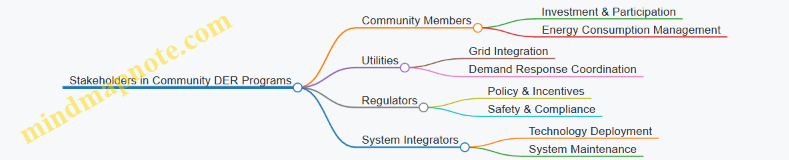
Final Thoughts
Community and microgrid DER programs illustrate how localized orchestration can deliver multiple benefits including resilience, cost savings, and environmental sustainability. By employing best practices such as hierarchical control, stakeholder engagement, and real-world testing, program managers and engineers can successfully implement these systems to transform energy landscapes.
For further reading and detailed case studies, refer to section 11.5: “Successful DER Orchestration in a Smart City Pilot.”
11.3 Commercial and Industrial DER Integration Examples
Commercial and industrial (C&I) facilities represent a significant opportunity for Distributed Energy Resources (DER) integration due to their sizable energy consumption, diverse load profiles, and potential for onsite generation and storage. Integrating DER in these settings not only reduces operational costs but also enhances grid reliability and sustainability.
Key Drivers for C&I DER Integration
- Cost savings: Reducing peak demand charges and energy bills.
- Resilience: Ensuring power continuity during outages.
- Sustainability goals: Meeting corporate environmental targets.
- Grid services: Participating in demand response and ancillary service markets.
Mind Map: Overview of C&I DER Integration
Example 1: Manufacturing Facility with Solar PV and Battery Storage
Scenario: A mid-sized manufacturing plant integrates a 500 kW rooftop solar PV system paired with a 1 MWh battery energy storage system.
Implementation:
- The onsite solar generation reduces grid energy consumption during daylight hours.
- The battery system is orchestrated to shave peak demand during high tariff periods and provide backup power during outages.
- An Energy Management System (EMS) coordinates solar, battery, and load to optimize energy costs.
Best Practice:
- Use predictive analytics to forecast solar generation and load demand.
- Schedule battery dispatch for peak shaving and demand response events.
Outcome:
- 15% reduction in monthly energy costs.
- Improved power quality and resilience.
Mind Map: Manufacturing Facility DER Setup

Example 2: Commercial Office Building with Demand Response and EV Charging
Scenario: A commercial office complex integrates demand response capabilities and manages an EV fleet charging station.
Implementation:
- The building participates in utility demand response programs, automatically reducing HVAC and lighting loads during peak grid events.
- EV fleet charging is scheduled and modulated to avoid coinciding with peak demand periods.
- A centralized control platform orchestrates load adjustments and EV charging based on real-time grid signals.
Best Practice:
- Implement automated load control to ensure quick and reliable demand response participation.
- Use smart charging algorithms to optimize EV charging costs and grid impact.
Outcome:
- Revenue earned through demand response incentives.
- Reduced peak demand charges.
- Enhanced occupant comfort through intelligent HVAC control.
Mind Map: Office Building DER Orchestration
Example 3: Data Center with Combined Heat and Power (CHP) and Battery Storage
Scenario: A data center integrates a CHP system alongside battery storage to improve energy efficiency and reliability.
Implementation:
- CHP provides onsite generation of electricity and thermal energy, reducing reliance on the grid.
- Battery storage supports uninterruptible power supply (UPS) functions and participates in frequency regulation markets.
- An advanced control system orchestrates CHP output and battery dispatch based on load, grid conditions, and market signals.
Best Practice:
- Coordinate CHP and battery dispatch to maximize fuel efficiency and market revenue.
- Continuously monitor system performance to detect and address inefficiencies.
Outcome:
- Lower energy costs and emissions.
- Enhanced grid support through ancillary services.
- Increased resilience against outages.
Mind Map: Data Center DER Integration
Summary
Integrating DER in commercial and industrial settings requires a holistic approach combining onsite generation, storage, load management, and advanced control systems. Best practices emphasize predictive analytics, automated orchestration, and active market participation to maximize benefits. These examples demonstrate how tailored DER solutions can reduce costs, enhance resilience, and support grid operations effectively.
11.4 Best Practice: Tailoring DER Orchestration to Specific Use Cases – Comparative Analysis
Distributed Energy Resources (DER) orchestration is not a one-size-fits-all solution. Tailoring orchestration strategies to specific use cases is critical to maximizing operational efficiency, grid reliability, and economic benefits. This section explores best practices for customizing DER orchestration through a comparative analysis of common use cases, supported by detailed mind maps and practical examples.
Understanding the Importance of Tailored DER Orchestration
Each DER deployment scenario—whether a utility-scale fleet, community microgrid, or commercial facility—has unique technical, economic, and regulatory requirements. Effective orchestration must consider these factors to optimize control strategies, communication protocols, and market participation.
Mind Map: Key Factors in Tailoring DER Orchestration
Comparative Analysis of Three DER Use Cases
| Aspect | Utility-Scale DER Fleet | Community Microgrid | Commercial & Industrial (C&I) Facility |
|---|---|---|---|
| Scale | Large, often hundreds to thousands of DER units | Medium, typically tens to hundreds of DER units | Small to medium, focused on single site or campus |
| DER Types | Solar PV, Battery Storage, Demand Response | Solar PV, Battery Storage, Backup Generators | Solar PV, Battery Storage, EV Charging, Load Control |
| Control Architecture | Hierarchical, centralized with some decentralization | Mostly decentralized with local controllers | Centralized with integration to facility energy management |
| Communication | High bandwidth, secure protocols (e.g., IEC 61850) | Mix of wired/wireless, often OpenADR | Ethernet/Wi-Fi, focus on reliability and latency |
| Market Participation | Active in wholesale markets, ancillary services | Limited or no direct market participation | Mostly retail demand response and self-consumption optimization |
| Regulatory Constraints | Strict grid codes, interconnection standards | Local regulations, islanding requirements | Compliance with facility and utility standards |
| Customer Engagement | Low direct engagement, managed by utility | High engagement, community-driven programs | Moderate engagement, facility managers involved |
Example 1: Utility-Scale DER Fleet Orchestration
Scenario: A utility operates a 500 MW solar and battery storage fleet across multiple substations.
Tailored Approach:
- Use hierarchical control with centralized dispatch and local autonomous controls for fast response.
- Implement IEC 61850 and IEEE 2030.5 protocols for interoperability.
- Participate in frequency regulation and capacity markets.
- Use advanced forecasting and predictive analytics for day-ahead scheduling.
Outcome: Improved grid stability, optimized market revenue, and enhanced asset utilization.
Example 2: Community Microgrid DER Orchestration
Scenario: A rural community microgrid with 2 MW solar, 1 MWh battery, and diesel backup.
Tailored Approach:
- Decentralized control to enable islanding and autonomous operation.
- Use OpenADR for demand response and local energy management.
- Engage community members through mobile apps for load shifting incentives.
- Prioritize resilience and reliability over market participation.
Outcome: Enhanced energy independence, reduced outages, and community empowerment.
Example 3: Commercial & Industrial Facility DER Orchestration
Scenario: A manufacturing plant with rooftop solar, battery storage, and EV fleet charging.
Tailored Approach:
- Centralized control integrated with facility energy management system (EMS).
- Real-time monitoring and adaptive control for load shaping and peak demand reduction.
- Participate in retail demand response programs.
- Implement predictive maintenance analytics for DER assets.
Outcome: Reduced energy costs, improved operational efficiency, and lower carbon footprint.
Mind Map: Tailored DER Orchestration Strategies by Use Case
Summary Best Practices for Tailoring DER Orchestration
- Assess Use Case Requirements: Evaluate scale, DER types, grid connection, and customer needs.
- Select Appropriate Control Architecture: Centralized for large fleets, decentralized for microgrids.
- Choose Communication Protocols Wisely: Ensure interoperability and security.
- Align with Market and Regulatory Frameworks: Maximize economic benefits and compliance.
- Engage Customers and Stakeholders: Foster participation and behavioral flexibility.
- Leverage Analytics and Forecasting: Optimize scheduling and asset performance.
By following these best practices and adapting orchestration frameworks to the specific characteristics of each use case, DER program managers, control engineers, and system integrators can unlock the full potential of distributed energy resources.
11.5 Example: Successful DER Orchestration in a Smart City Pilot
In this section, we explore a comprehensive example of Distributed Energy Resources (DER) orchestration successfully implemented in a smart city pilot project. This example highlights the integration of multiple DER assets, advanced control strategies, and stakeholder collaboration to optimize energy use, enhance grid reliability, and promote sustainability.
Background
The smart city pilot was launched in a mid-sized urban area aiming to demonstrate how DER orchestration can support grid stability, reduce carbon emissions, and empower consumers. The pilot integrated solar PV, battery energy storage systems (BESS), electric vehicle (EV) charging stations, and demand response (DR) programs across residential, commercial, and municipal facilities.
Key Objectives
- Maximize renewable energy utilization
- Provide grid services such as frequency regulation and peak shaving
- Enhance customer engagement and energy awareness
- Test interoperability of multi-vendor DER assets
Architecture Overview
The orchestration platform employed a hierarchical control framework with the following layers:
- Device Layer: DER assets including rooftop solar, batteries, EV chargers, smart thermostats
- Edge Layer: Local controllers aggregating DER data and executing real-time commands
- Central Orchestration Layer: Cloud-based platform performing optimization, forecasting, and market participation
Mind Map: Smart City DER Orchestration Components
Orchestration Strategies and Examples
-
Renewable Energy Maximization:
- The system forecasted solar generation and adjusted battery charging schedules to store excess energy during peak sun hours.
- Example: On a sunny day, batteries charged aggressively between 10 AM and 2 PM, then discharged during evening peak demand, reducing grid draw.
-
Demand Response and Load Shaping:
- Smart thermostats and EV chargers were dynamically controlled to reduce load during grid stress events.
- Example: During a heatwave, the system pre-cooled buildings and delayed EV charging to flatten the demand curve.
-
Grid Services Provision:
- DER assets provided frequency regulation by modulating battery charge/discharge in response to grid signals.
- Example: Batteries responded within seconds to frequency deviations, helping maintain grid stability.
-
Customer Engagement:
- A mobile app provided real-time energy usage, savings, and environmental impact data.
- Example: Residents received notifications suggesting optimal EV charging times aligned with low grid demand.
Mind Map: DER Orchestration Strategies
Outcomes and Benefits
- Grid Reliability: The pilot reduced peak demand by 15%, alleviating local grid constraints.
- Carbon Emissions: Increased renewable utilization led to a 20% reduction in CO2 emissions from the pilot area.
- Customer Satisfaction: Over 80% of participants reported positive experiences with energy savings and control.
- Scalability: The modular orchestration architecture allowed easy integration of additional DER assets.
Lessons Learned and Best Practices
- Interoperability is critical: Using open communication standards enabled seamless integration of diverse DER devices.
- Data-driven control improves performance: Leveraging real-time analytics optimized DER dispatch and enhanced grid support.
- Stakeholder collaboration drives success: Close coordination between utilities, city officials, technology providers, and customers was essential.
- Customer engagement tools increase participation: Transparent feedback and incentives motivated behavioral changes.
Final Mind Map: Smart City DER Orchestration Success Factors
This smart city pilot serves as a compelling example of how DER orchestration can be effectively implemented to create resilient, sustainable, and customer-centric energy systems. By combining advanced technology, strategic planning, and stakeholder engagement, DER programs can unlock significant value for grids and communities alike.
12. Conclusion and Recommendations
12.1 Summary of Key Takeaways
Distributed Energy Resources (DER) orchestration is a transformative approach reshaping modern energy systems by enabling coordinated control and optimization of diverse DER assets. This section distills the essential insights from the comprehensive exploration of DER orchestration, highlighting best practices and practical examples to reinforce understanding.
Mind Map: Core Concepts of DER Orchestration
Key Takeaways with Examples
-
Holistic Understanding of DER Technologies
- DER orchestration requires a deep understanding of diverse technologies such as solar PV, battery storage, EVs, and demand response.
- Example: Integrating battery storage with solar PV in a microgrid to perform peak shaving effectively reduces grid stress during high demand periods.
-
Flexible and Scalable Orchestration Architectures
- Choosing between centralized, decentralized, or hierarchical control models depends on system size and complexity.
- Example: A utility-scale DER fleet benefits from a hierarchical control system that balances local autonomy with central oversight.
-
Robust Communication and Cybersecurity
- Reliable, secure communication protocols are vital for real-time DER coordination.
- Example: Implementing IEEE 2030.5 protocol with encrypted communication channels ensures data integrity and prevents cyber threats.
-
Advanced Control Strategies Enhance Grid Stability
- Adaptive control algorithms enable DERs to provide voltage and frequency regulation dynamically.
- Example: Battery storage systems responding to frequency deviations help maintain grid stability during sudden load changes.
-
Seamless Grid Integration and Compliance
- Understanding grid codes and managing constraints through DER orchestration prevents operational conflicts.
- Example: Coordinating DERs on a congested feeder to reduce overload and defer costly infrastructure upgrades.
-
Economic Optimization and Market Participation
- DER orchestration unlocks value by enabling assets to participate in energy markets and demand response programs.
- Example: Using predictive analytics for economic dispatch maximizes revenue from DER assets in wholesale markets.
-
Continuous Monitoring and Data-Driven Improvements
- Real-time dashboards and KPIs facilitate performance tracking and post-event analysis.
- Example: A DER aggregator platform uses dashboards to monitor fleet response during grid disturbances, identifying areas for improvement.
-
Addressing Challenges Through Collaboration and Innovation
- Overcoming interoperability and regulatory barriers requires multi-stakeholder collaboration.
- Example: Integrating multi-vendor DER devices via standardized protocols to ensure seamless operation.
-
Embracing Future Technologies
- AI, blockchain, and IoT are poised to revolutionize DER orchestration by enhancing forecasting, transparency, and connectivity.
- Example: AI-driven DER forecasting improves scheduling accuracy, reducing operational costs.
Mind Map: Best Practices Summary
By internalizing these key takeaways, DER program managers, control engineers, and system integrators can effectively design, implement, and optimize DER orchestration strategies that enhance grid reliability, economic value, and sustainability.
12.2 Strategic Recommendations for DER Program Managers
Distributed Energy Resources (DER) program managers play a pivotal role in orchestrating diverse energy assets to achieve grid reliability, economic efficiency, and sustainability goals. Below are strategic recommendations, supported by mind maps and practical examples, to guide DER program managers in successfully designing, implementing, and scaling DER orchestration initiatives.
Define Clear Program Objectives and KPIs
- Establish measurable goals aligned with utility and stakeholder priorities (e.g., peak load reduction, renewable integration, customer engagement).
- Develop Key Performance Indicators (KPIs) to track progress and impact.
Example: A utility aiming to reduce peak demand by 15% within two years sets KPIs such as % of customers enrolled in demand response and average response latency.
Foster Cross-Functional Collaboration
- Engage control engineers, system integrators, IT, and customer service teams early.
- Promote regular communication and shared documentation.
Example: Monthly coordination meetings between DER control engineers and system integrators helped identify integration bottlenecks early in a large-scale battery storage deployment.
Prioritize Interoperability and Standards Compliance
- Select DER devices and software platforms supporting open standards (e.g., IEEE 2030.5, OpenADR).
- Plan for multi-vendor environments to avoid vendor lock-in.
Example: A DER program manager chose a DERMS platform supporting OpenADR and IEEE 2030.5, enabling seamless integration of solar inverters from multiple manufacturers.
Implement Robust Data Management and Cybersecurity Practices
- Ensure secure communication channels and data encryption.
- Develop data governance policies covering collection, storage, and access.
Example: A DER aggregation project implemented VPN tunnels and role-based access control to protect DER telemetry and control commands.
Leverage Advanced Analytics and Forecasting
- Use AI/ML tools to predict DER availability, load profiles, and market prices.
- Integrate forecasting into orchestration to optimize dispatch and bidding.
Example: A DER program used machine learning models to forecast solar generation and adjust battery dispatch, improving economic returns by 12%.
Design Customer-Centric Programs
- Incorporate customer preferences and incentives.
- Provide transparent communication and easy opt-in/opt-out options.
Example: A demand response program offered time-of-use rate discounts and a mobile app for customers to monitor and control their DER participation.
Plan for Scalability and Future-Proofing
- Architect orchestration systems to handle increasing DER volumes.
- Stay informed on emerging technologies and regulatory changes.
Example: A DER program manager adopted a cloud-native DERMS platform with modular APIs, enabling easy integration of new DER types and functionalities.
Conduct Pilot Projects and Iterative Improvements
- Start with small-scale pilots to validate concepts.
- Use lessons learned to refine orchestration strategies.
Example: A city launched a microgrid pilot integrating solar, storage, and EV charging, iteratively improving control algorithms based on performance data.
Summary Mind Map: Strategic Recommendations for DER Program Managers

By following these strategic recommendations, DER program managers can effectively orchestrate distributed energy assets to maximize value for utilities, customers, and the grid while navigating the complexities of evolving energy landscapes.
12.3 Practical Tips for Control Engineers and System Integrators
Distributed Energy Resources (DER) orchestration demands a blend of technical expertise, strategic thinking, and hands-on experience. For control engineers and system integrators, mastering this domain involves understanding both the granular control mechanisms and the broader system integration challenges. This section provides actionable tips, supported by mind maps and real-world examples, to help you excel in DER orchestration.
Practical Tips for Control Engineers and System Integrators
Understand the DER Ecosystem Holistically
Before diving into control algorithms or integration tasks, develop a comprehensive understanding of the DER ecosystem including generation, storage, load, communication, and grid interface.
Example: When integrating a solar-plus-storage system, control engineers should consider not only the inverter control but also how battery state-of-charge and load profiles interact to optimize energy flow.
Prioritize Interoperability and Standards Compliance
Use open standards (e.g., IEEE 2030.5, OpenADR, IEC 61850) to ensure seamless communication between heterogeneous DER devices and control platforms.
Example: A system integrator working on a microgrid project successfully integrated inverters from multiple manufacturers by adopting IEC 61850 and conducting rigorous interoperability testing.
Implement Layered Control Architectures
Design control systems with hierarchical layers: local device control, edge control, and central orchestration. This improves scalability and fault tolerance.
Example: In a utility-scale DER fleet, edge controllers aggregate data and execute fast control loops locally, while the central system optimizes dispatch based on market signals.
Leverage Real-Time Data and Analytics
Use real-time telemetry and analytics to enable adaptive control strategies that respond dynamically to grid conditions and DER status.
Example: A control engineer uses weather forecasts and load predictions to adjust DER dispatch proactively, reducing reliance on fossil-fuel peaker plants.
Emphasize Cybersecurity Best Practices
Protect DER systems from cyber threats by implementing encryption, authentication, and continuous monitoring.
Example: A system integrator deployed secure gateways with encrypted communication channels to protect DER control signals from interception or tampering.
Conduct Thorough Testing and Validation
Simulate DER orchestration scenarios and perform field testing to validate control logic and system integration before full deployment.
Example: Prior to commissioning, a control engineer used a hardware-in-the-loop setup to test DER response to grid frequency deviations, ensuring stability under real-world conditions.
Foster Collaboration Across Disciplines
Work closely with DER program managers, utility operators, and IT teams to align technical solutions with operational goals and regulatory requirements.
Example: A system integrator coordinated with utility operators and DER program managers to design a demand response program that met both technical feasibility and customer engagement goals.
Document and Standardize Processes
Maintain clear documentation of control algorithms, integration procedures, and troubleshooting guides to facilitate knowledge transfer and scalability.
Example: A control engineer developed a comprehensive manual for DER inverter commissioning, reducing onboarding time for new team members.
Stay Updated with Emerging Technologies
Continuously learn about advances in AI, IoT, edge computing, and blockchain that can enhance DER orchestration capabilities.
Example: A system integrator piloted an AI-based forecasting tool that improved battery dispatch accuracy by 15%, optimizing energy costs.
Summary Table of Practical Tips
| Tip Number | Focus Area | Key Action | Example Use Case |
|---|---|---|---|
| 1 | Ecosystem Understanding | Map DER components and interactions | Solar-plus-storage system integration |
| 2 | Interoperability | Adopt open standards and test multi-vendor | Microgrid with diverse DER devices |
| 3 | Control Architecture | Design layered control systems | Utility-scale DER fleet management |
| 4 | Data & Analytics | Use real-time data for adaptive control | Forecast-driven DER dispatch |
| 5 | Cybersecurity | Implement encryption and monitoring | Secure DER communication gateways |
| 6 | Testing & Validation | Simulate and field-test control logic | Hardware-in-the-loop frequency response |
| 7 | Collaboration | Engage all stakeholders regularly | Demand response program design |
| 8 | Documentation | Standardize and document processes | DER inverter commissioning manual |
| 9 | Emerging Tech | Pilot AI, IoT, blockchain innovations | AI-based battery dispatch forecasting |
By following these practical tips, control engineers and system integrators can build robust, scalable, and secure DER orchestration solutions that meet the evolving needs of modern grid operations.
12.4 Future Outlook and Preparing for Evolving Energy Landscapes
As the energy sector rapidly evolves, Distributed Energy Resources (DER) orchestration must adapt to emerging technologies, regulatory shifts, and changing grid dynamics. Preparing for these changes is critical for DER Program Managers, Control Engineers, and System Integrators to ensure resilient, efficient, and sustainable energy systems.
Key Future Trends Impacting DER Orchestration
Preparing for the Future: Strategic Focus Areas
Example 1: AI-Enhanced DER Forecasting for Grid Stability
A utility integrates machine learning models into its DER orchestration platform to predict solar and wind generation variability with high accuracy. This enables preemptive adjustments in battery dispatch and demand response signals, reducing grid imbalances and improving reliability.
Best Practice: Start with pilot projects to validate AI models using historical and real-time data before full-scale deployment.
Example 2: Preparing for Electrification of Transport
A city plans to integrate thousands of electric vehicles (EVs) into its grid. The DER orchestration system is upgraded to coordinate EV charging schedules dynamically, balancing load and leveraging vehicle-to-grid (V2G) capabilities.
Best Practice: Collaborate early with EV manufacturers and charging infrastructure providers to ensure seamless communication and control.
Mind Map: Preparing DER Orchestration for Future Energy Landscapes
Example 3: Blockchain for Transparent DER Transactions
A regional energy cooperative implements blockchain technology to enable peer-to-peer energy trading among prosumers. The DER orchestration platform interfaces with the blockchain ledger to automate settlement and ensure transparency.
Best Practice: Begin with a controlled environment pilot to test transaction speed, security, and user experience before scaling.
Final Recommendations
- Invest in flexible and modular orchestration platforms that can incorporate new DER types and control algorithms as they emerge.
- Leverage advanced analytics and AI to anticipate grid conditions and optimize DER dispatch proactively.
- Adopt and contribute to open standards to ensure interoperability and future-proof system integration.
- Prioritize cybersecurity to protect DER assets and customer data in an increasingly connected environment.
- Engage customers and stakeholders early to foster acceptance and active participation in DER programs.
By embracing these strategies, energy professionals can confidently navigate the evolving energy landscape and harness the full potential of DER orchestration for a sustainable grid future.
12.5 Final Best Practice: Building Collaborative Ecosystems for DER Success
Distributed Energy Resources (DER) orchestration thrives not only on technology but also on the strength of collaborative ecosystems. Building such ecosystems involves aligning diverse stakeholders, integrating technologies, and fostering continuous communication to maximize DER potential and grid benefits.
Why Collaborative Ecosystems Matter
- Complexity of DER Integration: DERs span multiple technologies, ownership models, and regulatory frameworks.
- Diverse Stakeholders: Utilities, DER owners, aggregators, regulators, technology vendors, and customers must work in harmony.
- Maximizing Value: Collaboration unlocks synergies, enabling optimized grid operations, enhanced reliability, and economic benefits.
Key Components of a Collaborative DER Ecosystem
Practical Steps to Build a Collaborative Ecosystem
-
Identify and Engage Stakeholders Early
- Example: In a regional DER program, the utility organized workshops inviting DER owners, aggregators, and regulators to co-develop program goals.
-
Establish Clear Communication Channels and Data Sharing Agreements
- Example: A microgrid project implemented a shared data platform using standardized protocols (OpenADR) to enable real-time visibility for all participants.
-
Adopt Open Standards and Interoperable Technologies
- Example: A system integrator deployed a DER orchestration platform supporting IEEE 2030.5 and IEC 61850, allowing seamless integration of multi-vendor DER assets.
-
Define Governance Structures and Roles
- Example: A community solar initiative created a steering committee with representatives from customers, the utility, and technology providers to oversee operations and resolve conflicts.
-
Promote Continuous Learning and Innovation
- Example: A utility launched pilot projects testing AI-driven DER forecasting, sharing results with ecosystem partners to refine strategies.
Example Mind Map: Collaborative Ecosystem in Action
Real-World Example: Smart City DER Ecosystem
In a smart city pilot, the city government partnered with the local utility, multiple DER aggregators, technology vendors, and community groups to orchestrate DER assets across residential, commercial, and public infrastructure.
- Stakeholder Coordination: Regular multi-stakeholder forums ensured alignment on objectives and addressed concerns.
- Technology Integration: A cloud-based orchestration platform supported diverse DER types and vendors.
- Data Transparency: Open dashboards provided real-time performance insights to all participants.
- Governance: A formal governance framework defined roles, data privacy standards, and dispute resolution mechanisms.
- Outcome: The ecosystem enabled peak load reduction by 15%, improved grid reliability, and increased customer satisfaction.
Summary
Building collaborative ecosystems is the cornerstone of successful DER orchestration. By fostering trust, transparency, and shared goals among all stakeholders, energy systems can unlock the full potential of DERs to create resilient, efficient, and sustainable grids.
Additional Resources
- NREL: DER Integration and Collaboration
- IEEE Standards for DER Communication
- OpenADR Alliance