Web3 for Enterprise: Real Use Cases,Not Hype
1. Introduction to Web3 and Its Enterprise Potential
1.1 Understanding Web3: Beyond the Buzzword
Web3 represents the next evolution of the internet, shifting from centralized platforms controlled by a few entities to a decentralized ecosystem where users have greater control over their data, identity, and digital interactions. Unlike Web2, which is characterized by social media, cloud computing, and centralized services, Web3 leverages blockchain technology, smart contracts, and decentralized protocols to create trustless, permissionless, and transparent systems.
What Makes Web3 Different?
- Decentralization: Control is distributed across a network rather than held by a single entity.
- User Ownership: Users own their data and digital assets directly.
- Trustless Interactions: Transactions and agreements happen without intermediaries through smart contracts.
- Interoperability: Different platforms and services can seamlessly interact.
Mind Map: Core Concepts of Web3
Example: Traditional Web2 vs Web3 Application
| Feature | Web2 Application | Web3 Application |
|---|---|---|
| Data Ownership | Owned and controlled by platform | Owned by users via decentralized identity |
| Trust Model | Central authority enforces rules | Smart contracts enforce rules automatically |
| Monetization | Ads and subscriptions | Token incentives and decentralized marketplaces |
| Access Control | Centralized login and permissions | Decentralized identity and cryptographic keys |
Practical Example: Decentralized Social Media
In a Web2 social media platform, user data is stored on centralized servers owned by the company, which can monetize this data or censor content. In contrast, a Web3 social media platform stores content on decentralized storage and uses blockchain-based identity, enabling users to control their data, earn tokens for engagement, and avoid censorship.
Best Practice Insight
For enterprises exploring Web3, it’s essential to move beyond the hype by:
- Educating stakeholders on the fundamental differences and benefits of Web3.
- Identifying specific business problems that decentralization and trustless systems can solve.
- Starting with pilot projects that demonstrate tangible value, such as decentralized identity or supply chain transparency.
By understanding Web3 as a paradigm shift rather than just a buzzword, enterprise leaders can strategically evaluate how to integrate these technologies to drive innovation and competitive advantage.
1.2 Key Differences Between Web2 and Web3 for Enterprises
Enterprises today stand at a pivotal crossroads as the digital landscape evolves from Web2 to Web3. Understanding the fundamental differences between these two paradigms is essential for business strategists and blockchain managers aiming to leverage Web3’s transformative potential.
Core Differences Overview
| Aspect | Web2 | Web3 |
|---|---|---|
| Data Ownership | Centralized platforms own and control data. | Users and enterprises have ownership via decentralized networks. |
| Trust Model | Relies on centralized intermediaries. | Trustless environment enabled by blockchain consensus. |
| Identity Management | Managed by platforms (e.g., Google, Facebook). | Decentralized Identity (DID) empowers self-sovereignty. |
| Monetization | Platform-driven monetization models. | Token-based economies enable direct value exchange. |
| Interoperability | Limited, siloed systems. | Open protocols foster seamless integration. |
| Transparency | Opaque operations and algorithms. | Transparent, auditable smart contracts and ledgers. |
Mind Map: Web2 vs Web3 Key Differences
Detailed Comparison with Enterprise Examples
Data Ownership and Control
Web2: Enterprises rely heavily on centralized cloud providers and platforms (e.g., AWS, Google Cloud) that control data storage and access. This creates dependencies and potential risks around data privacy and vendor lock-in.
Web3: Enterprises can leverage decentralized storage solutions like IPFS or Filecoin, where data is distributed across nodes, and ownership is cryptographically secured. This empowers enterprises to maintain control and auditability.
Example: A multinational bank uses decentralized storage to securely archive transaction records, ensuring tamper-proof audit trails without relying on a single cloud provider.
Trust Model
Web2: Trust is placed in centralized entities that mediate transactions and interactions. Enterprises must trust these intermediaries to act fairly and securely.
Web3: Blockchain consensus mechanisms (e.g., Proof of Stake) enable trustless interactions, where rules are enforced by code and network consensus rather than a central authority.
Example: A supply chain consortium uses a permissioned blockchain to track goods provenance, eliminating the need to trust any single participant.
Identity Management
Web2: Identity is managed by platforms, often requiring multiple credentials and exposing enterprises to risks like data breaches.
Web3: Decentralized Identity (DID) frameworks allow enterprises and users to control their identities, improving security and privacy.
Example: An enterprise implements DID for employee access, enabling seamless, privacy-preserving authentication across multiple systems without password fatigue.
Monetization Models
Web2: Enterprises monetize through advertising, subscriptions, or licensing, often mediated by platforms that take significant fees.
Web3: Token economies enable enterprises to create new revenue streams via tokenized assets, NFTs, or decentralized finance (DeFi) protocols.
Example: A media company issues NFTs granting holders exclusive content access, creating direct monetization and community engagement.
Interoperability
Web2: Systems are often siloed, requiring complex integrations and APIs.
Web3: Open standards and protocols enable seamless interoperability between decentralized applications (dApps) and services.
Example: An enterprise integrates multiple blockchain networks to facilitate cross-border payments without intermediaries.
Transparency and Auditability
Web2: Enterprise operations and algorithms are often proprietary and opaque.
Web3: Smart contracts and blockchain ledgers provide transparent, immutable records accessible for auditing.
Example: An insurance company automates claims processing via smart contracts, enabling transparent and faster settlements.
Mind Map: Enterprise Impact of Web3 vs Web2
Best Practice Tip
For Enterprise Leaders: Begin by mapping existing Web2 workflows and identifying pain points related to trust, data control, and interoperability. Then, evaluate Web3 solutions that directly address these challenges with clear ROI examples, such as decentralized identity for secure access or blockchain for supply chain transparency.
By grasping these key differences, enterprise leaders and blockchain managers can move beyond hype and strategically harness Web3 technologies to unlock real business value.
1.3 Core Technologies Powering Web3: Blockchain, Smart Contracts, and Decentralization
Web3 represents a paradigm shift in how digital systems operate, emphasizing decentralization, transparency, and user empowerment. At its core, Web3 relies on three foundational technologies: Blockchain, Smart Contracts, and Decentralization. Understanding these technologies is essential for enterprise leaders and blockchain managers to harness the true potential of Web3.
Blockchain: The Immutable Ledger
Blockchain is a distributed ledger technology that records transactions across a network of computers, ensuring data integrity and transparency without a central authority.
- Key Features:
- Immutability: Once data is recorded, it cannot be altered.
- Transparency: Transactions are visible to all participants.
- Security: Cryptographic techniques protect data.
- Consensus Mechanisms: Methods like Proof of Work (PoW) or Proof of Stake (PoS) validate transactions.
Example:
An enterprise supply chain uses blockchain to record every step of product movement. Each participant (manufacturer, transporter, retailer) adds transaction data, creating an immutable audit trail that improves trust and reduces fraud.
Mind Map:
Smart Contracts: Automated, Trustless Agreements
Smart contracts are self-executing contracts with the terms directly written into code. They automatically enforce and execute agreements when predefined conditions are met.
- Key Features:
- Automation: Removes manual intervention.
- Transparency: Contract logic is visible and verifiable.
- Security: Code runs on blockchain, reducing tampering.
Example:
A vendor payment system uses smart contracts to release payments automatically once delivery confirmation is recorded on the blockchain, reducing delays and disputes.
Mind Map:
Decentralization: Distributing Control and Trust
Decentralization removes reliance on a single central authority by distributing control across multiple nodes or participants.
- Key Features:
- Fault Tolerance: No single point of failure.
- Censorship Resistance: Harder to manipulate or shut down.
- Enhanced Security: Distributed consensus reduces attack vectors.
Example:
An enterprise consortium uses a decentralized network to share sensitive data securely among partners without a central intermediary, improving collaboration and trust.
Mind Map:
Integrated Example: Web3 in Action for Enterprises
Consider a multinational logistics company implementing a Web3 solution:
- Blockchain records every shipment event immutably.
- Smart Contracts automate payments and penalties based on delivery times.
- Decentralization ensures no single party controls the data, fostering trust among partners.
This integration reduces fraud, accelerates settlements, and enhances transparency.
Summary
| Technology | Role in Web3 | Enterprise Benefit | Example Use Case |
|---|---|---|---|
| Blockchain | Immutable ledger for data integrity | Transparent audit trails, fraud reduction | Supply chain tracking |
| Smart Contracts | Automated execution of agreements | Reduced manual processes, faster settlements | Automated vendor payments |
| Decentralization | Distributed control and trust | Fault tolerance, censorship resistance | Consortium data sharing |
By mastering these core technologies, enterprise leaders can move beyond hype and strategically implement Web3 solutions that deliver real business value.
1.4 Why Enterprises Should Care: Business Value and Strategic Advantages
Enterprises stand at a pivotal crossroads where Web3 technologies offer transformative potential beyond the hype. Understanding the tangible business value and strategic advantages is essential for leaders and strategists to make informed decisions.
Key Business Values of Web3 for Enterprises
Strategic Advantages Enabled by Web3
Real-World Examples Demonstrating Business Value
Example 1: Supply Chain Transparency at Walmart
- Walmart uses blockchain to track food products from farm to shelf.
- This reduces contamination risks and recalls, saving millions.
- Transparency builds consumer trust and regulatory compliance.
Example 2: Decentralized Identity in Microsoft Azure
- Microsoft’s decentralized identity platform enables users to control their credentials.
- Enterprises benefit from reduced fraud and streamlined onboarding.
Example 3: Tokenization in Real Estate by RealT
- RealT tokenizes property ownership, allowing fractional investments.
- Enterprises can unlock liquidity and broaden investor access.
Example 4: Smart Contracts in Insurance by Lemonade
- Lemonade automates claims processing via smart contracts.
- This reduces processing time from weeks to minutes and cuts operational costs.
Best Practice: Aligning Web3 Initiatives with Business Objectives
- Identify Clear Use Cases: Focus on areas where decentralization or transparency solves real pain points.
- Quantify Value: Estimate cost savings, risk reduction, or revenue opportunities.
- Pilot with Measurable Metrics: Start small with clear KPIs to validate impact.
- Engage Stakeholders Early: Include legal, compliance, IT, and business units.
- Plan for Integration: Ensure Web3 solutions complement existing systems.
Summary
Enterprises should care about Web3 because it offers more than technological novelty—it delivers measurable business value and strategic advantages. From enhancing trust and security to unlocking new business models, Web3 empowers enterprises to innovate and compete effectively in a rapidly evolving digital landscape.
1.5 Best Practice: Assessing Your Organization’s Readiness for Web3 Integration with a Practical Framework
Integrating Web3 technologies into an enterprise is a strategic decision that requires careful assessment of organizational readiness. This section provides a practical framework to evaluate your company’s preparedness, ensuring a smooth transition from traditional systems to decentralized solutions.
Step 1: Evaluate Strategic Alignment
- Business Objectives: Does Web3 align with your company’s long-term goals?
- Value Proposition: What specific problems can Web3 solve for your enterprise?
- Competitive Advantage: Will Web3 adoption differentiate your business in the market?
Example: A logistics company aims to improve supply chain transparency. Web3’s immutable ledger can provide real-time tracking and provenance verification, aligning perfectly with their strategic goal of enhancing trust.
Step 2: Assess Technological Infrastructure
- Current Systems Compatibility: Can existing IT infrastructure integrate with blockchain and decentralized apps?
- Scalability: Is the infrastructure capable of handling increased data and transaction volumes?
- Security Posture: Are there measures in place to secure cryptographic keys and smart contracts?
Example: A financial institution evaluates its legacy systems and finds they require API upgrades to interact with blockchain networks securely before deploying tokenized assets.
Step 3: Analyze Organizational Culture and Skills
- Leadership Buy-In: Are executives informed and supportive of Web3 initiatives?
- Team Expertise: Does the team have blockchain development, cryptography, or decentralized governance experience?
- Change Management: Is the organization prepared to embrace new workflows and decentralized decision-making?
Example: An enterprise runs internal workshops and partners with blockchain consultancies to upskill their IT and compliance teams, fostering a culture ready for Web3 adoption.
Step 4: Regulatory and Compliance Readiness
- Legal Framework: Are there clear regulations governing blockchain use in your industry and jurisdiction?
- Compliance Processes: Can your compliance team monitor and adapt to evolving Web3 regulations?
- Risk Management: Are there protocols for managing smart contract vulnerabilities and data privacy?
Example: A healthcare provider consults legal experts to ensure patient data stored on decentralized networks complies with HIPAA and GDPR.
Step 5: Identify Use Cases and Pilot Opportunities
- Feasibility: Which Web3 use cases are practical and impactful for your enterprise?
- Pilot Projects: Can you start with small-scale pilots to test technology and processes?
- Metrics for Success: What KPIs will measure pilot effectiveness?
Example: A retail chain pilots NFT-based loyalty rewards in a single region to gauge customer engagement before scaling.
Mind Map: Organizational Readiness for Web3 Integration
Practical Example: Web3 Readiness Assessment at “TechLogix Inc.” (Hypothetical)
| Aspect | Assessment Summary | Action Plan |
|---|---|---|
| Strategic Alignment | Strong alignment with transparency goals | Prioritize supply chain blockchain solutions |
| Technological Infra. | Legacy ERP systems need API upgrades | Initiate infrastructure modernization |
| Culture & Skills | Moderate blockchain knowledge; leadership supportive | Conduct training and executive workshops |
| Regulatory Compliance | Unclear regulations in some jurisdictions | Engage legal counsel for compliance roadmap |
| Use Cases & Pilots | Identified tokenization and DID as promising pilots | Launch pilot for decentralized identity system |
Summary
Assessing readiness for Web3 integration is a multidimensional exercise involving strategic, technical, cultural, and regulatory considerations. Using this practical framework, enterprise leaders and blockchain managers can identify gaps, prioritize actions, and embark on Web3 adoption with confidence and clarity.
2. Decentralized Identity and Access Management
2.1 The Concept of Decentralized Identity (DID) Explained
Decentralized Identity (DID) is a transformative approach to digital identity management that empowers individuals and organizations to own, control, and share their identity data without relying on centralized authorities. Unlike traditional identity systems where a central entity (like a government agency or social media platform) issues and controls identity credentials, DID leverages blockchain and distributed ledger technologies to create self-sovereign identities.
What is Decentralized Identity?
At its core, DID is a new type of identifier that enables verifiable, decentralized digital identities. These identifiers are created, owned, and managed by the identity holders themselves, rather than by centralized intermediaries.
Key Characteristics of DID:
- Self-Sovereignty: Users have full control over their identity data.
- Decentralization: No single point of control or failure.
- Privacy-Preserving: Users selectively disclose information.
- Interoperability: Works across different platforms and services.
- Verifiable Credentials: Trusted claims issued by third parties.
Mind Map: Core Components of Decentralized Identity
How Does DID Work? (Simplified Example)
-
Creation: Alice generates a DID using a blockchain-based identity platform. This DID is a unique identifier linked to a DID Document stored on a distributed ledger.
-
Issuance: A university issues Alice a verifiable credential (e.g., a diploma) that is cryptographically signed and linked to her DID.
-
Presentation: When Alice applies for a job, she shares this verifiable credential with the employer, who can cryptographically verify its authenticity without contacting the university directly.
-
Control: Alice decides which credentials to share and with whom, maintaining privacy and control.
Mind Map: DID Workflow Example
Real-World Example: Employee Onboarding with DID
Scenario: A multinational corporation wants to streamline employee onboarding across multiple countries while ensuring compliance and security.
-
Traditional Approach: HR departments manually verify employee identities and credentials, often requiring physical documents and multiple checks.
-
With DID:
- New hires create their decentralized identities.
- Educational institutions and previous employers issue verifiable credentials (degrees, work history) linked to these DIDs.
- The corporation’s HR system verifies these credentials instantly and securely.
- Employees control which credentials to share, enhancing privacy.
Benefits:
- Reduced onboarding time from days to hours.
- Lower risk of identity fraud.
- Simplified compliance with data privacy regulations.
Best Practice: Implementing DID in Enterprises
- Start Small: Pilot DID with a specific use case such as employee onboarding or vendor verification.
- Choose Standards-Based Solutions: Adopt W3C DID and Verifiable Credentials standards for interoperability.
- Educate Stakeholders: Train employees and partners on DID concepts and benefits.
- Integrate with Existing Systems: Use APIs and middleware to connect DID solutions with enterprise identity and access management (IAM) systems.
- Focus on Privacy: Implement selective disclosure and encryption to protect sensitive data.
Summary
Decentralized Identity represents a paradigm shift in how enterprises and individuals manage digital identities. By leveraging blockchain technology and cryptographic proofs, DID enables secure, privacy-preserving, and user-controlled identity systems that reduce reliance on centralized authorities and streamline trust across digital interactions.
2.2 Use Case: Streamlining Employee Onboarding with Self-Sovereign Identity (SSI)
Employee onboarding is a critical process for enterprises, often involving multiple departments, extensive paperwork, and identity verification steps that can be time-consuming and prone to errors. Self-Sovereign Identity (SSI) offers a transformative approach by enabling employees to control and share their verified identity credentials securely and seamlessly.
What is Self-Sovereign Identity (SSI)?
SSI is a decentralized digital identity model where individuals own, control, and share their identity data without relying on a central authority. Enterprises can leverage SSI to verify employee identities efficiently while enhancing privacy and security.
How SSI Streamlines Employee Onboarding
- Decentralized Verification: Employees present cryptographically verifiable credentials issued by trusted institutions (e.g., universities, previous employers).
- Reduced Paperwork: Digital credentials replace physical documents, reducing manual data entry and errors.
- Faster Background Checks: Automated verification accelerates compliance and security checks.
- Privacy Control: Employees selectively disclose only necessary information, enhancing GDPR and data privacy compliance.
Mind Map: Employee Onboarding with SSI
Practical Example: Onboarding at “TechCorp”
Scenario: TechCorp, a multinational enterprise, implements SSI to streamline onboarding.
- Credential Issuance: Universities and previous employers issue verifiable credentials to candidates.
- Candidate Wallet: Candidates store these credentials in a digital identity wallet on their smartphones.
- Onboarding Portal: TechCorp’s HR portal requests specific credentials (e.g., degree certificate, ID proof).
- Selective Disclosure: Candidates share only the requested credentials, verified instantly via blockchain.
- Automated Access: Upon verification, IT automatically provisions system access and benefits.
Outcome: Onboarding time reduced from weeks to days, with improved data accuracy and employee satisfaction.
Mind Map: TechCorp SSI Onboarding Flow
Best Practices for Implementing SSI in Employee Onboarding
- Partner with Trusted Credential Issuers: Collaborate with universities, government agencies, and previous employers to issue verifiable credentials.
- Adopt Open Standards: Use W3C Verifiable Credentials and Decentralized Identifiers (DIDs) for interoperability.
- Ensure User-Friendly Wallets: Provide or recommend intuitive digital wallets for employees to manage their credentials.
- Integrate with Existing HR Systems: Seamlessly connect SSI verification with HR management and access control systems.
- Prioritize Privacy and Compliance: Implement selective disclosure and obtain explicit consent to comply with data protection regulations.
Additional Example: SSI for Contractor Onboarding
Contractors often face repetitive identity verifications across multiple projects. By using SSI, contractors can reuse verified credentials, speeding up onboarding and reducing administrative overhead for enterprises managing multiple vendors.
Summary
Using Self-Sovereign Identity to streamline employee onboarding empowers enterprises to reduce friction, enhance security, and respect employee privacy. By adopting SSI, enterprises can transform a traditionally complex process into a smooth, automated, and trustworthy experience.
2.3 Best Practice: Implementing DID for Secure and Privacy-Preserving Access Control
Decentralized Identity (DID) offers enterprises a transformative approach to managing identity and access control by placing users in control of their own data, enhancing security, and preserving privacy. Implementing DID effectively requires a strategic approach that balances usability, compliance, and technical robustness.
Key Principles for Implementing DID in Enterprises
- User Sovereignty: Empower users to own and control their digital identities without relying on centralized authorities.
- Privacy by Design: Minimize data exposure and enable selective disclosure of identity attributes.
- Interoperability: Ensure compatibility across different DID methods and identity ecosystems.
- Security: Protect identities against unauthorized access, tampering, and identity theft.
- Compliance: Align with regulatory requirements such as GDPR, HIPAA, and industry-specific standards.
Mind Map: Core Components of DID Implementation
Step-by-Step Best Practices with Examples
Choose the Right DID Method and Network
- Example: An enterprise selects the
did:ionmethod built on the Bitcoin network for its decentralized and widely supported infrastructure. - Practice: Evaluate DID methods based on scalability, security, and ecosystem maturity.
Establish Trusted Issuers for Verifiable Credentials
- Example: HR department acts as a trusted issuer, providing employees with verifiable digital identity credentials such as employment status and role.
- Practice: Define clear policies and processes for credential issuance, revocation, and renewal.
Deploy User-Friendly Identity Wallets
- Example: Provide employees with a mobile identity wallet app that securely stores their DID and credentials, enabling easy access to enterprise resources.
- Practice: Prioritize usability and security features like biometric authentication and encrypted storage.
Implement Attribute-Based Access Control (ABAC) Using Verifiable Credentials
- Example: Access to sensitive documents is granted only if the user presents a verifiable credential proving their role as ‘Manager’ without revealing other personal data.
- Practice: Use cryptographic proofs such as zero-knowledge proofs to enable selective disclosure.
Integrate with Existing Enterprise Systems
- Example: Connect the DID-based access control system with the company’s existing Identity and Access Management (IAM) platform to maintain unified oversight.
- Practice: Use APIs and middleware to bridge decentralized identity with legacy infrastructure.
Ensure Compliance and Auditability
- Example: Maintain immutable audit logs of credential issuance and access events stored on a permissioned blockchain to satisfy regulatory audits.
- Practice: Implement consent management workflows and data retention policies aligned with legal requirements.
Mind Map: Privacy-Preserving Access Control Workflow
Real-World Example: Employee Onboarding with DID
Scenario: A multinational corporation implements DID to streamline secure onboarding.
- New hires receive a DID and verifiable credentials from HR.
- Using a digital wallet, employees prove their identity and role to access internal systems without sharing unnecessary personal data.
- Access permissions are automatically granted based on verified credentials.
- All transactions are logged immutably for compliance.
Outcome: Reduced onboarding time, enhanced privacy, and stronger security posture.
Summary
Implementing DID for secure and privacy-preserving access control empowers enterprises to move beyond traditional centralized identity systems. By following best practices such as selecting appropriate DID methods, leveraging verifiable credentials, enabling selective disclosure, and integrating with existing systems, organizations can achieve robust security, enhanced user privacy, and regulatory compliance.
This approach not only mitigates risks associated with identity theft and data breaches but also fosters trust among employees, partners, and customers.
2.4 Case Study: A Global Enterprise’s Journey to Decentralized Identity
Overview
This case study explores how a multinational corporation, “GlobalTech Inc.”, implemented decentralized identity (DID) solutions to enhance security, streamline employee onboarding, and improve privacy compliance across its worldwide operations.
Background
GlobalTech Inc. operates in over 50 countries with 100,000+ employees. The company faced challenges related to:
- Complex identity management systems across regions
- Lengthy onboarding processes with manual verification
- Data privacy concerns under GDPR, CCPA, and other regulations
- Risk of identity fraud and unauthorized access
To address these, GlobalTech decided to pilot a decentralized identity framework leveraging blockchain technology and self-sovereign identity principles.
Objectives
- Simplify and accelerate employee onboarding
- Enhance security with tamper-proof identity credentials
- Give employees control over their personal data
- Ensure compliance with global privacy regulations
Implementation Steps
Selecting the Technology Stack
- Chose a permissioned blockchain network for identity credential issuance and verification.
- Adopted W3C DID standards for interoperability.
- Integrated with existing HR and access management systems.
Creating Digital Identity Wallets
- Developed a mobile app for employees to hold their decentralized identity wallets.
- Wallets store verifiable credentials such as employment status, certifications, and access rights.
Issuing Verifiable Credentials
- HR issues cryptographically signed credentials to new hires.
- Credentials include role, department, and clearance level.
Access Management Integration
- Access control systems verify credentials directly from employee wallets.
- Eliminated need for centralized identity databases.
Privacy and Consent Management
- Employees control what data is shared and with whom.
- Consent is recorded on-chain for auditability.
Mind Map: Decentralized Identity Implementation at GlobalTech Inc.
Example: Employee Onboarding Workflow
- Candidate Acceptance: HR initiates onboarding in the system.
- Credential Issuance: HR issues a verifiable credential to the candidate’s DID wallet.
- Wallet Setup: Candidate downloads the identity wallet app and receives credentials.
- Access Provisioning: Employee uses credentials to gain access to facilities and systems.
- Ongoing Updates: Credentials are updated as roles or access levels change.
Benefits Realized
- Onboarding Time Reduced: From weeks to hours due to instant credential verification.
- Security Enhanced: Cryptographic proofs prevent identity spoofing.
- Privacy Improved: Employees control their personal data sharing.
- Compliance Simplified: Immutable audit trails support regulatory reporting.
Lessons Learned and Best Practices
- Start Small: Pilot with a single department before enterprise-wide rollout.
- Employee Training: Educate users on wallet usage and data privacy.
- Interoperability Focus: Use open standards (W3C DID) to ensure future integration.
- Governance Framework: Define policies for credential issuance and revocation.
Conclusion
GlobalTech Inc.’s journey demonstrates that decentralized identity is not just theoretical hype but a practical solution for large enterprises. By leveraging blockchain and self-sovereign identity, they achieved tangible improvements in security, efficiency, and privacy.
This case exemplifies how enterprises can thoughtfully adopt Web3 technologies to solve real-world identity challenges.
2.5 Overcoming Challenges: Interoperability and Compliance in DID Systems
Decentralized Identity (DID) systems promise enhanced privacy, security, and user control over digital identities. However, enterprises face significant challenges in interoperability and compliance when adopting DID solutions. This section explores these challenges and provides practical strategies and examples to overcome them.
Understanding the Challenges
Interoperability Challenges
- Multiple DID Methods: Various DID methods exist (e.g., did:ethr, did:key, did:web), each with different standards and implementations.
- Fragmented Ecosystem: Lack of unified standards leads to siloed identity solutions.
- Cross-Platform Compatibility: Ensuring DID credentials work seamlessly across different platforms and applications.
Compliance Challenges
- Regulatory Requirements: Enterprises must comply with KYC (Know Your Customer), AML (Anti-Money Laundering), GDPR, and other privacy laws.
- Data Sovereignty: Managing where identity data is stored and processed.
- Auditability: Maintaining transparent and auditable identity verification processes.
Mind Map: Challenges in DID Systems
Best Practices to Overcome Interoperability Challenges
Adopt Open Standards and Frameworks
- Utilize standards from organizations like W3C (Verifiable Credentials, DID Core) and DIF (Decentralized Identity Foundation).
- Example: An enterprise uses W3C Verifiable Credentials to issue employee badges that are accepted across partner organizations regardless of their DID method.
Use Middleware and Abstraction Layers
- Employ identity hubs or middleware platforms that abstract underlying DID methods and provide unified APIs.
- Example: A supply chain consortium uses an identity middleware that allows participants to verify credentials issued on different DID networks seamlessly.
Participate in Cross-Industry Consortia
- Engage in initiatives like Trust over IP (ToIP) to align on interoperability protocols.
- Example: A financial institution collaborates with other banks in a consortium adopting ToIP stack to enable interoperable digital identity verification.
Mind Map: Overcoming Interoperability
Best Practices to Address Compliance Challenges
Embed Regulatory Requirements into Smart Contracts and Workflows
- Automate KYC/AML checks within DID issuance and verification processes.
- Example: A healthcare provider integrates automated KYC checks in their DID issuance smart contract to ensure only verified practitioners receive credentials.
Implement Privacy-Enhancing Technologies (PETs)
- Use zero-knowledge proofs (ZKPs) to verify identity attributes without revealing sensitive data.
- Example: An insurance company verifies a customer’s age eligibility using ZKPs without accessing full personal data.
Maintain Data Sovereignty and Consent Management
- Store identity data in decentralized storage with user-controlled access permissions.
- Example: An enterprise uses decentralized storage solutions like IPFS combined with encrypted access controls, ensuring data remains under user control and complies with GDPR.
Establish Transparent Audit Trails
- Leverage blockchain immutability to maintain tamper-proof logs of identity issuance and verification.
- Example: A government agency uses blockchain to audit the issuance of digital driver licenses, ensuring compliance and traceability.
Mind Map: Overcoming Compliance Challenges
Real-World Example: Global Enterprise Implementing Interoperable and Compliant DID
Scenario: A multinational corporation wants to implement a decentralized identity system for its global workforce, ensuring interoperability across different regional identity providers and compliance with GDPR and local regulations.
Approach:
- Adopted W3C standards for verifiable credentials.
- Used a middleware platform that supports multiple DID methods, enabling employees from different countries to use their local DID providers.
- Integrated automated KYC checks in the credential issuance process.
- Employed zero-knowledge proofs to protect employee privacy.
- Stored identity data in encrypted decentralized storage with user consent management.
- Maintained audit logs on a permissioned blockchain accessible to compliance officers.
Outcome:
- Seamless cross-border identity verification.
- Reduced compliance risks.
- Enhanced employee trust and privacy.
Summary
Overcoming interoperability and compliance challenges in DID systems requires a combination of adopting open standards, leveraging middleware solutions, embedding regulatory requirements into workflows, and applying privacy-enhancing technologies. Enterprises that strategically address these challenges can unlock the full potential of decentralized identity to improve security, user experience, and regulatory adherence.
3. Supply Chain Transparency and Provenance
3.1 How Web3 Enhances Supply Chain Visibility and Trust
In today’s complex global supply chains, enterprises face significant challenges related to transparency, traceability, and trust among multiple stakeholders. Web3 technologies, built on decentralized blockchain networks, offer transformative solutions that enhance supply chain visibility and foster trust through immutable, transparent, and real-time data sharing.
Key Ways Web3 Enhances Supply Chain Visibility and Trust
Transparency through Immutable Records
Web3 leverages blockchain’s immutable ledger to record every transaction or event in the supply chain. This means once data is entered, it cannot be altered or deleted, providing a single source of truth accessible to authorized parties.
Example: A food producer records harvest dates, quality inspections, and shipping details on a blockchain. Retailers and consumers can verify freshness and origin, reducing fraud and recalls.
Traceability and Provenance Verification
Web3 enables tracking of products from raw materials to finished goods, ensuring authenticity and ethical sourcing.
Example: A luxury fashion brand uses blockchain to prove that leather used in its products comes from certified sustainable farms, enhancing brand trust.
Building Trust via Decentralized Consensus
Unlike centralized databases controlled by a single entity, Web3’s decentralized networks require consensus from multiple participants to validate data, reducing the risk of manipulation or fraud.
Example: Multiple suppliers, logistics providers, and retailers participate in a shared blockchain network where shipment data is validated collectively, ensuring no single party can falsify records.
Efficiency Gains with Smart Contracts
Smart contracts automate business logic such as payments, compliance checks, and inventory updates when predefined conditions are met, reducing manual intervention and disputes.
Example: Upon delivery confirmation recorded on the blockchain, a smart contract automatically triggers payment to the supplier, accelerating cash flow and reducing administrative overhead.
Collaborative Ecosystems with Permissioned Access
Web3 supports permissioned blockchains where enterprises can control who accesses sensitive data while still benefiting from shared visibility.
Example: A consortium of pharmaceutical companies shares drug provenance data on a permissioned blockchain, ensuring regulatory compliance while protecting competitive information.
Summary Mindmap
Real-World Example: Walmart’s Blockchain for Food Safety
Walmart implemented a blockchain-based system to track leafy greens from farm to shelf. This reduced the time to trace produce origin from days to seconds, enabling faster recalls and increased consumer confidence.
Best Practice Embedded:
- Start Small with Pilot Projects: Begin by applying Web3 to a specific supply chain segment to demonstrate value.
- Engage All Stakeholders Early: Ensure suppliers, logistics, and retailers participate to maximize data completeness.
- Focus on Data Quality: Immutable records are only valuable if the input data is accurate and timely.
- Leverage Permissioned Blockchains: Balance transparency with privacy and compliance needs.
By integrating these practices, enterprises can harness Web3 to transform supply chain visibility and trust from a competitive advantage into a strategic imperative.
3.2 Use Case: Tracking Ethical Sourcing with Blockchain-Enabled Provenance
Ethical sourcing has become a critical priority for enterprises aiming to meet regulatory requirements, satisfy consumer demand for transparency, and uphold corporate social responsibility. Blockchain-enabled provenance offers a powerful solution by providing an immutable, transparent ledger that tracks products from origin to end consumer, ensuring authenticity and ethical compliance.
What is Ethical Sourcing?
Ethical sourcing refers to the process of ensuring that products are obtained in a responsible and sustainable way, respecting labor rights, environmental standards, and fair trade principles.
How Blockchain Enhances Ethical Sourcing
- Immutability: Once data is recorded on the blockchain, it cannot be altered or deleted, ensuring trustworthy provenance records.
- Transparency: All stakeholders, including consumers, suppliers, and regulators, can access verified information about the product’s journey.
- Decentralization: Removes reliance on a single party, reducing risks of fraud or data manipulation.
Mind Map: Blockchain-Enabled Ethical Sourcing Provenance
Example: Coffee Supply Chain
-
Farm Level: Coffee beans are harvested by farmers certified under fair trade and organic standards. Each batch is assigned a unique digital ID recorded on the blockchain.
-
Processing: The beans are processed at a mill, where environmental compliance data and processing details are appended to the blockchain record.
-
Shipping: Logistics providers scan and update shipment status on the blockchain, ensuring chain of custody is maintained.
-
Retail: Retailers verify the provenance data via blockchain, assuring customers that the coffee is ethically sourced.
-
Consumer: Customers scan a QR code on the coffee package to access the full history, including farmer profiles and certifications.
Best Practice: Implementing Blockchain Provenance for Ethical Sourcing
- Start with Key Stakeholders: Engage suppliers, certification bodies, and logistics partners early to ensure data integrity.
- Use Standardized Data Formats: Adopt industry standards like GS1 for product identification to facilitate interoperability.
- Integrate IoT Devices: Use sensors and RFID tags to automate data capture and reduce manual errors.
- Ensure Data Privacy: While transparency is key, sensitive business information should be encrypted or permissioned.
- Pilot and Scale: Begin with a pilot on a specific product line before expanding enterprise-wide.
Mind Map: Best Practices for Blockchain Provenance Implementation
Real-World Example: Provenance.org
Provenance.org is a platform that leverages blockchain to provide transparency in supply chains. For instance, a fashion brand used Provenance to track the origin of raw cotton, verifying that it was sourced from farms adhering to fair labor practices. This enabled the brand to confidently market their products as ethically sourced, increasing customer trust and brand value.
Summary
Blockchain-enabled provenance for ethical sourcing empowers enterprises to:
- Verify and demonstrate compliance with ethical standards.
- Build consumer trust through transparent product histories.
- Reduce risks of fraud and counterfeit goods.
- Streamline audits and regulatory reporting.
By integrating blockchain provenance into their supply chains, enterprises can transform ethical sourcing from a compliance burden into a competitive advantage.
3.3 Best Practice: Designing Transparent and Immutable Supply Chain Records
In the realm of enterprise supply chains, transparency and immutability are crucial to building trust among stakeholders, ensuring compliance, and improving operational efficiency. Leveraging Web3 technologies, particularly blockchain, enables enterprises to design supply chain records that are both transparent and tamper-proof.
Key Principles for Designing Transparent and Immutable Supply Chain Records
- Data Integrity: Ensure that all recorded data is accurate and cannot be altered retroactively.
- Traceability: Every step of the product journey should be traceable from origin to end consumer.
- Accessibility: Authorized stakeholders must have easy access to relevant data.
- Privacy & Compliance: Sensitive data should be protected and comply with regulations like GDPR.
- Interoperability: Systems should integrate seamlessly with existing enterprise and partner infrastructure.
Mind Map: Core Components of Transparent and Immutable Supply Chain Records
Step-by-Step Best Practices with Examples
-
Use Blockchain as the Single Source of Truth
- Store critical supply chain events (e.g., shipment dispatch, quality checks) on a blockchain ledger.
- Example: A food distributor records each batch’s temperature data and delivery timestamps on a permissioned blockchain to guarantee freshness and compliance.
-
Combine On-Chain and Off-Chain Data Storage
- Store large or sensitive data off-chain but anchor cryptographic hashes on-chain to maintain integrity.
- Example: A luxury goods manufacturer stores detailed product images and certificates off-chain but records their hashes on-chain to prevent forgery.
-
Implement Decentralized Identity for Participants
- Use DID to authenticate suppliers, manufacturers, and logistics providers, ensuring only verified parties can add or access records.
- Example: An electronics company issues DIDs to its certified suppliers, enabling secure and auditable data sharing.
-
Leverage IoT Devices for Real-Time Data Capture
- Integrate IoT sensors to automatically record environmental data (temperature, humidity) and location updates.
- Example: A pharmaceutical company uses IoT-enabled containers to monitor cold chain conditions, with data immutably logged on blockchain.
-
Design Permissioned Access Controls
- Use smart contracts to define who can read or write data, balancing transparency with confidentiality.
- Example: A consortium of automotive manufacturers shares parts provenance data, where only members can access detailed records.
-
Ensure Data Verification Through Consensus and Cryptography
- Employ consensus algorithms and cryptographic hashing to validate data authenticity.
- Example: A diamond supply chain uses blockchain consensus to confirm the authenticity of certification data before recording.
-
Maintain Regulatory Compliance and Data Privacy
- Encrypt sensitive information and comply with local data protection laws.
- Example: A food exporter masks supplier identities in public records but allows regulators to decrypt data when necessary.
-
Integrate with Existing Enterprise Systems
- Connect blockchain records with ERP and supplier management platforms for seamless workflows.
- Example: A global retailer syncs blockchain-verified shipment data with its inventory management system to automate restocking.
Mind Map: Example Workflow for Transparent Supply Chain Record Creation
Real-World Example: Tracking Ethical Sourcing of Coffee Beans
A coffee company partners with farmers, cooperatives, and distributors to create a transparent supply chain:
- Farmers receive DIDs to authenticate their identity.
- Harvest data, including date and quality metrics, is recorded via mobile apps.
- IoT devices monitor transport conditions.
- All data hashes are stored on a permissioned blockchain accessible to buyers and regulators.
- Smart contracts automate payments upon verified delivery.
This approach builds consumer trust by proving ethical sourcing and product quality.
By following these best practices, enterprises can design supply chain records that are transparent, immutable, and aligned with business goals and regulatory requirements. This not only mitigates risks but also creates competitive advantages through enhanced trust and operational efficiency.
3.4 Real-World Example: A Multinational Retailer’s Blockchain Supply Chain Solution
In the quest for greater transparency, efficiency, and trust in supply chains, multinational retailers are increasingly turning to blockchain technology. One prominent example is the implementation of a blockchain-based supply chain solution by a global retail giant (we’ll call them “RetailCo” for confidentiality).
Background
RetailCo operates thousands of stores worldwide, sourcing products from hundreds of suppliers across multiple continents. Managing such a vast and complex supply chain presents challenges including counterfeit goods, lack of transparency, and difficulties in verifying ethical sourcing.
The Blockchain Solution
RetailCo adopted a permissioned blockchain platform to create an immutable, transparent ledger for tracking products from origin to store shelves. Key features included:
- Product Provenance Tracking: Each product batch is assigned a unique digital identity recorded on the blockchain.
- Supplier Verification: Suppliers register on the platform, with credentials and certifications verified and stored.
- Real-Time Updates: IoT devices and manual inputs update the status of shipments and product conditions.
- Smart Contracts: Automated compliance checks and payment triggers based on delivery milestones.
Mind Map: RetailCo’s Blockchain Supply Chain Solution
Example: Tracking Ethical Sourcing of Coffee Beans
- Origin Registration: Coffee farmers upload harvest data and certifications (organic, fair trade) to the blockchain.
- Batch Creation: Each coffee batch receives a unique token representing its journey.
- Transport Updates: IoT sensors on shipping containers record temperature and location, updating the blockchain.
- Quality Verification: At each checkpoint, quality inspectors add verification data.
- Retail Shelf: Customers scan QR codes on products to view the entire provenance history.
Best Practices Demonstrated
- Data Integrity: By recording data on an immutable ledger, RetailCo ensures authenticity and prevents tampering.
- Stakeholder Collaboration: The platform encourages supplier participation and accountability.
- Customer Trust: Transparent provenance builds brand loyalty and differentiates products.
Challenges and Solutions
- Data Input Accuracy: RetailCo implemented IoT integration and incentivized accurate manual inputs through supplier rewards.
- Scalability: The permissioned blockchain was optimized for high throughput to handle millions of transactions.
- Privacy: Sensitive supplier data was encrypted and access-controlled to comply with regulations.
Impact
- Reduced counterfeit incidents by 40% within the first year.
- Improved supplier compliance rates by 25%.
- Enhanced customer engagement through interactive product histories.
This real-world example illustrates how enterprises can leverage blockchain to transform supply chain management, moving beyond hype to tangible business benefits.
3.5 Integrating IoT and Web3 for Real-Time Supply Chain Monitoring
The convergence of Internet of Things (IoT) and Web3 technologies is revolutionizing supply chain management by enabling real-time, transparent, and tamper-proof monitoring of goods as they move through complex global networks. This integration addresses traditional supply chain challenges such as lack of visibility, data silos, and trust issues among stakeholders.
Why Integrate IoT with Web3?
- Real-Time Data Capture: IoT devices (sensors, RFID tags, GPS trackers) collect continuous data on location, temperature, humidity, and other environmental factors.
- Decentralized Trust: Web3’s blockchain infrastructure ensures that the data captured by IoT devices is recorded immutably, accessible to authorized parties without intermediaries.
- Automation & Smart Contracts: Automated triggers and actions based on IoT data can be executed via smart contracts, reducing manual intervention and errors.
Mind Map: Key Components of IoT-Web3 Supply Chain Integration
Practical Example: Cold Chain Monitoring for Pharmaceuticals
Pharmaceutical companies must maintain strict temperature controls during transport to ensure drug efficacy. IoT sensors attached to shipments continuously monitor temperature and humidity. This data is encrypted and transmitted to a blockchain network where it is stored immutably.
- Real-Time Alerts: If temperature deviates from the acceptable range, smart contracts automatically notify stakeholders and can trigger corrective actions such as rerouting or pausing shipment.
- Audit Trail: Regulators and quality assurance teams can access a tamper-proof record of environmental conditions throughout the shipment lifecycle.
Best Practices for Integration
- Choose the Right IoT Devices: Select sensors with proven accuracy and durability suitable for the supply chain environment.
- Edge Computing for Data Filtering: Use edge devices to preprocess and filter IoT data to reduce blockchain transaction costs and latency.
- Secure Data Transmission: Implement encryption and secure communication protocols to protect data integrity.
- Interoperability Standards: Adopt open standards to ensure IoT devices and blockchain platforms can communicate seamlessly.
- Governance and Access Control: Define clear roles and permissions for data access on the blockchain to maintain privacy and compliance.
Mind Map: Best Practices for IoT-Web3 Integration
Real-World Case Study: Maersk and IBM TradeLens
Maersk, a global leader in container shipping, partnered with IBM to create TradeLens, a blockchain-based platform integrating IoT data from shipping containers. GPS and sensor data are recorded on a permissioned blockchain, providing all parties — from shippers to customs officials — with a single source of truth.
- Outcome: Reduced paperwork delays, improved cargo visibility, and enhanced trust among partners.
- Key Insight: Combining IoT data with blockchain creates a transparent, efficient, and secure supply chain ecosystem.
Summary
Integrating IoT with Web3 technologies empowers enterprises to achieve unprecedented transparency and automation in supply chain monitoring. By capturing real-time data through IoT devices and securing it on decentralized ledgers, businesses can reduce fraud, ensure compliance, and respond proactively to supply chain disruptions.
Enterprises looking to adopt this approach should focus on selecting reliable IoT hardware, implementing robust data security measures, and leveraging smart contracts to automate workflows — all while ensuring interoperability and governance frameworks are in place.
4. Tokenization of Assets and Enterprise Finance
4.1 What is Tokenization and Why It Matters for Enterprises
Tokenization is the process of converting rights to an asset into a digital token on a blockchain. These tokens represent ownership or a stake in the underlying asset and can be transferred, traded, or managed programmatically. For enterprises, tokenization unlocks new ways to manage assets, raise capital, and streamline operations by leveraging blockchain’s transparency, security, and efficiency.
Understanding Tokenization: A Mind Map
Why Tokenization Matters for Enterprises
-
Liquidity and Fractional Ownership
- Tokenization allows traditionally illiquid assets, like real estate or fine art, to be divided into smaller, tradable units.
- Example: A commercial building worth $10 million can be tokenized into 10 million tokens, each representing $1 ownership. Investors can buy and sell tokens without the need to transact the entire property.
-
Improved Transparency and Trust
- Every token transaction is recorded on an immutable blockchain ledger, providing a transparent audit trail.
- Example: A supply chain company tokenizes its inventory assets, enabling stakeholders to verify provenance and ownership history instantly.
-
Reduced Costs and Faster Settlements
- By automating processes with smart contracts, enterprises can reduce reliance on intermediaries such as brokers, custodians, and clearinghouses.
- Example: Tokenized securities can settle in minutes instead of days, reducing counterparty risk.
-
Access to New Capital Markets
- Tokenization enables enterprises to tap into a global pool of investors, including retail and institutional participants.
- Example: A startup issues security tokens to raise funds from international investors without traditional IPO complexities.
-
Programmability and Automation
- Tokens can embed rules and conditions (e.g., dividend distribution, voting rights) directly into smart contracts.
- Example: A company issues tokens that automatically distribute quarterly dividends to token holders.
Example: Tokenizing Real Estate for Fractional Ownership
Imagine a multinational corporation owns a luxury hotel valued at $50 million. Traditionally, selling partial ownership would be complex and costly. By tokenizing the hotel:
- The asset is divided into 50 million tokens, each representing $1 ownership.
- Investors worldwide can purchase tokens via a secure blockchain platform.
- Token holders receive proportional rental income automatically through smart contracts.
- The company gains liquidity and access to a broader investor base.
This approach democratizes investment opportunities and creates a more efficient capital market.
Example: Tokenization in Enterprise Finance
An enterprise treasury department tokenizes its cash reserves into stablecoins pegged to fiat currency. This enables:
- Instant settlement of intercompany payments across global subsidiaries.
- Reduced foreign exchange fees and delays.
- Transparent audit trails for regulatory compliance.
Summary Mind Map: Enterprise Benefits of Tokenization
Tokenization is a foundational Web3 capability that empowers enterprises to rethink asset management, financing, and operational workflows. By embracing tokenization, enterprise leaders can unlock new business models, improve efficiency, and create more inclusive investment ecosystems.
4.2 Use Case: Tokenizing Real Estate Assets for Fractional Ownership
Tokenization of real estate assets is one of the most compelling Web3 use cases for enterprises, enabling fractional ownership, increased liquidity, and democratized access to high-value properties. This approach leverages blockchain technology to represent ownership rights as digital tokens, which can be bought, sold, or traded on decentralized platforms.
What is Tokenization of Real Estate?
Tokenization converts the value of a physical real estate asset into digital tokens on a blockchain. Each token represents a fraction of the ownership, allowing investors to hold a portion of the property without the need to buy it entirely.
Benefits of Tokenizing Real Estate for Enterprises
- Increased Liquidity: Traditionally illiquid assets become tradable 24/7 on secondary markets.
- Lower Entry Barriers: Smaller investors can participate by purchasing fractional tokens.
- Transparency and Security: Blockchain immutability ensures clear ownership records.
- Faster Transactions: Smart contracts automate transfers and reduce intermediaries.
- Global Reach: Investors worldwide can access tokenized assets without geographic constraints.
Mind Map: Tokenizing Real Estate Assets
Example: Fractional Ownership of a Commercial Building
Imagine a commercial office building valued at $10 million. Instead of selling the entire building to a single buyer, the enterprise issues 1 million tokens, each representing 0.0001% ownership.
- An investor can purchase 10,000 tokens for $100,000, gaining fractional ownership.
- Token holders receive rental income distributions proportional to their holdings via automated smart contracts.
- When an investor wants to exit, they can sell tokens on a decentralized exchange without waiting for a traditional property sale.
Best Practice: Structuring Security Tokens to Comply with Regulations
- Conduct thorough legal review: Ensure tokens are classified correctly under securities laws.
- Implement KYC/AML protocols: Use decentralized identity solutions to verify investors.
- Use compliant smart contracts: Embed restrictions such as transfer limits or whitelisting.
- Engage with regulators early: Maintain transparency and adapt to evolving rules.
Mind Map: Compliance and Security in Real Estate Tokenization
Real-World Example: Enterprise Tokenizing a Luxury Residential Complex
A real estate development company tokenized a luxury residential complex by issuing security tokens on the Ethereum blockchain. They:
- Partnered with a regulated security token platform.
- Enabled investors globally to buy tokens after completing KYC.
- Distributed rental income quarterly via smart contracts.
- Allowed token holders to vote on property management decisions.
This approach unlocked capital faster, broadened their investor base, and improved transparency.
Summary
Tokenizing real estate assets for fractional ownership empowers enterprises to unlock liquidity, attract diverse investors, and streamline asset management. By integrating best practices around compliance, security, and smart contract design, enterprises can harness Web3 to transform traditional real estate investment models.
4.3 Best Practice: Structuring Security Tokens to Comply with Regulations
Security tokens represent ownership in assets such as equity, debt, or real estate, and are subject to securities laws and regulations. Structuring them properly is critical for enterprises to avoid legal pitfalls and ensure investor confidence.
Key Regulatory Considerations for Security Tokens
- Jurisdictional Compliance: Different countries have varying securities laws (e.g., SEC regulations in the US, ESMA in Europe).
- Investor Accreditation: Determining who can invest (accredited vs. non-accredited investors).
- Disclosure Requirements: Providing transparent information to investors.
- Transfer Restrictions: Implementing controls to prevent unauthorized token transfers.
- KYC/AML Compliance: Ensuring anti-money laundering and know-your-customer procedures.
Mind Map: Regulatory Components for Security Token Structuring
Best Practices for Structuring Security Tokens
-
Engage Legal Counsel Early: Collaborate with securities lawyers to understand applicable regulations.
-
Choose the Right Token Standard: Use standards like ERC-1400 or ERC-3643 designed for security tokens that support compliance features.
-
Implement Transfer Controls: Embed smart contract logic to enforce transfer restrictions, such as whitelisting approved wallets.
-
Automate KYC/AML Processes: Integrate identity verification services to automate compliance checks before token issuance or transfer.
-
Design Transparent Disclosure Mechanisms: Provide investors with access to relevant documents and updates via decentralized platforms or portals.
-
Plan for Reporting and Audits: Ensure the token infrastructure supports data collection for regulatory reporting.
-
Consider Jurisdictional Token Issuance: Issue tokens in jurisdictions with clear regulatory frameworks to reduce legal uncertainty.
Mind Map: Best Practices Workflow
Example: Fractional Real Estate Tokenization Complying with Regulations
Scenario: A real estate company wants to tokenize a commercial property to offer fractional ownership to accredited investors.
-
Legal Setup: The company works with legal experts to register the offering under Regulation D (Rule 506(c)) in the US, allowing only accredited investors.
-
Token Standard: They select ERC-1400, which supports partitioned tokens and transfer restrictions.
-
KYC/AML: Investors undergo identity verification through an integrated KYC provider before receiving tokens.
-
Transfer Controls: Smart contracts enforce that tokens can only be transferred to whitelisted wallets that have passed KYC.
-
Disclosure: Investors access the property’s financials and legal documents through a secure investor portal linked to the blockchain.
-
Reporting: The platform automatically generates reports for regulatory filings.
This approach ensures compliance while providing liquidity and transparency.
Additional Example: Enterprise Treasury Using Security Tokens
An enterprise tokenizes a portion of its treasury assets to raise capital from institutional investors.
-
Regulatory Framework: The issuance complies with the European MiFID II directive.
-
Investor Restrictions: Only qualified investors can participate.
-
Smart Contract Features: Includes lock-up periods and dividend distribution automation.
-
Compliance: Continuous monitoring of token holders and transactions to detect suspicious activities.
-
Outcome: The enterprise successfully raises funds with reduced administrative overhead and enhanced investor trust.
Summary
Structuring security tokens to comply with regulations requires a multidisciplinary approach combining legal expertise, technical standards, and operational controls. By embedding compliance into the token design and lifecycle, enterprises can unlock the benefits of tokenization while mitigating legal risks.
For further reading, consider exploring:
- ERC-1400 Security Token Standard
- SEC Guidelines on Digital Assets
- KYC/AML Providers for Blockchain
4.4 Case Study: Enterprise Treasury Management Using Tokenized Assets
Overview
Enterprise treasury management traditionally involves managing cash, investments, and financial risk to optimize liquidity and returns. With the advent of Web3 and tokenization, enterprises can now digitize and fractionalize assets, enabling more efficient, transparent, and flexible treasury operations.
This case study explores how a multinational corporation transformed its treasury management by integrating tokenized assets on a blockchain platform, resulting in improved liquidity management, enhanced transparency, and reduced operational costs.
Background
The enterprise, a global manufacturing firm with diverse asset holdings including real estate, securities, and commodities, faced challenges such as:
- Illiquid asset classes limiting quick access to capital
- Complex reconciliation processes across multiple jurisdictions
- Limited transparency and auditability for internal and external stakeholders
To address these, the treasury team explored tokenization as a solution to digitize assets and streamline management.
Implementation
Step 1: Asset Tokenization
- Selected key asset classes (commercial real estate and corporate bonds) for tokenization.
- Created security tokens representing fractional ownership of these assets on a permissioned blockchain.
- Ensured compliance with regulatory frameworks (e.g., KYC/AML, securities laws).
Step 2: Treasury Dashboard Integration
- Developed an internal dashboard integrating blockchain data with existing ERP systems.
- Enabled real-time tracking of tokenized asset values, liquidity status, and transaction history.
Step 3: Liquidity Management via Token Trading
- Established a private marketplace for internal and approved external participants to trade tokens.
- Allowed treasury to liquidate portions of assets quickly without traditional lengthy processes.
Step 4: Automated Compliance and Reporting
- Leveraged smart contracts to enforce compliance rules automatically during token transfers.
- Generated transparent audit trails accessible to regulators and auditors.
Mind Map: Enterprise Treasury Management with Tokenized Assets
Examples of Benefits Realized
-
Increased Liquidity:
- The treasury could sell 10% of a commercial property token within hours, compared to weeks or months previously.
-
Transparency:
- Real-time visibility into asset holdings and transactions reduced reconciliation errors by 40%.
-
Cost Reduction:
- Automation of compliance and settlement processes cut operational costs by 25%.
-
Risk Management:
- Fractional ownership enabled diversification of treasury assets, lowering concentration risk.
Lessons Learned and Best Practices
- Start Small and Scale: Begin tokenizing select asset classes to validate processes before expanding.
- Regulatory Alignment: Engage legal teams early to ensure token structures comply with jurisdictional laws.
- Robust Technology Stack: Use permissioned blockchains for enterprise-grade security and control.
- Stakeholder Training: Educate treasury and finance teams on Web3 concepts and tools.
Conclusion
This case study demonstrates that tokenizing assets for treasury management is not just theoretical hype but a practical, impactful approach. Enterprises can unlock liquidity, enhance transparency, and reduce costs by adopting tokenization within a compliant and well-integrated framework.
For enterprise leaders and blockchain managers, this example serves as a blueprint to explore tokenized treasury solutions tailored to their unique asset portfolios and strategic goals.
4.5 Leveraging Decentralized Finance (DeFi) Protocols for Corporate Liquidity
Decentralized Finance (DeFi) is revolutionizing how enterprises manage liquidity by providing transparent, permissionless, and efficient financial services without relying on traditional intermediaries. For enterprises, DeFi protocols offer new avenues to optimize working capital, access liquidity pools, and manage treasury operations with enhanced flexibility and reduced costs.
Understanding DeFi for Corporate Liquidity
DeFi protocols operate on blockchain networks, enabling enterprises to lend, borrow, and trade assets in a decentralized manner. This can unlock liquidity trapped in traditional financial systems and provide access to global capital markets 24/7.
Mind Map: Core Components of DeFi for Enterprise Liquidity
Use Case Example: Optimizing Treasury Liquidity with Lending Protocols
A multinational corporation holds significant idle cash reserves in stablecoins on-chain. By depositing these assets into a DeFi lending protocol like Aave or Compound, the enterprise can earn interest while maintaining liquidity. When short-term liquidity is needed, the company can borrow against its collateral at competitive rates without traditional credit checks or lengthy approval processes.
Best Practice: Enterprises should start with well-audited, reputable protocols and implement multi-signature wallets to secure treasury assets.
Mind Map: Steps to Integrate DeFi Lending into Corporate Treasury
Use Case Example: Accessing Instant Liquidity via Flash Loans
Flash loans allow enterprises to borrow large amounts of capital instantly without collateral, provided the loan is repaid within the same blockchain transaction. This can be used for arbitrage, refinancing, or managing short-term liquidity gaps.
For example, a company could use a flash loan to quickly capitalize on a market opportunity, such as purchasing discounted assets or rebalancing portfolios, and repay the loan immediately, minimizing capital lockup.
Best Practice: Due to complexity and risk, flash loans should be executed by experienced blockchain developers with thorough testing.
Mind Map: Flash Loan Workflow for Enterprises
Example: Using Stablecoins to Manage Currency Volatility
Enterprises operating across multiple jurisdictions face currency volatility risks. By leveraging stablecoins pegged to fiat currencies (e.g., USDC, DAI), companies can hold and transfer value on-chain with reduced volatility.
This facilitates faster cross-border payments and liquidity management without traditional banking delays.
Best Practice: Choose stablecoins with transparent reserves and regulatory compliance.
Mind Map: Stablecoin Use in Corporate Liquidity
Risk Management and Compliance
While DeFi offers significant benefits, enterprises must carefully manage risks:
- Smart Contract Risk: Use protocols with strong security audits.
- Regulatory Compliance: Ensure adherence to AML/KYC where applicable.
- Market Volatility: Use overcollateralization and stablecoins to mitigate.
- Operational Risk: Employ multi-signature wallets and internal controls.
Summary
By strategically leveraging DeFi protocols, enterprises can unlock new liquidity sources, optimize treasury management, and reduce reliance on traditional financial intermediaries. Combining best practices with real-world examples ensures a pragmatic approach to adopting DeFi for corporate liquidity.
Further Reading & Tools
- Aave: https://aave.com/
- Compound: https://compound.finance/
- MakerDAO (DAI Stablecoin): https://makerdao.com/
- DeFi Pulse: https://defipulse.com/
- OpenZeppelin for Smart Contract Security: https://openzeppelin.com/
5. Smart Contracts for Automating Business Processes
5.1 Introduction to Smart Contracts and Their Enterprise Applications
Smart contracts are self-executing contracts with the terms of the agreement directly written into code. They automatically enforce and execute contractual clauses when predefined conditions are met, eliminating the need for intermediaries and reducing the risk of human error.
In the enterprise context, smart contracts offer transformative potential by automating complex workflows, enhancing transparency, and improving operational efficiency across various business functions.
What Are Smart Contracts?
- Definition: Programs stored on a blockchain that run when predetermined conditions are met.
- Key Characteristics:
- Automation
- Transparency
- Immutability
- Security
Mind Map: Core Components of Smart Contracts
How Smart Contracts Work
- Contract terms are coded.
- Contract is deployed on a blockchain.
- When conditions are met, the contract self-executes.
- Results are recorded immutably on the blockchain.
Mind Map: Benefits of Smart Contracts for Enterprises
Enterprise Applications of Smart Contracts
-
Automated Vendor Payments
- Example: A manufacturing company sets up smart contracts to release payments automatically upon delivery confirmation, reducing delays and disputes.
-
Insurance Claims Processing
- Example: An insurance firm uses smart contracts to validate claims against policy terms and automatically disburse payments when conditions are met.
-
Supply Chain Management
- Example: Tracking goods through the supply chain with smart contracts that trigger alerts or payments at each checkpoint.
-
Compliance and Reporting
- Example: Automating regulatory reporting by encoding compliance rules into smart contracts that generate reports when triggered.
-
Employee Incentives and Bonuses
- Example: Smart contracts that release bonuses automatically based on performance metrics recorded on-chain.
Mind Map: Enterprise Use Cases for Smart Contracts
Example: Automating Vendor Payments with Smart Contracts
Scenario: A retail company wants to streamline payments to suppliers. Traditionally, payments are processed manually after invoice verification, causing delays.
Smart Contract Solution:
- The contract is programmed to release payment once a delivery confirmation from IoT sensors or a trusted oracle is received.
- This reduces manual checks and accelerates cash flow.
Outcome:
- Faster payments
- Reduced disputes
- Improved supplier relationships
Best Practice Highlight
- Start Small: Pilot smart contracts on non-critical processes to understand operational impacts.
- Security Audits: Conduct thorough audits to prevent vulnerabilities.
- Integration: Ensure smart contracts integrate seamlessly with existing ERP and payment systems.
- Legal Review: Align smart contract terms with legal requirements to ensure enforceability.
Smart contracts represent a foundational Web3 technology that can revolutionize enterprise operations by embedding trust, transparency, and automation directly into business processes.
5.2 Use Case: Automating Vendor Payments with Conditional Smart Contracts
In enterprise operations, managing vendor payments efficiently and transparently is critical. Traditional payment processes often involve manual approvals, delays, and reconciliation challenges. Web3 technologies, specifically smart contracts, offer a transformative solution by automating payments based on predefined conditions, reducing friction, and increasing trust.
What Are Conditional Smart Contracts?
Conditional smart contracts are self-executing contracts where the terms between parties are encoded as code. Payments or actions are automatically triggered when certain conditions are met, without the need for intermediaries.
Mind Map: Automating Vendor Payments with Conditional Smart Contracts
Example Scenario: Manufacturing Company Paying a Component Supplier
Context: A manufacturing enterprise orders components from a supplier. Payment is contingent upon delivery confirmation and quality inspection.
Workflow:
- Purchase Order Issued: The enterprise creates a purchase order (PO) recorded on the blockchain.
- Delivery Confirmation: Upon delivery, IoT sensors or warehouse staff confirm receipt, updating the blockchain.
- Quality Check: Quality assurance team verifies components meet standards and submits approval.
- Smart Contract Execution: Once delivery and quality conditions are met, the smart contract automatically releases payment to the supplier’s wallet.
Benefits:
- Eliminates manual invoice approvals.
- Ensures payment only after verified delivery and quality.
- Provides immutable audit trail for compliance.
Mind Map: Step-by-Step Workflow
Best Practices for Implementing Conditional Smart Contracts in Vendor Payments
-
Define Clear and Measurable Conditions: Ensure that conditions such as delivery confirmation and quality checks are quantifiable and verifiable.
-
Integrate with Existing Systems: Connect smart contracts with ERP, supply chain management, and IoT devices for seamless data flow.
-
Implement Exception Handling: Design fallback mechanisms for disputes or exceptions, such as manual overrides or arbitration clauses.
-
Ensure Security and Auditability: Conduct thorough smart contract audits and maintain transparent logs for compliance.
-
Pilot with Select Vendors: Start with a small group of trusted vendors to refine the process before scaling.
Additional Example: Freelance Services Payment Automation
Scenario: A marketing enterprise hires freelance designers. Payment is released only after submission and approval of deliverables.
- Freelancers submit work via a decentralized platform.
- Approval triggers smart contract to release funds.
- Disputes can be escalated to arbitration encoded in the contract.
This reduces delays and builds trust between enterprises and freelancers.
Summary
Automating vendor payments with conditional smart contracts streamlines enterprise financial operations by embedding business logic directly into payment workflows. This reduces manual intervention, accelerates cash flow, and enhances transparency — all critical factors for enterprise efficiency and trust.
Enterprises looking to adopt this use case should focus on clear condition definitions, robust integration, and security to fully realize the benefits of Web3-powered payment automation.
5.3 Best Practice: Writing Secure and Auditable Smart Contracts
Smart contracts are self-executing pieces of code that automate business logic on blockchain networks. For enterprises, ensuring these contracts are secure and auditable is critical to avoid costly vulnerabilities and maintain regulatory compliance.
Key Principles for Secure and Auditable Smart Contracts
Mind Map: Principles of Secure and Auditable Smart Contracts
Secure Coding Practices
- Input Validation: Always validate and sanitize inputs to prevent injection attacks or unexpected behavior.
- Access Control: Implement role-based permissions to restrict who can execute sensitive functions.
- Reentrancy Protection: Use mutexes or the Checks-Effects-Interactions pattern to prevent reentrancy attacks.
- Error Handling: Use require/assert statements carefully and provide meaningful error messages.
Example:
pragma solidity ^0.8.0;

contract VendorPayment {
    address public owner;
    mapping(address => bool) public authorizedVendors;

    modifier onlyOwner() {
        require(msg.sender == owner, "Not authorized");
        _;
    }

    modifier onlyAuthorizedVendor() {
        require(authorizedVendors[msg.sender], "Vendor not authorized");
        _;
    }

    constructor() {
        owner = msg.sender;
    }

    function authorizeVendor(address vendor) external onlyOwner {
        authorizedVendors[vendor] = true;
    }

    function payVendor(address payable vendor, uint amount) external onlyOwner {
        require(authorizedVendors[vendor], "Vendor not authorized");
        require(address(this).balance >= amount, "Insufficient balance");
        vendor.transfer(amount);
    }

    receive() external payable {}
}
This contract enforces strict access control and input validation to secure payments.
Code Auditing
- Manual Code Review: Engage experienced blockchain developers to review logic and identify vulnerabilities.
- Automated Static Analysis: Use tools like MythX, Slither, or Oyente to detect common security issues.
- Formal Verification: For critical contracts, mathematically prove correctness of the code.
Example:
- Before deployment, run Slither to detect reentrancy or integer overflow issues.
- Conduct peer reviews and maintain an audit log of findings and fixes.
Transparency & Documentation
- Write clear comments explaining function purpose and logic.
- Use version control systems (e.g., Git) to track changes.
- Keep deployment records with metadata such as compiler version, deployed address, and transaction hashes.
Mind Map: Documentation Best Practices
Testing
- Unit Testing: Test individual functions with various inputs.
- Integration Testing: Test contract interactions and workflows.
- Testnet Deployment: Deploy on test networks (e.g., Rinkeby, Goerli) to simulate real-world usage.
Example:
Using Hardhat or Truffle frameworks, write tests to cover edge cases such as unauthorized access or insufficient balance.
Upgradeability
- Use proxy patterns to enable contract upgrades without losing state.
- Implement governance controls to authorize upgrades securely.
Example:
OpenZeppelin’s Transparent Proxy pattern allows enterprises to patch bugs or add features post-deployment while maintaining audit trails.
Compliance
- Ensure contracts meet regulatory requirements (e.g., KYC, AML) where applicable.
- Maintain audit trails of transactions and contract changes.
- Protect sensitive data and respect privacy laws.
Summary
Writing secure and auditable smart contracts requires a holistic approach combining secure coding, thorough auditing, comprehensive documentation, rigorous testing, upgrade strategies, and compliance adherence. Enterprises adopting smart contracts should embed these best practices into their development lifecycle to unlock Web3’s potential safely and reliably.
5.4 Case Study: Insurance Claims Processing Using Smart Contracts
Overview
Insurance claims processing is traditionally a complex, time-consuming, and often opaque process involving multiple intermediaries, manual verification, and paperwork. Smart contracts offer a transformative approach by automating claims adjudication, reducing fraud, accelerating payouts, and increasing transparency.
How Smart Contracts Revolutionize Claims Processing
- Automation: Automatically trigger claim validation and payout based on predefined conditions.
- Transparency: Immutable records on blockchain ensure all parties see the same data.
- Efficiency: Reduce manual intervention and administrative overhead.
- Fraud Reduction: Tamper-proof data and automated checks minimize fraudulent claims.
Mind Map: Insurance Claims Processing with Smart Contracts
Example Scenario: Auto Insurance Claim
- Policyholder submits claim: After a car accident, the policyholder submits a claim via a decentralized app (dApp).
- Smart contract triggers validation: The smart contract automatically requests accident data from trusted oracles (e.g., police reports, IoT sensors).
- Verification: The contract cross-checks policy coverage, accident details, and repair estimates.
- Approval and payout: If conditions are met, the smart contract triggers an automatic payout to the policyholder’s digital wallet.
- Audit trail: All steps are recorded immutably on the blockchain.
Best Practices Demonstrated in This Case Study
- Use of Oracles: Integrate reliable external data sources to feed real-world information into smart contracts.
- Clear Contract Logic: Define unambiguous, legally compliant conditions for claims approval.
- User-Friendly Interfaces: Provide intuitive dApps for policyholders to submit claims easily.
- Privacy Considerations: Encrypt sensitive data and ensure compliance with data protection regulations.
- Multi-Stakeholder Collaboration: Engage hospitals, repair shops, and regulators as trusted nodes or validators.
Real-World Example: B3i (Blockchain Insurance Industry Initiative)
B3i, a consortium of insurance companies, developed a blockchain-based platform to streamline claims processing. Their pilot projects demonstrated:
- Reduction in claim settlement time from weeks to hours.
- Significant cost savings by automating manual tasks.
- Enhanced trust among insurers and reinsurers through shared data.
Mind Map: Implementation Steps for Enterprises
Summary
This case study illustrates how smart contracts can transform insurance claims processing by automating workflows, enhancing transparency, and reducing costs. Enterprises adopting this approach should focus on robust contract design, reliable data integration, and user-centric interfaces to realize tangible business benefits beyond the hype.
5.5 Tools and Platforms for Enterprise-Grade Smart Contract Development
Developing smart contracts for enterprise use requires robust, secure, and scalable tools and platforms. Enterprises demand solutions that not only facilitate efficient coding but also ensure compliance, auditability, and integration with existing systems. This section explores the top tools and platforms tailored for enterprise-grade smart contract development, accompanied by mind maps and practical examples.
Key Considerations for Enterprise Smart Contract Tools
- Security: Tools must support secure coding practices and vulnerability detection.
- Scalability: Ability to handle high transaction volumes and complex logic.
- Compliance: Support for regulatory requirements and audit trails.
- Integration: Compatibility with enterprise systems and APIs.
- Usability: Developer-friendly environments with debugging and testing capabilities.
Mind Map: Enterprise Smart Contract Development Ecosystem
Development Frameworks
Truffle Suite
- Comprehensive development environment for Ethereum smart contracts.
- Features include compilation, deployment, automated testing, and scripting.
- Example: An enterprise automates vendor contract deployment and testing using Truffle’s migration scripts.
Hardhat
- Flexible Ethereum development environment with advanced debugging.
- Supports Solidity stack traces and console.log for smart contracts.
- Example: A blockchain team uses Hardhat to simulate complex contract interactions before production deployment.
Brownie
- Python-based framework ideal for enterprises with Python expertise.
- Integrates with testing frameworks like Pytest.
- Example: Financial institutions leverage Brownie to write and test DeFi smart contracts.
Programming Languages
Solidity
- Most widely used language for Ethereum smart contracts.
- Strong community support and extensive libraries.
- Example: An enterprise tokenizes assets using Solidity smart contracts.
Vyper
- Pythonic language focused on simplicity and security.
- Used when auditability and formal verification are priorities.
- Example: A healthcare company writes patient consent contracts in Vyper for clarity and security.
Rust
- Used for blockchains like Solana and NEAR.
- Offers high performance and memory safety.
- Example: A logistics firm develops high-throughput smart contracts on Solana using Rust.
Testing & Debugging Tools
Ganache
- Personal blockchain for Ethereum development.
- Enables rapid testing and debugging.
- Example: Developers test payment workflows locally before live deployment.
Remix IDE
- Browser-based IDE for Solidity development.
- Supports live testing and debugging.
- Example: Quick prototyping of smart contracts for internal demos.
MythX
- Security analysis platform for smart contracts.
- Detects vulnerabilities and suggests fixes.
- Example: Enterprises integrate MythX scans into CI/CD pipelines to ensure contract security.
Deployment Platforms
Ethereum Mainnet & Layer 2 Solutions
- The most established public blockchain.
- Layer 2 solutions (e.g., Polygon, Arbitrum) offer scalability.
- Example: An enterprise deploys customer loyalty smart contracts on Polygon to reduce fees.
Hyperledger Fabric
- Permissioned blockchain tailored for enterprises.
- Supports private channels and modular architecture.
- Example: A supply chain consortium uses Fabric to manage confidential contracts.
Corda
- Designed for financial institutions.
- Focuses on privacy and interoperability.
- Example: Banks automate syndicated loan agreements with Corda smart contracts.
Quorum
- Enterprise-focused Ethereum fork by JPMorgan.
- Enhanced privacy and performance.
- Example: A multinational corporation runs internal compliance contracts on Quorum.
Security & Auditing Tools
OpenZeppelin Contracts
- Library of secure, community-vetted smart contract templates.
- Example: Enterprises use OpenZeppelin’s ERC20 implementation to launch compliant tokens.
Slither
- Static analysis tool for Solidity smart contracts.
- Detects common vulnerabilities and code quality issues.
- Example: Security teams run Slither scans pre-deployment.
CertiK
- Professional auditing and formal verification services.
- Example: An enterprise outsources smart contract audits to CertiK before public launch.
Monitoring & Analytics
Tenderly
- Real-time monitoring, alerting, and debugging for smart contracts.
- Example: Operations teams track contract performance and failures in production.
Etherscan
- Blockchain explorer with contract verification and analytics.
- Example: Customer support references Etherscan to verify transaction statuses.
Blocknative
- Transaction monitoring and mempool analytics.
- Example: Enterprises optimize transaction fees and timings using Blocknative insights.
Integration & Oracles
Chainlink
- Decentralized oracle network providing off-chain data.
- Example: Insurance companies use Chainlink oracles to trigger payouts based on real-world events.
Band Protocol
- Cross-chain data oracle solution.
- Example: Enterprises integrate Band Protocol for multi-chain data feeds.
API3
- Enables APIs as decentralized oracles.
- Example: Enterprises connect internal APIs securely to smart contracts via API3.
Example: Building an Automated Vendor Payment Smart Contract
- Step 1: Use Hardhat to write and test the Solidity smart contract.
- Step 2: Integrate OpenZeppelin Contracts for secure token standards.
- Step 3: Run Slither and MythX scans to detect vulnerabilities.
- Step 4: Deploy on Quorum for privacy within the enterprise network.
- Step 5: Monitor transactions and contract health using Tenderly.
This workflow ensures a secure, compliant, and efficient smart contract deployment tailored for enterprise needs.
By leveraging these tools and platforms, enterprise leaders and blockchain managers can confidently develop, deploy, and maintain smart contracts that drive real business value beyond the hype.
6. Decentralized Data Management and Collaboration
6.1 Challenges of Traditional Data Silos in Enterprises
Enterprises today face significant challenges due to the existence of data silos—isolated repositories of data that are controlled by one department or business unit and are not easily accessible by others. These silos hinder collaboration, reduce operational efficiency, and limit the ability to derive holistic insights from enterprise data.
What Are Data Silos?
Data silos occur when data is stored in separate systems or departments without integration or sharing mechanisms. This fragmentation leads to duplication, inconsistency, and limited visibility across the organization.
Key Challenges of Traditional Data Silos
Detailed Explanation of Challenges
Fragmentation
Data is scattered across multiple systems such as CRM, ERP, HR platforms, and legacy databases. For example, the sales team might use one CRM system while the finance team relies on a different accounting software, making it difficult to get a unified customer view.
Data Inconsistency
When different departments maintain their own versions of the same data, discrepancies arise. For instance, customer contact details may differ between marketing and support teams, leading to confusion and errors.
Reduced Collaboration
Data silos create barriers between teams. A product development team may not have access to customer feedback stored in the support department, slowing innovation and responsiveness.
Increased Costs
Maintaining multiple databases and redundant data storage increases IT overhead. Additionally, manual reconciliation efforts consume valuable time and resources.
Limited Insights
Without integrated data, analytics and business intelligence tools provide incomplete or misleading insights. For example, sales forecasting may be inaccurate if inventory data is siloed.
Security Risks
Inconsistent data governance across silos can lead to unauthorized access or data leaks. Different departments may apply varying security standards, increasing vulnerability.
Real-World Example
Example: A Global Manufacturing Enterprise
This enterprise had separate data systems for procurement, production, and distribution. Procurement data was stored in a legacy system, production used a modern ERP, and distribution relied on spreadsheets. Because of this, inventory levels were often misreported, causing delays and overstocking. Attempts to manually consolidate data were time-consuming and error-prone.
Visualizing the Impact
Summary
Traditional data silos create significant barriers to enterprise agility, innovation, and security. Overcoming these challenges requires adopting integrated, decentralized data management approaches—such as those enabled by Web3 technologies—that promote data sharing, transparency, and control across organizational boundaries.
6.2 Use Case: Collaborative Data Sharing Across Partners Using Web3 Storage Solutions
In today’s interconnected business environment, enterprises often collaborate with multiple partners, suppliers, and stakeholders who need to share data securely and efficiently. Traditional centralized data storage systems pose challenges such as data silos, lack of transparency, and vulnerability to single points of failure. Web3 storage solutions offer a decentralized alternative that empowers enterprises to share data collaboratively while maintaining control, privacy, and auditability.
What is Collaborative Data Sharing in Web3?
Collaborative data sharing refers to the process where multiple organizations or entities access, contribute, and manage shared datasets in a decentralized environment. Web3 storage solutions leverage blockchain and decentralized storage networks to enable this collaboration without relying on a central authority.
Key Benefits of Using Web3 Storage for Collaborative Data Sharing:
- Decentralization: Data is stored across multiple nodes, reducing risks of downtime or censorship.
- Data Integrity: Cryptographic hashes ensure data cannot be tampered with without detection.
- Access Control: Smart contracts and decentralized identity systems manage permissions dynamically.
- Transparency & Auditability: All data transactions are recorded on-chain, providing an immutable audit trail.
- Privacy: Encryption and selective data sharing protect sensitive information.
Mind Map: Components of Collaborative Data Sharing Using Web3 Storage
Example Scenario: Pharmaceutical Consortium Sharing Clinical Trial Data
Context: A consortium of pharmaceutical companies, research institutions, and regulatory bodies need to share sensitive clinical trial data securely and transparently to accelerate drug development.
Challenges:
- Ensuring data privacy and compliance with regulations (e.g., HIPAA, GDPR).
- Preventing unauthorized access or data tampering.
- Maintaining a transparent audit trail for regulatory review.
Web3 Solution Implementation:
- Data Storage: Clinical trial datasets are encrypted and stored on IPFS/Filecoin, ensuring decentralized availability.
- Access Management: Participants use decentralized identities (DIDs) to authenticate and gain role-based access via smart contracts.
- Auditability: Every data upload, access, or modification is logged on a permissioned blockchain ledger, providing immutable audit trails.
- Integration: The consortium integrates the Web3 storage solution with their existing data analytics platforms via APIs.
Outcome: Enhanced collaboration with improved trust, compliance, and data security, accelerating research timelines.
Mind Map: Workflow of Collaborative Data Sharing in the Pharmaceutical Consortium
Best Practices for Enterprises Implementing Collaborative Data Sharing with Web3 Storage:
- Define Clear Access Policies: Establish role-based permissions and enforce them through smart contracts.
- Encrypt Sensitive Data: Use strong encryption methods before storing data on decentralized networks.
- Leverage Decentralized Identity: Implement DID frameworks to authenticate and authorize users securely.
- Maintain On-Chain Metadata: Store hashes and metadata on-chain for transparency without exposing raw data.
- Integrate Seamlessly: Use APIs and middleware to connect Web3 storage with existing enterprise systems.
- Plan for Compliance: Ensure that data sharing practices meet industry-specific regulatory requirements.
Additional Example: Cross-Enterprise Research Collaboration Platform
A consortium of universities and tech companies builds a decentralized research data platform where datasets, code, and publications are shared via Arweave. Contributors upload encrypted datasets, and smart contracts govern access rights. Researchers can verify data authenticity and track usage metrics transparently, fostering trust and accelerating innovation.
Summary
Collaborative data sharing using Web3 storage solutions transforms how enterprises and partners exchange information by enhancing security, transparency, and control. By adopting decentralized storage networks combined with smart contracts and decentralized identity, enterprises can break down data silos and foster trusted collaboration without sacrificing privacy or compliance.
For enterprise leaders and blockchain managers, understanding and implementing these Web3 storage solutions is a strategic step toward future-proofing data collaboration and unlocking new business value.
6.3 Best Practice: Ensuring Data Privacy and Compliance in Decentralized Networks
Enterprises venturing into decentralized data management face unique challenges around data privacy and regulatory compliance. Unlike traditional centralized systems, decentralized networks distribute data across multiple nodes, making control and governance more complex. This section outlines best practices to safeguard sensitive information while adhering to legal frameworks such as GDPR, HIPAA, and CCPA.
Key Principles for Data Privacy in Decentralized Networks
- Data Minimization: Only store and share the minimum necessary data on-chain.
- Encryption: Encrypt sensitive data both at rest and in transit.
- Access Control: Implement robust permissioning mechanisms.
- Data Sovereignty: Respect jurisdictional data residency requirements.
- Auditability: Maintain transparent, immutable logs for compliance verification.
Mind Map: Data Privacy Strategies in Decentralized Networks
Example: Off-Chain Storage with On-Chain Hashing
A multinational pharmaceutical company uses a decentralized network to share clinical trial data among partners. To ensure privacy and compliance:
- Raw patient data is stored off-chain in encrypted databases compliant with HIPAA.
- The blockchain stores cryptographic hashes of the data entries, providing immutability and audit trails without exposing sensitive information.
- Access to off-chain data is controlled via decentralized identity solutions, ensuring only authorized researchers can decrypt and view the data.
This approach balances transparency and privacy, enabling regulatory compliance while leveraging blockchain benefits.
Mind Map: Compliance Framework Integration
Example: Zero-Knowledge Proofs for Privacy-Preserving Verification
A financial services enterprise implements zero-knowledge proofs (ZKPs) on their Web3 platform to verify customer attributes (e.g., age, residency) without revealing underlying personal data. This enables compliance with KYC/AML regulations while maintaining customer privacy. The smart contracts validate proofs on-chain, ensuring trust and transparency without compromising sensitive information.
Practical Steps for Enterprises
- Classify Data: Identify which data is sensitive and requires protection.
- Choose Storage Wisely: Use off-chain storage solutions (e.g., IPFS with encryption, secure cloud storage) for sensitive data.
- Implement Encryption: Apply strong encryption standards for data at rest and in transit.
- Leverage Decentralized Identity: Integrate DID frameworks to manage user authentication and authorization.
- Adopt Privacy-Enhancing Technologies: Utilize ZKPs, secure multi-party computation, or homomorphic encryption where applicable.
- Maintain Compliance Documentation: Keep detailed records of data handling processes and audit trails.
- Conduct Regular Audits: Perform security and compliance audits to identify and mitigate risks.
By embedding these best practices into decentralized data management strategies, enterprises can confidently harness Web3 technologies while upholding the highest standards of data privacy and regulatory compliance.
6.4 Real Example: Cross-Enterprise Research Collaboration on a Decentralized Platform
In today’s fast-paced innovation landscape, enterprises often need to collaborate across organizational boundaries to accelerate research and development. Traditional collaboration methods face challenges such as data silos, trust issues, and cumbersome access controls. Web3 technologies offer a transformative approach by enabling decentralized platforms where multiple enterprises can securely share, manage, and co-create research data and insights without relying on a central authority.
Case Study: PharmaCo and BioLabs Collaborative Research Network
PharmaCo, a global pharmaceutical company, partnered with BioLabs, a biotech research firm, to accelerate drug discovery for rare diseases. They adopted a decentralized research collaboration platform built on blockchain and decentralized storage to enable secure and transparent data sharing.
Key Features of the Platform:
- Decentralized Data Storage: Research datasets and experimental results are stored on IPFS (InterPlanetary File System), ensuring tamper-proof and distributed availability.
- Access Control via Decentralized Identity (DID): Each researcher has a self-sovereign identity, enabling fine-grained permissioning without centralized gatekeepers.
- Smart Contracts for Collaboration Agreements: Terms of data usage, intellectual property rights, and revenue sharing are encoded in smart contracts, automating compliance and reducing legal overhead.
- Incentive Mechanisms: Token-based rewards encourage data sharing and peer review contributions.
Benefits Realized:
- Enhanced Trust: Immutable audit trails on blockchain increased confidence in data integrity.
- Faster Collaboration: Automated workflows reduced delays in approvals and data access.
- Cost Efficiency: Eliminated intermediaries and reduced administrative costs.
- Improved Innovation: Shared insights led to breakthrough discoveries within months instead of years.
Mind Map: Components of a Decentralized Research Collaboration Platform
Example Workflow: Sharing a New Research Dataset
- Researcher Uploads Data: Data is encrypted and uploaded to IPFS; the hash is recorded on the blockchain.
- Access Request: Partner researchers request access via their DID.
- Smart Contract Checks Permissions: Automatically verifies if the requester has rights to access.
- Data Access Granted: If approved, decryption keys are shared securely.
- Usage Logged: All access and usage are immutably logged for audit.
- Incentives Distributed: Contributors receive tokens based on data usage and impact.
Practical Tips and Best Practices
- Start Small: Pilot the platform with a limited number of partners and datasets to validate workflows.
- Prioritize Data Privacy: Use encryption and zero-knowledge proofs where applicable to protect sensitive information.
- Define Clear Governance: Establish DAO or multi-stakeholder governance models to manage platform rules.
- Integrate with Existing Tools: Ensure compatibility with enterprise research management systems to ease adoption.
- Monitor and Iterate: Use analytics on blockchain logs to identify bottlenecks and improve collaboration.
Additional Examples of Cross-Enterprise Collaboration Using Web3
- Energy Sector Consortium: Multiple energy companies share grid performance data on a decentralized platform to optimize renewable energy distribution.
- Automotive Industry R&D: Car manufacturers collaborate on autonomous driving algorithms using shared datasets secured by blockchain.
- Agricultural Research Network: Farms and research institutes co-develop sustainable farming techniques with transparent data sharing.
By leveraging decentralized platforms, enterprises can break down traditional barriers to collaboration, foster innovation, and create new value chains that are transparent, secure, and efficient. This real-world example demonstrates how Web3 technologies are not just hype but practical enablers of next-generation enterprise partnerships.
6.5 Integrating Web3 Data Solutions with Existing Enterprise Systems
Enterprises often face the challenge of integrating emerging Web3 data solutions with their well-established legacy systems. Achieving seamless interoperability is crucial to unlock the full potential of decentralized data management while preserving existing workflows and data integrity.
Key Integration Considerations
- Data Interoperability: Ensuring data formats and protocols between Web3 solutions and enterprise systems are compatible.
- Security & Privacy: Maintaining enterprise-grade security and compliance standards when connecting to decentralized networks.
- Scalability: Handling the volume and velocity of data across hybrid environments.
- User Experience: Providing intuitive interfaces that abstract Web3 complexities for end users.
Mind Map: Integration Components
Practical Example 1: Integrating IPFS with Enterprise Document Management
Scenario: A multinational corporation wants to store sensitive contracts on IPFS for immutability and auditability, while maintaining metadata and user access control in their existing Document Management System (DMS).
Approach:
- Store encrypted contract files on IPFS.
- Save IPFS content hashes and metadata in the DMS database.
- Use middleware APIs to fetch and verify documents from IPFS when accessed via the DMS interface.
- Implement decentralized identity (DID) to authenticate users and manage permissions.
Benefits:
- Immutable proof of contract existence and versioning.
- Seamless user experience through familiar DMS UI.
- Enhanced security with encryption and decentralized storage.
Practical Example 2: Using The Graph for Decentralized Data Indexing with ERP
Scenario: An enterprise uses an ERP system for supply chain management and wants to integrate real-time blockchain data about shipment provenance.
Approach:
- Deploy subgraphs on The Graph protocol to index relevant blockchain events (e.g., shipment status updates).
- Build middleware that queries The Graph API and pushes updates into the ERP system.
- Visualize blockchain-verified shipment data directly within ERP dashboards.
Benefits:
- Real-time, verifiable supply chain data.
- Reduced manual reconciliation efforts.
- Improved transparency and trust with partners.
Best Practices for Integration
- Adopt API-First Architecture: Use standardized APIs and SDKs to bridge Web3 data sources with enterprise applications.
- Leverage Middleware Platforms: Employ middleware solutions that handle protocol translation, data normalization, and security enforcement.
- Implement Robust Identity Management: Combine decentralized identities with existing enterprise IAM to ensure secure access.
- Prioritize Data Privacy: Encrypt sensitive data before storing on decentralized networks and comply with regulations like GDPR.
- Pilot and Iterate: Start with small, non-critical data sets to validate integration approaches before scaling.
Mind Map: Integration Workflow Example
Summary
Integrating Web3 data solutions with existing enterprise systems is a strategic imperative to harness decentralized data benefits without disrupting core business operations. By carefully architecting interoperability layers, leveraging middleware, and adopting best practices around security and user experience, enterprises can create hybrid ecosystems that are both innovative and reliable.
This integration not only enhances data transparency and trust but also empowers enterprise leaders and blockchain managers to drive measurable business value from Web3 technologies.
7. Governance and Compliance in Web3 Enterprise Deployments
7.1 Understanding Decentralized Governance Models
Decentralized governance models represent a fundamental shift from traditional centralized decision-making structures to systems where control and authority are distributed among multiple stakeholders. This approach aligns closely with the core principles of Web3, emphasizing transparency, inclusiveness, and community-driven management.
What is Decentralized Governance?
Decentralized governance refers to the mechanisms and frameworks through which decisions are made collectively by participants in a decentralized network, rather than by a single centralized authority. These models empower stakeholders—such as users, token holders, or partners—to propose, vote on, and implement changes or policies.
Key Characteristics of Decentralized Governance Models
- Distributed Decision-Making: Authority is shared among multiple participants.
- Transparency: All governance activities are recorded on a blockchain or public ledger.
- Inclusiveness: Stakeholders have the right to participate proportionally.
- Automated Execution: Smart contracts often enforce decisions automatically.
- Accountability: Actions and votes are traceable, increasing responsibility.
Mind Map: Core Components of Decentralized Governance
Common Decentralized Governance Models
-
DAO (Decentralized Autonomous Organization):
- A fully on-chain organization where rules and decisions are encoded in smart contracts.
- Example: The DAO (2016), MakerDAO managing the DAI stablecoin.
-
Token-Weighted Voting:
- Voting power is proportional to the number of governance tokens held.
- Example: Compound Governance where COMP token holders vote on protocol upgrades.
-
Quadratic Voting:
- Voting power increases quadratically to reduce dominance by large holders.
- Example: Used in some community grant allocations to balance influence.
-
Reputation-Based Governance:
- Voting power is based on reputation or contribution rather than tokens.
- Example: Aragon allows reputation scores to influence governance.
-
Multisignature Governance:
- Requires multiple authorized signatures to approve actions.
- Example: Enterprise multisig wallets controlling treasury funds.
Example: How a DAO Governs a Protocol Upgrade
- Proposal Submission: A community member submits a detailed proposal to upgrade the protocol.
- Discussion Period: The proposal is discussed openly on forums and governance platforms.
- Voting: Token holders cast votes weighted by their token holdings.
- Quorum Check: The proposal must reach a minimum participation threshold.
- Execution: If approved, smart contracts automatically implement the upgrade.
This process ensures that no single entity can unilaterally change the protocol, promoting trust and fairness.
Best Practice: Designing Effective Decentralized Governance
- Clear Rules: Define voting thresholds, proposal formats, and timelines.
- Inclusive Participation: Encourage broad stakeholder engagement.
- Security Audits: Regularly audit governance smart contracts.
- Transparency: Maintain open communication channels.
- Incentivization: Reward active and constructive participation.
Mind Map: Benefits and Challenges of Decentralized Governance
Real-World Example: MakerDAO Governance
MakerDAO is a decentralized organization managing the DAI stablecoin. Its governance model includes:
- Token Holders: MKR holders propose and vote on risk parameters, collateral types, and system upgrades.
- Voting: Token-weighted voting with transparent on-chain results.
- Execution: Approved changes are implemented via smart contracts.
This model has enabled MakerDAO to adapt dynamically to market conditions while maintaining decentralized control.
Summary
Understanding decentralized governance models is crucial for enterprise leaders exploring Web3 integration. These models offer innovative ways to distribute authority, increase transparency, and engage stakeholders effectively. By studying existing frameworks and best practices, enterprises can design governance structures that align with their strategic goals while embracing the decentralized ethos of Web3.
7.2 Use Case: Implementing DAO Structures for Enterprise Decision-Making
Introduction
Decentralized Autonomous Organizations (DAOs) represent a transformative approach to governance, enabling enterprises to distribute decision-making power across stakeholders transparently and efficiently. Unlike traditional hierarchical models, DAOs leverage blockchain technology and smart contracts to automate governance processes, reduce bureaucracy, and foster inclusive participation.
What is a DAO in the Enterprise Context?
A DAO is an organization governed by rules encoded as smart contracts on a blockchain. For enterprises, this means embedding decision-making protocols in code, allowing stakeholders to vote, propose changes, and execute decisions without intermediaries.
Benefits of DAO Structures for Enterprises
- Transparency: All decisions and voting records are immutably stored on-chain.
- Efficiency: Automated execution of approved proposals reduces delays.
- Inclusivity: Stakeholders, including employees, partners, and customers, can participate in governance.
- Accountability: Clear, auditable decision trails enhance trust.
Mind Map: Key Components of an Enterprise DAO
Example Use Case: A Technology Company Implementing a DAO for Project Funding Decisions
Scenario: A mid-sized tech enterprise wants to democratize project funding decisions by allowing employees and select partners to propose and vote on new initiatives.
Implementation Steps:
- Governance Token Distribution: Issue tokens representing voting power to employees and partners based on role and contribution.
- Proposal Submission: Stakeholders submit project proposals via a DAO interface.
- Voting Period: Token holders vote on proposals within a defined timeframe.
- Execution: Approved proposals trigger automatic fund allocation via smart contracts.
- Transparency: All activities are recorded on the blockchain, accessible to all stakeholders.
Outcome: Faster, more transparent funding decisions with increased stakeholder engagement.
Mind Map: DAO Proposal Lifecycle
Best Practices for Implementing Enterprise DAOs
- Define Clear Governance Rules: Establish voting thresholds, quorum, and proposal eligibility criteria upfront.
- Integrate Compliance Measures: Embed KYC/AML checks for participants to meet regulatory requirements.
- Ensure Security: Conduct thorough smart contract audits to prevent vulnerabilities.
- Promote Stakeholder Education: Provide training and resources to ensure effective participation.
- Hybrid Models: Combine DAO governance with traditional oversight for critical decisions.
Real-World Example: Aragon Enterprise DAO
Aragon provides a platform for enterprises to create DAOs with customizable governance frameworks. A notable example is a multinational company using Aragon to manage internal innovation funds, allowing employees worldwide to propose and vote on new projects, streamlining decision-making and increasing transparency.
Summary
Implementing DAO structures in enterprises can revolutionize decision-making by embedding transparency, inclusivity, and automation. By carefully designing governance frameworks and integrating best practices, enterprises can harness the power of Web3 to create more agile and democratic organizations.
7.3 Best Practice: Balancing Decentralization with Regulatory Compliance
Enterprises venturing into Web3 face a critical challenge: how to maintain the core ethos of decentralization while adhering to stringent regulatory frameworks. Achieving this balance is essential to unlock Web3’s benefits without exposing the organization to legal and financial risks.
Understanding the Balance
Decentralization offers transparency, censorship resistance, and trustless interactions, but regulators often require accountability, identity verification, and control mechanisms. Enterprises must design systems that respect both demands.
Mind Map: Balancing Decentralization and Compliance
Strategy 1: Use Permissioned or Hybrid Blockchains
Example: A multinational bank implements a permissioned blockchain network where only verified participants can join. This allows the bank to maintain control over who accesses the network, ensuring KYC and AML compliance, while still benefiting from blockchain’s immutability and transparency.
Best Practice:
- Limit participation to vetted entities.
- Maintain a governance council to oversee network rules.
- Use hybrid models combining public and private chains to balance openness and control.
Strategy 2: Implement Decentralized Identity (DID) with Compliance Layers
Example: An enterprise supply chain platform integrates DID to allow partners to control their identity data. Compliance is enforced by requiring verified credentials (e.g., KYC-verified DID) before granting access to sensitive transactions.
Best Practice:
- Leverage self-sovereign identity to empower users.
- Integrate compliance checks as off-chain or on-chain verifications.
- Use zero-knowledge proofs to validate compliance without exposing private data.
Strategy 3: Embed Compliance Logic in Smart Contracts
Example: A tokenized asset platform encodes AML rules directly into smart contracts, preventing transfers to blacklisted addresses or jurisdictions.
Best Practice:
- Design smart contracts with regulatory constraints.
- Use compliance oracles to update rules dynamically.
- Regularly audit smart contracts to ensure compliance adherence.
Mind Map: Compliance-Enabled Smart Contract Design
Strategy 4: Establish Layered Governance Models
Example: An enterprise DAO (Decentralized Autonomous Organization) uses a layered governance approach where core compliance decisions are made by a trusted committee, while community members vote on operational matters.
Best Practice:
- Separate compliance-critical decisions from general governance.
- Define clear roles and responsibilities.
- Maintain audit trails for governance actions.
Real-World Example: A Financial Services Firm’s Approach
A global financial services company launched a Web3-based trade finance platform using a permissioned blockchain. They implemented DID for participant verification and embedded KYC/AML rules in smart contracts. Governance was layered, with compliance officers holding veto power over suspicious transactions. This approach enabled them to innovate while satisfying regulators.
Summary Checklist for Enterprises
- Evaluate regulatory requirements relevant to your jurisdiction and industry.
- Choose blockchain architecture (permissioned, public, hybrid) aligned with compliance needs.
- Integrate decentralized identity solutions with compliance verification.
- Embed compliance rules within smart contracts and maintain update mechanisms.
- Design governance frameworks that balance decentralization with control.
- Conduct regular audits and maintain transparent reporting.
- Educate stakeholders on the importance of compliance in decentralized systems.
Balancing decentralization with regulatory compliance is not a one-size-fits-all solution but a tailored approach that respects both innovation and legal frameworks. By adopting these best practices, enterprises can confidently harness Web3’s transformative potential while mitigating risks.
7.4 Case Study: An Enterprise Navigating KYC/AML in a Web3 Environment
Overview
In this case study, we explore how a multinational financial services enterprise, “FinTrust Corp.”, successfully implemented Know Your Customer (KYC) and Anti-Money Laundering (AML) compliance within their Web3-enabled platform. This initiative was critical to ensure regulatory adherence while leveraging the benefits of decentralization.
Background
FinTrust Corp. aimed to launch a decentralized finance (DeFi) platform offering tokenized investment products. However, the decentralized nature of Web3 posed challenges for traditional KYC/AML processes, which rely heavily on centralized identity verification.
The enterprise needed a solution that balanced regulatory compliance with user privacy and the decentralized ethos of Web3.
Challenges Faced
- Decentralized Identity Verification: Traditional KYC processes require central databases, conflicting with Web3’s decentralized model.
- Data Privacy: Ensuring customer data protection while sharing identity information across multiple decentralized applications.
- Regulatory Compliance: Meeting global AML regulations across jurisdictions.
- User Experience: Maintaining a frictionless onboarding process to encourage adoption.
Solution Implemented
FinTrust Corp. adopted a hybrid approach combining decentralized identity (DID) frameworks with trusted third-party verifiers.
- Decentralized Identifiers (DIDs): Users created self-sovereign identities stored on a blockchain, enabling control over their personal data.
- Verifiable Credentials (VCs): Trusted KYC providers issued cryptographically signed credentials confirming user identity and AML status.
- Zero-Knowledge Proofs (ZKPs): Allowed users to prove compliance without revealing sensitive data.
- Compliance Layer: A middleware integrated with smart contracts to enforce AML rules dynamically.
Mind Map: KYC/AML Integration in Web3 Environment
Step-by-Step Example: User Onboarding with KYC/AML Compliance
- User Registration: The user initiates registration on FinTrust’s Web3 platform.
- DID Creation: The platform guides the user to create a decentralized identifier stored on a blockchain.
- KYC Verification: The user submits identity documents to a trusted KYC provider off-chain.
- Issuance of Verifiable Credential: Upon verification, the KYC provider issues a verifiable credential to the user’s DID wallet.
- Zero-Knowledge Proof Generation: When interacting with the platform, the user generates a ZKP to prove KYC compliance without exposing personal data.
- Smart Contract Interaction: The platform’s smart contracts verify the ZKP before allowing transactions.
- AML Monitoring: Transactions are monitored on-chain and off-chain for suspicious activity, triggering alerts if necessary.
Best Practices Highlighted
- Leverage Decentralized Identity: Empower users to control their identity data, reducing centralized risk.
- Use Verifiable Credentials: Employ cryptographic proofs to validate identity and compliance.
- Implement Privacy-Preserving Proofs: Adopt zero-knowledge proofs to balance transparency and privacy.
- Integrate Middleware for Compliance: Use middleware layers to dynamically enforce AML rules within smart contracts.
- Maintain Regulatory Flexibility: Design systems adaptable to varying jurisdictional requirements.
Results and Impact
- Regulatory Approval: FinTrust’s platform passed audits by multiple regulatory bodies.
- Improved User Trust: Users appreciated enhanced privacy controls and transparent compliance.
- Operational Efficiency: Automated compliance reduced manual KYC/AML processing time by 60%.
- Scalability: The hybrid model allowed easy onboarding of users across regions.
Conclusion
This case study demonstrates that enterprises can successfully navigate KYC/AML challenges in Web3 by combining decentralized identity frameworks with advanced cryptographic techniques and regulatory middleware. FinTrust Corp.’s approach serves as a practical blueprint for blockchain managers and business strategists aiming to build compliant, privacy-respecting Web3 platforms.
Additional Resources
- W3C Decentralized Identifiers (DIDs) Specification
- Verifiable Credentials Data Model
- Zero-Knowledge Proofs Explained
- AML Compliance in Blockchain
7.5 Tools for Monitoring and Auditing Web3 Governance Activities
Effective governance is critical for enterprises leveraging Web3 technologies, especially when decentralized autonomous organizations (DAOs) and smart contracts play a central role in decision-making. Monitoring and auditing governance activities ensure transparency, compliance, and trust among stakeholders.
Key Aspects of Web3 Governance Monitoring and Auditing
- Transparency: Visibility into proposals, voting, and execution.
- Security: Detecting malicious activities or vulnerabilities.
- Compliance: Ensuring regulatory requirements are met.
- Accountability: Tracking participant actions and decisions.
Mind Map: Overview of Web3 Governance Monitoring Tools
Blockchain Explorers
Description: Blockchain explorers provide a transparent and real-time view of all on-chain activities including governance proposals, voting transactions, and treasury movements.
Example:
- Etherscan allows enterprises to track DAO proposal submissions, voting participation, and execution status by querying the relevant smart contract addresses.
Best Practice:
- Regularly monitor governance contract addresses to audit voting turnout and proposal outcomes.
DAO Analytics Platforms
Description: Specialized platforms designed to analyze DAO governance activities, member participation, proposal histories, and voting power distribution.
Examples:
- DeepDAO offers comprehensive dashboards showing proposal timelines, voter engagement, and treasury allocations across multiple DAOs.
- Boardroom enables enterprises to participate in governance across various protocols with integrated proposal tracking and voting tools.
Best Practice:
- Use these platforms to benchmark governance health metrics such as voter turnout and proposal success rates.
Mind Map: DAO Analytics Features
Smart Contract Auditing Tools
Description: Automated and manual auditing tools to verify the security and correctness of governance smart contracts.
Examples:
- MythX performs automated vulnerability scans on smart contracts to detect issues like reentrancy or logic flaws.
- CertiK provides formal verification and continuous monitoring services.
- OpenZeppelin Defender offers operational security tools including automated governance proposal execution with built-in safeguards.
Best Practice:
- Conduct regular audits before deploying governance contracts and enable continuous monitoring post-deployment.
On-chain Analytics Platforms
Description: Platforms that enable custom queries and dashboards for granular analysis of governance activities.
Examples:
- Dune Analytics allows enterprises to create custom SQL queries to analyze DAO voting patterns, proposal lifecycles, and treasury flows.
- Nansen combines on-chain data with wallet labeling to identify influential governance participants and detect unusual activity.
Best Practice:
- Build tailored dashboards to monitor KPIs relevant to your enterprise governance model.
Compliance & Risk Monitoring Tools
Description: Tools focused on regulatory compliance, anti-money laundering (AML), and risk detection within Web3 governance.
Examples:
- Chainalysis and Elliptic provide transaction monitoring to identify suspicious activities related to governance treasury spending.
- TRM Labs offers risk scoring for addresses involved in governance voting or fund management.
Best Practice:
- Integrate compliance tools with governance treasury wallets to flag and prevent illicit activities.
Integrated Example: Monitoring a DAO Treasury
Scenario: An enterprise DAO managing a multi-million dollar treasury wants to ensure governance transparency, security, and compliance.
Steps:
- Use Etherscan to track all treasury transactions and proposal executions.
- Analyze voter participation and proposal outcomes on DeepDAO.
- Run continuous smart contract security scans with MythX.
- Build custom dashboards on Dune Analytics to monitor treasury inflows/outflows and voting trends.
- Employ Chainalysis to monitor treasury wallets for suspicious transactions.
This multi-tool approach ensures comprehensive oversight, enabling enterprise leaders to make informed decisions and maintain stakeholder trust.
Summary
Monitoring and auditing Web3 governance activities require a combination of tools that provide transparency, security, compliance, and actionable insights. Enterprises should adopt an integrated toolkit tailored to their governance structure and risk profile to move beyond hype and achieve real, measurable governance excellence.
8. Enhancing Customer Engagement with Web3 Technologies
8.1 Leveraging NFTs for Loyalty and Rewards Programs
Non-Fungible Tokens (NFTs) have emerged as a powerful tool for enterprises to innovate their loyalty and rewards programs. Unlike traditional points or coupons, NFTs offer unique, verifiable digital assets that can represent exclusive perks, memberships, or collectibles, creating deeper engagement and long-term value for customers.
Why NFTs for Loyalty Programs?
- Uniqueness & Ownership: Each NFT is unique and owned by the customer, fostering a sense of exclusivity.
- Transferability: NFTs can be traded or gifted, increasing program flexibility.
- Programmability: Smart contracts enable automated rewards, tier upgrades, or expiration rules.
- Interoperability: NFTs can be used across multiple platforms or partnered brands.
Mind Map: Key Components of NFT-Based Loyalty Programs
Example 1: Starbucks Odyssey
Starbucks launched the “Starbucks Odyssey” program where customers earn NFT stamps by completing challenges such as purchasing specific products or visiting stores. These NFT stamps unlock unique experiences, discounts, and exclusive merchandise.
Best Practice: Starbucks uses gamification combined with NFTs to increase customer participation and brand affinity. The NFTs are stored in users’ digital wallets, allowing them to showcase their achievements and trade stamps.
Example 2: Nike’s CryptoKicks
Nike patented CryptoKicks, NFTs tied to physical sneakers, enabling customers to prove ownership and authenticity. These NFTs can unlock exclusive offers or early access to new product drops.
Best Practice: By linking physical products with NFTs, Nike enhances loyalty through verifiable ownership and exclusive rewards, reducing counterfeit risks.
Mind Map: Designing an NFT Loyalty Program
Example 3: Taco Bell’s NFT Giveaway
Taco Bell released a limited series of taco-themed NFTs as part of a promotional campaign. Winners received exclusive rewards redeemable in-store, such as free tacos or merchandise.
Best Practice: Taco Bell combined marketing hype with tangible rewards, demonstrating how NFTs can drive both brand awareness and direct customer value.
Integration Best Practices
- Simplify Wallet Onboarding: Provide easy-to-use wallets or custodial solutions to lower entry barriers.
- Clear Communication: Educate customers on NFT ownership, usage, and benefits.
- Cross-Platform Utility: Partner with other brands or platforms to increase NFT value.
- Data Analytics: Track NFT engagement to refine program strategies.
Summary
NFTs offer enterprises a novel, engaging way to reinvent loyalty and rewards programs by providing unique, tradable, and programmable digital assets. By thoughtfully designing NFT programs with customer experience and business goals in mind, enterprises can build stronger brand loyalty, unlock new revenue streams, and differentiate themselves in competitive markets.
8.2 Use Case: Creating Exclusive Customer Experiences Through Tokenized Access
In the evolving landscape of Web3, enterprises are leveraging tokenization not just for asset management but as a powerful tool to enhance customer engagement. Tokenized access enables businesses to create exclusive, personalized experiences for their customers by granting entry or privileges through blockchain-based tokens. This approach fosters loyalty, drives brand differentiation, and opens new revenue streams.
What is Tokenized Access?
Tokenized access refers to the use of blockchain tokens—often NFTs (Non-Fungible Tokens) or utility tokens—as digital keys that grant holders special rights or privileges. These can include access to events, premium content, early product releases, or membership in exclusive communities.
How Tokenized Access Enhances Customer Experience
- Exclusivity & Scarcity: Tokens can be issued in limited quantities, creating a sense of exclusivity.
- Verifiable Ownership: Blockchain ensures transparent and tamper-proof proof of access rights.
- Transferability: Customers can trade or gift access tokens, increasing engagement and network effects.
- Personalization: Tokens can be customized to reflect customer preferences or tiers.
Mind Map: Tokenized Access Components
Tokenized Access Mind Map
Example 1: Luxury Fashion Brand’s VIP Access NFT
A luxury fashion brand issues limited-edition NFTs that act as VIP passes to exclusive runway shows and private shopping experiences. Customers who hold these NFTs receive:
- Invitations to invite-only events
- Early access to limited collections
- Personalized styling sessions
Best Practice: The brand integrates these NFTs with their mobile app wallet, enabling seamless verification at event entrances and personalized notifications.
Example 2: Music Festival Token Pass
A music festival creates a tokenized access system where attendees purchase NFT tickets that unlock:
- Entry to the festival
- Access to backstage virtual meet-and-greets
- Exclusive digital merchandise
The NFTs can be resold on secondary markets, with smart contracts ensuring a percentage of resale royalties return to the festival organizers.
Best Practice: Implementing smart contracts with royalty features incentivizes both the festival and fans, while maintaining authenticity.
Mind Map: Steps to Implement Tokenized Access
Example 3: Enterprise Software Early Access Program
An enterprise software company issues utility tokens to select customers, granting them early access to beta features and direct input into product development.
- Token holders join exclusive forums
- Participate in feedback sessions
- Receive discounts on future subscriptions
Best Practice: Combining tokenized access with community platforms fosters a sense of ownership and co-creation.
Challenges and Considerations
- User Experience: Simplify wallet setup and token management to avoid alienating non-crypto-savvy customers.
- Regulatory Compliance: Ensure tokens do not unintentionally become securities.
- Scalability: Choose blockchain platforms that support high transaction throughput to handle large customer bases.
Summary
Tokenized access transforms traditional customer engagement by embedding exclusivity, transparency, and flexibility into experiences. Enterprises that thoughtfully design and implement tokenized access programs can unlock deeper customer loyalty and innovative business models.
For enterprise leaders and blockchain managers, the key is to start small with pilot programs, gather customer insights, and iterate rapidly while maintaining compliance and security best practices.
8.3 Best Practice: Designing User-Friendly Web3 Interfaces for Customer Adoption
Designing user-friendly Web3 interfaces is crucial for driving customer adoption and engagement. Unlike traditional web applications, Web3 introduces new paradigms such as decentralized wallets, blockchain transactions, and token interactions that can be intimidating for non-technical users. This section explores best practices to create intuitive, accessible, and seamless Web3 experiences for customers.
Key Principles for User-Friendly Web3 Interfaces
- Simplicity: Minimize complexity by hiding blockchain jargon and technical details.
- Clarity: Use clear language and visual cues to explain actions and consequences.
- Guidance: Provide step-by-step onboarding and contextual help.
- Security Transparency: Educate users on security without overwhelming them.
- Performance: Optimize for fast load times and smooth interactions.
Mind Map: Designing User-Friendly Web3 Interfaces
Example 1: MetaMask Mobile App
MetaMask, a popular Web3 wallet, incorporates several user-friendly design elements:
- Simple onboarding: New users are guided through wallet creation with clear explanations.
- Transaction clarity: Before confirming a transaction, users see detailed info including gas fees and recipient addresses.
- Security prompts: Warnings about suspicious sites and phishing attempts are displayed prominently.
This approach reduces friction and builds trust, encouraging wider adoption.
Mind Map: MetaMask User Experience Highlights
Example 2: NBA Top Shot
NBA Top Shot, a blockchain-based collectible platform, focuses on making NFT ownership accessible:
- Familiar e-commerce design: The interface resembles traditional online stores, reducing learning curve.
- Clear wallet integration: Users can connect wallets with a single click and see balances easily.
- Educational content: Explains NFTs and blockchain concepts in simple terms.
This design strategy helps mainstream users engage with NFTs without prior blockchain knowledge.
Mind Map: NBA Top Shot Interface Design
Best Practices Summary
| Practice | Description | Example Application |
|---|---|---|
| Hide Blockchain Complexity | Abstract technical details behind simple UI elements | MetaMask transaction screens |
| Use Familiar Patterns | Mimic traditional web/app interfaces to reduce user learning curve | NBA Top Shot marketplace |
| Provide Step-by-Step Guidance | Onboarding flows, tooltips, and contextual help to assist new users | MetaMask wallet setup |
| Transparent Security Messaging | Clearly explain security risks and wallet permissions without jargon | MetaMask phishing warnings |
| Optimize Performance | Fast loading, responsive design for mobile and desktop | NBA Top Shot responsive UI |
Additional Tips
- Progressive Disclosure: Reveal advanced features only when users are ready.
- Multi-Language Support: Cater to global audiences by supporting multiple languages.
- User Feedback Loops: Collect feedback to continuously improve the interface.
- Integration with Familiar Payment Methods: Allow fiat onramps to ease entry into Web3.
By adopting these best practices, enterprises can design Web3 interfaces that demystify blockchain technology, reduce user anxiety, and foster higher adoption rates among customers.
8.4 Real-World Example: A Brand’s Successful NFT Campaign to Boost Engagement
In recent years, Non-Fungible Tokens (NFTs) have emerged as a powerful tool for brands to deepen customer engagement, create unique experiences, and foster loyalty. This section explores a detailed real-world example of how a global lifestyle brand successfully leveraged an NFT campaign to boost customer engagement, increase brand awareness, and generate new revenue streams.
Case Study: “UrbanVibe” – A Lifestyle Brand’s NFT Campaign
Background: UrbanVibe, a well-known lifestyle and apparel brand, sought to connect with its digitally native audience by launching an NFT campaign tied to exclusive product drops, events, and community perks.
Objectives:
- Increase customer engagement and brand loyalty
- Create a new revenue stream through digital collectibles
- Enhance customer experience with exclusive access and rewards
Campaign Overview: UrbanVibe created a series of limited-edition NFTs representing digital art inspired by their latest apparel collection. Each NFT granted owners special privileges such as early access to product launches, VIP event invitations, and exclusive discounts.
Campaign Components and Best Practices
Mind Map: UrbanVibe NFT Campaign Structure
Step-by-Step Execution
-
Design & Mint NFTs: UrbanVibe collaborated with digital artists to create visually compelling NFTs that reflected their brand ethos. They minted 1,000 NFTs on an environmentally friendly blockchain to appeal to their sustainability-conscious audience.
-
Launch & Promotion: The campaign was announced via social media, email newsletters, and through partnerships with popular lifestyle influencers who educated their followers about NFTs and the campaign benefits.
-
Customer Onboarding: UrbanVibe provided simple guides and customer support to help users unfamiliar with Web3 wallets and NFT ownership.
-
Exclusive Benefits Activation: NFT holders received early access codes for limited product drops, invitations to virtual and physical events, and special discount codes.
-
Community Engagement: A dedicated Discord server was launched where NFT owners could interact with the brand team, participate in contests, and provide feedback.
Results & Impact
- Engagement: The campaign saw a 35% increase in repeat purchases from NFT holders.
- Revenue: NFTs generated $500K in direct sales and indirectly boosted apparel sales by 20%.
- Brand Loyalty: Customer surveys indicated a 40% increase in brand affinity among NFT participants.
- Community Growth: The Discord community grew to over 10,000 active members within three months.
Lessons Learned & Best Practices
Mind Map: Key Takeaways from UrbanVibe NFT Campaign
Additional Examples of Successful NFT Campaigns
- Nike’s “Cryptokicks”: Tokenizing sneakers to authenticate ownership and enable resale.
- Coca-Cola’s NFT Drops: Limited-edition digital collectibles tied to brand heritage.
- Gucci’s Virtual Sneakers: Digital-only footwear NFTs for the metaverse.
Summary
UrbanVibe’s NFT campaign exemplifies how enterprises can move beyond hype to create meaningful, engaging Web3 experiences. By combining unique digital assets with tangible benefits and community-building efforts, brands can unlock new dimensions of customer loyalty and business growth.
For enterprise leaders and blockchain managers, this example underscores the importance of aligning NFT initiatives with brand values, customer education, and seamless technology integration to maximize impact.
8.5 Integrating Web3 Customer Data with CRM Systems
As enterprises increasingly adopt Web3 technologies to enhance customer engagement, a critical challenge emerges: how to effectively integrate decentralized customer data with traditional Customer Relationship Management (CRM) systems. This integration is essential to provide a unified, 360-degree view of the customer, enabling personalized marketing, improved service, and data-driven decision-making.
Understanding the Integration Landscape
Web3 customer data often resides on decentralized networks, including blockchain wallets, decentralized identity (DID) platforms, and NFT ownership records. Traditional CRMs, however, are centralized databases designed to manage customer profiles, interactions, and sales pipelines.
Bridging these two worlds requires careful architectural planning and adherence to privacy and security best practices.
Key Components of Web3-CRM Integration
Example: Integrating NFT Ownership into Salesforce CRM
Scenario: A luxury brand issues NFTs as exclusive membership tokens. They want to track NFT ownership within Salesforce to tailor marketing campaigns and unlock VIP experiences.
Approach:
- Data Extraction: Use a blockchain data indexer (e.g., The Graph) to monitor NFT ownership changes.
- Middleware: Deploy a middleware service that listens to NFT transfer events and translates them into customer updates.
- API Integration: The middleware pushes NFT ownership data to Salesforce via its REST API, updating customer records with NFT status.
- CRM Utilization: Marketing teams use this enriched data to segment customers and trigger personalized campaigns.
Best Practice: Ensure customers consent to linking their blockchain wallet addresses to their CRM profiles to comply with privacy regulations.
Mind Map: NFT Integration Workflow
Example: Syncing Decentralized Identity (DID) Attributes with HubSpot
Scenario: An enterprise uses decentralized identity for customer authentication and wants to sync verified attributes (e.g., age, location) into HubSpot CRM to enhance segmentation.
Approach:
- Customers authenticate using a DID wallet.
- A verification service confirms attributes and generates a signed credential.
- Middleware verifies the credential and updates HubSpot via API with verified attributes.
Best Practice: Use zero-knowledge proofs where possible to verify attributes without exposing sensitive data.
Mind Map: DID Attribute Sync
Best Practices for Web3-CRM Integration
- Data Privacy & Consent: Always obtain explicit customer consent before linking blockchain data to CRM profiles.
- Data Normalization: Standardize data formats from decentralized sources to fit CRM schemas.
- Real-Time vs Batch Sync: Choose synchronization frequency based on business needs and system capabilities.
- Security: Secure API endpoints and middleware to prevent unauthorized data access.
- Auditability: Maintain logs of data flows for compliance and troubleshooting.
Summary
Integrating Web3 customer data with CRM systems unlocks powerful capabilities for enterprises to deliver personalized, transparent, and engaging customer experiences. By leveraging middleware, APIs, and privacy-preserving technologies, enterprises can bridge decentralized data sources with centralized customer management platforms effectively and securely.
9. Security and Risk Management in Web3 Enterprise Applications
9.1 Unique Security Considerations in Web3 Environments
Web3 environments introduce a fundamentally different security landscape compared to traditional centralized systems. The decentralized nature, reliance on cryptographic primitives, and immutable ledgers create both new opportunities and unique vulnerabilities. Understanding these security considerations is critical for enterprise leaders, blockchain managers, and business strategists aiming to implement Web3 solutions securely.
Key Security Considerations in Web3
Web3 Security Considerations Mind Map
Cryptographic Foundations
Web3 relies heavily on cryptographic techniques to secure identities, transactions, and data. Public/private key pairs authenticate users and sign transactions. Enterprises must ensure secure generation, storage, and rotation of keys.
Example: A blockchain-based supply chain system uses digital signatures to verify the authenticity of shipment records. If private keys are compromised, attackers could forge shipment approvals, leading to fraud.
Decentralization Risks
While decentralization reduces single points of failure, it introduces risks such as 51% attacks where a malicious actor gains majority control over the network’s mining or validation power.
Example: In a permissionless blockchain used by an enterprise for asset tracking, a 51% attack could allow double-spending or transaction censorship, undermining trust.
Smart Contract Vulnerabilities
Smart contracts automate business logic but are immutable once deployed, making bugs costly. Common vulnerabilities include reentrancy attacks (where a contract is tricked into calling itself repeatedly), integer overflows, and improper access controls.
Example: An enterprise automating vendor payments via smart contracts faces a reentrancy attack that drains funds before balances update.
Best Practice: Conduct thorough audits and use formal verification tools before deployment.
Key Management Challenges
Private keys are the gatekeepers to Web3 assets and identities. Loss or theft can lead to irreversible loss of control.
Example: An executive’s compromised private key leads to unauthorized transactions from the company’s treasury wallet.
Mitigation: Use multi-signature wallets requiring multiple approvals and hardware security modules (HSMs) for key storage.
Immutable Ledger Implications
Blockchain transactions are immutable and transparent, which is a double-edged sword. Mistakes or malicious transactions cannot be reversed, and sensitive data exposure is a risk.
Example: Accidentally publishing confidential customer data on-chain could lead to compliance violations.
Mitigation: Use off-chain storage with on-chain hashes and encryption.
Governance and Upgrade Risks
Decentralized governance models like DAOs introduce risks from malicious proposals or governance attacks.
Example: A DAO controlling enterprise resources is manipulated through vote buying, resulting in unauthorized fund allocation.
External Dependencies
Oracles feed real-world data into smart contracts. Compromised oracles can feed false data, triggering incorrect contract behavior.
Example: A DeFi protocol used by an enterprise receives manipulated price feeds, causing erroneous liquidations.
Mitigation: Use decentralized oracle networks and multiple data sources.
Regulatory and Compliance
Web3’s pseudonymous nature complicates compliance with KYC/AML and data protection laws.
Example: An enterprise issuing security tokens must ensure investor identity verification to comply with regulations.
Summary Mind Map

Conclusion
Enterprises must adopt a holistic security approach tailored to Web3’s unique environment. Combining cryptographic best practices, rigorous smart contract audits, secure key management, and governance safeguards will help mitigate risks and unlock Web3’s transformative potential.
Additional Resources
- Consensys Smart Contract Best Practices
- OpenZeppelin Security Audits
- Web3 Security Fundamentals by Trail of Bits
9.2 Use Case: Protecting Enterprise Assets with Multi-Signature Wallets
Introduction
Enterprises managing digital assets on blockchain networks face unique security challenges. Unlike traditional bank accounts, blockchain wallets are controlled by private keys — if these keys are lost or compromised, assets can be irreversibly lost or stolen. Multi-signature (multi-sig) wallets offer a robust security mechanism by requiring multiple approvals before any transaction can be executed, significantly reducing risks associated with single-key control.
What is a Multi-Signature Wallet?
A multi-signature wallet is a cryptocurrency wallet that requires a predefined number of signatures (private keys) out of a group to authorize a transaction. For example, a 3-of-5 multi-sig wallet requires any 3 of the 5 authorized signers to approve a transaction.
Key Benefits:
- Enhanced security through distributed control
- Reduced risk of insider threats or compromised keys
- Improved governance and accountability
Mind Map: Multi-Signature Wallet Overview
Enterprise Use Case: Protecting Corporate Treasury Assets
Scenario: A multinational corporation holds significant amounts of cryptocurrency as part of its treasury strategy. To prevent unauthorized transfers or theft, the company implements a multi-sig wallet requiring approvals from multiple executives across departments.
Implementation Steps:
- Define Signers: CFO, Head of Treasury, and Chief Security Officer.
- Set Threshold: 2-of-3 signatures required to approve any transaction.
- Deploy Wallet: Use a reputable multi-sig wallet platform (e.g., Gnosis Safe).
- Establish Policies: Define transaction approval workflows and emergency procedures.
- Train Team: Educate signers on wallet usage and security best practices.
Outcome:
- No single individual can unilaterally move funds.
- Transparent approval process with on-chain audit trails.
- Reduced risk of internal fraud and external hacks.
Mind Map: Enterprise Multi-Sig Wallet Workflow
Example: Gnosis Safe in Enterprise Treasury Management
Background: Gnosis Safe is a widely adopted multi-sig wallet platform designed for managing digital assets securely.
How It Works:
- Supports customizable signature thresholds.
- Integrates with hardware wallets for secure key storage.
- Provides a user-friendly interface for transaction proposals and approvals.
Enterprise Benefits:
- Enables distributed control over funds.
- Provides detailed transaction history for compliance.
- Supports integration with enterprise workflows via APIs.
Best Practices for Multi-Sig Wallet Deployment in Enterprises
- Diverse Signer Selection: Choose signers from different departments or geographic locations to reduce collusion risk.
- Use Hardware Wallets: Store private keys in hardware wallets to prevent remote hacks.
- Regular Key Rotation: Periodically update signers and keys to maintain security.
- Emergency Procedures: Define clear protocols for lost keys or compromised signers.
- Audit and Monitoring: Continuously monitor wallet activity and conduct regular security audits.
Mind Map: Best Practices for Multi-Sig Wallet Security
Additional Example: Joint Venture Asset Management
Context: Two companies form a joint venture and need to manage shared blockchain assets.
Solution: A 2-of-3 multi-sig wallet is created with one signer from each company and a neutral third-party auditor.
Benefits:
- Ensures mutual consent on asset movements.
- Builds trust between partners.
- Provides transparent transaction records.
Conclusion
Multi-signature wallets provide enterprises with a powerful tool to safeguard digital assets by distributing control and requiring consensus for transactions. By implementing multi-sig wallets with clear governance policies and security best practices, enterprises can significantly reduce risks of asset loss, fraud, and unauthorized access, turning Web3 asset management from a potential vulnerability into a strategic strength.
9.3 Best Practice: Conducting Smart Contract Audits and Penetration Testing
Smart contracts are the backbone of many Web3 enterprise applications, automating agreements and business logic on the blockchain. However, their immutable nature means that vulnerabilities can lead to significant financial and reputational damage. Conducting thorough smart contract audits and penetration testing is a critical best practice for enterprises to ensure security, reliability, and compliance.
Why Audit and Pen Test Smart Contracts?
- Immutability: Once deployed, smart contracts cannot be easily changed.
- Financial Risk: Vulnerabilities can lead to loss or theft of assets.
- Regulatory Compliance: Ensures contracts meet legal and industry standards.
- Trust & Reputation: Builds confidence among stakeholders and users.
Key Steps in Smart Contract Auditing and Penetration Testing
Code Review
- Manual Review: Security experts analyze the contract code line-by-line to identify logical flaws, insecure patterns, and potential vulnerabilities.
- Automated Tools: Use static analysis tools like MythX, Slither, or Oyente to detect common issues such as reentrancy, integer overflow, and unprotected functions.
Example: A financial services enterprise used Slither to scan their lending protocol smart contracts, uncovering an unprotected function that could have allowed unauthorized withdrawals.
Formal Verification
- Applying mathematical methods to prove the correctness of smart contract logic.
- Tools like Certora and Coq help ensure that contracts behave exactly as intended under all conditions.
Example: An insurance company formally verified their claims processing contract to guarantee that payouts only occur under predefined conditions, eliminating ambiguity.
Penetration Testing
- Threat Modeling: Identify potential attack vectors based on contract design and business logic.
- Attack Simulation: Ethical hackers attempt to exploit vulnerabilities in a controlled environment.
- Fuzz Testing: Automated input generation to test contract responses to unexpected or malformed data.
Example: A supply chain enterprise hired a white-hat team to perform penetration testing on their provenance tracking contracts, discovering a vulnerability in the data update mechanism that could have allowed tampering.
Reporting and Remediation
- Classify vulnerabilities by severity (critical, high, medium, low).
- Provide actionable recommendations for fixes.
- Verify fixes through re-testing.
Example: After an audit, a tokenization platform received a detailed report highlighting a critical reentrancy bug. The development team patched the issue, and the auditors confirmed the fix before deployment.
Continuous Monitoring and Bug Bounties
- Implement runtime monitoring tools to detect suspicious activity post-deployment.
- Launch bug bounty programs to incentivize the community to find vulnerabilities.
Example: A multinational enterprise launched a bug bounty program on Immunefi, leading to the discovery and resolution of several minor vulnerabilities before exploitation.
Summary Mind Map
Final Recommendations for Enterprise Leaders and Blockchain Managers
- Engage experienced security auditors with blockchain expertise.
- Combine manual and automated audit techniques for comprehensive coverage.
- Integrate security testing early in the development lifecycle (shift-left approach).
- Establish clear remediation workflows and timelines.
- Promote a security-first culture among developers and stakeholders.
- Leverage community resources such as bug bounty platforms.
By rigorously auditing and penetration testing smart contracts, enterprises can significantly reduce risks, protect assets, and build trust in their Web3 initiatives.
9.4 Incident Response Strategies for Web3-Related Security Breaches
Web3 environments introduce new paradigms of decentralization and transparency, but they also bring unique security challenges that require tailored incident response strategies. Enterprises must be prepared to detect, contain, and recover from security breaches involving smart contracts, wallets, decentralized applications (dApps), and blockchain infrastructure.
Key Components of Incident Response in Web3
- Preparation: Establish protocols, train teams, and implement monitoring tools specific to Web3.
- Detection & Analysis: Identify anomalies through on-chain analytics, logs, and alerts.
- Containment: Isolate affected smart contracts, freeze compromised wallets, or pause dApp functions.
- Eradication: Remove vulnerabilities by patching smart contracts or updating infrastructure.
- Recovery: Restore systems, verify integrity, and resume normal operations.
- Post-Incident Review: Analyze root causes, update policies, and share lessons learned.
Mind Map: Incident Response Workflow for Web3 Security Breaches
Example 1: Responding to a Smart Contract Exploit
Scenario: An enterprise DeFi platform detects abnormal token transfers indicating a reentrancy attack on a lending smart contract.
Response Steps:
- Detection: Automated monitoring flags unusual withdrawal patterns.
- Containment: The platform immediately pauses the vulnerable contract using an upgradeable proxy pattern.
- Analysis: Security team reviews transaction data and identifies the exploit vector.
- Eradication: Developers deploy a patched contract with reentrancy guards.
- Recovery: User funds are audited and restored where possible.
- Post-Incident: Incident report published; monitoring rules updated.
Mind Map: Smart Contract Exploit Response
Example 2: Handling a Compromised Multi-Signature Wallet
Scenario: An enterprise’s multi-sig wallet used for treasury management shows unauthorized transaction attempts.
Response Steps:
- Detection: Alerts triggered by off-hours transaction proposals.
- Containment: Signers temporarily suspend approvals and rotate keys.
- Analysis: Investigation reveals a phishing attack compromised one signer’s credentials.
- Eradication: Revoked compromised keys and enhanced signer authentication (e.g., hardware wallets).
- Recovery: Confirm no funds were moved; resume controlled operations.
- Post-Incident: Conduct security awareness training for signers.
Mind Map: Multi-Sig Wallet Breach Response
Best Practices for Web3 Incident Response
- Develop Web3-Specific Playbooks: Tailor incident response plans to cover blockchain, smart contracts, and decentralized infrastructure.
- Implement Real-Time Monitoring: Use tools like blockchain explorers, anomaly detection platforms, and transaction scanners.
- Leverage Immutable Logs: Utilize blockchain’s transparent ledger for forensic analysis.
- Use Upgradeable Smart Contracts: Design contracts that can be paused or upgraded to respond quickly to threats.
- Establish Communication Channels: Coordinate internally and with external partners, including blockchain communities and regulators.
- Regularly Train Teams: Conduct drills and update knowledge on emerging Web3 threats.
Summary
Incident response in Web3 requires a blend of traditional cybersecurity principles and blockchain-specific strategies. By preparing thoroughly, detecting breaches early, containing damage swiftly, and learning from incidents, enterprises can safeguard their Web3 assets and maintain trust in decentralized systems.
9.5 Building a Culture of Security Awareness Around Web3 Technologies
In the rapidly evolving landscape of Web3, security is not just a technical challenge but a cultural imperative. Enterprises must foster a culture where every employee, from blockchain developers to business strategists, understands the unique security risks and best practices associated with decentralized technologies. This section explores how to build such a culture effectively, supported by practical examples and mind maps to visualize key concepts.
Why Security Awareness is Critical in Web3
Web3 introduces new paradigms such as decentralized identity, smart contracts, and tokenized assets, which come with novel attack vectors including phishing via wallet interactions, smart contract exploits, and social engineering targeting private keys. Unlike traditional IT environments, Web3’s trust model often places responsibility directly on users and employees, making awareness and education vital.
Core Components of a Web3 Security Awareness Culture
Web3 Security Awareness Culture Mind Map
Best Practices with Examples
1. Education & Training
- Example: A multinational enterprise implemented quarterly Web3 security workshops tailored to different teams. Developers received deep dives into smart contract vulnerabilities, while business strategists learned about phishing risks related to wallet management.
- Practice: Use simulated phishing attacks targeting wallet credentials to raise awareness and test employee readiness.
2. Clear Communication Channels
- Example: An enterprise created an internal Web3 security newsletter highlighting recent exploits in the blockchain space, lessons learned, and tips for safe practices.
- Practice: Establish a dedicated Slack channel or forum where employees can report suspicious activity or ask security questions anonymously.
3. Policies & Procedures
- Example: A company mandated the use of hardware wallets for all employees handling tokenized assets and defined strict protocols for smart contract deployment, including mandatory third-party audits.
- Practice: Develop and enforce policies on private key management, wallet usage, and incident escalation.
4. Leveraging Security Tools
- Example: Adoption of multi-signature wallets for treasury management reduced single points of failure.
- Practice: Encourage employees to use hardware wallets and enable MFA on all Web3 platforms.
5. Leadership & Accountability
- Example: Executive leadership publicly endorsed Web3 security initiatives, fostering a top-down culture of vigilance.
- Practice: Identify security champions within teams who advocate best practices and serve as first responders to security concerns.
Mind Map: Employee Journey to Web3 Security Awareness
Real-World Example: Building Security Culture at “BlockEnterprise Inc.”
BlockEnterprise Inc., a global blockchain solutions provider, faced several phishing attempts targeting their finance team’s wallets. To address this, they:
- Launched a Web3 security awareness campaign including interactive webinars and phishing simulations.
- Distributed hardware wallets and enforced their use for all token transactions.
- Created a cross-functional security task force that met monthly to review incidents and update policies.
- Established an internal knowledge base with up-to-date security resources.
Within six months, phishing click rates dropped by 70%, and employees reported suspicious activities more proactively.
Summary
Building a culture of security awareness around Web3 technologies requires a holistic approach combining education, communication, policies, tools, and leadership. By embedding security into the organizational DNA, enterprises can mitigate risks inherent in decentralized systems and empower employees to act as the first line of defense.
Actionable Steps for Enterprise Leaders:
- Schedule regular, role-specific Web3 security training sessions.
- Invest in secure hardware wallets and enforce their usage.
- Promote transparent communication channels for security concerns.
- Appoint security champions to maintain momentum.
- Continuously update policies to reflect evolving Web3 threats.
This proactive culture-building approach transforms Web3 security from a technical challenge into a shared organizational strength.
10. Future Trends and Strategic Roadmap for Web3 Adoption
10.1 Emerging Technologies Complementing Web3 in Enterprises
As enterprises explore Web3 adoption, several emerging technologies are proving to be powerful complements, enhancing Web3’s capabilities and expanding its practical applications. Understanding these technologies helps enterprise leaders and blockchain managers design more robust, scalable, and innovative solutions.
Key Emerging Technologies Complementing Web3
Artificial Intelligence (AI) & Machine Learning (ML)
AI and ML can be integrated with Web3 to automate and optimize processes. For example, AI-powered smart contracts can dynamically adjust terms based on real-world data, such as fluctuating commodity prices or credit scores.
Example: A decentralized insurance platform uses ML algorithms to analyze claim data and detect fraudulent submissions before triggering smart contract payouts.
Internet of Things (IoT)
IoT devices generate vast amounts of data that can feed into blockchain networks, enabling real-time, tamper-proof tracking.
Example: A logistics company deploys IoT sensors on shipments to record temperature and location data on a blockchain, ensuring product integrity and transparency from origin to delivery.
Edge Computing
By processing data closer to the source, edge computing reduces latency and bandwidth use, which is critical for decentralized applications requiring fast response times.
Example: A smart factory uses edge nodes to validate sensor data locally before committing it to a blockchain, improving efficiency and privacy.
Zero-Knowledge Proofs (ZKPs)
ZKPs allow enterprises to prove the validity of data or transactions without revealing sensitive information, addressing privacy concerns in regulated industries.
Example: A healthcare consortium uses ZKPs to verify patient consent for data sharing without exposing personal health information on the blockchain.
Interoperability Protocols
Protocols like Polkadot, Cosmos, and LayerZero enable different blockchains to communicate and share assets, expanding enterprise capabilities beyond a single chain.
Example: A financial institution leverages interoperability to move tokenized assets seamlessly between Ethereum and a private permissioned blockchain.
Quantum-Resistant Cryptography
As quantum computing advances, enterprises must prepare for potential threats to blockchain security by adopting quantum-resistant algorithms.
Example: An enterprise blockchain pilot integrates lattice-based cryptography to safeguard sensitive transactions against future quantum attacks.
Decentralized Storage Solutions
Decentralized storage platforms provide secure, censorship-resistant, and cost-effective alternatives to traditional cloud storage.
Example: A media company stores digital rights metadata on IPFS, ensuring immutable proof of ownership and distribution rights.
Digital Twins
Digital twins are virtual models of physical assets or systems that can be linked to blockchain for enhanced tracking and analytics.
Example: A manufacturing firm creates digital twins of machinery on a blockchain to monitor maintenance schedules and performance metrics in real time.
Integrated Mind Map: How These Technologies Interconnect
Summary
Enterprises looking to adopt Web3 should consider these emerging technologies as integral components of their strategy. By combining Web3 with AI, IoT, edge computing, and privacy-enhancing tools like zero-knowledge proofs, organizations can unlock new business models, improve operational efficiency, and maintain compliance in complex regulatory environments.
This holistic approach moves enterprises beyond hype, enabling real-world impact and sustainable innovation.
10.2 Use Case: Preparing for Quantum-Resistant Blockchain Solutions
Introduction
Quantum computing poses a significant threat to current cryptographic algorithms that secure blockchain networks. As enterprises increasingly rely on blockchain for critical business functions, preparing for quantum-resistant solutions is essential to safeguard data integrity, transaction security, and trust.
Why Quantum Resistance Matters for Enterprises
- Quantum Threat: Quantum computers can potentially break widely used cryptographic schemes such as RSA and ECDSA, which underpin blockchain security.
- Long-Term Security: Enterprise data and assets require protection not only today but for decades ahead.
- Regulatory Compliance: Some industries mandate future-proof security standards.
Key Concepts in Quantum-Resistant Cryptography
- Post-Quantum Cryptography (PQC): Algorithms designed to be secure against quantum attacks.
- Lattice-Based Cryptography: A promising PQC approach based on hard lattice problems.
- Hash-Based Signatures: Digital signatures relying on hash functions, resistant to quantum attacks.
Mind Map: Preparing for Quantum-Resistant Blockchain Solutions
Practical Example: Enterprise Blockchain Migration to Quantum-Resistant Signatures
Scenario: A multinational financial institution uses blockchain-based smart contracts for cross-border payments secured by ECDSA signatures.
Steps Taken:
- Risk Assessment: Identified that ECDSA keys are vulnerable to quantum attacks.
- Pilot Testing: Implemented a hybrid signature scheme combining ECDSA with a lattice-based signature (e.g., CRYSTALS-Dilithium).
- Performance Evaluation: Benchmarked transaction throughput and latency to ensure business continuity.
- Gradual Rollout: Enabled quantum-resistant signatures on new smart contracts while maintaining legacy contracts.
- Stakeholder Training: Educated developers and compliance teams on new cryptographic standards.
- Monitoring: Established continuous monitoring for cryptographic vulnerabilities.
Outcome: The institution enhanced its blockchain security posture, ensuring long-term resilience against quantum threats without disrupting existing operations.
Additional Mind Map: Hybrid Cryptography Implementation
Summary
Preparing for quantum-resistant blockchain solutions is a strategic imperative for enterprises aiming to protect their digital assets and maintain trust. By understanding quantum risks, adopting post-quantum cryptographic algorithms, and implementing hybrid approaches, organizations can future-proof their blockchain deployments. Collaboration, continuous education, and phased migration are key best practices to ensure a smooth transition.
References & Resources
- NIST Post-Quantum Cryptography Project: https://csrc.nist.gov/projects/post-quantum-cryptography
- CRYSTALS-Dilithium Algorithm: https://pq-crystals.org/dilithium/
- Quantum-Safe Security Consortium: https://quantumsafesecurity.org/
- IBM Quantum Computing and Cryptography Research: https://research.ibm.com/quantum-computing/
10.3 Best Practice: Developing a Phased Web3 Adoption Strategy
Adopting Web3 technologies in an enterprise setting requires a thoughtful, phased approach to manage risks, align with business goals, and ensure smooth integration with existing systems. A phased adoption strategy breaks down the complex journey into manageable steps, enabling enterprise leaders and blockchain managers to demonstrate incremental value and build organizational confidence.
Phase 1: Exploration and Education
- Objective: Build foundational knowledge and identify strategic opportunities.
- Activities:
- Conduct workshops and training sessions for key stakeholders.
- Perform market research on Web3 trends relevant to your industry.
- Identify potential use cases aligned with business priorities.
- Engage with Web3 communities and ecosystem partners.
Example: A financial services company organizes a cross-departmental Web3 bootcamp to educate teams on decentralized finance (DeFi) and tokenization, fostering an internal Web3 task force.
Phase 2: Pilot Projects and Proofs of Concept (PoCs)
- Objective: Validate selected Web3 use cases with low-risk pilots.
- Activities:
- Develop small-scale PoCs focusing on specific business problems.
- Collaborate with technology vendors or startups for rapid prototyping.
- Measure pilot outcomes against predefined KPIs.
- Gather feedback from users and stakeholders.
Example: A supply chain enterprise pilots a blockchain-based provenance tracking system for a single product line, enabling real-time transparency and immutable record-keeping.
Phase 3: Integration and Scaling
- Objective: Expand successful pilots into broader enterprise applications.
- Activities:
- Integrate Web3 solutions with existing enterprise systems (ERP, CRM).
- Address scalability, security, and compliance requirements.
- Develop governance frameworks for decentralized components.
- Train operational teams for ongoing management.
Example: After a successful pilot, a retailer integrates NFT-based loyalty rewards into their CRM platform, enabling seamless customer engagement and redemption.
Phase 4: Optimization and Continuous Improvement
- Objective: Refine Web3 implementations for maximum business impact.
- Activities:
- Monitor performance and user adoption metrics.
- Iterate on smart contract logic and user experience.
- Stay updated on evolving Web3 standards and regulations.
- Foster a culture of innovation and experimentation.
Example: An enterprise regularly updates its smart contracts to optimize gas fees and enhance security, while soliciting user feedback to improve decentralized app interfaces.
Additional Tips for a Successful Phased Adoption
- Cross-Functional Collaboration: Involve business strategists, blockchain managers, IT, legal, and compliance teams early to ensure alignment.
- Clear Communication: Maintain transparent communication about goals, progress, and challenges to build trust across the organization.
- Risk Management: Identify potential risks at each phase and develop mitigation plans.
- Flexible Roadmap: Be prepared to pivot based on pilot results and market changes.
Summary Mindmap of the Phased Web3 Adoption Strategy
By following this phased approach, enterprises can move beyond hype and build sustainable Web3 capabilities that deliver real business value.
10.4 Case Study: A Fortune 500 Company’s Multi-Year Web3 Integration Plan
Overview
A leading Fortune 500 company in the consumer goods sector embarked on a multi-year Web3 integration journey to transform its supply chain transparency, customer engagement, and internal processes. The goal was to leverage blockchain, decentralized identity, and tokenization to drive efficiency, trust, and innovation while maintaining regulatory compliance.
Phase 1: Exploration and Pilot (Year 1)
- Objective: Understand Web3 technologies and identify high-impact pilot projects.
- Key Activities:
- Conducted workshops with blockchain experts and internal stakeholders.
- Ran pilot projects on supply chain provenance using blockchain.
- Tested decentralized identity (DID) for employee access management.
Mind Map: Phase 1 Activities
Example: Supply Chain Pilot
The company partnered with a blockchain platform to record the origin and journey of coffee beans from farms to factories. This pilot improved traceability and reduced disputes over product authenticity.
Phase 2: Development and Integration (Year 2-3)
- Objective: Build scalable Web3 solutions and integrate with existing enterprise systems.
- Key Activities:
- Developed smart contracts to automate vendor payments.
- Implemented tokenization for loyalty rewards.
- Integrated DID with HR and security systems.
- Established governance frameworks for decentralized applications.
Mind Map: Phase 2 Focus Areas
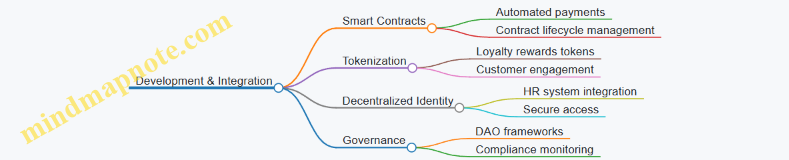
Example: Automated Vendor Payments
Smart contracts were deployed to release payments automatically upon delivery confirmation, reducing payment delays and manual errors.
Phase 3: Scaling and Optimization (Year 4-5)
- Objective: Scale Web3 applications enterprise-wide and optimize performance.
- Key Activities:
- Expanded blockchain supply chain solution to all product lines.
- Launched NFT-based exclusive customer experiences.
- Adopted decentralized storage for cross-departmental data sharing.
- Implemented advanced security audits and continuous monitoring.
Mind Map: Phase 3 Scaling

Example: NFT Customer Experience
The company created limited-edition NFTs that granted holders access to exclusive events and product previews, significantly boosting brand loyalty.
Lessons Learned & Best Practices
- Iterative Approach: Starting small with pilots allowed risk mitigation and learning.
- Cross-Functional Teams: Collaboration between IT, legal, compliance, and business units was critical.
- Regulatory Alignment: Early engagement with regulators ensured compliance and smoother adoption.
- User-Centric Design: Simplifying Web3 interfaces improved adoption among employees and customers.
Mind Map: Key Success Factors
Conclusion
This Fortune 500 company’s multi-year Web3 integration plan demonstrates how enterprises can strategically adopt Web3 technologies to create tangible business value. By combining careful planning, pilot testing, and phased scaling, they transformed complex blockchain innovations into practical solutions that enhanced transparency, automation, and customer engagement.
This case study serves as a blueprint for enterprise leaders and blockchain managers aiming to navigate the Web3 landscape with confidence and clarity.
10.5 Measuring Success: KPIs and Metrics for Web3 Initiatives
Measuring the success of Web3 initiatives within an enterprise is crucial to ensure that investments deliver tangible business value and align with strategic goals. Unlike traditional IT projects, Web3 projects often involve decentralized components, novel technologies, and evolving ecosystems, making the definition and tracking of KPIs (Key Performance Indicators) and metrics uniquely challenging.
Key Areas to Measure in Web3 Enterprise Initiatives
Web3 Success Metrics Mind Map
Business Impact Metrics
-
Revenue Growth from Web3 Products: Track incremental revenue generated by tokenized assets, NFT sales, or decentralized finance (DeFi) services.
Example: A real estate enterprise tokenizes properties and measures monthly revenue generated from fractional ownership trading.
-
Cost Reduction: Measure savings from automating processes with smart contracts, such as reduced manual reconciliation or lowered intermediaries’ fees.
Example: An insurance company quantifies cost savings after deploying smart contracts for claims processing.
-
New Market Penetration: Evaluate the number of new customers or regions accessed through decentralized platforms.
Example: A supply chain firm tracks new supplier registrations on its blockchain network.
Technology Performance Metrics
-
Transaction Throughput: Number of transactions processed per second or per day on the enterprise blockchain.
Example: A logistics company monitors throughput to ensure real-time tracking data updates.
-
Network Latency: Time taken for transactions or data to be confirmed on the blockchain.
Example: A financial services firm measures latency to guarantee timely settlement.
-
Smart Contract Execution Success Rate: Percentage of smart contracts executed without errors or failures.
Example: An enterprise tracks failed contract executions to identify bugs or vulnerabilities.
User Engagement Metrics
-
Active Users: Number of unique users interacting with Web3 applications daily, weekly, or monthly.
Example: A loyalty program using NFTs tracks active participants redeeming rewards.
-
User Retention: Percentage of users continuing to use the Web3 service over time.
Example: Tracking retention rates after onboarding employees to decentralized identity systems.
-
Onboarding Time: Average time taken for new users to complete registration and start using the platform.
Example: Measuring how quickly new partners join a decentralized supply chain network.
Security and Compliance Metrics
-
Number of Security Incidents: Count of breaches, exploits, or vulnerabilities detected.
Example: Monitoring incidents in smart contract audits or wallet management.
-
Audit Completion Rate: Percentage of smart contracts and systems audited within a given timeframe.
Example: Ensuring 100% of deployed contracts undergo third-party audits.
-
Regulatory Compliance Status: Tracking adherence to KYC/AML and data privacy regulations.
Example: Reporting compliance certifications for token offerings.
Ecosystem and Community Metrics
-
Number of Partners Integrated: Count of external organizations connected to the Web3 network.
Example: Measuring growth in suppliers joining a blockchain-based provenance system.
-
Developer Activity: Number of commits, pull requests, or active contributors on enterprise Web3 projects.
Example: Tracking developer engagement to assess platform vitality.
-
DAO Participation Rate: Percentage of stakeholders actively voting or proposing decisions in decentralized governance.
Example: Monitoring engagement in an enterprise DAO managing shared resources.
Example Mind Map: KPIs for a Web3 Supply Chain Initiative
Best Practices for Measuring Web3 Success
- Define Clear Objectives: Align KPIs with strategic business goals to avoid vanity metrics.
- Use Hybrid Metrics: Combine on-chain data (e.g., transaction counts) with off-chain business data (e.g., revenue impact).
- Automate Data Collection: Leverage blockchain explorers, APIs, and analytics tools for real-time monitoring.
- Benchmark and Iterate: Compare against industry standards and refine KPIs as technology and business evolve.
- Communicate Transparently: Share metrics with stakeholders to build trust and guide decision-making.
Conclusion
Measuring success in Web3 enterprise initiatives requires a multidimensional approach that captures business value, technical performance, user engagement, security, and ecosystem health. By establishing well-defined KPIs and continuously monitoring them through intuitive dashboards and mind maps, enterprise leaders and blockchain managers can move beyond hype and ensure their Web3 investments deliver measurable impact.
11. Conclusion: Moving Beyond Hype to Real Impact
11.1 Recap of Key Enterprise Use Cases and Best Practices
As we conclude our exploration of Web3 for enterprises, it’s essential to revisit the core use cases and best practices that can help organizations move beyond hype and realize tangible business value. This section summarizes the most impactful applications and actionable strategies, reinforced with illustrative examples and mind maps to clarify their relationships.
Mind Map: Overview of Enterprise Web3 Use Cases
Decentralized Identity (DID)
Use Case Recap: Enterprises can streamline identity verification and access control by implementing decentralized identity solutions. For example, a multinational corporation used self-sovereign identity to reduce onboarding time for remote employees while enhancing privacy.
Best Practice: Start with a pilot program focusing on a specific department or process. Ensure interoperability with existing identity management systems and comply with data privacy regulations.
Supply Chain Transparency and Provenance
Use Case Recap: Blockchain-enabled provenance allows companies to verify ethical sourcing and improve trust with consumers. A global retailer implemented a blockchain supply chain solution to track product origins, reducing counterfeit risks.
Best Practice: Combine blockchain with IoT sensors for real-time data capture. Design transparent, immutable records accessible to all stakeholders.
Tokenization of Assets and Enterprise Finance
Use Case Recap: Tokenizing assets like real estate enables fractional ownership and liquidity. An enterprise treasury team leveraged security tokens to diversify holdings and access decentralized finance (DeFi) protocols for liquidity management.
Best Practice: Engage legal and compliance teams early to structure tokens according to regulations. Use reputable token standards and platforms.
Smart Contracts for Business Automation
Use Case Recap: Automating vendor payments with conditional smart contracts reduced manual errors and accelerated settlement times for an insurance company processing claims.
Best Practice: Develop smart contracts with security audits and clear business logic. Use modular designs to allow upgrades and maintainability.
Decentralized Data Management and Collaboration
Use Case Recap: Cross-enterprise research collaborations benefited from decentralized storage solutions that preserved data privacy while enabling shared access.
Best Practice: Implement privacy-preserving protocols and ensure compliance with data protection laws. Integrate with existing enterprise data systems for seamless workflows.
Governance and Compliance
Use Case Recap: Enterprises experimenting with DAO structures improved transparency and stakeholder engagement. One company balanced decentralization with KYC/AML compliance by integrating identity verification into governance.
Best Practice: Define clear governance frameworks and use monitoring tools to audit activities. Maintain flexibility to adapt to regulatory changes.
Enhancing Customer Engagement
Use Case Recap: Brands launched NFT-based loyalty programs offering exclusive experiences, driving customer retention and new revenue streams.
Best Practice: Focus on user-friendly interfaces and education to encourage adoption. Integrate Web3 data with CRM for personalized marketing.
Security and Risk Management
Use Case Recap: Multi-signature wallets protected enterprise crypto assets, and regular smart contract audits prevented vulnerabilities.
Best Practice: Establish incident response plans specific to Web3 threats and foster a security-aware culture.
Mind Map: Best Practices for Web3 Enterprise Adoption

Summary Example: Integrated Use Case
Consider a multinational manufacturing company that implemented a Web3 solution combining decentralized identity for employee access, blockchain-based supply chain tracking, and smart contracts for automated vendor payments. By following best practices such as phased rollouts, security audits, and compliance checks, the company reduced operational costs by 15%, improved supply chain transparency, and enhanced stakeholder trust.
This recap highlights that successful Web3 enterprise adoption hinges on practical, well-structured implementations tailored to specific business needs. By leveraging these use cases and best practices, enterprise leaders and blockchain managers can confidently navigate the Web3 landscape to unlock real, measurable value.
11.2 Overcoming Common Barriers to Web3 Adoption
Enterprises eager to leverage Web3 technologies often face a variety of barriers that can slow or stall adoption. Understanding these challenges and applying strategic solutions is critical for successful integration. This section explores the most common barriers and provides actionable approaches to overcome them, supported by illustrative examples and mind maps.
Common Barriers to Web3 Adoption
Technical Complexity
Barrier: Web3 technologies often require integration with existing enterprise systems, which can be complex due to differing architectures and protocols. Additionally, scalability and performance concerns persist, and there is a shortage of professionals skilled in blockchain and decentralized technologies.
Overcoming Strategy:
- Incremental Integration: Start with pilot projects that integrate Web3 components with existing systems rather than full-scale replacements.
- Leverage Middleware and APIs: Use blockchain middleware platforms that abstract complexity and provide standardized APIs.
- Talent Development: Invest in training programs and partner with specialized vendors.
Example: A multinational logistics company began by integrating blockchain-based provenance tracking for a single product line. They used middleware to connect their ERP system with a permissioned blockchain network, enabling traceability without disrupting core operations.
Regulatory Uncertainty
Barrier: The regulatory landscape for Web3 remains fluid, with unclear guidelines around tokenization, data sovereignty, and decentralized governance.
Overcoming Strategy:
- Engage Legal Experts Early: Collaborate with legal teams specialized in blockchain regulations.
- Adopt Compliant Frameworks: Use established standards and frameworks that align with current regulations.
- Active Dialogue with Regulators: Participate in industry consortia and regulatory sandbox programs.
Example: A financial services enterprise launching a security token offering (STO) partnered with a legal firm to ensure compliance with SEC regulations and used a KYC/AML-compliant token issuance platform.
Security Concerns
Barrier: Smart contract bugs, vulnerabilities, and data privacy issues pose significant risks.
Overcoming Strategy:
- Rigorous Auditing: Conduct thorough smart contract audits using third-party security firms.
- Multi-Signature Wallets and Access Controls: Implement advanced security measures for asset management.
- Privacy-Preserving Technologies: Use zero-knowledge proofs and decentralized identity solutions.
Example: An insurance company automated claims processing with smart contracts but first engaged a cybersecurity firm to audit the contracts and deployed multi-signature wallets for fund disbursement.
Organizational Resistance
Barrier: Resistance to change, lack of understanding, and absence of leadership support can impede Web3 adoption.
Overcoming Strategy:
- Executive Education: Conduct workshops and briefings to align leadership on Web3 benefits.
- Change Management Programs: Develop structured plans to manage cultural shifts.
- Cross-Functional Teams: Create interdisciplinary teams to champion Web3 initiatives.
Example: A global manufacturing firm launched an internal Web3 innovation lab, involving executives, IT, and business units to foster collaboration and reduce resistance.
Cost and ROI Uncertainty
Barrier: High upfront costs and unclear return on investment deter enterprises from committing to Web3 projects.
Overcoming Strategy:
- Pilot and Proof of Concept (PoC): Start small to validate value before scaling.
- Clear KPIs: Define measurable success metrics aligned with business goals.
- Leverage Ecosystem Partnerships: Share costs and risks through consortiums or partnerships.
Example: A retail chain piloted a blockchain-based loyalty program in one region, tracking customer engagement and cost savings before rolling out enterprise-wide.
Summary Mind Map: Overcoming Barriers to Web3 Adoption
By proactively addressing these barriers with targeted strategies and real-world examples, enterprise leaders and blockchain managers can transform Web3 from a buzzword into a practical, value-driving technology within their organizations.
11.3 Actionable Steps for Enterprise Leaders and Blockchain Managers
To successfully harness Web3 technologies and move beyond hype, enterprise leaders and blockchain managers must adopt a structured, strategic approach. Below are actionable steps, supported by mind maps and practical examples, to guide your Web3 journey.
Step 1: Educate and Align Your Leadership Team
- Objective: Build a shared understanding of Web3’s potential and limitations.
- Actions:
- Organize workshops and webinars tailored to executives.
- Share real-world case studies relevant to your industry.
- Identify champions within departments to advocate for Web3 initiatives.
Mind Map:
Example: A multinational manufacturing company held a series of executive workshops featuring guest speakers from blockchain startups and showcased how decentralized identity improved their vendor onboarding process, resulting in leadership buy-in.
Step 2: Conduct a Web3 Readiness Assessment
- Objective: Evaluate current infrastructure, skills, and business processes for Web3 integration.
- Actions:
- Map existing workflows that could benefit from decentralization.
- Assess technical capabilities and skill gaps.
- Identify regulatory and compliance considerations.
Mind Map:
Example: A financial services firm mapped its cross-border payments process and discovered that smart contracts could automate compliance checks, reducing manual errors and processing time.
Step 3: Define Clear Use Cases with Measurable Outcomes
- Objective: Prioritize Web3 projects that deliver tangible business value.
- Actions:
- Select pilot projects aligned with strategic goals.
- Define KPIs such as cost reduction, transparency, or customer engagement.
- Develop success criteria and timelines.
Mind Map:
Example: An enterprise retailer launched a pilot blockchain project to track product provenance, aiming to reduce counterfeit goods by 30% within 12 months.
Step 4: Build Cross-Functional Teams and Partnerships
- Objective: Leverage diverse expertise and external innovation.
- Actions:
- Form teams including IT, legal, compliance, and business units.
- Collaborate with blockchain consortia and technology vendors.
- Engage with regulators early to ensure compliance.
Mind Map:
Example: A logistics company partnered with a blockchain consortium to co-develop a decentralized shipment tracking platform, combining internal expertise with external innovation.
Step 5: Develop and Deploy Pilot Projects with Agile Methodologies
- Objective: Iterate quickly, learn, and adapt.
- Actions:
- Use agile sprints to develop MVPs (Minimum Viable Products).
- Incorporate user feedback continuously.
- Monitor security and compliance rigorously.
Mind Map:
Example: An insurance firm developed a smart contract-based claims processing pilot in 3-month sprints, incorporating feedback from claims adjusters to refine automation rules.
Step 6: Measure, Document, and Scale Successful Initiatives
- Objective: Validate impact and expand Web3 adoption.
- Actions:
- Track KPIs and report outcomes to stakeholders.
- Document lessons learned and best practices.
- Plan phased scaling and integration with legacy systems.
Mind Map:
Example: After a successful pilot reducing vendor onboarding time by 40%, a global enterprise rolled out decentralized identity solutions across multiple regions, integrating with their HR and procurement systems.
Step 7: Foster a Culture of Continuous Learning and Innovation
- Objective: Stay ahead in the evolving Web3 landscape.
- Actions:
- Encourage ongoing training and certification.
- Participate in industry forums and hackathons.
- Allocate budget for experimentation and R&D.
Mind Map:
Example: A technology firm established a Web3 innovation lab, sponsoring employees to attend blockchain conferences and run internal hackathons to prototype new decentralized applications.
Summary Mind Map: Actionable Steps for Web3 Adoption
By following these actionable steps, enterprise leaders and blockchain managers can cut through the hype, build meaningful Web3 capabilities, and deliver measurable business impact.
11.4 Resources and Communities for Continued Learning
As enterprises embark on their Web3 journey, continuous learning and engagement with the broader ecosystem are critical to staying ahead of innovations, best practices, and regulatory changes. This section provides a curated list of valuable resources and communities, along with mind maps to help you navigate the complex Web3 landscape effectively.
Educational Platforms & Courses
- Coursera & edX: Offer blockchain and Web3 courses from top universities.
- Consensys Academy: Specialized blockchain developer and business courses.
- Blockchain Council: Certifications and training tailored for enterprise blockchain applications.
Industry Reports & Publications
- Gartner and Forrester: Regular reports on blockchain trends and enterprise adoption.
- CoinDesk and The Block: News, analysis, and deep dives into Web3 developments.
- World Economic Forum: Whitepapers on decentralized technologies and governance.
Developer Tools & Documentation
- Ethereum Foundation Docs: Comprehensive resources for smart contract development.
- Hyperledger Fabric Documentation: Guides for permissioned blockchain deployments.
- IPFS Docs: For decentralized storage solutions.
Communities & Forums
- r/ethereum and r/web3 on Reddit: Active discussions and Q&A.
- Web3 Foundation Discord: Developer and researcher community.
- Enterprise Ethereum Alliance (EEA): Collaboration platform for enterprises.
- Blockchain at Berkeley: University-led community with open resources.
Conferences & Meetups
- ETHGlobal Events: Hackathons and workshops.
- Consensus by CoinDesk: Major annual blockchain conference.
- Local Meetup Groups: Search via Meetup.com for region-specific Web3 groups.
Mind Map 1: Web3 Learning Ecosystem
Mind Map 2: Enterprise-Focused Web3 Resources
Example: How an Enterprise Blockchain Manager Can Use These Resources
- Step 1: Skill Building — Enroll in Consensys Academy’s “Blockchain for Business” course to understand smart contracts.
- Step 2: Stay Updated — Subscribe to CoinDesk newsletters and read Gartner’s quarterly blockchain reports.
- Step 3: Community Engagement — Join the Enterprise Ethereum Alliance to collaborate with peers and access shared resources.
- Step 4: Hands-On Practice — Participate in ETHGlobal hackathons to experiment with real Web3 projects.
- Step 5: Compliance & Security — Use OpenZeppelin’s tools and audits to ensure smart contract security.
By leveraging these resources and communities, enterprise leaders, blockchain managers, and business strategists can deepen their understanding, build practical skills, and foster collaborations that drive successful Web3 adoption beyond hype and into tangible business impact.
11.5 Final Thoughts: Embracing Web3 as a Strategic Business Enabler
As enterprises stand at the crossroads of digital transformation, Web3 emerges not just as a technological upgrade but as a fundamental shift in how businesses operate, collaborate, and create value. Moving beyond the hype requires a strategic mindset that embraces decentralization, transparency, and user empowerment as core principles.
Why Web3 is a Strategic Business Enabler
- Decentralization Enables Trust: By removing intermediaries and enabling peer-to-peer interactions, Web3 fosters trust and reduces friction in business processes.
- Enhanced Transparency: Immutable ledgers and open protocols provide unparalleled visibility, which is critical for compliance, auditing, and stakeholder confidence.
- New Business Models: Tokenization and decentralized finance open avenues for innovative revenue streams and customer engagement.
- Improved Security: Cryptographic techniques and decentralized architectures reduce single points of failure and enhance data integrity.
Mind Map: Core Strategic Advantages of Web3 for Enterprises
Example: Enterprise Supply Chain Transformation
A multinational food company implemented a blockchain-based provenance system to track products from farm to table. This not only increased consumer trust but also reduced recall times by 70%, showcasing how Web3 technologies can drive operational efficiency and brand value simultaneously.
Mind Map: Steps to Embrace Web3 Strategically
Practical Tips for Enterprise Leaders and Blockchain Managers
- Start Small but Think Big: Begin with pilot projects that demonstrate clear ROI but align with long-term strategic goals.
- Foster Cross-Department Collaboration: Web3 initiatives often span IT, legal, compliance, and business units—ensure alignment.
- Invest in Education: Equip teams with knowledge about blockchain, smart contracts, and decentralized governance.
- Engage with Ecosystems: Participate in industry consortia, developer communities, and standards bodies to stay ahead.
- Prioritize Security and Compliance: Integrate robust security audits and ensure adherence to evolving regulations.
Example: DAO for Enterprise Governance
A technology firm adopted a Decentralized Autonomous Organization (DAO) model for managing innovation funding. Employees could propose projects and vote transparently on resource allocation, increasing engagement and accelerating decision-making.
Final Reflection
Embracing Web3 is not merely about adopting new tools but about reimagining enterprise value creation in a decentralized digital economy. By strategically integrating Web3 technologies, enterprises can unlock new efficiencies, foster innovation, and build stronger relationships with customers and partners.
The journey requires vision, patience, and adaptability—but the payoff is a resilient, future-ready organization that thrives beyond hype and delivers real, measurable impact.