Electrochemical Process Engineering for Industry
1. Introduction to Electrochemical Process Engineering
1.1 Fundamentals of Electrochemistry: Principles and Terminology
Electrochemistry is the branch of chemistry that deals with the relationship between electrical energy and chemical changes. It plays a pivotal role in industrial processes such as electroplating, energy storage, corrosion prevention, and chemical synthesis.
Key Principles of Electrochemistry
- Redox Reactions: Electrochemical processes are based on oxidation-reduction (redox) reactions where electrons are transferred between species.
- Electrochemical Cells: Devices that convert chemical energy into electrical energy or vice versa.
- Electrodes: Conductive materials where oxidation (anode) and reduction (cathode) reactions occur.
- Electrolyte: Ionic medium that allows the flow of ions to maintain charge balance.
Essential Terminology
| Term | Definition | Industrial Example |
|---|---|---|
| Anode | Electrode where oxidation occurs (loss of electrons). | Chlorine generation in chlor-alkali process |
| Cathode | Electrode where reduction occurs (gain of electrons). | Hydrogen evolution in water electrolysis |
| Electrode Potential | The voltage developed at an electrode relative to a reference electrode. | Measuring corrosion potential on steel pipelines |
| Electrolyte | Ionic conductor facilitating ion transport between electrodes. | Sulfuric acid in lead-acid batteries |
| Faraday’s Law | Relates amount of substance transformed to the quantity of electricity passed. | Calculating metal deposition thickness in plating |
Mind Map: Core Concepts of Electrochemistry
Example 1: Simple Galvanic Cell
Consider a zinc-copper galvanic cell:
- Anode Reaction: Zn → Zn²⁺ + 2e⁻ (oxidation)
- Cathode Reaction: Cu²⁺ + 2e⁻ → Cu (reduction)
This cell converts chemical energy into electrical energy, powering devices like sensors.
Mind Map: Galvanic Cell Components
Example 2: Electrolytic Cell in Industrial Electroplating
In electroplating, an external power source drives a non-spontaneous reaction:
- Cathode: Object to be plated (e.g., steel) receives metal ions.
- Anode: Metal source dissolves to replenish ions.
This process improves corrosion resistance and surface properties.
Mind Map: Electrolytic Cell in Electroplating
Summary of Best Practices in Fundamentals
- Material Selection: Choose electrodes and electrolytes compatible with the intended redox reactions to maximize efficiency.
- Understanding Cell Types: Distinguish between galvanic and electrolytic cells to apply correct process control.
- Monitoring Potentials: Use reference electrodes and measure electrode potentials to ensure process stability.
By mastering these fundamentals, process engineers and plant managers can design and optimize electrochemical systems effectively, ensuring reliable and efficient industrial operations.
1.2 Overview of Industrial Electrochemical Processes
Electrochemical processes have become integral to numerous industrial applications due to their ability to drive chemical transformations using electrical energy. These processes offer advantages such as high selectivity, energy efficiency, and the potential for sustainable operation when coupled with renewable electricity sources.
Key Industrial Electrochemical Processes
- Electrolysis: The decomposition of compounds by passing an electric current, widely used for producing elements and compounds.
- Electroplating: Deposition of a metal coating on a substrate for corrosion resistance, aesthetics, or functional purposes.
- Electrosynthesis: Electrochemical synthesis of organic and inorganic compounds.
- Electrowinning: Extraction of metals from ores or solutions.
- Electrochemical Waste Treatment: Removal or transformation of pollutants in wastewater.
Mind Map: Industrial Electrochemical Processes
Examples of Industrial Electrochemical Processes
Chlor-Alkali Process
One of the largest-scale electrochemical processes, the chlor-alkali process, involves the electrolysis of brine (saltwater) to produce chlorine gas, hydrogen gas, and sodium hydroxide (caustic soda). This process is essential for manufacturing PVC, paper, and many other chemicals.
Best Practice Example:
- Using membrane cells instead of mercury or diaphragm cells reduces environmental impact and improves product purity.
Water Electrolysis for Hydrogen Production
Water electrolysis splits water into hydrogen and oxygen gases. Hydrogen produced this way is considered green if powered by renewable energy and is critical for fuel cells and clean energy initiatives.
Best Practice Example:
- Employing proton exchange membrane (PEM) electrolyzers for higher efficiency and faster response times in dynamic renewable energy environments.
Electroplating in Automotive Industry
Electroplating is used extensively to coat automotive parts with metals like chromium or nickel to enhance corrosion resistance and aesthetic appeal.
Best Practice Example:
- Implementing pulse plating techniques to improve coating uniformity and reduce internal stresses.
Electrowinning in Metal Recovery
Electrowinning recovers metals such as copper from leach solutions in mining operations, enabling efficient metal extraction with lower environmental footprint.
Best Practice Example:
- Optimizing current density and electrolyte composition to maximize metal recovery rates and minimize energy consumption.
Electrochemical Wastewater Treatment
Electrochemical oxidation can degrade organic pollutants and remove heavy metals from industrial wastewater streams.
Best Practice Example:
- Integrating electrochemical treatment with biological processes to enhance overall treatment efficiency and reduce sludge production.
Summary
Industrial electrochemical processes encompass a broad range of applications critical to chemical manufacturing, metal recovery, environmental protection, and energy production. Understanding these processes and their best practices enables process engineers and plant managers to optimize performance, reduce costs, and improve sustainability.
1.3 Importance of Electrochemical Engineering in Modern Industry
Electrochemical engineering plays a pivotal role in modern industry by enabling sustainable, efficient, and innovative processes that are essential for energy production, chemical synthesis, environmental management, and materials manufacturing. Its importance stems from the ability to directly convert electrical energy into chemical energy and vice versa, offering unique advantages over traditional thermal or mechanical processes.
Key Reasons Why Electrochemical Engineering is Crucial:
-
Sustainability and Green Chemistry
- Enables clean energy technologies such as hydrogen production and fuel cells.
- Facilitates waste minimization through electrochemical wastewater treatment.
-
Energy Efficiency
- Direct electron transfer reduces energy losses compared to indirect chemical routes.
- Allows precise control over reaction pathways and selectivity.
-
Versatility and Innovation
- Applicable across diverse industries: chemicals, pharmaceuticals, metallurgy, and environmental engineering.
- Supports emerging technologies like CO2 reduction and electro-organic synthesis.
-
Scalability and Integration
- Modular electrochemical reactors can be scaled from lab to industrial scale.
- Easily integrated with renewable energy sources, promoting decentralized production.
Mind Map: Importance of Electrochemical Engineering
Practical Examples Demonstrating Importance
Hydrogen Production via Water Electrolysis
Electrochemical engineering enables the production of green hydrogen by splitting water using renewable electricity. This process is critical for decarbonizing sectors like transportation and industry.
- Best Practice: Optimizing electrode materials and cell design to reduce overpotentials and increase efficiency.
- Example: Proton exchange membrane (PEM) electrolyzers in industrial plants producing hydrogen for fuel cell vehicles.
Electrochemical Wastewater Treatment
Industries use electrochemical processes to degrade pollutants and recover valuable metals from wastewater streams.
- Best Practice: Implementing continuous flow electrochemical reactors to enhance treatment rates.
- Example: Textile industry applying electrochemical oxidation to remove dyes and organic contaminants.
Chlor-Alkali Process
A classic industrial electrochemical process producing chlorine and caustic soda, essential chemicals for various manufacturing sectors.
- Best Practice: Employing membrane cells to improve energy efficiency and reduce environmental impact.
- Example: Large-scale chlor-alkali plants worldwide using advanced electrochemical cells for sustainable production.
Mind Map: Industrial Examples of Electrochemical Engineering
Summary
Electrochemical engineering is indispensable in modern industry due to its ability to drive sustainable, efficient, and innovative processes. From clean energy generation to environmental remediation and chemical manufacturing, its applications continue to expand, making it a cornerstone technology for future industrial development.
1.4 Key Components of Electrochemical Systems: Electrodes, Electrolytes, and Cells
Electrochemical systems are the backbone of many industrial processes, ranging from energy storage to chemical synthesis. Understanding the key components — electrodes, electrolytes, and cells — is essential for process engineers, plant managers, and R&D scientists aiming to optimize performance and reliability.
Electrodes
Electrodes are conductive materials where oxidation and reduction reactions occur. Their properties directly influence reaction rates, selectivity, and durability.
-
Types of Electrodes:
- Anode: Site of oxidation.
- Cathode: Site of reduction.
-
Material Examples:
- Metals: Platinum, Nickel, Stainless Steel
- Carbon-based: Graphite, Carbon Felt
- Alloys: Titanium coated with mixed metal oxides (used in chlor-alkali cells)
-
Best Practice Example: In chlor-alkali production, dimensionally stable anodes (DSA) made of titanium coated with ruthenium oxide provide excellent corrosion resistance and catalytic activity, improving cell longevity and efficiency.
Electrolytes
Electrolytes are ionic conductors that facilitate charge transport between electrodes.
-
Types:
- Aqueous Solutions: e.g., sulfuric acid in lead-acid batteries
- Non-Aqueous Solutions: e.g., organic solvents with lithium salts in lithium-ion batteries
- Solid-State Electrolytes: e.g., ceramic or polymer electrolytes
-
Key Properties:
- Ionic conductivity
- Chemical stability
- Compatibility with electrodes
-
Best Practice Example: In electroplating, maintaining electrolyte purity and pH ensures uniform metal deposition and prevents defects.
Electrochemical Cells
An electrochemical cell is the assembly where electrodes and electrolyte interact to enable electrochemical reactions.
-
Cell Types:
- Galvanic (Voltaic) Cells: Generate electrical energy from spontaneous reactions.
- Electrolytic Cells: Use electrical energy to drive non-spontaneous reactions.
-
Configurations:
- Batch Cells: Suitable for small-scale or intermittent processes.
- Flow Cells: Continuous operation with electrolyte flow, common in industrial settings.
-
Best Practice Example: Flow cells in wastewater treatment enable continuous degradation of contaminants with improved mass transport and scalability.
Mind Maps
Mind Map 1: Electrodes
Mind Map 2: Electrolytes
Mind Map 3: Electrochemical Cells
Integrated Example: Electrochemical Chlor-Alkali Process
- Electrodes: Titanium-based dimensionally stable anodes coated with ruthenium oxide for chlorine evolution.
- Electrolyte: Concentrated brine (sodium chloride solution) with controlled purity.
- Cell: Membrane electrolytic cell with continuous flow to separate chlorine and hydrogen gases safely.
This example demonstrates how electrode material selection, electrolyte management, and cell design integrate to optimize industrial electrochemical performance.
Summary
Understanding the interplay between electrodes, electrolytes, and cells is crucial for designing efficient and robust electrochemical processes. Applying best practices such as selecting corrosion-resistant electrodes, maintaining electrolyte purity, and choosing the appropriate cell configuration can significantly enhance process outcomes.
1.5 Best Practices: Selecting Materials for Electrochemical Reactors with Real-World Examples
Selecting the right materials for electrochemical reactors is critical to ensure efficiency, durability, and safety in industrial applications. This section explores the best practices for material selection, supported by real-world examples and mind maps to visualize the decision-making process.
Key Considerations in Material Selection
- Chemical Compatibility: Materials must resist corrosion and degradation in the electrolyte and reactant environment.
- Electrical Conductivity: Electrode materials require high conductivity to minimize energy losses.
- Mechanical Strength: Reactors often operate under pressure and temperature; materials must withstand these conditions.
- Cost and Availability: Economic feasibility is essential for industrial scale-up.
- Environmental Impact: Sustainable and recyclable materials are preferred.
Mind Map: Material Selection Criteria for Electrochemical Reactors
Electrode Materials
-
Graphite and Carbon-Based Electrodes
- Widely used due to good conductivity and chemical inertness.
- Example: In chlor-alkali industry, graphite electrodes provide stable performance in harsh alkaline environments.
-
Platinum and Noble Metals
- Excellent catalytic activity and corrosion resistance.
- Example: Platinum electrodes in PEM electrolyzers for hydrogen production.
-
Metal Alloys
- Tailored alloys like titanium coated with mixed metal oxides (MMO) offer durability.
- Example: MMO-coated titanium anodes in wastewater treatment plants.
Mind Map: Electrode Material Options
Reactor Body Materials
-
Stainless Steel
- Common for reactor shells due to strength and moderate corrosion resistance.
- Example: Stainless steel reactors in electrochemical synthesis of fine chemicals.
-
Polymers (e.g., PTFE, PVC)
- Used for lining or components exposed to aggressive chemicals.
- Example: PTFE-lined reactors in electroplating industries to prevent corrosion.
-
Ceramics and Glass
- Employed in specialized applications requiring high chemical resistance.
- Example: Glass-lined reactors for electrochemical oxidation processes.
Mind Map: Reactor Body Material Choices
Real-World Example 1: Chlor-Alkali Electrolyzer
- Context: Production of chlorine and caustic soda using brine electrolysis.
- Material Selection: Titanium anodes coated with MMO for corrosion resistance and conductivity; stainless steel cathodes.
- Outcome: Enhanced durability and reduced maintenance costs.
Real-World Example 2: PEM Electrolyzer for Hydrogen Production
- Context: Clean hydrogen generation using proton exchange membrane technology.
- Material Selection: Platinum and iridium catalysts on carbon supports for electrodes; polymer membrane as electrolyte.
- Outcome: High efficiency and long operational life under acidic conditions.
Real-World Example 3: Electrochemical Wastewater Treatment
- Context: Removal of organic pollutants via anodic oxidation.
- Material Selection: Boron-doped diamond (BDD) electrodes for high overpotential and chemical inertness; PTFE-lined reactor vessels.
- Outcome: Effective pollutant degradation with minimal electrode fouling.
Summary of Best Practices
- Conduct thorough chemical compatibility testing before material selection.
- Prioritize materials with proven industrial track records.
- Balance performance with cost and environmental impact.
- Use coatings and surface modifications to enhance base material properties.
- Continuously monitor material performance and plan for maintenance or replacement.
By following these best practices and learning from industrial examples, process engineers and plant managers can optimize electrochemical reactor design for improved performance and longevity.
2. Electrochemical Cell Design and Configuration
2.1 Types of Electrochemical Cells: Galvanic vs. Electrolytic
Electrochemical cells are fundamental units in electrochemical process engineering, converting chemical energy into electrical energy or vice versa. Understanding the two primary types—Galvanic (Voltaic) cells and Electrolytic cells—is essential for process engineers and plant managers to design, optimize, and troubleshoot industrial applications.
Overview
| Feature | Galvanic Cell | Electrolytic Cell |
|---|---|---|
| Energy Conversion | Chemical energy → Electrical energy | Electrical energy → Chemical energy |
| Spontaneity | Spontaneous reaction | Non-spontaneous reaction |
| External Power Source | Not required | Required |
| Common Applications | Batteries, Fuel cells | Electroplating, Electrolysis |
Galvanic Cells
Galvanic cells generate electrical energy from spontaneous redox reactions. They are widely used in batteries and fuel cells.
Industrial Example: Zinc-Copper Daniell Cell
- Setup: Zinc anode and copper cathode immersed in their respective sulfate solutions.
- Reaction: Zinc oxidizes releasing electrons; copper ions reduce by gaining electrons.
- Application: Early battery designs; concept extended to modern batteries.
Best Practice: Material Selection for Electrodes
- Use corrosion-resistant materials to maximize lifespan.
- Example: In industrial fuel cells, platinum-based catalysts improve reaction rates and durability.
Mind Map: Galvanic Cell Components and Principles
Electrolytic Cells
Electrolytic cells consume electrical energy to drive non-spontaneous chemical reactions, essential in processes like electroplating, metal refining, and water splitting.
Industrial Example: Electrolysis of Water for Hydrogen Production
- Setup: Two electrodes submerged in water with electrolyte (e.g., KOH).
- Reaction: Electrical energy splits water into hydrogen and oxygen gases.
- Application: Green hydrogen production for energy storage and fuel.
Best Practice: Optimizing Operating Conditions
- Control voltage to minimize energy consumption while ensuring reaction completion.
- Use suitable electrolyte concentration to enhance conductivity.
Mind Map: Electrolytic Cell Operation
Comparative Examples in Industry
| Application | Cell Type | Example Use Case |
|---|---|---|
| Battery (e.g., Li-ion) | Galvanic Cell | Portable electronics, electric vehicles |
| Electroplating | Electrolytic Cell | Coating metals to improve corrosion resistance |
| Chlor-Alkali Process | Electrolytic Cell | Production of chlorine and sodium hydroxide |
| Fuel Cells | Galvanic Cell | Clean energy generation for vehicles and power |
Integrated Best Practice Example
Case Study: Scaling Up Electrolytic Hydrogen Production
- Challenge: Efficiently producing hydrogen at industrial scale.
- Approach: Optimize electrolytic cell design by selecting durable electrode materials (e.g., nickel-based alloys), controlling electrolyte concentration, and implementing real-time monitoring of voltage and current.
- Outcome: Improved energy efficiency and reduced operational costs.
Summary
Understanding the fundamental differences between galvanic and electrolytic cells enables process engineers to select appropriate technologies and optimize electrochemical processes for industrial applications. Incorporating best practices such as material selection, operating condition optimization, and real-world examples ensures robust and efficient system design.
2.2 Cell Geometry and Its Impact on Performance
Electrochemical cell geometry plays a pivotal role in determining the efficiency, selectivity, and scalability of industrial electrochemical processes. The spatial arrangement of electrodes, the distance between them, and the overall shape of the cell influence mass transport, current distribution, and heat management.
Key Geometrical Parameters
- Electrode Surface Area: Larger surface areas typically enhance reaction rates by providing more active sites.
- Inter-Electrode Distance: Affects ohmic resistance and mass transport; shorter distances reduce resistance but may cause cross-contamination.
- Cell Volume and Shape: Influences flow dynamics and scalability.
- Flow Path Design: Determines how electrolytes and reactants move through the cell.
Mind Map: Factors of Cell Geometry Affecting Performance
Impact of Electrode Arrangement
- Parallel Plate Cells: Common in chlor-alkali industry; provide uniform current distribution and easy scale-up.
- Tubular Cells: Used in wastewater treatment; allow radial flow and better surface-to-volume ratio.
- Mesh/Grid Electrodes: Increase turbulence and mass transfer.
Example: In a chlor-alkali plant, parallel plate geometry with a narrow inter-electrode gap (~2-3 mm) minimizes electrical resistance, improving energy efficiency.
Inter-Electrode Distance and Ohmic Losses
Reducing the distance between electrodes decreases the resistance of the electrolyte path, lowering energy consumption. However, too narrow a gap can cause issues like electrode shorting or unwanted side reactions.
Example: In hydrogen production via water electrolysis, optimizing the gap to balance resistance and gas bubble removal is critical. A 1-2 mm gap is often ideal.
Flow Path and Cell Shape Influence on Mass Transport
Flow design affects how reactants and products move, impacting reaction rates and selectivity.
- Batch Cells: Simple but limited in scalability.
- Flow-Through Cells: Electrolyte passes through porous electrodes, enhancing mass transfer.
- Flow-By Cells: Electrolyte flows alongside electrodes, common in fuel cells.
Example: In electrochemical wastewater treatment, flow-through cells with 3D porous electrodes improve pollutant degradation by maximizing contact.
Mind Map: Performance Outcomes Related to Geometry
Best Practices and Industrial Examples
-
Optimize Electrode Surface Area: Use 3D or porous electrodes to increase active sites without increasing cell size.
- Example: Porous carbon electrodes in electrochemical synthesis improve yield by enhancing surface area.
-
Balance Inter-Electrode Distance: Minimize ohmic losses while preventing cross-contamination.
- Example: Electrolyzers for green hydrogen use optimized narrow gaps to reduce power consumption.
-
Design Flow Paths for Uniform Distribution: Avoid dead zones to ensure consistent reaction rates.
- Example: Flow-by cells in fuel cells use serpentine channels to distribute gases evenly.
-
Consider Scalability: Modular rectangular cells allow easier scale-up compared to complex geometries.
- Example: Chlor-alkali plants use modular parallel plate cells for flexible capacity expansion.
Summary
Cell geometry is a foundational design aspect that directly impacts electrochemical process performance. By carefully selecting and optimizing electrode arrangement, inter-electrode distance, flow path, and overall cell shape, engineers can significantly improve efficiency, selectivity, and scalability of industrial electrochemical systems.
2.3 Electrode Design: Surface Area, Porosity, and Conductivity
Electrode design is a cornerstone of electrochemical process engineering, as it directly influences the efficiency, selectivity, and durability of the electrochemical reaction. In this section, we will explore three critical aspects of electrode design: surface area, porosity, and conductivity. Each of these parameters plays a pivotal role in determining the performance of industrial electrochemical cells.
Surface Area
Importance:
- A larger electrode surface area provides more active sites for electrochemical reactions, enhancing reaction rates.
- It improves current distribution and reduces localized overpotentials.
Design Considerations:
- Use of high surface area materials such as porous carbon, metal foams, or nanostructured coatings.
- Balancing surface area with mechanical stability.
Example: In chlor-alkali electrolysis, titanium mesh electrodes coated with ruthenium oxide are used. The mesh structure increases the effective surface area, improving chlorine production efficiency.
Porosity
Importance:
- Porosity affects mass transport of reactants and products to and from the electrode surface.
- High porosity can facilitate better diffusion but may reduce mechanical strength.
Types of Porosity:
- Micropores (<2 nm): Increase surface area but may limit mass transport.
- Mesopores (2-50 nm): Balance between surface area and transport.
- Macropores (>50 nm): Enhance fluid flow and reduce diffusion limitations.
Example: In fuel cells, porous carbon electrodes with hierarchical pore structures enable efficient gas diffusion and water management, improving overall cell performance.
Conductivity
Importance:
- High electrical conductivity minimizes resistive losses and improves energy efficiency.
- Conductivity must be maintained throughout the electrode, including any coatings or modifications.
Materials:
- Metals like platinum, gold, and titanium offer excellent conductivity.
- Carbon-based materials (graphite, carbon nanotubes) provide good conductivity with chemical stability.
Example: In electrochemical synthesis of fine chemicals, graphite felt electrodes are favored for their high conductivity and chemical inertness.
Integrated Mind Map: Electrode Design Factors
Best Practice Example: Optimizing Electrode Design for Industrial Electrolysis
Context: A chemical plant aims to improve the efficiency of its electrolysis process for hydrogen production.
Approach:
- Replace flat metal electrodes with 3D porous nickel foam to increase surface area.
- Engineer pore size distribution to optimize reactant flow and product removal.
- Ensure the nickel foam has high conductivity and is coated with a thin catalyst layer to improve activity.
Outcome:
- Increased hydrogen production rate by 25%.
- Reduced energy consumption due to lower overpotentials.
- Improved electrode lifespan through better mechanical stability.
Additional Mind Map: Practical Considerations in Electrode Design
Summary
Electrode design in industrial electrochemical processes requires a careful balance of surface area, porosity, and conductivity. By increasing surface area and optimizing porosity, engineers can enhance reaction rates and mass transport. Maintaining high conductivity ensures energy efficiency. Real-world examples such as titanium mesh electrodes in chlor-alkali plants and porous carbon electrodes in fuel cells illustrate these principles in action. Integrating these design factors with practical considerations leads to robust, efficient, and scalable electrochemical systems.
2.4 Flow Cell vs. Batch Cell Configurations: Industrial Applications
Electrochemical reactors are fundamental units in electrochemical process engineering, and their configuration significantly impacts process efficiency, scalability, and operational control. Two primary configurations dominate industrial applications: Flow Cells and Batch Cells. Understanding their differences, advantages, limitations, and typical use cases is essential for process engineers and plant managers to select the most suitable system for their specific applications.
Overview of Flow Cell and Batch Cell Configurations
| Feature | Flow Cell | Batch Cell |
|---|---|---|
| Operation Mode | Continuous flow of electrolyte/reactants | Static volume of electrolyte/reactants |
| Scale-up | Easier via modular stacking and scaling | Limited by tank size and mixing efficiency |
| Control | Precise control over residence time and conditions | Less precise, depends on mixing and batch time |
| Typical Applications | Large-scale production, continuous processes | Small to medium scale, flexible or R&D applications |
Mind Map: Flow Cell Configuration
Mind Map: Batch Cell Configuration
Detailed Comparison with Industrial Examples
Flow Cell
Best Practice: Use flow cells when continuous production and precise control over reaction parameters are critical.
-
Example 1: Chlor-Alkali Industry
- Uses membrane-based flow cells to continuously produce chlorine, hydrogen, and sodium hydroxide.
- Advantages include high current efficiency and continuous operation.
-
Example 2: Water Electrolysis for Hydrogen Generation
- Proton Exchange Membrane (PEM) electrolyzers operate as flow cells.
- Continuous feed of water and removal of gases optimize efficiency.
-
Example 3: Electrochemical CO2 Reduction
- Flow cells allow continuous CO2 feed and product removal, improving conversion rates.
Batch Cell
Best Practice: Employ batch cells for flexible, small-scale production or when reaction times vary significantly.
-
Example 1: Electroplating
- Metals are deposited on substrates in batch tanks.
- Allows for easy changeover between products and cleaning.
-
Example 2: Fine Chemical Synthesis
- Specialty chemicals synthesized in batch reactors where reaction conditions are tightly controlled.
-
Example 3: Wastewater Treatment
- Batch electrochemical reactors treat contaminated water in discrete volumes, allowing for tailored treatment cycles.
Selecting Between Flow and Batch Cells: Key Considerations
- Production Scale: Flow cells suit large-scale continuous production; batch cells fit smaller or variable-scale needs.
- Process Control: Flow cells enable steady-state operation and better parameter control.
- Flexibility: Batch cells offer operational flexibility and easier maintenance.
- Cost and Complexity: Batch systems are generally simpler and less costly to implement initially.
- Product Type: Continuous commodity chemicals favor flow cells; specialty chemicals and treatments often use batch cells.
Summary Table
| Aspect | Flow Cell | Batch Cell |
|---|---|---|
| Operation | Continuous | Discrete (batch) |
| Control | High precision | Moderate precision |
| Scale-up | Modular, scalable | Limited by tank size |
| Maintenance | More complex | Simpler |
| Typical Use Cases | Chlor-alkali, hydrogen production | Electroplating, fine chemicals |
Final Best Practice Tips
- Pilot Testing: Always pilot test both configurations when possible to evaluate performance under realistic conditions.
- Hybrid Approaches: Consider hybrid systems combining batch and flow features for unique process requirements.
- Process Integration: Integrate flow cells with upstream/downstream continuous processes for seamless operation.
- Monitoring: Implement real-time monitoring to optimize flow rates and batch times.
By carefully evaluating these factors and learning from industrial examples, process engineers can make informed decisions to optimize electrochemical reactor design for their specific industrial applications.
2.5 Best Practices: Optimizing Cell Design for Scale-Up with Case Studies
Scaling up electrochemical cells from lab-scale prototypes to industrial-scale reactors is a critical step that requires careful consideration of design parameters to maintain performance, efficiency, and reliability. This section covers best practices for optimizing cell design during scale-up, supported by practical examples and mind maps to visualize key concepts.
Key Considerations for Scale-Up
- Maintaining Current Density: Ensuring uniform current distribution to avoid hotspots and uneven reaction rates.
- Mass Transport Optimization: Enhancing reactant supply and product removal to prevent concentration polarization.
- Thermal Management: Controlling temperature to maintain reaction kinetics and prevent degradation.
- Mechanical Stability: Designing robust cells that withstand industrial operating conditions.
- Cost Efficiency: Balancing material costs with performance gains.
Mind Map: Factors Influencing Cell Design Scale-Up
Best Practices
Modular Cell Design
Practice: Use modular units that can be replicated and connected in series or parallel to achieve desired capacity.
Example: A chlor-alkali plant scaled up production by designing standardized electrolysis modules. Each module maintained optimal current density and temperature control, allowing easy maintenance and flexible capacity expansion.
Optimizing Electrode Spacing and Geometry
Practice: Maintain optimal electrode gap to balance electrical resistance and mass transport.
Example: In a hydrogen production electrolyzer, reducing electrode spacing from 5 mm to 2 mm decreased ohmic losses, improving energy efficiency without compromising flow dynamics.
Enhanced Flow Management
Practice: Implement flow channels and turbulence promoters to improve electrolyte circulation and reduce concentration gradients.
Example: An industrial wastewater treatment plant introduced serpentine flow channels in the electrochemical cell, increasing pollutant degradation rates by 30% due to improved mass transfer.
Thermal Control Systems
Practice: Integrate cooling jackets or heat exchangers to maintain stable operating temperatures.
Example: A battery recycling facility incorporated water-cooled cell housings, preventing overheating during high-current operations and extending electrode life.
Material Selection for Durability
Practice: Choose corrosion-resistant materials for cell components exposed to harsh electrolytes.
Example: Switching from stainless steel to titanium-coated electrodes in a chlorine production cell improved lifespan from 6 months to over 2 years.
Case Study 1: Scale-Up of Electrochemical CO2 Reduction Reactor
Background: A pilot-scale electrochemical reactor converting CO2 to formic acid was scaled to industrial size.
Challenges: Maintaining uniform current distribution and preventing mass transport limitations.
Approach:
- Adopted a flow-by cell design with optimized electrode spacing.
- Used computational fluid dynamics (CFD) to design electrolyte flow channels.
- Implemented modular stack design for easy scale-up.
Outcome: Achieved 85% Faradaic efficiency at industrial scale, with stable operation over 1000 hours.
Case Study 2: Industrial Electrolytic Production of Sodium Hypochlorite
Background: A chemical plant needed to increase sodium hypochlorite production by scaling up electrochemical cells.
Challenges: Heat buildup and uneven current distribution causing reduced efficiency.
Approach:
- Redesigned cell geometry to include cooling channels.
- Introduced turbulence promoters to improve electrolyte mixing.
- Standardized cell modules for parallel operation.
Outcome: Energy consumption reduced by 12%, and production capacity doubled without loss of product quality.
Summary Mind Map: Optimizing Cell Design for Scale-Up
By integrating these best practices into the design and scale-up process, process engineers and plant managers can ensure that electrochemical cells perform efficiently and reliably at industrial scales, reducing downtime and operational costs while maximizing output.
3. Electrochemical Reaction Engineering
3.1 Reaction Mechanisms in Electrochemical Systems
Electrochemical reactions are fundamental to many industrial processes, involving the transfer of electrons between species at the interface of an electrode and an electrolyte. Understanding the reaction mechanisms is crucial for optimizing efficiency, selectivity, and stability in electrochemical systems.
Key Concepts in Electrochemical Reaction Mechanisms
- Electron Transfer: The core step where electrons move from the electrode to a reactant (reduction) or from a reactant to the electrode (oxidation).
- Charge Transfer Kinetics: Rate at which electron transfer occurs, often described by the Butler-Volmer equation.
- Mass Transport: Movement of reactants/products to/from the electrode surface via diffusion, convection, or migration.
- Adsorption/Desorption: Reactants or intermediates may adsorb onto the electrode surface, influencing reaction pathways.
- Chemical Steps: Follow-up chemical reactions that may occur after electron transfer, such as bond breaking or formation.
Mind Map: Overview of Electrochemical Reaction Mechanisms
Types of Electrochemical Reaction Mechanisms
-
Outer-Sphere Electron Transfer
- Electron transfer occurs without forming or breaking chemical bonds between the electrode and reactant.
- Example: Reduction of ferricyanide [Fe(CN)6]3- to ferrocyanide [Fe(CN)6]4-.
-
Inner-Sphere Electron Transfer
- Involves a chemical bond or bridge between the electrode and reactant during electron transfer.
- Example: Reduction of metal complexes where a ligand bridges the electrode and reactant.
-
Electrocatalytic Mechanisms
- Electron transfer coupled with catalytic surface reactions.
- Example: Oxygen reduction reaction (ORR) on platinum electrodes.
Mind Map: Types of Electron Transfer Mechanisms
Example 1: Ferricyanide/Ferrocyanide Redox Couple (Outer-Sphere)
- Reaction: [Fe(CN)6]3- + e- ⇌ [Fe(CN)6]4-
- Mechanism: Electron transfers directly without breaking the Fe-CN bonds.
- Industrial Relevance: Used as a redox mediator in electrochemical sensors and flow batteries.
- Best Practice: Maintain clean electrode surfaces to ensure reproducible electron transfer kinetics.
Example 2: Oxygen Reduction Reaction (ORR) on Platinum (Electrocatalytic)
- Reaction: O2 + 4H+ + 4e- → 2H2O
- Mechanism: Multi-step involving adsorption of O2, electron transfer, bond breaking, and protonation.
- Industrial Relevance: Critical in fuel cells and metal-air batteries.
- Best Practice: Optimize catalyst surface structure and operating conditions to enhance selectivity and reduce overpotential.
Mind Map: Oxygen Reduction Reaction Mechanism
Best Practices for Understanding and Optimizing Reaction Mechanisms
- Use Electrochemical Techniques: Cyclic voltammetry, chronoamperometry, and impedance spectroscopy to probe kinetics and mechanisms.
- Surface Characterization: Employ spectroscopy (e.g., XPS, FTIR) to identify adsorbed species and intermediates.
- Modeling and Simulation: Use computational chemistry and reaction modeling to predict pathways and rate-limiting steps.
- Example: In the chlor-alkali process, understanding the competing oxygen evolution reaction (OER) helps optimize electrode materials to favor chlorine production.
Summary
Understanding reaction mechanisms in electrochemical systems enables process engineers and R&D scientists to tailor materials, operating conditions, and reactor designs for enhanced performance. Through combining experimental techniques, modeling, and real-world examples, best practices emerge that drive industrial innovation and efficiency.
3.2 Kinetics and Mass Transport Phenomena
Understanding the interplay between kinetics and mass transport phenomena is crucial for optimizing electrochemical processes in industrial applications. This section delves into the fundamental concepts, practical implications, and real-world examples to help process engineers, plant managers, and R&D scientists enhance reactor performance and efficiency.
Electrochemical Kinetics: Basics
Electrochemical kinetics describes the rate at which electrochemical reactions occur at the electrode-electrolyte interface. It is governed by the transfer of electrons and the chemical transformations of reactants and products.
-
Key Parameters:
- Exchange current density (i₀)
- Overpotential (η)
- Tafel slope
- Reaction order
-
Butler-Volmer Equation: \[ i = i_0 \left[ e^{\frac{\alpha n F \eta}{RT}} - e^{-\frac{(1-\alpha) n F \eta}{RT}} \right] \] where:
- i = current density
- α = charge transfer coefficient
- n = number of electrons transferred
- F = Faraday constant
- R = gas constant
- T = temperature
Mind Map: Electrochemical Kinetics
Mass Transport Phenomena
Mass transport refers to the movement of species (reactants/products) to and from the electrode surface. It includes:
- Diffusion: Movement due to concentration gradients.
- Migration: Movement under electric fields.
- Convection: Movement due to fluid flow.
In many industrial electrochemical cells, convection and diffusion dominate.
Mind Map: Mass Transport Phenomena
Coupling Kinetics and Mass Transport
In practical systems, the observed current density is limited by either kinetics or mass transport. Understanding which is rate-limiting helps optimize reactor design.
- Kinetic Control: Reaction rate limited by electron transfer.
- Mass Transport Control: Limited by supply/removal of species.
- Mixed Control: Both factors significant.
Example: Hydrogen Evolution Reaction (HER) in Electrolysis
- At low overpotentials, kinetics controls the rate.
- At high current densities, mass transport of protons to the cathode limits the reaction.
Mind Map: Coupling Kinetics and Mass Transport
Industrial Example: Chlor-Alkali Electrolysis
In chlor-alkali cells, chlorine evolution at the anode and hydrogen evolution at the cathode are influenced by kinetics and mass transport.
- Best Practice: Use of dimensionally stable anodes (DSA) to improve kinetics.
- Mass Transport Optimization: Employ flow-through electrodes and optimized electrolyte circulation to enhance convection.
This combination reduces overpotentials and increases energy efficiency.
Practical Tips for Process Engineers
- Diagnose Limiting Step: Use polarization curves to identify if kinetics or mass transport limits performance.
- Enhance Mass Transport: Increase electrolyte flow rate or use turbulence promoters.
- Improve Kinetics: Select catalysts with higher exchange current densities.
- Monitor Operating Conditions: Temperature and concentration changes affect both kinetics and mass transport.
Summary
Mastering kinetics and mass transport phenomena enables engineers to design and operate electrochemical reactors that maximize reaction rates and energy efficiency, critical for industrial competitiveness and sustainability.
3.3 Modeling and Simulation of Electrochemical Reactions
Modeling and simulation are powerful tools in electrochemical process engineering that enable engineers and scientists to predict system behavior, optimize performance, and scale up processes efficiently. By mathematically representing electrochemical reactions and transport phenomena, models help in understanding complex interactions within electrochemical cells.
Key Objectives of Modeling Electrochemical Reactions
- Predict current-voltage characteristics
- Understand mass transport limitations
- Optimize electrode design and operating conditions
- Scale-up from lab to industrial scale
- Reduce experimental costs and time
Types of Models in Electrochemical Reaction Engineering
- Kinetic Models: Describe reaction rates based on electrochemical kinetics (e.g., Butler-Volmer equation).
- Mass Transport Models: Account for diffusion, convection, and migration of species.
- Thermodynamic Models: Evaluate equilibrium potentials and energy balances.
- Multiphysics Models: Combine kinetics, transport, and thermal effects.
Mind Map: Components of Electrochemical Reaction Modeling
Example 1: Modeling the Oxygen Reduction Reaction (ORR) in a Fuel Cell
- Objective: Predict current density as a function of overpotential.
- Approach: Use Butler-Volmer kinetics combined with diffusion layer modeling.
- Key Equations:
- Butler-Volmer equation to model charge transfer kinetics.
- Fick’s law for oxygen diffusion through the cathode catalyst layer.
- Outcome: Model helps optimize catalyst loading and operating conditions for maximum efficiency.
Mind Map: Modeling Workflow for ORR
Example 2: Simulation of Electrolytic Water Splitting
- Objective: Simulate hydrogen and oxygen evolution rates under varying current densities.
- Approach: Multiphysics modeling combining kinetics, mass transport, and heat generation.
- Tools: COMSOL Multiphysics used to couple Nernst-Planck equations with heat transfer.
- Best Practice: Incorporate temperature-dependent kinetic parameters for accurate prediction.
Mind Map: Multiphysics Simulation Elements
Best Practices for Modeling and Simulation
- Start Simple: Begin with 1D models focusing on kinetics and diffusion before moving to complex 3D simulations.
- Parameter Validation: Use experimental data to calibrate kinetic parameters and validate model predictions.
- Sensitivity Analysis: Identify which parameters most influence performance to focus optimization efforts.
- Iterative Approach: Refine models progressively incorporating more physics (thermal, fluid dynamics).
- Use Appropriate Software: Select simulation tools based on model complexity and available computational resources.
Summary
Modeling and simulation of electrochemical reactions provide invaluable insight into the interplay of kinetics, mass transport, and thermodynamics. Through examples like fuel cell ORR and water splitting, engineers can optimize designs and operating conditions to improve efficiency and scalability. Mind maps help visualize the complex components and workflows involved, making the modeling process more approachable and systematic.
3.4 Influence of Operating Conditions on Reaction Efficiency
Electrochemical reaction efficiency is highly sensitive to operating conditions. Optimizing these parameters is crucial for maximizing productivity, minimizing energy consumption, and ensuring process stability in industrial applications. This section explores the key operating conditions affecting reaction efficiency, supported by illustrative mind maps and practical examples.
Key Operating Conditions Affecting Electrochemical Reaction Efficiency
Mind Map: Temperature Effects on Electrochemical Reaction Efficiency
Example: Temperature Optimization in Electrolytic Hydrogen Production
In industrial alkaline water electrolysis, operating temperature is typically maintained between 60–80°C. At this range:
- Reaction kinetics are enhanced, reducing required cell voltage.
- Electrolyte conductivity improves, lowering ohmic losses.
- Electrode materials remain stable, ensuring longevity.
Operating above 80°C can increase hydrogen production rate but risks accelerated electrode degradation and safety concerns.
Mind Map: Current Density and Its Impact on Reaction Efficiency
Example: Balancing Current Density in Electrochemical Synthesis
In the electrochemical synthesis of adiponitrile, operating at moderate current densities (~500 A/m²) ensures high selectivity and yield. Increasing current density beyond this point results in increased side reactions and reduced product purity, demonstrating the trade-off between productivity and efficiency.
Mind Map: Electrolyte Composition and pH Influence
Example: pH Control in Electrochemical Wastewater Treatment
Maintaining neutral to slightly alkaline pH (7–9) during electrochemical oxidation of organic pollutants optimizes degradation efficiency and minimizes electrode corrosion. Deviations can reduce pollutant removal rates or damage electrodes.
Summary Table: Operating Condition Effects and Best Practices
| Operating Condition | Effect on Efficiency | Best Practice Example |
|---|---|---|
| Temperature | Increases kinetics but risks degradation | Maintain 60–80°C in alkaline electrolysis for hydrogen |
| Current Density | Increases rate but may cause side reactions | Use moderate current density in adiponitrile synthesis |
| Electrode Potential | Drives reaction but causes overpotential losses | Optimize voltage to minimize energy consumption |
| Electrolyte pH | Alters reaction pathways and stability | Control pH in wastewater treatment for optimal degradation |
| Mass Transport | Limits reactant availability at high rates | Use flow cells to enhance mass transfer |
Practical Tips for Process Engineers
- Continuously monitor temperature and current density to avoid operating outside optimal windows.
- Use flow systems to improve mass transport and reduce concentration polarization.
- Select electrolyte composition carefully to balance conductivity and electrode stability.
- Implement real-time sensors for pH and voltage to dynamically adjust operating conditions.
By understanding and controlling these operating parameters, process engineers can significantly enhance electrochemical reaction efficiency, leading to improved industrial process performance and cost savings.
3.5 Best Practices: Enhancing Reaction Rates through Catalyst Selection with Industrial Examples
Electrochemical reaction rates are fundamentally influenced by the choice and design of catalysts. Selecting the right catalyst not only accelerates reaction kinetics but also improves selectivity, energy efficiency, and overall process economics. This section explores best practices for catalyst selection, supported by industrial examples and mind maps to visualize key concepts.
Key Factors in Catalyst Selection
- Activity: Ability to increase reaction rate by lowering activation energy.
- Selectivity: Favoring desired reaction pathways to minimize by-products.
- Stability: Resistance to corrosion, fouling, and degradation under operating conditions.
- Cost and Availability: Economic feasibility for large-scale application.
- Compatibility: Suitability with electrolyte and cell design.
Mind Map: Catalyst Selection Criteria
Industrial Example 1: Platinum Catalysts in Hydrogen Evolution Reaction (HER)
- Context: Platinum (Pt) is widely used as a catalyst for HER in water electrolysis due to its exceptional activity and stability.
- Best Practice: Despite its high cost, Pt is often used as nanoparticles supported on carbon to maximize surface area and reduce material usage.
- Outcome: This approach enhances reaction rates while controlling costs, enabling efficient hydrogen production at industrial scale.
Industrial Example 2: Nickel-Based Catalysts for Alkaline Water Electrolysis
- Context: Nickel (Ni) and Ni alloys serve as cost-effective alternatives to Pt in alkaline electrolyzers.
- Best Practice: Surface engineering techniques such as electrodeposition and doping with iron or cobalt improve catalytic activity and durability.
- Outcome: Enhanced reaction rates and prolonged electrode life have been demonstrated in commercial alkaline electrolyzers.
Mind Map: Catalyst Optimization Strategies
Industrial Example 3: Electrocatalysts for CO2 Reduction
- Context: Copper-based catalysts are prominent for electrochemical CO2 reduction to valuable chemicals.
- Best Practice: Tailoring catalyst morphology (e.g., nanocubes, dendrites) and alloying with other metals (Ag, Au) enhances selectivity and rate.
- Outcome: Industrial pilot plants have reported improved conversion efficiencies and product yields by applying these catalyst design principles.
Practical Tips for Process Engineers and R&D Scientists
- Characterize Catalyst Performance Early: Use cyclic voltammetry and electrochemical impedance spectroscopy to assess activity and stability.
- Consider Operating Environment: Match catalyst properties with electrolyte pH, temperature, and potential range.
- Scale-Up Testing: Validate catalyst performance under realistic flow and mass transport conditions.
- Lifecycle Analysis: Evaluate catalyst degradation modes and plan for regeneration or replacement.
Summary
Effective catalyst selection and optimization are pivotal to enhancing electrochemical reaction rates in industrial processes. By integrating material science advances with process engineering, industries can achieve higher efficiencies, lower costs, and sustainable operations.
For further reading, explore case studies on catalyst innovations in electrochemical ammonia synthesis and chlor-alkali production in later chapters.
4. Electrolyte Selection and Management
4.1 Types of Electrolytes: Aqueous, Non-Aqueous, and Solid-State
Electrolytes are a critical component in electrochemical process engineering, serving as the medium for ionic conduction between electrodes. Understanding the types of electrolytes and their properties is essential for selecting the right electrolyte for specific industrial applications. This section explores the three main categories of electrolytes: aqueous, non-aqueous, and solid-state, with practical examples and mind maps to clarify their characteristics and uses.
Aqueous Electrolytes
Aqueous electrolytes consist of ions dissolved in water. They are the most commonly used electrolytes in industrial electrochemical processes due to water’s high dielectric constant and ability to dissolve a wide range of salts.
-
Characteristics:
- High ionic conductivity
- Wide availability and low cost
- Limited electrochemical window (~1.23 V) due to water decomposition
- Environmentally friendly and easy to handle
-
Common Examples:
- Sulfuric acid (H2SO4) in lead-acid batteries
- Sodium hydroxide (NaOH) in chlor-alkali processes
- Potassium hydroxide (KOH) in alkaline water electrolysis
-
Industrial Example: The chlor-alkali industry uses aqueous NaOH electrolytes to produce chlorine gas and sodium hydroxide via electrolysis. Maintaining electrolyte concentration and temperature is a best practice to optimize cell efficiency and minimize energy consumption.
Mind Map: Aqueous Electrolytes
Non-Aqueous Electrolytes
Non-aqueous electrolytes use solvents other than water, such as organic solvents or ionic liquids. They are employed when a wider electrochemical window or specific chemical compatibility is required.
-
Characteristics:
- Wider electrochemical stability window (up to 5 V or more)
- Lower ionic conductivity compared to aqueous electrolytes
- Often more expensive and require careful handling
- Suitable for high-voltage applications
-
Common Examples:
- Lithium-ion battery electrolytes: lithium salts (e.g., LiPF6) dissolved in organic solvents like ethylene carbonate and dimethyl carbonate
- Ionic liquids used in electrosynthesis and supercapacitors
-
Industrial Example: Lithium-ion batteries rely on non-aqueous electrolytes to achieve high energy density and voltage. Best practices include rigorous moisture control and solvent purification to prevent side reactions and capacity loss.
Mind Map: Non-Aqueous Electrolytes
Solid-State Electrolytes
Solid-state electrolytes are materials that conduct ions in a solid phase. They are gaining attention for their potential to improve safety and energy density in electrochemical devices.
-
Characteristics:
- No liquid leakage risk
- Potentially higher thermal and chemical stability
- Lower ionic conductivity compared to liquids (though improving with research)
- Can enable compact and flexible device designs
-
Common Examples:
- Ceramic electrolytes like lithium lanthanum zirconium oxide (LLZO) in solid-state lithium batteries
- Polymer electrolytes such as polyethylene oxide (PEO) with lithium salts
-
Industrial Example: Solid-state lithium batteries are emerging in electric vehicle applications. Best practices involve optimizing interface contact between electrodes and solid electrolyte to reduce resistance and improve cycle life.
Mind Map: Solid-State Electrolytes
Summary Table: Electrolyte Types and Industrial Use Cases
| Electrolyte Type | Key Features | Industrial Example | Best Practice Highlight |
|---|---|---|---|
| Aqueous | High conductivity, low voltage | Chlor-alkali process | Control concentration and temperature for efficiency |
| Non-Aqueous | Wide voltage window, moisture sensitive | Lithium-ion batteries | Rigorous solvent purification and moisture control |
| Solid-State | No leakage, thermal stability | Solid-state lithium batteries | Optimize electrode-electrolyte interfaces |
Understanding these electrolyte types and their practical implications allows process engineers and plant managers to select and manage electrolytes effectively, improving process efficiency, safety, and sustainability.
4.2 Electrolyte Conductivity and Stability Considerations
Electrolyte conductivity and stability are critical parameters that directly influence the efficiency, durability, and safety of electrochemical processes in industrial applications. Understanding these factors helps process engineers and plant managers optimize performance and reduce operational costs.
Electrolyte Conductivity
Electrolyte conductivity refers to the ability of the electrolyte solution to conduct electric current, primarily through the movement of ions. High conductivity minimizes ohmic losses, improving energy efficiency.
Key Factors Affecting Electrolyte Conductivity:
- Ion Concentration: Higher ion concentration generally increases conductivity up to a saturation point.
- Ion Mobility: Smaller and more mobile ions enhance conductivity.
- Temperature: Conductivity usually increases with temperature due to enhanced ion mobility.
- Electrolyte Composition: Type of ions and solvent properties affect conductivity.
Mind Map: Factors Influencing Electrolyte Conductivity
Example: Optimizing Conductivity in Chlor-Alkali Electrolysis
In chlor-alkali plants, brine concentration is carefully controlled (~300-320 g/L NaCl) to maximize conductivity without causing precipitation. Operating temperatures are maintained around 80-90°C to enhance ion mobility, thereby reducing energy consumption.
Electrolyte Stability
Electrolyte stability refers to the chemical and physical integrity of the electrolyte under operational conditions. Stability ensures consistent performance and prevents degradation or side reactions that could harm electrodes or reduce process efficiency.
Types of Stability Considerations:
- Chemical Stability: Resistance to decomposition or unwanted reactions.
- Thermal Stability: Ability to maintain properties at operating temperatures.
- Electrochemical Stability Window: Voltage range where electrolyte remains inert.
- Contamination Resistance: Ability to resist impurities that degrade performance.
Mind Map: Electrolyte Stability Considerations
Example: Stability Challenges in Lithium-Ion Battery Electrolytes
In lithium-ion batteries, organic carbonate-based electrolytes must be stable against oxidation at high voltages (~4.2 V). Additives like vinylene carbonate are used to form protective solid electrolyte interphase (SEI) layers, enhancing stability and cycle life.
Integrated Best Practices
- Regular Monitoring: Use conductivity meters and spectroscopic methods to track electrolyte condition.
- Temperature Control: Implement heat exchangers or temperature sensors to maintain optimal electrolyte temperature.
- Purification Systems: Employ filtration and ion-exchange resins to remove contaminants.
- Electrolyte Formulation: Tailor electrolyte composition for specific industrial reactions to balance conductivity and stability.
Example: Continuous Electrolyte Management in Industrial Electroplating
Electroplating plants continuously monitor electrolyte conductivity and pH. Automated dosing systems add replenishing agents and adjust pH to maintain consistent plating quality, preventing defects caused by electrolyte degradation.
Summary
Optimizing electrolyte conductivity and stability is essential for efficient, safe, and cost-effective electrochemical processes. By understanding the influencing factors and applying best practices, engineers can significantly improve industrial process performance.
References & Further Reading
- Bard, A. J., & Faulkner, L. R. (2001). Electrochemical Methods: Fundamentals and Applications.
- Kreysa, G., Ota, K., & Savinell, R. F. (Eds.). (2010). Electrochemical Engineering.
- Case Study: Chlor-Alkali Process Optimization, Journal of Industrial Electrochemistry, 2018.
4.3 Electrolyte Contamination and Purification Techniques
Electrolyte contamination is a critical issue in electrochemical process engineering that can significantly impact the efficiency, selectivity, and longevity of electrochemical systems. Contaminants may arise from feedstock impurities, electrode degradation, side reactions, or external environmental factors. Understanding the sources, effects, and purification methods of electrolyte contamination is essential for maintaining optimal process performance.
Sources of Electrolyte Contamination
- Feedstock Impurities: Raw materials often contain trace metals, organics, or particulates that dissolve into the electrolyte.
- Electrode Degradation: Corrosion or leaching of electrode materials can introduce metal ions into the electrolyte.
- Side Reactions: Unintended chemical reactions can generate by-products contaminating the electrolyte.
- Environmental Exposure: Airborne particles, CO2 absorption, or moisture ingress can alter electrolyte composition.
Mind Map: Sources of Electrolyte Contamination
Effects of Contamination on Electrochemical Processes
- Reduced Conductivity: Presence of unwanted ions or particles can lower ionic conductivity.
- Electrode Fouling: Deposits on electrode surfaces reduce active sites and increase resistance.
- Altered Reaction Pathways: Contaminants may catalyze side reactions, reducing selectivity.
- Shortened Electrolyte Life: Accumulation of impurities necessitates more frequent replacement.
Purification Techniques
-
Filtration and Sedimentation
- Removes suspended solids and particulates.
- Example: Using microfiltration membranes to remove catalyst fines in a chlor-alkali plant.
-
Ion Exchange Resins
- Exchange undesirable ions with benign ones.
- Example: Removing heavy metal ions like Fe3+ or Cu2+ from electrolyte streams in battery manufacturing.
-
Electrodialysis
- Uses selective membranes and electric potential to separate ionic contaminants.
- Example: Purifying brine solutions by removing divalent ions to improve electrolysis efficiency.
-
Chemical Precipitation
- Adding reagents to precipitate contaminants as insoluble salts.
- Example: Adding lime to precipitate calcium and magnesium ions in wastewater treatment electrolytes.
-
Distillation and Evaporation
- Removes volatile organic contaminants or concentrates electrolyte.
- Example: Removing organic solvents from non-aqueous electrolytes in pharmaceutical electro-synthesis.
-
Adsorption
- Activated carbon or other adsorbents capture organic impurities.
- Example: Using activated carbon beds to remove trace organics from plating electrolytes.
Mind Map: Electrolyte Purification Techniques
Integrated Best Practice Example: Maintaining Electrolyte Purity in a Copper Electrorefining Plant
In copper electrorefining, electrolyte purity is paramount to ensure high-quality cathode copper and process efficiency. Contaminants such as iron, arsenic, and organic compounds can accumulate, causing poor current efficiency and cathode defects.
- Contamination Source: Feed copper anodes contain impurities; electrode corrosion releases metal ions.
- Purification Strategy:
- Continuous filtration removes suspended solids.
- Ion exchange resins selectively remove iron and arsenic ions.
- Activated carbon beds adsorb organic contaminants.
- Periodic chemical precipitation controls metal ion buildup.
This integrated approach results in stable electrolyte composition, improved product quality, and extended electrolyte life.
Summary
Maintaining electrolyte purity through effective contamination control and purification techniques is critical for reliable and efficient electrochemical process operation. Combining multiple purification methods tailored to specific contaminants and process conditions ensures optimal electrolyte performance and longevity.
For further reading, consider exploring case studies on electrolyte management in chlor-alkali production and hydrogen electrolysis systems, where contamination control directly impacts process economics and sustainability.
4.4 Recycling and Waste Management of Electrolytes
Electrolytes are crucial in electrochemical processes, serving as the medium for ion transport. However, their management post-use is critical to ensure environmental sustainability, cost efficiency, and regulatory compliance. This section explores best practices for recycling and waste management of electrolytes, supported by practical examples and mind maps to visualize key concepts.
Importance of Electrolyte Recycling and Waste Management
- Environmental Protection: Prevents hazardous substances from contaminating water and soil.
- Cost Reduction: Recovers valuable chemicals, reducing raw material expenses.
- Process Efficiency: Maintains electrolyte quality for consistent electrochemical performance.
- Regulatory Compliance: Meets environmental laws and industrial standards.
Common Challenges
- Electrolyte contamination with impurities or reaction by-products.
- Degradation of electrolyte components over time.
- Handling hazardous or corrosive waste safely.
Mind Map: Electrolyte Recycling and Waste Management Overview
Practical Examples
Example 1: Recycling of Spent Sulfuric Acid Electrolyte in Metal Plating
- Context: Sulfuric acid is widely used in electroplating baths.
- Practice: After use, the spent electrolyte is filtered to remove metal particulates, then treated with ion exchange resins to remove metal ions.
- Outcome: The purified acid is reused, reducing fresh acid consumption by up to 40%.
Example 2: Regeneration of Alkaline Electrolytes in Water Electrolysis
- Context: Potassium hydroxide (KOH) solutions degrade due to carbonate formation from CO2 absorption.
- Practice: Electrochemical regeneration through controlled electrolysis removes carbonate ions, restoring electrolyte alkalinity.
- Outcome: Extends electrolyte lifetime, minimizing waste generation.
Example 3: Waste Management of Electrolytes Containing Heavy Metals
- Context: Electrolytes contaminated with heavy metals like chromium or nickel.
- Practice: Chemical precipitation converts dissolved metals into insoluble hydroxides, which are then filtered and sent for hazardous waste disposal.
- Outcome: Prevents environmental contamination and complies with disposal regulations.
Mind Map: Electrolyte Treatment Techniques
Best Practices Summary
- Implement a systematic collection and segregation protocol for spent electrolytes.
- Use a combination of physical, chemical, and electrochemical treatment methods tailored to electrolyte type and contamination.
- Regularly monitor electrolyte quality to determine recycling feasibility.
- Train personnel on safe handling and disposal procedures.
- Collaborate with certified waste management companies for hazardous waste.
By integrating these recycling and waste management strategies, industries can achieve sustainable electrochemical operations while optimizing costs and minimizing environmental impact.
4.5 Best Practices: Maintaining Electrolyte Performance in Continuous Processes with Practical Examples
Maintaining electrolyte performance in continuous electrochemical processes is critical to ensuring consistent product quality, process efficiency, and equipment longevity. Electrolytes are the medium through which ions move, enabling the electrochemical reactions. Over time, electrolyte degradation, contamination, or imbalance can lead to reduced conductivity, increased resistance, and unwanted side reactions.
Key Best Practices for Maintaining Electrolyte Performance
Mind Map: Maintaining Electrolyte Performance
Regular Sampling and Analytical Monitoring
- Why: Electrolyte composition changes over time due to consumption, side reactions, or contamination.
- How: Implement scheduled sampling to measure key parameters such as pH, conductivity, ion concentration, and presence of impurities.
- Example: In a chlor-alkali process, operators monitor chloride ion concentration and pH daily to ensure electrolyte balance, preventing the formation of unwanted chlorate species.
Controlled Electrolyte Replenishment
- Why: Electrolyte depletion or dilution can reduce ionic conductivity.
- How: Use automated dosing systems to add fresh electrolyte or concentrate to maintain optimal concentration.
- Example: In continuous electroplating, a feedback loop controls the addition of metal salt electrolyte based on real-time conductivity measurements, ensuring consistent plating thickness.
Removal of Degradation Products and Contaminants
- Why: By-products and contaminants can poison electrodes or reduce electrolyte effectiveness.
- How: Employ filtration, ion exchange, or chemical treatment to remove impurities.
- Example: In wastewater electrochemical treatment, activated carbon filters remove organic contaminants from the electrolyte, maintaining high degradation efficiency.
Temperature and Flow Rate Optimization
- Why: Electrolyte properties like viscosity and conductivity are temperature-dependent; flow rate affects mass transport.
- How: Maintain electrolyte temperature within recommended ranges and optimize flow to avoid stagnant zones.
- Example: A hydrogen production electrolyzer maintains electrolyte temperature at 60°C and uses a flow rate that ensures uniform ion distribution, improving hydrogen yield.
Electrode and Cell Maintenance
- Why: Fouling or corrosion can alter electrolyte composition and reduce performance.
- How: Schedule regular cleaning and replacement of electrodes; use anti-fouling coatings.
- Example: In a copper electrowinning plant, electrodes are cleaned weekly to prevent copper oxide buildup that would otherwise contaminate the electrolyte.
Real-Time Monitoring and Automation
- Why: Early detection of electrolyte degradation prevents process downtime.
- How: Integrate sensors for pH, conductivity, temperature, and ion concentration with automated control systems.
- Example: A lithium-ion battery manufacturing line uses inline sensors to monitor electrolyte purity, triggering automatic electrolyte replacement before quality drops.
Practical Example: Continuous Electrochemical Synthesis of Hydrogen Peroxide
- Challenge: Electrolyte degradation due to peroxide accumulation and pH shifts.
- Solution: Implement continuous electrolyte circulation with inline filtration to remove peroxide by-products, coupled with pH control via automated acid/base dosing.
- Outcome: Stable electrolyte composition over weeks, consistent H2O2 concentration, and extended electrode life.
Practical Example: Electroplating Industry
- Challenge: Electrolyte contamination by metal impurities and organic additives leading to poor plating quality.
- Solution: Use activated carbon filtration and ion exchange resins to purify electrolyte continuously; monitor additive concentration and replenish as needed.
- Outcome: Improved plating uniformity, reduced defects, and longer electrolyte bath life.
Summary
Maintaining electrolyte performance in continuous electrochemical processes requires a holistic approach combining regular monitoring, controlled replenishment, impurity removal, process optimization, and proactive maintenance. Leveraging automation and real-time data analytics further enhances reliability and efficiency, as demonstrated by various industrial examples.
5. Electrode Materials and Surface Engineering
5.1 Common Electrode Materials: Metals, Alloys, and Carbon-Based Electrodes
Electrode materials play a pivotal role in determining the efficiency, durability, and selectivity of electrochemical processes. Selecting the right electrode material is essential for optimizing performance and minimizing operational costs in industrial applications. This section explores the most commonly used electrode materials—metals, alloys, and carbon-based electrodes—highlighting their properties, advantages, limitations, and practical examples.
Metals as Electrode Materials
Metals are widely used due to their excellent electrical conductivity and catalytic properties. However, their chemical stability and cost vary significantly.
- Common Metals: Platinum (Pt), Gold (Au), Silver (Ag), Copper (Cu), Nickel (Ni), Iron (Fe)
- Advantages: High conductivity, good catalytic activity (especially noble metals), ease of fabrication
- Limitations: Cost (noble metals), corrosion susceptibility (base metals), surface fouling
Example:
- Platinum electrodes are extensively used in chlor-alkali cells due to their outstanding corrosion resistance and catalytic behavior.
- Copper electrodes are common in electroplating applications because of their affordability and conductivity.
Alloys as Electrode Materials
Alloys combine multiple metals to enhance mechanical strength, corrosion resistance, and catalytic properties.
- Common Alloys: Stainless steel (Fe-Cr-Ni), Titanium-based alloys, Nickel-based alloys (Inconel)
- Advantages: Improved durability, tailored corrosion resistance, cost-effective alternatives to noble metals
- Limitations: Potential for passivation layers affecting conductivity, complexity in fabrication
Example:
- Stainless steel electrodes are widely used in wastewater treatment electrochemical cells due to their corrosion resistance and mechanical strength.
- Titanium coated with mixed metal oxides (MMO) is a standard anode material in seawater electrolysis for chlorine production.
Carbon-Based Electrodes
Carbon materials are favored for their chemical inertness, wide potential window, and cost-effectiveness.
- Types: Graphite, Glassy carbon, Carbon felt, Carbon nanotubes (CNTs), Graphene
- Advantages: High surface area, chemical stability, tunable surface properties, lightweight
- Limitations: Lower conductivity than metals, mechanical fragility (some forms), susceptibility to oxidation at high potentials
Example:
- Graphite electrodes are commonly used in electrochemical synthesis due to their affordability and ease of machining.
- Carbon felt electrodes are employed in flow batteries and wastewater treatment for their porous structure and large surface area.
Mind Map: Electrode Materials Overview
Mind Map: Properties and Applications
Best Practice Example: Choosing Electrode Materials for Electrochemical Wastewater Treatment
In a wastewater treatment plant, stainless steel electrodes are often selected for their corrosion resistance and cost-effectiveness. However, to enhance degradation efficiency of organic pollutants, carbon felt electrodes may be integrated due to their high surface area and porosity, which improve mass transfer and reaction kinetics.
This hybrid approach balances durability and performance, reducing downtime and maintenance costs.
Summary Table: Electrode Materials Comparison
| Material Type | Advantages | Limitations | Typical Industrial Example |
|---|---|---|---|
| Platinum (Metal) | Excellent catalytic activity, corrosion resistant | High cost | Chlor-alkali electrolysis |
| Stainless Steel (Alloy) | Durable, corrosion resistant, cost-effective | Possible passivation, moderate conductivity | Wastewater treatment electrodes |
| Graphite (Carbon) | Low cost, chemically inert, easy to shape | Lower conductivity, oxidation risk | Electrochemical synthesis, batteries |
By understanding the properties and applications of these electrode materials, process engineers and plant managers can make informed decisions to optimize electrochemical system performance tailored to specific industrial needs.
5.2 Surface Modification Techniques to Improve Activity and Durability
Surface modification of electrodes is a critical strategy in electrochemical process engineering to enhance both the catalytic activity and the durability of electrodes under harsh industrial conditions. By tailoring the electrode surface properties, engineers can significantly improve reaction rates, selectivity, and lifespan of electrochemical systems.
Key Surface Modification Techniques
Physical Methods
Mechanical Polishing:
- Smooths the electrode surface to increase uniformity and active sites.
- Example: Polishing graphite electrodes in electrochemical sensors to improve signal consistency.
Plasma Treatment:
- Introduces functional groups or cleans the surface to enhance wettability and catalytic activity.
- Example: Oxygen plasma treatment of carbon electrodes to increase hydrophilicity and improve oxygen reduction reaction (ORR) efficiency.
Thermal Annealing:
- Alters surface crystallinity and removes surface defects.
- Example: Annealing metal oxide electrodes to improve conductivity and stability in water electrolysis.
Chemical Methods
Chemical Etching:
- Creates micro- or nano-scale roughness to increase surface area.
- Example: Acid etching of stainless steel electrodes to boost electrochemical active surface area for chlor-alkali production.
Electrochemical Deposition:
- Deposits catalytic metals or alloys onto electrode surfaces.
- Example: Electroplating platinum nanoparticles onto carbon electrodes to enhance fuel cell performance.
Self-Assembled Monolayers (SAMs):
- Forms organized molecular layers that can tailor surface properties such as hydrophobicity or catalytic sites.
- Example: Thiol-based SAMs on gold electrodes to improve selectivity in biosensors.
Coating Techniques
Catalyst Layer Deposition:
- Applying thin catalyst films to improve reaction kinetics.
- Example: Coating nickel electrodes with nickel-iron layered double hydroxides for oxygen evolution reaction (OER) in alkaline electrolysis.
Protective Oxide Layers:
- Prevents corrosion and fouling.
- Example: Anodization of titanium electrodes forming TiO2 layers that enhance durability in electrochemical wastewater treatment.
Polymer Coatings:
- Provides chemical resistance and mechanical protection.
- Example: Nafion coatings on electrodes in chlor-alkali cells to prevent degradation.
Nanostructuring
Nanoparticle Decoration:
- Increases active surface area and introduces unique catalytic properties.
- Example: Decorating carbon electrodes with gold nanoparticles to improve CO2 reduction efficiency.
Nanowire and Nanotube Growth:
- Creates high surface area, conductive pathways.
- Example: Growing carbon nanotubes on electrodes to enhance electron transfer in supercapacitors.
Porous Surface Creation:
- Enhances mass transport and active site accessibility.
- Example: Porous nickel foam electrodes used in alkaline water electrolysis for improved gas bubble release.
Integrated Best Practice Example
Case Study: Enhancing Durability and Activity of Nickel Electrodes in Alkaline Water Electrolysis
- Challenge: Nickel electrodes suffer from surface passivation and limited active sites.
- Solution: Combination of chemical etching to create roughness, followed by electrochemical deposition of nickel-iron hydroxide catalyst layers.
- Outcome: Increased catalytic activity for oxygen evolution reaction and improved electrode lifespan by reducing corrosion.
Summary Mind Map
By integrating these surface modification techniques thoughtfully, process engineers and R&D scientists can tailor electrode surfaces to meet specific industrial needs, balancing activity and durability to optimize overall process performance.
5.3 Corrosion and Fouling: Causes and Prevention
Electrochemical systems are highly susceptible to corrosion and fouling, which can significantly impair performance, reduce equipment lifespan, and increase operational costs. Understanding the causes and implementing effective prevention strategies are critical for maintaining efficient and reliable electrochemical processes.
Understanding Corrosion in Electrochemical Systems
Corrosion is the degradation of materials, usually metals, due to electrochemical reactions with their environment. In electrochemical reactors, corrosion can occur at electrodes, current collectors, and metallic components exposed to electrolytes.
Common Causes of Corrosion:
- Electrochemical reactions: Unintended redox reactions leading to metal dissolution.
- pH extremes: Highly acidic or alkaline electrolytes accelerate corrosion.
- Presence of aggressive ions: Chlorides, sulfates, and other ions can promote localized corrosion.
- Oxygen exposure: Can cause oxidation and rust formation.
- Temperature: Elevated temperatures increase corrosion rates.
Example: In chlor-alkali electrolysis, the anode is exposed to highly oxidative conditions and chloride ions, which can cause pitting corrosion if the electrode material is not properly selected.
Understanding Fouling in Electrochemical Systems
Fouling refers to the accumulation of unwanted materials on electrode surfaces or reactor internals, which impedes mass transfer and electrical conductivity.
Common Causes of Fouling:
- Precipitation of salts: Insoluble compounds form deposits.
- Biofouling: Microbial growth on surfaces.
- Polymerization of organics: Formation of insulating layers.
- Particulate matter: Suspended solids settling on electrodes.
Example: In wastewater electrochemical treatment, organic matter can polymerize and form a fouling layer on the cathode, reducing hydrogen evolution efficiency.
Mind Map: Causes of Corrosion and Fouling
Prevention Strategies for Corrosion
-
Material Selection:
- Use corrosion-resistant materials such as titanium, stainless steel alloys (e.g., 316L), or coated electrodes.
- Example: Titanium anodes coated with mixed metal oxides (MMO) are widely used in chlor-alkali processes for their corrosion resistance.
-
Electrolyte Control:
- Maintain pH within optimal ranges.
- Remove or reduce aggressive ions through purification.
-
Protective Coatings:
- Apply conductive, corrosion-resistant coatings to electrodes and metallic parts.
-
Cathodic Protection:
- Use sacrificial anodes or impressed current systems to protect critical components.
-
Operating Conditions:
- Control temperature and current density to minimize corrosion rates.
Prevention Strategies for Fouling
-
Regular Cleaning and Maintenance:
- Scheduled mechanical or chemical cleaning to remove deposits.
- Example: Periodic acid washing of electrodes in electroplating to remove scale.
-
Optimizing Operating Parameters:
- Adjust flow rates to reduce stagnant zones where fouling accumulates.
-
Use of Anti-Fouling Coatings:
- Hydrophilic or catalytic coatings that resist deposit formation.
-
Pre-Treatment of Feed Streams:
- Filtration or chemical treatment to remove particulates and organics.
-
Biocide Addition:
- In systems prone to biofouling, controlled biocide dosing can inhibit microbial growth.
Mind Map: Prevention of Corrosion and Fouling
Integrated Example: Preventing Corrosion and Fouling in a Copper Electrorefining Plant
In copper electrorefining, the anode is made of impure copper and the cathode is pure copper. The electrolyte is an acidic copper sulfate solution.
-
Corrosion Issues:
- Anode corrosion is desired but must be controlled to avoid excessive dissolution of impurities.
- Tank and structural components can corrode due to acidic electrolyte.
-
Fouling Issues:
- Deposition of slime (impurities) on cathodes reduces current efficiency.
Best Practices Applied:
- Use acid-resistant coatings on tanks and structural parts.
- Control electrolyte composition and pH to optimize copper dissolution and minimize corrosion of non-target components.
- Implement routine mechanical cleaning of cathode surfaces to remove slime deposits.
- Maintain adequate electrolyte circulation to prevent stagnant zones.
Summary
Corrosion and fouling are critical challenges in electrochemical process engineering. By understanding their causes and applying targeted prevention strategies—ranging from material selection to operational controls—plant managers and process engineers can significantly enhance system longevity, efficiency, and safety.
For further reading, see:
- Fontana, M. G. “Corrosion Engineering,” 3rd Edition.
- Bard, A. J., Faulkner, L. R. “Electrochemical Methods: Fundamentals and Applications.”
- Case studies on MMO anode durability in chlor-alkali industry.
5.4 Electrode Regeneration and Maintenance Strategies
Electrode regeneration and maintenance are critical to ensuring the longevity, efficiency, and reliability of electrochemical systems in industrial applications. Over time, electrodes can suffer from fouling, corrosion, surface degradation, and loss of catalytic activity, which can significantly reduce process performance and increase operational costs. This section explores practical strategies for electrode regeneration and maintenance, supported by mind maps and real-world examples.
Key Causes of Electrode Degradation
- Fouling by deposits or contaminants
- Corrosion due to harsh chemical environments
- Mechanical wear and surface erosion
- Catalyst deactivation
Mind Map: Causes and Effects of Electrode Degradation
Electrode Regeneration Techniques
-
Chemical Cleaning
- Use of acid or alkaline solutions to dissolve surface deposits.
- Example: In chlor-alkali cells, periodic cleaning with dilute hydrochloric acid removes scale buildup on titanium anodes.
-
Electrochemical Cleaning
- Applying reverse polarity or pulsed potentials to dislodge fouling layers.
- Example: In wastewater treatment, reversing the electrode polarity periodically helps remove biofilms and mineral deposits.
-
Mechanical Cleaning
- Physical scraping, brushing, or ultrasonic cleaning to remove stubborn deposits.
- Example: Carbon electrodes in electrochemical synthesis plants are cleaned mechanically during scheduled maintenance to restore surface area.
-
Thermal Treatment
- Controlled heating to burn off organic fouling or restore catalyst structure.
- Example: Platinum-coated electrodes can be regenerated by heating in controlled atmospheres to remove carbonaceous deposits.
-
Surface Re-Coating or Re-Plating
- Applying fresh catalytic layers or protective coatings to rejuvenate electrode surfaces.
- Example: Nickel electrodes in alkaline electrolysis cells are periodically re-plated to maintain catalytic activity.
Mind Map: Electrode Regeneration Methods
Maintenance Strategies for Sustained Electrode Performance
-
Scheduled Preventive Maintenance
- Regular inspection and cleaning intervals based on operating hours or performance metrics.
- Example: A hydrogen production plant schedules electrode inspection every 1000 operational hours to prevent unexpected downtime.
-
Condition-Based Monitoring
- Using sensors and analytical tools to monitor electrode potential, current density, and surface condition in real-time.
- Example: Online electrochemical impedance spectroscopy (EIS) detects early signs of electrode fouling in a pharmaceutical electrolysis reactor.
-
Protective Operating Conditions
- Maintaining optimal pH, temperature, and current density to minimize electrode degradation.
- Example: Adjusting electrolyte composition in metal plating processes to reduce corrosive attack on electrodes.
-
Use of Durable Electrode Materials
- Selecting corrosion-resistant and fouling-resistant materials to extend maintenance intervals.
- Example: Using dimensionally stable anodes (DSA) coated with mixed metal oxides in chlor-alkali industry.
Mind Map: Electrode Maintenance Strategies
Real-World Example: Regeneration of Titanium Anodes in Chlor-Alkali Plants
In chlor-alkali electrolysis, titanium anodes coated with mixed metal oxides (MMO) are widely used. Over time, these anodes accumulate scale and suffer from catalyst layer degradation.
Regeneration Approach:
- Chemical cleaning with dilute acid solutions to remove scale deposits.
- Electrochemical cleaning by applying reverse polarity pulses during downtime.
- Periodic re-coating of MMO layers during scheduled maintenance.
Outcome:
- Extended anode lifetime from 3 to 5 years.
- Improved cell voltage stability and energy efficiency.
Real-World Example: Maintenance of Carbon Electrodes in Electrochemical Synthesis
Carbon electrodes used in fine chemical synthesis often foul due to polymerization by-products.
Regeneration Approach:
- Mechanical cleaning with brushes during shutdown.
- Ultrasonic cleaning in solvent baths to remove stubborn deposits.
- Thermal treatment in inert atmosphere to restore surface properties.
Outcome:
- Maintained high catalytic activity.
- Reduced downtime and replacement costs.
Summary
Effective electrode regeneration and maintenance combine chemical, electrochemical, mechanical, and thermal methods tailored to the specific electrode material and process conditions. Implementing condition-based monitoring and preventive maintenance schedules ensures sustained performance, reduces operational costs, and enhances process reliability.
By integrating these strategies with best practices and real-world examples, process engineers and plant managers can optimize electrochemical system longevity and efficiency.
5.5 Best Practices: Case Studies on Electrode Longevity in Harsh Industrial Environments
Electrode longevity is a critical factor in ensuring the efficiency, cost-effectiveness, and sustainability of electrochemical processes, especially in harsh industrial environments where corrosive media, high temperatures, and mechanical stresses prevail. This section explores best practices through detailed case studies, supported by mind maps to visualize key concepts and strategies.
Mind Map: Factors Affecting Electrode Longevity
Case Study 1: Titanium-Based Anodes in Chlor-Alkali Industry
Background: Titanium anodes coated with mixed metal oxides (MMO) are widely used in chlor-alkali electrolysis due to their excellent corrosion resistance and catalytic activity.
Challenges:
- Exposure to highly corrosive brine solutions.
- High current densities leading to accelerated wear.
Best Practices Implemented:
- Use of MMO coatings (e.g., ruthenium and iridium oxides) to enhance corrosion resistance.
- Periodic inspection and re-coating schedules to extend electrode life.
- Optimized current densities to balance production rate and electrode degradation.
Outcome:
- Electrode lifespan extended from 1 year to over 5 years.
- Reduced downtime and maintenance costs.
Mind Map: Titanium MMO Anode Longevity Strategy
Case Study 2: Carbon-Based Electrodes in Electrochemical Wastewater Treatment
Background: Carbon felt and graphite electrodes are commonly used for electrochemical oxidation in wastewater treatment plants.
Challenges:
- Fouling and surface passivation due to organic and inorganic deposits.
- Mechanical degradation under continuous flow conditions.
Best Practices Implemented:
- Surface modification with conductive polymers to reduce fouling.
- Implementation of back-flushing and chemical cleaning protocols.
- Use of flexible electrode supports to minimize mechanical stress.
Outcome:
- Improved electrode activity retention over 12 months.
- Enhanced process reliability and reduced replacement frequency.
Mind Map: Carbon Electrode Maintenance in Wastewater Treatment
Case Study 3: Nickel Alloy Electrodes in High-Temperature Electrolysis
Background: Nickel-based alloys are used in high-temperature electrolysis for hydrogen production due to their mechanical strength and catalytic properties.
Challenges:
- Oxidation and embrittlement at elevated temperatures.
- Thermal cycling causing mechanical fatigue.
Best Practices Implemented:
- Alloying with chromium and molybdenum to improve oxidation resistance.
- Controlled heating and cooling rates to minimize thermal stress.
- Regular non-destructive testing (NDT) to detect early signs of fatigue.
Outcome:
- Significant reduction in electrode failure rates.
- Increased operational uptime and safety.
Mind Map: Nickel Alloy Electrode Longevity in High-Temperature Environments
General Best Practices for Enhancing Electrode Longevity
- Material Selection: Choose materials with inherent resistance to the specific chemical and mechanical stresses of the process.
- Surface Engineering: Apply protective coatings and surface treatments tailored to the operating environment.
- Operating Conditions Optimization: Maintain current density, temperature, and pH within ranges that minimize degradation.
- Regular Maintenance: Implement cleaning, regeneration, and inspection schedules to detect and mitigate early signs of wear.
- Process Monitoring: Use sensors and data analytics to track electrode performance and predict maintenance needs.
Summary
Electrode longevity in harsh industrial environments is achievable through a combination of smart material choices, surface engineering, optimized operating conditions, and proactive maintenance. The case studies presented demonstrate how these best practices translate into tangible benefits such as extended electrode life, reduced operational costs, and improved process reliability. Integrating these strategies into electrochemical process engineering ensures sustainable and efficient industrial operations.
6. Process Control and Monitoring in Electrochemical Systems
6.1 Key Parameters: Voltage, Current, Temperature, and pH
Electrochemical processes rely heavily on controlling and optimizing several key parameters to ensure efficiency, safety, and product quality. Among these, voltage, current, temperature, and pH are fundamental variables that influence reaction rates, selectivity, energy consumption, and equipment longevity.
Voltage
Voltage (potential difference) drives the electrochemical reaction by providing the energy needed for electron transfer at the electrodes.
- Importance: Determines the thermodynamic feasibility of reactions.
- Control: Maintaining optimal voltage avoids unwanted side reactions and excessive energy consumption.
Example: In chlor-alkali electrolysis, operating at too high a voltage increases oxygen evolution side reactions, reducing chlorine yield and increasing energy costs.
Mind Map: Voltage in Electrochemical Processes
Current
Current reflects the rate of electron flow and is directly proportional to the reaction rate in electrochemical cells.
- Importance: Controls production rate and impacts electrode wear.
- Current Density: Current per unit electrode area; critical for uniform reaction distribution.
Example: In electroplating, maintaining an appropriate current density ensures uniform metal deposition without roughness or burning.
Mind Map: Current in Electrochemical Processes
Temperature
Temperature influences reaction kinetics, electrolyte conductivity, and electrode stability.
- Higher temperatures: Increase reaction rates and conductivity but may accelerate corrosion or degrade materials.
- Lower temperatures: May reduce efficiency and increase resistance.
Example: In electrochemical hydrogen production, operating at elevated temperatures improves proton exchange membrane conductivity but requires materials resistant to thermal degradation.
Mind Map: Temperature in Electrochemical Processes
pH
pH affects the chemical environment, influencing electrode reactions, corrosion rates, and product selectivity.
- Acidic, neutral, or alkaline conditions can favor different electrochemical pathways.
- pH shifts can cause precipitation or electrode fouling.
Example: In wastewater treatment, controlling pH is essential to optimize pollutant degradation and prevent scaling on electrodes.
Mind Map: pH in Electrochemical Processes
Integrated Example: Electrochemical Water Splitting
| Parameter | Role | Best Practice | Example |
|---|---|---|---|
| Voltage | Drives water splitting reaction | Maintain voltage just above decomposition potential to minimize energy loss | Operating at 1.8 V instead of 2.5 V reduces energy consumption while sustaining hydrogen production rate |
| Current | Controls hydrogen production rate | Use appropriate current density to avoid electrode damage | 0.5 A/cm² current density ensures uniform hydrogen evolution without electrode degradation |
| Temperature | Enhances reaction kinetics | Operate at 60-80°C to improve membrane conductivity but monitor material stability | Elevated temperature improves efficiency but requires corrosion-resistant electrodes |
| pH | Influences electrolyte stability and reaction pathway | Use alkaline electrolyte (pH ~13) for better kinetics and electrode durability | KOH electrolyte used to maintain high pH and improve hydrogen evolution reaction efficiency |
Summary
Controlling voltage, current, temperature, and pH is essential for optimizing electrochemical processes. Understanding their interplay and impact on reaction mechanisms allows process engineers and plant managers to enhance efficiency, reduce costs, and ensure safe operation.
References and Further Reading
- Bard, A. J., & Faulkner, L. R. (2001). Electrochemical Methods: Fundamentals and Applications. Wiley.
- Electrochemical Society. (n.d.). Electrochemical Engineering Fundamentals.
- Case Study: Chlor-Alkali Process Optimization, Industrial Electrochemistry Journal, 2020.
6.2 Sensors and Instrumentation for Real-Time Monitoring
Real-time monitoring is a cornerstone of effective electrochemical process engineering. Accurate and timely data acquisition enables process engineers and plant managers to optimize performance, ensure safety, and maintain product quality. This section delves into the essential sensors and instrumentation used in electrochemical systems, highlighting best practices and practical examples.
Key Parameters Monitored in Electrochemical Processes
- Voltage
- Current
- Temperature
- pH
- Electrolyte Conductivity
- Gas Composition
- Pressure
Mind Map: Sensors for Electrochemical Process Monitoring
Voltage and Current Sensors
Role: Measure the electrical potential difference and current flow within the electrochemical cell.
Types:
- Voltage Sensors: High-impedance voltmeters, potentiostats.
- Current Sensors: Hall-effect sensors, shunt resistors.
Best Practice: Use high-precision potentiostats capable of controlling and measuring voltage/current simultaneously for processes like electroplating.
Example: In a chlor-alkali plant, continuous current monitoring ensures the electrolysis cell operates within safe limits, preventing overcurrent that could damage electrodes.
Temperature Sensors
Role: Monitor temperature to control reaction kinetics and avoid thermal degradation.
Types:
- Thermocouples
- Resistance Temperature Detectors (RTDs)
- Infrared Sensors
Best Practice: Place sensors close to the electrode surface and electrolyte to get accurate readings.
Example: In hydrogen production via water electrolysis, maintaining optimal temperature (typically 60-80°C) improves efficiency; RTDs integrated into the cell provide real-time feedback.
pH Sensors
Role: Measure acidity/basicity of the electrolyte, critical for reaction efficiency and electrode stability.
Types: Glass electrode pH meters, solid-state pH sensors.
Best Practice: Regular calibration and cleaning to prevent drift and fouling.
Example: In electrochemical wastewater treatment, pH sensors help maintain optimal conditions for pollutant degradation.
Conductivity Sensors
Role: Assess electrolyte ionic strength, indicating concentration and purity.
Types: Contact and contactless conductivity probes.
Best Practice: Use contactless sensors in corrosive environments to reduce maintenance.
Example: Monitoring electrolyte conductivity in a zinc plating process ensures consistent deposition quality.
Gas Sensors
Role: Detect gases evolved during electrochemical reactions, such as hydrogen and oxygen.
Types: Electrochemical gas sensors, catalytic bead sensors.
Best Practice: Integrate gas sensors with safety interlocks to prevent hazardous conditions.
Example: Hydrogen sensors in electrolyzers trigger alarms if H2 concentration exceeds safe thresholds.
Pressure Sensors
Role: Monitor pressure in sealed electrochemical cells or gas collection systems.
Types: Piezoelectric, capacitive pressure sensors.
Best Practice: Use sensors with appropriate pressure ranges and chemical resistance.
Example: Pressure monitoring in flow cells prevents overpressure that could lead to leaks or ruptures.
Instrumentation Integration and Data Acquisition
- Use programmable logic controllers (PLCs) or distributed control systems (DCS) for centralized monitoring.
- Employ analog-to-digital converters (ADCs) for sensor signal processing.
- Implement wireless sensor networks for remote or hard-to-access locations.
Mind Map: Data Flow in Electrochemical Process Monitoring
Practical Example: Real-Time Monitoring in an Industrial Electroplating Plant
Scenario: An electroplating line uses nickel plating baths where precise control of voltage, current, temperature, and pH is critical.
-
Sensors Installed:
- Voltage and current sensors on each plating cell.
- RTDs in plating baths.
- pH probes with automatic calibration.
- Conductivity sensors to monitor bath concentration.
-
Instrumentation:
- Data collected via PLCs and visualized on SCADA.
- Automated alarms trigger if parameters deviate beyond set points.
- Feedback loops adjust power supply and chemical dosing.
-
Outcome: Improved plating uniformity, reduced waste, and minimized downtime.
Summary
Effective sensor selection and instrumentation integration are vital for real-time monitoring in electrochemical process engineering. By combining electrical, chemical, and physical sensors with robust data acquisition systems, industries can achieve enhanced process control, safety, and efficiency.
References and Further Reading
- Bard, A. J., & Faulkner, L. R. (2000). Electrochemical Methods: Fundamentals and Applications. Wiley.
- Electrochemical Society. (2021). Handbook of Electrochemical Engineering. Wiley-VCH.
- Industry case studies from chlor-alkali and electroplating sectors.
6.3 Automation and Control Strategies for Process Optimization
Automation and control strategies are pivotal in optimizing electrochemical processes, ensuring consistent product quality, maximizing efficiency, and minimizing operational risks. In industrial electrochemical systems, precise control over parameters such as current density, voltage, temperature, flow rates, and electrolyte composition is essential to maintain optimal reaction conditions and extend equipment lifespan.
Key Objectives of Automation in Electrochemical Processes
- Maintain stable operating conditions
- Enhance process efficiency and yield
- Reduce human error and manual intervention
- Enable real-time monitoring and rapid response to deviations
- Facilitate data collection for continuous improvement
Core Control Strategies
-
PID Control (Proportional-Integral-Derivative)
- Widely used for controlling temperature, voltage, and current.
- Example: Maintaining constant cell voltage by adjusting current input.
-
Model Predictive Control (MPC)
- Uses process models to predict future behavior and optimize control moves.
- Example: Predicting electrolyte concentration changes to adjust flow rates proactively.
-
Feedforward Control
- Anticipates disturbances by measuring them and compensating before they affect the process.
- Example: Adjusting power input based on incoming raw material variability.
-
Cascade Control
- Uses two controllers where one controls the setpoint of the other.
- Example: Outer loop controls product purity, inner loop controls current density.
Mind Map: Automation and Control Strategies Overview
Example: PID Control for Voltage Stabilization in Chlor-Alkali Electrolysis
In a chlor-alkali plant, maintaining a stable cell voltage is critical to ensure energy efficiency and product quality. A PID controller continuously adjusts the current supplied to the electrolytic cells based on the voltage feedback:
- Setpoint: Desired cell voltage (e.g., 3.5 V)
- Process Variable: Measured cell voltage
- Controller Output: Current adjustment
This automated control prevents voltage spikes that could damage electrodes or reduce efficiency.
Mind Map: PID Control Loop Example
Integration of Automation with Process Optimization
- Automated Data Logging: Continuous recording of process parameters enables identification of trends and anomalies.
- Alarm Systems: Automated alerts for deviations beyond safe limits (e.g., overcurrent, temperature spikes).
- Adaptive Control: Systems that learn from historical data to optimize setpoints dynamically.
Example: Adaptive Control in Electrochemical Wastewater Treatment
An electrochemical wastewater treatment plant uses adaptive control to optimize pollutant removal efficiency. By analyzing real-time data on contaminant concentration and power consumption, the system adjusts current density and flow rates to maintain treatment efficacy while minimizing energy use.
Mind Map: Adaptive Control Workflow
Best Practices for Implementing Automation and Control
- Start with Robust Sensor Selection: Accurate and reliable sensors are the foundation of effective control.
- Implement Redundancy: Critical parameters should have backup sensors to prevent data loss.
- Use Modular Control Architectures: Facilitates upgrades and maintenance.
- Train Operators: Ensure staff understand automated systems and can intervene if necessary.
- Regularly Calibrate Instruments: Maintains measurement accuracy.
Summary
Automation and control strategies in electrochemical process engineering enable precise management of complex reactions and operational parameters. By leveraging PID, MPC, feedforward, and adaptive control techniques, industries can optimize performance, reduce costs, and improve safety. Real-world examples from chlor-alkali production and wastewater treatment illustrate the practical benefits of these approaches.
6.4 Data Analytics and Predictive Maintenance in Electrochemical Plants
Electrochemical plants generate vast amounts of operational data from sensors monitoring voltage, current, temperature, pH, flow rates, and more. Harnessing this data through advanced analytics enables process engineers and plant managers to optimize performance, reduce downtime, and extend equipment life via predictive maintenance strategies.
The Role of Data Analytics in Electrochemical Plants
Data analytics involves collecting, processing, and analyzing plant data to extract actionable insights. In electrochemical systems, this can help identify patterns, anomalies, and degradation trends that are not immediately apparent through manual monitoring.
Key benefits include:
- Early detection of equipment faults
- Optimization of operating parameters
- Reduction of unplanned shutdowns
- Improved product quality and yield
Predictive Maintenance: Concept and Importance
Predictive maintenance (PdM) uses data-driven models to predict when equipment failures might occur, allowing maintenance to be scheduled proactively rather than reactively.
Example: A plant monitoring electrode degradation through impedance measurements can predict when electrode replacement is necessary before performance drops significantly, avoiding costly downtime.
Mind Map: Data Analytics and Predictive Maintenance Workflow
Data Sources and Sensor Integration
Electrochemical plants typically use a variety of sensors:
- Voltage and Current Sensors: Monitor electrical parameters critical for reaction efficiency.
- Temperature Sensors: Track thermal conditions affecting reaction kinetics.
- pH Sensors: Ensure electrolyte conditions remain optimal.
- Flow Meters: Measure electrolyte or reactant flow rates.
Integrating these sensors into a centralized data acquisition system enables real-time monitoring and historical data storage.
Analytics Techniques Applied
-
Descriptive Analytics: Summarizes historical data to understand past performance.
-
Diagnostic Analytics: Identifies causes of anomalies or failures.
-
Predictive Analytics: Uses machine learning algorithms (e.g., regression, neural networks) to forecast equipment health and failure times.
Example: Using time-series analysis on current density fluctuations to detect early signs of electrode fouling.
Case Study: Predictive Maintenance for Electrolyzer Stack
Context: An industrial hydrogen electrolyzer plant implemented PdM by analyzing voltage and temperature data from each cell stack.
Approach:
- Data collected continuously over 12 months.
- Machine learning models trained to detect deviations indicating membrane degradation.
- Maintenance scheduled based on predicted Remaining Useful Life (RUL).
Outcome:
- Reduced unplanned downtime by 30%.
- Extended membrane life by 15% through timely interventions.
Mind Map: Example of Predictive Maintenance Model Components
Implementing Predictive Maintenance: Best Practices
- Ensure Data Quality: Regular calibration and maintenance of sensors to avoid garbage-in, garbage-out.
- Integrate Cross-Functional Teams: Collaboration between process engineers, data scientists, and maintenance staff.
- Start Small: Pilot PdM on critical equipment before plant-wide rollout.
- Use Explainable Models: Prefer models that provide insights into failure causes to aid decision-making.
- Continuous Model Updating: Retrain models with new data to maintain accuracy.
Practical Example: Electrochemical Wastewater Treatment Plant
In a wastewater treatment plant using electrochemical oxidation:
- Sensors monitor current efficiency and electrode potential.
- Data analytics detect gradual drops in current efficiency indicating electrode fouling.
- Predictive maintenance schedules cleaning cycles before significant performance loss.
- Result: 20% reduction in chemical cleaning costs and improved treatment consistency.
Summary
Data analytics and predictive maintenance are transformative tools in electrochemical process engineering. By leveraging sensor data and advanced modeling, plants can achieve higher reliability, safety, and cost-effectiveness.
Next Steps:
- Invest in robust sensor networks.
- Develop or acquire analytics platforms tailored to electrochemical processes.
- Train personnel in data interpretation and PdM implementation.
For further reading, explore case studies on Industry 4.0 integration in electrochemical plants and machine learning applications in process engineering.
6.5 Best Practices: Implementing Control Systems for Enhanced Safety and Efficiency with Industry Examples
Electrochemical processes often involve complex interactions between electrical, chemical, and thermal parameters. Implementing robust control systems is critical to ensure operational safety, maximize efficiency, and maintain product quality. This section explores best practices for control system implementation, supported by industry examples and mind maps to visualize key concepts.
Key Objectives of Control Systems in Electrochemical Processes
- Safety: Prevent hazardous conditions such as overvoltage, overheating, or electrolyte leakage.
- Efficiency: Optimize energy consumption and reaction rates.
- Reliability: Ensure consistent operation with minimal downtime.
- Data Acquisition: Enable real-time monitoring and diagnostics.
Best Practice 1: Multi-Parameter Monitoring and Control
Electrochemical systems require simultaneous control of voltage, current, temperature, pH, and flow rates.
Mind Map: Multi-Parameter Control System
Example: A chlor-alkali plant implemented integrated sensors for voltage, current density, and electrolyte temperature. Using PID controllers, the system dynamically adjusted current input and electrolyte flow to maintain optimal chlorine production while preventing membrane degradation.
Best Practice 2: Use of Redundant Safety Interlocks
Redundancy in safety systems ensures that failure of one sensor or control element does not lead to unsafe conditions.
Mind Map: Safety Interlock System
Example: In an electrolysis hydrogen generation facility, redundant temperature sensors trigger automatic shutdown if overheating is detected. The system also alerts operators via alarms and interfaces with plant SCADA for immediate response.
Best Practice 3: Integration of Automation and Data Analytics
Automation reduces human error and enhances process consistency. Coupling with data analytics enables predictive maintenance and process optimization.
Mind Map: Automation and Analytics Integration
Example: A wastewater treatment plant employing electrochemical oxidation integrated PLC-based automation with cloud analytics. This setup predicted electrode fouling trends, enabling scheduled cleaning that reduced downtime by 30%.
Best Practice 4: Modular Control System Architecture
Designing control systems in modular blocks facilitates scalability, maintenance, and upgrades.
Mind Map: Modular Control Architecture
Example: An electrochemical synthesis plant adopted modular control units for each reactor cell. This allowed independent control and rapid troubleshooting, improving overall plant uptime.
Best Practice 5: Operator Training and Simulation
Control systems are only as effective as the operators managing them. Training with realistic simulators improves response to abnormal conditions.
Example: A battery manufacturing facility developed a virtual simulation of their electrochemical process control system. Operators trained on this platform improved incident response times by 40%, reducing safety risks.
Summary Table of Best Practices with Examples
| Best Practice | Description | Industry Example |
|---|---|---|
| Multi-Parameter Monitoring | Control voltage, current, temperature, pH, flow | Chlor-alkali plant dynamic current and flow control |
| Redundant Safety Interlocks | Backup sensors and automatic shutdown | Hydrogen generation plant redundant temperature sensors |
| Automation & Data Analytics | Real-time control with predictive maintenance | Wastewater treatment plant electrode fouling prediction |
| Modular Control Architecture | Scalable, maintainable control system design | Electrochemical synthesis plant modular reactor control |
| Operator Training & Simulation | Virtual simulators for improved operator response | Battery manufacturing facility simulation training |
Conclusion
Implementing comprehensive control systems in electrochemical process engineering is essential for safe, efficient, and reliable industrial operations. By combining multi-parameter monitoring, redundant safety features, automation with analytics, modular design, and operator training, plants can achieve optimized performance and minimize risks. The industry examples demonstrate practical applications of these best practices, serving as valuable references for process engineers, plant managers, and R&D scientists.
7. Scale-Up and Industrial Implementation
7.1 Challenges in Scaling Electrochemical Processes
Scaling electrochemical processes from laboratory or pilot scale to full industrial scale presents a unique set of challenges. These challenges stem from the complex interplay of electrochemical kinetics, mass transport, materials, and system engineering. Understanding and addressing these issues early in the design phase is critical to ensure process efficiency, reliability, and economic viability.
Key Challenges in Scaling Electrochemical Processes
Electrochemical Kinetics and Reaction Rates
At small scales, reaction rates can be optimized easily due to controlled conditions. However, when scaling up, maintaining uniform reaction kinetics across larger electrode surfaces becomes difficult. Catalyst performance may vary due to differences in local environment, leading to uneven reaction rates.
Example: In industrial water electrolysis for hydrogen production, catalysts that perform well on small electrodes may show reduced activity or faster degradation on large-scale electrodes due to uneven current distribution.
Mass Transport Limitations
Mass transport phenomena such as diffusion, convection, and migration become more complex at scale. Ensuring adequate supply of reactants and removal of products is critical to prevent concentration gradients that reduce efficiency.
Example: In electrochemical CO2 reduction, scaling up the reactor requires careful design of flow channels to maintain CO2 concentration at the electrode surface, avoiding depletion zones that limit conversion rates.
Electrode Design and Uniform Current Distribution
Scaling electrode surface area is not a simple linear process. Larger electrodes often suffer from non-uniform current density, causing hotspots or underutilized areas, which impact efficiency and lifespan.
Example: In chlor-alkali cells, uneven current distribution can cause localized corrosion and reduce membrane life, necessitating advanced electrode designs such as segmented electrodes or flow distributors.
Material Durability and Fouling
Materials that are stable at small scale may degrade faster under industrial conditions due to increased mechanical stress, impurities, or fouling.
Example: Carbon-based electrodes used in small-scale organic electrosynthesis may suffer from fouling when scaled up, requiring periodic cleaning or replacement strategies.
Thermal Management
Electrochemical reactions often generate heat. At larger scales, heat removal becomes challenging, and temperature gradients can affect reaction rates and system stability.
Example: In large electroplating baths, inadequate cooling can cause temperature hotspots leading to poor deposit quality and increased energy consumption.
System Integration and Process Control
Power supply limitations, control of voltage/current, and real-time monitoring become more complex at scale. Automation and advanced control strategies are necessary to maintain optimal operating conditions.
Example: Industrial electrochemical reactors often integrate PLCs and SCADA systems to monitor parameters like voltage, current, temperature, and pH, enabling rapid response to deviations.
Economic Factors
Scaling up involves significant capital investment in equipment, infrastructure, and safety measures. Operational costs such as energy consumption, maintenance, and raw materials also scale and must be optimized.
Example: The transition from bench-scale electrochemical synthesis of specialty chemicals to plant-scale production requires detailed techno-economic analysis to ensure profitability.
Summary
Scaling electrochemical processes demands a holistic approach addressing kinetics, mass transport, materials, thermal management, control systems, and economics. Early identification of scale-up challenges and incorporation of best practices can significantly improve the chances of successful industrial implementation.
Additional Example: Scaling Electrochemical Ammonia Synthesis
- Lab scale: Small electrodes with well-controlled conditions produce ammonia at low rates.
- Scale-up challenge: Maintaining catalyst activity and uniform reactant distribution over large electrodes.
- Solution: Modular reactor designs with multiple smaller cells operated in parallel to maintain performance while increasing throughput.
By systematically addressing these challenges with engineering innovation and practical examples, process engineers and plant managers can effectively scale electrochemical processes to meet industrial demands.
7.2 Pilot Plant Design and Testing
Pilot plant design and testing are critical steps in bridging the gap between laboratory-scale electrochemical processes and full-scale industrial implementation. This phase allows engineers to validate process parameters, evaluate equipment performance, and identify potential scale-up challenges in a controlled, yet realistic environment.
Key Objectives of Pilot Plant Design
- Validate electrochemical cell design and configuration under continuous operation
- Optimize operating conditions (current density, temperature, flow rates)
- Assess material durability and electrode longevity
- Evaluate electrolyte management and recycling strategies
- Identify safety and environmental considerations
Mind Map: Pilot Plant Design Considerations
Designing the Pilot Plant: Step-by-Step
-
Define Objectives and Metrics
- Establish what parameters need validation (e.g., reaction efficiency, energy consumption).
- Set success criteria based on lab data and industrial targets.
-
Select Appropriate Scale
- Typically 1-10% of full-scale capacity.
- Balance between cost and representativeness.
-
Choose Equipment and Materials
- Use materials that mimic industrial conditions (e.g., electrode coatings, cell design).
- Incorporate modular components for flexibility.
-
Develop Process Flow Diagram (PFD)
- Map the flow of reactants, products, and utilities.
- Include sampling points and instrumentation.
-
Integrate Control and Monitoring Systems
- Implement sensors for voltage, current, temperature, pH, and flow.
- Use automation for consistent operation and data acquisition.
-
Plan for Safety and Environmental Compliance
- Design containment and waste management systems.
- Include emergency shutdown procedures.
Mind Map: Pilot Plant Testing Workflow
Example 1: Pilot Plant for Electrochemical Hydrogen Production
A renewable energy company designed a pilot plant to test a PEM (Proton Exchange Membrane) electrolyzer at 5% scale of the intended commercial unit.
-
Design Highlights:
- Modular stack with replaceable electrodes
- Integrated water purification and recycling system
- Real-time monitoring of voltage, current, temperature, and gas purity
-
Testing Focus:
- Optimize current density to balance hydrogen production rate and membrane durability
- Evaluate degradation over 1000 hours continuous operation
- Assess energy consumption per kg of hydrogen produced
-
Outcome:
- Identified optimal operating window reducing degradation by 15%
- Validated control strategy for load-following with renewable power input
- Provided scale-up data that informed the design of a 1 MW commercial plant
Example 2: Pilot Plant for Electrochemical Wastewater Treatment
A chemical manufacturer implemented a pilot-scale electrochemical reactor to treat phenolic wastewater before full-scale deployment.
-
Design Highlights:
- Flow-through reactor with graphite electrodes
- Adjustable flow rates and current densities
- Online COD (Chemical Oxygen Demand) sensors for monitoring
-
Testing Focus:
- Determine optimal retention time and current density for maximum pollutant degradation
- Evaluate electrode fouling rates and cleaning protocols
- Monitor energy consumption and operational costs
-
Outcome:
- Achieved 85% COD removal at 4 hours retention time
- Developed an effective electrode cleaning schedule reducing downtime by 30%
- Demonstrated cost savings compared to conventional treatment methods
Best Practices for Pilot Plant Design and Testing
- Start Small but Realistic: Use representative materials and conditions to ensure data relevance.
- Iterative Testing: Conduct multiple test runs varying one parameter at a time to isolate effects.
- Comprehensive Monitoring: Employ robust sensor arrays for detailed process understanding.
- Safety First: Incorporate safety reviews and emergency protocols early in design.
- Documentation: Keep detailed records to support scale-up decisions and regulatory compliance.
Pilot plant design and testing serve as the proving ground for electrochemical processes, enabling process engineers and plant managers to transition innovations from bench to industry with confidence and minimized risk.
7.3 Integration with Existing Industrial Infrastructure
Integrating electrochemical processes into existing industrial infrastructure is a critical step toward achieving operational efficiency, cost-effectiveness, and sustainability. This involves adapting new electrochemical technologies to fit within the constraints and capabilities of current plants, equipment, and workflows. Successful integration requires careful planning, cross-disciplinary collaboration, and an understanding of both the electrochemical process and the host facility.
Key Considerations for Integration
- Compatibility with Existing Equipment: Ensuring that electrochemical units can interface with current piping, power supplies, control systems, and safety protocols.
- Space and Layout Constraints: Assessing available space and plant layout to accommodate electrochemical reactors, auxiliary systems, and maintenance access.
- Utility Requirements: Evaluating electrical power demands, cooling water, gas handling, and waste management needs.
- Process Flow and Material Handling: Integrating feedstock input and product output streams without disrupting existing process flows.
- Control and Automation Systems: Aligning electrochemical process controls with plant-wide Distributed Control Systems (DCS) or Supervisory Control and Data Acquisition (SCADA) systems.
Mind Map: Integration Challenges and Solutions
Practical Example 1: Chlor-Alkali Plant Retrofit
A chlor-alkali plant aiming to upgrade from mercury cell technology to membrane electrolysis faced challenges integrating new electrochemical cells into the existing infrastructure:
- Challenge: The new membrane cells required different electrical characteristics and cooling requirements.
- Solution: Engineers designed custom power supply modules compatible with the plant’s grid and retrofitted cooling loops with variable flow controls to handle the new heat loads.
- Outcome: Seamless integration led to improved energy efficiency and reduced environmental impact without major plant shutdowns.
Mind Map: Retrofit Strategy for Electrochemical Cells
Practical Example 2: Hydrogen Electrolysis Integration in Refinery
A refinery integrated a proton exchange membrane (PEM) electrolyzer to produce green hydrogen onsite:
- Challenge: Integrating the electrolyzer with existing hydrogen distribution and storage systems.
- Solution: The electrolyzer was installed near existing hydrogen compressors and storage tanks, with control systems linked to refinery process controls for synchronized operation.
- Outcome: The refinery reduced its carbon footprint by supplementing grey hydrogen with green hydrogen, optimizing hydrogen supply reliability.
Mind Map: Electrolyzer Integration in Refinery
Best Practices for Integration
- Early Cross-Functional Collaboration: Engage process engineers, plant managers, maintenance, and safety teams early to identify integration constraints and opportunities.
- Modular and Scalable Design: Use modular electrochemical units that can be easily installed, expanded, or replaced without major plant disruptions.
- Comprehensive Utility Assessment: Analyze power quality, availability, and backup systems to ensure stable operation.
- Robust Control System Integration: Implement communication protocols (e.g., OPC UA, Modbus) for seamless data exchange between electrochemical units and plant control systems.
- Phased Implementation: Plan staged installation and commissioning to minimize downtime and allow troubleshooting.
- Training and Documentation: Provide thorough training for operators and maintenance staff on new electrochemical equipment and updated procedures.
Summary
Integrating electrochemical processes into existing industrial infrastructure demands a holistic approach that balances technical, operational, and safety considerations. By leveraging modular designs, aligning utilities and controls, and learning from retrofit case studies, industries can successfully adopt electrochemical technologies to enhance performance and sustainability.
For further reading, see sections 7.1 (Challenges in Scaling Electrochemical Processes) and 6.5 (Best Practices: Implementing Control Systems for Enhanced Safety and Efficiency).
7.4 Economic Considerations and Cost Optimization
Electrochemical process engineering offers significant opportunities for industrial innovation, but economic viability is a critical factor for successful implementation and scale-up. This section explores the key economic considerations and strategies for cost optimization in electrochemical processes, supported by practical examples and mind maps to clarify complex relationships.
Key Economic Factors in Electrochemical Processes
- Capital Expenditure (CapEx): Initial investment in equipment such as electrochemical cells, power supplies, reactors, and auxiliary systems.
- Operating Expenditure (OpEx): Costs related to energy consumption, raw materials, maintenance, labor, and waste management.
- Process Efficiency: Higher efficiency reduces energy and raw material costs.
- Scale of Production: Economies of scale can reduce unit costs.
- Material Selection: Durable, cost-effective materials lower replacement and downtime costs.
- Energy Source: Cost and sustainability of electricity (grid, renewable, etc.) impact overall economics.
Mind Map: Economic Considerations in Electrochemical Process Engineering
Cost Optimization Strategies
Energy Efficiency Improvements
Energy is often the largest operating cost in electrochemical processes. Optimizing cell design, electrode materials, and operating conditions can significantly reduce energy consumption.
Example: A chlor-alkali plant implemented advanced membrane technology that reduced cell voltage by 0.2 V, resulting in a 10% reduction in electricity costs annually.
Material Cost Management
Selecting electrodes and electrolytes that balance performance and cost is essential. Using corrosion-resistant materials can reduce replacement frequency.
Example: Switching from platinum-coated electrodes to nickel-based alloys in alkaline water electrolysis reduced electrode costs by 40% while maintaining performance.
Process Integration and Heat Recovery
Integrating electrochemical units with other plant operations can recover waste heat or utilize by-products, improving overall economics.
Example: An electrochemical wastewater treatment system was integrated with a nearby heat exchanger, using recovered heat to maintain electrolyte temperature, reducing heating costs by 15%.
Scale-Up and Modular Design
Designing modular electrochemical cells allows incremental capacity expansion, reducing upfront capital risk and enabling better cash flow management.
Example: A hydrogen production facility used modular PEM electrolyzers, allowing phased investment aligned with market demand growth.
Automation and Process Control
Advanced control systems optimize operating parameters in real-time, minimizing energy use and maximizing throughput.
Example: A battery recycling plant implemented automated voltage and current control, reducing energy consumption by 8% and increasing process uptime.
Mind Map: Cost Optimization Strategies
Practical Example: Economic Analysis of Electrochemical Hydrogen Production
| Parameter | Value | Notes |
|---|---|---|
| Capital Cost | $1,200/kW | Includes electrolyzer stack and balance of plant |
| Electricity Cost | $0.05/kWh | Grid electricity price |
| Electrolyzer Efficiency | 65% (HHV basis) | Higher efficiency reduces energy cost |
| Operating Hours | 8,000 hours/year | Typical industrial operation |
| Annual Hydrogen Production | 1,000 tons | Based on electrolyzer capacity |
Cost Breakdown:
- Annualized CapEx: ~$150,000
- Annual Electricity Cost: ~$2,700,000
- Maintenance & Labor: ~$100,000
Optimization Insight: Improving electrolyzer efficiency to 75% could reduce electricity costs by ~13%, saving over $350,000 annually.
Summary
Economic considerations are pivotal in electrochemical process engineering. By understanding capital and operating costs, and applying targeted cost optimization strategies such as energy efficiency, material selection, process integration, modular scale-up, and automation, industries can enhance profitability and sustainability.
Embedding these best practices with real-world examples helps process engineers, plant managers, and R&D scientists make informed decisions that drive successful industrial electrochemical applications.
7.5 Best Practices: Successful Scale-Up Case Studies from Chemical and Energy Sectors
Scaling up electrochemical processes from lab or pilot scale to full industrial scale is a complex challenge that requires careful planning, multidisciplinary collaboration, and iterative optimization. This section explores best practices through detailed case studies from the chemical and energy sectors, highlighting lessons learned and practical approaches.
Case Study 1: Scale-Up of Chlor-Alkali Electrolysis Plant
Background: The chlor-alkali process is one of the largest electrochemical industrial processes, producing chlorine and caustic soda. A mid-sized chemical company aimed to scale up from a 10 kA pilot cell to a 100 kA industrial cell.
Best Practices Applied:
- Modular Cell Design: Instead of a single massive cell, the plant used multiple modular cells to maintain operational flexibility and ease maintenance.
- Electrode Material Optimization: Transitioned from traditional graphite electrodes to dimensionally stable anodes (DSA) to improve longevity and reduce downtime.
- Thermal Management: Implemented advanced cooling channels within the cell stack to maintain uniform temperature, preventing hot spots.
- Process Monitoring: Integrated real-time voltage and current density sensors to detect early signs of electrode degradation.
Outcome:
- Achieved a 15% increase in energy efficiency compared to the pilot.
- Reduced maintenance frequency by 30%.
- Scaled production capacity by 10x with stable operation over 2 years.
Case Study 2: Hydrogen Production via PEM Electrolysis
Background: An energy company sought to scale up a proton exchange membrane (PEM) electrolyzer from 5 MW pilot scale to a 50 MW commercial plant to supply green hydrogen.
Best Practices Applied:
- Stack Design Optimization: Redesigned membrane electrode assemblies (MEAs) for improved water management and gas crossover reduction.
- Water Purification Integration: Installed advanced water purification units to ensure feedwater quality, critical for membrane longevity.
- Dynamic Load Management: Developed control algorithms to handle fluctuating renewable energy inputs without damaging the stack.
- Safety Protocols: Enhanced hydrogen detection and ventilation systems to comply with industrial safety standards.
Outcome:
- Increased stack lifetime by 40%.
- Achieved 98% uptime despite variable renewable energy supply.
- Enabled scalable modular deployment for future expansion.
Case Study 3: Electrochemical Wastewater Treatment Scale-Up
Background: A municipal wastewater treatment facility incorporated electrochemical oxidation to degrade organic pollutants, scaling from a 1 m3/day pilot to a 100 m3/day full-scale reactor.
Best Practices Applied:
- Flow Dynamics Optimization: Used computational fluid dynamics (CFD) to design flow channels minimizing dead zones and ensuring uniform current distribution.
- Electrode Fouling Mitigation: Selected mixed metal oxide (MMO) electrodes with anti-fouling coatings and implemented periodic polarity reversal.
- Energy Recovery: Integrated heat exchangers to recover thermal energy generated during operation.
- Automation: Deployed PLC-based control systems for automated dosing and process adjustments.
Outcome:
- Achieved 85% reduction in chemical oxygen demand (COD) at full scale.
- Reduced operational costs by 20% through energy recovery.
- Maintained stable operation with minimal electrode replacement over 18 months.
Mind Maps
Mind Map 1: Key Factors in Electrochemical Process Scale-Up
Mind Map 2: Challenges and Solutions in Scale-Up
Mind Map 3: Steps for Successful Scale-Up
Summary of Best Practices
- Start with thorough pilot testing to understand reaction kinetics, mass transport, and thermal effects.
- Use modular designs to improve scalability and maintenance.
- Select electrode materials that balance performance with durability under industrial conditions.
- Implement advanced process control and monitoring to detect issues early and optimize operation.
- Incorporate safety and environmental considerations from the outset.
- Leverage modeling tools such as CFD and process simulation to predict scale-up challenges.
- Plan for maintenance and fouling mitigation to ensure long-term stable operation.
By applying these best practices, industries can successfully transition electrochemical processes from the lab bench to full-scale production, achieving operational efficiency, safety, and economic viability.
8. Environmental and Safety Considerations
8.1 Environmental Impact of Electrochemical Processes
Electrochemical processes play a pivotal role in modern industry, offering cleaner alternatives to traditional chemical methods. However, like any industrial operation, they have environmental impacts that must be carefully managed to ensure sustainability and regulatory compliance.
Overview
Electrochemical processes involve the transfer of electrons to drive chemical reactions, often enabling energy-efficient and selective transformations. Despite their advantages, these processes can have environmental footprints related to energy consumption, material usage, emissions, and waste generation.
Key Environmental Impact Areas
Energy Consumption and Carbon Footprint
Electrochemical processes require electrical energy, which can be a significant environmental factor depending on the energy source.
-
Example: Chlor-alkali production traditionally consumes large amounts of electricity. When powered by coal-based electricity, the carbon footprint is high. Switching to renewable energy sources like solar or wind can drastically reduce greenhouse gas emissions.
-
Best Practice: Integrate renewable energy sources to power electrochemical plants. For instance, a green hydrogen production facility using electrolysis powered by solar energy minimizes CO2 emissions.
Material Usage and Resource Impact
Electrode materials such as platinum, iridium, or rare earth metals often require intensive mining, which can cause habitat destruction and pollution.
-
Example: Platinum electrodes used in fuel cells have a high environmental cost due to mining and refining.
-
Best Practice: Develop and implement alternative electrode materials like carbon-based or transition metal catalysts that are abundant and less environmentally damaging.
-
Example: Use of graphite electrodes in electrochemical wastewater treatment reduces reliance on scarce metals.
Emissions and Effluents
Electrochemical processes can generate gaseous emissions (e.g., chlorine gas in chlor-alkali process) and liquid effluents containing hazardous substances.
-
Example: In electroplating, improper handling of electrolyte baths can lead to heavy metal contamination in wastewater.
-
Best Practice: Employ closed-loop electrolyte systems and advanced effluent treatment technologies to minimize environmental release.
Waste Generation and Management
Spent electrodes and by-products may create solid waste challenges.
-
Example: Electrochemical synthesis of organic compounds may produce polymeric by-products requiring disposal.
-
Best Practice: Implement recycling programs for electrode materials and valorize by-products where possible.
Mind Map: Environmental Impact Mitigation Strategies
Integrated Example: Electrochemical Wastewater Treatment Plant
A municipal wastewater treatment plant uses electrochemical oxidation to degrade organic pollutants.
- Environmental Benefits: Reduced chemical additives, lower sludge production.
- Challenges: Energy consumption and electrode degradation.
- Best Practices Applied: Powered by solar panels to reduce carbon footprint; uses graphite electrodes with regeneration cycles; incorporates real-time monitoring to optimize energy use and minimize waste.
Summary
Understanding and mitigating the environmental impacts of electrochemical processes is essential for sustainable industrial practice. By focusing on energy sources, material selection, emissions control, and waste management, industries can harness the benefits of electrochemical engineering while minimizing ecological footprints.
8.2 Waste Minimization and Resource Recovery
Electrochemical processes offer unique opportunities for waste minimization and resource recovery in industrial settings. By leveraging selective reactions, controlled operating conditions, and advanced materials, industries can reduce environmental impact while improving economic efficiency.
Key Strategies for Waste Minimization in Electrochemical Processes
- Selective Electrochemical Conversion: Targeting specific contaminants or by-products to convert them into less harmful or valuable compounds.
- Process Optimization: Fine-tuning parameters such as current density, voltage, and electrolyte composition to minimize unwanted side reactions.
- Electrode and Cell Design: Using materials and configurations that reduce fouling and degradation, thereby lowering waste generation.
- Recycling Electrolytes and Materials: Implementing closed-loop systems to reuse electrolytes and recover electrode materials.
Mind Map: Waste Minimization Strategies
Resource Recovery Approaches
Electrochemical technologies enable recovery of valuable materials from waste streams, including metals, chemicals, and energy carriers.
- Metal Recovery: Electrochemical deposition can extract metals like copper, nickel, and zinc from industrial effluents.
- Chemical Recovery: Conversion of waste chemicals into useful intermediates, e.g., electrochemical reduction of nitrates to ammonia.
- Energy Recovery: Electrochemical cells can convert waste organic matter into electricity or hydrogen fuel.
Mind Map: Resource Recovery Pathways
Industrial Examples
Electrochemical Recovery of Copper from Wastewater
- Context: Copper plating industries generate wastewater with dissolved copper ions.
- Process: Electrochemical deposition in a flow cell recovers copper metal on cathodes.
- Benefits: Reduces heavy metal discharge, recovers valuable copper, and lowers raw material costs.
Electrochemical Nitrate Reduction for Fertilizer Production
- Context: Agricultural runoff contains nitrates causing eutrophication.
- Process: Electrochemical reactors reduce nitrates to ammonia, a key fertilizer component.
- Benefits: Mitigates environmental pollution and produces valuable chemicals onsite.
Electrochemical Treatment of Organic Waste for Energy
- Context: Food processing plants generate organic-rich wastewater.
- Process: Microbial electrochemical cells convert organics into electricity.
- Benefits: Wastewater treatment coupled with renewable energy generation.
Best Practices for Implementation
- Comprehensive Waste Characterization: Understand the composition of waste streams to select appropriate electrochemical methods.
- Pilot Testing: Validate recovery efficiency and waste reduction in controlled environments before full-scale deployment.
- Integration with Existing Processes: Combine electrochemical recovery with conventional treatment for enhanced performance.
- Monitoring and Control: Use sensors and automation to maintain optimal conditions and prevent secondary waste formation.
Summary
Waste minimization and resource recovery through electrochemical engineering not only address environmental regulations but also create economic value. By applying targeted strategies and learning from industrial examples, process engineers and plant managers can design sustainable and efficient electrochemical systems.
8.3 Safety Hazards: Electrical, Chemical, and Thermal Risks
Electrochemical process engineering involves the interplay of electrical energy, reactive chemicals, and heat generation. Understanding and mitigating safety hazards in these areas is critical to ensure safe plant operation, protect personnel, and maintain process integrity.
Electrical Hazards
Electrochemical systems inherently operate with electrical currents and voltages that can pose serious risks.
- Electric Shock: Direct contact with live electrical parts can cause injury or fatality.
- Arc Flash: Sudden release of electrical energy through the air can cause burns and fires.
- Short Circuits: Faulty wiring or damaged insulation can lead to equipment damage and hazards.
Best Practices:
- Use insulated tools and personal protective equipment (PPE).
- Implement lockout/tagout (LOTO) procedures during maintenance.
- Regularly inspect wiring, connectors, and insulation.
- Design systems with proper grounding and circuit protection.
Example: In a chlor-alkali plant, a maintenance engineer was exposed to an arc flash due to improper lockout procedures. Following this incident, the plant implemented rigorous LOTO training and installed arc flash detection sensors, reducing incidents by 90%.
Chemical Hazards
Electrochemical processes often involve corrosive, toxic, or reactive chemicals such as acids, bases, and gases.
- Corrosive Exposure: Electrolytes like sulfuric acid or sodium hydroxide can cause burns.
- Toxic Gas Release: Hydrogen, chlorine, or other gases may be generated or leaked.
- Chemical Reactions: Uncontrolled reactions can lead to explosions or fires.
Best Practices:
- Use appropriate chemical-resistant PPE (gloves, goggles, aprons).
- Ensure proper ventilation and gas detection systems.
- Store chemicals safely and segregate incompatible substances.
- Train personnel on chemical handling and emergency response.
Example: An electroplating facility experienced a chlorine gas leak due to a valve failure. After installing continuous chlorine gas monitors and emergency ventilation, the plant improved response times and prevented exposure incidents.
Thermal Hazards
Electrochemical reactions can generate heat, leading to thermal risks.
- Overheating: Excessive heat can degrade materials or cause thermal runaway.
- Burns: Hot surfaces or fluids can injure personnel.
- Fire Risk: Heat combined with flammable materials increases fire hazards.
Best Practices:
- Monitor temperature continuously with sensors.
- Implement cooling systems and emergency shutdowns.
- Insulate hot surfaces and provide warning signage.
- Conduct regular thermal hazard assessments.
Example: A battery manufacturing plant experienced thermal runaway in a cell stack due to cooling system failure. Post-incident, redundant cooling and temperature alarms were installed, preventing recurrence.
Summary Table of Safety Hazards and Mitigation
| Hazard Type | Risks | Mitigation Strategies | Industrial Example |
|---|---|---|---|
| Electrical | Shock, Arc Flash, Short Circuit | PPE, LOTO, Grounding, Inspections | Chlor-alkali plant arc flash prevention |
| Chemical | Corrosive burns, Toxic gas | Chemical PPE, Gas detectors, Ventilation | Electroplating chlorine leak detection |
| Thermal | Overheating, Burns, Fire | Temperature monitoring, Cooling, Insulation | Battery plant thermal runaway controls |
By integrating these safety considerations into electrochemical process design and operation, plants can significantly reduce hazards and ensure a safer working environment.
8.4 Regulatory Compliance and Industry Standards
Electrochemical process engineering in industry operates within a complex framework of regulatory requirements and industry standards designed to ensure safety, environmental protection, and product quality. Understanding and adhering to these regulations is essential for plant managers, process engineers, and R&D scientists to maintain operational integrity and avoid legal and financial penalties.
Key Regulatory Bodies and Standards
- Environmental Protection Agency (EPA): Regulates emissions, waste disposal, and chemical usage.
- Occupational Safety and Health Administration (OSHA): Sets workplace safety standards.
- International Electrotechnical Commission (IEC): Develops international standards for electrical and electronic technologies.
- American Society for Testing and Materials (ASTM): Provides material and testing standards.
- ISO Standards (e.g., ISO 14001 for Environmental Management, ISO 45001 for Occupational Health and Safety)
Mind Map: Regulatory Compliance Framework
Environmental Regulations in Electrochemical Processes
Electrochemical plants often handle hazardous chemicals and generate waste streams requiring strict control.
Example:
- Chlor-alkali plants must comply with EPA’s Clean Air Act regulations limiting mercury emissions.
- Electrolyte disposal must meet local wastewater treatment standards to prevent heavy metal contamination.
Best Practice: Implement continuous emissions monitoring systems (CEMS) to ensure real-time compliance.
Safety Standards and Electrical Compliance
Electrical hazards are significant in electrochemical setups due to high currents and voltages.
Example:
- OSHA mandates lockout/tagout (LOTO) procedures during maintenance to prevent accidental energization.
- IEC 60204-1 standard governs electrical equipment safety in industrial machinery.
Best Practice: Regular electrical inspections and employee training on electrical safety protocols reduce accident risks.
Quality and Process Validation Standards
Maintaining product quality and process consistency is critical, especially in pharmaceutical or fine chemical electrochemical synthesis.
Example:
- ISO 9001 quality management system implementation ensures standardized procedures.
- ASTM standards guide electrode material testing to guarantee performance.
Best Practice: Use validated sensors and automated control systems to maintain process parameters within specified limits.
Documentation and Reporting
Comprehensive documentation supports compliance verification and continuous improvement.
Example:
- Maintaining logs of electrolyte replacement and electrode maintenance for audit trails.
- Incident reports for any process deviations or safety events.
Best Practice: Utilize digital record-keeping platforms integrated with plant control systems for accuracy and accessibility.
Mind Map: Compliance Best Practices
Integrated Example: Electrochemical Wastewater Treatment Plant
A wastewater treatment facility using electrochemical oxidation must comply with:
- EPA discharge limits for organic contaminants.
- OSHA electrical safety standards for treatment equipment.
- ISO 14001 environmental management for sustainable operations.
Implementation:
- Installation of sensors for real-time monitoring of effluent quality.
- Scheduled safety drills and electrical equipment inspections.
- Documentation of all maintenance and compliance activities.
This integrated approach ensures regulatory compliance while optimizing operational efficiency.
Summary
Regulatory compliance and adherence to industry standards are foundational to safe, efficient, and sustainable electrochemical process engineering. By understanding the regulatory landscape, implementing best practices, and leveraging technology for monitoring and documentation, industry professionals can ensure their processes meet or exceed legal and quality requirements.
For further reading, consult:
- EPA’s guidelines on electrochemical process emissions
- OSHA’s electrical safety standards
- IEC and ASTM standards relevant to electrochemical equipment
- ISO 14001 and ISO 45001 for environmental and safety management systems
8.5 Best Practices: Implementing Sustainable and Safe Electrochemical Operations with Real-World Examples
Electrochemical processes hold great promise for sustainable industrial applications, but their implementation requires careful attention to both environmental impact and operational safety. This section outlines best practices to achieve sustainable and safe electrochemical operations, supported by real-world examples and mind maps to clarify key concepts.
Sustainable Electrochemical Operations
Mind Map: Key Elements of Sustainable Electrochemical Operations
Best Practices:
-
Energy Efficiency:
- Integrate renewable energy sources such as solar or wind to power electrochemical cells, reducing carbon footprint.
- Optimize cell voltage and current density to minimize energy losses.
- Example: A chlor-alkali plant in Europe integrated wind energy, reducing grid electricity consumption by 40%, lowering CO2 emissions.
-
Waste Minimization:
- Implement closed-loop electrolyte systems to recycle and purify electrolytes, reducing hazardous waste.
- Valorize byproducts, such as capturing hydrogen generated during electrolysis for use as fuel.
- Example: An industrial wastewater treatment facility uses electrochemical oxidation with electrolyte regeneration, reducing chemical waste by 70%.
-
Resource Conservation:
- Select electrode materials that are abundant and recyclable, like carbon-based electrodes instead of precious metals.
- Employ water-efficient designs, including membrane technologies to reduce water consumption.
- Example: A battery recycling plant uses graphite electrodes and recycles process water, cutting resource use by 30%.
-
Environmental Impact Assessment:
- Conduct life cycle assessments (LCA) to identify hotspots and improve process sustainability.
- Example: A pharmaceutical manufacturer performed LCA on electrochemical synthesis, leading to process redesign that reduced solvent use by 50%.
Safe Electrochemical Operations
Mind Map: Core Components of Safe Electrochemical Operations
Best Practices:
-
Electrical Safety:
- Use insulated cabling and enclosures to prevent accidental contact.
- Implement grounding and overcurrent protection devices.
- Example: A large-scale electrolysis plant installed redundant grounding systems and arc-fault detectors, reducing electrical incidents by 90%.
-
Chemical Safety:
- Store and handle electrolytes in corrosion-resistant containers.
- Use spill containment trays and neutralizing agents.
- Equip personnel with appropriate PPE such as gloves, goggles, and acid-resistant clothing.
- Example: A battery manufacturing facility introduced automated electrolyte dispensing with spill sensors, eliminating manual handling risks.
-
Thermal Safety:
- Monitor cell temperature continuously to avoid overheating.
- Employ cooling jackets or heat exchangers.
- Example: An electroplating plant installed thermal sensors linked to automated cooling, preventing thermal runaway incidents.
-
Process Control and Monitoring:
- Use real-time sensors for voltage, current, temperature, and pH.
- Automate shutdown protocols in case of parameter deviations.
- Example: A wastewater treatment plant integrated SCADA systems for continuous monitoring and rapid fault response.
-
Training & Procedures:
- Conduct regular operator training on safety protocols and emergency response.
- Develop and update standard operating procedures (SOPs).
- Example: A chemical plant reduced accidents by 60% after implementing quarterly safety drills and updated SOPs.
Integrated Approach: Sustainability & Safety
Mind Map: Harmonizing Sustainability and Safety
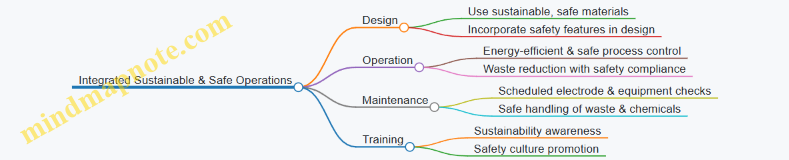
Real-World Example:
- Case Study: Electrochemical Hydrogen Production Plant
- The plant uses solar-powered electrolysis with advanced safety interlocks.
- Electrolyte is continuously purified and recycled, minimizing waste.
- Operators receive combined training on sustainable practices and emergency procedures.
- Resulted in a 35% reduction in operational costs, zero safety incidents over 3 years, and significant environmental benefits.
Summary
Implementing sustainable and safe electrochemical operations requires a holistic approach that balances energy efficiency, waste minimization, resource conservation, and rigorous safety protocols. Real-world examples demonstrate that integrating these best practices not only reduces environmental impact but also enhances operational reliability and cost-effectiveness.
By adopting these strategies, process engineers, plant managers, and R&D scientists can drive the industry towards greener and safer electrochemical technologies.
9. Emerging Technologies and Innovations
9.1 Advances in Electrocatalysts and Electrode Materials
Electrocatalysts and electrode materials are at the heart of electrochemical process engineering. Their properties directly influence reaction rates, selectivity, energy efficiency, and durability of industrial electrochemical systems. Recent advances have focused on improving catalytic activity, stability under harsh conditions, and cost-effectiveness, enabling broader industrial adoption.
Key Areas of Advancement
- Nanostructured Electrocatalysts: Enhancing surface area and active sites
- Non-Precious Metal Catalysts: Reducing reliance on expensive noble metals
- Composite and Hybrid Materials: Combining properties for optimized performance
- Surface Engineering and Functionalization: Tailoring electrode surfaces for selectivity and fouling resistance
- 3D and Porous Electrode Architectures: Improving mass transport and current distribution
Mind Map: Advances in Electrocatalysts and Electrode Materials
Nanostructured Electrocatalysts
Nanostructuring increases the electrochemically active surface area, providing more reaction sites and improving catalytic efficiency. For example, platinum nanoparticles dispersed on carbon supports are widely used in proton exchange membrane (PEM) fuel cells to enhance oxygen reduction reaction (ORR) kinetics.
Example:
- In chlor-alkali production, nanostructured ruthenium oxide electrodes increase oxygen evolution efficiency, reducing energy consumption.
Non-Precious Metal Catalysts
To reduce costs and improve sustainability, research has focused on earth-abundant metals such as iron, cobalt, and nickel. Transition metal phosphides, sulfides, and oxides have shown promising catalytic activity for hydrogen evolution and oxygen evolution reactions.
Example:
- Cobalt phosphide (CoP) catalysts have been implemented in alkaline water electrolysis plants, offering comparable performance to platinum at a fraction of the cost.
Composite and Hybrid Materials
Combining materials can synergistically improve conductivity, catalytic activity, and stability. Metal-organic frameworks (MOFs) integrated with conductive carbon materials provide tunable porosity and active sites.
Example:
- Graphene-supported nickel catalysts have been used in electrochemical CO2 reduction, enhancing selectivity towards value-added chemicals.
Surface Engineering and Functionalization
Surface treatments such as atomic layer deposition (ALD) or plasma treatments can create protective layers or introduce functional groups that improve electrode durability and selectivity.
Example:
- Titanium oxide coatings on stainless steel electrodes prevent corrosion in acidic electrochemical reactors, extending electrode life.
3D and Porous Electrode Architectures
Three-dimensional electrodes with high porosity improve mass transport of reactants and products, reducing concentration polarization and enhancing current density.
Example:
- Nickel foam electrodes are widely used in alkaline electrolysis for hydrogen production, offering a large surface area and excellent mechanical stability.
Integrated Best Practice Example: Electrochemical Hydrogen Production
In a modern alkaline water electrolyzer, nickel foam electrodes coated with nanostructured cobalt phosphide catalysts demonstrate high catalytic activity and durability. Surface functionalization with a thin titanium oxide layer protects the electrode from corrosion. This composite electrode design enables efficient hydrogen generation at industrial scale with reduced precious metal content and extended operational lifetime.
Summary
Advances in electrocatalysts and electrode materials are critical to improving the efficiency, cost-effectiveness, and sustainability of industrial electrochemical processes. By leveraging nanostructuring, non-precious metals, composites, surface engineering, and 3D architectures, process engineers and R&D scientists can design electrodes tailored to specific applications, driving innovation across chemical manufacturing, energy conversion, and environmental technologies.
9.2 Novel Electrochemical Reactor Designs
Electrochemical reactors are the heart of any electrochemical process, where the conversion of electrical energy into chemical energy (or vice versa) takes place. Innovations in reactor design are critical to improving efficiency, scalability, and sustainability in industrial applications. This section explores emerging reactor concepts, their design principles, and practical examples demonstrating their industrial relevance.
Key Novel Reactor Designs
- Flow-Through Reactors
- Microfluidic Electrochemical Reactors
- Membrane Electrode Assemblies (MEA)
- 3D-Printed Electrochemical Reactors
- Modular and Stackable Reactor Systems
Mind Map: Overview of Novel Electrochemical Reactor Designs
Flow-Through Reactors
Design Principle: Flow-through reactors allow the electrolyte or reactants to pass directly through porous electrodes, enhancing mass transport and reducing diffusion limitations.
Best Practice: Use porous carbon or metal foam electrodes to maximize surface area and facilitate uniform flow distribution.
Example: In electrochemical wastewater treatment, flow-through reactors enable efficient degradation of pollutants by ensuring continuous contact between contaminants and reactive electrode surfaces. A practical example is the use of graphite felt electrodes in a flow-through cell to degrade organic dyes with high removal efficiency.
Mind Map: Flow-Through Reactor Features
Microfluidic Electrochemical Reactors
Design Principle: Microfluidic reactors use channels with dimensions in the micrometer range to precisely control flow rates, mixing, and reaction times, enabling rapid and selective electrochemical transformations.
Best Practice: Integrate electrodes directly into microchannels using lithographic or printing techniques to minimize ohmic losses and improve reaction control.
Example: In pharmaceutical R&D, microfluidic electrochemical reactors have been employed for the selective oxidation of complex molecules, allowing rapid screening of reaction conditions with minimal reagent consumption.
Mind Map: Microfluidic Reactor Advantages
Membrane Electrode Assemblies (MEA)
Design Principle: MEA reactors integrate electrodes and ion-exchange membranes into a compact unit, minimizing ionic resistance and enabling efficient electrochemical conversion.
Best Practice: Optimize membrane selection (e.g., Nafion for proton exchange) and electrode catalyst loading to balance performance and cost.
Example: PEM electrolyzers for hydrogen production use MEA designs to achieve high current densities with low energy consumption. Industrial-scale PEM stacks demonstrate the scalability and robustness of this design.
Mind Map: MEA Reactor Components
3D-Printed Electrochemical Reactors
Design Principle: Additive manufacturing enables fabrication of reactors with complex geometries and integrated functionalities that are difficult to achieve with traditional methods.
Best Practice: Use conductive inks or embed electrodes during printing to create monolithic reactor units with optimized flow paths and electrode arrangements.
Example: A recent industrial pilot demonstrated a 3D-printed electrochemical reactor with intricate flow channels and embedded electrodes for CO2 reduction, achieving improved mass transport and product selectivity.
Mind Map: 3D-Printed Reactor Benefits
Modular and Stackable Reactor Systems
Design Principle: Modular reactors consist of standardized units that can be stacked or connected in series/parallel to scale capacity and facilitate maintenance.
Best Practice: Design modules with uniform electrical and fluidic connections to ensure consistent performance and easy scalability.
Example: The chlor-alkali industry widely uses stackable membrane cells, allowing plants to increase production by adding modules without redesigning the entire system.
Mind Map: Modular Reactor System Characteristics
Summary
Novel electrochemical reactor designs are transforming industrial processes by enhancing efficiency, selectivity, and scalability. By integrating best practices such as optimized electrode materials, precise flow control, and modular architectures, industries can achieve superior performance and sustainability.
Process engineers and R&D scientists should consider these innovative designs when developing or upgrading electrochemical plants to stay competitive and meet evolving environmental and economic demands.
9.3 Integration of Renewable Energy Sources with Electrochemical Processes
The integration of renewable energy sources with electrochemical processes represents a pivotal advancement in sustainable industrial practices. By coupling clean energy generation with electrochemical reactions, industries can reduce carbon footprints, enhance energy efficiency, and enable novel production pathways.
Key Renewable Energy Sources for Electrochemical Integration
- Solar Energy: Photovoltaic (PV) panels convert sunlight into electricity, powering electrochemical cells.
- Wind Energy: Wind turbines generate electricity that can directly feed electrochemical reactors.
- Hydropower: Small-scale hydropower plants provide steady electrical input.
- Bioenergy: Biomass-derived electricity can supplement electrochemical processes.
Benefits of Integration
- Decarbonization: Replaces fossil-fuel-based electricity with clean sources.
- Cost Reduction: Utilizes low-cost or surplus renewable electricity.
- Energy Storage: Electrochemical processes like water electrolysis can store intermittent renewable energy as hydrogen.
- Process Flexibility: Enables dynamic operation responding to renewable energy availability.
Mind Map: Renewable Energy Integration with Electrochemical Processes
Practical Examples
-
Solar-Powered Water Electrolysis for Green Hydrogen Production
- Description: PV arrays supply electricity to alkaline or PEM electrolyzers.
- Best Practice: Use maximum power point tracking (MPPT) to optimize solar input and maintain stable electrolyzer operation.
- Example: The Hydrogen Energy Supply Chain (HESC) project in Australia uses solar-powered electrolysis to produce hydrogen for export.
-
Wind-Driven Electrochemical CO2 Reduction
- Description: Wind turbines generate electricity for electrochemical cells that convert CO2 into value-added chemicals like ethylene.
- Best Practice: Implement energy storage buffers to manage wind intermittency and maintain continuous cell operation.
- Example: Pilot plants in Europe demonstrate wind-powered CO2 electroreduction integrated with chemical manufacturing.
-
Hybrid Renewable Systems with Electrochemical Ammonia Synthesis
- Description: Combining solar and wind energy to power electrochemical nitrogen reduction reactors.
- Best Practice: Employ smart grid controls to balance energy input and optimize ammonia yield.
- Example: Research facilities in Japan explore hybrid renewable-powered electrochemical ammonia production as a fertilizer alternative.
Mind Map: Challenges and Solutions in Renewable-Electrochemical Integration
Best Practices Summary
- Design for Flexibility: Electrochemical systems should accommodate variable power inputs without performance loss.
- Implement Energy Management Systems: Use software and hardware solutions to balance supply and demand.
- Optimize Material Selection: Choose electrodes and electrolytes tolerant to fluctuating operating conditions.
- Pilot Testing: Validate integration strategies at pilot scale before full industrial deployment.
By thoughtfully integrating renewable energy sources with electrochemical processes, industries can achieve sustainable production goals while unlocking new economic opportunities.
9.4 Digitalization and Industry 4.0 in Electrochemical Engineering
Digitalization and Industry 4.0 represent transformative trends in electrochemical process engineering, enabling smarter, more efficient, and highly automated industrial operations. By integrating advanced digital technologies such as IoT (Internet of Things), AI (Artificial Intelligence), big data analytics, and cloud computing, electrochemical plants can achieve enhanced process control, predictive maintenance, and optimized resource utilization.
Key Components of Digitalization in Electrochemical Engineering
Benefits of Industry 4.0 Integration
- Enhanced Process Efficiency
- Reduced Downtime via Predictive Maintenance
- Improved Product Quality and Consistency
- Energy and Resource Optimization
- Real-time Decision Making
- Remote Monitoring and Control
Example: Smart Electrochemical Reactor Monitoring
A chemical plant implemented IoT-enabled sensors on their electrochemical reactors to continuously monitor voltage, current density, electrolyte temperature, and pH. Data was streamed to a cloud platform where AI algorithms analyzed trends and detected early signs of electrode fouling. This predictive insight allowed maintenance teams to schedule cleaning before performance dropped, reducing downtime by 25% and improving overall yield.
Mind Map: Industry 4.0 Technologies Applied to Electrochemical Processes
Example: AI-Driven Process Optimization
An R&D team developed a machine learning model trained on historical electrolysis data to optimize operating parameters dynamically. By adjusting current density and electrolyte flow rates in real-time based on model predictions, the process achieved a 15% increase in energy efficiency and reduced raw material consumption.
Challenges and Considerations
- Integration with Legacy Equipment
- Data Quality and Sensor Calibration
- Cybersecurity Risks
- Skilled Workforce Requirements
- Initial Investment Costs
Best Practice: Stepwise Digital Transformation
- Assessment: Evaluate existing processes and identify digitalization opportunities.
- Pilot Projects: Implement small-scale IoT and AI solutions to demonstrate value.
- Scaling: Gradually expand digital tools plant-wide.
- Training: Upskill staff on new technologies and data interpretation.
- Continuous Improvement: Use feedback loops to refine digital systems.
Mind Map: Roadmap for Digitalization Implementation
Digitalization and Industry 4.0 are revolutionizing electrochemical engineering by enabling data-driven decision making and automation. Embracing these technologies with thoughtful implementation and continuous learning can significantly enhance industrial electrochemical processes’ productivity, safety, and sustainability.
9.5 Best Practices: Case Studies on Cutting-Edge Industrial Applications
Electrochemical process engineering is rapidly evolving with innovative applications that are transforming industries. This section explores best practices through detailed case studies of cutting-edge industrial applications, illustrating how advanced electrochemical technologies are implemented to achieve superior performance, sustainability, and economic benefits.
Case Study 1: Green Hydrogen Production via Proton Exchange Membrane (PEM) Electrolyzers
Overview: Green hydrogen production using PEM electrolyzers is a breakthrough for sustainable energy. The technology enables efficient water splitting powered by renewable electricity.
Best Practices:
- Material Selection: Use of corrosion-resistant, high-performance catalysts (e.g., platinum group metals) to enhance reaction kinetics.
- Cell Design Optimization: Thin membrane layers to reduce ohmic losses and improve proton conductivity.
- Operational Control: Dynamic load management to handle intermittent renewable power sources.
Example: A leading energy company implemented a 10 MW PEM electrolyzer plant integrated with solar PV, achieving 75% electrical-to-hydrogen efficiency and rapid response to grid fluctuations.
Case Study 2: Electrochemical CO2 Reduction for Carbon Capture and Utilization (CCU)
Overview: Electrochemical CO2 reduction converts captured CO2 into valuable chemicals like ethylene, formic acid, and methanol, enabling carbon-neutral industrial processes.
Best Practices:
- Catalyst Engineering: Tailoring copper-based catalysts with nanostructuring to improve selectivity toward multi-carbon products.
- Reactor Design: Gas-diffusion electrodes to enhance CO2 mass transport and reduce overpotentials.
- Process Integration: Coupling with renewable energy and CO2 capture units for continuous operation.
Example: An industrial pilot plant demonstrated continuous conversion of flue gas CO2 to ethylene with 60% Faradaic efficiency using a flow cell reactor.
Case Study 3: Electrochemical Ammonia Synthesis at Ambient Conditions
Overview: Electrochemical nitrogen reduction reaction (NRR) offers a sustainable alternative to the Haber-Bosch process by producing ammonia under mild conditions.
Best Practices:
- Electrode Development: Use of transition metal nitrides and single-atom catalysts to enhance N2 adsorption and activation.
- Electrolyte Optimization: Employing ionic liquids or tailored aqueous electrolytes to suppress competing hydrogen evolution.
- Process Monitoring: Real-time detection of ammonia concentration to optimize reaction parameters.
Example: A research-industrial collaboration developed a pilot system producing ammonia at ambient temperature and pressure with a yield rate of 1.2 mg h⁻¹ cm⁻².
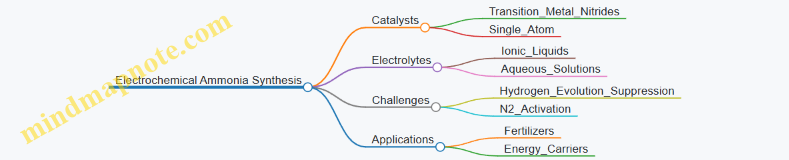
Case Study 4: Electrochemical Wastewater Treatment Using Advanced Oxidation Processes (AOPs)
Overview: Electrochemical AOPs degrade persistent organic pollutants in industrial wastewater, enabling onsite treatment with minimal chemical additives.
Best Practices:
- Electrode Materials: Boron-doped diamond (BDD) electrodes for high oxygen evolution overpotential and generation of hydroxyl radicals.
- Process Parameters: Optimizing current density and pH to maximize pollutant degradation rates.
- System Integration: Coupling with biological treatment for enhanced overall efficiency.
Example: A textile manufacturing plant integrated an electrochemical AOP system, reducing chemical oxygen demand (COD) by 90% and enabling water reuse.
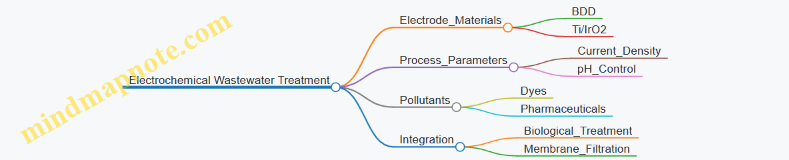
Case Study 5: Electrochemical Synthesis of Fine Chemicals and Pharmaceuticals
Overview: Electrochemical methods enable selective oxidation and reduction reactions under mild conditions, reducing hazardous reagents and waste.
Best Practices:
- Reaction Selectivity: Use of tailored electrode surfaces and controlled potentials to achieve high chemo- and regioselectivity.
- Flow Electrolysis: Implementation of continuous flow reactors for improved mass transfer and scalability.
- Green Chemistry: Minimizing solvent use and employing recyclable electrolytes.
Example: A pharmaceutical company adopted electrochemical oxidation to synthesize a key intermediate, reducing solvent waste by 40% and improving yield by 15%.

Summary of Best Practices Across Case Studies
- Material Innovation: Selecting and engineering catalysts and electrodes tailored to specific reactions.
- Reactor and Process Design: Optimizing cell configurations and operational parameters for efficiency and scalability.
- Integration: Combining electrochemical processes with renewable energy, capture technologies, or biological systems.
- Monitoring and Control: Employing advanced sensors and automation for real-time optimization.
- Sustainability Focus: Minimizing waste, energy consumption, and environmental impact.
These case studies demonstrate how cutting-edge electrochemical engineering practices can be successfully applied in diverse industrial contexts, driving innovation and sustainability.
10. Case Studies and Industry Applications
10.1 Electrochemical Production of Chlor-Alkali Chemicals
The chlor-alkali process is one of the most important industrial electrochemical processes, producing chlorine, hydrogen, and sodium hydroxide (caustic soda) from the electrolysis of brine (aqueous sodium chloride solution). These chemicals are foundational to many industries, including paper, textiles, water treatment, and chemical manufacturing.
Overview of the Chlor-Alkali Process
The process involves passing an electric current through brine to induce the following reactions:
- At the anode (oxidation): 2Cl⁻ → Cl₂(g) + 2e⁻
- At the cathode (reduction): 2H₂O + 2e⁻ → H₂(g) + 2OH⁻
The net result is the production of chlorine gas, hydrogen gas, and sodium hydroxide in solution.
Types of Electrolytic Cells Used
There are three main types of cells used in the chlor-alkali industry:
- Mercury Cell
- Diaphragm Cell
- Membrane Cell
Each has distinct advantages, disadvantages, and environmental considerations.
Mind Map: Chlor-Alkali Process Overview
Best Practices with Examples
Membrane Cell Adoption for Energy Efficiency
Practice: Many modern plants prefer membrane cells due to their lower energy consumption and higher product purity.
Example: A large chemical plant in Germany retrofitted its diaphragm cells with membrane cells, reducing energy consumption by 15% and improving NaOH purity from 30% to 32%, resulting in lower downstream processing costs.
Brine Purification
Practice: Impurities in brine such as calcium and magnesium ions can foul membranes or diaphragms.
Example: An American chlor-alkali facility implemented a multi-stage brine purification system including filtration, ion exchange, and chemical precipitation, reducing membrane fouling incidents by 40%, increasing uptime.
Hydrogen Gas Utilization
Practice: Efficient capture and use of hydrogen byproduct improves plant economics and sustainability.
Example: A plant in Japan integrated hydrogen capture with onsite fuel cells, generating electricity to partially power the electrolysis process, reducing external energy demand.
Mind Map: Best Practices in Chlor-Alkali Production
Challenges and Solutions
| Challenge | Solution Example |
|---|---|
| Membrane fouling | Implementing rigorous brine purification |
| Mercury pollution (mercury cell) | Phase-out mercury cells; switch to membrane technology |
| Energy consumption | Use renewable energy sources; optimize cell voltage |
| Product purity requirements | Use membrane cells; monitor process parameters |
Real-World Example: Dow Chemical Chlor-Alkali Plant
Dow Chemical operates a large membrane cell chlor-alkali plant that incorporates:
- Advanced brine purification with continuous monitoring
- Automated control systems to optimize voltage and current density
- Hydrogen capture system feeding into onsite hydrogenation reactors
This integration has led to a 10% reduction in energy costs and improved product consistency.
Summary
Electrochemical production of chlor-alkali chemicals is a mature but evolving technology. Best practices focus on:
- Selecting the appropriate cell technology (membrane cells preferred)
- Maintaining high brine purity to protect membranes and electrodes
- Efficiently capturing and utilizing byproduct hydrogen
- Implementing robust process control and maintenance
These practices ensure high efficiency, product quality, and environmental compliance, critical for sustainable industrial operations.
10.2 Electrolysis for Hydrogen Generation: Design and Optimization
Electrolysis is a pivotal electrochemical process for producing hydrogen by splitting water into hydrogen and oxygen gases using electrical energy. This section delves into the design principles and optimization strategies for industrial-scale hydrogen generation via electrolysis, integrating best practices and practical examples.
Overview of Electrolysis for Hydrogen Production
Electrolysis involves two half-reactions:
- At the Cathode (Reduction): 2H⁺ + 2e⁻ → H₂ (gas)
- At the Anode (Oxidation): 2H₂O → O₂ (gas) + 4H⁺ + 4e⁻
The overall reaction: 2H₂O → 2H₂ + O₂
This process requires an electrolyzer cell, electrical power, and an electrolyte medium.
Mind Map: Key Components of Hydrogen Electrolysis System
Electrolyzer Types and Their Design Considerations
-
Alkaline Electrolyzers
- Use aqueous alkaline solution (e.g., KOH).
- Advantages: Mature technology, lower cost materials.
- Challenges: Lower current density, slower response to load changes.
- Example: Chlor-alkali plants adapted for hydrogen production.
-
Proton Exchange Membrane (PEM) Electrolyzers
- Use solid polymer electrolyte membrane.
- Advantages: High current density, compact design, rapid response.
- Challenges: Higher cost due to precious metal catalysts.
- Example: PEM electrolyzers integrated with solar farms for green hydrogen.
-
Solid Oxide Electrolyzers (SOE)
- Operate at high temperatures (700–1000°C).
- Advantages: High efficiency, can use waste heat.
- Challenges: Material durability, complex thermal management.
- Example: Pilot plants coupling SOE with industrial waste heat sources.
Mind Map: Design Parameters Affecting Electrolysis Performance
Optimization Strategies
Operating Conditions
-
Temperature: Increasing temperature generally improves kinetics and conductivity but may affect material stability.
- Example: Operating PEM electrolyzers at 80°C to balance performance and membrane durability.
-
Pressure: Elevated pressure increases hydrogen density, reducing compression costs downstream.
- Example: Industrial alkaline electrolyzers operating at 30 bar for direct high-pressure hydrogen delivery.
-
Current Density: Higher current densities increase hydrogen production rates but can reduce efficiency and increase heat generation.
- Example: Optimizing current density at 1.5 A/cm² in PEM cells to maximize output without excessive degradation.
Electrode and Catalyst Optimization
-
Using high-surface-area electrodes coated with platinum-group metals or non-precious metal catalysts to improve reaction rates.
- Example: Nickel-based cathodes in alkaline electrolyzers for cost-effective hydrogen generation.
-
Surface engineering to reduce overpotentials.
Electrolyte Management
-
Maintaining electrolyte purity to prevent contamination and degradation.
- Example: Implementing continuous electrolyte filtration and replenishment in alkaline systems.
-
Optimizing electrolyte concentration for conductivity and stability.
Cell and Stack Design
-
Minimizing electrode spacing to reduce ohmic losses.
-
Enhancing flow distribution to avoid concentration gradients.
-
Modular stack design for scalability and maintenance.
-
Example: PEM electrolyzer stacks with optimized flow fields to ensure uniform reactant distribution.
Power Supply and Integration
-
Using renewable energy sources (solar, wind) with power electronics to manage variable input.
-
Implementing dynamic load management to match hydrogen production with energy availability.
-
Example: A solar-powered PEM electrolyzer system with smart inverter controls in a remote industrial site.
Mind Map: Practical Example - Optimizing a PEM Electrolyzer System
Case Study: Industrial Scale Hydrogen Production via Alkaline Electrolysis
Background: A chemical plant retrofitted its existing chlor-alkali electrolyzer to produce hydrogen for onsite ammonia synthesis.
Design Highlights:
- Electrolyte: 30% KOH solution
- Operating pressure: 25 bar
- Current density: 0.3 A/cm²
- Electrodes: Nickel-based with improved surface area
Optimization Measures:
- Implemented electrolyte purification loop to extend electrolyte life.
- Upgraded power supply for stable DC output.
- Added heat exchangers to recover waste heat and maintain optimal temperature.
Outcome:
- Increased hydrogen production efficiency by 15%.
- Reduced operational downtime by 20% through predictive maintenance.
Summary
Electrolysis for hydrogen generation is a cornerstone technology for sustainable energy and chemical industries. Designing and optimizing electrolyzers involves a multidisciplinary approach covering materials science, chemical engineering, and process control. By applying best practices such as selecting appropriate electrolyzer types, optimizing operating conditions, and integrating renewable energy, industries can achieve efficient, cost-effective, and scalable hydrogen production.
Further Reading and Resources
- International Energy Agency (IEA) Hydrogen Technology Roadmap
- “Electrochemical Methods: Fundamentals and Applications” by Bard and Faulkner
- Industry case studies from Hydrogen Europe and NREL
10.3 Electrochemical Wastewater Treatment Processes
Electrochemical wastewater treatment is an innovative and environmentally friendly approach to removing contaminants from industrial and municipal wastewater streams. This process utilizes electrochemical reactions to degrade, transform, or remove pollutants, offering advantages such as reduced chemical usage, on-site treatment, and the ability to target a wide range of contaminants.
Key Principles of Electrochemical Wastewater Treatment
- Electrooxidation: Direct or indirect oxidation of pollutants at the anode.
- Electroreduction: Reduction of contaminants at the cathode.
- Electrocoagulation: Generation of coagulants in situ to aggregate suspended solids.
- Electroflotation: Gas bubbles generated electrolytically help float contaminants to the surface.
Mind Map: Electrochemical Wastewater Treatment Techniques
Industrial Examples and Applications
-
Electrooxidation for Dye Removal in Textile Industry
- Example: A textile plant uses boron-doped diamond (BDD) electrodes to degrade azo dyes in wastewater.
- Best Practice: Optimize current density and flow rate to maximize dye mineralization while minimizing energy consumption.
-
Electrocoagulation for Heavy Metal Removal in Mining Effluents
- Example: Electrocoagulation units employing iron electrodes remove chromium and lead from mining wastewater.
- Best Practice: Regular electrode maintenance and controlling pH to enhance coagulation efficiency.
-
Electroreduction for Nitrate Removal in Agricultural Runoff
- Example: Cathodic reduction of nitrates to nitrogen gas using copper-based cathodes.
- Best Practice: Use of selective catalysts to avoid ammonia formation and improve nitrogen selectivity.
Mind Map: Process Parameters Affecting Electrochemical Treatment
Case Study: Electrocoagulation at a Food Processing Plant
- Problem: High levels of suspended solids and fats/oils in wastewater.
- Solution: Implementation of an electrocoagulation system with aluminum electrodes.
- Outcome: >90% removal of suspended solids and significant reduction in chemical oxygen demand (COD).
- Best Practice: Scheduled polarity reversal to reduce electrode passivation and extend electrode life.
Advantages of Electrochemical Wastewater Treatment
- Minimal chemical additives required.
- On-site treatment reduces transportation and handling risks.
- Modular and scalable systems.
- Effective against a broad spectrum of contaminants including emerging pollutants.
Challenges and Mitigation Strategies
| Challenge | Mitigation Strategy | Example |
|---|---|---|
| Electrode Fouling | Periodic cleaning, surface modification | Use of self-cleaning electrodes |
| High Energy Consumption | Optimize current density, use renewable energy sources | Solar-powered electrochemical units |
| Sludge Management | Integrate sludge dewatering and recycling | Sludge used as fertilizer after treatment |
Mind Map: Integration with Other Treatment Methods
Summary
Electrochemical wastewater treatment processes offer versatile and effective solutions for industrial wastewater challenges. By carefully selecting electrode materials, optimizing operational parameters, and integrating with complementary treatment technologies, industries can achieve sustainable and cost-effective wastewater management. Real-world examples demonstrate the practical benefits and best practices that process engineers and plant managers can adopt to enhance treatment performance and environmental compliance.
10.4 Electrochemical Synthesis of Fine Chemicals and Pharmaceuticals
Electrochemical synthesis has emerged as a powerful and sustainable approach in the production of fine chemicals and pharmaceuticals. By leveraging electrons as clean reagents, this method offers enhanced selectivity, milder reaction conditions, and reduced waste generation compared to traditional chemical synthesis.
Overview
Electrochemical synthesis involves the use of an electrochemical cell where substrates undergo oxidation or reduction at the electrodes, enabling the formation of desired products. This technique is particularly valuable for complex molecules where conventional methods may require harsh reagents or multi-step processes.
Mind Map: Key Aspects of Electrochemical Synthesis in Pharmaceuticals
Industrial Examples and Applications
Electrochemical Oxidation for API Synthesis
Example: The electrochemical oxidation of alcohols to aldehydes or ketones is a common transformation in pharmaceutical synthesis. For instance, the oxidation of benzyl alcohol derivatives to benzaldehydes can be achieved electrochemically without stoichiometric oxidants, minimizing hazardous waste.
Best Practice: Using boron-doped diamond (BDD) electrodes enhances oxidation efficiency and electrode durability, as demonstrated in pilot-scale syntheses of intermediates for anti-inflammatory drugs.
Electrochemical Reductive Coupling
Example: Electrochemical reductive coupling enables the formation of carbon-carbon bonds under mild conditions. A notable case is the electrochemical dimerization of phenylacetonitrile to produce precursors for antidepressant drugs.
Best Practice: Optimizing current density and electrolyte composition ensures high selectivity and yield, reducing side reactions.
Late-Stage Functionalization
Electrochemical methods allow for selective modification of complex molecules late in the synthesis pathway, which is crucial in pharmaceuticals for tuning biological activity.
Example: Electrochemical fluorination of aromatic compounds to introduce fluorine atoms, improving metabolic stability of drug candidates.
Best Practice: Employing flow electrochemical reactors facilitates precise control over reaction time and conditions, improving reproducibility.
Mind Map: Best Practices for Electrochemical Synthesis
Case Study: Electrochemical Synthesis of Ibuprofen Intermediate
A pharmaceutical company implemented an electrochemical oxidation step to produce a key intermediate for ibuprofen. Traditional methods used hazardous chromium-based oxidants, whereas the electrochemical route employed a graphite anode and mild conditions.
- Outcome: Reduced hazardous waste by 80%, improved overall yield by 15%, and simplified downstream purification.
- Best Practice: Integration of real-time monitoring using cyclic voltammetry enabled rapid optimization of reaction conditions.
Summary
Electrochemical synthesis offers a versatile and environmentally friendly platform for producing fine chemicals and pharmaceuticals. By carefully selecting electrodes, optimizing reaction parameters, and employing advanced reactor designs, industries can achieve efficient, scalable, and sustainable processes.
This approach aligns with green chemistry principles and meets the increasing demand for cleaner manufacturing in the pharmaceutical sector.
10.5 Best Practices: Lessons Learned from Industrial Implementations and Troubleshooting
Electrochemical processes in industry often present unique challenges that require a combination of sound engineering principles, practical experience, and adaptive troubleshooting. This section distills key lessons learned from real-world implementations, emphasizing best practices to enhance reliability, efficiency, and safety.
Common Challenges and Solutions
Electrochemical Process Troubleshooting Mind Map
Case Study 1: Chlor-Alkali Electrolysis Plant
Problem: Frequent electrode fouling causing reduced current efficiency and increased downtime.
Solution:
- Introduced a periodic in-situ electrode cleaning protocol using reverse polarity pulses.
- Optimized electrolyte flow to reduce stagnant zones.
- Switched to a more fouling-resistant titanium-based electrode coating.
Outcome:
- 15% increase in current efficiency.
- Downtime reduced by 30%.
Case Study 2: Hydrogen Electrolyzer Scale-Up
Problem: Non-uniform current distribution leading to hot spots and premature membrane failure.
Solution:
- Conducted computational fluid dynamics (CFD) modeling to redesign flow channels.
- Implemented segmented power supplies to balance current.
- Enhanced temperature monitoring with distributed sensors.
Outcome:
- Extended membrane life by 40%.
- Improved overall system stability.
Practical Tips for Troubleshooting
- Systematic Diagnosis: Always start with a structured approach—check electrical, mechanical, chemical, and operational parameters in sequence.
- Data Logging: Implement continuous data acquisition for voltage, current, temperature, and pH to identify trends before failures.
- Cross-Functional Teams: Involve process engineers, maintenance, and R&D for comprehensive problem-solving.
- Pilot Testing: Before full-scale changes, test troubleshooting strategies on pilot setups.
Mind Map: Troubleshooting Workflow
Summary of Best Practices
| Aspect | Best Practice | Example Application |
|---|---|---|
| Electrode Maintenance | Schedule regular cleaning and inspection | Reverse polarity cleaning in chlor-alkali plants |
| Electrolyte Management | Continuous monitoring and purification | Filtration systems in wastewater treatment |
| Process Monitoring | Use real-time sensors and data analytics | Distributed temperature sensors in electrolyzers |
| Scale-Up Strategy | Employ modeling and pilot testing | CFD-based flow channel redesign |
| Safety Protocols | Comprehensive training and protective measures | Electrical grounding and PPE enforcement |
By integrating these lessons and best practices, process engineers and plant managers can significantly improve the robustness and efficiency of industrial electrochemical operations, minimizing downtime and maximizing output quality.
11. Future Directions and Career Opportunities
11.1 Trends Shaping the Future of Electrochemical Process Engineering
Electrochemical process engineering is rapidly evolving, driven by technological advancements, sustainability goals, and the increasing demand for efficient industrial processes. Understanding these trends is crucial for process engineers, plant managers, and R&D scientists to stay ahead and innovate effectively.
Key Trends Overview
- Sustainable and Green Electrochemistry
- Integration with Renewable Energy
- Advanced Materials and Nanotechnology
- Digitalization and Industry 4.0
- Modular and Flexible Reactor Designs
- Electrochemical CO2 Utilization
- Hybrid Processes Combining Electrochemistry with Other Technologies
Mind Map: Future Trends in Electrochemical Process Engineering
Sustainable and Green Electrochemistry
The push for sustainability is reshaping electrochemical processes. Industries are adopting greener feedstocks and designing processes that minimize waste and energy consumption.
Example:
- The use of water electrolysis powered by renewable energy to produce green hydrogen, which replaces fossil-fuel-based hydrogen in chemical synthesis.
Best Practice:
- Implement life cycle assessments (LCA) to evaluate environmental impacts and optimize process parameters accordingly.
Integration with Renewable Energy
Electrochemical processes increasingly integrate with intermittent renewable energy sources to enhance sustainability and reduce carbon footprints.
Example:
- A chemical plant coupling solar photovoltaic (PV) arrays with electrochemical reactors for on-site hydrogen generation, reducing reliance on grid electricity.
Best Practice:
- Design flexible electrochemical systems capable of operating efficiently under variable power inputs.
Advanced Materials and Nanotechnology
The development of novel electrode materials and catalysts at the nanoscale improves reaction rates, selectivity, and durability.
Example:
- Use of nanostructured platinum-group metal catalysts in fuel cells to enhance activity while reducing precious metal loading.
Best Practice:
- Employ surface engineering techniques such as atomic layer deposition (ALD) to create uniform catalyst coatings.
Digitalization and Industry 4.0
Digital tools enable real-time monitoring, data analytics, and AI-driven optimization, leading to smarter and more efficient electrochemical plants.
Example:
- Implementation of IoT sensors in an electrolysis plant to monitor voltage, current, temperature, and electrolyte composition continuously.
Best Practice:
- Develop predictive maintenance schedules using machine learning models trained on historical process data.
Mind Map: Digitalization in Electrochemical Engineering
Modular and Flexible Reactor Designs
Modularity allows rapid scaling and customization of electrochemical units to meet varying production demands.
Example:
- A modular electrochemical reactor system designed for decentralized production of specialty chemicals, enabling quick reconfiguration for different products.
Best Practice:
- Use standardized components and plug-and-play designs to reduce downtime during scale-up or product switching.
Electrochemical CO2 Utilization
Converting CO2 into valuable chemicals and fuels is a promising approach to mitigate greenhouse gas emissions and create circular economies.
Example:
- Electrochemical reduction of CO2 to ethylene or formic acid using copper-based catalysts in industrial pilot plants.
Best Practice:
- Optimize catalyst selectivity and reactor conditions to maximize product yield and minimize energy consumption.
Hybrid Processes Combining Electrochemistry with Other Technologies
Hybrid systems leverage the strengths of multiple technologies to improve overall process efficiency.
Example:
- Photoelectrochemical cells combining light absorption and electrochemical conversion for solar fuel production.
Best Practice:
- Integrate process control systems to synchronize hybrid unit operations and maximize synergy.
Summary
The future of electrochemical process engineering lies at the intersection of sustainability, advanced materials, digital transformation, and innovative reactor designs. By embracing these trends, industry professionals can develop more efficient, flexible, and environmentally friendly processes.
Additional Example: Real-World Implementation
Case: A European chemical company implemented an AI-driven control system in their chlor-alkali electrolysis plant. This system optimized current density and electrolyte flow rates in real-time, resulting in a 5% reduction in energy consumption and a 10% increase in product yield over six months.
Takeaway: Integrating digitalization with traditional electrochemical processes can yield significant operational improvements.
11.2 Skills and Competencies for Process Engineers and R&D Scientists
Electrochemical process engineering is a multidisciplinary field requiring a blend of technical knowledge, practical skills, and soft competencies. For process engineers and R&D scientists working in this domain, developing a well-rounded skill set is essential to design, optimize, and innovate electrochemical systems effectively.
Core Technical Skills
- Electrochemistry Fundamentals: Understanding redox reactions, electrode potentials, and electrochemical kinetics.
- Process Design & Simulation: Ability to model electrochemical cells and processes using software tools.
- Materials Science: Knowledge of electrode materials, electrolytes, corrosion mechanisms, and surface engineering.
- Instrumentation & Control: Proficiency with sensors, data acquisition, and automation systems.
- Analytical Techniques: Familiarity with techniques such as cyclic voltammetry, impedance spectroscopy, and spectroscopy methods.
Soft Skills
- Problem-Solving: Diagnosing process inefficiencies and troubleshooting operational issues.
- Collaboration: Working effectively with multidisciplinary teams including chemists, mechanical engineers, and safety experts.
- Communication: Clear reporting and presentation of technical data to diverse stakeholders.
- Project Management: Planning, resource allocation, and timeline management for R&D and scale-up projects.
Mind Map: Skills and Competencies Overview
Detailed Skill Breakdown with Examples
Electrochemistry Fundamentals
- Example: Understanding the Nernst equation helps optimize electrode potentials in a chlor-alkali process, improving energy efficiency.
Process Design & Simulation
- Example: Using COMSOL Multiphysics to simulate mass transport and reaction kinetics in a flow cell, enabling design improvements before pilot testing.
Materials Science
- Example: Selecting titanium-based electrodes coated with mixed metal oxides to resist corrosion in acidic electrolysis environments.
Instrumentation & Control
- Example: Implementing real-time pH and conductivity sensors to maintain electrolyte quality during continuous electroplating operations.
Analytical Techniques
- Example: Applying cyclic voltammetry to evaluate new electrocatalysts for hydrogen evolution reaction, guiding material selection.
Problem-Solving
- Example: Identifying causes of electrode fouling in wastewater treatment and developing cleaning protocols to restore performance.
Collaboration
- Example: Coordinating with safety engineers to design safeguards against electrical hazards in high-current electrochemical reactors.
Communication
- Example: Preparing technical reports and presentations for plant managers to justify investment in new electrochemical technology.
Project Management
- Example: Leading a cross-functional team to scale up an electrochemical synthesis process from lab to pilot scale within budget and timeline.
Mind Map: Example Application of Skills
Best Practice Tips
- Continuously update knowledge through workshops and literature to keep pace with emerging electrochemical technologies.
- Engage in hands-on experimentation to complement theoretical understanding.
- Foster interdisciplinary communication to bridge gaps between chemistry, engineering, and operations.
- Utilize digital tools for data analysis and process simulation to enhance decision-making.
By cultivating these skills and competencies, process engineers and R&D scientists can drive innovation and operational excellence in electrochemical process engineering, ensuring sustainable and efficient industrial applications.
11.3 Cross-Disciplinary Collaboration in Electrochemical Projects
Electrochemical process engineering is inherently multidisciplinary, requiring the integration of knowledge and expertise from various fields to develop efficient, scalable, and innovative solutions. Collaboration across disciplines not only accelerates problem-solving but also enhances the robustness and sustainability of electrochemical technologies.
Importance of Cross-Disciplinary Collaboration
- Complex Problem Solving: Electrochemical systems involve chemical reactions, materials science, electrical engineering, and process design. Tackling challenges such as electrode degradation, reaction kinetics, or process scale-up demands diverse expertise.
- Innovation: Combining perspectives from different disciplines fosters creativity and leads to breakthrough technologies.
- Efficiency and Cost-Effectiveness: Collaborative teams can optimize processes holistically, reducing trial-and-error and minimizing costs.
Key Disciplines Involved
Examples of Collaborative Roles and Contributions
| Discipline | Role in Electrochemical Projects | Example Contribution |
|---|---|---|
| Chemistry | Understanding reaction mechanisms, electrolyte formulation | Designing stable electrolytes for long-term operation |
| Materials Science | Developing durable electrode materials and coatings | Creating corrosion-resistant anodes |
| Electrical Engineering | Designing power supplies, sensors, and control systems | Implementing real-time voltage/current monitoring |
| Chemical Engineering | Scaling up reactors, optimizing flow and mass transfer | Designing flow cells for industrial hydrogen production |
| Data Science | Modeling system behavior, predictive maintenance | Using machine learning to predict electrode fouling |
| Environmental Science | Assessing environmental impact, waste treatment | Developing recycling protocols for spent electrolytes |
| Safety Engineering | Ensuring safe operation, compliance with regulations | Conducting hazard analyses for high-voltage systems |
Mind Map: Collaborative Workflow in Electrochemical Project
Practical Example: Development of a Green Hydrogen Electrolyzer
- Chemists develop new catalysts to reduce overpotential.
- Materials scientists engineer electrodes with enhanced durability.
- Electrical engineers design efficient power electronics and sensor networks.
- Chemical engineers optimize the flow cell design for maximum hydrogen output.
- Data scientists analyze operational data to predict maintenance needs.
- Environmental scientists evaluate lifecycle impacts and suggest waste minimization strategies.
- Safety engineers ensure compliance with electrical and chemical safety standards.
This integrated approach led to a 15% increase in efficiency and a 20% reduction in operational costs in a recent pilot plant.
Best Practices for Effective Cross-Disciplinary Collaboration
- Establish Clear Communication Channels: Use collaborative platforms and regular meetings to align goals.
- Define Roles and Responsibilities: Clarify contributions to avoid overlap and gaps.
- Encourage Knowledge Sharing: Organize workshops and joint training sessions.
- Adopt Integrated Project Management Tools: Facilitate transparency and track progress.
- Foster Mutual Respect and Understanding: Appreciate different expertise and viewpoints.
Mind Map: Best Practices for Collaboration
Cross-disciplinary collaboration is not just beneficial but essential for advancing electrochemical process engineering in industry. By leveraging diverse expertise, teams can develop innovative, efficient, and sustainable electrochemical technologies that meet the complex demands of modern industrial applications.
11.4 Educational Resources and Professional Development
Electrochemical process engineering is a rapidly evolving field that combines principles of chemistry, materials science, and process engineering. To stay current and excel professionally, continuous learning and skill development are essential. This section outlines key educational resources and strategies for professional growth, supplemented with mind maps and practical examples.
Formal Education Pathways
- Undergraduate Degrees: Chemical Engineering, Electrochemistry, Materials Science
- Graduate Programs: Specialized Masters and PhD programs focusing on electrochemical engineering, energy storage, and catalysis
- Example: The Massachusetts Institute of Technology (MIT) offers a graduate course titled “Electrochemical Energy Systems” that integrates theory with lab work.
Online Learning Platforms and MOOCs
- Coursera: Courses like “Electrochemical Energy Storage” by University of Colorado Boulder
- edX: “Fundamentals of Electrochemistry” by Delft University of Technology
- Udemy: Practical courses on electrochemical sensor design and applications
Example: A process engineer completed the Coursera specialization on “Energy Storage” and applied the knowledge to optimize battery manufacturing processes.
Professional Societies and Conferences
- Societies: The Electrochemical Society (ECS), American Institute of Chemical Engineers (AIChE)
- Conferences: ECS Meeting, AIChE Annual Meeting, International Symposium on Electrochemical Engineering
Example: Attending the ECS biannual meeting helped an R&D scientist discover cutting-edge catalyst materials and network with industry leaders.
Technical Books and Journals
- Books:
- “Electrochemical Engineering” by J. Newman and K.E. Thomas-Alyea
- “Modern Electrochemical Methods” by Allen J. Bard and Larry R. Faulkner
- Journals:
- Journal of The Electrochemical Society
- Electrochimica Acta
- Journal of Applied Electrochemistry
Example: A plant manager used insights from recent Electrochimica Acta articles to troubleshoot electrode degradation issues.
Workshops, Webinars, and Training Programs
- Industry Workshops: Hands-on training on electrochemical reactor design, catalyst testing
- Webinars: Hosted by equipment manufacturers, research institutions
- Corporate Training: Customized programs for plant personnel
Example: A plant team participated in a webinar series on process control in electrochemical systems, leading to improved monitoring and reduced downtime.
Mentorship and Networking
- Mentorship: Seeking guidance from experienced electrochemical engineers accelerates learning
- Networking: Joining LinkedIn groups, attending meetups, and participating in forums
Example: An early-career process engineer joined the ECS mentorship program, receiving career advice and project feedback that enhanced their professional development.
Summary Table of Resources
| Resource Type | Examples | Benefits |
|---|---|---|
| Formal Education | University degrees, specialized masters | Deep theoretical knowledge, credentials |
| Online Courses | Coursera, edX, Udemy | Flexible learning, practical skills |
| Professional Societies | ECS, AIChE | Networking, access to latest research |
| Literature | Textbooks, journals | In-depth technical understanding |
| Workshops & Webinars | Industry-led training, webinars | Hands-on experience, current best practices |
| Mentorship & Networking | ECS mentorship, LinkedIn groups | Career guidance, professional connections |
By actively engaging with these educational resources and professional development opportunities, process engineers, plant managers, and R&D scientists can enhance their expertise, stay updated on industry trends, and contribute effectively to advancing electrochemical process engineering in their organizations.
11.5 Best Practices: Building a Career in Electrochemical Engineering with Mentorship and Networking Examples
Building a successful career in electrochemical engineering requires a strategic approach that combines technical expertise, continuous learning, mentorship, and effective networking. This section explores best practices to help process engineers, plant managers, and R&D scientists navigate their career paths with practical examples and mind maps.
Importance of Mentorship in Electrochemical Engineering
Mentorship accelerates professional growth by providing guidance, knowledge transfer, and career advice from experienced professionals.
Key Benefits:
- Access to industry insights and trends
- Help with problem-solving and technical challenges
- Support in career planning and goal setting
Example: Maria, a junior process engineer, was paired with a senior electrochemical specialist at her company. Through monthly meetings, Maria gained insights into advanced electrode materials and reactor design, which helped her lead a successful pilot project.
Effective Networking Strategies
Networking opens doors to collaborations, job opportunities, and knowledge exchange.
Tips:
- Attend industry conferences such as the International Society of Electrochemistry (ISE) meetings
- Join professional organizations (e.g., AIChE, ECS)
- Participate in webinars and workshops
- Engage in online forums and LinkedIn groups focused on electrochemical engineering
Example: John, an R&D scientist, connected with peers at an electrochemical symposium. This network helped him find a collaborator for a novel catalyst development project, accelerating his research timeline.
Continuous Learning and Skill Development
Electrochemical engineering is a rapidly evolving field; staying updated is crucial.
Approaches:
- Enroll in specialized courses (e.g., electrochemical reactor design, process control)
- Read journals like the Journal of Electrochemical Society
- Participate in cross-disciplinary projects (e.g., combining electrochemistry with AI or materials science)
Example: Lina, a plant manager, took an online course on digital process control, enabling her to implement automation that improved plant efficiency by 15%.
Building a Personal Brand and Online Presence
Showcasing expertise helps attract opportunities.
Strategies:
- Publish articles or blogs on electrochemical topics
- Present at conferences
- Share project successes on LinkedIn
Example: Ahmed regularly blogs about electrochemical wastewater treatment innovations. His posts attracted recruiters and speaking invitations.
Mind Maps
Mind Map 1: Mentorship Pathway in Electrochemical Engineering
Mind Map 2: Networking Strategies
Mind Map 3: Continuous Learning
Summary
Building a career in electrochemical engineering is a multifaceted journey. Leveraging mentorship and networking effectively, committing to lifelong learning, and actively sharing your expertise can significantly enhance your professional trajectory. Real-world examples demonstrate how these best practices translate into tangible career advancements.
Remember: Your career growth is not just about technical skills but also about relationships, visibility, and adaptability in the evolving landscape of electrochemical process engineering.