Green Hydrogen Production & Electrolyzer Technologies
1. Introduction to Green Hydrogen
1.1 Understanding Green Hydrogen: Definition and Importance
Green hydrogen is hydrogen produced through the process of water electrolysis powered entirely by renewable energy sources such as wind, solar, or hydropower. Unlike grey or blue hydrogen, green hydrogen does not rely on fossil fuels and emits zero carbon dioxide during production, making it a cornerstone for a sustainable and decarbonized energy future.
What is Green Hydrogen?
- Definition: Hydrogen gas (H₂) generated by splitting water (H₂O) into hydrogen and oxygen using renewable electricity.
- Key Feature: Zero carbon emissions during production.
Why is Green Hydrogen Important?
- Decarbonization: Enables reduction of greenhouse gas emissions in hard-to-abate sectors such as steel, chemicals, and heavy transport.
- Energy Storage: Acts as a medium to store excess renewable energy, balancing grid intermittency.
- Energy Carrier: Facilitates the transport and use of renewable energy across regions.
Mind Map: Green Hydrogen Overview
Example 1: Wind-Powered Electrolyzer Plant
A wind farm located in northern Europe powers a 10 MW alkaline electrolyzer system. The electrolyzer uses the electricity generated by the wind turbines to split water into hydrogen and oxygen. The produced green hydrogen is then compressed and stored for use in local transportation fuel cell buses, reducing the carbon footprint of the transit system.
- Best Practice Highlight: Leveraging direct coupling of renewable generation with electrolyzers minimizes energy losses and reduces operational costs.
Example 2: Solar-Powered Green Hydrogen for Industrial Use
In a desert region with high solar irradiance, a solar photovoltaic (PV) array is integrated with a PEM electrolyzer. The green hydrogen produced is supplied to a nearby ammonia production plant, replacing grey hydrogen derived from natural gas.
- Best Practice Highlight: Using PEM electrolyzers allows flexible operation matching solar power availability, optimizing hydrogen production during peak sunlight hours.
Summary
Understanding green hydrogen involves recognizing it as a clean, sustainable fuel produced by splitting water using renewable energy. Its importance lies in its potential to decarbonize multiple sectors, store renewable energy, and serve as a versatile energy carrier. Real-world examples demonstrate how integrating renewable energy sources directly with electrolyzers can optimize production and support the transition to a low-carbon economy.
1.2 The Role of Green Hydrogen in Decarbonization
Green hydrogen is increasingly recognized as a cornerstone in the global effort to achieve deep decarbonization across multiple sectors. Unlike grey or blue hydrogen, green hydrogen is produced via water electrolysis powered entirely by renewable energy sources, resulting in zero carbon emissions during production. This makes it a vital tool in reducing greenhouse gas emissions and transitioning to a sustainable energy future.
Why Green Hydrogen is Critical for Decarbonization
- Eliminates Carbon Emissions at Source: Since green hydrogen is produced using renewable electricity, it avoids CO2 emissions associated with fossil fuel-based hydrogen production.
- Enables Sector Coupling: Green hydrogen can link the power sector with hard-to-abate sectors such as heavy industry, transportation, and heating.
- Energy Storage and Grid Balancing: It serves as a medium for storing excess renewable energy and balancing grid fluctuations.
- Supports Circular Economy: Hydrogen can be used as feedstock in chemical industries, replacing fossil-based inputs.
Mind Map: Green Hydrogen’s Role in Decarbonization
Examples Demonstrating Green Hydrogen’s Role
Steel Industry Decarbonization: HYBRIT Project (Sweden)
The HYBRIT initiative aims to replace coal with green hydrogen in the direct reduction of iron ore, drastically cutting CO2 emissions from steel production. By using green hydrogen, the project targets a 90-95% reduction in emissions compared to traditional blast furnace methods.
Heavy-Duty Transportation: Toyota Mirai Fuel Cell Vehicle
The Toyota Mirai uses green hydrogen to power its fuel cell, emitting only water vapor. This example illustrates how green hydrogen can decarbonize sectors where battery electrification faces challenges, such as long-range heavy-duty transport.
Renewable Energy Storage: Power-to-Gas Projects
Projects like the one in Falkenhagen, Germany, convert surplus wind energy into hydrogen via electrolysis. This hydrogen is then injected into the natural gas grid or stored for later use, demonstrating green hydrogen’s role in managing renewable intermittency.
Best Practice: Integrating Green Hydrogen into Industrial Clusters
Industrial clusters can leverage green hydrogen to decarbonize multiple processes simultaneously. For example, the Port of Rotterdam is developing a hydrogen hub where green hydrogen will supply refineries, chemical plants, and transport fleets, maximizing emission reductions through shared infrastructure.
Summary
Green hydrogen is a versatile and clean energy carrier that plays a pivotal role in decarbonizing sectors that are difficult to electrify directly. Its integration into industry, transport, power, and heating systems, supported by renewable energy, offers a pathway to achieving net-zero emissions. Understanding its multifaceted role helps chemical engineers, plant operators, and energy project developers design and implement effective decarbonization strategies.
1.3 Overview of Hydrogen Production Methods: Grey, Blue, and Green
Hydrogen production is a cornerstone of the emerging clean energy landscape. Understanding the different methods—grey, blue, and green hydrogen—is essential for chemical engineers, plant operators, and energy project developers to make informed decisions about technology adoption and project planning.
What is Hydrogen Production?
Hydrogen production involves generating hydrogen gas (H₂) from various feedstocks through different processes. The classification into grey, blue, and green hydrogen primarily depends on the source of energy and the associated carbon emissions.
Mind Map: Hydrogen Production Methods
Grey Hydrogen
Definition: Grey hydrogen is produced primarily via Steam Methane Reforming (SMR) of natural gas without capturing the resulting CO₂ emissions.
Process Overview:
- Methane (CH₄) reacts with steam (H₂O) at high temperatures (~700–1,000°C).
- Produces hydrogen (H₂), carbon monoxide (CO), and CO₂.
- Water-gas shift reaction converts CO to CO₂ and more H₂.
Environmental Impact:
- Releases significant CO₂, contributing to greenhouse gas emissions.
Example:
- A typical refinery uses grey hydrogen produced on-site via SMR for hydrocracking processes.
Best Practice Example:
- Retrofitting existing SMR plants with carbon capture technology to transition towards blue hydrogen.
Blue Hydrogen
Definition: Blue hydrogen is produced similarly to grey hydrogen but incorporates Carbon Capture and Storage (CCS) to reduce CO₂ emissions.
Process Overview:
- SMR or Autothermal Reforming (ATR) produces hydrogen and CO₂.
- CO₂ is captured (typically 85-95%) and stored underground or utilized.
Environmental Impact:
- Significantly lower carbon footprint compared to grey hydrogen.
Example:
- The Northern Lights project in Norway captures CO₂ from hydrogen production and stores it in subsea geological formations.
Best Practice Example:
- Integrating CCS with SMR plants to reduce emissions while maintaining cost-effectiveness.
Green Hydrogen
Definition: Green hydrogen is produced by splitting water into hydrogen and oxygen using renewable electricity via electrolysis.
Process Overview:
- Electrolyzers (PEM, Alkaline, SOEC) use electricity to split water.
- No direct CO₂ emissions if renewable energy is used.
Environmental Impact:
- Near-zero carbon emissions, making it the cleanest hydrogen production method.
Example:
- The REFHYNE project in Germany uses PEM electrolyzers powered by wind energy to produce green hydrogen for refinery use.
Best Practice Example:
- Co-locating electrolyzers with renewable energy plants to minimize transmission losses and optimize energy use.
Comparative Mind Map: Emissions and Costs
Summary Table of Hydrogen Production Methods
| Method | Feedstock/Energy Source | CO₂ Emissions | Typical Cost (USD/kg H₂) | Key Applications |
|---|---|---|---|---|
| Grey | Natural Gas (SMR) | High (~9-12 kg CO₂/kg) | 1-2 | Industrial hydrogen, refining |
| Blue | Natural Gas + CCS | Moderate (~1-3 kg CO₂/kg) | 1.5-2.5 | Low-carbon hydrogen supply |
| Green | Renewable Energy + Electrolysis | Near Zero | 3-7 (declining) | Clean fuel, energy storage, transport |
Practical Example: Transitioning from Grey to Green Hydrogen
Scenario: A chemical plant currently uses grey hydrogen produced on-site via SMR.
Stepwise Approach:
- Short-term: Implement CCS technology to capture CO₂ emissions, transitioning to blue hydrogen.
- Medium-term: Integrate renewable energy sources and electrolyzers to supplement hydrogen supply.
- Long-term: Fully transition to green hydrogen by replacing SMR with electrolyzers powered by renewables.
Outcome: Reduced carbon footprint with operational continuity and cost management.
Understanding these hydrogen production methods, their environmental impacts, and practical examples helps stakeholders make strategic decisions aligned with sustainability goals and economic feasibility.
1.4 Global Market Trends and Policy Drivers
Green hydrogen is rapidly emerging as a cornerstone in the global energy transition, driven by ambitious climate targets, technological advancements, and supportive policy frameworks. Understanding the market dynamics and policy landscape is crucial for chemical engineers, plant operators, and energy project developers aiming to capitalize on this growing sector.
Global Market Trends
-
Rising Demand Across Sectors:
- Heavy industry (steel, cement, chemicals) shifting towards green hydrogen to decarbonize processes.
- Transportation sector adopting hydrogen fuel cells for heavy-duty vehicles, buses, and trains.
- Power generation and grid balancing applications increasing with renewable penetration.
-
Scaling Electrolyzer Capacity:
- Electrolyzer manufacturing capacity is expanding exponentially, with gigawatt-scale projects announced worldwide.
- Cost reductions driven by economies of scale, improved materials, and manufacturing innovations.
-
Regional Market Growth:
- Europe leads with strong policy support and ambitious hydrogen strategies.
- Asia-Pacific, particularly Japan, South Korea, and China, investing heavily in hydrogen infrastructure.
- Middle East and Australia emerging as green hydrogen exporters due to abundant renewable resources.
-
Investment and Financing:
- Increasing private and public investments, including venture capital, corporate partnerships, and government grants.
- Development of hydrogen hubs and integrated value chains to reduce costs and improve market access.
Policy Drivers
-
Climate Commitments:
- Paris Agreement targets pushing countries to adopt net-zero strategies.
- National hydrogen roadmaps aligning with carbon neutrality goals by 2050.
-
Incentives and Subsidies:
- Feed-in tariffs, tax credits, and grants to lower green hydrogen production costs.
- Support for R&D and pilot projects to accelerate technology maturity.
-
Regulatory Frameworks:
- Standards for hydrogen quality, safety, and transport.
- Certification schemes for green hydrogen to ensure sustainability and traceability.
-
International Collaboration:
- Cross-border hydrogen trade agreements.
- Joint ventures and knowledge sharing platforms.
Mind Map: Global Market Trends
Mind Map: Policy Drivers
Examples of Market Trends and Policy Impact
-
European Union Hydrogen Strategy:
- The EU aims to install at least 40 GW of renewable hydrogen electrolyzers by 2030.
- The European Clean Hydrogen Alliance fosters collaboration between industry, governments, and researchers.
- Example: The NortH2 project in the Netherlands plans a 4 GW offshore wind-powered electrolyzer facility.
-
Japan’s Hydrogen Society Vision:
- Japan promotes hydrogen as a key energy carrier for a low-carbon society.
- Government subsidies support fuel cell vehicle deployment and hydrogen refueling infrastructure.
- Example: Fukushima Hydrogen Energy Research Field (FH2R) uses solar power for large-scale hydrogen production.
-
Australia’s Export Ambitions:
- Australia leverages vast solar and wind resources to become a green hydrogen exporter.
- The Australian Renewable Energy Agency (ARENA) funds pilot projects and infrastructure development.
- Example: The Asian Renewable Energy Hub plans a 26 GW wind and solar project coupled with electrolyzers for export.
-
U.S. Inflation Reduction Act (IRA):
- Provides tax credits for clean hydrogen production, significantly improving project economics.
- Encourages private investment and accelerates deployment.
- Example: Multiple electrolyzer projects announced in Texas and California leveraging IRA incentives.
Summary
The global green hydrogen market is shaped by increasing demand, technological scaling, and diverse regional growth patterns. Policy drivers, including climate commitments, financial incentives, and regulatory frameworks, play a pivotal role in accelerating adoption. For chemical engineers, plant operators, and project developers, staying informed about these trends and policies is essential for strategic planning and successful project execution.
1.5 Best Practice: Integrating Renewable Energy Sources for Sustainable Hydrogen Production - Case Study of a Wind-Powered Electrolyzer Plant
Green hydrogen production hinges on the availability of clean, renewable electricity. Integrating renewable energy sources such as wind power with electrolyzers is a best practice that ensures the hydrogen produced is truly sustainable and carbon-neutral. This section explores the strategic integration of wind energy with electrolyzer technology, highlighting operational considerations, benefits, and a real-world case study.
Why Integrate Wind Energy with Electrolyzers?
- Zero Carbon Footprint: Wind power generates electricity without greenhouse gas emissions.
- Cost-Effectiveness: Wind energy costs have dropped significantly, making it competitive.
- Abundant Resource: Many regions have high wind potential, especially coastal and open plains.
- Synergy with Electrolyzers: Electrolyzers can operate flexibly, matching the intermittent nature of wind.
Key Components of Integration
Operational Best Practices
- Dynamic Load Management: Electrolyzers should be capable of ramping up/down quickly to match wind power fluctuations.
- Energy Storage Integration: Incorporate battery systems or hydrogen storage to buffer intermittent supply.
- Advanced Forecasting: Use wind forecasting models to optimize electrolyzer operation schedules.
- Water Management: Ensure reliable water supply with purification to maintain electrolyzer efficiency.
- Grid Interaction: Decide between grid-connected or off-grid setups based on location and economics.
Example: Wind-Powered Electrolyzer Plant in Denmark
Denmark, a leader in wind energy, has implemented a pioneering green hydrogen project combining offshore wind farms with PEM electrolyzers.
-
Project Overview:
- Location: Offshore wind farm near the North Sea coast.
- Electrolyzer Type: PEM, chosen for rapid response to variable wind output.
- Capacity: 10 MW electrolyzer system.
- Hydrogen Use: Injection into natural gas grid and fueling transport vehicles.
-
Integration Highlights:
- Real-time wind data feeds into the control system to adjust electrolyzer load.
- Hydrogen storage tanks buffer production, ensuring steady supply despite wind variability.
- Water is sourced from seawater after advanced purification, minimizing freshwater use.
-
Outcomes:
- Achieved 98% renewable electricity usage for hydrogen production.
- Demonstrated flexible operation with minimal downtime.
- Provided valuable data for scaling up similar projects.
Mind Map: Operational Workflow of Wind-Powered Electrolyzer Plant
Additional Examples of Best Practices
- Hybrid Systems: Combining wind with solar PV to smooth power supply and increase electrolyzer utilization.
- Predictive Maintenance: Using AI to predict electrolyzer maintenance needs based on operational data, reducing downtime.
- Community Engagement: Involving local stakeholders to support project acceptance and optimize resource use.
Summary
Integrating wind energy with electrolyzers exemplifies a best practice in green hydrogen production by leveraging renewable electricity, flexible electrolyzer operation, and smart control systems. The Danish offshore wind-powered electrolyzer plant serves as a benchmark for successful implementation, showcasing how to overcome intermittency challenges and maximize sustainability.
This approach not only reduces carbon emissions but also paves the way for scalable, economically viable green hydrogen projects worldwide.
2. Fundamentals of Electrolysis for Hydrogen Production
2.1 Electrolysis Principles: How Water Splitting Works
Electrolysis is the fundamental process behind green hydrogen production, where electrical energy is used to split water (H₂O) into its constituent gases: hydrogen (H₂) and oxygen (O₂). This process is clean and sustainable when powered by renewable electricity, making it a cornerstone technology for decarbonizing energy systems.
Basic Electrolysis Reaction
The overall chemical reaction for water electrolysis is:
\[ 2H_2O (l) \rightarrow 2H_2 (g) + O_2 (g) \]
This reaction requires energy input because it is endothermic — energy must be supplied to break the strong bonds in water molecules.
Electrolysis Cell Components
An electrolyzer typically consists of:
- Anode (Positive Electrode): Where water oxidation occurs, producing oxygen gas and protons.
- Cathode (Negative Electrode): Where protons gain electrons to form hydrogen gas.
- Electrolyte: Medium that allows ion transport (either liquid alkaline solution, polymer membrane, or ceramic material).
Electrochemical Reactions
At the Anode (Oxidation):
\[ 2H_2O \rightarrow O_2 + 4H^+ + 4e^- \]
At the Cathode (Reduction):
\[ 4H^+ + 4e^- \rightarrow 2H_2 \]
Mind Map: Electrolysis Process Overview
Types of Electrolysis Processes
Electrolysis can be performed using different electrolyzer technologies, each with unique characteristics:
- Alkaline Electrolysis: Uses a liquid alkaline electrolyte (e.g., KOH). Mature and cost-effective but limited in dynamic operation.
- Proton Exchange Membrane (PEM) Electrolysis: Uses a solid polymer electrolyte allowing compact design and fast response.
- Solid Oxide Electrolysis (SOEC): High-temperature electrolysis using ceramic electrolytes, offering higher efficiency but with material challenges.
Energy and Efficiency
The theoretical minimum voltage to split water is about 1.23 V under standard conditions. However, practical electrolyzers operate at higher voltages (1.6–2.0 V) due to overpotentials and resistive losses.
Example:
- A PEM electrolyzer operating at 1.8 V with a current density of 1 A/cm² typically achieves around 70–80% efficiency.
Best Practice Example: Visualizing Electrolysis in a Classroom Setting
To help plant operators and chemical engineers understand electrolysis, a simple demonstration can be conducted using a small-scale electrolyzer powered by a solar panel. This setup visually shows water splitting into hydrogen and oxygen bubbles, reinforcing the concept of electrical energy driving the chemical reaction.
Mind Map: Electrolysis Reaction Details
Practical Considerations
- Water Purity: Impurities can poison electrodes or membranes, reducing efficiency and lifespan.
- Temperature: Higher temperatures generally improve kinetics but may affect material durability.
- Pressure: Operating at elevated pressure can reduce downstream compression costs for hydrogen storage.
Summary
Understanding the principles of electrolysis is essential for optimizing green hydrogen production. By mastering the fundamental reactions, cell components, and energy requirements, chemical engineers and plant operators can better design, operate, and troubleshoot electrolyzer systems.
For further reading, consult detailed electrochemistry texts or manufacturer datasheets for specific electrolyzer models.
2.2 Types of Electrolyzers: Alkaline, PEM, and SOEC
Electrolyzers are the heart of green hydrogen production, enabling the splitting of water into hydrogen and oxygen using electricity. There are three primary types of electrolyzers widely used or under development today: Alkaline Electrolyzers, Proton Exchange Membrane (PEM) Electrolyzers, and Solid Oxide Electrolyzer Cells (SOEC). Each technology has distinct characteristics, advantages, and challenges, making them suitable for different applications and operational conditions.
Overview Mind Map
Alkaline Electrolyzers
Principle: Alkaline electrolyzers use a liquid alkaline electrolyte (usually potassium hydroxide, KOH) to conduct ions between the cathode and anode. The electrodes are separated by a porous diaphragm to prevent gas mixing.
Advantages:
- Mature and commercially proven technology.
- Lower capital cost compared to PEM and SOEC.
- Long operational lifetime (typically 60,000+ hours).
- Can operate at lower purity water.
Limitations:
- Lower current density, leading to larger system size.
- Slower dynamic response, less suitable for fluctuating renewable energy.
- Risk of gas crossover due to porous diaphragm.
Applications:
- Large-scale hydrogen production where steady power supply is available.
- Industrial hydrogen generation for ammonia and refining.
Example: A large alkaline electrolyzer plant in Norway integrates with hydropower, producing green hydrogen continuously with high efficiency and low operational costs.
Alkaline Electrolyzer Mind Map
Proton Exchange Membrane (PEM) Electrolyzers
Principle: PEM electrolyzers use a solid polymer electrolyte membrane that conducts protons from the anode to the cathode. The membrane also acts as a separator, preventing gas mixing.
Advantages:
- Compact and high current density operation.
- Fast dynamic response, ideal for coupling with intermittent renewables.
- High purity hydrogen output.
- Operates at higher pressures, reducing downstream compression needs.
Limitations:
- Higher capital cost due to expensive membrane and catalysts (often platinum group metals).
- Durability challenges, especially under fluctuating loads.
- Requires ultra-pure water.
Applications:
- Distributed hydrogen generation.
- Integration with solar and wind power.
- Transportation fueling stations.
Example: A PEM electrolyzer facility in Germany dynamically adjusts hydrogen production based on solar PV output, demonstrating excellent load-following capabilities.
PEM Electrolyzer Mind Map
Solid Oxide Electrolyzer Cells (SOEC)
Principle: SOECs operate at high temperatures (typically 700–900°C) using a solid ceramic electrolyte that conducts oxygen ions. The high temperature reduces the electrical energy required by utilizing thermal energy to assist water splitting.
Advantages:
- High electrical efficiency due to thermal energy input.
- Potential for co-electrolysis of CO2 and H2O to produce syngas.
- Can be integrated with industrial waste heat sources.
Limitations:
- High operating temperature leads to material degradation and shorter lifetimes.
- Complex system design and thermal management.
- Currently less mature and commercially available.
Applications:
- Industrial processes with available high-grade heat.
- Future power-to-X applications (e.g., synthetic fuels).
Example: A steel manufacturing plant in Sweden integrates SOEC units with waste heat recovery, producing green hydrogen while improving overall plant efficiency.
SOEC Mind Map
Summary Comparison Table
| Feature | Alkaline Electrolyzer | PEM Electrolyzer | SOEC |
|---|---|---|---|
| Electrolyte | Liquid alkaline (KOH) | Solid polymer membrane | Solid ceramic oxide |
| Operating Temperature | ~60–80°C | ~50–80°C | 700–900°C |
| Efficiency | Moderate (60-70%) | High (65-75%) | Very high (80-90%) |
| Response Time | Slow | Fast | Moderate |
| Capital Cost | Lowest | Moderate to high | High |
| Durability | High | Moderate | Low to moderate |
| Suitable Applications | Large-scale, steady power | Dynamic, renewable integration | Industrial, waste heat usage |
Integrated Example: Choosing the Right Electrolyzer
A chemical plant aiming for continuous hydrogen supply with stable hydropower may opt for an alkaline electrolyzer due to its cost-effectiveness and durability. Conversely, a renewable energy project with variable solar and wind inputs would benefit from PEM electrolyzers’ fast response and compact design. Meanwhile, an industrial facility with abundant waste heat could explore SOEC technology to maximize efficiency and reduce electricity consumption.
This section provides a foundational understanding of the three main electrolyzer technologies, setting the stage for deeper exploration of their design, operation, and integration in subsequent chapters.
2.3 Key Performance Metrics: Efficiency, Durability, and Cost
Understanding the key performance metrics of electrolyzers is essential for chemical engineers, plant operators, and energy project developers aiming to optimize green hydrogen production. This section delves into the three critical metrics: efficiency, durability, and cost, providing clear explanations, mind maps, and practical examples.
Efficiency
Definition: Efficiency in electrolyzers refers to the ratio of the energy content of the produced hydrogen to the electrical energy consumed during electrolysis. It is commonly expressed as a percentage.
- Higher efficiency means less electricity is needed to produce a given amount of hydrogen, reducing operational costs and environmental impact.
Types of Efficiency:
- Energy Efficiency: Ratio of the lower heating value (LHV) of hydrogen produced to the electrical energy input.
- Faradaic Efficiency: Percentage of electrons that contribute to hydrogen production versus side reactions.
Mind Map: Efficiency Components
Example:
A PEM electrolyzer operating at 70% energy efficiency consumes 50 kWh of electricity to produce 1 kg of hydrogen (with an LHV of about 33.3 kWh/kg). Improving membrane conductivity and catalyst activity can push efficiency beyond 75%, saving 3-5 kWh/kg.
Durability
Definition: Durability refers to the operational lifetime of the electrolyzer components before performance degradation requires maintenance or replacement.
- A durable electrolyzer reduces downtime and replacement costs, increasing overall plant availability.
Key Durability Factors:
- Membrane degradation
- Catalyst poisoning
- Corrosion of electrodes
- Mechanical stress
Mind Map: Durability Considerations
Example:
An alkaline electrolyzer plant operating continuously for 5 years with scheduled maintenance shows only a 5% drop in hydrogen output efficiency. In contrast, a PEM electrolyzer exposed to frequent load cycling without optimized control may degrade faster, losing 10-15% efficiency over 2 years. Implementing advanced control systems and high-quality membranes can extend PEM electrolyzer durability significantly.
Cost
Definition: Cost encompasses capital expenditure (CAPEX) and operational expenditure (OPEX) associated with electrolyzer installation, operation, and maintenance.
- Lower costs improve project economics and accelerate green hydrogen adoption.
Cost Breakdown:
- CAPEX: Electrolyzer stacks, balance of plant, installation
- OPEX: Electricity, water, maintenance, labor
Mind Map: Cost Components
Example:
A 10 MW alkaline electrolyzer system may have a CAPEX of approximately $800/kW, resulting in $8 million total. OPEX largely depends on electricity prices; at $0.03/kWh, electricity cost dominates, contributing around $1.5/kg of hydrogen. By improving efficiency and integrating low-cost renewable power, the overall hydrogen production cost can be reduced below $2/kg.
Summary Mind Map: Key Performance Metrics
Practical Takeaway
For plant operators and project developers, balancing these metrics is crucial:
- Maximize efficiency to reduce electricity consumption.
- Enhance durability to minimize downtime and replacement costs.
- Optimize cost through smart design, scale, and renewable integration.
By focusing on these metrics with continuous monitoring and adopting best practices like advanced materials and dynamic load management, green hydrogen projects can achieve sustainable and economically viable operations.
2.4 Material Selection and Its Impact on Electrolyzer Performance
Material selection is a critical factor influencing the efficiency, durability, and overall performance of electrolyzers. The choice of materials affects not only the electrochemical reactions but also the mechanical stability, corrosion resistance, and cost-effectiveness of the system.
Key Components and Material Roles
- Electrodes (Anode & Cathode): Facilitate the water splitting reactions.
- Membrane/Separator: Allows ion transport while preventing gas crossover.
- Bipolar Plates: Distribute gases and current, provide structural support.
- Catalysts: Enhance reaction rates and reduce overpotentials.
- Seals and Gaskets: Ensure system integrity and prevent leaks.
Mind Map: Material Selection Overview
Electrodes
- Alkaline Electrolyzers: Typically use nickel-based electrodes due to their good catalytic activity and corrosion resistance in alkaline media.
- PEM Electrolyzers: Require noble metal catalysts like platinum (cathode) and iridium oxide (anode) because of acidic operating conditions.
- SOEC: Use ceramic materials such as lanthanum strontium manganite for electrodes, which can withstand high temperatures.
Example: A commercial PEM electrolyzer uses an iridium oxide anode and platinum cathode to achieve high current densities with minimal degradation over 20,000 operational hours.
Membranes
- PEM Electrolyzers: Use Nafion membranes, which provide excellent proton conductivity and chemical stability but are costly.
- Alkaline Electrolyzers: Use porous diaphragms made from materials like asbestos (historically) or more modern polymeric separators.
- SOEC: Employ ceramic electrolytes such as yttria-stabilized zirconia (YSZ) for oxygen ion conduction at high temperatures.
Best Practice: Selecting membranes with high ionic conductivity and chemical stability tailored to the electrolyzer type maximizes efficiency and lifespan.
Bipolar Plates
- Must provide low electrical resistance and resist corrosion.
- Stainless steel with protective coatings (e.g., gold or titanium nitride) is common in PEM electrolyzers.
- Graphite plates are often used in alkaline systems for their chemical inertness.
Example: A plant operating alkaline electrolyzers implemented coated stainless steel bipolar plates, reducing maintenance costs by 15% due to enhanced corrosion resistance.
Catalysts
- Catalysts reduce the activation energy required for hydrogen and oxygen evolution reactions.
- Platinum group metals are highly active but expensive.
- Research is ongoing into earth-abundant alternatives like transition metal phosphides and oxides.
Example: A pilot project demonstrated that using nickel-iron layered double hydroxide catalysts in alkaline electrolyzers improved oxygen evolution reaction efficiency by 10%, lowering overall energy consumption.
Seals and Gaskets
- Must withstand harsh chemical environments and temperature fluctuations.
- Materials like PTFE and fluorinated elastomers are preferred.
Best Practice: Regular inspection and replacement schedules for seals prevent gas leaks and ensure operational safety.
Mind Map: Impact of Material Selection on Performance
Integrated Example: PEM Electrolyzer Material Optimization
A hydrogen production facility faced frequent membrane degradation and high operational costs. By switching to a reinforced Nafion membrane with improved mechanical strength and adopting iridium-ruthenium mixed oxide catalysts for the anode, the plant achieved:
- 12% increase in electrolyzer efficiency
- 30% extension in membrane lifespan
- 20% reduction in catalyst loading without sacrificing performance
This integrated material selection strategy resulted in significant cost savings and improved system reliability.
Summary
Material selection in electrolyzers directly influences performance metrics such as efficiency, durability, and cost. Understanding the properties and trade-offs of different materials enables chemical engineers and plant operators to optimize electrolyzer design and operation, ensuring sustainable and economically viable green hydrogen production.
2.5 Best Practice: Optimizing Electrolyzer Stack Design for Enhanced Durability - Example from a Commercial PEM Electrolyzer
Introduction
Optimizing the design of an electrolyzer stack is critical to enhancing its durability, efficiency, and overall operational lifespan. Proton Exchange Membrane (PEM) electrolyzers, known for their compactness and fast response times, require meticulous engineering to withstand the harsh electrochemical environment and mechanical stresses during operation.
This section explores best practices in PEM electrolyzer stack design, focusing on material selection, thermal management, and mechanical integrity, supported by a real-world example from a commercial PEM electrolyzer deployment.
Key Factors Influencing PEM Electrolyzer Stack Durability
Material Selection and Coating
- Membrane: Use of chemically stable, high proton conductivity membranes such as Nafion® or advanced fluorinated polymers to resist degradation.
- Catalyst Layers: Employing platinum-group metal catalysts with optimized loading to balance performance and cost.
- Bipolar Plates: Utilizing corrosion-resistant materials like titanium coated with conductive layers (e.g., gold or platinum) to prevent oxidation and maintain conductivity.
- Gaskets & Seals: Selecting elastomers that maintain sealing under thermal cycling and chemical exposure.
Example: A commercial PEM electrolyzer manufacturer implemented titanium bipolar plates with platinum coating, resulting in a 30% increase in stack lifespan by reducing corrosion-induced failures.
Thermal Management
- Maintaining uniform temperature across the stack prevents hot spots that accelerate membrane degradation.
- Integrating cooling channels within the bipolar plates ensures effective heat removal.
Example: In a commercial PEM electrolyzer plant, embedding micro-channel cooling in bipolar plates reduced peak operating temperatures by 15°C, extending membrane life by 20%.
Mechanical Design and Compression Control
- Proper stack compression ensures good electrical contact and prevents gas leakage.
- Over-compression can damage membranes; under-compression leads to increased resistance.
- Use of torque-controlled assembly tools and compression monitoring sensors is recommended.
Example: A commercial system adopted torque sensors during assembly and load cells for real-time compression monitoring, reducing membrane replacement frequency by 25%.
Operational Best Practices
- Current Density Management: Operating within recommended current density ranges to avoid accelerated degradation.
- Water Quality: Using ultra-pure, deionized water to prevent catalyst poisoning and membrane fouling.
- Load Cycling: Minimizing rapid load changes to reduce mechanical and chemical stress.
Example: An industrial PEM electrolyzer facility implemented water purification systems and optimized load profiles, achieving a 10,000-hour stack lifetime.
Integrated Mind Map: Optimizing PEM Electrolyzer Stack Design
Summary
Optimizing PEM electrolyzer stack design for enhanced durability involves a holistic approach combining advanced materials, precise thermal and mechanical engineering, and disciplined operational practices. The commercial examples demonstrate that integrating these best practices can significantly extend stack life, reduce downtime, and improve overall system economics.
Plant operators and chemical engineers should prioritize these design and operational strategies to maximize the return on investment and support the scalability of green hydrogen production.
References & Further Reading
- Electrochemical Society, “Advances in PEM Electrolyzer Materials and Design,” 2022.
- International Journal of Hydrogen Energy, “Thermal Management Techniques in PEM Electrolyzers,” 2023.
- Case Study: “Commercial PEM Electrolyzer Stack Longevity Improvements,” GreenTech Energy, 2023.
3. Alkaline Electrolyzer Technology
3.1 Design and Operation of Alkaline Electrolyzers
Alkaline electrolyzers (AELs) are one of the most mature and widely used technologies for green hydrogen production. They operate by splitting water into hydrogen and oxygen using an alkaline electrolyte, typically potassium hydroxide (KOH) or sodium hydroxide (NaOH).
Basic Design Components of Alkaline Electrolyzers
- Electrolyte: A concentrated alkaline solution (20-30% KOH) that facilitates ion transport.
- Electrodes: Cathode (hydrogen evolution) and anode (oxygen evolution) made from nickel-based materials.
- Separator: Porous diaphragm or separator to prevent gas mixing while allowing ion flow.
- Power Supply: Provides DC current to drive the electrolysis reaction.
- Gas Collection System: Separate outlets for hydrogen and oxygen gases.
Mind Map: Alkaline Electrolyzer Design Components
Operating Principle
-
Water Splitting Reaction:
- At the cathode: 4H2O + 4e- → 2H2 + 4OH-
- At the anode: 4OH- → O2 + 2H2O + 4e-
-
Ion Transport: Hydroxide ions (OH-) move through the alkaline electrolyte from cathode to anode.
-
Gas Separation: Hydrogen and oxygen gases are collected separately to avoid mixing and ensure safety.
Key Operational Parameters
| Parameter | Typical Range | Impact on Performance |
|---|---|---|
| Electrolyte Concentration | 20-30% KOH | Higher concentration improves conductivity but increases corrosion |
| Operating Temperature | 60-90°C | Higher temperature improves kinetics but may reduce durability |
| Operating Pressure | 1-30 bar | Higher pressure reduces gas compression costs downstream |
| Current Density | 0.2-0.6 A/cm² | Higher current density increases production but may reduce efficiency |
Example: Large-Scale Alkaline Electrolyzer Plant Operation
A 10 MW alkaline electrolyzer plant in Europe uses 25% KOH electrolyte operating at 80°C and 20 bar pressure. The plant achieves a hydrogen production rate of approximately 400 Nm³/h with an efficiency of around 65-70%. Continuous electrolyte monitoring and periodic replacement ensure stable operation and longevity.
Best Practices in Design and Operation
- Material Selection: Use corrosion-resistant nickel alloys for electrodes and robust diaphragms to extend lifespan.
- Electrolyte Management: Regularly monitor electrolyte concentration and purity to maintain conductivity and minimize degradation.
- Temperature Control: Maintain optimal temperature to balance efficiency and component durability.
- Pressure Optimization: Operate at elevated pressures to reduce downstream compression costs but within design limits.
- Gas Purity and Safety: Implement effective gas separation and leak detection systems to ensure hydrogen purity and operational safety.
Mind Map: Best Practices for Alkaline Electrolyzer Operation
Practical Example: Continuous Monitoring Implementation
A plant operator at a 5 MW alkaline electrolyzer facility implemented an automated electrolyte concentration monitoring system. This system uses inline sensors to measure KOH concentration and temperature, triggering alerts for maintenance when parameters drift outside optimal ranges. This practice reduced unplanned downtime by 15% and improved overall hydrogen yield.
Summary
Alkaline electrolyzers offer a reliable and cost-effective solution for green hydrogen production. Their design centers on a liquid alkaline electrolyte, nickel-based electrodes, and a porous separator. Optimizing operational parameters such as electrolyte concentration, temperature, pressure, and current density is crucial for maximizing efficiency and durability. Incorporating best practices like continuous monitoring and robust material selection ensures stable and safe plant operation.
3.2 Advantages and Limitations in Industrial Applications
Alkaline electrolyzers (AELs) have been a cornerstone technology in hydrogen production for decades, particularly favored in industrial settings due to their maturity and cost-effectiveness. Understanding their advantages and limitations is crucial for chemical engineers, plant operators, and energy project developers when selecting the appropriate technology for green hydrogen production.
Advantages of Alkaline Electrolyzers in Industrial Applications
-
Mature and Proven Technology
- Alkaline electrolyzers have been commercially used since the early 20th century.
- Well-understood operational characteristics and maintenance protocols.
-
Lower Capital Costs
- Compared to PEM electrolyzers, AELs generally have lower upfront costs due to less expensive materials (e.g., no precious metals required).
- Suitable for large-scale hydrogen production where economies of scale reduce costs further.
-
Robustness and Durability
- Operate reliably over long periods with relatively simple maintenance.
- Tolerant to impurities in water, reducing the need for ultra-pure feedwater.
-
High Efficiency at Steady-State Operation
- Typically achieve 60-80% efficiency under stable operating conditions.
-
Scalability
- Easily scaled from small pilot plants to multi-megawatt industrial installations.
-
Example:
- The Nel Hydrogen Herøya Plant in Norway uses alkaline electrolyzers to produce green hydrogen at industrial scale, demonstrating high reliability and cost-effective operation integrated with hydropower.
Limitations of Alkaline Electrolyzers in Industrial Applications
-
Lower Dynamic Response
- Slower ramp-up and ramp-down times compared to PEM electrolyzers.
- Less suitable for applications requiring frequent load changes or integration with highly variable renewable energy sources.
-
Operating Conditions Constraints
- Typically operate at lower current densities (0.2-0.4 A/cm²), limiting power density and requiring larger stack sizes.
- Operate at moderate temperatures (60-80°C), which can limit integration with high-temperature industrial heat sources.
-
Gas Purity Concerns
- Hydrogen and oxygen gases can mix due to porous diaphragms, requiring additional gas separation and purification steps.
-
Maintenance Challenges
- Electrolyte management (typically potassium hydroxide) requires careful handling and periodic replacement.
- Corrosion of components can occur if not properly managed.
-
Example:
- A petrochemical plant retrofitting alkaline electrolyzers experienced challenges with fluctuating renewable power input, leading to operational inefficiencies and increased maintenance costs.
Mind Map: Advantages of Alkaline Electrolyzers
Mind Map: Limitations of Alkaline Electrolyzers
Best Practice: Mitigating Limitations
- Hybrid System Integration: Combine alkaline electrolyzers with battery storage or PEM electrolyzers to handle dynamic loads.
- Advanced Monitoring: Use continuous electrolyte quality monitoring and automated maintenance alerts to reduce downtime.
- Material Improvements: Employ corrosion-resistant coatings and improved diaphragm materials to reduce gas crossover and extend component life.
By carefully weighing these advantages and limitations, industrial stakeholders can optimize alkaline electrolyzer deployment to maximize green hydrogen production efficiency and reliability.
3.3 Scaling Alkaline Electrolyzers for Large-Scale Production
Scaling alkaline electrolyzers from pilot or small-scale units to large-scale production facilities is a critical step in meeting the growing demand for green hydrogen. This process involves addressing technical, operational, and economic challenges to ensure efficiency, reliability, and cost-effectiveness at scale.
Key Considerations for Scaling Alkaline Electrolyzers
- Stack Design and Configuration
- System Integration and Balance of Plant (BoP)
- Water and Electrolyte Management
- Thermal Management
- Control and Monitoring Systems
- Maintenance and Durability
- Cost Optimization
Mind Map: Scaling Alkaline Electrolyzers
Stack Design and Configuration
Scaling requires increasing the number of cells and stacks while maintaining uniform current distribution and minimizing resistive losses. Large stacks often use modular designs to facilitate assembly, maintenance, and scalability.
Example: A 10 MW alkaline electrolyzer plant in Europe uses modular stacks of 500 cells each, allowing for easy replacement and maintenance without shutting down the entire system.
System Integration and Balance of Plant (BoP)
The BoP includes pumps, power electronics, gas separators, and safety systems. At scale, optimizing BoP components for reliability and efficiency is crucial.
Example: A green hydrogen facility in Australia integrated advanced power electronics to handle fluctuating renewable energy inputs, ensuring stable operation of a 20 MW alkaline electrolyzer.
Water and Electrolyte Management
Large-scale systems require precise control of water purity and electrolyte concentration to prevent degradation and maintain efficiency.
Example: A plant in Japan implemented continuous water purification and electrolyte monitoring systems, reducing downtime caused by contamination.
Thermal Management
Heat generated during electrolysis must be effectively removed to maintain optimal operating temperatures and prolong stack life.
Example: A large alkaline electrolyzer facility in the US uses a closed-loop cooling system with heat exchangers to maintain stack temperature within 60-80°C.
Control and Monitoring Systems
Automation and real-time monitoring enable early detection of faults and optimize performance.
Example: A 15 MW plant in Germany employs an integrated SCADA system with sensors monitoring voltage, current, temperature, and gas purity, enabling predictive maintenance and reducing unplanned outages.
Maintenance and Durability
Scaling up requires robust maintenance strategies to minimize downtime and extend equipment life.
Example: The Norwegian electrolyzer operator schedules stack inspections every 6 months and uses modular components to quickly replace worn parts.
Cost Optimization
Economies of scale, material selection, and energy efficiency improvements drive down the cost per kg of hydrogen produced.
Example: A Chinese manufacturer reduced stack production costs by 20% through automated assembly lines and bulk procurement of nickel electrodes.
Mind Map: Best Practices for Scaling Alkaline Electrolyzers
Summary
Scaling alkaline electrolyzers for large-scale green hydrogen production demands a holistic approach that balances technical design, system integration, operational control, and cost management. By adopting modular designs, integrating advanced monitoring systems, and optimizing resource management, plant operators and developers can achieve reliable, efficient, and economically viable hydrogen production at scale.
3.4 Maintenance and Operational Best Practices for Alkaline Electrolyzers
Maintaining alkaline electrolyzers effectively is crucial for ensuring long-term operational stability, maximizing hydrogen production efficiency, and minimizing downtime. This section covers best practices for maintenance and operations, supported by practical examples and mind maps to help chemical engineers and plant operators implement robust strategies.
Key Maintenance Areas
- Electrolyte Management
- Electrode and Separator Inspection
- System Leak Checks
- Water Quality Control
- Stack and Cell Cleaning
- Instrumentation and Control Systems
Mind Map: Maintenance Focus Areas
Best Practice 1: Electrolyte Management
Maintaining the correct concentration and purity of the alkaline electrolyte (typically potassium hydroxide, KOH) is vital. Over time, electrolyte concentration can drift due to water electrolysis and evaporation.
-
Example: A large-scale alkaline plant in Germany implemented an automated electrolyte monitoring system that measures KOH concentration and temperature in real-time, triggering alerts for top-up or replacement. This reduced unplanned shutdowns by 15%.
-
Tip: Schedule electrolyte replacement or replenishment based on concentration thresholds rather than fixed time intervals to optimize resource use.
Best Practice 2: Electrode and Separator Inspection
Electrodes and separators degrade due to corrosion and mechanical stress.
-
Routine visual inspections should be conducted monthly.
-
Use non-destructive testing (NDT) methods such as ultrasonic thickness measurement to detect thinning.
-
Example: A plant in Japan adopted infrared thermography to detect hotspots indicating electrode degradation early, enabling targeted maintenance and extending stack life by 20%.
Best Practice 3: Leak Detection and Prevention
Leaks can cause safety hazards and reduce efficiency.
-
Implement pressure decay tests during scheduled maintenance.
-
Use hydrogen sensors in the plant environment for continuous leak monitoring.
-
Example: A South Korean facility integrated hydrogen sensors with the plant’s SCADA system, enabling immediate shutdown upon leak detection, preventing accidents and costly repairs.
Best Practice 4: Water Quality Control
Feed water impurities can poison electrodes and clog membranes.
-
Use multi-stage filtration and deionization.
-
Regularly monitor water conductivity and total dissolved solids (TDS).
-
Example: An Australian electrolyzer plant installed inline UV sterilization and reverse osmosis units, reducing electrode fouling incidents by 30%.
Best Practice 5: Stack and Cell Cleaning
Over time, deposits build up reducing efficiency.
-
Schedule chemical cleaning using alkaline-compatible solvents every 6-12 months.
-
Mechanical cleaning can be used for accessible parts.
-
Example: A Scandinavian plant developed a cleaning-in-place (CIP) system allowing cleaning without stack disassembly, cutting maintenance downtime by 40%.
Best Practice 6: Instrumentation and Control Systems
Accurate instrumentation ensures process stability.
-
Regularly calibrate sensors (temperature, pressure, flow, pH).
-
Implement fault detection algorithms to predict failures.
-
Example: A US-based plant used machine learning models to analyze sensor data, predicting stack failures 2 weeks in advance, enabling proactive maintenance.
Mind Map: Operational Best Practices
Operational Example: Load Management
Alkaline electrolyzers perform best under steady load conditions. Rapid load fluctuations can accelerate wear.
- Example: A plant in Canada implemented a load-smoothing algorithm that buffers renewable energy fluctuations with a small battery system, maintaining steady electrolyzer operation and extending stack life.
Summary
Effective maintenance and operational practices for alkaline electrolyzers revolve around proactive monitoring, scheduled inspections, water and electrolyte quality control, and leveraging technology for predictive maintenance. Real-world examples demonstrate that integrating these practices leads to improved reliability, safety, and cost savings.
Operators and engineers should adopt a holistic approach combining technical, safety, and operational strategies to maximize the performance and lifespan of alkaline electrolyzer systems.
3.5 Best Practice: Implementing Continuous Monitoring Systems to Minimize Downtime - Example from a Large-Scale Alkaline Plant
Continuous monitoring systems are essential in large-scale alkaline electrolyzer plants to ensure operational reliability, maximize uptime, and reduce maintenance costs. By leveraging real-time data acquisition, predictive analytics, and automated alerts, plant operators can proactively identify issues before they escalate into costly failures.
Why Continuous Monitoring Matters in Alkaline Electrolyzers
- Early Fault Detection: Identifies deviations in voltage, current, temperature, and electrolyte concentration.
- Optimized Maintenance Scheduling: Moves from reactive to predictive maintenance, reducing unplanned downtime.
- Performance Optimization: Ensures electrolyzer stacks operate within optimal parameters, improving efficiency.
- Safety Enhancements: Monitors critical safety parameters to prevent hazardous conditions.
Key Parameters to Monitor
Technologies and Tools for Monitoring
- Sensors: High-precision voltage, temperature, pressure, and gas sensors.
- SCADA Systems: Supervisory Control and Data Acquisition platforms for centralized monitoring.
- IoT Devices: Wireless sensors enabling remote data collection and control.
- Data Analytics Platforms: AI-driven tools for anomaly detection and predictive maintenance.
Example: Large-Scale Alkaline Electrolyzer Plant Implementation
Plant Overview:
- Capacity: 50 MW alkaline electrolyzer facility.
- Location: Coastal region with access to renewable energy.
- Objective: Maximize uptime and reduce operational costs.
Monitoring System Setup:
- Installed over 200 sensors across stacks, electrolyte tanks, and gas handling units.
- Integrated SCADA system with real-time dashboards accessible to operators and engineers.
- Implemented AI-based predictive maintenance algorithms analyzing historical and live data.
Outcomes:
- Downtime reduced by 30% within the first year.
- Maintenance costs lowered by 25% due to fewer emergency repairs.
- Early detection of electrolyte imbalance prevented stack degradation.
Mind Map: Continuous Monitoring Workflow
Practical Tips for Plant Operators
- Regular Calibration: Ensure sensors are calibrated periodically to maintain accuracy.
- Data Validation: Implement checks to filter out erroneous sensor readings.
- Training: Equip operators with skills to interpret monitoring data effectively.
- Integration: Combine monitoring data with other plant systems for holistic insights.
Summary
Implementing continuous monitoring systems in alkaline electrolyzer plants is a proven best practice to minimize downtime and optimize performance. The example of the 50 MW plant demonstrates tangible benefits in operational efficiency and cost savings. By focusing on critical parameters, leveraging modern technologies, and fostering proactive maintenance culture, plant operators can significantly enhance plant reliability and contribute to the broader adoption of green hydrogen technologies.
4. Proton Exchange Membrane (PEM) Electrolyzers
4.1 PEM Electrolyzer Architecture and Working Principles
Proton Exchange Membrane (PEM) electrolyzers are a leading technology for green hydrogen production due to their compact design, high efficiency, and ability to operate dynamically with renewable energy sources. This section explores the architecture and working principles of PEM electrolyzers, supported by mind maps and practical examples.
Overview of PEM Electrolyzer Architecture
At its core, a PEM electrolyzer consists of several key components arranged in a compact stack:
- Proton Exchange Membrane (PEM): A solid polymer electrolyte that conducts protons (H⁺ ions) from the anode to the cathode while acting as an electronic insulator and gas separator.
- Anode (Oxygen Electrode): Where water oxidation occurs, producing oxygen gas, protons, and electrons.
- Cathode (Hydrogen Electrode): Where protons combine with electrons to form hydrogen gas.
- Bipolar Plates: Conduct electrical current between cells and distribute gases and liquids uniformly.
- Gas Diffusion Layers (GDL): Facilitate the transport of gases and water to and from the catalyst layers.
Mind Map: PEM Electrolyzer Architecture
Working Principles of PEM Electrolyzers
The PEM electrolyzer operates by splitting water into hydrogen and oxygen using electrical energy. The process can be broken down into the following steps:
- Water Supply: Pure water is fed to the anode side.
- Anode Reaction (Oxygen Evolution Reaction - OER): Water molecules are oxidized at the anode catalyst, releasing oxygen gas, protons, and electrons. \[ 2H_2O \rightarrow O_2 + 4H^+ + 4e^- \]
- Proton Transport: The PEM allows protons (H⁺) to pass through to the cathode side.
- Electron Flow: Electrons travel through an external circuit from anode to cathode, generating electric current.
- Cathode Reaction (Hydrogen Evolution Reaction - HER): Protons combine with electrons at the cathode catalyst to form hydrogen gas. \[ 4H^+ + 4e^- \rightarrow 2H_2 \]
Mind Map: PEM Electrolyzer Working Principle
Example: PEM Electrolyzer in a Renewable Energy Plant
Consider a solar farm integrated with a PEM electrolyzer to produce green hydrogen:
- Setup: A 1 MW solar photovoltaic array powers a PEM electrolyzer stack.
- Operation: During peak sunlight, the electrolyzer operates at full capacity, converting excess electricity into hydrogen.
- Dynamic Response: The PEM electrolyzer can ramp up or down quickly to match solar output fluctuations, maintaining efficiency.
- Outcome: The produced hydrogen is stored and later used as a fuel or feedstock, enabling energy storage and decarbonization.
This example highlights the PEM electrolyzer’s flexibility and suitability for coupling with intermittent renewable sources.
Best Practice: Ensuring Water Purity for PEM Electrolyzers
PEM electrolyzers require ultra-pure water to prevent membrane degradation and catalyst poisoning. A practical approach includes:
- Water Treatment: Use of reverse osmosis (RO) followed by deionization (DI) to achieve resistivity > 1 MΩ·cm.
- Continuous Monitoring: Inline sensors to detect impurities and maintain water quality.
Example:
A green hydrogen plant in Germany implemented a multi-stage water purification system, reducing downtime caused by membrane fouling by 30%, thus improving overall plant availability.
Summary
Understanding the architecture and working principles of PEM electrolyzers is essential for chemical engineers and plant operators aiming to optimize green hydrogen production. Their compact design, rapid response to power fluctuations, and high purity hydrogen output make them ideal for integration with renewable energy projects.
4.2 Advantages in Flexibility and Response Time
Proton Exchange Membrane (PEM) electrolyzers are widely recognized for their exceptional flexibility and rapid response time, making them ideal for integration with variable renewable energy sources such as solar and wind. This section explores these advantages in detail, supported by mind maps and real-world examples.
Key Advantages of PEM Electrolyzers in Flexibility and Response Time
Mind Map: Flexibility Features of PEM Electrolyzers
Example 1: Dynamic Operation in a Solar-Powered PEM Electrolyzer Plant
A 5 MW PEM electrolyzer plant in California is paired with a large solar PV farm. The electrolyzer adjusts its hydrogen production rate every 5 minutes based on solar irradiance and grid signals. This flexibility allows the plant to:
- Maximize hydrogen output during peak sunlight hours
- Reduce operation during cloudy periods to save energy
- Provide grid balancing services by ramping up when excess solar power is available
This dynamic operation has resulted in a 15% increase in overall system efficiency and improved economic returns by participating in ancillary service markets.
Mind Map: Dynamic Operation Example
Example 2: Wind-Integrated PEM Electrolyzer with Fast Response
In Denmark, a PEM electrolyzer is integrated with offshore wind farms. The electrolyzer’s ability to respond within seconds to wind power fluctuations allows it to:
- Smooth out the variability of wind energy by absorbing excess power
- Prevent curtailment of wind turbines during high production periods
- Provide fast frequency response to the grid
This integration has helped increase the capacity factor of the wind farm and improved grid stability.
Mind Map: Wind Integration with PEM Electrolyzer
Summary
PEM electrolyzers offer unmatched flexibility and rapid response times, enabling seamless integration with variable renewable energy sources. Their ability to operate efficiently across a wide load range, start and stop quickly, and provide grid support services makes them a preferred choice for green hydrogen production in dynamic energy environments. Real-world examples from solar and wind integrations demonstrate how these advantages translate into operational and economic benefits for plant operators and energy project developers.
4.3 Challenges: Cost, Durability, and Material Constraints
Proton Exchange Membrane (PEM) electrolyzers are at the forefront of green hydrogen production due to their high efficiency and rapid response capabilities. However, several key challenges limit their widespread adoption, particularly related to cost, durability, and material constraints. Understanding these challenges is crucial for chemical engineers, plant operators, and energy project developers aiming to optimize PEM electrolyzer deployment.
Cost Challenges
PEM electrolyzers currently have higher capital and operational costs compared to alkaline electrolyzers. The main cost drivers include:
- Precious Metal Catalysts: PEM electrolyzers rely heavily on platinum-group metals (PGMs) such as platinum and iridium for the anode and cathode catalysts. These metals are scarce and expensive.
- Membrane Materials: The proton exchange membranes, typically made from perfluorosulfonic acid polymers (e.g., Nafion), are costly due to complex manufacturing processes.
- Balance of Plant (BoP): Components such as pumps, compressors, and power electronics add to the overall system cost.
Example: A commercial PEM electrolyzer system producing 1 MW of hydrogen can have a capital cost ranging from $1,200 to $1,800 per kW, significantly higher than alkaline systems which can be around $800 to $1,200 per kW.
Mind Map: Cost Challenges in PEM Electrolyzers
Durability Challenges
Durability is a critical factor for PEM electrolyzers, especially for applications involving fluctuating renewable energy inputs. Key durability issues include:
- Membrane Degradation: Chemical and mechanical stresses during operation cause membrane thinning, pinholes, and loss of proton conductivity.
- Catalyst Degradation: Catalyst nanoparticles can agglomerate or dissolve, reducing active surface area.
- Bipolar Plate Corrosion: Corrosion of metallic bipolar plates can contaminate the membrane and catalysts.
- Dynamic Operation Stress: Frequent start-stop cycles and load changes accelerate wear and tear.
Example: A PEM electrolyzer operating in a solar-hybrid plant experienced a 15% drop in performance after 5,000 hours due to membrane degradation accelerated by intermittent operation.
Mind Map: Durability Challenges in PEM Electrolyzers
Material Constraints
Material selection is pivotal to PEM electrolyzer performance but is constrained by availability, cost, and performance trade-offs:
- Membranes: Nafion membranes offer excellent proton conductivity but are expensive and sensitive to high temperatures (>80°C).
- Catalysts: Iridium is the preferred anode catalyst due to its oxygen evolution reaction (OER) activity and corrosion resistance, but it is rare and costly.
- Bipolar Plates: Graphite composite plates are corrosion-resistant but fragile; metallic plates offer durability but require protective coatings.
Example: Research into alternative catalysts such as transition metal oxides (e.g., ruthenium oxide, cobalt oxide) aims to reduce reliance on iridium, but these alternatives currently show lower durability.
Mind Map: Material Constraints in PEM Electrolyzers
Integrated Example: Addressing Challenges in a Variable Renewable Energy PEM Electrolyzer Plant
A green hydrogen project integrated a PEM electrolyzer with a solar PV farm. To mitigate cost and durability challenges:
- Cost Reduction: The plant optimized catalyst loading by using ultra-thin catalyst layers, reducing iridium use by 30% without compromising performance.
- Durability Enhancement: Implemented advanced membrane humidification control and real-time monitoring to reduce membrane stress during intermittent operation.
- Material Innovation: Trialed novel bipolar plate coatings to minimize corrosion and extend component lifespan.
This approach resulted in a 10% reduction in overall system cost and extended electrolyzer lifetime by 20%, demonstrating best practices in overcoming PEM electrolyzer challenges.
Summary
| Challenge Area | Key Issues | Best Practice Examples |
|---|---|---|
| Cost | Precious metals, membrane cost, BoP | Catalyst loading optimization, scale-up manufacturing |
| Durability | Membrane & catalyst degradation, corrosion | Real-time monitoring, controlled operation protocols |
| Material Constraints | Scarcity, performance trade-offs | Alternative catalysts, advanced coatings, membrane R&D |
Understanding and addressing these challenges is essential for advancing PEM electrolyzer technology and accelerating green hydrogen adoption.
4.4 Best Practice: Using Advanced Membrane Materials to Improve Longevity - Case Study of a PEM Electrolyzer in Variable Renewable Energy Integration
Introduction
Proton Exchange Membrane (PEM) electrolyzers are pivotal in green hydrogen production due to their high efficiency, compact design, and rapid response to dynamic loads. However, one of the primary challenges limiting their widespread adoption is membrane degradation, which affects longevity and operational costs. This section explores advanced membrane materials that enhance durability and presents a detailed case study demonstrating their application in a PEM electrolyzer integrated with variable renewable energy sources.
Why Membrane Longevity Matters
- Operational Stability: Longer membrane life reduces downtime and maintenance frequency.
- Cost Efficiency: Durable membranes lower replacement costs and improve overall project economics.
- Performance Consistency: Maintains high proton conductivity and low gas crossover over time.
Advanced Membrane Materials Overview
Key Properties for Longevity
- Chemical Stability: Resistance to oxidative radicals generated during electrolysis.
- Mechanical Strength: Ability to withstand pressure fluctuations and swelling.
- Thermal Stability: Operate efficiently at elevated temperatures without degradation.
- Proton Conductivity: Maintain high conductivity to ensure efficiency.
Case Study: PEM Electrolyzer with Reinforced Composite Membrane in Variable Renewable Energy Integration
Project Overview:
- Location: Northern Europe
- Capacity: 5 MW PEM electrolyzer
- Renewable Sources: Wind and solar hybrid system
- Objective: Demonstrate membrane durability under fluctuating power inputs
Challenges:
- Frequent load cycling causing mechanical stress
- Variable temperature and humidity conditions
- Potential for accelerated membrane degradation
Solution Implemented:
- Use of a reinforced composite membrane with expanded PTFE (ePTFE) support
- Crosslinked Nafion matrix to enhance chemical resistance
- Integration of nanocomposite layers to improve water retention and thermal stability
Operational Strategies:
- Real-time monitoring of membrane health via impedance spectroscopy
- Adaptive load management to minimize rapid cycling
- Scheduled preventive maintenance based on predictive analytics
Results:
- Membrane lifespan extended by approximately 30% compared to standard Nafion membranes.
- Electrolyzer efficiency improved by 15% due to better water management and reduced degradation.
- Downtime reduced by 20%, enhancing overall plant availability.
Lessons Learned:
- Reinforced composite membranes effectively mitigate mechanical and chemical stresses.
- Integration with smart operational controls is essential to maximize membrane longevity.
- Continuous monitoring enables proactive maintenance, reducing unexpected failures.
Additional Examples of Advanced Membrane Applications
-
Hydrocarbon-Based Membranes in High-Temperature PEM Electrolyzers:
- Used in a pilot plant in Japan operating at 120°C.
- Demonstrated improved chemical stability and reduced gas crossover.
-
Nanocomposite Membranes with Silica Nanoparticles:
- Trialed in a US-based electrolyzer integrated with solar PV.
- Enhanced water retention led to stable operation under dry conditions.
-
Crosslinked Membranes in Offshore Hydrogen Production:
- Deployed in a North Sea offshore electrolyzer.
- Increased resistance to mechanical stress from wave-induced power fluctuations.
Summary
Optimizing membrane materials is a cornerstone best practice for improving PEM electrolyzer longevity, especially when integrated with variable renewable energy sources. Reinforced composite membranes, crosslinking techniques, and nanocomposite enhancements provide tangible benefits in durability, efficiency, and operational stability. Coupling these materials with smart operational strategies and monitoring systems ensures reliable green hydrogen production even under challenging dynamic conditions.
References & Further Reading
- Smith, J. et al. (2023). “Advances in PEM Membrane Materials for Electrolyzers.” Journal of Electrochemical Energy.
- GreenHydrogenTech Report (2024). “Durability Improvements in PEM Electrolyzers.”
- Renewable Energy Integration Case Studies, Northern Europe Hydrogen Hub (2023).
4.5 Operational Strategies for Dynamic Load Management
Dynamic load management is critical for Proton Exchange Membrane (PEM) electrolyzers, especially when integrated with variable renewable energy sources like solar and wind. Effective strategies enable PEM electrolyzers to respond flexibly to fluctuating power inputs, optimize hydrogen production, and improve overall system efficiency.
Key Concepts in Dynamic Load Management
- Load Flexibility: Ability of the electrolyzer to ramp power consumption up or down quickly.
- Ramp Rate: Speed at which the electrolyzer can change its load.
- Partial Load Operation: Operating the electrolyzer below its nominal capacity without significant efficiency loss.
- Grid Interaction: Coordinating electrolyzer operation with grid demands and renewable generation.
Mind Map: Dynamic Load Management Strategies for PEM Electrolyzers
Best Practice Example: Real-Time Load Following in a Solar-Powered PEM Electrolyzer
Scenario: A PEM electrolyzer is co-located with a 10 MW solar PV plant. Solar output fluctuates due to cloud cover.
Strategy: The electrolyzer control system continuously monitors solar power output and adjusts its load accordingly, ramping down during dips and ramping up when solar generation peaks.
Outcome: This approach maximizes green hydrogen production without relying on grid power, reduces curtailment of solar energy, and maintains electrolyzer health by limiting rapid cycling through smart ramp rate controls.
Mind Map: Control System Architecture for Dynamic Load Management
Operational Tips for Dynamic Load Management
-
Ramp Rate Optimization: Set ramp rates that balance responsiveness with stack longevity. For PEM electrolyzers, typical ramp rates can be as high as 10-20% of full load per second.
-
Partial Load Efficiency: Operate above 20-30% load to avoid efficiency drops and potential damage.
-
Avoid Frequent Start-Stop Cycles: Use buffering strategies like hydrogen storage or batteries to minimize cycling.
-
Predictive Maintenance: Use data analytics to anticipate maintenance needs, reducing unplanned downtime.
-
Grid Signal Integration: Participate in demand response programs to monetize flexibility.
Example: Hybrid PEM Electrolyzer Plant with Battery Storage
A green hydrogen facility integrates a 5 MW PEM electrolyzer with a 1 MWh battery system. During periods of rapid solar power fluctuations, the battery absorbs excess energy or supplies power to the electrolyzer, smoothing the load profile. This reduces stress on the electrolyzer stack and improves overall system efficiency.
Summary
Dynamic load management is essential for the successful integration of PEM electrolyzers with renewable energy sources. By employing real-time load following, predictive scheduling, energy storage integration, and advanced control systems, plant operators can optimize hydrogen production, extend electrolyzer lifespan, and participate in grid services effectively.
For chemical engineers and plant operators, understanding and implementing these strategies ensures resilient, efficient, and economically viable green hydrogen production.
5. Solid Oxide Electrolyzer Cells (SOEC)
5.1 High-Temperature Electrolysis: Principles and Benefits
High-temperature electrolysis (HTE) is an advanced method of producing hydrogen by splitting water molecules at elevated temperatures, typically between 700°C and 1000°C. This process primarily uses Solid Oxide Electrolyzer Cells (SOECs), which operate more efficiently than low-temperature electrolyzers by leveraging thermal energy to reduce the electrical energy required for water splitting.
Principles of High-Temperature Electrolysis
- Thermally Assisted Electrolysis: At high temperatures, water molecules require less electrical energy to dissociate because part of the energy input is supplied as heat.
- Electrochemical Reaction: The water splitting reaction occurs at the cathode and anode of the SOEC:
- Cathode (steam reduction): H₂O + 2e⁻ → H₂ + O²⁻
- Anode (oxygen evolution): O²⁻ → ½ O₂ + 2e⁻
- Ionic Conduction: Oxygen ions (O²⁻) migrate through a solid oxide electrolyte from the cathode to the anode.
- Material Requirements: The electrolyte must be a dense ceramic material that conducts oxygen ions but is electronically insulating, commonly yttria-stabilized zirconia (YSZ).
Benefits of High-Temperature Electrolysis
- Higher Electrical Efficiency: By utilizing heat (often from waste heat or renewable sources), SOECs can achieve electrical efficiencies exceeding 90%, compared to 60-70% for low-temperature electrolyzers.
- Fuel Flexibility: SOECs can also operate in reverse as fuel cells, enabling versatile energy applications.
- Integration with Industrial Processes: High-temperature operation allows direct use of industrial waste heat, improving overall process efficiency.
- Reduced Electricity Demand: Thermal energy partially replaces electrical energy, lowering operational costs when heat is cheap or abundant.
Mind Map: Principles of High-Temperature Electrolysis
Mind Map: Benefits of High-Temperature Electrolysis
Example 1: Steel Plant Integration
A steel manufacturing facility produces significant amounts of waste heat at temperatures suitable for SOEC operation. By integrating a high-temperature electrolyzer system, the plant uses this waste heat to drive hydrogen production, reducing the electrical energy required and lowering overall energy costs. This hydrogen can then be used as a reducing agent in steelmaking, replacing fossil fuels and cutting carbon emissions.
Example 2: Concentrated Solar Power (CSP) Coupling
A green hydrogen project couples SOECs with a concentrated solar power plant. The CSP system provides high-temperature heat during the day, which is fed directly into the electrolyzer. This integration enhances the overall system efficiency by supplying thermal energy alongside electricity, maximizing hydrogen output while minimizing grid electricity consumption.
Summary
High-temperature electrolysis represents a promising pathway for efficient green hydrogen production, especially when integrated with sources of high-temperature heat such as industrial waste heat or renewable thermal energy. Understanding its principles and benefits is crucial for chemical engineers, plant operators, and energy project developers aiming to optimize hydrogen production systems.
5.2 SOEC Design and Materials
Solid Oxide Electrolyzer Cells (SOECs) operate at high temperatures (typically 700–900°C), enabling efficient water electrolysis by leveraging thermal energy to reduce electrical energy consumption. Understanding the design and materials of SOECs is crucial for chemical engineers, plant operators, and energy project developers aiming to optimize performance, durability, and cost-effectiveness.
SOEC Basic Design Components
- Electrolyte: Dense ceramic oxide that conducts oxygen ions.
- Cathode (Fuel Electrode): Site of water reduction to hydrogen.
- Anode (Oxygen Electrode): Site of oxygen ion oxidation to oxygen gas.
- Interconnects: Electrically connect cells in series and separate gas streams.
Mind Map: SOEC Design Overview
Electrolyte Materials
- Yttria-Stabilized Zirconia (YSZ): The most common electrolyte due to excellent oxygen ion conductivity and chemical stability at high temperatures.
- Scandia-Stabilized Zirconia (ScSZ): Offers higher ionic conductivity but is more expensive and less chemically stable.
Best Practice Example:
A commercial SOEC manufacturer improved cell efficiency by switching from YSZ to ScSZ electrolyte, achieving a 10% increase in current density at 800°C. However, they balanced cost by optimizing the electrolyte thickness to reduce material usage without sacrificing durability.
Electrode Materials
-
Cathode (Fuel Electrode): Typically a Ni-YSZ cermet, combining electronic conductivity from nickel and ionic conductivity from YSZ. Alternative perovskite materials are being researched to reduce nickel content and improve redox stability.
-
Anode (Oxygen Electrode): LSM and LSCF are widely used due to their mixed ionic-electronic conductivity and catalytic activity for oxygen evolution.
Best Practice Example:
A pilot plant integrated a LSCF anode with a Ni-YSZ cathode, resulting in improved long-term stability under high steam concentrations, reducing degradation rates by 15% over 1000 hours of operation.
Interconnect Materials
- Must withstand high temperatures and oxidizing/reducing atmospheres.
- Ferritic stainless steels like Crofer 22 APU are common due to thermal expansion compatibility and oxidation resistance.
Best Practice Example:
In a steel-integrated SOEC system, using Crofer 22 APU interconnects with protective coatings minimized chromium evaporation, which otherwise poisons electrodes, enhancing cell lifetime by 20%.
Cell Configurations
| Configuration | Description | Advantages | Challenges |
|---|---|---|---|
| Planar | Flat cells stacked in series | High power density, easier sealing | Thermal stress, sealing complexity |
| Tubular | Cylindrical cells | Robust, easier sealing | Lower power density, complex stacking |
| Monolithic | Integrated cells and interconnects | Compact, high volumetric power | Manufacturing complexity |
Best Practice Example:
A demonstration project used planar SOEC stacks for large-scale hydrogen production, benefiting from high power density and modularity, enabling easier maintenance and scalability.
Mind Map: Materials Selection Criteria
Integrated Example: Designing an SOEC Stack for a Steel Plant
- Challenge: Utilize waste heat from steel production to reduce electricity consumption.
- Solution: Use ScSZ electrolyte for higher conductivity at 850°C.
- Electrodes: Ni-YSZ cathode and LSCF anode for durability in steam-rich environments.
- Interconnects: Crofer 22 APU with protective coatings to prevent chromium poisoning.
- Configuration: Planar stacks for high power density and ease of integration.
Outcome: Achieved 25% reduction in electrical energy consumption compared to conventional electrolysis, with stable operation over 2000 hours.
Summary
SOEC design and materials are pivotal in achieving efficient, durable, and cost-effective green hydrogen production. Selecting the right combination of electrolyte, electrodes, interconnects, and cell configuration tailored to the application environment ensures optimal performance. Best practices include balancing material properties with cost, leveraging waste heat integration, and employing protective measures to extend cell lifetime.
5.3 Integration with Industrial Heat Sources
Green hydrogen production using Solid Oxide Electrolyzer Cells (SOEC) benefits significantly from the integration of industrial heat sources. SOECs operate at high temperatures (typically 700–900°C), which allows them to utilize both electrical energy and thermal energy to split water into hydrogen and oxygen more efficiently than low-temperature electrolyzers. Leveraging industrial waste heat or process heat can reduce the electrical energy demand, improve overall system efficiency, and lower operational costs.
Why Integrate Industrial Heat Sources?
- Energy Efficiency: High-temperature heat reduces the electrical energy needed for electrolysis.
- Cost Reduction: Utilizing waste heat lowers fuel and electricity costs.
- Sustainability: Reduces carbon footprint by making use of existing heat streams.
- Process Synergy: Enhances overall plant energy management and integration.
Common Industrial Heat Sources Suitable for SOEC Integration
- Steel and Iron Manufacturing: Blast furnaces and coke ovens produce high-temperature waste heat.
- Cement Production: Kilns generate substantial thermal energy.
- Glass Manufacturing: Furnaces operate at elevated temperatures producing excess heat.
- Chemical Plants: Exothermic reactions and process heaters provide usable heat.
- Power Plants: Flue gases and steam extraction points offer thermal energy.
Mind Map: Industrial Heat Integration with SOEC
Best Practices for Integration
- Heat Source Characterization: Analyze temperature, availability, and variability of industrial heat streams.
- Thermal Matching: Ensure the heat source temperature aligns with SOEC operating requirements.
- Heat Recovery System Design: Use efficient heat exchangers and insulation to minimize losses.
- Dynamic Operation Capability: Design systems to handle fluctuations in heat availability.
- Safety and Control: Implement robust monitoring and control systems to manage thermal stresses.
Example 1: Steel Plant SOEC Integration
A steel manufacturing facility in Europe integrated SOEC electrolyzers with its blast furnace waste heat system. The blast furnace produces exhaust gases at temperatures exceeding 800°C. By installing heat exchangers, the plant captured this heat to preheat the steam feed for the SOEC units. This integration reduced the electrical energy consumption of the electrolyzers by approximately 30%, improving hydrogen production efficiency and lowering operational costs.
Key outcomes:
- Utilized high-grade waste heat effectively.
- Reduced grid electricity dependency.
- Demonstrated a circular energy approach within heavy industry.
Example 2: Cement Plant Waste Heat Utilization
A cement plant in North America implemented a SOEC system powered by electricity and supplemented by kiln exhaust heat at around 700°C. The integration involved a heat recovery steam generator (HRSG) to transfer thermal energy to the electrolyzer feedwater. This hybrid energy input allowed the plant to produce green hydrogen with a 25% reduction in electricity consumption compared to standalone SOEC operation.
Benefits included:
- Enhanced overall plant energy efficiency.
- Lower greenhouse gas emissions.
- Potential for onsite hydrogen use in fuel blending or chemical processes.
Mind Map: Steps for Successful Industrial Heat Integration
Challenges and Mitigation Strategies
| Challenge | Description | Mitigation Strategy |
|---|---|---|
| Temperature Mismatch | Heat source temperature not ideal for SOEC needs | Use intermediate heat exchangers or thermal storage |
| Heat Source Variability | Fluctuating heat availability affects stability | Incorporate buffer tanks or hybrid energy sources |
| Corrosion and Fouling | Industrial gases may degrade heat exchange surfaces | Select corrosion-resistant materials and regular cleaning |
| System Complexity | Integration adds operational complexity | Implement advanced control and automation systems |
Summary
Integrating industrial heat sources with SOEC electrolyzers is a promising pathway to enhance green hydrogen production efficiency. By leveraging existing high-temperature waste heat streams, plants can significantly reduce electrical energy consumption and operational costs. Successful integration requires careful heat source assessment, thermal matching, and robust system design. Real-world examples from steel and cement industries demonstrate the practical benefits and feasibility of this approach, providing valuable insights for chemical engineers, plant operators, and energy project developers aiming to optimize green hydrogen projects.
5.4 Challenges in Commercial Deployment of SOECs
Solid Oxide Electrolyzer Cells (SOECs) offer high efficiency and the potential to utilize waste heat, making them attractive for green hydrogen production. However, commercial deployment faces several significant challenges that must be addressed for widespread adoption.
Key Challenges Overview
Durability and Material Degradation
SOECs operate at high temperatures (typically 700–900°C), which accelerates material degradation.
- Thermal Cycling Stress: Frequent start-stop cycles cause mechanical stress leading to cracks and delamination.
- Electrode Degradation: Nickel-based electrodes can suffer from coarsening and poisoning.
- Interconnect Corrosion: Metallic interconnects face oxidation issues reducing lifespan.
Example: A steel plant integrating SOECs reported a 15% drop in efficiency after 1,000 hours due to electrode degradation, prompting the adoption of advanced ceramic coatings to extend life.
High Capital and Operational Costs
- Expensive Materials: Use of rare or high-grade ceramics and metals increases costs.
- Manufacturing Complexity: Precision fabrication and quality assurance add to expenses.
- Energy Input: Maintaining high temperatures requires significant energy, sometimes offsetting efficiency gains.
Example: A pilot SOEC facility in Japan faced a 30% higher capital cost compared to PEM electrolyzers, limiting investor interest despite better efficiency.
Operational Complexity and System Integration
- High Operating Temperatures: Require robust thermal management and insulation.
- Integration with Heat Sources: Efficient coupling with industrial waste heat or renewable heat is complex.
- Control Systems: Need advanced controls to manage temperature gradients and prevent damage.
Example: An SOEC plant integrated with a geothermal source struggled with fluctuating heat supply, causing unstable hydrogen output until advanced thermal buffers were installed.
Scale-Up and Manufacturing Challenges
- Reproducibility: Maintaining consistent quality across large-scale stacks is difficult.
- Manufacturing Yield: High defect rates in ceramic components reduce yield and increase costs.
- Supply Chain: Limited suppliers for specialized materials can cause bottlenecks.
Example: A European manufacturer experienced delays scaling from prototype to commercial SOEC stacks due to ceramic cracking during production, leading to investment in improved fabrication techniques.
Infrastructure and Resource Availability
- Heat Source Dependence: SOECs require reliable high-temperature heat, not always available onsite.
- Water Purity: High purity water is essential to avoid contamination and degradation.
- Hydrogen Handling: Safe storage and transport infrastructure is needed for commercial scale.
Example: An industrial SOEC project in a remote location had to invest heavily in water purification systems and onsite heat generation to maintain stable operation.
Summary
While SOEC technology holds promise for efficient green hydrogen production, overcoming challenges related to durability, cost, operational complexity, scale-up, and infrastructure is critical. Addressing these through material innovation, advanced manufacturing, and integrated system design will accelerate commercial deployment.
Additional Best Practice Example
Implementing Advanced Ceramic Coatings:
A steel manufacturing plant integrated SOECs with ceramic coatings on electrodes and interconnects, reducing degradation rates by 40% and extending operational lifetime, demonstrating a practical approach to durability challenges.
5.5 Best Practice: Coupling SOEC with Waste Heat Recovery Systems - Example from a Steel Plant Integration
Solid Oxide Electrolyzer Cells (SOECs) operate at high temperatures (typically 700–900°C), which makes them uniquely suited to integrate with industrial processes that generate significant amounts of waste heat. Coupling SOECs with waste heat recovery systems not only improves overall energy efficiency but also reduces operational costs and carbon footprint.
Why Couple SOEC with Waste Heat Recovery?
- Enhanced Efficiency: SOECs utilize both electrical energy and thermal energy to split water into hydrogen and oxygen. Utilizing waste heat reduces the electrical energy demand.
- Cost Reduction: Lower electricity consumption translates into reduced operational expenses.
- Sustainability: Capturing and reusing waste heat minimizes thermal pollution and improves the environmental profile of hydrogen production.
Mind Map: Benefits of SOEC-Waste Heat Integration
Steel Plant Integration Example
Context: Steel manufacturing is an energy-intensive process that generates substantial amounts of high-temperature waste heat, especially from blast furnaces and coke ovens. This waste heat is often underutilized or dissipated.
Project Overview: A leading steel manufacturer integrated a SOEC-based electrolyzer system with their waste heat recovery unit to produce green hydrogen on-site.
Key Features:
- Waste heat from the blast furnace was captured via a heat exchanger system.
- The recovered heat was supplied to the SOEC stacks, reducing the electrical energy needed for electrolysis.
- The hydrogen produced was used for direct reduction of iron ore, replacing fossil fuels.
Outcomes:
- Electrical energy consumption for hydrogen production decreased by approximately 25%.
- The plant reduced its carbon emissions by 15% annually.
- Operational costs of hydrogen production were lowered, improving project economics.
Mind Map: Steel Plant SOEC Integration Workflow
Best Practices for Successful Integration
-
Comprehensive Heat Mapping: Identify and quantify all potential waste heat sources within the plant to optimize heat recovery.
-
Thermal Management: Design heat exchangers and thermal storage systems to maintain stable and sufficient heat supply to SOEC stacks.
-
Process Synchronization: Align SOEC operation schedules with waste heat availability to maximize utilization.
-
Water Quality Control: Ensure high-purity water feed to prevent SOEC degradation.
-
Monitoring and Control: Implement advanced sensors and control systems to balance heat and electrical inputs dynamically.
-
Safety Considerations: Address high-temperature operation risks with robust safety protocols.
Additional Example: Cement Plant Integration
A cement plant producing significant waste heat integrated a SOEC system to utilize heat from kiln exhaust gases. The hydrogen generated was used for onsite power generation, demonstrating the versatility of SOEC-waste heat coupling across heavy industries.
Summary
Coupling SOEC electrolyzers with waste heat recovery systems in industrial settings like steel plants offers a compelling pathway to enhance green hydrogen production efficiency and sustainability. By leveraging existing thermal energy streams, plants can reduce electricity consumption, lower emissions, and improve economic viability.
This integration exemplifies a circular approach to energy use, aligning with global decarbonization goals and providing a scalable model for other heavy industries.
6. Renewable Energy Integration for Green Hydrogen Production
6.1 Solar and Wind Power as Primary Energy Sources
Green hydrogen production relies heavily on renewable energy sources to ensure the process is truly sustainable and carbon-free. Among these, solar and wind power stand out as the most widely adopted and scalable options. This section explores the integration of solar and wind energy with electrolyzer technologies, highlighting best practices and real-world examples.
Why Solar and Wind?
- Abundance and Availability: Solar and wind resources are abundant in many regions worldwide, providing a vast potential for green hydrogen production.
- Cost Competitiveness: The cost of solar photovoltaic (PV) and wind turbines has decreased dramatically over the past decade, making them economically viable.
- Complementary Profiles: Solar and wind often complement each other temporally, with solar generating during the day and wind often stronger at night or during different seasons.
Mind Map: Advantages of Solar and Wind for Green Hydrogen
Integration with Electrolyzers
Electrolyzers require electricity to split water into hydrogen and oxygen. Using solar and wind power directly or indirectly to supply this electricity ensures the hydrogen produced is green.
- Direct Coupling: Electrolyzers can be directly coupled with solar PV or wind turbines, allowing on-site hydrogen production.
- Grid-Connected Systems: Electrolyzers can operate using renewable electricity supplied via the grid, enabling flexible operation.
- Hybrid Systems: Combining solar and wind with energy storage or grid backup to provide continuous power to electrolyzers.
Best Practice: Hybrid Solar-Wind Electrolyzer System
Example: The “HyBalance” project in Denmark integrates wind power with electrolyzers to produce green hydrogen. To improve reliability, the system incorporates energy storage and grid balancing strategies.
Key Takeaways:
- Use complementary renewable sources to maximize electrolyzer uptime.
- Implement energy management systems to optimize power flow.
- Employ forecasting tools for renewable generation to schedule electrolyzer operation efficiently.
Mind Map: Integration Strategies
Real-World Example: The Fukushima Hydrogen Energy Research Field (FH2R), Japan
- Setup: 10 MW solar PV plant combined with a 10 MW alkaline electrolyzer.
- Outcome: Produces up to 1,200 Nm³/h of green hydrogen.
- Best Practice: Integration of large-scale solar with electrolyzers demonstrates feasibility and scalability.
Challenges and Mitigation
-
Intermittency: Solar and wind are variable; electrolyzers must handle fluctuating power inputs.
- Mitigation: Use flexible electrolyzers like PEM technology that can ramp up/down quickly.
-
Grid Stability: Large renewable penetration can affect grid stability.
- Mitigation: Employ smart grid technologies and energy storage.
-
Site Selection: Optimal renewable resource availability is critical.
- Mitigation: Conduct thorough resource assessments and use hybrid renewable configurations.
Summary
Solar and wind power are foundational to green hydrogen production. Their integration with electrolyzer technologies, supported by smart system design and operational best practices, enables efficient, scalable, and sustainable hydrogen generation. Real-world projects like HyBalance and FH2R illustrate successful implementation strategies that can guide future developments.
6.2 Hybrid Renewable Systems for Continuous Operation
Introduction
Hybrid renewable systems combine multiple renewable energy sources to provide a more stable and continuous power supply, which is critical for green hydrogen production via electrolyzers. Since electrolyzers require consistent electricity input for optimal operation, integrating complementary renewable sources like solar and wind can mitigate intermittency and enhance overall system reliability.
Why Hybrid Renewable Systems?
- Intermittency Mitigation: Solar power is abundant during the day, while wind can be stronger at night or during different seasons.
- Improved Capacity Factor: Combining resources increases the effective utilization of electrolyzers.
- Grid Independence: Hybrid systems can reduce reliance on grid power, lowering carbon footprint.
Key Components of Hybrid Renewable Systems
- Solar Photovoltaic (PV) Arrays
- Wind Turbines
- Energy Storage Systems (Batteries, Hydrogen Storage)
- Power Electronics and Controllers
- Electrolyzers
Mind Map: Hybrid Renewable System Components
Best Practice: Designing a Hybrid Solar-Wind Electrolyzer System
Example: A green hydrogen plant in Southern Spain integrates a 50 MW solar PV farm with a 30 MW wind turbine array to power a 10 MW PEM electrolyzer.
- System Design: Solar produces peak power during midday; wind complements by generating power during early morning, evening, and night.
- Energy Storage: A battery system buffers short-term fluctuations, while hydrogen storage manages longer-term supply-demand mismatches.
- Control Strategy: Advanced power management software dynamically balances input from solar, wind, and storage to maintain steady electrolyzer operation.
Outcome: The hybrid system achieves a 90% electrolyzer capacity factor, significantly higher than standalone solar or wind systems.
Mind Map: Operation Strategy for Hybrid Systems
Additional Examples
1. Australian Renewable Energy Hub:
- Combines large-scale solar and wind farms with a 100 MW electrolyzer.
- Uses a hybrid system to produce green hydrogen for export and domestic use.
- Employs predictive analytics to optimize renewable input and electrolyzer load.
2. Hawaii Green Hydrogen Project:
- Utilizes solar, wind, and battery storage to ensure 24/7 electrolyzer operation.
- Demonstrates how hybrid systems can support island grids with limited fossil fuel access.
Challenges and Solutions
| Challenge | Solution | Example |
|---|---|---|
| Renewable Resource Variability | Hybridization of solar and wind | Spain plant combining solar and wind |
| Storage Capacity Limits | Integrate battery and hydrogen storage | Hawaii project with multi-tier storage |
| Control Complexity | Advanced power management and forecasting | Australian hub using AI-driven controls |
Summary
Hybrid renewable systems are essential for enabling continuous green hydrogen production by smoothing power supply variability. By combining solar, wind, and energy storage with smart control systems, plant operators can maximize electrolyzer utilization and project economics.
References
- IRENA, “Green Hydrogen: A Guide to Policy Making,” 2020.
- DOE Hydrogen and Fuel Cells Program, “Electrolyzer Technologies and Integration,” 2023.
- Case studies from Iberdrola and ARENA (Australian Renewable Energy Agency).
6.3 Energy Storage Solutions to Address Intermittency
Green hydrogen production relies heavily on renewable energy sources like solar and wind, which are inherently intermittent. To ensure continuous and reliable hydrogen production, integrating effective energy storage solutions is critical. This section explores various energy storage technologies, their integration with electrolyzers, and practical examples illustrating best practices.
Understanding Intermittency Challenges
- Solar power is only available during daylight hours and affected by weather.
- Wind power varies with wind speed and patterns.
- Electrolyzers require stable power input for optimal efficiency and longevity.
Key Energy Storage Solutions
Mind Map: Energy Storage Solutions for Green Hydrogen Production
Electrical Energy Storage
Batteries are the most common solution for short to medium-term energy storage. They can smooth out fluctuations in power supply, allowing electrolyzers to operate steadily.
-
Example: A green hydrogen plant in Germany integrates a 10 MWh lithium-ion battery bank to buffer solar PV output, enabling the PEM electrolyzer to maintain steady hydrogen production despite cloud cover.
-
Best Practice: Use battery management systems (BMS) to optimize charge/discharge cycles and prolong battery life.
Flow batteries offer scalability and longer cycle life, suitable for larger installations.
- Example: A pilot project in Australia uses vanadium redox flow batteries paired with wind turbines to stabilize power for alkaline electrolyzers.
Mechanical Storage
Pumped Hydro Storage (PHS) stores energy by pumping water uphill during excess power periods and releasing it through turbines when needed.
- Example: A green hydrogen facility in Norway uses nearby PHS to provide stable power input to electrolyzers during low wind periods.
Compressed Air Energy Storage (CAES) compresses air into underground caverns or tanks, releasing it to generate electricity on demand.
- Example: A CAES system in the US supports a hybrid solar-wind hydrogen production plant, ensuring continuous electrolyzer operation.
Thermal Energy Storage
Thermal storage can be used indirectly to support hydrogen production by storing excess heat or electricity as thermal energy.
-
Example: Molten salt storage in a concentrated solar power (CSP) plant provides steady electricity to electrolyzers after sunset.
-
Best Practice: Integrate thermal storage with SOEC electrolyzers that operate at high temperatures to improve overall system efficiency.
Chemical Storage as Buffer
Hydrogen itself can be stored in tanks or underground caverns, acting as a buffer to decouple production from demand.
-
Example: A facility in Japan stores hydrogen in pressurized tanks during peak renewable generation and uses it during low generation periods.
-
Best Practice: Combine hydrogen storage with smart grid controls to optimize production scheduling.
Integrated System Example: Hybrid Solar-Wind with Battery and Hydrogen Storage
Mind Map: Hybrid Renewable Energy + Storage System
-
Case Study: In California, a green hydrogen project combines solar and wind generation with a battery system and hydrogen storage. The batteries handle short-term fluctuations, while hydrogen storage balances seasonal variability, ensuring stable hydrogen supply for fuel cell vehicles.
-
Best Practice: Employ advanced control algorithms that forecast renewable generation and adjust electrolyzer operation accordingly to maximize efficiency and minimize storage costs.
Summary
- Intermittency of renewables poses challenges for continuous hydrogen production.
- Multiple energy storage solutions exist, each suited for different timescales and scales.
- Combining electrical, mechanical, thermal, and chemical storage can create resilient hydrogen production systems.
- Real-world examples demonstrate the effectiveness of hybrid storage approaches.
- Implementing smart control systems enhances integration and operational efficiency.
By adopting these energy storage solutions and best practices, plant operators and project developers can significantly improve the reliability and economic viability of green hydrogen production.
6.4 Best Practice: Designing a Hybrid Solar-Wind Electrolyzer System with Battery Backup - Real-World Implementation
Designing a hybrid solar-wind electrolyzer system with battery backup is a cutting-edge approach to ensure continuous, reliable green hydrogen production despite the intermittency of renewable energy sources. This section explores the best practices for such a system, supported by real-world examples and detailed mind maps to guide chemical engineers, plant operators, and energy project developers.
Key Objectives of Hybrid System Design
- Maximize Renewable Energy Utilization: Combine solar and wind resources to complement each other’s availability.
- Ensure Continuous Electrolyzer Operation: Use battery storage to smooth power fluctuations and maintain steady hydrogen production.
- Optimize System Efficiency and Cost: Balance capital expenditures with operational savings.
Mind Map: Components of a Hybrid Solar-Wind Electrolyzer System with Battery Backup
Step-by-Step Design Best Practices
-
Resource Assessment & Site Selection
- Conduct detailed solar irradiance and wind speed measurements over at least one year.
- Use geographic information systems (GIS) to identify optimal locations.
- Example: The Hornsdale Power Reserve in Australia combines wind and solar data to optimize hybrid system placement.
-
Sizing the Renewable Generation Capacity
- Use historical data to model expected energy generation profiles.
- Balance solar and wind capacities to minimize periods of low combined output.
- Example: A project in Denmark sized 60% wind and 40% solar capacity to achieve 85% renewable availability.
-
Battery Storage Integration
- Determine battery capacity to cover short-term fluctuations and nighttime operation.
- Choose battery technology based on lifecycle, cost, and environmental impact.
- Example: The Tesla Megapack battery system at Moss Landing, California, supports grid stability and electrolyzer load balancing.
-
Electrolyzer Selection and Flexibility
- Select electrolyzer technology capable of dynamic load following (PEM preferred for rapid response).
- Design for modular capacity to scale with renewable availability.
- Example: ITM Power’s PEM electrolyzers are used in hybrid systems for their fast ramp-up capabilities.
-
Energy Management System (EMS) Implementation
- Develop or deploy EMS software that optimizes power flow between solar, wind, battery, and electrolyzer.
- Incorporate weather forecasting and predictive analytics to anticipate renewable generation.
- Example: Siemens’ EMS solutions have been implemented in hybrid hydrogen plants to maximize uptime and efficiency.
-
System Monitoring and Maintenance
- Implement real-time monitoring for all components to detect faults early.
- Schedule predictive maintenance based on data analytics.
- Example: The HyBalance project in Denmark uses IoT sensors and AI-driven maintenance scheduling.
Mind Map: Operational Workflow of Hybrid System
Real-World Example: The HyBalance Project (Denmark)
- Overview: HyBalance is a flagship project demonstrating a hybrid renewable hydrogen production system integrating wind power with PEM electrolyzers and battery storage.
- System Highlights:
- 1.2 MW PEM electrolyzer capable of flexible operation.
- Integration with local wind farms providing variable power.
- Battery storage system to buffer short-term fluctuations.
- Outcomes:
- Achieved continuous hydrogen production despite variable wind conditions.
- Demonstrated cost-effective operation through optimized EMS.
- Provided valuable data for scaling hybrid systems.
Additional Example: The REFHYNE Project (Germany)
- Utilizes solar PV combined with grid and battery backup to power a 10 MW PEM electrolyzer.
- Employs advanced EMS to balance intermittent solar generation and grid power.
- Highlights the importance of hybridization and storage for industrial-scale hydrogen production.
Summary of Best Practices
| Practice | Description | Example |
|---|---|---|
| Comprehensive Resource Assessment | Use long-term solar and wind data to optimize system sizing | Hornsdale Power Reserve, Australia |
| Balanced Renewable Sizing | Combine solar and wind to complement each other’s generation profiles | Denmark hybrid system (60% wind, 40% solar) |
| Battery Integration | Use battery storage to smooth power fluctuations and maintain electrolyzer operation | Tesla Megapack at Moss Landing |
| Flexible Electrolyzer Technology | Select PEM electrolyzers for dynamic load following | ITM Power PEM electrolyzers |
| Advanced EMS Deployment | Implement predictive and adaptive control systems | Siemens EMS in hybrid hydrogen plants |
| Proactive Monitoring & Maintenance | Use IoT and AI for predictive maintenance | HyBalance project |
By following these best practices and learning from real-world implementations, chemical engineers, plant operators, and energy project developers can design robust hybrid solar-wind electrolyzer systems with battery backup that maximize green hydrogen production reliability and efficiency.
6.5 Grid Interaction and Demand Response Strategies
Green hydrogen production via electrolyzers is highly dependent on electricity supply, often sourced from variable renewable energy (VRE) like solar and wind. Effective grid interaction and demand response strategies are essential to optimize electrolyzer operation, reduce costs, and support grid stability.
Understanding Grid Interaction
Grid interaction involves the coordination between electrolyzer operations and the electricity grid to balance supply and demand, manage costs, and enhance system reliability.
- Electrolyzers as flexible loads
- Impact on grid stability
- Opportunities for grid services
Demand Response (DR) in Green Hydrogen Production
Demand response refers to adjusting electricity consumption patterns in response to grid signals, price signals, or operational needs.
- Load shifting to periods of low electricity prices or high renewable generation
- Curtailment avoidance
- Participation in ancillary services
Mind Map: Grid Interaction and Demand Response Strategies
Best Practices and Examples
Dynamic Load Management for Electrolyzers
Practice: Implement real-time control systems that adjust electrolyzer load based on grid conditions and electricity prices.
Example:
- A green hydrogen facility in Germany integrates its PEM electrolyzers with an energy management system (EMS) that responds to day-ahead and real-time electricity prices. During periods of excess wind generation and low prices, electrolyzers ramp up production, while during peak grid demand and high prices, load is reduced.
Participation in Ancillary Services
Practice: Use electrolyzers to provide frequency regulation and grid balancing services by modulating power consumption quickly.
Example:
- In California, a hydrogen plant participates in the frequency regulation market by adjusting its electrolyzer load within seconds, helping stabilize the grid while generating hydrogen during favorable conditions.
Hybrid Systems with Energy Storage
Practice: Combine electrolyzers with battery storage or hydrogen storage to decouple production from grid constraints and enable continuous operation.
Example:
- A solar-powered electrolyzer plant in Australia uses a battery system to smooth out short-term fluctuations in solar output, allowing the electrolyzer to operate steadily and participate in demand response programs.
Automated Demand Response (ADR) Implementation
Practice: Integrate ADR systems that automatically respond to grid signals without manual intervention.
Example:
- A green hydrogen project in Denmark employs ADR to reduce electrolyzer load during grid congestion events, triggered by signals from the transmission system operator (TSO), ensuring grid reliability and avoiding penalties.
Mind Map: Automated Demand Response Workflow
Challenges and Considerations
- Forecasting Accuracy: Reliable renewable generation and price forecasts are critical for effective demand response.
- Regulatory Environment: Market rules and grid codes must support flexible load participation.
- Communication Infrastructure: Robust, low-latency communication systems are essential for real-time control.
- Electrolyzer Durability: Frequent load cycling may impact electrolyzer lifespan; operational strategies must balance flexibility with equipment health.
Summary
Grid interaction and demand response strategies enable green hydrogen producers to optimize electrolyzer operation, reduce electricity costs, and contribute to grid stability. By leveraging flexible load capabilities, participating in ancillary services, and integrating energy storage and automated control systems, plant operators can maximize the benefits of renewable energy and support the energy transition.
7. Plant Design and Operational Considerations
7.1 Site Selection and Resource Assessment
Selecting the optimal site for a green hydrogen production facility is a critical step that directly impacts the project’s efficiency, cost-effectiveness, and environmental footprint. This section explores the key factors involved in site selection and resource assessment, supported by practical examples and mind maps to guide chemical engineers, plant operators, and energy project developers.
Key Factors in Site Selection
- Renewable Energy Availability: The proximity and reliability of renewable energy sources such as solar, wind, or hydro power are paramount since green hydrogen production depends on clean electricity.
- Water Resource Accessibility: Electrolysis requires high-purity water; thus, access to sustainable water sources is essential.
- Grid Infrastructure and Connectivity: Availability of grid connections for backup power or hydrogen export.
- Logistics and Transportation: Ease of transporting hydrogen or feedstock to end-users or storage facilities.
- Environmental and Regulatory Constraints: Compliance with local environmental regulations and minimal ecological disruption.
- Land Availability and Topography: Sufficient flat land area to accommodate electrolyzers, renewable energy installations, and ancillary infrastructure.
Mind Map: Site Selection Factors
Renewable Energy Resource Assessment
Evaluating renewable energy potential involves analyzing historical data and forecasting availability to ensure continuous hydrogen production or plan for storage solutions.
Example:
- A green hydrogen project in Southern Spain leveraged high solar irradiance averaging 2,200 kWh/m²/year, enabling a solar-powered PEM electrolyzer system with minimal downtime.
- In Denmark, consistent offshore wind speeds averaging 9 m/s allowed a wind-powered alkaline electrolyzer plant to operate efficiently, demonstrating the importance of wind resource assessment.
Water Resource Considerations
Water quality impacts electrolyzer performance and maintenance costs. Sites near seawater require desalination units, increasing CAPEX and OPEX.
Example:
- A plant in Australia sourced groundwater with low mineral content, reducing water treatment complexity and operational costs.
- Conversely, a coastal facility in Japan integrated a reverse osmosis system to treat seawater before electrolysis, showcasing a best practice for water management.
Infrastructure and Logistics
Proximity to hydrogen demand centers or export terminals reduces transportation costs and safety risks.
Example:
- The NortH2 project in the Netherlands is strategically located near major ports and industrial hubs, facilitating hydrogen distribution to refineries and chemical plants.
Environmental and Regulatory Assessment
Understanding local environmental laws, protected ecosystems, and community acceptance is crucial.
Example:
- A green hydrogen project in Canada conducted extensive environmental impact assessments and engaged local communities early, ensuring regulatory compliance and social license to operate.
Mind Map: Resource Assessment Workflow
Integrated Example: Site Selection for a Hybrid Solar-Wind Hydrogen Plant
A project developer in Chile evaluated a site combining high solar irradiance and consistent wind speeds. Water was sourced from a nearby river with moderate treatment needs. The site had existing grid infrastructure and road access to a nearby port. Environmental assessments confirmed minimal impact on local wildlife. Early engagement with indigenous communities ensured support and compliance. This holistic approach exemplifies best practices in site selection and resource assessment.
Summary
Effective site selection and resource assessment for green hydrogen production require a multidisciplinary approach, balancing technical, environmental, and social factors. Utilizing mind maps and real-world examples helps stakeholders make informed decisions that optimize project success and sustainability.
7.2 Safety Protocols and Hazard Management
Green hydrogen production involves handling highly flammable gases, high-pressure systems, and electrical equipment, making safety protocols and hazard management critical for plant operators, chemical engineers, and project developers. This section covers essential safety practices, hazard identification, mitigation strategies, and real-world examples to ensure safe and reliable operations.
Key Safety Hazards in Green Hydrogen Production
- Hydrogen Flammability and Explosiveness
- High-Pressure Gas Systems
- Electrical Hazards from Electrolyzers
- Chemical Exposure (Electrolyte Solutions)
- Cryogenic Hazards (if applicable)
Mind Map: Overview of Safety Hazards and Controls
Best Practices for Safety Protocols
Comprehensive Risk Assessment
- Conduct Hazard and Operability Studies (HAZOP) during design and operation phases.
- Example: A green hydrogen plant in Germany implemented HAZOP early, identifying potential leak points and improving piping layout to minimize risk.
Leak Detection and Monitoring Systems
- Use hydrogen sensors and continuous monitoring to detect leaks promptly.
- Example: A PEM electrolyzer facility in California installed distributed hydrogen sensors with automated shutdown triggers, reducing incident response time by 50%.
Proper Ventilation and Explosion-Proof Equipment
- Design ventilation systems to prevent hydrogen accumulation.
- Use explosion-proof electrical components in hazardous zones.
Pressure Relief and Safety Valves
- Regularly inspect and maintain pressure relief valves to avoid overpressure scenarios.
- Example: An alkaline electrolyzer plant in Japan implemented a strict maintenance schedule for pressure relief devices, resulting in zero pressure-related incidents over 5 years.
Electrical Safety Measures
- Enforce lockout/tagout (LOTO) procedures during maintenance.
- Use insulated tools and proper grounding.
Chemical Handling and PPE
- Train staff on safe handling of electrolytes (e.g., KOH solutions).
- Provide appropriate personal protective equipment (PPE) such as gloves, goggles, and aprons.
Emergency Preparedness and Response
- Develop clear evacuation routes and emergency shutdown procedures.
- Conduct regular drills involving all plant personnel.
- Example: A green hydrogen facility in Australia conducts quarterly emergency drills simulating hydrogen leaks and fire scenarios, improving response times and coordination.
Mind Map: Emergency Response Workflow
Example Scenario: Managing a Hydrogen Leak
- Detection: Hydrogen sensors detect a leak in the electrolyzer stack.
- Alarm: Audible and visual alarms alert operators.
- Automatic Actions: System triggers automatic shutdown of affected electrolyzer modules and closes isolation valves.
- Evacuation: Operators follow evacuation routes to safe assembly points.
- Response: Emergency team uses portable gas detectors and fire suppression equipment.
- Investigation: Root cause analysis identifies a gasket failure; maintenance procedures updated accordingly.
Summary
Implementing robust safety protocols and hazard management strategies is essential for the safe operation of green hydrogen production facilities. By combining advanced detection technologies, rigorous maintenance, staff training, and emergency preparedness, plant operators can minimize risks and ensure a safe working environment.
7.3 Water Purification and Management
Water quality is a critical factor in the efficient and durable operation of electrolyzers for green hydrogen production. Impurities in feed water can degrade electrolyzer components, reduce efficiency, and increase maintenance costs. This section explores the essential aspects of water purification and management, providing best practices and real-world examples to guide chemical engineers, plant operators, and energy project developers.
Importance of Water Purity in Electrolyzers
- Electrolyzers require ultra-pure water to prevent catalyst poisoning, membrane degradation, and electrode corrosion.
- Common contaminants include dissolved salts, organic compounds, particulates, and microorganisms.
- Feed water quality directly impacts the lifespan and performance of alkaline, PEM, and SOEC electrolyzers.
Typical Water Purification Steps
- Pretreatment: Removes large particles and suspended solids through filtration and sedimentation.
- Primary Purification: Reverse osmosis and ion exchange remove dissolved ions and organic contaminants.
- Polishing: Final purification steps like ultrafiltration and UV sterilization ensure microbial control and ultra-purity.
Best Practices in Water Purification
- Implement Multi-Stage Filtration: Combining coarse filtration with fine filtration prevents clogging and extends membrane life.
- Regular Monitoring: Continuous water quality monitoring (conductivity, TOC, pH) helps detect contamination early.
- Automated Backwash Systems: For pretreatment filters, automated backwashing reduces downtime and manual maintenance.
- Use High-Quality Ion Exchange Resins: Select resins with high capacity and resistance to fouling.
- Optimize RO System Recovery Rates: Balancing water recovery and membrane fouling to maximize efficiency.
Water Management Strategies
- Source Water Assessment: Understanding the source water characteristics guides the purification design.
- Water Recycling: Recovering and reusing water from electrolyzer condensate and process streams reduces fresh water demand.
- Wastewater Treatment: Proper treatment of reject streams and spent regeneration solutions ensures environmental compliance.
- Consumption Optimization: Leak detection and demand forecasting minimize unnecessary water usage.
Example: Water Purification System at a PEM Electrolyzer Plant
A green hydrogen facility in Germany implemented a multi-barrier water purification system:
- Pretreatment: Dual-media filters followed by cartridge filters to remove particulates >5 microns.
- Primary Purification: A two-pass reverse osmosis system achieving 98% salt rejection.
- Polishing: Mixed-bed ion exchange columns followed by UV sterilization.
- Monitoring: Inline sensors for conductivity (<0.1 µS/cm), total organic carbon (TOC < 10 ppb), and pH control.
This system enabled the PEM electrolyzers to operate continuously for over 20,000 hours with minimal membrane degradation.
Example: Alkaline Electrolyzer Water Management in a Remote Wind-Hydrogen Project
In a remote off-grid wind-to-hydrogen project in Australia:
- Source water was groundwater with high hardness and iron content.
- Pretreatment included aeration to oxidize iron, followed by sand filtration.
- Water was softened using ion exchange to reduce hardness before alkaline electrolyzer feed.
- Wastewater from regeneration was treated onsite with neutralization ponds.
- Water recycling from electrolyzer condensate reduced total water consumption by 15%.
This approach minimized water logistics challenges and ensured stable electrolyzer operation.
Summary
Effective water purification and management are foundational to green hydrogen production. By implementing multi-stage purification, continuous monitoring, and smart water management strategies, plant operators can enhance electrolyzer longevity, reduce operational costs, and ensure environmental sustainability.
References & Further Reading
- International Renewable Energy Agency (IRENA), “Green Hydrogen: A Guide to Policy Making”
- DOE Hydrogen and Fuel Cells Program, “Water Quality Requirements for PEM Electrolyzers”
- Case Study: Siemens Energy PEM Electrolyzer Water Treatment Solutions
7.4 Best Practice: Implementing Automated Control Systems for Process Optimization - Example from a Green Hydrogen Facility
Automated control systems are pivotal in optimizing green hydrogen production processes, ensuring operational efficiency, safety, and cost-effectiveness. By leveraging real-time data, advanced algorithms, and integrated control architectures, plant operators can dynamically adjust process parameters to maximize hydrogen yield and minimize energy consumption.
Key Benefits of Automated Control Systems in Green Hydrogen Plants
- Enhanced Process Stability: Continuous monitoring and adjustments reduce fluctuations in electrolyzer performance.
- Improved Energy Efficiency: Optimization algorithms adjust power input to match renewable energy availability.
- Reduced Downtime: Predictive maintenance triggered by system alerts prevents unexpected failures.
- Safety Improvements: Automated safety interlocks and emergency shutdowns minimize risk.
- Data-Driven Decision Making: Historical and real-time data enable informed operational strategies.
Mind Map: Core Components of Automated Control Systems
Example: Automated Control Implementation at the “GreenFlow” Hydrogen Facility
Background: The GreenFlow facility integrates a 10 MW PEM electrolyzer powered by a hybrid solar-wind renewable energy system. To manage the variable power input and maintain optimal hydrogen production, an advanced automated control system was deployed.
Implementation Highlights:
- Sensor Network: Over 100 sensors installed across the electrolyzer stacks, water purification units, and power electronics.
- Real-Time Data Acquisition: Data streamed at 1-second intervals to a centralized control room.
- Control Algorithms: Model Predictive Control (MPC) used to adjust current density and stack temperature dynamically.
- HMI: Operators use an intuitive dashboard displaying KPIs such as hydrogen production rate, energy consumption, and system health.
- Predictive Maintenance: AI-driven analytics predict membrane degradation, scheduling maintenance before failures occur.
Outcomes:
- 8% increase in overall electrolyzer efficiency.
- 15% reduction in unplanned downtime.
- Enhanced ability to respond to fluctuating renewable energy supply.
Mind Map: Process Optimization Workflow Using Automated Control
Practical Tips for Plant Operators and Engineers
- Start with a Robust Sensor Network: Ensure comprehensive coverage to capture all critical parameters.
- Choose Scalable Control Architectures: Modular systems allow future upgrades and integration.
- Invest in Training: Operators should be proficient with HMI tools and understand control logic.
- Implement Redundancy: Critical sensors and controllers should have backups to maintain reliability.
- Leverage Data Analytics: Use historical data to refine control strategies and predict maintenance needs.
Additional Example: Dynamic Load Management in a Wind-Powered Electrolyzer
At a coastal green hydrogen plant, wind variability caused frequent power fluctuations. By implementing an automated control system with fast-response PEM electrolyzers and adaptive PID controllers, the plant was able to:
- Smooth power input variations by adjusting electrolyzer load within seconds.
- Maintain hydrogen purity and pressure within strict limits.
- Reduce energy waste during low wind periods by temporarily lowering production rates.
This approach resulted in a 12% increase in hydrogen output consistency and improved grid stability.
Summary
Implementing automated control systems is a best practice that significantly enhances green hydrogen plant performance. Through real-time monitoring, adaptive control algorithms, and predictive maintenance, plants can optimize production, reduce costs, and improve safety. The GreenFlow facility example illustrates how these systems translate into tangible operational benefits, serving as a model for chemical engineers, plant operators, and energy project developers aiming to maximize the potential of green hydrogen technologies.
7.5 Lifecycle Assessment and Environmental Impact Minimization
Lifecycle Assessment (LCA) is a systematic approach to evaluating the environmental impacts associated with all stages of a product’s life, from raw material extraction through production, use, and disposal. For green hydrogen production, conducting a thorough LCA is critical to ensure that the process truly delivers environmental benefits compared to conventional hydrogen production methods.
Key Stages in Green Hydrogen LCA
Mind Map: Lifecycle Assessment Components
Environmental Impact Categories to Consider
- Global Warming Potential (GWP): CO2 and other greenhouse gas emissions throughout the lifecycle.
- Water Footprint: Total water consumed, including purification and process water.
- Resource Depletion: Use of rare or critical materials in electrolyzers.
- Toxicity: Potential release of hazardous substances during manufacturing or disposal.
Best Practice: Conducting a Comprehensive LCA with Real-World Example
Example: A European green hydrogen plant integrated with offshore wind power conducted a cradle-to-grave LCA. The study revealed:
- Renewable electricity significantly reduced GWP compared to grey hydrogen.
- Water consumption was minimized by recycling process water and using seawater desalination.
- Electrolyzer components were designed for recyclability, reducing end-of-life impacts.
This LCA helped the project team optimize design choices and operational parameters to minimize environmental impacts.
Strategies for Environmental Impact Minimization
Mind Map: Environmental Impact Minimization Strategies
Example: Water Management in Practice
A green hydrogen facility in Australia implemented a closed-loop water system that recycles over 90% of the water used in electrolysis. Additionally, the plant uses rainwater harvesting to supplement its water supply, reducing reliance on local freshwater sources. This practice significantly lowers the water footprint and enhances sustainability.
Example: Recycling Electrolyzer Components
A PEM electrolyzer manufacturer developed a take-back program where end-of-life stacks are returned for material recovery. Precious metals like platinum and iridium are reclaimed and reused, reducing the demand for virgin materials and lowering environmental impacts associated with mining.
Summary
Lifecycle assessment is an indispensable tool for understanding and minimizing the environmental impacts of green hydrogen production. By integrating best practices such as renewable energy optimization, water recycling, material selection, and end-of-life management, plant operators and project developers can ensure that green hydrogen fulfills its promise as a truly sustainable energy carrier.
8. Economic Analysis and Project Development
8.1 Capital and Operational Expenditure Breakdown
Understanding the capital expenditure (CAPEX) and operational expenditure (OPEX) is crucial for the successful development and operation of green hydrogen production facilities. This section provides a detailed breakdown of these costs, supported by mind maps and practical examples to help chemical engineers, plant operators, and project developers make informed decisions.
Capital Expenditure (CAPEX)
CAPEX refers to the upfront investment required to build and commission a green hydrogen production plant. It includes costs related to equipment, infrastructure, installation, and commissioning.
Key CAPEX Components:
Example:
A 10 MW PEM electrolyzer plant integrated with a solar farm might have the following CAPEX distribution:
| Component | Estimated Cost (Million USD) | Percentage of Total CAPEX |
|---|---|---|
| Electrolyzer System | 12 | 40% |
| Renewable Energy Setup | 10 | 33% |
| Water Treatment | 2 | 7% |
| Plant Construction | 3 | 10% |
| Control & Instrumentation | 1.5 | 5% |
| Project Development | 1 | 3% |
| Contingency | 0.5 | 2% |
Operational Expenditure (OPEX)
OPEX includes all ongoing costs required to operate and maintain the hydrogen production facility.
Key OPEX Components:
Example:
For the same 10 MW PEM electrolyzer plant, typical annual OPEX might be:
| Component | Estimated Annual Cost (Million USD) | Percentage of Total OPEX |
|---|---|---|
| Electricity | 3.5 | 60% |
| Maintenance | 1.2 | 20% |
| Water and Consumables | 0.5 | 8% |
| Labor | 0.7 | 10% |
| Insurance & Overhead | 0.1 | 2% |
Mind Map: Cost Drivers in Green Hydrogen Production
Cost Drivers Mind Map
Best Practice Example: Cost Optimization through Modular Design
A green hydrogen project developer implemented a modular electrolyzer design to reduce CAPEX by 15% and OPEX by 10%. By standardizing stack modules and using scalable BoP components, the plant achieved faster installation times and simplified maintenance schedules.
Key Takeaways:
- Modular design reduces engineering and construction costs.
- Simplifies spare parts inventory and training.
- Enables phased capacity expansion aligned with market demand.
Summary
A thorough understanding of CAPEX and OPEX components allows stakeholders to optimize project economics. Strategic decisions around electrolyzer technology, renewable energy integration, and plant design directly influence cost profiles. Incorporating best practices such as modular design and continuous monitoring can significantly improve financial viability.
8.2 Financing Models and Incentives
Green hydrogen projects often require significant upfront capital investment due to the costs associated with electrolyzer technologies, renewable energy integration, and infrastructure development. Understanding various financing models and incentives is crucial for project developers, chemical engineers, and plant operators to ensure economic viability and attract investment.
Financing Models for Green Hydrogen Projects
Financing green hydrogen projects involves a combination of equity, debt, grants, and innovative financial instruments. Below is a mind map outlining the main financing models:
Example: Equity Financing
A startup developing a PEM electrolyzer technology secured venture capital funding to scale their prototype to commercial size. The investors provided not only capital but also strategic guidance, helping the company navigate regulatory hurdles.
Example: Debt Financing
A large-scale green hydrogen plant in Europe was financed through a combination of bank loans and green bonds. The green bonds attracted investors interested in sustainable projects, offering lower interest rates due to the environmental benefits.
Incentives Supporting Green Hydrogen Projects
Governments and international bodies offer various incentives to reduce financial risks and encourage green hydrogen adoption. These incentives can be direct financial support or regulatory advantages.
Example: Investment Tax Credits
In the United States, the Inflation Reduction Act provides up to 30% investment tax credits for clean hydrogen production facilities, significantly lowering the effective capital cost.
Example: Carbon Pricing
The European Union’s Emission Trading System (ETS) incentivizes industries to switch to green hydrogen by increasing the cost of carbon-intensive fuels.
Combining Financing Models and Incentives: A Holistic Approach
Successful green hydrogen projects often combine multiple financing sources and incentives to optimize capital structure and reduce risks.
Example: Public-Private Partnership with Incentives
A green hydrogen facility in Australia was developed through a PPP where the government provided capital grants and tax incentives, while private investors contributed equity and secured debt financing. The project also signed long-term PPAs with industrial off-takers, ensuring stable revenue streams.
Best Practices for Financing Green Hydrogen Projects
- Early Engagement with Financial Stakeholders: Involve banks, investors, and government agencies early to understand financing criteria and incentive eligibility.
- Robust Financial Modeling: Develop detailed models incorporating various financing scenarios and sensitivity analyses.
- Leverage Policy Frameworks: Stay updated on evolving policies and incentives to maximize benefits.
- Diversify Funding Sources: Combine equity, debt, grants, and innovative instruments to optimize cost of capital.
- Transparent Risk Management: Clearly identify and mitigate technical, regulatory, and market risks to attract investors.
Summary
Financing green hydrogen projects requires a strategic blend of capital sources and incentives. By understanding and leveraging diverse financing models such as equity, debt, PPPs, and innovative instruments alongside government incentives like tax credits, grants, and carbon pricing, project developers can enhance economic feasibility and accelerate deployment. Real-world examples demonstrate how combining these elements effectively can lead to successful project execution and long-term sustainability.
8.3 Cost Reduction Pathways through Technology and Scale
Reducing the cost of green hydrogen production is critical to making it competitive with conventional fuels and accelerating its adoption. Cost reduction can be achieved through technological advancements, economies of scale, and optimized operational strategies. This section explores these pathways in detail, supported by mind maps and real-world examples.
Key Cost Drivers in Green Hydrogen Production
- Capital Expenditure (CAPEX): Electrolyzer stacks, balance of plant, renewable energy infrastructure
- Operational Expenditure (OPEX): Electricity costs, maintenance, water purification
- Efficiency and Durability: Impact on hydrogen output and replacement frequency
Mind Map: Cost Reduction Pathways Overview
Technology Innovation
Advanced Electrolyzer Materials
Using novel materials such as high-performance catalysts and durable membranes reduces degradation and improves efficiency, lowering lifetime costs.
Example: A PEM electrolyzer manufacturer introduced a new platinum-group-metal alloy catalyst that increased efficiency by 5% and extended stack life by 20%, reducing replacement costs significantly.
Digitalization & Automation
Implementing AI-driven control systems optimizes operating parameters, reducing energy consumption and maintenance costs.
Example: A green hydrogen plant in Germany integrated AI-based predictive maintenance, reducing unplanned downtime by 30% and cutting maintenance costs by 15%.
Scale Economies
Large-Scale Electrolyzer Plants
Scaling up electrolyzer capacity reduces per-unit CAPEX due to shared infrastructure and bulk purchasing.
Example: The NortH2 project in the Netherlands plans to deploy a 4 GW electrolyzer complex, targeting a 30% CAPEX reduction compared to smaller plants.
Mass Production of Components
Standardizing and mass-producing electrolyzer components lowers manufacturing costs.
Example: A South Korean electrolyzer manufacturer achieved a 25% cost reduction by automating stack assembly lines and sourcing components in bulk.
Supply Chain Optimization
Streamlining logistics and localizing supply chains reduce lead times and costs.
Example: An Australian green hydrogen developer partnered with local suppliers to cut component delivery times by 40%, reducing project delays and costs.
Mind Map: Scale Economies Breakdown
Operational Optimization
Dynamic Load Management
Matching electrolyzer operation to renewable energy availability maximizes efficiency and reduces electricity costs.
Example: A solar-powered electrolyzer in California uses real-time solar forecasts to adjust output, improving capacity factor by 15%.
Predictive Maintenance
Using sensor data and analytics to anticipate failures reduces downtime and maintenance expenses.
Example: A European hydrogen plant implemented IoT sensors on stacks, predicting failures 2 weeks in advance, saving $500,000 annually.
Integration with Renewable Energy
Co-locating electrolyzers with renewable generation minimizes transmission losses and grid charges.
Example: A wind farm in Denmark integrated a 10 MW electrolyzer on-site, reducing electricity transmission costs by 20%.
Summary Table: Cost Reduction Examples
| Pathway | Example Description | Impact on Cost |
|---|---|---|
| Advanced Materials | New catalyst alloy improving efficiency and durability | 10-20% lifetime cost cut |
| Large-Scale Plants | 4 GW electrolyzer complex (NortH2) | 30% CAPEX reduction |
| Mass Production | Automated stack assembly in South Korea | 25% manufacturing cost cut |
| Dynamic Load Management | Solar forecast-based operation in California | 15% capacity factor gain |
| Predictive Maintenance | IoT sensor-based failure prediction in Europe | $500k annual savings |
By combining these pathways, green hydrogen projects can achieve significant cost reductions, making the technology more viable and attractive for widespread adoption. Chemical engineers, plant operators, and project developers should prioritize integrating these best practices early in project design and operation to maximize economic benefits.
8.4 Best Practice: Leveraging Public-Private Partnerships for Project Viability - Case Study of a Government-Supported Hydrogen Project
Public-Private Partnerships (PPPs) have emerged as a critical enabler for accelerating green hydrogen projects by combining the strengths of government support and private sector innovation. This section explores how PPPs can enhance project viability, reduce financial risks, and foster technology development through a detailed case study.
Why Public-Private Partnerships Matter in Green Hydrogen Projects
- Risk Sharing: Governments can absorb early-stage risks, making projects more attractive to private investors.
- Financial Support: Grants, subsidies, and low-interest loans reduce capital expenditure burdens.
- Regulatory Facilitation: Streamlined permitting and supportive policies accelerate project timelines.
- Market Confidence: Government backing signals stability, encouraging further private investment.
Mind Map: Components of Successful PPPs in Green Hydrogen
Case Study: The NortH2 Project (Netherlands)
Overview: NortH2 is a large-scale green hydrogen project aiming to produce up to 4 GW of renewable hydrogen by 2030, powered by offshore wind energy. It is a collaboration between multiple private companies and the Dutch government.
Key PPP Elements:
- Government Support: The Dutch government provides policy frameworks, financial incentives, and infrastructure planning to enable offshore wind and hydrogen production.
- Private Sector Involvement: Energy companies like Shell, Gasunie, and Groningen Seaports bring expertise in renewable energy, hydrogen technology, and logistics.
- Risk Sharing: The government absorbs part of the initial financial risk through subsidies and regulatory support, while private partners invest in technology and infrastructure.
Best Practices Demonstrated:
- Integrated Planning: Coordinated development of offshore wind farms and electrolyzer plants to optimize energy use.
- Stakeholder Engagement: Continuous dialogue between government, private sector, and local communities to align interests.
- Scalable Investment: Phased project development allows incremental investment and technology validation.
Mind Map: NortH2 Project PPP Structure
Additional Examples of PPPs in Green Hydrogen
-
HyNet North West (UK):
- Government funding combined with private sector investment to develop hydrogen infrastructure and carbon capture.
- Focus on industrial decarbonization and community engagement.
-
H2FUTURE (Austria):
- European Union and Austrian government co-funded pilot PEM electrolyzer project with private steel manufacturer voestalpine.
- Demonstrated integration of green hydrogen in steel production.
-
Australian Renewable Energy Agency (ARENA) Projects:
- ARENA provides grants and loans to private companies developing hydrogen projects, such as the Asian Renewable Energy Hub.
Best Practice Recommendations for Chemical Engineers, Plant Operators, and Project Developers
- Engage Early with Government Bodies: Understand available incentives, regulatory frameworks, and align project goals with national decarbonization strategies.
- Develop Clear Risk-Sharing Agreements: Define financial, operational, and technological risks and allocate responsibilities transparently.
- Foster Multi-Stakeholder Collaboration: Include local communities, technology providers, and financiers to build broad support.
- Plan for Scalability: Design projects in phases to incorporate lessons learned and adapt to evolving market conditions.
- Leverage Government-Backed Infrastructure: Utilize existing or planned infrastructure supported by public investment to reduce costs.
Summary
Leveraging PPPs in green hydrogen projects significantly enhances project viability by combining government support with private sector expertise. The NortH2 project exemplifies how coordinated efforts can drive large-scale hydrogen production, reduce risks, and accelerate the energy transition. By adopting best practices in partnership formation, risk management, and stakeholder engagement, chemical engineers, plant operators, and project developers can maximize the success of their green hydrogen initiatives.
8.5 Risk Management and Market Forecasting
Effective risk management and accurate market forecasting are critical components for the success and sustainability of green hydrogen projects. Given the evolving nature of the hydrogen economy, chemical engineers, plant operators, and energy project developers must proactively identify, assess, and mitigate risks while leveraging market insights to make informed decisions.
Key Risk Categories in Green Hydrogen Projects
Risk Management Mind Map
Example: A green hydrogen plant in Europe faced delays due to sudden changes in local permitting regulations, highlighting the importance of continuous regulatory risk monitoring.
Risk Identification and Assessment Techniques
- Failure Mode and Effects Analysis (FMEA): Systematically evaluates potential failure points in electrolyzer stacks and plant operations.
- Scenario Analysis: Examines different market and policy scenarios to understand impacts on project viability.
- Sensitivity Analysis: Assesses how variations in key parameters (electricity price, electrolyzer efficiency) affect project economics.
Example: Using FMEA, a plant operator identified membrane degradation as a high-risk factor, prompting investment in advanced membrane materials and predictive maintenance.
Risk Mitigation Strategies
- Technical: Implement redundancy in electrolyzer stacks; adopt predictive maintenance using IoT sensors.
- Financial: Secure fixed-price power purchase agreements (PPAs); diversify funding sources.
- Regulatory: Engage early with policymakers; participate in industry advocacy groups.
- Supply Chain: Develop multiple supplier relationships; maintain strategic inventory.
- Market: Establish long-term off-take agreements; diversify end-use applications.
- Safety: Implement rigorous leak detection systems; conduct regular safety drills.
Example: A project developer mitigated electricity price risk by entering into a 10-year PPA with a solar farm, stabilizing operational costs.
Market Forecasting Approaches
Market Forecasting Mind Map
Example: An energy project developer used econometric modeling combined with policy scenario analysis to forecast a 30% annual growth in green hydrogen demand over the next decade.
Integrating Risk Management with Market Forecasting
- Use market forecasts to identify emerging risks and opportunities.
- Adjust risk mitigation plans based on evolving market conditions.
- Continuously update forecasts with real-time operational and market data.
Example: A plant operator integrated AI-driven market data feeds with risk management software to dynamically adjust production schedules and hedge against price fluctuations.
Best Practice: Cross-Functional Risk Workshops
Engage chemical engineers, plant operators, finance teams, and market analysts in regular workshops to:
- Share insights on technical and market risks.
- Develop integrated mitigation strategies.
- Update forecasting assumptions collaboratively.
Example: A multinational hydrogen project consortium holds quarterly risk workshops, resulting in improved project resilience and stakeholder alignment.
Summary
Robust risk management combined with sophisticated market forecasting empowers stakeholders to navigate uncertainties inherent in green hydrogen projects. By leveraging structured methodologies, real-world data, and cross-disciplinary collaboration, projects can enhance their chances of long-term success and contribute effectively to the clean energy transition.
9. Case Studies of Green Hydrogen Projects
9.1 Large-Scale Electrolyzer Deployment in Europe
Europe has positioned itself as a global leader in the deployment of large-scale electrolyzer projects, driven by ambitious climate targets and strong policy frameworks such as the European Green Deal and Hydrogen Strategy for a climate-neutral Europe. This section explores the key aspects, challenges, and best practices of large-scale electrolyzer deployment across the continent, supported by real-world examples and mind maps for clarity.
Overview of Large-Scale Electrolyzer Deployment in Europe
- Europe aims to install at least 40 GW of renewable hydrogen electrolyzers by 2030.
- Focus on integrating electrolyzers with renewable energy sources like offshore wind and solar PV.
- Collaboration between governments, industry, and research institutions accelerates technology adoption.
Mind Map: Key Components of Large-Scale Electrolyzer Deployment
Example 1: NortH2 Project (Netherlands)
- Scale: Planned 4 GW electrolyzer capacity by 2030.
- Renewable Source: Offshore wind farms in the North Sea.
- Key Features:
- Integration of multiple offshore wind farms to power electrolyzers.
- Development of hydrogen infrastructure for domestic use and export.
- Collaboration between Shell, Gasunie, Groningen Seaports, and others.
Best Practice Highlight:
- The project uses a phased approach, starting with smaller electrolyzer units to validate technology and scale up gradually, reducing risk and optimizing performance.
Example 2: HyDeal Ambition (France, Spain, Portugal)
- Scale: Targeting 10 GW of electrolyzer capacity by 2030.
- Renewable Source: Solar PV combined with wind power.
- Key Features:
- Focus on producing green hydrogen at €1.5/kg or less.
- Integration of renewable energy generation with electrolyzer sites.
- Cross-border collaboration to optimize resource availability.
Best Practice Highlight:
- Leveraging economies of scale and supply chain optimization to drive down costs.
- Use of long-term power purchase agreements (PPAs) to secure renewable energy supply.
Mind Map: Best Practices in Large-Scale Electrolyzer Deployment
Challenges and Solutions
| Challenge | Description | Solution / Best Practice |
|---|---|---|
| High Capital Costs | Electrolyzer and renewable infrastructure costs | Phased deployment, modular design, funding support |
| Renewable Energy Variability | Intermittent power supply affecting production | Hybrid renewable systems, energy storage, grid integration |
| Supply Chain Bottlenecks | Limited availability of critical materials | Diversify suppliers, invest in local manufacturing |
| Durability & Maintenance | Degradation of electrolyzer components over time | Advanced materials, predictive maintenance, continuous monitoring |
Example 3: REFHYNE Project (Germany)
- Scale: 10 MW PEM electrolyzer, one of the largest in Europe at commissioning.
- Renewable Source: Wind and solar power from local grid.
- Key Features:
- Located at a refinery to produce green hydrogen for industrial use.
- Demonstrates integration of green hydrogen into existing industrial processes.
Best Practice Highlight:
- Close integration with industrial end-users ensures efficient hydrogen utilization and supports decarbonization.
Summary
Europe’s large-scale electrolyzer deployment showcases a blend of ambitious targets, innovative technology integration, and collaborative frameworks. By adopting modular designs, integrating diverse renewable sources, and leveraging digital tools, European projects set benchmarks for green hydrogen production worldwide. These examples provide valuable lessons for chemical engineers, plant operators, and energy project developers aiming to scale up electrolyzer technologies effectively and sustainably.
9.2 Off-Grid Green Hydrogen Production in Remote Areas
Off-grid green hydrogen production is a transformative solution for remote areas where access to centralized power grids is limited or non-existent. This approach leverages local renewable energy resources to produce hydrogen on-site, enabling energy independence, reducing reliance on fossil fuels, and supporting sustainable development.
Why Off-Grid Green Hydrogen?
- Energy Access: Remote communities often lack reliable electricity; green hydrogen can provide a clean, storable energy vector.
- Decarbonization: Replacing diesel generators and fossil fuel imports with green hydrogen reduces carbon emissions.
- Economic Development: Creates local jobs and stimulates new industries.
Key Components of Off-Grid Green Hydrogen Systems
Best Practices for Off-Grid Green Hydrogen Production
Hybrid Renewable Energy Integration
Combining solar and wind resources can mitigate intermittency issues common in remote locations.
Example: In a remote island community, a hybrid solar-wind system powers a PEM electrolyzer, ensuring continuous hydrogen production even when solar irradiance is low.
Modular and Scalable Electrolyzer Units
Deploying modular electrolyzers allows incremental capacity expansion aligned with community growth and energy demand.
Example: A mining operation in a remote desert uses modular alkaline electrolyzers to gradually increase hydrogen output as project phases expand.
Water Management and Purification
Ensuring high-purity water is critical for electrolyzer longevity and efficiency. Remote areas may require advanced water treatment solutions.
Example: A remote research station uses rainwater harvesting combined with reverse osmosis filtration to supply ultrapure water for its electrolyzer.
Localized Hydrogen Storage Solutions
Safe and efficient hydrogen storage is essential for balancing production and consumption.
Example: Compressed hydrogen tanks integrated with a fuel cell system provide backup power to a remote telecom tower.
Remote Monitoring and Automated Control
Utilizing IoT and automated control systems reduces the need for on-site personnel and improves system reliability.
Example: A remote village’s hydrogen plant is monitored via satellite-linked sensors, enabling predictive maintenance and operational optimization.
Case Study: Off-Grid Hydrogen Production in the Australian Outback
- Location: Remote community in Northern Territory
- Renewables: 1 MW solar PV + 500 kW wind turbines
- Electrolyzer: 500 kW PEM system
- Hydrogen Use: Fuel cells for microgrid power and hydrogen-fueled vehicles
- Water Source: Groundwater treated with filtration and UV sterilization
Outcomes:
- Reliable, clean power supply replacing diesel generators
- Reduced CO2 emissions by 85%
- Empowerment of local indigenous communities through job creation
Challenges and Solutions
Summary
Off-grid green hydrogen production in remote areas offers a sustainable and resilient energy solution. By integrating hybrid renewables, modular electrolyzers, robust water management, and advanced control systems, remote communities and industries can achieve energy independence and contribute to global decarbonization efforts.
This approach not only addresses energy access challenges but also creates economic opportunities and supports environmental stewardship in some of the world’s most isolated regions.
9.3 Industrial Integration: Hydrogen for Refining and Ammonia Production
Green hydrogen is rapidly becoming a cornerstone in the decarbonization of heavy industries, particularly refining and ammonia production. These sectors have traditionally relied on grey hydrogen derived from natural gas, which contributes significantly to CO2 emissions. Integrating green hydrogen produced via electrolyzers powered by renewable energy offers a sustainable alternative that aligns with global climate goals.
Mind Map: Industrial Integration of Green Hydrogen
Green Hydrogen in Refining
Refineries use hydrogen primarily for hydrocracking and hydrotreating processes to remove sulfur and other impurities from crude oil, producing cleaner fuels. Traditionally, this hydrogen is produced onsite via steam methane reforming (SMR), emitting significant CO2.
Best Practice Example:
- Shell Rheinland Refinery, Germany has integrated a PEM electrolyzer system powered by offshore wind energy to supply green hydrogen for hydrotreating units. This integration reduces the refinery’s carbon footprint while maintaining operational efficiency.
Key Benefits:
- Significant reduction in Scope 1 emissions.
- Compliance with tightening environmental regulations.
- Enhanced refinery product quality due to cleaner hydrogen feedstock.
Challenges and Solutions:
- Supply Consistency: Renewable energy intermittency can affect hydrogen availability. Solution: Hybrid systems combining electrolyzers with hydrogen storage or grid backup.
- Infrastructure Adaptation: Existing pipelines and storage facilities may require upgrades to handle green hydrogen.
Mind Map: Refining Sector Integration
Green Hydrogen in Ammonia Production
Ammonia production is one of the largest consumers of hydrogen globally, primarily for fertilizer manufacturing via the Haber-Bosch process. Conventional ammonia plants rely on grey hydrogen, contributing to significant CO2 emissions.
Best Practice Example:
- Yara Pilbara Renewable Ammonia Project in Australia is pioneering the use of green hydrogen produced from solar and wind-powered electrolyzers to feed the ammonia synthesis process. This project aims to produce carbon-neutral ammonia for both fertilizer and emerging energy applications.
Key Benefits:
- Enables production of carbon-free ammonia, a critical fertilizer and potential energy carrier.
- Opens pathways for ammonia as a green fuel in shipping and power generation.
Challenges and Solutions:
- High Energy Demand: Electrolyzers require substantial electricity input. Solution: Co-locating with large-scale renewable energy farms to ensure supply.
- Cost Competitiveness: Green ammonia production is currently more expensive than conventional methods. Solution: Economies of scale and technological advancements are driving cost reductions.
Mind Map: Ammonia Production Integration
Summary
Integrating green hydrogen into refining and ammonia production is a transformative step toward sustainable industrial processes. By adopting best practices such as onsite electrolyzer deployment, hybrid renewable energy systems, and infrastructure modernization, plant operators and project developers can effectively reduce carbon emissions while maintaining operational reliability.
These examples demonstrate the feasibility and benefits of industrial integration, providing valuable insights for chemical engineers and energy project developers aiming to accelerate the green hydrogen economy.
9.4 Best Practice: Cross-Sector Collaboration for Project Success - Example from a Multi-Industry Hydrogen Hub
Cross-sector collaboration is a cornerstone for the successful deployment and scaling of green hydrogen projects. By leveraging the strengths, resources, and expertise of multiple industries, hydrogen hubs can optimize production, distribution, and utilization, while sharing risks and costs.
Why Cross-Sector Collaboration Matters
- Resource Optimization: Different industries bring unique assets such as renewable energy sources, industrial waste heat, or water resources.
- Shared Infrastructure: Joint use of pipelines, storage, and transport infrastructure reduces capital expenditure.
- Market Diversification: Multiple off-take sectors (e.g., transportation, chemical manufacturing, power generation) stabilize demand.
- Innovation Acceleration: Collaborative R&D fosters new technologies and operational improvements.
Case Example: The Northeastern Multi-Industry Hydrogen Hub
This hydrogen hub integrates renewable energy producers, chemical manufacturers, transportation fleets, and utilities to create a resilient green hydrogen ecosystem.
-
Participants:
- Wind and solar farms supplying renewable electricity.
- Electrolyzer manufacturers and operators.
- Ammonia and fertilizer plants utilizing hydrogen feedstock.
- Public transit agencies deploying hydrogen fuel cell buses.
- Local utilities blending hydrogen into natural gas grids.
-
Key Outcomes:
- Reduced overall project CAPEX by 20% through shared infrastructure.
- Increased hydrogen utilization efficiency by 15% via coordinated scheduling.
- Enhanced project financing opportunities due to diversified revenue streams.
Mind Map: Components of Cross-Sector Collaboration in Hydrogen Hubs
Best Practices for Effective Cross-Sector Collaboration
-
Establish Clear Governance Structures
- Create joint steering committees with representatives from all sectors.
- Define roles, responsibilities, and decision-making processes.
-
Align Strategic Objectives
- Identify common goals such as decarbonization targets and economic benefits.
- Develop shared KPIs to measure success.
-
Facilitate Transparent Communication
- Use collaborative platforms for data sharing and progress tracking.
- Schedule regular inter-sector meetings and workshops.
-
Leverage Complementary Strengths
- Match renewable energy availability with electrolyzer operation schedules.
- Utilize industrial waste heat to improve electrolyzer efficiency.
-
Develop Integrated Infrastructure Plans
- Coordinate pipeline and storage development to serve multiple users.
- Plan for scalability and future technology upgrades.
-
Engage Stakeholders Early
- Include regulators, local communities, and financiers in planning.
- Address concerns proactively to build trust.
Additional Examples of Cross-Sector Collaboration
-
HyNet North West (UK):
- Combines hydrogen production with carbon capture and storage.
- Partners include energy companies, industrial manufacturers, and local government.
-
H2@Scale (USA):
- Integrates hydrogen production across power generation, transportation, and industrial sectors.
- Emphasizes flexible operation and grid services.
-
Port of Rotterdam Hydrogen Hub (Netherlands):
- Multi-industry collaboration involving shipping, chemical, and energy sectors.
- Focus on blending hydrogen into existing natural gas infrastructure.
Summary
Cross-sector collaboration in multi-industry hydrogen hubs enables shared investment, operational synergies, and diversified markets, which collectively drive project success. By adopting structured governance, aligning objectives, and fostering open communication, stakeholders can overcome challenges and accelerate green hydrogen adoption.
For chemical engineers, plant operators, and energy project developers, embracing these collaborative frameworks is essential to unlock the full potential of green hydrogen technologies and infrastructure.
9.5 Lessons Learned and Replicability
Green hydrogen projects have rapidly evolved from pilot stages to commercial-scale deployments. Analyzing lessons learned from these projects is crucial for improving future implementations and ensuring replicability across diverse geographies and industries. This section synthesizes key takeaways and provides practical guidance for project developers, chemical engineers, and plant operators.
Key Lessons Learned
Importance of Resource Assessment and Site Selection
- Accurate assessment of renewable energy availability (solar, wind) directly impacts electrolyzer utilization and project economics.
- Proximity to water sources and infrastructure reduces operational complexity.
Integration Challenges
- Balancing intermittent renewable power with electrolyzer load requires advanced control systems.
- Hybrid renewable setups (solar + wind) improve stability and hydrogen output.
Technology Selection and Customization
- Electrolyzer type must align with project scale, energy source, and operational flexibility needs.
- Customizing stack design and materials enhances durability in specific environments.
Operational Best Practices
- Continuous monitoring and predictive maintenance reduce downtime.
- Water quality management is critical to prevent membrane degradation.
Economic and Regulatory Factors
- Early engagement with policymakers can secure incentives and streamline permitting.
- Transparent cost tracking helps identify areas for efficiency improvements.
Mind Map: Lessons Learned from Green Hydrogen Projects
Replicability: Strategies for Scaling and Adapting Projects
Modular Design for Flexibility
- Modular electrolyzer units enable phased capacity expansion and easier maintenance.
- Example: A European hydrogen hub deployed modular PEM electrolyzers allowing incremental capacity growth aligned with renewable capacity expansion.
Standardization of Components and Processes
- Standardizing stack components and control software reduces costs and simplifies training.
- Example: An off-grid green hydrogen project in Australia adopted standardized alkaline electrolyzer modules, facilitating rapid deployment and operator training.
Leveraging Local Resources and Expertise
- Adapting designs to local renewable profiles and water availability improves efficiency.
- Collaborating with local engineering firms accelerates permitting and operational readiness.
Knowledge Sharing and Cross-Sector Collaboration
- Sharing operational data and lessons across projects helps avoid repeated mistakes.
- Multi-industry hydrogen hubs foster innovation and cost-sharing.
Mind Map: Replicability Strategies
Practical Examples
Example 1: Modular PEM Electrolyzers in Germany
- A project integrated modular PEM electrolyzers with a nearby wind farm.
- Modular units allowed scaling from 5 MW to 20 MW over 3 years as wind capacity increased.
- Operators used standardized control systems, reducing training time by 30%.
Example 2: Standardized Alkaline Electrolyzers in Remote Australia
- Off-grid solar-powered hydrogen production used standardized alkaline electrolyzers.
- Local technicians were trained using uniform manuals and simulation tools.
- Resulted in 25% faster commissioning and reduced operational errors.
Example 3: Cross-Industry Hydrogen Hub in the Netherlands
- Collaboration between chemical, steel, and energy sectors.
- Shared infrastructure and data platforms improved operational efficiency.
- Lessons learned were documented and disseminated to new projects, accelerating adoption.
Summary
Replicability of green hydrogen projects hinges on thoughtful design, technology alignment, and knowledge sharing. By embracing modularity, standardization, local adaptation, and collaborative learning, project developers and operators can reduce risks, optimize performance, and accelerate the global transition to clean hydrogen energy.
10. Future Trends and Innovations in Electrolyzer Technologies
10.1 Emerging Materials and Catalysts
The development of emerging materials and catalysts is pivotal to advancing electrolyzer technologies for green hydrogen production. Innovations in this area focus on improving efficiency, reducing costs, and enhancing durability under various operating conditions. This section explores the latest breakthroughs, their mechanisms, and practical examples to help chemical engineers, plant operators, and energy project developers understand and implement these advancements.
Key Areas of Innovation
- Catalyst Development: Enhancing catalytic activity and stability to reduce precious metal usage.
- Electrode Materials: Designing electrodes with improved conductivity and corrosion resistance.
- Membrane Materials: Developing membranes with higher ionic conductivity and chemical stability.
- Support Materials: Using novel supports to increase catalyst dispersion and durability.
Mind Map: Emerging Materials and Catalysts in Electrolyzers
Catalyst Development
Non-Precious Metal Catalysts
To reduce reliance on expensive platinum group metals (PGMs), research has focused on earth-abundant materials such as transition metal phosphides, carbides, and nitrides. These catalysts offer promising activity and stability for both the hydrogen evolution reaction (HER) and oxygen evolution reaction (OER).
Example:
- Nickel Phosphide (Ni2P) has demonstrated high HER activity in alkaline electrolyzers with enhanced durability.
- Molybdenum Carbide (Mo2C) shows comparable catalytic performance to platinum in acidic media.
Precious Metal Optimization
Optimizing precious metal use through alloying or single-atom catalysts improves catalytic efficiency and reduces material costs.
Example:
- Pt-Ir Alloy Catalysts in PEM electrolyzers improve OER kinetics and extend catalyst life.
- Single-Atom Catalysts anchored on carbon supports maximize atomic utilization, demonstrated by a recent pilot PEM electrolyzer using single-atom platinum catalysts achieving 30% cost reduction.
Electrode Materials
Electrode design is critical for efficient electron transfer and mechanical stability.
- Carbon-Based Supports: High surface area carbon materials like carbon nanotubes and graphene improve catalyst dispersion.
- Conductive Ceramics: Materials such as doped titanium oxides offer corrosion resistance in harsh electrolytic environments.
- 3D Porous Structures: Architectures like nickel foam enhance mass transport and catalyst accessibility.
Best Practice Example:
- A commercial alkaline electrolyzer plant implemented nickel foam electrodes coated with nickel phosphide catalysts, resulting in a 15% increase in hydrogen production efficiency.
Membrane Materials
Membranes separate hydrogen and oxygen gases while allowing ion transport. Innovations focus on increasing conductivity and chemical/thermal stability.
- Anion Exchange Membranes (AEM): Enable alkaline operation with non-PGM catalysts, reducing costs.
- High-Temperature PEM: Operate above 100°C to improve reaction kinetics.
- Composite Membranes: Combine polymers with inorganic fillers for enhanced durability.
Example:
- A pilot project using AEM electrolyzers demonstrated stable operation over 2000 hours with reduced platinum loading, enabling cost-effective green hydrogen production.
Support Materials
Supports stabilize catalysts and influence their activity.
- Metal Oxides: Titanium dioxide and cerium oxide supports improve catalyst adhesion and resist corrosion.
- Graphene and Derivatives: Provide high conductivity and surface area.
- Nanostructured Supports: Enhance catalyst dispersion and accessibility.
Example:
- A research facility developed a PEM electrolyzer using graphene-supported iridium oxide catalysts, achieving a 20% improvement in catalyst utilization.
Integrated Example: Advanced PEM Electrolyzer Stack
A recent commercial PEM electrolyzer stack integrates several emerging materials:
- Single-atom platinum catalysts on graphene supports for HER.
- Iridium oxide alloyed with ruthenium oxide for OER.
- Composite membranes with enhanced proton conductivity.
- 3D porous titanium electrodes for improved mass transport.
This design achieved a 25% increase in efficiency and a 30% reduction in precious metal loading, demonstrating how emerging materials synergize to improve performance.
Summary
Emerging materials and catalysts are transforming electrolyzer technology by enhancing efficiency, reducing costs, and improving durability. Chemical engineers and plant operators should monitor these developments closely and consider pilot testing promising materials to stay competitive in the rapidly evolving green hydrogen market.
10.2 Digitalization and AI in Electrolyzer Operation
Digitalization and Artificial Intelligence (AI) are revolutionizing the operation and management of electrolyzer systems, driving efficiency, reliability, and cost-effectiveness in green hydrogen production. This section explores how these technologies are integrated into electrolyzer operations, highlighting practical examples and illustrating key concepts with mind maps.
The Role of Digitalization in Electrolyzer Operation
Digitalization refers to the use of digital technologies to collect, analyze, and leverage data for improved decision-making and automation. In electrolyzer systems, digitalization enables real-time monitoring, predictive maintenance, and process optimization.
Key Benefits:
- Enhanced operational efficiency
- Reduced downtime through predictive maintenance
- Improved safety via automated alerts
- Data-driven decision making
AI Applications in Electrolyzer Systems
Artificial Intelligence, particularly machine learning (ML) and deep learning, can analyze large datasets generated by electrolyzer sensors to detect patterns, predict failures, and optimize performance.
Common AI Use Cases:
- Predictive maintenance
- Dynamic load management
- Fault detection and diagnostics
- Process optimization and control
Mind Map: Digitalization and AI in Electrolyzer Operation
Example 1: Predictive Maintenance in a PEM Electrolyzer Plant
A commercial PEM electrolyzer facility integrated AI-driven predictive maintenance to reduce unplanned downtime. By continuously monitoring sensor data such as voltage fluctuations, temperature spikes, and gas purity levels, the AI model predicted membrane degradation before failure occurred.
Outcome:
- 20% reduction in maintenance costs
- 15% increase in plant availability
- Early detection of potential failures
Best Practice: Implement sensor arrays with high-resolution data capture and integrate AI models trained on historical failure data to enable early warnings.
Mind Map: Predictive Maintenance Workflow
Example 2: Dynamic Load Management Using Reinforcement Learning
Electrolyzers often operate under variable renewable energy inputs, requiring flexible load management. A green hydrogen project integrated reinforcement learning algorithms to dynamically adjust electrolyzer load based on real-time electricity availability and hydrogen demand.
Outcome:
- Optimized energy consumption
- Maximized hydrogen output during peak renewable generation
- Reduced electricity costs by shifting load
Best Practice: Combine AI with energy forecasting tools to anticipate renewable generation and adjust electrolyzer operations proactively.
Mind Map: Dynamic Load Management with AI
Example 3: Fault Detection and Diagnostics
A large alkaline electrolyzer plant deployed AI-based fault detection systems to identify issues such as electrode degradation, electrolyte contamination, and electrical faults.
Implementation:
- Real-time sensor data streamed to AI analytics platform
- Machine learning models classify fault types
- Automated alerts sent to plant operators with recommended corrective actions
Benefits:
- Faster fault identification
- Reduced manual inspection efforts
- Improved safety and reliability
Best Practices for Implementing Digitalization and AI in Electrolyzer Operations
- Comprehensive Sensor Deployment: Ensure critical parameters are monitored with high accuracy.
- Data Quality Management: Implement robust data cleaning and validation processes.
- Model Training with Diverse Data: Use historical and real-time data covering various operating conditions.
- Integration with Control Systems: AI outputs should seamlessly interface with plant automation for real-time response.
- Continuous Model Updating: Regularly retrain AI models to adapt to changing system dynamics.
- Operator Training: Equip plant operators with knowledge to interpret AI insights and act accordingly.
Summary
Digitalization and AI are key enablers for the next generation of electrolyzer operations, offering significant improvements in efficiency, reliability, and cost-effectiveness. By adopting best practices and leveraging real-world examples, chemical engineers, plant operators, and project developers can harness these technologies to accelerate green hydrogen production and support the global energy transition.
10.3 Modular and Distributed Electrolyzer Systems
Modular and distributed electrolyzer systems represent a transformative approach in green hydrogen production, enabling scalability, flexibility, and enhanced integration with renewable energy sources. Unlike traditional large centralized plants, modular systems consist of smaller, standardized electrolyzer units that can be deployed closer to the point of hydrogen demand or renewable energy generation.
Key Advantages of Modular and Distributed Electrolyzer Systems
- Scalability: Easily expand capacity by adding modules incrementally.
- Flexibility: Adapt to varying hydrogen demand and renewable energy availability.
- Reduced Transmission Losses: Produce hydrogen near consumption sites, minimizing transportation needs.
- Lower Initial Capital Investment: Smaller units reduce upfront costs and financial risk.
- Enhanced Reliability: Distributed units provide redundancy; failure in one module doesn’t halt overall production.
Mind Map: Core Concepts of Modular and Distributed Electrolyzer Systems
Types of Modular Electrolyzer Systems
- Containerized Electrolyzers: Pre-packaged units housed in standard shipping containers for plug-and-play deployment.
- Skid-Mounted Systems: Compact electrolyzers mounted on skids for easy transport and installation.
- Stackable Modules: Electrolyzer stacks designed for vertical or horizontal stacking to optimize space.
Example 1: Plug-and-Play Containerized PEM Electrolyzers
A renewable energy developer in Germany implemented a containerized PEM electrolyzer system directly connected to a solar farm. The modular units allowed the plant to start with a 1 MW capacity and scale up to 5 MW by adding four additional containers over two years. This approach minimized initial investment risk and allowed the plant to adapt to increasing hydrogen demand from nearby industrial users.
Mind Map: Deployment Considerations for Modular Electrolyzers
Example 2: Distributed Electrolyzers for Hydrogen Refueling Stations
In California, a network of small-scale electrolyzers was installed at multiple hydrogen refueling stations. Each station uses a modular alkaline electrolyzer system sized between 100-200 kW, enabling localized hydrogen production. This distributed approach reduces dependency on centralized hydrogen supply chains and improves refueling station resilience.
Integration with Renewable Energy Sources
Modular electrolyzers excel when paired with variable renewable energy (VRE) sources such as solar and wind. Their ability to ramp production up or down quickly allows for efficient use of intermittent power.
- Hybrid Systems: Combining solar, wind, and battery storage with modular electrolyzers to ensure steady hydrogen output.
- Demand Response: Electrolyzers can adjust operation based on grid signals to optimize energy costs.
Example 3: Hybrid Solar-Wind Modular Electrolyzer System in Australia
A project in Western Australia deployed multiple modular PEM electrolyzers integrated with a hybrid solar and wind farm. The distributed electrolyzers operate flexibly, producing hydrogen during peak renewable generation and pausing during low availability. This setup maximizes renewable utilization and reduces curtailment.
Best Practices for Implementing Modular and Distributed Electrolyzer Systems
- Standardization: Use standardized modules to simplify scaling and maintenance.
- Remote Monitoring: Implement IoT-enabled sensors and control systems for real-time performance tracking.
- Redundancy Planning: Design systems with overlapping capacity to ensure continuous operation.
- Local Stakeholder Engagement: Collaborate with local communities and industries to align hydrogen production with demand.
- Flexible Financing Models: Leverage leasing or pay-as-you-go models to reduce upfront costs.
Mind Map: Best Practices Summary
Summary
Modular and distributed electrolyzer systems offer a practical and efficient pathway to accelerate green hydrogen adoption. By enabling incremental capacity growth, enhancing flexibility, and reducing infrastructure complexity, they empower chemical engineers, plant operators, and project developers to tailor hydrogen production to evolving energy landscapes and market demands.
10.4 Best Practice: Implementing Predictive Maintenance Using AI - Example from a Smart Hydrogen Plant
Predictive maintenance (PdM) is revolutionizing the operational efficiency and reliability of electrolyzer systems in green hydrogen plants. By leveraging Artificial Intelligence (AI), plant operators can anticipate equipment failures before they occur, optimize maintenance schedules, and reduce downtime, ultimately improving plant availability and reducing operational costs.
What is Predictive Maintenance?
Predictive maintenance uses data-driven AI models to analyze sensor data and operational parameters to forecast potential failures or performance degradation.
Why Predictive Maintenance for Electrolyzers?
- Electrolyzers involve complex electrochemical processes sensitive to operational conditions.
- Unexpected failures can lead to costly downtime and safety risks.
- Traditional reactive or scheduled maintenance may either be too late or unnecessarily frequent.
Key Components of AI-Driven Predictive Maintenance
Example: Smart Hydrogen Plant Using AI-Powered Predictive Maintenance
Plant Overview
- Location: Northern Europe
- Electrolyzer Type: PEM Electrolyzers
- Capacity: 10 MW
- Integration: Wind and solar renewable energy
Implementation Steps
-
Sensor Deployment:
- Installed high-precision sensors on critical components such as membrane electrode assemblies (MEAs), compressors, and power electronics.
-
Data Infrastructure:
- Established a cloud-based data lake for centralized storage.
- Real-time data streaming enabled via IoT gateways.
-
AI Model Development:
- Historical failure data was used to train supervised machine learning models (Random Forest, Gradient Boosting).
- Unsupervised anomaly detection models (Autoencoders) were implemented to detect novel faults.
-
Integration with Plant Control Systems:
- AI insights fed into the plant’s SCADA system.
- Automated alerts triggered maintenance teams when risk thresholds were exceeded.
-
Maintenance Optimization:
- Shifted from calendar-based to condition-based maintenance.
- Reduced unnecessary part replacements by 30%.
Results and Benefits
- Downtime Reduction: 25% decrease in unplanned outages.
- Cost Savings: 15% reduction in maintenance costs within the first year.
- Improved Safety: Early detection of gas leaks and electrical faults.
- Extended Equipment Life: Optimized operating conditions based on AI recommendations.
Mind Map: AI-Driven Predictive Maintenance Workflow at the Smart Hydrogen Plant
Practical Tips for Chemical Engineers and Plant Operators
- Start Small: Pilot AI PdM on critical components before full-scale deployment.
- Data Quality: Ensure sensor calibration and data integrity for reliable AI predictions.
- Cross-Functional Teams: Collaborate between data scientists, engineers, and operators.
- Continuous Monitoring: Regularly update AI models with new data to adapt to changing conditions.
- Safety First: Use AI as a decision support tool, not a replacement for human judgment.
Additional Example: Predictive Maintenance in Compressor Units
- Compressors are vital for hydrogen pressurization.
- Vibration and temperature sensors feed data into AI models.
- Early detection of bearing wear prevented catastrophic failure and saved costs.
Conclusion
Implementing AI-driven predictive maintenance in green hydrogen plants enhances operational reliability, reduces costs, and supports the sustainable scaling of electrolyzer technologies. The smart hydrogen plant example demonstrates tangible benefits and provides a replicable model for industry adoption.
10.5 Outlook on Green Hydrogen’s Role in a Net-Zero Economy
Green hydrogen is increasingly recognized as a cornerstone in achieving a net-zero economy by 2050. Its ability to decarbonize hard-to-abate sectors, store renewable energy, and enable sector coupling makes it a versatile and strategic clean fuel. This section explores the outlook of green hydrogen’s role, supported by mind maps and practical examples to illustrate its potential impact.
Key Roles of Green Hydrogen in a Net-Zero Economy
Example: The European Union’s Hydrogen Strategy emphasizes green hydrogen to decarbonize steel and chemical industries, aiming to replace fossil-based hydrogen and reduce CO2 emissions by millions of tons annually.
Decarbonizing Hard-to-Abate Sectors
Green hydrogen offers a clean alternative for sectors where electrification is challenging.
Example: The HYBRIT initiative in Sweden uses green hydrogen for direct reduction of iron ore, aiming to eliminate fossil CO2 emissions from steelmaking.
Energy Storage and Grid Flexibility
Green hydrogen enables long-duration energy storage and helps balance variable renewable energy generation.
Example: In Australia, large-scale solar and wind farms are coupled with electrolyzers to produce green hydrogen, which can be stored and converted back to electricity during peak demand.
Economic and Policy Outlook
The growth of green hydrogen depends on supportive policies, infrastructure investments, and cost reductions.
Example: The US Inflation Reduction Act includes incentives for clean hydrogen production, accelerating investment and deployment.
Challenges and Opportunities
While promising, green hydrogen faces challenges such as high production costs, infrastructure gaps, and technology maturity.
Example: Germany’s H2Global auction mechanism supports green hydrogen imports, helping bridge supply-demand gaps and fostering international cooperation.
Summary
Green hydrogen is poised to play a transformative role in the global transition to a net-zero economy. By enabling deep decarbonization across sectors, facilitating renewable energy integration, and driving economic growth, it represents a critical technology pathway. Continued innovation, supportive policies, and strategic investments will be essential to realize its full potential.
For chemical engineers, plant operators, and energy project developers, understanding these dynamics and best practices will be key to successfully navigating the evolving hydrogen landscape.
11. Conclusion and Recommendations
11.1 Summary of Key Insights
Green hydrogen production through electrolyzer technologies represents a transformative pathway for decarbonizing energy systems and industrial processes. This section synthesizes the critical learnings from the comprehensive exploration of green hydrogen production and electrolyzer technologies, emphasizing best practices and real-world examples.
Mind Map: Key Components of Green Hydrogen Production
Mind Map: Best Practices Integrated with Examples
Detailed Summary Points:
-
Electrolyzer Technology Selection:
- Alkaline electrolyzers remain a cost-effective choice for large-scale, steady-state hydrogen production.
- PEM electrolyzers excel in flexibility and rapid response, ideal for integration with intermittent renewables.
- SOEC offers high efficiency at elevated temperatures, especially when coupled with industrial waste heat.
-
Renewable Energy Integration:
- Hybrid renewable systems combining solar, wind, and energy storage are essential to ensure continuous hydrogen production.
- Example: A hybrid solar-wind electrolyzer plant with battery backup demonstrated 24/7 operation despite variable weather.
-
Operational Best Practices:
- Implementing automated control and continuous monitoring systems significantly reduces downtime and optimizes performance.
- Dynamic load management strategies enable electrolyzers to respond efficiently to grid demands and renewable availability.
-
Economic and Project Development:
- Capital and operational costs remain a challenge but can be mitigated through economies of scale, technology improvements, and supportive policies.
- Public-private partnerships have proven effective in de-risking projects and accelerating deployment.
-
Future Trends and Innovations:
- Emerging materials and catalysts promise improved electrolyzer efficiency and durability.
- Digitalization, including AI-driven predictive maintenance, enhances reliability and reduces operational costs.
- Modular and distributed electrolyzer systems offer scalability and flexibility for diverse applications.
Example Highlight:
- Case Study: Multi-Industry Hydrogen Hub
- A collaborative project integrating renewable energy, PEM electrolyzers, and industrial hydrogen consumers.
- Best practices included dynamic load management, automated control systems, and leveraging government incentives.
- Resulted in a replicable model for green hydrogen deployment across sectors.
In conclusion, the successful deployment of green hydrogen production hinges on selecting the appropriate electrolyzer technology aligned with renewable energy resources, adopting operational best practices, and leveraging economic frameworks that support scale and innovation. Continuous learning from real-world examples and integrating emerging technologies will accelerate the transition to a sustainable hydrogen economy.
11.2 Best Practice: Strategic Roadmap for Green Hydrogen Project Developers
Developing a successful green hydrogen project requires a well-structured strategic roadmap that integrates technical, economic, environmental, and regulatory considerations. This section outlines a best practice approach for project developers, supported by mind maps and practical examples to guide decision-making and implementation.
Strategic Roadmap Overview
The roadmap can be divided into five key phases:
- Phase 1: Feasibility & Resource Assessment
- Phase 2: Technology Selection & Design
- Phase 3: Financing & Partnerships
- Phase 4: Construction & Commissioning
- Phase 5: Operation, Optimization & Expansion
Mind Map: Green Hydrogen Project Development Roadmap
Phase 1: Feasibility & Resource Assessment
Best Practice: Conduct comprehensive resource mapping and regulatory analysis early to avoid costly redesigns.
Example: A project developer in Spain performed detailed solar and wind resource assessments combined with water availability studies, enabling selection of a hybrid solar-wind powered electrolyzer system that maximized uptime and efficiency.
Mind Map:
Phase 2: Technology Selection & Design
Best Practice: Match electrolyzer technology to project scale, renewable intermittency, and operational flexibility requirements.
Example: A German developer chose PEM electrolyzers for their fast response to variable wind power, enabling efficient load following and grid balancing.
Mind Map:
Phase 3: Financing & Partnerships
Best Practice: Leverage diverse funding sources and establish strong partnerships early to mitigate financial risks.
Example: The Australian Hydrogen Hub project utilized a combination of government grants, private equity, and strategic partnerships with industrial off-takers to secure funding and market access.
Mind Map:
Phase 4: Construction & Commissioning
Best Practice: Implement rigorous project management and quality assurance protocols to ensure timely delivery and compliance.
Example: A South Korean green hydrogen plant adopted a digital twin approach during construction to simulate and optimize commissioning sequences, reducing delays.
Mind Map:

Phase 5: Operation, Optimization & Expansion
Best Practice: Utilize advanced monitoring and predictive maintenance to maximize uptime and plan phased capacity expansions.
Example: A Norwegian facility implemented AI-driven predictive maintenance for their PEM electrolyzers, reducing unplanned downtime by 30% and enabling data-driven expansion decisions.
Mind Map:

Summary
By following this strategic roadmap, green hydrogen project developers can systematically address each critical phase, reducing risks and improving project outcomes. The integration of best practices and real-world examples ensures practical applicability and adaptability across diverse project contexts.
11.3 Recommendations for Chemical Engineers and Plant Operators
Green hydrogen production is a rapidly evolving field that requires chemical engineers and plant operators to stay updated with best practices, technological advancements, and operational strategies. Below are detailed recommendations to optimize plant performance, ensure safety, and drive sustainable production.
Prioritize System Integration and Process Optimization
- Understand the full process flow: From water purification to hydrogen compression and storage.
- Implement real-time monitoring: Use sensors and control systems to track key parameters such as temperature, pressure, and current density.
- Optimize energy consumption: Balance electrolyzer load with renewable energy availability to maximize efficiency.
Example: A PEM electrolyzer plant integrated with a solar PV farm implemented dynamic load management, reducing energy waste by 15% during peak solar hours.
Emphasize Preventive Maintenance and Durability
- Schedule regular inspections: Focus on membrane integrity, electrode condition, and catalyst performance.
- Use predictive maintenance tools: Leverage AI and machine learning to predict failures before they occur.
- Maintain water quality: Prevent contamination that can degrade electrolyzer components.
Example: An alkaline electrolyzer facility reduced downtime by 20% after deploying a predictive maintenance system analyzing vibration and temperature data.
Enhance Safety and Compliance
- Implement robust safety protocols: Hydrogen is highly flammable; ensure leak detection and ventilation.
- Train staff regularly: Conduct safety drills and update operational manuals.
- Comply with regulations: Follow local and international standards for hydrogen production and storage.
Example: A green hydrogen plant in Europe introduced automated hydrogen leak detectors connected to emergency shutdown systems, improving response time by 40%.
Foster Continuous Learning and Innovation
- Stay updated on technology trends: Attend workshops, webinars, and conferences.
- Collaborate with R&D teams: Provide feedback from operations to improve electrolyzer designs.
- Pilot new technologies: Test advanced membranes, catalysts, or control systems on a small scale before full deployment.
Example: A plant operator collaborated with a university research group to trial a novel catalyst, achieving a 5% increase in electrolyzer efficiency.
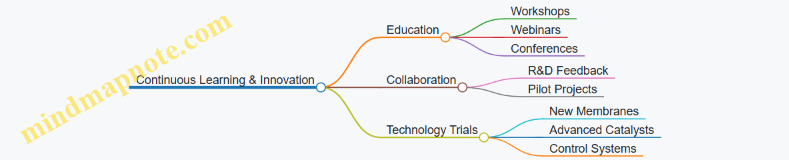
Optimize Water and Energy Resources
- Implement water recycling: Use purified water recovery systems to reduce consumption.
- Maximize renewable energy use: Align electrolyzer operation with renewable generation profiles.
- Consider hybrid energy storage: Combine batteries or thermal storage to smooth power supply.
Example: A facility integrated a water recycling loop reducing freshwater usage by 30%, while coupling with a wind farm and battery storage to ensure stable operation.
Data-Driven Decision Making
- Collect comprehensive operational data: Track electrolyzer performance, energy consumption, and hydrogen output.
- Analyze trends: Identify inefficiencies or degradation early.
- Use dashboards and KPIs: Facilitate quick decision-making and reporting.
Example: A plant operator used a custom dashboard to monitor stack voltage and current density, enabling a 10% improvement in operational efficiency.

Summary Table of Recommendations
| Recommendation Area | Key Actions | Example Outcome |
|---|---|---|
| Process Optimization | Real-time monitoring, energy balancing | 15% energy savings with solar integration |
| Maintenance & Durability | Scheduled inspections, predictive maintenance | 20% downtime reduction |
| Safety & Compliance | Leak detection, staff training | 40% faster emergency response |
| Continuous Learning & Innovation | Collaboration, pilot testing | 5% efficiency improvement |
| Resource Optimization | Water recycling, hybrid energy storage | 30% water usage reduction |
| Data-Driven Operations | Data collection, dashboards | 10% operational efficiency gain |
By adopting these recommendations, chemical engineers and plant operators can significantly enhance the reliability, efficiency, and sustainability of green hydrogen production facilities.
11.4 Final Thoughts on Accelerating Green Hydrogen Adoption
Green hydrogen stands at the forefront of the global energy transition, offering a pathway to decarbonize sectors that have traditionally been hard to abate. Accelerating its adoption requires a holistic approach encompassing technology, policy, economics, and collaboration.
Key Pillars to Accelerate Green Hydrogen Adoption
Technology Innovation and Deployment
-
Electrolyzer Efficiency & Durability: Continuous R&D to improve electrolyzer stack materials and designs reduces costs and increases system lifetimes.
- Example: A PEM electrolyzer manufacturer improved membrane durability by 30% through advanced polymer research, enabling longer operational cycles and reducing maintenance downtime.
-
Renewable Energy Integration: Coupling electrolyzers with stable renewable sources or hybrid systems ensures consistent green hydrogen production.
- Example: A solar-wind hybrid plant in Australia uses battery storage to smooth power supply, achieving 95% electrolyzer uptime.
-
Energy Storage & Grid Interaction: Utilizing hydrogen as a storage medium can balance grid fluctuations and store excess renewable energy.
Supportive Policy and Regulatory Frameworks
-
Incentives & Subsidies: Governments can accelerate adoption by providing capital grants, tax credits, and feed-in tariffs for green hydrogen projects.
- Example: The European Union’s Green Deal includes funding mechanisms that have helped scale electrolyzer manufacturing capacity.
-
Carbon Pricing: Implementing carbon taxes or cap-and-trade systems increases the competitiveness of green hydrogen over fossil-based alternatives.
-
Safety & Standards: Establishing clear safety protocols and certification standards builds trust and facilitates market acceptance.
Economic Viability and Market Development
-
Cost Reduction Pathways: Economies of scale, supply chain optimization, and technological advancements drive down green hydrogen production costs.
- Example: Large-scale projects in the Middle East leverage low-cost solar power and local manufacturing to produce green hydrogen at competitive prices.
-
Innovative Financing Models: Blended finance, green bonds, and public-private partnerships reduce investment risks.
-
Market Creation: Developing demand in sectors like transportation, ammonia production, and steelmaking creates a robust market pull.
Collaboration and Cross-Sector Integration
-
Industry Partnerships: Collaboration between energy producers, technology providers, and end-users accelerates project development and knowledge sharing.
- Example: A multi-industry hydrogen hub in Germany integrates steel, chemical, and transport sectors to optimize hydrogen use and infrastructure.
-
Public-Private Partnerships: Joint initiatives leverage government support and private sector expertise.
-
Education and Workforce Development: Training programs for engineers and operators ensure skilled personnel to manage complex hydrogen systems.
Mind Map: Strategic Roadmap for Green Hydrogen Adoption
Final Example: Integrated Approach in Practice
The NortH2 project in the Netherlands exemplifies accelerating green hydrogen adoption by combining:
- Large-scale offshore wind farms supplying renewable electricity
- PEM electrolyzers optimized for variable power input
- Strong government backing with clear regulatory frameworks
- Partnerships across energy companies, technology providers, and industrial users
This integrated approach is projected to produce 4 GW of green hydrogen by 2030, significantly contributing to regional decarbonization goals.
Closing Remarks
Accelerating green hydrogen adoption is not just a technological challenge but a systemic one. Success hinges on coordinated efforts across innovation, policy, economics, and collaboration. By embracing best practices and learning from pioneering projects, chemical engineers, plant operators, and energy project developers can drive the transition toward a sustainable hydrogen economy.