Accounting for Environmental Costs
1. Introduction to Environmental Cost Accounting
1.1 Understanding Environmental Costs: Definition and Scope
Environmental costs refer to the expenses and financial impacts associated with a company’s interactions with the natural environment. These costs arise from activities that affect natural resources, ecosystems, and human health, whether directly or indirectly. Understanding these costs is crucial for accountants and environmental analysts as it helps organizations manage sustainability risks, comply with regulations, and improve overall financial and environmental performance.
Definition of Environmental Costs
Environmental costs encompass all costs related to the prevention, reduction, and remediation of environmental impacts caused by business operations. These costs can be both tangible (monetary expenses) and intangible (reputational damage, loss of biodiversity).
Key components include:
- Pollution control and waste management
- Resource consumption and depletion
- Environmental compliance and reporting
- Remediation and restoration activities
- Environmental risk management
Scope of Environmental Costs
Environmental costs can be categorized broadly into the following areas:
Examples of Environmental Costs
-
Direct Cost Example:
- A manufacturing plant invests $500,000 in installing air filtration systems to reduce emissions. This is a direct environmental cost related to pollution control.
-
Indirect Cost Example:
- A company faces higher insurance premiums after an environmental incident increases perceived risk. Though not a direct expense for cleanup, it is an indirect environmental cost.
-
Hidden Cost Example:
- An organization sets aside a provision for future environmental remediation due to soil contamination discovered on their property. This liability represents a hidden environmental cost.
Why Understanding Environmental Costs Matters
- Financial Accuracy: Incorporating environmental costs ensures more accurate product costing and profitability analysis.
- Regulatory Compliance: Helps meet legal requirements and avoid penalties.
- Sustainability Goals: Supports corporate social responsibility and sustainability initiatives.
- Risk Management: Identifies potential environmental liabilities early.
Mind Map: Importance of Environmental Cost Accounting
Integrated Example: Environmental Cost in Action
Consider a beverage company that sources water and produces plastic bottles:
- Direct Costs: Water treatment, plastic recycling programs, and waste disposal.
- Indirect Costs: Brand damage due to plastic pollution concerns, leading to decreased sales.
- Hidden Costs: Future regulatory compliance costs as governments tighten plastic use laws.
By accounting for these environmental costs, the company can make informed decisions such as investing in biodegradable packaging or water-saving technologies, ultimately improving sustainability and financial outcomes.
This foundational understanding sets the stage for deeper exploration into identifying, measuring, and managing environmental costs effectively throughout this blog.
1.2 The Importance of Accounting for Environmental Costs in Finance and Sustainability
Environmental cost accounting is a critical practice that bridges the gap between financial performance and sustainable business operations. It enables organizations to recognize, measure, and manage the environmental impacts of their activities in monetary terms, which is essential for informed decision-making.
Why Environmental Cost Accounting Matters
- Enhances Financial Transparency: By incorporating environmental costs, companies provide a clearer picture of their true expenses, including those related to resource consumption, waste management, and regulatory compliance.
- Supports Sustainable Decision-Making: Understanding environmental costs helps businesses evaluate the long-term financial implications of their sustainability initiatives.
- Mitigates Risks: Identifying hidden environmental liabilities early can prevent costly fines, remediation expenses, and reputational damage.
- Improves Resource Efficiency: Tracking environmental costs encourages efficient use of materials and energy, reducing waste and operational costs.
- Meets Stakeholder Expectations: Investors, regulators, and customers increasingly demand transparent reporting on environmental impacts.
Mind Map: Importance of Accounting for Environmental Costs
Example 1: Manufacturing Company Reducing Waste Costs
A mid-sized manufacturing company implemented environmental cost accounting and discovered that waste disposal costs were significantly higher than initially recorded. By identifying these hidden costs, the company invested in waste reduction technologies, which lowered disposal expenses by 25% and improved overall profitability.
Example 2: Financial Institution Integrating Environmental Costs into Risk Assessment
A financial institution incorporated environmental cost data into its credit risk models. This allowed the bank to better assess the environmental risks of lending to certain industries, leading to more sustainable investment portfolios and reduced exposure to environmental liabilities.
Mind Map: Benefits Realized Through Environmental Cost Accounting
Summary
Accounting for environmental costs is not just an accounting exercise; it is a strategic tool that empowers finance and sustainability professionals to drive value creation while promoting environmental stewardship. By embedding these costs into financial systems, organizations can unlock insights that lead to smarter investments, improved compliance, and stronger stakeholder relationships.
1.3 Types of Environmental Costs: Direct, Indirect, and Hidden Costs
Understanding the different types of environmental costs is essential for accountants and environmental analysts to accurately capture and manage these expenses. Environmental costs can broadly be categorized into Direct, Indirect, and Hidden costs. Each category plays a unique role in the financial and sustainability performance of an organization.
Direct Environmental Costs
Direct environmental costs are expenses that can be directly traced to environmental activities or compliance efforts. These costs are usually tangible, measurable, and recorded explicitly in financial statements.
Examples:
- Waste disposal fees
- Pollution control equipment maintenance
- Environmental remediation costs
- Costs of permits and environmental audits
Mind Map: Direct Environmental Costs
Example in Practice: A manufacturing company incurs $50,000 annually for waste disposal and $30,000 for maintaining air filtration systems to comply with environmental regulations. These are direct environmental costs and are recorded as operating expenses.
Indirect Environmental Costs
Indirect environmental costs are not directly attributable to a specific environmental activity but arise as a consequence of environmental impacts or regulatory requirements. These costs often affect multiple departments and may be less visible.
Examples:
- Increased insurance premiums due to environmental risks
- Training employees on environmental compliance
- Administrative costs for managing environmental programs
- Costs related to delays caused by environmental permitting
Mind Map: Indirect Environmental Costs
Example in Practice: An energy company spends $20,000 annually on staff training for environmental compliance and incurs $15,000 in administrative costs for environmental reporting. These are indirect costs supporting environmental management.
Hidden Environmental Costs
Hidden environmental costs are often overlooked or underestimated because they are difficult to quantify or are embedded within other cost categories. These costs can have long-term financial and reputational impacts.
Examples:
- Loss of customer goodwill due to environmental incidents
- Reduced employee morale and productivity linked to poor environmental practices
- Potential fines and penalties not yet realized
- Future liabilities from environmental damage
Mind Map: Hidden Environmental Costs
Example in Practice: A retail chain experiences a decline in sales after a publicized chemical spill at one of its stores. Although the direct cleanup cost is $10,000, the hidden costs include a $100,000 drop in revenue due to lost customer trust and potential legal fees.
Summary Mind Map: Types of Environmental Costs
By recognizing and categorizing environmental costs into these three types, organizations can better allocate resources, improve transparency, and make informed decisions that support both financial and sustainability goals.
1.4 Overview of Regulatory and Reporting Requirements
Environmental cost accounting is increasingly influenced by a complex web of regulatory frameworks and reporting standards designed to promote transparency, accountability, and sustainability. Understanding these requirements is crucial for accountants and environmental analysts to ensure compliance and leverage environmental cost data effectively.
Key Regulatory Frameworks
-
Environmental Protection Laws
- These laws often mandate the identification, measurement, and reporting of environmental costs related to pollution control, waste management, and remediation.
- Example: The U.S. Comprehensive Environmental Response, Compensation, and Liability Act (CERCLA) requires companies to account for cleanup costs as liabilities.
-
Financial Reporting Regulations
- Require companies to disclose environmental liabilities and contingent costs in financial statements.
- Example: International Financial Reporting Standards (IFRS) IAS 37 governs provisions, contingent liabilities, and contingent assets, including environmental provisions.
-
Sustainability and Non-Financial Reporting Mandates
- Increasingly, jurisdictions require companies to report on environmental impacts and related costs.
- Example: The European Union’s Non-Financial Reporting Directive (NFRD) obliges large companies to disclose environmental performance and costs.
Prominent Reporting Standards and Frameworks
-
Global Reporting Initiative (GRI)
- Provides comprehensive guidelines for sustainability reporting, including environmental cost disclosures.
- Example: GRI 307 (Environmental Compliance) requires reporting on fines and non-monetary sanctions related to environmental laws.
-
Sustainability Accounting Standards Board (SASB)
- Industry-specific standards focusing on financially material sustainability information.
- Example: SASB standards for the energy sector include metrics on environmental expenditures.
-
Task Force on Climate-related Financial Disclosures (TCFD)
- Focuses on climate-related risks and opportunities, encouraging disclosure of costs associated with climate change mitigation and adaptation.
Mind Map: Regulatory and Reporting Requirements for Environmental Costs
Example: Applying Regulatory Requirements in Practice
A manufacturing company in the EU must comply with the NFRD by disclosing environmental costs related to waste treatment and emissions control in its annual sustainability report. Using GRI standards, the company categorizes these costs under environmental compliance and integrates them with financial provisions reported under IFRS IAS 37. This dual approach ensures transparency for investors and regulators.
Best Practice Tip
Integrate environmental cost accounting with regulatory reporting by establishing a cross-functional team including finance, environmental compliance, and sustainability experts. This collaboration ensures that all relevant costs are captured accurately and reported in accordance with applicable standards.
Summary
Understanding and navigating regulatory and reporting requirements is foundational for effective environmental cost accounting. Familiarity with laws, financial regulations, and sustainability frameworks enables organizations to comply, enhance transparency, and support sustainable decision-making.
1.5 Best Practice Example: Integrating Environmental Costs in a Manufacturing Firm’s Financial Statements
Integrating environmental costs into financial statements is essential for manufacturing firms aiming to reflect true operational costs and promote sustainability. This section explores a practical example of how a manufacturing company can identify, measure, and report environmental costs within its financial framework.
Step 1: Identify Environmental Costs
Environmental costs in manufacturing typically include waste disposal, emissions control, resource consumption, remediation, and compliance costs. These can be categorized as:
- Direct Costs: Expenses directly tied to environmental activities (e.g., waste treatment).
- Indirect Costs: Overhead costs related to environmental management (e.g., training).
- Contingent Costs: Potential future liabilities (e.g., environmental fines).
Step 2: Measure Environmental Costs
The manufacturing firm collects data from various departments:
- Waste disposal invoices
- Energy and water bills
- Environmental compliance reports
- Maintenance and remediation expenses
Example:
- Waste disposal cost: $50,000/year
- Emissions control equipment maintenance: $30,000/year
- Environmental training: $10,000/year
- Future remediation provision: $100,000
Step 3: Integrate Costs into Financial Statements
Balance Sheet:
- Record environmental remediation provision as a liability.
Income Statement:
- Include ongoing environmental costs (waste disposal, maintenance, training) as operating expenses.
Notes to Financial Statements:
- Disclose environmental policies, cost recognition methods, and contingent liabilities.
Example Journal Entries:
| Date | Account | Debit | Credit |
|---|---|---|---|
| 2024-06-30 | Environmental Expense | $90,000 | |
| Cash/Accounts Payable | $90,000 | ||
| 2024-06-30 | Environmental Remediation Liability | $100,000 | |
| Provision for Environmental Remediation | $100,000 |
Step 4: Reporting and Transparency
The firm prepares a sustainability report section highlighting:
- Total environmental costs incurred
- Progress on reducing environmental impact
- Future commitments and investments
Example:
“In FY 2024, the company invested $90,000 in environmental management activities and recognized a $100,000 provision for future remediation. These efforts align with our commitment to sustainable manufacturing practices.”
Summary
By systematically identifying, measuring, and integrating environmental costs, the manufacturing firm achieves:
- Accurate reflection of true operational costs
- Compliance with accounting and sustainability standards
- Enhanced stakeholder trust through transparent reporting
This best practice example demonstrates how environmental costs can be seamlessly woven into financial statements, supporting both financial integrity and sustainability goals.
2. Identifying and Classifying Environmental Costs
2.1 Methods for Identifying Environmental Costs in Business Operations
Identifying environmental costs is a foundational step in integrating sustainability into financial accounting. Environmental costs are often hidden or embedded within traditional cost categories, making their identification a challenge. This section explores practical methods to uncover these costs, supported by clear examples and mind maps to visualize the process.
What Are Environmental Costs?
Environmental costs refer to expenses related to the prevention, reduction, or remediation of environmental impacts caused by business activities. These costs can be direct (e.g., waste disposal fees) or indirect (e.g., reputational damage).
Methods for Identifying Environmental Costs
Process Mapping and Activity Analysis
Mapping out business processes helps pinpoint stages where environmental costs arise. By analyzing each activity, companies can identify inputs, outputs, and waste streams that generate costs.
Example: A paper manufacturing company maps its production process and identifies that the bleaching stage uses chemicals that require special disposal, incurring additional costs.
Mind Map:
Environmental Audits
Conducting environmental audits involves systematic examination of operations to detect environmental impacts and associated costs.
Example: An environmental audit at a textile plant reveals high water usage and wastewater treatment costs previously untracked in accounting.
Mind Map:
Cost Driver Analysis
Identifying cost drivers related to environmental activities helps isolate environmental costs from general expenses.
Example: A logistics company analyzes fuel consumption as a cost driver for greenhouse gas emissions and related carbon offset expenses.
Mind Map:
Review of Regulatory Compliance Costs
Compliance with environmental regulations often generates identifiable costs such as permits, fines, and monitoring.
Example: A chemical plant tracks expenses related to air quality permits and penalties for emission exceedances.
Mind Map:
Stakeholder Interviews and Workshops
Engaging employees, environmental analysts, and other stakeholders can uncover hidden environmental costs through shared knowledge.
Example: A manufacturing firm holds workshops with maintenance and operations teams to identify costs related to hazardous waste handling.
Mind Map:
Use of Environmental Management Systems (EMS)
EMS such as ISO 14001 provide structured data on environmental aspects and impacts, facilitating cost identification.
Example: A food processing company uses EMS data to track energy consumption and waste disposal costs.
Mind Map:
Integrated Example: Identifying Environmental Costs in a Beverage Company
Step 1: Process Mapping reveals water usage and packaging waste as key environmental aspects.
Step 2: Environmental Audit confirms wastewater treatment and recycling costs.
Step 3: Cost Driver Analysis links energy consumption in refrigeration to environmental costs.
Step 4: Regulatory Review highlights expenses for waste disposal permits.
Step 5: Stakeholder Workshops uncover additional costs in spill cleanup.
Step 6: EMS data consolidates all findings for accurate cost accounting.
Summary
Identifying environmental costs requires a multi-method approach combining process analysis, audits, cost driver examination, regulatory review, stakeholder input, and EMS data. Using these methods, organizations can uncover hidden costs, enabling better environmental cost accounting and sustainability management.
2.2 Classification: Prevention, Detection, Internal Failure, and External Failure Costs
Environmental cost accounting involves categorizing costs to better understand where resources are being spent and how to optimize environmental performance. One widely used framework classifies environmental costs into four main categories: Prevention Costs, Detection Costs, Internal Failure Costs, and External Failure Costs. This classification helps organizations pinpoint areas for improvement and allocate budgets effectively.
Mind Map: Classification of Environmental Costs
Prevention Costs
Definition: Costs incurred to avoid environmental damage before it happens.
Examples:
- Installing advanced pollution control equipment to reduce emissions.
- Conducting employee training programs on waste reduction techniques.
- Designing products with recyclable materials to minimize environmental impact.
Example in Practice: A packaging company invests $50,000 annually in redesigning its packaging to use biodegradable materials. This upfront cost prevents future waste management expenses and aligns with sustainability goals.
Detection Costs
Definition: Costs related to identifying and monitoring environmental issues before they escalate.
Examples:
- Regular environmental audits to ensure compliance with regulations.
- Continuous air and water quality monitoring.
- Testing soil samples near manufacturing sites.
Example in Practice: A chemical plant spends $30,000 per quarter on environmental monitoring equipment and third-party audits. Early detection of leaks helps avoid costly spills and regulatory penalties.
Internal Failure Costs
Definition: Costs arising from environmental problems detected before products or services reach the customer.
Examples:
- Disposal costs for hazardous waste generated during production.
- Reworking products contaminated by environmental incidents.
- Downtime caused by equipment failure due to environmental damage.
Example in Practice: An electronics manufacturer incurs $20,000 monthly in waste disposal fees for defective circuit boards contaminated with lead. These costs highlight the need for improved process controls.
External Failure Costs
Definition: Costs that occur after environmental damage affects external stakeholders or the environment.
Examples:
- Fines and penalties for violating environmental laws.
- Cleanup and remediation of contaminated sites.
- Legal fees and settlements from environmental lawsuits.
- Loss of customer trust and brand reputation.
Example in Practice: A mining company faces a $2 million fine and spends $5 million on cleanup after a tailings dam failure causes river pollution. Additionally, the company experiences a 15% drop in stock price due to reputational damage.
Integrated Example: Environmental Cost Classification in a Food Processing Plant
| Cost Category | Example Activity | Cost Impact |
|---|---|---|
| Prevention Costs | Installing energy-efficient boilers | $100,000 initial investment |
| Detection Costs | Monthly water quality testing | $5,000 per month |
| Internal Failure Costs | Waste disposal from spoiled products | $10,000 per quarter |
| External Failure Costs | Fines for wastewater discharge violation | $50,000 penalty + cleanup costs |
This classification enables the plant’s accountants and environmental analysts to identify that investing more in prevention (e.g., better storage to reduce spoilage) could reduce costly internal and external failures.
Summary
Classifying environmental costs into Prevention, Detection, Internal Failure, and External Failure categories provides a structured approach to managing and reducing environmental expenses. By understanding and applying this framework, organizations can prioritize investments that minimize environmental risks and improve sustainability outcomes.
2.3 Case Study: Environmental Cost Classification in a Chemical Processing Plant
In this case study, we explore how a mid-sized chemical processing plant systematically identifies and classifies its environmental costs to improve sustainability and financial transparency. This example illustrates the practical application of environmental cost accounting principles and highlights best practices for accountants and environmental analysts.
Background
The chemical plant produces industrial solvents and specialty chemicals. Environmental costs have historically been treated as overhead, but recent regulatory pressures and stakeholder demands have prompted the company to adopt a more detailed environmental cost accounting approach.
Step 1: Identifying Environmental Costs
The plant began by mapping out all activities with potential environmental impacts. This included:
- Wastewater treatment
- Air emissions control
- Hazardous waste disposal
- Energy consumption related to pollution control
- Spill response and remediation
- Environmental monitoring and compliance activities
Step 2: Classifying Environmental Costs
The company used the classic environmental cost categories:
- Prevention Costs: Costs incurred to prevent environmental damage.
- Detection Costs: Costs related to monitoring and detecting environmental issues.
- Internal Failure Costs: Costs from environmental problems detected before reaching the external environment.
- External Failure Costs: Costs resulting from environmental damage affecting external parties.
Mind Map: Environmental Cost Classification
Step 3: Examples of Environmental Cost Items
| Cost Category | Example Item | Description |
|---|---|---|
| Prevention Costs | Installation of air scrubbers | Capital and maintenance costs to reduce air pollutants before release |
| Detection Costs | Soil and groundwater testing | Expenses for periodic environmental sampling and lab analysis |
| Internal Failure Costs | Treatment of contaminated wastewater | Operating costs for onsite treatment facilities to avoid environmental release |
| External Failure Costs | Regulatory fines due to accidental chemical spill | Penalties and remediation costs following an environmental incident |
Step 4: Practical Application
The plant’s accounting team collaborated with environmental analysts to allocate costs accurately. For example, the cost of running the wastewater treatment plant was split between production overhead and internal failure environmental costs based on the volume of contaminated water treated.
They also implemented activity-based costing (ABC) to trace prevention costs directly to specific processes, such as the cost of employee training allocated to the solvent production line.
Mind Map: Activity-Based Costing for Environmental Costs
Step 5: Outcomes and Benefits
- Improved Cost Visibility: The plant gained a clearer picture of environmental costs, enabling better budgeting and forecasting.
- Enhanced Compliance: Detailed tracking helped ensure timely regulatory reporting and reduced risk of fines.
- Informed Decision-Making: Management used cost data to prioritize investments in pollution prevention technologies.
- Stakeholder Communication: Transparent environmental cost reporting improved trust with regulators and the community.
Summary
This case study demonstrates the importance of a structured approach to environmental cost classification. By breaking down costs into prevention, detection, internal failure, and external failure categories, the chemical processing plant could better manage its environmental impact and integrate sustainability into financial decision-making.
Key Takeaways for Accountants and Environmental Analysts
- Collaborate closely to identify all relevant environmental activities and costs.
- Use clear classification frameworks to organize environmental costs.
- Apply activity-based costing to improve accuracy in cost allocation.
- Leverage environmental cost data to support compliance and strategic initiatives.
This approach can be adapted to other industries seeking to enhance their environmental cost accounting practices.
2.4 Tools and Techniques for Environmental Cost Identification
Identifying environmental costs accurately is a critical step for accountants and environmental analysts aiming to integrate sustainability into financial management. Various tools and techniques can help organizations uncover, classify, and quantify these costs effectively. This section explores some of the most practical and widely used methods, supported by clear examples and mind maps to visualize the processes.
Environmental Cost Mapping
Environmental cost mapping is a visual technique that helps identify where environmental costs occur across business activities. It breaks down operations into stages and highlights associated environmental impacts and costs.
Mind Map: Environmental Cost Mapping
Example: A paper manufacturing company uses environmental cost mapping to identify that the highest environmental costs occur during the manufacturing phase due to energy-intensive processes and waste water treatment. This insight helps prioritize cost control efforts.
Activity-Based Costing (ABC) for Environmental Costs
ABC allocates overhead and indirect costs to specific activities, providing a more accurate picture of environmental costs related to each process.
Mind Map: Activity-Based Costing for Environmental Costs
Example: An electronics manufacturer applies ABC to allocate environmental costs such as hazardous waste disposal and emission monitoring to different product lines. This reveals that one product line has disproportionately high environmental costs, prompting a redesign.
Environmental Management Systems (EMS) Data Utilization
EMS frameworks like ISO 14001 provide structured data on environmental performance, which can be leveraged to identify and quantify environmental costs.
Mind Map: EMS Data Utilization
Example: A chemical plant uses EMS data to track water consumption and links it to water treatment costs. By identifying spikes in water use, the plant can investigate leaks or inefficiencies, reducing both environmental impact and costs.
Life Cycle Assessment (LCA) Integration
LCA evaluates environmental impacts throughout a product’s life cycle and can be combined with cost data to identify hidden environmental costs.
Mind Map: LCA for Environmental Cost Identification
Example: A consumer goods company conducts an LCA and discovers that transportation contributes significantly to carbon emissions and fuel costs. This leads to exploring local sourcing to reduce costs and environmental impacts.
Environmental Audits
Environmental audits systematically review operations to identify environmental costs, compliance gaps, and improvement opportunities.
Mind Map: Environmental Audits
Example: A manufacturing company conducts an environmental audit and uncovers unreported hazardous waste disposal costs. Addressing these findings improves compliance and reduces unexpected expenses.
Cost-Benefit Analysis (CBA) for Environmental Initiatives
While primarily a decision-making tool, CBA helps identify environmental costs by comparing costs and benefits of environmental projects.
Mind Map: Cost-Benefit Analysis
Example: A company evaluates installing solar panels. The CBA identifies upfront environmental costs and long-term savings, helping justify the investment.
Summary
Using these tools and techniques, accountants and environmental analysts can systematically identify environmental costs, ensuring they are accounted for accurately and transparently. Visual aids like mind maps help clarify complex relationships and support effective communication within organizations.
By integrating these approaches, organizations can better manage environmental costs, improve sustainability performance, and enhance decision-making.
2.5 Best Practice: Using Activity-Based Costing to Trace Environmental Costs
Activity-Based Costing (ABC) is a powerful method for tracing environmental costs more accurately by linking costs to specific activities that generate environmental impacts. Unlike traditional costing methods that allocate overhead broadly, ABC identifies cost drivers related to environmental activities, enabling organizations to pinpoint where environmental costs arise and manage them effectively.
Why Use ABC for Environmental Costs?
- Precision: Allocates costs based on actual activities causing environmental impacts.
- Transparency: Reveals hidden or indirect environmental costs.
- Decision Support: Helps prioritize environmental initiatives by understanding cost drivers.
Mind Map: Overview of Activity-Based Costing for Environmental Costs
Step-by-Step Example: Applying ABC to Environmental Costs in a Manufacturing Plant
-
Identify Key Environmental Activities:
- Waste disposal
- Air emission monitoring
- Water treatment
- Hazardous material handling
-
Determine Cost Drivers:
- Waste disposal: Tons of waste generated
- Air emission monitoring: Number of emission tests
- Water treatment: Volume of water treated
- Hazardous material handling: Number of hazardous material shipments
-
Collect Cost Data:
- Labor hours spent on each activity
- Materials used (e.g., chemicals for water treatment)
- Equipment depreciation related to environmental controls
- External contractor fees
-
Assign Costs to Activities Based on Drivers:
- Example: If total waste disposal cost is $50,000 and the plant generates 500 tons of waste, cost per ton = $100.
-
Calculate Total Environmental Cost per Product Line:
- Allocate activity costs to products based on their share of the cost driver (e.g., product A generates 200 tons of waste, so $20,000 allocated).
Mind Map: Example of Cost Driver Allocation
Benefits Illustrated Through This Example
- Product-level environmental costs become visible, enabling targeted improvements.
- Management can identify which product lines have higher environmental cost footprints.
- Supports pricing strategies that internalize environmental costs.
Additional Example: Service Industry Application
In a financial services firm, environmental costs might include energy consumption for data centers and paper waste.
- Activities: Data center cooling, paper recycling, office energy use.
- Cost Drivers: Kilowatt-hours consumed, pounds of paper recycled, number of employees.
- ABC Application: Assign energy costs to departments based on server usage; allocate paper waste costs based on print volumes.
Mind Map: ABC in Service Sector Environmental Costing
Tips for Successful Implementation
- Engage cross-functional teams including environmental analysts and accountants.
- Use software tools to track activities and cost drivers efficiently.
- Regularly update cost driver data to reflect operational changes.
- Combine ABC insights with sustainability goals for integrated decision-making.
By adopting Activity-Based Costing for environmental costs, organizations gain a granular understanding of how their operations impact the environment financially, enabling smarter resource allocation and stronger sustainability performance.
3. Measuring Environmental Costs Accurately
3.1 Quantitative vs. Qualitative Measurement Approaches
Environmental cost accounting relies heavily on accurate measurement of environmental costs, which can be broadly categorized into quantitative and qualitative approaches. Understanding these approaches helps accountants and environmental analysts capture the full scope of environmental impacts and translate them into meaningful financial data.
Quantitative Measurement Approaches
Quantitative measurement involves assigning numerical values to environmental costs, making them directly measurable and comparable. This approach is essential for budgeting, reporting, and decision-making.
Key Characteristics:
- Uses measurable data such as volume, weight, or monetary value.
- Often derived from invoices, utility bills, emission data, or waste disposal records.
- Enables precise tracking and benchmarking.
Common Quantitative Metrics:
- Cost of waste disposal (e.g., $ per ton of hazardous waste)
- Energy consumption costs (e.g., kWh and associated $)
- Emission fees or carbon taxes paid
- Cost of environmental remediation
Example: A manufacturing company tracks the amount of hazardous waste generated monthly. They pay $150 per ton for disposal. If 10 tons are generated, the quantitative environmental cost is $1,500.
Mind Map: Quantitative Measurement Approaches
Qualitative Measurement Approaches
Qualitative measurement focuses on non-numeric aspects of environmental costs, such as reputational damage, stakeholder perceptions, or potential regulatory risks. These are harder to quantify but equally important for comprehensive environmental cost accounting.
Key Characteristics:
- Involves descriptive, subjective data.
- Captures indirect or intangible environmental costs.
- Often gathered through surveys, expert assessments, or stakeholder feedback.
Common Qualitative Factors:
- Brand reputation impact due to environmental incidents
- Employee morale related to sustainability initiatives
- Regulatory risk exposure
- Community relations and social license to operate
Example: An oil company experiences a minor spill that does not incur immediate cleanup costs but leads to negative media coverage and community distrust. The qualitative environmental cost includes potential future business loss and increased scrutiny.
Mind Map: Qualitative Measurement Approaches
Integrating Quantitative and Qualitative Approaches
For a holistic view, organizations should integrate both approaches. Quantitative data provides concrete financial figures, while qualitative insights highlight risks and opportunities that numbers alone cannot capture.
Example: A retail chain measures its energy consumption costs (quantitative) and also assesses customer sentiment regarding its sustainability efforts through surveys (qualitative). This combined insight helps prioritize energy-saving investments that also enhance brand loyalty.
Mind Map: Integrated Measurement Approach
Best Practice Example: Applying Both Approaches in a Food Processing Company
Scenario: A food processing company wants to measure its environmental costs related to water usage.
- Quantitative: They track water consumption in cubic meters and calculate the cost based on local water tariffs.
- Qualitative: They conduct community surveys to understand concerns about water scarcity and assess potential reputational risks.
Outcome: By combining these approaches, the company not only manages its water expenses but also proactively addresses community concerns, reducing future risks and improving sustainability reporting.
Summary
- Quantitative approaches assign numeric values to environmental costs, enabling precise financial accounting.
- Qualitative approaches capture intangible and indirect environmental impacts.
- Integrating both approaches provides a comprehensive understanding essential for effective environmental cost management.
- Practical application of both approaches enhances decision-making, risk management, and sustainability performance.
3.2 Calculating Direct Environmental Costs: Waste Management and Emission Controls
Direct environmental costs are expenses that a company incurs specifically to manage its environmental impact. These costs are tangible, measurable, and directly linked to activities such as waste management and emission controls. Accurately calculating these costs is essential for transparency, regulatory compliance, and strategic decision-making.
Understanding Direct Environmental Costs
Direct environmental costs typically include:
- Waste disposal fees
- Treatment of hazardous materials
- Installation and operation of pollution control equipment
- Costs of emissions monitoring and reporting
- Remediation expenses related to spills or leaks
These costs are often recorded as operating expenses but can also be capitalized if related to long-term environmental control assets.
Mind Map: Components of Direct Environmental Costs
Calculating Waste Management Costs: Example
Scenario: A mid-sized manufacturing company generates both hazardous and non-hazardous waste.
-
Waste Collection and Transportation: The company pays a waste management firm $5,000 monthly for collecting and transporting waste.
-
Waste Treatment: Hazardous waste treatment costs $100 per ton; the company produces 10 tons monthly.
-
Disposal Fees: Non-hazardous waste disposal costs $50 per ton; 20 tons are disposed of monthly.
-
Recycling Program: The company invests $2,000 monthly in recycling initiatives.
Calculation:
- Waste Collection and Transportation: $5,000
- Hazardous Waste Treatment: 10 tons x $100 = $1,000
- Non-Hazardous Waste Disposal: 20 tons x $50 = $1,000
- Recycling Program: $2,000
Total Waste Management Cost = $5,000 + $1,000 + $1,000 + $2,000 = $9,000 per month
This total is recorded as a direct environmental cost under waste management.
Calculating Emission Control Costs: Example
Scenario: The same company operates air pollution control equipment.
-
Capital Costs: Installation of scrubbers cost $120,000 (capitalized and depreciated over 10 years).
-
Operating Costs: Monthly electricity and maintenance costs for the scrubbers are $1,500.
-
Emission Monitoring: Monthly emissions testing costs $800.
-
Emission Permits: Annual emission permit fees total $6,000.
Calculation:
- Depreciation: $120,000 / 10 years = $12,000 per year = $1,000 per month
- Operating Costs: $1,500 per month
- Emission Monitoring: $800 per month
- Permit Fees: $6,000 / 12 = $500 per month
Total Emission Control Cost = $1,000 + $1,500 + $800 + $500 = $3,800 per month
This amount is recorded as a direct environmental cost related to emission controls.
Mind Map: Steps to Calculate Direct Environmental Costs
Best Practice Tips
- Use Activity-Based Costing (ABC): Trace costs directly to environmental activities for more accurate allocation.
- Regularly Update Cost Data: Environmental costs can fluctuate with regulatory changes and operational shifts.
- Integrate with Environmental Management Systems (EMS): Leverage EMS data for precise tracking.
- Engage Cross-Functional Teams: Collaborate with operations, finance, and environmental departments.
By carefully identifying and calculating direct environmental costs such as waste management and emission controls, organizations can better understand their environmental impact, improve cost management, and enhance sustainability reporting.
3.3 Estimating Indirect Environmental Costs: Impact on Supply Chain and Reputation
Indirect environmental costs are often less visible but can significantly affect a company’s financial health and sustainability profile. These costs arise not from direct environmental management activities but from the broader consequences of environmental impacts, such as supply chain disruptions, brand damage, and regulatory penalties.
Understanding Indirect Environmental Costs
Indirect environmental costs include:
- Supply chain risks due to environmental issues
- Reputational damage leading to loss of customers or market share
- Increased insurance premiums
- Legal and compliance risks
- Costs related to stakeholder engagement and crisis management
Mind Map: Components of Indirect Environmental Costs
Example 1: Supply Chain Disruption Due to Environmental Factors
A clothing manufacturer sources cotton from regions prone to drought. Due to prolonged drought conditions, cotton yields drop significantly, causing raw material shortages and price spikes. This indirect environmental cost leads to:
- Increased procurement costs
- Delays in production schedules
- Potential loss of sales due to inventory shortages
By estimating these costs, the company can evaluate the financial impact of environmental risks in its supply chain and consider diversifying suppliers or investing in sustainable sourcing.
Mind Map: Supply Chain Environmental Risk Assessment
Example 2: Reputational Damage from Environmental Incidents
An energy company experiences a minor oil spill. Although the cleanup cost is manageable, the company faces:
- Negative media coverage
- Public protests
- Decline in investor confidence
- Customer boycotts
These indirect costs can be quantified by analyzing stock price fluctuations, changes in sales volume, and increased marketing or public relations expenses to restore brand image.
Mind Map: Reputational Impact Pathway
Best Practice for Estimating Indirect Environmental Costs
- Identify Relevant Environmental Risks: Map out environmental factors that could indirectly affect operations.
- Engage Cross-Functional Teams: Include supply chain managers, marketing, legal, and finance to capture diverse perspectives.
- Use Scenario Analysis: Model potential environmental incidents and their financial impacts.
- Leverage Historical Data: Analyze past incidents and their indirect costs.
- Quantify Intangible Costs: Use proxy measures like brand valuation changes or customer churn rates.
Integrated Example: Calculating Indirect Costs for a Food Producer
A food producer sources ingredients from multiple regions. Due to deforestation regulations, some suppliers face operational restrictions, causing delays and price increases. Simultaneously, a social media campaign highlights the company’s association with unsustainable practices, causing a dip in sales.
Indirect costs include:
- Additional procurement costs: $500,000
- Lost sales due to reputational damage: $1,200,000
- Increased marketing spend to rebuild brand: $300,000
Total estimated indirect environmental cost: $2,000,000
This comprehensive estimation helps the company prioritize sustainability initiatives and supplier audits.
By systematically estimating indirect environmental costs, accountants and environmental analysts can provide a more complete picture of a company’s environmental impact, enabling better risk management and strategic decision-making.
3.4 Example: Measuring Environmental Costs in a Retail Supply Chain
Measuring environmental costs in a retail supply chain involves identifying, quantifying, and analyzing the various environmental impacts and associated costs that occur from sourcing raw materials to delivering products to customers. Retail supply chains are complex and involve multiple stages such as procurement, transportation, warehousing, and distribution, each contributing to environmental costs.
Step 1: Identify Key Environmental Cost Areas in the Retail Supply Chain
Mind Map: Environmental Cost Areas in Retail Supply Chain
Step 2: Quantify Environmental Costs with Examples
-
Procurement:
- Example: A retailer sources packaging materials made from virgin plastic. The environmental cost includes the energy used in plastic production and the carbon footprint associated with raw material extraction.
- Measurement: Calculate the carbon emissions per kilogram of plastic packaging and multiply by the quantity purchased.
-
Transportation:
- Example: Goods transported from suppliers to distribution centers using diesel trucks.
- Measurement: Use fuel consumption data to estimate CO2 emissions (e.g., liters of diesel consumed × emission factor).
- Cost: Include fuel costs and potential carbon taxes or carbon offset costs.
-
Warehousing:
- Example: A distribution center uses electricity for lighting and refrigeration.
- Measurement: Track electricity consumption (kWh) and multiply by the local emission factor for electricity generation.
- Cost: Electricity bills plus environmental impact costs.
-
Distribution:
- Example: Last-mile delivery uses electric vans but requires battery disposal and charging infrastructure.
- Measurement: Calculate energy consumption and factor in battery lifecycle environmental costs.
Step 3: Use Activity-Based Costing (ABC) to Allocate Environmental Costs
Mind Map: Activity-Based Costing for Environmental Costs
Step 4: Example Calculation
Scenario:
- A retailer ships 10,000 units of a product from a supplier 500 km away.
- Diesel truck fuel efficiency: 5 km/liter.
- Diesel emission factor: 2.68 kg CO2 per liter.
- Electricity consumption at warehouse: 20,000 kWh/month.
- Electricity emission factor: 0.5 kg CO2/kWh.
Calculations:
-
Fuel used for transportation = 500 km / 5 km/liter = 100 liters
-
CO2 emissions from transportation = 100 liters × 2.68 kg CO2/liter = 268 kg CO2
-
CO2 emissions per unit transported = 268 kg CO2 / 10,000 units = 0.0268 kg CO2/unit
-
Warehouse monthly emissions = 20,000 kWh × 0.5 kg CO2/kWh = 10,000 kg CO2
-
Allocate warehouse emissions per product (assuming 100,000 units stored monthly) = 10,000 kg CO2 / 100,000 units = 0.1 kg CO2/unit
Total CO2 emissions per unit (transport + warehousing) = 0.1268 kg CO2/unit
Step 5: Incorporate Environmental Costs into Financial Metrics
- Assign a monetary value to CO2 emissions using carbon pricing (e.g., $30 per ton CO2).
- Transportation CO2 cost per unit = 0.0268 kg × $30/1000 kg = $0.0008 per unit
- Warehousing CO2 cost per unit = 0.1 kg × $30/1000 kg = $0.003 per unit
- Total environmental cost per unit = $0.0038
This cost can be integrated into product costing, pricing decisions, or sustainability reporting.
Summary
Measuring environmental costs in a retail supply chain requires a systematic approach to identify all relevant cost areas, quantify their impacts using data and emission factors, and allocate these costs accurately to products or activities. Using tools like activity-based costing and incorporating carbon pricing enables retailers to better understand and manage their environmental footprint.
This example demonstrates how accountants and environmental analysts can collaborate to bring transparency and financial accountability to environmental impacts within retail supply chains.
3.5 Best Practice: Leveraging Environmental Management Systems (EMS) Data for Cost Measurement
Environmental Management Systems (EMS) are structured frameworks that organizations use to manage their environmental impacts systematically. Leveraging EMS data for environmental cost measurement is a best practice that enhances accuracy, transparency, and decision-making efficiency. EMS provides real-time, comprehensive data on resource consumption, waste generation, emissions, and compliance activities, which are critical inputs for calculating environmental costs.
Why Use EMS Data for Cost Measurement?
- Accuracy: EMS collects detailed operational data, reducing reliance on estimates.
- Timeliness: Continuous monitoring enables up-to-date cost tracking.
- Integration: EMS data can be linked with financial systems for seamless accounting.
- Compliance: Supports regulatory reporting and audit readiness.
Key EMS Data Types Relevant for Cost Measurement
- Energy consumption (electricity, fuel)
- Water usage
- Waste volumes and types
- Emissions data (CO2, NOx, SOx, etc.)
- Resource usage efficiency
- Incident and non-compliance records
Mind Map: Leveraging EMS Data for Environmental Cost Measurement
Practical Example: Using EMS Data in a Manufacturing Plant
Scenario: A mid-sized manufacturing plant implements an EMS to monitor its environmental footprint. The EMS tracks electricity consumption, water usage, waste generation, and emissions.
Step 1: Data Collection
- EMS records monthly electricity usage of 50,000 kWh.
- Water usage is 1,200 cubic meters per month.
- Waste generated totals 5 tons monthly, categorized into hazardous and non-hazardous.
- Emissions data shows 10 tons of CO2 equivalent.
Step 2: Cost Measurement
- Electricity cost: $0.10 per kWh → $5,000/month.
- Water cost: $2 per cubic meter → $2,400/month.
- Waste disposal costs:
- Hazardous waste: $200/ton → $600/month.
- Non-hazardous waste: $50/ton → $200/month.
- Carbon tax: $20 per ton CO2 → $200/month.
Step 3: Integration and Reporting
- EMS data is integrated with the accounting system to automatically allocate these costs to relevant departments.
- Monthly environmental cost reports are generated for management review.
Step 4: Continuous Improvement
- Using EMS data, the plant identifies that water usage is higher than industry benchmarks.
- Initiates water-saving projects, reducing water costs by 15% within six months.
Mind Map: EMS Data-Driven Cost Reduction Cycle
Additional Example: EMS Supporting Regulatory Compliance Costs
A chemical company uses EMS data to track emissions and ensure compliance with environmental permits. When an emission limit is exceeded, EMS alerts trigger immediate corrective actions, minimizing potential fines. The EMS also records the cost of these fines and remediation efforts, allowing accurate accounting of environmental liabilities.
Tips for Accountants and Environmental Analysts
- Collaborate closely with EMS managers to understand data sources and quality.
- Use EMS data to move from estimated to actual cost figures.
- Regularly validate EMS data accuracy to ensure reliable cost measurement.
- Incorporate EMS insights into budgeting and forecasting environmental expenses.
Leveraging EMS data transforms environmental cost accounting from a manual, error-prone process into a dynamic, data-driven practice that supports sustainability goals and financial accountability.
4. Integrating Environmental Costs into Financial Accounting
4.1 Aligning Environmental Costs with Traditional Accounting Frameworks
Environmental cost accounting involves integrating environmental-related expenses into the broader financial accounting system. Aligning these costs with traditional accounting frameworks ensures consistency, transparency, and compliance with financial reporting standards. This section explores how environmental costs can be mapped and recorded within established accounting principles, supported by practical examples and mind maps.
Understanding the Intersection
Traditional accounting frameworks such as Generally Accepted Accounting Principles (GAAP) or International Financial Reporting Standards (IFRS) provide structured methods for recognizing, measuring, and reporting costs. Environmental costs, while sometimes indirect or intangible, must be categorized and accounted for in ways that align with these frameworks to maintain financial integrity.
Key Considerations for Alignment
- Classification of Environmental Costs: Determining whether costs are operating expenses, capital expenditures, provisions, or contingent liabilities.
- Recognition Criteria: When and how environmental costs should be recognized in financial statements.
- Measurement: Valuing environmental costs accurately, including estimation of future remediation or compliance costs.
- Disclosure: Transparent reporting in notes and sustainability reports.
Mind Map: Aligning Environmental Costs with Traditional Accounting Frameworks
Practical Examples
Example 1: Capitalizing Environmental Equipment Costs
A manufacturing company installs a new air filtration system to reduce emissions. The cost of the equipment and installation is $500,000.
- Accounting Treatment: This cost is capitalized as a fixed asset under Property, Plant, and Equipment (PPE).
- Depreciation: The company depreciates the asset over its useful life (e.g., 10 years).
- Financial Impact: The initial outlay is not expensed immediately but allocated over time, aligning with IFRS and GAAP standards.
Example 2: Recognizing Environmental Remediation Provisions
An oil company discovers contamination on one of its sites requiring cleanup estimated at $2 million.
- Accounting Treatment: Under IAS 37 (Provisions, Contingent Liabilities, and Contingent Assets), the company recognizes a provision for the estimated remediation cost.
- Measurement: The provision is recorded at the best estimate of the expenditure required to settle the obligation.
- Disclosure: Details of the provision and related uncertainties are disclosed in the financial statement notes.
Example 3: Expense Recognition for Environmental Fines
A company incurs a $100,000 fine for non-compliance with environmental regulations.
- Accounting Treatment: The fine is recognized as an expense in the period it is incurred.
- Disclosure: The nature and amount of the fine may be disclosed in the notes if material.
Mind Map: Environmental Cost Recognition Paths
Integrating Environmental Costs into Financial Statements
| Financial Statement Element | Environmental Cost Examples | Accounting Treatment |
|---|---|---|
| Income Statement | Waste disposal fees, fines, environmental penalties | Recognized as operating expenses |
| Balance Sheet | Pollution control equipment, remediation provisions | Capitalized as assets or recognized as liabilities |
| Cash Flow Statement | Payments for environmental projects and fines | Classified under operating or investing activities |
Best Practice Tips
- Collaborate with environmental analysts to accurately identify and quantify costs.
- Use consistent classification criteria to avoid misstatements.
- Document assumptions and estimates used in measuring provisions.
- Ensure disclosures meet regulatory and stakeholder expectations.
By aligning environmental costs with traditional accounting frameworks, organizations can achieve accurate financial reporting that reflects their sustainability commitments and regulatory compliance.
4.2 Capitalizing vs. Expensing Environmental Costs: Guidelines and Examples
Environmental costs can be accounted for either by capitalizing or expensing them, depending on their nature, timing, and expected benefits. Understanding when to capitalize versus when to expense these costs is crucial for accurate financial reporting and compliance.
What is Capitalizing vs. Expensing?
- Capitalizing means recording a cost as an asset on the balance sheet, which is then depreciated or amortized over its useful life.
- Expensing means recognizing the cost immediately in the income statement, reducing net income for the period.
Guidelines for Capitalizing Environmental Costs
Environmental costs should be capitalized when they:
- Provide future economic benefits beyond the current accounting period.
- Are part of acquiring, constructing, or improving a long-term asset.
- Are necessary to prepare an asset for its intended use.
Examples include:
- Installing pollution control equipment on a factory.
- Costs related to environmental site assessments before acquiring land.
- Environmental remediation costs that extend the life or value of an asset.
Guidelines for Expensing Environmental Costs
Environmental costs should be expensed when they:
- Are incurred for routine maintenance or compliance.
- Do not provide future economic benefits.
- Are related to current period environmental fines or penalties.
Examples include:
- Costs for routine waste disposal.
- Expenses related to environmental monitoring and reporting.
- Costs of cleaning up minor spills or leaks.
Mind Map: Decision Process for Capitalizing vs. Expensing Environmental Costs
Example 1: Capitalizing Pollution Control Equipment
Scenario: A manufacturing company installs a new air filtration system to reduce emissions.
- The cost of the equipment and installation is $500,000.
- The system is expected to last 10 years.
Accounting treatment:
- Capitalize the $500,000 as a fixed asset.
- Depreciate over 10 years.
Rationale: The equipment provides long-term benefits and improves the asset’s value.
Example 2: Expensing Routine Waste Disposal Costs
Scenario: The same company spends $20,000 monthly on hazardous waste disposal.
Accounting treatment:
- Expense the $20,000 in the period incurred.
Rationale: These are recurring operational costs without future economic benefits.
Example 3: Environmental Remediation Costs
Scenario: A company incurs $200,000 to clean up contamination on land it owns, extending the land’s usability.
Accounting treatment:
- Capitalize the remediation cost as part of the land asset.
Rationale: The remediation improves the asset’s condition and extends its useful life.
Mind Map: Examples of Capitalized vs. Expensed Environmental Costs
Key Accounting Standards and Regulatory References
- IAS 16 (Property, Plant and Equipment): Capitalization criteria for costs that enhance asset value.
- IAS 37 (Provisions, Contingent Liabilities and Contingent Assets): Accounting for environmental liabilities.
- US GAAP ASC 410-30: Environmental obligations and asset retirement costs.
Best Practice Tips
- Collaborate with environmental analysts to determine the nature and expected benefits of costs.
- Maintain detailed documentation supporting capitalization decisions.
- Regularly review capitalized environmental assets for impairment.
- Disclose environmental cost accounting policies transparently in financial reports.
By carefully distinguishing between capitalizing and expensing environmental costs, accountants and environmental analysts can ensure accurate financial representation and support sustainable business practices.
4.3 Accounting for Environmental Liabilities and Provisions
Environmental liabilities and provisions represent obligations that a company must recognize and account for due to environmental regulations, contamination, remediation activities, or other environmental impacts. Proper accounting for these liabilities is essential for transparent financial reporting and risk management.
Understanding Environmental Liabilities
Environmental liabilities are present obligations arising from past events, the settlement of which is expected to result in an outflow of resources (usually cash) to remediate or manage environmental damage.
- Examples include:
- Costs related to site cleanup and remediation
- Fines or penalties for environmental violations
- Costs of restoring natural habitats
- Obligations for waste disposal
Provisions for Environmental Liabilities
Provisions are recognized when:
- There is a present obligation (legal or constructive) as a result of a past event.
- It is probable that an outflow of resources will be required to settle the obligation.
- The amount can be reliably estimated.
Environmental provisions often involve significant estimation uncertainty due to the complexity and long-term nature of environmental remediation.
Mind Map: Key Elements of Environmental Liabilities and Provisions
Accounting Standards and Guidelines
- IFRS (IAS 37 - Provisions, Contingent Liabilities and Contingent Assets): Provides guidance on recognizing provisions, including environmental liabilities.
- US GAAP (ASC 410 - Asset Retirement and Environmental Obligations): Addresses accounting for environmental remediation and asset retirement obligations.
Measurement and Recognition
-
Estimating the Provision: Companies must estimate the expected cost of remediation or penalties. This may involve:
- Engaging environmental experts
- Using historical data from similar sites
- Considering technological and regulatory changes
-
Discounting: If the timing of cash outflows is long-term, provisions should be discounted to present value.
-
Revisions: Provisions should be reviewed regularly and adjusted as new information becomes available.
Example 1: Recognizing a Provision for Site Remediation
A manufacturing company discovers soil contamination at one of its plants. Environmental regulations require cleanup within 3 years. The estimated remediation cost is $2 million.
-
Recognition: Since the contamination is a past event causing a present obligation, and the cost can be reliably estimated, the company recognizes a provision.
-
Journal Entry:
- Debit: Environmental Expense $2,000,000
- Credit: Environmental Provision (Liability) $2,000,000
-
Subsequent Measurement: If after one year, the estimate increases to $2.2 million due to new regulations, the provision is adjusted accordingly.
Example 2: Accounting for Environmental Fines
A company is fined $500,000 for violating emission standards. The fine is confirmed and payable within 6 months.
-
Since the obligation is confirmed and the amount is known, the company recognizes a liability immediately.
-
Journal Entry:
- Debit: Environmental Penalty Expense $500,000
- Credit: Accounts Payable (or Accrued Liabilities) $500,000
Mind Map: Steps to Account for Environmental Liabilities
Best Practices
- Early Identification: Engage environmental analysts early to identify potential liabilities.
- Collaboration: Accountants and environmental analysts should collaborate to estimate costs accurately.
- Documentation: Maintain detailed records of assumptions and expert opinions.
- Regular Review: Update provisions as new data or regulations emerge.
- Transparent Disclosure: Clearly disclose environmental liabilities and related uncertainties in financial statements.
Summary
Accounting for environmental liabilities and provisions requires a careful balance of regulatory knowledge, expert estimation, and financial prudence. Proper recognition ensures that companies reflect the true cost of their environmental impact, aiding stakeholders in understanding financial risks and sustainability commitments.
4.4 Example: Recording Environmental Remediation Costs in Financial Statements
Environmental remediation costs arise when a company needs to clean up pollution or contamination caused by its operations. Properly recording these costs in financial statements is crucial for transparency, compliance, and accurate financial analysis.
Understanding Environmental Remediation Costs
- Definition: Expenses related to the cleanup, containment, or mitigation of environmental damage.
- Types:
- Site investigation and assessment
- Cleanup and restoration
- Legal and consulting fees
- Monitoring and maintenance post-remediation
Mind Map: Components of Environmental Remediation Costs
Accounting Treatment Overview
| Step | Description | Example |
|---|---|---|
| Recognition | Recognize a liability when remediation obligation is probable and cost can be reasonably estimated | Company discovers soil contamination requiring cleanup estimated at $500,000 |
| Measurement | Estimate the cost based on current technology and regulations | Cleanup contract quotes and expert assessments used to estimate costs |
| Recording | Record liability and corresponding expense or asset | Debit Environmental Remediation Expense $500,000; Credit Environmental Liability $500,000 |
| Subsequent Measurement | Adjust liability as costs change or work progresses | Increase liability if cleanup costs rise to $550,000 |
| Disclosure | Disclose nature, amount, and timing of remediation costs in notes | Notes explain remediation project, estimated costs, and expected completion date |
Example Scenario: Manufacturing Company Soil Cleanup
Background: A manufacturing company identifies contamination at one of its sites due to chemical spills. Environmental consultants estimate remediation costs at $500,000.
Accounting Entries:
| Date | Account | Debit ($) | Credit ($) |
|---|---|---|---|
| 2024-06-01 | Environmental Remediation Expense | 500,000 | |
| 2024-06-01 | Environmental Remediation Liability | 500,000 |
Explanation:
- The company recognizes a liability because remediation is probable and costs can be estimated.
- The expense reflects the anticipated cost impacting the income statement.
Mind Map: Journal Entry Flow for Remediation Costs
Subsequent Adjustments
If during remediation, actual costs increase to $550,000:
| Date | Account | Debit ($) | Credit ($) |
|---|---|---|---|
| 2024-09-01 | Environmental Remediation Expense | 50,000 | |
| 2024-09-01 | Environmental Remediation Liability | 50,000 |
Explanation:
- The liability and expense are increased to reflect updated cost estimates.
Payment and Settlement
When the company pays $550,000 to contractors:
| Date | Account | Debit ($) | Credit ($) |
|---|---|---|---|
| 2024-12-01 | Environmental Remediation Liability | 550,000 | |
| 2024-12-01 | Cash/Bank | 550,000 |
Explanation:
- The liability is settled with cash payment.
Disclosure Example in Financial Statement Notes
Note X: Environmental Remediation
The Company is undertaking remediation activities at its manufacturing site due to historical chemical contamination. As of June 30, 2024, the estimated remediation cost is $550,000. The liability is recognized in the balance sheet under environmental liabilities. The remediation is expected to be completed by December 2024.
Best Practice Tips
- Estimate conservatively: Use expert assessments and current regulations.
- Regularly update estimates: Reflect changes in technology, regulations, or project scope.
- Disclose clearly: Provide transparent notes explaining the nature and timing of remediation.
- Coordinate with environmental analysts: Ensure technical accuracy of cost estimates.
By following these practices and accurately recording environmental remediation costs, accountants and environmental analysts can ensure financial statements reflect true environmental liabilities, supporting sustainable and responsible business practices.
4.5 Best Practice: Transparent Disclosure of Environmental Costs in Annual Reports
Transparent disclosure of environmental costs in annual reports is a critical practice that enhances stakeholder trust, supports regulatory compliance, and drives sustainable business decisions. This section explores how organizations can effectively disclose environmental costs, supported by practical examples and mind maps to visualize the process.
Why Transparent Disclosure Matters
- Builds credibility with investors, regulators, and customers.
- Demonstrates commitment to sustainability and corporate responsibility.
- Helps identify cost-saving opportunities and environmental risks.
- Facilitates benchmarking and performance tracking over time.
Key Elements of Transparent Environmental Cost Disclosure
Mind Map: Key Elements of Transparent Environmental Cost Disclosure
Best Practices for Disclosure
-
Define Clear Boundaries: Specify which environmental costs are included (e.g., waste management, emissions control, remediation).
-
Use Consistent Methodologies: Apply standardized accounting methods such as Activity-Based Costing or Life Cycle Costing to ensure comparability.
-
Integrate with Financial Reporting: Link environmental costs to relevant financial accounts and include notes explaining assumptions and estimates.
-
Adopt Recognized Frameworks: Follow guidelines from GRI, SASB, or TCFD to align disclosures with global best practices.
-
Provide Context and Narrative: Explain the significance of disclosed costs, trends over time, and management’s response.
-
Use Visualizations: Incorporate charts, graphs, and tables to make data more accessible.
Example: Transparent Environmental Cost Disclosure in Practice
Company: GreenTech Manufacturing
Context: GreenTech includes a dedicated section in its annual report detailing environmental costs related to waste management, energy consumption, and remediation efforts.
Disclosure Excerpt:
“In FY2023, GreenTech incurred $3.2 million in environmental costs, representing 4.5% of total operating expenses. These costs include $1.5 million for waste treatment, $1.0 million for energy efficiency projects, and $0.7 million for site remediation. Our accounting methodology follows Activity-Based Costing principles, ensuring precise allocation of costs to relevant departments. This transparent disclosure supports our commitment to sustainable operations and informs stakeholders of our environmental impact.”
Visual Aid:
Mind Map: GreenTech Environmental Cost Breakdown FY2023
Step-by-Step Guide to Implement Transparent Disclosure
Mind Map: Steps for Transparent Environmental Cost Disclosure
Additional Example: Financial Services Firm
Company: EcoBank
Disclosure Summary: EcoBank reports environmental costs associated with its green lending programs and internal sustainability initiatives. The bank discloses $500,000 in environmental costs, including $300,000 for energy-efficient office upgrades and $200,000 for environmental risk assessments.
Narrative:
“EcoBank’s environmental cost disclosure reflects our proactive approach to sustainability. By transparently reporting these costs, we provide stakeholders with insights into our investments in reducing environmental impact and managing associated risks.”
Conclusion
Transparent disclosure of environmental costs in annual reports is not only a regulatory or ethical obligation but a strategic tool that can enhance corporate reputation, improve risk management, and support sustainable growth. By following best practices and leveraging clear examples, accountants and environmental analysts can lead their organizations toward more responsible and effective environmental cost accounting.
5. Environmental Cost Management and Control
5.1 Strategies for Reducing Environmental Costs without Compromising Compliance
Reducing environmental costs while maintaining compliance is a critical challenge for organizations aiming to balance financial performance with sustainability goals. Effective strategies focus on proactive management, innovation, and continuous improvement to minimize waste, emissions, and resource consumption without violating environmental regulations.
Key Strategies Overview
Process Optimization
Optimizing manufacturing or operational processes can significantly reduce environmental costs by lowering resource consumption and waste generation.
- Energy Efficiency: Upgrading to energy-efficient machinery or optimizing production schedules to reduce peak energy use.
- Waste Minimization: Implementing lean manufacturing principles to reduce scrap and defective products.
- Water Conservation: Recycling process water or installing water-efficient fixtures.
Example: A textile company implemented a closed-loop water system reducing water usage by 40%, which lowered water procurement costs and wastewater treatment expenses.
Process Optimization Mind Map
Pollution Prevention
Preventing pollution at the source is often more cost-effective than managing it after generation.
- Source Reduction: Modifying processes to reduce hazardous waste generation.
- Substitution: Replacing hazardous chemicals with less harmful alternatives.
Example: A chemical manufacturer replaced a solvent with a biodegradable alternative, reducing hazardous waste disposal costs and improving worker safety.
Pollution Prevention Mind Map
Regulatory Compliance Management
Maintaining compliance avoids costly fines and remediation expenses.
- Regular Audits: Conducting internal and external environmental audits to identify compliance gaps early.
- Training & Awareness: Educating employees on environmental policies and compliance requirements.
Example: A manufacturing plant established quarterly environmental audits, which helped identify a leaking storage tank early, avoiding a potential regulatory fine.
Regulatory Compliance Management Mind Map
Technology and Innovation
Investing in clean technologies and automation can reduce environmental costs over time.
- Cleaner Technologies: Adoption of renewable energy sources or pollution control equipment.
- Automation & Monitoring: Real-time monitoring systems to detect leaks or inefficiencies promptly.
Example: An electronics manufacturer installed sensors to monitor solvent emissions, enabling immediate corrective actions and reducing emission-related penalties.
Technology and Innovation Mind Map
Supply Chain Collaboration
Engaging suppliers and partners in sustainability efforts can reduce environmental costs beyond the organization’s boundaries.
- Sustainable Procurement: Choosing suppliers with strong environmental practices.
- Vendor Environmental Performance: Collaborating to improve packaging, logistics, and material sourcing.
Example: A retailer worked with suppliers to reduce packaging waste, lowering disposal costs and improving customer satisfaction.
Supply Chain Collaboration Mind Map
Employee Engagement
Empowering employees to participate in environmental initiatives fosters a culture of sustainability.
- Incentives: Reward programs for reducing waste or energy use.
- Green Teams: Cross-functional groups to identify and implement environmental improvements.
Example: A financial services firm launched a “Green Champions” program, resulting in a 15% reduction in office energy consumption.
Employee Engagement Mind Map
Summary
By combining these strategies, organizations can effectively reduce environmental costs while ensuring compliance. The integration of process improvements, pollution prevention, regulatory diligence, technological innovation, supply chain collaboration, and employee engagement creates a robust framework for sustainable cost management.
Actionable Tips
- Conduct a baseline environmental cost assessment to identify key cost drivers.
- Prioritize strategies based on cost-benefit analysis and compliance risk.
- Engage cross-functional teams to foster ownership and innovation.
- Monitor progress regularly and adjust strategies as needed.
This approach not only reduces costs but also enhances corporate reputation and long-term sustainability.
5.2 Implementing Environmental Cost Budgets and Forecasts
Environmental cost budgets and forecasts are essential tools for organizations aiming to manage their environmental impact proactively while maintaining financial discipline. By integrating environmental costs into budgeting and forecasting processes, companies can anticipate expenses, allocate resources efficiently, and identify opportunities for cost savings and sustainability improvements.
What is an Environmental Cost Budget?
An environmental cost budget is a financial plan that estimates the expected environmental-related expenses over a specific period. These costs may include waste management, pollution control, compliance with environmental regulations, energy consumption, and investments in sustainable technologies.
What is an Environmental Cost Forecast?
An environmental cost forecast projects future environmental costs based on historical data, planned activities, regulatory changes, and market trends. Forecasting helps organizations prepare for upcoming environmental liabilities and align sustainability goals with financial planning.
Key Steps to Implement Environmental Cost Budgets and Forecasts
Identification of Environmental Costs
Begin by identifying all relevant environmental costs. These can be:
- Direct Costs: Waste disposal fees, pollution control equipment maintenance.
- Indirect Costs: Training employees on environmental compliance, administrative overhead.
- Hidden Costs: Potential fines, reputational damage, and remediation expenses.
Example: A manufacturing company identifies that its direct costs include hazardous waste disposal and water treatment, while indirect costs involve staff training on new environmental regulations.
Data Collection
Gather accurate data from various sources:
- Historical financial records
- Environmental Management System (EMS) reports
- Regulatory compliance documents
Example: An environmental analyst collects last year’s energy consumption data and waste disposal invoices to establish baseline costs.
Budget Preparation
Organize costs into categories and allocate them appropriately:
- Categorize costs by department, process, or project.
- Use allocation methods such as Activity-Based Costing (ABC) to assign shared costs.
- Include contingency funds for unforeseen environmental expenses.
Example: Using ABC, the finance team allocates the cost of pollution control equipment maintenance based on machine hours used by each production line.
Forecasting Techniques
Use forecasting methods to predict future environmental costs:
- Trend Analysis: Analyze past cost trends to project future expenses.
- Scenario Planning: Develop multiple cost scenarios based on potential regulatory changes or operational shifts.
- Sensitivity Analysis: Assess how changes in key variables (e.g., energy prices) impact costs.
Example: An environmental analyst forecasts increased waste disposal costs due to upcoming stricter regulations, preparing the budget to accommodate a 15% cost increase.
Monitoring and Review
Regularly compare actual environmental costs against budgets and forecasts:
- Perform variance analysis to identify discrepancies.
- Report findings to management and environmental teams.
- Adjust budgets and forecasts based on new data or changes in operations.
Example: Quarterly reviews reveal that energy consumption costs are 10% below budget due to efficiency improvements, prompting a revision of future forecasts.
Integrated Example: Environmental Cost Budgeting in a Food Processing Company
Step 1: Identification
- Direct costs: Water treatment, waste disposal.
- Indirect costs: Employee environmental training.
Step 2: Data Collection
- Historical invoices for waste management.
- EMS data on water usage.
Step 3: Budget Preparation
- Allocate water treatment costs by production lines.
- Include contingency for potential regulatory fines.
Step 4: Forecasting
- Use trend analysis showing a 5% annual increase in water treatment costs.
- Scenario planning for stricter wastewater discharge limits.
Step 5: Monitoring
- Monthly tracking of water usage and waste disposal costs.
- Adjust forecasts quarterly based on operational changes.
Benefits of Implementing Environmental Cost Budgets and Forecasts
- Improved financial control over environmental expenses.
- Enhanced ability to meet regulatory requirements.
- Better resource allocation for sustainability initiatives.
- Increased transparency for stakeholders.
Summary
Implementing environmental cost budgets and forecasts involves a systematic approach to identifying, measuring, and predicting environmental expenses. By leveraging data, applying robust forecasting techniques, and continuously monitoring performance, accountants and environmental analysts can drive sustainable financial management that supports organizational environmental goals.
5.3 Example: Cost-Benefit Analysis of Pollution Prevention Initiatives
Pollution prevention initiatives are proactive strategies aimed at reducing waste and emissions at the source rather than managing them after they have been created. Conducting a cost-benefit analysis (CBA) for such initiatives helps organizations evaluate the financial viability and environmental impact of implementing these measures.
What is Cost-Benefit Analysis in Pollution Prevention?
Cost-benefit analysis compares the costs of implementing pollution prevention measures against the expected benefits, both tangible and intangible. This helps decision-makers prioritize initiatives that offer the greatest return on investment while supporting sustainability goals.
Step-by-Step Example: Implementing a Solvent Recovery System in a Manufacturing Plant
Scenario: A manufacturing plant uses solvents in its cleaning process, which results in hazardous waste disposal costs and environmental emissions. The company is considering installing a solvent recovery system to recycle and reuse solvents.
Step 1: Identify Costs
- Initial Capital Investment: $150,000 for equipment purchase and installation
- Operating Costs: $10,000 annually for maintenance and energy consumption
- Training Costs: $5,000 for staff training on new system
Step 2: Identify Benefits
- Reduced Solvent Purchase: Savings of $40,000 annually by reusing solvents
- Lower Waste Disposal Costs: Reduction of $25,000 annually
- Reduced Environmental Fines/Risks: Estimated $10,000 annual savings by minimizing regulatory risk
- Improved Corporate Image: Difficult to quantify but may lead to increased sales or investment
Step 3: Calculate Net Present Value (NPV)
Assuming a 5-year project life and a discount rate of 8%, calculate the NPV of the investment.
| Year | Costs ($) | Benefits ($) | Net Benefit ($) | Discount Factor (8%) | Present Value ($) |
|---|---|---|---|---|---|
| 0 | 155,000 | 0 | -155,000 | 1.000 | -155,000 |
| 1 | 10,000 | 75,000 | 65,000 | 0.926 | 60,190 |
| 2 | 10,000 | 75,000 | 65,000 | 0.857 | 55,705 |
| 3 | 10,000 | 75,000 | 65,000 | 0.794 | 51,610 |
| 4 | 10,000 | 75,000 | 65,000 | 0.735 | 47,775 |
| 5 | 10,000 | 75,000 | 65,000 | 0.681 | 44,265 |
Total NPV: $104,545 (positive, indicating a financially sound investment)
Mind Map: Cost-Benefit Analysis Components
Additional Example: Wastewater Treatment Upgrade
A company plans to upgrade its wastewater treatment system to reduce pollutant discharge.
- Costs: $200,000 initial investment, $15,000 annual operating costs
- Benefits: $50,000 annual savings in wastewater fees, $30,000 avoided fines, $20,000 energy savings
Using similar NPV calculations, the company can assess if the upgrade is justified financially.
Best Practices for Conducting CBA in Pollution Prevention
- Include Both Direct and Indirect Costs/Benefits: Consider environmental, social, and reputational impacts.
- Use Conservative Estimates: To avoid overestimating benefits.
- Engage Cross-Functional Teams: Include finance, operations, and environmental experts.
- Document Assumptions Clearly: For transparency and future review.
- Leverage Technology: Use software tools for accurate data tracking and analysis.
Summary
Cost-benefit analysis is a powerful tool that helps organizations make informed decisions about pollution prevention initiatives. By quantifying costs and benefits, companies can prioritize projects that not only reduce environmental impact but also improve financial performance.
This integrated approach aligns sustainability objectives with sound financial management, empowering accountants and environmental analysts to drive impactful change.
5.4 Best Practice: Continuous Monitoring and Reporting of Environmental Cost Performance
Continuous monitoring and reporting of environmental cost performance is a cornerstone best practice for organizations aiming to manage their environmental impact effectively while maintaining financial accountability. This practice ensures that environmental costs are tracked in real-time or near-real-time, enabling timely decision-making, improved transparency, and enhanced sustainability outcomes.
Why Continuous Monitoring Matters
- Proactive Management: Identifies cost overruns or inefficiencies early.
- Regulatory Compliance: Ensures adherence to environmental laws and standards.
- Stakeholder Trust: Builds credibility with investors, regulators, and customers.
- Cost Optimization: Helps pinpoint areas where environmental costs can be reduced.
Key Components of Continuous Monitoring and Reporting
Step-by-Step Approach to Implement Continuous Monitoring
- Establish Clear Metrics and KPIs
- Examples: Carbon emissions cost per unit produced, waste disposal costs, water usage costs.
- Deploy Data Collection Tools
- Use IoT sensors for emissions monitoring.
- Integrate environmental cost data into ERP/accounting systems.
- Analyze Data Regularly
- Conduct monthly or quarterly reviews.
- Use dashboards to visualize cost trends.
- Report Findings Transparently
- Share reports with internal teams and external stakeholders.
- Align with frameworks like GRI or SASB.
- Act on Insights
- Implement cost-saving initiatives.
- Adjust budgets and forecasts based on performance.
Example: Continuous Monitoring in a Manufacturing Company
Scenario: A mid-sized manufacturing company wants to reduce its environmental costs related to waste management and energy consumption.
- Data Collection: Installed smart meters and waste tracking software.
- Analysis: Monthly reports showed a spike in energy costs during night shifts.
- Action: Adjusted machine schedules to daytime, reducing energy waste.
- Result: 15% reduction in energy-related environmental costs within 6 months.
Tools and Technologies Supporting Continuous Monitoring
- Environmental Management Systems (EMS): Automate data collection and reporting.
- Business Intelligence (BI) Tools: Power BI, Tableau for visualization.
- IoT Devices: Real-time data on emissions, water, and energy use.
- Cloud Platforms: Centralize data for cross-departmental access.
Best Practice Tips
- Integrate Environmental Data with Financial Systems: Ensures environmental costs are part of overall financial performance.
- Set Realistic and Relevant KPIs: Tailored to your industry and operational specifics.
- Engage Cross-Functional Teams: Collaboration between accountants, environmental analysts, and operations.
- Regular Training: Keep teams updated on tools and reporting standards.
- Benchmarking: Compare performance against industry peers.
Summary
Continuous monitoring and reporting of environmental cost performance transforms environmental accounting from a periodic exercise into a dynamic, actionable process. By leveraging technology, clear KPIs, and collaborative workflows, organizations can not only comply with regulations but also drive meaningful cost savings and sustainability improvements.
5.5 Role of Accountants and Environmental Analysts in Cost Control
Environmental cost control is a critical intersection where finance meets sustainability. Accountants and environmental analysts play complementary yet distinct roles in ensuring that environmental costs are not only tracked but effectively managed to support organizational sustainability goals and regulatory compliance.
The Role of Accountants in Environmental Cost Control
Accountants are primarily responsible for the accurate recording, classification, and reporting of environmental costs. Their expertise in financial systems and controls enables organizations to integrate environmental costs into broader financial management processes.
- Cost Identification & Classification: Accountants work closely with operational teams to identify environmental costs and classify them appropriately (e.g., prevention, detection, internal failure, external failure costs).
- Budgeting & Forecasting: They incorporate environmental costs into budgets and forecasts, helping organizations anticipate future expenditures related to environmental compliance or initiatives.
- Financial Reporting & Compliance: Accountants ensure that environmental costs are transparently reported in financial statements and sustainability reports, adhering to relevant accounting standards and regulations.
- Cost Control Mechanisms: They design and monitor internal controls to prevent cost overruns and detect inefficiencies.
Example: An accountant at a manufacturing company collaborates with the environmental team to allocate waste disposal costs accurately across product lines, enabling management to identify high-impact areas and prioritize waste reduction initiatives.
The Role of Environmental Analysts in Environmental Cost Control
Environmental analysts bring specialized knowledge of environmental science, regulations, and impact assessment. They provide the data and insights necessary to understand the environmental footprint and associated costs.
- Data Collection & Monitoring: Analysts gather data on emissions, waste generation, resource consumption, and other environmental metrics that drive cost.
- Impact Assessment: They assess the environmental impact of operations, identifying areas where costs can be reduced through improved practices.
- Regulatory Compliance Support: Analysts interpret environmental regulations and help ensure that cost control measures align with compliance requirements.
- Performance Reporting: They prepare environmental performance reports that complement financial data, providing a holistic view of cost control effectiveness.
Example: An environmental analyst uses real-time monitoring data to identify excessive water usage in a facility, recommending process changes that reduce consumption and associated costs.
Collaborative Mind Map: Accountants & Environmental Analysts in Cost Control
Integrated Example: Reducing Energy Costs in a Corporate Office
- Environmental Analyst Role: Measures energy consumption patterns using smart meters and identifies peak usage times causing high costs.
- Accountant Role: Analyzes energy bills and incorporates energy costs into departmental budgets.
- Collaboration: Together, they propose installing energy-efficient lighting and automated controls.
- Outcome: The company reduces energy costs by 15%, which is reflected in both environmental performance metrics and financial savings.
Best Practices for Accountants and Environmental Analysts in Cost Control
- Regular Communication: Establish routine meetings to discuss environmental cost data and financial implications.
- Integrated Systems: Use shared software platforms that combine environmental monitoring data with financial accounting.
- Training & Education: Cross-train teams to understand each other’s roles and terminology.
- Proactive Identification: Collaborate early in project planning to anticipate environmental costs and control measures.
Summary
Accountants and environmental analysts are vital partners in controlling environmental costs. By leveraging their unique skills and working collaboratively, organizations can achieve more accurate cost tracking, better compliance, and meaningful cost reductions that support sustainability objectives.
6. Environmental Cost Accounting for Decision Making
6.1 Using Environmental Cost Data for Strategic Planning
Environmental cost data plays a pivotal role in strategic planning by providing organizations with insights into the financial impacts of their environmental footprint. Integrating this data into strategic decisions enables companies to optimize resource use, reduce risks, and enhance sustainability performance while maintaining profitability.
Why Use Environmental Cost Data in Strategic Planning?
- Risk Management: Identifies potential environmental liabilities and regulatory risks.
- Cost Optimization: Highlights areas where environmental costs can be reduced.
- Competitive Advantage: Supports sustainable innovation and market differentiation.
- Stakeholder Trust: Enhances transparency and accountability.
Mind Map: Key Areas Where Environmental Cost Data Influences Strategic Planning
Practical Example: Strategic Planning in a Manufacturing Company
Scenario: A mid-sized manufacturing company wants to reduce its environmental impact and improve profitability over the next 5 years.
Step 1: Collect Environmental Cost Data
- Waste disposal costs: $500,000/year
- Energy consumption costs related to emissions: $1,200,000/year
- Regulatory compliance and fines: $150,000/year
- Environmental remediation provisions: $300,000/year
Step 2: Analyze Data for Strategic Insights
- Waste disposal is a significant recurring cost.
- Energy costs are high and linked to carbon emissions.
- Regulatory fines indicate risk areas.
Step 3: Develop Strategic Initiatives
- Invest in waste reduction technology to cut disposal costs by 40%.
- Transition to renewable energy sources to reduce emissions and energy costs by 30%.
- Enhance compliance programs to minimize fines.
Step 4: Financial Forecasting & Scenario Planning
- Initial investment: $2 million
- Expected annual savings: $700,000
- Payback period: ~3 years
- Long-term benefits: Improved brand reputation and access to green financing.
Mind Map: Steps to Integrate Environmental Cost Data into Strategic Planning
Additional Example: Using Environmental Cost Data in Financial Services Sector
A financial services firm incorporates environmental cost data from its investment portfolio to assess risks related to climate change. By analyzing potential environmental liabilities of portfolio companies, the firm adjusts its investment strategy to favor companies with lower environmental costs and better sustainability practices, reducing long-term financial risk and aligning with ESG goals.
Best Practices for Using Environmental Cost Data in Strategic Planning
- Cross-functional Collaboration: Involve finance, sustainability, operations, and risk teams.
- Continuous Data Improvement: Regularly update environmental cost data for accuracy.
- Scenario Analysis: Evaluate multiple future scenarios incorporating environmental cost variations.
- Transparent Communication: Share findings with stakeholders to build trust.
By embedding environmental cost data into strategic planning, organizations not only manage risks and costs more effectively but also position themselves for sustainable growth in an increasingly eco-conscious market.
6.2 Incorporating Environmental Costs into Product Pricing and Profitability Analysis
Incorporating environmental costs into product pricing and profitability analysis is essential for organizations aiming to achieve true sustainability and long-term financial health. This practice ensures that the full cost of a product, including its environmental impact, is accounted for, enabling better decision-making and fostering responsible consumption.
Why Incorporate Environmental Costs?
- Reflects the true cost of production
- Encourages sustainable product design
- Enhances transparency with stakeholders
- Supports compliance with environmental regulations
- Drives innovation in cost reduction and eco-efficiency
Key Steps to Incorporate Environmental Costs into Pricing and Profitability
Step 1: Identify Environmental Costs Related to the Product
- Direct Costs: Waste disposal fees, emission control equipment, environmental permits
- Indirect Costs: Increased energy consumption, supply chain environmental impacts
- Hidden Costs: Brand reputation risks, potential future liabilities
Example: A beverage company identifies that the plastic packaging disposal and recycling fees are direct environmental costs associated with its bottled water product.
Step 2: Measure and Quantify Environmental Costs
- Use data from environmental management systems (EMS)
- Estimate costs using lifecycle assessment (LCA) tools
- Include qualitative assessments where precise data is unavailable
Example: The beverage company uses LCA to estimate the carbon footprint cost per bottle and calculates the cost of water usage and waste treatment.
Step 3: Allocate Environmental Costs to Products
- Apply Activity-Based Costing (ABC) to assign costs based on activities driving environmental impacts
Example: The beverage company allocates waste management costs based on the volume of packaging material used per product variant.
Step 4: Integrate Environmental Costs into Pricing
- Cost-Plus Pricing: Add environmental costs to traditional production costs to set a minimum price
- Value-Based Pricing: Price products based on the environmental value or benefits they provide
- Dynamic Pricing: Adjust prices based on environmental impact fluctuations or regulatory changes
Example: The beverage company increases the price of its bottled water by including the environmental cost of plastic recycling, communicating this as part of its sustainability commitment.
Step 5: Analyze Profitability Impact
- Conduct break-even analysis including environmental costs
- Assess margin changes and identify opportunities for cost reduction
- Use scenario planning to evaluate the impact of different environmental cost assumptions
Example: The beverage company models profitability under scenarios where environmental costs rise due to stricter regulations, helping it plan investments in alternative packaging.
Summary Example: Incorporating Environmental Costs in a Furniture Manufacturer
- Identification: Energy consumption in manufacturing, waste wood disposal, VOC emissions
- Measurement: EMS data shows $50,000 annual energy cost, $10,000 waste disposal, $5,000 emission control
- Allocation: Using ABC, energy cost allocated based on machine hours per product line
- Pricing: Added $2 per unit to product price to cover environmental costs
- Profitability: Break-even point recalculated; margin analysis shows 3% reduction but offset by improved brand image and customer loyalty
Incorporating environmental costs into product pricing and profitability analysis not only aligns financial outcomes with sustainability goals but also positions companies competitively in an increasingly eco-conscious market. Accountants and environmental analysts play a critical role in ensuring these costs are accurately captured, allocated, and communicated.
6.3 Example: Lifecycle Costing Including Environmental Impacts for Product Development
Lifecycle costing (LCC) is a comprehensive approach that accounts for all costs associated with a product throughout its entire life—from raw material extraction, manufacturing, use, to disposal or recycling. Integrating environmental impacts into LCC enables organizations to make more sustainable product development decisions by capturing hidden environmental costs and benefits.
What is Lifecycle Costing with Environmental Impacts?
Lifecycle costing including environmental impacts expands traditional cost accounting by incorporating:
- Environmental costs such as emissions, waste management, resource depletion, and remediation.
- Social and regulatory costs related to environmental compliance and community impact.
- Long-term cost savings from sustainable design choices.
Mind Map: Components of Lifecycle Costing Including Environmental Impacts
Practical Example: Developing an Eco-Friendly Water Bottle
Step 1: Raw Material Acquisition
- Traditional plastic bottle uses petroleum-based plastic.
- Eco-friendly alternative uses recycled aluminum.
| Cost Element | Plastic Bottle | Recycled Aluminum Bottle |
|---|---|---|
| Material Cost | $0.30 | $0.50 |
| Environmental Cost (CO2) | 2.5 kg CO2e | 1.2 kg CO2e |
Step 2: Manufacturing
- Plastic bottle manufacturing consumes less energy but produces more waste.
- Aluminum bottle manufacturing is energy-intensive but waste is recyclable.
| Cost Element | Plastic Bottle | Recycled Aluminum Bottle |
|---|---|---|
| Energy Cost | $0.10 | $0.20 |
| Waste Disposal Cost | $0.05 | $0.02 |
Step 3: Use Phase
- Plastic bottle is single-use.
- Aluminum bottle is reusable, reducing future purchase costs.
| Cost Element | Plastic Bottle | Recycled Aluminum Bottle |
|---|---|---|
| Replacement Frequency | High | Low |
| Environmental Impact | High (waste) | Low |
Step 4: End-of-Life
- Plastic bottle often ends in landfill.
- Aluminum bottle is recyclable, recovering value.
| Cost Element | Plastic Bottle | Recycled Aluminum Bottle |
|---|---|---|
| Disposal Cost | $0.05 | $0.01 |
| Recovery Value | $0 | $0.10 |
Summary Table: Total Lifecycle Cost Comparison
| Cost Category | Plastic Bottle | Recycled Aluminum Bottle |
|---|---|---|
| Material + Manufacturing | $0.45 | $0.72 |
| Use Phase Replacement | $1.00 (multiple purchases) | $0.30 (fewer purchases) |
| End-of-Life Costs | $0.05 | -$0.09 (net recovery) |
| Environmental Cost (CO2) | High | Lower |
Insight: Although the upfront cost of the aluminum bottle is higher, the total lifecycle cost including environmental impacts and reuse potential is lower, supporting sustainable product development.
Mind Map: Decision Factors in Lifecycle Costing for Product Development
Best Practices for Accountants and Environmental Analysts
-
Integrate Environmental Data Early: Collaborate with product designers and environmental analysts to gather environmental impact data during the design phase.
-
Use Quantitative Metrics: Apply measurable indicators such as CO2 equivalents, water usage, and waste volume to quantify environmental costs.
-
Apply Scenario Analysis: Evaluate multiple product design options and their lifecycle costs including environmental impacts.
-
Communicate Insights Clearly: Present lifecycle costing results with clear visuals and summaries to support decision-making.
-
Leverage Software Tools: Use lifecycle assessment (LCA) and costing software to streamline data collection and analysis.
Summary
Lifecycle costing including environmental impacts provides a holistic view of product costs, enabling organizations to develop sustainable products that balance financial performance with environmental responsibility. By incorporating real-world examples like the eco-friendly water bottle, accountants and environmental analysts can better advocate for sustainable product development strategies.
6.4 Best Practice: Scenario Analysis and Risk Assessment with Environmental Costs
Scenario analysis and risk assessment are critical tools for accountants and environmental analysts aiming to incorporate environmental costs into strategic decision-making. By exploring multiple future scenarios and assessing associated risks, organizations can better understand potential environmental cost impacts and make more informed, resilient financial plans.
What is Scenario Analysis in Environmental Cost Accounting?
Scenario analysis involves creating and evaluating different plausible future states based on varying assumptions about environmental regulations, market conditions, technological advancements, and climate-related events. This helps organizations anticipate how environmental costs might evolve and affect profitability.
What is Risk Assessment?
Risk assessment identifies, evaluates, and prioritizes environmental risks that could lead to unexpected costs, such as fines, remediation expenses, or reputational damage. It quantifies the likelihood and impact of these risks to support mitigation strategies.
Mind Map: Scenario Analysis and Risk Assessment Framework
Step-by-Step Example: Scenario Analysis for a Manufacturing Company
Context: A manufacturing company wants to evaluate how potential future environmental regulations and climate risks could affect its environmental costs over the next 5 years.
-
Identify Key Drivers:
- Possible carbon tax implementation
- Increased waste disposal fees
- Risk of flooding affecting plant operations
-
Develop Scenarios:
- Scenario A (Business-as-Usual): No new regulations; current waste fees remain stable; no flooding.
- Scenario B (Regulatory Tightening): Carbon tax introduced at $30/ton CO2; waste fees increase by 20%; no flooding.
- Scenario C (Climate Impact): Same as Scenario B plus one major flood event causing operational downtime.
-
Estimate Environmental Costs:
- Calculate current baseline environmental costs.
- Project increased costs under each scenario:
- Carbon tax impact on emissions.
- Increased waste disposal fees.
- Flood-related remediation and downtime costs.
-
Risk Assessment:
- Assign probabilities: Scenario A (50%), Scenario B (30%), Scenario C (20%).
- Calculate expected environmental cost for each scenario.
-
Decision Making:
- Use results to prioritize investments in emission reduction technologies and flood defenses.
Mind Map: Risk Assessment Process
Additional Example: Financial Services Firm Using Scenario Analysis
A financial services firm integrates environmental cost scenario analysis to assess the risk exposure of its investment portfolio to climate-related regulations and environmental liabilities. By modeling scenarios such as stricter emission standards or increased environmental litigation, the firm adjusts its risk premiums and investment strategies accordingly.
Best Practice Tips:
- Use Cross-Functional Teams: Include accountants, environmental analysts, risk managers, and operational leaders to ensure comprehensive scenario development.
- Incorporate Quantitative and Qualitative Data: Combine numerical cost estimates with expert judgment on regulatory and climate uncertainties.
- Leverage Software Tools: Utilize scenario planning and risk assessment software to model complex interactions and visualize outcomes.
- Regularly Update Scenarios: Reflect changes in regulations, technology, and environmental conditions to keep analysis relevant.
- Communicate Clearly: Present scenario results and risk assessments in accessible formats for decision-makers and stakeholders.
By embedding scenario analysis and risk assessment into environmental cost accounting, organizations can proactively manage uncertainties, optimize resource allocation, and enhance sustainability performance while safeguarding financial health.
6.5 Communicating Environmental Cost Insights to Stakeholders
Effective communication of environmental cost insights is critical for driving informed decision-making, fostering transparency, and building trust among stakeholders. This section explores best practices, strategies, and examples to help accountants and environmental analysts convey complex environmental cost data clearly and persuasively.
Why Communicate Environmental Cost Insights?
- Enhance Transparency: Demonstrates commitment to sustainability and regulatory compliance.
- Support Strategic Decisions: Helps management integrate environmental costs into business planning.
- Engage Investors and Regulators: Provides evidence of risk management and long-term value creation.
- Drive Internal Awareness: Encourages departments to identify cost-saving and sustainability opportunities.
Key Stakeholders to Consider
- Internal: Executives, Finance Teams, Operations, Sustainability Departments
- External: Investors, Regulators, Customers, Community Groups, NGOs
Mind Map: Stakeholder Communication Framework
Best Practices for Communicating Environmental Costs
-
Tailor the Message to the Audience: Use language and detail appropriate to the stakeholder’s knowledge and interest.
- Example: For executives, focus on strategic risks and financial impacts; for operational teams, highlight actionable cost drivers.
-
Use Visual Aids and Dashboards: Graphs, charts, and interactive dashboards make data more accessible.
- Example: A pie chart showing the percentage breakdown of environmental costs by category (waste management, emissions, remediation).
-
Integrate Environmental Costs with Financial Metrics: Show how environmental costs affect profitability, cash flows, and investment returns.
- Example: Present a combined financial and environmental cost income statement.
-
Highlight Risks and Opportunities: Communicate potential regulatory fines, reputational risks, and cost-saving initiatives.
- Example: A risk matrix illustrating likelihood and impact of environmental liabilities.
-
Provide Context and Benchmarks: Compare environmental costs against industry averages or past performance.
- Example: A trend line showing decreasing environmental costs over five years due to sustainability initiatives.
-
Encourage Two-Way Communication: Facilitate feedback sessions, Q&A, and workshops to engage stakeholders.
Mind Map: Communication Best Practices
Example 1: Presenting to Executive Leadership
Scenario: A sustainability analyst presents environmental cost insights to the CFO and CEO.
-
Approach: Use a concise slide deck with key highlights:
- Total environmental costs as a percentage of revenue.
- Breakdown of major cost drivers (e.g., waste disposal, carbon taxes).
- Financial impact of upcoming regulatory changes.
- Cost-saving initiatives and projected ROI.
-
Visual: Bar chart comparing current vs. projected environmental costs after implementing new technologies.
-
Outcome: Leadership gains clear understanding of environmental cost implications and approves budget for sustainability projects.
Example 2: Reporting to Investors and Regulators
Scenario: An environmental analyst prepares a section on environmental costs for the annual sustainability report.
-
Approach: Provide a detailed narrative supported by tables and graphs:
- Total environmental costs incurred.
- Explanation of cost categories and accounting methods.
- Comparison with previous years and industry benchmarks.
- Description of risk management strategies.
-
Visual: Line graph showing the trend of environmental costs alongside carbon emission reductions.
-
Outcome: Investors appreciate transparency; regulators recognize compliance efforts.
Example 3: Engaging Operational Teams
Scenario: An accountant conducts a workshop with production managers to explain environmental cost drivers.
-
Approach: Interactive session with real data examples:
- Breakdown of costs related to energy use, waste generation, and water consumption.
- Discussion on how operational changes can reduce costs.
- Use of simple cost allocation templates.
-
Visual: Mind map illustrating environmental cost sources within production processes.
-
Outcome: Teams identify practical steps to reduce environmental costs and improve sustainability.
Mind Map: Example Workshop Content
Tools and Techniques for Effective Communication
- Interactive Dashboards: Tools like Power BI or Tableau to create live environmental cost reports.
- Infographics: Simplify complex data for broader audiences.
- Storytelling: Use narratives to connect data with real-world impacts.
- Regular Updates: Monthly or quarterly reports to keep stakeholders informed.
Summary
Communicating environmental cost insights effectively requires understanding your audience, using clear visuals, integrating financial context, and fostering engagement. By applying these best practices and tailoring examples to stakeholder needs, accountants and environmental analysts can enhance transparency, support strategic decisions, and promote sustainable business practices.
7. Reporting and Disclosure of Environmental Costs
7.1 Frameworks and Standards for Environmental Cost Reporting (GRI, SASB, TCFD)
Environmental cost reporting is a critical component of sustainability accounting, enabling organizations to transparently communicate their environmental impacts and related financial implications. Several globally recognized frameworks and standards guide companies in structuring, measuring, and disclosing environmental costs. This section explores three prominent frameworks: GRI (Global Reporting Initiative), SASB (Sustainability Accounting Standards Board), and TCFD (Task Force on Climate-related Financial Disclosures), illustrating how each supports environmental cost reporting with practical examples.
Global Reporting Initiative (GRI)
The GRI Standards are among the most widely adopted sustainability reporting frameworks worldwide. They provide comprehensive guidelines for organizations to report on economic, environmental, and social impacts.
- Environmental Cost Reporting in GRI:
- GRI 302: Energy
- GRI 303: Water and Effluents
- GRI 305: Emissions
- GRI 306: Waste
These standards encourage organizations to disclose costs related to energy consumption, emissions management, water usage, and waste treatment.
Mind Map: GRI Environmental Cost Reporting
Example:
A manufacturing company reports $2 million in energy costs under GRI 302, including $500,000 invested in solar panels. They also disclose $300,000 spent on wastewater treatment (GRI 303) and $150,000 on emission control technologies (GRI 305).
Sustainability Accounting Standards Board (SASB)
SASB provides industry-specific standards focusing on financially material sustainability information, including environmental costs that impact financial performance.
- Environmental Cost Focus Areas:
- Air Quality
- Energy Management
- Water & Wastewater Management
- Waste & Hazardous Materials Management
SASB helps organizations identify which environmental costs are most relevant to their industry and investors.
Mind Map: SASB Environmental Cost Reporting
Example:
A chemical company uses SASB standards for the Chemicals industry to report $1.2 million in hazardous waste disposal costs and $800,000 in emission compliance costs, highlighting their financial impact.
Task Force on Climate-related Financial Disclosures (TCFD)
TCFD focuses on climate-related risks and opportunities, emphasizing the financial implications of environmental factors.
- Environmental Cost Reporting under TCFD:
- Governance around climate-related risks
- Strategy including climate-related cost implications
- Risk Management of environmental liabilities
- Metrics and Targets for emissions and related costs
TCFD encourages organizations to integrate environmental costs into financial planning and risk assessment.
Mind Map: TCFD Environmental Cost Reporting
Example:
A financial services firm discloses $3 million in projected carbon pricing costs and $1 million allocated for climate risk mitigation projects, aligning with TCFD recommendations.
Summary Table: Frameworks and Environmental Cost Focus
| Framework | Focus Areas | Example Environmental Costs | Reporting Emphasis |
|---|---|---|---|
| GRI | Broad environmental impacts | Energy, water, emissions, waste costs | Comprehensive sustainability disclosure |
| SASB | Industry-specific material costs | Emission compliance, hazardous waste, energy management | Financial materiality for investors |
| TCFD | Climate-related financial risks | Carbon pricing, climate risk mitigation, environmental liabilities | Integration into financial risk management |
Best Practice Integration
- Combine Frameworks: Many organizations integrate GRI’s broad sustainability approach with SASB’s financial materiality and TCFD’s climate risk focus to provide a holistic view of environmental costs.
- Example: A multinational corporation uses GRI to report overall environmental expenditures, SASB to highlight industry-specific cost impacts for investors, and TCFD to disclose climate-related financial risks and mitigation costs.
By understanding and applying these frameworks, accountants and environmental analysts can ensure environmental costs are accurately captured, reported, and used to drive sustainable financial decision-making.
7.2 Preparing Environmental Cost Reports for Internal and External Use
Environmental cost reports are essential tools that help organizations communicate the financial impact of their environmental activities both internally to management and externally to stakeholders such as investors, regulators, and the public. Preparing these reports requires a structured approach to ensure clarity, accuracy, and relevance.
Key Objectives of Environmental Cost Reporting
- Provide transparency on environmental expenditures and liabilities
- Support decision-making for sustainability initiatives
- Demonstrate compliance with regulations and voluntary standards
- Enhance stakeholder trust and corporate reputation
Types of Environmental Cost Reports
| Report Type | Audience | Purpose |
|---|---|---|
| Internal Reports | Management, Teams | Operational control, budgeting, and strategy |
| External Reports | Investors, Regulators, Public | Compliance, sustainability disclosure, investor relations |
Steps to Prepare Environmental Cost Reports
-
Data Collection and Validation
- Gather environmental cost data from accounting systems, EMS, and operational records
- Validate data accuracy and completeness
-
Classification and Aggregation
- Categorize costs by type (e.g., waste management, emissions control, remediation)
- Aggregate costs by business units, projects, or activities
-
Analysis and Interpretation
- Analyze trends, variances, and cost drivers
- Identify cost-saving opportunities and risks
-
Report Design and Formatting
- Choose appropriate report format (tables, charts, narratives)
- Ensure clarity and ease of understanding
-
Review and Approval
- Conduct internal reviews for accuracy and compliance
- Obtain necessary approvals before dissemination
-
Distribution and Communication
- Share reports with intended audiences
- Provide context and explanations as needed
Mind Map: Preparing Environmental Cost Reports
Best Practice Example: Internal Environmental Cost Report
Scenario: A mid-sized manufacturing company prepares a quarterly internal report to monitor environmental costs.
- Data Sources: Waste disposal invoices, energy consumption bills, environmental compliance fees
- Report Sections:
- Summary of total environmental costs by category
- Comparison with previous quarters
- Identification of cost overruns
- Recommendations for cost reduction
Sample Table:
| Cost Category | Q1 Cost (USD) | Q2 Cost (USD) | % Change |
|---|---|---|---|
| Waste Management | 25,000 | 22,500 | -10% |
| Emission Controls | 15,000 | 16,500 | +10% |
| Environmental Fines | 5,000 | 0 | -100% |
| Remediation Projects | 10,000 | 12,000 | +20% |
| Total | 55,000 | 51,000 | -7.3% |
Best Practice Example: External Environmental Cost Disclosure
Scenario: A publicly traded company includes environmental cost information in its annual sustainability report.
- Content:
- Total environmental costs incurred during the fiscal year
- Breakdown by major categories (e.g., energy, water, waste)
- Explanation of significant changes from prior years
- Discussion of environmental investments and expected benefits
Sample Narrative:
“In 2023, our company invested $3.5 million in environmental initiatives, including $1.2 million in renewable energy projects and $800,000 in waste reduction programs. These efforts contributed to a 15% reduction in overall environmental costs compared to 2022, demonstrating our commitment to sustainable operations.”
Sample Chart:
Tips for Effective Environmental Cost Reporting
- Use consistent definitions and classifications to enable comparability
- Incorporate visuals to enhance comprehension
- Tailor the level of detail to the audience’s needs
- Highlight both costs and investments to provide a balanced view
- Link environmental costs to broader sustainability goals and financial performance
By following these guidelines and leveraging structured data and clear communication, accountants and environmental analysts can produce environmental cost reports that drive informed decision-making and foster transparency.
7.3 Example: Sustainability Report Incorporating Detailed Environmental Cost Breakdown
Incorporating a detailed environmental cost breakdown within a sustainability report is essential for transparency, accountability, and informed decision-making. This section illustrates how organizations can effectively present environmental costs, supported by practical examples and mind maps to visualize the structure.
What is a Sustainability Report?
A sustainability report communicates an organization’s environmental, social, and governance (ESG) performance to stakeholders. Integrating environmental costs into this report helps demonstrate the financial impact of sustainability initiatives and compliance efforts.
Key Components of Environmental Cost Breakdown in a Sustainability Report
- Direct Environmental Costs: Expenses directly related to environmental management (e.g., waste disposal, pollution control).
- Indirect Environmental Costs: Costs indirectly linked to environmental impact (e.g., employee training, environmental audits).
- Capital Expenditures: Investments in environmental technologies or infrastructure.
- Environmental Liabilities: Provisions for future remediation or penalties.
Mind Map: Structure of Environmental Cost Breakdown in a Sustainability Report
Example: Environmental Cost Breakdown Section from a Hypothetical Sustainability Report
Company XYZ - Environmental Cost Summary (FY 2023)
| Cost Category | Description | Amount (USD) |
|---|---|---|
| Waste Management | Disposal and recycling services | $1,200,000 |
| Emission Controls | Installation and maintenance of filters | $850,000 |
| Water Treatment | Effluent treatment plant operations | $600,000 |
| Environmental Training | Employee workshops and certifications | $150,000 |
| Audits and Assessments | Internal and external environmental audits | $100,000 |
| Renewable Energy CapEx | Solar panel installation | $2,500,000 |
| Remediation Provisions | Estimated future cleanup costs | $400,000 |
Total Environmental Costs: $5,800,000
Mind Map: Linking Environmental Costs to Sustainability Goals
Best Practices for Presenting Environmental Costs in Sustainability Reports
- Transparency: Clearly categorize and describe each cost to avoid ambiguity.
- Contextualization: Link costs to specific environmental initiatives or regulatory requirements.
- Visualization: Use tables, charts, and mind maps to enhance comprehension.
- Comparative Analysis: Show trends over multiple years to highlight progress or challenges.
- Stakeholder Focus: Tailor the level of detail to the audience, balancing technical accuracy with readability.
Additional Example: Visual Chart Representation
Bar Chart Example (conceptual):
| Cost Category | Amount (USD in Millions) |
|---|---|
| Waste Management | 1.2 |
| Emission Controls | 0.85 |
| Water Treatment | 0.6 |
| Training | 0.15 |
| Audits | 0.1 |
| Renewable Energy CapEx | 2.5 |
| Remediation Provisions | 0.4 |
This bar chart can be included in the sustainability report to visually communicate the proportion of each environmental cost category.
Summary
By incorporating a detailed environmental cost breakdown, organizations not only comply with reporting standards but also build trust with stakeholders. The use of structured mind maps and clear examples helps accountants and environmental analysts present complex data in an accessible and actionable format.
7.4 Best Practice: Ensuring Accuracy and Consistency in Environmental Cost Disclosures
Accurate and consistent environmental cost disclosures are critical for building trust with stakeholders, meeting regulatory requirements, and supporting sustainable business decisions. This section explores best practices that accountants and environmental analysts can adopt to enhance the reliability and comparability of environmental cost reporting.
Key Principles for Accuracy and Consistency
- Standardization: Use recognized frameworks and standards (e.g., GRI, SASB, TCFD) to guide disclosure.
- Clear Definitions: Define environmental cost categories explicitly to avoid ambiguity.
- Data Integrity: Ensure data sources are reliable and validated.
- Regular Updates: Maintain up-to-date records and revise disclosures as new information becomes available.
- Cross-Functional Collaboration: Engage finance, sustainability, operations, and legal teams for comprehensive data gathering.
Mind Map: Pillars of Accurate and Consistent Environmental Cost Disclosures
Best Practice Steps
-
Adopt a Reporting Framework:
- Example: A mid-sized manufacturing company adopts the GRI Standards to classify and report environmental costs, ensuring comparability with industry peers.
-
Develop a Clear Environmental Cost Dictionary:
- Example: The company creates an internal glossary defining terms like “waste disposal costs,” “emission control expenses,” and “environmental remediation liabilities,” reducing confusion across departments.
-
Implement Data Validation Procedures:
- Example: Before finalizing reports, the finance team cross-checks environmental cost data with operational logs and third-party audit reports to verify accuracy.
-
Use Consistent Measurement Boundaries:
- Example: The company consistently includes only costs related to owned facilities, excluding joint ventures, to maintain comparability year over year.
-
Engage Cross-Functional Teams:
- Example: Environmental analysts provide technical data on emissions and waste, while accountants translate these into monetary values, ensuring both accuracy and relevance.
-
Maintain Documentation and Version Control:
- Example: All environmental cost data and assumptions are documented in a centralized system with version history, facilitating audits and updates.
Example: Ensuring Consistency in Environmental Cost Disclosure at “EcoPack Ltd.”
EcoPack Ltd., a packaging company, faced challenges with inconsistent environmental cost reporting across its divisions. To address this, they:
- Adopted the SASB framework tailored for the packaging industry.
- Created a standardized template for environmental cost reporting used by all divisions.
- Trained finance and sustainability teams on the definitions and data collection methods.
- Established monthly reconciliation meetings to review and validate environmental cost data.
As a result, EcoPack improved the accuracy of its disclosures, reduced discrepancies, and enhanced stakeholder confidence.
Mind Map: Workflow for Accurate Environmental Cost Disclosure
Additional Tips
- Leverage Technology: Use environmental accounting software to automate data collection and validation.
- Regular Training: Keep teams updated on evolving standards and internal policies.
- Transparency: Disclose assumptions, methodologies, and limitations clearly in reports.
By following these best practices, organizations can ensure their environmental cost disclosures are not only accurate and consistent but also meaningful and actionable for all stakeholders.
7.5 Leveraging Technology for Automated Environmental Cost Reporting
In today’s fast-evolving sustainability landscape, technology plays a pivotal role in streamlining and automating the reporting of environmental costs. Automated environmental cost reporting not only enhances accuracy and efficiency but also enables real-time monitoring and better decision-making for accountants and environmental analysts.
Why Automate Environmental Cost Reporting?
- Improved Accuracy: Reduces human errors in data entry and calculations.
- Time Efficiency: Speeds up data collection, consolidation, and reporting processes.
- Real-Time Insights: Enables continuous monitoring of environmental costs.
- Regulatory Compliance: Facilitates adherence to evolving reporting standards.
- Data Integration: Combines data from multiple sources for comprehensive analysis.
Key Technologies Enabling Automation
Technology Components Explained with Examples
-
IoT Sensors and Data Collection
- IoT devices can monitor emissions, energy consumption, water usage, and waste generation in real-time.
- Example: A manufacturing plant installs IoT sensors on its smokestacks to continuously measure pollutant emissions. This data feeds directly into the environmental cost accounting system, automating the calculation of emission-related costs.
-
Enterprise Resource Planning (ERP) Integration
- ERP systems can be configured to capture environmental cost data alongside traditional financial data.
- Example: A retail company integrates environmental cost modules into its ERP, automatically allocating waste disposal and packaging costs to product lines.
-
Artificial Intelligence (AI) and Machine Learning
- AI algorithms analyze large datasets to identify patterns, predict future environmental costs, and detect anomalies.
- Example: An energy company uses AI to forecast the cost impact of potential regulatory changes on carbon emissions, enabling proactive budgeting.
-
Cloud Computing and Big Data Analytics
- Cloud platforms facilitate centralized data storage and scalable processing power for complex environmental datasets.
- Example: A multinational corporation consolidates environmental cost data from global operations onto a cloud platform, enabling unified reporting.
-
Automated Dashboards and Report Generation
- Visualization tools provide intuitive dashboards that update in real-time, and generate standardized reports for stakeholders.
- Example: An environmental analyst uses a dashboard that automatically pulls data from EMS and financial systems to produce monthly environmental cost reports.
-
Blockchain for Transparency and Traceability
- Blockchain technology ensures immutable records of environmental cost data, enhancing trust and auditability.
- Example: A supply chain finance firm uses blockchain to verify and report on the environmental costs associated with suppliers’ carbon footprints.
Mind Map: Workflow of Automated Environmental Cost Reporting
Best Practice Example: Automated Environmental Cost Reporting in a Beverage Company
Scenario: A beverage company wants to automate the tracking and reporting of water usage costs and waste disposal expenses across its production facilities.
-
Implementation:
- IoT sensors installed on water pipelines and waste treatment units collect real-time data.
- Data flows into the company’s cloud-based environmental management system.
- AI algorithms analyze consumption patterns and allocate costs to specific product lines.
- Automated dashboards provide monthly reports to finance and sustainability teams.
- Reports are formatted to comply with GRI and SASB standards, ready for external disclosure.
-
Outcome:
- Reduced manual data entry by 80%, minimizing errors.
- Faster report generation, cutting reporting time from weeks to days.
- Enhanced ability to identify cost-saving opportunities, such as reducing water waste.
Tips for Successful Technology Adoption
- Start Small: Pilot automation in one area before scaling.
- Ensure Data Quality: Invest in reliable sensors and data validation.
- Cross-Functional Collaboration: Involve IT, finance, and sustainability teams.
- Regular Training: Keep staff updated on new tools and processes.
- Stay Updated: Monitor emerging technologies and regulatory changes.
By leveraging technology for automated environmental cost reporting, organizations can achieve more accurate, timely, and transparent insights into their environmental impacts, empowering accountants and environmental analysts to drive sustainable financial performance.
8. Case Studies: Successful Implementation of Environmental Cost Accounting
8.1 Case Study 1: Environmental Cost Accounting in the Energy Sector
The energy sector is one of the most environmentally impactful industries, facing significant regulatory scrutiny and sustainability challenges. This case study explores how a mid-sized energy company implemented environmental cost accounting to improve transparency, reduce costs, and enhance sustainability performance.
Background
The company operates a mix of fossil fuel power plants and renewable energy installations. Rising environmental regulations and stakeholder pressure prompted the company to better understand and manage its environmental costs.
Step 1: Identifying Environmental Costs
The company first mapped out all activities with environmental impacts, categorizing costs into:
- Prevention Costs: Investments in emission control technologies, renewable energy R&D
- Detection Costs: Environmental monitoring, compliance audits
- Internal Failure Costs: Waste treatment, equipment downtime due to environmental incidents
- External Failure Costs: Fines, remediation, community compensation
Mind Map: Identifying Environmental Costs
Step 2: Measuring Environmental Costs
Using activity-based costing (ABC), the company allocated costs to specific environmental activities. For example:
- Emission control system maintenance: $2 million/year
- Environmental monitoring: $500,000/year
- Wastewater treatment: $1.2 million/year
- Regulatory fines (past year): $300,000
Example: Calculating Wastewater Treatment Cost Allocation
The wastewater treatment plant serves three power plants. Costs are allocated based on wastewater volume:
| Power Plant | Wastewater Volume (m³) | Allocation (%) | Cost Allocated ($) |
|---|---|---|---|
| Plant A | 10,000 | 40% | 480,000 |
| Plant B | 8,000 | 32% | 384,000 |
| Plant C | 7,000 | 28% | 336,000 |
Step 3: Integrating Environmental Costs into Financial Reporting
The company capitalized certain prevention costs (e.g., emission control equipment) while expensing detection and failure costs. Environmental liabilities for remediation were recorded as provisions.
Mind Map: Integration into Financial Accounting
Step 4: Environmental Cost Management
The company used the data to identify cost-saving opportunities:
- Investing in advanced emission controls reduced fines by 50%.
- Optimizing wastewater treatment processes cut costs by 15%.
Example: Cost-Benefit Analysis of Emission Control Upgrade
| Item | Cost ($) | Benefit ($) |
|---|---|---|
| Upgrade installation | 1,000,000 | |
| Annual maintenance | 100,000 | |
| Annual fines before | 600,000 | |
| Annual fines after | 300,000 | |
| Annual savings (fines) | 300,000 | |
| Payback period | ~3.3 years |
Step 5: Reporting and Stakeholder Communication
The company included detailed environmental cost disclosures in its sustainability report, enhancing stakeholder trust and meeting regulatory expectations.
Mind Map: Reporting and Disclosure
Summary
This case study demonstrates how environmental cost accounting in the energy sector can:
- Provide clarity on the true cost of environmental impacts
- Support strategic investment decisions
- Enhance regulatory compliance and stakeholder communication
By adopting best practices such as activity-based costing, capitalizing prevention costs, and performing cost-benefit analyses, energy companies can better manage environmental costs and drive sustainability.
For accountants and environmental analysts, this example highlights the importance of cross-functional collaboration, robust data collection, and transparent reporting to successfully implement environmental cost accounting in complex industries like energy.
8.2 Case Study 2: Integrating Environmental Costs in the Agriculture Industry
Introduction
Agriculture is a sector deeply intertwined with environmental factors, from water usage and soil health to pesticide application and greenhouse gas emissions. Integrating environmental costs into agricultural accounting helps stakeholders understand the true cost of production, promote sustainable practices, and comply with increasing regulatory demands.
Identifying Environmental Costs in Agriculture
Environmental costs in agriculture can be broadly categorized into:
- Resource depletion costs: Water usage, soil nutrient depletion
- Pollution costs: Runoff of fertilizers and pesticides, methane emissions
- Waste management costs: Disposal of agricultural waste, packaging
- Biodiversity impact costs: Loss of pollinators, habitat destruction
Mind Map: Environmental Costs in Agriculture
Example: Measuring Water Usage Costs
A mid-sized farm uses 10 million liters of water annually. The local water authority charges $0.50 per 1000 liters, but the environmental cost of water depletion (scarcity, ecosystem impact) is estimated at an additional $1.00 per 1000 liters.
- Direct cost: $0.50 x 10,000 = $5,000
- Environmental cost: $1.00 x 10,000 = $10,000
Total water-related cost: $15,000
This example shows how environmental costs can double the perceived cost of water usage, encouraging more efficient irrigation methods.
Integrating Environmental Costs into Financial Accounting
The farm integrates these costs by:
- Tracking environmental costs separately in the accounting system
- Allocating costs to specific crops or activities
- Using Activity-Based Costing (ABC) to assign costs based on water usage, fertilizer application, and waste generation
Mind Map: Integration Process
Best Practice: Lifecycle Costing for Crop Production
The farm applies lifecycle costing to a crop (e.g., corn) including:
- Seed production and transportation
- Fertilizer and pesticide application
- Water usage
- Harvesting and processing
- Waste disposal
By assigning environmental costs at each stage, the farm identifies hotspots such as excessive fertilizer use causing runoff, leading to targeted reduction strategies.
Example Table: Lifecycle Environmental Costs for Corn Production
| Stage | Environmental Cost Factor | Cost Estimate ($) |
|---|---|---|
| Seed Production | Energy and emissions from factories | 500 |
| Fertilizer Use | Runoff and soil degradation | 2,000 |
| Water Usage | Depletion and scarcity | 1,500 |
| Pesticide Use | Toxicity and biodiversity impact | 1,200 |
| Harvesting | Fuel consumption | 800 |
| Waste Disposal | Crop residue management | 400 |
| Total | 6,400 |
Impact on Decision Making
With integrated environmental costs, the farm:
- Shifts to precision agriculture techniques to reduce fertilizer and water use
- Invests in drip irrigation systems
- Chooses crop varieties with lower environmental footprints
Mind Map: Decision-Making Influenced by Environmental Costs
Conclusion
Integrating environmental costs into agricultural accounting provides a clearer picture of the true costs of farming activities. This empowers farmers and analysts to make informed decisions that promote sustainability, reduce environmental impact, and improve long-term profitability.
Summary Checklist for Agriculture Environmental Cost Accounting
- Identify all relevant environmental cost categories
- Measure direct and indirect environmental costs accurately
- Use Activity-Based Costing for allocation
- Apply lifecycle costing to key products
- Incorporate findings into financial reports and decision-making
- Continuously monitor and update environmental cost data
This case study demonstrates practical steps and examples that accountants and environmental analysts can adopt to enhance sustainability in agriculture.
8.3 Case Study 3: Environmental Cost Management in the Financial Services Sector
The financial services sector, traditionally perceived as less directly impactful on the environment compared to manufacturing or energy sectors, is increasingly recognizing the importance of accounting for environmental costs. These costs often manifest indirectly through investments, lending, and operational activities. This case study explores how a leading financial institution integrated environmental cost management into its accounting practices, driving sustainability and financial prudence.
Background
A multinational bank with a diverse portfolio of clients across industries sought to better understand and manage its environmental costs. These included direct operational costs (energy consumption, waste management in offices), indirect costs (financing projects with environmental risks), and reputational costs associated with unsustainable investments.
Step 1: Identifying Environmental Costs
The bank categorized environmental costs into three main buckets:
- Operational Environmental Costs: Energy use in branches and data centers, waste disposal, water consumption.
- Investment-Related Environmental Costs: Potential liabilities from financing projects with environmental risks (e.g., fossil fuel projects).
- Reputational and Compliance Costs: Costs related to regulatory compliance, fines, and brand damage.
Mind Map: Identifying Environmental Costs in Financial Services
Step 2: Measuring and Quantifying Costs
-
Operational Costs: The bank implemented an environmental management system (EMS) to track energy and water usage across all branches and data centers. For example, monthly energy bills were analyzed, and costs were allocated to departments.
-
Investment-Related Costs: The bank developed an internal risk assessment model to estimate potential environmental liabilities from financed projects. For instance, loans to coal mining companies were assigned a higher environmental risk premium.
-
Reputational Costs: Although harder to quantify, the bank used historical data on fines and brand impact from previous environmental controversies to estimate potential future costs.
Example: Calculating Operational Environmental Costs
- Energy consumption in a regional office: 10,000 kWh/month
- Cost per kWh: $0.12
- Monthly energy cost: 10,000 * 0.12 = $1,200
- Waste disposal cost: $300/month
- Total monthly operational environmental cost: $1,500
Mind Map: Measuring Environmental Costs
Step 3: Integrating Environmental Costs into Financial Accounting
The bank incorporated these environmental costs into its financial statements by:
- Capitalizing certain environmental risk provisions related to loans.
- Expensing operational environmental costs monthly.
- Disclosing environmental liabilities and risks in notes to financial statements.
Example: Accounting Entry for Environmental Risk Provision
- Debit: Environmental Risk Expense $500,000
- Credit: Environmental Liability Provision $500,000
This reflected the estimated potential cost of environmental risks associated with certain financed projects.
Step 4: Managing and Reducing Environmental Costs
The bank implemented several initiatives:
- Upgrading to energy-efficient lighting and HVAC systems in offices, reducing energy costs by 15%.
- Introducing green loan products incentivizing clients to adopt sustainable practices.
- Enhancing due diligence processes to avoid financing high-risk environmental projects.
Mind Map: Environmental Cost Management Strategies
Step 5: Reporting and Stakeholder Communication
The bank published an annual sustainability report detailing:
- Total environmental costs incurred.
- Progress on reducing operational environmental costs.
- Environmental risk exposure in the loan portfolio.
- Case examples of green financing success stories.
Example: Sustainability Report Excerpt
“In 2023, our operational environmental costs totaled $5 million, a 10% reduction from the previous year due to energy efficiency upgrades. Our green loan portfolio grew by 25%, supporting over 100 sustainable projects globally.”
Key Takeaways
- Environmental costs in financial services extend beyond direct operations to investment and reputational risks.
- Accurate identification and measurement require cross-functional collaboration between accountants, environmental analysts, and risk managers.
- Integrating environmental costs into financial accounting enhances transparency and supports sustainable decision-making.
- Proactive management of environmental costs can reduce financial risks and create new business opportunities.
This case study demonstrates that even sectors with indirect environmental impacts can benefit significantly from robust environmental cost accounting practices, aligning financial performance with sustainability goals.
8.4 Lessons Learned and Best Practices from Each Case
In this section, we distill key lessons and best practices from the three case studies presented earlier: the Energy Sector, Agriculture Industry, and Financial Services Sector. These insights provide practical guidance for accountants and environmental analysts aiming to implement or enhance environmental cost accounting in their organizations.
Mind Map: Key Lessons and Best Practices
Energy Sector: Lessons Learned & Best Practices
Lesson 1: Early Integration of Environmental Costs
- Integrating environmental costs from the project planning phase helps avoid costly retrofits and compliance issues later.
- Example: A renewable energy company included carbon emission costs in initial project budgets, enabling better investment decisions.
Lesson 2: Use of Advanced Monitoring Technologies
- Employing IoT sensors and real-time data analytics improves accuracy in tracking environmental costs such as emissions and waste.
- Example: An oil and gas firm used sensor data to quantify methane leak costs, leading to targeted mitigation strategies.
Lesson 3: Transparent Stakeholder Communication
- Regularly reporting environmental costs and improvements builds trust with investors, regulators, and communities.
- Example: Publishing quarterly environmental cost reports alongside financial results increased stakeholder confidence.
Agriculture Industry: Lessons Learned & Best Practices
Lesson 1: Lifecycle Environmental Costing
- Considering environmental costs across the entire product lifecycle—from farm to consumer—unveils hidden costs and opportunities.
- Example: A large agribusiness calculated water usage and soil degradation costs per crop, guiding sustainable crop rotation.
Lesson 2: Collaboration with Supply Chain Partners
- Sharing environmental cost data with suppliers and distributors fosters joint sustainability initiatives.
- Example: Partnering with fertilizer suppliers to reduce chemical runoff lowered overall environmental costs.
Lesson 3: Focus on Preventive Environmental Measures
- Investing in prevention (e.g., soil conservation) reduces failure costs like remediation and fines.
- Example: Implementing buffer zones around waterways prevented contamination, reducing cleanup expenses.
Financial Services Sector: Lessons Learned & Best Practices
Lesson 1: Incorporation of Environmental Risks in Financial Analysis
- Including environmental liabilities and risks in credit and investment assessments leads to more accurate valuations.
- Example: A bank adjusted loan terms based on clients’ environmental compliance costs.
Lesson 2: Development of Customized Reporting Frameworks
- Tailoring environmental cost reporting to financial products and services ensures relevance and clarity.
- Example: Creating ESG-linked loan reporting that highlights environmental cost impacts.
Lesson 3: Training for Cross-Functional Teams
- Educating accountants, analysts, and sustainability officers on environmental cost concepts enhances collaboration.
- Example: Conducting workshops on environmental cost accounting improved internal reporting quality.
Mind Map: Cross-Case Best Practices
Summary
By applying these lessons and best practices, organizations can:
- Achieve more accurate and comprehensive accounting of environmental costs.
- Enhance decision-making with integrated environmental and financial data.
- Build stronger stakeholder relationships through transparency.
- Drive sustainability initiatives that reduce costs and environmental impact.
These insights serve as a roadmap for accountants and environmental analysts to embed environmental cost accounting deeply within their operational and strategic frameworks.
8.5 How These Examples Can Guide Your Organization’s Approach
Drawing from the diverse case studies in energy, agriculture, and financial services, organizations can tailor environmental cost accounting practices to their unique contexts. Below, we explore key lessons and actionable insights, supported by mind maps and practical examples, to help your organization develop a robust environmental cost accounting framework.
Mind Map: Key Takeaways from Case Studies
Understand Your Sector’s Unique Environmental Cost Drivers
Each industry faces distinct environmental impacts and associated costs. For example, the energy sector often deals with high remediation and emission control costs, while agriculture focuses on resource use and soil health.
Example: A renewable energy company implemented detailed tracking of carbon offset costs and maintenance of green infrastructure, which helped them optimize investments and reduce liabilities.
Action: Begin by mapping out your organization’s primary environmental cost areas using a sector-specific lens.
Foster Cross-Functional Collaboration
Successful environmental cost accounting requires cooperation between finance, sustainability, operations, and compliance teams.
Example: An agricultural firm established a cross-functional task force to align environmental cost data with operational decisions, leading to improved budgeting for water conservation initiatives.
Action: Create interdisciplinary teams to ensure comprehensive data collection and cost integration.
Leverage Technology for Data Accuracy and Efficiency
Utilizing environmental management systems (EMS), AI, and data analytics enhances the accuracy of environmental cost measurement and reporting.
Example: A financial services firm used AI-driven risk models to estimate potential environmental liabilities in their investment portfolio, improving risk-adjusted returns.
Action: Invest in technology solutions that integrate environmental data with financial systems.
Align Reporting with Recognized Standards
Transparency builds trust with stakeholders and ensures compliance.
Example: The energy company adopted GRI and SASB standards to disclose environmental costs, which enhanced investor confidence and attracted green financing.
Action: Adopt relevant sustainability reporting frameworks and incorporate environmental costs clearly.
Embed Continuous Improvement and Scenario Planning
Environmental cost accounting is dynamic; organizations must adapt to regulatory changes and emerging risks.
Example: The agriculture firm implemented scenario analysis to forecast the financial impact of drought conditions, enabling proactive cost management.
Action: Establish feedback loops and use scenario planning to anticipate future environmental cost implications.
Summary Table: Applying Case Study Insights
| Insight | Practical Step | Example Application |
|---|---|---|
| Sector-Specific Cost Mapping | Conduct environmental cost audits | Energy firm tracking emission control costs |
| Cross-Functional Collaboration | Form interdisciplinary teams | Agriculture firm’s water conservation task force |
| Technology Utilization | Deploy EMS and AI tools | Financial firm’s AI risk modeling |
| Reporting Standards Alignment | Adopt GRI, SASB frameworks | Energy company’s sustainability disclosures |
| Continuous Improvement | Implement scenario planning | Agriculture firm’s drought impact forecasting |
By integrating these lessons, your organization can build a tailored, effective environmental cost accounting system that not only meets compliance but also drives sustainable financial performance and strategic advantage.
9. Challenges and Future Trends in Environmental Cost Accounting
9.1 Common Challenges in Capturing and Reporting Environmental Costs
Capturing and reporting environmental costs is a critical but complex task for organizations aiming to integrate sustainability into their financial and operational frameworks. Despite its importance, several challenges often arise that can hinder accuracy, transparency, and usefulness of environmental cost data. Below, we explore these common challenges with detailed explanations, examples, and mind maps to clarify the interrelated issues.
Lack of Standardized Definitions and Frameworks
Environmental costs can be interpreted differently across industries and organizations, leading to inconsistent reporting.
- Example: A manufacturing company may categorize waste disposal as a direct environmental cost, while a service company might not consider similar expenses as environmental costs at all.
Difficulty in Identifying and Isolating Environmental Costs
Environmental costs are often embedded within broader operational expenses, making it challenging to isolate them accurately.
- Example: Energy costs in a factory include both production and environmental control systems; separating the portion attributable to environmental protection requires detailed analysis.
Estimating Indirect and Intangible Environmental Costs
Indirect costs such as reputational damage or ecosystem degradation are difficult to quantify and often excluded from reports.
- Example: A company facing public backlash due to pollution may suffer revenue loss, but quantifying this as an environmental cost is complex.
Data Quality and Availability Issues
Reliable environmental data is often scarce, outdated, or inconsistent, impacting the accuracy of cost accounting.
- Example: An environmental analyst may struggle to obtain precise emission data from suppliers, affecting the overall environmental cost assessment.
Complexity in Allocating Environmental Costs Across Products or Departments
Assigning environmental costs accurately to specific products, services, or departments can be complex due to shared resources and processes.
- Example: A company producing multiple product lines may find it difficult to allocate waste treatment costs proportionally.
Regulatory and Reporting Compliance Challenges
Keeping up with evolving environmental regulations and reporting standards requires continuous adaptation.
- Example: New regulations may require additional disclosures or changes in how environmental costs are reported, increasing compliance burden.
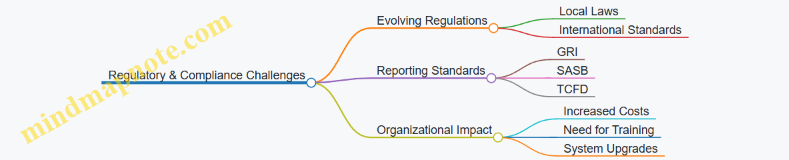
Limited Organizational Awareness and Expertise
Many organizations lack trained personnel who understand both accounting principles and environmental science.
- Example: Accountants may not be familiar with environmental metrics, while environmental analysts may not understand cost accounting intricacies.
Summary Table of Challenges with Examples
| Challenge | Description | Example |
|---|---|---|
| Lack of Standardized Definitions | Variations in what constitutes environmental costs | Manufacturing vs. service sector cost categorization |
| Difficulty Identifying Costs | Environmental costs embedded in operational expenses | Separating energy costs for production vs. environmental controls |
| Estimating Indirect Costs | Hard to quantify reputational or ecosystem costs | Revenue loss due to pollution backlash |
| Data Quality Issues | Scarcity and inconsistency of environmental data | Incomplete emission data from suppliers |
| Cost Allocation Complexity | Challenges in assigning costs to products/departments | Allocating waste treatment costs across product lines |
| Regulatory Compliance | Adapting to evolving environmental reporting standards | New disclosure requirements increasing workload |
| Limited Expertise | Lack of cross-disciplinary knowledge and collaboration | Accountants unfamiliar with environmental metrics |
By understanding these challenges, accountants and environmental analysts can better prepare to address them through improved data systems, cross-functional collaboration, and adoption of best practices in environmental cost accounting.
9.2 Addressing Data Gaps and Uncertainty in Environmental Cost Measurement
Environmental cost measurement is critical for accurate accounting and decision-making. However, one of the biggest challenges faced by accountants and environmental analysts is dealing with data gaps and uncertainty. These issues arise due to incomplete data, variability in environmental impacts, and difficulties in quantifying indirect or long-term costs.
Understanding Data Gaps and Uncertainty
- Data Gaps: Missing or incomplete information about environmental impacts or associated costs.
- Uncertainty: Variability or lack of precision in data, often due to estimation, assumptions, or unpredictable environmental factors.
These challenges can lead to under- or over-estimation of environmental costs, affecting financial reporting and sustainability strategies.
Sources of Data Gaps and Uncertainty
Strategies to Address Data Gaps
-
Data Collection Improvement
- Enhance monitoring systems (e.g., sensors, IoT devices).
- Collaborate with environmental agencies for data sharing.
-
Use of Proxy and Benchmark Data
- Apply industry averages or similar company data when direct data is unavailable.
- Example: Using average water usage data from a similar manufacturing plant to estimate costs.
-
Implement Environmental Management Systems (EMS)
- Structured data collection and documentation.
- Example: ISO 14001 certification helps standardize environmental data.
-
Regular Data Audits and Validation
- Cross-check data sources.
- Use third-party verification.
Managing Uncertainty in Environmental Cost Measurement
-
Scenario Analysis
- Develop multiple cost scenarios based on different assumptions.
- Example: Estimating remediation costs under optimistic, moderate, and pessimistic pollution levels.
-
Sensitivity Analysis
- Identify which variables most impact cost estimates.
- Focus data collection efforts on high-impact variables.
-
Use of Probability Distributions
- Represent uncertain costs as ranges with probabilities.
- Example: Modeling emission penalties as a range with likelihoods.
-
Monte Carlo Simulations
- Run simulations to understand the distribution of possible cost outcomes.
-
Expert Judgment and Delphi Method
- Gather insights from environmental experts to refine estimates.
Mind Map: Strategies to Address Data Gaps and Uncertainty
Practical Example: Estimating Environmental Costs in a Textile Factory
Scenario: A textile factory wants to estimate its environmental costs related to water pollution but lacks direct measurement data for effluent discharge volumes.
- Data Gap: No direct effluent volume data.
- Approach:
- Use proxy data from a similar-sized textile factory in the region.
- Apply industry average pollutant concentration levels.
- Conduct scenario analysis with low, medium, and high discharge estimates.
- Perform sensitivity analysis to identify which pollutant concentrations most affect cost.
- Use expert consultation to validate assumptions.
Outcome: The factory obtains a range of estimated environmental costs, enabling better budgeting and prioritization of pollution control investments despite initial data gaps.
Summary
Addressing data gaps and uncertainty is essential for credible environmental cost accounting. By combining improved data collection, proxy data use, rigorous validation, and advanced analytical techniques such as scenario and sensitivity analysis, accountants and environmental analysts can produce more reliable and actionable environmental cost estimates.
This approach not only enhances financial accuracy but also supports sustainability goals by informing better environmental management decisions.
9.3 Emerging Trends: Digitalization, AI, and Blockchain in Environmental Accounting
Environmental accounting is rapidly evolving with the integration of cutting-edge technologies such as digitalization, artificial intelligence (AI), and blockchain. These innovations are transforming how organizations identify, measure, manage, and report environmental costs, enabling more accurate, transparent, and efficient processes.
Digitalization in Environmental Accounting
Digitalization refers to the adoption of digital technologies to streamline and enhance environmental cost accounting processes. It enables real-time data collection, automated reporting, and improved data accuracy.
Key Benefits:
- Automated data capture from sensors and IoT devices
- Real-time monitoring of environmental performance
- Integration with existing Enterprise Resource Planning (ERP) systems
Example: A manufacturing company installs IoT sensors on its waste disposal units and emission sources. These sensors continuously collect data on waste volume and pollutant levels, which is automatically fed into the company’s environmental accounting software. This reduces manual data entry errors and enables timely identification of cost-saving opportunities.
Artificial Intelligence (AI) in Environmental Accounting
AI leverages machine learning algorithms and data analytics to interpret complex environmental data, predict trends, and optimize cost management.
Applications of AI:
- Predictive analytics for forecasting environmental costs
- Automated classification and tagging of environmental expenses
- Anomaly detection to identify unusual environmental cost patterns
Example: An energy company uses AI-powered software to analyze historical environmental cost data alongside operational variables. The AI model predicts potential spikes in remediation costs based on planned maintenance activities, allowing proactive budgeting and risk mitigation.
Blockchain for Transparency and Traceability
Blockchain technology offers a decentralized and immutable ledger system, enhancing transparency and trust in environmental cost reporting.
Advantages:
- Secure and tamper-proof recording of environmental transactions
- Enhanced traceability of environmental credits and offsets
- Facilitates stakeholder verification and audit processes
Example: A multinational corporation uses blockchain to track carbon credits purchased and retired across its global operations. Each transaction is recorded on the blockchain, providing stakeholders with verifiable proof of carbon offsetting efforts and associated costs.
Mind Maps
Mind Map 1: Digitalization in Environmental Accounting
Mind Map 2: AI Applications in Environmental Accounting
Mind Map 3: Blockchain in Environmental Accounting
Integrated Example: AI and Blockchain in Environmental Cost Management
A global logistics company combines AI and blockchain to enhance its environmental accounting:
- AI analyzes fuel consumption data and predicts environmental costs related to emissions for each shipment.
- Blockchain records all carbon offset purchases and emissions data, ensuring transparency for customers and regulators.
This integrated approach allows the company to optimize routes for lower emissions, accurately allocate environmental costs, and provide verifiable sustainability reports.
Summary
The convergence of digitalization, AI, and blockchain is revolutionizing environmental cost accounting by improving data accuracy, enabling predictive insights, and enhancing transparency. Accountants and environmental analysts should embrace these technologies to drive more effective environmental cost management and support sustainability goals.
9.4 Example: Using AI to Predict Environmental Cost Impacts
Artificial Intelligence (AI) is revolutionizing how organizations predict and manage environmental costs. By leveraging vast datasets, machine learning algorithms, and predictive analytics, AI helps accountants and environmental analysts forecast potential environmental cost impacts more accurately and proactively.
How AI Predicts Environmental Cost Impacts
AI models analyze historical environmental data, operational metrics, regulatory changes, and external factors such as weather patterns or market trends to predict future environmental costs. This enables companies to anticipate liabilities, optimize resource usage, and make informed sustainability investments.
Mind Map: AI in Environmental Cost Prediction
Practical Example: Predicting Waste Management Costs in a Manufacturing Plant
Scenario: A manufacturing company wants to predict its waste management costs for the next fiscal year to better allocate its budget and identify cost-saving opportunities.
Process:
- Data Collection: The company gathers three years of waste generation data, disposal costs, production volumes, and regulatory fines.
- Model Training: Using machine learning regression models, the AI system learns patterns between production levels, waste generated, and associated costs.
- Incorporating External Factors: The model integrates upcoming regulatory changes and seasonal variations affecting waste disposal.
- Prediction: The AI forecasts the expected waste management costs for the next year under different production scenarios.
Outcome:
- The company identifies that increasing production by 10% will disproportionately increase waste disposal costs by 18% due to regulatory thresholds.
- AI suggests investing in waste reduction technologies to mitigate these costs.
Mind Map: Waste Management Cost Prediction Workflow
Additional Example: AI for Emission Cost Forecasting in the Energy Sector
An energy company uses AI to predict carbon emission costs linked to fluctuating fuel prices and production schedules. By analyzing real-time sensor data and market trends, the AI model forecasts emission levels and associated carbon tax liabilities, enabling the company to optimize fuel mix and reduce costs.
Benefits of Using AI for Environmental Cost Prediction
- Accuracy: AI models improve prediction accuracy by analyzing complex, nonlinear relationships.
- Proactivity: Enables early identification of potential cost spikes and regulatory risks.
- Efficiency: Automates data analysis, freeing up resources for strategic planning.
- Scenario Planning: Facilitates evaluation of multiple what-if scenarios to support decision-making.
Best Practices for Implementing AI in Environmental Cost Prediction
- Ensure high-quality, comprehensive data collection.
- Collaborate with cross-functional teams including IT, finance, and sustainability.
- Continuously update AI models with new data and regulatory changes.
- Validate AI predictions with expert judgment and real-world outcomes.
By integrating AI-driven predictive analytics into environmental cost accounting, organizations can enhance their financial planning, improve sustainability outcomes, and maintain regulatory compliance with greater confidence.
9.5 Preparing for Future Regulatory Changes and Sustainability Expectations
As environmental regulations and sustainability expectations evolve rapidly, organizations must proactively prepare to remain compliant and competitive. This section explores strategies to anticipate, adapt, and integrate future regulatory requirements and stakeholder expectations into environmental cost accounting practices.
Understanding the Regulatory Landscape
Regulations are becoming more stringent globally, with governments and international bodies emphasizing transparency, carbon reduction, and pollution control. Examples include the EU’s Carbon Border Adjustment Mechanism (CBAM), the U.S. Securities and Exchange Commission’s (SEC) proposed climate disclosure rules, and evolving national environmental taxes.
Example: A multinational corporation anticipates the EU’s CBAM impact on its supply chain costs and begins incorporating potential carbon tariffs into its environmental cost forecasts.
Mind Map: Key Areas to Monitor for Regulatory Changes
Aligning Internal Processes with Future Regulations
Organizations should integrate flexibility into their accounting systems to accommodate new reporting standards and cost categories. This includes:
- Regularly updating environmental cost categories to reflect new regulatory costs.
- Enhancing data collection systems to capture required metrics.
- Training accounting and sustainability teams on emerging compliance needs.
Example: An environmental analyst collaborates with IT to implement a dynamic data tracking system that can be easily updated to capture new emissions metrics mandated by upcoming regulations.
Mind Map: Preparing Internal Systems
Engaging Stakeholders and Building Transparency
Sustainability expectations extend beyond regulators to investors, customers, and communities. Transparent communication of environmental costs and risks builds trust and supports long-term value creation.
Example: A financial services firm integrates environmental cost disclosures into quarterly reports, responding to investor demand for sustainability transparency.
Mind Map: Stakeholder Engagement
Leveraging Technology and Data Analytics
Emerging technologies like AI, blockchain, and IoT can enhance the accuracy and timeliness of environmental cost accounting, helping organizations stay ahead of regulatory changes.
Example: A manufacturing company uses IoT sensors to monitor emissions in real-time, feeding data into AI-driven cost models that predict future regulatory impacts.
Mind Map: Technology Integration
Scenario Planning and Risk Management
Incorporate scenario analysis to evaluate how different regulatory futures could impact environmental costs and business operations.
Example: An environmental analyst conducts scenario planning for a chemical company, modeling the financial impact of stricter waste disposal regulations over the next five years.
Mind Map: Scenario Planning Components
Summary
Preparing for future regulatory changes and sustainability expectations requires a proactive, integrated approach involving continuous monitoring, flexible systems, stakeholder engagement, technology adoption, and strategic planning. By embedding these practices into environmental cost accounting, organizations can not only ensure compliance but also drive sustainable value creation.
Actionable Steps:
- Establish a regulatory watch team to monitor upcoming environmental laws.
- Invest in flexible accounting software capable of adapting to new requirements.
- Train finance and sustainability teams regularly on emerging standards.
- Engage stakeholders through transparent and frequent environmental cost reporting.
- Utilize technology to enhance data accuracy and predictive capabilities.
- Conduct regular scenario planning exercises to anticipate financial impacts.
By following these steps, accountants and environmental analysts can position their organizations to thrive amid evolving sustainability landscapes.
10. Practical Tools and Resources for Environmental Cost Accounting
10.1 Software Solutions for Environmental Cost Tracking and Reporting
In the evolving landscape of sustainability and finance, leveraging software solutions to track and report environmental costs has become essential for accountants and environmental analysts. These tools not only streamline data collection and analysis but also enhance accuracy, transparency, and compliance with regulatory frameworks.
Why Use Software for Environmental Cost Tracking?
- Efficiency: Automates data gathering from multiple sources.
- Accuracy: Reduces human error in calculations and reporting.
- Integration: Connects environmental data with financial systems.
- Compliance: Helps meet reporting standards like GRI, SASB, and TCFD.
- Decision Support: Provides analytics and visualization for better decision-making.
Key Features to Look for in Environmental Cost Software
Popular Software Solutions and Their Use Cases
-
Sphera
- Use Case: A global manufacturing company uses Sphera to integrate environmental cost data with operational metrics, enabling real-time tracking of waste disposal costs.
- Example: By linking sensor data on emissions with cost modules, the company reduced waste management expenses by 15% within a year.
-
Enablon
- Use Case: An energy firm utilizes Enablon for comprehensive environmental reporting and compliance management.
- Example: Automated generation of sustainability reports aligned with SASB standards saved 40 hours per reporting cycle.
-
Intelex
- Use Case: A retail chain tracks environmental costs related to packaging and logistics.
- Example: Using Intelex’s dashboards, the company identified high-cost areas in supply chain emissions and implemented targeted reduction strategies.
-
SAP Environment, Health, and Safety Management (EHSM)
- Use Case: A chemical processing plant integrates SAP EHSM to monitor environmental liabilities and remediation costs.
- Example: Early detection of potential environmental liabilities through automated alerts helped avoid fines totaling $500,000.
Example Mind Map: Integrating Environmental Cost Software in an Organization
Practical Example: Using Software to Track Waste Management Costs
A mid-sized manufacturing company implemented an environmental cost tracking software that integrates with their ERP system. The software automatically collects data from waste disposal invoices, emission sensors, and energy meters.
- Step 1: Classify costs into direct (waste disposal fees), indirect (energy used in waste processing), and hidden costs (penalties for non-compliance).
- Step 2: Use the software’s dashboard to visualize monthly waste management costs.
- Step 3: Generate compliance reports aligned with local environmental regulations.
- Outcome: The company identified an inefficient waste processing step, leading to a process redesign that saved $100,000 annually.
Tips for Maximizing Software Benefits
- Ensure cross-departmental collaboration for accurate data input.
- Regularly update software to incorporate new regulatory requirements.
- Train staff thoroughly to leverage analytics and reporting features.
- Use scenario modeling tools to forecast environmental cost impacts of strategic decisions.
In summary, selecting and implementing the right software solution is a critical best practice for effective environmental cost tracking and reporting. These tools empower accountants and environmental analysts to deliver precise, timely, and actionable insights that support sustainable financial management.
10.2 Checklists and Templates for Environmental Cost Identification and Classification
Accurately identifying and classifying environmental costs is a foundational step in effective environmental cost accounting. To streamline this process, using structured checklists and templates can help accountants and environmental analysts systematically capture all relevant costs and categorize them appropriately.
Environmental Cost Identification Checklist
This checklist guides you through common categories of environmental costs to ensure comprehensive identification.
-
Prevention Costs
- Investment in pollution control equipment
- Environmental training programs for employees
- Process redesign to reduce waste
- Environmental audits and assessments
-
Detection Costs
- Monitoring and measuring emissions
- Environmental compliance inspections
- Laboratory testing of pollutants
-
Internal Failure Costs
- Costs of waste disposal and treatment
- Rework due to environmental non-compliance
- Cleanup of spills within the facility
-
External Failure Costs
- Fines and penalties for regulatory violations
- Costs related to environmental litigation
- Customer returns due to environmental defects
- Remediation of contaminated sites
-
Hidden or Indirect Costs
- Reputation damage impacting sales
- Increased insurance premiums
- Employee health-related costs due to environmental hazards
Environmental Cost Classification Template
| Cost Item | Cost Type | Description/Notes | Estimated Amount | Responsible Department |
|---|---|---|---|---|
| Installation of scrubbers | Prevention Cost | Equipment to reduce air emissions | $150,000 | Operations |
| Monthly emissions testing | Detection Cost | Lab testing for pollutant levels | $5,000 | Environmental Dept. |
| Wastewater treatment | Internal Failure Cost | Treating contaminated water before discharge | $20,000 | Operations |
| Regulatory fine for spill | External Failure Cost | Fine due to accidental chemical spill | $50,000 | Legal/Compliance |
| Environmental training sessions | Prevention Cost | Employee training on waste reduction practices | $3,000 | HR |
Mind Map: Environmental Cost Identification
Example: Applying the Checklist and Template
Scenario: A mid-sized manufacturing company wants to identify and classify its environmental costs for the previous fiscal year.
Step 1: Use the Checklist
- The environmental team reviews operations and notes investments in pollution control equipment and employee training.
- They record monthly emissions testing and compliance inspections.
- Internal failures include waste disposal and spill cleanup costs.
- External failures include a recent fine for a minor chemical spill.
- Indirect costs such as increased insurance premiums are also noted.
Step 2: Populate the Template
| Cost Item | Cost Type | Description/Notes | Estimated Amount | Responsible Department |
|---|---|---|---|---|
| Air scrubber installation | Prevention Cost | Installed new scrubbers to reduce emissions | $120,000 | Operations |
| Quarterly emissions testing | Detection Cost | Testing pollutants quarterly | $6,000 | Environmental Dept. |
| Waste disposal | Internal Failure Cost | Disposal of hazardous waste | $15,000 | Operations |
| Chemical spill fine | External Failure Cost | Fine imposed by regulators | $40,000 | Legal/Compliance |
| Environmental training | Prevention Cost | Training sessions for staff | $4,000 | HR |
Tips for Effective Use
- Customize checklists to reflect industry-specific environmental impacts.
- Regularly update templates to capture new cost categories as regulations and operations evolve.
- Engage cross-functional teams (finance, operations, environmental) to ensure all costs are captured.
- Use digital tools to automate data collection and classification where possible.
By systematically applying these checklists and templates, organizations can improve the accuracy and completeness of their environmental cost accounting, leading to better decision-making and sustainability outcomes.
10.3 Training and Certification Programs for Accountants and Environmental Analysts
Environmental cost accounting is a specialized field that requires a blend of financial acumen and environmental knowledge. To equip accountants and environmental analysts with the necessary skills, various training and certification programs have been developed. These programs not only enhance technical expertise but also ensure professionals stay updated with evolving standards and best practices.
Key Training Areas
- Understanding Environmental Regulations and Standards
- Environmental Cost Identification and Measurement
- Integration of Environmental Costs into Financial Systems
- Sustainability Reporting and Disclosure Frameworks
- Use of Environmental Management Systems (EMS) and Software Tools
Mind Map: Core Competencies in Environmental Cost Accounting
Popular Training and Certification Programs
-
Certified Environmental Auditor (CEA)
- Offered by: Various environmental professional bodies
- Focus: Auditing environmental compliance, identifying environmental costs, and risk management
- Example: An accountant completing CEA can better assess environmental liabilities and integrate them into financial reports.
-
Sustainability Accounting Standards Board (SASB) Fundamentals of Sustainability Accounting (FSA) Credential
- Offered by: SASB
- Focus: Understanding sustainability topics, including environmental costs, and their financial impacts
- Example: Environmental analysts use FSA knowledge to advise on sustainability risks affecting financial performance.
-
Global Reporting Initiative (GRI) Certified Training
- Offered by: GRI
- Focus: Sustainability reporting standards, including environmental disclosures
- Example: Accountants preparing sustainability reports with detailed environmental cost breakdowns.
-
Environmental Management System (EMS) Auditor/Lead Auditor Training
- Offered by: ISO-certified training organizations
- Focus: ISO 14001 standards, environmental performance evaluation, and cost implications
- Example: Environmental analysts conducting EMS audits to identify cost-saving opportunities.
-
Chartered Institute of Management Accountants (CIMA) Sustainability and Climate Risk Certificate
- Offered by: CIMA
- Focus: Integrating climate and sustainability risks into management accounting
- Example: Accountants incorporating environmental costs into strategic decision-making.
Example: Training Pathway for an Environmental Analyst
Example: Training Pathway for an Accountant
Benefits of Certification
- Enhanced credibility and professional recognition
- Improved ability to identify and manage environmental costs
- Better alignment with regulatory and stakeholder expectations
- Access to a network of sustainability professionals
Tips for Selecting a Training Program
- Ensure the program is recognized by industry bodies
- Look for practical case studies and real-world applications
- Check for updates aligned with current regulations and standards
- Consider blended learning options (online and in-person)
By investing in these training and certification programs, accountants and environmental analysts can significantly improve their capability to accurately account for environmental costs, support sustainability initiatives, and contribute to their organizations’ long-term financial and environmental performance.
10.4 Example: Using a Cost Allocation Template to Assign Environmental Costs
Environmental cost allocation is a critical step in understanding how environmental expenses impact different departments, products, or processes within an organization. A well-structured cost allocation template helps accountants and environmental analysts systematically assign these costs, ensuring transparency and accuracy.
What is a Cost Allocation Template?
A cost allocation template is a structured tool, often in spreadsheet form, that helps distribute environmental costs to relevant cost centers based on predefined drivers or criteria. This enables organizations to track environmental expenses more precisely and make informed decisions.
Key Components of an Environmental Cost Allocation Template
- Cost Categories: Types of environmental costs such as waste disposal, emissions control, water treatment, environmental compliance, and remediation.
- Cost Centers: Departments, product lines, or processes where costs are incurred.
- Allocation Bases: Drivers or metrics used to allocate costs (e.g., production volume, floor space, energy consumption).
- Allocated Costs: Resulting environmental costs assigned to each cost center.
Mind Map: Structure of an Environmental Cost Allocation Template
Step-by-Step Example: Assigning Environmental Costs Using a Template
Scenario:
A mid-sized manufacturing company wants to allocate its monthly environmental costs to three departments: Manufacturing, Packaging, and Logistics. The total environmental costs for the month are $30,000, broken down as follows:
| Cost Category | Amount ($) |
|---|---|
| Waste Management | 10,000 |
| Emission Control | 8,000 |
| Water Treatment | 7,000 |
| Environmental Compliance | 5,000 |
Allocation Bases:
- Waste Management costs are allocated based on production volume.
- Emission Control costs are allocated based on energy usage.
- Water Treatment costs are allocated based on water consumption.
- Environmental Compliance costs are allocated evenly across departments.
Data for Allocation Bases:
| Department | Production Volume (units) | Energy Usage (kWh) | Water Consumption (m³) |
|---|---|---|---|
| Manufacturing | 5,000 | 20,000 | 15,000 |
| Packaging | 3,000 | 10,000 | 5,000 |
| Logistics | 2,000 | 5,000 | 10,000 |
Step 1: Calculate total for each allocation base
- Total Production Volume = 5,000 + 3,000 + 2,000 = 10,000 units
- Total Energy Usage = 20,000 + 10,000 + 5,000 = 35,000 kWh
- Total Water Consumption = 15,000 + 5,000 + 10,000 = 30,000 m³
Step 2: Calculate allocation percentages for each department
| Department | Production % | Energy % | Water % |
|---|---|---|---|
| Manufacturing | 50% | 57.14% | 50% |
| Packaging | 30% | 28.57% | 16.67% |
| Logistics | 20% | 14.29% | 33.33% |
Step 3: Allocate costs
| Cost Category | Total Cost ($) | Manufacturing ($) | Packaging ($) | Logistics ($) |
|---|---|---|---|---|
| Waste Management | 10,000 | 5,000 | 3,000 | 2,000 |
| Emission Control | 8,000 | 4,571 | 2,286 | 1,143 |
| Water Treatment | 7,000 | 3,500 | 1,167 | 2,333 |
| Environmental Compliance | 5,000 | 1,667 | 1,667 | 1,667 |
| Total Allocated | 30,000 | 14,738 | 8,120 | 7,142 |
Step 4: Review and Analyze
- Manufacturing bears the highest environmental cost due to its large production volume and energy/water consumption.
- Logistics has a relatively high water treatment cost due to significant water consumption.
- Environmental compliance costs are equally shared, reflecting company-wide regulatory obligations.
Mind Map: Allocation Process

Best Practices When Using Cost Allocation Templates
- Use Relevant Allocation Bases: Choose drivers that best reflect the cause of environmental costs.
- Maintain Data Accuracy: Ensure data for allocation bases is current and reliable.
- Regularly Update Templates: Reflect changes in operations or cost structures.
- Document Assumptions: Keep clear records of allocation methods and rationale.
- Engage Cross-Functional Teams: Collaborate with operations, sustainability, and finance for accurate inputs.
Additional Example: Allocating Environmental Costs in a Service Company
A financial services firm incurs environmental costs related to office energy use, waste recycling, and business travel emissions totaling $12,000 monthly. The costs are allocated based on:
- Energy Use: Allocated by floor space occupied by departments.
- Waste Recycling: Allocated by number of employees.
- Business Travel Emissions: Allocated by travel expenses.
This approach helps the firm identify which departments contribute most to environmental costs and target reduction efforts effectively.
Using cost allocation templates empowers accountants and environmental analysts to bring clarity and control to environmental cost management, supporting sustainability goals and financial transparency.
10.5 Recommended Reading and Online Resources
To deepen your understanding of environmental cost accounting and stay updated with best practices, regulations, and innovative tools, the following curated list of books, articles, websites, and online courses is invaluable. These resources are tailored for accountants and environmental analysts working at the intersection of finance and sustainability.
Recommended Books
-
“Environmental Cost Accounting: An Introduction and Practical Guide” by John Smith
- Covers foundational concepts with real-world case studies.
- Example: How a manufacturing company integrated environmental costs into its budgeting process.
-
“Sustainability Accounting and Accountability” by Jan Bebbington et al.
- Explores sustainability reporting frameworks and environmental cost disclosures.
-
“Green Accounting and Sustainable Development” by Suresh Kumar
- Focuses on methodologies for measuring environmental costs and benefits.
-
“Environmental Management Accounting: Informational and Institutional Developments” by Ronald J. G. M. Florio
- Discusses institutional frameworks and accounting techniques.
Key Articles and Papers
-
“Integrating Environmental Costs into Financial Accounting” – Journal of Environmental Accounting, 2022
- Example: Case study on capitalizing environmental remediation costs.
-
“Activity-Based Costing for Environmental Management” – Sustainability Accounting Review, 2021
- Explains how ABC can trace indirect environmental costs.
-
“Lifecycle Costing and Environmental Impacts” – International Journal of Sustainable Finance, 2023
- Example: Product lifecycle analysis including waste disposal costs.
Online Platforms and Websites
-
Global Reporting Initiative (GRI) – https://www.globalreporting.org
- Offers comprehensive sustainability reporting standards.
-
Sustainability Accounting Standards Board (SASB) – https://www.sasb.org
- Industry-specific accounting standards including environmental metrics.
-
Task Force on Climate-related Financial Disclosures (TCFD) – https://www.fsb-tcfd.org
- Framework for climate-related financial risk disclosures.
-
Environmental Protection Agency (EPA) – https://www.epa.gov
- Resource for environmental regulations and cost estimation tools.
Online Courses and Webinars
-
“Environmental Cost Accounting Fundamentals” – Coursera
- Interactive course with quizzes and real-life examples.
-
“Sustainability Reporting and Accounting” – edX
- Covers frameworks like GRI and TCFD with practical exercises.
-
“Green Finance and Environmental Risk Management” – LinkedIn Learning
- Focuses on integrating environmental costs into financial decision-making.
-
Webinar Series: “Best Practices in Environmental Cost Management” – Hosted by the Institute of Management Accountants (IMA)
- Features industry experts sharing case studies and tools.
Mind Maps
Below are mind maps to visually organize key concepts and resources related to environmental cost accounting.
Mind Map 1: Environmental Cost Accounting Core Concepts
Mind Map 2: Recommended Resources
Mind Map 3: Environmental Cost Accounting Tools
Example: Using Recommended Resources in Practice
Scenario: An environmental analyst at a mid-sized manufacturing firm needs to improve the accuracy of environmental cost measurement.
Action Plan:
- Consult the book “Environmental Cost Accounting” by John Smith to understand foundational concepts.
- Review the article “Activity-Based Costing for Environmental Management” to apply ABC techniques.
- Use the GRI website to align reporting with global standards.
- Enroll in the Coursera course “Environmental Cost Accounting Fundamentals” for practical exercises.
- Utilize the cost allocation templates from online resources to map costs.
This integrated approach ensures the analyst leverages multiple resources for comprehensive learning and application.
By regularly engaging with these recommended readings and online resources, accountants and environmental analysts can enhance their expertise, stay compliant with evolving standards, and drive sustainable financial practices within their organizations.
11. Conclusion and Action Plan
11.1 Recap of Key Concepts and Best Practices
Accounting for environmental costs is a critical practice that bridges finance and sustainability, enabling organizations to transparently capture, measure, and manage the financial impacts of their environmental footprint. This section revisits the essential concepts and best practices discussed throughout the blog, reinforced with clear examples and mind maps to aid understanding.
Key Concepts Recap
Environmental Cost Accounting Mind Map
Example: A manufacturing company identifies direct environmental costs such as waste disposal fees and indirect costs like increased insurance premiums due to environmental risks. Using activity-based costing, they allocate these costs to specific production lines, enabling targeted cost reduction.
Best Practices Recap
Example: A retail company integrates environmental costs into product pricing by including lifecycle emissions costs. This approach helps them identify products with higher environmental impacts and adjust pricing strategies accordingly, promoting sustainable consumer choices.
Integrated Mind Map: From Identification to Reporting
Example: An energy company follows this process to identify environmental costs from emission controls, measure them using EMS data, integrate costs into financial statements as provisions, manage budgets for pollution prevention, make investment decisions based on cost-benefit analyses, and report transparently following TCFD guidelines.
Summary
By mastering these key concepts and best practices, accountants and environmental analysts can effectively capture the true cost of environmental impacts, enabling organizations to make informed decisions that support sustainability goals and regulatory compliance. The integration of environmental costs into financial systems not only improves transparency but also drives innovation and cost savings, fostering a resilient and responsible business model.
11.2 Developing an Organizational Roadmap for Environmental Cost Accounting
Developing a comprehensive organizational roadmap for environmental cost accounting is essential for embedding sustainability into financial practices. This roadmap serves as a strategic guide to systematically identify, measure, manage, and report environmental costs, ensuring alignment with corporate goals and regulatory requirements.
Step 1: Establish Leadership Commitment and Cross-Functional Team
- Secure buy-in from top management to prioritize environmental cost accounting.
- Form a cross-functional team including finance, sustainability, operations, and compliance experts.
Example: A mid-sized manufacturing company appointed a Sustainability CFO sponsor and created a task force with representatives from accounting, environmental compliance, and production to champion environmental cost initiatives.
Step 2: Conduct Environmental Cost Baseline Assessment
- Identify current environmental cost sources across departments.
- Collect historical data on waste management, emissions, remediation, and compliance costs.
- Categorize costs into direct, indirect, fixed, and variable.

Example: An agricultural firm analyzed its fertilizer usage, water consumption, and waste disposal costs to establish a baseline environmental cost profile.
Step 3: Define Environmental Cost Accounting Policies and Procedures
- Develop clear guidelines for identifying, measuring, and recording environmental costs.
- Align policies with accounting standards (e.g., IFRS, GAAP) and sustainability frameworks (e.g., GRI, SASB).
- Establish protocols for capitalizing vs. expensing environmental investments.
Example: A retail company created a policy to capitalize costs related to energy-efficient equipment upgrades while expensing routine waste disposal fees.
Step 4: Implement Environmental Cost Tracking Systems
- Select or upgrade accounting software to integrate environmental cost tracking.
- Utilize activity-based costing (ABC) to allocate environmental costs accurately.
- Train staff on data entry and system usage.
Example: A chemical processing plant integrated environmental cost modules into its ERP system, enabling real-time tracking of emissions-related expenses.
Step 5: Set Environmental Cost Targets and KPIs
- Define measurable targets for cost reduction and efficiency improvements.
- Develop key performance indicators (KPIs) such as cost per unit of waste reduced or emissions abated.
Example: An energy company set a goal to reduce environmental compliance costs by 15% over three years and tracked progress monthly.
Step 6: Integrate Environmental Costs into Decision-Making
- Use environmental cost data in budgeting, pricing, and investment decisions.
- Conduct lifecycle costing and cost-benefit analyses incorporating environmental impacts.
Example: A product development team factored in environmental costs when selecting materials, opting for recyclable inputs to reduce long-term disposal costs.
Step 7: Reporting and Continuous Improvement
- Establish regular reporting cycles for environmental costs internally and externally.
- Use reports to identify improvement areas and update the roadmap accordingly.
Example: A financial services firm published quarterly sustainability reports detailing environmental cost trends and initiatives, fostering transparency with stakeholders.
Summary Mindmap of the Organizational Roadmap
By following this structured roadmap, organizations can systematically embed environmental cost accounting into their financial and sustainability practices, driving better resource management, regulatory compliance, and long-term value creation.
11.3 Engaging Cross-Functional Teams for Effective Implementation
Effective accounting for environmental costs requires collaboration across various departments and expertise within an organization. Engaging cross-functional teams ensures that environmental cost data is accurately identified, measured, and integrated into financial and sustainability reporting. This section explores strategies to foster collaboration, highlights key roles, and provides practical examples and mind maps to visualize the process.
Why Engage Cross-Functional Teams?
- Holistic Understanding: Environmental costs often span multiple operational areas such as production, procurement, compliance, and finance.
- Data Accuracy: Different departments hold unique data sets necessary for precise environmental cost accounting.
- Enhanced Decision-Making: Combining diverse perspectives leads to more informed and sustainable financial decisions.
- Compliance and Reporting: Ensures alignment with regulatory requirements and sustainability frameworks.
Key Functions to Involve
Steps to Engage Cross-Functional Teams
- Identify Stakeholders: Map out departments and individuals who influence or are impacted by environmental costs.
- Define Roles and Responsibilities: Clarify each team member’s contribution to environmental cost accounting.
- Establish Communication Channels: Set up regular meetings, shared digital workspaces, and reporting protocols.
- Provide Training and Resources: Equip teams with knowledge on environmental accounting principles and tools.
- Collaborate on Data Collection and Analysis: Encourage joint efforts in gathering and validating environmental cost data.
- Integrate Insights into Decision-Making: Use combined expertise to influence budgeting, investments, and sustainability strategies.
Example: Cross-Functional Team in a Manufacturing Company
Scenario: A mid-sized manufacturing company wants to improve its environmental cost accounting to better manage waste disposal and energy consumption costs.
- Finance Team: Tracks and records environmental costs, integrates them into financial reports.
- Environmental Management: Provides data on waste volumes, emissions, and compliance costs.
- Operations: Shares information on production processes that generate waste or consume energy.
- Procurement: Works to source eco-friendly materials that may reduce environmental costs.
- IT: Implements a centralized data system to collect and analyze environmental cost data.
Outcome: By collaborating, the teams identify that switching to a more energy-efficient process reduces energy costs by 15% and waste disposal costs by 10%, which is reflected in the next budgeting cycle.
Mind Map: Workflow for Cross-Functional Collaboration
Best Practices for Successful Engagement
- Leadership Support: Secure commitment from top management to emphasize the importance of cross-functional collaboration.
- Clear Objectives: Define measurable goals related to environmental cost accounting.
- Regular Updates: Maintain transparency through progress reports and shared dashboards.
- Conflict Resolution: Establish protocols to address disagreements constructively.
- Celebrate Successes: Recognize team achievements to motivate ongoing collaboration.
Additional Example: Environmental Analysts and Accountants Working Together
- Environmental analysts identify emerging environmental risks and quantify potential costs.
- Accountants translate these risks into financial terms and incorporate them into forecasts and provisions.
- Together, they develop a risk-adjusted budgeting plan that allocates resources for environmental initiatives.
This partnership ensures that environmental costs are not only accounted for but also strategically managed to support sustainable business growth.
Engaging cross-functional teams is fundamental to embedding environmental cost accounting into the organizational fabric. Through collaboration, organizations can achieve more accurate accounting, better compliance, and stronger sustainability outcomes.
11.4 Example: Step-by-Step Action Plan for Small to Medium Enterprises (SMEs)
Accounting for environmental costs can seem daunting for SMEs due to limited resources and expertise. However, a structured, step-by-step approach can make the process manageable and highly beneficial. Below is a detailed action plan designed specifically for SMEs to integrate environmental cost accounting effectively.
Step 1: Establish Commitment and Define Objectives
- Secure leadership buy-in: Engage top management to prioritize environmental cost accounting.
- Define clear objectives: Examples include reducing waste disposal costs by 15%, improving regulatory compliance, or enhancing sustainability reporting.
Step 2: Form a Cross-Functional Team
- Include finance/accounting staff, environmental analysts, operations managers, and sustainability officers.
- Example: An SME manufacturing firm forms a team with the CFO, environmental compliance officer, and production supervisor.
Step 3: Identify Environmental Cost Sources
- Conduct workshops or interviews to map out activities generating environmental costs.
- Examples of cost sources:
- Waste disposal fees
- Energy consumption
- Environmental permits
- Remediation expenses
Step 4: Classify and Measure Environmental Costs
- Use simple categories: prevention, detection, internal failure, external failure.
- Example: Waste recycling program costs as prevention; fines for non-compliance as external failure.
- Measure costs using invoices, utility bills, and operational data.
Step 5: Integrate Environmental Costs into Accounting Systems
- Adapt existing accounting software or spreadsheets to include environmental cost accounts.
- Example: Create a separate ledger for environmental expenses.
Step 6: Monitor and Control Environmental Costs
- Set budgets and track actual costs monthly or quarterly.
- Example: Track energy costs monthly, compare against targets, and investigate variances.
Step 7: Report and Communicate Findings
- Prepare simple internal reports highlighting environmental costs and savings.
- Share results with management and staff to encourage continuous improvement.
- Example: Quarterly report showing 10% reduction in waste disposal costs.
Step 8: Review and Improve
- Conduct periodic reviews to refine cost identification and measurement.
- Incorporate feedback and update processes.
- Example: After 6 months, add new cost categories such as water usage.
Practical Example: SME Manufacturing Firm
Background: A small manufacturer producing eco-friendly packaging wants to better understand its environmental costs.
- Step 1: CEO commits to sustainability and cost transparency.
- Step 2: Team formed with CFO, environmental analyst, and production manager.
- Step 3: Identified costs include energy, waste disposal, and permit fees.
- Step 4: Classified waste disposal as external failure cost; energy as prevention cost.
- Step 5: Modified accounting spreadsheet to track these costs separately.
- Step 6: Monthly monitoring revealed energy costs were 20% higher than budget.
- Step 7: Report shared with management, leading to investment in energy-efficient lighting.
- Step 8: After 1 year, environmental costs reduced by 12%, with improved reporting processes.
Summary Mind Map of the Action Plan
By following this structured action plan, SMEs can demystify environmental cost accounting, gain valuable insights into their environmental impacts, and drive both financial and sustainability performance improvements.
11.5 Final Thoughts: The Role of Environmental Cost Accounting in Sustainable Finance
Environmental Cost Accounting (ECA) is no longer a niche practice but a fundamental pillar in the evolving landscape of sustainable finance. As organizations and investors increasingly recognize the financial implications of environmental impacts, ECA provides a structured approach to quantify, manage, and report these costs — driving transparency, accountability, and long-term value creation.
Mind Map: The Role of Environmental Cost Accounting in Sustainable Finance
Example 1: Sustainable Investment Fund Using ECA
A sustainable investment fund integrates environmental cost accounting data into its evaluation process. By quantifying a company’s environmental remediation costs and potential future liabilities, the fund avoids investments in firms with high hidden environmental risks. This approach not only protects the fund’s financial health but also aligns with its mission to support environmentally responsible businesses.
Mind Map: How ECA Influences Investment Decisions
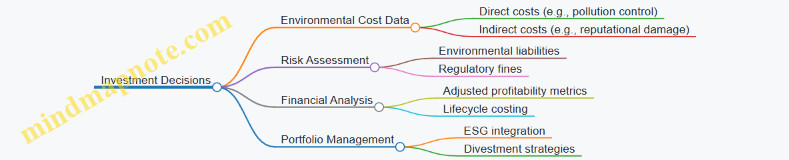
Example 2: Corporate Sustainability Reporting Enhanced by ECA
A multinational corporation incorporates detailed environmental cost accounting into its annual sustainability report. By breaking down costs related to waste management, energy consumption, and carbon emissions, the company provides investors and regulators with a transparent view of its environmental footprint. This transparency improves stakeholder confidence and supports the company’s access to green financing options.
Mind Map: ECA and Corporate Reporting
Key Takeaways:
- Integration is Essential: Embedding environmental costs into financial accounting bridges the gap between sustainability goals and financial performance.
- Proactive Management: Identifying and managing environmental costs early reduces risks and uncovers efficiency gains.
- Enhanced Decision-Making: ECA equips accountants and environmental analysts with actionable insights to influence strategic and operational decisions.
- Stakeholder Trust: Transparent environmental cost reporting strengthens relationships with investors, regulators, and customers.
- Future-Proofing: Organizations adopting ECA are better prepared for tightening environmental regulations and shifting market expectations.
In conclusion, Environmental Cost Accounting is a critical enabler of sustainable finance. It transforms environmental impacts from intangible risks into quantifiable financial metrics, empowering organizations to make informed decisions that balance economic success with environmental stewardship. For accountants and environmental analysts, mastering ECA is not just a technical skill but a strategic imperative to drive the transition toward a more sustainable global economy.