Corporate Financial Management
1. Introduction to Corporate Financial Management
1.1 Understanding Corporate Finance: Scope and Objectives
Corporate finance is the backbone of any business organization, focusing on how companies manage their financial resources to achieve strategic goals and maximize shareholder value. It encompasses a broad range of activities, from capital investment decisions to managing day-to-day financial operations.
Scope of Corporate Finance
Corporate finance covers several key areas that collectively ensure the financial health and growth of a company. Below is a mind map illustrating the primary components:
Each of these elements plays a vital role in ensuring that the company allocates resources efficiently, maintains liquidity, and meets its financial obligations.
Objectives of Corporate Finance
The primary objectives of corporate finance revolve around maximizing the value of the firm while balancing risk and return. Key objectives include:
- Maximizing Shareholder Wealth: Ensuring that financial decisions increase the market value of the company’s shares.
- Ensuring Liquidity: Maintaining sufficient cash flow to meet short-term obligations.
- Risk Management: Identifying and mitigating financial risks to protect the company’s assets.
- Optimal Capital Structure: Balancing debt and equity to minimize the cost of capital.
- Sustainable Growth: Financing expansion projects without jeopardizing financial stability.
Below is a mind map summarizing these objectives:
Practical Examples
Example 1: Capital Budgeting Decision A manufacturing company is considering purchasing a new machine that costs $500,000. The finance manager evaluates the expected cash flows from increased production and uses Net Present Value (NPV) analysis to decide whether the investment will add value to the company.
Example 2: Managing Working Capital A retail firm notices that its inventory turnover is slow, tying up cash unnecessarily. The finance team implements just-in-time inventory practices to reduce holding costs and improve liquidity.
Example 3: Optimizing Capital Structure A tech startup initially funded by equity decides to take on debt financing to leverage tax benefits and reduce the overall cost of capital, carefully balancing the increased financial risk.
Summary
Understanding the scope and objectives of corporate finance equips finance managers and accountants with the framework to make informed decisions. By integrating capital budgeting, capital structure management, working capital optimization, and risk mitigation, companies can drive financial performance and long-term success.
1.2 The Role of Finance Managers and Accountants in Corporate Finance
Corporate finance is a complex field that requires collaboration between various professionals, primarily finance managers and accountants. Understanding their distinct yet complementary roles is crucial for effective financial management within any organization.
The Role of Finance Managers
Finance managers are responsible for the strategic planning and management of a company’s financial resources. Their key responsibilities include:
- Financial Planning and Analysis: Developing budgets, forecasts, and financial models to guide decision-making.
- Capital Management: Deciding on the optimal mix of debt and equity financing.
- Investment Decisions: Evaluating potential projects and investments using techniques like NPV and IRR.
- Risk Management: Identifying financial risks and implementing mitigation strategies.
- Liaison with Stakeholders: Communicating financial performance and strategy to executives, investors, and regulatory bodies.
Example: A finance manager at a manufacturing firm analyzes market trends and forecasts a 10% increase in raw material costs. They adjust the financial plan accordingly, recommending a buffer in the budget to maintain profitability.
The Role of Accountants
Accountants focus on the accurate recording, classification, and reporting of financial transactions. Their responsibilities include:
- Financial Record Keeping: Maintaining ledgers, journals, and ensuring compliance with accounting standards.
- Preparation of Financial Statements: Creating balance sheets, income statements, and cash flow statements.
- Compliance and Auditing: Ensuring adherence to regulatory requirements and preparing for internal/external audits.
- Cost Accounting: Analyzing costs to support budgeting and pricing decisions.
- Tax Management: Calculating and filing taxes accurately and timely.
Example: An accountant in a retail company prepares monthly financial statements that reveal a decline in gross margin. This insight helps finance managers investigate and address pricing or cost issues.
Mind Map: Roles and Responsibilities
Collaboration Between Finance Managers and Accountants
The synergy between finance managers and accountants ensures both strategic insight and operational accuracy:
- Accountants provide reliable financial data and reports.
- Finance managers use this data to make informed strategic decisions.
- Together, they monitor financial health and adjust plans as needed.
Example: During a quarterly review, accountants identify an unusual increase in expenses. Finance managers investigate and discover inefficiencies in supply chain management, leading to corrective actions.
Mind Map: Collaboration Workflow
Summary
Finance managers and accountants play distinct but interdependent roles in corporate finance. Accountants ensure the integrity and accuracy of financial data, while finance managers leverage this information to drive strategic decisions that align with corporate goals. Their collaboration is essential for maintaining financial stability, compliance, and growth.
By understanding and respecting each other’s roles, finance professionals can foster a more efficient and effective corporate financial management environment.
1.3 Key Financial Concepts and Terminology Explained with Examples
Understanding fundamental financial concepts and terminology is essential for accountants and finance managers to make informed decisions and communicate effectively within corporate finance. This section breaks down key terms with clear explanations and practical examples.
Assets, Liabilities, and Equity
- Assets: Resources owned by the company that have economic value.
- Liabilities: Obligations or debts the company owes to others.
- Equity: Owner’s residual interest in the assets after deducting liabilities.
Example: A company owns machinery worth $100,000 (asset), owes $40,000 in loans (liability), so the equity is $60,000.
Revenue, Expenses, and Profit
- Revenue: Income earned from normal business operations.
- Expenses: Costs incurred to generate revenue.
- Profit (Net Income): Revenue minus expenses.
Example: If a company earns $500,000 in sales (revenue) and incurs $350,000 in expenses, the profit is $150,000.
Cash Flow
- Operating Cash Flow: Cash generated from core business operations.
- Investing Cash Flow: Cash used for or generated from investments like buying equipment.
- Financing Cash Flow: Cash flows related to borrowing, repaying debt, or issuing stock.
Example: A company receives $200,000 from sales (operating inflow), spends $50,000 on new machinery (investing outflow), and repays $30,000 of loans (financing outflow).
Working Capital
- Working Capital = Current Assets - Current Liabilities
- Indicates the company’s short-term liquidity.
Example: If current assets are $150,000 and current liabilities are $100,000, working capital is $50,000, meaning the company can cover its short-term obligations comfortably.
Return on Investment (ROI)
- Measures profitability relative to investment cost.
- Formula: ROI = (Net Profit / Investment Cost) × 100%
Example: If a project costs $100,000 and generates $120,000 in returns, net profit is $20,000, so ROI = (20,000 / 100,000) × 100% = 20%.
Depreciation
- Allocation of the cost of a tangible asset over its useful life.
Example: A machine purchased for $50,000 with a useful life of 5 years depreciates $10,000 per year using straight-line depreciation.
Summary Mind Map of Key Concepts
By mastering these foundational concepts and terminology, finance professionals can better analyze financial statements, communicate with stakeholders, and contribute to strategic decision-making within their organizations.
1.4 Overview of Financial Decision-Making Processes in Corporations
Financial decision-making is at the core of corporate financial management. It involves evaluating various financial options and choosing the best course of action to maximize shareholder value while managing risks and resources effectively. This section breaks down the key processes involved, supported by mind maps and practical examples to help accountants and finance managers grasp the concepts clearly.
Key Financial Decision Areas
Investment Decisions
Investment decisions, also known as capital budgeting, involve selecting projects or assets that will generate the best returns over time. Finance managers analyze potential investments using techniques such as Net Present Value (NPV), Internal Rate of Return (IRR), and Payback Period.
Example:
A corporation is considering purchasing new manufacturing equipment costing $500,000. The expected cash inflows over five years are estimated at $120,000 annually. The finance team uses NPV to determine if the investment adds value.
- If NPV > 0, the investment is accepted.
- If NPV < 0, the investment is rejected.
This decision-making process ensures capital is allocated efficiently.
Financing Decisions
Financing decisions determine the best mix of debt and equity to fund corporate activities. The goal is to optimize the capital structure to minimize the cost of capital and maximize firm value.
Example:
A company needs $1 million for expansion. It can either issue new shares (equity) or take a loan (debt). The finance manager evaluates:
- Cost of debt (interest rates, tax benefits)
- Cost of equity (expected returns demanded by shareholders)
- Impact on financial risk and control
The decision balances risk and return while considering market conditions.
Dividend Decisions
Dividend decisions revolve around how much profit to distribute to shareholders versus how much to retain for reinvestment.
Example:
A profitable firm must decide whether to pay a high dividend or retain earnings for a new product launch. The finance manager considers:
- Shareholder expectations
- Growth opportunities
- Impact on stock price
This decision affects investor satisfaction and future growth potential.
Working Capital Management
Managing short-term assets and liabilities ensures the company maintains liquidity and operational efficiency.
Example:
A retail company monitors its cash conversion cycle to optimize inventory levels and speed up receivables collection. The finance team implements:
- Cash budgeting
- Credit policies
- Supplier payment terms
Effective working capital management prevents cash shortages and reduces financing costs.
Integrated Mind Map of Financial Decision-Making
Summary
Financial decision-making in corporations is a multi-faceted process involving investment, financing, dividend, and working capital decisions. Finance managers and accountants play a pivotal role in analyzing data, applying best practices, and making informed choices that align with corporate strategy and stakeholder interests. Using structured approaches and decision-support tools ensures these decisions drive sustainable growth and financial health.
2. Financial Planning and Forecasting
2.1 Importance of Financial Planning in Corporate Strategy
Financial planning is a cornerstone of successful corporate strategy. It acts as a roadmap that guides organizations in allocating resources efficiently, managing risks, and achieving long-term goals. Without a solid financial plan, companies risk misalignment between their strategic ambitions and financial capabilities, potentially leading to missed opportunities or financial distress.
Why Financial Planning is Critical in Corporate Strategy
- Resource Allocation: Ensures that capital is directed towards projects and departments that align with strategic priorities.
- Risk Management: Identifies potential financial risks early, allowing for proactive mitigation.
- Performance Measurement: Establishes financial benchmarks to evaluate progress against strategic goals.
- Investor Confidence: Demonstrates to stakeholders that the company has a clear, actionable plan for growth and sustainability.
- Adaptability: Facilitates scenario planning, helping companies adjust strategies in response to market changes.
Mind Map: Core Benefits of Financial Planning in Corporate Strategy
Example 1: Aligning Financial Planning with Growth Strategy
Scenario: A mid-sized technology firm aims to expand its product line over the next three years.
Financial Planning Actions:
- Forecast capital requirements for R&D and marketing.
- Allocate budget to hire specialized talent.
- Plan cash flow to support increased operational costs.
Outcome: The company successfully launches new products on schedule, supported by a financial plan that ensured sufficient funding and minimized cash shortages.
Mind Map: Financial Planning Steps for Growth Strategy
Example 2: Financial Planning to Mitigate Risks During Market Volatility
Scenario: A manufacturing company faces fluctuating raw material prices impacting profit margins.
Financial Planning Actions:
- Conduct scenario analysis to understand impacts of price changes.
- Establish contingency reserves.
- Negotiate flexible supplier contracts.
Outcome: The company maintains profitability despite market volatility, thanks to proactive financial planning that anticipated and prepared for risks.
Mind Map: Risk-Focused Financial Planning
Key Takeaways
- Financial planning is integral to translating corporate strategy into actionable financial goals.
- It enables companies to allocate resources wisely, manage risks, and measure progress effectively.
- Incorporating financial planning early in strategic development increases the likelihood of achieving sustainable growth.
By embedding financial planning within corporate strategy, finance managers and accountants ensure that the organization remains financially healthy while pursuing its strategic objectives.
2.2 Best Practices for Creating Accurate Financial Forecasts
Creating accurate financial forecasts is critical for effective corporate financial management. It enables finance managers and accountants to anticipate future financial conditions, make informed decisions, and align resources with strategic goals. Below are best practices, supported by mind maps and practical examples, to help you build reliable financial forecasts.
Understand the Business Environment
Before forecasting, gain a deep understanding of the company’s industry, market trends, economic factors, and competitive landscape.
Mind Map: Understanding Business Environment
Example: A finance manager at a retail company tracks consumer spending trends and seasonal demand patterns to adjust sales forecasts accordingly.
Use Historical Data as a Foundation
Analyze past financial statements, sales data, and operational metrics to identify patterns and growth rates.
Mind Map: Using Historical Data
Example: An accountant reviews the last 3 years of quarterly sales data to identify consistent seasonal spikes during holiday periods, incorporating these into the forecast.
Segment Forecasts by Key Drivers
Break down forecasts into components such as sales volume, pricing, cost of goods sold, and operating expenses for granular accuracy.
Mind Map: Segmenting Forecasts
Example: A finance manager forecasts sales by product category rather than a single aggregate figure, allowing for targeted marketing and inventory planning.
Incorporate Scenario and Sensitivity Analysis
Prepare multiple forecast scenarios (best case, worst case, most likely) and test how changes in assumptions affect outcomes.
Mind Map: Scenario & Sensitivity Analysis
Example: A corporate finance team models the impact of a 10% increase in raw material costs on profit margins to prepare contingency plans.
Engage Cross-Functional Teams
Collaborate with sales, operations, marketing, and procurement teams to gather insights and validate assumptions.
Mind Map: Cross-Functional Collaboration
Example: The finance manager holds monthly meetings with department heads to update forecasts based on real-time operational changes.
Leverage Technology and Forecasting Tools
Utilize specialized software and data analytics tools to automate data collection, improve accuracy, and enable real-time updates.
Mind Map: Technology in Forecasting
Example: A finance team implements a cloud-based forecasting tool that integrates sales data and automatically updates forecasts as new data arrives.
Regularly Review and Update Forecasts
Financial forecasts should be living documents, updated regularly to reflect new information and changing conditions.
Mind Map: Forecast Review Process
Example: After a sudden market downturn, the finance manager revises the quarterly forecast downward and communicates the changes to stakeholders.
Summary Table of Best Practices with Examples
| Best Practice | Description | Example Scenario |
|---|---|---|
| Understand Business Environment | Analyze market and economic factors | Retailer adjusts forecasts based on consumer trends |
| Use Historical Data | Base forecasts on past financial performance | Accountant includes seasonal sales spikes |
| Segment Forecasts | Break down by revenue streams and cost drivers | Forecast sales by product category |
| Scenario & Sensitivity Analysis | Model multiple outcomes and test assumptions | Assess impact of raw material cost increase |
| Cross-Functional Collaboration | Involve multiple departments for input | Monthly meetings with sales and operations |
| Leverage Technology | Use software tools for automation and accuracy | Cloud-based forecasting tool integration |
| Regular Review & Update | Continuously update forecasts with new data | Adjust forecast after market downturn |
By following these best practices, finance managers and accountants can create financial forecasts that are not only accurate but also actionable, enabling better strategic decision-making and resource allocation.
2.3 Case Study: Forecasting Revenue Growth Using Historical Data
Forecasting revenue growth is a critical task for finance managers and accountants as it directly influences budgeting, investment decisions, and strategic planning. This case study demonstrates how to use historical data effectively to project future revenue, incorporating best practices and clear examples.
Understanding the Basics
Revenue forecasting involves analyzing past sales data to predict future income. The accuracy of this process depends on the quality of historical data, the selection of appropriate forecasting methods, and consideration of external factors.
Step 1: Collect and Organize Historical Data
- Gather monthly or quarterly revenue figures for at least the past 3-5 years.
- Ensure data consistency and accuracy by cross-verifying with accounting records.
Example:
| Year | Q1 Revenue ($) | Q2 Revenue ($) | Q3 Revenue ($) | Q4 Revenue ($) |
|---|---|---|---|---|
| 2020 | 1,200,000 | 1,300,000 | 1,400,000 | 1,500,000 |
| 2021 | 1,350,000 | 1,450,000 | 1,550,000 | 1,650,000 |
| 2022 | 1,500,000 | 1,600,000 | 1,700,000 | 1,800,000 |
Step 2: Visualize Data to Identify Trends
Creating a mind map helps break down the forecasting process and visualize key components.
Revenue Forecasting Mind Map
Example Visualization:
Quarterly Revenue Trend
| Quarter | 2020 ($) | 2021 ($) | 2022 ($) |
|---|---|---|---|
| Q1 | 1,200,000 | 1,350,000 | 1,500,000 |
| Q2 | 1,300,000 | 1,450,000 | 1,600,000 |
| Q3 | 1,400,000 | 1,550,000 | 1,700,000 |
| Q4 | 1,500,000 | 1,650,000 | 1,800,000 |
The data shows a consistent upward trend with slight seasonal increases in Q4.
Step 3: Choose a Forecasting Method
Method 1: Moving Average
- Smooths out short-term fluctuations.
- Example: 4-quarter moving average.
Method 2: Linear Regression
- Fits a trend line to historical data.
- Useful for identifying growth rate.
Example: Using linear regression on the total annual revenue:
| Year | Total Revenue ($) |
|---|---|
| 2020 | 5,400,000 |
| 2021 | 6,000,000 |
| 2022 | 6,600,000 |
Regression equation: Revenue = 1,200,000 * Year + Constant
Step 4: Apply the Forecast
Using linear regression, forecast 2023 revenue:
- Expected growth = average increase of $600,000 per year.
- Forecast 2023 revenue = $6,600,000 + $600,000 = $7,200,000.
Breakdown by quarter (assuming similar seasonal pattern):
| Quarter | Forecasted Revenue ($) |
|---|---|
| Q1 | 1,650,000 |
| Q2 | 1,750,000 |
| Q3 | 1,850,000 |
| Q4 | 1,950,000 |
Step 5: Validate and Adjust Forecast
- Compare forecast with market trends and economic indicators.
- Adjust for known upcoming events (e.g., product launches, regulatory changes).
Example: If a new competitor enters the market, reduce forecast by 5% to account for potential market share loss.
Additional Mind Map: Factors Affecting Revenue Forecast
Summary of Best Practices
- Use multiple forecasting methods to cross-validate results.
- Incorporate qualitative insights alongside quantitative data.
- Regularly update forecasts with latest data.
- Communicate assumptions clearly to stakeholders.
This case study illustrates how finance professionals can leverage historical revenue data combined with analytical techniques and practical adjustments to produce reliable revenue forecasts that support corporate financial management.
2.4 Integrating Scenario Analysis in Financial Planning
Scenario analysis is a powerful tool in financial planning that allows finance managers and accountants to evaluate the potential outcomes of different business decisions under varying conditions. It helps organizations prepare for uncertainty by modeling best-case, worst-case, and most-likely scenarios.
What is Scenario Analysis?
Scenario analysis involves creating multiple financial projections based on different assumptions about key variables such as sales growth, costs, market conditions, or regulatory changes. By comparing these scenarios, companies can identify risks, opportunities, and the financial impact of strategic choices.
Why Integrate Scenario Analysis?
- Risk Management: Anticipate potential financial challenges and plan mitigation strategies.
- Better Decision-Making: Understand the range of possible outcomes before committing resources.
- Resource Allocation: Prioritize investments based on scenario outcomes.
- Stakeholder Communication: Provide transparent insights to investors and boards.
Step-by-Step Process to Integrate Scenario Analysis
Step 1: Identify Key Variables
Focus on variables that significantly impact financial performance, such as:
- Revenue growth rate
- Cost of goods sold (COGS)
- Operating expenses
- Capital expenditures
- Market demand
Example:
A retail company identifies sales volume, supplier costs, and marketing spend as key variables affecting profitability.
Step 2: Develop Scenarios
Create distinct scenarios reflecting different assumptions:
- Best-Case Scenario: Optimistic assumptions (e.g., 15% sales growth, reduced costs)
- Base-Case Scenario: Most likely assumptions (e.g., 7% sales growth, stable costs)
- Worst-Case Scenario: Pessimistic assumptions (e.g., 0% sales growth, increased costs)
Example:
For the retail company, the worst-case assumes a supplier price increase of 10%, while the best-case assumes a 5% discount.
Step 3: Build Financial Models
Use spreadsheet tools or financial software to model each scenario’s impact on key financial statements:
- Income Statement
- Cash Flow Statement
- Balance Sheet
Example:
The finance manager creates three versions of the budget reflecting each scenario, adjusting revenue and expense line items accordingly.
Step 4: Analyze Outcomes
Compare key metrics across scenarios such as:
- Net profit margin
- Cash flow sufficiency
- Debt coverage ratios
- Return on investment (ROI)
Example:
The worst-case scenario reveals a potential cash shortfall in Q3, prompting the company to explore short-term financing options.
Step 5: Make Informed Decisions
Use insights to:
- Adjust budgets and forecasts
- Develop contingency plans
- Communicate risks and strategies to stakeholders
Example:
The company decides to delay a planned capital expenditure under the worst-case scenario to preserve cash.
Practical Example: Scenario Analysis for a Manufacturing Firm
| Variable | Best-Case | Base-Case | Worst-Case |
|---|---|---|---|
| Sales Growth | 12% | 6% | -2% |
| Raw Material Costs | Decrease by 3% | Stable | Increase by 8% |
| Labor Costs | Stable | Stable | Increase by 5% |
| Capital Expenditure | Increase by 10% | Maintain | Defer |
Outcome Summary:
- Best-Case: Net profit increases by 20%, cash reserves grow.
- Base-Case: Steady profit growth, manageable cash flow.
- Worst-Case: Net loss projected, cash flow deficit requiring financing.
Tips for Effective Scenario Analysis
- Use realistic and data-driven assumptions.
- Limit the number of scenarios to focus on meaningful variations.
- Update scenarios regularly to reflect changing market conditions.
- Involve cross-functional teams for comprehensive insights.
Summary
Integrating scenario analysis into financial planning equips finance managers and accountants with a robust framework to anticipate uncertainties and make proactive decisions. By systematically exploring multiple futures, organizations can safeguard financial health and strategically navigate complex business environments.
2.5 Tools and Software for Effective Financial Forecasting
Financial forecasting is a critical component of corporate financial management, enabling finance managers and accountants to predict future revenues, expenses, and cash flows accurately. Leveraging the right tools and software can significantly enhance the accuracy, efficiency, and collaboration involved in forecasting processes.
Key Features to Look for in Financial Forecasting Tools
- Data Integration: Ability to pull data from multiple sources (ERP, CRM, accounting software).
- Scenario Analysis: Support for ‘what-if’ scenarios to test assumptions.
- Collaboration: Multi-user access with version control.
- Automation: Automated data updates and report generation.
- Visualization: Dashboards, charts, and mind maps for easy interpretation.
Popular Financial Forecasting Tools
| Tool Name | Description | Example Use Case |
|---|---|---|
| Microsoft Excel | Widely used spreadsheet software with forecasting templates and add-ins. | Creating custom revenue growth models with historical data. |
| Adaptive Insights | Cloud-based planning software with strong forecasting and budgeting capabilities. | Collaborative forecasting for multinational corporations. |
| Anaplan | Platform for connected planning, enabling real-time forecasting and scenario modeling. | Dynamic scenario analysis for capital budgeting. |
| QuickBooks | Accounting software with built-in forecasting features for small to medium businesses. | Cash flow forecasting for startups. |
| IBM Planning Analytics | Advanced analytics and forecasting tool with AI capabilities. | Predictive financial modeling using machine learning. |
Example: Using Microsoft Excel for Financial Forecasting
Excel remains a popular choice due to its flexibility and familiarity. Here’s a simple example of forecasting sales revenue using a linear growth model:
- Historical Data: Enter sales data for the past 5 years.
- Trendline: Use Excel’s chart feature to add a linear trendline.
- Forecast: Extend the trendline to predict sales for the next 3 years.
Mind Map: Excel Forecasting Workflow
Example: Scenario Analysis in Adaptive Insights
Adaptive Insights allows finance teams to build multiple forecast scenarios easily. For instance, a company can model the impact of a 10% increase in raw material costs on overall profitability.
Mind Map: Scenario Analysis in Adaptive Insights
Integrating Tools for Enhanced Forecasting
Many organizations integrate forecasting tools with ERP and CRM systems to automate data flow and improve accuracy. For example, linking Salesforce CRM data with Anaplan can provide real-time sales forecasts that feed directly into financial models.
Mind Map: Integrated Financial Forecasting Ecosystem
Best Practices When Using Forecasting Tools
- Validate Data: Ensure data accuracy before forecasting.
- Regular Updates: Refresh forecasts frequently to reflect new information.
- Train Teams: Provide training to maximize tool utilization.
- Use Visuals: Employ charts and mind maps to communicate forecasts clearly.
- Scenario Planning: Always prepare multiple scenarios to anticipate uncertainties.
Summary
Selecting the right financial forecasting tools depends on company size, complexity, and specific needs. From Excel’s flexibility to advanced platforms like Adaptive Insights and Anaplan, these tools empower finance professionals to create reliable forecasts, enabling informed strategic decisions.
By combining robust software capabilities with best practices and clear visualization techniques such as mind maps, finance managers and accountants can transform forecasting from a challenging task into a strategic advantage.
3. Budgeting Techniques and Controls
3.1 Types of Budgets: Static vs. Flexible Budgets
In corporate financial management, budgeting is a critical tool that helps organizations plan their financial resources effectively. Two fundamental types of budgets commonly used are Static Budgets and Flexible Budgets. Understanding their differences, applications, and best practices can empower finance managers and accountants to make informed decisions and maintain control over financial performance.
What is a Static Budget?
A Static Budget is a fixed budget that remains unchanged regardless of changes in the actual level of activity or volume. It is prepared based on a single level of output or sales volume and does not adjust for variations.
-
Best Practice: Use static budgets when costs are largely fixed and predictable, or when the organization wants to set strict financial targets.
-
Example: A company prepares a marketing budget of $100,000 for the year assuming sales of 10,000 units. Even if sales increase to 12,000 units, the marketing budget remains $100,000.
Mind Map: Static Budget
What is a Flexible Budget?
A Flexible Budget adjusts or flexes with changes in the volume or activity level. It provides a more dynamic approach to budgeting by recalculating budgeted costs based on actual output.
-
Best Practice: Use flexible budgets in environments where costs vary significantly with activity levels, such as manufacturing or sales-driven businesses.
-
Example: A manufacturing company budgets $50 per unit for materials. If the actual production is 8,000 units, the flexible budget for materials becomes $400,000 (8,000 units x $50).
Mind Map: Flexible Budget
Key Differences Between Static and Flexible Budgets
| Aspect | Static Budget | Flexible Budget |
|---|---|---|
| Adjustment | Fixed, no adjustment after creation | Adjusts based on actual activity |
| Complexity | Simple to prepare | More complex, requires analysis |
| Use Case | Fixed costs, stable environments | Variable costs, fluctuating activity |
| Variance Analysis | Less informative | More accurate and insightful |
Mind Map: Static vs Flexible Budget Comparison
Practical Example: Applying Static and Flexible Budgets
Scenario: A company expects to produce 5,000 units next quarter. Fixed costs are $100,000, and variable costs are $20 per unit.
-
Static Budget:
- Fixed Costs: $100,000
- Variable Costs: 5,000 units x $20 = $100,000
- Total Budget: $200,000
-
Flexible Budget: If actual production is 6,000 units:
- Fixed Costs: $100,000 (unchanged)
- Variable Costs: 6,000 units x $20 = $120,000
- Total Flexible Budget: $220,000
Interpretation:
- Using a static budget, the company would compare actual costs against $200,000, potentially showing a $20,000 unfavorable variance.
- Using a flexible budget, the company compares actual costs against $220,000, providing a more accurate reflection of performance.
Best Practices for Using Static and Flexible Budgets
- Use static budgets for departments with mostly fixed costs or when setting firm financial targets.
- Employ flexible budgets for operational areas where costs vary with production or sales volume.
- Combine both budgets for comprehensive control: static for overall planning, flexible for performance evaluation.
- Regularly update cost behavior data to improve flexible budget accuracy.
- Train finance teams on variance analysis techniques to leverage flexible budget insights.
Summary
| Budget Type | When to Use | Key Advantage | Example Use Case |
|---|---|---|---|
| Static Budget | Fixed costs, stable environments | Simplicity and clear targets | Administrative overhead budgeting |
| Flexible Budget | Variable costs, changing activity | Accurate performance analysis | Manufacturing cost control |
Understanding and effectively applying static and flexible budgets enables finance managers and accountants to better plan, control, and analyze corporate finances, ultimately driving improved decision-making and organizational success.
3.2 Best Practices for Preparing Corporate Budgets
Preparing a corporate budget is a critical exercise that aligns financial resources with strategic goals, ensures operational efficiency, and provides a roadmap for financial performance. Below are best practices to guide finance managers and accountants in crafting effective budgets, accompanied by examples and mind maps to visualize the process.
Start with Clear Objectives and Strategic Alignment
- Define the purpose of the budget: growth, cost control, new projects, etc.
- Align budget goals with the company’s strategic plan to ensure resources support key priorities.
Example: A retail company aiming to expand its e-commerce platform sets a budget that prioritizes IT infrastructure and marketing spend accordingly.
Involve Key Stakeholders Early
- Engage department heads, project managers, and executives to gather realistic input.
- Collaboration improves accuracy and buy-in.
Example: The finance team holds workshops with sales, operations, and HR to understand their needs and constraints before drafting the budget.
Use Historical Data as a Baseline
- Analyze past budgets, actual expenditures, and revenue trends.
- Identify patterns, seasonal fluctuations, and one-time costs.
Example: A manufacturing firm reviews the last three years’ utility costs to forecast energy expenses more accurately.
Incorporate Realistic Assumptions and Forecasts
- Base assumptions on market conditions, economic outlook, and internal capabilities.
- Avoid overly optimistic or pessimistic projections.
Example: A finance manager adjusts sales forecasts downward by 5% due to anticipated market slowdown, ensuring conservative revenue estimates.
Choose the Appropriate Budgeting Method
- Incremental Budgeting: Adjust previous budget by a percentage.
- Zero-Based Budgeting: Justify all expenses from zero.
- Activity-Based Budgeting: Allocate costs based on activities driving expenses.
Example: A startup uses zero-based budgeting to scrutinize every expense, ensuring lean operations.
Build Flexibility into the Budget
- Prepare for uncertainties by including contingency reserves.
- Use flexible budgets that adjust based on actual activity levels.
Example: A logistics company sets aside 5% of the budget for fuel price volatility.
Implement Detailed Line-Item Budgets
- Break down expenses into granular categories for better tracking.
- Enables pinpointing variances and controlling costs.
Example: Instead of a single “Marketing” line, separate budgets for digital ads, events, and sponsorships are created.
Use Technology and Budgeting Software
- Leverage tools like Excel, adaptive planning software, or ERP modules for accuracy and collaboration.
Example: A multinational corporation uses cloud-based budgeting software allowing real-time updates from global offices.
Review, Approve, and Communicate the Budget
- Conduct multiple review cycles with stakeholders.
- Obtain formal approval from senior management.
- Communicate the final budget clearly to all departments.
Example: After revisions, the CFO presents the approved budget in a company-wide meeting to ensure transparency.
Monitor and Adjust Throughout the Year
- Regularly compare actual performance against the budget.
- Adjust forecasts and budgets as needed to reflect changing conditions.
Example: Quarterly budget reviews identify overspending in R&D, prompting reallocation of funds from less critical areas.
Summary Mind Map of Best Practices
By following these best practices, finance managers and accountants can prepare corporate budgets that are realistic, aligned with strategic goals, and adaptable to change—ultimately driving better financial performance and decision-making.
3.3 Example: Implementing Zero-Based Budgeting in a Mid-Sized Firm
Zero-Based Budgeting (ZBB) is a budgeting approach where every expense must be justified for each new period, starting from a “zero base.” Unlike traditional budgeting, which often adjusts previous budgets, ZBB requires managers to build their budgets from scratch, ensuring resources are allocated efficiently.
Why Implement Zero-Based Budgeting?
- Encourages cost management and elimination of unnecessary expenses.
- Aligns spending with current business priorities.
- Improves transparency and accountability.
Step-by-Step Example: Mid-Sized Manufacturing Firm “ABC Manufacturing”
Background: ABC Manufacturing has traditionally used incremental budgeting but faces rising costs and inefficiencies. The finance team decides to implement ZBB for the upcoming fiscal year.
Step 1: Define Decision Units
The company breaks down its operations into decision units, such as:
- Production Department
- Sales and Marketing
- Research & Development
- Administration
Each unit is responsible for justifying its budget from zero.
Step 2: Identify and Evaluate Decision Packages
Each decision unit prepares decision packages, which are detailed descriptions of activities, costs, and benefits.
Example:
Production Department Decision Packages:
- Package A: Routine machine maintenance ($50,000)
- Package B: Upgrade to automated assembly line ($120,000)
- Package C: Overtime labor for peak season ($30,000)
Each package is ranked based on necessity and ROI.
Step 3: Prioritize and Allocate Resources
The finance team, along with department heads, ranks packages across all units.
Mind Map: Prioritization Process
Example:
- High Priority: Routine maintenance (Package A)
- Medium Priority: Automated assembly line upgrade (Package B)
- Low Priority: Overtime labor (Package C)
Given budget constraints, ABC Manufacturing fully funds Package A, partially funds Package B, and defers Package C.
Step 4: Prepare the Zero-Based Budget
The approved packages form the new budget, which is significantly different from prior years.
Example Budget Summary:
| Department | Package | Approved Budget |
|---|---|---|
| Production | Routine machine maintenance | $50,000 |
| Production | Automated assembly line upgrade | $80,000 (partial) |
| Sales & Marketing | Digital marketing campaign | $40,000 |
| R&D | New product prototype development | $60,000 |
| Administration | Office supplies | $15,000 |
Step 5: Monitor and Review
Continuous monitoring ensures spending aligns with the approved budget and objectives.
Mind Map: Monitoring Process
Benefits Observed by ABC Manufacturing
- Reduced unnecessary expenses by 15%.
- Improved alignment of spending with strategic goals.
- Enhanced cross-departmental communication and accountability.
Key Takeaways for Finance Managers and Accountants
- ZBB requires detailed analysis but can uncover hidden inefficiencies.
- Collaboration across departments is critical for success.
- Use decision packages and prioritization frameworks to maintain objectivity.
- Regular monitoring ensures the budget remains relevant and effective.
Additional Example: Simplified Decision Package for Marketing
| Activity | Cost Estimate | Justification |
|---|---|---|
| Social Media Advertising | $20,000 | Increase brand awareness by 25% |
| Trade Show Participation | $15,000 | Generate 100 qualified leads |
| Print Advertising | $10,000 | Support local market penetration |
Each activity is evaluated, ranked, and either approved or deferred based on strategic importance and ROI.
Zero-Based Budgeting, when implemented thoughtfully, empowers finance professionals to drive cost efficiency and strategic resource allocation in mid-sized firms like ABC Manufacturing.
3.4 Monitoring and Controlling Budgets to Prevent Overruns
Effective budget monitoring and control are critical to ensuring that a corporation stays on track financially and avoids costly overruns. This section explores best practices, practical tools, and real-world examples to help finance managers and accountants maintain tight control over budgets.
Why Monitor and Control Budgets?
- Prevent overspending: Early detection of deviations allows corrective action.
- Improve resource allocation: Ensures funds are used efficiently.
- Enhance decision-making: Provides real-time insights for management.
- Increase accountability: Encourages responsible spending across departments.
Best Practices for Monitoring and Controlling Budgets
- Regular Budget Reviews: Schedule monthly or quarterly budget meetings to compare actual vs. planned expenditures.
- Variance Analysis: Identify and analyze differences between budgeted and actual figures.
- Use of Budgeting Software: Implement tools that provide dashboards and alerts.
- Clear Reporting Lines: Define who is responsible for monitoring each budget segment.
- Establish Thresholds: Set tolerance levels for variances that trigger alerts or reviews.
- Continuous Communication: Keep stakeholders informed about budget status and issues.
Mind Map: Budget Monitoring and Control Framework
Example 1: Monthly Variance Analysis in a Manufacturing Company
Scenario: A manufacturing firm budgets $500,000 for raw materials monthly. After two months, actual spending was $550,000 and $600,000 respectively.
Action:
- The finance manager conducts variance analysis:
- Month 1 variance: $50,000 (10% over budget)
- Month 2 variance: $100,000 (20% over budget)
- Root cause identified: Supplier price increase and inefficient inventory management.
- Control measures implemented:
- Negotiated better supplier contracts.
- Improved inventory tracking to reduce waste.
Outcome: By month 4, spending normalized to $510,000, reducing overruns.
Mind Map: Variance Analysis Process
Example 2: Using Automated Alerts to Control Marketing Budget
Scenario: A corporate marketing department has a $1 million annual budget. They use budgeting software that sends alerts when spending reaches 80% of the allocated budget.
Action:
- At the 80% threshold, the marketing manager receives an alert.
- The team reviews planned campaigns and postpones non-critical activities.
- Reallocates funds to high ROI campaigns.
Outcome: The department finishes the year within budget, avoiding overruns and maximizing impact.
Techniques to Strengthen Budget Control
- Rolling Forecasts: Continuously update budgets based on latest data.
- Zero-Based Budgeting: Justify all expenses to avoid unnecessary spending.
- Approval Workflows: Require multiple levels of approval for large expenditures.
- Training: Educate budget owners on financial discipline and reporting.
Mind Map: Techniques to Prevent Budget Overruns
Summary
Monitoring and controlling budgets to prevent overruns requires a combination of regular review, variance analysis, clear accountability, and the use of technology. By applying these best practices and learning from practical examples, finance managers and accountants can ensure their organizations maintain financial discipline and achieve strategic objectives.
3.5 Using Variance Analysis to Improve Financial Performance
Variance analysis is a powerful financial management tool that helps accountants and finance managers understand the differences between planned financial outcomes and actual results. By identifying and analyzing these variances, organizations can take corrective actions to improve financial performance and enhance budgeting accuracy.
What is Variance Analysis?
Variance analysis involves comparing budgeted or standard costs and revenues against actual figures to determine the reasons for deviations. These deviations, called variances, can be either favorable (better than expected) or unfavorable (worse than expected).
Key Terms:
- Budgeted Amount: The planned or expected financial figure.
- Actual Amount: The real financial figure recorded.
- Variance: Difference between actual and budgeted amounts.
Why Use Variance Analysis?
- Identify areas of overspending or underspending
- Detect inefficiencies in operations
- Improve future budgeting accuracy
- Support strategic decision-making
Types of Variances
Variance Analysis Mind Map
Step-by-Step Process of Variance Analysis
- Set Standards or Budgets: Establish expected costs and revenues.
- Record Actual Results: Collect actual financial data.
- Calculate Variances: Subtract budgeted amounts from actual amounts.
- Analyze Causes: Investigate reasons behind variances.
- Take Corrective Actions: Adjust operations or budgets accordingly.
Example: Variance Analysis in a Manufacturing Company
Scenario: A company budgeted $50,000 for raw materials in April but actually spent $55,000.
- Material Cost Variance = Actual Cost - Budgeted Cost = $55,000 - $50,000 = $5,000 (Unfavorable)
Analysis:
- Price increase from suppliers?
- Waste or inefficiency in usage?
- Change in material quality or specifications?
Action:
- Negotiate better prices or seek alternative suppliers.
- Implement stricter inventory controls.
Mind Map: Causes and Actions for Material Cost Variance
Example: Sales Volume Variance
Scenario: A company budgeted to sell 10,000 units at $20 each but sold only 8,000 units.
- Sales Volume Variance = (Actual Units - Budgeted Units) x Budgeted Price = (8,000 - 10,000) x $20 = -$40,000 (Unfavorable)
Analysis:
- Market demand lower than expected?
- Increased competition?
- Ineffective marketing?
Action:
- Enhance marketing campaigns.
- Review pricing strategy.
- Explore new markets.
Integrating Variance Analysis into Financial Reporting
Regular variance reports should be prepared monthly or quarterly, highlighting significant variances with explanations and recommended actions. This fosters accountability and continuous improvement.
Variance Reporting Mind Map
Best Practices for Effective Variance Analysis
- Focus on material variances that significantly impact financial performance.
- Use variance thresholds to prioritize investigations.
- Involve cross-functional teams to understand root causes.
- Link variance analysis outcomes to performance incentives.
Summary
Variance analysis is an essential tool for finance professionals to monitor and improve corporate financial performance. By systematically identifying deviations from budgets and understanding their causes, companies can make informed decisions that enhance profitability and operational efficiency.
4. Capital Structure and Financing Decisions
4.1 Understanding Capital Structure: Debt vs. Equity
Capital structure refers to the way a corporation finances its assets through a combination of debt, equity, or hybrid securities. Understanding the balance between debt and equity is crucial for finance managers and accountants as it directly impacts the company’s risk, cost of capital, and overall financial health.
What is Capital Structure?
Capital structure is the mix of long-term sources of funds used by a company, primarily consisting of:
- Debt: Borrowed funds that must be repaid with interest.
- Equity: Ownership interest in the company, including common stock and retained earnings.
Why is Capital Structure Important?
- Determines the cost of capital.
- Influences financial risk and return.
- Affects control and ownership dilution.
- Impacts credit rating and access to future financing.
Mind Map: Components of Capital Structure
Debt Financing
Debt involves borrowing money that must be repaid over time, usually with interest. It can be:
- Short-term debt: like working capital loans or lines of credit.
- Long-term debt: such as bonds or term loans.
Advantages:
- Interest payments are tax-deductible, reducing taxable income.
- Does not dilute ownership.
- Can increase return on equity if used wisely (leverage).
Disadvantages:
- Obligatory interest and principal repayments increase financial risk.
- Excessive debt can lead to bankruptcy.
Example:
A manufacturing company takes a $1 million loan at 6% interest to purchase new equipment. The interest expense reduces taxable income, and the company retains full control without issuing new shares.
Equity Financing
Equity financing involves raising capital by selling shares of the company.
Advantages:
- No obligation to repay shareholders.
- Reduces financial risk as no fixed payments are required.
- Can attract investors who bring expertise.
Disadvantages:
- Dilutes ownership and control.
- Dividends are not tax-deductible.
- Can be more expensive than debt in the long run.
Example:
A tech startup issues new shares to raise $2 million for product development. Although ownership is diluted, the company avoids debt and interest payments, preserving cash flow.
Mind Map: Debt vs. Equity Comparison
Factors Influencing Capital Structure Decisions
- Business risk: Stable companies can afford more debt.
- Tax considerations: Higher tax rates favor debt.
- Financial flexibility: Desire to maintain borrowing capacity.
- Market conditions: Interest rates and investor appetite.
- Growth opportunities: High-growth firms may prefer equity.
Practical Example: Balancing Debt and Equity
Consider a retail company with $5 million in assets. It can finance expansion by either:
- Taking a $3 million loan at 5% interest (debt-heavy).
- Issuing $3 million in new shares (equity-heavy).
Scenario 1 (Debt-heavy):
- Interest expense: $150,000 annually.
- Tax shield reduces taxable income.
- Risk: Higher fixed payments, potential cash flow pressure.
Scenario 2 (Equity-heavy):
- No interest expense.
- Dilution of existing shareholders.
- Greater financial flexibility.
The finance manager must weigh the cost, risk, and control implications to decide the optimal mix.
Summary
Understanding the trade-offs between debt and equity is essential for effective corporate financial management. A well-structured capital mix balances risk and return, supports strategic goals, and enhances shareholder value.
Additional Mind Map: Decision Criteria for Capital Structure
This foundational knowledge equips finance managers and accountants to make informed decisions that optimize corporate financial health and sustainability.
4.2 Best Practices for Optimizing Capital Structure
Optimizing capital structure is a critical task for finance managers and accountants aiming to balance risk and return, minimize the cost of capital, and maximize shareholder value. Capital structure refers to the mix of debt and equity a company uses to finance its operations and growth.
Key Objectives in Optimizing Capital Structure
- Minimize overall cost of capital
- Maintain financial flexibility
- Manage risk exposure
- Maximize firm value
Best Practices for Optimizing Capital Structure
-
Assess the Cost of Debt vs. Cost of Equity
- Debt usually has a lower cost due to tax deductibility of interest.
- Equity is more expensive but less risky for the company.
- Example: A company with a 30% tax rate and 6% interest on debt effectively pays 4.2% after tax, which can be cheaper than issuing new equity with a 10% expected return.
-
Maintain an Optimal Debt-to-Equity Ratio
- Industry benchmarks provide guidance on typical capital structures.
- Avoid excessive leverage to reduce bankruptcy risk.
- Example: A manufacturing firm targets a 40:60 debt-to-equity ratio to balance growth financing and risk.
-
Consider Business Cyclicality and Stability
- Stable businesses can afford higher debt levels.
- Cyclical or volatile businesses should rely more on equity.
- Example: Utility companies often have higher debt ratios due to predictable cash flows.
-
Evaluate Financial Flexibility
- Preserve borrowing capacity for future opportunities or downturns.
- Avoid locking into long-term debt that limits flexibility.
- Example: A tech startup maintains low debt to remain agile for rapid market changes.
-
Use Scenario and Sensitivity Analysis
- Model different capital structure scenarios to understand impacts on earnings, cash flow, and risk.
- Example: A retail chain models the impact of increasing debt on interest coverage ratios under recession scenarios.
-
Align Capital Structure with Strategic Goals
- Growth-focused firms may prefer equity to fund expansion.
- Mature firms might use debt to enhance returns.
- Example: A mature consumer goods company increases leverage to fund share buybacks and improve ROE.
-
Regularly Review and Adjust Capital Structure
- Market conditions and company circumstances change.
- Periodic reviews help maintain optimal balance.
- Example: A company refinances debt after interest rates drop to reduce financing costs.
Mind Map: Best Practices for Optimizing Capital Structure
Example: Applying Best Practices in a Mid-Sized Manufacturing Company
Background:
- Current capital structure: 50% debt, 50% equity
- Interest rate on debt: 7%
- Corporate tax rate: 25%
- Cost of equity: 12%
Step 1: Calculate After-Tax Cost of Debt
- 7% * (1 - 0.25) = 5.25%
Step 2: Calculate Weighted Average Cost of Capital (WACC)
- WACC = (0.5 * 5.25%) + (0.5 * 12%) = 2.625% + 6% = 8.625%
Step 3: Scenario Analysis
- Increasing debt to 60% and equity to 40%:
- New WACC = (0.6 * 5.25%) + (0.4 * 12%) = 3.15% + 4.8% = 7.95%
- Benefit: Lower WACC, potentially higher firm value
- Risk: Increased financial leverage and interest obligations
Step 4: Decision
- The company decides to increase debt moderately while ensuring cash flows can cover interest payments comfortably.
Summary
Optimizing capital structure requires a careful balance between cost, risk, and strategic objectives. By understanding the cost implications, maintaining flexibility, and regularly reviewing the capital mix, finance managers can enhance corporate value and support sustainable growth.
4.3 Example: Leveraging Debt Financing to Expand Operations
Debt financing is a powerful tool corporations use to fuel growth and expand operations without diluting ownership. This section explores how companies can strategically leverage debt financing, illustrated with practical examples and mind maps to clarify the process.
Understanding Debt Financing
Debt financing involves borrowing funds that must be repaid over time, usually with interest. It contrasts with equity financing, where ownership shares are sold.
Key benefits:
- Retain ownership control
- Potential tax advantages (interest is often tax-deductible)
- Predictable repayment schedules
Risks:
- Increased financial obligations
- Potential cash flow strain
- Impact on credit rating if mismanaged
Mind Map: Debt Financing Overview
Case Example: Expanding Operations Using Debt Financing
Company Background:
- Mid-sized manufacturing firm specializing in eco-friendly packaging.
- Current production capacity limits ability to meet growing demand.
Expansion Goal:
- Invest in new machinery and expand factory space.
- Estimated cost: $5 million.
Financing Options:
- Equity financing (dilution of ownership).
- Debt financing (term loan).
Decision:
- Opted for a 7-year term loan at 6% interest rate.
Process:
- Assessment: Finance manager evaluates current cash flow, debt capacity, and repayment ability.
- Loan Application: Prepared detailed business plan and financial projections.
- Approval: Bank approves loan based on strong credit history and growth potential.
- Utilization: Funds used to purchase machinery and renovate factory.
- Repayment: Scheduled monthly payments aligned with projected increased revenue.
Outcome:
- Production capacity increased by 40%.
- Revenue grew by 30% within first year.
- Debt servicing manageable due to increased cash flow.
Mind Map: Debt Financing for Expansion - Case Study
Practical Tips for Leveraging Debt Financing
- Evaluate Debt Capacity: Analyze current liabilities and cash flows to ensure the company can meet new debt obligations.
- Choose the Right Type of Debt: Term loans for fixed asset purchases, lines of credit for working capital needs.
- Prepare Comprehensive Documentation: Lenders require detailed financial statements, business plans, and projections.
- Negotiate Terms: Interest rates, covenants, and repayment schedules should align with business cycles.
- Monitor Debt Servicing: Regularly review cash flows and adjust operations to maintain timely repayments.
Mind Map: Best Practices in Debt Financing
Additional Example: Using Debt to Enter New Markets
A technology firm sought to enter the Asian market by opening a regional office. Instead of issuing new shares, it secured a $2 million revolving credit facility to cover initial expenses such as office setup, hiring, and marketing.
Result: The firm expanded its customer base by 25% in the first year, repaid the credit facility within 18 months, and maintained full ownership.
Summary
Leveraging debt financing effectively allows companies to expand operations, seize growth opportunities, and maintain control. By carefully assessing financial capacity, selecting appropriate debt instruments, and managing repayments prudently, finance managers can drive sustainable corporate growth.
4.4 Evaluating Cost of Capital and Its Impact on Investment Decisions
Understanding Cost of Capital
Cost of capital represents the minimum return a company must earn on its investment projects to maintain its market value and attract funds. It acts as a benchmark for evaluating investment opportunities.
- Weighted Average Cost of Capital (WACC) is the most common measure, combining the cost of debt and cost of equity proportionally.
Components of Cost of Capital
Cost of Capital Mind Map
Calculating Cost of Debt
Cost of debt is the effective rate a company pays on its borrowed funds, adjusted for tax benefits.
Example: A company has a loan with an interest rate of 6%. The corporate tax rate is 30%.
\[ \text{After-tax Cost of Debt} = 6\% \times (1 - 0.30) = 4.2\% \]
Calculating Cost of Equity
Two common methods:
- Dividend Discount Model (DDM):
\[ r_e = \frac{D_1}{P_0} + g \]
Where:
- \(D_1\) = Expected dividend next year
- \(P_0\) = Current stock price
- \(g\) = Growth rate of dividends
Example: Dividend expected next year is $2, stock price is $40, growth rate is 5%.
\[ r_e = \frac{2}{40} + 0.05 = 0.10 = 10\% \]
- Capital Asset Pricing Model (CAPM):
\[ r_e = r_f + \beta (r_m - r_f) \]
Where:
- \(r_f\) = Risk-free rate
- \(\beta\) = Beta coefficient (measure of stock volatility)
- \(r_m\) = Expected market return
Example: Risk-free rate = 3%, beta = 1.2, market return = 8%
\[ r_e = 3\% + 1.2 \times (8\% - 3\%) = 3\% + 6\% = 9\% \]
Calculating WACC
WACC Mind Map
Where:
- \(E\) = Market value of equity
- \(D\) = Market value of debt
- \(V = E + D\)
- \(r_e\) = Cost of equity
- \(r_d\) = Cost of debt
Example: Market value of equity = $600,000 Market value of debt = $400,000 Cost of equity = 10% Cost of debt (after tax) = 4.2% Corporate tax rate = 30%
\[ WACC = \frac{600,000}{1,000,000} \times 10\% + \frac{400,000}{1,000,000} \times 4.2\% = 0.6 \times 10\% + 0.4 \times 4.2\% = 6\% + 1.68\% = 7.68\% \]
Impact of Cost of Capital on Investment Decisions
- Investment projects should generate returns greater than the cost of capital.
- Using WACC as a discount rate in Net Present Value (NPV) calculations ensures projects add value.
Example: A project requires an initial investment of $100,000 and is expected to generate $12,000 annually for 12 years.
- Using WACC = 7.68%, calculate NPV.
If NPV > 0, accept the project.
Mind Map: Investment Decision Process
Investment Decision Mind Map
Practical Example: Choosing Between Two Projects
| Project | Initial Investment | Expected Return | IRR | WACC | Decision |
|---|---|---|---|---|---|
| A | $200,000 | 12% | 14% | 10% | Accept (IRR > WACC) |
| B | $150,000 | 9% | 8% | 10% | Reject (IRR < WACC) |
The cost of capital helps filter projects that do not meet the minimum required return, ensuring efficient capital allocation.
Summary
- Cost of capital is a critical benchmark in financial decision-making.
- Accurate calculation of debt and equity costs is essential.
- WACC integrates these costs to reflect the overall financing cost.
- Investment decisions based on cost of capital maximize shareholder value.
This section equips finance managers and accountants with practical tools and examples to evaluate cost of capital and apply it effectively in investment decisions.
4.5 Managing Financial Risk Through Capital Structure Choices
Managing financial risk through capital structure choices is a critical aspect of corporate financial management. The capital structure — the mix of debt and equity financing — directly influences a company’s risk profile, cost of capital, and financial flexibility. This section explores how finance managers and accountants can strategically manage financial risks by optimizing capital structure decisions.
Understanding Financial Risks Related to Capital Structure
Capital structure decisions expose a company to different types of financial risks:
- Business Risk: The inherent risk in the company’s operations, independent of financing.
- Financial Risk: Additional risk borne by shareholders due to the use of debt financing.
- Liquidity Risk: Risk of not meeting short-term financial obligations.
- Default Risk: Risk of failing to meet debt repayments.
Mind Map: Financial Risks Influenced by Capital Structure
Best Practices for Managing Financial Risk Through Capital Structure
-
Assess Optimal Debt-to-Equity Ratio:
- Evaluate industry benchmarks and company-specific factors.
- Example: A utility company may sustain higher debt due to stable cash flows, while a tech startup may prefer equity to avoid fixed obligations.
-
Maintain Financial Flexibility:
- Avoid excessive leverage to preserve borrowing capacity during downturns.
- Example: A manufacturing firm maintains a conservative debt ratio to access credit lines when raw material prices spike.
-
Use Hedging Instruments:
- Employ interest rate swaps or currency hedges to mitigate risks associated with debt.
- Example: A multinational corporation uses currency swaps to manage foreign currency debt exposure.
-
Regularly Monitor Debt Covenants:
- Ensure compliance to avoid penalties or forced repayments.
- Example: A retail chain tracks covenant ratios monthly to prevent breach.
-
Scenario Analysis and Stress Testing:
- Model impact of economic downturns on debt servicing ability.
- Example: A logistics company simulates a 20% revenue drop to assess debt sustainability.
Mind Map: Best Practices for Managing Financial Risk
Example 1: Leveraging Debt While Managing Risk
Company: ABC Manufacturing
Situation: ABC wants to finance a new production facility costing $50 million.
Capital Structure Choice: 60% debt, 40% equity.
Risk Management Approach:
- ABC uses fixed-rate debt to avoid interest rate volatility.
- Implements a cash reserve policy to cover 6 months of debt payments.
- Conducts quarterly covenant compliance reviews.
Outcome:
- The fixed-rate debt stabilizes interest expenses.
- Cash reserves provide liquidity during seasonal sales dips.
- No covenant breaches, maintaining lender confidence.
Example 2: Reducing Financial Risk by Adjusting Capital Structure
Company: XYZ Tech Startup
Situation: High business risk and uncertain cash flows.
Capital Structure Choice: Initially 80% equity, 20% convertible debt.
Risk Management Approach:
- Limited debt reduces fixed financial obligations.
- Convertible debt provides potential equity conversion, reducing default risk.
- Regular financial projections to monitor cash flow sufficiency.
Outcome:
- The company avoids liquidity crises during early growth phases.
- Investors appreciate the balanced risk-sharing.
Mind Map: Example Case Summaries
Key Takeaways
- Capital structure choices directly impact financial risk exposure.
- Balancing debt and equity according to company-specific risk tolerance and industry norms is essential.
- Proactive risk management tools like hedging, covenant monitoring, and scenario analysis enhance financial stability.
- Real-world examples demonstrate how tailored capital structures can mitigate financial risks effectively.
By integrating these best practices and examples, finance managers and accountants can make informed capital structure decisions that optimize risk and support sustainable corporate growth.
5. Working Capital Management
5.1 Components of Working Capital and Their Importance
Working capital is a critical measure of a company’s short-term financial health and operational efficiency. It represents the difference between current assets and current liabilities. Proper management of working capital ensures that a company can meet its short-term obligations and continue its operations without interruption.
Key Components of Working Capital
Working capital primarily consists of the following components:
-
Current Assets
- Cash and Cash Equivalents
- Accounts Receivable
- Inventory
- Marketable Securities
- Prepaid Expenses
-
Current Liabilities
- Accounts Payable
- Short-term Debt
- Accrued Expenses
- Other Current Liabilities
Mind Map: Components of Working Capital
Explanation of Each Component with Examples
Cash and Cash Equivalents
Cash is the most liquid asset and is essential for daily operations such as paying salaries, suppliers, and other expenses.
Example: A company maintains $100,000 in its bank account to cover immediate expenses.
Accounts Receivable
This represents money owed to the company by customers for goods or services delivered on credit.
Example: A manufacturing firm has $250,000 in accounts receivable from clients who have 30 days to pay.
Inventory
Inventory includes raw materials, work-in-progress, and finished goods that are ready or will be ready for sale.
Example: A retail company holds $500,000 worth of inventory, including seasonal products.
Marketable Securities
Short-term investments that can be quickly converted into cash without significant loss of value.
Example: A corporation invests $50,000 in government bonds that mature within 6 months.
Prepaid Expenses
Payments made in advance for goods or services to be received in the future, such as insurance or rent.
Example: A company prepays $20,000 for a 12-month office lease.
Accounts Payable
Amounts the company owes to suppliers or vendors for purchases made on credit.
Example: A business owes $150,000 to suppliers for raw materials received last month.
Short-term Debt
Loans or borrowings that must be repaid within one year.
Example: A company has a $200,000 bank overdraft facility used to manage cash flow fluctuations.
Accrued Expenses
Expenses that have been incurred but not yet paid, such as wages or utilities.
Example: Salaries of $30,000 accrued but payable next month.
Other Current Liabilities
Other short-term obligations like taxes payable or dividends declared.
Example: A company owes $10,000 in taxes due within the quarter.
Importance of Each Component
- Cash and Cash Equivalents: Ensures liquidity to meet immediate obligations.
- Accounts Receivable: Reflects sales made on credit; efficient collection improves cash flow.
- Inventory: Balances between meeting customer demand and minimizing holding costs.
- Marketable Securities: Provides flexibility to generate cash quickly if needed.
- Prepaid Expenses: Helps in budgeting and avoiding sudden cash outflows.
- Accounts Payable: Managing payables strategically can optimize cash flow.
- Short-term Debt: Used to bridge temporary cash shortages but must be managed to avoid high interest costs.
- Accrued Expenses: Reflects obligations that need to be planned for in cash flow.
- Other Current Liabilities: Important for compliance and avoiding penalties.
Mind Map: Importance of Working Capital Components
Integrated Example: Working Capital in Action
Consider a mid-sized manufacturing company, ABC Corp., with the following simplified working capital components:
- Cash: $120,000
- Accounts Receivable: $300,000
- Inventory: $450,000
- Prepaid Expenses: $30,000
- Accounts Payable: $280,000
- Short-term Debt: $150,000
- Accrued Expenses: $40,000
Working Capital Calculation:
Current Assets = 120,000 + 300,000 + 450,000 + 30,000 = $900,000
Current Liabilities = 280,000 + 150,000 + 40,000 = $470,000
Working Capital = Current Assets - Current Liabilities = $900,000 - $470,000 = $430,000
This positive working capital indicates ABC Corp. has sufficient short-term assets to cover its short-term liabilities, enabling smooth operations.
Summary
Understanding the components of working capital and their importance helps finance managers and accountants optimize liquidity, improve operational efficiency, and support sustainable business growth. Proper management of each component ensures that the company can meet its obligations, invest in opportunities, and avoid financial distress.
5.2 Best Practices for Managing Cash, Receivables, and Inventory
Effective working capital management is crucial for maintaining liquidity and operational efficiency in any corporation. Managing cash, receivables, and inventory optimally ensures that the company can meet its short-term obligations while minimizing costs and maximizing profitability. Below, we explore best practices in each of these areas, supported by practical examples and mind maps to visualize the concepts.
Managing Cash
Best Practices:
- Maintain an Optimal Cash Balance: Avoid holding excessive cash that could be invested elsewhere, but keep enough to cover daily operations and unexpected expenses.
- Cash Flow Forecasting: Regularly forecast cash inflows and outflows to anticipate shortages or surpluses.
- Centralize Cash Management: Use a centralized treasury system to optimize cash utilization across departments or subsidiaries.
- Implement Efficient Payment Systems: Use electronic payments and collections to speed up cash inflows and control outflows.
- Establish a Cash Reserve Policy: Define minimum cash reserves to safeguard against liquidity crises.
Example: A mid-sized manufacturing company implemented weekly cash flow forecasting and centralized its treasury operations. As a result, it reduced idle cash balances by 15%, freeing up funds for short-term investments and reducing reliance on costly overdraft facilities.
Mind Map: Managing Cash Best Practices
Managing Receivables
Best Practices:
- Credit Policy Management: Define clear credit terms and limits based on customer risk profiles.
- Prompt Invoicing: Issue invoices immediately after delivery to accelerate payment cycles.
- Regular Monitoring: Track receivables aging and follow up on overdue accounts promptly.
- Incentivize Early Payments: Offer discounts or benefits for early settlement of invoices.
- Use Technology: Employ automated accounts receivable software to streamline collections and reporting.
Example: A corporate services firm introduced a stricter credit policy combined with automated reminders for overdue payments. Within six months, the average collection period dropped from 60 to 45 days, improving cash flow significantly.
Mind Map: Managing Receivables Best Practices
Managing Inventory
Best Practices:
- Inventory Optimization: Maintain inventory levels that balance demand fulfillment with minimizing holding costs.
- ABC Analysis: Categorize inventory based on value and turnover to prioritize management focus.
- Just-In-Time (JIT) Inventory: Reduce inventory holding by synchronizing orders with production schedules.
- Regular Stock Audits: Conduct physical counts and reconcile with records to prevent shrinkage and errors.
- Leverage Technology: Use inventory management systems for real-time tracking and analytics.
Example: A retail company applied ABC analysis and JIT principles, reducing excess stock by 20% and lowering storage costs, while maintaining high service levels.
Mind Map: Managing Inventory Best Practices
Integrated Approach to Working Capital Management
Managing cash, receivables, and inventory should not be done in isolation. An integrated approach ensures that improvements in one area do not negatively impact another.
Mind Map: Integrated Working Capital Management
Example: A corporate finance team coordinated efforts between sales, procurement, and treasury departments to align credit terms, inventory replenishment, and cash flow forecasting. This holistic approach reduced the cash conversion cycle by 12 days, enhancing liquidity and operational efficiency.
Summary
| Area | Best Practice Highlights | Example Outcome |
|---|---|---|
| Cash | Maintain optimal balance, forecast cash flow, centralize treasury | Reduced idle cash by 15%, improved investment capacity |
| Receivables | Clear credit policies, prompt invoicing, automate collections | Reduced collection period from 60 to 45 days |
| Inventory | Optimize levels, use ABC analysis, implement JIT | Reduced excess stock by 20%, lowered storage costs |
By applying these best practices, finance managers and accountants can significantly improve their corporation’s liquidity position, reduce costs, and support sustainable growth.
5.3 Example: Improving Cash Conversion Cycle in a Manufacturing Company
The Cash Conversion Cycle (CCC) is a critical metric for manufacturing companies as it measures the time taken to convert investments in inventory and other resources into cash flows from sales. Improving the CCC can significantly enhance liquidity and operational efficiency.
Understanding the Cash Conversion Cycle Components
The CCC consists of three main components:
- Days Inventory Outstanding (DIO): Time inventory is held before being sold.
- Days Sales Outstanding (DSO): Time taken to collect payment after a sale.
- Days Payables Outstanding (DPO): Time the company takes to pay its suppliers.
Mind Map: Cash Conversion Cycle Components
Scenario: Manufacturing Company “AlphaTech”
AlphaTech produces electronic components and has been facing liquidity challenges due to a long CCC of 90 days. The management wants to reduce this cycle to improve cash flow.
Initial Metrics:
| Metric | Days |
|---|---|
| DIO | 50 |
| DSO | 40 |
| DPO | 0 |
CCC = DIO + DSO - DPO = 50 + 40 - 0 = 90 days
Step 1: Reducing Days Inventory Outstanding (DIO)
Best Practices:
- Implement Just-In-Time (JIT) inventory to reduce holding costs.
- Improve demand forecasting to avoid overproduction.
- Streamline production scheduling.
Example:
AlphaTech adopted an advanced forecasting tool that improved accuracy by 20%, enabling them to reduce inventory levels.
Result:
DIO reduced from 50 to 35 days.
Mind Map: Reducing DIO
Step 2: Improving Days Sales Outstanding (DSO)
Best Practices:
- Tighten credit policies for customers.
- Accelerate invoicing and payment collection processes.
- Offer early payment discounts.
Example:
AlphaTech introduced electronic invoicing and a customer portal for faster payments. They also offered a 2% discount for payments within 10 days.
Result:
DSO reduced from 40 to 25 days.
Mind Map: Improving DSO
Step 3: Extending Days Payables Outstanding (DPO)
Best Practices:
- Negotiate longer payment terms with suppliers.
- Optimize payment schedules without damaging supplier relationships.
Example:
AlphaTech negotiated with key suppliers to extend payment terms from immediate payment to 30 days.
Result:
DPO increased from 0 to 30 days.
Mind Map: Extending DPO
Final Outcome
| Metric | Days |
|---|---|
| DIO | 35 |
| DSO | 25 |
| DPO | 30 |
CCC = 35 + 25 - 30 = 30 days
AlphaTech successfully reduced their CCC from 90 days to 30 days, significantly improving cash flow and working capital efficiency.
Summary Mind Map
Mind Map: Improving Cash Conversion Cycle
Key Takeaways for Finance Managers and Accountants
- Analyze each CCC component separately to identify improvement opportunities.
- Use technology to enhance forecasting, invoicing, and payment processes.
- Maintain strong supplier and customer relationships while negotiating terms.
- Regularly monitor CCC metrics and adjust strategies accordingly.
This example demonstrates how integrated best practices, supported by clear metrics and process improvements, can drive substantial enhancements in corporate financial management.
5.4 Techniques to Optimize Accounts Payable and Receivable
Effective management of accounts payable (AP) and accounts receivable (AR) is crucial for maintaining healthy cash flow and operational efficiency in corporate finance. Optimizing these processes helps finance managers and accountants reduce costs, improve liquidity, and strengthen supplier and customer relationships.
Key Techniques to Optimize Accounts Payable
-
Early Payment Discounts
- Negotiate with suppliers to obtain discounts for early payments.
- Example: A company negotiates a 2% discount if invoices are paid within 10 days instead of the usual 30 days, saving significant amounts annually.
-
Automated Invoice Processing
- Use software to automate invoice receipt, validation, and payment approvals.
- Example: Implementing an AP automation tool reduces manual errors and speeds up payment cycles.
-
Vendor Consolidation
- Reduce the number of suppliers to leverage better payment terms and volume discounts.
- Example: A manufacturing firm consolidates raw material suppliers from 10 to 4, negotiating better terms and reducing administrative overhead.
-
Payment Scheduling and Prioritization
- Schedule payments to optimize cash flow, prioritizing critical vendors while taking full advantage of payment terms.
- Example: A company staggers payments to avoid cash shortages while maintaining good supplier relationships.
-
Use of Electronic Payments
- Shift from checks to electronic funds transfer (EFT) or virtual cards to improve payment speed and security.
- Example: Switching to EFT reduces payment processing time from days to hours.
Key Techniques to Optimize Accounts Receivable
-
Clear Credit Policies
- Establish and communicate clear credit terms and limits to customers.
- Example: A business sets a 30-day payment term and enforces credit limits to reduce overdue invoices.
-
Prompt and Accurate Invoicing
- Ensure invoices are sent immediately after delivery with accurate details to avoid disputes.
- Example: Automating invoicing reduces delays and errors, accelerating cash inflows.
-
Early Payment Incentives
- Offer discounts or benefits for early payments.
- Example: Providing a 1.5% discount for payments within 10 days encourages faster collections.
-
Regular Follow-Up and Collections
- Implement systematic reminders and collection procedures for overdue accounts.
- Example: Using automated reminders and escalation workflows improves collection rates.
-
Customer Relationship Management (CRM)
- Maintain strong communication and relationships to facilitate timely payments.
- Example: Regular check-ins with key clients help identify payment issues early.
-
Factoring and Invoice Financing
- Use financial products to convert receivables into immediate cash.
- Example: A company sells its receivables to a factoring firm to improve liquidity during growth phases.
Mind Maps
Mind Map 1: Accounts Payable Optimization Techniques
Mind Map 2: Accounts Receivable Optimization Techniques
Integrated Example: Optimizing AP and AR in a Mid-Sized Company
Scenario: A mid-sized manufacturing company faced cash flow challenges due to delayed customer payments and inefficient supplier payments.
Actions Taken:
- Implemented an AP automation system to speed up invoice processing and take advantage of early payment discounts.
- Negotiated extended payment terms with key suppliers to better align with cash inflows.
- Established clear credit policies and automated invoicing to customers.
- Offered 1% early payment discounts to customers paying within 15 days.
- Used automated reminders and a CRM system to improve collections.
Results:
- Reduced days payable outstanding (DPO) by 10 days without harming supplier relationships.
- Improved days sales outstanding (DSO) by 15 days, accelerating cash inflows.
- Enhanced overall cash conversion cycle, improving liquidity and operational flexibility.
By implementing these techniques, finance managers and accountants can significantly enhance the efficiency of accounts payable and receivable processes, leading to stronger financial health and better corporate financial management.
5.5 Using Working Capital Ratios to Assess Financial Health
Working capital ratios are essential tools for finance managers and accountants to evaluate a company’s short-term financial health and operational efficiency. These ratios provide insights into how well a company manages its current assets and liabilities, ensuring it can meet its short-term obligations and maintain smooth operations.
Key Working Capital Ratios
-
Current Ratio
- Formula: Current Assets / Current Liabilities
- Interpretation: Measures the company’s ability to pay off short-term liabilities with short-term assets.
- Ideal Range: Typically between 1.5 and 3.0, but varies by industry.
-
Quick Ratio (Acid-Test Ratio)
- Formula: (Current Assets - Inventory) / Current Liabilities
- Interpretation: Measures the ability to meet short-term obligations without relying on inventory sales.
- Ideal Range: Usually above 1.0.
-
Inventory Turnover Ratio
- Formula: Cost of Goods Sold / Average Inventory
- Interpretation: Indicates how efficiently inventory is managed and sold.
- Higher ratio suggests faster inventory movement.
-
Receivables Turnover Ratio
- Formula: Net Credit Sales / Average Accounts Receivable
- Interpretation: Measures how effectively the company collects its receivables.
-
Payables Turnover Ratio
- Formula: Purchases / Average Accounts Payable
- Interpretation: Shows how quickly the company pays its suppliers.
-
Cash Conversion Cycle (CCC)
- Formula: Days Inventory Outstanding + Days Sales Outstanding - Days Payables Outstanding
- Interpretation: Measures the time (in days) it takes for a company to convert resource inputs into cash flows.
Mind Map: Overview of Working Capital Ratios
Example 1: Assessing Liquidity with Current and Quick Ratios
Scenario: A manufacturing company has the following data:
- Current Assets: $500,000
- Inventory: $150,000
- Current Liabilities: $250,000
Calculations:
- Current Ratio = 500,000 / 250,000 = 2.0
- Quick Ratio = (500,000 - 150,000) / 250,000 = 350,000 / 250,000 = 1.4
Interpretation:
- The current ratio of 2.0 indicates the company has twice the current assets needed to cover its current liabilities, suggesting good liquidity.
- The quick ratio of 1.4 shows that even without inventory, the company can cover its short-term obligations, indicating strong short-term financial health.
Mind Map: Liquidity Ratios Example
Example 2: Evaluating Operational Efficiency with Turnover Ratios
Scenario: A retail company reports:
- Cost of Goods Sold (COGS): $1,200,000
- Average Inventory: $300,000
- Net Credit Sales: $1,500,000
- Average Accounts Receivable: $250,000
- Purchases: $1,000,000
- Average Accounts Payable: $200,000
Calculations:
- Inventory Turnover = 1,200,000 / 300,000 = 4 times
- Receivables Turnover = 1,500,000 / 250,000 = 6 times
- Payables Turnover = 1,000,000 / 200,000 = 5 times
Interpretation:
- Inventory turns over 4 times a year, indicating moderate inventory management.
- Receivables turnover of 6 suggests the company collects its receivables every 2 months on average.
- Payables turnover of 5 indicates the company pays suppliers approximately every 2.4 months.
Mind Map: Turnover Ratios Example
Example 3: Calculating and Interpreting Cash Conversion Cycle (CCC)
Using data from Example 2:
- Days Inventory Outstanding (DIO) = 365 / Inventory Turnover = 365 / 4 = 91.25 days
- Days Sales Outstanding (DSO) = 365 / Receivables Turnover = 365 / 6 = 60.83 days
- Days Payables Outstanding (DPO) = 365 / Payables Turnover = 365 / 5 = 73 days
CCC = DIO + DSO - DPO = 91.25 + 60.83 - 73 = 79.08 days
Interpretation:
- The company takes about 79 days to convert its investments in inventory and receivables back into cash after paying its suppliers.
- A shorter CCC is generally preferred as it indicates quicker recovery of cash.
Mind Map: Cash Conversion Cycle Breakdown
Best Practices for Using Working Capital Ratios
- Benchmark Against Industry Peers: Ratios vary widely by industry; always compare with relevant competitors.
- Analyze Trends Over Time: Monitor ratios quarterly or annually to detect improvements or deteriorations.
- Combine Ratios for Holistic View: Use liquidity and efficiency ratios together to get a full picture.
- Investigate Significant Changes: Sudden ratio changes may indicate operational issues or financial distress.
- Use Ratios to Inform Decisions: Guide credit policies, inventory management, and supplier negotiations.
Summary
Working capital ratios are vital indicators of a company’s financial health, liquidity, and operational efficiency. By understanding and applying these ratios with practical examples, finance professionals can make informed decisions that enhance corporate financial management and ensure sustainable business operations.
6. Investment Appraisal and Capital Budgeting
6.1 Overview of Investment Appraisal Methods
Investment appraisal is a critical process in corporate financial management that helps finance managers and accountants evaluate the viability and profitability of potential investment projects. It involves analyzing the expected returns and risks associated with investments to make informed decisions that align with corporate goals.
Key Investment Appraisal Methods
Below is a mind map summarizing the main investment appraisal methods:
Net Present Value (NPV)
Definition: NPV calculates the present value of all cash inflows and outflows associated with a project using a discount rate (usually the cost of capital). A positive NPV indicates the project is expected to generate value.
Example:
A company considers investing $100,000 in a project expected to generate $30,000 annually for 5 years. The discount rate is 8%.
- Calculate the present value (PV) of each year’s cash inflow.
- Sum the PVs and subtract the initial investment.
Using the formula:
\[ NPV = \sum_{t=1}^{5} \frac{30,000}{(1+0.08)^t} - 100,000 \]
If NPV > 0, accept the project.
Mind Map:
Internal Rate of Return (IRR)
Definition: IRR is the discount rate that makes the NPV of a project zero. It represents the expected rate of return.
Example:
Using the previous example, IRR is the rate ‘r’ where:
\[ 0 = \sum_{t=1}^{5} \frac{30,000}{(1+r)^t} - 100,000 \]
If IRR > cost of capital (8%), accept the project.
Mind Map:
Payback Period
Definition: The payback period is the time it takes for a project to recover its initial investment from cash inflows.
Example:
Initial investment: $100,000
Annual cash inflow: $30,000
Payback Period = $100,000 / $30,000 = 3.33 years
If the company’s maximum acceptable payback is 4 years, the project is acceptable.
Mind Map:
Accounting Rate of Return (ARR)
Definition: ARR measures the expected average accounting profit as a percentage of the initial investment.
Example:
Average annual profit: $25,000
Initial investment: $100,000
ARR = ($25,000 / $100,000) * 100 = 25%
If ARR exceeds the company’s required rate of return, accept the project.
Mind Map:
Profitability Index (PI)
Definition: PI is the ratio of the present value of future cash inflows to the initial investment.
Example:
If the PV of future cash inflows is $120,000 and the initial investment is $100,000,
PI = 120,000 / 100,000 = 1.2
A PI greater than 1 indicates a profitable project.
Mind Map:
Summary Table of Methods
| Method | Considers Time Value of Money? | Decision Criterion | Example Use Case |
|---|---|---|---|
| Net Present Value | Yes | NPV > 0 | Long-term projects with varying cash flows |
| Internal Rate of Return | Yes | IRR > Cost of Capital | Comparing project returns to hurdle rate |
| Payback Period | No | Payback <= Target Period | Quick liquidity assessment |
| Accounting Rate of Return | No | ARR > Required Rate | Simple profitability check |
| Profitability Index | Yes | PI > 1 | Ranking mutually exclusive projects |
Practical Tips for Finance Managers and Accountants:
- Always use discounted cash flow methods (NPV, IRR) for projects with long time horizons.
- Use payback period for quick assessments but not as the sole criterion.
- Combine multiple methods to get a comprehensive view.
- Adjust discount rates to reflect project-specific risks.
- Incorporate sensitivity analysis to understand how changes in assumptions affect outcomes.
This overview equips finance professionals with foundational knowledge to evaluate investments effectively, ensuring corporate resources are allocated to projects that maximize shareholder value.
6.2 Best Practices for Conducting Capital Budgeting Analysis
Capital budgeting is a critical process in corporate financial management that involves evaluating and selecting long-term investment projects. Effective capital budgeting ensures that a company allocates its resources to projects that maximize shareholder value. Below are best practices for conducting thorough and insightful capital budgeting analysis, complemented by examples and mind maps to clarify the concepts.
Best Practices for Capital Budgeting Analysis
Clearly Define Project Objectives and Scope
- Understand the strategic alignment of the project with corporate goals.
- Define measurable objectives such as expected return, payback period, or risk tolerance.
Use Multiple Investment Appraisal Techniques
- Employ a combination of methods like Net Present Value (NPV), Internal Rate of Return (IRR), Payback Period, and Profitability Index to get a comprehensive view.
- Avoid relying on a single metric to make decisions.
Incorporate Cash Flow Estimation Accuracy
- Focus on estimating incremental cash flows rather than accounting profits.
- Include all relevant cash inflows and outflows, such as initial investment, operating costs, tax impacts, and salvage value.
Adjust for Risk and Uncertainty
- Use sensitivity analysis, scenario analysis, or Monte Carlo simulations to understand how changes in assumptions affect outcomes.
- Consider risk-adjusted discount rates or real options valuation.
Consider the Time Value of Money
- Always discount future cash flows to their present value using an appropriate discount rate reflecting the project’s risk.
Evaluate the Impact on Working Capital
- Account for changes in working capital requirements as part of the cash flow analysis.
Review and Update Assumptions Regularly
- Capital budgeting is an ongoing process; revisit assumptions as new information becomes available.
Engage Cross-Functional Teams
- Collaborate with operations, marketing, and finance teams to gather comprehensive data and insights.
Mind Map: Capital Budgeting Best Practices
Example: Applying Best Practices in Capital Budgeting
Scenario: A mid-sized manufacturing company is considering investing in a new automated production line costing $2 million. The project is expected to generate additional cash inflows of $500,000 annually for 6 years, with a salvage value of $200,000 at the end. The company’s cost of capital is 10%.
Step 1: Define Objectives
- Objective: Achieve a minimum 10% return and payback within 5 years.
Step 2: Use Multiple Techniques
- Calculate NPV, IRR, and Payback Period.
Step 3: Estimate Cash Flows
- Initial outflow: $2,000,000
- Annual inflows: $500,000
- Salvage value: $200,000 at year 6
Step 4: Adjust for Risk
- Conduct sensitivity analysis on cash inflows (±10%) and discount rate (8%-12%).
Step 5: Discount Cash Flows
- Use 10% discount rate.
Step 6: Consider Working Capital
- Additional working capital of $100,000 required initially, recovered at project end.
Calculations:
-
NPV Calculation:
- Present value of inflows = $500,000 × PVIFA(10%, 6) = $500,000 × 4.3553 = $2,177,650
- Present value of salvage value = $200,000 × PVIF(10%, 6) = $200,000 × 0.5645 = $112,900
- Present value of working capital recovery = $100,000 × 0.5645 = $56,450
- Total PV inflows = $2,177,650 + $112,900 + $56,450 = $2,346,000
- Initial outflows = $2,000,000 + $100,000 = $2,100,000
- NPV = $2,346,000 - $2,100,000 = $246,000 (Positive, project acceptable)
-
IRR Calculation:
- IRR is approximately 14%, higher than cost of capital.
-
Payback Period:
- Payback = Initial Investment / Annual Cash Inflows = $2,100,000 / $500,000 = 4.2 years (within 5 years target)
Step 7: Review and Update
- Sensitivity analysis shows project remains viable even if cash inflows drop by 10% or discount rate rises to 12%.
Step 8: Cross-Functional Input
- Operations confirm feasibility.
- Marketing forecasts steady demand.
- Finance validates assumptions.
Mind Map: Example Capital Budgeting Analysis
Summary
By following these best practices, finance managers and accountants can ensure capital budgeting decisions are well-informed, strategically aligned, and risk-aware. Using multiple appraisal methods, accurate cash flow estimation, and thorough risk analysis supported by cross-functional collaboration leads to better investment decisions that drive corporate growth and profitability.
6.3 Example: Applying Net Present Value (NPV) to a New Project
Net Present Value (NPV) is one of the most widely used methods in capital budgeting to evaluate the profitability of an investment or project. It calculates the present value of all cash inflows and outflows associated with the project, discounted at the company’s cost of capital.
What is NPV?
- Definition: The difference between the present value of cash inflows and the present value of cash outflows over a period of time.
- Purpose: To determine whether a project will add value to the company.
Step-by-Step Example: Launching a New Product Line
Scenario:
A company is considering launching a new product line. The initial investment required is $500,000. The project is expected to generate cash inflows of $150,000 annually for 5 years. The company’s discount rate (cost of capital) is 10%.
Goal: Calculate the NPV to decide whether to proceed with the project.
Step 1: Identify Cash Flows
- Initial Investment (Year 0): -$500,000
- Annual Cash Inflows (Years 1-5): $150,000 each year
Step 2: Choose Discount Rate
- Given: 10%
Step 3: Calculate Present Value of Each Cash Inflow
Using the formula:
\[ PV = \frac{CF}{(1 + r)^t} \]
Where:
- CF = Cash Flow in year t
- r = Discount rate (10% or 0.10)
- t = Year number
| Year | Cash Flow (CF) | Calculation | Present Value (PV) |
|---|---|---|---|
| 1 | $150,000 | 150,000 / (1.10)^1 | $136,364 |
| 2 | $150,000 | 150,000 / (1.10)^2 | $123,967 |
| 3 | $150,000 | 150,000 / (1.10)^3 | $112,697 |
| 4 | $150,000 | 150,000 / (1.10)^4 | $102,452 |
| 5 | $150,000 | 150,000 / (1.10)^5 | $93,138 |
Step 4: Calculate Total Present Value of Inflows
\[ Total PV = 136,364 + 123,967 + 112,697 + 102,452 + 93,138 = 568,618 \]
Step 5: Calculate NPV
\[ NPV = Total PV - Initial Investment = 568,618 - 500,000 = 68,618 \]
Since NPV is positive ($68,618), the project is financially viable and should be considered.
Mind Map: NPV Calculation Process
Practical Tips and Best Practices
- Use realistic cash flow estimates: Overly optimistic projections can lead to poor decisions.
- Accurately determine discount rate: Reflects the risk and opportunity cost of capital.
- Consider all cash flows: Include initial outlay, operating cash flows, and terminal value if applicable.
- Perform sensitivity analysis: Understand how changes in assumptions affect NPV.
Extended Example: Including Terminal Value
Suppose the product line has a salvage value of $50,000 at the end of year 5.
- Terminal Value PV = 50,000 / (1.10)^5 = $31,046
- New Total PV = 568,618 + 31,046 = 599,664
- New NPV = 599,664 - 500,000 = 99,664
This increases the attractiveness of the project.
Mind Map: Factors Affecting NPV
Summary
Applying NPV helps finance managers and accountants make informed investment decisions by quantifying the value a project adds to the company. The example demonstrates how to calculate NPV step-by-step and interpret the results to guide corporate financial management.
6.4 Internal Rate of Return (IRR) vs. Payback Period: Practical Insights
When evaluating investment projects, finance managers and accountants often rely on multiple appraisal techniques to make informed decisions. Two of the most common methods are the Internal Rate of Return (IRR) and the Payback Period. Understanding their differences, advantages, limitations, and practical applications is crucial for effective corporate financial management.
What is Internal Rate of Return (IRR)?
IRR is the discount rate that makes the net present value (NPV) of all cash flows from a particular project equal to zero. It represents the expected annualized rate of return on an investment.
Key points:
- Considers the time value of money.
- Uses all cash flows over the project’s life.
- Helps compare projects with different scales and durations.
What is Payback Period?
The Payback Period is the time it takes for an investment to generate cash flows sufficient to recover the initial cost.
Key points:
- Simple and intuitive.
- Focuses on liquidity and risk by emphasizing early recovery.
- Does not consider cash flows beyond the payback point or the time value of money (unless discounted payback is used).
Mind Map: Overview of IRR vs. Payback Period
Practical Example 1: Comparing Two Projects Using IRR and Payback Period
| Year | Project A Cash Flow | Project B Cash Flow |
|---|---|---|
| 0 | -$100,000 | -$100,000 |
| 1 | $40,000 | $70,000 |
| 2 | $50,000 | $20,000 |
| 3 | $30,000 | $10,000 |
Calculations:
-
Payback Period:
- Project A: Year 1 ($40,000) + Year 2 ($50,000) = $90,000; needs part of Year 3 to recover $100,000
- Payback ≈ 2 years + (10,000/30,000) = 2.33 years
- Project B: Year 1 ($70,000) + Year 2 ($20,000) = $90,000; needs part of Year 3
- Payback ≈ 2 years + (10,000/10,000) = 3 years
- Project A: Year 1 ($40,000) + Year 2 ($50,000) = $90,000; needs part of Year 3 to recover $100,000
-
IRR: (Using financial calculator or Excel)
- Project A IRR ≈ 18.6%
- Project B IRR ≈ 16.9%
Insights:
- Project A has a shorter payback period and higher IRR, indicating better profitability and quicker recovery.
- Project B returns more cash upfront but has a longer payback and lower IRR.
Mind Map: Practical Decision Factors
Advantages and Limitations
| Aspect | IRR | Payback Period |
|---|---|---|
| Time Value of Money | Yes | No (unless discounted payback is used) |
| Complexity | More complex calculation | Simple and easy to understand |
| Cash Flows Considered | All cash flows over project life | Only until initial investment is recovered |
| Decision Guidance | Indicates profitability and efficiency | Indicates liquidity and risk |
| Multiple IRRs | Possible with unconventional cash flows | Not applicable |
Practical Example 2: When Payback Period Can Be Misleading
A company considers a project with the following cash flows:
| Year | Cash Flow |
|---|---|
| 0 | -$50,000 |
| 1 | $30,000 |
| 2 | $10,000 |
| 3 | $5,000 |
| 4 | $40,000 |
-
Payback Period:
- Year 1 + Year 2 = $40,000; needs $10,000 more
- Payback ≈ 2 years + (10,000/5,000) = 4 years
-
IRR: ≈ 15.2%
Insight:
- Payback period suggests a long recovery (4 years), but the large cash flow in Year 4 significantly improves profitability.
- Ignoring later cash flows could lead to rejecting a profitable project.
Integrating IRR and Payback Period in Decision-Making
- Use Payback Period as a quick filter to assess liquidity risk.
- Use IRR to evaluate overall profitability and efficiency.
- Consider project context: in volatile markets, shorter payback may be prioritized.
- Combine with other metrics like NPV for a comprehensive view.
Summary
| Metric | Focus | Strengths | Weaknesses |
|---|---|---|---|
| IRR | Profitability | Considers time value, full cash flows | Complex, multiple IRRs possible |
| Payback Period | Liquidity and risk | Simple, quick | Ignores time value and later cash flows |
By understanding these practical insights and applying both methods appropriately, finance professionals can make more balanced and informed investment decisions.
6.5 Incorporating Risk and Uncertainty in Investment Decisions
Investment decisions inherently involve risk and uncertainty, which can significantly impact the expected returns and overall success of a project. Properly incorporating these factors into capital budgeting ensures more robust and realistic decision-making.
Understanding Risk vs. Uncertainty
- Risk: Situations where the probabilities of different outcomes are known or can be estimated.
- Uncertainty: Situations where the probabilities are unknown or cannot be reliably estimated.
Example: When launching a new product, risk might be estimated based on market research data, while uncertainty could arise from unforeseen regulatory changes.
Mind Map: Key Concepts in Risk and Uncertainty
Techniques to Incorporate Risk and Uncertainty
-
Sensitivity Analysis
- Examines how changes in one variable (e.g., sales volume, cost) affect the project’s NPV or IRR.
- Example: A company estimates that a 10% decrease in sales volume reduces NPV by 15%, highlighting sales risk.
-
Scenario Analysis
- Evaluates different possible future states (best case, base case, worst case).
- Example: A manufacturing firm models three scenarios for raw material costs to understand profitability under varying conditions.
-
Monte Carlo Simulation
- Uses probability distributions for key variables to simulate thousands of possible outcomes.
- Example: A finance manager runs a Monte Carlo simulation on project cash flows to estimate the probability of achieving a positive NPV.
-
Decision Trees
- Visualizes sequential decisions and chance events, helping to evaluate complex projects with multiple stages.
- Example: A tech company uses a decision tree to decide whether to invest in R&D now or wait for more market information.
-
Real Options Analysis
- Treats investment opportunities as options, valuing flexibility to delay, expand, or abandon projects.
- Example: An energy firm values the option to expand a power plant if initial demand exceeds expectations.
-
Adjusting Discount Rates
- Incorporates risk by increasing the discount rate (adding a risk premium) to reflect higher uncertainty.
- Example: A startup project uses a higher discount rate than a stable business to account for elevated risk.
Mind Map: Risk Assessment Techniques
Practical Example: Incorporating Risk in Investment Decision
Company: ABC Manufacturing
Project: Launch of a new product line
Step 1: Base Case NPV Calculation
- Expected cash flows: $1M annually for 5 years
- Discount rate: 10%
- Base case NPV: $3.79M
Step 2: Sensitivity Analysis
- Sales volume decrease by 20% → NPV drops to $2.5M
- Cost increase by 15% → NPV drops to $2.8M
Step 3: Scenario Analysis
- Best case (high demand): NPV = $5M
- Base case: NPV = $3.79M
- Worst case (low demand + cost increase): NPV = $1.2M
Step 4: Monte Carlo Simulation
- Assign probability distributions to sales volume (normal distribution), costs (triangular distribution)
- Simulation results: 85% chance NPV > 0, mean NPV = $3.5M
Step 5: Decision
- Given the risk profile, ABC Manufacturing decides to proceed but includes a contingency reserve and monitors market conditions closely.
Summary
Incorporating risk and uncertainty in investment decisions is critical for realistic financial management. Techniques like sensitivity analysis, scenario analysis, Monte Carlo simulations, decision trees, and real options provide finance managers and accountants with tools to quantify and manage these factors. Applying these methods with practical examples helps ensure investment decisions align with the company’s risk appetite and strategic goals.
7. Financial Reporting and Compliance
7.1 Principles of Corporate Financial Reporting
Corporate financial reporting is the process through which companies communicate their financial performance and position to stakeholders such as investors, creditors, regulators, and management. Adhering to fundamental principles ensures that reports are reliable, comparable, and useful for decision-making.
Key Principles of Corporate Financial Reporting
Mind Map: Overview of Financial Reporting Principles
Examples Illustrating Principles
-
Relevance & Timeliness Example: A company reports a major contract win in its quarterly report immediately after signing, enabling investors to assess the impact on future revenues.
-
Reliability & Faithful Representation Example: An auditor verifies the inventory count and valuation methods to ensure reported assets are accurate and not overstated.
-
Comparability & Consistency Example: A multinational corporation adopts IFRS across all subsidiaries, allowing stakeholders to compare financial results across regions.
-
Understandability Example: A company includes detailed notes explaining a complex lease agreement, helping readers grasp the financial implications.
-
Materiality Example: Minor office supply expenses are aggregated and reported as a single line item rather than detailed individually, as they do not influence decision-making.
Practical Tips for Finance Managers and Accountants
- Always align financial reports with applicable accounting standards (e.g., IFRS, GAAP).
- Use clear and consistent terminology throughout reports.
- Provide sufficient disclosures to clarify assumptions and estimates.
- Regularly review materiality thresholds to ensure relevant information is captured.
- Coordinate with auditors early to enhance reliability and compliance.
By embracing these principles, finance professionals ensure that corporate financial reporting serves as a trustworthy foundation for strategic decisions, regulatory compliance, and stakeholder confidence.
7.2 Best Practices for Accurate and Transparent Financial Statements
Accurate and transparent financial statements are the cornerstone of effective corporate financial management. They provide stakeholders—including investors, regulators, and management—with reliable information to make informed decisions. Below are the best practices to ensure financial statements are both accurate and transparent, accompanied by illustrative examples and mind maps to clarify key concepts.
Adherence to Accounting Standards
- Follow Generally Accepted Accounting Principles (GAAP) or International Financial Reporting Standards (IFRS) rigorously.
- Ensure consistent application of accounting policies across reporting periods.
Example: A multinational corporation consistently applies IFRS 15 (Revenue from Contracts with Customers) to recognize revenue, avoiding discrepancies between subsidiaries.
Comprehensive Disclosure
- Provide clear notes and explanations accompanying financial statements.
- Disclose accounting policies, assumptions, and estimates used.
- Highlight contingent liabilities and off-balance-sheet items.
Example: A company discloses its method for valuing inventory (FIFO vs. weighted average) and explains the impact of changes in estimates on net income.
Regular Reconciliation and Validation
- Perform periodic reconciliations of accounts (e.g., bank reconciliations, intercompany accounts).
- Validate data inputs and calculations through automated controls or manual reviews.
Example: Finance managers conduct monthly bank reconciliations to ensure cash balances in the ledger match bank statements, catching errors early.
Use of Robust Financial Reporting Systems
- Implement ERP or specialized financial reporting software to reduce manual errors.
- Ensure systems have audit trails and version control.
Example: A corporation uses SAP Financials, which logs every transaction and change, enabling traceability during audits.
Timely Reporting and Review Cycles
- Establish strict deadlines for financial close and reporting.
- Conduct multiple review cycles involving cross-functional teams.
Example: A finance team follows a 10-day close cycle, with initial drafts reviewed by accounting, finance managers, and internal audit before finalization.
Ethical Standards and Professional Skepticism
- Encourage a culture of integrity and ethical behavior.
- Apply professional skepticism to question unusual transactions or estimates.
Example: An accountant questions a sudden spike in revenue near quarter-end, investigating and uncovering premature revenue recognition.
External Audit and Independent Verification
- Engage reputable external auditors to review financial statements.
- Address audit findings promptly and transparently.
Example: After an external audit identifies a misclassification of expenses, the finance team corrects the error and updates internal controls to prevent recurrence.
Integrated Example: Preparing Transparent Financial Statements for a Corporate Annual Report
Scenario: A finance manager at a mid-sized corporation is preparing the annual financial statements. They follow these best practices:
- Apply IFRS consistently across all subsidiaries.
- Include detailed notes explaining revenue recognition policies and assumptions about doubtful debts.
- Perform bank and intercompany reconciliations monthly.
- Use Oracle Financials ERP system with built-in audit trails.
- Complete the financial close within 15 days, involving reviews by accounting, finance managers, and internal audit.
- Maintain an ethical culture encouraging team members to report irregularities.
- Coordinate with external auditors to verify statements and address any issues.
This integrated approach results in accurate, transparent, and reliable financial statements that build stakeholder trust and support strategic decision-making.
By embedding these best practices into daily financial management routines, finance managers and accountants can ensure the integrity and transparency of corporate financial statements, ultimately supporting sound corporate governance and stakeholder confidence.
7.3 Example: Preparing Consolidated Financial Statements for a Holding Company
Consolidated financial statements present the financial position and performance of a parent company and its subsidiaries as a single economic entity. This process is crucial for holding companies to provide a clear, comprehensive view of their overall financial health.
Step 1: Understanding the Structure
A holding company owns controlling interest (usually more than 50%) in one or more subsidiaries. The consolidated financial statements combine the financials of the parent and subsidiaries, eliminating intercompany transactions and balances.
Example:
- Parent Co. owns 80% of Subsidiary A and 60% of Subsidiary B.
- Both subsidiaries have their own assets, liabilities, revenues, and expenses.
Step 2: Preparing Individual Financial Statements
Each entity prepares its own financial statements following the applicable accounting standards (e.g., IFRS or GAAP).
Example:
- Parent Co. reports $1,000,000 in assets.
- Subsidiary A reports $500,000 in assets.
- Subsidiary B reports $300,000 in assets.
Step 3: Elimination of Intercompany Transactions
Transactions between the parent and subsidiaries or between subsidiaries must be eliminated to avoid double counting.
Example:
- Parent Co. sold inventory worth $50,000 to Subsidiary A.
- This $50,000 sale and corresponding cost must be eliminated in consolidation.
Step 4: Adjusting for Non-Controlling Interest (NCI)
Since the parent does not own 100% of the subsidiaries, the portion owned by other shareholders is reported as NCI.
Example:
- Parent owns 80% of Subsidiary A, so 20% is NCI.
- If Subsidiary A’s net assets are $400,000, NCI is $80,000.
Step 5: Combining Financial Statements
Assets, liabilities, revenues, and expenses of the parent and subsidiaries are combined line by line.
Example:
- Total assets = Parent’s assets + Subsidiaries’ assets - Intercompany eliminations.
Mind Map: Consolidated Financial Statements Preparation Process
Detailed Example with Numbers
| Description | Parent Co. | Subsidiary A | Subsidiary B | Eliminations | Consolidated |
|---|---|---|---|---|---|
| Assets | $1,000,000 | $500,000 | $300,000 | ($50,000) | $1,750,000 |
| Liabilities | $400,000 | $200,000 | $150,000 | ($20,000) | $730,000 |
| Revenues | $600,000 | $300,000 | $200,000 | ($50,000) | $1,050,000 |
| Expenses | $350,000 | $180,000 | $120,000 | ($30,000) | $620,000 |
-
Intercompany eliminations include $50,000 sales from Parent to Subsidiary A and $20,000 intercompany loan.
-
Non-Controlling Interest (NCI):
- Subsidiary A NCI = 20% × (Assets - Liabilities) = 20% × ($500,000 - $200,000) = $60,000
- Subsidiary B NCI = 40% × ($300,000 - $150,000) = $60,000
Mind Map: Non-Controlling Interest Calculation
Best Practices
- Consistent Accounting Policies: Ensure all entities use the same accounting policies for consolidation.
- Timely Data Collection: Collect financial data from subsidiaries promptly to meet reporting deadlines.
- Thorough Intercompany Reconciliation: Regularly reconcile intercompany balances to avoid discrepancies.
- Clear Disclosure: Provide detailed notes explaining consolidation methods and NCI.
Summary
Preparing consolidated financial statements involves combining financial data from the parent and subsidiaries, eliminating intercompany transactions, and accounting for non-controlling interests. This process provides stakeholders with a transparent and unified view of the group’s financial position and performance.
7.4 Ensuring Compliance with IFRS and GAAP Standards
Ensuring compliance with International Financial Reporting Standards (IFRS) and Generally Accepted Accounting Principles (GAAP) is critical for corporate financial management. These frameworks provide the guidelines and rules for preparing financial statements that are transparent, consistent, and comparable across organizations and jurisdictions.
Understanding IFRS and GAAP
- IFRS is a principle-based accounting framework used internationally, emphasizing transparency and comparability.
- GAAP is a rules-based framework primarily used in the United States, focusing on detailed guidance and regulatory compliance.
| Aspect | IFRS | GAAP |
|---|---|---|
| Origin | International Accounting Standards Board (IASB) | Financial Accounting Standards Board (FASB) |
| Approach | Principle-based | Rule-based |
| Inventory Methods | Prohibits LIFO | Allows LIFO |
| Revenue Recognition | Single model under IFRS 15 | Detailed industry-specific guidance |
Best Practices for Ensuring Compliance
-
Stay Updated with Standards Changes
- Regularly review updates from IASB and FASB.
- Subscribe to newsletters and attend training sessions.
-
Implement Robust Internal Controls
- Establish review processes for financial reporting.
- Use checklists aligned with IFRS and GAAP requirements.
-
Train Finance Teams
- Conduct workshops on key differences and compliance requirements.
- Use real-life examples to illustrate complex standards.
-
Leverage Technology
- Use accounting software that supports multi-GAAP reporting.
- Automate compliance checks and reporting workflows.
-
Engage External Auditors and Consultants
- Obtain independent reviews to ensure adherence.
- Use their insights to improve internal processes.
Mind Map: Steps to Ensure Compliance with IFRS and GAAP
Example 1: Revenue Recognition Compliance
Scenario: A software company recognizes revenue from subscription services.
- IFRS 15 Approach: Recognizes revenue over time as services are delivered.
- GAAP Approach: Similar principles but with more detailed industry-specific guidance.
Best Practice: Implement a revenue recognition system that tracks service delivery milestones and automates revenue recognition accordingly.
Example 2: Inventory Valuation Differences
Scenario: A manufacturing company holds significant inventory.
- IFRS: LIFO (Last In, First Out) is prohibited.
- GAAP: LIFO is allowed and commonly used.
Best Practice: When reporting under IFRS, the company must switch to FIFO (First In, First Out) or weighted-average cost methods, requiring parallel accounting systems if reporting under both standards.
Mind Map: Key Differences Impacting Compliance
Practical Tips for Accountants and Finance Managers
- Maintain dual reporting ledgers if operating in multiple jurisdictions.
- Document all assumptions and judgments made in applying standards.
- Regularly reconcile differences between IFRS and GAAP reports.
- Use illustrative examples and templates to train teams on compliance nuances.
Summary
Ensuring compliance with IFRS and GAAP requires a proactive approach combining continuous education, strong internal controls, technology adoption, and expert consultation. By understanding the key differences and applying best practices with practical examples, finance professionals can produce reliable financial statements that meet regulatory requirements and support sound corporate decision-making.
7.5 Role of Internal Controls in Financial Reporting Integrity
Internal controls are essential mechanisms, policies, and procedures implemented by organizations to ensure the accuracy, reliability, and integrity of financial reporting. They help prevent errors, fraud, and misstatements, thereby fostering trust among stakeholders such as investors, regulators, and management.
Why Internal Controls Matter in Financial Reporting
- Accuracy: Ensures financial statements reflect true financial position.
- Compliance: Helps meet regulatory requirements (e.g., SOX, IFRS, GAAP).
- Fraud Prevention: Detects and prevents fraudulent activities.
- Operational Efficiency: Streamlines processes and reduces risk of errors.
Key Components of Internal Controls (COSO Framework)
Mind Map: Internal Controls in Financial Reporting
Practical Examples of Internal Controls
-
Segregation of Duties Example:
- In a corporate finance department, the person who approves expenses is different from the one who processes payments. This reduces the risk of unauthorized payments.
-
Reconciliation Example:
- Monthly bank reconciliations are performed by the accounting team to ensure that the cash balances in the ledger match bank statements, catching discrepancies early.
-
Authorization Controls Example:
- Any capital expenditure above $50,000 requires dual approval from both the Finance Manager and CFO, ensuring oversight on large transactions.
-
Automated Controls Example:
- ERP systems automatically flag unusual transactions, such as duplicate invoices or payments exceeding budget limits, prompting review.
-
Audit Trail Example:
- Every financial transaction is logged with timestamps and user IDs, enabling traceability and accountability.
Mind Map: Examples of Internal Controls
Implementing Internal Controls: Best Practices
- Regular Training: Educate finance teams on control policies and fraud awareness.
- Documentation: Maintain clear, accessible records of all controls and procedures.
- Continuous Monitoring: Use dashboards and KPIs to track control effectiveness.
- Internal Audits: Conduct periodic audits to identify control weaknesses.
- Management Support: Leadership must champion control culture and enforce accountability.
Example: How Internal Controls Prevented a Reporting Error
A multinational corporation noticed a sudden spike in reported revenue one quarter. Internal controls required a detailed review of sales transactions above a certain threshold. The review uncovered duplicate invoice entries caused by a system glitch. Because of the control, the error was corrected before financial statements were published, preserving reporting integrity and preventing regulatory issues.
Summary
Internal controls form the backbone of trustworthy financial reporting. By embedding controls such as segregation of duties, reconciliations, authorizations, and monitoring, corporations can safeguard against errors and fraud. For finance managers and accountants, understanding and implementing these controls is critical to maintaining financial integrity and stakeholder confidence.
8. Risk Management in Corporate Finance
8.1 Identifying Financial Risks: Market, Credit, and Operational
In corporate financial management, identifying financial risks is a foundational step to safeguarding the company’s assets and ensuring sustainable growth. Financial risks broadly fall into three main categories: Market Risk, Credit Risk, and Operational Risk. Understanding these risks with clear examples and visual mind maps can help finance managers and accountants proactively manage and mitigate potential threats.
Market Risk
Market risk refers to the potential losses a company may suffer due to changes in market variables such as interest rates, foreign exchange rates, equity prices, and commodity prices.
Mind Map: Market Risk
Example: A multinational corporation with operations in multiple countries faces currency risk. Suppose the company earns revenue in euros but reports in US dollars. If the euro weakens against the dollar, the reported revenue in USD terms decreases, impacting profitability.
Credit Risk
Credit risk is the possibility that a counterparty will fail to meet its financial obligations, leading to losses.
Mind Map: Credit Risk
Example: A corporate finance manager notices that a major customer has delayed payments repeatedly. To mitigate credit risk, the company tightens credit terms and requests partial upfront payments, reducing potential bad debt.
Operational Risk
Operational risk arises from failures in internal processes, people, systems, or external events that disrupt business operations.
Mind Map: Operational Risk
Example: An accounting team uses manual spreadsheets for financial consolidation. A formula error leads to misstated profits. Implementing automated consolidation software reduces operational risk by minimizing human error.
Summary Table of Financial Risks with Examples
| Risk Type | Description | Example Scenario |
|---|---|---|
| Market Risk | Losses from market variable fluctuations | Currency depreciation reducing foreign revenue |
| Credit Risk | Counterparty failing to pay or meet obligations | Customer defaults on large invoice |
| Operational Risk | Failures in processes, people, systems, events | Cyber-attack causing data breach and operational halt |
Integrated Example: Identifying Risks in a Corporate Setting
Imagine a manufacturing company expanding internationally:
- Market Risk: Exposure to raw material price volatility and foreign exchange fluctuations.
- Credit Risk: Extending credit to new international distributors without established credit history.
- Operational Risk: Implementing a new ERP system that may cause temporary disruptions.
By mapping these risks early, the finance team can develop hedging strategies, credit policies, and contingency plans.
Conclusion
Identifying financial risks is not a one-time task but an ongoing process. Using mind maps helps visualize and categorize risks clearly, while real-world examples make the concepts tangible. Finance managers and accountants should continuously monitor these risks to protect corporate financial health and support strategic decision-making.
8.2 Best Practices for Risk Assessment and Mitigation
Effective risk assessment and mitigation are critical components of corporate financial management. Identifying, analyzing, and managing risks proactively help finance managers and accountants safeguard the company’s assets, ensure compliance, and maintain financial stability.
Key Best Practices for Risk Assessment and Mitigation
Comprehensive Risk Identification
- Engage cross-functional teams to identify financial risks including market risk, credit risk, liquidity risk, operational risk, and compliance risk.
- Use historical data, industry benchmarks, and expert judgment to uncover potential threats.
Risk Prioritization and Categorization
- Assess risks based on their likelihood and potential financial impact.
- Categorize risks into high, medium, and low priority to focus resources effectively.
Quantitative and Qualitative Risk Analysis
- Quantitative methods: Value at Risk (VaR), stress testing, scenario analysis.
- Qualitative methods: expert interviews, risk matrices, SWOT analysis.
Development of Risk Mitigation Strategies
- Avoidance: Eliminate activities that expose the company to high risks.
- Reduction: Implement controls to minimize risk likelihood or impact.
- Transfer: Use insurance or hedging to shift risk to third parties.
- Acceptance: Acknowledge and monitor low-impact risks.
Continuous Monitoring and Reporting
- Establish key risk indicators (KRIs) and dashboards for real-time monitoring.
- Regularly report risk status to senior management and stakeholders.
Integration with Enterprise Risk Management (ERM)
- Align risk management with overall corporate governance.
- Ensure risk policies are embedded in financial and operational processes.
Mind Map: Risk Assessment and Mitigation Process
Example 1: Managing Currency Risk through Hedging
Scenario: A multinational corporation anticipates receiving €5 million in revenue in 6 months but reports in USD. Exchange rate fluctuations pose a risk to the expected cash flow.
Risk Assessment:
- Identify currency risk exposure.
- Analyze potential impact using scenario analysis (e.g., EUR/USD drops by 10%).
Mitigation Strategy:
- Use forward contracts to lock in the exchange rate.
- This transfers the risk to a financial institution.
Outcome:
- The company secures predictable cash flow, avoiding losses from adverse currency movements.
Mind Map: Currency Risk Hedging Example
Example 2: Credit Risk Mitigation in Corporate Lending
Scenario: A corporate finance team evaluates the risk of extending credit to a new client.
Risk Assessment:
- Perform creditworthiness analysis using financial ratios (debt-to-equity, current ratio).
- Use credit scoring models and review payment history.
Mitigation Strategy:
- Set credit limits based on risk profile.
- Require collateral or personal guarantees.
- Implement early warning systems to detect payment delays.
Outcome:
- Reduced likelihood of bad debts and improved cash flow management.
Mind Map: Credit Risk Assessment and Mitigation
Summary
By following these best practices, finance managers and accountants can systematically identify and mitigate financial risks. Using both qualitative and quantitative tools, integrating risk management into corporate processes, and leveraging real-world examples like currency hedging and credit risk controls help build resilient financial strategies that protect corporate value.
8.3 Example: Using Hedging Strategies to Manage Currency Risk
Managing currency risk is a critical aspect of corporate financial management, especially for companies engaged in international trade or investment. Currency fluctuations can significantly impact the profitability and cash flows of a corporation. Hedging strategies help mitigate these risks by locking in exchange rates or offsetting potential losses.
What is Currency Risk?
Currency risk, also known as exchange rate risk or FX risk, arises from the change in price of one currency against another. When a company has receivables or payables in foreign currency, fluctuations in exchange rates can lead to unexpected gains or losses.
Common Hedging Strategies to Manage Currency Risk
- Forward Contracts: Agreements to buy or sell currency at a predetermined rate on a future date.
- Futures Contracts: Standardized contracts traded on exchanges to buy/sell currency at a set price and date.
- Options Contracts: Contracts that give the right, but not the obligation, to exchange currency at a specific rate before a certain date.
- Natural Hedging: Structuring operations to naturally offset currency exposures, e.g., matching revenues and costs in the same currency.
Mind Map: Hedging Strategies Overview
Practical Example: Using Forward Contracts to Hedge Currency Risk
Scenario:
A US-based company, ABC Corp, expects to receive €1,000,000 from a European client in 3 months. The current EUR/USD exchange rate is 1.10 (meaning 1 EUR = 1.10 USD). ABC Corp is concerned that the euro might depreciate against the dollar, reducing their USD revenue.
Without Hedging:
- If EUR/USD drops to 1.05 in 3 months, ABC Corp will receive $1,050,000 instead of $1,100,000.
- Loss due to currency fluctuation: $50,000.
With Forward Contract:
- ABC Corp enters a forward contract to sell €1,000,000 at 1.10 in 3 months.
- Regardless of market fluctuations, ABC Corp will receive $1,100,000.
Mind Map: Forward Contract Example
Practical Example: Using Currency Options
Scenario:
XYZ Ltd., a UK company, must pay $500,000 in 2 months for imported machinery. The current GBP/USD rate is 1.30 (1 GBP = 1.30 USD). XYZ Ltd. fears the dollar might strengthen, making the payment more expensive in GBP.
Using Options:
- XYZ Ltd. buys a call option on USD with a strike price of 1.30, paying a premium.
- If USD strengthens to 1.40, XYZ exercises the option and pays at 1.30, saving money.
- If USD weakens to 1.20, XYZ lets the option expire and buys USD at the lower market rate.
Mind Map: Currency Option Example
Natural Hedging Example
A multinational company with operations in both the US and Europe may try to match its revenues and expenses in the same currency to reduce exposure. For instance, if it earns revenues in euros, it may also try to incur costs in euros (paying suppliers, salaries) to naturally offset currency risk.
Summary Table: Hedging Instruments Comparison
| Instrument | Commitment Type | Cost | Flexibility | Risk Mitigation Level |
|---|---|---|---|---|
| Forward Contract | Obligation | Usually no cost | Low (fixed terms) | High |
| Futures Contract | Obligation | Low (margin) | Standardized | High |
| Options Contract | Right, not obligation | Premium cost | High (can choose) | Medium to High |
| Natural Hedge | Operational strategy | None | Depends on operations | Medium |
Key Takeaways
- Hedging currency risk protects corporate cash flows and earnings from adverse exchange rate movements.
- Forward contracts are simple and effective for locking in rates.
- Options provide flexibility but come at a premium cost.
- Natural hedging reduces reliance on financial instruments by aligning operational currency flows.
- Finance managers should evaluate cost, flexibility, and risk tolerance when selecting hedging strategies.
By integrating these hedging strategies into corporate financial management, companies can better stabilize their financial outcomes and focus on strategic growth without undue exposure to volatile currency markets.
8.4 Implementing Enterprise Risk Management (ERM) Frameworks
Enterprise Risk Management (ERM) is a comprehensive, organization-wide approach to identifying, assessing, managing, and monitoring risks that could impact the achievement of corporate objectives. Implementing an ERM framework helps corporations proactively manage risks, improve decision-making, and enhance stakeholder confidence.
What is an ERM Framework?
An ERM framework is a structured process that integrates risk management into all aspects of an organization’s operations and strategy. It ensures that risks are consistently identified, analyzed, and mitigated across departments.
Key Components of an ERM Framework
ERM Framework Mind Map
Step-by-Step Implementation Process
-
Establish Risk Governance and Culture
- Define risk appetite and tolerance levels aligned with corporate strategy.
- Assign clear roles and responsibilities for risk management across the organization.
- Example: A multinational corporation forms a Risk Committee chaired by the CFO to oversee ERM activities and set risk appetite.
-
Risk Identification
- Use tools such as workshops, interviews, and SWOT analysis to identify risks.
- Example: A finance department conducts quarterly risk workshops involving cross-functional teams to identify emerging financial risks like currency fluctuations.
-
Risk Assessment
- Evaluate risks based on likelihood and impact using qualitative scales or quantitative models.
- Example: A company uses a heat map to prioritize risks, where a cyberattack is rated high impact and medium likelihood.
-
Risk Response and Mitigation
- Develop strategies to address prioritized risks: avoid, reduce, transfer (insurance), or accept.
- Example: To mitigate credit risk, a firm tightens credit approval processes and purchases credit insurance.
-
Risk Monitoring and Reporting
- Implement Key Risk Indicators (KRIs) and dashboards for real-time risk tracking.
- Example: A treasury team monitors liquidity ratios weekly to detect cash flow risks early.
-
Communication and Training
- Conduct ongoing training to embed risk awareness into corporate culture.
- Example: An annual e-learning module on risk management is mandatory for all employees.
ERM Framework Example: Financial Services Company
ERM Implementation Example Mind Map
This company uses stress testing to assess the impact of extreme market conditions on its portfolio and employs hedging to mitigate market risk. The CRO reports monthly to the board, ensuring transparency and timely decision-making.
Best Practices for Successful ERM Implementation
- Top-Down Support: Secure commitment from senior leadership to drive ERM adoption.
- Integration: Embed ERM into strategic planning, budgeting, and operational processes.
- Customization: Tailor the ERM framework to fit the organization’s size, industry, and risk profile.
- Technology Utilization: Leverage risk management software for data collection, analysis, and reporting.
- Continuous Improvement: Regularly review and update the ERM framework to adapt to changing risk landscapes.
Summary
Implementing an ERM framework transforms risk management from a siloed activity into a strategic enabler. By systematically identifying, assessing, and managing risks, finance managers and accountants can safeguard corporate assets, enhance resilience, and support sustainable growth.
For finance professionals, mastering ERM frameworks is essential to navigating today’s complex risk environment effectively.
8.5 Monitoring and Reporting Financial Risks to Stakeholders
Effective monitoring and reporting of financial risks are critical components of corporate financial management. They ensure transparency, enable timely decision-making, and build stakeholder confidence. This section explores best practices, tools, and examples to help finance managers and accountants communicate financial risks clearly and effectively.
Why Monitor and Report Financial Risks?
- Transparency: Keeps stakeholders informed about potential threats.
- Decision Support: Provides data for proactive risk mitigation.
- Compliance: Meets regulatory and governance requirements.
- Trust Building: Enhances credibility with investors, creditors, and internal teams.
Key Steps in Monitoring Financial Risks
Best Practices for Monitoring Financial Risks
- Establish Clear Risk Metrics: Define measurable indicators such as Value at Risk (VaR), debt ratios, or credit default rates.
- Use Real-Time Data: Implement systems that provide up-to-date financial and market data.
- Automate Risk Tracking: Leverage software tools to generate alerts when risk thresholds are breached.
- Regular Risk Reviews: Schedule periodic meetings to reassess risk exposure and update mitigation strategies.
- Integrate Cross-Functional Inputs: Collaborate with departments like treasury, compliance, and operations for comprehensive risk insights.
Reporting Financial Risks to Stakeholders
Effective reporting tailors information to the audience, balancing detail with clarity.
Example 1: Monthly Risk Dashboard for the Board
A mid-sized manufacturing company implements a monthly risk dashboard that highlights:
- Market Risk: Currency fluctuation impact on 30% of export revenue.
- Credit Risk: Aging receivables over 90 days increased by 5%.
- Liquidity Risk: Current ratio dropped from 1.5 to 1.3.
The dashboard uses color-coded indicators (green/yellow/red) to signal risk levels and includes brief mitigation notes. This concise format helps the board quickly grasp risk status and decide on strategic actions.
Example 2: Quarterly Risk Report for Investors
A publicly traded corporation prepares a quarterly risk report including:
- Detailed analysis of interest rate risk affecting debt servicing costs.
- Scenario analysis showing potential impacts of a 1% interest rate hike.
- Updates on credit rating changes and their implications.
- Summary of hedging strategies employed.
This report is distributed alongside earnings releases, providing investors with a comprehensive view of financial risks alongside performance metrics.
Example 3: Regulatory Risk Disclosure
A financial services firm complies with regulatory requirements by submitting:
- A risk management report detailing credit concentration risks.
- Stress test results under adverse economic scenarios.
- Controls and governance processes in place.
This transparent reporting helps satisfy regulators and reassures stakeholders about the firm’s risk resilience.
Tools and Technologies
- Risk Management Software: Platforms like MetricStream, RiskWatch, or SAP Risk Management automate data collection and reporting.
- Business Intelligence Dashboards: Tools such as Tableau or Power BI visualize risk metrics dynamically.
- Collaboration Platforms: Microsoft Teams or Slack facilitate cross-departmental communication on risk issues.
Summary
Monitoring and reporting financial risks is a continuous, dynamic process that requires clear metrics, timely data, and effective communication tailored to stakeholder needs. By integrating best practices and leveraging technology, finance professionals can enhance risk visibility, support strategic decisions, and maintain stakeholder trust.
9. Treasury and Cash Management
9.1 Role of Treasury in Corporate Financial Management
The treasury function plays a pivotal role in corporate financial management by ensuring that the company maintains adequate liquidity, manages financial risks, and optimizes the use of its financial resources. Treasury acts as the financial nerve center of the organization, coordinating cash flow, financing, and risk management activities to support the company’s strategic objectives.
Key Responsibilities of Treasury
- Cash Management: Ensuring sufficient cash is available to meet day-to-day operational needs while optimizing idle cash.
- Liquidity Management: Maintaining the balance between short-term assets and liabilities to avoid liquidity shortages.
- Funding and Capital Structure: Managing debt and equity financing to support corporate growth and operations.
- Risk Management: Identifying and mitigating financial risks such as interest rate risk, currency risk, and credit risk.
- Bank Relationship Management: Maintaining strong relationships with banks and financial institutions for efficient transaction processing and financing.
- Investment Management: Investing surplus funds prudently to maximize returns without compromising liquidity.
Mind Map: Core Functions of Treasury
Example: Cash Flow Forecasting in Treasury
A manufacturing company anticipates seasonal fluctuations in sales, leading to variable cash inflows. The treasury team prepares a detailed cash flow forecast for the next 12 months, identifying months where cash outflows exceed inflows. To bridge these gaps, treasury arranges a revolving credit facility with the bank, ensuring liquidity is maintained without holding excessive idle cash.
Mind Map: Treasury’s Role in Risk Management
Example: Hedging Currency Risk
A multinational corporation expects to receive €5 million in six months from its European customers. To protect against the risk of the euro depreciating against the US dollar, the treasury enters into a forward contract to lock in the current exchange rate. This practice stabilizes cash flows and reduces earnings volatility.
Treasury’s Impact on Corporate Financial Health
- Optimized Liquidity: By forecasting and managing cash flows effectively, treasury ensures the company can meet obligations without costly emergency financing.
- Cost Reduction: Efficient bank relationship management and negotiation of credit terms reduce financing costs.
- Risk Mitigation: Proactive risk management protects the company from adverse market movements.
- Strategic Support: Treasury provides critical financial insights that inform investment and financing decisions.
Mind Map: Treasury’s Interaction with Other Departments
Example: Collaboration Between Treasury and Finance
During the annual budgeting process, treasury works closely with the finance department to align cash flow forecasts with budgeted expenditures. This collaboration ensures that capital expenditures planned by finance are supported by adequate funding strategies developed by treasury.
Summary
The treasury function is integral to corporate financial management, balancing liquidity, risk, and funding needs to support the company’s strategic goals. Through effective cash and risk management, strong banking relationships, and prudent investment of surplus funds, treasury enhances financial stability and operational efficiency.
Understanding and implementing best practices in treasury management empowers finance managers and accountants to contribute significantly to their organization’s financial success.
9.2 Best Practices for Efficient Cash Management
Efficient cash management is critical for maintaining liquidity, meeting short-term obligations, and optimizing the use of corporate resources. For finance managers and accountants, adopting best practices in cash management ensures the company can operate smoothly without facing cash shortages or excessive idle cash.
Key Best Practices for Efficient Cash Management
Accurate Cash Flow Forecasting
- Description: Predicting cash inflows and outflows accurately to anticipate liquidity needs.
- Example: A manufacturing company forecasts seasonal sales spikes and plans cash reserves accordingly to cover increased raw material purchases.
Centralized Cash Management
- Description: Consolidating cash balances from multiple subsidiaries or departments into a central treasury to optimize liquidity.
- Example: A multinational corporation uses cash pooling to offset deficits in some subsidiaries with surpluses in others, reducing the need for external borrowing.
Optimizing Receivables Collection
- Description: Accelerating collections to improve cash inflows.
- Example: Implementing early payment discounts and electronic invoicing reduced the average collection period from 45 to 30 days in a service firm.
Managing Payables Strategically
- Description: Extending payment terms without damaging supplier relationships to optimize cash outflows.
- Example: Negotiating 60-day payment terms with key suppliers while maintaining good communication to ensure supply continuity.
Maintaining an Adequate Cash Reserve
- Description: Keeping a buffer of liquid assets to handle unexpected expenses or opportunities.
- Example: A retail chain maintains a cash reserve equivalent to one month of operating expenses to manage unforeseen disruptions.
Leveraging Technology for Real-Time Monitoring
- Description: Using treasury management systems (TMS) or cash management software for up-to-date cash position visibility.
- Example: A finance team uses a cloud-based dashboard to monitor daily cash balances across multiple bank accounts, enabling quick decision-making.
Investing Idle Cash Wisely
- Description: Placing surplus cash in short-term, low-risk investments to earn returns without compromising liquidity.
- Example: A corporate treasury invests excess cash in money market funds and short-term government securities.
Mind Map: Best Practices for Efficient Cash Management
Detailed Example: Implementing Centralized Cash Management with Cash Pooling
Scenario: A corporation with five subsidiaries in different countries faces challenges with some subsidiaries having excess cash while others experience shortages.
Solution: The finance team implements a cash pooling system where all subsidiaries’ bank accounts are linked. Surplus cash from subsidiaries with excess balances automatically offsets overdrafts in others.
Outcome: This reduces the need for external short-term borrowing, lowers interest expenses, and improves overall liquidity management.
Additional Tips for Finance Managers and Accountants
- Regularly review and update cash flow forecasts to reflect changing business conditions.
- Build strong relationships with banks to negotiate favorable terms for cash management services.
- Train accounting staff on the importance of timely invoicing and collections.
- Monitor key cash management KPIs such as Days Sales Outstanding (DSO) and Days Payable Outstanding (DPO).
Efficient cash management is a cornerstone of corporate financial health. By integrating these best practices and leveraging examples and technology, finance professionals can ensure their organizations maintain optimal liquidity and financial flexibility.
9.3 Example: Optimizing Liquidity through Cash Pooling Techniques
Cash pooling is a treasury management technique used by corporations to optimize liquidity by consolidating the cash balances of multiple subsidiaries or accounts into a single, centralized account. This approach helps reduce idle cash, minimize borrowing costs, and improve overall cash utilization.
What is Cash Pooling?
Cash pooling allows companies to offset positive and negative balances across different accounts, effectively managing liquidity at a group level rather than at individual entity levels.
Types of Cash Pooling
- Notional Pooling: Balances are combined virtually without physical movement of funds. Interest is calculated on the net balance.
- Physical Pooling: Actual funds are swept into a master account, consolidating cash physically.
Mind Map: Cash Pooling Overview
Example Scenario: Physical Cash Pooling in a Multinational Corporation
Company Background:
- GlobalTech Inc. has 5 subsidiaries across Europe and Asia.
- Each subsidiary maintains its own bank account.
- Some subsidiaries frequently have surplus cash, while others face short-term liquidity shortages.
Challenge:
- Subsidiaries with cash deficits borrow at higher interest rates.
- Surplus cash remains idle in other accounts.
Solution: Implement a physical cash pooling system.
Process:
- At the end of each business day, all subsidiary accounts are swept into a central master account.
- Surplus cash from subsidiaries with positive balances is transferred to the master account.
- Subsidiaries with negative balances are funded from the master account.
- Interest is calculated on the net position of the master account, reducing overall interest costs.
Outcome:
- Reduced external borrowing by 40%.
- Interest expenses decreased by 25% annually.
- Improved visibility and control over group liquidity.
Mind Map: Physical Cash Pooling Process
Example Scenario: Notional Cash Pooling in a Regional Holding Company
Company Background:
- Regional Holdings Ltd. operates 3 subsidiaries in different countries.
- Due to regulatory restrictions, physical fund transfers are limited.
Challenge:
- Need to optimize liquidity without moving funds physically.
Solution: Use notional pooling.
Process:
- Bank calculates the net balance of all subsidiary accounts daily.
- Interest is charged or earned based on the net consolidated balance.
- No actual cash movement occurs between accounts.
Outcome:
- Improved interest income by leveraging positive balances.
- Avoided cross-border fund transfer restrictions.
- Simplified treasury operations.
Mind Map: Notional Cash Pooling Process
Best Practices for Implementing Cash Pooling
- Assess Regulatory Environment: Understand local laws and tax implications.
- Choose Appropriate Pooling Type: Based on operational and legal constraints.
- Centralize Treasury Function: For better control and decision-making.
- Implement Robust IT Systems: For accurate, real-time cash visibility.
- Regularly Monitor and Review: To ensure efficiency and compliance.
Summary
Cash pooling is a powerful technique to optimize corporate liquidity. Whether through physical or notional pooling, companies can reduce borrowing costs, improve cash utilization, and gain better control over their finances. By analyzing specific corporate needs and regulatory environments, finance managers can implement tailored cash pooling solutions that drive financial efficiency.
9.4 Managing Short-Term Investments and Borrowings
Effective management of short-term investments and borrowings is critical for maintaining corporate liquidity, optimizing returns, and minimizing financing costs. This section explores best practices, practical examples, and visual mind maps to help finance managers and accountants navigate these essential tasks.
Understanding Short-Term Investments
Short-term investments, also known as marketable securities or temporary investments, are assets that can be quickly converted into cash, typically within one year. These investments help corporations earn returns on idle cash without compromising liquidity.
Common Types of Short-Term Investments:
- Treasury Bills (T-Bills)
- Commercial Paper
- Certificates of Deposit (CDs)
- Money Market Funds
Best Practices for Managing Short-Term Investments
- Liquidity Prioritization: Ensure investments can be liquidated quickly to meet unexpected cash needs.
- Risk Assessment: Opt for low-risk instruments to preserve capital.
- Diversification: Spread investments across different instruments to reduce risk.
- Yield Optimization: Balance between liquidity and return to maximize earnings.
- Regular Monitoring: Continuously review market conditions and investment performance.
Mind Map: Managing Short-Term Investments
Example: Optimizing Idle Cash with Treasury Bills
A corporation has $5 million in idle cash expected to be needed in 3 months. The finance manager invests this amount in 3-month Treasury Bills yielding 2.5% annualized interest. This allows the company to earn interest while maintaining liquidity.
Calculation:
- Interest earned = Principal × Rate × (Time/Year)
- Interest = $5,000,000 × 2.5% × (3/12) = $31,250
This example illustrates how short-term investments can generate incremental income without sacrificing access to funds.
Understanding Short-Term Borrowings
Short-term borrowings are funds borrowed for a period typically less than one year to cover temporary cash flow gaps or finance working capital.
Common Sources:
- Bank Overdrafts
- Commercial Paper
- Short-Term Loans
- Trade Credit
Best Practices for Managing Short-Term Borrowings
- Cost Minimization: Choose borrowing options with the lowest interest and fees.
- Flexibility: Opt for facilities that allow quick access and repayment.
- Creditworthiness Maintenance: Maintain good credit ratings to secure favorable terms.
- Cash Flow Forecasting: Align borrowing with precise cash flow needs to avoid unnecessary debt.
- Documentation and Compliance: Ensure all borrowing agreements are well-documented and compliant.
Mind Map: Managing Short-Term Borrowings
Example: Using Commercial Paper for Seasonal Working Capital
A retail company anticipates higher inventory purchases ahead of the holiday season, requiring an additional $2 million for 4 months. The finance manager issues commercial paper at an interest rate of 3.2% annualized.
Calculation:
- Interest = $2,000,000 × 3.2% × (4/12) = $21,333
This short-term borrowing meets the seasonal cash requirement efficiently and is repaid once sales revenue is realized.
Integrated Approach: Balancing Short-Term Investments and Borrowings
Effective corporate treasury management involves balancing short-term investments and borrowings to optimize liquidity and cost.
Mind Map: Integrated Management
Practical Example: Dynamic Cash Management
A corporation forecasts a cash shortfall in Month 1 but a surplus in Month 2. The finance manager arranges a short-term loan for Month 1 and invests surplus cash in Month 2 in money market funds. This dynamic approach ensures liquidity while optimizing returns and minimizing borrowing costs.
Summary
Managing short-term investments and borrowings requires a strategic balance of liquidity, risk, cost, and flexibility. By applying best practices such as diversification, cost minimization, and accurate forecasting, finance professionals can enhance corporate financial stability and profitability.
Regular monitoring and adapting to market conditions, combined with clear communication across departments, are key to successful short-term financial management.
9.5 Utilizing Technology for Real-Time Cash Flow Monitoring
In today’s fast-paced corporate environment, real-time cash flow monitoring is essential for maintaining liquidity, optimizing working capital, and making informed financial decisions. Leveraging technology enables finance managers and accountants to gain instant visibility into cash positions, forecast cash needs, and respond proactively to cash flow fluctuations.
Why Real-Time Cash Flow Monitoring Matters
- Improved Decision-Making: Access to up-to-the-minute cash data helps in making timely investment, financing, and operational decisions.
- Risk Mitigation: Early detection of cash shortages or surpluses reduces the risk of overdrafts or missed opportunities.
- Enhanced Efficiency: Automation reduces manual reconciliation efforts and errors.
Key Technologies for Real-Time Cash Flow Monitoring
Mind Map: Components of Real-Time Cash Flow Monitoring
Practical Example: Implementing Real-Time Cash Flow Monitoring in a Corporate Finance Department
Company: GlobalTech Manufacturing Ltd.
Challenge: The finance team struggled with delayed cash position updates due to manual data consolidation from multiple bank accounts and subsidiaries, leading to occasional liquidity crunches.
Solution:
- Adopted a cloud-based cash management platform that integrates directly with all bank accounts via secure APIs.
- Implemented automated bank feeds that update cash balances and transactions in real-time.
- Configured dashboards to display consolidated cash positions by region and business unit.
- Set up automated alerts for cash balances falling below predefined thresholds.
- Utilized AI-driven forecasting tools to predict cash flow trends based on historical data and upcoming receivables/payables.
Outcome:
- Cash position visibility improved from daily to real-time.
- Liquidity risks were mitigated by proactive cash management.
- Finance team reduced manual reconciliation time by 70%.
- Enabled faster decision-making for investment and financing activities.
Mind Map: Workflow for Real-Time Cash Flow Monitoring
Tips for Successful Technology Adoption
- Ensure Data Accuracy: Regularly validate automated data feeds to avoid errors.
- Train Finance Teams: Provide comprehensive training on new tools and dashboards.
- Customize Alerts: Tailor notifications to the company’s cash flow patterns and risk tolerance.
- Integrate Systems: Seamlessly connect ERP, banking, and cash management platforms.
- Prioritize Security: Use encrypted connections and multi-factor authentication to protect financial data.
Conclusion
Utilizing technology for real-time cash flow monitoring empowers finance managers and accountants to maintain optimal liquidity, reduce financial risks, and enhance operational efficiency. By integrating advanced tools such as cloud-based platforms, AI analytics, and automated bank feeds, corporations can transform cash management from a reactive task into a strategic advantage.
10. Performance Measurement and Financial Analysis
10.1 Key Financial Ratios and Their Interpretation
Financial ratios are essential tools for accountants and finance managers to evaluate a company’s financial health, operational efficiency, and profitability. Understanding and interpreting these ratios helps in making informed decisions, benchmarking performance, and identifying potential issues early.
Categories of Financial Ratios
Liquidity Ratios
Purpose: Measure the company’s ability to meet short-term obligations.
-
Current Ratio = Current Assets / Current Liabilities
- Example: If a company has current assets of $500,000 and current liabilities of $250,000, the current ratio is 2.0, indicating good short-term financial health.
-
Quick Ratio (Acid-Test Ratio) = (Current Assets - Inventory) / Current Liabilities
- Example: With current assets $500,000, inventory $150,000, and current liabilities $250,000, quick ratio = (500,000 - 150,000) / 250,000 = 1.4, showing sufficient liquid assets to cover liabilities without relying on inventory.
Profitability Ratios
Purpose: Assess the company’s ability to generate earnings relative to sales, assets, or equity.
-
Gross Profit Margin = (Gross Profit / Revenue) × 100
- Example: Revenue = $1,000,000, Cost of Goods Sold = $600,000, Gross Profit = $400,000. Gross Profit Margin = (400,000 / 1,000,000) × 100 = 40%.
-
Net Profit Margin = (Net Income / Revenue) × 100
- Example: Net Income = $120,000, Revenue = $1,000,000, Net Profit Margin = 12%.
-
Return on Assets (ROA) = Net Income / Total Assets
- Example: Net Income = $120,000, Total Assets = $800,000, ROA = 15%.
-
Return on Equity (ROE) = Net Income / Shareholders’ Equity
- Example: Net Income = $120,000, Equity = $600,000, ROE = 20%.
Efficiency Ratios
Purpose: Evaluate how well the company uses its assets and manages liabilities.
-
Inventory Turnover = Cost of Goods Sold / Average Inventory
- Example: COGS = $600,000, Average Inventory = $150,000, Inventory Turnover = 4 times/year.
-
Accounts Receivable Turnover = Net Credit Sales / Average Accounts Receivable
- Example: Credit Sales = $800,000, Average Receivables = $100,000, Turnover = 8 times/year.
-
Asset Turnover = Revenue / Average Total Assets
- Example: Revenue = $1,000,000, Average Assets = $800,000, Asset Turnover = 1.25.
Solvency Ratios
Purpose: Measure the company’s long-term financial stability and debt management.
-
Debt to Equity Ratio = Total Debt / Shareholders’ Equity
- Example: Total Debt = $400,000, Equity = $600,000, Debt to Equity = 0.67.
-
Interest Coverage Ratio = EBIT / Interest Expense
- Example: EBIT = $150,000, Interest Expense = $30,000, Interest Coverage = 5 times.
Market Ratios
Purpose: Provide insights into the company’s market performance and investor perceptions.
-
Earnings Per Share (EPS) = (Net Income - Dividends on Preferred Stock) / Average Outstanding Shares
- Example: Net Income = $120,000, Dividends = $0, Shares = 40,000, EPS = $3.00.
-
Price to Earnings Ratio (P/E) = Market Price per Share / Earnings Per Share
- Example: Market Price = $45, EPS = $3.00, P/E = 15.
Integrated Example: Interpreting Multiple Ratios for a Manufacturing Company
| Ratio | Value | Interpretation |
|---|---|---|
| Current Ratio | 2.0 | Strong liquidity; can cover short-term debts |
| Quick Ratio | 1.4 | Good immediate liquidity without inventory |
| Gross Profit Margin | 40% | Efficient production and cost control |
| Net Profit Margin | 12% | Healthy bottom-line profitability |
| ROA | 15% | Effective use of assets to generate profit |
| Debt to Equity Ratio | 0.67 | Moderate leverage, balanced financing structure |
| Interest Coverage | 5 | Comfortable ability to meet interest obligations |
| Inventory Turnover | 4 | Inventory sold 4 times per year, reasonable pace |
| EPS | $3.00 | Solid earnings per share for investors |
| P/E Ratio | 15 | Market values company at 15 times earnings |
Summary
Financial ratios provide a multi-dimensional view of a company’s financial condition. By combining liquidity, profitability, efficiency, solvency, and market ratios, finance professionals can diagnose strengths and weaknesses, benchmark against peers, and guide strategic decisions.
Regular monitoring and contextual interpretation—considering industry norms and economic conditions—are best practices to maximize the value of these ratios.
For further reading, consider exploring DuPont analysis which breaks down ROE into component ratios for deeper insights.
10.2 Best Practices for Conducting Financial Statement Analysis
Financial statement analysis is a critical skill for accountants and finance managers to assess a company’s financial health, performance, and future prospects. By systematically examining financial statements, professionals can make informed decisions, identify trends, and detect potential issues early.
Best Practices Overview
- Understand the Purpose and Context: Clarify the objective of the analysis (e.g., investment decision, credit evaluation, internal performance review).
- Use Multiple Financial Statements: Analyze the balance sheet, income statement, cash flow statement, and statement of changes in equity together for a holistic view.
- Apply Ratio Analysis: Utilize key financial ratios to compare performance over time or against industry benchmarks.
- Perform Trend Analysis: Examine financial data over multiple periods to identify patterns and growth trajectories.
- Benchmark Against Peers: Compare financial metrics with competitors or industry averages to gauge relative performance.
- Incorporate Qualitative Factors: Consider management quality, market conditions, and regulatory environment alongside quantitative data.
- Be Aware of Accounting Policies: Understand how accounting choices affect reported figures to avoid misleading conclusions.
- Use Visual Tools: Employ charts, graphs, and mind maps to better interpret and communicate findings.
Mind Map: Financial Statement Analysis Best Practices
Step-by-Step Example: Conducting Financial Statement Analysis for XYZ Corp
Scenario: XYZ Corp is a mid-sized manufacturing company. As a finance manager, you need to analyze its financial statements for the past three years to assess liquidity, profitability, and solvency.
-
Gather Financial Statements: Collect the balance sheets, income statements, and cash flow statements for 2021, 2022, and 2023.
-
Calculate Key Ratios:
| Ratio Type | Formula | 2021 | 2022 | 2023 |
|---|---|---|---|---|
| Current Ratio | Current Assets / Current Liabilities | 1.5 | 1.7 | 1.8 |
| Debt to Equity | Total Debt / Total Equity | 0.6 | 0.5 | 0.4 |
| Net Profit Margin | Net Income / Revenue | 8% | 10% | 12% |
| Return on Assets | Net Income / Total Assets | 5% | 6% | 7% |
-
Perform Trend Analysis:
- Current ratio is improving, indicating better liquidity.
- Debt to equity ratio is decreasing, showing reduced financial risk.
- Profit margins and returns are increasing, signaling enhanced profitability.
-
Benchmarking: Compare these ratios against industry averages:
| Ratio Type | XYZ Corp (2023) | Industry Average |
|---|---|---|
| Current Ratio | 1.8 | 1.5 |
| Debt to Equity | 0.4 | 0.6 |
| Net Profit Margin | 12% | 9% |
| Return on Assets | 7% | 6% |
XYZ Corp outperforms the industry in liquidity, profitability, and solvency.
-
Qualitative Considerations:
- Management has implemented cost-saving initiatives.
- Market demand for products is growing.
- Regulatory environment remains stable.
-
Visualization:
Additional Tips
- Cross-Verify Data: Always cross-check figures across statements (e.g., net income on income statement vs. cash flows).
- Adjust for Non-Recurring Items: Remove one-time gains or losses to assess ongoing performance.
- Consider Inflation and Currency Effects: Adjust financials for meaningful comparisons over time.
- Use Software Tools: Leverage Excel, financial modeling software, or BI tools for efficiency and accuracy.
By following these best practices, finance professionals can conduct thorough and insightful financial statement analyses that support strategic decision-making and enhance corporate financial management.
10.3 Example: Using DuPont Analysis to Evaluate Profitability
DuPont Analysis is a powerful financial tool that breaks down Return on Equity (ROE) into three key components, enabling finance managers and accountants to understand the drivers behind a company’s profitability. By dissecting ROE, professionals can pinpoint strengths and weaknesses in operational efficiency, asset use, and financial leverage.
What is DuPont Analysis?
DuPont Analysis decomposes ROE into three parts:
- Net Profit Margin (Profitability): How much profit is generated from sales.
- Asset Turnover (Efficiency): How effectively assets generate sales.
- Equity Multiplier (Leverage): The degree to which a company uses debt to finance assets.
Mathematically:
Return on Equity (ROE) = Net Profit Margin × Asset Turnover × Equity Multiplier
Where:
- Net Profit Margin = Net Income / Sales
- Asset Turnover = Sales / Total Assets
- Equity Multiplier = Total Assets / Shareholders’ Equity
Mind Map: Components of DuPont Analysis
Step-by-Step Example
Consider Company ABC with the following financials:
| Metric | Value (in $ millions) |
|---|---|
| Net Income | 50 |
| Sales | 500 |
| Total Assets | 400 |
| Shareholders’ Equity | 200 |
Step 1: Calculate Net Profit Margin
\[ \text{Net Profit Margin} = \frac{50}{500} = 0.10 \quad (10\%) \]
Step 2: Calculate Asset Turnover
\[ \text{Asset Turnover} = \frac{500}{400} = 1.25 \]
Step 3: Calculate Equity Multiplier
\[ \text{Equity Multiplier} = \frac{400}{200} = 2.0 \]
Step 4: Calculate ROE
\[ \text{ROE} = 0.10 \times 1.25 \times 2.0 = 0.25 \quad (25\%) \]
This means Company ABC generates a 25% return on equity.
Mind Map: Example Calculation Flow
Interpretation and Best Practices
-
Net Profit Margin (10%): Indicates Company ABC earns 10 cents profit for every dollar of sales. Improving cost control or pricing strategies can increase this margin.
-
Asset Turnover (1.25): Shows the company generates $1.25 in sales for every dollar of assets. Enhancing asset utilization (e.g., better inventory management) can boost this ratio.
-
Equity Multiplier (2.0): The company uses $2 of assets for every $1 of equity, implying moderate leverage. Increasing leverage can amplify ROE but also increases financial risk.
Best Practice: Use DuPont Analysis regularly to identify which component(s) are driving changes in ROE, enabling targeted strategic decisions.
Additional Example: Comparing Two Companies
| Metric | Company X | Company Y |
|---|---|---|
| Net Income | 30 | 45 |
| Sales | 300 | 600 |
| Total Assets | 200 | 500 |
| Shareholders’ Equity | 100 | 250 |
Company X:
- Net Profit Margin = 30 / 300 = 10%
- Asset Turnover = 300 / 200 = 1.5
- Equity Multiplier = 200 / 100 = 2.0
- ROE = 10% × 1.5 × 2.0 = 30%
Company Y:
- Net Profit Margin = 45 / 600 = 7.5%
- Asset Turnover = 600 / 500 = 1.2
- Equity Multiplier = 500 / 250 = 2.0
- ROE = 7.5% × 1.2 × 2.0 = 18%
Insight: Company X has a higher ROE driven by better asset turnover and profit margin despite similar leverage.
Mind Map: Comparative Analysis
Summary
DuPont Analysis offers a clear, actionable framework for finance professionals to dissect ROE and understand the underlying factors affecting profitability. By regularly applying this method with real company data, accountants and finance managers can:
- Identify operational strengths and weaknesses.
- Make informed decisions on cost management, asset utilization, and financing.
- Communicate financial performance insights effectively to stakeholders.
This example demonstrates how breaking down complex financial metrics into understandable components can drive better corporate financial management.
10.4 Benchmarking Financial Performance Against Industry Peers
Benchmarking financial performance against industry peers is a critical practice for accountants and finance managers aiming to understand their company’s relative position in the market. It helps identify strengths, weaknesses, and opportunities for improvement by comparing key financial metrics with competitors or industry averages.
What is Financial Benchmarking?
Financial benchmarking is the process of comparing a company’s financial ratios, performance indicators, and operational metrics against those of similar companies within the same industry or sector. This comparison provides insights into how well the company is performing and highlights areas requiring attention.
Why Benchmark?
- Identify Performance Gaps: Understand where your company lags behind or excels.
- Set Realistic Targets: Use industry standards to set achievable financial goals.
- Improve Decision-Making: Inform strategic and operational decisions with comparative data.
- Enhance Investor Confidence: Demonstrate competitive positioning to stakeholders.
Key Financial Metrics for Benchmarking
- Profitability Ratios: Gross Margin, Operating Margin, Net Profit Margin
- Liquidity Ratios: Current Ratio, Quick Ratio
- Leverage Ratios: Debt-to-Equity, Interest Coverage Ratio
- Efficiency Ratios: Inventory Turnover, Receivables Turnover
- Return Ratios: Return on Assets (ROA), Return on Equity (ROE)
Mind Map: Financial Benchmarking Process
Step-by-Step Example: Benchmarking a Manufacturing Company
Company: ABC Manufacturing
Industry: Mid-sized manufacturing firms
Step 1: Collect Data
- ABC’s financial statements for the past year
- Industry average ratios from a reputable financial database
Step 2: Select Metrics
- Gross Margin
- Current Ratio
- Debt-to-Equity Ratio
- Inventory Turnover
- ROE
Step 3: Calculate ABC’s Ratios
| Metric | ABC Manufacturing | Industry Average |
|---|---|---|
| Gross Margin | 32% | 35% |
| Current Ratio | 1.5 | 2.0 |
| Debt-to-Equity | 1.8 | 1.2 |
| Inventory Turnover | 4.5 times | 5.0 times |
| ROE | 12% | 15% |
Step 4: Analyze & Interpret
- ABC’s gross margin is slightly below industry average, indicating potential cost inefficiencies.
- Current ratio is lower, suggesting liquidity constraints.
- Higher debt-to-equity ratio indicates more leverage, increasing financial risk.
- Inventory turnover is below average, possibly pointing to slow-moving inventory.
- ROE is lower, reflecting less efficient use of equity capital.
Step 5: Action Plan
- Investigate cost drivers to improve gross margin.
- Enhance cash management to improve liquidity.
- Review capital structure to reduce reliance on debt.
- Optimize inventory management to increase turnover.
- Implement strategies to boost profitability and ROE.
Mind Map: Interpreting Benchmarking Results
Practical Tips for Effective Benchmarking
- Use reliable and up-to-date industry data.
- Compare with companies of similar size and market.
- Consider qualitative factors like market conditions and business models.
- Regularly update benchmarking exercises to track progress.
- Combine benchmarking with internal trend analysis for deeper insights.
Additional Example: Benchmarking in the Corporate Services Sector
Scenario: A finance manager at a corporate services firm compares their company’s operating margin (18%) to the industry average (22%).
Insight: The 4% gap suggests operational inefficiencies.
Action: The company conducts a cost review and implements process automation, resulting in a 3% margin improvement over the next year.
Summary
Benchmarking financial performance against industry peers is an indispensable tool for finance professionals. By systematically comparing key financial metrics, companies can uncover actionable insights that drive better financial health, strategic positioning, and sustainable growth.
10.5 Integrating Non-Financial Metrics for Holistic Performance Review
In today’s dynamic corporate environment, relying solely on financial metrics to gauge company performance is no longer sufficient. Non-financial metrics provide critical insights into operational efficiency, customer satisfaction, employee engagement, innovation, and sustainability — all of which influence long-term success.
Why Integrate Non-Financial Metrics?
- Broader Perspective: Captures qualitative aspects that financial data might miss.
- Predictive Power: Early indicators of future financial performance.
- Stakeholder Alignment: Addresses concerns of customers, employees, regulators, and investors.
- Sustainability Focus: Supports ESG (Environmental, Social, Governance) initiatives.
Key Categories of Non-Financial Metrics
Examples of Non-Financial Metrics in Action
Example 1: Customer Satisfaction Impacting Revenue Growth
A retail company tracks its Net Promoter Score (NPS) quarterly. When NPS improved from 45 to 65 over two quarters, the company observed a 12% increase in repeat sales. This non-financial metric helped finance managers forecast revenue growth more accurately and justify increased marketing spend.
Example 2: Employee Engagement and Productivity
A manufacturing firm noticed a high employee turnover rate (18%) leading to increased recruitment costs and production delays. By investing in employee engagement programs, turnover dropped to 10%, resulting in a 7% rise in output efficiency. Integrating this metric into performance reviews helped align HR and finance goals.
Example 3: Sustainability Driving Investor Confidence
A corporation began reporting its carbon footprint and waste reduction efforts. Over three years, it reduced carbon emissions by 25%, attracting ESG-focused investors and improving its cost of capital. Finance managers incorporated these metrics into annual reports to demonstrate long-term risk management.
How to Integrate Non-Financial Metrics into Financial Analysis
Tools and Frameworks Supporting Integration
- Balanced Scorecard: Combines financial and non-financial metrics across four perspectives — Financial, Customer, Internal Processes, Learning & Growth.
- Key Performance Indicators (KPIs): Define both financial and non-financial KPIs aligned with strategic goals.
- Enterprise Performance Management (EPM) Software: Platforms like Oracle Hyperion or SAP BPC enable integrated reporting.
Practical Tips for Finance Managers and Accountants
- Collaborate closely with departments like HR, Marketing, and Operations to gather relevant data.
- Use visualization tools (Power BI, Tableau) to create dashboards that blend financial and non-financial metrics.
- Educate stakeholders on the importance of non-financial data to foster buy-in.
- Start small by integrating a few key non-financial metrics and expand gradually.
Summary
Integrating non-financial metrics into corporate financial management provides a holistic view of organizational performance. It enables finance professionals to make more informed decisions, anticipate risks, and align financial outcomes with broader corporate objectives. By leveraging mind maps, real-world examples, and proven frameworks, finance managers and accountants can effectively incorporate these metrics into their performance reviews and reporting processes.
11. Strategic Financial Management
11.1 Aligning Financial Management with Corporate Strategy
Aligning financial management with corporate strategy is critical for ensuring that a company’s financial resources are effectively utilized to achieve its long-term goals. This alignment enables finance managers and accountants to support strategic decision-making, optimize resource allocation, and measure performance against strategic objectives.
Why Alignment Matters
- Ensures financial decisions support strategic priorities.
- Facilitates efficient capital allocation.
- Enhances risk management by anticipating strategic risks.
- Improves communication between finance and other departments.
Key Components of Alignment
Best Practices for Alignment
-
Integrate Strategy into Financial Planning:
- Develop budgets and forecasts that reflect strategic initiatives.
- Example: A company launching a new product line allocates R&D and marketing budgets specifically to support this initiative.
-
Use Strategic KPIs:
- Define financial and non-financial KPIs that measure progress toward strategic goals.
- Example: Linking revenue growth targets to market expansion strategies.
-
Prioritize Capital Investments:
- Evaluate projects based on their strategic fit and financial return.
- Example: Choosing to invest in automation technology to support a strategy of operational efficiency.
-
Enhance Cross-Functional Collaboration:
- Finance teams work closely with strategy, operations, and marketing to understand and support strategic needs.
- Example: Monthly strategy-finance alignment meetings to review financial impact of strategic initiatives.
-
Continuous Monitoring and Adaptation:
- Regularly review financial outcomes against strategic goals and adjust plans accordingly.
- Example: Revising budget allocations mid-year when market conditions shift.
Example Scenario: Aligning Finance with Growth Strategy
Company Background: A mid-sized technology firm aims to double its market share within three years through product innovation and geographic expansion.
Financial Alignment Steps:
- Budgeting: Allocate increased funds to R&D and international sales teams.
- Forecasting: Model revenue growth based on new product launches and entry into new markets.
- Capital Allocation: Prioritize investments in technology infrastructure and overseas offices.
- Performance Metrics: Track R&D spend efficiency, new market revenue, and customer acquisition costs.
- Risk Management: Hedge currency risk in new markets and monitor competitive threats.
Summary
Aligning financial management with corporate strategy transforms finance from a transactional function into a strategic partner. By embedding strategic priorities into financial planning, capital allocation, performance measurement, and risk management, finance professionals can drive sustainable corporate growth and value creation.
11.2 Best Practices for Long-Term Financial Planning
Long-term financial planning is critical for ensuring a corporation’s sustainable growth, stability, and ability to meet strategic goals. It involves forecasting financial performance over multiple years, aligning financial resources with business objectives, and preparing for future uncertainties.
Key Best Practices for Long-Term Financial Planning
Align Financial Plans with Corporate Strategy
- Ensure that financial goals support the overall business strategy.
- Collaborate with other departments to understand strategic priorities.
Use Rolling Forecasts and Scenario Analysis
- Regularly update forecasts to reflect changing market conditions.
- Develop multiple scenarios (best case, worst case, base case) to prepare for uncertainty.
Incorporate Capital Investment Planning
- Plan for major capital expenditures and their financing.
- Evaluate investment projects using rigorous appraisal techniques.
Maintain Flexibility and Contingency Reserves
- Build buffers into budgets to manage unexpected costs or opportunities.
- Avoid overly rigid plans that cannot adapt to change.
Monitor and Review Progress Periodically
- Set measurable milestones and KPIs.
- Conduct quarterly or semi-annual reviews to adjust plans as needed.
Engage Stakeholders and Communicate Transparently
- Involve key stakeholders such as executives, finance teams, and investors.
- Provide clear, understandable reports on long-term financial outlooks.
Mind Map: Best Practices for Long-Term Financial Planning
Practical Examples
Example 1: Aligning Financial Plans with Corporate Strategy
A manufacturing company plans to expand into renewable energy products over the next 5 years. The finance team works closely with R&D and marketing to forecast the required investment in new machinery and marketing campaigns. They align the long-term financial plan to allocate capital expenditures and working capital accordingly, ensuring resources are available when needed.
Example 2: Using Scenario Analysis
A retail corporation develops three financial scenarios for the next 5 years:
- Base Case: Moderate growth with steady market conditions.
- Best Case: Accelerated growth due to new product success.
- Worst Case: Economic downturn causing reduced consumer spending.
The finance team models cash flow, profitability, and capital needs under each scenario, preparing contingency plans such as cost reduction strategies or alternative financing options.
Example 3: Capital Investment Planning
A tech company plans to build a new data center. The finance team performs a detailed capital budgeting analysis using Net Present Value (NPV) and Internal Rate of Return (IRR) methods to assess the project’s viability. They schedule the investment over multiple years, aligning financing with expected cash inflows.
Mind Map: Scenario Analysis Process
Summary
Long-term financial planning is not a one-time task but an ongoing process that requires strategic alignment, flexibility, and continuous monitoring. By adopting best practices such as scenario analysis, capital investment planning, and stakeholder engagement, finance managers and accountants can help their organizations navigate uncertainties and achieve sustainable growth.
11.3 Example: Financial Strategies to Support Mergers and Acquisitions
Mergers and Acquisitions (M&A) are critical growth strategies for many corporations, enabling rapid expansion, diversification, and competitive advantage. However, successful M&A requires meticulous financial planning and strategic execution. This section explores key financial strategies to support M&A, illustrated with examples and mind maps to simplify complex concepts.
Key Financial Strategies in M&A
-
Valuation and Due Diligence
- Accurate valuation of the target company is essential to avoid overpaying.
- Due diligence uncovers financial, legal, and operational risks.
-
Financing the Deal
- Deciding between debt, equity, or a mix to fund the acquisition.
- Balancing cost of capital and financial risk.
-
Synergy Realization
- Identifying cost savings and revenue enhancements post-merger.
- Financial modeling to forecast synergy impact.
-
Integration Planning and Execution
- Aligning financial systems, controls, and reporting.
- Managing working capital and cash flow during transition.
-
Risk Management
- Hedging against currency, interest rate, or market risks.
- Contingency planning for integration challenges.
Mind Map: Financial Strategies for M&A
Example Scenario: Acquisition of TechCo by FinCorp
Background: FinCorp, a financial services company, plans to acquire TechCo, a technology startup specializing in AI-driven analytics.
Step 1: Valuation and Due Diligence
- FinCorp’s finance team conducts a discounted cash flow (DCF) valuation of TechCo, projecting future cash flows based on TechCo’s growth potential.
- Due diligence reveals some outstanding legal liabilities and customer contract risks, which are factored into the valuation.
Step 2: Financing the Deal
- FinCorp decides to finance the $200 million acquisition with 60% debt and 40% equity to maintain a balanced capital structure.
- They issue corporate bonds for $120 million at a favorable interest rate and allocate $80 million from equity reserves.
Step 3: Synergy Realization
- Cost synergies include consolidating overlapping IT infrastructure, expected to save $5 million annually.
- Revenue synergies arise from cross-selling TechCo’s AI solutions to FinCorp’s existing clients, projected to increase revenues by $15 million over three years.
Step 4: Integration Planning
- Financial systems are integrated over six months, with interim manual reconciliations.
- Working capital is optimized by renegotiating supplier contracts and improving receivables collection.
Step 5: Risk Management
- FinCorp hedges currency exposure as TechCo operates in multiple countries.
- A contingency fund is set aside to address unforeseen integration costs.
Mind Map: Acquisition of TechCo by FinCorp
Additional Best Practices
- Transparent Communication: Keep stakeholders informed about financial implications and progress.
- Post-Merger Performance Tracking: Establish KPIs to monitor synergy realization and financial health.
- Tax Optimization: Structure the deal to minimize tax liabilities.
- Cultural and Operational Alignment: Financial integration must consider organizational culture to avoid hidden costs.
By applying these financial strategies with clear planning and execution, finance managers and accountants can significantly increase the likelihood of a successful merger or acquisition, driving sustainable corporate growth.
11.4 Managing Growth and Expansion through Financial Leadership
Managing growth and expansion is a critical phase for any corporation, requiring strong financial leadership to ensure sustainable success. Finance managers and accountants play a pivotal role in steering the company through this phase by aligning financial strategies with business objectives, optimizing resource allocation, and mitigating risks.
Key Aspects of Financial Leadership in Growth and Expansion
- Strategic Financial Planning
- Capital Allocation and Funding
- Risk Management
- Performance Monitoring
- Stakeholder Communication
Mind Map: Financial Leadership in Growth and Expansion
Strategic Financial Planning
Financial leadership begins with a clear strategic plan that supports growth objectives. This involves analyzing market opportunities, forecasting revenues, and controlling costs to maintain profitability.
Example: A mid-sized software company plans to expand into new geographic markets. The finance team conducts detailed market analysis and creates revenue forecasts based on historical sales data and market potential. They identify key cost drivers such as marketing and local compliance expenses and prepare a budget that aligns with the expansion timeline.
Capital Allocation and Funding
Growth often requires additional capital. Financial leaders must decide the optimal mix of funding sources—whether to use debt, equity, or internal funds—while considering cost of capital and impact on financial health.
Example: A manufacturing firm aims to build a new production facility. The CFO evaluates financing options and chooses a combination of long-term debt and retained earnings to minimize dilution of ownership and maintain manageable debt levels. They negotiate favorable loan terms to reduce interest expenses.
Mind Map: Capital Funding Options
Risk Management
Expansion introduces new risks such as market volatility, operational challenges, and financial strain. Financial leaders implement risk assessment frameworks and mitigation strategies.
Example: An e-commerce company expanding internationally faces currency risk. The finance team uses hedging instruments like forward contracts to lock exchange rates, protecting profit margins from adverse currency fluctuations.
Performance Monitoring
Continuous monitoring of financial performance ensures that growth initiatives stay on track. Key performance indicators (KPIs), financial ratios, and variance analysis provide actionable insights.
Example: A retail chain opening new stores tracks same-store sales growth, inventory turnover, and operating margins monthly. The finance manager identifies underperforming locations early and reallocates resources accordingly.
Mind Map: Performance Monitoring Tools
Stakeholder Communication
Transparent and timely communication with stakeholders builds trust and secures support for growth initiatives.
Example: During a major acquisition, the finance leadership prepares detailed financial reports and presentations for the board and investors, highlighting expected synergies, costs, and timelines. Regular updates keep stakeholders informed and engaged.
Summary
Effective financial leadership during growth and expansion requires a holistic approach encompassing strategic planning, prudent capital management, risk mitigation, diligent performance tracking, and clear stakeholder communication. By integrating these best practices, finance professionals can drive sustainable corporate growth.
Additional Example: Tech Startup Scaling Operations
A tech startup experiencing rapid user growth needs to scale its infrastructure and workforce. The CFO leads financial planning by:
- Forecasting cash burn rate and runway
- Securing a Series B funding round with venture capitalists
- Implementing cost controls on discretionary spending
- Monitoring monthly financial KPIs to adjust spending dynamically
This proactive financial leadership enables the startup to expand without jeopardizing financial stability.
11.5 Role of Finance in Corporate Governance and Ethical Decision-Making
Corporate governance and ethical decision-making are fundamental pillars that ensure a company operates with transparency, accountability, and integrity. Finance professionals play a critical role in upholding these principles by managing financial resources responsibly, ensuring compliance, and fostering ethical behavior throughout the organization.
The Intersection of Finance and Corporate Governance
Corporate governance refers to the system of rules, practices, and processes by which a company is directed and controlled. Finance teams contribute by providing accurate financial information, risk assessments, and strategic insights that enable boards and stakeholders to make informed decisions.
Mind Map: Finance & Corporate Governance
Ethical Decision-Making in Finance
Ethical decision-making involves choosing actions that are not only legally compliant but also morally sound. Finance professionals often face dilemmas such as revenue recognition timing, expense classification, or disclosure of financial risks.
Example:
A finance manager discovers that accelerating revenue recognition could improve quarterly results but may mislead stakeholders about the company’s true performance. Ethical decision-making requires resisting this temptation and reporting revenues accurately.
Mind Map: Ethical Decision-Making in Finance
Best Practices for Finance Professionals in Corporate Governance and Ethics
-
Ensure Transparent Financial Reporting: Maintain accuracy and clarity in all financial documents to build trust with stakeholders.
-
Implement Strong Internal Controls: Develop checks and balances to prevent fraud and errors.
-
Promote Ethical Culture: Lead by example and encourage open discussion about ethical concerns.
-
Continuous Training: Stay updated on regulatory changes and ethical standards.
-
Engage in Risk Management: Identify and mitigate financial risks proactively.
-
Facilitate Board Communication: Provide clear, unbiased financial insights to support governance decisions.
Example:
A multinational corporation established an ethics hotline monitored by the finance department, enabling employees to confidentially report suspicious financial activities. This initiative led to early detection of a potential fraud scheme, protecting the company’s reputation and assets.
Integrating Ethics into Financial Decision Processes
Ethical considerations should be embedded into every financial decision, from budgeting to investment appraisal.
Mind Map: Integrating Ethics in Financial Decisions
Example:
When evaluating a potential investment, a finance manager not only analyzed the financial returns but also assessed the environmental and social governance (ESG) factors. This holistic approach ensured the investment aligned with the company’s ethical standards and long-term sustainability goals.
Conclusion
Finance professionals are gatekeepers of corporate integrity. By embedding strong governance principles and ethical standards into their daily work, they help safeguard the company’s reputation, ensure compliance, and contribute to sustainable business success. Their role extends beyond numbers — it is about fostering trust and accountability at every level of the organization.
12. Emerging Trends and Technologies in Corporate Finance
12.1 Impact of Artificial Intelligence and Automation on Financial Management
Artificial Intelligence (AI) and automation are transforming corporate financial management by enhancing efficiency, accuracy, and strategic decision-making. Finance managers and accountants are increasingly leveraging these technologies to streamline routine tasks, improve forecasting, detect anomalies, and gain deeper insights into financial data.
Key Areas Where AI and Automation Impact Financial Management
Automated Data Processing
AI-powered Optical Character Recognition (OCR) and Robotic Process Automation (RPA) tools can automatically extract and input data from invoices, receipts, and financial statements, reducing manual errors and saving time.
Example: A multinational corporation implemented an AI-driven invoice processing system that reduced manual entry time by 70%, enabling the finance team to focus on analysis rather than data collection.
Enhanced Forecasting and Analytics
AI algorithms analyze historical financial data and external variables to generate more accurate forecasts. Machine learning models can detect patterns and predict cash flow fluctuations, helping finance managers proactively manage liquidity.
Example: A retail chain used AI-based predictive analytics to forecast seasonal sales trends, allowing better inventory and budget planning, which improved profitability by 15%.
Compliance and Fraud Detection
Automation ensures timely and accurate regulatory reporting by continuously monitoring transactions against compliance requirements. AI systems can also detect unusual patterns indicative of fraud or financial misstatements.
Example: A financial services firm deployed AI-driven fraud detection software that flagged suspicious transactions in real-time, reducing fraud losses by 40% within the first year.
Decision Support and Strategic Insights
AI tools support scenario analysis by simulating various financial outcomes based on different assumptions. They also provide investment recommendations by analyzing market data and company performance.
Example: A manufacturing company used AI to evaluate multiple capital budgeting scenarios, optimizing their investment portfolio and increasing ROI by 12%.
Mind Map: Benefits of AI and Automation in Financial Management
Challenges and Considerations
- Data Quality: AI effectiveness depends on the quality and completeness of financial data.
- Change Management: Teams need training to adapt to new technologies.
- Security: Automation tools must be secured to prevent data breaches.
- Ethical Use: Transparency in AI decision-making processes is essential.
Conclusion
AI and automation are reshaping corporate financial management by automating routine tasks, improving forecasting accuracy, enhancing compliance, and enabling smarter decision-making. Finance professionals who embrace these technologies can drive greater value and strategic impact within their organizations.
12.2 Best Practices for Implementing Financial Technology Solutions
Implementing financial technology (FinTech) solutions in corporate financial management can significantly enhance efficiency, accuracy, and strategic decision-making. However, successful adoption requires a structured approach that aligns technology with business goals, ensures security, and fosters user adoption.
Key Best Practices
Define Clear Objectives and Requirements
- Identify specific pain points or inefficiencies in current financial processes.
- Set measurable goals such as reducing processing time, improving reporting accuracy, or enhancing compliance.
- Engage stakeholders from finance, IT, and operations to gather comprehensive requirements.
Conduct Thorough Vendor Evaluation
- Assess vendors based on technology compatibility, scalability, security standards, and support services.
- Request demos and pilot programs to test real-world applicability.
- Consider vendors with proven experience in your industry.
Prioritize Data Security and Compliance
- Ensure the solution complies with relevant regulations such as GDPR, SOX, or PCI-DSS.
- Implement strong encryption, multi-factor authentication, and regular security audits.
- Establish clear data governance policies.
Plan for Integration and Scalability
- Verify that the FinTech solution integrates seamlessly with existing ERP, accounting, and reporting systems.
- Choose platforms that can scale with your company’s growth and evolving financial needs.
Focus on User Training and Change Management
- Develop comprehensive training programs tailored to different user roles.
- Communicate benefits clearly to encourage adoption and reduce resistance.
- Provide ongoing support and feedback channels.
Monitor Performance and Continuously Improve
- Set KPIs to measure the impact of the technology on financial processes.
- Regularly review system performance and user feedback.
- Stay updated with new features and upgrades to maximize value.
Mind Map: Best Practices for Implementing FinTech Solutions
Practical Examples
Example 1: Automating Accounts Payable with AI-driven Invoice Processing
Scenario: A mid-sized corporation struggled with manual invoice processing causing delays and errors.
Solution: Implemented an AI-powered FinTech tool that automatically extracts invoice data, matches it with purchase orders, and routes for approvals.
Outcome: Reduced processing time by 60%, minimized errors, and improved supplier relationships.
Example 2: Cloud-Based Financial Reporting Platform
Scenario: A multinational company faced challenges consolidating financial data from multiple subsidiaries.
Solution: Adopted a cloud-based reporting platform that integrates with local ERP systems and provides real-time consolidated reports.
Outcome: Enhanced reporting accuracy, faster month-end closes, and improved transparency for stakeholders.
Example 3: Blockchain for Secure Payment Processing
Scenario: A corporation needed to improve the security and traceability of cross-border payments.
Solution: Implemented a blockchain-based payment solution that records transactions immutably and reduces intermediaries.
Outcome: Lowered transaction costs, increased security, and accelerated payment settlement times.
Summary
Implementing FinTech solutions requires a holistic approach that balances technological capabilities with organizational readiness. By defining clear objectives, ensuring security, fostering user adoption, and continuously monitoring performance, finance managers and accountants can leverage technology to transform corporate financial management effectively.
12.3 Example: Using Blockchain for Enhanced Financial Transparency
Blockchain technology has emerged as a powerful tool to enhance transparency, security, and efficiency in corporate financial management. By leveraging a decentralized and immutable ledger, companies can improve trust among stakeholders, reduce fraud, and streamline financial processes.
What is Blockchain?
- A distributed ledger technology where transactions are recorded in a chain of blocks.
- Each block contains a timestamp, transaction data, and a cryptographic hash of the previous block.
- Decentralized: no single entity controls the data.
- Immutable: once recorded, data cannot be altered without consensus.
Why Blockchain Enhances Financial Transparency
- Immutable Records: Financial transactions recorded on blockchain cannot be tampered with, ensuring data integrity.
- Real-Time Auditing: Auditors and regulators can access transaction data in real-time, reducing delays.
- Decentralization: Removes reliance on a single central authority, reducing risks of manipulation.
- Traceability: Every transaction is traceable and verifiable.
Mind Map: Benefits of Blockchain in Corporate Finance
Practical Example: Blockchain in Financial Reporting
Scenario: A multinational corporation wants to improve the transparency and accuracy of its intercompany transactions and financial reporting.
Traditional Challenge:
- Intercompany transactions often involve delays and reconciliation issues.
- Manual processes increase the risk of errors and fraud.
- Auditors face difficulties verifying transactions across multiple jurisdictions.
Blockchain Solution:
- The corporation implements a private blockchain network shared among its subsidiaries.
- Every intercompany transaction is recorded on the blockchain in real-time.
- Smart contracts automatically enforce transaction terms and trigger payments.
- Auditors are granted permissioned access to the blockchain, enabling continuous auditing.
Outcome:
- Significant reduction in reconciliation time from weeks to hours.
- Enhanced trust between subsidiaries due to transparent transaction records.
- Lower audit costs and improved compliance.
Mind Map: Blockchain Implementation Steps for Financial Transparency
Additional Examples of Blockchain Use Cases in Corporate Finance
-
Supply Chain Finance: Using blockchain to track invoices and payments, reducing fraud and improving cash flow visibility.
-
Regulatory Reporting: Automating submission of financial data to regulators with immutable records.
-
Fraud Prevention: Detecting anomalies through transparent transaction histories.
-
Dividend Distribution: Automating shareholder payments via smart contracts, ensuring timely and accurate disbursements.
Key Takeaways
- Blockchain can transform corporate financial management by providing an immutable, transparent ledger.
- Real-world implementations demonstrate improved efficiency, reduced costs, and enhanced trust.
- Successful adoption requires careful planning, integration, and stakeholder training.
References & Further Reading
- Nakamoto, S. (2008). Bitcoin: A Peer-to-Peer Electronic Cash System.
- Deloitte. (2020). Blockchain in Financial Services: Opportunities and Challenges.
- PwC. (2021). Blockchain: The New Architecture of Trust.
By integrating blockchain technology, finance managers and accountants can lead their organizations toward greater transparency, accountability, and operational excellence.
12.4 The Rise of Sustainable Finance and ESG Reporting
Sustainable finance and ESG (Environmental, Social, and Governance) reporting have become pivotal in corporate financial management. These frameworks help companies align their financial goals with broader societal and environmental responsibilities, attracting investors who prioritize long-term value creation and ethical business practices.
What is Sustainable Finance?
Sustainable finance refers to the process of taking due account of environmental, social, and governance considerations when making investment decisions, leading to increased investments in longer-term and sustainable activities.
What is ESG Reporting?
ESG reporting involves disclosing data related to a company’s environmental impact, social responsibility, and governance practices. It provides transparency and accountability to stakeholders.
Mind Map: Components of ESG Reporting
Why Sustainable Finance Matters
- Investor Demand: Increasingly, investors prefer companies with strong ESG credentials.
- Regulatory Pressure: Governments and regulators are mandating ESG disclosures.
- Risk Management: Identifying ESG risks can prevent financial losses.
- Reputation: Enhances brand value and stakeholder trust.
Best Practices in Sustainable Finance and ESG Reporting
-
Integrate ESG into Corporate Strategy
- Example: A multinational corporation integrates carbon reduction targets into its five-year strategic plan, aligning financial incentives with sustainability goals.
-
Use Standardized Reporting Frameworks
- Example: Adopting frameworks like GRI (Global Reporting Initiative), SASB (Sustainability Accounting Standards Board), or TCFD (Task Force on Climate-related Financial Disclosures) to ensure consistency and comparability.
-
Engage Stakeholders
- Example: Conducting stakeholder consultations to understand ESG priorities, such as community impact or employee welfare.
-
Implement Robust Data Collection Systems
- Example: Using software tools to track energy consumption and social impact metrics in real-time.
-
Regularly Audit and Verify ESG Data
- Example: Engaging third-party auditors to validate ESG disclosures, enhancing credibility.
Mind Map: Steps to Implement ESG Reporting
Real-World Examples
Example 1: Unilever’s Sustainable Living Plan
- Unilever integrates sustainability into its core business strategy.
- Publishes detailed ESG reports aligned with GRI standards.
- Example practice: Reducing greenhouse gas emissions by 50% across its value chain.
Example 2: BlackRock’s Investment Approach
- BlackRock, the world’s largest asset manager, incorporates ESG factors into investment decisions.
- Engages with companies to improve ESG performance.
- Example practice: Excluding companies with poor environmental records from portfolios.
Example 3: Patagonia’s Social Responsibility
- Patagonia emphasizes social and environmental responsibility.
- Reports on fair labor practices and environmental impact.
- Example practice: Donating 1% of sales to environmental causes and transparent supply chain disclosures.
Challenges in ESG Reporting
- Data availability and quality
- Lack of standardized metrics
- Balancing short-term financial goals with long-term sustainability
Conclusion
Sustainable finance and ESG reporting are no longer optional but essential components of corporate financial management. By adopting best practices and leveraging standardized frameworks, finance managers and accountants can drive transparency, manage risks, and create lasting value for their organizations and stakeholders.
Additional Resources
- Global Reporting Initiative (GRI)
- Sustainability Accounting Standards Board (SASB)
- Task Force on Climate-related Financial Disclosures (TCFD)
12.5 Preparing Finance Teams for Future Challenges and Opportunities
As the corporate finance landscape evolves rapidly due to technological advancements, regulatory changes, and shifting market dynamics, preparing finance teams to face future challenges and seize emerging opportunities is critical. This section explores strategies, skills, and mindsets finance professionals need to adopt, supported by practical examples and mind maps to visualize key concepts.
Key Areas to Prepare Finance Teams
Skills Development
Technical Skills:
- Data Analytics: Finance teams must be proficient in analyzing large datasets to uncover insights. For example, a finance manager using Power BI to visualize cash flow trends can make faster, data-driven decisions.
- Financial Modelling: Building dynamic models that incorporate multiple variables helps in forecasting and scenario analysis. An example is creating a model to assess the impact of interest rate changes on debt servicing costs.
- Automation Tools: Familiarity with RPA (Robotic Process Automation) tools like UiPath can reduce manual tasks such as invoice processing.
Soft Skills:
- Critical Thinking: Ability to question assumptions and evaluate alternatives.
- Communication: Explaining complex financial data to non-finance stakeholders clearly.
- Adaptability: Embracing change and learning new tools quickly.
Technology Adoption
- AI and Machine Learning: For example, AI-powered forecasting tools can predict sales trends more accurately than traditional methods.
- Cloud Computing: Enables finance teams across global offices to collaborate on budgets simultaneously.
- Blockchain: Enhances transparency in audit trails and automates contract execution.
Regulatory Awareness
Staying current with regulatory changes is vital. For instance, the rise of ESG (Environmental, Social, Governance) reporting requires finance teams to integrate sustainability metrics into financial reports.
Example: A finance manager implementing new compliance software to track GDPR data privacy requirements ensures the company avoids hefty fines.
Strategic Thinking
Finance teams must evolve from number crunchers to strategic partners.
- Scenario Planning: Developing multiple financial scenarios to prepare for economic uncertainty.
- Risk Management: Identifying and mitigating financial risks proactively.
- Business Partnering: Collaborating closely with other departments to align financial goals with business strategy.
Example: During a product launch, the finance team works with marketing to allocate budgets dynamically based on real-time sales data.
Continuous Learning
Encouraging a culture of continuous improvement through:
- Regular training sessions on emerging technologies.
- Supporting certifications such as CFA, CPA, or Certified Management Accountant.
- Creating internal knowledge-sharing forums.
Example: A company implements monthly “Finance Innovation Days” where team members present new tools or methods they have explored.
Summary Mind Map
Final Thought
Preparing finance teams for the future is a continuous journey that blends upgrading technical capabilities, embracing innovative technologies, fostering strategic mindsets, and nurturing a culture of learning. By doing so, finance professionals can not only overcome upcoming challenges but also drive corporate growth and resilience in an ever-changing environment.
13. Case Studies and Real-World Applications
13.1 Case Study: Turnaround Financial Management in a Distressed Company
Introduction
In this case study, we explore how a mid-sized manufacturing company, “AlphaTech Industries,” faced severe financial distress due to declining sales, cash flow issues, and increasing debt. The company was on the brink of insolvency but managed a successful turnaround through disciplined financial management and strategic interventions.
Background
- Company: AlphaTech Industries
- Industry: Manufacturing (Industrial Components)
- Problem: Declining revenues, mounting debts, liquidity crunch
- Initial Financials:
- Revenue dropped by 25% over 2 years
- Negative operating cash flow
- Debt-to-equity ratio increased to 3.5
Step 1: Diagnosing the Financial Distress
Mind Map: Diagnosing Financial Distress
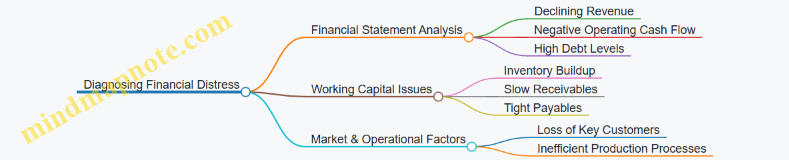
Example: The finance team noticed that inventory turnover had dropped from 6 times/year to 3 times/year, indicating excess stock tying up cash.
Step 2: Developing a Turnaround Plan
Mind Map: Turnaround Plan Components
Example: AlphaTech negotiated extended payment terms with suppliers, improving cash outflows timing, while offering early payment discounts to customers to speed up receivables.
Step 3: Implementing Cost Reduction Measures
- Reduced non-essential expenses by 15% within 6 months.
- Streamlined workforce by 10% focusing on non-core functions.
- Consolidated office spaces to reduce rent costs.
Example: By switching to a just-in-time inventory system, AlphaTech reduced inventory holding costs by 20%, freeing up working capital.
Step 4: Enhancing Revenue Streams
- Focused on high-margin product lines.
- Launched targeted marketing campaigns in emerging markets.
- Developed strategic partnerships to expand distribution.
Example: A new partnership with a regional distributor increased sales by 12% in under a year.
Step 5: Working Capital Optimization
Mind Map: Working Capital Optimization Techniques
Example: AlphaTech implemented stricter credit checks and reduced average receivables days from 60 to 45 days.
Step 6: Debt Restructuring
- Negotiated with lenders to extend loan maturities.
- Converted short-term debt to long-term debt.
- Secured a bridge loan to cover immediate liquidity needs.
Example: The company successfully converted $2 million of short-term debt into a 5-year term loan with lower interest rates, easing monthly cash flow pressures.
Step 7: Strengthening Financial Controls and Reporting
- Introduced weekly cash flow forecasting.
- Established a turnaround management team including finance, operations, and sales.
- Improved transparency with stakeholders through monthly financial updates.
Example: Real-time dashboards allowed management to identify cash flow gaps early and take corrective actions promptly.
Results After 12 Months
- Revenue stabilized and grew by 8%.
- Operating cash flow turned positive.
- Debt-to-equity ratio improved from 3.5 to 2.0.
- Working capital cycle shortened by 20 days.
Key Takeaways and Best Practices
- Early and accurate diagnosis of financial distress is critical.
- Comprehensive turnaround plans must address costs, revenues, working capital, and debt simultaneously.
- Engaging stakeholders and transparent communication builds trust.
- Continuous monitoring with real-time data enables agile decision-making.
Summary Mind Map: Turnaround Financial Management
This case study demonstrates that even companies facing severe financial distress can recover through disciplined financial management, strategic planning, and proactive stakeholder engagement.
13.2 Case Study: Successful Capital Budgeting in a Tech Startup
Introduction
Capital budgeting is a critical process for startups, especially in the tech sector where innovation requires significant upfront investment. This case study explores how a tech startup, “InnoTech Solutions,” successfully applied capital budgeting best practices to launch a new software product, ensuring financial viability and strategic alignment.
Background
InnoTech Solutions, a 3-year-old startup specializing in AI-driven analytics software, planned to develop a new cloud-based platform aimed at small and medium-sized enterprises (SMEs). The project required a capital investment of $1.2 million, covering software development, marketing, and infrastructure.
The finance team needed to evaluate whether this investment would generate sufficient returns and align with the company’s growth strategy.
Step 1: Identifying Cash Flows
The finance team projected the following cash flows over 5 years:
- Initial Investment: $1,200,000 (Year 0)
- Year 1: $300,000
- Year 2: $450,000
- Year 3: $600,000
- Year 4: $700,000
- Year 5: $750,000
These cash flows included revenues minus operating costs and taxes.
Step 2: Choosing the Capital Budgeting Method
InnoTech applied multiple methods to ensure a robust decision:
- Net Present Value (NPV)
- Internal Rate of Return (IRR)
- Payback Period
Step 3: Calculating NPV
Assuming a discount rate of 12% (reflecting the startup’s weighted average cost of capital), the NPV was calculated as follows:
Result: NPV = $1,829,000 (sum of discounted cash inflows) - $1,200,000 = $629,000 (positive NPV)
Step 4: Calculating IRR
The IRR was found by solving the rate (r) where NPV = 0:
Result: IRR ≈ 22%
Since IRR (22%) > discount rate (12%), the project is financially attractive.
Step 5: Payback Period
The payback period is the time taken to recover the initial investment:
| Year | Cash Flow | Cumulative Cash Flow |
|---|---|---|
| 0 | -1,200,000 | -1,200,000 |
| 1 | 300,000 | -900,000 |
| 2 | 450,000 | -450,000 |
| 3 | 600,000 | 150,000 |
Result: Payback period is between Year 2 and Year 3 (~2.75 years), which is acceptable for the startup.
Step 6: Sensitivity Analysis
To understand risks, InnoTech conducted sensitivity analysis on key variables:
- Example: If revenue growth slows by 20%, NPV decreases but remains positive ($250,000).
- Example: If development costs increase by 15%, payback extends to ~3 years.
This analysis helped the team prepare contingency plans.
Step 7: Decision and Implementation
Based on the positive NPV, attractive IRR, and manageable payback period, the board approved the investment. The finance team:
- Allocated funds in tranches tied to development milestones.
- Set up monthly financial monitoring to track actual vs. projected cash flows.
- Coordinated with marketing to optimize launch timing and budget.
Lessons Learned and Best Practices
- Use Multiple Capital Budgeting Methods: Combining NPV, IRR, and payback period provides a comprehensive view.
- Incorporate Sensitivity Analysis: Helps anticipate risks and prepare mitigation strategies.
- Align Financial Decisions with Strategic Goals: The project supported InnoTech’s growth into SME markets.
- Regular Monitoring: Continuous tracking ensures early detection of deviations.
Summary Mind Map
This case study demonstrates how a tech startup can apply capital budgeting best practices with clear examples and structured analysis to make informed investment decisions that drive sustainable growth.
13.3 Case Study: Effective Working Capital Management in Retail
Introduction
Working capital management is crucial for retail businesses where cash flow cycles are tight, and inventory turnover is rapid. Efficient management ensures liquidity, operational efficiency, and profitability. This case study explores how a mid-sized retail chain optimized its working capital to improve cash flow and reduce costs.
Background
RetailCo, a regional apparel retailer with 50 stores, faced challenges with cash shortages despite steady sales growth. The company struggled with excess inventory, delayed receivables, and inefficient payables management, which strained their working capital.
Key Components of Working Capital in Retail
Step 1: Inventory Optimization
RetailCo had high inventory levels leading to increased holding costs and risk of obsolescence.
Best Practices Applied:
- Implemented Just-In-Time (JIT) inventory to reduce stock levels.
- Used sales data analytics to forecast demand more accurately.
- Introduced SKU rationalization to focus on high-margin and fast-moving products.
Example: By reducing average inventory from 90 days to 60 days, RetailCo freed up $1.2 million in working capital.
Step 2: Receivables Management
RetailCo extended credit to some wholesale customers, resulting in delayed payments.
Best Practices Applied:
- Tightened credit policies and performed credit checks.
- Reduced credit terms from 60 to 30 days.
- Automated invoicing and reminders to accelerate collections.
Example: Average collection period decreased from 55 days to 35 days, improving cash inflows by 18%.
Step 3: Payables Management
RetailCo was paying suppliers early without leveraging available credit terms.
Best Practices Applied:
- Negotiated extended payment terms with key suppliers.
- Scheduled payments to maximize cash availability without penalties.
- Took advantage of early payment discounts selectively.
Example: Extending payables from 30 to 45 days improved cash retention by $800,000 without harming supplier relationships.
Step 4: Cash Conversion Cycle Improvement
By optimizing inventory, receivables, and payables, RetailCo shortened its cash conversion cycle (CCC).
Calculation:
- Previous CCC = Inventory Days (90) + Receivables Days (55) - Payables Days (30) = 115 days
- New CCC = Inventory Days (60) + Receivables Days (35) - Payables Days (45) = 50 days
This 65-day reduction significantly enhanced liquidity.
Results and Benefits
- Improved liquidity allowed RetailCo to invest in marketing and store renovations.
- Reduced reliance on short-term borrowing, saving $150,000 annually in interest.
- Enhanced supplier and customer relationships through better payment and credit management.
Conclusion
Effective working capital management in retail requires a balanced approach to inventory, receivables, and payables. RetailCo’s example demonstrates that applying best practices with data-driven decisions can unlock significant cash flow improvements and support sustainable growth.
Summary Mindmap
13.4 Lessons Learned from Financial Mismanagement: A Cautionary Tale
Financial mismanagement can cripple even the most promising corporations, leading to loss of stakeholder trust, legal consequences, and sometimes bankruptcy. This section explores key lessons from real-world examples of financial mismanagement, illustrating how poor decisions and lack of controls can derail corporate success.
Understanding Financial Mismanagement
Financial mismanagement refers to the ineffective, negligent, or fraudulent handling of a company’s financial resources. Common causes include inadequate budgeting, poor cash flow management, lack of internal controls, and unethical behavior.
Mind Map: Causes of Financial Mismanagement
Case Example: Enron Corporation
Enron, once a giant in the energy sector, collapsed due to massive accounting fraud and financial mismanagement. The company used off-balance-sheet entities to hide debt and inflate profits, misleading investors and regulators.
Key Lessons:
- Transparency is critical in financial reporting.
- Strong internal controls and independent audits prevent fraud.
- Ethical corporate culture must be enforced from the top down.
Mind Map: Enron’s Financial Mismanagement Breakdown

Example: Cash Flow Crisis in a Mid-Sized Manufacturing Firm
A mid-sized manufacturing company expanded rapidly without adequate cash flow forecasting. They over-invested in inventory and extended generous credit terms to customers, resulting in severe liquidity shortages.
Best Practices Ignored:
- Regular cash flow forecasting and monitoring
- Conservative credit policies
- Inventory optimization
Outcome:
- Delayed supplier payments
- Increased borrowing costs
- Damage to supplier relationships
Mind Map: Cash Flow Mismanagement in Manufacturing Firm
Lessons and Best Practices to Avoid Financial Mismanagement
- Implement Robust Internal Controls: Segregate duties, conduct regular audits, and enforce compliance.
- Maintain Transparent Financial Reporting: Ensure accuracy and honesty in all financial disclosures.
- Practice Conservative Financial Planning: Avoid over-optimistic forecasts; prepare for contingencies.
- Monitor Cash Flow Diligently: Use rolling forecasts and maintain liquidity buffers.
- Foster Ethical Corporate Culture: Leadership must model integrity and accountability.
- Engage in Continuous Training: Keep finance teams updated on regulations and best practices.
Mind Map: Preventing Financial Mismanagement
Final Thoughts
Financial mismanagement serves as a powerful cautionary tale for finance managers and accountants. By learning from past failures and embedding best practices into daily operations, corporations can safeguard their financial health, build stakeholder confidence, and sustain long-term growth.
13.5 Integrating Best Practices Across Financial Functions: A Holistic Approach
Corporate financial management is most effective when best practices are not siloed within individual functions but integrated across the entire finance ecosystem. This holistic approach ensures alignment, efficiency, and strategic coherence, enabling finance managers and accountants to drive sustainable corporate growth.
Why Integration Matters
- Improved Decision-Making: Cross-functional insights provide a comprehensive view of financial health.
- Risk Mitigation: Coordinated controls reduce gaps and redundancies.
- Resource Optimization: Streamlined processes save time and reduce costs.
- Strategic Alignment: Ensures financial activities support overall corporate goals.
Key Financial Functions to Integrate
- Financial Planning & Forecasting
- Budgeting & Control
- Capital Structure & Financing
- Working Capital Management
- Investment Appraisal
- Financial Reporting & Compliance
- Risk Management
- Treasury & Cash Management
- Performance Measurement
Mind Map: Holistic Corporate Financial Management
Example: Integrating Budgeting, Forecasting, and Working Capital Management
Scenario: A mid-sized manufacturing company aims to improve cash flow and profitability.
- Budgeting & Forecasting Alignment: The finance team uses rolling forecasts updated monthly to reflect real-time sales and production data.
- Working Capital Focus: Forecasts highlight potential cash shortages due to rising inventory levels.
- Budget Adjustments: Budget owners revise procurement plans to reduce excess inventory, improving the cash conversion cycle.
- Performance Monitoring: Variance analysis identifies deviations early, enabling corrective actions.
Outcome: By integrating forecasting with working capital management and budgeting, the company reduces cash tied up in inventory by 15%, improving liquidity and lowering borrowing costs.
Mind Map: Integration Workflow Example

Best Practices for Integration
- Cross-Functional Teams: Encourage collaboration between accountants, finance managers, treasury, and risk teams.
- Unified Data Systems: Use integrated ERP or financial software to ensure data consistency.
- Regular Communication: Hold monthly financial review meetings to align on forecasts, budgets, and risks.
- Standardized Metrics: Develop common KPIs across functions to measure performance cohesively.
- Continuous Improvement: Use lessons learned from performance reviews to refine processes.
Example: Risk Management and Capital Structure Integration
Scenario: A corporation plans to raise capital for expansion but is concerned about currency risk due to international operations.
- The finance team evaluates debt financing options in multiple currencies.
- Risk management identifies currency exposure and recommends hedging strategies.
- Capital structure decisions incorporate the cost of hedging into the overall cost of capital.
- Treasury implements forward contracts to mitigate currency fluctuations.
Outcome: The integrated approach reduces unexpected foreign exchange losses, stabilizes financing costs, and supports confident investment decisions.
Mind Map: Risk and Capital Structure Integration

Final Thoughts
Integrating best practices across financial functions transforms corporate financial management from a set of isolated tasks into a strategic, cohesive discipline. For accountants and finance managers, adopting this holistic approach means better insights, stronger controls, and enhanced ability to support corporate objectives in an increasingly complex business environment.
14. Conclusion and Future Outlook
14.1 Recap of Best Practices in Corporate Financial Management
Corporate financial management is a multifaceted discipline that requires a strategic approach to planning, controlling, and optimizing financial resources. Below is a comprehensive recap of the best practices covered throughout this blog, supported by mind maps and practical examples to reinforce understanding.
Mind Map: Overview of Best Practices
Financial Planning & Forecasting
Best Practice: Use historical data combined with scenario analysis to create flexible and realistic forecasts.
Example: A finance manager at a manufacturing firm used three scenarios (best case, base case, worst case) to forecast sales for the next fiscal year. This approach helped the company prepare for supply chain disruptions and adjust budgets accordingly.
Budgeting & Controls
Best Practice: Implement zero-based budgeting to ensure every expense is justified from scratch, coupled with regular variance analysis to monitor budget adherence.
Example: A mid-sized technology company adopted zero-based budgeting, which uncovered redundant software subscriptions, saving 8% of the annual budget.
Capital Structure Optimization
Best Practice: Maintain an optimal mix of debt and equity to minimize the weighted average cost of capital (WACC) while managing financial risk.
Example: A retail chain increased its debt financing during expansion to leverage tax benefits but kept a conservative equity buffer to maintain credit ratings.
Working Capital Management
Best Practice: Optimize the cash conversion cycle by accelerating receivables, managing inventory efficiently, and negotiating favorable payment terms.
Example: A manufacturing company implemented an automated invoicing system that reduced accounts receivable days by 15%, improving liquidity.
Investment Appraisal
Best Practice: Use Net Present Value (NPV) as the primary metric for investment decisions, supplemented by Internal Rate of Return (IRR) and payback period analyses.
Example: Before launching a new product line, a consumer goods company calculated the NPV of the project to be positive, justifying the investment despite a longer payback period.
Financial Reporting & Compliance
Best Practice: Ensure transparency and accuracy by adhering strictly to IFRS or GAAP standards and implementing strong internal controls.
Example: A multinational corporation standardized its reporting processes across subsidiaries, reducing errors and improving audit outcomes.
Risk Management
Best Practice: Identify key financial risks and use hedging strategies such as forward contracts and options to mitigate exposure.
Example: An exporter used currency forward contracts to lock in exchange rates, protecting profit margins against currency fluctuations.
Treasury & Cash Management
Best Practice: Centralize cash management through cash pooling and leverage technology for real-time cash flow monitoring.
Example: A global enterprise implemented a treasury management system that consolidated cash positions across regions, optimizing liquidity and reducing borrowing costs.
Performance Measurement
Best Practice: Regularly analyze financial ratios and conduct benchmarking against industry peers to identify improvement areas.
Example: Using DuPont analysis, a finance manager pinpointed that low asset turnover was limiting profitability and recommended operational improvements.
Strategic Financial Management
Best Practice: Align financial decisions with corporate strategy, ensuring long-term sustainability and ethical governance.
Example: During a merger, the finance team developed a strategic plan that balanced growth ambitions with prudent risk management and compliance.
Emerging Trends
Best Practice: Embrace technological advancements such as AI for predictive analytics and blockchain for transparency, while integrating ESG factors into financial decisions.
Example: A financial department adopted AI-driven forecasting tools that improved forecast accuracy by 20%, and began reporting ESG metrics to attract sustainable investors.
Final Thoughts
By integrating these best practices, finance managers and accountants can drive corporate financial health, support strategic goals, and navigate the complexities of today’s dynamic business environment. Continuous learning and adaptation remain key to maintaining excellence in corporate financial management.
14.2 Preparing for the Evolving Role of Finance Professionals
The role of finance professionals is rapidly evolving due to technological advancements, changing regulatory landscapes, and increasing strategic demands within organizations. To stay relevant and add value, accountants and finance managers must proactively prepare for these changes by developing new skills, adopting innovative tools, and embracing a strategic mindset.
Key Areas of Evolution for Finance Professionals
Skills Development
Technical Skills:
-
Data Analytics: Finance professionals must be proficient in analyzing large datasets to uncover insights that drive business decisions. For example, a finance manager using Power BI or Tableau to visualize cash flow trends can identify potential liquidity issues early.
-
Financial Modeling: Building dynamic models that incorporate various business scenarios helps in forecasting and investment appraisal. For instance, creating a discounted cash flow (DCF) model to evaluate a potential acquisition.
-
Automation Tools: Familiarity with tools like Excel macros, Python scripting, or RPA platforms enables automation of repetitive tasks, freeing time for strategic activities.
Soft Skills:
-
Strategic Thinking: Moving beyond number crunching to understanding how financial data impacts overall business strategy.
-
Communication: Clearly conveying complex financial information to non-financial stakeholders is critical. For example, explaining budget variances to department heads in an understandable way.
-
Leadership: Leading cross-functional teams and driving change initiatives within the finance function.
Technology Adoption
The integration of technology is reshaping finance roles:
-
AI & Machine Learning: Automating predictive analytics such as credit risk scoring or fraud detection.
-
Robotic Process Automation (RPA): Automating routine processes like invoice processing or reconciliations.
-
Cloud Computing: Enabling real-time access to financial data and collaboration across global teams.
Example: A finance manager implements an RPA solution to automate monthly bank reconciliations, reducing errors and saving 20 hours per month.
Strategic Involvement
Finance professionals are increasingly acting as strategic partners:
-
Business Partnering: Collaborating with operational teams to align financial goals with business objectives.
-
Decision Support: Providing scenario analysis and financial insights to support investment and operational decisions.
-
Risk Management: Identifying financial risks and developing mitigation strategies.
Example: During a product launch, the finance manager works closely with marketing and sales to forecast revenue impacts and optimize pricing strategies.
Regulatory & Compliance Awareness
Keeping abreast of evolving regulations is essential:
-
ESG Reporting: Understanding environmental, social, and governance metrics and integrating them into financial reporting.
-
Data Privacy: Ensuring compliance with data protection laws when handling financial data.
-
Global Standards: Navigating differences in IFRS, GAAP, and other accounting frameworks.
Example: A finance team updates reporting processes to include ESG disclosures in line with stakeholder expectations and regulatory requirements.
Summary Mind Map
Practical Steps for Finance Professionals
-
Invest in Continuous Education: Pursue certifications like CFA, CPA, or specialized courses in data analytics and AI.
-
Engage in Cross-Functional Projects: Gain exposure to other business areas to enhance strategic understanding.
-
Adopt a Growth Mindset: Be open to learning new technologies and methodologies.
-
Build Strong Communication Skills: Practice simplifying financial concepts for diverse audiences.
-
Leverage Technology: Pilot new tools and advocate for digital transformation within the finance function.
By embracing these changes, finance professionals can transition from traditional number-focused roles to dynamic strategic partners who drive corporate success.
14.3 Continuous Learning and Development in Financial Management
In the fast-evolving world of corporate finance, continuous learning and development are essential for finance managers and accountants to stay relevant, make informed decisions, and drive organizational success. This section explores the importance of ongoing education, practical ways to develop skills, and real-world examples illustrating how continuous learning enhances financial management.
Why Continuous Learning Matters in Financial Management
- Adapting to Regulatory Changes: Financial regulations and compliance standards like IFRS, GAAP, and tax laws frequently update. Staying current prevents costly errors.
- Embracing Technological Advances: Technologies such as AI, blockchain, and advanced analytics transform financial processes.
- Enhancing Analytical Skills: Complex data analysis and forecasting require up-to-date methodologies.
- Improving Strategic Decision-Making: Continuous learning equips finance professionals to align financial management with corporate strategy.
Mind Map: Core Areas for Continuous Learning in Finance
Methods for Continuous Learning
-
Formal Education & Certifications
- Pursuing certifications such as CPA, CFA, CMA, or ACCA.
- Enrolling in specialized courses on platforms like Coursera, edX, or LinkedIn Learning.
-
Workshops and Seminars
- Attending industry conferences and workshops to gain insights on emerging trends.
-
On-the-Job Learning
- Participating in cross-functional projects.
- Job rotations within finance departments.
-
Mentorship and Networking
- Learning from experienced professionals.
- Joining finance-focused professional groups.
-
Reading and Research
- Following financial news, journals, and whitepapers.
- Subscribing to finance blogs and podcasts.
Mind Map: Learning Resources and Opportunities
Practical Example: Upskilling Through Certification
Scenario: A finance manager at a mid-sized corporation noticed increasing automation in financial reporting. To stay ahead, she enrolled in a Certified Management Accountant (CMA) program focusing on strategic financial management and technology integration.
Outcome: After certification, she implemented automated budgeting tools, reducing the monthly budget cycle by 30%. Her enhanced strategic insights also contributed to more accurate forecasts and better capital allocation.
Practical Example: Leveraging Online Learning for Emerging Technologies
Scenario: An accountant wanted to improve data analytics skills to better analyze financial trends. He took an online course on data visualization using Power BI.
Outcome: He created interactive dashboards that allowed the finance team to monitor KPIs in real-time, improving decision-making speed and accuracy.
Tips for Embedding Continuous Learning into Daily Work
- Allocate dedicated time weekly for learning activities.
- Set personal development goals aligned with organizational needs.
- Share new knowledge with the team through presentations or newsletters.
- Experiment with new tools or techniques on small projects.
- Seek feedback and reflect on learning progress regularly.
Mind Map: Embedding Continuous Learning in Corporate Culture
Summary
Continuous learning and development are not optional but vital for finance professionals to navigate the complexities of modern corporate financial management. By actively engaging in education, leveraging technology, and fostering a learning culture, accountants and finance managers can enhance their skills, contribute more effectively to their organizations, and future-proof their careers.
14.4 Final Thoughts: Driving Corporate Success through Financial Excellence
Achieving corporate success is deeply intertwined with the practice of financial excellence. For accountants and finance managers, mastering this discipline means not only managing numbers but also steering strategic decisions that foster sustainable growth, resilience, and competitive advantage.
Key Pillars of Financial Excellence
Example: How Financial Excellence Drives Success
Consider a mid-sized manufacturing company, “ABC Manufacturing,” which implemented a comprehensive financial excellence framework:
- Strategic Alignment: ABC aligned its financial plans with its goal to expand into new markets, allocating capital to R&D and marketing accordingly.
- Accurate Reporting: They enhanced their reporting systems to provide real-time financial data, improving transparency with stakeholders.
- Efficiency: By adopting zero-based budgeting, ABC eliminated unnecessary expenses, freeing up resources for innovation.
- Risk Management: ABC used currency hedging to protect against foreign exchange volatility as it expanded internationally.
- Innovation: They integrated AI-powered analytics tools to forecast demand and optimize inventory.
As a result, ABC Manufacturing increased profitability by 15% over two years and improved its market share.
Mind Map: Steps to Embed Financial Excellence in Your Organization
Practical Tips for Finance Professionals
- Stay Informed: Keep up with evolving accounting standards, regulatory changes, and emerging financial technologies.
- Foster Collaboration: Work closely with other departments to ensure financial strategies support overall business objectives.
- Emphasize Data Quality: Invest in systems and processes that guarantee accurate and timely financial data.
- Promote Ethical Standards: Uphold integrity and transparency to build trust internally and externally.
- Leverage Technology: Use automation and AI to reduce manual errors and gain predictive insights.
Final Reflection
Financial excellence is not a destination but a continuous journey. By embedding best practices, embracing innovation, and maintaining a strategic outlook, finance professionals can drive their organizations toward sustained success. The ability to translate financial data into actionable insights empowers companies to navigate uncertainties, capitalize on opportunities, and create lasting value for all stakeholders.