Cost Management Strategies
1. Introduction to Cost Management
1.1 Understanding Cost Management: Definition and Importance
Cost management is a systematic approach to planning and controlling the budget of a business or project. It involves estimating, allocating, and controlling costs to ensure that the organization operates within its financial means while maximizing profitability and efficiency.
Definition of Cost Management
Cost management encompasses all activities related to the planning and controlling of costs throughout the lifecycle of a product, service, or project. It is not just about cutting costs but optimizing them to achieve the best value.
Importance of Cost Management
- Profitability Enhancement: Proper cost management helps businesses maintain or increase profit margins by controlling expenses.
- Resource Optimization: Ensures that resources are used efficiently, avoiding waste.
- Budget Adherence: Helps in sticking to budgets and avoiding overruns.
- Decision Making: Provides critical data for strategic decisions such as pricing, investment, and operational changes.
- Competitive Advantage: Enables companies to offer competitive pricing without sacrificing quality.
Mind Map: Core Components of Cost Management
Mind Map: Why Cost Management Matters
Practical Examples
Example 1: Manufacturing Sector
A mid-sized manufacturing company noticed rising production costs due to inefficient use of raw materials. By implementing a cost management strategy focused on detailed cost estimation and control, they introduced an activity-based costing system. This allowed them to identify wasteful processes and negotiate better supplier contracts. Within a year, they reduced material costs by 12%, improving overall profitability.
Example 2: Finance Sector
An accounting firm struggled with budget overruns on client projects. By adopting zero-based budgeting and regular variance analysis, the firm was able to allocate resources more accurately and monitor expenses closely. This led to a 10% reduction in project costs and improved client satisfaction due to more transparent billing.
Summary
Cost management is a critical discipline that goes beyond mere cost cutting. It involves a holistic approach to estimating, budgeting, controlling, and reporting costs to support business objectives. For accountants and cost managers in manufacturing and finance, mastering cost management is essential to drive profitability, efficiency, and strategic decision-making.
1.2 Key Roles of Accountants and Cost Managers in Cost Control
Cost control is a critical function within both finance and manufacturing sectors, and accountants and cost managers play pivotal roles in ensuring that organizations maintain financial health and operational efficiency. This section explores their key responsibilities, illustrating how their expertise contributes to effective cost management.
Roles of Accountants in Cost Control
Accountants are responsible for recording, classifying, and analyzing financial transactions. Their role in cost control includes:
- Accurate Cost Recording: Ensuring all costs are properly documented to provide a clear financial picture.
- Cost Allocation: Assigning indirect costs to appropriate cost centers or products.
- Financial Reporting: Preparing reports that highlight cost trends and variances.
- Compliance and Audit: Ensuring cost data complies with accounting standards and regulations.
- Budget Preparation and Monitoring: Assisting in creating budgets and tracking actual costs against them.
Example:
A manufacturing company’s accountant notices that the electricity costs have increased by 20% compared to the previous quarter. By analyzing the detailed cost reports, they identify inefficient machinery usage during off-peak hours and recommend scheduling adjustments to reduce energy consumption.
Roles of Cost Managers in Cost Control
Cost managers focus specifically on planning, monitoring, and controlling costs to maximize profitability. Their key responsibilities include:
- Cost Planning: Developing detailed cost estimates and budgets.
- Cost Monitoring: Continuously tracking costs during production or project execution.
- Variance Analysis: Investigating differences between planned and actual costs.
- Cost Reduction Initiatives: Identifying opportunities to reduce costs without compromising quality.
- Collaboration: Working with cross-functional teams to implement cost-saving measures.
Example:
A cost manager in a finance firm implements a new software tool to track departmental expenses in real-time, enabling early detection of budget overruns and facilitating timely corrective actions.
Mind Map: Key Roles of Accountants and Cost Managers
Integrated Collaboration Between Accountants and Cost Managers
Effective cost control is often the result of seamless collaboration between accountants and cost managers. Together, they:
- Share accurate and timely cost data.
- Develop realistic budgets based on historical and forecasted data.
- Analyze cost variances to identify root causes.
- Implement corrective actions and monitor their impact.
Example:
In a manufacturing setup, the accountant provides detailed cost reports highlighting material wastage. The cost manager uses this data to initiate a lean manufacturing project, reducing waste by 10% within six months.
Mind Map: Collaboration Workflow
Summary
Accountants and cost managers are both essential to cost control but focus on different aspects. Accountants ensure the accuracy and compliance of cost data, while cost managers use this data to plan, monitor, and reduce costs strategically. Their combined efforts enable organizations to maintain financial discipline and improve profitability.
By understanding and leveraging their distinct yet complementary roles, finance and manufacturing companies can build robust cost management frameworks that drive sustainable success.
1.3 Overview of Cost Types in Manufacturing and Finance Sectors
Cost management begins with a clear understanding of the different types of costs that organizations face. Both manufacturing and finance sectors encounter various cost categories, each with unique characteristics and implications for budgeting, forecasting, and control.
Cost Types in Manufacturing Sector
In manufacturing, costs are generally categorized based on their behavior, traceability, and function. Here is a detailed breakdown:
Manufacturing Cost Types Mind Map
Example: A car manufacturer purchases steel sheets (direct material) and pays assembly line workers (direct labor). The factory rent and electricity bills are indirect costs. Understanding these distinctions helps in accurate product costing and pricing.
Cost Types in Finance Sector
The finance sector, while less tangible in production, still deals with multiple cost types related to service delivery, compliance, and operations.
Finance Sector Cost Types Mind Map
Example: A bank pays fixed salaries to its accountants (fixed direct costs) and incurs variable transaction fees when processing client trades. IT maintenance and compliance training are indirect costs that support overall operations.
Integrated Example: Comparing Cost Types Across Sectors
| Cost Type | Manufacturing Example | Finance Example |
|---|---|---|
| Direct Material | Steel sheets for car bodies | N/A (service-based, no physical materials) |
| Direct Labor | Assembly line workers | Financial analysts’ salaries |
| Indirect Labor | Factory supervisors | IT support staff |
| Fixed Costs | Factory rent | Office rent |
| Variable Costs | Raw materials usage | Transaction fees |
| Semi-Variable Costs | Utilities (fixed base + usage) | Utility bills + performance bonuses |
Summary
Understanding these cost types allows accountants and cost managers to:
- Accurately allocate costs to products or services
- Develop precise budgets and forecasts
- Identify areas for cost control and reduction
By mastering the nuances of cost classification in both manufacturing and finance, professionals can drive more informed decision-making and improve overall financial performance.
1.4 The Impact of Effective Cost Management on Business Profitability
Effective cost management is a critical driver of business profitability, especially in sectors like manufacturing and finance where margins can be tight and operational complexity high. By controlling costs strategically, companies can enhance their profit margins, improve cash flow, and gain competitive advantages.
Mind Map: Impact of Effective Cost Management on Profitability
Key Areas Where Cost Management Impacts Profitability
-
Increased Profit Margins
- By identifying and eliminating unnecessary expenses, businesses can directly increase their bottom line.
- Example: A manufacturing company implemented lean manufacturing principles, reducing material waste by 20%, which translated into a 5% increase in profit margin within one fiscal year.
-
Improved Cash Flow
- Effective cost management ensures expenses are aligned with revenue cycles, preventing cash shortages.
- Example: A finance firm adopted zero-based budgeting, scrutinizing every expense annually, which improved cash reserves and allowed for timely investments.
-
Competitive Advantage
- Lower costs enable companies to price products more competitively or invest savings into innovation and marketing.
- Example: A manufacturer reduced production costs through automation, allowing them to lower prices by 8%, gaining market share against competitors.
-
Risk Mitigation
- Controlling costs helps avoid unexpected overruns and prepares the business for economic fluctuations.
- Example: A company established contingency budgets and closely monitored supplier costs, mitigating risks from raw material price volatility.
-
Enhanced Decision Making
- Accurate cost data supports better strategic decisions regarding product lines, investments, and operational improvements.
- Example: Using activity-based costing, a finance department identified unprofitable services and reallocated resources, improving overall profitability.
Mind Map: Examples of Cost Management Impact
Real-World Example: Mid-Sized Manufacturer
A mid-sized manufacturing company faced shrinking profit margins due to rising raw material costs and inefficient processes. By adopting a comprehensive cost management strategy that included:
- Implementing lean manufacturing to reduce waste,
- Negotiating better supplier contracts,
- Introducing activity-based costing to identify high-cost processes,
The company achieved a 15% reduction in overall costs within 12 months. This directly increased their net profit margin by 4%, enabling reinvestment in product development and expansion.
Summary
Effective cost management is not just about cutting expenses but about strategically controlling and optimizing costs to enhance profitability. It empowers accountants and cost managers to drive sustainable growth, improve financial health, and secure a competitive edge in the market.
1.5 Case Study: How a Mid-Sized Manufacturer Reduced Costs by 15% in One Year
In this case study, we explore how a mid-sized manufacturing company successfully implemented cost management strategies to reduce overall costs by 15% within a single fiscal year. This example highlights practical steps, challenges faced, and measurable outcomes, providing actionable insights for accountants and cost managers.
Company Background
- Industry: Automotive parts manufacturing
- Size: 250 employees
- Annual Revenue: $50 million
- Key Challenge: Rising raw material and labor costs impacting profit margins
Initial Assessment and Goal Setting
The company started by conducting a thorough cost analysis to identify major cost drivers and inefficiencies.
Mind Map: Initial Cost Assessment
Example: The finance team discovered that raw material costs accounted for 40% of total expenses, with frequent rush orders causing premium freight charges.
Strategy Implementation
-
Supplier Negotiations and Strategic Sourcing
- Consolidated suppliers to leverage volume discounts.
- Established long-term contracts to stabilize prices.
-
Lean Manufacturing Adoption
- Implemented 5S methodology to organize the workspace.
- Reduced waste by optimizing production schedules.
-
Labor Cost Optimization
- Cross-trained employees to reduce overtime.
- Introduced performance-based incentives.
-
Inventory Management Improvement
- Shifted to Just-In-Time (JIT) inventory to reduce holding costs.
- Used ABC analysis to prioritize inventory control.
-
Energy Efficiency Initiatives
- Installed energy-efficient lighting and machinery.
- Scheduled equipment use during off-peak hours.
Mind Map: Cost Reduction Strategies
Results and Metrics
- Raw Material Costs: Reduced by 8% through better supplier terms.
- Labor Costs: Overtime hours decreased by 25%, saving 5% on total labor expenses.
- Inventory Holding Costs: Cut by 12% due to JIT implementation.
- Energy Costs: Lowered by 7% after efficiency upgrades.
Overall Cost Reduction: 15% within 12 months.
Example: By cross-training machine operators, the company reduced dependency on specialized staff, which allowed for more flexible scheduling and fewer overtime hours.
Lessons Learned
- Early and detailed cost analysis is critical to identify focus areas.
- Engaging cross-functional teams ensures buy-in and smoother implementation.
- Continuous monitoring and adjustment of strategies maintain momentum.
- Small incremental improvements across multiple areas can cumulatively lead to significant savings.
Mind Map: Key Takeaways
Practical Tips for Accountants and Cost Managers
- Use data visualization tools to communicate cost drivers clearly.
- Develop a cost reduction roadmap with measurable milestones.
- Foster relationships with suppliers for better negotiation leverage.
- Promote a culture of cost awareness among employees.
This case study demonstrates that with a structured approach and collaborative effort, mid-sized manufacturers can achieve substantial cost savings without compromising quality or productivity.
2. Cost Classification and Analysis
2.1 Fixed vs Variable Costs: Identifying and Managing Each
Understanding the distinction between fixed and variable costs is fundamental for accountants and cost managers aiming to optimize cost management strategies in both finance and manufacturing sectors. This section will explore definitions, identification techniques, management practices, and practical examples to clarify these concepts.
What Are Fixed Costs?
Fixed costs are expenses that remain constant regardless of the level of production or business activity. These costs do not fluctuate with output volume and are typically time-related (e.g., monthly rent).
Examples of Fixed Costs:
- Rent or lease payments for manufacturing facilities or office space
- Salaries of permanent staff
- Depreciation of machinery and equipment
- Insurance premiums
What Are Variable Costs?
Variable costs change directly in proportion to the level of production or business activity. As output increases, variable costs increase; as output decreases, variable costs decrease.
Examples of Variable Costs:
- Raw materials used in manufacturing
- Direct labor paid per unit produced
- Utility costs linked to production volume (e.g., electricity for machines)
- Sales commissions
Mind Map: Fixed vs Variable Costs
Identifying Fixed and Variable Costs
To manage costs effectively, accountants and cost managers must accurately classify expenses.
Steps to Identify:
- Analyze Expense Behavior: Review historical financial data to observe how costs change with production volume.
- Consult Department Heads: Gain insights on which costs are tied to production levels.
- Use Cost Drivers: Identify what causes the cost to change (e.g., machine hours, units produced).
Mind Map: Cost Identification Process
Managing Fixed Costs
Fixed costs, while stable, can represent significant financial commitments. Managing them involves:
- Negotiating Lease Terms: Securing favorable long-term contracts or flexible lease agreements.
- Optimizing Asset Utilization: Ensuring machinery and facilities are used efficiently to justify fixed expenses.
- Reviewing Staffing Levels: Aligning permanent staff numbers with business needs to avoid overcapacity.
Example: A manufacturing company leases a factory at a fixed monthly rent of $20,000. By increasing production shifts from one to two per day, the company spreads the fixed rent cost over more units, effectively reducing the fixed cost per unit.
Managing Variable Costs
Variable costs require close monitoring to control expenses as production scales.
- Supplier Negotiations: Securing bulk discounts or better terms for raw materials.
- Process Improvements: Reducing waste and improving efficiency to lower material usage.
- Labor Scheduling: Aligning workforce hours with production demand to avoid overtime costs.
Example: A finance department processes loan applications where each application incurs a variable cost for credit checks and documentation. By automating parts of the process, the department reduces the variable cost per application.
Mind Map: Managing Fixed and Variable Costs
Practical Example: Manufacturing Scenario
Company: ABC Electronics
-
Fixed Costs:
- Factory rent: $50,000/month
- Salaries of permanent staff: $120,000/month
-
Variable Costs:
- Components per unit: $30
- Direct labor per unit: $15
Scenario: ABC Electronics produces 10,000 units/month.
- Total Fixed Costs = $170,000
- Total Variable Costs = (30 + 15) * 10,000 = $450,000
Cost per Unit:
- Fixed cost per unit = $170,000 / 10,000 = $17
- Variable cost per unit = $45
- Total cost per unit = $62
If production increases to 15,000 units:
- Fixed cost per unit = $170,000 / 15,000 = $11.33 (decreases)
- Variable cost per unit = $45 (constant)
- Total cost per unit = $56.33
This example illustrates how increasing production volume reduces fixed cost per unit but variable cost per unit remains constant.
Summary
- Fixed costs remain constant regardless of output; variable costs fluctuate with production.
- Accurate identification helps in budgeting, forecasting, and strategic decision-making.
- Managing fixed costs focuses on optimizing utilization and commitments.
- Managing variable costs emphasizes efficiency and supplier relationships.
- Understanding cost behavior assists in pricing, profitability analysis, and cost control.
By mastering these concepts, accountants and cost managers can implement effective cost management strategies that improve financial performance and operational efficiency.
2.2 Direct and Indirect Costs: Allocation Techniques
Understanding Direct and Indirect Costs
In cost management, distinguishing between direct and indirect costs is fundamental for accurate cost allocation and control.
- Direct Costs: These are expenses that can be directly traced to a specific product, service, or department. Examples include raw materials, direct labor, and manufacturing supplies.
- Indirect Costs: Also known as overheads, these costs cannot be directly linked to a single product or service. Examples include utilities, rent, administrative salaries, and depreciation.
Importance of Proper Cost Allocation
Correctly allocating direct and indirect costs ensures accurate product costing, pricing strategies, and profitability analysis. Misallocation can lead to distorted financial reports and poor decision-making.
Mind Map: Direct vs Indirect Costs
Allocation Techniques for Direct Costs
Direct costs are straightforward to allocate because they are directly traceable:
-
Example: In a furniture manufacturing company, the wood used to build a chair is a direct cost. The cost of the wood is charged directly to the chair product line.
-
Best Practice: Maintain detailed tracking systems such as job costing or batch costing to assign direct costs accurately.
Allocation Techniques for Indirect Costs
Indirect costs require systematic allocation methods since they benefit multiple products or departments.
Common Allocation Methods:
-
Traditional Cost Allocation
- Allocate overhead based on a single cost driver such as direct labor hours or machine hours.
- Example: If total factory overhead is $100,000 and total direct labor hours are 10,000, then overhead rate = $10 per labor hour.
-
Activity-Based Costing (ABC)
- Allocates costs based on multiple activities that drive overhead costs.
- More accurate as it links costs to actual activities.
- Example: Machine setup costs allocated based on the number of setups per product.
-
Departmental Overhead Rates
- Overhead is allocated separately for each department based on relevant cost drivers.
- Example: Maintenance costs allocated based on machine hours in the maintenance department.
-
Cost Pooling
- Grouping indirect costs into pools and allocating them using appropriate drivers.
Mind Map: Indirect Cost Allocation Techniques
Example: Allocating Indirect Costs in a Manufacturing Plant
Scenario:
- Total overhead costs: $200,000
- Direct labor hours: 20,000
- Machine hours: 15,000
- Activities:
- Machine setups: 100
- Inspections: 200
Step 1: Traditional Allocation
- Overhead rate per labor hour = $200,000 / 20,000 = $10
- Product A uses 500 labor hours → Overhead allocated = 500 x $10 = $5,000
Step 2: Activity-Based Costing
-
Overhead split into activities:
- Machine setups: $50,000
- Inspections: $30,000
- Other overhead: $120,000
-
Cost drivers:
- Setup cost per setup = $50,000 / 100 = $500
- Inspection cost per inspection = $30,000 / 200 = $150
-
Product A requires 3 setups and 5 inspections:
- Setup cost = 3 x $500 = $1,500
- Inspection cost = 5 x $150 = $750
-
Other overhead allocated based on labor hours:
- $120,000 / 20,000 = $6 per labor hour
- Product A labor hours = 500 → $3,000
-
Total overhead allocated to Product A = $1,500 + $750 + $3,000 = $5,250
This example shows ABC provides a more nuanced allocation, reflecting actual resource consumption.
Best Practices for Cost Allocation
- Use Multiple Cost Drivers: Avoid relying on a single driver for overhead allocation.
- Regularly Review Allocation Bases: Ensure drivers reflect current operations.
- Integrate Technology: Use ERP and costing software to automate and improve accuracy.
- Train Teams: Ensure accountants and cost managers understand allocation principles.
Summary
Accurate allocation of direct and indirect costs is crucial for effective cost management. Direct costs are assigned straightforwardly, while indirect costs require thoughtful allocation techniques such as traditional methods or ABC. Using real-world examples and mind maps helps clarify these concepts for finance and manufacturing professionals.
2.3 Activity-Based Costing (ABC): Principles and Practical Application
What is Activity-Based Costing (ABC)?
Activity-Based Costing (ABC) is a costing methodology that assigns overhead and indirect costs to related products and services by identifying cost drivers. Unlike traditional costing methods that allocate costs based on a single metric (like machine hours or labor hours), ABC provides a more accurate reflection of the true costs by tracing expenses to activities that generate those costs.
Principles of ABC
- Identify Activities: Break down the production or service process into discrete activities.
- Assign Costs to Activities: Accumulate costs for each activity based on resources consumed.
- Determine Cost Drivers: Identify measurable factors that cause the cost of each activity.
- Assign Costs to Products/Services: Allocate activity costs to products or services based on their usage of the cost drivers.
Mind Map: Core Concepts of ABC
Why Use ABC?
- Provides more accurate product costing.
- Highlights inefficient or costly activities.
- Helps in pricing, budgeting, and identifying cost-saving opportunities.
Practical Application Example: Manufacturing Plant
Scenario: A manufacturing company produces two products: Product A (simple) and Product B (complex). Traditional costing allocates overhead based on direct labor hours, but Product B requires more machine setups and inspections.
Step 1: Identify Activities and Costs
- Machine Setup: $50,000
- Quality Inspection: $30,000
- Material Handling: $20,000
Step 2: Determine Cost Drivers and Their Totals
- Number of setups: 100
- Inspection hours: 200
- Material moves: 400
Step 3: Calculate Cost Driver Rates
- Setup cost per setup = $50,000 / 100 = $500
- Inspection cost per hour = $30,000 / 200 = $150
- Material handling cost per move = $20,000 / 400 = $50
Step 4: Assign Activity Costs to Products
| Activity | Cost Driver | Product A Usage | Product B Usage | Product A Cost | Product B Cost |
|---|---|---|---|---|---|
| Machine Setup | setups | 20 | 80 | $10,000 | $40,000 |
| Quality Inspection | hours | 150 | 50 | $22,500 | $7,500 |
| Material Handling | moves | 300 | 100 | $15,000 | $5,000 |
Step 5: Total Overhead Assigned
- Product A: $10,000 + $22,500 + $15,000 = $47,500
- Product B: $40,000 + $7,500 + $5,000 = $52,500
Insight: Although Product B uses fewer inspection hours, it requires significantly more setups, driving up its overhead cost. Traditional costing might have underestimated Product B’s true cost.
Mind Map: ABC Implementation Steps
Example: ABC in Finance Sector
Scenario: A bank wants to understand the cost of processing different types of loan applications.
- Activities: Application processing, credit checks, document verification
- Cost Drivers: Number of applications, hours spent per application
By applying ABC, the bank discovers that commercial loans require more document verification and credit checks, increasing their processing costs compared to personal loans. This insight helps the bank price loans more accurately and streamline costly activities.
Best Practices for Implementing ABC
- Start with a pilot project focusing on a specific product line or department.
- Ensure accurate and consistent data collection for cost drivers.
- Engage cross-functional teams to identify activities comprehensively.
- Use ABC results to support strategic decisions, not just cost allocation.
Summary
Activity-Based Costing offers a detailed and accurate way to assign overhead costs by linking them to activities and their drivers. This method helps accountants and cost managers in manufacturing and finance sectors to uncover hidden costs, improve pricing strategies, and identify areas for cost reduction.
For further reading, consider exploring software tools that support ABC and case studies demonstrating its impact on cost management efficiency.
2.4 Cost Behavior Analysis for Better Forecasting
Cost behavior analysis is a fundamental practice in cost management that helps accountants and cost managers understand how different costs change in response to variations in business activity levels. By analyzing cost behavior, organizations can create more accurate budgets, forecasts, and strategic plans.
What is Cost Behavior?
Cost behavior refers to the way costs change when there is a change in the level of business activity. The main types of cost behavior include:
- Fixed Costs: Costs that remain constant regardless of activity level.
- Variable Costs: Costs that vary directly with the level of activity.
- Mixed (Semi-Variable) Costs: Costs that have both fixed and variable components.
Why is Cost Behavior Analysis Important?
- Enables precise forecasting and budgeting.
- Helps identify cost drivers.
- Supports decision-making regarding pricing, production levels, and cost control.
- Assists in break-even analysis and profitability assessment.
Mind Map: Types of Cost Behavior
Analyzing Cost Behavior: Step-by-Step
- Identify Cost Components: List all costs and classify them as fixed, variable, or mixed.
- Determine Cost Drivers: Understand what factors influence each cost (e.g., machine hours, units produced).
- Collect Historical Data: Gather past cost and activity data.
- Use Graphical Analysis: Plot costs against activity levels to visualize behavior.
- Apply Statistical Methods: Use methods like the high-low method or regression analysis to separate fixed and variable components.
Mind Map: Cost Behavior Analysis Process
Example 1: Using the High-Low Method
A manufacturing company tracks electricity costs over several months:
| Month | Machine Hours | Electricity Cost ($) |
|---|---|---|
| Jan | 1,000 | 3,000 |
| Feb | 1,500 | 3,800 |
| Mar | 2,000 | 4,600 |
Step 1: Identify the highest and lowest activity levels:
- Highest: 2,000 hours, $4,600
- Lowest: 1,000 hours, $3,000
Step 2: Calculate variable cost per machine hour:
\[ Variable\ Cost\ per\ Hour = \frac{4600 - 3000}{2000 - 1000} = \frac{1600}{1000} = 1.60\ dollars/hour \]
Step 3: Calculate fixed cost:
\[ Fixed\ Cost = Total\ Cost - (Variable\ Cost\ per\ Hour \times Machine\ Hours) = 4600 - (1.60 \times 2000) = 4600 - 3200 = 1400\ dollars \]
Interpretation:
- Fixed electricity cost is $1,400 per month.
- Variable electricity cost is $1.60 per machine hour.
This helps forecast electricity costs for any given machine hour level.
Mind Map: High-Low Method Calculation
Example 2: Graphical Analysis
Plotting costs against activity levels can reveal cost behavior patterns.
| Units Produced | Total Cost ($) |
|---|---|
| 100 | 5,000 |
| 200 | 7,000 |
| 300 | 9,000 |
Plotting these points shows a linear increase, indicating variable costs increase with production.
Mixed Costs and Their Analysis
Mixed costs contain both fixed and variable components. For example, a maintenance contract might have a fixed monthly fee plus charges based on hours worked.
Example:
- Monthly maintenance contract: $500 fixed + $50 per hour.
- If 10 hours are worked, total cost = $500 + ($50 * 10) = $1,000.
Understanding mixed costs is critical for accurate forecasting.
Mind Map: Mixed Cost Components
Applying Cost Behavior Analysis for Forecasting
Once cost behavior is understood, forecasting becomes more accurate. For instance, if a company expects to produce 2,500 units next month, and variable cost per unit is $4 with fixed costs of $10,000:
\[ Total\ Cost = Fixed\ Cost + (Variable\ Cost\ per\ Unit \times Units) = 10,000 + (4 \times 2,500) = 10,000 + 10,000 = 20,000\ dollars \]
This forecast enables better budgeting and resource allocation.
Best Practices for Cost Behavior Analysis
- Regularly update cost data to reflect current operations.
- Use multiple methods (graphical, high-low, regression) for accuracy.
- Engage cross-functional teams to identify cost drivers.
- Integrate cost behavior insights into financial planning systems.
Summary
Cost behavior analysis is a powerful tool that empowers accountants and cost managers to forecast costs accurately, control expenses, and make informed strategic decisions. By combining practical methods with real-world data, organizations can enhance their cost management capabilities significantly.
2.5 Example: Implementing ABC in a Manufacturing Plant to Improve Cost Accuracy
Activity-Based Costing (ABC) is a powerful method for improving cost accuracy by assigning overhead and indirect costs to specific activities related to production. This example demonstrates how a mid-sized manufacturing plant successfully implemented ABC to gain better insights into product costs and improve decision-making.
Background
The manufacturing plant produces three main products: Product A, Product B, and Product C. Previously, the plant used traditional costing methods that allocated overhead based on direct labor hours. This led to distorted product costs because overhead consumption varied significantly between products.
The management decided to implement ABC to:
- Identify actual resource consumption per product
- Improve pricing strategies
- Optimize production processes
Step 1: Identify Activities and Cost Pools
The first step was to identify key activities that consume resources and create cost pools. The plant identified the following activities:
- Machine Setup
- Quality Inspection
- Material Handling
- Production Scheduling
- Maintenance
Each activity was assigned a cost pool representing the total overhead cost related to that activity.
Mind Map: Activities and Cost Pools
Step 2: Determine Cost Drivers
Next, the plant determined cost drivers for each activity, which are measurable factors that cause costs to be incurred:
| Activity | Cost Driver |
|---|---|
| Machine Setup | Number of setups |
| Quality Inspection | Number of inspections |
| Material Handling | Number of moves |
| Production Scheduling | Hours of scheduling |
| Maintenance | Machine hours |
Mind Map: Cost Drivers
Step 3: Collect Activity Data
The plant collected data over a month:
| Product | Setups | Inspections | Moves | Scheduling Hours | Machine Hours |
|---|---|---|---|---|---|
| Product A | 10 | 50 | 100 | 20 | 200 |
| Product B | 5 | 30 | 60 | 10 | 120 |
| Product C | 15 | 20 | 40 | 15 | 80 |
Overhead costs for the month were:
| Activity | Total Cost ($) |
|---|---|
| Machine Setup | 30,000 |
| Quality Inspection | 20,000 |
| Material Handling | 15,000 |
| Production Scheduling | 10,000 |
| Maintenance | 25,000 |
Step 4: Calculate Activity Rates
Activity rate = Total cost of activity / Total cost driver units
| Activity | Total Cost ($) | Total Driver Units | Activity Rate ($ per unit) |
|---|---|---|---|
| Machine Setup | 30,000 | 30 (10+5+15) | 1,000 |
| Quality Inspection | 20,000 | 100 (50+30+20) | 200 |
| Material Handling | 15,000 | 200 (100+60+40) | 75 |
| Production Scheduling | 10,000 | 45 (20+10+15) | 222.22 |
| Maintenance | 25,000 | 400 (200+120+80) | 62.5 |
Step 5: Assign Overhead Costs to Products
Multiply activity rate by the product’s consumption of the cost driver:
| Product | Machine Setup ($) | Quality Inspection ($) | Material Handling ($) | Scheduling ($) | Maintenance ($) | Total Overhead ($) |
|---|---|---|---|---|---|---|
| Product A | 10,000 (10x1,000) | 10,000 (50x200) | 7,500 (100x75) | 4,444 (20x222.22) | 12,500 (200x62.5) | 44,444 |
| Product B | 5,000 (5x1,000) | 6,000 (30x200) | 4,500 (60x75) | 2,222 (10x222.22) | 7,500 (120x62.5) | 25,222 |
| Product C | 15,000 (15x1,000) | 4,000 (20x200) | 3,000 (40x75) | 3,333 (15x222.22) | 5,000 (80x62.5) | 30,333 |
Step 6: Analyze Results and Take Action
- Improved Cost Accuracy: The ABC method revealed that Product A consumes a disproportionately high amount of inspection and scheduling resources.
- Pricing Adjustments: The company adjusted product pricing to better reflect true costs, improving profitability.
- Process Improvements: Identified opportunities to reduce setups and inspections for Product A, targeting cost reduction.
Summary Mind Map: ABC Implementation Process
Key Takeaways:
- ABC provides granular insight into overhead consumption.
- It helps avoid cost distortion common in traditional costing.
- Enables more informed pricing and cost control decisions.
- Requires detailed data collection but yields actionable insights.
This example illustrates how accountants and cost managers in manufacturing can leverage ABC to enhance cost accuracy and drive strategic improvements.
3. Budgeting and Forecasting for Cost Control
3.1 Creating Realistic Budgets: Best Practices for Accountants
Creating realistic budgets is a cornerstone of effective cost management, especially for accountants and cost managers in finance and manufacturing sectors. A well-prepared budget not only guides spending but also helps identify potential cost overruns early, enabling timely corrective actions.
Key Principles for Creating Realistic Budgets
- Data-Driven Approach: Use historical data, market trends, and operational insights.
- Involve Stakeholders: Collaborate with department heads and project managers.
- Flexibility: Allow room for adjustments based on changing business conditions.
- Clear Assumptions: Document assumptions behind revenue and expense projections.
- Regular Review: Update budgets periodically to reflect actual performance and forecasts.
Mind Map: Steps to Create a Realistic Budget
Best Practices with Examples
-
Use Historical Data as a Baseline
Example: A manufacturing company analyzed the last three years of production costs and identified a consistent 5% annual increase in raw material prices. By incorporating this trend into the new budget, the finance team avoided underestimating costs and prepared more accurate forecasts.
-
Collaborate Across Departments
Example: Accountants at a finance firm held workshops with sales, operations, and IT departments to understand upcoming projects and resource needs. This collaboration uncovered a planned software upgrade that required additional budget allocation, preventing unexpected overspending.
-
Incorporate Contingency Buffers
Example: A cost manager in a manufacturing plant added a 7% contingency buffer to the maintenance budget to cover unforeseen equipment repairs. When an unexpected machine breakdown occurred, the buffer allowed the company to address the issue without disrupting other operations.
-
Scenario Planning
Example: An accountant prepared three budget scenarios for a finance company: optimistic, realistic, and pessimistic. This approach helped leadership prepare for different market conditions and make informed decisions on cost control measures.
-
Regular Monitoring and Updates
Example: A manufacturing firm implemented monthly budget reviews comparing actual expenses against forecasts. When a variance was detected in energy costs due to seasonal changes, the budget was adjusted promptly to reflect this, maintaining accuracy throughout the year.
Mind Map: Common Budgeting Pitfalls and How to Avoid Them
Practical Tips for Accountants
- Leverage budgeting software with real-time data integration.
- Use rolling budgets to continuously refine forecasts.
- Train teams on the importance of accurate data input.
- Benchmark budgets against industry standards.
Summary
Creating realistic budgets requires a blend of data analysis, collaboration, and flexibility. By following best practices and learning from real-world examples, accountants and cost managers can develop budgets that serve as reliable financial roadmaps, enabling better cost control and strategic decision-making.
3.2 Rolling Forecasts: Adapting to Market Changes
What is a Rolling Forecast?
A rolling forecast is a dynamic budgeting tool that continuously updates financial projections by adding a new period (month, quarter) as the current period concludes. Unlike static annual budgets, rolling forecasts provide a forward-looking view that adapts to real-time market changes, helping organizations stay agile and make informed decisions.
Why Use Rolling Forecasts?
- Flexibility: Adjust forecasts as new data and market conditions emerge.
- Improved Accuracy: Reflects recent trends and operational changes.
- Better Resource Allocation: Enables proactive management of costs and investments.
- Enhanced Communication: Keeps stakeholders aligned with evolving business realities.
Key Components of a Rolling Forecast
- Time Horizon: Typically 12 to 18 months, updated monthly or quarterly.
- Drivers: Key business metrics such as sales volume, production costs, and market demand.
- Scenario Planning: Incorporates best-case, worst-case, and most-likely scenarios.
Mind Map: Rolling Forecast Overview
How to Implement Rolling Forecasts: Step-by-Step
- Define Forecast Period: Decide on the length (e.g., next 12 months) and update frequency (monthly/quarterly).
- Identify Key Drivers: Select metrics influencing costs and revenues, such as raw material prices or labor hours.
- Collect Data: Use historical data, market intelligence, and internal inputs.
- Build Forecast Model: Develop a flexible model that can be easily updated.
- Update Regularly: Incorporate actual results and revise assumptions.
- Communicate Results: Share updates with finance teams and management.
Mind Map: Rolling Forecast Implementation
Example: Rolling Forecast in a Manufacturing Company
Scenario: A mid-sized electronics manufacturer faces fluctuating raw material costs and uncertain demand.
- Initial Budget: Set annually based on last year’s sales and costs.
- Challenge: Sudden increase in copper prices and delayed customer orders.
- Rolling Forecast Approach:
- Update forecast monthly to reflect actual copper prices and order changes.
- Adjust production schedules and labor costs accordingly.
- Scenario planning to prepare for continued price volatility.
Outcome: The company avoided overproduction, reduced inventory holding costs, and improved cash flow management.
Mind Map: Example - Manufacturing Rolling Forecast
Example: Rolling Forecast in a Finance Department
Scenario: A financial services firm needs to adapt to regulatory changes and shifting client demands.
- Initial Budget: Annual static budget based on previous year.
- Challenge: New compliance costs and fluctuating client portfolios.
- Rolling Forecast Approach:
- Quarterly updates incorporating regulatory impact and client activity.
- Adjust staffing and technology investments based on forecast.
Outcome: The firm optimized compliance spending and aligned resources with client needs, maintaining profitability.
Best Practices for Rolling Forecasts
- Keep it Simple: Focus on key drivers to avoid overcomplication.
- Automate Data Collection: Use ERP or forecasting software to reduce manual errors.
- Engage Cross-Functional Teams: Include input from sales, operations, and procurement.
- Review Regularly: Schedule forecast review meetings to discuss assumptions and changes.
- Link to Strategic Goals: Ensure forecasts support broader business objectives.
Summary
Rolling forecasts empower accountants and cost managers to stay ahead of market changes by providing a flexible, continuous planning tool. By regularly updating projections based on real data and assumptions, organizations can better control costs, allocate resources efficiently, and respond proactively to uncertainties.
For more insights, explore how rolling forecasts integrate with zero-based budgeting and activity-based costing in other sections of this blog.
3.3 Zero-Based Budgeting: A Practical Approach to Cost Reduction
Zero-Based Budgeting (ZBB) is a budgeting method where every expense must be justified for each new period, starting from a “zero base.” Unlike traditional budgeting, which adjusts previous budgets incrementally, ZBB requires managers to build their budgets from scratch, ensuring that all expenditures are necessary and aligned with organizational goals.
Why Zero-Based Budgeting?
- Encourages cost-consciousness by questioning all expenses.
- Helps identify and eliminate redundant or non-value-adding costs.
- Aligns spending with current business priorities rather than historical trends.
How Zero-Based Budgeting Works
- Define Decision Units: Break down the organization into smaller units or departments responsible for their own budgets.
- Identify Activities: List all activities performed by each unit.
- Evaluate and Rank Activities: Assess the necessity and value of each activity.
- Allocate Resources: Assign funds based on the justification and priority of activities.
Mind Map: Zero-Based Budgeting Process
Practical Example: Implementing ZBB in a Manufacturing Finance Department
Context: A manufacturing company’s finance department traditionally used incremental budgeting, increasing last year’s budget by 5% annually. They decided to implement ZBB to reduce unnecessary costs.
Step 1: Define Decision Units
- Accounts Payable
- Payroll
- Financial Reporting
Step 2: Identify Activities
- Accounts Payable: Invoice processing, vendor communication, payment scheduling
- Payroll: Salary processing, benefits administration, compliance reporting
- Financial Reporting: Monthly reports, audit preparation, tax filing
Step 3: Evaluate and Rank Activities
- Invoice processing is essential and high priority.
- Vendor communication was found to include redundant follow-ups; medium priority.
- Some manual reporting tasks could be automated; low priority.
Step 4: Allocate Resources
- Allocate full budget for essential tasks.
- Reduce budget for medium priority tasks by streamlining processes.
- Cut or automate low priority tasks, reallocating funds to technology upgrades.
Outcome: The department reduced its budget by 12% without impacting critical functions.
Mind Map: Example of Finance Department ZBB
Best Practices for Accountants and Cost Managers Using ZBB
- Engage Stakeholders: Involve department heads and team leaders to accurately identify and justify activities.
- Use Data-Driven Analysis: Leverage historical data and performance metrics to evaluate activity necessity.
- Focus on Value Creation: Prioritize activities that directly contribute to organizational goals.
- Regular Review: Implement ZBB periodically (e.g., annually or bi-annually) to maintain cost discipline.
- Leverage Technology: Use budgeting software to streamline the ZBB process and track justifications.
Additional Example: Small Manufacturing Unit Using ZBB
A small manufacturing unit applied ZBB to its maintenance budget:
- Previously allocated a fixed amount based on last year.
- Broke down maintenance activities: preventive, corrective, and emergency repairs.
- Justified preventive maintenance as critical to avoid costly downtime.
- Reduced budget for emergency repairs by improving preventive measures.
- Resulted in a 10% overall maintenance cost reduction and improved equipment uptime.
Summary
Zero-Based Budgeting is a powerful tool for cost managers and accountants to challenge traditional budgeting assumptions, promote accountability, and drive cost reductions. By starting from zero and justifying every expense, organizations can better align their spending with strategic priorities and eliminate waste.
For further reading, consider exploring budgeting software options that support ZBB and case studies from leading manufacturing firms that successfully implemented this approach.
3.4 Variance Analysis: Identifying and Addressing Cost Deviations
Variance analysis is a critical tool in cost management that helps accountants and cost managers understand the differences between planned (budgeted) costs and actual costs incurred. By identifying these deviations, organizations can take corrective actions to control expenses and improve financial performance.
What is Variance Analysis?
Variance analysis involves comparing actual financial outcomes to budgeted or standard costs and investigating the reasons for any differences. These differences are called “variances” and can be either favorable (costs less than expected) or unfavorable (costs more than expected).
Types of Variances in Cost Management
-
Material Variance
- Material Price Variance: Difference due to paying more or less than the standard price for materials.
- Material Usage Variance: Difference due to using more or less material than the standard quantity.
-
Labor Variance
- Labor Rate Variance: Difference due to paying a different wage rate than planned.
- Labor Efficiency Variance: Difference due to using more or fewer labor hours than expected.
-
Overhead Variance
- Variable Overhead Spending Variance
- Variable Overhead Efficiency Variance
- Fixed Overhead Budget and Volume Variances
Mind Map: Overview of Variance Analysis
Step-by-Step Process for Conducting Variance Analysis
-
Set Standards and Budgets: Define standard costs for materials, labor, and overhead based on historical data, market conditions, and efficiency targets.
-
Collect Actual Data: Gather actual cost data from accounting and production systems.
-
Calculate Variances: Use formulas to compute variances.
- Example: Material Price Variance = (Standard Price - Actual Price) × Actual Quantity
-
Analyze Causes: Investigate reasons behind significant variances, such as supplier price changes, inefficiencies, or process issues.
-
Report Findings: Prepare variance reports highlighting key deviations.
-
Implement Corrective Actions: Adjust processes, renegotiate supplier contracts, or provide employee training.
Example: Material Price Variance Calculation
A manufacturing company budgeted to buy 1,000 kg of steel at $5 per kg. However, they actually purchased 1,000 kg at $5.50 per kg.
- Material Price Variance = (Standard Price - Actual Price) × Actual Quantity
- = ($5.00 - $5.50) × 1,000 = -$0.50 × 1,000 = -$500 (Unfavorable)
This means the company spent $500 more than planned due to higher steel prices.
Mind Map: Investigating Variance Causes
Addressing Cost Deviations: Best Practices
-
Timely Monitoring: Perform variance analysis regularly (monthly or quarterly) to detect issues early.
-
Cross-Functional Collaboration: Engage procurement, production, and finance teams to understand root causes.
-
Continuous Improvement: Use variance insights to refine budgeting processes and operational workflows.
-
Training and Awareness: Educate staff on the importance of cost control and accurate data reporting.
-
Use Technology: Implement cost management software that automates variance calculations and reporting.
Example: Labor Efficiency Variance in a Finance Department
A finance team budgeted 200 hours for month-end closing at a standard labor rate of $30/hour. Actual hours worked were 230.
- Labor Efficiency Variance = (Standard Hours - Actual Hours) × Standard Rate
- = (200 - 230) × $30 = -30 × $30 = -$900 (Unfavorable)
The extra 30 hours indicate inefficiency possibly due to process bottlenecks or lack of training.
By analyzing this variance, the cost manager identified the need to streamline closing procedures and provide additional training, resulting in reduced hours in subsequent months.
Summary
Variance analysis is a powerful technique for identifying where and why costs deviate from expectations. By systematically calculating variances, investigating their causes, and implementing corrective actions, accountants and cost managers can maintain tighter control over expenses and contribute to improved profitability.
Additional Mind Map: Variance Analysis Workflow
By integrating variance analysis into regular financial reviews, organizations in manufacturing and finance sectors can proactively manage costs and enhance decision-making.
3.5 Example: Using Zero-Based Budgeting to Cut Overhead in a Finance Department
Zero-Based Budgeting (ZBB) is a powerful cost management technique that requires every expense to be justified for each new period, starting from a “zero base.” Unlike traditional budgeting, which often adjusts previous budgets incrementally, ZBB encourages a thorough review of all expenses, enabling organizations to identify and eliminate unnecessary overhead costs.
Scenario Overview
A mid-sized manufacturing company’s finance department was facing escalating overhead costs, including administrative expenses, software subscriptions, and consulting fees. The CFO decided to implement Zero-Based Budgeting to gain tighter control over these expenses and improve overall cost efficiency.
Step 1: Define Budget Units and Decision Packages
The finance department was divided into budget units such as payroll, software, travel, training, and consulting. Each unit prepared decision packages detailing the purpose, cost, and justification for each expense.
Mind Map: Budget Units and Decision Packages
Step 2: Evaluate and Rank Expenses
Each decision package was evaluated based on its necessity, impact on operations, and alignment with strategic goals. Non-essential or redundant expenses were flagged for reduction or elimination.
Example: The department identified overlapping software subscriptions where two different tools provided similar functionalities. After evaluation, one subscription was discontinued, saving $15,000 annually.
Mind Map: Expense Evaluation Criteria
Step 3: Allocate Resources Starting from Zero
Instead of assuming previous budgets as a baseline, the finance team allocated funds only to justified expenses. This approach forced managers to critically assess each cost and prioritize spending.
Example: Travel expenses were cut by 25% by shifting some meetings to virtual platforms, saving approximately $10,000 per year.
Mind Map: Resource Allocation Process
Step 4: Implement and Monitor
The revised budget was implemented with monthly reviews to track actual spending against the zero-based budget. This ongoing monitoring ensured adherence and allowed quick adjustments if necessary.
Example: Monthly reports highlighted a spike in consulting fees one quarter; the finance manager investigated and renegotiated contracts, resulting in a 10% fee reduction.
Mind Map: Implementation and Monitoring
Results and Benefits
- Overhead Cost Reduction: The finance department reduced overhead costs by 18% in the first year.
- Improved Cost Transparency: Managers gained a clearer understanding of where money was spent and why.
- Enhanced Strategic Alignment: Resources were redirected to activities that supported company goals.
- Employee Engagement: Staff became more involved in budgeting decisions, fostering accountability.
Summary Table: Key Savings from ZBB Implementation
| Expense Category | Previous Annual Cost | Post-ZBB Annual Cost | Savings |
|---|---|---|---|
| Software | $50,000 | $35,000 | $15,000 |
| Travel | $40,000 | $30,000 | $10,000 |
| Consulting | $60,000 | $54,000 | $6,000 |
| Training | $20,000 | $18,000 | $2,000 |
| Total | $170,000 | $137,000 | $33,000 |
Final Thoughts
Zero-Based Budgeting, when applied thoughtfully, can be a transformative tool for finance departments aiming to cut overhead costs without compromising operational effectiveness. By starting from zero and justifying every expense, organizations foster a culture of cost-consciousness and strategic spending.
For accountants and cost managers, adopting ZBB requires collaboration, transparency, and a willingness to challenge the status quo — but the financial benefits and improved resource allocation make it a worthwhile endeavor.
4. Cost Reduction Techniques
4.1 Lean Manufacturing Principles for Cost Efficiency
Lean manufacturing is a systematic approach to minimizing waste without sacrificing productivity. It focuses on creating more value for customers with fewer resources. For accountants and cost managers in manufacturing, understanding and applying lean principles can lead to significant cost savings and improved operational efficiency.
What is Lean Manufacturing?
Lean manufacturing originated from the Toyota Production System and emphasizes eliminating non-value-added activities, optimizing workflows, and continuously improving processes.
Core Principles of Lean Manufacturing
Lean Manufacturing Principles Mind Map
Detailed Explanation of Each Principle
-
Value:
- Identify what the customer truly values.
- Example: A manufacturer focuses on delivering defect-free products on time rather than just producing large volumes.
-
Value Stream:
- Map every step from raw materials to finished goods.
- Identify and eliminate waste such as excess inventory, waiting times, and unnecessary transport.
- Example: A cost manager works with production to map the value stream and finds that excessive movement of parts between stations adds no value and increases costs.
-
Flow:
- Ensure that production steps flow smoothly without interruptions or bottlenecks.
- Example: Rearranging the factory floor layout to minimize delays and improve throughput.
-
Pull:
- Produce only what is needed when it is needed, reducing inventory holding costs.
- Example: Implementing a Kanban system to trigger production based on actual consumption.
-
Perfection:
- Continuously seek to improve processes and reduce waste.
- Example: Regular Kaizen events where teams identify small improvements that cumulatively reduce costs.
Types of Waste (Muda) to Eliminate
Types of Waste Mind Map
- Transportation: Unnecessary movement of materials increases costs.
- Inventory: Excess raw materials or finished goods tie up capital.
- Motion: Unnecessary movement by workers causes inefficiency.
- Waiting: Idle time waiting for materials or information.
- Overproduction: Producing more than demand leads to excess inventory.
- Overprocessing: Doing more work than required.
- Defects: Rework and scrap increase costs.
- Unused Talent: Not utilizing employee skills effectively.
Practical Examples of Lean in Cost Management
-
Example 1: Reducing Inventory Holding Costs
- A manufacturing company implemented Just-In-Time (JIT) inventory, ordering parts only as needed.
- Result: Inventory carrying costs dropped by 20%, freeing up working capital.
-
Example 2: Streamlining Production Flow
- By reorganizing the production line to a U-shaped layout, the company reduced worker movement and cycle time.
- Result: Labor costs decreased by 10%, and throughput increased by 15%.
-
Example 3: Kaizen Events for Continuous Improvement
- Monthly team meetings focused on identifying small inefficiencies.
- Result: Over six months, process improvements saved the company $50,000 in operational costs.
How Accountants and Cost Managers Can Support Lean Initiatives
- Collaborate with production teams to map value streams and identify cost-saving opportunities.
- Use cost data to highlight waste areas and track improvements.
- Support budgeting for lean training and technology investments.
- Monitor financial impact of lean projects and report ROI.
Summary
Lean manufacturing principles provide a powerful framework for reducing costs by eliminating waste and improving efficiency. By integrating these principles into cost management practices, accountants and cost managers can drive sustainable cost savings and enhance overall business performance.
4.2 Just-In-Time (JIT) Inventory Management to Minimize Holding Costs
Just-In-Time (JIT) inventory management is a strategic approach aimed at reducing inventory holding costs by receiving goods only as they are needed in the production process. This method minimizes excess inventory, reduces waste, and improves cash flow — all critical for cost managers and accountants in manufacturing and finance sectors.
What is JIT Inventory Management?
JIT is a lean inventory strategy where materials and products are ordered and received just in time for their use, rather than being stockpiled. This reduces the costs associated with storing and managing excess inventory.
Key Benefits:
- Lower holding costs (storage, insurance, depreciation)
- Reduced waste and obsolescence
- Improved cash flow
- Enhanced production efficiency
Mind Map: Core Components of JIT Inventory Management
How JIT Minimizes Holding Costs
| Holding Cost Component | JIT Impact |
|---|---|
| Warehousing Costs | Reduced due to less inventory stored |
| Insurance | Lower premiums as inventory value decreases |
| Spoilage and Obsolescence | Minimized by reducing stock age |
| Capital Costs | Less money tied up in inventory, freeing cash flow |
Example 1: Automotive Manufacturer Implementing JIT
A mid-sized automotive parts manufacturer adopted JIT to reduce inventory holding costs. Prior to JIT, they maintained a 30-day inventory buffer, incurring high warehousing and insurance costs.
Implementation Steps:
- Collaborated closely with suppliers to enable daily deliveries.
- Installed real-time inventory tracking systems.
- Adjusted production schedules to align with delivery times.
Results:
- Inventory levels dropped by 60%, reducing holding costs by 40%.
- Cash flow improved, enabling reinvestment in technology.
- Production downtime due to stockouts decreased by 15%.
Mind Map: Steps to Implement JIT
Example 2: Finance Sector Application - Document and Asset Management
While JIT is traditionally manufacturing-focused, finance departments can apply JIT principles to manage physical assets and documents.
Scenario: A finance team reduced costs by digitizing records and implementing a JIT retrieval system for physical documents.
Outcome:
- Reduced storage space and associated costs.
- Faster access to documents, improving operational efficiency.
- Lower risk of document loss or damage.
Best Practices for Successful JIT Implementation
- Reliable Suppliers: Establish strong relationships and clear communication channels.
- Accurate Demand Forecasting: Use historical data and market analysis to predict needs.
- Flexible Production: Adapt quickly to changes in demand or supply disruptions.
- Technology Integration: Utilize ERP and inventory management systems for real-time visibility.
- Continuous Monitoring: Regularly review inventory KPIs and adjust strategies accordingly.
Summary
JIT inventory management is a powerful strategy to minimize holding costs by aligning inventory levels closely with production needs. Through strong supplier collaboration, accurate forecasting, and technology use, organizations can significantly reduce waste and improve financial performance.
By integrating real-world examples and mind maps, cost managers and accountants can better visualize and implement JIT principles tailored to their specific industry needs.
4.3 Outsourcing and Strategic Sourcing: When and How to Use Them
Outsourcing and strategic sourcing are powerful cost management strategies that can help manufacturing and finance companies optimize expenses, improve efficiency, and focus on core competencies. Understanding when and how to apply these strategies is essential for accountants and cost managers aiming to reduce costs without compromising quality or operational control.
What is Outsourcing?
Outsourcing involves contracting out certain business processes or functions to external suppliers or service providers. It allows companies to leverage specialized expertise, reduce labor costs, and convert fixed costs into variable costs.
What is Strategic Sourcing?
Strategic sourcing is a systematic approach to procurement that continuously evaluates and optimizes a company’s purchasing activities. It focuses on building long-term relationships with suppliers, analyzing spend data, and aligning sourcing decisions with business goals.
When to Use Outsourcing
- Non-Core Activities: Functions that are not central to your business, such as payroll processing, IT support, or janitorial services.
- Cost Reduction Needs: When internal costs are higher than market rates for the same service.
- Access to Expertise: When specialized skills or technology are required that your company lacks.
- Scalability: To quickly scale operations up or down without hiring or layoffs.
When to Use Strategic Sourcing
- High Spend Categories: For procurement categories with significant spend impact.
- Supplier Consolidation: To reduce the number of suppliers and negotiate better terms.
- Risk Management: To diversify supply sources and reduce dependency risks.
- Innovation: To collaborate with suppliers for product or process improvements.
How to Implement Outsourcing
- Identify Candidates for Outsourcing: Analyze internal processes to find non-core, high-cost, or low-efficiency functions.
- Evaluate Potential Vendors: Assess vendors based on cost, quality, reliability, and cultural fit.
- Define Clear Contracts: Set service level agreements (SLAs), performance metrics, and penalties.
- Manage Transition: Plan knowledge transfer and change management carefully.
- Monitor Performance: Continuously track vendor performance and maintain communication.
How to Implement Strategic Sourcing
- Spend Analysis: Collect and analyze procurement data to identify savings opportunities.
- Market Research: Understand supplier markets and trends.
- Supplier Evaluation: Assess suppliers on cost, quality, delivery, and innovation.
- Negotiation: Use data-driven negotiation tactics to secure favorable terms.
- Supplier Relationship Management: Build partnerships for continuous improvement.
Mind Maps
Outsourcing Decision Mind Map
Strategic Sourcing Process Mind Map
Examples
Example 1: Outsourcing IT Support in a Manufacturing Firm
A mid-sized manufacturing company found its internal IT support team overwhelmed and costly. By outsourcing IT support to a specialized vendor, the company reduced IT support costs by 25%, gained access to 24/7 support, and improved system uptime. The outsourcing contract included clear SLAs and quarterly performance reviews to ensure service quality.
Example 2: Strategic Sourcing for Raw Materials
A finance company managing multiple subsidiaries implemented strategic sourcing for its office supplies procurement. By consolidating suppliers and negotiating volume discounts, the company reduced supply costs by 18%. They also established long-term partnerships with key suppliers to ensure consistent quality and delivery.
Example 3: Combining Outsourcing and Strategic Sourcing
A large manufacturing enterprise outsourced its payroll processing to a third-party provider while applying strategic sourcing principles to select the best vendor. They conducted a thorough spend analysis, evaluated multiple vendors, and negotiated a contract that included performance incentives. This approach led to a 20% reduction in payroll processing costs and improved accuracy.
Key Takeaways
- Outsourcing is best for non-core, specialized, or scalable functions.
- Strategic sourcing optimizes procurement by leveraging data and supplier relationships.
- Both strategies require careful vendor evaluation, clear contracts, and ongoing performance management.
- Combining outsourcing with strategic sourcing can amplify cost savings and operational efficiency.
By integrating these approaches thoughtfully, accountants and cost managers can drive significant cost reductions while maintaining or enhancing service quality.
4.4 Technology Integration: Automating Processes to Reduce Labor Costs
In today’s competitive manufacturing and finance sectors, technology integration plays a pivotal role in streamlining operations and significantly reducing labor costs. Automation not only improves efficiency but also minimizes human error, accelerates workflows, and frees up valuable human resources for higher-value tasks.
Understanding Automation in Cost Management
Automation involves using technology to perform tasks that were traditionally done manually. This can range from simple data entry to complex decision-making processes aided by AI.
Key Benefits:
- Reduced labor hours
- Increased accuracy
- Faster processing times
- Enhanced scalability
Mind Map: Benefits of Automation in Cost Management
Common Automation Technologies in Manufacturing and Finance
- Robotic Process Automation (RPA): Automates repetitive, rule-based tasks such as invoice processing, payroll, and inventory updates.
- Manufacturing Execution Systems (MES): Integrates production processes to optimize scheduling and resource allocation.
- AI and Machine Learning: Predictive maintenance, demand forecasting, and anomaly detection.
- Internet of Things (IoT): Real-time monitoring of equipment and inventory.
Mind Map: Automation Technologies
Practical Example 1: Automating Invoice Processing in Finance
A mid-sized finance company implemented RPA to automate their invoice processing. Previously, staff manually entered invoice data into the accounting system, which was time-consuming and prone to errors.
Outcome:
- Reduced processing time by 70%
- Cut labor costs associated with invoice handling by 40%
- Improved accuracy, reducing payment errors and late fees
Practical Example 2: IoT-Enabled Predictive Maintenance in Manufacturing
A manufacturing plant integrated IoT sensors on critical machinery to monitor performance in real-time. Data was analyzed using AI algorithms to predict when maintenance was needed before breakdowns occurred.
Outcome:
- Decreased unplanned downtime by 30%
- Reduced maintenance labor hours by 25%
- Lowered emergency repair costs
Steps to Successfully Integrate Automation for Cost Reduction
- Identify repetitive and manual tasks: Conduct a thorough process audit.
- Select appropriate technology: Choose tools that fit your operational needs.
- Pilot the automation: Start small to measure impact and troubleshoot.
- Train employees: Ensure staff can work alongside new systems.
- Monitor and optimize: Continuously track performance and refine processes.
Mind Map: Steps for Automation Integration
Challenges and Considerations
- Initial investment costs
- Change management and employee resistance
- Data security and privacy concerns
- Integration with existing systems
Summary
Integrating technology to automate processes is a powerful strategy for reducing labor costs in both manufacturing and finance sectors. By carefully selecting automation tools and managing the implementation process, organizations can achieve significant cost savings while improving operational efficiency and accuracy.
For accountants and cost managers, embracing automation means not only cutting costs but also enabling smarter resource allocation and strategic decision-making.
4.5 Example: A Manufacturing Firm’s Journey to Lean Transformation and Cost Savings
In this section, we explore a real-world example of how a mid-sized manufacturing firm successfully implemented lean manufacturing principles to achieve significant cost savings and operational efficiency.
Background
The firm, “Precision Components Inc.”, specialized in producing automotive parts. Facing rising production costs, inventory waste, and long lead times, the management decided to adopt lean manufacturing to streamline operations and reduce costs.
Step 1: Identifying Waste (Muda)
The first step was to identify the seven types of waste in their processes:
- Overproduction
- Waiting
- Transport
- Overprocessing
- Inventory
- Motion
- Defects
Mind Map: Identifying Waste in Manufacturing
Example:
They discovered excessive inventory piling up between machining and assembly, causing storage costs and potential damage.
Step 2: Value Stream Mapping (VSM)
The team created a Value Stream Map to visualize the entire production process, highlighting value-added and non-value-added activities.
Mind Map: Value Stream Mapping Components
Example:
The VSM revealed that waiting times between processes accounted for 30% of total lead time.
Step 3: Implementing Just-In-Time (JIT) Production
To reduce inventory waste, the firm adopted JIT principles, producing only what was needed when it was needed.
Mind Map: Just-In-Time Implementation
Example:
They introduced a Kanban system with color-coded cards to signal replenishment, reducing raw material inventory by 40%.
Step 4: Continuous Improvement (Kaizen)
The firm encouraged employees at all levels to suggest improvements regularly.
Mind Map: Kaizen Approach
Example:
Operators suggested rearranging tools closer to workstations, cutting motion waste and saving 15 minutes per shift.
Step 5: Standardized Work and 5S
Standardizing processes and organizing the workplace improved efficiency and reduced errors.
Mind Map: 5S Methodology
Example:
Implementing 5S reduced time spent searching for parts by 25%, directly lowering labor costs.
Results and Cost Savings
- Inventory costs reduced by 35%
- Lead times shortened by 25%
- Defect rates decreased by 20%
- Overall operational costs cut by 18%
This transformation not only improved cost management but also enhanced product quality and customer satisfaction.
Summary Mind Map: Lean Transformation Journey
This example demonstrates how lean manufacturing principles, when carefully applied with employee engagement and continuous monitoring, can lead to substantial cost savings and operational excellence in manufacturing firms.
5. Cost Control Tools and Technologies
5.1 Enterprise Resource Planning (ERP) Systems for Cost Tracking
Enterprise Resource Planning (ERP) systems are comprehensive software platforms that integrate various business processes into a single unified system. For accountants and cost managers in the finance and manufacturing sectors, ERP systems are invaluable tools for tracking, managing, and controlling costs efficiently.
What is ERP in Cost Management?
ERP systems centralize data from multiple departments—such as procurement, production, finance, and sales—allowing real-time visibility into cost-related activities. This integration helps identify cost drivers, monitor expenses, and streamline budgeting and forecasting.
Mind Map: Key Features of ERP Systems for Cost Tracking
Benefits of Using ERP Systems for Cost Tracking
- Improved Accuracy: Automated data entry reduces human errors in cost recording.
- Enhanced Visibility: Real-time dashboards provide instant insights into cost centers.
- Streamlined Processes: Integration reduces duplication and speeds up workflows.
- Better Decision Making: Analytics tools help forecast costs and identify savings opportunities.
- Compliance and Audit Readiness: Centralized records simplify regulatory reporting.
Example: ERP Implementation in a Manufacturing Company
Company: Alpha Manufacturing Ltd.
Challenge: Alpha Manufacturing struggled with fragmented cost data across departments, leading to delayed financial reports and uncontrolled overhead costs.
Solution: They implemented an ERP system integrating procurement, production, and finance modules.
Outcome:
- Real-time tracking of raw material costs allowed procurement to negotiate better supplier contracts.
- Production cost variances were identified early, enabling corrective actions.
- Monthly financial close time reduced by 30%, improving reporting accuracy.
Mind Map: ERP Cost Tracking Workflow
Best Practices for Leveraging ERP in Cost Management
- Customize Cost Centers: Define cost centers aligned with organizational structure for granular tracking.
- Regular Data Audits: Ensure data accuracy by periodically reviewing entries.
- Train Users: Equip staff with ERP training focused on cost management functionalities.
- Integrate with Other Systems: Connect ERP with CRM, SCM, and payroll for comprehensive cost visibility.
- Use Predictive Analytics: Leverage ERP’s forecasting tools to anticipate cost fluctuations.
Example: Finance Sector Use Case
Company: Beta Financial Services
Scenario: Managing operational costs across multiple branches was complex and prone to delays.
ERP Impact: Implementing an ERP system with cost tracking modules enabled:
- Centralized expense reporting from all branches.
- Automated budget variance alerts.
- Data-driven decisions to reduce travel and administrative expenses by 12% within the first year.
In conclusion, ERP systems are powerful enablers for cost tracking and management. By providing real-time, accurate, and integrated cost data, they empower accountants and cost managers to make informed decisions that drive efficiency and profitability.
5.2 Cost Management Software: Features and Benefits
Cost management software has become an indispensable tool for accountants and cost managers in both the finance and manufacturing sectors. These platforms streamline the process of tracking, analyzing, and controlling costs, enabling organizations to make informed decisions that improve profitability and operational efficiency.
Key Features of Cost Management Software
Below is a mind map illustrating the core features typically found in cost management software:
Benefits of Using Cost Management Software
-
Improved Accuracy and Transparency
- Automated data entry reduces human error.
- Real-time visibility into costs helps identify inefficiencies early.
-
Enhanced Decision-Making
- Access to detailed reports and analytics supports strategic planning.
- Scenario modeling helps forecast the impact of cost changes.
-
Time and Resource Savings
- Streamlines manual processes such as expense tracking and reporting.
- Frees up accountants and cost managers to focus on analysis rather than data gathering.
-
Better Budget Control
- Automated alerts prevent budget overruns.
- Enables proactive management of cost variances.
-
Scalability and Flexibility
- Supports growing organizations with expanding cost centers.
- Customizable to fit specific industry needs and company structures.
Practical Example: Implementing Cost Management Software in a Manufacturing Firm
Company Background: A mid-sized manufacturing company struggled with manual cost tracking, leading to delayed reports and frequent budget overruns.
Solution: They implemented a cost management software integrated with their ERP and inventory systems.
Outcomes:
- Real-time cost tracking allowed the finance team to spot and address unexpected material cost increases immediately.
- Automated budgeting and forecasting reduced the time spent on monthly budget preparation by 40%.
- Custom dashboards enabled department heads to monitor their spending against budgets, fostering accountability.
Mind Map: Benefits Illustrated
Additional Example: Finance Sector Application
A multinational bank adopted cost management software to consolidate expenses across global branches. By leveraging multi-currency support and centralized reporting, the bank reduced administrative overhead and improved compliance with regional regulations. The software’s alert system helped prevent unauthorized spending, contributing to a 10% reduction in operational costs within the first year.
In summary, cost management software equips accountants and cost managers with the tools necessary to gain control over organizational expenses, improve financial transparency, and drive strategic cost-saving initiatives. Selecting the right software tailored to your industry and company size is critical to maximizing these benefits.
5.3 Data Analytics and Business Intelligence in Cost Management
Data analytics and business intelligence (BI) have revolutionized how accountants and cost managers approach cost management. By leveraging data-driven insights, organizations can identify cost-saving opportunities, optimize resource allocation, and enhance decision-making processes.
What is Data Analytics and Business Intelligence?
- Data Analytics involves examining raw data to uncover patterns, correlations, and trends.
- Business Intelligence refers to the tools, technologies, and practices used to collect, integrate, analyze, and present business information.
Together, they enable cost managers to transform vast amounts of cost-related data into actionable insights.
Mind Map: Core Components of Data Analytics & BI in Cost Management
Practical Applications in Cost Management
-
Cost Trend Analysis
- Using historical cost data to identify rising expenses.
- Example: A manufacturing company uses BI dashboards to track raw material price fluctuations monthly, enabling timely renegotiation with suppliers.
-
Variance Analysis Automation
- Automated alerts when actual costs deviate from budgets.
- Example: A finance department implements BI tools that send real-time notifications when overhead costs exceed 5% of the budget, allowing immediate corrective action.
-
Predictive Cost Forecasting
- Leveraging machine learning models to forecast future costs based on multiple variables.
- Example: A cost manager uses predictive analytics to estimate maintenance costs for machinery, factoring in usage patterns and historical breakdown data.
-
Resource Utilization Optimization
- Analyzing labor and machine usage data to reduce idle time and improve efficiency.
- Example: BI reports highlight underutilized equipment in a plant, prompting rescheduling that reduces overtime labor costs.
-
Supplier Performance and Cost Analysis
- Evaluating supplier delivery times, quality, and pricing to optimize procurement costs.
- Example: A company integrates supplier data into BI tools to identify the most cost-effective vendors without compromising quality.
Mind Map: Benefits of Data Analytics & BI in Cost Management
Example: Leveraging BI to Identify Cost Overruns in Finance Operations
A multinational finance company faced challenges in controlling operational costs across its global branches. By implementing a BI platform integrated with their ERP and accounting systems, the cost management team was able to:
- Consolidate cost data from all branches into a centralized dashboard.
- Set up automated alerts for budget overruns in real-time.
- Drill down into specific cost centers to identify inefficiencies.
- Perform predictive analytics to forecast next quarter’s expenses.
Outcome: The company reduced unexpected cost overruns by 20% within six months and improved budget adherence significantly.
Best Practices for Implementing Data Analytics & BI in Cost Management
- Start with Clear Objectives: Define what cost areas need improvement.
- Ensure Data Quality: Clean, accurate, and timely data is critical.
- Integrate Systems: Connect ERP, accounting, and operational data sources.
- Train Staff: Equip accountants and cost managers with BI tool skills.
- Iterate and Improve: Continuously refine analytics models based on feedback.
In summary, integrating data analytics and business intelligence into cost management empowers finance and manufacturing professionals to make informed, timely, and strategic decisions that drive cost efficiency and business growth.
5.4 Cloud-Based Solutions for Real-Time Cost Monitoring
In today’s fast-paced manufacturing and finance sectors, real-time cost monitoring has become essential for effective cost management. Cloud-based solutions offer a scalable, flexible, and accessible way to track, analyze, and control costs as they occur, enabling accountants and cost managers to make informed decisions quickly.
What Are Cloud-Based Cost Monitoring Solutions?
Cloud-based cost monitoring solutions are software platforms hosted on remote servers that provide real-time visibility into cost data across various departments and processes. These platforms leverage internet connectivity to deliver up-to-date information accessible from anywhere, facilitating collaboration and timely interventions.
Benefits of Cloud-Based Solutions for Real-Time Cost Monitoring
- Accessibility: Access cost data anytime, anywhere, on any device.
- Scalability: Easily scale up or down based on organizational needs.
- Integration: Seamlessly integrate with ERP, accounting, and manufacturing systems.
- Cost Efficiency: Reduce the need for expensive on-premise infrastructure.
- Real-Time Alerts: Set notifications for cost overruns or anomalies.
- Collaboration: Enable multiple stakeholders to view and act on cost data simultaneously.
Mind Map: Key Features of Cloud-Based Cost Monitoring Solutions
How Real-Time Monitoring Works in Practice
Cloud platforms collect cost-related data continuously from various sources such as production lines, procurement systems, and financial records. This data is processed and visualized on dashboards, allowing cost managers to spot trends, identify inefficiencies, and respond immediately.
Example 1: Real-Time Cost Monitoring in a Manufacturing Plant
A mid-sized manufacturing company implemented a cloud-based cost monitoring system integrated with their ERP and inventory management software. The system provided live dashboards showing raw material consumption, labor costs, and machine utilization.
Outcome:
- Early detection of material wastage reduced scrap rates by 12%.
- Real-time labor cost tracking helped adjust shifts dynamically, saving 8% on overtime expenses.
- Managers received instant alerts when production costs exceeded preset thresholds, enabling quick corrective actions.
Example 2: Finance Department Using Cloud Solutions for Expense Tracking
A finance team in a multinational corporation adopted a cloud-based expense management tool that linked directly to their accounting software. The platform offered real-time visibility into departmental spending and budget adherence.
Outcome:
- Reduced month-end closing time by 30% due to automated data synchronization.
- Identified unauthorized expenses promptly, saving thousands in unnecessary costs.
- Improved budget forecasting accuracy with up-to-date spending data.
Mind Map: Steps to Implement Cloud-Based Real-Time Cost Monitoring
Best Practices for Maximizing Cloud-Based Cost Monitoring
- Define Clear KPIs: Focus on the most relevant cost metrics to avoid data overload.
- Automate Alerts: Use threshold-based notifications to catch issues early.
- Ensure Data Accuracy: Regularly audit data sources feeding into the cloud system.
- Promote User Adoption: Provide comprehensive training and support.
- Leverage Analytics: Use predictive analytics to anticipate cost trends and risks.
Summary
Cloud-based solutions empower accountants and cost managers in manufacturing and finance sectors to monitor costs in real time, enabling proactive decision-making and enhanced cost control. By integrating these tools thoughtfully and following best practices, organizations can achieve significant cost savings and operational efficiencies.
5.5 Example: Leveraging ERP Analytics to Identify Cost Overruns in Finance Operations
In today’s fast-paced financial environment, controlling costs is critical to maintaining profitability and operational efficiency. Enterprise Resource Planning (ERP) systems provide a centralized platform that integrates various business processes, including finance, procurement, and operations. Leveraging ERP analytics allows finance teams to gain real-time insights into cost behaviors, identify overruns early, and implement corrective actions promptly.
Understanding ERP Analytics in Finance Operations
ERP analytics refers to the use of data analysis tools embedded within ERP systems to extract meaningful insights from financial and operational data. These insights help cost managers and accountants monitor expenses, forecast budgets, and detect anomalies.
Key capabilities include:
- Real-time cost tracking
- Automated variance analysis
- Drill-down reporting
- Predictive analytics for forecasting
Mind Map: ERP Analytics Components for Cost Management
Real-World Example: Identifying Cost Overruns in a Finance Department
Scenario: A multinational corporation’s finance department noticed their operational costs were steadily increasing beyond budget forecasts, but pinpointing the exact cause was challenging due to siloed data and delayed reporting.
Solution: They implemented an ERP system with advanced analytics capabilities to unify their financial data and enable real-time monitoring.
Process:
-
Data Integration: All financial transactions, including vendor payments, payroll, and departmental expenses, were integrated into the ERP.
-
Dashboard Setup: Custom dashboards were created to track key cost centers and compare actual spending against budgets.
-
Variance Analysis: Automated reports highlighted departments with significant variances.
-
Root Cause Analysis: Drill-down features allowed managers to investigate specific transactions causing overruns.
-
Alerts: The system sent notifications when spending approached or exceeded predefined thresholds.
Outcome:
- The finance team identified that increased consultancy fees and unplanned software subscriptions were primary contributors to overruns.
- Prompt renegotiation with vendors and subscription audits reduced unnecessary expenses.
- Monthly cost overruns dropped by 20% within the first quarter post-implementation.
Mind Map: Steps to Leverage ERP Analytics for Cost Overrun Detection
Additional Example: Using Predictive Analytics to Forecast Cost Overruns
A finance team used ERP analytics’ predictive modeling to forecast potential cost overruns based on historical spending patterns and upcoming projects.
- The model predicted a 10% increase in travel expenses due to planned international meetings.
- Early insight allowed the team to adjust budgets and negotiate better travel rates.
- Resulted in maintaining travel costs within budget despite increased activity.
Best Practices for Accountants and Cost Managers
- Ensure Data Quality: Accurate and timely data input is crucial for reliable analytics.
- Customize Dashboards: Tailor views to focus on relevant cost centers and KPIs.
- Train Staff: Equip teams with skills to interpret analytics and act on insights.
- Regular Reviews: Schedule frequent analysis sessions to catch overruns early.
- Integrate with Other Systems: Connect ERP with procurement and payroll systems for comprehensive visibility.
Summary
Leveraging ERP analytics empowers finance operations to proactively identify and manage cost overruns. By integrating data, automating variance analysis, and enabling predictive insights, accountants and cost managers can enhance decision-making, optimize budgets, and drive sustainable cost control.
This example demonstrates how ERP analytics transforms raw financial data into actionable intelligence, enabling finance teams to maintain tighter control over costs and improve overall financial health.
6. Performance Measurement and Cost Management
6.1 Key Performance Indicators (KPIs) for Cost Management
Effective cost management hinges on the ability to measure, monitor, and analyze costs through well-defined Key Performance Indicators (KPIs). KPIs provide accountants and cost managers with actionable insights to control expenses, improve efficiency, and enhance profitability.
What Are KPIs in Cost Management?
KPIs are quantifiable metrics that reflect how well an organization is managing its costs relative to its goals. They help in tracking performance over time, identifying cost overruns, and guiding decision-making.
Essential KPIs for Cost Management
Below is a mind map illustrating key KPIs commonly used in cost management:
Detailed Explanation and Examples
Cost Variance (CV)
- Formula: CV = Budgeted Cost - Actual Cost
- Example: A manufacturing plant budgeted $100,000 for raw materials but spent $110,000.
- CV = $100,000 - $110,000 = -$10,000 (negative variance indicates overspending)
- Best Practice: Regularly monitor CV monthly to quickly identify and investigate cost overruns.
Cost Performance Index (CPI)
- Formula: CPI = Budgeted Cost of Work Performed / Actual Cost
- Example: If the budgeted cost for completed work is $50,000 and actual cost is $45,000,
- CPI = 50,000 / 45,000 = 1.11 (CPI > 1 means cost efficiency)
- Best Practice: Use CPI in project cost tracking to ensure projects stay within budget.
Overhead Rate
- Formula: Overhead Rate = (Indirect Costs / Direct Costs) × 100%
- Example: Indirect costs are $30,000 and direct costs are $120,000,
- Overhead Rate = (30,000 / 120,000) × 100% = 25%
- Best Practice: Benchmark overhead rates against industry standards to identify inefficiencies.
Inventory Turnover Ratio
- Formula: Inventory Turnover = Cost of Goods Sold / Average Inventory
- Example: COGS is $500,000 and average inventory is $100,000,
- Inventory Turnover = 500,000 / 100,000 = 5 times
- Best Practice: Higher turnover indicates efficient inventory management; aim to optimize to reduce holding costs.
Mind Map: KPI Relationships and Impact
Integrating KPIs into Daily Cost Management
- Dashboard Creation: Use software tools to create real-time KPI dashboards for quick decision-making.
- Regular Reporting: Schedule weekly or monthly KPI reviews with finance and operations teams.
- Benchmarking: Compare KPIs against historical data and industry averages to set realistic targets.
- Action Plans: Develop corrective actions when KPIs indicate deviations.
Real-World Example
Company: ABC Manufacturing
Scenario: ABC noticed their Cost Variance was consistently negative for raw materials.
Action: They implemented tighter supplier negotiations and improved inventory forecasting.
Result: Within 6 months, Cost Variance improved from -12% to +3%, and Inventory Turnover increased from 4 to 6 times per year, reducing holding costs.
Summary
KPIs are indispensable tools for accountants and cost managers to maintain control over expenses. By understanding, tracking, and acting on these indicators, organizations can optimize costs, improve operational efficiency, and boost profitability.
6.2 Benchmarking Against Industry Standards
Benchmarking is a critical cost management practice that allows accountants and cost managers to measure their organization’s performance against industry standards or best practices. This process helps identify gaps, uncover inefficiencies, and set realistic cost targets.
What is Benchmarking?
Benchmarking involves comparing your company’s cost metrics, processes, and outcomes with those of leading competitors or recognized industry standards. It provides a clear perspective on where your organization stands and highlights opportunities for improvement.
Why Benchmarking Matters in Cost Management
- Objective Assessment: Helps avoid subjective judgments by relying on data-driven comparisons.
- Goal Setting: Establishes achievable cost reduction or efficiency goals based on proven standards.
- Continuous Improvement: Encourages ongoing refinement of cost processes.
- Competitive Advantage: Enables organizations to stay competitive by aligning costs with or below industry norms.
Types of Benchmarking Relevant to Cost Management
Steps to Benchmark Against Industry Standards
- Identify Key Cost Metrics: Choose relevant cost indicators such as Cost of Goods Sold (COGS), overhead percentage, labor costs, or inventory carrying costs.
- Select Benchmarking Partners or Data Sources: Use industry reports, trade associations, or publicly available financial data.
- Collect and Analyze Data: Gather your internal cost data and compare it with benchmark data.
- Identify Gaps and Opportunities: Highlight areas where your costs exceed industry averages.
- Develop Action Plans: Create strategies to close the gaps.
- Monitor Progress: Regularly track improvements against benchmarks.
Mind Map: Benchmarking Process
Practical Example: Benchmarking Overhead Costs in Manufacturing
Scenario: A manufacturing company notices rising overhead costs and wants to benchmark against industry standards.
- Step 1: Identify overhead cost as a percentage of total production cost.
- Step 2: Obtain industry average overhead percentage from a manufacturing trade association report (e.g., 18%).
- Step 3: Calculate internal overhead percentage (e.g., 24%).
- Step 4: Analyze the 6% gap and investigate causes such as inefficient utilities usage or excess administrative staffing.
- Step 5: Implement energy-saving initiatives and restructure administrative roles.
- Step 6: Monitor overhead costs monthly to track reduction progress.
This example shows how benchmarking highlights specific cost areas for targeted improvements.
Mind Map: Example of Overhead Cost Benchmarking
Additional Example: Benchmarking Finance Department Costs
A finance department wants to reduce its operational costs. It benchmarks the cost per invoice processed against industry data:
- Internal Cost: $15 per invoice
- Industry Average: $10 per invoice
By analyzing the gap, the team discovers manual processing is a major contributor. They implement an automated invoice processing system, reducing costs to $9 per invoice within six months.
Best Practices for Effective Benchmarking
- Use reliable and current data to ensure relevance.
- Benchmark against similar-sized companies or those with comparable operations.
- Focus on actionable metrics that can be influenced.
- Combine benchmarking with root cause analysis to understand why gaps exist.
- Communicate findings clearly to stakeholders to drive buy-in.
Summary
Benchmarking against industry standards is a powerful tool for accountants and cost managers to objectively assess cost performance, identify inefficiencies, and develop targeted cost management strategies. By leveraging mind maps and real-world examples, organizations can better visualize the process and implement effective improvements that align with or surpass industry benchmarks.
6.3 Balanced Scorecard Approach to Integrate Cost with Overall Performance
The Balanced Scorecard (BSC) is a strategic performance management tool that enables organizations, including those in finance and manufacturing, to align business activities with the vision and strategy of the organization. It integrates financial measures such as cost management with other key performance indicators (KPIs) across multiple perspectives, providing a comprehensive view of organizational performance.
Understanding the Balanced Scorecard
The Balanced Scorecard typically includes four perspectives:
- Financial Perspective: Focuses on financial objectives like cost reduction, profitability, and return on investment.
- Customer Perspective: Measures customer satisfaction, retention, and market share.
- Internal Business Processes Perspective: Looks at operational efficiency, quality, and cycle times.
- Learning and Growth Perspective: Focuses on employee training, culture, and innovation.
By integrating cost management into these perspectives, accountants and cost managers can ensure that cost control efforts support broader organizational goals rather than just cutting expenses indiscriminately.
Mind Map: Balanced Scorecard Perspectives and Cost Integration
Integrating Cost Management into Each Perspective
-
Financial Perspective:
- Track cost variances against budgets.
- Monitor cost of goods sold (COGS) and overhead costs.
- Example: A manufacturing company sets a target to reduce production costs by 10% without sacrificing quality, monitored monthly through the BSC.
-
Customer Perspective:
- Evaluate the cost to serve different customer segments.
- Balance cost reductions with maintaining customer satisfaction.
- Example: A finance firm analyzes the cost of servicing premium vs. standard clients and adjusts service models to optimize costs while retaining loyalty.
-
Internal Business Processes:
- Identify inefficient processes that drive up costs.
- Implement lean methodologies to reduce waste.
- Example: A manufacturing plant uses BSC to track cycle times and defect rates, linking improvements directly to cost savings.
-
Learning and Growth:
- Promote employee training on cost awareness and management.
- Encourage innovation that leads to cost efficiencies.
- Example: An accounting department introduces workshops on cost control best practices, tracked as a KPI in the BSC.
Mind Map: Example of Balanced Scorecard with Cost KPIs
Practical Example: Applying Balanced Scorecard in a Manufacturing Company
Scenario: A mid-sized manufacturing company wants to improve overall performance by integrating cost management into its strategic objectives.
- Financial: Set a goal to reduce manufacturing overhead by 8% over the next year.
- Customer: Maintain a customer satisfaction score above 90% while optimizing the cost to serve.
- Internal Processes: Reduce production cycle time by 15% through process improvements.
- Learning and Growth: Increase employee participation in cost-saving initiatives by 25%.
Implementation:
- Monthly BSC reports track KPIs across all perspectives.
- Cross-functional teams review cost-related data and identify improvement areas.
- Employee training sessions emphasize the importance of cost management aligned with quality and customer satisfaction.
Outcome:
- Overhead costs reduced by 9%, exceeding the target.
- Customer satisfaction remained steady at 92%.
- Cycle time decreased by 17%, improving throughput.
- Employee engagement in cost initiatives rose by 30%.
This example demonstrates how the Balanced Scorecard helps integrate cost management with overall business performance, ensuring cost control supports strategic goals rather than undermining them.
Summary
The Balanced Scorecard approach enables accountants and cost managers to:
- View cost management as part of a broader strategic framework.
- Balance cost reduction efforts with customer satisfaction and operational efficiency.
- Foster a culture of continuous improvement and innovation.
- Use clear KPIs to monitor progress and make informed decisions.
By embedding cost management into the Balanced Scorecard, organizations can achieve sustainable performance improvements that drive profitability and competitive advantage.
6.4 Continuous Improvement through Feedback Loops
Continuous improvement is a fundamental principle in cost management, especially within finance and manufacturing sectors. Feedback loops provide a structured way to gather information, analyze performance, and implement changes that drive cost efficiency over time. This section explores how feedback loops work, their benefits, and practical examples to help accountants and cost managers embed continuous improvement into their cost control processes.
What is a Feedback Loop?
A feedback loop is a cyclical process where outputs of a system are monitored and used as inputs for future improvements. In cost management, this means regularly reviewing cost data, identifying variances, and making adjustments to reduce waste and optimize spending.
Why Feedback Loops Matter in Cost Management
- Early Detection of Issues: Quickly spot cost overruns or inefficiencies.
- Data-Driven Decisions: Use real-time or periodic data to guide cost control actions.
- Employee Engagement: Involve teams in identifying problems and solutions.
- Sustained Improvement: Create a culture of ongoing refinement rather than one-time fixes.
Mind Map: Components of a Cost Management Feedback Loop
Step-by-Step Process of Implementing Feedback Loops
- Collect Accurate Data: Gather detailed cost information from ERP systems, accounting software, and operational reports.
- Analyze Variances: Compare actual costs against budgets or standards to identify deviations.
- Identify Root Causes: Use techniques like the 5 Whys or Fishbone Diagrams to understand why costs are off-target.
- Develop Action Plans: Create targeted strategies to address identified issues, such as process improvements or supplier negotiations.
- Implement Changes: Apply the action plans with clear responsibilities and timelines.
- Monitor Results: Track the impact of changes on costs and overall performance.
- Repeat the Cycle: Use new data to start the loop again, fostering continuous improvement.
Mind Map: Root Cause Analysis Techniques in Feedback Loops
Practical Example 1: Manufacturing Line Cost Reduction
Scenario: A manufacturing company notices rising costs in its assembly line overtime expenses.
- Data Collection: Weekly labor cost reports show overtime hours increasing by 25%.
- Analysis: Variance analysis reveals overtime costs exceed budget by $10,000 monthly.
- Root Cause: Using the 5 Whys, the team discovers frequent machine breakdowns causing delays.
- Action: Maintenance schedules are revised, and preventive maintenance is introduced.
- Monitoring: Overtime hours are tracked weekly.
- Result: Within two months, overtime costs drop by 30%, saving the company $3,000 monthly.
This feedback loop helped identify a specific problem and implement a cost-saving solution.
Practical Example 2: Finance Department Expense Control
Scenario: A finance team experiences higher-than-expected travel expenses.
- Data Collection: Monthly expense reports highlight a 15% increase in travel costs.
- Analysis: Benchmarking against previous quarters and peer companies.
- Root Cause: Fishbone diagram points to lack of travel policy enforcement and last-minute bookings.
- Action: Introduce stricter travel approval processes and negotiate corporate rates with airlines.
- Monitoring: Travel expenses reviewed monthly with KPI dashboards.
- Result: Travel costs reduced by 20% within the next quarter.
Mind Map: Benefits of Continuous Improvement Feedback Loops
Tips for Accountants and Cost Managers
- Establish regular review meetings to discuss cost performance.
- Use visual tools like dashboards and charts to communicate findings.
- Encourage cross-functional collaboration to get diverse perspectives.
- Document lessons learned and best practices for future reference.
- Leverage technology to automate data collection and reporting.
Summary
Continuous improvement through feedback loops is essential for effective cost management. By systematically collecting data, analyzing causes, implementing changes, and monitoring results, accountants and cost managers can drive ongoing cost reductions and operational excellence. Embedding this cyclical process into daily practices ensures that cost management evolves with the business environment, leading to sustainable profitability.
6.5 Example: Using KPIs to Drive Cost Efficiency in a Manufacturing Line
Key Performance Indicators (KPIs) are essential tools for cost managers and accountants in manufacturing to monitor, analyze, and improve cost efficiency. This example illustrates how a manufacturing plant implemented KPIs to identify inefficiencies, optimize processes, and reduce costs.
Understanding the Context
A mid-sized manufacturing company producing automotive parts faced rising production costs and shrinking profit margins. The cost management team decided to implement a KPI-driven approach to pinpoint cost drivers and improve overall efficiency.
Step 1: Selecting Relevant KPIs
The team identified KPIs that directly impact cost efficiency:
- Cost per Unit Produced: Total production cost divided by the number of units.
- Machine Utilization Rate: Percentage of time machines are actively producing.
- Downtime Percentage: Time machines are non-operational due to maintenance or failures.
- Scrap Rate: Percentage of defective products discarded.
- Labor Productivity: Units produced per labor hour.
- Energy Consumption per Unit: Energy used divided by units produced.
Step 2: Mapping KPIs and Their Relationships
Below is a mind map illustrating how these KPIs interrelate and influence cost efficiency:
KPI Mind Map: Driving Cost Efficiency
Step 3: Data Collection and Analysis
The plant installed sensors and integrated ERP systems to collect real-time data on machine operation, labor hours, and energy consumption. Monthly reports were generated to track KPI trends.
- Example Data Snapshot:
- Cost per Unit Produced: $12.50
- Machine Utilization Rate: 75%
- Downtime Percentage: 10%
- Scrap Rate: 5%
- Labor Productivity: 20 units/hour
- Energy Consumption per Unit: 15 kWh
Step 4: Identifying Improvement Areas
Analysis revealed:
- Downtime was higher than industry benchmarks (target <5%).
- Scrap rate was elevated due to inconsistent quality checks.
- Energy consumption was above average during night shifts.
These factors were driving up the cost per unit.
Step 5: Implementing Targeted Actions
- Reducing Downtime: Scheduled preventive maintenance and rapid response teams for machine failures.
- Lowering Scrap Rate: Enhanced quality control protocols and operator training.
- Optimizing Energy Use: Adjusted shift schedules and upgraded to energy-efficient lighting and machinery.
Step 6: Monitoring Results
After 6 months, KPIs improved:
- Machine Utilization Rate increased to 85%
- Downtime Percentage reduced to 4%
- Scrap Rate decreased to 2%
- Energy Consumption per Unit dropped to 12 kWh
- Cost per Unit Produced lowered to $10.80
Visualizing KPI Improvement Mind Map
Additional Example: Labor Productivity Focus
The plant also introduced a KPI specifically for labor efficiency:
- Labor Productivity Mind Map:
By investing in operator training and streamlining workflows, labor productivity increased from 20 to 25 units/hour, further reducing labor cost per unit.
Summary
Using KPIs enabled the manufacturing line to:
- Objectively measure cost drivers
- Identify inefficiencies and root causes
- Implement focused improvements
- Track progress with quantifiable data
This KPI-driven approach is a best practice for cost managers and accountants aiming to enhance cost efficiency in manufacturing environments.
7. Risk Management in Cost Control
7.1 Identifying Cost-Related Risks in Manufacturing and Finance
Cost-related risks are potential events or conditions that can lead to unexpected increases in expenses or losses, impacting the profitability and financial stability of organizations in both manufacturing and finance sectors. Identifying these risks early enables accountants and cost managers to implement mitigation strategies and maintain control over budgets.
Key Categories of Cost-Related Risks
Manufacturing Sector: Detailed Risks and Examples
-
Raw Material Price Volatility
- Prices of metals, plastics, or chemicals can fluctuate due to geopolitical events or supply shortages.
- Example: A car manufacturer experiences a 20% increase in steel prices, raising production costs unexpectedly.
-
Supply Chain Disruptions
- Delays or shortages in parts can cause production stoppages, increasing costs.
- Example: A semiconductor shortage forces a smartphone manufacturer to pay premium prices for components.
-
Equipment Downtime and Maintenance Costs
- Unexpected machine breakdowns lead to repair costs and lost production time.
- Example: A packaging line halts for 3 days due to a critical machine failure, incurring overtime labor and expedited shipping costs.
-
Labor Cost Fluctuations
- Overtime, wage increases, or labor disputes can inflate costs.
- Example: A factory faces increased labor costs after a successful union negotiation for higher wages.
-
Regulatory Compliance Costs
- New environmental or safety regulations may require costly upgrades.
- Example: Implementation of stricter emission controls requires investment in new filtration systems.
-
Quality Control Failures
- Defects lead to rework, scrap, or warranty claims.
- Example: A batch of defective products causes a recall, resulting in direct costs and reputational damage.
Finance Sector: Detailed Risks and Examples
-
Market Volatility Impacting Operational Costs
- Fluctuations in currency or commodity prices can affect transaction costs.
- Example: A multinational bank incurs higher hedging costs due to currency instability.
-
Credit Risk and Loan Defaults
- Higher default rates increase provisioning costs and reduce profitability.
- Example: An unexpected rise in loan defaults forces a finance company to increase its loan loss reserves.
-
Regulatory and Compliance Costs
- Compliance with evolving financial regulations requires investment in systems and personnel.
- Example: New anti-money laundering (AML) regulations lead to increased compliance staffing and software expenses.
-
Technology and Cybersecurity Expenses
- Investments in secure infrastructure and incident response can be costly.
- Example: After a cyberattack, a bank spends millions on enhanced cybersecurity measures and insurance.
-
Fraud and Financial Misstatement Risks
- Internal fraud or errors can result in financial losses and legal costs.
- Example: An accounting error leads to misstated earnings, triggering fines and restatement costs.
-
Interest Rate Fluctuations
- Changes in interest rates affect borrowing costs and investment returns.
- Example: Rising interest rates increase the cost of capital for a financial institution.
Mind Map: Cost-Related Risks in Manufacturing
Mind Map: Cost-Related Risks in Finance
Summary
Identifying cost-related risks involves understanding the unique challenges in manufacturing and finance sectors. Accountants and cost managers should continuously monitor these risks through data analysis, supplier assessments, and regulatory updates. Early identification paired with practical examples helps in designing effective cost control and mitigation strategies, ultimately safeguarding organizational profitability.
7.2 Mitigation Strategies for Cost Overruns
Cost overruns can severely impact the profitability and operational efficiency of organizations in both manufacturing and finance sectors. Effective mitigation strategies are essential for accountants and cost managers to control and minimize these overruns. Below, we explore several practical strategies, supported by mind maps and real-world examples.
Key Mitigation Strategies for Cost Overruns
Detailed Budgeting and Risk Assessment
Creating a comprehensive budget that includes all possible costs and risks is the first line of defense against overruns. This involves:
- Breaking down costs into granular components.
- Identifying potential risk factors that could increase costs.
- Allocating contingency reserves to cover unforeseen expenses.
Example: A manufacturing company planning a new product line conducted a detailed risk assessment that identified potential supply chain delays. They allocated a 10% contingency budget, which helped absorb extra costs when a key supplier faced disruptions.
Real-Time Cost Monitoring and Variance Analysis
Continuous monitoring allows early detection of deviations from the budget. Tools and practices include:
- Implementing ERP systems with cost tracking modules.
- Conducting weekly variance analysis to compare actual vs. budgeted costs.
- Setting up alerts for significant cost deviations.
Example: A finance department used an ERP system to track project expenses in real-time. When labor costs exceeded projections by 8%, immediate corrective actions were taken, preventing further overruns.
Transparent Communication and Stakeholder Engagement
Keeping all stakeholders informed ensures collaborative problem-solving and quicker decision-making:
- Regular status meetings with finance, operations, and procurement teams.
- Transparent reporting of cost issues and mitigation plans.
- Encouraging feedback and suggestions from frontline employees.
Example: In a manufacturing plant, weekly cross-departmental meetings helped identify a recurring issue with machine downtime causing cost spikes. Collaborative efforts led to preventive maintenance scheduling, reducing unexpected costs.
Process Improvement and Lean Practices
Optimizing processes reduces waste and inefficiencies that contribute to cost overruns:
- Applying Lean manufacturing principles to eliminate non-value-added activities.
- Automating repetitive tasks to reduce labor costs and errors.
- Strengthening supplier relationships to negotiate better prices and delivery terms.
Example: A manufacturer implemented Lean techniques on their assembly line, cutting down cycle time by 20%. This improvement directly reduced labor costs and minimized overtime expenses.
Training and Change Management
Empowering employees with cost management knowledge fosters a culture of accountability:
- Conducting cost awareness workshops.
- Training teams on new cost control tools and processes.
- Managing change effectively to ensure smooth adoption of cost-saving initiatives.
Example: A finance team introduced monthly training sessions on budget management software, resulting in more accurate forecasting and fewer cost overruns.
Summary Mind Map
By integrating these mitigation strategies into daily operations, accountants and cost managers can proactively manage cost overruns, ensuring projects and operations stay within budget and contribute positively to organizational profitability.
7.3 Contingency Planning and Budget Buffers
Contingency planning and budget buffers are critical components of effective cost management, especially in the manufacturing and finance sectors where unforeseen events can significantly impact costs. This section explores how accountants and cost managers can proactively prepare for uncertainties by integrating contingency plans and allocating budget buffers.
What is Contingency Planning?
Contingency planning involves developing strategies and predefined actions to address potential risks or unexpected events that could disrupt operations or increase costs. It ensures that organizations are not caught off guard and can respond quickly to minimize financial impact.
What are Budget Buffers?
Budget buffers are reserved amounts of money set aside within a budget to cover unexpected expenses or cost overruns. They act as financial cushions that provide flexibility and reduce the risk of budget shortfalls.
Why Are They Important?
- Mitigate Financial Risks: Helps absorb shocks from unforeseen expenses.
- Maintain Operational Continuity: Ensures projects and operations can continue without disruption.
- Improve Forecast Accuracy: Encourages realistic budgeting by accounting for uncertainties.
- Enhance Stakeholder Confidence: Demonstrates prudent financial management.
Mind Map: Key Elements of Contingency Planning and Budget Buffers
Best Practices for Implementing Contingency Planning and Budget Buffers
- Conduct Thorough Risk Assessments: Identify potential risks specific to your industry and operations.
- Quantify Risks: Estimate the financial impact and likelihood to prioritize contingency efforts.
- Set Appropriate Buffer Sizes: Common practice is to allocate 5-15% of the total budget as a buffer, adjusted based on risk level.
- Integrate Buffers Transparently: Clearly document budget buffers to maintain transparency with stakeholders.
- Regularly Review and Adjust: Update contingency plans and buffers as projects progress and new risks emerge.
- Communicate Plans: Ensure all relevant teams understand contingency measures and budget flexibility.
Example 1: Contingency Planning in a Manufacturing Plant
Scenario: A manufacturing company sources critical components from overseas suppliers. Due to geopolitical tensions, there is a risk of supply chain delays.
Contingency Plan:
- Identify alternative local suppliers with shorter lead times.
- Maintain a buffer stock of critical components equivalent to 2 weeks of production.
- Allocate a 10% budget buffer for expedited shipping costs if needed.
Outcome: When delays occurred, the company quickly switched to local suppliers and used buffer stock, avoiding production stoppages and controlling additional costs within the budget buffer.
Example 2: Budget Buffers in Finance Department Project
Scenario: A finance department is implementing a new accounting software system with a fixed budget.
Contingency Plan:
- Allocate a 7% budget buffer to cover unexpected consulting fees or software customization.
- Develop a phased rollout plan to identify issues early and adjust spending accordingly.
Outcome: During implementation, unanticipated integration challenges arose requiring extra consulting hours. The budget buffer covered these costs without requiring additional funding approval, keeping the project on track.
Mind Map: Steps to Develop a Contingency Plan with Budget Buffers
Summary
Contingency planning paired with well-calculated budget buffers empowers accountants and cost managers to navigate uncertainties confidently. By anticipating risks, setting aside financial cushions, and maintaining flexibility, organizations can safeguard their operations and financial health against unexpected cost pressures.
For further reading, consider exploring tools like risk registers, scenario analysis templates, and budgeting software that support dynamic buffer management.
7.4 Impact of Regulatory Changes on Cost Structures
Regulatory changes can have a profound impact on the cost structures of organizations, especially in the finance and manufacturing sectors. These changes often require companies to adjust their operations, compliance processes, and reporting systems, which can lead to increased costs or, in some cases, cost savings through improved efficiencies.
Understanding Regulatory Changes
Regulatory changes refer to new laws, amendments to existing laws, or updated compliance requirements imposed by government bodies or industry regulators. These changes can affect various aspects of business operations, including environmental standards, labor laws, financial reporting, safety regulations, and taxation.
How Regulatory Changes Affect Cost Structures
- Compliance Costs: Expenses related to meeting new legal requirements, such as updating systems, training staff, or hiring compliance experts.
- Operational Adjustments: Modifications in production processes or financial practices to align with regulations.
- Penalties and Fines: Costs incurred from non-compliance or delayed adaptation.
- Capital Expenditure: Investments in new equipment or technology to meet regulatory standards.
- Administrative Overhead: Increased documentation, reporting, and auditing requirements.
Mind Map: Regulatory Changes Impact on Cost Structures
Examples of Regulatory Changes and Their Cost Impacts
-
Environmental Regulations in Manufacturing
- Example: Introduction of stricter emissions standards requires manufacturers to invest in cleaner technologies.
- Cost Impact: Capital expenditure on new machinery, increased maintenance costs, and potential downtime during upgrades.
- Best Practice: Conduct a cost-benefit analysis to prioritize investments and explore government incentives for green technologies.
-
Financial Reporting Standards in Finance Sector
- Example: Adoption of new accounting standards (e.g., IFRS 16 on leases) changes how companies recognize lease expenses.
- Cost Impact: System upgrades, staff training, and consulting fees.
- Best Practice: Implement phased training programs and leverage software solutions to automate compliance.
-
Labor Law Amendments
- Example: Increased minimum wage or mandatory benefits.
- Cost Impact: Higher direct labor costs and potential adjustments in workforce planning.
- Best Practice: Optimize workforce scheduling and invest in automation to offset increased labor expenses.
Mind Map: Strategies to Manage Regulatory Cost Impacts
Real-World Example: Managing Regulatory Costs in a Manufacturing Firm
A manufacturing company faced new environmental regulations requiring reduced carbon emissions. The company:
- Conducted an impact assessment to understand cost implications.
- Invested in energy-efficient machinery, partially funded by government grants.
- Trained employees on new compliance procedures.
- Implemented monitoring software to track emissions in real-time.
Outcome: Although initial capital costs increased by 12%, operational efficiencies and incentives reduced overall costs by 8% within two years.
Key Takeaways
- Regulatory changes can significantly alter cost structures through direct and indirect expenses.
- Early identification and assessment of regulatory impacts enable better budgeting and strategic responses.
- Leveraging technology and training can mitigate compliance costs.
- Real-world examples demonstrate that proactive management can turn regulatory challenges into opportunities for cost optimization.
By understanding and anticipating the impact of regulatory changes, accountants and cost managers can better control costs, ensure compliance, and contribute to sustainable business growth.
7.5 Example: Managing Currency Fluctuation Risks in International Procurement
Currency fluctuation is a significant risk factor in international procurement, especially for manufacturing and finance sectors where raw materials, components, or services are sourced globally. Sudden changes in exchange rates can increase costs unexpectedly, impacting profit margins and budgeting accuracy.
Understanding Currency Fluctuation Risks
Currency fluctuation risk arises when the value of a foreign currency changes relative to the home currency between the time a contract is signed and when payment is made. For example, a U.S.-based manufacturer purchasing components from Europe in euros may face increased costs if the euro strengthens against the dollar.
Mind Map: Currency Fluctuation Risk Components
Best Practices to Manage Currency Fluctuation Risks
-
Hedging with Financial Instruments
- Forward Contracts: Lock in exchange rates for future payments.
- Options: Purchase the right, but not the obligation, to exchange currency at a specific rate.
- Example: A manufacturing company uses a forward contract to fix the EUR/USD rate for a 6-month supplier payment, avoiding unexpected cost increases.
-
Currency Clauses in Contracts
- Include clauses that allow price adjustments based on currency movements.
- Example: A finance firm negotiating international software licenses includes a clause that adjusts fees if the exchange rate moves beyond a 5% threshold.
-
Currency Diversification
- Spread procurement across suppliers invoicing in different currencies to balance risk.
- Example: A manufacturer sources raw materials from both Europe (EUR) and Asia (JPY) to reduce exposure to any single currency.
-
Optimizing Payment Timing
- Schedule payments when exchange rates are favorable.
- Example: The procurement team monitors currency trends and delays payment by a few days to benefit from a weaker foreign currency.
-
Natural Hedging
- Match revenues and costs in the same currency to offset risks.
- Example: A multinational finance company earns revenue in euros and uses those funds to pay European suppliers, reducing currency exposure.
Mind Map: Currency Risk Mitigation Strategies
Real-World Example: Manufacturing Company Managing Currency Risk
Scenario: A U.S.-based electronics manufacturer sources microchips from a supplier in Germany, invoiced in euros. The company anticipates a payment of €1 million in 3 months.
Challenge: The EUR/USD exchange rate is volatile, and a stronger euro would increase the dollar cost.
Solution:
- The finance team enters a forward contract to buy €1 million at the current exchange rate for settlement in 3 months.
- This locks in the cost in USD, eliminating uncertainty.
- Additionally, the procurement team negotiates a contract clause allowing price adjustments if currency moves beyond 7%, providing a safety net.
Outcome: The company avoids unexpected cost increases, maintains budget accuracy, and protects profit margins.
Additional Tips for Accountants and Cost Managers
- Regularly monitor currency markets and economic indicators.
- Collaborate closely with treasury and procurement teams.
- Use cost management software with currency risk modules.
- Educate stakeholders on the impact of currency risks.
Summary
Managing currency fluctuation risks in international procurement requires a combination of financial instruments, contractual safeguards, and operational strategies. By proactively addressing these risks, accountants and cost managers can safeguard budgets, optimize costs, and contribute to the overall financial health of their organizations.
8. Strategic Cost Management
8.1 Aligning Cost Management with Business Strategy
Effective cost management is not just about cutting expenses; it is about strategically aligning cost initiatives with the overall business goals to drive sustainable growth and competitive advantage. When cost management is integrated with business strategy, organizations can optimize resource allocation, improve profitability, and enhance long-term value creation.
Why Align Cost Management with Business Strategy?
- Ensures that cost reduction efforts support key business objectives.
- Avoids short-term cuts that may harm future growth or quality.
- Facilitates better decision-making by linking financial metrics to strategic priorities.
- Enhances cross-functional collaboration between finance, operations, and leadership.
Key Steps to Align Cost Management with Business Strategy
Example 1: Manufacturing Company Aligning Cost Management to Innovation Strategy
Scenario: A manufacturing firm aims to become a market leader through product innovation. Instead of indiscriminately cutting costs, the cost management team focuses on optimizing overhead and supply chain expenses to free up budget for R&D.
- Action: They implement activity-based costing to identify non-value-added activities in production.
- Result: Savings of 12% in operational costs were redirected towards innovation projects, leading to the launch of two new products within a year.
Example 2: Finance Sector Firm Aligning Cost Management to Customer-Centric Strategy
Scenario: A financial services company prioritizes customer experience as its strategic differentiator.
- Action: Cost managers analyze customer service costs and identify automation opportunities in routine transactions.
- Result: Automation reduced processing costs by 20%, enabling reinvestment in personalized advisory services, improving customer satisfaction scores.
Mind Map: Aligning Cost Management with Different Business Strategies
Best Practices
- Engage Leadership: Ensure executives understand and support the alignment process.
- Cross-Functional Collaboration: Involve departments like marketing, operations, and R&D early.
- Use Strategic KPIs: Track metrics that reflect both cost efficiency and strategic outcomes.
- Scenario Planning: Evaluate how cost decisions impact strategic goals under different market conditions.
Summary
Aligning cost management with business strategy transforms cost control from a reactive function into a proactive enabler of strategic success. By understanding the company’s vision and priorities, cost managers can tailor initiatives that not only reduce expenses but also fuel growth and innovation.
8.2 Value Chain Analysis for Cost Optimization
Value Chain Analysis is a strategic tool used to identify the primary and support activities that create value for a company. By analyzing each step in the value chain, accountants and cost managers can pinpoint areas where costs can be optimized without compromising quality or customer satisfaction.
What is a Value Chain?
A value chain represents the full range of activities required to bring a product or service from conception, through the different phases of production, delivery to customers, and final disposal after use.
Primary Activities:
- Inbound Logistics
- Operations
- Outbound Logistics
- Marketing & Sales
- Service
Support Activities:
- Procurement
- Technology Development
- Human Resource Management
- Firm Infrastructure
Why Use Value Chain Analysis for Cost Optimization?
- Identify Cost Drivers: Understand which activities consume the most resources.
- Enhance Efficiency: Streamline or automate costly processes.
- Improve Coordination: Reduce redundancies between departments.
- Focus on Value Creation: Invest in activities that add the most value.
Mind Map: Overview of Value Chain Analysis
Step-by-Step Process for Conducting Value Chain Analysis
- Map the Value Chain: List all activities involved in delivering the product/service.
- Analyze Costs and Value: Assign costs and value contribution to each activity.
- Identify Cost Drivers: Determine what causes costs in each activity.
- Benchmark: Compare with competitors or industry standards.
- Develop Optimization Strategies: Focus on reducing costs or improving value.
- Implement and Monitor: Apply changes and track results.
Example: Value Chain Analysis in a Manufacturing Company
Scenario: A mid-sized electronics manufacturer wants to reduce costs without sacrificing product quality.
- Inbound Logistics: Costs related to raw material procurement and transportation.
- Operations: Assembly line labor and machinery usage.
- Outbound Logistics: Warehousing and shipping expenses.
- Marketing & Sales: Advertising and sales commissions.
- Service: Customer support and warranty services.
Findings:
- High costs in inbound logistics due to multiple small shipments.
- Operations costs inflated by machine downtime.
- Marketing expenses high but with low conversion rates.
Optimization Actions:
- Consolidate shipments to reduce freight costs.
- Implement preventive maintenance to reduce downtime.
- Shift marketing focus to digital channels with better ROI.
Mind Map: Cost Drivers and Optimization Strategies
Example: Value Chain Analysis in a Finance Sector Company
Scenario: A financial services firm aims to optimize costs in its loan processing department.
- Primary Activities: Loan application intake, credit assessment, approval, disbursement, and customer service.
Findings:
- Manual credit assessment causing delays and high labor costs.
- Redundant data entry across departments.
Optimization Actions:
- Automate credit scoring using AI tools.
- Integrate systems to eliminate duplicate data entry.
Result: Reduced processing time by 30%, labor costs decreased by 20%, and improved customer satisfaction.
Mind Map: Finance Sector Value Chain Cost Optimization
Best Practices for Accountants and Cost Managers
- Collaborate with cross-functional teams to get a holistic view.
- Use data analytics to quantify costs and value contributions.
- Regularly update the value chain analysis to reflect process changes.
- Prioritize cost optimization initiatives based on impact and feasibility.
- Communicate findings clearly to stakeholders to gain support.
Summary
Value Chain Analysis is a powerful approach to dissect business activities and identify cost-saving opportunities. By focusing on both primary and support activities, cost managers can develop targeted strategies that optimize costs while maintaining or enhancing value delivered to customers.
8.3 Target Costing: Designing Products with Cost in Mind
Target costing is a proactive cost management strategy used primarily in manufacturing and product development. It involves setting a target cost by subtracting a desired profit margin from a competitive market price, then designing the product to meet that cost. This approach ensures that cost control is embedded early in the product lifecycle, helping companies maintain profitability while meeting customer expectations.
What is Target Costing?
- Definition: A pricing strategy where the allowable cost of a product is determined based on the market price minus the desired profit.
- Objective: To design products that can be produced at or below the target cost without compromising quality or functionality.
Why Use Target Costing?
- Aligns product design with market realities.
- Encourages cross-functional collaboration between design, engineering, and finance teams.
- Helps avoid costly redesigns and overruns later in the development process.
- Supports competitive pricing strategies.
The Target Costing Process Mind Map
Example: Applying Target Costing in a Manufacturing Scenario
Scenario: A manufacturer plans to launch a new smart thermostat. Market research shows similar products retail at $150. The company targets a 20% profit margin.
- Market Price = $150
- Desired Profit Margin = 20% of $150 = $30
- Target Cost = $150 - $30 = $120
The product development team must design the thermostat so that the total production cost does not exceed $120.
Steps Taken:
- Material Selection: Opt for a less expensive but reliable plastic casing instead of metal.
- Component Sourcing: Negotiate with suppliers for bulk discounts on sensors.
- Design Simplification: Reduce the number of parts by integrating functions.
By continuously reviewing designs against the target cost, the team ensures profitability without sacrificing quality.
Mind Map: Cost Reduction Strategies Within Target Costing
Example: Target Costing in Finance Sector Product Development
A financial software company wants to price a new accounting tool competitively at $500 per license with a 25% profit margin.
- Market Price = $500
- Desired Profit = 25% of $500 = $125
- Target Cost = $375
The development team works with finance and IT to ensure the software development, maintenance, and support costs stay within $375 per license. Strategies include using open-source components, cloud infrastructure optimization, and agile development to reduce time and cost.
Benefits of Target Costing
- Drives cost consciousness early in product design.
- Enhances collaboration across departments.
- Improves competitive positioning.
- Reduces risk of cost overruns.
Summary
Target costing is a vital strategy for accountants and cost managers in manufacturing and finance sectors to ensure products are designed with cost efficiency in mind. By setting cost targets based on market conditions and desired profitability, companies can innovate while maintaining financial discipline.
For further reading, consider exploring value engineering and life cycle costing as complementary strategies to target costing.
8.4 Life Cycle Costing: Long-Term Cost Management Perspective
Life Cycle Costing (LCC) is a comprehensive approach to managing costs by considering all expenses associated with a product, project, or asset throughout its entire life span — from acquisition to disposal. Unlike traditional cost management methods that focus mainly on initial costs, LCC emphasizes the importance of long-term cost implications, enabling accountants and cost managers to make more informed decisions that optimize total cost of ownership.
What is Life Cycle Costing?
Life Cycle Costing involves estimating and analyzing all costs incurred during the following phases:
- Acquisition Costs: Purchase price, installation, and commissioning.
- Operating Costs: Energy, labor, maintenance, and consumables.
- Maintenance Costs: Repairs, upgrades, and preventive maintenance.
- End-of-Life Costs: Disposal, decommissioning, or recycling.
By evaluating costs over the entire life cycle, organizations can identify hidden expenses and avoid costly surprises.
Why Life Cycle Costing Matters in Manufacturing and Finance
-
Manufacturing: Equipment and machinery often have high upfront costs but varying operating and maintenance expenses. LCC helps in selecting machinery that may cost more initially but offers lower operating costs, leading to overall savings.
-
Finance: For financial products or IT systems, LCC helps in budgeting for ongoing support, upgrades, and eventual replacement, ensuring better capital allocation.
Mind Map: Components of Life Cycle Costing
Steps to Implement Life Cycle Costing
- Define the Scope: Identify the product, asset, or project to analyze.
- Identify Cost Elements: List all relevant costs across the life cycle.
- Gather Data: Collect historical data, vendor quotes, and expert estimates.
- Estimate Costs: Quantify costs for each phase, considering inflation and discount rates.
- Analyze Results: Compare alternatives based on total life cycle cost.
- Make Decisions: Choose options that minimize total cost while meeting performance requirements.
Mind Map: Life Cycle Costing Implementation Process
Practical Example 1: Manufacturing Equipment Selection
A manufacturing company needs to purchase a new injection molding machine. Two options are available:
| Machine | Purchase Price | Energy Cost (Annual) | Maintenance Cost (Annual) | Expected Life (Years) |
|---|---|---|---|---|
| A | $100,000 | $15,000 | $5,000 | 10 |
| B | $130,000 | $10,000 | $3,000 | 10 |
Traditional Approach: Choose Machine A due to lower upfront cost.
Life Cycle Costing Approach:
- Calculate total cost over 10 years (ignoring discounting for simplicity):
- Machine A: $100,000 + (10 × $15,000) + (10 × $5,000) = $100,000 + $150,000 + $50,000 = $300,000
- Machine B: $130,000 + (10 × $10,000) + (10 × $3,000) = $130,000 + $100,000 + $30,000 = $260,000
Conclusion: Machine B, despite higher initial cost, is more cost-effective over its life cycle.
Practical Example 2: IT System Investment in Finance Sector
A bank is deciding between two software solutions:
| Software | License Cost | Annual Support & Maintenance | Upgrade Costs (every 3 years) | Expected Life (Years) |
|---|---|---|---|---|
| X | $200,000 | $40,000 | $60,000 | 6 |
| Y | $250,000 | $30,000 | $40,000 | 6 |
Life Cycle Costing Calculation:
- Software X: $200,000 + (6 × $40,000) + (2 × $60,000) = $200,000 + $240,000 + $120,000 = $560,000
- Software Y: $250,000 + (6 × $30,000) + (2 × $40,000) = $250,000 + $180,000 + $80,000 = $510,000
Decision: Software Y is more economical over the 6-year period.
Benefits of Life Cycle Costing
- Provides a holistic view of costs beyond initial purchase.
- Supports strategic decision-making and capital budgeting.
- Helps identify cost-saving opportunities in maintenance and operation.
- Encourages sustainable and efficient resource use.
Common Challenges and How to Overcome Them
- Data Availability: Use historical data and expert judgment; update estimates regularly.
- Estimating Future Costs: Apply conservative assumptions and sensitivity analysis.
- Complexity: Break down costs into manageable components; use software tools.
Mind Map: Challenges and Solutions in Life Cycle Costing
Summary
Life Cycle Costing equips accountants and cost managers with a powerful framework to evaluate the true cost impact of decisions over time. By integrating LCC into cost management practices, organizations in manufacturing and finance can enhance profitability, improve asset utilization, and make sustainable choices that align with long-term business goals.
8.5 Example: Applying Target Costing to Launch a Competitive New Product
Target costing is a strategic cost management approach that focuses on designing a product to meet a specific cost objective, ensuring profitability while satisfying customer needs. This method is especially valuable in manufacturing and finance sectors where competitive pricing and cost control are critical.
What is Target Costing?
Target costing begins with determining the market-driven selling price of a product, subtracting the desired profit margin, and arriving at the allowable cost. The product is then designed and engineered to meet this cost target.
Formula:
Target Cost = Market Price - Desired Profit Margin
Step-by-Step Application of Target Costing
-
Market Research & Price Determination
- Analyze competitors’ pricing
- Understand customer expectations
-
Set Profit Margin
- Define desired profitability based on company goals
-
Calculate Target Cost
- Subtract profit margin from market price
-
Cost Breakdown & Analysis
- Identify cost components (materials, labor, overhead)
-
Design to Cost
- Collaborate with R&D and engineering to meet cost targets
-
Continuous Monitoring & Improvement
- Adjust design and processes to stay within target cost
Mind Map: Target Costing Process
Real-World Example: Launching a New Smartwatch
Scenario: A manufacturing company wants to launch a new smartwatch priced competitively at $250. The company targets a 20% profit margin.
- Market Price: $250
- Desired Profit Margin: 20% of $250 = $50
- Target Cost: $250 - $50 = $200
Cost Breakdown Target:
| Component | Target Cost ($) |
|---|---|
| Materials | 90 |
| Labor | 50 |
| Overhead | 40 |
| Marketing & Other | 20 |
Implementation:
- The R&D team redesigns the smartwatch casing using a less expensive but durable material, reducing material cost from an initial estimate of $110 to $90.
- Labor processes are optimized by introducing automated assembly lines, cutting labor cost from $60 to $50.
- Overhead costs are controlled by negotiating better supplier contracts and streamlining operations.
Outcome:
The product meets the target cost of $200, allowing the company to maintain the 20% profit margin while offering a competitive price.
Mind Map: Smartwatch Target Costing Example
Additional Example: Financial Product Development
In the finance sector, target costing can be applied to develop a new loan product.
- Market Interest Rate: 8%
- Desired Profit Margin: 2%
- Target Cost (Operational & Risk Costs): 6%
By analyzing operational costs and risk exposure, the finance company designs the loan product’s features (such as loan processing steps, risk assessment models) to keep costs within 6%, ensuring profitability while remaining attractive to customers.
Key Takeaways
- Target costing aligns product design with market realities and profitability goals.
- Cross-functional collaboration between finance, engineering, and marketing is essential.
- Continuous cost monitoring and flexibility in design help meet cost targets.
- Real-world examples demonstrate how target costing drives competitive advantage.
By integrating target costing into your cost management strategy, accountants and cost managers can ensure new product launches are both competitive and profitable, safeguarding the company’s financial health from the earliest stages of product development.
9. Human Factors in Cost Management
9.1 Engaging Employees in Cost Reduction Initiatives
Engaging employees in cost reduction initiatives is a critical strategy for sustainable cost management. Employees, being closest to the day-to-day operations, often have unique insights and practical ideas that can lead to significant cost savings. Moreover, involving employees fosters a culture of ownership and accountability, which enhances overall organizational efficiency.
Why Employee Engagement Matters in Cost Reduction
- Employees understand operational inefficiencies firsthand.
- Engagement boosts morale and motivation.
- Encourages innovation and continuous improvement.
- Reduces resistance to change by involving employees early.
Mind Map: Key Elements of Employee Engagement in Cost Reduction
Best Practices for Engaging Employees
-
Transparent Communication: Clearly communicate the company’s cost challenges and goals. When employees understand the ‘why,’ they are more likely to contribute meaningfully.
-
Create a Suggestion Program: Implement a structured system where employees can submit cost-saving ideas easily. Ensure timely feedback and recognition to maintain enthusiasm.
-
Provide Training: Educate employees on cost management principles and how their roles impact costs. This empowers them to identify opportunities.
-
Incentivize Participation: Use rewards, whether monetary or recognition-based, to motivate employees to actively participate.
-
Form Cross-Functional Teams: Encourage collaboration across departments to leverage diverse expertise and perspectives.
-
Leadership Involvement: Leaders should champion cost initiatives, demonstrating commitment and setting an example.
Example 1: Manufacturing Plant Employee Suggestion Program
A mid-sized manufacturing company launched an employee suggestion program focused on cost reduction. Employees were invited to submit ideas via an internal portal. One operator suggested reorganizing the tool storage area to reduce search time, which cut labor costs by 5% in that department.
The company rewarded the operator with a small bonus and recognized the idea in the monthly newsletter. Over a year, the program generated over 150 ideas, leading to cumulative savings of $200,000.
Mind Map: Example Suggestion Program Workflow
Example 2: Finance Department Cost Awareness Workshops
A finance company held monthly workshops to educate employees about the impact of everyday decisions on company costs. For instance, employees learned how printing unnecessarily increased office expenses. As a result, printing volume dropped by 30%, saving thousands annually.
Employees also contributed ideas such as switching to digital invoicing, which reduced paper and postage costs.
Tips for Sustaining Employee Engagement
- Regularly communicate successes and savings achieved.
- Rotate team members in cost initiatives to keep perspectives fresh.
- Celebrate milestones publicly to reinforce positive behavior.
- Continuously solicit feedback to improve the engagement process.
By actively involving employees in cost reduction initiatives, organizations not only uncover hidden savings but also build a culture of continuous improvement and shared responsibility. This approach ensures that cost management is not just a finance department task but a company-wide priority.
9.2 Training and Development to Enhance Cost Awareness
Effective cost management hinges not only on processes and tools but also on the awareness and skills of the workforce. Training and development programs tailored to enhance cost awareness empower employees at all levels to make informed decisions that contribute to cost efficiency. This section explores practical approaches, mind maps, and examples to help accountants and cost managers implement impactful training initiatives.
Why Training and Development for Cost Awareness Matters
- Builds a culture of cost-consciousness across departments
- Enables employees to identify cost-saving opportunities
- Reduces waste and inefficiencies through informed decision-making
- Aligns individual actions with organizational cost management goals
Key Components of Cost Awareness Training
Mind Map: Components of Cost Awareness Training
Designing an Effective Training Program
- Assessment of Current Knowledge: Conduct surveys or interviews to gauge employees’ understanding of cost concepts.
- Customized Content: Tailor training materials to specific roles (e.g., production staff vs finance team).
- Interactive Workshops: Use real-life scenarios and role-playing to demonstrate cost impact.
- Use of Visual Aids: Incorporate mind maps, infographics, and flowcharts to simplify complex ideas.
- Follow-Up and Reinforcement: Regular refresher sessions and updates on cost management initiatives.
Example: Training Program for a Manufacturing Plant
Scenario: A mid-sized manufacturing company noticed escalating material waste and overhead costs. The cost manager designed a training program focused on cost awareness for shop floor employees and supervisors.
- Step 1: Introduced basic cost concepts using simple language and visual aids.
- Step 2: Conducted workshops demonstrating how small changes in handling materials reduce waste.
- Step 3: Implemented a suggestion system where employees could propose cost-saving ideas.
- Outcome: Within six months, material waste dropped by 12%, and employee engagement in cost initiatives increased significantly.
Mind Map: Example Training Workflow
Mind Map: Cost Awareness Training Workflow
Leveraging Technology in Training
- E-Learning Platforms: Allow employees to learn at their own pace with quizzes and interactive content.
- Virtual Reality (VR): Simulate manufacturing processes to visualize cost impacts of inefficiencies.
- Mobile Apps: Provide quick tips and reminders about cost-saving practices.
Example: Finance Department Cost Awareness Initiative
Scenario: A finance team struggled with budget overruns due to lack of understanding of cost drivers.
- Launched an e-learning course covering budgeting principles and cost control techniques.
- Incorporated quizzes and real-world examples relevant to finance operations.
- Resulted in a 20% improvement in budget adherence within the first quarter post-training.
Measuring Training Effectiveness
- Pre- and post-training assessments
- Monitoring cost KPIs related to trained employees
- Gathering employee feedback on training relevance and clarity
Summary
Training and development to enhance cost awareness is a strategic investment that yields measurable cost savings and fosters a proactive cost management culture. By combining tailored content, interactive methods, and technology, organizations can equip their workforce with the knowledge and motivation needed to drive cost efficiency.
9.3 Incentive Programs Linked to Cost Savings
Incentive programs are powerful tools to motivate employees to actively participate in cost-saving initiatives. When employees see a direct benefit from their efforts to reduce costs, they become more engaged and innovative in identifying opportunities for savings. This section explores best practices for designing effective incentive programs, supported by practical examples and mind maps to visualize key concepts.
Why Incentive Programs Matter in Cost Management
- Encourage proactive behavior toward cost reduction
- Foster a culture of continuous improvement
- Align employee goals with organizational financial objectives
- Increase accountability and ownership of cost-saving measures
Types of Incentive Programs for Cost Savings
- Monetary Rewards: Bonuses, profit-sharing, or direct cash incentives tied to measurable cost reductions
- Non-Monetary Rewards: Recognition, awards, additional time off, or career development opportunities
- Team-Based Incentives: Encouraging collaboration by rewarding groups or departments
- Idea Submission Programs: Incentives for employees who propose actionable cost-saving ideas
Designing an Effective Incentive Program
Best Practices
- Define Clear and Measurable Goals: Set specific cost-saving targets linked to the incentive.
- Ensure Transparency: Communicate how savings are measured and how rewards are calculated.
- Timely Feedback and Rewards: Provide regular updates and reward employees promptly to maintain motivation.
- Encourage Collaboration: Use team incentives to promote shared responsibility.
- Link to Business Objectives: Align incentives with broader company goals to ensure relevance.
Example 1: Manufacturing Plant Bonus Program
A mid-sized manufacturing company implemented a quarterly bonus program where production teams received bonuses based on reducing scrap rates and energy consumption. By tracking these metrics monthly and sharing results transparently, the plant reduced scrap by 12% and energy costs by 8% within six months. The bonus payouts were proportional to the percentage of cost savings achieved, creating a direct link between employee effort and reward.
Example 2: Finance Department Idea Submission Incentive
A finance firm launched an idea submission program where employees could propose cost-saving initiatives related to office expenses, vendor contracts, or process improvements. Each accepted idea that resulted in verified savings earned the employee a fixed cash reward plus public recognition. Over one year, the program generated over $150,000 in savings and fostered a culture of innovation.
Challenges and Solutions
-
Challenge: Measuring individual contributions in team settings.
- Solution: Use a combination of individual and team-based incentives.
-
Challenge: Avoiding short-term cost cuts that harm long-term value.
- Solution: Incorporate sustainability and quality metrics into incentive criteria.
-
Challenge: Ensuring fairness and avoiding favoritism.
- Solution: Establish clear, objective criteria and involve multiple stakeholders in evaluation.
Summary
Incentive programs linked to cost savings are essential for engaging employees in cost management efforts. By designing clear, transparent, and fair programs with measurable goals, organizations in finance and manufacturing can unlock significant savings while fostering a motivated and innovative workforce.
Additional Resources
- “Drive: The Surprising Truth About What Motivates Us” by Daniel H. Pink
- Harvard Business Review articles on employee incentives and cost management
- Industry-specific case studies on incentive programs
9.4 Change Management for Successful Cost Strategy Implementation
Implementing cost management strategies often requires significant organizational change. Change management is the structured approach to transitioning individuals, teams, and organizations from a current state to a desired future state. For accountants and cost managers, mastering change management is essential to ensure that cost-saving initiatives are successfully adopted and sustained.
Why Change Management Matters in Cost Strategy Implementation
- Resistance to Change: Employees may resist new processes that affect their routines or perceived job security.
- Communication Gaps: Without clear communication, misunderstandings can derail cost initiatives.
- Cultural Barriers: Organizational culture might not support cost-conscious behaviors.
- Sustainability: Change management ensures that cost strategies are not one-off but embedded into daily operations.
Key Steps in Change Management for Cost Strategies
Detailed Breakdown
-
Preparation
- Assess Readiness: Evaluate the organization’s current ability to adopt cost strategies. For example, a manufacturing firm might survey department heads to gauge openness to lean manufacturing techniques.
- Identify Stakeholders: Include finance teams, production managers, procurement, and frontline employees.
- Define Objectives: Clearly outline what cost management goals the change aims to achieve.
-
Communication
- Use transparent messaging to explain why cost changes are necessary.
- Establish feedback channels such as town halls or suggestion boxes.
- Provide regular updates on progress and challenges.
-
Training & Support
- Develop training programs tailored to new tools or processes, e.g., training staff on new ERP modules for cost tracking.
- Allocate resources like time and budget for learning.
- Provide coaching and mentoring to ease the transition.
-
Implementation
- Start with pilot programs to test cost initiatives in a controlled environment.
- Use phased rollouts to gradually expand changes, reducing disruption.
- Monitor progress with KPIs and adjust as needed.
-
Reinforcement
- Recognize and reward teams that meet cost-saving targets.
- Address challenges promptly to maintain momentum.
- Promote a culture of continuous improvement to sustain cost management.
Example: Implementing a Cost Reduction Initiative in a Manufacturing Plant
A mid-sized manufacturing company aimed to reduce waste and lower production costs by adopting lean manufacturing principles. Here’s how change management was applied:
- Preparation: The cost manager conducted readiness assessments and identified key stakeholders, including production supervisors and line workers.
- Communication: The leadership team held workshops explaining the benefits of lean practices and how they would impact daily work.
- Training & Support: Employees received hands-on training on waste identification and process optimization.
- Implementation: A pilot was launched on one production line, with progress tracked weekly.
- Reinforcement: Successes were celebrated in company meetings, and employees who suggested improvements received incentives.
Result: Within six months, the plant reduced material waste by 20%, and overall production costs dropped by 12%, with employees actively engaged in sustaining improvements.
Mind Map: Overcoming Resistance to Change
Final Tips for Accountants and Cost Managers
- Lead by Example: Demonstrate commitment to cost strategies.
- Be Patient: Change takes time; expect gradual adoption.
- Use Data: Share measurable results to build trust.
- Foster Collaboration: Encourage cross-functional teamwork.
By integrating structured change management into cost strategy implementation, finance and manufacturing professionals can significantly increase the likelihood of achieving lasting cost efficiencies.
9.5 Example: How Employee Suggestion Programs Led to Significant Cost Reductions
Employee suggestion programs (ESPs) are a powerful tool for cost managers and accountants to harness the collective intelligence of their workforce. These programs encourage employees at all levels to contribute ideas for improving processes, reducing waste, and cutting costs. When implemented effectively, ESPs can lead to substantial cost savings while also boosting employee engagement and morale.
Understanding Employee Suggestion Programs
Employee suggestion programs create a structured channel for employees to submit ideas that can improve operational efficiency or reduce expenses. These programs typically include:
- Idea Submission: Employees submit suggestions through digital platforms, suggestion boxes, or meetings.
- Evaluation: A committee or management team reviews ideas for feasibility and potential impact.
- Implementation: Approved ideas are put into action.
- Recognition and Rewards: Employees whose ideas are implemented receive recognition or incentives.
Mind Map: Components of an Effective Employee Suggestion Program
Real-World Example: Manufacturing Plant Cost Reduction via ESP
Background: A mid-sized manufacturing company faced rising operational costs, particularly in energy consumption and material waste.
Action: The company launched an employee suggestion program encouraging workers to submit ideas on reducing costs. Over six months, they received over 200 suggestions.
Key Implemented Ideas:
-
Optimizing Machine Idle Times: Employees noticed machines running idle during shift changes. By adjusting schedules and powering down equipment during these periods, the plant reduced energy costs by 8%.
-
Material Reuse: Workers suggested reusing certain scrap materials in non-critical components, reducing raw material costs by 5%.
-
Improved Inventory Management: Suggestions to reorganize storage areas led to a 12% reduction in inventory holding costs by minimizing overstock and spoilage.
Outcome: The company saved approximately $500,000 annually, with a portion reinvested into employee bonuses and program expansion.
Mind Map: Cost Reduction Areas Identified Through ESP
Example: Finance Department’s Use of ESP for Cost Efficiency
Scenario: A finance department in a large corporation sought to reduce overhead costs without compromising service quality.
Implemented Suggestions:
-
Paperless Initiatives: Employees proposed digitizing invoice approvals, cutting paper and printing costs by 60%.
-
Vendor Negotiation Strategies: Frontline staff suggested bundling service contracts, leading to better vendor discounts.
-
Automating Routine Tasks: Suggestions to automate repetitive data entry reduced labor hours by 10%, allowing staff to focus on higher-value activities.
Result: The department reduced annual operating costs by $200,000 and improved process turnaround times.
Best Practices for Maximizing ESP Success
- Encourage Open Communication: Foster a culture where all employees feel comfortable sharing ideas.
- Provide Clear Guidelines: Define what types of suggestions are sought and how they will be evaluated.
- Ensure Transparent Evaluation: Communicate the status of suggestions regularly.
- Reward Contributions: Recognize both implemented and promising ideas.
- Track and Report Savings: Quantify cost reductions and share success stories.
Mind Map: Best Practices for Employee Suggestion Programs
Summary
Employee suggestion programs empower accountants and cost managers to tap into frontline insights that might otherwise go unnoticed. By implementing structured ESPs, organizations in manufacturing and finance can achieve significant cost reductions through practical, employee-driven innovations. These programs not only reduce costs but also enhance employee engagement and foster a culture of continuous improvement.
10. Sustainability and Cost Management
10.1 Integrating Sustainability into Cost Management Practices
Sustainability is no longer just a buzzword; it has become a critical component of modern cost management strategies, especially in the manufacturing and finance sectors. Integrating sustainability into cost management means aligning environmental, social, and economic goals to drive long-term value while controlling costs effectively.
Why Integrate Sustainability into Cost Management?
- Cost Savings: Sustainable practices often lead to reduced energy consumption, waste, and resource use, which directly lowers operational costs.
- Risk Mitigation: Proactively managing environmental and social risks helps avoid fines, penalties, and reputational damage.
- Regulatory Compliance: Many regions require sustainability reporting and adherence to environmental standards.
- Market Differentiation: Customers and investors increasingly prefer companies with strong sustainability credentials.
Mind Map: Key Areas of Sustainability Integration in Cost Management
Best Practices for Integrating Sustainability into Cost Management
-
Conduct a Sustainability Cost Audit
- Identify areas where sustainability initiatives can reduce costs.
- Example: A manufacturing company audited its energy use and discovered that upgrading to LED lighting and optimizing HVAC systems could reduce energy costs by 20% annually.
-
Incorporate Sustainability Metrics into Cost KPIs
- Track metrics such as energy cost per unit produced, waste disposal costs, and water usage.
- Example: A finance firm included carbon footprint reduction targets as part of its cost-saving KPIs, linking bonuses to achieving these goals.
-
Adopt Life Cycle Costing (LCC) with a Sustainability Lens
- Evaluate the total cost of ownership including environmental and social costs.
- Example: When selecting materials for production, a manufacturer chose a slightly more expensive recyclable material that lowered disposal costs and enhanced brand reputation.
-
Engage Cross-Functional Teams
- Collaborate between finance, operations, and sustainability teams to identify cost-saving opportunities.
- Example: A cost manager worked with the sustainability officer and production team to implement a water recycling system, cutting water costs by 30%.
-
Leverage Technology for Monitoring and Reporting
- Use IoT sensors and data analytics to monitor resource consumption and identify inefficiencies.
- Example: A manufacturing plant installed smart meters to track electricity usage in real-time, enabling immediate corrective actions.
Example: Sustainable Packaging Reducing Costs and Waste
A mid-sized manufacturing company producing consumer goods faced high packaging costs and growing customer demand for eco-friendly solutions. By switching to biodegradable and lighter packaging materials, the company:
- Reduced packaging material costs by 12% due to less material usage.
- Lowered shipping costs because of reduced package weight.
- Enhanced brand image, leading to a 5% increase in sales.
- Minimized landfill waste, reducing disposal fees.
This example demonstrates how sustainability initiatives can be directly tied to cost management objectives.
Mind Map: Steps to Implement Sustainability in Cost Management
Final Thoughts
Integrating sustainability into cost management is a win-win approach that not only reduces expenses but also builds resilience and competitive advantage. For accountants and cost managers, embedding sustainability considerations into everyday cost practices ensures that organizations are prepared for the evolving economic and regulatory landscape while contributing positively to society and the environment.
10.2 Cost Benefits of Energy Efficiency and Waste Reduction
Energy efficiency and waste reduction are pivotal strategies in modern cost management, especially within manufacturing and finance sectors where operational costs can significantly impact profitability. Implementing these strategies not only reduces expenses but also supports sustainability goals, enhances brand reputation, and complies with regulatory requirements.
Understanding Energy Efficiency
Energy efficiency involves using less energy to perform the same task or produce the same output. This can be achieved through upgrading equipment, optimizing processes, and adopting renewable energy sources.
Understanding Waste Reduction
Waste reduction focuses on minimizing the amount of waste generated during production or business operations. This includes reducing raw material waste, recycling, reusing materials, and improving process efficiency.
Mind Map: Cost Benefits of Energy Efficiency
Mind Map: Cost Benefits of Waste Reduction
Practical Examples
Example 1: Manufacturing Plant Energy Upgrade
A mid-sized manufacturing plant replaced old lighting systems with LED fixtures and installed variable frequency drives (VFDs) on motors. This resulted in a 20% reduction in electricity consumption, saving approximately $50,000 annually. Additionally, the improved lighting increased worker productivity by reducing eye strain.
Example 2: Waste Reduction through Lean Practices
A company implemented lean manufacturing principles focusing on waste elimination. By redesigning the production line to minimize scrap and reusing offcuts, the plant reduced raw material costs by 12%. The cleaner workspace also decreased accident rates, lowering insurance premiums.
Example 3: Finance Sector Paper Waste Reduction
A financial services firm digitized its document management system, reducing paper usage by 70%. This cut costs related to paper procurement, printing, and storage by $30,000 per year. The initiative also improved data retrieval times, enhancing employee efficiency.
Integrating Energy Efficiency and Waste Reduction
Combining these strategies magnifies cost benefits. For example, reducing waste often lowers energy consumption since less material processing is required.
Mind Map: Integrated Approach
Summary
Energy efficiency and waste reduction are not just environmental imperatives but powerful cost management strategies. By investing in energy-saving technologies and waste minimization processes, organizations can achieve substantial financial savings, improve operational efficiency, and strengthen their market position.
Accountants and cost managers should champion these initiatives by quantifying savings, tracking performance, and communicating benefits to stakeholders.
Actionable Tips
- Conduct an energy audit to identify high-consumption areas.
- Implement recycling programs and train employees on waste reduction.
- Explore government incentives for energy-efficient upgrades.
- Use data analytics to monitor energy and waste metrics continuously.
- Foster a culture of sustainability linked to cost management goals.
10.3 Circular Economy Principles and Their Impact on Cost
The circular economy is a transformative approach to production and consumption that emphasizes resource efficiency, waste reduction, and the continual use of materials. Unlike the traditional linear economy — which follows a ‘take, make, dispose’ model — the circular economy aims to close the loop by designing out waste and pollution, keeping products and materials in use, and regenerating natural systems.
Key Circular Economy Principles
- Design Out Waste and Pollution: Products and processes are designed to minimize waste generation and environmental harm.
- Keep Products and Materials in Use: Extending product lifecycles through reuse, repair, refurbishment, and recycling.
- Regenerate Natural Systems: Supporting ecosystems by returning valuable nutrients to the soil and promoting biodiversity.
Mind Map: Circular Economy Principles
Impact on Cost Management
Adopting circular economy principles can significantly influence cost structures in manufacturing and finance sectors. Here’s how:
-
Reduced Raw Material Costs: By reusing materials and components, companies reduce dependency on virgin raw materials, which often fluctuate in price.
-
Lower Waste Disposal Costs: Minimizing waste generation leads to savings in disposal fees and environmental compliance costs.
-
Extended Asset Lifespan: Repairing and refurbishing equipment and products reduce capital expenditure on new assets.
-
Energy Savings: Regenerative practices and energy-efficient designs lower utility costs.
-
New Revenue Streams: Circular business models like product-as-a-service or take-back programs can create additional income.
-
Improved Brand Value: Sustainability efforts can enhance customer loyalty and reduce marketing costs.
Mind Map: Cost Impacts of Circular Economy
Practical Examples
Example 1: Manufacturing Company Implements Modular Design
A furniture manufacturer redesigned its product line with modular components that customers can easily replace or upgrade instead of discarding the entire product. This approach reduced raw material costs by 20% and decreased waste disposal expenses by 30% over two years. Additionally, the company launched a refurbishment program, extending product life and generating new revenue from refurbished sales.
Example 2: Electronics Firm’s Take-Back Program
An electronics manufacturer introduced a take-back program encouraging customers to return old devices. Returned products were either refurbished for resale or dismantled to recover valuable materials like rare earth metals. This initiative lowered raw material procurement costs by 15% and reduced environmental compliance costs, while enhancing the company’s reputation for sustainability.
Example 3: Finance Sector – Sustainable Investment Funds
A financial institution created a sustainable investment fund focusing on companies adopting circular economy models. By directing capital to these businesses, the fund benefited from reduced operational risks and improved long-term returns. The bank also reduced costs related to regulatory compliance by proactively aligning with environmental standards.
Summary
Integrating circular economy principles into cost management strategies offers a pathway to sustainable cost reduction and value creation. Accountants and cost managers in manufacturing and finance sectors should consider these principles not only for environmental benefits but also for their tangible impact on cost structures and profitability.
For further reading and tools on circular economy implementation, consider resources such as the Ellen MacArthur Foundation and the Circular Economy Toolkit.
10.4 Reporting and Compliance Costs Related to Sustainability
Sustainability reporting and compliance have become critical components of modern cost management strategies, especially within manufacturing and finance sectors. Organizations are increasingly required to disclose their environmental, social, and governance (ESG) performance to meet regulatory requirements, satisfy stakeholder expectations, and maintain competitive advantage. However, these reporting and compliance activities come with associated costs that must be carefully managed.
Understanding Reporting and Compliance Costs
Reporting and compliance costs related to sustainability include all expenses incurred to collect, analyze, verify, and disclose sustainability data, as well as costs associated with meeting regulatory standards and certifications.
Key cost components include:
- Data collection and management systems
- Internal and external audits
- Staff training and dedicated sustainability roles
- Consulting and advisory services
- Certification and registration fees
- Technology investments for monitoring and reporting
Mind Map: Components of Sustainability Reporting and Compliance Costs
Best Practices to Manage Reporting and Compliance Costs
-
Leverage Integrated Reporting Systems
- Use ERP or specialized sustainability software that integrates with existing financial and operational systems to reduce manual data entry and errors.
- Example: A manufacturing company implemented an integrated sustainability module within their ERP, reducing data collection time by 40% and cutting external audit costs by 25%.
-
Automate Data Collection and Reporting
- Deploy IoT sensors and automated data capture tools to gather environmental data such as energy consumption and emissions in real-time.
- Example: A finance firm used automated carbon footprint tracking tools, enabling monthly rather than annual reporting, improving accuracy and reducing labor costs.
-
Train Cross-Functional Teams
- Develop internal expertise by training existing staff on sustainability metrics and compliance requirements to minimize reliance on costly external consultants.
- Example: A manufacturing plant conducted quarterly workshops for their finance and operations teams, resulting in a 30% reduction in external consulting fees.
-
Prioritize Compliance Based on Risk and Materiality
- Focus efforts on the most impactful sustainability areas relevant to the business and regulatory environment to avoid unnecessary costs.
- Example: A company prioritized energy and waste reporting due to regulatory focus, deferring less critical social metrics until resources allowed.
-
Engage in Collaborative Reporting Initiatives
- Participate in industry consortia or shared reporting platforms to share costs and standardize reporting processes.
- Example: Several small manufacturers joined a regional sustainability reporting consortium, sharing audit costs and gaining access to best practices.
Example Scenario: Managing Compliance Costs in a Manufacturing Company
Background: A mid-sized manufacturer faced increasing costs related to sustainability reporting due to new government regulations requiring detailed emissions disclosures.
Actions Taken:
- Implemented an automated energy monitoring system linked to their ERP.
- Trained finance and operations staff on sustainability data requirements.
- Outsourced only the final verification audit to a third party.
Results:
- Reduced manual data collection labor by 50%.
- Cut external audit fees by 35%.
- Improved reporting accuracy and timeliness, avoiding potential fines.
Mind Map: Cost Management Strategies for Sustainability Reporting
Conclusion
While sustainability reporting and compliance introduce additional costs, strategic management of these expenses can lead to significant efficiencies and cost savings. By leveraging technology, building internal capabilities, and focusing on material compliance areas, accountants and cost managers in manufacturing and finance sectors can effectively control these costs while enhancing their organization’s sustainability performance and reputation.
10.5 Example: A Manufacturer’s Shift to Sustainable Practices Resulting in Cost Savings
In recent years, manufacturers have increasingly recognized that sustainability is not just an environmental imperative but also a significant opportunity for cost savings. This section explores a detailed example of how a mid-sized manufacturing company successfully integrated sustainable practices into its operations, resulting in substantial cost reductions.
Background
GreenTech Manufacturing, a producer of automotive components, faced rising operational costs due to energy consumption, waste disposal fees, and raw material expenses. To remain competitive and align with evolving regulatory requirements, the company embarked on a sustainability-driven cost management initiative.
Sustainable Practices Implemented
-
Energy Efficiency Improvements
- Installed LED lighting across the plant
- Upgraded to energy-efficient motors and HVAC systems
- Implemented energy monitoring systems to track usage
-
Waste Reduction and Recycling
- Introduced a waste segregation program
- Partnered with recycling firms to repurpose scrap metal and plastics
- Reduced packaging materials by redesigning product packaging
-
Water Conservation
- Installed low-flow fixtures
- Recycled process water for non-critical uses
-
Sustainable Sourcing
- Shifted to suppliers with certified sustainable practices
- Negotiated bulk purchasing to reduce transportation emissions and costs
Mind Map: Sustainable Practices and Cost Savings
Quantifiable Cost Savings
| Initiative | Annual Cost Before | Annual Cost After | Annual Savings | Notes |
|---|---|---|---|---|
| Energy Consumption | $1,200,000 | $900,000 | $300,000 | 25% reduction due to efficiency upgrades |
| Waste Disposal Fees | $150,000 | $90,000 | $60,000 | Reduced landfill volume and fees |
| Raw Material Costs | $3,000,000 | $2,850,000 | $150,000 | Savings from recycled materials and bulk purchasing |
| Water Usage | $50,000 | $35,000 | $15,000 | Lower consumption and recycling |
| Packaging Materials | $200,000 | $160,000 | $40,000 | Material reduction and redesign |
| Total Annual Savings | $565,000 |
Example in Practice: Energy Monitoring System
GreenTech installed an energy monitoring system that provided real-time data on electricity usage across different production lines. This enabled the cost managers to identify that one particular line was consuming 15% more energy due to outdated equipment running unnecessarily during off-hours.
Action Taken:
- Scheduled automatic shutdowns during non-production hours
- Planned phased replacement of inefficient machines
Result:
- Immediate 10% reduction in energy costs on that line
- Long-term savings projected at $50,000 annually after equipment upgrades
Lessons Learned and Best Practices
- Start Small, Scale Gradually: Begin with high-impact areas such as energy and waste before expanding to water and sourcing.
- Engage Cross-Functional Teams: Collaboration between finance, operations, and sustainability teams ensures practical and measurable outcomes.
- Leverage Technology: Use monitoring and analytics tools to identify inefficiencies and track improvements.
- Communicate Benefits: Highlight both environmental and financial gains to motivate employee participation.
- Continuous Improvement: Sustainability is an ongoing journey; regularly review and refine practices.
Summary
GreenTech Manufacturing’s shift to sustainable practices demonstrates that environmental responsibility and cost management go hand-in-hand. By focusing on energy efficiency, waste reduction, water conservation, and sustainable sourcing, the company achieved over half a million dollars in annual savings while enhancing its brand reputation and compliance posture.
This example serves as a practical blueprint for accountants and cost managers in manufacturing sectors aiming to integrate sustainability into their cost management strategies.
11. Case Studies and Real-World Applications
11.1 Comprehensive Case Study: Cost Management Turnaround in a Large Manufacturing Company
Background
ABC Manufacturing, a large-scale producer of automotive components, faced escalating production costs and shrinking profit margins over a three-year period. The company’s leadership recognized the urgent need for a comprehensive cost management turnaround to restore profitability and competitive advantage.
Initial Challenges
- Rising raw material costs due to supplier price increases
- Inefficient inventory management leading to excess holding costs
- High labor costs with low productivity
- Lack of real-time cost tracking and reporting
- Overhead expenses growing unchecked
Step 1: Cost Analysis and Classification
The first phase involved a detailed cost breakdown and classification to identify key cost drivers.
Mind Map: Cost Analysis Breakdown
Example: The finance team used Activity-Based Costing (ABC) to allocate overhead more accurately, discovering that machine maintenance was a significant indirect cost previously underestimated.
Step 2: Budgeting and Forecasting Improvements
ABC Manufacturing adopted zero-based budgeting to reassess all expenses from scratch rather than relying on historical budgets.
Mind Map: Zero-Based Budgeting Process
Example: By justifying every expense, the company eliminated redundant subscriptions and negotiated better contracts with suppliers, saving 8% on procurement costs.
Step 3: Implementation of Lean Manufacturing and JIT
To reduce waste and inventory costs, ABC Manufacturing integrated Lean principles and Just-In-Time inventory management.
Mind Map: Lean & JIT Integration
Example: The company reduced raw material inventory by 30%, cutting holding costs and freeing up warehouse space.
Step 4: Technology and Automation
Investment in ERP systems enabled real-time cost tracking and improved decision-making.
Mind Map: ERP Benefits for Cost Management
Example: With ERP analytics, the cost managers identified a recurring issue with machine downtime causing labor inefficiencies, leading to targeted maintenance schedules that improved productivity by 12%.
Step 5: Performance Measurement and Continuous Improvement
KPIs were established to monitor cost efficiency and productivity.
Mind Map: Key Performance Indicators (KPIs)
Example: Monthly reviews of KPIs enabled quick corrective actions, such as reallocating labor during low-demand periods to reduce overtime costs.
Results
- Overall cost reduction of 18% within 12 months
- Increased profit margins by 10%
- Improved inventory turnover ratio from 4 to 7 times per year
- Enhanced employee engagement through continuous improvement programs
Lessons Learned
- Comprehensive cost classification is critical for targeted interventions
- Zero-based budgeting challenges assumptions and uncovers hidden savings
- Lean and JIT principles effectively reduce waste and inventory costs
- Technology investments provide actionable insights for cost control
- Continuous monitoring through KPIs sustains cost management gains
Summary
ABC Manufacturing’s turnaround demonstrates how a structured, multi-faceted cost management strategy—combining detailed analysis, budgeting discipline, lean operations, technology, and performance measurement—can revitalize a large manufacturing company’s financial health. Accountants and cost managers play a pivotal role in driving these initiatives, ensuring sustainable cost efficiency and profitability.
11.2 Finance Sector Example: Cost Optimization in a Multinational Bank
Cost optimization in the finance sector, particularly within a multinational bank, presents unique challenges and opportunities due to the complexity of operations, regulatory requirements, and the scale of financial transactions. This section explores a comprehensive approach to cost management tailored for such an institution, integrating best practices, real-world examples, and visual mind maps to clarify the strategies.
Understanding the Cost Structure in a Multinational Bank
A multinational bank’s cost structure typically includes:
- Personnel expenses (salaries, benefits, training)
- Technology and infrastructure costs
- Regulatory compliance and risk management expenses
- Operational costs (branch operations, customer service)
- Marketing and business development
- Third-party vendor and outsourcing costs
Mind Map: Key Areas for Cost Optimization in a Multinational Bank
Best Practices and Examples
Workforce Planning and Automation
Practice: The bank implemented robotic process automation (RPA) to handle repetitive tasks such as transaction processing and compliance reporting.
Example: By automating Know Your Customer (KYC) verification processes, the bank reduced manual labor hours by 40%, leading to significant personnel cost savings without compromising accuracy.
Legacy System Modernization
Practice: Migrating from outdated core banking systems to cloud-based platforms improved scalability and reduced maintenance costs.
Example: The bank transitioned its payment processing system to a cloud environment, cutting infrastructure costs by 25% and improving transaction speed.
Branch Network Rationalization
Practice: Analyzing branch performance and customer usage data to close underperforming branches and enhance digital banking services.
Example: Closing 15 low-traffic branches in favor of investing in mobile banking apps resulted in a 30% reduction in branch operational costs and increased digital engagement.
Strategic Vendor Management
Practice: Consolidating vendors and renegotiating contracts to leverage volume discounts and improve service levels.
Example: The bank consolidated its IT service providers from five to two, negotiating a 20% cost reduction while maintaining service quality.
Regulatory Compliance Automation
Practice: Deploying AI-driven risk analytics tools to monitor compliance in real-time, reducing manual audits.
Example: Automated compliance monitoring reduced the time spent on regulatory reporting by 50%, freeing up resources for strategic initiatives.
Mind Map: Implementation Roadmap for Cost Optimization
Key Performance Indicators (KPIs) to Track
- Cost-to-Income Ratio
- Personnel Cost per Employee
- IT Infrastructure Cost as % of Revenue
- Branch Operational Cost Savings
- Vendor Cost Savings
- Compliance Reporting Time Reduction
Summary
By adopting a multi-faceted cost optimization strategy that includes automation, technology modernization, operational rationalization, and strategic vendor management, multinational banks can significantly reduce costs while maintaining or improving service quality. Real-world examples demonstrate that these strategies are practical and deliver measurable results.
This integrated approach empowers accountants and cost managers in the finance sector to drive sustainable profitability and operational excellence.
11.3 Small Business Approach: Cost Management on a Limited Budget
Managing costs effectively is crucial for small businesses, where resources are often limited and every dollar counts. Unlike large corporations, small businesses may not have access to sophisticated tools or large teams dedicated to cost management. However, by adopting practical strategies and focusing on core principles, small businesses can achieve significant cost savings and improve profitability.
Key Principles for Small Business Cost Management
- Prioritize Essential Expenses: Focus on costs that directly impact business operations and revenue.
- Leverage Technology Wisely: Use affordable or free tools to automate and track expenses.
- Build Vendor Relationships: Negotiate better terms and discounts.
- Monitor Cash Flow Closely: Keep a tight watch on inflows and outflows to avoid surprises.
- Engage Employees: Encourage cost-conscious behavior at all levels.
Mind Map: Small Business Cost Management Strategies
Practical Examples
Example 1: Prioritizing Essential Expenses
A small bakery identified that their biggest cost was ingredient waste. By implementing better inventory tracking and ordering only what was needed weekly, they reduced waste by 30%, saving hundreds of dollars monthly.
Example 2: Leveraging Free Technology
A freelance graphic designer used free accounting software to track invoices and expenses, eliminating the need for expensive accounting services. This saved approximately $1,200 annually.
Example 3: Vendor Negotiation
A local retail store consolidated orders with one supplier instead of multiple vendors. By increasing order volume, they negotiated a 10% discount, reducing their procurement costs significantly.
Mind Map: Cost Reduction Techniques for Small Businesses
Example: Outsourcing Non-Core Functions
A small manufacturing firm outsourced its payroll processing to a specialized service provider. This reduced internal administrative costs and allowed the team to focus on production, improving overall efficiency.
Example: Energy Efficiency
A small office switched to LED lighting and installed programmable thermostats. These changes cut their electricity bill by 20%, freeing up funds for other operational needs.
Monitoring and Continuous Improvement
Small businesses should establish simple routines for cost review, such as monthly expense audits and quarterly budget adjustments. This proactive approach helps identify new saving opportunities and prevents cost creep.
Mind Map: Continuous Cost Management Cycle
Summary
Small businesses can successfully manage costs on limited budgets by focusing on essential expenses, leveraging affordable technology, negotiating with vendors, and engaging employees. Continuous monitoring and adapting strategies ensure sustainable cost control and improved profitability.
By applying these practical approaches and learning from real-world examples, accountants and cost managers in small businesses can make a significant impact without requiring large investments.
11.4 Cross-Industry Lessons: What Manufacturing Can Learn from Finance and Vice Versa
Cost management is a critical function in both manufacturing and finance sectors, yet each industry approaches it with unique methodologies shaped by their operational realities. By exploring cross-industry lessons, accountants and cost managers can adopt best practices from each other to enhance efficiency, accuracy, and strategic impact.
What Manufacturing Can Learn from Finance
1. Advanced Data Analytics and Predictive Modeling
Finance professionals extensively use data analytics and predictive modeling to forecast costs, risks, and returns. Manufacturing can leverage these techniques for demand forecasting, cost prediction, and risk mitigation.
- Example: A manufacturing firm implemented predictive analytics to anticipate raw material price fluctuations, enabling proactive procurement decisions that saved 10% in material costs annually.
2. Rigorous Compliance and Audit Practices
Finance sectors operate under strict regulatory frameworks with strong audit trails. Manufacturing can adopt similar rigorous documentation and compliance practices to improve transparency and control over costs.
- Example: Introducing standardized cost documentation and audit checkpoints reduced discrepancies in overhead allocation by 20% in a manufacturing plant.
3. Scenario Planning and Stress Testing
Financial institutions routinely perform scenario planning and stress testing to prepare for market volatility. Manufacturing can apply these methods to assess the impact of supply chain disruptions or demand shocks on cost structures.
- Example: A manufacturer used scenario planning to evaluate the cost impact of supplier delays, allowing them to develop contingency plans that minimized downtime costs by 30%.
What Finance Can Learn from Manufacturing
1. Lean Principles for Process Efficiency
Manufacturing’s lean methodologies focus on eliminating waste and optimizing processes. Finance departments can adopt lean principles to streamline workflows, reduce redundancies, and cut administrative costs.
- Example: A finance team applied lean techniques to their month-end closing process, reducing the cycle time from 10 days to 6 days, saving labor costs and improving reporting speed.
2. Just-In-Time (JIT) Resource Allocation
Manufacturing uses JIT inventory to minimize holding costs. Finance can implement similar JIT approaches in resource allocation, such as budgeting and staffing, to reduce idle capacity and improve cost efficiency.
- Example: By aligning staffing levels closely with project demands, a finance department reduced overtime expenses by 15%.
3. Cross-Functional Collaboration and Continuous Improvement
Manufacturing emphasizes cross-functional teams and continuous improvement (Kaizen). Finance can benefit from fostering collaboration across departments to identify cost-saving opportunities and implement iterative improvements.
- Example: A finance unit collaborated with operations and procurement teams to identify redundant expenses, resulting in a 12% reduction in indirect costs.
Mind Maps
Mind Map 1: Manufacturing Learning from Finance
Mind Map 2: Finance Learning from Manufacturing
Integrated Example: Cross-Industry Collaboration
A multinational corporation with both manufacturing and finance divisions initiated a cross-industry cost management task force. The finance team introduced advanced predictive analytics to the manufacturing division, improving raw material cost forecasting. Conversely, the manufacturing team helped the finance department implement lean workflows and JIT staffing models. This collaboration led to a combined cost saving of 18% across both divisions within 12 months.
Summary
By embracing cross-industry lessons, manufacturing and finance sectors can significantly enhance their cost management strategies. Manufacturing benefits from finance’s analytical rigor and risk management, while finance gains from manufacturing’s operational efficiency and continuous improvement culture. Accountants and cost managers should foster knowledge exchange and adapt these best practices to their unique environments for sustainable cost control and improved profitability.
11.5 Summary of Key Takeaways from Case Studies
In this section, we distill the essential lessons learned from the diverse case studies presented earlier, highlighting actionable insights for accountants and cost managers in both manufacturing and finance sectors. These takeaways emphasize practical strategies, common challenges, and proven solutions that drive effective cost management.
Key Takeaways Mind Map
Accurate Cost Classification and Allocation
Example: In the manufacturing turnaround case, implementing Activity-Based Costing (ABC) allowed the company to identify hidden overhead costs linked to specific production lines. This granularity enabled targeted cost reduction without compromising quality.
Insight: Proper cost classification is foundational. Misallocation can obscure true cost drivers and lead to ineffective cost control.
Leveraging Technology for Data-Driven Decisions
Example: The multinational bank optimized finance operations by integrating ERP analytics, which flagged cost overruns early and facilitated timely corrective actions.
Insight: Real-time data and analytics empower cost managers to move from reactive to proactive cost management.
Engaging Employees as Cost Management Partners
Example: A small business implemented an employee suggestion program that generated innovative ideas leading to a 10% reduction in operational costs.
Insight: Frontline employees often have unique insights into inefficiencies. Incentivizing their participation fosters a culture of cost consciousness.
Aligning Cost Strategies with Business Objectives
Example: The manufacturing company’s use of target costing during new product development ensured competitive pricing while maintaining profitability.
Insight: Cost management should not be isolated but integrated with overall business strategy to maximize value.
Continuous Improvement and Lean Implementation
Example: Lean transformation in the manufacturing line eliminated waste and reduced cycle times, resulting in significant cost savings.
Insight: Ongoing process evaluation and improvement are critical to sustaining cost advantages.
Risk Management and Contingency Planning
Example: The finance sector case demonstrated how proactive currency risk management prevented unexpected cost spikes in international procurement.
Insight: Identifying and mitigating risks protects cost structures from volatility.
Summary Table of Lessons and Examples
| Lesson | Example Application | Outcome/Benefit |
|---|---|---|
| Accurate Cost Allocation | ABC in manufacturing plant | Targeted cost reduction, better pricing |
| Data-Driven Decisions | ERP analytics in multinational bank | Early detection of cost overruns |
| Employee Engagement | Suggestion program in small business | 10% operational cost savings |
| Strategic Alignment | Target costing in product development | Competitive pricing and profitability |
| Continuous Improvement | Lean manufacturing transformation | Waste elimination, reduced cycle time |
| Risk Management | Currency risk mitigation in finance sector | Stable procurement costs |
These key takeaways underscore that successful cost management is multifaceted, combining accurate data, technology, human factors, strategic alignment, continuous improvement, and risk awareness. By applying these integrated lessons, accountants and cost managers can drive sustainable profitability and operational excellence.
12. Future Trends in Cost Management
12.1 The Role of Artificial Intelligence and Machine Learning
Artificial Intelligence (AI) and Machine Learning (ML) are transforming cost management in the finance and manufacturing sectors by enabling smarter, faster, and more accurate decision-making. These technologies analyze vast amounts of data, identify patterns, and predict future trends, helping accountants and cost managers optimize costs and improve operational efficiency.
How AI and ML Enhance Cost Management
- Automated Data Processing: AI systems can automatically collect and process financial and operational data, reducing manual errors and saving time.
- Predictive Analytics: ML models forecast costs, demand, and potential overruns, allowing proactive management.
- Anomaly Detection: AI identifies unusual spending patterns or cost deviations early, enabling timely interventions.
- Optimization Algorithms: ML helps optimize inventory levels, production schedules, and resource allocation to minimize costs.
- Natural Language Processing (NLP): AI can analyze contracts, invoices, and communications to identify cost-saving opportunities.
Mind Map: AI and ML Applications in Cost Management
Practical Examples
Example 1: Predictive Cost Forecasting in Manufacturing
A manufacturing company implemented ML algorithms to analyze historical production data and external factors like raw material prices and market demand. The system predicted cost fluctuations with 90% accuracy, enabling the cost management team to adjust budgets and procurement strategies proactively, reducing unexpected expenses by 12% annually.
Example 2: Automated Invoice Processing in Finance
A financial services firm used AI-powered OCR (Optical Character Recognition) combined with ML to automate invoice processing. This reduced manual data entry errors by 85% and sped up the approval process by 50%, leading to faster cost recognition and improved cash flow management.
Example 3: Anomaly Detection for Fraud Prevention
An AI system was deployed to monitor expense reports and vendor payments in real-time. The ML model flagged suspicious transactions that deviated from normal patterns, helping the finance team prevent potential fraud and save thousands of dollars.
Mind Map: Benefits of AI and ML for Accountants and Cost Managers
Implementation Best Practices
- Start Small: Pilot AI/ML projects on specific cost areas like procurement or inventory to demonstrate value.
- Data Quality: Ensure clean, structured, and comprehensive data for accurate model training.
- Cross-Functional Collaboration: Involve IT, finance, and operations teams for smooth integration.
- Continuous Monitoring: Regularly update models with new data to maintain accuracy.
- Training and Change Management: Equip cost managers and accountants with AI literacy to leverage tools effectively.
Summary
AI and ML are powerful enablers for modern cost management, offering enhanced accuracy, efficiency, and strategic insights. By adopting these technologies, accountants and cost managers in finance and manufacturing can better predict costs, detect anomalies, and optimize resources — ultimately driving sustainable profitability.
For further reading, explore AI-driven cost management software solutions and case studies highlighting successful AI implementations in your industry.
12.2 Blockchain for Transparent Cost Tracking
Blockchain technology is revolutionizing how businesses track and manage costs by providing a decentralized, immutable ledger that ensures transparency and accuracy. For accountants and cost managers in finance and manufacturing sectors, blockchain offers a powerful tool to enhance cost tracking, reduce fraud, and streamline auditing processes.
What is Blockchain?
Blockchain is a distributed digital ledger that records transactions across multiple computers in a way that the registered entries cannot be altered retroactively. This ensures data integrity and transparency.
Why Blockchain for Cost Tracking?
- Transparency: Every transaction is recorded and visible to authorized parties.
- Immutability: Once data is entered, it cannot be changed, reducing errors and fraud.
- Real-time Updates: Instantaneous recording and sharing of cost data.
- Auditability: Simplifies audits with clear, traceable records.
Mind Map: Blockchain Benefits for Cost Tracking
How Blockchain Works in Cost Tracking
- Transaction Initiation: A cost-related transaction (e.g., purchase order, invoice) is created.
- Verification: Network participants validate the transaction using consensus mechanisms.
- Recording: Once verified, the transaction is added to a block.
- Chain Linking: The block is linked to previous blocks, forming a chain.
- Access: Authorized users can view the transaction history anytime.
Mind Map: Blockchain Transaction Flow in Cost Management
Practical Examples of Blockchain in Cost Tracking
Example 1: Manufacturing Supply Chain Cost Transparency
A manufacturing company implements blockchain to track raw material costs from suppliers. Each supplier records shipment details and costs on the blockchain. This allows the manufacturer’s cost managers to verify prices, delivery dates, and quality certifications instantly without relying on paper invoices or emails.
Benefits:
- Eliminates disputes over pricing.
- Reduces manual reconciliation.
- Enhances supplier accountability.
Example 2: Finance Department Invoice Management
A finance team uses blockchain to manage vendor invoices. When an invoice is issued, it is recorded on the blockchain with a unique identifier. Payment approvals and transactions are also logged, creating a transparent audit trail.
Benefits:
- Prevents duplicate payments.
- Speeds up approval workflows.
- Simplifies internal and external audits.
Mind Map: Blockchain Use Cases in Cost Tracking

Implementing Blockchain: Best Practices
- Start Small: Pilot blockchain in a specific cost area like invoice tracking.
- Choose the Right Platform: Consider permissioned blockchains for privacy.
- Integrate with Existing Systems: Ensure blockchain works with ERP and accounting software.
- Train Staff: Educate accountants and cost managers on blockchain benefits and usage.
- Collaborate with Partners: Engage suppliers and vendors to participate in the blockchain network.
Summary
Blockchain technology offers a transformative approach to cost tracking by enhancing transparency, accuracy, and efficiency. For accountants and cost managers in finance and manufacturing, adopting blockchain can lead to better cost control, reduced fraud risk, and streamlined auditing processes.
By understanding the technology and applying it through practical examples like supply chain cost tracking and invoice management, professionals can drive significant improvements in their cost management strategies.
12.3 The Growing Importance of Cybersecurity in Cost Management
In today’s digital age, cybersecurity has emerged as a critical component of cost management, especially within the finance and manufacturing sectors. Cyber threats not only jeopardize sensitive financial and operational data but also lead to significant unexpected costs. Understanding the intersection between cybersecurity and cost management helps accountants and cost managers proactively mitigate risks and control expenses.
Why Cybersecurity Matters in Cost Management
- Financial Loss Prevention: Cyberattacks can result in direct financial losses through theft, fraud, or ransom payments.
- Regulatory Compliance Costs: Non-compliance with cybersecurity regulations can lead to hefty fines.
- Operational Disruptions: Downtime caused by cyber incidents can halt manufacturing lines or financial transactions, increasing indirect costs.
- Reputation Damage: Loss of customer trust can reduce revenue and increase marketing and remediation costs.
Mind Map: Cybersecurity Impact on Cost Management
Best Practices for Integrating Cybersecurity into Cost Management
-
Conduct Regular Risk Assessments: Identify vulnerabilities that could lead to costly breaches.
- Example: A manufacturing firm conducts quarterly cybersecurity audits, discovering outdated software that could be exploited, allowing timely updates and avoiding potential ransomware costs.
-
Invest in Employee Training: Human error is a major cause of cyber incidents.
- Example: A finance company implements mandatory phishing simulation exercises, reducing successful phishing attacks by 40%, thus lowering incident response costs.
-
Implement Layered Security Measures: Use firewalls, encryption, multi-factor authentication, and intrusion detection systems.
- Example: An accounting firm integrates multi-factor authentication across all systems, preventing unauthorized access and avoiding potential data breach fines.
-
Allocate Budget for Incident Response and Recovery: Preparing for incidents reduces downtime and associated costs.
- Example: A manufacturing plant sets aside a contingency fund and has a dedicated cybersecurity response team, minimizing production stoppage costs after a malware attack.
-
Leverage Cyber Insurance: Transfer some financial risks related to cyber incidents.
- Example: A finance company purchases cyber insurance, which covered $2 million in costs after a ransomware attack, protecting their financial stability.
Mind Map: Cybersecurity Cost Management Best Practices
Real-World Example: Cybersecurity Cost Management in Action
Scenario: A mid-sized manufacturing company experienced a ransomware attack that encrypted critical production data. Due to prior investment in cybersecurity measures, including regular backups, employee training, and an incident response plan, the company was able to restore operations within 24 hours.
Cost Management Outcome:
- Avoided ransom payment of $500,000.
- Minimized downtime costs estimated at $200,000.
- Reduced potential regulatory fines by demonstrating compliance and quick response.
- Total cybersecurity investment prior to attack was $150,000 annually, proving cost-effectiveness.
This example highlights how proactive cybersecurity investments can significantly reduce unexpected costs and protect business continuity.
Summary
Integrating cybersecurity into cost management is no longer optional but essential. For accountants and cost managers, understanding cybersecurity risks and embedding best practices into budgeting and forecasting can prevent costly incidents and ensure regulatory compliance. The strategic allocation of resources toward cybersecurity not only mitigates risks but also supports sustainable cost control and long-term profitability.
12.4 Remote Work and Its Impact on Cost Structures
The rise of remote work has significantly transformed traditional cost structures in both the finance and manufacturing sectors. For accountants and cost managers, understanding these changes is critical to optimizing budgets, forecasting accurately, and identifying new cost-saving opportunities.
Key Areas Affected by Remote Work
Reduction in Office-Related Costs
Remote work reduces the need for large physical office spaces, leading to savings on rent, utilities, cleaning, and maintenance. For example, a mid-sized manufacturing firm downsized its office footprint by 40%, saving $200,000 annually in rent and associated costs.
Example:
- A finance company transitioned 70% of its workforce to remote work, enabling it to sublease unused office space and reduce monthly rent expenses by 30%.
Increased Technology Investments
While remote work cuts some costs, it often increases spending on technology infrastructure. Companies invest more in laptops, VPNs, collaboration software, and cybersecurity measures.
Example:
- An accounting firm increased its software licensing budget by 25% to accommodate remote access and secure data sharing, but overall operational costs still decreased due to lower office expenses.
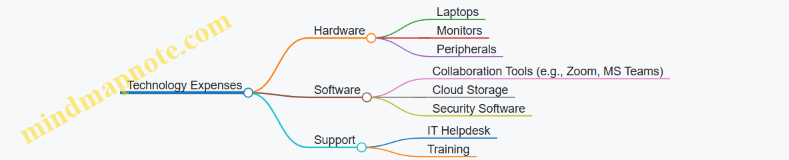
Changes in Employee-Related Costs
Remote work can influence salaries, benefits, and training expenses. Some companies adjust salaries based on geographic location, while others invest in remote work training programs.
Example:
- A manufacturing company introduced a remote work stipend covering home office setup costs, which improved employee satisfaction and reduced turnover, indirectly lowering recruitment costs.
Operational Cost Adjustments
Travel and in-person meeting expenses decline, but there may be increased costs in outsourcing certain functions or investing in digital communication platforms.
Example:
- A finance department reduced travel expenses by 60% but allocated part of those savings to virtual conference platforms and remote team-building activities.
Impact on Productivity and Performance Monitoring
Remote work necessitates new approaches to measuring productivity and performance, often requiring investment in monitoring tools and revised KPIs.
Example:
- An accounting firm implemented time-tracking software to better understand remote employee productivity, leading to process improvements and a 10% increase in billable hours.
Summary Table of Cost Impact
| Cost Category | Impact of Remote Work | Example Outcome |
|---|---|---|
| Office Costs | Significant reduction | $200,000 annual savings in rent |
| Technology Expenses | Moderate increase | 25% rise in software licenses |
| Employee Costs | Variable (stipends, adjusted salaries) | Remote work stipends improve retention |
| Operational Costs | Decrease in travel, increase in platforms | 60% travel cost reduction |
| Productivity Measures | New investments in monitoring tools | 10% increase in billable hours |
Best Practices for Cost Managers
- Conduct a thorough cost-benefit analysis before fully transitioning to remote work.
- Reallocate savings from office costs to technology and employee support.
- Implement clear KPIs and monitoring tools to maintain productivity.
- Consider geographic pay differentials carefully to balance fairness and cost savings.
- Invest in cybersecurity to protect remote operations.
Final Thoughts
Remote work reshapes cost structures in complex ways. While it offers substantial savings in traditional overheads, it introduces new expenses and challenges. Accountants and cost managers must adapt their strategies to capture these shifts, leveraging data-driven insights and flexible budgeting to sustain profitability in a remote-enabled world.
12.5 Preparing for the Future: Skills and Tools Accountants and Cost Managers Need
As the landscape of cost management evolves rapidly due to technological advancements and changing business environments, accountants and cost managers must proactively develop new skills and adopt innovative tools to stay relevant and effective. This section explores the essential skills and tools that professionals in these roles should focus on to prepare for the future.
Key Skills for Future-Ready Accountants and Cost Managers
Future-Ready Skills Mind Map
-
Analytical Thinking: The ability to analyze complex financial data and extract actionable insights is more critical than ever. For example, using predictive analytics to forecast cost trends can help preempt budget overruns.
-
Technological Proficiency: Familiarity with advanced ERP systems (like SAP S/4HANA or Oracle Cloud), data analytics platforms (Power BI, Tableau), and a foundational understanding of AI and machine learning enables professionals to automate routine tasks and focus on strategic decision-making.
-
Strategic Thinking: Beyond number crunching, cost managers need to align cost strategies with overall business goals. Understanding market dynamics and value chain implications helps in designing cost-effective processes.
-
Communication Skills: Effectively communicating cost insights to non-financial stakeholders ensures better collaboration and informed decision-making. Visualization tools and storytelling techniques enhance this skill.
-
Adaptability & Continuous Learning: The business environment is dynamic. Professionals must embrace lifelong learning to keep pace with emerging trends and tools.
Essential Tools for Modern Cost Management
Tools for Future Cost Management Mind Map
-
ERP Systems: Modern ERPs provide real-time visibility into costs across departments. For example, a manufacturing firm using SAP S/4HANA can instantly track raw material costs and adjust procurement strategies accordingly.
-
Business Intelligence Tools: Tools like Power BI or Tableau help visualize cost data, making it easier to identify trends and outliers. A cost manager might create dashboards that highlight monthly variances against budget.
-
Artificial Intelligence & Machine Learning: AI-powered tools can predict future cost fluctuations based on historical data and market indicators. For instance, machine learning algorithms can forecast energy costs, enabling proactive budgeting.
-
Cloud Computing: Cloud-based platforms facilitate collaboration among dispersed teams and provide scalable computing resources. This is especially useful for multinational finance teams managing costs across regions.
-
Robotic Process Automation (RPA): Automating repetitive tasks such as invoice processing or cost data entry reduces errors and frees up time for strategic analysis.
Practical Example: Upskilling and Tool Adoption in Action
Scenario: A cost manager at a mid-sized manufacturing company noticed increasing complexity in cost allocation due to multiple product lines and fluctuating raw material prices.
Actions Taken:
- Enrolled in an online course on data analytics and AI basics to understand predictive modeling.
- Led the implementation of a cloud-based BI tool (Power BI) to create interactive cost dashboards.
- Collaborated with IT to integrate RPA for automating invoice processing.
- Regularly participated in cross-departmental meetings to align cost strategies with production and procurement teams.
Outcome:
- Improved accuracy in cost forecasting by 20%.
- Reduced manual data entry errors by 35%.
- Enhanced communication of cost insights, leading to faster decision-making.
Summary
To prepare for the future, accountants and cost managers must cultivate a blend of analytical, technological, strategic, and interpersonal skills. Simultaneously, embracing advanced tools such as ERP systems, BI platforms, AI, cloud computing, and RPA will empower them to manage costs more effectively and contribute to sustainable business growth.
Continuous learning and adaptability remain the cornerstones of success in this evolving field.
13. Conclusion and Action Plan
13.1 Recap of Essential Cost Management Strategies
Effective cost management is a cornerstone for sustainable profitability in both finance and manufacturing sectors. This section revisits the key strategies discussed throughout the blog, consolidating best practices and practical examples to reinforce your understanding.
Mind Map: Core Cost Management Strategies
Key Strategies and Examples Recap
Cost Classification & Analysis
Understanding your cost structure is fundamental. For example, a manufacturing firm implemented Activity-Based Costing (ABC) to accurately allocate overhead and discovered that certain product lines were less profitable than previously thought, enabling targeted cost control.
Budgeting & Forecasting
Zero-Based Budgeting helped a finance department cut unnecessary overhead by justifying every expense from scratch, rather than relying on historical budgets. Rolling forecasts allowed them to adapt quickly to market changes.
Cost Reduction Techniques
Lean manufacturing principles enabled a factory to reduce waste and improve process flow, resulting in a 20% reduction in production costs. Similarly, Just-In-Time inventory minimized holding costs by synchronizing supply with demand.
Cost Control Tools & Technologies
Implementing an ERP system gave real-time visibility into costs across departments. For instance, a multinational finance company used ERP analytics to identify and address cost overruns in their operations.
Performance Measurement
Using KPIs such as Cost per Unit and Overhead Rate, a manufacturing line tracked performance improvements continuously. Benchmarking against industry standards highlighted areas for improvement.
Risk Management
A company managing international procurement used currency hedging to mitigate risks from currency fluctuations, protecting their cost base.
Strategic Cost Management
Target costing was applied by a product development team to design a new product within a strict cost limit, ensuring competitiveness without sacrificing quality.
Human Factors
Employee suggestion programs led to innovative cost-saving ideas, such as optimizing machine maintenance schedules, which reduced downtime and maintenance expenses.
Sustainability
A manufacturer’s shift to energy-efficient machinery and waste reduction practices not only lowered environmental impact but also reduced utility and disposal costs significantly.
Mind Map: Practical Examples Summary
Final Thoughts
Cost management is not a one-time effort but a continuous process involving analysis, planning, execution, and review. By integrating these strategies and learning from real-world examples, accountants and cost managers can drive meaningful cost efficiencies that contribute to long-term business success.
13.2 Developing a Customized Cost Management Plan
Creating a customized cost management plan is essential for accountants and cost managers to effectively control expenses and improve profitability within their specific organizational context. A tailored plan considers the unique cost drivers, operational processes, and strategic goals of the company, ensuring that cost management efforts are both practical and impactful.
Step 1: Assess Current Cost Structure
- Conduct a thorough review of all cost elements (fixed, variable, direct, indirect).
- Identify major cost drivers and areas with the highest spending.
- Analyze historical cost data to detect trends and anomalies.
Step 2: Define Cost Management Objectives
- Align objectives with overall business strategy (e.g., reduce overhead by 10%, improve production efficiency by 15%).
- Set SMART goals (Specific, Measurable, Achievable, Relevant, Time-bound).
Step 3: Identify Cost Reduction and Control Strategies
- Select appropriate techniques such as lean manufacturing, activity-based costing, or zero-based budgeting.
- Prioritize initiatives based on potential impact and feasibility.
Step 4: Develop Implementation Roadmap
- Assign responsibilities to relevant teams or individuals.
- Establish timelines and milestones.
- Define key performance indicators (KPIs) to monitor progress.
Step 5: Monitor, Review, and Adjust
- Use real-time data and analytics tools to track cost performance.
- Conduct regular reviews to assess effectiveness.
- Adjust the plan based on feedback and changing business conditions.
Mind Map: Customized Cost Management Plan Overview
Example: Customized Cost Management Plan for a Mid-Sized Manufacturing Company
Context: A mid-sized manufacturer facing rising raw material costs and inefficient inventory management.
Step 1: The cost team analyzed the cost structure and found that raw materials accounted for 60% of total costs, with significant waste due to overstocking.
Step 2: Objectives were set to reduce raw material costs by 12% within 12 months and decrease inventory holding costs by 20%.
Step 3: Strategies included implementing Just-In-Time (JIT) inventory, renegotiating supplier contracts, and adopting activity-based costing to better allocate overhead.
Step 4: The plan assigned procurement to lead supplier negotiations, production to implement JIT, and finance to monitor cost allocation. KPIs such as raw material cost per unit and inventory turnover rate were established.
Step 5: Monthly reviews tracked progress, revealing early success in inventory reduction but slower supplier cost improvements. Adjustments included exploring alternative suppliers and enhancing demand forecasting.
Mind Map: Example Implementation Roadmap
Tips for Success
- Engage cross-functional teams: Collaboration between finance, operations, and procurement ensures comprehensive insights.
- Leverage technology: Use ERP and analytics tools for accurate data and real-time monitoring.
- Communicate clearly: Regular updates and transparent reporting foster accountability.
- Be flexible: Adapt the plan as market conditions and internal processes evolve.
By following these steps and utilizing structured frameworks like mind maps, accountants and cost managers can develop a customized cost management plan that drives measurable improvements and supports sustainable business growth.
13.3 Continuous Learning and Adaptation in Cost Management
In the dynamic fields of finance and manufacturing, continuous learning and adaptation are critical for maintaining effective cost management strategies. As market conditions, technologies, and regulations evolve, accountants and cost managers must stay informed and agile to optimize costs and sustain profitability.
Why Continuous Learning Matters
- Market Volatility: Changes in raw material prices, labor costs, and currency fluctuations require updated cost strategies.
- Technological Advancements: New tools and software can streamline cost tracking and analysis.
- Regulatory Changes: Compliance requirements can affect cost structures.
- Competitive Pressure: Staying ahead requires innovative cost management approaches.
Key Areas for Continuous Learning and Adaptation
Mind Map: Continuous Learning Process
Practical Examples
- Example: Adapting to New Cost Management Software
A manufacturing company implemented a new ERP system with advanced cost tracking features. The cost management team enrolled in vendor-led training sessions and online tutorials. By continuously updating their skills, they reduced reporting errors by 30% and identified cost-saving opportunities faster.
- Example: Agile Budgeting in Finance Sector
A finance firm adopted rolling forecasts to replace static annual budgets. Accountants regularly reviewed market data and adjusted budgets quarterly. This adaptation allowed the firm to respond quickly to economic shifts, reducing unexpected cost overruns by 20%.
- Example: Cross-Functional Learning for Cost Reduction
A cost manager collaborated with production and procurement teams to understand bottlenecks and supplier dynamics. Through joint workshops and feedback sessions, they identified inefficiencies and implemented process changes that cut manufacturing costs by 12%.
Tips for Fostering a Culture of Continuous Learning
- Encourage regular training and certification programs.
- Promote knowledge sharing through internal forums and meetings.
- Use performance data to identify learning needs.
- Support experimentation and pilot initiatives.
- Recognize and reward adaptability and innovation.
Summary
Continuous learning and adaptation empower accountants and cost managers to stay ahead of challenges and leverage new opportunities. By cultivating relevant skills, embracing new tools, and fostering collaborative practices, organizations can maintain robust cost management frameworks that drive sustainable success.
13.4 Resources and Tools for Further Development
Effective cost management requires continuous learning and leveraging the right resources and tools. This section provides a curated list of essential resources, software tools, and learning materials to help accountants and cost managers deepen their expertise and improve cost management practices.
Educational Resources
-
Books:
- Cost Accounting: A Managerial Emphasis by Charles T. Horngren – A comprehensive guide covering foundational and advanced cost management concepts.
- Lean Thinking by James P. Womack and Daniel T. Jones – Explores lean principles that help reduce waste and control costs.
- The Goal by Eliyahu M. Goldratt – A novel that introduces the Theory of Constraints, useful for cost and process optimization.
-
Online Courses:
- Coursera – Managerial Accounting: Cost Behaviors, Systems, and Analysis – Offers practical insights into cost management techniques.
- LinkedIn Learning – Cost Reduction Strategies – Focuses on actionable cost-saving methods applicable across industries.
- edX – Lean Production – Teaches lean manufacturing principles for cost efficiency.
-
Professional Certifications:
- Certified Management Accountant (CMA) – Focuses on financial planning, analysis, control, and decision support.
- Certified Cost Professional (CCP) – Specializes in cost estimating, cost control, and project management.
Software Tools
| Tool Name | Purpose | Key Features | Example Use Case |
|---|---|---|---|
| SAP ERP | Enterprise Resource Planning | Integrated modules for finance, manufacturing, and cost tracking | A manufacturing firm uses SAP to monitor production costs in real-time and generate variance reports. |
| Oracle NetSuite | Cloud ERP and Financial Management | Real-time dashboards, budgeting, and forecasting | Finance teams leverage NetSuite for rolling forecasts and budget adjustments. |
| QuickBooks | Accounting and Cost Tracking | Expense tracking, invoicing, and reporting | Small manufacturers track overhead and direct costs efficiently. |
| Microsoft Power BI | Data Analytics and Visualization | Custom dashboards, KPI tracking, and data integration | Cost managers create dashboards to visualize cost trends and identify savings opportunities. |
| LeanKit | Lean Project Management | Kanban boards, workflow visualization | Teams implement lean projects to reduce waste and monitor cost-saving initiatives. |
Mind Maps for Cost Management Concepts
Mind Map 1: Cost Classification Overview
Mind Map 2: Budgeting and Forecasting Process

Mind Map 3: Cost Reduction Strategies

Example: Using Mind Maps to Plan a Cost Reduction Initiative
Scenario: A manufacturing company wants to reduce overhead costs by 10% over the next fiscal year.
Step 1: Create a mind map to identify all overhead cost components.
Step 2: For each component, brainstorm potential reduction strategies.
- Utilities
- Install energy-efficient lighting
- Optimize HVAC schedules
- Administrative Salaries
- Review staffing levels
- Cross-train employees
- Maintenance
- Preventive maintenance programs
- Outsource specialized tasks
Step 3: Prioritize strategies based on impact and feasibility, then assign responsibilities and timelines.
Additional Online Communities and Forums
- Cost Management Group on LinkedIn: A professional network for sharing best practices and industry insights.
- Reddit r/accounting: Discussions on accounting topics including cost management challenges.
- APICS (Association for Supply Chain Management): Offers resources on cost control in manufacturing and supply chain.
By leveraging these resources, tools, and structured planning techniques like mind mapping, accountants and cost managers can enhance their cost management capabilities and drive sustainable financial performance.
13.5 Final Thoughts: Driving Sustainable Profitability through Effective Cost Management
Effective cost management is not just about cutting expenses; it is a strategic approach to ensuring long-term profitability and business sustainability. By integrating cost control with broader business objectives, accountants and cost managers can drive value creation that supports growth, innovation, and competitive advantage.
Key Principles for Sustainable Profitability
- Holistic View: Understand costs in the context of the entire value chain, including procurement, production, distribution, and customer service.
- Continuous Improvement: Adopt a mindset of ongoing refinement rather than one-time cost cuts.
- Collaboration: Engage cross-functional teams to identify cost-saving opportunities without compromising quality or customer satisfaction.
- Technology Enablement: Leverage data analytics, automation, and real-time monitoring to make informed decisions.
- Sustainability Integration: Align cost management with environmental and social responsibility goals to future-proof the business.
Mind Map: Sustainable Profitability through Cost Management
Practical Examples
Example 1: Integrating Lean and Sustainability in Manufacturing A mid-sized manufacturing company implemented lean manufacturing techniques alongside sustainability initiatives. By reducing waste and optimizing energy use, they lowered production costs by 12% while also decreasing their carbon footprint. This dual focus improved their brand reputation and opened new markets focused on green products.
Example 2: Cross-Departmental Collaboration in Finance A financial services firm established a cross-functional cost management team including accountants, IT, and operations. This team identified redundant software licenses and optimized cloud service usage, resulting in a 10% reduction in IT costs without impacting service quality.
Example 3: Leveraging Technology for Real-Time Cost Control A large manufacturer adopted an advanced ERP system with real-time cost tracking and predictive analytics. This enabled early detection of cost overruns in procurement and production, allowing timely corrective actions that saved millions annually.
Mind Map: Action Plan for Accountants and Cost Managers
Final Reflection
Sustainable profitability is achievable when cost management transcends traditional budgeting and expense-cutting. It requires a strategic, integrated approach that balances efficiency, innovation, and responsibility. Accountants and cost managers who embrace this mindset become pivotal drivers of their organization’s long-term success.