Financial Compliance for Accountants
1. Introduction to Financial Compliance
1.1 Understanding Financial Compliance: Definition and Importance
Financial compliance refers to the adherence to laws, regulations, guidelines, and specifications relevant to financial activities and reporting. For accountants, compliance ensures that financial records are accurate, transparent, and meet the standards set by regulatory bodies.
What is Financial Compliance?
- Definition: The process of conforming to external regulatory requirements and internal policies related to financial management.
- Scope: Includes financial reporting, tax filings, anti-money laundering (AML), fraud prevention, and data protection.
Why is Financial Compliance Important?
- Legal Obligations: Avoid penalties, fines, or legal action.
- Reputation Management: Builds trust with investors, clients, and regulators.
- Operational Efficiency: Streamlines financial processes and reduces risks.
- Financial Accuracy: Ensures reliable and truthful financial statements.
Mind Map: Core Components of Financial Compliance
Example 1: Compliance in Action - Timely Tax Filing
Scenario: An accountant at a mid-sized firm ensures all tax returns are filed before the deadline.
Best Practice: Using a compliance calendar and automated reminders to avoid late submissions.
Outcome: The firm avoids penalties and maintains a good standing with tax authorities.
Mind Map: Importance of Financial Compliance
Example 2: Consequences of Non-Compliance
Scenario: A company fails to comply with AML regulations, resulting in a regulatory investigation.
Impact: Heavy fines, reputational damage, and operational disruptions.
Lesson: Proactive compliance monitoring and employee training are essential.
Summary
Financial compliance is a foundational pillar for accountants, ensuring that financial activities are lawful, ethical, and transparent. Understanding its definition and importance helps accountants implement best practices that protect their organizations from risks and build long-term trust.
For accountants and compliance officers, mastering financial compliance is not just about meeting requirements but fostering a culture of integrity and accountability.
1.2 Regulatory Bodies and Frameworks: An Overview
Financial compliance is governed by a complex network of regulatory bodies and frameworks designed to ensure transparency, accountability, and integrity within financial markets. For accountants, understanding these entities and their requirements is critical to maintaining compliance and avoiding penalties.
Key Regulatory Bodies
Below is a mind map illustrating some of the primary regulatory bodies that influence financial compliance globally:
Example: An accountant working for a multinational corporation must comply with SEC regulations if the company is listed on a US stock exchange, while also adhering to IASB standards for international financial reporting.
Important Regulatory Frameworks
These frameworks provide the rules and guidelines that accountants must follow:
Example: Under SOX, accountants must ensure internal controls over financial reporting are robust and documented, reducing the risk of fraud.
Mind Map: Relationship Between Regulatory Bodies and Frameworks
Practical Example: Navigating Multiple Jurisdictions
Consider an accountant at a European subsidiary of a US-based company. They must:
- Prepare financial statements according to IFRS (European requirement).
- Ensure compliance with the Sarbanes-Oxley Act for the parent company’s SEC filings.
- Follow GDPR guidelines when handling customer data.
This scenario illustrates the importance of understanding how regulatory bodies and frameworks intersect and impact daily accounting tasks.
Summary
Understanding regulatory bodies and frameworks is foundational for accountants to:
- Identify which rules apply to their organization.
- Implement appropriate internal controls.
- Prepare accurate and compliant financial reports.
- Mitigate risks related to non-compliance.
By integrating knowledge of these entities into their workflows, accountants can proactively manage compliance and support organizational integrity.
1.3 The Role of Accountants in Ensuring Compliance
Accountants play a pivotal role in ensuring financial compliance within organizations. Their responsibilities extend beyond traditional bookkeeping and financial reporting to include safeguarding the organization against regulatory risks and fostering a culture of transparency and accountability.
Key Responsibilities of Accountants in Compliance
- Accurate Financial Reporting: Ensuring all financial statements are prepared in accordance with applicable laws and standards.
- Internal Controls Implementation: Designing and monitoring controls to prevent errors and fraud.
- Regulatory Monitoring: Staying updated with changes in financial regulations and adapting processes accordingly.
- Risk Assessment: Identifying compliance risks and recommending mitigation strategies.
- Documentation and Record-Keeping: Maintaining thorough records to support audits and investigations.
- Ethical Conduct: Upholding integrity and ethical standards in all financial dealings.
Mind Map: Core Roles of Accountants in Financial Compliance
Practical Example 1: Ensuring Accurate Reporting
Scenario: An accountant at a mid-sized company notices discrepancies in the revenue recognition timing compared to the contract terms.
Action: The accountant reviews the contracts, consults the relevant accounting standards (e.g., IFRS 15), and adjusts the revenue recognition schedule accordingly.
Outcome: This proactive approach ensures compliance with revenue recognition rules, avoiding potential regulatory penalties and maintaining stakeholder trust.
Mind Map: Steps to Ensure Accurate Financial Reporting
Practical Example 2: Implementing Internal Controls
Scenario: An accountant identifies that the same person is responsible for both approving payments and reconciling bank statements.
Action: The accountant recommends segregation of duties by assigning reconciliation to a different team member and implements a dual-approval process for payments.
Outcome: This reduces the risk of fraud and errors, strengthening the organization’s internal control environment.
Mind Map: Internal Controls Best Practices
Practical Example 3: Staying Updated with Regulatory Changes
Scenario: New AML regulations require enhanced customer due diligence.
Action: The accountant attends training sessions, updates the compliance checklist, and works with the compliance team to integrate new procedures.
Outcome: The company remains compliant with AML laws, reducing the risk of fines and reputational damage.
Mind Map: Regulatory Monitoring Process
Summary
Accountants serve as the frontline defenders of financial compliance. Through accurate reporting, robust internal controls, continuous regulatory monitoring, and ethical conduct, they help organizations navigate complex regulatory landscapes effectively. Embedding these practices into daily workflows not only ensures compliance but also builds trust with stakeholders and regulators alike.
1.4 Common Compliance Challenges Faced by Accountants
Financial compliance is a critical aspect of an accountant’s role, but it comes with a variety of challenges that can complicate adherence to regulations. Understanding these challenges helps accountants proactively address potential issues and maintain robust compliance frameworks.
Mind Map: Common Compliance Challenges
Regulatory Complexity
Accountants often face the challenge of navigating a labyrinth of regulations that vary by jurisdiction, industry, and organizational size. For example, a multinational company must comply with both local tax laws and international standards like IFRS or SOX.
Example: A mid-sized firm struggled to keep up with quarterly updates to tax codes. This led to late filings and penalties. By subscribing to a regulatory update service and assigning a compliance officer, they improved their adherence and avoided fines.
Data Management
Maintaining accurate and complete financial data is fundamental but challenging. Errors in data entry or incomplete documentation can lead to compliance breaches.
Example: An accountant manually entered expense reports without verification, resulting in duplicate reimbursements. Implementing automated expense management software with validation rules helped eliminate these errors.
Internal Controls
Weak internal controls can expose organizations to fraud and non-compliance. Accountants must ensure proper segregation of duties and regular control testing.
Example: In a small firm, the same person was responsible for both approving and processing payments, increasing fraud risk. Introducing a dual-approval process reduced this risk significantly.
Technology Limitations
Outdated or incompatible financial systems can hinder compliance efforts, especially when regulatory reporting requires specific formats or real-time data.
Example: A company relied on legacy accounting software that could not generate reports compliant with new SOX requirements. Upgrading to a cloud-based solution with built-in compliance features streamlined reporting.
Human Factors
Lack of training and ethical challenges can cause inadvertent or intentional compliance violations.
Example: An accountant unaware of recent AML regulations failed to flag suspicious transactions. Regular training sessions and clear ethical guidelines helped raise awareness and reduce risks.
Communication Gaps
Poor communication between departments or with external auditors can lead to misunderstandings and compliance failures.
Example: Finance and legal teams worked in silos, causing delays in implementing new compliance policies. Establishing cross-functional compliance committees improved coordination and policy rollout.
Summary
Accountants face multifaceted compliance challenges ranging from regulatory complexity to human factors. Addressing these challenges requires a combination of updated knowledge, robust internal controls, effective technology use, and clear communication channels. Proactively managing these areas helps ensure sustained compliance and reduces organizational risk.
1.5 Case Study: Consequences of Non-Compliance in Financial Reporting
Financial reporting non-compliance can lead to severe consequences for organizations, accountants, and stakeholders. This section explores a detailed case study illustrating these impacts, supported by mind maps and practical examples to enhance understanding.
Case Study Overview: The XYZ Corporation Scandal
XYZ Corporation, a mid-sized publicly traded company, failed to comply with financial reporting standards by intentionally misstating revenue figures to appear more profitable. This non-compliance was uncovered during an external audit, leading to significant repercussions.
Mind Map: Consequences of Non-Compliance in Financial Reporting
Detailed Breakdown of Consequences
-
Legal Penalties
- XYZ Corporation was fined $10 million by the Securities and Exchange Commission (SEC) for violating the Sarbanes-Oxley Act.
- Several executives faced lawsuits for fraudulent reporting.
-
Financial Impact
- Following the scandal, XYZ’s stock price dropped by 40% within two weeks.
- Investors withdrew funding, and the company faced higher interest rates on loans.
-
Reputational Damage
- Media outlets extensively covered the scandal, damaging XYZ’s brand.
- Key clients reconsidered partnerships, affecting revenue streams.
-
Operational Disruptions
- The CFO and several accounting staff were replaced.
- The company had to allocate significant resources to overhaul compliance systems.
-
Personal Consequences for Accountants
- The lead accountant involved lost their CPA license.
- Several team members faced internal disciplinary actions.
Example: How Non-Compliance Occurred
- XYZ Corporation recognized revenue prematurely by recording sales before delivery.
- This inflated quarterly earnings, misleading stakeholders.
- The accounting team bypassed internal controls to conceal discrepancies.
Mind Map: Preventive Best Practices to Avoid Non-Compliance
Practical Example: Applying Best Practices
- XYZ Corporation, post-scandal, implemented a robust internal control system including automated revenue recognition software.
- They conducted quarterly training sessions for accountants on compliance and ethics.
- An anonymous whistleblower hotline was established, encouraging early detection of irregularities.
Summary
This case study highlights the critical importance of financial compliance. Non-compliance not only risks legal and financial penalties but also damages reputations and careers. Accountants play a pivotal role in upholding compliance through adherence to best practices, continuous education, and ethical vigilance.
2. Key Financial Regulations and Standards
2.1 Overview of Sarbanes-Oxley Act (SOX) Compliance
The Sarbanes-Oxley Act of 2002 (SOX) is a United States federal law enacted in response to major corporate and accounting scandals such as Enron and WorldCom. Its primary goal is to protect investors by improving the accuracy and reliability of corporate disclosures and financial statements.
Key Objectives of SOX
- Enhance corporate responsibility
- Increase financial disclosures
- Combat corporate and accounting fraud
Who Must Comply?
- Publicly traded companies in the U.S.
- Their wholly owned subsidiaries
- Accounting firms auditing these companies
Core Sections Relevant to Accountants
- Section 302: Corporate Responsibility for Financial Reports
- Section 404: Management Assessment of Internal Controls
- Section 906: Corporate Responsibility for Financial Reports (Criminal Penalties)
Mind Map: SOX Compliance Essentials
Best Practices for Accountants under SOX
-
Maintain Accurate Financial Records
- Example: Ensure all journal entries are supported by proper documentation to avoid misstatements.
-
Implement and Document Internal Controls
- Example: Use checklists to verify segregation of duties, such as separating authorization and payment functions.
-
Regular Testing of Controls
- Example: Conduct quarterly walkthroughs of key financial processes to identify control weaknesses early.
-
CEO and CFO Certification Preparation
- Example: Prepare detailed reports and evidence supporting the accuracy of financial statements for executive sign-off.
-
Coordinate with External Auditors
- Example: Provide timely access to documentation and respond promptly to audit inquiries.
Mind Map: Internal Controls under SOX Section 404
Example Scenario: Applying SOX Compliance in a Mid-Sized Company
Situation: A mid-sized publicly traded company is preparing for its annual SOX compliance audit.
Actions:
- The accounting team documents all financial processes and internal controls.
- They perform a risk assessment identifying areas prone to errors, such as revenue recognition.
- Quarterly testing is conducted on controls related to cash disbursements and payroll.
- The CFO reviews and certifies the financial statements with supporting evidence.
- External auditors are given full access to documentation and control test results.
Outcome: The company passes the SOX audit with minimal findings, demonstrating effective compliance.
Summary
SOX compliance is critical for maintaining investor confidence and ensuring the integrity of financial reporting. Accountants play a central role by establishing, documenting, and testing internal controls, preparing accurate financial reports, and facilitating audits. Understanding the key sections and best practices of SOX helps accountants navigate compliance efficiently and effectively.
2.2 Understanding Anti-Money Laundering (AML) Requirements
Anti-Money Laundering (AML) refers to a set of laws, regulations, and procedures intended to prevent criminals from disguising illegally obtained funds as legitimate income. For accountants, understanding AML requirements is critical to ensure compliance, detect suspicious activities, and protect the integrity of financial systems.
What is Money Laundering?
Money laundering is the process of making large amounts of money generated by a criminal activity, such as drug trafficking or terrorist funding, appear to have come from a legitimate source. The goal is to hide the illegal origin of the money.
Why AML Matters for Accountants
- Accountants often handle client funds and financial records, making them key players in identifying suspicious transactions.
- Regulatory bodies require firms to implement AML programs to detect and report money laundering activities.
- Failure to comply can result in severe penalties, reputational damage, and legal consequences.
Core Components of AML Requirements
Customer Due Diligence (CDD)
CDD is the process of verifying the identity of clients and assessing the risk they may pose.
- Know Your Customer (KYC): Collecting and verifying personal information such as name, address, and identification documents.
- Enhanced Due Diligence (EDD): Applied to higher-risk customers, such as politically exposed persons (PEPs) or clients from high-risk jurisdictions.
Example: An accountant onboarding a new corporate client must verify the beneficial owners of the company and understand the nature of the business to assess risks.
Monitoring and Reporting Suspicious Activities
Accountants should monitor transactions for unusual patterns that may indicate money laundering.
- Transaction Monitoring: Automated or manual review of transactions to detect anomalies.
- Suspicious Activity Reports (SARs): Reporting suspicious transactions to the relevant authorities.
Example: A client suddenly deposits a large sum inconsistent with their usual business activity. The accountant investigates and files a SAR if justified.
Record Keeping
Maintaining detailed records of transactions, customer identification, and due diligence efforts is essential.
- Records must be kept for a minimum period (typically 5-7 years).
- Documentation should be easily accessible for audits or investigations.
Example: An accountant ensures all client identification documents and transaction records are securely stored and retrievable.
AML Compliance Program
Organizations must establish a comprehensive AML compliance program that includes:
- Written policies and procedures
- Appointment of a compliance officer
- Regular training for staff
- Independent audits of the AML program
Example: A mid-sized accounting firm appoints a dedicated AML compliance officer and conducts quarterly training sessions for all employees.
Mind Map: AML Compliance Workflow
Practical Example: Applying AML in an Accounting Scenario
Scenario: An accountant is managing the accounts of a new client who operates an import-export business. During routine monitoring, the accountant notices multiple large cash deposits that do not align with the client’s declared business activities.
Steps Taken:
- Enhanced Due Diligence: The accountant requests additional documentation and clarifies the source of funds.
- Risk Assessment: Determines the client is from a jurisdiction with high money laundering risk.
- Transaction Monitoring: Flags the unusual deposits for further review.
- Reporting: Files a Suspicious Activity Report (SAR) with the financial intelligence unit as per regulatory requirements.
This example highlights how accountants integrate AML requirements into their daily work to detect and prevent illicit financial activities.
Summary
Understanding AML requirements is vital for accountants to:
- Identify and verify clients properly.
- Monitor and report suspicious transactions.
- Maintain thorough records.
- Implement and support an effective AML compliance program.
By embedding these practices into their workflows, accountants not only comply with legal obligations but also contribute to the global fight against financial crime.
2.3 Compliance with International Financial Reporting Standards (IFRS)
International Financial Reporting Standards (IFRS) are a set of accounting standards developed by the International Accounting Standards Board (IASB) that provide a global framework for how public companies prepare and disclose their financial statements. Compliance with IFRS ensures transparency, accountability, and efficiency in financial markets worldwide.
Why IFRS Compliance Matters for Accountants
- Global Consistency: Facilitates comparability of financial statements across international boundaries.
- Investor Confidence: Enhances trust among investors and stakeholders by ensuring reliable and transparent reporting.
- Regulatory Requirement: Many countries mandate IFRS compliance for listed companies.
Key Principles of IFRS
- Fair Presentation: Financial statements must faithfully represent the financial position, performance, and cash flows.
- Going Concern: Assumes the entity will continue its operations in the foreseeable future.
- Accrual Basis: Transactions are recorded when they occur, not when cash is received or paid.
- Materiality and Aggregation: Only material items are presented separately.
- Consistency: Presentation and classification should be consistent over time.
Mind Map: Core Components of IFRS Compliance
Practical Example: Revenue Recognition under IFRS 15
Scenario: A software company sells a subscription service bundled with installation and customer support.
IFRS 15 Approach:
- Identify the contract with the customer.
- Identify distinct performance obligations (subscription, installation, support).
- Determine the transaction price.
- Allocate the transaction price to each performance obligation.
- Recognize revenue when (or as) each performance obligation is satisfied.
Example:
- Subscription: Recognized over time as the service is delivered.
- Installation: Recognized at the point in time when installation is complete.
- Customer Support: Recognized over the support period.
This ensures revenue is recognized accurately and reflects the economic reality.
Mind Map: Steps for Applying IFRS 15 Revenue Recognition
Best Practices for Accountants to Ensure IFRS Compliance
- Stay Updated: Regularly review IASB updates and amendments.
- Detailed Documentation: Maintain thorough records of judgments and estimates.
- Training: Conduct ongoing training sessions on IFRS standards.
- Use Checklists: Implement IFRS compliance checklists during financial close.
- Leverage Technology: Use accounting software with IFRS modules.
Example: Transition from Local GAAP to IFRS
Company: A mid-sized manufacturing firm transitioning from local Generally Accepted Accounting Principles (GAAP) to IFRS.
Challenges:
- Differences in asset valuation methods.
- Recognition of leases under IFRS 16.
- Adjusting revenue recognition policies.
Approach:
- Conduct a gap analysis between local GAAP and IFRS.
- Train accounting staff on IFRS requirements.
- Restate prior period financials for comparability.
- Communicate changes to stakeholders.
Outcome:
- Improved financial statement transparency.
- Enhanced ability to attract foreign investment.
Mind Map: Transition Process from Local GAAP to IFRS
Summary
Compliance with IFRS is critical for accountants working in an increasingly globalized financial environment. By understanding the core principles, applying standards like IFRS 15 correctly, and following best practices during transitions, accountants can ensure accurate, transparent, and compliant financial reporting.
For further reading, refer to the official IFRS Foundation website and IASB publications.
2.4 The General Data Protection Regulation (GDPR) and Financial Data
The General Data Protection Regulation (GDPR) is a comprehensive data protection law enacted by the European Union (EU) that came into effect on May 25, 2018. It aims to protect the personal data and privacy of EU citizens and residents, impacting how organizations worldwide handle financial data.
Why GDPR Matters for Accountants
Accountants regularly process sensitive financial data that often includes personal information such as names, addresses, bank details, and transaction histories. GDPR compliance is essential to avoid hefty fines, reputational damage, and legal consequences.
Key GDPR Principles Relevant to Financial Data
- Data Minimization: Only collect data necessary for the specific financial purpose.
- Purpose Limitation: Use financial data only for the stated purpose.
- Accuracy: Keep financial data accurate and up to date.
- Storage Limitation: Retain data only as long as necessary.
- Integrity & Confidentiality: Protect data against unauthorized access and breaches.
- Lawfulness, Fairness & Transparency: Process data legally and inform data subjects about usage.
Practical Example: GDPR Compliance in Payroll Processing
Scenario: An accounting firm processes payroll for multiple clients across the EU.
- Data Minimization: Collect only employee names, tax IDs, bank account numbers, and salary details necessary for payroll.
- Purpose Limitation: Use this data solely for payroll and tax reporting.
- Transparency: Inform employees via privacy notices about how their data will be used.
- Security Measures: Encrypt payroll data and restrict access to authorized personnel.
- Data Retention: Retain payroll records for the legally required period, then securely delete.
Rights of Data Subjects Under GDPR
Accountants must be prepared to handle requests such as:
- Right to Access: Providing clients or employees with copies of their financial data.
- Right to Rectification: Correcting inaccurate financial records promptly.
- Right to Erasure: Deleting personal financial data when no longer necessary or upon request.
Example: Handling a Data Subject Access Request (DSAR)
Scenario: A client requests a copy of all their personal financial data held by the accounting firm.
Best Practice Steps:
- Verify the identity of the requester to prevent unauthorized disclosure.
- Compile all relevant financial data including invoices, statements, and correspondence.
- Provide the data in a clear, commonly used electronic format within the one-month timeframe.
- Document the request and response for audit purposes.
GDPR Compliance Best Practices for Accountants
- Conduct Data Audits: Regularly review what financial data is collected and processed.
- Implement Data Protection Policies: Define clear guidelines on data handling.
- Train Staff: Ensure all team members understand GDPR obligations.
- Encryption & Access Controls: Protect data both at rest and in transit.
- Maintain Records: Document data processing activities as required by GDPR.
- Incident Response Plans: Prepare for potential data breaches with clear procedures.
Example: Encryption in Financial Data Handling
An accounting firm uses encryption software to secure client financial files stored on cloud servers. Access is restricted via multi-factor authentication, ensuring only authorized accountants can view sensitive data. This practice aligns with GDPR’s integrity and confidentiality principle, reducing the risk of data breaches.
Summary
GDPR significantly impacts how accountants manage financial data, emphasizing data protection, transparency, and respect for individual rights. By integrating GDPR principles into daily financial processes, accountants not only comply with legal requirements but also build trust with clients and stakeholders.
For accountants, understanding and applying GDPR to financial data is not optional but a critical component of modern financial compliance.
2.5 Practical Example: Applying GAAP vs IFRS in Financial Statements
Understanding the differences between GAAP (Generally Accepted Accounting Principles) and IFRS (International Financial Reporting Standards) is crucial for accountants working in multinational environments or dealing with cross-border financial reporting. This section provides a practical example of how these two frameworks impact the preparation and presentation of financial statements.
Mind Map: Key Differences Between GAAP and IFRS
Practical Example Scenario
Company: ABC Manufacturing
Situation: ABC Manufacturing is preparing its annual financial statements. It operates in the United States but plans to expand to Europe, requiring IFRS-compliant reporting.
Focus Areas: Revenue recognition, inventory valuation, and development costs.
Revenue Recognition
- GAAP Approach: ABC recognizes revenue when all criteria under ASC 606 are met, including detailed guidance for specific industries.
- IFRS Approach: ABC applies IFRS 15, focusing on the transfer of control to the customer.
Example: ABC sells machinery with installation services.
| Aspect | GAAP Treatment | IFRS Treatment |
|---|---|---|
| Timing of Revenue | Recognize separately for machinery and installation | Recognize combined if services are not distinct |
| Measurement | Based on standalone selling price | Allocate transaction price based on relative standalones |
Mind Map:
Inventory Valuation
- GAAP: ABC uses LIFO method to value inventory, which can reduce taxable income during inflation.
- IFRS: LIFO is prohibited; ABC must use FIFO or weighted average.
Example: Inventory costing $100,000 under FIFO is $90,000 under LIFO.
| Aspect | GAAP Treatment | IFRS Treatment |
|---|---|---|
| Inventory Method | LIFO allowed | LIFO prohibited |
| Impact on Profit | Lower profit during inflation (LIFO) | Higher profit (FIFO or weighted average) |
Mind Map:
Development Costs
- GAAP: ABC expenses all development costs as incurred.
- IFRS: ABC capitalizes development costs if specific criteria (technical feasibility, intention to complete, ability to use or sell, etc.) are met.
Example: ABC incurs $500,000 in development costs.
| Aspect | GAAP Treatment | IFRS Treatment |
|---|---|---|
| Treatment of Costs | Expense immediately | Capitalize if criteria met |
| Impact on Financials | Lower assets, higher expenses | Higher assets, lower expenses initially |
Mind Map:
Summary Table: GAAP vs IFRS Impact on ABC Manufacturing
| Financial Statement Item | GAAP Treatment | IFRS Treatment | Impact on Financials |
|---|---|---|---|
| Revenue Recognition | Separate recognition | Combined recognition possible | Timing and amount of revenue recognized |
| Inventory Valuation | LIFO allowed | LIFO prohibited | Inventory value and profit margins differ |
| Development Costs | Expense immediately | Capitalize if criteria met | Asset base and expenses differ |
Conclusion
For accountants, understanding these differences is essential to ensure accurate and compliant financial reporting. When transitioning from GAAP to IFRS or vice versa, companies should carefully evaluate the impact on financial statements and communicate changes to stakeholders.
By applying these practical examples, accountants can better navigate the complexities of dual reporting frameworks and maintain compliance with relevant standards.
3. Internal Controls and Risk Management
3.1 Designing Effective Internal Controls for Financial Processes
Internal controls are the backbone of financial compliance, ensuring accuracy, reliability, and prevention of fraud or errors in financial processes. Designing effective internal controls requires a structured approach that aligns with organizational goals and regulatory requirements.
What Are Internal Controls?
Internal controls are policies, procedures, and activities implemented to safeguard assets, ensure financial data integrity, and promote operational efficiency.
Key Objectives of Internal Controls
- Accuracy: Ensure financial data is recorded correctly.
- Completeness: All transactions are captured.
- Authorization: Only approved transactions are processed.
- Compliance: Adherence to laws and regulations.
- Fraud Prevention: Detect and prevent unauthorized activities.
Mind Map: Core Components of Internal Controls
Designing Internal Controls: Step-by-Step Approach
-
Identify Key Financial Processes
- Examples: Accounts payable, payroll, revenue recognition.
-
Assess Risks in Each Process
- Example: Risk of duplicate payments in accounts payable.
-
Define Control Objectives
- Example: Prevent unauthorized disbursements.
-
Develop Control Activities
- Example: Require dual approval for payments over $5,000.
-
Assign Responsibilities
- Example: Accounts payable clerk prepares invoices; finance manager approves.
-
Implement Monitoring Mechanisms
- Example: Monthly reconciliation of bank statements.
-
Document Controls and Procedures
- Maintain clear manuals and workflows.
Mind Map: Example - Accounts Payable Controls
Example: Implementing Segregation of Duties
Scenario: In a small firm, the same person processes invoices and approves payments, increasing fraud risk.
Best Practice: Separate these duties so one employee processes invoices and another approves payments.
Result: Reduces risk of unauthorized payments and increases accountability.
Example: Automated Controls with Software
Using accounting software that automatically flags duplicate invoice numbers or mismatched purchase orders helps reduce manual errors and enforce control policies.
Tips for Effective Internal Controls
- Keep controls simple and practical.
- Regularly review and update controls.
- Train staff on control importance and procedures.
- Use technology to enhance control effectiveness.
By carefully designing internal controls tailored to your organization’s financial processes, accountants can significantly reduce risks and ensure compliance with regulatory standards.
3.2 Risk Assessment Techniques for Accountants
Risk assessment is a fundamental part of financial compliance, enabling accountants to identify, evaluate, and prioritize risks that could impact the accuracy, integrity, and legality of financial reporting and operations. Effective risk assessment helps prevent fraud, errors, and regulatory breaches.
Understanding Risk Assessment
Risk assessment involves systematically analyzing potential threats to financial processes and controls. For accountants, this means evaluating both internal and external risks that could affect compliance.
Key Risk Assessment Techniques
-
Risk Identification
- Recognize potential risks related to financial transactions, reporting, and controls.
- Example: Identifying risks of misstatement in revenue recognition.
-
Risk Analysis
- Determine the likelihood and impact of identified risks.
- Example: Assessing the probability of a data breach affecting financial data confidentiality.
-
Risk Evaluation
- Prioritize risks based on their severity and likelihood.
- Example: Prioritizing risks related to cash handling over minor documentation errors.
-
Risk Mitigation Planning
- Develop strategies to manage or reduce risks.
- Example: Implementing dual authorization for payments to reduce fraud risk.
Mind Map: Risk Assessment Process
Common Risk Assessment Techniques for Accountants
Checklists
- Use standardized checklists to ensure all common risk areas are reviewed.
- Example: A checklist covering revenue recognition, expense recording, and asset valuation.
Interviews and Questionnaires
- Engage with staff and management to identify potential risks.
- Example: Interviewing accounts payable staff to uncover risks in invoice processing.
Process Mapping
- Visualize financial processes to identify control gaps and risk points.
- Example: Mapping the procurement-to-payment cycle to spot where fraud could occur.
Data Analytics
- Analyze financial data patterns to detect anomalies or unusual transactions.
- Example: Using software to flag duplicate payments or unusual vendor activity.
Scenario Analysis
- Evaluate how different scenarios could impact financial compliance.
- Example: Assessing the impact of a sudden regulatory change on reporting timelines.
Mind Map: Risk Assessment Techniques
Practical Example: Risk Assessment in Accounts Receivable
Step 1: Identify Risks
- Risk of unrecorded sales
- Risk of incorrect customer credit limits
- Risk of delayed collections impacting cash flow
Step 2: Analyze Risks
- Unrecorded sales: Likelihood - Medium; Impact - High
- Incorrect credit limits: Likelihood - Low; Impact - Medium
- Delayed collections: Likelihood - High; Impact - High
Step 3: Evaluate and Prioritize
- Focus on delayed collections and unrecorded sales as top risks.
Step 4: Mitigate Risks
- Implement automated sales recording systems.
- Regularly review and update customer credit policies.
- Set up alerts for overdue accounts.
Mind Map: Example - Accounts Receivable Risk Assessment
Best Practices for Accountants Conducting Risk Assessments
- Regular Updates: Risk assessments should be updated periodically to reflect changes in business or regulatory environment.
- Documentation: Maintain clear documentation of risk assessment processes and findings.
- Collaboration: Work closely with compliance officers, auditors, and other stakeholders.
- Use Technology: Leverage risk management software and data analytics tools.
- Training: Ensure all accounting staff understand risk factors and their role in mitigation.
By integrating these risk assessment techniques into daily accounting practices, accountants can proactively manage compliance risks, safeguard financial integrity, and support organizational governance.
3.3 Best Practices for Segregation of Duties
Segregation of Duties (SoD) is a fundamental internal control designed to prevent errors and fraud by dividing responsibilities among different individuals. This practice ensures that no single person has control over all aspects of any critical financial transaction.
Why Segregation of Duties Matters
- Risk Reduction: Minimizes the risk of intentional fraud or unintentional errors.
- Checks and Balances: Creates a system of checks and balances within financial processes.
- Accountability: Enhances accountability by clearly defining roles.
Core Principles of Segregation of Duties
- Authorization of transactions
- Custody of assets
- Recording and reconciliation of transactions
Mind Map: Key Components of Segregation of Duties
Best Practices for Implementing Segregation of Duties
-
Define Clear Roles and Responsibilities
- Assign specific tasks to individuals based on their job descriptions.
- Avoid overlapping duties that could compromise control.
-
Implement Role-Based Access Controls (RBAC)
- Use software systems to restrict access based on roles.
- Regularly review and update access permissions.
-
Rotate Duties Periodically
- Rotate employees in sensitive roles to reduce risk of collusion.
- Example: Rotate the person responsible for bank reconciliations every 6 months.
-
Use Compensating Controls When Segregation Isn’t Possible
- Introduce additional reviews or approvals.
- Example: If one person handles both recording and custody, require a supervisor to review transactions.
-
Regular Monitoring and Auditing
- Conduct periodic audits to ensure SoD policies are followed.
- Use exception reports to detect violations.
Mind Map: Best Practices Workflow
Practical Examples
Example 1: Payroll Processing
- Scenario: One employee processes payroll, another authorizes payments, and a third reconciles payroll accounts.
- Benefit: Prevents any single employee from manipulating payroll for personal gain.
Example 2: Vendor Payments
- Scenario: Employee A creates vendor records, Employee B approves invoices, Employee C processes payments.
- Benefit: Reduces risk of fraudulent vendors or unauthorized payments.
Example 3: Cash Handling in Retail
- Scenario: Cashiers collect payments, supervisors perform cash counts, and accountants record transactions.
- Benefit: Ensures cash is properly accounted for and discrepancies are detected early.
Summary
Segregation of Duties is a critical control that protects organizations from fraud and errors. By clearly defining roles, implementing access controls, rotating duties, applying compensating controls, and continuously monitoring compliance, accountants can uphold the integrity of financial processes and contribute to a robust compliance environment.
3.4 Monitoring and Testing Controls: Practical Approaches
Effective monitoring and testing of internal controls are critical components of a robust financial compliance program. These activities ensure that controls are functioning as intended, risks are mitigated, and any weaknesses are identified and addressed promptly.
Key Objectives of Monitoring and Testing Controls
- Verify the effectiveness of internal controls
- Detect control failures or weaknesses early
- Ensure compliance with regulatory requirements
- Support continuous improvement of control processes
Practical Approaches to Monitoring Controls
-
Ongoing Monitoring
- Continuous supervision embedded in daily operations
- Examples: Automated system alerts, exception reports
-
Separate Evaluations
- Periodic independent assessments (internal audit, compliance teams)
- Examples: Quarterly control reviews, surprise audits
-
Use of Technology
- Leverage software tools for real-time monitoring and data analytics
- Examples: ERP system dashboards, compliance management software
Mind Map: Monitoring Controls
Practical Approaches to Testing Controls
-
Design Effectiveness Testing
- Assess whether controls are properly designed to mitigate risks
- Example: Reviewing control documentation and process flowcharts
-
Operating Effectiveness Testing
- Verify if controls are operating as intended over a period
- Example: Sampling transactions to check approval signatures
-
Walkthroughs
- Trace a transaction through the system to observe control points
- Example: Following an invoice from receipt to payment
-
Data Analytics and Sampling
- Use statistical sampling or full population testing where feasible
- Example: Using software to identify duplicate payments
Mind Map: Testing Controls
Examples of Monitoring and Testing Controls
Example 1: Monitoring Segregation of Duties (SoD)
- Scenario: An accounting firm wants to ensure no single employee can both initiate and approve payments.
- Monitoring Approach: Use system-generated SoD conflict reports monthly.
- Testing Approach: Sample payment transactions quarterly to verify approval signatures are from authorized personnel.
Example 2: Testing Expense Reimbursement Controls
- Scenario: Company policy requires receipts for all employee expense claims.
- Monitoring Approach: Automated flagging of claims without attached receipts.
- Testing Approach: Periodic audit of expense reports to ensure compliance with documentation requirements.
Example 3: Monitoring Journal Entry Controls
- Scenario: To prevent fraudulent adjustments, all journal entries above a threshold require dual approval.
- Monitoring Approach: Real-time alerts for entries exceeding the threshold.
- Testing Approach: Walkthrough of journal entry process and sampling of entries to confirm approvals.
Best Practices for Effective Monitoring and Testing
- Establish clear control objectives and criteria
- Use a risk-based approach to prioritize controls
- Document all monitoring and testing activities thoroughly
- Communicate findings promptly to relevant stakeholders
- Integrate feedback loops for continuous control improvement
By systematically monitoring and testing controls using these practical approaches, accountants can proactively manage compliance risks and strengthen their organization’s financial integrity.
3.5 Example: Implementing a Fraud Prevention Control System
Implementing a fraud prevention control system is a critical step for accountants to safeguard financial integrity and ensure compliance. This example will walk through the key components, best practices, and practical steps to develop and maintain an effective fraud prevention system.
Step 1: Risk Assessment and Identification
- Identify areas vulnerable to fraud (e.g., cash handling, procurement, payroll).
- Evaluate historical data and past incidents.
- Engage stakeholders to understand potential risks.
Mind Map: Fraud Risk Assessment
Example: A mid-sized company discovered through risk assessment that expense reimbursements were frequently manipulated due to lack of verification.
Step 2: Designing Internal Controls
- Segregation of duties to prevent conflicts of interest.
- Authorization and approval workflows.
- Regular reconciliations and verifications.
- Access controls and system permissions.
Mind Map: Internal Controls for Fraud Prevention
Example: Implementing a policy where no single employee can both create and approve vendor payments.
Step 3: Monitoring and Detection Mechanisms
- Use of data analytics to identify anomalies.
- Continuous transaction monitoring.
- Exception reporting.
- Surprise audits and spot checks.
Mind Map: Monitoring and Detection
Example: Using software to flag duplicate invoice numbers or payments exceeding predefined thresholds.
Step 4: Reporting and Whistleblower Policies
- Establish confidential reporting channels.
- Protect whistleblowers from retaliation.
- Encourage ethical behavior through training.
Mind Map: Reporting Mechanisms
Example: A company sets up an anonymous hotline where employees can report suspicious activities without fear.
Step 5: Response and Remediation
- Investigate reported incidents promptly.
- Document findings and corrective actions.
- Update controls based on lessons learned.
Mind Map: Response and Remediation
Example: After detecting a fraudulent reimbursement, the company revised its approval process and conducted refresher training.
Summary Table: Fraud Prevention Control System Components
| Component | Description | Practical Example |
|---|---|---|
| Risk Assessment | Identifying fraud-prone areas | Expense reimbursement vulnerabilities identified |
| Internal Controls | Segregation of duties, approvals | Separate employees for payment creation and approval |
| Monitoring & Detection | Data analytics, audits | Software flags duplicate invoices |
| Reporting Mechanisms | Whistleblower policies, confidential channels | Anonymous hotline for fraud reporting |
| Response & Remediation | Investigation and corrective actions | Revising approval workflows after fraud detection |
By integrating these components into a cohesive fraud prevention control system, accountants can proactively mitigate risks, ensure compliance, and protect organizational assets effectively.
4. Financial Reporting and Documentation
4.1 Accurate Record-Keeping and Documentation Standards
Accurate record-keeping and documentation are foundational pillars of financial compliance. For accountants, maintaining precise, timely, and well-organized records not only ensures adherence to regulatory requirements but also supports transparency, audit readiness, and effective decision-making.
Why Accurate Record-Keeping Matters
- Regulatory Compliance: Many regulations, such as SOX, IFRS, and AML, mandate detailed documentation to verify transactions and controls.
- Audit Preparedness: Well-maintained records simplify internal and external audits, reducing risks of penalties or reputational damage.
- Financial Integrity: Accurate records help prevent errors, fraud, and misstatements in financial reporting.
- Operational Efficiency: Organized documentation facilitates smoother workflows and quicker retrieval of information.
Key Principles of Record-Keeping
- Completeness: Every financial transaction must be fully recorded without omissions.
- Accuracy: Data entered must reflect the true nature and value of transactions.
- Timeliness: Records should be updated promptly to reflect current financial status.
- Consistency: Use standardized formats and procedures across all documentation.
- Security: Protect records from unauthorized access or tampering.
- Retention: Follow legal and regulatory guidelines on how long to keep records.
Mind Map: Core Components of Accurate Record-Keeping
Best Practices for Documentation Standards
-
Use Standardized Templates and Formats
- Example: Implement a uniform invoice template that captures all required fields such as date, amount, vendor details, and approval signatures.
-
Maintain Supporting Documentation
- Attach receipts, contracts, and correspondence to each transaction record.
- Example: For a purchase transaction, keep the purchase order, vendor invoice, and payment confirmation together.
-
Implement a Document Management System (DMS)
- Digitize records to improve accessibility and reduce physical storage risks.
- Example: Use cloud-based DMS with version control and audit trails.
-
Regular Reconciliation and Review
- Schedule periodic checks to compare ledger entries with bank statements and other source documents.
- Example: Monthly bank reconciliations to detect discrepancies early.
-
Ensure Proper Authorization and Approval
- Record who authorized transactions and when.
- Example: Use electronic approval workflows that log approver identity and timestamp.
-
Train Staff on Documentation Protocols
- Conduct regular training sessions emphasizing the importance of accuracy and compliance.
Mind Map: Best Practices Workflow
Practical Examples
Example 1: Handling Expense Reports
- An accountant receives an expense report from a team member.
- They verify the report against receipts and company policy.
- The accountant uses a standardized form ensuring all necessary fields are completed.
- The report is digitally stored in the DMS with scanned receipts attached.
- Approval is logged electronically before reimbursement is processed.
Example 2: Correcting a Data Entry Error
- During a monthly review, an accountant notices a payment recorded twice.
- They trace the error to manual entry and document the correction with a clear explanation.
- The correction is authorized by a supervisor and logged in the system.
- This transparent documentation prevents audit issues and maintains data integrity.
Example 3: Retention Compliance
- A firm follows a policy to retain financial records for 7 years.
- The accountant uses automated alerts to review and archive or securely delete records after this period.
- This ensures compliance with tax and regulatory requirements.
Summary
Accurate record-keeping and documentation standards are critical for financial compliance. By adhering to principles of completeness, accuracy, timeliness, consistency, security, and retention, accountants can safeguard their organizations against compliance risks. Leveraging standardized templates, technology, and regular training further strengthens these efforts, ensuring that financial records are reliable, auditable, and compliant with regulatory demands.
4.2 Preparing Compliant Financial Statements: Step-by-Step
Preparing financial statements that comply with regulatory standards is a critical responsibility for accountants. This process ensures transparency, accuracy, and trustworthiness in financial reporting. Below is a detailed step-by-step guide, complemented by mind maps and practical examples to illustrate best practices.
Step 1: Understand Applicable Financial Reporting Standards
Before preparing financial statements, identify the relevant accounting framework (e.g., GAAP, IFRS) based on your jurisdiction and the organization’s requirements.
Mind Map: Understanding Reporting Standards
Example: A US-based company listed on the NYSE must prepare statements according to US GAAP, while a multinational may need to use IFRS for consolidated reports.
Step 2: Collect and Verify Source Data
Gather all financial transactions, invoices, bank statements, and other relevant documents. Verify their accuracy and completeness.
Mind Map: Data Collection & Verification
Example: An accountant cross-checks the sales invoices against bank deposits to ensure all revenue is recorded.
Step 3: Record Transactions Accurately
Enter transactions into the accounting system using the correct accounts, ensuring proper classification (assets, liabilities, equity, income, expenses).
Mind Map: Recording Transactions
Example: A payment for office supplies is recorded as an expense under ‘Office Supplies’ rather than as an asset.
Step 4: Adjust Entries and Reconcile Accounts
Make necessary adjustments such as accruals, deferrals, depreciation, and reconcile accounts to reflect true financial position.
Mind Map: Adjustments & Reconciliation
Example: An accountant accrues unpaid salaries at the end of the reporting period to comply with matching principles.
Step 5: Prepare the Trial Balance
Compile a trial balance to ensure that total debits equal total credits, which is a fundamental check for accuracy.
Mind Map: Trial Balance Preparation
Example: If the trial balance does not balance, the accountant investigates missing entries or incorrect postings.
Step 6: Draft the Financial Statements
Prepare the core financial statements:
- Balance Sheet (Statement of Financial Position)
- Income Statement (Profit & Loss Statement)
- Statement of Cash Flows
- Statement of Changes in Equity
Mind Map: Financial Statements Components
Example: The income statement clearly separates operating expenses from non-operating expenses to enhance transparency.
Step 7: Ensure Compliance with Disclosure Requirements
Include all required notes and disclosures such as accounting policies, contingent liabilities, related party transactions, and subsequent events.
Mind Map: Disclosure Requirements
Example: Disclosing a pending lawsuit as a contingent liability in the notes to the financial statements.
Step 8: Review and Obtain Approvals
Conduct a thorough review for accuracy and compliance, then obtain necessary approvals from management or audit committees.
Mind Map: Review & Approval Process
Example: The CFO reviews and signs off on the financial statements before external audit submission.
Step 9: Publish and File Financial Statements
Distribute the financial statements to stakeholders and file with regulatory bodies within prescribed deadlines.
Mind Map: Publication & Filing
Example: Filing the annual report with the SEC electronically before the deadline to avoid penalties.
Summary Table: Step-by-Step Process
| Step | Action | Key Focus | Example |
|---|---|---|---|
| 1 | Understand Standards | GAAP, IFRS, Regulations | US GAAP for NYSE-listed company |
| 2 | Collect & Verify Data | Accuracy & Completeness | Cross-check invoices with bank deposits |
| 3 | Record Transactions | Correct Classification | Recording office supplies as expense |
| 4 | Adjust & Reconcile | Accruals, Depreciation | Accruing unpaid salaries |
| 5 | Prepare Trial Balance | Debit = Credit | Investigate imbalance in trial balance |
| 6 | Draft Financial Statements | Balance Sheet, Income Stmt | Separating operating and non-operating exp |
| 7 | Disclosures | Notes & Policies | Disclosing contingent liabilities |
| 8 | Review & Approvals | Accuracy & Compliance | CFO sign-off |
| 9 | Publish & File | Stakeholders & Regulators | Filing with SEC on time |
By following these steps carefully, accountants can ensure that financial statements are not only accurate but also fully compliant with relevant regulations, thereby maintaining stakeholder trust and avoiding legal penalties.
4.3 Ensuring Transparency and Disclosure Requirements
Transparency and disclosure are fundamental principles in financial compliance that ensure stakeholders have access to accurate, timely, and complete information about an organization’s financial health and activities. For accountants, mastering these requirements is critical to maintaining trust, meeting regulatory obligations, and avoiding legal repercussions.
What is Transparency in Financial Reporting?
Transparency means providing clear, understandable, and accessible financial information that reflects the true state of an organization’s finances without hiding or distorting facts.
Disclosure Requirements Explained
Disclosure involves the act of making relevant financial information available to users, including investors, regulators, creditors, and the public. This includes:
- Financial statements
- Notes to financial statements
- Management discussion and analysis (MD&A)
- Risk factors
- Related party transactions
Mind Map: Key Elements of Transparency and Disclosure
Best Practices for Ensuring Transparency and Disclosure
-
Complete and Accurate Reporting
Ensure all financial data is recorded and reported without omissions or errors. -
Timely Disclosure
Provide financial reports and disclosures within the deadlines set by regulatory bodies. -
Clear Presentation
Use straightforward language and well-organized formats to make disclosures understandable. -
Consistent Application of Accounting Policies
Apply accounting standards consistently to avoid misleading comparisons. -
Disclose Material Information
Include any information that could influence decision-making by stakeholders.
Example 1: Disclosure of Contingent Liabilities
Scenario: A company is involved in a lawsuit that might result in a financial loss.
Best Practice: The accountant should disclose the nature of the lawsuit, the possible financial impact, and the likelihood of loss in the notes to the financial statements.
Why: This transparency allows investors and creditors to assess potential risks.
Mind Map: Disclosure of Contingent Liabilities
Example 2: Related Party Transactions Disclosure
Scenario: The company has conducted significant transactions with a business owned by a family member of an executive.
Best Practice: Disclose the relationship, transaction nature, amounts involved, and terms in the financial statement notes.
Why: This prevents conflicts of interest and maintains stakeholder trust.
Mind Map: Related Party Transactions Disclosure
Practical Tips for Accountants
- Regularly review regulatory guidelines (e.g., SEC, IFRS, GAAP) for disclosure requirements.
- Collaborate with legal and compliance teams to identify sensitive or material information.
- Use checklists to ensure all required disclosures are included before finalizing reports.
- Train staff on the importance of transparency and how to identify reportable information.
- Leverage financial reporting software that supports standardized disclosure templates.
Summary
Ensuring transparency and meeting disclosure requirements is a continuous process that demands diligence, accuracy, and ethical commitment from accountants. By following best practices and learning from real-world examples, accountants can help their organizations build credibility and comply with financial regulations effectively.
4.4 Using Technology to Enhance Reporting Accuracy
In today’s fast-paced financial environment, leveraging technology is crucial for accountants to enhance the accuracy and reliability of financial reporting. Technology not only reduces human error but also streamlines processes, improves data integrity, and ensures compliance with regulatory standards.
Key Technologies in Financial Reporting
- Accounting Software: Tools like QuickBooks, Xero, and Sage automate bookkeeping and generate accurate financial statements.
- Enterprise Resource Planning (ERP) Systems: Integrated platforms such as SAP and Oracle consolidate financial data across departments.
- Data Analytics Tools: Power BI, Tableau, and Excel advanced analytics help identify anomalies and trends.
- Robotic Process Automation (RPA): Automates repetitive tasks like data entry and reconciliations.
- Cloud Computing: Enables real-time access and collaboration on financial data.
Mind Map: Technology Tools Enhancing Reporting Accuracy
How Technology Improves Reporting Accuracy
-
Automation of Data Entry and Calculations
- Reduces manual errors.
- Example: Using RPA bots to input invoice data directly into accounting systems, eliminating transcription mistakes.
-
Real-Time Data Processing
- Enables up-to-date financial reports.
- Example: ERP systems updating financial dashboards instantly when transactions occur.
-
Standardization of Reporting Formats
- Ensures consistency across reports.
- Example: Accounting software templates that comply with GAAP or IFRS standards.
-
Enhanced Data Validation and Error Checking
- Automated alerts for inconsistencies.
- Example: Data analytics tools flagging unusual expense patterns for review.
-
Improved Audit Trails
- Digital logs track changes and approvals.
- Example: Cloud-based systems maintaining immutable records of report modifications.
Mind Map: Benefits of Technology in Financial Reporting
Practical Examples
Example 1: Automating Month-End Close with ERP
- A mid-sized company implemented an ERP system that automated data consolidation from multiple departments.
- Result: Month-end close time reduced from 10 days to 4 days, with fewer reconciliation errors.
Example 2: Using Data Analytics to Detect Reporting Anomalies
- An accounting team used Power BI to analyze expense reports.
- The tool flagged a sudden spike in travel expenses, prompting investigation that uncovered duplicate reimbursements.
Example 3: Cloud-Based Collaboration for Financial Reporting
- A multinational firm adopted cloud accounting software allowing teams in different countries to work simultaneously on financial statements.
- Result: Improved accuracy due to immediate feedback and version control.
Best Practices for Implementing Technology
- Choose Scalable Solutions: Ensure software can grow with your organization.
- Train Staff Thoroughly: Proper training minimizes user errors.
- Integrate Systems: Avoid data silos by connecting accounting, ERP, and analytics tools.
- Regularly Update Software: Stay compliant with the latest standards and security patches.
- Maintain Data Security: Implement strong access controls and backups.
By thoughtfully integrating technology into financial reporting processes, accountants can significantly enhance accuracy, reduce risks, and deliver timely, compliant financial information to stakeholders.
4.5 Example: Correcting Errors in Financial Reports Without Breaching Compliance
Correcting errors in financial reports is a critical task for accountants, as inaccuracies can lead to regulatory penalties, loss of stakeholder trust, and potential legal consequences. However, the correction process must be handled carefully to maintain compliance with financial regulations and standards.
Key Principles for Correcting Financial Report Errors
- Transparency: Always disclose the nature and impact of the error.
- Timeliness: Correct errors as soon as they are identified.
- Documentation: Maintain detailed records of the error and correction process.
- Approval: Obtain necessary approvals from management or audit committees.
- Compliance: Follow relevant accounting standards (e.g., GAAP, IFRS) and regulatory requirements.
Mind Map: Steps to Correct Financial Report Errors
Example Scenario: Correcting a Revenue Recognition Error
Situation: An accountant discovers that revenue from a $100,000 contract was recognized prematurely in the previous quarter, violating revenue recognition principles.
Step-by-Step Correction Process:
- Identification: The error was found during a routine review.
- Assessment: The $100,000 is material relative to the quarterly revenue.
- Communication: The accountant informs the CFO and external auditors.
- Correction:
- Reverse the premature revenue recognition entry.
- Recognize revenue in the correct period.
- Documentation: Detailed memo prepared explaining the error, impact, and correction.
- Approval: CFO and audit committee review and approve the correction.
- Disclosure: Financial statements include a note explaining the restatement.
Mind Map: Example of Revenue Recognition Error Correction
Best Practices Illustrated by the Example
- Materiality Assessment: Ensures only significant errors trigger restatements.
- Clear Communication: Keeps stakeholders informed and involved.
- Proper Documentation: Creates an audit trail for transparency.
- Regulatory Compliance: Aligns with SEC and accounting standards for restatements.
Additional Example: Correcting a Clerical Error in Expense Reporting
Situation: An accountant notices that an expense of $5,000 was recorded twice.
Correction Approach:
- Since the error is immaterial, the accountant reverses the duplicate entry in the current period without restating prior financial statements.
- Records a brief note in internal documentation.
- Informs the finance manager.
This approach avoids unnecessary restatements while maintaining accurate records.
Mind Map: Handling Immaterial Errors
Summary
Correcting errors in financial reports requires a structured approach that balances accuracy with compliance. By assessing materiality, maintaining transparency, documenting thoroughly, and following approval protocols, accountants can correct errors effectively without breaching compliance requirements. Real-world examples, such as revenue recognition errors and clerical mistakes, demonstrate how best practices can be applied in everyday accounting scenarios.
5. Compliance Audits and Reviews
5.1 Planning and Preparing for Financial Compliance Audits
Financial compliance audits are critical checkpoints that ensure an organization adheres to regulatory requirements and internal policies. Proper planning and preparation can significantly streamline the audit process, minimize disruptions, and improve outcomes.
Key Steps in Planning and Preparing for Financial Compliance Audits
Define Audit Scope and Objectives
Start by clearly defining the scope of the audit. This includes identifying which financial processes, departments, or transactions will be reviewed. The objectives should align with regulatory requirements and internal compliance goals.
Example: A mid-sized accounting firm plans a SOX compliance audit focusing on internal controls over financial reporting for the last fiscal year. The objective is to verify that all controls are operating effectively to prevent material misstatements.
Identify Applicable Regulations
Understanding which regulations apply to your organization is vital. This could include SOX, AML, IFRS, GAAP, or industry-specific rules.
Example: A financial institution preparing for an AML audit identifies the key regulations such as the Bank Secrecy Act (BSA) and FinCEN guidelines to ensure all anti-money laundering controls are reviewed.
Gather Documentation and Evidence
Collect all relevant financial records, policies, procedures, and previous audit reports. Proper documentation supports transparency and helps auditors verify compliance.
Example: An accountant compiles bank statements, transaction logs, internal control manuals, and training records to prepare for an upcoming compliance audit.
Assign Roles and Responsibilities
Designate team members responsible for different parts of the audit preparation and execution. Clear accountability ensures tasks are completed efficiently.
Example: The compliance officer is assigned to coordinate with external auditors, while the accounting manager prepares the financial statements and supporting documents.
Conduct Pre-Audit Risk Assessment
Identify areas with higher risk of non-compliance or errors. This helps prioritize audit focus and allocate resources effectively.
Example: A company identifies revenue recognition and expense reporting as high-risk areas based on prior audit findings and recent process changes.
Schedule Audit Timeline
Develop a realistic timeline that includes preparation, fieldwork, reporting, and remediation phases. Communicate this schedule to all stakeholders.
Example: The audit team sets a four-week schedule, with one week for document collection, two weeks for fieldwork, and one week for reporting.
Notify Stakeholders and Prepare the Audit Team
Inform all relevant departments and personnel about the upcoming audit. Provide training or refresher sessions to ensure everyone understands their role.
Example: The compliance officer holds a briefing session for the finance team to review audit procedures and expectations.
Utilize Tools and Resources
Leverage compliance management software, checklists, and templates to organize the audit process and ensure nothing is overlooked.
Example: Using a compliance checklist app, the audit coordinator tracks completion of document submissions, control testing, and issue resolution.
Mind Map: Detailed Audit Preparation Workflow
Summary
Planning and preparing for financial compliance audits involves a structured approach that includes defining scope, gathering documentation, assigning roles, assessing risks, scheduling, and effective communication. By following these best practices and using appropriate tools, accountants can facilitate smoother audits, reduce compliance risks, and demonstrate organizational commitment to regulatory adherence.
5.2 Conducting Internal Audits: Best Practices
Internal audits are a critical component of financial compliance, enabling organizations to assess the effectiveness of their internal controls, identify risks, and ensure adherence to regulatory requirements. For accountants, mastering internal audit best practices is essential to maintain transparency, accuracy, and trustworthiness in financial reporting.
Key Steps in Conducting Internal Audits
Best Practices Explained with Examples
Thorough Planning and Scoping
- Best Practice: Clearly define the audit scope and objectives to focus efforts on high-risk areas.
- Example: An accountant planning an audit of accounts payable might scope the audit to include vendor selection, invoice approval, and payment processing to detect potential fraud or errors.
Risk-Based Approach
- Best Practice: Prioritize audit activities based on risk assessment to allocate resources efficiently.
- Example: During an internal audit, the accountant identifies that cash handling processes have a higher risk of misappropriation than fixed asset management, so more time is devoted to testing cash controls.
Use of Checklists and Standardized Procedures
- Best Practice: Employ checklists to ensure consistency and completeness across audits.
- Example: Using a checklist for compliance with SOX Section 404, the accountant verifies documentation of control activities, segregation of duties, and IT system access controls.
Effective Data Collection and Testing
- Best Practice: Collect relevant data through sampling, observation, and interviews; test controls for operating effectiveness.
- Example: The auditor selects a random sample of expense reports to verify proper approval and supporting documentation, identifying any deviations.
Clear and Objective Reporting
- Best Practice: Document findings clearly, avoid jargon, and provide actionable recommendations.
- Example: Instead of stating “controls are weak,” the report specifies “lack of dual authorization on payments exceeding $10,000 increases risk of unauthorized disbursements” and recommends implementing dual approvals.
Follow-up and Monitoring
- Best Practice: Track remediation efforts and re-assess controls to ensure issues are resolved.
- Example: After identifying a gap in IT access controls, the accountant schedules a follow-up audit in six months to verify implementation of new access policies.
Mind Map: Internal Audit Best Practices
Practical Example: Conducting an Internal Audit on Expense Reimbursements
- Planning: Define the audit scope to cover expense reimbursements over the past 6 months.
- Risk Assessment: Identify risks such as fraudulent claims, lack of receipts, or policy non-compliance.
- Data Collection: Obtain a list of all expense reimbursements and supporting documents.
- Testing: Select a sample of 30 reimbursements and verify:
- Proper approval by supervisors
- Valid receipts attached
- Compliance with company policy
- Reporting: Document findings, e.g., “5 out of 30 reimbursements lacked proper approval,” and recommend stricter enforcement of approval policies.
- Follow-up: Schedule a review in 3 months to ensure corrective actions are implemented.
Summary
Conducting internal audits effectively requires a structured approach emphasizing planning, risk assessment, thorough testing, clear reporting, and diligent follow-up. By integrating these best practices, accountants can strengthen financial compliance, mitigate risks, and enhance organizational governance.
5.3 Working with External Auditors: Roles and Responsibilities
Financial compliance relies heavily on the collaboration between accountants and external auditors. Understanding the roles and responsibilities of each party ensures a smooth audit process, accurate reporting, and adherence to regulatory standards.
Roles of External Auditors
- Independent Assessment: External auditors provide an unbiased evaluation of the financial statements, verifying accuracy and compliance with applicable standards.
- Risk Identification: They assess areas of potential risk or misstatement, focusing audit efforts accordingly.
- Compliance Verification: Auditors ensure that the organization adheres to relevant laws, regulations, and internal policies.
- Reporting: They issue audit reports that communicate findings, including any material misstatements or control weaknesses.
Responsibilities of Accountants When Working with External Auditors
- Preparation of Documentation: Accountants must prepare and organize financial records, supporting documents, and reconciliations.
- Facilitating Access: Providing auditors with timely access to systems, personnel, and data.
- Clarifying Transactions: Explaining complex or unusual transactions to auditors.
- Implementing Recommendations: Acting on audit findings to improve controls and compliance.
Mind Map: Collaboration Between Accountants and External Auditors
Best Practices for Effective Collaboration
- Early Engagement: Involve external auditors early in the financial reporting cycle to address potential issues proactively.
- Clear Communication: Maintain open, transparent communication channels to resolve queries quickly.
- Documentation Accuracy: Ensure all financial records are complete, accurate, and well-organized.
- Responsiveness: Respond promptly to auditor requests and provide detailed explanations.
- Continuous Improvement: Use audit feedback to strengthen internal controls and compliance processes.
Example Scenario: Preparing for an External Audit
ABC Corporation’s accounting team prepares for the annual external audit. They start by compiling all financial statements, bank reconciliations, and supporting invoices. They schedule a kickoff meeting with the auditors to outline the audit scope and timelines. During the audit, the accountants promptly respond to requests for additional documentation and clarify complex revenue recognition policies. After the audit, they review the auditor’s report and implement recommended changes to improve segregation of duties and documentation standards.
Mind Map: External Auditor’s Audit Process
Example: Handling a Discrepancy Identified by Auditors
During an audit, external auditors discover a discrepancy in inventory valuation. The accountants investigate and find that a recent stock count was inaccurately recorded due to a system error. They promptly correct the records, document the cause, and implement additional verification steps for future counts. This transparent approach helps maintain trust and demonstrates commitment to compliance.
By understanding and embracing these roles and responsibilities, accountants can foster a productive partnership with external auditors, ensuring compliance integrity and enhancing the organization’s financial credibility.
5.4 Responding to Audit Findings and Implementing Recommendations
When an audit is completed, the findings and recommendations provided by auditors are critical for improving financial compliance and internal controls. Responding effectively to these findings ensures that the organization mitigates risks, strengthens processes, and maintains regulatory adherence.
Understanding Audit Findings
Audit findings typically highlight areas where financial processes or controls did not meet compliance standards or where risks were identified. These can range from minor procedural lapses to significant control failures.
Example: An audit report may find that expense approvals were not consistently documented, increasing the risk of unauthorized spending.
Step-by-Step Approach to Responding to Audit Findings
-
Review and Analyze Findings Thoroughly
- Understand the root cause of each finding.
- Prioritize findings based on risk severity.
-
Engage Relevant Stakeholders
- Include finance teams, compliance officers, and management.
- Foster open communication to discuss findings and possible solutions.
-
Develop an Action Plan
- Define clear, measurable remediation steps.
- Assign responsibilities and deadlines.
-
Implement Recommendations
- Update policies, procedures, or controls as needed.
- Provide training or resources to affected teams.
-
Monitor Progress and Effectiveness
- Track remediation status regularly.
- Conduct follow-up audits or reviews.
-
Document All Actions Taken
- Maintain records for regulatory evidence and future audits.
Mind Map: Responding to Audit Findings
Best Practices for Implementing Recommendations
- Clear Communication: Ensure all involved parties understand the importance and urgency of remediation.
- Realistic Timelines: Set achievable deadlines to maintain momentum without compromising quality.
- Continuous Improvement: Use audit findings as opportunities to enhance overall compliance culture.
- Leverage Technology: Utilize compliance management software to track and report remediation progress.
Example Scenario: Implementing Audit Recommendations in a Mid-Sized Firm
Audit Finding: The audit revealed inconsistent reconciliation of bank statements, leading to potential misstatements.
Response:
- Review: The finance team analyzed reconciliation procedures and identified gaps in monthly reviews.
- Engagement: Meetings were held with accounting staff and compliance officers to discuss findings.
- Action Plan: A new reconciliation checklist was created, responsibilities assigned to specific accountants, and deadlines set for monthly completion.
- Implementation: Staff received training on the updated reconciliation process.
- Monitoring: The compliance officer reviewed reconciliation reports quarterly.
- Documentation: All steps and communications were logged for audit trail.
Outcome: Subsequent audits showed significant improvement, with no discrepancies found in reconciliations.
Mind Map: Example Scenario - Bank Reconciliation Remediation
Tips for Successful Remediation
- Treat audit findings as learning opportunities, not just compliance obligations.
- Foster a culture where employees feel responsible and empowered to improve controls.
- Regularly update remediation plans based on feedback and evolving risks.
- Keep senior management informed to secure necessary resources and support.
By systematically responding to audit findings and diligently implementing recommendations, accountants and compliance officers can significantly enhance their organization’s financial integrity and regulatory compliance.
5.5 Case Study: Successful Audit Remediation in a Mid-Sized Firm
Background
A mid-sized accounting firm, “ClearView Financials,” recently underwent an external financial compliance audit. The audit revealed several areas of non-compliance, including inadequate documentation, weak internal controls, and delayed reconciliations. These findings posed risks of regulatory penalties and damaged client trust.
Audit Findings Summary
Remediation Approach
ClearView Financials adopted a structured remediation plan focusing on three pillars: strengthening internal controls, improving documentation, and enhancing reconciliation processes.
Mind Map: Remediation Strategy
Step 1: Strengthening Internal Controls
- Segregation of Duties: The firm reassigned responsibilities so that no single individual could initiate, approve, and record a transaction alone. For example, the accounts payable clerk could prepare invoices but not approve payments.
- Approval Workflows: ClearView implemented an automated approval system requiring multi-level sign-offs for transactions above a set threshold.
- Control Testing: Monthly internal reviews were scheduled to test the effectiveness of controls.
Step 2: Improving Documentation
- Standardization: A documentation checklist was introduced for every financial transaction, ensuring all necessary supporting documents were attached.
- Training: Staff attended workshops emphasizing the importance of accurate and timely documentation with real-life examples of compliance failures due to poor record-keeping.
- Digital Management: The firm adopted a cloud-based document management system enabling secure storage and easy retrieval.
Step 3: Enhancing Reconciliations
- Deadlines: Monthly bank reconciliations were mandated to be completed within five business days after month-end.
- Automation: The firm integrated reconciliation software that matched ledger entries with bank statements, flagging discrepancies automatically.
- Discrepancy Resolution: A dedicated team was assigned to investigate and resolve any flagged issues within 48 hours.
Mind Map: Reconciliation Process Improvement
Results and Benefits
- Audit Clearance: The follow-up audit confirmed that all previous non-compliance issues were addressed.
- Operational Efficiency: Automation reduced manual errors and freed staff time for higher-value tasks.
- Risk Reduction: Stronger controls minimized fraud risk and improved regulatory adherence.
- Employee Engagement: Training boosted staff awareness and accountability.
Example: Before and After Reconciliation
| Aspect | Before Remediation | After Remediation |
|---|---|---|
| Reconciliation Timing | Often delayed by 10+ days | Completed within 5 business days |
| Error Detection | Manual, inconsistent | Automated with real-time alerts |
| Discrepancy Handling | Ad hoc, sometimes unresolved | Dedicated team with strict timelines |
Key Takeaways
- Proactive audit remediation requires a clear, structured plan.
- Combining technology with staff training enhances compliance.
- Regular monitoring and timely issue resolution are critical.
This case study exemplifies how mid-sized firms can effectively respond to audit findings and build a culture of continuous compliance improvement.
6. Anti-Fraud Measures and Ethical Standards
6.1 Identifying Common Financial Fraud Schemes
Financial fraud schemes can severely impact organizations, leading to financial loss, reputational damage, and legal consequences. For accountants, recognizing these schemes early is critical to maintaining compliance and safeguarding assets. This section explores the most common types of financial fraud, supported by mind maps and practical examples.
Common Financial Fraud Schemes Mind Map
Asset Misappropriation
Definition: Unauthorized use or theft of an organization’s assets.
Examples:
- Cash Theft: An employee responsible for cash receipts pockets payments without recording them.
- Inventory Theft: Warehouse staff removing inventory items for personal use.
- Payroll Fraud: Adding ghost employees to the payroll or inflating hours worked.
Example Scenario: An accountant notices discrepancies between cash deposits and recorded sales. Upon investigation, it is found that a cashier was pocketing daily cash receipts and altering records to hide the theft.
Corruption
Definition: Employees or management abusing their position for personal gain.
Examples:
- Bribery: A purchasing manager accepts gifts from a supplier in exchange for awarding contracts.
- Kickbacks: An employee receives a percentage of a vendor’s invoice in return for preferential treatment.
- Conflict of Interest: An accountant approves payments to a company they secretly own.
Example Scenario: During an audit, unusual vendor payments are traced back to a supplier owned by a senior employee, revealing a conflict of interest and kickback scheme.
Financial Statement Fraud
Definition: Intentional misrepresentation or omission of financial information to deceive stakeholders.
Examples:
- Revenue Recognition Manipulation: Recording sales before they occur to inflate revenue.
- Expense Understatement: Delaying expense recognition to improve profit margins.
- Asset Overstatement: Inflating asset values to strengthen the balance sheet.
Example Scenario: An accountant notices that revenue spikes at the end of reporting periods without corresponding cash inflows, indicating possible premature revenue recognition.
Check and Payment Fraud
Definition: Fraud involving unauthorized or false payments.
Examples:
- Forged Checks: Creating or altering checks to divert funds.
- Duplicate Payments: Paying the same invoice twice intentionally or by error.
- False Invoices: Vendors submitting fake invoices for payment.
Example Scenario: A compliance officer detects multiple payments to a vendor with similar invoice numbers and amounts, uncovering duplicate payments due to weak invoice controls.
Summary Mind Map with Examples
Best Practices for Accountants to Identify Fraud
- Regularly reconcile accounts and investigate discrepancies.
- Implement strong internal controls such as segregation of duties.
- Use data analytics to detect unusual transactions or patterns.
- Maintain a whistleblower policy to encourage reporting.
- Stay informed about emerging fraud schemes and red flags.
By understanding these common fraud schemes and applying practical vigilance, accountants can play a pivotal role in preventing financial fraud and ensuring compliance integrity.
6.2 Establishing a Code of Ethics for Accountants
A Code of Ethics is a fundamental framework that guides accountants in maintaining integrity, objectivity, confidentiality, and professional behavior. Establishing a clear and comprehensive Code of Ethics helps accountants navigate complex situations, make ethical decisions, and uphold public trust.
Why a Code of Ethics is Essential for Accountants
- Builds Trust: Clients and stakeholders rely on accountants to act honestly and responsibly.
- Guides Decision-Making: Provides a reference point for resolving ethical dilemmas.
- Protects Reputation: Helps prevent misconduct that can damage individual and organizational credibility.
- Ensures Compliance: Aligns professional behavior with legal and regulatory requirements.
Core Principles of an Accountants’ Code of Ethics
Steps to Establish a Code of Ethics
-
Assess Organizational Values and Culture
- Understand the core values that the organization wants to promote.
-
Engage Stakeholders
- Include accountants, compliance officers, management, and legal advisors in the drafting process.
-
Define Clear Ethical Principles and Standards
- Use established frameworks like IFAC’s Code of Ethics for Professional Accountants as a baseline.
-
Develop Practical Guidelines and Examples
- Provide real-world scenarios to illustrate ethical behavior.
-
Communicate and Train
- Ensure all accounting staff understand the code through training sessions and accessible documentation.
-
Implement Monitoring and Enforcement Mechanisms
- Establish procedures for reporting violations and enforcing consequences.
Practical Examples Embedded in the Code of Ethics
Example: Sample Ethical Guideline with Scenario
Guideline: “Accountants must maintain confidentiality of all client information unless legally obligated to disclose.”
Scenario: Jane, an accountant, is asked by a colleague about a client’s financial difficulties. Jane politely declines to share any details, explaining the confidentiality policy.
Best Practice: Always verify the identity and authority of anyone requesting information and only disclose when proper consent or legal obligation exists.
Mind Map: Implementing a Code of Ethics Program
Conclusion
Establishing a Code of Ethics is not just a regulatory checkbox but a vital practice that empowers accountants to uphold professionalism and trust. By embedding clear principles, practical examples, and ongoing training, organizations can foster an ethical culture that supports compliance and excellence.
6.3 Whistleblower Policies and Reporting Mechanisms
Whistleblower policies and reporting mechanisms are critical components of a robust financial compliance framework. They empower employees and stakeholders to report unethical or illegal activities without fear of retaliation, thereby helping organizations detect and address issues early.
What is a Whistleblower Policy?
A whistleblower policy is a formal document that outlines the procedures and protections for individuals who report misconduct, fraud, or violations of laws and regulations within an organization.
Key Objectives:
- Encourage reporting of unethical behavior
- Protect whistleblowers from retaliation
- Ensure timely and confidential investigation
Essential Elements of an Effective Whistleblower Policy
Reporting Mechanisms: How Should Employees Report?
Multiple reporting channels increase accessibility and trust. Examples include:
- Anonymous Hotlines: Third-party managed phone or web-based systems allowing anonymous reporting.
- Designated Compliance Officers: Employees can report directly to a trusted compliance officer.
- Email or Online Forms: Secure email addresses or intranet forms dedicated to whistleblower reports.
- In-Person Reporting: Scheduled meetings or drop-in sessions with compliance or HR personnel.
Example: A mid-sized accounting firm implemented an anonymous hotline managed by an external provider. Within six months, several reports of expense reimbursement fraud were submitted, leading to timely investigations and corrective actions.
Protecting Whistleblowers: Best Practices
Protection is vital to encourage reporting:
- Confidentiality: Limit disclosure of the whistleblower’s identity strictly to those involved in the investigation.
- Anti-Retaliation Policies: Clearly state that retaliation against whistleblowers is prohibited and subject to disciplinary action.
- Support Systems: Provide counseling or legal support if needed.
Example: An accountant reported suspicious transactions through the company’s hotline. The company ensured confidentiality and reassigned the employee to a different team to prevent retaliation, reinforcing trust in the system.
Investigation and Follow-Up
Once a report is received:
- Initial Assessment: Determine if the report falls within the scope of the policy.
- Formal Investigation: Assign an impartial team to investigate the claim.
- Resolution: Take corrective action if necessary.
- Feedback: Inform the whistleblower of the outcome, respecting confidentiality.
Example: A compliance officer received an anonymous tip about financial misstatements. After investigation, errors were corrected, and controls improved. The whistleblower was thanked anonymously, boosting morale.
Mind Map: Whistleblower Reporting Flow
Real-World Example: Implementing a Whistleblower Policy in a Legal Firm
A legal firm noticed low reporting rates of compliance issues. They revamped their whistleblower policy by:
- Introducing a third-party anonymous hotline
- Conducting quarterly training sessions
- Publicizing anti-retaliation measures
Within a year, reports increased by 40%, allowing the firm to proactively address minor compliance issues before escalation.
Summary
Whistleblower policies and reporting mechanisms are indispensable for fostering a culture of transparency and accountability. By offering multiple reporting channels, protecting whistleblowers, and ensuring thorough investigations, accountants and compliance officers can significantly enhance financial compliance and ethical standards within their organizations.
6.4 Training and Awareness Programs for Fraud Prevention
Fraud prevention is a critical component of financial compliance, and well-structured training and awareness programs empower accountants to recognize, prevent, and respond to fraudulent activities effectively. This section explores how to design and implement impactful training initiatives, supported by practical examples and mind maps to visualize key concepts.
Why Training and Awareness Matter
- Fraud schemes evolve constantly, making ongoing education essential.
- Informed employees act as the first line of defense.
- Cultivates an ethical culture and reduces risk exposure.
Designing Effective Fraud Prevention Training Programs
-
Assess Training Needs
- Identify common fraud risks specific to your organization.
- Evaluate current knowledge gaps among accounting staff.
-
Set Clear Objectives
- Increase awareness of fraud indicators.
- Teach reporting protocols and ethical responsibilities.
-
Develop Engaging Content
- Use real-world case studies.
- Incorporate interactive elements like quizzes and role-playing.
-
Deliver Training Regularly
- Schedule refresher sessions at least annually.
- Update content to reflect regulatory changes and emerging fraud trends.
-
Measure Effectiveness
- Use assessments and feedback surveys.
- Track incident reports and compliance audit results.
Mind Map: Components of Fraud Prevention Training
Key Topics to Cover in Training
- Types of Financial Fraud (e.g., embezzlement, asset misappropriation)
- Red Flags and Warning Signs
- Internal Controls and Their Role
- Ethical Standards and Code of Conduct
- Whistleblower Policies and Confidential Reporting
- Legal and Regulatory Consequences of Fraud
Example: Role-Playing Exercise for Fraud Detection
Scenario: An employee notices unusual vendor invoices that seem inflated.
Exercise Steps:
- Participants split into groups: one plays the employee, others play compliance officers.
- The ‘employee’ reports suspicious activity.
- The ‘compliance officers’ discuss next steps, including investigation and documentation.
Learning Outcome:
- Reinforces the importance of vigilance.
- Demonstrates proper reporting channels.
- Encourages teamwork in fraud prevention.
Mind Map: Reporting and Response Process
Leveraging Technology in Training
- Use e-learning platforms for flexible access.
- Incorporate simulations and gamification.
- Track participation and comprehension analytics.
Real-World Example: Company XYZ’s Fraud Awareness Program
Company XYZ implemented quarterly fraud prevention workshops combined with monthly newsletters highlighting recent fraud cases and tips. After six months, the company noted a 40% increase in reported suspicious activities and successfully prevented a potential embezzlement scheme.
Summary
Training and awareness programs are indispensable tools for fraud prevention in accounting. By combining well-structured content, interactive learning, and continuous reinforcement, organizations can build a vigilant workforce capable of safeguarding financial integrity.
6.5 Example: Detecting and Reporting Suspicious Transactions
Detecting and reporting suspicious transactions is a critical responsibility for accountants to prevent financial fraud, money laundering, and other illicit activities. This section provides a detailed example of how accountants can identify suspicious activities, supported by practical mind maps and real-world scenarios.
Understanding Suspicious Transactions
Suspicious transactions are financial activities that deviate from normal patterns and may indicate illegal behavior. These can include unusually large cash deposits, rapid movement of funds, inconsistent documentation, or transactions with high-risk jurisdictions.
Mind Map: Key Indicators of Suspicious Transactions
Step-by-Step Example: Detecting a Suspicious Transaction
Scenario: An accountant at a mid-sized firm notices a series of transactions involving a client account.
- Observation: The client deposits $9,900 in cash multiple times within a week, just under the $10,000 reporting threshold.
- Analysis: The accountant reviews the client’s business profile and finds these cash deposits are inconsistent with the typical electronic payments the client usually makes.
- Verification: The accountant requests additional documentation and explanations for the cash deposits.
- Red Flags: The client provides vague answers and incomplete paperwork.
- Action: The accountant flags the transactions as suspicious and prepares a Suspicious Activity Report (SAR) according to company policy and regulatory requirements.
Mind Map: Reporting Process for Suspicious Transactions
Practical Tips for Accountants
- Maintain Vigilance: Regularly review transactions, especially those near reporting thresholds.
- Know Your Customer (KYC): Ensure customer profiles are up-to-date and accurate.
- Use Technology: Employ transaction monitoring software to detect anomalies.
- Collaborate: Work closely with compliance officers and legal teams.
- Document Thoroughly: Keep detailed records of all suspicious activities and communications.
Additional Example: Detecting Structuring
Structuring is the practice of breaking up large transactions into smaller amounts to avoid detection.
- An accountant notices multiple deposits of $4,900 and $5,100 made on the same day by the same client.
- Individually, these amounts are below the $10,000 reporting threshold, but combined they exceed it.
- The pattern suggests an attempt to evade reporting requirements.
- The accountant escalates the issue and files a SAR.
By integrating these detection techniques and reporting procedures, accountants can play a pivotal role in maintaining financial integrity and regulatory compliance.
7. Compliance Technology and Automation
7.1 Leveraging Compliance Software for Financial Controls
In today’s complex financial landscape, compliance software has become an indispensable tool for accountants aiming to maintain robust financial controls. These software solutions streamline compliance processes, reduce human error, and provide real-time monitoring capabilities that enhance the overall integrity of financial operations.
What is Compliance Software?
Compliance software refers to specialized applications designed to help organizations adhere to regulatory requirements, internal policies, and industry standards. For accountants, these tools facilitate the management of financial controls, automate compliance checks, and generate audit-ready reports.
Benefits of Using Compliance Software for Financial Controls
- Automation of Routine Tasks: Reduces manual data entry and repetitive compliance checks.
- Real-Time Monitoring: Enables immediate detection of anomalies or breaches.
- Centralized Documentation: Stores all compliance-related documents in one secure location.
- Audit Trail Generation: Automatically records all transactions and changes for easy auditing.
- Regulatory Updates: Many platforms update automatically to reflect new regulations.
Key Features to Look for in Compliance Software
- Risk Assessment Modules
- Internal Control Management
- Workflow Automation
- Reporting and Analytics
- User Access Controls and Segregation of Duties
- Integration with Accounting Systems
Mind Map: Core Components of Compliance Software for Financial Controls
Practical Example: Implementing Compliance Software in a Mid-Sized Accounting Firm
Scenario: A mid-sized accounting firm struggled with manual compliance checks leading to delayed reporting and occasional errors. They implemented a compliance software solution with integrated workflow automation and real-time monitoring.
Outcome:
- Automated risk assessments identified potential control weaknesses early.
- Workflow automation ensured all approvals were documented and timely.
- Real-time alerts notified accountants of any unusual transactions.
- Audit trails simplified the annual audit process, reducing preparation time by 30%.
Mind Map: Workflow Automation in Compliance Software
Example: Detecting Segregation of Duties Conflicts
Using compliance software, an accountant receives an automatic alert when the same user attempts to both initiate and approve a financial transaction, which violates segregation of duties principles. The software flags this for review, preventing potential fraud or error.
Best Practices for Leveraging Compliance Software
- Customize Controls: Tailor the software’s control templates to fit your organization’s specific regulatory environment.
- Regular Updates: Ensure the software is updated regularly to reflect the latest compliance requirements.
- User Training: Provide comprehensive training to maximize effective use.
- Integrate Systems: Connect compliance software with existing accounting and ERP systems for seamless data flow.
- Monitor and Review: Use dashboards and reports to continuously monitor compliance status and address issues promptly.
Summary
Leveraging compliance software empowers accountants to maintain strong financial controls through automation, real-time monitoring, and comprehensive reporting. By integrating these tools into daily operations, firms can reduce risk, enhance accuracy, and ensure adherence to regulatory standards with greater efficiency.
7.2 Automating Regulatory Reporting: Benefits and Risks
Automating regulatory reporting has become a pivotal strategy for accountants and compliance officers aiming to enhance accuracy, efficiency, and timeliness in meeting regulatory requirements. This section explores the benefits and risks associated with automating regulatory reporting, supported by practical examples and mind maps to clarify concepts.
Benefits of Automating Regulatory Reporting
- Increased Accuracy: Automation reduces human errors in data entry and calculations, ensuring reports are precise.
- Time Efficiency: Automated systems can generate reports faster than manual processes, freeing up valuable time for analysis and decision-making.
- Consistency and Standardization: Automation enforces uniform reporting formats and compliance with regulatory standards.
- Real-Time Monitoring: Automated tools can provide continuous compliance monitoring and instant alerts for discrepancies.
- Cost Reduction: Over time, automation reduces labor costs and the expenses associated with compliance errors or penalties.
- Audit Trail and Documentation: Automated systems maintain detailed logs, simplifying audits and regulatory reviews.
Example:
A mid-sized accounting firm implemented an automated reporting tool that integrated directly with their ERP system. This reduced their quarterly regulatory reporting time from 10 days to 3 days and decreased errors by 85%, resulting in zero penalties during the subsequent audit cycle.
Risks of Automating Regulatory Reporting
- System Errors and Bugs: Software glitches can lead to incorrect data processing or incomplete reports.
- Overreliance on Technology: Blind trust in automation may cause oversight of anomalies or unusual transactions.
- Data Security Concerns: Automated systems handling sensitive financial data are targets for cyberattacks.
- Regulatory Changes Adaptation: Automated systems may lag in updating to new regulations, causing non-compliance.
- Implementation Costs and Complexity: Initial setup and integration can be expensive and resource-intensive.
- Loss of Human Judgment: Some compliance nuances require professional judgment that automation cannot replicate.
Example:
A financial institution automated its AML reporting but failed to update the system after new regulations were introduced. This led to incomplete reports and a regulatory fine. The incident highlighted the need for continuous system updates and human oversight.
Mind Map: Benefits of Automating Regulatory Reporting
Mind Map: Risks of Automating Regulatory Reporting
Best Practices for Automating Regulatory Reporting
- Regular System Updates: Ensure software is updated promptly to reflect regulatory changes.
- Human Oversight: Maintain a review process where accountants validate automated reports.
- Robust Security Measures: Implement encryption, access controls, and regular security audits.
- Comprehensive Testing: Before deployment, thoroughly test automation tools to identify bugs.
- Training and Awareness: Train staff to understand both the capabilities and limitations of automation.
- Backup and Recovery Plans: Establish procedures to recover data and reports in case of system failure.
Practical Example: Implementing Automation with Oversight
An accounting department automated its quarterly tax reporting using a cloud-based solution. To mitigate risks, they established a two-tier review process: the system generates the report, and a senior accountant reviews key figures and compliance notes before submission. They also schedule quarterly software updates aligned with regulatory announcements. This hybrid approach maximizes efficiency while safeguarding compliance integrity.
In conclusion, automating regulatory reporting offers significant advantages in accuracy, efficiency, and compliance management. However, it is essential to balance automation with human expertise and robust controls to mitigate associated risks effectively.
7.3 Data Analytics for Compliance Monitoring
Data analytics has become an indispensable tool for accountants and compliance officers aiming to enhance financial compliance monitoring. By leveraging data analytics, organizations can proactively identify risks, detect anomalies, and ensure adherence to regulatory requirements in a more efficient and accurate manner.
What is Data Analytics in Compliance Monitoring?
Data analytics involves examining large sets of financial and transactional data to uncover patterns, trends, and irregularities that may indicate compliance issues or risks. It enables continuous monitoring rather than periodic checks, allowing for real-time or near-real-time insights.
Benefits of Using Data Analytics for Compliance
- Early Detection of Fraud and Errors: Identifies suspicious transactions before they escalate.
- Improved Accuracy: Reduces human error by automating data review.
- Cost Efficiency: Minimizes manual audit efforts and resource allocation.
- Regulatory Readiness: Provides detailed audit trails and documentation.
Key Components of Data Analytics in Compliance Monitoring
Common Data Analytics Techniques Used
- Descriptive Analytics: Summarizes historical data to understand what has happened.
- Predictive Analytics: Uses statistical models and machine learning to forecast potential compliance risks.
- Anomaly Detection: Identifies outliers or unusual patterns that may indicate fraud or errors.
Practical Example: Detecting Suspicious Transactions Using Anomaly Detection
Scenario: An accountant at a mid-sized firm wants to monitor expense reports to detect potential fraudulent claims.
Approach:
- Collect expense report data over the past year.
- Use anomaly detection algorithms to flag expenses that deviate significantly from typical spending patterns (e.g., unusually high amounts, repeated claims on the same date).
- Investigate flagged transactions for compliance breaches.
Outcome: Early identification of fraudulent claims saved the company significant losses and ensured compliance with internal policies.
How to Implement Data Analytics for Compliance Monitoring
Example: Using a Dashboard to Monitor Compliance Metrics
A compliance officer uses a dashboard that integrates data from multiple financial systems. The dashboard highlights:
- Number of flagged transactions per week
- Percentage of transactions reviewed and cleared
- Trends in compliance breaches over time
- Alerts for high-risk activities
This visual tool enables quick decision-making and prioritization of compliance efforts.
Challenges and Considerations
- Data Privacy: Ensuring sensitive financial data is protected.
- Data Quality: Inaccurate or incomplete data can lead to false positives/negatives.
- Skill Requirements: Need for trained personnel to interpret analytics results.
- Integration: Combining data from disparate systems can be complex.
Summary
Data analytics empowers accountants and compliance officers to move from reactive to proactive compliance monitoring. By systematically collecting, processing, and analyzing financial data, organizations can detect risks early, maintain regulatory compliance, and foster a culture of transparency and accountability.
7.4 Cybersecurity Considerations in Financial Compliance
In today’s digital age, cybersecurity is a critical component of financial compliance. Accountants must understand how to protect sensitive financial data from cyber threats while ensuring adherence to regulatory requirements. This section explores key cybersecurity considerations, best practices, and real-world examples to help accountants safeguard financial information effectively.
Why Cybersecurity Matters in Financial Compliance
Financial data is a prime target for cybercriminals due to its value and sensitivity. Breaches can lead to severe consequences including financial loss, reputational damage, and regulatory penalties. Compliance frameworks such as SOX, GDPR, and PCI-DSS increasingly mandate robust cybersecurity controls.
Key Cybersecurity Considerations for Accountants
- Data Protection and Encryption: Ensuring that financial data is encrypted both at rest and in transit to prevent unauthorized access.
- Access Controls: Implementing strict user authentication and role-based access to limit data exposure.
- Incident Response Plans: Developing clear procedures for detecting, reporting, and mitigating cyber incidents.
- Regular Security Audits: Conducting frequent assessments to identify vulnerabilities.
- Employee Training: Educating staff on phishing, social engineering, and secure data handling.
Mind Map: Cybersecurity Components in Financial Compliance
Best Practices with Examples
-
Data Encryption Example: A mid-sized accounting firm encrypts all client financial files stored on cloud servers using AES-256 encryption. When transmitting reports to clients, they use TLS protocols to secure data in transit, ensuring compliance with GDPR data protection requirements.
-
Access Control Example: An accounting department implements role-based access controls where junior accountants can view but not edit financial records, while senior accountants and compliance officers have editing rights. Multi-factor authentication is mandatory for all users accessing the financial system remotely.
-
Incident Response Example: Upon detecting unusual login activity, a firm’s IT team follows a predefined incident response plan: they immediately lock affected accounts, notify the compliance officer, and begin forensic analysis. The firm reports the breach to regulators within the mandated 72-hour window, demonstrating compliance with GDPR.
-
Employee Training Example: Quarterly phishing simulation exercises are conducted where employees receive mock phishing emails. Those who click receive immediate training on how to recognize and avoid such threats, reducing the risk of credential compromise.
Mind Map: Incident Response Workflow
Integrating Cybersecurity into Compliance Audits
Accountants should collaborate with IT and compliance teams to include cybersecurity checks in regular audits. This includes reviewing access logs, verifying encryption protocols, and assessing incident response readiness.
Summary
Cybersecurity is inseparable from financial compliance. By implementing strong data protection measures, access controls, incident response plans, and continuous employee training, accountants can protect sensitive financial information and meet regulatory obligations effectively.
For accountants, staying proactive about cybersecurity not only safeguards data but also reinforces trust with clients and regulators alike.
7.5 Example: Using AI to Detect Anomalies in Financial Data
Artificial Intelligence (AI) has become a powerful tool in financial compliance, particularly in detecting anomalies that may indicate errors, fraud, or non-compliance. This section explores how AI can be applied effectively by accountants to enhance anomaly detection in financial data, supported by practical examples and mind maps.
What is Anomaly Detection in Financial Data?
Anomaly detection refers to identifying data points, events, or observations that deviate significantly from the norm. In financial compliance, these anomalies could signal potential risks such as fraud, accounting errors, or regulatory breaches.
How AI Enhances Anomaly Detection
- Machine Learning Models: AI systems use supervised and unsupervised learning to recognize patterns and detect deviations.
- Real-Time Monitoring: AI can analyze transactions as they occur, enabling immediate flagging of suspicious activities.
- Scalability: AI handles large volumes of data efficiently, which is crucial for complex financial environments.
Mind Map: AI-Powered Anomaly Detection Workflow
Practical Example 1: Detecting Unusual Expense Claims
Scenario: An accountant uses an AI system to monitor employee expense claims.
- The AI model is trained on historical expense data, learning typical claim amounts and categories.
- One claim significantly exceeds the usual amount for a travel expense.
- The system flags this as an anomaly and generates an alert.
- The accountant reviews the claim, requests supporting documents, and discovers a duplicate submission.
Outcome: Early detection prevents potential financial loss and ensures compliance with company policies.
Practical Example 2: Identifying Irregular Vendor Payments
Scenario: A compliance officer uses AI to analyze vendor payment patterns.
- The AI detects a sudden spike in payments to a new vendor with no prior history.
- It cross-references external databases and finds no credible business records for the vendor.
- The system flags the transactions for further investigation.
- The compliance team uncovers a fraudulent vendor setup.
Outcome: The company avoids a significant fraud risk by acting on AI-generated insights.
Mind Map: Benefits of AI in Financial Anomaly Detection
Best Practices for Implementing AI Anomaly Detection
- Data Quality: Ensure clean, accurate, and comprehensive data inputs.
- Model Selection: Choose appropriate AI models based on data type and anomaly characteristics.
- Threshold Calibration: Set realistic alert thresholds to balance false positives and negatives.
- Human Oversight: Maintain expert review to validate AI findings and make final decisions.
- Continuous Improvement: Use feedback to refine AI models and improve detection accuracy.
Summary
Using AI to detect anomalies in financial data empowers accountants and compliance officers to proactively identify risks and maintain regulatory compliance. By integrating AI with human expertise, organizations can enhance accuracy, efficiency, and responsiveness in their financial compliance efforts.
8. Training and Continuous Education
8.1 Importance of Ongoing Compliance Training for Accountants
Ongoing compliance training is a critical component for accountants to maintain the integrity, accuracy, and legality of financial operations. The financial regulatory landscape is constantly evolving, with new laws, standards, and best practices emerging regularly. Without continuous education, accountants risk falling behind, which can lead to costly errors, regulatory penalties, and reputational damage.
Why Ongoing Compliance Training Matters
- Regulatory Updates: Laws such as SOX, AML, GDPR, and IFRS frequently undergo revisions. Continuous training ensures accountants stay current with these changes.
- Risk Mitigation: Training helps identify and mitigate risks related to fraud, errors, and non-compliance.
- Enhancing Professional Competence: Regular learning sharpens skills and deepens understanding of complex compliance requirements.
- Building a Compliance Culture: Training fosters an organizational culture that prioritizes ethical behavior and adherence to regulations.
- Avoiding Penalties and Legal Issues: Proper training reduces the likelihood of violations that can result in fines or legal action.
Mind Map: Benefits of Ongoing Compliance Training
Example 1: Staying Ahead of Regulatory Changes
An accounting firm implemented quarterly training sessions focused on recent changes in AML regulations. As a result, their team was able to identify suspicious transactions more effectively, preventing potential regulatory breaches and saving the firm from hefty fines.
Mind Map: Components of Effective Compliance Training
Example 2: Embedding Compliance into Daily Work
A multinational corporation introduced monthly microlearning modules on GDPR compliance tailored for their accounting department. These short, focused sessions helped accountants integrate data privacy principles into their daily tasks, reducing data handling errors and improving audit outcomes.
Mind Map: Impact of Non-Compliance Due to Lack of Training

Example 3: Real-World Consequences
An accounting team that neglected ongoing compliance training failed to detect a critical error in revenue recognition. This oversight led to a regulatory investigation, resulting in significant fines and a damaged reputation for the firm.
In conclusion, ongoing compliance training is not just a regulatory checkbox but a strategic investment in an accountant’s professional growth and the organization’s long-term success. By embedding continuous learning into the culture, firms can navigate the complex compliance landscape confidently and effectively.
8.2 Designing Effective Training Programs with Real-World Scenarios
Creating impactful compliance training programs for accountants requires a blend of theoretical knowledge and practical application. Incorporating real-world scenarios helps learners internalize concepts, recognize risks, and apply best practices effectively.
Key Elements of an Effective Training Program
- Relevance: Align training content with current regulations and the specific compliance challenges accountants face.
- Engagement: Use interactive methods such as case studies, role-playing, and quizzes.
- Practical Application: Integrate real-world scenarios that reflect everyday compliance dilemmas.
- Feedback and Assessment: Provide immediate feedback and evaluate understanding through assessments.
- Continuous Improvement: Update training regularly based on regulatory changes and participant feedback.
Mind Map: Designing Effective Compliance Training Programs
Incorporating Real-World Scenarios
Real-world scenarios simulate compliance challenges accountants encounter, fostering critical thinking and decision-making skills.
Example 1: Detecting a Suspicious Transaction
Scenario: An accountant notices an unusually large payment to a new vendor without proper documentation.
Training Objective: Identify red flags and follow the proper escalation process.
Discussion Points:
- What steps should the accountant take?
- How to document the concern?
- Whom to report to internally?
Example 2: Correcting a Financial Reporting Error
Scenario: During a quarterly review, an accountant discovers a misclassification of expenses that impacts compliance with reporting standards.
Training Objective: Understand the process for correcting errors while maintaining transparency.
Discussion Points:
- How to communicate the error to management?
- What documentation is required?
- How to ensure compliance during correction?
Mind Map: Real-World Scenario Integration
Best Practices for Scenario-Based Training
- Use Diverse Scenarios: Cover a range of compliance topics such as fraud prevention, data privacy, and reporting accuracy.
- Encourage Collaboration: Facilitate group activities to promote knowledge sharing and different perspectives.
- Simulate Real Consequences: Highlight potential risks and penalties to emphasize the importance of compliance.
- Provide Clear Guidance: After scenarios, review correct actions and company policies.
- Leverage Technology: Use virtual simulations or gamified platforms to increase engagement.
Example Training Module Outline
| Module Section | Description | Activity Type |
|---|---|---|
| Introduction to Compliance | Overview of key regulations and company policies | Presentation |
| Scenario 1: Fraud Detection | Analyze a suspicious transaction and decide next steps | Group Discussion |
| Scenario 2: Reporting Error | Identify and correct a financial reporting mistake | Role-Playing |
| Assessment | Quiz covering scenario learnings and compliance principles | Online Quiz |
| Feedback & Wrap-Up | Review answers, discuss best practices, and answer questions | Interactive Q&A Session |
By integrating real-world scenarios into compliance training, accountants not only learn the rules but also develop the confidence and skills to apply them effectively in their daily work.
8.3 Staying Updated with Regulatory Changes
In the fast-evolving world of financial compliance, staying current with regulatory changes is crucial for accountants to ensure ongoing adherence and avoid costly penalties. Regulatory bodies frequently update rules to address emerging risks, technological advances, and market developments. This section explores practical strategies and tools accountants can use to keep pace with these changes.
Why Staying Updated Matters
- Avoiding Non-Compliance: Regulations can change rapidly; missing updates can lead to violations.
- Maintaining Professional Credibility: Clients and employers rely on accountants to provide accurate, compliant advice.
- Enhancing Risk Management: Early awareness of changes allows proactive adjustments.
Mind Map: Sources for Regulatory Updates
Best Practices for Staying Updated
-
Subscribe to Official Newsletters: Most regulatory bodies offer free email alerts summarizing recent changes.
- Example: An accountant subscribes to the FASB Update newsletter and receives monthly summaries of accounting standard changes.
-
Use Compliance Management Software: Many platforms provide automated alerts and summaries tailored to your industry.
- Example: A compliance officer uses software that flags new AML regulations relevant to their jurisdiction.
-
Participate in Professional Development: Attend webinars, workshops, and conferences focused on regulatory updates.
- Example: An accountant attends a quarterly webinar hosted by AICPA on recent tax law amendments.
-
Engage with Professional Networks: Join forums and social media groups where peers discuss regulatory impacts and interpretations.
- Example: A compliance officer joins a LinkedIn group dedicated to SOX compliance to discuss practical implementation challenges.
-
Set Up Google Alerts: Use keyword alerts for terms like “financial compliance update” or specific regulations.
- Example: An accountant sets a Google Alert for “IFRS amendments 2024” to receive news articles and official announcements.
Mind Map: Workflow for Monitoring Regulatory Changes
Example Scenario: Implementing a New Tax Regulation
Situation: The IRS announces a change in depreciation rules affecting asset write-offs.
Steps Taken:
- The accountant receives the update via IRS newsletter.
- Reviews the official IRS guidance documents.
- Attends a webinar hosted by a tax professional association explaining the changes.
- Assesses current client portfolios to identify affected assets.
- Updates accounting software settings to reflect new depreciation schedules.
- Communicates changes to clients and internal teams.
- Documents the process and maintains records for audit purposes.
Tips for Effective Regulatory Change Management
- Maintain a centralized repository of all regulatory updates.
- Assign responsibility within the team for monitoring specific regulations.
- Schedule regular review meetings to discuss recent changes.
- Encourage a culture of continuous learning and curiosity.
By integrating these strategies, accountants and compliance officers can confidently navigate the dynamic regulatory landscape, ensuring their organizations remain compliant and well-prepared for future changes.
8.4 Certification and Professional Development Opportunities
In the rapidly evolving field of financial compliance, continuous professional development and obtaining relevant certifications are crucial for accountants to maintain expertise, credibility, and compliance effectiveness. This section explores key certifications, their benefits, and practical examples of how they enhance compliance skills.
Key Certifications for Financial Compliance Professionals
-
Certified Public Accountant (CPA)
- Focus: Broad accounting principles, auditing, and regulatory compliance.
- Benefit: Recognized globally, essential for understanding financial reporting and compliance.
-
Certified Internal Auditor (CIA)
- Focus: Internal auditing, risk management, and control frameworks.
- Benefit: Deepens knowledge of audit processes critical for compliance verification.
-
Certified Fraud Examiner (CFE)
- Focus: Fraud prevention, detection, and investigation.
- Benefit: Equips accountants with skills to identify and mitigate fraudulent activities.
-
Certified Regulatory Compliance Manager (CRCM)
- Focus: Regulatory compliance in financial institutions.
- Benefit: Specialized knowledge in banking regulations and compliance management.
-
Chartered Financial Analyst (CFA)
- Focus: Investment management, ethics, and financial analysis.
- Benefit: Enhances understanding of ethical standards and financial regulations.
-
Financial Risk Manager (FRM)
- Focus: Risk assessment and management.
- Benefit: Strengthens ability to identify and manage financial risks impacting compliance.
Mind Map: Certification Pathways for Financial Compliance Accountants
Professional Development Opportunities
-
Workshops and Seminars
- Example: Attending a workshop on “Updates in AML Regulations” to stay current with evolving compliance requirements.
-
Online Courses and Webinars
- Example: Completing a Coursera course on “Financial Regulation in a Global Economy” to understand cross-border compliance.
-
Industry Conferences
- Example: Participating in the annual “Compliance Week” conference to network and learn best practices.
-
In-House Training Programs
- Example: A financial firm’s quarterly training on new SOX compliance procedures.
-
Mentorship and Peer Learning
- Example: Pairing with a senior compliance officer to gain hands-on experience in audit preparation.
Mind Map: Professional Development Activities
Practical Example: Leveraging Certification to Enhance Compliance
Scenario: Jane, a mid-level accountant, notices increasing complexity in anti-money laundering regulations impacting her firm. She decides to pursue the Certified Anti-Money Laundering Specialist (CAMS) certification.
Outcome: After completing CAMS, Jane successfully leads the update of the firm’s AML policies, reducing compliance risks and passing the next regulatory audit without issues. Her certification also positions her as a subject matter expert within the team.
Tips for Selecting the Right Certification
- Assess your current role and career goals.
- Consider industry relevance and recognition.
- Evaluate time and financial investment.
- Look for certifications offering practical skills and networking opportunities.
In summary, pursuing certifications and engaging in continuous professional development empower accountants to stay ahead in financial compliance, adapt to regulatory changes, and contribute effectively to their organizations’ compliance culture.
8.5 Example: Role-Playing Exercises to Reinforce Compliance Concepts
Role-playing exercises are an effective and interactive method to help accountants internalize financial compliance concepts. By simulating real-world scenarios, these exercises encourage active learning, critical thinking, and practical application of compliance principles.
Why Use Role-Playing in Compliance Training?
- Enhances understanding through experiential learning
- Builds confidence in handling compliance challenges
- Encourages teamwork and communication
- Identifies gaps in knowledge or process weaknesses
Designing Role-Playing Exercises
- Define Learning Objectives: What compliance concepts should participants master?
- Create Realistic Scenarios: Use common compliance challenges accountants face.
- Assign Roles: Include roles such as Accountant, Compliance Officer, Auditor, and Regulator.
- Set Clear Instructions: Outline the situation, goals, and constraints.
- Debrief and Discuss: Review outcomes, decisions made, and lessons learned.
Sample Role-Playing Scenario: Detecting and Reporting a Suspicious Transaction
Scenario: You are an accountant at a mid-sized company. During routine transaction reviews, you notice a series of unusually large payments to a new vendor with limited background information. Your role is to assess the situation, decide whether it constitutes a compliance risk, and determine the appropriate reporting steps.
Roles:
- Accountant (participant)
- Compliance Officer (trainer or peer)
- Vendor Representative (optional)
Objectives:
- Identify red flags in financial transactions
- Apply AML (Anti-Money Laundering) compliance principles
- Practice escalation and reporting protocols
Mind Map: Role-Playing Exercise Structure
Mind Map: Compliance Concepts Reinforced Through Role-Playing
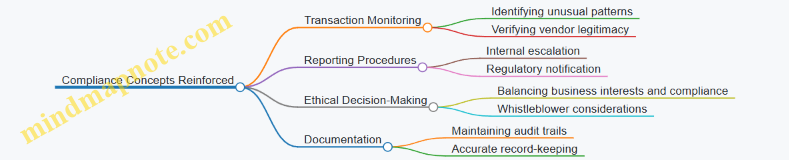
Additional Example: Handling a Compliance Audit
Scenario: You are the lead accountant preparing for an upcoming external compliance audit. The auditor requests documentation on internal controls and recent financial reports. During the role-play, you must gather necessary documents, answer auditor questions, and address any identified discrepancies.
Learning Points:
- Audit preparedness
- Effective communication with auditors
- Transparency and accuracy in documentation
Tips for Facilitators
- Encourage participants to immerse themselves in their roles.
- Create a safe environment for open discussion.
- Use real company policies and regulatory guidelines as references.
- Provide constructive feedback focusing on compliance best practices.
By incorporating role-playing exercises like these into compliance training, accountants can better understand the practical application of financial regulations, improve their decision-making skills, and contribute to a stronger compliance culture within their organizations.
9. Handling Compliance Breaches and Remediation
9.1 Identifying and Reporting Compliance Breaches
Financial compliance breaches can have serious consequences, including legal penalties, reputational damage, and financial losses. For accountants, early identification and proper reporting of these breaches are critical to maintaining organizational integrity and regulatory adherence.
What is a Compliance Breach?
A compliance breach occurs when an individual or organization fails to adhere to established laws, regulations, policies, or internal controls related to financial practices.
Mind Map: Identifying Compliance Breaches
Practical Example: Spotting a Breach
Scenario: An accountant notices a series of payments made to a vendor that does not appear in the approved vendor list. The payments are for unusually large amounts and lack proper supporting documentation.
Action: The accountant flags these transactions for further investigation and reports the issue to the compliance officer.
Steps to Identify Compliance Breaches
-
Monitor Financial Transactions Regularly
- Use automated tools to flag anomalies.
- Review transactions for unusual patterns.
-
Verify Documentation
- Ensure all transactions have proper supporting documents.
- Check for inconsistencies or alterations.
-
Observe Behavioral Red Flags
- Be alert to employees circumventing controls.
- Note any reluctance to provide information.
-
Leverage Whistleblower Channels
- Encourage anonymous reporting.
- Protect whistleblowers from retaliation.
-
Conduct Periodic Audits
- Internal and external audits help uncover hidden breaches.
Mind Map: Reporting Compliance Breaches
Example: Reporting a Breach
Scenario: After identifying suspicious transactions, an accountant prepares a detailed report including transaction dates, amounts, involved parties, and supporting evidence. The report is submitted confidentially to the internal compliance officer within 24 hours.
Outcome: The compliance officer initiates an investigation, preventing potential regulatory penalties.
Best Practices for Accountants in Reporting Breaches
- Be Objective: Report facts without assumptions or accusations.
- Keep Records: Maintain copies of all relevant documents securely.
- Use Established Channels: Follow company protocols for reporting.
- Maintain Confidentiality: Protect sensitive information and identities.
- Follow Up: Ensure the breach is addressed and resolved.
Summary
Identifying and reporting compliance breaches promptly is a vital responsibility for accountants. By recognizing red flags, utilizing proper channels, and documenting thoroughly, accountants help safeguard their organizations against legal and financial risks.
For further reading, see sections on whistleblower policies (6.3) and compliance audits (5).
9.2 Investigative Procedures and Documentation
When a financial compliance breach is suspected or identified, conducting a thorough investigation is crucial to understand the scope, causes, and impact of the violation. Proper investigative procedures and meticulous documentation not only help in remediation but also demonstrate accountability to regulators and stakeholders.
Key Steps in Investigative Procedures
Investigative Procedures Mind Map
Detailed Explanation of Each Step
Initiation
- Trigger Event: Investigations often start from an audit finding, whistleblower tip, or unusual transaction flagged by compliance software.
- Define Scope: Clearly outline what will be investigated to avoid scope creep and ensure focused efforts.
Planning
- Investigation Team: Include compliance officers, accountants, legal advisors, and IT specialists as needed.
- Investigation Plan: Set timelines, resources, and methods for data collection and analysis.
Data Collection
- Financial Records: Collect invoices, ledger entries, bank statements, and contracts.
- Interviews: Conduct structured interviews with employees involved or knowledgeable about the issue.
- Electronic Communications: Review emails, chat logs, and transaction histories.
Analysis
- Compliance Comparison: Check if transactions comply with relevant laws and internal policies.
- Discrepancy Identification: Look for missing approvals, altered documents, or unusual patterns.
- Intent and Impact: Determine if the breach was accidental or intentional and assess financial or reputational damage.
Reporting
- Documentation: Prepare a comprehensive report detailing findings, evidence, and recommendations.
- Recommendations: Suggest corrective actions such as process changes, training, or disciplinary measures.
Follow-up
- Remediation Implementation: Ensure corrective actions are carried out.
- Monitoring: Track progress and effectiveness of remediation over time.
Documentation Best Practices
- Maintain a clear audit trail of all investigative activities.
- Use standardized templates for interviews, evidence logs, and reports.
- Securely store all documentation to preserve confidentiality and integrity.
- Document timelines, decisions, and communications thoroughly.
Example Scenario: Investigating a Suspicious Expense Claim
Context: An accountant notices a series of unusually high travel expense claims from a department manager.
Investigative Steps:
- Initiation: Triggered by internal audit flagging expense anomalies.
- Planning: Compliance officer and senior accountant form the investigation team.
- Data Collection: Gather all expense reports, receipts, and approval records for the past six months.
- Interviews: Speak with the manager, their supervisor, and the finance team.
- Analysis: Identify that several receipts were duplicated and some trips were not approved.
- Reporting: Document findings, highlighting policy breaches and recommending disciplinary action.
- Follow-up: Implement stricter expense approval workflows and conduct training.
Investigative Documentation Mind Map
Investigative Documentation Mind Map
Summary
Effective investigative procedures combined with comprehensive documentation are essential for addressing financial compliance breaches. They provide clarity, support decision-making, and help maintain organizational integrity. Accountants and compliance officers should collaborate closely, applying best practices and leveraging examples like the suspicious expense claim to build robust investigation frameworks.
9.3 Developing and Implementing Remediation Plans
When a financial compliance breach is identified, developing and implementing an effective remediation plan is critical to mitigate risks, restore compliance, and prevent future violations. This section outlines a structured approach to remediation, supported by practical examples and mind maps to visualize the process.
Step 1: Root Cause Analysis
Understanding the underlying cause of the compliance breach is the foundation of any remediation plan. This involves:
- Reviewing audit findings and investigation reports
- Interviewing involved personnel
- Analyzing processes and controls that failed
Example: If an accountant failed to report a suspicious transaction due to lack of training, the root cause might be inadequate compliance education.
Mind Map: Root Cause Analysis
Step 2: Define Remediation Objectives
Clear objectives guide the remediation plan. Objectives should be Specific, Measurable, Achievable, Relevant, and Time-bound (SMART).
- Correct the identified compliance breach
- Strengthen internal controls
- Enhance employee training
- Improve monitoring and reporting
Example: “Within 60 days, retrain all accounting staff on AML procedures and implement an automated transaction monitoring system.”
Mind Map: Remediation Objectives
Step 3: Develop Action Plan
Break down objectives into actionable steps, assigning responsibilities and deadlines.
| Action Item | Responsible Party | Deadline | Notes |
|---|---|---|---|
| Update AML training materials | Compliance Officer | 2 weeks | Include recent regulatory changes |
| Schedule mandatory training sessions | HR & Compliance | 4 weeks | Track attendance and completion |
| Implement transaction monitoring tool | IT & Finance | 6 weeks | Select vendor, configure system |
| Review and update internal policies | Legal & Compliance | 3 weeks | Ensure alignment with regulations |
Example: After identifying a gap in transaction monitoring, the finance team partners with IT to deploy a new software tool.
Mind Map: Action Plan Development
Step 4: Implement the Plan
Execute the action items while maintaining clear communication and documentation.
- Conduct training sessions
- Deploy and test new controls
- Update policies and distribute to staff
- Monitor progress against deadlines
Example: Training sessions include real-world scenarios to reinforce learning, and IT runs pilot tests of the monitoring tool before full deployment.
Mind Map: Implementation Phase
Step 5: Monitor and Evaluate Effectiveness
Post-implementation, continuously monitor to ensure the remediation plan is effective.
- Perform follow-up audits
- Collect feedback from staff
- Review incident reports for recurrence
- Adjust plan as necessary
Example: A follow-up audit reveals a 90% reduction in compliance incidents related to transaction reporting.
Mind Map: Monitoring & Evaluation
Integrated Example: Remediation Plan for a Compliance Breach in AML Reporting
- Root Cause: Lack of awareness and outdated AML procedures.
- Objectives: Retrain staff, update AML policies, implement automated monitoring.
- Action Plan: See table above.
- Implementation: Training delivered via workshops; new software deployed.
- Monitoring: Monthly audits and feedback sessions.
This structured approach ensures that remediation is comprehensive, transparent, and effective in restoring compliance.
By following these steps, accountants and compliance officers can systematically address breaches, minimize risks, and strengthen their organization’s compliance posture.
9.4 Communicating with Regulators and Stakeholders
Effective communication with regulators and stakeholders is a critical component of managing financial compliance breaches and remediation. Transparent, timely, and accurate communication helps maintain trust, mitigate risks, and demonstrate a commitment to compliance.
Key Principles of Communication
- Transparency: Provide clear and honest information about the breach and remediation efforts.
- Timeliness: Communicate promptly to avoid regulatory penalties and stakeholder distrust.
- Accuracy: Ensure all shared information is factual and supported by evidence.
- Consistency: Maintain a consistent message across all communication channels.
Mind Map: Communication Framework with Regulators and Stakeholders
Preparing for Communication
Before engaging with regulators or stakeholders, accountants should:
- Collect all relevant documentation related to the compliance breach.
- Understand the specific regulatory reporting requirements and timelines.
- Identify the appropriate contact points within regulatory bodies and stakeholder groups.
Example: A mid-sized accounting firm discovered a reporting error that affected quarterly financial statements. Before notifying the regulator, the compliance officer gathered all transaction records, identified the root cause, and prepared a detailed remediation plan.
Crafting the Communication Message
The message should be structured to include:
- Description of the Issue: What happened, when, and how it was discovered.
- Impact Assessment: The extent of the breach and affected areas.
- Remediation Actions: Steps already taken and planned to resolve the issue.
- Preventive Measures: How similar breaches will be prevented in the future.
- Contact Information: Who to reach out to for further questions.
Example: “On March 15, 2024, we identified a misclassification in revenue recognition affecting Q1 reports. The impact was limited to $50,000 in overstated revenue. We have corrected the entries, notified our auditors, and implemented additional review controls to prevent recurrence. Please contact Jane Doe, Compliance Officer, at [email protected] for further information.”
Choosing Communication Channels
- Formal Letters or Emails: Used for official notifications to regulators.
- Meetings or Conference Calls: Allow for direct dialogue and clarification.
- Public Disclosures: Required if the breach materially affects public financial statements.
Example: Following discovery of a compliance breach, a company sent a formal letter to the Securities and Exchange Commission (SEC), followed by a scheduled call to discuss remediation progress.
Follow-Up and Documentation
- Provide periodic updates to regulators and stakeholders on remediation progress.
- Respond promptly to any questions or requests for additional information.
- Maintain detailed records of all communications for audit trails and future reference.
Example: After initial notification, the compliance team sent monthly progress reports to the regulator until the issue was fully resolved.
Mind Map: Example Communication Timeline
Real-World Example: Effective Communication in Practice
Scenario: A financial institution detected a data privacy compliance breach impacting client information.
Actions Taken:
- Immediately informed the relevant data protection authority with a detailed report.
- Held a conference call to discuss the breach and remediation steps.
- Issued a public statement reassuring clients of corrective actions.
- Provided regular updates until the breach was fully addressed.
Outcome: The proactive and transparent communication helped maintain regulatory trust and minimized reputational damage.
Summary
Communicating with regulators and stakeholders during a compliance breach requires preparation, clarity, and ongoing engagement. By following best practices and using structured communication frameworks, accountants can effectively manage compliance incidents and safeguard their organization’s integrity.
9.5 Case Study: Effective Remediation After a Compliance Violation
Introduction
In this case study, we explore how a mid-sized accounting firm successfully navigated a compliance violation related to inaccurate financial disclosures. The firm’s approach to remediation highlights best practices that accountants and compliance officers can adopt to restore trust, ensure regulatory adherence, and prevent future breaches.
Background
The firm was found to have misstated revenue figures in their quarterly financial report due to an internal control lapse. This triggered an investigation by regulatory authorities and an internal audit.
Step 1: Immediate Response and Containment
- Action: The firm promptly notified senior management and the compliance team.
- Example: They froze the affected reporting processes to prevent further errors.
Step 2: Investigation and Root Cause Analysis
- Action: Conducted a thorough investigation involving internal auditors and external consultants.
- Mind Map:
- Example: Discovered that the accounting software lacked automated checks, leading to unnoticed data entry mistakes.
Step 3: Developing a Remediation Plan
- Action: Created a detailed remediation plan addressing identified weaknesses.
- Mind Map:
- Example: Introduced a dual-approval system for all revenue entries.
Step 4: Implementation of Remediation Measures
- Action: Rolled out new controls and training programs.
- Example: Used compliance software to automate data validation, reducing manual errors by 80%.
Step 5: Monitoring and Follow-Up
- Action: Established ongoing monitoring mechanisms and scheduled follow-up audits.
- Mind Map:
- Example: Monthly compliance reports generated automatically and reviewed by the compliance officer.
Step 6: Communication with Regulators and Stakeholders
- Action: Maintained transparent communication throughout the remediation process.
- Example: Submitted detailed remediation reports to the regulatory body and held quarterly update meetings.
Key Takeaways
- Proactive Response: Immediate action limits damage and demonstrates commitment.
- Root Cause Focus: Understanding underlying issues prevents recurrence.
- Comprehensive Plan: Addressing controls, training, and communication ensures holistic remediation.
- Technology Utilization: Automation enhances accuracy and efficiency.
- Continuous Monitoring: Sustained compliance requires ongoing vigilance.
Summary Table of Remediation Actions and Examples
| Remediation Step | Action Taken | Example Implementation |
|---|---|---|
| Immediate Response | Notified management, froze processes | Halted revenue reporting to prevent errors |
| Root Cause Analysis | Investigated errors and control gaps | Identified lack of automated checks |
| Remediation Planning | Developed controls and training plan | Dual-approval system for revenue entries |
| Implementation | Rolled out controls and training | Automated data validation software |
| Monitoring | Set up audits and dashboards | Monthly compliance reports |
| Communication | Transparent updates to regulators and clients | Quarterly regulatory meetings |
This case study exemplifies how a structured, transparent, and technology-enabled approach to remediation can restore compliance and strengthen an organization’s financial integrity.
10. Future Trends in Financial Compliance
10.1 Emerging Regulatory Changes and Their Impact
The financial compliance landscape is continuously evolving as regulators respond to new risks, technological advancements, and global economic shifts. Accountants must stay ahead of these changes to ensure their organizations remain compliant and avoid penalties. This section explores some of the most significant emerging regulatory changes and their practical impact on financial compliance.
Key Emerging Regulatory Changes
- Increased Focus on ESG (Environmental, Social, Governance) Reporting
- Expansion of Anti-Money Laundering (AML) Regulations
- Stricter Data Privacy and Cybersecurity Requirements
- Regulations Addressing Digital Assets and Cryptocurrencies
- Enhanced Transparency and Beneficial Ownership Disclosure
Mind Map: Emerging Regulatory Changes
ESG Reporting: From Voluntary to Mandatory
Regulators worldwide are increasingly requiring companies to report on ESG factors, integrating these into financial disclosures. For accountants, this means:
- Understanding new reporting frameworks such as the Task Force on Climate-related Financial Disclosures (TCFD).
- Collaborating with sustainability teams to gather accurate data.
- Ensuring ESG metrics are audited and compliant with regulatory standards.
Example: A manufacturing firm must now include carbon emission data in its annual report. The accountant works with environmental specialists to verify data accuracy and ensure proper disclosure, preventing regulatory fines.
Expansion of AML Regulations
AML regulations are broadening to cover more entities and transactions, with increased scrutiny on cross-border payments and beneficial ownership.
- Accountants must implement enhanced customer due diligence (CDD) and ongoing monitoring.
- Reporting suspicious activities promptly is critical.
Example: An accountant at a financial institution detects unusual transaction patterns in a client’s account. Following AML protocols, they file a Suspicious Activity Report (SAR), helping prevent potential money laundering.
Stricter Data Privacy and Cybersecurity Requirements
With the rise of cyber threats, regulators are enforcing stricter data protection laws, including mandatory breach notifications and stronger controls over financial data.
- Accountants must ensure compliance with GDPR and similar laws.
- Collaborate with IT to safeguard sensitive financial information.
Example: After a cyberattack exposes client financial data, the accountant coordinates with compliance and IT teams to notify regulators within the required timeframe, avoiding hefty penalties.
Regulations Addressing Digital Assets and Cryptocurrencies
As digital assets gain popularity, regulators are introducing frameworks to govern their accounting, taxation, and reporting.
- Accountants need to classify digital assets correctly (e.g., as inventory, intangible assets, or financial instruments).
- Understand tax implications and reporting obligations.
Example: A company accepting cryptocurrency payments must record these transactions accurately, reflecting fair market value at the time of receipt, ensuring compliance with tax authorities.
Enhanced Transparency and Beneficial Ownership Disclosure
New rules require companies to disclose ultimate beneficial owners to combat corruption and tax evasion.
- Accountants play a key role in verifying ownership structures.
- Maintain accurate and up-to-date ownership records.
Example: During a compliance review, an accountant uncovers a complex ownership chain and ensures all beneficial owners are disclosed in line with new regulations, preventing legal repercussions.
Mind Map: Impact on Accountants
Summary
Emerging regulatory changes demand that accountants expand their expertise beyond traditional financial reporting. By integrating ESG considerations, strengthening AML efforts, safeguarding data privacy, adapting to digital asset regulations, and ensuring transparency in ownership, accountants can help their organizations navigate the evolving compliance landscape effectively.
Staying informed and proactive through continuous education and cross-department collaboration is essential to mitigate risks and uphold the highest standards of financial compliance.
10.2 The Role of Blockchain and Distributed Ledger Technology
Blockchain and Distributed Ledger Technology (DLT) are revolutionizing the way financial compliance is managed by offering enhanced transparency, security, and traceability. For accountants, understanding these technologies is becoming essential as they increasingly intersect with regulatory frameworks and compliance requirements.
What is Blockchain and DLT?
- Blockchain: A decentralized, immutable ledger that records transactions across multiple nodes in a network.
- Distributed Ledger Technology: A broader term that includes blockchain and other decentralized databases where data is replicated and synchronized across multiple sites.
Why Blockchain Matters for Financial Compliance
- Transparency: Every transaction is recorded and visible to authorized participants, reducing the risk of fraud.
- Immutability: Once recorded, data cannot be altered, ensuring integrity of financial records.
- Real-time Auditing: Continuous verification of transactions enables faster and more accurate compliance checks.
- Cost Reduction: Automation of compliance processes reduces manual effort and errors.
Mind Map: Key Benefits of Blockchain in Financial Compliance

Practical Example: Using Blockchain for AML Compliance
Scenario: A bank implements a blockchain-based system to track customer transactions and flag suspicious activities.
- Each transaction is recorded on the blockchain with encrypted customer data.
- Smart contracts automatically monitor transaction patterns against AML rules.
- Suspicious transactions trigger alerts for compliance officers to review.
This reduces false positives and accelerates investigation times, improving overall AML compliance.
Mind Map: Blockchain Applications in Compliance
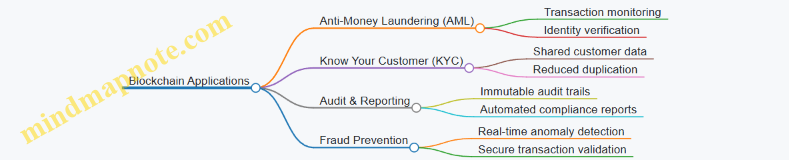
Example: Smart Contracts for Automated Regulatory Reporting
Smart contracts are self-executing contracts with terms directly written into code. Accountants can leverage smart contracts to automate compliance tasks such as tax calculations and reporting.
- When a financial event occurs (e.g., sale, payment), the smart contract automatically calculates tax obligations.
- It then generates and submits reports to regulatory authorities without manual intervention.
This automation ensures accuracy, timeliness, and reduces the risk of human error.
Challenges and Considerations
- Regulatory Uncertainty: Laws around blockchain are still evolving, requiring accountants to stay informed.
- Data Privacy: Balancing transparency with confidentiality, especially under GDPR.
- Integration: Adapting existing financial systems to incorporate blockchain technology.
Summary
Blockchain and DLT offer transformative potential for financial compliance by enhancing transparency, security, and efficiency. Accountants who embrace these technologies can improve compliance accuracy, reduce risks, and streamline reporting processes.
Further Reading:
- “Blockchain and Financial Compliance: Opportunities and Challenges” - Journal of Finance
- “Smart Contracts in Accounting: Automating Compliance” - CPA Journal
10.3 Increasing Importance of Environmental, Social, and Governance (ESG) Compliance
Environmental, Social, and Governance (ESG) compliance has rapidly become a critical component of financial compliance frameworks worldwide. Accountants play a pivotal role in ensuring that organizations not only meet traditional financial regulations but also adhere to ESG standards, which reflect a company’s commitment to sustainable and ethical business practices.
What is ESG Compliance?
ESG compliance refers to the adherence to regulations and voluntary standards that govern a company’s environmental impact, social responsibility, and governance practices. It encompasses a broad range of criteria, such as carbon footprint reduction, labor practices, board diversity, and transparency.
Why ESG Compliance Matters for Accountants
- Investor Demand: Increasingly, investors require ESG disclosures to assess long-term risks and opportunities.
- Regulatory Pressure: Governments and regulatory bodies are introducing mandatory ESG reporting requirements.
- Reputation Management: Companies with strong ESG compliance often enjoy better brand reputation and customer loyalty.
- Risk Mitigation: ESG compliance helps identify and mitigate environmental and social risks that could impact financial performance.
Mind Map: Key Components of ESG Compliance
ESG Compliance Mind Map
Best Practices for Accountants in ESG Compliance
-
Integrate ESG Metrics into Financial Reporting
- Example: Including carbon emission costs as a line item in financial statements to reflect environmental liabilities.
-
Ensure Data Accuracy and Verification
- Example: Implementing third-party audits for social impact data to validate claims on labor practices.
-
Stay Updated on ESG Regulations
- Example: Monitoring the EU’s Sustainable Finance Disclosure Regulation (SFDR) and adapting reporting accordingly.
-
Collaborate Across Departments
- Example: Working with sustainability officers and legal teams to gather comprehensive ESG data.
-
Use Technology for ESG Data Management
- Example: Employing ESG reporting software that automates data collection and compliance checks.
Example Scenario: ESG Compliance in Action
Company: GreenTech Manufacturing
Situation: GreenTech aims to improve its ESG compliance by integrating environmental data into its financial reports.
Action:
- The accounting team collaborates with the sustainability department to quantify the financial impact of carbon emissions.
- They include a new disclosure section in the annual report detailing greenhouse gas emissions and related costs.
- An external auditor verifies the accuracy of the environmental data.
Outcome:
- Investors gain a clearer picture of GreenTech’s environmental risks.
- The company meets new regulatory requirements ahead of schedule.
- GreenTech’s stock price improves due to increased investor confidence.
Mind Map: ESG Compliance Workflow for Accountants
Challenges and Solutions
Conclusion
ESG compliance is no longer optional; it is a fundamental aspect of modern financial compliance. Accountants must embrace ESG principles by integrating them into reporting, risk management, and corporate governance. By doing so, they help their organizations achieve sustainable growth, meet regulatory demands, and build trust with stakeholders.
For accountants and compliance officers, mastering ESG compliance is essential to future-proofing their roles and adding strategic value to their organizations.
10.4 Preparing for Globalization and Cross-Border Compliance Challenges
As businesses expand internationally, accountants face increasing complexity in ensuring compliance across multiple jurisdictions. Globalization introduces diverse regulatory environments, cultural differences, and varying financial reporting standards. Preparing for these challenges requires a strategic approach, robust knowledge, and adaptable systems.
Key Areas of Focus for Cross-Border Compliance
Cross-Border Compliance Mind Map
Best Practices for Navigating Global Compliance
-
Understand Local Regulatory Requirements
- Research and maintain up-to-date knowledge of each country’s financial regulations.
- Example: When expanding into the EU, accountants must comply with GDPR for data privacy alongside financial regulations.
-
Adopt International Financial Reporting Standards (IFRS)
- Many countries use IFRS to harmonize financial reporting.
- Example: A multinational corporation consolidates subsidiaries’ financials prepared under different local GAAPs by converting them to IFRS.
-
Implement Robust Currency Management
- Manage currency exchange risks and ensure accurate currency translation in financial statements.
- Example: An accountant uses hedging strategies to mitigate currency fluctuations impacting reported earnings.
-
Leverage Technology for Compliance Automation
- Use compliance management software that supports multi-jurisdictional regulations.
- Example: Deploying cloud-based platforms that automatically update tax codes and reporting requirements per country.
-
Develop Cross-Cultural Competence
- Train teams on cultural nuances affecting compliance and communication.
- Example: Understanding local holidays and business customs to meet reporting deadlines effectively.
-
Establish Clear Internal Controls Across Borders
- Standardize compliance procedures while allowing flexibility for local adaptations.
- Example: A global firm implements a centralized compliance policy with localized addendums.
Example Scenario: Managing Compliance for a Multinational Expansion
A U.S.-based company expands operations to Germany and Brazil. The accounting team must:
- Germany: Comply with IFRS, local tax laws, and GDPR for customer data.
- Brazil: Navigate complex tax regulations, including ICMS and ISS taxes, and comply with Brazilian GAAP.
Steps Taken:
- Conducted a regulatory gap analysis between U.S. GAAP and local standards.
- Implemented a compliance software solution with modules for each country.
- Trained local accounting staff on global compliance policies and local requirements.
- Established a currency risk management plan to handle EUR and BRL fluctuations.
Mind Map: Steps to Prepare for Cross-Border Compliance
Preparation Steps Mind Map
Practical Tips
- Maintain a global compliance calendar to track deadlines across jurisdictions.
- Foster communication between local and central finance teams to ensure alignment.
- Regularly review and update compliance policies to reflect regulatory changes.
- Use scenario planning to anticipate potential compliance risks in new markets.
By proactively preparing for globalization and cross-border compliance challenges, accountants can safeguard their organizations from regulatory penalties, enhance transparency, and support sustainable international growth.
10.5 Example: Adapting Compliance Programs for Digital Assets
As digital assets such as cryptocurrencies, tokens, and NFTs become increasingly integrated into financial ecosystems, accountants must adapt compliance programs to address the unique risks and regulatory requirements these assets present. This section explores practical steps, examples, and mind maps to help accountants effectively update their compliance frameworks.
Understanding Digital Assets Compliance Challenges
- Volatility and valuation complexities
- Regulatory uncertainty and evolving laws
- Anti-Money Laundering (AML) and Know Your Customer (KYC) requirements
- Custody and security risks
Mind Map: Key Areas to Adapt in Compliance Programs for Digital Assets
Practical Example 1: Implementing AML/KYC for Cryptocurrency Transactions
Scenario: A mid-sized accounting firm manages client portfolios that include cryptocurrency holdings. To comply with AML regulations, the firm must verify the identity of clients and monitor transactions for suspicious activity.
Best Practices:
- Integrate blockchain analytics tools to trace transaction origins.
- Establish thresholds for flagging high-risk transactions.
- Maintain detailed KYC records and update them regularly.
Example: When a client transfers a large amount of Bitcoin, the compliance officer uses a blockchain explorer and AML software to verify that the source wallet is not linked to illicit activities. If suspicious, the transaction is flagged and reported according to regulatory guidelines.
Practical Example 2: Valuation and Reporting of Digital Assets
Scenario: An accountant is preparing financial statements for a company holding various digital assets.
Best Practices:
- Use consistent and accepted valuation methods (e.g., fair value based on active market prices).
- Document valuation sources and methodologies clearly.
- Disclose risks related to asset volatility.
Example: The accountant uses exchange prices from multiple reputable platforms to determine the fair value of the company’s Ethereum holdings as of the reporting date. The valuation approach and market sources are documented in the notes to the financial statements.
Mind Map: Compliance Workflow for Digital Asset Transactions
Practical Example 3: Securing Digital Asset Custody
Scenario: A financial institution offers custody services for digital assets.
Best Practices:
- Use multi-signature wallets to reduce single points of failure.
- Implement cold storage solutions for long-term holdings.
- Regularly audit custody procedures and access controls.
Example: The compliance team mandates that all transfers from cold storage require approval from multiple authorized personnel, ensuring segregation of duties and reducing fraud risk.
Summary
Adapting compliance programs for digital assets requires a multifaceted approach involving updated risk assessments, enhanced internal controls, technology integration, and continuous education. By incorporating these elements with clear documentation and practical tools, accountants can confidently navigate the evolving regulatory landscape surrounding digital assets.