Fixed Asset Accounting
1. Introduction to Fixed Asset Accounting
1.1 Definition and Importance of Fixed Assets
Definition of Fixed Assets
Fixed assets, also known as tangible assets or property, plant, and equipment (PP&E), are long-term physical assets that a company acquires for use in its operations and not for resale. These assets are expected to provide economic benefits over multiple accounting periods, typically more than one year.
Key characteristics of fixed assets:
- Tangible in nature (physical form)
- Used in the production or supply of goods and services
- Not intended for immediate sale
- Provide benefits over a long period
Mind Map: Definition of Fixed Assets
Importance of Fixed Assets
Fixed assets are critical for the operational capacity and financial health of a business, especially in manufacturing and finance sectors. Their importance can be summarized as follows:
- Operational Backbone: Fixed assets like machinery, equipment, and buildings are essential for producing goods or delivering services.
- Capital Investment: Represent significant capital investments that impact a company’s balance sheet and financial stability.
- Depreciation and Cost Allocation: Fixed assets are depreciated over their useful lives, allowing companies to allocate costs systematically and match expenses with revenues.
- Collateral for Financing: Often used as collateral to secure loans or financing.
- Tax Implications: Depreciation of fixed assets affects taxable income and tax planning.
- Asset Management: Proper accounting and management help in budgeting, maintenance planning, and replacement decisions.
Mind Map: Importance of Fixed Assets
Example 1: Fixed Asset Identification in a Manufacturing Company
Consider a manufacturing company that purchases a new CNC machine for $150,000. This machine is expected to be used in production for 10 years.
- The CNC machine is a fixed asset because:
- It is tangible and physical.
- It will be used in operations, not sold.
- It provides economic benefits over multiple years.
This asset will be recorded on the balance sheet and depreciated over its useful life.
Example 2: Fixed Assets in a Finance Company
A finance company invests in office buildings and computer hardware.
- Office buildings are fixed assets because they are long-term physical assets used to conduct business.
- Computer hardware, while sometimes considered equipment, qualifies as fixed assets if used over multiple years.
Proper accounting for these assets ensures accurate financial reporting and compliance with accounting standards.
Summary
Understanding the definition and importance of fixed assets is foundational for accountants and financial controllers. It ensures accurate recording, valuation, and management of these critical resources, directly impacting financial statements, operational efficiency, and strategic decision-making.
1.2 Overview of Fixed Asset Accounting Principles
Fixed asset accounting is a critical component of financial management, especially for accountants and financial controllers in the finance and manufacturing sectors. It involves the systematic recording, valuation, depreciation, and reporting of tangible long-term assets that a company uses in its operations. Understanding the core principles ensures accuracy in financial statements and compliance with accounting standards.
Core Principles of Fixed Asset Accounting
- Recognition: Fixed assets are recognized when it is probable that future economic benefits will flow to the entity and the cost of the asset can be reliably measured.
- Initial Measurement: Assets are initially recorded at cost, which includes purchase price and any costs directly attributable to bringing the asset to working condition.
- Depreciation: Systematic allocation of the depreciable amount of an asset over its useful life.
- Impairment: Assets must be reviewed regularly for impairment to ensure carrying amounts do not exceed recoverable amounts.
- Derecognition: Removal of an asset from the books when disposed of or no longer expected to provide economic benefits.
Mind Map: Fixed Asset Accounting Principles
Detailed Explanation with Examples
-
Recognition
- Principle: An asset should be recognized if it is probable that future economic benefits will flow to the company and the cost can be measured reliably.
- Example: A manufacturing company purchases a new CNC machine. Since the machine will be used in production for several years and the purchase cost is known, it qualifies as a fixed asset.
-
Initial Measurement
- Principle: Fixed assets are recorded at cost, including purchase price and any costs necessary to prepare the asset for use.
- Example: The CNC machine cost $100,000. Additional costs include $5,000 for installation and $2,000 for transportation. The total recorded cost is $107,000.
-
Depreciation
- Principle: Depreciation allocates the cost of the asset over its useful life to reflect usage and wear.
- Example: The CNC machine has an estimated useful life of 10 years with a residual value of $7,000. Using straight-line depreciation:
- Depreciable amount = $107,000 - $7,000 = $100,000
- Annual depreciation = $100,000 / 10 = $10,000
-
Impairment
- Principle: If the asset’s carrying amount exceeds its recoverable amount, an impairment loss must be recognized.
- Example: After 5 years, newer technology makes the CNC machine less efficient. Its recoverable amount is now estimated at $40,000, but its carrying amount is $57,000. An impairment loss of $17,000 is recorded.
-
Derecognition
- Principle: When an asset is sold, scrapped, or no longer provides economic benefits, it should be removed from the books.
- Example: The CNC machine is sold for $35,000 after 7 years. The carrying amount at the time is $27,000. The company recognizes a gain of $8,000 ($35,000 - $27,000).
Mind Map: Fixed Asset Lifecycle in Accounting
Summary
Understanding these principles helps accountants and financial controllers maintain accurate asset records, comply with accounting standards such as IFRS and GAAP, and provide stakeholders with reliable financial information. Applying these principles consistently ensures transparency and supports strategic decision-making in asset management.
1.3 Role of Accountants and Financial Controllers in Fixed Asset Management
Fixed asset management is a critical function within finance and manufacturing sectors, and accountants and financial controllers play pivotal roles in ensuring accuracy, compliance, and strategic oversight. Their responsibilities span from acquisition to disposal, encompassing valuation, depreciation, and reporting.
Key Responsibilities of Accountants and Financial Controllers
Detailed Role Breakdown
-
Asset Recognition and Classification
- Accountants identify and classify fixed assets according to company policy and accounting standards.
- Example: When a manufacturing company purchases a new CNC machine, the accountant ensures it is recorded under machinery assets and not expensed.
-
Initial Measurement and Recording
- Accountants record the acquisition cost, including purchase price, taxes, shipping, and installation.
- Example: For a newly acquired assembly line, the accountant compiles all related costs to determine the asset’s capitalized value.
-
Depreciation Management
- Accountants calculate depreciation using appropriate methods (e.g., straight-line, units of production).
- Financial controllers review and approve depreciation policies to align with financial strategy.
- Example: Calculating monthly depreciation for a manufacturing robot using the declining balance method.
-
Policy Development and Enforcement
- Financial controllers develop fixed asset policies covering capitalization thresholds, depreciation methods, and asset lifecycle management.
- Accountants ensure adherence to these policies in day-to-day accounting.
-
Internal Controls and Audit Preparation
- Controllers implement controls to prevent asset misappropriation.
- Accountants prepare documentation and schedules for internal and external audits.
- Example: Conducting a quarterly physical verification of assets and reconciling with the fixed asset register.
-
Financial Reporting and Compliance
- Controllers oversee the preparation of fixed asset disclosures in financial statements.
- Accountants ensure compliance with IFRS, GAAP, and tax regulations.
Mind Map: Workflow Interaction Between Accountants and Financial Controllers
Practical Example: Managing Fixed Assets in a Manufacturing Firm
Scenario: A manufacturing company acquires a new packaging machine costing $150,000.
-
Accountant’s Role:
- Records the asset at $150,000 plus $10,000 shipping and installation.
- Classifies it under machinery.
- Calculates monthly straight-line depreciation over 10 years.
-
Financial Controller’s Role:
- Reviews and approves the capitalization.
- Ensures the depreciation method aligns with company policy.
- Monitors budget impact and reports to senior management.
This collaboration ensures accurate financial records and strategic asset utilization.
Summary
Accountants and financial controllers complement each other in fixed asset management. Accountants focus on precise record-keeping, calculations, and compliance, while financial controllers emphasize policy, oversight, and strategic alignment. Together, they safeguard asset integrity and support informed decision-making.
1.4 Common Challenges in Fixed Asset Accounting
Fixed asset accounting is a critical function for accountants and financial controllers, especially in the finance and manufacturing sectors. However, it comes with a variety of challenges that can impact accuracy, compliance, and financial reporting. Understanding these challenges and how to address them is essential for effective fixed asset management.
Key Challenges Overview
Data Management Challenges
Maintaining accurate and up-to-date fixed asset records is foundational but often problematic.
- Inaccurate Asset Records: Errors in asset descriptions, acquisition dates, or costs can lead to misstatements.
- Missing Documentation: Lack of purchase invoices or contracts complicates verification.
- Asset Tagging Issues: Without proper tagging or identification, assets can be lost or misclassified.
Example: A manufacturing company purchased a new CNC machine but failed to record the installation costs separately. This led to an understatement of the asset’s capitalized cost and incorrect depreciation calculations.
Depreciation Challenges
Choosing and applying the correct depreciation method and useful life is complex.
- Selecting Appropriate Methods: Different assets may require different methods (e.g., straight-line vs. units of production).
- Calculating Useful Life: Estimating the useful life can be subjective and varies by asset type.
- Handling Changes in Estimates: Adjusting depreciation when asset usage or condition changes.
Example: A financial controller used straight-line depreciation for a manufacturing robot, but the asset’s usage varied significantly year to year. Switching to units of production method improved expense matching but required recalculations and adjustments.
Asset Valuation Challenges
Ensuring assets are valued correctly at acquisition and over time.
- Initial Measurement Errors: Omitting incidental costs like freight or installation.
- Revaluation Complexity: Deciding when and how to revalue assets in compliance with standards.
- Impairment Identification: Detecting when assets have lost value due to obsolescence or damage.
Example: An obsolete manufacturing line was not impaired timely, causing overstated asset values and misleading financial statements.
Compliance Challenges
Staying compliant with evolving accounting standards and tax regulations.
- Adhering to Accounting Standards: IFRS and GAAP have nuanced requirements.
- Tax Regulation Changes: Depreciation methods and asset classifications may differ for tax purposes.
- Audit Readiness: Ensuring documentation and processes withstand external audits.
Example: A finance team missed updates to tax depreciation rules, resulting in penalties and restatements.
Asset Tracking Challenges
Physically tracking assets to prevent loss and ensure accurate records.
- Physical Verification Discrepancies: Differences between records and actual assets.
- Asset Movement and Transfers: Tracking assets moved between locations or departments.
- Theft and Loss Prevention: Implementing controls to reduce asset loss.
Example: During a physical audit, several laptops were unaccounted for due to poor tagging and transfer documentation.
Disposal and Derecognition Challenges
Properly accounting for asset disposals to reflect true financial position.
- Proper Gain/Loss Calculation: Correctly calculating and recording gains or losses on disposal.
- Documentation of Disposal: Maintaining evidence such as sale agreements or scrapping records.
- Timing of Derecognition: Ensuring assets are removed from books at the right time.
Example: A manufacturing firm sold an old machine but delayed derecognition, causing depreciation to be overstated in subsequent periods.
Summary Mind Map
By recognizing these common challenges and applying best practices such as rigorous documentation, regular physical audits, and consistent depreciation policies, accountants and financial controllers can enhance the accuracy and reliability of fixed asset accounting within their organizations.
1.5 Example: Identifying Fixed Assets in a Manufacturing Company
Identifying fixed assets accurately is a crucial step in fixed asset accounting, especially in a manufacturing environment where the variety and scale of assets can be extensive. Fixed assets are tangible items that a company uses in its operations and expects to use for more than one accounting period. These assets are not intended for resale but for production or administrative purposes.
Key Characteristics of Fixed Assets:
- Tangible physical substance
- Used in operations
- Expected to provide economic benefit over multiple years
- Not intended for immediate sale
Mind Map: Identifying Fixed Assets in Manufacturing
Example Scenario:
Company: ABC Manufacturing Ltd.
Situation: The finance team is tasked with identifying which purchases and existing items qualify as fixed assets for the upcoming financial year.
Step 1: Review Purchase Records and Asset Register
- New purchase: CNC machine costing $120,000
- Office chairs costing $300 each
- Factory land acquisition
- Software licenses for design tools
- Delivery truck purchase
Step 2: Apply Fixed Asset Criteria
- CNC machine: Tangible, used in production, cost above capitalization threshold ($5,000), expected life >1 year → Fixed Asset
- Office chairs: Tangible, used in operations, cost $300 each (below threshold), expected life >1 year → Typically expensed unless grouped
- Factory land: Tangible, used in operations, indefinite useful life → Fixed Asset
- Software licenses: Intangible asset, not fixed asset
- Delivery truck: Tangible, used in operations, cost above threshold → Fixed Asset
Step 3: Grouping Low-Cost Items
- Office chairs purchased in bulk (e.g., 50 chairs at $300 each = $15,000) may be capitalized as a group if company policy allows.
Mind Map: Decision Flow for Fixed Asset Identification
Additional Examples:
| Asset Type | Cost | Tangible | Used in Operations | Capitalization Threshold | Fixed Asset? | Notes |
|---|---|---|---|---|---|---|
| Industrial Oven | $75,000 | Yes | Yes | $5,000 | Yes | Used in production |
| Office Printer | $1,200 | Yes | Yes | $5,000 | No | Below threshold, expensed |
| Factory Land | $500,000 | Yes | Yes | N/A | Yes | Land is not depreciated |
| Software License | $20,000 | No | Yes | N/A | No | Intangible asset, treated separately |
| Forklift | $25,000 | Yes | Yes | $5,000 | Yes | Used in material handling |
Summary:
In manufacturing companies, fixed assets typically include land, buildings, machinery, vehicles, and certain grouped low-cost items. The identification process involves evaluating whether the asset is tangible, used in operations, and exceeds the capitalization threshold. Proper identification ensures accurate financial reporting and compliance with accounting standards.
By following this structured approach and using clear policies, accountants and financial controllers can streamline fixed asset identification and maintain reliable asset records.
2. Fixed Asset Classification and Recognition
2.1 Criteria for Asset Recognition
Fixed asset recognition is a fundamental step in fixed asset accounting. Proper recognition ensures that only qualifying assets are recorded on the balance sheet, reflecting the company’s true financial position. This section explores the essential criteria for recognizing an asset, supported by mind maps and practical examples tailored for accountants and financial controllers in the finance and manufacturing sectors.
What is Asset Recognition?
Asset recognition refers to the process of identifying and recording an item as a fixed asset in the accounting records. It involves evaluating whether an item meets specific criteria to be capitalized rather than expensed immediately.
Core Criteria for Asset Recognition
According to accounting standards such as IFRS and GAAP, an asset should be recognized when it meets the following criteria:
- Probable Future Economic Benefits: The asset is expected to generate future economic benefits for the company.
- Control: The company has control over the asset, meaning it can restrict others from using it.
- Cost Measurability: The cost of the asset can be measured reliably.
Mind Map: Criteria for Asset Recognition
Detailed Explanation of Each Criterion
Probable Future Economic Benefits
The asset must be expected to contribute to the company’s cash flows, either directly or indirectly. For manufacturing companies, this could be machinery that increases production output or reduces labor costs. For finance companies, it might be office equipment that supports operational efficiency.
Example: A manufacturing firm purchases a new CNC machine expected to increase production by 20%. Since this machine will generate additional revenue, it meets the probable future economic benefits criterion.
Control
The company must have the ability to use the asset and restrict others from using it. Control is usually established through legal ownership or contractual rights.
Example: A finance company leases office space with an option to purchase. Until the purchase option is exercised, the company does not have control over the building and should not recognize it as a fixed asset.
Cost Measurability
The cost of the asset must be reliably measurable. This includes the purchase price and any costs directly attributable to bringing the asset to working condition.
Example: A manufacturing company buys a machine for $100,000 and pays $5,000 for installation and testing. Both amounts are measurable and should be included in the asset’s cost.
Mind Map: Examples of Asset Recognition
Practical Example: Applying Recognition Criteria
Scenario: A manufacturing company acquires a delivery truck for $50,000. The truck is expected to be used for 5 years to deliver products, increasing customer satisfaction and reducing third-party logistics costs.
- Probable Future Economic Benefits: Yes, through cost savings and improved delivery.
- Control: Yes, the company owns the truck.
- Cost Measurability: Yes, purchase price and registration fees are documented.
Conclusion: The truck qualifies as a fixed asset and should be recognized on the balance sheet.
Best Practice Tips for Accountants and Financial Controllers
- Establish clear thresholds for capitalization to avoid ambiguity.
- Maintain detailed documentation supporting each asset’s recognition.
- Regularly review asset recognition policies to align with current accounting standards.
- Train staff involved in asset acquisition to understand recognition criteria.
By rigorously applying these criteria, finance and manufacturing professionals can ensure accurate and compliant fixed asset accounting, leading to better financial reporting and asset management.
2.2 Categories of Fixed Assets in Manufacturing and Finance
Fixed assets are long-term tangible assets that a company uses in its operations to generate income. In both manufacturing and finance sectors, categorizing fixed assets correctly is crucial for accurate accounting, depreciation, and financial reporting.
Categories of Fixed Assets
Fixed assets can be broadly categorized into the following types:
- Property, Plant, and Equipment (PPE)
- Furniture and Fixtures
- Vehicles
- Land and Buildings
- Leasehold Improvements
- Computer Equipment and Software
Let’s explore these categories with a focus on their relevance to manufacturing and finance industries.
Mind Map: Fixed Asset Categories Overview
Property, Plant, and Equipment (PPE)
Manufacturing:
- Includes heavy machinery, production lines, conveyor belts, and specialized tools.
- Example: A stamping press used in an automotive parts factory.
Finance:
- Typically includes office equipment like computers and servers, but may also include data centers.
- Example: High-performance servers used for financial trading platforms.
Best Practice: Maintain detailed asset registers specifying asset type, location, and usage to ensure proper classification.
Land and Buildings
Manufacturing:
- Factory buildings, warehouses, and land used for production.
- Example: A manufacturing plant building where assembly lines are housed.
Finance:
- Office buildings, branch locations, and land for corporate offices.
- Example: Headquarters building for a financial services firm.
Best Practice: Separate land from buildings in accounting records since land is not depreciable.
Furniture and Fixtures
Manufacturing:
- Workbenches, storage racks, and factory office furniture.
- Example: Ergonomic chairs and desks in the factory’s administrative office.
Finance:
- Office desks, chairs, filing cabinets, and conference room furniture.
- Example: Executive office furniture in a financial controller’s office.
Best Practice: Track furniture separately to apply appropriate depreciation rates.
Vehicles
Manufacturing:
- Delivery trucks, forklifts, and company cars used for logistics.
- Example: Forklifts used to move raw materials within the factory.
Finance:
- Company cars for executives, vehicles used for client visits.
- Example: Fleet of cars used by financial advisors.
Best Practice: Maintain usage logs to justify asset classification and depreciation.
Leasehold Improvements
Manufacturing:
- Modifications to leased factory spaces such as installing specialized ventilation or electrical systems.
- Example: Installing heavy-duty power outlets for machinery.
Finance:
- Office renovations, partitions, and custom lighting.
- Example: Building a secure server room in a leased office.
Best Practice: Capitalize leasehold improvements separately and amortize over the lease term.
Computer Equipment and Software
Manufacturing:
- Computers controlling machinery, CAD software licenses.
- Example: CNC machine controllers and design software.
Finance:
- Financial reporting software, trading platforms, and office computers.
- Example: Accounting software licenses and high-end workstations.
Best Practice: Distinguish between hardware (capitalized) and software (capitalized or expensed based on cost and useful life).
Mind Map: Example - Manufacturing Fixed Asset Categories
Mind Map: Example - Finance Fixed Asset Categories
Practical Example
Scenario: A manufacturing company purchases a new stamping press for $500,000, installs it for $50,000, and buys a delivery truck for $80,000.
- The stamping press and installation costs are recorded under “Machinery & Equipment” (PPE).
- The delivery truck is recorded under “Vehicles”.
Accounting Treatment:
- Both assets are capitalized and depreciated according to their useful lives.
- Installation costs are included in the asset cost basis.
Why Classification Matters:
- Different asset categories may have different depreciation methods or useful lives.
- Accurate classification ensures compliance with accounting standards and tax regulations.
Summary
Correctly categorizing fixed assets in manufacturing and finance sectors helps streamline asset management, ensures accurate financial reporting, and supports compliance with accounting standards. Using clear categories and examples enables accountants and financial controllers to maintain precise records and apply best practices effectively.
2.3 Capital vs Expense: Understanding Thresholds
In fixed asset accounting, one of the critical decisions accountants and financial controllers face is determining whether a cost should be capitalized as a fixed asset or expensed immediately. This decision impacts not only the balance sheet but also the income statement, affecting profitability and tax calculations.
What is Capitalization?
Capitalization refers to recording a cost as an asset on the balance sheet rather than an expense on the income statement. Capitalized costs are then depreciated over the asset’s useful life.
What is an Expense?
An expense is a cost that is recognized immediately in the income statement, reducing the net income for the period.
Understanding Thresholds
A capitalization threshold is a pre-determined monetary limit set by an organization to decide whether a purchase should be capitalized or expensed. Costs below this threshold are expensed immediately, while those above are capitalized.
Why Are Thresholds Important?
- Materiality: Avoids capitalizing insignificant costs that complicate bookkeeping.
- Consistency: Ensures uniform treatment of similar transactions.
- Compliance: Aligns with accounting standards and tax regulations.
Mind Map: Capital vs Expense Decision Factors
Example 1: Applying Capitalization Threshold in a Manufacturing Company
Scenario: A manufacturing company has set a capitalization threshold of $5,000.
- Purchase of a new machine part costing $4,800
- Purchase of a new conveyor belt costing $12,000
Accounting Treatment:
- The $4,800 machine part is expensed immediately since it is below the threshold.
- The $12,000 conveyor belt is capitalized and added to fixed assets.
Mind Map: Example 1 Breakdown
Example 2: Capital vs Expense Based on Useful Life
Scenario: A finance company buys office furniture costing $6,000.
- The furniture is expected to last 8 years.
Accounting Treatment:
- Since the cost exceeds the threshold and the useful life is more than one year, the cost is capitalized and depreciated over 8 years.
If the same company buys office supplies costing $6,000 but expected to be used up within 6 months, the cost would be expensed immediately despite exceeding the threshold.
Mind Map: Example 2 Useful Life Consideration
Best Practices for Setting and Applying Thresholds
- Define Clear Policies: Document thresholds and criteria for capitalization.
- Review Annually: Adjust thresholds based on inflation and company size.
- Train Staff: Ensure accounting and procurement teams understand policies.
- Use Examples: Provide real-life scenarios to guide decision-making.
- Leverage Technology: Use accounting software to automate threshold checks.
Summary
Understanding the distinction between capital and expense based on thresholds is essential for accurate financial reporting. The decision hinges on cost amount, useful life, nature of the expenditure, and organizational policies. Applying these principles consistently helps maintain compliance and provides clearer insights into company financial health.
2.4 Best Practice: Establishing a Fixed Asset Policy
Establishing a comprehensive fixed asset policy is a cornerstone of effective fixed asset accounting. It ensures consistency, accuracy, and compliance across the organization, especially in sectors like manufacturing and finance where asset management is critical.
Why Establish a Fixed Asset Policy?
- Standardization: Provides uniform guidelines for asset recognition, classification, depreciation, and disposal.
- Control: Helps prevent asset misappropriation and ensures proper documentation.
- Compliance: Aligns with accounting standards (IFRS, GAAP) and tax regulations.
- Efficiency: Streamlines processes and reduces errors.
Key Components of a Fixed Asset Policy
Step-by-Step Guide to Establishing Your Fixed Asset Policy
-
Define Asset Recognition Criteria:
- Set minimum capitalization thresholds (e.g., $5,000 for machinery).
- Clarify what qualifies as a fixed asset versus an expense.
-
Classify Assets Clearly:
- Categorize assets by type (e.g., machinery, vehicles, computers).
- Assign asset codes for easy tracking.
-
Determine Valuation Methods:
- Include purchase price, taxes, installation, and transportation costs.
-
Select Depreciation Methods:
- Choose methods suitable for asset types (e.g., straight-line for buildings, units of production for machinery).
-
Set Maintenance and Repair Guidelines:
- Define when costs should be capitalized or expensed.
-
Outline Disposal Procedures:
- Establish steps for asset retirement, sale, or write-off.
-
Implement Documentation and Record-Keeping:
- Maintain an up-to-date fixed asset register.
- Keep invoices, contracts, and disposal records.
-
Schedule Regular Physical Verifications:
- Conduct annual or bi-annual asset counts.
-
Ensure Compliance:
- Align policy with current accounting standards and tax laws.
-
Assign Roles and Responsibilities:
- Define who is responsible for asset management, accounting entries, and audits.
Example: Fixed Asset Policy Excerpt for a Manufacturing Company
Capitalization Threshold: All assets with a cost of $5,000 or more and useful life exceeding one year will be capitalized.
Depreciation Method: Straight-line method over estimated useful lives:
- Machinery: 10 years
- Vehicles: 5 years
- Office Equipment: 3 years
Maintenance: Routine repairs are expensed; major upgrades extending asset life are capitalized.
Disposal: Assets disposed of must be removed from the asset register and any gain or loss recorded in the financial statements.
Practical Example: Applying the Policy
A manufacturing firm purchases a new CNC machine for $45,000. Installation costs amount to $3,000, and transportation costs are $1,000.
- Recognition: Since total cost ($49,000) exceeds the $5,000 threshold, the asset is capitalized.
- Valuation: Asset cost recorded as $49,000 (purchase + installation + transportation).
- Depreciation: Using straight-line over 10 years.
- Maintenance: Routine repairs expensed; any major upgrades capitalized.
Mind Map: Asset Lifecycle Under the Policy
Tips for Successful Policy Implementation
- Communicate Clearly: Train accounting and operational teams on the policy.
- Review Regularly: Update policy to reflect changes in regulations or business needs.
- Leverage Technology: Use fixed asset management software to enforce policy rules.
- Audit Compliance: Periodic internal audits to ensure adherence.
By establishing and rigorously following a fixed asset policy, accountants and financial controllers can enhance accuracy, improve asset control, and ensure compliance, ultimately supporting better financial decision-making within manufacturing and finance organizations.
2.5 Example: Classifying a New Machinery Purchase
When a manufacturing company purchases new machinery, correctly classifying the asset is crucial for accurate fixed asset accounting. This classification impacts depreciation, tax treatment, and financial reporting.
Step 1: Identify the Asset
- What is being purchased?
- A piece of machinery used in the production process.
- Purpose:
- To manufacture products, improve efficiency, or replace old equipment.
Step 2: Determine if the Asset Meets Recognition Criteria
According to accounting standards, an asset should be recognized if:
- It is probable that future economic benefits will flow to the entity.
- The cost of the asset can be measured reliably.
In this case, the machinery:
- Will be used for several years in production.
- Has a clear purchase price and associated costs.
Therefore, it qualifies as a fixed asset.
Step 3: Classify the Asset
Fixed assets are typically categorized into:
- Land
- Buildings
- Machinery and Equipment
- Furniture and Fixtures
- Vehicles
- Leasehold Improvements
Since this is a manufacturing machine, it falls under Machinery and Equipment.
Step 4: Assess Capitalization Threshold
Many companies set a minimum cost threshold for capitalization (e.g., $5,000). If the machinery cost exceeds this, it is capitalized; otherwise, it is expensed.
Example:
- Machinery cost: $50,000
- Installation cost: $5,000
- Total cost: $55,000
Since $55,000 > $5,000 threshold, capitalize the asset.
Step 5: Include All Relevant Costs
Capitalized cost includes:
- Purchase price
- Import duties and non-refundable taxes
- Delivery and handling
- Installation and assembly
- Testing and calibration
Example:
| Cost Component | Amount ($) |
|---|---|
| Purchase Price | 50,000 |
| Delivery | 1,000 |
| Installation | 4,000 |
| Testing | 500 |
| Total Capitalized Cost | 55,500 |
Step 6: Mind Map - Classifying New Machinery Purchase
Step 7: Accounting Treatment Example
Journal Entry on Acquisition:
| Account | Debit ($) | Credit ($) |
|---|---|---|
| Machinery & Equipment | 55,500 | |
| Accounts Payable/Cash | 55,500 |
Step 8: Additional Considerations
- Componentization: If the machinery has significant parts with different useful lives, consider separating components for depreciation.
- Leased Machinery: If the machinery is leased, different accounting treatment applies.
- Asset Tagging: Assign an asset ID for tracking.
Step 9: Summary
Classifying a new machinery purchase involves:
- Confirming it meets fixed asset recognition criteria.
- Categorizing it under machinery and equipment.
- Including all costs necessary to bring the asset to working condition.
- Applying capitalization thresholds.
- Recording the asset properly in the accounting system.
This ensures accurate financial reporting and compliance with accounting standards.
3. Asset Acquisition and Initial Measurement
3.1 Recording Asset Cost: Purchase Price and Incidental Costs
When recording fixed assets, it is crucial to accurately capture the total cost of acquisition. This includes not only the purchase price but also all incidental costs necessary to bring the asset to its intended use. Properly accounting for these costs ensures compliance with accounting standards and provides a true reflection of the asset’s value on the balance sheet.
What Constitutes Asset Cost?
- Purchase Price: The amount paid to acquire the asset, including any discounts or rebates.
- Incidental Costs: Additional expenses directly attributable to bringing the asset to working condition.
Incidental Costs Examples:
- Transportation and freight charges
- Installation and assembly costs
- Testing and calibration expenses
- Import duties and non-refundable taxes
- Professional fees (e.g., engineers, architects)
- Site preparation costs
Mind Map: Components of Asset Cost
Best Practice: Comprehensive Cost Capture
- Establish Clear Policies: Define what costs should be capitalized versus expensed.
- Document All Costs: Maintain supporting documents such as invoices, contracts, and freight bills.
- Coordinate with Procurement and Operations: Ensure all relevant incidental costs are communicated to accounting.
- Review Regularly: Periodically audit asset costs to ensure accuracy.
Example 1: Recording a New Machine Purchase
Scenario: A manufacturing company purchases a machine for $100,000. Additional costs include:
- Freight charges: $2,000
- Installation and testing: $3,000
- Import duty: $5,000
- Training for operators (expensed): $1,000
Accounting Treatment:
- Capitalize: $100,000 + $2,000 + $3,000 + $5,000 = $110,000
- Expense: $1,000 (training cost)
Journal Entry:
Dr. Fixed Asset (Machine)           $110,000
Dr. Training Expense                $1,000
    Cr. Accounts Payable / Cash           $111,000
Mind Map: Example 1 Breakdown
Example 2: Multi-Component Asset Purchase
Scenario: A finance company acquires office equipment that includes a computer system ($5,000) and specialized software ($2,000). Installation costs are $500.
Accounting Treatment:
- Capitalize computer system and installation: $5,000 + $500 = $5,500
- Software may be capitalized or expensed depending on policy and useful life.
Journal Entry:
Dr. Fixed Asset (Computer System)  $5,500
Dr. Software (Intangible Asset)    $2,000
    Cr. Accounts Payable / Cash           $7,500
Mind Map: Example 2 Breakdown
Summary
Recording the full cost of fixed assets requires careful consideration of all costs directly attributable to acquisition and preparation for use. By capturing purchase price and incidental costs accurately, accountants and financial controllers ensure assets are valued correctly, supporting reliable financial reporting and decision-making.
3.2 Treatment of Installation and Setup Costs
Installation and setup costs are critical components of the total cost of acquiring a fixed asset. Proper accounting treatment ensures that these costs are capitalized correctly, reflecting the true value of the asset on the balance sheet and enabling accurate depreciation calculations.
What Are Installation and Setup Costs?
Installation and setup costs include all expenses directly attributable to bringing the asset to its intended use. These may involve:
- Transportation and handling fees
- Assembly and installation labor
- Testing and calibration
- Site preparation
- Professional fees related to installation
Capitalization vs Expense
The key accounting principle is to capitalize costs that are necessary to prepare the asset for use, while expensing routine maintenance or operational costs.
Mind Map: Components of Installation and Setup Costs
Best Practice: Capitalize All Directly Attributable Costs
Accountants should ensure that all costs directly related to installation and setup are capitalized as part of the asset’s cost base. This approach aligns with accounting standards such as IAS 16 and ASC 360.
Example 1: Capitalizing Installation Costs for a New Manufacturing Machine
Scenario: A manufacturing company purchases a new machine for $100,000. Additional costs include:
- Freight and handling: $5,000
- Installation labor: $3,000
- Calibration and testing: $2,000
- Training operators: $1,000
Treatment:
- Capitalize $5,000 + $3,000 + $2,000 = $10,000 as installation and setup costs
- Expense $1,000 as training is considered an operational expense
Journal Entry:
| Account | Debit | Credit |
|---|---|---|
| Fixed Asset - Machine | $110,000 | |
| Cash/Accounts Payable | $110,000 |
Mind Map: Capitalization Decision Flow
Example 2: Treatment of Site Preparation Costs
Scenario: Before installing a new piece of equipment, the company incurs $7,000 in site preparation (floor reinforcement, electrical wiring).
Treatment:
- Since these costs are necessary to prepare the asset for use, they should be capitalized as part of the asset cost.
Summary Checklist for Installation and Setup Costs
- Identify all costs directly related to installation and setup
- Verify whether each cost is necessary to bring the asset to working condition
- Capitalize all qualifying costs
- Expense costs related to training, administration, or routine maintenance
- Maintain detailed documentation and supporting invoices
By carefully distinguishing between capitalizable installation and setup costs and operational expenses, accountants and financial controllers can ensure accurate asset valuation and compliance with accounting standards.
3.3 Best Practice: Documenting Acquisition Costs with Supporting Evidence
Proper documentation of acquisition costs is a cornerstone of accurate fixed asset accounting. It ensures transparency, facilitates audits, and supports compliance with accounting standards such as IFRS and GAAP. This section outlines best practices for documenting acquisition costs, supported by practical examples and mind maps to visualize the process.
Why Document Acquisition Costs Thoroughly?
- Audit Readiness: Clear evidence supports the recorded asset value.
- Compliance: Meets regulatory and tax requirements.
- Financial Accuracy: Ensures correct capitalization and depreciation.
- Dispute Resolution: Provides proof in case of vendor or internal disputes.
Key Components of Acquisition Costs
- Purchase price (invoice amount)
- Import duties and non-refundable taxes
- Delivery and handling charges
- Installation and assembly costs
- Professional fees (e.g., architects, engineers)
- Testing and calibration expenses
Mind Map: Documenting Acquisition Costs
Best Practices for Documenting Acquisition Costs
-
Collect All Relevant Documents at Acquisition
- Ensure purchase orders, invoices, shipping documents, and contracts are gathered immediately.
- Example: When purchasing a CNC machine, collect the vendor invoice, shipping bill, installation contract, and calibration certificate.
-
Use a Standardized Asset Acquisition Form
- Create a form capturing all cost components and approvals.
- Example: A manufacturing firm uses a fixed asset acquisition checklist that includes fields for purchase price, taxes, freight, installation, and approval signatures.
-
Maintain a Centralized Repository
- Store all documents digitally in a secure, searchable system.
- Example: Financial controllers use ERP modules or document management systems to link acquisition documents directly to asset records.
-
Ensure Proper Authorization and Approval
- Document capital expenditure approvals before asset purchase.
- Example: A financial controller requires a signed capex approval form before processing the asset acquisition.
-
Tag and Register Assets Promptly
- Assign asset IDs and update fixed asset registers with acquisition details.
- Example: Upon delivery, the asset is tagged with a barcode and entered into the asset management system with acquisition cost details.
-
Reconcile Physical Assets with Documentation
- Conduct physical verification to confirm asset existence and condition.
- Example: After installation, the accounting team verifies the asset against purchase documents and updates records accordingly.
Example Scenario: Documenting Acquisition Costs for a New Manufacturing Robot
- Step 1: Receive vendor invoice for $150,000 including purchase price and non-refundable taxes.
- Step 2: Obtain freight bill showing $5,000 shipping cost.
- Step 3: Collect installation contract invoice for $10,000.
- Step 4: Secure capital expenditure approval signed by CFO.
- Step 5: Enter all costs into a fixed asset acquisition form totaling $165,000.
- Step 6: Upload all documents into the ERP system linked to the asset record.
- Step 7: Tag the robot with an asset ID and conduct physical verification.
Mind Map: Acquisition Cost Documentation Workflow
Summary
Documenting acquisition costs with comprehensive supporting evidence is essential for accurate fixed asset accounting. By following standardized processes, maintaining centralized records, and ensuring proper approvals, accountants and financial controllers can safeguard asset valuation integrity and streamline audit processes.
This practice not only supports compliance but also enhances financial transparency and operational efficiency within finance and manufacturing sectors.
3.4 Example: Accounting for a Multi-Component Asset Purchase
When a company purchases a multi-component asset, it means the asset consists of several significant parts or components, each with different useful lives or depreciation methods. Proper accounting requires identifying, valuing, and depreciating each component separately to reflect the asset’s true economic consumption.
What is a Multi-Component Asset?
A multi-component asset is a single asset made up of multiple parts that can be separately identified and have distinct useful lives or depreciation characteristics.
Example: A manufacturing machine that includes the main frame, electronic control system, and conveyor belt.
Why Separate Components?
- Different components may have different useful lives.
- Accurate depreciation expense allocation.
- Better asset management and replacement planning.
Step-by-Step Accounting Process
Practical Example
Scenario:
A manufacturing company purchases a new production machine for $120,000. The machine has three main components:
| Component | Estimated Cost | Useful Life (Years) | Depreciation Method |
|---|---|---|---|
| Main Frame | $70,000 | 10 | Straight-Line |
| Electronic Control | $30,000 | 5 | Declining Balance |
| Conveyor Belt | $20,000 | 4 | Units of Production |
Installation costs of $5,000 are incurred, allocated proportionally based on component cost.
Step 1: Allocate Installation Costs
- Total component cost = $120,000
- Installation cost allocation:
- Main Frame: (70,000 / 120,000) * 5,000 = $2,916.67
- Electronic Control: (30,000 / 120,000) * 5,000 = $1,250
- Conveyor Belt: (20,000 / 120,000) * 5,000 = $833.33
Step 2: Calculate Total Cost per Component
| Component | Cost | Installation | Total Cost |
|---|---|---|---|
| Main Frame | $70,000 | $2,916.67 | $72,916.67 |
| Electronic Control | $30,000 | $1,250 | $31,250 |
| Conveyor Belt | $20,000 | $833.33 | $20,833.33 |
Step 3: Depreciation Calculations
-
Main Frame (Straight-Line):
- Annual Depreciation = $72,916.67 / 10 = $7,291.67
-
Electronic Control (Declining Balance at 40%):
- Year 1 Depreciation = $31,250 * 40% = $12,500
- Year 2 Depreciation = ($31,250 - $12,500) * 40% = $7,500
-
Conveyor Belt (Units of Production):
- Assume total expected production = 100,000 units
- Cost per unit = $20,833.33 / 100,000 = $0.2083
- If 20,000 units produced in Year 1, depreciation = 20,000 * $0.2083 = $4,166.67
Mind Map: Depreciation Methods for Components
Journal Entries Example (Year 1)
| Date | Account | Debit | Credit |
|---|---|---|---|
| Purchase | Fixed Assets - Main Frame | $72,916.67 | |
| Purchase | Fixed Assets - Electronic Control | $31,250 | |
| Purchase | Fixed Assets - Conveyor Belt | $20,833.33 | |
| Purchase | Accounts Payable/Cash | $125,000 | |
| Depreciation Expense | Depreciation Expense - Main Frame | $7,291.67 | |
| Accumulated Depreciation | Accumulated Depreciation - Main Frame | $7,291.67 | |
| Depreciation Expense | Depreciation Expense - Electronic Control | $12,500 | |
| Accumulated Depreciation | Accumulated Depreciation - Electronic Control | $12,500 | |
| Depreciation Expense | Depreciation Expense - Conveyor Belt | $4,166.67 | |
| Accumulated Depreciation | Accumulated Depreciation - Conveyor Belt | $4,166.67 |
Best Practices Summary
- Always identify significant components separately.
- Allocate costs, including installation, proportionally.
- Use appropriate depreciation methods per component.
- Maintain detailed documentation for audit trails.
- Update fixed asset registers to reflect componentization.
This approach ensures accurate financial reporting and asset management, especially critical in manufacturing environments where machinery components have varying lifespans and usage patterns.
3.5 Handling Asset Donations and Transfers
Handling asset donations and transfers is a critical part of fixed asset accounting, especially in industries like manufacturing and finance where asset management impacts both operational efficiency and financial reporting. This section covers best practices, accounting treatments, and practical examples to help accountants and financial controllers manage these transactions effectively.
Understanding Asset Donations and Transfers
- Asset Donations: When a company donates fixed assets to another entity (e.g., charity, subsidiary, or partner), it must properly account for the removal of the asset from its books and recognize any gain or loss.
- Asset Transfers: Transfers occur when assets move between departments, divisions, or entities within the same organization, or between related parties. These transfers may or may not involve monetary consideration.
Best Practices for Handling Donations and Transfers
- Documentation: Maintain thorough documentation including transfer agreements, donation letters, and approval records.
- Valuation: Determine the fair value of the asset at the time of donation or transfer.
- Accounting Treatment: Derecognize the asset from the donor’s books and recognize any gain or loss.
- Tax Considerations: Understand the tax implications, including potential deductions for donations or taxable events for transfers.
- Internal Controls: Implement controls to ensure assets are properly authorized for donation or transfer.
Mind Map: Asset Donations and Transfers Overview
Accounting Treatment Steps
Example 1: Donating Manufacturing Equipment
Scenario: A manufacturing company donates a piece of machinery to a local technical school.
- Original cost: $100,000
- Accumulated depreciation: $60,000
- Carrying amount: $40,000
- Fair value at donation date: $45,000
Accounting entries:
- Derecognize asset and accumulated depreciation:
- Debit Accumulated Depreciation $60,000
- Credit Fixed Asset $100,000
- Recognize gain on donation:
- Debit Donation Expense or Loss $ (if any)
- Credit Gain on Disposal $5,000 (Fair value $45,000 - Carrying amount $40,000)
Note: The gain may be recognized differently depending on accounting standards and company policy.
Example 2: Transferring Assets Between Divisions
Scenario: A finance company transfers office equipment from its headquarters to a regional office.
- Carrying amount: $20,000
- Transfer price: $20,000 (no gain or loss)
Accounting entries:
-
At transferring division:
- Debit Intercompany Receivable $20,000
- Credit Fixed Asset $20,000
-
At receiving division:
- Debit Fixed Asset $20,000
- Credit Intercompany Payable $20,000
Best Practice: Ensure transfer prices reflect fair value to avoid tax or regulatory issues.
Mind Map: Accounting Workflow for Donations and Transfers
Summary
Effectively handling asset donations and transfers requires clear policies, accurate valuation, and proper accounting treatment to maintain financial integrity and compliance. By following best practices and documenting every step, accountants and financial controllers can ensure transparency and accuracy in fixed asset management.
For further reading, consider reviewing relevant accounting standards such as IAS 16 (Property, Plant and Equipment) and ASC 360 (Property, Plant, and Equipment) for US GAAP.
4. Fixed Asset Depreciation Methods
4.1 Overview of Depreciation and Its Purpose
Depreciation is a fundamental concept in fixed asset accounting that refers to the systematic allocation of the cost of a tangible fixed asset over its useful life. It reflects the wear and tear, usage, or obsolescence of an asset as it contributes to generating revenue for a business.
Why is Depreciation Important?
- Matching Principle: Depreciation aligns the expense recognition with the revenue generated by the asset, ensuring accurate profit measurement.
- Asset Valuation: It reduces the book value of the asset on the balance sheet to reflect its current worth.
- Tax Benefits: Depreciation expense can be deducted for tax purposes, reducing taxable income.
- Financial Planning: Helps in budgeting for asset replacement and maintenance.
Mind Map: Purpose of Depreciation
Types of Assets Subject to Depreciation
- Machinery and Equipment
- Buildings and Facilities
- Vehicles
- Furniture and Fixtures
Assets like land are not depreciated because they generally do not lose value over time.
How Depreciation Works: A Simple Example
Example: A manufacturing company purchases a machine for $50,000. The machine has an estimated useful life of 10 years and a residual (salvage) value of $5,000.
- Cost of the asset: $50,000
- Residual value: $5,000
- Useful life: 10 years
The depreciable amount = Cost - Residual value = $50,000 - $5,000 = $45,000
If using the straight-line method (equal expense each year), annual depreciation expense = $45,000 / 10 = $4,500
Each year, $4,500 is recorded as depreciation expense, reducing the asset’s book value accordingly.
Mind Map: Depreciation Calculation Components
Real-World Example in Manufacturing
A financial controller in a manufacturing firm oversees the depreciation of a production line conveyor system:
- Initial cost: $120,000
- Useful life: 8 years
- Residual value: $10,000
Using straight-line depreciation:
- Depreciable amount = $120,000 - $10,000 = $110,000
- Annual depreciation = $110,000 / 8 = $13,750
This annual expense is recorded in the financial statements, ensuring the cost of the conveyor system is matched with the revenue it helps generate.
Summary
Depreciation is essential for accurately reflecting the consumption of fixed assets over time. It ensures compliance with accounting principles, aids in tax planning, and supports strategic financial decisions.
By understanding its purpose and calculation, accountants and financial controllers can better manage asset costs and provide transparent financial reporting.
4.2 Common Depreciation Methods: Straight-Line, Declining Balance, Units of Production
Depreciation is a systematic allocation of the cost of a fixed asset over its useful life. Choosing the right depreciation method is crucial for accurate financial reporting and tax compliance. Below, we explore three common depreciation methods used widely in finance and manufacturing sectors: Straight-Line, Declining Balance, and Units of Production.
Mind Map: Overview of Depreciation Methods
Straight-Line Depreciation
Definition: The Straight-Line method spreads the cost of an asset evenly over its estimated useful life.
Formula: \[ \text{Annual Depreciation Expense} = \frac{\text{Cost of Asset} - \text{Residual Value}}{\text{Useful Life (years)}} \]
Example: A manufacturing company purchases a machine for $100,000 with a residual value of $10,000 and an estimated useful life of 10 years.
- Annual Depreciation = (100,000 - 10,000) / 10 = $9,000 per year
Best Practice: Use this method when the asset is expected to provide equal utility over its life, such as office furniture or buildings.
Mind Map: Straight-Line Depreciation
Declining Balance Depreciation
Definition: An accelerated depreciation method that expenses more depreciation in the early years of an asset’s life and less in later years.
Formula: \[ \text{Depreciation Expense} = \text{Book Value at Beginning of Year} \times \text{Depreciation Rate} \]
Commonly, the Double Declining Balance (DDB) method is used, which doubles the straight-line rate.
Example: Using the same machine ($100,000 cost, $10,000 residual, 10-year life):
- Straight-line rate = 1/10 = 10%
- Double declining rate = 20%
Year 1 depreciation = 100,000 x 20% = $20,000
Year 2 depreciation = (100,000 - 20,000) x 20% = $16,000
Best Practice: Ideal for assets that lose value quickly or become obsolete, such as technology or specialized manufacturing equipment.
Mind Map: Declining Balance Depreciation
Units of Production Depreciation
Definition: Depreciation based on actual usage or production output rather than time.
Formula: \[ \text{Depreciation Expense} = \left( \frac{\text{Cost} - \text{Residual Value}}{\text{Total Estimated Production}} \right) \times \text{Units Produced in Period} \]
Example: A machine costs $100,000 with a residual value of $10,000 and an estimated total production of 500,000 units.
If in Year 1, the machine produces 50,000 units:
- Depreciation Expense = ((100,000 - 10,000) / 500,000) x 50,000 = $9,000
Best Practice: Use this method for manufacturing assets where wear and tear correlate directly with usage, such as production line machinery.
Mind Map: Units of Production Depreciation
Summary Table of Depreciation Methods
| Method | Calculation Basis | Expense Pattern | Best Use Case |
|---|---|---|---|
| Straight-Line | Time (years) | Equal expense each year | Assets with consistent usage |
| Declining Balance | Book value x rate | Higher early, lower later | Assets losing value quickly |
| Units of Production | Usage (units produced) | Variable expense | Manufacturing equipment tied to output |
Practical Example Combining Methods
A manufacturing company has two assets:
- Asset A: Office building, $500,000 cost, 20-year life, $50,000 residual.
- Asset B: CNC machine, $200,000 cost, 10-year life, $20,000 residual, estimated 1,000,000 units production.
Asset A: Use Straight-Line
- Annual Depreciation = (500,000 - 50,000) / 20 = $22,500
Asset B: Use Units of Production
- Depreciation per unit = (200,000 - 20,000) / 1,000,000 = $0.18
- If 100,000 units produced in Year 1, Depreciation = 100,000 x 0.18 = $18,000
This approach aligns depreciation expense with asset usage and economic benefit.
By understanding and applying these depreciation methods with relevant examples, accountants and financial controllers can ensure accurate asset valuation and compliance with accounting standards.
4.3 Selecting the Appropriate Depreciation Method for Manufacturing Assets
Selecting the right depreciation method for manufacturing assets is crucial for accurately reflecting the asset’s consumption, matching expenses with revenues, and ensuring compliance with accounting standards. Different assets wear out or lose value in different ways, and choosing an appropriate method helps in better financial planning and reporting.
Key Factors to Consider When Selecting a Depreciation Method
- Nature of the Asset Usage: How the asset is utilized in production.
- Pattern of Economic Benefits: Whether the asset provides equal benefits over time or more benefits in earlier or later years.
- Maintenance and Repair Schedule: Assets with frequent repairs might have different depreciation patterns.
- Tax and Regulatory Requirements: Some jurisdictions may prescribe or favor certain methods.
- Financial Reporting Objectives: Whether the goal is to smooth expenses or reflect actual usage.
Common Depreciation Methods for Manufacturing Assets
| Method | Description | Suitability for Manufacturing Assets |
|---|---|---|
| Straight-Line (SL) | Allocates equal depreciation expense each year. | Suitable for assets with consistent usage over time. |
| Declining Balance (DB) | Accelerated method; higher expense in early years. | Suitable for assets that lose value quickly or become obsolete fast. |
| Units of Production (UoP) | Depreciation based on actual usage or output. | Ideal for machinery where wear depends on production volume. |
Mind Map: Factors Influencing Depreciation Method Choice
Mind Map: Depreciation Methods Overview
Example 1: Straight-Line Depreciation for a Manufacturing Building
Scenario: A manufacturing company purchases a factory building for $1,000,000 with an expected useful life of 40 years and no residual value.
-
Calculation:
- Annual Depreciation = Cost / Useful Life = $1,000,000 / 40 = $25,000 per year
-
Rationale: The building provides consistent economic benefits over time, making straight-line the most appropriate method.
Example 2: Declining Balance Depreciation for Manufacturing Equipment
Scenario: A company buys a specialized machine for $200,000 with a useful life of 5 years, residual value of $10,000, and expects rapid technological obsolescence.
-
Method: Double Declining Balance (DDB)
-
Rate: 2 x (1/5) = 40%
-
Year 1 Depreciation: $200,000 x 40% = $80,000
-
Year 2 Depreciation: ($200,000 - $80,000) x 40% = $48,000
-
Rationale: Accelerated depreciation matches higher expense in early years when the asset is more productive and loses value faster.
Example 3: Units of Production Depreciation for a Manufacturing Machine
Scenario: A machine costs $150,000, has an expected total production output of 300,000 units, and a residual value of $15,000.
-
Depreciation per Unit: (Cost - Residual Value) / Total Units = ($150,000 - $15,000) / 300,000 = $0.45 per unit
-
If the machine produces 50,000 units in Year 1:
- Depreciation Expense = 50,000 x $0.45 = $22,500
-
Rationale: This method aligns depreciation expense with actual usage, ideal for production-based wear and tear.
Best Practices for Selecting Depreciation Method
- Assess Asset Usage Patterns: Understand how the asset contributes to production.
- Consult Regulatory Guidelines: Ensure compliance with tax and accounting standards.
- Document the Rationale: Keep clear records explaining the chosen method.
- Review Periodically: Reassess method suitability as business conditions or asset usage changes.
- Use Consistent Methods: Avoid frequent changes to maintain comparability.
Summary
Choosing the appropriate depreciation method for manufacturing assets depends on the asset’s usage, economic benefit pattern, and regulatory environment. Straight-line is simple and effective for assets with uniform usage, declining balance suits assets with rapid obsolescence, and units of production best reflect wear based on actual output. Integrating these considerations with clear documentation and periodic review ensures accurate financial reporting and asset management.
4.4 Best Practice: Consistency and Documentation in Depreciation Policies
Maintaining consistency and thorough documentation in depreciation policies is crucial for accountants and financial controllers, especially within the finance and manufacturing sectors. This ensures accurate financial reporting, compliance with accounting standards, and facilitates audit processes.
Why Consistency Matters
- Comparability: Consistent depreciation methods allow for meaningful comparison across periods.
- Reliability: Financial statements become more reliable and trustworthy.
- Compliance: Helps meet regulatory requirements such as IFRS and GAAP.
- Audit Readiness: Simplifies audit trails and reduces risk of errors or misstatements.
Key Components of a Depreciation Policy
Best Practices for Consistency
-
Standardize Depreciation Methods Across Asset Classes
- Use the same depreciation method for similar assets (e.g., straight-line for office equipment).
- Avoid frequent changes unless justified by significant changes in asset usage or technology.
-
Define Useful Lives and Residual Values Clearly
- Establish realistic useful life estimates based on manufacturer data, industry benchmarks, and historical experience.
- Document residual values and update only when there is evidence of change.
-
Regularly Review and Approve Policies
- Schedule annual reviews to ensure policies remain aligned with business operations and accounting standards.
- Obtain approval from senior management or the finance committee.
-
Train Relevant Staff
- Ensure all accounting and finance personnel understand the depreciation policy and its application.
Best Practices for Documentation
- Maintain a formal written policy document that is accessible to all relevant personnel.
- Include step-by-step calculation examples for each depreciation method used.
- Keep a change log to track any modifications in policies, with reasons and approval signatures.
- Store supporting evidence such as manufacturer manuals, industry standards, and past asset performance data.
Example 1: Consistent Application of Straight-Line Depreciation
Scenario: A manufacturing company purchases a CNC machine costing $120,000 with an estimated useful life of 10 years and no residual value.
- Depreciation Expense per Year = $120,000 / 10 = $12,000
- Policy states straight-line method for machinery.
- Documentation includes:
- Policy excerpt specifying straight-line for machinery.
- Calculation worksheet showing annual depreciation.
- Asset register entry with purchase date, cost, useful life.
If the company later acquires a similar machine, the same method and useful life are applied, ensuring consistency.
Example 2: Documenting a Change in Useful Life
Scenario: After 5 years, the company reassesses the CNC machine’s useful life due to technological advances reducing expected usage to 8 years total.
- Remaining book value = $120,000 - (5 × $12,000) = $60,000
- Revised remaining life = 3 years
- New annual depreciation = $60,000 / 3 = $20,000
Documentation:
- Change log entry explaining the reassessment.
- Approval from finance controller.
- Updated depreciation schedule.
This example illustrates the importance of documenting changes to maintain transparency and audit readiness.
Summary
Consistency and documentation in depreciation policies are foundational to sound fixed asset accounting. They provide clarity, reduce errors, and ensure compliance. By standardizing methods, clearly defining parameters, and maintaining detailed records, accountants and financial controllers can enhance the accuracy and reliability of financial reporting.
4.5 Example: Calculating Depreciation for a Manufacturing Machine
Depreciation is a key concept in fixed asset accounting, representing the allocation of the cost of a tangible asset over its useful life. For manufacturing machines, accurate depreciation calculation ensures proper expense recognition and asset valuation.
Scenario:
A manufacturing company purchases a new machine for $120,000. The machine is expected to have a useful life of 10 years with a residual (salvage) value of $20,000 at the end of its life. The company wants to calculate depreciation expense using different methods.
Step 1: Understand the Key Variables
- Cost of Machine: $120,000
- Useful Life: 10 years
- Residual Value: $20,000
- Depreciable Amount: Cost - Residual Value = $120,000 - $20,000 = $100,000
Step 2: Depreciation Methods and Calculations
Straight-Line Depreciation
- Formula: (Cost - Residual Value) / Useful Life
- Calculation: $100,000 / 10 = $10,000 per year
Interpretation: The machine depreciates evenly by $10,000 every year.
Declining Balance Method (Double Declining)
- Formula: Book Value at Beginning of Year × (2 / Useful Life)
| Year | Beginning Book Value | Depreciation Expense | Ending Book Value |
|---|---|---|---|
| 1 | $120,000 | $120,000 × 20% = $24,000 | $96,000 |
| 2 | $96,000 | $96,000 × 20% = $19,200 | $76,800 |
| 3 | $76,800 | $76,800 × 20% = $15,360 | $61,440 |
| … | … | … | … |
Note: Depreciation continues until book value approaches residual value.
Units of Production Method
- Assumption: Machine expected to produce 100,000 units over its life.
- Formula: (Cost - Residual Value) / Total Estimated Units × Units Produced in Period
Example: If the machine produces 12,000 units in Year 1:
- Depreciation = ($100,000 / 100,000) × 12,000 = $12,000
Mind Map: Depreciation Calculation Overview
Mind Map: Straight-Line Depreciation Example
Mind Map: Declining Balance Depreciation Example
Mind Map: Units of Production Depreciation Example
Practical Tips / Best Practices:
- Choose the method that best matches asset usage: For machines with consistent usage, straight-line is simple and effective. For assets that lose value faster initially, declining balance is preferable.
- Document assumptions clearly: Useful life, residual value, and production estimates should be well supported.
- Review depreciation annually: Adjust estimates if asset usage or condition changes.
- Use software tools: Automate calculations to reduce errors and improve reporting.
Summary Table: Depreciation Expense Year 1
| Method | Depreciation Expense |
|---|---|
| Straight-Line | $10,000 |
| Declining Balance | $24,000 |
| Units of Production | $12,000 |
Each method impacts financial statements differently, affecting profit, tax, and asset book value. Accountants and financial controllers should select and apply the method that aligns with company policy and regulatory standards.
4.6 Impact of Depreciation on Financial Statements
Depreciation is a critical accounting process that systematically allocates the cost of a fixed asset over its useful life. Understanding its impact on financial statements is essential for accountants and financial controllers, especially in the manufacturing sector where fixed assets represent significant investments.
Key Financial Statements Affected by Depreciation
-
Income Statement
- Depreciation Expense reduces the reported net income.
- It is recorded as an operating expense.
-
Balance Sheet
- Accumulated Depreciation is a contra-asset account that reduces the gross fixed asset value.
- Net Book Value (Carrying Amount) = Cost of Asset - Accumulated Depreciation.
-
Cash Flow Statement
- Depreciation is a non-cash expense and added back in the operating activities section.
Mind Map: Impact of Depreciation on Financial Statements
Example 1: Depreciation Effect on Income Statement and Balance Sheet
Scenario: A manufacturing company purchases a machine for $100,000 with a useful life of 10 years and no salvage value. Using straight-line depreciation, the annual depreciation expense is $10,000.
| Year | Depreciation Expense | Accumulated Depreciation | Net Book Value |
|---|---|---|---|
| 1 | $10,000 | $10,000 | $90,000 |
| 2 | $10,000 | $20,000 | $80,000 |
Income Statement Impact:
- Each year, $10,000 is recorded as depreciation expense, reducing net income.
Balance Sheet Impact:
- The asset is shown at $100,000 less accumulated depreciation.
- After year 1, net book value is $90,000.
Cash Flow Statement Impact:
- Depreciation is added back to net income in operating activities since it is a non-cash charge.
Mind Map: Depreciation and Taxable Income
Example 2: Depreciation Impact on Taxable Income and Cash Flow
Scenario: Using the same machine, assume a corporate tax rate of 30%.
- Depreciation expense reduces taxable income by $10,000.
- Tax saving = $10,000 * 30% = $3,000.
Effect:
- The company pays $3,000 less in taxes annually due to depreciation.
- Although depreciation reduces net income, it does not reduce cash, improving cash flow.
Financial Ratios Affected by Depreciation
-
Profitability Ratios:
- Return on Assets (ROA) decreases as depreciation expense reduces net income.
-
Asset Turnover Ratios:
- Net book value decreases over time, potentially increasing asset turnover ratio.
-
Debt Covenants:
- Depreciation affects earnings and asset values, which may influence compliance with loan covenants.
Summary
Depreciation plays a pivotal role in reflecting the consumption of fixed assets over time. Its impact spans multiple financial statements, influencing reported profitability, asset values, tax liabilities, and cash flows. Properly accounting for depreciation ensures accurate financial reporting and aids in strategic decision-making for accountants and financial controllers in manufacturing and finance sectors.
5. Asset Revaluation and Impairment
5.1 Understanding Asset Revaluation: When and Why
Asset revaluation is a critical process in fixed asset accounting that involves adjusting the book value of an asset to reflect its current fair market value. This practice ensures that the financial statements present a true and fair view of the company’s asset base.
What is Asset Revaluation?
Asset revaluation is the periodic reassessment of the carrying amount of fixed assets to align with their current market value rather than historical cost. This adjustment can lead to an increase or decrease in the asset’s recorded value.
Why is Asset Revaluation Important?
- Reflects True Asset Value: Over time, asset values can fluctuate due to market conditions, wear and tear, or technological advancements. Revaluation ensures the balance sheet reflects these changes.
- Improves Financial Reporting Accuracy: Accurate asset values improve decision-making for management, investors, and creditors.
- Compliance with Accounting Standards: Some accounting frameworks (e.g., IFRS) allow or require revaluation under certain conditions.
- Tax Implications: Revaluation can impact depreciation expenses and tax liabilities.
When Should Asset Revaluation be Performed?
- Significant changes in market value are observed.
- At regular intervals as per company policy or accounting standards.
- Prior to major financial reporting events (e.g., IPO, mergers).
- When assets become obsolete or impaired.
Mind Map: Asset Revaluation Overview
Mind Map: Reasons for Asset Revaluation
Example 1: Revaluation of Manufacturing Equipment
A manufacturing company purchased a piece of machinery for $500,000 five years ago. Due to technological advancements and increased demand for similar equipment, the fair market value of this machinery has risen to $600,000.
Accounting Treatment:
- The asset’s carrying amount is increased by $100,000.
- This increase is credited to a revaluation surplus account under equity.
- Depreciation going forward will be based on the new value.
Best Practice:
- Obtain an independent professional valuation.
- Document the revaluation process and rationale.
Example 2: Revaluation Due to Impairment
A finance company owns office buildings recorded at $2 million. Due to a downturn in the real estate market, the fair value drops to $1.5 million.
Accounting Treatment:
- The asset’s carrying amount is decreased by $500,000.
- The loss is recognized in the profit and loss statement.
Best Practice:
- Conduct impairment tests regularly.
- Ensure transparency in financial disclosures.
Summary
Asset revaluation is a vital tool for maintaining accurate and compliant financial records. It helps accountants and financial controllers in the finance and manufacturing sectors to present a realistic picture of asset values, supporting better strategic decisions and regulatory adherence.
5.2 Accounting for Asset Impairment Losses
Understanding Asset Impairment
Asset impairment occurs when the carrying amount of a fixed asset exceeds its recoverable amount. This means the asset is no longer expected to generate sufficient future economic benefits to justify its book value.
Key Concepts:
- Carrying Amount: The value at which an asset is recognized on the balance sheet, net of accumulated depreciation.
- Recoverable Amount: The higher of an asset’s fair value less costs to sell and its value in use.
- Impairment Loss: The amount by which the carrying amount exceeds the recoverable amount.
Mind Map: Asset Impairment Process
Step-by-Step Accounting Treatment
-
Identify Impairment Indicators: Regularly review assets for signs of impairment such as damage, obsolescence, or market decline.
-
Calculate Recoverable Amount: Determine the asset’s fair value less costs to sell or its value in use (whichever is higher).
-
Compare Carrying Amount to Recoverable Amount: If carrying amount > recoverable amount, impairment loss exists.
-
Record Impairment Loss: Debit impairment loss expense and credit accumulated impairment loss or reduce asset carrying amount directly.
-
Adjust Depreciation: Recalculate depreciation based on the new carrying amount over the remaining useful life.
-
Disclose in Financial Statements: Provide detailed notes explaining the impairment event, measurement methods, and impact.
Mind Map: Accounting Entries for Impairment
Example 1: Impairment of Manufacturing Equipment
Scenario: A manufacturing company owns a machine with a carrying amount of $150,000. Due to new technology, the machine’s market value has dropped. The fair value less costs to sell is $90,000, and the value in use is $100,000.
Step 1: Determine recoverable amount:
- Fair value less costs to sell = $90,000
- Value in use = $100,000
- Recoverable amount = $100,000 (higher of the two)
Step 2: Compare carrying amount and recoverable amount:
- Carrying amount = $150,000
- Recoverable amount = $100,000
- Impairment loss = $150,000 - $100,000 = $50,000
Step 3: Accounting entry:
- Debit: Impairment Loss Expense $50,000
- Credit: Accumulated Impairment Loss $50,000
Step 4: Adjust depreciation based on new carrying amount $100,000 over remaining useful life.
Example 2: Impairment Loss Reversal
Scenario: The same company later finds that the machine’s value has improved due to market recovery. The new recoverable amount is $120,000.
Step 1: Carrying amount after impairment = $100,000
Step 2: New recoverable amount = $120,000
Step 3: Reversal amount = $120,000 - $100,000 = $20,000
Step 4: Accounting entry:
- Debit: Asset Account $20,000
- Credit: Impairment Loss Reversal (Income) $20,000
Note: Reversal cannot increase the asset’s carrying amount above the original cost less accumulated depreciation.
Best Practices for Managing Asset Impairment
- Regular Review: Schedule periodic impairment tests, especially after significant events.
- Documentation: Maintain detailed records of impairment indicators, calculations, and decisions.
- Cross-Functional Collaboration: Work with operations and technical teams to assess asset condition and market changes.
- Use Reliable Valuation Methods: Engage experts when necessary to determine fair value or value in use.
- Transparent Disclosure: Clearly communicate impairment impacts in financial statements to stakeholders.
Summary Mind Map: Impairment Accounting Workflow
By following these structured steps and best practices, accountants and financial controllers in manufacturing and finance sectors can ensure accurate and compliant accounting for asset impairment losses, safeguarding the integrity of financial reporting.
5.3 Best Practice: Regular Asset Review and Impairment Testing
Regular asset review and impairment testing are critical components of fixed asset accounting, ensuring that the carrying value of assets on the balance sheet reflects their true recoverable amount. This practice helps prevent overstated asset values, which can mislead stakeholders and impact financial decision-making.
Why Regular Asset Review and Impairment Testing Matter
- Accuracy in Financial Reporting: Ensures assets are not carried at amounts exceeding their recoverable value.
- Compliance: Meets accounting standards such as IFRS (IAS 36) and GAAP requirements.
- Early Detection: Identifies assets that may be obsolete, damaged, or underperforming.
- Improved Decision Making: Provides management with reliable data for budgeting and capital allocation.
Key Steps in Regular Asset Review and Impairment Testing
Practical Example: Impairment Testing of Manufacturing Equipment
Scenario: A manufacturing company owns a specialized machine purchased for $500,000, with accumulated depreciation of $200,000. Due to new technology, the machine’s market value has dropped significantly.
Step 1: Identify Indicators of Impairment
- Market value decline of 40%
- Reduced production output due to inefficiency
Step 2: Estimate Recoverable Amount
- Fair Value Less Costs to Sell: $180,000
- Value in Use (discounted cash flows expected from machine): $190,000
Step 3: Compare Carrying Amount and Recoverable Amount
- Carrying Amount = $500,000 - $200,000 = $300,000
- Recoverable Amount = $190,000 (higher of the two estimates)
Since carrying amount ($300,000) > recoverable amount ($190,000), impairment loss = $110,000.
Step 4: Accounting Treatment
- Record impairment loss of $110,000 in the income statement.
- Adjust the carrying amount of the asset to $190,000.
- Recalculate depreciation based on new carrying amount.
Mind Map: Indicators of Asset Impairment
Best Practices for Implementation
- Schedule Regular Reviews: Conduct impairment assessments at least annually or when triggering events occur.
- Use Cross-Functional Teams: Involve finance, operations, and technical experts for accurate assessment.
- Maintain Comprehensive Documentation: Record assumptions, calculations, and decisions for audit trails.
- Leverage Technology: Use fixed asset management software to flag assets for review based on age, usage, or market data.
- Train Staff: Ensure accounting and operational teams understand impairment indicators and procedures.
Additional Example: Impairment Testing Triggered by Regulatory Change
A finance company owns office buildings that must comply with new environmental regulations requiring costly upgrades. The estimated cost to comply reduces the recoverable amount of the buildings.
- Carrying amount of building: $2,000,000
- Estimated recoverable amount after upgrades: $1,600,000
Impairment loss of $400,000 should be recognized to reflect the reduced value.
By embedding regular asset reviews and impairment testing into your fixed asset accounting processes, accountants and financial controllers can ensure more accurate financial reporting, compliance with standards, and better asset management decisions.
5.4 Example: Impairment Assessment of Obsolete Equipment
Introduction
Impairment assessment is a critical process in fixed asset accounting, especially when dealing with obsolete equipment. Obsolescence can occur due to technological advancements, changes in production processes, or market demand shifts. Recognizing impairment ensures that the asset’s carrying amount on the balance sheet reflects its recoverable amount, preventing overstatement of asset values.
Step-by-Step Impairment Assessment Process
Mind Map: Impairment Assessment Process
Practical Example: Manufacturing Equipment Obsolescence
Scenario: A manufacturing company owns a specialized machine purchased 5 years ago for $500,000. The machine is being replaced by a newer technology that is more efficient. The company suspects the old machine is now obsolete.
Step 1: Identify Indicators of Impairment
- New technology introduced reducing demand for old machine.
- Market value of the old machine has dropped.
- The machine is no longer used in production.
Step 2: Determine Carrying Amount
- Original cost: $500,000
- Accumulated depreciation (straight-line over 10 years): $250,000
- Carrying amount: $250,000
Step 3: Measure Recoverable Amount
- Fair value less costs to sell: $120,000
- Value in use (discounted cash flows from remaining use): $100,000
- Recoverable amount = higher of the two = $120,000
Step 4: Compare and Recognize Impairment
- Carrying amount ($250,000) > Recoverable amount ($120,000)
- Impairment loss = $250,000 - $120,000 = $130,000
Step 5: Accounting Entry
- Debit: Impairment Loss $130,000 (P&L)
- Credit: Accumulated Impairment $130,000 (Balance Sheet)
Step 6: Disclosure
- Nature and amount of impairment loss
- Method used to determine recoverable amount
Mind Map: Example Breakdown
Additional Example: Partial Impairment
If only part of the equipment is obsolete (e.g., a component or module), the impairment loss should be allocated to that component rather than the entire asset.
Example:
- Equipment cost: $500,000
- Component A cost: $300,000
- Component B cost: $200,000
- Component B is obsolete
- Carrying amount Component B: $100,000
- Recoverable amount Component B: $40,000
- Impairment loss: $60,000
This approach aligns with the best practice of component accounting.
Summary
- Regular impairment assessments prevent asset overvaluation.
- Use clear indicators to identify impairment.
- Calculate recoverable amount accurately.
- Record impairment losses timely and disclose appropriately.
This example illustrates how accountants and financial controllers in manufacturing can apply impairment assessment to obsolete equipment, ensuring compliance and accurate financial reporting.
5.5 Disclosure Requirements for Revaluation and Impairment
In fixed asset accounting, transparency and accuracy in financial reporting are critical, especially when it comes to revaluation and impairment. Proper disclosure ensures stakeholders understand the impact of these adjustments on the financial statements.
Key Disclosure Requirements for Revaluation
- Revaluation Date: The specific date when the asset was revalued.
- Carrying Amount Before and After Revaluation: The asset’s book value prior to and following the revaluation.
- Revaluation Surplus or Deficit: Amount credited to equity or recognized in profit or loss.
- Methods and Assumptions Used: Valuation techniques, key assumptions, and inputs.
- Frequency of Revaluations: How often the company performs revaluations.
- Class of Assets Revalued: Grouping of assets that were revalued.
Key Disclosure Requirements for Impairment
- Circumstances Leading to Impairment: Events or changes triggering the impairment test.
- Impairment Loss Amount: The recognized loss and how it affects profit or loss.
- Recoverable Amount: The asset’s fair value less costs to sell or value in use.
- Methodology Used: How the recoverable amount was determined.
- Reversal of Impairment: If applicable, details about any reversal and its impact.
Mind Map: Disclosure Requirements for Revaluation and Impairment
Example 1: Disclosure Note for Asset Revaluation
Company XYZ revalued its manufacturing equipment on December 31, 2023. The carrying amount before revaluation was $1,200,000, and after revaluation, it increased to $1,500,000. The revaluation surplus of $300,000 was credited to other comprehensive income and accumulated in equity under the revaluation reserve. The valuation was performed using the market approach by an independent appraiser, assuming normal operating conditions. Revaluations are performed every three years.
Disclosure Note:
“On December 31, 2023, the company revalued its manufacturing equipment to reflect fair value. The carrying amount increased from $1,200,000 to $1,500,000, resulting in a revaluation surplus of $300,000 recognized in equity. The valuation was conducted by an independent appraiser using the market approach. The company performs revaluations triennially.”
Example 2: Disclosure Note for Asset Impairment
Company ABC identified impairment indicators for a production line machine due to technological obsolescence. An impairment test was conducted on March 31, 2024, revealing a recoverable amount of $400,000 compared to a carrying amount of $600,000. An impairment loss of $200,000 was recognized in the profit and loss statement. The recoverable amount was determined based on value in use, calculated using discounted future cash flows.
Disclosure Note:
“An impairment loss of $200,000 was recognized for the production line machine as of March 31, 2024, due to technological obsolescence. The recoverable amount of $400,000 was determined based on discounted future cash flows (value in use). This loss is included in the profit and loss statement under impairment expenses.”
Best Practices for Disclosure
- Always provide clear, concise, and complete information.
- Use consistent terminology aligned with accounting standards (e.g., IFRS, GAAP).
- Include the rationale behind revaluation or impairment decisions.
- Disclose the impact on financial statements explicitly.
- Ensure disclosures are easily accessible in the notes to financial statements.
Mind Map: Best Practices for Disclosure
By adhering to these disclosure requirements and best practices, accountants and financial controllers can ensure that fixed asset revaluations and impairments are communicated effectively, maintaining trust and compliance with regulatory frameworks.
6. Asset Maintenance, Repairs, and Capitalization
6.1 Differentiating Between Repairs and Capital Improvements
Understanding the distinction between repairs and capital improvements is critical in fixed asset accounting because it affects how costs are recorded and subsequently depreciated. Proper classification ensures accurate financial reporting, compliance with accounting standards, and optimized tax treatment.
What Are Repairs?
Repairs are expenditures made to keep an asset in its normal operating condition. They do not significantly extend the asset’s useful life or increase its value but rather maintain the asset’s current functionality.
Characteristics of Repairs:
- Routine and recurring maintenance
- Small-scale fixes
- Do not increase asset capacity or efficiency
- Expense recognized immediately in the income statement
Examples of Repairs:
- Fixing a leaking pipe in a manufacturing plant
- Replacing worn-out belts on machinery
- Painting a building to prevent rust or decay
What Are Capital Improvements?
Capital improvements are expenditures that enhance the asset by extending its useful life, increasing its capacity, or improving its efficiency. These costs are capitalized, meaning they are added to the asset’s book value and depreciated over time.
Characteristics of Capital Improvements:
- Significant upgrades or additions
- Extend the asset’s useful life beyond the original estimate
- Increase the asset’s value or productivity
- Capitalized and depreciated over the asset’s revised useful life
Examples of Capital Improvements:
- Installing a new conveyor system to increase production speed
- Upgrading an HVAC system to improve energy efficiency
- Adding an extension to a factory building
Mind Map: Repairs vs Capital Improvements
Decision Criteria Mind Map
Practical Examples
Example 1: Repair A manufacturing company notices that one of its machines has a worn-out bearing causing noise. The company replaces the bearing to restore normal operation.
- Classification: Repair
- Reason: The replacement maintains the machine’s current functionality without extending its useful life or improving capacity.
- Accounting Treatment: Expense the cost immediately.
Example 2: Capital Improvement The same company decides to replace the machine’s motor with a higher-capacity motor that increases production speed by 20%.
- Classification: Capital Improvement
- Reason: The upgrade increases the machine’s efficiency and capacity.
- Accounting Treatment: Capitalize the cost and depreciate over the remaining useful life.
Example 3: Mixed Scenario A factory repaves its parking lot and also installs new lighting fixtures.
- Paving: Capital Improvement (extends useful life of the parking area)
- Lighting Fixtures: Capital Improvement (improves safety and efficiency)
Both costs should be capitalized and depreciated accordingly.
Best Practice Tips
- Establish clear internal policies defining thresholds and examples for repairs vs capital improvements.
- Document the rationale for classification decisions to support audits.
- Consult accounting standards (e.g., IFRS, GAAP) and tax regulations for specific guidance.
- Collaborate with operations and maintenance teams to understand the nature of expenditures.
By correctly differentiating between repairs and capital improvements, accountants and financial controllers can ensure accurate asset valuation, compliance, and optimized financial performance.
6.2 Best Practice: Establishing Clear Guidelines for Capitalization
Establishing clear guidelines for capitalization is crucial in fixed asset accounting to ensure consistency, compliance, and accurate financial reporting. Capitalization refers to the process of recording an expenditure as an asset on the balance sheet rather than expensing it immediately. This distinction affects the company’s profitability, tax obligations, and asset management.
Why Clear Capitalization Guidelines Matter
- Consistency: Ensures all departments apply the same criteria, reducing errors and discrepancies.
- Compliance: Aligns with accounting standards such as IFRS and GAAP.
- Financial Accuracy: Properly reflects asset values and expenses, impacting depreciation and net income.
- Audit Readiness: Clear policies simplify audits and reduce risk of misstatements.
Key Components of Capitalization Guidelines
- Capitalization Threshold: Minimum cost for an expenditure to be capitalized.
- Asset Life Expectancy: Expected useful life to determine if capitalization is appropriate.
- Nature of Expenditure: Differentiating between repairs, maintenance, and improvements.
- Documentation Requirements: Supporting evidence needed for capitalization.
- Approval Process: Defined workflow for authorization of capital expenditures.
Mind Map: Capitalization Guidelines Overview
Differentiating Capitalization from Expense
| Expenditure Type | Capitalize? | Explanation | Example |
|---|---|---|---|
| Routine Maintenance | No | Keeps asset in working condition | Replacing worn-out belts on a machine |
| Repair | No | Restores asset to original condition | Fixing a broken conveyor belt |
| Improvement/Upgrade | Yes | Enhances asset value or extends useful life | Installing a new control system on existing equipment |
| New Asset Purchase | Yes | Acquisition of asset with future economic benefit | Buying a new CNC machine |
Example 1: Capitalizing an Upgrade vs Expensing Maintenance
Scenario: A manufacturing plant replaces the software controlling a production line.
- If the software upgrade significantly improves efficiency or extends the asset’s useful life, capitalize the cost.
- If it is a routine update or bug fix, expense the cost.
Example:
- Software upgrade cost: $50,000
- Expected to extend machine life by 3 years
Accounting Treatment: Capitalize $50,000 as part of the fixed asset and depreciate over the extended useful life.
Mind Map: Decision Tree for Capitalization
Example 2: Establishing a Capitalization Threshold
A mid-sized manufacturing company sets a capitalization threshold of $5,000 based on materiality and audit recommendations.
- Purchases below $5,000: Expensed immediately.
- Purchases $5,000 and above: Capitalized and depreciated.
Example:
- Purchase of a $4,800 specialized tool: Expensed.
- Purchase of a $15,000 industrial oven: Capitalized.
This clear threshold helps the finance team streamline accounting and avoid subjective judgments.
Best Practice Tips
- Review and update capitalization policies annually to reflect changes in business operations and accounting standards.
- Train all relevant staff on capitalization criteria and documentation requirements.
- Use real-life examples from your organization to illustrate guidelines.
- Implement automated controls in accounting software to flag transactions near the threshold.
By establishing clear, documented capitalization guidelines, accountants and financial controllers in manufacturing and finance sectors can ensure accurate asset tracking, compliance, and financial reporting integrity.
6.3 Accounting Treatment for Maintenance Costs
Maintenance costs are a critical aspect of fixed asset accounting, especially in manufacturing where machinery and equipment require regular upkeep to ensure operational efficiency. Proper accounting treatment of these costs ensures accurate financial reporting and compliance with accounting standards.
Understanding Maintenance Costs
Maintenance costs generally fall into two categories:
- Routine Maintenance: Regular, recurring expenses to keep assets in working condition (e.g., lubrication, cleaning, minor repairs).
- Major Repairs or Overhauls: Significant expenditures that extend the useful life or improve the asset beyond its original condition.
Accounting Treatment Overview
| Type of Maintenance | Accounting Treatment | Impact on Financial Statements |
|---|---|---|
| Routine Maintenance | Expense immediately | Reduces profit in the period incurred |
| Major Repairs/Improvements | Capitalize as part of asset cost | Increases asset value and depreciable base |
Best Practice Mind Map: Maintenance Cost Accounting
Detailed Explanation
-
Routine Maintenance Costs
- These costs are expensed in the period they are incurred because they do not increase the asset’s future economic benefits.
- Examples include replacing worn-out parts, lubricating machinery, or repainting.
- Example: A manufacturing plant pays $2,000 for routine lubrication and minor repairs on a conveyor belt. This amount is recorded as a maintenance expense in the income statement immediately.
-
Major Repairs and Improvements
- If a maintenance activity significantly extends the asset’s useful life, increases its capacity, or improves its efficiency, the cost should be capitalized.
- Capitalized costs are added to the asset’s book value and depreciated over the remaining useful life.
- Example: The same plant spends $50,000 on an engine overhaul that extends the machine’s life by 5 years. This cost is capitalized and depreciated accordingly.
Example Scenario
Scenario:
- A manufacturing company has a machine with a book value of $100,000 and a remaining useful life of 10 years.
- Routine maintenance costs $3,000 annually.
- In year 3, the company performs a major upgrade costing $20,000, extending the machine’s life by 4 years.
Accounting Treatment:
- The $3,000 annual maintenance is expensed immediately each year.
- The $20,000 upgrade cost is capitalized, increasing the asset value to $120,000.
- The new useful life becomes 11 years (7 years remaining + 4 years extension).
- Depreciation is recalculated based on the updated asset value and useful life.
Mind Map: Example Scenario Depreciation Adjustment
Key Takeaways
- Always distinguish between routine maintenance and capital improvements.
- Document all maintenance activities with proper invoices and approvals.
- Capitalize only those costs that enhance the asset’s future benefits.
- Regularly review asset useful lives and depreciation schedules after major repairs.
By following these accounting treatments and best practices, accountants and financial controllers can ensure accurate fixed asset valuation and compliance with accounting standards.
6.4 Example: Capitalizing an Upgrade vs Expensing Routine Maintenance
In fixed asset accounting, distinguishing between capitalizing an upgrade and expensing routine maintenance is crucial for accurate financial reporting and compliance with accounting standards. This section provides a detailed example, supported by mind maps, to help accountants and financial controllers in the finance and manufacturing sectors make informed decisions.
Understanding the Concepts
-
Capitalizing an Upgrade: When an expenditure extends the useful life, increases the capacity, or improves the efficiency of an asset, it should be capitalized. This means the cost is added to the asset’s book value and depreciated over its remaining useful life.
-
Expensing Routine Maintenance: Costs incurred to maintain the asset in its normal operating condition without enhancing its performance or extending its life are expensed immediately in the period incurred.
Mind Map: Decision Process for Capitalizing vs Expensing
Practical Example: Manufacturing Plant Equipment
Scenario:
A manufacturing company owns a production machine with a book value of $100,000 and a remaining useful life of 5 years. During the year, the company incurs two types of costs:
- Routine Maintenance: $5,000 spent on lubricating, cleaning, and minor part replacements to keep the machine running smoothly.
- Upgrade: $20,000 spent on installing a new control system that increases the machine’s production capacity by 15% and extends its useful life by 3 years.
Accounting Treatment
| Cost Type | Amount | Treatment | Explanation |
|---|---|---|---|
| Routine Maintenance | $5,000 | Expense | Routine upkeep; does not extend life or improve capacity; recognized as an expense immediately. |
| Upgrade | $20,000 | Capitalize | Enhances capacity and extends life; added to asset cost and depreciated over new useful life. |
Mind Map: Depreciation Impact After Upgrade
Journal Entries
- Routine Maintenance Expense:
Dr Maintenance Expense 5,000
   Cr Cash/Accounts Payable 5,000
- Capitalizing the Upgrade:
Dr Fixed Asset (Machine) 20,000
   Cr Cash/Accounts Payable 20,000
Summary
- Routine maintenance costs are expensed immediately to reflect the ongoing cost of keeping assets operational.
- Upgrades that improve asset performance or extend useful life are capitalized and depreciated over the updated asset life.
- Proper classification ensures accurate asset valuation and compliance with accounting standards.
Additional Example: Software Upgrade on Manufacturing Equipment
- Routine Maintenance: Software patches and minor bug fixes costing $2,000 are expensed.
- Upgrade: A major software overhaul costing $15,000 that improves machine efficiency by 20% and extends useful life by 2 years is capitalized.
This reinforces the principle that the nature and impact of the expenditure determine its accounting treatment.
By following these guidelines and examples, accountants and financial controllers can confidently differentiate between capitalizing upgrades and expensing routine maintenance, ensuring transparent and compliant fixed asset accounting.
6.5 Impact on Asset Value and Depreciation
In fixed asset accounting, understanding the impact of maintenance, repairs, and capitalization on asset value and depreciation is crucial for accurate financial reporting and compliance. This section explores how these activities influence the carrying amount of assets and their depreciation schedules.
Key Concepts
- Asset Value: The recorded cost of an asset on the balance sheet, which can be adjusted by capital improvements or impairments.
- Depreciation: The systematic allocation of the depreciable amount of an asset over its useful life.
- Capitalization: Adding costs to the asset’s book value when they extend the asset’s useful life or improve its capacity.
- Repairs and Maintenance: Costs incurred to keep the asset in working condition, generally expensed immediately.
Mind Map: Impact on Asset Value and Depreciation
How Maintenance and Repairs Affect Asset Value and Depreciation
Maintenance and repair costs are typically expensed in the period incurred because they do not enhance the asset beyond its original condition or extend its useful life. Therefore:
- Asset Value: Remains unchanged.
- Depreciation: Continues based on the original asset cost and useful life.
Example 1: Routine Maintenance Expense
A manufacturing company incurs $5,000 for routine servicing of a production machine to ensure it operates efficiently.
- The $5,000 is recorded as a maintenance expense.
- The asset’s book value remains the same.
- Depreciation continues as previously scheduled.
How Capital Improvements Affect Asset Value and Depreciation
Capital improvements are expenditures that increase the asset’s capacity, efficiency, or extend its useful life. These costs are capitalized, meaning they are added to the asset’s book value.
- Asset Value: Increases by the amount of the capital improvement.
- Depreciation: The depreciation base increases, and the useful life may be extended or reassessed.
Example 2: Capitalizing an Upgrade
A manufacturing firm upgrades a machine’s control system for $20,000, increasing its production capacity and extending its useful life by 3 years.
- The $20,000 is added to the asset’s book value.
- The useful life is extended.
- Depreciation is recalculated based on the new book value and revised useful life.
Mind Map: Depreciation Adjustment After Capitalization
Calculating Depreciation After Capitalization: A Detailed Example
Scenario:
- Original machine cost: $100,000
- Original useful life: 10 years
- Accumulated depreciation after 4 years: $40,000
- Capital improvement cost: $20,000
- Useful life extension: 3 years
Step 1: Calculate net book value before improvement
Net Book Value = Original Cost - Accumulated Depreciation
Net Book Value = $100,000 - $40,000 = $60,000
Step 2: Add capital improvement cost
New Asset Value = Net Book Value + Capital Improvement
New Asset Value = $60,000 + $20,000 = $80,000
Step 3: Calculate remaining useful life
Remaining Life = Original Life - Years Used + Extension
Remaining Life = 10 - 4 + 3 = 9 years
Step 4: Calculate new annual depreciation expense
Annual Depreciation = New Asset Value / Remaining Life
Annual Depreciation = $80,000 / 9 ≈ $8,889 per year
This recalculated depreciation reflects the increased asset value and extended useful life.
Summary Table: Maintenance vs Capitalization Impact
| Aspect | Maintenance/Repairs | Capital Improvements |
|---|---|---|
| Accounting Treatment | Expense immediately | Capitalize and adjust asset value |
| Impact on Asset Value | No change | Increase asset value |
| Impact on Depreciation | No change | Increase depreciation base and may extend useful life |
| Financial Reporting | Expense recognized in period | Depreciation expense spread over useful life |
Best Practices
- Clearly distinguish between repairs and capital improvements based on whether the expenditure extends the asset’s life or enhances its value.
- Maintain detailed documentation for all capitalized costs.
- Reassess useful life and depreciation method after significant capital improvements.
- Train accounting teams to apply consistent capitalization policies.
By understanding and applying these principles, accountants and financial controllers can ensure accurate asset valuation and depreciation, leading to more reliable financial statements and better asset management decisions.
7. Asset Disposal and Derecognition
7.1 Identifying When to Derecognize an Asset
Derecognition of a fixed asset refers to the process of removing the asset from the accounting records. This typically happens when the asset no longer provides future economic benefits to the company. Understanding when to derecognize an asset is crucial for accurate financial reporting and compliance with accounting standards.
Key Situations Triggering Derecognition
- Disposal of the asset (sale, scrapping, donation)
- Asset is fully depreciated and no longer in use
- Loss or destruction of the asset (e.g., accident, fire)
- Transfer of asset to another entity
Mind Map: When to Derecognize a Fixed Asset
Accounting Considerations
- Check for Future Economic Benefits: If the asset no longer generates cash flows or benefits, derecognition is appropriate.
- Calculate Gain or Loss on Disposal: Difference between net proceeds from disposal and carrying amount.
- Update Asset Register: Remove asset details and accumulated depreciation.
- Document the Transaction: Maintain evidence such as sale agreements, disposal authorizations, or loss reports.
Example 1: Sale of Manufacturing Equipment
A manufacturing company sells a machine for $15,000. The machine’s carrying amount (cost less accumulated depreciation) is $12,000.
- Step 1: Derecognize the asset by removing cost and accumulated depreciation.
- Step 2: Record cash inflow of $15,000.
- Step 3: Recognize a gain of $3,000 ($15,000 - $12,000).
Journal Entry:
| Account | Debit | Credit |
|---|---|---|
| Cash | 15,000 | |
| Accumulated Depreciation | 8,000 | |
| Equipment (Asset Cost) | 20,000 | |
| Gain on Sale of Asset | 3,000 |
Example 2: Asset Fully Depreciated and No Longer in Use
A piece of equipment costing $50,000 has been fully depreciated over 10 years. It is now obsolete and removed from service.
- Since the asset has no remaining book value and no future use, it should be derecognized.
- No gain or loss is recorded because the carrying amount is zero.
Journal Entry:
| Account | Debit | Credit |
|---|---|---|
| Accumulated Depreciation | 50,000 | |
| Equipment (Asset Cost) | 50,000 |
Mind Map: Steps to Derecognize an Asset
Best Practice Tips
- Maintain a clear fixed asset register with status updates.
- Conduct regular reviews to identify assets that should be derecognized.
- Ensure proper authorization and documentation for disposals.
- Coordinate with tax and legal teams to address implications.
By following these guidelines, accountants and financial controllers can ensure accurate and compliant fixed asset derecognition, reflecting the true financial position of the organization.
7.2 Accounting for Asset Sales, Retirements, and Write-offs
When managing fixed assets, accountants and financial controllers must accurately account for the disposal of assets, whether through sales, retirements, or write-offs. Proper accounting ensures that financial statements reflect the true value of assets and any gains or losses resulting from their disposal.
Key Concepts in Asset Disposal
- Asset Sale: When a fixed asset is sold to a third party.
- Asset Retirement: When an asset is permanently removed from use without sale, often scrapped or discarded.
- Asset Write-off: When an asset’s book value is reduced to zero due to impairment or obsolescence.
Mind Map: Asset Disposal Accounting Process
Step-by-Step Accounting Treatment
-
Calculate Net Book Value (NBV):
- NBV = Original Cost - Accumulated Depreciation
-
Determine Disposal Proceeds:
- For sales, this is the cash or receivable amount received.
- For retirements or write-offs, proceeds are typically zero.
-
Calculate Gain or Loss:
- Gain/Loss = Proceeds - NBV
-
Record Journal Entries:
- Remove asset cost and accumulated depreciation from books.
- Record cash or receivable if applicable.
- Record gain or loss in the income statement.
Example 1: Sale of Manufacturing Equipment
- Asset Cost: $100,000
- Accumulated Depreciation: $70,000
- Sale Proceeds: $40,000
Calculations:
- NBV = $100,000 - $70,000 = $30,000
- Gain = $40,000 - $30,000 = $10,000 (Gain)
Journal Entries:
| Account | Debit | Credit |
|---|---|---|
| Cash | $40,000 | |
| Accumulated Depreciation | $70,000 | |
| Equipment (Asset Cost) | $100,000 | |
| Gain on Sale of Equipment | $10,000 |
Example 2: Retirement of Obsolete Machine
- Asset Cost: $50,000
- Accumulated Depreciation: $45,000
- Proceeds: $0 (scrapped)
Calculations:
- NBV = $50,000 - $45,000 = $5,000
- Loss = $0 - $5,000 = -$5,000 (Loss)
Journal Entries:
| Account | Debit | Credit |
|---|---|---|
| Accumulated Depreciation | $45,000 | |
| Loss on Asset Retirement | $5,000 | |
| Equipment (Asset Cost) | $50,000 |
Example 3: Write-off Due to Asset Impairment
- Asset Cost: $80,000
- Accumulated Depreciation: $60,000
- Impairment Write-off: $10,000
Treatment:
- Reduce asset value by $10,000 and recognize impairment loss.
Journal Entries:
| Account | Debit | Credit |
|---|---|---|
| Impairment Loss | $10,000 | |
| Equipment (Asset Cost) | $10,000 |
Best Practices
- Maintain detailed documentation for each disposal transaction, including sale agreements, scrap certificates, or impairment assessments.
- Regularly review asset registers to identify assets due for disposal.
- Ensure disposals are authorized by appropriate management levels.
- Reconcile physical disposals with accounting records to prevent discrepancies.
- Consider tax implications and ensure compliance with local regulations.
Mind Map: Journal Entry Components for Asset Disposal
By following these structured steps and best practices, accountants and financial controllers can ensure accurate and compliant accounting for asset sales, retirements, and write-offs, providing clear financial insights and maintaining the integrity of fixed asset records.
7.3 Best Practice: Documenting Disposal Transactions and Gain/Loss Calculations
Proper documentation of fixed asset disposals is critical for accurate financial reporting, audit trails, and compliance with accounting standards. This section outlines best practices for documenting disposal transactions and calculating gains or losses, supported by detailed mind maps and practical examples.
Key Steps in Documenting Disposal Transactions
Verify Asset Details
- Confirm asset description, acquisition date, original cost, accumulated depreciation, and net book value.
- Ensure the asset is eligible for disposal (e.g., fully depreciated, obsolete, damaged).
Confirm Disposal Method
- Sale, scrapping, donation, or trade-in.
- Each method has different accounting and tax implications.
Gather Supporting Documents
- Sale agreements, disposal authorization forms, invoices, removal receipts.
- These documents provide evidence for auditors and regulatory bodies.
Calculating Gain or Loss on Disposal
Example 1: Sale of Manufacturing Equipment
- Asset Cost: $100,000
- Accumulated Depreciation: $70,000
- Net Book Value: $30,000 ($100,000 - $70,000)
- Sale Proceeds: $35,000
Calculation:
- Gain = $35,000 - $30,000 = $5,000 (Gain)
Documentation:
- Sales invoice for $35,000
- Disposal authorization signed by Financial Controller
- Journal entry removing asset cost and accumulated depreciation, recording cash and gain on disposal
Example 2: Scrapping Obsolete Equipment
- Asset Cost: $50,000
- Accumulated Depreciation: $45,000
- Net Book Value: $5,000
- Disposal Proceeds: $0 (scrapped)
Calculation:
- Loss = $0 - $5,000 = -$5,000 (Loss)
Documentation:
- Disposal form indicating scrapping
- Authorization from management
- Journal entry removing asset and accumulated depreciation, recording loss on disposal
Best Practice Checklist for Disposal Documentation
Additional Tips
- Maintain a centralized disposal register for audit trail.
- Use standardized disposal forms to ensure consistency.
- Regularly review disposal transactions during internal audits.
- Coordinate with tax advisors to understand tax impact of gains/losses.
By following these best practices and maintaining detailed documentation, accountants and financial controllers can ensure transparency, accuracy, and compliance in fixed asset disposal accounting.
7.4 Example: Recording the Sale of Manufacturing Equipment
When a manufacturing company sells a piece of equipment, it is essential to properly record the transaction to reflect the disposal of the asset, recognize any gain or loss, and update the financial statements accurately. This example walks through the step-by-step accounting entries and considerations.
Step 1: Gather Relevant Information
- Original Cost of Equipment: $100,000
- Accumulated Depreciation: $70,000
- Book Value (Cost - Accumulated Depreciation): $30,000
- Sale Price: $40,000
- Date of Sale: June 30, 2024
Step 2: Calculate Gain or Loss on Sale
- Gain/Loss = Sale Price - Book Value
- Gain = $40,000 - $30,000 = $10,000 (Gain)
Step 3: Prepare Journal Entries
| Account | Debit ($) | Credit ($) |
|---|---|---|
| Cash | 40,000 | |
| Accumulated Depreciation | 70,000 | |
| Equipment (Asset Account) | 100,000 | |
| Gain on Sale of Equipment | 10,000 |
Explanation:
- Debit Cash to record the receipt of sale proceeds.
- Debit Accumulated Depreciation to remove the depreciation related to the asset.
- Credit Equipment to remove the asset’s original cost from the books.
- Credit Gain on Sale of Equipment to recognize the profit.
Step 4: Mind Map - Recording Sale of Manufacturing Equipment
Step 5: Additional Example - Recording a Loss on Sale
Suppose the same equipment was sold for $20,000 instead of $40,000.
- Book Value = $30,000
- Sale Price = $20,000
- Loss = $30,000 - $20,000 = $10,000
Journal Entry:
| Account | Debit ($) | Credit ($) |
|---|---|---|
| Cash | 20,000 | |
| Accumulated Depreciation | 70,000 | |
| Loss on Sale of Equipment | 10,000 | |
| Equipment (Asset Account) | 100,000 |
Step 6: Best Practices for Recording Asset Sales
- Always verify the accumulated depreciation up to the sale date.
- Ensure the sale price is supported by documentation (e.g., sales contract).
- Record gain or loss immediately to reflect accurate financial results.
- Maintain detailed records for audit trails.
Step 7: Mind Map - Best Practices for Asset Disposal
Summary
Recording the sale of manufacturing equipment involves removing the asset and its accumulated depreciation from the books, recognizing cash received, and accounting for any gain or loss. Accurate documentation and adherence to best practices ensure compliance and reliable financial reporting.
7.5 Tax Implications of Asset Disposal
When disposing of fixed assets, understanding the tax implications is crucial for accountants and financial controllers to ensure compliance and optimize tax outcomes. Asset disposal can trigger various tax consequences, including recognition of gains or losses, recapture of depreciation, and potential tax liabilities.
Key Tax Concepts in Asset Disposal
- Capital Gains and Losses: The difference between the sale proceeds and the asset’s tax basis (original cost minus accumulated depreciation).
- Depreciation Recapture: Taxable income recognized when an asset is sold for more than its depreciated value, often taxed at ordinary income rates.
- Tax Basis: The value used to determine gain or loss on disposal, typically the asset’s cost less accumulated depreciation.
- Ordinary Income vs. Capital Gains: Different tax treatments depending on the nature of the gain.
Mind Map: Tax Implications of Asset Disposal
Detailed Explanation
Calculating Gain or Loss on Disposal
Formula:
\[ \text{Gain/Loss} = \text{Sale Proceeds} - \text{Tax Basis} \]
- If positive, a gain is realized.
- If negative, a loss is realized.
Example:
A manufacturing company sells a machine for $50,000. The machine was purchased for $100,000 and has accumulated depreciation of $70,000.
- Tax Basis = $100,000 - $70,000 = $30,000
- Gain = $50,000 - $30,000 = $20,000 (taxable gain)
Depreciation Recapture
When an asset is sold for more than its depreciated value, the IRS requires recapturing the depreciation deductions previously taken, taxing that portion as ordinary income.
Example:
Using the previous example, the $20,000 gain is subject to depreciation recapture rules. The $70,000 depreciation taken may be recaptured up to the gain amount ($20,000), taxed at ordinary income rates.
Tax Reporting and Compliance
- Gains and losses must be reported on tax returns, typically on Form 4797 for business property.
- Proper documentation of asset cost, accumulated depreciation, and sale proceeds is essential.
Special Tax Considerations
- Section 179 Recapture: If Section 179 expensing was used, disposal before the asset’s useful life ends may trigger recapture.
- Bonus Depreciation: Similar recapture rules may apply.
- State vs Federal Differences: Some states have different rules for asset disposal taxation.
Mind Map: Steps for Managing Tax Implications on Asset Disposal
Practical Example: Disposal of Manufacturing Equipment
Scenario:
A financial controller at a manufacturing firm is overseeing the sale of an old press machine.
- Original Cost: $150,000
- Accumulated Depreciation: $120,000
- Sale Price: $40,000
Step-by-Step Tax Analysis:
- Calculate Tax Basis:
- $150,000 - $120,000 = $30,000
- Calculate Gain/Loss:
- $40,000 - $30,000 = $10,000 gain
- Depreciation Recapture:
- Since the sale price exceeds tax basis, $10,000 is subject to recapture taxed as ordinary income.
- Tax Reporting:
- Report gain and recapture on Form 4797.
- Documentation:
- Keep invoices, depreciation schedules, and sale agreements for audit purposes.
Summary
Understanding the tax implications of asset disposal helps financial controllers and accountants:
- Accurately calculate taxable gains or losses.
- Comply with tax regulations by properly reporting disposals.
- Optimize tax outcomes by planning disposals with depreciation recapture in mind.
By integrating these best practices and examples, professionals in finance and manufacturing can manage fixed asset disposals efficiently and effectively.
8. Fixed Asset Inventory and Physical Verification
8.1 Importance of Regular Fixed Asset Inventory Counts
Regular fixed asset inventory counts are a critical component of effective fixed asset management, especially within finance and manufacturing sectors where asset volumes and values are substantial. Conducting these counts ensures the accuracy of asset records, helps prevent asset loss or theft, supports compliance with accounting standards, and improves financial reporting reliability.
Why Regular Fixed Asset Inventory Counts Matter
- Accuracy of Financial Records: Fixed asset registers must reflect the actual assets owned. Discrepancies can lead to misstated financial statements.
- Loss Prevention and Control: Regular physical verification helps identify missing, stolen, or obsolete assets early.
- Compliance and Audit Readiness: Auditors require evidence that asset records are accurate and up-to-date.
- Depreciation Accuracy: Knowing the exact assets on hand ensures depreciation is calculated correctly.
- Operational Efficiency: Helps management make informed decisions about asset utilization, maintenance, and replacement.
Mind Map: Benefits of Regular Fixed Asset Inventory Counts
Mind Map: Risks of Skipping Regular Inventory Counts
Example 1: Manufacturing Company Asset Count
A mid-sized manufacturing company conducts annual fixed asset inventory counts. During the latest count, the team discovered that several pieces of production equipment listed in the asset register were no longer in use and had been scrapped without proper documentation. This discrepancy led to an adjustment in the financial statements, removing the obsolete assets and correcting accumulated depreciation. The company also identified missing smaller tools, prompting enhanced security measures.
Key Takeaway: Regular counts uncovered inaccuracies that could have led to overstated assets and misstated profits.
Example 2: Finance Sector Asset Verification
A financial services firm with multiple office locations implemented bi-annual fixed asset counts using barcode scanning technology. This process revealed discrepancies in IT equipment records, including laptops that were assigned but not physically present. The firm updated its asset management system, improved tracking, and reduced asset loss.
Key Takeaway: Technology-assisted regular counts improve accuracy and reduce asset misplacement.
Best Practices for Conducting Fixed Asset Inventory Counts
- Schedule counts regularly (annually or bi-annually).
- Use cross-functional teams including finance, operations, and IT.
- Leverage technology such as barcode scanners or RFID tags.
- Reconcile physical counts with asset registers immediately.
- Investigate and document discrepancies thoroughly.
- Update asset registers promptly after verification.
Mind Map: Steps in Fixed Asset Inventory Counting Process
In conclusion, regular fixed asset inventory counts are indispensable for maintaining the integrity of asset records, ensuring compliance, and supporting sound financial management. For accountants and financial controllers in finance and manufacturing sectors, embedding this practice into routine operations safeguards company assets and enhances reporting accuracy.
8.2 Best Practice: Conducting Physical Verification and Reconciling Records
Physical verification of fixed assets is a crucial process that ensures the accuracy and integrity of your asset records. It helps identify discrepancies such as missing, misplaced, or obsolete assets and supports compliance with accounting standards and internal controls.
Why Physical Verification Matters
- Confirms the existence and condition of assets
- Detects theft, loss, or damage
- Ensures accurate financial reporting
- Supports audit requirements
- Helps in asset lifecycle management
Step-by-Step Guide to Conducting Physical Verification
Detailed Explanation
-
Preparation
- Define Scope: Determine which assets or locations will be verified.
- Schedule Verification: Plan dates and times to minimize disruption.
- Assign Responsibilities: Designate teams or individuals accountable for verification.
- Prepare Asset List: Use the fixed asset register as the baseline.
-
Execution
- Tagging Assets: Ensure all assets have unique identification tags or barcodes.
- Inspecting Asset Condition: Note the physical state, operational status, and location.
- Recording Observations: Use standardized forms or mobile apps for data capture.
-
Reconciliation
- Compare Counts: Match physical assets against the asset register.
- Investigate Discrepancies: Identify reasons for missing, extra, or misclassified assets.
- Update Records: Correct the asset register to reflect accurate information.
-
Reporting
- Verification Report: Summarize findings, discrepancies, and asset conditions.
- Highlight Issues: Flag missing assets, damaged items, or tagging problems.
- Recommend Actions: Suggest improvements such as enhanced controls or asset disposals.
Example: Physical Verification in a Manufacturing Plant
Scenario: A manufacturing company conducts a quarterly physical verification of machinery and equipment.
- The asset register lists 150 machines across three production floors.
- The verification team tags all assets with RFID labels.
- During the count, they find 5 machines missing and 3 machines relocated but not updated in records.
- Some assets are found to be non-operational and flagged for impairment review.
- The reconciliation process updates the asset register to reflect the relocations and initiates investigations for missing assets.
- A report is submitted to the finance controller highlighting discrepancies and recommending tighter asset tracking controls.
Mind Map: Reconciliation Process
Tips for Effective Physical Verification
- Use technology such as barcode scanners or RFID to speed up data collection.
- Train staff on asset identification and verification procedures.
- Schedule verifications regularly (e.g., quarterly or annually).
- Maintain clear documentation for audit trails.
- Coordinate with operations to minimize production disruption.
Summary
Conducting physical verification and reconciling records is a best practice that strengthens fixed asset management. It ensures that the asset register accurately reflects the company’s holdings, supports compliance, and helps prevent financial misstatements. By following a structured process and leveraging technology, accountants and financial controllers can efficiently manage this critical task.
8.3 Using Technology for Asset Tracking (Barcodes, RFID)
In modern fixed asset accounting, leveraging technology for asset tracking is crucial for maintaining accurate records, improving efficiency, and reducing errors. Two of the most widely used technologies in asset tracking are Barcodes and RFID (Radio Frequency Identification). Both technologies enable organizations, especially in finance and manufacturing sectors, to streamline their fixed asset management processes.
What is Asset Tracking?
Asset tracking refers to the process of monitoring and managing physical assets throughout their lifecycle—from acquisition, usage, maintenance, to disposal. Technology-driven tracking systems help automate this process, ensuring data accuracy and real-time visibility.
Mind Map: Overview of Asset Tracking Technologies
Barcodes in Fixed Asset Tracking
Barcodes are optical, machine-readable representations of data. They are widely used for tagging fixed assets due to their simplicity and affordability.
Best Practice: Use durable barcode labels designed for manufacturing environments (resistant to heat, chemicals, abrasion).
Example: A manufacturing plant tags all new machinery with 2D QR code labels containing asset ID, purchase date, and maintenance schedule. Accountants scan these barcodes during physical inventory checks to quickly update asset records.
Advantages:
- Easy to generate and print labels.
- Compatible with most mobile devices.
- Low cost per tag.
Limitations:
- Requires line-of-sight scanning.
- Can be damaged or obscured in harsh environments.
RFID in Fixed Asset Tracking
RFID uses radio waves to identify and track tags attached to assets. Unlike barcodes, RFID does not require line-of-sight and can scan multiple tags simultaneously.
Best Practice: Implement RFID for high-value or frequently moved assets to improve tracking accuracy and reduce manual effort.
Example: A financial services company uses passive UHF RFID tags on office equipment. RFID readers installed at exit points automatically log asset movements, helping financial controllers detect unauthorized asset removal.
Advantages:
- Faster data capture.
- Can read through non-metallic materials.
- Enables real-time tracking.
Limitations:
- Higher setup and tag cost.
- Potential interference from metal or liquids.
Mind Map: Benefits of Using Technology in Asset Tracking
Integration with Fixed Asset Accounting Systems
Both barcode and RFID data can be integrated with fixed asset accounting software to automate:
- Asset identification and verification
- Depreciation calculations based on usage data
- Maintenance scheduling and history tracking
- Asset disposal and write-off processes
Example: A manufacturing firm integrates RFID readers with their ERP system. When an asset is moved to a different production line, the system automatically updates the asset location and triggers maintenance alerts based on usage hours.
Summary
Using barcodes and RFID technology for asset tracking enhances the accuracy, efficiency, and transparency of fixed asset accounting. Selecting the right technology depends on factors such as asset type, environment, budget, and tracking requirements. Combining these technologies with best practices ensures robust asset management for accountants and financial controllers in finance and manufacturing sectors.
8.4 Example: Reconciling Discrepancies in Asset Records
Reconciling discrepancies in fixed asset records is a critical task for accountants and financial controllers to ensure the accuracy of financial statements and asset management. Discrepancies can arise due to physical asset movement, data entry errors, theft, or misclassification. This section provides a detailed example of how to approach and resolve such discrepancies, supported by mind maps to visualize the process.
Step 1: Identify Discrepancies
The first step is to compare the physical asset inventory with the fixed asset register (FAR). Differences may include missing assets, assets recorded but not found physically, or assets found but not recorded.
Example: During a physical count at a manufacturing plant, the team finds that a CNC machine listed in the FAR is missing, and a recently acquired forklift is not yet recorded.
Step 2: Investigate Causes
Investigate the reasons behind discrepancies:
- Data Entry Errors: Incorrect asset ID, location, or description.
- Asset Movement: Transfers between departments or locations not updated.
- Theft or Loss: Assets stolen or damaged beyond repair.
- Timing Differences: Recent acquisitions or disposals not yet recorded.
Example: The missing CNC machine was moved to a different workshop but the transfer was not updated in the FAR. The forklift was delivered last week but the accounting team was not notified.
Step 3: Verify Documentation
Cross-check supporting documents such as purchase orders, delivery receipts, transfer forms, and disposal authorizations.
Example: Review the asset transfer form signed by the maintenance manager confirming the CNC machine relocation. Confirm forklift delivery receipt with warehouse records.
Step 4: Update Asset Records
Based on findings, update the fixed asset register accordingly:
- Record new assets (e.g., forklift).
- Update asset locations (e.g., CNC machine).
- Adjust for disposals or write-offs if applicable.
Example: Add the forklift to the FAR with acquisition date and cost. Update the CNC machine’s location to the new workshop.
Step 5: Communicate and Implement Controls
Inform relevant departments about updates and reinforce controls to prevent future discrepancies:
- Regular physical verification schedules.
- Clear asset movement protocols.
- Timely communication between departments.
Example: Implement monthly asset reconciliation meetings between accounting and operations teams.
Summary Table of the Example
| Step | Action Taken | Outcome |
|---|---|---|
| Identify Discrepancies | Physical count vs FAR comparison | Found missing CNC machine, unrecorded forklift |
| Investigate Causes | Checked asset movement and delivery records | CNC machine moved, forklift recently delivered |
| Verify Documentation | Reviewed transfer forms and delivery receipts | Confirmed asset movements and acquisitions |
| Update Asset Records | Updated FAR with new forklift and CNC location | Asset register accurate and up-to-date |
| Communicate & Controls | Scheduled regular reconciliation meetings | Improved asset tracking and accountability |
Key Takeaways
- Regular physical verification is essential to detect discrepancies early.
- Collaboration between accounting, operations, and warehouse teams improves data accuracy.
- Maintaining thorough documentation supports quick resolution of discrepancies.
- Updating asset records promptly ensures compliance and accurate financial reporting.
This example illustrates a systematic approach to reconciling fixed asset discrepancies, combining best practices with practical steps to maintain asset integrity in manufacturing and finance environments.
8.5 Impact of Inventory Findings on Financial Reporting
Fixed asset inventory findings have a significant impact on the accuracy and reliability of financial reporting. Discrepancies uncovered during physical verification can affect asset valuation, depreciation calculations, and ultimately the financial statements presented to stakeholders.
Key Areas Affected by Inventory Findings:
Asset Valuation
-
Overstated Assets: If physical verification reveals missing or obsolete assets still recorded in the books, the total asset value is overstated. This inflates the balance sheet and misleads stakeholders about the company’s financial position.
-
Understated Assets: Conversely, assets found during inventory but not recorded in the accounting system lead to understated asset values, potentially understating the company’s net worth.
Example: A manufacturing company’s physical count reveals that a machine worth $50,000 is missing but still recorded on the books. This requires a write-off, reducing the asset value and impacting net income.
Depreciation Expense
-
Incorrect Depreciation Base: Discrepancies in asset records affect the depreciation base. Missing assets should stop depreciating, while unrecorded assets need to start depreciating from acquisition.
-
Adjusted Useful Life: Inventory findings may reveal assets in worse or better condition than expected, prompting reassessment of useful life and depreciation schedules.
Example: An asset found to be in poor condition during verification may have its useful life reduced from 10 to 7 years, increasing annual depreciation expense.
Financial Statements
-
Balance Sheet: Adjustments to asset values directly affect total assets and equity.
-
Income Statement: Changes in depreciation expense and asset write-offs impact net profit or loss.
Example: After reconciling inventory, the company adjusts accumulated depreciation and records an impairment loss, reducing net income for the period.
Compliance and Audit
-
Regulatory Reporting: Accurate fixed asset records are essential to comply with accounting standards (e.g., IFRS, GAAP) and tax regulations.
-
Audit Adjustments: Inventory discrepancies often trigger audit queries and may require restatement or adjustments.
Example: An external auditor identifies unrecorded disposals during physical verification, leading to audit adjustments and additional disclosures.
Internal Controls
-
Process Improvements: Findings highlight weaknesses in asset tracking and control systems.
-
Risk Mitigation: Regular inventory helps mitigate risks of fraud, theft, or mismanagement.
Example: Following inventory discrepancies, the finance team implements barcode scanning and periodic audits to strengthen controls.
Integrated Example Scenario
A financial controller in a manufacturing firm conducts a fixed asset physical inventory and discovers:
- Three pieces of equipment missing from the production floor but still recorded.
- Two newly acquired machines not yet recorded in the asset register.
- One machine in poor condition, requiring reassessment of useful life.
Actions Taken:
- Write off missing equipment valued at $120,000.
- Capitalize the two new machines at $80,000 total.
- Adjust useful life of the worn machine from 12 to 8 years.
Financial Reporting Impact:
- Balance sheet asset value decreases by $40,000 net (write-offs minus additions).
- Depreciation expense increases due to shorter useful life.
- Income statement reflects an impairment loss and higher depreciation, reducing net income.
Summary Mindmap
By understanding and addressing the impact of fixed asset inventory findings, accountants and financial controllers can ensure accurate financial reporting, maintain compliance, and improve asset management practices.
9. Fixed Asset Accounting Software and Automation
9.1 Overview of Fixed Asset Management Systems
Fixed Asset Management Systems (FAMS) are specialized software solutions designed to help organizations efficiently track, manage, and report on their fixed assets throughout their lifecycle. These systems are essential for accountants and financial controllers, especially in the finance and manufacturing sectors, where asset volumes and values can be substantial.
What is a Fixed Asset Management System?
A Fixed Asset Management System automates the processes related to asset acquisition, depreciation, maintenance, revaluation, and disposal. It ensures accuracy, compliance, and timely reporting, reducing manual errors and improving operational efficiency.
Key Features of Fixed Asset Management Systems
- Asset Register Maintenance
- Depreciation Calculation and Scheduling
- Asset Tracking and Physical Verification
- Maintenance and Repair Scheduling
- Asset Revaluation and Impairment Management
- Disposal and Derecognition Processing
- Integration with ERP and Accounting Systems
- Compliance and Audit Trail Support
Mind Map: Core Components of Fixed Asset Management Systems
Benefits of Using Fixed Asset Management Systems
- Accuracy and Efficiency: Automates calculations and record-keeping, reducing human errors.
- Compliance: Ensures adherence to accounting standards (IFRS, GAAP) and tax regulations.
- Real-time Asset Tracking: Helps locate assets and monitor condition, reducing loss and theft.
- Improved Decision Making: Provides detailed reports for budgeting, forecasting, and asset lifecycle management.
- Audit Readiness: Maintains comprehensive audit trails and documentation.
Example: Implementing a Fixed Asset Management System in a Manufacturing Company
Scenario: A mid-sized manufacturing company struggles with manual fixed asset tracking, leading to inaccurate depreciation and compliance risks.
Solution: They implement a FAMS integrated with their ERP system.
- Before: Asset data scattered across spreadsheets, manual depreciation calculations monthly, frequent discrepancies during physical audits.
- After: Automated asset register updates upon acquisition, scheduled depreciation runs with multiple methods supported, barcode scanning during physical verification, and seamless financial reporting.
Result: Reduced errors by 90%, audit preparation time cut in half, and better asset utilization insights.
Mind Map: Implementation Steps for Fixed Asset Management System
Example: Key Considerations for Accountants and Financial Controllers
- Ensuring the system supports multiple depreciation methods to comply with different regulatory requirements.
- Verifying the system’s ability to generate audit-ready reports.
- Confirming integration capabilities with existing ERP and tax systems to streamline workflows.
- Assessing user-friendliness to minimize training time and errors.
In summary, Fixed Asset Management Systems are indispensable tools for finance and manufacturing organizations aiming to optimize asset management, ensure compliance, and enhance financial accuracy. Selecting and implementing the right system tailored to organizational needs can deliver significant operational and strategic benefits.
9.2 Benefits of Automation for Accountants and Controllers
Automation in fixed asset accounting is transforming how accountants and financial controllers manage asset data, depreciation, compliance, and reporting. By leveraging technology, these professionals can increase accuracy, efficiency, and strategic insight, enabling better decision-making and resource allocation.
Key Benefits of Automation
Increased Accuracy and Reduced Errors
- Automated systems minimize manual data entry, reducing human errors such as incorrect asset values, depreciation rates, or disposal records.
- Consistent application of accounting rules ensures compliance with standards like IFRS and GAAP.
Time Savings and Efficiency
- Automation accelerates routine tasks such as asset tagging, depreciation calculations, and report generation.
- Frees up accountants and controllers to focus on higher-value activities like analysis and strategy.
Real-Time Asset Tracking and Visibility
- Automated fixed asset software often integrates with barcode scanners or RFID technology, providing instant updates on asset location and status.
- Enables proactive maintenance scheduling and asset lifecycle management.
Enhanced Compliance and Audit Readiness
- Automated audit trails document every transaction and change, simplifying internal and external audits.
- Ensures timely adherence to regulatory requirements and reporting deadlines.
Improved Financial Reporting and Decision Making
- Automation facilitates accurate, up-to-date fixed asset registers and depreciation schedules.
- Provides detailed analytics and customizable reports to support budgeting and capital expenditure planning.
Cost Control and Asset Optimization
- Identifies underutilized or obsolete assets, enabling better asset utilization and cost savings.
- Supports strategic decisions on asset replacement or disposal.
Mind Map: Benefits of Automation for Accountants and Controllers
Practical Examples
Example 1: Automating Depreciation Calculations
A manufacturing company implemented fixed asset software that automatically calculates depreciation monthly using the straight-line method. Previously, the accounting team spent hours manually updating spreadsheets, increasing the risk of errors. Post-automation, depreciation schedules update instantly when new assets are added or disposed of, ensuring accurate financial statements and freeing up 20% of the team’s time for analysis.
Example 2: Real-Time Asset Tracking
A financial controller at a mid-sized manufacturing firm integrated RFID tagging with their fixed asset system. This allowed real-time visibility of equipment across multiple factory locations. When a machine required maintenance, the system alerted the team based on usage data, preventing costly downtime and extending asset life.
Example 3: Audit Trail and Compliance
During an external audit, an accountant easily retrieved a full transaction history for a recently disposed asset via the automated system’s audit trail feature. This transparency accelerated the audit process and ensured compliance with IFRS disclosure requirements.
Summary
Automation in fixed asset accounting empowers accountants and financial controllers by reducing errors, saving time, improving compliance, and enhancing decision-making capabilities. By adopting automated tools, finance professionals can transform fixed asset management from a manual, error-prone process into a streamlined, strategic function.
9.3 Best Practice: Integrating Fixed Asset Software with ERP Systems
Integrating fixed asset management software with Enterprise Resource Planning (ERP) systems is a critical best practice for accountants and financial controllers in both finance and manufacturing sectors. This integration streamlines asset tracking, improves data accuracy, enhances reporting capabilities, and ensures compliance with accounting standards.
Why Integrate Fixed Asset Software with ERP?
- Centralized Data Management: Consolidates asset data with other financial and operational information.
- Real-Time Updates: Automatic synchronization reduces manual data entry and errors.
- Improved Reporting: Enables comprehensive financial and operational reports.
- Compliance and Audit Readiness: Ensures consistent and accurate records for audits.
Key Components of Integration
Steps to Successful Integration
- Assess Current Systems: Evaluate existing fixed asset software and ERP capabilities.
- Define Integration Scope: Determine which asset data and processes will sync.
- Choose Integration Method: Options include API, middleware, or direct database connections.
- Develop and Test: Collaborate with IT to build and test integration workflows.
- Train Users: Ensure accountants and controllers understand new processes.
- Monitor and Optimize: Continuously review integration performance and resolve issues.
Example: Integrating Fixed Asset Software with SAP ERP in a Manufacturing Firm
- Scenario: A manufacturing company uses specialized fixed asset software to manage machinery and equipment but records financials in SAP ERP.
- Integration Approach: Using SAP’s API, asset acquisition transactions entered in the fixed asset software automatically update the SAP General Ledger.
- Benefits: Depreciation schedules calculated in the fixed asset system reflect in SAP financial reports without manual intervention.
- Outcome: Reduced reconciliation time by 40%, improved accuracy, and faster month-end closing.
Mind Map: Integration Workflow Example
Tips for Accountants and Financial Controllers
- Collaborate closely with IT teams to understand technical requirements.
- Establish clear data ownership and responsibilities.
- Regularly validate data synchronization to catch discrepancies early.
- Leverage integration to automate routine tasks and focus on analysis.
Additional Example: Middleware Integration in a Finance Company
- Context: A finance company uses a cloud-based fixed asset system and an on-premise ERP.
- Solution: Middleware acts as a bridge, transforming and transferring data between systems.
- Result: Seamless updates of asset valuations and depreciation entries, enabling real-time financial insights.
Integrating fixed asset software with ERP systems is a transformative best practice that empowers accountants and financial controllers to maintain accurate, timely, and compliant asset records, ultimately supporting better financial decision-making and operational efficiency.
9.4 Example: Automating Depreciation Calculations and Reporting
Automating depreciation calculations and reporting can significantly reduce manual errors, save time, and improve accuracy in fixed asset accounting. This example will walk through how automation can be implemented using fixed asset management software or ERP systems, with practical illustrations and mind maps to clarify the process.
Step 1: Asset Data Input
Automation begins with accurate and complete asset data entry. This includes:
- Asset description
- Acquisition date
- Cost
- Useful life
- Residual value
- Depreciation method
Example: A manufacturing company purchases a CNC machine for $120,000 on January 1, 2024. The machine has an estimated useful life of 10 years, a residual value of $10,000, and the company uses the straight-line depreciation method.
Step 2: System Configuration
The fixed asset software is configured with the following parameters:
- Depreciation methods available (Straight-line, Declining balance, Units of production)
- Fiscal year settings
- Asset categories and codes
- Reporting templates
Step 3: Automated Depreciation Calculation
Once the asset data is entered, the system automatically calculates depreciation expense based on the selected method.
For the CNC machine:
- Annual Depreciation Expense = (Cost - Residual Value) / Useful Life
- = ($120,000 - $10,000) / 10 = $11,000 per year
The system will:
- Calculate monthly depreciation if needed
- Post depreciation entries to the general ledger
- Track accumulated depreciation
Step 4: Scheduled Reporting
Automation enables scheduled generation of depreciation reports such as:
- Monthly/quarterly depreciation expense reports
- Asset ledger reports
- Accumulated depreciation summaries
- Asset disposal and impairment reports
These reports can be configured to be emailed automatically to relevant stakeholders.
Mind Map: Automating Depreciation Calculations and Reporting
Additional Example: Declining Balance Method Automation
Scenario: A finance company acquires office equipment costing $50,000 with a useful life of 5 years and no residual value. They use the double declining balance method.
Automated Calculation:
- Year 1 Depreciation = 2 x (1/5) x $50,000 = $20,000
- Year 2 Depreciation = 2 x (1/5) x ($50,000 - $20,000) = $12,000
The system automatically recalculates depreciation each year based on the remaining book value.
Mind Map: Depreciation Methods Automation
Benefits of Automating Depreciation
- Accuracy: Eliminates manual calculation errors.
- Efficiency: Saves time on repetitive tasks.
- Compliance: Ensures adherence to accounting standards.
- Transparency: Provides clear audit trails.
- Real-time Updates: Reflects asset changes immediately.
Summary
Automating depreciation calculations and reporting transforms fixed asset accounting from a manual, error-prone process into a streamlined, reliable workflow. By inputting accurate asset data and configuring the system correctly, accountants and financial controllers can generate precise depreciation schedules and reports effortlessly, enabling better financial decision-making and compliance.
Remember: Always validate automated outputs periodically to ensure system settings align with company policies and accounting standards.
9.5 Evaluating Software Options for Manufacturing and Finance Sectors
Selecting the right fixed asset accounting software is critical for accountants and financial controllers in the manufacturing and finance sectors. The software must not only handle complex asset tracking and depreciation but also integrate seamlessly with existing systems and comply with industry-specific regulations.
Key Evaluation Criteria
To systematically evaluate software options, consider the following criteria:
- Functionality: Asset tracking, depreciation methods, revaluation, impairment, disposal, reporting.
- Integration: Compatibility with ERP, accounting, and inventory management systems.
- User-Friendliness: Intuitive interface, ease of use for finance teams.
- Scalability: Ability to handle growing asset portfolios and multi-location operations.
- Compliance: Support for IFRS, GAAP, tax regulations.
- Automation: Automated depreciation calculations, alerts for asset reviews.
- Customization: Adaptability to specific manufacturing or finance workflows.
- Support & Training: Vendor support, training resources, community.
Mind Map: Software Evaluation Criteria
Example: Comparing Two Software Solutions
| Feature | AssetPro Manufacturing Edition | FinTrack Finance Suite |
|---|---|---|
| Asset Tracking | Barcode & RFID integration | Manual entry with batch import |
| Depreciation Methods | Straight-line, Declining Balance, Units of Production | Straight-line, Double Declining |
| ERP Integration | SAP, Oracle, Microsoft Dynamics | QuickBooks, Sage |
| Compliance | IFRS, GAAP, Local Tax Rules | GAAP, US Tax Codes |
| Automation | Automated alerts for maintenance and impairment | Manual alerts |
| User Interface | Dashboard with drag-and-drop | Traditional menu-driven |
| Scalability | Supports multi-plant operations | Best for single location |
| Support & Training | 24/7 support, extensive tutorials | Business hours support, limited tutorials |
Mind Map: Integration Considerations
Practical Example: Selecting Software for a Manufacturing Company
Scenario: A mid-sized manufacturing company with multiple plants needs fixed asset software that can handle complex depreciation methods, integrate with their existing SAP ERP, and provide real-time asset tracking.
Evaluation Process:
- List Requirements: Multi-location support, integration with SAP, support for Units of Production depreciation.
- Shortlist Vendors: AssetPro Manufacturing Edition, FixedAsset360, and AssetTrack Pro.
- Demo & Trial: Evaluate user interface, automation features, and reporting capabilities.
- Check Compliance: Ensure software supports IFRS and local tax regulations.
- Consider Cost & Support: Analyze licensing fees and vendor support availability.
Outcome: AssetPro Manufacturing Edition is selected due to its robust integration with SAP, advanced depreciation options, and strong support.
Mind Map: Decision-Making Workflow
Summary
Evaluating fixed asset accounting software requires a structured approach that balances functionality, integration, compliance, and user experience. For manufacturing and finance sectors, prioritizing features like multi-location support, advanced depreciation methods, and ERP integration ensures the software meets operational and regulatory demands. Using mind maps and practical examples can help finance professionals make informed decisions that optimize fixed asset management and reporting.
10. Regulatory Compliance and Reporting
10.1 Key Accounting Standards Affecting Fixed Assets (IFRS, GAAP)
Fixed asset accounting is governed by specific accounting standards that ensure consistency, transparency, and comparability in financial reporting. For accountants and financial controllers in the finance and manufacturing sectors, understanding these standards is crucial for accurate asset recognition, measurement, depreciation, impairment, and disclosure.
Overview of Major Standards
| Standard | Full Name | Applicability | Key Focus Areas |
|---|---|---|---|
| IFRS | International Financial Reporting Standards | Global (except US) | Asset recognition, measurement, depreciation, impairment, revaluation |
| US GAAP | Generally Accepted Accounting Principles | United States | Asset recognition, measurement, depreciation, impairment, disclosures |
IFRS: IAS 16 - Property, Plant and Equipment
IAS 16 is the primary IFRS standard governing fixed assets. It defines how to recognize, measure, depreciate, and derecognize property, plant, and equipment.
Key Requirements:
- Recognition: An item qualifies as PPE if it is probable that future economic benefits will flow to the entity and the cost can be measured reliably.
- Initial Measurement: Recorded at cost, including purchase price, import duties, non-refundable taxes, and directly attributable costs.
- Subsequent Measurement: Either cost model (cost less accumulated depreciation and impairment) or revaluation model (fair value at revaluation date less subsequent depreciation).
- Depreciation: Systematic allocation of depreciable amount over useful life.
- Impairment: Assets must be tested for impairment when indicators exist.
- Derecognition: Remove asset when disposed or no future benefits expected.
Example:
A manufacturing company purchases a machine for $100,000, paying $5,000 in import duties and $3,000 for installation. Under IAS 16, the initial cost recorded is $108,000 (100,000 + 5,000 + 3,000).
US GAAP: ASC 360 - Property, Plant, and Equipment
ASC 360 provides guidance on accounting for long-lived assets under US GAAP.
Key Requirements:
- Recognition: Similar to IFRS, assets are recognized when probable future benefits exist and cost is measurable.
- Initial Measurement: Recorded at historical cost including purchase price and costs to prepare the asset for use.
- Subsequent Measurement: Cost model only; revaluation is not permitted.
- Depreciation: Systematic allocation over useful life.
- Impairment: Two-step impairment test (recoverability test and fair value measurement).
- Derecognition: Remove asset upon disposal or when no future benefits expected.
Example:
Using the same machine purchase example, the company records the asset at $108,000. Unlike IFRS, no revaluation option is available.
Mind Map: Comparison of IFRS IAS 16 vs US GAAP ASC 360
Practical Example: Depreciation Policy under IFRS and US GAAP
Scenario: A manufacturing firm buys equipment for $120,000 with a useful life of 10 years and no residual value.
- IFRS (Cost Model): Depreciation expense = $120,000 / 10 = $12,000 per year.
- IFRS (Revaluation Model): After 3 years, fair value is reassessed at $100,000. Depreciation is recalculated based on the revalued amount.
- US GAAP: Depreciation expense = $120,000 / 10 = $12,000 per year. No revaluation allowed.
Disclosure Requirements
Both IFRS and US GAAP require detailed disclosures about fixed assets, including:
- Measurement bases used
- Depreciation methods and useful lives
- Reconciliation of carrying amounts
- Impairment losses recognized
- Restrictions on title or pledged assets
Best Practice for Accountants and Financial Controllers
- Stay updated on changes in IFRS and US GAAP standards.
- Maintain clear documentation of asset costs and related expenditures.
- Choose depreciation methods aligned with asset usage and business model.
- Regularly review assets for impairment indicators.
- Ensure transparent and comprehensive disclosures in financial statements.
Summary
Understanding the nuances between IFRS and US GAAP standards on fixed assets enables finance professionals to apply appropriate accounting treatments, maintain compliance, and provide accurate financial information. The choice between cost and revaluation models, impairment testing approaches, and disclosure requirements are key differentiators that impact financial reporting and decision-making.
10.2 Tax Regulations and Fixed Asset Reporting Requirements
Fixed asset accounting is not only crucial for accurate financial reporting but also plays a significant role in tax compliance. Understanding tax regulations related to fixed assets ensures that accountants and financial controllers can optimize tax benefits while avoiding penalties.
Key Tax Regulations Impacting Fixed Assets
- Capital Allowances / Depreciation Deductions: Tax authorities often allow businesses to deduct depreciation or capital allowances on fixed assets to reduce taxable income.
- Asset Classification for Tax Purposes: Different asset classes may have varying depreciation rates and tax treatments.
- Section 179 and Bonus Depreciation (U.S. Specific): Immediate expensing options for qualifying assets.
- Disposal and Gain/Loss Recognition: Tax treatment of asset sales, retirements, or disposals.
- Record-Keeping Requirements: Maintaining detailed documentation to support tax filings.
Mind Map: Tax Regulations Overview
Reporting Requirements for Fixed Assets in Tax Returns
- Depreciation Schedules: Tax returns often require detailed schedules showing asset cost, accumulated depreciation, and depreciation expense claimed.
- Capital Allowance Claims: Businesses must report capital allowances claimed on qualifying assets.
- Asset Additions and Disposals: Reporting new acquisitions and disposals during the tax year.
- Reconciliation of Book vs Tax Values: Differences between accounting depreciation and tax depreciation must be disclosed.
- Supporting Documentation: Invoices, purchase agreements, and asset registers must be maintained.
Mind Map: Fixed Asset Reporting Requirements
Best Practices for Tax Compliance in Fixed Asset Accounting
- Maintain Separate Records: Keep distinct records for book and tax depreciation.
- Stay Updated on Tax Laws: Tax regulations change frequently; continuous education is essential.
- Use Tax-Specific Asset Classes: Align asset classification with tax authority guidelines.
- Document All Transactions: Ensure all asset acquisitions, improvements, and disposals are well documented.
- Coordinate with Tax Advisors: Collaborate to optimize tax benefits and ensure compliance.
Example 1: Depreciation Differences Between Book and Tax Reporting
Scenario: A manufacturing company purchases a machine for $100,000.
- Book Depreciation: Straight-line over 10 years ($10,000 per year).
- Tax Depreciation: Accelerated depreciation allows 30% in year 1, 20% in year 2, and so on.
Implication: The company reports $10,000 depreciation expense in financial statements but claims $30,000 in the first tax year, creating a temporary difference.
Accounting Treatment: This difference is recorded as a deferred tax liability.
Example 2: Section 179 Deduction (U.S. Context)
Scenario: A finance company buys office equipment costing $50,000.
- Instead of capitalizing and depreciating over several years, the company elects to expense the full amount under Section 179.
Benefit: Immediate tax deduction reduces taxable income significantly in the purchase year.
Consideration: Limits apply to the total amount that can be expensed under Section 179.
Example 3: Reporting Asset Disposal for Tax Purposes
Scenario: A manufacturing firm sells a piece of equipment with an original cost of $80,000 and accumulated tax depreciation of $60,000 for $25,000.
- Book Value: $80,000 - (book accumulated depreciation) $50,000 = $30,000
- Tax Basis: $80,000 - $60,000 = $20,000
Tax Gain: Sale price $25,000 - tax basis $20,000 = $5,000 taxable gain.
Reporting: The gain must be reported on the tax return, and supporting documentation retained.
Summary
Tax regulations and fixed asset reporting requirements are complex but critical for compliance and tax optimization. Accountants and financial controllers should implement robust processes, maintain detailed records, and stay informed about evolving tax laws to ensure accurate reporting and maximize allowable deductions.
For further reading, consider reviewing the latest tax authority guidelines specific to your jurisdiction and consulting with tax professionals.
10.3 Best Practice: Maintaining Compliance Through Regular Updates and Training
Maintaining compliance in fixed asset accounting is a critical responsibility for accountants and financial controllers, especially within the finance and manufacturing sectors where asset values and regulatory requirements can be complex and dynamic. Regular updates and continuous training ensure that your team stays current with evolving accounting standards, tax laws, and internal policies, minimizing risks of errors, penalties, and audit issues.
Why Regular Updates and Training Matter
- Regulatory Changes: Accounting standards such as IFRS and GAAP are periodically updated. Staying informed helps avoid non-compliance.
- Tax Law Modifications: Tax depreciation rules and asset-related incentives can change, impacting asset valuation and tax reporting.
- Technological Advances: New fixed asset management software and automation tools require updated skills.
- Internal Policy Adjustments: Companies often refine capitalization thresholds, depreciation methods, or asset categorization.
Key Components of an Effective Compliance Training Program
- Scheduled Training Sessions: Quarterly or bi-annual workshops covering latest standards and company policies.
- Real-Time Alerts: Subscription to regulatory update services and newsletters.
- Hands-On Workshops: Practical sessions using company-specific asset accounting scenarios.
- Documentation and Resources: Easily accessible manuals, FAQs, and recorded webinars.
- Assessment and Feedback: Quizzes and feedback forms to gauge understanding and improve training.
Mind Map: Maintaining Compliance Through Regular Updates and Training
Example 1: Quarterly IFRS Update Workshop
A manufacturing company schedules quarterly workshops where the finance team reviews recent IFRS updates relevant to fixed assets, such as changes in asset impairment testing or lease accounting. During these sessions, the team discusses how these changes impact their current asset registers and depreciation schedules. For example, when IFRS 16 was introduced, the team conducted a detailed training on lease capitalization, ensuring all leased equipment was correctly accounted for.
Example 2: Real-Time Tax Law Alerts Subscription
A financial controller subscribes to a tax advisory service that sends real-time alerts on changes in tax depreciation rules. When a new accelerated depreciation incentive is announced for manufacturing equipment, the team quickly updates their fixed asset schedules to apply the new rates, maximizing tax benefits and ensuring compliance.
Mind Map: Example Workflow for Compliance Training
Example 3: Hands-On Training with Fixed Asset Software
After implementing a new fixed asset management system, the finance department organizes hands-on training sessions. Accountants practice entering asset acquisitions, calculating depreciation, and generating reports within the software. This practical approach reduces errors and improves efficiency, ensuring compliance with both internal policies and external standards.
Tips for Sustaining Compliance
- Assign a Compliance Champion: Designate a team member responsible for monitoring updates and organizing training.
- Leverage Technology: Use learning management systems (LMS) to track training progress and certifications.
- Foster a Culture of Continuous Learning: Encourage team members to share insights and updates.
- Document Everything: Keep records of training sessions, attendance, and materials for audit purposes.
By embedding regular updates and training into your fixed asset accounting processes, your finance and manufacturing teams will be better equipped to maintain compliance, reduce risks, and contribute to accurate and reliable financial reporting.
10.4 Example: Preparing Fixed Asset Disclosures for Annual Financial Statements
Preparing fixed asset disclosures is a critical part of the annual financial reporting process. These disclosures provide transparency about the company’s investment in fixed assets, their valuation, depreciation, and any changes during the reporting period. Below is a comprehensive guide with examples and mind maps to help accountants and financial controllers prepare accurate and compliant fixed asset disclosures.
Key Components of Fixed Asset Disclosures
- Carrying Amounts: The net book value of fixed assets at the beginning and end of the period.
- Additions and Disposals: Details of asset acquisitions and disposals during the year.
- Depreciation: Total depreciation expense recognized in the period.
- Revaluations and Impairments: Any adjustments made to asset values.
- Restrictions and Pledges: Information on assets pledged as security.
- Useful Lives and Depreciation Methods: Summary of policies applied.
Mind Map: Fixed Asset Disclosure Components
Example Disclosure Note for Fixed Assets
Note X: Property, Plant, and Equipment
| Description | Land & Buildings | Machinery & Equipment | Furniture & Fixtures | Total |
|---|---|---|---|---|
| Cost at 1 Jan 2023 | $5,000,000 | $3,000,000 | $500,000 | $8,500,000 |
| Additions | $200,000 | $500,000 | $50,000 | $750,000 |
| Disposals | -$100,000 | -$150,000 | -$20,000 | -$270,000 |
| Cost at 31 Dec 2023 | $5,100,000 | $3,350,000 | $530,000 | $8,980,000 |
| Accumulated Depreciation at 1 Jan 2023 | $1,000,000 | $1,200,000 | $200,000 | $2,400,000 |
| Depreciation Expense | $150,000 | $300,000 | $40,000 | $490,000 |
| Disposals Accum. Depreciation | -$80,000 | -$100,000 | -$15,000 | -$195,000 |
| Accumulated Depreciation at 31 Dec 2023 | $1,070,000 | $1,400,000 | $225,000 | $2,695,000 |
| Carrying Amount at 31 Dec 2023 | $4,030,000 | $1,950,000 | $305,000 | $6,285,000 |
Accounting Policies:
- Depreciation is calculated on a straight-line basis over the estimated useful lives of the assets: 40 years for land & buildings, 10 years for machinery & equipment, and 5 years for furniture & fixtures.
- Assets are reviewed annually for impairment.
Step-by-Step Example: Preparing the Disclosure
- Gather Asset Ledger Data: Extract beginning balances, additions, disposals, and accumulated depreciation from the fixed asset register.
- Calculate Depreciation Expense: Use the depreciation method and useful life to compute the expense for the year.
- Reconcile Movements: Ensure that additions and disposals are accurately reflected in both cost and accumulated depreciation.
- Determine Carrying Amounts: Subtract accumulated depreciation from cost for each asset category.
- Document Accounting Policies: Clearly state depreciation methods, useful lives, and any revaluation or impairment policies.
- Prepare Disclosure Table: Present the summarized data in a clear, tabular format.
- Review for Compliance: Check against relevant accounting standards (e.g., IFRS IAS 16 or US GAAP ASC 360).
Mind Map: Preparing Fixed Asset Disclosure
Additional Example: Disclosure of Asset Impairment
Note Y: Impairment Losses
During the year, the company recognized an impairment loss of $150,000 on obsolete machinery due to technological advancements rendering the equipment less efficient. This loss is included in the profit and loss statement under ‘Other Expenses.’ The carrying amount of the impaired machinery after the loss is $350,000.
Tips and Best Practices
- Use consistent categories: Align asset categories with internal fixed asset policies.
- Provide narrative explanations: Supplement tables with notes explaining significant movements.
- Disclose estimation uncertainties: Highlight assumptions in useful lives and residual values.
- Coordinate with auditors: Ensure disclosures meet audit requirements.
- Leverage software: Use fixed asset management systems to automate data extraction.
By following this structured approach and using clear examples, accountants and financial controllers can prepare comprehensive fixed asset disclosures that enhance financial statement transparency and compliance.
10.5 Audit Considerations and Documentation
Fixed asset accounting is a critical area often scrutinized during financial audits due to its impact on the balance sheet and depreciation expenses. Proper audit preparation and documentation help ensure compliance, reduce audit risks, and provide transparency.
Key Audit Considerations for Fixed Assets
- Existence and Ownership: Auditors verify that the fixed assets recorded actually exist and are owned by the company.
- Valuation and Accuracy: Ensuring assets are recorded at the correct cost and depreciation is accurately calculated.
- Completeness: Confirming all fixed assets acquired during the period are recorded.
- Rights and Obligations: Verifying legal rights to the assets.
- Presentation and Disclosure: Ensuring fixed assets are properly classified and disclosed in financial statements.
Mind Map: Audit Focus Areas in Fixed Asset Accounting
Documentation Requirements
-
Fixed Asset Register
- Detailed list of all fixed assets including description, acquisition date, cost, accumulated depreciation, net book value, location, and responsible custodian.
-
Supporting Documents
- Purchase invoices, contracts, installation and commissioning reports.
-
Depreciation Policies and Calculations
- Documented depreciation methods, useful lives, residual values, and calculation worksheets.
-
Physical Verification Reports
- Records of periodic physical counts and reconciliation with the fixed asset register.
-
Disposal and Impairment Records
- Documentation of asset disposals, impairment tests, and related approvals.
-
Revaluation Reports (if applicable)
- Valuation reports from qualified professionals and board approvals.
Mind Map: Essential Fixed Asset Audit Documentation
Best Practices for Audit Preparation
- Maintain an up-to-date and detailed fixed asset register.
- Conduct regular physical verifications and promptly reconcile discrepancies.
- Document all asset acquisitions, disposals, and impairments with proper approvals.
- Ensure depreciation policies are consistent and aligned with accounting standards.
- Prepare clear and comprehensive disclosures for financial statements.
- Use asset tagging and technology (e.g., barcode, RFID) to facilitate verification.
Example: Audit Documentation for a Manufacturing Machine Purchase
Scenario: A manufacturing company purchased a new CNC machine for $150,000.
Audit Documentation Includes:
- Purchase invoice and contract showing the purchase price and terms.
- Installation report confirming the machine was set up and operational.
- Fixed asset register entry with asset description, serial number, acquisition date, cost, and location.
- Depreciation schedule applying the straight-line method over 10 years with no residual value.
- Physical verification report confirming the machine’s existence during the audit period.
- Board approval minutes authorizing the purchase.
This comprehensive documentation helps auditors verify the asset’s existence, valuation, and proper accounting treatment.
Mind Map: Example Audit Documentation Workflow
Common Audit Findings and How to Address Them
| Finding | Description | Remediation Best Practice |
|---|---|---|
| Missing Asset Documentation | Lack of purchase invoices or contracts | Maintain organized document storage and retrieval systems |
| Inaccurate Depreciation | Incorrect useful life or method applied | Review and update depreciation policies regularly |
| Unrecorded Asset Disposals | Assets disposed but not removed from register | Implement strict disposal procedures with approvals |
| Physical Asset Discrepancies | Differences between physical count and register | Conduct frequent reconciliations and investigate discrepancies |
| Insufficient Disclosure | Incomplete notes in financial statements | Ensure compliance with relevant accounting standards |
Summary
Audit considerations in fixed asset accounting revolve around verifying existence, ownership, valuation, completeness, and disclosure. Maintaining thorough and organized documentation is essential for smooth audits and reliable financial reporting. By following best practices and preparing detailed audit evidence, accountants and financial controllers can mitigate risks and ensure compliance.
11. Advanced Topics in Fixed Asset Accounting
11.1 Lease Accounting and Its Impact on Fixed Assets
Lease accounting has become a critical area for accountants and financial controllers, especially with the introduction of new standards such as IFRS 16 and ASC 842. These standards require lessees to recognize most leases on the balance sheet, significantly impacting fixed asset accounting.
Understanding Lease Accounting
Leases are contracts that convey the right to use an asset for a period of time in exchange for consideration. Traditionally, operating leases were off-balance sheet, but new standards require capitalization of leases, affecting fixed asset registers.
Key Concepts in Lease Accounting
- Right-of-Use (ROU) Asset: Represents the lessee’s right to use the leased asset during the lease term.
- Lease Liability: The present value of lease payments the lessee is obligated to make.
- Lease Term: Includes non-cancellable periods plus options to extend or terminate if reasonably certain.
Mind Map: Lease Accounting Components
Impact on Fixed Asset Accounting
- Recognition of ROU Asset: The leased asset is recorded as a fixed asset on the balance sheet.
- Depreciation: The ROU asset is depreciated over the lease term or useful life.
- Lease Liability: Recorded as a liability and reduced over time as payments are made.
- Disclosures: Additional disclosures are required about lease terms, payments, and assumptions.
Best Practice: Integrating Lease Accounting with Fixed Asset Management
- Maintain a separate fixed asset sub-ledger for ROU assets.
- Track lease terms, renewal options, and payment schedules accurately.
- Regularly review lease assumptions for changes affecting asset valuation.
- Coordinate with legal and procurement teams to capture lease agreements promptly.
Example 1: Accounting for a Manufacturing Equipment Lease
Scenario: A manufacturing company leases a machine for 5 years with annual payments of $50,000, payable at year-end. The incremental borrowing rate is 6%.
Step 1: Calculate Present Value of Lease Payments (Lease Liability)
PV = $50,000 × [1 - (1 + 0.06)^-5] / 0.06 = $211,364 (approx.)
Step 2: Recognize Right-of-Use Asset
ROU Asset = Lease Liability = $211,364
Step 3: Depreciate ROU Asset
Depreciation per year = $211,364 / 5 = $42,273
Step 4: Record Lease Payments and Interest
Year 1 Interest = $211,364 × 6% = $12,682
Lease payment reduces liability: $50,000 - $12,682 = $37,318
New Lease Liability = $211,364 - $37,318 = $174,046
Mind Map: Lease Accounting Journal Entries
Example 2: Lease with Renewal Option
Scenario: A finance company leases office space for 3 years with an option to renew for 2 additional years. The company is reasonably certain it will renew.
Impact: The lease term is considered 5 years for accounting purposes, increasing the ROU asset and lease liability.
Summary
Lease accounting significantly affects fixed asset accounting by bringing leased assets onto the balance sheet, impacting depreciation, liabilities, and disclosures. Accountants and financial controllers should adopt best practices to ensure accurate tracking, valuation, and reporting of leased assets.
Additional Resources
- IFRS 16 Leases Standard
- ASC 842 Lease Accounting Guidance
- Fixed Asset Management Software with Lease Accounting Modules
11.2 Accounting for Asset Retirement Obligations (ARO)
Overview
Asset Retirement Obligations (AROs) refer to the legal obligations associated with the retirement of a tangible long-lived asset. These obligations typically arise from laws, contracts, or regulations requiring a company to dismantle, remove, or restore an asset at the end of its useful life.
In manufacturing and finance sectors, AROs are common for assets such as manufacturing plants, machinery, equipment, and leased property.
Key Concepts
- Recognition: AROs must be recognized as a liability when the obligation is incurred and can be reasonably estimated.
- Measurement: The liability is measured at the present value of the expected future cash outflows required to settle the obligation.
- Capitalization: The initial cost of the ARO is added to the carrying amount of the related fixed asset.
- Subsequent Measurement: The liability is accreted over time (interest expense), and the asset is depreciated over its useful life.
- Settlement: When the obligation is settled, the liability is derecognized, and any difference between the liability and actual cost is recognized as a gain or loss.
Mind Map: Asset Retirement Obligation Accounting Process
Step-by-Step Accounting Process
- Identify the Obligation: Determine if a legal or constructive obligation exists to retire the asset.
- Estimate Future Costs: Calculate expected costs to dismantle, remove, or restore the asset.
- Discount Future Costs: Apply an appropriate discount rate to calculate the present value of the obligation.
- Record Initial Liability and Asset Cost: Debit the fixed asset and credit the ARO liability.
- Accrete Liability Over Time: Increase the liability each period by accretion expense (interest).
- Depreciate Asset: Depreciate the asset including the capitalized ARO cost over its useful life.
- Settle Obligation: When the asset is retired, pay the costs and derecognize the liability.
Example: Manufacturing Plant Decommissioning
Scenario: A manufacturing company installs a specialized production machine with an expected useful life of 10 years. Environmental regulations require the company to dismantle the machine and restore the site at the end of its life. The estimated dismantling cost is $100,000, expected to be paid in 10 years. The company uses a discount rate of 5%.
Accounting Entries:
-
Step 1: Calculate Present Value of ARO Liability \[PV = Future Cost / (1 + r)^n = 100,000 / (1.05)^{10} = 61,391\]
-
Step 2: Record Initial Recognition
- Debit Fixed Asset (Machine) $61,391
- Credit ARO Liability $61,391
-
Step 3: Accrete Liability Annually Each year, the liability increases by 5% interest expense:
- Year 1 interest: $61,391 * 5% = $3,070
- Adjust liability to $64,461
-
Step 4: Depreciate Asset Depreciate the total asset cost ($original machine cost + $61,391) over 10 years.
-
Step 5: Settlement at End of Life When the machine is dismantled, if actual cost is $105,000:
- Debit ARO Liability $100,000
- Debit Loss on Settlement $5,000
- Credit Cash $105,000
Mind Map: Example Walkthrough
Best Practices for Accountants and Financial Controllers
- Maintain Detailed Documentation: Keep records of legal obligations, cost estimates, and discount rates.
- Regularly Review Estimates: Update cost estimates and discount rates as conditions change.
- Coordinate with Operations and Legal Teams: Ensure all obligations are identified and quantified.
- Use Consistent Discount Rates: Reflect the risk and timing of cash flows.
- Integrate ARO Accounting with Fixed Asset Management Systems: Automate calculations and track accretion and depreciation.
Summary
Accounting for Asset Retirement Obligations ensures that companies accurately reflect the future costs of retiring fixed assets. By recognizing these liabilities and capitalizing the associated costs, financial statements provide a more complete and transparent view of asset-related obligations, which is critical for compliance and informed decision-making in both finance and manufacturing sectors.
11.3 Handling Componentization of Assets
Componentization is an accounting practice where a fixed asset is broken down into its significant parts or components, each with a different useful life or depreciation method. This approach ensures more accurate depreciation expense allocation and better reflects the asset’s economic reality.
Why Componentization Matters
- Different components of an asset may wear out or become obsolete at different rates.
- Enables precise tracking and replacement of parts.
- Improves financial reporting accuracy.
- Complies with accounting standards such as IFRS and GAAP.
Key Principles of Componentization
- Identify significant components with distinct useful lives.
- Separate cost allocation for each component.
- Depreciate each component individually.
- Update component records upon replacement or disposal.
Mind Map: Componentization Overview
Step-by-Step Process for Componentization
- Asset Analysis: Review the asset to identify components with different useful lives.
- Cost Allocation: Assign costs to each component based on purchase price, installation, and other relevant expenses.
- Depreciation Setup: Apply appropriate depreciation methods and useful lives to each component.
- Record Keeping: Maintain detailed records for each component.
- Ongoing Management: Track replacements, disposals, and revaluations at the component level.
Mind Map: Componentization Process
Example 1: Manufacturing Equipment Componentization
Scenario: A manufacturing company purchases a production line machine for $500,000. The machine consists of:
- Frame: $200,000 (useful life 20 years)
- Motor: $150,000 (useful life 10 years)
- Control System: $100,000 (useful life 5 years)
- Installation Costs: $50,000 (allocated proportionally)
Best Practice:
- Allocate installation costs proportionally to each component.
- Depreciate each component separately according to its useful life.
Calculation:
- Total cost = $500,000 + $50,000 = $550,000
- Proportional allocation of installation costs:
- Frame: (200,000/500,000) * 50,000 = $20,000
- Motor: (150,000/500,000) * 50,000 = $15,000
- Control System: (100,000/500,000) * 50,000 = $10,000
Component Costs:
- Frame: $220,000
- Motor: $165,000
- Control System: $110,000
Depreciation (Straight-Line):
- Frame: $220,000 / 20 = $11,000 per year
- Motor: $165,000 / 10 = $16,500 per year
- Control System: $110,000 / 5 = $22,000 per year
This method ensures depreciation reflects the actual consumption of each component.
Mind Map: Example 1 Breakdown
Example 2: Office Building Componentization in Finance Sector
Scenario: A finance company owns an office building purchased for $2,000,000. Significant components include:
- Building Structure: $1,200,000 (useful life 40 years)
- HVAC System: $400,000 (useful life 15 years)
- Elevator: $200,000 (useful life 20 years)
- Interior Fixtures: $200,000 (useful life 10 years)
Best Practice:
- Separate each component for depreciation.
- Track replacements individually.
Depreciation (Straight-Line):
- Building Structure: $1,200,000 / 40 = $30,000 per year
- HVAC System: $400,000 / 15 = $26,667 per year
- Elevator: $200,000 / 20 = $10,000 per year
- Interior Fixtures: $200,000 / 10 = $20,000 per year
If the HVAC system is replaced after 10 years at a cost of $450,000, the old HVAC is derecognized, and the new HVAC component is capitalized and depreciated over its new useful life.
Mind Map: Example 2 Breakdown
Best Practices Summary for Componentization
- Identify components early: During acquisition or asset review.
- Document thoroughly: Maintain detailed records of costs and useful lives.
- Use appropriate depreciation methods: Reflect the consumption pattern of each component.
- Update asset records: When components are replaced or disposed.
- Leverage technology: Use fixed asset management software to track components.
Componentization enhances accuracy and transparency in fixed asset accounting, especially in industries like manufacturing and finance where assets are complex and costly. By implementing these practices, accountants and financial controllers can ensure compliance, optimize asset management, and provide stakeholders with reliable financial information.
11.4 Best Practice: Managing Complex Asset Structures in Manufacturing
Managing complex asset structures in manufacturing requires a strategic approach that ensures accurate accounting, efficient tracking, and compliance with accounting standards. Complex assets often consist of multiple components, sub-assets, and interrelated parts that must be accounted for separately yet cohesively.
Key Principles for Managing Complex Asset Structures
- Componentization: Break down assets into individual components with distinct useful lives and depreciation methods.
- Detailed Documentation: Maintain thorough records of each component, including acquisition cost, installation date, and maintenance history.
- Consistent Policies: Establish clear policies for capitalization, depreciation, and impairment tailored to complex assets.
- Regular Review: Conduct periodic assessments to identify asset condition, impairment, or need for revaluation.
- Integration with ERP Systems: Use asset management software integrated with ERP to track components and automate depreciation.
Mind Map: Managing Complex Asset Structures
Example: Component Depreciation for a Production Line
Scenario: A manufacturing company purchases a production line consisting of three main components:
- Conveyor System – Cost: $150,000; Useful life: 10 years
- Robotic Arms – Cost: $300,000; Useful life: 5 years
- Control Software – Cost: $50,000; Useful life: 3 years
Best Practice Application:
- Each component is recorded separately in the fixed asset register.
- Depreciation is calculated individually based on each component’s useful life.
- When the software requires an upgrade after 3 years, it is derecognized and replaced without affecting the other components.
Depreciation Calculation:
| Component | Cost | Useful Life (Years) | Annual Depreciation (Straight-Line) |
|---|---|---|---|
| Conveyor System | $150,000 | 10 | $15,000 |
| Robotic Arms | $300,000 | 5 | $60,000 |
| Control Software | $50,000 | 3 | $16,667 |
This approach ensures accurate matching of expenses to asset usage and facilitates better asset management.
Mind Map: Component Depreciation Workflow
Additional Example: Managing Asset Upgrades and Repairs
Scenario: The same manufacturing company performs a major upgrade on the robotic arms after 3 years, costing $120,000.
Best Practice Application:
- The upgrade is capitalized as a separate component or added to the existing robotic arms’ cost base.
- The useful life is reassessed, potentially extending the life of the robotic arms.
- Depreciation schedules are updated accordingly.
This prevents overstating expenses and reflects the true value and condition of the asset.
Summary
Managing complex asset structures in manufacturing demands meticulous componentization, clear policies, and leveraging technology. By breaking down assets into manageable parts, accountants and financial controllers can ensure precise depreciation, accurate reporting, and optimized asset utilization.
For further reading, consider exploring fixed asset software solutions that support component tracking and automated depreciation calculations tailored for manufacturing environments.
11.5 Example: Component Depreciation for a Production Line
Component depreciation is a method where different parts of a fixed asset are depreciated separately based on their individual useful lives. This approach is especially relevant in manufacturing, where production lines often consist of multiple components with varying lifespans.
Why Component Depreciation?
- Different components wear out at different rates.
- More accurate matching of expenses to asset usage.
- Complies with accounting standards like IFRS (IAS 16).
Example Scenario:
A manufacturing company purchases a production line consisting of three main components:
| Component | Cost ($) | Useful Life (Years) |
|---|---|---|
| Conveyor Belt | 50,000 | 5 |
| Motor & Gear System | 120,000 | 10 |
| Control System | 30,000 | 7 |
Total cost of production line = $200,000
Step 1: Identify Components and Their Costs
- Breakdown the asset into significant components.
- Assign cost and useful life to each.
Step 2: Calculate Annual Depreciation for Each Component
Using Straight-Line Depreciation:
- Conveyor Belt: $50,000 / 5 = $10,000 per year
- Motor & Gear System: $120,000 / 10 = $12,000 per year
- Control System: $30,000 / 7 ≈ $4,286 per year
Total annual depreciation = $10,000 + $12,000 + $4,286 = $26,286
Step 3: Record Depreciation Entries
Each year, the company records depreciation expense for each component separately, improving accuracy in financial reporting.
Mind Map: Component Depreciation Process
Mind Map: Production Line Components Example
Additional Example: Component Replacement
Suppose after 5 years, the Conveyor Belt is replaced at a cost of $55,000.
Accounting treatment:
- Derecognize the old conveyor belt (fully depreciated).
- Capitalize the new conveyor belt at $55,000.
- Start new depreciation cycle for the replacement component.
Journal entries:
- Remove old asset and accumulated depreciation.
- Add new asset.
This ensures the asset register accurately reflects the current production line components.
Summary
- Component depreciation allows precise expense allocation.
- Essential for complex assets like production lines.
- Helps in tracking asset lifecycle and replacement.
- Supports compliance with accounting standards.
By implementing component depreciation, accountants and financial controllers in manufacturing can improve financial accuracy and asset management efficiency.
12. Case Studies and Practical Examples
12.1 Case Study: Fixed Asset Accounting in a Large Manufacturing Firm
Introduction
In this case study, we explore how a large manufacturing firm, “Alpha Manufacturing Co.”, manages its fixed asset accounting processes. The company operates multiple production plants, with a diverse portfolio of machinery, equipment, buildings, and vehicles. Effective fixed asset accounting is critical to ensure accurate financial reporting, regulatory compliance, and optimal asset utilization.
Company Background
- Industry: Heavy Manufacturing
- Annual Revenue: $1.2 billion
- Number of Fixed Assets: 15,000+
- Asset Types: Production machinery, factory buildings, vehicles, IT equipment
Fixed Asset Accounting Challenges Faced
- Large volume and diversity of assets
- Complex asset acquisition and disposal cycles
- Multiple depreciation methods applied across asset classes
- Need for regular physical verification and reconciliation
- Compliance with IFRS and local tax regulations
Mind Map: Fixed Asset Accounting Challenges
Best Practices Implemented by Alpha Manufacturing Co.
-
Centralized Fixed Asset Policy:
- Defined capitalization thresholds
- Clear asset classification guidelines
-
Automated Asset Management System:
- Integrated with ERP for real-time updates
- Barcode scanning for physical verification
-
Consistent Depreciation Methodology:
- Straight-line for buildings
- Units of production for machinery
-
Regular Asset Reviews and Impairment Testing:
- Annual impairment assessments
- Revaluation of key assets every 3 years
-
Comprehensive Documentation:
- Acquisition invoices
- Disposal approvals
- Maintenance records
Mind Map: Best Practices at Alpha Manufacturing Co.
Example 1: Asset Acquisition and Initial Measurement
Alpha Manufacturing purchased a new CNC machine for $500,000. Additional costs included:
- Shipping: $10,000
- Installation: $15,000
- Training: $5,000 (expensed)
Accounting treatment:
- Capitalize $525,000 (purchase price + shipping + installation)
- Expense $5,000 training cost
Journal Entry:
Dr. Machinery (Fixed Asset) $525,000
Dr. Training Expense $5,000
    Cr. Accounts Payable $530,000
Example 2: Depreciation Calculation
The CNC machine has an estimated useful life of 10 years with no residual value. Using the straight-line method:
Annual Depreciation = $525,000 / 10 = $52,500
Monthly Depreciation: $52,500 / 12 = $4,375
Journal Entry (Monthly):
Dr. Depreciation Expense $4,375
    Cr. Accumulated Depreciation $4,375
Example 3: Asset Disposal
After 6 years, the CNC machine is sold for $200,000. Accumulated depreciation after 6 years:
$52,500 x 6 = $315,000
Book value at disposal:
$525,000 - $315,000 = $210,000
Gain/Loss on sale:
Sale price $200,000 - Book value $210,000 = Loss of $10,000
Journal Entry:
Dr. Cash $200,000
Dr. Accumulated Depreciation $315,000
Dr. Loss on Sale of Asset $10,000
    Cr. Machinery $525,000
Mind Map: Asset Disposal Process
Physical Verification and Reconciliation
Alpha Manufacturing conducts bi-annual physical asset counts using barcode scanners. Discrepancies are investigated and reconciled promptly.
Example: During a verification, 3 machines were found missing. Investigation revealed they were scrapped but not recorded in the system. After updating records, financial statements were adjusted accordingly.
Summary of Key Learnings
- Establishing clear policies and thresholds streamlines asset recognition.
- Automation reduces errors and improves tracking efficiency.
- Selecting appropriate depreciation methods reflects asset usage accurately.
- Regular reviews and physical verifications maintain data integrity.
- Proper documentation supports audit readiness and compliance.
This case study demonstrates how applying fixed asset accounting best practices helps large manufacturing firms maintain accurate financial records, optimize asset utilization, and comply with regulatory requirements.
12.2 Example: Managing Asset Lifecycle from Acquisition to Disposal
Managing the lifecycle of a fixed asset is a critical process for accountants and financial controllers, especially within the manufacturing and finance sectors. This example will walk through the entire lifecycle of a manufacturing machine, illustrating best practices and key accounting treatments at each stage.
Asset Lifecycle Stages Mind Map
Stage 1: Acquisition
Scenario: A manufacturing company purchases a new CNC machine for $120,000. Incidental costs include $5,000 for transportation and $10,000 for installation.
Best Practice: Capitalize all costs necessary to bring the asset to working condition.
Accounting Treatment:
- Record the asset at $135,000 (purchase price + transportation + installation).
- Ensure supporting documentation (invoices, contracts) is collected and filed.
Example Journal Entry:
| Account | Debit | Credit |
|---|---|---|
| Fixed Asset - CNC Machine | $135,000 | |
| Accounts Payable/Cash | $135,000 |
Stage 2: Utilization
Depreciation Method: Straight-line over 10 years with no residual value.
Annual Depreciation Calculation:
\[ \text{Depreciation Expense} = \frac{\$135,000}{10} = \$13,500 \]
Best Practice: Consistently apply depreciation method and review useful life periodically.
Maintenance:
- Routine maintenance costs are expensed as incurred.
- Major upgrades that extend useful life are capitalized.
Example:
- Routine maintenance cost of $2,000 is expensed.
- A $15,000 software upgrade that extends machine life by 3 years is capitalized.
Journal Entries:
| Account | Debit | Credit |
|---|---|---|
| Depreciation Expense | $13,500 | |
| Accumulated Depreciation | $13,500 | |
| Maintenance Expense | $2,000 | |
| Cash/Accounts Payable | $2,000 | |
| Fixed Asset - CNC Machine | $15,000 | |
| Cash/Accounts Payable | $15,000 |
Stage 3: Revaluation/Impairment
Scenario: After 5 years, the company assesses the CNC machine for impairment due to technological obsolescence.
Best Practice: Perform impairment testing annually or when indicators exist.
Example: The recoverable amount is estimated at $50,000, while the carrying amount is $67,500 (initial cost $135,000 - accumulated depreciation $67,500).
Impairment Loss:
\[ \text{Impairment Loss} = \$67,500 - \$50,000 = \$17,500 \]
Journal Entry:
| Account | Debit | Credit |
|---|---|---|
| Impairment Loss Expense | $17,500 | |
| Accumulated Impairment | $17,500 |
Stage 4: Disposal
Scenario: After 7 years, the company sells the CNC machine for $40,000.
Carrying Amount Calculation:
- Initial cost: $135,000
- Accumulated depreciation (7 years): $94,500 (7 x $13,500)
- Impairment loss recorded: $17,500
\[ \text{Net Book Value} = 135,000 - 94,500 - 17,500 = 23,000 \]
Gain on Sale:
\[ \text{Gain} = 40,000 - 23,000 = 17,000 \]
Journal Entries:
| Account | Debit | Credit |
|---|---|---|
| Cash | $40,000 | |
| Accumulated Depreciation | $94,500 | |
| Accumulated Impairment | $17,500 | |
| Fixed Asset - CNC Machine | $135,000 | |
| Gain on Sale of Asset | $17,000 |
Best Practice:
- Maintain detailed disposal documentation (sale agreement, asset removal records).
- Update fixed asset register immediately.
Full Asset Lifecycle Mind Map (Detailed)
Summary
This example demonstrates the importance of managing fixed assets through every stage of their lifecycle with accurate accounting and documentation. By following best practices such as capitalizing all relevant costs, consistently applying depreciation, performing impairment reviews, and properly documenting disposals, accountants and financial controllers can ensure compliance, accurate financial reporting, and optimized asset utilization.
12.3 Best Practice: Lessons Learned from Common Fixed Asset Accounting Errors
Fixed asset accounting is critical for accurate financial reporting and compliance, yet it is an area prone to errors that can lead to misstated financials, audit issues, and tax complications. Understanding common pitfalls and how to avoid them is essential for accountants and financial controllers in the finance and manufacturing sectors.
Common Fixed Asset Accounting Errors and Lessons Learned
Mind Map: Avoiding Fixed Asset Accounting Errors
Detailed Examples
Example 1: Misclassification Leading to Overstated Assets
A manufacturing company purchased office supplies worth $5,000 but mistakenly capitalized them as fixed assets. This inflated the asset base and understated expenses, leading to inaccurate profit reporting.
Lesson Learned: Establish clear capitalization thresholds and provide training to ensure only qualifying assets are capitalized.
Example 2: Depreciation Method Inconsistency
A financial controller applied straight-line depreciation for all assets, including machinery that should have been depreciated using the units of production method due to variable usage. This caused depreciation expenses to be mismatched with actual asset usage.
Lesson Learned: Select depreciation methods that reflect asset consumption patterns and document the rationale.
Example 3: Missing Incidental Costs in Asset Valuation
A manufacturing firm recorded the purchase price of a new machine but excluded freight and installation costs from the asset’s cost base. This resulted in understated asset value and depreciation.
Lesson Learned: Include all directly attributable costs in the initial asset measurement.
Example 4: Lack of Physical Verification
During an audit, it was discovered that several assets listed in the records were no longer in use or had been scrapped, but the records were not updated. This led to discrepancies and audit adjustments.
Lesson Learned: Conduct regular physical asset counts and reconcile with accounting records.
Summary
Avoiding fixed asset accounting errors requires a combination of clear policies, consistent application of accounting principles, thorough documentation, and regular verification. By learning from common mistakes, accountants and financial controllers can enhance accuracy, compliance, and operational efficiency.
For further reading, refer to sections 2 (Classification), 4 (Depreciation), 8 (Inventory), and 10 (Compliance) for integrated best practices and examples.
12.4 Example: Implementing a Fixed Asset Policy in a Mid-Sized Finance Company
Implementing a fixed asset policy is a critical step for mid-sized finance companies to ensure accurate accounting, compliance, and efficient asset management. This example will walk through the process of developing and implementing such a policy, highlighting best practices and practical examples.
Step 1: Define Objectives and Scope
The first step is to establish clear objectives and define the scope of the fixed asset policy.
-
Objectives:
- Ensure accurate recording and tracking of fixed assets.
- Comply with accounting standards (e.g., IFRS, GAAP).
- Standardize asset capitalization and depreciation methods.
- Facilitate audit readiness and internal controls.
-
Scope:
- All fixed assets owned or leased by the company.
- Asset categories such as IT equipment, office furniture, leasehold improvements.
- Thresholds for capitalization and expense.
Step 2: Establish Capitalization Thresholds
Setting a minimum cost threshold helps determine which purchases are capitalized as fixed assets versus expensed immediately.
-
Example: Capitalize assets costing $1,000 or more with a useful life exceeding 1 year.
-
Items below threshold are expensed as supplies or maintenance.
Step 3: Define Asset Categories and Useful Lives
Classify assets into categories with predefined useful lives and depreciation methods.
| Asset Category | Useful Life (Years) | Depreciation Method |
|---|---|---|
| IT Equipment | 3 | Straight-Line |
| Office Furniture | 7 | Straight-Line |
| Leasehold Improvements | Lease Term | Straight-Line |
Example: A laptop purchased for $2,500 will be depreciated over 3 years using straight-line method.
Step 4: Document Acquisition and Disposal Procedures
Standardize how assets are recorded upon acquisition and removed upon disposal.
-
Acquisition:
- Record purchase price plus incidental costs.
- Assign unique asset ID.
- Enter details into fixed asset register.
-
Disposal:
- Obtain approval from finance controller.
- Calculate gain or loss on disposal.
- Update fixed asset register and accounting records.
Example: When purchasing new office furniture for $5,000, the finance team records the asset with asset ID “OF-2024-001” and capitalizes the cost.
Step 5: Implement Physical Verification and Reconciliation
Schedule regular physical counts to verify asset existence and condition.
- Frequency: Annual verification.
- Process:
- Cross-check physical assets against register.
- Investigate discrepancies.
- Adjust records accordingly.
Example: During the annual audit, 2 laptops listed in the register were missing; the finance team investigated and wrote off the assets after approval.
Step 6: Training and Communication
Educate relevant staff on the policy and procedures.
- Conduct training sessions for accounting and operations teams.
- Provide written manuals and quick reference guides.
- Establish communication channels for questions and updates.
Example: The finance controller held a workshop explaining capitalization thresholds and asset tagging procedures.
Summary Example: Implementing the Policy in Practice
Scenario: The company purchases new servers costing $15,000.
- Step 1: Confirm purchase exceeds $1,000 threshold.
- Step 2: Classify under IT Equipment with 3-year useful life.
- Step 3: Record acquisition cost including installation fees.
- Step 4: Assign asset ID “IT-2024-005” and enter in register.
- Step 5: Depreciate using straight-line method over 3 years.
- Step 6: Include asset in annual physical verification.
This structured approach ensures consistency, compliance, and accurate financial reporting.
By following these steps and leveraging clear documentation, mid-sized finance companies can implement a robust fixed asset policy that supports effective asset management and financial control.
12.5 Summary of Key Takeaways and Actionable Insights
Fixed asset accounting is a critical function for accountants and financial controllers in the finance and manufacturing sectors. It ensures accurate financial reporting, compliance with regulations, and effective asset management throughout the asset lifecycle. Below is a comprehensive summary of the key takeaways and actionable insights from this blog, supported by mind maps and practical examples.
Mind Map: Fixed Asset Accounting Core Concepts
Key Takeaways with Examples
-
Establish Clear Fixed Asset Policies
- Define capitalization thresholds and asset categories.
- Example: A manufacturing firm sets a $5,000 threshold to capitalize machinery purchases, ensuring small tools are expensed immediately to simplify accounting.
-
Accurate Asset Acquisition Recording
- Include all costs necessary to bring the asset to working condition.
- Example: When purchasing a production line, include shipping, installation, and testing costs in the asset’s initial cost.
-
Select Appropriate Depreciation Methods
- Match depreciation methods to asset usage patterns.
- Example: Use units of production depreciation for machinery that wears based on output volume rather than time.
-
Regularly Review for Impairment and Revaluation
- Conduct impairment tests especially for obsolete or damaged assets.
- Example: A financial controller identifies a piece of equipment that is no longer used due to technological advances and records an impairment loss.
-
Differentiate Between Repairs and Capital Improvements
- Capitalize improvements that extend asset life; expense routine repairs.
- Example: Upgrading a machine’s control system is capitalized, but replacing worn-out belts is expensed.
-
Maintain Robust Asset Disposal Procedures
- Document disposals thoroughly and calculate gains or losses.
- Example: Selling old factory equipment requires removing the asset from books and recording any gain or loss on sale.
-
Conduct Regular Physical Asset Verification
- Use barcodes or RFID to track assets and reconcile records.
- Example: Annual physical counts reveal missing assets, prompting investigation and record adjustments.
-
Leverage Fixed Asset Management Software
- Automate depreciation, reporting, and compliance tasks.
- Example: Integrating asset management software with ERP reduces manual errors and improves reporting accuracy.
-
Ensure Compliance with Accounting Standards and Tax Laws
- Stay updated on IFRS, GAAP, and local tax regulations.
- Example: Adjust depreciation methods to comply with new tax legislation to optimize tax benefits.
Actionable Insights Mind Map
Final Practical Example: Implementing a Fixed Asset Policy in a Mid-Sized Manufacturing Company
- Step 1: Define asset categories and capitalization threshold ($3,000).
- Step 2: Train accounting staff on acquisition documentation and depreciation methods.
- Step 3: Deploy fixed asset management software integrated with ERP.
- Step 4: Schedule quarterly physical verifications using barcode scanners.
- Step 5: Conduct annual impairment reviews and update asset values accordingly.
- Step 6: Prepare comprehensive fixed asset disclosures for financial statements.
This structured approach leads to improved accuracy, compliance, and operational efficiency in fixed asset accounting.
By internalizing these takeaways and applying the actionable insights, accountants and financial controllers can enhance their fixed asset management processes, ultimately supporting better financial decision-making and organizational performance.
13. Conclusion and Future Trends
13.1 Recap of Fixed Asset Accounting Best Practices
Fixed asset accounting is a critical function for accountants and financial controllers, especially within the finance and manufacturing sectors. To ensure accuracy, compliance, and optimal asset management, adhering to best practices is essential. Below is a comprehensive recap of these best practices, supported by clear examples and mind maps to visualize key concepts.
Establish a Clear Fixed Asset Policy
- Define asset recognition criteria and capitalization thresholds.
- Specify asset categories and depreciation methods.
- Document procedures for acquisition, maintenance, disposal, and impairment.
Example: A manufacturing company sets a capitalization threshold of $5,000. Any equipment purchased below this amount is expensed immediately, while assets above are capitalized and depreciated.
Accurate Asset Classification and Recognition
- Classify assets correctly according to their nature and use.
- Recognize assets only when probable future economic benefits will flow and cost can be reliably measured.
Example: A finance company purchases office furniture. The purchase price is $3,000, below the capitalization threshold, so it is expensed rather than capitalized.
Proper Recording of Acquisition Costs
- Include purchase price, import duties, non-refundable taxes, and directly attributable costs (e.g., installation, delivery).
- Maintain supporting documentation for audit trails.
Example: A manufacturing firm buys a machine for $50,000, pays $2,000 for shipping, and $3,000 for installation. Total capitalized cost is $55,000.
Consistent and Appropriate Depreciation Methods
- Select depreciation methods that reflect asset usage patterns.
- Apply methods consistently across similar asset classes.
- Review useful lives periodically.
Example: A manufacturing company uses the units-of-production method for a machine that wears out based on output, while using straight-line for office equipment.
Regular Asset Review and Impairment Testing
- Conduct periodic reviews to identify impairment indicators.
- Record impairment losses promptly to reflect asset’s recoverable amount.
Example: Obsolete manufacturing equipment is tested and impaired by $10,000 to reflect its reduced value.
Clear Guidelines on Maintenance vs Capitalization
- Expense routine repairs and maintenance.
- Capitalize improvements that extend asset life or increase capacity.
Example: Routine lubrication of a machine is expensed, but replacing a major component that extends its life by 5 years is capitalized.
Proper Asset Disposal and Derecognition
- Derecognize assets when sold, retired, or no longer expected to generate benefits.
- Calculate and record gain or loss on disposal.
Example: A vehicle sold for $8,000 with a net book value of $10,000 results in a $2,000 loss recorded in the financial statements.
Conduct Regular Physical Verification and Reconciliation
- Perform fixed asset counts periodically.
- Reconcile physical assets with accounting records to identify discrepancies.
Example: During annual verification, a manufacturing firm discovers missing tools valued at $5,000 and adjusts records accordingly.
Leverage Technology and Automation
- Use fixed asset management software integrated with ERP systems.
- Automate depreciation calculations, reporting, and audit trails.
Example: A finance company implements software that automatically calculates monthly depreciation and generates compliance reports.
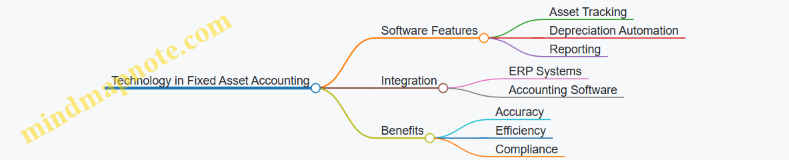
Ensure Regulatory Compliance and Transparent Reporting
- Adhere to IFRS, GAAP, and local tax regulations.
- Provide clear disclosures in financial statements.
- Prepare for audits with comprehensive documentation.
Example: A manufacturing firm discloses its fixed asset valuation methods, depreciation policies, and impairment losses in the notes to financial statements.
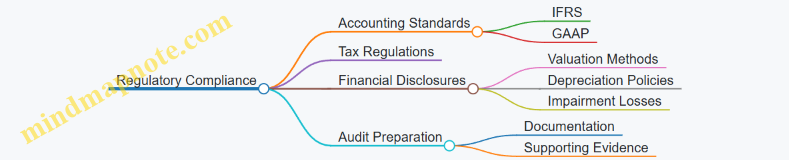
Summary
By following these best practices, accountants and financial controllers can ensure accurate fixed asset accounting that supports reliable financial reporting, regulatory compliance, and effective asset management. The integration of clear policies, consistent methods, technology, and regular reviews forms the foundation of excellence in fixed asset accounting.
13.2 Emerging Technologies Impacting Fixed Asset Management
In the evolving landscape of fixed asset accounting, emerging technologies are revolutionizing how organizations manage, track, and optimize their fixed assets. These innovations not only enhance accuracy and efficiency but also provide deeper insights for strategic decision-making. Below, we explore key technologies transforming fixed asset management, supported by mind maps and practical examples.
Internet of Things (IoT) in Fixed Asset Management
IoT devices enable real-time monitoring and tracking of assets through sensors and connectivity. This technology is especially valuable in manufacturing, where machinery uptime and condition are critical.
Example: A manufacturing plant installs IoT sensors on critical machines to monitor vibration and temperature. When abnormal readings are detected, maintenance is scheduled proactively, reducing downtime and extending asset life.
Artificial Intelligence (AI) and Machine Learning (ML)
AI and ML algorithms analyze vast amounts of asset data to predict depreciation trends, optimize maintenance schedules, and detect anomalies.
Example: A financial controller uses AI-powered software to forecast the residual value of manufacturing equipment based on usage patterns and market conditions, enabling more accurate financial reporting.
Blockchain for Asset Provenance and Security
Blockchain technology provides a secure, immutable ledger for recording asset ownership, transfers, and maintenance history.
Example: A manufacturing firm uses blockchain to track the lifecycle of high-value equipment, ensuring transparent ownership and maintenance records that simplify audits and compliance.
Augmented Reality (AR) and Virtual Reality (VR)
AR and VR technologies assist in asset inspection, training, and maintenance by overlaying digital information onto physical assets.
Example: Maintenance teams use AR glasses to visualize machine schematics and receive step-by-step repair instructions while working on-site, reducing errors and training time.
Cloud Computing and SaaS Solutions
Cloud-based fixed asset management systems offer scalability, accessibility, and integration with other enterprise systems.
Example: A financial controller implements a cloud-based fixed asset software that integrates with the company’s ERP, enabling seamless depreciation calculations and real-time asset tracking across multiple manufacturing sites.
Robotics and Automation
Robotic Process Automation (RPA) streamlines repetitive tasks such as data entry, asset tagging, and report generation.
Example: An accounting team uses RPA bots to automatically update fixed asset registers when new equipment invoices are received, reducing manual errors and saving time.
Summary Mind Map
Final Thoughts
For accountants and financial controllers in manufacturing and finance sectors, embracing these emerging technologies can significantly enhance fixed asset management. From improving accuracy and compliance to enabling predictive insights and operational efficiency, these tools are becoming indispensable in modern accounting practices.
Actionable Tip: Start by assessing your current fixed asset processes and identify areas where technology can automate manual tasks or provide better data insights. Pilot small projects with IoT sensors or cloud-based software before scaling up for maximum impact.
13.3 Preparing for Changes in Accounting Standards
As accounting standards evolve, staying ahead of changes is critical for accountants and financial controllers managing fixed asset accounting. Preparing effectively ensures compliance, minimizes disruption, and leverages new opportunities for improved reporting.
Understanding the Importance of Staying Updated
- Accounting standards such as IFRS and GAAP regularly update fixed asset guidelines.
- Changes may affect asset recognition, depreciation methods, impairment testing, disclosures, and more.
- Early preparation helps avoid restatements, audit issues, and financial misstatements.
Steps to Prepare for Changes in Accounting Standards
Example: Transition to IFRS 16 Lease Accounting Impacting Fixed Assets
Scenario: A manufacturing company leases production equipment previously off-balance-sheet.
Change: IFRS 16 requires recognizing most leases on the balance sheet as right-of-use assets and lease liabilities.
Preparation Steps:
- Awareness: Finance team reviews IFRS 16 guidance and deadlines.
- Training: Conducted sessions explaining recognition, measurement, and disclosures.
- Impact Analysis: Identified leased equipment now classified as fixed assets, affecting depreciation and asset registers.
- System Updates: Configured ERP system to track right-of-use assets and calculate depreciation.
- Communication: Informed management and auditors about the expected balance sheet changes.
- Documentation: Updated fixed asset policy to include right-of-use assets and lease accounting procedures.
Outcome: Smooth transition with accurate financial reporting and compliance.
Example: Changes in Componentization Requirements
Scenario: New standards require componentization of fixed assets where significant parts have different useful lives.
Preparation Steps:
- Awareness: Accounting team studies updated componentization rules.
- Training: Workshops on identifying components and allocating costs.
- Impact Analysis: Reviewed manufacturing plant assets to identify components (e.g., HVAC systems, conveyor belts).
- System Updates: Modified asset registers to track components separately.
- Communication: Updated internal stakeholders on changes in depreciation calculations.
- Documentation: Revised fixed asset accounting manuals to reflect componentization.
Outcome: Enhanced accuracy in depreciation expense and asset valuation.
Tips for Effective Preparation
- Establish a Change Management Team: Assign dedicated personnel to monitor and implement accounting standard changes.
- Leverage Technology: Use accounting software that supports flexible configuration to adapt to new standards.
- Engage External Advisors: Consult auditors or accounting experts for complex changes.
- Regularly Review Policies: Keep fixed asset accounting policies updated to reflect current standards.
- Pilot Testing: Before full implementation, run parallel accounting processes to identify issues.
Summary Mind Map
By proactively preparing for changes in accounting standards, accountants and financial controllers can ensure their fixed asset accounting remains accurate, compliant, and aligned with best practices, ultimately supporting sound financial management and reporting.
13.4 Final Example: Leveraging Data Analytics for Fixed Asset Optimization
In today’s data-driven world, leveraging data analytics for fixed asset optimization is becoming a critical best practice for accountants and financial controllers, especially within the finance and manufacturing sectors. Data analytics enables organizations to gain deeper insights into asset utilization, maintenance needs, lifecycle costs, and depreciation patterns, ultimately driving better decision-making and cost savings.
What is Fixed Asset Optimization?
Fixed asset optimization refers to the process of using data and analytics tools to maximize the value and efficiency of fixed assets throughout their lifecycle—from acquisition to disposal.
Why Use Data Analytics for Fixed Asset Management?
- Improved Asset Utilization: Identify underused or idle assets to redeploy or dispose of them.
- Predictive Maintenance: Use historical data to forecast when maintenance is needed, reducing downtime.
- Accurate Depreciation Forecasting: Analyze usage patterns to refine depreciation schedules.
- Cost Reduction: Detect unnecessary expenditures on repairs or premature replacements.
- Compliance and Risk Management: Ensure assets meet regulatory requirements through data-driven audits.
Mind Map: Key Areas of Fixed Asset Optimization Using Data Analytics
Practical Example: Using Data Analytics in a Manufacturing Plant
Scenario: A manufacturing company has a fleet of CNC machines as fixed assets. The financial controller wants to optimize asset usage and reduce maintenance costs.
Step 1: Data Collection
- Collect machine usage logs (hours operated per day).
- Gather maintenance records (dates, types of repairs, costs).
- Record downtime incidents and reasons.
Step 2: Data Analysis
- Use analytics software to identify patterns of frequent breakdowns.
- Detect machines with low utilization rates.
- Forecast upcoming maintenance needs based on historical trends.
Step 3: Insights and Actions
- Machines with low utilization are scheduled for redeployment or sale.
- Predictive maintenance schedules are created to service machines before failures occur.
- Depreciation schedules are adjusted to reflect actual usage rather than estimated life.
Step 4: Financial Impact
- Reduced unplanned downtime increases production efficiency.
- Maintenance costs decrease by avoiding emergency repairs.
- Improved accuracy in asset valuation and depreciation enhances financial reporting.
Mind Map: Analytics Workflow for Fixed Asset Optimization
Example: Dashboard Metrics for Fixed Asset Optimization
| Metric | Description | Benefit |
|---|---|---|
| Asset Utilization Rate | Percentage of time asset is actively used | Identifies underused assets |
| Mean Time Between Failures | Average operational time between failures | Helps schedule predictive maintenance |
| Maintenance Cost per Asset | Total maintenance cost divided by asset count | Controls repair expenses |
| Depreciation Accuracy | Variance between estimated and actual depreciation | Improves financial forecasting |
| Downtime Frequency | Number of downtime events in a period | Reduces production interruptions |
Summary
Leveraging data analytics for fixed asset optimization empowers accountants and financial controllers to make informed decisions that enhance asset performance, reduce costs, and improve compliance. By integrating data-driven insights into fixed asset accounting processes, organizations in finance and manufacturing can unlock significant operational and financial benefits.
Actionable Tip: Start by implementing a pilot project focusing on one asset category, collect relevant data, and use simple analytics tools to generate actionable insights. Gradually scale this approach across all fixed assets for comprehensive optimization.
13.5 Recommendations for Accountants and Financial Controllers
Fixed asset accounting is a critical area that requires precision, consistency, and strategic oversight. To excel in managing fixed assets within finance and manufacturing sectors, accountants and financial controllers should adopt the following recommendations, supported by practical examples and mind maps for clarity.
Establish and Maintain a Robust Fixed Asset Policy
A clear, well-documented fixed asset policy ensures consistency in asset recognition, capitalization, depreciation, and disposal.
- Define capitalization thresholds clearly.
- Specify depreciation methods and useful lives by asset category.
- Outline procedures for asset acquisition, maintenance, and disposal.
Example: A manufacturing company sets a capitalization threshold of $5,000. Any equipment costing below this is expensed immediately, preventing unnecessary capitalization of minor items.

Leverage Technology for Asset Tracking and Reporting
Utilize fixed asset management software integrated with your ERP system to automate tracking, depreciation calculations, and reporting.
- Use barcode or RFID tagging for physical verification.
- Automate depreciation schedules to reduce errors.
- Generate real-time reports for better decision-making.
Example: A financial controller implements an RFID system in the manufacturing plant, reducing asset misplacement and improving audit readiness.
Conduct Regular Physical Asset Verification
Regular physical counts and reconciliation with accounting records help identify discrepancies such as missing or obsolete assets.
- Schedule periodic inventory checks.
- Investigate and document variances.
- Adjust records promptly to maintain accuracy.
Example: During a quarterly verification, a financial controller discovers several obsolete machines that are no longer in use but still recorded as active assets, prompting timely write-offs.
Ensure Compliance with Accounting Standards and Tax Regulations
Stay updated with IFRS, GAAP, and local tax laws affecting fixed asset accounting.
- Regularly train accounting staff on changes.
- Review asset accounting policies for compliance.
- Prepare accurate disclosures for audits.
Example: A manufacturing firm updates its depreciation policy to comply with new IFRS standards, ensuring transparent financial reporting.

Implement Component Accounting for Complex Assets
Break down large assets into components with different useful lives and depreciation methods for more accurate accounting.
- Identify major components.
- Assign appropriate depreciation.
- Track components separately.
Example: A manufacturing line is divided into conveyor belts, motors, and control systems, each depreciated over different periods reflecting their actual usage.
Monitor Asset Impairment and Revaluation Regularly
Regularly assess assets for impairment or need for revaluation to reflect true value on financial statements.
- Schedule impairment reviews annually or when triggering events occur.
- Document rationale and calculations.
- Adjust asset values and depreciation accordingly.
Example: After a technological upgrade, a financial controller assesses older equipment for impairment and records a loss, improving financial accuracy.
Foster Cross-Department Collaboration
Work closely with procurement, operations, and IT departments to ensure accurate asset data and lifecycle management.
- Coordinate on asset acquisitions and disposals.
- Share information on asset usage and condition.
- Align on maintenance and upgrade schedules.
Example: The finance team collaborates with operations to track machine usage hours, enabling units-of-production depreciation.
Summary Table of Recommendations
| Recommendation | Key Actions | Example Scenario |
|---|---|---|
| Fixed Asset Policy | Define thresholds, depreciation rules | Manufacturing company sets $5,000 threshold |
| Technology Adoption | Use RFID, automate depreciation | RFID tagging reduces asset loss |
| Physical Verification | Regular counts, reconcile records | Quarterly check identifies obsolete machines |
| Compliance | Update policies, train staff | IFRS update leads to policy revision |
| Component Accounting | Break down assets, assign depreciation | Separate depreciation for production line parts |
| Impairment & Revaluation | Annual reviews, document adjustments | Impairment recorded after tech upgrade |
| Cross-Department Collaboration | Coordinate acquisition and usage data | Finance and operations track machine hours |
By integrating these recommendations into daily practices, accountants and financial controllers can enhance accuracy, compliance, and operational efficiency in fixed asset accounting, ultimately supporting better financial decision-making in the finance and manufacturing sectors.