Ethical Accounting Practices
1. Introduction to Ethical Accounting
1.1 Understanding Ethics in Accounting: Definitions and Importance
Ethics in accounting refers to the moral principles and standards that guide the behavior and decision-making processes of accounting professionals. These principles ensure that accountants act with honesty, integrity, and fairness, maintaining public trust and upholding the reputation of the profession.
What is Ethics in Accounting?
- Definition: Ethics in accounting is the application of ethical principles to the practice of accounting, encompassing honesty, transparency, objectivity, and responsibility.
- Purpose: To ensure that financial information is reported accurately and truthfully, enabling stakeholders to make informed decisions.
Why is Ethics Important in Accounting?
- Maintains Public Trust: Ethical accounting practices build confidence among investors, regulators, and the public.
- Prevents Fraud and Misconduct: Upholding ethics helps deter fraudulent activities and financial manipulation.
- Ensures Compliance: Ethical behavior aligns with legal and regulatory requirements.
- Supports Decision-Making: Reliable financial data aids management and policymakers.
Mind Map: Core Concepts of Ethics in Accounting
Examples Illustrating Ethics in Accounting
-
Honest Financial Reporting:
- An accountant discovers a small error in the financial statements that would slightly reduce the reported profit. Instead of ignoring it, they correct the mistake and disclose it transparently.
-
Avoiding Conflict of Interest:
- A compliance officer is offered a gift by a vendor seeking a contract. The officer declines the gift to maintain impartiality and reports the incident to their supervisor.
-
Confidentiality in Practice:
- An auditor working on a government contract keeps all financial data secure and does not share any information outside authorized personnel.
-
Professional Competence:
- An accountant regularly attends workshops on new tax laws to ensure accurate and up-to-date financial advice.
Mind Map: Importance of Ethics in Accounting
Real-World Example: The Enron Scandal
Enron’s collapse in 2001 is a classic example of unethical accounting practices. The company used complex accounting tricks to hide debt and inflate profits, misleading investors and regulators. This scandal highlighted the critical need for ethical standards and led to the enactment of the Sarbanes-Oxley Act to improve corporate governance and accountability.
Summary
Understanding ethics in accounting is fundamental for all professionals in finance and government sectors. It ensures that financial information is truthful, reliable, and compliant with laws, thereby protecting the interests of all stakeholders and maintaining the integrity of the profession.
1.2 Historical Overview of Ethical Standards in Accounting
Ethical standards in accounting have evolved significantly over centuries, shaped by economic developments, regulatory changes, and societal expectations. Understanding this history helps professionals appreciate the foundation upon which current ethical frameworks are built.
Early Accounting and Ethics
- Ancient Civilizations: Accounting records date back to Mesopotamia (~3000 BC), where merchants and temple officials kept clay tablets to track transactions. Ethical considerations were implicit, focusing on honesty to maintain trust.
- Example: In ancient Egypt, scribes were highly respected for their accuracy and integrity in recording grain supplies, reflecting early recognition of ethical responsibility.
The Birth of Double-Entry Bookkeeping
- 15th Century Renaissance: Luca Pacioli, known as the “Father of Accounting,” published Summa de Arithmetica in 1494, describing double-entry bookkeeping.
- Ethical Impact: This system introduced transparency and accountability by requiring balanced records, reducing opportunities for fraud.
- Example: Venetian merchants adopted double-entry bookkeeping to ensure fair trade practices and accurate tax reporting.
Industrial Revolution and Professionalization
- 19th Century: Rapid industrial growth increased business complexity, necessitating formal accounting practices.
- Emergence of Professional Bodies: Organizations like the Institute of Chartered Accountants in England and Wales (ICAEW, 1880) established codes of conduct.
- Example: The AICPA (American Institute of Certified Public Accountants), founded in 1887, introduced ethical guidelines emphasizing objectivity and independence.
20th Century: Regulatory Responses and Ethical Codification
- Great Depression Impact: The stock market crash of 1929 exposed widespread accounting fraud, leading to regulatory reforms.
- Key Legislation: The U.S. Securities Act (1933) and Securities Exchange Act (1934) mandated truthful financial disclosures.
- Establishment of GAAP: Generally Accepted Accounting Principles standardized ethical financial reporting.
- Example: The Enron scandal (early 2000s) led to the Sarbanes-Oxley Act (2002), strengthening auditor independence and ethical accountability.
Modern Ethical Frameworks and Globalization
- International Standards: The rise of IFRS (International Financial Reporting Standards) promotes global consistency and ethical transparency.
- Ethical Codes: The International Ethics Standards Board for Accountants (IESBA) issues the Code of Ethics for Professional Accountants.
- Example: Government accountants in multinational agencies adhere to both local regulations and international ethical standards to ensure compliance and public trust.
Summary
The historical evolution of ethical standards in accounting reflects a continuous effort to enhance transparency, accountability, and trustworthiness. From ancient record-keeping to modern global frameworks, ethical principles remain central to the profession’s integrity.
Quick Reference Mind Map: Historical Evolution of Ethical Standards
This historical perspective equips accountants, auditors, and compliance officers with a deeper understanding of why ethical standards exist and how they continue to evolve in response to new challenges.
1.3 The Role of Accountants, Auditors, and Compliance Officers in Upholding Ethics
Ethics form the backbone of trust and credibility in the finance and government sectors. Accountants, auditors, and compliance officers each play a pivotal role in maintaining ethical standards, ensuring transparency, and safeguarding public and stakeholder interests. This section explores their responsibilities, challenges, and best practices through detailed explanations, mind maps, and real-world examples.
The Role of Accountants
Accountants are responsible for preparing accurate financial records, ensuring compliance with accounting standards, and providing transparent financial information. Their ethical duties include:
- Maintaining integrity by reporting truthful financial data.
- Avoiding manipulation or misrepresentation of figures.
- Protecting confidential client or organizational information.
- Staying updated with regulatory changes and ethical guidelines.
Example: An accountant in a government agency discovers a misclassification of expenses that inflates the budget. Upholding ethics, they report the discrepancy to their supervisor instead of ignoring it to avoid conflict.
The Role of Auditors
Auditors provide an independent assessment of financial statements and internal controls. Their ethical responsibilities include:
- Maintaining independence and objectivity to avoid conflicts of interest.
- Exercising professional skepticism to detect errors or fraud.
- Reporting findings honestly and without bias.
- Ensuring confidentiality of sensitive information.
Example: An external auditor auditing a public sector entity uncovers irregular procurement practices. Despite pressure from management, the auditor reports the findings transparently in the audit report.
The Role of Compliance Officers
Compliance officers ensure that organizations adhere to laws, regulations, and internal policies. Their ethical roles include:
- Designing and implementing compliance programs.
- Monitoring adherence to regulatory requirements.
- Investigating potential breaches or unethical behavior.
- Promoting an ethical culture through training and communication.
Example: A compliance officer in a financial institution identifies a pattern of suspicious transactions potentially linked to money laundering. They initiate an internal investigation and report to regulatory authorities as required.
Mind Map: Ethical Responsibilities of Key Roles
Mind Map: Challenges Faced in Upholding Ethics
Integrated Example Scenario
Scenario: A government accountant notices that a department is underreporting liabilities to present a healthier financial position. The auditor assigned to review the department’s accounts suspects irregularities but faces pressure from senior officials to overlook them. The compliance officer receives an anonymous tip about the issue.
Ethical Actions Taken:
- The accountant documents and reports the issue through proper channels.
- The auditor maintains independence, performs a thorough audit, and reports findings honestly.
- The compliance officer initiates an investigation and ensures regulatory bodies are informed.
This collaboration among roles exemplifies how ethical practices protect organizational integrity.
Best Practices for Upholding Ethics
- Clear Communication: Regular dialogue between accountants, auditors, and compliance officers to share concerns and updates.
- Training & Awareness: Continuous ethics training tailored to each role.
- Whistleblower Protections: Establishing safe channels for reporting unethical behavior.
- Leadership Support: Ethical tone set by senior management encourages adherence.
In conclusion, accountants, auditors, and compliance officers collectively uphold the ethical framework essential for trustworthy financial management. Their distinct but complementary roles ensure that organizations in finance and government sectors operate with transparency, accountability, and integrity.
1.4 Common Ethical Dilemmas in Finance and Government Sectors
Ethical dilemmas in finance and government sectors often arise when professionals face conflicting interests, pressures, or ambiguous situations that challenge their integrity and professional responsibilities. Understanding these dilemmas is crucial for accountants, auditors, and compliance officers to navigate complex scenarios while upholding ethical standards.
Key Ethical Dilemmas Mind Map
Conflict of Interest
A conflict of interest occurs when personal interests interfere with professional duties. For example, an auditor in a government agency may have a family member bidding on a contract they are auditing.
Example:
- An accountant is asked to approve expenses for a vendor owned by a close friend. Ethical practice requires disclosure and recusal to avoid bias.
Financial Misreporting
Pressure to present favorable financial results can tempt professionals to manipulate earnings or hide liabilities.
Example:
- A government department under budget constraints may be tempted to defer expenses to the next fiscal year to appear financially healthier. Ethical accounting demands accurate and transparent reporting regardless of external pressures.
Confidentiality Breaches
Handling sensitive financial data requires strict confidentiality. Sharing insider information or unauthorized disclosure can lead to legal and ethical violations.
Example:
- An auditor accidentally shares draft audit findings with a third party before official release, compromising the integrity of the audit process.
Pressure to Compromise Ethics
Accountants and auditors may face pressure from management or political figures to alter reports or overlook discrepancies.
Example:
- A compliance officer is urged by senior officials to ignore irregularities in a government grant allocation. Ethical practice involves resisting such pressure and reporting the issue appropriately.
Fraud Detection and Reporting
Identifying and reporting fraud can be risky, especially in environments where whistleblowers face retaliation.
Example:
- An auditor discovers embezzlement in a public agency but fears job loss if they report it. Ethical guidelines encourage protection of whistleblowers and transparent reporting.
Resource Misallocation
Misuse or favoritism in allocating government resources can undermine public trust.
Example:
- A compliance officer notices that contracts are consistently awarded to companies linked to certain officials without competitive bidding. Ethical responsibility includes investigating and escalating such concerns.
Integrated Example Scenario
Scenario: A government accountant is asked by their manager to adjust financial statements to meet budget targets. The accountant discovers that a close relative’s company is involved in a contract under review.
- Ethical steps include:
- Refusing to manipulate financial data.
- Disclosing the family relationship to avoid conflict of interest.
- Reporting any undue pressure from management.
By recognizing these common dilemmas and applying ethical principles such as integrity, objectivity, and transparency, finance and government professionals can maintain trust and accountability in their roles.
1.5 Case Study: The Impact of Ethical Failures on Organizations
Ethical failures in accounting can have profound and far-reaching consequences on organizations, affecting their financial stability, reputation, legal standing, and stakeholder trust. This section explores a detailed case study illustrating these impacts, supported by mind maps and real-world examples to enhance understanding.
Case Study Overview: Enron Corporation
Enron, once a giant in the energy sector, collapsed spectacularly in 2001 due to widespread unethical accounting practices. The company used complex financial structures and off-balance-sheet entities to hide debt and inflate profits, misleading investors and regulators.
Mind Map: Ethical Failures at Enron
Impact Analysis
-
Financial Impact
- Stock price plummeted from $90 to less than $1 within months.
- Bankruptcy filing wiped out $63 billion in market value.
-
Legal Consequences
- Executives faced criminal charges and imprisonment.
- Arthur Andersen, the auditing firm, was convicted of obstruction of justice, leading to its collapse.
-
Reputational Damage
- Loss of investor confidence in Enron and the broader market.
- Increased scrutiny on accounting firms and corporate governance.
-
Regulatory Reforms
- Sarbanes-Oxley Act (2002) introduced to enhance corporate accountability and auditing standards.
Mind Map: Consequences of Ethical Failures
Additional Examples of Ethical Failures
- WorldCom (2002): Inflated assets by $11 billion through fraudulent accounting, leading to bankruptcy and regulatory reforms.
- Lehman Brothers (2008): Used accounting tricks like Repo 105 transactions to temporarily remove debt from balance sheets, contributing to the financial crisis.
Lessons Learned and Best Practices
- Transparency: Always provide clear, accurate, and complete financial information.
- Internal Controls: Implement robust systems to detect and prevent unethical practices.
- Whistleblower Protections: Encourage reporting of unethical behavior without fear of retaliation.
- Ethical Leadership: Promote a culture where ethical behavior is valued and rewarded.
Mind Map: Best Practices to Prevent Ethical Failures
This case study underscores the critical importance of ethical accounting practices. The Enron scandal serves as a cautionary tale for accountants, auditors, and compliance officers in finance and government sectors, emphasizing that ethical lapses can lead to catastrophic organizational consequences.
By integrating these lessons and best practices into daily operations, professionals can safeguard their organizations against similar failures and foster long-term trust and sustainability.
2. Core Principles of Ethical Accounting
2.1 Integrity: Building Trust through Honest Reporting
Integrity is the cornerstone of ethical accounting. It refers to the unwavering commitment to honesty, transparency, and fairness in all financial reporting and decision-making processes. For accountants, auditors, and compliance officers, integrity builds trust with stakeholders, including clients, regulators, and the public.
Why Integrity Matters in Accounting
- Trustworthiness: Stakeholders rely on accurate financial information to make informed decisions.
- Reputation: Organizations with a reputation for integrity attract investors and maintain long-term success.
- Legal Compliance: Honest reporting helps avoid legal penalties and regulatory sanctions.
- Ethical Responsibility: Upholding moral principles strengthens the profession’s credibility.
Mind Map: Components of Integrity in Accounting
Best Practices for Demonstrating Integrity
-
Accurate Data Entry: Always record financial transactions as they occur without alteration.
-
Full Disclosure: Disclose all relevant information, including potential risks and liabilities.
-
Avoiding Misrepresentation: Never manipulate numbers to present a misleading financial position.
-
Adherence to Standards: Follow GAAP, IFRS, or other relevant frameworks consistently.
-
Prompt Correction: When errors are discovered, correct them immediately and transparently.
-
Ethical Communication: Communicate financial information clearly and honestly to all stakeholders.
Mind Map: Best Practices to Uphold Integrity
Real-World Examples
Example 1: Honest Reporting in Government Budgeting
A government accountant preparing the annual budget discovers that projected revenues are overstated due to optimistic assumptions. Instead of adjusting figures to meet political expectations, the accountant reports the realistic numbers, explaining the risks involved. This honesty allows policymakers to make informed decisions and avoid future budget shortfalls.
Example 2: Corporate Auditor Detecting Manipulation
An external auditor notices that a company has been deferring expenses to inflate profits temporarily. The auditor insists on reporting this manipulation in the audit findings, despite pressure from management. This action preserves the integrity of the financial statements and protects investors.
Example 3: Compliance Officer Addressing Conflict of Interest
A compliance officer identifies that a senior accountant has a personal interest in a vendor contract. The officer ensures full disclosure and recusal from related decisions, maintaining transparency and trust.
Summary
Integrity in accounting is not just about following rules; it is about fostering an environment where honesty and transparency guide every financial action. By embracing integrity, finance and government professionals build lasting trust, uphold their professional responsibilities, and contribute to the ethical foundation of their organizations.
2.2 Objectivity: Avoiding Conflicts of Interest with Practical Examples
Objectivity is a cornerstone of ethical accounting practices. It requires accountants, auditors, and compliance officers to remain impartial and free from bias, conflicts of interest, or undue influence that could compromise their professional judgment.
Understanding Objectivity
Objectivity means making decisions based on facts and evidence rather than personal feelings, relationships, or external pressures. It ensures that financial information is reliable and trustworthy.
Why Objectivity Matters
- Maintains public trust in financial reporting.
- Ensures compliance with laws and regulations.
- Prevents manipulation or misrepresentation of financial data.
- Supports fair and transparent decision-making.
Mind Map: Key Elements of Objectivity
Identifying Conflicts of Interest
A conflict of interest occurs when personal interests or relationships interfere with professional duties. Recognizing these conflicts early is essential to maintain objectivity.
Common Types of Conflicts:
- Financial interests (e.g., owning shares in a client company)
- Family or close relationships with clients or vendors
- Personal gain from decisions made in a professional capacity
- Dual roles that may influence impartiality
Mind Map: Sources of Conflicts of Interest
Practical Examples of Maintaining Objectivity
Example 1: Auditor Independence
An auditor is assigned to review the financial statements of a company where their sibling works in the finance department. To maintain objectivity, the auditor discloses this relationship to their firm and recuses themselves from the audit engagement to avoid any perceived or actual bias.
Example 2: Avoiding Financial Conflicts
A compliance officer holds stock in a vendor company under review for a government contract. Recognizing the conflict, the officer divests the stock before participating in any evaluation or decision-making related to that vendor.
Example 3: Transparency in Reporting
An accountant discovers a minor error in the financial report that could benefit their department’s budget. Despite pressure to overlook it, the accountant reports the error transparently, ensuring the financial statements remain accurate and unbiased.
Steps to Avoid Conflicts of Interest and Maintain Objectivity
- Disclosure: Always disclose any potential conflicts to supervisors or relevant authorities.
- Recusal: Step away from decisions or audits where impartiality is compromised.
- Segregation of Duties: Ensure roles and responsibilities are clearly separated to reduce undue influence.
- Documentation: Keep detailed records of decisions and disclosures.
- Continuous Training: Engage in ethics training to recognize and manage conflicts effectively.
Mind Map: Strategies to Maintain Objectivity
Summary
Objectivity is vital for ethical accounting. By recognizing conflicts of interest and applying practical strategies such as disclosure, recusal, and transparent reporting, finance and government professionals can uphold the integrity of their work and foster trust in financial processes.
2.3 Professional Competence and Due Care: Maintaining Expertise and Vigilance
Professional competence and due care are foundational pillars of ethical accounting practice. They ensure that accountants, auditors, and compliance officers deliver services with the necessary skill, diligence, and attention to detail, safeguarding the integrity of financial information.
Understanding Professional Competence
Professional competence means possessing the knowledge, skills, and experience required to perform accounting tasks effectively and accurately. It involves continuous learning and adapting to new regulations, technologies, and industry standards.
Due Care Explained
Due care refers to the obligation to act diligently and responsibly, applying professional judgment to avoid errors, omissions, or negligence.
Mind Map: Components of Professional Competence and Due Care
Best Practices for Maintaining Professional Competence and Due Care
-
Regular Continuing Professional Education (CPE):
- Example: An auditor in a government agency attends quarterly workshops on the latest auditing standards and fraud detection techniques.
-
Staying Updated on Regulatory Changes:
- Example: A compliance officer subscribes to newsletters from regulatory bodies like the SEC and FASB to monitor updates.
-
Applying Professional Skepticism:
- Example: When reviewing financial statements, an accountant questions unusual transactions rather than accepting them at face value.
-
Documenting Work Thoroughly:
- Example: An auditor maintains detailed workpapers that explain the rationale behind audit conclusions, ensuring transparency and accountability.
-
Seeking Expert Advice When Needed:
- Example: A government accountant consults a tax specialist when handling complex tax regulations to ensure compliance.
Mind Map: Continuous Professional Development Cycle
Real-World Example: Maintaining Competence in a Government Finance Department
Scenario: Jane, a senior accountant in a municipal finance office, noticed new government regulations affecting grant accounting. To maintain her competence and due care, she:
- Enrolled in a specialized course on government grant accounting.
- Collaborated with colleagues to discuss practical implications.
- Updated internal financial reporting templates to align with new standards.
- Documented all changes and training activities.
Outcome: Jane’s proactive approach ensured accurate reporting, compliance with regulations, and avoided potential audit findings.
Vigilance: The Watchful Eye in Ethical Accounting
Vigilance involves being alert to risks, inconsistencies, or unethical behavior in financial processes.
Mind Map: Vigilance in Ethical Accounting
Example: Vigilance Preventing Fraud
An auditor noticed repeated last-minute adjustments to expense reports in a government department. By applying vigilance and professional skepticism, the auditor:
- Investigated the adjustments in detail.
- Discovered a pattern of unauthorized reimbursements.
- Reported findings to the ethics committee.
This early detection prevented further financial loss and reinforced the importance of due care.
Summary
Maintaining professional competence and due care requires a commitment to lifelong learning, meticulous attention to detail, and ethical vigilance. By integrating these practices, finance and government professionals uphold the trust placed in them and contribute to transparent, reliable financial management.
2.4 Confidentiality: Protecting Sensitive Financial Information
Confidentiality is a cornerstone of ethical accounting practices, especially within finance and government sectors where sensitive financial data is routinely handled. Protecting this information not only preserves trust but also ensures compliance with legal and regulatory requirements.
Why Confidentiality Matters
- Prevents unauthorized access to financial data.
- Protects individuals and organizations from fraud and identity theft.
- Maintains competitive advantage.
- Complies with laws such as GDPR, HIPAA (where applicable), and government-specific regulations.
Key Aspects of Confidentiality in Accounting
Best Practices for Protecting Sensitive Financial Information
-
Access Controls
- Limit access to sensitive data only to authorized personnel.
- Use role-based permissions.
-
Data Encryption
- Encrypt financial data both at rest and in transit.
- Example: Using AES-256 encryption for stored financial records.
-
Confidentiality Agreements
- Require employees, auditors, and third parties to sign NDAs.
- Example: Government contractors signing confidentiality clauses before accessing budget data.
-
Secure Communication Channels
- Use encrypted emails or secure portals for sharing sensitive information.
- Avoid sharing passwords or financial details over unsecured platforms.
-
Regular Training and Awareness Programs
- Educate staff on the importance of confidentiality and how to handle data securely.
- Example: Quarterly workshops on phishing awareness and data handling protocols.
-
Audit Trails and Monitoring
- Maintain logs of who accessed what data and when.
- Use monitoring tools to detect unusual access patterns.
Example Scenario: Protecting Confidential Budget Data in a Government Agency
A government accountant is preparing a confidential budget report that includes sensitive information about upcoming projects and funding allocations. To protect this information:
- The accountant stores the report on a secure, encrypted server with access restricted to the finance team.
- Before sharing the report with auditors, all parties sign confidentiality agreements.
- The report is transmitted using a secure government portal rather than email.
- Access logs are reviewed weekly to ensure no unauthorized access has occurred.
Mind Map: Confidentiality Challenges and Solutions
Additional Example: Ethical Handling of Client Financial Data by an Auditor
An external auditor working with a financial institution receives sensitive client data during an audit. To maintain confidentiality:
- The auditor stores all client files in encrypted folders on a password-protected device.
- Physical documents are locked in secure cabinets when not in use.
- The auditor refrains from discussing client information outside the audit team.
- Upon completion, all client data is securely deleted or returned as per agreements.
Summary
Confidentiality is vital for maintaining ethical standards in accounting. By implementing robust controls, educating personnel, and following legal requirements, accountants, auditors, and compliance officers can effectively protect sensitive financial information and uphold the trust placed in them.
2.5 Professional Behavior: Compliance with Laws and Regulations
Professional behavior in accounting is fundamentally about adhering to the laws, regulations, and ethical standards that govern the profession. Compliance ensures trust, transparency, and accountability, which are critical in both finance and government sectors. This section explores how accountants, auditors, and compliance officers can maintain professional behavior by strictly following legal and regulatory frameworks.
Understanding Professional Behavior in Accounting
Professional behavior means acting in a manner consistent with the reputation of the profession and the public interest. This includes:
- Following all applicable laws and regulations
- Avoiding actions that discredit the profession
- Reporting unethical or illegal activities
- Maintaining objectivity and integrity
Mind Map: Components of Professional Behavior
Key Laws and Regulations Accountants Must Comply With
- Tax Laws: Ensuring accurate tax reporting and timely payments.
- Financial Reporting Standards: Adhering to GAAP, IFRS, or other relevant frameworks.
- Anti-Money Laundering (AML) Regulations: Identifying and reporting suspicious transactions.
- Government Financial Regulations: Following public sector accounting standards and procurement laws.
Example 1: Compliance in Action — Timely Tax Reporting
An accountant in a government agency ensures all tax filings are completed before deadlines. When discovering a discrepancy in reported income, they promptly investigate and correct the error rather than ignoring it to avoid penalties. This behavior upholds legal compliance and maintains the agency’s credibility.
Mind Map: Steps to Ensure Compliance
Best Practices for Maintaining Professional Behavior
- Continuous Education: Regularly update knowledge on laws and regulations.
- Internal Policies: Develop and enforce clear compliance policies.
- Ethical Leadership: Promote a culture where ethical behavior is rewarded.
- Documentation: Keep detailed records to demonstrate compliance.
Example 2: Ethical Leadership in Compliance
A compliance officer in a finance department notices a manager pressuring staff to overlook minor regulatory breaches to meet deadlines. The officer escalates the issue to senior leadership and initiates training sessions emphasizing the importance of compliance, preventing potential legal consequences.
Consequences of Non-Compliance
- Legal penalties and fines
- Loss of professional licenses
- Damage to organizational reputation
- Increased risk of fraud and corruption
Mind Map: Consequences of Non-Compliance
Summary
Professional behavior through compliance with laws and regulations is the backbone of ethical accounting. Accountants, auditors, and compliance officers must actively engage in continuous learning, implement robust controls, and foster an ethical culture to uphold the integrity of their profession and protect the public interest.
3. Regulatory Frameworks and Ethical Standards
3.1 Overview of Key Regulatory Bodies: SEC, FASB, IASB, and Government Agencies
In the realm of ethical accounting, understanding the key regulatory bodies that establish and enforce standards is essential. These organizations ensure transparency, accuracy, and fairness in financial reporting, which is crucial for maintaining public trust, especially in the finance and government sectors.
Securities and Exchange Commission (SEC)
The SEC is a U.S. federal agency responsible for protecting investors, maintaining fair and efficient markets, and facilitating capital formation. It enforces securities laws and requires publicly traded companies to disclose financial and other significant information.
-
Role in Ethical Accounting:
- Enforces compliance with financial reporting standards.
- Investigates fraudulent activities and accounting irregularities.
- Requires timely and truthful disclosures.
-
Example:
- The SEC’s investigation into the Enron scandal revealed unethical accounting practices such as off-balance-sheet entities used to hide debt, leading to reforms like the Sarbanes-Oxley Act.
Financial Accounting Standards Board (FASB)
FASB is a private, independent organization that establishes Generally Accepted Accounting Principles (GAAP) in the United States.
-
Role in Ethical Accounting:
- Develops and updates accounting standards to ensure consistency and transparency.
- Provides guidance to accountants and auditors on ethical financial reporting.
-
Example:
- FASB’s guidance on revenue recognition helps prevent premature revenue reporting, an unethical practice that can mislead stakeholders.
International Accounting Standards Board (IASB)
IASB develops International Financial Reporting Standards (IFRS), which are used by many countries outside the U.S. to promote global consistency in accounting.
-
Role in Ethical Accounting:
- Promotes transparency and comparability of financial statements worldwide.
- Encourages ethical reporting by providing clear, principles-based standards.
-
Example:
- IASB’s IFRS 15 on revenue from contracts with customers ensures companies recognize revenue ethically and consistently across borders.
Government Agencies
Various government agencies oversee accounting and compliance in the public sector, ensuring ethical use of public funds.
-
Examples of Agencies:
- Government Accountability Office (GAO): Audits federal agencies to ensure proper financial management.
- Office of Management and Budget (OMB): Sets financial management policies for federal agencies.
- Internal Revenue Service (IRS): Enforces tax laws and ethical tax reporting.
-
Role in Ethical Accounting:
- Enforce compliance with government-specific accounting standards.
- Promote accountability and transparency in public sector finances.
-
Example:
- GAO’s audit of a government grant program uncovered misallocation of funds, leading to corrective actions and improved controls.
Mind Maps
Mind Map 1: Key Regulatory Bodies and Their Roles
Mind Map 2: Ethical Accounting Focus Areas by Regulatory Body
Mind Map 3: Examples of Ethical Issues Addressed
Summary
Understanding these regulatory bodies helps accountants, auditors, and compliance officers navigate the complex ethical landscape of financial reporting. By adhering to the standards and guidelines set forth by the SEC, FASB, IASB, and government agencies, professionals can ensure integrity, transparency, and accountability in their work.
This knowledge not only aids in compliance but also fosters a culture of ethical behavior that protects stakeholders and enhances public trust.
3.2 Understanding GAAP and IFRS Ethical Guidelines
Ethical guidelines embedded within accounting frameworks like GAAP (Generally Accepted Accounting Principles) and IFRS (International Financial Reporting Standards) are fundamental to ensuring transparency, accuracy, and fairness in financial reporting. Both frameworks emphasize principles that guide accountants and auditors to act with integrity, objectivity, and professional competence.
Overview of GAAP and IFRS Ethical Foundations
- GAAP is primarily used in the United States and is rule-based, providing detailed standards and procedures.
- IFRS is globally adopted and is principle-based, focusing on the spirit of the standards rather than prescriptive rules.
Despite differences, both frameworks share common ethical guidelines that promote trust and accountability.
Mind Map: Ethical Guidelines in GAAP and IFRS
Key Ethical Principles in GAAP
-
Transparency: Financial statements must clearly and honestly reflect the company’s financial position.
- Example: Disclosing all material liabilities, even if they might negatively impact the company’s valuation.
-
Consistency: Applying the same accounting methods period over period to allow comparability.
- Example: Using the same depreciation method for fixed assets year after year unless a justified change is disclosed.
-
Full Disclosure: All relevant financial information must be disclosed to stakeholders.
- Example: Reporting contingent liabilities that could affect future financial outcomes.
-
Objectivity: Financial data should be free from bias and supported by verifiable evidence.
- Example: Using independent appraisals for asset valuations rather than internal estimates.
-
Integrity: Avoiding manipulation or misrepresentation of financial information.
- Example: Not inflating revenue figures to meet earnings targets.
Key Ethical Principles in IFRS
-
Fair Presentation: Financial reports should faithfully represent the financial position and performance.
- Example: Presenting assets and liabilities based on their economic substance rather than just legal form.
-
Prudence: Exercising caution in judgments under conditions of uncertainty to avoid overstatement of assets or income.
- Example: Recognizing provisions for potential losses even if the timing or amount is uncertain.
-
Substance Over Form: Transactions should be accounted for according to their economic reality.
- Example: Leasing arrangements classified based on control and risks rather than just contract terms.
-
Neutrality: Avoiding bias in financial reporting.
- Example: Not manipulating estimates to achieve desired financial outcomes.
-
Completeness: All information necessary for users to understand the financial statements must be included.
- Example: Disclosing related party transactions fully.
Mind Map: Practical Examples of Ethical Application
Integrated Example: Applying GAAP and IFRS Ethical Guidelines
Scenario: A government agency is preparing its annual financial report.
- Under GAAP, the agency ensures full disclosure by reporting all outstanding debts and potential legal claims, even if they are not yet finalized.
- Under IFRS, the agency applies prudence by recognizing a provision for a possible environmental cleanup cost based on the best estimate, despite uncertainty in timing.
This approach ensures stakeholders receive a truthful and complete picture of the agency’s financial health, fostering trust and accountability.
Summary
Understanding and applying the ethical guidelines within GAAP and IFRS is crucial for accountants, auditors, and compliance officers. These principles not only ensure compliance with standards but also uphold the integrity and credibility of financial reporting, which is especially vital in finance and government sectors where public trust is paramount.
3.3 The Sarbanes-Oxley Act: Enhancing Accountability and Transparency
The Sarbanes-Oxley Act (SOX), enacted in 2002, represents one of the most significant legislative responses to corporate financial scandals such as Enron and WorldCom. Its primary goal is to enhance corporate accountability and transparency, particularly in publicly traded companies, but its principles have also influenced government financial practices and compliance frameworks.
Key Objectives of SOX
- Improve accuracy and reliability of corporate disclosures
- Strengthen internal controls over financial reporting
- Protect whistleblowers and encourage ethical behavior
- Increase penalties for fraudulent financial activity
Mind Map: Core Components of Sarbanes-Oxley Act
Best Practices for Compliance with SOX
-
Establish Robust Internal Controls
- Example: A government finance department implements automated reconciliation tools to ensure all transactions are accurately recorded and discrepancies flagged immediately.
-
CEO and CFO Certification
- Example: Before submitting quarterly reports, the CFO personally reviews and certifies the accuracy of all financial statements, ensuring accountability at the highest level.
-
Regular Internal and External Audits
- Example: An auditor conducts surprise audits of financial records in a government agency to detect any irregularities early.
-
Whistleblower Protection Programs
- Example: A compliance officer sets up an anonymous hotline for employees to report unethical accounting practices without fear of retaliation.
-
Documentation and Record Retention
- Example: Maintaining detailed audit trails for all financial transactions to facilitate transparency and future reviews.
Example Scenario: Applying SOX Principles in a Government Finance Office
A government finance office responsible for managing public funds adopts SOX-inspired controls to improve transparency. They implement a system where:
- The Chief Financial Officer signs off on monthly financial reports.
- An independent internal audit team reviews compliance quarterly.
- All financial transactions are logged with timestamps and user IDs.
- Employees are trained on ethical reporting and encouraged to report discrepancies.
This approach not only aligns with SOX principles but also builds public trust by demonstrating accountability.
Mind Map: Benefits of SOX Compliance
Challenges and Considerations
- Cost of Implementation: SOX compliance can be resource-intensive, especially for smaller organizations.
- Complexity of Controls: Designing effective controls without overburdening staff requires careful planning.
- Continuous Monitoring: Compliance is an ongoing process, necessitating regular updates and training.
Summary
The Sarbanes-Oxley Act has fundamentally reshaped the landscape of financial accountability and transparency. By embedding its principles into daily accounting and auditing practices, finance and government professionals can uphold ethical standards, protect stakeholders, and foster trust in financial reporting.
For accountants, auditors, and compliance officers, understanding and applying SOX principles is crucial not only for regulatory compliance but also for promoting an ethical culture within their organizations.
3.4 Government Compliance Requirements for Public Sector Accountants
Public sector accountants operate within a complex framework of compliance requirements designed to ensure transparency, accountability, and proper stewardship of public funds. Understanding and adhering to these requirements is critical for maintaining public trust and fulfilling legal obligations.
Key Government Compliance Areas for Public Sector Accountants
- Budgetary Compliance: Ensuring expenditures align with approved budgets.
- Financial Reporting Standards: Following government-specific accounting standards such as GASB (Governmental Accounting Standards Board) in the U.S.
- Audit Requirements: Preparing for and cooperating with internal and external audits.
- Regulatory Filings: Timely submission of financial statements and disclosures.
- Ethical Standards and Conflict of Interest Policies: Upholding integrity and transparency.
Mind Map: Government Compliance Requirements
Detailed Explanation and Examples
1. Budgetary Compliance
Public sector accountants must ensure that all expenditures are within the limits set by the approved budget. This involves continuous monitoring and reporting.
Example: A city government accountant notices that the transportation department is nearing its budget limit for the fiscal year. They flag this early, enabling department heads to adjust spending or request additional appropriations before overspending occurs.
2. Financial Reporting Standards
Unlike private sector accounting, public sector accounting often follows standards set by bodies like GASB. These standards emphasize fund accounting, which segregates resources according to their intended purposes.
Example: A state accountant prepares financial statements that clearly separate general funds from special revenue funds, ensuring stakeholders understand how taxpayer money is allocated.
3. Audit Requirements
Public sector entities are subject to rigorous audits to verify compliance and detect mismanagement.
Example: During an external audit, an auditor identifies that a municipal department failed to document several procurement transactions. The accountant works with the department to improve record-keeping and implements stronger controls.
4. Regulatory Filings
Timely and accurate submission of reports to oversight bodies is mandatory.
Example: A county accountant submits the annual financial report to the state auditor’s office ahead of the deadline, including all required disclosures about grants and liabilities.
5. Ethical Standards and Conflict of Interest Policies
Public sector accountants must adhere to strict ethical guidelines to avoid conflicts of interest and maintain public confidence.
Example: An accountant discloses that a family member is bidding on a government contract and recuses themselves from any related financial processing to avoid a conflict of interest.
Mind Map: Example Scenario - Ensuring Compliance in a Government Grant
Example: A public sector accountant managing a federal grant ensures that all expenditures are properly documented and reported according to grant conditions. They prepare interim financial reports and coordinate with auditors to verify compliance, preventing any misuse of funds.
Summary
Government compliance requirements for public sector accountants encompass a broad range of responsibilities, from budget adherence and specialized reporting standards to audit cooperation and ethical conduct. Mastery of these areas, supported by clear documentation and proactive communication, helps safeguard public resources and promotes trust in government financial management.
3.5 Example: Applying Regulatory Standards in Real-World Scenarios
Understanding and applying regulatory standards such as GAAP, IFRS, Sarbanes-Oxley (SOX), and government compliance requirements is critical for accountants, auditors, and compliance officers. Below, we explore practical examples and mind maps to illustrate how these standards are integrated into everyday accounting and auditing tasks.
Mind Map: Key Regulatory Standards and Their Applications
Example 1: Applying GAAP in Financial Statement Preparation
Scenario: A government agency is preparing its annual financial statements.
Application:
- The accountant ensures all revenues and expenses are recognized in the correct fiscal year, adhering to the revenue recognition and matching principles under GAAP.
- Depreciation of government assets is calculated using accepted methods (e.g., straight-line) and disclosed transparently.
- Notes to the financial statements include all required disclosures such as contingencies and commitments.
Outcome: The financial statements provide an accurate, transparent, and consistent view of the agency’s financial position, facilitating trust among stakeholders.
Mind Map: GAAP Application Steps
Example 2: Sarbanes-Oxley Compliance in Internal Controls
Scenario: A public sector entity implements SOX requirements to enhance financial controls.
Application:
- The compliance officer documents and tests internal controls over financial reporting.
- Segregation of duties is enforced to prevent fraud (e.g., separating authorization and record-keeping).
- Regular audits are conducted to verify control effectiveness.
Outcome: Improved accuracy and reliability of financial reports, reduced risk of fraud, and increased stakeholder confidence.
Mind Map: SOX Internal Control Components
Example 3: Government Compliance in Grant Reporting
Scenario: A government department receives federal grants and must comply with specific reporting standards.
Application:
- The accountant tracks grant expenditures separately to ensure funds are used according to grant terms.
- Reports are prepared following government guidelines, including detailed breakdowns of expenses.
- Auditors verify compliance with grant conditions during the annual audit.
Outcome: The department maintains eligibility for future funding and demonstrates accountability.
Mind Map: Government Grant Compliance Process
Summary
Applying regulatory standards in real-world scenarios requires a clear understanding of the rules and practical steps to integrate them into daily accounting and auditing processes. Using structured approaches like mind maps helps visualize the components and ensures comprehensive compliance. These examples demonstrate how ethical and regulatory adherence supports transparency, accountability, and trust in finance and government sectors.
4. Best Practices for Ethical Financial Reporting
4.1 Accurate and Transparent Financial Statements: Step-by-Step Guide
Financial statements are the cornerstone of trust and accountability in both finance and government sectors. Producing accurate and transparent financial statements ensures stakeholders can make informed decisions, supports regulatory compliance, and upholds ethical standards.
Step 1: Understand the Reporting Framework
- Familiarize yourself with the applicable accounting standards (e.g., GAAP, IFRS).
- Know the specific government regulations or sector-specific guidelines.
Example: A government accountant preparing a budget report must adhere to GASB (Governmental Accounting Standards Board) standards to ensure compliance.
Step 2: Collect Complete and Reliable Data
- Gather all relevant financial transactions and supporting documents.
- Ensure data sources are credible and verifiable.
Example: An auditor verifies invoices, contracts, and receipts before including expenses in the financial statement.
Step 3: Record Transactions Accurately
- Use double-entry bookkeeping to maintain balance.
- Avoid rounding errors and ensure correct classification of accounts.
Example: Recording a government grant as revenue in the correct fiscal year prevents misstatements.
Step 4: Reconcile Accounts Regularly
- Perform bank reconciliations and cross-check ledger balances.
- Identify and resolve discrepancies promptly.
Example: Monthly reconciliation of the petty cash account reveals an unrecorded withdrawal, which is then corrected.
Step 5: Prepare Financial Statements According to Standards
- Compile the balance sheet, income statement, cash flow statement, and notes.
- Present information clearly and consistently.
Example: A compliance officer ensures that the notes to financial statements disclose all significant accounting policies.
Step 6: Review and Verify for Completeness and Accuracy
- Conduct internal reviews and cross-departmental checks.
- Use checklists to ensure no items are omitted.
Example: An accounting team uses a pre-submission checklist to verify that all liabilities are recorded.
Step 7: Disclose Relevant Information Transparently
- Include all material information, assumptions, and potential risks.
- Avoid jargon; use clear language for stakeholders.
Example: Disclosing contingent liabilities related to pending litigation in government financial reports.
Step 8: Obtain Independent Audit or Review
- Engage external auditors to validate the statements.
- Address any findings or recommendations ethically.
Example: After an external audit, adjustments are made to correct revenue recognition errors.
Step 9: Approve and Publish Financial Statements
- Obtain necessary approvals from management or governing boards.
- Publish statements in accordance with regulatory timelines.
Example: A city council formally approves the annual financial report before public release.
Mind Map: Accurate and Transparent Financial Statements
Example Scenario: Preparing a Transparent Financial Statement for a Government Grant
Context: A government finance officer is preparing the annual financial statement for a public health grant.
- Step 1: Reviews GASB standards related to grant reporting.
- Step 2: Collects all expenditure receipts, contracts with vendors, and bank statements.
- Step 3: Records all transactions using double-entry bookkeeping, ensuring grant funds are classified separately.
- Step 4: Performs monthly reconciliations to confirm all expenses match bank withdrawals.
- Step 5: Prepares the financial statements, including detailed notes on grant conditions.
- Step 6: Conducts an internal review with the compliance team.
- Step 7: Discloses any pending grant adjustments or contingencies.
- Step 8: Submits the statements for external audit.
- Step 9: After approval, publishes the report on the government website for public transparency.
This step-by-step approach ensures the financial statement is both accurate and transparent, fostering trust among stakeholders.
By following these steps and integrating ethical best practices, accountants, auditors, and compliance officers can uphold the highest standards of financial reporting, essential for accountability and good governance.
4.2 Avoiding Earnings Management and Creative Accounting
Earnings management and creative accounting are practices that can distort the true financial performance of an organization. While they may sometimes be used to meet short-term targets or expectations, these practices undermine the integrity of financial reporting and can lead to severe legal and reputational consequences.
What is Earnings Management?
Earnings management involves the manipulation of financial records or transactions to present a desired picture of a company’s financial performance. This can be done through timing revenues and expenses, altering accounting policies, or using estimates and judgments to influence reported earnings.
What is Creative Accounting?
Creative accounting refers to the use of accounting techniques that comply with the letter of accounting standards but deviate from their spirit, often to mislead stakeholders. It involves exploiting loopholes or ambiguities in accounting rules to present a more favorable financial position.
Mind Map: Key Concepts in Earnings Management and Creative Accounting
Common Techniques and How to Avoid Them
| Technique | Description | Ethical Best Practice | Example |
|---|---|---|---|
| Revenue Recognition Timing | Recording revenue prematurely or delaying it | Recognize revenue only when earned and realizable | A government agency waits to recognize grant income until all conditions are met rather than at contract signing. |
| Expense Deferral | Postponing expenses to inflate current profits | Match expenses to the period they relate to | An auditor ensures that maintenance costs are recorded in the period incurred, not deferred to future periods. |
| Use of Estimates | Manipulating assumptions to alter financial outcomes | Use reasonable, supportable assumptions and disclose them | Compliance officer reviews allowance for doubtful accounts based on historical data, not optimistic assumptions. |
| Reserves Manipulation | Overstating or understating reserves to smooth earnings | Maintain reserves based on objective evidence | Accountants avoid creating excessive provisions to artificially reduce profits in good years. |
| Off-Balance Sheet Financing | Keeping liabilities off the balance sheet | Fully disclose all liabilities and commitments | Government financial reports include all lease obligations transparently. |
| Capitalizing Expenses | Recording expenses as assets to defer recognition | Expense costs in the period incurred unless capitalization criteria are met | An auditor ensures software development costs are capitalized only when criteria are satisfied. |
Example Scenario: Avoiding Earnings Management in a Government Budget Report
A city’s finance department is preparing its annual budget report. There is pressure to show a balanced budget to satisfy stakeholders. The temptation arises to defer certain expenses, such as infrastructure maintenance, to the next fiscal year to improve the current year’s results.
Ethical Approach:
- The accountants document all expenses in the period they are incurred.
- They provide transparent notes explaining any timing differences.
- The compliance officer reviews the report to ensure adherence to accounting standards.
Outcome:
- The report accurately reflects the city’s financial position.
- Stakeholders receive reliable information for decision-making.
- The organization maintains trust and avoids future audit issues.
Tips for Accountants, Auditors, and Compliance Officers
- Maintain Skepticism: Always question unusual fluctuations in earnings or financial ratios.
- Implement Robust Controls: Ensure internal controls detect and prevent manipulation.
- Promote Transparency: Encourage clear disclosures about accounting policies and estimates.
- Continuous Training: Stay updated on ethical standards and regulatory changes.
- Encourage Ethical Culture: Leadership should model and enforce ethical behavior.
By understanding and actively avoiding earnings management and creative accounting, finance professionals in both government and private sectors can uphold the highest standards of ethical accounting, ensuring that financial reports are truthful, transparent, and trustworthy.
4.3 Proper Documentation and Audit Trails: Practical Tips
Proper documentation and maintaining comprehensive audit trails are fundamental to ethical accounting practices. They ensure transparency, accountability, and facilitate accurate financial reporting and auditing. This section provides practical tips, mind maps, and examples to help accountants, auditors, and compliance officers implement effective documentation and audit trail procedures.
Why Proper Documentation and Audit Trails Matter
- Transparency: Clear records allow stakeholders to understand financial transactions.
- Accountability: Documentation holds individuals responsible for their actions.
- Compliance: Regulatory bodies require detailed records to verify accuracy.
- Fraud Prevention: Audit trails help detect and prevent fraudulent activities.
Practical Tips for Proper Documentation
-
Standardize Documentation Procedures
- Use consistent formats for invoices, receipts, and financial statements.
- Maintain checklists to ensure all necessary documents are collected.
-
Record Transactions Promptly and Accurately
- Enter data as soon as transactions occur to avoid errors.
- Double-check figures and supporting documents.
-
Maintain Chronological Order
- Organize documents by date to create a clear timeline.
- Use digital tools with timestamp features.
-
Ensure Completeness and Relevance
- Include all supporting documents such as contracts, approvals, and correspondence.
- Avoid extraneous information that may clutter records.
-
Secure Storage and Backup
- Store physical documents in locked cabinets.
- Use encrypted digital storage with regular backups.
-
Implement Access Controls
- Restrict document access to authorized personnel only.
- Track who accesses or modifies records.
-
Regularly Review and Update Documentation
- Conduct periodic audits of documentation quality.
- Update procedures based on regulatory changes or internal feedback.
Practical Tips for Maintaining Audit Trails
-
Automate Audit Trail Generation
- Use accounting software that automatically logs changes.
- Ensure logs capture user ID, timestamp, and nature of change.
-
Track All Changes and Approvals
- Document who approved transactions and when.
- Maintain records of edits, deletions, and additions.
-
Link Audit Trails to Source Documents
- Connect audit logs to original invoices, contracts, or emails.
-
Regularly Monitor Audit Trails
- Review logs for unusual activity or discrepancies.
- Use alerts for suspicious transactions.
-
Preserve Audit Trails for Required Periods
- Follow legal and regulatory retention requirements.
- Ensure easy retrieval during audits or investigations.
-
Train Staff on Importance and Use
- Educate employees on maintaining accurate audit trails.
- Promote ethical responsibility in documentation.
Mind Map: Proper Documentation Essentials
Mind Map: Effective Audit Trail Management
Examples
Example 1: Government Grant Accounting
- A compliance officer receives a grant disbursement request.
- Proper documentation includes the grant agreement, approval emails, and expenditure receipts.
- Each transaction is recorded immediately in the accounting system.
- The audit trail logs who entered the data, timestamps, and any changes.
- During an audit, all documents and logs are easily retrievable, demonstrating compliance and transparency.
Example 2: Expense Reporting in a Finance Department
- An employee submits an expense report with receipts.
- The accountant verifies receipts, enters data into the system, and attaches scanned copies.
- The system automatically records the user ID and time of entry.
- If corrections are needed, the audit trail shows who made changes and when.
- Access to these records is limited to finance managers and auditors.
Example 3: Handling an Error Discovered Post-Reporting
- An auditor finds a misclassified expense.
- The accountant corrects the entry, documenting the reason and approval.
- The audit trail records the correction details.
- This transparent process maintains trust and meets ethical standards.
By following these practical tips, leveraging technology, and fostering a culture of accountability, finance and government professionals can uphold the highest ethical standards through proper documentation and robust audit trails.
4.4 Handling Errors and Omissions Ethically
Errors and omissions in accounting can occur despite the best efforts of professionals. The ethical handling of these issues is critical to maintaining trust, transparency, and compliance with regulatory standards. This section explores best practices for identifying, correcting, and communicating errors and omissions in a timely and responsible manner.
Understanding Errors and Omissions
- Errors: Unintentional mistakes such as miscalculations, data entry errors, or incorrect application of accounting principles.
- Omissions: Failure to include necessary information or transactions in financial records.
Both can significantly impact financial statements and decision-making.
Ethical Principles in Handling Errors and Omissions
- Transparency: Disclose errors promptly and clearly.
- Accountability: Take responsibility for mistakes.
- Accuracy: Correct errors thoroughly to restore data integrity.
- Communication: Inform relevant stakeholders appropriately.
Step-by-Step Ethical Approach to Handling Errors and Omissions
Practical Examples
Example 1: Misstated Revenue Due to Data Entry Error
An auditor discovers that a government department recorded $500,000 in revenue twice due to a clerical error.
Ethical Handling:
- Immediately report the error to the finance manager.
- Reverse the duplicate entry with a clear audit trail.
- Document the correction and notify internal audit.
- Review controls to prevent recurrence.
Example 2: Omission of a Liability in Financial Statements
An accountant realizes that a pending legal settlement was not recorded as a liability.
Ethical Handling:
- Assess the materiality of the omission.
- Adjust the financial statements to include the liability.
- Disclose the correction in the notes to the financial statements.
- Communicate with compliance officers and external auditors.
Mind Map: Communication Channels for Error Reporting
Tips for Ethical Error Management
- Act Quickly: Delays can worsen the impact and damage credibility.
- Maintain Documentation: Keep detailed records of the error, investigation, and correction.
- Foster a No-Blame Culture: Encourage reporting errors without fear of punishment.
- Use Technology: Implement automated checks to catch errors early.
Summary
Handling errors and omissions ethically requires vigilance, transparency, and a commitment to correcting mistakes promptly. By following structured processes and fostering open communication, accountants, auditors, and compliance officers can uphold the integrity of financial reporting and maintain public trust.
4.5 Example: Ethical Reporting in Budget Preparation for Government Entities
Ethical reporting during budget preparation is critical for government entities to ensure transparency, accountability, and public trust. This section explores best practices and real-world examples that demonstrate how ethical principles are applied in the budgeting process.
Key Principles in Ethical Budget Reporting
- Transparency: Clearly disclose all assumptions, revenue projections, and expenditure plans.
- Accuracy: Use reliable data and avoid manipulation or optimistic bias.
- Accountability: Ensure all budget items are justified and aligned with legal and policy frameworks.
- Inclusiveness: Engage stakeholders and consider public input.
- Consistency: Follow established accounting standards and government regulations.
Mind Map: Ethical Budget Preparation Process
Practical Example: Ethical Reporting in Action
Scenario: A government finance department is preparing the annual budget for public infrastructure projects.
-
Revenue Projections:
- The team uses conservative estimates based on current tax revenues and economic trends rather than optimistic growth forecasts.
- They document all assumptions and provide sensitivity analysis showing the impact of revenue fluctuations.
-
Expenditure Justification:
- Each infrastructure project is evaluated on necessity, cost-effectiveness, and public benefit.
- Projects lacking clear justification or with inflated cost estimates are flagged for review.
-
Stakeholder Engagement:
- Public consultations are held to gather feedback on proposed projects.
- Feedback is incorporated and transparently reported in budget documents.
-
Audit and Compliance:
- An internal audit team reviews the budget for compliance with government accounting standards.
- Any discrepancies or ethical concerns are addressed before final approval.
-
Final Reporting:
- The budget report includes clear explanations of assumptions, risks, and contingency plans.
- Reports are made publicly available to promote accountability.
Mind Map: Common Ethical Pitfalls and How to Avoid Them
Summary
Ethical reporting in government budget preparation requires a commitment to transparency, accuracy, and accountability. By following best practices such as conservative revenue estimation, justified expenditures, stakeholder engagement, and rigorous audit processes, government entities can build trust and ensure responsible use of public funds. The examples and mind maps provided illustrate how these principles can be practically applied to create ethical, reliable budget reports.
5. Ethical Auditing Practices
5.1 Auditor Independence: Maintaining Objectivity in Practice
Auditor independence is a cornerstone of ethical auditing practices. It ensures that auditors remain unbiased and objective when evaluating financial statements, thereby maintaining public trust and the integrity of the auditing process. Without independence, the credibility of audit reports can be severely compromised, leading to misinformation and potential financial scandals.
What is Auditor Independence?
Auditor independence refers to the auditor’s ability to perform their duties without influence from the client or any other external pressures that could impair their judgment.
- Types of Independence:
- Independence in Fact: Actual state of being unbiased and impartial.
- Independence in Appearance: The perception by others that the auditor is unbiased.
Why is Auditor Independence Important?
- Ensures trustworthy financial reporting.
- Protects the public interest.
- Enhances audit quality.
- Prevents conflicts of interest.
Mind Map: Key Elements of Auditor Independence
Common Threats to Auditor Independence
- Self-Interest Threat: Auditor has a financial interest in the client.
- Self-Review Threat: Auditor audits their own work or work performed by their firm.
- Advocacy Threat: Auditor promotes a client’s position or opinion.
- Familiarity Threat: Close relationships with client personnel.
- Intimidation Threat: Auditor feels pressured or coerced by the client.
Practical Examples of Maintaining Independence
Example 1: Rotation of Audit Partners
- To avoid familiarity threats, many firms rotate audit partners every 5 years.
- This practice helps bring fresh perspectives and reduces bias.
Example 2: Declining Non-Audit Services
- An auditor is asked to provide consulting services to the same client.
- Accepting this could impair independence due to self-review threats.
- Ethical practice is to decline or separate teams to maintain objectivity.
Example 3: Disclosure of Financial Interests
- An auditor owns shares in a client company.
- Ethical practice requires disclosure and, often, divestment to avoid self-interest threats.
Example 4: Handling Gifts and Hospitality
- Accepting expensive gifts from a client can impair independence.
- Firms often have policies limiting or prohibiting such gifts.
Mind Map: Safeguards to Protect Auditor Independence
Implementing Auditor Independence in Government Sector
- Government auditors must avoid political influence and conflicts of interest.
- Example: An auditor assigned to audit a department where a family member works should disclose and recuse themselves.
- Transparency in reporting and adherence to government auditing standards (GAGAS) is critical.
Summary
Maintaining auditor independence is essential for producing objective, reliable audit reports. By understanding the threats to independence and implementing appropriate safeguards—such as partner rotation, disclosure policies, and strict organizational ethics—auditors can uphold their professional responsibilities and protect the public interest.
Additional Example: Scenario-Based Illustration
Scenario: An auditor is offered a lucrative consulting contract by a client they are auditing.
- Ethical Response: The auditor should decline the consulting contract to avoid a self-review threat.
- Why: Providing consulting services could compromise the auditor’s objectivity when auditing the same client’s financial statements.
This example highlights the importance of clear boundaries to preserve independence.
By embedding these best practices and examples into daily auditing routines, accountants and auditors in both finance and government sectors can maintain the highest ethical standards and reinforce public confidence in their work.
5.2 Risk Assessment and Ethical Considerations
Risk assessment is a fundamental component of ethical auditing practices. It involves identifying, analyzing, and managing risks that could impact the accuracy, fairness, and integrity of financial reporting. Ethical considerations must be integrated into every stage of the risk assessment process to ensure auditors maintain objectivity, transparency, and accountability.
Understanding Risk Assessment in Auditing
Risk assessment helps auditors focus their efforts on areas with higher potential for material misstatement, fraud, or non-compliance. However, beyond technical evaluation, ethical vigilance is crucial to avoid biases, conflicts of interest, or overlooking red flags.
Key Ethical Considerations in Risk Assessment
- Objectivity: Auditors must remain impartial, avoiding any personal or external influences that could skew risk evaluation.
- Transparency: Clear documentation of identified risks and rationale behind risk ratings is essential.
- Confidentiality: Sensitive information uncovered during risk assessment must be protected.
- Professional Skepticism: Maintaining a questioning mindset to detect potential manipulation or fraud.
Mind Map: Ethical Risk Assessment Process
Practical Example 1: Detecting Revenue Recognition Risks
An auditor working with a government agency notices unusually high revenue figures reported at the end of the fiscal year. Ethical risk assessment involves:
- Questioning the timing and legitimacy of revenue recognition.
- Investigating whether revenue was recorded prematurely to meet targets.
- Documenting findings transparently without bias.
This approach prevents overlooking potential earnings manipulation and upholds the integrity of the audit.
Mind Map: Ethical Challenges in Risk Assessment
Practical Example 2: Managing Conflict of Interest
An auditor is assigned to review accounts of a department where a close relative works. Ethical risk assessment requires:
- Disclosing the conflict to the audit committee.
- Possibly recusing oneself to maintain objectivity.
- Ensuring that risk evaluation is not compromised by personal ties.
This safeguards the audit’s credibility and public trust.
Integrating Ethical Considerations into Risk Response
Once risks are identified and analyzed, auditors must plan responses that reflect ethical priorities:
- Prioritize high-risk areas for detailed testing.
- Communicate significant risks and ethical concerns to management and oversight bodies.
- Maintain confidentiality while ensuring transparency where appropriate.
Mind Map: Ethical Risk Response Strategies
Practical Example 3: Responding to Identified Fraud Risks
During a compliance audit, unusual transactions are detected that may indicate fraud. Ethical risk response includes:
- Expanding audit procedures to gather sufficient evidence.
- Reporting findings promptly to appropriate authorities.
- Avoiding any concealment or delay that could harm stakeholders.
This demonstrates commitment to ethical standards and legal obligations.
Summary
Incorporating ethical considerations into risk assessment ensures that auditors not only identify and manage risks effectively but also uphold the principles of integrity, objectivity, and transparency. This holistic approach strengthens the reliability of audits and fosters trust in financial reporting within finance and government sectors.
5.3 Detecting and Reporting Fraud: Tools and Techniques
Fraud detection and reporting are critical responsibilities for auditors and compliance officers in both finance and government sectors. Detecting fraud early helps prevent financial losses, reputational damage, and legal consequences. This section explores practical tools and techniques for identifying fraudulent activities and outlines best practices for ethical reporting.
Understanding Fraud in Accounting
Fraud involves intentional deception to secure unfair or unlawful financial gain. Common types include asset misappropriation, financial statement fraud, and corruption.
Example: A government auditor notices unusual vendor payments that consistently round to the nearest hundred dollars, which could indicate fraudulent invoicing.
Tools for Detecting Fraud
-
Data Analytics and Continuous Monitoring
- Use software to analyze large datasets for anomalies.
- Identify unusual patterns, such as duplicate payments or irregular transaction timings.
-
Benford’s Law Analysis
- A statistical technique that checks if the distribution of leading digits in financial data conforms to expected patterns.
- Deviations may indicate manipulation.
-
Ratio Analysis
- Compare financial ratios over time or against industry benchmarks to spot inconsistencies.
-
Whistleblower Hotlines and Reporting Systems
- Encourage internal reporting of suspicious activities.
-
Physical Audits and Surprise Inspections
- Verify assets and inventory to detect misappropriation.
-
Forensic Accounting Techniques
- Detailed examination of financial records to uncover hidden fraud.
Mind Map: Fraud Detection Tools
Techniques for Detecting Fraud
-
Trend and Variance Analysis
- Compare current financial data with historical data.
- Example: A compliance officer notices a sudden spike in travel expenses without corresponding business activity.
-
Cross-Verification of Documents
- Match invoices with purchase orders and delivery receipts.
- Example: An auditor finds multiple invoices from the same vendor with identical amounts and dates.
-
Segregation of Duties Review
- Ensure no single individual controls all aspects of a financial transaction.
- Example: In a government department, the same person authorizes payments and reconciles bank statements, increasing fraud risk.
-
Employee Behavioral Analysis
- Monitor for signs such as reluctance to take leave or lifestyle changes.
-
Use of Technology
- Implement AI-driven fraud detection systems that learn patterns and flag suspicious transactions.
Mind Map: Fraud Detection Techniques
Reporting Fraud: Best Practices
-
Timely Reporting
- Report suspected fraud immediately to appropriate authorities or internal compliance teams.
-
Maintain Confidentiality
- Protect the identity of whistleblowers and sensitive information.
-
Document Evidence Thoroughly
- Collect and preserve all relevant documents and communications.
-
Follow Organizational Protocols
- Adhere to established procedures for investigation and escalation.
-
Avoid Personal Bias
- Report facts objectively without assumptions.
Example: An auditor discovers irregularities in expense reports. They document findings, notify the internal audit committee, and ensure the investigation respects confidentiality protocols.
Mind Map: Fraud Reporting Best Practices
Real-World Example: Detecting and Reporting Fraud in a Government Agency
A compliance officer at a municipal finance department noticed repeated payments to a vendor with no corresponding delivery receipts. Using data analytics tools, they identified a pattern of duplicate invoices. The officer followed the reporting protocol, documented all evidence, and escalated the issue to the internal audit committee. An investigation confirmed fraudulent billing, leading to corrective actions and policy improvements.
Summary
Detecting and reporting fraud requires a combination of analytical tools, keen observation, and adherence to ethical standards. By employing data analytics, statistical methods, and thorough documentation, finance and government professionals can safeguard organizational integrity and public trust.
5.4 Communicating Audit Findings with Integrity
Effective communication of audit findings is a critical step in the auditing process, ensuring transparency, accountability, and trust between auditors, clients, and stakeholders. Communicating with integrity means presenting findings honestly, clearly, and objectively, without bias or omission.
Key Principles of Communicating Audit Findings with Integrity
- Accuracy: Ensure all facts and figures are correct and verifiable.
- Clarity: Use straightforward language avoiding jargon to make findings understandable.
- Objectivity: Present findings impartially without personal or external influence.
- Confidentiality: Respect sensitive information and disclose only what is appropriate.
- Timeliness: Deliver findings promptly to enable timely corrective action.
Mind Map: Core Elements of Integrity in Audit Communication
Steps to Communicate Audit Findings with Integrity
-
Prepare a Clear and Comprehensive Audit Report
- Summarize key findings succinctly.
- Include supporting evidence and documentation.
- Highlight both strengths and areas for improvement.
-
Use Visual Aids to Enhance Understanding
- Incorporate charts, tables, and graphs to illustrate data trends.
- Example: A bar chart showing discrepancies in budget allocations helps non-technical stakeholders grasp issues quickly.
-
Conduct a Formal Presentation
- Present findings to management and relevant stakeholders.
- Encourage questions and provide clarifications.
-
Maintain Professionalism and Neutrality
- Avoid emotive language or assigning blame.
- Focus on facts and constructive recommendations.
-
Document Feedback and Follow-Up Actions
- Record management responses.
- Plan for follow-up audits or corrective measures.
Mind Map: Steps for Ethical Communication of Audit Findings
Practical Example 1: Communicating a Fraud Finding in a Government Audit
Scenario: During an audit of a municipal department, an auditor discovers unauthorized expenditures.
Ethical Communication Approach:
- The auditor prepares a detailed report outlining the unauthorized transactions with supporting documents.
- Uses a timeline chart to show when and how the expenditures occurred.
- Presents findings in a formal meeting with department heads and compliance officers.
- Maintains a neutral tone, focusing on facts without accusing individuals.
- Recommends enhanced internal controls and regular monitoring.
- Documents management’s commitment to corrective actions.
This approach ensures transparency, encourages corrective action, and preserves professional integrity.
Practical Example 2: Reporting Minor Errors in Financial Statements
Scenario: An auditor identifies minor calculation errors that do not materially affect the financial statements.
Ethical Communication Approach:
- The auditor notes the errors in the report but clarifies their immaterial impact.
- Suggests process improvements to prevent future errors.
- Communicates findings in a clear, non-alarming manner to avoid unnecessary concern.
This balanced communication helps maintain trust and supports continuous improvement.
Tips for Enhancing Integrity in Audit Communication
- Always cross-verify facts before reporting.
- Use neutral, professional language.
- Be transparent about limitations or uncertainties in findings.
- Respect confidentiality agreements.
- Encourage open dialogue and feedback.
By adhering to these practices, auditors and compliance officers can uphold the highest standards of ethical communication, fostering trust and enabling effective governance within finance and government sectors.
5.5 Case Example: Ethical Challenges in Government Audits
Government audits play a crucial role in ensuring transparency, accountability, and proper use of public funds. However, auditors often face unique ethical challenges that require careful navigation to maintain integrity and public trust. This section explores a detailed case example highlighting these challenges, supported by mind maps and practical examples.
Case Scenario: Audit of a Municipal Infrastructure Project
A government audit team is assigned to review the financial statements and project expenditures of a large municipal infrastructure project funded by both local government and federal grants. The audit aims to verify compliance with regulations, accuracy of reported costs, and detect any misuse of funds.
During the audit, the team uncovers several issues:
- Potential conflict of interest: A project manager has close ties to a subcontractor awarded multiple contracts.
- Incomplete documentation: Several expense reports lack proper receipts or approval signatures.
- Pressure from officials: Senior government officials urge auditors to overlook minor discrepancies to avoid public scandal.
- Data integrity concerns: Digital records appear to have been altered shortly before the audit.
Ethical Challenges Identified
Mind Map: Ethical Challenges in Government Audits
Addressing the Challenges: Best Practices and Examples
-
Maintaining Auditor Independence
- Despite pressure, auditors must remain objective and impartial.
- Example: The audit team documents all interactions with officials requesting leniency and escalates concerns to an independent oversight body.
-
Managing Conflict of Interest
- Disclose any personal relationships or potential conflicts immediately.
- Example: The auditor assigned to the project manager’s contracts recuses themselves and another independent auditor is appointed.
-
Ensuring Documentation Completeness
- Request additional evidence or explanations for missing documents.
- Example: Auditors conduct interviews with project staff and subcontractors to verify expenses and cross-check information.
-
Handling Data Integrity Issues
- Use forensic audit techniques to detect alterations.
- Example: The audit team employs software tools to analyze metadata and identifies unauthorized edits, which are reported.
-
Reporting Findings Transparently
- Prepare a comprehensive audit report detailing all issues, even if politically sensitive.
- Example: The final report includes recommendations for improving controls and is submitted to the government accountability office.
Mind Map: Ethical Audit Response Framework
Lessons Learned
- Ethical courage is essential: Auditors must resist external pressures to compromise standards.
- Clear policies and training help: Regular ethics training prepares auditors for real-world dilemmas.
- Robust documentation practices prevent issues: Encouraging thorough record-keeping reduces audit risks.
- Technology aids detection: Forensic tools are valuable in uncovering data manipulation.
Summary
Government audits often involve navigating complex ethical landscapes. By adhering to principles of independence, transparency, and thoroughness, auditors can effectively address challenges such as conflicts of interest, documentation gaps, external pressures, and data integrity concerns. This case example underscores the importance of ethical vigilance in safeguarding public trust and ensuring accountability in government financial management.
6. Conflict of Interest Management
6.1 Identifying Potential Conflicts in Finance and Government Roles
Conflicts of interest arise when personal interests, relationships, or activities interfere with an individual’s professional duties and responsibilities. In finance and government sectors, identifying these conflicts early is crucial to maintain trust, transparency, and ethical integrity.
What is a Conflict of Interest?
A conflict of interest occurs when an individual’s private interests could improperly influence the performance of their official duties. This can lead to biased decision-making, favoritism, or misuse of resources.
Why is Identifying Conflicts Important?
- Ensures decisions are made objectively
- Protects organizational reputation
- Prevents legal and regulatory violations
- Maintains public trust, especially in government roles
Common Types of Conflicts in Finance and Government
Examples of Potential Conflicts
-
Investment Conflicts:
- An auditor owns shares in a company they are auditing, which may bias their audit findings.
-
Family Relationships:
- A compliance officer is responsible for approving contracts that involve a company owned by a close relative.
-
Outside Employment:
- A government accountant works part-time as a financial consultant for a private firm bidding on government contracts.
-
Use of Insider Information:
- An employee uses confidential budget information to benefit a friend’s business.
-
Procurement Conflicts:
- A purchasing manager accepts gifts from a vendor in exchange for preferential treatment.
Mind Map: Identifying Conflicts in Daily Activities
Practical Steps to Identify Conflicts
- Self-Assessment: Regularly evaluate your own financial interests and relationships.
- Disclosure: Proactively disclose any potential conflicts to supervisors or compliance officers.
- Training: Participate in ethics training to recognize subtle conflicts.
- Consultation: Seek advice when unsure about a situation.
Real-World Example
In a government finance department, an auditor discovered that a colleague was involved in a private business that supplied office equipment to the department. The auditor reported this potential conflict, leading to the colleague recusing themselves from procurement decisions. This action prevented biased contract awards and maintained public trust.
Summary
Identifying potential conflicts of interest requires vigilance, transparency, and a commitment to ethical standards. By understanding common conflict scenarios and applying practical identification methods, finance and government professionals can uphold integrity and foster trust within their organizations.
6.2 Disclosure Policies and Transparency Measures
Introduction
Disclosure policies and transparency measures are foundational to maintaining ethical standards in accounting, especially within finance and government sectors. These policies ensure that all relevant financial information is openly shared with stakeholders, minimizing the risk of misinformation, fraud, and conflicts of interest.
What are Disclosure Policies?
Disclosure policies are formal guidelines that dictate what financial information must be reported, how it should be presented, and when it should be disclosed. They help organizations comply with legal requirements and promote trust through openness.
Why Transparency Matters
- Builds stakeholder confidence
- Enhances accountability
- Prevents unethical practices such as hiding liabilities or inflating revenues
- Supports regulatory compliance
Key Components of Effective Disclosure Policies
Transparency Measures in Practice
Transparency measures include the processes and tools used to ensure disclosures are clear, accurate, and accessible.
- Clear Documentation: Maintaining detailed records that support all financial reports.
- Open Communication Channels: Regular updates and Q&A sessions with stakeholders.
- Use of Technology: Employing accounting software with audit trails and real-time reporting.
- Third-Party Audits: Independent verification of financial data.
Example 1: Disclosure of Related Party Transactions
Scenario: A government agency contracts a consulting firm partially owned by a senior official’s family member.
Ethical Practice:
- The agency discloses the relationship in financial statements.
- Details of the contract terms and approval process are transparently shared.
- An independent review is conducted to ensure fairness.
This prevents conflicts of interest and maintains public trust.
Example 2: Transparency in Budget Reporting
Scenario: A municipal finance department prepares its annual budget.
Ethical Practice:
- All assumptions and estimates are clearly documented.
- Potential risks and contingent liabilities are disclosed.
- Public forums are held to explain budget decisions and gather feedback.
This openness allows citizens and oversight bodies to understand and evaluate financial decisions.
Mind Map: Transparency Measures
Best Practices for Implementing Disclosure Policies and Transparency
- Develop a Clear Policy Document: Define what must be disclosed and the process for doing so.
- Train Staff: Ensure all employees understand disclosure requirements and their ethical importance.
- Leverage Technology: Use software that supports transparency and traceability.
- Regularly Review and Update Policies: Adapt to new regulations and organizational changes.
- Encourage a Culture of Openness: Promote ethical behavior from leadership down.
Summary
Disclosure policies and transparency measures are critical for ethical accounting. By clearly defining what information is shared, when, and how, organizations foster trust, comply with regulations, and reduce risks of unethical behavior. Practical examples from government and finance sectors illustrate how these principles work in real-world settings.
References and Further Reading
- International Ethics Standards Board for Accountants (IESBA) Code of Ethics
- Sarbanes-Oxley Act (SOX) Disclosure Requirements
- Government Accountability Office (GAO) Standards for Internal Control
6.3 Recusal and Segregation of Duties: Practical Implementation
Ethical accounting practices require clear mechanisms to prevent conflicts of interest and ensure impartiality. Two critical strategies are recusal and segregation of duties (SoD). Both help maintain objectivity, reduce risk of fraud, and uphold transparency in finance and government sectors.
What is Recusal?
Recusal means voluntarily stepping aside from a decision-making process or activity when a conflict of interest or potential bias exists. This ensures that the individual does not influence outcomes where impartiality is compromised.
What is Segregation of Duties?
Segregation of duties is the process of dividing responsibilities among different individuals to reduce the risk of error or inappropriate actions. It prevents any single person from controlling all aspects of a financial transaction.
Mind Map: Recusal
Mind Map: Segregation of Duties (SoD)
Practical Implementation in Finance and Government
Step 1: Identify Critical Processes
- Examples: Invoice approval, payroll processing, procurement, asset management.
- Example: In a government finance department, approving vendor payments involves authorization, record keeping, and fund disbursement.
Step 2: Assign Roles Clearly
- Authorization: Manager approves transactions.
- Record Keeping: Accountant records transactions.
- Custody: Treasury officer manages funds.
Step 3: Establish Recusal Policies
- Employees must disclose conflicts.
- Example: An auditor discovers a family member works for a vendor under audit; auditor recuses from the audit.
Step 4: Use Technology Controls
- Implement role-based access controls in accounting software.
- Example: An ERP system restricts invoice approval rights to managers only.
Step 5: Monitor and Review
- Regular audits to ensure SoD compliance.
- Example: Quarterly reviews identify if any employee has overlapping duties.
Examples
Example 1: Recusal in Government Contract Approval
A compliance officer is asked to review a contract where a close relative is a subcontractor. To avoid bias, the officer formally recuses, documenting the reason and delegating the review to a neutral colleague. This action preserves the integrity of the approval process.
Example 2: Segregation of Duties in Payroll Processing
In a municipal finance office:
- HR authorizes employee salaries.
- Payroll clerk processes payments.
- Finance manager reviews payroll reports. This separation prevents any single person from manipulating payroll for personal gain.
Example 3: Combining Recusal and SoD
A government auditor assigned to review procurement notices a potential conflict due to prior consultancy work with a vendor. The auditor recuses from the case. Meanwhile, SoD ensures that the procurement officer who authorized the contract is different from the payment processor, reducing risk of collusion.
Summary
Recusal and segregation of duties are foundational ethical practices that protect organizations from conflicts of interest and fraud. Implementing them requires clear policies, role clarity, technology support, and ongoing oversight. By embedding these practices, finance and government professionals can uphold transparency, accountability, and public trust.
6.4 Ethical Decision-Making Frameworks for Conflict Resolution
Conflicts of interest are inevitable in finance and government accounting roles, but how these conflicts are managed ethically can make a significant difference in maintaining trust and integrity. Ethical decision-making frameworks provide structured approaches to identify, analyze, and resolve conflicts in a way that aligns with professional standards and organizational values.
Understanding Ethical Decision-Making Frameworks
An ethical decision-making framework helps professionals systematically evaluate situations where personal interests might conflict with professional duties. These frameworks guide accountants, auditors, and compliance officers to make transparent, fair, and justifiable decisions.
Key Steps in Ethical Decision-Making for Conflict Resolution
Framework Example: The PLUS Ethical Decision-Making Model
The PLUS model is widely used in accounting and compliance to navigate ethical dilemmas.
- P: Policies – Does the decision comply with organizational policies?
- L: Legal – Is the decision within legal boundaries?
- U: Universal – Does it align with universal ethical principles?
- S: Self – Does it satisfy your personal values and conscience?
Example:
An auditor discovers that a close friend within the finance department is responsible for a questionable transaction. Applying the PLUS model:
- Policies: Company policy requires reporting any suspicious activity.
- Legal: Concealing fraud is illegal.
- Universal: Honesty and fairness must be upheld.
- Self: The auditor feels a personal obligation to act ethically.
The auditor decides to disclose the conflict and recuse themselves from auditing that transaction, ensuring an independent review.
Framework Example: The Four-Component Model of Ethical Decision-Making
This model focuses on moral awareness and ethical behavior.
- Moral Awareness: Recognize the ethical issue.
- Moral Judgment: Determine the right course of action.
- Moral Intention: Prioritize ethical values over other interests.
- Moral Behavior: Act according to the ethical decision.
Example:
A compliance officer notices a vendor contract renewal that benefits a family member. Applying the model:
- Moral Awareness: Recognizes conflict of interest.
- Moral Judgment: Decides awarding the contract to family member is unethical.
- Moral Intention: Commits to transparency despite potential backlash.
- Moral Behavior: Reports the conflict and recommends an independent vendor selection process.
Practical Tips for Applying Frameworks
- Document every step: Keep records of how decisions were made.
- Seek advice: Consult ethics committees or supervisors when in doubt.
- Maintain transparency: Communicate conflicts openly with stakeholders.
- Recuse when necessary: Step back from decisions where impartiality is compromised.
Summary
Ethical decision-making frameworks empower finance and government professionals to resolve conflicts of interest thoughtfully and responsibly. By following structured approaches like the PLUS model or the Four-Component Model, accountants, auditors, and compliance officers can uphold integrity, protect public trust, and foster ethical organizational cultures.
6.5 Example: Managing Vendor Relationships to Avoid Conflicts
Managing vendor relationships ethically is crucial to maintaining transparency, trust, and compliance in both finance and government sectors. Conflicts of interest can arise when personal interests interfere with professional duties, potentially leading to biased decision-making or favoritism. This section explores practical strategies and examples to help accountants, auditors, and compliance officers navigate vendor relationships ethically.
Understanding the Risks in Vendor Relationships
- Favoritism: Awarding contracts based on personal relationships rather than merit.
- Kickbacks and Bribery: Vendors offering incentives to influence decisions.
- Insider Information: Sharing confidential information that benefits certain vendors.
- Lack of Transparency: Poor documentation or undisclosed agreements.
Mind Map: Key Strategies to Avoid Conflicts in Vendor Management
Practical Example 1: Transparent Bidding Process in a Government Agency
A government finance department needs to procure IT services. To avoid conflicts:
- They publish a Request for Proposal (RFP) openly on their website.
- Evaluation criteria are clearly defined, including cost, experience, and compliance with ethical standards.
- A committee with diverse members reviews bids independently.
- All communications and decisions are documented and made accessible to oversight bodies.
Outcome: This process minimizes favoritism and ensures the best vendor is selected based on merit.
Practical Example 2: Disclosure of Vendor Relationships
An auditor discovers that a procurement officer has a family member working for a vendor bidding on a contract.
- The officer immediately discloses this relationship to their supervisor.
- The officer recuses themselves from the vendor selection process.
- The organization documents the disclosure and monitors the process to ensure fairness.
Outcome: Transparency prevents conflicts of interest and maintains integrity in the procurement process.
Mind Map: Steps for Ethical Vendor Relationship Management
Practical Example 3: Segregation of Duties to Prevent Conflicts
In a finance department, the employee responsible for selecting vendors is different from the one who approves payments.
- Vendor contracts are reviewed by a compliance officer.
- Payments require dual authorization.
- Regular audits verify that no single individual controls the entire vendor management process.
Outcome: This segregation reduces the risk of fraud and unethical favoritism.
Summary
Ethical management of vendor relationships requires a combination of transparent processes, clear policies, ongoing training, and robust oversight. By implementing these best practices, finance and government professionals can effectively avoid conflicts of interest, ensuring fairness and accountability in their organizations.
7. Ethical Use of Technology in Accounting
7.1 Data Privacy and Security Best Practices
In today’s digital age, data privacy and security are paramount concerns for accountants, auditors, and compliance officers, especially within the finance and government sectors. Protecting sensitive financial information not only preserves trust but also ensures compliance with legal and regulatory requirements.
Importance of Data Privacy and Security
- Prevents unauthorized access to confidential financial data.
- Mitigates risks of data breaches and fraud.
- Ensures compliance with laws such as GDPR, HIPAA, and government-specific regulations.
- Maintains organizational reputation and stakeholder confidence.
Key Best Practices for Data Privacy and Security
Data Classification and Access Control
- Classify data based on sensitivity (e.g., public, internal, confidential, restricted).
- Implement role-based access control (RBAC) to ensure only authorized personnel access sensitive data.
Encryption
- Use strong encryption protocols (e.g., AES-256) for data at rest and in transit.
- Example: Encrypting financial reports before emailing to external auditors.
Secure Authentication Methods
- Implement multi-factor authentication (MFA) for system access.
- Example: Compliance officers use MFA to access government financial systems.
Regular Software Updates and Patch Management
- Keep accounting software and security tools up to date to protect against vulnerabilities.
Data Backup and Recovery
- Regularly back up data securely and test recovery procedures.
- Example: Government finance departments maintain encrypted backups to prevent data loss during cyberattacks.
Employee Training and Awareness
- Conduct ongoing training on phishing, social engineering, and data handling protocols.
Monitoring and Incident Response
- Implement continuous monitoring for suspicious activities.
- Develop and test incident response plans.
Mind Map: Data Privacy and Security Best Practices
Practical Examples
Example 1: Role-Based Access Control in a Government Finance Office
- The finance department classifies payroll data as “Restricted.” Only payroll officers and compliance auditors have access.
- An auditor attempting to access tax records unrelated to their audit is denied access, ensuring data privacy.
Example 2: Encryption of Financial Data in Transit
- An accounting firm sends quarterly financial statements to a government agency.
- The files are encrypted using AES-256 and transferred over a secure VPN connection, preventing interception.
Example 3: Multi-Factor Authentication Implementation
- Compliance officers accessing the government’s financial reporting system must enter a password and a time-sensitive code sent to their mobile device.
- This reduces the risk of unauthorized access from compromised credentials.
Example 4: Employee Training to Prevent Phishing Attacks
- Regular workshops simulate phishing emails targeting financial staff.
- Employees learn to identify suspicious emails, reducing the risk of credential theft.
Example 5: Incident Response in Case of Data Breach
- A suspicious login is detected on an auditor’s account.
- The incident response team immediately locks the account, investigates, and notifies affected parties as per protocol.
Summary
Data privacy and security are foundational to ethical accounting practices. By implementing robust controls such as data classification, encryption, access management, and continuous training, finance and government professionals can safeguard sensitive information effectively. These best practices not only protect data but also reinforce the integrity and trustworthiness of financial reporting and compliance.
7.2 Ethical Considerations in Automated Accounting Systems
Automated accounting systems have revolutionized the way financial data is processed, analyzed, and reported. While these systems offer efficiency and accuracy, they also introduce unique ethical considerations that accountants, auditors, and compliance officers must carefully navigate to maintain trust and integrity.
Key Ethical Considerations
- Accuracy and Reliability: Ensuring automated systems produce correct outputs without errors or biases.
- Transparency: Maintaining clear visibility into how automated decisions are made.
- Accountability: Defining responsibility for errors or unethical outcomes generated by automation.
- Data Privacy and Security: Protecting sensitive financial information from unauthorized access.
- Bias and Fairness: Preventing discriminatory or unfair treatment caused by algorithmic biases.
- Compliance with Regulations: Ensuring automated processes adhere to relevant laws and standards.
Mind Map: Ethical Considerations in Automated Accounting Systems
Accuracy and Reliability
Automated systems depend heavily on the quality of input data and the algorithms used. Ethical practice demands rigorous validation of data inputs and continuous monitoring to detect and correct errors.
Example: A government accounting system automatically categorizes expenses. If the input data contains mislabeled transactions, the system might misreport budget allocations. Ethical practice requires implementing validation checks and manual reviews to catch such errors early.
Transparency
Automation can obscure how financial decisions are made, especially with complex algorithms or AI. Transparency involves documenting processes and ensuring stakeholders understand how outputs are generated.
Example: An automated tax calculation tool used by auditors should provide clear explanations of how deductions and credits are applied, enabling auditors to verify results and explain them to clients or regulators.
Accountability
Even with automation, human professionals remain responsible for the integrity of financial reporting. Establishing clear accountability frameworks ensures that errors or unethical outcomes can be traced and addressed.
Example: If an automated payroll system incorrectly calculates salaries due to a software bug, the payroll manager must take responsibility for identifying and rectifying the issue promptly.
Data Privacy and Security
Automated accounting systems handle sensitive financial data that must be protected against breaches or misuse.
Example: A compliance officer implements multi-factor authentication and encryption protocols for an automated invoicing system to prevent unauthorized access to vendor payment information.
Bias and Fairness
Algorithms can inadvertently perpetuate biases if not carefully designed and tested.
Example: An AI-driven audit risk assessment tool flags certain vendors more frequently due to biased training data. Ethical practice involves regularly reviewing and updating the algorithm to ensure fair treatment.
Compliance with Regulations
Automated systems must be programmed to comply with evolving financial regulations and standards.
Example: A government financial reporting system automatically updates tax codes and reporting formats following new legislation, ensuring compliance without manual intervention.
Mind Map: Practical Steps to Ensure Ethical Automation
Conclusion
Ethical considerations in automated accounting systems are critical to maintaining trust, accuracy, and compliance. By focusing on transparency, accountability, data security, and fairness, finance and government professionals can leverage automation responsibly and effectively.
Additional Example: Implementing Ethical Controls in a Government Automated Expense System
A government agency deploys an automated expense approval system. To uphold ethical standards, they:
- Implement input validation to prevent fraudulent claims.
- Maintain audit trails for every automated decision.
- Assign clear accountability to finance officers for system oversight.
- Encrypt all expense data to protect privacy.
- Regularly review the algorithm to eliminate bias against certain departments.
- Update the system promptly to comply with new financial regulations.
This integrated approach ensures the system operates ethically while improving efficiency.
7.3 Blockchain and Transparency: Opportunities and Challenges
Blockchain technology has emerged as a transformative force in accounting, promising enhanced transparency, security, and efficiency. However, its adoption also presents unique challenges, especially within finance and government sectors where ethical accounting practices are paramount.
What is Blockchain?
Blockchain is a decentralized digital ledger that records transactions across multiple computers in a way that ensures the data cannot be altered retroactively without the alteration of all subsequent blocks and consensus of the network.
Opportunities of Blockchain in Ethical Accounting
- Enhanced Transparency: Every transaction is recorded in an immutable ledger accessible to authorized participants, reducing the risk of fraudulent reporting.
- Improved Auditability: Real-time access to transaction history simplifies audits and compliance checks.
- Data Integrity: Cryptographic security ensures data cannot be tampered with, fostering trust.
- Efficiency Gains: Automation through smart contracts can reduce manual errors and speed up processes.
- Cost Reduction: By eliminating intermediaries, blockchain can lower administrative costs.
Challenges of Blockchain in Ethical Accounting
- Complexity and Understanding: Many professionals may lack the technical knowledge to fully grasp blockchain implications.
- Regulatory Uncertainty: Laws and standards are still evolving, creating compliance risks.
- Data Privacy Concerns: Transparency must be balanced with confidentiality, especially in government finance.
- Integration Issues: Existing accounting systems may not seamlessly integrate with blockchain platforms.
- Energy Consumption: Some blockchain networks consume significant energy, raising ethical concerns.
Mind Map: Blockchain Opportunities in Ethical Accounting
Mind Map: Blockchain Challenges in Ethical Accounting
Practical Examples
Example 1: Government Grant Transparency A government finance department implements a blockchain-based system to track grant disbursements. Each transaction is recorded on a permissioned blockchain accessible to auditors and compliance officers. This transparency reduces the risk of fund misappropriation and allows real-time monitoring.
Example 2: Automated Tax Compliance A tax authority uses smart contracts on a blockchain to automate tax collection and reporting. This reduces human errors and ensures timely compliance, while audit trails are automatically generated and immutable.
Example 3: Ethical Concerns in Data Privacy A municipal government considers adopting blockchain for citizen financial records. However, concerns arise about balancing transparency with the need to protect personal data, highlighting the importance of permissioned blockchains and strict access controls.
Best Practices for Ethical Blockchain Adoption in Accounting
- Educate and Train Staff: Ensure accountants, auditors, and compliance officers understand blockchain basics and implications.
- Choose Appropriate Blockchain Type: Use permissioned blockchains to control access and protect sensitive data.
- Align with Regulatory Requirements: Stay updated on laws and incorporate compliance into blockchain design.
- Implement Strong Privacy Controls: Use encryption and access restrictions to safeguard confidential information.
- Evaluate Environmental Impact: Consider energy-efficient blockchain solutions to align with sustainability goals.
Summary
Blockchain offers significant opportunities to enhance transparency and ethical practices in accounting, especially within finance and government sectors. However, successful adoption requires addressing technical, regulatory, privacy, and environmental challenges through informed strategies and best practices.
7.4 Preventing Manipulation of Digital Records
In the digital age, accounting records are increasingly maintained electronically, which introduces new risks related to the manipulation of digital records. Preventing such manipulation is critical to maintaining the integrity, accuracy, and trustworthiness of financial information, especially in finance and government sectors where transparency and accountability are paramount.
Understanding Digital Record Manipulation
Digital record manipulation refers to unauthorized alterations, deletions, or fabrications of electronic accounting data. This can occur due to malicious intent, errors, or weak controls.
Common types of manipulation include:
- Altering transaction amounts or dates
- Deleting audit trails
- Creating fictitious transactions
- Modifying financial reports post-approval
Best Practices to Prevent Manipulation of Digital Records
-
Implement Strong Access Controls
- Use role-based access to limit who can view or edit records.
- Enforce multi-factor authentication (MFA) for sensitive systems.
-
Maintain Immutable Audit Trails
- Ensure all changes to records are logged with timestamps, user IDs, and reasons.
- Use write-once-read-many (WORM) storage or blockchain technology to secure logs.
-
Regular Reconciliation and Review
- Schedule periodic reconciliations between digital records and source documents.
- Conduct surprise audits to detect irregularities.
-
Data Encryption and Backup
- Encrypt sensitive data both at rest and in transit.
- Maintain secure, offsite backups to restore original data if tampering is detected.
-
Use of Automated Monitoring Tools
- Deploy software that flags unusual transactions or changes.
- Set alerts for unauthorized access attempts.
-
Segregation of Duties (SoD)
- Separate responsibilities so no single individual can both create and approve transactions.
-
Employee Training and Awareness
- Educate staff on ethical standards and risks of digital manipulation.
- Encourage reporting of suspicious activities.
Mind Map: Preventing Manipulation of Digital Records
Example 1: Role-Based Access Preventing Unauthorized Edits
A government finance department implemented role-based access controls in their accounting software. Junior accountants could enter transactions but could not approve or delete them. Only senior auditors had approval rights. This prevented a scenario where a single individual could manipulate records without oversight.
Example 2: Immutable Audit Trails Using Blockchain
A municipal government adopted a blockchain-based ledger for tracking public expenditures. Every transaction was recorded as a block, time-stamped, and linked to previous blocks, making it nearly impossible to alter records without detection. This enhanced transparency and trust among stakeholders.
Example 3: Automated Monitoring Detecting Suspicious Activity
An auditor used software tools that monitored accounting entries in real-time. The system flagged a sudden spike in vendor payments outside normal business hours. Investigation revealed an attempt to manipulate payment records, which was stopped before any funds were disbursed.
Summary
Preventing manipulation of digital records requires a multi-layered approach combining technology, process controls, and human vigilance. By implementing strong access controls, maintaining immutable audit trails, conducting regular reviews, and fostering an ethical culture, finance and government organizations can safeguard the integrity of their digital accounting records.
7.5 Example: Implementing Ethical Controls in Government Financial Software
Implementing ethical controls in government financial software is crucial to ensure transparency, accuracy, and accountability in public sector financial management. This section explores practical steps, examples, and mind maps to guide compliance officers, auditors, and accountants in embedding ethical principles into financial software systems.
Key Ethical Controls in Government Financial Software
- Access Controls: Restricting user permissions to prevent unauthorized data manipulation.
- Audit Trails: Maintaining detailed logs of all transactions and changes.
- Data Integrity Checks: Automated validations to detect errors or inconsistencies.
- Segregation of Duties (SoD): Ensuring no single individual has control over all aspects of a financial transaction.
- Transparency Features: Clear reporting modules that provide stakeholders with understandable financial data.
- Whistleblower Mechanisms: Embedded channels for reporting suspicious activities anonymously.
Mind Map: Ethical Controls Framework in Government Financial Software
Practical Example: Implementing Ethical Controls in a Government Budgeting System
Scenario: A government agency is deploying a new budgeting software to manage public funds. To uphold ethical accounting practices, the following controls are implemented:
-
Role-Based Access Control (RBAC): Only budget officers can create budget proposals; finance managers approve them; auditors have read-only access.
-
Audit Trail: Every change to budget entries is logged with user ID, timestamp, and change description. For instance, if a budget line is increased, the system records who made the change and why.
-
Data Integrity Checks: The software automatically flags budget entries exceeding predefined limits or inconsistent with previous fiscal years.
-
Segregation of Duties: The person who inputs budget data cannot approve it, reducing risk of fraud.
-
Transparency: Monthly budget reports are generated and made accessible to public oversight committees.
-
Whistleblower Feature: Users can anonymously report suspicious budget manipulations directly through the software interface.
Mind Map: Workflow of Ethical Controls in Budgeting Software
Additional Example: Preventing Data Manipulation in Government Payroll Software
- Control: Implement checksum algorithms to verify payroll data integrity before processing.
- Example: If an employee’s salary is altered, the system requires justification and secondary approval.
- Audit Trail: Logs capture all payroll modifications with detailed metadata.
- Access Control: Payroll clerks have limited access; HR managers have approval rights.
Best Practices Summary
| Control Area | Best Practice Example | Benefit |
|---|---|---|
| Access Management | Multi-factor authentication for all users | Prevents unauthorized access |
| Audit Trails | Immutable logs stored securely | Enables accountability |
| Data Validation | Automated error detection algorithms | Ensures data accuracy |
| Segregation of Duties | Dual approval for financial transactions | Reduces fraud risk |
| Transparency | Publicly accessible financial reports | Builds public trust |
| Whistleblower Support | Anonymous reporting channels integrated into software | Encourages ethical reporting |
Conclusion
Embedding ethical controls into government financial software is not just a technical task but a commitment to uphold public trust and accountability. By integrating access controls, audit trails, data validation, segregation of duties, transparency, and whistleblower mechanisms, government agencies can significantly reduce risks of fraud, errors, and unethical behavior.
These examples and mind maps provide a practical roadmap for finance professionals and compliance officers to implement and monitor ethical accounting practices effectively within their software systems.
8. Whistleblowing and Reporting Unethical Behavior
8.1 Creating a Safe Environment for Reporting Concerns
Creating a safe environment for reporting ethical concerns is fundamental to fostering transparency and accountability within finance and government organizations. When employees, auditors, and compliance officers feel secure in raising issues without fear of retaliation, organizations can identify and address unethical behavior early, preventing larger crises.
Why a Safe Reporting Environment Matters
- Encourages early detection of fraud, errors, and unethical conduct.
- Builds trust between employees and management.
- Enhances organizational reputation and compliance.
- Supports a culture of integrity and responsibility.
Key Elements of a Safe Reporting Environment
Best Practices with Examples
Implement Anonymous Reporting Channels
Example: A government finance department introduced an anonymous hotline and online portal allowing employees to report concerns without revealing their identity. This led to a 30% increase in reported issues within the first year, highlighting previously undetected compliance gaps.
Establish and Enforce Anti-Retaliation Policies
Example: A municipal auditor’s office clearly communicated zero tolerance for retaliation against whistleblowers. When an auditor reported a conflict of interest involving a senior official, the policy ensured protection, and the issue was resolved without negative consequences for the reporter.
Promote Leadership Commitment and Visibility
Example: The CFO of a public sector agency regularly spoke about the importance of ethical reporting during town halls and included ethics metrics in performance reviews, signaling strong leadership support.
Provide Training Focused on Reporting Procedures and Ethics
Example: A compliance officer conducted quarterly workshops using role-playing scenarios where participants practiced reporting ethical concerns, helping employees feel more confident and knowledgeable about the process.
Use Secure and User-Friendly Technology
Example: A finance team adopted an encrypted, cloud-based reporting system accessible via mobile devices, ensuring ease of use and confidentiality, which increased reporting rates among remote employees.
Mind Map: Steps to Create a Safe Reporting Environment
Common Challenges and Solutions
| Challenge | Solution | Example |
|---|---|---|
| Fear of Retaliation | Strong anti-retaliation policies and training | Government agency’s whistleblower protection program |
| Lack of Awareness | Regular communication and training | Monthly ethics newsletters and workshops |
| Complexity of Reporting Process | Simplify and automate reporting channels | User-friendly online reporting portal |
| Confidentiality Concerns | Use encrypted and anonymous systems | Encrypted hotline with third-party management |
Summary
Creating a safe environment for reporting concerns requires a multifaceted approach combining clear policies, leadership commitment, effective communication, supportive systems, and secure technology. By embedding these elements into organizational culture, finance and government entities empower their staff to act ethically and uphold public trust.
Additional Example: Ethical Reporting in Action
In a state treasury office, an accountant noticed irregularities in vendor payments. Thanks to the anonymous reporting system and a supportive culture, they reported the issue without fear. An internal investigation uncovered a fraudulent scheme, leading to corrective actions and policy improvements. This example underscores the critical role a safe reporting environment plays in ethical accounting.
8.2 Legal Protections for Whistleblowers in Finance and Government
Whistleblowers play a critical role in maintaining ethical standards within finance and government sectors by exposing fraud, corruption, and other unethical behaviors. To encourage and protect these individuals, various legal frameworks have been established globally. This section explores the key legal protections available to whistleblowers, practical examples, and a mind map to visualize the concepts.
What Are Legal Protections for Whistleblowers?
Legal protections are laws and regulations designed to shield whistleblowers from retaliation, such as dismissal, harassment, or discrimination, when they report misconduct in good faith.
Key Legal Protections in Finance and Government
- Anti-Retaliation Measures: Prevent employers from punishing whistleblowers.
- Confidentiality Guarantees: Protect the identity of whistleblowers.
- Right to Legal Counsel: Allow whistleblowers to seek legal advice.
- Monetary Rewards: Incentivize reporting of fraud (e.g., SEC’s whistleblower program).
- Access to Reporting Channels: Provide safe and accessible mechanisms for reporting.
Mind Map: Legal Protections for Whistleblowers
Examples of Legal Protections in Action
Sarbanes-Oxley Act (SOX) - United States
- Context: Enacted in 2002 after major corporate scandals (e.g., Enron).
- Protection: SOX prohibits retaliation against employees of publicly traded companies who report fraudulent activities.
- Example: An accountant at a government contractor reports falsified expense reports. SOX protections ensure the accountant cannot be legally fired or demoted for this disclosure.
Dodd-Frank Wall Street Reform and Consumer Protection Act
- Context: Passed in 2010 to increase transparency in financial institutions.
- Protection: Offers whistleblowers monetary rewards for reporting violations of securities laws to the SEC.
- Example: A compliance officer uncovers insider trading within a government-owned bank and reports it to the SEC, receiving a financial reward while being protected from retaliation.
EU Whistleblower Protection Directive
- Context: Adopted in 2019 to harmonize protections across EU member states. Protection: Requires organizations to establish confidential reporting channels and prohibits retaliation.
- Example: A government auditor in an EU country reports misuse of public funds through an internal channel, with legal safeguards ensuring anonymity and protection.
Practical Tips for Whistleblowers
- Document Everything: Keep detailed records of the unethical behavior and any communications.
- Use Official Channels: Report through designated hotlines or compliance officers.
- Understand Your Rights: Familiarize yourself with relevant laws and protections.
- Seek Legal Advice: Consult an attorney experienced in whistleblower law.
Summary
Legal protections for whistleblowers in finance and government sectors are vital for fostering transparency and accountability. These protections encourage individuals to come forward without fear of retaliation, ultimately strengthening ethical practices. Understanding these protections and how to leverage them is essential for accountants, auditors, and compliance officers dedicated to upholding integrity.
For further reading, consider exploring official government websites and legal resources on whistleblower protections specific to your jurisdiction.
8.3 Steps for Reporting and Investigating Ethical Violations
Reporting and investigating ethical violations is a critical process that ensures accountability and maintains trust within finance and government organizations. This section outlines a clear, step-by-step approach to effectively handle ethical concerns, supported by practical examples and mind maps to visualize the process.
Step 1: Recognize and Document the Ethical Violation
- Identify the Issue: Understand what constitutes an ethical violation (e.g., fraud, misreporting, conflict of interest).
- Gather Evidence: Collect relevant documents, emails, financial records, or witness statements.
- Document Details: Record dates, times, individuals involved, and the nature of the violation.
Example: An auditor notices discrepancies in expense reports submitted by a government contractor. They save copies of suspicious invoices and note the dates and amounts.
Step 2: Report the Violation through Proper Channels
- Know the Reporting Mechanisms: Use established internal channels such as ethics hotlines, compliance officers, or designated reporting portals.
- Maintain Confidentiality: Protect your identity if anonymity is allowed or desired.
- Provide Clear Information: Submit a concise and factual report including all documented evidence.
Example: A compliance officer receives an anonymous tip via the organization’s ethics hotline about possible embezzlement in a finance department.
Step 3: Initial Assessment and Triage
- Preliminary Review: Compliance or ethics committee reviews the report to determine credibility and severity.
- Prioritize Cases: Urgent or high-risk violations are escalated immediately.
- Assign Investigator: Designate an impartial individual or team to lead the investigation.
Example: The ethics committee assesses a report of falsified financial statements and decides to prioritize it over less severe complaints.
Step 4: Conduct a Thorough Investigation
- Gather Additional Evidence: Interview witnesses, review financial data, and examine relevant documents.
- Maintain Objectivity: Investigators must avoid conflicts of interest and remain unbiased.
- Document Findings: Keep detailed records of all investigative steps and evidence.
Example: An auditor interviews multiple employees and cross-checks financial transactions after receiving a report of unauthorized spending.
Step 5: Report Investigation Results and Take Action
- Prepare a Formal Report: Summarize findings, conclusions, and recommendations.
- Communicate with Stakeholders: Share results with senior management, legal teams, or regulatory bodies as appropriate.
- Implement Corrective Measures: This may include disciplinary action, policy changes, or legal proceedings.
Example: After confirming a conflict of interest, the compliance officer recommends reassignment of the involved employee and updates the conflict of interest policy.
Step 6: Follow-Up and Monitoring
- Ensure Compliance: Monitor the implementation of corrective actions.
- Prevent Recurrence: Review and strengthen internal controls and ethics training.
- Provide Feedback: Inform the whistleblower (if known) about the outcome, respecting confidentiality.
Example: The finance department introduces enhanced approval workflows after discovering weaknesses during an investigation.
Summary Mind Map: Reporting and Investigating Ethical Violations
Additional Practical Example
Scenario: A compliance officer in a government finance department receives a report that an employee has been submitting inflated travel expenses.
- The officer collects receipts and travel logs (Step 1).
- The report is submitted through the department’s anonymous ethics hotline (Step 2).
- The compliance team reviews and assigns an investigator (Step 3).
- The investigator interviews the employee and cross-checks expense claims against official travel schedules (Step 4).
- Findings confirm intentional inflation; a report is prepared recommending disciplinary action and enhanced expense verification procedures (Step 5).
- The department implements new controls and provides training to prevent future violations (Step 6).
This structured approach ensures ethical violations are handled transparently, fairly, and effectively, reinforcing the integrity of finance and government organizations.
8.4 Encouraging Ethical Culture through Leadership
Leadership plays a pivotal role in fostering and sustaining an ethical culture within finance and government organizations. Ethical behavior starts at the top, where leaders set the tone, model integrity, and create an environment that encourages transparency, accountability, and trust.
Why Leadership Matters in Ethical Culture
- Leaders influence organizational values and priorities.
- They establish clear expectations for ethical conduct.
- Leadership behavior directly impacts employee attitudes and actions.
- Ethical leadership reduces risks of fraud, corruption, and compliance violations.
Key Strategies for Leaders to Encourage an Ethical Culture
Lead by Example
- Demonstrate honesty, fairness, and transparency in all decisions.
- Admit mistakes openly and take responsibility.
- Prioritize ethical considerations over short-term gains.
Communicate Ethical Expectations Clearly
- Develop and disseminate a comprehensive code of ethics.
- Regularly discuss ethical standards in meetings and training.
- Encourage open dialogue about ethical challenges.
Empower Employees to Speak Up
- Create safe channels for reporting unethical behavior.
- Protect whistleblowers from retaliation.
- Recognize and reward ethical decision-making.
Integrate Ethics into Performance and Reward Systems
- Include ethical behavior as a criterion in evaluations.
- Avoid incentivizing results that encourage cutting corners.
Provide Ongoing Ethics Training and Support
- Offer scenario-based workshops and role-playing exercises.
- Keep staff updated on regulatory changes and ethical best practices.
Mind Map: Leadership Actions to Foster Ethical Culture
Example 1: Government Finance Director Leading by Example
A finance director in a government agency noticed pressure to expedite contract approvals without thorough financial review. Instead of yielding, she held a team meeting emphasizing the importance of due diligence and transparency. She openly shared her concerns with upper management and insisted on following proper procedures, even though it delayed the project timeline. Her commitment inspired the team to prioritize ethics over speed, preventing potential financial mismanagement.
Example 2: CFO Implementing Ethical Communication
A CFO introduced quarterly ethics forums where employees could anonymously submit questions or concerns related to accounting practices. The leadership team addressed these openly, reinforcing the organization’s commitment to ethical standards. This initiative improved trust and reduced incidents of unethical reporting.
Mind Map: Outcomes of Ethical Leadership
Practical Tips for Leaders
- Regularly self-assess your own ethical behavior.
- Encourage managers at all levels to champion ethics.
- Use real-life examples to illustrate ethical principles.
- Monitor organizational climate through surveys and feedback.
Summary
Ethical culture is not accidental; it requires deliberate and consistent leadership efforts. By embodying integrity, communicating expectations, empowering employees, and reinforcing ethical behavior through policies and training, leaders in finance and government can build resilient organizations that stand firm against ethical challenges.
8.5 Case Study: Successful Whistleblowing in Public Sector Accounting
Whistleblowing plays a crucial role in maintaining ethical standards within public sector accounting. This case study explores a real-world example where a compliance officer exposed financial misconduct, leading to significant reforms and enhanced transparency.
Background
In a mid-sized government agency responsible for managing public infrastructure funds, an internal auditor noticed irregularities in contract payments. Large sums were being disbursed to vendors without proper documentation or competitive bidding processes.
The Ethical Dilemma
The auditor faced a conflict: reporting the issue could jeopardize their position and relationships, but ignoring it would violate ethical responsibilities and potentially harm public trust.
Steps Taken by the Whistleblower
- Documentation: The auditor meticulously gathered evidence, including payment records, emails, and contract files.
- Internal Reporting: Initially reported concerns to the agency’s ethics committee, which failed to act.
- Escalation: The auditor then reported the issue to an independent government oversight body.
- Protection: Utilized whistleblower protection policies to safeguard against retaliation.
Outcomes
- Investigation: The oversight body launched a formal investigation uncovering widespread financial mismanagement.
- Reforms: Implementation of stricter procurement policies and enhanced audit controls.
- Accountability: Several officials were disciplined or removed.
- Recognition: The whistleblower received commendation for ethical courage.
Mind Map: Whistleblowing Process in Public Sector Accounting
Example: Ethical Reporting Flow
- Detect anomaly: Auditor notices payments without bids.
- Collect evidence: Saves transaction records and emails.
- Report internally: Submits report to ethics committee.
- If ignored, escalate: Contacts independent oversight agency.
- Ensure protection: Requests whistleblower confidentiality.
- Follow up: Monitors investigation progress.
Lessons Learned
- Importance of Documentation: Clear, organized evidence strengthens whistleblowing cases.
- Use of Proper Channels: Starting internally but knowing when to escalate is vital.
- Whistleblower Protection: Policies must be robust to encourage reporting.
- Organizational Culture: Supportive environments reduce fear of retaliation.
Additional Mind Map: Impact of Whistleblowing on Public Sector Ethics
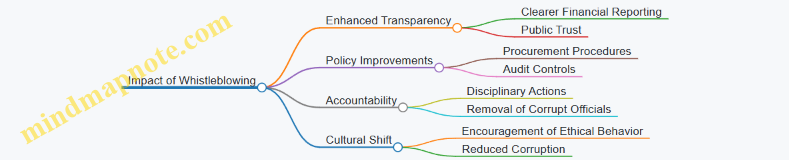
This case study exemplifies how ethical courage, supported by structured processes and protections, can lead to meaningful change in public sector accounting. It highlights the critical role compliance officers and auditors play in safeguarding public resources and trust.
9. Training and Continuous Professional Development
9.1 Designing Effective Ethics Training Programs
Ethics training programs are essential for equipping accountants, auditors, and compliance officers with the knowledge and tools to navigate complex ethical dilemmas in finance and government sectors. A well-designed program not only raises awareness but also fosters a culture of integrity and accountability.
Key Components of an Effective Ethics Training Program
- Clear Objectives: Define what the program aims to achieve, such as understanding ethical principles, recognizing conflicts of interest, or mastering whistleblowing procedures.
- Relevant Content: Tailor the material to the specific challenges faced by finance and government professionals.
- Interactive Learning: Use case studies, role-playing, and discussions to engage participants.
- Regular Updates: Keep the program current with evolving regulations and emerging ethical issues.
- Assessment and Feedback: Measure understanding and gather participant feedback to improve the program.
Mind Map: Designing an Ethics Training Program
Example: Ethics Training Program Outline for Government Accountants
| Module | Description | Methodology |
|---|---|---|
| Introduction to Ethics | Overview of ethical principles and importance in public sector accounting | Lecture + Q&A |
| Regulatory Frameworks | Key laws and standards governing ethical behavior | E-learning + Quiz |
| Conflict of Interest | Identifying and managing conflicts with real-life examples | Case Study + Discussion |
| Whistleblowing Procedures | How to report unethical behavior safely and legally | Role-Playing + Workshop |
| Ethical Decision-Making | Frameworks and tools for resolving dilemmas | Scenario Analysis |
| Assessment and Feedback | Test knowledge and gather participant input | Online Quiz + Survey |
Practical Tips for Implementation
- Customize Content: Use examples relevant to the participants’ roles and sector.
- Engage Leadership: Encourage senior management to participate and endorse the program.
- Encourage Open Dialogue: Create a safe space for discussing ethical challenges without fear of reprisal.
- Use Real-Life Examples: Share anonymized case studies from finance and government to illustrate key points.
Example Scenario for Role-Playing
Scenario: An auditor discovers discrepancies in a government contract but is pressured by a superior to overlook them.
Objective: Practice ethical decision-making and reporting procedures.
Steps:
- Identify the ethical issues.
- Discuss possible actions.
- Role-play conversations with the superior and compliance officers.
- Reflect on the outcomes and best practices.
By integrating these elements, ethics training programs become powerful tools to strengthen ethical awareness and behavior among finance and government professionals, ultimately supporting transparent and accountable financial management.
9.2 Role-Playing and Scenario-Based Learning for Accountants and Auditors
Role-playing and scenario-based learning are powerful tools to enhance ethical awareness and decision-making skills among accountants, auditors, and compliance officers. These interactive methods simulate real-world ethical dilemmas, allowing professionals to practice responses in a safe environment, reflect on consequences, and internalize best practices.
Why Use Role-Playing and Scenario-Based Learning?
- Encourages active participation and engagement.
- Develops critical thinking and ethical reasoning.
- Provides practical experience with complex ethical situations.
- Enhances communication and conflict resolution skills.
- Builds confidence in handling ethical challenges.
Designing Effective Scenarios
When creating scenarios, it’s important to:
- Reflect realistic situations relevant to finance and government sectors.
- Include common ethical dilemmas such as conflicts of interest, fraud detection, confidentiality breaches, and pressure to manipulate financial data.
- Encourage multiple perspectives and possible solutions.
- Incorporate consequences of ethical and unethical decisions.
Example Scenario 1: Pressure to Manipulate Financial Reports
Situation: An auditor discovers that a government department is under pressure from senior officials to adjust figures to meet budget targets.
Role-Play Objective: Participants must decide how to respond while maintaining integrity and compliance.
Possible Actions:
- Report the pressure to an ethics committee.
- Refuse to alter the reports and document concerns.
- Seek advice from a compliance officer.
Discussion Points:
- Risks of succumbing to pressure.
- Importance of whistleblowing channels.
- Balancing professional duties with organizational loyalty.
Example Scenario 2: Conflict of Interest Disclosure
Situation: An accountant is assigned to audit a vendor contract where a close family member is involved.
Role-Play Objective: Decide on appropriate disclosure and recusal steps.
Possible Actions:
- Disclose the relationship to supervisors immediately.
- Recuse oneself from the audit.
- Proceed without disclosure (unethical).
Discussion Points:
- Identifying conflicts of interest.
- Transparency and trust-building.
- Organizational policies on disclosure.
Mind Map: Ethical Decision-Making in Role-Playing Exercises
Mind Map: Components of Scenario-Based Learning
Best Practices for Facilitators
- Prepare clear scenario descriptions and role instructions.
- Encourage open dialogue and respect diverse viewpoints.
- Guide participants to connect scenarios with ethical frameworks and regulations.
- Use real examples from finance and government sectors to enhance relevance.
- Provide constructive feedback highlighting ethical principles and practical solutions.
Additional Example: Handling Confidential Information
Scenario: An auditor accidentally receives confidential budget information ahead of its official release.
Role-Play Objective: Decide how to handle the information ethically.
Possible Actions:
- Maintain confidentiality and avoid sharing.
- Inform supervisors about the accidental receipt.
- Use the information for personal or professional gain (unethical).
Discussion Points:
- Importance of confidentiality in government accounting.
- Procedures for managing sensitive information.
- Ethical repercussions of misuse.
By integrating role-playing and scenario-based learning into ethics training, finance and government organizations can foster a proactive ethical culture, equipping accountants, auditors, and compliance officers with the skills to navigate complex ethical challenges confidently and responsibly.
9.3 Keeping Up with Changing Regulations and Ethical Standards
In the dynamic fields of finance and government accounting, staying current with evolving regulations and ethical standards is crucial for maintaining professional integrity and compliance. This section explores practical strategies, tools, and examples to help accountants, auditors, and compliance officers keep pace with these changes.
Why Staying Updated Matters
- Regulatory bodies frequently update standards to address emerging risks and economic changes.
- Ethical standards evolve to reflect societal expectations and technological advancements.
- Non-compliance can lead to legal penalties, reputational damage, and loss of public trust.
Strategies to Stay Current
-
Subscribe to Official Regulatory Updates
- Follow websites and newsletters of bodies like SEC, FASB, IASB, PCAOB, and government agencies.
- Example: An auditor subscribes to the PCAOB newsletter to receive alerts on auditing standard changes.
-
Participate in Professional Organizations
- Join groups such as AICPA, IIA, or local government accounting associations.
- Attend webinars, conferences, and workshops.
- Example: A compliance officer attends an annual ethics seminar hosted by the AICPA.
-
Leverage Technology and Tools
- Use regulatory tracking software and apps that provide real-time updates.
- Example: A government accountant uses a compliance management platform that flags new policy changes.
-
Engage in Continuous Education
- Enroll in courses focused on recent regulatory changes and ethical practices.
- Example: An accountant completes an online course on the latest IFRS amendments.
-
Establish Internal Knowledge Sharing
- Create internal newsletters or discussion groups to disseminate updates.
- Example: A finance department holds monthly meetings to discuss recent regulatory changes.
-
Consult with Legal and Compliance Experts
- Collaborate with in-house counsel or external advisors for interpretation and application.
- Example: An auditor consults legal experts when new anti-fraud regulations are introduced.
Mind Map: Staying Updated with Regulations and Ethical Standards
Example Scenario: Adapting to New Government Financial Reporting Standards
Context: A government accountant learns that new financial reporting standards have been issued requiring enhanced disclosure of public debt.
Actions Taken:
- Subscribes to the government finance regulatory body’s newsletter.
- Attends a webinar hosted by the Government Finance Officers Association (GFOA) explaining the changes.
- Participates in an internal workshop to update the accounting team.
- Uses compliance software to track deadlines for implementation.
- Consults with legal counsel to ensure interpretations align with statutory requirements.
Outcome: The accountant successfully integrates the new standards into financial reports ahead of the deadline, ensuring transparency and compliance.
Mind Map: Example Workflow for Implementing New Standards
Tips for Effective Adaptation
- Set Regular Review Dates: Schedule quarterly reviews of regulatory websites and updates.
- Assign Responsibility: Designate team members to monitor specific regulatory bodies.
- Document Changes: Maintain a log of updates and actions taken.
- Encourage Open Communication: Foster a culture where employees report uncertainties or potential compliance issues.
By integrating these strategies and leveraging available resources, finance and government professionals can confidently navigate the complexities of changing regulations and ethical standards, safeguarding their organizations and upholding the highest levels of professional conduct.
9.4 Encouraging Peer Discussions and Ethical Mentorship
Peer discussions and ethical mentorship are critical components in fostering a strong ethical culture within accounting and auditing teams, especially in the finance and government sectors. These practices promote continuous learning, reinforce ethical standards, and provide support systems for navigating complex ethical dilemmas.
Why Encourage Peer Discussions?
- Shared Learning: Peers bring diverse experiences and perspectives, enriching understanding of ethical challenges.
- Safe Environment: Open conversations reduce fear of judgment and encourage transparency.
- Early Identification: Group discussions can help identify potential ethical risks before they escalate.
Why Promote Ethical Mentorship?
- Guidance: Experienced professionals provide practical advice on handling ethical issues.
- Role Modeling: Mentors exemplify ethical behavior, inspiring mentees.
- Career Development: Mentorship supports professional growth aligned with ethical standards.
Mind Map: Benefits of Peer Discussions and Ethical Mentorship
Best Practices for Encouraging Peer Discussions
-
Regular Ethics Roundtables: Schedule monthly or quarterly meetings focused solely on discussing recent ethical challenges or hypothetical scenarios.
-
Case Study Reviews: Use real-world or anonymized cases to stimulate debate and collective problem-solving.
-
Anonymous Question Boxes: Allow team members to submit ethical questions anonymously to be discussed openly.
-
Cross-Departmental Dialogues: Encourage interactions between finance, audit, and compliance teams to broaden perspectives.
Example: Ethics Roundtable in a Government Finance Department
In a mid-sized government finance office, monthly ethics roundtables were introduced where accountants and auditors gathered to discuss recent ethical dilemmas encountered. One session involved a scenario where a vendor offered gifts to influence contract decisions. Through peer discussion, the team collectively reaffirmed the importance of rejecting gifts and reporting such offers, reinforcing their code of conduct.
Mind Map: Structuring an Effective Ethics Roundtable

Best Practices for Ethical Mentorship
-
Pairing Based on Experience and Interests: Match mentors and mentees considering their roles, ethical challenges faced, and personal development goals.
-
Setting Clear Expectations: Define confidentiality, meeting frequency, and discussion topics upfront.
-
Scenario-Based Guidance: Mentors share past experiences and walk mentees through ethical decision-making frameworks.
-
Encouraging Reflective Practice: Mentors prompt mentees to reflect on their values and ethical responsibilities.
Example: Ethical Mentorship Program in a Financial Audit Firm
A government audit firm implemented an ethical mentorship program where senior auditors guided junior staff through complex compliance issues. One mentor helped a mentee navigate a conflict of interest situation by discussing the importance of disclosure and recusal, providing a safe space to explore options before taking action.
Mind Map: Components of an Ethical Mentorship Program
Practical Tips for Leaders to Foster These Practices
- Lead by Example: Demonstrate openness in discussing ethical challenges.
- Provide Resources: Share articles, codes of ethics, and decision-making tools.
- Recognize Contributions: Acknowledge individuals who actively participate or mentor others.
- Create Safe Spaces: Ensure no retaliation or judgment for raising ethical concerns.
Summary
Encouraging peer discussions and ethical mentorship creates a collaborative environment where ethical awareness flourishes. Through structured roundtables, mentorship programs, and leadership support, finance and government professionals can navigate ethical complexities with confidence and integrity, ultimately strengthening organizational trust and accountability.
9.5 Example: Implementing a Government Ethics Training Initiative
Implementing an effective ethics training initiative within a government organization is a critical step toward fostering a culture of integrity, transparency, and accountability. This example outlines a comprehensive approach to designing, delivering, and sustaining an ethics training program tailored for government accountants, auditors, and compliance officers.
Step 1: Needs Assessment and Goal Setting
- Objective: Identify specific ethical challenges faced by government financial professionals.
- Method: Conduct surveys, interviews, and review past compliance reports.
Example: A government finance department discovers recurring issues with conflict of interest disclosures and reporting transparency.
Step 2: Curriculum Development
-
Core Topics:
- Ethical principles and government regulations
- Conflict of interest management
- Whistleblowing policies and protections
- Handling confidential information
- Case studies on ethical dilemmas in government finance
-
Training Methods:
- Interactive workshops
- Scenario-based role-playing
- E-learning modules
Step 3: Delivery and Engagement
- Format: Combination of in-person sessions and online platforms to accommodate diverse schedules.
- Facilitators: Ethics officers, senior auditors, and external experts.
- Engagement Tools: Quizzes, group discussions, and real-time polling.
Step 4: Reinforcement and Follow-up
- Ongoing Support: Monthly newsletters, ethics hotlines, and refresher courses.
- Feedback Mechanism: Anonymous surveys to gauge effectiveness and areas for improvement.
Step 5: Evaluation and Continuous Improvement
- Metrics: Reduction in ethical violations, increased reporting of concerns, improved audit results.
- Adjustments: Update training content based on regulatory changes and participant feedback.
Mind Map: Government Ethics Training Initiative
Practical Example: Scenario-Based Role-Playing
Scenario: An auditor discovers a discrepancy in a government contract report that could indicate favoritism toward a vendor owned by a colleague.
- Ethical Questions:
- How should the auditor proceed?
- What reporting channels are available?
- How to manage potential conflicts of interest?
Training Outcome: Participants practice responding to the scenario, emphasizing transparency, adherence to policies, and use of whistleblowing protections.
Additional Example: Whistleblowing Policy Simulation
- Activity: Participants simulate reporting an ethical violation through an anonymous hotline.
- Goal: Build confidence in using reporting mechanisms and understanding protections.
Summary
By integrating practical examples, interactive methods, and continuous evaluation, a government ethics training initiative can effectively empower finance professionals to uphold the highest ethical standards. This approach not only mitigates risks but also strengthens public trust in government financial management.
10. Building an Ethical Culture within Finance and Government Organizations
10.1 Leadership Commitment to Ethical Practices
Leadership commitment is the cornerstone of fostering and sustaining ethical practices within finance and government organizations. When leaders prioritize ethics, they set a powerful example that cascades throughout the organization, influencing behavior, decision-making, and organizational culture.
Why Leadership Commitment Matters
- Sets the Tone at the Top: Leaders define what is acceptable and expected.
- Builds Trust: Ethical leadership cultivates trust among employees, stakeholders, and the public.
- Drives Accountability: Leaders who demonstrate ethical commitment hold themselves and others accountable.
- Enhances Reputation: Organizations led by ethical leaders enjoy stronger reputations and stakeholder confidence.
Key Components of Leadership Commitment to Ethics
Mind Map: Leadership Commitment to Ethical Practices
Practical Examples of Leadership Commitment
Example 1: Transparent Decision-Making in a Government Finance Department
The CFO of a government finance department holds monthly town halls where financial decisions and challenges are openly discussed. By transparently sharing information, the CFO demonstrates commitment to honesty and invites feedback, reinforcing an ethical culture.
Example 2: CEO Leading Ethics Training in a Financial Firm
A CEO personally participates in quarterly ethics training sessions alongside employees, emphasizing the importance of continuous ethical education and showing that ethics is a priority at every level.
Strategies for Leaders to Demonstrate Ethical Commitment
Mind Map: Strategies for Ethical Leadership
Real-World Example: Ethical Leadership in Action
In 2018, a major public sector audit revealed discrepancies in budget allocation. The department head immediately acknowledged the issue publicly, initiated an independent investigation, and implemented stricter controls. This proactive and transparent response not only resolved the issue but also strengthened public trust.
Summary
Leadership commitment to ethical practices is not just about policies but about consistent actions that embody integrity, transparency, and accountability. Leaders who actively engage in ethical behavior inspire their teams to follow suit, creating a resilient ethical culture that withstands challenges.
Remember: Ethical leadership is a continuous journey, requiring dedication, communication, and visible commitment at every step.
10.2 Developing and Enforcing a Code of Ethics
A Code of Ethics serves as the backbone of ethical behavior within finance and government organizations. It establishes clear expectations, guides decision-making, and fosters a culture of integrity. Developing and enforcing a robust Code of Ethics is essential for accountants, auditors, and compliance officers to navigate complex ethical challenges effectively.
Why Develop a Code of Ethics?
- Provides a clear framework for ethical behavior
- Enhances trust among stakeholders
- Helps prevent unethical practices and misconduct
- Supports regulatory compliance
- Encourages accountability and transparency
Steps to Develop a Code of Ethics
Core Components of a Code of Ethics
| Component | Description | Example |
|---|---|---|
| Integrity | Commitment to honesty and fairness | An accountant refuses to manipulate financial data to meet targets. |
| Objectivity | Avoiding bias and conflicts of interest | Auditor discloses any personal relationship with the client before engagement. |
| Confidentiality | Protecting sensitive information | Compliance officer ensures that government budget details are only shared with authorized personnel. |
| Professional Competence | Maintaining skills and knowledge | Regularly attending ethics training and staying updated on regulations. |
| Accountability | Taking responsibility for actions | Reporting discovered discrepancies promptly, even if it may reflect poorly on the team. |
Example: Code of Ethics Excerpt for a Government Accounting Department
Integrity: All employees must present financial information truthfully and avoid any form of misrepresentation.
Confidentiality: Sensitive budgetary and personnel information must be safeguarded and shared only on a need-to-know basis.
Conflict of Interest: Employees must disclose any personal or financial interests that may influence their professional judgment.
Reporting Violations: Employees are encouraged to report unethical behavior through established confidential channels without fear of retaliation.
Enforcing the Code of Ethics
Practical Example: Enforcement in Action
Scenario: An auditor discovers that a government contractor has submitted inflated invoices.
Ethical Response:
- The auditor refers to the Code of Ethics which mandates reporting suspected fraud.
- Using the established reporting mechanism, the auditor confidentially alerts the compliance officer.
- The compliance team initiates an investigation following the disciplinary procedures outlined in the Code.
- The organization takes corrective action, including contract termination and legal referral.
This example highlights how a well-developed and enforced Code of Ethics guides employees through difficult situations while protecting the organization’s integrity.
Tips for Successful Implementation
- Leadership Commitment: Leaders must visibly support and abide by the Code.
- Clear Language: Use simple, unambiguous language to ensure understanding.
- Accessibility: Make the Code easily available in print and digital formats.
- Feedback Loop: Regularly solicit employee feedback to improve the Code.
- Recognition: Acknowledge and reward ethical behavior to reinforce positive culture.
By thoughtfully developing and rigorously enforcing a Code of Ethics, finance and government organizations empower their accountants, auditors, and compliance officers to uphold the highest ethical standards, ultimately fostering trust and accountability throughout the institution.
10.3 Incentivizing Ethical Behavior and Accountability
Incentivizing ethical behavior and accountability is a critical component in fostering a culture of integrity within finance and government organizations. When employees, including accountants, auditors, and compliance officers, are motivated to act ethically, the entire organization benefits from increased trust, transparency, and compliance.
Why Incentivize Ethical Behavior?
- Encourages adherence to ethical standards beyond mere compliance.
- Builds a positive organizational reputation.
- Reduces risks related to fraud, errors, and regulatory penalties.
- Promotes long-term sustainability and stakeholder confidence.
Key Strategies to Incentivize Ethical Behavior
Recognition Programs
Publicly recognizing employees who demonstrate ethical behavior reinforces positive actions and sets a standard for others.
Example:
- A government finance department implements an “Ethical Excellence Award” given quarterly to employees who identify and resolve compliance issues proactively. Winners are featured in the internal newsletter and receive a certificate.
Financial Incentives
Linking financial rewards to ethical behavior can motivate employees to prioritize integrity.
Example:
- A municipal accounting office provides year-end bonuses tied not only to financial performance but also to adherence to ethical guidelines, such as transparent reporting and timely whistleblowing.
Career Advancement Opportunities
Promoting individuals who consistently demonstrate ethical conduct encourages others to follow suit.
Example:
- An auditor known for thorough and honest reporting is fast-tracked for a leadership role, signaling the organization’s commitment to ethics.
Supportive Environment
Creating a workplace where employees feel safe to voice concerns and seek guidance fosters accountability.
Example:
- A government agency establishes an anonymous ethics hotline and pairs new hires with ethical mentors to discuss dilemmas and reinforce standards.
Accountability Measures
Clear consequences for unethical behavior ensure that incentives are balanced with responsibility.
Example:
- An internal compliance team conducts quarterly ethics audits and shares results transparently, linking findings to performance evaluations.
Integrated Example: Incentivizing Ethics in Action
A state finance department launched a comprehensive ethics initiative:
- Recognition: Monthly spotlight on employees who exemplify ethical decision-making.
- Financial Incentives: Bonuses tied to compliance milestones.
- Career Growth: Ethics champions invited to leadership training.
- Support: Anonymous reporting tools and mentorship.
- Accountability: Regular audits with transparent feedback.
This program led to a measurable decrease in compliance violations and increased employee engagement.
Mind Map: Example Incentive Program Structure
Tips for Implementation
- Align incentives with organizational values and ethical codes.
- Ensure transparency in how incentives are awarded.
- Balance positive incentives with clear accountability.
- Regularly review and adapt incentive programs based on feedback and outcomes.
By thoughtfully designing and implementing incentive programs, finance and government organizations can effectively promote ethical behavior and accountability, ultimately strengthening their integrity and public trust.
10.4 Monitoring and Evaluating Ethical Compliance
Monitoring and evaluating ethical compliance is a critical component of maintaining integrity within finance and government organizations. It ensures that ethical standards are not only established but actively followed, creating accountability and fostering a culture of trust.
Key Components of Monitoring Ethical Compliance
- Policy Adherence: Regular checks to ensure employees follow the organization’s code of ethics and related policies.
- Internal Audits: Scheduled and surprise audits to review financial records, processes, and behaviors.
- Reporting Mechanisms: Systems like anonymous hotlines or digital platforms where unethical behavior can be reported safely.
- Performance Metrics: Defining and tracking KPIs related to ethical behavior, such as the number of reported incidents, resolution times, and training completion rates.
- Feedback Loops: Collecting feedback from employees and stakeholders to identify ethical risks and areas for improvement.
Mind Map: Components of Ethical Compliance Monitoring
Evaluating Ethical Compliance
Evaluation involves analyzing the data collected through monitoring to assess effectiveness and identify gaps.
- Data Analysis: Reviewing audit results, incident reports, and training records.
- Benchmarking: Comparing compliance metrics against industry standards or past performance.
- Risk Assessment: Identifying areas with recurring ethical issues or high-risk activities.
- Corrective Actions: Implementing improvements such as policy updates, additional training, or disciplinary measures.
Mind Map: Ethical Compliance Evaluation Process
Practical Example: Monitoring and Evaluating Ethical Compliance in a Government Finance Department
Scenario: A government finance department implements a new ethics monitoring program to ensure compliance with financial reporting standards and anti-corruption policies.
- Policy Adherence: Monthly reviews of employee adherence to the updated code of ethics are conducted using compliance checklists.
- Internal Audits: Quarterly surprise audits focus on high-risk areas such as procurement and grant disbursement.
- Reporting Mechanisms: An anonymous hotline is launched, resulting in a 30% increase in reported concerns within six months.
- Performance Metrics: The department tracks the number of ethical training sessions completed and the average time taken to resolve reported issues.
- Feedback Loops: Employee surveys reveal confusion about some policy aspects, prompting revisions for clarity.
Evaluation Outcome:
- Audit findings indicate a 15% reduction in non-compliance incidents compared to the previous year.
- Benchmarking against similar departments shows above-average ethical compliance.
- Identified need for additional training on conflict of interest policies.
Corrective Actions:
- Updated training modules with real-life scenarios.
- Strengthened disciplinary procedures for violations.
- Enhanced communication channels for ethical guidance.
Additional Example: Using Technology for Ethical Compliance Monitoring
A public sector organization integrates an automated compliance management system that tracks employee certifications, flags overdue training, and monitors transaction anomalies.
- The system generates monthly compliance reports for management review.
- Alerts are sent when suspicious activities are detected, prompting immediate investigation.
- Data analytics identify trends in ethical breaches, guiding targeted interventions.
This proactive approach helps the organization maintain high ethical standards and quickly address potential issues.
Summary
Monitoring and evaluating ethical compliance is an ongoing, dynamic process that requires commitment, transparency, and the use of effective tools and techniques. By combining policy enforcement, audits, reporting mechanisms, and continuous feedback, finance and government organizations can uphold ethical standards and build public trust.
10.5 Example: Transforming Organizational Culture through Ethics Programs
Transforming an organization’s culture to prioritize ethics requires a comprehensive, well-structured ethics program that engages employees at all levels. Below is a detailed example of how a government finance department successfully transformed its organizational culture through a multi-faceted ethics program.
Case Study: The City Finance Department Ethics Transformation
Background: The City Finance Department faced recurring issues with compliance lapses, low employee morale, and public trust erosion. Leadership decided to implement a robust ethics program aimed at embedding ethical values into daily operations.
Key Components of the Ethics Program:
- Leadership Commitment: Top executives publicly endorsed the ethics initiative and modeled ethical behavior.
- Code of Ethics Revision: Updated to reflect current challenges and made accessible to all employees.
- Training and Awareness: Mandatory workshops and e-learning modules on ethical decision-making.
- Open Communication Channels: Anonymous reporting systems and regular ethics forums.
- Recognition and Accountability: Rewarding ethical behavior and enforcing consequences for violations.
Mind Map: Components of an Effective Ethics Program
Implementation Steps and Examples
-
Leadership Commitment:
- The City Finance Director held quarterly town halls emphasizing the importance of ethics.
- Example: Sharing personal stories where ethical choices impacted outcomes positively.
-
Code of Ethics Revision:
- Simplified language and included real-life scenarios relevant to finance and government.
- Example: A scenario about handling gifts from vendors was added to clarify acceptable behavior.
-
Training and Awareness:
- Interactive workshops included role-playing exercises where employees navigated ethical dilemmas.
- Example: An auditor faced with pressure to overlook discrepancies practiced refusal techniques.
-
Open Communication Channels:
- Launched an anonymous hotline and digital platform for reporting unethical conduct.
- Example: An employee reported a potential conflict of interest, which was promptly investigated.
-
Recognition and Accountability:
- Monthly “Ethics Champion” awards celebrated employees demonstrating integrity.
- Clear disciplinary policies were communicated and enforced consistently.
Mind Map: Ethical Culture Transformation Process
Outcomes and Impact
- Increased Employee Engagement: Surveys showed a 30% rise in employees feeling comfortable raising ethical concerns.
- Improved Compliance: Incidents of non-compliance dropped by 40% within the first year.
- Enhanced Public Trust: Positive media coverage and citizen feedback improved.
- Sustainable Ethical Culture: Ethics became a core value integrated into performance reviews and recruitment.
Additional Example: Private Sector Ethical Culture Shift
A multinational accounting firm implemented a similar ethics program focusing on transparency and accountability. They introduced a digital ethics dashboard tracking compliance metrics and employee training progress, which fostered a culture of continuous ethical improvement.
Summary
Transforming organizational culture through ethics programs requires leadership buy-in, clear guidelines, comprehensive training, open communication, and consistent recognition and accountability. By embedding ethics into the fabric of daily operations, organizations in finance and government can build trust, reduce risks, and promote long-term success.
11. Challenges and Future Trends in Ethical Accounting
11.1 Emerging Ethical Issues in a Globalized Economy
The globalization of finance and accounting has introduced a complex landscape where ethical challenges are amplified by cross-border transactions, diverse regulatory environments, and cultural differences. Accountants, auditors, and compliance officers must navigate these challenges carefully to uphold ethical standards while operating in a global economy.
Key Emerging Ethical Issues
Detailed Exploration and Examples
1. Cross-Border Regulatory Compliance
In a globalized economy, companies often operate under multiple accounting frameworks. For example, a multinational corporation headquartered in the U.S. may need to reconcile GAAP-based financials with IFRS used in Europe. Ethical challenges arise when selective reporting or aggressive accounting is used to exploit differences.
Example: A U.S.-based company reports higher profits under IFRS by recognizing revenue earlier than allowed under GAAP, misleading investors about the company’s true financial health. Ethical practice requires transparent disclosure and adherence to the stricter standard where applicable.
2. Cultural and Ethical Diversity
Different countries have varying cultural attitudes toward business practices. What is considered a gift in one country may be viewed as a bribe in another. Accountants must balance respect for local customs with adherence to universal ethical standards.
Example: An auditor working in a country where gift-giving is customary must carefully evaluate whether gifts influence financial reporting or decision-making, ensuring compliance with anti-bribery laws.
3. Transfer Pricing and Tax Avoidance
Multinational companies may shift profits to low-tax jurisdictions through transfer pricing, raising ethical concerns about tax avoidance.
Example: A company sets artificially high prices for goods sold between subsidiaries to move profits offshore. Ethical accounting demands transparent documentation and compliance with OECD guidelines to prevent abusive practices.
4. Data Privacy and Cybersecurity
Handling financial data across borders introduces risks related to data privacy laws like GDPR in Europe.
Example: A government agency shares citizen financial data with international partners without proper consent or safeguards, violating privacy regulations. Ethical practice requires strict data governance and compliance.
5. Corruption and Bribery
Operating in countries with weak enforcement can tempt unethical behavior.
Example: A compliance officer uncovers that local agents are paying bribes to secure contracts. Upholding ethics means reporting and halting such practices despite potential business pressures.
6. Technology and Automation
AI-driven accounting tools can introduce biases or errors if not properly managed.
Example: An automated system flags certain expense reports for audit based on biased historical data, unfairly targeting specific departments. Ethical oversight involves regularly reviewing algorithms for fairness and accuracy.
7. Environmental, Social, and Governance (ESG) Reporting
Global investors demand transparent ESG disclosures, but inconsistent standards can lead to greenwashing.
Example: A company inflates its environmental achievements in reports to attract investors. Ethical accounting requires accurate, verifiable ESG data.
Mind Map: Ethical Challenges and Solutions
Conclusion
Ethical accounting in a globalized economy demands heightened vigilance, cultural sensitivity, and commitment to transparency. By understanding emerging issues and applying best practices, finance and government professionals can safeguard integrity and foster trust across borders.
11.2 The Impact of Artificial Intelligence on Ethical Decision-Making
Artificial Intelligence (AI) is rapidly transforming the accounting and auditing landscape, introducing new efficiencies but also raising complex ethical challenges. For accountants, auditors, and compliance officers in finance and government sectors, understanding how AI influences ethical decision-making is critical to maintaining trust, transparency, and accountability.
Understanding AI in Accounting and Auditing
AI systems can automate data analysis, detect anomalies, predict financial trends, and even assist in fraud detection. However, reliance on AI also introduces risks such as bias, lack of transparency (black-box algorithms), and potential misuse of data.
Key Ethical Considerations of AI in Decision-Making
- Bias and Fairness: AI algorithms may unintentionally perpetuate biases present in training data, leading to unfair financial assessments or audit conclusions.
- Transparency and Explainability: AI decisions must be explainable to stakeholders to maintain trust and allow for proper oversight.
- Accountability: Determining who is responsible for AI-driven decisions is essential, especially when errors or unethical outcomes occur.
- Data Privacy: AI systems require vast amounts of data, raising concerns about confidentiality and compliance with privacy regulations.
Mind Map: Ethical Challenges of AI in Accounting
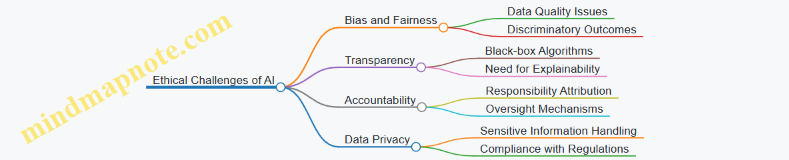
Practical Examples of AI Impact on Ethical Decision-Making
Example 1: AI in Fraud Detection
A government auditor uses an AI-powered tool to flag suspicious transactions. The AI flags a high volume of transactions from a particular vendor. However, the AI’s training data was skewed, causing false positives against vendors from a specific region. The auditor must recognize this bias and investigate further rather than blindly trusting the AI output.
Example 2: Automated Financial Reporting
A finance department implements AI to generate quarterly reports. The AI aggregates data and suggests adjustments to meet targets. Ethical practice requires that accountants review AI recommendations critically to avoid earnings manipulation or misrepresentation.
Mind Map: Best Practices for Ethical AI Use
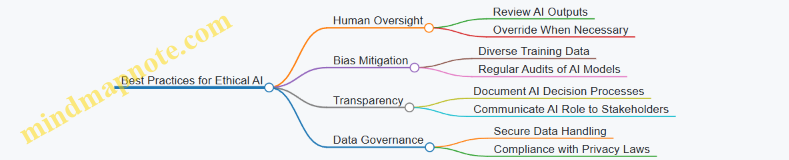
Integrating AI with Ethical Frameworks
Accountants and auditors should integrate AI tools within existing ethical frameworks such as integrity, objectivity, and professional competence. This integration involves:
- Ensuring AI complements rather than replaces human judgment.
- Maintaining professional skepticism when interpreting AI-generated insights.
- Engaging in continuous education about AI capabilities and limitations.
Conclusion
AI offers powerful tools to enhance accounting and auditing efficiency but also requires vigilance to uphold ethical standards. By understanding AI’s ethical implications, applying best practices, and maintaining human oversight, finance and government professionals can leverage AI responsibly to support transparent and trustworthy financial decision-making.
11.3 Sustainability Reporting and Ethical Accountability
Sustainability reporting has become an essential aspect of ethical accounting, especially within finance and government sectors. It involves disclosing an organization’s environmental, social, and governance (ESG) impacts alongside traditional financial performance. Ethical accountability in sustainability reporting ensures transparency, accuracy, and responsibility in communicating these impacts to stakeholders.
What is Sustainability Reporting?
Sustainability reporting is the practice of measuring, disclosing, and being accountable for organizational performance towards sustainable development. It covers areas such as carbon emissions, resource usage, labor practices, community engagement, and governance structures.
Example: A government agency publishes an annual sustainability report detailing its efforts to reduce energy consumption in public buildings and improve community health outcomes.
Importance of Ethical Accountability in Sustainability Reporting
- Builds trust with stakeholders by providing honest and complete information.
- Helps prevent greenwashing — the practice of misleading stakeholders about environmental practices.
- Encourages organizations to improve their sustainability performance.
- Aligns with global standards and frameworks such as the Global Reporting Initiative (GRI) and the Sustainability Accounting Standards Board (SASB).
Mind Map: Key Components of Ethical Sustainability Reporting
Best Practices for Ethical Sustainability Reporting
-
Integrate ESG Metrics with Financial Reporting
- Provide a holistic view of organizational performance.
- Example: A finance department includes carbon footprint data alongside financial results in quarterly reports.
-
Use Recognized Reporting Frameworks
- Adopt standards like GRI or SASB to ensure consistency and comparability.
- Example: A government agency aligns its sustainability disclosures with GRI standards to meet international expectations.
-
Ensure Data Integrity and Verification
- Employ third-party audits or assurance services to validate sustainability data.
- Example: An auditor verifies the accuracy of water usage data reported by a public utility.
-
Engage Stakeholders Transparently
- Include feedback from citizens, investors, and employees in reporting processes.
- Example: Hosting public forums to discuss sustainability goals and report progress.
-
Address Challenges Honestly
- Report setbacks or areas needing improvement without omission.
- Example: A government department openly reports delays in renewable energy projects and outlines corrective actions.
Mind Map: Ethical Challenges in Sustainability Reporting
Example Scenario: Ethical Sustainability Reporting in a Government Context
Context: A municipal government aims to reduce its carbon emissions by 30% over five years.
- Ethical Practice: The finance and compliance teams collaborate to collect accurate energy consumption data from all departments.
- Reporting: They publish an annual sustainability report using GRI standards, including both successes and challenges.
- Verification: An independent auditor reviews the data to ensure accuracy.
- Stakeholder Engagement: Public consultations are held to gather feedback and improve future initiatives.
This approach demonstrates transparency, accountability, and a commitment to continuous improvement.
Summary
Ethical accountability in sustainability reporting is critical for maintaining trust and driving real progress in environmental and social responsibility. By adhering to best practices, leveraging recognized frameworks, and engaging stakeholders honestly, accountants, auditors, and compliance officers in finance and government sectors can lead the way in ethical sustainability disclosures.
11.4 Navigating Ethical Challenges in Government Financial Reforms
Government financial reforms are essential for improving transparency, efficiency, and accountability in the public sector. However, these reforms often bring complex ethical challenges that accountants, auditors, and compliance officers must carefully navigate to maintain public trust and uphold professional integrity.
Key Ethical Challenges in Government Financial Reforms
Transparency and Accurate Reporting
Challenge: During reforms, new reporting standards or financial systems may be introduced. There is a risk of data being selectively reported or manipulated to present a favorable image.
Best Practice: Accountants should ensure all financial statements reflect true and fair views, even if the results reveal shortcomings.
Example: When a government agency implements a new budgeting system, an ethical accountant will disclose transitional discrepancies rather than hiding overspending under new categories.
Accountability in Decision-Making
Challenge: Reforms often shift responsibilities, making it difficult to pinpoint accountability for financial decisions.
Best Practice: Maintain detailed audit trails and document decision-making processes clearly.
Example: During a reform that decentralizes financial authority, auditors should verify that local offices follow ethical guidelines and report any irregularities promptly.
Managing Conflicts of Interest
Challenge: Political pressures or relationships with vendors can influence financial decisions during reforms.
Best Practice: Enforce strict disclosure policies and recusal procedures.
Example: If a compliance officer’s family member owns a company bidding for government contracts during reform, the officer must disclose this and avoid involvement in the procurement process.
Compliance with Evolving Regulations
Challenge: New laws or regulations introduced as part of reforms can be complex and rapidly changing.
Best Practice: Continuous training and updating of compliance protocols are essential.
Example: When a government updates its financial reporting standards to align with international norms, auditors should participate in training sessions and update audit checklists accordingly.
Maintaining Public Trust
Challenge: Public skepticism often rises during reforms due to fears of misuse or mismanagement of funds.
Best Practice: Communicate openly about reform goals, challenges, and progress.
Example: A government finance department might publish periodic, easy-to-understand reform progress reports to foster transparency and trust.
Mind Map: Ethical Strategies for Navigating Government Financial Reforms
Integrated Example Scenario
Scenario: A government is reforming its pension fund management system to improve sustainability and transparency. During this process:
- Accountants ensure all pension liabilities are accurately reported, even if it reveals funding gaps.
- Auditors maintain detailed records of all financial transactions and decisions.
- Compliance officers disclose any personal connections to pension fund vendors and abstain from related decisions.
- The finance team undergoes training on new pension accounting standards.
- The government publishes quarterly updates explaining reform progress and challenges in simple language.
This integrated approach helps navigate ethical challenges effectively, ensuring the reform is credible and sustainable.
Summary
Navigating ethical challenges in government financial reforms requires a proactive, transparent, and accountable approach. By adhering to core ethical principles and implementing best practices such as clear communication, conflict of interest management, and continuous compliance training, finance professionals can uphold public trust and contribute to successful reform outcomes.
11.5 Preparing for Future Ethical Standards: Proactive Strategies
As the finance and government sectors evolve, so do the ethical standards that govern accounting practices. Preparing proactively for future ethical standards is essential for accountants, auditors, and compliance officers to maintain integrity, transparency, and trustworthiness in their roles. This section outlines key strategies to anticipate and adapt to emerging ethical requirements, supported by practical examples and mind maps to visualize the approach.
Understanding the Need for Proactive Preparation
Ethical standards are influenced by technological advancements, regulatory changes, societal expectations, and global economic shifts. Waiting to react after new standards are introduced can expose organizations to compliance risks, reputational damage, and financial penalties.
Example: A government agency that anticipated stricter data privacy regulations implemented enhanced encryption and access controls ahead of time, avoiding costly penalties and preserving public trust.
Proactive Strategies for Preparing Future Ethical Standards
-
Continuous Monitoring of Regulatory Developments
- Subscribe to updates from regulatory bodies (e.g., SEC, FASB, IASB).
- Participate in industry forums and ethics committees.
- Use technology tools to track changes in laws and standards.
-
Investing in Ongoing Ethics Education and Training
- Regular workshops and e-learning modules.
- Scenario-based training focusing on emerging ethical dilemmas.
- Encouraging certifications that emphasize ethics (e.g., Certified Ethics Professional).
-
Implementing Flexible and Adaptive Policies
- Draft policies that can be quickly updated.
- Establish cross-functional ethics task forces.
- Use feedback loops from employees and stakeholders to refine policies.
-
Leveraging Technology for Ethical Compliance
- Employ AI-driven compliance monitoring tools.
- Use blockchain for immutable financial records.
- Automate audit trails to detect anomalies early.
-
Fostering a Culture of Ethical Vigilance
- Promote open communication and whistleblower protections.
- Recognize and reward ethical behavior.
- Leadership commitment to ethics as a core value.
Mind Map: Proactive Strategies to Prepare for Future Ethical Standards
Example Scenario: Implementing Proactive Ethical Strategies in a Government Finance Department
Context: A government finance department anticipates new international sustainability reporting standards that will require greater transparency and ethical accountability.
Actions Taken:
- Established a regulatory watch team to monitor developments.
- Conducted ethics training focused on sustainability and transparency.
- Updated internal reporting policies to include sustainability metrics.
- Adopted blockchain technology to ensure data integrity.
- Created an ethics committee to oversee implementation and encourage staff feedback.
Outcome: The department successfully met new standards ahead of deadlines, enhancing public trust and avoiding compliance risks.
Mind Map: Example Implementation in Government Finance
Final Thoughts
Proactive preparation for future ethical standards is not just about compliance but about embedding ethics into the organizational DNA. By continuously monitoring, educating, adapting, leveraging technology, and fostering an ethical culture, finance and government professionals can navigate future challenges with confidence and integrity.
Remember: Ethical accounting is a journey, not a destination. Staying ahead requires vigilance, commitment, and a willingness to evolve.