Financial Market Regulations for Accountants
1. Introduction to Financial Market Regulations
1.1 Overview of Financial Markets and Their Importance
Financial markets are platforms where buyers and sellers engage in the trade of financial assets such as stocks, bonds, currencies, and derivatives. These markets play a crucial role in the global economy by facilitating capital allocation, price discovery, liquidity, and risk management.
Key Functions of Financial Markets
- Capital Allocation: Directing funds from savers to borrowers, enabling businesses to grow and governments to finance projects.
- Price Discovery: Determining the fair value of financial assets through supply and demand dynamics.
- Liquidity Provision: Allowing investors to buy and sell assets quickly without causing significant price changes.
- Risk Management: Offering instruments like derivatives to hedge against financial risks.
Types of Financial Markets
Financial Markets
├── Capital Markets
│   ├── Equity Markets (Stocks)
│   └── Debt Markets (Bonds)
├── Money Markets
│   └── Short-term debt instruments (e.g., Treasury bills)
├── Derivatives Markets
│   └── Futures, Options, Swaps
├── Foreign Exchange Markets
│   └── Currency trading
└── Commodity Markets
    └── Physical goods like gold, oil
Mind Map: Importance of Financial Markets
Example 1: Capital Allocation in Action
A technology startup needs funding to develop a new product. Through the financial markets, it can raise capital by issuing shares (equity) or bonds (debt). Investors provide funds in exchange for ownership or interest payments, enabling the startup to grow and innovate.
Example 2: Price Discovery Explained
Consider a publicly traded company whose stock price fluctuates daily. This price reflects all available information, including earnings reports, market conditions, and investor sentiment. Accountants must understand how these factors influence financial statements and market valuations.
Why Accountants Should Care
Accountants play a pivotal role in ensuring the accuracy and transparency of financial information that underpins market confidence. Understanding financial markets helps accountants:
- Ensure compliance with reporting standards that affect market disclosures.
- Interpret market signals for better financial analysis and advisory.
- Support risk management by recognizing market-driven financial risks.
Best Practice: Linking Financial Reporting to Market Dynamics
Accountants should regularly review how market changes impact financial statements and disclosures. For example, fluctuations in interest rates can affect bond valuations and interest expense reporting.
Summary
Financial markets are essential for economic vitality, providing mechanisms for capital flow, price setting, liquidity, and risk mitigation. Accountants, as stewards of financial information, must grasp these concepts to effectively contribute to regulatory compliance and strategic decision-making.
1.2 Key Regulatory Bodies and Their Roles
Financial markets are governed by a variety of regulatory bodies that establish rules, monitor compliance, and enforce penalties to ensure market integrity, protect investors, and maintain financial stability. For accountants working within finance and banking, understanding these bodies and their roles is critical to ensuring compliance and effective reporting.
Major Regulatory Bodies Overview
Below is a mind map illustrating some of the key regulatory bodies globally and their primary functions:
Detailed Roles and Responsibilities
Securities and Exchange Commission (SEC) - USA
- Role: Regulates securities markets, enforces federal securities laws, requires public companies to disclose financial information.
- Example: Accountants must ensure that financial statements comply with SEC reporting requirements such as Form 10-K and 10-Q.
Commodity Futures Trading Commission (CFTC) - USA
- Role: Regulates derivatives markets including futures and swaps.
- Example: Accountants working with derivatives must understand CFTC rules to correctly report and value these instruments.
European Securities and Markets Authority (ESMA) - EU
- Role: Coordinates regulation across EU member states, enforces MiFID II directives.
- Example: Accountants in EU firms must ensure transaction reporting complies with ESMA standards.
Financial Conduct Authority (FCA) - UK
- Role: Regulates conduct of financial firms, protects consumers, ensures market integrity.
- Example: Accountants must support FCA compliance by maintaining accurate records and disclosures.
Basel Committee on Banking Supervision
- Role: Develops international banking standards such as Basel III to ensure capital adequacy and risk management.
- Example: Accountants help banks calculate regulatory capital ratios and prepare related disclosures.
Mind Map: Accountants’ Interaction with Regulatory Bodies
Practical Example: How an Accountant Navigates Regulatory Bodies
Scenario: An accountant at a multinational bank is preparing quarterly financial reports.
- They ensure compliance with SEC rules for the US operations, including detailed disclosures on derivatives as per CFTC requirements.
- For European branches, they align reporting with ESMA and EBA guidelines, ensuring MiFID II transaction reporting is accurate.
- They collaborate with risk management teams to calculate capital adequacy ratios following Basel III standards.
This multi-jurisdictional compliance requires the accountant to stay informed about each regulatory body’s updates and integrate these into the financial reporting process.
Best Practice
Maintain a Regulatory Body Matrix:
| Regulatory Body | Jurisdiction | Key Focus Area | Reporting Requirements | Contact/Resource Link |
|---|---|---|---|---|
| SEC | USA | Securities | 10-K, 10-Q, 8-K | www.sec.gov |
| ESMA | EU | Market Conduct | MiFID II Reports | www.esma.europa.eu |
| FCA | UK | Conduct & Prudential | Annual Reports, Disclosures | www.fca.org.uk |
This matrix helps accountants quickly identify applicable regulations and streamline compliance efforts.
Understanding the key regulatory bodies and their roles empowers accountants to perform their duties effectively, ensuring compliance, reducing risk, and supporting the integrity of financial markets.
1.3 The Role of Accountants in Regulatory Compliance
Accountants play a pivotal role in ensuring that financial institutions and businesses comply with the complex web of financial market regulations. Their responsibilities extend beyond traditional bookkeeping and financial reporting to encompass risk management, internal controls, ethical standards, and proactive engagement with regulatory changes.
Key Responsibilities of Accountants in Regulatory Compliance
Detailed Explanation:
-
Financial Reporting: Accountants ensure that all financial statements and disclosures comply with relevant regulatory standards such as IFRS, GAAP, or local financial regulations. This includes preparing accurate and timely reports that reflect the true financial position of the organization.
-
Risk Management: They identify potential regulatory risks related to financial transactions, market activities, or internal processes. Accountants help design and implement controls to mitigate these risks and continuously monitor their effectiveness.
-
Internal Controls: Accountants are responsible for developing, documenting, and testing internal controls that ensure compliance with laws and regulations. This includes segregation of duties, authorization procedures, and audit trails.
-
Ethical Conduct: Maintaining high ethical standards is critical. Accountants must manage conflicts of interest, protect confidential information, and support whistleblowing mechanisms to report unethical or illegal activities.
-
Continuous Learning: Given the dynamic nature of financial regulations, accountants must stay updated on regulatory changes through training and professional development.
-
Communication: Accountants act as a bridge between the organization and regulatory bodies, ensuring transparent communication, timely reporting of breaches, and advising management on compliance matters.
Example 1: Proactive Risk Identification in a Banking Institution
A mid-sized bank’s accounting team noticed discrepancies in transaction reporting timelines. By proactively reviewing internal processes, they identified a risk of non-compliance with MiFID II transaction reporting deadlines. The accountants collaborated with IT and compliance teams to implement automated alerts and controls, ensuring timely and accurate submissions.
Example 2: Ethical Decision-Making in Client Reporting
An accountant at an investment firm discovered that a client’s reported earnings were inflated to meet regulatory thresholds. Instead of ignoring the issue, the accountant escalated the concern through the firm’s whistleblowing policy, leading to an internal investigation and corrective actions, thereby upholding regulatory compliance and ethical standards.
Summary Mindmap of Accountants’ Role
By embracing these roles, accountants become essential compliance champions within financial institutions, helping to safeguard the organization against regulatory breaches and fostering a culture of transparency and accountability.
1.4 Best Practice: Establishing a Compliance Mindset from Day One
Establishing a compliance mindset from the very beginning is crucial for accountants working within financial markets. This mindset ensures that regulatory adherence is not seen as a burden but as an integral part of daily operations, reducing risks and fostering trust with stakeholders.
Why a Compliance Mindset Matters
- Proactive Risk Management: Anticipating regulatory requirements helps prevent violations.
- Enhanced Reputation: Firms known for compliance attract more clients and investors.
- Operational Efficiency: Embedding compliance reduces last-minute fixes and penalties.
Key Elements of a Compliance Mindset
Practical Steps to Establish a Compliance Mindset
-
Onboarding with Compliance Focus:
- Introduce new accountants to relevant regulations and company policies.
- Example: A financial firm includes a dedicated compliance module in its onboarding process, ensuring new hires understand AML and KYC basics before handling transactions.
-
Regular Training and Updates:
- Schedule ongoing workshops and e-learning to keep staff current.
- Example: Quarterly webinars on recent regulatory changes, such as updates to MiFID II reporting requirements.
-
Encourage Open Communication:
- Create safe channels for employees to ask questions or report concerns without fear.
- Example: An anonymous hotline for compliance-related queries that led to early detection of a potential insider trading issue.
-
Embed Compliance in Daily Tasks:
- Integrate compliance checkpoints into accounting workflows.
- Example: Automated alerts in accounting software that flag transactions exceeding regulatory thresholds.
-
Lead by Example:
- Management demonstrates commitment to compliance, reinforcing its importance.
- Example: CFO personally reviews compliance reports monthly and discusses findings in team meetings.
Example Scenario: New Accountant at a Mid-Sized Bank
Situation: Sarah, a newly hired accountant, is introduced to the bank’s compliance culture on day one.
- She attends an onboarding session focused on financial market regulations.
- Receives a compliance handbook outlining key policies.
- Participates in a role-play exercise simulating AML transaction monitoring.
- Is assigned a mentor from the compliance team for ongoing support.
Outcome: Sarah quickly internalizes compliance principles, proactively flags unusual transactions, and contributes to a culture of transparency.
Mind Map: Onboarding Process with Compliance Focus
By embedding these practices from day one, accountants not only comply with regulations but become active participants in safeguarding the integrity of financial markets.
1.5 Example: How a Mid-Sized Firm Implemented a Compliance Culture
Implementing a compliance culture in a mid-sized accounting firm requires a strategic approach that integrates regulatory awareness into everyday business operations. Below is a detailed example illustrating how “ClearPath Accounting,” a fictional mid-sized firm, successfully embedded compliance into its organizational culture.
Step 1: Leadership Commitment
- The firm’s leadership team publicly committed to compliance as a core value.
- Compliance goals were incorporated into the company’s mission statement.
Step 2: Establishing a Compliance Committee
- Formed a cross-functional compliance committee including senior accountants, compliance officers, and IT staff.
- The committee met monthly to review regulatory updates and internal policies.
Step 3: Training and Awareness Programs
- Rolled out mandatory quarterly training sessions covering key regulations such as AML, KYC, and financial reporting standards.
- Used scenario-based learning to make training relatable.
Step 4: Embedding Compliance into Processes
- Integrated compliance checkpoints into financial reporting workflows.
- Automated alerts were set up to flag unusual transactions or reporting anomalies.
Step 5: Encouraging Open Communication
- Created anonymous channels for employees to report compliance concerns without fear of retaliation.
- Regular town halls were held to discuss compliance challenges and successes.
Step 6: Continuous Monitoring and Improvement
- Conducted regular internal audits focusing on compliance adherence.
- Used audit results to refine policies and training content.
Mind Map: Building a Compliance Culture at ClearPath Accounting
Example Scenario: Detecting and Addressing a Compliance Issue
During a quarterly audit, the compliance committee noticed a pattern of delayed KYC documentation for a set of new clients. Using the automated alerts, the team identified the bottleneck was due to unclear responsibility assignments.
Actions Taken:
- Revised the onboarding process to clearly assign KYC responsibilities.
- Conducted a targeted training session for the onboarding team.
- Implemented a tracking dashboard to monitor KYC completion in real-time.
Outcome:
- KYC delays reduced by 80% within two months.
- Improved regulatory compliance and reduced risk of penalties.
Key Takeaways from ClearPath’s Approach
- Leadership buy-in is critical to drive cultural change.
- Cross-functional collaboration ensures diverse perspectives and comprehensive coverage.
- Regular training with practical examples enhances understanding and retention.
- Embedding compliance into daily workflows makes adherence seamless.
- Open communication channels foster trust and early issue detection.
- Continuous monitoring allows for proactive improvements.
By following these steps, ClearPath Accounting transformed compliance from a checkbox exercise into a living, breathing part of their organizational DNA, empowering accountants and compliance officers to uphold the highest standards in financial market regulations.
2. Understanding Regulatory Frameworks
2.1 Major Financial Market Regulations Globally (e.g., Dodd-Frank, MiFID II, Basel III)
Financial markets operate within a complex web of regulations designed to ensure stability, transparency, and fairness. Understanding the major regulatory frameworks globally is essential for accountants to effectively support compliance efforts and manage risks.
Overview of Key Regulations
| Regulation | Region | Purpose | Key Focus Areas |
|---|---|---|---|
| Dodd-Frank Wall Street Reform and Consumer Protection Act | United States | Prevent another 2008 financial crisis by increasing transparency and reducing risks | Derivatives regulation, consumer protection, systemic risk oversight |
| MiFID II (Markets in Financial Instruments Directive II) | European Union | Enhance investor protection, improve transparency, and increase market efficiency | Trading transparency, investor protection, reporting obligations |
| Basel III | Global (implemented by Basel Committee on Banking Supervision) | Strengthen bank capital requirements and risk management | Capital adequacy, liquidity risk, leverage ratios |
Mind Map: Major Financial Market Regulations
Dodd-Frank Act (USA)
The Dodd-Frank Act was enacted in response to the 2008 financial crisis to reduce systemic risk and protect consumers. Key provisions include:
- Volcker Rule: Limits proprietary trading by banks.
- Derivatives Regulation: Requires many derivatives to be traded on exchanges and cleared through central counterparties.
- Consumer Financial Protection Bureau (CFPB): Established to oversee consumer protection in financial products.
Best Practice: Accountants should ensure that financial instruments, especially derivatives, are accurately recorded and reported according to Dodd-Frank requirements.
Example: A bank’s accounting team implements a new system to track derivatives transactions ensuring compliance with mandated reporting to swap execution facilities.
MiFID II (European Union)
MiFID II aims to increase transparency and investor protection in EU financial markets. It covers:
- Pre- and Post-Trade Transparency: Requires disclosure of trading information.
- Investor Protection: Stricter rules on product governance and suitability assessments.
- Transaction Reporting: Detailed reporting obligations to regulators.
Best Practice: Integrate MiFID II reporting requirements into financial workflows to automate transaction reporting and reduce errors.
Example: An investment firm uses automated tools to generate transaction reports compliant with MiFID II, reducing manual errors and audit risks.
Basel III (Global Banking)
Basel III strengthens bank capital requirements to improve resilience against financial shocks. Key elements include:
- Capital Adequacy: Higher quality capital requirements.
- Liquidity Coverage Ratio (LCR): Ensures banks hold enough liquid assets.
- Leverage Ratio: Limits excessive borrowing.
Best Practice: Accountants should collaborate with risk management teams to monitor capital ratios and ensure accurate regulatory reporting.
Example: A bank’s accounting department implements monthly capital adequacy reports aligned with Basel III standards, facilitating timely regulatory submissions.
Mind Map: Compliance Best Practices for Accountants
Summary
For accountants working in financial markets, mastering the nuances of these major regulations is critical. By embedding compliance into daily accounting practices and leveraging technology, accountants can help their organizations navigate complex regulatory landscapes effectively.
Additional Resources:
- U.S. Securities and Exchange Commission (SEC) on Dodd-Frank
- European Securities and Markets Authority (ESMA) on MiFID II
- Basel Committee on Banking Supervision
2.2 Local vs. International Regulatory Requirements
Understanding the distinction between local and international regulatory requirements is crucial for accountants operating in the financial markets. These regulations govern how financial transactions are reported, monitored, and controlled to ensure market integrity, protect investors, and maintain systemic stability.
What Are Local Regulatory Requirements?
Local regulations are rules and standards established by a country’s own regulatory bodies to govern financial activities within its jurisdiction. These requirements reflect the specific economic, legal, and cultural context of the country.
Examples of Local Regulatory Bodies:
- United States: Securities and Exchange Commission (SEC), Financial Industry Regulatory Authority (FINRA)
- United Kingdom: Financial Conduct Authority (FCA)
- India: Securities and Exchange Board of India (SEBI)
Key Characteristics:
- Tailored to local market conditions
- Enforced by national regulators
- May include unique reporting formats, tax rules, and compliance deadlines
What Are International Regulatory Requirements?
International regulations are frameworks or standards developed by global or regional organizations to harmonize financial market practices across borders. They aim to reduce regulatory arbitrage and facilitate cross-border financial activities.
Examples of International Regulatory Frameworks:
- Basel III: Global standards on bank capital adequacy and risk management
- MiFID II (Markets in Financial Instruments Directive II): European Union directive regulating investment services
- International Financial Reporting Standards (IFRS): Accounting standards adopted by many countries worldwide
Key Characteristics:
- Promote consistency and transparency across countries
- Often adopted or adapted by local regulators
- Facilitate international trade and investment
Mind Map: Local vs. International Regulatory Requirements
Challenges for Accountants Navigating Both
- Compliance Complexity: Accountants must understand and apply both sets of regulations, which may sometimes conflict.
- Reporting Differences: Local GAAP (Generally Accepted Accounting Principles) vs. IFRS differences can affect financial statements.
- Cross-Border Transactions: Different AML/KYC requirements can complicate due diligence.
Best Practice: Mapping Local and International Regulations
Accountants should create a regulatory matrix that maps local requirements against international standards relevant to their organization. This helps identify overlaps, gaps, and conflicts.
Example: A multinational bank operating in the EU and the US might map how MiFID II requirements align or differ from SEC regulations on transaction reporting, enabling the bank to design a unified compliance process.
Example Scenario: Reporting Under Local vs. International Standards
Scenario: An accountant at a UK-based investment firm must prepare financial reports.
- Local Requirement: Follow UK GAAP for tax reporting.
- International Requirement: Prepare IFRS-compliant financial statements for international investors.
The accountant reconciles differences such as revenue recognition and asset valuation to satisfy both requirements.
Mind Map: Example of Compliance Mapping
Summary
Navigating local and international regulatory requirements is a core responsibility for accountants in financial markets. By understanding the distinctions, leveraging mapping tools, and applying best practices, accountants can ensure compliance, reduce risk, and support their organizations in a complex regulatory environment.
2.3 Best Practice: Mapping Regulations to Business Processes
Mapping financial market regulations to your organization’s business processes is a critical step for ensuring compliance and operational efficiency. This approach helps accountants and compliance officers visualize how regulatory requirements intersect with daily activities, identify gaps, and implement controls effectively.
Why Map Regulations to Business Processes?
- Clarity: Understand exactly which parts of your operations are impacted by specific regulations.
- Efficiency: Avoid redundant controls by aligning compliance efforts with existing workflows.
- Risk Mitigation: Identify potential compliance risks early by seeing where regulations apply.
- Audit Readiness: Provide clear documentation for auditors and regulators.
Step-by-Step Approach to Mapping
- Identify Relevant Regulations: Start by listing all applicable regulations (e.g., MiFID II, AML directives, Basel III).
- Break Down Regulatory Requirements: Extract specific obligations, such as reporting deadlines, transaction monitoring, or disclosure rules.
- List Business Processes: Catalog core processes like trade execution, client onboarding, financial reporting, and risk assessment.
- Map Regulations to Processes: Link each regulatory requirement to the business process it affects.
- Identify Controls and Gaps: Note existing controls and highlight areas needing new or improved controls.
- Document and Review: Maintain a living document updated with regulatory changes and process improvements.
Mind Map: Mapping Regulations to Business Processes
Example: Mapping MiFID II Transaction Reporting
| Regulatory Requirement | Business Process | Existing Controls | Gaps Identified |
|---|---|---|---|
| Report all executed trades within 1 day | Trade Execution Process | Automated trade capture system | Manual validation of data accuracy |
| Ensure data completeness and accuracy | Data Capture and Validation | Data reconciliation procedures | Lack of real-time validation tools |
Action: Implement real-time validation software to reduce errors and speed up reporting.
Mind Map: Example of AML Regulation Mapping
Practical Tips
- Use flowchart or mind mapping tools (e.g., Lucidchart, MindMeister) to visualize mappings.
- Engage cross-functional teams including compliance, IT, and operations for accurate mapping.
- Regularly update mappings to reflect regulatory amendments or process changes.
- Incorporate mapping into training programs to enhance staff awareness.
Real-World Example: A Mid-Sized Bank’s Approach
A mid-sized bank faced challenges complying with evolving AML regulations. By mapping AML requirements to their client onboarding and transaction monitoring processes, they identified that their manual transaction reviews caused delays and missed suspicious activities. They introduced an automated monitoring system integrated with their existing processes, improving detection rates and compliance reporting efficiency.
Mapping regulations to business processes transforms compliance from a reactive task into a proactive, integrated function. For accountants, this practice not only ensures adherence to laws but also streamlines operations and strengthens risk management.
2.4 Example: Aligning Internal Controls with Basel III Requirements
Basel III is a comprehensive set of reform measures developed by the Basel Committee on Banking Supervision to strengthen regulation, supervision, and risk management within the banking sector. For accountants, aligning internal controls with Basel III requirements is critical to ensure accurate risk reporting, capital adequacy, and compliance.
Understanding Basel III Key Components Relevant to Accountants:
- Capital Adequacy: Ensuring banks hold enough capital to cover risks.
- Liquidity Requirements: Maintaining sufficient liquid assets.
- Leverage Ratio: Limiting excessive borrowing.
- Risk Management and Disclosure: Transparent reporting of risk exposures.
Step-by-Step Alignment of Internal Controls with Basel III
-
Risk Identification and Assessment
- Identify credit, market, operational, and liquidity risks.
- Example: Use risk registers to document all potential risk exposures.
-
Capital Calculation Controls
- Implement controls to verify accuracy of risk-weighted assets (RWA).
- Example: Automated reconciliation between loan portfolios and RWA calculations.
-
Liquidity Monitoring Controls
- Controls to ensure compliance with Liquidity Coverage Ratio (LCR) and Net Stable Funding Ratio (NSFR).
- Example: Daily monitoring dashboards for liquid asset levels.
-
Leverage Ratio Controls
- Controls to track total exposure against capital base.
- Example: Monthly review of leverage ratio reports with variance analysis.
-
Reporting and Disclosure Controls
- Ensure timely, accurate submission of regulatory reports.
- Example: Pre-submission validation checks and audit trails.
Mind Map: Aligning Internal Controls with Basel III
Practical Example: Implementing Controls in a Mid-Sized Bank
Scenario: A mid-sized bank needs to comply with Basel III capital adequacy and liquidity requirements.
- Step 1: The accounting team collaborates with risk management to map all loan products to appropriate risk weights.
- Step 2: They implement an automated system that pulls loan data daily and calculates RWA, flagging discrepancies.
- Step 3: Liquidity officers set up dashboards that track liquid assets against LCR requirements daily.
- Step 4: Monthly leverage ratio reports are generated and reviewed by senior accountants, with any anomalies investigated.
- Step 5: Before regulatory submission, reports undergo a validation process including cross-checks and audit trail reviews.
This approach ensures controls are embedded in daily processes, reducing errors and enhancing compliance.
Additional Mind Map: Control Workflow Example
Key Takeaways
- Aligning internal controls with Basel III requires a structured approach covering risk identification, capital and liquidity calculations, and robust reporting.
- Automation and regular monitoring are essential to maintain accuracy and timeliness.
- Collaboration between accountants, risk managers, and IT ensures controls are effective and compliant.
- Continuous training and updates help keep controls aligned with evolving regulations.
By embedding these practices, accountants can play a pivotal role in ensuring their institutions meet Basel III requirements efficiently and accurately.
2.5 Tools for Staying Updated on Regulatory Changes
In the fast-evolving financial market landscape, staying updated on regulatory changes is crucial for accountants to ensure compliance and mitigate risks. This section explores essential tools and strategies that accountants can leverage to keep abreast of new regulations, amendments, and industry best practices.
Key Tools and Resources
-
Regulatory Websites and Official Publications
- Websites of regulatory bodies such as the SEC (U.S. Securities and Exchange Commission), FCA (Financial Conduct Authority), ESMA (European Securities and Markets Authority), and local financial authorities.
- Official newsletters, bulletins, and press releases.
-
Subscription-Based Regulatory Update Services
- Platforms like Thomson Reuters Regulatory Intelligence, LexisNexis Regulatory Compliance, and Bloomberg Law provide curated updates and expert analysis.
-
Professional Associations and Industry Groups
- Organizations such as the AICPA (American Institute of CPAs), IMA (Institute of Management Accountants), and local accounting bodies often provide regulatory updates and training.
-
Regulatory Technology (RegTech) Solutions
- Automated tools that track regulatory changes and assess their impact on business processes.
- Examples include Compliance.ai, Ascent RegTech, and MetricStream.
-
News Aggregators and Financial News Platforms
- Platforms like Reuters, Financial Times, and specialized newsletters that focus on finance and compliance.
-
Social Media and Professional Networks
- LinkedIn groups, Twitter feeds of regulatory bodies, and forums where professionals discuss regulatory developments.
Mind Map: Tools for Staying Updated on Regulatory Changes
Best Practice: Combining Multiple Tools for Comprehensive Coverage
Relying on a single source can leave gaps in compliance knowledge. Accountants should integrate multiple tools to create a robust information ecosystem. For example, subscribing to a regulatory update service while actively participating in professional associations and monitoring official regulatory websites ensures both breadth and depth of information.
Example 1: Using Compliance.ai for Automated Regulatory Tracking
A mid-sized accounting firm implemented Compliance.ai to automate the monitoring of regulatory changes relevant to their clients. The platform sends daily alerts on new rules, comment periods, and enforcement actions. This allowed the firm to proactively adjust internal policies and advise clients promptly, reducing compliance risks.
Example 2: Leveraging LinkedIn Groups and Twitter for Real-Time Insights
An accountant specializing in banking compliance follows the FCA and ESMA Twitter accounts and participates in LinkedIn groups focused on MiFID II and Basel III updates. This real-time engagement helps the accountant stay informed about emerging interpretations and industry discussions, supplementing formal updates.
Mind Map: Best Practices for Staying Updated
Final Tips
- Set up alerts and notifications on key regulatory websites and platforms.
- Attend webinars and training sessions offered by professional bodies.
- Maintain a compliance calendar to track important regulatory deadlines.
- Encourage knowledge sharing within your team to build collective awareness.
By integrating these tools and practices, accountants can confidently navigate the complex regulatory environment and uphold the highest standards of compliance.
3. Compliance Obligations for Accountants
3.1 Financial Reporting Standards and Regulatory Compliance
Financial reporting standards form the backbone of transparent and consistent financial disclosures, which are critical for regulatory compliance in financial markets. Accountants play a pivotal role in ensuring that financial statements adhere to these standards, thereby supporting the integrity of financial markets and protecting stakeholders.
Key Financial Reporting Standards
- IFRS (International Financial Reporting Standards): Widely adopted globally, IFRS ensures comparability and transparency across international boundaries.
- GAAP (Generally Accepted Accounting Principles): Predominantly used in the United States, GAAP provides a framework for financial reporting.
- Local Standards: Many countries have their own standards that may align or differ from IFRS/GAAP.
Regulatory Compliance through Financial Reporting
Regulators require firms to submit financial reports that comply with these standards to:
- Ensure accuracy and reliability of financial information.
- Prevent fraud and financial misstatements.
- Facilitate investor confidence and market stability.
Mind Map: Financial Reporting Standards and Compliance
Best Practice: Integrating Financial Reporting Standards into Compliance Processes
- Regular Training: Keep accounting teams updated on changes in IFRS, GAAP, and local standards.
- Standardized Templates: Use reporting templates aligned with regulatory requirements to reduce errors.
- Internal Review: Implement multi-level review processes to verify compliance before submission.
- Documentation: Maintain thorough documentation to support figures and disclosures.
Example: Applying IFRS 15 Revenue Recognition in Compliance
A financial services firm must recognize revenue from multiple-element contracts, such as bundled financial products. Under IFRS 15, revenue should be allocated to each performance obligation based on standalone selling prices.
- Scenario: The firm sells a package including investment advisory and portfolio management.
- Action: Accountants identify separate obligations, allocate transaction price accordingly, and recognize revenue as services are delivered.
- Compliance Impact: Accurate revenue recognition ensures regulatory reports reflect true financial performance, avoiding penalties.
Mind Map: Revenue Recognition Compliance Example
Example: Ensuring Compliance with Sarbanes-Oxley Act (SOX) Reporting
For US-based firms, SOX mandates strict internal controls over financial reporting.
- Scenario: An accountant at a publicly traded bank implements control procedures to verify the accuracy of quarterly financial disclosures.
- Action: Introduces automated reconciliation tools and documents control activities.
- Compliance Impact: Reduces risk of material misstatements and ensures timely, accurate regulatory filings.
Summary
Financial reporting standards are essential for regulatory compliance, requiring accountants to maintain expertise and rigor in their reporting processes. By applying best practices and understanding real-world examples, accountants can effectively support their organizations in meeting regulatory obligations and fostering trust in financial markets.
3.2 Anti-Money Laundering (AML) and Know Your Customer (KYC) Requirements
Introduction
Anti-Money Laundering (AML) and Know Your Customer (KYC) regulations are critical components of financial market compliance. Accountants play a vital role in ensuring that their organizations adhere to these requirements to prevent financial crimes such as money laundering, terrorist financing, and fraud.
What is AML?
AML refers to the laws, regulations, and procedures intended to stop criminals from disguising illegally obtained funds as legitimate income. It involves monitoring, detecting, and reporting suspicious activities.
What is KYC?
KYC is a process of verifying the identity of clients and assessing potential risks of illegal intentions for the business relationship.
Mind Map: Core Components of AML & KYC
Best Practices for Accountants in AML & KYC Compliance
-
Implement Robust Customer Identification Procedures
- Always verify customer identity using reliable, independent source documents.
- Example: For a new corporate client, request certified copies of incorporation documents, directors’ IDs, and proof of address.
-
Conduct Risk-Based Customer Due Diligence
- Assess the risk profile of each customer based on factors such as geography, industry, transaction patterns.
- Example: A client operating in a high-risk jurisdiction requires enhanced monitoring compared to a local client.
-
Maintain Accurate and Up-to-Date Records
- Keep detailed records of customer information, transaction histories, and compliance checks.
- Example: Use a centralized digital system to store KYC documents and update them annually.
-
Monitor Transactions Continuously
- Use automated tools to flag unusual or suspicious transactions for further review.
- Example: A sudden large transfer from a dormant account triggers an alert for investigation.
-
Report Suspicious Activities Promptly
- File Suspicious Activity Reports (SARs) with the relevant authorities within required timeframes.
- Example: Detecting multiple structuring transactions just below reporting thresholds and reporting them.
Mind Map: AML & KYC Workflow for Accountants
Example: Applying AML & KYC in Practice
Scenario: An accountant at a mid-sized bank is responsible for onboarding a new client, a foreign-based investment company.
Step 1: Customer Identification
- The accountant requests and verifies the company’s registration documents, beneficial ownership details, and identification of directors.
Step 2: Risk Assessment
- The company operates in a country flagged for higher money laundering risks.
- The accountant classifies the client as high-risk and applies Enhanced Due Diligence (EDD).
Step 3: Ongoing Monitoring
- The accountant sets up alerts for transactions exceeding a certain threshold or unusual patterns.
Step 4: Suspicious Activity Detection
- A series of rapid, large transfers to multiple unrelated accounts are detected.
- The accountant investigates and files a Suspicious Activity Report (SAR) with the regulator.
Outcome: The bank avoids regulatory penalties by proactively managing AML risks and maintaining transparent records.
Additional Example: KYC Failure and Its Consequences
Scenario: A financial institution failed to properly verify a client’s identity and did not conduct adequate due diligence.
Result:
- The client was later found to be involved in money laundering.
- The institution faced heavy fines and reputational damage.
Lesson:
- This highlights the importance of strict adherence to KYC procedures and continuous monitoring.
Summary
For accountants, AML and KYC compliance is not just a regulatory checkbox but a critical safeguard against financial crime. By implementing structured processes, leveraging technology, and maintaining vigilance, accountants can help their organizations meet regulatory expectations and protect the integrity of financial markets.
3.3 Insider Trading and Market Manipulation Regulations
Insider trading and market manipulation are two critical areas of financial market regulations that accountants must understand thoroughly to ensure compliance and uphold market integrity. These regulations aim to prevent unfair advantages and protect investors by ensuring transparency and fairness in financial markets.
What is Insider Trading?
Insider trading occurs when someone trades a company’s securities based on material, non-public information. This practice is illegal because it gives an unfair advantage to insiders over other investors.
Key Elements:
- Material Information: Information that could influence an investor’s decision.
- Non-public: Information not available to the general public.
- Insider: Anyone with access to confidential information (e.g., executives, employees, consultants).
What is Market Manipulation?
Market manipulation involves deliberate actions to interfere with the free and fair operation of the market, often to artificially inflate or deflate the price of securities.
Common Forms:
- Pump and Dump: Inflating stock prices through false or misleading statements.
- Spoofing: Placing fake orders to create misleading demand or supply.
- Wash Trading: Buying and selling the same security to create artificial volume.
Mind Map: Insider Trading Regulations
Mind Map: Market Manipulation Regulations
Best Practice: Integrating Insider Trading Controls into Accounting Processes
- Implement Trading Blackout Periods: Restrict trading by employees during sensitive periods such as prior to earnings announcements.
- Confidentiality Training: Regularly train staff on the importance of handling material non-public information.
- Monitoring and Surveillance: Use software tools to monitor employee trades and flag suspicious activities.
- Clear Reporting Lines: Establish protocols for reporting suspected insider trading.
Example: Detecting Insider Trading in a Mid-Sized Financial Firm
Scenario: An accountant notices unusual trading activity by a senior executive just days before a major merger announcement.
Actions Taken:
- The accountant reports the activity to the compliance officer.
- An internal investigation is launched using trade logs and communication records.
- The firm suspends the executive pending investigation.
- Findings confirm the executive traded on confidential information.
- The firm reports the violation to the regulatory authority and cooperates fully.
Outcome:
- The executive faces penalties including fines and dismissal.
- The firm strengthens its insider trading policies and enhances employee training.
Example: Preventing Market Manipulation Through Automated Monitoring
Scenario: A bank implements an AI-powered transaction monitoring system to detect unusual trading patterns indicative of spoofing.
Implementation:
- The system analyzes order book data in real-time.
- Flags orders that are placed and canceled rapidly without intent to execute.
- Compliance team reviews flagged transactions daily.
Result:
- Early detection of spoofing attempts prevents market abuse.
- The bank avoids regulatory penalties and maintains market integrity.
Summary
Accountants play a crucial role in preventing insider trading and market manipulation by ensuring compliance with regulations, implementing robust internal controls, and fostering a culture of ethical behavior. Understanding these regulations and integrating best practices into daily operations helps protect the firm and its stakeholders from legal and reputational risks.
3.4 Best Practice: Integrating Compliance Checks into Financial Reporting
Integrating compliance checks into financial reporting is essential for ensuring that all financial disclosures meet regulatory standards and internal policies. This practice not only helps prevent costly penalties but also builds trust with stakeholders by promoting transparency and accuracy.
Why Integrate Compliance Checks?
- Accuracy: Ensures financial data adheres to regulatory frameworks.
- Timeliness: Enables early detection of discrepancies before reports are finalized.
- Risk Mitigation: Reduces the risk of non-compliance penalties and reputational damage.
- Efficiency: Streamlines audit processes by embedding controls within reporting workflows.
Key Components of Compliance Integration
Step-by-Step Approach to Integration
- Identify Applicable Regulations: Understand which financial regulations apply to your organization (e.g., Sarbanes-Oxley Act, IFRS).
- Map Compliance Requirements to Reporting Processes: Align each regulatory requirement with specific stages in the financial reporting cycle.
- Embed Automated Controls: Use software tools to automate validation checks such as data accuracy, completeness, and authorization.
- Implement Review and Approval Workflows: Establish multi-level reviews to catch errors or non-compliance before finalizing reports.
- Maintain Audit Trails: Ensure all changes and approvals are logged for transparency and audit purposes.
- Continuous Monitoring and Updates: Regularly update compliance checks based on evolving regulations and internal policy changes.
Example: Embedding Compliance Checks in Quarterly Financial Reporting
A mid-sized financial institution implemented automated compliance checks within their ERP system to validate revenue recognition against IFRS 15 standards.
-
Process:
- Data entries related to revenue were automatically flagged if they did not meet contract criteria.
- A compliance dashboard alerted accountants to discrepancies.
- Multi-tier approval ensured that flagged items were reviewed by compliance officers before report submission.
-
Outcome:
- Reduced errors by 30% in quarterly reports.
- Accelerated report finalization by 20% due to fewer manual corrections.
- Improved auditor confidence and reduced external audit time.
Mind Map: Example Workflow for Compliance Integration
Additional Example: Manual vs Automated Compliance Checks
| Aspect | Manual Checks | Automated Checks |
|---|---|---|
| Speed | Time-consuming, prone to delays | Instantaneous validation |
| Accuracy | Subject to human error | Consistent and rule-based |
| Scalability | Difficult to scale with volume | Easily scalable with software |
| Audit Trail | Often incomplete or inconsistent | Comprehensive and automatically recorded |
By integrating automated compliance checks, accountants can focus on exceptions and judgment calls rather than routine validations.
Tips for Successful Integration
- Collaborate closely with IT and compliance teams.
- Regularly train accounting staff on compliance requirements and system use.
- Use pilot testing to refine automated checks before full deployment.
- Document all compliance processes and controls clearly.
- Schedule periodic reviews to ensure controls remain effective.
Integrating compliance checks into financial reporting is a proactive approach that empowers accountants to uphold regulatory standards efficiently and accurately, reducing risk and enhancing organizational integrity.
3.5 Example: Detecting and Reporting Suspicious Transactions
Detecting and reporting suspicious transactions is a critical responsibility for accountants working within financial markets, especially under Anti-Money Laundering (AML) and Know Your Customer (KYC) regulations. This section provides a detailed example of how accountants can identify suspicious activities, supported by mind maps to visualize the process, and practical examples to illustrate best practices.
Understanding Suspicious Transactions
Suspicious transactions are those that deviate from normal activity patterns and may indicate money laundering, fraud, or other illicit activities. Accountants must be vigilant in recognizing red flags and following established protocols to report these transactions.
Mind Map: Key Indicators of Suspicious Transactions
Step-by-Step Example: Detecting a Suspicious Transaction
Scenario: An accountant at a mid-sized bank notices a client making multiple cash deposits just under the $10,000 reporting threshold over a short period.
-
Identification: The accountant reviews the transaction history and flags the pattern of multiple deposits of $9,900 within days.
-
Verification: The accountant checks the customer’s profile and finds no business justification for frequent large cash deposits.
-
Escalation: The accountant documents the findings and escalates the case to the bank’s AML compliance officer.
-
Reporting: The compliance officer files a Suspicious Activity Report (SAR) with the relevant financial intelligence unit (FIU).
-
Follow-up: The accountant assists in any further investigation as required.
Mind Map: Process for Reporting Suspicious Transactions
Practical Example: Reporting a Suspicious Transaction
Case: A client suddenly transfers a large sum to a high-risk jurisdiction without prior history.
- The accountant notices the transaction flagged by the bank’s transaction monitoring system.
- They review the client’s profile and transaction history, finding no legitimate business reason.
- The accountant completes the SAR form, including:
- Customer identification details
- Description of the suspicious activity
- Reasons for suspicion
- The SAR is submitted within the regulatory timeframe.
- The accountant documents all steps taken for audit purposes.
Best Practices for Accountants
- Maintain up-to-date knowledge of AML/KYC regulations.
- Use technology and data analytics to identify unusual patterns.
- Keep detailed records of all suspicious transaction investigations.
- Collaborate closely with compliance officers and legal teams.
- Ensure timely and accurate reporting to regulatory authorities.
By following these guidelines and leveraging structured processes, accountants can play a pivotal role in safeguarding financial institutions against illicit activities and ensuring regulatory compliance.
3.6 Case Study: Preventing Insider Trading through Enhanced Controls
Insider trading is one of the most critical compliance risks in financial markets, posing severe legal and reputational consequences for financial institutions and their accountants. This case study explores how a mid-sized investment firm successfully prevented insider trading by implementing enhanced internal controls, fostering a culture of compliance, and leveraging technology.
Background
The firm had experienced rapid growth and expanded its trading operations. However, with increased trading volume and complexity, the risk of insider trading rose. The compliance team identified gaps in monitoring and reporting suspicious activities, prompting a comprehensive review and overhaul of controls.
Key Challenges
- Lack of real-time monitoring of employee trading activities
- Insufficient segregation of duties in sensitive departments
- Limited employee awareness about insider trading regulations
- Manual reporting processes prone to delays and errors
Enhanced Controls Implemented
-
Real-Time Surveillance System:
- Automated monitoring of employee trades against restricted lists and blackout periods.
- Alerts generated for suspicious patterns such as trading ahead of major announcements.
-
Segregation of Duties:
- Clear separation between research, trading, and compliance teams.
- Restricted access to sensitive information based on role.
-
Mandatory Training and Certification:
- Quarterly training sessions on insider trading laws and ethical responsibilities.
- Certification required for all employees with access to material non-public information.
-
Robust Reporting Mechanisms:
- Anonymous whistleblower hotline for reporting suspicious behavior.
- Regular compliance reports to senior management and the board.
-
Pre-Clearance and Blackout Periods:
- Employees must obtain pre-clearance before executing trades.
- Defined blackout periods around earnings releases and other sensitive events.
Mind Map: Insider Trading Prevention Controls
Example Scenario
Situation: An employee in the research department accesses confidential information about an upcoming merger.
Control in Action:
- The system flags the employee’s trading activity when they attempt to purchase shares in the target company before the public announcement.
- An alert is sent to the compliance officer who initiates an investigation.
- The employee’s trades are blocked pending review.
- The employee undergoes a compliance interview and receives additional training.
This proactive detection prevented potential insider trading and demonstrated the effectiveness of the enhanced controls.
Lessons Learned and Best Practices
- Integration of Technology: Automated surveillance reduces reliance on manual processes and increases detection speed.
- Employee Engagement: Continuous training fosters awareness and ethical behavior.
- Clear Policies: Well-defined pre-clearance and blackout rules minimize ambiguity.
- Open Reporting Culture: Encouraging whistleblowing helps uncover hidden risks early.
Mind Map: Best Practices for Preventing Insider Trading
Conclusion
By implementing enhanced controls combining technology, policy, and culture, the firm significantly mitigated insider trading risks. Accountants played a pivotal role in designing controls aligned with regulatory requirements and ensuring accurate reporting and documentation. This case highlights the importance of a comprehensive, multi-layered approach to compliance in financial markets.
4. Risk Management and Internal Controls
4.1 Identifying Regulatory Risks in Financial Markets
Financial markets operate within a complex web of regulations designed to ensure transparency, fairness, and stability. For accountants, identifying regulatory risks is a foundational step in ensuring compliance and protecting the organization from legal and financial penalties. This section explores how to systematically identify these risks, supported by mind maps and practical examples.
What Are Regulatory Risks?
Regulatory risks refer to the potential for financial loss or reputational damage resulting from non-compliance with laws, rules, or regulations governing financial markets. These risks can arise from changes in legislation, inadequate internal controls, or failure to properly interpret regulatory requirements.
Key Categories of Regulatory Risks
Mind Map: Sources of Regulatory Risks
Step-by-Step Approach to Identifying Regulatory Risks
- Regulatory Mapping: List all applicable regulations affecting your organization.
- Process Review: Analyze business processes to identify where regulations apply.
- Risk Assessment: Evaluate the likelihood and impact of non-compliance in each area.
- Control Identification: Determine existing controls and their effectiveness.
- Gap Analysis: Identify weaknesses or missing controls.
- Documentation: Maintain detailed records of identified risks and mitigation plans.
Example: Identifying AML Compliance Risks in a Banking Institution
A mid-sized bank conducted a regulatory risk assessment focused on Anti-Money Laundering (AML) compliance. The team mapped AML regulations to customer onboarding and transaction monitoring processes. They discovered:
- Risk: Incomplete KYC documentation for high-risk clients.
- Impact: Potential fines and reputational damage.
- Control Gap: Lack of automated alerts for missing documentation.
By identifying this risk, the bank implemented an automated system to flag incomplete KYC files, reducing the risk of non-compliance.
Mind Map: Regulatory Risk Identification Workflow
Best Practice: Cross-Functional Collaboration
Engage compliance officers, legal teams, IT, and front-line accountants in the risk identification process. This ensures a comprehensive view of risks from multiple perspectives.
Example: Collaborative Risk Identification in a Financial Advisory Firm
An advisory firm formed a cross-functional committee to identify regulatory risks related to client investment disclosures. Accountants highlighted reporting risks, compliance officers focused on regulatory interpretation, and IT specialists addressed data security concerns. This collaboration led to a robust risk register and prioritized mitigation strategies.
Summary
Identifying regulatory risks requires a structured approach combining regulatory knowledge, process analysis, and collaboration. Using mind maps helps visualize risk categories and workflows, while real-world examples demonstrate practical application. For accountants, mastering this step is critical to building effective compliance frameworks and safeguarding the organization.
4.2 Designing Effective Internal Controls for Compliance
Internal controls are essential mechanisms that help financial institutions and accountants ensure compliance with financial market regulations. Effective internal controls mitigate risks, prevent fraud, and ensure accurate financial reporting. This section will guide you through designing robust internal controls specifically tailored for regulatory compliance.
What Are Internal Controls?
Internal controls are processes, policies, and procedures implemented to provide reasonable assurance that an organization meets its objectives, including compliance with laws and regulations.
Key Objectives of Internal Controls for Compliance:
- Accuracy: Ensuring financial data is accurate and complete.
- Authorization: Transactions are approved by appropriate personnel.
- Segregation of Duties: Preventing conflicts of interest and fraud.
- Monitoring: Ongoing review and testing of controls.
- Documentation: Maintaining records for audit and regulatory purposes.
Mind Map: Core Components of Internal Controls for Compliance
Step-by-Step Approach to Designing Internal Controls
-
Identify Regulatory Requirements:
- Understand the specific regulations applicable (e.g., AML, MiFID II, SOX).
- Example: A bank identifies that MiFID II requires detailed transaction reporting.
-
Assess Risks:
- Map out where compliance risks exist in financial processes.
- Example: Risk of unauthorized trades due to weak approval processes.
-
Define Control Activities:
- Create policies and procedures that address identified risks.
- Example: Implement a mandatory dual-approval system for high-value trades.
-
Assign Responsibilities:
- Clearly define who is responsible for each control.
- Example: Compliance officer reviews AML alerts; accountants prepare reports.
-
Implement Monitoring Mechanisms:
- Schedule regular audits and control testing.
- Example: Quarterly internal audits on transaction reporting accuracy.
-
Document Everything:
- Maintain detailed records of controls, tests, and remediation.
- Example: Document control failures and corrective actions taken.
Mind Map: Designing Control Activities
Practical Examples of Internal Controls for Compliance
-
Example 1: Segregation of Duties in Trade Processing
- Problem: One employee was able to initiate and approve trades, increasing risk of unauthorized transactions.
- Control: Separate roles so that one employee initiates trades and another approves.
- Outcome: Reduced risk of fraud and improved regulatory compliance.
-
Example 2: Automated Transaction Monitoring for AML Compliance
- Problem: Manual monitoring missed suspicious transactions.
- Control: Implement automated software that flags transactions exceeding thresholds.
- Outcome: Faster detection and reporting of suspicious activity.
-
Example 3: Documented Approval Workflow for Financial Reporting
- Problem: Financial reports were submitted without proper review.
- Control: Introduce a documented multi-level approval process before submission.
- Outcome: Increased accuracy and accountability.
Best Practices for Effective Internal Controls
- Keep Controls Proportional: Controls should match the size and complexity of the organization.
- Use Technology Wisely: Automate repetitive tasks to reduce errors.
- Regularly Update Controls: Adapt controls as regulations and business processes evolve.
- Train Staff Continuously: Ensure everyone understands their role in compliance.
- Encourage a Culture of Compliance: Promote transparency and ethical behavior.
Mind Map: Monitoring and Continuous Improvement
By designing effective internal controls with these principles and examples in mind, accountants can play a pivotal role in ensuring their organizations meet financial market regulatory requirements consistently and efficiently.
4.3 Best Practice: Regular Risk Assessments and Control Testing
Regular risk assessments and control testing are foundational practices for ensuring ongoing compliance with financial market regulations. For accountants, these activities not only help identify potential regulatory risks early but also verify that internal controls are functioning effectively to mitigate those risks.
Why Regular Risk Assessments Matter
- Proactive Identification: Detect emerging risks before they escalate.
- Regulatory Alignment: Ensure controls remain aligned with evolving regulations.
- Resource Optimization: Focus efforts on high-risk areas.
- Continuous Improvement: Adapt and enhance control frameworks based on assessment outcomes.
Key Steps in Conducting Risk Assessments
- Risk Identification: Catalog all potential regulatory risks related to financial reporting, AML, insider trading, etc.
- Risk Analysis: Evaluate the likelihood and impact of each risk.
- Risk Prioritization: Rank risks to focus on those with the highest potential effect.
- Control Mapping: Link existing controls to identified risks.
- Gap Analysis: Identify missing or weak controls.
- Action Planning: Develop remediation plans for gaps.
Control Testing Overview
- Purpose: Verify that controls operate as intended.
- Types: Manual testing, automated testing, walkthroughs, and sampling.
- Frequency: Regular intervals (quarterly, bi-annually) or triggered by changes.
Mind Map: Regular Risk Assessments and Control Testing
Example 1: Quarterly Risk Assessment in a Banking Firm
Scenario: A mid-sized bank conducts quarterly risk assessments focused on AML compliance.
- Risk Identification: The team identifies risks such as incomplete KYC documentation and delayed suspicious activity reporting.
- Risk Analysis: They rate incomplete KYC documentation as high likelihood and high impact.
- Control Mapping: Existing controls include automated KYC verification software and manual review processes.
- Gap Analysis: The manual review process is inconsistent due to staff turnover.
- Action Plan: Implement refresher training and introduce a checklist to standardize reviews.
- Control Testing: Quarterly sampling of KYC files to ensure completeness.
Outcome: The bank reduces KYC-related compliance issues by 30% within six months.
Mind Map: AML Risk Assessment Example
Example 2: Control Testing for Insider Trading Prevention
Scenario: An investment firm tests controls designed to prevent insider trading.
- Control Tested: Restricted list monitoring and trade pre-approval processes.
- Testing Method: Sample trades over the last quarter are reviewed for compliance with pre-approval.
- Findings: 2 out of 50 trades lacked documented approval.
- Remediation: Immediate training for traders and enhanced system alerts.
- Follow-up: Next quarter’s testing shows 100% compliance.
Mind Map: Insider Trading Control Testing
Tips for Effective Risk Assessments and Control Testing
- Engage Cross-Functional Teams: Include compliance, IT, and operations for comprehensive coverage.
- Use Technology: Leverage automated tools for continuous monitoring.
- Document Everything: Maintain detailed records for audit trails.
- Schedule Regular Reviews: Avoid letting assessments become a once-a-year exercise.
- Incorporate Feedback: Use findings to refine controls and processes continuously.
By embedding regular risk assessments and control testing into daily accounting and compliance routines, accountants can significantly reduce regulatory risks and foster a culture of accountability and transparency within their organizations.
4.4 Example: Implementing Automated Controls to Monitor Trading Activities
Automated controls are essential tools for accountants and compliance officers to effectively monitor trading activities in real-time, ensuring adherence to financial market regulations and minimizing risks such as fraud, insider trading, and market manipulation. This section explores how to implement these controls with practical examples and mind maps to illustrate the process.
Why Automated Controls?
- Speed and Efficiency: Automated systems can process large volumes of transactions instantly.
- Accuracy: Reduces human error in monitoring and reporting.
- Consistency: Ensures uniform application of compliance rules.
- Real-time Alerts: Enables immediate action on suspicious activities.
Key Components of Automated Trading Controls
Mind Map: Components of Automated Trading Controls
Step-by-Step Implementation Example
Scenario: A mid-sized brokerage firm wants to implement automated controls to monitor trading activities for compliance with MiFID II regulations, focusing on detecting suspicious trading patterns and insider trading.
-
Define Regulatory Rules and Internal Policies
- Identify key rules such as trade reporting deadlines, position limits, and prohibited trading behaviors.
- Example: Trades exceeding a certain volume within a short timeframe trigger alerts.
-
Integrate Data Sources
- Connect trading platforms, market feeds, and user authentication systems.
- Example: Real-time trade data and user login timestamps are collected.
-
Develop Rule Engine
- Program the system to apply regulatory rules automatically.
- Example: If a trader executes multiple large trades just before a public announcement, flag for review.
-
Set Up Monitoring Dashboards and Alerts
- Create dashboards for compliance officers showing flagged trades.
- Example: Alerts sent via email or SMS for immediate investigation.
-
Establish Reporting and Audit Trails
- Automatically generate compliance reports and maintain logs.
- Example: Monthly summary reports submitted to regulators.
Mind Map: Automated Control Workflow
Practical Examples of Automated Controls
- Volume Threshold Alerts: Automatically flag trades exceeding predefined volume limits within a trading day.
- Time-Based Pattern Detection: Detect rapid-fire trades that may indicate market manipulation.
- Insider Trading Indicators: Monitor trades executed shortly before significant corporate announcements.
- Cross-Platform Monitoring: Aggregate data from multiple trading desks to identify suspicious coordinated activities.
Benefits Realized
- Reduced Manual Workload: Compliance teams focus on investigating flagged issues rather than sifting through all trades.
- Improved Regulatory Reporting: Automated generation of accurate and timely reports.
- Enhanced Risk Mitigation: Early detection of suspicious activities prevents regulatory breaches.
Final Thoughts
Implementing automated controls requires collaboration between compliance, IT, and accounting teams. Continuous tuning of rules and monitoring effectiveness ensures the system adapts to evolving market conditions and regulatory requirements.
By leveraging technology, accountants can transform compliance from a reactive task into a proactive safeguard for their organizations.
4.5 Using Technology to Enhance Compliance and Risk Management
In today’s fast-evolving financial landscape, technology plays a pivotal role in strengthening compliance and risk management frameworks. For accountants and compliance officers, leveraging technological tools not only improves efficiency but also enhances accuracy and responsiveness to regulatory demands.
Key Technologies in Compliance and Risk Management
- Regulatory Technology (RegTech): Software solutions designed to help firms comply with regulations efficiently.
- Artificial Intelligence (AI) and Machine Learning (ML): Automate detection of anomalies and predict potential risks.
- Robotic Process Automation (RPA): Automates repetitive compliance tasks such as data entry and report generation.
- Blockchain: Provides transparent and immutable transaction records.
- Data Analytics: Enables deep insights into transaction patterns and risk indicators.
Mind Map: Technology Tools Enhancing Compliance and Risk Management
Benefits of Using Technology
- Increased Accuracy: Automated systems reduce human error in compliance reporting.
- Real-Time Monitoring: Instant alerts on suspicious activities or regulatory breaches.
- Cost Efficiency: Reduces manual labor and speeds up compliance processes.
- Scalability: Easily adapts to growing transaction volumes and regulatory complexity.
- Audit Trail: Digital logs provide clear evidence for audits and investigations.
Example 1: Implementing AI for Anomaly Detection
A mid-sized investment firm integrated an AI-powered platform to monitor trading activities. The system analyzed thousands of transactions daily, flagging unusual patterns such as sudden spikes in volume or irregular trade timings. This enabled the compliance team to investigate potential insider trading swiftly, reducing regulatory risk.
Mind Map: AI-Powered Anomaly Detection Workflow
Example 2: Using RPA for Regulatory Reporting
An accounting department in a large bank deployed RPA bots to automate the extraction of financial data from multiple systems and generate regulatory reports required under MiFID II. This automation reduced report preparation time by 60%, minimized errors, and ensured timely submissions.
Mind Map: RPA in Regulatory Reporting
Best Practice: Integrating Technology with Human Oversight
While technology significantly enhances compliance, human expertise remains crucial. Accountants should:
- Regularly review automated alerts and reports.
- Update algorithms and rules based on evolving regulations.
- Train staff on interpreting technology outputs.
- Maintain clear documentation of technology use in compliance processes.
Summary
Utilizing technology such as AI, RPA, and data analytics empowers accountants and compliance officers to proactively manage risks and meet regulatory requirements efficiently. By combining technological tools with professional judgment, organizations can build robust, scalable, and transparent compliance frameworks.
5. Reporting and Disclosure Requirements
5.1 Regulatory Reporting Obligations for Financial Institutions
Financial institutions operate in a highly regulated environment where timely, accurate, and transparent reporting is critical. Regulatory reporting obligations are designed to ensure market integrity, protect investors, and maintain financial stability. Accountants play a pivotal role in preparing, verifying, and submitting these reports in compliance with applicable regulations.
Key Objectives of Regulatory Reporting
- Ensure transparency and accountability
- Provide regulators with data to monitor systemic risks
- Detect and prevent financial crimes such as money laundering and fraud
- Support market confidence and investor protection
Common Types of Regulatory Reports
- Financial Statements: Periodic reports such as quarterly and annual financial statements adhering to IFRS or GAAP.
- Capital Adequacy Reports: Reports under Basel III to demonstrate sufficient capital buffers.
- Transaction Reporting: Detailed records of trades and transactions, e.g., under MiFID II.
- Liquidity Reports: Monitoring liquidity positions to meet regulatory requirements.
- Anti-Money Laundering (AML) Reports: Suspicious activity reports (SARs) and KYC documentation.
Mind Map: Regulatory Reporting Obligations Overview
Best Practice: Establishing a Robust Reporting Framework
- Understand Regulatory Requirements: Maintain a clear and updated repository of all applicable reporting standards.
- Data Accuracy and Integrity: Implement strong internal controls to ensure data completeness and accuracy.
- Timely Submission: Develop schedules aligned with regulatory deadlines and automate reminders.
- Cross-Department Collaboration: Coordinate with compliance, risk, and IT teams to gather necessary data.
- Audit Trails: Maintain detailed documentation and logs for audit and verification purposes.
Example: Preparing a MiFID II Transaction Report
Scenario: A financial institution must report all transactions executed on behalf of clients to comply with MiFID II.
- Step 1: Collect trade data including instrument details, price, quantity, and timestamps.
- Step 2: Validate data against internal systems to ensure accuracy.
- Step 3: Format the report according to the regulatory technical standards (RTS).
- Step 4: Submit the report electronically to the designated trade repository within the stipulated timeframe.
- Step 5: Retain copies and logs for at least five years for audit purposes.
This process requires accountants to work closely with trading desks and IT to ensure data integrity and compliance.
Mind Map: Steps in Regulatory Reporting Process
Challenges in Regulatory Reporting
- Complex and evolving regulatory requirements
- Data silos and inconsistent data sources
- Tight reporting deadlines
- Ensuring data privacy and security
Example: Overcoming Reporting Challenges with Automation
A bank implemented a RegTech solution that automated data extraction from multiple systems, performed validation checks, and generated regulatory reports. This reduced manual errors, improved submission speed, and ensured compliance with changing regulations.
Summary
Regulatory reporting is a cornerstone of financial market compliance. Accountants must understand the scope of reporting obligations, implement best practices for data management, and collaborate across departments to ensure accurate and timely submissions. Leveraging technology and maintaining clear documentation further strengthens compliance efforts.
5.2 Transparency and Disclosure Best Practices
Transparency and disclosure are fundamental pillars of trust and integrity in financial markets. For accountants, ensuring that financial information is presented clearly, accurately, and comprehensively is essential to meet regulatory requirements and maintain stakeholder confidence.
Key Principles of Transparency and Disclosure
- Accuracy: Financial data must be free from material misstatements.
- Completeness: All relevant information that could influence decision-making should be disclosed.
- Timeliness: Disclosures should be made promptly to avoid information asymmetry.
- Clarity: Information should be presented in an understandable manner.
- Consistency: Reporting should follow consistent standards and formats over time.
Mind Map: Core Elements of Transparency and Disclosure
Best Practices for Accountants
-
Implement Robust Internal Controls:
- Ensure multiple levels of review before disclosures are finalized.
- Example: A financial institution uses a three-tier review process where junior accountants prepare reports, senior accountants review, and compliance officers give final approval.
-
Use Standardized Reporting Frameworks:
- Adopt frameworks like IFRS or GAAP to maintain consistency.
- Example: A bank aligns its quarterly disclosures with IFRS 7 requirements on financial instruments, ensuring comparability.
-
Maintain Clear Documentation:
- Document assumptions, methodologies, and sources behind reported figures.
- Example: During an audit, an accountant provides detailed notes explaining valuation methods for complex derivatives.
-
Leverage Technology for Real-Time Reporting:
- Utilize automated systems to update disclosures promptly.
- Example: A brokerage firm integrates RegTech solutions to automatically flag and report suspicious transactions within mandated timeframes.
-
Train Staff on Disclosure Requirements:
- Regular training ensures awareness of evolving regulations.
- Example: Quarterly workshops are held to update accountants on new MiFID II transparency rules.
Mind Map: Best Practices Implementation
Example Scenario: Enhancing Transparency in Quarterly Financial Disclosures
Context: A mid-sized investment firm faced challenges with delayed and inconsistent quarterly reports, leading to regulatory scrutiny.
Action Taken:
- Established a cross-functional disclosure committee including accountants, compliance officers, and IT specialists.
- Adopted IFRS 13 fair value measurement guidelines to standardize asset valuation disclosures.
- Implemented an automated reporting tool that consolidates data from multiple systems and flags anomalies.
- Conducted monthly training sessions focusing on clarity and completeness in disclosures.
Outcome:
- Reduced reporting errors by 40%.
- Improved timeliness, meeting all regulatory deadlines for the next four quarters.
- Received positive feedback from regulators on the enhanced clarity and transparency.
Additional Tips for Accountants
- Always disclose assumptions and limitations related to estimates.
- Use visual aids like charts and tables to simplify complex information.
- Regularly review and update disclosure policies to reflect regulatory changes.
- Encourage a culture of openness where potential issues are reported early.
Mind Map: Tips for Effective Disclosure
By embedding these transparency and disclosure best practices into daily accounting operations, professionals can not only ensure compliance but also build stronger trust with regulators, investors, and other stakeholders.
5.3 Best Practice: Creating Clear and Accurate Regulatory Reports
Regulatory reporting is a critical function for accountants working within financial markets. Clear and accurate reports ensure compliance with legal requirements, foster transparency, and help maintain trust with regulators and stakeholders. Below are best practices for creating regulatory reports, supported by mind maps and practical examples.
Key Principles for Clear and Accurate Regulatory Reporting
Regulatory Reporting Best Practices Mind Map
Step 1: Understand the Reporting Requirements
- Identify the specific regulatory framework (e.g., MiFID II, Dodd-Frank).
- Review the required data fields, formats, and submission deadlines.
- Example: Under MiFID II, transaction reports must include details such as trade date, instrument identification, price, and quantity.
Step 2: Collect and Validate Data
- Source data from reliable internal systems (e.g., trading platforms, accounting software).
- Use automated validation tools to detect inconsistencies or missing data.
- Example: A bank uses reconciliation software to ensure trade data matches between front-office and back-office systems before reporting.
Step 3: Structure the Report Clearly
- Follow prescribed templates or formats mandated by regulators.
- Use headings, bullet points, and tables to organize information.
- Provide executive summaries highlighting key points.
Report Structure Mind Map
Step 4: Review and Quality Assurance
- Conduct peer reviews and sign-offs to ensure accuracy.
- Maintain version control and document changes.
- Example: An accounting team implements a two-tier review process where junior accountants prepare reports and senior accountants verify before submission.
Step 5: Submit and Archive
- Submit reports via approved channels (e.g., electronic portals).
- Archive copies securely for audit and future reference.
Practical Example: Preparing a MiFID II Transaction Report
- Data Collection: Extract trade data from the trading system, including instrument identifiers (ISIN), trade timestamps, and prices.
- Validation: Use software to check for missing fields and validate timestamps against trading hours.
- Formatting: Populate the MiFID II XML template as per regulatory guidelines.
- Review: Senior compliance officer reviews the report for completeness.
- Submission: Upload the report to the national competent authority’s portal before the deadline.
- Archiving: Store the submitted report and confirmation receipt in the compliance repository.
Additional Tips
- Automation: Leverage RegTech tools to automate data extraction and report generation, reducing human error.
- Training: Regularly train staff on regulatory updates and reporting standards.
- Communication: Maintain open communication with regulators to clarify ambiguous requirements.
By following these best practices, accountants can ensure their regulatory reports are not only compliant but also clear and actionable, supporting the integrity of financial markets.
5.4 Example: Preparing a MiFID II Transaction Report
MiFID II (Markets in Financial Instruments Directive II) is a comprehensive regulatory framework aimed at increasing transparency and investor protection in European financial markets. One of its key requirements is the obligation for firms to prepare and submit detailed transaction reports to the relevant regulatory authorities.
What is a MiFID II Transaction Report?
A MiFID II transaction report provides regulators with detailed information about transactions executed by financial firms. This enables regulators to monitor market abuse, ensure market integrity, and protect investors.
Key Components of a MiFID II Transaction Report
Mind Map: Components of MiFID II Transaction Report
Step-by-Step Example: Preparing a MiFID II Transaction Report
Scenario: An accountant at a brokerage firm needs to prepare a transaction report for a trade executed on behalf of a client.
-
Gather Transaction Data:
- Transaction ID: TX123456789
- Execution Date & Time: 2024-06-15T14:30:00Z
- Instrument: ISIN DE000BASF111 (BASF SE shares)
- Price: €60.50
- Quantity: 1000 shares
- Buyer ID: BRK001
- Seller ID: BRK002
- Client ID: CLT789
- Execution Venue: XETRA
- Order Type: Market Order
- Algorithmic Trading: No
-
Map Data to Reporting Fields:
Mind Map: Mapping Transaction Data to MiFID II Fields
-
Validate Data Accuracy:
- Confirm ISIN is valid and corresponds to the traded instrument.
- Ensure timestamps are in UTC and correctly formatted.
- Verify that buyer and seller IDs match registered entities.
-
Complete the Report Format:
- Use the XML or CSV format as prescribed by the regulator.
- Include all mandatory fields.
-
Submit the Report:
- Transmit the report via the approved regulatory reporting system.
- Retain a copy for audit and compliance verification.
Example Transaction Report Snippet (CSV Format)
TransactionID,ExecutionTimestamp,ISIN,Price,Quantity,BuyerID,SellerID,ClientID,ExecutionVenue,OrderType,AlgorithmicTrading
TX123456789,2024-06-15T14:30:00Z,DE000BASF111,60.50,1000,BRK001,BRK002,CLT789,XETR,MarketOrder,False
Best Practices for Accountants Preparing MiFID II Transaction Reports
Mind Map: Best Practices
Common Challenges and How to Address Them
- Incomplete Data: Implement mandatory data validation checks before report submission.
- Incorrect Instrument Identification: Use authoritative databases to verify ISIN codes.
- Late Reporting: Establish internal deadlines ahead of regulatory cut-offs.
- Complex Transactions: Collaborate with compliance and legal teams to correctly classify transactions.
Summary
Preparing a MiFID II transaction report requires meticulous attention to detail, understanding of regulatory requirements, and robust internal controls. By following a structured approach and leveraging best practices, accountants can ensure compliance and contribute to market transparency and integrity.
5.5 Handling Non-Compliance: Reporting Breaches and Remediation
Non-compliance with financial market regulations can lead to severe penalties, reputational damage, and operational disruptions. For accountants, understanding how to effectively report breaches and implement remediation measures is critical to maintaining regulatory integrity and trust.
Key Steps in Handling Non-Compliance
Reporting Breaches
Internal Reporting:
- Immediate notification to the compliance officer or designated authority within the organization.
- Use of established channels such as compliance hotlines, email, or incident reporting systems.
External Reporting:
- Reporting to regulatory bodies as mandated by law (e.g., SEC, FCA).
- Timely submission of required documentation and evidence.
Documentation:
- Maintain detailed records of the breach, including who discovered it, when, and the nature of the non-compliance.
- Documentation supports transparency and aids investigations.
Example: A financial institution detects a discrepancy in trade reporting under MiFID II. The accountant immediately reports the breach to the compliance team via the internal incident portal. The breach is logged with timestamps and preliminary details, ensuring a clear audit trail.
Investigation
Root Cause Analysis:
- Identify whether the breach was due to human error, system failure, or intentional misconduct.
Impact Assessment:
- Evaluate the financial, legal, and reputational impact.
Example: Upon investigation, it was found that a manual data entry error caused incorrect transaction reporting. The impact was limited to a single trading day, minimizing regulatory exposure.
Remediation
Corrective Actions:
- Rectify the breach by correcting reports, notifying affected parties, or reversing transactions if possible.
Preventive Measures:
- Implement training, system upgrades, or process changes to prevent recurrence.
Monitoring:
- Establish ongoing monitoring to detect similar issues early.
Example: The firm corrected the transaction report and submitted an amended report to the regulator. Additionally, they introduced automated validation checks and conducted refresher training for the accounting team.
Communication
Stakeholders:
- Inform senior management and relevant departments.
Regulators:
- Provide transparent updates and cooperate fully during investigations.
Employees:
- Communicate lessons learned and reinforce compliance culture.
Example: The compliance officer presented a summary of the breach and remediation steps at the monthly management meeting, reinforcing accountability and transparency.
Mind Map: Reporting and Remediation Workflow
Best Practices Summary
- Establish Clear Reporting Channels: Ensure all employees know how and where to report breaches.
- Timeliness: Report breaches promptly to minimize regulatory penalties.
- Thorough Documentation: Keep detailed records for accountability and future reference.
- Root Cause Focus: Address underlying issues, not just symptoms.
- Continuous Improvement: Use breaches as learning opportunities to strengthen controls.
By following these structured steps, accountants can play a pivotal role in managing non-compliance effectively, safeguarding their organizations from regulatory risks and fostering a culture of transparency and accountability.
6. Ethical Considerations and Professional Conduct
6.1 Ethics in Financial Market Compliance
Ethics in financial market compliance is the foundation upon which trust, transparency, and integrity are built. For accountants and compliance officers, adhering to ethical principles is not just a regulatory requirement but a professional obligation that ensures the stability and fairness of financial markets.
Why Ethics Matter in Financial Market Compliance
- Trust Building: Ethical behavior fosters trust among investors, regulators, and the public.
- Risk Mitigation: Ethical lapses can lead to legal penalties, financial losses, and reputational damage.
- Market Integrity: Upholding ethics ensures fair trading practices and accurate financial reporting.
Core Ethical Principles in Financial Market Compliance
- Integrity: Acting honestly and transparently in all financial dealings.
- Objectivity: Avoiding bias, conflicts of interest, or undue influence.
- Confidentiality: Protecting sensitive information from unauthorized disclosure.
- Professional Competence: Maintaining knowledge and skills to perform duties effectively.
- Due Care: Exercising diligence and thoroughness in compliance activities.
Mind Map: Ethical Principles in Financial Market Compliance
Common Ethical Challenges for Accountants in Compliance
| Challenge | Description | Example |
|---|---|---|
| Conflict of Interest | Personal interests conflicting with professional duties | An accountant owning shares in a client company influencing reporting decisions |
| Insider Information Misuse | Using confidential info for personal gain | Trading stocks based on unreleased financial results |
| Pressure to Manipulate Data | Management pushing for misleading financial statements | Adjusting figures to meet earnings targets |
| Whistleblower Dilemmas | Fear of retaliation when reporting unethical behavior | Reporting suspicious transactions despite potential backlash |
Example: Navigating an Ethical Dilemma
Scenario: An accountant discovers that a client’s financial statements have been intentionally misstated to attract investors.
Ethical Response:
- Report the issue internally to the compliance officer or ethics committee.
- Refuse to endorse or sign off on the misleading statements.
- Escalate to regulatory authorities if internal resolution fails.
Outcome: Upholding integrity protects the accountant’s professional reputation and helps maintain market trust.
Best Practices to Promote Ethics in Compliance
- Establish a Code of Ethics: Clear guidelines outlining expected behaviors.
- Regular Ethics Training: Scenario-based workshops to reinforce ethical decision-making.
- Encourage Open Communication: Safe channels for reporting unethical conduct.
- Leadership by Example: Senior management demonstrating ethical behavior.
- Implement Whistleblower Protections: Safeguards against retaliation.
Mind Map: Best Practices for Ethical Compliance
Real-World Example: Ethical Compliance in Action
Case: A multinational bank’s accountant identified suspicious transactions potentially linked to money laundering.
Action Taken:
- Immediately reported to the AML compliance team.
- Documented findings with supporting evidence.
- Cooperated with internal investigations and regulatory authorities.
Result: The bank avoided regulatory fines and enhanced its reputation for ethical vigilance.
Summary
Ethics in financial market compliance is essential for maintaining trust, ensuring fair markets, and protecting the interests of all stakeholders. Accountants must consistently apply ethical principles, recognize challenges, and utilize best practices to navigate complex situations effectively.
By embedding ethics into daily compliance activities, accountants become champions of integrity, safeguarding both their organizations and the broader financial ecosystem.
6.2 Conflicts of Interest and How to Manage Them
Understanding Conflicts of Interest
A conflict of interest occurs when an individual’s personal interests, relationships, or activities interfere with their professional responsibilities and objectivity. For accountants in the financial market, managing conflicts of interest is critical to maintaining integrity, trust, and compliance with regulations.
Types of Conflicts of Interest
Mind Map: Types of Conflicts of Interest
Why Managing Conflicts of Interest Matters
- Ensures unbiased and objective financial reporting
- Maintains regulatory compliance (e.g., SEC, FASB guidelines)
- Protects the reputation of the accountant and their firm
- Prevents legal and financial penalties
Best Practices to Manage Conflicts of Interest
-
Identification and Disclosure
- Proactively identify potential conflicts early.
- Disclose conflicts transparently to relevant stakeholders.
-
Establish Clear Policies
- Develop and communicate a comprehensive conflicts of interest policy.
- Include examples and reporting procedures.
-
Segregation of Duties
- Separate roles to avoid overlapping responsibilities that could create conflicts.
-
Regular Training and Awareness
- Conduct training sessions to help accountants recognize and handle conflicts.
-
Independent Review and Oversight
- Use internal or external auditors to review transactions and decisions.
-
Recusal and Abstention
- Encourage individuals to recuse themselves from decisions where conflicts exist.
Mind Map: Managing Conflicts of Interest
Examples of Conflicts of Interest and How to Manage Them
Example 1: Personal Investment Conflict
- Scenario: An accountant holds shares in a company that is a client of their firm.
- Management: The accountant discloses the investment to their compliance officer and refrains from participating in audits or financial reporting related to that client.
Example 2: Family Relationship Conflict
- Scenario: An accountant’s sibling is employed by a vendor company.
- Management: The accountant informs management and avoids involvement in vendor selection or payment approval processes.
Example 3: Gift Acceptance Conflict
- Scenario: A client offers an expensive gift to an accountant during the audit period.
- Management: The accountant follows company policy to decline or report the gift, ensuring transparency and avoiding perceived bias.
Example 4: Dual Role Conflict
- Scenario: An accountant also serves as a financial advisor to a client.
- Management: The firm requires the accountant to choose one role or establish strict boundaries and disclosures to prevent conflicts.
Summary
Effectively managing conflicts of interest is essential for accountants operating in financial markets. By identifying potential conflicts early, disclosing them transparently, and adhering to established policies and best practices, accountants can uphold ethical standards and regulatory compliance.
For further reading, consider reviewing the AICPA Code of Professional Conduct and the CFA Institute’s guidelines on conflicts of interest.
6.3 Best Practice: Establishing a Code of Ethics for Accountants
A well-defined Code of Ethics is fundamental for accountants working within financial markets to ensure integrity, transparency, and trustworthiness. It serves as a guiding framework that helps accountants navigate complex ethical dilemmas and maintain professional conduct aligned with regulatory expectations.
Why Establish a Code of Ethics?
- Promotes Consistency: Ensures all accountants adhere to the same ethical standards.
- Builds Trust: Enhances credibility with clients, regulators, and stakeholders.
- Mitigates Risks: Helps prevent unethical behavior that can lead to legal penalties or reputational damage.
- Supports Decision-Making: Provides clear guidelines when facing ethical challenges.
Core Components of a Code of Ethics for Accountants
Steps to Establish a Code of Ethics
-
Assess Organizational Values and Regulatory Requirements
- Align the code with both internal culture and external regulations (e.g., IFAC Code of Ethics).
-
Engage Stakeholders
- Include input from accountants, compliance officers, and management to ensure relevance and buy-in.
-
Draft Clear and Concise Guidelines
- Use straightforward language and provide practical examples.
-
Communicate and Train
- Conduct workshops and e-learning sessions to embed ethical principles.
-
Implement Monitoring and Enforcement Mechanisms
- Establish reporting channels and disciplinary procedures.
-
Review and Update Regularly
- Adapt to evolving regulations and emerging ethical challenges.
Example: Ethical Dilemma and Code of Ethics Application
Scenario: An accountant discovers that a client is underreporting revenue to reduce tax liability.
Code of Ethics Guidance:
- Integrity: The accountant must not be complicit in misleading financial reporting.
- Professional Behavior: Must comply with laws and regulations.
- Confidentiality: While maintaining client confidentiality, the accountant has a duty to report illegal activities through appropriate channels.
Action: The accountant raises the issue internally and advises the client to correct the reporting. If unresolved, the accountant follows escalation procedures as per the code.
Mind Map: Ethical Decision-Making Process
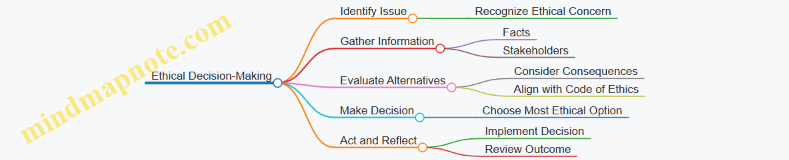
Practical Tips for Accountants
- Keep the Code of Ethics accessible and regularly referenced.
- Use real-life case studies during training to illustrate ethical principles.
- Encourage open dialogue about ethical challenges without fear of retaliation.
- Incorporate ethics assessments into performance reviews.
Establishing a robust Code of Ethics empowers accountants to uphold the highest standards of professionalism and fosters a culture of ethical compliance essential for the integrity of financial markets.
6.4 Example: Navigating Ethical Dilemmas in Client Reporting
Ethical dilemmas in client reporting are common challenges accountants face in the financial and banking sectors. These dilemmas often arise when there is pressure to present financial information in a way that may mislead stakeholders, or when conflicting interests challenge the accountant’s integrity.
Understanding Ethical Dilemmas in Client Reporting
An ethical dilemma occurs when an accountant must choose between two or more conflicting ethical principles or professional standards. For example, the duty to provide accurate and transparent reporting versus the pressure to satisfy client demands for favorable financial outcomes.
Mind Map: Ethical Dilemmas in Client Reporting
Example Scenario 1: Pressure to Manipulate Earnings
Situation: An accountant at a mid-sized bank is asked by the CFO to delay recognizing certain expenses to inflate quarterly earnings and meet investor expectations.
Ethical Dilemma: The accountant must decide whether to comply with the CFO’s request, which violates accounting principles and regulatory requirements, or to refuse and risk conflict with management.
Best Practice Approach:
- Refer to the professional code of ethics emphasizing integrity and objectivity.
- Document the request and communicate concerns to the appropriate compliance or audit committee.
- If pressure persists, consider escalating the issue through formal whistleblowing channels.
Outcome: By adhering to ethical standards, the accountant protects the firm’s reputation and avoids potential legal consequences.
Mind Map: Steps to Navigate Ethical Dilemmas
Example Scenario 2: Reporting Client’s Risk Exposure
Situation: An accountant discovers that a client’s reported risk exposure is understated, potentially misleading investors and regulators.
Ethical Dilemma: The client insists on maintaining the current report to avoid negative market reactions.
Best Practice Approach:
- Explain the importance of accurate risk reporting for regulatory compliance and investor trust.
- Propose revising the report with transparent disclosures.
- If the client refuses, escalate concerns internally or to regulatory bodies as required.
Outcome: Transparent reporting helps maintain market integrity and protects the accountant from complicity in unethical practices.
Summary
Navigating ethical dilemmas in client reporting requires a strong commitment to professional ethics, clear communication, and courage to uphold transparency. Accountants must balance client relationships with their duty to the public and regulators, ensuring that financial reports reflect true and fair views.
Additional Resources
- IFAC Code of Ethics for Professional Accountants
- AICPA Code of Professional Conduct
- COSO Framework on Ethical Conduct
- Whistleblower Protection Guidelines
By embedding these best practices and examples into daily workflows, accountants can confidently manage ethical dilemmas and reinforce trust in financial markets.
6.5 Whistleblowing Policies and Protecting Compliance Officers
Whistleblowing policies are essential components of a robust compliance framework, especially within the financial and banking sectors where transparency and ethical conduct are paramount. These policies empower employees, including compliance officers, to report unethical behavior, regulatory breaches, or suspicious activities without fear of retaliation.
Importance of Whistleblowing Policies
- Encourage a culture of openness and accountability.
- Help detect and prevent fraud, money laundering, and other financial crimes early.
- Protect the organization’s reputation and ensure regulatory compliance.
- Safeguard whistleblowers and compliance officers from retaliation.
Key Elements of Effective Whistleblowing Policies
Best Practices for Protecting Compliance Officers
-
Confidential Reporting Mechanisms: Establish multiple secure channels such as anonymous hotlines, encrypted emails, or third-party platforms to enable safe reporting.
-
Anti-Retaliation Policies: Clearly define and enforce strict consequences for retaliation against whistleblowers or compliance officers who raise concerns.
-
Legal Protections: Ensure compliance officers are aware of legal protections available under laws such as the Sarbanes-Oxley Act (SOX) or the EU Whistleblower Directive.
-
Support Systems: Provide counseling, legal advice, and peer support groups to help compliance officers manage the stress and risks associated with whistleblowing.
-
Regular Training: Conduct training sessions to educate employees and management about the importance of whistleblowing and the protections in place.
Example: Implementing a Whistleblowing Policy in a Mid-Sized Bank
Scenario: A mid-sized bank noticed a rise in suspicious transaction reports but lacked a formal whistleblowing policy. Compliance officers were hesitant to report due to fear of retaliation.
Action Taken:
- The bank introduced an anonymous whistleblowing hotline managed by an independent third party.
- Anti-retaliation clauses were incorporated into the employee handbook.
- Regular training sessions were held to educate staff about the new policy.
- Compliance officers received additional support through a dedicated legal advisory team.
Outcome:
- Reporting of suspicious activities increased by 40% within six months.
- Compliance officers felt more secure and empowered.
- The bank successfully detected and mitigated a potential money laundering scheme early.
Mind Map: Whistleblower Protection Framework
Additional Example: Protecting a Compliance Officer Who Reported Insider Trading
Situation: A compliance officer at a financial institution uncovered insider trading activity involving senior management.
Challenge: The officer feared retaliation and career damage.
Policy in Place: The institution had a whistleblowing policy with strict anti-retaliation enforcement and anonymous reporting.
Actions:
- The officer reported the activity via the anonymous hotline.
- The compliance team initiated a confidential investigation.
- The institution’s leadership publicly reaffirmed their commitment to protecting whistleblowers.
Result:
- The insider trading was reported to regulators and stopped.
- The compliance officer faced no retaliation and was later promoted for their integrity.
Summary
Whistleblowing policies are vital for maintaining ethical standards and regulatory compliance in financial markets. Protecting compliance officers through clear policies, secure reporting channels, and organizational support ensures that potential violations are reported promptly and addressed effectively. Cultivating a culture that values transparency and protection encourages proactive compliance and safeguards the institution’s integrity.
7. Technology and Automation in Regulatory Compliance
7.1 Regulatory Technology (RegTech) Overview
Regulatory Technology, commonly known as RegTech, refers to the use of innovative technology solutions to help financial institutions and accountants comply with regulatory requirements more efficiently and effectively. As financial markets become increasingly complex and regulations more stringent, RegTech has emerged as a critical tool to reduce compliance costs, improve accuracy, and enhance risk management.
What is RegTech?
RegTech encompasses a broad range of technologies including automation, artificial intelligence (AI), machine learning (ML), blockchain, and big data analytics. These technologies streamline compliance processes such as monitoring, reporting, risk assessment, and auditing.
Key Benefits of RegTech for Accountants:
- Automation of repetitive tasks: Reduces manual errors and frees up time for strategic activities.
- Real-time monitoring: Enables instant detection of compliance breaches.
- Improved data accuracy: Ensures financial reports and disclosures meet regulatory standards.
- Cost efficiency: Lowers the expenses related to compliance management.
- Enhanced risk management: Provides predictive analytics to foresee potential compliance risks.
Mind Map: Core Components of RegTech
Example 1: Automation in AML Compliance
A mid-sized bank implemented a RegTech solution that automates the screening of customer transactions against AML watchlists. The system uses AI-powered algorithms to flag suspicious activities in real-time, reducing manual review time by 70%. Accountants and compliance officers receive alerts with detailed transaction histories, enabling faster investigation and reporting.
Example 2: AI-Driven Anomaly Detection
An accounting firm adopted a RegTech platform that leverages machine learning to analyze vast volumes of trading data. The platform identifies unusual trading patterns that may indicate insider trading or market manipulation. This proactive approach helps accountants detect potential violations early and ensures adherence to market regulations.
Mind Map: RegTech Use Cases for Accountants
Best Practice: Integrating RegTech into Existing Accounting Workflows
- Assess current compliance challenges: Identify pain points where manual processes cause delays or errors.
- Select scalable RegTech solutions: Choose platforms that can grow with your organization and integrate with existing systems.
- Train staff thoroughly: Ensure accountants and compliance officers understand how to use RegTech tools effectively.
- Continuously monitor effectiveness: Use analytics dashboards to track compliance performance and adjust processes as needed.
Example 3: Blockchain for Transparent Auditing
A financial institution implemented a blockchain-based ledger for recording all compliance-related transactions. This immutable ledger allows accountants to perform audits with full transparency and traceability, significantly reducing the time required for regulatory audits and increasing trust with regulators.
Summary
RegTech is transforming how accountants approach regulatory compliance by introducing automation, AI, blockchain, and data analytics into everyday workflows. By embracing these technologies, accountants can enhance accuracy, reduce risks, and maintain compliance in an ever-evolving regulatory landscape.
7.2 Benefits of Automation in Compliance Processes
Automation in compliance processes has revolutionized how financial institutions and accountants manage regulatory obligations. By leveraging technology, organizations can enhance accuracy, efficiency, and responsiveness in adhering to complex financial market regulations.
Key Benefits of Automation in Compliance
-
Increased Accuracy and Reduced Human Error
- Automated systems minimize manual data entry errors.
- Consistent application of regulatory rules ensures fewer compliance breaches.
-
Enhanced Efficiency and Time Savings
- Automation accelerates routine compliance tasks such as transaction monitoring and report generation.
- Frees up accountants to focus on higher-value activities like risk analysis and strategic planning.
-
Real-Time Monitoring and Alerts
- Continuous surveillance of transactions and activities enables immediate detection of suspicious behavior.
- Early alerts help in timely remediation and reporting.
-
Improved Data Management and Record Keeping
- Automated systems maintain comprehensive audit trails and documentation.
- Facilitates easier retrieval during audits and regulatory inspections.
-
Cost Reduction
- Reduces the need for extensive manual labor and lowers compliance-related penalties.
- Streamlines resource allocation within compliance departments.
-
Scalability and Adaptability
- Automation tools can scale with business growth and adapt to evolving regulations.
- Enables quick updates to compliance rules without extensive manual rework.
Mind Map: Benefits of Automation in Compliance
Example 1: Automated Transaction Monitoring
A mid-sized bank implemented an automated transaction monitoring system to comply with AML regulations. The system flagged unusual transaction patterns in real-time, such as large transfers from high-risk jurisdictions. This allowed the compliance team to investigate promptly, reducing the risk of regulatory fines and enhancing the bank’s reputation.
Example 2: Automated Regulatory Reporting
An accounting firm adopted software that automatically compiles and formats regulatory reports according to MiFID II standards. This automation reduced the report preparation time from several days to a few hours, improved accuracy, and ensured timely submissions to regulators.
Mind Map: Real-World Examples of Automation Benefits
Best Practice: Integrating Automation with Human Oversight
While automation offers significant benefits, combining it with expert human judgment is essential. Accountants should use automated tools to handle repetitive tasks and data analysis, while focusing their expertise on interpreting results, making complex decisions, and managing exceptions.
Summary
Automation in compliance processes empowers accountants and financial institutions to meet regulatory demands more effectively. By improving accuracy, efficiency, and responsiveness, automation not only reduces risks but also supports sustainable compliance programs that can evolve with the financial market landscape.
7.3 Best Practice: Leveraging Data Analytics for Compliance Monitoring
In today’s complex financial markets, compliance monitoring has become increasingly data-intensive. Leveraging data analytics allows accountants and compliance officers to proactively identify risks, detect anomalies, and ensure adherence to regulatory requirements efficiently and accurately.
Why Use Data Analytics for Compliance Monitoring?
- Enhanced Detection: Identify suspicious patterns or transactions that manual reviews might miss.
- Efficiency Gains: Automate repetitive compliance checks, freeing up resources for deeper analysis.
- Real-Time Monitoring: Enable timely interventions before issues escalate.
- Improved Reporting: Generate accurate, data-driven reports for regulators.
Key Components of Data Analytics in Compliance
Practical Examples of Data Analytics in Compliance
-
Transaction Monitoring for AML Compliance
- Scenario: An accountant uses data analytics tools to scan thousands of transactions daily.
- Application: The system flags transactions that deviate from normal customer behavior, such as unusually large transfers or rapid movement of funds between accounts.
- Outcome: Suspicious transactions are investigated promptly, reducing the risk of money laundering.
-
Detecting Insider Trading Patterns
- Scenario: Compliance officers analyze trading data alongside employee access logs.
- Application: Using pattern recognition algorithms, unusual trading activity preceding major announcements is identified.
- Outcome: Early detection prevents regulatory breaches and protects firm reputation.
-
Regulatory Reporting Accuracy
- Scenario: Automated data aggregation ensures all required fields in regulatory reports are complete and consistent.
- Application: Data analytics tools validate report contents against regulatory criteria before submission.
- Outcome: Reduces errors and avoids penalties for inaccurate reporting.
Steps to Implement Data Analytics for Compliance Monitoring
Best Practices for Accountants
- Collaborate with IT and Data Scientists: Work closely to ensure data integrity and appropriate model development.
- Focus on Data Quality: Accurate analytics depend on clean, complete, and timely data.
- Customize Analytics to Business Context: Tailor models to reflect the specific risks and regulatory environment of your institution.
- Regularly Update Models: Financial markets evolve, so should your analytical approaches.
- Document Processes: Maintain clear records of analytics methodologies for audit and regulatory review.
Example: Using Data Analytics to Monitor Trading Activities
A mid-sized investment bank implemented a data analytics platform to monitor trading desks for compliance with market manipulation rules. The system aggregated trade data, timestamps, and employee communications. By applying anomaly detection algorithms, the platform flagged unusual spikes in trading volumes and suspicious timing patterns.
This proactive approach allowed compliance officers to investigate potential breaches early, resulting in a 30% reduction in compliance incidents over one year. Additionally, automated dashboards provided real-time insights, enabling faster decision-making and regulatory reporting.
Leveraging data analytics for compliance monitoring empowers accountants and compliance officers to move from reactive to proactive risk management, ensuring stronger adherence to financial market regulations and safeguarding organizational integrity.
7.4 Example: Using AI to Detect Anomalies in Financial Transactions
Artificial Intelligence (AI) has become a transformative tool in financial market compliance, particularly in detecting anomalies that could indicate fraud, money laundering, or other regulatory breaches. For accountants and compliance officers, understanding how AI can be applied to monitor transactions is critical for enhancing risk management and ensuring regulatory adherence.
What is Anomaly Detection in Financial Transactions?
Anomaly detection refers to identifying patterns in data that do not conform to expected behavior. In financial transactions, anomalies might include unusual transaction sizes, frequencies, or patterns that deviate from a customer’s typical behavior or industry norms.
How AI Enhances Anomaly Detection
- Machine Learning Models: AI systems learn from historical transaction data to establish what is ‘normal.’
- Real-Time Monitoring: AI can analyze transactions as they occur, enabling immediate flagging of suspicious activity.
- Pattern Recognition: AI identifies complex patterns that traditional rule-based systems might miss.
- Adaptive Learning: AI models continuously improve as they process more data, adapting to new fraud tactics.
Mind Map: AI-Based Anomaly Detection Workflow
Practical Example: Detecting Suspicious Wire Transfers
Scenario: A bank implements an AI system to monitor wire transfers for potential money laundering activities.
-
Step 1: Data Input
- The AI ingests transaction data, including amount, origin, destination, frequency, and customer profile.
-
Step 2: Pattern Learning
- The AI learns typical transaction patterns for each customer segment.
-
Step 3: Anomaly Detection
- The system flags a series of wire transfers just below the reporting threshold, sent to multiple offshore accounts over a short period.
-
Step 4: Alert and Investigation
- Compliance officers receive an alert with a risk score.
- They investigate and find the activity suspicious, leading to a report filed with regulatory authorities.
Mind Map: Example Case Study - Wire Transfer Anomaly
Best Practices for Accountants Using AI for Anomaly Detection
- Integrate AI with Existing Controls: Use AI as a complement, not a replacement, for manual reviews.
- Regularly Update AI Models: Ensure models are retrained with new data to capture evolving fraud tactics.
- Collaborate Across Departments: Compliance, IT, and accounting teams should work together to interpret AI alerts.
- Document AI Decisions: Maintain records of AI-generated alerts and subsequent actions for audit trails.
- Train Staff: Equip accountants and compliance officers with knowledge to understand AI outputs.
Additional Example: Retail Banking Transaction Monitoring
A retail bank uses AI to monitor debit card transactions. The AI detects an unusual spike in overseas transactions from a customer who typically transacts locally. The system flags this for review, and the bank contacts the customer to verify activity, preventing potential fraud.
Summary
AI-powered anomaly detection is a powerful tool for accountants and compliance officers to identify suspicious financial transactions efficiently and accurately. By leveraging AI, organizations can enhance their compliance frameworks, reduce false positives, and respond swiftly to potential regulatory breaches.
For further reading, consider exploring RegTech solutions specializing in AI-driven compliance monitoring and case studies from leading financial institutions.
7.5 Challenges and Limitations of Technology in Compliance
While technology, especially Regulatory Technology (RegTech), has revolutionized compliance processes by automating monitoring, reporting, and risk assessment, it is essential for accountants and compliance officers to understand its inherent challenges and limitations. Recognizing these helps in designing balanced compliance strategies that combine technology with human oversight.
Key Challenges and Limitations
Example Scenario: Overreliance on Automation Leading to Compliance Gaps
A mid-sized bank implemented an AI-driven transaction monitoring system to detect suspicious activities. Initially, the system flagged numerous transactions, overwhelming the compliance team. Over time, staff began to ignore alerts, assuming the technology would catch all issues. Unfortunately, a sophisticated money laundering scheme went undetected because the AI was not programmed to recognize the new pattern, and human oversight was minimal. This led to regulatory fines and reputational damage.
Mind Map: Balancing Technology and Human Oversight in Compliance
Best Practices to Address Challenges
- Maintain Data Quality: Regularly audit and cleanse data inputs to ensure accuracy.
- Hybrid Approach: Combine automated tools with expert human review to interpret complex cases.
- Continuous Updates: Ensure compliance technology is updated promptly to reflect regulatory changes.
- Training and Awareness: Educate staff on technology capabilities and limitations to prevent overreliance.
- Cybersecurity Measures: Implement robust security protocols to protect sensitive data.
- Transparency: Use explainable AI models where possible to facilitate regulatory reporting and trust.
- Manage Alert Fatigue: Tune systems to prioritize high-risk alerts and reduce noise.
By understanding these challenges and limitations, accountants and compliance officers can better leverage technology as a powerful tool while safeguarding against its pitfalls, ensuring a resilient and effective compliance framework.
8. Training and Continuous Professional Development
8.1 Importance of Ongoing Training in Regulatory Compliance
In the fast-evolving landscape of financial market regulations, ongoing training is not just beneficial—it’s essential for accountants and compliance officers. Continuous education ensures that professionals remain up-to-date with the latest regulatory changes, understand emerging risks, and apply best practices effectively to maintain compliance and protect their organizations.
Why Ongoing Training is Crucial
- Regulatory Changes Are Frequent: Laws and regulations such as MiFID II, Basel III, and AML directives are regularly updated. Without continuous training, accountants risk non-compliance due to outdated knowledge.
- Complexity of Financial Products: New financial instruments and technologies (e.g., cryptocurrencies, derivatives) require specialized understanding.
- Risk Mitigation: Well-trained staff can identify and mitigate compliance risks early, reducing the chance of costly penalties.
- Enhances Professional Competence: Training improves skills in interpreting regulations and applying them practically.
- Promotes a Compliance Culture: Regular training fosters awareness and accountability within the organization.
Mind Map: Key Benefits of Ongoing Training in Regulatory Compliance
Best Practice Example: Scenario-Based Training
A leading financial institution implemented quarterly scenario-based training sessions for their accounting and compliance teams. Each session focused on a recent regulatory update or a compliance challenge faced by the industry. For instance, when new AML regulations were introduced, the training included real-life scenarios where employees practiced identifying suspicious transactions and filing reports.
Outcome: This approach improved employees’ confidence and ability to apply regulations practically, resulting in a 30% reduction in compliance errors reported over the next year.
Mind Map: Components of Effective Ongoing Training
Example: Leveraging E-Learning Platforms
An accounting firm adopted an e-learning platform that automatically updates training modules based on regulatory changes. Accountants receive notifications when new content is available and must complete short assessments to ensure comprehension.
Result: This flexible approach allowed the firm to train remote teams efficiently and maintain a high compliance standard without disrupting daily operations.
Summary
Ongoing training in regulatory compliance empowers accountants to navigate complex and dynamic financial regulations confidently. By incorporating interactive methods, real-world examples, and leveraging technology, organizations can build a knowledgeable workforce that safeguards against compliance risks and drives ethical financial practices.
8.2 Designing Effective Training Programs for Accountants
Designing effective training programs for accountants in the finance and banking sectors is crucial to ensure they stay compliant with evolving financial market regulations. A well-structured training program not only enhances knowledge but also builds practical skills necessary to navigate complex regulatory environments.
Key Components of an Effective Training Program
- Needs Assessment: Identify knowledge gaps and regulatory updates relevant to accountants.
- Learning Objectives: Define clear, measurable goals for what participants should achieve.
- Content Development: Create engaging, relevant, and up-to-date training materials.
- Delivery Methods: Choose appropriate formats such as workshops, e-learning, webinars, or blended learning.
- Assessment & Feedback: Incorporate quizzes, case studies, and feedback mechanisms to evaluate understanding.
- Continuous Improvement: Regularly update the program based on feedback and regulatory changes.
Mind Map: Designing Effective Training Programs
Best Practice: Tailoring Training to Role and Experience
Accountants have varying levels of experience and responsibilities. Tailoring training content ensures relevance and engagement.
- Junior Accountants: Focus on foundational regulatory knowledge and basic compliance procedures.
- Senior Accountants: Emphasize complex regulatory frameworks, risk management, and leadership in compliance.
- Compliance Officers: Deep dive into regulatory interpretation, enforcement, and audit readiness.
Example: Implementing a Tiered Training Program
A mid-sized bank developed a tiered training program:
- Level 1: Introductory e-learning on AML and KYC basics for new hires.
- Level 2: Interactive workshops on financial reporting standards and insider trading for mid-level accountants.
- Level 3: Advanced seminars on regulatory changes and risk management for senior staff.
This approach improved compliance awareness by 40% within six months, as measured by post-training assessments.
Mind Map: Tiered Training Program Structure
Incorporating Interactive Elements
Interactive elements such as role-playing, simulations, and scenario-based learning help accountants apply knowledge practically.
- Role-Playing: Simulate client onboarding to practice KYC compliance.
- Simulations: Use software to mimic transaction monitoring for suspicious activity detection.
- Scenario Analysis: Discuss ethical dilemmas related to insider information.
Example: Scenario-Based Learning Module
During a compliance workshop, accountants were presented with a scenario where a client’s transaction raised AML red flags. Participants had to:
- Identify suspicious indicators.
- Decide on escalation procedures.
- Document findings per regulatory requirements.
This hands-on approach improved decision-making confidence and compliance accuracy.
Mind Map: Interactive Training Elements
Measuring Training Effectiveness
To ensure training programs achieve their goals, implement:
- Pre- and Post-Training Assessments: Measure knowledge gained.
- Feedback Surveys: Gather participant insights.
- Performance Metrics: Track compliance incidents before and after training.
Example: Feedback-Driven Program Improvement
After initial training sessions, feedback indicated a need for more real-world examples. The program was updated to include recent regulatory breach case studies, resulting in higher engagement and improved assessment scores.
Summary
Designing effective training programs for accountants requires a structured approach that addresses specific needs, incorporates interactive learning, and continuously evolves with regulatory changes. By combining clear objectives, tailored content, and practical examples, organizations can empower accountants to maintain compliance and uphold financial market integrity.
8.3 Best Practice: Scenario-Based Learning and Role-Playing
Scenario-based learning and role-playing are highly effective training techniques for accountants working in financial market regulations. These methods immerse learners in realistic situations, encouraging active problem-solving and decision-making that mirror real-world compliance challenges.
Why Scenario-Based Learning and Role-Playing?
- Engagement: Learners actively participate rather than passively absorb information.
- Contextual Understanding: Complex regulations become clearer when applied to practical scenarios.
- Critical Thinking: Encourages analysis of consequences and ethical considerations.
- Retention: Experiential learning improves long-term memory of regulatory requirements.
Mind Map: Benefits of Scenario-Based Learning
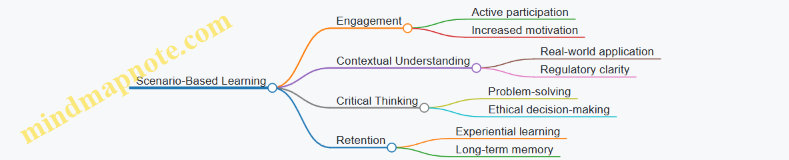
Implementing Scenario-Based Learning in Compliance Training
- Identify Key Regulatory Topics: Select areas such as AML, insider trading, or reporting obligations.
- Develop Realistic Scenarios: Create situations that accountants might face, e.g., detecting suspicious transactions or handling confidential information.
- Define Roles: Assign roles such as compliance officer, auditor, or client representative.
- Facilitate Role-Playing Sessions: Encourage participants to act out scenarios, make decisions, and discuss outcomes.
- Debrief and Reflect: Analyze decisions, highlight best practices, and discuss alternative approaches.
Mind Map: Steps to Implement Scenario-Based Learning
Example Scenario 1: Detecting Suspicious Transactions (AML)
Scenario: An accountant notices a series of unusually large wire transfers from a client with no clear business rationale.
Role-Playing Objective:
- Identify red flags.
- Decide on steps to escalate the issue.
- Prepare a Suspicious Activity Report (SAR).
Discussion Points:
- What indicators triggered suspicion?
- How to document findings?
- Legal obligations and timelines for reporting.
Example Scenario 2: Insider Trading Awareness
Scenario: An accountant overhears confidential information about a pending merger that could affect stock prices.
Role-Playing Objective:
- Decide how to handle the information.
- Understand restrictions on trading and disclosure.
- Communicate with compliance and legal teams.
Discussion Points:
- Ethical considerations.
- Regulatory consequences of insider trading.
- Best practices for information barriers.
Mind Map: Example Scenario 1 - AML Suspicious Transaction
Mind Map: Example Scenario 2 - Insider Trading
Tips for Effective Scenario-Based Learning
- Use diverse scenarios covering different regulations and ethical dilemmas.
- Encourage open discussion and multiple viewpoints.
- Incorporate feedback loops to reinforce learning points.
- Use real data examples where possible, anonymized for privacy.
- Combine with quizzes or assessments to measure understanding.
By integrating scenario-based learning and role-playing into compliance training, accountants can better internalize financial market regulations, improve their decision-making skills, and contribute more effectively to their organizations’ regulatory compliance efforts.
8.4 Example: Conducting a Compliance Workshop on New Regulations
Conducting a compliance workshop on new financial market regulations is a critical step to ensure that accountants and compliance officers fully understand and can effectively implement the changes. This example outlines a step-by-step approach to designing and executing an engaging, informative, and practical workshop.
Workshop Objective:
To equip accounting and compliance teams with a clear understanding of the latest regulatory updates, their implications, and best practices for compliance.
Step 1: Preparation and Planning
- Identify the New Regulations: For example, the recent amendments to Anti-Money Laundering (AML) requirements.
- Define Target Audience: Accountants, compliance officers, and relevant finance staff.
- Set Learning Outcomes: Participants should be able to explain the new regulations, identify compliance risks, and apply best practices.
Step 2: Workshop Structure
| Segment | Duration | Description |
|---|---|---|
| Introduction | 15 mins | Overview of new regulations and objectives |
| Regulatory Deep Dive | 30 mins | Detailed explanation of key regulatory points |
| Interactive Mind Map | 20 mins | Visual mapping of regulation components |
| Case Study Analysis | 25 mins | Real-world examples and group discussion |
| Best Practices | 20 mins | Practical tips and compliance strategies |
| Q&A and Wrap-up | 10 mins | Address questions and summarize key takeaways |
Step 3: Interactive Mind Map
Below is a mind map to visually organize the new AML regulation components:
AML Regulation Workshop Mind Map
This mind map helps participants visualize the regulation’s scope and interrelated components.
Step 4: Case Study Example
Scenario: A mid-sized bank failed to update its transaction monitoring system after AML regulation changes, resulting in delayed reporting of suspicious activities.
Discussion Points:
- What compliance gaps existed?
- How could accountants have identified these gaps?
- What best practices could prevent such failures?
Best Practice Highlight: Regularly review and update internal controls aligned with regulatory changes.
Step 5: Best Practices Shared During Workshop
- Continuous Education: Schedule quarterly training sessions to keep teams updated.
- Cross-Department Collaboration: Encourage communication between compliance, accounting, and IT teams.
- Use of Technology: Implement RegTech solutions for real-time monitoring.
- Documentation: Maintain clear records of compliance activities and decisions.
Step 6: Post-Workshop Follow-Up
- Share workshop materials and mind maps digitally.
- Conduct quizzes or assessments to reinforce learning.
- Schedule feedback sessions to improve future workshops.
Summary
Conducting a compliance workshop with structured content, interactive mind maps, real-world examples, and best practices ensures that accountants and compliance officers are well-prepared to navigate new financial market regulations effectively. This approach fosters engagement, deep understanding, and practical application.
Additional Mind Map Example: Compliance Workshop Flow
This mind map can be used by workshop facilitators to plan and communicate the session flow effectively.
8.5 Measuring Training Effectiveness and Knowledge Retention
Measuring the effectiveness of training programs and ensuring knowledge retention are critical steps in maintaining a compliant and well-informed accounting team. Without proper evaluation, organizations risk investing time and resources into training that does not translate into improved performance or regulatory adherence.
Why Measure Training Effectiveness?
- Validate Investment: Ensure that training budgets are well spent.
- Identify Gaps: Detect areas where employees struggle or misunderstand regulations.
- Improve Programs: Refine training content and delivery methods based on feedback.
- Ensure Compliance: Confirm that knowledge translates into compliant behavior.
Key Metrics to Evaluate Training Effectiveness
- Pre- and Post-Training Assessments: Measure knowledge gained.
- Behavioral Observations: Monitor changes in workplace practices.
- Compliance Incident Rates: Track reduction in regulatory breaches.
- Employee Feedback: Gather subjective insights on training relevance and clarity.
- Retention Tests: Conduct follow-up quizzes weeks or months later.
Mind Map: Measuring Training Effectiveness
Best Practices for Measuring Knowledge Retention
- Use Spaced Repetition: Reinforce key concepts over time through periodic refreshers.
- Scenario-Based Assessments: Test application of knowledge in realistic situations.
- Peer Discussions: Encourage collaborative learning and knowledge sharing.
- Microlearning Modules: Break down content into digestible segments for easier retention.
- Leverage Technology: Use learning management systems (LMS) to track progress and retention.
Example: Implementing a Knowledge Retention Program in a Banking Compliance Team
Context: A regional bank noticed recurring compliance errors related to AML regulations despite regular training.
Approach:
- Introduced monthly microlearning modules focusing on specific AML topics.
- Conducted short quizzes immediately after training and again after 30 days.
- Held quarterly peer review sessions where team members discussed recent compliance challenges.
- Used LMS analytics to identify employees needing additional support.
Outcome:
- 40% reduction in AML-related compliance errors within six months.
- Improved employee confidence and engagement with compliance topics.
Mind Map: Knowledge Retention Strategies
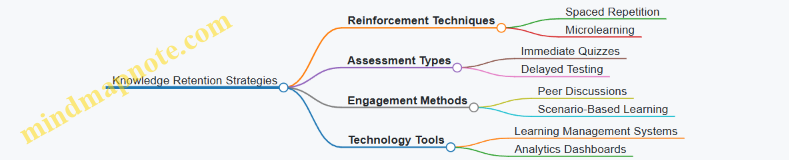
Practical Tips for Accountants and Compliance Officers
- Schedule regular refresher sessions aligned with regulatory updates.
- Encourage a culture where asking questions and clarifying doubts is welcomed.
- Use real-world examples during training to enhance understanding.
- Track individual and team progress to tailor future training efforts.
- Document training outcomes to demonstrate compliance to auditors and regulators.
By systematically measuring training effectiveness and knowledge retention, finance and banking organizations can ensure their accountants and compliance officers remain equipped to navigate the complex regulatory landscape confidently and accurately.
9. Case Studies and Real-World Applications
9.1 Case Study: Successful Compliance Implementation in a Large Bank
Background
Global Bank Corp (GBC) is a multinational financial institution with operations in over 30 countries. Facing increasing regulatory scrutiny due to evolving financial market regulations such as Basel III, MiFID II, and AML directives, GBC embarked on a comprehensive compliance implementation project to strengthen its regulatory adherence and risk management.
Objectives of the Compliance Implementation
- Ensure full regulatory compliance across all jurisdictions
- Integrate compliance into daily accounting and reporting processes
- Minimize risk of regulatory breaches and associated penalties
- Enhance transparency and reporting accuracy
- Foster a culture of compliance among employees
Step 1: Regulatory Mapping and Gap Analysis
GBC started by mapping all relevant regulations to its existing policies and procedures. This gap analysis identified areas needing improvement, such as:
- Insufficient AML transaction monitoring
- Lack of standardized reporting formats for MiFID II
- Incomplete documentation of internal controls
Example: The AML team discovered that certain cross-border transactions were not being flagged due to outdated thresholds, leading to potential non-compliance.
Step 2: Designing and Strengthening Internal Controls
Based on the gap analysis, GBC redesigned its internal controls, focusing on:
- Automated transaction monitoring systems
- Enhanced KYC procedures integrated with accounting software
- Regular internal audits and control testing
Mind Map: Internal Controls Design
Example: GBC implemented an AI-driven AML system that flagged suspicious transactions automatically, reducing manual review time by 40%.
Step 3: Training and Culture Building
To embed compliance into the organizational culture, GBC:
- Conducted mandatory training sessions for accountants and compliance officers
- Developed scenario-based workshops simulating regulatory challenges
- Established a whistleblowing hotline with guaranteed anonymity
Example: A workshop simulated a scenario where an accountant detected a potential insider trading case, guiding participants through proper escalation procedures.
Step 4: Reporting and Continuous Improvement
GBC revamped its reporting framework to ensure timely and accurate submissions:
- Standardized templates for regulatory reports
- Automated data extraction from accounting systems
- Monthly compliance dashboards for senior management
Mind Map: Reporting Framework
Example: The new reporting system reduced errors by 25% and improved submission times by 30%, helping GBC avoid late filing penalties.
Results and Impact
- Zero regulatory fines in the 2 years following implementation
- Improved risk detection and mitigation capabilities
- Enhanced reputation with regulators and clients
- Increased employee awareness and accountability
Key Takeaways for Accountants
- Proactively map regulations to internal processes to identify compliance gaps
- Leverage technology to automate monitoring and reporting
- Engage in continuous training and ethical culture building
- Maintain clear, standardized reporting to ensure transparency
This case study demonstrates how a large bank successfully integrated complex financial market regulations into its accounting and compliance framework, serving as a model for accountants aiming to lead compliance initiatives effectively.
9.2 Case Study: Consequences of Non-Compliance and Lessons Learned
Introduction
Non-compliance with financial market regulations can lead to severe consequences for financial institutions, accountants, and compliance officers. This case study explores a real-world example where a major bank failed to comply with AML (Anti-Money Laundering) regulations, resulting in hefty fines, reputational damage, and operational disruptions. We will analyze the root causes, consequences, and key lessons learned to help accountants understand the critical importance of regulatory adherence.
Case Overview: XYZ Bank AML Breach
Background: XYZ Bank, a multinational financial institution, was found to have inadequate AML controls, which allowed suspicious transactions to go undetected for over two years.
Regulatory Breach:
- Failure to report suspicious transactions in a timely manner
- Insufficient customer due diligence (CDD) and KYC procedures
- Lack of effective internal controls and monitoring systems
Consequences:
- $150 million in regulatory fines
- Mandatory overhaul of compliance systems
- Loss of client trust and negative media coverage
- Increased scrutiny from regulators globally
Mind Map: Consequences of Non-Compliance
Root Causes Identified
- Inadequate Training: Staff were not sufficiently trained on AML regulations and red flags.
- Poor Risk Assessment: The bank failed to update risk profiles for high-risk customers.
- Weak Internal Controls: Lack of automated monitoring tools and ineffective manual reviews.
- Communication Gaps: Compliance team was not integrated effectively with front-office operations.
Lessons Learned and Best Practices
Strengthen Training Programs
- Regular, role-specific AML and compliance training.
- Scenario-based learning to identify suspicious activities.
Example: XYZ Bank introduced quarterly workshops where accountants and compliance officers reviewed real-life suspicious transaction scenarios, improving detection rates by 40%.
Implement Robust Risk Assessment Frameworks
- Continuous updating of customer risk profiles.
- Use of data analytics to identify emerging risks.
Example: The bank adopted a risk-scoring system that flagged high-risk clients automatically, enabling proactive monitoring.
Enhance Internal Controls and Automation
- Deploy RegTech solutions for transaction monitoring.
- Automate alerts for unusual activities.
Example: XYZ Bank integrated AI-powered monitoring tools that reduced false positives by 30% and improved investigation efficiency.
Foster Cross-Departmental Collaboration
- Establish clear communication channels between compliance, accounting, and front-office teams.
- Regular compliance audits involving multiple departments.
Example: Monthly cross-functional meetings were introduced to discuss compliance issues and share insights, resulting in faster resolution of potential breaches.
Mind Map: Best Practices to Prevent Non-Compliance
Conclusion
This case study underscores the critical role accountants and compliance officers play in maintaining regulatory compliance. Non-compliance not only results in financial penalties but also damages reputation and operational efficiency. By adopting comprehensive training, robust risk assessments, automated controls, and fostering collaboration, financial institutions can significantly mitigate compliance risks.
Summary Table: Consequences vs. Lessons Learned
| Consequence | Lesson Learned | Practical Example |
|---|---|---|
| $150 million fine | Strengthen training programs | Quarterly AML workshops with scenario-based learning |
| Reputational damage | Enhance internal controls and automation | AI-powered transaction monitoring system |
| Operational disruptions | Foster cross-department collaboration | Monthly compliance meetings across teams |
| Regulatory scrutiny | Implement robust risk assessment | Dynamic risk scoring for customers |
By internalizing these lessons, accountants can become proactive compliance champions, safeguarding their organizations from costly regulatory breaches.
9.3 Best Practice: Learning from Industry Failures and Successes
Understanding the lessons embedded in both failures and successes within the financial market regulatory landscape is crucial for accountants. These lessons help build resilient compliance frameworks, avoid costly mistakes, and foster a culture of continuous improvement.
Why Learn from Failures and Successes?
- Failures highlight gaps in controls, communication, or understanding of regulations.
- Successes demonstrate effective strategies and innovative compliance solutions.
- Learning from both enables proactive risk management and informed decision-making.
Mind Map: Learning from Industry Failures and Successes
Example 1: Failure - The Wells Fargo Account Fraud Scandal
- Background: Wells Fargo employees created millions of unauthorized accounts to meet aggressive sales targets.
- Regulatory Breach: Violated consumer protection laws and internal compliance policies.
- Lessons for Accountants:
- Importance of ethical standards and whistleblower protections.
- Need for robust internal controls and monitoring mechanisms.
- Ensuring incentive structures do not encourage unethical behavior.
Example 2: Success - JPMorgan Chase’s Enhanced Compliance Post-2012
- Background: After the “London Whale” trading loss, JPMorgan revamped its risk and compliance functions.
- Success Factors:
- Investment in advanced risk analytics and real-time monitoring.
- Strengthened communication between compliance and trading desks.
- Comprehensive training programs for staff.
- Lessons for Accountants:
- Proactive risk identification and mitigation.
- Integration of technology to support compliance.
- Continuous education to adapt to evolving regulations.
Mind Map: Applying Lessons to Accounting Practices
Practical Steps for Accountants
- Conduct Post-Mortem Analyses: After any compliance incident, perform thorough reviews to identify root causes.
- Benchmark Against Industry Peers: Study how leading firms manage compliance and incorporate relevant practices.
- Implement Scenario-Based Training: Use real-world failure and success stories to train teams.
- Develop a Knowledge Repository: Maintain a centralized database of lessons learned and best practices.
- Encourage Open Communication: Promote a culture where employees feel safe reporting concerns.
By systematically learning from the industry’s past, accountants can transform regulatory challenges into opportunities for strengthening compliance and supporting sustainable business growth.
9.4 Example: How a Small Firm Overcame Compliance Challenges
Small accounting firms often face unique challenges in adhering to financial market regulations due to limited resources, less specialized staff, and evolving regulatory landscapes. This example illustrates how “BrightPath Accounting,” a small firm with 15 employees, successfully navigated compliance hurdles by adopting strategic best practices and leveraging technology.
Background
BrightPath Accounting primarily serves local financial institutions and investment advisors. With increasing regulatory demands such as AML (Anti-Money Laundering) and MiFID II reporting requirements, the firm initially struggled with:
- Keeping up-to-date with frequent regulatory changes
- Implementing robust internal controls
- Ensuring timely and accurate reporting
- Training staff effectively on compliance matters
Step 1: Conducting a Compliance Gap Analysis
BrightPath began by mapping out all applicable regulations and comparing them against their existing processes.
Mind Map: Compliance Gap Analysis
This visual helped prioritize areas needing immediate attention.
Step 2: Implementing Automated Controls
To address manual review inefficiencies, BrightPath invested in a RegTech solution tailored for small firms. This tool automated transaction monitoring for suspicious activities and generated alerts for potential AML breaches.
Example:
- Before automation, suspicious transactions were flagged manually, leading to delays.
- After automation, alerts were generated in real-time, enabling quick investigation and reporting.
Mind Map: Automated Controls Implementation
Step 3: Enhancing Staff Training and Awareness
Recognizing that technology alone was insufficient, BrightPath developed an ongoing training program.
Best Practice: Scenario-based learning was introduced, where accountants role-played compliance situations such as identifying insider trading or handling client KYC documentation.
Example Scenario:
- An accountant receives a client transaction flagged by the system.
- They follow a checklist to verify client identity and transaction legitimacy.
- If suspicious, they escalate to the compliance officer.
Mind Map: Training Program Structure
Step 4: Establishing Clear Documentation and Reporting Protocols
BrightPath standardized documentation practices to ensure transparency and audit readiness.
Example:
- All compliance checks were logged in a centralized system.
- Reports were formatted to meet regulatory expectations, reducing rework.
Mind Map: Documentation & Reporting
Results and Lessons Learned
- Compliance Confidence: BrightPath reduced compliance incidents by 70% within the first year.
- Efficiency Gains: Automated tools cut manual review time by 50%.
- Staff Empowerment: Training increased staff engagement and proactive compliance behavior.
Summary Mind Map: BrightPath’s Compliance Journey
This example demonstrates that even small firms can overcome compliance challenges by systematically assessing gaps, leveraging technology, investing in staff development, and maintaining clear documentation. Accountants in similar settings can replicate these best practices to build resilient and compliant operations.
9.5 Integrating Lessons Learned into Daily Accounting Practices
Incorporating lessons learned from past compliance experiences and case studies into everyday accounting routines is essential for building a resilient and proactive compliance culture. This section explores practical ways accountants can embed these insights into their daily workflows, supported by mind maps and real-world examples.
Why Integrate Lessons Learned?
- Prevent Recurrence of Errors: Avoid repeating compliance mistakes by understanding root causes.
- Enhance Accuracy: Improve financial reporting and regulatory adherence.
- Boost Efficiency: Streamline processes by applying proven best practices.
- Strengthen Risk Management: Identify and mitigate emerging risks early.
Mind Map: Integrating Lessons Learned into Daily Practices
Practical Steps to Integrate Lessons Learned
-
Create a Centralized Lessons Learned Repository
- Document compliance incidents, resolutions, and key takeaways.
- Example: A bank maintains a digital log accessible to all accounting staff detailing past AML compliance breaches and corrective actions.
-
Update Standard Operating Procedures (SOPs)
- Reflect new insights and regulatory changes.
- Example: After identifying gaps in transaction monitoring, an accounting team revises SOPs to include additional verification steps.
-
Embed Compliance Checklists into Daily Tasks
- Use checklists derived from past errors to ensure no step is missed.
- Example: Accountants use a checklist before submitting regulatory reports to verify data accuracy and completeness.
-
Conduct Regular Training Based on Real Cases
- Use past compliance failures and successes as training material.
- Example: Quarterly workshops simulate scenarios like detecting suspicious transactions based on historical cases.
-
Leverage Technology for Continuous Monitoring
- Implement tools that flag anomalies or deviations from compliance norms.
- Example: Automated software alerts accountants when transactions exceed predefined risk thresholds.
-
Foster a Culture of Open Communication
- Encourage reporting of near-misses and compliance concerns without fear.
- Example: An anonymous hotline allows accountants to report potential compliance issues promptly.
Example: Applying Lessons Learned from a Suspicious Transaction Incident
Scenario: A financial institution experienced a delayed report of suspicious activity, resulting in regulatory penalties.
Lesson Learned: The reporting process lacked clear accountability and timely escalation.
Integration into Daily Practice:
- Updated SOP: Defined clear roles and timelines for suspicious activity reporting.
- Checklist: Added mandatory sign-offs before submission.
- Training: Conducted role-play exercises simulating suspicious transaction detection.
- Technology: Implemented automated reminders for pending reports.
Outcome: Subsequent suspicious activity reports were filed promptly, reducing regulatory risk.
Mind Map: Continuous Improvement Cycle for Compliance
By systematically integrating lessons learned into daily accounting practices, accountants not only enhance compliance but also contribute to the overall integrity and stability of financial markets. This proactive approach transforms past challenges into future strengths, ensuring continuous growth and regulatory alignment.
10. Future Trends in Financial Market Regulations
10.1 Emerging Regulatory Themes and Global Harmonization
As financial markets evolve rapidly, regulators worldwide are adapting to new challenges by introducing emerging regulatory themes and striving for greater global harmonization. For accountants, understanding these trends is crucial to ensure compliance across jurisdictions and to anticipate regulatory shifts that impact financial reporting and risk management.
Key Emerging Regulatory Themes
- Sustainability and ESG Reporting
- Digital Assets and Cryptocurrency Regulation
- Data Privacy and Cybersecurity Compliance
- Enhanced Anti-Money Laundering (AML) Measures
- Technology-Driven Regulatory Reporting (RegTech)
Mind Map: Emerging Regulatory Themes
Global Harmonization Efforts
Global harmonization aims to reduce regulatory fragmentation, making compliance more efficient for multinational firms and ensuring consistent market integrity.
- Basel Committee on Banking Supervision: Sets global standards for banking regulation, including capital adequacy and risk management.
- International Financial Reporting Standards (IFRS): Promotes uniform accounting standards worldwide.
- Financial Action Task Force (FATF): Develops AML and counter-terrorism financing standards adopted globally.
- International Organization of Securities Commissions (IOSCO): Coordinates securities regulation to protect investors and ensure fair markets.
Mind Map: Global Harmonization Bodies & Focus Areas
Example: Harmonizing ESG Reporting Across Borders
A multinational bank operating in Europe, Asia, and North America faces varying ESG disclosure requirements. By aligning its internal reporting framework with the EU Taxonomy Regulation and referencing the Task Force on Climate-related Financial Disclosures (TCFD) recommendations, the bank creates a harmonized ESG reporting process. This approach simplifies compliance, improves transparency, and enhances investor confidence globally.
Best Practice for Accountants
- Stay Informed: Regularly monitor updates from global regulatory bodies and local regulators.
- Cross-Functional Collaboration: Work closely with legal, compliance, and risk teams to interpret evolving regulations.
- Implement Flexible Frameworks: Design reporting and compliance systems adaptable to multiple regulatory regimes.
- Leverage Technology: Use RegTech solutions to automate compliance checks and reporting.
Understanding emerging regulatory themes and global harmonization efforts empowers accountants to navigate complex compliance landscapes effectively, ensuring their organizations remain resilient and trustworthy in the global financial market.
10.2 The Impact of Cryptocurrency and Digital Assets on Compliance
The rise of cryptocurrency and digital assets has introduced a new dimension to financial market regulations, posing unique challenges and opportunities for accountants and compliance officers. Understanding these impacts is critical for maintaining regulatory compliance and managing risks effectively.
Overview of Cryptocurrency and Digital Assets
- Cryptocurrency: Digital or virtual currency that uses cryptography for security, operating independently of a central bank (e.g., Bitcoin, Ethereum).
- Digital Assets: Broader category including cryptocurrencies, tokens, NFTs, and other blockchain-based assets.
Key Compliance Challenges Introduced by Cryptocurrencies
- Regulatory Uncertainty: Regulations vary widely across jurisdictions and are evolving rapidly.
- AML/KYC Difficulties: Pseudonymous transactions complicate identification of parties.
- Valuation and Reporting: Volatility and lack of standardized valuation methods.
- Tax Compliance: Complexities in tracking transactions and taxable events.
- Fraud and Market Manipulation Risks: Increased potential for scams and price manipulation.
Mind Map: Compliance Challenges with Cryptocurrency
Best Practices for Compliance with Cryptocurrency and Digital Assets
- Implement Robust AML/KYC Procedures: Use blockchain analytics tools to trace transactions and verify counterparties.
- Stay Updated on Regulatory Changes: Monitor guidance from bodies like the SEC, FATF, and local regulators.
- Develop Clear Valuation Policies: Adopt consistent methods for valuing digital assets in financial statements.
- Enhance Transaction Monitoring: Use automated systems to detect suspicious activity.
- Educate Staff Continuously: Train accountants and compliance officers on digital asset risks and controls.
Example: AML Compliance in Cryptocurrency Transactions
A mid-sized financial firm integrated a blockchain analytics platform to monitor incoming and outgoing cryptocurrency transactions. When a transaction originated from a wallet flagged for suspicious activity, the system automatically triggered a review. The compliance team then performed enhanced due diligence, verifying the counterparty’s identity and transaction purpose before approving the transaction. This approach helped the firm meet AML requirements despite the pseudonymous nature of cryptocurrencies.
Mind Map: Best Practices for Cryptocurrency Compliance
Reporting and Taxation Considerations
- Accurate Record-Keeping: Maintain detailed logs of all digital asset transactions.
- Recognizing Taxable Events: Sales, exchanges, and conversions may trigger tax liabilities.
- Disclosure Requirements: Some jurisdictions require explicit reporting of digital asset holdings.
Example: Tax Reporting for Digital Asset Gains
An accountant at a financial institution developed a spreadsheet tracking all cryptocurrency trades, including dates, amounts, and fair market values at the time of each transaction. This enabled accurate calculation of capital gains and losses for tax reporting. The accountant also ensured that the firm complied with local tax authority requirements by submitting detailed disclosures of digital asset holdings.
Future Outlook
As digital assets continue to evolve, regulations will likely become more standardized and comprehensive. Accountants must proactively adapt compliance frameworks to incorporate emerging technologies such as decentralized finance (DeFi) and central bank digital currencies (CBDCs).
Summary
Cryptocurrency and digital assets significantly impact financial market compliance by introducing new risks and regulatory complexities. By adopting robust AML/KYC measures, staying abreast of regulatory developments, implementing clear valuation and reporting policies, and leveraging technology, accountants can effectively manage these challenges.
10.3 Best Practice: Preparing for Regulatory Changes Proactively
In the fast-evolving landscape of financial market regulations, accountants must adopt a proactive approach to prepare for regulatory changes. This not only ensures compliance but also minimizes disruption to business operations and enhances the organization’s reputation.
Why Prepare Proactively?
- Avoid Penalties: Early adaptation reduces the risk of fines and sanctions.
- Maintain Competitive Advantage: Staying ahead enables smoother transitions and operational continuity.
- Enhance Stakeholder Confidence: Demonstrates commitment to governance and transparency.
Key Steps to Prepare Proactively
Detailed Breakdown:
-
Monitoring Regulatory Updates
- Subscribe to official regulatory newsletters (e.g., SEC, FCA, ESMA).
- Join industry forums and professional networks.
- Example: An accounting team subscribes to MiFID II update alerts and receives monthly summaries.
-
Conducting Impact Analysis
- Assess how new regulations affect existing accounting processes.
- Identify gaps and areas requiring change.
- Example: Upon announcement of Basel III revisions, a bank’s compliance team maps changes to capital adequacy reporting.
-
Engaging Stakeholders Early
- Collaborate with legal, compliance, IT, and business units.
- Consult external advisors for expert insights.
- Example: A financial institution holds quarterly cross-departmental meetings to discuss upcoming regulatory impacts.
-
Training and Awareness Programs
- Develop tailored training sessions for accountants and compliance officers.
- Use scenario-based learning to simulate regulatory changes.
- Example: Conducting a workshop on new AML regulations with real-world case studies.
-
Leveraging Technology and Tools
- Implement compliance management software that updates automatically with regulatory changes.
- Use data analytics to monitor compliance in real-time.
- Example: Deploying AI-driven tools to flag transactions potentially violating new KYC rules.
-
Continuous Improvement and Feedback
- Regularly audit compliance processes.
- Update policies and procedures based on lessons learned.
- Example: After a regulatory audit, revising internal controls to address identified weaknesses.
Example Scenario: Proactive Preparation for GDPR Impact
A multinational bank anticipates changes in data privacy regulations similar to GDPR. The accounting team:
- Sets up a monitoring group to track regulatory developments.
- Performs an impact analysis on how customer data handling affects financial reporting.
- Engages IT and legal teams to align data management practices.
- Conducts training sessions focused on data privacy compliance.
- Implements software tools to automate data access controls.
- Reviews and updates policies quarterly based on feedback.
This proactive approach ensures the bank meets compliance deadlines without operational disruptions.
Summary Mindmap
By embedding these proactive practices into their workflows, accountants can transform regulatory challenges into opportunities for strengthening governance and operational excellence.
10.4 Example: Adapting Compliance Frameworks for Blockchain Transactions
Blockchain technology is transforming financial markets by introducing decentralized and transparent transaction systems. However, this innovation also presents unique challenges for compliance frameworks traditionally designed for centralized systems. Accountants must adapt their compliance approaches to effectively manage risks and regulatory requirements associated with blockchain transactions.
Understanding Blockchain Transactions in Compliance Context
- Decentralization: Transactions occur on a distributed ledger without a central authority.
- Immutability: Once recorded, transactions cannot be altered, ensuring data integrity.
- Transparency: Public blockchains allow anyone to view transactions, but privacy-focused blockchains may limit visibility.
These characteristics require a shift in how compliance monitoring, reporting, and risk management are conducted.
Mind Map: Key Compliance Considerations for Blockchain Transactions
Example Scenario: Implementing Compliance for Crypto Asset Transactions in a Mid-Sized Financial Firm
Context: A financial firm begins offering cryptocurrency custody and trading services. The accounting and compliance teams must adapt existing frameworks to ensure regulatory compliance.
Steps Taken:
-
Regulatory Mapping: The team mapped applicable regulations such as AMLD5 (EU), FinCEN guidelines (US), and tax reporting requirements related to crypto assets.
-
Enhanced KYC Procedures: Implemented advanced KYC processes to verify the identities behind wallet addresses using blockchain analytics platforms.
-
Transaction Monitoring: Integrated blockchain monitoring tools that flag suspicious transactions based on patterns such as rapid transfers, mixing services, or transactions with sanctioned entities.
-
Internal Controls: Developed smart contract templates with embedded compliance rules to automate transaction approvals and restrictions.
-
Reporting: Established automated reporting workflows that extract transaction data from the blockchain and generate regulatory reports in required formats.
-
Training: Conducted workshops for accountants and compliance officers on blockchain fundamentals, risks, and regulatory expectations.
Outcome: The firm successfully maintained compliance, reduced risk exposure, and enhanced transparency for regulators and clients.
Mind Map: Workflow for Blockchain Compliance Integration
Additional Example: Detecting Suspicious Activity Using Blockchain Analytics
A compliance officer notices a pattern of rapid, high-volume transfers between multiple wallets. Using blockchain analytics software, they trace the transactions to a mixing service often used to obfuscate illicit funds. The officer flags the activity, files a Suspicious Activity Report (SAR), and initiates further investigation.
This example highlights the importance of integrating specialized tools and expertise into compliance frameworks to handle blockchain-specific risks.
Best Practices Summary for Adapting Compliance Frameworks
- Stay updated on evolving blockchain regulations globally.
- Leverage technology tools specialized in blockchain analytics.
- Enhance KYC processes to link digital identities with real-world entities.
- Automate controls using smart contracts where possible.
- Train accounting and compliance teams continuously on blockchain developments.
- Maintain transparent and accurate reporting aligned with regulatory expectations.
By embracing these practices, accountants can effectively navigate the complexities of blockchain transactions and uphold robust compliance standards.
10.5 The Role of Accountants in Shaping Future Regulatory Policies
As financial markets evolve rapidly with technological advancements and globalization, accountants are uniquely positioned to influence and shape future regulatory policies. Their deep understanding of financial data, compliance requirements, and operational risks enables them to provide valuable insights to regulators, policymakers, and industry stakeholders.
Why Accountants Matter in Regulatory Policy Development
- Expertise in Financial Reporting: Accountants understand the practical implications of regulations on financial statements and disclosures.
- Risk Identification: They can identify potential compliance risks and operational challenges early.
- Ethical Standards: Accountants uphold ethical principles that help ensure regulations promote transparency and fairness.
- Bridging Gaps: Act as intermediaries between regulators and businesses, translating complex rules into actionable practices.
How Accountants Can Influence Regulatory Policies
- Participation in Public Consultations: Providing feedback during regulatory proposal periods.
- Industry Working Groups: Joining committees or task forces that collaborate with regulators.
- Research and Thought Leadership: Publishing whitepapers, articles, and case studies highlighting challenges and solutions.
- Advocacy through Professional Bodies: Leveraging organizations like AICPA, ICAEW, or IFAC to represent collective viewpoints.
Mind Map: Accountant’s Role in Regulatory Policy Shaping
Best Practice: Proactive Engagement with Regulators
Accountants should actively monitor regulatory developments and seek opportunities to contribute. For example, when the European Securities and Markets Authority (ESMA) proposed updates to MiFID II transaction reporting, many accounting professionals submitted detailed feedback highlighting implementation challenges and suggesting practical amendments.
Example: Collaborative Development of Cryptocurrency Regulations
With the rise of digital assets, regulators worldwide are crafting new frameworks. Accountants with expertise in blockchain and digital currencies have participated in consultations, helping shape policies that balance innovation with investor protection. For instance, an accounting firm specializing in crypto-assets partnered with a regulatory body to develop guidelines on valuation and reporting standards.
Mind Map: Steps for Accountants to Influence Policy
Example: Accounting Professional Leading a Regulatory Working Group
A senior compliance officer at a multinational bank was appointed to a national regulatory working group focused on enhancing AML regulations. By sharing frontline insights and data-driven analysis, they influenced the introduction of more effective transaction monitoring thresholds, reducing false positives and improving enforcement efficiency.
Conclusion
Accountants are not just passive recipients of financial market regulations; they are active contributors to their evolution. By leveraging their expertise, ethical grounding, and proactive engagement, accountants help shape regulatory policies that are practical, effective, and aligned with market realities.
Additional Resources
- International Federation of Accountants (IFAC) – Policy Advocacy
- AICPA Regulatory Comment Letters
- ESMA Public Consultation Responses
- Journal of Accountancy – Regulatory Insights
11. Conclusion and Key Takeaways
11.1 Summarizing Core Regulatory Responsibilities for Accountants
Accountants play a pivotal role in ensuring that financial institutions and organizations comply with the complex landscape of financial market regulations. Their responsibilities span multiple areas, from accurate financial reporting to ethical conduct and risk management. Below is a comprehensive summary of the core regulatory responsibilities for accountants, illustrated with mind maps and practical examples to enhance understanding.
Core Regulatory Responsibilities Mind Map
Detailed Breakdown with Examples
-
Financial Reporting Compliance
- Accountants must ensure all financial statements are prepared in accordance with applicable standards such as IFRS or GAAP.
- Example: A bank accountant preparing quarterly reports ensures all derivatives are properly valued and disclosed per IFRS 9, avoiding misstatements that could trigger regulatory scrutiny.
-
Anti-Money Laundering (AML) & Know Your Customer (KYC)
- Accountants support AML compliance by verifying customer identities and monitoring transactions for suspicious activities.
- Example: An accountant notices unusual large transfers from a new client and escalates the issue, triggering an internal investigation that uncovers potential money laundering.
-
Risk Management & Internal Controls
- Designing and testing controls to mitigate regulatory risks is crucial.
- Example: Implementing automated alerts for trades exceeding predefined limits helps prevent unauthorized transactions and regulatory breaches.
-
Ethical Conduct & Professionalism
- Maintaining integrity and managing conflicts of interest is essential.
- Example: An accountant refuses to manipulate earnings reports despite pressure from management, reporting the issue through whistleblowing channels.
-
Regulatory Reporting & Disclosure
- Accountants prepare and submit accurate regulatory filings and disclosures.
- Example: Preparing a MiFID II transaction report that captures all required data points to ensure transparency and compliance.
-
Continuous Education & Training
- Staying updated on regulatory changes through ongoing training.
- Example: Participating in workshops on new Basel III amendments to understand capital adequacy requirements.
-
Use of Technology
- Leveraging RegTech solutions to enhance compliance efficiency.
- Example: Using AI-powered software to detect anomalies in transaction data, reducing manual review time and improving accuracy.
Summary Mind Map: Responsibilities and Best Practices
By mastering these core responsibilities, accountants not only help their organizations avoid costly penalties but also contribute to the integrity and stability of financial markets. Embedding best practices and learning from real-world examples ensures a robust compliance culture that withstands evolving regulatory demands.
11.2 Best Practice: Building a Sustainable Compliance Program
Building a sustainable compliance program is essential for accountants operating within the financial markets. Such a program ensures ongoing adherence to regulations, reduces risks of non-compliance, and fosters a culture of integrity and transparency. Below is a detailed guide on how to build and maintain a sustainable compliance program, supported by mind maps and practical examples.
Key Components of a Sustainable Compliance Program
Step 1: Establish Strong Governance
Governance forms the backbone of a sustainable compliance program. This includes clearly defined policies and procedures, appointing a dedicated compliance officer, and ensuring active oversight from senior management and the board.
Example: A regional bank appointed a Chief Compliance Officer (CCO) who reports directly to the board. The CCO developed a comprehensive compliance manual that is reviewed annually and updated based on regulatory changes.
Step 2: Conduct Regular Risk Assessments
Identify and prioritize compliance risks specific to your organization. This allows targeted allocation of resources and effective mitigation.
Example: An accounting firm performed a quarterly risk assessment focusing on AML risks. They discovered gaps in client onboarding processes and implemented enhanced KYC checks.
Step 3: Implement Ongoing Training and Awareness Programs
Continuous education ensures that all employees understand their compliance responsibilities and are prepared to handle real-world scenarios.
Example: A financial institution uses scenario-based e-learning modules that simulate insider trading situations, helping accountants recognize and respond appropriately.
Step 4: Monitor and Audit Compliance Activities
Regular monitoring and auditing help detect issues early and verify that controls are effective.
Example: A multinational bank uses automated tools to monitor trading activities for suspicious patterns, complemented by quarterly internal audits.
Step 5: Establish Clear Reporting and Remediation Processes
Encourage transparent incident reporting and ensure timely corrective actions to address compliance breaches.
Example: An investment firm implemented an anonymous whistleblowing hotline and a formal remediation workflow that tracks resolution progress.
Step 6: Leverage Technology and Automation
Use RegTech solutions to streamline compliance processes, reduce manual errors, and enhance data analytics capabilities.
Example: An accounting department integrated compliance software that automatically flags transactions exceeding risk thresholds, significantly reducing manual review time.
Mind Map: Lifecycle of a Sustainable Compliance Program
Practical Example: Building a Compliance Program at “FinTrust Accounting”
Background: FinTrust, a mid-sized accounting firm specializing in financial services, faced challenges keeping up with evolving financial market regulations.
Actions Taken:
- Appointed a dedicated compliance officer.
- Conducted a comprehensive risk assessment focusing on AML and reporting requirements.
- Developed a compliance manual tailored to their services.
- Launched quarterly training sessions with real-life case studies.
- Implemented a compliance monitoring dashboard using RegTech tools.
- Established a clear incident reporting and remediation process.
Outcome: Within one year, FinTrust reduced compliance incidents by 40%, improved employee compliance knowledge scores by 30%, and passed all regulatory audits without major findings.
Summary
Building a sustainable compliance program requires a holistic approach encompassing governance, risk management, training, monitoring, reporting, and technology. By embedding these elements into daily operations, accountants can ensure ongoing compliance, mitigate risks, and contribute to the integrity of financial markets.
11.3 Example: Continuous Improvement in Compliance Practices
Continuous improvement in compliance practices is essential for accountants to keep pace with evolving financial market regulations and to minimize risks effectively. This approach involves regularly assessing current compliance frameworks, identifying gaps or inefficiencies, and implementing enhancements to ensure ongoing adherence and operational excellence.
Mind Map: Continuous Improvement Cycle in Compliance
Practical Example: Improving AML Compliance in a Regional Bank
Context: A regional bank noticed an increase in flagged transactions but also a rise in false positives, causing inefficiencies and customer dissatisfaction.
Step 1: Assess Current Compliance
- Conducted an internal audit focusing on AML transaction monitoring.
- Reviewed recent regulatory guidance updates.
- Gathered feedback from compliance officers and frontline staff.
Step 2: Identify Gaps
- Found outdated transaction monitoring thresholds.
- Training gaps in recognizing complex suspicious activities.
- Manual processes causing delays in reporting.
Step 3: Develop Action Plan
- Updated AML policies to align with the latest regulatory standards.
- Invested in advanced transaction monitoring software with AI capabilities.
- Scheduled targeted training sessions for compliance and operations teams.
Step 4: Implement Changes
- Rolled out the new software and integrated it with existing systems.
- Delivered interactive training workshops using real case scenarios.
- Communicated policy changes through internal newsletters and meetings.
Step 5: Monitor & Review
- Established KPIs such as reduction in false positives and faster reporting times.
- Conducted quarterly follow-up audits to assess effectiveness.
- Collected ongoing feedback to refine processes.
Outcome:
- 30% reduction in false positives within six months.
- Improved accuracy and timeliness of suspicious activity reports.
- Enhanced staff confidence and competence in AML compliance.
Mind Map: Key Components of Continuous Improvement in Compliance
Additional Example: Enhancing Insider Trading Controls
A financial services firm implemented a quarterly review process for insider trading policies after a minor breach was detected. They:
- Introduced mandatory refresher courses for all employees.
- Automated trade pre-clearance workflows to flag potential conflicts.
- Created a whistleblower hotline to encourage reporting of suspicious behavior.
Over the following year, the firm reported zero insider trading incidents and improved regulatory audit outcomes.
Summary
Continuous improvement in compliance is not a one-time project but an ongoing commitment. By systematically assessing, planning, implementing, and monitoring compliance practices, accountants can help their organizations stay ahead of regulatory changes, reduce risks, and foster a culture of integrity and transparency.
11.4 Resources for Further Learning and Support
To stay ahead in the ever-evolving landscape of financial market regulations, accountants must continuously seek out reliable resources for learning and support. Below is a comprehensive guide to essential resources, including professional organizations, online platforms, regulatory websites, and recommended reading materials. Additionally, mind maps are provided to visually organize these resources for easier understanding and application.
Professional Organizations and Associations
- AICPA (American Institute of CPAs): Offers specialized guidance on accounting and compliance.
- IFAC (International Federation of Accountants): Provides global standards and resources.
- ACCA (Association of Chartered Certified Accountants): Extensive resources on financial regulations and ethics.
- CFA Institute: Focuses on investment management and regulatory compliance.
Regulatory Bodies and Official Websites
- SEC (U.S. Securities and Exchange Commission): Regulatory updates, enforcement actions, and compliance guides.
- FINRA (Financial Industry Regulatory Authority): Rules and compliance resources for financial firms.
- ESMA (European Securities and Markets Authority): European regulatory framework and publications.
- FCA (Financial Conduct Authority, UK): Regulatory news and compliance toolkits.
Online Learning Platforms
- Coursera & edX: Courses on financial regulations, risk management, and compliance.
- LinkedIn Learning: Short courses tailored for accountants and compliance officers.
- RegTech Academy: Specialized training on regulatory technology.
Recommended Books and Publications
- "Financial Regulation: Law and Policy" by Michael S. Barr et al.
- "The Essentials of Risk Management" by Michel Crouhy et al.
- "Compliance Management: A How-to Guide for Executives, Lawyers, and Other Compliance Professionals" by Nitish Singh and Thomas J. Bussen.
Mind Maps
Mind Map 1: Professional Organizations and Regulatory Bodies
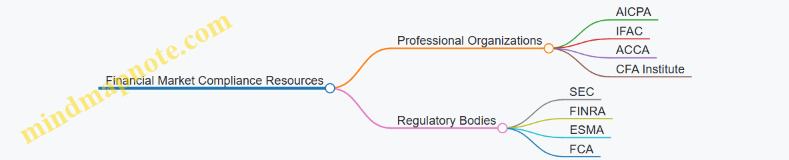
Mind Map 2: Learning Platforms and Educational Resources
Mind Map 3: Support Tools and Community Engagement
Examples
Example 1: Using AICPA Resources to Update Compliance Knowledge
An accounting team at a mid-sized bank subscribes to AICPA newsletters and regularly attends their webinars. This helps them stay current with changes in financial reporting standards and regulatory updates, ensuring their internal controls remain compliant.
Example 2: Leveraging Online Courses for Skill Enhancement
A compliance officer enrolls in a Coursera specialization on Financial Regulation and Risk Management. The course includes case studies and quizzes that reinforce understanding, enabling the officer to implement best practices effectively.
Example 3: Engaging in Professional Communities for Peer Support
An accountant joins LinkedIn groups dedicated to financial compliance, where members share real-world challenges and solutions. This peer interaction provides practical insights beyond formal training.
By integrating these resources into daily practice, accountants and compliance officers can build a robust knowledge base, adapt to regulatory changes swiftly, and foster a culture of continuous improvement in financial market compliance.
11.5 Final Thoughts: The Accountant’s Role as a Compliance Champion
In the complex landscape of financial market regulations, accountants are uniquely positioned to act as compliance champions within their organizations. Their expertise in financial data, reporting, and internal controls makes them essential in ensuring that regulatory requirements are not only met but embedded into the company’s culture and daily operations.
Why Accountants Are Critical to Compliance
- Gatekeepers of Financial Integrity: Accountants validate and verify financial information, ensuring accuracy and transparency.
- Interpreters of Regulation: They translate complex regulatory language into actionable business processes.
- Risk Identifiers: Accountants detect anomalies and potential compliance risks early through rigorous analysis.
- Educators and Advocates: They promote awareness and understanding of compliance requirements across departments.
Mind Map: Accountant as a Compliance Champion
Best Practices for Accountants to Lead Compliance
- Stay Informed and Proactive: Regularly update knowledge on evolving regulations and anticipate changes.
- Embed Compliance in Daily Tasks: Integrate compliance checks into routine accounting activities rather than treating them as separate tasks.
- Collaborate Across Departments: Work closely with legal, risk, and IT teams to ensure a holistic approach.
- Leverage Technology: Use compliance software and data analytics to streamline monitoring and reporting.
- Promote Ethical Behavior: Lead by example and encourage a culture where ethical concerns can be raised without fear.
Example: Leading a Compliance Initiative
Scenario: An accountant at a mid-sized bank noticed inconsistencies in transaction reporting related to new AML regulations. Taking initiative, she:
- Conducted a gap analysis comparing current processes against AML requirements.
- Collaborated with the compliance and IT teams to implement automated transaction monitoring.
- Developed training materials and held workshops for the finance team.
- Established a quarterly review process to ensure ongoing compliance.
Outcome: The bank reduced compliance risks significantly and passed regulatory audits with commendations.
Mind Map: Steps to Champion Compliance
Final Reflection
Accountants are more than number crunchers; they are pivotal players in safeguarding their organizations against regulatory risks. By embracing the role of compliance champions, accountants not only protect their firms but also contribute to the integrity and stability of the broader financial markets.
Remember: Compliance is not a one-time project but a continuous journey — and accountants are at the helm steering it towards success.