Financial Policy Implementation
1. Introduction to Financial Policy Implementation
1.1 Understanding Financial Policy: Definitions and Scope
Financial policy refers to the set of principles, rules, and guidelines established by governments or organizations to manage financial resources, regulate fiscal activities, and achieve economic objectives. It encompasses decisions related to budgeting, taxation, expenditure, borrowing, and financial regulation.
Key Components of Financial Policy
- Fiscal Policy: Government decisions on taxation and spending to influence the economy.
- Monetary Policy: Central bank actions affecting money supply and interest rates.
- Regulatory Policy: Rules governing financial institutions and markets.
- Budgetary Policy: Guidelines on allocation and management of public funds.
Scope of Financial Policy
Financial policy spans various levels and sectors, including:
- National and local government finance management
- Public sector budgeting and expenditure control
- Taxation frameworks and compliance
- Debt management and borrowing strategies
- Financial market regulation and oversight
Mind Map: Financial Policy - Definitions and Scope
Example 1: Implementing a Taxation Policy in a Local Government
A local government introduces a new property tax policy to increase revenue for infrastructure development. The policy outlines tax rates, collection procedures, exemptions, and enforcement mechanisms. Accountants ensure accurate assessment and collection, while policy advisors communicate the policy’s benefits to stakeholders.
Example 2: National Budgetary Policy for Economic Stabilization
During an economic downturn, a government adopts an expansionary budgetary policy by increasing public spending and reducing taxes to stimulate growth. This policy requires careful planning, monitoring, and adjustments to balance short-term economic support with long-term fiscal sustainability.
Mind Map: Example - Taxation Policy Implementation
Understanding the definitions and scope of financial policy is foundational for accountants and policy advisors. It enables them to design, implement, and monitor policies effectively, ensuring alignment with organizational goals and regulatory requirements.
1.2 The Role of Accountants and Policy Advisors in Implementation
Financial policy implementation is a complex process that requires collaboration between various professionals, with accountants and policy advisors playing pivotal roles. Understanding their responsibilities and how they complement each other is essential for successful policy execution.
The Role of Accountants
Accountants are the financial stewards who ensure that policies are translated into actionable financial practices. Their responsibilities include:
- Budgeting and Financial Planning: Accountants develop detailed budgets aligned with policy goals.
- Financial Reporting and Compliance: They prepare reports that demonstrate adherence to policy requirements and regulatory standards.
- Internal Controls: Establishing mechanisms to prevent errors and fraud during policy implementation.
- Data Analysis: Providing insights through financial data to guide decision-making.
Example: In implementing a new government grant disbursement policy, accountants design the budget allocation framework, monitor fund usage, and generate compliance reports to ensure funds are used appropriately.
The Role of Policy Advisors
Policy advisors act as the bridge between policy design and practical implementation. Their key roles include:
- Policy Interpretation: Translating complex policy language into actionable steps.
- Stakeholder Coordination: Engaging with various departments and external parties to align efforts.
- Monitoring and Evaluation: Tracking policy outcomes and recommending adjustments.
- Risk Assessment: Identifying potential barriers and proposing mitigation strategies.
Example: When a new tax regulation is introduced, policy advisors coordinate with tax offices and communicate changes to ensure smooth adoption.
Collaborative Roles and Synergies
Accountants and policy advisors must work closely to ensure policies are financially viable and effectively executed. Their collaboration can be visualized as follows:
Mind Map: Detailed Responsibilities
Example Scenario: Implementing a Public Infrastructure Funding Policy
- Accountants prepare the financial framework, ensuring funds are allocated correctly and expenditures are tracked.
- Policy Advisors interpret the policy objectives, coordinate with construction agencies, and monitor progress against timelines.
This partnership ensures that the policy is not only financially sound but also operationally feasible.
Summary
The successful implementation of financial policies depends heavily on the complementary roles of accountants and policy advisors. While accountants focus on the financial integrity and compliance aspects, policy advisors ensure that the policy’s intent is realized through effective coordination and monitoring. Together, they form the backbone of robust financial policy implementation.
1.3 Overview of the Implementation Process: From Design to Execution
Implementing financial policies effectively requires a structured approach that guides the process from initial design through to execution and evaluation. This section breaks down the key stages of the implementation process, illustrating best practices and providing easy-to-understand examples.
Key Stages of Financial Policy Implementation
Stage 1: Policy Design
Description: This initial phase involves researching the financial issue, consulting stakeholders, and drafting the policy document.
Best Practice: Engage a diverse group of stakeholders early to ensure the policy is comprehensive and feasible.
Example: A government finance department designing a new tax compliance policy first conducts workshops with tax accountants, legal advisors, and business representatives to understand challenges and expectations. This collaborative approach helps draft clear, practical guidelines.
Stage 2: Planning
Description: Planning involves allocating resources, setting timelines, and assessing risks associated with the policy rollout.
Best Practice: Develop a detailed project plan that includes contingency measures for potential obstacles.
Example: Before launching a subsidy disbursement policy, the finance team creates a timeline with milestones, assigns budget for training staff, and identifies risks such as delays in fund transfers or IT system failures.
Stage 3: Execution
Description: This stage covers communicating the policy, training relevant personnel, and deploying the policy across the organization or jurisdiction.
Best Practice: Use clear, consistent communication channels and provide hands-on training to ensure understanding and compliance.
Example: When implementing a new government procurement financial policy, the department holds webinars and distributes easy-to-follow manuals to procurement officers, ensuring everyone understands the new procedures.
Stage 4: Monitoring
Description: Continuous monitoring tracks the policy’s performance, compliance, and any issues arising during implementation.
Best Practice: Establish KPIs and use technology tools for real-time data collection.
Example: A city government monitors the effectiveness of a financial aid policy by tracking application processing times and fund disbursement accuracy using a centralized dashboard.
Stage 5: Evaluation
Description: Evaluation assesses the overall impact of the policy and identifies areas for improvement.
Best Practice: Incorporate feedback loops and conduct impact assessments to inform future policy revisions.
Example: After one year, the finance ministry evaluates a new budgeting policy by analyzing spending efficiency and soliciting feedback from departmental accountants, leading to adjustments that simplify reporting requirements.
Integrated Mind Map of the Process with Examples
Summary
Understanding the full implementation process—from design to evaluation—enables accountants and policy advisors to anticipate challenges, allocate resources efficiently, and ensure policies achieve their intended financial outcomes. Using clear examples and structured mind maps helps demystify the process and encourages adoption of best practices.
1.4 Importance of Best Practices in Financial Policy Implementation
Implementing financial policies effectively is crucial for ensuring fiscal responsibility, transparency, and achieving organizational or governmental objectives. Best practices serve as proven guidelines that help accountants and policy advisors navigate the complexities of financial policy implementation, minimize risks, and maximize positive outcomes.
Why Best Practices Matter
- Consistency: They provide a standardized approach, ensuring policies are applied uniformly across departments or agencies.
- Efficiency: Streamline processes, reducing time and resource wastage.
- Risk Mitigation: Help identify and manage financial, operational, and compliance risks early.
- Transparency and Accountability: Foster trust among stakeholders by ensuring clear procedures and reporting.
- Adaptability: Enable policies to be flexible and responsive to changing economic or regulatory environments.
Mind Map: Core Benefits of Best Practices in Financial Policy Implementation
Example 1: Enhancing Consistency through Standardized Reporting
A government finance department introduced a best practice of using a uniform financial reporting template across all regional offices. This ensured that data was comparable, errors were minimized, and the central office could quickly consolidate financial information for decision-making. As a result, the policy implementation process became more transparent and efficient.
Mind Map: Best Practices for Consistency
Example 2: Risk Mitigation via Early Stakeholder Engagement
During the rollout of a new tax compliance policy, policy advisors engaged accountants and external auditors early in the process. This best practice helped identify potential compliance risks and operational bottlenecks before full implementation. The proactive approach reduced non-compliance incidents by 30% within the first year.
Mind Map: Risk Mitigation Strategies
Example 3: Improving Adaptability with Feedback Loops
A municipal finance office implemented a feedback mechanism where frontline accountants reported challenges in applying a new expenditure policy. Using this input, policy advisors adjusted guidelines to better fit operational realities without compromising regulatory compliance. This best practice increased policy adherence and employee satisfaction.
Mind Map: Adaptability through Feedback
Summary
Best practices in financial policy implementation are essential for ensuring that policies are not only designed well but executed effectively. They help create a structured, transparent, and responsive environment that supports sound financial management and governance. By embedding these practices, accountants and policy advisors can drive successful policy outcomes that withstand evolving challenges and stakeholder expectations.
1.5 Case Study: Successful Financial Policy Rollout in a Government Agency
Overview
This case study explores the successful implementation of a new financial policy within the Department of Public Infrastructure (DPI), a government agency responsible for managing public works and infrastructure projects. The policy aimed to improve budget transparency, enhance expenditure controls, and streamline procurement processes.
Background
- Challenge: DPI faced issues with budget overruns, delayed project approvals, and lack of clear expenditure tracking.
- Objective: Implement a financial policy that ensures accountability, timely reporting, and compliance with government regulations.
Implementation Process
Best Practices Applied
-
Inclusive Stakeholder Engagement
- DPI formed a cross-functional team including accountants, project managers, and policy advisors.
- Example: Monthly workshops allowed open dialogue, ensuring concerns were addressed early.
-
Clear and Accessible Policy Documentation
- The policy was drafted in plain language with flowcharts illustrating procedures.
- Example: A step-by-step guide for procurement approvals reduced confusion.
-
Robust Training Programs
- Conducted targeted training sessions for finance and project teams.
- Example: Interactive webinars with real-life scenarios improved understanding.
-
Technology Integration
- Implemented a centralized financial management system to automate approvals and track expenditures.
- Example: Automated alerts for budget thresholds prevented overspending.
-
Continuous Monitoring and Feedback Loops
- Established KPIs such as “Percentage of projects within budget” and “Time to approval”.
- Example: Quarterly reports highlighted areas needing improvement, leading to timely interventions.
Detailed Mind Map: Stakeholder Engagement Strategy
Example: Streamlining Procurement Process
- Before Policy: Procurement approvals took an average of 15 days, with frequent miscommunications.
- After Policy: Introduction of a digital approval workflow reduced the average time to 5 days.
- Practice: Use of automated reminders and clear delegation of authority.
Results and Impact
- Budget Compliance: 90% of projects completed within approved budgets, up from 65%.
- Transparency: Real-time expenditure tracking accessible to senior management.
- Efficiency: Reduction in approval times by 66%, accelerating project delivery.
- Employee Satisfaction: Positive feedback on clarity and support during rollout.
Lessons Learned
- Early and continuous stakeholder involvement is critical.
- Clear documentation paired with practical training ensures better adoption.
- Leveraging technology can significantly enhance policy enforcement.
- Monitoring KPIs enables proactive management and policy refinement.
Summary
The DPI’s experience demonstrates that a well-planned, inclusive, and technology-supported approach to financial policy implementation can lead to significant improvements in accountability, efficiency, and stakeholder satisfaction within government agencies.
2. Frameworks and Models for Financial Policy Implementation
2.1 Common Frameworks for Policy Implementation in Finance
Financial policy implementation requires structured frameworks to ensure clarity, accountability, and effectiveness. These frameworks guide accountants and policy advisors through the complex process of translating policy decisions into actionable steps, monitoring progress, and achieving desired outcomes.
Overview of Common Frameworks
Below are some widely adopted frameworks in the finance sector for policy implementation:
- Logical Framework Approach (LFA)
- PDCA Cycle (Plan-Do-Check-Act)
- Balanced Scorecard (BSC)
- Results-Based Management (RBM)
- Risk Management Frameworks
Mind Map: Common Frameworks for Financial Policy Implementation
Logical Framework Approach (LFA)
Description: LFA is a systematic planning tool that helps define objectives, inputs, activities, outputs, and outcomes with measurable indicators.
Example:
A government finance department is implementing a new tax compliance policy. Using LFA, the policy advisors define:
- Goal: Increase tax compliance rate by 15% within 2 years.
- Inputs: Staff training, IT systems upgrade, communication materials.
- Activities: Conduct workshops, launch awareness campaigns, upgrade tax filing software.
- Outputs: Number of workshops held, awareness materials distributed, software deployed.
- Outcomes: Improved taxpayer knowledge, increased timely tax filings.
- Indicators: Percentage increase in tax filings, number of workshop attendees.
This structured approach ensures all steps are linked and measurable.
PDCA Cycle (Plan-Do-Check-Act)
Description: PDCA is a continuous improvement cycle that helps organizations plan a policy, implement it, monitor results, and make necessary adjustments.
Example:
A municipal finance office introduces a new budgeting policy:
- Plan: Develop budgeting guidelines and timelines.
- Do: Implement the new budgeting process across departments.
- Check: Monitor adherence to timelines and budget accuracy.
- Act: Adjust guidelines based on feedback and performance data.
This cyclical process promotes iterative improvements.
Balanced Scorecard (BSC)
Description: BSC translates policy objectives into performance metrics across four perspectives to ensure balanced progress.
Example:
A government agency implementing a financial transparency policy uses BSC:
- Financial Perspective: Reduce audit exceptions by 20%.
- Customer Perspective: Increase public satisfaction with financial reports.
- Internal Processes: Improve report generation time by 30%.
- Learning & Growth: Train 100% of finance staff on new transparency standards.
This framework helps track multiple dimensions of policy success.
Results-Based Management (RBM)
Description: RBM focuses on defining expected results, monitoring progress, evaluating outcomes, and reporting.
Example:
In implementing a subsidy disbursement policy, RBM guides the process:
- Planning: Define expected subsidy coverage and timelines.
- Monitoring: Track disbursement rates and beneficiary feedback.
- Evaluation: Assess impact on target populations.
- Reporting: Share findings with stakeholders for accountability.
RBM ensures policies are outcome-focused.
Risk Management Frameworks
Description: These frameworks identify, assess, mitigate, and monitor risks associated with policy implementation.
Example:
When rolling out a new financial reporting standard, risk management involves:
- Risk Identification: Potential delays in software deployment.
- Risk Assessment: High impact on reporting deadlines.
- Risk Mitigation: Allocate additional IT resources.
- Monitoring: Weekly progress reviews.
Proactive risk management prevents policy failures.
Mind Map: Example Application of Logical Framework Approach (LFA)
Summary
Using these common frameworks helps accountants and policy advisors systematically implement financial policies with clarity and measurable results. Each framework offers unique strengths, and often, combining elements from multiple frameworks yields the best outcomes.
By applying these frameworks alongside real-world examples, professionals can enhance transparency, accountability, and effectiveness in financial policy implementation.
2.2 The Logical Framework Approach (LFA) Explained with Examples
The Logical Framework Approach (LFA) is a systematic planning tool widely used in financial policy implementation to improve project design, monitoring, and evaluation. It helps policy advisors and accountants clearly define objectives, activities, outputs, outcomes, and impacts, ensuring alignment and accountability throughout the policy lifecycle.
What is the Logical Framework Approach?
LFA structures a project or policy into a matrix format, often called the Logframe, consisting of four columns and four rows:
- Narrative Summary: Describes the hierarchy of objectives (Goal, Purpose, Outputs, Activities).
- Objectively Verifiable Indicators (OVIs): Metrics to measure progress.
- Means of Verification (MoV): Sources or methods to verify indicators.
- Assumptions: External factors that could affect success.
Mind Map: Core Components of LFA
Step-by-Step Breakdown
- Goal: The long-term impact or broader objective the policy aims to contribute to.
- Purpose: The immediate effect or outcome expected from the policy.
- Outputs: Tangible deliverables or services produced.
- Activities: Specific tasks or actions undertaken to produce outputs.
Each level is linked through indicators and assumptions to ensure clarity and feasibility.
Example: Implementing a Financial Literacy Policy in a Government Agency
| Narrative Summary | Objectively Verifiable Indicators (OVIs) | Means of Verification (MoV) | Assumptions |
|---|---|---|---|
| Goal: Improve financial decision-making among citizens | Increase in average household savings by 15% within 3 years | National financial surveys, banking data | Stable economic environment |
| Purpose: Enhance citizens’ financial literacy | 70% of participants demonstrate improved knowledge in post-training tests | Training assessments, feedback forms | Citizens willing to participate |
| Outputs: - Conduct 50 training workshops - Develop educational materials | Number of workshops completed; Number of materials distributed | Workshop attendance records; Material distribution logs | Adequate funding and trainers available |
| Activities: - Design curriculum - Train facilitators - Organize workshops | Completion of curriculum; Number of facilitators trained; Workshop schedules | Curriculum documents; Training attendance; Workshop reports | Timely coordination among departments |
Mind Map: Example of Financial Literacy Policy Logframe
Best Practices for Applying LFA in Financial Policy Implementation
- Engage Stakeholders Early: Involve accountants, policy advisors, and beneficiaries to ensure realistic assumptions and relevant indicators.
- Use Clear, Measurable Indicators: Avoid vague terms; use quantifiable metrics to track progress.
- Validate Assumptions: Regularly review assumptions to adapt to changing environments.
- Integrate Monitoring and Evaluation: Use the Logframe as a living document to guide ongoing assessment.
Additional Example: Tax Compliance Improvement Policy
| Narrative Summary | OVIs | MoV | Assumptions |
|---|---|---|---|
| Goal: Increase national tax revenue by 10% over 5 years | Tax revenue reports show 10% growth | Ministry of Finance reports | Economic growth remains steady |
| Purpose: Improve taxpayer compliance rates | Compliance rate increases from 75% to 90% | Tax authority compliance records | Effective enforcement mechanisms in place |
| Outputs: - Launch taxpayer education campaigns - Upgrade tax filing systems | Number of campaigns; System uptime and user feedback | Campaign reports; IT system logs | Public engagement and technology adoption |
| Activities: - Develop educational content - Train tax officers - Implement new IT systems | Content completion; Training attendance; System deployment | Content archives; Training records; IT project reports | Cross-department collaboration |
Mind Map: Tax Compliance Policy Logframe Overview
Summary
The Logical Framework Approach offers a clear, structured method for financial policy implementation, enabling accountants and policy advisors to plan, monitor, and evaluate with precision. By breaking down complex policies into manageable components with measurable indicators and clear assumptions, LFA enhances transparency and accountability.
Incorporating real-world examples and mind maps helps demystify the process, making it accessible and practical for professionals in finance and government sectors.
2.3 Applying the PDCA Cycle (Plan-Do-Check-Act) to Financial Policies
The PDCA Cycle, also known as the Deming Cycle, is a continuous improvement model that is highly effective for implementing and refining financial policies. It consists of four iterative steps: Plan, Do, Check, and Act. Applying this cycle ensures that financial policies are not only well-designed but also adaptable and continuously improved based on real-world feedback.
Understanding the PDCA Cycle in Financial Policy Context
Step 1: Plan
The planning phase involves setting clear objectives for the financial policy, identifying the resources needed, assessing potential risks, and engaging relevant stakeholders.
Example: A government finance department plans to implement a new budget allocation policy aimed at improving transparency and efficiency. They define measurable objectives such as reducing budget variance by 10%, identify the staff and technology resources required, conduct a risk assessment to identify potential bottlenecks, and consult with department heads and auditors.
Step 2: Do
This phase involves the actual implementation of the policy. It includes rolling out the policy, conducting training sessions for staff, communicating the changes clearly, and allocating resources effectively.
Example: The finance team launches the new budget allocation policy, holds workshops to train department heads on the new procedures, and uses internal communication channels to ensure everyone understands the changes.
Step 3: Check
In this phase, monitoring and evaluation take place. Key Performance Indicators (KPIs) are tracked, feedback is collected from users, and audits are conducted to ensure compliance.
Example: After three months, the finance department monitors budget variance reports, surveys department heads for feedback on the new process, and performs an internal audit to check adherence to the policy.
Step 4: Act
Based on the insights gained during the Check phase, necessary adjustments are made. This may include revising the policy, updating training materials, or improving communication strategies.
Example: The finance team discovers that some departments struggle with data entry accuracy. They update the policy to include clearer guidelines, enhance training materials, and introduce a data validation tool.
Integrated Example: Applying PDCA to a Tax Compliance Policy
- Plan: Define objectives to increase tax compliance by 15%, allocate resources including compliance officers and software, and engage tax departments.
- Do: Roll out the new compliance policy, conduct training sessions, and communicate deadlines.
- Check: Monitor compliance rates, gather feedback from tax officers, and audit tax filings.
- Act: Adjust policy based on audit findings, improve training for common errors, and update compliance checklists.
This cyclical approach ensures that financial policies remain dynamic, responsive, and effective over time, fostering a culture of continuous improvement within finance and government sectors.
2.4 Integrating Risk Management Frameworks into Policy Execution
Effective financial policy implementation requires a robust integration of risk management frameworks to anticipate, mitigate, and respond to potential risks that could derail policy objectives. This section explores how risk management can be seamlessly embedded into policy execution, providing practical examples and mind maps to illustrate key concepts.
Understanding Risk Management in Financial Policy Execution
Risk management involves identifying, assessing, and prioritizing risks followed by coordinated efforts to minimize, monitor, and control the probability or impact of unfortunate events. In financial policy execution, this ensures that policies remain resilient and adaptive to uncertainties.
Key Steps to Integrate Risk Management Frameworks
- Risk Identification: Detect potential risks related to policy objectives, resources, stakeholders, and external environment.
- Risk Assessment: Evaluate the likelihood and impact of identified risks.
- Risk Mitigation Planning: Develop strategies to reduce or eliminate risks.
- Implementation of Controls: Apply risk controls during policy rollout.
- Monitoring and Review: Continuously track risk environment and effectiveness of controls.
Mind Map: Risk Management Integration Process
Example: Integrating Risk Management in a Government Budget Policy
Scenario: A government agency is implementing a new budget allocation policy aimed at improving transparency and efficiency.
- Risk Identification: Potential risks include inaccurate data reporting, delays in fund disbursement, and resistance from departments.
- Risk Assessment: Delays are rated high likelihood and high impact; data inaccuracies medium likelihood but high impact.
- Risk Mitigation: Introduce automated data validation tools, schedule phased fund releases, and conduct stakeholder workshops.
- Implementation: Controls include mandatory data audits and clear timelines.
- Monitoring: Monthly reviews and real-time dashboards track progress and flag anomalies.
This integration ensures the policy adapts dynamically to challenges, maintaining its integrity and objectives.
Mind Map: Risk Mitigation Strategies
Practical Tips for Accountants and Policy Advisors
- Embed Risk Management Early: Incorporate risk considerations during policy design, not just execution.
- Use Cross-Functional Teams: Engage finance, legal, IT, and operational units for comprehensive risk perspectives.
- Leverage Technology: Utilize risk management software and data analytics to identify and monitor risks.
- Document Everything: Maintain clear records of risk assessments and mitigation actions for accountability.
- Continuous Learning: Regularly update risk frameworks based on lessons learned and emerging threats.
Example: Risk Management in Tax Compliance Policy
A tax authority implements a new compliance policy with integrated risk management:
- Risk Identification: Tax evasion, system fraud, and public dissatisfaction.
- Assessment: Tax evasion is high impact and medium likelihood.
- Mitigation: Deploy data analytics to detect anomalies, increase audits, and launch public awareness campaigns.
- Monitoring: Use KPIs like audit success rates and complaint volumes.
This approach reduces financial leakage and improves public trust.
Summary
Integrating risk management frameworks into financial policy execution is critical to achieving policy goals while safeguarding against uncertainties. By following structured processes, leveraging technology, and fostering collaboration, accountants and policy advisors can enhance policy resilience and effectiveness.
2.5 Example: Using the Balanced Scorecard to Monitor Financial Policy Outcomes
The Balanced Scorecard (BSC) is a strategic performance management tool that enables organizations to translate their vision and strategy into a coherent set of performance measures. When applied to financial policy implementation, the BSC helps policymakers and accountants monitor outcomes across multiple dimensions, ensuring a balanced approach to evaluating success.
What is the Balanced Scorecard?
The Balanced Scorecard focuses on four key perspectives:
- Financial Perspective: Measures reflecting financial performance and resource management.
- Customer (Stakeholder) Perspective: Evaluates satisfaction and engagement of stakeholders impacted by the policy.
- Internal Process Perspective: Assesses the efficiency and effectiveness of internal processes supporting the policy.
- Learning and Growth Perspective: Focuses on organizational capacity, skills, and culture needed for sustainable policy implementation.
Applying the Balanced Scorecard to Financial Policy Outcomes
Step 1: Define Clear Objectives for Each Perspective
| Perspective | Objective Example |
|---|---|
| Financial | Improve budget utilization efficiency by 10% |
| Customer | Increase stakeholder satisfaction with transparency |
| Internal Process | Reduce processing time for financial approvals by 15% |
| Learning & Growth | Enhance staff training on new financial regulations |
Step 2: Identify Key Performance Indicators (KPIs)
| Perspective | KPI Example |
|---|---|
| Financial | Variance between budgeted and actual expenditures |
| Customer | Survey scores on policy communication clarity |
| Internal Process | Average time to process financial transactions |
| Learning & Growth | Number of training hours per employee |
Step 3: Collect Data and Monitor Regularly
Step 4: Analyze and Adjust Policies Based on Insights
Mind Map: Balanced Scorecard Framework for Financial Policy
Example: Monitoring a Government Grant Policy Using BSC
Context: A government agency implements a new grant disbursement policy aimed at improving fund allocation efficiency and transparency.
| Perspective | Objective | KPI | Result Example |
|---|---|---|---|
| Financial | Ensure funds are disbursed within budget | % of grants disbursed on time | 95% on-time disbursement |
| Customer | Increase grantee satisfaction | Survey rating on application process | Average rating 4.5/5 |
| Internal Process | Streamline application review process | Average review time per application | Reduced from 20 to 15 days |
| Learning & Growth | Train staff on new compliance requirements | % of staff completing training | 100% completion within 3 months |
Mind Map: Grant Policy Monitoring Example
Best Practices When Using the Balanced Scorecard for Financial Policies
- Align KPIs with Strategic Goals: Ensure each KPI directly supports the overarching financial policy objectives.
- Use Clear, Measurable Indicators: Avoid vague metrics; choose indicators that are quantifiable and easy to track.
- Engage Stakeholders in KPI Development: Involve accountants, policy advisors, and affected stakeholders to ensure relevance and buy-in.
- Regular Reporting and Review: Establish a routine for data collection, analysis, and reporting to enable timely adjustments.
- Leverage Technology: Use dashboards and data visualization tools to present BSC data clearly and accessibly.
Summary
The Balanced Scorecard provides a comprehensive framework to monitor financial policy outcomes beyond just financial metrics. By integrating customer, internal process, and learning perspectives, policy implementers can gain a holistic view of performance, identify areas for improvement, and ensure sustainable success. This approach fosters transparency, accountability, and continuous improvement in financial policy implementation.
3. Stakeholder Engagement and Communication Strategies
3.1 Identifying Key Stakeholders in Financial Policy Implementation
Effective financial policy implementation hinges on correctly identifying and engaging the right stakeholders. Stakeholders are individuals, groups, or organizations that have an interest or influence in the policy’s success or failure. Understanding who these stakeholders are enables accountants and policy advisors to tailor communication, anticipate challenges, and foster collaboration.
What is a Stakeholder?
A stakeholder can be anyone who:
- Is affected by the financial policy,
- Has the power to influence its implementation,
- Provides resources or support,
- Or is responsible for compliance and monitoring.
Categories of Stakeholders in Financial Policy Implementation
Internal Stakeholders
- Finance Department: Responsible for budgeting, accounting, and financial reporting. Their buy-in ensures policies are practical and aligned with organizational capabilities.
- Accountants: Play a crucial role in applying policies to day-to-day financial activities and ensuring accuracy.
- Policy Advisors: Design and guide the implementation process, providing expertise and oversight.
- Senior Management: Provide leadership, allocate resources, and set organizational priorities.
- Compliance Officers: Monitor adherence to policies and regulatory requirements.
Example: In a government agency implementing a new procurement financial policy, the finance department ensures budget availability, while compliance officers monitor adherence to spending limits.
External Stakeholders
- Government Regulators: Set legal frameworks and enforce compliance.
- Taxpayers / Citizens: Ultimately affected by public financial policies, especially in government sectors.
- Financial Institutions: Banks and lenders may be involved in policy execution, such as loan disbursements or fund management.
- Vendors / Contractors: Their contracts and payments are governed by financial policies.
- Media: Influences public perception and transparency.
Example: When implementing a subsidy policy, regulators ensure legal compliance, while taxpayers expect transparency and accountability.
Mind Map: Stakeholder Influence and Interest
Best Practices for Identifying Stakeholders
- Conduct a Stakeholder Mapping Workshop: Gather a cross-functional team to brainstorm all possible stakeholders.
- Analyze Influence and Interest: Use tools like the Power-Interest Grid to prioritize engagement efforts.
- Review Past Policies: Identify recurring stakeholders and lessons learned.
- Engage Early and Often: Early identification helps in managing expectations and reducing resistance.
Example: Stakeholder Identification in a Tax Policy Implementation
A government agency plans to implement a new tax compliance policy. The stakeholder identification process revealed:
- Internal: Tax department staff, IT team (for systems updates), legal advisors.
- External: Taxpayers, tax consultants, regulatory bodies, media.
By mapping these stakeholders, the agency tailored communication strategies, such as workshops for tax consultants and public awareness campaigns for taxpayers, ensuring smoother implementation.
Summary
Identifying key stakeholders is foundational to successful financial policy implementation. By categorizing stakeholders, analyzing their influence and interest, and engaging them appropriately, accountants and policy advisors can drive effective, transparent, and sustainable policy outcomes.
3.2 Best Practices for Effective Communication with Internal Teams
Effective communication within internal teams is a cornerstone of successful financial policy implementation. It ensures alignment, fosters collaboration, and minimizes misunderstandings that could derail policy objectives. Below are best practices, supported by practical examples and mind maps to visualize key concepts.
Establish Clear Communication Channels
Having designated communication channels helps streamline information flow and ensures messages reach the right people promptly.
- Use centralized platforms (e.g., Microsoft Teams, Slack) for daily updates.
- Schedule regular meetings (weekly or biweekly) to discuss progress and challenges.
- Define escalation paths for urgent issues.
Example: In a government finance department, weekly virtual huddles via Microsoft Teams allow accountants and policy advisors to synchronize on budget revisions, ensuring everyone is updated on the latest changes.
Use Simple and Consistent Language
Financial policies can be complex. Using clear, jargon-free language helps all team members understand their roles and responsibilities.
- Avoid technical jargon unless necessary, and provide glossaries when used.
- Use standardized templates for reports and updates.
Example: When rolling out a new procurement policy, the policy advisor created a one-page summary with bullet points and a glossary, which helped accountants quickly grasp the key changes.
Encourage Two-Way Communication and Feedback
Communication should not be one-directional. Encouraging feedback helps identify issues early and promotes ownership.
- Use surveys or quick polls after meetings to gather input.
- Create forums or channels dedicated to questions and suggestions.
Example: After introducing a new expense reporting system, the finance team set up a dedicated Slack channel for questions and feedback, which led to quick resolution of user issues.
Visualize Information for Better Understanding
Visual aids such as charts, flow diagrams, and dashboards make complex financial data and processes easier to comprehend.
- Use flowcharts to explain policy workflows.
- Share dashboards showing real-time progress on policy implementation.
Example: The policy team used a flowchart to illustrate the approval process for budget reallocations, which reduced approval delays by 30%.
Align Communication with Team Roles and Responsibilities
Tailor communication to the needs and expertise of different team members to increase relevance and engagement.
- Provide detailed technical updates to accountants.
- Share high-level summaries with policy advisors.
Example: During a tax policy update, accountants received detailed procedural documents, while policy advisors received strategic impact summaries.
Document and Archive Communications
Maintaining records of communications ensures transparency and provides reference points for future audits or reviews.
- Use shared drives or document management systems.
- Keep minutes of meetings and key decisions.
Example: A government finance office archived all policy implementation communications in a shared SharePoint folder, facilitating easy retrieval during compliance audits.
Summary Mind Map
By implementing these best practices, internal teams can enhance clarity, collaboration, and efficiency during financial policy implementation, ultimately contributing to smoother execution and better outcomes.
3.3 Engaging External Stakeholders: Public, Regulators, and Partners
Engaging external stakeholders effectively is a cornerstone of successful financial policy implementation. External stakeholders typically include the public, regulatory bodies, and strategic partners. Each group has unique interests, concerns, and levels of influence that must be thoughtfully addressed to ensure smooth adoption and sustained compliance with financial policies.
Why Engage External Stakeholders?
- Build Trust and Transparency: Open communication fosters trust, reducing resistance.
- Ensure Compliance: Regulators’ involvement ensures policies meet legal standards.
- Leverage Expertise and Resources: Partners can provide valuable insights and support.
- Enhance Policy Relevance: Public feedback helps tailor policies to real-world needs.
Mind Map: External Stakeholder Engagement
Engaging the Public
Best Practices:
- Use clear, jargon-free language in communications.
- Employ multiple channels: social media, town halls, newsletters.
- Create feedback loops such as surveys or public forums.
Example: A city government launching a new property tax policy held a series of town hall meetings and online webinars. They used infographics and simple videos to explain the policy’s benefits and impact. Public feedback was collected via surveys, which led to adjustments in the payment schedules to accommodate residents’ concerns.
Mind Map: Public Engagement
Collaborating with Regulators
Best Practices:
- Early involvement during policy drafting to ensure alignment.
- Regular compliance checks and transparent reporting.
- Joint training sessions to clarify expectations.
Example: During the rollout of an anti-fraud financial policy, a government agency partnered with the national financial regulatory authority. They conducted joint workshops to train staff and regulators on new compliance requirements, which minimized misunderstandings and accelerated enforcement.
Mind Map: Regulator Engagement
Partnering with Strategic Partners
Best Practices:
- Establish clear collaboration agreements outlining roles.
- Share resources such as data, technology, and expertise.
- Co-design implementation plans to leverage strengths.
Example: A government finance department collaborated with a fintech company to implement a digital payment policy. The fintech partner provided the technology platform, while the government ensured regulatory compliance and public outreach. This partnership accelerated policy adoption and improved service delivery.
Mind Map: Partner Engagement
Integrative Approach
Engaging all external stakeholders in a coordinated manner ensures that financial policies are not only compliant and well-resourced but also accepted and supported by the broader community.
Mind Map: Integrated External Stakeholder Engagement
Summary
Engaging external stakeholders requires tailored strategies that respect their unique roles and interests. By combining clear communication, early involvement, and collaborative partnerships, accountants and policy advisors can significantly improve the effectiveness and sustainability of financial policy implementation.
3.4 Example: Collaborative Policy Development in a Municipal Finance Department
Collaborative policy development is essential in municipal finance departments to ensure policies are practical, inclusive, and effectively address the community’s needs. This example illustrates how a municipal finance department successfully developed a new budget allocation policy through collaboration among accountants, policy advisors, and community stakeholders.
Background
The municipal finance department of Cityville aimed to revise its budget allocation policy to improve transparency, prioritize community projects, and enhance fiscal responsibility. Recognizing the complexity and impact of the policy, the department adopted a collaborative approach involving multiple stakeholders.
Step 1: Stakeholder Identification and Engagement
- Internal Stakeholders: Accountants, policy advisors, department heads, and elected officials.
- External Stakeholders: Community leaders, local businesses, non-profits, and residents.
Mind Map: Stakeholder Identification
Step 2: Collaborative Workshops and Brainstorming Sessions
The department organized a series of workshops to gather input and foster dialogue.
- Workshop Goals: Identify priorities, challenges, and expectations.
- Techniques Used: SWOT analysis, prioritization matrices, and open forums.
Example: During a workshop, accountants presented current budget constraints, while community leaders highlighted urgent infrastructure needs. This exchange helped balance fiscal realities with community priorities.
Mind Map: Workshop Focus Areas
Step 3: Drafting the Policy
Based on workshop outcomes, a draft policy was created incorporating:
- Transparent criteria for project funding.
- Mechanisms for regular community feedback.
- Clear roles and responsibilities for implementation.
Example: The draft included a quarterly public report on budget spending, a practice suggested by residents to increase accountability.
Step 4: Review and Feedback Loop
The draft was circulated among stakeholders for review.
- Feedback was collected via surveys and follow-up meetings.
- Adjustments were made to address concerns, such as simplifying technical language for broader understanding.
Mind Map: Feedback Process
Step 5: Finalization and Implementation
The finalized policy was approved by the municipal council and communicated through multiple channels.
- Training sessions were held for finance staff to ensure smooth implementation.
- A dedicated online portal was launched for ongoing community engagement.
Example: Accountants used the new policy framework to reallocate funds efficiently, resulting in a 15% increase in community project funding without exceeding the budget.
Key Best Practices Demonstrated
- Inclusive Engagement: Involving diverse stakeholders ensured the policy was well-rounded and accepted.
- Transparent Communication: Regular updates and clear reporting built trust.
- Iterative Feedback: Multiple review cycles improved policy quality.
- Capacity Building: Training ensured staff were prepared to implement changes.
Summary Mind Map: Collaborative Policy Development Process
This example highlights how collaboration in municipal finance policy development leads to more effective, transparent, and community-aligned financial management.
3.5 Tools and Techniques for Transparent Communication
Transparent communication is essential in financial policy implementation to build trust, ensure clarity, and foster collaboration among stakeholders. This section explores practical tools and techniques that accountants and policy advisors can use to enhance transparency throughout the communication process.
Key Tools for Transparent Communication
-
Collaborative Platforms: Tools like Microsoft Teams, Slack, or Google Workspace enable real-time communication, document sharing, and collaborative editing, ensuring all stakeholders have access to the latest information.
-
Dashboards and Visualization Tools: Platforms such as Power BI, Tableau, or Google Data Studio help visualize financial data and policy progress, making complex information accessible and understandable.
-
Regular Reporting Mechanisms: Scheduled reports (weekly, monthly, quarterly) using standardized templates ensure consistent updates and reduce information asymmetry.
-
Feedback Channels: Surveys, suggestion boxes, and interactive Q&A sessions encourage stakeholder input and demonstrate openness.
-
Public Portals and Websites: Dedicated web pages or intranet sites provide centralized access to policy documents, FAQs, updates, and contact information.
Techniques to Enhance Transparency
-
Clear and Consistent Messaging: Use plain language, avoid jargon, and maintain consistency in terminology to prevent misunderstandings.
-
Two-Way Communication: Encourage dialogue rather than one-way announcements to address concerns and clarify doubts.
-
Visual Communication: Use charts, infographics, and mind maps to simplify complex financial policies and data.
-
Open Meetings and Workshops: Host sessions where stakeholders can ask questions and provide feedback in real time.
-
Documentation and Archiving: Keep detailed records of communications, decisions, and changes accessible to all relevant parties.
Mind Map: Tools and Techniques for Transparent Communication
Example 1: Using Dashboards for Policy Progress Updates
A government finance department implemented a Power BI dashboard to track the progress of a new tax policy rollout. The dashboard displayed real-time data on compliance rates, revenue collection, and regional performance. By sharing this dashboard with internal teams and external stakeholders via a secure portal, the department ensured transparency and enabled timely interventions where needed.
Example 2: Feedback Channels in Municipal Budget Planning
During the annual municipal budget planning, the finance office used online surveys and town hall Q&A sessions to gather citizen input. The collected feedback was summarized and published on the city’s website alongside explanations of how the input influenced final budget decisions. This approach enhanced community trust and demonstrated accountability.
Mind Map: Example Workflow for Transparent Communication in Financial Policy
Example 3: Open Meetings to Clarify Policy Changes
A policy advisory team organized monthly open meetings during the implementation of a new government grant policy. These sessions allowed accountants, beneficiaries, and regulators to discuss challenges and clarify procedural details. Meeting minutes and FAQs were promptly published online, ensuring that even those unable to attend stayed informed.
Summary
By leveraging a combination of digital tools and communication techniques, financial policy implementers can foster an environment of transparency. This not only improves stakeholder confidence but also enhances the effectiveness and accountability of financial policies.
4. Designing Financial Policies for Effective Implementation
4.1 Principles of Policy Design: Clarity, Feasibility, and Flexibility
Effective financial policy design is foundational to successful implementation. Three core principles—clarity, feasibility, and flexibility—ensure that policies are understandable, practical, and adaptable to changing circumstances. Below, we explore each principle in detail, supported by mind maps and real-world examples.
Clarity
Clarity means that the policy’s objectives, requirements, and procedures are clearly articulated so all stakeholders understand their roles and responsibilities.
- Avoid jargon and overly technical language.
- Define key terms explicitly.
- Use structured formats and summaries.
Example: A government agency drafted a new procurement policy. Initially, the document was filled with complex legal terms, causing confusion among accountants and suppliers. After revising the policy with clear definitions and step-by-step procedures, compliance improved by 40% within six months.
Mind Map: Clarity in Policy Design
Feasibility
Feasibility ensures that the policy can be realistically implemented given available resources, time, and organizational capacity.
- Assess resource availability (budget, personnel, technology).
- Consider organizational readiness and skills.
- Set achievable timelines.
Example: A local government proposed a new tax compliance policy requiring monthly reporting. However, many small businesses lacked the accounting software or expertise to comply. After revising the policy to allow quarterly reporting for small businesses and providing training, compliance rates increased significantly.
Mind Map: Feasibility in Policy Design
Flexibility
Flexibility allows policies to adapt to unforeseen changes or challenges without losing effectiveness.
- Include provisions for periodic review and updates.
- Allow exceptions or phased approaches.
- Design scalable measures.
Example: During the rollout of a government subsidy policy, economic conditions shifted unexpectedly. The policy included a clause for quarterly review and adjustment, allowing the agency to modify eligibility criteria and funding limits, maintaining policy relevance and impact.
Mind Map: Flexibility in Policy Design
Integrating the Principles
A well-designed financial policy balances clarity, feasibility, and flexibility. For example, a tax regulation could be clearly written with defined terms, feasible by aligning reporting requirements with business capacities, and flexible by allowing phased compliance deadlines and regular policy reviews.
Composite Mind Map: Principles of Policy Design
Summary
- Clarity ensures everyone understands the policy.
- Feasibility guarantees the policy can be implemented with available resources.
- Flexibility allows adaptation to changing environments.
By embedding these principles, accountants and policy advisors can design financial policies that are not only effective but also sustainable and responsive to real-world challenges.
4.2 Aligning Financial Policies with Organizational Goals and Legal Requirements
Aligning financial policies with organizational goals and legal requirements is a critical step to ensure that policies are not only effective but also compliant and supportive of the broader mission of the organization. This alignment helps in creating coherence between financial management and strategic objectives, while mitigating legal risks.
Understanding Organizational Goals
Organizational goals define the purpose and direction of the entity, whether it is a government agency or a financial institution. Financial policies must support these goals by:
- Ensuring resource allocation aligns with strategic priorities.
- Facilitating transparency and accountability.
- Promoting sustainable financial practices.
Example: A government department focused on social welfare might prioritize financial policies that ensure efficient disbursement of funds to social programs with strict auditing to prevent misuse.
Legal Requirements Overview
Financial policies must comply with laws, regulations, and standards relevant to the sector and jurisdiction. These include:
- Tax laws
- Public financial management regulations
- Anti-corruption statutes
- Reporting and disclosure requirements
Example: A municipal finance office must implement policies that adhere to national procurement laws to avoid legal penalties and ensure fair competition.
Mind Map: Aligning Financial Policies
Steps to Align Financial Policies
- Map Organizational Goals: Clearly document the strategic objectives and financial priorities.
- Identify Relevant Legal Frameworks: Consult legal experts and review applicable regulations.
- Gap Analysis: Compare current financial policies against goals and legal requirements to identify misalignments.
- Policy Revision or Development: Adjust existing policies or create new ones that bridge gaps.
- Stakeholder Consultation: Engage with internal and external stakeholders for feedback and buy-in.
- Training and Communication: Ensure all relevant staff understand the updated policies.
- Monitoring and Evaluation: Regularly assess policy effectiveness and compliance.
Example: Aligning a Procurement Policy in a Government Agency
- Organizational Goal: Increase transparency and efficiency in procurement to reduce corruption.
- Legal Requirements: Compliance with Public Procurement Act and anti-corruption laws.
Implementation:
- Revised procurement policy to include mandatory e-tendering.
- Introduced clear thresholds for competitive bidding.
- Established audit trails and reporting mechanisms.
- Conducted staff training on legal compliance and ethical standards.
Outcome: Improved procurement cycle transparency, reduced complaints, and compliance with legal frameworks.
Mind Map: Procurement Policy Alignment Example
Best Practices
- Integrate Legal Review Early: Involve legal advisors during policy drafting to ensure compliance from the start.
- Use Clear and Concise Language: Avoid ambiguity to reduce misinterpretation.
- Align Metrics with Goals: Define KPIs that reflect both organizational objectives and compliance.
- Regular Updates: Financial policies should be reviewed periodically to adapt to changing laws and organizational priorities.
- Document Everything: Maintain records of alignment processes, decisions, and approvals for accountability.
Summary
Aligning financial policies with organizational goals and legal requirements ensures that financial management supports the mission while maintaining compliance and minimizing risks. Through structured mapping, stakeholder engagement, and continuous monitoring, organizations can create robust financial policies that drive success and uphold integrity.
4.3 Incorporating Feedback Loops and Continuous Improvement Mechanisms
Incorporating feedback loops and continuous improvement mechanisms into financial policy design is essential to ensure policies remain effective, relevant, and adaptive to changing environments. Feedback loops enable organizations to gather insights from implementation outcomes, stakeholder experiences, and external factors, which then inform iterative enhancements.
What Are Feedback Loops?
Feedback loops are systematic processes that collect data and insights from policy execution and feed them back into the policy cycle to refine and improve the policy.
- Types of Feedback Loops:
- Internal Feedback: From employees, accountants, and policy advisors directly involved in implementation.
- External Feedback: From stakeholders such as citizens, regulatory bodies, and partner organizations.
Why Are Feedback Loops Important?
- Detect unintended consequences early
- Identify gaps or inefficiencies
- Foster stakeholder engagement and trust
- Enable agile responses to economic or regulatory changes
Continuous Improvement Mechanisms
Continuous improvement is an ongoing effort to enhance policies through incremental changes based on feedback and performance data.
- Examples include Plan-Do-Check-Act (PDCA) cycles, Kaizen principles, and regular policy reviews.
Mind Map: Feedback Loops and Continuous Improvement in Financial Policy
Practical Example 1: Tax Compliance Policy
Scenario: A government agency implements a new tax compliance policy aimed at increasing revenue collection.
Feedback Loop Implementation:
- Monthly data on tax filings and collections are analyzed.
- Feedback is gathered from tax officers and taxpayers through surveys and focus groups.
- Issues such as confusing forms and delayed processing are identified.
- Policy amendments simplify forms and introduce an online submission portal.
- Training sessions are held for tax officers to familiarize them with new procedures.
- Subsequent monitoring shows improved compliance rates.
Mind Map: Tax Compliance Policy Feedback Loop
Practical Example 2: Municipal Budget Allocation Policy
Scenario: A city government launches a new budget allocation policy to optimize resource distribution.
Continuous Improvement Mechanism:
- Quarterly reviews of budget utilization and project outcomes are conducted.
- Community feedback is collected via town hall meetings and digital surveys.
- Data reveals certain departments consistently underutilize allocated funds.
- Policy is adjusted to introduce flexible reallocation provisions.
- Training on budget management is provided to department heads.
- Follow-up evaluations demonstrate more efficient fund use and higher public satisfaction.
Mind Map: Municipal Budget Allocation Continuous Improvement
Best Practices for Incorporating Feedback Loops and Continuous Improvement
- Establish Clear Metrics: Define measurable KPIs aligned with policy objectives.
- Engage Stakeholders Regularly: Use diverse channels to collect comprehensive feedback.
- Create Transparent Reporting: Share findings openly to build trust and accountability.
- Implement Iterative Reviews: Schedule regular policy evaluations and updates.
- Leverage Technology: Use data analytics and digital platforms for efficient feedback management.
- Promote a Culture of Learning: Encourage openness to change and continuous professional development.
In summary, embedding feedback loops and continuous improvement mechanisms in financial policy design transforms static policies into dynamic frameworks that evolve with organizational needs and external environments. This approach not only enhances policy effectiveness but also strengthens stakeholder confidence and compliance.
4.4 Example: Drafting a Tax Compliance Policy with Built-in Monitoring
Drafting a tax compliance policy that integrates monitoring mechanisms is essential for ensuring adherence to tax laws while enabling proactive management of risks. This section walks through a practical example of how accountants and policy advisors can design such a policy with embedded monitoring features.
Step 1: Define the Purpose and Scope
Purpose: To ensure all organizational activities comply with applicable tax regulations, minimize risks of non-compliance, and promote transparency.
Scope: Applies to all departments involved in financial transactions, reporting, and tax filings.
Step 2: Outline Key Policy Components
- Tax Obligations: Clear description of tax types applicable (e.g., corporate income tax, VAT, payroll taxes).
- Roles and Responsibilities: Define who is responsible for tax calculations, submissions, and reviews.
- Documentation Requirements: Specify records to be maintained for audit trails.
- Compliance Procedures: Steps for filing returns, paying taxes, and handling disputes.
- Monitoring and Reporting: Mechanisms to track compliance status and flag issues.
Step 3: Embed Built-in Monitoring Mechanisms
To ensure ongoing compliance, the policy integrates continuous monitoring through:
- Automated Alerts: Systems that notify responsible staff of upcoming deadlines.
- Periodic Internal Audits: Scheduled reviews of tax-related transactions.
- Compliance Dashboards: Visual tools displaying real-time compliance status.
- Exception Reporting: Automated reports highlighting discrepancies or missed filings.
Mind Map: Tax Compliance Policy Structure
Step 4: Example of Monitoring Workflow
- Deadline Tracking: The system flags tax return deadlines 30 days in advance.
- Pre-filing Review: Finance team reviews data 10 days before submission.
- Submission Confirmation: Automated confirmation received and logged.
- Post-filing Audit: Internal audit team reviews filings quarterly.
- Exception Handling: Any discrepancies trigger an immediate investigation.
Step 5: Sample Policy Excerpt
Section 5: Monitoring and Reporting
To maintain continuous compliance, the organization will utilize an integrated tax compliance monitoring system. This system will generate automated alerts for all tax deadlines and provide a compliance dashboard accessible to the Finance Director and Tax Manager. Quarterly internal audits will be conducted to verify accuracy and completeness of tax filings. Any exceptions or irregularities identified will be reported immediately to senior management for corrective action.
Step 6: Practical Example - VAT Compliance
- Scenario: The company must submit VAT returns monthly.
- Implementation:
- Automated calendar reminders sent to the finance team 15 days before due date.
- A checklist embedded in the policy ensures all invoices are reviewed for VAT accuracy.
- Compliance dashboard displays percentage of invoices verified.
- If the verification rate falls below 95%, an exception report is generated.
Mind Map: VAT Compliance Monitoring
Summary
By drafting a tax compliance policy with built-in monitoring, organizations can:
- Proactively manage tax risks
- Ensure timely and accurate filings
- Facilitate transparency and accountability
- Enable continuous improvement through feedback loops
This integrated approach empowers accountants and policy advisors to maintain robust compliance frameworks that adapt to evolving regulatory environments.
4.5 Using Data Analytics to Inform Policy Design
Data analytics has become an indispensable tool in designing effective financial policies. By leveraging data, accountants and policy advisors can make informed decisions, anticipate outcomes, and tailor policies to meet real-world needs. This section explores how data analytics can be integrated into policy design, supported by mind maps and practical examples.
Why Use Data Analytics in Policy Design?
- Evidence-Based Decision Making: Data provides objective insights that reduce guesswork.
- Identifying Trends and Patterns: Helps uncover underlying financial behaviors and risks.
- Forecasting Outcomes: Predict the impact of proposed policies before implementation.
- Enhancing Transparency: Data-driven policies are easier to justify and communicate.
Key Steps to Incorporate Data Analytics in Policy Design
Example 1: Designing a Tax Incentive Policy Using Data Analytics
Scenario: A government wants to introduce a tax incentive to boost small business growth.
Data Analytics Application:
- Data Collection: Gather historical tax data, business growth rates, and economic indicators.
- Descriptive Analytics: Analyze which sectors have historically benefited most from incentives.
- Predictive Analytics: Use regression models to forecast the potential increase in business registrations.
- Prescriptive Analytics: Simulate different incentive levels to find the optimal balance between revenue loss and economic growth.
Outcome: The policy was designed to target sectors with the highest growth potential, minimizing revenue loss while maximizing economic impact.
Example 2: Budget Allocation Policy Informed by Data Analytics
Scenario: A municipal government needs to allocate budget across departments efficiently.
Data Analytics Application:
- Data Collection: Historical spending data, performance outcomes, and citizen satisfaction surveys.
- Data Processing: Clean and integrate data from multiple sources.
- Analysis: Use clustering to identify departments with similar spending patterns and outcomes.
- Policy Design: Allocate funds based on performance metrics and community needs.
Outcome: The new budget policy improved resource utilization and increased transparency.
Mind Map: Analytics Techniques for Policy Design
Best Practices for Using Data Analytics in Policy Design
- Ensure Data Quality: Accurate, complete, and timely data is critical.
- Engage Cross-Functional Teams: Combine expertise from finance, IT, and policy domains.
- Use Visualizations: Charts, dashboards, and mind maps help communicate insights.
- Iterate and Validate: Continuously refine models with new data and feedback.
- Maintain Ethical Standards: Protect privacy and avoid biases in data interpretation.
Summary
Integrating data analytics into financial policy design empowers accountants and policy advisors to create more effective, targeted, and adaptable policies. By systematically collecting and analyzing data, leveraging various analytical techniques, and applying best practices, organizations can enhance policy outcomes and stakeholder trust.
5. Resource Allocation and Capacity Building
5.1 Assessing Resource Needs for Policy Implementation
Assessing resource needs is a critical first step in ensuring the successful implementation of any financial policy. Without a clear understanding of the resources required—be it human, financial, technological, or time—policies risk delays, inefficiencies, or outright failure.
Key Resource Categories to Assess
- Human Resources: Skills, expertise, and staffing levels needed.
- Financial Resources: Budget allocations, contingency funds.
- Technological Resources: Software, hardware, data systems.
- Time Resources: Realistic timelines and milestones.
- Physical Resources: Office space, equipment, and materials.
Mind Map: Resource Needs Assessment
Step-by-Step Approach to Assessing Resource Needs
-
Define Policy Scope and Objectives
- Clarify what the policy aims to achieve.
- Example: A new tax compliance policy aiming to reduce evasion by 15% in two years.
-
Identify Required Activities and Tasks
- Break down the implementation into actionable steps.
- Example: Training tax officers, developing IT systems, public awareness campaigns.
-
Map Resources to Activities
- Assign resource types and quantities to each task.
- Example: Training requires skilled trainers and budget for materials.
-
Evaluate Current Resource Availability
- Assess what resources are already available.
- Example: Existing IT infrastructure vs. need for new software.
-
Identify Gaps and Plan for Acquisition
- Highlight shortages and plan procurement or hiring.
- Example: Hiring additional accountants or contracting software developers.
-
Estimate Costs and Timeframes
- Develop realistic budgets and timelines.
- Example: Training program costs $50,000 and takes 3 months.
-
Review and Adjust
- Continuously revisit resource assessment as the project progresses.
Example: Assessing Resource Needs for Implementing a Government Grant Policy
-
Policy Objective: Streamline grant disbursement to reduce processing time by 30%.
-
Activities:
- Develop an online application portal.
- Train staff on new procedures.
- Conduct outreach to potential applicants.
-
Resource Mapping:
- Human: IT developers, trainers, outreach officers.
- Financial: Budget for software development, training sessions, marketing.
- Technological: Servers, secure databases, user interface software.
- Time: 6 months for full rollout.
-
Current Availability:
- Existing staff lack IT development skills.
- Limited budget allocated.
- Basic IT infrastructure in place.
-
Gaps:
- Need to contract external developers.
- Additional funding required.
- Schedule training sessions post-development.
Mind Map: Example - Government Grant Policy Resource Assessment
Best Practices for Resource Assessment
- Engage Stakeholders Early: Include input from all relevant departments to identify hidden resource needs.
- Use Data-Driven Estimations: Leverage historical data from similar policy implementations.
- Plan for Contingencies: Allocate buffer resources for unexpected challenges.
- Document Assumptions: Clearly record assumptions behind resource estimates for transparency.
- Iterate Regularly: Resource needs may evolve; reassess periodically.
By thoroughly assessing resource needs using structured approaches and clear examples, accountants and policy advisors can better prepare for smooth and effective financial policy implementation.
5.2 Budgeting Best Practices for Financial Policy Projects
Effective budgeting is a cornerstone for the successful implementation of financial policy projects. It ensures that resources are allocated efficiently, risks are managed proactively, and objectives are met within financial constraints. Below, we explore best practices for budgeting in financial policy projects, supported by practical examples and mind maps to clarify key concepts.
Key Principles of Budgeting for Financial Policy Projects
- Accuracy: Base budgets on realistic assumptions and reliable data.
- Flexibility: Allow for adjustments as project conditions evolve.
- Transparency: Maintain clear documentation and communication of budget decisions.
- Alignment: Ensure budgets align with policy goals and organizational priorities.
- Risk Management: Include contingencies for unforeseen expenses.
Mind Map: Budgeting Best Practices Overview
Step-by-Step Budgeting Process
-
Define Project Scope and Objectives
- Understand the financial policy goals and deliverables.
- Example: A government agency planning to implement a new tax compliance policy defines scope including training, system upgrades, and outreach.
-
Identify Cost Components
- Personnel costs (salaries, consultants)
- Technology and infrastructure
- Training and capacity building
- Communication and stakeholder engagement
- Monitoring and evaluation
-
Estimate Costs
- Use historical data and market research.
- Example: Estimating software upgrade costs based on previous government IT projects.
-
Incorporate Contingencies
- Typically 5-15% of total budget depending on project complexity.
-
Review and Validate Budget
- Involve key stakeholders and financial experts.
-
Monitor and Adjust
- Regularly compare actual spending against budget.
- Adjust allocations as necessary.
Mind Map: Budgeting Process
Example: Budgeting for a Financial Policy Training Program
Scenario: A local government plans to roll out a training program for accountants on new financial regulations.
| Budget Item | Estimated Cost (USD) | Notes |
|---|---|---|
| Trainer Fees | 15,000 | External experts for 5 sessions |
| Training Materials | 3,000 | Manuals, handouts |
| Venue Rental | 2,000 | 5 sessions at local conference center |
| Technology Setup | 1,500 | Projector, laptops |
| Communication & Outreach | 1,000 | Invitations, reminders |
| Contingency (10%) | 2,250 | To cover unexpected expenses |
| Total | 24,750 |
Best Practices Applied:
- Clear identification of all cost components.
- Inclusion of a 10% contingency.
- Alignment with policy objective to enhance compliance.
- Transparent documentation for stakeholder review.
Tips for Accountants and Policy Advisors
- Use Software Tools: Leverage budgeting software for accuracy and efficiency.
- Engage Early: Collaborate with all departments during budget planning.
- Scenario Planning: Prepare multiple budget scenarios to anticipate changes.
- Regular Reporting: Maintain frequent budget status updates to stakeholders.
Mind Map: Tips for Effective Budgeting
By adhering to these budgeting best practices, accountants and policy advisors can significantly improve the likelihood of successful financial policy project implementation, ensuring that resources are optimally allocated and financial goals are achieved with accountability and transparency.
5.3 Training and Capacity Building for Accountants and Policy Advisors
Effective financial policy implementation hinges significantly on the skills and knowledge of the professionals involved—primarily accountants and policy advisors. Training and capacity building ensure these key players are equipped with up-to-date expertise, practical skills, and the confidence to navigate complex financial environments.
Why Training and Capacity Building Matter
- Bridging Knowledge Gaps: Financial regulations and policies evolve constantly. Training keeps professionals current.
- Enhancing Analytical Skills: Enables better interpretation and application of financial data.
- Improving Compliance: Reduces risks of errors and non-compliance.
- Fostering Innovation: Encourages adoption of new tools and methodologies.
Core Components of Effective Training Programs
- Technical Knowledge: Accounting standards, financial regulations, policy frameworks.
- Practical Application: Case studies, simulations, role-playing.
- Soft Skills: Communication, negotiation, stakeholder engagement.
- Technology Use: Training on financial software, data analytics tools.
Mind Map: Key Areas for Training and Capacity Building
Example: Implementing a Training Program for New Financial Regulations
Context: A government finance department needed to implement new tax compliance regulations.
Approach:
- Conducted a needs assessment to identify knowledge gaps among accountants and policy advisors.
- Developed a blended training program combining online modules and in-person workshops.
- Included real-life scenarios and simulations of tax audits.
- Provided follow-up support via Q&A sessions and refresher courses.
Outcome:
- Increased compliance rates by 20% within six months.
- Improved confidence and efficiency among staff.
Mind Map: Steps to Develop a Training Program
Best Practices for Training and Capacity Building
- Tailor Content to Audience: Customize training to the specific roles and experience levels.
- Use Interactive Methods: Engage learners through discussions, group work, and hands-on activities.
- Leverage Technology: Utilize e-learning platforms for flexibility and wider reach.
- Encourage Peer Learning: Foster communities of practice and knowledge sharing.
- Measure Impact: Use assessments and performance indicators to evaluate effectiveness.
Example: Capacity Building Through Peer Learning Groups
In a regional government finance office, accountants and policy advisors formed peer learning groups to discuss challenges and share solutions related to budget implementation.
- Groups met bi-weekly, facilitated by senior staff.
- Topics included interpreting new financial policies, compliance strategies, and use of financial software.
- Resulted in faster problem-solving and improved policy adherence.
Summary
Training and capacity building are foundational to successful financial policy implementation. By investing in comprehensive, practical, and continuous learning programs, organizations empower accountants and policy advisors to deliver effective, compliant, and innovative financial management.
5.4 Example: Implementing a Training Program for New Financial Regulations
Implementing a training program for new financial regulations is a critical step to ensure that accountants and policy advisors are well-equipped to comply with and enforce updated legal requirements. This example will walk through the process, best practices, and practical tips, supported by mind maps to visualize the approach.
Step 1: Needs Assessment
Before designing the training, conduct a thorough needs assessment to identify knowledge gaps and specific regulatory changes that impact the team.
-
Example: A government finance department is introducing new anti-fraud regulations impacting reporting procedures.
-
Mind Map: Needs Assessment
Step 2: Designing the Training Program
Design the curriculum focusing on clarity, relevance, and engagement.
-
Include modules on the background of regulations, practical implications, and case studies.
-
Example: The training includes a module on “Detecting and Reporting Fraudulent Activities” with real-life scenarios.
-
Mind Map: Training Design
Step 3: Resource Allocation and Scheduling
Allocate trainers, budget, and schedule sessions to maximize participation.
-
Example: The finance department schedules weekly 2-hour workshops over a month, supplemented by online modules.
-
Mind Map: Resource Planning
Step 4: Delivery of Training
Implement interactive sessions encouraging questions and practical exercises.
-
Use real-world examples such as simulated audits or fraud detection exercises.
-
Example: Participants analyze a mock financial report to identify compliance issues.
-
Mind Map: Training Delivery
Step 5: Evaluation and Feedback
Measure training effectiveness through assessments and feedback.
-
Example: Post-training quizzes show 90% pass rate; feedback highlights the need for more case studies.
-
Use results to refine future training.
-
Mind Map: Evaluation
Practical Tips and Best Practices
-
Engage Leadership: Secure buy-in from senior management to emphasize training importance.
-
Blend Learning Methods: Combine in-person and digital learning to accommodate different learning styles.
-
Use Real Examples: Incorporate actual cases from the organization or industry to enhance relevance.
-
Follow-up Support: Provide resources like FAQs, help desks, or refresher sessions post-training.
-
Track Compliance: Link training completion to compliance metrics to ensure accountability.
Summary
Implementing a training program for new financial regulations involves a structured approach: assessing needs, designing relevant content, allocating resources, delivering engaging sessions, and evaluating outcomes. Using mind maps helps visualize each stage, ensuring clarity and thoroughness. By embedding practical examples and best practices, organizations can foster a knowledgeable workforce ready to navigate regulatory changes effectively.
5.5 Leveraging Technology to Optimize Resource Use
In the realm of financial policy implementation, optimizing resource use is critical to ensure efficiency, reduce costs, and improve outcomes. Technology plays a pivotal role in this optimization by automating processes, enhancing data accuracy, and enabling better decision-making. This section explores how accountants and policy advisors can leverage technology to maximize resource utilization effectively.
Key Areas Where Technology Optimizes Resource Use
Automation of Routine Tasks
Automation tools such as Robotic Process Automation (RPA) can handle repetitive financial tasks like invoice processing, data entry, and compliance checks. This reduces the need for manual labor, freeing up human resources for more strategic activities.
Example: A government finance department implemented RPA to automate the processing of vendor payments. This reduced processing time by 60% and minimized errors caused by manual entry.
Data Analytics for Informed Resource Allocation
Advanced data analytics platforms enable organizations to analyze historical spending patterns, forecast future needs, and identify inefficiencies.
Example: Using a data analytics dashboard, a municipal finance office identified underutilized budget allocations in community development projects and redirected funds to higher priority areas, improving overall impact.
Cloud Computing for Scalable and Cost-Effective Resources
Cloud platforms provide scalable computing power and storage, allowing financial departments to pay only for the resources they use. This flexibility helps in managing fluctuating workloads without over-investing in hardware.
Example: A state treasury migrated its financial management systems to the cloud, reducing infrastructure costs by 30% and improving system uptime.
Collaboration Tools to Enhance Team Efficiency
Tools like Microsoft Teams, Slack, and Google Workspace facilitate real-time communication and document collaboration, reducing delays and duplication of efforts.
Example: A policy advisory team used collaboration platforms to coordinate budget review cycles across multiple departments, cutting review time by 25%.
Financial Management Software for Real-Time Budget Tracking
Integrated financial software systems help track expenses, monitor budget adherence, and generate real-time reports, enabling proactive resource management.
Example: An accounting team implemented an ERP system with financial modules that provided instant visibility into spending, allowing for timely corrective actions when budgets were at risk.
Mind Map: Technology Tools and Their Benefits
Best Practices for Leveraging Technology
- Assess Needs Before Adoption: Evaluate current resource challenges and select technologies that address specific pain points.
- Invest in Training: Ensure staff are proficient with new tools to maximize benefits.
- Integrate Systems: Choose technologies that can seamlessly integrate with existing platforms to avoid silos.
- Monitor and Evaluate: Continuously track technology performance and resource savings to justify investments.
By strategically leveraging technology, financial policy implementers can optimize resource use, improve accuracy, and enhance overall efficiency, ultimately leading to more successful policy outcomes.
6. Monitoring and Evaluation of Financial Policies
6.1 Establishing Key Performance Indicators (KPIs) for Financial Policies
Key Performance Indicators (KPIs) are essential tools for measuring the success and effectiveness of financial policies. They provide quantifiable metrics that help accountants and policy advisors track progress, identify issues, and make informed decisions.
What are KPIs?
KPIs are specific, measurable values that demonstrate how effectively an organization is achieving key objectives related to its financial policies. They act as benchmarks for performance and guide continuous improvement.
Why Establish KPIs for Financial Policies?
- Measure Effectiveness: Determine if the policy is meeting its intended goals.
- Enhance Accountability: Assign responsibility and track performance.
- Inform Decision-Making: Provide data-driven insights for adjustments.
- Communicate Progress: Share results with stakeholders transparently.
Steps to Establish KPIs for Financial Policies
Types of KPIs for Financial Policies
| KPI Type | Description | Example Metric |
|---|---|---|
| Financial Metrics | Direct monetary measures | Budget variance, Cost savings |
| Compliance Metrics | Adherence to regulations and standards | Percentage of compliant transactions |
| Efficiency Metrics | Resource utilization and process speed | Processing time per transaction |
| Outcome Metrics | Impact of the policy on broader financial goals | Increase in revenue collection rate |
Example 1: Tax Compliance Policy KPIs
- Objective: Increase tax compliance rate by 10% within 12 months.
- KPIs:
- Taxpayer registration rate
- Percentage of filed returns on time
- Number of audits completed
- Revenue collected vs. target
Example 2: Government Subsidy Program KPIs
- Objective: Ensure subsidies reach eligible beneficiaries efficiently.
- KPIs:
- Percentage of subsidies disbursed on schedule
- Number of beneficiary complaints
- Cost per subsidy transaction
- Percentage of fraud cases detected
Best Practices for KPI Development
- SMART Criteria: KPIs should be Specific, Measurable, Achievable, Relevant, and Time-bound.
- Stakeholder Involvement: Engage relevant parties to ensure KPIs reflect real priorities.
- Data Quality: Ensure reliable and timely data collection.
- Regular Review: Periodically reassess KPIs to maintain relevance.
Summary
Establishing KPIs for financial policies is a foundational step in ensuring policies deliver intended results. By following a structured approach and integrating clear examples, accountants and policy advisors can effectively monitor and enhance financial policy implementation.
6.2 Data Collection Methods and Tools for Monitoring
Effective monitoring of financial policies hinges on the ability to collect accurate, timely, and relevant data. This section explores various data collection methods and tools that accountants and policy advisors can leverage to ensure robust monitoring processes.
Data Collection Methods
-
Surveys and Questionnaires
- Used to gather feedback from stakeholders, employees, or beneficiaries.
- Example: A government agency conducting a survey to assess public satisfaction with a new tax policy.
-
Interviews and Focus Groups
- Provide qualitative insights through direct conversations.
- Example: Policy advisors interviewing department heads to understand implementation challenges.
-
Document and Record Review
- Analyzing financial reports, transaction logs, and audit records.
- Example: Reviewing expenditure reports to verify compliance with budgetary policies.
-
Automated Data Collection
- Using software tools to capture data in real-time.
- Example: Financial management systems automatically logging transactions for audit trails.
-
Observation
- Directly observing processes and behaviors.
- Example: Observing the workflow in a government finance office to identify bottlenecks.
-
Administrative Data
- Utilizing existing data collected through routine operations.
- Example: Using tax return data to monitor compliance rates.
Tools for Data Collection and Monitoring
-
Spreadsheets (e.g., Microsoft Excel, Google Sheets)
- Widely used for data entry, simple analysis, and visualization.
- Example: Tracking monthly revenue collections against targets.
-
Survey Platforms (e.g., SurveyMonkey, Google Forms)
- Facilitate the creation and distribution of surveys.
- Example: Collecting feedback from taxpayers on the ease of filing returns.
-
Financial Management Information Systems (FMIS)
- Integrated platforms for managing and reporting financial data.
- Example: A government FMIS that tracks budget execution and generates compliance reports.
-
Data Visualization Tools (e.g., Tableau, Power BI)
- Help in creating dashboards and visual reports for monitoring KPIs.
- Example: Visualizing expenditure trends to detect anomalies.
-
Mobile Data Collection Apps (e.g., KoboToolbox, ODK)
- Useful for field data collection, especially in remote areas.
- Example: Collecting data on subsidy disbursement in rural regions.
-
Automated Reporting Tools
- Generate scheduled reports to keep stakeholders informed.
- Example: Automated alerts for budget overruns.
Mind Maps
Mind Map 1: Data Collection Methods
Mind Map 2: Tools for Monitoring
Practical Example: Monitoring a Government Subsidy Program
Context: A government implements a subsidy program to support small businesses. Monitoring requires collecting data on disbursements, beneficiary satisfaction, and compliance.
Data Collection Approach:
- Use FMIS to track financial disbursements in real-time.
- Deploy surveys via SurveyMonkey to gather beneficiary feedback.
- Conduct interviews with program officers to identify operational issues.
- Review audit reports quarterly to ensure compliance.
- Utilize Tableau dashboards to visualize subsidy distribution and identify trends.
This integrated approach ensures comprehensive monitoring, enabling timely adjustments and enhancing policy effectiveness.
Summary
Selecting appropriate data collection methods and tools is critical for effective financial policy monitoring. Combining quantitative and qualitative methods, supported by modern technology, empowers accountants and policy advisors to make informed decisions and maintain transparency throughout the policy lifecycle.
6.3 Conducting Impact Assessments and Audits
Impact assessments and audits are critical components in the financial policy implementation cycle. They help organizations evaluate whether policies are achieving their intended outcomes, identify areas for improvement, and ensure accountability and transparency.
What is an Impact Assessment?
An impact assessment systematically evaluates the effects of a financial policy on stakeholders, financial outcomes, and broader economic or social factors. It helps answer questions such as:
- Is the policy meeting its objectives?
- What unintended consequences have emerged?
- How efficient and effective is the policy in practice?
What is a Financial Audit?
A financial audit is an independent examination of financial records, processes, and controls related to the policy implementation. It ensures accuracy, compliance with regulations, and proper use of resources.
Mind Map: Components of Impact Assessments and Audits
Step-by-Step Guide to Conducting an Impact Assessment
-
Define Clear Objectives:
- Example: Assess the impact of a new tax incentive policy on small businesses’ growth.
-
Identify Key Stakeholders:
- Accountants, policy advisors, affected businesses, government agencies.
-
Develop Data Collection Methods:
- Use surveys to gather feedback from businesses.
- Conduct interviews with tax officials.
- Analyze financial performance data pre- and post-policy.
-
Analyze Data:
- Compare growth rates before and after policy implementation.
- Identify any unintended negative impacts, such as increased administrative burden.
-
Report and Recommend:
- Present findings to decision-makers.
- Suggest policy adjustments if needed.
Example: Impact Assessment of a Government Subsidy Program
Context: A subsidy program aimed at promoting renewable energy adoption.
- Objective: Increase renewable energy installations by 20% within two years.
- Data Collection: Installation rates, beneficiary surveys, cost-benefit analysis.
- Findings: Achieved 18% increase; some delays due to complex application process.
- Recommendations: Simplify application procedures and increase outreach.
Step-by-Step Guide to Conducting a Financial Audit
-
Planning:
- Define audit scope (e.g., subsidy disbursement processes).
- Assess risks such as fraud or misallocation.
-
Fieldwork:
- Test internal controls (approval workflows).
- Verify transactions against supporting documents.
-
Reporting:
- Draft audit report highlighting compliance status.
- Provide recommendations to strengthen controls.
Example: Audit of Tax Compliance Policy Implementation
- Scope: Review of tax collection and reporting accuracy.
- Findings: Minor discrepancies due to data entry errors.
- Recommendations: Implement automated data validation tools.
Mind Map: Benefits of Impact Assessments and Audits
Best Practices
- Engage independent auditors to ensure objectivity.
- Use mixed methods (quantitative and qualitative) for impact assessments.
- Schedule regular audits aligned with policy review cycles.
- Communicate findings clearly to all stakeholders.
- Incorporate lessons learned into future policy design.
By integrating thorough impact assessments and audits into financial policy implementation, accountants and policy advisors can ensure policies deliver intended benefits while maintaining transparency and compliance.
6.4 Example: Evaluating the Effectiveness of a Government Subsidy Program
Evaluating the effectiveness of a government subsidy program is a critical step to ensure that public funds are being used efficiently and achieving the intended economic or social outcomes. This section will walk through a detailed example of such an evaluation, integrating best practices, methodologies, and illustrative mind maps to clarify the process.
Step 1: Define Objectives and Expected Outcomes
Before evaluation begins, clearly outline the goals of the subsidy program. For instance, a subsidy aimed at supporting small businesses might have objectives such as:
- Increase in small business revenue
- Job creation
- Enhanced competitiveness
Example: A government launches a subsidy program to support renewable energy startups with the goal of increasing clean energy production and creating green jobs.
Step 2: Identify Key Performance Indicators (KPIs)
KPIs should be specific, measurable, achievable, relevant, and time-bound (SMART). Examples include:
- Number of startups receiving subsidies
- Percentage increase in renewable energy output
- Number of jobs created within 12 months
- Survival rate of subsidized businesses after 2 years
Step 3: Data Collection Methods
Collect quantitative and qualitative data using:
- Financial reports from subsidy recipients
- Surveys and interviews with beneficiaries
- Market data on industry growth
- Government records on employment
Example: Conduct quarterly surveys with subsidized startups to track revenue growth and employment changes.
Step 4: Analysis Techniques
Use a combination of methods:
- Before-and-after comparison: Measure KPIs before subsidy and after implementation.
- Control group comparison: Compare subsidized businesses with similar non-subsidized businesses.
- Cost-benefit analysis: Evaluate economic benefits against subsidy costs.
Step 5: Reporting and Feedback
Prepare clear reports for stakeholders, highlighting successes, challenges, and recommendations for improvement.
Mind Map: Evaluating Government Subsidy Program Effectiveness
Practical Example: Renewable Energy Startup Subsidy
| Step | Action | Example Outcome |
|---|---|---|
| Define Objectives | Support startups to increase clean energy production | Increase renewable energy output by 20% |
| Identify KPIs | Number of startups funded, jobs created, energy produced | 50 startups funded, 200 jobs created |
| Data Collection | Quarterly financial reports, employment surveys | Data collected from 45 startups |
| Analysis | Compare energy output pre- and post-subsidy, control group | 18% average increase vs 5% in control |
| Reporting | Present findings to government and public | Recommendations to increase funding |
Additional Mind Map: Data Collection and Analysis
Best Practices Highlighted
- Clear Objective Setting: Ensures evaluation focuses on relevant outcomes.
- Use of Control Groups: Helps isolate the effect of the subsidy from external factors.
- Mixed-Methods Data Collection: Combines quantitative rigor with qualitative insights.
- Regular Monitoring: Enables timely adjustments to the program.
- Transparent Reporting: Builds trust and accountability with stakeholders.
By following this structured approach, accountants and policy advisors can effectively evaluate subsidy programs, ensuring they deliver value and inform future financial policy decisions.
6.5 Reporting Results to Stakeholders and Using Feedback for Policy Adjustment
Effective reporting and feedback utilization are critical components of financial policy implementation. They ensure transparency, foster trust, and enable continuous improvement by adapting policies based on real-world outcomes and stakeholder input.
Importance of Reporting to Stakeholders
- Builds accountability and transparency.
- Keeps stakeholders informed about progress and challenges.
- Facilitates informed decision-making.
- Encourages stakeholder engagement and buy-in.
Key Elements of Effective Reporting
- Clear and concise presentation of data.
- Use of visual aids (charts, graphs, dashboards).
- Tailoring reports to different stakeholder groups.
- Highlighting successes, challenges, and areas for improvement.
Types of Reports
- Progress Reports: Regular updates on implementation milestones.
- Performance Reports: Analysis of KPIs and outcomes.
- Financial Reports: Detailed budget and expenditure tracking.
- Impact Reports: Assessment of policy effects on target populations.
Mind Map: Reporting Results to Stakeholders
Using Feedback for Policy Adjustment
- Collecting feedback through surveys, interviews, focus groups, and public consultations.
- Analyzing feedback to identify trends, concerns, and suggestions.
- Prioritizing adjustments based on impact, feasibility, and alignment with policy goals.
- Documenting changes and communicating updates back to stakeholders.
Mind Map: Using Feedback for Policy Adjustment
Example 1: Reporting and Feedback in a Government Subsidy Program
Scenario: A government agency implements a subsidy program to support small businesses. After six months, the agency compiles a performance report detailing the number of businesses supported, funds disbursed, and initial economic impact.
Reporting:
- The report includes charts showing subsidy distribution by region.
- Highlights challenges such as delays in fund disbursement.
- Presents testimonials from beneficiaries.
Feedback Collection:
- Surveys sent to participating businesses.
- Focus groups with local business associations.
Policy Adjustment:
- Based on feedback about delays, the agency streamlines application processes.
- Introduces an online tracking system for applicants.
- Communicates these changes in the next stakeholder meeting.
Example 2: Financial Policy Adjustment in a Municipal Finance Department
Scenario: A municipal finance department implements a new tax compliance policy. Quarterly reports are shared with city council members and public forums.
Reporting:
- Reports include compliance rates, revenue collected, and enforcement actions.
- Visual dashboards display trends over time.
Feedback Collection:
- Public consultations reveal concerns about the policy’s impact on small businesses.
- Accountants and policy advisors provide technical feedback.
Policy Adjustment:
- The department revises certain compliance deadlines.
- Provides additional support and resources for small businesses.
- Updates stakeholders through newsletters and council meetings.
Best Practices Summary
- Establish regular reporting schedules.
- Use multiple communication channels.
- Make reports accessible and understandable.
- Actively seek and value stakeholder feedback.
- Maintain a feedback loop by communicating how input influences policy.
By integrating comprehensive reporting with structured feedback mechanisms, financial policies can remain dynamic, responsive, and effective in achieving their intended outcomes.
7. Compliance and Regulatory Considerations
7.1 Understanding Regulatory Frameworks Affecting Financial Policies
Financial policies do not exist in a vacuum; they are deeply influenced and shaped by a variety of regulatory frameworks. Understanding these frameworks is crucial for accountants and policy advisors to ensure compliance, mitigate risks, and design effective policies that align with legal requirements.
What Are Regulatory Frameworks?
Regulatory frameworks are structured sets of rules, laws, guidelines, and standards established by governmental or authoritative bodies to govern financial activities. They provide the legal foundation and boundaries within which financial policies must operate.
Key Components of Regulatory Frameworks in Finance
- Legislation: Acts and statutes passed by legislative bodies.
- Regulations: Detailed directives issued by regulatory agencies to enforce legislation.
- Standards: Accounting and auditing standards that guide financial reporting.
- Guidelines: Advisory documents that help interpret regulations.
- Enforcement Mechanisms: Penalties, audits, and compliance checks.
Mind Map: Regulatory Framework Components
Examples of Regulatory Frameworks Affecting Financial Policies
-
Sarbanes-Oxley Act (SOX) - United States
- Enacted to protect investors from fraudulent financial reporting.
- Requires strict internal controls and accurate financial disclosures.
- Example: A government agency implementing a financial transparency policy must align with SOX-like controls to ensure accountability.
-
Basel Accords - International Banking Regulations
- Sets global standards for bank capital adequacy and risk management.
- Financial policies in government-owned banks must incorporate Basel requirements to maintain stability.
-
Anti-Money Laundering (AML) Regulations
- Designed to prevent illicit financial flows.
- Policies must include customer due diligence and suspicious activity reporting.
-
Public Financial Management Act (PFMA) - South Africa
- Governs financial management in the public sector.
- Example: A policy advisor drafting procurement policies must ensure compliance with PFMA provisions.
Mind Map: Examples of Regulatory Frameworks
How Regulatory Frameworks Influence Financial Policy Design
- Compliance Requirements: Policies must embed regulatory mandates to avoid legal penalties.
- Risk Management: Regulations often highlight areas of financial risk that policies should address.
- Transparency and Accountability: Frameworks enforce standards for reporting and disclosure.
- Operational Procedures: Regulations dictate processes such as auditing, record-keeping, and approvals.
Practical Example: Implementing a Tax Policy within Regulatory Boundaries
A government accountant is tasked with implementing a new tax collection policy. Understanding the regulatory framework involves:
- Reviewing the national tax laws and amendments.
- Ensuring the policy aligns with international tax treaties to avoid double taxation.
- Incorporating compliance checks for taxpayer reporting.
- Designing audit trails to satisfy regulatory audits.
This approach ensures the policy is legally sound and operationally effective.
Best Practices for Navigating Regulatory Frameworks
- Continuous Education: Stay updated on changes in laws and regulations.
- Cross-Functional Collaboration: Work with legal, compliance, and audit teams.
- Documentation: Maintain clear records of how policies meet regulatory requirements.
- Use of Technology: Employ compliance management software to track regulatory changes.
Mind Map: Best Practices for Regulatory Compliance
Understanding regulatory frameworks is foundational for effective financial policy implementation. By integrating these frameworks into policy design and execution, accountants and policy advisors can ensure compliance, enhance transparency, and foster trust in financial governance.
7.2 Best Practices for Ensuring Compliance in Policy Implementation
Ensuring compliance during financial policy implementation is critical for maintaining legal integrity, organizational reputation, and operational efficiency. Non-compliance can lead to penalties, loss of public trust, and operational disruptions. Below are best practices, supported by mind maps and real-world examples, to help accountants and policy advisors embed compliance effectively.
Best Practices for Ensuring Compliance
Clear Policy Communication
- Ensure policies are written in clear, accessible language.
- Use multiple communication channels (emails, workshops, intranet).
- Provide FAQs and quick reference guides.
Comprehensive Training Programs
- Conduct regular training sessions tailored to different roles.
- Use scenario-based learning to illustrate compliance requirements.
- Track attendance and comprehension through assessments.
Establishing Robust Monitoring and Reporting Systems
- Implement automated compliance monitoring tools.
- Set up regular reporting schedules.
- Use dashboards to visualize compliance status.
Strong Internal Controls and Audits
- Define clear roles and responsibilities.
- Conduct periodic internal audits to detect non-compliance early.
- Use audit findings to improve policies and controls.
Encouraging a Culture of Compliance
- Leadership should model compliance behavior.
- Reward compliance adherence and ethical behavior.
- Create safe channels for reporting violations anonymously.
Leveraging Technology for Compliance
- Use compliance management software to track policy adherence.
- Automate alerts for deadlines and regulatory changes.
- Integrate compliance checks into financial systems.
Continuous Review and Improvement
- Regularly update policies to reflect regulatory changes.
- Incorporate feedback from staff and audits.
- Benchmark against industry standards.
Mind Map: Best Practices for Ensuring Compliance
Example 1: Clear Communication in a Government Tax Policy
A national tax agency implemented a new digital filing system. To ensure compliance, they created simple step-by-step guides, hosted webinars, and sent reminder emails. This multi-channel communication reduced filing errors by 30% in the first quarter.
Example 2: Training Program for Anti-Fraud Policy
A municipal finance department introduced an anti-fraud policy. They conducted role-specific workshops with real-life fraud scenarios. Post-training quizzes showed a 95% comprehension rate, leading to a 40% decrease in suspicious transactions.
Example 3: Automated Monitoring in Grant Disbursement
A government grant office used software to monitor disbursement compliance. The system flagged late reports and budget overruns automatically, enabling timely corrective actions and improving compliance rates by 25%.
Example 4: Fostering a Compliance Culture in a Public Sector Bank
Leadership in a public bank regularly communicated the importance of compliance and recognized employees who demonstrated exemplary adherence. They also established an anonymous whistleblower hotline. This initiative increased policy adherence and reduced compliance violations by 15%.
Summary
Ensuring compliance is a multifaceted effort that requires clear communication, effective training, robust monitoring, strong internal controls, a supportive culture, and the smart use of technology. By integrating these best practices, accountants and policy advisors can significantly enhance the success of financial policy implementation.
7.3 Managing Non-Compliance Risks and Enforcement Mechanisms
Managing non-compliance risks and establishing effective enforcement mechanisms are critical components of successful financial policy implementation. Non-compliance can lead to financial losses, reputational damage, legal penalties, and erosion of public trust. This section explores best practices to identify, manage, and mitigate non-compliance risks, alongside practical enforcement strategies.
Understanding Non-Compliance Risks
Non-compliance risks arise when individuals or entities fail to adhere to financial policies, regulations, or procedures. These risks can be intentional (fraud, evasion) or unintentional (lack of awareness, errors).
Common sources of non-compliance risks include:
- Ambiguous or complex policies
- Insufficient training or awareness
- Inadequate monitoring and controls
- Weak enforcement or penalties
Mind Map: Sources and Impacts of Non-Compliance Risks
Best Practices for Managing Non-Compliance Risks
-
Clear and Accessible Policies
- Draft policies in simple language.
- Use examples and FAQs to clarify complex points.
- Example: A government finance department simplified its procurement policy by including flowcharts and real-life scenarios, reducing non-compliance incidents by 30%.
-
Comprehensive Training and Awareness Programs
- Regular workshops and e-learning modules.
- Tailored sessions for different roles.
- Example: A municipal accounting team implemented quarterly training on new tax regulations, which improved compliance rates significantly.
-
Robust Monitoring and Internal Controls
- Automated systems to flag irregular transactions.
- Periodic audits and spot checks.
- Example: An agency used data analytics to detect unusual spending patterns, enabling early intervention.
-
Risk Assessment and Prioritization
- Identify high-risk areas and allocate resources accordingly.
- Example: Prioritizing compliance checks on high-value contracts reduced exposure to fraud.
-
Encouraging a Culture of Compliance
- Leadership commitment and role modeling.
- Whistleblower protections and anonymous reporting channels.
- Example: A government department introduced an anonymous hotline, increasing reporting of non-compliance by 40%.
Enforcement Mechanisms
Enforcement mechanisms ensure that non-compliance is addressed promptly and appropriately. These mechanisms must be fair, transparent, and consistently applied.
Key enforcement strategies include:
-
Warning and Education: For minor or first-time breaches, issuing warnings combined with additional training.
-
Fines and Penalties: Financial sanctions proportional to the severity of non-compliance.
-
Suspension or Revocation of Privileges: Temporarily or permanently restricting access to financial systems or benefits.
-
Legal Action: Pursuing prosecution in cases of fraud or deliberate violations.
-
Public Disclosure: Publishing enforcement actions to deter future non-compliance.
Mind Map: Enforcement Mechanisms
Example: Enforcement in Action
A regional government implemented a new financial disclosure policy for contractors. When a contractor failed to submit required reports:
- First Instance: Received a formal warning and was provided additional guidance.
- Second Instance: Imposed a monetary fine equivalent to 5% of the contract value.
- Third Instance: Contract was suspended pending investigation.
This tiered enforcement approach balanced fairness with accountability, resulting in improved compliance within six months.
Integrating Enforcement with Monitoring
Effective enforcement relies on timely detection. Integrating monitoring systems with enforcement protocols ensures swift action.
Example:
- Automated alerts trigger compliance officers when thresholds are breached.
- Enforcement decisions are documented and tracked for transparency.
Summary Mind Map: Managing Non-Compliance Risks and Enforcement
By proactively managing non-compliance risks and applying consistent enforcement mechanisms, accountants and policy advisors can safeguard financial integrity and promote adherence to policies within government and finance sectors.
7.4 Example: Navigating Anti-Money Laundering (AML) Policy Implementation
Implementing an Anti-Money Laundering (AML) policy is a critical task for financial institutions and government bodies alike. AML policies are designed to detect, prevent, and report suspicious financial activities that may be linked to money laundering or terrorist financing. This section explores best practices for AML policy implementation, illustrated with practical examples and mind maps to help accountants and policy advisors navigate the complexities involved.
Understanding AML Policy Implementation
AML policy implementation involves several key components:
- Risk assessment
- Customer due diligence (CDD)
- Transaction monitoring
- Reporting suspicious activities
- Staff training and awareness
- Regulatory compliance
Each component must be carefully integrated into the organization’s operations to ensure effectiveness.
Mind Map: Core Components of AML Policy Implementation
Best Practice 1: Conducting a Thorough Risk Assessment
Example: A government financial agency begins AML implementation by mapping all customer types and services offered. They identify that international wire transfers and cash-intensive businesses pose higher risks. This assessment guides the allocation of monitoring resources.
Tip: Use a risk matrix to categorize clients and transactions by risk level, enabling focused due diligence.
Best Practice 2: Customer Due Diligence (CDD) and Enhanced Due Diligence (EDD)
Example: A bank implements KYC procedures requiring identity verification documents for all new clients. For politically exposed persons (PEPs), the bank applies EDD by requesting additional documentation and conducting periodic reviews.
Tip: Automate KYC data collection through secure online portals to improve accuracy and efficiency.
Mind Map: Customer Due Diligence Workflow
Best Practice 3: Transaction Monitoring and Reporting
Example: A financial institution uses an automated transaction monitoring system that flags unusual patterns such as large cash deposits or rapid movement of funds between accounts. When a suspicious transaction is detected, the compliance officer files a Suspicious Activity Report (SAR) with the relevant authorities within the mandated timeframe.
Tip: Regularly update monitoring rules to adapt to emerging money laundering techniques.
Best Practice 4: Staff Training and Awareness
Example: A government treasury department schedules quarterly AML training sessions for all finance staff. The sessions include real-life scenarios, quizzes, and updates on regulatory changes.
Tip: Incorporate e-learning modules to ensure consistent training across geographically dispersed teams.
Mind Map: AML Staff Training Program
Overcoming Common Challenges
-
Challenge: Resistance to new AML procedures.
- Solution: Engage staff early, explain the importance, and provide clear guidelines.
-
Challenge: Keeping up with evolving regulations.
- Solution: Assign a dedicated compliance officer to monitor regulatory updates.
-
Challenge: Data privacy concerns during KYC.
- Solution: Implement strong data protection measures and communicate policies transparently.
Summary
Implementing AML policies requires a structured approach combining risk assessment, customer due diligence, transaction monitoring, reporting, and continuous staff training. By following best practices and leveraging technology, accountants and policy advisors can ensure compliance and contribute to the integrity of the financial system.
For further reading, consider exploring international AML standards such as those from the Financial Action Task Force (FATF) and local regulatory guidelines.
7.5 Collaborating with Regulatory Bodies for Smooth Policy Adoption
Effective collaboration with regulatory bodies is crucial for the successful adoption and implementation of financial policies. Regulatory agencies ensure that policies comply with legal frameworks, maintain market stability, and protect public interest. Accountants and policy advisors must proactively engage with these bodies to foster transparency, build trust, and facilitate compliance.
Key Benefits of Collaboration
- Ensures Legal Compliance: Early involvement helps align policies with current regulations.
- Facilitates Faster Approvals: Open communication reduces delays in policy endorsement.
- Enhances Policy Effectiveness: Regulators provide insights that improve policy design.
- Builds Mutual Trust: Continuous dialogue fosters a cooperative relationship.
Best Practices for Collaborating with Regulatory Bodies
- Early Engagement: Initiate discussions during the policy drafting phase.
- Clear Communication: Use transparent and jargon-free language.
- Regular Updates: Provide progress reports and seek feedback.
- Joint Workshops and Training: Organize sessions to align understanding.
- Leverage Technology: Use collaborative platforms for document sharing and tracking.
Mind Map: Steps to Collaborate Effectively with Regulatory Bodies
Example 1: Collaborating with the Financial Conduct Authority (FCA) in the UK
A government finance department was developing a new anti-fraud financial policy. Early in the drafting process, they engaged the FCA to review the policy framework. Through a series of workshops and feedback sessions, the FCA provided critical insights on compliance requirements and risk mitigation. This collaboration led to a policy that was not only compliant but also practical to implement, reducing the approval time by 30%.
Mind Map: Communication Flow Between Policy Team and Regulatory Body
Example 2: Partnership with the Securities and Exchange Commission (SEC) in the US
During the rollout of a new financial disclosure policy, the accounting team partnered closely with the SEC. They used a shared digital platform to exchange documents and track review comments in real-time. This transparent process helped identify compliance gaps early and allowed for iterative improvements. The SEC also co-hosted training sessions for government accountants, ensuring consistent understanding and application of the policy.
Tips for Sustaining Long-Term Collaboration
- Establish Memorandums of Understanding (MOUs) to formalize partnerships.
- Create joint task forces for ongoing policy reviews.
- Encourage knowledge sharing through seminars and conferences.
- Maintain open channels for rapid issue resolution.
Mind Map: Sustaining Collaboration
Summary
Collaborating with regulatory bodies is a dynamic and ongoing process that requires commitment, transparency, and mutual respect. By engaging regulators early, maintaining clear communication, and leveraging joint activities, accountants and policy advisors can ensure smoother policy adoption, enhanced compliance, and ultimately, more effective financial governance.
8. Technology and Innovation in Financial Policy Implementation
8.1 Digital Tools Supporting Policy Implementation and Monitoring
In the realm of financial policy implementation, digital tools have become indispensable for enhancing efficiency, transparency, and accuracy. These tools support various stages of policy execution, from initial rollout to ongoing monitoring and evaluation. Below, we explore key categories of digital tools, their functionalities, and practical examples that illustrate their application in government finance and accounting contexts.
Key Categories of Digital Tools
Policy Management Software
These platforms facilitate the drafting, approval, distribution, and version control of financial policies.
Example:
- PowerDMS is widely used by government agencies to manage policy documents, ensuring that all stakeholders have access to the latest versions and can acknowledge receipt electronically.
Best Practice:
- Use policy management software to centralize all policy documents, enabling easy updates and compliance tracking.
Data Analytics Platforms
Data-driven decision-making is critical for effective policy design and monitoring.
Example:
- Tableau or Microsoft Power BI can be used to analyze financial data trends, budget utilization, and compliance metrics, helping policy advisors identify areas needing adjustment.
Best Practice:
- Integrate real-time data feeds to dashboards for continuous monitoring of policy impact.
Workflow Automation Tools
Automating repetitive tasks reduces errors and accelerates policy implementation.
Example:
- Zapier or Microsoft Power Automate can automate approval workflows for financial transactions or policy compliance checks.
Best Practice:
- Design automated workflows that trigger alerts when policy thresholds are breached.
Collaboration Platforms
Effective communication among accountants, policy advisors, and other stakeholders is vital.
Example:
- Microsoft Teams or Slack provide channels for real-time discussions, file sharing, and integration with other financial tools.
Best Practice:
- Create dedicated channels for each policy initiative to streamline communication and document sharing.
Dashboard & Reporting Tools
Visual dashboards help track key performance indicators (KPIs) and compliance status.
Example:
- Government finance departments use custom dashboards built with Power BI to monitor budget execution and policy adherence.
Best Practice:
- Develop interactive dashboards accessible to all relevant stakeholders for transparency.
Audit & Compliance Software
These tools assist in ensuring policies are followed and regulatory requirements met.
Example:
- AuditBoard provides modules for risk assessment, audit planning, and compliance tracking tailored to financial policies.
Best Practice:
- Schedule periodic automated audits and generate compliance reports to preempt issues.
Stakeholder Engagement Platforms
Engaging external and internal stakeholders can be streamlined using dedicated platforms.
Example:
- Bang the Table or CitizenLab enable public consultation and feedback collection on financial policies.
Best Practice:
- Use these platforms to gather input during policy design and communicate updates effectively.
Notification & Alert Systems
Timely alerts ensure that policy deadlines and compliance requirements are met.
Example:
- Twilio or built-in alert features in workflow tools can send SMS or email notifications to responsible parties.
Best Practice:
- Configure alerts for critical milestones and exceptions to enhance responsiveness.
Integrated Example: Implementing a Government Budget Policy
In this example, the government finance department uses a suite of digital tools to streamline the entire policy lifecycle, ensuring transparency, accountability, and stakeholder engagement.
Summary
Digital tools are critical enablers of effective financial policy implementation and monitoring. By leveraging policy management software, data analytics, automation, collaboration platforms, and specialized compliance tools, accountants and policy advisors can enhance accuracy, efficiency, and stakeholder trust. Integrating these tools thoughtfully into the policy process, supported by clear communication and training, represents a best practice that leads to successful outcomes.
8.2 Using Blockchain for Transparency and Accountability
Blockchain technology has emerged as a transformative tool in financial policy implementation, particularly for enhancing transparency and accountability. By providing a decentralized, immutable ledger, blockchain ensures that financial transactions and policy-related data are recorded in a way that is tamper-proof and easily auditable.
What is Blockchain?
Blockchain is a distributed ledger technology where transactions are recorded in blocks linked chronologically and secured using cryptographic hashes. Each participant in the network holds a copy of the ledger, ensuring data consistency and reducing the risk of fraud.
Why Blockchain Enhances Transparency and Accountability
- Immutable Records: Once data is recorded, it cannot be altered or deleted, preventing manipulation.
- Decentralization: No single entity controls the ledger, reducing risks of biased reporting.
- Real-time Access: Stakeholders can access up-to-date information anytime.
- Auditability: Every transaction is traceable, simplifying audits and compliance checks.
Mind Map: Blockchain Benefits for Financial Policy Implementation
Practical Examples of Blockchain in Financial Policy
Example 1: Government Grant Disbursement
A government agency uses blockchain to track grant disbursements to ensure funds reach intended recipients without diversion.
- Implementation: Each grant transaction is recorded on the blockchain.
- Outcome: Transparency in fund flow, reduced corruption, and easier audits.
Example 2: Tax Collection and Reporting
Tax authorities implement blockchain to record tax payments and filings.
- Implementation: Taxpayer transactions are logged on a shared ledger accessible by tax officials.
- Outcome: Increased taxpayer trust, reduced evasion, and streamlined reporting.
Example 3: Public Procurement
Blockchain is used to log procurement contracts and bidding processes.
- Implementation: All bids and contract awards are timestamped and recorded.
- Outcome: Enhanced fairness, reduced fraud, and improved public confidence.
Mind Map: Blockchain Use Cases in Financial Policy
Best Practices for Implementing Blockchain in Financial Policy
- Define Clear Objectives: Identify transparency and accountability goals.
- Engage Stakeholders Early: Include accountants, policy advisors, and IT experts.
- Choose the Right Blockchain Type: Public, private, or consortium depending on sensitivity.
- Ensure Data Privacy: Use encryption and permissioned access where needed.
- Integrate with Existing Systems: Seamless data flow between blockchain and legacy systems.
- Pilot Before Full Rollout: Test with small-scale projects to identify challenges.
Example: Pilot Project for Blockchain-based Subsidy Tracking
- Context: A city government pilots blockchain to track subsidies for small businesses.
- Process: Subsidy applications, approvals, and disbursements recorded on blockchain.
- Result: Reduced delays, increased transparency, and higher beneficiary satisfaction.
Challenges and Considerations
- Technical Complexity: Requires skilled personnel and infrastructure.
- Regulatory Uncertainty: Evolving laws around blockchain use.
- Data Privacy Concerns: Balancing transparency with confidentiality.
- Cost: Initial setup and maintenance expenses.
Conclusion
Blockchain offers powerful capabilities to enhance transparency and accountability in financial policy implementation. By adopting best practices and learning from real-world examples, accountants and policy advisors can leverage blockchain to build trust, improve compliance, and foster more effective governance.
8.3 Automating Compliance and Reporting Processes
Automation in compliance and reporting processes has become a cornerstone for modern financial policy implementation, especially within government and finance sectors. By leveraging technology, organizations can reduce manual errors, increase efficiency, and ensure timely adherence to regulatory requirements.
Why Automate Compliance and Reporting?
- Accuracy: Automated systems minimize human errors in data entry and calculations.
- Efficiency: Processes that once took days or weeks can be completed in hours or minutes.
- Consistency: Standardized workflows ensure uniform application of policies.
- Real-Time Monitoring: Immediate alerts and dashboards help track compliance status.
- Audit Trails: Automated logs provide transparent records for audits and investigations.
Key Components of Automation in Compliance and Reporting
Best Practices for Automating Compliance and Reporting
- Map Existing Processes Clearly: Before automation, document current workflows to identify bottlenecks and compliance checkpoints.
- Choose Scalable Tools: Select software platforms that can grow with evolving regulatory requirements.
- Integrate with Existing Systems: Ensure seamless data flow between ERP, accounting software, and compliance tools.
- Implement Role-Based Access: Protect sensitive financial data by restricting system access based on user roles.
- Regularly Update Compliance Rules: Automate updates to regulatory rules to keep pace with changes in legislation.
- Train Staff Thoroughly: Even automated systems require knowledgeable users to interpret outputs and manage exceptions.
Example 1: Automating Tax Compliance Reporting in a Government Finance Department
A municipal finance department implemented an automated tax compliance system that integrates with their accounting software. The system:
- Automatically pulls transaction data daily.
- Applies tax rules and calculates liabilities.
- Generates monthly compliance reports in the required government format.
- Sends alerts for any discrepancies or late filings.
Outcome: Reduced manual workload by 60%, improved accuracy, and ensured on-time submissions.
Example 2: Automated Financial Reporting for a Public Sector Audit
A government audit office adopted an automation platform to streamline financial reporting:
- Data from multiple departments consolidated automatically.
- Pre-built templates generate audit-ready reports.
- Automated validation checks flag inconsistencies.
- Reports are distributed electronically to stakeholders.
Outcome: Accelerated audit cycles by 40%, enhanced transparency, and improved stakeholder confidence.
Emerging Technologies Enhancing Automation
- Robotic Process Automation (RPA): Bots handle repetitive tasks such as data extraction and report compilation.
- Artificial Intelligence (AI): AI algorithms detect anomalies and predict compliance risks.
- Cloud Computing: Enables scalable, accessible platforms for compliance management.
Summary
Automating compliance and reporting processes is essential for efficient, accurate, and transparent financial policy implementation. By adopting best practices and leveraging modern technologies, accountants and policy advisors can significantly reduce risks and improve operational effectiveness.
For further reading, explore tools like SAP GRC, Oracle Financial Compliance, and Microsoft Power Automate that offer robust automation capabilities tailored for finance and government sectors.
8.4 Example: Implementing an E-Government Financial Policy Platform
Implementing an e-government financial policy platform is a transformative step for government agencies aiming to enhance transparency, efficiency, and compliance in financial policy management. This example will walk through the key components, best practices, and practical steps involved in deploying such a platform, supported by mind maps and real-world illustrations.
What is an E-Government Financial Policy Platform?
An e-government financial policy platform is a digital system designed to facilitate the creation, implementation, monitoring, and reporting of financial policies within government entities. It integrates various stakeholders, automates workflows, and provides real-time data access.
Key Objectives:
- Streamline policy dissemination and updates
- Enhance transparency and accountability
- Automate compliance checks and reporting
- Enable data-driven decision-making
Mind Map: Core Components of an E-Government Financial Policy Platform
Step-by-Step Implementation Process
-
Needs Assessment & Stakeholder Engagement
- Identify key users: accountants, policy advisors, regulators.
- Gather requirements through workshops and surveys.
-
Platform Selection & Customization
- Choose between off-the-shelf or custom-built solutions.
- Customize workflows to align with existing financial policies.
-
Data Integration & Migration
- Connect with existing financial databases and regulatory systems.
- Migrate historical policy documents and compliance records.
-
Training & Capacity Building
- Develop user manuals and training sessions.
- Conduct pilot runs with select departments.
-
Launch & Continuous Improvement
- Roll out platform agency-wide.
- Collect feedback and iterate on features.
Mind Map: Implementation Workflow
Practical Example: City Government Financial Transparency Platform
Context: A mid-sized city government wanted to improve the transparency of its budgeting and expenditure policies.
Solution: They implemented an e-government financial policy platform with the following features:
- Public access portal for budget policies and updates.
- Automated alerts for policy changes sent to department heads.
- Real-time dashboards showing budget utilization against approved policies.
- Compliance module that flagged deviations and generated audit reports.
Outcome:
- Increased public trust through transparency.
- Reduced policy non-compliance by 30% within the first year.
- Streamlined communication between finance teams and policy advisors.
Best Practices Highlighted in This Example
- Inclusive Stakeholder Engagement: Early involvement of all user groups ensured the platform met diverse needs.
- Phased Rollout: Starting with pilot departments allowed for troubleshooting before full deployment.
- Automation of Compliance: Reduced manual errors and improved timeliness of reporting.
- User Training: Comprehensive training minimized resistance and accelerated adoption.
Additional Mind Map: Benefits of the Platform
Conclusion
Implementing an e-government financial policy platform is a strategic investment that empowers accountants and policy advisors to manage financial policies more effectively. By leveraging technology, governments can ensure policies are transparent, compliant, and adaptable to changing financial landscapes.
This example demonstrates that with careful planning, stakeholder engagement, and continuous improvement, such platforms can significantly enhance financial governance and public trust.
8.5 Future Trends: AI and Machine Learning in Financial Policy Management
Artificial Intelligence (AI) and Machine Learning (ML) are transforming how financial policies are designed, implemented, monitored, and refined. These technologies offer unprecedented capabilities to analyze vast datasets, predict outcomes, automate routine tasks, and enhance decision-making processes. For accountants and policy advisors in finance and government sectors, understanding and leveraging AI/ML can significantly improve policy effectiveness, compliance, and adaptability.
Key Applications of AI and ML in Financial Policy Management
Data Analysis and Predictive Insights
AI and ML algorithms excel at processing large volumes of financial data to identify patterns and trends that humans might miss. For example, ML models can detect anomalies indicating potential fraud or non-compliance with financial regulations.
Example: A government tax agency implements an ML-based fraud detection system that analyzes transaction data in real-time, flagging suspicious activities for further investigation. This reduces revenue leakage and improves policy enforcement.
Automation of Compliance and Reporting
AI-driven automation tools can streamline compliance monitoring by continuously scanning transactions and financial records against policy requirements. This reduces manual workload and increases accuracy.
Example: An automated reporting system uses AI to generate compliance reports for a public pension fund, ensuring timely submissions and minimizing human error.
Enhanced Decision Support and Policy Simulation
Machine learning models can simulate various policy scenarios, helping advisors predict the impact of potential changes before implementation. This supports evidence-based policymaking.
Example: A city government uses AI simulations to forecast the effects of a proposed property tax reform on different income groups, enabling more equitable policy design.
Real-time Monitoring and Adaptive Policies
AI systems can monitor financial environments continuously and suggest real-time policy adjustments based on emerging trends or risks.
Example: During an economic downturn, an AI system recommends temporary adjustments to subsidy policies to better support vulnerable populations.
Improving Stakeholder Engagement
Natural Language Processing (NLP) powered chatbots can handle public inquiries about financial policies 24/7, while sentiment analysis tools gauge public opinion to inform communication strategies.
Example: A government finance department deploys a chatbot that answers common questions about new tax regulations, improving transparency and accessibility.
Mind Map: AI and ML Benefits in Financial Policy Management
Challenges and Considerations
While AI and ML offer transformative potential, policy advisors and accountants must consider:
- Data Privacy and Security: Ensuring sensitive financial data is protected.
- Bias and Fairness: Avoiding algorithmic biases that could unfairly impact certain groups.
- Transparency: Maintaining explainability of AI-driven decisions to build trust.
- Skill Development: Training staff to effectively use and interpret AI tools.
Conclusion
AI and Machine Learning are set to revolutionize financial policy management by enabling smarter, faster, and more adaptive approaches. By integrating these technologies thoughtfully, accountants and policy advisors can enhance policy outcomes, improve compliance, and foster greater stakeholder trust.
Embracing AI/ML today prepares financial governance for a future where data-driven insights and automation are central to effective policy implementation.
9. Overcoming Challenges in Financial Policy Implementation
9.1 Common Barriers: Resistance, Resource Constraints, and Complexity
Implementing financial policies within government and finance sectors often encounters several significant barriers. Understanding these challenges is crucial for accountants and policy advisors to navigate and mitigate their impact effectively. This section explores the three most common barriers: resistance to change, resource constraints, and complexity.
Resistance to Change
Resistance is a natural human reaction when new policies disrupt established routines or threaten existing interests. In financial policy implementation, resistance can arise from employees, management, or external stakeholders.
Sources of Resistance:
- Fear of the unknown or job security
- Lack of trust in leadership or policy objectives
- Perceived increase in workload or complexity
- Misalignment with personal or organizational values
Example: A government finance department introduced a new budgeting software to improve transparency and efficiency. However, many accountants resisted adopting the new system, fearing it would make their roles redundant and require extensive retraining.
Mind Map: Resistance to Change

Best Practices to Overcome Resistance:
- Engage stakeholders early and often
- Communicate benefits clearly and transparently
- Provide training and support
- Involve employees in decision-making
Resource Constraints
Limited resources—be it financial, human, or technological—pose a significant hurdle in policy implementation.
Types of Resource Constraints:
- Budget limitations
- Insufficient skilled personnel
- Outdated technology or infrastructure
Example: A policy aimed at enhancing tax compliance required extensive data analytics capabilities. However, the department lacked both the budget to procure advanced software and the trained analysts to operate it, delaying implementation.
Mind Map: Resource Constraints
Best Practices to Manage Resource Constraints:
- Prioritize critical policy components
- Seek partnerships or shared services
- Invest in capacity building
- Leverage cost-effective technology solutions
Complexity
Financial policies often involve intricate regulations, multiple stakeholders, and interdependent processes, making implementation complex.
Factors Contributing to Complexity:
- Overlapping regulations and compliance requirements
- Diverse stakeholder interests and expectations
- Technical jargon and complicated procedures
Example: Implementing a new government subsidy policy required coordination between several departments, each with different reporting standards and timelines, causing confusion and delays.
Mind Map: Complexity in Financial Policy Implementation
Best Practices to Address Complexity:
- Simplify policy language and procedures
- Establish clear roles and responsibilities
- Use project management tools to coordinate activities
- Foster interdepartmental collaboration
Summary
| Barrier | Description | Example | Mitigation Best Practices |
|---|---|---|---|
| Resistance | Opposition due to fear, mistrust, or workload | Resistance to new budgeting software | Early engagement, clear communication, training |
| Resource Constraints | Limited budget, skills, or technology | Lack of analytics tools for tax compliance policy | Prioritize, partnerships, capacity building |
| Complexity | Intricate regulations and stakeholder diversity | Coordination challenges in subsidy policy | Simplify language, clarify roles, project management |
By proactively identifying and addressing these barriers, accountants and policy advisors can enhance the success rate of financial policy implementations, ensuring smoother transitions and better outcomes.
9.2 Strategies for Change Management and Stakeholder Buy-In
Effective change management and securing stakeholder buy-in are critical components for the successful implementation of financial policies. Without addressing the human and organizational dynamics involved, even the most well-designed policies can face resistance or fail to achieve their intended outcomes.
Understanding Change Management in Financial Policy Implementation
Change management refers to the structured approach to transitioning individuals, teams, and organizations from a current state to a desired future state. In the context of financial policy, this means guiding all stakeholders through the adoption of new rules, procedures, or systems.
Key Strategies for Change Management and Stakeholder Buy-In
Clear Communication and Transparency
- Objective: Ensure all stakeholders understand the rationale, benefits, and impacts of the policy.
- Example: When a government agency introduced a new procurement financial policy, they held town hall meetings and distributed easy-to-understand infographics explaining how the policy would reduce corruption and improve efficiency.
Early Stakeholder Involvement
- Objective: Engage stakeholders early in the policy development process to gather input and build ownership.
- Example: During the rollout of a new tax compliance framework, accountants and local business representatives were invited to workshops to provide feedback, which was incorporated into the final policy.
Training and Capacity Building
- Objective: Equip stakeholders with the knowledge and skills needed to comply with and support the policy.
- Example: A municipal finance department implemented a series of interactive training sessions for their staff to familiarize them with updated budgeting policies.
Leadership Support and Role Modeling
- Objective: Secure visible commitment from senior leaders to champion the change.
- Example: The finance minister publicly endorsed a new financial transparency policy, regularly communicating progress and recognizing teams that adhered to the new standards.
Addressing Resistance and Feedback
- Objective: Identify sources of resistance and address concerns proactively.
- Example: In response to pushback against a new expenditure approval process, the policy team created an anonymous feedback channel and adjusted timelines based on the input received.
Incremental Implementation and Quick Wins
- Objective: Implement changes in manageable phases and highlight early successes to build momentum.
- Example: A phased rollout of a financial reporting system began with pilot departments, showcasing improved reporting accuracy before scaling up.
Continuous Monitoring and Adaptation
- Objective: Monitor implementation progress and adapt strategies as needed.
- Example: Regular surveys and performance data were used to refine communication strategies during the implementation of a new grant management policy.
Mind Maps
Mind Map 1: Strategies for Change Management
Mind Map 2: Stakeholder Buy-In Process
Practical Example: Change Management in Action
Scenario: A national government plans to implement a new financial policy requiring all departments to adopt a standardized budgeting software.
Approach:
- Communication: The finance ministry launched a communication campaign explaining the benefits, including cost savings and improved transparency.
- Stakeholder Involvement: Representatives from each department were included in the software selection and customization process.
- Training: Comprehensive training sessions and user manuals were provided.
- Leadership: Senior officials demonstrated usage and encouraged adoption.
- Resistance Handling: A helpdesk was established to address technical issues and concerns.
- Incremental Rollout: The software was first piloted in three departments before full-scale deployment.
Outcome: The phased approach and active engagement led to high adoption rates and improved budgeting accuracy across departments.
Summary
Implementing financial policies successfully requires more than technical design—it demands managing change effectively and securing stakeholder buy-in. By applying clear communication, involving stakeholders early, providing training, demonstrating leadership support, addressing resistance, implementing incrementally, and continuously monitoring progress, accountants and policy advisors can significantly increase the likelihood of policy success.
9.3 Conflict Resolution and Negotiation Techniques
Effective conflict resolution and negotiation are critical skills for accountants and policy advisors involved in financial policy implementation. Conflicts often arise due to differing priorities, resource constraints, or misunderstandings among stakeholders. Addressing these conflicts constructively ensures smoother implementation and better policy outcomes.
Understanding Conflict in Financial Policy Implementation
-
Sources of Conflict:
- Resource allocation disputes
- Differing interpretations of policy objectives
- Resistance to change
- Communication breakdowns
-
Impact of Unresolved Conflict:
- Delays in implementation
- Reduced stakeholder trust
- Increased costs
Key Conflict Resolution Techniques
-
Active Listening
- Focus fully on the speaker
- Reflect and clarify to ensure understanding
-
Collaborative Problem Solving
- Engage all parties to find win-win solutions
- Focus on interests, not positions
-
Mediation
- Use a neutral third party to facilitate dialogue
-
Compromise
- Each party gives up something to reach an agreement
-
Avoidance (When Appropriate)
- Temporarily stepping back to cool down or gather information
Negotiation Techniques for Policy Advisors and Accountants
-
Preparation and Planning
- Understand your goals and limits
- Research stakeholders’ interests and constraints
-
Building Rapport
- Establish trust and open communication
-
BATNA (Best Alternative to a Negotiated Agreement)
- Know your alternatives if negotiation fails
-
Framing and Reframing
- Present issues in ways that highlight mutual benefits
-
Using Objective Criteria
- Base discussions on data, regulations, and precedents
-
Managing Emotions
- Stay calm and professional
Mind Map: Conflict Resolution Techniques
Mind Map: Negotiation Techniques
Practical Example 1: Resolving Budget Allocation Conflict
Scenario: In a government finance department, two divisions dispute over limited budget allocation for the upcoming fiscal year.
Approach:
- The policy advisor organizes a joint meeting.
- Uses active listening to understand each division’s priorities.
- Facilitates collaborative problem solving to identify overlapping needs and possible efficiencies.
- Proposes a compromise where both divisions receive partial funding with a plan to revisit allocations mid-year based on performance.
Outcome: Both divisions feel heard, and the budget is allocated fairly, avoiding delays in policy implementation.
Practical Example 2: Negotiating Compliance Deadlines
Scenario: Accountants need to negotiate extended deadlines with regulators for implementing a new tax compliance policy due to internal capacity constraints.
Approach:
- Preparation includes gathering data on current capacity and risks.
- Build rapport with regulatory representatives by acknowledging their concerns.
- Present a BATNA showing potential risks if deadlines are not extended.
- Use objective criteria such as past compliance timelines and resource availability.
- Frame the negotiation around mutual goals of compliance and risk mitigation.
Outcome: Regulators agree to a phased implementation schedule, balancing compliance with operational realities.
Summary
Conflict resolution and negotiation are indispensable tools in financial policy implementation. By applying structured techniques such as active listening, collaborative problem solving, and strategic negotiation, accountants and policy advisors can transform potential roadblocks into opportunities for consensus and progress. Incorporating these approaches leads to more resilient policies and stronger stakeholder relationships.
9.4 Example: Turning Around a Failed Financial Policy Initiative
Implementing financial policies in government or finance sectors is often complex and fraught with challenges. Sometimes, despite best efforts, a policy initiative may fail or underperform. However, such failures provide valuable learning opportunities and pathways for turnaround. This section explores a detailed example of turning around a failed financial policy initiative, highlighting best practices, step-by-step approaches, and practical mind maps to guide accountants and policy advisors.
Background of the Failed Initiative
A mid-sized government agency launched a new financial policy aimed at improving tax compliance through stricter reporting requirements and penalties. Despite initial enthusiasm, the policy faced resistance from taxpayers and internal staff, leading to poor compliance rates, increased administrative burden, and negative public perception.
Key issues identified included:
- Lack of stakeholder engagement during policy design
- Insufficient training for staff on new procedures
- Poor communication to taxpayers about changes
- Overly complex reporting requirements
Step 1: Diagnosing the Failure
The first step in turning around the initiative was a comprehensive diagnosis. This involved gathering feedback from all stakeholders, analyzing compliance data, and reviewing internal processes.
Mind Map: Diagnosing Failure
Example: Surveys and focus groups revealed taxpayers found the reporting forms confusing, while staff reported inadequate training and unclear guidelines.
Step 2: Engaging Stakeholders for Collaborative Redesign
Recognizing the importance of buy-in, the agency established a working group including policy advisors, accountants, taxpayer representatives, and IT specialists.
Best Practice: Inclusive stakeholder engagement ensures diverse perspectives and smoother implementation.
Mind Map: Stakeholder Engagement
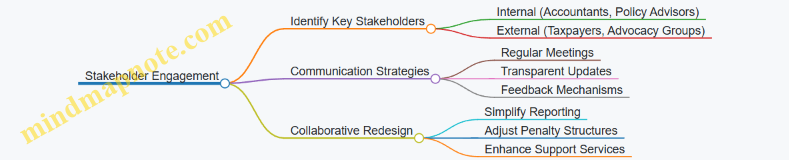
Example: The working group simplified the tax reporting forms, reducing the number of fields by 40%, and introduced a phased penalty system to ease transition.
Step 3: Capacity Building and Training
To address internal resistance and capability gaps, a comprehensive training program was developed.
Best Practice: Equip staff with knowledge and skills to confidently implement new policies.
Mind Map: Capacity Building
Example: Accountants attended workshops focusing on the new reporting requirements and customer service skills to better assist taxpayers.
Step 4: Enhancing Communication and Transparency
Clear, consistent communication was prioritized to rebuild trust and clarify policy objectives.
Best Practice: Use multiple channels and tailor messages to different audiences.
Mind Map: Communication Strategy
Example: The agency launched an informative campaign including videos, FAQs, and a dedicated helpline, which increased taxpayer awareness by 60%.
Step 5: Monitoring, Evaluation, and Continuous Improvement
Post-redesign, the agency implemented robust monitoring to track progress and identify ongoing issues.
Best Practice: Establish KPIs and feedback loops to adapt policy dynamically.
Mind Map: Monitoring & Evaluation
Example: Within six months, compliance rates improved by 25%, and processing times decreased by 15%, demonstrating successful turnaround.
Summary of Best Practices Demonstrated
| Practice | Description | Example Application |
|---|---|---|
| Comprehensive Diagnosis | Analyze failures from multiple angles | Surveys, data review, process audits |
| Inclusive Stakeholder Engagement | Collaborate with all affected parties | Working groups with taxpayers and staff |
| Capacity Building | Train staff to handle new policies effectively | Workshops and e-learning for accountants |
| Transparent Communication | Use clear, multi-channel messaging | Helplines, videos, social media campaigns |
| Continuous Monitoring & Improvement | Track KPIs and adapt policy as needed | Regular compliance reports and feedback loops |
This example demonstrates that even a failed financial policy initiative can be successfully turned around by applying structured diagnosis, stakeholder collaboration, capacity building, clear communication, and continuous monitoring. Accountants and policy advisors play a critical role in each phase, ensuring policies not only comply with regulations but also meet practical needs and gain stakeholder trust.
9.5 Lessons Learned and Continuous Improvement
Implementing financial policies is a dynamic process that often reveals valuable lessons and opportunities for continuous improvement. Recognizing and integrating these lessons is crucial for refining future policies and enhancing organizational effectiveness.
Key Lessons Learned in Financial Policy Implementation
- Importance of Early Stakeholder Engagement: Engaging stakeholders from the outset helps identify potential challenges and builds ownership.
- Flexibility in Policy Design: Policies must be adaptable to changing economic conditions and organizational needs.
- Clear Communication Channels: Transparent and consistent communication reduces misunderstandings and resistance.
- Robust Monitoring Mechanisms: Continuous monitoring enables timely identification of issues and corrective actions.
- Capacity Building: Investing in training ensures that staff are equipped to implement and comply with policies effectively.
Continuous Improvement Cycle in Financial Policy Implementation
Example: Lessons Learned from a Tax Compliance Policy Rollout
A government finance department implemented a new tax compliance policy aimed at increasing revenue collection. Initial rollout faced resistance due to unclear guidelines and lack of training.
- Lesson 1: Early involvement of tax officers in policy drafting improved clarity.
- Lesson 2: Introducing interactive training sessions increased compliance rates by 15% within six months.
- Lesson 3: Establishing a dedicated helpline improved taxpayer support and reduced errors.
Based on these lessons, the department revised the policy communication strategy and incorporated a feedback mechanism to monitor ongoing challenges.
Mind Map: Integrating Lessons Learned into Policy Improvement
Best Practices for Continuous Improvement
- Establish a Lessons Learned Database: Document experiences systematically to inform future policies.
- Schedule Regular Policy Reviews: Set periodic evaluations to assess relevance and effectiveness.
- Promote a Culture of Openness: Encourage staff to share challenges and suggestions without fear.
- Leverage Data Analytics: Use data to identify trends and areas for improvement.
- Implement Pilot Programs: Test policy changes on a small scale before full rollout.
Example: Continuous Improvement in a Government Subsidy Program
A subsidy program aimed at supporting small businesses was initially plagued by delays and misallocation. Through continuous improvement efforts:
- Feedback from beneficiaries highlighted cumbersome application procedures.
- Data analysis identified bottlenecks in approval workflows.
- Process redesign reduced approval time by 40%.
- Ongoing training for staff improved accuracy in fund disbursement.
This iterative approach significantly enhanced program efficiency and beneficiary satisfaction.
Summary
Lessons learned and continuous improvement are integral to successful financial policy implementation. By systematically capturing experiences, engaging stakeholders, and adapting policies, organizations can foster resilience and achieve better financial governance outcomes.
10. Case Studies and Practical Examples
10.1 Case Study: Implementing a National Budget Reform Policy
Overview
This case study explores the comprehensive process of implementing a national budget reform policy in a mid-sized government aiming to enhance fiscal transparency, improve resource allocation, and strengthen accountability. The reform involved multiple stakeholders, phased implementation, and integration of new technology.
Background
The government faced challenges such as budget overruns, inefficient spending, and limited public trust. The reform policy was designed to address these issues by introducing performance-based budgeting, real-time monitoring, and participatory budgeting elements.
Key Objectives
- Increase transparency in budget formulation and execution
- Align budget allocations with strategic national priorities
- Enhance accountability through performance measurement
- Foster citizen engagement in budget decisions
Implementation Phases
Mind Map: Implementation Phases of National Budget Reform
Best Practices Applied
-
Inclusive Stakeholder Engagement
- Example: The Ministry of Finance organized workshops with regional governments and NGOs to gather input, ensuring buy-in and reducing resistance.
-
Clear Communication Strategy
- Example: Monthly newsletters and an online portal kept all parties informed about progress and challenges.
-
Capacity Building
- Example: Accountants underwent specialized training on performance-based budgeting and new software tools.
-
Use of Technology
- Example: Implementation of an integrated financial management information system (IFMIS) enabled real-time budget tracking.
-
Phased Implementation
- Example: Piloting in three ministries allowed troubleshooting before scaling nationwide.
-
Monitoring and Evaluation Framework
- Example: KPIs such as budget variance, timeliness of reports, and citizen satisfaction were tracked quarterly.
Challenges and Solutions
-
Resistance to Change: Some departments were reluctant to adopt new procedures.
- Solution: Leadership champions and incentives encouraged adoption.
-
Data Quality Issues: Initial data inconsistencies hampered monitoring.
- Solution: Data validation protocols and training improved accuracy.
-
Resource Constraints: Limited budget for technology upgrades.
- Solution: Phased procurement and leveraging donor funding helped bridge gaps.
Mind Map: Challenges and Solutions
Outcomes
- Improved budget transparency with public access to detailed reports.
- Reduction in budget overruns by 15% within the first year.
- Enhanced alignment of expenditures with strategic priorities.
- Increased citizen participation through online platforms.
Lessons Learned
- Early and continuous stakeholder engagement is critical.
- Capacity building must be ongoing, not one-off.
- Technology adoption requires parallel investments in skills and infrastructure.
- Monitoring frameworks should be flexible to adapt to emerging challenges.
Summary Mind Map
This case study demonstrates how integrating best practices with practical examples and phased approaches can lead to successful financial policy implementation at the national level, providing valuable insights for accountants and policy advisors alike.
10.2 Example: Financial Policy Implementation in a Local Government Setting
Implementing financial policies at the local government level presents unique challenges and opportunities. This section explores a detailed example of how a mid-sized city successfully implemented a new financial transparency policy, weaving best practices and practical examples throughout.
Background
The city council identified a need to improve financial transparency to increase public trust and ensure better allocation of municipal resources. The policy aimed to make budgeting, spending, and procurement processes more open and accessible to citizens.
Step 1: Policy Design and Stakeholder Engagement
-
Best Practice: Engage stakeholders early to ensure the policy addresses real concerns and gains broad support.
-
The city formed a working group including accountants, policy advisors, elected officials, community representatives, and IT staff.
-
Public forums and surveys were conducted to gather input on transparency priorities.
-
Example: A survey revealed that citizens wanted easy access to budget summaries and contract awards.
Mind Map: Stakeholder Engagement in Local Government Financial Policy
Step 2: Resource Allocation and Capacity Building
-
Best Practice: Assess and allocate resources realistically, including training needs.
-
The finance department identified gaps in staff skills related to data transparency tools.
-
A budget was allocated for training sessions on financial software and data visualization.
-
Example: Accountants attended workshops on open data platforms to publish financial reports online.
Mind Map: Capacity Building for Financial Transparency
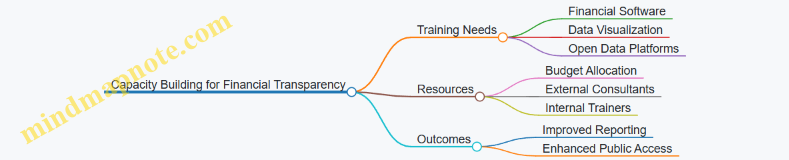
Step 3: Implementation and Technology Integration
-
Best Practice: Leverage technology to facilitate transparency and ease of access.
-
The city implemented an online portal where citizens could view budget documents, procurement contracts, and spending reports.
-
The portal included search and filter functions, making it user-friendly.
-
Example: Monthly updates were automatically published, reducing manual workload and increasing timeliness.
Mind Map: Technology Integration in Policy Implementation
Step 4: Monitoring, Evaluation, and Feedback
-
Best Practice: Establish KPIs and feedback loops to measure success and adapt.
-
KPIs included website traffic, number of documents accessed, and citizen satisfaction scores.
-
Quarterly reviews were conducted to assess performance and identify areas for improvement.
-
Feedback channels allowed citizens to submit comments and suggestions.
-
Example: After feedback indicated difficulty navigating some sections, the portal interface was redesigned for better usability.
Mind Map: Monitoring and Evaluation
Key Lessons Learned
-
Early and inclusive stakeholder engagement builds trust and ensures policy relevance.
-
Investing in staff capacity and technology is critical for sustainable implementation.
-
Transparent communication and easy access to information empower citizens and improve accountability.
-
Continuous monitoring and willingness to adapt enhance policy effectiveness.
This example demonstrates how local governments can successfully implement financial policies by combining best practices with practical, context-specific actions. Accountants and policy advisors play a pivotal role in guiding these processes to achieve transparency and improved financial governance.
10.3 Best Practices from International Financial Policy Initiatives
International financial policy initiatives provide valuable insights into effective strategies that can be adapted and implemented across various governmental and financial institutions. This section explores key best practices drawn from successful global examples, supported by mind maps to visualize concepts and practical examples to illustrate their application.
Harmonization of Financial Regulations
Many international initiatives emphasize the harmonization of financial regulations to facilitate cross-border cooperation and reduce compliance complexities.
- Best Practice: Align national financial policies with international standards such as Basel III for banking or IFRS for accounting.
- Example: The European Union’s adoption of the Capital Requirements Directive (CRD IV) harmonized banking regulations across member states, improving financial stability and transparency.
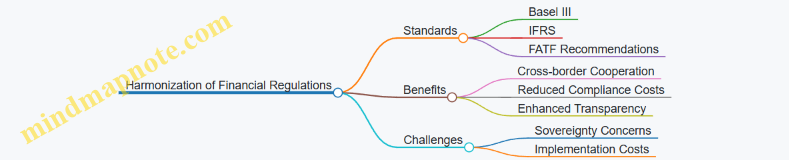
Transparent Budgeting and Public Financial Management
Transparency is a cornerstone of effective financial policy implementation internationally.
- Best Practice: Implement open budget initiatives and real-time public financial reporting.
- Example: The Open Budget Initiative by the International Budget Partnership encourages governments to publish accessible budget data, as seen in South Korea’s online budget transparency portal.
Capacity Building and Technical Assistance
International programs often provide technical support to enhance local capacities.
- Best Practice: Invest in continuous training and knowledge transfer for financial professionals.
- Example: The IMF’s Technical Assistance programs help developing countries strengthen tax policy and administration.
Use of Technology and E-Government Solutions
Digital transformation is a global trend enhancing financial policy implementation.
- Best Practice: Deploy e-tax systems and integrated financial management information systems (IFMIS).
- Example: Estonia’s e-government platform integrates tax collection, budgeting, and auditing, resulting in efficiency and reduced corruption.
Inclusive Policy Development and Stakeholder Engagement
Engaging diverse stakeholders ensures policies are realistic and widely supported.
- Best Practice: Conduct public consultations and involve civil society in policy formulation.
- Example: Canada’s participatory budgeting initiatives allow citizens to influence local financial decisions.
Monitoring, Evaluation, and Adaptive Management
Continuous assessment and flexibility are critical for long-term success.
- Best Practice: Establish robust M&E frameworks with clear KPIs and feedback loops.
- Example: The World Bank’s Results-Based Financing programs incorporate real-time monitoring to adjust financial policies dynamically.
Summary
International financial policy initiatives demonstrate that harmonization, transparency, capacity building, technology adoption, stakeholder engagement, and adaptive management form the pillars of successful financial policy implementation. Accountants and policy advisors can leverage these best practices, adapting them to their local contexts to enhance policy effectiveness and public trust.
For further reading, consider exploring reports from the IMF, World Bank, OECD, and regional financial institutions that document these initiatives in detail.
10.4 Lessons from Public-Private Partnerships in Financial Policy
Public-Private Partnerships (PPPs) have become a pivotal mechanism in implementing financial policies that require collaboration between government entities and private sector organizations. These partnerships leverage the strengths of both sectors to achieve policy goals efficiently, transparently, and sustainably.
Key Lessons from PPPs in Financial Policy Implementation
Aligning Objectives and Incentives
- Lesson: Successful PPPs begin with clear alignment of goals between public and private partners.
- Example: In a city infrastructure financing policy, the government aimed to improve public transport affordability, while private partners sought sustainable returns. By structuring revenue-sharing agreements, both parties benefited.
Transparent Risk Sharing
- Lesson: Clearly defined risk allocation reduces conflicts and enhances trust.
- Example: A financial policy to develop affordable housing involved PPPs where construction risks were borne by private firms, while regulatory risks remained with the government.
Robust Governance and Accountability Mechanisms
- Lesson: Establishing joint governance frameworks ensures accountability and smooth decision-making.
- Example: In a tax collection modernization policy, a PPP created a steering committee with representatives from both sectors to oversee progress and resolve issues.
Leveraging Private Sector Innovation
- Lesson: PPPs enable governments to tap into private sector innovation, improving policy outcomes.
- Example: A digital payments policy partnered with fintech companies to deploy mobile payment solutions, increasing financial inclusion.
Flexibility and Adaptability
- Lesson: PPP agreements should allow for adjustments to changing economic or regulatory environments.
- Example: A renewable energy financing policy included clauses for renegotiation of terms based on market fluctuations.
Practical Example: PPP in Government Debt Management Policy
In a government debt management reform, a PPP was formed between the Ministry of Finance and private financial institutions to modernize debt issuance and monitoring.
-
Best Practices Applied:
- Clear objectives aligning fiscal responsibility with private sector efficiency.
- Risk-sharing where the government retained sovereign risk, private partners managed operational risks.
- Joint governance with a steering committee.
- Use of innovative financial technology platforms.
- Contractual flexibility to adjust to market conditions.
-
Outcome: Improved transparency, reduced borrowing costs, and enhanced investor confidence.
Summary Mindmap: Lessons from PPPs in Financial Policy
By integrating these lessons, accountants and policy advisors can design and implement financial policies through PPPs that are more resilient, effective, and aligned with both public interests and private sector capabilities.
10.5 Synthesizing Best Practices Across Case Studies
In this section, we distill the key lessons and best practices derived from various financial policy implementation case studies discussed earlier. By synthesizing these insights, accountants and policy advisors can develop a robust, adaptable framework to guide future financial policy initiatives.
Key Best Practices Synthesized
-
Stakeholder Engagement is Crucial
- Early and continuous involvement of all stakeholders ensures smoother implementation.
- Example: In the National Budget Reform Policy case, regular town hall meetings helped align public expectations and reduce resistance.
-
Clear Communication and Transparency
- Transparent communication builds trust and facilitates compliance.
- Example: The Local Government Financial Policy utilized an online dashboard to share progress updates, enhancing accountability.
-
Data-Driven Decision Making
- Leveraging data analytics improves policy design, monitoring, and adjustment.
- Example: International initiatives employed real-time financial data to adjust subsidy allocations dynamically.
-
Capacity Building and Training
- Equipping staff with necessary skills ensures effective policy execution.
- Example: Public-Private Partnerships invested in joint training programs, improving cross-sector collaboration.
-
Adaptive and Flexible Policy Design
- Policies that incorporate feedback loops and allow adjustments respond better to evolving contexts.
- Example: The Local Government policy included quarterly reviews to refine implementation strategies.
-
Robust Monitoring and Evaluation (M&E)
- Continuous M&E helps identify bottlenecks and measure impact.
- Example: The National Budget Reform employed KPIs aligned with fiscal targets, enabling timely course corrections.
-
Leveraging Technology
- Digital tools enhance efficiency, transparency, and compliance.
- Example: E-Government platforms automated reporting, reducing manual errors and delays.
-
Risk Management and Compliance Focus
- Proactively managing risks and ensuring regulatory compliance prevents setbacks.
- Example: AML policy implementation included regular audits and compliance training.
Mind Map: Synthesized Best Practices for Financial Policy Implementation
Example: Applying Synthesized Best Practices
Scenario: A government agency plans to implement a new financial transparency policy.
-
Stakeholder Engagement: The agency forms a task force including accountants, policy advisors, community representatives, and IT specialists.
-
Communication: They launch a dedicated website with clear policy objectives, timelines, and progress updates.
-
Data-Driven Approach: Baseline financial data is collected and analyzed to set realistic targets.
-
Capacity Building: Staff undergo training on new reporting standards and digital tools.
-
Adaptive Design: The policy includes quarterly feedback sessions to incorporate lessons learned.
-
Monitoring: KPIs such as reporting accuracy and timeliness are tracked monthly.
-
Technology: An automated reporting system is deployed to reduce errors.
-
Risk Management: Compliance audits are scheduled bi-annually to ensure adherence.
This integrated approach, reflecting best practices from multiple case studies, maximizes the likelihood of successful policy implementation.
By synthesizing these best practices, accountants and policy advisors can create more resilient, effective financial policies that adapt to challenges and deliver measurable outcomes.
11. Conclusion and Future Directions
11.1 Recap of Best Practices in Financial Policy Implementation
Implementing financial policies effectively requires a blend of strategic planning, stakeholder engagement, resource management, and continuous evaluation. Below is a comprehensive recap of the best practices covered throughout this blog, supported by illustrative examples and mind maps to help visualize the key concepts.
Best Practices Mind Map
Policy Design: Clarity, Feasibility, and Flexibility
Best Practice: Ensure policies are clearly written, practical to implement, and adaptable to changing circumstances.
Example: When drafting a tax compliance policy, the finance department included clear definitions of taxable activities and deadlines, while also allowing for periodic reviews to adjust thresholds based on economic conditions.
Stakeholder Engagement: Inclusive and Transparent Communication
Best Practice: Identify all relevant stakeholders early and maintain open communication channels.
Example: A municipal finance department engaged local businesses and community groups during the rollout of a new budget allocation policy, hosting workshops and feedback sessions to incorporate diverse perspectives.
Resource Allocation: Adequate Budgeting and Capacity Building
Best Practice: Allocate sufficient resources and invest in training to ensure smooth implementation.
Example: Prior to implementing new financial regulations, a government agency launched a comprehensive training program for accountants and policy advisors, which reduced compliance errors by 30%.
Monitoring and Evaluation: Data-Driven and Continuous
Best Practice: Establish KPIs and regularly collect data to assess policy impact and make necessary adjustments.
Example: The evaluation of a government subsidy program included quarterly audits and beneficiary surveys, enabling timely identification of inefficiencies and policy recalibration.
Compliance and Regulatory Alignment
Best Practice: Understand and integrate relevant regulatory requirements to minimize risks.
Example: During the implementation of anti-money laundering policies, a financial institution collaborated closely with regulatory bodies to ensure all procedures met legal standards, avoiding costly penalties.
Leveraging Technology and Innovation
Best Practice: Use digital tools and automation to enhance transparency, efficiency, and accuracy.
Example: An e-government platform was introduced to automate tax filings and compliance reporting, reducing processing times by 40% and increasing taxpayer satisfaction.
Change Management and Overcoming Challenges
Best Practice: Address resistance through effective communication, negotiation, and fostering a culture of continuous improvement.
Example: When a financial policy initially faced pushback from staff, leadership organized open forums and incorporated employee feedback, which led to increased buy-in and successful implementation.
Summary Mind Map: Integrated Approach
By adhering to these best practices, accountants and policy advisors can ensure that financial policies are not only well-crafted but also effectively implemented, monitored, and refined to meet organizational and public sector goals. The integration of real-world examples throughout this blog serves to ground these practices in practical reality, making them accessible and actionable for professionals in the finance and government sectors.
11.2 Emerging Challenges and Opportunities
As financial policy implementation evolves, accountants and policy advisors face a dynamic landscape shaped by technological advances, regulatory changes, and shifting economic conditions. Understanding emerging challenges and opportunities is crucial to crafting resilient and effective financial policies.
Emerging Challenges
Rapid Technological Change
- Challenge: Keeping pace with innovations such as blockchain, AI, and big data analytics can be overwhelming.
- Example: A government agency implementing a new tax reporting system struggles to integrate AI-driven fraud detection due to lack of expertise.
Increasing Regulatory Complexity
- Challenge: Financial regulations are becoming more intricate, often overlapping across jurisdictions.
- Example: Cross-border financial policies require compliance with multiple regulatory bodies, complicating implementation.
Data Privacy and Security Concerns
- Challenge: Handling sensitive financial data raises risks related to breaches and misuse.
- Example: A public sector financial policy mandates data sharing between agencies but faces pushback due to privacy concerns.
Resource Constraints
- Challenge: Budget limitations and staffing shortages hinder comprehensive policy rollout.
- Example: Smaller municipalities struggle to allocate sufficient resources for new financial compliance policies.
Resistance to Change
- Challenge: Stakeholders may resist new policies due to uncertainty or perceived increased workload.
- Example: Accountants in a government department resist adopting automated reporting tools fearing job redundancy.
Emerging Opportunities
Leveraging Advanced Technologies
- Opportunity: AI and machine learning can enhance policy monitoring and predictive analytics.
- Example: Using AI to predict budget shortfalls allows proactive policy adjustments.
Enhanced Data-Driven Decision Making
- Opportunity: Big data enables more accurate impact assessments and policy refinements.
- Example: Analyzing spending patterns helps tailor subsidy programs to maximize effectiveness.
Greater Stakeholder Collaboration
- Opportunity: Digital platforms facilitate transparent communication and inclusive policy design.
- Example: Online consultation portals allow citizens to provide feedback on proposed financial regulations.
Integration of Sustainability and ESG Factors
- Opportunity: Incorporating environmental, social, and governance criteria aligns financial policies with global priorities.
- Example: A government introduces green bonds policy to fund sustainable infrastructure.
Capacity Building Through E-Learning
- Opportunity: Online training programs can rapidly upskill accountants and policy advisors.
- Example: A finance ministry launches a virtual academy for continuous professional development on new regulations.
Mind Maps
Mind Map 1: Emerging Challenges in Financial Policy Implementation
Mind Map 2: Emerging Opportunities in Financial Policy Implementation
Integrated Example: Navigating Challenges and Harnessing Opportunities
A national finance department faced resistance when rolling out a new automated compliance system. To overcome this, they implemented an e-learning program to build staff capacity (Opportunity: Capacity Building), engaged stakeholders through an online feedback portal (Opportunity: Stakeholder Collaboration), and addressed data privacy concerns by adopting blockchain for secure data sharing (Opportunity: Advanced Technologies). This approach mitigated resistance (Challenge: Resistance to Change), ensured data security (Challenge: Data Privacy), and optimized resource use despite budget constraints (Challenge: Resource Constraints).
Summary
Emerging challenges such as technological disruption, regulatory complexity, and resistance to change require proactive strategies. Simultaneously, opportunities in technology, data analytics, collaboration, sustainability, and capacity building offer powerful tools to enhance financial policy implementation. Accountants and policy advisors who embrace these dynamics will be better positioned to design and execute policies that are effective, adaptable, and future-ready.
11.3 Recommendations for Accountants and Policy Advisors
Effective financial policy implementation relies heavily on the expertise and proactive engagement of accountants and policy advisors. Below are detailed recommendations designed to empower these professionals to drive successful outcomes.
Embrace Continuous Learning and Professional Development
- Stay updated with evolving financial regulations and standards.
- Participate in workshops, webinars, and certification programs.
- Engage with professional networks and communities.
Example: An accountant regularly attends government finance seminars to stay current on tax reforms, enabling timely advice and compliance.
Foster Collaborative Stakeholder Engagement
- Build strong relationships with internal teams, regulators, and external partners.
- Encourage open communication and feedback loops.
- Facilitate workshops to align expectations and clarify policy objectives.
Example: A policy advisor organizes quarterly stakeholder meetings to discuss progress and challenges in implementing a new subsidy policy, ensuring transparency and buy-in.
Prioritize Data-Driven Decision Making
- Utilize financial data analytics to assess policy impacts.
- Develop KPIs and dashboards for real-time monitoring.
- Leverage data to identify risks and opportunities early.
Example: Accountants use a dashboard to track compliance rates across departments, enabling targeted interventions where gaps appear.
Advocate for Clear and Practical Policy Design
- Ensure policies are written in clear, unambiguous language.
- Incorporate flexibility to adapt to changing circumstances.
- Align policies with organizational goals and legal frameworks.
Example: A policy advisor drafts a procurement policy with straightforward steps and contingency clauses, reducing confusion and delays.
Enhance Capacity Through Training and Technology
- Promote regular training sessions tailored to policy updates.
- Implement technology solutions to automate routine tasks.
- Encourage use of collaborative platforms for knowledge sharing.
Example: A finance department introduces an e-learning module on new financial compliance requirements, increasing staff readiness.
Implement Robust Monitoring and Feedback Mechanisms
- Set measurable objectives and timelines.
- Conduct periodic audits and evaluations.
- Use findings to refine policies and processes continuously.
Example: After a mid-year review, a policy advisor recommends adjustments to a grant disbursement policy based on audit results, improving efficiency.
Mind Map: Key Recommendations for Accountants and Policy Advisors
Mind Map: Data-Driven Decision Making Process
Mind Map: Stakeholder Engagement Strategy
By integrating these recommendations, accountants and policy advisors can significantly enhance the effectiveness, transparency, and sustainability of financial policy implementation efforts.
11.4 The Role of Continuous Learning and Adaptation
Continuous learning and adaptation are critical components in the successful implementation and sustainability of financial policies. In the dynamic environments of finance and government, policies must evolve to address emerging challenges, regulatory changes, and stakeholder needs. This section explores the importance of fostering a culture of learning, mechanisms to enable adaptation, and practical examples illustrating these concepts.
Why Continuous Learning and Adaptation Matter
- Dynamic Financial Environments: Economic conditions, political priorities, and regulatory landscapes change frequently.
- Policy Effectiveness: Continuous learning helps identify gaps and improve policy impact.
- Risk Mitigation: Adaptation allows organizations to respond proactively to risks and compliance issues.
- Stakeholder Engagement: Ongoing feedback loops ensure policies remain relevant and supported.
Mind Map: Components of Continuous Learning and Adaptation
Best Practices for Continuous Learning and Adaptation
-
Establish Regular Review Cycles
- Schedule periodic assessments (quarterly, bi-annually) to evaluate policy performance.
- Example: A government finance department conducts bi-annual reviews of tax policy impact using collected revenue data and taxpayer feedback.
-
Create Feedback Loops with Stakeholders
- Use surveys, focus groups, and public consultations to gather input.
- Example: A municipal government implements an online portal for citizens and businesses to provide feedback on new financial regulations.
-
Implement Knowledge Sharing Platforms
- Develop centralized repositories for lessons learned, best practices, and policy updates.
- Example: An accounting team uses an intranet wiki to document challenges faced during policy implementation and solutions discovered.
-
Encourage Training and Capacity Building
- Offer continuous professional development to keep staff updated on policy changes and new financial tools.
- Example: Policy advisors attend quarterly workshops on emerging financial regulations and data analytics techniques.
-
Design Policies with Built-in Flexibility
- Incorporate clauses allowing adjustments based on performance data or external changes.
- Example: A subsidy program includes a clause to adjust eligibility criteria annually based on economic indicators.
-
Leverage Data Analytics for Real-Time Adaptation
- Use dashboards and analytics to monitor key performance indicators and trigger alerts for anomalies.
- Example: A government agency uses a real-time dashboard to track budget utilization and flags overspending for immediate review.
Mind Map: Continuous Learning Cycle in Financial Policy
Practical Example: Adapting a Government Procurement Policy
Context: A government agency implemented a procurement policy aimed at increasing transparency and reducing costs. After six months, performance data showed delays and supplier dissatisfaction.
Continuous Learning Actions:
- Conducted stakeholder surveys revealing communication gaps.
- Held workshops with procurement officers to identify bottlenecks.
- Updated the policy to simplify approval processes and introduced a supplier feedback mechanism.
- Trained staff on new digital procurement tools.
Outcome: Improved procurement cycle times by 25% and increased supplier satisfaction scores.
Mind Map: Tools Supporting Continuous Learning and Adaptation
Summary
Continuous learning and adaptation empower accountants and policy advisors to maintain effective, compliant, and responsive financial policies. By embedding feedback loops, fostering knowledge sharing, and embracing flexibility, organizations can navigate complexities and drive continuous improvement.
Remember: The journey of financial policy implementation does not end with rollout; it is an ongoing process of learning, adapting, and evolving to meet the needs of the public and the organization.
11.5 Final Thoughts: Building Resilient Financial Policies for the Future
As financial landscapes evolve rapidly due to technological advances, economic shifts, and changing regulatory environments, building resilient financial policies is more critical than ever. Resilience in financial policy means creating frameworks that not only withstand shocks and disruptions but also adapt and improve over time.
Key Elements of Resilient Financial Policies
- Flexibility: Policies must allow for adjustments as new information and circumstances arise.
- Robustness: They should be designed to endure economic volatility and unexpected events.
- Transparency: Clear communication and openness build trust and facilitate compliance.
- Stakeholder Engagement: Inclusive processes ensure diverse perspectives and buy-in.
- Continuous Monitoring and Feedback: Ongoing evaluation enables timely improvements.
Mind Map: Building Resilient Financial Policies
Practical Examples
Example 1: Adaptive Budgeting in a Government Finance Department
A government finance department implemented a rolling budget process that allows quarterly revisions based on economic indicators and revenue forecasts. This flexibility helped the department respond effectively to sudden economic downturns without compromising essential services.
Example 2: Stress Testing Financial Regulations
A regulatory body introduced mandatory stress testing for financial institutions under its jurisdiction. By simulating adverse economic scenarios, the policy ensured institutions maintained adequate capital buffers, enhancing the overall system’s robustness.
Example 3: Transparent Public Reporting for Tax Policies
A city government launched an online dashboard providing real-time updates on tax revenue collection and expenditure. This transparency increased public trust and improved compliance rates.
Mind Map: Continuous Improvement Cycle for Financial Policies
Final Recommendations for Accountants and Policy Advisors
- Embrace Technology: Utilize data analytics, AI, and digital platforms to enhance policy design, monitoring, and enforcement.
- Foster Collaboration: Work closely with diverse stakeholders, including public officials, private sector, and civil society.
- Prioritize Learning: Treat policy implementation as a dynamic process with room for experimentation and adaptation.
- Build Capacity: Invest in continuous training and knowledge sharing to keep teams equipped for emerging challenges.
- Promote Ethical Standards: Ensure policies uphold integrity, fairness, and accountability.
By embedding these principles and practices, financial policies can become resilient pillars that support sustainable economic growth and public trust in an ever-changing world.