Financial Ethics and Compliance
1. Introduction to Financial Ethics and Compliance
1.1 Understanding Financial Ethics: Definition and Importance
Financial ethics refers to the set of moral principles and standards that guide behavior and decision-making in the financial industry. It encompasses honesty, integrity, transparency, fairness, and accountability in all financial activities, from accounting and auditing to investment and compliance.
Why Financial Ethics Matter
- Trust Building: Ethical behavior fosters trust between financial institutions, clients, regulators, and the public.
- Risk Mitigation: Ethical practices reduce the risk of fraud, financial scandals, and legal penalties.
- Sustainable Growth: Ethics promote long-term stability rather than short-term gains.
- Regulatory Compliance: Aligning with ethical standards ensures adherence to laws and regulations.
Mind Map: Core Components of Financial Ethics
Example 1: Ethical Reporting in Accounting
An accountant discovers an error in the financial statements that, if left uncorrected, would inflate the company’s earnings. Ethical practice requires the accountant to report and correct the mistake immediately, even if it means the company’s stock price might drop temporarily. This builds trust with investors and regulators.
Example 2: Transparency in Client Communication
A compliance officer notices that a financial product has risks that are not clearly communicated to clients. Ethical behavior involves ensuring that all marketing materials and disclosures accurately reflect these risks, enabling clients to make informed decisions.
Mind Map: Importance of Financial Ethics in Stakeholder Relationships
Summary
Financial ethics is the backbone of a trustworthy, compliant, and sustainable financial system. For accountants and compliance officers, understanding and applying these ethical principles is essential to uphold the integrity of their institutions and protect all stakeholders involved.
1.2 The Role of Compliance in Financial Institutions
Compliance in financial institutions serves as a critical pillar to ensure that organizations operate within the legal and ethical boundaries set by regulatory bodies. It protects the institution from legal penalties, reputational damage, and financial loss while fostering trust among clients, investors, and the public.
What is Compliance?
Compliance refers to the adherence to laws, regulations, guidelines, and specifications relevant to the financial industry. It involves implementing policies and procedures to detect, prevent, and respond to violations.
Why is Compliance Vital in Financial Institutions?
- Risk Mitigation: Compliance helps identify and mitigate risks related to fraud, money laundering, and unethical behavior.
- Legal Adherence: Ensures the institution meets all regulatory requirements to avoid fines and sanctions.
- Reputation Management: Builds public trust and confidence by demonstrating commitment to ethical standards.
- Operational Efficiency: Streamlines processes by embedding regulatory requirements into daily operations.
Core Responsibilities of Compliance Departments
- Monitoring regulatory changes and updating internal policies accordingly.
- Conducting regular audits and risk assessments.
- Training employees on compliance standards and ethical behavior.
- Reporting suspicious activities to relevant authorities.
- Managing whistleblower programs and investigations.
Mind Map: Role of Compliance in Financial Institutions
Example 1: Compliance Preventing Money Laundering
A mid-sized bank noticed unusual transaction patterns involving multiple small deposits followed by large withdrawals. The compliance team, using AML protocols, flagged these transactions as suspicious and reported them to the financial intelligence unit (FIU). This proactive compliance action prevented potential money laundering activities and avoided regulatory penalties.
Mind Map: Compliance Process Example - AML
Example 2: Compliance Training Enhancing Ethical Culture
A large financial institution implemented quarterly compliance training sessions for all employees, focusing on ethical decision-making and regulatory updates. After six months, internal surveys showed a 40% increase in employees’ confidence to report unethical behavior, demonstrating how compliance programs can foster an ethical workplace culture.
Mind Map: Building an Ethical Culture Through Compliance
Summary
The role of compliance in financial institutions is multifaceted, encompassing regulatory adherence, risk management, internal controls, employee training, and transparent reporting. By embedding compliance into the organizational DNA, financial institutions not only avoid legal repercussions but also build a sustainable, trustworthy business environment.
This integrated approach ensures that compliance is not just a checkbox activity but a strategic function that supports the institution’s long-term success.
1.3 Historical Cases Highlighting Ethical Failures in Finance
Financial ethics and compliance have been tested repeatedly throughout history, with several landmark cases illustrating the devastating impact of ethical lapses. Understanding these cases helps accountants and compliance officers recognize warning signs and reinforces the importance of maintaining integrity.
Key Historical Cases
- Enron Scandal (2001)
- Bernie Madoff Ponzi Scheme (2008)
- Lehman Brothers Collapse (2008)
- WorldCom Accounting Fraud (2002)
Enron Scandal (2001)
Enron, once a high-flying energy company, collapsed after it was revealed that the company used complex accounting loopholes, special purpose entities, and poor financial reporting to hide billions in debt from failed deals and projects.
Ethical Failures:
- Manipulation of financial statements
- Lack of transparency
- Conflicts of interest within the board
Example: Enron used “mark-to-market” accounting to book potential future profits as current income, inflating earnings and misleading investors.
Mind Map:
Bernie Madoff Ponzi Scheme (2008)
Bernie Madoff orchestrated the largest Ponzi scheme in history, defrauding investors of an estimated $65 billion by promising consistent, high returns and using new investors’ money to pay returns to earlier investors.
Ethical Failures:
- Fraudulent misrepresentation
- Breach of fiduciary duty
- Lack of oversight and internal controls
Example: Madoff’s firm never actually invested the money as promised; instead, it relied on inflows from new investors to pay returns, which is unsustainable.
Mind Map:
Lehman Brothers Collapse (2008)
Lehman Brothers, a global financial services firm, filed for bankruptcy due to excessive exposure to subprime mortgages and risky financial products, compounded by misleading accounting practices.
Ethical Failures:
- Misleading financial disclosures
- Excessive risk-taking without adequate controls
- Failure in corporate governance
Example: Lehman used a small accounting trick called “Repo 105” to temporarily remove debt from its balance sheet, making its financial position appear stronger than it was.
Mind Map:
WorldCom Accounting Fraud (2002)
WorldCom inflated its assets by approximately $11 billion through improper accounting of operational costs, leading to one of the largest accounting scandals in U.S. history.
Ethical Failures:
- Capitalizing expenses that should have been expensed
- Deceptive financial reporting
- Weak internal controls
Example: WorldCom recorded regular operating expenses as capital expenditures, artificially boosting profits.
Mind Map:
Lessons for Accountants and Compliance Officers
- Always prioritize transparency and accuracy in financial reporting.
- Implement strong internal controls to detect and prevent manipulation.
- Maintain independence and avoid conflicts of interest.
- Encourage a culture of ethical behavior and accountability.
- Stay informed about regulatory requirements and best practices.
These historical cases serve as cautionary tales, emphasizing the critical role of ethics and compliance in safeguarding financial integrity and protecting stakeholders.
1.4 Overview of Regulatory Frameworks Governing Financial Ethics
Financial ethics is deeply intertwined with regulatory frameworks designed to ensure transparency, accountability, and fairness in financial activities. Understanding these frameworks is essential for accountants and compliance officers to navigate the complex legal landscape and uphold ethical standards.
Key Regulatory Frameworks
Below is a mind map illustrating the major regulatory frameworks that govern financial ethics globally:
Sarbanes-Oxley Act (SOX)
Overview: Enacted in 2002 in response to major corporate scandals (e.g., Enron, WorldCom), SOX aims to protect investors by improving the accuracy and reliability of corporate disclosures.
Best Practice Example:
- A publicly traded company implements a rigorous internal control system to ensure all financial reports are accurate and certified by the CEO and CFO, reducing the risk of fraud.
Mind Map:
Dodd-Frank Wall Street Reform and Consumer Protection Act
Overview: Passed in 2010 to promote financial stability by improving accountability and transparency in the financial system.
Best Practice Example:
- A compliance officer establishes a whistleblower program encouraging employees to report unethical behavior anonymously, aligning with Dodd-Frank’s whistleblower provisions.
Mind Map:
International Financial Reporting Standards (IFRS)
Overview: IFRS provides a common global language for business affairs so that company accounts are understandable and comparable across international boundaries.
Best Practice Example:
- An accounting team adopts IFRS standards to ensure transparent and consistent financial reporting for multinational clients.
Mind Map:
General Data Protection Regulation (GDPR)
Overview: GDPR is a regulation in EU law on data protection and privacy, affecting how financial institutions handle personal data.
Best Practice Example:
- A financial firm implements strict data handling policies and obtains explicit consent from clients before processing their personal information.
Mind Map:
Anti-Money Laundering (AML) Regulations
Overview: AML regulations require financial institutions to detect and prevent money laundering activities.
Best Practice Example:
- A bank uses advanced software to monitor transactions and flags suspicious activities for further investigation.
Mind Map:
Financial Industry Regulatory Authority (FINRA)
Overview: FINRA regulates brokerage firms and exchange markets in the U.S., enforcing ethical conduct and compliance.
Best Practice Example:
- A brokerage firm trains its employees regularly on FINRA’s ethical rules to prevent conflicts of interest and ensure fair trading practices.
Mind Map:
Summary
Understanding these regulatory frameworks helps finance professionals embed ethical practices into their daily operations. By following best practices such as establishing internal controls, promoting transparency, protecting data privacy, and encouraging whistleblowing, organizations can maintain compliance and foster trust.
Additional Example: Integrating Multiple Frameworks
A multinational financial institution combines SOX internal controls with GDPR data privacy policies and AML transaction monitoring to create a comprehensive compliance program. This integrated approach ensures ethical behavior across financial reporting, data handling, and anti-fraud measures.
This overview equips accountants and compliance officers with foundational knowledge to navigate and implement financial ethics within the scope of regulatory requirements.
1.5 Best Practice: Establishing an Ethical Culture from the Top Down
Establishing an ethical culture within a financial or legal organization is fundamental to ensuring compliance and fostering trust among clients, regulators, and employees. The most effective way to embed ethics is through leadership commitment — often referred to as a “top-down” approach. When senior management visibly prioritizes ethics, it sets a powerful example that cascades throughout the organization.
Why Top-Down Ethical Culture Matters
- Leadership behavior shapes organizational norms.
- Ethical lapses often stem from tone-deaf leadership or ambiguous expectations.
- Employees take cues from executives on what is acceptable.
Key Components of a Top-Down Ethical Culture
Practical Examples
Example 1: CEO Leading by Example A multinational bank’s CEO regularly discusses the importance of ethical behavior in quarterly town halls, openly shares lessons learned from compliance failures, and personally participates in ethics training sessions. This visible commitment motivates employees to prioritize ethics in their daily work.
Example 2: Transparent Communication of Ethics Policies A law firm integrates its code of ethics into onboarding materials and holds monthly ethics discussions where employees can anonymously submit questions. This transparency helps clarify expectations and reduces ambiguity.
Example 3: Accountability in Action An accounting firm establishes a clear disciplinary process for ethical violations, including suspension or termination. They also highlight ethical achievements in internal newsletters, reinforcing positive behavior.
Mind Map: Leadership Commitment to Ethics
Mind Map: Communication Strategies
Tips for Accountants and Compliance Officers
- Collaborate with leadership to develop tailored ethics programs.
- Use real-life case studies relevant to your organization to illustrate ethical principles.
- Monitor and report on the ethical climate regularly to leadership.
- Encourage leadership to visibly participate in ethics initiatives.
By embedding ethics at the leadership level and reinforcing it through clear communication, accountability, and education, organizations can create a sustainable culture of integrity that permeates every level and function.
2. Core Principles of Financial Ethics
2.1 Integrity and Honesty in Financial Reporting
Integrity and honesty form the cornerstone of trustworthy financial reporting. For accountants and compliance officers, upholding these principles ensures that financial statements accurately reflect the true financial position of an organization, fostering confidence among stakeholders, regulators, and the public.
What is Integrity and Honesty in Financial Reporting?
- Integrity means maintaining consistency in ethical principles, ensuring that financial data is presented truthfully without manipulation or bias.
- Honesty involves full disclosure and transparency, avoiding any misleading information or omission of material facts.
Why is it Important?
- Builds trust with investors, customers, and regulators.
- Prevents legal penalties and reputational damage.
- Supports sound decision-making based on accurate data.
Mind Map: Key Elements of Integrity and Honesty in Financial Reporting
Best Practices for Maintaining Integrity and Honesty
-
Accurate Recording and Documentation
- Ensure all financial transactions are recorded promptly and correctly.
- Maintain detailed supporting documents for every entry.
-
Full Disclosure
- Disclose all material information, including contingent liabilities and risks.
- Avoid hiding unfavorable data or selectively reporting.
-
Adherence to Standards
- Follow Generally Accepted Accounting Principles (GAAP) or International Financial Reporting Standards (IFRS).
- Stay updated on changes in accounting regulations.
-
Regular Internal Reviews and Audits
- Conduct periodic checks to detect and correct errors or inconsistencies.
- Encourage independent internal audits to reinforce objectivity.
-
Ethical Training and Awareness
- Provide ongoing ethics training for finance teams.
- Promote a culture where employees feel safe to report unethical behavior.
Practical Examples
Example 1: Honest Revenue Recognition
A company receives an advance payment for services to be delivered over six months. An accountant with integrity recognizes revenue proportionally over the service period rather than recording the entire amount immediately. This honest approach prevents overstating income and misleading stakeholders.
Example 2: Transparent Disclosure of Contingent Liabilities
During the fiscal year, a company faces a lawsuit that could result in significant financial loss. The compliance officer ensures this contingent liability is disclosed in the notes to the financial statements, even though the outcome is uncertain. This transparency helps investors understand potential risks.
Example 3: Avoiding Earnings Manipulation
An accountant is pressured to accelerate expense recognition to reduce taxable income. Demonstrating integrity, the accountant refuses to manipulate the timing of expenses and reports the financials accurately, maintaining compliance and ethical standards.
Mind Map: Consequences of Lacking Integrity and Honesty
Summary
Integrity and honesty in financial reporting are non-negotiable for finance professionals. By committing to accurate data recording, full disclosure, and adherence to standards, accountants and compliance officers safeguard their organizations against risks and uphold the trust that underpins the financial ecosystem.
2.2 Transparency and Disclosure Requirements
Transparency and disclosure are foundational pillars of financial ethics, ensuring that all stakeholders—including investors, regulators, employees, and the public—have access to accurate and timely information. This openness fosters trust, reduces information asymmetry, and helps prevent fraudulent activities.
What is Transparency in Finance?
Transparency refers to the clear, accurate, and timely communication of financial information. It means that organizations openly share relevant data about their financial health, risks, and operations without hiding or manipulating facts.
Disclosure Requirements Explained
Disclosure requirements are legal and regulatory mandates that compel companies to reveal specific financial and operational information. These requirements vary by jurisdiction but generally include:
- Financial statements (balance sheet, income statement, cash flow)
- Material events affecting the company
- Related party transactions
- Risk factors
- Executive compensation
Mind Map: Key Elements of Transparency and Disclosure
Why Transparency Matters
- Builds Trust: Transparent companies are more likely to gain investor confidence.
- Reduces Risk: Clear disclosure helps identify risks early.
- Enhances Market Efficiency: Investors make better decisions with full information.
Best Practices for Ensuring Transparency and Disclosure
Timely Reporting
Ensure all financial reports and disclosures are made within mandated deadlines.
Clear and Understandable Language
Avoid jargon and present information in a way that non-experts can understand.
Comprehensive Coverage
Disclose all material facts, including potential risks and uncertainties.
Consistency
Maintain consistent reporting standards and formats over time.
Use of Technology
Leverage automated reporting tools to reduce errors and enhance accuracy.
Mind Map: Best Practices for Transparency
Practical Examples
Example 1: Transparent Earnings Report
A publicly traded company releases its quarterly earnings report on time, including detailed notes explaining any unusual expenses or one-time gains. This helps investors understand the true financial position without surprises.
Example 2: Disclosure of Related Party Transactions
An accounting firm discloses all transactions involving executives or their family members, preventing conflicts of interest and maintaining stakeholder trust.
Example 3: Material Event Disclosure
A bank promptly informs regulators and investors about a significant cybersecurity breach, outlining the impact and mitigation steps taken.
Mind Map: Examples of Transparency in Action
Challenges to Transparency
- Pressure to meet market expectations leading to selective disclosure
- Complexity of financial instruments making disclosure difficult
- Balancing transparency with confidentiality and competitive advantage
Overcoming Challenges
- Establishing a strong ethical culture that prioritizes honesty
- Training staff on disclosure requirements and ethical communication
- Using clear policies and checklists to ensure completeness
Summary
Transparency and disclosure are not just regulatory obligations but ethical imperatives that protect the integrity of financial markets. By adopting best practices and learning from real-world examples, accountants and compliance officers can champion a culture of openness that benefits all stakeholders.
2.3 Accountability and Responsibility in Financial Decisions
Accountability and responsibility are foundational pillars in financial ethics, ensuring that individuals and organizations act with integrity, transparency, and diligence when making financial decisions. These principles help maintain trust among stakeholders, prevent misconduct, and promote sustainable financial practices.
Understanding Accountability and Responsibility
- Accountability refers to the obligation to explain, justify, and take ownership of decisions and actions.
- Responsibility involves the duty to act correctly and ethically, anticipating the consequences of financial decisions.
Both concepts are interlinked: responsible behavior leads to accountability, and accountability reinforces responsible decision-making.
Why Accountability and Responsibility Matter in Finance
- Protects Stakeholders: Ensures investors, clients, employees, and regulators can trust financial information and decisions.
- Prevents Fraud and Misconduct: Clear accountability discourages unethical behavior.
- Enhances Decision Quality: Responsible decision-makers consider long-term impacts, not just short-term gains.
- Legal and Regulatory Compliance: Many laws require clear accountability structures.
Mind Map: Core Elements of Accountability and Responsibility
Best Practices for Ensuring Accountability and Responsibility
-
Define Clear Roles and Responsibilities
- Assign specific financial decision-making authority.
- Example: In a corporation, the CFO is responsible for financial reporting accuracy, while compliance officers oversee regulatory adherence.
-
Implement Robust Internal Controls
- Segregate duties to prevent conflicts of interest.
- Example: Different teams handle transaction approvals and reconciliations.
-
Maintain Transparent Documentation
- Keep detailed records of decisions and rationale.
- Example: Documenting the justification for investment choices in meeting minutes.
-
Regular Training and Awareness
- Educate staff on ethical standards and accountability expectations.
- Example: Quarterly workshops on ethical dilemmas in finance.
-
Establish Reporting and Whistleblowing Mechanisms
- Encourage reporting of unethical behavior without fear of retaliation.
- Example: Anonymous hotlines for compliance concerns.
Mind Map: Best Practices to Foster Accountability
Practical Examples
Example 1: Accountability in Expense Reporting
- An accountant submits expense reports with detailed receipts and explanations.
- The finance manager reviews and approves expenses based on company policy.
- If discrepancies arise, the accountant is responsible for clarifying and correcting errors.
- This clear chain of responsibility prevents misuse of funds and ensures transparency.
Example 2: Responsibility in Investment Decisions
- A compliance officer reviews a proposed investment for regulatory compliance.
- The portfolio manager evaluates the investment’s risk and alignment with client goals.
- Both parties share responsibility: the compliance officer for legal adherence, the portfolio manager for financial prudence.
- If the investment underperforms due to negligence, accountability mechanisms trigger reviews and corrective actions.
Example 3: Accountability in Financial Audits
- External auditors rely on internal teams to provide accurate data.
- The CFO takes responsibility for the integrity of financial statements.
- If errors or fraud are detected, the CFO must explain and rectify the issues.
- This accountability ensures stakeholders receive reliable financial information.
Mind Map: Example Workflow for Accountability in Financial Decisions
Summary
Accountability and responsibility in financial decisions are essential to uphold ethical standards, protect stakeholders, and ensure compliance with laws and regulations. By clearly defining roles, maintaining transparency, implementing controls, and fostering an ethical culture, finance professionals can make decisions that are not only legally compliant but also morally sound.
These principles empower accountants and compliance officers to act confidently and responsibly, reinforcing trust and integrity within the financial sector.
2.4 Confidentiality and Data Protection in Finance
In the finance sector, confidentiality and data protection are paramount due to the sensitive nature of financial information. Accountants and compliance officers must ensure that client data, transaction details, and internal financial records are safeguarded against unauthorized access, breaches, and misuse.
Importance of Confidentiality and Data Protection
- Protects client privacy and maintains trust.
- Complies with legal and regulatory requirements (e.g., GDPR, GLBA).
- Prevents financial fraud and identity theft.
- Maintains competitive advantage by securing proprietary information.
Mind Map: Key Elements of Confidentiality and Data Protection
Best Practices with Examples
Data Classification and Access Control
Practice: Classify financial data based on sensitivity and restrict access accordingly.
Example: A financial firm categorizes client financial statements as “Highly Confidential.” Only accountants and compliance officers assigned to the client have access, enforced via role-based access control (RBAC). Multi-factor authentication (MFA) is required to access the system.
Encryption of Sensitive Data
Practice: Encrypt data both at rest and during transmission to prevent interception or unauthorized access.
Example: When transmitting payroll data to a third-party service, the finance department uses end-to-end encryption protocols such as TLS. Stored client tax records are encrypted using AES-256 encryption.
Employee Training and Awareness
Practice: Conduct regular training sessions on data protection policies and phishing prevention.
Example: Quarterly workshops are held for compliance officers and accountants to recognize phishing emails that attempt to steal login credentials or sensitive financial data.
Incident Response and Breach Management
Practice: Establish clear protocols for detecting, reporting, and mitigating data breaches.
Example: Upon detecting unusual access patterns to the financial database, the compliance officer initiates an investigation, informs the data protection officer, and follows the regulatory requirement to notify affected clients within 72 hours.
Mind Map: Data Protection Lifecycle in Finance
Practical Example: Handling Client Financial Data
A compliance officer at a mid-sized accounting firm receives a request to share client financial reports with an external auditor. Before sharing, the officer:
- Verifies the auditor’s credentials and authorization.
- Ensures a non-disclosure agreement (NDA) is in place.
- Shares only the necessary data, redacting irrelevant sensitive information.
- Uses secure file transfer protocols with encryption.
- Logs the data sharing event for audit purposes.
This approach protects client confidentiality while complying with regulatory requirements.
Summary
Confidentiality and data protection in finance require a multi-layered approach involving classification, access control, encryption, employee training, and incident response. By embedding these best practices into daily operations, accountants and compliance officers can safeguard sensitive financial information, maintain client trust, and ensure regulatory compliance.
2.5 Practical Example: Ethical Dilemmas in Financial Auditing
Financial auditing is a critical function that ensures the accuracy and integrity of financial statements. However, auditors often face ethical dilemmas that challenge their professional judgment and integrity. Understanding these dilemmas through practical examples and mind maps can help accountants and compliance officers navigate complex situations effectively.
Common Ethical Dilemmas in Financial Auditing
Example Scenario 1: Pressure to Overlook Discrepancies
Situation: An auditor discovers that a client has been recognizing revenue prematurely to meet quarterly targets. The client’s CFO pressures the auditor to ignore this practice to avoid negative market reactions.
Ethical Dilemma: The auditor must choose between maintaining professional integrity by reporting the issue or succumbing to client pressure, risking complicity in unethical reporting.
Best Practice:
- Uphold integrity by documenting findings clearly.
- Communicate concerns to higher management or audit committee.
- If necessary, consider withdrawing from the engagement.
Example Scenario 2: Conflict of Interest
Situation: An auditor is assigned to audit a company where a close family member holds a senior executive position.
Ethical Dilemma: The auditor’s independence and objectivity could be compromised, potentially biasing the audit results.
Best Practice:
- Disclose the relationship immediately to the audit firm.
- Recuse oneself from the audit engagement if necessary.
- Ensure transparency and adherence to independence standards.
Example Scenario 3: Confidentiality vs. Whistleblowing
Situation: During an audit, the auditor uncovers evidence of embezzlement by senior management.
Ethical Dilemma: The auditor must balance confidentiality obligations with the duty to report illegal activities.
Best Practice:
- Review legal and professional guidelines on whistleblowing.
- Report findings to appropriate internal authorities (e.g., audit committee).
- If internal reporting is ignored, consider external reporting channels.
Summary Mind Map: Navigating Ethical Dilemmas in Auditing
By integrating these practical examples and structured approaches, auditors and compliance officers can better prepare for and manage ethical challenges, ensuring that financial audits remain trustworthy and compliant with professional standards.
3. Regulatory Compliance Essentials
3.1 Understanding Key Financial Regulations: SOX, Dodd-Frank, GDPR
Financial regulations are essential frameworks designed to ensure transparency, accountability, and protection within financial markets and institutions. This section provides an overview of three pivotal regulations: the Sarbanes-Oxley Act (SOX), the Dodd-Frank Wall Street Reform and Consumer Protection Act, and the General Data Protection Regulation (GDPR). Understanding these regulations is crucial for compliance officers and accountants to uphold ethical standards and avoid legal pitfalls.
Sarbanes-Oxley Act (SOX)
Overview: Enacted in 2002 in response to major corporate scandals (e.g., Enron, WorldCom), SOX aims to protect investors by improving the accuracy and reliability of corporate disclosures.
Key Provisions:
- Establishes stricter internal controls over financial reporting.
- Requires CEO and CFO certification of financial statements.
- Creates the Public Company Accounting Oversight Board (PCAOB) to oversee audits.
Best Practice Example: A publicly traded company implements a comprehensive internal control system that includes automated reconciliation tools and regular audit trails. The CFO personally reviews and certifies quarterly reports, ensuring accountability.
Mind Map:
Dodd-Frank Wall Street Reform and Consumer Protection Act
Overview: Passed in 2010 after the 2008 financial crisis, Dodd-Frank aims to reduce systemic risk, increase transparency, and protect consumers.
Key Provisions:
- Creation of the Consumer Financial Protection Bureau (CFPB).
- Regulation of derivatives and increased capital requirements for banks.
- Implementation of the Volcker Rule to limit speculative investments.
Best Practice Example: A bank enhances its risk management framework by integrating stress testing and capital adequacy assessments in compliance with Dodd-Frank requirements. Compliance officers conduct regular training on derivatives regulations to prevent violations.
Mind Map:
General Data Protection Regulation (GDPR)
Overview: Effective since 2018, GDPR is a European Union regulation that governs data privacy and protection, affecting any organization handling EU citizens’ data.
Key Provisions:
- Requires explicit consent for data processing.
- Grants individuals rights such as data access, correction, and erasure.
- Imposes strict breach notification requirements.
Best Practice Example: A financial firm implements a data privacy policy that includes clear consent forms, secure data storage, and a rapid breach response plan. Regular audits ensure compliance with GDPR mandates.
Mind Map:
Integrated Example: Applying SOX, Dodd-Frank, and GDPR in Practice
Imagine a multinational financial services company preparing for an audit:
- Under SOX, the company ensures internal controls are documented and executives certify the accuracy of financial reports.
- In compliance with Dodd-Frank, the risk management team performs stress tests and monitors derivatives trading activities.
- To meet GDPR requirements, the company verifies that all client data processing has explicit consent and that data protection measures are in place.
This integrated approach not only ensures compliance but also fosters an ethical culture of transparency and accountability.
By mastering these regulations, accountants and compliance officers can effectively safeguard their organizations against legal risks while promoting ethical financial practices.
3.2 Compliance Officer’s Role in Risk Management
The Compliance Officer plays a pivotal role in managing and mitigating risks within financial and legal institutions. Their responsibilities extend beyond mere adherence to regulations; they actively identify, assess, and control risks that could lead to compliance breaches, financial loss, or reputational damage.
Key Responsibilities in Risk Management
- Risk Identification: Spotting potential compliance risks across all business operations.
- Risk Assessment: Evaluating the likelihood and impact of identified risks.
- Risk Mitigation: Designing and implementing controls to reduce risk exposure.
- Monitoring and Reporting: Continuously tracking risk indicators and reporting to senior management.
- Training and Awareness: Educating staff on compliance risks and ethical standards.
Mind Map: Compliance Officer’s Role in Risk Management
Example 1: Identifying Compliance Risks in a Financial Institution
A Compliance Officer at a mid-sized bank noticed an increase in complex cross-border transactions. Recognizing the heightened risk of money laundering, they initiated a risk assessment focusing on these transactions. The assessment revealed gaps in the bank’s Know Your Customer (KYC) procedures for international clients.
Action Taken:
- Updated KYC policies to include enhanced due diligence for high-risk jurisdictions.
- Implemented additional transaction monitoring software.
- Conducted targeted staff training on AML compliance.
Outcome: The bank successfully reduced suspicious transaction reports by 30% within six months, demonstrating effective risk mitigation.
Mind Map: Risk Assessment Process
Example 2: Mitigating Operational Risks Through Internal Controls
In a legal firm, the Compliance Officer identified a risk related to unauthorized access to sensitive client data. To mitigate this operational risk, they implemented the following controls:
- Role-based access management.
- Regular audits of access logs.
- Multi-factor authentication for critical systems.
Result: The firm experienced zero data breaches in the following year, and client trust improved significantly.
Best Practice: Continuous Monitoring and Reporting
Compliance Officers should establish ongoing monitoring mechanisms such as automated alerts for unusual activities and periodic compliance audits. Regular reporting to the board and senior management ensures transparency and facilitates timely decision-making.
Example 3: Reporting Risk Trends to Senior Management
A Compliance Officer noticed a rising trend of late regulatory filings within the company. By compiling monthly reports highlighting this risk, they prompted management to allocate additional resources to the compliance team.
Impact: Timeliness of filings improved by 40%, reducing the risk of regulatory penalties.
Summary
The Compliance Officer’s role in risk management is multifaceted and critical to an organization’s ethical and regulatory standing. By proactively identifying, assessing, mitigating, and monitoring risks, they safeguard the institution from potential compliance failures and foster a culture of integrity.
3.3 Best Practice: Implementing Internal Controls to Prevent Fraud
Internal controls are essential mechanisms, rules, and procedures implemented by organizations to ensure the integrity of financial and accounting information, promote accountability, and prevent fraud. For compliance officers and accountants, understanding and applying robust internal controls is critical to safeguarding assets and maintaining trust.
What Are Internal Controls?
Internal controls are processes designed to provide reasonable assurance regarding the achievement of objectives in the following categories:
- Effectiveness and efficiency of operations
- Reliability of financial reporting
- Compliance with applicable laws and regulations
Key Components of Internal Controls (COSO Framework)
- Control Environment: Sets the tone of the organization, influencing the control consciousness of its people.
- Risk Assessment: Identifies and analyzes relevant risks to achieving objectives.
- Control Activities: Policies and procedures that help ensure management directives are carried out.
- Information and Communication: Supports the identification, capture, and exchange of information.
- Monitoring: Ongoing evaluations to ascertain whether controls are present and functioning.
Mind Map: Internal Controls to Prevent Fraud
Best Practices for Implementing Internal Controls to Prevent Fraud
-
Segregation of Duties (SoD)
- Divide responsibilities among different employees to reduce risk of error or inappropriate actions.
- Example: The person who approves invoices should not be the same person who processes payments.
-
Authorization and Approval Controls
- Require management approval for significant transactions.
- Example: Large expense reimbursements require sign-off from a supervisor.
-
Physical Controls
- Secure assets physically to prevent theft or misuse.
- Example: Cash drawers locked and access limited to authorized personnel.
-
Reconciliation and Review
- Regularly compare records and accounts to detect discrepancies.
- Example: Monthly bank reconciliations performed by someone independent of cash handling.
-
Access Controls
- Limit access to financial systems and sensitive data based on roles.
- Example: Only finance team members have access to accounting software.
-
Whistleblower Policies and Reporting Mechanisms
- Encourage employees to report suspicious activities without fear of retaliation.
- Example: Anonymous hotline for reporting unethical behavior.
-
Regular Training and Awareness
- Educate employees about fraud risks and internal control procedures.
- Example: Annual compliance training sessions with real-life fraud scenarios.
-
Continuous Monitoring and Auditing
- Use data analytics and internal audits to detect unusual transactions.
- Example: Automated software flags duplicate vendor payments.
Example Scenario: Preventing Fraud through Internal Controls
Scenario: A mid-sized company experienced repeated unauthorized payments to fictitious vendors.
Control Implementation:
- Segregated duties so that the person entering vendor data is different from the person approving payments.
- Introduced a vendor validation process requiring management approval before adding new vendors.
- Implemented monthly vendor master file reviews by internal audit.
Outcome: Fraudulent payments were detected early and stopped, saving the company significant losses.
Mind Map: Fraud Prevention Workflow
Summary
Implementing internal controls is a dynamic and ongoing process that requires commitment from all levels of an organization. By embedding best practices such as segregation of duties, authorization controls, and continuous monitoring, compliance officers and accountants can significantly reduce the risk of fraud, protect organizational assets, and uphold financial integrity.
3.4 Case Study: Compliance Failures and Their Consequences
Compliance failures in the financial sector can lead to severe legal, financial, and reputational consequences for organizations. This section explores notable case studies that highlight how lapses in compliance have impacted companies and the lessons learned to prevent similar issues.
Case Study 1: Wells Fargo Unauthorized Accounts Scandal (2016)
Background: Wells Fargo employees created millions of unauthorized bank and credit card accounts to meet aggressive sales targets.
Compliance Failures:
- Lack of effective internal controls
- Inadequate oversight and whistleblower protection
- Pressure-driven unethical sales culture
Consequences:
- $185 million in fines
- CEO resignation
- Significant reputational damage
- Implementation of stricter compliance programs
Mind Map: Wells Fargo Compliance Failure
Case Study 2: Enron Accounting Fraud (Early 2000s)
Background: Enron used complex accounting loopholes and special purpose entities to hide debt and inflate profits.
Compliance Failures:
- Manipulation of financial statements
- Lack of auditor independence
- Failure to adhere to Generally Accepted Accounting Principles (GAAP)
Consequences:
- Bankruptcy of Enron
- Loss of thousands of jobs and retirement savings
- Creation of the Sarbanes-Oxley Act (SOX) to enhance corporate governance
Mind Map: Enron Compliance Breakdown
Case Study 3: Volkswagen Emissions Scandal (2015)
Background: Volkswagen installed software in diesel engines to cheat emissions tests.
Compliance Failures:
- Deliberate deception to regulators
- Failure in corporate governance and ethical oversight
Consequences:
- Over $30 billion in fines and settlements
- Criminal charges against executives
- Severe damage to brand trust
Mind Map: Volkswagen Compliance Failure
Key Takeaways from Compliance Failures
- Importance of Ethical Culture: A culture that prioritizes ethics reduces pressure to engage in misconduct.
- Robust Internal Controls: Effective controls and audits can detect and prevent compliance breaches early.
- Whistleblower Protection: Encouraging and protecting whistleblowers helps uncover unethical behavior.
- Leadership Accountability: Leaders must model compliance and ethical behavior.
- Regulatory Compliance: Staying updated and compliant with regulations avoids legal and financial penalties.
Practical Example: How to Avoid Compliance Failures
- Implement regular compliance training tailored to employees’ roles.
- Use technology to monitor transactions and flag suspicious activities.
- Establish clear reporting channels for ethical concerns.
- Conduct periodic independent audits.
- Foster open communication and ethical decision-making.
By studying these case studies, accountants and compliance officers can better understand the real-world impact of compliance failures and apply best practices to safeguard their organizations.
3.5 Practical Example: Conducting Effective Compliance Training
Compliance training is a critical component in ensuring that all employees, especially accountants and compliance officers, understand and adhere to financial regulations and ethical standards. Effective training not only educates but also empowers staff to identify and mitigate compliance risks proactively.
Key Elements of Effective Compliance Training
- Relevance: Tailor training content to specific roles and real-world scenarios.
- Engagement: Use interactive methods such as quizzes, case studies, and discussions.
- Clarity: Present complex regulations in simple, understandable language.
- Consistency: Conduct regular training sessions and updates.
- Measurement: Assess understanding through tests and feedback.
Mind Map: Components of Effective Compliance Training
Step-by-Step Example: Designing a Compliance Training Session for Accountants
-
Identify Training Objectives:
- Understand SOX compliance requirements.
- Recognize signs of financial fraud.
- Learn procedures for reporting suspicious activities.
-
Develop Content:
- Overview of SOX and its impact on financial reporting.
- Examples of common fraud schemes (e.g., fictitious revenues).
- Company’s internal controls and whistleblower policies.
-
Choose Delivery Method:
- Interactive webinar with live Q&A.
- Supplementary e-learning modules for self-paced learning.
-
Engage Participants:
- Present a case study where an accountant detects irregularities.
- Conduct a role-play exercise simulating a compliance dilemma.
-
Assess Understanding:
- Online quiz covering key concepts.
- Group discussion feedback.
-
Follow-Up:
- Provide additional resources.
- Schedule refresher training every six months.
Mind Map: Example Compliance Training Session Flow
Real-World Example: Successful Compliance Training Implementation
Company: XYZ Financial Services
Challenge: Employees struggled with understanding complex AML regulations, leading to compliance gaps.
Solution: Implemented a multi-tiered training program:
- Tier 1: Basic AML awareness for all staff via short e-learning modules.
- Tier 2: In-depth workshops for compliance officers focusing on transaction monitoring.
- Tier 3: Scenario-based simulations to practice identifying suspicious activities.
Outcome: Within six months, XYZ saw a 40% increase in suspicious activity reports and improved audit results.
Tips for Compliance Officers and Accountants
- Use real-life examples to make training relatable.
- Encourage open dialogue to address uncertainties.
- Leverage technology for interactive and accessible training.
- Regularly update training materials to reflect regulatory changes.
By integrating these best practices and examples, compliance training becomes an effective tool in fostering a culture of ethical vigilance and regulatory adherence within financial organizations.
4. Ethical Financial Reporting and Accounting Practices
4.1 Accurate Financial Statement Preparation
Accurate financial statement preparation is a cornerstone of financial ethics and compliance. It ensures that stakeholders—including investors, regulators, and management—receive a true and fair view of an organization’s financial health. Errors or intentional misstatements can lead to severe legal consequences, loss of trust, and financial penalties.
Key Components of Accurate Financial Statement Preparation
- Completeness: All relevant financial transactions and events must be recorded.
- Accuracy: Figures and calculations must be correct and verifiable.
- Consistency: Accounting policies and procedures should be applied uniformly across periods.
- Timeliness: Statements should be prepared and published within required deadlines.
- Compliance: Adherence to applicable accounting standards (e.g., GAAP, IFRS) and regulatory requirements.
Mind Map: Accurate Financial Statement Preparation
Step-by-Step Best Practices
-
Gather Complete Source Documents:
- Invoices, receipts, contracts, bank statements.
- Example: An accountant ensures all sales invoices for the quarter are collected before starting the revenue recognition process.
-
Reconcile Accounts Regularly:
- Match ledger balances with bank statements and subsidiary ledgers.
- Example: Monthly bank reconciliations help detect unauthorized transactions early.
-
Apply Consistent Accounting Policies:
- Use the same depreciation method or inventory valuation approach consistently.
- Example: Switching from FIFO to LIFO without disclosure can mislead stakeholders.
-
Use Automated Tools to Minimize Errors:
- Accounting software can reduce manual entry mistakes.
- Example: Implementing ERP systems that flag discrepancies during data entry.
-
Review and Approve Financial Statements:
- Internal reviews by senior accountants or auditors before external release.
- Example: A compliance officer reviews quarterly reports to ensure regulatory compliance.
-
Disclose Relevant Information Transparently:
- Notes to financial statements explaining assumptions and risks.
- Example: Disclosing contingent liabilities related to ongoing litigation.
Mind Map: Best Practices for Accuracy
Practical Examples
-
Example 1: Detecting an Omission
- During preparation, an accountant notices a large payment received from a client is missing from the revenue ledger.
- Action: The accountant traces the payment through bank statements and updates the ledger, ensuring completeness.
-
Example 2: Correcting a Calculation Error
- A depreciation expense was incorrectly calculated using an asset’s useful life of 5 years instead of 10.
- Action: The accountant recalculates depreciation, adjusts the financial statements, and documents the correction.
-
Example 3: Consistency in Policy Application
- The company changed its inventory valuation method mid-year without disclosure.
- Ethical Practice: The accountant advises management to disclose the change in notes and restate prior period figures for comparability.
-
Example 4: Timely Reporting
- A quarterly financial report is delayed due to incomplete reconciliations.
- Best Practice: Implement a checklist and timeline to ensure all reconciliations and reviews are completed before deadlines.
Summary
Accurate financial statement preparation is essential to uphold financial ethics and maintain compliance. By following best practices such as thorough documentation, consistent application of accounting policies, use of automated tools, and transparent disclosures, accountants and compliance officers can ensure the integrity and reliability of financial reports.
This not only protects the organization from legal and reputational risks but also fosters trust among all stakeholders.
4.2 Avoiding Earnings Manipulation and Creative Accounting
Earnings manipulation and creative accounting are unethical practices that distort the true financial health of an organization. These practices can mislead stakeholders, damage reputations, and lead to severe legal consequences. This section explores how to identify, avoid, and prevent such practices, supported by practical examples and mind maps to clarify key concepts.
What is Earnings Manipulation?
Earnings manipulation involves intentionally altering financial statements to present a more favorable picture of a company’s profitability than is accurate. This can be done through various accounting techniques that bend or break accounting rules.
What is Creative Accounting?
Creative accounting refers to the use of accounting loopholes and flexibility within accounting standards to present financial results in a misleading way without outright fraud. It often involves aggressive interpretation of accounting principles.
Mind Map: Types of Earnings Manipulation and Creative Accounting
Common Techniques and Examples
Early Revenue Recognition
Description: Recognizing revenue before it is actually earned.
Example: A software company books revenue from a multi-year contract entirely in the first quarter, even though services will be delivered over several years.
Best Practice: Follow the revenue recognition principle strictly, recognizing income only when earned and realizable.
Channel Stuffing
Description: Shipping more products to distributors than they can sell to inflate sales figures temporarily.
Example: A manufacturer ships excessive inventory to retailers at the end of a quarter to boost sales numbers, even though retailers have not sold the products.
Best Practice: Monitor sales returns and inventory levels closely; ensure sales are genuine and sustainable.
Capitalizing Expenses
Description: Recording expenses as assets to spread costs over multiple periods and inflate profits.
Example: A company treats routine maintenance costs as capital expenditures instead of expenses, artificially boosting current profits.
Best Practice: Adhere to accounting standards that clearly define capitalizable costs versus expenses.
Understating Liabilities
Description: Deliberately underreporting liabilities to improve the balance sheet.
Example: A company delays recording pending lawsuits or environmental cleanup costs.
Best Practice: Maintain transparent and accurate liability reporting; consult legal and compliance teams regularly.
Mind Map: Preventive Measures Against Earnings Manipulation
Practical Example: Detecting Earnings Manipulation
Scenario: An accountant notices that a company’s revenue grew unusually fast in the last quarter, but cash flows from operations did not increase correspondingly.
Action: The accountant investigates and finds that the company recognized revenue on sales with extended payment terms and increased receivables significantly.
Outcome: The company adjusts its revenue recognition policies to align with actual cash flow and improves disclosure about credit risk.
Summary
Avoiding earnings manipulation and creative accounting requires vigilance, adherence to accounting standards, and fostering an ethical environment. By understanding common manipulation techniques and implementing strong controls, accountants and compliance officers can protect their organizations from financial misrepresentation and its consequences.
4.3 Best Practice: Using Automated Tools for Error Reduction
In the fast-paced world of finance and accounting, accuracy is paramount. Errors in financial reporting can lead to regulatory penalties, loss of stakeholder trust, and significant financial damage. Leveraging automated tools is a best practice that helps reduce human error, improve efficiency, and ensure compliance.
Why Use Automated Tools?
- Minimize Manual Errors: Automation reduces the risk of data entry mistakes and calculation errors.
- Increase Efficiency: Automated processes handle repetitive tasks quickly, freeing up accountants to focus on analysis.
- Enhance Compliance: Tools can be programmed to follow regulatory requirements, ensuring consistent adherence.
- Improve Audit Trails: Automated systems generate logs and reports that facilitate audits and reviews.
Key Types of Automated Tools
Practical Examples
-
Data Entry Automation with OCR:
- Scenario: An accounting team receives hundreds of invoices monthly.
- Challenge: Manual entry leads to frequent transcription errors.
- Solution: Implementing OCR software extracts invoice data automatically, reducing errors and speeding up processing.
-
Bank Reconciliation Software:
- Scenario: Monthly bank reconciliations are time-consuming and prone to missed transactions.
- Challenge: Manual matching of transactions leads to discrepancies.
- Solution: Automated reconciliation tools match bank statements with ledger entries, flagging exceptions for review.
-
Automated Financial Reporting:
- Scenario: Preparing quarterly financial statements requires consolidating data from multiple sources.
- Challenge: Manual consolidation is error-prone and delays reporting.
- Solution: Using financial reporting software that pulls data in real-time and validates entries ensures accuracy and timeliness.
-
Compliance Monitoring Tools:
- Scenario: Compliance officers need to monitor transactions for regulatory adherence continuously.
- Challenge: Manual monitoring is inefficient and may miss violations.
- Solution: Rule-based alert systems automatically detect suspicious activities and notify compliance teams immediately.
Implementing Automated Tools: Best Practices
Summary
Using automated tools for error reduction is a critical best practice in financial ethics and compliance. These tools not only reduce the risk of human error but also enhance transparency, efficiency, and regulatory adherence. By carefully selecting, implementing, and continuously improving these technologies, finance professionals can uphold the highest standards of accuracy and integrity.
Additional Example: Real-World Success Story
Company X, a mid-sized accounting firm, implemented an automated reconciliation tool that reduced their monthly reconciliation time by 70%. This automation uncovered previously unnoticed discrepancies, allowing the firm to correct errors before external audits. As a result, Company X improved client trust and avoided potential regulatory fines.
4.4 Example: Detecting and Reporting Financial Irregularities
Detecting and reporting financial irregularities is a critical responsibility for accountants and compliance officers. Financial irregularities can range from simple errors to deliberate fraud, and early detection is essential to protect the integrity of financial statements and maintain stakeholder trust.
What Are Financial Irregularities?
Financial irregularities refer to any discrepancies, inconsistencies, or suspicious activities in financial records that deviate from standard accounting practices or regulatory requirements. These can include:
- Falsification of documents
- Misappropriation of assets
- Unauthorized transactions
- Manipulation of financial statements
Mind Map: Detecting Financial Irregularities
Step 1: Identifying Red Flags
Accountants and compliance officers should be vigilant for common red flags such as:
- Large or frequent cash transactions without clear business justification
- Round-dollar amounts that appear too perfect
- Transactions occurring at unusual times (e.g., end of reporting periods)
- Missing or altered supporting documents
Example: During a routine audit, an accountant notices multiple expense reimbursements submitted with vague descriptions and lacking receipts. This triggers a deeper review.
Step 2: Applying Analytical Procedures
Analytical procedures help identify anomalies by comparing financial data over time or against benchmarks.
- Trend Analysis: Examining revenue growth trends to spot sudden spikes or drops.
- Ratio Analysis: Comparing financial ratios such as gross margin or inventory turnover against industry standards.
- Variance Analysis: Investigating differences between budgeted and actual figures.
Example: A compliance officer uses ratio analysis and discovers the company’s accounts receivable turnover ratio has drastically decreased, suggesting potential revenue recognition issues.
Mind Map: Reporting Financial Irregularities
Step 3: Documenting and Reporting
Once an irregularity is detected, thorough documentation is essential. This includes:
- Detailed description of the irregularity
- Dates and amounts involved
- Individuals or departments implicated
- Supporting evidence (emails, invoices, transaction logs)
Reports should be submitted through established channels such as internal compliance units or external regulatory bodies.
Example: An accountant compiles a report detailing suspicious vendor payments and submits it to the company’s compliance officer, who then escalates it to the audit committee.
Step 4: Follow-Up and Remediation
After reporting, the organization should:
- Conduct a formal investigation
- Implement corrective actions
- Review and strengthen internal controls
- Provide training to prevent recurrence
Example: Following a reported irregularity, the compliance team initiates an investigation that uncovers a control weakness in the approval process, leading to updated policies and staff training.
Practical Example Scenario
Scenario: During quarterly financial close, an accountant notices an unusual increase in vendor payments just before the period end. Upon further review, several invoices appear duplicated.
Actions Taken:
- Accountant flags the issue and gathers all related documents.
- Uses audit software to run duplicate payment detection.
- Reports findings to the compliance officer with evidence.
- Compliance officer initiates an internal audit.
- Investigation reveals a vendor collusion scheme.
- Incident is reported to regulatory authorities.
- Company strengthens payment approval controls and trains staff.
Summary
Detecting and reporting financial irregularities requires a combination of vigilance, analytical skills, and adherence to established procedures. By leveraging technology, recognizing red flags, and following clear reporting protocols, finance professionals can help safeguard their organizations against fraud and maintain ethical standards.
4.5 Whistleblowing Procedures and Protection Mechanisms
Whistleblowing is a critical component in maintaining financial ethics and compliance within organizations. It allows employees and stakeholders to report unethical behavior, fraud, or violations of laws and regulations without fear of retaliation. This section explores effective whistleblowing procedures and the protection mechanisms that safeguard whistleblowers.
Importance of Whistleblowing in Financial Ethics
- Encourages transparency and accountability.
- Helps detect and prevent fraud, corruption, and other unethical practices early.
- Supports a culture of integrity and trust within organizations.
Key Elements of Effective Whistleblowing Procedures
Reporting Channels
Organizations should provide multiple accessible and confidential channels for whistleblowers to report concerns. Examples include:
- Anonymous Hotlines: Third-party managed phone lines where employees can report without revealing their identity.
- Online Reporting Platforms: Secure portals that allow submission of reports digitally.
- Direct Reporting: Options to report directly to compliance officers or ethics committees for those comfortable with non-anonymous disclosures.
Example: A mid-sized accounting firm implemented a third-party anonymous hotline. An employee reported suspicious invoice manipulations, which led to an internal audit and correction before external damage occurred.
Clear Policies and Procedures
Policies must clearly define what constitutes reportable misconduct, the steps involved in reporting, and assurances regarding confidentiality and protection.
Example: A financial institution’s whistleblowing policy explicitly states that any form of financial misstatement, bribery, or insider trading can be reported. It outlines a 5-step process from initial report to resolution, ensuring transparency.
Investigation Process
Upon receiving a report, organizations should conduct a timely and impartial investigation:
- Initial Assessment: Determine if the report is credible and within scope.
- Formal Investigation: Gather evidence, interview involved parties, and document findings.
- Outcome Communication: Inform the whistleblower (if known) about the resolution while maintaining confidentiality.
Example: After a whistleblower reported potential earnings manipulation, the compliance team launched an investigation that uncovered accounting errors. Corrective actions were taken, and the whistleblower was thanked and protected.
Protection Mechanisms for Whistleblowers
Protection is vital to encourage reporting without fear of retaliation:
- Anti-Retaliation Policies: Explicitly forbid any adverse actions against whistleblowers.
- Legal Protections: Many jurisdictions have laws protecting whistleblowers from retaliation and ensuring confidentiality.
- Support Services: Providing counseling and legal aid helps whistleblowers cope with stress and potential backlash.
Example: An accountant at a multinational corporation reported bribery attempts. Despite initial pressure, the company’s strict anti-retaliation policy and legal protections ensured the employee’s position remained secure and confidential.
Best Practices for Implementing Whistleblowing Programs
- Promote awareness through regular training and communication.
- Ensure anonymity and confidentiality are maintained.
- Encourage management to support whistleblowing openly.
- Regularly review and update whistleblowing policies.
- Monitor and audit the effectiveness of whistleblowing channels.
Summary
Whistleblowing procedures and protection mechanisms are indispensable tools for fostering ethical behavior and compliance in financial organizations. By establishing clear, accessible reporting channels and robust protections, companies empower employees to act as guardians of integrity.
Additional Example: Whistleblowing Success Story
A compliance officer at a legal firm noticed irregularities in client billing. Using the firm’s anonymous reporting platform, the issue was reported without fear. The subsequent investigation revealed overbilling by a senior partner, who was then disciplined. The whistleblower was commended and protected, reinforcing trust in the firm’s ethical standards.
5. Anti-Money Laundering (AML) and Counter-Terrorism Financing (CTF)
5.1 Overview of AML and CTF Regulations
Anti-Money Laundering (AML) and Counter-Terrorism Financing (CTF) regulations are critical components of the global financial compliance landscape. These regulations are designed to prevent criminals and terrorists from using the financial system to launder illicit funds or finance illegal activities.
What is Money Laundering?
Money laundering is the process of disguising the origins of illegally obtained money, typically by means of transfers involving foreign banks or legitimate businesses.
What is Terrorism Financing?
Terrorism financing involves providing financial support, funded by both legal and illegal sources, to terrorist organizations or activities.
Key Objectives of AML and CTF Regulations
- Detect and prevent money laundering activities
- Identify and disrupt terrorism financing
- Promote transparency in financial transactions
- Ensure financial institutions comply with legal obligations
Major AML and CTF Regulatory Frameworks
Core Components of AML and CTF Regulations
Example: Customer Due Diligence in Practice
Scenario: A new client opens a corporate account at a bank. The compliance officer follows AML regulations by:
- Verifying the client’s identity through government-issued documents.
- Understanding the nature of the business and expected transaction types.
- Assessing the risk level based on geographic location and business sector.
- Monitoring transactions for unusual activity.
This process helps prevent the bank from inadvertently facilitating money laundering or terrorism financing.
Example: Reporting Suspicious Activity
Scenario: An accountant notices a series of large cash deposits inconsistent with a client’s normal business operations.
- The accountant files a Suspicious Activity Report (SAR) with the relevant financial intelligence unit.
- The report triggers an investigation that uncovers money laundering activities.
This example highlights the importance of vigilance and timely reporting under AML/CTF regulations.
Summary
AML and CTF regulations form a comprehensive framework aimed at safeguarding the financial system from abuse. Compliance officers and accountants play a vital role in implementing these regulations through due diligence, monitoring, reporting, and continuous education.
Understanding these regulations and applying best practices ensures organizations not only comply with the law but also contribute to global efforts against financial crime.
5.2 Identifying Suspicious Transactions: Red Flags
Identifying suspicious transactions is a critical component of Anti-Money Laundering (AML) and Counter-Terrorism Financing (CTF) compliance. Compliance officers and accountants must be vigilant in recognizing patterns or behaviors that deviate from normal financial activity, which may indicate illicit activity.
What Are Suspicious Transactions?
Suspicious transactions are those that raise doubts about their legitimacy, often because they do not fit the expected profile of the customer or the nature of the business. These transactions may involve unusual amounts, complex structures, or inconsistent documentation.
Common Red Flags to Identify Suspicious Transactions
Suspicious Transaction Red Flags Mind Map
Detailed Examples of Red Flags
-
Large Cash Deposits Inconsistent with Business Profile
- A small consulting firm suddenly deposits $100,000 in cash, which is unusual given their typical invoicing and payment methods.
-
Frequent Transfers to High-Risk Jurisdictions
- A client regularly sends funds to countries known for weak AML controls without a clear business purpose.
-
Structuring Transactions
- An individual makes multiple cash deposits just under the $10,000 reporting threshold over several days.
-
Reluctance to Provide Information
- A customer refuses to provide identification or is evasive about the source of funds.
-
Dormant Account Activity
- An account inactive for years suddenly receives large wire transfers from unknown sources.
-
Over-Invoicing in Trade Transactions
- A company invoices a client for $1 million when the fair market value of the goods is $500,000.
Mind Map: Example Scenario Analysis
Suspicious Transaction Scenario Mind Map
Best Practice Tips
- Always compare transactions against the customer’s known profile and historical behavior.
- Use automated transaction monitoring systems to flag unusual activity.
- Maintain up-to-date knowledge of high-risk jurisdictions and typologies.
- Encourage a culture of vigilance and prompt reporting within the finance team.
By integrating these red flags and examples into daily compliance checks, accountants and compliance officers can more effectively identify suspicious transactions and mitigate financial crime risks.
5.3 Best Practice: Customer Due Diligence and KYC Processes
Customer Due Diligence (CDD) and Know Your Customer (KYC) processes are fundamental pillars in the fight against money laundering, terrorist financing, and financial fraud. These processes help financial institutions and compliance officers verify the identity of their clients, assess potential risks, and ensure ongoing monitoring of transactions.
What is Customer Due Diligence (CDD)?
CDD is the process of collecting and evaluating relevant information about a customer to assess the risk they may pose. It involves verifying identity, understanding the nature of the business relationship, and monitoring transactions for suspicious activity.
What is Know Your Customer (KYC)?
KYC is a subset of CDD focused primarily on verifying the identity of customers before onboarding and periodically thereafter. It ensures that institutions know who they are dealing with, preventing illicit activities.
Mind Map: Core Components of CDD and KYC
Best Practices for Effective CDD and KYC
-
Comprehensive Identification and Verification
- Collect multiple forms of identification such as passports, driver’s licenses, and utility bills.
- Use biometric verification where possible to reduce identity fraud.
-
Risk-Based Approach
- Classify customers into risk categories (low, medium, high) based on factors like country of origin, occupation, and transaction patterns.
- Apply Enhanced Due Diligence (EDD) for high-risk customers, including politically exposed persons (PEPs).
-
Ongoing Monitoring and Updating
- Continuously monitor transactions for unusual or suspicious activity.
- Regularly update customer information, especially for long-term relationships.
-
Employee Training and Awareness
- Train staff on recognizing red flags and the importance of KYC compliance.
-
Leveraging Technology
- Use automated KYC platforms and AI-driven transaction monitoring tools to increase efficiency and accuracy.
Example 1: Implementing KYC in a Retail Bank
Scenario: A retail bank onboarding a new customer.
- The bank requests a government-issued ID and a recent utility bill.
- The customer’s identity is verified through a third-party electronic verification service.
- The bank assesses the customer’s risk profile based on occupation and country of residence.
- For a customer from a high-risk jurisdiction, the bank applies Enhanced Due Diligence by requesting additional documentation and conducting background checks.
- The bank sets up transaction monitoring alerts for unusual activity.
Example 2: Detecting Suspicious Activity Through Ongoing Monitoring
Scenario: A compliance officer notices a sudden increase in wire transfers from a medium-risk customer.
- The customer’s transaction pattern is flagged by the monitoring system.
- The officer reviews the customer’s profile and transaction history.
- The customer is contacted to explain the unusual activity.
- Based on the explanation and additional documentation, the officer decides whether to escalate the case or clear the activity.
Mind Map: Red Flags in Customer Due Diligence
Summary
Effective Customer Due Diligence and KYC processes are critical for maintaining financial integrity and regulatory compliance. By combining thorough identification, risk assessment, ongoing monitoring, and leveraging technology, financial institutions can mitigate risks and foster trust.
Compliance officers and accountants should champion these best practices, ensuring that their organizations remain vigilant against financial crimes while maintaining smooth customer relationships.
5.4 Example: Real-Life AML Compliance Success Stories
Anti-Money Laundering (AML) compliance is critical in safeguarding financial institutions from being exploited by illicit activities. Below are detailed real-life success stories where effective AML practices prevented significant financial crimes, showcasing best practices and practical applications.
Success Story 1: HSBC’s Overhaul and AML Turnaround
Background: HSBC, one of the world’s largest banks, faced severe penalties in 2012 for AML lapses, including failure to monitor suspicious transactions related to drug cartels.
AML Success: Post-penalty, HSBC implemented a comprehensive AML compliance program that included:
- Enhanced customer due diligence (CDD) and Know Your Customer (KYC) processes.
- Deployment of advanced transaction monitoring systems.
- Increased staff training and awareness.
- Establishment of a dedicated AML compliance team.
Outcome: HSBC significantly reduced suspicious activity reports (SARs) related to high-risk clients and improved regulatory relationships.
Mind Map:
Success Story 2: Standard Chartered Bank’s AML Revamp
Background: In 2019, Standard Chartered faced scrutiny for AML compliance but responded proactively.
AML Success: The bank:
- Strengthened transaction monitoring algorithms using AI.
- Improved cross-border transaction scrutiny.
- Fostered a culture of compliance with regular audits.
Outcome: The bank successfully detected and reported multiple suspicious transactions linked to fraud and money laundering, avoiding further penalties.
Mind Map:
Success Story 3: Small Regional Bank Prevents Fraudulent Loan Scheme
Background: A regional bank in Europe detected unusual loan applications with inconsistent documentation.
AML Success: Using a risk-based approach, the bank:
- Flagged high-risk loan applications for enhanced due diligence.
- Collaborated with law enforcement agencies promptly.
- Trained loan officers to recognize red flags.
Outcome: The fraudulent scheme was dismantled before disbursing funds, saving the bank millions and protecting its reputation.
Mind Map:
Key Best Practices Demonstrated in These Stories:
- Proactive Monitoring: Using technology and human expertise to identify suspicious activities early.
- Comprehensive Training: Ensuring all employees understand AML risks and reporting obligations.
- Strong Regulatory Engagement: Maintaining transparent communication with regulators.
- Risk-Based Approach: Prioritizing resources on higher-risk customers and transactions.
- Collaboration: Working with law enforcement and other financial institutions.
These examples illustrate how diligent AML compliance efforts can successfully thwart money laundering attempts, protect financial institutions, and uphold ethical standards in finance.
5.5 Reporting Obligations and Record-Keeping Requirements
In the realm of Anti-Money Laundering (AML) and Counter-Terrorism Financing (CTF), meticulous reporting and record-keeping are foundational pillars for effective compliance. These obligations ensure transparency, enable regulatory oversight, and help detect and prevent illicit financial activities.
Key Reporting Obligations
- Suspicious Transaction Reports (STRs): Financial institutions and designated non-financial businesses must report any transactions that appear suspicious or unusual to the relevant authorities.
- Currency Transaction Reports (CTRs): Large cash transactions exceeding a regulatory threshold (e.g., $10,000) must be reported.
- Periodic Compliance Reports: Regular submissions detailing compliance program status, risk assessments, and audit findings.
- Know Your Customer (KYC) Updates: Reporting changes or updates in customer profiles that may affect risk status.
Essential Record-Keeping Requirements
- Retention Periods: Records of transactions, customer identification, and reports must be retained for a minimum period (commonly 5-7 years).
- Accessibility: Records must be stored securely but remain accessible for audits and investigations.
- Comprehensive Documentation: Includes transaction records, due diligence files, internal reports, and correspondence.
Mind Map: Reporting Obligations in AML/CTF
Mind Map: Record-Keeping Requirements
Practical Examples
Example 1: Reporting a Suspicious Transaction
A compliance officer at a bank notices a customer making multiple cash deposits just under the $10,000 threshold within a short period. This structuring behavior is a red flag. The officer files a Suspicious Transaction Report (STR) within the mandated 24-48 hour window, detailing the transactions and rationale.
Example 2: Maintaining Records for an International Client
An accounting firm handles a client with cross-border transactions. The firm keeps detailed records of all transactions, KYC documents, and correspondence for 7 years. When regulators request an audit, the firm promptly provides the required documentation, demonstrating compliance.
Example 3: Periodic Compliance Reporting
A financial institution submits quarterly compliance reports to the regulatory body, including updates on training programs, audit results, and any reported suspicious activities. This ongoing transparency helps maintain regulatory trust and internal accountability.
Best Practices
- Automate Reporting Processes: Use compliance software to flag suspicious transactions and generate reports promptly.
- Regular Training: Ensure staff understand reporting thresholds and procedures.
- Secure Record Storage: Implement encrypted digital storage with controlled access.
- Audit Trails: Maintain logs of who accessed or modified records.
By adhering to these reporting obligations and record-keeping requirements, finance and legal professionals not only comply with regulations but also contribute to the broader fight against financial crime and terrorism financing.
6. Ethical Challenges in Tax Compliance
6.1 Understanding Tax Avoidance vs. Tax Evasion
Tax compliance is a critical area where ethics and legality intersect. Understanding the difference between tax avoidance and tax evasion is essential for accountants and compliance officers to uphold financial integrity and ensure lawful practices.
What is Tax Avoidance?
Tax avoidance refers to the legal use of tax laws and regulations to minimize tax liability. It involves strategic planning and utilizing deductions, credits, exemptions, and loopholes within the law to reduce the amount of tax owed.
Key Characteristics of Tax Avoidance:
- Legal and within the boundaries of tax laws
- Often involves careful tax planning
- Uses legitimate methods such as claiming deductions, credits, or deferring income
Example of Tax Avoidance:
A company invests in renewable energy equipment to take advantage of government tax credits designed to encourage sustainable practices. By doing so, the company reduces its taxable income legally.
What is Tax Evasion?
Tax evasion is the illegal practice of deliberately misrepresenting or concealing information to reduce tax liability. It involves fraudulent activities such as underreporting income, inflating deductions, or hiding money offshore.
Key Characteristics of Tax Evasion:
- Illegal and punishable by law
- Involves deception or fraud
- Can lead to fines, penalties, or imprisonment
Example of Tax Evasion:
An individual fails to report cash income earned from freelance work and does not file it on their tax return, deliberately hiding taxable income from authorities.
Mind Map: Tax Avoidance vs. Tax Evasion
Practical Examples to Illustrate the Difference
| Scenario | Tax Avoidance | Tax Evasion |
|---|---|---|
| Reporting Income | Reporting all income but claiming all eligible deductions | Not reporting some sources of income intentionally |
| Business Expenses | Claiming legitimate business expenses such as office supplies | Fabricating expenses or inflating receipts |
| Offshore Accounts | Using offshore accounts with full disclosure and compliance | Hiding money in offshore accounts without reporting |
Ethical Considerations
While tax avoidance is legal, aggressive avoidance strategies can sometimes border on unethical behavior if they exploit loopholes in ways that contradict the spirit of the law. Compliance officers and accountants should encourage transparency and responsible tax planning.
Summary
Understanding the distinction between tax avoidance and tax evasion helps professionals navigate complex tax landscapes ethically and legally. Promoting best practices in tax compliance safeguards organizations from legal risks and reputational damage.
Additional Mind Map: Ethical Tax Compliance
6.2 Best Practice: Transparent Tax Reporting and Disclosure
Transparent tax reporting and disclosure are fundamental to maintaining trust between organizations, tax authorities, and stakeholders. It ensures compliance with tax laws, reduces the risk of penalties, and promotes ethical financial behavior. This section explores best practices for transparent tax reporting, supported by clear examples and mind maps to simplify complex concepts.
Why Transparent Tax Reporting Matters
- Builds credibility with tax authorities and investors.
- Minimizes risks of audits, fines, and reputational damage.
- Supports ethical business conduct and corporate social responsibility.
Key Components of Transparent Tax Reporting
Best Practices for Transparent Tax Reporting
-
Accurate and Complete Tax Returns
- Ensure all income, deductions, credits, and liabilities are correctly reported.
- Example: A multinational company consolidates all subsidiaries’ tax data to avoid omissions.
-
Full Disclosure of Tax Positions
- Disclose any aggressive tax positions or uncertain interpretations.
- Example: A firm includes notes in its financial statements explaining the rationale behind transfer pricing policies.
-
Timely Filing and Payment
- Submit tax returns and payments within deadlines to avoid penalties.
- Example: An accounting team uses automated reminders to track filing deadlines.
-
Maintain Comprehensive Documentation
- Keep detailed records supporting tax calculations and decisions.
- Example: Documentation of intercompany transactions to justify transfer pricing.
-
Clear Communication in Financial Statements
- Use transparent language to explain tax expenses, deferred tax assets/liabilities, and contingencies.
- Example: A company’s annual report includes a dedicated tax section with clear notes.
-
Engage with Tax Authorities Proactively
- Respond promptly to queries and seek advance rulings when necessary.
- Example: A business requests a binding ruling on a complex tax issue to ensure compliance.
Mind Map: Steps to Ensure Transparent Tax Reporting
Example Scenario: Transparent Tax Reporting in Practice
Company: GreenTech Solutions, a renewable energy firm
Situation: GreenTech expanded operations internationally and faced complex tax regulations.
Actions Taken:
- Implemented a centralized tax reporting system to consolidate data from all subsidiaries.
- Disclosed transfer pricing policies and uncertain tax positions in financial statements.
- Maintained detailed documentation for all tax-related transactions.
- Conducted quarterly internal reviews to ensure accuracy.
- Engaged proactively with tax authorities to clarify new regulations.
Outcome:
- Successfully passed tax audits with no penalties.
- Enhanced investor confidence through transparent disclosures.
- Reduced risk of future compliance issues.
Summary
Transparent tax reporting and disclosure are essential ethical practices that protect organizations from legal risks and build stakeholder trust. By following best practices such as accurate filings, full disclosure, timely submissions, and thorough documentation, finance professionals can uphold integrity and compliance in tax matters.
6.3 Case Study: Ethical Implications of Aggressive Tax Planning
Aggressive tax planning refers to strategies used by individuals or corporations to minimize their tax liabilities by exploiting loopholes, ambiguities, or gaps in tax laws. While often legal, these practices raise significant ethical questions about fairness, social responsibility, and the spirit of the law.
Understanding Aggressive Tax Planning
- Definition: Utilizing complex financial arrangements and legal structures to reduce taxable income beyond what is intended by tax legislation.
- Common Techniques: Transfer pricing manipulation, profit shifting, use of tax havens, hybrid mismatch arrangements.
Ethical Concerns
- Fairness: Undermines the equitable distribution of tax burdens among taxpayers.
- Social Responsibility: Reduces government revenue, impacting public services and infrastructure.
- Transparency: Often involves opaque transactions that hinder regulatory oversight.
Case Study: The “LuxLeaks” Scandal
In 2014, leaked documents revealed how multinational corporations used Luxembourg’s tax rulings to drastically reduce their tax bills. This case highlighted the ethical dilemma between legal tax avoidance and the broader impact on society.
- Key Points:
- Use of advance tax rulings to secure favorable tax treatment.
- Billions of dollars in taxes avoided globally.
- Public backlash and increased regulatory scrutiny.
Mind Map: Ethical Dimensions of Aggressive Tax Planning
Example: Transfer Pricing Manipulation
A multinational company shifts profits from a high-tax country to a low-tax jurisdiction by setting inflated prices for intra-company transactions. While complying with transfer pricing rules on paper, the practice erodes the tax base of the high-tax country.
- Ethical Issue: Exploiting regulatory gaps to minimize taxes, potentially harming the economic environment of the high-tax country.
Best Practices to Address Ethical Concerns
- Enhanced Transparency: Voluntary disclosure of tax strategies to stakeholders.
- Robust Internal Policies: Establishing clear guidelines that go beyond legal compliance to include ethical considerations.
- Stakeholder Engagement: Considering the impact of tax planning on communities and governments.
- Regular Training: Educating finance and compliance teams on ethical tax conduct.
Mind Map: Best Practices for Ethical Tax Planning
Summary
Aggressive tax planning, while often legal, presents complex ethical challenges. Accountants and compliance officers must balance minimizing tax liabilities with maintaining fairness, transparency, and social responsibility. By adopting best practices and learning from high-profile cases like LuxLeaks, finance professionals can foster ethical tax compliance that supports both their organizations and society at large.
6.4 Practical Example: Navigating International Tax Compliance
Navigating international tax compliance can be complex due to varying tax laws, treaties, and reporting requirements across jurisdictions. Accountants and compliance officers must understand these intricacies to ensure ethical and lawful tax practices.
Key Challenges in International Tax Compliance
- Diverse Tax Jurisdictions: Different countries have unique tax codes and rates.
- Double Taxation Risks: Income may be taxed in multiple countries.
- Transfer Pricing Regulations: Pricing transactions between related entities must comply with arm’s length principles.
- Reporting Requirements: Compliance with Foreign Account Tax Compliance Act (FATCA), Common Reporting Standard (CRS), and other regulations.
Mind Map: International Tax Compliance Overview
Example Scenario: Multinational Corporation (MNC) Tax Compliance
Company Background:
- A US-based MNC with subsidiaries in Germany, Brazil, and Singapore.
- Engages in intercompany sales and intellectual property licensing.
Compliance Steps:
-
Understanding Local Tax Laws:
- Germany: Corporate tax rate, VAT rules.
- Brazil: Complex indirect taxes and withholding taxes.
- Singapore: Territorial tax system.
-
Applying Tax Treaties:
- Utilize US-Germany tax treaty to avoid double taxation.
- Review withholding tax rates on royalties and dividends.
-
Transfer Pricing Documentation:
- Prepare documentation supporting pricing of intercompany transactions.
- Benchmark against comparable market transactions.
-
Reporting Obligations:
- File Country-by-Country Reports (CbCR) as per OECD guidelines.
- Comply with FATCA for US tax reporting.
-
Risk Management:
- Conduct internal audits to identify compliance gaps.
- Implement training for finance teams on international tax rules.
Mind Map: MNC Tax Compliance Workflow
Best Practice Tips for Navigating International Tax Compliance
- Stay Updated: Tax laws and treaties frequently change; subscribe to updates.
- Leverage Technology: Use tax compliance software to track obligations and deadlines.
- Collaborate with Local Experts: Engage local tax advisors to interpret jurisdiction-specific rules.
- Maintain Transparency: Document all tax positions and decisions clearly.
- Ethical Considerations: Avoid aggressive tax planning that skirts legal boundaries.
Additional Example: Individual Taxpayer with Foreign Income
Situation: A US citizen working remotely for a UK company.
- Must report worldwide income to the IRS.
- Utilize Foreign Earned Income Exclusion (FEIE) to reduce US tax liability.
- File UK tax returns if income is sourced there.
- Comply with reporting requirements for foreign bank accounts (FBAR).
Mind Map: Individual International Tax Compliance
By integrating these practices and examples, accountants and compliance officers can effectively navigate the complexities of international tax compliance while upholding financial ethics and legal standards.
6.5 Role of Accountants in Upholding Tax Ethics
Accountants play a pivotal role in maintaining tax ethics, acting as gatekeepers who ensure that tax reporting and compliance are conducted with integrity, transparency, and accuracy. Their responsibilities extend beyond mere number crunching; they are entrusted with upholding the law, advising clients or employers ethically, and fostering trust in the financial system.
Key Responsibilities of Accountants in Tax Ethics
- Accurate Reporting: Ensuring all income, deductions, and credits are reported truthfully.
- Compliance with Laws: Staying updated with tax laws and regulations to avoid unintentional violations.
- Advisory Role: Providing ethical guidance on tax planning without crossing into aggressive tax avoidance or evasion.
- Confidentiality: Protecting sensitive client or company tax information.
- Whistleblowing: Reporting unethical or illegal tax practices when necessary.
Mind Map: Accountant’s Role in Tax Ethics
Practical Examples
Example 1: Advising Against Aggressive Tax Avoidance
An accountant notices a client is considering a complex offshore structure primarily to exploit tax loopholes. Instead of facilitating this, the accountant explains the legal risks and ethical implications, recommending legitimate tax planning strategies that comply with the law.
Example 2: Detecting and Reporting Misstatements
While preparing financial statements, an accountant identifies that some expenses were deliberately inflated to reduce taxable income. The accountant raises concerns internally and advises correction before submission to tax authorities.
Example 3: Maintaining Confidentiality
An accountant working for a multinational firm receives a request from a third party for sensitive tax information. The accountant refuses to disclose any data without proper authorization, ensuring compliance with confidentiality obligations.
Mind Map: Ethical Dilemmas and Decision-Making for Accountants
Best Practices for Accountants to Uphold Tax Ethics
- Continuous Education: Regularly update knowledge on tax laws and ethical standards.
- Transparent Communication: Clearly explain tax positions and risks to clients or management.
- Documentation: Maintain thorough records supporting tax filings and advice.
- Professional Skepticism: Question unusual transactions or requests that may indicate unethical behavior.
- Adherence to Codes of Conduct: Follow guidelines from professional bodies such as AICPA, ACCA, or local accounting institutes.
By embracing these roles and practices, accountants not only protect themselves and their organizations from legal repercussions but also contribute to a fair and trustworthy tax system that benefits society as a whole.
7. Conflict of Interest Management
7.1 Identifying Potential Conflicts of Interest in Finance
Conflicts of interest occur when an individual’s personal interests interfere, or appear to interfere, with their professional duties and responsibilities. In the finance sector, these conflicts can compromise objectivity, integrity, and trust, leading to ethical breaches and regulatory penalties.
What is a Conflict of Interest?
A conflict of interest arises when a financial professional’s decisions or actions are influenced by secondary interests such as personal gain, relationships, or external pressures, rather than the best interests of clients, employers, or stakeholders.
Mind Map: Types of Conflicts of Interest in Finance
Common Scenarios and Examples
-
Personal Financial Interests:
- An accountant owns stock in a company they audit. This ownership may bias their audit findings to favor the company’s financial position.
- Example: Jane, a compliance officer, receives expensive gifts from a vendor seeking contract renewal. This could influence her impartiality in vendor selection.
-
Professional Relationships:
- A financial advisor recommends investments to a close family member without disclosing the relationship, potentially leading to biased advice.
- Example: Mark holds a dual role as CFO and board member in two competing firms, creating conflicting loyalties.
-
External Pressures:
- Sales teams pressured to meet aggressive targets might push unsuitable financial products to clients.
- Example: A compliance officer is asked by senior management to overlook minor regulatory breaches to speed up deal closure.
-
Insider Information:
- An employee uses confidential information about a merger to trade stocks before the news is public.
- Example: Sarah, an accountant, learns about a company’s upcoming acquisition and buys shares ahead of the announcement.
-
Client Conflicts:
- A law firm represents two clients with opposing interests in a financial dispute.
- Example: An accountant works simultaneously for two competing clients, risking confidentiality breaches.
Mind Map: Identifying Conflict of Interest Indicators
Best Practices to Identify Conflicts of Interest
- Regular Disclosure: Require employees and stakeholders to disclose financial interests, relationships, and outside activities.
- Conflict of Interest Policies: Implement clear policies defining conflicts and procedures for reporting and managing them.
- Training and Awareness: Educate staff on recognizing and handling conflicts through workshops and case studies.
- Independent Reviews: Conduct audits and reviews by independent parties to detect potential conflicts.
- Segregation of Duties: Separate roles and responsibilities to minimize opportunities for conflicts.
Practical Example
Scenario: An accountant is assigned to audit a company where their sibling is employed in a senior management role.
Identification: The accountant discloses the relationship during the engagement acceptance phase.
Action: The firm reassigns the audit to another accountant to avoid any perceived or actual conflict.
Outcome: Transparency and proactive management preserve the integrity of the audit process.
By proactively identifying conflicts of interest, finance professionals can uphold ethical standards, maintain stakeholder trust, and ensure compliance with regulatory requirements.
7.2 Best Practice: Disclosure and Recusal Procedures
In the financial and legal sectors, managing conflicts of interest is critical to maintaining trust, integrity, and compliance with regulatory standards. Two fundamental best practices to address conflicts of interest are disclosure and recusal. These procedures help ensure transparency and impartiality in decision-making processes.
What is Disclosure?
Disclosure involves openly communicating any potential or actual conflicts of interest to relevant stakeholders, such as supervisors, clients, or compliance officers. This transparency allows organizations to assess the situation and take appropriate action.
What is Recusal?
Recusal is the act of voluntarily stepping back or abstaining from participating in decisions or activities where a conflict of interest exists. This prevents biased influence and protects the integrity of the process.
Why Are Disclosure and Recusal Important?
- Maintains Trust: Stakeholders can trust that decisions are made fairly.
- Ensures Compliance: Helps meet regulatory and ethical standards.
- Prevents Legal Risks: Reduces exposure to lawsuits or penalties.
- Promotes Ethical Culture: Encourages openness and accountability.
Mind Map: Disclosure and Recusal Procedures
Practical Examples
Example 1: Disclosure in Client Engagement
An accountant is assigned to audit a company where a close family member holds a senior management position. The accountant must disclose this relationship to their supervisor and the compliance department immediately. This allows the firm to decide whether to reassign the audit or implement additional safeguards.
Example 2: Recusal in Contract Approval
A compliance officer is reviewing a contract where a vendor is a former employer. To avoid any bias or appearance of favoritism, the officer recuses themselves from the approval process and informs their manager. Another officer is assigned to handle the review.
Example 3: Combined Disclosure and Recusal
A compliance officer discovers that they have a financial interest in a company bidding for a client contract. They disclose this interest in writing and recuse themselves from all related discussions and decisions. The company documents the disclosure and assigns an independent team to manage the contract evaluation.
Step-by-Step Procedure for Implementing Disclosure and Recusal
- Identify Potential Conflicts: Train employees to recognize situations that may create conflicts.
- Immediate Disclosure: Require timely reporting of conflicts to supervisors or compliance officers.
- Documentation: Maintain written records of disclosures and decisions.
- Assessment: Compliance team evaluates the severity and impact of the conflict.
- Decision on Recusal: Determine if recusal is necessary based on the assessment.
- Formal Recusal: Employee abstains from relevant activities and notifies involved parties.
- Ongoing Monitoring: Track compliance and provide refresher training.
Tips for Effective Disclosure and Recusal
- Create Clear Policies: Define what constitutes a conflict and the disclosure process.
- Encourage a Speak-Up Culture: Employees should feel safe reporting conflicts without fear of retaliation.
- Use Standardized Forms: Simplify disclosure with easy-to-use templates.
- Regular Training: Reinforce awareness and procedures.
- Leverage Technology: Use compliance management software to track disclosures and recusals.
By integrating disclosure and recusal procedures into daily operations, financial and legal professionals can uphold ethical standards, protect their organizations, and foster a culture of transparency and fairness.
7.3 Example: Managing Conflicts in Client-Accountant Relationships
Conflicts of interest in client-accountant relationships can undermine trust, compromise professional integrity, and lead to legal or regulatory consequences. Effective management of these conflicts is essential to maintain ethical standards and compliance.
Understanding Conflicts of Interest in Client-Accountant Relationships
A conflict of interest arises when an accountant’s personal interests, relationships, or other responsibilities could influence or appear to influence their professional judgment or actions regarding a client.
Common Scenarios of Conflicts in Client-Accountant Relationships
- Dual Relationships: When an accountant provides services to two clients with competing interests.
- Financial Interests: Holding shares or financial stakes in a client’s business.
- Family or Personal Relationships: Close relationships with client personnel that may bias decisions.
- Gifts and Hospitality: Accepting gifts or favors that could influence objectivity.
Mind Map: Identifying Conflicts of Interest
Best Practices for Managing Conflicts
- Disclosure: Transparently disclose any potential conflicts to all relevant parties.
- Recusal: Step back from decision-making or services where a conflict exists.
- Segregation of Duties: Assign different team members to conflicting roles.
- Written Policies: Implement and enforce conflict of interest policies.
- Regular Training: Educate staff on identifying and managing conflicts.
Mind Map: Conflict Management Strategies
Practical Example: Conflict Management in Action
Scenario: An accountant working for a firm is asked to audit a company where their sibling is a senior manager.
Conflict: The familial relationship could bias the accountant’s judgment or create the appearance of bias.
Management Steps:
- The accountant discloses the relationship to their supervisor and the audit committee.
- The accountant recuses themselves from the audit engagement.
- Another qualified accountant without conflicts is assigned to the audit.
- The firm documents the process and communicates transparently with the client.
This approach preserves the integrity of the audit and maintains client trust.
Additional Example: Managing Conflicts with Multiple Clients
Scenario: An accounting firm provides consulting services to two competing companies in the same industry.
Conflict: Confidential information from one client could be inadvertently shared or influence advice given to the other.
Management Steps:
- The firm discloses the potential conflict to both clients.
- Implements strict information barriers (Chinese walls) between teams handling each client.
- Assigns separate teams with no overlapping personnel.
- Regularly monitors compliance with these barriers.
Summary
Managing conflicts in client-accountant relationships requires vigilance, transparency, and structured processes. By proactively identifying conflicts and applying best practices such as disclosure, recusal, and segregation of duties, accountants can uphold ethical standards and protect both their clients and their professional reputation.
7.4 Policies to Prevent Insider Trading and Market Manipulation
Insider trading and market manipulation are serious ethical and legal violations that undermine the integrity of financial markets. To maintain trust and comply with regulations, organizations must implement robust policies designed to prevent these activities. This section outlines key policies, supported by practical examples and mind maps to clarify their structure and implementation.
Understanding Insider Trading and Market Manipulation
- Insider Trading: The buying or selling of a security by someone who has access to material, non-public information about the security.
- Market Manipulation: Actions designed to deceive or mislead investors by artificially affecting the supply or demand of securities, thereby influencing prices.
Core Policies to Prevent Insider Trading and Market Manipulation
Insider Trading Policy
- Definition of Material Non-Public Information (MNPI): Clearly define what constitutes MNPI within the organization.
- Trading Blackout Periods: Establish specific timeframes when employees cannot trade company securities, especially around earnings announcements or major corporate events.
- Pre-clearance Procedures: Require employees to obtain approval before trading company securities.
- Restricted List: Maintain and regularly update a list of securities that employees are prohibited from trading.
- Training and Awareness: Conduct regular training sessions to educate employees on insider trading laws and company policies.
Market Manipulation Prevention Policy
- Prohibition of Manipulative Practices: Explicitly forbid activities such as spreading false information, wash trading, pump and dump schemes, and spoofing.
- Monitoring and Surveillance: Use technology to monitor trading patterns and detect suspicious activities.
- Reporting Mechanisms: Encourage employees to report suspected manipulation confidentially.
- Disciplinary Actions: Define consequences for violations, including termination and legal action.
Mind Map: Insider Trading Policy
Mind Map: Market Manipulation Prevention
Practical Examples
Example 1: Trading Blackout Period
Scenario: An employee at a publicly traded company wants to sell shares just before the quarterly earnings report.
Policy Application: The company enforces a blackout period starting two weeks before the earnings release. The employee must wait until the blackout lifts to trade, preventing potential misuse of MNPI.
Example 2: Pre-clearance Process
Scenario: A compliance officer reviews an employee’s request to buy company stock.
Policy Application: The officer checks for any MNPI access and recent blackout periods. If clear, the trade is approved; otherwise, it is denied.
Example 3: Detecting Market Manipulation
Scenario: Automated systems flag unusual trading volumes and price spikes in a thinly traded stock.
Policy Application: Compliance investigates and discovers coordinated pump and dump activity. The firm reports the incident to regulators and takes disciplinary action against involved employees.
Best Practices for Policy Implementation
- Regular Updates: Policies should be reviewed and updated regularly to reflect changes in laws and market conditions.
- Clear Communication: Ensure all employees understand the policies through accessible documentation and training.
- Robust Monitoring: Invest in advanced surveillance tools to detect suspicious trading behavior early.
- Encourage Ethical Culture: Promote an environment where ethical behavior is rewarded and violations are promptly addressed.
By integrating these policies with clear examples and structured mind maps, organizations can effectively prevent insider trading and market manipulation, safeguarding their reputation and ensuring compliance with financial regulations.
7.5 Case Study: Consequences of Unmanaged Conflicts
Unmanaged conflicts of interest in the financial sector can lead to severe repercussions, including legal penalties, loss of reputation, and financial damages. This case study explores a real-world example to illustrate the risks and consequences when conflicts of interest are not properly identified and managed.
Case Overview: The XYZ Investment Firm Scandal
XYZ Investment Firm was a mid-sized financial advisory company that failed to disclose conflicts of interest between its portfolio managers and certain investment products. Portfolio managers received undisclosed commissions from specific mutual funds they recommended to clients, leading to biased advice that prioritized the firm’s profits over clients’ best interests.
Consequences Faced by XYZ Investment Firm
- Legal Penalties: Regulatory bodies imposed heavy fines totaling $25 million for violating fiduciary duties and failing to disclose conflicts.
- Client Lawsuits: Multiple clients filed lawsuits claiming financial losses due to biased investment advice.
- Reputational Damage: The firm’s reputation suffered significantly, resulting in a 40% drop in new client acquisition within a year.
- Operational Impact: Several senior executives resigned or were terminated, and the firm had to overhaul its compliance and ethics programs.
Mind Map: Consequences of Unmanaged Conflicts of Interest
Example: How the Conflict Unfolded
- Conflict: Portfolio managers recommended mutual funds that paid them higher commissions without disclosing this to clients.
- Client Impact: Clients were steered towards higher-fee products, reducing their net returns.
- Detection: An internal whistleblower alerted compliance after noticing unusual commission patterns.
- Response: Initial denial delayed corrective action, exacerbating the fallout.
Lessons Learned and Best Practices
- Early Identification: Regular audits and transparent reporting can help identify conflicts early.
- Disclosure: Full disclosure to clients about any potential conflicts is essential.
- Recusal Policies: Employees should recuse themselves from decisions where conflicts exist.
- Whistleblower Protections: Encouraging internal reporting without fear of retaliation.
Mind Map: Best Practices to Manage Conflicts of Interest
This case study underscores the critical importance of proactively managing conflicts of interest within financial organizations. Failure to do so not only jeopardizes client trust but also exposes firms to significant legal and financial risks.
8. Ethical Use of Technology in Finance
8.1 Data Privacy and Cybersecurity Best Practices
In the finance and legal sectors, data privacy and cybersecurity are paramount due to the sensitive nature of financial information and the regulatory requirements protecting client data. Accountants and compliance officers must adopt robust practices to safeguard data and maintain trust.
Key Concepts of Data Privacy and Cybersecurity
- Data Privacy: Ensuring personal and financial information is collected, stored, and processed lawfully and transparently.
- Cybersecurity: Protecting systems, networks, and data from cyberattacks, unauthorized access, or damage.
Mind Map: Core Areas of Data Privacy and Cybersecurity
Best Practices with Examples
Data Encryption
Encrypt sensitive financial data both at rest and in transit.
Example: A compliance officer ensures that all client financial records stored on company servers are encrypted using AES-256 encryption. When transmitting data to external auditors, secure TLS protocols are used to prevent interception.
Access Controls and Role-Based Permissions
Limit data access strictly to authorized personnel based on their roles.
Example: Accountants have access to client transaction data, but only senior compliance officers can access audit trails and compliance reports. This minimizes risk of insider threats.
Multi-Factor Authentication (MFA)
Implement MFA for all systems handling sensitive financial information.
Example: Before accessing the financial reporting system, users must enter their password and a one-time code sent to their mobile device, reducing the risk of unauthorized access.
Regular Security Awareness Training
Educate employees about phishing, social engineering, and safe data handling.
Example: Quarterly training sessions include simulated phishing emails to help staff recognize and report suspicious activity, reducing the risk of credential theft.
Secure Network Infrastructure
Use firewalls, intrusion detection systems, and VPNs to protect internal networks.
Example: A financial firm deploys a firewall that blocks unauthorized IP addresses and uses VPNs for remote employees to securely connect to internal systems.
Data Minimization and Masking
Collect only necessary data and mask sensitive information when possible.
Example: When sharing data with third-party vendors, the compliance team masks client social security numbers, showing only the last four digits.
Incident Response Plan
Develop and regularly update a plan to detect, report, and remediate data breaches.
Example: Upon detecting unusual network activity, the IT team follows the incident response plan, notifying compliance officers and regulators within mandated timeframes.
Mind Map: Incident Response Workflow
Practical Example: Phishing Attack Prevention
A compliance officer notices an increase in phishing attempts targeting the finance department. To combat this, the firm implements:
- Mandatory phishing awareness training.
- Email filtering solutions that quarantine suspicious messages.
- A clear reporting channel for employees to flag suspicious emails.
As a result, the number of successful phishing attacks drops significantly, protecting sensitive financial data.
Summary
Adopting comprehensive data privacy and cybersecurity best practices is essential for accountants and compliance officers to protect sensitive financial information, comply with regulations, and maintain stakeholder trust. Combining technical controls with user education and incident preparedness creates a resilient defense against evolving cyber threats.
8.2 Ethical Considerations in AI and Algorithmic Trading
Artificial Intelligence (AI) and algorithmic trading have revolutionized the financial industry by enabling faster decision-making, improved market efficiency, and the ability to process vast amounts of data. However, these technologies also raise significant ethical concerns that accountants and compliance officers must understand and address to ensure responsible use.
Key Ethical Considerations
-
Transparency and Explainability
- AI models, especially deep learning, can be complex and opaque.
- Ethical practice requires that decisions made by AI systems in trading are explainable to stakeholders.
-
Bias and Fairness
- AI systems can inherit or amplify biases present in training data.
- Biased algorithms may lead to unfair trading advantages or discriminatory practices.
-
Market Manipulation Risks
- Algorithms might unintentionally engage in manipulative behaviors like spoofing or layering.
- Ethical oversight is needed to prevent such practices.
-
Accountability and Responsibility
- Determining who is responsible when AI-driven trades cause harm or violate regulations.
-
Data Privacy and Security
- Ensuring that AI systems respect data privacy laws and protect sensitive financial information.
Mind Map: Ethical Considerations in AI and Algorithmic Trading
Detailed Explanation and Examples
Transparency and Explainability
AI-driven trading systems often rely on complex models that are difficult to interpret. For compliance officers, it is essential to ensure that these models provide sufficient transparency:
-
Example: A hedge fund uses a neural network to predict stock price movements. When questioned by regulators, the firm must explain how the model arrives at its decisions. They implement tools that provide feature importance and decision pathways to make the AI’s actions understandable.
-
Best Practice: Use explainable AI (XAI) techniques and maintain documentation on model design and decision logic.
Bias and Fairness
Bias in AI can arise from skewed training data or flawed model design, potentially leading to unfair trading advantages or discrimination.
-
Example: An algorithm trained primarily on data from bullish markets may underperform or behave unpredictably in bearish conditions, disadvantaging certain investors.
-
Best Practice: Regularly audit AI models for bias, diversify training datasets, and incorporate fairness metrics.
Market Manipulation Risks
Algorithmic trading can inadvertently mimic manipulative behaviors such as spoofing (placing fake orders to influence prices) or layering.
-
Example: A trading algorithm places large orders it intends to cancel to create false demand signals. This is illegal and unethical.
-
Best Practice: Implement monitoring systems that detect unusual trading patterns and enforce strict compliance rules.
Accountability and Responsibility
When AI systems operate autonomously, assigning responsibility for unethical or illegal trades becomes challenging.
-
Example: An AI-driven trading bot executes a series of trades that cause market disruption. The firm must have clear policies identifying human supervisors responsible for oversight.
-
Best Practice: Maintain human-in-the-loop controls and clear governance frameworks.
Data Privacy and Security
AI systems require large datasets, often containing sensitive financial information.
-
Example: A financial institution uses AI to analyze client portfolios but must ensure compliance with GDPR by anonymizing data and securing access.
-
Best Practice: Adopt strong encryption, access controls, and data minimization principles.
Mind Map: Best Practices for Ethical AI in Trading
Summary
Ethical considerations in AI and algorithmic trading are critical to maintaining trust, fairness, and regulatory compliance in financial markets. Accountants and compliance officers should champion transparency, actively manage bias, prevent manipulative behaviors, ensure accountability, and safeguard data privacy. By integrating these ethical principles, financial institutions can harness AI’s power responsibly and sustainably.
8.3 Practical Example: Preventing Bias in Financial Algorithms
Financial algorithms, including those used for credit scoring, loan approvals, fraud detection, and investment decisions, have become integral to modern finance. However, these algorithms can unintentionally perpetuate or even amplify biases present in their training data or design, leading to unfair treatment of certain groups or individuals. Preventing bias is essential to uphold ethical standards and regulatory compliance.
Understanding Algorithmic Bias
Algorithmic bias occurs when an algorithm produces systematically prejudiced results due to erroneous assumptions in the machine learning process. This can stem from biased training data, flawed model design, or lack of diverse perspectives during development.
Mind Map: Sources of Bias in Financial Algorithms
Step-by-Step Example: Preventing Bias in a Credit Scoring Algorithm
Scenario: A financial institution is developing an AI-powered credit scoring system to evaluate loan applicants. The goal is to ensure fair and unbiased credit decisions.
-
Data Collection & Preprocessing
- Collect diverse and representative data across demographics (age, gender, ethnicity, geography).
- Identify and remove proxies for protected characteristics (e.g., ZIP codes that correlate with race).
- Balance the dataset to avoid overrepresentation of any group.
-
Feature Engineering
- Select features that are relevant and non-discriminatory.
- Avoid features that could indirectly encode bias.
-
Model Training & Validation
- Use fairness-aware machine learning techniques (e.g., adversarial debiasing).
- Evaluate model performance across different demographic groups.
- Metrics to monitor include disparate impact ratio, equal opportunity difference, and demographic parity.
-
Testing & Auditing
- Conduct bias audits using synthetic and real-world test cases.
- Engage third-party reviewers to validate fairness.
-
Deployment & Monitoring
- Continuously monitor model decisions for bias.
- Implement feedback loops to update the model as new data arrives.
Mind Map: Steps to Prevent Bias in Financial Algorithms
Real-World Example: LendingClub’s Approach to Fair Lending
LendingClub, a peer-to-peer lending platform, implemented rigorous bias mitigation strategies in their credit models:
- Removed sensitive attributes such as race and gender from the input data.
- Applied fairness constraints during model training to ensure equal approval rates across groups.
- Regularly audited model outcomes to detect and correct emerging biases.
This approach resulted in more equitable lending decisions without sacrificing predictive accuracy.
Additional Best Practices
- Transparency: Document model design, data sources, and decision logic to facilitate accountability.
- Cross-Functional Teams: Include ethicists, compliance officers, and diverse stakeholders in algorithm development.
- Regulatory Alignment: Ensure compliance with laws like the Equal Credit Opportunity Act (ECOA) and GDPR.
Mind Map: Best Practices Summary
By integrating these practices, financial institutions can build algorithms that not only enhance efficiency but also uphold the highest ethical standards, fostering trust and fairness in financial services.
8.4 Compliance with Technology-Related Financial Regulations
In today’s rapidly evolving financial landscape, technology plays a pivotal role in how financial services are delivered, managed, and regulated. Compliance with technology-related financial regulations is essential to maintain trust, ensure data security, and uphold ethical standards. This section explores key regulations, best practices, and real-world examples to help accountants and compliance officers navigate this complex area.
Key Technology-Related Financial Regulations
- General Data Protection Regulation (GDPR): Governs data privacy and protection for individuals within the EU.
- Payment Card Industry Data Security Standard (PCI DSS): Sets security standards for organizations handling credit card information.
- Sarbanes-Oxley Act (SOX): Includes IT controls related to financial reporting accuracy.
- Gramm-Leach-Bliley Act (GLBA): Requires financial institutions to protect consumers’ private financial information.
- Financial Industry Regulatory Authority (FINRA) Rules: Cover electronic communications and cybersecurity.
Mind Map: Core Areas of Technology-Related Financial Compliance
Best Practices for Compliance
-
Data Encryption and Access Controls
- Encrypt sensitive financial data both at rest and in transit.
- Implement role-based access controls to limit data exposure.
-
Regular Audits and Monitoring
- Conduct frequent IT audits to ensure compliance with SOX and PCI DSS.
- Use automated tools to monitor electronic communications for compliance with FINRA rules.
-
Incident Response and Reporting
- Develop and maintain an incident response plan for cybersecurity breaches.
- Report breaches promptly as required by GDPR and GLBA.
-
Employee Training and Awareness
- Provide regular training on data privacy, cybersecurity threats, and compliance obligations.
-
Record Retention and Documentation
- Maintain electronic records in accordance with regulatory retention periods.
- Ensure audit trails are complete and tamper-proof.
Mind Map: Compliance Best Practices Workflow
Practical Examples
Example 1: GDPR Compliance in a Financial Institution
- A European bank implements end-to-end encryption for customer data and conducts quarterly privacy impact assessments.
- They appoint a Data Protection Officer (DPO) to oversee GDPR compliance and handle data breach notifications within 72 hours.
Example 2: PCI DSS Compliance for Payment Processing
- An online payment processor uses tokenization to protect credit card information.
- They perform annual penetration testing and maintain strict firewall configurations to comply with PCI DSS.
Example 3: SOX IT Controls in Financial Reporting
- A publicly traded company uses automated access logs and multi-factor authentication to secure financial systems.
- Internal auditors review IT controls quarterly to ensure no unauthorized changes to financial data.
Example 4: FINRA Electronic Communications Monitoring
- A brokerage firm deploys software to archive and monitor emails, chats, and social media messages.
- Compliance officers review flagged communications regularly to prevent insider trading or misinformation.
Summary
Compliance with technology-related financial regulations requires a proactive, multi-layered approach that integrates data protection, cybersecurity, financial reporting controls, and communication monitoring. By adopting best practices such as encryption, regular audits, incident response planning, and continuous training, financial professionals can mitigate risks and uphold ethical standards.
Understanding and implementing these regulations not only protects organizations from legal penalties but also builds client trust and strengthens the overall integrity of the financial system.
8.5 Case Study: Technology Failures Leading to Ethical Breaches
In the rapidly evolving financial sector, technology plays a pivotal role in streamlining operations, enhancing decision-making, and improving customer experiences. However, technology failures can lead to significant ethical breaches, undermining trust, causing financial losses, and exposing organizations to regulatory penalties. This section explores notable cases where technology failures precipitated ethical issues, highlighting lessons learned and best practices to prevent recurrence.
Case Study 1: The Flash Crash of 2010
Overview: On May 6, 2010, the U.S. stock market experienced a sudden and severe crash, with the Dow Jones Industrial Average plunging about 1,000 points within minutes before rebounding. This event was largely attributed to algorithmic trading systems interacting in unforeseen ways.
Ethical Breach: The failure to adequately test and monitor automated trading algorithms led to market manipulation risks, unfair trading advantages, and significant investor losses.
Lessons Learned:
- Importance of rigorous algorithm testing and simulation.
- Need for real-time monitoring and circuit breakers to halt trading during anomalies.
- Transparency in algorithmic trading practices.
Mind Map:
Case Study 2: Wells Fargo Fake Accounts Scandal (Technology-Driven Incentives)
Overview: Wells Fargo employees created millions of unauthorized bank and credit card accounts to meet aggressive sales targets. Technology systems tracked sales metrics but failed to detect fraudulent account creation promptly.
Ethical Breach: The technology infrastructure incentivized unethical behavior by focusing solely on quantitative targets without integrating ethical compliance checks.
Lessons Learned:
- Integrate ethical risk indicators into performance monitoring systems.
- Use technology to flag suspicious activities proactively.
- Foster a culture where ethical behavior is as valued as sales performance.
Mind Map:
Case Study 3: Equifax Data Breach (2017)
Overview: Equifax suffered a massive data breach exposing sensitive personal information of approximately 147 million people. The breach was due to failure to patch a known software vulnerability.
Ethical Breach: Negligence in cybersecurity practices compromised customer data privacy and trust.
Lessons Learned:
- Prioritize timely software updates and vulnerability management.
- Implement robust cybersecurity frameworks.
- Transparent communication with affected stakeholders.
Mind Map:
Case Study 4: Knight Capital Group Trading Glitch (2012)
Overview: A software error in Knight Capital’s trading algorithm caused a loss of $440 million in 45 minutes due to unintended stock trades.
Ethical Breach: Insufficient software testing and failure to implement safeguards led to market disruption and financial loss.
Lessons Learned:
- Comprehensive pre-deployment testing.
- Fail-safe mechanisms to halt erroneous trades.
- Continuous oversight of automated systems.
Mind Map:
Summary of Key Takeaways
Practical Example: Implementing Ethical Technology Controls
Scenario: A financial firm plans to deploy a new AI-driven trading platform.
Best Practices Applied:
- Conduct extensive simulations to identify potential failure points.
- Establish real-time monitoring dashboards with alerts for abnormal trading patterns.
- Incorporate ethical guidelines into AI decision-making algorithms to avoid biased or manipulative trades.
- Train staff on recognizing and responding to technology-induced ethical risks.
Mind Map:
By learning from these case studies and applying best practices, accountants and compliance officers can better safeguard their organizations against technology failures that lead to ethical breaches.
9. Building and Sustaining an Ethical Compliance Program
9.1 Components of an Effective Compliance Program
An effective compliance program is the backbone of ethical conduct and regulatory adherence within any financial or legal institution. It ensures that the organization not only meets legal requirements but also fosters a culture of integrity and accountability. Below, we explore the essential components of a robust compliance program, supported by mind maps and practical examples to illustrate their application.
Core Components Mind Map
Governance and Oversight
Strong governance sets the tone from the top. The board of directors and compliance committees must actively oversee compliance efforts.
Example: A mid-sized accounting firm established a Compliance Committee comprising senior partners and compliance officers. This committee meets monthly to review compliance risks and approve updates to policies, ensuring accountability at the highest level.
Policies and Procedures
Clear, accessible policies guide employees on expected behaviors and regulatory requirements.
Example: A financial institution developed a comprehensive Code of Conduct that includes sections on conflict of interest, anti-money laundering, and data privacy. This document is available on the company intranet and is referenced during onboarding.
Risk Assessment
Regular risk assessments identify potential compliance vulnerabilities and prioritize mitigation efforts.
Example: A compliance officer conducts quarterly risk assessments focusing on emerging regulatory changes and internal audit findings, adjusting controls accordingly to address high-risk areas such as client onboarding.
Training and Communication
Ongoing training ensures employees understand compliance obligations and ethical standards.
Example: An international law firm implements annual mandatory e-learning modules on anti-bribery laws, supplemented by quarterly live webinars discussing recent compliance cases.
Monitoring and Auditing
Continuous monitoring and periodic audits detect non-compliance early and verify the effectiveness of controls.
Example: A bank uses automated transaction monitoring software to flag suspicious activities, complemented by quarterly internal audits reviewing compliance with Know Your Customer (KYC) procedures.
Reporting and Investigation
Safe and confidential reporting channels encourage employees to report violations without fear of retaliation.
Example: A compliance hotline managed by a third party allows anonymous reporting of unethical behavior. All reports trigger a formal investigation process led by the compliance team.
Enforcement and Discipline
Consistent enforcement of policies and disciplinary actions reinforce the seriousness of compliance.
Example: After investigating a breach, a financial services firm suspended the responsible employee and implemented additional controls to prevent recurrence, communicating the outcome transparently to staff.
Continuous Improvement
A compliance program must evolve with changing regulations and organizational needs.
Example: Following a regulatory update, a compliance officer reviews and revises the AML policy, then schedules refresher training to ensure all employees are informed.
Summary Mind Map
By integrating these components thoughtfully, organizations create a resilient compliance framework that supports ethical decision-making and regulatory adherence, ultimately protecting the firm’s reputation and stakeholders’ interests.
9.2 Best Practice: Continuous Monitoring and Auditing
Continuous monitoring and auditing are critical components of an effective financial ethics and compliance program. They ensure that policies are being followed, risks are identified early, and corrective actions are implemented promptly. This proactive approach helps organizations maintain integrity, avoid regulatory penalties, and build trust with stakeholders.
What is Continuous Monitoring?
Continuous monitoring refers to the ongoing process of collecting, analyzing, and reporting data related to compliance activities and financial transactions. It enables organizations to detect anomalies, suspicious activities, or policy breaches in real-time or near real-time.
What is Auditing?
Auditing is a systematic, independent examination of financial records, processes, and controls to ensure accuracy, compliance, and effectiveness. Audits can be internal or external and are typically performed periodically.
Key Components of Continuous Monitoring and Auditing
Best Practices for Continuous Monitoring and Auditing
-
Automate Data Collection and Analysis
- Use software tools to automatically gather transaction data and compliance metrics.
- Example: A financial firm implements an automated system that flags transactions exceeding preset risk thresholds, enabling immediate review.
-
Define Clear Key Risk Indicators (KRIs)
- Establish measurable indicators that signal potential compliance risks.
- Example: Monitoring the frequency of late financial report submissions as a KRI for internal control weaknesses.
-
Integrate Monitoring with Daily Operations
- Embed compliance checks into routine workflows to catch issues early.
- Example: Compliance officers receive daily summaries of flagged transactions for quick assessment.
-
Conduct Regular Internal Audits
- Schedule audits periodically to assess the effectiveness of controls and policies.
- Example: Quarterly internal audits uncover gaps in AML procedures, leading to targeted staff retraining.
-
Leverage Data Analytics and AI
- Use advanced analytics to identify patterns and predict risks.
- Example: An AI-powered tool detects unusual trading patterns indicative of potential insider trading.
-
Ensure Transparent Reporting
- Maintain clear, accessible reports for management and regulators.
- Example: Monthly compliance dashboards highlight key metrics and incidents.
-
Promptly Address Findings
- Develop action plans to remediate identified issues.
- Example: After an audit reveals unauthorized access to financial data, the firm updates access controls and conducts staff training.
Example Scenario: Continuous Monitoring in Action
A mid-sized accounting firm uses a continuous monitoring system to oversee client transactions. The system automatically flags transactions that deviate from normal patterns, such as unusually large transfers or frequent small deposits that could indicate structuring.
- When a flagged transaction occurs, the compliance officer receives an alert.
- The officer reviews the transaction details and cross-checks client profiles.
- If suspicious, the officer initiates an investigation and files a Suspicious Activity Report (SAR).
- Findings are documented, and if necessary, policies are updated to prevent recurrence.
This approach helped the firm detect and prevent a potential money laundering scheme early, demonstrating the value of continuous monitoring.
Mind Map: Continuous Monitoring Workflow
Mind Map: Auditing Cycle
Summary
Continuous monitoring and auditing are indispensable for maintaining financial ethics and compliance. By combining automated tools, clear risk indicators, regular audits, and responsive corrective actions, organizations can create a resilient compliance environment that detects issues early and fosters ethical behavior.
Implementing these best practices not only reduces regulatory risk but also enhances organizational reputation and stakeholder confidence.
9.3 Training and Awareness Initiatives for Staff
Effective training and awareness initiatives are critical components of building a strong ethical compliance culture within any financial or legal organization. These initiatives ensure that all employees, from entry-level accountants to senior compliance officers, understand the ethical standards, regulatory requirements, and best practices necessary to maintain compliance and uphold integrity.
Key Objectives of Training and Awareness Initiatives
- Educate staff on relevant laws, regulations, and internal policies.
- Foster an ethical mindset and encourage proactive compliance behavior.
- Equip employees with the skills to identify and report unethical or non-compliant activities.
- Promote a culture of transparency and accountability.
Mind Map: Components of Effective Training Programs
Best Practices for Designing Training Programs
-
Tailor Content to Roles: Customize training materials to reflect the specific responsibilities and risks associated with different roles within the organization.
-
Use Real-World Examples: Incorporate case studies and scenarios that employees can relate to, making ethical concepts more tangible.
-
Interactive Learning: Utilize role-playing, simulations, and quizzes to engage learners actively.
-
Regular Updates: Keep training content current with evolving regulations and emerging ethical challenges.
-
Accessible Resources: Provide easy access to training materials and compliance resources for ongoing reference.
Example: Interactive Scenario for Accountants
Scenario: An accountant notices a discrepancy in the financial statements that could be overlooked to meet quarterly targets.
Training Approach:
- Present the scenario in a workshop or e-learning module.
- Ask participants to identify ethical concerns and possible consequences.
- Guide them through the correct reporting and escalation procedures.
This approach helps employees practice decision-making in a safe environment, reinforcing the importance of integrity.
Mind Map: Awareness Campaign Strategies
Example: Monthly Compliance Newsletter
A monthly newsletter can highlight recent regulatory updates, share anonymized examples of ethical dilemmas faced by staff, and provide tips for maintaining compliance. Including a “Question of the Month” quiz encourages active participation and reinforces learning.
Measuring Training Effectiveness
- Conduct pre- and post-training assessments to gauge knowledge improvement.
- Collect feedback through surveys to identify areas for enhancement.
- Monitor incident reports and compliance breaches to assess behavioral impact.
Summary
Training and awareness initiatives are not one-time events but ongoing processes that require commitment and creativity. By combining tailored content, interactive delivery, and continuous reinforcement, organizations can empower their staff to act ethically and compliantly, ultimately protecting the firm’s reputation and ensuring regulatory adherence.
9.4 Example: Successful Ethical Culture Transformation in a Financial Firm
Transforming the ethical culture within a financial firm is a complex but rewarding process. This example illustrates how a mid-sized financial services company, “ClearPath Financial,” successfully revamped its ethical culture, leading to improved compliance, employee satisfaction, and client trust.
Background
ClearPath Financial faced several challenges:
- Increasing incidents of minor compliance breaches
- Low employee engagement in ethics training
- Client concerns about transparency
The leadership decided to initiate a comprehensive ethical culture transformation program.
Step 1: Leadership Commitment and Vision
- The CEO publicly committed to ethics as a core value.
- Formation of an Ethics Committee including senior leaders and compliance officers.
- Clear articulation of ethical values aligned with business goals.
Step 2: Assessment and Diagnosis
- Conducted anonymous employee surveys to gauge ethical climate.
- Reviewed past compliance incidents and root causes.
- Identified gaps in communication and training.
Step 3: Developing a Tailored Ethics Program
- Created a code of ethics reflecting real-world scenarios employees face.
- Designed interactive training modules with role-playing and case studies.
- Established clear channels for reporting concerns anonymously.
Step 4: Communication and Engagement
- Launched an internal campaign: “Ethics in Action.”
- Regular town halls where leadership discussed ethics openly.
- Recognition programs for ethical behavior.
Step 5: Monitoring and Continuous Improvement
- Implemented quarterly ethics audits.
- Feedback loops through surveys and focus groups.
- Adjusted policies based on employee input and regulatory changes.
Mind Map: Ethical Culture Transformation at ClearPath Financial
Practical Examples Embedded in the Transformation
Example 1: Role-Playing Ethical Dilemmas
- Employees participated in scenarios such as handling conflicts of interest or reporting suspicious transactions.
- This hands-on approach improved understanding and retention.
Example 2: Anonymous Reporting Success
- An employee anonymously reported a potential compliance issue via the new hotline.
- Prompt investigation prevented a significant regulatory breach.
Example 3: Recognition Program Impact
- Monthly “Ethics Champion” awards motivated employees to prioritize ethical behavior.
- Public acknowledgment fostered a positive culture.
Outcomes
- Compliance breaches reduced by 40% within the first year.
- Employee engagement scores related to ethics improved by 30%.
- Client satisfaction surveys reflected increased trust.
Key Takeaways
- Ethical culture transformation requires visible leadership and clear values.
- Interactive, relatable training enhances employee buy-in.
- Open communication and recognition reinforce ethical behavior.
- Continuous monitoring ensures the program evolves with the organization.
This example from ClearPath Financial demonstrates that with a structured, inclusive approach, financial firms can successfully embed ethics into their organizational DNA, benefiting all stakeholders.
9.5 Measuring Compliance Program Effectiveness
Measuring the effectiveness of a compliance program is crucial to ensure that the organization not only meets regulatory requirements but also fosters an ethical culture that minimizes risks. A well-measured compliance program helps identify gaps, improve processes, and demonstrate accountability to stakeholders.
Key Metrics for Measuring Compliance Program Effectiveness
- Incident and Violation Rates: Tracking the number and severity of compliance breaches over time.
- Training Completion Rates: Percentage of employees completing mandatory compliance training.
- Audit Findings and Remediation: Number of audit issues identified and resolved within set timelines.
- Employee Feedback and Surveys: Measuring employees’ perception of the compliance culture.
- Whistleblower Reports: Volume and quality of reports received and how they are handled.
- Regulatory Examination Results: Outcomes from external regulatory audits or inspections.
Mind Map: Core Components to Measure Compliance Effectiveness
Example 1: Using Compliance Dashboards for Real-Time Monitoring
A mid-sized financial firm implemented a compliance dashboard that aggregates data from training platforms, incident reports, and audit results. This dashboard provides compliance officers with real-time insights, such as:
- Percentage of employees overdue for training
- Number of open compliance incidents
- Status of remediation efforts
By regularly reviewing this dashboard, the firm was able to proactively address training gaps and reduce incident response times by 30% within six months.
Mind Map: Steps to Implement a Compliance Measurement Framework
Example 2: Employee Surveys to Gauge Ethical Culture
A global accounting firm conducts anonymous quarterly surveys to assess employees’ perceptions of the compliance environment. Questions include:
- Do you feel comfortable reporting unethical behavior?
- Is compliance training relevant and engaging?
- How effective is management in promoting ethical standards?
Survey results revealed that junior staff felt less confident about reporting issues. The firm responded by launching targeted communication campaigns and establishing a confidential hotline, resulting in a 40% increase in whistleblower reports and improved trust levels.
Best Practices for Measuring Compliance Program Effectiveness
- Use a Balanced Scorecard Approach: Combine quantitative data (e.g., incident rates) with qualitative insights (e.g., employee perceptions).
- Leverage Technology: Utilize compliance management software to automate data collection and reporting.
- Engage Leadership: Ensure senior management reviews compliance metrics regularly and supports necessary changes.
- Benchmark Against Industry Standards: Compare your program’s performance with peers to identify improvement areas.
- Promote Transparency: Share compliance results internally to foster accountability and continuous improvement.
Summary
Measuring the effectiveness of a compliance program is an ongoing, dynamic process that requires a combination of data-driven metrics, employee engagement, and leadership commitment. By implementing structured frameworks and leveraging practical tools, organizations can ensure their compliance efforts not only meet regulatory demands but also build a resilient ethical culture.
10. Responding to Ethical Breaches and Compliance Violations
10.1 Incident Response Planning and Investigation Procedures
Effective incident response planning and thorough investigation procedures are critical to managing ethical breaches and compliance violations in the financial sector. A well-structured approach ensures that incidents are addressed promptly, minimizing damage to the organization’s reputation, financial standing, and regulatory compliance.
Key Components of Incident Response Planning
- Preparation: Establish policies, train staff, and set up communication channels.
- Identification: Detect and confirm the occurrence of an incident.
- Containment: Limit the scope and impact of the incident.
- Eradication: Remove the root cause and any related threats.
- Recovery: Restore systems and processes to normal operation.
- Lessons Learned: Analyze the incident to improve future response.
Mind Map: Incident Response Lifecycle
Example: Incident Response in a Financial Compliance Breach
Scenario: An accountant discovers unauthorized manipulation of financial records indicating potential fraud.
Response Steps:
- Preparation: The firm has a clear incident response policy and trained compliance officers.
- Identification: The accountant reports suspicious activity via the internal whistleblower system.
- Containment: Access to the affected financial systems is restricted to prevent further manipulation.
- Eradication: IT and compliance teams collaborate to identify and remove unauthorized access points.
- Recovery: Financial records are restored from backups and verified for accuracy.
- Lessons Learned: A review meeting is held to update policies and improve monitoring.
Investigation Procedures
- Initial Assessment: Determine the scope, nature, and potential impact of the incident.
- Evidence Collection: Secure and document all relevant data, including logs, emails, and transaction records.
- Interviews: Conduct interviews with involved personnel to gather insights.
- Analysis: Use forensic tools and compliance frameworks to analyze the incident.
- Reporting: Prepare a detailed report outlining findings, impacts, and recommendations.
- Follow-Up: Implement corrective actions and monitor for recurrence.
Mind Map: Investigation Workflow
Practical Example: Investigating a Compliance Violation
Situation: A compliance officer receives an anonymous tip about potential insider trading within the firm.
Investigation Steps:
- Conduct an initial assessment to understand the allegation.
- Collect trading records, communication logs, and access histories.
- Interview traders and relevant staff discreetly.
- Analyze data for unusual trading patterns or information leaks.
- Document findings and escalate to senior management and legal counsel.
- Recommend disciplinary actions and strengthen internal controls.
Best Practices for Incident Response and Investigation
- Maintain clear, documented policies and procedures.
- Train employees regularly on incident reporting and response.
- Use secure, confidential channels for reporting incidents.
- Ensure timely and transparent communication with stakeholders.
- Leverage technology for monitoring and forensic analysis.
- Conduct post-incident reviews to foster continuous improvement.
By integrating these structured incident response and investigation procedures, financial organizations can effectively manage ethical breaches and compliance violations, safeguarding their integrity and regulatory standing.
10.2 Best Practice: Transparent Communication with Stakeholders
Transparent communication with stakeholders is a cornerstone of effective financial ethics and compliance management, especially when responding to ethical breaches or compliance violations. It fosters trust, mitigates reputational damage, and facilitates collaborative problem-solving.
Why Transparent Communication Matters
- Builds and maintains trust with investors, clients, regulators, and employees.
- Demonstrates accountability and commitment to ethical standards.
- Helps control the narrative and reduce misinformation.
- Enables timely corrective actions and stakeholder support.
Key Elements of Transparent Communication
Best Practices for Transparent Communication
- Timeliness: Communicate as soon as credible information is available to avoid rumors.
- Clarity: Use clear, jargon-free language tailored to the audience.
- Consistency: Ensure all communication channels convey the same message.
- Accountability: Acknowledge the issue without deflecting blame.
- Action-Oriented: Outline steps taken or planned to address the breach.
- Two-Way Communication: Provide channels for stakeholders to ask questions and provide feedback.
Example Scenario: Financial Institution Data Breach
Situation: A mid-sized bank discovers unauthorized access to customer financial data.
Transparent Communication Approach:
Example Communication Extract:
“On [Date], we identified unauthorized access to our customer database. We have immediately secured our systems and engaged cybersecurity experts to investigate. We are notifying affected customers directly and offering complimentary credit monitoring services. Our commitment is to transparency and protecting your financial information. For questions, please contact our dedicated support line at [Phone Number].”
Example Scenario: Accounting Irregularity Discovered
Situation: An accounting team uncovers discrepancies in quarterly financial reports.
Transparent Communication Approach:
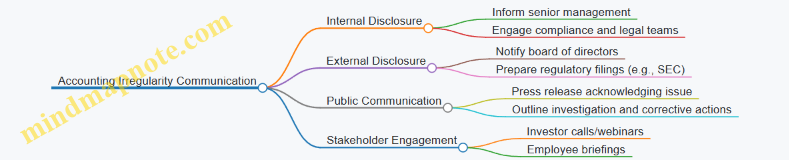
Example Communication Extract:
“We have identified discrepancies in our recent financial statements and have initiated a thorough internal review. We are cooperating fully with regulatory authorities and will provide updates as our investigation progresses. Our priority remains maintaining transparency and safeguarding stakeholder interests.”
Tools and Channels to Facilitate Transparent Communication
- Internal Platforms: Intranet portals, email newsletters, town halls.
- External Platforms: Company website, press releases, social media, investor relations portals.
- Direct Communication: Personalized emails, phone calls, webinars.
Summary
Transparent communication with stakeholders during ethical breaches or compliance violations is not just a regulatory expectation but a strategic imperative. By communicating honestly, promptly, and clearly, organizations can preserve trust, demonstrate accountability, and effectively manage crises.
References & Further Reading
- “Effective Crisis Communication in Financial Services,” Journal of Compliance.
- SEC Guidelines on Disclosure and Transparency.
- Case Studies on Ethical Communication Failures and Successes.
10.3 Example: Remediation Steps Following a Compliance Breach
When a compliance breach occurs, swift and structured remediation is essential to restore trust, mitigate damage, and prevent recurrence. Below is a detailed example illustrating the remediation steps following a compliance breach, accompanied by mind maps to visualize the process.
Step 1: Immediate Containment and Assessment
- Identify the breach: Detect the nature and scope of the compliance violation.
- Contain the issue: Limit further damage by isolating affected systems or processes.
- Initial assessment: Evaluate the impact on stakeholders, regulatory obligations, and financial exposure.
Example: A financial institution discovers unauthorized access to confidential client data due to weak access controls.
Mind Map: Immediate Containment and Assessment
Step 2: Investigation and Root Cause Analysis
- Conduct a thorough investigation: Gather evidence, interview involved personnel, and review logs.
- Determine root causes: Identify systemic weaknesses or human errors that led to the breach.
Example: Investigation reveals that outdated software and lack of multi-factor authentication enabled the breach.
Mind Map: Investigation and Root Cause Analysis
Step 3: Notification and Reporting
- Notify internal stakeholders: Compliance team, senior management, and legal counsel.
- Regulatory reporting: Submit required reports to regulatory bodies within stipulated timelines.
- Client communication: Transparently inform affected clients, if applicable.
Example: The institution files a report with the data protection authority and sends notification letters to affected clients.
Mind Map: Notification and Reporting
Step 4: Remediation and Corrective Actions
- Implement technical fixes: Update software, enhance security controls, and enforce multi-factor authentication.
- Revise policies and procedures: Strengthen access management and compliance protocols.
- Training and awareness: Conduct targeted training sessions to prevent recurrence.
Example: The institution upgrades its IT infrastructure, revises access policies, and schedules quarterly compliance training.
Mind Map: Remediation and Corrective Actions
Step 5: Monitoring and Follow-Up
- Continuous monitoring: Use automated tools to detect anomalies and ensure compliance.
- Audit and review: Conduct internal audits to verify effectiveness of remediation.
- Feedback loop: Adjust remediation strategies based on audit findings and evolving risks.
Example: The compliance team implements a real-time monitoring dashboard and schedules bi-annual audits.
Mind Map: Monitoring and Follow-Up
Summary Table: Remediation Steps with Examples
| Step | Action Items | Example Scenario |
|---|---|---|
| Immediate Containment | Identify breach, contain, assess impact | Unauthorized client data access |
| Investigation | Evidence gathering, root cause analysis | Outdated software, lack of MFA |
| Notification | Inform stakeholders, regulatory reporting, client communication | Report to data protection authority, notify clients |
| Remediation | Technical fixes, policy updates, training | Software upgrades, revised access policies, training |
| Monitoring & Follow-Up | Continuous monitoring, audits, feedback | Real-time dashboard, bi-annual audits |
By following these structured remediation steps, organizations can effectively respond to compliance breaches, minimize damage, and strengthen their ethical and compliance frameworks for the future.
10.4 Legal Consequences and Mitigation Strategies
Financial ethics breaches and compliance violations can lead to severe legal consequences for individuals and organizations alike. Understanding these consequences and implementing effective mitigation strategies is crucial for compliance officers and accountants to protect their firms and maintain trust.
Legal Consequences of Financial Ethics Breaches
-
Fines and Penalties
- Regulatory bodies such as the SEC, FINRA, or FCA impose hefty fines for violations.
- Example: In 2015, Wells Fargo was fined $185 million for fraudulent account openings.
-
Criminal Charges
- Fraud, insider trading, money laundering, and other violations can lead to criminal prosecution.
- Example: Bernie Madoff’s Ponzi scheme led to a 150-year prison sentence.
-
Civil Lawsuits
- Investors or clients may sue for damages resulting from unethical practices.
- Example: Enron’s collapse triggered numerous shareholder lawsuits.
-
Loss of Licenses and Certifications
- Professionals may lose CPA licenses or compliance certifications.
- Example: Accountants involved in fraud can be barred from practicing.
-
Reputational Damage
- Loss of client trust and market confidence can have long-term business impacts.
- Example: Volkswagen’s emissions scandal severely damaged its brand.
Mitigation Strategies
Proactive Compliance Programs
- Develop and maintain robust compliance frameworks.
- Regularly update policies to align with evolving regulations.
Employee Training and Awareness
- Conduct ongoing ethics and compliance training.
- Use real-life scenarios to illustrate risks and proper conduct.
Internal Controls and Audits
- Implement strong internal controls to detect and prevent violations.
- Schedule frequent internal and external audits.
Whistleblower Protections
- Establish confidential reporting channels.
- Protect whistleblowers from retaliation.
Prompt Incident Response
- Investigate allegations swiftly and transparently.
- Cooperate fully with regulatory investigations.
Legal Counsel Engagement
- Consult legal experts when potential violations arise.
- Develop mitigation plans in coordination with counsel.
Mind Maps
Legal Consequences Mind Map
Mitigation Strategies Mind Map
Practical Example: Mitigating a Compliance Breach
Scenario: A mid-sized financial firm discovers that an employee manipulated financial reports to meet quarterly targets.
Actions Taken:
- Immediate Investigation: Compliance officers launch an internal investigation.
- Legal Consultation: The firm consults legal counsel to understand regulatory obligations.
- Reporting: The breach is reported to the relevant regulatory authority.
- Employee Action: The employee is suspended pending further action.
- Training: The firm enhances training programs focusing on ethical reporting.
- Controls: Automated systems are introduced to flag unusual reporting patterns.
- Whistleblower Encouragement: New anonymous reporting channels are implemented.
Outcome: The firm avoids larger fines by demonstrating prompt and transparent action, restoring stakeholder confidence.
By understanding the spectrum of legal consequences and proactively applying mitigation strategies, finance professionals can safeguard their organizations against ethical breaches and compliance violations, ensuring long-term sustainability and trust.
10.5 Role of Compliance Officers in Crisis Management
Compliance officers play a pivotal role in managing crises within financial and legal organizations. Their responsibilities extend beyond routine compliance monitoring to active involvement in identifying, mitigating, and resolving compliance breaches or ethical violations that can escalate into full-blown crises. Effective crisis management by compliance officers helps protect the organization’s reputation, ensures regulatory adherence, and minimizes financial and legal repercussions.
Key Responsibilities of Compliance Officers in Crisis Management
- Early Detection and Assessment: Identifying potential compliance issues before they escalate.
- Coordination and Communication: Acting as the liaison between internal teams, legal counsel, regulators, and external stakeholders.
- Investigation Oversight: Leading or supporting thorough investigations into the breach or ethical lapse.
- Remediation Planning: Developing and implementing corrective action plans.
- Training and Prevention: Reinforcing compliance culture post-crisis to prevent recurrence.
Mind Map: Compliance Officer’s Role in Crisis Management
Example 1: Early Detection Preventing a Major Compliance Breach
A compliance officer at a mid-sized investment firm noticed unusual transaction patterns flagged by the firm’s automated monitoring system. Acting promptly, the officer initiated an internal review, uncovering a potential insider trading scheme. By escalating the issue early, the firm was able to self-report to regulators, cooperate fully, and avoid heavy fines and reputational damage.
Mind Map: Early Detection Process
Example 2: Coordinated Communication During a Data Breach
During a cybersecurity incident exposing sensitive client financial data, the compliance officer coordinated communication between IT, legal, PR, and regulatory bodies. They ensured timely notification to affected clients and regulators in compliance with GDPR, minimizing legal penalties and maintaining client trust.
Mind Map: Communication Flow in Crisis
Best Practices for Compliance Officers in Crisis Management
- Maintain Preparedness: Develop and regularly update crisis management plans.
- Foster a Speak-Up Culture: Encourage employees to report concerns without fear.
- Document Everything: Keep detailed records of all crisis-related actions.
- Engage Regulators Proactively: Transparency can reduce penalties.
- Post-Crisis Review: Analyze what went wrong and improve systems accordingly.
Example 3: Post-Crisis Remediation and Training
After discovering a compliance violation related to anti-money laundering (AML) procedures, the compliance officer led a comprehensive remediation plan. This included updating policies, conducting mandatory staff training sessions, and implementing enhanced transaction monitoring. The firm subsequently passed its next regulatory audit with no findings.
Mind Map: Post-Crisis Remediation Steps

In conclusion, compliance officers are central to effective crisis management in financial and legal sectors. Their proactive detection, clear communication, thorough investigation, and diligent remediation efforts not only resolve crises but also strengthen the organization’s ethical foundation and regulatory compliance posture for the future.
11. Future Trends in Financial Ethics and Compliance
11.1 Emerging Regulatory Changes and Their Impact
The financial landscape is continuously evolving, driven by technological advancements, globalization, and shifting societal expectations. Regulatory bodies worldwide are updating and introducing new regulations to address emerging risks and promote ethical behavior in finance. Understanding these changes is crucial for accountants and compliance officers to maintain adherence and foster trust.
Key Emerging Regulatory Changes
- Sustainability and ESG Reporting Requirements
- Enhanced Data Privacy and Cybersecurity Regulations
- Digital Asset and Cryptocurrency Regulations
- Strengthened Anti-Money Laundering (AML) Rules
- Increased Focus on Operational Resilience
Mind Map: Emerging Regulatory Changes
Sustainability and ESG Reporting Requirements
Regulators are increasingly mandating that financial institutions disclose Environmental, Social, and Governance (ESG) factors. This shift aims to promote transparency about how companies impact the environment and society.
Example: The European Union’s Corporate Sustainability Reporting Directive (CSRD) requires companies to provide detailed ESG information, influencing investment decisions and compliance strategies.
Best Practice: Accountants should integrate ESG metrics into financial reporting processes and ensure data accuracy by collaborating with sustainability teams.
Enhanced Data Privacy and Cybersecurity Regulations
With growing cyber threats, regulations like the General Data Protection Regulation (GDPR) are being updated to tighten controls on personal data handling.
Example: The California Privacy Rights Act (CPRA) expands consumer rights and imposes stricter obligations on businesses, affecting financial firms operating in or with clients from California.
Best Practice: Compliance officers should implement robust data governance frameworks and conduct regular cybersecurity training.
Digital Asset and Cryptocurrency Regulations
As cryptocurrencies gain mainstream adoption, regulators are introducing frameworks to govern their use, aiming to prevent fraud, money laundering, and protect consumers.
Example: The Financial Action Task Force (FATF) updated its guidelines to include virtual asset service providers (VASPs) under AML/CTF regulations.
Best Practice: Financial institutions should establish clear policies for digital asset transactions and conduct thorough customer due diligence.
Strengthened Anti-Money Laundering (AML) Rules
AML regulations are expanding in scope and sophistication to counter increasingly complex financial crimes.
Example: The U.S. Anti-Money Laundering Act of 2020 enhances beneficial ownership transparency and increases penalties for violations.
Best Practice: Implement advanced analytics and real-time monitoring systems to detect suspicious activities promptly.
Increased Focus on Operational Resilience
Regulators emphasize the need for financial institutions to withstand and quickly recover from disruptions.
Example: The UK’s Financial Conduct Authority (FCA) introduced requirements for firms to demonstrate operational resilience, including scenario testing.
Best Practice: Develop comprehensive business continuity plans and regularly test third-party vendor risks.
Mind Map: Impact on Compliance and Finance Professionals
Practical Example: Adapting to ESG Reporting
A mid-sized financial advisory firm integrated ESG data collection into their quarterly reporting cycle. By collaborating with sustainability consultants and upgrading their accounting software, they ensured compliance with new EU regulations. This proactive approach not only avoided penalties but also attracted ESG-conscious clients.
Summary
Emerging regulatory changes demand that finance and legal professionals stay informed and agile. By understanding these evolving requirements and adopting best practices—such as leveraging technology, fostering collaboration, and enhancing training—accountants and compliance officers can effectively navigate the complex regulatory environment and uphold financial ethics.
For continued success, organizations should establish ongoing monitoring mechanisms for regulatory updates and embed ethical considerations into every compliance strategy.
11.2 The Growing Importance of Environmental, Social, and Governance (ESG) Compliance
Environmental, Social, and Governance (ESG) compliance has rapidly become a cornerstone of ethical finance and corporate responsibility. For accountants and compliance officers, understanding ESG is crucial not only for regulatory adherence but also for fostering sustainable business practices that align with stakeholder expectations.
What is ESG Compliance?
ESG compliance refers to the adherence to standards and regulations that govern a company’s environmental impact, social responsibility, and governance practices. This compliance ensures transparency, accountability, and sustainable growth.
Mind Map: Key Components of ESG Compliance
Why ESG Compliance Matters
- Investor Demand: Increasingly, investors prefer companies with strong ESG records as they are seen as less risky and more sustainable.
- Regulatory Pressure: Governments worldwide are introducing regulations requiring ESG disclosures.
- Reputation Management: Ethical ESG practices enhance brand reputation and customer loyalty.
- Risk Mitigation: Identifying environmental and social risks early helps avoid costly legal and operational issues.
Example: ESG Compliance in Action
Case Study: A Financial Institution’s ESG Integration
A multinational bank integrated ESG compliance into its lending policies by:
- Implementing a screening process to avoid financing companies with poor environmental records.
- Requiring borrowers to disclose ESG metrics.
- Offering preferential loan terms to companies with strong ESG performance.
This approach not only reduced the bank’s exposure to environmental risks but also attracted ESG-focused investors, increasing the bank’s market value.
Best Practices for Accountants and Compliance Officers
- Data Collection & Reporting: Establish robust systems for collecting ESG data aligned with recognized frameworks like GRI or SASB.
- Training & Awareness: Educate teams on ESG principles and compliance requirements.
- Stakeholder Engagement: Collaborate with internal and external stakeholders to ensure ESG goals are realistic and measurable.
- Continuous Monitoring: Use technology to track ESG performance and compliance in real-time.
Mind Map: ESG Compliance Best Practices
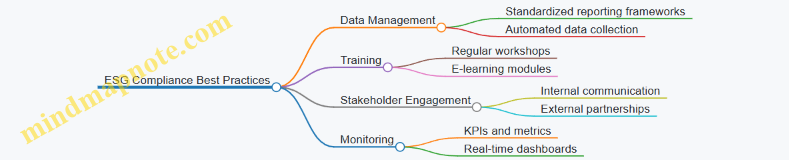
Practical Example: ESG Reporting Made Simple
A mid-sized accounting firm adopted a cloud-based ESG reporting tool that:
- Automatically aggregates environmental data such as energy consumption and waste output.
- Tracks social initiatives like employee diversity statistics.
- Monitors governance factors including board meeting attendance and policy updates.
This automation reduced manual errors, improved transparency, and ensured timely compliance with emerging ESG regulations.
Challenges and Solutions
-
Challenge: Lack of standardized ESG metrics.
- Solution: Adopt widely accepted frameworks (e.g., TCFD, SASB) and customize reporting to industry specifics.
-
Challenge: Data reliability and verification.
- Solution: Implement internal audits and third-party verification processes.
-
Challenge: Balancing short-term costs with long-term ESG benefits.
- Solution: Use scenario analysis to demonstrate ROI of ESG investments.
Summary
ESG compliance is no longer optional but a critical element of ethical finance. Accountants and compliance officers play a pivotal role in embedding ESG principles into organizational processes, ensuring transparency, reducing risks, and driving sustainable value creation.
By leveraging best practices, real-world examples, and technology, finance professionals can lead their organizations toward a more responsible and compliant future.
11.3 Best Practice: Integrating Ethics into Fintech Innovations
As fintech continues to revolutionize the financial industry, integrating ethics into these innovations is crucial to ensure trust, transparency, and compliance. Ethical fintech not only protects consumers but also strengthens the reputation and sustainability of financial institutions.
Why Ethics Matter in Fintech
- Fintech often deals with sensitive financial data and personal information.
- Rapid innovation can outpace regulatory frameworks, increasing risks.
- Ethical lapses can lead to financial fraud, data breaches, and loss of consumer trust.
Key Ethical Considerations in Fintech
Best Practices for Ethical Fintech Integration
-
Prioritize Data Privacy and User Consent
- Implement robust encryption and anonymization.
- Use clear, accessible privacy policies.
- Example: A mobile payment app requires explicit user consent before sharing data with third parties, ensuring compliance with GDPR.
-
Ensure Transparency in Algorithms and Fees
- Provide users with understandable explanations of how algorithms make decisions.
- Disclose all fees upfront.
- Example: A robo-advisor platform offers a simple dashboard explaining investment choices and associated costs.
-
Mitigate Algorithmic Bias
- Regularly audit AI models for bias against any demographic.
- Use diverse datasets for training.
- Example: A lending fintech uses bias detection tools to ensure loan approval algorithms do not discriminate based on race or gender.
-
Strengthen Security Measures
- Employ multi-factor authentication and real-time fraud detection.
- Develop clear incident response protocols.
- Example: A cryptocurrency exchange uses biometric authentication and monitors transactions for suspicious activity.
-
Align with Regulatory Compliance
- Integrate AML and KYC processes seamlessly.
- Stay updated with evolving regulations.
- Example: A digital wallet integrates automated KYC checks to verify user identities before transactions.
Example Scenario: Ethical Fintech in Action
A peer-to-peer lending platform integrates ethics by:
- Using transparent credit scoring algorithms explained to users.
- Ensuring data privacy by encrypting all personal information.
- Conducting regular audits to detect and correct any bias in loan approvals.
- Implementing strong AML/KYC compliance to prevent fraud.
- Providing clear disclosures about fees and risks.
This approach builds user trust and meets compliance requirements, reducing legal and reputational risks.
Summary Mind Map
Integrating ethics into fintech innovations is not just a regulatory necessity but a strategic advantage. By embedding these best practices, financial professionals can foster trust, reduce risks, and contribute to a more equitable financial ecosystem.
11.4 Example: Blockchain and Ethical Transparency in Finance
Blockchain technology has emerged as a transformative force in the finance industry, offering unprecedented levels of transparency, security, and accountability. This section explores how blockchain fosters ethical transparency in finance through practical examples and mind maps.
What is Blockchain?
Blockchain is a decentralized digital ledger that records transactions across multiple computers in a way that ensures the data cannot be altered retroactively. This immutability and transparency make it a powerful tool for enhancing ethical standards in financial operations.
Mind Map: Key Features of Blockchain Driving Ethical Transparency
Example 1: Transparent Transaction Records in Banking
A bank implements blockchain to record all interbank transfers. Each transaction is timestamped and stored on a distributed ledger accessible to authorized regulators and auditors. This transparency:
- Prevents manipulation of transaction records.
- Enables real-time compliance monitoring.
- Builds customer trust by providing verifiable transaction histories.
Practical Outcome: When a suspicious transaction is flagged, auditors can trace its origin instantly without relying on potentially altered internal records.
Example 2: Anti-Money Laundering (AML) with Blockchain
Blockchain platforms can integrate Know Your Customer (KYC) data and transaction histories in a secure, immutable ledger. This enables:
- Efficient sharing of verified customer identities across institutions.
- Early detection of suspicious patterns through transparent transaction flows.
- Reduced duplication of KYC efforts, lowering costs and errors.
Practical Outcome: A compliance officer can quickly verify a client’s identity and transaction legitimacy, ensuring AML regulations are met without compromising privacy.
Mind Map: Blockchain Use Cases Enhancing Compliance
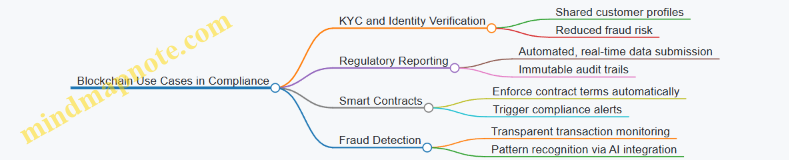
Example 3: Ethical Fundraising and Charity Transparency
Non-profit organizations use blockchain to track donations and fund allocation. Donors can see exactly how their funds are spent, ensuring ethical use of resources.
- Transparent ledger shows each donation and expenditure.
- Reduces risk of misappropriation.
- Enhances donor confidence and accountability.
Practical Outcome: An accountant can verify that funds are used as intended, supporting ethical financial stewardship.
Challenges and Considerations
While blockchain promotes transparency, ethical implementation requires:
- Ensuring privacy compliance (e.g., GDPR) when storing personal data.
- Avoiding overexposure of sensitive financial information.
- Educating stakeholders on interpreting blockchain data responsibly.
Summary
Blockchain technology offers powerful tools to embed ethical transparency into financial systems. By leveraging immutable ledgers, decentralized verification, and smart contracts, finance professionals can enhance compliance, reduce fraud, and build trust with stakeholders.
Additional Resources
- Blockchain in Financial Services - World Economic Forum
- Understanding Smart Contracts - IBM Blockchain
- AML Compliance with Blockchain - Deloitte Report
11.5 Preparing for the Future: Continuous Learning and Adaptation
In the rapidly evolving landscape of financial ethics and compliance, continuous learning and adaptation are essential for professionals to stay ahead of emerging risks, regulatory changes, and technological advancements. This section explores strategies and practical examples to foster an adaptive mindset and lifelong learning culture within finance and legal teams.
Why Continuous Learning Matters
- Regulatory frameworks are frequently updated to address new challenges.
- Financial technologies (FinTech) introduce novel ethical considerations.
- Cybersecurity threats evolve, requiring ongoing vigilance.
- Stakeholder expectations for transparency and responsibility increase.
Example: The introduction of GDPR in 2018 required compliance officers and accountants to rapidly update their data handling practices, illustrating the need for ongoing education.
Strategies for Continuous Learning and Adaptation
Mind Map: Continuous Learning Strategies
Example: A compliance officer subscribes to regulatory newsletters and attends quarterly webinars to stay updated on AML regulations, ensuring their firm’s policies remain current.
Building an Adaptive Compliance Culture
Mind Map: Adaptive Compliance Culture
Example: A financial firm implements quarterly ethics workshops where employees discuss recent compliance challenges and propose improvements, fostering a proactive environment.
Practical Example: Adapting to Blockchain and Cryptocurrency Regulations
With the rise of blockchain and cryptocurrencies, compliance officers and accountants must adapt quickly to new regulations and ethical concerns.
- Challenge: Understanding decentralized finance (DeFi) risks and regulatory ambiguities.
- Adaptation: Enrolling in specialized blockchain compliance courses.
- Implementation: Updating AML procedures to include cryptocurrency transaction monitoring.
Example: An accounting firm integrates blockchain analytics tools to detect suspicious cryptocurrency transactions, demonstrating adaptation through technology and education.
Tools and Resources for Lifelong Learning
Mind Map: Tools and Resources
Example: An accountant uses LinkedIn Learning to complete courses on ethical decision-making and shares key takeaways with their team via an internal wiki.
Summary
Continuous learning and adaptation are not optional but critical components of effective financial ethics and compliance. By embracing a culture of ongoing education, leveraging technology, and fostering open communication, finance and legal professionals can anticipate challenges and uphold the highest ethical standards.
Remember: The future belongs to those who prepare for it today.