Financial Statement Auditing
1. Introduction to Financial Statement Auditing
1.1 Purpose and Importance of Financial Statement Audits
Financial statement audits serve as a cornerstone in ensuring the integrity, transparency, and reliability of financial information presented by organizations. They provide stakeholders—including investors, regulators, management, and the public—with confidence that the financial statements fairly represent the entity’s financial position and performance.
Mind Map: Purpose of Financial Statement Audits
Why Are Financial Statement Audits Important?
-
Enhance Credibility and Trust: Audited financial statements reduce information asymmetry between management and stakeholders, fostering trust.
-
Ensure Compliance: Audits verify that organizations comply with relevant accounting frameworks and legal requirements, reducing the risk of penalties.
-
Detect and Prevent Fraud: Through systematic examination, audits help uncover irregularities or fraudulent activities that could distort financial reporting.
-
Improve Internal Controls: Auditors assess the effectiveness of internal control systems, providing recommendations to strengthen financial processes.
-
Support Decision-Making: Reliable financial information enables investors, creditors, and government agencies to make informed decisions.
-
Promote Accountability: Audits hold management accountable for the stewardship of resources, especially critical in government and public sector entities.
Example 1: Audit in a Government Agency
A government agency responsible for public infrastructure submits its annual financial statements. An independent audit is conducted to ensure that public funds are accurately reported and used appropriately. The audit uncovers a minor misclassification of expenses, which the agency promptly corrects, thereby maintaining public trust and ensuring compliance with governmental accounting standards.
Example 2: Audit Impact on a Private Company
A mid-sized manufacturing company seeks a bank loan for expansion. The bank requires audited financial statements to assess creditworthiness. The audit confirms the company’s financial health, enabling the loan approval. Additionally, the audit identifies weaknesses in inventory controls, allowing management to implement improvements that reduce future risks.
Mind Map: Importance of Financial Statement Audits
In summary, financial statement audits are vital for maintaining the health and sustainability of both private and public sector organizations. They provide a structured, independent review that enhances the reliability of financial information, ultimately supporting economic stability and growth.
1.2 Overview of the Auditing Process
Financial statement auditing is a structured process designed to provide reasonable assurance that an organization’s financial statements are free from material misstatement, whether due to error or fraud. Understanding the auditing process is fundamental for accountants and auditors to execute their duties effectively.
Key Phases of the Auditing Process
The auditing process can be broadly divided into the following phases:
- Planning
- Risk Assessment
- Internal Controls Evaluation
- Substantive Testing
- Audit Evidence Collection
- Reporting
Below is a mind map illustrating these phases and their interconnections:
Auditing Process Mind Map
Detailed Explanation of Each Phase with Examples
Planning
Planning sets the foundation for an effective audit. Auditors gather preliminary information about the client’s business, industry, and environment. They define the audit scope and determine materiality thresholds.
Example: For a government finance department, the auditor reviews the department’s budget reports and prior audit findings to understand key focus areas such as grant management and procurement.
Risk Assessment
Auditors identify areas where financial misstatements are most likely to occur. They assess inherent risk (risk without controls) and control risk (risk that controls fail).
Example: In auditing a municipal government, the auditor identifies high risk in revenue recognition from property taxes due to complex billing cycles.
Internal Controls Evaluation
Auditors evaluate the design and effectiveness of internal controls to determine the extent of substantive testing required.
Example: Testing controls over payroll processing in a government agency by reviewing authorization procedures and payroll reconciliations.
Substantive Testing
This phase involves detailed testing of transactions and balances to detect material misstatements.
Example: Performing sample testing of vendor invoices and matching them with purchase orders and payment records to verify accuracy.
Audit Evidence Collection
Gathering sufficient and appropriate evidence is critical. This includes inspection of documents, confirmations from third parties, physical observations, and recalculations.
Example: Confirming bank balances directly with financial institutions to validate cash balances reported in the financial statements.
Reporting
The final phase involves compiling findings into an audit report, including the auditor’s opinion on the financial statements.
Example: Issuing an unqualified opinion for a government agency after concluding that the financial statements present a true and fair view.
Mind Map: Example of Audit Evidence Types
Integrated Example: Auditing a Government Grant
- Planning: Understand grant terms and compliance requirements.
- Risk Assessment: Identify risk of non-compliance or misstatement in grant revenue.
- Internal Controls: Evaluate controls over grant application and fund disbursement.
- Substantive Testing: Verify grant receipts and expenditures against supporting documents.
- Evidence Collection: Obtain confirmations from grantor and inspect related contracts.
- Reporting: Highlight any compliance issues or financial misstatements in the audit report.
By following this structured auditing process, auditors in finance and government sectors can ensure thoroughness, accuracy, and compliance, ultimately enhancing the credibility of financial statements.
1.3 Key Roles and Responsibilities of Auditors
Financial statement auditors play a critical role in ensuring the accuracy, reliability, and transparency of financial information. Their responsibilities extend beyond just verifying numbers—they help build trust in financial reporting, support regulatory compliance, and contribute to the overall governance of organizations.
Core Roles of Auditors
- Independent Examiner: Auditors provide an unbiased evaluation of financial statements to ensure they fairly represent the financial position and performance of an entity.
- Risk Assessor: They identify and assess risks of material misstatement due to error or fraud.
- Internal Controls Evaluator: Auditors review and test the effectiveness of an entity’s internal control systems.
- Evidence Gatherer: They collect sufficient and appropriate audit evidence to support their conclusions.
- Communicator: Auditors communicate findings, deficiencies, and recommendations to management, audit committees, and stakeholders.
Detailed Responsibilities
-
Planning the Audit:
- Understand the client’s business, industry, and environment.
- Assess risks and determine materiality levels.
- Develop an audit plan tailored to identified risks.
-
Conducting Fieldwork:
- Test internal controls through walkthroughs and sampling.
- Perform substantive testing on account balances and transactions.
- Use analytical procedures to identify unusual trends or inconsistencies.
-
Gathering and Evaluating Evidence:
- Obtain audit evidence from documents, confirmations, observations, and inquiries.
- Evaluate the sufficiency and appropriateness of evidence.
-
Reporting:
- Prepare audit reports expressing an opinion on the financial statements.
- Highlight any material misstatements or control weaknesses.
-
Ethical Compliance:
- Maintain independence and objectivity.
- Uphold confidentiality and professional skepticism.
Mind Map: Key Roles of Auditors
Mind Map: Responsibilities During Audit Phases
Example 1: Role as Independent Examiner
An auditor assigned to a municipal government reviews the financial statements to ensure that reported revenues from property taxes and grants are accurate. By independently verifying these figures against supporting documentation and third-party confirmations, the auditor helps stakeholders trust the municipality’s financial health.
Example 2: Risk Assessment Responsibility
While auditing a government healthcare agency, the auditor identifies a high risk of misstatement in payroll expenses due to complex overtime calculations. The auditor adjusts the audit plan to include detailed testing of payroll transactions and controls around timekeeping systems.
Example 3: Internal Controls Evaluation
In a financial audit of a state university, the auditor tests controls over procurement processes. By performing walkthroughs and sampling purchase orders, the auditor identifies weaknesses in approval workflows, recommending improvements to reduce fraud risk.
Example 4: Evidence Gathering and Documentation
During an audit of a government department, the auditor obtains bank confirmations directly from financial institutions to verify cash balances, ensuring the evidence is reliable and sufficient to support the audit opinion.
Example 5: Communication of Findings
After completing an audit of a public sector entity, the auditor prepares a report highlighting a material weakness in revenue recognition controls and discusses remediation steps with the audit committee to improve financial reporting accuracy.
In summary, auditors serve as independent watchdogs who not only verify financial data but also assess risks, evaluate controls, gather evidence, and communicate findings effectively. Their multifaceted responsibilities are essential to maintaining confidence in financial statements within both finance and government sectors.
1.4 Regulatory Framework and Standards Governing Audits
Financial statement auditing is governed by a complex web of regulatory frameworks and professional standards designed to ensure consistency, reliability, and transparency in audit processes and reporting. Understanding these frameworks is essential for auditors working in both the finance and government sectors.
Key Regulatory Bodies and Frameworks
-
International Auditing and Assurance Standards Board (IAASB)
- Develops International Standards on Auditing (ISAs)
- Widely adopted globally, including by many government audit institutions
-
Public Company Accounting Oversight Board (PCAOB)
- Oversees audits of public companies in the United States
- Sets auditing standards and inspects audit firms
-
Government Accountability Office (GAO)
- Issues Government Auditing Standards (Yellow Book) for U.S. federal audits
- Focuses on audits of government entities and programs
-
Financial Accounting Standards Board (FASB)
- Sets accounting standards (US GAAP) which auditors verify compliance with
-
International Public Sector Accounting Standards Board (IPSASB)
- Develops standards for public sector accounting and auditing
Mind Map: Regulatory Framework Overview
International Standards on Auditing (ISAs)
ISAs provide a globally accepted framework for conducting high-quality audits. They cover all phases of the audit including planning, risk assessment, evidence gathering, and reporting.
Example:
- When auditing a multinational corporation, auditors follow ISAs to ensure consistency across different countries.
- ISA 315 requires auditors to identify and assess risks of material misstatement, which guides the entire audit strategy.
Government Auditing Standards (The Yellow Book)
The GAO’s Yellow Book provides standards specifically tailored for audits of government organizations, programs, activities, and functions.
Key Features:
- Emphasizes auditor independence and professional judgment
- Includes requirements for quality control and continuing professional education
Example:
- Auditing a state government’s financial statements requires adherence to the Yellow Book to ensure compliance with federal and state regulations.
PCAOB Standards
The PCAOB sets auditing standards for public company audits in the U.S., focusing on investor protection and audit quality.
Example:
- Auditors of a publicly traded financial institution must comply with PCAOB standards, including rigorous documentation and internal control testing.
Mind Map: Standards Application by Sector
Compliance and Enforcement
Auditors must not only understand these standards but also ensure strict compliance. Regulatory bodies conduct inspections and reviews to enforce adherence.
Example:
- A government auditor failing to comply with the Yellow Book may face sanctions or removal from audit engagements.
Summary
Understanding the regulatory framework and standards governing audits is foundational for auditors. It ensures audits are performed with integrity, consistency, and in accordance with legal and professional requirements.
Additional Example: Applying Standards in a Government Audit
Imagine auditing the financial statements of a city municipality. The auditor:
- Uses the Yellow Book to guide audit planning and reporting
- Applies IPSAS for public sector accounting principles
- Conducts risk assessments per ISA 315
- Documents findings in compliance with PCAOB documentation standards (if applicable)
This integrated approach ensures the audit meets all relevant regulatory and professional standards.
1.5 Common Challenges in Financial Statement Auditing
Financial statement auditing is a complex process that often presents auditors with various challenges. Understanding these common obstacles helps auditors prepare better strategies to ensure audit quality and compliance. Below, we explore key challenges, supported by mind maps and practical examples.
Challenge 1: Understanding Complex Financial Transactions
Auditors frequently encounter intricate financial transactions that require deep knowledge and expertise to interpret correctly.
- Mind Map: Understanding Complex Transactions
Example: An auditor reviewing a government entity’s lease agreements must distinguish between operating and finance leases under new accounting standards (e.g., GASB 87). Misclassification can lead to misstated liabilities and assets.
Challenge 2: Assessing and Testing Internal Controls
Evaluating the effectiveness of internal controls is critical but challenging due to the diversity and complexity of control environments.
- Mind Map: Internal Controls Challenges
Example: During an audit of a finance department, the auditor finds that segregation of duties is not properly implemented, increasing the risk of fraud. The auditor must design additional substantive procedures to compensate.
Challenge 3: Managing Audit Evidence Collection
Gathering sufficient, appropriate audit evidence can be difficult, especially when dealing with electronic records or third-party confirmations.
- Mind Map: Audit Evidence Challenges
Example: An auditor requests bank confirmations for cash balances but faces delays due to the bank’s internal policies. To mitigate this, the auditor uses alternative procedures such as reviewing bank statements and reconciliations.
Challenge 4: Detecting and Addressing Fraud Risks
Fraud is often concealed and requires auditors to be vigilant and skeptical throughout the audit.
- Mind Map: Fraud Risk Challenges
Example: In a government audit, unusual spikes in grant expenditures trigger suspicion. The auditor performs detailed transaction testing and uncovers fictitious vendor payments.
Challenge 5: Keeping Up with Regulatory Changes and Standards
Frequent updates to accounting and auditing standards require auditors to continuously update their knowledge and audit approaches.
- Mind Map: Regulatory and Standards Challenges
Example: An auditor must adapt audit procedures to comply with the latest GASB standards on revenue recognition, requiring additional training and revision of audit checklists.
Challenge 6: Time and Resource Constraints
Auditors often face tight deadlines and limited resources, which can impact the thoroughness of the audit.
- Mind Map: Time and Resource Constraints
Example: Due to a compressed audit timeline, the audit team prioritizes high-risk areas but must communicate the scope limitations clearly in the audit report.
Summary
Financial statement auditing involves navigating multiple challenges ranging from technical complexities to operational constraints. By understanding these challenges and applying best practices, auditors can enhance audit quality and deliver reliable financial insights.
2. Planning the Audit Engagement
2.1 Understanding the Client’s Business and Industry
Understanding the client’s business and industry is a foundational step in planning an effective financial statement audit. This knowledge enables auditors to identify key risk areas, tailor audit procedures, and provide valuable insights. Without a deep understanding of the client’s environment, auditors risk overlooking significant issues or misinterpreting financial data.
Why is Understanding the Client’s Business Important?
- Risk Identification: Different industries have unique risks. For example, a manufacturing company faces inventory valuation risks, while a government agency may have compliance risks related to grant funding.
- Tailored Audit Procedures: Knowing the business helps in designing relevant audit tests that focus on critical areas.
- Improved Communication: Understanding the client’s operations facilitates clearer discussions with management and stakeholders.
- Regulatory Compliance: Different industries are subject to different regulations which impact financial reporting.
Key Areas to Understand About the Client’s Business
Industry Context
Understanding the industry helps auditors anticipate common challenges and risks.
- Market Trends: For example, in the renewable energy sector, rapid technological changes and government incentives significantly impact financials.
- Regulatory Environment: Government agencies must comply with specific grant reporting requirements and budgetary constraints.
- Competitors: Knowing competitors helps assess market position and potential financial pressures.
Example: When auditing a public transportation authority, auditors must understand federal and state funding mechanisms, fare structures, and regulatory compliance related to safety and environmental standards.
Business Model
Understanding how the client generates revenue and incurs costs is critical.
- Revenue Streams: Are revenues from sales, grants, service fees, or a combination?
- Cost Structure: Fixed vs. variable costs, major expense categories.
- Key Products/Services: What drives the business? For example, a government agency may provide social services funded by multiple grants.
Example: An auditor working with a municipal water utility should understand billing cycles, rate structures, and capital investment plans.
Operational Processes
Mapping out core processes helps identify where errors or fraud might occur.
- Supply Chain: How are materials procured and inventoried?
- Sales Cycle: Order processing, invoicing, and collections.
- Production: Manufacturing steps, quality control.
Example: In auditing a government construction project, understanding contract management and progress billing is essential.
Financial Environment
Understanding the client’s accounting policies and financial health guides audit focus.
- Accounting Policies: Revenue recognition methods, depreciation policies.
- Funding Sources: Loans, grants, taxes.
- Financial Health: Liquidity, solvency, and profitability indicators.
Example: For a non-profit organization, auditors must understand donor restrictions and fund accounting.
Risks
Identifying risks specific to the client’s business and industry helps prioritize audit efforts.
- Industry-specific Risks: For example, healthcare entities face risks related to patient billing and regulatory compliance.
- Operational Risks: Process inefficiencies, fraud risks.
- Compliance Risks: Adherence to laws and regulations.
Example: Auditing a government agency that manages federal grants requires assessing risks of misallocation or non-compliance.
Practical Example: Understanding a Government Agency Client
Scenario: Auditing the financial statements of a state environmental protection agency.
- Industry Context: Subject to environmental regulations, funding from state and federal grants.
- Business Model: Provides regulatory oversight and environmental programs.
- Operational Processes: Grant management, contract administration, enforcement activities.
- Financial Environment: Multiple funding sources, restricted funds.
- Risks: Compliance with grant terms, revenue recognition of government appropriations.
This understanding informs audit procedures such as verifying grant expenditures, testing compliance with funding restrictions, and assessing revenue recognition.
Summary
A comprehensive understanding of the client’s business and industry is essential for effective audit planning and execution. It enables auditors to:
- Identify and assess risks accurately.
- Tailor audit procedures to client-specific circumstances.
- Communicate effectively with client management.
- Ensure compliance with relevant standards and regulations.
By integrating this knowledge early in the audit process, auditors enhance the quality and relevance of their work, ultimately providing greater assurance to stakeholders.
2.2 Risk Assessment and Materiality Determination
Overview
Risk assessment and materiality determination are foundational steps in planning an effective financial statement audit. They help auditors focus their efforts on areas with higher risk of material misstatement and ensure that audit resources are used efficiently.
Risk Assessment
Risk assessment involves identifying and analyzing risks that could lead to material misstatements in the financial statements, whether due to error or fraud.
Key Components of Risk Assessment:
- Inherent Risk: The susceptibility of an assertion to a misstatement before considering controls.
- Control Risk: The risk that a misstatement could occur and not be prevented or detected by internal controls.
- Detection Risk: The risk that audit procedures will not detect a material misstatement.
Mind Map: Risk Assessment Components
Example: Assessing Risk in a Government Grant Program
A government auditor is assessing the financial statements of a department managing multiple grant programs. The inherent risk is high due to complex compliance requirements and frequent changes in regulations. Control risk is moderate because the department has recently implemented new internal controls. Detection risk is managed by planning detailed substantive procedures.
Materiality Determination
Materiality is the threshold above which missing or incorrect information in financial statements is considered significant enough to influence decisions of users.
Factors Influencing Materiality:
- Quantitative factors such as size of the entity, total assets, revenues, or net income.
- Qualitative factors including nature of the item, regulatory requirements, or user expectations.
Mind Map: Materiality Determination
Example: Setting Materiality for a Municipal Audit
For a municipal government with $500 million in annual expenditures, the auditor sets materiality at 1% of total expenditures ($5 million). However, due to public sensitivity around certain programs, the auditor applies a lower performance materiality for those areas to ensure more thorough testing.
Integrated Approach: Combining Risk Assessment and Materiality
Auditors use risk assessment to identify high-risk areas and apply materiality thresholds to determine the extent of audit procedures.
Mind Map: Integrated Risk and Materiality Approach
Example: Audit Planning for a State Department
An auditor identifies payroll expenses as a high inherent risk area due to prior errors. Materiality for payroll is set lower than overall materiality to ensure detailed testing. The auditor plans additional substantive procedures and control testing focused on payroll transactions.
Best Practices
- Use a combination of quantitative and qualitative factors when determining materiality.
- Continuously update risk assessment as new information arises during the audit.
- Document all judgments and rationale for risk and materiality decisions.
- Engage with management and audit committees to understand areas of concern.
Summary
Effective risk assessment and materiality determination enable auditors to design focused and efficient audit procedures. By understanding where material misstatements are most likely, auditors can allocate resources wisely and enhance audit quality.
References
- International Standards on Auditing (ISA) 315: Identifying and Assessing the Risks of Material Misstatement
- ISA 320: Materiality in Planning and Performing an Audit
- Government Auditing Standards (Yellow Book)
2.3 Developing the Audit Strategy and Audit Plan
Developing a robust audit strategy and detailed audit plan is a critical step in ensuring a successful financial statement audit. This phase sets the foundation for how the audit will be conducted, focusing resources efficiently, addressing risks, and complying with regulatory requirements.
What is an Audit Strategy?
An audit strategy is a high-level approach that outlines the scope, timing, and direction of the audit. It considers the nature of the client’s business, risk factors, and the auditor’s objectives.
What is an Audit Plan?
The audit plan is a detailed roadmap derived from the audit strategy, specifying the nature, timing, and extent of audit procedures to be performed.
Key Components of Developing the Audit Strategy and Plan
- Understanding the entity and its environment
- Assessing risks of material misstatement
- Determining materiality levels
- Deciding on the nature, timing, and extent of audit procedures
- Allocating resources and assigning responsibilities
Mind Map: Developing the Audit Strategy and Plan
Step-by-Step Process
Understanding the Client
Before planning, auditors must gain a deep understanding of the client’s business, industry trends, regulatory environment, and internal processes.
Example: For a government finance department, understanding budget cycles, grant funding sources, and compliance requirements is essential.
Risk Assessment
Identify areas where material misstatements could occur due to error or fraud.
- Inherent Risk: Complexity of transactions, new accounting standards.
- Control Risk: Effectiveness of internal controls.
- Fraud Risk: Incentives or pressures to manipulate financials.
Example: A government agency receiving multiple grants may have higher inherent risk in revenue recognition.
Determining Materiality
Set thresholds for what is considered material to the financial statements.
- Overall materiality guides the audit scope.
- Performance materiality helps in designing tests.
Example: For a mid-sized municipal entity, overall materiality might be set at 1% of total expenditures.
Designing Audit Procedures
Decide on the nature (type), timing (when), and extent (how much) of audit procedures.
- Test of Controls: To evaluate if controls are operating effectively.
- Substantive Procedures: To detect material misstatements.
Example: If controls over procurement are strong, the auditor may reduce substantive testing on related expenses.
Resource Allocation
Assign audit team members based on expertise and availability.
- Schedule fieldwork and deadlines.
Example: Assign an auditor with IT audit experience to review electronic financial systems.
Documentation
Prepare an audit program outlining all planned procedures and maintain records of risk assessments.
Example Scenario: Developing an Audit Plan for a Government Grant Audit
Context: Auditing a government department that manages multiple federal grants.
- Understanding Client: Review grant agreements, compliance requirements, and financial reporting deadlines.
- Risk Assessment: High risk in grant revenue recognition and compliance with spending restrictions.
- Materiality: Set at 2% of total grant revenue.
- Audit Procedures:
- Test controls over grant approval and disbursement.
- Perform substantive testing on grant expenditures.
- Analytical procedures comparing grant revenue trends year-over-year.
- Resource Allocation: Assign team members with grant compliance experience.
- Documentation: Develop a detailed audit program specifying tests for each grant.
Additional Mind Map: Audit Procedures Design
Tips for Effective Audit Strategy and Planning
- Engage with client management early to clarify expectations.
- Use prior year audit findings to inform risk assessment.
- Incorporate technology tools to streamline planning and documentation.
- Regularly update the audit plan as new information emerges.
Developing a comprehensive audit strategy and plan ensures that auditors focus on the most significant risks, allocate resources efficiently, and deliver high-quality audit outcomes. Integrating real-world examples and structured mind maps helps auditors visualize and implement best practices effectively.
2.4 Establishing Timelines and Resource Allocation
Effective audit planning hinges on establishing clear timelines and allocating resources efficiently. This ensures the audit progresses smoothly, meets deadlines, and maintains quality standards.
Importance of Timelines and Resource Allocation
- Timelines help manage client expectations and coordinate audit team activities.
- Resource allocation ensures the right skills and manpower are assigned to audit tasks, optimizing productivity and risk coverage.
Steps to Establish Timelines
-
Understand the Scope and Complexity
- Review audit scope and identify high-risk areas.
- Determine the volume of transactions and complexity of accounts.
-
Set Key Milestones
- Planning completion
- Fieldwork start and end dates
- Draft report preparation
- Final report issuance
-
Consider External Deadlines
- Regulatory filing dates
- Client reporting requirements
-
Build in Contingency Time
- Account for unexpected delays or additional procedures.
Mind Map: Establishing Audit Timelines
Resource Allocation Best Practices
- Identify Required Skills: Match audit tasks with team members’ expertise (e.g., IT audit specialists for system controls).
- Determine Team Size: Balance workload to avoid burnout and ensure thoroughness.
- Assign Roles Clearly: Define responsibilities such as lead auditor, field auditors, and quality reviewers.
- Leverage Technology: Utilize audit software to reduce manual effort.
Mind Map: Resource Allocation in Auditing
Example: Establishing Timelines and Resource Allocation for a Government Agency Audit
Scenario: Auditing the annual financial statements of a mid-sized government agency with a 3-month deadline.
-
Timeline Setup:
- Planning: 2 weeks
- Fieldwork: 6 weeks
- Draft report: 2 weeks
- Final report: 2 weeks
- Contingency: 1 week buffer included within fieldwork
-
Resource Allocation:
- Lead Auditor: Oversees entire audit
- 2 Field Auditors: Conduct transaction testing and control evaluation
- IT Specialist: Reviews internal control systems
- Data Analyst: Supports substantive testing with data analytics
-
Outcome:
- Clear deadlines communicated to the team and client
- Balanced workload with specialized roles
- Use of audit software to streamline testing
Tips for Successful Implementation
- Regularly review progress against the timeline.
- Adjust resource allocation dynamically if delays or issues arise.
- Communicate proactively with the client and audit team.
By carefully establishing timelines and allocating resources, auditors can enhance efficiency, reduce risks, and deliver high-quality audit reports on schedule.
2.5 Example: Planning an Audit for a Government Agency Financial Statement
Planning an audit for a government agency financial statement requires a tailored approach that considers the unique regulatory environment, funding sources, and public accountability aspects. This section will walk through a detailed example of how to plan such an audit, integrating best practices and practical examples.
Step 1: Understand the Entity and Its Environment
- Objective: Gain a comprehensive understanding of the government agency’s operations, funding, and regulatory framework.
- Example: Suppose the agency is a state transportation department responsible for managing highways and public transit.
Key considerations:
- Funding sources (state budget allocations, federal grants, user fees)
- Regulatory compliance requirements (Government Accounting Standards Board - GASB)
- Organizational structure and key personnel
Mind Map: Understanding the Entity
Step 2: Assess Risks and Materiality
- Objective: Identify areas with higher risk of misstatement and determine materiality thresholds.
- Example: The agency receives multiple federal grants with strict compliance requirements, increasing risk in grant revenue recognition.
Risk factors to consider:
- Complexity of grant agreements
- Changes in funding levels
- Prior audit findings
Materiality:
- Quantitative: Set materiality based on total budget or expenditures (e.g., 1% of total expenditures)
- Qualitative: Consider public interest and sensitivity of certain programs
Mind Map: Risk Assessment & Materiality
Step 3: Develop the Audit Strategy and Plan
- Objective: Outline the overall approach, including the nature, timing, and extent of audit procedures.
Example:
- Plan to perform substantive testing on grant revenues and expenditures.
- Schedule interim testing to review internal controls over procurement.
Key components:
- Scope of audit (financial statements and compliance)
- Timing (interim vs. year-end procedures)
- Resource allocation (assign specialists for grant compliance)
Mind Map: Audit Strategy & Plan
Step 4: Establish Communication Protocols
- Objective: Define how the audit team will communicate with agency management and oversight bodies.
Example:
- Schedule entrance and exit conferences.
- Agree on reporting timelines with the audit committee.
Mind Map: Communication Protocols
Step 5: Document the Audit Plan
- Objective: Create a comprehensive audit plan document that includes all the above elements.
Example:
- The audit plan includes detailed procedures for testing grant compliance, timelines, assigned personnel, and risk assessments.
Summary Example: Planning for the State Transportation Department Audit
| Step | Action Item | Example Detail |
|---|---|---|
| Understand Entity | Review organizational chart and funding sources | State appropriations and federal highway grants |
| Assess Risks & Materiality | Identify high-risk grant revenue areas | Federal grants with complex compliance terms |
| Develop Audit Strategy | Schedule interim control testing | Procurement controls testing in Q3 |
| Communication | Set meeting dates with management and oversight | Entrance conference scheduled for July 1 |
| Document Plan | Compile audit plan with assigned responsibilities | Assign grant specialist to revenue testing team |
This example demonstrates how a structured and detailed planning phase sets the foundation for an effective financial statement audit of a government agency. By integrating risk assessment, regulatory considerations, and clear communication, auditors can ensure a focused and efficient audit process.
3. Internal Controls Evaluation
3.1 Importance of Internal Controls in Auditing
Internal controls are the backbone of any organization’s financial integrity and operational efficiency. In the context of financial statement auditing, understanding and evaluating internal controls is crucial for auditors to assess the reliability of financial reporting and to design effective audit procedures.
What Are Internal Controls?
Internal controls are processes, policies, and procedures implemented by an organization to ensure the achievement of objectives in the following areas:
- Reliability of financial reporting
- Compliance with applicable laws and regulations
- Effectiveness and efficiency of operations
Why Are Internal Controls Important in Auditing?
- Risk Mitigation: Strong internal controls reduce the risk of material misstatements, whether due to error or fraud.
- Audit Efficiency: When controls are effective, auditors can reduce the extent of substantive testing, focusing efforts where risks are higher.
- Compliance Assurance: Controls help ensure that financial statements comply with accounting standards and regulatory requirements.
- Fraud Prevention and Detection: Controls such as segregation of duties and authorization procedures help prevent and detect fraudulent activities.
Mind Map: Importance of Internal Controls in Auditing
Example: Segregation of Duties in a Government Finance Department
In a government finance department, segregation of duties is a critical internal control. For instance, the person who approves payments should not be the same individual who processes or records those payments. This separation helps prevent unauthorized disbursements and reduces the risk of fraud.
During an audit, the auditor evaluates this control by:
- Reviewing organizational charts and job descriptions.
- Observing workflows and interviewing staff.
- Testing a sample of transactions to verify that duties are appropriately segregated.
If the control is effective, the auditor may reduce detailed testing of payment transactions, focusing instead on controls testing.
Mind Map: Example - Segregation of Duties
Example: Authorization Controls in Expense Reimbursements
An organization requires all employee expense reimbursements to be approved by a manager before payment. This internal control ensures expenses are valid and comply with company policies.
The auditor tests this control by:
- Selecting a sample of expense reimbursements.
- Verifying that each reimbursement has the required approval.
- Checking for compliance with expense policies.
If the control is found to be reliable, the auditor can place reliance on it, potentially reducing the need for extensive substantive testing on expense transactions.
Mind Map: Example - Authorization Controls
Summary
Internal controls form the foundation for a reliable financial reporting system. For auditors, understanding and evaluating these controls is essential to:
- Identify areas of higher risk
- Design efficient and effective audit procedures
- Provide assurance on the accuracy and completeness of financial statements
By integrating examples such as segregation of duties and authorization controls, auditors can better appreciate how internal controls operate in real-world settings and how they impact the audit process.
3.2 Techniques for Assessing Control Environment
The control environment is the foundation of an organization’s internal control system. It sets the tone at the top and influences the control consciousness of its people. Assessing the control environment is critical for auditors to understand the overall risk and design effective audit procedures.
Key Components of the Control Environment
- Integrity and ethical values
- Commitment to competence
- Management’s philosophy and operating style
- Organizational structure
- Assignment of authority and responsibility
- Human resource policies and practices
Techniques for Assessing the Control Environment
Inquiry and Interviews
- Conduct interviews with management and key personnel to understand the tone at the top.
- Ask about ethical standards, communication channels, and management’s attitude towards controls.
Example: An auditor interviews the CFO and internal audit manager to gauge their commitment to ethical financial reporting and how they communicate expectations to staff.
Observation
- Observe the organization’s operations and employee behavior.
- Look for evidence of ethical conduct, adherence to policies, and management oversight.
Example: During a site visit, the auditor notes that employees openly discuss compliance issues and management regularly holds team meetings emphasizing control importance.
Document Review
- Review organizational charts, policies, codes of conduct, and procedural manuals.
- Evaluate whether the documentation supports a strong control environment.
Example: The auditor reviews the company’s code of ethics and notes that it is comprehensive, regularly updated, and distributed to all employees.
Walkthroughs
- Trace transactions through the accounting system to observe control points.
- Verify that controls are embedded in processes and consistently applied.
Example: The auditor performs a walkthrough of the procurement process, observing approval hierarchies and segregation of duties.
Analytical Procedures
- Analyze trends in control-related metrics such as error rates, incident reports, or employee turnover.
- Identify unusual patterns that may indicate control weaknesses.
Example: An auditor notices a spike in expense report exceptions and investigates whether this reflects a lapse in control enforcement.
Mind Map: Techniques for Assessing Control Environment
Integrated Example: Assessing Control Environment in a Government Finance Department
Scenario: An auditor is assigned to assess the control environment of a government finance department responsible for budget management and expenditure.
Steps Taken:
- Inquiry: The auditor interviews the department head and finance officers to understand their commitment to ethical standards and control policies.
- Observation: During on-site visits, the auditor observes regular team briefings where management reinforces compliance and accountability.
- Document Review: The auditor examines the department’s organizational chart, noting clear segregation of duties, and reviews the ethics policy which is prominently displayed.
- Walkthrough: A walkthrough of the budget approval process confirms that multiple levels of approval are required before funds are released.
- Analytical Procedures: The auditor reviews past audit reports and incident logs, finding a low rate of control exceptions over the past year.
Outcome: The auditor concludes that the control environment is strong, supported by management’s ethical tone, well-defined responsibilities, and effective communication.
Summary
Assessing the control environment requires a combination of qualitative and quantitative techniques. By integrating inquiry, observation, document review, walkthroughs, and analytical procedures, auditors can form a comprehensive understanding of the control environment’s strength and its impact on financial statement reliability.
3.3 Testing Control Effectiveness: Walkthroughs and Sampling
Testing the effectiveness of internal controls is a critical step in financial statement auditing. It helps auditors determine whether the controls designed by the organization are operating as intended and can be relied upon to prevent or detect material misstatements.
Walkthroughs: Understanding and Validating Control Processes
A walkthrough is a step-by-step tracing of a transaction from initiation through the accounting system to its inclusion in the financial statements. This process helps auditors gain a deep understanding of the control environment and verify that controls are implemented as described.
Key Objectives of Walkthroughs:
- Confirm the design and implementation of controls
- Identify potential control gaps or weaknesses
- Understand the flow of transactions and data
Mind Map: Walkthrough Process
Example:
Consider an auditor performing a walkthrough of the revenue cycle in a government agency:
- The auditor selects a sample sales transaction.
- They trace the transaction from the receipt of the purchase order, through approval by the finance department, to recording in the accounting system.
- At each stage, the auditor observes controls such as authorization signatures, system access restrictions, and reconciliations.
- The auditor interviews staff to confirm control procedures are consistently applied.
This walkthrough confirms whether controls over revenue recognition are designed and operating effectively.
Sampling: Testing Controls on a Representative Basis
Since it is often impractical to test every transaction or control instance, auditors use sampling techniques to test a subset that represents the entire population.
Types of Sampling:
- Statistical Sampling: Uses probability theory to select and evaluate samples, allowing quantification of sampling risk.
- Non-Statistical Sampling: Based on auditor judgment without formal statistical measures.
Mind Map: Sampling Approach
Example:
An auditor testing controls over invoice approvals might:
- Define the population as all invoices processed in the last quarter.
- Determine a sample size of 40 invoices based on assessed risk.
- Randomly select invoices and verify each has the required approval signatures and supporting documentation.
- Find 2 exceptions where approvals were missing.
- Evaluate whether the exceptions indicate a control weakness or isolated errors.
If exceptions are material or frequent, the auditor may conclude the control is not effective and increase substantive testing.
Integrating Walkthroughs and Sampling
Walkthroughs provide qualitative understanding and validation of control design and implementation, while sampling provides quantitative evidence about control operation over time.
Mind Map: Combined Approach
Example:
In auditing payroll controls:
- The auditor performs a walkthrough to understand the payroll process and control points such as time approval and payroll authorization.
- Then, the auditor samples payroll transactions over several months to test whether controls were consistently applied.
- If walkthroughs show strong design but sampling reveals exceptions, the auditor investigates further to assess risk.
Best Practices for Testing Control Effectiveness
- Clearly document walkthrough procedures and findings.
- Use a risk-based approach to determine sample sizes.
- Combine qualitative insights from walkthroughs with quantitative sampling results.
- Communicate control deficiencies promptly to management.
- Use technology tools to assist in sampling and documentation.
By effectively applying walkthroughs and sampling, auditors can confidently assess the reliability of internal controls, reducing audit risk and enhancing the quality of financial statement audits.
3.4 Documenting Internal Control Findings
Documenting internal control findings is a critical step in the financial statement auditing process. Proper documentation ensures transparency, supports audit conclusions, and provides a clear trail for review and future audits. This section will guide you through best practices for documenting internal control findings, supplemented with mind maps and practical examples to enhance understanding.
Why Document Internal Control Findings?
- Provides evidence of the auditor’s work and conclusions
- Facilitates communication with management and stakeholders
- Helps identify areas for improvement and risk mitigation
- Supports compliance with auditing standards and regulatory requirements
Key Elements to Document
- Description of the Control: What is the control designed to do?
- Control Owner: Who is responsible for the control?
- Control Frequency: How often is the control performed?
- Testing Procedures: How was the control tested?
- Findings: What were the results of the testing?
- Impact Assessment: What is the potential impact of control deficiencies?
- Recommendations: Suggestions for remediation or improvement
Mind Map: Internal Control Findings Documentation
Best Practices for Documentation
- Be Clear and Concise: Use straightforward language avoiding jargon.
- Use Standardized Templates: Ensures consistency across audit teams.
- Include Evidence References: Link findings to supporting documents or test results.
- Highlight Severity: Clearly indicate the severity of any control weaknesses.
- Maintain Objectivity: Document facts without bias or assumptions.
- Ensure Timeliness: Document findings promptly after testing.
Example: Documenting a Control Over Revenue Recognition
Description of Control: The finance department reviews and approves all sales invoices before recording revenue to ensure accuracy and completeness.
Control Owner: Accounts Receivable Manager
Control Frequency: Performed daily for all sales transactions.
Testing Procedures: Walkthrough of the invoice approval process and sampling of 20 invoices for approval signatures and accuracy.
Findings: 18 out of 20 invoices were properly approved. Two invoices lacked approval signatures.
Impact Assessment: The missing approvals represent a control deficiency that could lead to inaccurate revenue reporting, though no misstatements were identified in the sample.
Recommendations: Reinforce training on invoice approval procedures and implement a checklist to ensure all invoices are reviewed before recording.
Mind Map: Example Documentation for Revenue Recognition Control
Tips for Using Technology in Documentation
- Utilize audit management software to store and link documentation.
- Employ digital checklists and forms to standardize data capture.
- Use version control to track changes and updates.
- Incorporate screenshots or scanned copies of evidence.
Proper documentation of internal control findings not only strengthens the audit quality but also builds trust with clients and stakeholders by demonstrating thoroughness and professionalism.
3.5 Example: Evaluating Controls Over Revenue Recognition
Evaluating controls over revenue recognition is a critical aspect of financial statement auditing because revenue is often a key performance indicator and a common area for misstatement or fraud. This section will walk through best practices for assessing these controls, supported by clear examples and mind maps to illustrate the process.
Understanding Revenue Recognition Controls
Revenue recognition controls are designed to ensure that revenue is recorded accurately, completely, and in the correct accounting period. These controls typically include:
- Authorization of sales transactions
- Accurate invoicing and billing procedures
- Cut-off controls to record revenue in the proper period
- Reconciliation of sales records to general ledger
- Monitoring and review by management
Mind Map: Key Components of Revenue Recognition Controls
Step-by-Step Evaluation Process
-
Obtain and Review Documentation
- Review company policies on revenue recognition.
- Obtain flowcharts or narratives describing the revenue process.
-
Walkthrough Testing
- Select a sample sales transaction.
- Trace the transaction from initiation (order) through invoicing and recording.
- Confirm controls are operating as described.
-
Test of Controls
- Test authorization controls by verifying approval signatures or system access logs.
- Check accuracy of invoices against shipping documents.
- Review cut-off procedures by examining transactions near period-end.
-
Evaluate Control Deficiencies
- Identify any breakdowns or exceptions.
- Assess the potential impact on financial statements.
-
Document Findings
- Maintain clear records of tests performed, results, and conclusions.
Example Scenario: Evaluating Revenue Controls at a Government Agency
Background: A government agency receives grant funding and service fees. Revenue recognition policies require revenue to be recorded when services are rendered or grant conditions met.
Control Evaluation:
- Authorization: All service contracts require approval by the finance director.
- Recording: Invoices are generated automatically upon service completion.
- Cut-off: Revenue is recognized based on service completion dates, supported by service logs.
- Reconciliation: Monthly reconciliation between service logs and revenue recorded.
Testing:
- Selected 5 service contracts and confirmed finance director approval.
- Verified invoices matched service completion dates.
- Reviewed transactions around year-end to ensure revenue was recorded in the correct period.
- Confirmed monthly reconciliation reports were prepared and reviewed by management.
Outcome: Controls were operating effectively, with minor timing discrepancies corrected promptly.
Mind Map: Testing Controls Over Revenue Recognition
Common Control Weaknesses and Examples
-
Lack of Proper Authorization: Sales contracts signed without required approvals.
- Example: An auditor found multiple contracts lacking finance director approval, increasing risk of unauthorized sales.
-
Inaccurate Cut-off Procedures: Revenue recorded in incorrect periods.
- Example: Revenue for services completed in January was recorded in December, overstating prior year revenue.
-
Inadequate Reconciliation: Sales ledger not reconciled to general ledger regularly.
- Example: Missing reconciliations led to undetected duplicate revenue entries.
Best Practices Summary
- Establish clear, documented revenue recognition policies.
- Implement strong authorization controls.
- Use system-generated invoices tied to service/shipment evidence.
- Perform regular cut-off testing, especially near period-end.
- Conduct timely reconciliations and management reviews.
- Document all control evaluations and testing results thoroughly.
By integrating these practices and examples, auditors can effectively evaluate controls over revenue recognition, reducing the risk of material misstatement and enhancing audit quality.
4. Substantive Testing Procedures
4.1 Designing Substantive Tests Based on Risk Assessment
Substantive testing is a critical phase in financial statement auditing that involves verifying the accuracy and completeness of account balances and transactions. Designing effective substantive tests begins with a thorough risk assessment, which helps auditors focus their efforts on areas with higher risk of material misstatement.
Understanding Risk Assessment
Risk assessment involves identifying and analyzing risks that could lead to material misstatements in financial statements. These risks can be inherent (due to the nature of the business or transactions), control risks (due to weaknesses in internal controls), or detection risks (related to the audit procedures).
Key components:
- Inherent Risk: Risk of material misstatement without considering controls.
- Control Risk: Risk that controls will fail to prevent or detect misstatements.
- Detection Risk: Risk that audit procedures will not detect existing misstatements.
Steps to Design Substantive Tests Based on Risk Assessment
- Identify Significant Accounts and Disclosures: Focus on accounts with high balances or complex transactions.
- Assess Inherent and Control Risks: Use knowledge of the client’s industry, prior audits, and internal control evaluations.
- Determine Materiality Levels: Define thresholds for what constitutes a material misstatement.
- Develop Audit Procedures: Tailor tests to address identified risks, including analytical procedures and detailed tests.
- Decide on Sample Sizes and Techniques: Based on assessed risk and materiality.
Mind Map: Designing Substantive Tests
Types of Substantive Tests
- Analytical Procedures: Comparing financial data with expectations based on trends, budgets, or industry data.
- Test of Details: Verifying individual transactions or balances through inspection, confirmation, or recalculation.
Example: Designing Substantive Tests for Accounts Receivable
Scenario: A government finance auditor is auditing the accounts receivable balance of a municipal department.
Risk Assessment:
- Inherent risk is high due to the complexity of billing and collection processes.
- Control risk is moderate; controls exist but have some weaknesses.
Materiality: $100,000 threshold based on total receivables.
Substantive Tests Designed:
- Analytical Procedure: Compare current year receivables aging report with prior year and budgeted amounts to identify unusual trends.
- Test of Details: Select a sample of receivable balances over $10,000 and send confirmation requests to debtors.
- Cut-off Testing: Verify transactions recorded near year-end to ensure proper period recognition.
Mind Map: Substantive Testing for Accounts Receivable
Best Practices
- Align substantive tests directly with identified risks.
- Use a combination of analytical procedures and tests of details for comprehensive coverage.
- Document rationale for chosen procedures and sample sizes.
- Continuously update risk assessment based on audit findings.
Additional Example: Substantive Testing for Payroll Expenses
Scenario: Auditing payroll expenses in a government department with a large workforce.
Risk Assessment:
- Inherent risk is moderate due to standardized payroll systems.
- Control risk is low with strong automated controls.
Substantive Tests:
- Perform analytical procedures comparing payroll expenses to prior periods and budget.
- Select a sample of payroll transactions and verify against personnel records and timesheets.
- Recalculate payroll tax withholdings and benefits.
Mind Map: Substantive Testing for Payroll Expenses
By integrating risk assessment into the design of substantive tests, auditors can optimize their efforts, focusing on areas with the greatest potential for material misstatement and ensuring a more effective and efficient audit process.
4.2 Analytical Procedures for Financial Statement Review
Analytical procedures are essential tools in financial statement auditing that help auditors understand the client’s business, identify areas of potential risk, and detect unusual transactions or trends. These procedures involve evaluating financial information through analysis of plausible relationships among both financial and non-financial data.
What Are Analytical Procedures?
Analytical procedures consist of comparisons, ratios, trend analyses, and reasonableness tests used to assess the consistency and validity of financial data. They are typically performed at three stages of an audit:
- Planning Stage: To help identify risk areas and plan the nature, timing, and extent of audit procedures.
- Substantive Testing Stage: To obtain audit evidence about particular assertions related to account balances or classes of transactions.
- Final Review Stage: To assess the overall financial statement presentation and identify any unusual items.
Mind Map: Types of Analytical Procedures
Common Analytical Procedures Explained with Examples
-
Comparison of Current Period to Prior Period
Example: An auditor compares the current year’s sales revenue of a government department to the previous year. If sales increased by 50% without a corresponding increase in service delivery or funding, this flags a need for further investigation.
-
Budget vs Actual Comparison
Example: In auditing a municipal finance statement, the auditor compares the budgeted expenses for public works with actual expenses. Significant deviations may indicate misstatements or inefficiencies.
-
Ratio Analysis
- Liquidity Ratio Example: Current Ratio = Current Assets / Current Liabilities. A sudden drop in the current ratio may indicate liquidity problems.
- Profitability Ratio Example: Net Profit Margin = Net Income / Revenue. A declining margin could suggest cost control issues.
-
Trend Analysis
Example: An auditor performs horizontal analysis on the last five years of expenditure data for a government agency to identify abnormal spikes or declines.
-
Reasonableness Tests
Example: Using regression analysis, an auditor predicts expected payroll expenses based on employee headcount and compares this to reported payroll expenses to detect anomalies.
Mind Map: Steps to Perform Analytical Procedures
Best Practices for Analytical Procedures
- Understand the Entity and Its Environment: Knowledge of the business model, regulatory environment, and economic factors is crucial.
- Use Reliable Data Sources: Ensure data integrity before analysis.
- Develop Clear Expectations: Base expectations on historical data, budgets, industry norms, or other relevant benchmarks.
- Investigate Unusual Variances: Follow up on significant deviations with additional audit procedures.
- Document Thoroughly: Record the rationale, methods, results, and conclusions of analytical procedures.
Integrated Example: Analytical Procedures in Action
Scenario: An auditor is reviewing the financial statements of a government-funded healthcare provider.
- Step 1: The auditor compares current year patient service revenue to prior years and budgeted amounts.
- Step 2: Ratio analysis reveals a sudden drop in the provider’s operating margin.
- Step 3: Trend analysis shows a steady increase in administrative expenses over three years.
- Step 4: Reasonableness tests predict payroll expenses based on staff numbers, but actual payroll is significantly higher.
Outcome: These analytical procedures highlight potential issues such as overstaffing or misallocation of funds, prompting the auditor to perform detailed substantive testing on payroll and expense accounts.
Analytical procedures are powerful tools that, when applied thoughtfully and systematically, enhance the auditor’s ability to detect material misstatements and improve audit efficiency.
4.3 Detailed Transaction Testing and Account Balances Verification
Detailed transaction testing and account balances verification are critical components of substantive audit procedures. These processes help auditors obtain sufficient and appropriate evidence to support the accuracy and completeness of financial statement assertions.
What is Detailed Transaction Testing?
Detailed transaction testing involves examining individual transactions recorded in the accounting system to verify their validity, accuracy, and compliance with applicable accounting standards.
What is Account Balances Verification?
Account balances verification focuses on confirming the ending balances of accounts reported in the financial statements, ensuring they are free from material misstatement.
Objectives
- Confirm the existence and occurrence of transactions
- Verify the accuracy and completeness of recorded amounts
- Ensure transactions are recorded in the correct period
- Validate account balances against supporting documentation
Mind Map: Detailed Transaction Testing
Mind Map: Account Balances Verification
Step-by-Step Approach to Detailed Transaction Testing
-
Define the Scope and Objectives: Identify which accounts and transaction types require detailed testing based on risk assessment.
-
Select Sample Transactions: Use sampling techniques such as random or risk-based sampling to select transactions for testing.
-
Gather Supporting Documentation: Obtain invoices, contracts, purchase orders, and other relevant documents.
-
Verify Transaction Details: Check that the transaction amount, date, and description match the supporting documents.
-
Test Authorization and Approvals: Confirm that transactions were properly authorized according to company policies.
-
Check Cut-off Procedures: Ensure transactions are recorded in the correct accounting period.
-
Recalculate Amounts: Verify mathematical accuracy of invoices, discounts, taxes, and totals.
-
Document Findings: Record any discrepancies or exceptions found during testing.
Example: Testing a Purchase Transaction
Scenario: An auditor is testing a purchase transaction recorded in the accounts payable ledger.
- Step 1: Select a sample purchase invoice dated near year-end.
- Step 2: Obtain the purchase order, receiving report, and invoice.
- Step 3: Verify the invoice amount matches the purchase order and receiving report.
- Step 4: Confirm the transaction was authorized by the purchasing manager.
- Step 5: Check the invoice date to ensure it is recorded in the correct period.
- Step 6: Recalculate the invoice total including taxes and discounts.
- Step 7: Document the results and note any exceptions.
Step-by-Step Approach to Account Balances Verification
-
Identify Significant Accounts: Focus on accounts with high balances or risk.
-
Obtain Confirmations: Send external confirmations to banks, customers, or vendors.
-
Perform Reconciliations: Match subsidiary ledgers to the general ledger.
-
Conduct Analytical Procedures: Analyze trends and ratios to identify unusual fluctuations.
-
Perform Physical Verification: Count inventory or inspect fixed assets where applicable.
-
Investigate Discrepancies: Follow up on any differences or anomalies.
-
Document Evidence: Maintain clear records of verification procedures and outcomes.
Example: Verifying Accounts Receivable Balance
Scenario: An auditor is verifying the accounts receivable balance at the end of the fiscal year.
- Step 1: Obtain the accounts receivable aging report.
- Step 2: Select a sample of customer balances for confirmation.
- Step 3: Send confirmation requests to customers and track responses.
- Step 4: Reconcile confirmed balances with subsidiary ledger.
- Step 5: Analyze aging to identify potentially uncollectible accounts.
- Step 6: Review subsequent cash receipts to verify collection.
- Step 7: Document all findings and adjust audit risk accordingly.
Best Practices
- Use a combination of sampling methods tailored to risk and materiality.
- Maintain a clear audit trail with detailed documentation.
- Leverage technology and data analytics to identify unusual transactions.
- Communicate findings promptly with the audit team and client.
- Continuously update testing procedures based on prior audit experience and emerging risks.
By integrating detailed transaction testing with thorough account balances verification, auditors can significantly enhance the reliability of their audit conclusions and provide greater assurance on the financial statements.
4.4 Using Data Analytics to Enhance Substantive Testing
Data analytics has become an indispensable tool in modern financial statement auditing, particularly in enhancing substantive testing. By leveraging large volumes of financial data, auditors can identify anomalies, trends, and patterns that might not be evident through traditional audit methods. This section explores how data analytics can be integrated into substantive testing with practical examples and mind maps to illustrate key concepts.
What is Data Analytics in Auditing?
Data analytics refers to the process of examining, transforming, and modeling data to discover useful information, draw conclusions, and support decision-making. In auditing, it helps auditors to:
- Increase audit coverage and depth
- Improve risk assessment accuracy
- Detect potential fraud or errors
- Enhance efficiency and effectiveness of audit procedures
Mind Map: Data Analytics in Substantive Testing
Key Techniques for Using Data Analytics in Substantive Testing
-
Trend Analysis: Examining financial data over time to identify unusual fluctuations.
-
Ratio Analysis: Comparing financial ratios to industry benchmarks or prior periods.
-
Duplicate Payment Detection: Using algorithms to find duplicate transactions.
-
Benford’s Law Analysis: Applying statistical distribution to detect anomalies in numerical data.
-
Outlier Detection: Identifying transactions or balances that deviate significantly from the norm.
-
Sampling Optimization: Using data analytics to select more representative samples for detailed testing.
Example 1: Using Data Analytics to Test Accounts Receivable
Scenario: An auditor is testing the completeness and accuracy of accounts receivable balances for a government agency.
Approach:
- Extract the full accounts receivable ledger data.
- Use data analytics software to perform the following:
- Aging Analysis: Categorize receivables by age to identify overdue accounts.
- Trend Analysis: Compare monthly receivables balances over the past year to detect unusual spikes.
- Duplicate Invoice Detection: Identify invoices with identical amounts and dates.
Outcome:
- The auditor identifies several overdue accounts that require further investigation.
- A duplicate invoice is detected, indicating a potential error or fraud.
- Trend analysis reveals an unexpected spike in receivables in the last quarter, prompting additional substantive testing.
Mind Map: Data Analytics Workflow for Accounts Receivable Testing
Example 2: Benford’s Law Application in Expense Testing
Scenario: Auditing expense transactions of a government department to detect irregularities.
Approach:
- Extract all expense transaction amounts.
- Apply Benford’s Law to analyze the distribution of the leading digits.
- Compare the observed distribution with the expected Benford distribution.
Outcome:
- Significant deviations from Benford’s expected distribution highlight suspicious transactions.
- Auditor selects these transactions for detailed substantive testing.
Best Practices for Integrating Data Analytics in Substantive Testing
- Understand the Data: Ensure data completeness, accuracy, and relevance before analysis.
- Define Clear Objectives: Tailor analytics procedures to specific audit assertions and risks.
- Combine Analytics with Professional Judgment: Use analytics as a complement, not a replacement, for auditor expertise.
- Document Procedures and Findings: Maintain clear records of analytics methods, results, and follow-up actions.
- Train Audit Teams: Equip auditors with data analytics skills and tools.
Summary
Data analytics significantly enhances substantive testing by enabling auditors to analyze entire data populations, identify risks more effectively, and increase audit efficiency. Through practical applications like aging analysis, duplicate detection, and Benford’s Law, auditors can uncover insights that traditional sampling methods might miss. Integrating these techniques with professional judgment and robust documentation ensures a higher quality audit outcome.
4.5 Example: Substantive Testing of Accounts Receivable
Substantive testing of accounts receivable is a critical audit procedure aimed at verifying the existence, accuracy, and valuation of receivables reported on the financial statements. This section provides a detailed example of how auditors perform substantive tests on accounts receivable, integrating best practices and illustrative examples.
Objectives of Substantive Testing for Accounts Receivable
- Confirm existence and occurrence of receivables
- Verify accuracy of recorded amounts
- Assess valuation and collectability
- Ensure proper cutoff and classification
Step 1: Understanding the Accounts Receivable Process
Step 2: Designing Substantive Procedures
- Accounts Receivable Confirmations: Sending direct confirmation requests to customers to verify balances.
- Aging Analysis Review: Examining the aging report to identify overdue accounts.
- Subsequent Cash Receipts Testing: Verifying payments received after year-end against outstanding balances.
- Cutoff Testing: Ensuring transactions near the period-end are recorded in the correct period.
- Review of Allowance for Doubtful Accounts: Evaluating management’s estimate for bad debts.
Step 3: Performing the Tests – Detailed Example
Example Scenario:
A government finance auditor is auditing the accounts receivable of a municipal utility company with a year-end balance of $5 million.
-
Accounts Receivable Confirmations:
- Auditor selects a sample of 50 customer balances from the accounts receivable ledger.
- Confirmation letters are sent directly to customers requesting verification of balances.
- Responses are received for 40 customers; discrepancies noted in 3 cases.
-
Aging Analysis Review:
- The auditor reviews the aging report and notes that $500,000 is over 90 days past due.
- Auditor investigates these overdue balances by reviewing correspondence and payment history.
-
Subsequent Cash Receipts:
- For balances outstanding at year-end, auditor tests cash receipts in the first quarter of the following year.
- Confirms that 80% of the overdue amounts were collected within 60 days.
-
Cutoff Testing:
- Auditor tests invoices issued in the last week of the fiscal year and the first week of the new fiscal year.
- Verifies that sales and receivables are recorded in the correct period.
-
Allowance for Doubtful Accounts:
- Auditor reviews the methodology used by management to estimate the allowance.
- Compares historical write-offs and current economic conditions.
- Tests the mathematical accuracy of the allowance calculation.
Step 4: Evaluating Results and Forming Conclusions
- Discrepancies in confirmations are investigated and resolved.
- Aging analysis and subsequent receipts support the collectability of receivables.
- Cutoff testing confirms transactions are recorded in the appropriate period.
- Allowance for doubtful accounts is deemed reasonable based on evidence.
Step 5: Documenting Findings
- Detailed working papers include confirmation letters, aging reports, cash receipt testing results, and allowance calculations.
- Auditor’s conclusions on the fairness of accounts receivable balances are clearly stated.
Summary
Substantive testing of accounts receivable involves a combination of confirmation, analytical review, and detailed transaction testing. By following a structured approach and using examples like the municipal utility company, auditors can effectively assess the accuracy and collectability of receivables, thereby supporting a reliable audit opinion.
For further reading, auditors can refer to ISA 505 (External Confirmations) and ISA 330 (The Auditor’s Responses to Assessed Risks) for detailed guidance on substantive procedures.
5. Audit Evidence Collection and Documentation
5.1 Types of Audit Evidence and Their Reliability
Audit evidence is the information collected by auditors to form a basis for their audit opinion. Understanding the types of audit evidence and their reliability is crucial for effective auditing. This section explores the various types of audit evidence, their characteristics, and how auditors assess their reliability.
Types of Audit Evidence
Audit evidence can be broadly classified into the following categories:
- Physical Evidence
- Documentary Evidence
- Oral Evidence
- Analytical Evidence
- Electronic Evidence
Mind Map: Types of Audit Evidence
Physical Evidence
Physical evidence involves the direct inspection or observation of tangible assets or processes.
- Example: An auditor physically counts inventory in a warehouse to confirm the quantity reported in the financial statements.
- Reliability: Generally high, as it provides direct verification, but limited to what can be observed at the time of audit.
Documentary Evidence
Documents can be internal or external and provide written proof of transactions or events.
-
Internal Documents: Created and maintained by the client, such as invoices, purchase orders, and ledgers.
-
External Documents: Obtained from third parties, such as bank statements or supplier confirmations.
-
Example: Confirming accounts receivable balances by obtaining direct confirmation letters from customers.
-
Reliability: External documents are considered more reliable than internal documents due to independence.
Mind Map: Documentary Evidence Subtypes
Oral Evidence
This includes information obtained through inquiries, interviews, or discussions with management and staff.
- Example: Discussing with the CFO about unusual transactions or estimates used in financial statements.
- Reliability: Generally less reliable on its own; should be corroborated with other evidence.
Analytical Evidence
Analytical procedures involve evaluating financial information through comparisons, ratios, and trend analysis.
- Example: Comparing current year revenue growth with prior years and industry benchmarks to identify unusual fluctuations.
- Reliability: Useful for identifying areas of risk but should be supplemented with detailed testing.
Electronic Evidence
With digitalization, electronic records and system-generated reports have become vital.
- Example: Extracting transaction logs from accounting software to verify completeness of recorded transactions.
- Reliability: Depends on system controls and integrity; auditors must assess IT environment.
Assessing Reliability of Audit Evidence
The reliability of audit evidence depends on several factors:
- Source of Evidence: External sources are more reliable than internal.
- Nature of Evidence: Physical and documentary evidence tend to be more reliable than oral.
- Effectiveness of Internal Controls: Strong controls increase reliability of internal evidence.
- Timeliness: Evidence obtained closer to the period under audit is more reliable.
- Corroboration: Evidence supported by multiple sources is more reliable.
Mind Map: Factors Affecting Reliability of Audit Evidence
Integrated Example: Evaluating Evidence Reliability in a Government Audit
Imagine auditing a government department’s reported fixed assets:
- Physical Evidence: Auditor inspects a sample of fixed assets onsite to verify existence.
- Documentary Evidence: Review purchase orders and asset registers maintained internally.
- External Documentary Evidence: Obtain supplier invoices and warranty documents.
- Oral Evidence: Interview asset management staff about asset disposal policies.
- Electronic Evidence: Extract asset depreciation schedules from the financial system.
The auditor assesses reliability:
- Supplier invoices (external documentary) are highly reliable.
- Internal asset registers are reliable given strong internal controls.
- Oral evidence is used to understand processes but not relied on solely.
- Physical inspection confirms existence, adding strong evidence.
This integrated approach ensures a robust audit opinion.
Summary
Understanding the types and reliability of audit evidence enables auditors to design effective audit procedures and form well-supported conclusions. Combining multiple evidence types and assessing their reliability in context is a best practice to enhance audit quality.
5.2 Best Practices for Evidence Gathering
Gathering reliable and sufficient audit evidence is critical to forming a well-supported audit opinion. The quality of evidence directly impacts the credibility of the audit findings and the overall audit quality. Below are best practices for evidence gathering, complemented with mind maps and practical examples to illustrate each point.
Best Practices Overview
- Plan Evidence Collection Strategically
- Use Multiple Sources of Evidence
- Evaluate the Reliability of Evidence
- Document Evidence Thoroughly
- Leverage Technology for Evidence Gathering
- Maintain Professional Skepticism Throughout
Mind Map: Evidence Gathering Best Practices
Plan Evidence Collection Strategically
Before collecting evidence, auditors should develop a clear plan that identifies the audit objectives, key risk areas, and the nature, timing, and extent of evidence needed.
Example: When auditing a government agency’s grant expenditures, plan to collect evidence such as grant agreements, payment vouchers, and compliance reports to verify proper use of funds.
Use Multiple Sources of Evidence
Relying on diverse evidence sources increases the audit’s robustness. Combine physical inspections, third-party confirmations, recalculations, and analytical procedures.
Example: To verify accounts receivable, obtain customer confirmations, review subsequent cash receipts, and perform aging analysis.
Mind Map: Types of Audit Evidence
Evaluate the Reliability of Evidence
Not all evidence holds equal weight. Consider the source, nature, and timeliness of evidence.
- External evidence (e.g., bank statements) is generally more reliable than internal documents.
- Direct evidence obtained by the auditor (e.g., physical count) is more reliable than indirect evidence.
Example: Bank confirmation letters are more reliable than internally prepared bank reconciliations.
Document Evidence Thoroughly
Clear, complete, and organized documentation supports audit conclusions and facilitates review.
- Use standardized working papers.
- Cross-reference evidence to audit objectives.
- Maintain an audit trail showing who performed procedures and when.
Example: When verifying fixed assets, document the asset tag numbers, inspection dates, and photographs in the working papers.
Leverage Technology for Evidence Gathering
Modern audit tools can automate data collection, improve accuracy, and identify anomalies.
- Use audit software to extract and analyze large datasets.
- Employ data analytics to detect unusual transactions.
- Utilize electronic confirmations to speed up third-party verification.
Example: Use data analytics to scan thousands of expense transactions for duplicates or outliers.
Maintain Professional Skepticism Throughout
Auditors must remain alert to conditions that may indicate possible misstatement due to error or fraud.
- Question contradictory evidence.
- Verify assumptions made by management.
- Follow up on inconsistencies.
Example: If an unusually high revenue figure is reported near year-end, investigate supporting contracts and payment evidence carefully.
Summary Table: Best Practices with Examples
| Best Practice | Description | Example |
|---|---|---|
| Plan Evidence Collection | Define objectives and schedule procedures | Planning grant expenditure verification |
| Use Multiple Sources | Combine physical, documentary, confirmation, analytical | Confirm accounts receivable via customers |
| Evaluate Reliability | Assess source and nature of evidence | Prefer bank confirmations over internal reports |
| Document Thoroughly | Maintain clear, cross-referenced working papers | Photograph fixed assets and record tag numbers |
| Leverage Technology | Use audit software and data analytics | Detect duplicate expenses with data analytics |
| Maintain Professional Skepticism | Question assumptions and investigate anomalies | Scrutinize unusual year-end revenue transactions |
By integrating these best practices into your audit evidence gathering process, you enhance the quality, reliability, and defensibility of your audit conclusions.
5.3 Maintaining Audit Trail and Documentation Standards
Maintaining a comprehensive audit trail and adhering to documentation standards are critical components of a successful financial statement audit. Proper documentation not only supports the auditor’s conclusions but also ensures compliance with regulatory requirements and facilitates future audits or reviews.
Importance of Maintaining an Audit Trail
- Evidence of Work Performed: Documentation provides proof that audit procedures were conducted.
- Supports Audit Opinions: Helps justify the auditor’s conclusions and opinions.
- Facilitates Supervision and Review: Enables senior auditors and regulators to review the work efficiently.
- Legal Protection: Acts as a defense in case of disputes or litigation.
Key Documentation Standards
- Clarity and Completeness: Documentation should be clear, concise, and complete enough for an experienced auditor to understand the work performed.
- Timeliness: Documentation should be prepared promptly during or immediately after audit procedures.
- Accuracy: All figures, dates, and references must be accurate and verifiable.
- Organization: Documents should be logically organized and indexed for easy retrieval.
- Retention: Follow regulatory requirements for document retention periods (e.g., 5-7 years).
Components of a Strong Audit Trail
Best Practices for Maintaining Audit Documentation
- Use Standardized Templates: Ensures consistency across audit files.
- Include Clear Cross-References: Link supporting documents to audit findings.
- Document Rationale for Judgments: Explain significant decisions and conclusions.
- Record Dates and Initials: Track who performed and reviewed each step.
- Secure Storage: Use secure digital or physical storage to protect confidentiality.
Example: Documenting Evidence for Fixed Asset Verification
Scenario: Auditing a government agency’s fixed assets to verify existence and valuation.
-
Step 1: Physical Inspection
- Document date and location of inspection.
- Include photographs or asset tags as evidence.
- Auditor initials and comments on condition.
-
Step 2: Reconciliation
- Compare physical assets to the fixed asset register.
- Note discrepancies and explanations.
- Attach reconciliation worksheet.
-
Step 3: Valuation Review
- Document method used for valuation (e.g., historical cost, depreciation).
- Include calculations and references to accounting policies.
-
Step 4: Review and Approval
- Senior auditor reviews documentation.
- Records review date and any follow-up actions.
Example: Cross-Referencing in Audit Documentation
Cross-referencing links audit procedures to evidence and findings, improving traceability.
- Procedure: Tested revenue recognition controls.
- Evidence: Control testing checklist, sample invoices.
- Finding: No exceptions noted.
Documentation snippet:
Procedure Ref: REV-CTRL-01
Evidence: Checklist REV-CHK-2024-03, Invoice Samples INV-001 to INV-010
Finding: Controls operating effectively; no exceptions.
Reviewer: J. Smith, 2024-03-15
This clear linkage ensures anyone reviewing the file can quickly verify the work done.
Summary
Maintaining a robust audit trail and adhering to documentation standards is essential for audit quality, transparency, and compliance. Using clear, organized, and timely documentation supported by examples and mind maps helps auditors and stakeholders understand and trust the audit process and outcomes.
5.4 Handling Electronic and Digital Evidence
In today’s auditing environment, electronic and digital evidence plays a crucial role in substantiating financial statement assertions. Proper handling of this type of evidence ensures its integrity, reliability, and admissibility during the audit process.
Importance of Electronic and Digital Evidence
- Increasing reliance on digital records, emails, databases, and cloud storage
- Enhances audit efficiency and depth
- Requires specialized handling to maintain chain of custody and prevent tampering
Best Practices for Handling Electronic and Digital Evidence
Mind Map: Handling Electronic and Digital Evidence
Example 1: Preserving Email Evidence for Payroll Audit
An auditor is verifying payroll expenses for a government department. Emails between HR and payroll officers contain approvals and adjustments.
- Step 1: Identify relevant email accounts and date ranges.
- Step 2: Use email export tools to extract emails in a format preserving metadata (e.g., .pst or .mbox).
- Step 3: Create a forensic copy to ensure original emails remain unaltered.
- Step 4: Document the chain of custody including who accessed the emails and when.
- Step 5: Analyze email content for approval signatures and compare with payroll records.
Example 2: Handling Digital Evidence from ERP Systems
During an audit of government grant expenditures, the auditor needs to verify transactions recorded in an ERP system.
- Step 1: Coordinate with IT to gain read-only access to the ERP database.
- Step 2: Extract transaction logs and audit trails using database export tools.
- Step 3: Preserve the extracted data with checksums to detect any future alterations.
- Step 4: Use data analytics software to identify unusual transactions or patterns.
- Step 5: Document the extraction and analysis process thoroughly.
Common Tools for Handling Digital Evidence
Mind Map: Tools for Digital Evidence Handling
Challenges and Mitigation Strategies
| Challenge | Mitigation Strategy |
|---|---|
| Data corruption during extraction | Use write-blockers and verify checksums |
| Loss of metadata | Use tools that preserve metadata |
| Unauthorized access | Maintain strict access controls and logs |
| Large volumes of data | Employ data sampling and analytics to focus efforts |
Summary
Handling electronic and digital evidence requires a structured approach that emphasizes preservation, integrity, and documentation. By leveraging appropriate tools and following best practices, auditors can confidently incorporate digital evidence into their audit conclusions, enhancing both the quality and reliability of financial statement audits.
5.5 Example: Documenting Evidence for Fixed Asset Verification
Introduction
Documenting evidence for fixed asset verification is a critical step in the audit process. It ensures that the recorded assets exist, are owned by the entity, and are valued correctly. Proper documentation provides a clear audit trail and supports the auditor’s conclusions.
Step 1: Planning the Fixed Asset Verification
- Understand the fixed asset register and categories (e.g., land, buildings, machinery, vehicles).
- Identify material asset classes and significant additions or disposals during the period.
- Determine the sample size for physical verification based on risk and materiality.
Step 2: Physical Inspection and Evidence Collection
- Conduct physical inspection of selected assets.
- Verify asset tags, serial numbers, and condition.
- Take photographs as visual evidence.
- Cross-check physical assets with the fixed asset register.
Step 3: Review Supporting Documentation
- Obtain purchase invoices, contracts, and payment records.
- Verify depreciation calculations and useful life assumptions.
- Review disposal documentation for assets sold or retired.
Step 4: Documenting Findings
- Record discrepancies between physical count and register.
- Note any impairments, damages, or obsolete assets.
- Summarize evidence collected and conclusions drawn.
Mind Map: Fixed Asset Verification Documentation Process
Example Scenario
Client: A municipal government entity with a fixed asset register totaling $25 million.
Objective: Verify existence and valuation of machinery and equipment worth $5 million.
Process:
- Planning: Auditor selects a sample of 20 machinery items based on risk and value.
- Physical Inspection: Auditor visits the storage and operational sites, verifying asset tags and photographing each item.
- Supporting Documents: Auditor reviews purchase invoices and depreciation schedules for sampled assets.
- Documentation: Auditor notes 2 assets missing from the site but still listed in the register; these are flagged for further investigation.
Sample Documentation Template
| Asset ID | Description | Location | Serial Number | Condition | Physical Verified (Y/N) | Supporting Docs Reviewed (Y/N) | Notes |
|---|---|---|---|---|---|---|---|
| 1001 | Excavator Model X | Main Depot | SN12345 | Good | Y | Y | No discrepancies |
| 1002 | Bulldozer Model Y | Construction Site | SN67890 | Fair | Y | Y | Minor wear, depreciation accurate |
| 1003 | Forklift Model Z | Warehouse | SN54321 | Missing | N | Y | Asset missing, under investigation |
Best Practices for Documenting Fixed Asset Verification
- Use standardized templates to ensure consistency.
- Include photographic evidence with timestamps.
- Cross-reference multiple sources (physical count, register, invoices).
- Clearly note discrepancies and follow-up actions.
- Maintain electronic and physical copies of all documentation.
Summary
Documenting evidence for fixed asset verification involves a systematic approach combining physical inspection, review of supporting documents, and clear recording of findings. Using mind maps and templates helps auditors maintain clarity and thoroughness, ultimately supporting a reliable audit opinion.
6. Addressing Fraud Risks in Financial Statement Audits
6.1 Identifying Fraud Risk Factors
Fraud risk factors are conditions or situations that increase the likelihood of fraud occurring within an organization. For auditors, identifying these factors early in the audit process is crucial to designing effective audit procedures that can detect and prevent fraudulent activities.
Understanding Fraud Risk Factors
Fraud risk factors generally fall into three broad categories, often referred to as the “Fraud Triangle”:
- Incentives/Pressures: Motivations or pressures that push individuals to commit fraud.
- Opportunities: Weaknesses or gaps in internal controls that provide a chance to commit fraud.
- Attitudes/Rationalizations: Justifications or mindset that allow individuals to rationalize fraudulent behavior.
Mind Map: Fraud Risk Factors Overview
Detailed Breakdown of Fraud Risk Factors
Incentives/Pressures
These are external or internal pressures that motivate an individual to commit fraud.
- Example: An employee facing personal financial hardship might be tempted to manipulate expense reports to cover costs.
- Example: Management under pressure to meet aggressive financial targets may override controls to inflate revenue.
Opportunities
These arise when there are weaknesses in the organization’s control environment that allow fraud to be perpetrated and concealed.
- Example: Lack of segregation of duties allows one employee to both authorize and record transactions.
- Example: Inadequate review of journal entries enables fictitious entries to go unnoticed.
Attitudes/Rationalizations
These are the mindset or justifications individuals use to excuse fraudulent behavior.
- Example: An employee believes they are underpaid and justifies taking company funds as “making up for it.”
- Example: Management rationalizes manipulating financial results as a temporary measure to protect jobs.
Mind Map: Examples of Fraud Risk Factors in Practice
Practical Example: Identifying Fraud Risk Factors in a Government Finance Department
Scenario: During an audit of a municipal finance department, the auditor notes the following:
- The finance manager has sole control over vendor payments without independent review (Opportunity).
- The department is under pressure to reduce reported expenditures to meet budget targets (Incentive).
- There is a culture where employees rarely question management decisions (Attitude).
Audit Response: Recognizing these fraud risk factors, the auditor plans additional substantive testing on vendor payments and reviews budget variance explanations closely.
Summary
Identifying fraud risk factors is a foundational step in financial statement auditing. By understanding and mapping out the pressures, opportunities, and rationalizations that could lead to fraud, auditors can tailor their procedures to effectively detect and prevent fraudulent activities.
Additional Mind Map: Steps to Identify Fraud Risk Factors
6.2 Procedures to Detect and Respond to Fraud
Fraud detection and response are critical components of financial statement auditing, especially given the increasing complexity and sophistication of fraudulent schemes. Auditors must employ a combination of professional skepticism, analytical procedures, and investigative techniques to identify potential fraud risks and respond appropriately.
Key Procedures to Detect Fraud
Risk Assessment and Identification
- Understand the entity and its environment: Gain insight into the business operations, industry risks, and regulatory environment.
- Identify fraud risk factors: Look for incentives/pressures, opportunities, and attitudes/rationalizations that may lead to fraud.
Analytical Procedures
- Trend analysis: Compare current financial data with prior periods to identify unusual fluctuations.
- Ratio analysis: Examine key financial ratios such as gross margin, receivables turnover, and expense ratios for anomalies.
- Benchmarking: Compare entity performance against industry standards.
Detailed Transaction Testing
- Journal entry testing: Review unusual or manual journal entries, especially near period-end.
- Supporting documentation: Verify transactions with original documents such as invoices, contracts, and approvals.
- Cut-off testing: Ensure transactions are recorded in the correct accounting period.
Inquiry and Observation
- Interviews: Conduct interviews with management, employees, and other stakeholders to gather insights.
- Observation: Observe processes and controls in action to detect any irregularities.
Use of Technology and Data Analytics
- Data mining: Use software tools to identify patterns or anomalies in large datasets.
- Continuous auditing: Implement real-time monitoring systems to detect suspicious activities promptly.
Mind Map: Fraud Detection Procedures
Responding to Detected Fraud
Evaluate the Evidence
- Assess the nature and extent of the suspected fraud.
- Determine whether the evidence is sufficient and appropriate.
Communicate Findings
- Inform appropriate levels of management and those charged with governance.
- If fraud involves senior management or is material, consider regulatory reporting requirements.
Adjust Audit Procedures
- Increase the scope and rigor of audit testing in affected areas.
- Consider the impact on the overall audit opinion.
Documentation
- Document all findings, communications, and actions taken.
- Maintain a clear audit trail for potential legal or regulatory scrutiny.
Mind Map: Fraud Response Procedures
Example: Detecting and Responding to Revenue Manipulation in a Public Sector Entity
Scenario: During an audit of a government department, the auditor notices an unusual spike in revenue recorded in the last quarter, inconsistent with historical trends and budget forecasts.
Detection Steps:
- Performed trend and ratio analysis revealing a 30% increase in revenue compared to previous quarters.
- Tested journal entries and found multiple manual adjustments dated just before year-end.
- Reviewed supporting documents and identified some invoices lacked proper authorization.
- Conducted interviews with finance staff who indicated pressure to meet revenue targets.
Response Steps:
- Communicated findings to senior management and the audit committee.
- Expanded substantive testing on revenue transactions.
- Recommended strengthening internal controls over revenue recognition.
- Documented all procedures, evidence, and communications thoroughly.
This example illustrates the integration of detection and response procedures, emphasizing the importance of a systematic approach to fraud in financial statement auditing.
6.3 Communicating Fraud Findings to Management and Regulators
Effective communication of fraud findings is a critical step in the auditing process, ensuring that management and regulators are fully informed to take appropriate action. This section covers best practices, communication strategies, and practical examples to help auditors deliver clear, concise, and impactful messages regarding fraud risks and incidents.
Key Objectives When Communicating Fraud Findings
- Ensure transparency and clarity
- Maintain professional tone and objectivity
- Provide actionable recommendations
- Protect confidentiality and legal considerations
- Facilitate timely decision-making and corrective action
Mind Map: Communication Flow for Fraud Findings
Best Practices for Communicating Fraud Findings
- Timeliness: Report findings as soon as they are substantiated to prevent further damage.
- Clarity: Use straightforward language avoiding jargon to ensure understanding by non-auditors.
- Objectivity: Present facts without bias, focusing on evidence rather than assumptions.
- Confidentiality: Share sensitive information only with authorized personnel.
- Action-Oriented: Provide clear recommendations and potential next steps.
- Legal Awareness: Be mindful of legal and regulatory frameworks governing fraud reporting.
Example Scenario: Communicating Fraud Findings to Management
Context: During an audit of a government department, unusual transactions were identified indicating possible misappropriation of funds.
Communication Approach:
- Schedule a confidential meeting with the department head and CFO.
- Present a summary of findings supported by evidence, e.g., transaction logs and emails.
- Explain the potential financial and reputational impact.
- Recommend immediate internal investigation and strengthening of internal controls.
- Offer assistance in liaising with legal counsel or external investigators.
Sample Communication Excerpt:
“During our audit, we identified several transactions totaling $150,000 that lack proper authorization and documentation. These transactions may indicate misappropriation of funds. We recommend initiating an internal investigation promptly and reviewing current approval processes to prevent recurrence.”
Mind Map: Key Elements of Fraud Reporting to Regulators
Example Scenario: Reporting Fraud to a Regulatory Authority
Context: An auditor uncovers evidence of fraudulent grant claims in a municipal government audit.
Communication Approach:
- Review the regulatory guidelines for mandatory reporting.
- Prepare a formal written report including:
- Description of the fraudulent activity
- Evidence collected
- Estimated financial impact
- Steps management has taken or plans to take
- Submit the report within the required timeframe.
- Maintain communication for any follow-up investigations.
Sample Report Summary:
“Our audit identified multiple instances of grant funds being claimed without supporting documentation, resulting in an estimated $200,000 in unauthorized disbursements. Management has initiated a review and suspended related personnel. We submit this report in compliance with regulatory requirements and remain available for further assistance.”
Tips for Effective Fraud Communication
- Use visuals such as charts or timelines to illustrate findings.
- Anticipate questions and prepare clear answers.
- Maintain professionalism and avoid accusatory language.
- Document all communications for audit trail purposes.
Summary
Communicating fraud findings effectively requires a balance of transparency, professionalism, and legal awareness. By preparing thoroughly, tailoring messages to the audience, and providing actionable recommendations, auditors can help organizations address fraud risks decisively and maintain trust with regulators and stakeholders.
6.4 Case Study: Detecting Revenue Manipulation in a Public Sector Entity
Introduction
Revenue manipulation is a critical risk in public sector audits, as it can misrepresent the financial health and performance of government entities. This case study explores a real-world scenario where auditors detected revenue manipulation in a public sector entity, illustrating best practices and techniques used.
Background
A mid-sized municipal government entity reported a significant increase in revenue from service fees over two consecutive fiscal years. The auditors were engaged to perform a financial statement audit with a focus on revenue recognition due to the unusual growth.
Audit Approach
The audit team followed a structured approach:
- Risk Assessment: Identified revenue recognition as a high-risk area.
- Internal Controls Review: Assessed controls over billing and revenue recording.
- Substantive Testing: Performed detailed testing of revenue transactions.
- Analytical Procedures: Compared revenue trends with operational data.
Mind Map: Detecting Revenue Manipulation
Detailed Steps and Examples
Risk Identification
The auditors noted a 25% increase in service fee revenue without a corresponding increase in service volume. This discrepancy raised a red flag.
Internal Controls Assessment
The team reviewed the billing system and found that the same employee was responsible for billing, recording, and reconciling revenue, indicating weak segregation of duties.
Substantive Testing
- Sampling: Selected a random sample of 50 revenue transactions from the fiscal year.
- Verification: For each transaction, auditors requested supporting contracts, service delivery reports, and payment confirmations.
- Cut-off Testing: Checked transactions recorded near year-end to ensure they were recorded in the correct period.
Example: One sampled invoice was dated after the fiscal year-end but was recorded as revenue in the current year, indicating cut-off manipulation.
Analytical Procedures
- Trend Analysis: Compared monthly revenue with service volume. Revenue increased by 25%, but service volume only increased by 5%.
- Ratio Analysis: Revenue per service unit increased unusually, suggesting inflated billing.
Fraud Indicators
- Found duplicate invoices issued for the same service period.
- Detected altered billing dates on some documents.
- Identified unusual journal entries increasing revenue balances at year-end.
Mind Map: Fraud Indicators in Revenue Manipulation
Resolution and Reporting
- The auditors documented all findings with supporting evidence.
- Communicated concerns to the audit committee and management.
- Recommended strengthening internal controls, including segregation of duties and system access restrictions.
- Suggested implementing automated billing and reconciliation systems.
Lessons Learned and Best Practices
- Always perform detailed analytical procedures alongside substantive testing.
- Assess internal controls thoroughly to identify potential weaknesses.
- Use data analytics to detect anomalies such as duplicate invoices or unusual patterns.
- Maintain professional skepticism, especially when revenue growth is inconsistent with operational data.
Summary
This case study highlights the importance of a comprehensive audit approach combining risk assessment, internal control evaluation, substantive testing, and analytical procedures to detect revenue manipulation effectively in public sector entities.
6.5 Best Practices for Fraud Risk Mitigation
Fraud risk mitigation is a critical component of financial statement auditing, especially within finance and government sectors where public trust and compliance are paramount. Implementing robust best practices helps auditors identify, prevent, and respond effectively to fraud risks.
Key Best Practices for Fraud Risk Mitigation
-
Establish a Strong Control Environment
- Promote ethical behavior and integrity at all organizational levels.
- Ensure management commitment to fraud prevention.
-
Perform Comprehensive Risk Assessments
- Identify areas susceptible to fraud through detailed risk analysis.
- Use both qualitative and quantitative methods.
-
Implement Segregation of Duties
- Divide responsibilities among different employees to reduce risk.
- Prevent any single individual from controlling all aspects of a financial transaction.
-
Conduct Regular and Surprise Audits
- Schedule periodic audits and incorporate unannounced checks.
- Use these audits to detect irregularities early.
-
Leverage Data Analytics and Technology
- Utilize software tools to detect anomalies and patterns indicative of fraud.
- Continuous monitoring through automated systems.
-
Enhance Employee Training and Awareness
- Educate staff on fraud indicators and reporting mechanisms.
- Foster a culture of transparency and accountability.
-
Establish Whistleblower Policies and Reporting Channels
- Provide anonymous and secure ways for employees to report suspicious activities.
- Protect whistleblowers from retaliation.
-
Document and Follow-up on Fraud Risk Findings
- Maintain detailed records of identified risks and mitigation actions.
- Ensure timely remediation and management oversight.
Mind Map: Fraud Risk Mitigation Best Practices
Example 1: Implementing Segregation of Duties in a Government Finance Department
In a mid-sized government finance department, auditors identified that the same employee was responsible for both approving vendor payments and reconciling bank statements. This lack of segregation increased fraud risk. As a mitigation measure, the department restructured roles so that payment approvals and bank reconciliations were handled by separate individuals. This change reduced the opportunity for fraudulent disbursements and improved internal controls.
Example 2: Using Data Analytics to Detect Anomalous Transactions
During an audit of a municipal agency, auditors used data analytics software to analyze thousands of expense transactions. The software flagged several payments just below the approval threshold made to a single vendor repeatedly. Further investigation revealed fictitious invoices submitted by a colluding employee and vendor. This example highlights the power of technology in identifying subtle fraud patterns that traditional audits might miss.
Example 3: Establishing a Whistleblower Hotline in a Public Sector Entity
A state government agency implemented an anonymous whistleblower hotline as part of its fraud risk mitigation strategy. Employees were encouraged to report suspicious activities without fear of retaliation. Within six months, the hotline received multiple tips about irregular procurement practices, leading to an internal investigation and corrective actions. This example underscores the importance of accessible and protected reporting channels.
Summary
Mitigating fraud risk requires a multifaceted approach combining strong internal controls, technology, employee engagement, and transparent reporting mechanisms. Auditors play a vital role in evaluating these practices and ensuring they are effectively embedded within the organization’s financial processes.
By integrating these best practices, auditors can significantly reduce the likelihood of fraud and enhance the reliability of financial statements.
7. Auditing Specific Financial Statement Areas
7.1 Auditing Cash and Cash Equivalents
Auditing cash and cash equivalents is a critical part of the financial statement audit because cash is highly liquid and susceptible to misappropriation or error. This section covers best practices, key audit procedures, and illustrative examples to help auditors effectively verify cash balances.
Key Objectives When Auditing Cash and Cash Equivalents
- Verify existence and completeness of cash balances.
- Confirm ownership and rights to cash.
- Assess valuation and accuracy of recorded amounts.
- Evaluate presentation and disclosure in financial statements.
Mind Map: Audit Focus Areas for Cash and Cash Equivalents
Best Practices and Procedures
-
Obtain Bank Confirmations
- Send direct confirmation requests to all banks where the client holds accounts.
- Confirm balances, outstanding checks, deposits in transit, and any restrictions.
-
Perform Cash Counts
- For petty cash and on-hand cash, perform surprise cash counts.
- Reconcile physical cash to ledger balances.
-
Review Bank Reconciliations
- Examine monthly bank reconciliations prepared by the client.
- Investigate any unusual reconciling items such as stale checks or unidentified deposits.
-
Cut-off Testing
- Verify that cash receipts and disbursements are recorded in the correct accounting period.
- Review transactions near period-end dates.
-
Evaluate Internal Controls
- Assess controls over cash handling, bank account authorization, and reconciliation processes.
-
Verify Cash Equivalents
- Confirm that short-term, highly liquid investments meet the criteria for cash equivalents (e.g., maturity within 3 months).
- Review investment statements and agreements.
-
Check for Restrictions
- Identify any restrictions on cash balances (e.g., collateral, compensating balances).
- Ensure proper disclosure in the financial statements.
Mind Map: Common Risks and Audit Responses
Example 1: Bank Confirmation Process
Scenario: An auditor is auditing the cash balances of a government department with multiple bank accounts.
Procedure:
- The auditor sends confirmation requests to all banks.
- One bank does not respond within the expected timeframe.
- The auditor follows up and escalates the request.
- Upon receipt, the confirmation reveals an outstanding loan balance not recorded in the books.
Outcome:
- The auditor investigates and finds the loan was inadvertently omitted.
- Adjustments are made to the financial statements.
- The auditor recommends improved communication protocols for future confirmations.
Example 2: Petty Cash Count
Scenario: During an audit of a municipal office, the auditor performs an unannounced petty cash count.
Procedure:
- The physical cash counted is $1,200.
- The ledger balance shows $1,500.
- The auditor requests explanations for the $300 difference.
Outcome:
- The office staff identifies missing receipts for some disbursements.
- The auditor recommends stricter controls and documentation for petty cash usage.
Example 3: Classification of Cash Equivalents
Scenario: A government entity holds investments in treasury bills with maturities of 4 months.
Procedure:
- The auditor reviews investment agreements and maturity dates.
- Since the maturity exceeds 3 months, the investment does not qualify as a cash equivalent.
Outcome:
- The investment is reclassified as a short-term investment rather than cash equivalent.
- The auditor ensures disclosures reflect this classification.
Summary
Auditing cash and cash equivalents requires a combination of confirmation, physical verification, reconciliation review, and evaluation of controls. By applying these best practices and carefully examining risks, auditors can provide reasonable assurance that cash balances are fairly stated and properly disclosed.
For accountants and auditors in the finance and government sectors, mastering these procedures helps safeguard assets and maintain public trust.
7.2 Auditing Accounts Receivable and Revenue
Auditing accounts receivable and revenue is a critical component of financial statement auditing because these accounts often represent significant portions of a company’s assets and income. Errors or fraud in these areas can materially misstate financial results. This section covers best practices, common audit procedures, and practical examples to help auditors effectively assess these accounts.
Key Objectives When Auditing Accounts Receivable and Revenue
- Verify the existence and accuracy of recorded receivables and revenues.
- Confirm that revenues are recognized in accordance with applicable accounting standards (e.g., IFRS 15 or ASC 606).
- Assess the completeness of recorded revenues and receivables.
- Evaluate the collectability of receivables and adequacy of allowance for doubtful accounts.
- Detect any potential revenue manipulation or fictitious sales.
Mind Map: Auditing Accounts Receivable and Revenue
Step 1: Understand the Client’s Revenue Recognition Policies
Before testing, auditors should thoroughly understand how the client recognizes revenue. This includes reviewing contracts, sales terms, and any special arrangements.
Example: A government contractor recognizes revenue based on milestones achieved rather than upon invoice issuance. The auditor reviews contract terms and verifies milestone completion documentation.
Step 2: Test Internal Controls Over Revenue and Receivables
Evaluate controls such as:
- Authorization of sales
- Credit approval processes
- Billing and invoicing procedures
- Segregation of duties between sales, billing, and collections
Example: The auditor tests whether sales orders are approved by authorized personnel before processing and whether invoices are generated automatically from approved orders.
Step 3: Perform Substantive Procedures
a) Confirmations of Accounts Receivable
Send positive or negative confirmations to customers to verify balances.
Example: For a manufacturing client, the auditor sends positive confirmations to customers with balances over $10,000 and follows up on non-responses.
b) Cut-off Testing
Verify that sales and receivables are recorded in the correct accounting period.
Example: The auditor reviews shipping documents and sales invoices near year-end to ensure revenue is not recorded prematurely.
c) Analytical Procedures
Compare current period revenue and receivables to prior periods and budgets.
Example: The auditor notices a 30% increase in revenue in the last quarter without a corresponding increase in sales volume and investigates further.
Step 4: Evaluate the Allowance for Doubtful Accounts
Review the aging schedule of receivables and test the reasonableness of management’s allowance for doubtful accounts.
Example: The auditor analyzes historical write-offs and compares them to the current allowance. If management’s assumptions are overly optimistic, the auditor challenges and adjusts accordingly.
Mind Map: Substantive Testing Procedures for Revenue and Receivables
Step 5: Identify and Respond to Fraud Risks
Revenue accounts are susceptible to manipulation. Common fraud schemes include:
- Recording fictitious sales
- Premature revenue recognition
- Channel stuffing (sending excess products to customers to inflate sales)
Example: The auditor detects unusually high sales to a related party near year-end and investigates the legitimacy of these transactions.
Example Scenario: Auditing Accounts Receivable for a Government Entity
A government agency reports significant grant receivables. The auditor:
- Reviews grant agreements to understand revenue recognition criteria.
- Confirms receivable balances with grantors.
- Tests cut-off by verifying that revenue is recognized only when grant conditions are met.
- Evaluates allowance for doubtful accounts based on historical grant collection experience.
Best Practices Summary
- Always align revenue recognition testing with applicable accounting standards.
- Use a mix of confirmation, analytical, and detailed testing procedures.
- Pay special attention to cut-off and related party transactions.
- Document all findings clearly with supporting evidence.
- Maintain professional skepticism, especially around unusual or complex transactions.
By following these integrated best practices and leveraging real-world examples, auditors can effectively audit accounts receivable and revenue, ensuring the financial statements present a true and fair view.
7.3 Auditing Inventory and Cost of Goods Sold
Auditing inventory and Cost of Goods Sold (COGS) is a critical part of financial statement auditing, especially for organizations where inventory represents a significant portion of assets and directly impacts profitability. This section covers best practices, common procedures, and practical examples to help auditors effectively assess inventory and COGS.
Understanding Inventory and COGS
Inventory includes raw materials, work-in-progress, and finished goods held for sale. COGS represents the direct costs attributable to the production of goods sold during the period.
Key audit objectives:
- Verify existence and condition of inventory
- Confirm ownership and valuation
- Ensure completeness and accuracy of COGS
- Detect obsolete or slow-moving inventory
Mind Map: Inventory Audit Process
Best Practices for Auditing Inventory
-
Attend Physical Inventory Counts
- Observe client’s count procedures to ensure proper controls
- Perform test counts and reconcile with client’s records
-
Test Inventory Valuation Methods
- Confirm the costing method used complies with accounting standards
- Recalculate sample inventory items to verify accuracy
-
Review Inventory Aging and Obsolescence
- Analyze inventory aging reports
- Discuss with management about slow-moving or obsolete items
- Verify if appropriate write-downs are recorded
-
Cut-off Testing
- Verify that inventory received or shipped near the period-end is recorded in the correct accounting period
-
Analytical Review
- Compare inventory turnover ratios with prior periods and industry benchmarks
- Investigate unusual fluctuations in COGS or inventory balances
Example 1: Physical Inventory Observation
Scenario: Auditing a manufacturing company with a large warehouse.
Procedure: The auditor attends the year-end physical count, selects a sample of inventory locations, and performs independent test counts. The auditor notes discrepancies where quantities counted differ from client records.
Outcome: Differences are investigated and adjustments are made to the inventory records, ensuring accurate reporting.
Mind Map: Cost of Goods Sold Audit Focus Areas
Best Practices for Auditing COGS
-
Verify Direct Costs
- Inspect purchase invoices for raw materials
- Review payroll records for direct labor costs
- Examine overhead allocation methods for reasonableness
-
Test Cost Allocation Methods
- Ensure consistent application of overhead rates
- Review changes in costing methods and their impact
-
Analytical Procedures
- Compare gross profit margins with industry standards
- Investigate significant fluctuations or anomalies
-
Cut-off Testing
- Confirm that costs are matched with related sales transactions
Example 2: Analytical Review of COGS
Scenario: An auditor notices a sudden drop in gross profit margin compared to prior years.
Procedure: The auditor performs a detailed review of COGS components and discovers an increase in raw material costs not reflected in pricing adjustments.
Outcome: The auditor recommends management review pricing strategies and cost controls, and ensures disclosures reflect the impact.
Summary
Auditing inventory and COGS requires a combination of physical verification, valuation testing, cut-off procedures, and analytical review. By integrating these best practices and using real-world examples, auditors can provide assurance that inventory and COGS are fairly presented in the financial statements.
For further reading, auditors should refer to relevant auditing standards such as ISA 501 (Audit Evidence - Specific Considerations for Selected Items) and industry-specific guidance.
7.4 Auditing Property, Plant, and Equipment (PP&E)
Property, Plant, and Equipment (PP&E) represent significant long-term assets on an organization’s balance sheet. Auditing PP&E is critical because these assets often involve substantial investments and impact depreciation expense, asset valuation, and overall financial health.
Objectives of Auditing PP&E
- Verify existence and ownership of assets
- Confirm completeness of recorded assets
- Assess valuation and accuracy of depreciation
- Ensure proper classification and disclosure
Key Audit Areas for PP&E
Best Practices and Procedures
Physical Inspection and Verification
- Conduct a physical count of PP&E assets.
- Match physical assets with the asset register.
- Verify asset tags and serial numbers.
Example: An auditor visits a government facility to verify machinery listed in the asset register. They confirm the serial numbers and condition, noting any discrepancies such as missing or obsolete equipment.
Review of Capital Expenditures
- Examine invoices, purchase orders, and contracts related to asset acquisitions.
- Confirm that expenditures are capitalized appropriately and not expensed.
Example: During an audit of a municipal government, the auditor reviews purchase orders for new vehicles. They ensure costs are capitalized and depreciation schedules are updated accordingly.
Depreciation Testing
- Verify the method of depreciation used (straight-line, declining balance, etc.) aligns with accounting policies.
- Recalculate depreciation expense for a sample of assets.
Example: An auditor recalculates depreciation for office buildings using the straight-line method over 40 years and compares it to the recorded amount, identifying an overstatement due to incorrect useful life assumptions.
Impairment Assessment
- Review indicators of impairment such as physical damage, obsolescence, or market value decline.
- Evaluate management’s impairment tests and assumptions.
Example: After a flood damages a government-owned warehouse, the auditor assesses whether the impairment loss has been properly recognized and disclosed.
Rights and Obligations Verification
- Confirm ownership through title deeds or lease agreements.
- Verify that leased assets are accounted for correctly.
Example: An auditor reviews lease contracts for office equipment to ensure leased assets are not incorrectly recorded as owned PP&E.
Presentation and Disclosure
- Ensure PP&E is properly classified in the financial statements.
- Verify disclosures related to depreciation methods, useful lives, and impairment losses.
Example: The auditor reviews the notes to the financial statements of a government entity to confirm that depreciation policies and asset categories are clearly disclosed.
Mind Map: Audit Procedures for PP&E
Common Challenges and How to Address Them
| Challenge | Solution / Best Practice |
|---|---|
| Incomplete asset registers | Regular reconciliation of asset register with physical assets |
| Incorrect useful life estimates | Review historical data and industry standards for useful lives |
| Unrecorded disposals | Verify disposal documentation and update records promptly |
| Asset impairment overlooked | Perform periodic impairment reviews and update assumptions |
Summary
Auditing PP&E requires a comprehensive approach combining physical verification, documentation review, recalculations, and impairment assessments. Using structured procedures and best practices ensures the accuracy and reliability of PP&E reporting, which is vital for transparent financial statements.
Additional Example: Auditing PP&E in a Government Infrastructure Project
A government auditor is tasked with auditing a large-scale infrastructure project involving roads and bridges. The auditor:
- Reviews contracts and capital expenditures to confirm capitalization.
- Physically inspects a sample of completed roads and bridges.
- Verifies depreciation schedules based on expected useful lives.
- Assesses impairment risks due to environmental factors.
- Ensures disclosures comply with government accounting standards.
This example highlights the importance of tailored audit procedures based on asset type and sector-specific considerations.
7.5 Auditing Liabilities and Contingencies
Auditing liabilities and contingencies is a critical component of financial statement auditing because these accounts often involve judgment, estimates, and potential future obligations that may not be fully reflected in the financial statements. Proper auditing ensures that liabilities are accurately recorded and contingencies are adequately disclosed, providing a true and fair view of the entity’s financial position.
Understanding Liabilities and Contingencies
- Liabilities are present obligations arising from past events, the settlement of which is expected to result in an outflow of resources.
- Contingencies are potential liabilities that depend on the outcome of uncertain future events.
Objectives of Auditing Liabilities and Contingencies
- Verify the completeness and existence of liabilities.
- Assess the accuracy and valuation of liabilities.
- Evaluate the adequacy of disclosures related to contingencies.
- Identify any unrecorded liabilities or contingent liabilities.
Mind Map: Auditing Liabilities and Contingencies
Key Audit Procedures for Liabilities
-
Completeness Testing
- Review vendor statements and reconcile with accounts payable ledger.
- Examine subsequent payments and cash disbursements after the balance sheet date to identify unrecorded liabilities.
-
Existence and Accuracy
- Confirm balances directly with creditors.
- Inspect contracts, loan agreements, and other supporting documentation.
-
Valuation and Allocation
- Verify calculations of accrued expenses and interest.
- Review amortization schedules for long-term debt.
-
Presentation and Disclosure
- Ensure liabilities are properly classified (current vs. non-current).
- Check footnotes for completeness and clarity.
Key Audit Procedures for Contingencies
-
Inquiry and Legal Letters
- Send legal confirmation letters to the entity’s external counsel to identify pending or threatened litigation.
- Discuss with management about possible claims or disputes.
-
Review of Board Minutes and Contracts
- Examine board meeting minutes for discussions on contingent liabilities.
- Review contracts and agreements for clauses that may give rise to contingencies.
-
Subsequent Events Review
- Identify events after the balance sheet date that impact contingencies.
-
Evaluate Management’s Estimates
- Assess the reasonableness of management’s judgments and assumptions.
-
Disclosure Evaluation
- Verify that contingencies are disclosed in accordance with applicable accounting standards (e.g., ASC 450, IAS 37).
Example 1: Auditing Accrued Expenses
Scenario: A government agency has accrued expenses related to utilities and employee benefits at year-end.
Best Practice:
- Obtain the utility bills for the first month after year-end to estimate the amount owed as of the balance sheet date.
- Review payroll records and benefit plans to calculate accrued salaries and related costs.
- Compare current year accruals with prior years and investigate significant fluctuations.
Mind Map:
Example 2: Auditing Contingent Liabilities from Litigation
Scenario: A public sector entity is involved in a lawsuit that may result in a financial loss.
Best Practice:
- Send a legal confirmation letter to the entity’s external counsel requesting details about the lawsuit, possible outcomes, and estimated financial impact.
- Review management’s assessment and compare it with legal counsel’s response.
- Ensure the contingent liability is properly disclosed in the financial statements with a clear explanation of the nature and potential financial effect.
Mind Map:
Example 3: Identifying Unrecorded Liabilities
Scenario: During an audit of a government department, the auditor suspects that some invoices for services received before year-end were not recorded.
Best Practice:
- Perform a cutoff test by examining payments made shortly after year-end to identify if they relate to prior period liabilities.
- Review receiving reports and contracts to identify services rendered but not invoiced.
- Discuss with accounts payable staff about any known unrecorded liabilities.
Mind Map:
Summary of Best Practices
- Always corroborate management’s assertions with independent evidence.
- Use a combination of inquiry, inspection, confirmation, and analytical procedures.
- Pay special attention to estimates and judgments, documenting the rationale for audit conclusions.
- Ensure disclosures are complete, clear, and comply with relevant accounting standards.
- Maintain professional skepticism, especially around contingencies where uncertainty is high.
By integrating these best practices with real-world examples and clear mind maps, auditors in finance and government sectors can enhance the effectiveness and reliability of their audits related to liabilities and contingencies.
7.6 Auditing Equity and Reserves
Auditing equity and reserves is a critical part of the financial statement audit, especially for organizations in the finance and government sectors where transparency and accuracy are paramount. Equity represents the residual interest in the assets of an entity after deducting liabilities, while reserves are portions of equity set aside for specific purposes or contingencies.
Key Objectives in Auditing Equity and Reserves
- Verify the accuracy and completeness of equity and reserve balances.
- Confirm that transactions affecting equity are properly authorized and recorded.
- Ensure compliance with applicable accounting standards and regulatory requirements.
- Assess the adequacy and appropriateness of reserves.
Mind Map: Overview of Auditing Equity and Reserves
Step 1: Understanding the Components of Equity and Reserves
- Share Capital: Amount invested by shareholders.
- Additional Paid-in Capital: Amount received over the par value of shares.
- Retained Earnings: Accumulated profits not distributed as dividends.
- Reserves: Appropriations of retained earnings for specific purposes (e.g., legal reserve, revaluation reserve).
Example:
A government agency has a legal reserve mandated by statute that must be at least 10% of its share capital. The auditor verifies this by recalculating the reserve amount and comparing it to the statutory requirement.
Step 2: Verifying Transactions Affecting Equity
- Issuance of Shares: Confirm issuance is authorized by the board and properly recorded.
- Dividend Payments: Verify dividends declared and paid match board resolutions and cash flow.
- Transfers to/from Reserves: Check supporting documentation for transfers.
Example:
An auditor reviews board meeting minutes to confirm approval of a dividend payment and traces the payment to bank statements to verify actual disbursement.
Mind Map: Transaction Verification Process
Step 3: Analytical Procedures
- Trend Analysis: Review changes in equity and reserves over periods to identify unusual fluctuations.
- Ratio Analysis: Calculate ratios such as debt-to-equity to assess financial stability.
Example:
An auditor notices a sudden large increase in revaluation reserves. They investigate the underlying asset revaluation reports and confirm the legitimacy and proper accounting treatment.
Step 4: Assessing Compliance and Disclosures
- Ensure disclosures related to equity and reserves comply with accounting standards (e.g., IFRS, GAAP).
- Verify that any restrictions on equity or reserves are properly disclosed.
Example:
A government entity has restricted reserves for capital projects. The auditor checks that these restrictions are clearly disclosed in the notes to the financial statements.
Step 5: Documentation and Reporting
- Document all audit procedures, findings, and conclusions related to equity and reserves.
- Highlight any discrepancies or issues in the audit report.
Example:
The auditor documents a finding where retained earnings were incorrectly reduced by an unauthorized transfer to a reserve, recommending corrective action.
Summary Mind Map: Auditing Equity and Reserves Workflow
By following these best practices and using detailed examples, auditors can ensure that equity and reserves are accurately presented, compliant with regulations, and transparent to stakeholders.
7.7 Example: Auditing Grant Revenues in Government Financial Statements
Auditing grant revenues in government financial statements requires a thorough understanding of the nature of grants, compliance requirements, and the specific accounting standards applicable to government entities. This section provides a detailed example of best practices in auditing grant revenues, supported by mind maps and practical illustrations.
Understanding Grant Revenues
Grant revenues are funds provided by higher levels of government or other entities to support specific programs or projects. These revenues often come with conditions and restrictions that impact recognition and reporting.
Key considerations:
- Types of grants: conditional vs. unconditional
- Compliance with grant terms
- Timing of revenue recognition
- Documentation and reporting requirements
Mind Map: Key Audit Areas for Grant Revenues
Step 1: Review Grant Agreements and Terms
Best Practice: Obtain and review all grant agreements to understand the specific conditions, restrictions, and reporting obligations.
Example: A government agency receives a federal grant to improve public infrastructure. The agreement specifies that funds must be used only for capital expenditures and requires quarterly progress reports.
- Verify that the grant revenue recognized aligns with the allowable expenditures.
- Check if the agency has complied with the reporting schedule.
Step 2: Evaluate Internal Controls Over Grant Management
Best Practice: Assess the design and effectiveness of controls related to grant approval, fund disbursement, and monitoring.
Example: The agency has a control requiring dual authorization for grant-related expenditures.
- Test a sample of transactions to confirm approvals.
- Review monitoring reports to ensure ongoing compliance.
Mind Map: Internal Controls for Grant Revenues
Step 3: Perform Substantive Testing of Grant Revenue
Best Practice: Conduct detailed testing to verify that grant revenues are recorded accurately and completely.
Example: Select a sample of grant receipts and trace them to bank statements and grantor confirmations.
- Confirm amounts received match amounts recorded.
- Verify timing of revenue recognition complies with accounting standards (e.g., GASB 33 or IPSAS 23).
Step 4: Compliance Testing
Best Practice: Test whether the government entity has complied with grant conditions.
Example: For a grant restricted to training programs, verify that expenditures were made only for training-related costs.
- Review invoices and contracts.
- Check for any unspent funds and how they are reported.
Step 5: Documentation and Reporting
Best Practice: Document all audit procedures, findings, and conclusions clearly.
Example: Prepare a summary of audit results highlighting any non-compliance or misstatements.
- Include recommendations for improving grant management controls.
- Ensure disclosures in financial statements reflect grant restrictions and conditions.
Comprehensive Mind Map: Auditing Grant Revenues Workflow
Summary Example Scenario
A government auditor is auditing the financial statements of a city government. The city received a $2 million grant from the state government to fund a community health initiative.
- The auditor reviews the grant agreement and notes the funds must be used within the fiscal year.
- Internal controls are tested, confirming that expenditures require supervisor approval.
- Substantive testing of 10% of grant receipts confirms amounts deposited match the grant schedule.
- Compliance testing reveals all expenditures are related to health program activities.
- The auditor documents all procedures and issues an unqualified opinion with a note on strong grant management controls.
This example illustrates how integrating best practices with practical steps and clear documentation ensures a thorough and effective audit of grant revenues in government financial statements.
8. Use of Technology in Financial Statement Auditing
8.1 Leveraging Audit Software for Efficiency
In today’s fast-paced financial environment, leveraging audit software is essential for auditors aiming to enhance efficiency, accuracy, and consistency in their work. Audit software automates routine tasks, facilitates data analysis, and improves documentation, enabling auditors to focus on higher-level judgment and risk assessment.
Benefits of Using Audit Software
- Automation of Repetitive Tasks: Reduces manual data entry and calculations.
- Improved Accuracy: Minimizes human errors in data handling.
- Enhanced Documentation: Automatically generates audit trails and reports.
- Data Integration: Connects with various accounting systems for seamless data import.
- Real-time Collaboration: Facilitates team communication and workflow management.
Mind Map: Key Features of Audit Software
Practical Example: Using Audit Software to Test Accounts Payable
Scenario: An auditor is tasked with verifying the accuracy and completeness of accounts payable for a mid-sized government agency.
Traditional Approach: Manually reviewing vendor invoices, matching purchase orders, and checking payment records.
Using Audit Software:
- Data Import: Import the entire accounts payable ledger from the agency’s ERP system into the audit software.
- Automated Sampling: Use the software’s stratified sampling feature to select invoices above a certain threshold and randomly sample smaller transactions.
- Analytical Review: Run variance and trend analysis on monthly payables to identify unusual spikes or declines.
- Exception Reporting: The software flags invoices without matching purchase orders or duplicate payments.
- Documentation: Automatically generate workpapers documenting the tests performed, samples selected, and findings.
Outcome: The auditor completes the testing more quickly, with a clear audit trail and reduced risk of overlooking discrepancies.
Mind Map: Workflow Integration with Audit Software
Best Practices for Leveraging Audit Software
- Choose Software Suited to Your Needs: Evaluate features based on your audit scope and client systems.
- Train Your Team: Ensure all auditors are proficient with the software to maximize benefits.
- Maintain Data Security: Use secure connections and follow data privacy protocols.
- Customize Templates: Tailor workpapers and reports to align with organizational standards.
- Integrate with Other Tools: Combine audit software with data analytics and visualization tools for deeper insights.
Additional Example: Automating Bank Reconciliation
Context: Auditors often spend significant time reconciling bank statements with the general ledger.
With Audit Software:
- Import bank statements and ledger data.
- Use automated matching algorithms to reconcile transactions.
- Highlight unmatched items for further investigation.
- Generate reconciliation reports instantly.
This automation reduces manual effort, speeds up the audit process, and enhances accuracy.
In conclusion, leveraging audit software is a transformative practice that empowers auditors to conduct more efficient, thorough, and reliable financial statement audits. Integrating these tools into your audit methodology not only saves time but also improves audit quality and client satisfaction.
8.2 Introduction to Data Analytics and Continuous Auditing
Overview
Data analytics and continuous auditing are transforming the way financial statement audits are conducted, especially within the finance and government sectors. By leveraging technology and advanced analytical techniques, auditors can enhance the accuracy, efficiency, and scope of their audits.
What is Data Analytics in Auditing?
Data analytics in auditing involves the use of automated tools and techniques to analyze large volumes of financial and operational data. It helps auditors identify patterns, anomalies, and risks that might not be apparent through traditional sampling methods.
What is Continuous Auditing?
Continuous auditing is an approach where audit-related activities and controls are performed on a more frequent or real-time basis rather than at a single point in time. This approach allows for timely detection of issues and ongoing assurance.
Mind Map: Data Analytics in Auditing
Mind Map: Continuous Auditing
Practical Example 1: Using Data Analytics to Identify Anomalies in Expense Reports
Scenario: An auditor is reviewing expense reports submitted by employees of a government agency. Traditionally, only a sample of reports would be tested.
Data Analytics Approach:
- The auditor imports the entire dataset of expense reports into audit software.
- Using descriptive analytics, the auditor calculates average expenses by category and employee.
- Diagnostic analytics identify outliers, such as unusually high expenses or frequent submissions just below approval thresholds.
- Predictive analytics flag patterns that historically correlated with policy violations.
Outcome:
- The auditor identifies multiple expense reports with suspicious patterns that warrant further investigation.
- This approach increases audit coverage and reduces the risk of undetected errors or fraud.
Practical Example 2: Continuous Auditing in Government Financial Systems
Scenario: A government finance department wants to ensure compliance with procurement policies throughout the fiscal year.
Continuous Auditing Implementation:
- Automated scripts are set up to monitor procurement transactions daily.
- Controls such as approval limits, vendor eligibility, and contract terms are tested automatically.
- Exceptions are reported immediately to the audit team.
Outcome:
- Issues such as unauthorized purchases or contract deviations are detected promptly.
- The audit team can recommend corrective actions in near real-time, improving governance.
Best Practices for Integrating Data Analytics and Continuous Auditing
- Start Small: Begin with pilot projects focusing on high-risk areas.
- Understand the Data: Ensure data quality and completeness before analysis.
- Collaborate with IT: Work closely with IT teams to access and secure data.
- Train Auditors: Develop skills in data analytics tools and techniques.
- Automate Where Possible: Use automation to reduce manual effort and increase consistency.
- Document Processes: Maintain clear documentation of analytics procedures and findings.
Summary
Data analytics and continuous auditing empower auditors to perform more comprehensive and timely audits. By embracing these approaches, auditors in finance and government sectors can enhance risk detection, improve efficiency, and provide greater assurance on financial statements.
8.3 Cybersecurity Considerations in Auditing
In today’s digital age, cybersecurity has become a critical component of financial statement auditing. Auditors must understand the cybersecurity landscape to effectively assess risks that could impact financial data integrity, confidentiality, and availability.
Why Cybersecurity Matters in Financial Statement Auditing
- Financial data is increasingly stored and processed electronically.
- Cyberattacks can lead to data breaches, fraud, and financial misstatements.
- Regulatory bodies expect auditors to consider cybersecurity risks as part of their risk assessment.
Key Cybersecurity Risks Affecting Financial Statements
Integrating Cybersecurity into the Audit Process
-
Risk Assessment:
- Evaluate the client’s cybersecurity policies and controls.
- Identify areas where cybersecurity weaknesses could affect financial data.
-
Control Testing:
- Test IT general controls (ITGCs) such as access controls, change management, and system operations.
- Verify segregation of duties in IT systems.
-
Substantive Testing:
- Use data analytics to detect unusual transactions that may indicate cyber fraud.
- Confirm the integrity of financial data through reconciliations and validations.
-
Collaboration:
- Work with IT auditors or cybersecurity specialists when necessary.
Mind Map: Cybersecurity Audit Integration
Example: Auditing Cybersecurity Controls in a Government Finance Department
Scenario: A government finance department processes millions in grants and payments electronically. The auditor needs to assess cybersecurity risks that could affect the accuracy of financial statements.
Best Practices Applied:
- Reviewed the department’s cybersecurity framework aligned with NIST standards.
- Tested user access controls to ensure only authorized personnel could approve payments.
- Verified patch management logs to confirm timely updates of financial systems.
- Used data analytics to identify any unusual payment patterns potentially caused by cyber fraud.
- Collaborated with IT specialists to evaluate incident response readiness.
Outcome: The auditor identified a gap in multi-factor authentication implementation and recommended immediate remediation to reduce risk exposure.
Emerging Trends and Considerations
- Cloud Security: As many organizations move financial systems to the cloud, auditors must assess cloud provider controls and data encryption.
- Cyber Insurance: Understanding if the client has cyber insurance and how it affects risk mitigation.
- Regulatory Compliance: Monitoring compliance with laws like GDPR, HIPAA, or sector-specific cybersecurity regulations.
Summary
Cybersecurity considerations are integral to modern financial statement auditing. By incorporating cybersecurity risk assessments, control testing, and collaboration with IT experts, auditors can better safeguard financial data integrity and provide more reliable audit opinions.
For further reading, auditors can refer to frameworks such as the COSO IT Framework, NIST Cybersecurity Framework, and guidance from ISACA and AICPA on cybersecurity risks in audits.
8.4 Automating Routine Audit Tasks
Automation in auditing is transforming how auditors approach routine and repetitive tasks, enabling them to focus on higher-value activities such as risk assessment and judgment-based analysis. Automating routine audit tasks improves efficiency, accuracy, and consistency while reducing human error.
Key Routine Audit Tasks Suitable for Automation
- Data extraction and preparation
- Sample selection
- Reconciliation procedures
- Compliance checks
- Report generation
Mind Map: Automating Routine Audit Tasks
Example 1: Automating Data Extraction and Formatting
In a government finance audit, auditors often need to extract large volumes of transactional data from multiple legacy systems. By using automation tools such as RPA (Robotic Process Automation), auditors can schedule bots to log into systems, extract trial balance reports, and convert them into standardized Excel or CSV formats for analysis.
Benefit: Saves hours of manual work and reduces errors caused by manual copying and pasting.
Example 2: Automated Sample Selection Using Statistical Tools
Instead of manually selecting samples, auditors can use audit software that applies statistical sampling methods. For instance, using a monetary unit sampling tool, the auditor can automatically select transactions based on their value, ensuring higher-value transactions are more likely to be tested.
Benefit: Ensures representative samples and compliance with auditing standards while saving time.
Example 3: Automating Bank Reconciliations
Bank reconciliations are repetitive but critical. Automation tools can match bank statement transactions with the general ledger automatically, flagging any unmatched items for auditor review.
Benefit: Speeds up reconciliation, reduces errors, and allows auditors to focus on investigating exceptions.
Best Practices for Implementing Automation in Routine Audit Tasks
- Assess suitability: Identify tasks that are rule-based and repetitive.
- Choose the right tools: Use audit-specific software or RPA platforms.
- Maintain audit trail: Ensure all automated processes are documented and auditable.
- Train staff: Equip auditors with skills to manage and monitor automation tools.
- Continuous monitoring: Regularly review automated processes for accuracy and relevance.
Mind Map: Best Practices for Automation Implementation
By automating routine audit tasks, auditors in finance and government sectors can increase audit quality and efficiency, reduce turnaround times, and better allocate their expertise to complex judgmental areas.
8.5 Example: Using Data Analytics to Identify Anomalies in Expense Reports
In modern financial statement auditing, data analytics has become an indispensable tool for auditors, especially when scrutinizing expense reports. By leveraging data analytics techniques, auditors can efficiently identify anomalies, unusual patterns, and potential fraud indicators that might otherwise go unnoticed in manual reviews.
What Are Expense Report Anomalies?
Expense report anomalies refer to transactions or entries that deviate from expected patterns or norms. These could include duplicate expenses, unusually high amounts, inconsistent dates, or expenses that do not align with company policies.
Step-by-Step Approach to Using Data Analytics for Expense Report Auditing
-
Data Collection and Preparation
- Gather all expense reports in a digital format.
- Cleanse the data by removing duplicates, correcting errors, and standardizing formats.
-
Define Expected Patterns and Thresholds
- Understand company policies on allowable expenses.
- Set thresholds for expense amounts, frequency, and timing.
-
Apply Analytical Techniques
- Use descriptive analytics to summarize data.
- Employ anomaly detection algorithms to flag unusual transactions.
-
Investigate and Validate Anomalies
- Review flagged transactions in detail.
- Cross-check with supporting documents and policies.
-
Report Findings and Recommendations
- Document anomalies with evidence.
- Suggest controls or policy improvements.
Mind Map: Data Analytics Process for Expense Report Auditing
Example Scenario: Detecting Duplicate Expense Claims
Context: A government agency auditor is reviewing expense reports submitted by employees over the last quarter.
Data Analytics Application:
- Extract all expense entries with details such as date, amount, employee ID, and vendor.
- Use a duplicate detection algorithm to identify transactions with identical or nearly identical attributes.
Example Data Snippet:
| Employee ID | Date | Amount | Vendor | Description |
|---|---|---|---|---|
| 102 | 2024-03-15 | 150.00 | Office Supplies | Printer cartridges |
| 102 | 2024-03-15 | 150.00 | Office Supplies | Printer cartridges |
| 215 | 2024-03-20 | 300.00 | Travel Agency | Flight to conference |
Outcome: The two identical entries for Employee 102 on 2024-03-15 are flagged as potential duplicates.
Action: Auditor requests supporting receipts and explanations. If confirmed as duplicates, they are reported as findings.
Mind Map: Anomaly Types in Expense Reports
Advanced Example: Using Statistical Methods to Identify Outliers
Technique: Z-Score Analysis
- Calculate the mean and standard deviation of expense amounts.
- Compute the Z-score for each expense: Z = (Expense Amount - Mean) / Standard Deviation.
- Flag expenses with Z-scores beyond ±3 as outliers.
Example:
- Mean expense amount: $200
- Standard deviation: $50
- Expense entry: $400
Z = (400 - 200) / 50 = 4 → This is an outlier and should be investigated.
Investigation: Auditor reviews the $400 expense for justification and supporting documents.
Mind Map: Investigative Workflow After Anomaly Detection
Summary
Using data analytics to audit expense reports empowers auditors to efficiently identify anomalies such as duplicates, outliers, and policy violations. By combining automated detection with thorough investigation, auditors can enhance audit quality, reduce errors, and provide valuable insights to organizations.
This example illustrates the integration of best practices and practical tools to strengthen financial statement auditing in the finance and government sectors.
9. Reporting and Communication of Audit Findings
9.1 Structuring the Audit Report
An audit report is the formal document that communicates the auditor’s findings and opinion on the financial statements. Structuring the audit report effectively is essential to ensure clarity, transparency, and compliance with auditing standards. Below is a detailed guide on how to structure an audit report, enriched with mind maps and practical examples.
Key Components of an Audit Report
Detailed Breakdown
-
Title
- Should clearly state “Independent Auditor’s Report” to emphasize objectivity.
-
Addressee
- Typically addressed to the shareholders, board of directors, or relevant governing body.
-
Introductory Paragraph
- Identifies the financial statements audited (e.g., balance sheet, income statement).
- States management’s responsibility for preparation and fair presentation.
- States auditor’s responsibility to express an opinion.
-
Scope Paragraph
- Describes the nature of the audit.
- Mentions the auditing standards followed (e.g., ISA, GAAS).
- Explains that the audit provides reasonable assurance.
-
Opinion Paragraph
- Provides the auditor’s opinion on whether the financial statements present fairly, in all material respects, the financial position.
-
Emphasis of Matter Paragraph (Optional)
- Highlights important issues without modifying the opinion.
-
Other Matter Paragraph (Optional)
- Provides additional information relevant to users.
-
Signature and Date
- Signed by the auditor or audit firm.
- Date indicates when the audit evidence was sufficient.
-
Auditor’s Address
- Location of the audit firm.
Mind Map: Audit Report Structure
Example: Sample Audit Report Excerpt
Independent Auditor’s Report
To the Board of Directors of City Government Finance Department,
Introductory Paragraph: We have audited the accompanying financial statements of the City Government Finance Department, which comprise the balance sheet as of December 31, 2023, and the related statements of revenues, expenditures, and changes in fund balances for the year then ended.
Management’s Responsibility: Management is responsible for the preparation and fair presentation of these financial statements in accordance with accounting principles generally accepted in the United States of America.
Auditor’s Responsibility: Our responsibility is to express an opinion on these financial statements based on our audit. We conducted our audit in accordance with auditing standards generally accepted in the United States of America.
Scope Paragraph: An audit involves performing procedures to obtain audit evidence about the amounts and disclosures in the financial statements. The procedures selected depend on the auditor’s judgment, including the assessment of the risks of material misstatement.
Opinion Paragraph: In our opinion, the financial statements referred to above present fairly, in all material respects, the financial position of the City Government Finance Department as of December 31, 2023.
[Signature]
[Date]
[Auditor’s Address]
Tips and Best Practices
- Use clear, concise language avoiding jargon.
- Tailor the report to the audience’s understanding level.
- Ensure compliance with relevant auditing standards.
- Include all required paragraphs; omit optional ones only if not applicable.
- Use consistent formatting for professionalism.
Mind Map: Best Practices for Audit Report Writing
By following this structured approach, auditors can produce reports that effectively communicate their findings, build trust with stakeholders, and comply with professional standards.
9.2 Types of Audit Opinions and Their Implications
In financial statement auditing, the audit opinion is the auditor’s formal conclusion about the fairness and reliability of the financial statements. It communicates to stakeholders whether the financial statements present a true and fair view in accordance with the applicable financial reporting framework.
Overview of Audit Opinions
There are four primary types of audit opinions:
- Unqualified (Clean) Opinion
- Qualified Opinion
- Adverse Opinion
- Disclaimer of Opinion
Each opinion type reflects the auditor’s assessment of the financial statements and has different implications for users.
Mind Map: Types of Audit Opinions
Unqualified (Clean) Opinion
Definition: The auditor concludes that the financial statements are presented fairly, in all material respects, in accordance with the applicable financial reporting framework.
Implications:
- Provides the highest level of assurance to users.
- Indicates strong internal controls and accurate financial reporting.
- Commonly expected by stakeholders such as investors, regulators, and management.
Example: A government agency’s financial statements were audited, and no material misstatements or scope limitations were found. The auditor issues an unqualified opinion stating the statements are fairly presented.
Qualified Opinion
Definition: The auditor concludes that, except for certain matters, the financial statements are fairly presented.
Reasons for Qualification:
- Material misstatement confined to specific accounts or disclosures.
- Scope limitation affecting a particular area but not the entire financial statements.
Implications:
- Users should be cautious about the specific areas mentioned.
- The overall financial statements are still reliable except for the qualified parts.
Example: During an audit of a municipal financial statement, the auditor was unable to verify the valuation of a particular fixed asset due to missing documentation. The auditor issues a qualified opinion stating “except for” the fixed asset valuation, the statements are fairly presented.
Mind Map: Qualified Opinion Causes
Adverse Opinion
Definition: The auditor concludes that the financial statements are materially and pervasively misstated and do not present a true and fair view.
Implications:
- Indicates serious issues with financial reporting.
- Can lead to loss of stakeholder confidence.
- May trigger regulatory scrutiny or legal consequences.
Example: An audit of a government department revealed that liabilities were significantly understated and revenues overstated throughout the statements. The auditor issues an adverse opinion highlighting pervasive misstatements.
Disclaimer of Opinion
Definition: The auditor is unable to obtain sufficient appropriate audit evidence and therefore does not express an opinion on the financial statements.
Reasons:
- Severe scope limitations.
- Uncertainty about the entity’s ability to continue as a going concern.
Implications:
- Users cannot rely on the financial statements.
- Often signals serious operational or reporting issues.
Example: An auditor was engaged to audit a government grant program but was denied access to critical financial records. Due to the inability to perform necessary audit procedures, the auditor issues a disclaimer of opinion.
Mind Map: Summary of Audit Opinions and Implications
Practical Example: Interpreting Audit Opinions in Government Audits
Imagine you are an auditor reviewing the financial statements of a city council:
- If you find all records accurate and compliant, you issue an unqualified opinion.
- If you discover that certain grant revenues were not properly documented but the rest of the statements are accurate, you issue a qualified opinion specifying the issue.
- If you find widespread misstatements in liabilities and expenses, you issue an adverse opinion.
- If the council refuses to provide access to payroll records, preventing you from performing necessary tests, you issue a disclaimer of opinion.
Understanding these opinions helps accountants and auditors communicate effectively with stakeholders and take appropriate follow-up actions.
Key Takeaways
- Audit opinions are critical for conveying the auditor’s findings.
- Each opinion type carries different levels of assurance and implications.
- Clear communication of the opinion and its basis is essential for transparency.
- Real-world examples help illustrate the practical application of audit opinions.
By mastering the types of audit opinions and their implications, auditors can better serve their clients and stakeholders, ensuring trust and accountability in financial reporting.
9.3 Communicating Deficiencies and Recommendations
Effective communication of audit deficiencies and recommendations is a critical step in the financial statement auditing process. It ensures that management and stakeholders understand the issues identified, their potential impact, and the corrective actions needed to strengthen internal controls and financial reporting.
Key Principles for Communicating Deficiencies and Recommendations
- Clarity: Use clear, concise language avoiding jargon.
- Objectivity: Present facts without bias or assumptions.
- Relevance: Focus on material deficiencies that impact financial statements.
- Constructiveness: Offer actionable recommendations, not just problems.
- Timeliness: Communicate findings promptly to facilitate corrective action.
Mind Map: Communication of Deficiencies and Recommendations
Steps to Communicate Deficiencies Effectively
-
Identify and Classify Deficiencies
- Distinguish between control deficiencies, significant deficiencies, and material weaknesses.
- Example: A missing approval on a high-value transaction might be a significant deficiency.
-
Document Findings Clearly
- Describe the deficiency, its cause, and potential impact.
- Include supporting evidence such as transaction samples or control test results.
-
Develop Practical Recommendations
- Suggest specific, feasible actions to remediate the deficiency.
- Example: Implement a mandatory approval workflow in the accounting system.
-
Communicate Through Appropriate Channels
- Use formal audit reports for official documentation.
- Conduct meetings or presentations with management to explain findings.
-
Encourage Management Response
- Request management’s action plans and timelines.
- Document their responses for audit records.
-
Plan Follow-up Procedures
- Schedule subsequent audits or reviews to verify remediation.
Mind Map: Example of Deficiency Communication Workflow
Example 1: Communicating a Deficiency in Revenue Recognition
Finding: The audit identified that some revenue transactions were recorded before the delivery of goods, violating revenue recognition principles.
Communication:
- Description: “Revenue was recognized prematurely on 15% of sampled transactions, leading to potential overstatement of income.”
- Impact: “This could mislead stakeholders about the entity’s financial performance.”
- Recommendation: “Implement a policy requiring confirmation of delivery before revenue recognition, supported by system controls to prevent early recording.”
Presentation: This finding is included in the audit report under significant deficiencies and discussed in the closing meeting with finance management.
Example 2: Recommendation for Strengthening Internal Controls Over Cash Disbursements
Finding: Lack of segregation of duties in the cash disbursement process increases risk of unauthorized payments.
Communication:
- Description: “The same individual initiates, approves, and records cash disbursements, which could lead to errors or fraud.”
- Impact: “This control weakness may result in misappropriation of funds or inaccurate financial records.”
- Recommendation: “Assign different personnel to initiate, approve, and record disbursements. Implement periodic independent reconciliations.”
Presentation: A formal management letter is issued detailing this deficiency, with a request for a corrective action plan.
Tips for Writing Effective Deficiency Communications
- Use bullet points for readability.
- Quantify the impact where possible (e.g., dollar amounts, percentages).
- Avoid technical jargon; explain terms when necessary.
- Be diplomatic and professional to maintain constructive relationships.
Mind Map: Best Practices for Deficiency Communication
By integrating these best practices and examples, auditors can ensure that deficiencies and recommendations are communicated effectively, fostering transparency, accountability, and continuous improvement in financial statement auditing.
9.4 Best Practices for Clear and Effective Reporting
Clear and effective reporting is crucial in financial statement auditing as it ensures that audit findings, opinions, and recommendations are communicated transparently and understandably to stakeholders. This section outlines best practices to enhance the clarity, accuracy, and impact of audit reports, supported by practical examples and mind maps.
Key Elements of Clear and Effective Reporting
- Clarity: Use simple, precise language avoiding jargon.
- Conciseness: Keep the report focused and to the point.
- Structure: Follow a logical flow with clear headings.
- Objectivity: Present findings factually without bias.
- Relevance: Highlight material issues impacting financial statements.
- Timeliness: Deliver reports promptly to support decision-making.
Mind Map: Components of an Effective Audit Report
Best Practice 1: Use Clear and Simple Language
Avoid complex sentences and technical jargon that may confuse readers. Instead, use straightforward language to explain audit findings and their implications.
Example:
Instead of: “The entity’s revenue recognition policies exhibit inconsistencies potentially leading to material misstatements.”
Use: “We found inconsistencies in how the entity records revenue, which could cause significant errors in the financial statements.”
Best Practice 2: Organize Content Logically
Structure the report so that readers can easily follow the narrative from the audit scope to findings and recommendations.
Example:
Start with an executive summary, followed by detailed findings, then recommendations, and end with management responses.
Mind Map: Logical Flow of Audit Report Content
Best Practice 3: Highlight Material Issues and Risks
Focus on material misstatements or control weaknesses that could impact the users’ decisions rather than minor or immaterial issues.
Example:
“The audit identified a significant risk in the valuation of inventory, which may overstate assets by approximately $500,000.”
Best Practice 4: Provide Clear and Actionable Recommendations
Recommendations should be specific, feasible, and prioritized to help management address issues effectively.
Example:
Instead of: “Improve internal controls over cash receipts.”
Use: “Implement segregation of duties by assigning cash receipt recording and deposit responsibilities to different staff members by Q3 2024.”
Best Practice 5: Use Visual Aids to Enhance Understanding
Tables, charts, and graphs can help summarize data and highlight trends or anomalies.
Example:
A bar chart showing the trend of accounts receivable aging over the last three years to illustrate increasing overdue balances.
Mind Map: Visual Aids in Audit Reporting
Best Practice 6: Ensure Accuracy and Consistency
Double-check all figures, references, and terminology to avoid errors that could undermine the report’s credibility.
Example:
Cross-verify financial figures mentioned in the findings section with the supporting working papers before finalizing the report.
Best Practice 7: Tailor the Report to the Audience
Consider the knowledge level and interests of the report recipients, such as senior management, audit committees, or regulators, and adjust the depth of technical detail accordingly.
Example:
For a government audit committee, emphasize compliance with regulations and public accountability, using less technical jargon.
Summary Example: Drafting a Clear Audit Finding
Before: “The entity’s procurement process lacks adequate controls, which may result in unauthorized purchases and financial losses.”
After: “We found that the procurement process does not require multiple approvals for purchases above $10,000. This increases the risk of unauthorized spending, potentially leading to financial losses. We recommend implementing a policy requiring at least two levels of approval for such purchases by the next fiscal quarter.”
By applying these best practices, auditors can produce reports that not only comply with professional standards but also provide valuable insights that drive improvements and build trust with stakeholders.
9.5 Example: Drafting an Audit Report for a Municipal Financial Statement
Drafting an audit report for a municipal financial statement requires clarity, precision, and adherence to auditing standards while addressing the unique aspects of government financial reporting. This section provides a step-by-step example, integrating best practices and mind maps to help auditors visualize the process.
Key Components of a Municipal Audit Report
Mind Map: Drafting the Audit Report
Drafting Audit Report Mind Map
Step 1: Title and Addressee
Example:
Independent Auditor’s Report
To the Honorable Mayor and City Council of Springfield
Best Practice: Clearly identify the report as independent to emphasize objectivity.
Step 2: Introductory Paragraph
Example:
We have audited the accompanying financial statements of the City of Springfield, which comprise the statement of net position as of December 31, 2023, and the related statements of activities, changes in net position, and cash flows for the year then ended, and the related notes to the financial statements.

Management is responsible for the preparation and fair presentation of these financial statements in accordance with accounting principles generally accepted in the United States of America; this includes the design, implementation, and maintenance of internal control relevant to the preparation and fair presentation of financial statements that are free from material misstatement, whether due to fraud or error.

Our responsibility is to express an opinion on these financial statements based on our audit.
Best Practice: Clearly delineate management’s and auditor’s responsibilities to set expectations.
Step 3: Scope Paragraph
Example:
We conducted our audit in accordance with auditing standards generally accepted in the United States of America and the Government Auditing Standards issued by the Comptroller General of the United States. Those standards require that we plan and perform the audit to obtain reasonable assurance about whether the financial statements are free from material misstatement.

An audit involves performing procedures to obtain audit evidence about the amounts and disclosures in the financial statements. The procedures selected depend on the auditor’s judgment, including the assessment of the risks of material misstatement of the financial statements, whether due to fraud or error.

In making those risk assessments, the auditor considers internal control relevant to the entity’s preparation and fair presentation of the financial statements in order to design audit procedures that are appropriate in the circumstances, but not for the purpose of expressing an opinion on the effectiveness of the entity’s internal control. Accordingly, we express no such opinion.

An audit also includes evaluating the appropriateness of accounting policies used and the reasonableness of significant accounting estimates made by management, as well as evaluating the overall presentation of the financial statements.

We believe that the audit evidence we have obtained is sufficient and appropriate to provide a basis for our audit opinion.
Best Practice: Reference applicable auditing standards and describe procedures to build credibility.
Step 4: Opinion Paragraph
Example (Unmodified Opinion):
In our opinion, the financial statements referred to above present fairly, in all material respects, the financial position of the City of Springfield as of December 31, 2023, and the changes in financial position and cash flows for the year then ended in accordance with accounting principles generally accepted in the United States of America.
Best Practice: Use clear, concise language and avoid ambiguity.
Step 5: Emphasis of Matter (Optional)
If there are significant issues such as going concern or significant uncertainties, include an Emphasis of Matter paragraph.
Example:
Emphasis of Matter

As discussed in Note X to the financial statements, the City of Springfield is experiencing significant budgetary pressures that raise substantial doubt about its ability to continue as a going concern. Our opinion is not modified with respect to this matter.
Best Practice: Highlight critical issues without modifying the audit opinion unless warranted.
Step 6: Other Reporting Responsibilities (Optional)
If required, include sections on compliance or internal control findings.
Example:
Report on Internal Control Over Financial Reporting and on Compliance and Other Matters Based on an Audit of Financial Statements Performed in Accordance with Government Auditing Standards

[Followed by details of findings and recommendations]
Step 7: Signature and Date
Example:
[Auditor’s Firm Name]
[City, State]
[Date of the Report]
Best Practice: Date the report as of the last day of fieldwork.
Complete Example Audit Report (Condensed)
Independent Auditor’s Report
To the Honorable Mayor and City Council of Springfield

We have audited the accompanying financial statements of the City of Springfield, which comprise the statement of net position as of December 31, 2023, and the related statements of activities, changes in net position, and cash flows for the year then ended, and the related notes to the financial statements.

Management is responsible for the preparation and fair presentation of these financial statements in accordance with accounting principles generally accepted in the United States of America; this includes the design, implementation, and maintenance of internal control relevant to the preparation and fair presentation of financial statements that are free from material misstatement, whether due to fraud or error.

Our responsibility is to express an opinion on these financial statements based on our audit.

We conducted our audit in accordance with auditing standards generally accepted in the United States of America and the Government Auditing Standards issued by the Comptroller General of the United States. Those standards require that we plan and perform the audit to obtain reasonable assurance about whether the financial statements are free from material misstatement.

An audit involves performing procedures to obtain audit evidence about the amounts and disclosures in the financial statements. The procedures selected depend on the auditor’s judgment, including the assessment of the risks of material misstatement of the financial statements, whether due to fraud or error.

In our opinion, the financial statements referred to above present fairly, in all material respects, the financial position of the City of Springfield as of December 31, 2023, and the changes in financial position and cash flows for the year then ended in accordance with accounting principles generally accepted in the United States of America.

[Auditor’s Firm Name]
[City, State]
[Date]
Summary
This example demonstrates how to draft a clear, professional audit report tailored to municipal financial statements. Incorporating structured paragraphs, referencing standards, and including optional sections as needed ensures transparency and compliance. Using mind maps helps auditors visualize the report components and maintain consistency.
For further practice, auditors can draft reports based on sample municipal financial statements and compare with peer-reviewed examples to refine clarity and completeness.
10. Post-Audit Activities and Continuous Improvement
10.1 Follow-up Procedures and Monitoring Implementation of Recommendations
Effective follow-up procedures are critical to ensure that audit recommendations are implemented properly and that identified issues are resolved in a timely manner. This section explores best practices for follow-up activities, monitoring mechanisms, and provides practical examples to illustrate how auditors can maintain oversight after the audit report is issued.
Importance of Follow-up Procedures
- Ensures corrective actions are taken to mitigate risks
- Enhances the credibility and value of the audit process
- Supports continuous improvement in financial reporting and controls
Key Steps in Follow-up Procedures
Best Practices for Monitoring Implementation
- Establish Clear Timelines: Agree on realistic deadlines for management to implement recommendations.
- Assign Responsibility: Identify individuals accountable for corrective actions.
- Use Tracking Tools: Maintain a centralized log or software to monitor progress.
- Conduct Periodic Reviews: Schedule interim check-ins to assess progress.
- Validate Effectiveness: Perform testing or walkthroughs to confirm resolution.
- Escalate When Necessary: Bring unresolved or critical issues to higher management or audit committees.
Example: Follow-up in a Government Agency Audit
Scenario: An audit identified weaknesses in the procurement process, recommending enhanced vendor approval controls.
Follow-up Approach:
- The auditor schedules a 3-month follow-up.
- A tracking spreadsheet is created listing each recommendation, responsible officer, and due date.
- At the follow-up, the auditor reviews updated procurement policies and tests a sample of vendor approvals.
- Findings show improved controls but some delays in policy dissemination.
- The auditor communicates these findings to the agency’s CFO and suggests targeted training.
Mind Map: Monitoring Implementation of Recommendations
Tools and Techniques
- Audit Management Software: Platforms like TeamMate or AuditBoard help automate follow-up tracking.
- Dashboards: Visual progress indicators for management and auditors.
- Checklists: Ensure all recommendations are addressed systematically.
Example: Using a Checklist for Follow-up
| Recommendation | Responsible Person | Due Date | Status | Evidence Collected |
|---|---|---|---|---|
| Enhance vendor approval controls | Procurement Manager | 2024-09-30 | In Progress | Updated policy document, training attendance records |
Summary
Follow-up procedures are essential to close the audit loop and ensure that recommendations lead to meaningful improvements. By planning follow-ups, maintaining clear communication, monitoring progress diligently, and documenting outcomes, auditors can significantly enhance the impact of their work.
Additional Example: Follow-up on IT Security Audit Findings
Issue: Weaknesses in user access controls were identified.
Follow-up Actions:
- Auditor requests evidence of implemented multi-factor authentication.
- Conducts a walkthrough of the IT system access logs.
- Confirms that unauthorized access attempts have decreased.
- Documents findings and reports to the audit committee.
This example underscores the importance of validating not just the existence but the effectiveness of corrective actions.
10.2 Lessons Learned and Audit Quality Reviews
Introduction
Lessons learned and audit quality reviews are critical components of the audit lifecycle that help ensure continuous improvement, adherence to standards, and enhanced reliability of audit outcomes. By systematically analyzing past audits, auditors can identify areas of strength and opportunities for improvement, ultimately elevating the quality of future engagements.
Importance of Lessons Learned
- Continuous Improvement: Helps auditors refine methodologies and processes.
- Risk Mitigation: Identifies recurring issues or risks to prevent future occurrences.
- Knowledge Sharing: Facilitates transfer of insights across audit teams.
- Compliance: Ensures alignment with evolving auditing standards and regulations.
Mind Map: Lessons Learned Process
Example: Lessons Learned from a Government Financial Audit
During an audit of a municipal financial statement, auditors noted delays in obtaining bank reconciliations, which impacted the audit timeline. The lessons learned included:
- Early engagement with the client’s finance team to schedule critical document delivery.
- Developing a pre-audit checklist to ensure all necessary documents are prepared.
- Training auditors on efficient reconciliation review techniques.
These improvements reduced delays by 30% in subsequent audits.
Audit Quality Reviews (AQR)
Audit Quality Reviews are formal evaluations conducted to assess the effectiveness, compliance, and efficiency of audit engagements. They serve as a feedback mechanism to uphold professional standards and improve audit performance.
Key Components of Audit Quality Reviews
- Planning Review: Assess adequacy of risk assessments and audit plans.
- Execution Review: Evaluate substantive testing and evidence collection.
- Documentation Review: Verify completeness and clarity of audit workpapers.
- Reporting Review: Ensure audit opinions and communications are accurate and clear.
Mind Map: Audit Quality Review Framework
Example: Audit Quality Review in a Public Sector Audit
An internal quality review of an audit performed on a state department revealed incomplete documentation of control testing procedures. Actions taken included:
- Reinforcing documentation standards through workshops.
- Introducing standardized templates for control testing.
- Implementing peer reviews before finalizing audit files.
As a result, documentation completeness improved by 40% in the next audit cycle.
Integrating Lessons Learned into Audit Quality Reviews
Combining lessons learned with audit quality reviews creates a robust feedback loop that drives audit excellence.
Mind Map: Integration of Lessons Learned and AQR
Practical Steps for Auditors
- Conduct Post-Audit Debriefs: Gather insights from the audit team and client.
- Document Lessons Learned: Maintain a centralized repository accessible to all auditors.
- Schedule Regular Quality Reviews: Use checklists and standardized evaluation forms.
- Implement Training Programs: Address identified knowledge or skill gaps.
- Track Improvement Metrics: Measure impact of changes on audit quality.
Example: Continuous Improvement Cycle
A government audit firm implemented quarterly lessons learned sessions combined with audit quality reviews. Over a year, they observed:
- 25% reduction in audit rework.
- Improved client satisfaction scores.
- Enhanced compliance with updated auditing standards.
Conclusion
Lessons learned and audit quality reviews are indispensable tools for auditors in finance and government sectors. By embracing these practices with structured processes, clear documentation, and actionable insights, audit teams can significantly enhance the quality, efficiency, and credibility of their financial statement audits.
10.3 Professional Development and Staying Current with Standards
In the rapidly evolving field of financial statement auditing, continuous professional development (CPD) and staying updated with the latest auditing standards are essential for maintaining audit quality, ensuring compliance, and enhancing professional competence. This section explores best practices, strategies, and examples to help auditors in finance and government sectors keep their knowledge and skills current.
Importance of Professional Development
- Ensures auditors are knowledgeable about new regulations, standards, and technologies.
- Enhances the ability to identify and respond to emerging risks.
- Supports ethical decision-making and professional judgment.
- Improves audit efficiency and effectiveness.
Key Areas for Continuous Learning
- Updates on International Standards on Auditing (ISA) and Government Auditing Standards (GAGAS).
- Changes in financial reporting frameworks (e.g., IFRS, GAAP).
- Advances in audit technology and data analytics.
- Emerging risks such as cybersecurity and fraud.
- Ethical standards and professional conduct.
Mind Map: Professional Development Focus Areas
Strategies for Staying Current
-
Regular Training and Workshops
- Attend seminars offered by professional bodies such as AICPA, IIA, or local government audit offices.
- Example: An auditor attends a workshop on the latest updates to the Government Auditing Standards to understand new compliance requirements.
-
Subscription to Professional Journals and Newsletters
- Follow publications like the Journal of Accountancy or Government Finance Review.
- Example: Reading monthly newsletters that summarize recent changes in auditing standards.
-
Online Courses and Webinars
- Utilize platforms like Coursera, LinkedIn Learning, or specialized audit training providers.
- Example: Completing an online course on data analytics applications in auditing.
-
Participation in Professional Networks and Forums
- Engage with peer groups, discussion forums, and LinkedIn groups dedicated to auditing professionals.
- Example: Joining a government auditors’ forum to discuss challenges and solutions related to financial statement audits.
-
Certification and Recertification
- Pursue certifications such as CPA, CIA, or CISA and fulfill their CPD requirements.
- Example: An auditor renews their CPA license by completing 40 hours of relevant continuing education annually.
-
Internal Knowledge Sharing Sessions
- Organize or participate in internal training sessions to share insights on recent audit experiences or regulatory changes.
- Example: A senior auditor leads a session on lessons learned from a recent fraud detection case.
Mind Map: Strategies to Stay Current
Example: Applying New Auditing Standards
Scenario: A government auditor learns about the recent amendments to the ISA related to auditor’s responsibilities for fraud detection.
Action: The auditor attends a webinar explaining the changes, reviews the updated standards, and participates in an internal workshop to discuss how these changes impact audit planning and procedures.
Outcome: The auditor revises the audit approach for the upcoming engagement, incorporating enhanced fraud risk assessment techniques and documentation requirements, resulting in a more robust audit process.
Tracking and Documenting Professional Development
- Maintain a CPD log detailing courses attended, hours completed, and key takeaways.
- Use digital tools or apps designed for professional development tracking.
- Example: An auditor uses a CPD tracking app to record completed webinars and workshops, ensuring compliance with licensing board requirements.
Mind Map: CPD Tracking and Documentation
Summary
Continuous professional development and staying current with auditing standards are critical pillars for auditors working in finance and government sectors. By actively engaging in structured learning, leveraging technology, participating in professional communities, and applying new knowledge practically, auditors can maintain high-quality audit practices and uphold public trust.
10.4 Building Client Relationships for Future Engagements
Building strong client relationships is essential for auditors to secure future engagements, enhance collaboration, and deliver value beyond the audit itself. This section explores best practices, strategies, and real-world examples to help auditors cultivate lasting partnerships with their clients.
Why Building Client Relationships Matters
- Trust & Credibility: Clients are more likely to engage auditors they trust.
- Improved Communication: Open dialogue leads to clearer expectations and smoother audits.
- Value Addition: Understanding client needs allows auditors to provide tailored advice.
- Repeat Business: Strong relationships increase the likelihood of future contracts.
Best Practices for Building Client Relationships
Proactive Communication
- Schedule regular check-ins beyond audit periods.
- Share industry updates and regulatory changes relevant to the client.
Demonstrate Understanding of Client’s Business
- Research client’s industry trends, challenges, and goals.
- Customize audit approach to align with client’s operations.
Deliver Value Beyond Compliance
- Provide insights on internal controls and risk management.
- Suggest process improvements based on audit findings.
Responsiveness and Reliability
- Respond promptly to client queries.
- Meet deadlines and maintain transparency about audit progress.
Professionalism and Integrity
- Uphold ethical standards.
- Manage conflicts of interest carefully.
Mind Map: Building Client Relationships
Example 1: Proactive Communication with a Government Agency
Scenario: An auditor working with a municipal government agency schedules quarterly meetings to discuss upcoming regulatory changes and how they impact financial reporting.
Outcome: The client feels informed and prepared, reducing last-minute audit surprises and fostering trust.
Mind Map: Proactive Communication Strategy

Example 2: Delivering Value Beyond Compliance
Scenario: During an audit of a government department, the auditor identifies inefficiencies in the procurement process and recommends improvements.
Outcome: The client implements recommendations, improving operational efficiency and strengthening the auditor-client relationship.
Mind Map: Value Addition Through Advisory
Tips for Sustaining Long-Term Relationships
- Personalize Interactions: Remember key client milestones and celebrate successes.
- Seek Feedback: Regularly ask for client input on audit quality and service.
- Invest in Continuous Learning: Stay updated on client’s sector and audit innovations.
- Be Transparent: Discuss challenges openly and manage expectations.
Summary
Building client relationships is a dynamic process that requires consistent effort, empathy, and professionalism. By communicating proactively, understanding client needs, delivering value beyond the audit, and maintaining responsiveness, auditors can foster partnerships that lead to successful future engagements.
Final Mind Map: Sustaining Client Relationships
10.5 Example: Implementing Feedback Loops to Enhance Audit Processes
In financial statement auditing, continuous improvement is key to maintaining high-quality audits and adapting to evolving regulatory and business environments. Implementing feedback loops allows audit teams to systematically gather insights from completed engagements, identify areas for improvement, and apply lessons learned to future audits. This section explores how to effectively implement feedback loops, supported by practical examples and mind maps to visualize the process.
What is a Feedback Loop in Auditing?
A feedback loop in auditing is a structured process where information and insights from completed audits are collected, analyzed, and used to refine audit methodologies, tools, and team performance. It ensures that audit quality improves over time and that recurring issues are addressed proactively.
Benefits of Feedback Loops
- Improved Audit Quality: Identifies weaknesses and strengthens audit procedures.
- Enhanced Team Collaboration: Encourages open communication and knowledge sharing.
- Risk Mitigation: Detects recurring risks and implements controls.
- Client Satisfaction: Provides more accurate and timely audit results.
Mind Map: Feedback Loop Components
Step 1: Collect Feedback
Example: After completing a government agency audit, the audit manager schedules a post-audit review meeting with the team and key client representatives. During this meeting, they discuss what went well, challenges faced, and suggestions for improvement. Additionally, a short anonymous survey is sent to team members to capture candid feedback on audit tools and processes.
Step 2: Analyze Feedback
The audit manager compiles the feedback and identifies recurring themes such as delays in obtaining supporting documents and difficulties in using the audit software for sampling.
Mind Map: Analyzing Feedback
Step 3: Implement Changes
Based on the analysis, the audit team collaborates with the client to establish clearer timelines and protocols for document requests. They also organize a training session focused on audit software features and best practices.
Example: The audit team introduces a shared digital workspace where clients can upload documents securely and in real-time, reducing delays.
Step 4: Monitor Results
In the subsequent audit cycle, the team tracks the time taken to receive documents and collects feedback on the new digital workspace and training effectiveness.
Example: Metrics show a 30% reduction in document retrieval time, and team members report increased confidence in using the audit software.
Additional Example: Feedback Loop for Sampling Methodology
- Collect Feedback: Auditors report inconsistencies in sample selection leading to additional testing.
- Analyze Feedback: Root cause identified as unclear sampling criteria.
- Implement Changes: Audit procedures updated to include detailed sampling guidelines.
- Monitor Results: Subsequent audits show fewer exceptions and improved efficiency.
Summary
Implementing feedback loops in financial statement auditing fosters a culture of continuous improvement. By systematically collecting, analyzing, and acting on feedback, audit teams can enhance their processes, improve audit quality, and better serve their clients.
References
- International Standards on Auditing (ISA) 220: Quality Control for an Audit of Financial Statements
- Best Practices in Audit Quality Management, Journal of Accountancy
- Case Study: Continuous Improvement in Government Audits, Public Sector Audit Review
11. Ethical Considerations and Professional Conduct
11.1 Code of Ethics for Auditors
The Code of Ethics for auditors is a fundamental framework that guides professional conduct, ensuring integrity, objectivity, and trustworthiness in the auditing profession. Adherence to this code is essential to maintain public confidence and uphold the quality of financial statement audits.
Core Principles of the Auditor’s Code of Ethics
- Integrity: Auditors must be honest and straightforward in all professional and business relationships.
- Objectivity: Auditors should not allow bias, conflict of interest, or undue influence to override professional judgments.
- Professional Competence and Due Care: Auditors must maintain professional knowledge and skill at the required level and act diligently.
- Confidentiality: Auditors should respect the confidentiality of information acquired during the course of their work.
- Professional Behavior: Auditors must comply with relevant laws and regulations and avoid any conduct that discredits the profession.
Mind Map: Core Ethical Principles for Auditors
Example 1: Upholding Integrity in Audit Reporting
An auditor discovers a material misstatement in the financial statements of a government agency. Despite pressure from management to overlook the issue, the auditor documents the finding and reports it in the audit report. This demonstrates adherence to the principle of integrity by prioritizing truthfulness over external pressures.
Objectivity and Managing Conflicts of Interest
Auditors must remain impartial. For example, if an auditor has a close personal relationship with a client’s finance director, they should disclose this relationship and, if necessary, recuse themselves from the engagement to maintain objectivity.
Mind Map: Managing Conflicts of Interest
Example 2: Maintaining Professional Competence and Due Care
An auditor working in the government sector regularly attends workshops on new auditing standards and updates on government financial regulations. This commitment ensures the auditor performs audits competently and with due care.
Confidentiality in Practice
An auditor receives sensitive budgetary information during an audit. They ensure this information is stored securely and is not shared with unauthorized personnel. This protects the client’s confidentiality and maintains trust.
Mind Map: Confidentiality Practices
Example 3: Professional Behavior and Compliance
An auditor encounters a situation where a client requests assistance in structuring transactions to minimize tax liabilities in ways that may be legally questionable. The auditor declines to participate and advises the client on ethical and legal standards, demonstrating professional behavior.
Summary
The Code of Ethics for auditors is not just a set of rules but a commitment to uphold the highest standards of professionalism. By integrating these principles into daily practice, auditors reinforce the credibility and reliability of financial statement audits, particularly within the finance and government sectors.
Remember: Ethical conduct is the foundation of trust between auditors, clients, and the public. Always prioritize ethics to safeguard the profession and the stakeholders it serves.
11.2 Managing Conflicts of Interest
Understanding Conflicts of Interest
A conflict of interest in financial statement auditing occurs when an auditor’s personal, financial, or professional interests could compromise—or appear to compromise—their objectivity and impartiality. Managing these conflicts is critical to maintaining audit integrity, public trust, and compliance with professional standards.
Types of Conflicts of Interest
Identifying Conflicts of Interest
Auditors must proactively identify potential conflicts before and during the audit engagement. This involves:
- Conducting thorough independence questionnaires
- Reviewing auditor-client relationships
- Monitoring ongoing engagements for new conflicts
Example: Detecting a Financial Conflict
An auditor discovers that a close family member owns shares in the client company. This financial interest could bias the auditor’s judgment. The auditor discloses this conflict to the audit firm’s ethics committee and is reassigned to avoid compromising the audit.
Mind Map: Conflict of Interest Management Process
Best Practices for Managing Conflicts of Interest
-
Establish Clear Policies: Firms should have documented policies defining conflicts of interest and procedures for managing them.
-
Regular Training: Continuous education on ethical standards and conflict scenarios helps auditors recognize and address conflicts.
-
Independent Review: Engage ethics committees or independent reviewers to assess potential conflicts objectively.
-
Rotation of Audit Personnel: Periodically rotate auditors to reduce familiarity threats.
-
Transparent Communication: Disclose conflicts promptly to relevant stakeholders.
Example: Professional Conflict Mitigation
An audit firm also provides consulting services to a government client. To maintain independence, the audit team is separated from the consulting team, and strict information barriers are enforced. This separation ensures that audit judgments remain unbiased.
Mind Map: Examples of Safeguards to Manage Conflicts
Real-World Scenario
Scenario: An auditor is offered an expensive gift by a client during the audit period.
Management: The auditor immediately reports the gift to the firm’s compliance officer. The gift is declined or returned, and the incident is documented. The auditor’s independence remains intact, and the audit proceeds without bias.
Summary
Managing conflicts of interest is essential to uphold auditor independence and credibility. Through early identification, evaluation, mitigation, and transparent communication, auditors can effectively navigate conflicts and maintain the highest ethical standards.
References
- International Ethics Standards Board for Accountants (IESBA) Code of Ethics
- AICPA Code of Professional Conduct
- PCAOB Auditing Standards on Auditor Independence
11.3 Maintaining Auditor Independence
Maintaining auditor independence is a cornerstone of credible and reliable financial statement auditing. Independence ensures that auditors can perform their duties objectively, free from influences that could compromise their judgment or integrity. This section explores the concept of auditor independence, types of independence, threats to independence, and practical best practices to uphold it.
What is Auditor Independence?
Auditor independence means the auditor’s ability to act with integrity, objectivity, and professional skepticism without being influenced by relationships or interests that could impair their impartiality.
Types of Auditor Independence
- Independence in Fact: The auditor’s actual state of mind that allows them to perform an audit without bias.
- Independence in Appearance: How the auditor is perceived by third parties, ensuring there is no reasonable doubt about their impartiality.
Mind Map: Types of Auditor Independence
Common Threats to Auditor Independence
- Self-Interest Threat: When auditors have a financial interest in the client.
- Self-Review Threat: When auditors audit their own work or work performed by their firm.
- Advocacy Threat: When auditors promote a client’s position or opinion.
- Familiarity Threat: When auditors have a close relationship with client personnel.
- Intimidation Threat: When auditors are deterred from acting objectively due to client pressures.
Mind Map: Threats to Auditor Independence
Best Practices to Maintain Auditor Independence
-
Avoid Financial Interests: Auditors should not own shares or have financial stakes in the client organization.
Example: An auditor working on a government agency audit must divest any stock holdings in companies that contract with that agency to avoid conflicts.
-
Rotate Audit Partners: Regular rotation of lead audit partners helps reduce familiarity threats.
Example: A public sector audit firm rotates the lead partner every five years to maintain objectivity.
-
Separate Non-Audit Services: Avoid providing consulting or other non-audit services that could impair independence.
Example: An auditor should not prepare the financial statements they are auditing.
-
Implement Independence Policies: Firms should establish clear policies and training on independence requirements.
Example: A government audit office conducts annual training sessions on independence rules and requires signed declarations.
-
Disclose Potential Conflicts: Transparent disclosure of any relationships or interests that might affect independence.
Example: An auditor discloses that a close relative works for the audited entity and recuses themselves from the engagement.
Mind Map: Best Practices for Maintaining Auditor Independence
Real-World Example: Independence in Government Auditing
Scenario: An auditor assigned to audit a municipal government discovers that their spouse is employed by a department within the municipality.
Action Taken: The auditor promptly informs the audit manager and recuses themselves from the engagement to avoid any appearance of bias.
Outcome: The audit team reallocates resources, and the audit proceeds without any independence concerns, preserving public trust.
Summary
Maintaining auditor independence is essential for the credibility of financial statement audits, especially within the finance and government sectors. By understanding the types of independence, recognizing threats, and applying best practices—such as avoiding conflicts of interest, rotating partners, and transparent disclosures—auditors can uphold the highest standards of professional ethics and public confidence.
11.4 Handling Confidential Information
Handling confidential information is a critical responsibility for auditors, especially within the finance and government sectors where sensitive data is frequently encountered. Proper management of confidential information ensures trust, compliance with legal requirements, and protection of stakeholders’ interests.
Key Principles in Handling Confidential Information
- Confidentiality: Ensuring that information is only accessible to authorized individuals.
- Integrity: Maintaining accuracy and completeness of information.
- Availability: Ensuring information is accessible when needed by authorized personnel.
Mind Map: Handling Confidential Information
Best Practices with Examples
-
Identification and Classification of Confidential Information
- Example: During an audit of a government agency, auditors identify that payroll records contain sensitive personal information such as social security numbers and bank account details. These records are classified as highly confidential.
-
Access Controls
- Example: Only senior auditors working on the payroll audit have access to the encrypted folder containing payroll data. Access is granted via multi-factor authentication.
-
Secure Communication
- Example: When discussing audit findings related to employee benefits, auditors use encrypted email services and avoid sharing sensitive details over unsecured channels.
-
Storage and Disposal
- Example: Physical copies of audit reports containing confidential information are stored in locked cabinets. After the retention period, documents are shredded using cross-cut shredders. Digital files are stored on encrypted drives and securely deleted when no longer needed.
-
Legal and Regulatory Compliance
- Example: An auditor working with a healthcare provider ensures compliance with HIPAA regulations by restricting access to patient billing information and signing confidentiality agreements.
-
Training and Awareness
- Example: The audit team undergoes quarterly training sessions on confidentiality policies and data protection best practices to stay updated on emerging threats.
-
Incident Management
- Example: Upon discovering an accidental email sent to an unauthorized recipient, the auditor immediately reports the incident to the compliance officer and initiates mitigation steps, including notifying affected parties and reviewing email protocols.
Mind Map: Incident Management for Confidential Information Breaches
Summary
Handling confidential information requires a structured approach combining strong policies, technological safeguards, and continuous training. Auditors must be vigilant in protecting sensitive data throughout the audit lifecycle to maintain integrity, comply with regulations, and uphold professional ethics.
By integrating these best practices and examples, auditors in finance and government sectors can effectively manage confidential information and mitigate risks associated with data breaches.
11.5 Example: Ethical Dilemmas in Government Audits and Resolution Strategies
Government auditors often face complex ethical dilemmas due to the sensitive nature of public funds, political pressures, and the high expectations for transparency and accountability. This section explores common ethical challenges encountered during government audits and practical strategies to resolve them.
Common Ethical Dilemmas in Government Audits
Example 1: Conflict of Interest
An auditor is assigned to audit a government department where a close family member holds a senior position. This situation risks impairing the auditor’s objectivity.
Resolution Strategy:
- Disclose the relationship to the audit supervisor immediately.
- Recuse oneself from the engagement if necessary.
- Assign an independent auditor to the case.
Example 2: Pressure from Management
During an audit of a municipal financial statement, the department head pressures the auditor to exclude certain questionable expenses from the report to avoid public backlash.
Resolution Strategy:
- Uphold professional integrity by refusing to alter findings.
- Document all instances of pressure.
- Escalate the issue to higher authorities or audit committees.
- Consider whistleblower protections if retaliation occurs.
Example 3: Confidentiality Breach
An auditor inadvertently shares sensitive audit information with unauthorized personnel during a public meeting.
Resolution Strategy:
- Immediately report the breach to the audit manager.
- Assess the impact and notify affected parties.
- Reinforce confidentiality protocols and provide additional training.
Framework for Resolving Ethical Dilemmas
Practical Tips for Auditors
- Stay Informed: Regularly review government auditing standards and ethical codes such as the IIA’s Code of Ethics or GAO’s Government Auditing Standards.
- Maintain Transparency: Communicate openly with audit committees and stakeholders about challenges.
- Use Ethical Decision-Making Models: Apply structured approaches like the PLUS model (Policies, Legal, Universal, Self) to evaluate decisions.
Summary
Ethical dilemmas in government audits require vigilance, transparency, and adherence to professional standards. By recognizing common challenges and applying structured resolution strategies, auditors can protect their integrity and uphold public trust.
Additional Example: Whistleblowing Scenario
An auditor discovers that a government contractor is inflating invoices. Management discourages reporting to avoid delays in project completion.
Resolution:
- Follow whistleblower protocols.
- Report the issue to appropriate oversight bodies.
- Protect anonymity if requested.
This example underscores the importance of courage and ethical commitment in government auditing.
12. Case Studies and Real-World Examples
12.1 Comprehensive Audit Case Study: Large Public Sector Entity
Introduction
This case study explores the end-to-end financial statement audit of a large public sector entity, the City Metropolitan Government (CMG). The objective is to demonstrate best practices, challenges, and practical examples encountered during the audit process.
Background of the Entity
- Entity: City Metropolitan Government (CMG)
- Sector: Government
- Annual Budget: $3 billion
- Key Financial Statements: Statement of Financial Position, Statement of Operations, Cash Flow Statement, and Notes to Financial Statements
Audit Planning and Risk Assessment
Mind Map: Audit Planning Process
Example: The audit team reviewed CMG’s prior year audit report and noted recurring issues with grant revenue recognition. They identified this as a high inherent risk area and planned additional substantive testing accordingly.
Internal Controls Evaluation
Mind Map: Internal Controls Assessment
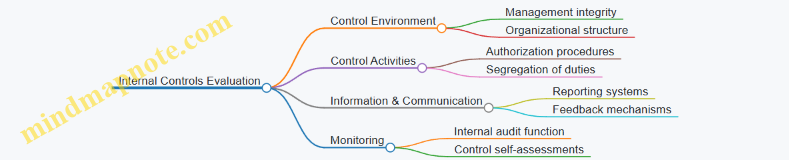
Example: The audit team performed walkthroughs on CMG’s procurement process and found strong segregation of duties but noted weaknesses in IT access controls, which increased risk for unauthorized transactions.
Substantive Testing
Mind Map: Substantive Testing Areas

Example: For grant revenues, the audit team selected a sample of grants and verified compliance with funding conditions by reviewing grant agreements and matching with received funds. They discovered one grant recorded prematurely before funds were fully authorized, leading to an adjusting journal entry.
Audit Evidence and Documentation
Mind Map: Evidence Collection
Example: The team used electronic bank statements and system-generated reports to confirm cash balances, reconciling these with the general ledger. They documented all evidence meticulously in the audit working papers for transparency and future reference.
Fraud Risk Considerations
Mind Map: Fraud Risk Management
Example: An unusual spike in year-end expenses was identified through analytical procedures. Upon further testing, the auditors discovered a fraudulent invoice scheme involving a third-party vendor, which was reported to the appropriate authorities.
Reporting and Communication
Mind Map: Audit Reporting
Example: The final audit report issued an unqualified opinion but included a key audit matter regarding IT control weaknesses and recommended strengthening access controls. The management agreed and committed to implementing corrective actions.
Lessons Learned and Best Practices
- Early risk identification improves audit focus.
- Combining manual testing with data analytics enhances detection of anomalies.
- Clear documentation supports audit quality and regulatory compliance.
- Open communication with client management fosters timely resolution of issues.
Summary
This case study illustrates how a comprehensive audit approach, integrating planning, control evaluation, substantive testing, fraud risk management, and clear reporting, ensures the integrity and reliability of financial statements for large public sector entities like CMG. The use of practical examples and mind maps helps auditors visualize and apply best practices effectively.
12.2 Lessons from Audit Failures and How to Avoid Them
Audit failures can have significant consequences, including financial loss, reputational damage, and legal repercussions. Understanding common causes of audit failures and learning how to avoid them is critical for auditors in the finance and government sectors. This section explores key lessons from notable audit failures, supported by mind maps and practical examples.
Common Causes of Audit Failures
Example: In a government audit, failure to adequately plan led to missing critical deadlines and incomplete testing of grant expenditures, resulting in an unqualified opinion being questioned later.
Lesson 1: Thorough Planning is Essential
Poor planning often leads to incomplete audits. Auditors must allocate sufficient time and resources, identify high-risk areas, and design appropriate procedures.
Example: An auditor assigned to a municipal financial statement failed to assess risks related to pension liabilities, leading to material misstatements going undetected.
Lesson 2: Collect Sufficient and Appropriate Evidence
Audit conclusions rely on evidence quality and quantity. Insufficient or unreliable evidence can cause audit failures.
Example: In a failed audit of a public sector entity, auditors relied heavily on management representations without corroborating documents, which masked inflated revenue figures.
Lesson 3: Maintain Professional Skepticism
Auditors must critically evaluate evidence and question inconsistencies to detect errors or fraud.
Example: An auditor overlooked unusual related-party transactions due to lack of skepticism, resulting in undetected conflicts of interest.
Lesson 4: Understand the Client’s Business and Environment
A deep understanding helps identify risks and tailor audit procedures effectively.
Example: Auditors unfamiliar with government grant compliance requirements failed to identify non-compliance, leading to audit qualification.
Lesson 5: Detect and Respond to Fraud Risks
Ignoring fraud risk factors can cause audit failures with severe consequences.
Example: In a case where revenue was deliberately overstated, auditors did not perform adequate fraud risk assessments, resulting in a delayed fraud detection.
Lesson 6: Effective Communication Throughout the Audit
Clear communication with management and audit committees ensures issues are addressed timely.
Example: Failure to communicate control weaknesses led to repeated errors in subsequent audits.
Summary Table: Audit Failures and Preventive Actions
| Audit Failure Cause | Preventive Action | Example Scenario |
|---|---|---|
| Inadequate Planning | Comprehensive risk assessment and planning | Missed pension liability risks in municipal audit |
| Insufficient Evidence | Gather diverse, reliable evidence | Overreliance on management representation |
| Lack of Professional Skepticism | Maintain questioning mindset | Overlooked related-party transactions |
| Poor Client Understanding | Deep dive into client’s business and environment | Ignored grant compliance requirements |
| Failure to Detect Fraud | Robust fraud risk procedures | Delayed detection of revenue inflation |
| Communication Breakdowns | Regular, clear updates with stakeholders | Repeated control weaknesses unaddressed |
Final Thoughts
Audit failures serve as valuable learning opportunities. By integrating these lessons into daily audit practices, accountants and auditors in finance and government sectors can enhance audit quality, protect public interest, and uphold professional standards.
For further reading, consider reviewing recent audit quality reports from regulatory bodies and case studies of high-profile audit failures.
12.3 Innovative Audit Approaches in Complex Financial Environments
In today’s rapidly evolving financial landscape, auditors face increasingly complex environments characterized by diverse financial instruments, intricate organizational structures, and advanced technology integration. To effectively audit financial statements under these conditions, innovative approaches are essential. This section explores cutting-edge methodologies and tools that enhance audit quality, efficiency, and insight.
Risk-Based Auditing Enhanced by AI and Machine Learning
Risk-based auditing focuses on identifying and prioritizing areas with the highest risk of material misstatement. Integrating AI and machine learning enables auditors to analyze vast datasets and detect patterns that may indicate anomalies or fraud.
Example: A government auditor uses machine learning algorithms to analyze procurement transactions across multiple departments. The system flags unusual vendor payment patterns, prompting targeted substantive testing.
Mind Map:
Continuous Auditing and Monitoring
Continuous auditing leverages technology to perform audit-related activities on a real-time or near-real-time basis, allowing for timely identification of issues.
Example: An auditor in a financial institution implements continuous monitoring tools that automatically review daily transactions against compliance rules, immediately alerting the audit team to potential breaches.
Mind Map:
Blockchain and Distributed Ledger Technology (DLT) Auditing
Blockchain’s immutable ledger offers transparency and traceability, but auditing blockchain-based transactions requires specialized approaches.
Example: Auditors examining a government grant disbursement system built on blockchain verify the integrity of transaction records by tracing the cryptographic hashes and validating smart contract executions.
Mind Map:
Data Analytics and Visualization
Advanced data analytics and visualization tools help auditors identify trends, outliers, and relationships within complex datasets.
Example: An auditor uses heat maps and cluster analysis to identify departments with unusually high expense claims, facilitating focused audit procedures.
Mind Map:
Collaborative and Remote Auditing Technologies
With the rise of remote work, auditors employ cloud-based platforms and collaboration tools to conduct audits efficiently without physical presence.
Example: A government audit team uses secure cloud portals to share documents, conduct virtual interviews, and track audit progress in real time.
Mind Map:
Summary
Innovative audit approaches in complex financial environments harness technology and new methodologies to improve audit effectiveness. By integrating AI, continuous auditing, blockchain understanding, data analytics, and remote collaboration, auditors can navigate complexity with greater precision and responsiveness.
These innovations not only enhance risk detection and evidence gathering but also support auditors in delivering timely, insightful, and reliable audit opinions that meet the evolving demands of the finance and government sectors.
12.4 Example: Auditing Non-Profit Financial Statements
Auditing non-profit financial statements requires a nuanced approach due to the unique nature of their funding sources, restrictions on funds, and reporting requirements. This section explores best practices, challenges, and examples to guide auditors through the process.
Understanding Non-Profit Financial Statements
Non-profits typically prepare financial statements that include:
- Statement of Financial Position (Balance Sheet)
- Statement of Activities (Income Statement)
- Statement of Cash Flows
- Statement of Functional Expenses (often required)
These statements reflect the organization’s financial health, sources of revenue, and how funds are used in accordance with donor restrictions.
Mind Map: Key Audit Areas for Non-Profit Financial Statements
Best Practices with Examples
Revenue Recognition
Practice: Verify that contributions and grants are recognized in the correct period and classified according to donor restrictions.
Example: A non-profit received a $50,000 grant in December with a restriction to use funds for a program starting in January. The auditor confirms the grant is recorded as temporarily restricted revenue in December and released when the program expenses occur.
Expense Classification and Functional Allocation
Practice: Ensure expenses are properly classified between program services, management, and fundraising, and allocated correctly if shared.
Example: An auditor reviews payroll expenses for staff who work 70% on programs and 30% on administration. They verify time-tracking records support the allocation and that the financial statements reflect this split.
Net Asset Classification
Practice: Confirm net assets are classified as unrestricted, temporarily restricted, or permanently restricted based on donor-imposed restrictions.
Example: The auditor examines donor agreements and verifies that a $100,000 endowment fund is correctly classified as permanently restricted net assets.
In-Kind Contributions
Practice: Assess the valuation and recognition of donated goods and services.
Example: A non-profit received donated office equipment valued at $10,000. The auditor reviews the valuation method and ensures proper recording as both revenue and asset.
Compliance Testing
Practice: Test compliance with grant terms and donor restrictions.
Example: The auditor selects a sample of grant expenditures and verifies supporting documentation to ensure funds were used as intended.
Mind Map: Audit Procedures for Non-Profit Financial Statements
Example Walkthrough: Auditing a Non-Profit’s Grant Revenue
Scenario: A non-profit organization receives multiple grants, some with restrictions. The auditor needs to verify the accuracy and classification of these revenues.
Steps:
- Obtain Grant Agreements: Review terms and restrictions.
- Test Cutoff: Verify that grant revenue is recorded in the correct fiscal year.
- Confirm with Grantors: Send confirmation letters to grant providers.
- Trace to Bank Deposits: Match recorded revenue to actual cash receipts.
- Review Expense Matching: Ensure expenses related to restricted grants are properly recorded and net assets released accordingly.
Outcome: The auditor confirms that grant revenues are accurately recorded, restrictions are properly classified, and related expenses comply with grant terms.
Challenges and How to Overcome Them
| Challenge | Solution / Best Practice |
|---|---|
| Complex donor restrictions | Maintain detailed schedules of restrictions and releases |
| Valuation of in-kind donations | Use independent appraisals or market values |
| Expense allocation accuracy | Use time-tracking and allocation methodologies |
| Limited internal controls | Increase substantive testing and recommend control improvements |
Summary
Auditing non-profit financial statements demands attention to donor restrictions, revenue recognition, and expense classification. By applying tailored audit procedures, testing compliance, and using clear documentation, auditors can provide assurance that the financial statements fairly present the organization’s financial position and activities.
For accountants and auditors in the finance and government sectors, mastering these non-profit audit nuances enhances audit quality and supports transparency and accountability in this vital sector.
12.5 Summary of Best Practices Illustrated Through Case Studies
In this section, we consolidate the key best practices derived from the case studies discussed earlier. These practices are essential for auditors working within finance and government sectors, especially for accountants and auditors aiming to enhance audit quality, efficiency, and reliability.
Best Practices Mind Map
Detailed Examples from Case Studies
Example 1: Planning and Risk Assessment in a Government Audit
In the audit of a municipal financial statement, auditors conducted extensive risk assessment by reviewing prior year audit findings and understanding the municipality’s revenue sources. This enabled them to focus on high-risk areas such as grant revenues and capital expenditures, ensuring efficient resource allocation.
Example 2: Internal Controls Evaluation in Revenue Recognition
During an audit of a public sector entity, auditors performed walkthroughs of the revenue cycle and tested controls over billing and collections. They identified a control weakness where manual overrides were not properly authorized, leading to recommendations for stronger approval protocols.
Example 3: Use of Data Analytics in Substantive Testing
Auditors used data analytics to analyze thousands of expense transactions in a government department. By identifying unusual patterns and outliers, they detected duplicate payments and unauthorized expenses, which traditional sampling might have missed.
Example 4: Fraud Detection and Communication
In a case involving suspected revenue manipulation, auditors applied fraud risk procedures including surprise cash counts and analytical review. Upon identifying discrepancies, they promptly communicated findings to management and regulatory bodies, ensuring timely corrective action.
Example 5: Reporting for a Non-Profit Organization
Auditors prepared a clear and concise audit report for a non-profit, highlighting areas of concern such as restricted fund usage and compliance with grant conditions. The report included practical recommendations that the organization could implement to improve financial controls.
Summary Table of Best Practices and Corresponding Examples
| Best Practice | Case Study Example | Key Takeaway |
|---|---|---|
| Comprehensive Planning | Municipal financial statement audit | Focus audit on high-risk areas |
| Internal Controls Evaluation | Revenue recognition walkthrough | Identify and strengthen control weaknesses |
| Substantive Testing with Analytics | Expense transaction analysis in government dept. | Detect anomalies beyond traditional sampling |
| Fraud Risk Management | Revenue manipulation detection | Early detection and communication of fraud risks |
| Clear Reporting | Non-profit audit report | Provide actionable, understandable recommendations |
Final Thoughts
Integrating these best practices into your audit engagements will not only improve audit quality but also build trust with stakeholders. The case studies demonstrate that a methodical approach combined with technology and ethical rigor leads to more effective financial statement audits.
Remember, continuous learning from real-world examples and adapting to evolving standards is key to professional growth and audit excellence.