Accounting for Deferred Revenue
1. Introduction to Deferred Revenue
1.1 What is Deferred Revenue? Definition and Key Concepts
Deferred Revenue (also known as unearned revenue) refers to money received by a business for goods or services that have not yet been delivered or performed. It represents a liability on the balance sheet because the company owes the customer the product or service in the future.
Key Concepts:
- Liability Nature: Deferred revenue is recorded as a liability because the company has an obligation to deliver goods or services.
- Revenue Recognition Principle: Revenue should only be recognized when it is earned, not necessarily when cash is received.
- Matching Principle: Expenses and revenues should be matched in the period they are incurred and earned, respectively.
Mind Map: Understanding Deferred Revenue
Detailed Explanation:
When a company receives payment before delivering the product or service, it cannot immediately recognize this as revenue. Instead, it records the amount as deferred revenue, reflecting the company’s responsibility to fulfill the order.
For example, a SaaS company that charges customers $1,200 annually upfront for software access will initially record the $1,200 as deferred revenue. Each month, as the service is provided, $100 ($1,200/12 months) is recognized as revenue.
Example 1: SaaS Subscription
- Scenario: A customer pays $1,200 on January 1 for a 12-month subscription.
- Accounting Treatment:
- January 1: Debit Cash $1,200; Credit Deferred Revenue $1,200
- Each month (Jan-Dec): Debit Deferred Revenue $100; Credit Revenue $100
This ensures revenue is recognized evenly over the subscription period.
Example 2: Prepaid Service Contract
- Scenario: A consulting firm receives $6,000 upfront for a 6-month service contract.
- Accounting Treatment:
- Upon receipt: Debit Cash $6,000; Credit Deferred Revenue $6,000
- Monthly recognition: Debit Deferred Revenue $1,000; Credit Revenue $1,000
Example 3: Gift Cards
- Scenario: A retailer sells a $50 gift card.
- Accounting Treatment:
- At sale: Debit Cash $50; Credit Deferred Revenue $50
- When gift card is redeemed: Debit Deferred Revenue $50; Credit Revenue $50
If the gift card is never redeemed, some companies recognize breakage revenue based on historical redemption rates.
Mind Map: Deferred Revenue Lifecycle
Summary
Deferred revenue is a fundamental concept ensuring that revenue is recognized in the correct accounting period, reflecting the true economic activity of a business. Proper understanding and treatment of deferred revenue help maintain compliance with accounting standards and provide stakeholders with accurate financial information.
1.2 Importance of Deferred Revenue in Financial Reporting
Deferred revenue, often referred to as unearned revenue, plays a critical role in ensuring the accuracy and integrity of financial reporting. It represents cash received by a company for goods or services yet to be delivered or performed. Proper accounting for deferred revenue ensures that revenue is recognized in the correct accounting period, aligning with the matching principle and providing stakeholders with a true picture of a company’s financial health.
Why Deferred Revenue Matters
- Accurate Revenue Recognition: Ensures revenue is recorded only when earned, preventing premature income recognition.
- Financial Statement Integrity: Impacts the balance sheet (liability) and income statement (revenue), affecting profitability and liquidity metrics.
- Compliance with Accounting Standards: Adherence to GAAP and IFRS requirements avoids regulatory penalties and audit issues.
- Investor Confidence: Transparent revenue reporting builds trust with investors and creditors.
- Cash Flow vs. Profitability Clarity: Differentiates between cash collected and revenue earned, aiding better cash flow management.
Mind Map: Importance of Deferred Revenue
Example 1: SaaS Subscription Model
A SaaS company receives $12,000 on January 1 for a 12-month subscription. The company cannot recognize the full $12,000 as revenue immediately because the service will be delivered over one year.
- Initial Entry: Debit Cash $12,000; Credit Deferred Revenue $12,000
- Monthly Recognition: Debit Deferred Revenue $1,000; Credit Revenue $1,000
This approach ensures revenue is recognized evenly over the subscription period, reflecting actual service delivery.
Example 2: Prepaid Consulting Services
An accounting firm receives $6,000 on March 1 for consulting services to be provided over three months.
- Initial Entry: Debit Cash $6,000; Credit Deferred Revenue $6,000
- Monthly Recognition: Debit Deferred Revenue $2,000; Credit Revenue $2,000
This prevents overstating revenue in March and matches income with service delivery.
Mind Map: Deferred Revenue Impact on Financial Statements
Summary
Understanding and properly accounting for deferred revenue is essential for accurate financial reporting. It ensures compliance with accounting principles, provides clear insights into a company’s financial position, and maintains stakeholder trust. Accountants and auditors must carefully monitor deferred revenue balances and recognize revenue systematically as obligations are fulfilled.
Best Practice Highlight
Maintain detailed contracts and billing schedules to accurately track deferred revenue and its subsequent recognition. Automate recognition processes where possible to reduce errors and improve reporting efficiency.
1.3 Common Industries and Scenarios Involving Deferred Revenue
Deferred revenue is a prevalent accounting concept across various industries, especially where payment is received before the delivery of goods or services. Understanding the typical industries and scenarios where deferred revenue arises helps accountants and auditors apply best practices effectively.
Mind Map: Industries Commonly Using Deferred Revenue
SaaS & Software
Scenario: A SaaS company sells annual subscriptions for its cloud-based accounting software. Customers pay upfront for 12 months of service.
Deferred Revenue Treatment: The entire payment is initially recorded as deferred revenue (a liability). Each month, one-twelfth of the payment is recognized as revenue as the service is delivered.
Example:
- Customer pays $1,200 on January 1 for a 12-month subscription.
- On January 1: Debit Cash $1,200; Credit Deferred Revenue $1,200.
- Each month (Jan to Dec): Debit Deferred Revenue $100; Credit Revenue $100.
Telecommunications
Scenario: A telecom company offers prepaid mobile plans where customers pay in advance for a set amount of usage or time.
Deferred Revenue Treatment: The prepaid amount is recorded as deferred revenue and recognized as revenue when the customer uses the service.
Example:
- Customer prepays $60 for a 3-month plan.
- On payment: Debit Cash $60; Credit Deferred Revenue $60.
- Monthly recognition: Debit Deferred Revenue $20; Credit Revenue $20.
Publishing & Media
Scenario: A magazine publisher sells annual subscriptions.
Deferred Revenue Treatment: Subscription fees received upfront are recorded as deferred revenue and recognized monthly as magazines are delivered.
Example:
- $120 subscription paid upfront for 12 issues.
- Initial entry: Debit Cash $120; Credit Deferred Revenue $120.
- Monthly recognition: Debit Deferred Revenue $10; Credit Revenue $10.
Education & Training
Scenario: An online learning platform charges an upfront fee for a 6-month course access.
Deferred Revenue Treatment: Fees are deferred and recognized over the course duration.
Example:
- $600 fee paid upfront.
- Initial entry: Debit Cash $600; Credit Deferred Revenue $600.
- Monthly recognition: Debit Deferred Revenue $100; Credit Revenue $100.
Insurance
Scenario: An insurance company receives premium payments in advance for a 1-year policy.
Deferred Revenue Treatment: Premiums are recorded as deferred revenue and recognized evenly over the policy period.
Example:
- $1,200 premium paid upfront.
- Initial entry: Debit Cash $1,200; Credit Deferred Revenue $1,200.
- Monthly recognition: Debit Deferred Revenue $100; Credit Revenue $100.
Manufacturing & Retail
Scenario: A retailer sells gift cards redeemable for merchandise.
Deferred Revenue Treatment: Gift card sales are recorded as deferred revenue until redeemed.
Example:
- $100 gift card sold.
- Initial entry: Debit Cash $100; Credit Deferred Revenue $100.
- Upon redemption: Debit Deferred Revenue $100; Credit Sales Revenue $100.
Professional Services
Scenario: A consulting firm receives retainer fees upfront for ongoing advisory services.
Deferred Revenue Treatment: Retainers are deferred and recognized as revenue when services are performed.
Example:
- $5,000 retainer received for 5 months.
- Initial entry: Debit Cash $5,000; Credit Deferred Revenue $5,000.
- Monthly recognition: Debit Deferred Revenue $1,000; Credit Revenue $1,000.
Mind Map: Common Deferred Revenue Scenarios
Summary
Deferred revenue arises in many industries where payment precedes delivery. By understanding these common industries and scenarios, accountants and auditors can apply appropriate recognition policies, ensure compliance, and maintain accurate financial reporting.
Each example demonstrates the core principle: recording cash receipt as a liability initially, then recognizing revenue systematically as the service or product is delivered.
1.4 Overview of Accounting Standards Governing Deferred Revenue (GAAP & IFRS)
Deferred revenue accounting is governed primarily by two major accounting frameworks: Generally Accepted Accounting Principles (GAAP) in the United States and International Financial Reporting Standards (IFRS) globally. Understanding these standards is crucial for accountants and auditors to ensure compliance and accurate financial reporting.
Key Principles Under GAAP and IFRS
Both GAAP and IFRS emphasize the recognition of revenue when it is earned and realizable, rather than when cash is received. Deferred revenue represents payments received in advance for goods or services yet to be delivered, and thus is recorded as a liability until the earnings process is complete.
Mind Map: Accounting Standards Governing Deferred Revenue
GAAP: ASC 606 in Detail
ASC 606, issued by the Financial Accounting Standards Board (FASB), provides a comprehensive framework for revenue recognition. It replaced previous industry-specific guidance to create a unified approach.
-
Five-Step Model Explained with Example:
- Step 1: Identify the contract — A SaaS company signs a 12-month subscription contract.
- Step 2: Identify performance obligations — Providing access to software monthly.
- Step 3: Determine transaction price — $1,200 for the year.
- Step 4: Allocate transaction price — $100 per month.
- Step 5: Recognize revenue — $100 recognized monthly as service is delivered.
-
Deferred Revenue Example:
- On January 1, the company receives $1,200 cash and records:
- Debit Cash $1,200
- Credit Deferred Revenue (liability) $1,200
- Each month, as service is delivered:
- Debit Deferred Revenue $100
- Credit Revenue $100
- On January 1, the company receives $1,200 cash and records:
IFRS: IFRS 15 Overview
IFRS 15, issued by the International Accounting Standards Board (IASB), aligns closely with ASC 606 to improve comparability across borders.
-
Focus on Transfer of Control: Revenue is recognized when control of promised goods or services is transferred to the customer.
-
Example:
- A consulting firm receives $10,000 upfront for a 5-month engagement.
- Deferred revenue is recorded initially.
- Revenue is recognized monthly as the consulting services are performed.
Mind Map: Five-Step Revenue Recognition Model
Best Practice: Applying Standards in SaaS Deferred Revenue Accounting
-
Example Scenario:
- A SaaS company sells a 6-month subscription for $600, paid upfront.
- Initial entry:
- Debit Cash $600
- Credit Deferred Revenue $600
- Monthly revenue recognition:
- Debit Deferred Revenue $100
- Credit Revenue $100
-
Key Points:
- Ensure contracts are clearly defined.
- Identify all performance obligations.
- Allocate transaction price accurately.
- Recognize revenue only when obligations are satisfied.
Summary
| Aspect | GAAP (ASC 606) | IFRS (IFRS 15) |
|---|---|---|
| Core Principle | Revenue recognized to depict transfer of goods/services | Revenue recognized upon transfer of control |
| Revenue Recognition Model | Five-step model | Five-step model |
| Deferred Revenue Treatment | Recorded as liability until performance obligations met | Same as GAAP |
| Example | SaaS subscription revenue recognized ratably over contract term | Similar approach with focus on control transfer |
Understanding these standards helps accountants and auditors ensure deferred revenue is accounted for accurately, improving financial transparency and compliance.
For further reading, refer to the official FASB ASC 606 and IASB IFRS 15 documentation.
1.5 Best Practice: Clear Documentation of Revenue Recognition Policies with Examples
Clear documentation of revenue recognition policies is essential for ensuring consistency, compliance, and transparency in accounting for deferred revenue. Well-documented policies help accountants and auditors understand when and how revenue should be recognized, reducing the risk of errors and misstatements.
Why Clear Documentation Matters
- Provides a definitive guide for accounting teams
- Facilitates audit processes by offering clear references
- Ensures compliance with accounting standards such as ASC 606 and IFRS 15
- Helps in training new staff and maintaining continuity
Key Components of Revenue Recognition Policies
Example 1: SaaS Subscription Revenue Recognition Policy
Policy Statement: Revenue from SaaS subscriptions is recognized ratably over the subscription period as the service is delivered.
Details:
- Revenue is deferred upon receipt of payment.
- Monthly recognition is recorded as revenue earned.
- Upgrades or downgrades mid-term require pro-rata adjustments.
Example: A customer pays $1,200 for a 12-month subscription on January 1. The company records $1,200 deferred revenue initially and recognizes $100 revenue each month.
Example 2: Service Contract with Milestone Deliverables
Policy Statement: Revenue is recognized upon completion of defined milestones as per the contract.
Details:
- Deferred revenue is recorded when payment is received upfront.
- Upon milestone completion, revenue is recognized proportionally.
Example: A $50,000 contract has 5 milestones. Customer pays full amount upfront. After completing 2 milestones, $20,000 revenue is recognized, and deferred revenue is reduced accordingly.
Tips for Effective Documentation
- Use simple, clear language avoiding jargon
- Include flowcharts or mind maps to visualize processes
- Provide real-life examples relevant to your business
- Regularly update policies to reflect changes in standards or business models
- Ensure policies are accessible to all relevant personnel
By maintaining clear and comprehensive documentation of revenue recognition policies, finance teams can ensure accurate deferred revenue accounting, facilitate audits, and support strategic decision-making.
2. Identifying Deferred Revenue in Financial Transactions
2.1 Differentiating Deferred Revenue from Accrued Revenue
Understanding the difference between deferred revenue and accrued revenue is fundamental for accountants and auditors, especially within the Finance and SaaS sectors where revenue recognition timing can significantly impact financial statements.
What is Deferred Revenue?
Deferred revenue, also known as unearned revenue, represents money received by a company for goods or services that have not yet been delivered or performed. It is recorded as a liability on the balance sheet until the company fulfills its obligation.
What is Accrued Revenue?
Accrued revenue, on the other hand, refers to revenue that has been earned but not yet received in cash or recorded. It is recognized as an asset (usually accounts receivable) because the company has performed its service or delivered goods but has not yet invoiced or collected payment.
Mind Map: Key Differences Between Deferred Revenue and Accrued Revenue
Practical Examples
Example 1: Deferred Revenue in SaaS Subscription
- A SaaS company receives $1,200 on January 1 for a 12-month subscription.
- The company records $1,200 as deferred revenue (liability) on January 1.
- Each month, $100 ($1,200/12) is recognized as revenue as the service is delivered.
Journal Entry on January 1:
- Debit Cash $1,200
- Credit Deferred Revenue $1,200
Monthly Revenue Recognition Entry:
- Debit Deferred Revenue $100
- Credit Revenue $100
Example 2: Accrued Revenue in Consulting Services
- A consulting firm completes a project worth $5,000 in March but has not yet invoiced the client.
- The revenue is earned in March but cash will be received later.
Journal Entry in March:
- Debit Accounts Receivable $5,000
- Credit Revenue $5,000
When cash is received:
- Debit Cash $5,000
- Credit Accounts Receivable $5,000
Mind Map: Accounting Treatment Flow
Why is This Distinction Important?
- Financial Accuracy: Proper classification ensures liabilities and assets are correctly reported.
- Compliance: Adhering to accounting standards like ASC 606 and IFRS 15 requires precise revenue recognition.
- Cash Flow Management: Understanding timing helps in forecasting cash flows and managing working capital.
Best Practice
- Maintain clear documentation of contracts to identify when cash is received versus when revenue is earned.
- Use accounting software features to automate recognition schedules.
- Regularly review deferred and accrued revenue balances to ensure accuracy.
By mastering the differentiation between deferred and accrued revenue, accountants and auditors can ensure transparent, accurate financial reporting that reflects the true economic activity of their organizations.
2.2 Recognizing Deferred Revenue in SaaS Subscription Models
Deferred revenue is a critical concept in SaaS (Software as a Service) subscription models because customers typically pay upfront for services that will be delivered over time. Proper recognition of deferred revenue ensures compliance with accounting standards and provides an accurate picture of a company’s financial health.
What is Deferred Revenue in SaaS?
Deferred revenue represents the amount received from customers for subscription services that have not yet been delivered. Since the service is provided over a period (e.g., monthly or annually), revenue must be recognized systematically over the subscription term.
Mind Map: Key Components of Deferred Revenue in SaaS
How to Recognize Deferred Revenue in SaaS
-
Initial Receipt of Payment: When a customer pays upfront for a subscription, the company records the cash received and a corresponding deferred revenue liability.
-
Revenue Recognition Over Time: As the service is delivered over the subscription period, the company recognizes revenue proportionally, reducing the deferred revenue liability.
-
Adjustments for Changes: Upgrades, downgrades, cancellations, or renewals require adjustments to deferred revenue balances.
Example 1: Annual SaaS Subscription
Scenario: A customer pays $1,200 on January 1 for a 12-month SaaS subscription.
-
Initial Entry (Jan 1):
- Debit Cash $1,200
- Credit Deferred Revenue $1,200
-
Monthly Revenue Recognition (Jan to Dec):
- Debit Deferred Revenue $100
- Credit Revenue $100
This approach ensures revenue is recognized evenly over the subscription period.
Mind Map: Journal Entries for SaaS Deferred Revenue
Example 2: Quarterly Subscription with Mid-Term Upgrade
Scenario: A customer pays $300 for a 3-month subscription starting April 1. On May 15, they upgrade, paying an additional $150 for the remaining 1.5 months.
-
Initial Entry (Apr 1):
- Debit Cash $300
- Credit Deferred Revenue $300
-
Monthly Recognition (Apr):
- Debit Deferred Revenue $100
- Credit Revenue $100
-
Upgrade Entry (May 15):
- Debit Cash $150
- Credit Deferred Revenue $150
-
Revenue Recognition (May 1 - May 15):
- Debit Deferred Revenue $50 (half of $100 original monthly amount)
- Credit Revenue $50
-
Revenue Recognition (May 15 - Jun 30):
- Debit Deferred Revenue $200 (remaining $50 original + $150 upgrade)
- Credit Revenue $200
This example shows how deferred revenue is adjusted and recognized when subscription terms change mid-period.
Best Practices for Recognizing Deferred Revenue in SaaS
-
Align Revenue Recognition with Service Delivery: Revenue should be recognized as the service is provided, not when cash is received.
-
Use Automated Systems: Leverage subscription billing and accounting software to track deferred revenue accurately.
-
Document Contract Terms Clearly: Understand renewal, cancellation, and upgrade terms to adjust deferred revenue properly.
-
Regularly Reconcile Deferred Revenue Accounts: Perform monthly reconciliations to ensure accuracy.
-
Train Accounting Teams: Ensure accountants understand SaaS-specific revenue recognition nuances.
Summary
Recognizing deferred revenue in SaaS subscription models requires careful tracking of prepaid amounts and systematic revenue recognition over the subscription period. By using clear journal entries, understanding contract modifications, and applying best practices, accountants can ensure compliance and provide transparent financial reporting.
2.3 Deferred Revenue in Service Contracts and Retainers
Deferred revenue in service contracts and retainers is a common accounting scenario where a company receives payment in advance for services to be rendered over a future period. This advance payment creates a liability on the balance sheet, known as deferred revenue, until the service is performed and the revenue can be recognized.
Understanding Deferred Revenue in Service Contracts
Service contracts often involve agreements where clients pay upfront for ongoing or future services. Examples include legal retainers, consulting agreements, maintenance contracts, and subscription-based advisory services.
- Key Concept: Revenue is recognized only when the service obligation is satisfied.
- Deferred Revenue: The amount received but not yet earned.
Mind Map: Deferred Revenue in Service Contracts and Retainers
Example 1: Legal Retainer Agreement
A law firm receives a $12,000 retainer fee from a client on January 1st for legal services to be provided evenly over the next 12 months.
-
Initial Entry (Jan 1):
- Debit Cash $12,000
- Credit Deferred Revenue $12,000
-
Monthly Revenue Recognition (End of each month):
- Debit Deferred Revenue $1,000
- Credit Service Revenue $1,000
This approach matches revenue with the period services are provided, complying with the matching principle.
Example 2: IT Maintenance Service Contract
An IT company signs a 6-month maintenance contract with a customer who pays $6,000 upfront.
-
Initial Entry:
- Debit Cash $6,000
- Credit Deferred Revenue $6,000
-
Revenue Recognition: Recognize $1,000 per month as the service is delivered.
-
Adjustments: If the contract is terminated early, the company must adjust deferred revenue accordingly.
Mind Map: Accounting Process for Deferred Revenue in Service Contracts
Best Practices for Managing Deferred Revenue in Service Contracts
- Clear Contract Terms: Define service periods, payment schedules, and performance obligations explicitly.
- Regular Revenue Recognition: Establish a consistent schedule (monthly, quarterly) to recognize revenue.
- Documentation: Maintain detailed records of payments, contract terms, and service delivery.
- System Integration: Use accounting software to automate deferred revenue tracking and recognition.
- Review and Adjust: Periodically review contracts for changes or cancellations to adjust deferred revenue accordingly.
By following these practices and understanding the nature of deferred revenue in service contracts and retainers, accountants and auditors can ensure accurate financial reporting and compliance with accounting standards.
2.4 Practical Example: Identifying Deferred Revenue in a Prepaid Annual Software License
Scenario Overview
Imagine a SaaS company, SoftServe Inc., sells an annual software license to a customer for $1,200, payable upfront at the start of the contract. The license grants the customer access to the software for 12 months.
Key Points to Identify Deferred Revenue:
- Payment received upfront: $1,200 cash received immediately.
- Service period: 12 months of software access.
- Revenue recognition: Revenue should be recognized monthly over the 12-month period, not all at once.
Step 1: Understanding the Transaction
- The company receives cash upfront, increasing cash assets.
- Since the service is delivered over time, the company owes the customer access to the software for the entire year.
- Therefore, the entire $1,200 cannot be recognized as revenue immediately.
Step 2: Identifying Deferred Revenue
- The $1,200 payment is initially recorded as a liability called deferred revenue (unearned revenue).
- This liability represents the company’s obligation to deliver software access over the next 12 months.
Mind Map: Identifying Deferred Revenue in Prepaid Software License
Step 3: Monthly Revenue Recognition
- Each month, SoftServe Inc. recognizes $100 as revenue ($1,200 / 12 months).
- The deferred revenue liability decreases by $100 monthly.
Example Journal Entries
| Date | Account | Debit | Credit |
|---|---|---|---|
| Jan 1 | Cash | 1,200 | |
| Jan 1 | Deferred Revenue | 1,200 | |
| Jan 31 | Deferred Revenue | 100 | |
| Jan 31 | Revenue | 100 | |
| Feb 28 | Deferred Revenue | 100 | |
| Feb 28 | Revenue | 100 | |
| … | … | … | … |
| Dec 31 | Deferred Revenue | 100 | |
| Dec 31 | Revenue | 100 |
Mind Map: Monthly Revenue Recognition Process
Step 4: Why is this Important?
- Accurate Financial Reporting: Prevents overstating revenue and profits.
- Compliance: Aligns with revenue recognition standards (ASC 606 / IFRS 15).
- Cash Flow vs. Profit: Shows cash received upfront but revenue earned over time.
Additional Example: Partial Year Contract
If the customer cancels after 6 months, only $600 revenue should be recognized, and the remaining $600 deferred revenue adjusted accordingly.
Mind Map: Adjusting Deferred Revenue for Early Cancellation
Summary
Identifying deferred revenue in prepaid annual software licenses involves:
- Recognizing cash received upfront.
- Recording a deferred revenue liability.
- Recognizing revenue monthly over the service period.
- Adjusting for contract changes or cancellations.
This approach ensures compliance and provides clear, transparent financial statements.
2.5 Best Practice: Using Checklists to Ensure Accurate Identification
Accurately identifying deferred revenue is critical for maintaining the integrity of financial statements and ensuring compliance with accounting standards. One of the most effective best practices for accountants and auditors is to use detailed checklists. These checklists serve as systematic guides to verify that all relevant transactions are correctly classified and accounted for.
Why Use Checklists?
- Consistency: Ensures uniform application of revenue recognition policies across transactions.
- Completeness: Helps capture all deferred revenue items, reducing the risk of omissions.
- Efficiency: Streamlines the review process, saving time during accounting close or audits.
- Audit Trail: Provides documentation that can be referenced during internal or external audits.
Key Components of a Deferred Revenue Identification Checklist
Deferred Revenue Identification Checklist Mind Map
Practical Example: Applying the Checklist
Scenario: A SaaS company receives a $1,200 annual subscription payment upfront for its software service.
| Checklist Step | Application Example | Result |
|---|---|---|
| Identify Transaction Type | Subscription service paid upfront | Deferred revenue likely |
| Contract Terms Review | Service delivered monthly over 12 months | Revenue recognized monthly |
| Payment Timing | Full payment received at contract start | Liability recorded upfront |
| Delivery Status | Service ongoing, not fully delivered at payment date | Defer revenue until earned |
| Accounting Treatment | Record $1,200 as deferred revenue liability | Correct journal entry made |
| Documentation | Contract and payment receipt filed | Documentation complete |
| Review and Approval | Senior accountant reviewed and approved | Compliance ensured |
Mind Map: Deferred Revenue Identification Process
Additional Example: Service Contract with Milestone Payments
A consulting firm receives $50,000 for a project with three milestones:
- Milestone 1: $15,000 (completed)
- Milestone 2: $20,000 (in progress)
- Milestone 3: $15,000 (not started)
Using the checklist:
- Payment received upfront or in parts? Partial payments received.
- Are milestones clearly defined? Yes.
- Has delivery occurred for each milestone? Only Milestone 1 completed.
- Deferred revenue recorded for Milestones 2 and 3 until completion.
This ensures revenue is recognized only when earned, aligning with accounting standards.
Tips for Creating Effective Checklists
- Customize checklists to your industry and business model.
- Update regularly to reflect changes in accounting standards (e.g., ASC 606).
- Incorporate examples and scenarios relevant to your organization.
- Train accounting and audit teams on checklist usage.
- Use digital tools to automate checklist tracking and approvals.
By embedding checklists into your deferred revenue identification process, accountants and auditors can significantly reduce errors, improve compliance, and provide clearer financial insights. This structured approach also facilitates smoother audits and builds confidence among stakeholders.
3. Recording Deferred Revenue: Journal Entries and Ledger Impact
3.1 Initial Recognition: Recording Cash Receipt and Deferred Revenue Liability
When a company receives payment in advance for goods or services to be delivered in the future, it must initially record this transaction as deferred revenue, a liability, rather than immediate revenue. This ensures compliance with the revenue recognition principle, which states that revenue should only be recognized when earned.
Key Concepts Mind Map
Step-by-Step Process
- Receive Cash in Advance: Customer pays upfront for a service or product.
- Record Cash Receipt: Debit cash or bank account to reflect the increase in assets.
- Record Deferred Revenue: Credit deferred revenue account to reflect the obligation to deliver goods/services in the future.
- Do Not Recognize Revenue Yet: Revenue will be recognized only when the service/product is delivered.
Example 1: SaaS Subscription Payment
A SaaS company receives $1,200 on January 1 for a 12-month subscription.
- Journal Entry on January 1:
- Debit Cash $1,200
- Credit Deferred Revenue $1,200
This entry shows the company has received cash but has an obligation to provide services over the next 12 months.
Mind Map: Journal Entry Breakdown
Example 2: Prepaid Service Contract
An accounting firm receives $5,000 on March 1 for services to be rendered over 5 months.
- Journal Entry on March 1:
- Debit Cash $5,000
- Credit Deferred Revenue $5,000
Revenue will be recognized monthly as services are performed.
Best Practice: Clear Account Naming and Documentation
- Use specific account names like “Deferred Revenue - SaaS Subscriptions” or “Unearned Service Revenue” to improve clarity.
- Document the terms of the contract clearly to support the deferred revenue balance.
Mind Map: Best Practices for Initial Recognition
Summary
Initial recognition of deferred revenue involves recording the cash received and simultaneously recognizing a liability until the revenue is earned. This practice aligns with accounting principles and provides accurate financial reporting.
By following these steps and best practices, accountants and auditors can ensure deferred revenue is properly accounted for from the moment cash is received.
3.2 Revenue Recognition Over Time: Adjusting Entries Explained
Revenue recognition over time is a fundamental accounting principle where revenue is recognized progressively as services are delivered or obligations are fulfilled, rather than at a single point in time. This approach aligns revenue with the actual performance and delivery of goods or services, ensuring financial statements accurately reflect the company’s economic activity.
What is Revenue Recognition Over Time?
Revenue recognition over time means that revenue is recognized incrementally throughout the contract period, based on the extent to which the company has satisfied its performance obligations.
Key criteria for recognizing revenue over time include:
- The customer simultaneously receives and consumes the benefits as the company performs.
- The company’s performance creates or enhances an asset that the customer controls.
- The company’s performance does not create an asset with an alternative use, and the company has an enforceable right to payment for performance completed to date.
Why Use Adjusting Entries?
Adjusting entries are necessary to:
- Accurately reflect the revenue earned during the accounting period.
- Adjust the deferred revenue liability as services are delivered.
- Ensure compliance with accounting standards such as ASC 606 and IFRS 15.
Mind Map: Revenue Recognition Over Time - Key Concepts
How to Record Adjusting Entries for Revenue Recognition Over Time
The adjusting entry typically involves:
- Debit: Deferred Revenue (liability account) — reduces the liability as revenue is earned.
- Credit: Revenue (income account) — recognizes the earned revenue in the income statement.
This adjustment ensures that the balance sheet reflects the remaining obligation and the income statement reflects the revenue earned during the period.
Example 1: Monthly SaaS Subscription
Scenario: A SaaS company sells a 12-month subscription for $1,200, paid upfront.
Initial Entry at Sale:
| Account | Debit | Credit |
|---|---|---|
| Cash | 1,200 | |
| Deferred Revenue | 1,200 |
Adjusting Entry Each Month:
| Account | Debit | Credit |
|---|---|---|
| Deferred Revenue | 100 | |
| Revenue | 100 |
Explanation: Each month, the company recognizes $100 as revenue, reducing deferred revenue accordingly.
Mind Map: Adjusting Entries for SaaS Subscription
Example 2: Service Contract with Milestones
Scenario: An auditing firm enters into a $50,000 contract to audit a client’s financials over 5 months, with payments tied to milestones.
| Month | Milestone Completed | Payment Received | Revenue Recognized |
|---|---|---|---|
| 1 | Planning | $10,000 | $10,000 |
| 2 | Fieldwork | $15,000 | $15,000 |
| 3-5 | Reporting | $25,000 | $25,000 |
Initial Entry on Payment:
| Account | Debit | Credit |
|---|---|---|
| Cash | 10,000 | |
| Deferred Revenue | 10,000 |
Adjusting Entry When Milestone is Completed:
| Account | Debit | Credit |
|---|---|---|
| Deferred Revenue | 10,000 | |
| Revenue | 10,000 |
Explanation: Revenue is recognized as each milestone is completed, matching revenue with performance.
Mind Map: Milestone-Based Revenue Recognition
Best Practices for Adjusting Entries in Revenue Recognition Over Time
- Maintain Detailed Contract Records: Clearly identify performance obligations and payment terms.
- Use System Automation: Leverage accounting software to schedule and automate recurring adjusting entries.
- Regularly Review Deferred Revenue Balances: Ensure balances reflect actual obligations.
- Coordinate with Billing and Sales Teams: To capture contract modifications or cancellations promptly.
- Document Assumptions and Methods: For transparency and audit readiness.
Summary
Adjusting entries for revenue recognition over time are crucial for matching revenue with the delivery of goods or services. By debiting deferred revenue and crediting revenue systematically, accountants ensure financial statements present an accurate and compliant view of the company’s financial performance.
3.3 Example Journal Entries for Monthly SaaS Subscription Revenue Recognition
When accounting for deferred revenue in a SaaS business, it’s essential to properly record the initial cash receipt and then recognize revenue systematically over the subscription period. Below, we explore detailed examples and mind maps to illustrate the journal entries involved in monthly SaaS subscription revenue recognition.
Scenario Example:
A SaaS company sells a 12-month subscription for $1,200, paid upfront on January 1st. The company recognizes revenue evenly over the subscription period (straight-line method).
Step 1: Initial Cash Receipt and Deferred Revenue Recognition
On January 1st, when the customer pays $1,200 upfront:
| Account | Debit | Credit |
|---|---|---|
| Cash | $1,200 | |
| Deferred Revenue | $1,200 |
Explanation: Cash increases by $1,200, but revenue is not recognized yet because the service will be delivered over 12 months. The $1,200 is recorded as a liability (deferred revenue).
Step 2: Monthly Revenue Recognition
At the end of each month, the company recognizes 1/12th of the total subscription revenue:
| Account | Debit | Credit |
|---|---|---|
| Deferred Revenue | $100 | |
| Revenue | $100 |
Explanation: $100 ($1,200 / 12) is moved from deferred revenue to recognized revenue each month.
Mind Map: Monthly SaaS Subscription Revenue Recognition
Additional Example: Mid-Month Subscription Start
If a subscription starts on January 15th instead of January 1st, revenue recognition should be prorated.
- Subscription: $1,200 for 12 months
- Monthly revenue: $100
- January revenue (half month): $50
Journal entries:
- January 15 (initial receipt):
| Account | Debit | Credit |
|---|---|---|
| Cash | $1,200 | |
| Deferred Revenue | $1,200 |
- January 31 (recognize half month revenue):
| Account | Debit | Credit |
|---|---|---|
| Deferred Revenue | $50 | |
| Revenue | $50 |
- February 28 (full month revenue):
| Account | Debit | Credit |
|---|---|---|
| Deferred Revenue | $100 | |
| Revenue | $100 |
Mind Map: Prorated Revenue Recognition
Best Practice Tips:
- Automate monthly revenue recognition entries using accounting software to reduce errors.
- Maintain clear schedules mapping subscription start and end dates to revenue recognition periods.
- Regularly reconcile deferred revenue balances to ensure accuracy.
By following these journal entry examples and utilizing the mind maps, accountants and auditors in SaaS companies can ensure transparent, accurate, and compliant accounting for deferred revenue.
3.4 Handling Partial Deliveries and Milestone-Based Revenue Recognition
In many industries, especially in SaaS and service contracts, revenue is not always recognized evenly over time. Instead, revenue recognition may depend on partial deliveries or achieving specific milestones. Proper accounting for these scenarios ensures compliance with accounting standards and provides an accurate reflection of financial performance.
Understanding Partial Deliveries
Partial deliveries occur when a contract involves multiple deliverables or phases, and revenue is recognized as each part is delivered or completed.
- Example: A SaaS company sells a bundled package including software licenses, implementation services, and training. Revenue is recognized separately as each component is delivered.
Milestone-Based Revenue Recognition
Milestone-based recognition ties revenue recognition to the achievement of predefined project milestones.
- Example: An auditor contracted to complete a multi-phase audit may recognize revenue upon completion of each audit phase.
Mind Map: Partial Deliveries and Milestone-Based Revenue Recognition
Best Practices for Handling Partial Deliveries and Milestones
- Identify distinct performance obligations: Break down contracts into separate deliverables or milestones.
- Allocate transaction price: Use relative standalone selling prices to allocate revenue to each obligation.
- Recognize revenue when control transfers: Revenue is recognized when the customer obtains control of the delivered goods or services.
- Document milestones clearly: Ensure milestones are measurable and agreed upon in contracts.
- Use consistent accounting policies: Apply policies consistently to similar contracts.
Example 1: SaaS Company with Partial Deliveries
Scenario: A SaaS provider sells a package including:
- Software license: $6,000
- Implementation services: $3,000
- Training sessions: $1,000
Contract Price: $10,000
Delivery Timeline:
- Software license delivered immediately
- Implementation services delivered over 3 months
- Training provided after implementation
Revenue Recognition:
- Recognize $6,000 immediately for the software license.
- Recognize $3,000 proportionally over 3 months as implementation progresses.
- Recognize $1,000 upon completion of training.
Journal Entries:
-
Upon receipt of payment:
- Debit Cash $10,000
- Credit Deferred Revenue $10,000
-
Upon software delivery:
- Debit Deferred Revenue $6,000
- Credit Revenue $6,000
-
Monthly implementation revenue recognition (each month):
- Debit Deferred Revenue $1,000
- Credit Revenue $1,000
-
Upon training completion:
- Debit Deferred Revenue $1,000
- Credit Revenue $1,000
Example 2: Milestone-Based Revenue Recognition in Audit Engagement
Scenario: An audit firm enters a contract for a $50,000 audit project with three milestones:
- Planning completion: $15,000
- Fieldwork completion: $20,000
- Final report delivery: $15,000
Revenue Recognition: Revenue is recognized upon completion of each milestone.
Journal Entries:
-
Upon receiving payment upfront:
- Debit Cash $50,000
- Credit Deferred Revenue $50,000
-
Upon planning completion:
- Debit Deferred Revenue $15,000
- Credit Revenue $15,000
-
Upon fieldwork completion:
- Debit Deferred Revenue $20,000
- Credit Revenue $20,000
-
Upon final report delivery:
- Debit Deferred Revenue $15,000
- Credit Revenue $15,000
Mind Map: Journal Entries for Partial Deliveries and Milestones
Summary
Handling partial deliveries and milestone-based revenue recognition requires careful contract analysis, clear identification of performance obligations, and consistent application of revenue recognition principles. Using detailed documentation and examples helps accountants and auditors ensure compliance and accurate financial reporting.
3.5 Best Practice: Automating Deferred Revenue Entries with Accounting Software
Automating deferred revenue entries is a crucial best practice for accountants and auditors working in finance and SaaS sectors. Manual tracking and journal entries can be error-prone, time-consuming, and inconsistent, especially when dealing with numerous contracts, subscription plans, and billing cycles. Leveraging accounting software to automate these processes not only improves accuracy but also enhances efficiency and compliance.
Why Automate Deferred Revenue Entries?
- Accuracy: Reduces human errors in calculations and posting.
- Consistency: Ensures uniform application of revenue recognition policies.
- Efficiency: Saves time by automating repetitive journal entries.
- Real-time Reporting: Provides up-to-date deferred revenue balances.
- Audit Trail: Maintains detailed logs for audit and compliance purposes.
Key Features to Look for in Accounting Software for Deferred Revenue Automation
How Automation Works: Step-by-Step Example
Scenario: A SaaS company sells an annual subscription for $1,200, billed upfront. Revenue is recognized monthly over 12 months.
-
Initial Billing: Customer pays $1,200 upfront.
- Software records:
- Debit Cash $1,200
- Credit Deferred Revenue $1,200
- Software records:
-
Monthly Revenue Recognition: Each month, the software automatically posts:
- Debit Deferred Revenue $100
- Credit Revenue $100
-
Reporting: Deferred revenue balance decreases by $100 monthly until fully recognized.
Example: Automating Deferred Revenue in QuickBooks Online
- Set up a deferred revenue liability account.
- Use recurring journal entries feature to schedule monthly revenue recognition.
- Integrate with billing platform (e.g., Stripe) to sync payment and subscription data.
- Generate deferred revenue reports automatically.
Mind Map: Automation Workflow
Tips for Successful Automation
- Define Clear Revenue Recognition Rules: Ensure software settings reflect your company’s policies and contract terms.
- Regularly Reconcile Deferred Revenue Accounts: Automation reduces errors but periodic checks are essential.
- Integrate Systems: Connect CRM, billing, and accounting platforms to avoid data silos.
- Train Staff: Ensure accounting and finance teams understand the automation workflows.
- Customize for Complex Scenarios: Use software that allows handling upgrades, cancellations, and partial deliveries.
Example: Handling Mid-Term Subscription Changes Automatically
A customer upgrades from a $100/month plan to a $150/month plan after 6 months.
- Automation software recalculates deferred revenue based on new contract terms.
- Adjusts remaining deferred revenue balance and future revenue recognition entries accordingly.
Summary
Automating deferred revenue entries with accounting software streamlines financial processes, reduces errors, and ensures compliance with accounting standards. By integrating billing data, defining clear recognition rules, and leveraging recurring journal entries, finance professionals can focus on analysis and strategic decision-making rather than manual bookkeeping.
For accountants and auditors in SaaS and finance sectors, adopting automation is not just a convenience but a necessity to manage the complexity and volume of deferred revenue transactions efficiently.
4. Revenue Recognition Methods for Deferred Revenue
4.1 Time-Based Recognition Method: Straight-Line Approach
The Time-Based Recognition Method, often called the Straight-Line Approach, is one of the simplest and most widely used methods for recognizing deferred revenue. This method evenly allocates revenue over the period in which the service or product is delivered, reflecting a consistent earning pattern.
What is the Straight-Line Approach?
The straight-line approach recognizes revenue evenly over the contract or service period, regardless of when cash is received. This method assumes that the service or product is delivered uniformly over time.
Why Use the Straight-Line Approach?
- Simplicity: Easy to calculate and implement.
- Consistency: Matches revenue recognition with service delivery.
- Compliance: Aligns with accounting standards requiring revenue to be recognized as earned.
Mind Map: Key Concepts of Straight-Line Revenue Recognition
Step-by-Step Example
Scenario:
A SaaS company sells a 12-month software subscription for $1,200, paid upfront on January 1.
Objective: Recognize revenue monthly using the straight-line approach.
Calculation:
- Total Revenue: $1,200
- Service Period: 12 months
- Monthly Revenue Recognition = $1,200 / 12 = $100
Journal Entries:
| Date | Account | Debit | Credit |
|---|---|---|---|
| Jan 1 | Cash | 1,200 | |
| Jan 1 | Deferred Revenue | 1,200 | |
| Jan 31 | Deferred Revenue | 100 | |
| Jan 31 | Revenue | 100 | |
| Feb 28 | Deferred Revenue | 100 | |
| Feb 28 | Revenue | 100 | |
| … | … | … | … |
| Dec 31 | Deferred Revenue | 100 | |
| Dec 31 | Revenue | 100 |
Mind Map: Journal Entry Flow for Straight-Line Recognition
Practical Considerations
- Contract Modifications: If the subscription period changes, recalculate the monthly revenue recognition accordingly.
- Partial Periods: For subscriptions starting mid-month, recognize revenue proportionally.
- Renewals: Treat renewals as new contracts with new deferred revenue balances.
Example: Partial Month Recognition
If the subscription starts on January 15 instead of January 1, the first month’s revenue recognition would be prorated.
- Days in January: 31
- Service days in January: 17 (Jan 15 to Jan 31)
- Monthly revenue: $100
- Prorated revenue for January = $100 * (17/31) ≈ $54.84
Journal entries for January:
| Date | Account | Debit | Credit |
|---|---|---|---|
| Jan 15 | Cash | 1,200 | |
| Jan 15 | Deferred Revenue | 1,200 | |
| Jan 31 | Deferred Revenue | 54.84 | |
| Jan 31 | Revenue | 54.84 |
From February 1, recognize $100 monthly until the balance is zero.
Best Practice Tips
- Maintain a clear schedule of revenue recognition periods.
- Use accounting software features to automate straight-line revenue recognition.
- Regularly review deferred revenue balances to ensure accuracy.
- Document assumptions and calculations for audit purposes.
By applying the straight-line approach, accountants and auditors can ensure that revenue recognition aligns with service delivery, providing transparent and consistent financial reporting.
4.2 Performance Obligation-Based Recognition
Performance Obligation-Based Recognition is a critical revenue recognition method under ASC 606 and IFRS 15, where revenue is recognized as the entity satisfies distinct performance obligations in a contract with a customer. This approach ensures that revenue is matched with the transfer of promised goods or services, providing a more accurate reflection of economic activity.
What is a Performance Obligation?
A performance obligation is a promise in a contract to transfer a distinct good or service to a customer. The key is that the good or service must be identifiable and separable from other promises in the contract.
Key Principles:
- Identify all performance obligations in the contract.
- Allocate the transaction price to each performance obligation based on relative standalone selling prices.
- Recognize revenue when (or as) each performance obligation is satisfied.
Mind Map: Understanding Performance Obligation-Based Recognition
Step 1: Identify Performance Obligations
Example:
A SaaS company sells a bundled contract that includes:
- Software subscription service
- Customer support
- Initial setup and customization
Each of these promises may be considered a separate performance obligation if they are distinct.
Step 2: Allocate Transaction Price
The total contract price must be allocated to each performance obligation based on their standalone selling prices.
Example:
- Software subscription: $1,200/year
- Customer support: $300/year
- Setup and customization: $500 one-time
Total contract price: $1,800
Allocation:
- Software subscription: (1200/2000) * 1800 = $1,080
- Customer support: (300/2000) * 1800 = $270
- Setup and customization: (500/2000) * 1800 = $450
Step 3: Recognize Revenue When Performance Obligations Are Satisfied
- Software subscription: Recognize monthly over 12 months ($1,080 / 12 = $90 per month).
- Customer support: Recognize monthly over 12 months ($270 / 12 = $22.50 per month).
- Setup and customization: Recognize at point in time when service is completed ($450).
Mind Map: Revenue Recognition Timing
Example: Performance Obligation-Based Recognition in SaaS
Scenario: A SaaS provider sells a contract for $2,400 that includes:
- Annual software license
- Training sessions
- Dedicated account management
Standalone selling prices:
- Software license: $1,800
- Training: $400
- Account management: $600
Allocation:
- Software license: (1800/2800) * 2400 = $1,543
- Training: (400/2800) * 2400 = $343
- Account management: (600/2800) * 2400 = $514
Recognition:
- Software license: Recognize monthly over 12 months ($1,543 / 12 = $128.58 per month).
- Training: Recognize at delivery of training sessions.
- Account management: Recognize monthly over 12 months ($514 / 12 = $42.83 per month).
Best Practices for Performance Obligation-Based Recognition
- Thorough contract review: Identify all distinct goods/services.
- Accurate standalone selling prices: Use market data or cost-plus methods.
- Document assumptions: Keep clear records of allocation methods.
- Use software tools: Automate allocation and recognition where possible.
- Regularly update: Reassess performance obligations if contract terms change.
Summary
Performance Obligation-Based Recognition aligns revenue recognition with the delivery of promised goods or services, enhancing transparency and compliance with modern accounting standards. By carefully identifying obligations, allocating prices, and recognizing revenue appropriately, accountants and auditors can ensure accurate financial reporting.
For further reading, see ASC 606 / IFRS 15 guidance and SaaS-specific revenue recognition case studies.
4.3 Usage-Based Recognition in SaaS and Cloud Services
Usage-based revenue recognition is a method where revenue is recognized based on the actual consumption or usage of the service by the customer, rather than a fixed time period. This approach is particularly relevant for SaaS and cloud service providers who offer flexible pricing models such as pay-as-you-go or metered billing.
What is Usage-Based Revenue Recognition?
- Revenue is recognized when the service is delivered and consumed.
- It aligns revenue recognition with the customer’s actual usage.
- Often used in cloud storage, API calls, bandwidth consumption, or transaction-based services.
Why Usage-Based Recognition Matters in SaaS
- Reflects true economic activity and service delivery.
- Helps in accurate financial reporting and forecasting.
- Reduces risk of revenue misstatement compared to fixed-period recognition.
Mind Map: Key Components of Usage-Based Revenue Recognition
Example 1: API Usage Billing
A SaaS company provides an API service charging $0.01 per API call. A customer makes 10,000 API calls in January.
- Billing: $100 (10,000 calls x $0.01)
- Revenue Recognition: Recognize $100 revenue for January based on actual usage.
Journal Entry:
| Date | Account | Debit | Credit |
|---|---|---|---|
| Jan 31 | Accounts Receivable | 100 | |
| Jan 31 | Revenue (Usage-Based) | 100 |
If payment is received upfront for estimated usage, deferred revenue is recorded and recognized as usage occurs.
Mind Map: Usage-Based Billing Process
Example 2: Cloud Storage Service
A cloud storage provider charges $0.10 per GB stored per month. A customer stores 500 GB in March.
- Billing: $50 (500 GB x $0.10)
- Revenue Recognition: Recognize $50 revenue for March.
If the customer prepays for storage for 6 months upfront ($300), the company records $300 as deferred revenue and recognizes $50 each month as the service is delivered.
Best Practices for Usage-Based Revenue Recognition
- Accurate Usage Tracking: Implement reliable automated systems to capture usage data.
- Clear Contract Terms: Define usage metrics, billing cycles, and recognition policies explicitly.
- Regular Reconciliation: Match usage data with billing and revenue recognition schedules.
- Transparent Customer Reporting: Provide detailed usage reports to reduce disputes.
- Deferred Revenue Management: Properly account for prepaid usage and adjust revenue recognition accordingly.
Example 3: SaaS Subscription with Usage Add-ons
A SaaS platform charges $100/month for a base subscription plus $0.05 per additional user action beyond 1,000 actions.
- Customer pays $100 upfront for base subscription.
- In April, customer performs 1,500 actions.
- Additional 500 actions x $0.05 = $25 usage fee.
Revenue Recognition:
- $100 recognized evenly over the month.
- $25 recognized at month-end based on actual usage.
Mind Map: Integrating Usage-Based and Subscription Revenue
Usage-based revenue recognition ensures that SaaS and cloud companies align their financial reporting with actual service delivery, improving accuracy and compliance with accounting standards such as ASC 606 and IFRS 15. By implementing robust tracking systems and clear contractual terms, companies can effectively manage deferred revenue and recognize revenue in a timely and transparent manner.
4.4 Case Study: Applying Percentage-of-Completion Method in Service Contracts
The Percentage-of-Completion (PoC) method is a widely used revenue recognition approach for long-term service contracts where revenue is recognized proportionally as work progresses. This method aligns revenue recognition with the actual performance of the contract, providing a more accurate reflection of financial performance over time.
What is the Percentage-of-Completion Method?
The PoC method recognizes revenue based on the percentage of work completed during an accounting period relative to the total expected work in the contract.
Formula:
\[ \text{Revenue Recognized} = \left( \frac{\text{Costs Incurred to Date}}{\text{Total Estimated Costs}} \right) \times \text{Total Contract Revenue} \]
Mind Map: Key Components of Percentage-of-Completion Method
Case Study Scenario
Company: FinServe Solutions (a SaaS consulting firm)
Contract: A 12-month service contract to implement and customize a financial software system for a client.
Contract Value: $1,200,000
Estimated Total Costs: $900,000
Costs Incurred in First Quarter: $225,000
Objective: Recognize revenue for the first quarter using the PoC method.
Step 1: Calculate Percentage of Completion
\[ \text{Percentage of Completion} = \frac{225,000}{900,000} = 25\% \]
Step 2: Calculate Revenue to Recognize
\[ \text{Revenue Recognized} = 25\% \times 1,200,000 = 300,000 \]
Step 3: Record Journal Entry
| Account | Debit ($) | Credit ($) |
|---|---|---|
| Construction in Progress (Asset) | 225,000 | |
| Cost of Services Sold (Expense) | 225,000 | |
| Revenue (Income) | 300,000 | |
| Deferred Revenue (Liability) | 75,000 |
Note: The $75,000 credit to Deferred Revenue represents the revenue not yet earned.
Mind Map: Journal Entries for PoC Method
Alternative Progress Measurement Methods
-
Efforts Expended Method: Recognizes revenue based on labor hours or machine hours used relative to total estimated hours.
-
Units of Delivery Method: Recognizes revenue based on the number of units delivered relative to total units.
Example: If FinServe Solutions tracked labor hours and found 1,000 hours out of an estimated 4,000 hours completed, revenue recognized would be 25% (1,000/4,000).
Example: Adjusting for Contract Modifications
Suppose after the first quarter, the client requests additional features increasing the contract value by $200,000 and estimated costs by $150,000.
- New Contract Value: $1,400,000
- New Estimated Total Costs: $1,050,000
- Costs Incurred to Date: $225,000
Recalculate percentage of completion:
\[ \frac{225,000}{1,050,000} \approx 21.43% \]
Revenue to recognize to date:
\[ 21.43\% \times 1,400,000 = 300,020 \]
Revenue recognized in the current period would be adjusted accordingly.
Best Practices for Applying PoC Method
- Maintain Accurate Cost Tracking: Use project management tools to track costs in real-time.
- Regularly Update Estimates: Reassess total costs and contract value periodically.
- Document Changes: Clearly document contract modifications and their impact.
- Use Consistent Measurement Methods: Choose and stick to a progress measurement method appropriate for the contract.
- Coordinate with Auditors: Ensure transparency and provide detailed support for revenue recognized.
Summary
The Percentage-of-Completion method provides a systematic approach to recognize revenue in proportion to work completed. By carefully estimating costs, tracking progress, and adjusting for contract changes, accountants can ensure accurate and compliant revenue recognition for service contracts.
Additional Mind Map: Summary of PoC Method Application
4.5 Best Practice: Matching Revenue Recognition Method to Contract Terms
Accurately matching the revenue recognition method to the specific terms of a contract is critical for ensuring compliance with accounting standards and providing a true reflection of a company’s financial health. This practice helps avoid misstatements and ensures that revenue is recognized in a manner that reflects the transfer of goods or services to the customer.
Why Matching Matters
- Compliance: Aligns with ASC 606 / IFRS 15 requirements.
- Accuracy: Reflects the economic reality of the transaction.
- Transparency: Provides clear financial reporting to stakeholders.
- Risk Mitigation: Reduces audit risks and potential restatements.
Key Considerations When Matching Revenue Recognition Methods
Common Revenue Recognition Methods and Contract Term Alignment
| Revenue Recognition Method | Contract Term Characteristics | Example Scenario |
|---|---|---|
| Time-Based (Straight-Line) | Fixed subscription period, evenly delivered service | SaaS monthly subscription with no usage variation |
| Milestone-Based | Revenue recognized upon achieving defined milestones | Software implementation with phases: design, development, deployment |
| Usage-Based | Revenue tied to customer usage or consumption | Cloud storage billed based on GB used per month |
| Percentage-of-Completion | Services delivered continuously with measurable progress | Long-term consulting contract with progress reports |
Example 1: SaaS Subscription with Annual Prepayment
Contract Terms:
- Customer prepays for 12 months of service upfront.
- Service delivered evenly over 12 months.
Matching Method: Time-Based (Straight-Line)
Revenue Recognition:
- Recognize revenue evenly each month.
- Deferred revenue liability recorded at contract inception.
Journal Entry Example:
- At receipt: Debit Cash, Credit Deferred Revenue.
- Monthly: Debit Deferred Revenue, Credit Revenue.
Example 2: Software Development Contract with Milestones
Contract Terms:
- Payment tied to completion of milestones: prototype, beta, final release.
- Customer pays upon milestone completion.
Matching Method: Milestone-Based
Revenue Recognition:
- Recognize revenue when each milestone is achieved.
- Deferred revenue adjusted as milestones are completed.
Example:
- Contract value: $100,000
- Milestones: Prototype ($30,000), Beta ($30,000), Final Release ($40,000)
Journal Entries:
- Upon milestone completion: Debit Deferred Revenue, Credit Revenue for milestone amount.
Example 3: Cloud Storage with Usage-Based Billing
Contract Terms:
- Customer billed monthly based on actual GB used.
- No fixed fee; usage varies.
Matching Method: Usage-Based
Revenue Recognition:
- Recognize revenue based on actual usage each billing period.
- No deferred revenue unless prepayments exist.
Example:
- Customer uses 500 GB in January, 700 GB in February.
- Rate: $0.10 per GB.
Revenue:
- January: $50
- February: $70
Best Practice Steps to Match Revenue Recognition Method to Contract Terms
- Thorough Contract Review: Analyze all terms including payment schedules, performance obligations, and delivery timelines.
- Identify Performance Obligations: Break down the contract into distinct deliverables.
- Select Appropriate Recognition Method: Choose the method that best reflects the transfer of control.
- Document Decisions: Maintain clear documentation for audit and compliance.
- Collaborate Across Teams: Work with sales, legal, and operations to understand contract nuances.
- Leverage Technology: Use accounting and contract management software to automate and track revenue recognition.
Summary
Matching the revenue recognition method to contract terms is essential for accurate financial reporting. By understanding contract specifics and applying the appropriate recognition method—whether time-based, milestone, usage, or percentage-of-completion—accountants and auditors can ensure compliance, transparency, and reliability in financial statements.
5. Managing Deferred Revenue in SaaS Businesses
5.1 Subscription Billing Cycles and Deferred Revenue Impact
Subscription billing cycles are fundamental to understanding and managing deferred revenue, especially in SaaS businesses where recurring revenue models dominate. The billing cycle determines when cash is received and how revenue is recognized over time, directly impacting deferred revenue balances.
Understanding Subscription Billing Cycles
A subscription billing cycle is the recurring period for which a customer is billed for access to a service or product. Common billing cycles include monthly, quarterly, and annual periods.
- Monthly Billing: Customers are billed every month.
- Quarterly Billing: Customers are billed every three months.
- Annual Billing: Customers pay once per year for a 12-month subscription.
Each billing cycle affects deferred revenue differently because revenue recognition must match the service delivery period.
Mind Map: Subscription Billing Cycles and Deferred Revenue
Example 1: Monthly Billing Cycle
Scenario: A SaaS company charges $100 per month per user.
- On January 1, the customer pays $100 for January.
- The company records $100 cash and $100 deferred revenue.
- At the end of January, the company recognizes $100 as revenue and reduces deferred revenue by $100.
Impact: Deferred revenue is short-lived and closely matches the billing cycle.
Example 2: Annual Billing Cycle
Scenario: A SaaS company charges $1,200 annually upfront for a subscription.
- On January 1, the customer pays $1,200.
- The company records $1,200 cash and $1,200 deferred revenue.
- Each month, the company recognizes $100 ($1,200/12) as revenue and reduces deferred revenue by $100.
Impact: Deferred revenue is initially high and amortizes monthly over the service period.
Mind Map: Deferred Revenue Impact by Billing Cycle
Best Practice: Align Billing Cycles with Revenue Recognition Policies
- Clearly document billing cycles and corresponding revenue recognition schedules.
- Use automated systems to track deferred revenue and amortize it accurately.
- Regularly review deferred revenue balances to ensure they reflect actual service delivery.
Practical Example: SaaS Company with Mixed Billing Cycles
A SaaS company offers both monthly and annual subscriptions:
- Monthly subscribers: Pay $50/month.
- Annual subscribers: Pay $540 upfront for 12 months (10% discount).
January Transactions:
- 100 monthly subscribers pay $50 each: $5,000 cash received, $5,000 deferred revenue initially, recognized monthly.
- 20 annual subscribers pay $540 each: $10,800 cash received, $10,800 deferred revenue initially.
Revenue Recognition for January:
- Monthly: Recognize $5,000 revenue for January.
- Annual: Recognize $900 revenue ($10,800 / 12) for January.
Deferred Revenue Balances After January:
- Monthly: $0 (fully recognized).
- Annual: $9,900 ($10,800 - $900).
This example illustrates how different billing cycles create varying deferred revenue profiles and the importance of tracking them accurately.
Summary
Understanding subscription billing cycles is critical for accurate deferred revenue accounting. Monthly billing results in minimal deferred revenue, while annual billing creates significant deferred revenue balances that must be amortized over the service period. Proper alignment of billing and revenue recognition policies, supported by automation and clear documentation, ensures compliance and accurate financial reporting.
5.2 Handling Upgrades, Downgrades, and Cancellations
In the SaaS industry, subscription modifications such as upgrades, downgrades, and cancellations are common and have a direct impact on deferred revenue accounting. Properly managing these changes ensures accurate revenue recognition and compliance with accounting standards.
Understanding Subscription Modifications
- Upgrade: Customer moves to a higher-tier plan or adds more features, increasing the subscription value.
- Downgrade: Customer switches to a lower-tier plan or reduces features, decreasing the subscription value.
- Cancellation: Customer terminates the subscription before the end of the contract term.
Each modification affects the deferred revenue balance and requires adjustments to reflect the new contractual terms.
Mind Map: Subscription Modifications Impact on Deferred Revenue
Best Practices for Handling Modifications
- Document Contract Changes Clearly: Maintain detailed records of all subscription modifications including effective dates and new terms.
- Recalculate Deferred Revenue: Adjust the deferred revenue balance based on the new contract value and remaining service period.
- Adjust Revenue Recognition Schedule: Modify the revenue recognition timeline to reflect upgrades, downgrades, or cancellations.
- Communicate with Billing and Finance Teams: Ensure alignment between billing systems and accounting records.
- Use Automated Tools: Leverage subscription management software to track changes and automate deferred revenue adjustments.
Example 1: Handling an Upgrade Mid-Term
Scenario: A customer subscribes to a basic SaaS plan at $120/year, recognized monthly at $10/month. After 6 months, they upgrade to a premium plan costing $240/year.
Step-by-step accounting:
- Initial deferred revenue at month 6: $60 (6 months recognized, 6 months deferred)
- Upon upgrade:
- Calculate the value of the new plan for the remaining 6 months: $240 / 12 * 6 = $120
- Adjust deferred revenue balance:
- Remove remaining deferred revenue of $60 from basic plan
- Add deferred revenue of $120 for premium plan
- Revenue recognition going forward:
- Recognize $20/month ($240/12) for remaining 6 months
Journal Entry on Upgrade Date:
| Account | Debit | Credit |
|---|---|---|
| Deferred Revenue (Basic Plan) | 60 | |
| Deferred Revenue (Premium Plan) | 120 | |
| Deferred Revenue (Net Increase) | 60 |
Note: The net increase of $60 represents additional deferred revenue to be recognized over the remaining period.
Example 2: Handling a Downgrade Mid-Term
Scenario: A customer on a premium plan ($240/year) downgrades to a basic plan ($120/year) after 4 months.
Step-by-step accounting:
- Deferred revenue remaining for premium plan: $240 / 12 * 8 = $160
- Value of basic plan for remaining 8 months: $120 / 12 * 8 = $80
- Adjust deferred revenue:
- Reverse $160 deferred revenue from premium plan
- Add $80 deferred revenue for basic plan
- Recognize any difference as revenue adjustment or refund liability if applicable
Journal Entry on Downgrade Date:
| Account | Debit | Credit |
|---|---|---|
| Deferred Revenue (Premium Plan) | 160 | |
| Deferred Revenue (Basic Plan) | 80 | |
| Revenue (or Refund Liability) | 80 |
Note: The $80 difference may be recognized immediately as revenue or handled as a refund liability depending on contract terms.
Example 3: Handling Cancellation
Scenario: A customer cancels a $120/year subscription after 3 months.
Step-by-step accounting:
- Revenue recognized for 3 months: $10 * 3 = $30
- Deferred revenue remaining: $90
- If no refund is given, recognize the remaining $90 as revenue immediately or over a short period if services continue.
- If refund is due, record refund liability and reduce deferred revenue accordingly.
Journal Entry on Cancellation Date (No Refund):
| Account | Debit | Credit |
|---|---|---|
| Deferred Revenue | 90 | |
| Revenue | 90 |
Journal Entry on Cancellation Date (With Refund):
| Account | Debit | Credit |
|---|---|---|
| Deferred Revenue | 90 | |
| Refund Liability | 90 |
Mind Map: Accounting Treatment Flow
Summary
Handling upgrades, downgrades, and cancellations requires careful recalculation of deferred revenue and adjustment of revenue recognition schedules. Using clear documentation, automated tools, and close coordination between accounting and billing teams ensures accuracy and compliance. Real-world examples help illustrate the practical application of these principles in SaaS accounting.
5.3 Practical Example: Deferred Revenue Adjustments for Mid-Term Subscription Changes
When managing deferred revenue in SaaS businesses, mid-term subscription changes such as upgrades, downgrades, or cancellations require careful adjustments to ensure revenue is recognized accurately and in compliance with accounting standards.
Understanding Mid-Term Subscription Changes
Mid-term subscription changes occur when a customer modifies their subscription plan before the original subscription period ends. These changes impact the amount of deferred revenue and the timing of revenue recognition.
Common scenarios include:
- Upgrading to a higher-tier plan
- Downgrading to a lower-tier plan
- Cancelling the subscription early
- Adding or removing additional services
Mind Map: Key Considerations for Deferred Revenue Adjustments
Example Scenario: Mid-Term Upgrade
Customer: ABC Corp.
Original Subscription: Annual SaaS plan at $1,200 (billed upfront), covering Jan 1 to Dec 31.
Change: On April 1, ABC Corp upgrades to a premium plan costing $1,800 annually.
Step 1: Calculate deferred revenue before upgrade
- From Jan 1 to Mar 31 (3 months), revenue recognized = $1,200 * 3/12 = $300
- Deferred revenue remaining on Mar 31 = $1,200 - $300 = $900
Step 2: Calculate new subscription value for remaining period
- Remaining period: Apr 1 to Dec 31 (9 months)
- Premium plan annual price: $1,800
- Value for 9 months: $1,800 * 9/12 = $1,350
Step 3: Adjust deferred revenue balance
- Remove old deferred revenue for remaining period: $900
- Add new deferred revenue for remaining period: $1,350
Journal Entry on April 1:
| Account | Debit | Credit |
|---|---|---|
| Deferred Revenue (Old) | 900 | |
| Deferred Revenue (New) | 1,350 | |
| Accounts Receivable/Cash | 450 |
Explanation:
- Debit old deferred revenue to remove it
- Credit new deferred revenue to record the upgraded plan’s deferred revenue
- Debit cash/accounts receivable for the difference ($1,350 - $900 = $450) representing the additional amount billed
Step 4: Revenue Recognition Post-Upgrade
- Recognize $150 per month from April to December ($1,350 / 9 months)
Mind Map: Journal Entries for Mid-Term Upgrade
Example Scenario: Mid-Term Downgrade
Customer: XYZ Ltd.
Original Subscription: Annual SaaS plan at $1,200 (billed upfront), Jan 1 to Dec 31.
Change: On July 1, customer downgrades to a $600 annual plan.
Step 1: Revenue recognized before downgrade (Jan 1 - Jun 30):
- 6 months recognized: $1,200 * 6/12 = $600
Step 2: Deferred revenue remaining on July 1:
- $1,200 - $600 = $600
Step 3: Calculate deferred revenue for downgraded plan (Jul 1 - Dec 31):
- 6 months of $600 plan: $600 * 6/12 = $300
Step 4: Adjust deferred revenue balance:
- Remove old deferred revenue: $600
- Add new deferred revenue: $300
Step 5: Refund or credit:
- Difference of $300 may be refunded or credited to the customer
Journal Entry on July 1:
| Account | Debit | Credit |
|---|---|---|
| Deferred Revenue (Old) | 600 | |
| Deferred Revenue (New) | 300 | |
| Refund Payable/Cash | 300 |
Revenue Recognition Post-Downgrade:
- Recognize $50 per month from July to December ($300 / 6 months)
Mind Map: Handling Downgrades
Best Practices for Deferred Revenue Adjustments
- Maintain detailed records: Track subscription changes with dates and amounts.
- Prorate accurately: Calculate revenue and deferred revenue based on exact service periods.
- Communicate with billing: Ensure billing systems reflect subscription changes promptly.
- Update revenue schedules: Adjust revenue recognition timelines to reflect new terms.
- Use automation: Leverage accounting software that supports mid-term subscription adjustments.
By following these steps and examples, accountants can ensure deferred revenue is adjusted accurately during mid-term subscription changes, maintaining compliance and providing clear financial insights.
5.4 Recognizing Revenue for Free Trials and Promotional Periods
Understanding Revenue Recognition in Free Trials and Promotions
Free trials and promotional periods are common marketing strategies in SaaS businesses to attract new customers. However, from an accounting perspective, recognizing revenue during these periods requires careful consideration to comply with revenue recognition standards such as ASC 606 and IFRS 15.
Key Principle: Revenue should only be recognized when the performance obligations are satisfied, which generally means when the customer has received and consumed the service for which they have paid or committed to pay.
Mind Map: Revenue Recognition for Free Trials and Promotions
Example 1: Free Trial Followed by Paid Subscription
Scenario: A SaaS company offers a 14-day free trial for its software. After the trial, the customer subscribes to a monthly plan at $100/month.
Accounting Treatment:
- During the 14-day free trial: No revenue is recognized because no payment is received and no performance obligation is considered fulfilled for revenue purposes.
- On subscription start date: Recognize revenue ratably over the subscription period.
- If the customer cancels before the trial ends: No revenue is recognized.
Journal Entries:
- No entry during free trial.
- Upon receiving payment for the first month:
- Debit Cash $100
- Credit Deferred Revenue $100
- Monthly revenue recognition (assuming monthly recognition):
- Debit Deferred Revenue $100
- Credit Revenue $100
Mind Map: Accounting Flow for Free Trial to Paid Subscription
Example 2: Promotional Discount Period
Scenario: A SaaS provider offers a 3-month promotional period at $50/month (regular price $100/month). The customer pays $150 upfront for 3 months.
Accounting Treatment:
- Total transaction price: $150 for 3 months
- Allocate revenue evenly over 3 months: $50 per month
- Recognize revenue monthly
Journal Entries:
- Upon receipt of $150:
- Debit Cash $150
- Credit Deferred Revenue $150
- Monthly revenue recognition:
- Debit Deferred Revenue $50
- Credit Revenue $50
Mind Map: Promotional Period Revenue Recognition
Best Practices for Recognizing Revenue During Free Trials and Promotions
- Clearly Define Contract Terms: Ensure contracts explicitly state the duration and conditions of free trials and promotional pricing.
- Track Customer Status Accurately: Use CRM and billing systems to monitor when free trials end and paid subscriptions begin.
- Do Not Recognize Revenue During Free Trials: Since no payment or performance obligation fulfillment occurs, revenue recognition should be deferred.
- Allocate Discounts Properly: For promotional periods, allocate the discounted transaction price over the service period.
- Automate Revenue Recognition: Leverage accounting software that can handle deferred revenue and automate recognition schedules.
- Regularly Review Contract Modifications: Adjust deferred revenue balances promptly if customers upgrade, downgrade, or cancel.
Summary
Recognizing revenue for free trials and promotional periods requires a clear understanding of when performance obligations are satisfied and how transaction prices are allocated. By following accounting standards and implementing best practices, SaaS companies can ensure accurate and compliant financial reporting.
5.5 Best Practice: Integrating CRM and Accounting Systems for Accurate Deferred Revenue Tracking
Overview
Integrating Customer Relationship Management (CRM) systems with accounting platforms is a critical best practice for SaaS companies and finance professionals aiming to maintain accurate deferred revenue tracking. This integration ensures seamless data flow from sales and subscription activities to financial reporting, reducing manual errors and improving real-time visibility.
Why Integration Matters
- Data Consistency: Eliminates discrepancies between sales orders, billing, and revenue recognition.
- Automation: Automates deferred revenue calculations and journal entries based on contract terms.
- Real-Time Reporting: Provides up-to-date deferred revenue balances for management and auditors.
- Improved Compliance: Helps adhere to ASC 606 / IFRS 15 by linking performance obligations directly to revenue recognition.
Key Components of Integration
Example: SaaS Company Subscription Lifecycle
- CRM Stage: Sales team closes a deal for an annual subscription.
- Data Entry: Customer and contract details entered into CRM.
- Sync to Accounting: Subscription data automatically synced to accounting software.
- Deferred Revenue Setup: Accounting system records full payment as deferred revenue liability.
- Revenue Recognition: Monthly revenue recognized automatically over 12 months.
Practical Example: Handling Mid-Term Subscription Upgrade
- Scenario: Customer upgrades from a basic to premium plan after 6 months.
- Without Integration: Manual adjustments needed, risk of errors.
- With Integration: CRM updates subscription; accounting automatically recalculates deferred revenue and revenue recognition schedules.
Steps to Implement Integration
- Assess Current Systems: Identify CRM and accounting platforms in use.
- Define Data Points: Determine which data fields must sync (e.g., customer info, contract terms, payments).
- Choose Integration Method: API-based, middleware, or native connectors.
- Set Up Automation Rules: Define triggers for deferred revenue recognition.
- Test Thoroughly: Validate data accuracy and timing.
- Train Teams: Ensure sales, finance, and IT understand workflows.
- Monitor and Optimize: Regularly review integration performance.
Benefits Realized
- Accuracy: Reduced manual journal entry errors.
- Efficiency: Time saved on reconciliation and adjustments.
- Transparency: Clear audit trails linking sales to revenue.
- Scalability: Supports growing subscription volumes without added complexity.
Final Thought
For accountants and auditors in SaaS finance, integrating CRM and accounting systems is not just a technical upgrade but a strategic move that enhances deferred revenue management, compliance, and financial insight.
6. Auditing Deferred Revenue: Key Considerations and Procedures
6.1 Common Audit Risks Associated with Deferred Revenue
Deferred revenue represents payments received in advance for goods or services yet to be delivered. Because it involves timing and judgment, deferred revenue is a significant audit focus area. Understanding common audit risks helps accountants and auditors design effective procedures to ensure accurate financial reporting.
Key Audit Risks in Deferred Revenue
Risk of Misstatement
- Overstatement of Deferred Revenue: Companies may intentionally or unintentionally overstate deferred revenue to defer revenue recognition, inflating liabilities and understating income.
- Understatement of Deferred Revenue: Conversely, understating deferred revenue can prematurely recognize revenue, overstating income.
Example: A SaaS company receives annual subscription payments upfront but recognizes the entire amount as revenue immediately instead of deferring it monthly. This leads to understated deferred revenue and overstated income.
Incorrect Timing of Revenue Recognition
Revenue should be recognized when performance obligations are satisfied. Misjudging when services are delivered or products are provided can lead to incorrect revenue recognition.
Example: An auditor finds that a software company recognizes revenue at contract signing rather than over the subscription period, causing timing mismatches.
Complex Contract Terms
Contracts with multiple deliverables, variable consideration, or milestone payments complicate deferred revenue accounting.
Example: A SaaS provider bundles software licenses with consulting services. If the revenue allocation between deliverables is inaccurate, deferred revenue balances will be misstated.
Cutoff Errors
Cutoff errors occur when revenue is recognized in the wrong accounting period, especially around period-end.
Example: A company receives payment on December 31 but delivers service starting January 1. Recognizing revenue in December instead of deferring it is a cutoff error.
System and Process Weaknesses
Manual processes or inadequate systems can lead to errors in tracking deferred revenue.
Example: A company using spreadsheets to track deferred revenue may have data entry errors or lack audit trails.
Fraudulent Manipulation
Deferred revenue can be manipulated to smooth earnings or meet targets.
Example: Management delays recognizing revenue to reduce taxable income or inflates deferred revenue to understate profits.
Mind Map: Detailed Breakdown of Audit Risks
Practical Example: Audit Risk Scenario
Scenario: An auditor is reviewing deferred revenue for a SaaS company with annual prepaid subscriptions.
- The company invoices customers upfront and records the full amount as deferred revenue.
- Revenue is recognized monthly over the subscription period.
Audit Risk: The auditor suspects some revenue was recognized prematurely in the last quarter to meet revenue targets.
Audit Response:
- Test a sample of contracts around period-end to verify revenue recognition aligns with service delivery.
- Review system-generated reports for deferred revenue balances and recognition schedules.
- Confirm contract terms and check for any modifications affecting revenue recognition.
Summary
Understanding these common audit risks enables auditors and accountants to:
- Design focused audit procedures
- Identify potential misstatements early
- Ensure compliance with accounting standards
By combining detailed contract analysis, system reviews, and cutoff testing, audit teams can effectively mitigate risks associated with deferred revenue.
6.2 Testing Completeness and Accuracy of Deferred Revenue Balances
Ensuring the completeness and accuracy of deferred revenue balances is a critical step in the audit process. Deferred revenue represents amounts received but not yet earned, and any misstatement can significantly impact financial statements and stakeholder trust.
Key Objectives in Testing Deferred Revenue Balances
- Completeness: Verify that all deferred revenue transactions have been recorded.
- Accuracy: Confirm that the recorded amounts reflect the correct value based on contract terms and revenue recognition policies.
Mind Map: Testing Completeness and Accuracy of Deferred Revenue
Step-by-Step Approach with Examples
Understand Contracts & Terms
Before testing balances, auditors must thoroughly understand the nature of contracts that give rise to deferred revenue.
Example: A SaaS company offers annual subscriptions billed upfront. The contract states that revenue is recognized monthly over 12 months.
- Auditor reviews contract to confirm the 12-month revenue recognition schedule.
Reconcile Deferred Revenue Balances
Reconcile the deferred revenue ledger balance to subsidiary records or billing system reports.
Example:
- Deferred revenue ledger shows $120,000.
- Billing system indicates 1,200 customers each paying $100 annually, billed upfront.
- Auditor confirms $120,000 deferred revenue matches the billing system.
Perform Cut-off Testing
Verify that revenue recognition and deferred revenue balances are recorded in the correct accounting period.
Example:
- A payment received on December 31 for a subscription starting January 1 should be recorded as deferred revenue at year-end.
- Auditor tests transactions around year-end to ensure proper cut-off.
Analytical Procedures
Use trend and ratio analysis to identify unusual fluctuations.
Example:
- Deferred revenue balance increased by 50% compared to prior period without a corresponding increase in sales.
- Auditor investigates for potential misstatements or unrecorded revenue.
Substantive Testing
Select a sample of deferred revenue transactions and verify supporting documents.
Example:
- Select 10 contracts with deferred revenue.
- Verify invoices, payment receipts, and revenue recognition schedules.
Review Adjusting Entries
Scrutinize manual journal entries affecting deferred revenue.
Example:
- A manual entry reducing deferred revenue by $10,000 near period-end.
- Auditor requests supporting documentation and rationale.
Evaluate Accounting Policies
Ensure policies align with relevant accounting standards and are consistently applied.
Example:
- Confirm that the company applies ASC 606 for revenue recognition.
- Check if deferred revenue is recognized over the service period.
Documentation & Reporting
Document all procedures, findings, and communicate any discrepancies to management.
Example Scenario: Testing Deferred Revenue for a SaaS Company
| Step | Action Taken | Outcome / Finding |
|---|---|---|
| Understand Contracts | Reviewed subscription agreements for revenue recognition | Confirmed monthly revenue recognition over 12 months |
| Reconcile Balances | Matched ledger balance to billing system | Balances agreed; no discrepancies |
| Cut-off Testing | Tested payments received in last week of fiscal year | All payments properly recorded as deferred revenue |
| Analytical Procedures | Compared deferred revenue trends to sales growth | No unusual fluctuations detected |
| Substantive Testing | Sampled 15 contracts and verified documentation | All samples supported deferred revenue balances |
| Review Adjusting Entries | Examined manual journal entries near year-end | One entry justified with supporting documentation |
| Evaluate Accounting Policies | Confirmed compliance with ASC 606 | Policies consistently applied |
Summary
Testing the completeness and accuracy of deferred revenue balances requires a combination of understanding contracts, reconciling records, performing cut-off and substantive testing, and applying analytical procedures. Clear documentation and communication are essential to ensure audit quality and financial statement reliability.
6.3 Sample Audit Procedures and Documentation Requirements
Auditing deferred revenue requires a thorough understanding of the nature of the revenue, the timing of recognition, and the underlying contracts. Below is a detailed guide on sample audit procedures and documentation requirements, supported by mind maps and practical examples.
Audit Procedures for Deferred Revenue
-
Understanding the Entity and Its Revenue Streams
- Review contracts and subscription agreements to understand revenue recognition policies.
- Identify the timing and conditions for revenue recognition.
-
Risk Assessment
- Assess the risk of material misstatement related to deferred revenue.
- Consider complexity of contracts, changes in subscription terms, and management estimates.
-
Test of Controls
- Evaluate controls over contract approval, billing, and revenue recognition.
- Verify IT system controls if automated revenue recognition is used.
-
Substantive Procedures
- Recalculate deferred revenue balances based on contract terms.
- Perform cutoff testing to ensure revenue is recognized in the correct period.
- Confirm deferred revenue balances with customers if applicable.
- Review subsequent revenue recognition entries.
-
Analytical Procedures
- Compare deferred revenue trends over time.
- Analyze ratios such as deferred revenue to total revenue.
-
Review of Disclosures
- Ensure deferred revenue disclosures comply with accounting standards.
Documentation Requirements
- Copies of key contracts and amendments.
- Summary schedules of deferred revenue balances and movements.
- Evidence of management’s revenue recognition policies.
- Workpapers showing recalculations and test results.
- Correspondence and confirmations with customers.
- Notes on any identified risks or issues and management responses.
Mind Maps
Mind Map 1: Audit Procedures for Deferred Revenue
Mind Map 2: Documentation Requirements
Practical Example
Scenario: A SaaS company receives annual subscription payments upfront and recognizes revenue monthly over the subscription period.
Audit Procedure:
- Obtain a sample of subscription contracts.
- Verify the amount received and recorded as deferred revenue at the start.
- Recalculate monthly revenue recognition by dividing the total subscription fee by 12.
- Test cutoff by checking if revenue recognized corresponds to the months elapsed.
- Review any contract modifications (upgrades/downgrades) and ensure deferred revenue is adjusted accordingly.
- Confirm deferred revenue balances with customers if large balances exist.
Documentation:
- Attach copies of sampled contracts.
- Prepare a schedule showing deferred revenue opening balance, additions, revenue recognized, and closing balance.
- Include recalculation worksheets.
- Document any discrepancies found and management’s explanations.
By following these audit procedures and maintaining comprehensive documentation, auditors can provide reasonable assurance that deferred revenue is accurately stated and recognized in accordance with applicable accounting standards.
6.4 Example: Audit Walkthrough of SaaS Deferred Revenue Recognition
Overview
In this section, we will walk through a practical audit example focusing on deferred revenue recognition in a SaaS company. This walkthrough covers key audit steps, documentation, and testing procedures to ensure deferred revenue is accurately recorded and recognized in compliance with accounting standards.
Step 1: Understand the SaaS Revenue Model
- SaaS companies typically receive payment upfront for subscription services delivered over time.
- Revenue is deferred and recognized ratably over the subscription period.
Mind Map: Understanding SaaS Revenue Model
Step 2: Obtain and Review Contracts and Billing Data
- Collect sample customer contracts and billing schedules.
- Verify terms such as subscription length, payment timing, and renewal clauses.
Example:
A customer pays $1,200 on Jan 1 for a 12-month subscription.
- Initial deferred revenue recorded: $1,200
- Monthly revenue recognized: $100
Step 3: Verify Initial Deferred Revenue Recording
- Confirm that cash receipts are recorded as deferred revenue liabilities initially.
Audit Procedure:
- Trace cash receipts from bank statements to accounting entries.
- Check journal entry:
- Debit Cash $1,200
- Credit Deferred Revenue $1,200
Mind Map: Initial Deferred Revenue Recording
Step 4: Test Monthly Revenue Recognition
- Verify monthly revenue recognition aligns with the subscription period.
Audit Procedure:
- Review journal entries for revenue recognition:
- Debit Deferred Revenue $100
- Credit Revenue $100
- Confirm entries are posted monthly over the 12 months.
Example:
For the Jan 1 payment:
| Month | Deferred Revenue Debit | Revenue Credit |
|---|---|---|
| January | $100 | $100 |
| February | $100 | $100 |
| … | … | … |
| December | $100 | $100 |
Mind Map: Monthly Revenue Recognition
Step 5: Evaluate Adjustments for Contract Modifications
- Check for upgrades, downgrades, cancellations, or renewals affecting deferred revenue.
Example:
- Customer upgrades mid-year, paying an additional $600 for 6 months.
- Deferred revenue adjusted accordingly.
Audit Procedure:
- Verify contract modification documents.
- Confirm adjusted deferred revenue and revenue recognition schedules.
Mind Map: Contract Modifications Impact
Step 6: Confirm Cutoff Procedures
- Ensure revenue is recognized in the correct accounting period.
Audit Procedure:
- Review transactions near period-end.
- Confirm deferred revenue balances match unearned service periods.
Example:
- Payment received Dec 20 for a subscription starting Jan 1 next year.
- Entire amount recorded as deferred revenue at year-end.
Step 7: Review Disclosures
- Verify deferred revenue disclosures in financial statements are complete and accurate.
Audit Procedure:
- Check notes for deferred revenue balance, recognition policies, and significant contract terms.
Summary Mind Map: SaaS Deferred Revenue Audit Walkthrough
Final Notes
This walkthrough highlights the importance of detailed documentation, consistent application of revenue recognition policies, and thorough testing of deferred revenue balances. By following these audit steps, accountants and auditors can ensure SaaS companies present accurate and compliant financial statements.
6.5 Best Practice: Maintaining Transparent Communication Between Accountants and Auditors
Effective communication between accountants and auditors is crucial for ensuring the accuracy, completeness, and compliance of deferred revenue accounting. Transparent dialogue helps identify potential issues early, facilitates smoother audits, and builds trust between both parties.
Why Transparent Communication Matters
- Reduces Misunderstandings: Clear explanations of accounting policies and judgments prevent misinterpretations.
- Enhances Audit Efficiency: Timely sharing of information accelerates the audit process.
- Improves Financial Reporting Quality: Collaboration ensures consistent application of revenue recognition standards.
- Mitigates Risks: Early identification of discrepancies minimizes financial misstatements.
Key Elements of Transparent Communication
Practical Example: SaaS Company Deferred Revenue Audit
Scenario: An accounting team at a SaaS company prepares deferred revenue schedules for an annual audit. The auditors request clarification on revenue recognition for multi-year contracts.
Transparent Communication Steps:
- Pre-Audit Meeting: Accountants explain the revenue recognition policy aligned with ASC 606, emphasizing how performance obligations are satisfied over time.
- Documentation Sharing: Detailed deferred revenue schedules and contract samples are shared ahead of the audit fieldwork.
- Open Dialogue: Auditors ask about treatment of contract modifications; accountants provide examples of journal entries and impact analysis.
- Issue Resolution: A discrepancy in recognizing revenue for a specific contract is identified; both parties collaborate to adjust the accounting treatment.
- Post-Audit Feedback: Auditors provide recommendations to improve documentation; accountants update internal controls accordingly.
Mind Map: Communication Workflow Between Accountants and Auditors
Tips for Maintaining Transparency
- Be Proactive: Anticipate auditor questions and provide comprehensive information upfront.
- Use Clear Language: Avoid jargon; explain complex concepts simply.
- Maintain Organized Records: Ensure all deferred revenue documentation is easily accessible.
- Foster a Collaborative Culture: Treat auditors as partners rather than adversaries.
- Document All Communications: Keep records of meetings, emails, and decisions for accountability.
By embedding transparent communication practices into the deferred revenue accounting and audit process, finance teams can enhance accuracy, reduce audit friction, and uphold the integrity of financial reporting.
7. Financial Reporting and Disclosure Requirements
7.1 Presentation of Deferred Revenue on the Balance Sheet
Deferred revenue, also known as unearned revenue, represents payments received by a company for goods or services yet to be delivered or performed. On the balance sheet, deferred revenue is classified as a liability because it reflects an obligation to deliver products or services in the future.
Key Points on Presentation:
- Classification: Deferred revenue is reported under current liabilities if the obligation is expected to be fulfilled within one year or the operating cycle, whichever is longer.
- If the obligation extends beyond one year, the portion of deferred revenue related to the longer-term service or product delivery is classified as a non-current liability.
- It is important to clearly distinguish deferred revenue from other liabilities such as accounts payable or accrued expenses.
Mind Map: Presentation of Deferred Revenue on the Balance Sheet
Example 1: SaaS Company Balance Sheet Presentation
A SaaS company receives $120,000 upfront for a 12-month subscription starting January 1. As of March 31, the company has recognized 3 months of revenue ($30,000) and has $90,000 remaining as deferred revenue.
Balance Sheet Extract (as of March 31):
| Liabilities | Amount |
|---|---|
| Deferred Revenue (Current) | $90,000 |
Explanation: Since the remaining subscription period is 9 months, the entire $90,000 is classified as a current liability.
Mind Map: Example 1 Breakdown
Example 2: Multi-Year Service Contract
A consulting firm receives $500,000 for a 3-year service contract. As of the end of Year 1, $166,667 has been recognized as revenue.
- Deferred revenue remaining: $333,333
- Portion expected to be recognized in Year 2 (next 12 months): $166,667
- Portion expected beyond Year 2: $166,666
Balance Sheet Presentation:
| Liabilities | Amount |
|---|---|
| Deferred Revenue (Current) | $166,667 |
| Deferred Revenue (Non-Current) | $166,666 |
Mind Map: Example 2 Breakdown
Best Practices for Presentation:
- Separate Line Item: Present deferred revenue as a distinct line item under liabilities for clarity.
- Current vs Non-Current: Clearly split deferred revenue into current and non-current portions based on expected timing.
- Disclosures: Include detailed notes explaining the nature of deferred revenue, contract terms, and revenue recognition policies.
- Consistency: Ensure consistent classification and presentation across reporting periods.
Summary Mind Map: Best Practices
By following these guidelines, accountants and auditors can ensure deferred revenue is accurately presented on the balance sheet, providing stakeholders with a clear understanding of the company’s obligations and financial position.
7.2 Notes and Disclosures Related to Deferred Revenue
In financial reporting, notes and disclosures related to deferred revenue are crucial for providing transparency and clarity to stakeholders about the nature, timing, and recognition policies of deferred revenue. These disclosures help users of financial statements understand the company’s obligations and the timing of revenue recognition.
Key Elements to Disclose About Deferred Revenue
- Nature of Deferred Revenue: Explanation of what constitutes deferred revenue in the company’s context (e.g., prepaid subscriptions, service contracts).
- Accounting Policies: Description of the revenue recognition policy, including the methods used (e.g., straight-line, performance obligation-based).
- Breakdown of Deferred Revenue: Current vs. non-current portions of deferred revenue.
- Significant Judgments and Estimates: Any assumptions or estimates affecting deferred revenue recognition.
- Changes in Deferred Revenue: Reconciliation of opening and closing balances, including additions, revenue recognized, and any adjustments.
Mind Map: Notes and Disclosures for Deferred Revenue
Example Disclosure Note for Deferred Revenue
Note X – Deferred Revenue
Deferred revenue primarily consists of payments received in advance for SaaS subscription services and maintenance contracts. These amounts are initially recorded as a liability and recognized as revenue on a straight-line basis over the subscription period or as services are rendered.
The deferred revenue balance is classified as current and non-current based on the expected timing of revenue recognition. As of December 31, 2023, the current portion of deferred revenue was $1,200,000, and the non-current portion was $300,000.
The following table reconciles the deferred revenue balance for the year ended December 31, 2023:
Description Amount ($) Opening balance 1,500,000 Additions (prepayments) 2,400,000 Revenue recognized (2,100,000) Adjustments and refunds (100,000) Closing balance 1,700,000 Management applies judgment in estimating the timing of revenue recognition, particularly for contracts with variable consideration or modifications.
Best Practice: Clear and Consistent Disclosures
- Use plain language to explain deferred revenue and related policies.
- Provide quantitative data with reconciliations to enhance transparency.
- Highlight any significant changes or unusual transactions affecting deferred revenue.
- Ensure disclosures align with accounting standards such as ASC 606 or IFRS 15.
Additional Mind Map: Disclosure Checklist for Deferred Revenue
By thoroughly disclosing deferred revenue notes, accountants and auditors provide stakeholders with a comprehensive understanding of the company’s revenue streams and obligations, fostering trust and ensuring compliance with financial reporting requirements.
7.3 Impact of Deferred Revenue on Key Financial Ratios
Deferred revenue, as a liability representing payments received for goods or services not yet delivered, can significantly influence several key financial ratios. Understanding this impact is crucial for accountants and auditors to accurately interpret a company’s financial health.
Mind Map: Deferred Revenue and Financial Ratios
Liquidity Ratios
Current Ratio = Current Assets / Current Liabilities
- Deferred revenue is recorded as a current liability if expected to be recognized within one year.
- A high deferred revenue balance increases current liabilities, potentially lowering the current ratio.
Example:
A SaaS company has:
- Current Assets: $500,000
- Current Liabilities (excluding deferred revenue): $200,000
- Deferred Revenue (current portion): $150,000
Current Ratio without deferred revenue: 500,000 / 200,000 = 2.5
Current Ratio with deferred revenue: 500,000 / (200,000 + 150,000) = 500,000 / 350,000 ≈ 1.43
Interpretation: The inclusion of deferred revenue reduces the current ratio, indicating lower short-term liquidity than initially perceived.
Quick Ratio = (Current Assets - Inventory) / Current Liabilities
- Deferred revenue affects the denominator similarly, impacting the quick ratio.
Leverage Ratios
Debt to Equity Ratio = Total Liabilities / Shareholders’ Equity
- Deferred revenue increases total liabilities, which can increase leverage ratios.
Example:
- Total Liabilities (excluding deferred revenue): $400,000
- Deferred Revenue: $150,000
- Shareholders’ Equity: $600,000
Debt to Equity without deferred revenue: 400,000 / 600,000 = 0.67
Debt to Equity with deferred revenue: (400,000 + 150,000) / 600,000 = 550,000 / 600,000 ≈ 0.92
Interpretation: Higher deferred revenue inflates liabilities, potentially signaling higher financial risk.
Profitability Ratios
Deferred revenue itself does not directly affect profitability ratios but impacts revenue recognition timing, which in turn influences these ratios.
Net Profit Margin = Net Income / Revenue
- If revenue is deferred and recognized later, current period revenue and net income may be understated.
Example:
A company receives $120,000 upfront for a 12-month subscription starting January, but recognizes revenue monthly ($10,000/month).
- In January, only $10,000 is recognized as revenue, though $120,000 cash was received.
- Net profit margin will reflect the recognized revenue, not cash received.
Interpretation: Deferred revenue recognition smooths income over time, affecting profitability ratios and comparability.
Efficiency Ratios
Asset Turnover Ratio = Revenue / Average Total Assets
- Since deferred revenue delays revenue recognition, it can lower revenue in the short term, reducing asset turnover.
Example:
- Average Total Assets: $1,000,000
- Recognized Revenue: $500,000 (excluding deferred portion)
Asset Turnover: 500,000 / 1,000,000 = 0.5
- If deferred revenue were recognized immediately, revenue would be higher, increasing the ratio.
Mind Map: Practical Example - SaaS Company Deferred Revenue Impact
Best Practice
- Disclose deferred revenue balances clearly in financial statements to provide context for ratio analysis.
- Analyze ratios both including and excluding deferred revenue to understand liquidity and leverage nuances.
- Use trend analysis over multiple periods to observe how deferred revenue recognition affects financial ratios over time.
Summary
Deferred revenue, while a liability, plays a pivotal role in shaping key financial ratios. Accountants and auditors must carefully consider its timing and classification to accurately assess a company’s liquidity, leverage, profitability, and efficiency. Proper understanding and disclosure ensure stakeholders make informed decisions based on a true representation of financial health.
7.4 Example: Preparing Deferred Revenue Disclosures for Annual Financial Statements
Deferred revenue disclosures are essential for providing transparency to stakeholders about the nature, timing, and amount of revenue that a company has received but not yet recognized as income. This section walks through a detailed example of how to prepare deferred revenue disclosures for annual financial statements, particularly for a SaaS company.
Key Components of Deferred Revenue Disclosures
- Description of the nature of deferred revenue
- Accounting policies related to revenue recognition
- Breakdown of deferred revenue balances (current vs. non-current)
- Changes in deferred revenue during the reporting period
- Significant judgments and estimates
Mind Map: Deferred Revenue Disclosure Elements
Example Disclosure Text for a SaaS Company
Note X: Deferred Revenue
"Deferred revenue primarily consists of subscription fees received in advance for our cloud-based software services. Revenue is recognized ratably over the subscription period, which typically ranges from one month to one year.
The following table summarizes the deferred revenue balances as of December 31, 2023, and changes during the year:
| Description | Current (USD) | Non-Current (USD) | Total (USD) |
|---|---|---|---|
| Opening Balance | 1,200,000 | 300,000 | 1,500,000 |
| Additions (New Contracts) | 2,400,000 | 600,000 | 3,000,000 |
| Revenue Recognized | (2,100,000) | (450,000) | (2,550,000) |
| Adjustments (Cancellations) | (100,000) | (50,000) | (150,000) |
| Closing Balance | 1,400,000 | 400,000 | 1,800,000 |
Significant judgments are applied in estimating the timing of revenue recognition, especially for contracts with variable consideration or modifications. The company reviews contracts regularly to ensure deferred revenue balances accurately reflect unfulfilled performance obligations."
Mind Map: Movement of Deferred Revenue During the Year
Additional Example: Disclosure of Accounting Policies Related to Deferred Revenue
Note Y: Summary of Significant Accounting Policies — Revenue Recognition
"Revenue from subscription services is recognized on a straight-line basis over the subscription term, reflecting the transfer of control to the customer over time. Deferred revenue represents payments received in advance of service delivery and is recorded as a liability until the revenue recognition criteria are met.
For contracts with multiple performance obligations, revenue is allocated based on the relative standalone selling prices. Contract modifications are assessed to determine whether they should be accounted for as separate contracts or as part of the existing contract, impacting deferred revenue balances accordingly."
Practical Tips for Accountants and Auditors
- Ensure deferred revenue disclosures reconcile with the balance sheet and income statement.
- Provide clear explanations of revenue recognition policies to avoid ambiguity.
- Use tables and schedules to present movements in deferred revenue for clarity.
- Highlight any significant estimates or judgments to inform users of financial statements.
- Regularly update disclosures to reflect changes in accounting standards or business models.
By integrating these elements into annual financial statements, accountants and auditors can ensure that deferred revenue is presented transparently and accurately, enhancing stakeholder confidence and compliance with accounting standards.
7.5 Best Practice: Ensuring Consistency and Compliance in Financial Reporting
Ensuring consistency and compliance in financial reporting, especially regarding deferred revenue, is critical for maintaining the integrity of financial statements and meeting regulatory requirements. This section outlines best practices, supported by mind maps and practical examples, to help accountants and auditors achieve reliable and transparent reporting.
Key Components of Consistency and Compliance
Establish and Document Clear Revenue Recognition Policies
- Develop comprehensive policies that define when and how deferred revenue is recognized.
- Ensure policies align with applicable accounting standards such as ASC 606 or IFRS 15.
- Regularly review and update policies to reflect changes in business models or regulations.
Example: A SaaS company documents that all subscription fees received upfront are recorded as deferred revenue and recognized on a straight-line basis over the subscription period. This policy is included in the company’s accounting manual and reviewed annually.
Standardize Accounting Practices Across Periods and Entities
- Use consistent methods for recognizing deferred revenue across all reporting periods.
- Apply uniform accounting treatments across subsidiaries or business units to avoid discrepancies.
Example: An accounting team uses a standardized journal entry template for deferred revenue recognition each month, ensuring that all SaaS subscriptions are accounted for identically across different regional offices.
Implement Robust Internal Controls and Review Processes
- Segregate duties to reduce risk of errors or fraud.
- Conduct periodic reconciliations of deferred revenue balances.
- Perform management and audit reviews before financial statement issuance.
Example: Before closing the books, the finance team reconciles deferred revenue balances from the billing system with the general ledger, and the CFO reviews the adjustments to ensure accuracy.
Maintain Up-to-Date Knowledge and Training
- Provide ongoing training for accounting and audit teams on revenue recognition standards and compliance requirements.
- Share updates on changes in accounting standards or regulatory guidance.
Example: A quarterly training session is held to update accountants on the latest ASC 606 interpretations and how to apply them to new contract types.
Leverage Technology for Accuracy and Efficiency
- Use ERP and accounting software with built-in deferred revenue modules.
- Automate revenue recognition schedules and reporting to minimize manual errors.
Example: A SaaS company integrates its subscription billing platform with its ERP system, automatically generating deferred revenue schedules and journal entries, reducing manual workload and improving accuracy.
Summary Mind Map: Ensuring Consistency & Compliance
By following these best practices, accountants and auditors can ensure that deferred revenue is consistently and compliantly reported, enhancing the credibility of financial statements and supporting sound business decisions.
8. Tax Implications of Deferred Revenue
8.1 Differences Between Book and Tax Treatment of Deferred Revenue
Deferred revenue, also known as unearned revenue, represents payments received by a company for goods or services yet to be delivered. While the accounting treatment for deferred revenue under financial reporting standards (book treatment) focuses on matching revenue with the period in which it is earned, tax treatment often follows different rules, primarily governed by tax regulations and principles.
Understanding the differences between book and tax treatment of deferred revenue is crucial for accountants and auditors to ensure accurate financial reporting and compliance with tax laws.
Key Differences Between Book and Tax Treatment
Explanation of Differences
-
Timing of Revenue Recognition:
- Book Treatment: Revenue is deferred and recognized over the period the service is performed or goods are delivered.
- Tax Treatment: Revenue may be recognized when payment is received, regardless of delivery or performance.
-
Accounting Standards vs. Tax Regulations:
- Financial accounting follows GAAP or IFRS, emphasizing matching revenue with expenses.
- Tax accounting follows tax laws, which may require recognizing income earlier or later than book accounting.
-
Impact on Financial Statements and Tax Returns:
- Differences create temporary timing differences, leading to deferred tax assets or liabilities.
Example 1: SaaS Company Subscription Payment
A SaaS company receives $12,000 on January 1 for a 12-month subscription service.
-
Book Treatment:
- Recognize $1,000 revenue each month from January to December.
- Deferred revenue liability initially recorded for $12,000.
-
Tax Treatment:
- Recognize full $12,000 as income in January when cash is received.
Impact:
- Book revenue in January: $1,000
- Tax revenue in January: $12,000
- Resulting in a deferred tax liability due to higher taxable income.
Example 2: Service Contract with Advance Payment
A consulting firm receives $30,000 upfront on March 1 for services to be delivered over 6 months.
-
Book Treatment:
- Recognize $5,000 revenue monthly over 6 months.
- Deferred revenue liability of $30,000 initially.
-
Tax Treatment:
- Recognize $30,000 as income immediately upon receipt.
Mind Map: Consequences of Differences
Best Practice Tips
- Maintain detailed schedules reconciling book and tax deferred revenue balances.
- Collaborate closely with tax professionals to understand jurisdiction-specific rules.
- Document policies clearly to explain timing differences in financial statements.
- Use accounting software capable of tracking deferred revenue for both book and tax purposes.
Summary
| Aspect | Book Treatment | Tax Treatment |
|---|---|---|
| Revenue Recognition | When earned (matching principle) | When received (cash basis common) |
| Governing Rules | GAAP / IFRS | Tax Codes (e.g., IRS) |
| Financial Impact | Matches revenue with service period | Recognizes income earlier or later |
| Tax Impact | Creates deferred tax assets/liabilities | Affects taxable income timing |
Understanding these differences helps accountants and auditors manage deferred revenue accurately, ensuring compliance and minimizing tax risks.
8.2 Recognizing Deferred Revenue for Tax Purposes in SaaS Companies
Deferred revenue recognition for tax purposes in SaaS companies often differs from the accounting treatment under GAAP or IFRS. Understanding these differences is crucial for compliance and accurate tax reporting.
Key Concepts
- Deferred Revenue (Tax vs. Book): For tax purposes, revenue recognition rules may require recognizing income earlier or later than accounting standards.
- Revenue Recognition Methods: Tax authorities often follow specific guidelines that may not align with the matching principle used in accounting.
- Impact on Taxable Income: Timing differences between book and tax revenue recognition affect taxable income and tax liabilities.
Mind Map: Deferred Revenue Recognition for Tax Purposes in SaaS Companies
SaaS Revenue Streams and Tax Recognition
- Subscription Fees: Typically recognized as income when received or over the subscription period.
- Setup/Onboarding Fees: May be recognized immediately or deferred depending on tax rules.
- Usage-Based Charges: Recognized when usage occurs.
Example 1: Tax Recognition of Annual SaaS Subscription
Scenario: A SaaS company receives $12,000 on January 1 for a 12-month subscription.
- Book Treatment: Recognize $1,000 revenue monthly over 12 months.
- Tax Treatment (Cash Basis): Recognize entire $12,000 in January when cash is received.
Impact: Taxable income is higher in January, creating a temporary timing difference.
Mind Map: Timing Differences Between Book and Tax Revenue Recognition
Example 2: Setup Fee Recognition
Scenario: A SaaS company charges a $1,200 setup fee at contract start.
- Book Treatment: Deferred and recognized over the contract term.
- Tax Treatment: IRS may require immediate recognition as income.
Best Practice: Maintain clear documentation and consult tax advisors to determine appropriate treatment.
Compliance and Best Practices
- Maintain Detailed Records: Track cash receipts, contract terms, and service periods.
- Coordinate Accounting and Tax Teams: Ensure consistent understanding of revenue recognition policies.
- Use Tax Elections When Available: Some jurisdictions allow elections to defer income.
- Regularly Review Tax Guidance: Stay updated on IRS rulings and state tax laws.
Example 3: Usage-Based Billing
Scenario: A SaaS company bills $500 monthly plus $0.10 per user action.
- Book Treatment: Recognize usage revenue as incurred.
- Tax Treatment: Recognize when cash is received.
Summary
Recognizing deferred revenue for tax purposes in SaaS companies requires careful analysis of tax regulations, contract terms, and timing of cash receipts. Differences between book and tax treatments create timing differences impacting taxable income and deferred tax accounting.
For further reading, consult IRS Revenue Procedure 2004-34 and relevant state tax guidelines.
8.3 Example: Tax Reporting for Prepaid Service Contracts
When dealing with prepaid service contracts, tax reporting can become complex due to timing differences between when revenue is recognized for accounting purposes and when it is recognized for tax purposes. This section will walk through a detailed example, supported by mind maps and practical illustrations, to clarify how deferred revenue from prepaid service contracts should be reported for tax purposes.
Understanding the Basics
Prepaid service contracts involve receiving payment upfront for services to be delivered over a future period. For accounting, revenue is typically recognized over the service period (matching principle). However, for tax purposes, the IRS or other tax authorities may require recognizing income when cash is received (cash basis) or when earned (accrual basis), depending on the taxpayer’s accounting method.
Mind Map: Key Concepts in Tax Reporting for Prepaid Service Contracts
Example Scenario
Company: SaaS Solutions Inc.
Contract: Annual prepaid software support service for $12,000, paid in full on January 1.
Service Period: January 1 to December 31.
Accounting Treatment: Revenue recognized monthly at $1,000 per month.
Tax Treatment: Company uses cash basis accounting.
Step 1: Accounting Entries
| Date | Description | Debit | Credit |
|---|---|---|---|
| Jan 1 | Cash | $12,000 | |
| Jan 1 | Deferred Revenue (Liability) | $12,000 | |
| Monthly | Deferred Revenue (Liability) | $1,000 | Revenue |
Step 2: Tax Reporting
Since the company uses cash basis accounting, the entire $12,000 is recognized as income in the tax year when cash is received (January 1), regardless of the accounting revenue recognition schedule.
Step 3: Book-to-Tax Differences and Adjustments
Because accounting revenue is recognized over 12 months but tax income is recognized upfront, a temporary difference arises:
- Book Income: $1,000 per month
- Taxable Income: $12,000 in January
This creates a deferred tax liability that will reverse over the service period.
Mind Map: Book-to-Tax Differences for Prepaid Service Contracts
Step 4: Practical Tax Reporting Journal Entry (Tax Basis)
| Date | Description | Debit | Credit |
|---|---|---|---|
| Jan 1 | Cash | $12,000 | |
| Jan 1 | Revenue (Taxable Income) | $12,000 |
No deferred revenue liability is recorded for tax purposes.
Step 5: Reconciling Financial Statements and Tax Returns
- Financial Statements: Show deferred revenue liability and monthly revenue recognition.
- Tax Returns: Recognize full income upfront.
- Deferred Tax Accounting: Recognize deferred tax liabilities to account for timing differences.
Additional Example: Accrual Basis Taxpayer
If SaaS Solutions Inc. used accrual basis accounting for tax purposes, revenue recognition for tax and accounting would align, and no timing difference or deferred tax liability would arise.
Summary Table
| Aspect | Accounting Treatment | Tax Treatment (Cash Basis) | Tax Treatment (Accrual Basis) |
|---|---|---|---|
| Revenue Recognition | Over service period (monthly) | At receipt (full amount upfront) | Over service period (monthly) |
| Deferred Revenue | Recorded as liability | Not recorded | Recorded as liability |
| Taxable Income Recognition | Matches accounting revenue | Full amount upfront | Matches accounting revenue |
| Deferred Tax Liability | Recognized due to timing difference | None | None |
Best Practice Tips
- Maintain clear documentation of the accounting method used for tax purposes.
- Perform regular reconciliations between book and tax revenue recognition.
- Consult tax professionals to ensure compliance with jurisdiction-specific rules.
- Use accounting software capable of tracking deferred revenue and generating book-to-tax reports.
This example illustrates the importance of understanding the interplay between accounting revenue recognition and tax reporting for prepaid service contracts, ensuring accurate financial and tax compliance.
8.4 Best Practice: Coordinating Between Accounting and Tax Teams
Effective coordination between accounting and tax teams is essential for accurate deferred revenue management and compliance with both financial reporting and tax regulations. Misalignment can lead to errors, missed opportunities for tax planning, and potential penalties.
Why Coordination Matters
- Different Objectives: Accounting teams focus on GAAP/IFRS compliance and accurate financial reporting, while tax teams prioritize tax law compliance and minimizing tax liabilities.
- Timing Differences: Revenue recognized for accounting purposes may differ from revenue recognized for tax purposes, requiring reconciliation.
- Complex Transactions: SaaS contracts often involve multiple elements (subscriptions, services, upgrades), complicating deferred revenue recognition.
Key Coordination Areas
Practical Example: SaaS Company Deferred Revenue Coordination
Scenario: A SaaS company receives annual prepaid subscription fees. For accounting, revenue is recognized monthly over the subscription period. For tax, revenue recognition rules differ, requiring upfront recognition or different deferral.
| Step | Accounting Team Action | Tax Team Action | Coordination Outcome |
|---|---|---|---|
| 1 | Record deferred revenue liability monthly | Review tax code for prepaid income treatment | Align on timing differences and document rationale |
| 2 | Prepare monthly revenue recognition journal entries | Calculate taxable income based on tax rules | Identify and quantify book-to-tax differences |
| 3 | Share deferred revenue schedules and contract terms | Prepare tax adjustments and deferred tax calculations | Ensure accurate tax provision and reporting |
| 4 | Conduct joint review meetings | Discuss upcoming tax law changes impacting revenue | Update policies and communicate changes |
Mind Map: Workflow for Coordination
Tips for Effective Coordination
- Establish Regular Cross-Functional Meetings: Monthly or quarterly meetings to discuss deferred revenue issues, updates, and reconciliations.
- Create Shared Documentation Repositories: Use cloud-based platforms for real-time access to contracts, schedules, and reconciliations.
- Cross-Train Teams: Provide basic training on accounting standards to tax staff and tax regulations to accounting staff to foster mutual understanding.
- Leverage Technology: Implement integrated ERP or accounting systems that support both accounting and tax reporting needs.
- Document Policies and Procedures: Maintain clear, written policies on deferred revenue recognition and tax treatment to ensure consistency.
Example: Coordinated Deferred Revenue Policy Document Excerpt
“The accounting team will recognize deferred revenue on a monthly basis over the contract term per ASC 606 guidelines. The tax team will recognize prepaid subscription income in accordance with IRS revenue recognition rules. Both teams will reconcile differences quarterly and document any deferred tax assets or liabilities arising from timing differences. Any contract modifications impacting revenue recognition will be jointly reviewed to update accounting and tax treatments accordingly.”
By fostering strong collaboration between accounting and tax teams, organizations can ensure deferred revenue is accurately recorded, reported, and compliant with all applicable standards and regulations, reducing risk and improving financial transparency.
8.5 Managing Deferred Revenue in Multi-Jurisdictional Tax Environments
Managing deferred revenue across multiple tax jurisdictions presents unique challenges for accountants and auditors, especially within SaaS and finance sectors where services often cross borders. Understanding the tax implications, compliance requirements, and best practices is critical to ensure accurate reporting and avoid penalties.
Key Challenges in Multi-Jurisdictional Deferred Revenue Management
- Differing Tax Regulations: Each jurisdiction may have distinct rules on when revenue is recognized for tax purposes.
- Currency Fluctuations: Deferred revenue balances in foreign currencies require careful translation and adjustment.
- Transfer Pricing Considerations: Intercompany transactions involving deferred revenue must comply with transfer pricing rules.
- Compliance and Reporting: Varying filing deadlines and documentation requirements complicate tax reporting.
Mind Map: Managing Deferred Revenue Across Jurisdictions
Example 1: Deferred Revenue Recognition in US vs. EU
A SaaS company receives an annual subscription payment upfront from customers in both the US and Germany. For accounting purposes, revenue is recognized monthly over the subscription period. However, for tax purposes:
- US: Revenue recognition for tax follows the accounting treatment under ASC 606.
- Germany: Tax authorities require recognition of revenue when the service is delivered, but also impose VAT rules that differ from US sales tax.
Implication: The company must track deferred revenue separately for tax reporting in each jurisdiction and adjust for VAT compliance in Germany.
Mind Map: Deferred Revenue Tax Treatment Comparison
Example 2: Currency Translation Impact
A SaaS provider collects prepaid subscriptions in GBP from UK customers but reports financials in USD. Deferred revenue must be recorded at the exchange rate on the date of receipt, but tax authorities in the UK require reporting based on local currency values.
Best Practice: Maintain dual ledgers or use accounting software capable of multi-currency management to ensure compliance and accurate deferred revenue balances.
Mind Map: Currency Management in Deferred Revenue
Best Practices for Managing Deferred Revenue in Multi-Jurisdictional Tax Environments
-
Centralize Tax and Accounting Coordination: Establish a centralized team to oversee deferred revenue accounting and tax compliance across jurisdictions.
-
Use Robust Accounting Systems: Implement ERP or SaaS billing platforms that support multi-currency, multi-jurisdictional tax rules, and automated revenue recognition.
-
Maintain Detailed Documentation: Keep comprehensive records of contracts, invoices, exchange rates, and tax filings to support audits.
-
Regularly Update Knowledge: Tax laws evolve frequently; continuous training and consultation with local tax experts are essential.
-
Leverage Technology for Compliance: Utilize tax compliance software that integrates with accounting systems to automate filing and reporting.
-
Coordinate Transfer Pricing Policies: Ensure intercompany deferred revenue transactions comply with transfer pricing regulations to avoid double taxation or penalties.
Example 3: Coordinating Transfer Pricing for Deferred Revenue
A multinational SaaS company licenses software from its parent company to subsidiaries in different countries. The subsidiaries collect prepaid subscription fees and recognize deferred revenue.
Challenge: Transfer pricing rules require that intercompany licensing fees and revenue recognition align with arm’s length principles.
Solution: The company documents intercompany agreements clearly, applies consistent revenue recognition policies, and performs transfer pricing studies to justify pricing and deferred revenue allocations.
Summary
Managing deferred revenue in multi-jurisdictional tax environments demands a nuanced understanding of local tax laws, currency management, and compliance requirements. By leveraging technology, centralizing processes, and maintaining rigorous documentation, finance professionals can navigate these complexities effectively, ensuring accurate deferred revenue accounting and minimizing tax risks.
9. Technology and Tools for Managing Deferred Revenue
9.1 Overview of Accounting Software Features for Deferred Revenue
Accounting software plays a crucial role in managing deferred revenue efficiently, especially for finance professionals in SaaS and other subscription-based industries. These tools help automate the recognition process, maintain accuracy, and ensure compliance with accounting standards such as ASC 606 and IFRS 15.
Key Features of Accounting Software for Deferred Revenue
Below is a mind map outlining the essential features that accounting software should provide to effectively handle deferred revenue:
Detailed Explanation of Key Features with Examples
-
Automated Revenue Recognition
- Example: A SaaS company sells an annual subscription for $1,200 upfront. The software automatically recognizes $100 as revenue each month over 12 months, reducing deferred revenue accordingly.
- This eliminates manual journal entries and reduces errors.
-
Deferred Revenue Ledger Management
- Example: The software maintains a deferred revenue liability account that updates in real-time as invoices are issued and revenue is recognized.
- Supports multiple currencies for global SaaS companies.
-
Integration Capabilities
- Example: Integration with a billing platform like Chargebee allows automatic syncing of subscription invoices and payments, triggering deferred revenue entries without manual intervention.
-
Reporting and Analytics
- Example: Deferred revenue aging reports help accountants identify how much revenue remains unearned and when it will be recognized, aiding cash flow forecasting.
-
Adjustments and Modifications Handling
- Example: When a customer upgrades from a basic to a premium plan mid-cycle, the software recalculates deferred revenue and adjusts future recognition schedules accordingly.
-
User Access Controls
- Example: Only authorized finance team members can approve revenue recognition adjustments, ensuring internal control compliance.
-
Tax and Compliance Features
- Example: The software automatically applies the correct sales tax based on the customer’s location and updates deferred revenue accordingly.
-
Customization and Scalability
- Example: A growing SaaS startup customizes revenue recognition rules to accommodate new product bundles and promotional offers.
Mind Map: Workflow of Deferred Revenue Management in Accounting Software
Practical Example: Using NetSuite for Deferred Revenue
- A SaaS company uses NetSuite to manage deferred revenue.
- When a customer prepays $1,200 for a yearly subscription, NetSuite automatically:
- Records $1,200 as cash and deferred revenue liability.
- Sets up a revenue recognition schedule to recognize $100/month.
- Generates monthly journal entries reducing deferred revenue and increasing revenue.
- Provides reports showing deferred revenue balance and recognized revenue.
This automation reduces manual errors, improves compliance, and provides real-time visibility.
Summary
Accounting software with robust deferred revenue features empowers accountants and auditors to accurately manage, recognize, and report deferred revenue. By leveraging automation, integration, and real-time analytics, finance teams can ensure compliance, improve efficiency, and provide transparent financial insights.
For accountants and auditors in SaaS and finance sectors, selecting software with these capabilities is a best practice that supports scalable and compliant revenue recognition processes.
9.2 Leveraging SaaS Billing Platforms to Automate Revenue Recognition
In the fast-paced SaaS industry, automating revenue recognition through specialized billing platforms is essential for accuracy, compliance, and operational efficiency. SaaS billing platforms not only handle invoicing and subscription management but also integrate revenue recognition rules directly into the billing process, reducing manual effort and minimizing errors.
Why Automate Revenue Recognition in SaaS?
- Complex Subscription Models: Multiple pricing tiers, discounts, trials, and usage-based billing.
- Compliance: Adhering to ASC 606 and IFRS 15 standards requires precise tracking of performance obligations.
- Real-Time Reporting: Immediate visibility into deferred revenue and recognized revenue.
- Scalability: Supports rapid growth without proportional increases in accounting workload.
Core Features of SaaS Billing Platforms for Revenue Recognition
- Subscription Lifecycle Management: Automates upgrades, downgrades, renewals, and cancellations.
- Revenue Scheduling: Automatically defers revenue and recognizes it over the contract term.
- Multi-Element Arrangements: Allocates revenue to different performance obligations.
- Audit Trails: Maintains detailed logs for compliance and audit purposes.
- Integration Capabilities: Syncs with ERP and accounting systems for seamless data flow.
Mind Map: SaaS Billing Platform Revenue Recognition Workflow
Example 1: Automating Monthly Revenue Recognition for a SaaS Subscription
Scenario: A customer subscribes to a SaaS product for $1,200 annually, paid upfront.
Traditional Manual Process:
- Record $1,200 as deferred revenue upon receipt.
- Recognize $100 revenue monthly over 12 months.
- Manually create adjusting journal entries each month.
Automated Process Using SaaS Billing Platform:
- Platform records $1,200 as deferred revenue automatically at payment.
- Revenue recognition engine schedules $100 monthly recognition.
- Monthly revenue recognized automatically in accounting system.
- Real-time dashboards show deferred revenue balance and recognized revenue.
Benefits:
- Eliminates manual journal entries.
- Reduces risk of timing errors.
- Provides instant visibility into revenue streams.
Mind Map: Monthly Revenue Recognition Automation Example
Example 2: Handling Mid-Term Subscription Upgrade
Scenario: A customer upgrades from a $100/month plan to a $150/month plan after 6 months.
Automated SaaS Billing Platform Handling:
- Prorates the remaining period of the old subscription.
- Calculates additional deferred revenue for the upgrade.
- Adjusts revenue recognition schedules accordingly.
- Automatically updates accounting entries to reflect changes.
Outcome:
- Accurate revenue recognition aligned with new contract terms.
- No manual recalculations or corrections needed.
Mind Map: Mid-Term Subscription Upgrade Handling
Best Practices for Leveraging SaaS Billing Platforms
- Choose Platforms with Robust Revenue Recognition Engines: Ensure compliance with ASC 606/IFRS 15.
- Integrate Billing with ERP and Accounting Systems: Avoid data silos and manual reconciliations.
- Regularly Review Revenue Recognition Rules: Update for contract changes and new pricing models.
- Train Accounting Teams: Familiarize them with platform capabilities and reporting features.
- Audit and Validate Automated Entries: Periodically verify accuracy to maintain trust.
By leveraging SaaS billing platforms to automate revenue recognition, accountants and auditors can focus on strategic analysis rather than manual data entry, ensuring accuracy, compliance, and operational efficiency in managing deferred revenue.
9.3 Example: Using ERP Systems to Track Deferred Revenue Accurately
Enterprise Resource Planning (ERP) systems are powerful tools that integrate various business processes, including accounting, billing, and revenue recognition. For accountants and auditors in SaaS and finance sectors, leveraging ERP systems to track deferred revenue accurately ensures compliance, reduces errors, and enhances financial visibility.
Why Use ERP Systems for Deferred Revenue?
- Centralized data management
- Automated journal entries and adjustments
- Real-time reporting and dashboards
- Integration with billing and CRM systems
Mind Map: Key Features of ERP Systems for Deferred Revenue Tracking
Step-by-Step Example: Tracking Deferred Revenue in an ERP System
Scenario: A SaaS company sells an annual subscription for $12,000, paid upfront on January 1st. Revenue is recognized monthly over 12 months.
-
Invoice Generation & Payment Receipt:
- The ERP system creates an invoice for $12,000.
- Upon payment receipt, the system records a debit to Cash and a credit to Deferred Revenue (liability).
-
Monthly Revenue Recognition:
- Each month, the ERP automatically generates an adjusting journal entry:
- Debit Deferred Revenue $1,000
- Credit Revenue $1,000
- Each month, the ERP automatically generates an adjusting journal entry:
-
Reporting:
- The ERP dashboard displays:
- Current deferred revenue balance
- Revenue recognized to date
- Upcoming revenue recognition schedule
- The ERP dashboard displays:
-
Audit Trail:
- All transactions and adjustments are logged with timestamps and user IDs.
Mind Map: Monthly Deferred Revenue Recognition Workflow in ERP
Additional Examples of ERP Deferred Revenue Capabilities
-
Handling Contract Modifications: ERP systems can adjust deferred revenue schedules automatically when customers upgrade or downgrade subscriptions.
-
Multi-Currency Support: For global SaaS companies, ERP systems manage deferred revenue in multiple currencies, applying exchange rates and revaluations as needed.
-
Integration with CRM: Changes in customer contracts logged in CRM trigger updates in the ERP deferred revenue module, ensuring synchronized data.
Best Practices When Using ERP Systems for Deferred Revenue
-
Regularly Reconcile Deferred Revenue Accounts: Use ERP reports to reconcile balances monthly.
-
Customize Recognition Rules: Tailor ERP settings to match specific contract terms and revenue recognition policies.
-
Train Staff: Ensure accounting and finance teams understand ERP workflows related to deferred revenue.
-
Leverage Automation but Monitor Exceptions: Automate routine entries but review unusual transactions manually.
By integrating ERP systems effectively, accountants and auditors can ensure deferred revenue is tracked accurately, enhancing compliance and providing clear financial insights.
9.4 Integrating Data Analytics to Monitor Deferred Revenue Trends
In the modern finance and SaaS landscape, leveraging data analytics to monitor deferred revenue trends is not just a competitive advantage—it’s a necessity. Data analytics enables accountants and auditors to gain deeper insights into revenue patterns, identify anomalies early, and make informed decisions that align with business goals and compliance requirements.
Why Integrate Data Analytics for Deferred Revenue?
- Enhanced Visibility: Track deferred revenue balances and movements in real-time.
- Trend Analysis: Understand seasonality, customer behavior, and contract lifecycle impacts.
- Anomaly Detection: Quickly spot irregularities or potential misstatements.
- Forecasting: Predict future revenue recognition and cash flow.
- Compliance: Ensure adherence to accounting standards through data-driven validation.
Key Components of Deferred Revenue Analytics
Example: Using Cohort Analysis to Understand Deferred Revenue
Cohort analysis groups customers based on shared characteristics or behavior over time, helping to analyze how deferred revenue evolves for different customer segments.
Scenario: A SaaS company wants to analyze deferred revenue trends for customers who subscribed in Q1 2023 versus Q2 2023.
- Step 1: Extract deferred revenue balances monthly for each cohort.
- Step 2: Visualize revenue recognition patterns over subsequent months.
- Step 3: Identify if Q2 cohort shows faster revenue recognition due to shorter contract terms.
Example: Anomaly Detection in Deferred Revenue Balances
Anomaly detection algorithms can flag unusual spikes or drops in deferred revenue that may indicate data entry errors, contract modifications not properly accounted for, or potential revenue recognition issues.
Scenario: An auditor notices a sudden 40% increase in deferred revenue for a particular month.
- Step 1: Use statistical models (e.g., Z-score) to detect outliers in monthly deferred revenue data.
- Step 2: Drill down to customer-level data to identify which contracts contributed to the spike.
- Step 3: Investigate contract changes or billing errors.

Best Practices for Implementing Data Analytics in Deferred Revenue Monitoring
- Integrate Data Sources: Combine billing, CRM, and contract management data for a holistic view.
- Automate Data Pipelines: Ensure timely and accurate data flows into analytics platforms.
- Use Interactive Dashboards: Empower accountants and auditors to explore data dynamically.
- Set Thresholds and Alerts: Proactively monitor for deviations from expected trends.
- Train Teams: Equip finance teams with data literacy and analytics skills.
Practical Example: Dashboard for Deferred Revenue Monitoring
A SaaS company implements a dashboard that includes:
- Total deferred revenue by month
- Revenue recognition schedules
- Customer cohort deferred revenue trends
- Alerts for anomalies beyond 20% variance
This dashboard enables the finance team to quickly assess revenue health and compliance status.
By integrating data analytics into deferred revenue monitoring, accountants and auditors can transform complex revenue recognition processes into transparent, data-driven workflows that enhance accuracy, compliance, and strategic insight.
9.5 Best Practice: Regular System Audits and Updates to Ensure Accuracy
Maintaining accuracy in deferred revenue accounting heavily relies on the integrity and functionality of the systems used to track, record, and report revenue. Regular system audits and timely updates are essential best practices that help prevent errors, ensure compliance with accounting standards, and improve overall financial transparency.
Why Regular System Audits Matter
- Detect Data Discrepancies: Identify mismatches between billing, revenue recognition, and ledger entries.
- Ensure Compliance: Verify that system configurations align with the latest accounting standards such as ASC 606 and IFRS 15.
- Prevent Revenue Leakage: Catch unrecorded or misclassified deferred revenue balances.
- Improve Process Efficiency: Identify bottlenecks or manual interventions that could be automated.
Key Components of a System Audit for Deferred Revenue
Example: Conducting a Quarterly Deferred Revenue System Audit in a SaaS Company
- Preparation: Gather system reports including deferred revenue ledger, billing records, and revenue recognition schedules.
- Data Reconciliation: Compare deferred revenue balances in the accounting system with billing platform data to identify discrepancies.
- Configuration Verification: Review revenue recognition rules to ensure they reflect current subscription models and contract terms.
- Access Review: Confirm that only authorized personnel can modify deferred revenue entries.
- Integration Testing: Validate that data flows correctly from CRM and billing systems into the accounting software.
- Reporting Validation: Check that financial reports accurately reflect deferred revenue and related disclosures.
Importance of System Updates
- Adapt to Regulatory Changes: Update systems to comply with new accounting standards or tax regulations.
- Enhance Functionality: Incorporate new features such as automated revenue recognition for complex contracts.
- Fix Bugs and Security Vulnerabilities: Protect sensitive financial data and maintain system reliability.
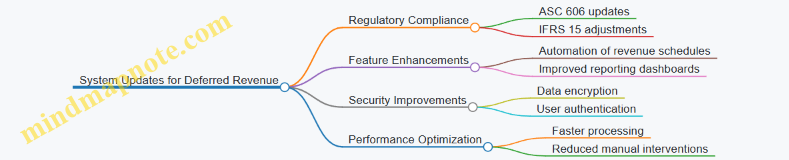
Example: Implementing a System Update to Support Multi-Element SaaS Contracts
A SaaS company introduces bundled offerings combining software licenses, support, and training services. The existing accounting system only supports simple subscription models.
- Challenge: The system cannot allocate deferred revenue correctly across multiple performance obligations.
- Solution: Update the system with enhanced revenue recognition modules that allow allocation based on standalone selling prices.
- Result: Accurate deferred revenue tracking and compliance with ASC 606.
Summary Checklist for Regular System Audits and Updates
- Schedule audits at least quarterly or after major system changes.
- Document audit findings and remediation plans.
- Keep system configurations aligned with current contract terms and accounting standards.
- Ensure seamless integration between billing, CRM, and accounting platforms.
- Train staff on system updates and new functionalities.
- Maintain a log of system updates, including version changes and impact assessments.
By embedding regular system audits and updates into your deferred revenue management process, finance teams can significantly reduce errors, enhance compliance, and support accurate financial reporting—critical factors for accountants and auditors in the SaaS and finance sectors.
10. Challenges and Common Pitfalls in Accounting for Deferred Revenue
10.1 Misclassification of Revenue Leading to Financial Misstatements
Misclassification of revenue is one of the most common pitfalls in accounting for deferred revenue. It occurs when revenue is recognized prematurely, delayed, or recorded under the wrong category, leading to inaccurate financial statements. This can distort profitability, mislead stakeholders, and potentially result in regulatory penalties.
Understanding Revenue Misclassification
Revenue misclassification can take several forms:
- Recognizing deferred revenue as earned revenue too early
- Failing to defer revenue that should be recognized over time
- Mixing up deferred revenue with accrued revenue or other liabilities
- Incorrectly categorizing revenue streams (e.g., product sales vs. service revenue)
Mind Map: Causes of Revenue Misclassification
Example 1: Premature Recognition of SaaS Subscription Revenue
Scenario: A SaaS company receives a $12,000 annual subscription payment upfront but recognizes the entire amount as revenue immediately instead of deferring it over 12 months.
Impact:
- Overstates revenue and profit in the month of receipt
- Understates revenue in subsequent months
- Misleading financial performance indicators
Correct Approach: Record $12,000 as deferred revenue initially and recognize $1,000 monthly as earned revenue.
Mind Map: Effects of Premature Revenue Recognition
Example 2: Failure to Defer Revenue on Multi-Element Contracts
Scenario: An accounting firm sells a bundled service contract that includes consulting and software license fees. The entire payment is recognized as revenue immediately.
Impact:
- Revenue related to future consulting services is recognized too early
- Deferred revenue liability is understated
Correct Approach: Allocate the transaction price to each performance obligation and defer revenue related to services delivered in the future.
Mind Map: Best Practices to Avoid Misclassification
Practical Tips
- Always review contract terms carefully to identify performance obligations.
- Use accounting software that supports deferred revenue automation.
- Maintain detailed documentation for all revenue recognition decisions.
- Implement internal controls to separate duties between billing and revenue recognition.
Summary
Misclassification of revenue can significantly impact the accuracy of financial statements. By understanding common causes, applying best practices, and using clear examples, accountants and auditors can minimize errors and ensure compliance with accounting standards.
10.2 Overlooking Contract Modifications and Their Impact
Contract modifications are changes to the original terms and conditions of a contract after it has been signed. In the context of deferred revenue accounting, overlooking these modifications can lead to significant misstatements in revenue recognition, impacting financial accuracy and compliance.
Understanding Contract Modifications
Contract modifications can include:
- Changes in the scope of work or services provided
- Adjustments to pricing or payment terms
- Extensions or reductions in contract duration
- Addition or removal of performance obligations
Failing to properly account for these changes can distort the timing and amount of revenue recognized.
Mind Map: Types of Contract Modifications and Their Accounting Impact
Example 1: SaaS Subscription Upgrade
Scenario: A customer initially subscribes to a basic SaaS package for $1,200 annually, recognized as $100 per month deferred revenue. After 6 months, the customer upgrades to a premium package costing $2,400 annually.
Impact:
- The original deferred revenue for the remaining 6 months ($600) must be adjusted.
- The new contract price for the remaining term is $1,200 (premium $2,400 annual minus $1,200 already paid).
- Deferred revenue recognition should be recalculated to reflect the upgrade.
Accounting Treatment:
- Recognize the remaining deferred revenue for the basic package up to the upgrade date.
- Record the additional deferred revenue for the premium package for the remaining period.
Mind Map: Accounting Steps for Contract Modifications
Example 2: Service Contract Extension
Scenario: A consulting firm has a 12-month contract with deferred revenue of $120,000 ($10,000 per month). After 9 months, the client extends the contract by 3 months with an additional $30,000 fee.
Impact:
- The deferred revenue schedule must be extended.
- Additional $30,000 deferred revenue is recognized upon contract extension.
- Revenue recognition continues monthly over the new 15-month total term.
Accounting Treatment:
- Continue recognizing $10,000 per month for the initial 12 months.
- Recognize additional deferred revenue of $30,000 and amortize over the 3-month extension.
Consequences of Overlooking Contract Modifications
- Revenue Misstatement: Overstated or understated revenue impacting profit margins.
- Compliance Risks: Non-adherence to ASC 606/IFRS 15 standards.
- Audit Issues: Increased risk of audit adjustments and qualifications.
- Cash Flow Misinterpretation: Misleading financial health indicators.
Best Practices to Manage Contract Modifications
- Maintain a centralized contract management system.
- Regularly review contracts for amendments.
- Train accounting teams on identifying and accounting for modifications.
- Collaborate closely with sales and legal departments.
- Use accounting software that supports dynamic revenue recognition adjustments.
Summary Mind Map: Managing Contract Modifications Effectively
By integrating these practices and understanding the nuances of contract modifications, accountants and auditors can ensure accurate deferred revenue accounting, maintain compliance, and provide reliable financial reporting.
10.3 Example: Consequences of Improper Deferred Revenue Recognition
Improper recognition of deferred revenue can lead to significant financial, operational, and reputational consequences for organizations, especially in the finance and SaaS sectors. This section explores real-world examples and illustrates the cascading effects of such errors.
What Happens When Deferred Revenue is Misstated?
- Overstated Revenue: Recognizing revenue prematurely inflates income, misleading stakeholders about company performance.
- Understated Liabilities: Deferred revenue is a liability; failure to record it properly understates liabilities, distorting the balance sheet.
- Tax Implications: Incorrect revenue recognition can cause discrepancies between book income and taxable income, leading to penalties.
- Audit Risks: Auditors may issue qualified opinions or require restatements, impacting credibility.
Mind Map: Consequences of Improper Deferred Revenue Recognition
Example 1: SaaS Company Recognizing Revenue Upfront
Scenario: A SaaS company sells a 12-month subscription for $12,000 but recognizes the entire amount as revenue immediately instead of deferring $11,000 for future months.
Impact:
- Financial Statements: Revenue is overstated by $11,000 in the first month.
- Balance Sheet: Deferred revenue liability is understated by $11,000.
- Subsequent Months: Revenue is understated, causing inconsistent earnings.
- Investor Reaction: Misleading growth metrics may inflate stock price temporarily but lead to loss of trust when corrected.
Best Practice Reminder: Recognize revenue ratably over the subscription period.
Example 2: Service Contract with Milestones
Scenario: An accounting firm enters a $60,000 contract with three equal milestones. The firm recognizes the entire $60,000 as revenue upon signing.
Impact:
- Revenue Recognition: Premature revenue recognition violates performance obligation principles.
- Audit Findings: Auditors identify the mismatch and require restatement.
- Tax Consequences: Tax authorities may assess penalties for early income recognition.
Best Practice Reminder: Recognize revenue only when each milestone is achieved.
Mind Map: Example 1 - SaaS Subscription Revenue Misrecognition
Mind Map: Example 2 - Service Contract Milestone Misrecognition
Additional Example: Impact on Financial Ratios
If deferred revenue is understated, key ratios such as the current ratio and debt-to-equity ratio may appear stronger than they actually are, misleading management and investors.
Example:
- Deferred revenue understated by $50,000
- Current liabilities understated by $50,000
- Current ratio inflated, suggesting better liquidity
Summary
Improper deferred revenue recognition can distort financial health, trigger regulatory scrutiny, and damage stakeholder trust. Accountants and auditors must adhere to best practices and standards to ensure accurate and compliant revenue reporting.
Key Takeaways
- Always match revenue recognition to performance obligations.
- Use automated systems to reduce human error.
- Regularly review contracts for revenue recognition triggers.
- Collaborate with auditors to identify and correct misstatements early.
10.4 Best Practice: Continuous Training and Staying Updated with Standards
In the fast-evolving world of accounting, especially concerning deferred revenue, continuous training and staying updated with the latest standards are crucial for accuracy, compliance, and strategic decision-making. This section explores why ongoing education matters, how to implement it effectively, and practical examples to illustrate its impact.
Why Continuous Training Matters
- Regulatory Changes: Accounting standards like ASC 606 and IFRS 15 frequently update guidance on revenue recognition.
- Complexity of Contracts: SaaS and finance industries often have complex, multi-element contracts requiring nuanced understanding.
- Risk Mitigation: Proper training reduces errors, misstatements, and audit risks.
- Technological Advancements: New software tools and automation require updated skill sets.
Mind Map: Components of Continuous Training for Deferred Revenue Accounting
Implementing Effective Continuous Training
- Scheduled Learning Sessions: Set regular intervals (monthly/quarterly) for training updates.
- Leverage External Resources: Use webinars, online courses, and professional body updates.
- Internal Knowledge Sharing: Encourage accountants and auditors to share insights from audits or new standards.
- Hands-On Practice: Use real-life examples and case studies to reinforce learning.
- Track Progress: Maintain records of training activities and certifications.
Example 1: SaaS Company Adapting to ASC 606
Scenario: A SaaS company previously recognized revenue on a cash basis. After ASC 606 implementation, accountants attended a specialized training workshop that explained performance obligations and contract modifications.
Outcome: They revised deferred revenue accounting to recognize revenue over the subscription period, avoiding revenue misstatements and audit issues.
Mind Map: Training Cycle for Accounting Teams
Example 2: Auditor’s Continuous Learning on Deferred Revenue
Scenario: An auditor working with multiple SaaS clients subscribes to industry newsletters and attends quarterly seminars on revenue recognition.
Outcome: This proactive approach helps the auditor identify subtle deferred revenue misclassifications during audits, enhancing audit quality and client trust.
Tips for Staying Updated
- Subscribe to newsletters from FASB, IASB, and professional accounting bodies.
- Join industry forums and LinkedIn groups focused on SaaS finance and accounting.
- Attend conferences and webinars dedicated to revenue recognition.
- Encourage cross-department collaboration to share insights.
Summary
Continuous training and staying updated with accounting standards is not a one-time effort but an ongoing commitment. By embedding structured training programs, leveraging technology, and fostering a culture of knowledge sharing, accountants and auditors can ensure accurate deferred revenue accounting, reduce risks, and add strategic value to their organizations.
10.5 Strategies to Mitigate Risks in Deferred Revenue Accounting
Deferred revenue accounting carries inherent risks that can lead to financial misstatements, compliance issues, and operational inefficiencies. Implementing effective strategies to mitigate these risks is crucial for accountants and auditors, especially in dynamic industries like SaaS and finance.
Key Strategies to Mitigate Risks
Example 1: Automating Deferred Revenue to Reduce Manual Errors
Scenario: A SaaS company manually records deferred revenue entries for thousands of monthly subscriptions, leading to errors and delayed revenue recognition.
Strategy Applied: The company implements an integrated billing and accounting system that automatically recognizes revenue based on subscription terms and usage data.
Outcome:
- Reduction in manual journal entry errors
- Timely and accurate revenue recognition
- Improved audit trail and compliance
Example 2: Handling Contract Modifications with Clear Policies
Scenario: A client upgrades their annual subscription mid-term, but the finance team fails to adjust deferred revenue balances accordingly.
Strategy Applied: The company establishes a policy requiring all contract modifications to be reviewed by finance and updates deferred revenue schedules immediately.
Outcome:
- Accurate reflection of revenue earned
- Avoidance of revenue overstatement
- Enhanced transparency for auditors
Mind Map: Internal Controls for Deferred Revenue
Mind Map: Training and Communication
Final Thoughts
Mitigating risks in deferred revenue accounting requires a multifaceted approach combining clear policies, technology, continuous education, and strong internal controls. By proactively addressing potential pitfalls, finance professionals can ensure accurate financial reporting, compliance with standards, and build trust with auditors and stakeholders alike.
11. Future Trends and Evolving Standards in Deferred Revenue Accounting
11.1 Impact of ASC 606 and IFRS 15 on Deferred Revenue Practices
The introduction of ASC 606 (Revenue from Contracts with Customers) by the Financial Accounting Standards Board (FASB) and IFRS 15 by the International Accounting Standards Board (IASB) has significantly transformed how companies recognize revenue, including deferred revenue practices. Both standards aim to create a unified, principles-based approach to revenue recognition, improving comparability and transparency across industries.
Key Changes Introduced by ASC 606 and IFRS 15
-
Five-Step Revenue Recognition Model: Both standards prescribe a five-step model that companies must follow to recognize revenue:
1. Identify the contract(s) with a customer 2. Identify the performance obligations in the contract 3. Determine the transaction price 4. Allocate the transaction price to the performance obligations 5. Recognize revenue when (or as) the entity satisfies a performance obligation -
Focus on Performance Obligations: Revenue is recognized as performance obligations are satisfied rather than simply upon cash receipt.
-
Enhanced Disclosure Requirements: More detailed disclosures about revenue streams, contract balances, and judgments made.
Mind Map: ASC 606 / IFRS 15 Revenue Recognition Framework
Impact on Deferred Revenue Practices
-
Shift from Cash Basis to Performance Obligation Basis:
- Previously, many companies recognized deferred revenue simply based on cash received for services or goods not yet delivered.
- Under ASC 606/IFRS 15, revenue recognition depends on satisfying performance obligations, which may result in different timing for recognizing deferred revenue.
-
Identification and Separation of Performance Obligations:
- Contracts with multiple goods or services require identifying distinct performance obligations.
- Deferred revenue must be allocated accordingly, potentially splitting what was previously a single deferred revenue balance.
-
Variable Consideration and Constraints:
- Revenue estimates must consider variable amounts (e.g., discounts, refunds, bonuses).
- Deferred revenue balances may fluctuate as estimates are updated.
-
Contract Modifications:
- Changes to contracts require reassessment of performance obligations and transaction price.
- Deferred revenue must be adjusted to reflect modifications.
Example 1: SaaS Subscription with Multiple Performance Obligations
Scenario: A SaaS company sells a 12-month subscription for $1,200, which includes:
- Access to the software platform (primary service)
- Onboarding training sessions valued at $300
Under ASC 606/IFRS 15:
- Identify performance obligations: software access and onboarding training.
- Allocate transaction price based on standalone selling prices:
- Software access: $900
- Training: $300
Deferred Revenue Treatment:
- Upon receipt of $1,200 upfront, record $1,200 deferred revenue.
- Recognize $300 revenue when onboarding training is delivered (likely early in the contract).
- Recognize $900 revenue ratably over 12 months as software access is provided.
Journal Entries:
| Date | Account | Debit | Credit |
|---|---|---|---|
| At sale | Cash | 1,200 | |
| Deferred Revenue | 1,200 | ||
| Training | Deferred Revenue | 300 | |
| Revenue | 300 | ||
| Monthly | Deferred Revenue | 75 | |
| (each month) | Revenue | 75 |
Mind Map: Deferred Revenue Allocation Under ASC 606/IFRS 15

Example 2: Contract Modification Impact
Scenario: A consulting firm has a contract to deliver services over 6 months for $60,000. After 3 months, the client requests additional services for $15,000.
Under ASC 606/IFRS 15:
- The contract modification is assessed to determine if it creates a separate contract or modifies the existing one.
- If treated as a modification to the existing contract, the transaction price and performance obligations are updated.
Deferred Revenue Treatment:
- Adjust deferred revenue to include the additional $15,000.
- Recognize revenue as services are delivered according to updated terms.
Best Practices for Accountants and Auditors
- Thorough Contract Review: Carefully analyze contracts to identify all performance obligations.
- Accurate Allocation: Use reliable methods to allocate transaction price to obligations.
- Regular Updates: Continuously update estimates for variable consideration and contract modifications.
- Documentation: Maintain detailed documentation supporting judgments and estimates.
- Training: Ensure accounting teams are trained on ASC 606/IFRS 15 requirements.
By embracing the principles of ASC 606 and IFRS 15, finance professionals can ensure deferred revenue is recognized accurately and transparently, reflecting the true economic substance of their contracts.
11.2 Emerging Technologies: AI and Machine Learning in Revenue Recognition
As the finance and SaaS industries evolve, Artificial Intelligence (AI) and Machine Learning (ML) are becoming powerful tools to enhance the accuracy, efficiency, and compliance of revenue recognition processes, including deferred revenue accounting. These technologies help accountants and auditors manage complex contracts, automate repetitive tasks, and detect anomalies that might otherwise be overlooked.
How AI and ML Transform Revenue Recognition
- Automation of Complex Calculations: AI algorithms can process large volumes of contract data to automatically calculate deferred revenue amounts based on contract terms and performance obligations.
- Contract Analysis: Natural Language Processing (NLP), a subset of AI, can analyze contract language to identify revenue recognition triggers and obligations.
- Anomaly Detection: ML models can flag unusual revenue recognition patterns or discrepancies, helping auditors identify potential errors or fraud.
- Real-time Updates: AI-driven systems can update deferred revenue balances dynamically as contract modifications occur.
Mind Map: AI and ML Applications in Deferred Revenue Accounting
Practical Example 1: AI-Powered Contract Review for SaaS Deferred Revenue
Scenario: A SaaS company signs multiple subscription contracts with varying terms, including free trial periods, discounts, and usage-based fees.
Traditional Challenge: Manually reviewing each contract to identify revenue recognition points is time-consuming and prone to human error.
AI Solution: Using an AI-powered contract analysis tool, the company automatically extracts key clauses related to billing cycles, performance obligations, and contract modifications. The system then calculates deferred revenue and schedules recognition accordingly.
Outcome: Faster contract processing, improved accuracy in deferred revenue balances, and reduced risk of non-compliance.
Mind Map: Workflow of AI-Driven Deferred Revenue Recognition
Practical Example 2: Machine Learning for Anomaly Detection in Deferred Revenue
Scenario: An auditor is reviewing deferred revenue accounts of a SaaS company with thousands of subscription contracts.
Challenge: Manually identifying irregularities or misstatements in deferred revenue recognition is difficult and inefficient.
ML Solution: The auditor uses a machine learning model trained on historical revenue recognition data to identify patterns and flag contracts where deferred revenue recognition deviates from expected norms.
Outcome: The auditor efficiently focuses on high-risk contracts, improving audit quality and reducing review time.
Benefits of AI and ML in Deferred Revenue Accounting
- Increased Accuracy: Reduces human error in revenue calculations and contract interpretation.
- Efficiency Gains: Automates repetitive tasks, freeing accountants to focus on analysis and decision-making.
- Improved Compliance: Ensures adherence to complex accounting standards like ASC 606 and IFRS 15.
- Scalability: Handles growing volumes of contracts and transactions without proportional increases in workload.
Best Practice: Integrating AI Tools with Existing Accounting Systems
- Evaluate AI solutions that seamlessly integrate with your ERP or accounting software.
- Train finance teams on interpreting AI-generated insights and maintaining oversight.
- Regularly update AI models with new contract data to improve accuracy.
- Maintain clear documentation of AI-assisted processes for audit trails.
Summary
AI and Machine Learning are revolutionizing deferred revenue accounting by automating complex processes, enhancing accuracy, and providing actionable insights. For accountants and auditors in the SaaS and finance sectors, embracing these technologies offers a competitive advantage and supports compliance in an increasingly complex regulatory environment.
11.3 Example: Adapting Deferred Revenue Accounting in Subscription Economy Growth
As the subscription economy continues to expand rapidly, companies—especially in SaaS and finance sectors—must adapt their deferred revenue accounting practices to keep pace with evolving business models and customer expectations. This section explores how deferred revenue accounting can be effectively adapted through practical examples and mind maps.
Understanding the Subscription Economy Impact on Deferred Revenue
The subscription economy shifts revenue recognition from one-time sales to recurring revenue streams, which requires precise tracking of deferred revenue and its systematic recognition over time.
Mind Map: Subscription Economy Impact on Deferred Revenue

Practical Example: SaaS Company Transitioning to Subscription Model
Scenario: A SaaS company previously sold perpetual licenses but has now shifted to a subscription model with monthly billing. Customers pay upfront for a 12-month subscription at $1,200 per year.
Deferred Revenue Accounting Adaptation:
- When the customer pays $1,200 upfront, the company records the full amount as deferred revenue.
- Each month, $100 ($1,200 / 12 months) is recognized as revenue.
Journal Entries:
| Date | Account | Debit | Credit |
|---|---|---|---|
| 01/01/2024 | Cash | 1,200 | |
| 01/01/2024 | Deferred Revenue | 1,200 | |
| 31/01/2024 | Deferred Revenue | 100 | |
| 31/01/2024 | Revenue | 100 |
Adaptation Considerations:
- Automate monthly revenue recognition to reduce manual errors.
- Monitor subscription modifications (upgrades/downgrades) and adjust deferred revenue accordingly.
Mind Map: SaaS Subscription Deferred Revenue Process
Example: Handling Mid-Term Subscription Upgrade
Scenario: A customer upgrades their subscription from a $100/month plan to a $150/month plan after 6 months into a 12-month prepaid contract.
Accounting Adaptation:
- Original deferred revenue balance after 6 months: $600 recognized, $600 remaining.
- The upgrade adds $50/month for the remaining 6 months, totaling $300 additional deferred revenue.
Journal Entries for Upgrade:
| Date | Account | Debit | Credit |
|---|---|---|---|
| 07/01/2024 | Cash | 300 | |
| 07/01/2024 | Deferred Revenue | 300 |
Monthly Recognition Post-Upgrade:
- Recognize $100 (original) + $50 (upgrade) = $150 per month for remaining 6 months.
Mind Map: Mid-Term Subscription Upgrade Accounting
Key Takeaways for Adapting Deferred Revenue Accounting
- Automation is critical: Use integrated billing and accounting systems to handle complex subscription scenarios.
- Real-time tracking: Monitor deferred revenue balances continuously to reflect contract changes accurately.
- Flexible recognition schedules: Adapt revenue recognition methods to accommodate upgrades, downgrades, and cancellations.
- Clear documentation: Maintain detailed records of subscription terms and modifications to support audit trails.
By embracing these adaptations, finance professionals can ensure compliance with accounting standards while supporting the dynamic nature of the subscription economy.
11.4 Preparing for Regulatory Changes and Enhanced Disclosure Requirements
As accounting standards evolve, especially with respect to deferred revenue, finance professionals and auditors must stay ahead by preparing for regulatory changes and enhanced disclosure requirements. This section explores practical strategies, examples, and visual mind maps to help accountants and auditors navigate these changes effectively.
Understanding the Regulatory Landscape
Regulatory bodies such as the Financial Accounting Standards Board (FASB) and the International Accounting Standards Board (IASB) periodically update standards to improve transparency and comparability in financial reporting. For deferred revenue, ASC 606 (Revenue from Contracts with Customers) and IFRS 15 have introduced significant changes.
Key Areas of Enhanced Disclosure Requirements
- Detailed breakdown of performance obligations
- Timing and pattern of revenue recognition
- Significant judgments and estimates
- Contract modifications and their impact
- Remaining performance obligations
Mind Map: Preparing for Regulatory Changes
Example: SaaS Company Preparing for ASC 606 Disclosure Enhancements
Scenario: A mid-sized SaaS company currently recognizes deferred revenue on a straight-line basis over the subscription period. With ASC 606, they must disclose detailed information about performance obligations and contract modifications.
Steps Taken:
-
Policy Review: The accounting team reviews their revenue recognition policy and identifies the need to disclose contract modifications explicitly.
-
System Upgrade: They implement a new billing system capable of tracking contract amendments and linking them to performance obligations.
-
Disclosure Templates: Developed standardized templates for quarterly financial statements, including tables showing remaining performance obligations and significant judgments.
-
Training: Conducted workshops for finance and audit teams to understand the new disclosure requirements.
-
Stakeholder Communication: Presented the changes to the board and audit committee, explaining the impact on financial statements.
Mind Map: Enhanced Disclosure Requirements for Deferred Revenue
Best Practices for Staying Prepared
-
Regular Training: Continuous education on evolving standards ensures teams are knowledgeable and confident.
-
Cross-Functional Collaboration: Engage legal, compliance, IT, and finance teams early to address all aspects of changes.
-
Documentation: Maintain thorough documentation of judgments, policies, and processes to support disclosures.
-
Mock Audits: Simulate audits focusing on new disclosures to identify weaknesses and improve controls.
-
Leverage Technology: Use software tools that facilitate data gathering, analysis, and reporting to reduce manual errors.
Summary
Preparing for regulatory changes and enhanced disclosure requirements is a proactive process that involves monitoring updates, assessing current practices, upgrading systems, and training personnel. By integrating these steps with clear documentation and communication, accountants and auditors can ensure compliance and maintain stakeholder trust.
For further reading, consider reviewing the official FASB ASC 606 implementation guides and IFRS 15 disclosure checklists, which provide detailed instructions and examples tailored to deferred revenue accounting.
11.5 Best Practice: Proactive Adoption of Industry Innovations
In the fast-evolving landscape of accounting for deferred revenue, staying ahead means embracing new technologies, methodologies, and regulatory updates before they become mandatory. Proactive adoption of industry innovations not only ensures compliance but also enhances accuracy, efficiency, and strategic insight.
Why Proactive Adoption Matters
- Competitive Advantage: Early adopters can streamline processes and reduce manual errors.
- Regulatory Readiness: Anticipate and prepare for changes in accounting standards such as ASC 606 and IFRS 15.
- Improved Data Insights: Leverage advanced analytics and AI to gain deeper understanding of revenue streams.
- Scalability: Innovations often support growing business models, especially in SaaS environments.
Key Areas for Innovation Adoption
Example 1: Implementing AI for Deferred Revenue Forecasting
A mid-sized SaaS company integrated an AI-driven analytics platform with their accounting system. This innovation allowed them to:
- Automatically analyze subscription patterns and predict deferred revenue recognition timelines.
- Detect anomalies in revenue recognition that manual reviews often missed.
- Optimize cash flow forecasting by linking deferred revenue trends with customer churn data.
Result: Reduced month-end closing time by 30% and improved forecast accuracy by 25%.
Example 2: Early Adoption of ASC 606 Revenue Recognition Software
An accounting firm specializing in SaaS clients adopted a specialized ASC 606 compliance tool six months before the standard’s mandatory adoption date. This tool:
- Automated identification of performance obligations.
- Streamlined contract modifications and their impact on deferred revenue.
- Generated audit-ready reports that simplified external audits.
Result: Clients experienced smoother transitions with minimal restatements and audit findings.
Mind Map: Steps to Proactively Adopt Innovations
Example 3: Integrating CRM and Accounting Systems for Real-Time Deferred Revenue Tracking
A SaaS company integrated their CRM platform with their accounting software to automate deferred revenue recognition based on contract milestones and customer usage data.
- Real-time updates reduced manual journal entries.
- Improved accuracy in revenue recognition aligned with actual service delivery.
- Enhanced transparency for auditors and management.
Result: Increased confidence in financial statements and reduced audit adjustments.
Tips for Accountants and Auditors
- Stay Informed: Subscribe to industry newsletters, attend webinars, and participate in professional forums.
- Collaborate: Work closely with IT and finance teams to identify and implement innovations.
- Pilot Before Scale: Test new tools or processes on a small scale before company-wide rollout.
- Document Changes: Maintain clear documentation of new processes and controls.
- Continuous Learning: Encourage ongoing education to keep skills current.
By embracing innovation proactively, accountants and auditors can transform deferred revenue accounting from a compliance task into a strategic advantage, driving better business insights and operational excellence.
12. Summary and Practical Takeaways
12.1 Recap of Key Concepts and Best Practices
Accounting for deferred revenue is a critical aspect of financial management, especially in SaaS and service-based industries. This section revisits the essential concepts and best practices discussed throughout the blog, reinforced with mind maps and practical examples to solidify understanding.
Key Concepts Mind Map
Best Practices Mind Map
Example 1: SaaS Subscription Deferred Revenue Recognition
Scenario: A SaaS company sells a 12-month subscription for $1,200, paid upfront.
-
Initial Entry:
- Debit Cash $1,200
- Credit Deferred Revenue $1,200
-
Monthly Recognition:
- Debit Deferred Revenue $100
- Credit Revenue $100
Best Practice: Automate monthly recognition entries via accounting software to ensure accuracy and timeliness.
Example 2: Service Contract with Milestone Payments
Scenario: An auditing firm receives $30,000 for a project with three milestones, each worth $10,000.
-
Initial Receipt of First Milestone:
- Debit Cash $10,000
- Credit Deferred Revenue $10,000
-
Upon Completion of First Milestone:
- Debit Deferred Revenue $10,000
- Credit Revenue $10,000
Best Practice: Clearly define performance obligations in contracts and recognize revenue only when milestones are achieved.
Summary Table of Key Best Practices
| Practice Area | Description | Example |
|---|---|---|
| Documentation | Maintain clear revenue recognition policies | Contract clauses specifying payment terms |
| Identification | Use checklists to identify deferred revenue | Prepaid subscriptions flagged in billing |
| Recording | Accurate journal entries and automation | Automated monthly revenue recognition |
| Revenue Recognition | Match method to contract terms | Time-based for subscriptions, milestone for projects |
| Auditing | Transparent communication and thorough testing | Audit walkthroughs of deferred revenue balances |
| Reporting | Consistent disclosures and ratio analysis | Notes on deferred revenue in financial statements |
| Tax Coordination | Align book and tax treatment | Coordination for prepaid service contracts |
| Technology | Integrate ERP/CRM and perform system audits | Using SaaS billing platforms for accuracy |
| Training | Continuous education on standards and updates | Regular workshops on ASC 606/IFRS 15 |
By revisiting these key concepts and best practices, accountants and auditors can ensure deferred revenue is accounted for accurately, transparently, and in compliance with evolving standards, ultimately supporting reliable financial reporting and decision-making.
12.2 Checklist for Accurate Deferred Revenue Accounting
Accurate accounting for deferred revenue is critical to ensure financial statements reflect the true financial position of the company and comply with accounting standards. Below is a comprehensive checklist designed to guide accountants and auditors through the key steps and considerations.
Deferred Revenue Accounting Checklist
Detailed Explanation with Examples
Identification
- Confirm receipt of payment before delivery: For example, a SaaS company receives $12,000 upfront for a 12-month subscription. Since services will be delivered over time, the entire amount is deferred initially.
- Verify contract terms: Check if the contract includes milestones or performance obligations that affect revenue recognition.
Documentation
- Keep signed contracts and amendments on file.
- Document each performance obligation clearly. For example, a software implementation contract may have separate obligations for installation, training, and support.
Initial Recording
- Journal Entry Example:
- Debit Cash $12,000
- Credit Deferred Revenue $12,000
Revenue Recognition
- Recognize revenue monthly: $1,000 per month over 12 months.
- Journal Entry Example (Monthly):
- Debit Deferred Revenue $1,000
- Credit Revenue $1,000
Adjustments
- If a customer upgrades mid-term, calculate the additional deferred revenue and adjust accordingly.
- Example: Customer upgrades from $12,000/year to $18,000/year after 6 months. Recognize remaining revenue based on new terms.
Reporting & Disclosure
- Present deferred revenue as a current liability if expected to be recognized within 12 months, otherwise as non-current.
- Disclose revenue recognition policies in financial statement notes.
Review & Audit
- Reconcile deferred revenue balance monthly to billing records.
- Maintain detailed audit trails for all adjustments.
Technology
- Use SaaS billing platforms integrated with accounting software to automate deferred revenue calculations.
- Example: Automate monthly revenue recognition entries based on subscription billing data.
Summary Mind Map
By following this checklist, accountants and auditors can ensure deferred revenue is accurately identified, recorded, recognized, and reported, minimizing errors and maintaining compliance with accounting standards.
12.3 Example: Applying Learnings to a SaaS Startup Scenario
To consolidate the concepts and best practices discussed throughout this blog, let’s explore a detailed example of accounting for deferred revenue within a SaaS startup. This practical scenario will demonstrate how to identify, record, and manage deferred revenue effectively.
Scenario Overview:
Company: CloudSync Solutions, a SaaS startup offering cloud-based project management software.
Subscription Model: Annual prepaid subscription at $1,200 per user.
Customer: Acme Corp purchases 10 user licenses on January 1st, paying $12,000 upfront for a 12-month subscription.
Objective: Properly account for the deferred revenue and recognize revenue monthly over the subscription period.
Step 1: Identify Deferred Revenue
- Acme Corp pays $12,000 upfront.
- Since the service is delivered over 12 months, revenue recognition must be spread evenly.
- The entire $12,000 is initially recorded as deferred revenue (a liability).
Mind Map: Identifying Deferred Revenue
Step 2: Initial Journal Entry on January 1st
| Account | Debit | Credit |
|---|---|---|
| Cash | $12,000 | |
| Deferred Revenue | $12,000 |
Explanation: Cash increases by $12,000; deferred revenue liability is created because service is yet to be delivered.
Step 3: Monthly Revenue Recognition
- Each month, CloudSync Solutions recognizes $1,000 as revenue ($12,000 / 12 months).
Monthly Journal Entry (e.g., January 31st):
| Account | Debit | Credit |
|---|---|---|
| Deferred Revenue | $1,000 | |
| Revenue | $1,000 |
Mind Map: Monthly Revenue Recognition Process
Step 4: Handling Mid-Term Subscription Changes
Suppose in June, Acme Corp upgrades to 15 users and pays an additional $6,000 upfront for the remaining 7 months.
Calculation:
- Additional revenue to recognize monthly = $6,000 / 7 ≈ $857.14
Journal Entry on June 1st:
| Account | Debit | Credit |
|---|---|---|
| Cash | $6,000 | |
| Deferred Revenue | $6,000 |
Monthly Revenue Recognition from June to December:
| Account | Debit | Credit |
|---|---|---|
| Deferred Revenue | $857.14 | |
| Revenue | $857.14 |
Mind Map: Mid-Term Subscription Upgrade
Step 5: Best Practices Applied
- Clear Documentation: Contract terms specifying subscription length and pricing.
- Accurate Journal Entries: Separate entries for initial and additional payments.
- Consistent Revenue Recognition: Monthly recognition aligned with service delivery.
- Automation: Using accounting software to schedule recurring revenue recognition entries.
- Audit Trail: Maintaining detailed records for audit and compliance.
Summary Mind Map: SaaS Startup Deferred Revenue Accounting
This example illustrates how a SaaS startup like CloudSync Solutions can apply best practices to manage deferred revenue accurately, ensuring compliance with accounting standards and providing clear financial insights for stakeholders.
12.4 Resources for Further Learning and Professional Development
Accounting for deferred revenue is a nuanced topic that evolves with changing standards and business models. To deepen your understanding and stay updated, here are curated resources, mind maps, and examples to guide your continuous learning journey.
Recommended Books & Publications
- Revenue Recognition: Principles and Practices by Steven M. Bragg
- Comprehensive guide covering revenue recognition including deferred revenue.
- Wiley GAAP 2024: Interpretation and Application of Generally Accepted Accounting Principles
- Updated GAAP standards with detailed sections on deferred revenue.
- IFRS 15 Revenue from Contracts with Customers: Practical Guide by PwC
- Focused on IFRS 15, essential for international accounting professionals.
Online Courses & Certifications
- Coursera: Financial Accounting Fundamentals (offered by University of Virginia)
- Includes modules on revenue recognition and deferred revenue.
- AICPA: Revenue Recognition (ASC 606) Certificate Program
- Deep dive into ASC 606 standards, practical examples included.
- LinkedIn Learning: Accounting Foundations: Revenue Recognition
- Short course with real-world SaaS examples.
Professional Organizations & Websites
- American Institute of CPAs (AICPA)
- Regular updates, webinars, and whitepapers on deferred revenue.
- Institute of Management Accountants (IMA)
- Resources on best practices and case studies.
- SaaS Capital Blog
- Practical insights on SaaS financial metrics including deferred revenue.
Mind Maps for Deferred Revenue Learning
Deferred Revenue Learning Mind Map
Revenue Recognition Standards Mind Map
Practical Examples for Self-Study
-
Example: SaaS Subscription Deferred Revenue Calculation
- A company receives $12,000 on Jan 1 for a 12-month subscription.
- Deferred revenue initially recorded: $12,000.
- Monthly revenue recognized: $1,000.
- Practice: Prepare journal entries for the first 3 months.
-
Example: Contract Modification Impact
- Mid-year, a customer upgrades from a basic to premium plan, increasing annual subscription from $12,000 to $18,000.
- Calculate deferred revenue adjustment and revenue recognition for remaining months.
-
Example: Audit Checklist for Deferred Revenue
- Verify contract terms.
- Confirm cash receipts.
- Review revenue recognition schedule.
- Test cutoff procedures.
Additional Tools
- Excel Templates: Deferred Revenue Schedules and Amortization Calculators.
- Accounting Software Tutorials: QuickBooks, NetSuite, and Zuora deferred revenue modules.
Final Tip
Create your own learning mind map tailored to your organization’s specific deferred revenue scenarios. This visual tool will help you connect concepts, standards, and practical applications effectively.
By leveraging these resources and examples, accountants and auditors can enhance their expertise, ensure compliance, and add value to their organizations in managing deferred revenue.
12.5 Final Best Practice: Establishing Robust Internal Controls
Establishing robust internal controls is essential for ensuring the accuracy, completeness, and reliability of deferred revenue accounting. Internal controls help prevent errors, detect fraud, and ensure compliance with accounting standards and company policies.
Why Internal Controls Matter for Deferred Revenue
- Deferred revenue represents a liability until the service or product is delivered.
- Misstatements can lead to incorrect financial reporting, impacting stakeholders’ decisions.
- Controls ensure that revenue is recognized only when earned, preventing premature or delayed recognition.
Key Components of Internal Controls for Deferred Revenue
Practical Example: Implementing Controls in a SaaS Company
Scenario: A SaaS company offers annual subscriptions billed upfront. The company needs to ensure deferred revenue is properly recorded and recognized monthly.
- Identification: The accounting team reviews all signed contracts to identify revenue recognition terms.
- Authorization: The CFO approves all new subscription agreements before billing.
- Recording: When cash is received, the accounting system automatically records a debit to cash and a credit to deferred revenue.
- Reconciliation: At month-end, the deferred revenue balance is reconciled against the subscription billing schedule from the CRM.
- Monitoring: Internal audit performs quarterly reviews to verify compliance.
- Segregation of Duties: Billing is handled by the sales team, revenue recognition by accounting, and reconciliation by an independent finance analyst.
Mind Map: Workflow for Deferred Revenue Internal Controls
Additional Examples of Controls
-
Automated Alerts: Set up system alerts for unusual deferred revenue balances or sudden changes.
-
Access Controls: Restrict permissions in accounting software to prevent unauthorized journal entries.
-
Documentation: Maintain detailed records of revenue recognition decisions and contract modifications.
-
Training: Regularly train accounting and finance staff on updated revenue recognition standards and internal control procedures.
Summary
Robust internal controls for deferred revenue are the backbone of trustworthy financial reporting. By implementing clear procedures, segregation of duties, and continuous monitoring, accountants and auditors can minimize risks and ensure compliance.
Remember, the goal is not only to prevent errors but also to create an environment where deferred revenue is managed transparently and efficiently.
Final Thought: Establishing and maintaining strong internal controls is an ongoing process that evolves with your business and regulatory environment. Regularly review and update controls to keep pace with changes and safeguard your organization’s financial integrity.